Shared posts

02 Dec 17:25

Sales Hack – Embrace Silence

by Liz Heiman

Embrace Silence by Liz Heiman

Here’s another great hack from the new book, Sales Hack, by Chad Burmeister, launching just in time for Dreamforce. This one was written by my sister, Liz Heiman.


Sometimes when you think you hear silence, what you really hear is the glorious sound of someone thinking.  Try embracing the silence instead of panicking.

Unfortunately most sales people can’t.  We have the uncontrollable need to fill it in. We repeat ourselves, rephrase what we just said, or to try to fix something that isn’t broken.  Filling the silence could cost you.  You may be missing valuable information, or worse.  Sales reps that panic tend to either start dropping the price or answering possible unspoken objections.  Sometimes they talk themselves right out a sale they could have had.


When you think you hear silence, what you really hear is the glorious sound of someone thinking
Click To Tweet


If you are talking while they are thinking, you are interrupting them, so before you speak, give them 3 or 4 seconds to figure out what they want to say.  If they still don’t say anything, it is your job to understand why.

Silence can indicate a few different things:4 types of Silences


1

Thinking – need time to think, come up with questions or decide

2

Distracted – not paying attention, my mind is on something else

3

Processing – trying to make sense of what you just said

4

Irritated or Angry – too upset to speak


Most of the time, customers are just thinking. Don’t interrupt them. If your customer thinks your question is important enough to think about, and is willing to give you information, embrace the silence.   Give them 3 or 4 seconds to figure out what they want to say.  If they still don’t say anything, it is your job to understand why.   Simply ask something like, “Do you need some clarification?”

With that, they are likely to tell you exactly what you need to know.  All you have to do is listen.

For more Sales Hacks, from over 25 of the world’s greatest sales professionals, click here.

The post Sales Hack – Embrace Silence appeared first on Alice Heiman, LLC.

10 Sep 16:26

We can bring in 200,000 refugees in the next year. Here’s how.

by Scott Gilmore
Migrants gather in front of Keleti station in central Budapest on September 1, 2015 in Budapest, Hungary. The station was closed today and was said to be an attempt by the Hungarian government to uphold EU law and restore order after recent choatic scenes at the station. According to the Hungarian authorities a record number of migrants from many parts of the Middle East, Africa and Asia crossed the border from Serbia earlier this week, said to be due in part to the erection of a new fence that is due to be completed at the end of this month. Since the beginning of 2015 the number of migrants using the so-called Balkans route has exploded with migrants arriving in Greece from Turkey and then travelling on through Macedonia and Serbia before entering the EU via Hungary. The massive increase, said to be the largest migration of people since World War II, led Hungarian Prime Minister Victor Orban to order Hungary's army to build a steel and barbed wire security barrier along its entire border with Serbia, after more than 100,000 asylum seekers from a variety of countries and war zones entered the country so far this year. (Matt Cardy/Getty Images)

Migrants gather in front of Keleti station in central Budapest on September 1, 2015 in Budapest, Hungary. The station was closed today and was said to be an attempt by the Hungarian government to uphold EU law and restore order after recent choatic scenes at the station. (Matt Cardy/Getty Images)

“Our country has the most generous immigration and refugee system in the world. We admit, per capita, more people than any other.” Any time Prime Minister Stephen Harper or his ministers are asked about the refugee crisis, they repeat this claim. But, no matter how you twist, spin or stretch those sentences, they remain false.

If measured by migrants (i.e., all new arrivals) per year, per capita, Canada is ranked 24th in the world. If you use the number of arriving immigrants, we are eighth. If you compare immigrants as a proportion of the national population, we are around 49th. These numbers are pretty good, but there is no way you could mistake us for being the most generous.

And refugees? If we consider the total number of refugees hosted, last year, Canada was closer to 20th. Refugees hosted per capita? Not even in the top 30. How about refugees accepted annually? We approved 23,286 last year, which ranks us 15th. At the same time, Germany took seven times more. This year, they will accept at least 35 times as many. Denmark took more than we did, and they have one-seventh the population.

What about just asylum-seekers? Last year, Canada accepted 13,500 asylum claims. Russia accepted 275,000. There is no way you can interpret what Harper says to be anything other than untrue.

Related: Making sense of Canada’s refugee and immigration numbers

I could go off about how contemptible it is for the Prime Minister to repeat a fundamental falsehood about our response to one of the most pressing international crises of this generation. (Disclosure: I’ve been a member of the Conservative party in the recent past, and I am married to a Liberal party candidate. You can read a full disclosure on my LinkedIn page.) I could talk about how little respect this shows the public, and how low our expectations have fallen that we are not shocked at this. But this isn’t only Harper’s leadership failure. The three major federal parties are only offering modest short-term targets. The public, municipal governments and provinces are all proposing higher numbers. But even their expectations are too low. Far more is needed. We have done far more in the past, and we can do far more now. Canada can easily increase its refugee intake to 200,000 over the next 12 months. All it takes is political will.

The United Nations believes the total number of displaced people globally has surpassed 60 million people. German Chancellor Angela Merkel has described the ongoing refugee crisis as a challenge of historic significance. European leaders are convening emergency meetings to develop a common response. But, in Canada, our federal political leaders can’t even agree to meet and discuss it. One gets the impression that Harper, Liberal Leader Justin Trudeau and NDP Leader Thomas Mulcair are hoping the issue is going to fade away. It won’t. This week, several sources confirmed that Russian troops are now on the ground in Syria, supporting the regime of Bashar al-Assad. The situation in the Middle East is going to get worse before it gets better.

So what is being proposed? The Conservative party has promised an additional 20,000 Syrian and Iraqi refugees over four years, on top of the now-filled 2013 pledge of 1,300 Syrians. The NDP are promising to resettle 10,000 government-sponsored Syrian refugees by the end of 2015, and another 9,000 for each of the next four years. And the Liberals have pledged on the campaign to immediately resettle 25,000 refugees from Syria.

Far more is needed. The refugees crossing the Mediterranean into Europe are only a small fraction of the total in need. There are more than 1.5 million in Turkey who will shortly be facing winter conditions. Lebanon is growing increasingly unstable, as it shelters 344 refugees per 1,000 people, a per capita rate 80 times greater than Canada’s. For years, northern Pakistan has been home to 1.5 million Afghan refugees, who live mainly in extreme conditions of abject poverty. Even in this hemisphere, there are six million internally displaced in Colombia. These numbers continue to grow relentlessly, as they have for more than a decade.

Related: Why we should take 20 times as many refugees

We have done far more in the past. What we are offering to do now is paltry in comparison to earlier refugee crises. In 1956, Canada took in 37,000 Hungarian refugees after the Soviets invaded. In 1979, following the exodus of boat people from Vietnam, Canada accepted 60,000 refugees over an 18-month period. In 1999, 5,000 Kosovo refugees were resettled within a few weeks.

We can do far more now. The current proposals fall well short of our current capacity, logistically, financially or socially. In the last few days, many former civil servants have come forward to point out that Citizenship and Immigration Canada already has contingency plans to accept far more refugees than what is being proposed. The price of doing more is also well within our means. It costs approximately $11,000 in social services to settle a refugee in Canada. At the current rate, we are spending one-tenth of one per cent of the federal budget on resettling refugees. As each party cravenly carves out its own special-interest tax credits and subsidies, it would be extremely easy to find money to address this crisis.

So why don’t the political leaders step up? Perhaps they’re worried about the voters who think we’ve done enough already. The latter appear to be in the minority, but they exist. Much of their opposition is explicitly due to Islamophobia, a fear that letting in Syrians will mean a mosque on every corner. Right now, three per cent of the population is Muslim. The Liberal proposal would increase that by less than one-tenth of one per cent. Not exactly a flood.

Related: Red tape, paperwork, and the Syrian refugee crisis

So, how could we reach a target of 200,000 over the next 12 months? It would take six steps.

First, the federal leaders should talk and agree that the issue is too pressing to be settled after the election, or to be held hostage by partisan politics. Sadly, this step is the hardest.

Second, the government should launch the Emergency Refugee Contingency Plan. This would set in motion a chain of events that includes activating the existing refugee reception centres, mobilizing Canadian military bases to assist in immediate relocation, and sending officials overseas, right to the refugee camps, to begin to identify and screen potential candidates for relocation to Canada.

Third, federal officials should coordinate with the mayors and premiers, who are already pledging to increase the number of refugees in their jurisdictions. Those cities or provinces who that have not yet spoken up should be asked if they will participate.

Related: Our primer on refugees, one of the campaign’s big issues

Fourth, directly engage not only the United Nations, but also the governments of Turkey, Lebanon and the EU. In some cases, local governments (notably, Turkey’s) are preventing the registration of asylum-seekers with the UN, which is hindering the ability of countries such as Canada to increase their intake.

Fifth, immediately process Syrians in Europe who have family ties to Canada. This could be done in as quickly as three days with ministerial assistance.

Finally, the government of Canada and all the major political parties should directly ask Canadians to help by not only sponsoring refugees, but by donating to the cause. Increasing our refugee intake to 200,000 would cost $2.2 billion (or $63 per Canadian). As we were following the 2004 tsunami, the public should be challenged to donate, with each dollar being matched by the government.

If we accepted 200,000 refugees, we would still not have “the most generous immigration and refugee system in the world.” But it would be a significant step forward, and one the rest of the world would notice. But, more important, above all else, it would be the right thing to do.

The post We can bring in 200,000 refugees in the next year. Here’s how. appeared first on Macleans.ca.

10 Sep 16:24

How to run your whole company from your phone

by Graham F. Scott
Woman riding in the back of a car, typing on her phone

(Jon Feingersh/Getty)

Anything you did on a desktop computer five years ago can likely be done on your smartphone today. With younger employees pushing for more mobility and flexibility, and companies seeing productivity gains from teams working while on the move, it’s no wonder that 71% of Canadian firms in a recent ICT Council survey said boosting mobile adoption was a priority. Here are the apps you need so you can ditch the desktop for good and run your entire business from the palm of your hand.


Slack logo

Slack

slack.com

Replace all-staff emails with all-staff animated GIFs—plus actual useful features, like file sharing, direct messaging and group conversations. (But let’s face it, the GIFs are a major selling point.)

More: How Stewart Butterfield built a billion-dollar company in eight months

More: Overloaded by email, employees are taking to tools like Slack, with or without permission


Homebase logo

Homebase

joinhomebase.com

Aimed at retail and restaurant businesses, this app schedules shifts, tracks employee hours and labour costs in real time and allows you to approve vacation requests with one tap.


Zenefits logo

Zenefits

zenefits.com

Hire those superstar sales reps and havepayroll and benefits (even stock options!) set up before they make it to the parking lot.


Hootsuite logo

Hootsuite

hootsuite.com

The made-in-Canada social media management platform lets you spread your messages across Twitter, Facebook, LinkedIn and more with one tap.

More: Is HootSuite Canada’s next billion-dollar tech titan?


Trello logo

Trello

trello.com

Drag and drop “cards” to organize projects; flip them over to assign tasks, set deadlines and upload files.


Gainsight logo

Gainsight

gainsight.com

Get alerts when unhappy customers are about to walk away, or assign one of your sales minions to do triage.


Google Keep logo

Google Keep

keep.google.com

Jot quick notes, sketch drawings, take photos or leave yourself audio memos—and everything syncs across all of your devices.


Freshbooks logo

Freshbooks

freshbooks.com

Cloud-based invoicing means Freshbooks automatically sends pay-up-or-die messages on your behalf.

More: How FreshBooks makes leadership decisions transparent—literally


QuickBooks logo

QuickBooks

quickbooks.intuit.ca

Finally, QuickBooks, which lets you send invoices and accept electronic signatures, might actually be, you know, quick.


Wunderlist logo

Wunderlist

wunderlist.com

Share and collaborate on task lists, with push reminders on your phone. Wunderlist was recently acquired by Microsoft—expect to see it as part of the Office 365 suite soon.


Workday logo

Workday

workday.com

At-a-glance business metrics mean you can show off your up-to-the-minute knowledge at your next meeting (or do some informed damage control).


Intercom logo

Intercom

intercom.io

Chat live with visitors to your website, shift the conversation to email or delegate it to underlings.


Square logo

Square

square.com

Swipe customers’ credit cards with your phone and automatically email them the receipts.


MailChimp logo

MailChimp

mailchimp.com

Manage email lists, compose e-blasts and analyze your results from your phone. MailChimp even unveiled an Apple Watch app to give wrist-level intelligence on how your latest missive fared in customer inboxes.


Adobe Acrobat logo

Adobe Acrobat

acrobat.adobe.com

Approve the latest ad campaign with Adobe’s touch version of Acrobat.


Office 365 logo

Office 365

office365.com

Nobody was ever fired for buying Microsoft!

The post How to run your whole company from your phone appeared first on Canadian Business - Your Source For Business News.

10 Sep 16:19

A big problem for Parliament, in one chart

by Amanda Shendruk

Canada is a decidedly diverse nation; multiculturalism is one of the pillars of our national identity. Yet, this distinction isn’t reflected in our federal politics. Canada’s Parliament has been run primarily by white men and, relative to the makeup of the population, the beliefs and opinions of Canada’s minority groups (including women) are uniquely under-represented. Today, we break down minority representation in the 41st Parliament. Will this change in the coming election?

dailychart_01

Every day, Maclean’s Show and Tell infographic series will highlight interesting data in a visually appealing way, bringing clarity and context to some aspect of the campaign—whether it’s one of the election’s major issues, or a less-discussed concern. Read this daily chart series in our special daily “Bulldog” edition.

The post A big problem for Parliament, in one chart appeared first on Macleans.ca.

10 Sep 16:10

Top 3 Tips On How To Improve Your Sales Process

by Julia Karnaukh

With over one trillion dollars spent annually on sales forces it is crucial to make sure your sales force is as productive as possible to drive business success. While it might seem that sales is all about building relationships between people – a seller and a buyer – the truth is there are three pillars sales success is based on: people, processes and technology. Indeed, your profitability considerably depends on the sales process. The recent study shows that firms using sales processes to guide sales activity report 30% greater profit than those that do not. Let’s take a closer look at some ways to drive smarter sales processes:

Properly define sales process and what it means for your organization

Our experience shows that most of the companies today have a sales process in place. Nevertheless, there is still a huge gap between having one and acting upon it. Moreover, not that many companies use their own sales process as an internal sales methodology, and even less monitor and measure it on the regular basis.

Re-defining what sales process really means for the organization helps companies to evaluate and ensure success of the operations. In order for the sales process to become a vehicle that drives sales teams to their goals, it has to become an internal sales blueprint that contains a set of well-thought actions from lead qualification to deal closure, which are fully integrated into company’s ecosystem and shape sales behavior.

When implemented correctly, the sales process is accepted by sales reps and managers as the tool that helps improving their productivity and performance. Once defined goes a commitment to act on the efficient, scalable sales process which entails much more than following steps and sequences, and includes a complete transformation to a customer-centric, value-based sales mode.

Automate your sales processes

After the process is duly defined with all stages optimized, it is important to automate processes so the sales reps don’t have to lose any time on implementing or controlling anything saving their energy for more productive activities.

At the same time, it is critical to select an automation tool that will not freeze the processes forever with no opportunity to adjust them when necessary. Success in the highly competitive business environment requires companies to have the agility to constantly test different approaches and processes to see what works best. The automation tool to support the pace of the business growth should enable you to:

  • Customize and automate cumbersome, manual processes on the fly.
  • Adjust sales process without complex time-consuming configuration by tech specialists.
  • Continually test, modify, and improve processes.
  • Customize the logics of your business software to the unique organizational requirements.

Bpm’online is a good example of a process-driven CRM that allow to answer rapidly changing business environment allocating competitive advantage.

Regularly assess processes to eliminate bottlenecks and boost result

When the well-define sales process is in place and is automated it is very important to thoroughly track the performance and assess sales process effectiveness. Successful sales organizations constantly test different approaches to see what works best.

The ultimate goal now is to enhance the sales process by exposing bottlenecks and inefficiencies that delay revenues. At the same time, you can replicate the processes of your top-performing salespeople, applying them universally across your company.

A few rules of thumbs to ensure the proper alignment and implementation of the sales process:

  • Introduce sales performance metrics and KPIs to check sales process efficiency.
  • Permanently examine existing processes to identify bottlenecks and inefficiencies.
  • Continually test different approaches, optimize and introduce new processes, applying them universally across your company.
  • Team-up with other departments and enhance internal communications, clarifying the roles and processes for sales staff to follow.

From the real-life examples of thousands of our customers we see that introducing a process-centric model of sales pays off as it helps to standardize and spread best practices across entire organization. With a number of new and emerging business models and specific industry requirements, it is vitally important to have the ability to timely monitor processes and optimize them in order to achieve the desired outcomes. By following a comprehensive end-to-end process, sales people make sure they are prepared to execute their sales approach effectively, and drive high revenue for the business. Once you get your processes right, the sales team and the entire company will win.

To study the subject deeper, you might consider our eBook: “The complete guide on how to optimize your end-to-end sales process to maximize value and drive successful sales behavior”.

Download the eBook now>>

10 Sep 16:09

Thalmic Labs CEO Stephen Lake on bringing wearable tech to the mainstream

by Sissi Wang
Thalmic Labs CEO Stephen Lake, wearing a Myo armband

Thalmic Labs CEO Stephen Lake, wearing a Myo armband. (Hannah Yoon/CP)

Stephen Lake, co-founder and CEO of Thalmic Labs, talks about on developing a hands-free way to control technology, how to marketing a whole new category of product and partnering with Best Buy:


Thalmic Labs started selling its Myo arm band, which allows users to control a computer via hand gestures, at the end of 2014. You’ve sold more than 50,000 over the Internet but have recently made them available at Best Buy. Why do you think it’s important to sell through a traditional bricks-and-mortar retailer?

With a new product like Myo, it’s very valuable to give people the opportunity to see and touch it in a retail environment. It helps more people discover the product. There are certain types of people that would have discovered it online. They tend to be early adopters who read news articles or tech blogs to find new products. It’s a different audience that might discover the product in actual retail stores. It’s important to reach customers who might not have seen the product yet online or might not have been willing to order online without seeing it in the real world.

You say it’s important for consumers to actually see the arm band. What kind of in-store experience can they have with a Myo?

With these products, if you were to just put it on a shelf by itself, no one would understand what it is or what you can use it for. So we put a lot of effort into building a display for the store. There’s a video component that shows it being used and information about its three most popular applications.

What are those applications? What do people use it for?

The first one is that Myo offers a hands-free way to interact with and control your presentations in meetings. It’s able to let you do things like digital zoom by just making a gesture. Secondly, Myo acts just like a mouse and a keyboard. The idea is not to replace a mouse and a keyboard when you’re sitting at your computer, but when you’re sitting on a couch or 10 feet away from your computer and you want to browse the web. You can enter text as well based on motion gesture. And finally, you can connect Myo to drones or other toys. It’s compatible with the Parrot AR Drone that Best Buy sells.

You manufacture the Myo in Canada. Why?

We’ve developed a very high-tech manufacturing process that’s enabled us to build it at our facility in Waterloo, Ont., at a cost that’s not too much higher than doing it in Asia or someplace else offshore, like most companies would. We’ve been able to simplify the process and automate many steps. Ultimately, we end up with better quality for the products built here in Waterloo. At each step of the manufacturing process, we’re actually testing each arm band. We’ve built a database that can tell us what our test results were for every single arm band.

What’s it like partnering with Best Buy? Did they have any criteria before they’d sell the Myo?

It’s really the same for most major retailers. There are more than 20 different certifications we needed to pass, right down to demonstrating the quality of our manufacturing facility and [showing] we’ve got the right approvals from officials in the United States and Canada for our Bluetooth components. But, fortunately, many of our team members came from other companies like BlackBerry. That experience is just so valuable for us. Instead of taking some wrong turns and learning by trial and error, we already had that experience on our team. It really helped us make the process very smooth.

You were also selling through Amazon before Best Buy. Did you learn anything from that experience?

Although Amazon’s only online, we still had to build a lot of the systems, like our fulfillment and inventory systems that help us track products and ship orders to distributors and retail stores. We used this opportunity to make sure any bugs were ironed out, and the whole process was very smooth when we were finally ready to launch with Best Buy because we already understood the processes. The step-by-step approach really helped us learn any potential pitfalls along the way.

What’s the most important lesson you received during this process?

Nobody else is going to care as much about your product as you do, so it’s really important to make sure you’re the one taking charge and ensuring all the little things go right. A lot of young companies might assume that as soon as you get a deal to sell your product through a physical or online retailer, things will start happening by themselves. But it’s much more complicated than that. It’s important that your team makes sure everything that needs to be done happens properly. You’ve got to provide the right marketing materials and messaging. You need to work with the buyers to make certain the product is being positioned properly in the right product category and at the right price.

We had an experience early on that taught us a lot, where we did a very small experiment with some pop-up in-store demos at a few retail stores in Canada, just to test the in-store sales model for a weekend. There were a bunch of little hiccups we ran into that we learned from for the big launch: little things, like the signs for the retail stores didn’t show up on time for the event. And in another case, the store manager somehow wasn’t aware that our team was coming to his location. These little hiccups you’d assume would take care of themselves, but you really have to double- and triple-check everything when you’re working with so many different locations and people.

What are some marketing lessons you have learned?

Myo is a whole new category of product. It’d be simpler if we were selling something similar to products consumers already know, but the idea of gesture control is brand new. From our earliest messaging to today, we learned that you have to really explicitly explain to consumers what it is and what it does. You can’t underestimate the challenge of educating consumers, because there are so many new things these days and there’s almost information overload. Teaching them about a new category of product is not an easy thing to do.


Watch the Myo armband in action:

MORE GREAT CB INTERVIEWS:

The post Thalmic Labs CEO Stephen Lake on bringing wearable tech to the mainstream appeared first on Canadian Business - Your Source For Business News.

10 Sep 16:09

Hook Your Reader With A Compelling, Searchable LinkedIn Summary Section

by Virginia Franco

Proofread keyboard

Don’t lose your reader by skimping on this most commonly-read section.

Few LinkedIn readers realize that after the headline, the Summary section is the second most widely-read section on a LinkedIn profile. Furthermore, studies show readers spend more than 90% of their total time focused solely on this section.

THE BOTTOM LINE? If you don’t hook the reader with a persuasive Summary Section your chances are slim the reader will feel compelled to take a deeper dive and read about your job history, education, certifications, and awards.

RECOMMENDATION: LinkedIn gives you 2000 characters worth of space in the summary section…use them to their full advantage. Here’s how:

#1 MIND YOUR TONE

Unlike a resume that is formal in tone, the tone on LinkedIn is more conversational. This allows you to tell your story in your voice and even use the word “I” without the reader frowning with disapproval.

#2 INCLUDE A VALUE PROPOSITION

No doubt you bring something to the table professionally that is unique – this is your value proposition or your brand. Make sure to spell out your value and explain how you stand out in this section.

For inspiration and/or to overcome writer’s block, imagine yourself talking to someone. Prepare an answer as to why you are amazing professionally and then come up with the response to the reply “So what?”

#3 ENTICE WITH HIGHLIGHTS

Once you’ve outlined your value proposition, what better way to back it up and prove your worth than to include a handful of highlights?

Stuck as to what highlights to include? Reflect back on your career and ask yourself with each role what you were proudest of as you walked out the door. For your current role, contemplate a response to what will you be proudest of should you land a new job and accept.

When it comes to highlights, remember that numbers often speak louder than words, which is why highlights with measurable or quantifiable statistics are ideal.

#4 INCLUDE SKILLS

Including a list of job-related skills serves two purposes. It’s an ideal place to include keywords that enhance your profile’s searchability and also allows the reader to quickly skim to see that your skills align with positions of interest.

#5 MULTIPLE POINTS OF CONTACT

Make it easy for people to connect by including several options for people to get in touch. While people can always send you a connection request or direct message you, including an email and a mobile number makes it easy for folks to reach you without the hassles of character or word limitations.

10 Sep 16:09

How to Crush Your First 100 Days as an SDR, According to HubSpot Reps Who've Done It

by jrichman@hubspot.com (Jason Richman)

There's a lot of ways you can describe an SDR's professional life.

It's like a jungle … or a minefield … or a tornado … or running away from a tornado across a minefield in a jungle. I might be overplaying it, but there's no denying it can be a lot to handle — especially if you're just starting.

You're going to be conducting a near-ceaseless stream of cold outreach — often to leads who don't want to hear from you — in the thick of a competitive environment to deliver on some tough benchmarks and expectations.

If you're the new kid on the block, the challenges that come with the role can seem staggering. But don't worry! Many — if not most — salespeople have been in your position before, and a lot of them have some valuable insight to help guide you through your first few months in your new role.

We reached out to some HubSpot reps who nailed their time as SDRs to see what advice they'd offer reps that are just starting out. Here's what they had to say.

How to Crush Your First 100 Days as an SDR

Remain Curious and Intentional to Have Meaningful Conversations.

HubSpot Account Manager, Carl Ferreira, puts it bluntly, "The goal [of a call] is a good, helpful conversation." SDRs need to prioritize meaningful connections with prospects. Being too callous, calculated, and antsy with the people on the other end of your calls just won't work in the long term.

But how can you make sure those connections aren't trivial? What does it take to make something real out of a cold call? Well, according to HubSpot Principal Channel Account Manager, Katie Carlin, curiosity is key.

She says, "My best advice to a new SDR is to stay curious and be intentional. Curiosity is fuel for meaningful conversations with business owners and the most impactful way to learn about your customer. When you go beyond the surface and continue to ask 'why,' 'how,' and 'tell me more,' you will have the clarity you need to have intentional conversations."

You need to want to hear what your customers have to say, and let them know that you do. That might not always be straightforward, but as Emma Greenmann, Business Development Manager for North America at HubSpot, puts it, "Be curious. When in doubt just ask questions and listen."

Don't Make Meetings Your Sole Focus

Approaching your first 100 days as an SDR, solely focused on booking meetings isn't helpful or sustainable. In a similar vein to the point above, you need to avoid being calculated and callous in how you approach customers.

When discussing how SDRs should set goals, Ferreira said this, "Detach from the outcome. Stop going into calls expecting to get a meeting or with the sole goal of getting a meeting. No meeting booked is only a failure if that is the only outcome you are looking for."

He listed some better outcomes than meetings booked SDRs should prioritize, including:

  • Referrals — He suggests reps should "learn who the right person to talk to is, and see if they can be put in touch."
  • Timing — He says, "Only a very small percentage of your territory is in an active buying cycle and looking for your product. That said, most of the companies you talk to will be looking to buy a product like yours in the next 12 months, so instead of pushing for a meeting, try to gather some timeline information."
  • Info gathering — He says, "They don't want to meet? Cool! What are they focused on this quarter and next? Ask permission to send them valuable information. Get their permission to nurture them. When the time is right they will think of you."

You're bound to have a meetings quota for the month. That's a fact or SDR life, but don't get too fixated on it. You still need to play the long game — that's what Ferreira says "gets you to the President's Club."

Be Persistent and Tenacious

Being an SDR takes plenty of mettle, a whole lot of persistence, and the ability to consistently stomach rejection. If you want to crush your first 100 days, you have to be able to take any hiccups in stride, quickly pick yourself up when you hit the ground, train yourself to consistently regain composure, and always be prepared to move onto the next call.

That's the mentality Greenman says you should bring to the job. As she puts it, "[You need to] focus on failing fast. Be the first person to pick up the phone when you hit the floor, the first person to stumble through the first 30 seconds of the call, and the first person to be hung up on. The more at-bats you give yourself, the more you will learn and the faster you'll find success."

SDR life moves fast, and you have to be prepared to grind and keep pace with it, or as Carlin says, "Work like it's the end of the month at the beginning of the month."

Put One Foot in Front of the Other Until You Catch A Rhythm

Your first 100 days as an SDR are just that — your first 100 days. You can't be expected to immediately master every aspect of the job. Don't take on everything at once, spread yourself too thin, and burn out when trying to learn the tricks of the trade.

As Greenmann puts it, "Don't try to boil the ocean. There are going to be a thousand things to learn and new skills to develop. If you try to tackle every skill at once you will not move the needle on any of them. Identify the one or two things that are going to make the biggest impact on setting up a strong foundation and focus there. Master those two skills and then tackle another two."

Finding a groove is key, and that takes some patience and repetition. As Sam Hamann, HubSpot Inbound Growth Specialist, frames it, "Start with a process. You'll tweak it as you go along, but stay true to a daily routine of doing a certain amount of outreach — that will help you keep a full pipeline! Too many reps get caught up in too much to do that they forget to do the basics!"

SDR life isn't easy, but it's definitely manageable. If there's anything that underlies all the advice we got from our experts, it's this — remain composed and think of the big picture. Be mindful of what your actions and effort can do for you long term. That kind of mindset will help you crush your 100 days as an SDR and beyond.

Editor's note: This post was originally published in September 2015 and has been updated for comprehensiveness and accuracy.

10 Sep 16:05

5 Reasons Why Buyers Now Control the Sale

sales process

Most sales training and advice is based on a fundamental premise: the seller is in control.

Think about it: a lot of what's taught focuses on what sellers should be doing to persuade, convince, and drive buyers toward closing a sale. The seller is responsible for bringing the deal to a close. Therefore the seller must be in control.

The problem is, things have changed.

Sellers aren’t in control anymore. Buyers are.

10 Sep 16:04

Want to Know Why Selling is So Difficult?

by Michael Nick

Selling is without a doubt more difficult than in the past. We (sales professionals) are challenged with learning more about products, sales tools, training, technology, competition, social media, and stick_figure_drawing_four_check_marks_150_wht_6116whole myriad of other things. There are times when we are overwhelmed with all the intricacies of a sale. To answer the question why Johnny can’t sell is not as simple as it was say just a decade ago.

If you strip away some of the demands on a sales professional’s time I think it comes down to this: Process, tools, and training. All of the requirements to succeed in sales require you to execute on these three factors or there is a better than average chance you will fail.

Let me begin with “Process.” Most sales experts and research firms like CSO Insights say that a sales process is crucial to the success of a sales professional. What does this mean exactly? I believe a set of organized steps that align with the buyers buying process will help a sales professional become more engaged in that process, more aware of the buyer’s actions, and better informed as to your opportunity to close the sale. The challenge I see however is the lack of the next two must haves, tools and training.

Vendors like Solution Selling, Sandler, SPIN, and Customer Centric Selling provide great training programs that help a sales professional align with a buyer, handle objections, and of course perform detailed discovery. What they lock however are tools to guide them through the quagmire called a strategic buying process. Sales tools in general can provide many of the missing pieces for a sales professional when it concerns the buyer’s journey.

You are likely using many tools in your sales process today, but don’t realize the ones you are missing. Here is a list of the most common tools you are probably using today:

  • Search engine for research (Google, Bing, Yahoo, etc.)
  • LinkedIn
  • Twitter
  • Business Intelligence like InsideView, ZoomInfo, Hoovers, or D&B
  • Google Alerts
  • SFA – Salesforce.com, Zoho, etc.

Here on the other hand are some tools you may not be using:

  • ROI4Sales (Economic Impact Analysis) / custom Business Case
  • OpEx Engine – Benchmarking
  • Marketing Automation like Marketo, Leadlife / SalesTalk, Pardot, Genoo
  • Calling automation like Monster Connect
  • Email open training systems Sidekick

There are literally ten’s if not hundreds of categories for tools to help sales professional sell more. You may or may not need or use many of them. What I do believe is if you are not using sales tools to drive your process you are handicapped. When discussing this issue with my clients I like to ask this simple question: After you spent thousands of dollars to hire a new sales professionals, why wouldn’t you put tools in their hands to make them successful?

Training is the third leg of why Johnny can’t sell. Once again, I don’t understand how you can spend so much to ensure you hire the right person and then don’t spend the time and money to provide initial training and on-going training.

There are many categories of training available. For example there of course is product training and sales process training. I think it is important to offer additional training in three additional categories. Financial acumen, value selling, and executive presentation.

Financial acumen will help a sales professional communicate better with the C-Suite. Since most B2B buying decisions are moving from the shop floor to the top floor, having at least a basic understanding of financial reporting and economic impact will most definitely impact your sales ability.

Value selling is here and likely here to stay. Buyers are smarter, more informed, and more meticulous in their buying process. You as a sales professional need to understand not only your value, but the impact that value will have on the buyer’s financial health.

Finally, executive presentation. I look at this in two parts. During discovery when you first meet the executive team and present the reason they would want to work with you, is a critical part of the sales process. Here is your opportunity to make that first impression. The second part of an executive presentation is when you present your business case. Both times you meet are critical that you have the right tools, message, and presentation skills to succeed.

Why Johnny can’t sell is a simple lack of process, tools, and training. Take a moment and map your sales process and list the tools available and needed below each step. This will help you identify the holes in sales operations program.

Michael is the best selling author of ROI Selling, Why Johnny Can’t Sell, and The Key to the C-Suite. Michael is available for key note addresses, speeches, and workshops. Contact Michael at 262.338.1851 or email him at mnick@roi4sales.com.

The post Want to Know Why Selling is So Difficult? appeared first on ROI4Sales.com.

10 Sep 16:01

What if Sales IS Rocket Science?

by Jacco Van der Kooij

What if Sales Is Rocket Science?

Link to online asset: https://prezi.com/ddettqz9njru/customer-focused-approach-to-sales/

Too often I hear people say “sales is not rocket science“.  Although the complexity of a launching a rocket go well beyond my imagination, the complexity of human beings working together appear to be equally challenging.

So if sales is to be “rocket science”, who are the astronauts, the rocket scientists, and what is our destination?

What Would Happen if…

What would happen if we treat sales as rocket science, would we have vetted processes?, would we have frequent training programs?, accredited certification?, or a Sales Operations Manual?

INTERESTED BUT TIRED OF READING? CLICK HERE TO EXPERIENCE THIS STORY IN HIGH-DEF

How We Got Here…

  • SaaS 1.0: Late 1990’s, early 2000’s, SaaS 1.0, was born to reduce the impact of multiple code branches resulting in increased QA cycles.  Due to all the branches it took more time to test code vs write code.  What was needed was a single code branch, all clients could share in an open infrastructure. The cloud as a technology was born, and in the years to come would grow to satisfy the needs of small companies all sitting on a single code base.
  • SaaS 2.0: Late 2000’s, fueled by the burst of the housing bubble, SaaS 2.0 appeared with a financial model based on recurring revenues.  The RoI of a perpetual model vs. that of a monthly license model was easy to digest as there simply was no more CapEx left in budgets. SaaS companies powered by automated marketing campaigns, and inside sales organizations had a field day as they were reaping the rewards with a very simple RoI.  
  • SaaS 3.0: In 2015 we see a very different situation.  The automated marketing campaigns are like tired oil pumps, and not providing the thousands of leads anymore.  Why? Because everyone now offers a SaaS service, your SaaS service drowns among thousands of SaaS services.  Try to stand out at Dreamforce!  At the same time Inside sales organizations are not able to delivery tens of SQLs/Rep anymore.  Why? Because the value proposition is not as simple anymore and the insides sales team lacks training to sell advanced value props to the CxO (see previous post – Stop the Sales Hacking)

Oops – Houston we got a …

A New World

For Marketing & Sales to be successful in SaaS 3.0 they will need to work very closely together and help turn sales into THE differentiator.  They have to build the right kind of plan – together. They have to intimately understand the conditions to success of this new, and for many, foreign world

  • The new Business ModelAnything as a Service. You can buy razors as a service, elevators as a service.  Pretty cool.  But realize this, in Software As A Service the playing field has been completely equalized. Today everyone looks and feels the same, same color schemes, similar U/I, all logo’s are blue or green. The barrier to entry is minimal.  You will find yourself competing with 3 college drop-outs who are couch surfing and powering themselves with state of the art tools. How will you differentiate?
  • The new Business OrientationCustomer Focused. Since 75+% of the revenue is earned after the deal closes, the focus has started to shift and will continue to shift to where the revenue is. Expect Customer Success to evolve over the years to come. In particular with specialized responsibilities.  As a succesful SaaS 3.0 company you need to lead not lag in customer success.
  • The new B2B BuyerConsumers.  Today every B2B buyer is a consumer who has had a great experience buying a $19 t-shirt or book online.  They expect the same when buying a $24,000 software license.  Successful companies must be able to cater a B2B CxO with the convenience of a consumer, yet with a customized, consultative, provocative B2B sales experience.
  • The new B2B Sales Force – Online.  Traditionally the B2B sales force has been in the field, close to the customer to develop relationships, and save on travel costs.  Today we only need to meet a client every so often, at an annual social event. When asked most customers prefer the shorter, get-to-the-point online meetings, at a higher frequency.  Today sales teams need to excel in online selling.  Great news, they can have a lot more meetings since they spend a lot less time (and money) on travel.

While marketing and sales organizations are studying “what went wrong” and “what is the journey of our Ideal Customer Profile”, our clients simply google the problem and in 0.43 seconds get the answers they need!  Or do they?

While marketing and sales are studying how to engage and sell buyers – buyers Google how to solve their problem

True, originally our clients got great results from a search, but today we see paid influencers, tweeters, and bloggers that can tweak these result to the interest of the highest bidder.  Yikes we are back at the beginning.  

Is there really nobody interested in helping our clients solve their problem? Are we all just interested in pushing ourselves to the front of the line?

I believe this is creating an incredible opportunity for a new generation of superstars, and companies that wish to embrace a more modern approach to sales.  In this approach a happy customer generates more leads – powered by social media.

The new sales professionals “diagnose” via research, “speak” in tweets, “converse” in blogs, and “pitch” in videos.

This new generation will rise to be focused on helping customer, powered by great insights into the problem,  the solution, the context – AND – are able to communicate this in the online domain.  

Case-in Point: Equalizing the Playing Field.

If you have two very equal and thus highly competitive services who do you as a client go with?   In most cases, clients go with the person who answered their questions late at night, tuned the offering to their needs, and helped to validate the decision to their management.  

Sales People are the Unique Selling Point in SaaS

Well if sales people are the Unique Selling Point, then the way how we sell has become as important as what we sell.

A sales force can now be seen as an unfair advantage. We can determine what the goal is of that sales organization; no longer to just close, but to make customers successful.  Why?  Because this is where 75+% of the revenue comes from.  So with this new destination, who are the astronauts and rocket scientists?

The new destination for sales is to make the customer successful

Well, if the destination is “success” the astronauts who are on their way to the destination must be our clients.  The rocket scientists who get them there, must be the sales professional (SDR/AE/CSM). Hang-on that would makes sales – rocket science!

Once we treat sales like rocket science, more SaaS companies will become successful

Want Blueprints?

I hope you found this post and its insights valuable.  Many more insights on how to build, and operate a scalable SaaS organization can be found in the book, “Blueprints for a SaaS Sales Organization“.  Yes that is a rocket on the cover of the book.

This is not an e-book or a stack of blogposts put together.  This is a hardcover coffee table sized book (144 pages) with highly detailed blueprints on how to design, implement and launch a scalable SaaS Sales organization, and is based on insights gained from working with 50+ companies over the past 24 months.  You can buy the book on <<Amazon>>.

The post What if Sales IS Rocket Science? appeared first on Sales Hacker.

10 Sep 16:00

“The Challenger Customer” – More Than A Sequel

by Tibor Shanto

By Tibor Shanto – tibor.shanto@sellbetter.ca 

challenger sale

A Review of The Challenger Customer: Selling to the Hidden Influencer Who Can Multiply Your Results
by Brent Adamson, Matthew Dixon, Pat Spenner, Nick Toman

What often differentiates great sales people from the also-rans is their understanding that their success in delivering revenue and retiring quota, is the result of a dynamic alignment and balance between selling and buying. Any imbalance, leads to either no revenue, less or lesser quality revenue, longer time to revenue, or a toxic combination of all of these.

The great, focus more on the buy side, the Buyer and the purchasing process, leveraging that as a pull-through for sales. The pack is more likely to focus on selling and intentionally or unintentionally trying to impose their “sale” on the buyer. This difference may explain why nearly half of B2B reps do not make quota, and why many of their “sales” are in reality orders they were given, rather than being earned, or the proverbial nut blind squirrels tend to run in to.

A few years ago, in an effort to help differentiate and understand how sellers can better navigate through the buy/sell process, the folks at CEB, presented us with The Challenger Sale, which presented a number of insights, many of which are still being debated and digested. Among these was how sellers can drive and ensure that dynamic buy/sell balance leading to more success for all involved. But there is no denying that the perspective was very much that of the “sale”. Now the same team extends things, and presents a book looking more closely at the “Buyer” perspective in “The Challenger Customer: Selling to the Hidden Influencer Who Can Multiply Your Results”.
While the book will resonate with sellers, front line to executive leaders, offering both perspectives and specific actions sellers can take to win more deals, it goes beyond and speaks directly to marketers, and buyers themselves.

The authors speak to the current state of the buying, starting with the acknowledgement that “buying” today is greatly dysfunctional, and the impact of that dysfunction on both buyers and sellers. Rather than starting from the common statement that “selling has changed”, the book explores more closely how buying has changed, and the opportunities and challenges that presents to sellers and suppliers.

With the growing trend of purchase decision being made by consensus, the book raises a couple of counter intuitive points. For instance how catering to the individuals in the consensus group will have diminishing if not negative returns for the seller. They highlight how understanding the dysfunction, and the key players in the drama, present an opportunity for sellers to facilitate consensus through by learning and focusing on the right people on the buy side.

The book goes beyond highlighting challenges, and lays out specific buyer personality types; which and how to harness, and which to avoid, including means of identifying, validating and helping them help build consensus and by extension the seller. In other words the book is full of specific and actionable steps not just broad concepts, providing sellers and marketers a playbook to build from.

While all sellers will tell you it is all about the buyer, “The Challenger Customer”, goes further, providing meaning and context by highlighting ho and why many sellers and marketers miss the mark. Most sellers and sales marketing teams focus time and effort on getting the buyer to see the supplier differently. But since change comes from within, the focus in the book is on how and why changing the buyers’ view of themselves and their process. You then go on to learn how to best leverage “Commercial Insights” as a means of changing the buyer’s view of themselves, why leading with that will lead to sales success.

Here again, the book not only highlights specifics, but reinforces the importance of Marketing and Sales working together in engaging buyers and succeeding in today’s buying environment.

Unlike many sales books that promote a methodology or viewpoint of a given aspect of sales, “The Challenger Customer” provides a clear framework supported by data, and more importantly, a means to implementing and integrating it into your sales organization. Unlike many sales books, there are no grandiose statements or claims, but instead you will find a reasoned discussion and means of putting the framework into practice. There is no claims of silver bullets, just the steps you need to take and work on to successfully implement, presenting concrete examples of companies that have done so. I have always said that success in sales is about execution, with everything else being just talk, well “The Challenger Customer”, delivers on the “What”, “Why” and “How” to execute and win in today’s buying climate. All that is left for you is to read and execute.

Tibor Shanto    LI Bottom banner

09 Sep 21:31

Is this Stephen Harper’s last stand?

by Paul Wells
Conservative leader Stephen Harper smiles during a speech to supporters during a campaign stop in Abbotsford,  Wednesday September 2, 2015.. THE CANADIAN PRESS/Adrian Wyld

Conservative Leader Stephen Harper smiles during a speech to supporters during a campaign stop in Abbotsford, B.C., on Sept. 2, 2015 (Adrian Wyld/CP)

“What is it with Abbotsford?” Stockwell Day asked the more than 400 Conservative supporters in suburban Vancouver who showed up at the Dynamic Windows factory the other night to hear Stephen Harper speak. “You folks always know how to light it up. Give yourselves a hand! There’s a fantastic turnout here.”

The Conservative leader’s campaign stops are almost unfailingly cheerful and upbeat, at least until the moment when, in morning events, travelling and local reporters are permitted to ask Harper five questions. But this was an evening rally; there would be no intrusions from the pesky press corps, and the mood among the Conservative faithful on this particular night was unusually buoyant.

The turnout was one of the largest yet for Harper in this campaign. The style of the meeting was more folksy and soulful, like an old Reform party rally, than most of Harper’s stops. Ed Fast, the local MP, whom Ottawa knows as the minister for international trade, introduced his ministerial predecessor, Day, who introduced Harper. Mark Strahl, the MP for Chilliwack–Fraser Canyon up the road, led the singing of the national anthem. Day told everyone he and Valerie are up to 14 grandchildren now. Fast acknowledged the presence of Chuck Strahl, the now-retired, long-time MP who’s Mark Strahl’s dad. There were so many bonds of kinship and politics in the room, it was hard for an outsider to keep track of them all.

“Now, isn’t it wonderful to be in a region of Canada with so many Conservative friends?” Fast asked the crowd. “This is, in fact, our Conservative family. And let me tell you, we’ve got a fantastic story to tell.”

One thing with Abbotsford is that it’s in British Columbia’s Bible belt, home to dozens of Lutheran and Anabaptist congregations and a growing Sikh population. Fast, Day and the Strahls are all churchgoing men. And while Harper’s exuberant half-hour speech was a variation on the discourse he has delivered at every stop of this long campaign, with a heavy emphasis on the economy and no religious content until he called at the end for God to bless Canada, his staff did make a few additions that would be particularly pleasing to this gathering of Conservative friends.

“Let the other guys explain—and I can hardly believe, when I read this list, I’m not making this stuff up—let the other guys explain their plans for drug-injection sites in your neighbourhoods,” Harper said, “for legalized marijuana and legalized prostitution, for ending mandatory prison sentences for even the most violent criminals, and for bringing back the wasteful and ineffective long-gun registry.” As he listed these social ills, some in the audience audibly moaned. When he finished, the applause was tumultuous, as it was when Harper pledged to “continue to support Israel’s right to exist as a Jewish state.”

When it was over, Harper called it an evening and resumed the measured pace he has pursued throughout the campaign’s first month. It is the classic pace of the modern national leader’s campaign, not far different from what Thomas Mulcair and Justin Trudeau are doing, predicated on the very strong belief among political professionals that there is nothing to be gained from running a leader into the ground.

INTRODUCING THE BULLDOG*
BULLDOG

On most days, there is a morning “message event,” designed to announce a platform plank or emphasize some element of the Harper government’s record. There is a quick event mid-afternoon, a photo opportunity or a short rally for a small crowd. And there is a larger rally in the evening designed to fire up campaign workers, generate local coverage, and get some positive word-of-mouth going throughout a region. And that’s it.

After the morning message event, the reporters bring everyone down with their pesky questions. On Harper’s tour, which I joined for three days last week, this scrum always happens in front of a partisan audience, invited by the local party organization, identified ahead of time through a record of donating to the party or working on campaigns. Now that the fraud trial of suspended Sen. Mike Duffy is on hold until November, Harper’s morning exchanges with the scribes are a little less Arctic in tone. But Harper plainly enjoys his pep talks to Conservative troops more than these daily confrontations with the scribes.

His speeches on the road would come as a surprise to anyone who has seen only the nightly news clips of Harper dodging questions about Duffy, Nigel Wright, Ray Novak and Syrian refugees. The Prime Minister is at least 15 lb. lighter than when he campaigned in 2011. He stands straighter, delivers his lines with more élan, and seems in a genuinely far better mood than four years ago, when he slouched and grumbled his way to a third consecutive election victory. Sometimes he even permits himself to be funny, in a way he has hardly risked in years. “Now friends, I want you to remember this statistic,” he said as he bragged about the Conservative record on trade in Abbotsford, “because, every so often, the Liberals jump up and say, ‘Oh, we support trade, too.’ ” He delivered the supposed Liberal talking point in a whiny, cartoon falsetto that sounded heavily influenced by David Letterman. It made me laugh out loud in the middle of the Dynamic Windows factory. And again, days later, when I was transcribing my recording of Harper’s remarks.

Stephen Harper is having a ball out there on the road, loose and cheerful, and it’s all a bit jarring, because there is no poll so far that suggests he can hang onto a Conservative majority in the House of Commons after Oct. 19. Most polls suggest he is not on track to win this thing in any way. Some show the Conservatives in third place, behind Mulcair’s NDP and even Trudeau’s hated Liberals, whose collective voice rings in Harper’s head like a voice from a cancelled late-night talk show.

Maybe Harper knows something we don’t. Maybe he can’t see the gathering clouds. Or maybe the Conservative leader knows what we know—that this may be his last hurrah—and he’s okay with that.

(Adrian Wyld/CP)

(Adrian Wyld/CP)

Every day, he tells invited audiences who have demonstrated their loyalty to Canadian conservatism the things they most want to hear. In Whitehorse, at the morning event, he was introduced by Ryan Leef, the incumbent MP who had leapt from the bushes a few nights earlier to inflict a citizen’s arrest on a neighbour who had been defacing his campaign signs. A campaign staffer told me this riding had the highest per-capita rate of gun ownership in Canada. Bingo. Harper promised he would “not ever reinstate the long-gun registry.” He vowed to promote angling, hunting and snowmobiling. He managed to promise both to introduce “a specific wildlife conservation and enhancement program” and to “remove a bunch of the barriers and irritants that bird hunters have been telling us about.”

At every stop, he tells people who want him to keep being Prime Minister that he will soon be even more of the Prime Minister they want. Safe neighbourhoods for the fantastic Conservative family in Abbotsford. Wildlife protected until the precise moment of its sporting demise in the Yukon. Odes to business acumen, delivered in front of a wall-sized Quebec flag, for the entrepreneurial nationalists of the Quebec City region. Paeans to the new Canadian mosaic in the bustling suburbs around Toronto.

It’s not all that different from what Mulcair and Trudeau are doing. The crowd at an NDP rally is composed, for the most part, of faithful New Democrats who have been cajoled into showing up by the local and national NDP campaigns. The difference is the exquisite degree to which Harper’s staff have refined the technique. Nobody gets into a Harper event without an invitation. No message escapes his lips that did not get there from a teleprompter. The campaign is a feedback loop, supporters to leader and back.

It took something big to rock Harper out of that loop last week. What it took was the worldwide release of news photos showing little three-year-old Alan Kurdi lying dead on a beach in Turkey.

Alan, his brother, Galib, and his mother, Rehanna, died along with 10 other Syrian refugees when their boat capsized. Harper was in Surrey, B.C., when the news hit his tour. His press spokesman, Kory Teneycke, paced up and down a sidewalk for almost an hour in front of the hotel where the Conservative campaign tour had spent the night, his phone to his ear as Conservatives decided how to respond. At last, word came out that Harper would hold his scheduled morning event in front of an invited partisan crowd in a food warehouse, but that he would deliver no campaign promise, only a statement on the tragedy.

At the moment Harper eventually spoke, there were conflicting reports about which members of the Kurdi family had applied to come to Canada. The bitter debate over Immigration Minister Chris Alexander’s role in handling their request still lay ahead. But what soon became clear was that Harper intended to draw a sharp distinction on Syrian refugees between the Liberals and New Democrats, on one hand, and his own party, on the other.

Those other parties want Canada to admit more Syrian refugees. Harper suggested Canada need be no more welcoming than it had already planned to be. “Our country has the most generous immigration and refugee system in the world. We admit, per capita, more people than any other.”

Related: Making sense of Canada’s refugee and immigration numbers

To be polite, this was a stretcher. On the issue of the day, refugee resettlement, there is no independent international source that ranks Canada ahead of all other countries. But Harper’s point was that merely accepting refugees wouldn’t be enough. To him, Syria and Iraq have been transformed into a massive machine for generating waves of refugees, and it is long past time to break the machine. “We are also doing what we have to do to try and fight the root cause of this problem. And that is the violent campaign being fought against millions of people by Islamic State. That is why we are part of the international military coalition.”

The invited crowd applauded at this, and there is reason to believe Harper’s message of refugee resettlement plus air strikes against Islamic State will find support among some Canadian voters. Various polls since last autumn have suggested that, while opinion on Canada’s participation in the anti-Islamic State coalition is sharply divisive, Harper’s policy has had more supporters than detractors. In the days after Harper spoke, both British Prime Minister David Cameron and French President François Hollande suggested they will step up their military action against Islamic State in Syria. They appear to have reached conclusions similar to Harper’s.

Related: The Syrian refugee tragedy becomes a political battleground

Taken at the average, a month’s worth of public opinion polls suggest Canadian voters are moving toward different conclusions. The poll aggregator ThreeHundredEight.com said on Tuesday that the Conservatives had fallen four points in six weeks, in the average of all publicly available national polls. The NDP has held steady for a month, and the Liberals have pulled ahead of the Conservatives into second place. After the millions of dollars Harper has allocated to advertising barrages against Trudeau over two years, that’s gotta hurt.

But if Harper is feeling any pain, he does not let it show on the road. Neither do the Conservatives who travel with him, including Kory Teneycke and the campaign director, Jenni Byrne. On Friday, as campaigning Conservatives and a tiny contingent of journalists boarded the Conservatives’ chartered Air Canada jet to fly back to Ottawa, another reporter called a question to the Prime Minister. “How does this thing end?”

Harper smiled and spread his arms wide. “We’re gonna win this! Come on!”

I have three competing theories to explain this chipper mood.

(Christinne Muschi/Reuters)

(Christinne Muschi/Reuters)

Maybe he’s going to win. Maybe he has a plan to turn this campaign around, and he’ll punch the secret button any day now. This possibility should never be discounted, as it is how the elections of 2006, 2008 and 2011 ended. In both 2008 and 2011, the final vote the Conservatives obtained was a few points higher than the average of the polls at the end of the campaign. But every poll in 2011 showed the Conservatives in first place. This year, almost none has. And the trend is heading in the wrong direction.

So maybe Harper is losing and doesn’t know it, or refuses to believe it. I have a lot of time for this theory. In previous campaigns, he took care to surround himself with a few people whose vision of conservatism was a few degrees different from his own, people who weren’t afraid to speak truth to power. He asked Bruce Carson, a veteran Progressive Conservative, to take over the drafting of his 2006 campaign because Carson was, he said, “a little to my left.” (Carson’s reply: “You’ve got that right.” Carson was unavailable to work on the campaign this year, as he is about to go on trial for influence-peddling.) In the same year, Harper appeared at a campaign rally with Bill Davis, whose tenure as Ontario’s centre-left Progressive Conservative premier Harper had publicly criticized in another life. This is the sort of thing you do when you want to show you can build a big tent—when, indeed, you actually want to build a big tent and live in it.

Harper is doing the opposite this year. He is hunkering down. Byrne and Teneycke tend to pull him to the right, not moderate him. His audiences are, by design, not going to disagree with much he says. Waves of party leaders going back to Pierre Trudeau have worked to perfect the bubble campaign; Harper’s tour stops have traced an archipelago of bubbles across the country. In Moby-Dick, Herman Melville describes a former whaler turned Massachussetts preacher, Father Mapple, who climbs a rope ladder to his pulpit, then pulls up the ladder behind him, “leaving him impregnable in his little Quebec.” The reference is not to the province or the city; it’s to the Citadelle, the fortress built on a promontory outside the old city. With mixed results, and despite occasional incursions from the real world, Harper has tried to take his little Quebec with him on this tour. Maybe no news gets in.

But, for the most part, I can’t really bring myself to believe this, which leaves one more possibility. Maybe Harper knows he is probably going to lose this election. Maybe he has made his peace.

As early as 2009, Conservatives close to Harper were describing his political aims in terms that lasted beyond Harper’s own career as leader of the Conservative party. Earlier Conservative leaders—John Diefenbaker, Brian Mulroney—had left their parties so worn out that their opponents rolled over them, leaving them without influence for many years. If the Liberals have been Canada’s natural governing party, in this analysis, it’s because Conservatives have failed to build something that could last and compete long after the first flush of a new leader’s novelty.

For at least half a decade, then, Harper has conceived his Conservative party as a vehicle that must remain attractive to voters after he’s gone. Of course, wishing doesn’t make it so. Who would replace Harper as leader is an open question, and whether any of the likely successors would prove formidable in a general election campaign is another.

But, unlike most leaders, Harper has grown used to thinking of his party’s future after his own leadership ends. I believe this habit of mind provides the best explanation for why he’s even bothered to lead the party into this campaign.

As all kinds of observers were saying a year ago, most leaders facing polls as lousy as the ones he was looking at would have resigned and handed the leadership over to some poor chump who could take the fall, a John Turner, a Kim Campbell.

The fate of such replacement leaders is well-known. It takes a different kind of leader to engineer a soft landing for a party that can’t win. Jean Charest managed that feat in Quebec in 2012. Louis St. Laurent did it in 1957, losing to Diefenbaker by seven seats. Both men left behind Liberal parties that would not stay out of the game for long.

At every stop, Harper tells his hand-picked audiences he is the man who must win. But there is no keener student of Canadian political history than Harper, and he must know that, should it come to this, for Canadian conservatism, he is also the best man to lose.

* This election campaign—one of the closest and most exciting in modern times—deserves the best coverage Canada’s national magazine can offer. So we’re introducing Maclean’s daily Bulldog edition, a special tablet offering produced Monday to Friday until election day on Oct. 19 that will contain exclusive analysis, features, profiles and commentary. On Next Issue or our app, 3 a.m., every day.

The post Is this Stephen Harper’s last stand? appeared first on Macleans.ca.

09 Sep 21:22

David’s Tea loses $52.2 million in second quarter on IPO-related impact

by CB Staff

MONTREAL – David’s Tea said its net loss grew in the second quarter despite a 32 per cent growth in sales.

The Montreal-based company (TSX:DTEA) lost $52.2 million in the 13 weeks ended Aug. 1, compared with a $2.7-million loss a year earlier.

It included a $50.2 million non-cash loss associated with the conversion of preferred stock in conjunction with its initial public offering.

Excluding this one-time item, David’s Tea recorded an adjusted loss of $1.6 million or seven cents per share, compared to a loss of $1.4 million or six cents per share a year earlier.

Sales increased to $32.8 million from $24.9 million as it added four stores and same-store sales grew 6.9 per cent.

The post David’s Tea loses $52.2 million in second quarter on IPO-related impact appeared first on Canadian Business - Your Source For Business News.

09 Sep 21:21

China’s Slowdown: The First Stage of the Bullwhip Effect

by Yossi Sheffi
SEPT15_09_000006193581_a

For the last two months, global supply chains have been experiencing the first stage of a bullwhip effect triggered by uncertainties about the severity of China’s economic slowdown. While the contractions in business activity along global supply chains will cause companies to cut capital investments and inventories, we should remember that this is only the first leg of the phenomenon. The second stage of the bullwhip is likely to involve renewed demand, with orders reverberating upstream with increasing amplitudes. Consequently, although companies should cut costs now, they should be on the lookout for the quick rebound that is likely to follow.

The bullwhip effect is the amplified response to demand signals as one moves “upstream” in the supply chain: from retailers to manufacturers to suppliers to commodity providers. The essence of the phenomenon is the fact that each stage in the supply chain plans its capital projects and operations, including inventory levels, based on its future expectations.

Here’s a hypothetical illustration of the bullwhip effect: A retailer might experience an X% drop in sales owing to some external event. As a result, it might reason that future sales will be low, too, because most forecasts are based on past experience. In addition, it might realize that its current inventories are too high if future sales continue to be low. Consequently, the retailer might cut orders to the wholesaler by, say, 2X% (reflecting both its expectations of lower future sales and its desire to reduce its current inventory).

The wholesaler, seeing the 2X% drop in orders from the retailer, might prepare for future lower sales and too much inventory on hand by cutting orders to the manufacturer by 4X%. The manufacturer, in turn, may cut orders to its suppliers by an even larger amount, and so on. At each tier of the supply chain, the decline in demand sparks a bigger decline in orders from suppliers — each company reasoning that it needs to quickly cut production (to adjust to declining sales) and work off its seemingly bloated inventory.

In the context of a normal economy with modest demand volatility, the bullwhip effect causes volatility to vary across the tiers of a supply chain. Wholesale volumes will be more volatile than retail volumes, manufacturing volumes will be more volatile than wholesale volumes, and supplier volumes will be more volatile still. This phenomenon has been documented in the consumer-packaged-goods, food, semiconductor-manufacturing, and other industries.

During an economic crisis, the exaggerated decline in orders can be especially damaging to upstream suppliers that have high fixed costs tied to production assets. Ford CEO Alan Mulally tried to mitigate the impending bullwhip during the 2008 financial crisis by imploring the U.S. Senate Banking Committee to save his competitors. He argued that if the automakers failed, then their suppliers would fail, and so on, affecting the entire U.S. automobile industry.

The China-Sparked Crisis

The trigger unleashing the current bullwhip was the implosion of the Shanghai Stock Exchange (SSE) Composite Index. It reached a peak on June 12 and then proceeded to lose over 40% of its value by the end of August despite efforts by the Chinese government to prop up the market. The SSE carnage led to widespread stock markets declines all over the world as investors, fearing the implications of a Chinese economic slowdown, started to flee equities, especially those of companies exposed to China’s appetite for commodities.

Since 2000, the Chinese economy has been growing at an increasing rate — from 6% per year in 2000 to 12% per year in 2010. This performance, combined with policies of the Chinese government, led investors to believe that future growth would be ever higher, creating the stock-market bubble.

Even as the Chinese annual growth started to slow to the current official 7% rate, it was still growing and companies were still counting on this growth to continue. Consequently, they continued with capital investments and accumulated inventories to meet the future growth. As the SSE bubble burst, the belief in the “Chinese Miracle” seems to have burst as well and companies started to pull back, unleashing a bullwhip that continues to reverberate throughout the global supply chains.

Lessons from the Past

Lessons from the 2008 financial crisis can help companies adjust to both the down swings in demand as well as the upswings that are sure to follow.

Macroeconomic data during the 2008 financial crisis show the bullwhip effect operating on a much broader scale. For example, U.S. retail sales (representing consumer demand) declined by 12%; yet U.S. manufacturers pulled down inventories by 15% and manufacturing sales declined almost 30%, while imports plunged over 30%. The financial crisis created a broad bullwhip across the globe. More than 90% of OECD countries exhibited simultaneous declines in exports and imports of more than 10%. A survey of 125 Dutch companies found that those in Tier 1 and Tier 2 relative to the end-consumers saw a 25% drop in revenues, while those in Tiers 3 and 4 experienced a 39% to 43% drop.

When the business cycle turns — as it will surely do once the SSE will find its equilibrium and China continues to grow at an enviable rate — demand will revive. (This is exactly what happened during 2010 and 2011 as the global economy was bouncing back.) At that point, the bullwhip pattern reverses as each echelon boosts ordering both to cover expected higher sales and to quickly replenish depleted inventories. Again, the effect amplifies up the chain with larger and larger order-size increases upstream in the supply chain.

However, because of cuts in capacity during a downturn, upstream companies take time to respond to orders. Consequently, as orders flood in, lead times grow, suppliers start allocating partial shipments to customers, and customers respond by boosting orders even more in an effort to garner a greater percentage of the allocation. All of this causes significant swings in inventory and orders.

Strategies to Implement Now

As the bullwhip roars and media reports increase the fear in the marketplace, companies can expect consumers to become more frugal. Companies should anticipate this trend and start developing “value pricing” and less expensive products. Firms in the upstream echelons of the supply chain should tighten their belts fast and hard but understand that this is to be expected. Demand forecasting may become more challenging as demand patterns change, and companies may be advised to look into forecasting methods based on scenario planning rather than historical patterns.

Conserving cash is extremely important — both in order to survive the downturn and in order to be able to respond quickly when the demand returns. Good critical suppliers should be protected in case they run into difficulties so they will be there for the long term. Layoffs should be kept to a minimum, using the time for training and upgrading capabilities in order to anticipate the second, up-stage of the bullwhip.

I couldn’t agree more with economist Paul Romer, who once said: “A crisis is a terrible thing to waste.” Downtimes, when there is significantly less resistance to change and underutilized workers are available to make on them, provide excellent opportunities for companies to tackle challenging restructuring projects.

With this in mind, some companies used the 2008 financial crisis and the Great Recession to their advantage. To improve its operations, Staples, the office-supplies giant, made major changes to its IT systems by merging two IT networks. Home Depot implemented a new distribution strategy, consolidating cross-docking flow centers to improve delivery efficiency. As the China crisis continues and the bullwhip cracks, leaders should follow suit and focus on strengthening their operations.

09 Sep 21:21

10 Pricing Strategies That Can Drastically Improve Sales

by Gregory Ciotti
Utilizing smart pricing strategies when selling products, services or subscriptions is a must to succeed in a competitive marketplace.
09 Sep 21:21

Don't make this mistake when you buy a new iPhone

by Tim Stenovec

apple iphone pricing

Apple just announced its latest iPhones — the iPhone 6s and iPhone 6s Plus.

As many predicted before the event, each phone will be offered in three storage configurations: 16GB, 64GB, and 128GB.

Even though it may be tempting to buy the 16GB version, which is least expensive model — it starts at $199 on contract  — don't do it.

An iPhone with 16GB is pretty much worthless because it doesn't provide enough storage in this day and age.

An individual photo taken with the phone uses more than a megabyte, a minute of video takes up more than 100 megabytes, and operating systems can take up more than a gigabyte. 

Apps have also gotten huge. Instagram and Google Maps each take up more than 250MB on my phone, and Google Photos, which is the best way to back up photos, takes up more than a gigabyte. 

Many people who use iMessage have gigabytes worth of messages on their phones.

If you buy the 16GB version of the phone, it's likely you'll soon see messages alerting you that your phone's storage is full, and you need to delete files to add an app or take another photo.

(Two colleagues of mine with 16GB iPhone 6's are constantly running out of space. One even called her purchase of the 16GB iPhone 6, hyperbolically, of course, the "biggest regret" of her life.)

Apple upset a lot of people last year when it announced this same storage lineup for the iPhone 6 and 6 Plus. It doubled the storage on its mid- and high-level tiers, giving people twice the storage for the same amount of money. But it left the entry level tier the same.

This was largely seen as a ploy to get people to spend $100 more on an iPhone to get that mid-level one rather than that entry-level one. And it was a hugely successful ploy.

In other words, a 16GB iPhone is terrible for consumers, but great for Apple investors. 

Last year, right after Apple announced the new phones, prominent Apple blogger John Gruber called the company's decision to offer a 16GB version of the phone "the single-most disappointing aspect of the new phones."

Phil Schiller, Apple's marketing boss, defended the storage configuration earlier this year, saying it's a good budget-conscious option and with all of the cloud storage solutions available today, it's a realistic option for many consumers.

But that argument is bunk. Don't buy the 16GB iPhone 6s or 6s Plus.

Join the conversation about this story »

NOW WATCH: Here's the biggest change coming to the iPhone

09 Sep 21:18

A world-leading education expert says the academic "caste system" is ruining American schools

by Chris Weller

little boy mechanicBeloved education theorist Sir Ken Robinson thinks our philosophy on education is totally backward — and it's made the way we set up our schools breathtakingly stupid. 

In his new book "Creative Schools: The Grassroots Revolution That's Transforming Education,"  Robinson laments the fact that we privilege the kind of intelligence found in academia over those found in the arts or trade work.

"As the story goes, the smart kids go to college. The others may leave school early and look for a job or apply for a vocational course to learn a trade of some sort. Either way," he writes, "they have taken a step down the status ladder in education.

Robinson is a 40-year-veteran in both the US and UK education systems and the man behind the most-viewed TED talk of all-time — the 2006 talk "Do Schools Kill Creativity," in which he champions the diverse range of talents and passions kids have, and which schools quickly beat out of them.

"This academic/vocational caste system," Robinson argues, "is one of the most corrosive problems in education."

By Robinson's measure, one of the most repeated political mantras in the US is severely misguided: No, not all children should go to college.

Giving book smarts more weight than other forms of brilliance puts kids who'd excel in other fields on a path they weren't meant for. In turn, the value of a college degree drops and other forms of work continue to get left out in the cold.

Over the last half-century, college enrollment rates have jumped from 45.1% in 1959 to 68.4% in 2014. Master's degrees are now as popular as bachelor's degrees were in the 1960s, arguably making for "grade inflation."

Undergraduates must pursue higher degrees stay competitive — paying huge tuitions that rise far more quickly than inflation, all with no guarantee of placement into a job. Even once-dependable options like law school or pharmacy school can no longer be relied on for getting gigs. 

It shouldn't come as a surprise, then, that many financial experts expect the college bubble to burst any day now.

Robinson wants out of the trend.

As "Creative Schools" emphasizes repeatedly, not everyone is built to fit the role of intellectual, and that's totally normal. Over the last several decades, college has gone from a pursuit of the intellectually minded to an expectation of everyone. If you can't go, it's because you're not good enough, the thinking goes. Never mind the kids who find no use in college to pursue what they love.

Consider the raft of professions that rely on handiwork over brainpower and are just as vital to society's progress as traditionally "white-collar" jobs.

Chefs sweat it out in the kitchen, but they also inject creativity and passion into the food they prepare. Auto mechanics diagnose problems inside the highly intricate system of one of daily life's most important machines. Carpenters turn designs into reality. 

The forms of intelligence these jobs use aren't the kind you'll find in any ivory tower, Robinson says. Nor should you expect them to be.

"This isn't an anti-theoretical life that people live," he tells Tech Insider. "These are the thoughtful application of ideas, design, craftsmanship, and the use of aesthetics and natural materials. And there are all kinds of areas like this."

welding studentThe fact so few people today take pride in this kind of work isn't a sign they're ungrateful or uneducated. It's symptomatic of a culture that forgot how diverse and dynamic intelligence can be.

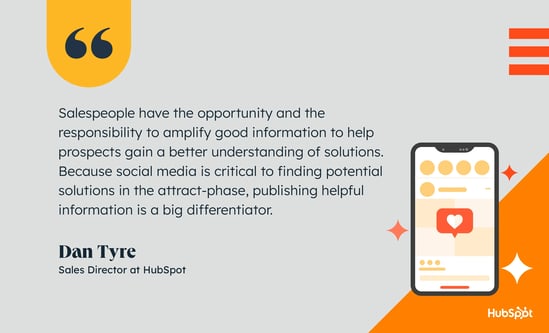
"These aren't options that are encouraged or cultivated or promoted in our school systems," Robinson says. "And I think it's a very impoverished view of the way in which many people would actually prefer to make their living."

The solution Robinson advocates is one that involves looser dependence on standardized testing and success in the STEM disciplines (science, technology, engineering, and mathematics). It celebrates kids for all their unique qualities and helps them turn those passions into skill sets.

Schools that do this well employ teachers that treat students as individuals that need nurturing, not widgets that get blindly assembled. They also employ principals who create a concrete vision for the school and empower the teachers and students to fulfill that vision. And since kids spend more time at home than in school, the best institutions rely on parent feedback to guide students' education.

If those investments of time and energy are made, instead of students seeing their passions as something looked down on or reserved just for nights and weekends. They'll see them as useful and desired in society. Because they will be.

Join the conversation about this story »

NOW WATCH: Why law school is a waste of money unless you get into a top school

09 Sep 21:17

9 Key Social Selling Tips, According to Experts

by leslieye@hubspot.com (Leslie Ye)

Social media has become a crucial part of the sales world, especially considering that high-performing salespeople are 12% more likely to use social media when selling.

As social selling skills are becoming a need-to-have, I asked sales experts for their best social selling tips you can apply to better leverage your social media presence to connect with prospects and make hard sales.

Let's dive in.

Download 37 Tips for Social Selling on LinkedIn

1. Leverage information on social media to connect with prospects.

1. Optimize your profiles.

Your social media profiles are useless to leads and potential customers if they don’t contain the information they need to learn more about you, what you offer, and how you can help them.

Because of this, optimizing your social media profiles and keeping them up-to-date with all of your and your business's relevant information is crucial.

Yes, it should be visually appealing and have a headshot and your cohesive brand identity, but it should also clearly state who you are, your role or position (if applicable), and any relevant information about your professional background that lets a prospect know that you’re relevant to them.

2. Leverage information on social media to connect with prospects.

When I reached out to Sarina Kowaguchi, former Senior Growth Specialist at HubSpot, she stressed the importance of leveraging social media to find common ground and build rapport with prospects.

She says, "I've found that social selling can be truly impactful when you can leverage information on social media — such as LinkedIn — to connect with a prospect on mutual experiences, interests, or connections."

For example, you could congratulate a prospect on a professional milestone or "win" or send a personalized message from time to time.

3. Diversify your platforms.

Dan Tyre, former executive at HubSpot, emphasizes the value of maintaining an active social media presence across various platforms.

He says, "Twitter, Instagram, Facebook, and Linkedin are my jam. Part of being an inbound executive is to make sure you are optimizing multiple platforms to make it easy for people to find you and reinforce your brand."

Kowaguchi echos a similar sentiment, telling me: "While email and phone calls will remain a large part of my day-to-day prospecting, I diversify my efforts across other channels of selling as well, and I've found that social media messages can cut through the noise that emails often present."

So, which platforms should you use? According to our 2024 State of Sales Report, sales reps who use social media for prospecting say that Facebook is the most effective, followed by Instagram and LinkedIn.

In regards to prospect research, reps say Facebook is the most effective, and LinkedIn and Instagram are tied for second.

4. Be an influencer and share helpful content.

The role of a salesperson is changing in 2024 as buyers are researching products and services on their own and building their knowledge before ever reaching out to a sales rep.

This shift allows salespeople to become influencers on social media by sharing the helpful content buyers look for when doing their research. Tyre says, “Salespeople have the opportunity and the responsibility to amplify good information to help prospects gain a better understanding of solutions. Because social media is critical to finding potential solutions in the attract-phase, publishing helpful information is a big differentiator."

dan quote-1
Image Source

5. Demonstrate interest by interacting with your prospects' content.

Engagement is the name of the game when it comes to social selling. Tyre underlines this point, telling me: "I find that prospects and customers appreciate it when you share pertinent information and help expand their reach."

Engaging online also conveys that you're familiar with the prospect and their work. As Tyre observes, "If I am going to target an account, I always follow them on Twitter and have some interaction before I call or email so that they know I did my research and I want to help them get more business."

When you interact with people on social channels, you learn more about their interests and pain points, which clues you into exactly how you can help them. With this understanding, it’s much easier to inform the type of content you share and craft an effective value proposition as you nurture them further down the sales funnel.

6. Be yourself, and be sincere.

Kathleen Rush, Sales Manager at HubSpot, suggests that sales reps stay true to themselves through their social selling efforts. According to her, "I live by this mantra in person and on social media — be yourself, and be sincere. And your audience will naturally grow as a result."

She adds, "When you affirm how you genuinely feel about a client or a product, you build authenticity as a helpful resource. Once that trust is established, the conversations can really begin! Watch those views and shares grow!"

Barrett J. King, Sr. Director of Revenue at New Breed, seconds this and tells me it’s crucial to be authentic: “Readers and buyers can 100% feel the difference between content that's rooted in real experience vs. content that's fake and fashionable. If you want to build trust (which you can't sell without), authenticity is the only path.”

7. Build credibility with LinkedIn recommendations.

When I touched base with Marlon De Assis-Fernandez, Principal Account Executive at HubSpot, he had this to say: "When I think about social selling, I think about how I can use my social media to build social proof."

For De Assis-Fernandez, a great way to do this is by building (and then leveraging) your LinkedIn recommendations.

He told me, "Having a slew of recommendations can help showcase your integrity. For those that I haven't worked with, I like to point them in the direction of my recommendations on LinkedIn to hear straight from other customers I've worked with. The key is being genuine."

He adds, "If you do a great job solving for the customer, they'll always be keen to provide feedback — and the more you solve for them, the more positive that feedback will be. It's a great habit to get feedback after a sales process and even better to have that feedback displayed in the form of a LinkedIn recommendation."

8. Use data to inform your social selling strategy.

For business leader and author Melonie Dodaro, a good social selling strategy is backed by data.

In her own words, "To improve your social selling strategy on LinkedIn, it’s important to regularly analyze your data and adjust your approach based on your findings."

There are several key performance indicators (KPIs) worth tracking, like profile views, connection requests, and leads generated.

Of course, you need to define your goals so you have something to measure for. For instance, maybe you want to increase your network by 20% — or generate X-number of leads via LinkedIn each month. Then, you can determine which tactics are helping you move closer to your goal.

9. Stay consistent.

Building relationships with prospects takes time. This is why consistency is a key ingredient for any sales strategy — online or not.

For instance, Tyre recommends sales reps post at least weekly on LinkedIn, along with individual follow-ups with prospects who engage with your content.

He told me, "Generally, the key is to have three or four interactions within 10-12 days, which shows professional persistence without overwhelming your prospect."

Back to You

Developing strong social selling skills is easier said than done — still, sales reps stand to gain a lot from making that development a priority.

Social media isn't going anywhere, and when properly navigated, it can be a powerful resource for understanding, connecting with, and ultimately making deals with prospects.

New Call to action

09 Sep 21:17

The Ghost of Sales Future: 3 Predictions For Sales in 2016 and Beyond

by leslieye@hubspot.com (Leslie Ye)

Sales is wildly different today than it was a few decades ago. Gone are the days of major business decisions being made over a steak dinner at a country club or during a round of golf.

So it’s a safe assumption that in another few decades or even years, sales will change again. But what will it look like?

What’s the Future of Sales?”, a report by SAP, gives us a glimpse.

For one thing, buyers will expect interactions with salespeople to be more focused than ever. Survey results indicated that 80% of buyers already know what they’re looking for before they contact a salesperson.

Furthermore, three-quarters (77%) of modern business leaders are concerned that the wrong purchase decision will waste company money, and just under two-thirds (58%) fret about wasting their time.

For another, salespeople’s value to buyers will overwhelmingly be tied to their expertise. High levels of product and company knowledge far outpaced “good personal relationships” or even “sharing responsibility for business risks” in terms of what buyers want from salespeople.

“With growing pressures at work, highly informed buyers will continue to be on the lookout for a trustworthy and worthwhile vendor that gives them a personalized, efficient purchase experience,” according to the report. “Vendors can prove that they truly understand their buyers by better anticipating their needs and providing valuable insights.”

Check out the infographic below for a visual summary of some of SAP’s most noteworthy findings about where sales is headed in 2016 and beyond.

get the free hubspot crm

09 Sep 21:16

Why Are Reviews So Effective At Winning New Clients?

by James Debono

Why Are Reviews So Effective At Winning New Clients?Why Are Reviews So Effective At Winning New Clients?

Being found online is tough. No Question. But been found online and getting new clients to select your business over your competition is even harder. Especially when there are very few differences between the services you offer. While many business owners leave it down to chance, there are ways that you can dramatically improve the chances of your business winning those new clients ahead of your competition.

One of the most powerful ways to set yourself apart from your competition is by highlighting your positive customer reviews online.

So Why Are Online Reviews So Effective?

Online Reviews build trust. Whether your customers are raving about what your product has done for them, how the results from your service changed their life or just how friendly and approachable the staff were. These reviews come from a third party not from the business owner, not from a copywriter. They come from the heart and are often filled with positive sentiment and emotion that truly connects with people who are in the same circumstances the reviewer was in prior to engaging with your business.

68% Of People Say Positive Reviews Make Them Trust A Local Business More (source)

So people trust and read online reviews but that isn’t the only reason why online reviews are so important.

The number of Online reviews you have is considered to be one of the major influences on how well your business ranks in local search. You can see how many reviews you have by Googling your business name. If you have any it will show underneath your website. If you don’t have any, it will simply say leave a review (You can also check your reviews by logging into your Google+ dashboard and clicking on the reviews tab and that will show you).Google your business to see how many reviews you have

Where Can You Use Your Google Reviews To Increase Conversion?

Local Results

If someone in your locality searches for the services that you provide, then your star rating is front and centre for everyone to see. In order to get a star rating on Google+ you need to have 5 reviews. Once you get those five reviews, then your star rating will appear within a few days, although sometimes it may take a few weeks.

PPC Ads

In order to get your Google+ reviews to show on your PPC ads you need to enable location extension in Adwords. You can find the full list of benefits and instructions here. You can also use seller ratings.How do you get a 5 star rating on your Adwords?

Organic Results

If you have reviews and testimonials, you can help search engines understand them with schema markup. In short you provide the search engine with specific code that it can use to identify reviews. Having reviews displayed on your search results won’t necessarily impact your rankings, but it does improve indexing and can increase click-through rates and conversions to your website (See Google’s support page, Reviews Rich Snippets for details.)

The Importance Of Reviews For SEO?

The more reviews you get the better your chances of being displayed in the top 3 of the new Google snack map. Why? – to get a little technical here each review is a 3rd party citation for your business and services.

Google always wants to know that it will send its clients (searchers) to the most trustworthy and reputable search results. If your business has 12, 18 or 25 positive reviews from users in the catchment area of your business then you stand a much higher chance of being listed in the top 3. So if you have a better star rating then your competition you will be seen as trusted and win the business.

In essence getting reviews for your local business on Google+ works two fold.

  1. It is a key factor in the ranking of your business in local search.
  2. It increases the social proof of your business and thus your conversion rate.
Tip: Google loves fresh, unique content, and user reviews are a great way of getting that new content. The more up to date reviews are, the more relevant they are to both users and clients so keep it current!

Where Is The Best Place To Get Clients To Leave Reviews?

Google+ is the key directory where your business should get reviews as this has the biggest impact on search however there are other 3rd party review sites that can influence both potential buyers and your performance in search.

Some of these key directories we mentioned in our previous post about the importance of local directories in search, in short there are directories relative to your niche that have potential clients and aggregate and share reviews about your business online. Having a great reputation across a plethora of these sites will be a huge advantage in helping clients overcome scepticism and also to improve the authority of those individual listings of your business and the relevance to your position on Google maps.Business Listings to place your NAP

What If There Are Bad Reviews?

Ok, let’s start by saying that not everyone is perfect and on occasion for whatever reason things do go wrong resulting in a client not getting the service they deserve.

When this happens. internet savvy clients are likely to vent their anger by going online, finding the first portal they come across and sharing their discontent with everyone.

And while no business owner wants bad reviews, Revoo suggested that 68% of consumers trust reviews more when they see both good and bad reviews. Especially if the business has reached out to attempt to rectify the situation.

To get more information on how to deal with a negative review read this post on Reevoo.

How Can You Improve Your Reviews?

The best way to improve your ratings is to make sure that your customers receive excellent customer service. Happy customers attract more happy customers, who are willing to rate you well and tell others about your business or products.

In short, rather than fretting over one bad review reach out to the reviewer express your concern and ask them to contact you directly so you can help solve the problem. To potential clients it shows that you care, to the reviewer you are taking ownership of the situation, attempting to take the situation out of the public arena and also leaving the ball in their court.

Even better than simply reacting to negative reviews when they appear, a positive and proactive approach to your online reputation and reviews is far more favourable.

After all one bad review from a total of one review is BAD. One bad review amongst 10, 15 or 20 positive reviews is not an issue at all.

Therefore make it an ongoing business concern to ask clients to leave reviews about your business, monitor that feedback and be proactive about resolving issues raised by your customers with an outcome that reasonably satisfies all parties, including you, as and when it happens.

Note: There are filters set into the review sites that are there to monitor any suspicious activity. Going from no reviews to twenty reviews overnight may alert the filters and could result in genuine reviews being removed from your listing.

Tips For Getting Reviews And Making Them Count.

  1. Be a Great Business – The best way to get positive feedback is to make sure that your customers receive excellent customer service. Happy customers attract more happy customers, who are willing to rate you well and tell others about your business or products.
  2. Ask for the review – A lot of businesses believe that reviews will appear on their own. The truth is that most people who have a positive experience need to be asked to leave a review as they don’t understand how important it is for your business.
  3. Send an email to the user asking for the review shortly after they have experienced your services and are feeling the positive impact of the results you have provided. The sooner the better.
  4. Send a follow up email. People have great intentions but often don’t realise how important to your business these reviews can be. A gentle reminder can increase the number of reviews dramatically.
  5. Don’t worry about getting reviews on all the websites that your business is listed in as this will prove too difficult to manage. Focus on those sites that are deemed authoritative by the search engines. Yell.com, thomsonlocal.com, 192.com
  6. Make the process as simple as possible – Don’t ask the user to jump through to many hoops in order to leave their feedback, make it simple and unintrusive.

Other Ways You Can Leverage Your Reviews To Help You Get More Clients

Earlier in the post we discussed how you can use reviews in search to elevate you above the competition but what if, as with many of our clients, customers send reviews and testimonials to you in the form of letters or cards or gifts?What you should do with a Thank You message from a customer

  • Take a photo of the cards and gifts and publish them on Social media.
  • Leave them in your reception area so everyone can see.
  • Reach out and thank the customer who left the review and ask them if they would be as kind to share their message with the world by adding it to an online review site.
  • Add the reviews to your website.
  • If you can, get a photo of the client and add their testimonial to the image.
  • Put several of these testimonials together and create a small slide show video which could be added to your website and social media.
  • Add a selection of reviews to your newsletter
  • Add the testimonials to the footer of your email.

There are many creative ways to leverage reviews to position you as an expert and a provider of excellent service but ultimately it comes down to asking for them and marketing them so that everyone, including new and existing customers, can see the great work that you are doing.

It’s not always easy to get reviews, but focus on what the reviews will give you: A business with a fantastic reputation online, lots of user generated content for the search engines to boost your rankings and best of all, you will be building a referral business based on trust.

Do ratings and reviews affect your choices when it comes to working with someone? Let us know!

09 Sep 21:16

How Adaptive is Your B2B Sales Organization?

by John Cousineau

In a 2012 presentation for Corporate Visions, Scott Santucci of The Alexander Group (at the time, with Forrester Research) noted that CEOs are increasingly worried that their selling systems are not adapting quickly enough to accommodate changing business strategies.

In response, we’re seeing savvy sales organizations find ways to become more adaptive in an effort to be more consistently high performing. Intriguingly, as Stacy Blanshard noted in a recent article for the BBC, more adaptiveness may be merely an observable effect of what happens when analytics reach center stage in decision-making. Firms become fundamentally curious, collaborative, and adaptive, at speed, with certainty.

While exceptional today, adaptive sales organizations will be table stakes for surviving the fog of revenue uncertainty. They have four major characteristics in common:

1. Measuring progress in small, fast, increments

For decades sales organizations have tracked quota performance using trailing indicators. It’s been analogous to driving while looking in the rear view mirror and it’s been often accompanied by quarter-end surprises on deals that failed to close. Adaptive organizations use more granular measures to see how today’s sales efforts are likely to affect revenues much further upstream. They gauge buyer reactions to sales efforts in ways that produce faster, more precise, leading indicators of future sales. Adaptive sales organizations know when appropriately targeted titles are engaging with sellers, and doing so with pace. Their surprises aren’t occurring at quarter-end, they’re occurring at day’s end. They’re spotting and fixing mistakes long before deals are lost and quarter-end arrives.

2. Executing with consistency and endless testing

Reaction to change is quicker and more concise when salespeople approach tasks they have to perform in sales cycles in a consistent manner. When sales execution occurs in a consistent fashion, the effectiveness of sales practices becomes easier to discern. Easier to improve with testing. And easier to learn with practice. Firms gain the advantage of being able to gauge the progress of opportunities through a common lens. And see how small changes, in shared practices, can create small lifts in performance than can compound into big lifts in results.

3. Focusing on buyer outcomes

Sellers (especially those below quota) are often over-optimistic when qualifying “opportunities.” They focus on quantity rather than quality in pipeline reviews with their managers. When things aren’t going well, they try to do more and do it more quickly. Day-to-day, they’re held accountable for activities.

Adaptive organizations focus less on how much sellers are doing and focus more on how much buyer progress is being achieved from what sellers are doing. ‘Best practices’ are identified and honed based on objective measures of the effectiveness of sales practices. Every incremental selling effort produces proof points on what’s working and what isn’t. From the fog of uncertainty, patterns of effective sales practices emerge.

4. Continuously improving

Markets, competitors, buyers and economic conditions are in a constant state of flux. What works today may yield poor results next quarter. Adaptive sales organizations constantly tweak their sales practices in response to what they’re seeing and learning. When they try something new, they can see their successes and failures quickly. Small sample lot testing allows them to find their fast paths to success, even when risks and uncertainties are high. When able to test the immediate buyer impacts of new sales practices, companies enjoy faster success than their competitors.

A shout-out of thanks to Scott Santucci for his forward-thinking perspectives on sales performance

09 Sep 21:09

Better for the Buyer, Better for the Salesperson: The Bold New World of Inbound Sales

by bhalligan@hubspot.com (Brian Halligan)

For years, Dharmesh and I have talked about what it means to be “inbound” in the context of marketing. The buyer has changed, and this demands businesses change the way they market and approach those buyers. We need to attract people instead of resorting to old, cold tactics that are less and less effective over time.

Today on stage at INBOUND, Dharmesh and I talked about the concept of spreading the idea of inbound to everyone. Being a sales guy at heart, I’m personally most passionate about spreading the ideals we’ve pioneered in Marketing to Sales.

The Old Sales Playbook Is Broken

I came up through the sales ranks; it’s where I spent the first 15 years of my career. What I learned is that the sales playbook I grew up with and that is still in widespread use today is fundamentally broken. Why?

Well, it’s simple. The buyer has changed in important ways. Dharmesh and I have talked for years about the implications these changes have for marketers, and it turns out that the implications for sales folks are similar.

When I was a sales rep, I hated Tuesdays, because Tuesday was cold call day. Even 15 years ago, it was a slog. Today, it’s nearly impossible. When I get a call from a number I don’t recognize, I don’t answer. The phone is my least favorite app on my phone, and I don’t have one on my desk at HubSpot. The days when making a context-less cold call could result in a sale are quickly coming to an end.

The same thing is true of emails. We’re already neck deep in email from people we know, and we’ve got spam protection keeping cold emails from consuming our attention. The number of emails that end up in my spam folder every week from people trying to sell me something speaks to that.

The long and the short of it is that buyers are becoming increasingly immune to traditional “cold” sales methods.

The Power Has Shifted Toward the Buyer

While buyers have become more immune to old sales tactics, they’ve also wrestled almost all of the power in the sales process away from the rep. With information so readily available online, buyers can go through most of the purchasing process without needing to lean on a sales rep.

A few examples:

  • Today’s buyers know your product and your competitors’ products well. They’ve been doing their research and digging into the details on their own, long before they ever engage a salesperson.
  • Instead of relying on a sales rep for references, they can find their own unbiased opinions on review sites or amongst their network.
  • Today’s buyers don’t need to ask for a quote or guess at your discounting policy. If your pricing isn’t already on your website, it usually isn’t hard to figure out what others are paying.

The New Role of the Sales Rep

So if the role of the rep isn’t what it used to be, what should it look like? I think that salespeople need to change in many of the same ways that marketers have needed to change. Sales needs to become less outbound, and more inbound.

  • Today, selling is about partnerships, not power struggles. Buyers need to see value from the sales process -- if they don’t, it doesn’t continue. Buyers appreciate salespeople who act as trusted advocates with domain experience they don’t yet have.
  • Today, selling is about building trust, not being tenacious. Finding a prospect and completing a sale once meant doggedly pursuing every lead. Today, the buyer decides when to engage and the timeline the sale will take. As a sales rep, if I want to be a part of their buying process, building trust is the only route I can take.
  • Today’s sellers are helpful hosts, not aggressive agitators. My boss at my first sales job once took me aside and said, “You know, we never get hurt by being too aggressive.” In retrospect, that may have been the worst advice ever given.

I’ve spent a lot of time thinking about the shifting role of the salesperson and what this means for the way they do what they do. The most concise way I’ve found to sum it all up is that sales folks should “sell unto others as you would have them sell unto you.”

The Road Not Taken in Building Marketing Software

When we started building our marketing product, we used a counterintuitive approach to decide who we should optimize our tools for -- an approach that’s paid dividends. We could have gone the traditional route and obsessed over the marketer’s every move. Followed the marketer home from work. Studied the marketer in the wild. Obsessed over the marketer’s every click.

We did all that, but that isn’t all we did. If it was, I’d be willing to guess that HubSpot would be indistinguishable from a dozen other vendors. We’d be helping marketers buy cold lists and email them in the most efficient way possible -- another dying approach that no longer serves the needs of the buyer or the marketer.

So what did we do differently? We started following the buyer home from work, studying the buyer in the wild, and obsessing over the buyer’s every click -- and we noticed some fundamental shifts afoot. Only in observing the buyer did we see where things were ultimately heading for marketing. And using those insights, as the saying goes, we skated to where the puck was going in building our product.

HubSpot’s Sales Platform: Where We’re Heading

As we entered the sales space, we faced the same set of choices we did nine years ago on the marketing side. While we’re studying salespeople and working hard to make their lives easier, we’re also hyper-focused on the changes that are happening with the buyer.

Rather than automating the old sales playbook that just irritates buyers, we’ve aimed to build a new type of system that helps sales folks act on interest and sell in a way that is better for the buyer and the seller.

We started down that road in 2013 when we announced Sidekick, continued in 2014 when we launched HubSpot CRM, and we’re taking another huge leap in that direction in 2015. Here’s what we’ve been working on.

Introducing Prospects in Sidekick for Business

Finding new prospects is hard work. For years, we’ve been all about inbound -- marketers generating inbound leads for sales teams -- but we know that for a lot of sales teams, prospecting is still a big part of their process. The problem with prospecting is that it’s a ton of work, and usually only results in a list of ice-cold prospects to cold call or email.

Prospects, a feature of Sidekick for Business, helps sales teams uncover useful details on companies expressing early interest by visiting your website. Set hyper-specific filters and get alerts when exactly the type of company you usually sell to appears on your website.

Announcing Sidekick Connections

You’ve identified a company that is a good fit for you to sell to and seems to be interested. The next logical question: Who do you reach out to? It isn’t hard to dredge up an email address from the web, but more often than not, contacting a prospect out of the blue ends up being a dead end for the seller, and an annoyance for the buyer.

Sidekick Connections, a new feature of our Sidekick toolset, aims to change this. Sidekick Connections helps you identify warm pathways through the engagement graph that lives in your inbox. Authorize Sidekick Connections, and Sidekick will surface the hidden network of connections you have to your target companies. If someone on your team is connected to someone you’d like to get in touch with, requesting an introduction is as easy as a single click.

Announcing Sequences, a feature of Sidekick for Business

Anyone who works in sales knows that following up with a lead over time is a time-consuming, monotonous task … and doing it in a relevant, personal way is even harder.

Instead of creating a task or setting a reminder for yourself to follow up with a prospect in a week or a month (when you’ve long since forgotten the context of your initial conversation), Sequences allows you to schedule tailored, personal follow-ups that get sent automatically in the future. No more reminders, and no more inept “just checking in” emails.

Big Improvements to Sidekick for Business for Salesforce Users

Back in May, we announced Sidekick for Business, a premium set of tools for professional sales teams looking to sell better and faster with features like Calling, Templates, Documents, and a layer of analytics to help you figure out what actually works. And now, we’ve made huge strides toward making Sidekick for Business better than ever for Salesforce users.

Place calls, get useful context around your sales process, and see the full Sidekick information sidebar right on any lead or contact record in Salesforce. Full activity syncing means that every engagement tracked through Sidekick for Business (email opens and clicks, document views, phone calls, and more) is seamlessly logged to Salesforce.

Big Improvements to HubSpot CRM

HubSpot CRM gets better every day. Recent improvements include mentions, which allow you to collaborate with the rest of your team right inside HubSpot CRM; multiple deal pipelines (currently in Beta) which make it possible for different teams to work side-by-side; and improved syncing with Gmail (currently in Beta) which enable replies to your sales emails to be seamlessly synced to the contact record.

Reporting Add-On for HubSpot CRM

You’ve asked, we’ve listened: Advanced reporting is now available for HubSpot CRM through HubSpot’s Reporting Add-On. The same paid add-on that works with HubSpot’s marketing platform also includes more than a dozen out-of-the-box sales reports, and makes custom reporting easy.

Making Sales Better for Everyone

These are just a few of the features we’ve announced at INBOUND and the strides we’ve made toward changing the way salespeople go about their day. Our end goal is to help our users and customers adopt a sales process that is better for the buyer and better for the seller -- and we’re just getting started.

See what's launched in Sidekick & HubSpot CRM.

09 Sep 21:09

Canadian surrogate eliminated baby from triplet pregnancy at urging of overseas couple

by Tom Blackwell

Kari Smith felt a real rapport with the overseas couple who commissioned her to have their child: they were about the same age, seemed to hold similar values and even shared a love of craft beer.

Then the Nova Scotia-based surrogate discovered she was pregnant with three babies, and things took a “horrible” turn.

Smith wanted to carry all three but, without hesitation, the would-be parents insisted the trio of fetuses be reduced surgically to just two. As non-citizens of their Caribbean home, they were all but barred from bringing home more than two children to the island nation.

A lawyer advised Smith that the couple could cut off expense payments if she insisted on keeping all the babies. Not wanting to upend the couple’s lives, the surrogate eventually agreed to the reduction, then one of the remaining two fetuses died, too. It was a traumatic experience.

I wasn’t even sure how I could look them in the eye after this

“I wasn’t even sure how I could look them in the eye after this,” says the Annapolis Valley resident. “It was horrible. I wasn’t sleeping, because it was on my mind all the time: ‘am I going to go through with it?’ ”

Weeks later, the 38-year-old says she now believes the reduction was for the best medically, given the risks around multiple births, and realizes the couple was not as coldly calculating about the decision as first appeared. They wept when the reduction occurred.

But the case underlines the moral dilemmas that surrogacy can unexpectedly impose on women who lend out their wombs, as foreign demand for Canadian “carriers” surges.

“This is a heartbreaking situation for the woman,” said Juliet Guichon, a bioethics expert at the University of Calgary.

Darren Pittman for National Post
Darren Pittman for National PostKari Smith poses in the backyard of her home in Somerset, Nova Scotia. Smith is serving as a surrogate for a couple who live in Bermuda.

Participants in the increasingly common arrangements usually sign agreements that, among other issues, address abortion and selective reduction in certain circumstances. Surrogates ultimately can decide what to do, but may forgo expense payments if they do not follow the would-be parents’ desire to terminate.

That seems wrong, says Vardit Ravitsky, a bioethics professor at the University of Montreal. Contracts should let a surrogate reverse course — without financial repercussions — when she actually becomes pregnant, and warn the future parents that they can’t control every aspect of the pregnancy, she said.

“Termination of any kind, for any reason is something we often change our minds about,” said Ravitsky. “When it’s your own baby, it’s your own decision. When you’re carrying someone else’s baby, it’s extremely tricky … We’re putting all of this on the shoulder of the surrogate.”

Smith, a logistics expert at a Michelin tire factory and co-owner with her husband of the Bad Apple Brewhouse in Somerset, N.S., has already had five children of her own.

She said she wanted to help those who were not able to have children naturally, and submitted her name to the Surrogacy in Canada Online consulting company. Surrogates here are barred from accepting commercial fees, but can be reimbursed for their expenses.

She and the overseas couple – Canadians originally from Halifax who had also signed up with the agency – hit it off when they made email contact. Under a confidentiality clause in the contract they eventually signed, Smith cannot identify the pair, making them unavailable for comment.

The agreement did allow for triplets to be reduced to twins if necessary. But Smith, currently in her 20th week of pregnancy, said the doctor never told her the two embryos placed in her womb could result in more than two babies and she gave the issue little thought.

In fact, one of the embryos split and developed into identical twins, the other resulted in pregnancy with a singleton.

That is when the parties’ paths diverged.

Darren Pittman for National Post
Darren Pittman for National PostKari Smith poses under a tree near her home in Somerset, Nova Scotia. Smith is serving as a surrogate for a couple who live in Bermuda.

“Immediately, I was: ‘I’m going to do this, I’m going to carry all three,’ because I didn’t want to kill a baby,” Smith recalled. “(But) as soon as I sent (the couple) the email that there were three heartbeats, he said ‘We need to find out about reduction right away’ … They absolutely didn’t want three babies.”

Sally Rhoads-Heinrich, who runs the Surrogacy in Canada agency, says the husband told her by telephone that he would rather end up with no infants than three.

Reductions – where a drug is usually injected in the selected fetus to stop its heart – are sometimes recommended for multiple births to curb risk to the remaining babies. But just days before the procedure, Smith discovered another reason the couple was so adamant about eliminating one or more fetuses.

The country where the couple live will not allow foreign workers employed by private-sector employees to bring more than two children into the country, part of a tightly restricted immigration policy.

With triplets, the couple apparently would lose their jobs and have to leave the island, and Smith says she didn’t want that on her conscience.

The singleton was terminated and then, a week or so after the procedure, one of the identical twins died.

Despite the initial turmoil, Smith says she is reconciled with her decision, which she thinks has given the pregnancy a better chance overall of succeeding.

If there is an escape clause, I think what’s going to happen is, you’re going to see a lot more disputes

Meanwhile, surrogacy consultants say Canadian carriers like her are in increasing demand from people in other countries.

The emotional issues of abortion and reduction are always addressed in the contracts the parties sign, says Michelle Flowerday, a Toronto-based fertility lawyer.

The agreements typically leave the final decision to terminate a fetus to the surrogate but say she should follow the wishes of the intended parents or doctors – or risk losing expense payments.

Flowerday said she has never seen a conflict over the issues among her clients, and questions the value of giving surrogates the kind of no-penalty way-out that Ravitsky suggests.

“If there is an escape clause, I think what’s going to happen is, you’re going to see a lot more disputes,” she said.


09 Sep 21:05

A solution to the content marketing measurement puzzle

by Mark

content marketing measurement

Here is a common question I hear from many of my clients and students:

My boss is looking at the leads we generated on advertising versus social media or content marketing and is questioning why he is putting money into content instead of doubling down on ads. How do I measure the value of what I am doing?

First, let’s not rule out the notion that your boss might be right! Advertising works.

Still, there is a place for social media and content marketing in most businesses so let’s tackle this question in a new and meaningful way.

What I want to propose today is that your success might not be determined by WHAT you measure but also WHEN you measure it. What you measure and how you measure it needs to be dynamic.

The engagement curve

There are many kinds of businesses and many uses for content marketing but my assumption today is that you want to connect with people in a way that eventually leads them to take some action: register, download, sign-up, purchase, etc.

To accomplish this, it takes time, patience and resources. If you are comparing your social media and content marketing efforts to traditional advertising results, it is probably the wrong comparison.

A more likely analogy is the success you might be having at a networking event or trade show. You have to show up a lot before people begin to recognize you, know you, trust you and eventually buy something. Between trade shows you might create little opportunities to connect with these contacts and let them know you’re there and you have a lot of value to provide.

Again, there are a LOT of exceptions and different ways to go with this but in general, I think this is where social media and content really fits in the marketing mix — a tool to build awareness, connections, relationships … and eventually action.

It kind of looks like this:

social media measurement

Isn’t this what marketing is about in one simple chart? Finding those provocations — those interactions — to drive our customers to higher and higher levels of engagement over time?

I think this is where content marketing fits precisely in your strategic mix — providing a drip, drip, drip of communication to lead people up this curve. Content is the catalyst.

As I demonstrated in a recent post, it takes time to get people up this engagement curve and realize true financial benefits from content and social media marketing. In the survey I referenced in this post, nearly every company realized a boost in awareness right away from social media marketing but many companies took five years or more before they started to see a bump in sales.

This suggests that there are different flows to the benefits of content and social media marketing, which might be visualized like this:

social media measurement

You can slice this up any way you like — whatever path and flow seems right for your business — but it seems to me there are three distinct phases to most marketing programs over time:

Awareness — As we get up and going, we are figuring it out, experimenting and failing, aligning with platforms and partners. Most important, the focus is on building a content-creating culture, a business oriented toward publishing and responding. This is a very difficult phase but the good news is, most companies do experience some success even in the first year.

Reliable reach — When you begin, it might feel like you are throwing your content into a vast ocean. Is anybody out there? Are they seeing anything? But after a time of creating meaningful content, connecting with an audience, and maybe even distributing some content through paid and promotional methods, something amazing happens — people begin to talk back, they subscribe, they sign up for something, maybe they even buy your product.

My friend Jay Baer characterized this phase as “reliable reach” and I like that term very much. You are building a true audience, a reliable audience. When people subscribe to your content, they are saying “Please market to me!”

ROI phase — With these building blocks in place, you are poised to begin realizing tangible financial benefits from your efforts. You are seen as a helpful and trusted authority, you are consistent, and your presence is reliable. When does this occur? For some businesses, four, five years or more.

The content marketing measurement problem

If you’re an active and experienced marketer, you probably see these waves rolling before you, although you might not have visualized it this way before.

Here’s the problem almost every organization faces — they want to know the right measure for social media success and in particular, they want to crack the ROI code and they want to do it NOW.

But as you can see, there is NO SINGLE RIGHT MEASURE because the organizational priorities mature and change over time. Your goal is not to find the right social media measure. It to find the right measures that are appropriate to your place in time.

social media measurement

In this illustration, I’ve provided an example of what I mean. If you are in year one of your content marketing program, “ROI” is probably not going to be the most appropriate measure for your business. The research shows it probably isn’t going to happen, so let’s table that idea, OK?

In your first phase, you are building an internal marketing competency, and the most important measures should reflect that you are having a positive impact on the company culture. You need to show that you are “doing it” through metrics such as:

  • Increasing your organic audience
  • Establishing a consistent and reliable publishing schedule
  • Seeing a bump in web traffic as a result of your content
  • Early signs of engagement like Likes and comments
  • Measures that show your brand awareness is building through social media mentions

This is not a complete list, of course. These are a few measures that fit in the box on the illustration! I’m sure you can think of many more that show you are moving in the right direction.

Purists may dismiss metric like number of followers or Likes because it is not ROI, but I think these are meaningful in this phase because it demonstrates cultural change, and that is the most important thing you can accomplish at the outset.

The focus on connection

By the end of the first year of your content marketing journey, you are probably ready to change your metrics. If you’re not beating your phase one goals after 12 months of focused effort, you might need a serious course correction.

As you enter this second phase of marketing maturity, the focus needs to be on a deeper audience connection. We’re not simply building and audience, we need to be igniting our ideas through conversations  and content transmission.

In this next phase, we are moving beyond “broadcasting.” There needs to be some signs that our communication is beginning to flow back to us, too.

After the first year, it is time to overhaul your metrics by focusing on:

  • The number of people subscribing to your channels
  • Lead generation (not just sales but also new business connections, new employees, suppliers)
  • Advocacy — Are your customers sharing your content? When people share content, they are standing up in a virtual way and saying “I believe in this and so should you.” Content sharing is a very powerful indicator of success in this phase.
  • Authority — It is also important to look at WHO is sharing your content. Are you beginning to reach influencers in your industry? Are people paying attention to your content who can open new doors for your business?

How long does this second phase last? This will vary a lot by industry, and specifically by the competition and information density you are up against.

The payoff

A few months ago, I received this email: “I have been reading your blog for three years and I am a fan of your podcast. I have a project for you …”

I think this is a pretty typical pattern in content marketing. It might take years to really see the pay off. Again, this is going to vary wildly by business and industry but by year three you should start to see some financial. When you feel like you have outgrown the phase two metrics, it’s time to move forward once again and change your measurement to reflect:

  • Customer loyalty and retention
  • Conversion rate
  • SEO benefits
  • Marketing cost savings and cost avoidance
  • Sales

These are hard numbers that can actually be used in an ROI calculation, which is what we must all be aiming for eventually.

I hope this perspective helps. The key idea is that this is a new marketing channel works in a different way. It can’t necessarily be measured the same way as advertising but ultimately it must lead to the same financial returns.

If you enjoyed the ideas in this post you would probably be energized by the perspectives in my book The Content Code: Six essential strategies to ignite your content, your marketing, and your business.

Top illustration courtesy Flickr CC and FrankieLeon

The post A solution to the content marketing measurement puzzle appeared first on Schaefer Marketing Solutions: We Help Businesses {grow}.

09 Sep 21:05

8 Questions For B2B Firms Upgrading Their CRM

by Jed Singer

Selecting a Customer Relationship Management (CRM) Platform for the first (or fifth) time is never easy. There are many business triggers that cause firms to evaluate a CRM solution for their Sales team: the software may be creating more work than the system is creating value, you may have outgrown your current system’s features, or your Sales team can’t get critical tasks done on their mobile devices, or the data isn’t as accessible as you’d like, or, simply put, no one on your team may be using your current system (…tumble weed blows by…).

These are great reasons to take a look at what CRM options are out there and determine which may be the best fit for your teams, both Sales and Marketing.

If Marketing is regularly generating leads by creating amazing content for each stage of the Buyer Journey to fuel the brand’s digital channels – from social communities, to email, to SEO, to display – then it’s important that the CRM you select be integrated with those content & community marketing activities. You want to ensure that all of the actions and engagements that Marketing content is receiving is then being automatically recorded into the CRM and contributing to a lead scoring model that Marketing and Sales have co-created.

Yes, Sales will want to know the source of the lead (Google? LinkedIn? Email?), how many Marketing content assets they engaged with, how recently, which specific assets they engaged with so they may tailor their initial touches (was it a whitepaper they downloaded? a webinar they attended?), and which leads are the hottest ones in the system right now, based on the aggregation and insights work that the CRM is doing in the background.

Which CRM systems can do all of this for you? Here is a shortlist of ten of the best CRM platforms with brief descriptions from TrustRadius, ranging from nearly-free to enterprise-level in features and cost:

Salesforce.com: “The innovative standard bearer among SaaS CRM platforms. It has transitioned from being a pure-play CRM vendor to being a true platform vendor with some loss of focus on CRM functionality.”

Insightly: “A SaaS CRM / project management solution designed for SMBs. The product is essentially a plug-in to Google Apps, and has pre-built integrations to social platforms like LinkedIn and Twitter.”

Infusionsoft: “A small business-focused, comprehensive sales and marketing platform, which includes basic contact management, CRM, marketing automation and e-commerce capabilities into a single, subscription-based SaaS product.”

Zoho CRM: “Simple, very low-cost CRM option for the smaller end of the SMB segment. The product has several useful integrations with other products, including QuickBooks, and Google Apps and Google Docs.”

SugarCRM: “Open-source CRM system designed for SMBs. The product has about 170,000 paid subscriptions and is growing fast. The product features strong marketing capabilities and is a fully-featured platform for a relatively low cost.”

Microsoft Dynamics CRM: “A CRM system providing sales, marketing, and service (help desk) functionality. It is offered in two flavors: Online (competing directly with Salesforce) and on-premise.”

Sage CRM: “An SMB-oriented CRM platform offered in both SaaS and on-premise editions. Unlike the Sage SalesLogix product, the SaaS version is a true multi-tenant offering. The platform offers excellent integration with Sage ERP and accounting products.”

ONTRAPORT: “Offers customer relations management services that help with content management, such as creating and hosting webpages; lead tracking, which includes collecting customer data and behavior; traditional marketing approaches, such as e-mail, SMS, social media, and direct mail.”

Nimble: “A social customer relationship management (CRM) system with features such as contact management and data-driven analytics.”

Sparkcentral: “Provides a cloud-based customer engagement platform that caters specifically to customer care teams within large enterprises, enabling them to deliver real-time social customer service.”

Selecting the system that’s the best fit for your Marketing and Sales teams going into 2016 is no easy task. That depends on a set of criteria that your team will have to define. Things like:

1. How many Sales managers will need access to the system?

2. How many records are we starting with, and how do we see that scaling?

3. What kind of custom reporting do we need for both Sales and Marketing?

4. How much Marketing data (e.g. content marketing KPIs) will we want to capture?

5. How much social data (e.g. contact profiles, influence, etc.) do we need available?

6. What touches, if any, do we want the system to automate on behalf of Sales or Marketing?

7. Are we comfortable with the Cloud, or do we need local systems, too?

8. What features do we need for Sales managers on their mobile devices?

When it comes to selecting CRM or Marketing Automation software, it’s better to measure twice and cut once, as costs for migration, training, and manual data entry can’t be recouped if you decide you’ve made the wrong decision 3 months down the road.

09 Sep 21:05

Does Your Content Marketing Pass the Mom Test?

by Jay Baer
Does Your Content Marketing Pass the Mom Test?

Image via BigStockPhoto.com

Today, I had the honor of delivering a keynote address to more than 3,000 content marketers at the Content Marketing World 2015 event in Cleveland. For the first time in my long career as a speaker, I used no slides whatsoever. I just talked about where content marketing is going, and how content marketing professionals can continue to succeed….or fail to do so.

This is the text of my keynote:

Content Marketing World Keynote: Does Your Content Marketing Pass the Mom Test?

cmw_logo2015_2001We are colleagues. We are peers. We are friends. We are content marketers, and we are at a fork in the road.

As I look out at the thousands gathered here this week to learn, to teach and to celebrate, I am struck by two contrasting observations:

First, it is remarkable how fast this industry has grown. Just a short time ago, we collectively were just a flicker, and now with the addition of the twin fuels of attention and resources, we are very much a roar!

But my second observation is that we don’t need any more content marketers. We have plenty, thank you very much. What we really need – if we are going to sustain this success and take a seat near the head of the table in modern business – is not “content marketers” who are looking to exploit angles and employ sure-fire systems.

What we need are people who have a passion for connections. Who understand that there is a point to all of this that transcends clicks and shares and views and downloads and lead gen. And that point – the mission of content – is this:

Content is the emotional and informational bridge between commerce and consumer.

Building that bridge requires more than budget and an editorial calendar and analytics and a strategy. It requires people who care…no, it requires people who LOVE content and what it can do. Not what it can do for revenue and profits and the reduction of customer churn, although those are nice outcomes. But rather, we need people who love content because it helps a young mother pick the best pre-school, it helps a hospital administrator understand the benefit of a new endocrinology test, and it helps my Mom figure out what cruise line she wants to sail on in Alaska.

Content helps people make better decisions, save time, and improve their lives. Creating content is an honor, and it’s an opportunity. It’s an opportunity for you, it’s an opportunity for me, it’s an opportunity for all of us, and I hope you agree….it’s an opportunity worthy of passion.

So What?

You might be sitting there thinking, who cares? I have a ton of things to get done today, this week, this month, and this quarter. It doesn’t matter if me–or the people on my team–think about content marketing as marketing or as a larger calling. Why do I care if I–or the people on my team–have passion for content, as long as the job gets done.

Here’s why you should care, jaded content professional:

Competition commoditizes competency.

Look around you. More and more and more and more and more smart people are practicing the craft of content. They are getting better every day. And dozens and hundreds and thousands of blogs (including this one), podcasts (including mine), and conferences (like this one) are teaching everyone the same tricks and best practices.

If you have access to the same information and ideas that your competition does, and you play that out over a period of time, what happens? Almost everyone ends up in the same, narrow band of expertise.

Competition commoditizes competency. (highlight to tweet)

This happens in every professional service, always. Look at laser eye surgery. When it first came out, only a few opthamologists knew how, and had the equipment.  They were Gods! Now, you can get Lasik while waiting for a burger at Five Guys. Prices have gone down too, because differentiation has faded away.

This is where we’re headed, my friends. And when competition commoditizes competency, what becomes the differentiating factor? What separates the great from the good? What is the difference maker?

People. And Passion.

Right now, we’re still riding the wave. But the wave will crest. I can see it coming, and you probably sense it too. Everything you do and everything you know can and will be copied by your competition. It’s just a matter of time. But they can’t duplicate, they cannot steal if you fundamentally care more than they do. About content, and about content’s role to improve the lives of real people.

So I ask you a simple question, an existential question really:

Do you love content enough? Are you making content, or are you making a difference? (highlight to tweet)

And the same way every person older than 14 eventually falls out of love with Adam Sandler, it also easy to fall out of love with content and content creation.

The State of Content Marketing

I interviewed dozens of content professionals when I was prepping this talk. And what I found, when they told me about their day-to-day existence, was not an environment conducive to passion, but rather a growing set of circumstances–many outside of their control–that conspire to wring the joy and wonder out of the content process.

Here’s what I heard: Say yes if any of these are familiar to you:

  • Daily pressure to make more content
  • Daily pressure to justify content expenditures
  • Not enough people on your team to get all the content created and keep quality high
  • Executives that don’t understand the role of content as a connector
  • Turf battles between sales and content, or customer service and content


I say yes, too. I see it every day, personally. At my consulting firm, Convince & Convert, we work with companies to help solve these problems, and the one thing I’ve learned is if you love content enough, if you have a passion for it, don’t give up. Don’t get beaten down by the people–in your organization and beyond–who are trying to turn content into a machine.

But it’s easy to slip. It happens to me too, all the time. It’s easy to get caught up in the maelstrom and math of content marketing and lose sight of its role as a bridge between commerce and consumer–a bridge that people should actually WANT to cross.

So I created a simple filter to determine when I’m slipping. When my focus is shifting from the passion and the people to the procedures and the profits. I use this filter for our clients too, and now I give it to all of you.

The Mom Test

11187423_10204188901259529_7237387098990435689_o

Me and Mom, a long time ago.

I call it, The Mom Test.

The Mom Test works because for nearly all of us, our Mom not only loves us unconditionally, but also is unafraid to tell us the truth.

When I was in high school, I was the junior class President. At my school, in Lake Havasu City, Arizona the junior class officers were in charge of putting on the prom. So my friends and I worked for months and months and months to put together a nice event. And on the night of the prom, we cut loose. After all that buildup, we just went for it. My Mom was an english teacher at the school, and a chaperone at the prom. The next morning at breakfast I asked her, “Mom. Did you see me out there dancing? I was dancing all night!” She said, “Yes, I saw you.” And I asked “I’m pretty good right? I can really move.” And she said, “Jay….I’m pretty sure that dancing just isn’t your thing.”

Your Mom is unafraid to tell you the truth, and if your Mom–who loves you unconditionally–STILL doesn’t like something, NOBODY else will like it either.

If you’re unsure about a program, a tactic, an idea, just pause for a second and think, “Does this pass the mom test?”

All of us who are making content are sometimes in violation of the Mom Test. The content pros I interviewed for this keynote talked about things related to the daily pressure of content volume like:

  • Check-box checking, just creating content because it was on a spreadsheet to be created.
  • Creating content that they know is low quality, just to get it off their plate.
  • They talked about creating content that clearly serves the need of the company, without thinking about the need of the customers.


And let me just say something about that: If you’re crafting a description of your products and services, with photos of them, and bullets points of features and benefits, you haven’t created a piece of content marketing, you’ve created a brochure.

That doesn’t pass the Mom test. You know it and I know it.

When I was in middle school, my bicycle got a flat tire, plus the inner tube came off of the rim. I went out to the garage and labored mightily to fix it. But, as an avid indoorsman even then, I’m pretty sure I made it worse. I asked my Mom, “Hey Mom, I tried to fix my bike tire, but I’m not sure I can get it.” She said, “Jay…I’m pretty sure fixing stuff just isn’t your thing.”

And to throw a little salt in the wound, she had my little brother–who was 3 years younger than me, he was 9–she had him fix it. (Which of course he did in about 10 minutes.)

The pros I talked to told me stories about pressure to generate more leads, and to create content that’s too pushy.

  • Putting every stitch of decent content behind a registration form, even though forms are, by definition, the enemy of spread.
  • They talked about content–even in big companies–that is starting to feel like what you see from get rich quick information marketers, with aggressive landing pages and  ‘buy now” “limited time offer” messaging.
  • They talked about content that is strictly promotional. Content that isn’t a Youtility in any way, shape, or form. It’s not useful, it’s just an ad, in a different format.

That doesn’t pass the Mom test. You know it and I know it.

The Mom Test…of Passion

Once you understand the Mom test it’s easy to apply it, and it’s easy to know when you’re off course. I want you to start using the Mom test for your day-to-day content decision-making. It works for me, and I think it will work for you. We can always do better. Hopefully the Mom test will help you do just that.

But remember, Competition commoditizes competency. Passion is the differentiator, more so than any tactic. It will set you apart. Don’t let your internal politics and the business side of content dim the light in your eyes and the fire in your belly. Because once it goes, my friends, it’s very tough to get it back.

Dogs can smell fear, but Moms? They can sense passion. They should know you pretty well. After all, you LIVED INSIDE OF THEM.

If you don’t have a burning desire to do this, if you don’t care enough about content, if you’re not in love with what you do, and with the people whose lives you touch every day, then your lack of passion doesn’t pass the Mom test, and you know it.

A few years ago, my tire-fixing brother passed away from a heart attack at the age of 40. I had the unenviable honor of delivering his eulogy. It was the hardest thing I’ve ever done. But on the way home afterwards, my Mom turned to me with tears in her eyes and said, “Jay. I think giving speeches, and telling people how you think and how you feel. I think THAT’s your thing. You have a passion for it.”

See? Moms always know.

Let’s never forget how fortunate we are. We are literally changing business–forever–every day, in real-time. In how companies communicate, and in how customers research and purchase just about everything, content is having a transformative impact. To be a part of that, even just a little, is a privilege.

Baseball players say they are happy they get to play a game for a living. We get to tell stories for a living! We get to interview customers, and make infographics that people look at, and record podcasts that people actually listen to. In a world where everyone who is on Facebook is creating content every time they change their status, we are actually getting PAID to do this.

And I think that’s worthy of passion.

I’m Jay Baer and I Thank YOU for having a passion for content. And thank you for being part of this wonderful event.

09 Sep 21:04

Prospecting the Ideal Customer, A Sales Tips Video

by Leah Bell

Finding the ideal customer — it’s the number one step on the forefront of every sales development rep’s mind. Not just identifying and uncovering the ideal client base, but successfully mining through the prospects to find the interested buyers — that’s the real challenge. Watch today’s sales tips video below, where SalesLoft SDR Team Leads Mitch Touart and Tyler Bliss address how to search for the ideal customer.

Watch today’s sales tips video, where SalesLoft SDR Team Leads Mitch Touart and Tyler Bliss address how to search for the ideal customer.

For more visit salesloft.com/blog


Prospecting can prove to be the biggest challenge for many reps. But knowing where and how to find those prospect pockets, and ways to mine through the masses to find the ideal customers can be the strongest skills a rep can use to come out on top.

These guys are prospecting pros, and their strategies of definitive data parameters, unique advanced searches, and specialized groups on LinkedIn have given them the competitive edge in uncovering that hard-to-find buyer.

Our team is devoted to helping that front-line sales development rep utilize every single tool possible to become an expert prospector. Take some advice from these SDRs who have tried it all — and are committed to providing your sales development team with the knowledge they need to become an efficient and specialized customer acquisition machine.

The post Prospecting the Ideal Customer, A Sales Tips Video appeared first on SalesLoft.

09 Sep 21:04

How to Refocus Your Product Marketing on Credibility, Not Collateral

by chelsea kiko

It’s not just the media landscape that’s struggling with over-crowding; today’s brands are tasked with rolling out a steady stream of new and improved products in a marketplace already flooded with them.

To stay competitive, most companies turn to their R&D teams to collect buyer insight. This insight helps not only design products that inspire customers to purchase, adopt and champion them, but also create winning marketing strategies around the products’ launch.

Buyer insight can tell you which story angles and content formats will resonate the most with your target audience, as well as which communication channels will reach them.

Long gone are the days of companies relying solely on creative ads and colorful collateral to explain why they think their product is the best choice.

Although this sort of functional content still has its place, today’s market leaders are where they are because they know that establishing credibility and authority through informational content marketing is the key to driving revenue.

Draft your product marketing blueprint

To demonstrate your brand’s – and in turn, your new product’s – value, you must first establish a strategy behind your product launch. This should include identifying who will be part of your product launch team; personas for your internal, channel and external audiences; the markets you want to target; talking points; KPIs and more. Together, these components will create a cohesive blueprint to prepare your brand for a successful product launch.

Define the story

The story of your product launch isn’t that your brand has a new product. Gather the facts about the product from your internal stakeholders – what does the product do, what insight does your sales team have about customer needs, how does this product differentiate you from your competitors?

You can use this information to develop multiple approaches that address different segments of your market. Get creative with your story, but keep your target audience’s needs in mind.

Reel your audience in and keep them on the hook

Once you’ve established the key messaging points about your product, you need to determine what content formats, promotion channels and sales tools are needed to attract and track leads within your customer pipeline. Will you need blog posts, press releases, case studies, emails, PPC advertising, demo videos or something else entirely?

Get others involved and reach out to those potential customers with engaging content offers that will have your audience interested in hearing what you have to say.

While each piece of content should provide a unique touchpoint that helps nurture leads and customers, all of your content must be unified and consistent in its message and branding.

Measure efforts before, during and after product launch

Take stock of which channels and messages resonated with your audience, and which ones didn’t. Assess whether your brand’s market share stayed the same or shifted for better or worse.

Continually measuring the results of your efforts through all stages of your product launch will provide you with the data and context needed to improve future product planning.

09 Sep 16:29

3 Ways to Bring Lost Leads Back Into Your Revenue Pool

by Madhu Gulati

Companies are attributing close to 25% of sales to the email marketing channel and are working hard to improve on those results. Every day email marketers are throwing away valuable leads – leads that could result in significant increases in conversions and pipeline.

We want to help you discover clients hiding among those almost-lost leads.

Important actions to take are:

  • Make sure your marketing strategy efficiently supports re-engaging buyers who are job-change
  • Don’t miss important business opportunities who fall victim to your spam filter
  • Mine your out-of-office emails for improved lead volume and increased revenue

1. No Longer with the Company Doesn’t Mean No Longer a Lead

With 30% of lead data going bad every year due to changes in email addresses, phone numbers and employers, you have to realize the cost of decayed data and correct it. When a lead is acquired and nurtured through inbound marketing, there will be a point when he/she bounces after changing jobs. You will need to identify that lead and turn him/her back to the funnel. Those who used to be your leads are more likely to become your leads again if you trigger the acquisition.

The moment when a buyer is most open to new solutions is right after changing employers. A person who recently changed jobs likely has an empty inbox, so if you approach them at this time, you gain the first mover advantage of reaching them first. If you then take this opportunity to re-establish yourself as a trusted advisor, you can help to frame their purchasing decisions by educating them on the market.

While the results from both inbound marketing and outbound marketing are usually top of funnel leads, the results from this rebound marketing strategy are more often middle of the funnel leads. Inbound and outbound too often include heavy competition for the prospect’s time, while rebound marketing leverages your previous goodwill to earn their time before your competitors even know where to find them. Having started closer to the middle of the funnel, you will also spend less time and effort nurturing them.

The workflow for Rebound Marketing looks like this:

  1. Identify bounced leads and isolate job changers.
  2. Update data with reliable social media channels or personal contacts.
  3. Score these leads based on their previous engagement level and updated data.
  4. Determine the method and moment to reach out.
  5. Offer them a special marketing campaign combining customer retention and lead acquisition.
  6. When leads are re-acquired, record and treat them as past leads or buyers, not strangers.

Instead of letting these job changers fall through the cracks, you have now created an even stronger relationship than before with higher potential for success. Remember, they already know about you and absolutely do not want to download materials for early-stage prospects. Match the level of your previous relationship, creating a sense of continuity across your buyer’s career.

2. Don’t Lose Email Leads to Your Spam Filter

Chances are you could be missing important business opportunities if your email Inbox utilizes a spam filter. Take a few minutes now to investigate your email screening procedures for messages received from unknown senders. You might even discover a new client hiding among the spam!

Email inquiries from new business prospects, which by definition are unknown and unexpected when they arrive in your Inbox, can take a detour to your spam box without your knowledge.

When was the last time you did not receive an email sent by a client or friend? Failed email delivery can be quite common. Businesses frequently contact vendors via email and engage the most qualified candidate who responds first. You miss out on a potential engagement if the email inquiry does not show up in your inbox.

Here are five easy steps to protect your email, receive incoming leads, and avoid technical nightmares:

  1. Check your spam box often if you use automated email filtering.
  2. Add a response form to your Website. Your Webmaster can set this up so that you are automatically alerted with an email recognized by your server.
  3. Update your “safe” and “blocked” sender lists often, especially if delivery is controlled at the ISP level. Add a company’s email domain to your approved email list when you get a new lead from the company.
  4. Separate business from personal correspondence by using two different email accounts.
  5. Avoid downloading free software or clicking on unsolicited ads. If you do, you may find yourself subject to a virus or malicious Adware attack.

3. Out-of-Office Responses Are Filled with Leads

U.S. workers are away from the office just under 6% of the year. Mining out-of-office (OOO) emails can significantly improve your lead volume and, more importantly, your revenue! Let’s look at some numbers to see just how much potential opportunity is lost in these responses.

Let’s say the average U.S. worker receives one week of vacation and ten federal holidays each year. If the number of leads that can be found in each out-of-office email is about one out of every two emails, that’s a lot of potential loss.

For example, if you send out 5,000 emails per week for a campaign, you would receive 1,200 out-of-office emails per month. Assuming one lead for every two OOO emails, then you receive 600 additional leads each month! All this from data you have access to, but are not effectively leveraging.

So the next question is: What would it take to mine this information manually? You can look into automated services or follow the manual process:

  1. First, sift through the email in your campaign response inbox to find out-of-office emails.
  2. Next, read the out-of-office email and capture the relevant information.
  3. Note: You will most often capture name and email address and rarely company, phone number, and title.
  4. Finally, upload this information into your email service provider, marketing automation solution, or customer relationship management system.

Even though there are limitations to what can be accomplished by this process, the results can add up quickly. Out-of-office emails will deliver significant value to your company if you are able to mine them. Note that both frequency of email campaigns and the target audience size of each campaign directly affect the return you can expect from mining out-of-office emails.

In summary, marketers are masters at creating demand and generating leads, and email is a marketer’s go-to tool. It is flexible, engaging, and provides tremendous return on investment (ROI). Mining your out-of-office, no longer works here, and spammed emails will help make sure you’re getting the most out of this valuable tool.

b2b-lead-gen-ebook