Dealing with rejection is a necessary skill in sales. Even top performing sales people cannot close every deal. No one likes to be rejected, but rejection is something you must get used to. The more you hear it, the less it stings when you do. This allows you to focus on the next opportunity. This article is actually really positive, so please read on. I lost one deal and closed to that were not on my radar because I followed my own advice.
Sometimes It’s Better To Lose Gracefully
If you lose a deal shake it off and move on, quickly. Don’t let it linger, it happens, you did your best. If a prospect tells you they have decided to go in another direction, in my opinion, then the deal is dead. To me there is not much you can do change their mind.
Your prospects reached their conclusion based on a number of factors: costs, your presentation, online reviews and feedback from other customers. They have done their homework, evaluated every factor and came to a consensus. At this point, as a sales representative you have little influence anymore – they heard from you. Your next play is to decide if it makes sense to pitch your solution again down the road.
If you think you have a shot, you may want to ask if there is anything you can do to “sweeten the deal”. All they can do is decline but you cannot badger them to change their mind. Don’t be pushy, or aggressive. Prospects do not appreciate the aggressive pushy sales tactics employed by your competition and gives all sales representatives a bad name. So how should you react? My best advice, with tact. Send the prospect a thank you note. After all, they did give you their time doing the process. Here’s an example from my own world.
Forwarded message
From: Jeremy Jadczak Date: Tue, Jan 10, 2012 at 11:20 AM Subject: Thank You! To: “Emily”
Emily:
Thank you for getting back to me and for allowing me to come into your office to show you what XXXXXXXX has to offer. I appreciate your attention and thoughtful consideration of XXXXXX. Please let me know if you ever would like me to come back to further discuss our solutions with you.
Best wishes this year please stay in touch.
Regards,
Jeremy
The Good News About Losing Deals
Once you’ve done everything you can to save the deal, simply thank them for their time. If you ‘close’ a rejection right, the prospect may remember you when he or she does have a need for the solutions you are offering. Maintaining a positive attitude when dealing with rejection so that the urge to give in to negative feelings does not impact your other sales activities.
I have felt that you must maintain your composure and act professionally at all times. This is a tough life lesson for me and I have to remind myself of this from time to time. Anyone who has worked with me comes has the same conclusion “man, you are too hard on yourself, you can’t win them all.” They are right but still I hate to lose.
Always think ahead, ask yourself how can we work with this organization down the road? Maybe the prospect chose to go with a competitor who we know has an inferior solution or has poor customer service. My strategy when in this situation is light touches every few months with the prospect reminding them of success with other clients or sharing a story about a positive customer experience. This is where a white paper or testimonial is extremely important. If keep your cool and remain professional, that will be remembered. In one instance, I lost a deal, the prospect felt badly about telling me no, and then recommended two other organizations that we were an ideal fit with them. I lost one deal and landed two ones out of the blue…for realz!
Why Did We Lose This Deal?
If were ever going to improve and grow we need to ask these questions. After losing out on a sale, all parties involved with the process should be brought together for an internal meeting. During this meeting the entire process should be reviewed. Each step along the way needs to be analyzed for issues, problems and strengths.
There are a million reasons why a deal dries up. Just focus on what we can do to improve. If possible share your findings with others on the sales team to come up with alternative ideas and strategies. The point is to avoid the same scenario twice.
There are times where our competitor has a feature we did not have or are cheaper and that is beyond our control. Be prepared to make changes, adjust your pitch, strategy or even pricing. Sometimes the decision to go with another vendor is because of a better financial deal they got, and less about what benefits we offer. If the product or services needs improving we need to be able to share that with others in our organization.
What Factored in Their Decision?
You need to figure out what were the main factors in their decision to go in another direction. By learning this you will actually get stronger in your sales presentations and have responses to the tough questions. The tricky part here is not to take the loss personally.
Sometimes a prospect will not reply to your inquiries or return your phone calls. Why? Maybe it is because of fear that you will try to get them to change their mind. Another reason why is they just completed an exhaustive and time-consuming process to select a solution and now they need to move on.
When attempting to figure out what factored in their decision, you need to assure them that you recognize they made their final decision and you are simply reaching out to better understand how they came to that conclusion. Most prospects are likely to provide feedback either in person or over the phone so it is best to start there. If that is not available to you, try sending an email like this:
Hi XXXXXX:
Again I wanted to thank you for considering our products and services. It was an honor to be apart of the selection process.
We recognize that we were not selected and the purpose of this note is not to try to get you to change your mind. Rather, I am seeking your thoughts on what factored into your final selection. Your insight is valuable to us so that we can improve.
I know your time is valuable so I want to thank you in advance for any insight you are able to provide. Thank you again and I look forward to hearing from you again soon.
Regards,
When A Customer Decides to Leave Your Organization
This happens to everyone. I have seen when an organization wanted to leave their service provider only to have to deal with a representative that has been rude when a customer has tried to leave. They have made it difficult and stressful for the customer and I have always asked myself why? By acting the way they are burning a bridge with the customer and forever closing the door to them. They also come across as childish and very unprofessional.
When a customer wants to leave your business, help them do so quickly and smoothly as possible. It is perfectly acceptable to ask the customer why they are leaving but it is not acceptable to withhold their information or maybe a database hostage. You are completely professional and are open to the idea of working with them down the road. That’s it, wish them well, but move on.
To me it has always been amazing how I have learned and improved my craft based on horror stories of others in the business development field. It’s as if people forgot about the Golden Rule. If you treat those as you would like to be treated guess what? You actually make some friends for life and you are more successful.
I hope some of my insights are helpful and as I continuously strive to improve. I would love to hear your insights. If you want, I will put together the best insights for a future blog posts. Thanks for reading!
The US dollar has appreciated dramatically over the past fifteen months — from a trade-weighted level of 102 in July 2014 to 120 recently. In some respects, this is a really good thing. Americans can buy all sorts of foreign goods at an almost 20% discount from a year ago. But the strengthening creates a serious challenge for the big American multinationals with large foreign operations.
The standard concern is that the high US dollar hurts America’s manufacturing cost position because US production costs are inflated by the dollar’s appreciation. But the truly global US-based companies no longer produce dominantly in the US for export; they produce around the world, which means that the rising dollar is by no means a terrible thing for their production costs.
The real problem is that the earnings from their substantial foreign operations are translated back to the home country financials to produce fewer dollars of net profit. This puts downward pressure on stock prices because with lower EPS growth, shareholder expectations of future growth drop, lowering EPS multiples and hence stock prices. Companies like GM, P&G, 3M, Under Armor, KC, Harley Davidson, Omnicom and McDonalds have been beaten up by Wall Street during 2015 for their disappointing EPS growth, spurred in part by currency-based pressure on foreign earnings.
What role should the foreign operations of the big American multinationals play? A way to think about it is that shareholders currently pay a P/E of approximately 20 times for the shares of an S&P 500 company. That means, they are, in effect, paying one time for current earnings and 19 times for future earnings, implying lots of earnings growth over the future. So foreign operations need to contribute meaningfully over the long term to shareholders’ 20 times expectations. The way to do that is to build market share in international markets at a level of profitability that is higher than the cost of capital.
But when Wall Street beats up companies for the consequence of a rise in the relative value of the US dollar, it undermines rather than reinforces company behaviors that drive such long-term value in their international operations. Wall Street pressure encourages US multinational companies to attempt to get US$ profits from foreign operations up to the level it expects — and to do that right now.
The easiest short-term response to Wall Street pressures is to price up in local currencies in foreign markets so that the profit earned there translates back to higher US dollar amounts and higher EPS. This is the oldest play in the short-term profitability book: raise prices to earn more in the short-term by harvesting market share. Any relatively healthy company can do that because with the exception of super-competitive markets, margin per share-point tends to rise faster than market share slides, increasing profits in the short-term. But it leaves the company with a shrinking share and in almost every circumstance winning back market share is more difficult than keeping it in the first place.
Hence to the extent that Wall Street pressure is effective, it causes its targets to shrink their international businesses by pricing up, serving a smaller portion of their markets and becoming more competitively vulnerable by establishing price umbrellas under which other non-US competitors can prosper. In most cases, this is a long-term value destroyer. Wall Street, through its pressure, causes the very companies that it claims to be “helping” to engage in activities that while supposedly good for shareholders are actually very bad for them.
Ironically, after creating the problem in the first place, Wall Street will help to fix it — though only in due course. By wrecking the international competitiveness of US companies, it will help bring the US dollar back down, which will result in the foreign earnings being worth more, which in turn will provide a positive short-term bump to American multinationals’ earnings as the dollar slides — though on a smaller base of business thanks to the harvesting that it is encouraging now. At that point, Wall Street will dance for joy because EPS will grow from its lowered base. Since Wall Street has the memory of a flea, it will forget how high the EPS would have been had it not caused the companies to harvest their international market share in the first place.
The trouble is that once this cycle is completed, the strength and competitiveness of American multinationals will have been weakened to the detriment of the entire country. That is the inevitable result of a combination of a strong dollar and weak thinking about it.
What is the solution? Actually, it is relatively easy. When thinking about future value, investors should care about EPS adjusted for currency movements — in either direction. Getting wildly enthusiastic about skyrocketing EPS due to a falling US dollar is just about as smart as getting depressed about EPS suppression due to a rising US dollar. Short-term fluctuations in the US dollar are just that: fluctuations. They have been happening since economists have been calculating them. If international operations are earning above the cost of capital, the only thing shareholders should really care about is growth in market share. That combines a strong dollar with robust thinking.
Makers of semiconductors spend upward of $5 billion to build and operate fabrication plants—known as “fabs”—that run 24 hours a day so they can recoup their investment before the equipment becomes obsolete in five years or so. Rows of pristine machines sit in windowless cleanrooms, which are almost as free of humans as they are of dust. Intel and Texas Instruments have spent decades perfecting this almost sci-fi form of manufacturing. Now they want to show the rest of the world how it’s done.
The chipmakers have set their sights on what researcher IHS estimates is a $185 billion global market for gear to automate industrial production. To capture a portion of that spending, they’re prodding companies to bring the Internet of Things—a term that describes a world in which physical objects are embedded with electronics and talk to each other—into factories. “It’s moving beyond hype and into engineers rolling up their sleeves,” says Doug Davis, senior vice president of the IoT division at Intel, which had more than $2 billion in sales last year. “The economic value and impact are unquestioned.”
ProGlove, developed by Workaround, is an “intelligent” glove that uses chips to power a simple display on the wrist. If the person wearing the glove completes an assembly task correctly, a large green check mark appears.
Salespeople who want to generate a consistent influx of leads should actively seek referrals. But there's a right way to go about it, and a wrong way.
Are you making one of these mistakes that limit the number of referrals you receive? For the sake of your business, I hope not!
1) Lack of Commitment to Referrals
Here’s a thought for you. How would your next great (maybe even best ever) client prefer to meet you? Through a cold call? No! From a direct mail piece? You’ve got to be kidding! Study after study has demonstrated that the best clients want to meet you through an introduction from someone they already trust, like a friend, family member, colleague, or center of influence.
Why would you make referrals a passive process and not become proactive? Instead of just dabbling in referrals, make a commitment to building your business the way people want to meet you.
2) Making Referrals All About You
When you get a referral without asking for one, why did that client give it to you? It’s because they saw the value in the work you’ve done for them and wanted to introduce others to that value. Perhaps they want to help you become more successful too, but that’s secondary motivation.
Use a client-centered approach to asking for referrals. Make it all about the value you bring to them and can bring to others.
3) Forgetting to Ask for Referrals
When someone tells me they forget to ask for referrals, what they’re really telling me is, “I don’t feel comfortable asking.” My response is usually, “I understand. I know that many people don’t feel comfortable asking for referrals. Let’s work on a way that does feel comfortable."
Here’s a simple way to never forget about referrals again. You may wimp out or you may decide it’s not the right time, but let’s take the “forgetting” off the table. Run all your meetings with clients with an agenda. Put the words “value discussion” as the next to last item on the agenda. The value discussion is your trigger to check in with your clients to see how the communication and overall relationship is going. Assuming that there aren't problems, take the time to ask for help in helping others.
4) Not Being Referable in the First Place
Are you referable? How do you know? One barometer of your referability is that you’re getting referrals without asking for them. Are you?
Every business owner, salesperson and professional -- you name it -- should be getting referrals without asking for them. So how do you become more referable? In many cases, your actual product or service is not what fully determine your referability. It’s the process of doing business with you. Having great products certainly helps, but the greatest product in the world won’t prompt a client to give you referrals if your process is not referable. Think process, not products.
5) Thinking Great Service Alone is Enough
Many salespeople walk around under the illusion that “If I just serve the heck out of my clients, they will refer me to others.” Well … some will. But many more won’t unless you nudge the process along and become proactive.
Let me give you the 60% rule that I share in my speeches, seminars, and training programs. Everyone’s numbers are different, but it goes like this: 20% of your clients will give you referrals -- almost no matter what. These are the folks whose brains are wired to give referrals. 20% of your clients will never give you referrals -- no matter what. You could run into a burning building and save their children and they wouldn’t give you referrals. They have different “wiring.”
And the remainder? That's the 60% of clients who will have a conversation with you about referrals, but not unless you bring it up. Not all of them will give you referrals on the spot, but some will do so over time.
6) Not Using a Systematic Approach
Asking for referrals is like playing pool. As you’re trying to make a particular shot, you’re also looking ahead to your next shot. You’re trying to leave your cue ball in position to make your next shot. In pool, one shot leads to the next.
That’s how we should think about our client acquisition process. We convert the prospect into a client. That’s good. We make the shot. But without a simple referral process in place, what happens next? Do you have to get back on the phone and make cold calls? Do you have to gear up to do another seminar or another direct mail piece? Or maybe you just wait around for your next referral?
With a referral process in place, you bring a prospect into your sphere of influence and convert them into a client in such a way that not only do they become a client, but they lead you to others. The good news about referrals is that one client can lead to two, and two can lead to four, and four can lead to eight. With a steady referral process in place, your business grows exponentially.
So there you have it. Six common referral mistakes. Are there more than these? You bet, but these are some of the key mistakes for you to consider and to avoid.
“You’re a small business owner – you need to be on social media!”
If you had a dollar for every time someone said that to you, I have no doubt you’d have enough revenue to support your business for years! In 2015, it’s obvious every small business can benefit from social media, the real question is, how do you do it? It’s my opinion (and experience) that social media isn’t the best place to sell your products, but it is the perfect place for lead generation. Once you have a lead (name, email, and/or phone number) the sale happens in the follow-up.
Now that we have that straight, here are the 4 steps I’ve found to be most effective to generate leads with social media:
Define What You Want to Sell
Get Specific on Who Buys
Find Out Where They Are
Make an Offer They Can’t Refuse
Step 1: Define What You Want to Sell
The late Stephen Covey said it best… “Begin with the end in mind.”
As a small business owner, your “end” is to sell your products or services. In order to truly be effective at generating leads via social media, be as specific as possible about which product or service you want to sell through your social media efforts.
What is it called?
How much does it cost?
What does it include?
What is the benefit to the customer? How will it impact their life?
Even if you have multiple products or services, social media lead gen works best when you focus on one at a time. Once you’ve started generating leads for one product, you can easily apply the same process to other products. The key here is to focus on just one!
Step 2: Get Specific on Who Buys
This is where you get as specific as possible about the type of person who can most benefit from the product or service you defined in Step 1, also known as: your target audience. Avoid the common pitfall of saying your product is for everyone. Even if, technically, anyone can use your product you’ll be more successful in generating leads if you choose one target audience to focus on.
Answer these questions to define your target audience:
How old are they? Where do they live? What is their gender? What magazines, blogs, or books do they read? What TV shows or movies do they watch? What events or conferences do they attend? Who are the thought leaders, experts, or gurus they follow?
Once you have these insights you’ll be lightyears ahead of most businesses.
Step 3: Find Out Where They Are
Not all social networks are created equal.
While it’s true that Facebook is the biggest social network, it doesn’t mean that’s where your audience is spending most of their time. That being said, it’s probably the place I would start. To get more specific, if you’re in the B2B space, LinkedIn is a great place to focus. Instagram and Pinterest are great for brands that sell products or services that are more visual in nature.
How do you know which network should be your focus?
Where are your competitors focusing their efforts? Chances are they’re onto something and you should follow suit.
Where are the lateral (non-competitive) brands in your industry focusing their efforts? Get on over there, too!
Which network do you personally use/like the best? This one may seem trite but honestly, you’ll be spending a lot of time on the networks on which you market your business and you’ll enjoy it more if it’s a network you like!
When in doubt, start with Facebook. Most businesses will be able to generate leads there.
Step 4: Make an Offer They Can’t Refuse
One of the biggest mistakes small businesses make in social media marketing is going for the sale too early. To borrow an analogy from dating, would you ask someone to marry you on a first date? Uhhh, probably not! Asking someone to buy from you right away when they don’t know you, your business, or what you offer, is the business equivalent of asking for marriage on the first date. It’s awkward and ineffective. Instead, offer something of value that solves your customer’s problems for free. This is also known as offering a lead magnet.
A lead magnet is an “ethical bribe” that you offer your customers in exchange for their contact information. It can be a product sample, ebook, video, audio download, or anything else. The only rule with a lead magnet is that is that it must offer value by itself. If your prospect won’t get true value from your lead magnet without buying more from you, you’ll shoot yourself in the foot and your chances of getting sale will greatly diminish. You want the person consuming your lead magnet to get so much value from it that they’ll be hungry for more!
On another note, social networks are meant to be social. Most people don’t ever buy anything from a social network. That’s why you use a lead magnet to get their name and contact info so you can follow-up with and nurture them off of Facebook via live chat, email, on the phone, or even in person.
As you can see, social media can be a powerful way to to generate leads and attract your target audience.”
The last piece of advice I’ll give you is this: It’s all an experiment! There’s a decent chance you’ll only learn what really generates leads through trial and error. That’s totally fine and to be expected! Make the most educated guesses you can up front (you can even survey your audience to get ideas!) Then, you can modify your campaign as needed going forward.
How has your business been generating leads with social media? Let us know on social or in the comments!
No matter where you're at in your career, learning something new can only help you. Looking for a new job? A unique skill could easily set you apart from the hundreds of other applicants. Worked in the same position for a long time? Expertise in a new field could be the factor that gets you the promotion. And, even if you're a senior-level manager who's totally content, getting experience in an unfamiliar area shows your team how much you value growing your skill set.
Like most other things, though, learning a new skill is easier said than done. Unless, of course, all the resources are handed to you. Today, we're doing exactly that. To make sure that you don't spend hours searching for what to learn and where to learn it, we curated a list of 45 online classes from awesome resources across the web. Read more...
Do you like to speak publicly or just type publicly? Perhaps a new or slightly different role is in your future. Looking at one Twitter Chat calendaring service, I counted a 170 tweet chats tomorrow. On my business calendar on any given day, I have at least 2 social networking events, each running an hour. Podcasts, Chats, Google Hangouts, LinkedIn Groups and blogs are all avenues that I have to pay attention to. Sounds like a pretty full day, but as a marketer for a small business, I can only afford to spend so much time joining conversations. But maybe that’s a strategy to be reconsidered.
In the initial tech boom, there was a role in many organizations called an evangelist. This person in this role would create a contextually relevant presentation and submit the presentation for speaking opportunities at events and on webinars. Putting the time and energy into this practice enabled individuals to become credible authorities on specific subjects. Depending on the size of the organization, there was often an internal speakers bureau that was dedicated to undertaking this task for multiple executives. This is a tactic that was one of the earliest forms of the world we now know as Influencer Marketing. So how does the traditional evangelist role translate into the digital world and what benefits could it possibly have?
The rise of digital and specifically social channels has allowed more people to share information broadly. If on average there are 170 Twitter chats each day, that means there are 170 hosts and often guests sharing knowledge not to mention that chat participants—and that’s just on one social network.
The persona of the digital evangelist is complex: the person has to be a dynamic, subject matter expert, comfortable in verbal (sometimes video) and written communication. They have to be press and analyst friendly, customer-facing and be able to reprioritize needs on the fly. In a perfect world, many people in your company would fit this profile—and partake in these activities—but there may be benefits to focusing on a single person who can cascade information down to the rest of your social employees. This could be a strategy that you could take advantage of in an employee advocacy platform, but that’s just one benefit.
Here’s what today’s marketing influencers have to say about the value of evangelizing in digital communities:
Bryan Kramer, CEO of PureMatter and Author of Shareology
“I average about 2-3 tweet chats a week these days. With more time I can average 4-5 chats. Twitter chats are the best way to connect with people more quickly, grow your social presence and create or sustain people in different industries around a common topic with reach that is more widespread than any other network.”
Ivana Taylor, Publisher, DIYMarketers.com and book editor for Small Business Trends
“Your role as the marketer is to create a space where relevant conversations can happen around specific topics — not your product or service per se. Your goal is to find an influencer for whom your brand is a natural and easy fit and one that matches your philosophy of doing business. Once you find that person, you’ll be amazed by the asset that they are to your brand and your marketing.”
Jay Baer, President, Convince and Convert and Author, Youtility
With the decline of blog comments as a viable interaction mechanism in many places, connecting with colleagues and collaborators in social networks has become even more important. It is without question one of the most important things I do each day.
Matt Heinz, President, Heinz Marketing
Building your reputation online requires a combination of quantity and quality. Impressions matter, but the more valuable those impressions are, the greater velocity your thought leadership will achieve. Engaging with people who tweet about a topic of interest to you isn’t worthwhile unless you’re adding value to the conversation, adding something new that helps the recipient.Commenting on blog posts is a fantastic way to drive more inbound links, create more awareness and get more people discovering your content. But you must be intentional about providing value in each of those responses. How are you advancing the conversation? How are you bringing a unique perspective or opinion to the thread? The bar is high, but the results are worth it.
But what about businesses? How does having an individual spend time in social channels or even creating vehicles for social conversations add value?
Bart Casabona, Director of Social Media, Pitney Bowes
Twitter chats spark meaningful dialogue on trending business topics. They connect Pitney Bowes with companies and professionals in dozens of countries. Each of our #PowerofPrecisionChats have generated thousands of topic posts and engagements, and delivered rich perspectives, insights and solutions. These are powerful experiences that help create a deeper appreciation for the Pitney Bowes brand as we enable commerce globally. Not all twitter chats are created equally, and the value of the experience has everything to do with the advance preparation, richness of the topic and quality of the guests and audience participating and following the conversation. So, I couldn’t imagine hosting more than one twitter chat a week, which truly created impact.
Michelle Killebrew, Program Director, Digital Marketing Transformation, IBM Cloud
As marketers, we know that customers are now in control of the conversation, so the best way to engage with them is by meeting them where they are and providing them value. Social conversations allow us to do just that, especially by creating 1:1 and 1:many interactions with people who will help your personal or corporate brand. By evangelising in channels where your audience is already having conversation, you are gaining permission, establishing trust, building relationships, and extending your network of prospective customers. Not only that, the community is likely to give you great ideas and feedback about your products &/or services (added bonus!).
Ursula Ringham, Director, Digital Marketing, SAP
People want to feel they are part of a community. They want to buy a product based on experiences or recommendations from others. Companies need to embrace business evangelists (employees or customers) to spread their product messages across social networks. By having a strong social presence, people will listen and buy products based on personal endorsements. And if you don’t have this mindset, your competition is already one step ahead of you.
Even from my own experiences here at Little Bird, getting involved in conversations in any digital channel allows you to grow your network and gain valuable insights about the market and user preferences. But there are some definite ways you can bomb. Here are five things to consider that can help you to stand out in the conversation.
Have a strategy. Know what your goals are for spending time evangelizing. Driving more company followers. Positioning a new idea? Seeding a marketing campaign? All of the above? If you don’t have a strategy and goals, you’ll never know if your results are working.
Talk about value and provide useful tips. Bring your best practice content to the conversation. I always learn a combination of practical advice and strategy in good social conversations. Keep conversations two sided. Don’t just preach at people.
Don’t pitch your product unless prompted. People do recognize that I work for a brand. I say so in all my social profiles. I let them prompt me for information about my company and our product. And at least in 1 out of 4 efforts that happens. Also about 40% of the people who follow me also follow my company.
Be a subject matter expert.Understand the network that surrounds the guests and the content they’ve most recently engaged. Knowing how to put things in context is critical for effective engagement across social networks. When you can see how other people fit in that network and understand the content that is important to them, you can have high value conversations that ultimately pay off for you and your business.
Consistency and quality are key. More importantly don’t try to do everything. Test the channels that work best for your personal communications style and that are the best match for your company. For example: I get invited to SEMRushChat. I know a just enough about SEM and SEO to provide a little value to this conversation but I’m not an expert by any means. That doesn’t mean the information isn’t valuable. It’s just hard for me to contribute. #InfluencerChat and #H2HChat? I try to attend every one of these events that I can and I always learn something.
There is a ton of opportunity happening in digital conversations. It might be time for your business to reconsider having a full time brand evangelist. Research shows that buyers are looking for decision support in social channels. Having a dedicated person to answer that need may be just the bump that your brand needs.
This article was originally posted on the Little Bird blog, here.
Much has been written about sales conversations and the need for salespeople to add more value into those conversations. In my February post Increase Sales Productivity by Increasing Sales Competency I wrote about salespeople struggling with their “conversation conversions”. The number of salespeople making quota has declined again this past year to 58.1%, according to Jim Dickie at CSO Insights and the number of companies achieving their revenue goals has also declined to 81.4% this past year. We need a sales productivity increase…we need to win more business.
So here’s the question: should we invest in technologies and processes to increase the number of conversations (leads) or should we invest in increasing the conversation conversion rate? Most of us agree that salespeople need to have “effective value-add conversations” with buyers that address their specific needs over the course of their buying cycle. But why are the salespeople so unsure, lost and perplexed about the nature of these conversations? Having these value-add conversations is the surest way to differentiate your products and/or services, shorten the buying cycle, increase the deal size and ultimately win the business.
Well, maybe it’s not that simple. Let’s dig a little deeper.
Critical Sales Content to Support the Conversation
In order for the salesperson to add value to the conversation, he/she needs to address:
the concerns of the specific buyer,
at a specific point in the buying process,
for a specific product, in a specific industry,
all while certain competitors are evaluated.
In order for the salesperson to add meaningful value to the buyer in these conversations, they must be prepared to communicate and discuss:
Key Messages – to best position the company’s unique value propositions
Insights – such as what other companies in their industry are doing to solve similar problems
Goals – each buying persona is trying to achieve
Questions – relevant to the buyer’s challenges and how the company’s solutions can help
Competition – in an intelligent, non-disparaging manner and how the company’s solutions differ\
Objections – typically asked by the buyer and the best responses
To fully grasp the enormity of “effective value-add conversations”, look at this example of a sales communication matrix. If a salesperson calls on 8 industries, with 3 sub-verticals, with 6 different buying personas, 6 key conversational elements across 4 different solutions, that represents a total of 3,456 different sales conversation scenarios.
WOW, so we’re expecting a salesperson to keep 3,456 different value-add conversations in their head…. IMPOSSIBLE!!! It’s easy to see how overwhelming it is for a salesperson to have a true value-add conversation if they don’t have the means to curate all this content in advance of the conversation. And it’s even more daunting when the content about customers, products, industries, competitors, etc. is constantly changing. No wonder so many salespeople abbreviate the conversation and go right to the demonstration or talking about their product and their company.
What’s Your Number?
The number of unique value-add conversation combinations will vary among companies. Obviously if you’re a small start-up company with one product, you’ll have a smaller number of combinations. If you’re a larger company with many products, multiple channels and international sales coverage, your number of combinations will be substantially higher. My suggestion is to do the math. Prepare a “sales conversation matrix” for your sales team and develop an appreciation of the challenge your salespeople face when trying to add value to their conversations. You’ll then be in a better position to formulate a strategy to increase their effectiveness. Salespeople are struggling with their “conversation conversions”. This is proven by the low lead-to-opportunity conversion rates sales teams are experiencing, the difficulty of moving opportunities from stage to stage and then converting the opportunities to wins. Investing in “efficiency” technologies to have more conversations – the same “bad/poor” conversations that are producing low conversion rates today – isn’t going to increase your sales productivity as much as investing in strategies focused on “effectiveness”. We believe that in today’s competitive selling environment, sales leaders need to initiate and invest in an effective sales content strategy to increase the salesperson’s ability to add value to the buyer/seller conversation. A well designed and implemented sales content strategy will result in making the salespeople more competent, confident and successful.
I’d welcome your comments and love to hear how many unique conversations you’ve mapped in your “sales conversation matrix”. To learn more about sales content to support conversations, check out our ebook Strategy for Mobile Sales Enablement.
Sales today looks nothing like it did 50 or even 10 years ago. If Willy Loman were to shadow the typical sales rep of 2015, he would undoubtedly be confused. Why so much time spent on the phone, and almost none traveling to prospects' offices? Where are the trusty Yellow Pages?What the heck is LinkedIn?!
There's no doubt about it -- today's sales reps and marketers are experiencing a revolution. To stay relevant, salespeople must embrace the digitalization of their profession, or resign themselves to obsolescence.
But has every aspect of sales evolved at the same pace? While modern salespeople have an abundance of new tools and channels at their fingertips, HubSpot's new State of Inbound 2015-2016 report indicates that adoption isn't always in step with cutting-edge technological developments.
Here are the three most surprising statistics that emerged from the research, based on an international survey of nearly 4,000 marketers and salespeople.
1) A mere 8% of salespeople consider social selling a priority.
With all the buzz around social selling, you might think that everyone and their brother is hopping aboard the bandwagon. But according to our research, this couldn't be farther from the truth. Fewer than one in 10 salespeople in our survey are prioritizing social selling this year.
Even more eyebrow-raising is that social selling doesn't exactly seem to be gaining importance over time. How does this year's data compare to last year's? Seven percent of salespeople who took the State of Inbound Sales 2014 survey identified social selling as a priority. This means that social selling garnered a 1% increase in prioritization year-over-year.
Ouch.
2) Almost a quarter of sales teams do not use a CRM system.
CRMs aren't exactly new, and yet, they're still not the norm for all sales forces. Nearly 24% of respondents in our survey said that their teams do not use a CRM system. Even more alarming? A whopping 46% of salespeople store lead and customer data in physical files, Google docs, and other "informal means" in addition to or in place of dedicated sales technology.
3) Only 42% of companies have lead contact information before salespeople reach out.
I'll give you a minute to read that one over again.
Has it sunk in? Fewer than 50% of sales reps receive leads' contact information from their companies. And contact information is the bare minimum reps need to reach out.
Although we're living in an era of unprecedented data and information, this data indicates that reps are still crippled by a lack of company-provided information about their leads. So if salespeople would like to customize their pitches to specific prospects -- a necessary step if they hope to receive a response -- the burden of research falls almost entirely on their shoulders.
While sales channels and technology might not resemble those of the past, these three statistics prove that reps today continue to struggle with old challenges. Overhyped trends failing to catch on? Disorganized data? A dearth of lead information? I have a feeling Willy Loman could relate.
The full State of Inbound report contains even more fascinating insights about today's sales landscape. Download the complete study to discover:
How sales technology budgets have changed since last year
How successful sales teams differ from unsuccessful teams
The #1 challenge salespeople face
The #1 thing sales reps look for in a new job
How happy sales technology users are with their CRM systems, business data software, and digital transaction services
Guest author Kent Dickson is the CEO and cofounder of Yonomi, maker of a smart-home app.
Last month saw the sad news that Quirky has filed for bankruptcy. Its sister company, Wink, is on the auction block and has an uncertain future. The pair have been among the boldest and most prominent players in the early stage of the smart-home market: Quirky raised enormous amounts of money from key investors like General Electric and signed big distribution deals with Home Depot. Quirky and Wink had great designers and a talented engineering team.
What happened? Is this an indicator that the smart-home market is failing?
No. It’s merely the bumpy adolescence stage that each technology wave muddles through on the way to adulthood.
Searching For Tech History
For those of you not old enough to recall the mid-’90s, here’s a little history lesson. Grunge music was hot and the consumer Web was just getting underway. There were also several high-profile startups trying to search the Web.
Possibly the most prominent search engine of the era was AltaVista. It was an outfit full of smart people with innovative ideas, funded by one of the most successful IT companies of that age, DEC. AltaVista was visionary, but we all know the outcome. Despite its early prominence, it lost a lot of money and eventually landed in Yahoo's hands through a series of sales. (Yahoo finally shut it down in 2013.)
Google went on to win the Web-search race and is now one of the most valuable corporations the world has ever known.
It wasn’t exactly that AltaVista was too early. It’s just that the early stages of new markets require a lot of experimentation. Even if one has the right idea—“search engines are critically important to the Web”—you still have to get all of the technology, form factor, marketing, and business-model bits working exactly right. Sometimes the early entrants serve as the laboratory from which everyone learns.
Other examples abound. Remember eToys and Broadcast.com? Would current-day giants Amazon and Netflix be where they are today without those early pioneers? Probably not.
Growing Pains
Did AltaVista’s high-profile failure mean that the consumer Web was not a viable market or that the search engines weren't a foundational component of that market?
Of course not. Consumers are fickle and, although they probably can’t tell you exactly what they want, once they see it they flock to it (and away from the others). The differences can be subtle on paper but dramatic in the marketplace.
The startup world may be tumultuous and indeed painful, but it plays a critical role in making these new transformative markets happen. Missteps and failures here contribute to critical learnings that eventually unleash massive consumer benefits and enormous value creation.
The Smart Home Is Happening
Despite Quirky and Wink’s misfortune, the smart-home transformation is well underway. This incident will not slow the rapid rate of Nest, Sonos, and Philips Hue installations. The time is near when you’ll find it difficult to buy an appliance—maybe even a light bulb—that doesn’t have a wireless radio embedded in it. That moment has already happened for TVs. Amazing new products are constantly appearing on the scene, like the Amazon Echo voice assistant that continue to refine and redefine what is the smart home.
The smart home is happening despite its typically rough adolescence. We’re about to see it blossom into young adulthood, and it will be awesome.
As Gartner has taught us, the “Trough of Disillusionment” (the culmination of hype driven by early disappointments) is followed by the “Slope of Enlightenment” (the prolonged, uninterrupted growth stage). This is where we’re now headed, and there’s no turning back.
Amid a throng of New Brunswickers, Justin Trudeau’s face morphs into a look of paternal adoration as he accepts a baby passed to him by a supporter.
The Liberal leader closes his eyes with delight as he rocks the infant back and forth. Oblivious to the high-volume dance music being piped out nearby, the baby settles into a peaceful sleep in Trudeau’s arms.
“Good night from the campaign trail,” reads the message accompanying a Liberal Party video of the encounter. “Twelve sleeps until election day.”
It’s a scene so mawkishly sentimental that no other leader would even attempt to get away with it. But it’s standard fare for a Liberal campaign that has already dispatched their leader to jog up mountains, canoe down Alberta rivers, spar in boxing rings – and asked the media to go watch.
Jonathan Hayward/ The Canadian PressJustin Trudeau climbs the famous Grouse Grind during an election campaign stop in North Vancouver, B.C., Sept. 11, 2015.
The political fortunes of Justin Trudeau are yet to be decided by Canada, but whatever happens, the leader cast by many as a lightweight will have gotten there by mounting the most image-conscious campaign in living memory.
“He isn’t running to be a boxer or a canoeist, he’s running to be Prime Minister, which is a different set of credentials,” said Robin Sears, who spent several campaigns in the war room for former NDP leader Ed Broadbent.
THE CANADIAN PRESS/Adrian WyldLiberal Leader Justin Trudeau, in T-shirt, boxes at a training facility in his riding during a campaign stop in Montreal, Sept. 23, 2015.
Sears knows the overwhelming temptation for Trudeau handlers to put “their guy” in situations that produce winning images. But he maintains those handlers need to resist the urge to rely so much on them.
The Liberals’ 2015 campaign ads all unmistakably seem to emphasize the vitality of their leader.
THE CANADIAN PRESS/Paul ChiassonLiberal Leader Justin Trudeau walks on the tarmac away from the party's campaign plane in Vancouver on Tuesday, September 29, 2015.
While Thomas Mulcair ads show the besuited NDP leader in coffee shops or bookshelf-lined law offices, and Harper is relying on folksy, Trudeau’s all show him doing something active: Strolling through Major’s Hill Park in Ottawa, or walking the wrong way up an escalator.
“You could argue it’s lowest common denominator politics,” said Corey Horgan, former executive director of the Alberta Liberal Party. ‘‘But the fact is that it’s hard to fault a political party for doing what’s working.’’
Adrian Wyld/ The Canadian PressFormer leader Stephane Dion looks on as Liberal leader Justin Trudeau embraces his wife Sophie Gregoire following a campaign speech in Montreal, Tuesday September 22, 2015.
The photos published by the Trudeau campaign are a coffee table book of dramatic imagery. While Harper and Mulcair will sometimes hold hands with their wives, Liberal photos show the Trudeau couple nuzzling noses, eyes closed, in front of a beaming Stéphane Dion. Trudeau is seen holding his hand to his heart while empathizing with the concerns of an aboriginal elder.
The celebrity of Trudeau allows the Liberals to pull off fundraisers that would seem weird if done by the other parties. In 2013, they hosted “Justin. Unplugged,” a women-only event urging ladies to “(really) get to know the future Prime Minister.”
Screencap/Liberal.caA Liberal-branded selfie stick on sale for $15.99 on the Liberal Party website.
The demand for Trudeau selfies has even inspired merchandise. At BoutiqueLiberal.com, the Liberals’ official online store, $15.99 buys a Liberal-branded selfie stick.
Every debate this election, the Trudeau campaign has staged a feat of strength for their 43-year-old leader.
In Calgary, he pushed a red canoe into the Bow River for an early morning paddle. Before debates in Toronto and Montreal, he went to sparring practice at a boxing ring.
THE CANADIAN PRESS/Jonathan HaywardJust like Dad: Liberal Leader Justin Trudeau paddles a canoe down the Bow River prior to a September leadership debate.
“I thought I’d make one of those ‘jogging politician videos,’” says Trudeau in a voiceover to a video punctuated by the sound of punching and electric guitar.
“The thing is, I don’t jog that much: On the big day, this is more my speed.”
Longtime Liberal strategist Warren Kinsella, who has been critical of Trudeau on his blog and Twitter feed, says the visuals favoured by Trudeau’s team are like ‘‘nitroglycerine,’’ by which he means both powerful and dangerous.
‘‘It can propel rockets but it can also blow up in your face,” he said.
The pitfalls of campaign athleticism are legion. Most famously, Progressive Conservative leader Robert Stanfield fumbled a football during a 1974 campaign stop, and the resulting photo soon became a nationwide symbol of his flagging performance.
The Canadian Press/Paul ChiassonLiberal Leader Justin Trudeau poses for a photo with a supporter during a campaign stop at a forklift dealership in Montreal.
“It’s all high-risk, and if you attempt something on the sporty side, then it’s even higher risk,” said Stockwell Day, former leader of the Canadian Alliance.
Day described a tense moment during the 2000 campaign when a member of his team suddenly brandished a football in front of the cameras. For a terrifying few moments, the upstart leader nonchalantly played along, knowing full well that his political future hung in the balance
“I went ‘Uh-oh, I’ve got to catch every one.’ I did, and you didn’t see any of those pictures,” he said.
THE CANADIAN PRESS/Justin TangConservative Leader Stephen Harper awaits the start of the Ottawa Redblacks and Saskatchewan Roughriders CFL game in Ottawa on Sunday, August 30, 2015. He prefers to show his sporty side from the sidelines.
Day, of course, was the star of one of the most brazen forays into image politics in modern history. In 2000, the new party leader celebrated his by-election win in B.C.’s Okanagan by riding to his press conference on a personal watercraft.
The stunt was panned in the press, and many have speculated that it helped prepare Canadians for a decade of the pizzazz-free rule of Stephen Harper.
But while it may have angered the “upper levels of the media sanctuary,” said Day, he maintains it helped spur a wave of youth support to the Alliance.
Adrian Wyld / Canadian PressConservative leader Stephen Harper takes a shot on goalie Myles Atwood, special assistant to the Prime Minister, as they play road hockey on the tarmac at the airport in Kitchener, Ont. Wednesday September 9, 2015 — a rare sporting moment for Harper.
As to why Trudeau’s own aquatic adventure passed by relatively unscathed, Day credits social media.
“You can make something look not staged and not public, but knowing full well it’s going to be very public,” he said. “That’s a great advantage.”
Parties have run image-centric campaigns before, of course. Most notably, Pierre Trudeau’s successful 1968 campaign had him running from screaming girls and staring down angry separatist mobs in Montreal.
Postmedia News filesPierre Elliott Trudeau's 1968 campaign wasn't dubbed "Trudeau mania" for nothing. Screaming girls often chased him on the campaign trail.
But the elder Trudeau’s best-known moments were pre-social media, and possibly more spontaneous. According to Ryerson University political historian Patrice Dutil, his son has largely been given a pass on any questionable choices.
“Had I been in the place of the Prime Minister or Tom Mulcair, I would have asked: How come we have not seen Mr. Trudeau riding a horse, bare-chested?” said Dutil in email to the National Post, a reference to Russian leader Vladimir Putin’s testerone-fuelled forays into the Siberian wilderness.
AP Photo/RIA Novosti, Dmitry Astakhov, Government Press Service, fileIn this 2010 file photo, then Russian Prime Minister Vladimir Putin carries a hunting rifle during his trip in Ubsunur Hollow in the Siberian Tyva region (also referred to as Tuva), on the border with Mongolia, Russia. Putin has become alternately notorious and beloved for an array of adventurous stunts, including posing with a tiger cub and riding a horse bare-chested.
But running against Justin Trudeau is harder than it looks. As early as the spring of 2014, opinion polls were showing that personal attacks on Trudeau were driving more voters to the Liberals than the Conservatives.
Alex Marland, an expert on political messaging based at Newfoundland’s Memorial University, said Trudeau has the advantage of having been the centre of attention since his birth at 24 Sussex Drive. And the charismatic Trudeau thrives in crowds.
“And you’ve got to really worry about charisma, because charisma causes people to do things and support things they may not otherwise do,” said Marland.
Jonathan Hayward / The Canadian PressLiberal leader Justin Trudeau juggles bocce balls during campaign stop in Fred Hamilton Park in Toronto, Monday, Sept. 14, 2015.
“I can tell you, having lived under Danny Williams in Newfoundland, it’s real.”
Amanda Alvaro, a strategist on the Trudeau campaign, said the campaign strictly stayed away from activities that would look “inauthentic.” There are no ads of Trudeau fishing, lassoing calves or rock climbing, for instance.
But, she added: “When you have individuals with a full and interesting life you can draw on, I can’t imagine why you wouldn’t use that.’’
Paul Chiasson/ The Canadian PressLiberal leader Justin Trudeau boards a wagon with his wife Sophie and children Xavier, Hadrien and Ella-Gace, left to right, as they head to a pumpkin field, Monday, October 12, 2015 in Gatineau, Que.
If Trudeau pulls off an upset on Oct. 19, it could well kick off a minor revolution in how political leaders are framed. If the other parties are trounced by a boxing canoeist, it will be hard for them to resist recruiting their own action heroes.
Or, noted Day, maybe not. After all, his guy — Stephen Harper – managed to win three elections as a staid technocrat, and is still poised to win a plurality come Election Day.
“My optimism about human nature is somewhat buttressed when I think about someone like Madame Merkel,” Day said, referring to German chancellor Angela Merkel. “People still like cosmetic, they like photogenic, but we’ll find out if thoughtful and proven will beat stylish and unproven.’’
It has been a week since the 12 founding members of the Trans-Pacific Partnership put pen to paper in Atlanta, marking a historic economic accord. And while debate continues on the merits of the deal, the real question is now: “What’s next?” According to the top Canadian officials involved, the signing of the pact is just the beginning. Federal Minister of International Trade Ed Fast said that several other Asian markets are already chomping at the bit to join, despite the fact that the governments of the 12 founding members still have to approve the deal.
Cable or satellite packages, excluding promotions, can easily run $70 to $100 a month. That gets you hundreds of diverse channels — ESPN for sports lovers, premium channels like HBO and Showtime, the major networks and niche options. But maybe you can find more cost-effective options online.
Netflix is raising the monthly price for its most popular plan by $1, to $10, for new customers (and eventually all customers). Online services, individually, are still cheaper. Depending on what you like to watch, however, you may need to subscribe to several. And not all of them can play at the same time for several family members.
A sampling of services for different tastes:
___
GOOD FOR SPORTS
_
DISH’S SLING TV
Price: Starts at $20 a month.
Live offering: About 20 channels, including ESPN, ABC Family, AMC and Food Network. No broadcast channels like CBS or NBC, although Univision is available in add-on packages. Add-on packages for sports, movies, kids, lifestyles and world news available for $5 each, and HBO for $15.
On demand: No recording of channels, though some offer older episodes, including HBO. Access to WatchESPN on-demand app.
Restrictions: Can watch only one stream at a time, so members of households will need multiple subscriptions, although HBO content can be streamed on 3 devices at a time. DVR controls, such as pause and rewind, aren’t available for many channels. NFL blackouts on mobile devices.
_
MLB.TV
Price: $110 for a full season; the price goes down throughout the season. An extra $5 for some post-season games with alternative camera angles — not what’s shown on TV.
Live offering: All Major League Baseball games, subject to hometown blackouts.
On demand: All games.
Restrictions: Lots of blackouts. Extra $20 for season to watch on mobile and streaming TV devices.
___
THIS SEASON’S TV
_
CBS ALL ACCESS
Monthly price: $6.
Live offering: More than 100 markets.
On demand: Day-after access to shows on mobile devices (on traditional computers, it’s free without a subscription). Full seasons for many shows, not just past five episodes. Past seasons for a handful of shows, including “The Good Wife,” ”Survivor,” ”The Amazing Race” and “60 Minutes.”
Restrictions: Some sports blackouts.
_
HBO NOW
Price: About $15 a month
Live offering: New episodes are available through apps about the same time they are shown on TV.
On demand: Current and past seasons of most HBO shows, including “Games of Thrones,” ”Girls” and “The Sopranos.” Hundreds of movies.
Restrictions: You must subscribe through a partner like Apple, Amazon or Android. Cablevision and Verizon also offer HBO Now.
_
HULU
Price: $8 a month for Plus, though many shows are free on Windows and Mac computers. $12 a month for a version with no commercials.
Live offering: None
On demand: Next-day access to shows from ABC, NBC, Fox and CW, along with some cable channels. Some movies and original shows.
Restrictions: Fox and CW shows restricted to cable subscribers for first week. ABC requires cable or Hulu Plus subscription during that time. Plus also needed for viewing on mobile and streaming TV devices.
_
ITUNES
Price: Next-day access to shows for $2 or $3 an episode.
Live offering: None, except for special events such as iTunes music festival.
Restrictions: No Android devices. Apple TV is only streaming device supported.
___
BINGE-WATCHING TV & MOVIES
_
AMAZON
Price: $8.25 a month (only through $99-a-year Amazon Prime subscription)
Live offering: None
On demand: Apart from original shows such as “Transparent,” offerings tend to be past seasons, plus movies. Next-day access to shows for $2 or $3 an episode.
Restrictions: Requires a one-year commitment.
_
HBO NOW
Price: About $15 a month
Live offering: New episodes are available through apps about the same time they are shown on TV.
On demand: Current and past seasons of most HBO shows, including “Games of Thrones,” ”Girls” and “The Sopranos.” Hundreds of movies.
Restrictions: You must subscribe through a partner like Apple, Amazon or Android. Cablevision and Verizon also offer HBO Now.
_
HULU
Price: $8 a month for Plus, though many shows are free on Windows and Mac computers. $12 a month for a version with no commercials.
Live offering: None
On demand: Next-day access to shows from ABC, NBC, Fox and CW, along with some cable channels. Some movies and original shows.
Restrictions: Fox and CW shows restricted to cable subscribers for first week. ABC requires cable or Hulu Plus subscription during that time. Plus also needed for viewing on mobile and streaming TV devices.
_
NETFLIX
Price: The most popular plan will now cost $10 a month for new customers.
Live offering: None
On demand: Apart from original shows such as “House of Cards,” offerings tend to be past seasons, plus movies.
Restrictions: For the most popular plan, you can watch on only 2 screens at a time.
___
FOR KIDS
_
NETFLIX
Price: The most popular plan will now cost $10 a month for new customers.
Live offering: None
On demand: Apart from original shows such as “House of Cards,” offerings tend to be past seasons, plus movies.
Restrictions: For the most popular plan, you can watch on only 2 screens at a time.
_
NICKELODEON’S NOGGIN
Monthly price: $6
Live offering: None
On demand: Games and activities created for service alongside archives of shows no longer on any of Nickelodeon’s TV channels. Aimed at preschoolers.
Restrictions: Available on Apple mobile devices only.
TORONTO — For Rogers Communications Inc., Canada’s largest wireless carrier, the mobile roaming plan it calls “Roam Like Home” is turning some of its fervent haters into evangelists. A tweet posted last month sums it up: “Dear Rogers, I know we don’t always get along, but Roam Like Home is the best.”
Chief executive Guy Laurence told reporters in April that those enrolled in Roam Like Home, which allows its top-tier subscribers to pay a daily fee of either $5 or $10 to use their phones in over 75 countries as they do at home, were using the Internet five times as much while in the U.S. than those who weren’t. The early success of signing up one million people for U.S. travel in the first six months prompted Laurence to say: “We have broken the fear of roaming, once and for all.” Since then, the company has enrolled one million or so more of its subscribers into Roam Like Home and, in April, it expanded the program to 35 European countries and, last month, expanded it once more to 40 countries in the Caribbean, Mexico and South and Central America in time for winter and the high travel season.
These initial results suggest Canadians want to travel with cellphones and tablets in tow. According to a Nielsen survey, nine out of 10 Canadians would use their devices in Europe to stay in touch with family, send emails or search digital maps if it wasn’t for the hefty price tag to do so or fear of not knowing how big the cost will actually be. But, in recent years, Rogers has felt the full brunt of these concerns and the surge of alternative ways to stay connected. It has translated into declining sales from international roaming.
Now, with the increase in both unique users and activity on Roam Like Home, the Toronto-based company is beginning to see the rate of decline in roaming revenues decelerate.
Peter J. Thompson/National PostRogers president and CEO Guy Lawrence announces the Roam Like Home program in 2014.
Roaming is still a minuscule part of sales for Rogers and other companies, but the market is growing fast.
Prices for calling, texting and using data overseas continue to fall in Canada and in other countries, a trend that is propelling increased data usage on faster and newer networks. According to a report by U.K.-based digital market research specialists Juniper Research, mobile roaming will be worth roughly $90 billion for wireless operators across the globe by 2018, a dramatic jump from the $57 billion generated in 2014. By then, mobile roaming will balloon to account for an estimated eight per cent of total billed revenues.
“(Roam Like Home) is a reason why customers come to Rogers and stay,” Raj Doshi, the carrier’s executive vice-president of wireless services, said in an interview. “Why do we believe that a customer would want to change their habits when they are outside the country? They don’t think of their buckets by day or by week. That was the crux of the design. We tried to make it simple.”
The Wireless Code requires service providers in Canada to notify their subscribers when they are roaming in another country and clearly explain how much it’ll cost to call, text or use data. Further, the code limits charges during a single billing cycle for both domestic and international roaming at a maximum of $100.
Until recently, Rogers had — in the words of the David Fuller, president of Consumer and Small Business Solutions for rival Telus Corp. — “a virtual roaming monopoly.”
(Roam Like Home) is a reason why customers come to Rogers and stay
Until late 2009, Telus and BCE Inc.’s Bell operated a CDMA cellular network, which had limited worldwide popularity. Rogers, meanwhile, was using the more widely deployed HSPA technology. Now Telus and Bell also have HSPA, allowing them to carry inbound roaming traffic for cellphone users visiting Canada.
“Prior to offering HSPA (in late 2009) service we were not operating on the standard most of the world was on,” Fuller said in an emailed statement. “With HSPA we swept that away and for the first time, we were able to go out and start negotiating reciprocal roaming agreements with hundreds of carriers around the world. We’ve made real changes based on customer input.”
For Rogers customers the catch is to access Roam Like Home, people need to subscribe to Rogers top-tier “Share Everything” plan. Clients who aren’t, but still want to stay connected, will have to purchase a travel pack, as will Share Everything customers who are visiting a region that isn’t currently included in Roam Like Home, such as Asia or Africa. The plan won’t work for people at sea on a cruise ship, either, but does at or close to ports in eligible countries. A minute of voice costs $4 on a cruise and a megabyte of data $15, according to rates listed on the company’s website.
Peter J. Thompson/National PostWith the increase in both unique users and activity on Roam Like Home, Rogers is beginning to see the rate of decline in roaming revenues decelerate.
In July, Telus launched a roaming package it calls Easy Roam for U.S. travel that charges $7 per day for access to voice minutes, text messages and data allotment included as a part of their existing rate plan. Unlike the restrictive terms of Roam Like Home, Easy Roam is available to most Telus subscribers on a monthly contract. Subscribers who are travelling overseas will need to either purchase an add-on package or pay for what they use. Since 2011, Telus says it has reduced its pay-per-use rates by up to 80 per cent.
This is the reason why Rogers has been aggressive in its efforts to entice its subscribers to turn on and use their cellphone when they travel outside Canada instead of turning their device to airplane mode and using a free Wi-Fi connection at a local coffee shop, or purchasing a SIM card from a local operator.
“Rogers had the most to lose because, historically, it had a higher proportion of its average revenue per user coming from roaming versus Telus and Bell,” said Desjardins Securities analyst Maher Yaghi. “By creating these packages, they are trying to win the affection of the consumer – and not necessarily to make money.” He doesn’t monitor international roaming as closely as he used to since it’s a small driver of sales.
Bell, conversely, has opted to offer its wireless subscribers passes and bundles based on destination, length of time away and if someone plans to make calls, send text messages or browse the web. It covers more than 220 countries with its packages, which are valid for 30 days and range from an additional charge of $20 to as much as $95. Gauging how much you’ll use is necessary to avoid pricey overages on these plans.
“It’s a competitive market in roaming. We’ve lowered our U.S. roaming rates by 50 per cent,” George Cope, chief executive at BCE, said during the company’s August quarterly earnings call in response to a question. “We’ve not repriced to the significant levels some of our competitors have. Given our market share results, clearly, our customers think what we’re doing now for roaming in the U.S. is meeting their requirements.”
Why democratizing customer experience is key to profitability and customer success for SaaS companies
No doubt your sales and marketing team is heavily focused on acquiring the next customer, right? Do you realize how much that costs you? According to the White House Office of Consumer Affairs, it is six to seven times more costly to attract a new customer than to retain an existing one. For Software-as-a-Service (SaaS) companies selling to enterprise customers, this has a major impact as revenue depends on subscription renewals. The sales cycle may be long and arduous. For many companies, profitability doesn’t happen until a customer has been on board for two to three years. You can’t afford not to improve retention.
But what drives retention? Customer experience. Yes, pricing, solution fit, scalability, these impact retention; but overall, it’s the customer’s experience with your brand throughout the relationship that weighs heaviest toward whether or not they renew. Today, customers can replace vendors more easily than ever before – which means retention isn’t just a concern when subscriptions are expiring. It’s a 24/7/365 challenge.
Historically, sales and marketing had been heavily tasked with acquiring new customers while Customer Support or event Finance was left to handle retention. That’s the old model, folks, and it doesn’t work anymore. According to McKinsey, 55% of current marketing spend is on new customer acquisition, 33% of current marketing spend is on brand awareness, but only 12% of current marketing spend is on customer retention. Our marketing spending has not caught up to the new reality in high tech.
There’s a saying that you can’t expect different results if you continue to do the same things over and over again. Today’s companies need to realize that everyoneowns retention because everyone owns the customer experience. As products are commoditized, and your differentiation shrinks, it’s your customer experience that sets you apart. Forrester reports that, second only to revenue growth, customer experience is the top priority for executives in 2015. The numbers prove why. Improving customer retention by just 10% increases the value of your company by 30% (Bain & Company). Think about it: a 30% increase just for keeping existing customers happy.
Democratizing the customer experience isn’t an optional way to do business. It’s the only way customers already do business with you. Their experience with you is driven by every contact they have with your brand. While companies often find that customer expectations are “extreme” the fact is, they are the new normal. It’s challenging all of us to keep pace and think in new ways.
As a SaaS business, it’s the experience you provide throughout the subscription period and not just the product itself that determines satisfaction. According to McKinsey, 70% of buying experiences are based on how the customer feels they are being treated – that includes repeat purchases and it also includes expanding your footprint within a client company – which is almost equally as important to profitability as retention. But without retention, there will be no opportunity to sell more to the same customer – and without a great customer experience there will be no retention.
So how do you democratize the customer experience to improve retention? An effective way is to take a “Total Community” approach — where you empower everyone (customer peers, internal experts, influencers, vendors) to be able to shape the customer experience by providing faster, more accurate information throughout the customer experience journey. (Let’s face it, the best thing you can ever do for your customers is save them time.) With a Total Community approach, you speed up your responsiveness and provide a better interaction with your brand.
Creating and leveraging a strong community engages existing customers and prospects (with support, troubleshooting, self-serve solutions, crowdsourced innovation, advice) and gives them an overall sense of feeling supported. Why does this matter? B2B customers’ primary need is for your software to work right and for their users to be able to learn how to use it effectively. They need support when they need it, because anytime they have an issue, it’s costing their business productivity and money. Community (and a Total Community approach) creates a responsive format where customers know they can find the answer on their own, get it from peers or find the right experts to quickly resolve their concern. The content generated by users provides an added learning base to get their people up to speed quickly. Communities are proven to drive loyalty, increase spending per member and boost Net Promoter Scores.
Ultimately, SaaS companies’ success in the B2B market depends on being able to create more than just great software that meets the customer’s business objectives. It depends on creating an outstanding customer experience at every touchpoint — achieved by democratizing ownership of the customer experience. Doing so will be key to increasing retention and profitability.
“Once we had neurons. Now we’re becoming the neurons.”
When Ada Lovelace and Charles Babbage invented the world’s first computer, their “Analytical Engine” became the evolutionary progenitor of a new class of human extensions — machines that think. A generation later, Alan Turing picked up where they left off and, in laying the foundations of artificial intelligence with his Turing Test, famously posed the techno-philosophical question of whether a computer could ever enjoy strawberries and cream or compel you to fall in love with it.
From its very outset, this new branch of human-machine evolution made it clear that any answer to these questions would invariably alter how we answer the most fundamental questions of what it means to be human.
That’s what Edge founder John Brockman explores in the 2015 edition of his annual question, inviting 192 of today’s most prominent thinkers to tussle with these core questions of artificial intelligence and its undergirding human dilemmas. The answers, collected in What to Think About Machines That Think: Today’s Leading Thinkers on the Age of Machine Intelligence (public library), come from such diverse contributors as physicist and mathematician Freeman Dyson, music pioneer Brian Eno, biological anthropologist Helen Fisher, Positive Psychology founding father Martin Seligman, computer scientist and inventor Danny Hillis, TED curator Chris Anderson, neuroscientist Sam Harris, legendary curator Hans Ulrich Obrist, media theorist Douglas Rushkoff, cognitive scientist and linguist Steven Pinker, and yours truly.
The answers are strewn with a handful of common threads, a major one being the idea that artificial intelligence isn’t some futuristic abstraction but a palpably present reality with which we’re already living.
Beloved musician and prolific readerBrian Eno looks at the many elements of his day, from cooking porridge to switching on the radio, that work seamlessly thanks to an invisible mesh of connected human intelligence — a Rube Goldberg machine of micro-expertise that makes it possible for the energy in a distant oil field to power the stove built in a foreign factory out of components made by scattered manufacturers, and ultimately cook his porridge. In a sentiment that calls to mind I, Pencil — that magnificent vintage allegory of how everything is connected — Eno explains why he sees artificial intelligence not as a protagonist in a techno-dystopian future but as an indelible and fruitful part of our past and present:
My untroubled attitude results from my almost absolute faith in the reliability of the vast supercomputer I’m permanently plugged into. It was built with the intelligence of thousands of generations of human minds, and they’re still working at it now. All that human intelligence remains alive, in the form of the supercomputer of tools, theories, technologies, crafts, sciences, disciplines, customs, rituals, rules of thumb, arts, systems of belief, superstitions, work-arounds, and observations that we call Global Civilization.
Global Civilization is something we humans created, though none of us really know how. It’s out of the individual control of any of us — a seething synergy of embodied intelligence that we’re all plugged into. None of us understands more than a tiny sliver of it, but by and large we aren’t paralyzed or terrorized by that fact — we still live in it and make use of it. We feed it problems — such as “I want some porridge” — and it miraculously offers us solutions that we don’t really understand.
[…]
We’ve been living happily with artificial intelligence for thousands of years.
Art by Laura Carlin for The Iron Giant by Ted Hughes. Click image for more.
In one of the volume’s most optimistic essays, TED curator Chris Anderson, who belongs to the increasingly endangered tribe of public idealists, considers how this “hive mind” of semi-artificial intelligence could provide a counterpoint to some of our worst human tendencies and amplify our collective potential for good:
We all know how flawed humans are. How greedy, irrational, and limited in our ability to act collectively for the common good. We’re in danger of wrecking the planet. Does anyone thoughtful really want humanity to be evolution’s final word?
[…]
Intelligence doesn’t reach its full power in small units. Every additional connection and resource can help expand its power. A person can be smart, but a society can be smarter still…
By that logic, intelligent machines of the future wouldn’t destroy humans. Instead, they would tap into the unique contributions that humans make. The future would be one of ever richer intermingling of human and machine capabilities. I’ll take that route. It’s the best of those available.
[…]
Together we’re semiunconsciously creating a hive mind of vastly greater power than this planet has ever seen — and vastly less power than it will soon see.
“Us versus the machines” is the wrong mental model. There’s only one machine that really counts. Like it or not, we’re all — us and our machines — becoming part of it: an immense connected brain. Once we had neurons. Now we’re becoming the neurons.
Art from Neurocomic, a graphic novel about how the brain works
Astrophysicist and philosopher Marcelo Gleiser, who has written beautifully about how to live with mystery in a culture obsessed with knowledge, echoes this idea by pointing out the myriad mundane ways in which “machines that think” already permeate our daily lives:
We define ourselves through our techno-gadgets, create fictitious personas with weird names, doctor pictures to appear better or at least different in Facebook pages, create a different self to interact with others. We exist on an information cloud, digitized, remote, and omnipresent. We have titanium implants in our joints, pacemakers and hearing aids, devices that redefine and extend our minds and bodies. If you’re a handicapped athlete, your carbon-fiber legs can propel you forward with ease. If you’re a scientist, computers can help you extend your brainpower to create well beyond what was possible a few decades back. New problems that once were impossible to contemplate, or even formulate, come around every day. The pace of scientific progress is a direct correlate of our alliance with digital machines.
We’re reinventing the human race right now.
Another common thread running across a number of the answers is the question of what constitutes “artificial” intelligence in the first place and how we draw the line between machine thought and human thought. Caltech theoretical physicist and cosmologist Sean Carroll performs elegant semantic acrobatics to invert the question:
We are all machines that think, and the distinction between different types of machines is eroding.
We pay a lot of attention these days, with good reason, to “artificial” machines and intelligences — ones constructed by human ingenuity. But the “natural” ones that have evolved through natural selection, like you and me, are still around. And one of the most exciting frontiers in technology and cognition is the increasingly permeable boundary between the two categories.
Art from Alice in Quantumland by Robert Gilmore, an allegory of quantum physics inspired by Alice in Wonderland
Computers have become highly skilled at making inferences from structured hypotheses, especially probabilistic inferences. But the really hard problem is deciding which hypotheses, out of all the many possibilities, are worth testing. Even preschoolers are remarkably good at creating brand-new, out-of-the-box concepts and hypotheses in a creative way. Somehow they combine rationality and irrationality, systematicity and randomness, to do this, in a way we haven’t even begun to understand. Young children’s thoughts and actions often do seem random, even crazy — just join in a three-year-old pretend game sometime… But they also have an uncanny capacity to zero in on the right sort of weird hypothesis; in fact, they can be substantially better at this than grown-ups.
Of course, the whole idea of computation is that once we have a complete step-by-step account of any process, we can program it on a computer. And after all, we know there are intelligent physical systems that can do all these things. In fact, most of us have actually created such systems and enjoyed doing it, too (well, at least in the earliest stages). We call them our kids. Computation is still the best — indeed, the only — scientific explanation we have of how a physical object like a brain can act intelligently. But at least for now, we have almost no idea at all how the sort of creativity we see in children is possible. Until we do, the largest and most powerful computers will still be no match for the smallest and weakest humans.
In my own contribution to the volume, I consider the question of “thinking machines” from the standpoint of what thought itself is and how our human solipsism is limiting our ability to envision and recognize other species of thinking:
Thinking isn’t mere computation — it’s also cognition and contemplation, which inevitably lead to imagination. Imagination is how we elevate the real toward the ideal, and this requires a moral framework of what is ideal. Morality is predicated on consciousness and on having a self-conscious inner life rich enough to contemplate the question of what is ideal. The famous aphorism attributed to Einstein — “Imagination is more important than knowledge” — is interesting only because it exposes the real question worth contemplating: not that of artificial intelligence but of artificial imagination.
Of course, imagination is always “artificial,” in the sense of being concerned with the unreal or trans-real — of transcending reality to envision alternatives to it — and this requires a capacity for accepting uncertainty. But the algorithms driving machine computation thrive on goal-oriented executions in which there’s no room for uncertainty. “If this, then that” is the antithesis of imagination, which lives in the unanswered, and often vitally unanswerable, realm of “What if?” As Hannah Arendt once wrote, losing our capacity for asking such unanswerable questions would be to “lose not only the ability to produce those thought-things that we call works of art but also the capacity to ask all the unanswerable questions upon which every civilization is founded.”
[…]
Will machines ever be moral, imaginative? It’s likely that if and when they reach that point, theirs will be a consciousness that isn’t beholden to human standards. Their ideals will not be our ideals, but they will be ideals nonetheless. Whether or not we recognize those processes as thinking will be determined by the limitations of human thought in understanding different — perhaps wildly, unimaginably different — modalities of thought itself.
Futurist and Wired founding editor Kevin Kelly takes a similar approach:
The most important thing about making machines that can think is that they will think differently.
Because of a quirk in our evolutionary history, we are cruising as if we were the only sentient species on our planet, leaving us with the incorrect idea that human intelligence is singular. It is not. Our intelligence is a society of intelligences, and this suite occupies only a small corner of the many types of intelligences and consciousnesses possible in the universe. We like to call our human intelligence “general purpose,” because, compared with other kinds of minds we’ve met, it can solve more kinds of problems, but as we continue to build synthetic minds, we’ll come to realize that human thinking isn’t general at all but only one species of thinking.
The kind of thinking done by today’s emerging AIs is not like human thinking.
[…]
AI could just as well stand for Alien Intelligence. We cannot be certain that we’ll contact extraterrestrial beings from one of the billion Earthlike planets in the sky in the next 200 years, but we can be almost 100 percent certain that we’ll have manufactured an alien intelligence by then. When we face those synthetic aliens, we’ll encounter the same benefits and challenges we expect from contact with ET. They’ll force us to reevaluate our roles, our beliefs, our goals, our identity. What are humans for? I believe our first answer will be that humans are for inventing new kinds of intelligences that biology couldn’t evolve. Our job is to make machines that think differently — to create alien intelligences. Call them artificial aliens.
Linguist and anthropologist Mary Catherine Bateson — whose mother happens to be none other than Margaret Mead — directly questions how the emergence of artificial intelligence will interact with our basic humanity:
Will humor and awe, kindness and grace, be increasingly sidelined, or will their value be recognized in new ways? Will we be better or worse off if wishful thinking is eliminated and, perhaps along with it, hope?
This, indeed, is another of the common threads — the question of moral responsibility implicit to the future of artificial intelligence. Philosopher Daniel Dennett, who has pondered the flaws of our intuition, counters our misplaced fears about artificial intelligence with the appropriate focus of our concerns:
After centuries of hard-won understanding of nature that now permits us, for the first time in history, to control many aspects of our destinies, we’re on the verge of abdicating this control to artificial agents that can’t think, prematurely putting civilization on autopilot. The process is insidious, because each step of it makes good local sense, is an offer you can’t refuse. You’d be a fool today to do large arithmetical calculations with pencil and paper when a hand calculator is much faster and almost perfectly reliable (don’t forget about round-off error), and why memorize train timetables when they’re instantly available on your smartphone? Leave the map reading and navigation to your GPS; it isn’t conscious, it can’t think in any meaningful sense, but it’s much better than you are at keeping track of where you are and where you want to go.
But by outsourcing the drudgery of thought to machines, Dennett argues, we are rendering ourselves at once obsolete and helplessly dependent:
What’s wrong with turning over the drudgery of thought to such high-tech marvels? Nothing, so long as (1) we don’t delude ourselves, and (2) we somehow manage to keep our own cognitive skills from atrophying.
He drives the point home with a simple, discomfiting thought experiment:
As we become ever more dependent on these cognitive prostheses, we risk becoming helpless if they ever shut down. The Internet is not an intelligent agent (well, in some ways it is), but we have nevertheless become so dependent on it that were it to crash, panic would set in and we could destroy society in a few days. That’s an event we should bend our efforts to averting now, because it could happen any day.
The real danger, then, is not machines that are more intelligent than we are usurping our role as captains of our destinies. The real danger is basically clueless machines being ceded authority far beyond their competence.
Art from Alice in Quantumland by Robert Gilmore, an allegory of quantum physics inspired by Alice in Wonderland.
Computer scientist and inventor Danny Hillis similarly urges for prudent progress:
Machines that think will think for themselves. It’s in the nature of intelligence to grow, to expand like knowledge itself.
Like us, the thinking machines we make will be ambitious, hungry for power — both physical and computational — but nuanced with the shadows of evolution. Our thinking machines will be smarter than we are, and the machines they make will be smarter still. But what does that mean? How has it worked so far? We’ve been building ambitious semi-autonomous constructions for a long time — governments and corporations, NGOs. We designed them all to serve us and to serve the common good, but we aren’t perfect designers and they’ve developed goals of their own. Over time, the goals of the organization are never exactly aligned with the intentions of the designers.
He calls the notion of smart machines capable of building even smarter machines “the most important design problem of all time” and adds:
Like our biological children, our thinking machines will live beyond us. They need to surpass us too, and that requires designing into them the values that make us human. It’s a hard design problem, and it’s important that we get it right.
In the collection’s pithiest contribution, Freeman Dyson, he of great wisdom on the future of science, answers with a brilliant reverse Turing Test of sorts:
I do not believe that machines that think exist, or that they are likely to exist in the foreseeable future. If I am wrong, as I often am, any thoughts I might have about the question are irrelevant. If I am right, then the whole question is irrelevant.
The most lyrical essay in the volume comes from Oxford computer scientist Ursula Martin, who offers a Thoreauesque account of a marshland hike and extracts from it a beautiful metaphor for the dimensional meaning of intelligence:
Reading the watery marshland is a conversation with the past, with people I know nothing about, except that they laid the stones that shape my stride, and probably shared my dislike of wet feet.
Beyond the dunes, wide sands stretch across a bay to a village beyond. The receding tide has created strangely regular repeating patterns of water and sand, which echo a line of ancient wooden posts. A few hundred years ago salmon were abundant here, and the posts supported nets to catch them. A stone church tower provides a landmark, and I stride out cross the sands toward it to reach the village, disturbing noisy groups of seabirds.
The water, stepping-stones, posts, and church tower are the texts of a slow conversation across the ages. Path makers, salmon fishers, and even solitary walkers mark the land; the weather and tides, rocks and sand and water, creatures and plants respond to those marks; and future generations in turn respond to and change what they find.
[…]
What kind of thinking machine might find its own place in slow conversations over the centuries, mediated by land and water? What qualities would such a machine need to have? Or what if the thinking machine was not replacing any individual entity but was used as a concept to help understand the combination of human, natural, and technological activities that create the sea’s margin, and our response to it?
[…]
The purpose of the solitary walker may be straightforward — to catch fish, to understand birds, or merely to get home safely before the tide comes in. But what if the purpose of the solitary walker is no more than a solitary walk — to find balance, to be at one with nature, to enrich the imagination, or to feed the soul. Now the walk becomes a conversation with the past, not directly through rocks and posts and water but through words, through the poetry of those who have experienced humanity through rocks and posts and water and found the words to pass that experience on. So the purpose of the solitary walker is to reinforce those very qualities that make the solitary walker a human being, in a shared humanity with other human beings. A challenge indeed for a thinking machine.
Bringing you (ad-free) Brain Pickings takes me hundreds of hours each month. If you find any joy and stimulation here, please consider becoming a Supporting Member with a recurring monthly donation of your choosing, between a cup of tea and a good dinner.
newsletter
Brain Pickings has a free weekly newsletter. It comes out on Sundays and offers the week’s most unmissable reads. Here’s what to expect. Like? Sign up.
Just as a deal is on the verge of closing, your prospect will bust out a list of issues, concerns, and questions for the first time:
Buyer: “We need free API integration.”
Desperate Salesperson: “We typically don’t do that, but if you close the deal today, I’ll get our engineering and IT team to make it happen.”
Buyer: “That’s great, but I’m still concerned about the price.”
Desperate Salesperson: “If you close the deal today, I’ll meet you at your price point, or very close to it—let’s do it!”
Buyer: "You’re an early stage start up. We’re concerned you won’t stick around."
Desperate Salesperson: “You’ll receive premium service from us, I’ll personally provide round-the-clock support for you.”
You’re so thirsty to close, you start to make promises that you can’t keep. You make compromises that are bad business. You set unrealistic expectations for the relationship moving forwards.
What could have been a great deal turns into a steaming pile of turd. Everything you thought you were doing right is wrong. It’s because you were so obsessed with closing the deal that you forgot what really matters—building a mutually beneficial relationship with your customer that will nurture the growth of both your businesses.
The power of being decisive
It seems counterintuitive, but sometimes you have to step back and take the deal away in order to close—it’s one of the most powerful tools in your sales arsenal. You have to be decisive, and risk the deal to make it happen.
Sales isn’t a zero-sum-game where one party wins at the expense of the other, and being decisive isn’t just some tactic to close the deal. It’s a state of mind that demonstrates expertise in your product and confidence in your business. And this state of mind is ultimately more persuasive to the right buyers than price.
Being decisive means knowing the value of your product. It means knowing when a good deal isn’t a good deal anymore, and where to draw a line in the sand. It means being a good salesperson.
Here’s how to take the deal away to close the deal.
3 ways to take the deal away
Build relationships that will last
Buyer: “I’m concerned about the implementation of the software, API integration, and technical support.”
Decisive Salesperson: “As someone who’s helped hundreds of companies implement this kind of software, I know that we’ll be able to deliver and make you successful. Once you’ve adopted and implemented the software, there will be a whole array of issues, questions and challenges that you’ve never even thought of. We’re ready to go right now, and we can figure details out later.”
Making a deal isn’t about checking off a list of minor issues, because that list keeps growing as your product develops and as your customer’s business grows.
Emphasize to the buyer that by making the deal, he’s not just investing in a product, but a relationship.
The salesperson-client relationship is a two-way street — it requires mutual trust. In order for your product to succeed, you need a buyer who believes you have their best interests at heart.
New customers often forget that you’re taking a leap of faith in them just as much as they are in you. You’re also taking a chance in taking a new customer. Show your prospect that you’re committing to their long-term success beyond just closing the deal. He’ll look up from the fine print, and be all the more likely to take the plunge.
Sell value, not price
Buyer: “We don’t want to pay x price for y users. We’d prefer a different pricing plan.”
Decisive Salesperson: “That’s not going to work for us. The best deal we can offer you is the one already on the table.”
Buyer: “How about z for y users?”
Decisive Salesperson: “That’s not going to work for us. The best deal we can offer you is the one already on the table.”
By refusing to lower the price of your product, you implicitly take a stance on the value of your product that transcends cost.
A buyer who’s sticking point is price will often drop you the first time an Amazon-like competitor offers a similar product at a lower price-point. He's also often the kind of customer who demands 24/7 support, and custom features according to his needs. You have to ask the question: Is this buyer really worth fighting for?
Stop the conversation on price in its tracks, and reframe it into a conversation on value. If the price of your product is $500 and the buyer is asking for $250, communicate to the buyer the thousands of dollars he’ll save by implementing your software. You want to position your product as the premium solution it is — it’s worth far more than the asking price.
Hang up the phone
Buyer: “I still have issues x, y, and z with moving forward with the deal.”
Decisive Salesperson: “I know you have all these concerns. If you’re not ready, I get that and I completely support it, but I’m going to have to focus my time and energy on the next call in ten minutes with a customer who’s ready and willing to move forward. Let’s use these ten minutes to make a decision and move forward.”
After a certain point, talking through a buyer’s concerns will only get you so far. Don’t keep banging your head against a brick wall—bust through it by taking the deal away.
The buyer’s leverage lies in your desire to close the deal—if you demonstrate that you’re willing to let the deal fall through, you turn the tables.
Your time is valuable, and every moment you waste trying to iron out an impossible deal could be spent closing other prospects. Point to the demand for your product, and all the other prospects you have who are ready to move forwards.
By standing your ground, you demonstrate your belief in your product’s success and it’s desirability to others, regardless of whether or not the buyer decides to purchase it. The buyer’s suddenly confronted with the fact that he might not be able to close the deal, altering the dynamics of the interaction.
Desperation undermines the value of your product
It’s good to be hungry. Hustle hard. Fight for the sale. But don’t be desperate.
At the end of the day, never accept a deal now that you’re not going to be happy with in the future. In doing so, you’ll set yourself on the path of creating a sustainable model of business that will allow you to grow value for yourself, your team, and your product in the years to come.
Taking the deal away is more than just a sales tactic. It’s about the value of the product. Risking a big deal is scary and difficult, but a willingness to do so is the most powerful way to demonstrate your belief in the product. It’s this belief that ultimately closes deals.
Most of the time, when someone downloads an app, they don’t stick around: the majority of apps lose 80-90% of new customers within 90 days. For most brands, these customer retention numbers are unsustainable in the long-term, threatening the success of their mobile efforts.
However, new research* carried out by Appboy has found that mobile messaging can have a significant impact on customer engagement and retention:
Brands that send a push notification to encourage customer onboarding see a 71% rise in their app’s two-month retention, while multi-channel campaigns boost retention by 130%
Push notifications with fewer than 25 characters have a higher conversion rate than longer messages for both iOS and Android devices
Personalizing messages boosts purchases, app opens and other conversions by 27.5%
The use of send-time optimization to ensure messages reach customers during peak engagement periods lifts email conversions by 34% and push conversions by 38%
Campaigns that use the winning message variant determined by multivariate testing see a 40+% increase in the number of conversions, compared to the control group
Onboarding Campaigns
Brands that successfully onboard new customers – demonstrating both the value their app can provide and how customers can access that value – are well-positioned to retain them. But not everyone completes even the best-designed onboarding process the first time.
Our data shows that messaging campaigns raise the odds that new customers complete onboarding and become engaged with the app. Brands that send just one push notification to encourage new customers to finish onboarding see a 71% increase in retention over a two-month period. And apps that complement that initial push with a second message in another channel (such as email, in-app messages) increase their two-month retention by 130%, compared to apps that sent no messages.
Push Notification Character Lengths
While push notifications are often brief, some marketers send messages in this channel that are up to 200 characters long. Appboy’s research found that these longer messages performed notably worse than short ones on both iOS and Android.
For iOS, push notifications with character lengths of fewer than 25 characters had the highest number of conversions (which can include purchases, app opens and other events designated by the app), with messages over 100 characters seeing particularly weak results.
On Android devices, push notifications under 25 characters also saw the highest number of conversions, with messages of 25–49 characters performing almost as strongly.
Personalized Messages
Message personalization lets brands programmatically insert customer names, product preferences and other personal data into messages, allowing for more intimate, targeted outreach.
According to our research, apps that include personalization in their outreach see more than a 27% increase on average in the number of conversions associated with each push or email.
Send-Time Optimization
With smartphones carrying an average of 119 apps, it can be difficult for brands to capture their customers’ attention on mobile. Messaging can help fill that gap, but as more apps send push notifications and other outreach, many communications are lost in the shuffle.
In our research, we looked at how engagement is affected by send-time optimization, which uses historical engagement data to identify when each customer is most likely to engage with messages and ensure that they receive outreach then.
We found that apps that used send-time optimization had significantly stronger results, increasing their conversions from email by 34% and from push notifications by 38% over fixed time-based scheduling.
Multivariate Testing
When a brand sends a message, every element of its content – wording, color choice, format and more – has an impact on how customers react. But the best-possible message can be difficult to identify without testing.
Our research examined the impact on message conversion rates associated with multivariate testing, which allows marketers to assess the effectiveness of multiple message elements against each other. We found that when a message underwent multivariate testing and the best-performing variant was used in a campaign, it received more than 40% more conversions than the control group.
TL;DR
Multi-channel messaging plays a vital role in helping apps retain customers. By sending multi-channel onboarding campaigns, crafting push notifications with optimal character count lengths, personalizing messaging and running multivariate tests, brands can significantly increase their customer retention, conversions and lifetime value.
*Methodology
Over the course of the study, Appboy examined campaign results associated with 4.7 billion messages sent during 30,000 distinct marketing campaigns. Our research looked at Appboy customer data gathered between November 2013 and June 2015.
Call me old school if you want, but I still love to exchange business cards – especially in an event setting. For me, it’s the start of a fast, proven & scalable system that helps me more consistently follow-up, stay in touch and ultimately convert more of those new contacts into partners, referral sources, customers and more.
Of course, feeding your network isn’t all about conversion. It starts and ends with adding value, not knowing right away where specific business might come from.
Conferences are a great way to forge new connections and exchange business cards to build a quality network. And without a strategy, those cards might stay wadded up in the bottom of your laptop bag indefinitely. Here’s some detail on the process I use to convert those cards into an active network and pipeline.
Ask for a business card from anyone you meet: Let them know you use these as a reminder to follow-up. If they don’t have a card, use one of yours to write their contact information down.
Take photos of name badges: Another option if they don’t have a card is to take a quick smartphone photo of their name badge. At minimum you can use this to remember and find them on LinkedIn later.
Take notes on biz cards as reminders: What did you talk about? What did you promise to send them or follow-up with? Take notes on cards that can be triaged later.
Collect them in one place: This is important so that no card is left behind. I wear a sportcoat or suit jacket every day during events, so there’s a specific pocket I use to collect cards (geeky I know but it works). I’d encourage you to do the same – somewhere in your laptop bag, a specific corner of your purse, whatever works.
Process them on the flight home: Working through business cards is a high priority for me on the flight home. I’m typically behind on other work as well, but time is of the essence on those new relationships and follow-ups. The faster I follow-up, the more likely I can continue the momentum of the conversation into something more meaningful sooner than later.
Have a specific “processing” checklist: For me, this includes connecting on LinkedIn with a customized message, adding them to my newsletter list, adding them to CRM, and following up with whatever deliverable I promised (sending a copy of an ebook, making an introduction, whatever). I typically batch these activities, such that I’m doing the LinkedIn and deliverable follow-up first, then the CRM and newsletter integration last.
Set a reminder to review the business cards again in two weeks: This can be done in your office, and is a quick reminder to follow-up on any loose ends from your initial outbound connections on that flight home.
This sequence of course is just the start, but it’s the most important part to activate initial conversations and business card exchanges into more meaningful business relationships.
Curious if you have a similar process or system, and what that might include…..
Today’s guest on Hack the Entrepreneur is a world traveller, seasoned hustler, fitness and food enthusiast, and tech entrepreneur. His strengths are in sales, marketing, traffic, and products.
He was the youngest Cisco engineer in Australia at age 16 and later founded a marketing company with teams in the USA, Philippines, and India. The company broke $1 million in revenue in less than three years.
He is now the co-founder and CEO of Process Street, a simple process and workflow management system.
Now, let’s hack …
Vinay Patankar.
In this 37-minute episode of Hack the Entrepreneur, host Jon Nastor and Vinay Patankar discuss:
Handling your emotions, being resilient, and shipping
Rainmaker.FM is the premier digital marketing and sales podcast network. Get on-demand digital business and marketing advice from experts, whenever and wherever you want it.
The press release is an underappreciated form of content marketing. Unfortunately, too few business owners and marketing specialists have a “handle” on how to utilize press releases effectively.
Many businesses churn out embarrassing numbers of press releases for events that aren’t really newsworthy, alienating prospects and current customers in the process.
Others simply aren’t up on the proper uses of a well-executed press release so they tend not to utilize press releases at all.
When it comes to press releases, there’s most definitely a happy medium between these two extremes. Knowing where that medium lies is key to a successful outreach strategy that boosts your company’s visibility and drives traffic to your digital doorstep.
In fact, a well-executed press release strategy could dramatically improve your ability to reach prospective customers and differentiate your company from the competition.
Here’s How to Write a Great Press Release
Of course, you can’t write a great press release without proper press release tips. Follow these seven easy tips for effective press releases that increase online visibility and generate promising leads:
1. Think of a Catchy Headline
Your press release’s headline is arguably its most important component. Since you’re likely to be writing your press release for SEO purposes, it’s also the best place to include your primary keyword.
Make sure your release’s headline kills both birds with the same stone – marrying an eye-catching headline with a well-placed keyword or phrase.
2. Use Facts and Figures to Back up Your Claims
A press release might be a great vehicle for touting your company’s achievements, but its readers are apt to see right through a wishy-washy premise. If you can’t clearly convey why the reader should care about the event or achievement you’re promoting, your press release hasn’t done its job.
Whenever possible, use hard facts and figures to back up any claims made in your release.
3. Grab the Reader’s Attention with a Great Lead
The first few hundred words of a longer document, such as a white paper, comprise the “grab.” The grab’s goal is to hook the reader in and make it impossible for him or her to put the paper down.
When you’re writing a press release, you don’t have the luxury of a 300- or 400-word “grab.” You might only have a line or two to convince the viewer to continue reading. If you squander that opportunity, he or she will drift off to the next press release.
With this in mind, make sure the first sentence of your press release succinctly sums up the document’s purpose and gives the reader ample reason to continue.
4. Don’t Be Too Self-Centered
As you think up an appropriate press release topic, take care not to appear too self-centered.
It’s common for marketing staff to go straight for well-worn, self-congratulatory topics like the announcement of a record-breaking sales quarter or the opening of a new facility.
However, the most effective press releases often highlight the achievements of others.
For instance, you might issue a release that announces the hiring of a highly-accomplished new executive and devote the bulk of the words to recounting his or her achievements.
5. Provide Useful Contact Information
It’s common for business owners and executives to put their own names and/or contact information in the “contact” section of the press releases their marketing subordinates or agencies create.
If you’re the leader of a smaller firm and plan to speak with everyone who responds to your release personally, this approach is totally fine. On the other hand, top executives or principals shouldn’t include personal contact information if they can’t afford to have their phones ringing off the hook with press inquiries.
In larger organizations, it’s always better to list a dedicated contact person such as a marketing director or outreach coordinator. If necessary, that person can always make higher-ups available for interviews or comments.
6. Use Quotes to Your Advantage
As long as it makes sense to do so, quote a key employee or relevant outsider in your press release.
Quotes are important for two reasons. First, the name of the quoted individual often has value as a keyword or phrase, particularly if the person is well-known in your industry.
Secondly, time-pressed media types often simply cut and paste quotes from press releases into their stories.
A quote is a great way to tell your side of your story without any pushback, spin or filtering from those covering your company.
7. Remember That Your Audience Isn’t as Emotionally Invested as You Are
When you pour years of blood, sweat and tears into a business, you come to care about it more deeply than words can express. It’s only natural to want others to feel the same passion.
Unfortunately, you can’t count on the average press release reader to feel anything near the amount of emotion you feel for your business. It’s in your best interest to keep your releases short, sweet and full of actionable information.
Get More Press Release Tips From the Pros
Are you ready to roll up your sleeves and write a press release for the ages? If you can follow the press release tips outlined above, you’ll be well on your way to crafting memorable releases that pique the public’s attention and drive qualified leads to your digital doorstep.
On the other hand, there are plenty of ways to alienate prospects with dull or pandering press releases. Ultimately, it’s up to you to ensure that your efforts don’t backfire on your business.
Investing psychology can be a lot like those wildlife documentaries where one needs to tuck in with the herd in order to survive and not be someone’s dinner.
Unfortunately, in the markets, unlike in nature, joining the herd is often where the most danger lies since we end up buying at the tops and selling at the bottoms.
We often find that the best opportunities are in markets or sectors where there are maximum levels of pessimism. The key is to identify if the perceived risk is greater than the real risk.
In today’s environment, there are five such opportunities in emerging markets, oil and gas, Canadian REITs, Canadian preferreds and the Canadian dollar.
Emerging markets
Investors have been selling China and other emerging markets while piling into U.S. stocks at the same time, while ignoring the fact that the U.S. is China’s largest trade partner.
This trend is expected to continue. The Institute of International Finance is forecasting that emerging-market assets will record a net outflow in 2015, the first time that has happened in 27 years.
As a result, emerging markets have now been sold down to 2009 levels while the S&P 500 remains near all-time highs.
This is not to suggest there aren’t any risks here — China’s growth has fallen to its slowest pace in 25 years — but perhaps they are already reflected in current valuations.
Oil prices in the second week of September dropped on a report by Goldman Sachs that proclaimed the possibility for US$20-a-barrel oil.
The bearish call grabbed a lot of headlines, but it wasn’t surprising, especially given the downturn in China, which is one of the largest consumers of oil and other commodities.
That said, we’ve already worked through six years of a global oversupply problem caused during the so-called commodity super-cycle from 2000 through to 2008.
We also are very encouraged by seeing a hostile takeover happen in the Canadian market as it could provide the spark needed to spur much-needed consolidation in the sector.
Don’t kid yourself: the upside could be very material. Simply look at the 50-per-cent rally in Canadian Oil Sands Ltd.’s share price in the past week.
Preferred shares
Another area that is looking interesting is the Canadian preferred share market, which has been obliterated in the past year thanks to retail adviser panic selling.
In particular, rate resets have been hit the hardest with many selling off 25 to 45 per cent, depending on the reset date.
We believe that the massive spread to equivalent-termed corporate bonds makes preferred shares a great value opportunity for the patient longer-term investor.
There is also a tax benefit in owning preferreds over bonds, which are taxed at an investor’s highest marginal tax rate.
Canadian dollar
The bright spot — and likely the only source of positive returns — in the past 12 months has been for investors lucky enough to hold actual U.S. dollar positions given that the currency has rocketed more than 17 per cent against the Canadian dollar.
David Rosenberg, chief economist and strategist at Gluskin Sheff + Associates Inc., recently provided some great analysis that showed we are about to see the impact of the falling currency with Canada’s Q3 GDP growth tracking to outperform the U.S.
Canadian REITS
Canadian REITS are somewhat flat on the year, thanks to some attractive yields in excess of five per cent, but they still remain 12-per-cent below their 52-week highs on the whole.
Interestingly, they have fallen in value despite two Bank of Canada rate cuts as investors have chosen to focus on the potential for a U.S. rate hike instead.
We like the sector for its strong yield, and its recent selloff was unfounded in our view.
It’s also a sector similar to the preferred market in that it’s heavily owned by the retail adviser community and we have often found it very profitable to be on the other side of their trades.
Martin Pelletier, CFA, is a portfolio manager at Calgary-based TriVest Wealth Counsel Ltd. twitter.com/trivestwealth
Social media opens up a whole new channel through which salespeople can engage with prospects. And as opposed to the phone or email, reps can provide context around social messages with thoughtful profiles, customized to buyers' interest.
However, just like with the phone or email, sending a LinkedIn message to a prospect each and every single day gets irritating fast. With this in mind, reps must expand their usage of LinkedIn past messages.
So how else can salespeople snag their buyers' attention on LinkedIn? The following infographic from Melonie Dodaro provides 19 suggestions of how to engage with prospects on LinkedIn in a variety of ways -- including, but not limited to, messages.
No luck with InMails? Comment in a group. Post interesting content. Reply to a thread. Once you truly key into LinkedIn's full social selling potential, the possibilities are endless.
I find sales training in every day situations. You can too -- if you keep your eye out. The entire world is my lab.
In reading an older issue of Men's Health magazine, I found a great example right there on page 88. The article is "Woo Her With Words."
Before giving examples, the lead-in teases:
"Words, wielded wisely, can be a powerful instrument of seduction. The key, however, is making your inferences subtle. Consider the five make-or-break romantic situations below."
Salespeople need to "seduce" their buyers as well. This got me thinking about which common sales phrases create attraction -- and which fall flat.
Here are four commonly used sales phrases that aren't all that compelling, and advice on how to make them more seductive.
Situation: You're asking for a face-to-face meeting.
Don't say: "Want to get together on Thursday?"
Instead, try: "Want to get together so I can show you exactly how this system would cut down on the duplicate tasks you are now performing in your shipping process?"
Why it works: Eve Mark, author of Flirtspeak, says that unlike a "blank proposal," a question like this puts the listener in the moment, and creates an experience he or she can visualize. I completely agree. It is always easier for someone to say yes to the potential value they might experience as opposed to the simple act of "getting together," which they instead might associate with wasting time.
Situation: You want the prospect to do an online demo.
Don't say:"Let's go through an online demo."
Instead, try: "Let's go through an online demo because it will show you precisely how the product will integrate with your existing process."
Why it works: The magic is in the "because." Dr. Kevin Hogan, author of Irresistible Attraction, writes that "people comply 66% more often when they hear a phrase with 'because' in it."
Situation: You want the prospect to move forward with the sale.
Don't say: "I want you to move forward with the order."
Instead, try: "Can you imagine how many more [X goal] this program will generate for your business?"
Why it works: Reframing your desire as a question (especially one with a benefit) forces a person to think about your request, according to Dr. Hogan. Not to mention that "the sensory word 'imagine' reinforces the visual picture."
Situation: You want a customer to upgrade to a higher-priced premium option.
Don't say: "Does the premium option interest you?"
Instead, try: "Let's try the option where you get the highest level of support and free updates that others have to pay for."
Why it works: Words like "try" and "maybe" give the listener a chance to say yes without feeling pressured, according to Dr. Narissa Carter, a communications professor at Texas Tech University.
To really get the most out of this, I recommend taking a pen and paper and examining each situation. Then adapt them to your own sales scenarios. Or life scenarios for that matter.
Editor's note: This post originally appeared on Smart Calling Online and is republished here with permission.
Thirteen billion “things” are currently connected by digital sensors and transmitters. That number is projected to grow to 39 billion by 2020. The expected impact on the global economy by 2025: $6.2 trillion. However, the rapid growth of Internet of Things (IoT) devices is neither the full story nor the real opportunity for marketers in the manufacturing space.
More than 40 percent of all connected devices are used for supply chain analytics and robotic machinery, providing important information about daily operations. In fact, most major companies have implemented IoT projects and are realizing returns on their technology investment, with revenue increases averaging 16 percent in 2014.
IoT devices are creating opportunities to not only develop new, more relevant products but also to improve customer service by providing a deeper understanding of buyers’ behavior.
To succeed during this next industrial revolution fueled by the IoT, marketers need to decide how to analyze and interpret all of the data these devices generate. Even more important is how they plan to leverage that data.
Marketers can take the lead by analyzing the collected data to create new or personalized offers and services for their buyers. What’s more, marketers could even craft these offers before customers realize they need them.
That’s why in the coming year, marketers should expect to see many traditional manufacturing companies begin to offer services to store and analyze data from IoT devices. Already, GE has announced it is building a cloud service to handle the vast amounts of data produced from jet engines, locomotives, MRI scanners and power-generation equipment.
Meanwhile, Rolls-Royce is using IoT to revamp how it sells jet engines for airplanes as a connected information service. Sensors embedded in the engines transmit data, which enables technicians to monitor the engines and remotely perform maintenance. IoT also makes it possible to precisely track jet engine usage. Rolls-Royce uses this information to lease the engines on a thrust-per-second basis in the same way that automakers lease cars with a specific number of miles included in the agreement, creating a new product for their buyers.
Just as Rolls-Royce discovered the opportunity for a different service offering, manufacturers far and wide can gain insights into how their products are being used. This IoT data can be leveraged to inform the next versions of existing products or the design and launch of new products.
IoT devices that monitor product usage or performance also provide marketers with insights they can use to trigger automated delivery of emails, newsletters and other content. Information can be tailored to directly speak to how products are performing and where the products are in their life cycle.
The IoT data can also help identify opportunities for after-sale services and support to help companies avoid downtime and automatically restock consumables, as well as conduct predictive maintenance and employee training.
All told, nearly half of all IoT devices are connected to machines. IoT applications on the assembly line, in the distribution center and on products themselves are expected to rapidly multiply. The impact on the ways companies design and make products, and the ways their buyers use their products, is expected to be as massive during the next 20 years as the impact of computers has been for the past two decades.
Now is the time for business-to-business marketers to adopt the IoT not only as a product feature but also, more important, as an essential source of insights about what buyers need.
Much like the old saying that compares new friends to silver and old friends to gold, current customers are often your best customers.
Unless you’re a monopoly or a bloated government agency, logic dictates that you must strive to keep your current clients happy. After all, the only thing that spreads faster than good news is a bad reputation. Treating existing customers right is key to getting new business in the first place. Naturally, upselling existing customers should be a key part of any business plan. (highlight to tweet)
Before we continue, it’s important to distinguish between cross-selling and upselling.
Cross selling is selling a client supplementary services or products that can help satisfy a need that previously went unfilled. An example would be an IT firm offering a client an overhaul of their databases in addition to network security services. On the other hand, upselling is convincing customers to upgrade to another, pricier option. An example would be the very same IT firm offering to simultaneously overhaul and upgrade the database capacity of their client company—for a higher price.
Read on to find out why upselling current customers is a viable, proven business strategy—and how to finesse the upsell without annoying a valued customer.
Upselling is Easier Because Customers Already Trust You
Since you’ve spent time building up a relationship with this client, there is already trust between client and provider. As our hypothetical IT firm shows, satisfied customers already know they’re capable of great database overhauls and are satisfied with their work—but they might not be so sure about their network security services.
Conversely, upselling is a delicate balancing act. No one likes the feeling of being cheated or milked for their money, which is exactly why upselling is built around finesse rather than dogged determination. Upselling is usually a soft sell, with the promise of discounts, incentive programs, exclusive offers, and special pricing.
One excellent example would be a referral discount (10% off a mainframe upgrade if you refer another company to use our network security services), or perhaps a brand loyalty program, where customers can earn points to apply to upgrades.
Cross-Selling Can Complicate Things
While closely related, cross-selling and upselling do have differences; specifically, upselling is an upgrade, while cross-selling is the addition of a related service which may (or may not) be cheaper.
However, because cross-selling may involve more than one department of a business (refer back to the example earlier about our hypothetical IT firm), client accounts can become more complicated internally. While synergy is a common byword, the reality is that synergy within a department is hard enough to achieve—to say nothing of synergy between departments.
Indeed, there may be mistrust or suspicion, or perhaps just basic miscommunication, between the various parts of the company working on a single account. One mistake by one department may scuttle the entire account for the rest of the company, so it is understandable that account managers are reluctant to share a client with whom they have already built a strong, trusting relationship.
Upselling Customers Can Lead to Negative Churn
Churn is the percentage of customers who cancel their memberships for a certain period of time; this is generally measured in months, though some companies may measure it in quarters. Upselling, if done correctly and subtly, can lead to negative churn, which is what every business strives for.
Essentially, the revenue generated from upgrading existing customers cancels out (or, ideally, exceeds) the loss of revenue from customers who break off their contracts. However, note that this requires a careful assessment of customer needs and priorities, as well as a deft hand. As mentioned previously, pushing too hard too fast will lead to disillusionment on the part of customers.
It’s Much Easier to Leverage Existing Data to Your Advantage
Businesses can predict what existing customers will go for and what other products or services they might desire through a variety of means, from conversations and feedback to buying preferences and analytics. This is called marketing automation, and Amazon is the pioneer of the industry. Not only does the ecommerce giant constantly suggest additional, related products, but it also encourages customers to acquire other, more expensive options.
For instance, if you view a Google Chromebook (an inexpensive, barebones laptop that runs Google’s Chrome OS), Amazon will also mention that 93% of buyers also purchased other products, such as a Macbook Air (brand name, higher price) or perhaps an Intel Ultrabook (a line of Intel-based laptops that are thin, light, and designed to compete with Macbooks at similar price points).
Because existing customers already have an account (and have their preferences logged and monitored), it is much easier to sift through their data and tailor a specific, highly customized approach to target each of them. Needless to say, this also means that companies can save money on market research. All the information they need is already there, in the form of past purchases and buyer history.
Certain Upselling Processes Can Be Automated
Acquiring new clients is incredibly difficult, as any sales rep will tell you. For every ten leads, it’s difficult to imagine even a skilled salesperson closing more than half (if that many).
Fortunately, this energy and time commitment is not required when it comes to upselling existing clients—if you’re doing it right. A good deal of the upselling process can easily be automated with a number of marketing best practices. These automated triggers and tools take many forms, but perhaps the most common one would be targeted emails. For example, pending a customer purchase of Option A (less expensive), an email arrives in a customer’s inbox offering a special limited time offer—a discounted upgrade to Option B, or a discounted service extension for Option A.
Upselling is Simply Better and More Profitable Than Cross-Selling
According to a number of sources, specifically Econsultancy, upselling can generate up to 4% of sales, whereas cross-selling generates approximately 0.2% of sales. The disparity is huge—the difference is as much as 2000%. The reasons for this are quite clear: Cross-selling accessories and the like can only take you so far, but by showing clients similar but more expensive options, it is easier to persuade consumers to upgrade a service they’re already satisfied with to something even better.
In the end, even though it has been proven to be easier to sell to existing customers, you should only sell to them when your upselling will help them upgrade and reach a new, expanded goal. Without a doubt, loyal customers are worth keeping, and should be rewarded for their relationships and patronage rather than annoyed and driven away.
Get more content like this, plus the very BEST marketing education, totally free. Get our Definitive email newsletter.
I’m a lucky guy. In my career I’ve held a variety of positions: operations manager, marketing director, director of business development, customer success manager, regional sales manager. Each of these has given me a slightly different angle on how to approach a business problem, and I’ve come to see how to synthesize a solution that can meet the needs of many departments. Often that solution takes the form of customer-focused content.
I spend a lot of my time helping companies develop content marketing campaigns. At some point, I always end up having to make the same point in nearly all of these efforts: Stop trying to advertise in your content marketing.
We all know about content marketing. As Anne Murphy of Kapost notes, “Today, customers have more control over their buyer experience than ever before. They research their purchases thoroughly (and independently), gathering information from various channels and resources. This information comes in the form of marketing content, and guides them through every step of their journey from first touch through advocacy.”
But the core concept – content is about the customer’s needs, wishes, hopes – seems to elude most of us. As marketers, we’re confident in our ability to write good copy, develop compelling images, and leverage technology. However, too often we are driven by one overarching fear – “They won’t get it.”
This fear drives the wrong priorities, and makes us short-sighted. We end up talking too much, and overreaching in our various mediums for fear that we’ll lose the audience’s attention before we have a chance to get good leads to sales. We overreach, under-qualify, and send the wrong people to talk to our sales team. We spew information about our product or service and call everyone who interacts with it “qualified.”
Frankly, this ruins the experience for our audience and costs us the relationship. (And scuttles second chances, too.)
The origins of content marketing
Content marketing is nothing new; it’s a very old practice, dressed up in a new, buzz-worthy name. A prime example: In the US, in 1895, the John Deere company began to produce “The Furrow,” a magazine published for farmers. It didn’t focus on available machines; it wasn’t a catalog. It did focus on how the farmer could be more successful, through best practices of all kinds, whether those had to do with machinery or not. It focused on what the farmer needed to know to run a better business and become more profitable. It was about the customer, not the product. It helped John Deere become a trustworthy, and trusted, name. (And it didn’t hurt that the actual machines were first-class. For those of you not from a rural community, “Nothing runs like a Deere.”)
Powerful search engines have put the much of human knowledge (good, and bad) at the fingertips of our buyers, who pick up a mouse when they want to buy something – not a telephone. They are looking for answers and solutions (which we call products and services). They often find them (or a class of them) on the net, through advertising and landing pages and videos and such. The most trustworthy, believable material they find is customer-focused content marketing. Marketers compete to provide meaningful solutions and earn a chance at a sales conversation. But so often we do it wrong. I recall my first attempt at content marketing copywriting …
I was in the flooring industry and our VP of Marketing had asked me to write an article for a local home decor magazine in San Diego County. I read every single article in the magazine, and confident I had the concept down, I wrote my 800-word article on “The Value of Stone Floors During Your Home’s Appraisal.” I left a printed copy, along with the magazine I had reviewed, on my boss’s desk. About 20 minutes later, I was working on something else, peacefully listening to my headphones when a magazine came flying from nowhere and hit me in the head.
“Did you even READ the articles in this magazine?!” my boss shouted.
Was he rude? It doesn’t matter; he was right. You see, I had missed the point entirely. My 800 words could be summed up as various iterations of “You want stone? We sell stone! Stone is awesome and we sell it, and we’re the best at selling it.”
I thought I’d written an article, but I had written an ad. I’d missed the memo, and didn’t know the difference.
The Rules for Good Content
1. Focus on your buyer
Understand that this isn’t about you. Your buyer is attempting to quantify a need or solve a pain. They are looking at your content from their vantage point – and their vantage point has nothing to do with your revenue goals. They are looking for a solution, or help in defining a problem and solution. That should be your focus. When I wrote that story about how stone floors help in raising your home’s appraisal value, I should have focused on what the homeowner needed to know about getting ready for an appraisal. That would have had value to the reader and positioned my company as a trustworthy vendor who cared about their customers … instead of being an ad for stone floors.
Who is your buyer and what do they want to learn?
2. Focus on the initial cause of the need
Why would your audience give you their attention? As you define that initial cause, focus in on it. Feel it and write to it. If the initial need or pain can be summarized or quantified, do so. Provide options in your solutions. Help the reader to feel like you understand, that you’ve walked in their shoes.
Be a beggar telling another beggar where you found bread.
3. See it as a relationship, not a transaction
This is a relationship. You’re asking for attention from someone who can do you good. It’s going to take time to convince them that there’s a benefit for them as well. You have to build trust, earn confidence, and impress. As you build the relationship, invite them to move through a process with you.
Earn the right to ask for their business.
Content Marketing Isn’t Advertising
If we all agree that the Content Marketing Institute is an authority (I certainly do), then let’s look at their definition of content marketing:
Content marketing is a strategic marketing approach focused on creating and distributing valuable, relevant, and consistent content to attract and retain a clearly-defined audience — and, ultimately, to drive profitable customer action.
And they go on to say:
Basically, content marketing is the art of communicating with your customers and prospects without selling. It is non-interruption marketing. Instead of pitching your products or services, you are delivering information that makes your buyer more intelligent. The essence of this content strategy is the belief that if we, as businesses, deliver consistent, ongoing valuable information to buyers, they ultimately reward us with their business and loyalty.
(The bold type is my emphasis.)
Characteristics of Advertising
Advertising is inherently self-promotional. It discusses product features, the benefits of a specific service, or the advantages of a solution you provide. On the other hand, content marketing discusses ideas, strategies, and information. While these may have some relation to what your product or service does, it’s just as likely to be on another topic. And it is not, repeat not, self-promotional.
Just as an artist gains popularity by creating good art, so your company or brand benefits by creating good content. By discussing the right topics, you gain the right audience. By providing the right information, you gain the trust of that audience. By gaining their trust, you (eventually) earn the right to ask for their business. And you have to trust them to “get it.” What they’re getting is not the facts about your product; it’s whether they see you as someone who’s interested enough in their success to help them in multiple ways. Whether they see you as someone they want to work with … or someone who’s just self-interested.
A Real-Life Example
A good blog post that helps to define a problem is a great place to promote a whitepaper that helps solve the problem. Downloading that whitepaper can trigger an email campaign that invites them to discuss their challenge with you, and your sales team can insert themselves as a consultative resource.
Here’s how that might play out:
If you’re reading this, you most likely care about content marketing.
At the bottom of this post, there is a call to action for an eBook about content marketing.
If you like the look of the eBook, and you trust Act-On to some degree, you might be inspired to fill out a form that will give you the eBook, and tell us how to contact you.
We would then send a few emails to gauge whether or not you’re interested in marketing automation, and if so, how interested.
If you’re interested in content marketing but not in marketing automation, that will show in your interaction with our materials. You won’t become a qualified prospect, and no salesman will call.
Say you are strongly interested, and you want to see a demo. We’ll connect you with our sales team, and they’ll show you the platform and answer your questions.
If you are genuinely interested in marketing automation, and you trust Act-On, you could become a qualified prospect for our product – all because of a blog post.
Whether or not you’re interested in marketing automation, we’ve got more great information to share about content marketing. Check out our free toolkit: 4 Steps to Develop a Content Plan, which contains the resources you need to create content that attracts prospective buyers and creates brand affinity.
And as a bonus, here is an awesome infographic on the history of content marketing from CMI.
The numbers have been in for quite some time now – email is the most-opened, most-preferred and highest-ROI way of communicating with your customers and prospects.
It comes as no wonder that 51% of marketers surveyed recently by SmartInsights and TFM&A pronounced email marketing as the top digital channel for 2015:
But email marketing is not “Fill it, shut it, forget it.” It has to work off a high-quality, active list of leads who want to hear from you.
Building that list is the vital first step to email marketing that converts.
What’s even better is that some of the most effective methods to grow your email list involve very little cost. Nothing’s really “free” – even if you lay out zero cash, you’re spending time and effort that could have gone elsewhere.
However, the email list building methods I discuss here involve minor, inexpensive tweaks to marketing activities you’re most likely already doing.
Socialize To Grow Your Email List
Social media can be a powerful method of growing email lists. Your social media channels are ideal places to find people who are already engaged with your brand and acquire email addresses and opt-ins without extra ad expenditure.
Twitter: Promote a lead generation offering with a Twitter campaign, pointing your twitter followers toward your ebook or whitepaper and asking for email addresses in return. This can be done with Twitter’s Promoted Tweets or Promoted Accounts, but it can be done organically too.
If you’re using lead-gen strategies anyway, building Twitter campaigns out of them doesn’t represent a significant expenditure.
Facebook CTAs: Facebook will let you build a call to action button into your Facebook business page.
You’ll find it next to the Like and Message buttons.
Seven standard CTAs are available, including Contact Us and Sign Up. Link the CTA to a landing page that asks for an email address in return for access, perhaps integrated with lead-gen promotions.
LinkedIn: LinkedIn can be used to publish links to gated offers including white papers and ebooks either directly on your company page or in relevant conversations.
YouTube: If you use YouTube, you can add calls-to-action and URLs in your video to encourage viewers to visit your landing pages and sign up.
(If you’re not using YouTube for video marketing yet, start now! Search, social reach and the power of easily-hosted video? Why isn’t everyone all over this?)
At Home with Website Design
That means sales, sure, but sign ups too.
Websites should be designed “downhill” – as far as possible, it should be easier for a user to do what you want them to do than not.
So when you’re seeking to grow your email list, there should be CTAs and sign up opportunities everywhere.
Keep the look and feel of them as simple as possible, so they’re actually attractive to use, but make sure they’re easy to find too. Placing them in the top banner or just below is the most effective.
There should be one (and just one) on nearly every page. Most pages will benefit from several signups and several (of the same) CTAs per page.
Pay extra attention to your Home, About, Contact, and Blog pages (and every signature on your blog). Treat your blog homepage like an email capture form – because that’s what it is.
As much as the received wisdom is to make sign ups small and simple, sometimes they’re effective when they’re longer.
Hunter Boyle and Corey Post advocate experimenting with long-form signups that read like blog posts and combine social proof with a clear “What’s in it for me?” Why? “When we tried it, we saw a +321% increase in signups.”
One option to make this process more effective is to install an app like ManyContacts or CrazyEgg’s HelloBar.
When Jason Acidre tried this, he saw a +532% jump in email subscribers in one month.
Gaining more followers on social media by pointing visitors to your social channels
Anyone who spends time on your site is demonstrating sufficient interest to become a sign up: make it easy for them!
If you run an e-commerce site, you should incorporate email signup forms into your checkout form and site registration form. Make opt-out optional and opt-in the default, but make it obvious that that’s what you’re asking for.
An email marketing suite such as GetResponse makes creating such sign-up forms and integrating it with your landing pages and drip campaigns extremely simple and inexpensive.
Finally, consider pop-ups. As much as people say they hate pop-ups, they don’t hate them so much that they don’t sign up via them in droves.
When the University of Alberta used a pop-up campaign to garner email signups, they saw a small bump in signups. OK, they saw a 500% bump.
Social Media Examiner did something similar, and they managed to lure 234% more email subscribers.
It might be worth considering exit intent pop-ups too, capturing people as they leave your website.
In Print?
The main ways to build sign up numbers through print without taking out ads or otherwise spending money are adding QRs to your print marketing, or simply adding offers to business cards, posters, flyers and other printed materials.
If you already hand out business cards, produce flyers, advertise in local presses or display posters, one or all of these strategies can be effective.
You can also collect email addresses in person or as part of signup forms on paper though you should check via an opt-in welcome email that these contacts want your emails.
QR codes: Quick Read (QR) codes are computer-generated images used to connect people directly with websites without having to type in a URL.
Users scan them with smartphones, meaning your print media can provide a direct link to the mobile consumer. These can go anywhere – business cards, yes, but also flyers, ads and even posters on bathroom doors!
Short URLS are easier to type in, but they’re never going to be able to compete with the ease and convenience of a QR code.
Printed offers: Simply adding your value proposition for sign ups to your printed materials can also be effective if you do a significant amount of offline business.
Business cards offering valuable collateral like a white paper or even simple money-off offers can produce more sign-ups.
Over to You
These methods should be easy to integrate into the marketing you’re already doing.
If you already have social channels, emails, a website and some business cards, simply making these small adjustments can rocket your sign-up rate, helping drive revenue and conversions down the line.
What are some of the free or low-cost ways you’ve grown your email list? We’d love to know! Shoot us your tips in the comments section below.
There’s a lot of buzz around inbound marketing – and rightfully so. According HubSpot, the average company saves $20K per year by investing more in inbound marketing vs. outbound. That stat alone might be enough to get the attention of most executives and managers, but what does investing in a successful inbound marketing strategy entail? What are the costs? And what do companies that invest in inbound marketing actually get out of it? In short, you get out what you put in.
Identifying Inbound Marketing Costs
It’s important to realize that for an inbound marketing campaign to work well, time and effort need to be put into both the planning and the execution. Skipping or taking shortcuts in any phase of the process to save money can have a negative impact on results – especially if the quality of one or more key components is sub-par.
Here are some typical costs of inbound marketing that shouldn’t be skimped on:
Research – When putting together an inbound marketing plan, buyer personas need to be created and buyer’s journey data gathered about the target audiences and their behavior when it comes to making purchasing decisions. This research lays the foundation for your inbound strategy so if it’s not done properly, the rest of the process will be off track.
Premium Content – To attract and convert visitors into leads, companies need to provide valuable (educational) content that the defined personas actually want. Developing this content on an on-going basis requires subject matter experts that know and understand the market, as well as each buyer persona, those personas’ buyer’s journey, and by extension, the tips or insights that those personas find valuable based on where they are in their buyer’s journey. This content also needs to be planned, packaged and delivered in an easy-to-understand format.
Website/Landing Pages – Because a website is one of the main components of the inbound marketing process, it should be well-designed using best practices. It should also be developed with targeted personas and the buyer’s journey in mind. The site should be visually appealing, highly readable and extremely intuitive to navigate as you may only have one shot at converting a visitor into a lead. Landing pages are another key component that should be optimized with similar best practices, personas and the buyer’s journey in mind. To achieve optimal results, the website and its landing pages should be constantly reviewed and tweaked for improved performance. Developing a top-notch website and A/B testing the copy, design and CTA’s on the homepage or landing pages may take time and resources, but can make a big difference in the overall results.
Email (Lead Nurturing) – Inbound marketing emails deliver premium content to target audiences with personalized messages. These messages nurture leads through the marketing funnel by offering prospects some direction on how they can read more about a topic, download content or request an interaction with sales– depending on where they’re at in the buyer’s journey. Because the timing of messages in the buyer’s journey is very important for results, email marketing software can help to organize and target specific contacts and will prove to be very helpful in reaching the right audience with the right message.
Blog – Marketers who emphasize blogging are 13x more likely to see an increase in ROI year over year (HubSpot). Just like premium content, blog articles need to be valuable and interesting to the defined target personas. That is to say that personas need to find information relevant, insightful and helpful or they’ll be less likely to convert or even return to your site at all. Writing persona-focused blog posts requires knowledgeable authors, either internal or external, who can provide industry insight and helpful advice that not only educates, but also guides prospects through the marketing funnel.
Social Media – Social media is typically free for everyone, including companies. But social media management is not. Success in social media means reaching, interacting and engaging with your audience through the valuable content you provide – and that takes time and a strategy.
Analytics/Reporting – When it comes to measuring and reporting the success of inbound marketing campaigns, analytics are crucial. Without the proper data, the ability to interpret it, or the know-how to adjust inbound marketing campaigns based on results (or lack thereof), it can be difficult for marketers to achieve success – especially when something isn’t working and monthly reports are approaching.
Calculating Inbound Marketing ROI
Companies that effectively use inbound marketing build trust with their audience and establish themselves as a thought leader in their industry. They engage potential customers, lead the conversation, influence buying decisions and build relationships that last. But proving the return of inbound marketing can be challenging. There are many variables that aren’t measurable, so trying to identify a precise number that conveys the value of your inbound marketing activities may cause you to ignore the more intangible values such as trust, influence and relationship with customers.
Here are some typical formulas (and considerations) for calculating costs and return on investment:
Cost per Lead
Total Spent on Inbound Marketing ÷ Number of Leads Generating
Think long-term. Inbound marketing strategies require an investment of time and hard work before you start to see results, so give it time to come to fruition. Also keep in mind that, when optimized for SEO, your cost per lead should fall over time as you build a library of valuable content that is found organically.
Cost of Acquiring Customers
Sales/Marketing Costs ÷ Total New Customers
When sales and marketing teams work cohesively together, the cost of acquiring new customers can be lower. Not only can inbound marketing generate more leads for the sales team than traditional paid marketing, but those leads can convert to customers at a higher rate. According to HubSpot’s State of Inbound Marketing report, 54% more leads are generated by inbound tactics than traditional paid marketing and 42.2% of companies using inbound methodology increase their lead-to-sales conversion rate.
Customer Lifetime Value
Annual Amount Spent by Customer x Expected Life of Customer
The goal of inbound marketing is not only to attract and convert customers, but to delight them as well. So, again, think long-term. It costs money to attract and convert visitors into leads and nurture those leads into sales, but consider the lifetime value a happy, raving customer. If your company has a high customer retention rate and you’re in an industry where customer referrals carry a lot of weight, it pays to build trust and a relationship with new customers as you acquire them – which is precisely what inbound marketing does.
Return on Investment (ROI)
(Customer Lifetime Value – Cost of Acquiring Customers) ÷ Customer Lifetime Value
While it may be difficult to come up with an all-encompassing value of your inbound marketing plans, of course ROI is still important to measure and track to keep costs in line. Marketers who measure ROI are 17x more likely to see the same or greater ROI over previous years (HubSpot) – which of course is the end goal. Just keep in mind that, like traditional marketing, inbound takes an investment in the form of time, resources and money in order to pay off in the long term. When given time to work and executed properly, the ROI will show that inbound marketing is a valuable strategy that pays dividends.
What has been your biggest challenge when proving the ROI of inbound marketing?




 Do you like to speak publicly or just type publicly? Perhaps a new or slightly different role is in your future. Looking at one Twitter Chat calendaring service, I counted a 170 tweet chats tomorrow. On my business calendar on any given day, I have at least 2 social networking events, each running an hour. Podcasts, Chats, Google Hangouts, LinkedIn Groups and blogs are all avenues that I have to pay attention to. Sounds like a pretty full day, but as a marketer for a small business, I can only afford to spend so much time joining conversations. But maybe that’s a strategy to be reconsidered.
 Much has been written about sales conversations and the need for salespeople to add more value into those conversations. In my February post







 About the author
 The press release is an underappreciated form of content marketing. Unfortunately, too few business owners and marketing specialists have a “handle” on how to utilize press releases effectively.
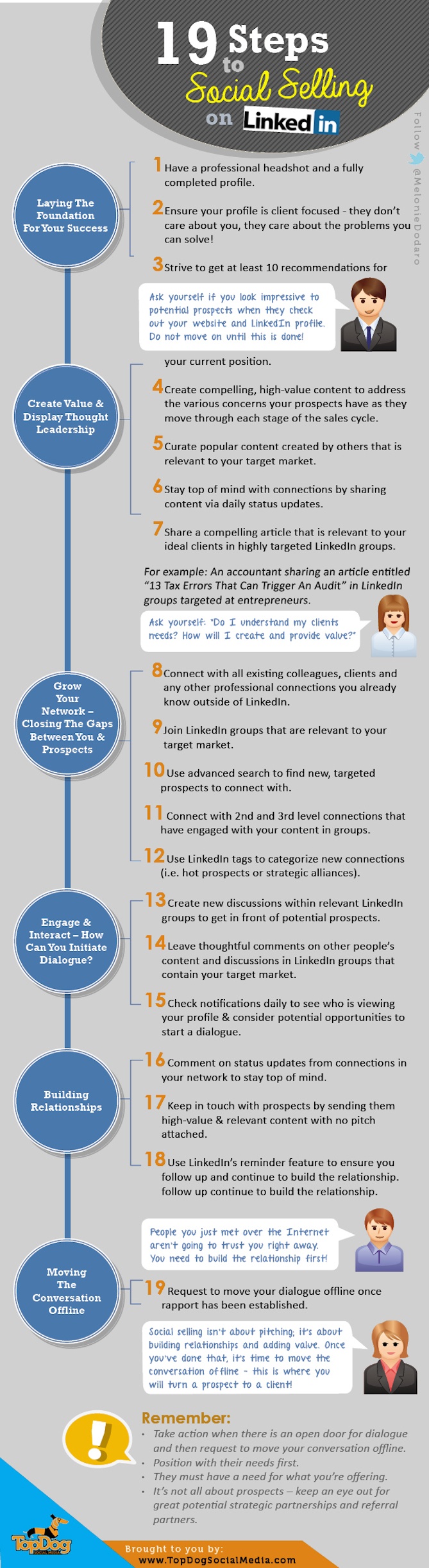





 I’m a lucky guy. In my career I’ve held a variety of positions: operations manager, marketing director, director of business development, customer success manager, regional sales manager. Each of these has given me a slightly different angle on how to approach a business problem, and I’ve come to see how to synthesize a solution that can meet the needs of many departments. Often that solution takes the form of customer-focused content.
 Powerful search engines have put the much of human knowledge (good, and bad) at the fingertips of our buyers, who pick up a mouse when they want to buy something – not a telephone. They are looking for answers and solutions (which we call products and services). They often find them (or a class of them) on the net, through advertising and landing pages and videos and such. The most trustworthy, believable material they find is customer-focused content marketing. Marketers compete to provide meaningful solutions and earn a chance at a sales conversation. But so often we do it wrong. I recall my first attempt at content marketing copywriting …
 Advertising is inherently self-promotional. It discusses product features, the benefits of a specific service, or the advantages of a solution you provide. On the other hand, content marketing discusses ideas, strategies, and information. While these may have some relation to what your product or service does, it’s just as likely to be on another topic. And it is not, repeat not, self-promotional.


