There’s a lot of buzz now about “social selling”. What is it? And does it really work?
Social selling is using LinkedIn and social media as one of the tools to find, reach, and engage potential clients, build relationships and trust, and help companies solve their business challenges with your solution. Social selling enhances what you already do—it’s not a substitute for good selling skills, a good sales process, and networking skills.
Does social selling really work? Recent research shows that:
6% of sales people using social media to sell out-performed those who weren’t using social media.
Social media users were 23% more successful than their non-social media peers at exceeding quota by more than 10%.
1% of sales people who report using social media state that they spend less than 10% of their selling time using social media. That’s decent ROI (Jim Keenan).
How do these social sellers do that? It’s all about leverage:
1) Knowing the right people and being connected strategically to them.
2) Building a network and relationships so your buyers know, like, and trust you.
3) Being known as the expert and thought leader.
Here’s a challenge with phone calls: When you call someone and they don’t recognize your caller ID, they put you into voicemail. At the end of the day, they listen to their voicemail with their finger on the Delete key. If you don’t say something that attracts their attention and makes them want to listen more, you’re gone.
LinkedIn solves that because it’s easy to find your decision makers with targeted advanced searches and Company searches. When you find your decision maker, you have two options:
1) You can make a cold call or send an unsolicited email to him or her. This is the least effective option.
2) You can leverage your expertise and your network to get through to them through an introduction—the most effective way.
Find someone who knows both you and your decision maker. That is, find your “shared connections.” They know both you and the person you want to meet. They can introduce you to the person you want to meet, so you’re not a salesperson cold calling out of the blue.
Remember that it’s all about leverage:
10% of executives respond to cold calls or unsolicited emails.
Yet 84% will engage with a salesperson when they are connected through a friend or colleague and offer value (InsideView).
That means leveraging your network really pays off. How can you leverage your network to get more clients, advance your career, and find your next business opportunity?
Qubits come in several flavors: atoms suspended by laser beams, photons trapped in microwave cavities, superconducting rings in which currents can run in two directions simultaneously. David DiVincenzo (a theoretical physicist at RWTH Aachen University in Germany, recently interviewed by Spectrum) and Daniel Loss proposed in 1998 using the spin state of electrons trapped in quantum dots to store quantum bits, and many view this as the most promising approach to quantum computing.
Last week researchers at the University of New South Wales (UNSW) in Sidney, Australia, reported in the journal Nature that such trapped electrons can be integrated with existing CMOS technology, and that it might be possible to create quantum computer chips that could store thousands, even millions of qubits on a single silicon processor chip.
UNSW scientists have patented a design for a full-scale quantum chip that would hold millions of silicon qubits
In ordinary computing the NAND logic operation is special, because you can build any other boolean logic gate from a combination of NAND. The UNSW researchers created for the first time quantum computing’s fundamental gate: the controlled NOT or CNOT gate. Depending on the state of the control qubit, the CNOT gate changes an "up" spin into a "down" spin, and the other way around. "This is the most rudimentary calculation one can do between two qubits. What we have done is the equivalent of the NAND gate, the classical digital logic," says Andrew Dzurak, a semiconductor physicist at UNSW who led the research group. All computations in classical computers are based on circuitry made up of CNOT gates, explains Dzurak. "Every quantum computation can be made up of a combination of one- and two-qubit gates," he says.
UNSW’s device keeps two electrons, about 100 nanometers apart from each other trapped in a layer of silicon. Scientists have created single qubits in silicon that consist of trapped electrons whose spin can be controlled. The quantum CNOT gate however contains two qubits that are entangled, whereby the spin in one qubit controls the spin in the other qubit.
Image: UNSW
For the creation of the two-qubit gate the researchers modified the design of a CMOS transistor. Two gates (grey leads) are placed next to each other on an insulating layer of silicon dioxide that separates them from a layer of almost pure silicon-28 isotope. Controlling the voltage of the gates allows the trapping of a single electron in the region under the gate. The quantum states of both electrons can be controlled by gigahertz-frequency pulses transmitted by the "electron spin resonance" (ESR) line (green), in combination with a 1.4 Tesla magnetic field. The ESR line allows the spin state for each electron to be set independently for “one-qubit” operations. Voltage pulses entangle the two qubits, allowing them to operate as a CNOT gate; changing the spin of one electron results in changing the spin of the other electron.
The time the two electrons remain entangled, that is, the time they are coherent, is crucial to allow quantum computations to occur. This made the use of isotopically pure silicon-28 mandatory because natural silicon contains 4.7 percent of the silicon-29 isotope. Silicon-29 has a non-zero nuclear spin, which interferes with the qubit spins and leads to the breakdown of coherence, explains Dzurak.
However, qubits are not perfect at handling data, and lowering the error rate depends, among other factors, on the time the qubits remain coherent. Qubits prone to low error rates are said to have high fidelity, a value obtained by testing qubits with a procedure predefined by the research community. In general, single qubits have a high fidelity, up to more than 99 percent. Entangled qubits have lower fidelities and this is why quantum computers will need error correction. However, even to perform error corrections, you need qubits with a high fidelity, says Dzurak. He estimates that the fidelity of their two qubit gate, based on data obtained during experiments, is well above 90 percent.
Now, researchers have demonstrated superconducting qubits that have higher fidelities, admits Dzurak. "They are the competition to catch," he says. Indeed, the UNSW researchers have a chance of catching up with their silicon qubits. Says Dzurak:
A meaningful quantum processor that commercially is going to do significant problems will need thousands of qubits, and this is why we really have great confidence in these silicon CMOS-type qubits. The advantage of the CMOS qubits is that we can use exactly the same device structures as used in industry.
Also, he adds, the fact that their qubits are much smaller than the superconductor ones is an advantage when dealing with large numbers of qubits, says Dzurak.
"I'm really interested to get moving on the engineering design of a scalable chip, and that is something that can really only be done in partnership with players in industry," says Dzurak, adding that the UNSW scientists have patented a design for a full-scale quantum chip that would hold millions of silicon qubits.
Aachen’s DiVincenzo agrees that the research at UNSW is quite significant. "It shows what can be done with the giant leap in coherence times that are available in silicon compared with gallium arsenide,” he says. “Silicon has a few features that make it very superior to the III-V semiconductors that have been used in approaching those spin qubits up to now. "
It’s not uncommon for me to get calls from business owners, CEO’s, heads of sales, etc. asking for help. In some cases, there is a good need to work together, and we enter into a contract. Other times, for whatever reason, it just doesn’t make sense. In these cases, the person or company isn’t ready, they don’t have the money, they have resource issues, etc. Regardless, they just aren’t ready to hire me. In spite of their position, I always like to help them out. If I can offer insight, a framework, a methodology, a new place to look for an answer or just a referral, I’ll do it.
I don’t like getting off the phone with someone who needs help without giving them at least something they can use.
The note below came from one of these people. The CEO of this company called me and had lots’ of questions. The timing wasn’t right to work together, but I could see where his problems were, and so I gave him a bit of direction.
I guess it helped.
Too often we give only to get, and I think that’s the wrong way to look at it. I’m super excited for these guys; it sounds like things are going well, and they are about to blow up! Good for them! I’m glad I was able to help.
“I truly apologize for wasting your time by being unprepared for our last scheduled phone call. This is not an excuse, and it shouldn’t be perceived as one. (Bottom Line by the time you get through this long email it will save you a bunch of time [that I wasted], to let you know where NED is now and how big of an impact you have made, also many different ways for you to get involved if you would like to)
I reached out to many influencers (acquaintances of yours) for advice during our restructure starting in 2013, they all continue to provide that with free and powerful knowledge and insight. Back then I asked for a little bit of help and though it seemed from our phone conversation that they were going to dive in and help. Then I realized a week passed, still learning every day, after no response and call back from my emails and voicemails that I was way too far behind for them to help. My point is, I understood why they didn’t respond about four blogs after I contacted them.
So I kept reading, and we latched on to a sales guys content. A lot about what you guys believe in reminded us of ourselves. Then you emailed me offering free help. Both 30-minute calls went for an hour. Although I haven’t thanked you yet and I can’t thank you enough. That 2 hours you spent changed our organization forever. Also nonstop reading and watching webinars from primarily You, Jill Konrath, and Anthony Iannarino. Other content from Top Sales World and Jim Connoly and so many others helped a tremendous amount. But it was You primarily and then Jill and Anthony’s content that helped us get where we are now. We still have a lot to learn and a long way to go!!!
I came from the mortgage industry and spent eight years in a very self-centered sales system. Saving people $200 or even $800 a month wasn’t cutting it for me. I shut down my branch and dedicated my full focus here in 2013.
We introduced network maintenance in 2008, and we had a decent partner. We could never communicate the value we wanted because we were not taught the right way. You sent the problem identification chart over months back. The work has not stopped. It’s a blessing. It’s been overwhelming at times, but we love it.
After we filled out that problem identification chart we started digging into buyer personas and created many different personas with different messaging that was all about the client and not us.
Here is where it gets better. We attracted the attention of some big players in our industry and happened to catch the biggest player in our industry as one day we decide to pick up the phone and discuss a partnership with them.
After months of negotiations, which are still ongoing, we came to an agreement where we were offered exclusivity for the US Canada & Mexico. Exclusivity means growth and sales quotas. Our partner is allowing us to grow on our terms.
You may never know how much of an impact you have had on our organization, I applaud the amazing team of leaders that I lead as well. I’m not saying we didn’t do the work needed because sacrifice became our middle name. When you reached out to us for free, you showed me there was hope that someone much more knowledgeable than me cared to help us. I can’t thank you enough brother!
I have one of your quotes in our business plan; I hope you don’t mind, I gave you and your organization credit of course. It came from a blog you wrote back on July 29, 2015; it is titled “Value” What the F%*K does that mean. The whole blog was great and a certain part that really aligned with our thinking.
Value as a word doesn’t mean anything. It’s a placeholder, a catchphrase for something that is dynamic, contextual and requires acknowledgment from others. So when we whip around the word value, we’re not offering much insight. Value for one person is different for another. Value changes from product to product, service to service, idea to idea, and offer to offer. Value isn’t a thing; it’s an agreement.
Our entire team loved it. When we communicate this to a client because we believe it, it demands respect and changes the dynamic and ton of the relationship. They let their guard down sooner.
A big part of our concern is the rate they want us to grow; I think this is just one area you can help us.
Again I truly appreciate all the free knowledge you put out there, along with your peers. It’s better than any college in the world for people who genuinely care about putting others first because that is their passion, regardless of industry.
I hope this gives you an idea of where we are heading, and I would like to discuss the sales projections I have with you. They seem astronomical. However, that was me basing production at 40% below our current quotas. Each one of our sales reps are setting five appointments on average per day with an expert!! I obviously could not base production off of that of 3 sales people vs. the 25 we plan on boarding by July 2016.
If you could have someone on your team reach out to reschedule our call, that would be great.
I apologize I wasted your time, and I hope this eliminates some time and work for you if we do choose to work together in the future.
I put your name in our business plan because I feel that if we spend any dollar on outside sales support, which we will, it should be with your organization. Thanks for the inspiration and all that you do brother! Our entire team is thankful as well!
It’s an old story–a new company with a new product and a new way of looking at things dislodges established business that can’t keep up. A few years later, this same company that so nimbly entered the market stops growing and starts falling prey to new competitors. Why is sustained growth so elusive? And why do some companies seem immune to this sort of cycle? The answer: the most successful companies understand that they need to continually recreate themselves by building innovation into their business models. I call this process Creativizing.
To illustrate this and provide you with a roadmap for Recreating Your Company, I’ve put together the below infographic.
Innovation is different from everything you do as a leader in three distinct ways. First, innovation happens in the future for which you currently have no data. In fact, one of the most common forms of resistance to innovation is excessive data collection because it stops your company from taking purposeful action. Second, innovation is a time-based form of value. That is it has a shelf life and goes sour like milk. So innovation has to happen within a specific window of opportunity. Third, innovation happens in cycles; not straight lines. Revolutionary innovations seldom occur in good times because the relative risk is high and the reward low. In a down economy innovation isn’t your best friend…it’s your only friend.
If you want to keep growing, I strongly urge you to make friends with innovation.
We offer a few highlights of the 2016 B2C content marketing survey and encourage you to read the full-length report for the comprehensive results.
B2C marketers meet with their content marketing teams frequently
This year, we asked marketers how often they meet with their teams – in person or virtually – to discuss the progress/results of their content marketing programs: 48% said they meet daily or weekly (vs. 44% of B2B marketers).
They extract value from those meetings
B2C marketers are more likely than their B2B counterparts to say that their content marketing meetings are valuable (59% vs. 54%). The biggest difference is that 28% of B2C marketers say the meetings are “extremely valuable” compared with only 19% of their B2B peers.
B2C marketers have made more progress documenting their content marketing strategy
This year, we saw an increase in the percentage of B2C marketers who have a documented content marketing strategy (a proven key to improving content marketing effectiveness). While a lot of work remains to be done in this area, 37% of B2C marketers have a documented strategy – an almost 40% increase over last year, when 27% reported having one. In comparison, the percentage of B2B marketers who have a documented content marketing strategy decreased this year (32% vs. the 35% that reported having one in the 2015 version of our B2B research).
RECOMMENDED FOR YOU:
Download our 16-page guide to learn how to document your content marketing strategy.
They feel more effective than B2B marketers
Thirty-eight percent of B2C marketers say their organizations are effective at content marketing, vs. 30% of B2B marketers. As you’ll see in our full-length report, several factors help increase effectiveness, including having clarity on what a successful content marketing program looks like and having a documented editorial mission statement.
You also will learn:
What metrics B2C marketers use to measure content marketing success
Which tactics, social media platforms, and paid methods of content promotion work best
How many B2C organizations have clarity around content marketing success
What the top five priorities are for B2C content creators over the next 12 months
A small dose of arrogance may indeed be desirable in the quota-carriers we employ. However, this confidence gene can negatively impact enterprise performance if it is allowed to inform formal sales forecasting and corporate planning.
A quick query on LinkedIn shows that there are approximately 4,500 chief revenue officers within the online community -- 78% of them in the US. This title was virtually nonexistent a few years ago, so where did it come from?
We know from new Aberdeen Group research published in "No Longer Sitting at the Kids' Table: Sales Management Finally Grows Up" that B2B sales leaders are more and more making their management decisions based on big-picture thinking and corporate responsibility compared with just a few years ago. Much as the CMO role (43,000 LinkedIn members) earlier evolved from mere VP into a C-suite executive position charged with Return on Marketing Investment (ROMI), so too are SVPs and EVPs of Sales increasingly becoming identified with the ability to run a business within the business.
And what does business success hinge on? Accurate forecasting.
You Can Only Sell Your Way So Far Up the Ladder
This is an understandable, if not overdue, phenomenon. Most enterprise sales leaders have earned their stripes in the field, demonstrating an ability to consistently meet and beat individual quota, and then scaling their success as they move up the ranks to regional, divisional, and executive management positions. Considering the traditional alpha behavior that drives B2B selling and its practitioners, it's safe to assume that heavy doses of confidence, ambition, and drive apply not only toward beating sales goals and promoting products, but also to the career arcs of sales leaders themselves. Hence, any opportunity to inch closer toward the “big chair” of the CEO role is hard to resist, and the new CRO position provides just the right steppingstone for any sales executive hoping to move up the food chain.
A C-suite title, however, is not bestowed lightly. For years now, CMOs have earned their moniker by transitioning their performance metrics from activities to results. With more measurable value-add to the enterprise as a whole, business-minded marketing, and now sales leaders, have as much opportunity to aspire to the top corporate rung as their counterparts in finance, operations, and supply chain.
Figure 1: Tidal Changes in Modern Selling
In Figure 1, we see a dramatic illustration of this new phenomenon in sales management. Only now is the concept of margin-centric sales management beginning to emerge in Aberdeen’s Sales Effectiveness market research. Just a year ago, in fact, sales leaders were still predominantly held accountable for simply selling more product, and focusing only on the top line number (just hit quota, and worry about profits later on).
Suddenly, however, we see sales leadership abandoning top-down management style in favor of bottom-up, performance-sensitive business approaches. Furthermore, the research reveals that Best-in-Class companies report a 74% rate of profit-oriented sales management, compared with 53% among All Other firms. If the most successful organizations are now considering the sales function as an additional P&L business unit, it follows that their best practices are worth adopting by all practitioners seeking that coveted C-level sales management title.
Enterprise Sales Forecasts Are More Crucial than Ever
Understanding that sales leaders need to run a more business-centric team, it follows that they need to adopt more of the data-driven practices and systems of their line-of-business peers at the executive table. Perhaps the most crucial communication that sales provides to the rest of the enterprise is that of the forecasted revenue to be brought in by inside, field, and channel representatives during any particular selling window in the calendar. And yet, in many organizations even today, the internally published sales forecast is considered a joke by the rest of the company’s line-of-business leaders; too often, it represents emotionally-driven aspirations rather than logically predicted sales outcomes. In other words, the overflow of confidence that informs a typical sales professional’s everyday demeanor does not translate effectively into the hard facts required for companies to plan.
Figure 2: Why Can't We Forecast Accurately?
Why are accurate sales forecasts so difficult to create, anyway? When survey respondents were asked to identify the top barriers to forecasting accurately, the results in Figure 2 reveal a clear theme. The human factor, so important in accomplishing the business of B2B sales, actually gets in the way of leaders understanding their own short- and long-term activities with precision.
Let's face it: Unless there is a specific carrot or stick involved, sales reps have little motivation to spend time accurately predicting their future. Neither do their managers, who are just as focused on meeting quota, attaining President's Club status, or simply keeping their jobs.
All of this changes, however, when we introduce the concept of profit-oriented sales management trends from Figure 1 above. If ambitious sales leaders seek to prove their worth beyond just hitting a gross revenue number, they need to do a better job in holistically managing their portion of the company's business. That requires controlling the cost-of-sale, and growing the bottom line at a slower rate than that of the top line.
I Need a More Confident Forecast. What Should I Do?
More accurate, tighter sales forecasts are directly associated with stronger performance. In Figure 3 below, we see that at every stage of a typical B2B sales cycle, Best-in-Class companies report stronger results around the accuracy of their forecasting data.
Sales operations practitioners need reliable and credible forecasts early enough in sales cycles to make the right management decisions. These judgment calls can include adding extra resources to certain deals, such as advanced product demos, executive involvement, or customer references. They can also involve holding firm on discounting or bundling for those opportunities proven, by the predictive data found in B2B forecasting software solutions, to offer thinner margins.
Figure 3: Better Forecasts = Better Business Results
It should not go without mention that even at 11:59 PM on the last day of the month or quarter, Best-in-Class companies report only an 89% forecast accuracy result. Is driving that visibility number to 100% valid or worth the effort? Maybe. But it’s certainly less important than correcting the average 22% delta in sales forecast accuracy between top performers and all other firms. And tackling this latter issue is critical for sales leaders seeking that coveted CRO title.
To learn specifically how Best-in-Class companies reduce the impact of gut feelings and emotional judgment when creating more confidence in their forecast and managing better team-wide performance, read our full report here.
*This blog first ran in December 2014 via ANNUITAS. Our 2015 B2B Enterprise Demand Generation study results will be published this week, so this is relevant to run this post again.
In the recent ANNUITAS B2B Enterprise Demand Generation Study, only 20.9% of the respondents indicated that they are confident that have been effective in their use of marketing automation — which isn’t exactly a new insight, as there has been a lot of coverage of the challenges associated with effective use of marketing automation solutions (MAS).
A successful MAS instance has a lot of moving parts to consider – from the process-oriented questions of lead management and the handoff to sales, data quality and data management questions associated with new lead records (and old ones), CRM integration, and more – so it not surprising that most Enterprises struggle with marketing automation. What got me thinking, however, was the connection between content, our buyers, and the automated nurture programs which marketing automation makes possible.
The specific question that triggered my interest was this one: When developing your content do you create content for each stage of the buyer’s purchase journey? Only 28% of respondents said yes, while 26% said no and 45% gave a very ambiguous “sometimes” as their response.
Since content — and specifically content related to each stage of the buyer’s journey — is intrinsic to the success of a nurture program (which is, in turn, the backbone of marketing automation), there is clearly a correlation between low scores for effectiveness and a clear gap in creating content that serves the buyer.
Let me know if this scenario sounds familiar…you have just implemented your brand new MAS platform and you are beginning to plot out your first nurture campaign. In selecting the content that you will use to try and engage your prospects so that they become “qualified leads” you go to the well of content you have already created and select the jewels in the crown. You pick the ten best pieces of content that you have created over the past few years (as proven by the number of views and downloads) and place those as the pieces in a ten-step nurture program. You turn on the program and you start generating hot leads to send to sales – only sales keeps throwing them back to you saying that they are not qualified and they are nowhere near being ready to buy.
Sales isn’t wrong.
Mistake number one: relying exclusively on existing content to populate your nurture.
It can be very tempting to begin your search for nurture content by looking first at what you already have. The logic here is to get your program up and running, so that you can make use of content that you spent a lot of money to create, so that you can validate the choices you made when you decided to build that content in the first place. The problem is that you can’t trust responses to that content to be indicative of a prospect’s desire to engage with sales.
Mistake number two: trusting that responses to that content are indicative of a desire to buy
Good nurture content is designed to both guide a prospect through the buying journey and also indicate that a prospect is ready to buy. A good story sets the mood and creates an understanding of the “why” – why the protagonist makes the choices they make along the way, why they pull the trigger when it comes time to make the decisions that impact their fate and (ultimately) set up the conclusion of the story. Nurture content needs to be set up like a good story, helping a prospect better understand the problems they face and the implications of those problems – and then finally empower them to make the choices they need to make to solve the problem. Responses to your content program’s “greatest hits” aren’t the same as signaling they are ready to buy. A gradual movement from trying to identify the issues they face, to understanding the impact those problems are having on their situations, to finally exploring potential solutions for those problems is the definition of a true buyer’s journey and is the true indication that a lead is qualified.
Mistake number three: lead scoring needs to match up with the journey
ANNUITAS has covered this topic extensively in our blog (The Single Most Common Lead Scoring Failure: Not All Content is Created Equal), but it is so important we need to reiterate the point in context of the nurture program content strategy. High-level educational content should not be scored as highly as later-stage content that would only be interesting to a prospect that was considering solutions to their problems. Your scoring strategy for leads in your nurture programs should be weighted so that only prospects that have progressively moved forward through the buyer’s journey are sent to sales. Not all white papers are created equal, so they should not be weighted in your scoring program as if they are.
You need to decide what a prospect might be interested in learning about at each stage of the journey, and then decide what you should share with them to help them move forward. Sometimes you will have content that fits the bill, but often you won’t. Understanding what the buyer might be interested in as they make their journey needs to be the foundation of your new content strategy.
There is little doubt that salespeople in the B2B market are finding their buyers’ journeys more complex and more subject to change than ever before. These added complications are due to factors from the disruptive trends of the time to the simple fact that more people are engaged in the buying process.
If buyers change how they buy, then sellers need to change how they sell. Assumptions once held to be universally true need to be reassessed. Sales skills need to be updated and realigned to meet the new journey and expectations.
One aspect of meeting this challenge is the recognition that more unknowns will exist. Some of unknowns will be ease to identify. As a matter of fact, the customer themselves may surface the new problems or objections that must be addressed.
The more problematic unknowns are those lurking underneath the surface. The ones that negatively impact your probability of winning the business yet are never discovered or discovered too late. Let’s call these high impact unknowns Consequence Issues.
So as our detective friend Sherlock Holmes might note – “the game is a foot.” How do we detect these Consequence Issues? What are the clues that something lurks just beneath the surface? Let’s explore those questions by examining some research from my old colleague Neil Rackham related to conditions that tend to increase the probability of the existence of a Consequence Issue and some early warning signals of actions by the customer that all is not well.
Early warning conditions. Four conditions that increase the probability of a Consequence Issue occurring are as follows:
Large decisions
High visibility decisions
Competitor’s association with the customer
Unfamiliar technology or methodology for the customer
Customer actions. What might customers do that are signs a Consequence Issue is likely to impact their decision process? Here are 6 behavioral signs.
Resurfacing of previously resolved issues
Unrealistic concerns about price or performance
Unjustified postponements
Unwillingness to meet
Withholding information
Unnecessary worries about implementation
Summary. The major challenge related to Consequence Issues is usually not their resolution; it’s surfacing them in the first place. In that regard as our fabled detective would share “it’s elementary” – just follow the clues.
YouTube held its annual advertising industry extravaganza in London's Battersea Park last night.
It's a huge event, attended by around 1,000 people from the advertising and media industry, in which the online video company shows off its wares in the hope of securing major ad deals.
And it was full of pomp: The event was hosted by YouTube comedian Grace Helbing, a dinner was cooked for the guests by YouTube food stars Sorted Food, McBusted singer Tom Fletcher and his sister Carrie performed a song about vlogging, DJ Robin Schulz played his hit song, and the evening was capped off with a performance from Rita Ora. One source told Business Insider YouTube-owner Google had spent in the region of £1 million ($1.5 million) on the event.
The message from YouTube was loud and clear: YouTube — not TV — is where primetime entertainment lives.
Eileen Naughton, Google's UK and Ireland managing director, hammered the point home with this stat:
"Advertisers reach their target audiences far more efficiently by adding YouTube to their media plans ... especially the hard to reach 16 to 34-year-olds where cost per reach point is optimized when 24% of your TV budget is allocated to YouTube."
Put simply, Google was telling advertisers to shift their TV budgets to YouTube. And not just an experimental, small amount — almost a quarter, if they are looking to reach the most popular audience segment that advertisers target. It's also interesting to note that Naughton was using the language of TV — "reach point" — similar to how Facebook recently shifted to offer "target rating point" buying, mimicking the Gross Rating Points used by media planners to plan TV campaigns.
Naughton later went on to quote Ipsos & GfK research, commissioned by Google, which found that ads seen on YouTube and TV are more effective than ads seen the same number of times on TV alone.
Business Insider caught up with Naughton after the event to ask about whether YouTube is setting itself up as a real competitor to TV advertising.
"The fact is that YouTube is a mainstream platform for video consumption. It's as effective as TV as a marketing platform, and in certain cohorts, more effective. If you're going after young 16 to 24-year-olds, they are 100% on YouTube in this country and 98% have smartphones, so that's the kind of behavior we're seeing — and it's actually across every demographic; the UK happens to be a very video consumptive country," Naughton said. "Our positioning is that YouTube has really become this fantastic platform for distribution and one where you get real engagement, particularly with ads. Four of the top 10 trending videos last year were ads. That's telling you something."
Naughton spoke about buying YouTube ads with TV commercials, but we asked: what about YouTube's effectiveness versus TV?
She responded: "It depends on the audience. If you're looking to specifically target 60[-year-old] plus men, then you'll probably get a lot more reach on TV. But on a general basis, we're looking at 24% of the TV budget if you want to reach a young cohort ... it's about economies of reach. Sometimes the data regression will show that for 65% of your audience, you should start layering in online video. Sometimes it's 15% [of the TV budget.] But we are very comfortable with somewhere about 24% [of your budget] to reach that young audience. That's why I use TV language — a reach point — because that's how planners think. But if you look at the composition of a TV audience, you will always get diminishing returns after a certain saturation. It's a curve. It's all math."
Naughton said advertising buyers are beginning to understand that a video advertising plan should include a mix of online and TV.
"Our view is that we should get YouTube to be on every media plan. It deserves to be, just on the basis of audience scale and the degree of engagement and intimacy viewers have. You're really close to your phone, so if you choose to engage with a YouTube ad, that's all user choice. And we find that choice yields higher engagement," Naughton added.
It has become customary for Google execs to make comparisons between YouTube and TV. On its second quarter earnings call this year, Omid Kordestani, Google's chief business officer, said: "YouTube reaches more 18- to 49-year-olds in the US than any US cable network" and went on to compare how people come to YouTube's homepage to discover content in the same way they switch on their TV sets.
Indeed, the Brandcast events (there is also one each year in New York) ape the annual TV "upfronts" in which broadcasters hold flashy parties to show off their programming and ad formats.
But while Google has been talking for some time about how it sits alongside TV, it still has some way to go before it replaces traditional viewing.
People in the US watch TV in the traditional, "linear," scheduled way for almost five hours every day, according to Nielsen. Meanwhile, they use the internet (all of it, not just YouTube) on a computer and smartphones for roughly half that time each day.
And TV remains advertisers' biggest outlay. Global TV advertising spend reached $230 billion last year, according to estimates by the media agency Carat. Online video advertising spend in 2014 was just $11 billion, according to ZenithOptimedia. Video advertising spend growing quickly — expected to experience a compound annual growth rate of 29% between 2014 and 2017 — but even then, at $23 billion, video ad spend will just be a tenth of what TV ad spend is today.
The buyer-seller relationship is primarily a professional one. Buyers tell salespeople their business problems, and salespeople brainstorm solutions. Sales conversations transpire in terms of "metrics," "pain points," "results," "ROI," and "value." In general, salespeople adhere to the tried-and-true rule "Prove the business case and hook the buyer."
But is that totally accurate? As any psychologist could tell you, people often make decisions based on emotions more than logic. And while a dry business case might titillate the mind, it probably won't capture the heart -- or lay the groundwork for a signed contract.
According to research from CEB, personal value is 2x more powerful than business value to B2B buyers. Even more fascinating: 71% of buyers who understand an offering's personal value to them will purchase it.
With these statistics in mind, salespeople would be smart to get personal with their buyers. Don't just calculate ROI and call it a day. Reps should make a point to communicate the value of their product or service to each stakeholder on a personal level.
To spark a personal value discussion, ask questions such as:
What will happen to you if this problem goes unsolved?
What do you stand to gain by resolving this issue?
How does this problem effect you personally?
What are your goals?
What challenges are you struggling with?
What would you like to achieve in your career?
The infographic below underscores the importance of getting up close and personal with prospects. While I wouldn't recommend invading a buyer's physical personal space, tapping into their personal headspace is crucial.
by jobermayer@salesleadmgmtassn.com (James Obermayer)
“Why,” I was asked, “must you manage sales leads in order to manage sales? Sales lead management is a marketing function, isn’t it?”
It was with a slight hesitation that the sales manager added the second sentence about sales lead management being a marketing function. Of course it is, but only partially. With marketing automation it is a growing part of the job. Lead nurturing and initial qualification calls to prospects may lie with marketing automation or inside sales qualification specialists (unless it is outsourced). But the actual, final management of the prospect is square in the lap of the individual salesperson. The responsibility for addressing prospects’ needs remains a major part of the sales job.
Once this question of “why it is a sales function” is answered and agreed on, and once the sales manager realizes that the percentage of sales lead follow-up is a competitive advantage, then he or she can finally begin to understand that to control sales, he or she must manage sales leads.
It isn’t a secret that 45-55% of all sales leads turn into a sale for someone within a typical 12-month period. The question is whether the sales manager and his or her salespeople know it.
If the follow-up is only 10% (an often repeated percentage) the salesperson on average will only speak to 5% of the buyers. If the salesperson follows up with 25% of the inquirers, he or she will only speak with 11-12% of the buyers. So it makes sense that to speak to 100% of the buyers, the rep will have to call them all. In every 100 inquiries, he or she must talk to 55 non-buyers in order to reach the 45 who will buy.
Lack of sales lead follow-up is the single greatest drain on revenue in a corporation. It wastes 75-90% of the marketing budget, contributes to sales territory turnover, and makes pipeline management an oxymoron.
If the rep doesn’t call all of the prospects, there is no control over the outcome because those not spoken to will buy from salespeople who do contact. I wish it were more complicated, but it isn’t. Sales reps sort inquiries into those with buying potential and those without potential; this is often done without talking to the prospect.
"How do they know which inquirers are buyers before making contact? They don't."
The rep’s decision to call or not call a prospect lies somewhere between gut instinct and laziness. Of course, sales reps will say they don’t have the time to contact everyone, but as the Yiddish proverb says, “When you don’t want to do something, one excuse is as good as another.” Sales reps’ excuses for not following up include:
They inquired before and didn’t buy.
They didn’t leave a phone number.
It isn’t an inquiry on a product I have a quota for.
They are too far out of my territory.
I don’t think they are big enough.
This is a home address and phone number.
I couldn’t find time to follow up, and it’s been four weeks so I think they have already bought.
Marketing Automation and Lead Management
One of the reasons marketing automation programs have been so successful is that these programs contact 100% of the inquirers. I didn’t say the program talks to them, but it does communicate. Some people make the case that artificial intelligence/ machine learning programs, such as Conversica, ActiveConversion, dbSignals, etc., are the answer. These software programs “talk” to the prospect without human intervention because of the program’s ability to make decisions and deliver answers based on the questions, the person, the institution, previous inquiries, internet activity, etc. These programs also provide intelligence based on millions of sales leads and billions of sales interactions to help the sales rep know early on if the person is a likely buyer.
Growing Popularity of Outsourcing
The growing popularity of outsourcing sales lead follow-up shifts the responsibility to an outside service person who must perform the follow-up, and in many cases, present a sales-ready lead to salespeople. Someone can say that follow-up is the salesperson’s job and they should do it. It appears, however, that follow-up is thought of as an optional sales chore by 75-90% of salespeople. They have many things to do, they say, while the outsourced service has essentially one thing to do: contact the prospect, judge qualification, and eventually present a sales-ready lead to salespeople who should have done it in the first place.
The end solution to growing any company that wants a predictable and repeatable sales process is to ensure that 100% of all sales leads are managed and followed up. Once you control sales lead management you will control revenue growth and pipeline reporting.
There’s no escaping the prying grip of a smart buyer — unless you want to lose a deal. Just like you, the buyer is trying to get the best deal they can get. Going into the deal with a mutually beneficial outcome is the only way to go.
In order to effectively wade through sales discount discussions and negotiate like a pro, know that, to have a mutually beneficial outcome is to understand why a discount is needed. It lays a framework for how to field questions, objections, and the path forward.
Below are a few discount reasons I often run into:
They’re fishing – The decision has been made, but in the final hour they’re looking to squeeze a nice prize out of you.
True budget constraints exist – When working lower in the org chart, it may be true that there is a set budget for a project. But keep in mind, making a business case for more is not uncommon in forward thinking organizations.
Value misaligned – Too often, reps haven’t fully painted a future without your product, which leads to the value being misunderstood.
The prospect is shy of a longer term length – They want a discount to offset.
The prospect is concerned about timing of payments.
Software eaters– For folks that buy a lot of software, it’s become the norm to discount 20+% and set prices accordingly. Thought it’s a shame, it’s reality.
Existing Technology stack – Incumbent technology is less expensive, or competitors in the deal are offering lower prices.
In any situation, once you’ve understood the underlying motivations, you’re ready to answer the question, which comes in many forms:
Do you have any wiggle room on price?
What kind of discount can you provide?
What is your best price?
What can we do to get creative here?
Before jumping into a response, I always like to coach an additional question: “Can I ask what’s driving that question?” If you hadn’t already figured it out, it will give some clues to your puzzle above.
But just because the puzzle is showing signs of life, doesn’t give reps the microphone to start blabbering nervous nonsense. At Lesson.ly, we drive transparency through our culture, and believe that the pricing we’ve set forward to prospects will absolutely be returned in time saved, productivity gained, and process improved.
In certain cases discounts will be mutually beneficial to all parties. Here’s how:
First, you must know your levers and make them very clear to the prospect. A discount costs your company something and before you go straight the 20% off, ask your reps how you’ll rebalance the scales. The levers we pick and choose from are:
Volume or Spend: How many widgets/units or what package type is the prospect purchasing? A common scenario we might see: “Wayne, I know we’ve talked about our basic and plus packages. If we work with you on a discount, would you be willing to start in the plus package?”
Term: Longer terms mean more predictable revenue for your company and are certainly worth something! “If we work with you on a discount, would you be willing to consider a 24 month initial term, Wayne?”
Timing: This is when the final deal will be done. “Wayne, if we work with you on a discount, when can you commit to getting legal work done?”
Payment Terms:: If your standard is annual n30, this may not be as relevant. But for clients willing to pay upfront, cash flow is worth something!
Ideally, the prospect will work with you to pull two or three levers, and you can make the case internally for a discount.
I always try to coach reps on getting creative before getting negative, though. Keep in mind, there’s more than one type of discount. For example:
First month at no cost with a contract in place
First two months discounted
Premium Services Included
Additional Value Drivers Included (think features and functionality)
___% discount on first year
This list is by no means exhaustive, but you’ll notice that all of these affect ARR/MRR as little as possible. Keep them simple, but make sure that reps have the autonomy and enablement to pull the right tool from the toolbox.
Discounts won’t kill your revenue as long as you have strategic discount options in place. Don’t let your reps jump to the discount in desperation or decline a deal without coming to a negotiation through conversation.
I get a lot of sales calls. Some of them are pretty horrible. For a while, I blamed this on the sales function--poor training, poor hiring, poor management, etc.
I don't believe that anymore. At least, not completely.
Let me describe to you a very common circumstance (happened to me today, in fact): you provide your contact information in order to participate in a webinar containing content that you believe might be useful. The webinar is given by a smart person/author/consultant, and is sponsored by, say, some kind of marketing automation company.
Now, I think these webinars are great. They provide value, and utility, and certainly foster a sense of "good will" amongst attendees towards the sponsoring company. The sponsor gets to draft off of the audience of the presenter, and the presenter gets some kind of value in return, either in terms of promotion or hard dollars.
I suppose the best thing that can happen for the sponsoring company is that, someday, when I might actually need the services that company provides, that this good will then translates into increased consideration, awareness, brand fit, and other measures of my likeliness to convert. The problem with that approach is that a company might be waiting a VERY long time between the webinar, and even the CHANCE that the attendee might be in the market for its services. After all, my desire to see a webinar on, say, someone's new book on social marketing does not necessarily mean I am in the market for a new CRM, right?
And this would all be well and good, except modern digital companies hate uncertainty. Everything can be measured, so everything MUST be measured. And waiting for me to contact a company months or even years after I saw a webinar they sponsored isn't very measurable.
So--they called me. And it was a terrible call, both for me and for the poor salesperson, because I was about one-degree-warmer than a cold call. I wasn't in the market for their services--not in the least. But, because I exchanged my contact information for the content in that webinar, I was a lead. And I was a lead that was easily traceable to the webinar and easily measurable because I was in their sales automation from the get-go as a hot prospect!
This behavior is natural, and understandable, because companies have to see which efforts work and which ones don't, and need to justify the expense and effort behind putting these webinars on. So, I became a "lead," and the calling began. Some attendees might convert, some might dip at least one more toe into the murky waters of the funnel. But many, many more will not.
Here's what you don't know, when you satiate the lust for lead measurement: what if you would have just left me alone? This is a difficult proposition. There is a bedrock concept of particle physics called "Observer Effect," which states simply that the act of measuring something changes that thing. In order to "see" an electron, you have to shine a photon on it, and that alters the path of the electron.
This is what happens when you harangue these "leads" after they download a useful white paper or watch a helpful webinar. The human leaves the content interaction with good will, and then, in a lust for measurement, the company shatters that good will with a highly unwanted phone call. The webinar worked, in the same way that I feel good about the companies that underwrite my favorite public media programming--it created a halo effect. But if those underwriting companies then proceeded to harangue me with marketing and promotions, I'd feel quite differently about them (and possibly about the media they support.) The halo of good will created by the webinar gets blasted to shreds by treating me as a lead, when I was no such thing.
The confusion of sales and marketing here, and marketing's blood lust to DRIVE LEADS, is having the opposite effect, and these poor salespeople are generating a LOT of calls and emails that are considerably colder than they might have thought. Which is why, as I mentioned at the beginning of this post, I no longer blame the sales team. I blame the process that made me a "lead" in the first place. I blame the process, and it's a marketing process.
So does this mean that companies should stop using webinars or white papers or any other gated content designed to produce "leads?" No, but here are some common sense things:
When I sign up for the gated content, give me the option to NOT be contacted. It's often not there.
If I am reading/viewing digital content, don't call me. Period. It's not the channel I used to contact you. You need to get to second base with me before I'll give you that. I haven't even let you kiss me.
After the webinar, it's totally acceptable to send me a link to download the slides, and THEN ask for my permission to be added to your email database. If I agree to that, well--I'm a LEAD, baby. If I don't, then perhaps we'll meet again.
Measurement doesn't have to be so ham-handed. The effectiveness of things like webinars and white papers shouldn't be measured by "sales," because I'm not really a lead. But you can measure things like my attitude towards the company, or Net Promoter Score, or other measures of perception. Those have immense value for Capital-M-Marketing.
If you don't think you can derive value from gated content without immediately sending registrants to your boiler room, maybe gated content isn't going to be your best option.
In short, let's take this slow, shall we? I admit I was nice to you in a bar, but I wasn't really in the market for another relationship. I admit there might be an attraction, but I'm not ready for a commitment. And if you show up in my kitchen, cooking my rabbit, it's not going to end well for you.
In the January 2015 iteration of ChiefMarTec’s marketing technology landscape, Scott Brinker identified 1,876 companies — up from 947 companies the year before (and I’m sure there’s hundreds, if not thousands, more today). How on earth do marketers keep all of the various marketing technologies straight in their mind? And how are CMOs supposed to figure out the best technology stack for their company?
To make it a little bit easier for you, we put together what we believe to be the essential technology for today’s modern B2B marketer after reflecting on our own analyzation of the marketing technology industry. With this stack, you will have the technology necessary to cover the entire marketing pipeline, from attracting visitors for the first time to closing sales.
The Stack, Explained
Traffic Technology
Starting at the top of the marketing funnel, B2B marketers need technology that drives traffic to their website (marketing channels) as well as tools to optimize the process. We typically think of these traffic drivers in two categories: 1) owned and earned channels, and 2) paid channels. Owned and earned includes social platforms, organic search (SEO), PR, hosted events, webinars, etc. Paid typically includes paid social, paid search, display, event sponsorship, etc. In the B2B marketing world, AdWords is a near ubiquitous paid channel. The technology involved in paid channels includes audience targeting through various social, search, and display networks (think: leveraging affinity groups on AdWords or targeting by job skills on LinkedIn).
Because visitors often don’t convert on their first visit, marketers need to bring interested traffic back. However, because you’ve dropped a tracking cookie or two (Facebook, Google Analytics, third-party vendors, and more use cookies to track conversions and for retargeting) on their first visit, you now have more tools to bring them back, mainly through paid retargeting campaigns on social, search, and display. Using these retargeting technologies, either through the channels themselves or by third-party retargeting vendors like AdRoll, marketers can use social, search, and display for direct response in the middle of the funnel.
Each marketing channel also comes with its own channel analytics. Facebook, Twitter, and LinkedIn each provide their own analytics that show how often your content is being clicked on and how many impressions you are generating, but there are also third-party technologies that track each channel using a single platform for added consistency. When it comes to search, AdWords and Bing Ads provide detailed insight into what keywords are delivering value in terms of views, clicks, conversions, and cost (CPC and CPM).
Experience Technology
Once visitors come to your website, it is the marketer’s job to give them such a valuable experience that either they want to find out more immediately and request a demo or they’re willing to give their contact information for deeper content. The latter scenario, and one of the most effective ways to convert web visitors into leads, is done through gated content, such as ebooks, whitepapers, and webinars. This is managed through a content management system (CMS), which typically hosts your website, blog, and landing pages. Datanyze reports that the most popular CMS is WordPress with about 70% market share.
Once a visitor has become a lead by giving you their email address, you can begin an email nurturing campaign using a marketing automation tool to move leads down the funnel towards becoming qualified leads. Overall, the most popular automation tool is Hubspot, but Marketo is the leader for medium-to-large companies (Datanyze).
One important technology during this stage, that layers on top of marketing automation and content management, is experience optimization. This technology allows marketers to test different user experiences in hopes of finding one that is more successful (e.g. better conversion rates). These tools offer A/B, multivariate testing, and more on owned properties like landing pages and emails. Optimizely is the most popular optimization tool with 42% market share (Datanyze).
Beneath both the traffic and experience technologies, it is critical to have web analytics. Unlike channel analytics, web analytics extend beyond the specific channel, tracking how visitors behave between the marketing channel and your website. Google Analytics and other web analytics tools track visitor behavior when they are on your website, and use referral analysis and UTM parameters to determine how they got there. Were they referred by email, social, search, direct? Web analytics has the answer.
Data Warehouse Technology
The last stage of the funnel is where the sales team tries to close the deal. This information is tracked and organized by a customer relationship management (CRM) tool. Salesforce is the leader in this space with 18.4% market share — about 50% greater than the second largest, SAP (Gartner). The CRM handles customer profiles and where their relationship with the sales team currently stands. Many B2B marketers today have little to no relationship with the CRM.
However, as marketing moves to become more accountable for revenue, it’s increasingly important for marketers to be in tune with the sales team and the CRM. Today, the best marketers are thinking about and optimizing for how their efforts are driving revenue, not marketing-specific metrics.
And that is done through marketing attribution.
Full-Funnel Technology
Marketing attribution spans the entire funnel and connects what happens at the top (What channels drive visits to the website?) with what happens at the bottom (Are leads converting into customers?).
Attribution is the full-funnel view that brings all of the tools together. The most popular B2B marketing attribution solution is Bizible.
How is attribution different from channel or web analytics? Channel analytics allow marketers to optimize each channel for what each channel is designed to do, but it’s siloed data. For example, social analytics help marketers optimize for clicks and views on social, and search analytics help marketers optimize for clicks and views on search. Moreover, web analytics help marketers understand and optimize for user behavior on their site as well as where they came from, but it still doesn’t connect to the CRM, where the deal is actually recorded.
Attribution, on the other hand, helps marketers optimize each channel for what happens at the bottom of the funnel, and ultimately, for what really matters: the closed deal.
The Pipeline Marketing Stack (including the most popular technology for each category)
Using data from Datanyze, Gartner, and our own knowledge and expertise of the B2B marketing technology space, we put together the most popular marketing stack used by B2B companies. Of course, it is by no means mandatory to have these exact products, but it is important to have something for each category. This should serve as an example of a complete stack — a good comparison for you to assess yours.
While there are many more marketing technologies out there — Scott Brinker identifies 40+ categories of products — the technologies we discussed are all a B2B marketing team needs to successfully create a robust customer pipeline and outperform the competition.
Does your marketing team have the full pipeline marketing technology stack?
Hyper connectivity is transforming the buying experience. Called a mega trend by McKinsey & Company, hyper connectivity is “the increasing digital interconnection between people – and things – anytime and anywhere.” With 50 billion connected devices projected by 2020, this digital interconnectivity has become ubiquitous and is reshaping our world.
Consider B2C. As modern consumers, when we engage with companies selling to us, we have higher expectations. In an “Amazonized” society, we expect them to:
Know who we are
Have information about our interactions
Understand our problem
With unprecedented convenience, on the spot order fulfillment, and highly personalized experiences, today’s online consumers call the shots.
And these experiences are impacting B2B sales. Just like in B2C, B2B buyers have come to expect the best possible experience. More than product or price point, the customer experience has become essential to attracting, selling to, and retaining today’s hyper connected customers.
Here are three of the main requirements to build a winning customer experience for the modern B2B buyer:
#1. Customer service that is hyper personalized
#2. Real-time insight to address customer needs and problems
#3. Continuous customer nurturing
I’ll Have The Usual Please
With hyper connectivity, we expect highly personalized recommendations delivered when we want them based on our particular interests and behaviors. To do this requires deeper insight into customer preferences and interests.
Selling is about serving customers. With more knowledge, businesses can serve customers better by engaging in a way that’s meaningful to them. Ultimately, this also produces more sales.
In B2B sales, your customers don’t want the email equivalent of a form letter – and good salespeople know that. All engagement – whether on the phone or via email – must be personalized according to previous interactions and tailored to that customer’s particular needs.
Timing is everything when it comes to sales opportunities. If you’re in sales, you already know that up to 50% of sales go to the first responder. But to be that first responder in a hyper connected world requires a digital approach – or blind cold calling luck – and everyone knows how well that goes.
Companies all over are trying to figure out how to take advantage of digital to optimize their sales operations. According to Accenture partner Yusuf Tayob speaking at Dreamforce, sales operations need to think about data in three ways:
1) internally available information
2) publicly available information
3) inferred data
Things start to get interesting when you realize how much inferred data can be captured through digital insights combined with internally and publicly available information. For example, using an intelligent sales tracking tool, you might see that an existing customer has opened, downloaded, and shared your existing contract. In your CRM, you see that your contract will expire in just two months. With the combination of these two data points, you can infer they’re already starting the evaluation process and reach out at the moment of interest.
I Can Take My Business Elsewhere
In our always-connected society, when you wake up and can’t get access to your Internet, it’s an issue.
Imagine if you couldn’t immediately connect with your provider about the situation. Imagine if your provider didn’t know the history of your account – or that this problem had occurred just the day before. Imagine if your provider didn’t make resolving the problem a top priority – or was unable to resolve it in a timely way.
With multiple Internet service providers continuously reaching out to us, most of us would probably jump overboard.
Today’s sales reps must continuously be tending to customers, making sure their needs are being met. In a hyper connected world where everything is digital, it’s easy for customers to switch, and they have lots of choices.
Hyper connected customers have embraced a digitally optimized buying experience. They hop in at different stages of the buying process, and when they want to talk with sales, their expectations are higher.
To meet these higher expectations and gain competitive advantage, today’s sales people need to become digital “fishermen” rather than “hunters” or “farmers.” By hearing what customers tell them through behavioral analytics, inferred data, and self-disclosed data on LinkedIn and Twitter, a digital fisherman can respond at just the right moment – with the right bait – to hook prospects and reel in the sale.
Today’s sales people need to become digital “fishermen” rather than “hunters” or… Click To Tweet
In modern sales automation, it’s easy to make your small team of five feel like an army of 50 reps. But more volume isn’t always the answer to successful campaign outreach.
If you have email automation and dialing tasks queued up for your sales team -- but are wondering how to turn the corner with automated outreach, this post is for you. I’ll dive into the tactics and tools used by some of the top sales campaigns out there.
Here’s how you can turn your sales outreach from good to great -- plus some helpful email campaign templates you can implement today.
1. Built-in dial analysis
What separates the best calls on your team from the worst? If the answer doesn’t jump to mind right away, you have a problem. It’s important to know the calls that get demos and deals vs. those ending with upset prospects or hang ups.
Dial analysis tools like Rambl answer this question for you. You can see when certain topics are coming up (i.e., competition, budget, and timeline) and monitor for certain keywords (i.e., cost, specific features, and point points).
One of the best features of dial analysis is that it gives each of your reps the ability to see their performance from the perspective of listen time and follow up. Sales leaders also receive full access to analytics, so they can make changes on the fly.
Head of Sales Andrew Johnson says, "Dial analysis gives me visibility into the conversation quality my reps are having on the phone. With this information, I can see calls are qualified and whether our call playbook is working. Our reps love it too -- it’s streamlined their process, so they spend more time on calls and less on data entry and logging calls in our CRM."
2. Automatic contracts
Are your SMB reps spending too much time on the wrong prospects? Deals that will never have an average revenue per account (ARPA) worth your time can still add value to your company -- but you don’t want to use account executives on unprofitable accounts.
What if certain leads could self-select into your closing process? Tools like PanaDoc enable you to add lightweight contracts right into your workflow. This lets your reps focus on larger, more complex deals and relies on a low-touch/no-touch model to bring in SMBs.
With auto-contract sending as part of your workflow, you can have certain customer types (those that raise their hands) pinged with the right information to make a buying decision when and where it’s convenient.
Additionally, these tools enable you to send one-pagers and PDF content as part of your workflow.
3. Hand raises
How does your team handle content engagement? When a prospect engages with an email -- you usually know it’s done its job. Once you get the prospect on your website, it’s time to get your BDR team engaged.
Dialing a prospect after they’ve self-selected (i.e., clicked on your content which signals they deem it relevant) gives you the opportunity to connect with a prospect at the right time in the buying cycle.
This can be achieved by using text alerts on HubSpot Sales. A text alert can be set to notify the campaign owner any time a prospect performs a certain action.
For example, if someone clicks your email and visits the pricing page, you might trigger a text alert to the relevant BDR, so they connect with the prospect to field questions and qualify the opportunity.
4. Direct mail campaigns
What do you do when leads don’t respond; Put them back into a nurture drip campaign? Before throwing in the towel, give your contact one last push through a new channel.
Direct mail has come back into the forefront in recent years as a great way to get through all of the noise prospects have in their inbox. How can you get direct mail to tie in to your sales automation?
Tools like Inkit make it easy to automate direct mail helping companies leverage exploding offers and promos to the tune of a 8.9% redemption rate. That makes for one nice revenue boost.
These systems integrate directly with your outreach cadence, your HubSpot CRM, and your other conversational commerce channels (i.e., chat).
5. Automated email sales campaigns
Brandon Redlinger, director of growth at Engagio, says, “Marketing automation is perfect for nurturing campaigns and email newsletters. But when it comes to sales -- especially if you’re doing targeted account selling -- pure automation is dangerous.”
There are too many moving pieces in top-of-funnel sales, and Redlinger says if you mess them up, you instantly lose the trust of your prospects and will be condemned to the spam folder.
He preaches the importance of coupling an understanding of the dangers of too much automation with a powerful platform that streamlines the personal elements of your outreach efforts. Here’s Redlinger’s strategy for creating the perfect automated email prospecting strategy.
Create Your Campaign Templates
For your first warm outreach email, follow these guidelines to boost your chances of getting a reply:
Keep it short: People don’t have much time to read, let alone respond to your email. Aim for no more than three to five sentences.
Open strong: Mention a common professional connection or interest, offer congratulations on a new job or award, or send a relevant piece of content.
Offer a compelling value proposition: Distill the value of your product into one sentence.
Include a call to action: What action do you want your prospect to take next? Ask a specific question or give them instructions on how to follow up.
Sound like a real person: Remember, people want to connect with other people. Buyers are much more inclined to answer an email that says "Hey prospect, did you have a chance to check the whitepaper I sent? Let me know!” than one saying “Dear Mr. Prospect, I would like to cordially invite you for a brief demonstration of our product. Sincerely, Mr. Salesman.”
Choose a relevant subject line: Don't slap on a completely irrelevant subject line.
I saw on LinkedIn that we’re connected through [common connection. [Write one sentence about why that connection is relevant].
Given your position, I think you might be interested in what my company does. [Give your one or two sentence value proposition].
Are you free for a 15-minute call this Thursday or Friday? I’d love to see if I can help.
Thanks,
[Your name]
Subsequent touchpoints should not be “Just checking in," or “Wanted to follow up.” Instead, formulate a legitimate reason for following up. Here are four great reasons to follow up that will make you a welcome guest instead of an annoying pest:
Re-emphasize business value: It’s all about what you can do for them. Find a different way to show value. Talk to a different pain point.
Offer insights: Share a different perspective on their problems or a novel idea for how they can reach their goals.
Educate: Not every follow up should be a pitch. Instead, offer a piece of valuable content, like a whitepaper, ebook, or webinar recording.
Share news: Why do you think social media is so addictive? People don’t want to miss out. Follow up with news in your industry, product updates, or news about their competitors.
After some time has passed and you haven’t received a response, a big mistake is thinking the lead is now dead. But that's not true -- it might just be a matter of following up a few more times. Here's one of my most effective follow up emails for 30+ days out.
Quick question about [pain/problem you solve]
Hey [First name],
Are you still interested in [Your solution]?
Cheers,
[Your name]
That’s it.
It gets great responses. Some people thank me for reaching out, others politely say no. Both are valuable answers because I now know the status of that lead.
Set Up Your Campaigns
Here’s where you’ll apply a custom cadence for each campaign touchpoint. Set up different campaigns for various segments of your list. The more you can segment your list, the better your chances for a reply.
If you have a large list, start A/B testing different aspects of your campaign to find the best outreach plan. Here are a few suggested variables to test:
Number of touches
Time between touches
Subject lines
Social media mix
Calls to action
Top-down vs. bottom-up approach
Language and tone
Add Your Leads
It’s time to start importing your leads and dropping them into appropriate campaigns. If you’re using the right platform, at the end of each working day you can drop the newly discovered leads into ongoing campaigns without having to start a whole new campaign. The trick here is to make sure you don’t have the same leads in different campaigns.
Launch Your Campaign
Make one final pass through your list and templates to ensure there are no missing variables -- then hit send.
Analyze and Adjust
After you’ve given your campaign enough time to run, take a step back and see what’s working and what’s not. Hopefully you have benchmarks to compare how each touchpoint and campaign is performing. If not, don’t worry. Start tracking now so you can run a data-driven prospecting campaign.
A cautionary note: Beware of “industry averages,” which are often inflated. Companies sharing benchmarks are usually those doing well. Furthermore, many of these companies are much further along in their testing programs. So, aspire to benchmark numbers but don’t be held captive by them.
These tactics and tools are all about helping your reps work smarter not harder. Sales requires a lot of volume to get results -- but that doesn’t mean more volume is always better.
Sometimes what your outreach really needs is better insight on what call types and content are getting the most traction.
Other times, it’s about adding a touchpoint and remembering not to throw in the towel too soon. Either way, the determining factor for having your sales cadence turn the corner is your ability to iterate and try new tactics. So, go ahead and drive some pipeline.
B2B lead generation is a huge topic. Every marketer has favorite strategies and top tips, as well as stories about huge wins and equally epic fails. Leads are the lifeblood of your business.
Previously, we combed through a host of data and concluded that content marketing, in-person connections, and referrals are the big B2B lead generation tactics that are worth most of your time. With those three strategies running smoothly, your brand is in good shape for a long time to come.
But if you’re just starting to nurture those relationships, and your content marketing strategy is still building momentum, how do you get more leads in the funnel in the meantime? This is where B2B lead gen can feel hard, making you question: Which strategies actually work and which ones should you try? What will deliver the best ROI?
We dug through scores of strategies and analyzed the data to provide a list of 9 quick B2B lead gen strategies for you. Some of these are time-tested goodies, some may be new to you, but all of them are proven strategies to get more qualified leads in your sales funnel while you’re working on some of the longer-term strategies.
Here they are!
1. Add Relevant CTAs
Optimize high-performing content by adding a call-to-action (CTA)—or updating an old one. Ask users to sign up, share, or follow. Here are best practices for effective CTAs:
Keep it above the fold/scroll, and/or pin the CTA to the screen so it scrolls with the viewer.
Limit the decision-making with one, clear CTA that encourages prospects to act now.
Use text on the button that describes the action—“Download the Ebook” or “Reserve My Seat,” rather than “Submit.”
Use visual cues, like arrows, and eyes of images pointed at the CTA to direct the viewers’ attention and train of thought.
2. Use Exit-Intent Pop-ups
Immediate pop-ups can make web visitors shiver, but a strategically placed exit-intent pop-up can keep prospects warm. If you are going to implement this type of pop-up, be sure to employ proven techniques like these:
Provide a “Yes” and a “No” option, instead of just one CTA, to increase conversions by 30-40%.
Create clear action triggers with one or no images and simple text.
Make designs responsive. Don’t paralyze a mobile user who can’t engage with or get out of your ad.
SlideShare is a slide hosting service that allows users to upload presentation slides to share online. Over 70% of SlideShare traffic comes from targeted searches by professionals looking for specific solutions. That makes these leads more relevant. To dazzle them, implement these tips:
Think of title slides as teaser thumbnails: use bold headlines and visuals, optimized with relevant keywords.
Use fewer words and more pictures, and break it up with targeted text.
Showcase your meaty content with more slides (around 60 for this audience) that tell your story.
Reveal one big idea with each slide, key features in charts or diagrams, and make your brand the obvious solution.
4. Create a Webcast on Udemy
Udemy is a platform that allows experts to create online courses that they can offer either for free or for a tuition fee. It provides an unparalleled opportunity to use video to present to an online audience who already demonstrates a deep interest in what you offer.
Stand out from the competition by taking your video content to the next level, and establish your brand as an industry leader and the go-to business when someone is ready to buy. Use these techniques to share your expertise:
Create excitement with headlines that promise to solve pain points.
Send a welcome communication beforehand, identifying key questions you’ll address in your course.
Link to your website within your course for free resources or content (promotional materials should be saved for a bonus lecture).
Send reminders, follow-up emails, and industry news after you’ve connected.
5. Gate Premium Content
Gating some of your high-value, premium content can help you gather contact information for new, qualified leads to start nurturing. And B2B buyers are not opposed to it: 74% expect to access simple content like infographics without registration, but 77% are willing to provide basic info for white papers or ebooks. Here are a few tips for getting the most out of your gated content:
Use intelligent forms to avoid repeat fill-out requests.
Redirect the landing page to a “Thank You” message after the buyer downloads, and include links for social shares.
6. Repurpose Content
Breathe new life into existing content by grouping several of your hottest posts into a “Best of” list, or bundling them together for downloading. Repurpose it for different channels:
Use a well-performing blog post as a conversation topic in LinkedIn groups to get your ideas in front of a new audience and to learn what your target audience has to say about the topic.
Bundle a series of articles into a well-designed ebook and host it on a landing page with a gated download to collect fresh email addresses for new leads.
Take key statistics from a report or whitepaper, and design an infographic for Pinterest, Instagram, Facebook or SlideShare to expand your audience and draw new attention to existing work.
7. Co-Brand/Co-Author Your Ebook
Create a strategic partnership with complementary businesses by co-branding or co-authoring an ebook. It’s a great way to double your efforts: Your brand name gets a fresh, new audience, and your partners get great content to market. When considering partners, choose:
A company with products that complement yours, something your potential customers may need anyway.
A highly-reputable company—large or small—that’s established in another channel.
A company who slightly expands your demographic, like a younger or older generation.
Industry experts that can bring credibility to your offering.
8. Offer a Free Assessment, Trial, or Demo
Free offers are a great way for you to learn more about your prospects’ likes and dislikes, their immediate and secondary goals, and their challenges and pain points. Here are a few tips for creating a great free offer:
Provide a link to an assessment that helps prospects understand if your product is right for them.
Give a demo that offers some immediate value but is only a taste of what you have to offer.
Offer an introductory trial that gets customers over the threshold of buying and provides them an easy way to continue buying.
Allow time and space for feedback so you can keep learning.
9. Create a Small, Personalized Direct Mail Campaign
Reach out to customers who have done business with you in the (perhaps, distant) past, or anyone who has signed up for your email list but hasn’t taken the next step. Employ these tactics:
Segment customers and buyers based on buying patterns and time lapsed.
Target lists with a personalized message customized just for them.
Provide an incentive to contact your organization by offering a free report or white paper.
Prep your customer service so that when a potential customer makes contact, they feel like your company already knows them.
The key to B2B lead generation is to give your prospects more ways to discover you. Diversify your marketing touchpoints and magnetize your value proposition. Though most page views don’t represent a user who is ready to buy, when you give useful information and new ideas, you can be rewarded with interest. That keeps interested parties filling your pipeline and thinking of you when they’re ready to buy.
Now, get out there and start employing these tactics! And to learn more about this topic, download our Definitive Guide to Lead Generation.
It’s your turn! Do you have a tenth quick lead gen tactic to add to this list? Let us know in the comments below!
Hello everyone, it’s that time again! And in this episode of The Mad Marketing Podcast, we’ll be covering the following subjects: What makes social media great…and what it awful (at least in my opinion) How quickly should your content marketing work for increasing traffic, leads, and sales? How to prepare a talk for varying groups…
Global oil markets will remain oversupplied in 2016 as demand growth slows and Iranian exports begin to recover following lifted sanctions. That’s the message being delivered by the International Energy Agency.
Supplies will decline outside of OPEC in 2016 but demand growth will ease as analysts predicte a weaker outlook for the world economy.
The IEA predicts that Iran could swell the glut if restrictions on its sales are removed with the completion of a nuclear accord. It is also predicted that Iraq will replace the U.S. as the biggest source of new supplies as its output reaches record levels.
“The market may be off balance for a while longer,” the Paris-based adviser to 29 nations said in its monthly report. “A projected marked slowdown in demand growth next year and the anticipated arrival of additional Iranian barrels — should international sanctions be eased — are likely to keep the market oversupplied through 2016.”
According to Bloomberg, “Global oil demand growth will revert to long-term trend levels of 1.2 million barrels a day in 2016, down from 1.8 million this year, amid a softer economic outlook for oil producers such as Canada, Brazil, Venezuela, Russia and Saudi Arabia.”
Consumption is expected to fall 100,000 barrels below last month’s report, averaging 95.7 million barrels per day next year.
Lead capture on websites has been the same for about a decade.
Oh sure the rise of inbound marketing has people talking about it differently, but essentially it’s gone like this – you visit a website, they offer you something of value, you give them your email address and hope something good comes to your inbox.
The “bribe” or exchange of value has increased as people are suffering from all kinds of inbox fatigue. The subscriber boxes have gotten much smarter- they can know who you are, where you’ve come from and if you’ve already requested a certain piece of premium content.
But, for the most part, marketers are still trying to coerce visitors to give up their email to get something in exchange.
The idea behind the Content Community is that people don’t exchange their email to get one piece of content, you invite them to join a community where the payoff is a library of content coupled with the promise of easy access to future content.
To some extent one goal remains the same – the marketer is offering something in exchange for an email lead, but everything else about it changes.
The relationship starts with the idea of joining a community.
The library approach broadens the appeal
The consumer gets a portal of content to return to time and again
The content and contact is ongoing and perhaps deeper
The member comes to see the community as a place to hang out
The next logical step is collaboration
Ultimately, this approach offers members a much more convenient, useful and authentic way to develop a relationship with a brand.
You have so many beers to choose from, and so many types of glasses to serve them in. You don’t need to buy them all, but most beers are traditionally served in certain types of glasses to emphasize their taste. Here’s a visual guide to the most popular ones.
Pig organs could soon be transplanted into patients after Harvard University scientists discovered a way to genetically modify pig DNA so it is more compatible with humans.
Scientists have spent decades trying to engineer pig tissue so that it would not be rejected by the human body, but the immune system has always prevented success.
All pig DNA carries the porcine endogenous retrovirus, which infects human cells and makes transplantation impossible.
Now Professor George Church and colleagues have used a ground-breaking technology called Crispr to snip away the retrovirus’s genetic code.
In tests on early pig embryos, Prof Church was able to eliminate all 62 copies of the retrovirus that would have been spotted by the human immune system.
The modified cells were 1,000 times less likely to infect kidney cells when transplanted in the lab. The team are hoping to create retrovirus-free pig clones whose organs can be harvested.
Although researchers still need to get over the hurdle of the immune rejection, Prof Church said the discovery opens the door for transplanting animal organs into people, a practice known as xenotransplantation.
Prof Church, who part-owns a company that wants to develop modified pigs to grow organs, said: “It was kind of cool from two stand points.
“One is it set a record for Crispr or for any genetic modification of an animal, and it took away what was considered the most perplexing problem to be solved in the xenotransplantation field.”
The team unveiled their success at a workshop at the National Academy of Sciences in the US, which has been studying the potential risks and ethical concerns of human genome editing.
Currently, pig heart valves that have been scrubbed and depleted of pig cells are commonly used to repair faulty human heart valves. But plans to transplant whole pig organs are likely to spark a global ethical debate.
Earlier this year, Chinese scientists carried out the first experiments to alter the DNA of human embryos and British researchers last month applied for permission to do the same.
Critics say it could herald an era of designer babies where parents not only select for health, but also for height, eye colour, sex and even sexuality.
Academics in Britain said the research, published in Science, was a major step forward.
Dr Sarah Chan, of the University of Edinburgh, said: “Of course, there is still a long way to go to overcome other problems associated with pig xenotransplants, notably immune compatibility. Even once the scientific and safety issues have been addressed, we should be mindful of the possible cultural concerns and societal impacts associated with more widespread use of pig organs for human transplantation.”
Prof Bruce Whitelaw, professor of animal biotechnology, at the Roslin Institute at the University of Edinburgh, added: “This study experimentally addresses a challenge for xenotransplantation and, if replicated in animals, could be another step towards this biomedical goal.”
Here’s a question I bet you’ve not asked yourself recently:
“How much is a client worth?”
Is it that branding session for $120?
The logo, header and pdf design $2500 package?
Or the sharp $8,000 website development project ?
It’s all of them.
As clients begin working with you – and continue (because duh…you’re amazing) – their value to your business is increasing. Instead of a transactional value (that $120, $2500 or $8000) you can start to see a lifetime value developing.
A client’s direct lifetime value will be the total of all of the products or services they purchase from you.
A client’s indirect lifetime value will be the total of all of the referral business they send your way.
With delighted customers, those numbers can add up quickly – so isn’t it worth it to make sure you’re not missing out on some of that sweetness?
Here are my three go-to tips for how to make sure you’re maximizing your total client lifetime value.
Lifetime Value Hot Tip #1 – Play the long game.
If signing a new client, or having them walk away comes down to a negotiation over a relatively small amount of money, or potentially frivolous detail…think carefully about the decision to let the deal fall through. If you know that a happy client usually returns 2 or 3 times to work with you, you’re not really turning away just one payday – but potentially 3. If the project is right up your alley and the client’s personality is a fit, give yourself some extra leeway when closing the deal.
Lifetime Value Hot Tip #2 – Start well.
By the same token that cutting short a negotiation over something minor could cost you in the long run, it’s also important to set yourself up for success from day 1 when it comes to your prices. How you’ve priced your products and services will set the tone for how clients perceive your value for the rest of your relationship with them. Bring them in with bargain basement deals – and you’re likely to get stuck there. Double check that you don’t just have a strategy for where you’re taking your pricing, but also where you’re starting it.
Lifetime Value Hot Tip #3 – Create a strong foundation.
You know what sucks? Working with a client when you have a contract that’s full of loopholes and gaps. What sucks even more? Getting stuck using that contract for multiple projects because it’s the status quo you created and don’t know how to change. It’s worth investing extra time, effort and resources up front to secure a strong contract that’ll help you protect yourself and support the flow of how you do business.
With these 3 hot tips, and having (finally!) answered that revealing question, you’ll be able to approach your client proposals, pitches and negotiations with a view to maximizing your overall client lifetime value.
Ready to jump start those prices? Click below for my Price Like A Pro training.
FREE forever for personal use. One-year free subscription to Enterprise Edition for businesses
Ever since LastPass announced its decision to join the LogMeIn family, users have been expressing their disappointment and distress over the acquisition, on different mediums. This was definitely NOT what LastPass was hoping to hear from its customers:
Yes, we know you are not as thrilled as LastPass is with this trust-transfer transaction. Acquisitions are intrinsically unsettling and raise questions about pricing, data privacy, security, development, vision, values, and other core issues.…
Up high in the air inside the Cirque du Soleil headquarters, trained staff step gingerly on taut metal wires. “Each cord can support 2,000 pounds,” says technical whiz David Charbonneau, reassuringly, but numbers are little comfort. Standing up here is enough to make your stomach lurch—nothing but a grid of thin cables, spaced a fist’s width apart, lie between your feet and the polished concrete more than five storeys below.
“You have to make sure nothing is in your pockets,” says Charbonneau, Cirque’s chief of technical services for creative spaces. “If just a coin fell, it could really hurt someone.”
It is not the acrobats, however, who walk these wires, but the unseen riggers who operate the pulleys and ropes that hoist Cirque performers up into the air, swinging them high above the crowd. The wire lattice “floor” gives them a clear view of every complex move in the show. They practice here, in the hangar-like Studio A/B in the Cirque du Soleil International Headquarters in Montreal, a space big enough to accommodate the entire stage of the company’s trademark blue and yellow Grand Chapiteau. Performers run through each death-defying trick knowing everything will be exactly in the same place on opening night.
It’s here, in an out-of-the-way borough a 40-minute drive from downtown Montreal, that one of Canada’s greatest companies makes its magic. Before shows can be unveiled in front of audiences in Tokyo, Las Vegas and the Mayan Riviera, every gasp-inducing trick and routine is scripted and practiced in this sprawling complex, which president and CEO Daniel Lamarre calls Cirque’s “secret weapon.”
The company itself has rebounded since a couple of years ago, when some wondered whether Cirque’s days of world domination were numbered. Unchecked expansion and failed experiments, such as its 2009 vaudeville foray Banana Shpeel, resulted in poor reviews, early closures and falling profits. The horrific death of one of its aerialists on stage in June 2013—its first ever—marked a nadir for a company that values its people above all.
After 400 layoffs in January 2013 and some soul-searching, a leaner, more sober Cirque has emerged. In July, Guy Laliberté, the company co-founder who remained its majority shareholder, sold a reported 60% stake to U.S. private equity investor TPG Capital and 20% to Shanghai-based Fosun Capital Group. The move gives Cirque not just money, but new toeholds in Silicon Valley and the entertainment market in China, respectively. The last new touring show, 2014’s steampunk-inflected Kurios, has sold more than a million tickets to date, breaking sales records and winning the most enthusiastic reviews in years.
All that could be the prelude to its new arena show, scheduled for unveiling this December in Montreal. Toruk: The First Flight, based on James Cameron’s Avatar universe, will literally be huge—the first arena show to use almost the entire surface of a hockey rink rather than just one end. It will feature flying aliens and large-scale digital projections from the roof onto the set below. In this case, Cirque’s cavernous rehearsal spaces in Montreal were too small; Toruk had to rehearse partly on-site in Bossier City, Louisiana, where it will be showing previews.
For 31 years, Cirque du Soleil has been that unlikely thing: a Canadian company that takes genuine risks. Missteps or no, it remains a roughly billion-dollar business, selling 15 million tickets in 2014. In an age glutted with digital entertainment, Cirque enjoys an advantage—a live spectacle can’t be pirated. But each trick that bedazzles the crowd only heightens the pressure to keep innovating. “Show after show, the expectation is getting higher and higher,” says the short and barrel-chested Lamarre during a tour of the studio.
Cirque also works hard to maintain its je ne sais quoi. Just as a Pixar movie is always recognizable as Pixar, Cirque du Soleil must remain consistent in its otherworldliness, from the challenge of tossing blue aliens through the treetops in Toruk to the comedy and pathos of a clown chasing an elusive spotlight across the stage in the 13-year-old Varekai. “When the theatre door closes, when the tent doors are laced, we have to make sure the audience is transported to another place,” says Diane Quinn, senior vice president of creative and artistic operations. “If we haven’t done that, we haven’t done our job. Even if it’s [a performer’s] 400th show that year, we still have to provide that freshness.”
Lamarre says his job is ultimately that: finding yet a new way to make the world say, “Oh my God, they got me again.”
Cirque du Soleil CEO Daniel Lamarre. (Roger LeMoyne)
The Cirque du Soleil headquarters stand on the site of a former quarry-turned-landfill in Montreal’s Saint-Michel area which, when the building opened in 1997, was among the city’s poorest neighbourhoods. The enormous grey building could be anything—until you notice the sculpture of a leathery, old hobo clown shoe at the entrance, which hearkens back to Cirque’s roots in small-town Quebec street theatre.
In the early 1980s, Laliberté, along with Gilles Ste-Croix and others who would become the company’s leaders, was working as a busker in the small artist town of Baie-Saint-Paul. There, the group founded Le Club des Talons Hauts (The High Heels Club), a non-profit that promoted stilt-walking, fire-breathing, juggling and accordions—and dreamed of founding a touring circus.
Even then, Laliberté was tenacious in gaining leverage for the group. Cirque du Soleil first gained government funding not through arts subsidies but through job-creation programs. The story goes that when they failed to get funding from the minister of cultural affairs at the time, Laliberté went to the capital and personally convinced Premier René Lévesque to give the group a grant.
Cirque first toured outside of Canada in 1987, and kept expanding. Needing a central home and rehearsal space, it built its headquarters in 1997, then doubled its size in 2001 to bring its costume-makers under the same roof. The building is home to its creative studios (“the Studio” to staff)—a creativity factory where costumed clowns and acrobats walk the halls. Its workshops produce the 16,000 hats, wigs, shoes, costumes and props needed for its shows. For several weeks this summer, the Studio’s 1,200 staff became accustomed to seeing performers from the new Avatar-themed show wander the halls wearing long, blue tails. Their coaches made the artists wear the appendages until they felt natural, a precaution to reduce the chance of becoming tangled in mid-air. The Studio is also where the company’s finance magicians and logistics wizards crunch numbers to ensure the Cirque’s 18 concurrent shows around the world go on—on time and on budget. Because the clowns and the suits eat lunch in the same cafeteria, neither forgets the other exists—a dual emphasis that helps the company maintain the delicate balance between unbridled creativity and down-to-earth business sense.
The people employed here could staff the United Nations, representing more than 50 countries. Publicist Marie-Noëlle Caron, a 13-year Cirque veteran, met her husband here—not an unusual story, she says. But as fun and feel-good as it can be working at Cirque, it’s not for those uncomfortable with having their job reinvented daily. “You need to stay on your toes,” she says. “Some people love it, some don’t.”
The company employs about 4,000 staff, down from a high of 5,000 in 2009. Keeping the company under a single roof helps Cirque control once-ballooning costs as it performs market research for new shows. “People here understand that in order to have the luxury of creating the best shows, we need to do it in a financial environment that makes sense,” says Lamarre. While the sale this year touched off concerns about Quebec losing the brand—and calls from politicians to keep ownership in the province—Lamarre says the Studio isn’t going anywhere. The area isn’t expensive, and Cirque benefits from Montreal’s unique creative economy. Moreover, the new owners are private equity groups, not Disney. They have no interest in messing with Cirque’s vision. “One thing I said to the new owners of this organization: We don’t touch the creative and the production people,” says Lamarre. “They’re the people who are going to continue to make us successful.”
Down the hall from the largest, football field–sized training rooms is the more modest Studio E. While a song by the Black Keys blares on the speakers, acrobats in shorts and T-shirts get in position around a curved contraption called a Russian swing. Serving as the machine’s engine is a six-foot-five, muscular guy with tattoos—the “pusher”—who pulls the long, suspended platform back over his head, gives it a heave, then hops on one end. He works the swing like a see-saw, using his weight to pump it higher. His smaller, lithe partner—the “flyer”—slips a safety harness on over his Pirates of the Caribbean T-shirt and hops onto the free end. Once the swing reaches its height, he leaps off, flipping into a triple somersault and landing hands-first on a mattress. The pair quickly get back into place and do it all over again.
It’s just another day at a company that demands near-perfection. Bad reviews of recent years underscored what happens when it attempts too much spectacle too fast. What Cirque does can’t be punched out on a clock; it takes the time that it takes. So the flyer, British gymnast Sam Sturt, must get airborne like this hundreds of times in Studio E before his trick is ready for the stage, where there will be neither mattress nor safety harness. They must get it right nine times out of 10, he says—hands landing exactly in place—before the act can appear in the multi-acrobat flying climax of the touring show Varekai. Even then, a team of artistic directors will critique each performance every single night.
Sturt is here to get back in shape after breaking his tibia during practice six months ago. Despite stringent safety measures, injuries are common (the company says they’re less rampant than in most pro sports). The company doesn’t pressure performers to rehab quickly. With a constant stream of fungible performers and a few irreplaceable “names,” its artists can afford to take time to heal. Cirque’s casting department is proactive, keeping files on stars in competitive sports everywhere, from gymnastics to synchronized swimming. When the still-young athletes’ careers begin to wane, Cirque reps approach them through coaches and athletic federations. Sturt, who is just 23 years old, is already on his second career, having competed internationally as a gymnast.
Others are destined for Cirque early. “I saw a Cirque show when I was 13 on television and fell in love…full chills on the arms,” says Elizabeth Ann Williams, a 25-year-old acrobat from upstate New York with the flowing hair and perfect face of a Disney princess—and bulging biceps that look as though they could crush steel. A gymnast from age four, she studied ballet and modern dance so she could add grace to her moves in the hopes of one day trying out for Cirque.
“We don’t necessarily go for gold medallists in the Olympics,” explains Caron. “It’s not enough to do their tricks perfectly. They need to have an artistic side.” The stiff finishing pose of an Olympic routine would land like a thud in a Cirque show. It would lack emotion.
To find athletes with artists’ souls, the casting department asks auditioning acrobats to do something odd: sing a song. If they hit the notes—cool, a singing acrobat. But even if they can’t carry a tune, the fact they gave it a shot shows self-confidence and a willingness to adapt. A refusal is a red flag.
More challenging than attracting artists is moving them across borders. Cirque has a 10-person immigration department that processes a jaw-dropping 4,000–5,000 work visas each year. Getting artists to Montreal is the easy part, says head of immigration Tim Morson. With most shows spending only one-eighth of their time in Canada, the hard part is cranking out multiple visas for Cirque artists—who may be Polish, Russian, Chinese or French—as they tour.
When the performers do land in Montreal, Cirque puts them up in a dorm-like training residence across the street. The Cirque artists are a little like X-Men, and the Studio is like Professor Xavier’s academy. The training facilities boast extreme toys that allow genetically gifted specimens to safely practice their craft, while welcome teams assist foreign artists by explaining the vagaries of Montreal transit and Canadian ATMs. They have physiotherapists, nutritionists, Pilates instructors and sports psychologists on call. There’s even a program to help aging acrobats transition to less-punishing roles such as clowns or coaches. Their oldest employee is an 83-year-old clown in the Las Vegas show Mystère.
Performers learn to apply their own makeup—and they have their heads 3-D scanned. Cirque keeps eerily perfect replicas of its active artists’ craniums so they can be fitted for hats, masks and wigs from afar. A well-fitting costume is a safe costume. In mid-air, a bodysuit that rides up or falls over the eyes could mean disaster.
(Roger LeMoyne)
The heads reside in unsettling rows deep in the Workshops, a self-contained factory employing 300 staff. There are no assembly-line methods. In the hat and wig department, an artisan sits at a table, inserting one hair at a time into a mesh cap. The technique takes time, but the care sends a signal to the artists that excellence is valued. These days, the costume department is busy putting final touches on the characters for Toruk and the big, bright room is filled with mannequins stretched with blue, skin-tight Avatar costumes with macramé loincloths.
Toruk promises to be a smart addition to the Cirque program. The company has successfully revivified its brand with partnerships in existing properties like Michael Jackson and the Beatles. But rather than trot out a live version of James Cameron’s 2009 blockbuster, Toruk’s narrative takes place 5,000 years before the events in the movie. “Jim is going to launch three new Avatar movies in the next four years,” says Lamarre. “Our show can tour for the next four years and be timeless.” And since Avatar was one of China’s top-grossing films ever, Cirque hopes Toruk will help it crack into the country of 1.35 billion when it tours there in 2017, building the audience for a permanent show by 2018.
Inside a little side room of the Workshops is the cramped, glittering Matériauthèque—the costume inspiration zone. Hung in rows is a library of thousands of fabric swatches that glow in the dark, that have polka dots, that are brocade, velvet, see-through. There are shelves of feathers, bristles, tentacles. A 3D printer spits out costume prototypes—one shelf is littered with chain mail. Someone has made a hat out of zip ties.
In his third-floor office, above the worker elves who are making sure a squillion things are just so, Daniel Lamarre has just returned from a week touring China. Recent panic about the country’s flagging economy hasn’t fazed him. The country has a moneyed middle class of some 300 million, he says, and it’s a more fertile place for entertainment than it was in 2012, when Cirque prematurely closed its show Zaia in Macau.
“What I’m hearing now in China is that live entertainment is going to become in two or three years what the movie business has become [there],” says Lamarre. Cirque has chosen Hangzhou, with its reputation as a cultural hub, as the site of a new theatre and its first permanent Chinese show. “When you visit a ‘second-tier city,’ as they call it, it’s three times the size of Montreal….I would be disappointed if, in five years, I don’t have three more permanent shows in China.” He believes there are about 10 Chinese cities where Cirque could tour, adding an additional year of touring to all his productions. He says all this will help raise operating earnings to $350 million a year by 2019, which would be double what it was in 2014.
Fosun, which bought a minority stake, will provide deeper access to Chinese hotels, real estate and lifestyle partners. Cirque will work to incorporate local cultural angles to its shows, an effort that will involve far more than translating dialogue into Chinese. Yet with nearly 20% of Cirque’s artists already hailing from China, Lamarre doesn’t see it as a foreign culture.
Whatever new voice the company finds will be deeply inflected with a French-Canadian accent. Quebec businessman Mitch Garber is chair of Cirque’s new board of directors. Another board member is Christian Dubé of the pension-fund manager Caisse de dépôt et placement du Québec, which bought a 10% share of Cirque. Small stakes from TPG’s share were acquired by 21 Cirque executives, including Lamarre—a strategy, he says, designed to make sure everyone’s interests align.
A former TV exec, Lamarre joined Cirque in 2000 as its president and chief operating officer before becoming CEO. He represents the business side of Cirque, the left brain that balances its right brain. Laliberté still serves as the creative lobe, retaining not only 10% of the company but also an advisory role. Alongside him is the flamboyant Jean-François Bouchard, Cirque’s rising creative guru. Known at the company for his keen visual intelligence, teenage excitement about new ideas and taste in shoes, Bouchard has attracted a new coterie of young staff over the past three years.
Among them is Melissa Thompson, a soft-spoken young woman with silver sneakers and a background in visual arts. She is on a team of five responsible for incubating new shows. It’s an art grad’s dream job: attend exhibits, watch new shows and think up the thematic and emotional core ideas that could undergird the next arena blockbuster. With all the pressure on Cirque to innovate, the creatives in the company work hard, but are cushioned from major bottom-line anxiety. “I get to work in that magical time before budgets,” she says. Older shows, too, are getting updates, adding more hip-hop and quickening their pace to ensure they feel current for the YouTube generation.
How will Cirque maintain its high-wire balance between creative freedom and profit under foreign ownership? “The famous line from Guy was, ‘We’re a private company. That gives us the freedom to grow, as we didn’t have pressure to make quarterly earnings.’ I think that’s kind of gone now,” says Robert David, professor of strategic management at McGill, who has followed the company from its early days. “They’ve got hard-nosed investors who are going to want a return.” The company will still enjoy geographic growth, he says, but it won’t be driven by wild product innovation of the sort seen in O, its underwater show—it will be driven by exporting and tweaking existing ideas.
Yet Cirque has always used existing ideas, says Benoit Mathieu, vice-president of costumes and creative spaces. Like Apple, it borrows and improves. Cirque didn’t invent the famed Wheel of Death, which shocked audiences in Kooza, he says—but it was hung from wires rather than anchored to the ground, making it look more dangerous.
Back down in Studio E, Williams grips a pair of aerial rings above her, presses up and rotates seamlessly into a handstand. Two weeks ago, she had never even touched the rings. Now, she’s spending an hour and a half a day training to replace someone on the touring show Totem, which is currently halfway around the world in Australia. She’ll be there in two weeks, and she’ll be ready. Cirque will make sure of it. It’s also updating her role to spotlight her dance talents.
That’s one of the mottos at Cirque: “The show is alive.” New artists are expected to not just fill old roles—but to leave their fingerprints on them.
In a third-floor boardroom wallpapered with drawings, a model of a stage sits in the corner, a huge sun-like circle in the centre. It’s Cirque’s new big top show for 2016, its name still under wraps. Whether it will break box office records, no one knows. But like everything else about Cirque du Soleil, it’s going to evolve.
Networking at a conference typically means rushing into a teeming crowd for coffee breaks and trying to make small talk. As an introvert, that scene isn’t for me. While I enjoy getting to know people one-on-one or in small groups, shouting to be heard by strangers and engaging in speed dating-style conversations is a nightmare. And yet I attend conferences regularly, as a professional speaker, averaging at least 60 events per year. Here’s how I’ve learned to play to my strengths and network successfully in unexpected ways.
Request to speak on a panel. Many people confuse introversion and shyness, and they’re surprised that, as an introvert, I relish public speaking. But it’s actually far more comfortable for me to speak to a large group than to plunge into one and try to find a conversation partner. That’s because after you speak, people will come up and find you, so you don’t have to seek them out and awkwardly fumble for a topic to discuss. They have enough information about you so that they can initiate a thoughtful dialogue, making the conversation more enjoyable for everyone.
So how can you get onto a panel? Sign up for conference email alerts; they’ll often issue a public call for presentations. And if you have the option, request to speak earlier in the program, so that you can reap the benefits of people coming up to you all day. You’ve put out a beacon so that like-minded people can come find you.
Host a dinner. A lot of conferences have scheduled downtime, such as lunch or dinner on-your-own one day. Take advantage of this opportunity for making a more intimate connection. I’ll frequently research restaurants in the area and make a reservation for about eight people. Then, as I meet interesting people throughout the conference, I can invite them to join me. Many, especially first-timers, won’t have made plans in advance, so they’ll likely appreciate the invitation, which enables them to feel like part of the “in crowd.” It also removes a logistical barrier for them, because they’d otherwise have difficulty making plans, since many of the best reservations will have already been snapped up.
Prepare for the chance encounter. Some conferences publish the list of registrants in advance, along with their bios. Identify about five people you’d most like to connect with and let luck meet preparation. You can certainly try to reach out in advance to set up meetings, but if you don’t know the person well, or at all, it can be hard to convince them to make time for you. So set yourself up to impress during serendipitous meetings. Memorize the person’s face (this is far more impressive if you’re trying to meet the CMO of a small company, rather than a movie star) and some aspect of their biography that you share in common, or about which you have questions or an intelligent comment.
Then, if you happen to run into them waiting for a meeting to start or standing in line (note: don’t do this in the restroom), you’re ready to make a good impression in two minutes or less. Don’t press your case or deliver a pitch; just focus on making a solid initial connection. “You’re Joe Smith, right?” you could say. “I’ve been a fan of your company for a long time. By the way, I heard you’re a pretty serious golfer. What’s the coolest course you’ve played recently?” Even if the conversation is brief, you’re off to a good start by engaging them on a topic they’re passionate about. It won’t always work, but it’s possible they’ll give you their card or would be receptive to a follow-up LinkedIn request, keeping the connection alive.
Interview people. As I discuss in my book Stand Out, interviews can be a surprisingly effective networking strategy, because you’re “leading with value” when connecting with someone prominent. In other words, instead of introducing yourself to someone with a request to take from them (a request to “pick their brain” is actually a request for free consulting services), your first interaction is one of giving, because your interview will expose them to new audiences in print or online.
If you write for an established publication, that’s great, but many will agree even if it’s an interview for your own blog or podcast, because it’s still searchable and accessible to others on the web. You can also ask your company or professional association blog or newsletter if they’d be interested in a story, and can leverage that imprimatur, if appropriate.
Use wardrobe strategically. Making small talk with strangers is hard for almost everyone. But you can make the process easier for your conversational partners if you give them a readymade topic to discuss. Wearing a distinctive clothing item can be a great icebreaker, whether it’s a Madeleine Albright-style signature brooch (which can spark a conversation about the trip to Italy where you bought it), a tie from your alma mater (“you’re a Longhorn, too?!?”), or colorful socks, which tell the world you’re not the typical investment banker. You can also let your conversations be guided by someone else’s sartorial choices. Psychologist Richard Wiseman wrote about one man with a unique networking strategy; in order to avoid habitually gravitating to people just like him, he would pick a color in advance and then make a point of seeking out people wearing that color to initiate conversations and make connections he otherwise wouldn’t.
Between registration fees and travel expenses, conferences are often pricey. We all want to get our money’s worth out of them, and networking is one of the biggest payoffs. But instead of swarming the buffet line and throwing out workplace versions of hackneyed pick-up lines, you can use these strategies to get to know people on your own terms. Over time, that can pay the biggest dividends.
For many small business and e-commerce stores, social media is an excellent platform to connect with existing customers and attract the attention of potential customers. Social media marketing is a valuable promotional tool that can help spread your outreach, increase sales, and allow your business to grow; here are several tips to take full advantage of the social media trend to up your revenue:
Determine the best way to connect with prospective customers.
First, evaluate your current and prospective customer base. Find out where they are spending their time, and go there. If your customers are less likely to be on social media, don’t waste your time. If they are using popular sites (Facebook, Twitter, LinkedIn, Instagram, Pinterest, etc.), determine which site will be best for connecting with them.Each social media platform has its place in sales marketing:
Facebook is the all-around ideal for business/customer sales; however, if your company has limited funds for advertising, you may want to consider using several sites to boost your visibility.
Twitter is also a great place for many types of e-commerce, and is one of the more popular sites when it comes to customer service.
LinkedIn has an air of professionalism that is perfect for business-to-business sales – connecting with larger companies who may be interested in your products and services.
Photo-based sites, such as Instagram or Pinterest, are all about engaging with your customers in a fun, interesting way with a highly visual connection.
Offer incentives for frequent purchases.
As the saying goes, it costs more to get a new customer than it does to keep your existing ones. Take the time to focus your attention on your current social media followers by rewarding them with offer deals, discounts, coupons, and specials that are based on the frequency of purchases. This strategy not only encourages customers to make purchases more often but also lets them know that you appreciate and notice their support.
Promote ALL the products and services your business offers.
If you want to increase sales, you have to make sure your customers know what you are selling. You can do this seamlessly by featuring a different product or service weekly and highlighting what they are and why your customers should be interested in them. Don’t neglect to mention any products or services you offer!
Add a shopping cart.
If Facebook is your site of choice, add an online store directly to your business’ Facebook page so customers have the option of making purchases right then and there (without being directed to another site). Make shopping as easy and hassle-free for your customers as possible.
Go mobile.
In a recent study, 85% of Americans stated that mobile devices are a central part of their daily lives. This is great news for you – mobile apps for social media sites are the best way to reach your customers on the go, 24/7, wherever they are.
Create a desire or need for your products or services.
When buyers get the sense that there is excitement surrounding what you offer, they are more likely to want to make a purchase. By updating customers about upcoming releases, flash sales, limited-time offers, or special promotions, the sense of urgency and buzz around your products and services will turn a customer’s interest into desire into need – into sales.
Incorporate a variety of content.
When it comes to social media, you have countless options for uploading content. Photos, videos, blogs, quotes, articles, use them all! Create an interesting and unique shopping experience for your customers. Even sharing the content of your competitors can be useful, as it will draw the attention of their client base to your business.
(#)Hashtag!
Don’t underestimate the power of a hashtag. Using a variety of general and specific hashtags will allow your business to stand out in any hashtag searches your potential customers are doing. Hashtags are especially useful for big events (#holidaysale) or special promotions (#freeshipping).
E-commerce via social media is becoming increasingly popular and is an opportunity small business should not ignore.
At Richardson, we have a wealth of senior-level experts who facilitate training sessions around the world. All of them have line-management experience in complex sales environments, and they draw on their real-world understanding to engage sales managers and executives in improving performance and changing behaviors.
In our first Sales Expert Series, we ask them to share what they see when working with clients and offer tips based on what leads to the best results. Here is our first insight.
What suggestions would you offer to sales leaders to move their team members from vendor status to true strategic partner?
Nancy Sells
The first step is to ask these questions: What does a true strategic partner look and sound like? What does this really mean from the customer’s perspective? What do you do daily to achieve this status? As a sales leader, the way to move team members toward becoming strategic thinkers is not by telling them what to do but by asking them what they think.
With the answers to these questions, select just one aspect of being a true partner, then make it the focus of your weekly team meeting with the ground rule being that everyone has to contribute. The topics could be anything from how to get to know a customer’s business as well as they do to becoming more global in thought processes, or something as specific as adding more polish in verbal communication. After all, a primary tool in sales is our mouth, and what comes out of it can make or break our reputation in the eyes of customers.
Karen Klein
In the sales milieu, “strategic advisor” has become another coveted phrase to attain like trusted advisor status, consultative seller, or being solution- or client-focused. We think that by embracing new terminology, we will automatically derive the intrinsic benefits of strategic client relationships. The reality is that becoming a strategic advisor takes time. It comes from the trust, behaviors, and communication style that you demonstrate in every client interaction.
Think about it as taking baby steps, starting with a mindset change. You truly have to be interested in your client. Begin by focusing on their agenda and their needs, not what can you do for them (or how you can sell them your “stuff”). What do you know about your clients, and what don’t you know? What do they look for in a partnership?
Look for new ways to add value in every interaction. What networking or referrals can you promote between existing clients that can enhance their business? What non-deal information can you provide to show them that you care? Be helpful if the client has relocated to a new area, has an upcoming vacation, would benefit from information about new industry strategies, market data, and the like.
Recognize that you can’t and don’t necessarily want to be a strategic partner to every single client. Prioritize to whom you give this coveted spot and privilege. Even in a 24/7 world, there is not enough time to be everything to every client.
Michael Dalis
Being a vendor is far better than not being one. It gives a sales professional an opportunity to be considered a strategic partner by a client, which is a rare thing. How many times have your salespeople earned a seat at the table to discuss strategic issues with decision makers at a client organization — being brought in well before actions have been defined and having been granted unusually strong access to stakeholders and information?
So, how can you as a leader help your sales professionals make that leap from vendor to strategic partner? Focus on four key points:
Focus: Challenge your salespeople to identify those organizations and contacts within their book where their chances and payoff are the greatest. And, they should be prepared to defend their position.
Plan: Account plans should be based on real information, specific actions and realistic goals, validated (or invalidated) by you, and fully committed to.
Engage: Questioning the status of plan execution, meeting preparation, and the follow-up is powerful in both improving outcomes and conveying importance.
Patience: It takes time, skill, and strategy to cultivate relationships that can be defined as strategic partnerships. Make sure your messaging and activity metrics are aligned with the behaviors that you seek.
Kim Dean
When I introduce the Client Relationship Pyramid in sessions, we talk about moving up from Product Provider to Trusted Advisor. Specifically, I ask: What would you do differently to have this higher-level relationship? Most activities that enhance the relationship fall into two categories: changing the conversation and changing who you call on.
Changing the Conversation: What do vendors (product providers) typically talk about when they are lucky enough to get time with their customers? They might follow up on the last conversation, or ask about the customer’s business, but in short order, they usually begin talking about their own products and services. They believe that their value resides in what they’re selling, and they aren’t wrong; this is a significant part of the value that they bring. But, this is a limited view of one’s value proposition.
A true Trusted Advisor brings value throughout the sales process, not just when offering solutions. We often describe it as being “on the staff but not on the payroll.” A vendor uses products to bring solutions to problems that the customer has defined. A Trusted Advisor helps the customer identify problems that they didn’t even know they had by bringing them insights, industry knowledge and trends, and what might impact future business. This sets the stage for collaboration and creates a positive buying experience compared with “being sold to.”
Change who you call on: Calling on an existing contact within a customer account, or the obvious target prospect, is usually appropriate for selling products or pursuing a specific opportunity. But, that’s a tactical approach, not the basis for becoming a strategic resource. If their job is to execute a solution to a problem, then your job becomes one of selling something in response. This makes it hard to break out of the “order taking” mode.
One of the best questions that a Trusted Advisor can pose when asked to respond with a solution is this: “What are you trying to accomplish by going in this direction?” Only then can you become a resource to shape the issue or opportunity with your additional knowledge and experience.
Salespeople need to broaden their reach inside of an account, not just higher but wider. There are more stakeholders with differing perspectives and objectives involved in major purchases. A key role of a successful Trusted Advisor is to learn about these stakeholders and assist the whole organization in bringing these views together to pursue enterprise-wide approaches.
Changing the relationship from vendor to Trusted Advisor doesn’t just happen over time. You have to do something different; change who you call on, and change what you talk about.
I find that sales leaders who continue to see the best results teach, model, and reinforce the following three behaviors:
Focus: Help salespeople define the best prospects in their book by something other than size, challenging them to define the common threads among customers with whom they have had the most success.
Leverage: With today’s access to information and contacts visibly networked through social media, sales leaders should create an expectation that even initial calls — whether that’s with a decision maker, gatekeeper, or even voicemail — should convey value and credibility. And they make sure that there is rigor around networking activities so that even centers of influence are prioritized based on alignment and productivity.
Practice: In what field would a performer be allowed to take the stage (the field, the court, etc.) for an important moment without practice? Sales leaders that create a culture where practice and feedback is encouraged allow salespeople to perform well in the high-pressure moment of a cold call or an initial sales meeting.
by jobermayer@salesleadmgmtassn.com (James Obermayer)
“Why,” I was asked, “must you manage sales leads in order to manage sales? Sales lead management is a marketing function, isn’t it?”
It was with a slight hesitation that the sales manager added the second sentence about sales lead management being a marketing function. Of course it is, but only partially. With marketing automation it is a growing part of the job. Lead nurturing and initial qualification calls to prospects may lie with marketing automation or inside sales qualification specialists (unless it is outsourced). But the actual, final management of the prospect is square in the lap of the individual salesperson. The responsibility for addressing prospects’ needs remains a major part of the sales job.
Once this question of “why it is a sales function” is answered and agreed on, and once the sales manager realizes that the percentage of sales lead follow-up is a competitive advantage, then he or she can finally begin to understand that to control sales, he or she must manage sales leads.
It isn’t a secret that 45-55% of all sales leads turn into a sale for someone within a typical 12-month period. The question is whether the sales manager and his or her salespeople know it.
If the follow-up is only 10% (an often repeated percentage) the salesperson on average will only speak to 5% of the buyers. If the salesperson follows up with 25% of the inquirers, he or she will only speak with 11-12% of the buyers. So it makes sense that to speak to 100% of the buyers, the rep will have to call them all. In every 100 inquiries, he or she must talk to 55 non-buyers in order to reach the 45 who will buy.
Lack of sales lead follow-up is the single greatest drain on revenue in a corporation. It wastes 75-90% of the marketing budget, contributes to sales territory turnover, and makes pipeline management an oxymoron.
If the rep doesn’t call all of the prospects, there is no control over the outcome because those not spoken to will buy from salespeople who do contact. I wish it were more complicated, but it isn’t. Sales reps sort inquiries into those with buying potential and those without potential; this is often done without talking to the prospect.
"How do they know which inquirers are buyers before making contact? They don't."
The rep’s decision to call or not call a prospect lies somewhere between gut instinct and laziness. Of course, sales reps will say they don’t have the time to contact everyone, but as the Yiddish proverb says, “When you don’t want to do something, one excuse is as good as another.” Sales reps’ excuses for not following up include:
They inquired before and didn’t buy.
They didn’t leave a phone number.
It isn’t an inquiry on a product I have a quota for.
They are too far out of my territory.
I don’t think they are big enough.
This is a home address and phone number.
I couldn’t find time to follow up, and it’s been four weeks so I think they have already bought.
Marketing Automation and Lead Management
One of the reasons marketing automation programs have been so successful is that these programs contact 100% of the inquirers. I didn’t say the program talks to them, but it does communicate. Some people make the case that artificial intelligence/ machine learning programs, such as Conversica, ActiveConversion, dbSignals, etc., are the answer. These software programs “talk” to the prospect without human intervention because of the program’s ability to make decisions and deliver answers based on the questions, the person, the institution, previous inquiries, internet activity, etc. These programs also provide intelligence based on millions of sales leads and billions of sales interactions to help the sales rep know early on if the person is a likely buyer.
Growing Popularity of Outsourcing
The growing popularity of outsourcing sales lead follow-up shifts the responsibility to an outside service person who must perform the follow-up, and in many cases, present a sales-ready lead to salespeople. Someone can say that follow-up is the salesperson’s job and they should do it. It appears, however, that follow-up is thought of as an optional sales chore by 75-90% of salespeople. They have many things to do, they say, while the outsourced service has essentially one thing to do: contact the prospect, judge qualification, and eventually present a sales-ready lead to salespeople who should have done it in the first place.
The end solution to growing any company that wants a predictable and repeatable sales process is to ensure that 100% of all sales leads are managed and followed up. Once you control sales lead management you will control revenue growth and pipeline reporting.
I believe that cold calls are quite important as part of an overall sales strategy. How they are done, however, determines their success. If the goal of the call is to gather data, share product information, start a conversation, or make an appointment, the odds are that the outcomes will be less than successful: sellers claim over 90% failure on their attempts.
If, however, a seller can enter the call with a goal to create the means for buyers to discover their path to excellence in the area of the seller’s solution, to figure out who they should assemble to begin a change process that leads them to excellence (and possibly a purchase), and create a win/win collaboration with the seller that engages buyers and prospects to continue communicating, then it’s a win.
Using current cold calling techniques, cold callers don’t recognize that the call is meant for them to get their own needs met. Sellers enter the call as if the buyer:
were sitting and waiting to hear from them with nothing else to do,
needs the solution regardless of their status quo,
should respond fully and honestly to a stranger asking probing, rude questions.
And worse of all, there are a large percentage of real buyers who won’t take the call because they either don’t want to speak to a stranger who wants to take their time, don’t like the prying questions or the information push, or aren’t at the stage in their decision path that would enlist a solution or sales person. Using other means of cold calling, these folks could easily be brought on board for appointments with all of the decision makers, or for continued calls of discovery and collaboration.
Here are two lousy cold calls I got recently. I took one of them and created a ‘good call’ using my Buying Facilitation® model to show you the difference between playing a numbers game, and serving buyers to facilitate excellence. Read them all, and decide which is better. #1
C: Hello, Sharon? Joe from Mimeo calling. How you doin’ today? [I assume he was attempting to be intimate, not knowing that anyone intimate with me would never call me ‘Sharon.’]
SDM: Do you know if that’s my correct name?
C: I do know. It’s your name.
SDM: Really? Are you absolutely certain?
C: I am.
SDM: How can you be so certain?
C: Wait. Aren’t you Sharon? Is Sharon there?
Seriously. That call happened. Word for word. #2
E: Hi. I’m calling from Ecsell. Is this Sharon?
SDM: Is this a cold call?
E: No. It might be a partnership call and I might be able to hire you as a speaker.
SDM: Cool. You should know, then, that my first name is Sharon Drew.
E: OK. I didn’t know that. But I know you’re a sales company and want to tell you about our coaching products. [And the reason she doesn’t want to collaboratively figure out if our solutions would blend is….? And the reason she tried to trick me into speaking by lying to me is…?]
SDM: Do you know who I am and what I do?
E: You’re the President of Morgen Facilitations. What else should I know? (She’s asking ME?)
SDM: So you didn’t do your homework. I’m a sales visionary, and for decades have been teaching a buy-in model I invented and teach to sales folks and coaches to give them the tools to help buyers make the change management decisions necessary to be ready to buy.
E: That’s no reason you wouldn’t be able to use our products also, or tell your clients to use our products.
SDM: Wow. You’re still pushing without listening to what I said.
E: Oh yeah?? I’m not pushing. Just educating .(So she’s assuming that I need education, that what she has to say is more important and better than who I am, what I do, what I might need, and – worse of all – she’s missing a potential win/win collaboration by lying to ‘get in’ just to educate me.’) After I hung up on her, she called me back three times to leave me messages!
These calls really happened. You can see the lose/lose here, the disrespect, and the lost opportunity. Do you know how your sales folks are making their cold calls? Have you ever considered adding new skills that would facilitate a real collaboration?
This is what a sales call would look like if I use Buying Facilitation® in call #2.
E: Hello. My name is Ellen from Ecsell, and I’m selling coaching products. This is a cold call. Is this a good time to speak?
SDM: Yes, I have a few moments, but I’m not in the market for coaching products. I sell some myself, and use a unique coaching model I developed that probably wouldn’t work with a more mainstream coaching solution.
E: Interesting. I wonder if you ever partner with other companies for those times you find groups with other innovative solutions.
SDM: I would be very interested. What do I need to do to find out if there is a partnership possibility here? It goes beyond whether or not I like your solution, as there are generally criteria on both sides that need to be met. What do you suggest?
E: Well, we could start with introducing each other to our solutions on this call, and if we both like what the other has, then I would set up a conference call with one of our principles. And a good question for us both to answer might be: What would we each need to see from the other to know if we have the content and the integrity to consider a partnership of some kind? If it makes sense, we can go from there. Does that work for you?
See how easy? Collaboration. Win/win. Trust. Respect. And we expanded what might be possible, added in a bit of integrity, and everyone brought their beset game – all on a cold call.
If you ever want your cold calls
to enable a collaborative dialogue that’s win-win,
to facilitate decision making change, buying and integrity,
to make appointments that include the necessary decision makers,
to teach your buyers how to consider working with you on the first call,
consider adding Buying Facilitation® to your sales model (it works with all sales models). It uses unique questions and listening that opens discussions that enable change, collaboration, and potentially buying. And you wouldn’t sound like these idiots who called me. sharondrew@sharondrewmorgen.com
____________
Sharon Drew Morgen is an original thinker, inventor, trainer, and consultant. She is the author of 9 books, including the NYTimes Business Bestseller Selling with Integrity, and the Amazon bestseller What? Did you really say what I think I heard? She is the developer of Buying Facilitation® a generic change management/decision facilitation model that give leaders, decision analysists, coaches, and sellers the tools to help other make their own best decisions based on their own values and beliefs. She works with global clients to enable them to listen without bias, pose Facilitative Questions that enable Others to recognize and act on their own best answers, and help buyers buy. She can be reached at sharondrew@sharondrewmorgen.com. 512 771 1117.


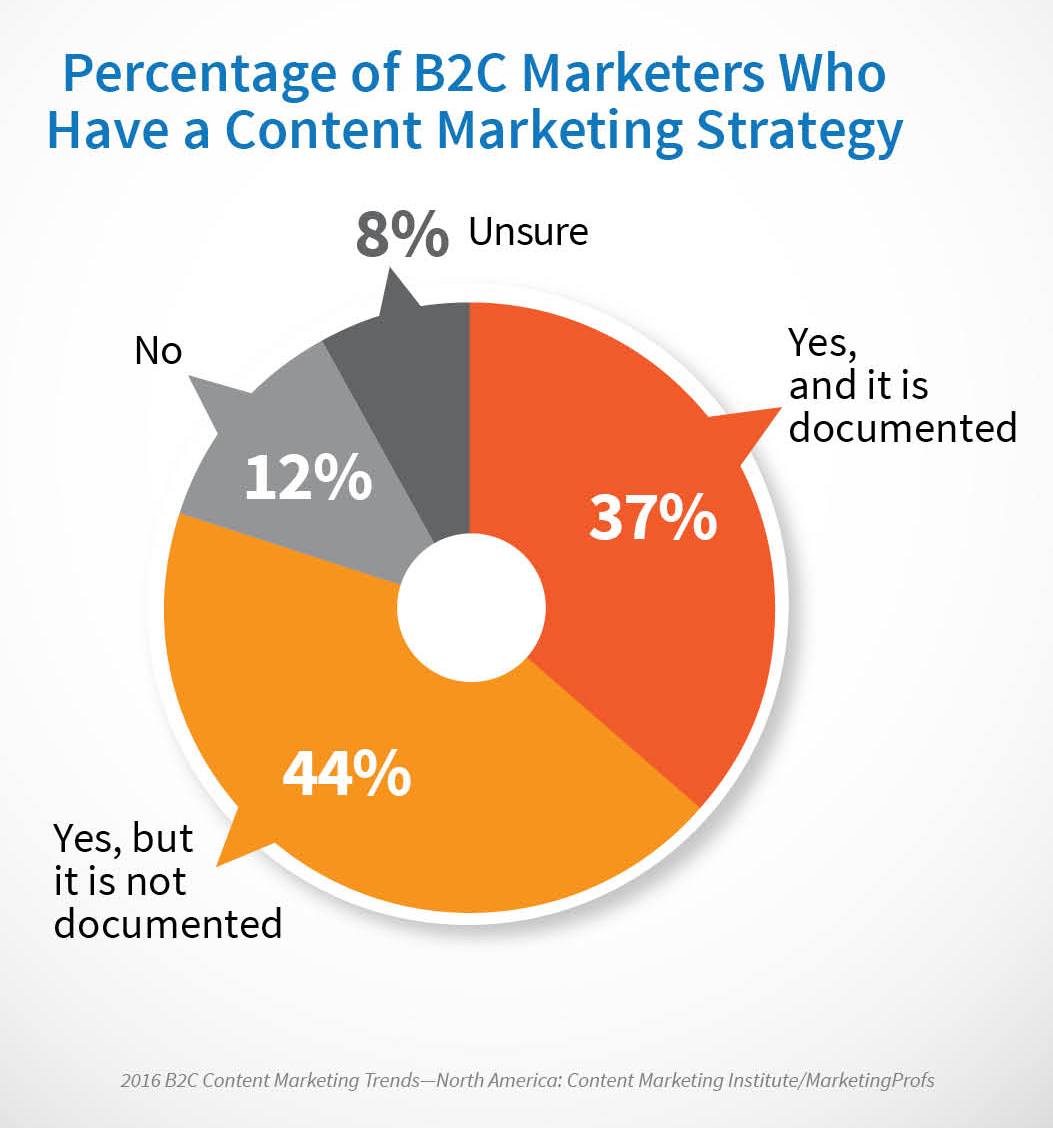
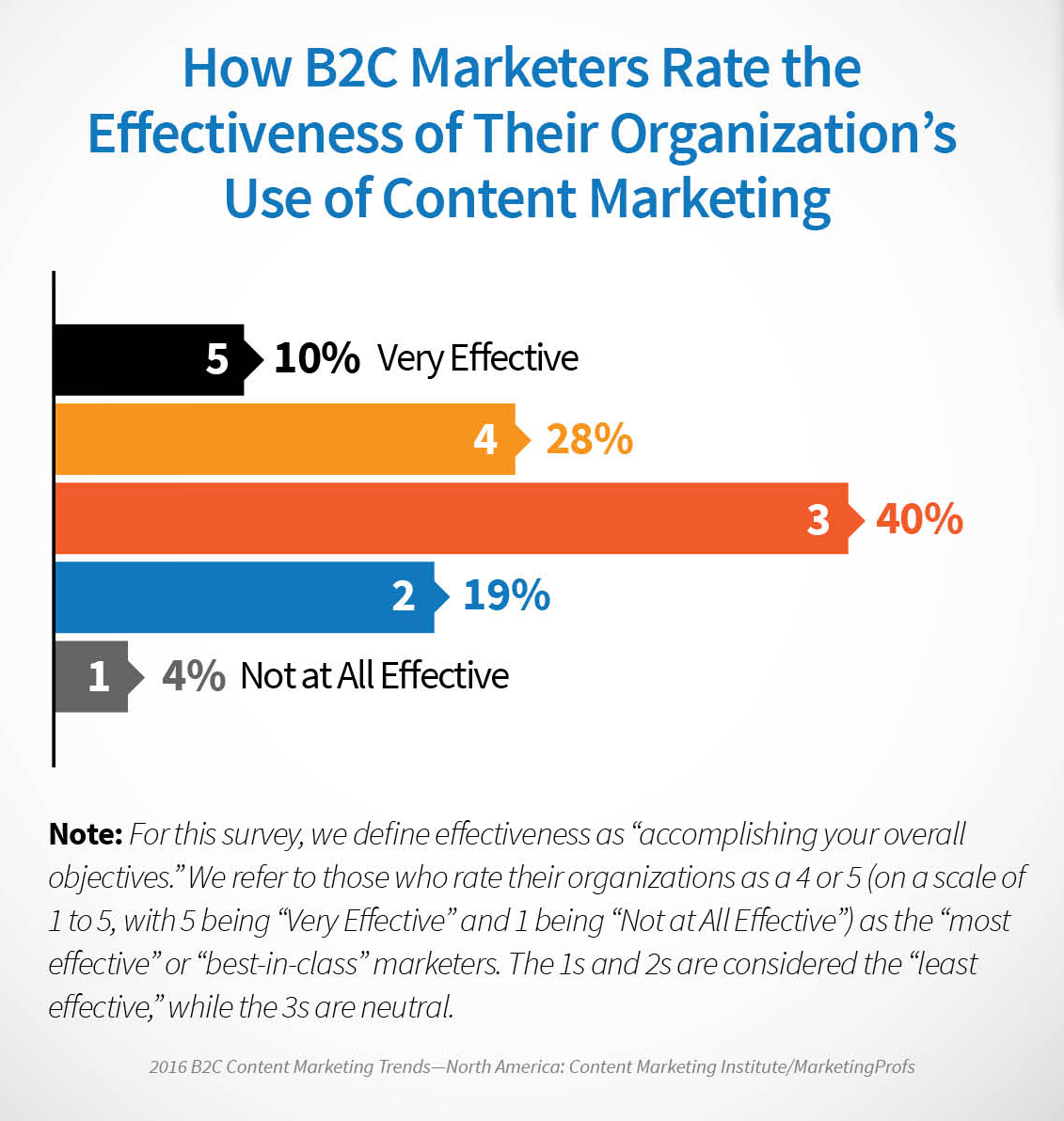

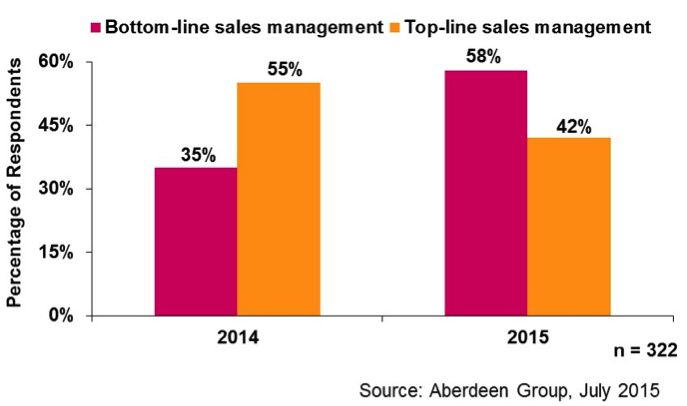
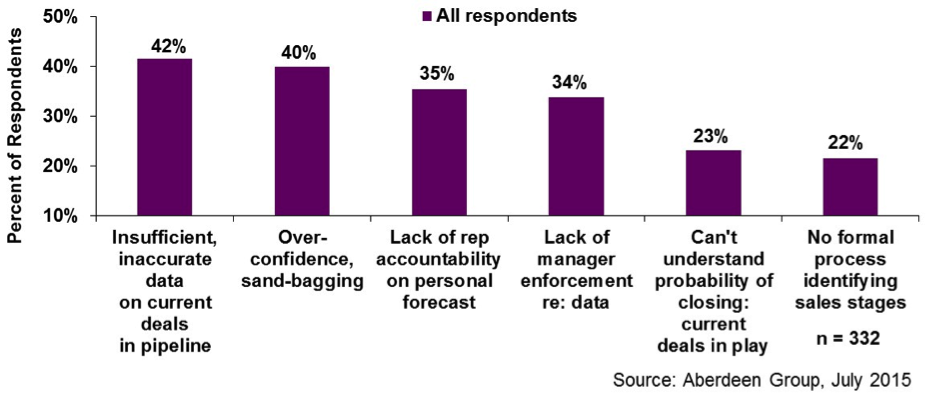
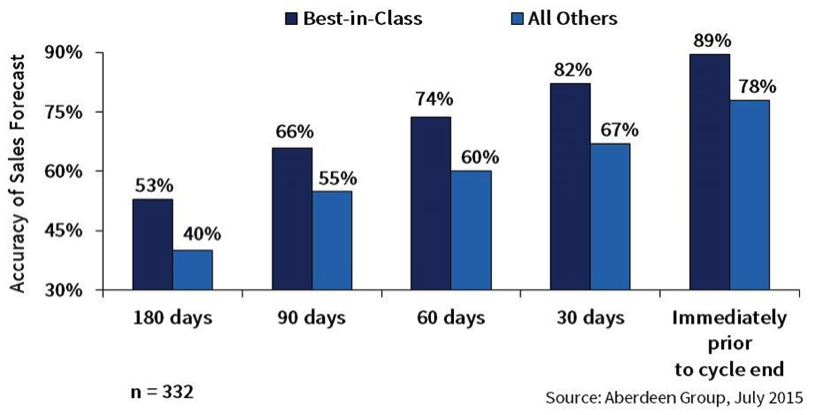










 It isn’t a secret that 45-55% of all sales leads turn into a sale for someone within a typical 12-month period. The question is whether the sales manager and his or her salespeople know it.
 Today's blog was submitted by James Obermayer, Executive Director and CEO of the








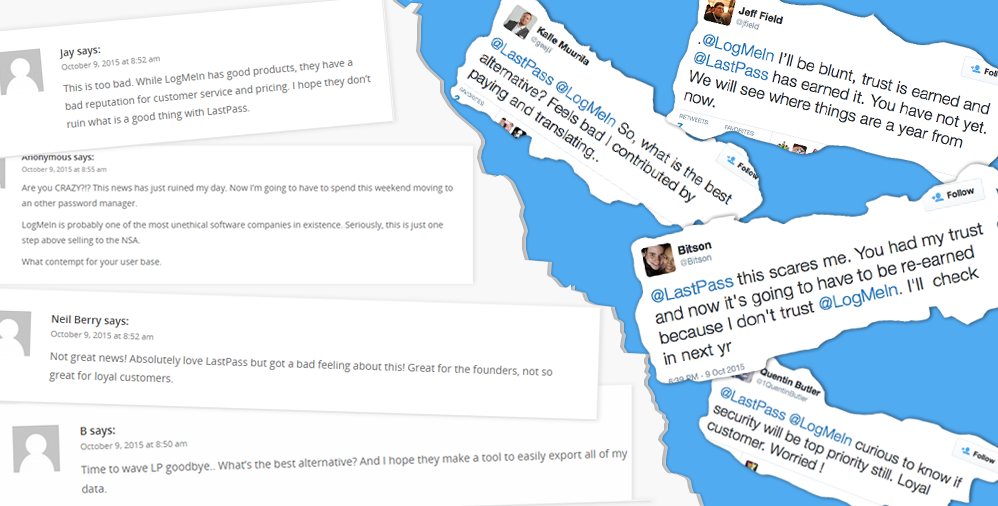


 Follow Us
 Like Us


