Shared posts

16 Oct 15:35

5 Things Inside Sales Reps May Never Hear From Their Sales Manager

by Bob Perkins

A good leader has convictions, beliefs and values that guide them with decision making and leading others. These are the things the make the good leaders good. However, for a variety of reason, they may choose not to articulate their thoughts directly to those who they lead. Here are some things that many great leaders think, but may not directly share with their team. Reps should take these statements and do a gut check against their own actions and attitudes.

“I really want you to push against the status quo”. Great leaders don’t want a bunch of “yes men”, they want reps that take risk, try new things, and push back a little on doing things just because they have always been done that way. These leaders know that high performing reps are always learning a better way to do something or a new way to increase sales. They value individuals who might buck the system just enough to improve performance.

“You may be our #1 producer on the team, but I’ll fire you in a second for having a negative attitude”. Great leaders understand that one bad apple can spoil the whole bunch. They know that it takes an entire motivated team to achieve sales goals, not just one superstar. A good leader will diligently protect a team from being pulled down for any reason. He or she knows how critical it is to have positive attitudes when it comes to achieving success as a whole.

“I want you to fail”. Great leaders know that the best way to learning and improving is failure. They expect and want reps to fail at some things in order to foster their development. They may interpret lack of failure as a sign that goals and other assigned tasks or objectives may not be stretching a rep enough.

“I know who is giving their best… or if you are just punching the clock”. Great leaders know how critical it is to build a culture of highly engaged and motivated reps. When reps truly love what they do, results will come naturally. These leaders notice everything, every move, and every action of their reps. They know when reps habitually come in late, whether they take long lunches, and how they spend their time during the day. They can see determination and passion and they know who is really giving their very best and who isn’t.

“Shut up and listen!”. Great sales managers know how critical it is for reps to talk less and listen more. They hate it when reps show up and throw up with a prospect or client. When your boss suggest you try asking more question, they are really saying to themselves “shut the heck up!”.

16 Oct 15:35

The Eroding Distinction Between Inside And Field Sales

by Dave Brock

There’s a lot written about the shift from field sales to inside sales. It makes sense–but I wonder is there really much of a distinction between inside and outside sales. Perhaps our notions of inside and outside sales are outdated and we might be better served just focusing on sales.

In the “old days,” there were clear distinctions between inside and outside sales.

I started my career a field or outside sales person. We were expected to be out of the office calling on customers, in fact for a while we were fined if we were in the office during business hours doing anything but entering an order (that summer, my colleagues and I saw a lot of movies.).

My life as a field sales person in New York City was easier than my colleagues in other parts of the world. I had a very large corporate customer, I spent my days wandering from office to office meeting face to face with my customers. My colleagues in “mid-America” spent long hours driving from customer to customer and meeting to meeting (not really very efficient).

The phone was a powerful tool, but mostly for short conversations. We used it to set up meetings, confirm meetings, answer short questions, get information. Some of the customers in my account were located around the world, so I’d have occasional conversations with them, but never really any “selling” until we met face to face.

In those days, we had the idea that what we sold were very expensive (millions of dollars), very complex solutions. Lots of people were involved and the sales cycle was very long. The way people wanted to be engaged was in face to face meetings–some one on one, some group meetings. We were not only the “big deal” sales people, we had the highest quotas–multi million and up.

Prospecting also tended to be face to face–I’d go office to office, knocking on doors, asking for a few minutes time. Or I’d go to the desks of executive assistants, trying to arrange meetings. My colleagues in the hinterlands used to drive along the roads, “Smoke stack hunting.” (I used that term recently and a sales person came up for an explanation–talk about feeling old.)

Inside sales existed, but it was mainly for highly transactional types of deals. Typically, “one-call closes.” The value of the deals was much smaller, the volume was very high. Inside sales people typically had very scripted conversations, were under pressure for high volumes of calls. A visit to the customer was never required. They had quotas too, but their quotas were typically smaller, in the $100’s of thousands, maybe creeping into a million.

Over time, though, these distinctions have gone away.

I first started seeing the elimination of these distinctions in the mid 90’s. I was doing work with the Digital Equipment (DEC) telesales team (Those were the old days). The team was quite remarkable. They shattered a lot of the beliefs I had about field sales and inside sales. I remembers, one day while I was working with them, a sales person came to me saying, “Dave, I just closed that $2M deal I’ve been working on for the past 6 months!”

Those things just didn’t happen–after all you had to be face to face with the customer to close those types of deals. And no inside sales person ever made more than a few calls to close a deal–typically over a few days. It was unimaginable to work 6 months on a deal as an inside sales person. Even more amazing about that team was that every once in a while the inside sales people would go out to visit a customer. It wasn’t every day or even every week. But every few months, they would go to visit major customers, usually focusing on meeting new people, developing deeper relationships, and understanding long term plans.

Fast forward to today. The traditional distinctions between inside and field sales have, largely, been shattered.

I look at our own company. All of us are traditional hard core field sales people. We close very large, long cycle, complex deals. 95% of the time, the first time any of us meet face to face with the customer is after we’ve closed a deal and are starting a project. Most of our work is done on Skype, GoToMeeting, telephone, or through email. We don’t have the time–It’s two days out one day back and a lot of money to meet with a prospect in Sydney. Our customers don’t have the time or need for us to be face to face.

I look at our clients–mostly organizations doing very large complex B2B deals. They are similar. The customers for each sales person may be spread across the country or around the world, so it’s very difficult to meet face to face. Much of what they do is on the phone, the ratio of face to face versus phone/video meetings is probably tilted toward the latter category. Yes, they still spend a lot of time in the field, but the ideas of the old days, where we had to be constantly face to face have gone away.

The old notions of inside sales have changed a lot as well. The pressure cooker, high volume atmosphere still exists for some organizations, but it’s not universal–or even in the majority. The idea of inside sales only for low value, highly transactional, short cycle sales is no longer completely valid. The lead “inside sales” person for one of my clients routinely books $50-100K deals, he’s been working on for months, and he does millions a year.

It’s become very difficult for me to distinguish between and Inside and Field Sales Person. The old distinctions have gone away. Face time with the customer has translated to “Face time” with the customer—hopefully you understand the distinction. Short cycle, long cycle distinctions are less relevant, average deal size is less relevant.

Yet we cling to the old terms of Inside and Field Sales–all largely based on very dated models or mental images.

These models have been shattered. They no longer serve us in looking at Go To Customer strategies, sales deployment models, or how customers like to be engaged. Those models hold us back from designing the right buying experiences. Sales executives I speak with tend to focus less on field versus internal, but more on how we design the most effective/efficient process, how do we define the roles/responsibilities to manage a wide range of needs, engagement models, how do we leverage our resources and spending to maximum impact. Selling will always have a need for physical presence in certain situations and virtual presence in others. But the stereotyped distinctions of this don’t make sense.

Yes they are useful if you want to declare field sales is dead and write articles about the shift to inside sales. Have at it–but it’s not a terribly useful discussion.

It seems more useful to eliminate these old distinctions focusing instead on how we most effectively and efficiently engage our customers, creating great buying experiences, and driving our own profitable growth.

16 Oct 15:35

How to Market When You Hate Selling

by Margarita Hakobyan

I’m not sure how often I’ve heard an entrepreneur say “I hate selling,” but I know that every single time I do, I roll my eyes and express an inward sigh. Sometimes I engage, sometimes I let it go, but every single time I think to myself: what’s wrong with selling? Isn’t that what we’re all in the business of doing, to sell and market our services so that people buy them?

When I do engage, I almost always find that entrepreneur’s discomfort with selling relates to their incorrect perception of what selling is. Don’t confuse selling with spamming, it can backfire in most unpleasant ways. In these cases, helping the entrepreneur to shift their focus from what people perceive selling to be to what it actually is almost always helps people to come to terms with what they’ll need to do in order to push their business towards success.

What selling isn’t

Many of us have a pop culture idea of what a salesperson looks like. They’re often too slick, too pushy, turning everything into a conversation about sales.

But that’s only a stereotype of bad sales. Great salespeople do not:

  • Monopolize a conversation
  • Make everything about their product
  • Insist that their product will solve every problem in the world
  • Use harmful and manipulative techniques to close the deal

What selling is

The very concept of selling has changed since the advent of the Internet. Salespeople no longer go out searching for people to buy. The hard sell no longer works, if it ever did. Salespeople have adapted, over the years, to customers who come to them having already researched the product, the customer support, and the warranty.

What salespeople do now is close the deal by showing the customer the kind of support and excellence they’ll receive when they choose a service.

Sales is:

  • Social
  • Helpful
  • Solution oriented

A customer knows they’re in the hands—or inbox—of a great salesperson when they approach the representative with questions, and the rep ends up determining that the product they’re selling isn’t the right fit for the client at this time. A great salesperson redirects the client to the service that will most meet their needs because a great salesperson knows that having clients who aren’t satisfied doesn’t help the business grow.

At some level, all businesses are about selling. In some companies, that’s more obvious. A retail company, for example, is very up front about its purpose in sales. Or running your first successful e-commerce site is like a dream come true, but it requires much more than well designed website.

But regardless of what your company does, on some level, it is selling its services to someone. The successful entrepreneur is able to make peace with that, and even see value and worth in letting people know what a great job the company is doing, how they’re achieving their mission, and what steps they’re taking to make the world a better place.

If you really hate selling, it might be worth rethinking whether or not owning a small business is right for you. Just having a business idea is not enough; executing the idea is where the value is. If you’re dedicated to the cause of small business ownership, then it’s time to take a fresh look at sales, marketing, and how you portray your business to make sure that you’re able to compete in this part of your business, as well as others.

If you just need to get your toes wet, try:

  • Carefully examining what it is that you hate about selling. Remember, self-reflection is always free!
  • Think hard about whether you can avoid the part of selling that you hate. If face to face communication is very stressful for you, you might do better in an online business where more communication will happen via email, for example.
  • What part of sales can be outsourced? Do you love the lead generation, but hate the calling? Love the calling, but hate providing support? There are many tasks that fall under the umbrella of sales. How can these be divided without affecting the efficiency of your organization?
  • Look for mentorship! Everyone has parts of business that they struggle with. Talk to an entrepreneur you trust about how they embraced the parts of their business that they didn’t love.

How did you learn to love the marketing and sales part of your business?

16 Oct 15:35

Alex Anthopoulos: The Canadian who rebuilt the Blue Jays

by Michael Friscolanti
Toronto Blue Jays general manager Alex Anthopoulos speaks to the media regarding his recent trades before the Jays play against the Kansas City Royals during an AL baseball game in Toronto on Friday, July 31, 2015. (Nathan Denette/CP)

Jays GM Alex Anthopoulos talked trades earlier this summer. (Nathan Denette/CP)

In his sixth season at the helm of the Toronto Blue Jays, Alex Anthopoulos is tasting playoff baseball for the first time. After a series-clinching victory Wednesday night—in a game that featured what was surely the most improbable, emotional inning ever played—the team is in Kansas City, preparing for Friday’s Game 1 of the American League Championship against the Royals. With a spot in the World Series on the line, Anthopoulos talks to Maclean’s Michael Friscolanti about late-night trades, champagne celebrations, and why it’s so important for fellow Canadians to take the time to vote before Monday night’s first pitch.

Q: Let me ask this first: Before Wednesday’s game against the Texas Rangers—and that unbelievable seventh inning—were you aware of Rule 6.03(a)(3): that if a batter is standing in the box and his bat is struck by the catcher’s throw back to the mound, the ball “is alive and in play”?

A: Absolutely not. No idea. Like everyone else, I was a little confused. But I think once they decided to go to replay, I felt a lot better because I knew that once they went to New York they were going to check the rule. And once they made the decision—as much as it wasn’t going to go our way—I felt comfortable that they got it right. I talked to someone from the league as well while this was going on, and he showed me the rule. It’s not the way you would have wanted to lose a game, but they got the call right and we got due process.

Q: Was there a moment when you thought: “Geez, is this how the season is going to end, on a fluke play like that?”

A: Oh yeah, no doubt about it. Obviously we play a lot of games, but it was an emotional roller coaster and I was trying to prepare myself for the worst. But you try to keep your emotions in check. There’s not a lot of game left, but there were still three innings left in a one-run game.

Q: We witnessed the full emotional pendulum in that seventh inning, from utter agony in the stands to uncontrollable joy. What was that bottom of the seventh like for you? Where were you?

A: I was in our little GM box, which is a small radio booth that fits eight of us. That’s as big as it is. It’s not a suite. People think we have a GM suite, but it’s the equivalent of a radio booth behind the plate. Watching what was going on, we were getting excited, watching guys get on base. When José Bautista hit the home run, we lost our minds. We were like fans. Candidly, we were like fans. We were going crazy, and I’m just glad the cameras didn’t pan to us. I don’t know how that would have looked.

Toronto Blue Jays Jose Bautista celebrates his three-run homer with teammate Russell Martin during seventh inning game 5 American League Division Series baseball action in Toronto on Wednesday, Oct. 14, 2015. (Nathan Denette/CP)

Bautista celebrates his three-run homer. (Nathan Denette/CP)

Q: Has it been a long time since you’ve been able to enjoy a moment like that—more as a fan than a general manager?

A: There are times. When Ryan Goins hit a walk-off home run earlier in the year, we got pretty excited. And as you get later into the year, the games mean more. You’re never truly a fan because it’s your job, but in terms of being able to react like a fan would, let your hair down a little bit, there are moments. When games are big like that, you feel the same way as fans: the ups and downs. So we were yelling and screaming and high-fiving. It was pretty crazy there.

Q: So many things, both tangible and intangible, need to come together to make a successful team. You talk a lot about having “good people” and “character guys.” What is it about this particular club that is so special—and even more specifically, what sets it apart from last year’s roster?

A: We really made a concerted effort last off-season—really, by mid-September—to put less of an emphasis on talent and tools and production. Don’t get me wrong: that is still the driver in any player acquisition. But we put more of an emphasis on character, make-up, quality of the human being, what kind of teammate they are. That’s not to say we didn’t value it before, but we decided to up the percentage quite a bit. We probably didn’t value it enough, and that starts with me. That’s part of being a young GM: learning from mistakes just like players try to make adjustments and tweaks. I think I said it after we clinched the American League East: I don’t think I’ll ever go back to the other way. It’s like when your parents tell you when you’re a kid: “Don’t touch the stove.” You have to do it yourself in order to realize it’s hot.

Q: So how should a fan interpret that comment? Are you saying there are certain players that, if you could go back in time, you would not have pursued?

A: It starts with me, so I take responsibility for it. I maybe didn’t focus on the concept of a team. It was more a collection of talent. We’ve had some exceptionally talented players here, but I don’t know that they all fit together. Some people might roll their eyes at that, but I do believe—and it’s easy to say because we’re winning—that we’ve taken players that were less talented than others we could have had because they fit the values of what we are trying to do as a team. When you look at the definition of a team—everybody coming together, pulling together, playing for one another, making each other better—this is the first time I can say I’ve been around a true team.

It took me time to understand the difference between a collection of talented players and a team where the parts fit and complement each other. It’s inexact and not easily quantifiable, but it’s to the point now that I’ve become obsessive about it. It’s hard at times because you’re going to walk away from really talented, productive players that you know can fill a hole or fill a need, but if they don’t fit your team and what you’re trying to do, we’ll walk away from that. I can say in the past I wouldn’t have done that. I would have said: “I’m taking the talent, I’m taking the production, and we’ll make it fit. We’ll take the square peg in the round hole and just jam it into that board and try to make it fit.” I’m much more selective now on who we bring in, and that’s probably been the biggest change. I won’t ever go back to the other way.

Q: You’ve been the Jays general manager since 2010, and by now your work ethic is legendary. I can’t even count how many all-nighters you pulled just at this year’s trade deadline—when you acquired David Price and Troy Tulowitzki, among others. What’s your secret? Are you drinking strong coffee? Do you sleep at all?

A: I wish. I wish. When I was really young I used to go to Greece in the summers and sleep until two, three in the afternoon. But ever since I got the GM job—and I’m not complaining—for whatever reason I’ve lost my ability to sleep. Trust me, I wish I could. When we did the Price deal, I was up all night and then went through the next day. When I finally went to bed that night, I slept eight hours straight, right through. It was an unbelievable feeling. I woke up the next day at nine. It felt so good and I thought: I wish I could do this more often. I don’t know why I can’t sleep. I figure it’s just that with this job you have a lot on your plate and your mind is going. The other thing—and this is not to be corny—is when you love what you do, it’s not like you’re staying up trying to write a term paper. You’re so wrapped up in the job and you’re so into it that you enjoy every minute of it. It’s not work. You almost get so excited that you don’t want to go to sleep.

Q: You’ve always said that Toronto is a baseball town, that Canada is a baseball country, and that if the Jays field a contender the seats will be filled. Did you ever think the fan support would be this overwhelming?

A: Because I didn’t grow up here, I didn’t live those ’92, ’93 years. I was a teenager in Montreal. But Jays of that era drew four million fans a year, so you’d think: OK, I think it could happen. But until you see it with your own eyes, you don’t know. Even seeing this now, it’s exceeded my expectations—even though it shouldn’t. The word “electric” has been used, and it’s such a fitting description for what we’ve experienced in the stadium and in the community. My daughter just turned 5, and I dropped her off at school Friday morning, the day of Game 5. We were a little late bringing her in and we heard the morning announcements. At the end of it they said: “Go Jays, go!” Even her teacher had a Jays shirt on. It’s amazing to see. To see a community and a country come together, rally together, unite—wow. It is the most unbelievable feeling, and I want to try to remember this because you know it doesn’t happen very often. It’s a really special thing. To me, this is what sports are about: bringing everybody together. It’s an amazing thing to see. I get chills when I talk about it.

Q: Have you been out and about in the city, or do you try to stay out of the spotlight?

A: I still hide, just because I want to try to stay even-keeled with all of it. But everybody has been great—really great. After the game Wednesday, we went out on the field, congratulating everyone and hugging. In the clubhouse, the champagne is flowing, everybody is going nuts, and you’re getting around to see the players and the staff. Finally, about 30 minutes into it, I saw [back-up catcher] Dioner Navarro. We’re drenched in champagne, and he’s got his goggles on. He said: “Hey, I’ve got something for you,” and he reached into the pocket of his game pants and pulled out a ball. He said: “I kept the game ball for you.” For me, that was probably one of the nicest things a player has ever done for me. I was touched, to say the least.

Members of the Toronto Blue Jays celebrate their series win over the Texas Rangers during game five American League Division Series baseball action in Toronto on Wednesday, October 14, 2015. THE CANADIAN PRESS/Darren Calabrese

Members of the Toronto Blue Jays celebrate their series win over the Texas Rangers during game five American League Division Series baseball action in Toronto on Wednesday, October 14, 2015. THE CANADIAN PRESS/Darren Calabrese

Q: Do you ever stop to contemplate just how far you’ve come? Do you think about that young Alex Anthopoulos opening fan mail for the Montreal Expos—for free—and try to comprehend how you managed to reach this point?

A: Oh yeah, I’m never going to forget that. At the game, I was walking with one of our employees and a security guard stopped me and asked me for my pass. The employee said: “How the heck does he not know who you are?” I said: “He’s doing his job, and he’s doing a good job.” I’ve seen other people say: “Don’t you know who I am?” That bothers me so much. I don’t think I’m ever going to forget where I came from. I am grateful.

Q: Did you ever sense, last season in particular, that your days as the Jays GM could be numbered? There were some in the media questioning your future, saying this was a do-or-die season for you. Did you ever think about the possibility you could be fired?

A: No. I know it comes with the job, but I think that’s why I try to stay even-keeled. Obviously, things are going great now, but I’m not going to change my routine all of a sudden and you’re going to see me walking through the concourse—because I wouldn’t do that when times are bad. I think what also helps is that I don’t follow the mainstream media other than what I need to know. I tell our PR director that I’m not going to read the clips each day, but if there is something I need to be aware of, a big story or a big issue, let me know. If someone wants to write that they’re not happy with this or that, I don’t need to know that. And I don’t take it personally. I’m a sports fan. I’ve seen it. No matter what team you’re on or who you work for, you will be criticized in these jobs. The best of the best get criticized a ton. You know that going in. There are no surprises there, so I never concern myself with it.

Q: As many fans know, you were very close to your father, who passed when you were 20. You’ve said before that you may not have attempted to pursue your dream career in baseball if you didn’t endure his sudden death. How often have you thought about it him over these past few weeks?

A: A lot. I do anyways, but a lot lately. We were three brothers in the family and we grew up making fun of each other. When we clinched the AL East in Baltimore, one of my brothers got a little emotional on me in his text messages, which is totally out of character. Our head trainer lost his father when he was young, too, and when we were out on the field he kind of grabbed me and said it in my ear. I thought about my Dad a lot. It’s a good thing. I want to remember him. I want to think about him.

Q: The next home game at Rogers Centre is Monday night—election night. Are you going to have time to vote?

A: Oh yeah. You can vote all day, right? You make time for that. I don’t know how I’m going to vote, but I will vote.

Q: Still undecided?

A: Yes. I think it’s important to vote, but I’m undecided. I’m probably leaning one way but—in fairness to everybody because they’re all Blue Jays fans—I’ll probably keep that to myself.

Q: Will this season be a failure if the Toronto Blue Jays don’t win the World Series?

A: Oh no. Making the playoffs as a wildcard team would have been a wonderful success. Winning the division was a dogfight, and it feels more rewarding than anything else. In a playoff series, anything can happen. It’s a small sample, and teams can slump. I thought winning the division was a great achievement, and no matter what happens from this point forward, I think we’ve already achieved great things. Do we want to win the World Series? We all do. But I think the organization has come so far and I’m satisfied with what we’ve done.

Q: However this season ends, your biggest trade deadline acquisition, David Price, is a free agent. Are you confident the Blue Jays can resign him?

A: Of course. He’s one of the best starters in the game; that goes without saying. The problem is we’re not going to be the only one who wants him. That being said, I think we’ve put ourselves in a better position. Roy Halladay said it best when it comes to free agency: Yes, you need to be competitive from a financial standpoint, but top players are going to have more than one team that wants them. So free agency is about choosing where you want to play, and I think with what David has experienced with the fan base and the country and his teammates and the staff, I feel confident we will be a consideration. I think David would definitely consider us, and that is a huge step forward.

Q: Do you have any vacation planned when the playoffs are over?

A: There really isn’t any time to get vacation. I’d love to bring our kids somewhere, do something.

Q: Maybe you can take them to a victory parade in downtown Toronto?

A: That would be nice. I’d sign up for that vacation any day of the week.

The post Alex Anthopoulos: The Canadian who rebuilt the Blue Jays appeared first on Macleans.ca.

16 Oct 15:35

Why it’s time to STOP “Adding Value”

by Bob Apollo

Dilbert_Added_ValueIt’s probably the most commonly proposed response to price pressures and commoditisation: if we’re not prepared to cut our prices, we had better add more value for the customer. It’s a reasonable objective, but the sad truth is that most so-called “value-added” strategies simply add cost and complexity without making the offering any more desirable to the customer. In fact, they often have the opposite effect.

It might be a good idea to start by defining exactly what we mean by value. For many product-focused organisations, it’s seen primarily in terms of adding incremental functionality without adding much or anything to the price quoted to the customer. But that’s not how the customer typically views it…

In fact, any attempt to associate value with functionality is almost certainly doomed unless that value is expressed in terms that are meaningful to the customer. And that’s really the crux of the matter: no vendor (and no sales person) can credibly define what “value” means – it can only be recognised by the customer.

Value is only in the eyes of the customer

That’s why my preferred definition of value has nothing to do with functionality. Very simply put, value is that which the customer is prepared to pay for with their time and/or (preferably) their money. Value is an exchange between two parties – it is never an intrinsic feature of a product or solution.

So the only way of truly adding value is to make our customer’s lives easier, more productive or more profitable. From this perspective, the greatest value often comes from simplifying rather than making things more complex. Simply loading or bundling unwanted features, services or capabilities into an offering reduces its true value, rather than increasing it.

It’s all in the customer experience

It’s something that Apple understands almost uniquely well and it’s something they have mastered and refined over many years. When you compare the fine detail of product specs – let’s take the pixel rating of the camera as an example – Apple rarely comes out at the very top.

And when you compare features and functions generally, it’s not unusual for Apple’s competitors to boast a longer or apparently more impressive list. Where Apple distinguish themselves, time after time, is in the quality of the overall customer and user experience – and in how every element works together.

In the case of their irrelevant-feature-function-chasing competitors, the whole is (often far) less than the sum of the parts. But in organisations that truly understand customer value, the whole is (often far) larger than a simple addition of the sum of the parts might otherwise suggest.

Themes are far more powerful than lists

While competitors strive to have the longer or stronger list of raw features, Apple focuses instead on resonant, compelling and consistent themes that talk directly to the actual practical experience of using what you’ve purchased. And it’s not just about the user experience. I have never been let down – in terms of the buying or the delivery experience – when buying from Apple. I cannot think of another technology manufacturer or retailer I can say the same about.

So when organisations come under pressure from competitive pricing or the threat of commoditisation, the traditional knee-jerk reaction that they have got to “add value” by including more product functionality or bundling additional services is somewhat dysfunctional at best and (more typically) just a way of adding to  their cost of goods or cost of sale without actually creating more customer value. In fact, in many cases, such strategies actually destroy customer value and prevent sales. This is as true for B2B sales as it is for B2C.

The buyer and user experience

So what’s the answer? To better understand what your ideal customers truly value. To understand how you can make both the buying experience and the user experience more attractive. To ensure that the customer solves the problem they came to you with in the first place, and get the value they were looking for, and preferably exceed it. In other words to shorten and simplify the customer’s time-to-true-value.

But please don’t react by adding meaningless “value” that only serves to make your customers lives more complicated, and forces them to buy things they don’t really need or will never use. Even if you con them into buying from you in the first place, they won’t thank you for it, they probably won’t buy again, and they certainly won’t recommend you to their colleagues and friends.

When it comes to creating true customer value, less is often more, and an effortless buyer and user experience something that is truly and deeply appreciated – in large part because of how rarely it happens.

10-Point Online Healthcheck

16 Oct 15:34

5 Steps to a Game-Changing Integrated Digital Marketing Strategy

by Katrina Pfannkuch

In the digital age, B2B companies need to do more than connect with a target audience through marketing; they need to practice integrated digital marketing as part of their business model.

Marketing silos, teams that fail to communicate, collateral that’s hard to find, and a complicated buyer’s journey are common marketing challenges that can crush the momentum of ongoing marketing efforts. It’s time for B2B companies to take a step back and consider:

How can I integrate my digital marketing and create a single, cohesive story across channels and throughout the buyer’s journey?

The answer to this question can be a game changer.

Stop to Consider the Current State of your Digital Marketing Landscape

When you consider all of the individual moving parts within an organization, it’s not surprising marketing efforts are complicated. As a company grows, weak points between creating marketing content and ensuring all teams leverage it effectively becomes more complex, too.

An essential first step in tackling a new strategy for integrated digital marketing is to start at the root level.

Step 1: Develop an Aligned Content Strategy across All Internal Teams

To craft a truly integrated digital marketing strategy requires clarity across all internal teams. Sales, marketing, customer service and more all need to agree on a clear, single narrative of the buyer’s journey, and angle it for their unique customer touchpoint.

In the B2B sales space you need to convert several people within one company, each with a say in the final purchase. Make sure each influencer hears the same key messages to instill clarity, confidence, and reduce friction in the purchase process. Building this single “same team” mentality also keeps communication streaming between internal teams.

Step 2: Define the Buyer’s Journey and Sales Stages

Agreeing to create a single buyer’s journey narrative is a start, but takes time and collaboration to build into a successful integrated digital marketing practice. B2B teams first need to agree on clear definitions for how they see and explain the buyer’s journey, and the specific sales stages customers go through.

Creating a chart to break things down by buyer stage, buyer activity, sales stage and the team responsible can provide a foundation for the unique stages a business’s buyer’s journey. Also review current content to ensure it’s relevant, connects with a specific persona and maps to buyer interests.

Step 3: Create Workflows and Processes that Loop in Internal Stakeholders

If specifics are mapped out in a clear visual way and accessible to everyone, it’s easier to see how steps overlap between teams. This is key to creating a more integrated digital marketing approach and crowdsourcing ideas from the people who interact with customers at all stages of the buyer’s journey.

81% of marketers struggle with collaboration and coordination between content production resources

Clearly define shared goals to get sales, marketing, customer service, internal subject matter experts and field sales reps focused and excited. When teams feel their input is appreciated and valuable, they rally around collaborating in the development of effective content. Executive support is also essential. Remember, when you create a central content repository as a clear hub for input, teams can find documentation easily, which helps fuel engagement.

Step 4: Create a Style Guide and Automate Content Distribution

Once key content pillars ready, decide the how, when, where and why parts of content distribution. Each team is busy focusing on their aspect of the sales pipeline, so creating a style guide makes it easier for teams to deliver consistent content that sticks to a single story arc. A clear guide also shapes a cohesive brand voice in all communication and makes it so easier to automate content without consistent approval loops.

Get clear on the digital channels to automate content distribution; blogs, emails, social media etc. Integrate email campaigns with your marketing automation tool, CRM, and marketing content platform. By aligning email campaigns with the right technology, you get accurate insight into which emails work among target audience segments. Also integrate the CRM platform with your automation system and engage A/B testing to track success of email campaigns based on buyer personas.

Step 5: Close the Loop with Content Optimization

B2B firms in North America spending over $5.2 billion a year on content creation efforts alone—that’s 55% of overall marketing budgets. Yet, 50% of B2B enterprise marketers say measuring content effectiveness is a challenge.

Content must be tied to revenue to show real value. Optimizing content for ROI means digging deeper than top-of-funnel reach metrics to measure how content influences a prospect’s decision to buy. It also means getting clear on what content converts and leveraging it in as many ways as possible internally and externally.

Find and clear any content inefficiencies in production and create a content metrics dashboard to measure and optimize shared goals across teams. This will keep people up to date on the health of the content, the production cycle and conversion rates. Then take what you discover and plug it back into planning and strategy.

In short – plan, execute, and optimize as a company-wide team for a truly integrated digital marketing plan.

What practices have helped you integrate your digital marketing?

16 Oct 15:33

The Truth About Testimonials

by Colleen Francis
Could your testimonials actually be repelling your potential buyers? Let’s face it, demonstrating social proof that your product or service actually creates results is a fantastic way to develop interest in your marketplace. The only problem? If your testimonials don’t …
Read More »
16 Oct 15:33

3 Pieces of Awful Sales Advice You Should Ignore

by jeff@mjhoffman.com (Jeff Hoffman)

Salespeople who want to strengthen their skillset and optimize their process often seek advice from colleagues, managers, or experts. That’s a good thing -- self-improvement is a noble pursuit.

But unfortunately, not all sales advice is good advice. In fact, some of it is downright awful, and can actually hurt the reps who implement these “helpful” tips.

Here are three pieces of common sales advice that can be damaging to salespeople. If someone ever gives you these pointers, ignore them for your own good.

1) To gain prospects’ trust, emanate credibility.

I can’t even count how many times I’ve read the phrase “trusted advisor” over the past few years. The reasoning goes: If salespeople don’t seem like they know what they’re doing, why would buyers trust them to fix a serious problem? Reps who buy into this thinking strive to present themselves as credible consultants who understand their prospects’ businesses inside and out.

But no matter how knowledgeable a given rep is, that attitude is an act -- and buyers know it. How could you possibly know everything about a prospect’s business? Simply put, unless you work at that company, you can’t. And putting on this front inevitably feels false to buyers.

Instead of scrambling to prove your credibility, approach the prospect with curiosity. Reps who showcase their curiosity come off as more genuine and have an easier time striking up an authentic conversation.

2) Follow up on lost deals to learn what you did wrong.

Many sales experts recommend that salespeople hold a post-deal debrief with their lost opportunities to probe into the specific reasons why they lost and what they could have done better. No one likes to hear where they screwed up, but those who advocate for this practice argue that it’s better for salespeople to know their weak points. This way, they can improve upon them rather than making the same gaffes over and over.

Generally, I agree with this thinking, but calling on a lost opportunity is not a good idea. Why? Because the lost prospect has no interest in talking to the losing salesperson.

It’s kind of like a dumped boyfriend calling up his ex-girlfriend to find out what happened. Rather than welcoming that call, the girlfriend feels uncomfortable, and strives to end the conversation as quickly as possible. The last thing she wants to do is have a long talk about the break-up -- she wants to move on.

Don’t put your prospects in this awkward position. Instead, call on the accounts you won, find out what you did right, and then double down on those distinguishing factors. Your new customers are much more motivated to give you actionable and thorough feedback than lost prospects.

3) Salespeople should concentrate solely on closing deals during the last day/week of the month/quarter.

Because most sales reps are held accountable to monthly and/or quarterly quotas, you can often observe them rushing to close as many deals as possible as the month or quarter draws to an end. And this doesn’t just hold at the rep level -- managers and leaders can also be found pounding the phones or pitching in with demos.

The phrase “it’s not a good time right now” becomes an oft-repeated refrain in these final days. If it doesn’t have to do with closing deals, it can wait.

But is that right? In my opinion, the end-of-month scramble only serves to reinforce the dangerous hockey stick sales model, where reps close everything in their pipeline on the 31st and have nothing to work on the next day. This makes for unpredictable peaks and valleys that kill momentum and invalidate sales forecasts. Not a good way to run your business.

Sales isn’t a sprint, it’s a marathon. If you want to improve sales results over time -- not just for one month or quarter -- sales reps, managers, and leaders must work on the “non-urgent” parts of their jobs each and every day. Just because it’s the 31st and account management tasks, marketing alignment, or training don’t have to happen today doesn’t mean they shouldn’t. Tossing aside the essential practices that strengthen sales in the long-term whenever you’re too busy is a recipe for disaster.

Before you heed sales advice, think about all the implications and play devil’s advocate. Where do the holes exist? Remember: Advice goes down best with a grain of salt. 

Want more from Jeff? Sign up for sales advice, events, and more.

subscribe-to-inbound-sales-content

16 Oct 15:32

The Day to Day of a Top SaaS Sales Rep

by Jack Kosakowski

Sales Hacker is excited to launch our Quota Hacks podcast series.  Every Wednesday for the next eight weeks, we’ll give you some raw “in the weeds” content from sales pros at top companies who are crushing their quotas.  These reps will give you the secret sauce about their day to day process and what they are doing that is working.  If you are a sales rep, sales leader, or hungry to learn sales you won’t want to miss an episode!

 The podcast will be hosted by Jack Kosakowski, one of Act-On software’s top Regional Sales Managers and Sales Hacker team members.  

Episode 1 – “The Day To Day Of A Top SaaS Rep With Jake Reni”

Jake Reni, will dive into his day to day and give us his secrets on sales process and mindset.  He will also dive into his best practices as it relates to messaging.  Jake was just promoted to sales manager for the HireVue Sales Accelerate product.  He just spoke at LinkedIn Sales Connect about the Hirevue Sales process and how he uses disruptive sales practices to drive his success.  You can connect with Jake Reni on LinkedIn or Twitter.  


The post The Day to Day of a Top SaaS Sales Rep appeared first on Sales Hacker.

16 Oct 15:32

12 Essential Tasks Every Social Media Marketer Should Do Monthly

by Sahail Ashraf

Social media marketing is often about simple routines that need to be integrated into daily life. This post covers such routines, twelve of them in fact. We focus on the twelve things that you should try and include in your “beginning of the month” to-do list. Hopefully, they will all combine to ensure that you get most out of your social media marketing activities.

task1

The first thing you need to do at the start of every month is get your data head on. Check out all the stats from the last month and see how your social media has performed. How’s the follower rate going? And do you know what the engagement rate has been? At what time during the month did people engage the most? Knowing the facts means that you can gain a fuller understanding of the impact of last month’s efforts. If they’ve left you dead in the water, change up your strategy. If they are bringing engagement, intensify your efforts. By being aware of the difference certain actions make you can ensure that you are always improving, and making progress.

task2

Then you need to get the benchmarking done. Benchmarking means simply looking at how your competitors are doing and comparing your output and impact with them. You also need to ensure that you take a look at the bigger picture (not just your enemies) by looking at major players in the industry. This doesn’t necessary need to be only data driven either. What kind of trends are there with content and marketing in your industry, for example? Keep on top of this particular wave and you’ll be riding it for months to come. Ignore your competitors and the industry and they will ignore you.

task3

A content marketing strategy is not meant to be just a piece of paper that is left on a desk (even if it’s your desk). Pick up and review it at the start of every month. First of all, you need to know what has been completed or left at the wayside, and has it mattered? Then, you need to ensure that you have a clear plan for the month ahead. Take time, also, to be certain that you are doing the best you possibly can to optimize the content you are producing. Is everything in place to create great content? Do you know?

task4

Every company should have at least one big content calendar meeting. And the start of the month is the best time to do this. It sharpens the various minds and makes sure that people know what is expected of them for the month ahead. Go through the content calendar with the team, and make it your job to be certain that everyone knows all that needs to be done in the next 30 days. Challenges can be discussed, and the good stuff that came out of last month can be celebrated. This is the perfect opportunity to check that everyone is on point for the month ahead when it comes to creating superb content.

task5

You’ve been managing the reporting side of things, right? All data and insights need to be sent out to the executives and other stakeholders. The people who greenlit your marketing. Ensure it is easy to access, has key takeaways and focuses on the value you are bringing to the company and its goals and objectives. And make sure it comes in a pretty folder too (this last part is optional). Quick Tip: Stakeholders are interested in quantifiable data. Make everything about the money the content marketing is going to bring in via branding, earned media and conversions data.

task6

Social media has advertising very much at the core of it now. You cannot grow organically. You need to review what has happened with this particular aspect of the game over the last month. What ads are working the best? Which targeting has the lowest pay-per-click? How are the sales and conversions? Then, make sure this is all in order and accessible to all concerned, so you’re ready for the next part of the process.

task7

Set up the social advertising campaigns so that they are informed and optimised by the data that you found in your review. Twitter? Facebook? Instagram? Google? Follower growth or reach? Where and how is spending to be allocated so you get the maximum ROI from your budget?

task8

Set up your goals for the month. How can you change up your approach so that you gain even more engagement? What new things can you try? Set performance goals, so you can keep pushing the envelope and add more value to the social media marketing in the month ahead. If you set clear and concrete goals, you should be able to be on the road of continuous improvements. Quick Tip: Use a combination of data and clear thinking to set up measurable goals. Always tie goals to data when you can.

task9

And this leads us onto the next step at the start of every month. Be bold, and choose at least a couple of experiments to implement. This could be all about using more visuals. If you’ve never, ever created an infographic, try one out. If the video has so far not been a major thing for your company, start down the road of creating some high-quality video that you can share with your audience. Quick Tip: Give as many people as possible the empowerment they need to try something new. Celebrate the success publicly, and encourage experimentation.

task10

Identify influencers. It is always important to identify influencers that you can aim to make a connection with. Influencers can help you leverage your social media content, give it credibility and spread it to a larger audience. One of your goals should be to find at least one new influencer every month to reach out to and try to establish a connection with. It will help boost your social media presence.

task11

Create at least one social media event and include it in your calendar. This could be something as simple as a hangout, a live stream or a webinar. Or it could be a full on virtual summit with people from your industry. If you are going big, don’t be afraid to plan it out over a couple of months. These things take time to build, but the important thing is that they get built. Quick Tip: Whatever it is that you’re building ensure you plan in advance and start raising awareness and expectations at least a month before the big day.

task12

Plan ahead for the next month after this one coming up. Think about the month itself and the seasonal aspects that may affect your content marketing. Be aware that many people in content marketing don’t understand the impact of national holidays on their efforts. Be one step (and one month) ahead of that game. It makes sense to see where you are in the calendar year and plan accordingly. Otherwise, you could miss out on a truly useful marketing opportunity. Quick Tip: Have a brainstorming session on the upcoming holidays and other relevant events on the calendar. Work out how you can create unique content opportunities around that event (Father’s Day for example).

Follow the above 12 steps every month and you should see a continuous level of improvements in your activities and your results.You should integrate these steps into your monthly routine to get the most out of the work you do.

16 Oct 15:32

12 Resources to Generate Leads with Social Media

by Guest Post

12 Resources to Generate Leads with Social Media written by Guest Post read more at Duct Tape Marketing

10.2 3

photo credit: photopin

While some say that social media marketing is overrated, we say “what’s the harm?” There’s no reason not to invest in something that has overall positive reviews, especially when it comes in lead generation. According to Hubspot, social media isn’t just a fad. In fact, 92% of marketers agreed that social media is important for their business. Moreover, by spending as little as 6 hours per week, over 66% of marketers see lead generation benefits with social media.

The list of “positive reviews” goes on and on.

So, are you ready to make use of “à la mode” tools and resources to generate leads and boost your sales? Here are a few that might help.

Posting and Monitoring Resources:

  • Hootsuite: Hootsuite is almost synonymous with social media. This is a brilliant monitoring service that will tag keywords or red flag mentions related to your company or service. Hootsuite allows you to keep a close eye on anyone who has been discussing you, the problem you serve, or any other topics important to you.
  • TweetDeck: Here’s another monitoring tool that is perfect for tracking and organization social mentions. Use this tool for “engagement” and bringing in a new stream of potentials to your pages.

Measurement and Analytics Resources:

  • HubSpot: This is the ultimate lead generation resource. Hubspot helps social media marketers assess traffic and lead generation using social media or other channels. This is a great tool for determining how far your social media efforts have gone in terms of results.
  • Topsy: If you’re a fan of Twitter, here’s a tool that might help! Topsy allows users to judge the popularity of a certain keywords and hashtags. This is especially useful for Twitter campaigns, allowing you to judge how often a hashtag was used throughout your campaign.
  • Facebook Pages Manager: Make Facebook page managing easier by not having to open and scour through numerous Facebook pages every time. Facebook Page Manager will connect with your Facebook audience and keep up with multiple pages through a single application. You can post photos and statuses, get push notifications for new activity, reply to comments on your pages, get tips and more.
  • Seesmic: Integrate this app to any major platform you can think of (Facebook, Twitter, Instagram, Linked In, etc.) and you can manage you social media accounts on the go. View your network streams all in one place in an interface that looks very much like an email platform. This is available in both desktop and mobile applications.
  • Klout: Want to know how influential you’ve been with your social media accounts? Kloutlets you track your progress on some of the most popular social network. Examine how your shares and tweets change overtime, check which content made the hit-list, and more.

Blogs and other Resources:

  • 6 Ways to Capture Leads from Facebook Pages: Here’s a brilliant resource written by Amanda Webb detailing ways you can capture leads on Facebook. She goes into depth about each “tip n’ trick” with pictures and examples included.
  • 5 New Ways Twitter Can Get You More Business: Here’s a great article published on Wordtracker by Amanda DiSilvestro. Owing to recent changes in Twitter, lead generation is not the same as it was before. DiSilvestro discusses how you can make use of these features to your advantage and juice up your marketing strategies.
  • Twitter LeadGen Cards—B2B Domination (Case Study): Jessica takes us through a case study based on Webtrends experience with Twitters new features for advertisers. As per the study, Web trends managed to accelerate its lead gen in a matter of months by nearly 1,000 percent. Now that’s huge!
  • Best Practices for Instagram Marketing and Lead Generation: Instagram marketing has great potential and Annetta Powell thinks so too. She writes about how you can use spectacular visual content on this channel to generate leads and the “best practices” that will capture maximum attention.
  • Pinterest Lead Generation 101—Best Practices and Hack that Will Make You a Pro: Here’s a great resource on Hubspot for SMM’s targeting the Pinterest fan base. Ginny Soskey goes through comprehensive strategies, practices, and “hacks” that will increase both direct and indirect leads through Pinterest.

IMG_0739Alison Stone is a creative writer and blogger who tackles academic to creative topics on different blogs. When not blogging, she works at Dissertation cube where she provides help to students who come and ask her write my coursework. Find her on Google+.


15 Oct 21:43

3 Tactics to Make Your Email Marketing Scream ‘Open and Click’

by Matthew Hutchison

While other channels tend to get much of the hype, email marketing continues to be the most widely used and effective digital marketing tool for engaging with B2C and B2B prospects and customers. That’s an amazing testament to the skills of email marketers—especially when you consider that over 100 billion emails are sent each and every day.

It takes a certain type of individual to accept those odds and say ‘I can cut through the clutter.’ Some might even say it requires an obsession with details and a willingness to never be satisfied.

If this sounds familiar, you’re not alone. My peers and I have the opportunity to meet with many email marketers throughout the year. Some are one-person departments in a small business; others are members of multi-national teams. Their marketing mix spans everything from newsletters, promotional and triggered sends to welcome, onboarding, and re-engagement campaigns. Regardless, the question is always the same: What can I do to get the most from my email investment?

While every situation is unique, there are three tactics that every marketer can apply to cut through each recipient’s overcrowded inbox. Let’s take a look.

Monitor the Health of Your Customer Relationships

Opens and clicks are standard measures for every email marketer, but it’s critical to detect early warning signs of disengaged subscribers. Failure to do so not only impacts ROI, it can damage your reputation with Internet Service Providers (ISPs).

It’s a situation that Ryan McGuire, Director of Contact Management at Luxottica, recently experienced. As the world’s largest eyewear company, Luxottica controls over 80% of the world’s major eyewear brands—including Ray-Ban, Persol, and Oakley—as well as over 7,000 retail locations such as Lenscrafters, Pearle Vision, Sears Optical and others.

“Email is an essential part of our mix, but we found ourselves in ‘Gmail Jail’ in the early part of 2014 ,” McGuire explains. “We had tried throttling our sends and trimming our lists, but we had dropped off the map. Even though we were sending to people who had opened within the previous six months, rebuilding our reputation meant we needed to restrict it to those who had opened in the previous 14 days. We’re now at 90 days, but it took a year to get there.”

Other factors to consider? In addition to recency, be sure to closely monitor spam reports and respect unsubscribe requests to prevent ISPs from blocking your sends. The value of targeting engaged subscribers will far outweigh the impact of large sends to disinterested recipients.

Choose Your Timing Wisely

Determining the perfect time to send emails can be tricky. Justin Parker, Director of Retention Marketing at The RealReal, advises that while there are many variables to consider, his programs are most successful when timing is correlated to the nature of the message.

Parker uses a combination of email, mobile and loyalty programs to engage buyers and consigners of luxury goods such as high-end designer brands, men’s and women’s fashion, fine jewelry and art.

“In our case, we have broad SKU breadth, but not broad SKU depth. Helping people find specific items of interest is critical. In addition to sending higher-volume emails when we update our ecommerce site each morning and afternoon, we trigger sends when changes occur to an item about which a specific subscriber has shown interest. For example, if the price drops, we’ll let them know right away,” says Parker.

When ‘breaking content’ is personalized based on subscriber-interest, The RealReal sees open rates up to 5-times higher than most emails, and click-through rates up to 10-times higher. Overall, The RealReal has experienced a 50% improvement rate in email opens, 75% growth in monthly repeat customers, and 300% increase in customer loyalty acquisition.

Personalize Dynamic Content in Real Time

Although marketing to significantly different audiences, The RealReal and Luxottica are great examples of companies that benefit from the power of personalization and dynamic content.

For Parker, it’s a natural way to engage subscribers who are accustomed to premium, 1-to-1 service.

“We add thousands of SKUs each day,” he explains. “If a customer browses our site at noon, and we add the item they’re looking for later that day, their next email from us will include Predictive Content. What’s great is it’s all done in real time. If we send the email on Thursday, and they open it on Saturday, it’s displaying  the absolute latest products. Everything runs off a single email template. We can set it up once, test and send.

Likewise, Luxottica relies on embedded dynamic content to engage with each individual. For example, if a customer is due for an eye appointment with Lenscrafters, they’ll receive a reminder email that makes it simple to schedule.

“Scheduling an eye exam is highly correlated to purchases of eyewear. Our goal is to make it as easy as possible for customers to find a convenient place, date and time for their visit. Based on their location, the dynamic content will provide options for their nearest store location and dates and times when appointments are available. Customers love it. We typically see a 30% uptick in click throughs,” says McGuire.

Keep Your Subscribers Coming Back for More

Regardless of the size of your marketing team or the types of products or services you offer, email marketing is all about keeping your customers engaged. As Luxottica and The RealReal illustrate, some simple steps can pay big dividends. You’ll reach more in-boxes, and your customers will find rewarding content that endears them to your brand.

Looking for some more tips on email marketing? Check out 5 Blueprints for Building Smarter Emails!

15 Oct 21:41

3 Reasons a Bad Review is Actually Good

by Laura Ballam

No matter how large or small your company is, you need to make a point to sort through customer feedback. Feedback in the form of reviews is probably one of the best ways to learn about what your company is doing right and what it isn’t. The consensus among many business owners is that only small businesses really pay attention to customer reviews, but that isn’t true. According to a BuyerView report by Software Advice, businesses with more than 500 employees were more likely than small businesses to pay close attention to customer feedback. Still, numbers for both large and small companies were high with 87 percent of large and 70 percent of smaller businesses utilizing and interpreting reviews to improve operations.

Google Logo

Online reviews can be an important tool for all businesses.

In addition to being able to identify and correct what has gone wrong, bad reviews give you a unique insight into how customers view your company. Here are some of the ways even negative reviews can be helpful:

You find out what to improve
While you will no doubt discover what you’re doing right, you will also learn what you can do better. Most of the time bad reviews are going to have nuggets of information about how to remedy the situation. In bad reviews, people don’t just say what they didn’t enjoy, they also say why. This is an opportunity to improve your business.

“B2B customer support software can help you chronicle all of the information from a review in the right way.”

Use the information you find in bad reviews to change your software or your process to ensure that your customers are happy. B2B customer support software can help you chronicle all of the information from a review in the right way. With so many reviews, it can be hard to sort this information, but with a good customer service software solution you can collect this information in your database under a clients name, making it easy to address specific customer issues.

You find out if your employees are doing a superb job
Often, a bad review comes down to personal interaction. If a reviewer complains of rude, unknowledgeable or otherwise unsatisfactory employee interactions, you may need to have a talk with your employees. Even one bad review of your employees should put up some red flags. If you see several, it’s time to have a meeting with your staff and discuss the reviews. Sometimes just seeing the bad reviews is enough to get employees to improve their performance. However, if that doesn’t happen, consider doing regular checks and employee audits to ensure that your employees are doing their jobs to the best of their ability.

Additionally, if you notice a bad review based on poor employee performance, make sure to reach out to the buyer who posted the review to issue an apology. Once you discuss details with the customer, update your customer support software database as needed.

You can learn to strengthen a relationship through a bad review

Google Logo

Proper handling of a bad review can help strengthen relationships in the long run.

When you spend a lot of time looking over and comprehending reviews of your products and services, you’re bound to find a few bad reviews even if you’re doing a great job. That isn’t a bad thing. According to Software Advice, 50 percent of buyers will forgive the actions that caused them to post the bad review if the situation is resolved properly. This means you can have a lasting positive impact on a large portion of disgruntled buyers, making even bad reviews positive.

When you pay attention to reviews and deal with them in the correct way, you may also improve the number of positive reviews you receive, as customers today are sadly used to mediocre customer service experiences – turning a negative into a positive can actually have an even stronger impact than jus a standard positive review. And according to Software Advice, nearly 60 percent of buyers said positive reviews factored into their purchase decision. This means responding to reviews and adjusting your business as needed will not only help you keep the customers you currently have, but it will bring you new ones as well.

15 Oct 21:32

JustCast Turns a Dropbox Folder Into a Podcast RSS Feed

by Thorin Klosowski

Not every piece of audio on the internet is a podcast, but if you’re interested in making your podcasts feeds from any audio files you want, JustCause does the job.

Read more...

15 Oct 21:24

When pricing requires more explaining than your product

by The Leads Explorer

Price list complexity

If your price list requires more explaining than your products then you are obviously doing something wrong.
Of course you can invent very complex pricing methods or pricing calculations. Or confuse people with presenting all the different prices like: End-user price, Direct customer price, Large customer price, Reseller price, Partner price, Distributor price.
A price list or pricing calculation needs to be simple and obvious: requiring no explanation or no room for mistakes. Not only for your customers but also for your sales team as they can make errors too which can result in a lower margin or scare away customers that are getting a too high price.

Less is more

The time required and lost for your sales team or salesmen explaining the price system to customers or resellers or partners or distributors is a waste of time that could be better used for listening to your customers. The more the salesman has to talk the less time he has for listening to the potential customer.

Keep price list simple as well as the calculation method as errors will result in less revenue.

How easy is your price list ?

Share

15 Oct 21:24

How to Improve Your Sales Funnel

by Zach Heller

Yesterday’s post was all about sales funnel analysis. It is the necessary lead up to today’s post, so if you didn’t get a chance to read it already, quickly do that now.

What you should have now is a full look at your sales funnel, with audience sizes for each layer or level, and conversion rates going from each level to the next.

Using that as your baseline, now you need to identify which transition you want to improve. Do you want to get more people from Intent to Purchase? Purchase to Loyalty? Awareness to Interest?

You might ask, how do I pick one? The truth is, most marketers over time will focus on all levels of the funnel. But you want to start where you see the most opportunity. Where is your conversion rate lowest? Where are most people falling out of the funnel?

If it’s a toss-up, flip a coin. Know that you can’t go wrong. If you improve one level of the funnel, it should improve the overall performance. Then you move on to the next level and keep going until you’ve hit them all.

Once you have decided which level you are looking to affect, now it’s time to decide what to do to improve it. Make a list of all the things you do today that impact the conversion rate at that level of the funnel. At the bottom of this post I will list some examples for each level.

Once you have your list of what you do today, make a list of changes, new processes, and other ideas you think will improve performance. Assign a cost to each one, and an expected outcome. Then prioritize them based on the expected return on each activity. For example, if one idea will cost you nothing to put in place and you expect it to improve conversion rate by 1%, that would likely go at the top of your list.

Then execute those ideas at the top of your list and measure the impact that they have. I know it sounds like I’m simplifying a complicated process here, and I am. But at a high level, that’s all you have to do.

Some ideas for each level of the funnel:

  • Grow UNQUALIFIED PROSPECTS through new products, new features, or new uses for your products, thereby growing the target market
  • Grow AWARENESS through social media outreach, PR, and advertising
  • Grow INTEREST through email marketing and an improved website experience
  • Grow CONSIDERATION through special offers and promotions
  • Grow INTENT through outbound and inbound sales processes, discounts and deadlines, and promotional literature
  • Grow PURCHASE through sales people and coaching, pricing plans, contracts and checkout process improvement
  • Grow LOYALTY through membership programs, exclusive offers, email, surveys, and customer service improvements
15 Oct 21:24

Put Your Business on Steroids with Youtube Video Ads

by Troy Hollenbeck

Put Your Business on Steroids with Youtube Video AdsWhy Youtube video ads are on the rise and will be trending right into 2016?

So far, YouTube has over a billion users on their platform, almost one-third of all people on the Internet, and every day people watch hundreds of millions of hours on YouTube and generate billions of views.

And YouTube on mobile phones alone, reaches more 18-34 and 18-49 year-olds than any cable network in the U.S. The number of hours people spend watching videos on YouTube is up 60%.

The number of people watching YouTube per day is up 40%, since March 2014.

The number of people coming to YouTube and also, who starts at the YouTube homepage, similar to the way they might turn on their TV, is up more than 3x. Homepage starts are a solid stats on a person’s interest.

In fact, advertisers who ran a YouTube video campaign saw an average increase of 20% more traffic to their site, according to Google.

So why are you not using Youtube video ads for your business? Do you want a 65-75% increase in conversions?

Well in this edition, I’m going to reveal a solid way to maximize conversions using Youtube as a traffic source and the 3 different ways you can advertise on Youtube.

What I’m covering in this post….

  • The 3 types of YouTube ads
  • How to create your video ads
  • How to optimize your video ads

Why Youtube?

Unlike cost-per-click (CPC) or cost-per-thousand impressions (CPM) pricing, with YouTube ads – officially known as TrueView ads – you only pay when a viewer watches your video. Which in my opinion is similar to performance marketing that Clickbooth does.

According to Youtube advertising ads are based on these criteria:

  • Skippable ads that are longer than 12 seconds and have to views for a certain time period.
  • Non-skippable ads that are auto playing never qualify as view in YouTube Analytics.
  • Other ads need to be clicked to play by the viewer in order to qualify as a view.

So the advertiser is getting more “bang for the buck” in terms of high-quality traffic and how long your ads show up. With video ads, you pay only when someone chooses to watch your ad, so you don’t waste money advertising to people who aren’t interested in your business.

The 3 Types of Youtube ads are

1. TrueView InStream

With an Instream ad, your ads show up before the actual video plays. Viewers see five seconds of your ad and then can choose to keep watching or skip the rest. If they choose to watch at least 30 seconds of your ad, you pay a “cost-per-view” price.

youtube-before video

Some strategies to follow with InStream ads:

  • Keep it short – The ad should be around 30 seconds and no longer than 60 seconds. And after I’ve seen an 80% drop-off after the 60-second mark. So keep it short.
  • Make the first 5 seconds count – People can skip your ad after 5 seconds, so the first 5 seconds is what really matters.
  • Add a “Call to Action” – Tell your audience where to go, and what to click. A strong to call to action is a cornerstone to any successful marketing campaign.

2. TrueView InDisplay

InDisplay ads appear in the suggested video’s just below the “In search” ads. You pay a “cost-per-view” when a person clicks through your ad and begins watching.

Youtube-beside videos

Unlike InStream videos, InDisplay ads are a great place to promote your existing video content. Just follow these tips for using this ad type.

  • Steer Viewers to Your Blog or Content – Use annotations to drive viewers to playlists, other videos, landing page or funnel.
  • Stick out like a sore thumb – Using a clear, unique and interesting thumbnail is a must when getting or trying to get more views on Youtube. Getting seen amongst the crowd is important.
  • Call to Action – What do you want your viewer to do, subscribe, click this, or visit your blog.

3. TrueView InSearch

InSearch ads appear on the YouTube Search results page when a person does a search. Similar to InDisplay ads you pay a “cost-per-view” CPV when a user clicks through your ad and begins watching your video. That being said, a keyword choice, title, and description are important. Very similar to paid search ads on Google, Bing or Yahoo.

InSearch ads look a lot like InDisplay ads, so it’s important to follow the same best practices, including an eye-catching thumbnail, easy call to actions, or send traffic to your blog or website.

Youtube-in search

How to Create Your Video Ads

Now that we have covered the 3 different ad types, now I want to cover how to create a Youtube video ad. I included 6 steps to creating your first ad.

Step 1: Create Video Campaign in Adwords

Log in to your AdWords account. Go to your campaigns, click on the “add new campaign” button and select “online video.”

Step 2: Set Your Budget

Set your personal budget on how much you want to spend each day for traffic.

Creating youtube ads -5


Step 3: Select Your Location and Language

Select countries and language in which your ads will appear. I don’t use the entire planet here, targeting the right countries is also important. I focus on the bigger economies like US, Austrailia, Canada, UK, New Zealand, and can expand in European countries if you like.

creating youtube ads

Step 4: Select a Video and Ad Type

Pretty straight forward here, pick your video and pick how you want to advertise as discussed above.

Creating youtube ads -4

Pick the video ad format you want. Then select whether you want your video ad to show up on YouTube, Google Display Network or YouTube Search.

Step 5: Write Your Ad Copy

Enter your headline and ad text. Then pick your thumbnail you want to use, your text is limited to 25 characters for the headline and 35 characters for the description. Use catchy keywords words as well.

creating youtube ads -3

Step 6: Select Targeting

youtube-advertising-create-ads-06

How to Optimize Your Video Ads

The best part of marketing on Youtube besides making money is optimizing your thumbnail ads. Here’s how to optimize your video ads for maximum conversion, and profit.

1. Optimize Your Thumbnail

When optimizing your video thumbnail for the highest ROI, and Mike Chang took his shirt off when promoted his 6 pack shortcut fitness videos. He has more than 2 million subscribers and 276 million views, and that’s an audience.

youtube-advertising-michael_chang

Mike Chang

How to End Your Video

Always end your video’s with a simple call to action, and what you want them to do in the end, subscribe, go to your blog, or go to your funnel. And reply to your comments when viewers like what they saw, it creates credibility and trust. Lots of popular video bloggers usually point to the subscribe button for “their call to action” type.

Sometimes just asking your viewers to subscribe to your channel also works, so try that. And in the end you really want to leave a good impression for people to watch your next video, and so on. And that’s Youtube advertising in a nutshell if you have any questions or comments please comment below, thank you!

15 Oct 21:18

Using your Elevator Pitch to Succeed

by Richard Teahon

Feature your Goal

State what you do and a Unique Selling Point

Always have a Follow-up Question

Your Elevator Pitch

Regardless of your business or professional objectives, having an elevator pitch is important. A good elevator pitch will be able to sell you, your idea, and your business to the people that matter. They are especially effective at networking events.

It is not just events when having a good elevator pitch is important, however. A good elevator pitch can be used in other places as well, like when you introduce yourself at a meeting for example, or pitching an idea to your boss.

So how do you get your elevator pitch to help you succeed?

What should your Elevator Pitch do?

Feature your Goal

Your elevator pitch should feature your goal. Do you want to promote yourself as a C-level professional, promote your business and what you sell, or sell your idea to investors? Your goal should be a clear part of the pitch.

State what you do

When putting together your elevator pitch always state what you do. Do you help CEOs find talent? Maybe your business supplies car accessories to local garages. Perhaps you have an idea for a new distribution company at a reduced cost to the market leader?

Feature your Unique Selling Point

Your pitch should also feature your unique selling point (USP). What makes you or your business stand out among the competition? What do you do well? From a C-level executive viewpoint this will be your value proposition. In this respect you may want to cite what you love.

So if you were looking for investment in your new startup business, you might want to try something like this:

“We’re looking for investment in ‘XYZ Shoes’ a new fashion design company, specialising in casual shoes for women. Where predict a 4% market share as we feature creations from some of the leading fashion designers in Europe.”

Here we have stated what we want (investment), what we do (design casual shoes for women) and our USP (market share and creations from leading designers).

Ask a Question

To round off your elevator pitch, ask an open ended question. The question should ideally engage the person you’re talking to about what you do. So in our case above, a good question could be:

“So how do you source stock for your company?”

It is key to take into account your audience when formulating a good elevator pitch question. There would be no point asking about stock sourcing if the person you’re talking to is in marketing. Instead you should ask about them about what they do. They might have a few tips for you and showing an interest is important to forming good working relationships.

Making your Pitch Memorable

Practice makes perfect where elevator pitches are concerned. The perfect pitch sounds natural and unrehearsed, and yes delivers the message. When putting together your message, think about:

Your audience in relation to your objective – If you’re pitching a new idea to your boss, you will not be using the same elevator pitch that you would use a networking event

Statistics – A statistic is not only a good USP but it is also a good talking point

The question – This will hopefully at the very least start a discussion

Follow up – If you promise something such as a phone call, a brochure, a promise of information, ensure you deliver. Good reputations are forged this way.

15 Oct 21:18

Thanks to Slack, the End Of Work E-Mail Is (Finally!) Here

by Michael Bordieri

How much of your day is devoted to e-mail? If you’re like most people, then probably a good chunk of time. According to a study from the Radicati Group, the average office worker sends and receives 121 e-mails a day—a figure that’s expected to rise to 140 by 2018. Yet the end of work e-mail might finally have arrived thanks to the startup Slack, which is changing the way co-workers communicate online.

So, what is Slack? Co-founded by Stewart Butterfield, the entrepreneur who sold his other startup, Flickr, to Google for a reported $25 million in 2004, Slack takes elements of e-mail, instant messaging, texting, and cloud storage and creates a new kind of communication tool.

At its core, it addresses many of the gripes people routinely have with work e-mail. Who wants to be Cc’d on an e-mail chain that has little if anything to do with your job? What about all the one-off e-mails you get in a day? Or how about searching through your crowded inbox for an attachment someone sent you months ago?

mac  message view and channel info_600_386

Most office workers would agree these are more than mere annoyances—they’re also productivity killers. Yet Slack fixes these and more e-mail-related problems, making it simple to communicate with your co-workers, regardless of location or time.

Once an organization has signed up for Slack—the company has a number of plans, including a free version and more expensive offerings that offer various features and tools—it can then create its own subcategories, known as channels. Channels help users to better organize their conversations around a specific team, project, or topic, whether it’s HR, upcoming happy hours, or a new business opportunity.

mac phones full_600_450Users can then be added accordingly to these channels, where their conversations are stored and catalogued. Individual members also have the option to target messages to all members of a channel or flag specific members using the @ symbol. Channel users can also upload documents and other attachments directly to Slack, and add specific comments to each, making it easy to later search for a particular file.

There are, of course, times when you’d rather not broadcast a message to all of your co-workers. For those kinds of sensitive or confidential messages, Slack offers a direct messaging feature. Users also have the ability to create private groups for sensitive materials or projects you want kept under wraps. Unlike public channels, private groups can neither be joined nor accessed by non-members.

messages_600_233

What’s arguably Slack’s greatest value-add is that it enables organizations to have a comprehensive communications center that consolidates the disparate management and internal communications tools that businesses often rely on. Slack can also be accessed from the web, as well as on iOs and Android devices, making for a more fluid system of communication.

Given its ease-of-use and intuitive interface, Slack has caught on very quickly, earning a $2.8 billion valuation earlier this year, according to CNBC. It now counts a diverse array of organizations as clients, including NASA’s Jet Propulsion Laboratory, Spotify, the New York Times, eBay, Yelp, and NBCUniversal, among others.

apple watches_600_360

15 Oct 21:18

Making the Leap From Disrupted to Adaptive

by Tim Sanders

TimSlamtest2
Regardless of what business you are in, likely, you will face business model disruption in the coming years. According to authors Robert Tercek, Jay Samit or Bill Jensen, digital technology and the ongoing expansion of the World Wide Web are driving new value propositions and annihilating legacy companies.  

Over the last 20 years, I've witnessed disruption in multiple industries, which ushered in new leaders or defined incumbents as agile and adaptive.  What's interesting is that adaptation didn't rely on physical intelligence or capital stockpiles.  It was pure psychology.  Take Blockbuster and Kodak.  Both of them could have pivoted earlier into new business models such as subscription (Netflix) or digital photography (Kodak).  They had the resources, the customer base and the brand.  But they didn't.  Why?  

These leaders, along with the rest of those who's companies ended up in the scrap heap of the Disrupted, made a bad choice when faced with the first credible signs of pain.  They rejected the innovation, labeling it as a passing fad that would fade soon enough. As time went by, and the bleeding continued, they entered the resistance phase, where they stockpiled negative emotions towards the disruptors, their customers and in some cases the government for standing by and not rushing in to protect them.  Take the current case of Uber.  Taxi cab companies are clearly stuck in the rut of resistance right now, tick-tock-tick-tock. 

Coverdale-dealing-with-change-diagnosis

Sure, it's a roller coaster ride...but that's the nature of being in any industry where Moore's Law continues to hold true.  Things will change quickly.  But some companies have figured out how to make the leap from being disrupted to becoming adaptive.  Walmart (responding to eCommerce), Gillette (responding to disposable razors) and CareerBuilder (responding to social hiring by adding SaaS services) are three examples of leadership success in psychology.   

In each case there was a fundamental decision by senior leadership that made the organization respond with agility:  They replaced fear with curiosity.  It's a decision, really.  As Norman Vincent Peale once wrote, "If you can worry, you can dream!"  His point is that our mental models can either lead us OR we can lead them.  When you face hard data suggesting that your customers are responding to a new offer in the market, you either choose to reject-then-resist it to defend the Status Quo OR you double check the data, then move across the dip into the exploration phase.  You do research that helps you understand, "What if we tried..."  Like Proctor & Gamble, you stage hackathons, empowering your youngest talent to try way-outside-the-box ideas and then test them for scalability. 

This is your challenge if you are facing disruption.  So far, I've focused on technology as the change-maker, but in industries such as insurance or telco, it's generational shift that brings the pain.  In health care or financial services, it's regulatory developments.  Whatever.  It's all the same in that you as a leader must make the decision to leap from shock to exploration faster than your competitors and certainly fast enough to retain your core customer base.  The article Surviving Disruption in Harvard Business Review puts a process around the exploration and response phase.  

Recently, I subscribed to Adobe's Creative Cloud services. I pay a monthly fee to have a suite of creative tools available to me, constantly updated to keep up with the pace of change.  I never thought I'd subscribe to software, but in fact, it's the new way of harnessing technology innovations without getting caught in legacy-land.  Many people wrote Adobe off for dead when Steve Jobs famously banished Flash to the software scrap heap.  But Adobe's leadership responded by exploring how their best customers (creatives) would use their tools in the future ... and they made the leap.  And now I'll spend $500.00 a year with them instead of using their technology for free.

(The above image was created by Coverdale, an organization founded by agility-leadership expert Ralph Coverdale.)

Tweet
15 Oct 21:17

Twitter analysis suggests even deeper NDP malaise and eroding support for Mulcair’s party

by Glen McGregor, Postmedia News

A new breed of public-opinion researchers are moving away from telephone calls to voters and looking instead at the comments posted on social media to gauge voting intentions.

While a telephone poll will draw on the opinions of a few thousand respondents who answer their phones, the new “big data” approach draws on tens of thousands opinions volunteered on Twitter or Facebook to chart the changing sentiments of voters.

A new survey of Twitter messages by Ottawa-based data analytics company Advanced Symbolics shows a slightly slimmer lead for Justin Trudeau’s Liberals over the Conservatives but support for Tom Mulcair’s New Democrats eroding even faster than conventional telephone polls suggest.

advancedsymb

The company has been analyzing the sentiments of 109,000 Twitter users who have posted more than 28 million tweets about Canadian politics since January.

Its latest set of daily tracking numbers, coming after the advanced polls over the Thanksgiving weekend, puts the Liberals with 37.2 per cent support, compared to the Conservatives at 32.2 per cent and the New Democrats well down the track at 15.8 per cent.

Sentiment analysis is tricky and depends on rating the degree of positivity or negativity in words chosen when discussing the three main parties. And because comparatively few people use Twitter, the results have to be weighted to ensure the samples are demographically reflective of the larger population.

For data geeks and statisticians, the company describes its methodology:

“Advanced Symbolics is running a series of experiments evaluating the use of social media to forecast population behaviour. For this series of experiments we are investigating the accuracy of forecasting the Canadian election outcome using messages from Twitter. Previous academic work on elections around the world have shown high correlation between party mentions and party sentiment and final election outcomes. A consistent criticism of these studies is that they are performed after the election and so have the luxury of choosing the best mode that fits the data. True forecasting requires performing the study while the final outcome is in doubt.

Another common criticism is that data collected from Twitter’s “streams” (a real time update of all Tweets mentioning targeted keywords) is inherently biased. Advanced Symbolics removes the bias by creating a sample of Twitter users and then measuring their conversation over weeks and months. Sampling allows Advanced Symbolics to compensate for demographics (gender, age, ethnicity, income, etc…) and create a group of people that is representative of the Canadian population according to the 2011 Census. Currently, Advanced Symbolics election sample comprises 109,309 people and 28,155,796 Tweets from these people between January 1, 2015 and October 14, 2015.

This election forecast will focus on the 3 leading national parties: the incumbent conservatives (CPC) the current opposition New Democratic Party (NDP), and the previous opposition Liberals (LPC). Daily mentions and sentiment for each party are calculated using the Tweets from the sample. Party mentions are determined by looking for mention of the party or the party leader. Previous academic research has shown that these indicators have the highest correlation with election outcome. Adding other indicators, like party platform issues, have less correlation with election outcome. As the forecast is being run in real time, party counts must be normalized against total Tweet count, otherwise the current day in the forecast will have less mentions than previous days.

Party sentiment is calculated using two different methods. The first method, semantic sentiment, uses word polarity dictionaries to assign a sentiment value to the Tweet. This method works well for English language Tweets, where there are several excellent polarity dictionaries available. French language Tweets lack reliable polarity dictionaries. To account for French language Tweets a second method, emotive sentiment, is used. Emotive sentiment creates a training set of positive and negative sentiment Tweets based on emoticons used within the Tweet. A naive-bayes classifier is trained from this training set and used to classify a general Tweet as positive or negative sentiment. This method is language agnostic and works well for both French and English Tweets.

Counts and sentiment on their own are not enough to forecast an election. Looking simply at counts favours the incumbent as traditionally the incumbent has better broad name recognition and media mentions. Sentiment, on the other hand, may be biased against the incumbent as people may be more vocally critical of current events. A successful forecast must necessarily consider both sets of measures.

Advanced Symbolics builds a forecast model based on the method known as vector auto regression with exogenous variables (VARX). This method is used for forecasting time series data where there exist severable measurable variables (the exogenous variables) that correlate with the desired forecast variable. The VARX model is trained on both the exogenous variables and the forecast variable. After training, if the exogenous time series is extended with more data, the VARX model can accurately calculate the forecast variable.

For the election training for the VARX model, daily public opinion polls going back the January 1, 2015 are used as the forecast variables and the party counts and sentiment are used as the exogenous variables. Forecasting is done by extending the exogenous time series with data from Twitter. This results in an accurate forecast that is available 1-2 days before the public opinion polls are released.

The next challenge is extending the forecast to the day of the election. Obviously there does not exist Twitter data for an event in the future. Advanced Symbolics creates a simulation of Twitter data going forward from the current day until the election. The simulation builds a Markov chain model using the measured Twitter data from August 1, 2015 to the current date. August 1, 2015 is when the current election was called and the data empirically is very different before and after that date. Markov chain simulations create random time series going forward that are similar to the past time series. The simulated Twitter data is used in the VARX model to calculate an Election Day forecast.

Many Markov chains are computed. The associated forecasts are averaged together to created an average percentage (solid line) and the error in the forecast (light color ribbon). This step removes wild outliers and reports the most probable result.”

15 Oct 21:17

Dropbox plays catchup to a small startup that just raised $30 million

by Eugene Kim

Screen Shot 2015 06 25 at 9.45.58 AM

Dropbox is taking on Quip, a small startup that just raised $30 million today. And Evernote. And Google for Work. And several other companies.

The file syncing company told several publications about the release of a new beta version of Paper, an app for creating and collaborating on documents, on Thursday.

According to Wired, the app is an extension of its note-taking app called Notes, which also rolled out in beta just 6 months ago. Dropbox told Wired that Paper’s expanding from “a few thousand people to a few thousand teams” with today’s beta roll out. If you go to the Notes page today, you see an invitation to sign up for Paper.

The product was in closed beta so we couldn't test it, and Dropbox hasn't posted any public information on it.

But from what we can tell, Paper seems like a word processing app that lets users create, edit, and collaborate on documents. There are also some interesting features, like automatic embedding of files with a Dropbox URL, file previews within the document, and a more robust search functionality. 

The timing of the announcement coincidentally falls on the same day as Quip’s big $30 million round of funding. Quip offers similar features as Paper, including document creation and collaboration, as well as real-time commenting and editing. The only difference is Quip runs a much smaller team (less than 20 engineers from what we hear) and already has “millions of users in over 30,000 companies,” as Quip CEO Bret Taylor told us.

It's hard to see how Paper will overcome long-established competitors like Quip, Evernote, Google for Work, and others. Dropbox’s main advantage is in its 400 million registered users, but it's unclear how or when those users will convert to using Paper. Plus, Dropbox has a history of failing to gain traction with its other standalone apps, as Mailbox and Carousel both didn't gain huge traction since their release. 

As we reported earlier this year, Dropbox has previously struggled to capture enough paying business customers to justify the $10 billion valuation it got in its last round, and a couple of mutual funds marked down the value of their Dropbox holdings earlier this month, as The Information reported.

Dropbox told us: 

As you've heard, today we’re beginning to expand the beta for Dropbox Paper, our real-time collaboration tool built for teams. With Dropbox Paper, teams can express ideas with more than words — code, files, tasks, and even other apps — then bring them all together into one, searchable place. We're continuing to develop the product and are excited to see how early teams use it.


We're not sharing more right now, but you can sign up for an invite at dropbox.com/paper.


SEE ALSO: The guy who built Google Maps just raised $30 million for his Office-killer app

Join the conversation about this story »

NOW WATCH: Having blown it on Uber, investor Gary Vaynerchuk shares his lessons on how to spot the next "unicorn"

15 Oct 21:15

9 Audience Segments You Need to Consider for Content Marketing Success

by Amanda Hicken

blog_TargetedAudience

When it comes to any kind of communications – from PR and social to IR and marketing – your organization’s target audience is the beginning and end of it all. Your Alpha and Omega.

However, when’s the last time you thought about who your audience really is?

It’s easy to get so caught up in the never-ending cycle of creating and promoting content that you begin to think of your audience in over-simplified terms such as “the media” or “consumers.”

The problem with this is that within these broad audience labels, there are more specific segments you need to consider when honing your message or selecting which channels to share your content across.

Not doing so could mean a missed opportunity down the line.

Take the time to revisit how you define your target audiences. This primer can get you started.

PRN_Audience-Targeting fINAL

THE TRADITIONAL AND NOT SO TRADITIONAL MEDIA MIX

It’s easy to understand why most, if not every, communicator will say they want media attention for their brand.

According to the 2015 Edelman Trust Barometer, today’s buyers are more trusting of experts, peers and journalists, than they are of brands they don’t use.

Getting the media’s attention lends credibility to your message.

If you read our weekly Influencer Insights series, though, you know that today’s media landscape consists of more than just print and broadcast journalists.

The media mix can be broken into professional, financial and consumer media.

Professional and financial media are what we traditionally think of when thinking of “media pickup.” Professional media include newspapers, magazines, broadcast news, and websites across different geographies and industries, while financial media include those channels that report on businesses and help publicly traded companies fairly disseminate material news.

Consumer media, on the other hand, can include bloggers, YouTube and Vine stars, and other influencers who cover a topic from the point of view of the customers you’re targeting. While reaching consumer media sometimes demands a different approach than professional and financial media, they can inject your story with the unique and authentic voice of your customers’ peers.

INSPIRING INVESTOR CONFIDENCE, LEVERAGING ANALYST INSIGHTS

If your company is publicly traded or seeking outside investment, it’s crucial to keep investors and industry analysts top of mind.

Publicly traded companies must meet disclosure requirements by sending material news to the financial media. However, shareholder communications teams also need to focus on building confidence with current and potential investors, a topic we regularly explore on irblog.prnewswire.com.

For instance, a mid-cap company investing in tech that’ll help them expand into an emerging market may want to target the professional investors and portfolio managers who will get them exposure in developing economies.

So while it’s necessary their news be distributed to major financial reporting systems, their strategy should also include industry-specific investment media and organizations both at home and abroad.

Industry analysts can also help a company garner the attention they need for future investments. Although analysts have many informational needs in common with journalists covering the same sector, they often go further in offering unique insight and a specific, technical point of view on a company or industry trend.

Providing analysts with content that digs deeper into your company, trends or financial data can help you land differentiated and authoritative coverage.

B2C: CREATING DIRECT CONNECTIONS WITH THE RIGHT CONSUMER

With the ability to easily syndicate press releases and other content to consumer-facing websites and social channels, brands need to think not just about how to craft their message for the purpose of earning media attention, but also how to directly address the needs of potential buyers.

For business-to-consumer brands, the first step is determining which type of customer their news affects: broad segment consumers or niche enthusiasts.

Broad segment consumers can be defined as a wide group of customers who may differ by demographics, overall interests and other characteristics, but are unified by a shared need to purchase a particular type of product.

For instance, as a 33-year-old, married female living in Cleveland, Ohio, I may not share a lot of characteristics with a 55-year-old, single male living in San Diego. However, we likely both have a need to purchase mobile devices, transportation, food, and other ‘essential’ consumer goods.

While steps should be taken to dissect the different layers of your broad segment consumers, you can start crafting content that addresses the needs and issues the majority of them have in common and promoting your message across the key channels they frequent.

Niche enthusiasts, on the other hand, are going to be a very specific, and typically a smaller audience base to target. While niche enthusiasts may share many of the same habits with broad segment buyers, they also have specific interests they devote a lot of personal time to.

Niche passions like yoga, gardening, computer programming or craft beer not only take the form of actively practicing an interest, but often also include researching and discussing it on blogs, social media, discussion forums and at real-world events. If your brand fits the needs of a niche enthusiast, it’s important to monitor and actively participate in these channels.

B2B: ENGAGING BOTH THE SEEKER AND THE SOUGHT AFTER

For B2B organizations, it’s important that your brand message connects with the professionals in your industry who help influence their companies’ budgets and purchasing decisions.

To convert these potential buyers, you’ll need to create content for both the B2B information seekers and the engaged industry advocates or “sought afters.”

Most professionals can be considered information seekers. While they are not “publishers,” they are a very valuable audience as they are actively searching out information about their sector.

Creating content that fulfills their informational needs and promoting it beyond your owned platforms, across a broader mix of paid, social and earned channels will make your brand more discoverable.

Engaged industry advocates can be slightly more challenging to connect with. These individuals and organizations are active industry participants: commenting in forums, sharing content on social media, publishing on blogs, perhaps even speaking at industry events.

Turning them into enthusiastic “activists” for your brand can be a coup. However, you need to be smart and precise with how you reach out to potential advocates. Similar to members of the media, industry advocates are often receiving a lot of pitches. You need to target your outreach only to the most relevant and offer specific and appealing reasons to partner with you.

READY TO GET STARTED?

Once you identify your message’s audiences, you need to craft a multi-channel, multi-touchpoint strategy to reach them. Discover what mix of channels works for each of the audience segments discussed in this blog post by downloading our guide Gain Targeted Audience Attention with PR Newswire.

15 Oct 21:14

The Reactive Demand Generation Strategy

by Erika Goldwater

Modern marketers need to be agile as a rule, able to adjust and to tweak plans as necessary to optimize the performance of everything. However, it’s critical to remain agile, but not to fall into the trap of being too reactive to the wrong things. This means adhering to a clearly defined Demand Generation Strategy that is buyer-centric and all the things we need it to be to obtain our goals, and then sticking to it. This means maintaining focus and not being drawn into opportunities (events, webinars, co-sponsoring content) that do not further defined objectives.

StrategyIt’s very hard to resist the possibility of speaking or exhibiting at a new event that just popped for a reduced rate, but is it really the best channel to connect with your buyers? Do you know your buyers will attend? Do you have an opportunity to shape the content? If you aren’t sure, pass and stay focused on your existing plan as it is just a distraction from your strategy.

It’s important to follow the agreed to plan, however, according to the most recent CMI and MarketingProfs 2016 Benchmarks, Budgets and Trends Report only 32% of marketers have a documented Content Marketing Strategy. To make things even more challenging, the soon-to-be-released ANNUITAS 2015 B2B Demand Generation Study reports again this year that the majority of marketers run more than 15 campaigns a year! That is more than one a month. Numbers like this indicate that marketers are far too-tactical to begin with, running one-off campaigns instead of perpetual programs that truly drive demand. Adding more content or tactics that weren’t planned into the mix isn’t necessarily going to drive more revenue.

In fact, unplanned or unnecessary activity can negatively impact your bottom line if you exceed your marketing budget without generating the required results. Not to mention, if the content or unplanned tactic isn’t relevant to your buyer…you run the risk of losing them.

I write this as every day I get calls about joining this or that event, sponsoring a webinar or co-authoring content. Although more exposure or more of anything is usually better, in the case of demand generation, more isn’t always better. Focus on what you have documented, the strategy needed to accomplish revenue goals, demand generation or content marketing objectives and tweak or adjust as necessary to optimize it. Don’t fall into the trap of always going for more…it’s not always better. A reactive Demand Generation Strategy – isn’t a strategy at all.

15 Oct 21:11

8 B2B Email Marketing Tactics Your Competitors Don’t Want You To Know About

by Andrew Nguyen

Email marketers have 3 seconds to capture attention. Emails are a lot like Youtube ads, if you don’t get attention within a few seconds the audience will hit skip.

Email marketing is even harder than video ads. With email you only get a handful of words. Auditory and visual elements are luxuries email marketers don’t have.

When it comes to difficult goals like increasing reply rates, detail matters.

Making small changes and testing to see if they compound into big gains is the mantra for a successful email marketing strategy. So let’s dissect 8 useful tactics in email marketing.

Use Your Handle To Inform Content

Space is limited. That’s no surprise when it comes to headlines. But there is a way to communicate without having to take up the limited real estate of headline text.

For emails that are for loyalty campaigns, Growthhackers shows us a neat way to use your email handle to define the subject of the email.

Growthhackers uses a distinct email handle that describes to audiences what’s in the contents of the email.

For example their handle reads, “Growthhackers Top Posts” and signals to readers it is a newsletter compilation of articles that are relevant and popular.

email_marketing_example_of_unique_handle

This simple tactic allows email marketers to avoid using headline text to explain the contents of the email. They can use that space to come up with a catchy headline.

Choose Your Words (Verbs) Carefully

Good marketers are usually good writers, which means they choose words carefully. What separates great emails from mediocre emails — what separates emails with high open rates — is special attention to verb choice.

When thinking about subject, verb, and object, there is only so much interest you can raise when it comes to the subject and object. Ebooks, widgets, and news can be dry or repetitive. This is especially true if you are a brand that doesn’t have the sexiest products or content offerings.

Yes, we want to educate, and we do that through content but at the end of the day, marketers have to face the fact that they have to make their emails captivating in the age of Buzzfeed. Here’s where choosing a striking and interesting verb comes into play. An action word is what brings a sense of energy to a sentence. In this case, we want to bring energy to a headline.

Check out some examples below from Wordstream and Customer Success thought-leader, Lincoln Murphy. Notice the strong verb choice in “confess” and “kill.”

verb_choice_in_email_headline

Even if you don’t need Wordstream for their product, marketers should sign up for their newsletter for a free masterclass on headline writing.

Make Efficient Use Of Preview Text

Preview text is an important area for email marketers to understand and master. It’s the first portion of the email that is previewed in the inbox.

Many email marketing tools will allow you to set the preview text. A basic rule is to avoid having “view this email in your browser” located at the top of the email. Notice the difference between the following two preview text examples. The box in blue shows preview text that elicits curiosity while the preview text in the red box wastes space.

preview_text_example_for_marketing

A simple workaround is to place the “View in Browser” link at the bottom of the email (in the footer). Like so:

footer_in_email_marketing_view_in_browser_text

The preview text should always provide a teaser that gives your readers even more reason to open the email. It’s a companion that comes in a variety of forms.

For example, it can:

  • Create a sense of urgency (blue)
  • Provide an incentive to open (red)
  • Tease your content even more (green)
  • Present a strong call to action (purple)

See the corresponding highlighted preview text for awesome examples:

preview_text_examples_CTA_and_teaser

Get Personal In Your Voice

There are 122 billion emails sent every hour. And that was the hourly rate in 2014! With marketers competing hard for limited attention, extravagant offers and a sense of urgency can only be so….extravagant and urgent.

This is where a storytelling approach can separate great emails from typical emails.

Check out these emails from account based marketing platform, Terminus. These emails use a personal voice, and focuses on a personal story or a customer story. It stands out in the inbox because of its friendly and disarming pitch.

story_driven_email_marketing_example

In the age of “act now,” “hurry,” and big promises, the way to get attention is to be genuine, avoid over promising and using a voice that’s low on ego.

Use Web Data For Dynamically Generated Email Content

If your web users follow a flow on your site without going completely through a funnel then using email personalization based on their web data creates an email that not only engages audience, but saves time by allowing users to pick up right where they were. Think of it as the a “you still have items in your cart” email, and then a link to the checkout page.

Companies like AirB2B use it to say, “Hey you were looking at X and it costs Y right now. Click the link to learn more.”

dynamic_email_content_example

The links in the body are generated based on the pages or offers the user was looking at.

This tactic makes email content relevant and personal, separating it from junk.

Have A Conversation

For prospecting, i.e. when you’re a new brand or selling in B2B, there are two best practices for effective emails, 1) write shorter emails and 2) Focus on having a conversation.

Get to the point. Your audience is quickly trying to understand what you need. And the needs of stranger usually don’t get prioritized. If your audience doesn’t recognize your brand then aim to be short and to the point in your emails.

Second, your goal is to have a conversation. If you keep this in mind then the content and voice in your emails will engage your audience. It’s simple, find the problems they are dealing understand their needs first before explaining what you need from them (a demo, phone call, etc.).

Basically, truly care about the person you’re reaching out to. Be the opposite of Ron Swanson.

Ron-Swanson-GIFs-Memes

Use The Right Engagement Metrics

Metrics like open rates can tell you whether your headline gets people’s attention. On the other hand, reply rates tell you whether your message actually spoke to someone and they liked what you had to say enough to follow up.

Demos or trials booked are also a great metric to understand how email campaigns performed. So too is feedback from sales on whether the replies were positive or negative. For a tactic where word choice, phrasing, and perspective are so important, a high reply rate could mean people are telling you “You’re awesome, I want to learn more,” or, “Stop emailing me.”

Your reply rates are important and getting information on whether they are positive or negative will help you craft better email sequences.

Understand How Email Fits In The Revenue Cycle

When it comes to isolating the actions that impact of a specific tactic on revenue generated, email deserves a lot of credit.

It’s the tactic that often converts leads into sales qualified opportunities. Depending on the attribution model you use, the revenue impact of email looks different.

You can either estimate the value of a demo or trial earned via email nurturing and say, “We have 10 demos booked and they are each worth $100 dollars, so the email team generated $1,000 in revenue.”

Alternatively, you can use a multi-touch attribution model that distributes real revenue dollars tied to customers to say, “Our blog generated anonymous web visitors, our marketing video generated a lead, and our email our email marketing generated the sales opportunity which later closed for a $1000 deal. With a multi-touch model I can report and distribute revenue based on closed loop data.”

By using a sophisticated attribution model like W-Shaped, demand generation marketers can isolate the impact that email has on the bottom line. It’s all part of the attention to results that pipeline marketers become obsessed with understanding.

Email is both an art and science. For the science portion, remember that email deserves revenue credit and attribution modeling gives email marketers the credit they deserve. Email marketing is hard work, why not understand how much it pays off?

ron_swanson

Hope these email tips come in handy.

New Call-to-action

15 Oct 21:11

6 signs you’re an awful sales leader

by steli@close.io (Steli Efti)

There is no shortage of awful sales leaders.
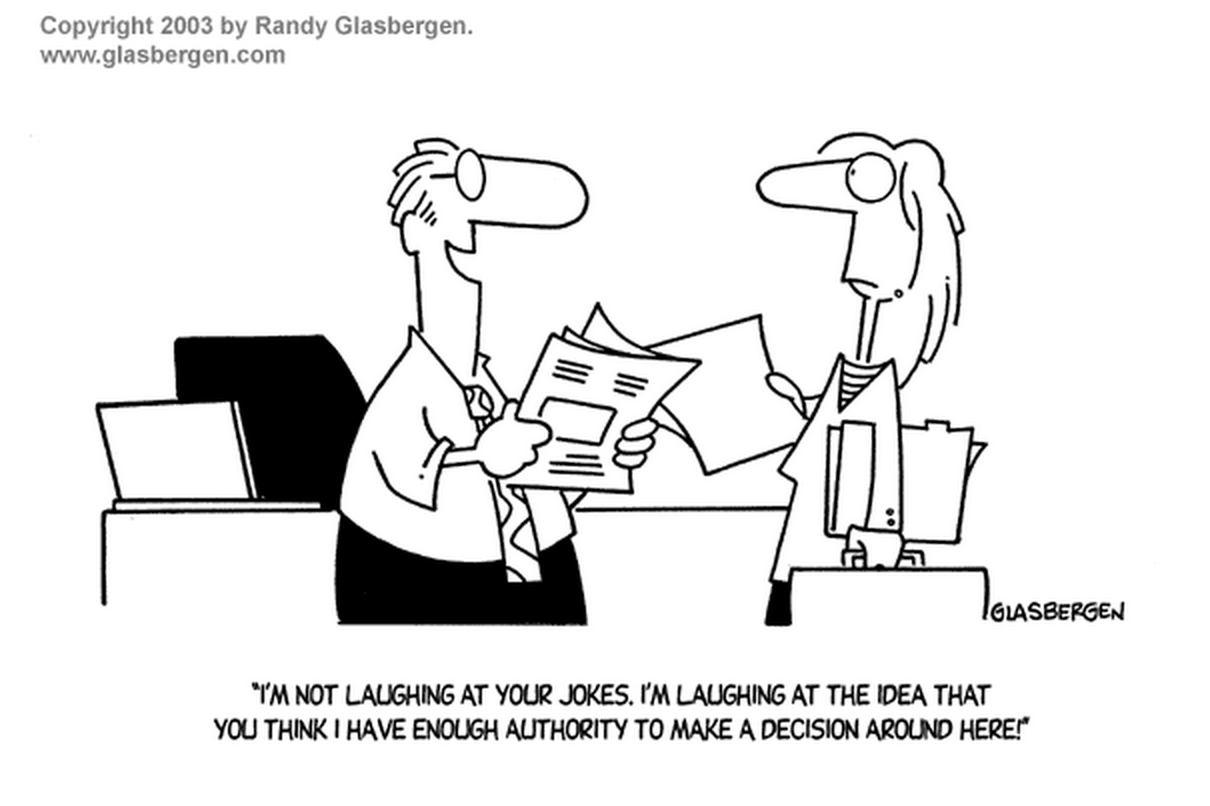
image1

They cause confusion amongst team members, ignore important business decisions, and lack passion for the profession.

When the team is underperforming, bad sales leaders blame everyone else but themselves.

Alternatively, great sales leaders empower their co-workers, set clear expectations, and hold people accountable.

Are you leading your staff or just managing them?

Stop wishing you were a better leader. Let Close.io help you.

Start by avoiding these six traits of an awful sales leader:

1. Lacks communication skills

Miscommunication and non-communication contribute to missed deadlines, errors in status reports, and constant frustration in the office. Teams that suffer from communication problems usually have no well-defined protocol to follow.

According to the Sales Benchmark Index, over 74% of sales managers by admit they have poor communication skills.

So, relying solely on email to talk to your team is an issue. It’s a sign you’re avoiding tough conversations with your team.

"No one wants to do the dirty work, but it's a boss' lot in life to deal with difficult issues," says Robert Sutton, professor at Stanford University and author of Good Boss, Bad Boss.

Face-time builds trust. It gives you the opportunity to set clear expectations without the misinterpretations.

Unfortunately, as supervisors, we sometimes think the word "manage" means control. Then, we spend every waking hour arguing with our staff.

You can only manage the process. You must lead the people.

Managers say: “Your sales are down. You need to speak to more potential clients this week."

Leaders say: “When you're talking to the customer, where do you feel the disconnect? What skills do you need to improve?"

Which one are you?

Communication is essential as a sales leader. You want your team to listen to you, and take action on your feedback.

Follow the best practices mentioned in the chart from Sales Benchmark Index below, and sign up for our free sales course to learn more techniques.

image2

2. Uses only one leadership style

Bad sales leaders focus only on what they know. They don’t see the world from other people’s perspectives.

One major fallacy is that “selling is always about money and personal gains.” For example, some managers believe people are purely motivated by financial incentives.

However, that’s not always true. Based on a Clark University poll, “78% of millennials say it is more important to enjoy work than to make a lot of money.”

Great sales leaders are flexible in their leadership approach. They understand when it’s time to kill the commission and to create more effective ways to motivate their team.

Observing your sales reps’ behaviors will give you a better sense of whether you need to assume a more supportive or directive role.

image3

If you’re still using the “my way or the highway” leadership style, let it go. It creates a hostile environment, resulting in a non-productive environment.

Instead, adapt to your team. Offering the standard three-week vacation package may not entice anyone.

Be different. Suggest paid sabbaticals or the ability to work remotely. Adjust hours during the summer months or allow small pets at work.

The cost is little to none; but, the opportunity to enhance your co-workers’ lives is priceless.

3. Possesses no purpose

If you think sales is just your job, you’re doing it all wrong. Sales means giving your customers the best possible value.

Managers live in a 24/7 state of worry and anxiety. Leaders live with vision and empowerment.

So, why are you selling? Why are you leading a sales team?

If your answers revolve around revenue generation or a job promotion, take some time to ask yourself:

  • Why am I really doing this (besides my selfish needs)?
  • What’s the larger purpose that drives me?
  • What difference do I make in the world?

Connect with your purpose, and remind yourself of it daily.
image4

In order to inspire your team, change how you feel about your work.

Give meaning to every part of your job. When you fuel your work with something beyond your own self-interests, mundane tasks turn into strategic tasks. They become part of a bigger goal.

Need some inspiration? Sign up for a free daily sales motivation video.

4. Fears failure

Bad leaders fear everything.

They fear changes in sales techniques. They fear monthly sales projections. They’ll fear lunch if it meant discussing churn rates.

For these folks, fear drives all their decisions. More often than not, bad leaders spend every minute trying to cover their asses.

But scared leaders don’t make money. They don’t survive in a fast-changing marketplace.

Leading from fear usually leads to failure.

So, how do you cultivate and maintain a sense of courage? How do you create an indestructible sales team that’s willing to fail?

Show them that it’s part of the job—including yours!

Delegate your sales reps simple activities to recalibrate how they feel about rejection. Try this exercise:

  • Give team members a large empty bottle and several rolls of pennies.
  • When a potential client rejects them, they must put one penny into the container.

The moral: Rejection makes you richer, both financially and mentally.

Instead of hating yourself for every ‘no’ you hear, you should feel a sense of accomplishment. Now, that’s powerful!

5. Never fires employees

Firing people is not a popular topic. It’s fun sharing your hiring process and the cool perks that come with the job. However, when it comes to firing, people rarely talk details.

Awful sales leaders hate kicking people to the curb. They fear getting fired, too!

So, how do you fire people?

It’s not an easy decision. How will they react? What will the rest of the team think?

Here’s the steps I took with Close.io’s firing conversations:

Step 1: Be straightforward about what’s happening. Make sure they understand the situation, and why they are getting laid off.

Step 2: Ask what they want to do next. Do they want to get a new sales job? Do they want to start their own venture?

Step 3: Schedule two hours of time to help them. Whatever they want, do your best to help them achieve it. For example, if they want another sales job, call a few CEOs and sales directors to help them get a new position.

Step 4: Talk details. Who retains the laptop? When’s the deadline to return the office keys? Create a checklist to keep things simple.

Step 5: Ask for their final thoughts. Give and receive feedback.

Step 6: Shake hands and say goodbye.

Sign up for our free sales course to discover more strategies.

6. Fails to track metrics

Numbers don’t lie.

Ineffective managers hate tracking performance. That way, no one can monitor whether their sales team is making progress or not.

Zach Watson, research analyst at TechnologyAdvice, writes “[Data] provides unprecedented insight into what customers want—whether that's how they want to learn about your product or how they want to engage with your brand when they contact you.”

How often do you analyze data?

The Close.io platform lets salespeople spend more time communicating with their customers and less time on data entry. Our custom reporting graphs help teams visualize data in hundreds of new and useful ways.

image5

If you’re not watching the data, you’re overlooking key insights. Data should be an integral part of your sales strategy.

Start at the top of the funnel because these numbers will affect everything else. Then, use analytics to monitor your sales pipeline.

Be a better leader

Become a better sales leader. Cultivate your talents to gain a competitive advantage.

Communicate effectively with your team. Connect with your purpose daily. Leave your fears behind, and fire unproductive employees.

Close.io can help you close more deals. Try our FREE 14-day trial today.

15 Oct 21:11

Please Don’t Let Your Sales Reps Nurture Leads

by Howard J. Sewell

Bear with me as I relate a quick story about lead nurturing:

A few months back I became a sales lead. I sent an email to a marketing technology firm, one with whom I was vaguely familiar, about a client campaign for which I thought their technology might be useful. I talked to an account executive, got pricing, and told her I’d be in touch. Unfortunately, the budget for the campaign got cancelled, so I emailed the rep, told her the bad news, and that I would continue to keep her company and product in mind for future needs.

dont let sales nurture leadsA question: at this point, what kind of lead am I? By my own reckoning, I’m an MQL (Marketing Qualified Lead). I meet the demographic criteria, I’m aware of the company, but I don’t have immediate needs (though I may in the future.) Perhaps I was an SQL (Sales Qualified Lead) at one point in the conversation, but no longer.

I’m also a perfect candidate for lead nurturing. Sure, I’m aware of the company in question, but I may or may not think of them when the appropriate client opportunity arises. Good lead nurturing would maintain that brand awareness, keep me abreast of product developments , deliver innovative use cases that get me thinking about where else I can use this technology, etc.

But no.

Instead, what passes for lead nurturing at this particular company is a monthly phone call from the same sales rep, delivered by voicemail, along the lines of the following:

“Hi Howard. It’s [Name] from [Company]. We talked a few months back and I gave you pricing on our solution and I just wondering if you have any needs currently where we could help?”

I have two issues with this. The first is voicemail. Who the heck responds to voicemail these days even if they DO have a need? Certainly not me. It’s 2015: use email, for crying out loud.

And secondly, and more critically, these kinds of “touching base” phone calls are the worst possible use of a sales rep’s time. Worse in my view than cold calling.

A sales rep should be selling, period. Granted, some salespeople (BDRs, inside sales) are also chartered with qualifying raw leads, but otherwise, anything that takes a salesperson away from his or her core function should either be eliminated or automated. Placing calls to leads that were once qualified, in the hope, by some accident of timing, that the prospect may yet have a need again, is destined to be a fruitless and thoroughly unproductive endeavor.

If there’s one thing that good, effective lead nurturing does well, it’s keeping your brand top of mind with prospects who meet the grade demographically (right person, right company) but aren’t yet sales-ready. Plus, if you choose to, lead nurturing emails can be personalized as coming “from” the assigned rep. Prospects who then engage with that nurturing content can then be further profiled, or scored, and the rep can be alerted based on pre-defined triggers. (At which point, sales is engaging with prospects showing immediate, current interest, not prospects who raised their hand months or years ago.)

Do me a favor. Get your salespeople out of the lead nurturing business. If they have nothing else to do with their time, hand them a list and make them cold call. (Note: if your sales team doesn’t have enough leads, new or newly qualified, to occupy their time, you have an entirely different problem.)

For more tips on lead nurturing, download a copy of our white paper: “Top 10 Tips for Lead Nurturing Success.”

15 Oct 21:10

Lead Generation: Are You the Annoying Party Guest?

by Mike Weir

You know the scenario: you’re at a fun party and you end up next to that guy. The one who can’t stop talking about himself, the one sermonizing on how great he is and why you should think he’s great, too. Do you:

  1. Give him your contact information because you definitely want to hang out again?
  2. Leave at the first opportunity?

For most folks, including myself, the answer is most definitely “2.” You’re going to want to get out. And get out fast. Who wants to get stuck talking to this guy?

Now, imagine if that person had asked for your business card before the conversation even began. Or even before you sat down to dinner. How happy would you be in that situation? I’m going to bet that you wouldn’t be very happy at all. In fact, you’d probably be pretty ticked off and hoping that you never hear from that guy again.

In the world of tech marketing, too many brands are acting like that annoying party guest. They’re focused on their own agenda — on the hard sell, on gathering contact information — and not on the needs or interests of the companies they hope will buy from them. In the end, instead of resulting in large quantities of quality leads that end up as sales, it results in lead forms filled out by Mickey Mouse, Bruce Wayne, and other fictional characters.

In fact, our research shows that a full 59% of lead forms are populated with false information. That’s a lot of Disney characters to have to wade through to find a quality lead.

Getting Rid of the Mouse

Luckily, as tech marketers, there are proven strategies that you can implement to help increase the quality of your sales leads and convert more prospects into customers.

When generating leads, you know you have two options: to buy them or to earn them. Hands down the best way is to earn them, but buying has its helpful place, too. New brands or even established brands who have a lesser known product, for instance, may rely on purchased leads until they become better established in the marketplace. But eventually, you’ll want to rebalance this approach so you’re earning most of your leads. Earned leads are regularly higher quality because they mean you’ve already provided value to the prospect in their purchasing journey and they are openly sharing their contact information.

But how exactly do you “earn” leads? To start, you need to provide potential clients with valuable content that teaches them about the technology you provide and engages them with your brand. Don’t just throw out speeds and feeds and basic product information — actively strive to produce content about the capabilities of your technology, discuss the business impact it can make WITHOUT talking about your brand as the only option. Tell them about how your product works with existing systems and educate them about the latest technological advances. Show them that you really, truly understand their needs — and you’ll be shifting the conversation from you to them.

The goal here of course, is to position your brand as a thought leader in the field and actually add value to the market conversation. This works especially well with social media, where a more open and honest interaction is expected. Make sure to fill your channels with interesting, engaging content that gets people talking and make yourself available via social to answer questions.

Additionally, you need to be thoughtful about your content gating strategy. In a recent LinkedIn survey, prospective clients were 81 percent less likely to consider a vendor that gates all of their content, and 15 percent said they immediately leave a site if the first piece of content is gated. It doesn’t matter how great your content is, if your prospective customer isn’t going to ever see it.

So What’s the Most Effective Approach to Gating Content?

Remember the first rule of thumb: gating needs to be earned and worth giving up your email. You need to first freely provide prospects with useful content. Our research shows that the best time to gate is after a client has read five articles. At this point, they are primed and have shown a continuing interest in your brand. The key is lots of ungated content that has promotion of the next available article embedded within each article and a smart nurturing strategy using ad technology to provide the anonymous user with the next great article after they leave your website.

The second technique to consider is soft gating. If you’ve ever read a SlideShare presentation, you’ve likely seen the “Click for More” information button that can be placed either mid-presentation or at the end. This soft gate can be skipped, keeping the power in the reader’s hands. When they like the content or have an active project, they raise their hand by personally selecting to give their information. This becomes a hot lead, as “hand-raisers” are the best prospects. They want you to contact them. The other great thing about soft gating is that the person can still see the valuable content. Even if they don’t give their email address, you have further embedded your brand’s opinions and value with another IT Committee member!

Finally, sometimes your content is so darn good, so valuable – think in-depth, exclusive research pieces and not a whitepaper or blog post — that you should gate it. Our resident Content Marketing Guru, Jason A Miller, likes to call these the “Big Rock” pieces of content. It’s the centerpiece of your content for the next quarter or two. And it can be gated. But, you’d also better slice and dice that Big Rock into little pieces of content that’s ungated too. That way, you have valuable ungated content that companies can access that also motivates them to want to download the full Big Rock content piece that is gated.

The outcome of this type of strategic gating plan is simple: more real contact information and more valuable leads for your sales team. Focusing on quality will save your company the time and expense of chasing down poor leads. Given the choice between quality vs. quantity, your sales team will choose quality every time.

And there couldn’t be a better time to take this approach! As the tech buying process gets longer and longer and involves increasingly more people, your need to be available whenever your customer might be looking for answers becomes increasingly critical. As our recent infographic shows, marketing and sales are becoming increasingly intertwined, and the moment to align your content and gating strategies with the goals of your sales team is now.

The post Lead Generation: Are You the Annoying Party Guest? appeared first on OpenView Labs.

15 Oct 21:10

Uncover the Marketing Value of Branded Online Communities

by Bernie Borges

What comes to mind when thinking about an online community? You probably have some antiquated recollection of a bland, white and grey forum. But, it’s time to update that vision. Businesses are creating and moderating branded online communities as a mobile friendly, online hub for customers to congregate and discuss how they use a brand’s products and related topics.

Branded online communities now have functionalities similar to social media platforms. They’re much more appealing to the eye than their outdated counterparts, too. One of the biggest advantages of creating an online community is that they’re yours; you “own” your member list, similar to “owned content.”

By contrast, if you have a group on LinkedIn or Facebook and those platforms make an annoying change and everyone jumps ship to the newest, coolest, social media platform, you could be left with no community almost instantly. Avoid this by creating your own branded community on your own website.

Let’s uncover other marketing benefits you’ll reap by offering a branded community forum for your customers.

Save Money

Having a place online where users can discuss and applaud your product is a great thing. It allows people to feel like they’re a part of something significant. What you’re selling is no longer just a product to them. When people belong to a group, especially one that’s centered on a product they believe in, they have a natural desire to help other users.

Consider how much you can save by deflecting support calls. Call deflection is measurable and tangible. Most people will consult Dr. Google before calling a support line anyway. If the answer to a question is out there already on your online community, that’s one less call for your support team to handle.

New Leads & Repeat Sales

Building the relationship between your business and customers creates brand loyalty, thereby increasing the chance for repeat sales. Take Big Green Egg for example; by having a place online for their customers to discuss their products, Big Green Egg owners feel like they’re part of an exclusive club. They share recipes, tips and more, further strengthening their connection with the brand.

The other opportunity to generate new sales stems from the SEO benefit an online community will add to your brand’s digital presence. If a buyer is searching on a topic related to your product and your community has a lot of engagement, the chance of being one of the top search results is potentially high. Many buyers may even be drawn in by the mere fact that you have an online community, where they can engage for troubleshooting and discuss new ideas.

New Ideas

It can be difficult to hear all valid mentions of your brand through the constant “noise” on social media. An online community for your customers encourages direct feedback where they can expect a timely response from your brand. It also allows an opportunity for other members/users to jump in and stand up for your brand. This open line of communication can stimulate new ideas. You’ll hear what people really want from your brand.

Ready to start your branded online community, but unsure how to get started? Social Business Journal, Volume 5, The Community Playbook was published in cooperation with Vanilla Forums. This Journal will guide your thinking in how to create and maintain a thriving online community. Download The Community Playbook to gain insight into one of the most compelling differentiators a brand can implement.

Social Business Journal, Volume 5, The Community Playbook

15 Oct 21:10

6 B2B Marketing Tips to Guarantee End-of-Year Success

by Jenna Hanington

Chances are, when your boss brings up the end of Q4, you’re not quite in panic mode yet. Sure, it’s only October, but when you factor in major holidays during November and December, your end of year is actually right around the corner. It’s a scary thought, isn’t it?

Fortunately, there are plenty of steps you can start taking today to help prevent the end of year frenzy come December. Especially for your lead generation and campaign efforts, identifying some quick wins now can help pave the way for long-term results down the road.

Let’s take a look at a few a few quick wins that you can start incorporating into your strategies — and don’t forget to tune into our SalesforceLive webcast, Maximize Your Marketing Efforts for Huge End-Of-Year Wins, on October 22nd for even more tactical takeaways.

1. Recycle content that works.

As you approach the end of the year, your resources are often down to the wire. Between employees taking time off for the holidays and budgets becoming that much tighter, it can be hard to find the time to create new marketing content to drive your campaign initiatives.

Take a step back during the last few months of the year and re-evaluate your top-performing pieces of content. Recycling content or repackaging it in a new way can be a great way to get more out of what you’ve already produced. Try breaking down an e-book into a few blog posts, creating an infographic around an industry study you sponsored, or packaging blog posts into a long-form piece of content.

2. Map your content and put it in a library for easy sales access.

Another quick win for content is to turn your sales team into a vehicle for content distribution. With the growing importance of personalization in the selling process, it’s becoming more and more critical to map your content to the different stages of your sales cycle, so that your buyers are receiving targeted content throughout their journey.

Once this mapping is complete (here’s a helpful worksheet to get you started), try building out a library of content to make it easier for your sales team to find exactly what they’re looking for. Sort your content into categories and provide talking points and email templates so that your reps know exactly what they’re looking at. Not sure where to start? Check out this helpful guide.

3. Try out a re-engagement campaign to revive your database.

Another great way to get more out of what you already have is to run a re-engagement campaign targeted at the inactive leads in your database. These are leads that you have already spent time and money collecting, and while they may not have engaged with your brand over the past several months, they’re not necessarily worthless.

Try kicking off a nurture program that sends inactive leads engaging pieces of content (think top-of-funnel assets like infographics and blog posts) to get them interested in your brand again. This will allow you to stay in front of them over time so that when their status changes, your company will be top of mind.

4. Start focusing on the bottom of the funnel.

At the end of the year, your sales team is looking for marketing support that can help them move deals to close. This means a good part of your focus as a marketer should be on the bottom of the funnel. Start thinking about ways that you can help your sales team close deals, whether it’s hosting a more product-focused webinar, devoting resources to a robust buyer’s guide, or putting together some sales enablement resources that your sales team has requested.

The key here is to communicate with your sales team and sales leaders to better understand their top needs as they approach year-end.

5. Focus on optimization.

A more obvious focus point as you approach the end of Q4 is optimization. Depending on where you might see the biggest impact, you may want to focus your optimization efforts on your landing pages, forms, advertising creative, nurture programs, email templates, CRM — the list goes on. The goal here is to test and iterate until you feel confident about your revised programs going into 2016.

6. Make sure you’re using your marketing technologies to their full potential.

Let’s take the fifth point a bit further. The end of the year is a great time to evaluate the effectiveness of your marketing technologies to make sure that you’re using them to their full potential. For example, is there a certain marketing automation functionality that you have yet to take advantage of? Does your database need cleaning or de-duping before next year? Are there any nurture programs that you haven’t tried yet?

Most marketing technology providers offer resources, training programs, and webinars for free that can help you get the most out of your system. Take a look as you approach December and see which areas you might be able to improve.

Want more tips to help end the year strong? Check out our full SalesforceLive webinar on October 22nd. Register here!