Shared posts

30 Oct 00:01

5 Elements of a Sales Opportunity Plan

sales opportunity plan

Sellers who win consistently plan to win from the start. They're methodical. They carefully match their sales process to the buyer's, set goals for every meeting, and do an exceptional job of communicating value.

Top sellers build strategies to drive sales opportunities, and use planners to help guide them through to the win.

RAIN Group's Sales Opportunity PlannerSM, made up of 5 core elements, has been seasoned over years of use at client sites. It's proven to be effective in increasing win rate.

The running theme of the Sales Opportunity Planner? Read on to find out.

30 Oct 00:01

Even the Smallest Businesses Can Sink its Teeth into These 10 Branding Lessons From Apple

by VerticalResponse

It’s difficult to imagine a more inspirational branding success story than Apple. Founded by two college dropout buddies who borrowed the money to build their first computers based on good faith and a promise, Apple is now America’s first $700 billion company. Moreover, it is one of the most recognized, respected and iconic brands in the world.

Your small business may never achieve billion-dollar revenues – and you may not even want it to – but you do want your brand to be as trusted and vital to your customers as Apple is to practically the whole world. Fortunately, many of the brand-building lessons you can draw from Apple’s 40-year rise are as relevant to your small business as they are to a huge, multi-national corporation.

The benefits of branding for small businesses

In many ways, your small business brand is – or should be – no different from Apple’s. It should encompass everything the public knows and thinks about your company, including the level of customer service you deliver, your reputation, how you communicate with customers, and your “look.”

Your logo design and website design are intrinsic to your brand identity, and so is the signage outside every location, the uniform your employees wear, and how they address your customers. All these aspects of your business are as fundamental to building your brand identity as your marketing and advertising efforts are.

Successful small business branding means all these parts work together to create a cohesive, positive, engaging and useful identity in the minds of your customers. Without a strong and clear brand identity, even businesses with great products and excellent customer service will struggle to succeed.

Good branding yields countless benefits. It helps you win new customers and solidify your identity with current ones, supports your advertising and marketing goals, inspires your employees, increases your corporate recognition and builds financial value.

Identifying those successful branding qualities in Apple is easy. Small businesses can borrow many of Apple’s tactics to build their powerful brand identity.

Here are 10 lessons from Apple that you can apply to your small business branding efforts.

1. Leverage emotion to build brand identity.

Steve Jobs once said that “The chance to make a memory is the essence of brand marketing.” Good branding engages emotions, not just reason, and builds on that connection to create a memorable identity. Branding succeeds when it sparks a positive emotional resonance within consumers. Customers are far more likely to remember – and purchase – products and services that make them feel good.

Apple famously did this in the mid-1990s. The company’s popularity had waned; its brand recognition was low and its reputation poor. Under Jobs’ leadership, Apple launched an advertising campaign that featured heroes – both living and gone – whose passion and convictions had altered the world in a significant way. The heroes evoked an emotional response in the viewers, and the subtext of the ads made it clear that Apple was a company that was passionate about world-changing innovation.

2. Know who you are.

It’s difficult to establish a brand identity if you’re unsure what yours should be. Jobs said Apple’s branding addressed the question of “What are we here to do?” The answer to that question informed not only the company’s marketing and advertising, but every aspect of its corporate culture and its interactions with consumers.

What is your company’s mission? You must first define for yourself what your company wants to be, and then find ways to clearly and consistently communicate that identity to consumers. Define your story and use reliable marketing tools to share your story with consumers.

3. Consistency is key.

Do you remember “New Coke”? It faced many challenges, not the least among them was that the new product came in a new package that diverged sharply from the brand’s iconic script. Combined with the fact that virtually no one liked the taste of the new product, the lack of consistency in branding was one more nail in the coffin of New Coke.

Of course, if your visual brand identity isn’t working for you, it pays to engage in professional logo design and other rebranding tactics to find a better fit. But once you have an identity that meets your needs, it’s vital to stick with it. Changing your “look” or your approach too often undermines consumers’ understanding of who you are as a company.

In contrast, Apple consistently places a lower case “i” on new digital products – the iPhone, iPad, iPod, iWatch. This consistent application of a key branding component ensures that consumers can easily identify a new product as coming from Apple, even if they’ve not heard of it at all.

4. Differentiate yourself with real differences.

As a small business, you may be tempted to set yourself apart by undercutting your competitors’ prices. But that approach is not sustainable in the long term, nor does it do anything positive to improve your brand identity.

Instead, differentiate yourself as Apple did, through innovation, superior customer service, and marketing and advertising campaigns that engage consumers’ emotions. Apple’s success illustrates that people will pay a premium for products and services that offer substantive differences. Good branding means you ask a fair price for your product and services, and that you communicate to consumers the value suppositions that prove you deserve to get that price.

5. Find your niche and then take command of it.

Everyone is looking for that sweet spot where an unfilled need or desire leaves consumers primed to buy as soon as a good option presents itself. But identifying your niche isn’t enough. You must also take steps to ensure you emerge in consumers’ minds as the leading choice in your specialized area.

Apple was one of the pioneers of personal computing. So was Microsoft and a host of other lesser-known companies that have come and gone in the past four decades. After early success commanding a good portion of its niche, the company lost its marketing mojo in the 1990s and its revenues suffered. Apple solved this problem in two ways. It focused its marketing on recreating its image as an industry-leading pioneer in personal computing, and it created new niches for itself, including in digital music and smartphones.

Today, virtually no one would describe Apple as a “niche” company. Indeed, its products now permeate nearly every aspect of American life.

6. Walk in the customer’s shoes.

Jobs was notoriously unimpressed with the concept of focus groups. Rather, he advocated for putting yourself in the customer’s shoes and thinking about what you would want from your company.

One of Apple’s strengths has always been its ability to design its own new products, but it has also successfully improved concepts taken from others, turning them into something superior and more relevant to consumers than the original concept. Jobs did this by envisioning what his product needed to solve for consumers and then asking himself what he would find useful, helpful or just plain cool if he were in the consumer’s shoes.

Of course, to do this well, you need to understand who your customers are and what they really need. Once you know exactly who you’re selling to, it’s easier to imagine yourself in their shoes and create innovative solutions that you believe would help you in their situations.

7. Surround yourself with talent and quality.

Who would turn down a job with Apple? Not many people. The company’s reputation as a top employer allows it to attract quality people, and the excellence of its staff translates into better products, services, and customer experiences.

The people you employ speak directly to the quality of your brand. Surround yourself with talented people who are committed to quality and are passionate about their jobs. Their professional image should feed and build your positive brand identity.

8. Lead, don’t just follow.

It’s natural for small businesses to compete with each other. But if you’re constantly following what someone else is doing, you’ll never get the chance to lead. That’s not to say you should ignore what the competition is up to. Apple never does.

The concept of the smartphone was around for several years before Apple entered the field. Instead of chasing behind what other smartphone makers were doing, Jobs’ team built on the basic concept, created its own operating system and added the first touchscreen. Apple didn’t create the concept of digital music, but it did create products and services that made digital music widely accessible to the general public.

Of course, you’ll always need to be aware of what competitors are doing, but the bulk of your energy and branding efforts should be focused on using your differentiating strengths to break new ground in your industry.

9. Build relationships with customers.

If there’s one thing small businesses will always be able to do better than big corporations, it’s to build relationships with customers. It’s far easier to get to know each other and create a lasting connection when you’re in direct contact – when a customer walks into your store, calls your office, comments on your company blog, gives feedback on your new website design, or responds to an email offer.

Apple’s relationship-building success has stemmed from its ability to interact with customers on a much more personal level than is typical of big companies. What’s more, it’s leveraged honesty in its branding to engender trust among consumers. When you buy an “i” anything, you have a good idea of what you’ll be getting, because Apple has consistently delivered products and services that fulfill its brand promise.

Elevating customer expectations and then living up to them is at the heart of brand-building relationships.

10. Don’t fear failure, fear losing that hunger.

Jobs’ career with Apple is a story of failures as well as successes. What failure could be more ignominious than being fired from the CEO position of a company you founded? Jobs didn’t dwell on failures. Instead, he focused on maintaining his hunger to succeed; that passion led him back to Apple and, in turn, helped Apple rebuild its amazing brand success.

Never forget your brand’s objective, and be willing to take calculated risks that can move you toward your goals. Rather than focusing your branding efforts on avoiding failure, emphasize the quest for success. Jobs advocated listening to your gut. It worked for him repeatedly; when the iPad first came out, consumers and critics were skeptical – until they actually used one. The iPad quickly became the fastest-growing Apple product in the company’s history.

Key takeaways from Apple’s success

Apple’s branding story continues to be written, and by all indications it promises to continue being impressive. Your company can write its own success story by borrowing some of Apple’s most effective branding tactics. Here’s a recap:

  • Build brand identity by creating emotion in consumers.
  • Define the identity you want to communicate.
  • Be consistent in how you communicate your brand.
  • Find substantive ways to differentiate yourself from the competition.
  • Identify and command your niche, or create new ones for yourself.
  • Imagine yourself in the customer’s shoes to better understand what they want/need.
  • Surround yourself with people and partners who display the kind of talent and quality you want associated with your brand.
  • Instead of chasing competitors, use your strengths to blaze new trails for your company.
  • Emphasize building relationships with customers.
  • Rather than focusing your efforts on avoiding failure, concentrate on creating success.

Although your small business will never match Apple’s marketing budget, these tactics mean you don’t have to. They cost little to implement. As Jobs said:

“Innovation has nothing to do with how many R & D dollars you have. When Apple came up with the Mac, IBM was spending at least 100 times more on R & D. It’s not about money. It’s about the people you have, how you’re led, and how much you get it.”

30 Oct 00:01

How to Write Your Brand Story – 6 Must Have Content Elements [Podcast]

by Pam Moore

how to write brand story content

Do you have a brand story that you share with people who come in contact with your brand? A story that serves as the connective tissue and foundation representing the who, what and why your brand exists on this planet today?

Your brand story should be the thread which connects your value proposition, team, vision, mission, and purpose with your customers, potential customers, audience, community and partners. It is who you are, what you are, why you are in business, where you have been, where you are going, why you are going there, who you have helped, and the list goes on.

Can you answer these questions?

  • What is your brand story?
  • Who are the characters in your brand story?
  • What is the setting?
  • What are the lessons learned?
  • What happened and is happening on the journey of building your brand and business?
  • What differentiates your brand story from your competition?
  • Why did you start your business in the first place?
  • What is your short, medium and longer term vision and mission?
  • How do you do what you do?
  • Who do you help? What have the specific results been to date?

Many marketers struggle with developing and communicating their brand story publicly. They may feel uncomfortable or simply have a hard time pulling it together in a way that they feel comfortable and confident knowing that it represents who they are and what the have to offer the market and the humans within.

If you have ever struggled with creating, developing and launching your brand story, then you have landed on the right blog post and podcast today!

Take a listen to 179th episode of the Social Zoom Factor podcast to learn 6 key foundational content elements that must be included in your brand story.

In this episode you will learn how to begin to craft your own brand story that represents who you are, why you are in business and why anyone who comes in contact with you and your brand should trust you and be inspired to engage in a relationship with your brand and the people within.

In this 30 minute podcast you will learn:

  • 6 must have content elements of brand storytelling
  • How to create a brand story that helps you earn trust and establish authority
  • Importance of making it easy for people to listen to, watch and understand your brand story
  • Why you must ensure your brand story helps differentiate you from competition
  • Why you must start from the inside out in creating your brand story
  • Selecting the characters (people) to be part of your brand story
  • Why your brand story is not just about you
  • Why you must know your unique position in the market
  • Why you can’t be afraid to share your best stuff, including how you do what you do
  • The importance of testimonials and case studies
30 Oct 00:00

Microsoft has trapped its biggest partners between a rock and a hard place (MSFT)

by Max Slater-Robins

surface book closed smaller

The Surface Book has presented an interesting conundrum for PC makers who are Microsoft's biggest partners, generating billions in revenue per year.

Sales in the PC industry are declining at around 11% per quarter, according to IDC, causing drops in profits for PC makers. Microsoft is somewhat insulated from this decline thanks to big enterprise sales, but the company's increased focus on hardware with the new Surface Book Pro — a high-end laptop with a touch screen — is making its partners anxious.

"[Surface] will bother OEMs and I know from conversations with OEMs they have mixed reactions," says analyst Annette Zimmermann of Gartner. (Microsoft historically calls PC makers "OEMs," or "original equipment manufacturers.")

Business Insider spoke to one source at an PC maker who described Microsoft as a "sleeping lion." 

A fundamental shift

Until 2012, Microsoft steered clear of making PC hardware because it already had an army of companies willing to do so. Even then, the first Surface computers were more like tablets with optional keyboards, something that most PC makers hadn't previously bothered with. They were mainly intended to show off the new touch-friendly interface that was front and center in Windows 8.

The tone has changed. Microsoft is now making a self-described "ultimate laptop," as opposed to a tablet, placing it in direct competition with PC makers such as HP, Dell, Lenovo, and others. 

Unlike Microsoft, which makes billions of dollars from software, PC makers make most of their money from selling hardware. Having Microsoft move into the industry — with its deep pockets and aggressive attitude — won't feel good, but there is nothing Dell, HP, Lenovo, and so on, can do. 

According to Zimmermann, Microsoft's aim is to ship enough devices to create awareness for Windows 10, but not enough devices to alienate its PC partners. 

But there's a natural conflict in those goals: Like any business, Microsoft ultimately wants to be the best, and this may involve shutting PC makers out.  

Marketing to Apple loyalists

microsoft surface bookSo far, Microsoft has not advertised the Surface Book by comparing it to anything running Windows.

Instead, Microsoft hardware chief Panos Panay showed a slide that compared to Book to a MacBook and then directly referenced Apple as Microsoft's main competitor in an interview with Wired.

However, this strategy may have a problem. 

"The Surface Book will have a harder time stealing away MacBook users," says Linn Huang, an analyst for IDC. "The Apple brand has been sticky, and I don’t have much cause to think it won’t continue to be in the immediate future."

This "stickiness" is a problem for Microsoft who, in order to generate sales, will need to start appealing to high-end Windows users. 

While Apple dominates the high-end PC market, manufactures such as Lenovo, HP, and Dell (who own Alienware) all sell multi-thousand-dollar laptops. These customers are already primed to use Windows and can easily be converted to a Surface Book.

This is a scary prospect for PC makers. 

Owning the whole widget

steve jobs

While Microsoft is "not trying to become a second Lenovo or HP," according to Gartner's Zimmermann, there is still an implicit threat to the PC makers who make money selling machines which run Windows. By owning both the hardware and the software, Microsoft is in a far stronger position than PC makers who only own the former. 

For instance, Windows Hello, a security feature that can unlock Windows 10 with your face, has been lauded as one of Book's best features. (This feature is available to PC makers through Intel RealSense cameras, but Microsoft apparently isn't including Intel's technology.)

Simply put: Microsoft makes the software and so it can tightly integrate it with the hardware. 

This is something Steve Jobs described as owning "the whole widget" — and customers love it. Apple's strength has always come from being able to offer software that works perfectly with hardware on both the iPhone (think Touch ID) and laptops (think trackpad).

"Like Apple, Microsoft wants to appeal to users with an integrated hardware-software experience but the people who rushed to buy the Surface book so far are not Mac users," says Zimmermann. In many ways, this is actually even worse for PC makers: Microsoft has already started to steal customers.  

macbook outsideThe problems don't stop there, however. Having Microsoft in the hardware game "puts the OEMs in an awkward position," says Zimmermann.

When the company merged the Windows software and hardware divisions under Satya Nadella, PC makers must now "share their [product] roadmap with the same people who are responsible for hardware at Microsoft." 

This conflict — that PC makers have to share certain product plans to get Windows 10 — has never been addressed by either party, and will only further tensions between the two sides.

But there's nothing PC makers can do. People want Windows PCs. Microsoft makes Windows. 

As Zimmermann says: "They don’t really have a choice, right?"

The Halo effect — maybe. 

The combined forces of a market down-turn with a militant Microsoft make the future seem very bleak for PC makers, but there may be a silver lining. 

"I think the Surface Book concept and design is fantastic," said IDC's Huang. "[But] at the current pricing levels I’m not sure it’s anything other than a halo product."

A "halo product" is one that lifts the image of everything else — in this case Windows laptops — up. In other words, the beauty and quality of the Surface Book will make a consumer more inclined to pick up a $400 Windows laptop just as the $2,500 MacBook Pro incentives people to buy the $849 MacBook Air or the $499 Mac Mini. 


surface book detachableAnother bright spot: For the time being, Microsoft still needs the PC makers to get to its goal of selling a billion Windows 10 PCs in the next few years.

John Delaney, an analyst from IDC, told Business Insider that "Microsoft is trying to bring excitement to the Windows vector" with the Surface Book, and the company needs others on-board to help fuel the fire. 

Some PC makers, Dell and HP, have even set up deals to distribute the Surface Book to big companies through their enterprise consulting businesses.

"The truth is, we have entered a period in the industry where winning for the major players is no longer solely about capturing share, it’s about expanding the company’s footprint in the value chain," Huang told BI.

Just how PC makers are going to continue creating value is, however, the multibillion dollar question. 

SEE ALSO: How Microsoft's Hololens could slowly change the world — and what could go wrong

Join the conversation about this story »

NOW WATCH: We got a hands-on look at the Surface Book — Microsoft’s first-ever laptop everyone’s freaking out about

29 Oct 23:59

The 5 Ps of Customer Satisfaction

by Rohit Srivastav

Customer satisfaction in its truest essence is an abstract concept. It involves your customer’s perception of the value expected from you and the value you actually delivered. In cases where both of them match, a customer is said to be satisfied with your business.

There are a number of factors that affect customer satisfaction, such as the product’s or service’s quality, the ambience, price, post purchase services and much more.

CustomerSatisfaction is all about delivering on the value that your customer perceives.

For all businesses big and small, it is of common knowledge that customer satisfaction is a necessary and determining factor for customer loyalty. I have condensed the factors that can make or break customer satisfaction for your business, under 5 Ps (Marketers love Ps, don’t they?):

1. Product: The product is your ‘core’ offering to the customer in return for a price.

It is the first and real value on which the customer judges you and the most important factor on which customer satisfaction depends.

Imagine going to a saloon where the ambience, service and seating are better than the fine dining restaurant you visited last Thursday. The guy offers you excellent coffee and asks you to take a seat and then gives the most horrible haircut of your life. Would you ever be satisfied with the saloon?

2. Policies: Policies are guidelines that direct the company as whole to function in ways to ensure customer satisfaction.

They show the intent of the business towards achieving customer delight.If the policies do not define customer satisfaction, just your sweet talks are not going to cut it.

Factors of customer satisfaction

3. People: People or the employees of the company are the enablers of customer satisfaction in practical.

It is not about the number of employees you have; it is about how each one of them reflects your brand in their day to day interactions.

One of the driving factors behind Zappos’ rocket speed growth was the dedication of their employees to customer service. You not only need to define customer satisfaction as a strategy but also make it implementable through your people by giving them the required slack and authority.

Top 5 Customer Satisfaction Tips

4. Processes: Processes are the implementable steps that make the customer satisfaction strategy, a reality.

Customer satisfaction, when implemented to scale, become highly cumbersome to handle. The last thing you would want is your support guys failing on promises they make.

5. Proactivity: Proactivity is the agility to take steps and adopt changes in your business’ structure to ensure customer satisfaction.

It encompasses everything from product development according to the customer’s needs, your employees going the extra mile to delight your customers to bending the processes in unique cases.

Customer Success: The Journey Ahead

Ensuring all the factors in place is the first step in journey towards customer satisfaction but it can never be guaranteed, which you should have guessed when I called it a journey. The idea is to develop strategy, implement tactics and measure continuously.

What are your favourite hacks for having more customer satisfied with your business? Let us know, what are we missing.

Find more awesome posts like this where this post was originally published: monk@webengage.

29 Oct 23:59

B2B sales: which opportunities are REALLY likely to close in 2015?

by bob@inflexion-point.com (Bob Apollo)

2015-2106_TrimmedIt’s coming up to the end of October, and if you’re in high-value, long-decision-cycle, multiple-stakeholder enterprise sales, it means that you effectively have a month-and-a-half of selling time before everything starts to slow down or stop for the holiday season.

It’s important to avoid surprises: it turns out that there are a handful of critical opportunity criteria that your B2B sales people MUST pay attention to if they are going to have a real chance of closing deals this year, rather than have them slip into 2016…

You’ll be relieved to know that I’m not going to focus just on the old-fashioned BANT criteria so beloved of 20th Century salespeople (Budget, Authority, Need and Timeframe). That’s not to say that these factors are unimportant - just that they are no longer enough, and that their presence does not guarantee that the opportunity will close when you hope it will.

After observing more shattered Yuletide sales dreams than I care to remember, I’d like to offer my six critical end-of-year opportunity criteria. Ignore them at your peril.

Clear Business Case

Almost every significant business decision needs to be supported by a clear business case - and every organisation has either formal guidelines or at the very minimum a set of expectations about what is required, both in terms of information provided and what is regarded as an acceptable return of investment.

They probably won’t accept your ROI projection - assuming you have created one - without a significant amount of scrutiny, interpretation and adjustment. But don’t go to the other extreme and assume they can complete the strongest possible business case on their own.

Your prospects need your help. They need your accumulated experience of helping other organisations derive tangible benefits from implementing your solution. And if you don’t know what’s in their business case, you have no right to assume they will get it approved.

Reliability/Predictability

Perhaps the most important of these is the prospect’s track record of doing what they say they will do, when they say they will do it. If a prospect is already a serial offender when it comes to missed deadlines, what do you think the chances are that they will suddenly switch to completing the remaining tasks on time?

And remember - even if they have delivered reliably in the past, the dynamics of having to actually make a commitment can throw even the best-laid plans off track. So understanding how similarly significant decisions have panned out in the past can be very illuminating.

Presence of a Mobiliser

If there are multiple stakeholders involved in the decision, getting them to all agree on the course of action in a timely fashion is going to be heavily dependent on the presence of a mobiliser - someone who is capable of making things happen and getting all the interested stakeholders aligned behind the related decisions to (1) change from the status quo and (2) change to you.

Mobilisers are critical to navigating the change management process. Deals that have no obvious mobiliser tend to slip. And you can’t conjure a mobiliser out of thin air. So if you’re working on an opportunity that has no obvious mobiliser leading the decision process, be prepared for slippage.

Access to Decision Team

Even if you’ve got a mobiliser on your side, having access to the decision team is another key indicator. But access alone isn’t enough: you’ve got to develop a clear sense of their priorities and motivations, and ensure that your proposal offers something of value to each one of them.

Here’s a big red flag: if you’ve already submitted a proposal that does not explicitly address the “what’s in it for me, my department and the organisation” for every key stakeholders, you had better address the shortfall urgently. Or expect it to take longer than you hope for the decision team to achieve consensus.

Proactively Mitigate Risks

Every significant change carries risks - it’s why so many complex sales projects end in a decision to do nothing and to stick with the status quo. These risks have a habit of rising to the surface during the final stages of the decision making process. If your prospect hasn’t raised risk factors with you already, you need to be very concerned about their seriousness.

Rather than sweep them under the carpet, it’s often far more effective to proactively raise risk factors with the prospect (“if you’re like the other organisations we deal with, you’re probably concerned about…”) and position your approach as one that is deliberately designed to eliminate or mitigate the most common risk factors.

Political Fit

Here’s my last nomination, but by no means the least important if (as many of my clients are) you’re a best-of-breed software vendor - what about the political power of incumbent vendors? Even if you’ve won the functional comparison, the street of broken sales dreams is littered with losses to competitors with weaker functionality but stronger access to power.

Be prepared for the incumbent to give things away “for free” to stop you gaining a foothold. As in mitigating risks, it’s usually best to pre-emptively bring the matter up and explain why the outcomes from a decision to choose you will (1) deliver palpably better results and (2) not result in the brave person who stuck their neck out losing their job.

6 Factors

So there you have it - 6 critical factors that can determine whether that forecasted Q4 close is really likely to happen. You don’t have to master them all to absolute perfection - but being ignorant of any one of them can result in disappointment or worse for all concerned.

10-Point Online Healthcheck

29 Oct 23:57

These 3 Email Subject Lines Will Kill Your Chances of Winning a New Customer

by Guest Post

These 3 Email Subject Lines Will Kill Your Chances of Winning a New Customer written by Guest Post read more at Duct Tape Marketing

spencerXsmith-stop-checking-inHow many times have you gotten an email from a salesperson with one of these three subject lines?

“Checking In”

“Touching Base”

“Following Up”

I’ve received dozens of emails like this and am guilty of sending a whole bunch of them too. Think about it: aren’t these just euphemisms for “Wanna buy my stuff?”

What to say instead of “Wanna buy my stuff?”

“What should I say instead?” you might be wondering. Following up is such a critical part of the sales process, and the last thing you want is to be forgotten by your prospect. What’s a way to follow up while simultaneously providing value?

Instead of emailing someone to remind them you would like to sell them something, use the opportunity to provide targeted education. What’s the best way to be sure you’re sending something that’s relevant, though?

After you earn a prospect’s email address, assign that prospect to a simple workflow based on their interests. This is difficult at first if you’re simply maintaining one catch-all email list. Instead of just one list, create a series of categories based on specific interests. John Jantsch does a great job describing this concept in his recent article titled Content 3.0 – The Rise of the Content Community. This community concept may seem a bit overwhelming at first, however, and you may be wondering…

What to do if you don’t have digital assets yet

If your business is struggling with this whole digital marketing thing, start with baby steps as you work toward a Content Community repository. To get started, consider this: What questions are your prospects asking you every single day that you’re manually answering via email or phone calls? What can you offer these prospects that is both concise and actionable? Simple digital assets like cheat sheets, checklists and templates work great in this capacity. Limit these downloads to one page so they can easily be shared or printed.

By offering specific assets geared at fixing specific problems, you can gauge your prospects’ interests immediately, and not be left guessing what issues they’re facing. Which asset do you create first? This is where we need to stop thinking so hard. What question do you hear more than any other? Create that one now.

As an example, if you’re a marketer specializing in SEO, you probably hear the question “How do I drive more traffic to my website?” all the time. For those prospective clients who download your “5 Biggest Mistakes Companies Make With SEO” cheat sheet, ensure your email messages further their education about that specific topic. That will be an email they’ll actually look forward to receiving.

How to get started right now

This is the part where I ask you to get out of your own way. Don’t analyze these concepts to death or over-automate your workflows…just start. Instead of retroactively applying these ideas to your existing email list – an incredibly daunting task if you’ve been in business more than a few years – start fresh with only new prospects. You’ll iron out the kinks much faster, and just as importantly, you’ll get to experience success early and often as a result of your efforts.


10.2 headshot2Spencer X. Smith is committed to helping clients achieve measurable increases in revenue from their digital marketing efforts. He using Plain English to help you understand what methods are worth doing – or not doing – with your business. The ideas he shares are what he uses every day in his companies, and only through experiencing the success and failure can he confidently advise on them. He is also an instructor at the University of Wisconsin.


29 Oct 23:53

How to Create Trustworthy Content That Gets Shared

by Matthew Zajechowski

The end goal for most brands during the content creation process is to create content that will be shared by both their customers and audience to their respective social networks. Most brands, however, struggle with this.

Consumers are actually more willing than you might imagine to share content they see online. Huffington Post found that nine out of ten consumers want brands to share content online and those same consumers actually trust content from brands nearly as much as they do from established media sources. So how does a brand go about building trust within their content?

Most brands will simply slap their logo or their branding in the corner of their content and expect it to be trusted by their audience. This is wrong. Let’s examine the guidelines that brands should follow in order to build trustworthy content that is also shareable.

Reflect Your Brand

The first step to making shareable and trustworthy content is to make sure the content is an accurate representation of your brand. Not only should you stay true to your brand’s design guidelines, you also need to make sure your content addresses your customers’ interests in an authentic and believable way. Consumers want to do business with companies that share similar values as their own.

Make it Educational

People tend to seek out content that is educational in nature. The more someone can learn and take away from a content piece, the more likely they are to want to share it with their audience. Seventy-four percent of consumers trust editorial content when it comes across as educational and not promotional. This holds true even if it comes from a business.

Originality Counts

With so much content being published and shared on a daily basis, you have to take the extra step to ensure that your content stands out from the crowd. Over 30 percent of content readership will fall off if you try to take shortcuts like using stock photography in your content. Your consumers want to know your opinion on the subject matter as opposed to someone else’s. Original content means an original idea with original visual content. Take the extra step to make something truly unique and you will reap the benefits.

Cite Information Sources

One of the quickest ways for your content to lose trust in the minds of your readers is by not properly showing your sources. In fact, almost half of all consumers believe a brand’s credibility is lost when the information in the content cannot be verified by outside sources. On top of this, most media outlets will not reference content if there is not proper sourcing.

Earn Media Mentions

Content that is shared organically comes across as trusted content. Word-of-mouth recommendations and media mentions go a long way in building trust in both your content and your brand. When unaffiliated, third parties share your content, it comes across as authentic and, as a result, builds trust in your content. Indeed, content marketing comes across as more authentic than ads in the eyes of most consumers.

Make it Easy to Share

Making your content as easy to share as possible via social sharing buttons is an easy start to the conversation over your content. It is worth noting that most people prefer to share good news over bad news. And make sure that your content does not come across as a sales pitch for your product or brand, as brand or service mentions within the content can turn off consumers.

To help ensure that your audience and consumers share your content, it has to be both trustworthy and easily shareable. If you incorporate these various trust signals, you’re on your way to making content that’s both endorsed and shared.

How to Create Trustworthy Content That Gets Shared

revcontent-98%25-of-sites-get-denied-are-you-in-the-2%25

29 Oct 23:53

3 Principles of Winning Landing Page Copy

by Hillary Bassett Ross

Conversion Writing: 3 Principles of Writing Winning Landing Page Copy

If you’re promoting a product, service, event, webinar, or must-have resource, just create a landing page and watch the conversions roll in, right? Unfortunately, it’s not that simple. One small mistake can be costing you—in leads and in dollars.

Landing pages are a linchpin moment for your product or service: the make-or-break moment where a customer decides whether or not your brand is worth the investment.

Landing pages are a linchpin moment for your product or service: the make-or-break opportunity where a customer decides whether or not your brand is worth the investment.

With such a brief window of opportunity—and a small amount of text—the pressure is on.

Nielsen findings cited in a Forbes article on the Influencers of a Buyer’s Journey indicate that consumers are 5x more dependent on content than they were 5 years ago. One small mistake can indeed be costly.

The pressure is on

Making it even more challenging, Even the most gifted writer might fail at crafting landing page copy. Why?

Because conversion writing is a whole different animal.

Instead of just focusing on word choice and rhythm, poetry and prose, you have a job to do: To win a conversion, and in only a few seconds’ time. It’s a game where every word counts.

Your message must be succinct, logical, trustworthy, and potent. More importantly, your message must compel the reader to take action. It’s a lot of pressure.

What do the winners teach us?

Writing landing page copyBuilding winning landing pages is an art, a science, and an ongoing effort to understand how your audience will respond. Getting your customer to convert requires an understanding of the individual making the decision, an ability to propose a compelling offer, and the editing skills of a ninja.

Luckily, the web community has shared A/B, split, and multi-variate test results that allow us to put our best foot forward. By reviewing winning words from landing page tests, we find a hidden set of copy guidelines and principles to use as we craft landing page copy. And here they are:

Winning word: ‘You / Your’

‘You’ is known to be the number one most persuasive and influential words in our language. Instead of cruising on autopilot, we naturally become more engaged when we are addressed directly.

Lesson 1: Make it Personal

While a landing page is a digital experience, there’s still a human being on the other side, deciding whether or not to click. And A/B tests prove the humanity: results indicate that creating a personal connection resonates with customers.

How to incorporate this into your page:
Keep the content directed toward the user at all times. Address the visitor, using words like “you” and “your”. Speak to the individual experience of the user, ask a question, and frame your message around how he or she will benefit from your product or service.

Winning word: ‘My’

Once again keeping the copy personal, this next word shows us a new concept to consider. Adding ‘my’ in button text has increased conversion. Instead of a button that reads, “ Download the Guide”, use the phrasing, “Download My Guide.” This is a stealth, advanced maneuver in two ways: 1) The term ‘my’ makes the text personal, and 2) It helps the reader imagine the benefit he or she will receive.

Lesson 2: Focus on the Future

What benefits will the customer experience with this new item? Communicate this clearly. Adding ‘my’ to the button text is a solid start, but the content itself should focus on the benefits of the item you’re promoting. In such a brief opportunity and a small amount of text, you need to make sure you there is no question as to what they’ll gain by trying your product or service. Can you nail your value proposition in single, compelling, concrete sentence?

How to incorporate this into your page:

In addition to developing a button text phrase that includes ‘my’, frame the page copy around the positive outcome this product or service will provide. Have a list of benefits handy, and work these into the copy. Benefits can be a straightforward bullet-point item, or you can help create more shape by communicating the improved future they will experience with this new product, service, subscription, etc.

Winning words: Digits and quantifiers

A majority of A/B tests study the impact of color, design, image, or entire sections of content. It’s not as easy to find specific words that move the needle. But in this study, an author changed one bullet point on a landing page to drive downloads to his ebook. What changed? The bullet included how long it would take to read the ebook:

Original version
“Insights and experience from 4 years of research and over 350 A/B tests distilled into one 26-page free ebook”

Edited bullet text
“Read the book in just 25 minutes and get insights from 4 years of research and over 350 A/B tests”

The result? The edited version, which included how long it will take to read the book, outperformed the control group by 18.59%.

Lesson 3: Define the Scope

Including digits in blog post headlines is known to have a higher number of views compared to those that don’t. Why? Because readers have a better understanding of what they’re getting into when they click. Instead of a vague message, the reader has a scope and a framework on what he or she is about to read. It’s concrete. Clarifying the scope is helpful to readers and—as the results indicate—drives higher conversions.

How to incorporate this into your page:

Frame the scope with a quantifier, such as the time it will take, number of steps, reasons, ideas, examples, tips, etc. Here are a few ideas to get you started:

  • 6 tips to create better pitch decks
  • 5 minutes to a more organized week
  • 3 reasons why you need to check on your 401k
  • 7 examples of great web campaigns

Once you’ve crafted your text, run back through this checklist to make sure you’ve addressed the guidelines outlined above:

  • Benefits in action
  • Tangible, descriptive button text
  • Use of “my” where possible, in the button text
  • Use of you / your
  • Quantify the scope

Want to make writing landing page copy easier? The Piipeline Playbook takes this further, featuring more landing page copy tools including this checklist, how to add them throughout your page, as well as a list of the most influential words in the English language. Sign up for the Piipeline Playbook for immediate access.

A rule of thumb when creating conversion experiences such as landing pages? It’s a human behind the screen, making the decision. Conversions are a result of behavior, decision-making, and human connection. I don’t call this marketing, I call it anthropology—and I hope you’ll check out a few more posts so I can show you how anthropology can improve your customer experiences.

29 Oct 23:53

The 13 hottest startups in Scotland

by Lucy England

Skyscanner CEO

Scotland is one of the biggest UK hubs for tech startups outside of London.

Skyscanner is a star, but the country's startup scene extends far beyond that. Scottish companies are launching famous games, and even creating biofuel from whisky byproducts.

We collected some of Scotland's top technology startups and ranked them by headcount, how much funding they've raised, and how exciting and original they are.

13. Twig

Twig is an education company that creates digital learning materials (mostly in the form of short, three-minute videos) for seven to 16 year olds. 

Twig World is free to state schools in Scotland thanks to a partnership with Education Scotland, but its materials are offered through a subscription service to the rest of the UK. It is also available to some schools in the US, Japan, Spain, Peru, Argentina, Chile, Colombia, Australia, South Africa, Korea and Brazil.

Total amount raised: Unknown

Headcount: 50


12. Clear Returns

According to Scottish startup Clear Returns, up to one-third of all online orders are returned, and processing them can be expensive. First-time buyers can also be seriously put off by an item that doesn't really match its online description, and might never shop with that retailer again.

Clear Returns uses data analytics to establish which products are consistently being sent back, and why. CEO Vicky Brock calls these "toxic items," as some of them raise the likelihood of a customer's entire order being returned. 

Some customers are "serial returners" too, taking advantage of free returns to order products that they rarely keep.

British fashion retailer M&Co saved £415,000 after it stopped actively promoting the top 10% of frequently returned items, thanks to data provided by Clear Returns. The company partnered with IBM in July to use its big data and analytics to help out even more retailers.

Total amount raised: $134,260 (£86,878)

Headcount: 15


11. Administrate

Administrate is a Scottish success story because it's doing particularly well outside its home market. Its software helps training companies and training departments manage their admin, deliver e-learning, and keep their websites up to date and take online bookings.

It doubled its staff last month after winning lots of overseas contracts with companies like Boston Whaler, Ag Leader, and NSF. Now, 50% of its revenue comes from overseas. Adminstrate says it has served over 2 million students, and other customers include PwC, Elsevier, Scania, Becker, and learndirect.

Total amount raised: $1.54 million (£997,000)

Headcount: 32


See the rest of the story at Business Insider
29 Oct 23:52

Despite economic turmoil at home, Chinese remain No. 1 buyers of luxury goods, study shows

by CB Staff

MILAN – Wealthy Chinese remain the No. 1 buyers of luxury products worldwide, appearing inured to economic turmoil at home as they zigzag the globe in search of deals on everything from handbags to jewelry, according to a new study by Bain consultancy.

The study released Thursday by the Altagamma association of Italian luxury producers forecasts that global sales of personal luxury goods will jump 13 per cent to 253 billion euros ($276 billion) this year. That’s after two years of more modest 3 per cent growth.

Nearly one third of spending on high-end apparel, jewelry, handbags and shoes is by the Chinese. Their spending is growing strongly, while high-end shopping from other nationalities is growing only modestly more.

The study noted that a plunge in the Chinese stock market this year had hurt consumer confidence more in the United States, which has fresh memories of the 2008 financial crisis, than in China.

Just 20 per cent of Chinese spending is done at home, with many going on shopping binges in foreign countries, where prices are often lower.

While Paris, London and New York have been popular destinations, it is hard to predict where Chinese shoppers might flock to next, says Claudia D’Arpizio, a senior partner at Bain & Company who conducted the study.

Unlike European and U.S. shoppers, who tend to have favourite destinations they return to, the Chinese “have zero country loyalty,” D’Arpizio told The Associated Press.

They monitor the Internet for the best prices “and they change their travel plans to get to the best shopping destinations,” she said. That has become particularly true since China let its currency devalue this summer, making it somewhat more expensive for the Chinese to spend abroad.

For now, the weak euro is drawing them to Europe while a strong dollar keeps them from the United States. Nearby Tokyo has become their primary destination, while Moscow, whose currency shed 23 per cent of its value against the euro this year, is another key destination. And they have put Australia on the global luxury shopping map.

One consequence of this trend is that luxury goods shops are increasing their prices to squeeze profits out of the travelling Chinese shoppers, D’Arpizio said.

In Europe, that has translated into price increases of 5 per cent to 7 per cent a season as brands seek to reduce the price differential between China and Europe caused by currency swings.

Americans, the second largest class of global shoppers, are returning to Europe, fortified by a strong dollar. They are forecast to increase tax-free purchases in 2015 by a whopping 67 per cent. Stung by a weaker ruble, Russian tax-free shopping is slumping 37 per cent.

The United States, with its strong domestic market, remains the largest single personal luxury goods market with 78.6 billion euros ($87 billion) in projected sales this year. Japan is set to capture 20 billion euros ($22 billion) in sales, followed by 18 billion euros in China and about 17 billion euros in both Italy and France.

The post Despite economic turmoil at home, Chinese remain No. 1 buyers of luxury goods, study shows appeared first on Canadian Business - Your Source For Business News.

29 Oct 17:19

The 4 Phases of Sales Prospecting: Which Is Your Team In?

by sam@datanyze.com (Sam Laber)

Over the last few decades, sales has come a long way. It’s gone from rolodexes to CRMs, from instinct to insight, from knocking on doors to joining a WebEx. Instead of asking, “Did you call Jim again this week?”, sales managers are dropping lines like: ”Our predictive scoring algorithm suggests that Jim is in a buying cycle -- please call him at 4 p.m. when we know he’s at his desk.”

At the heart of this evolution is data. A prospecting email or phone call is only as timely and poignant as the information that informs it. Below, I take a pass at summarizing what I’ll call the "four phases of sales prospecting." And in doing so, I’ll provide a quick synopsis of the data, tools, and tactics used for each stage. At the end, I’ll identify a few ways any sales leader can update their process to increase the efficiency and output of their team.

Phase 1: Names and Numbers

Back in 1992, the sales dramedy Glengarry Glen Ross gave the world an inside look into the grind of old school sales prospecting. It harkened back to the days when most reps had only two prospecting tools: a phone and a rolodex. In addition, the movie propagated the idea that sales reps don’t care about their prospects and prospects rarely understand what they’ve purchased once the deal is inked. It also featured a lot of “pick-me-up” conversations like this one:

Phase 2: Company and Contact Data

As computers and automation tools started to proliferate the sales floor, sales data companies took center stage by adding company and contact data to the prospecting mix. A common workflow for phase two sales reps went something like this:

  • Use a sales data provider to pull a list of prospects.
  • Export this list to a CRM platform.
  • Push these contacts to an outbound email marketing campaign and splice in cold calling to possibly catch these contacts live.

If phase one is all about “smile and dial,” phase two can be characterized by the term “mass blast.” For sales teams, it was all about covering as much of your target market as possible and playing the numbers game. This may have worked for a bit, but as prospect’s email and voicemail boxes started filling up with the same old pitches, the need to differentiate and personalize arose.

Phase 3: Social Selling

As social networks like LinkedIn, Twitter, Google+, Quora, and Facebook began to take off, so too did social selling. In this phase, prospecting data and intelligence gets collected straight from the source and used to create a unique, personalized outreach message that matches something found in a prospect’s profile or recent post. Social selling teams are tasked with getting a decision maker’s attention by scouring social media and using techniques like citing mutual connections, or crafting a message unique to the prospect’s use case.

Phase 4: Event-Based Selling

The last phase of sales prospecting is one rooted in compelling events. In this phase, a sales rep’s success is based on how quickly and effectively they can respond to compelling events completed by their prospects. Here are a few common examples:

  • A company hires a new CXO
  • A company receives a round of funding
  • A company has grown from 100 to 200 employees in six months
  • A prospect asks for expertise on Quora or LinkedIn
  • A prospect stops using your competitor’s product
  • A prospect starts using your partner’s product
  • A prospect opens or clicks on an email
  • A prospect views a piece of sales collateral for three minutes

The two key ingredients of an event-based prospecting strategy are context and timing. Successful reps use the above queues to create messaging that both fits within the context of their prospect’s situation and provides a timely solution to a prospect’s current problems.

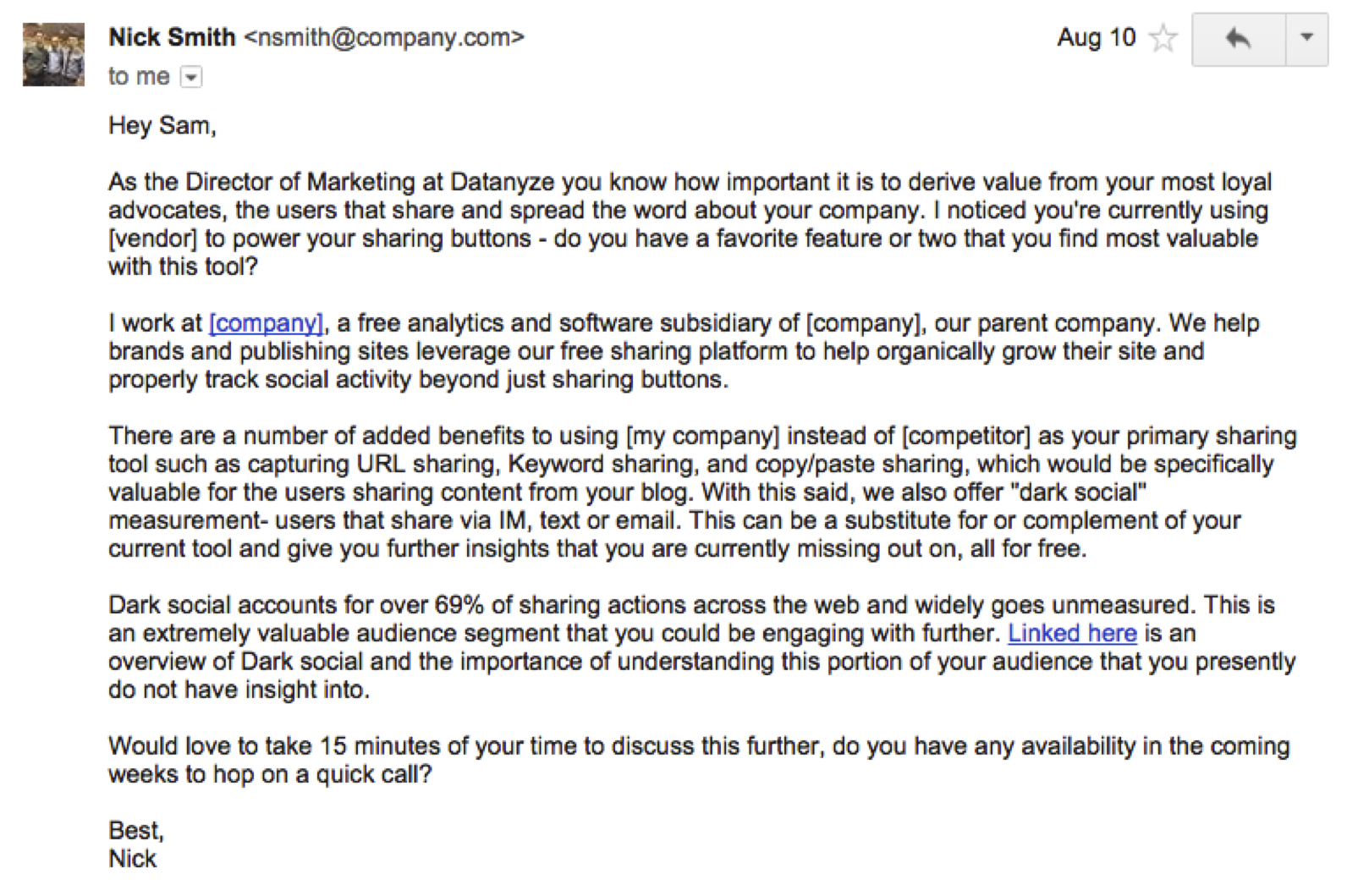
Here’s an example of an email that completely blew me away -- the rep figured out that I’ve started using their competitor’s social sharing tool and attempts to start a conversation on the topic.


Sales prospecting is being reformatted to match how buyers want to be sold to -- and the main takeaway is that buyers don’t want to be sold, they want to be advised. And the best way to advise is to give your team the tools and intelligence they need to provide timely, contextual information that lines up with compelling events.

This means using LinkedIn to keep tabs on hiring events, and using other social networks or forums to surface buyer intent. It means keeping tabs on emails after a rep hits “send” and reacting to opens, clicks, and collateral views. Finding the perfect mix of compelling events can lead to more emails like the one above, and -- more importantly -- more demos, more pipeline, and more deals.

What stage of prospecting is your sales team in? Share in the comments.

Get HubSpot CRM today!

29 Oct 16:25

3 Reasons Your Sales Email Just Got Deleted

by heather@salesfolk.com (Heather R. Morgan)

Are you guilty of reaching out to your prospects with tired, uninspiring sales emails?

You’re probably committing at least one of these three sales email mistakes.

Your prospects’ inboxes are full of messages that use the same generic “are you the right person to speak with?” approach. The problem with this type of email is that it’s highly impersonal and doesn’t do anything to engage your buyer in a meaningful conversation about their business.

The truth is, most people aren’t interested in connecting you to the right person. Buyers crave thoughtful messages that are considerate of their needs and problems. If you can offer value to your prospects, they'll not only be eager to respond, but they’ll also be happy to pass you along to the decision maker if they aren’t the right person.

So if you’re still using tired and overused approaches to sales email, keep reading, because you’re probably committing at least one of these three sales email mistakes. Time to transform your sales messaging for good.

Sales Email Mistake #1: Vanity

Vanity is never attractive, especially to your prospects.

Self-focused messages that boast about your product and its “amazing” features don’t reach the heart of your prospects’ problems. Worse yet, they flat out ignore your prospects’ needs.

Let’s look at an example. The rep who wrote this email is trying way too hard to impress their prospects.

Hello Bob,

Wanted to introduce you to XYZ.com, our startup company. We intend to revolutionize the Software Quality Assurance (SQA) model.

We offer free Project Management, Software Test Script Automation, Software Management, Defect Tracking, Sprint Planning, DevOps, Continues Integration (CI) + other SQA tools.

Despite all the information crammed into the email above, it actually offers little value to prospects.

Bragging about your accomplishments before you’ve actually achieved anything is a huge turn off. No one cares about your product's flashy bells and whistles, they only care about how you can help them and their business.

Thoughtful sales emails evoke emotions and move prospects to action. Talking about yourself doesn’t move your prospects to action because it doesn’t address your prospects’ needs.

Instead of listing out features like "project management, software management, defect tracking, project tracking, etc., etc., etc.," think about how your product can solve your prospects’ problems. Does it save time or money? Simplify a complicated task? Improve productivity?

Sales email pro tip #1: Choose one benefit per email and explain how your product can make your prospects’ lives easier.

Sales Email Mistake #2: TL;DR (Too Long; Did Not Read)

Your prospects are busy people. They don’t have all afternoon to read through your bloated email message.

You only have a few seconds to attract your prospects and pull them in, so each sentence needs to count. One wrong word, and your prospects will give up and hit delete.

Here’s an example of a rambling email from a rep who just doesn’t get it.

“[Company Name] is a truly disruptive technology that turns traditional technology on its head and takes a Y-centric approach with a target-oriented, visual solution that truly empowers. [Company Name] aims to provide a work tool that becomes a way of life -- one that employees adopt and trust. [Company Name] is organizing customers’ workflows in ways that demonstrate an innate feel for what employees actually want and need.”

This is only one of eight paragraphs, all of which are in a single email. It contains catchy words like “empower” and “trust,” but provides no real evidence to explain how this product can empower the reader or why we should trust the writer.

Why should anyone believe claims that your product will “demonstrate an innate feel for what employees actually want and need” when you haven’t proven you understand what this means to the prospect?

Sales email pro tip #2: Keep your sales emails to three to five sentences. Avoid the temptation to cram every piece of information you have into one email. Cluttered messages confuse your prospects and don’t help them see your value.

Sales Email Mistake #3: Bad CTA (Call-to-Action)

The goal of your sales emails is to get your prospects to take action, right?

With this is mind, the worst thing that can happen to your campaign is for your prospects to read your email and ask themselves, “What’s in it for me?” Don’t assume that your prospects will automatically “get” why they should talk to you.

The following email leaves prospects hanging without a compelling reason to respond.

“Do you want to book an hour for me to show you what [Company Name] is doing and how I can help your team sell more and faster?”

This is not a compelling reason for prospects to respond. Requesting an hour of time is overwhelming to buyers, especially on the first message before you’ve proven your worth. If you want to get any kind of positive response from your prospects, you need to make it worth their time.

Be crystal clear about what action you want them to take and the value they will receive in exchange for their time.

Sales email pro tip #3: The best CTAs entice prospects with a simple request that incentivizes them to respond. Offering to share an actionable piece of advice or an idea that can help improve their business usually works well.

Salesfolk’s recent copywriting guide has more tips to help you craft highly effective sales emails that seduce your prospects.

subscribe-to-inbound-sales-content

29 Oct 16:24

Case Study:: B2B Marketing: Content strategy results in 50% of qualified leads being inbound

"Without good content, you don't get anybody in the hopper," Matthew Lacroix, Director of Brand Marketing, Newell Rubbermaid (LENOX), said. The LENOX team faced a challenge many B2Bs have — too much of Sales' time was being spent finding and chasing leads. To remedy the situation, the marketing team launched a content-fueled strategy that allowed Marketing to track the effectiveness of its content. Learn how this effort increased Marketing's contribution to the Sales' pipeline and resulted in 50% of qualified leads being traced to inbound.
29 Oct 16:24

Buying Iterations And What It Means For Sales Force Enablement

by Tamara Schenk

shutterstock_280725407Do you remember the last time you made a significant buying decision as a consumer, such as a decision to buy furniture or a car? How structured and organized was this decision-making process? Or was it perhaps a more iterative process or cycle, because you heard something here and learned something there, and all of sudden, a different, but amazing, offer came your way. If you have professional B2B buying experience, reflect on some of those decision processes. How many were linear, without iterations? Probably not a single one.

Buying happens in iterations, and the buying dynamics have to be navigated

I remember one of my biggest buying decisions in a large corporation, which was about an account management system that should support a newly implemented customer-core account planning and management cycle. The whole buying process took two years, from scoping to developing the solution, to the pilot, up to buying (not including implementation). From start to finish there were phases that were straightforward… until something happened. It might have been a budget freeze, the appointment of a new sales leader, or the IT department changed its strategy. Some stakeholders left the project; others joined, and both the exits and the entries impacted the specific context of the project, based on their different viewpoints and even different goals.

Was that a linear, straight buying process that could be simply managed by following the process? No. Not at all. It was an iterative process with moving targets and various stakeholder changes, and on a global level. Lots of dynamics happened that could not be managed by applying learned mechanics. Those dynamics had to be navigated, situationally, based on a changing context, moving targets and a changing buying team with changing thoughts and expectations. Overall, it was an iterative, dynamic process that had to be navigated carefully, in a very focused way, and with lots of situational awareness, creativity, and adaptations.

More information does not necessarily lead to more understanding – context is often missing

Customer behaviors have fundamentally changed and are still changing, and their expectations are rising. There is no doubt that buyers are much more informed than ever before; exactly as salespeople should be much more informed about their customers and competitors, etc. But often more information does not necessarily lead to more knowledge on the buyer side – it leads to more confusion. Why? Because lots of information is without any context. And context matters. Context is queen, if not king. And that’s where the value of a sales professional comes into play.

Buyers decide how to connect, collaborate and calculate throughout their customer’s journey

Our 2015 MHI Sales Best Practices Study reports that today’s buyers decide how they want to connect, how they want to collaborate with salespeople and how they calculate value. Selling is no longer about products; it’s about the specific value customers can achieve through a provider’s products and services. Value is always specific to the customer, dependent upon their situational context and the buying teams’ approaches on how to tackle the challenge. Professional B2B selling must be dedicated to creating value at each stage of the customer’s journey for each impacted buyer role. Click here to take the survey for the 2016 CSO Insights Sales Best Practices Study.

Customer-core strategies for enablement leaders

Knowing and understanding how buyers want to buy is essential for every enablement leader. Understanding the customer’s journey and working with the customer’s journey and the impacted buyer roles has to be the foundation of any enablement strategy, mapped to the specific challenges of the sales force.

Reflecting these buying dynamics throughout an often formalized, but iterative customer’s journey, three key strategies should be applied by sales enablement leaders:

  • Implement a dynamic customer-core engagement principle: Such an engagement principle – we call ours “Providing Perspective” – defines how to connect and engage with different buyer roles throughout their customer’s journey related to the buyers different focal points in each phase. Furthermore, such an engagement principle sets the stage for a dynamic value messaging approach that also has to be tailored to the customer’s journey phases and the different buyers’ needs in each phase.
  • Align and integrate content and training services: It’s not enough to provide content such as playbooks, messaging guidelines, new case studies, brochures, etc. Salespeople need to know how to use which asset most effectively in which customer interaction. Short videos, featuring salespeople explaining to their peers how to take advantage of a certain asset, are one of the most credible ways to drive adoption. Connecting content and training with small, but impactful steps is always a winning strategy.
  • Build salespeople’s adaptive competencies: One of the biggest competitive advantages a salesforce can have is the ability to shift strategies, activities and behaviors to changed, complex and new situations, fast and effectively. Developing salespeople’s adaptive competencies becomes more and more a strategic necessity to develop a salesforce that can create additional and differentiating value to their prospects and customers – in their context, addressing their desired business value.

Last but not least, the internal process landscape must allow iterations exactly the same way as customers process their iterations. To adapt internal processes this way, collaborating with sales operations is essential, to better integrate principles and to remove one-way rules.

Questions:

How do you deal with buying iterations, from a sales and a sales force enablement perspective?

Did you already adjust your internal processes; and if so, how?


This article was initially written for Top Sales Magazine, October 27, 2015.

The post Buying Iterations And What It Means For Sales Force Enablement appeared first on Sales Enablement Perspectives.

29 Oct 16:23

5 myths about SaaS sales you probably believe

by steli@close.io (Steli Efti)

unicorn

If you want to generate more SaaS sales there’s one thing you need to know:

Finding a handful of prospects through a clever hack and doing cold outreach doesn’t have nearly the same impact as it would have had two or three years ago.

So…

What exactly can you do to make more sales?

Start by understanding the myths that too many SaaS sales pros believe.

It’s this ignorance that stops many of us from achieving our quotas and driving consistent and sustainable results. But for you, that ignorance is going to fade today as I’m going to debunk five of those myths and arm you with insights that you can put into action right now.

Data doesn’t matter until you have a big sample size

One of the things I hear from far too many SaaS startups is the idea that they’re too small to worry about their metrics. I ask them about churn and they don’t have an answer or I ask them about LTV or CACR and their eyes glaze over (LTV = Lifetime value, CACR = Customer Acquisition Cost Ratio).

Unfortunately, a lot of people working with sales in the world of SaaS throw acronyms around without actually understanding them. You need to understand both what these acronyms mean and your own company metrics if you want to optimize your chances of making an impact.

Even at a small scale, understanding your company metrics can help you in understanding what decisions are costing the company too much money and what decisions are working very well.

Sales metrics matter.

Metrics can be the difference between a surprise spike in churn and a manageable one. It can be the difference between recognizing what outreach approach is working and what is not.

If you’re not familiar with SaaS sales metrics - Here are a few great resources to check out:

Data is king

Now, data is great don’t get me wrong.

But insight is king.

Understanding how to use your metrics effectively is the key to being an effective sales leader. Whether we’re talking understanding which outbound emails are being opened when you send them or what landing pages are driving the most relevant leads - the insights we gather from data is the key.

salesmetricsincloseio

In the Close.io dashboard above, you can see that there are two different follow up emails being used and the open rates for each are different. Option A has a higher open rate than Option B which could be due to a more compelling subject line in that email. Using this information, a sales professional can be more strategic in crafting their subjects and more effective in driving sales.

We should also point out that data isn’t only about the number you see when you access your dashboard. You should be gathering qualitative data by surveying and talking to your customers as well. These insights will help you inform the other members of the team of customer pain points, funnel opportunities and much more. 

When you send a proposal, be patient

NO!

Don’t be patient.

Reach out and ask the decision maker (not just your internal champion) what the process is going to look like between receiving the proposal and closing the deal. Spend more time understanding their needs and offering value wherever possible to increase the likelihood that they will fight for you and your product internally. Refuse to sit on the sideline in limbo. Refuse to play the guessing game.

Help your prospect, help you.

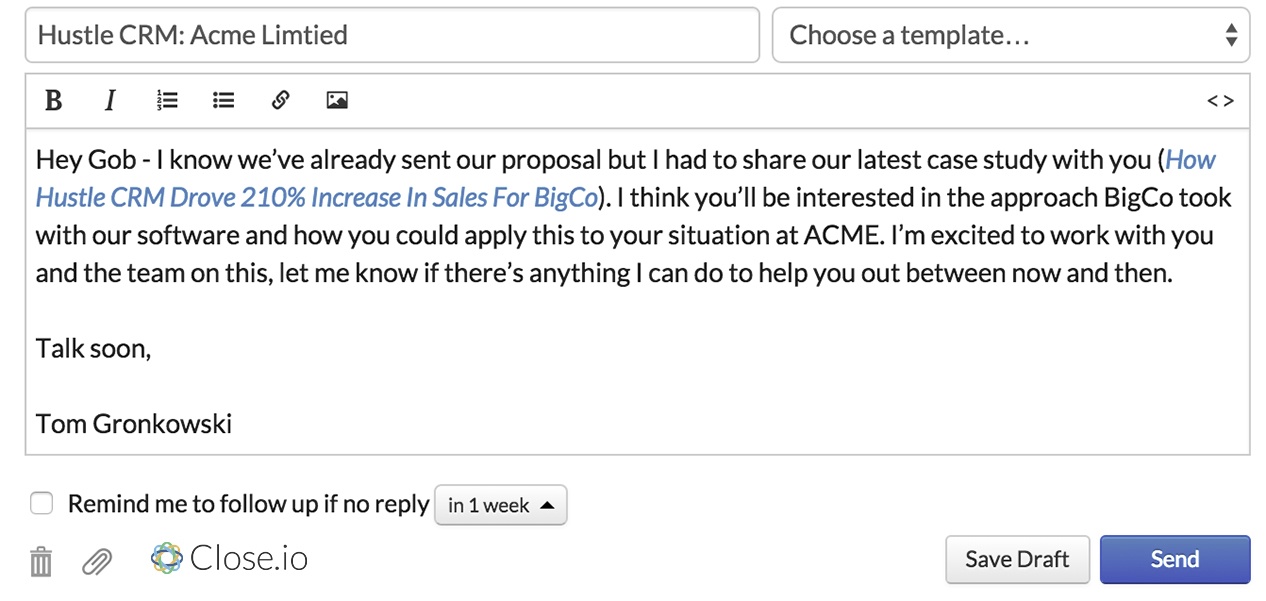
Of course, I don’t recommend you taking the approach of “Just Checking In” as that’s a very self serving approach. Instead, you should follow up with your prospect and deliver additional value:

followupemail

If we create content, the customers will come

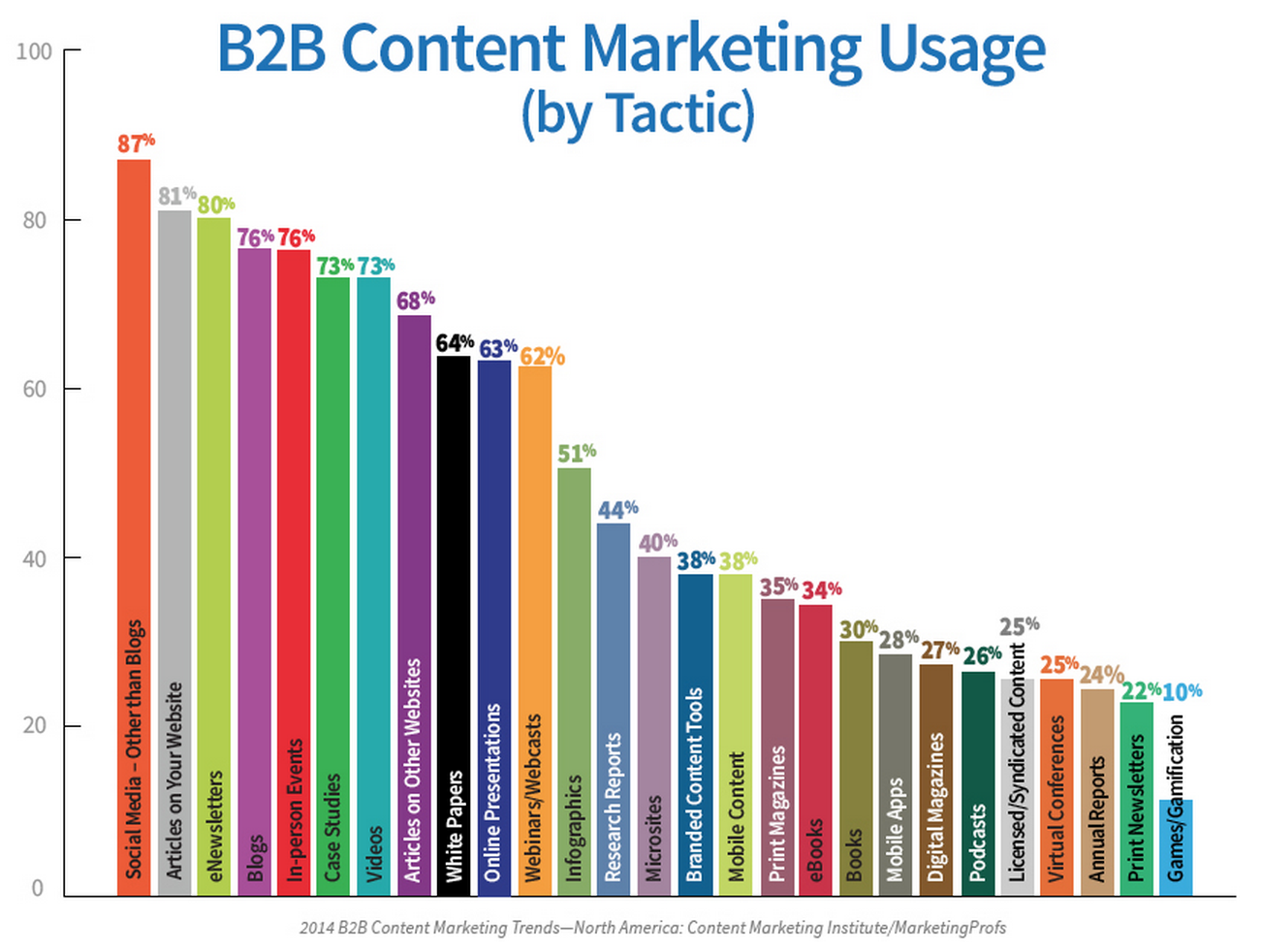
b2bcontentmarketing

Content can play a big role in SaaS sales but it’s only one piece of the puzzle.

As you can see in the visual above, the amount of content being created is at an all time high. Because of this, it’s more challenging than ever to create content that stands out.

It’s not enough to write a blog post, create an ebook or publish a white paper and expect the world to take notice. Content creation is just one part of the content marketing puzzle. Once the content is created, it’s time to distribute that content effectively.

"People visit your blog but don’t convert (How dare they!). Don’t fret – all is not lost. Let’s put aside the fact that they may very well return and convert another time even if you don’t do anything else. Instead, you can take control and increase the chance of that happening by targeting visitors that have come and gone with remarketing." — Sujan Patel

Then, ensure that the content you’re creating is aligned with both the goals of marketing and sales.

Sales need to offer marketing the insights they’ve gathered while talking with prospects to help them create content that will help them convert. Whether it’s information that they gather during cold calls or insights they gather after identifying the key selling points for their product—the channel for communication between sales and marketing is key to a successful content effort.

You can't sell until your product is perfect

Jonathan Brill once said, about startup sales; "A finished product is a nice to have."

And I agree.

You should begin selling your SaaS the day you sign up for the job.

As soon as you’re brought on for sales or if you’re the founder, it’s time to sell.

It’s time to start selling the vision, the solution and the team.

It’s time to sell to to potential customers, the media, hires, partners and buyers.

It’s easy to spend tons of time testing the market and asking people what they think of your idea. It’s more challenging yet also more rewarding to find someone who believes in what you’re doing and is willing to give you a cheque to fill a need 3, 6, or 12 months in advance. Find these people, establish a relationship with them and make them your champion.

I’ve had many conversations with sales reps who have been tasked with selling products that were half baked. Sometimes the apps worked from a technical perspective but were completely unusable for a non-technical person. But by sharing the vision of the product and focusing on the value they were able to lock in contracts that would fund the completion of the product.

Conclusion

Now that you’ve uncovered the myths of SaaS sales, it’s time to get back to work.

Use these insights to guide your strategy and share it with your team so they can also work at an optimal level.

If you work in SaaS sales and have identified other myths that have been driving you insane, let me know in the comments. I’d love to hear from you or feel free to tweet us on Twitter @Closeio!

Register for free online crash course on SaaS sales success strategies

29 Oct 16:22

Industry Best Practice Meetings As A Consultative Selling Tool

by Jeremy Jadczak

Industry Best Practice MeetingsBest Practices Overview

Best Practice meetings are a no obligation presentation with a potential prospect or current customer in a non-sales environment. They are most often utilized to present material on how to best solve a problem and are helpful when the subject matter is complex. These meetings are an opportunity to present your brand, the solutions you provide and a glimpse of your company culture and what you stand for.

Industry Best Practice meetings are not sales presentations. I would even go so far as to advocate having an account manager co-present with a member of the sales and marketing team. Why add an account manager? An account manager interfaces directly with an organization’s clients and would be the likely day-to-day primary contact for those in attendance who are not yet customers. I have been in meetings where it was just the sales folks presenting material and hardly anyone would show up.

Why Are These Meetings Important?

An industry best practice meeting can cast doubts about the attendees current provider’s (hopefully not your organization) ability to solve their problems or problems they may anticipate down the road. Attendees will leave the meeting better informed and knowing of other options or solutions. They are also important because they may offer a rare glimpse into problem encountered that perhaps your company has not yet faced.

Sales Planning and Operations

Industry best practices meetings, demonstrates your organization’s capabilities and positions yourself as an industry expert. They also help to cement the relationship with a prospect or customer and build trust in your brand.

The meetings can also be a valuable source of intelligence about your industry or your competitors. A prospect who attends may share information that they may not want to share during the Buyer’s Journey. In some instances I found that a prospect was a bit more forthcoming with valuable information about their organization or their problem when they were out of the office and the boss was not around. Gaining feedback from a current customer is also helpful to learn how well your organization is solving their problems.

Some sales cycles are really long and industry best practice meetings are another interaction with a potential client along The Buyer’s Journey. There are just so many white papers, eBooks or offers you can produce to convert leads into customers. You are helping them to identify the core of their problem and industry best practice that you know and would recommend.

Who Would Come to Such a Thing?

The prospect may be new to the company and looking to learn more about common problems that companies like their face. The prospect could be someone who is not yet in the market to purchase something right now but they like the idea of “casual dating” and want to spend a little time with you to learn something new or better understand your organizations capabilities and company culture.

I have found hosting industry best practice meetings to be incredibly helpful for my audience and a great source of lead generation. In my meetings, the most common attendee was someone new to their job or someone who is encountering a problem in their organization for the first time. They want to know how to do their job better and need to understand the obstacles they may face.

Some Strategies and Tips

Best Practice Meeting Strategies

Be punctual and keep it short. Budget 20-25 minutes to present your information to allow for Q&A after. You need to respect the time this person has given you. The meeting should start with general house keeping items like how to get in touch with you, an overview of what you will cover and stating that you promise to present the information in that 20-25 minute window. In my opinion, the Q&A part is extremely important in learning about an organization, their problems and how your organization can help them. Take lots of notes if you can. Additionally, please be on time. It is rude when you are running late. I had a high school teacher always tell us that it is better to be fifteen minutes early than one minute late.

Consider leaving your boss at the office. They tend to have all the solutions to your prospect’s problem. I had worked for a CEO where his only answer to any problem would be “Yes, we can solve that”. At the time, I knew that the company was not capable of solving the solution and that left us in a position of setting unrealistic expectations. Before you present solutions you need to know if your organization can actually solve that problem. If not then maybe this is an opportunity for your organization to evolve.

Create a series. Chances are your attendees are facing the same problems. Perhaps you can position these meetings as continuing education. This is a value add of doing business with your organization. Interacting with current customers on a regular basis continues to build trust and is also helpful for customer retention.

Food is king. You are likely to get a much higher turnout when there are refreshments involved. Please, do not combine this opportunity with alcohol. Leave that for after your meeting. If you have the ability to budget a “Lunch and Learn” you will get a decent turnout. Be warned though, if your subject matter is stale, irrelevant or bland (“Top Five Web Trends For 201?) no attraction of food will get you the folks attending that you desire.

Consider video recording your meetings. When drafting your presentation, you should consider splitting up the material into smaller consumable content. This allows you to later chop up the video recording into smaller bite-sized pieces so those who could not attend can view it at their leisure. It always bugs me when I am directed to someone’s online webinar recording and it’s like an hour long. I don’t have time for that. I just want to learn about one part. Again consider your audience’s time. Put yourself in their shoes.

Wrap It Up Jeremy

These meetings are a lot of work to produce and if you are in business development your time is extremely valuable, but they are highly effective at generating leads once you get the hang of them. Experiment, do your research, see what people are saying online about common problems in your industry. Like I stated previously, if your content is relevant then these meetings are highly effective.

I cannot stress this enough: this is not an opportunity to pitch your services rather demonstrate your ability to solve problems and trust through relationship building. I learned the hard way several years ago.

29 Oct 16:20

Deduping: How to Clean Up Your Sales Data

by Kevin Chiu

I always get this question: What is one of the most important pieces to building out a sales team and creating a scaleable process? Some people think it’s hiring the perfect first sales rep while others believe it’s building out a playbook. And then there are those who might say it’s defining your ideal customer profile and total addressable market.

None of those are wrong and most definitely vital to scaling a team. Yet there is one important step that is usually missing: Keeping a clean CRM.

Many startups struggle with this (we’re guilty, too); they don’t do anything to prevent it, they just spend a lot of time fixing it only after it starts hindering rep performance. I’ve scoured the web for an answer but have yet to find a quick fix to data that’s in disarray. When you have a full team of sales development reps bringing in some 300 prospects a week each, you’re looking at thousands of leads created weekly (not including the inbound lead flow that marketing might be generating). So if you’re not defining a set process to ensure data quality and accuracy, you’re going to build a large database with a ton of bad data.

What exactly is bad data in this context? For the Greenhouse sales team, it’s having duplicate leads, invalid emails, wrong phone numbers, misspelled names, wrong formats (makes it obvious your emails are templates/automated), leads in the wrong stage, and worst of all hot leads falling through the cracks. That’s a bad sales data strategy.

I’ve defined a process which I call the 10 Commandments to Keeping a Clean CRM which should help those of you struggling with bad data and deduplication. The trick is to implement this sales data strategy as early as possible. You’re not going to get it right at the first crack, but I can guarantee you’ll be thankful to have built out some sort of a process from the start, otherwise you’ll have reps wasting a lot of time cleaning data. Not to mention, you’ll have duplicate reachout from reps to customers or prospects in the buying process. All of this means more manual work for your team, time that should be spend on revenue-generating activities.

So here are The Commandments to Keeping a Clean CRM

1. Training: Make sure reps aren’t prospecting the same leads at the same time. Let SDRs know how important it is not to bring in a lead without an email/phone number, otherwise it’s just taking up space in the CRM and resulting in a guaranteed bounced email (also makes reporting less accurate) if you’re using some sort of an automation platform. There are plenty of email guessers available on the web and if you can’t find anything.

There are so many great technologies out there for prospecting leads from LinkedIn, however, it’s common to have formatting that looks robotic in your emails since those technologies are pulling information from Salesforce via the prospect’s LinkedIn account.

For instance: If a prospect on LinkedIn has a title “Co-Founder/CEO/Techie” and has their company listed as “Greenhouse Software, Inc.,” what looks better for your template?

A. Hey Joe,

“Noticed you’re the Co-Founder/CEO/Techie at Greenhouse Software, Inc and I would love  to chat about why company name would be a great fit for a partnership because X, Y, and Z.”

OR

B. Hey Joe,

“Noticed you’re the Founder at Greenhouse and I would love to chat about why company     name would be a great fit for a partnership because X, Y, and Z.”

The latter seems more human and less automated. Invest the time to do this and you’ll get better responses in the long run.

2. Always Be Monitoring: Always measure & monitor. Whatever channel (phone, email, social media, etc) your team uses to communicate with prospects, make sure you’re monitoring the data behind it. What is my bounce rate? What is my dial-to-contact ratio? Taking a look at these type of metrics highlight the bottlenecks in your process. Our sales team had a 30 percent bounce rate, so we integrated Data.com to cleanse the emails. That brought it down to 24 percent. That 6 percent might seem small, but when you’re talking about thousands of emails, that is a lot of prospects who aren’t getting your message.

3. Data Enrichment: As you start to grow your team, you want to start thinking about efficiency and consider what parts of the process you can eliminate or automate. We struggled with SDRs investing too much time looking for the right data and manually putting it into our CRM. So we incorporated enrichment tools that populates important fields for us in real time, ultimately, saving time.

4. Dedupe Process: When you have a team of SDRs prospecting at high volumes, there is bound to be some duplicate leads if you don’t use software to automatically merge leads. This is especially true if there is a marketing engine funneling the pipeline with leads.

5. Leads vs. Accounts: Define early on what object with which you  want your SDRs to engage prospects. Whether you’re using leads or accounts, it is going to make a big difference when you have a whole sales organization. Consider how you’re going to segment or split up teams, what type of approach you’re going to take, and what kind of handoffs they’ll make. For example, enterprise teams should probably be working off of accounts for a more strategic approach. It’s going to be much easier to run reports to see what’s going on at a company from an account level rather than looking at different leads. One page with all of the information rather than multiple pages with little pieces of information. SMB teams can probably work off of leads since there might not be multiple contacts at a company they are trying to work.

6. Align Sales & Marketing: The earlier you do this, the better. Sometimes sales and marketing can be siloed. There should be a defined process in who is in charge of collecting what information between each handoff.

7. Workflow Rules: Use Salesforce workflow rules, or some type of a notifications process if you’re using another CRM, to ping a rep when an important activity happens. At Greenhouse, anytime there is a demo request on an existing lead, the SDR receives an email notification and a task is created for them to reach out ASAP. If there happens to be no activity on the lead in a while, it gets automatically routed to the inbound team. Never let anything slip through the cracks, especially hot leads.

8. Validation Rules: Ensure that your reps are required to collect any data you want from prospects or opportunities. Validation rules keep SDRs and Account Executives on their toes to fill in all the appropriate information and prevent them from accidentally leaving fields empty.

9. Salesforce Admin: Maintaining the quality of your CRM is a full-time job once you have a complete team. Bring in an admin early on to help rep productivity with custom workflows and formulas. They should also align the processes throughout the org (since marketing and customer success will probably live in your CRM as well), and create a tight-knight process where all the data is collected. This will give you actionable insights on how to improve efficiencies and reduce bottlenecks quickly.

10. Rinse & repeat. Never be satisfied with the status quo and keep improving your process. Continue to always measure your sales data.

Expand your pipeline with six tips for small business growth. Download the free Salesforce e-book.

29 Oct 16:20

How to Measure PR with KPIs Your Board Will Love

by Erin Rohr

It’s easy to spot founders who have been burned by bad PR practitioners. Their body language communicates their suspicion (crossed arms, furrowed brows) and their questions tell their history of high-cost programs with low-value results. Most of the time, those questions focus on measurement, which is a smart place to start whenever you’re evaluating public relations and marketing programs.

HITS: How Idiots Track Success

It’s an old PR maxim that measuring hits alone doesn’t show you much about whether your investment is paying off in results that matter. Whether you’re looking at traditional media coverage or social media “vanity metrics” like ‘likes’, counting these surface-level results fails to clearly connect with strategic business goals. You landed an article in The New York Times? Awesome. What does that do for your business? Three hundred people liked your Facebook post? Congratulations. Did those people take any related action that mattered to your bottom line?

Beyond Coverage: Key Performance Indicators that Matter

Before you embark on an integrated communications program – one that includes PR – consider which key performance indicators (KPIs) matter to your business and its stakeholders, including your executive team and board of directors. These might include:

  • Awareness among prospects or potential partners in a key vertical market or region, or within the investor community
  • Generating qualified leads to feed to the sales team
  • Shaping sentiment related to competitive standing, product quality, value or customer service

Coverage is one way to fulfill these kinds of strategic business goals, as long as you can track it back to more concrete, measurable evidence. Here are some key questions to ask beyond “how much coverage did we get?”

  • Can you link the dates around press coverage or social and content media campaigns to an uptick in website traffic?
  • Did those website visitors move into your marketing funnel and ultimately convert in some trackable way?
  • Do sales leads reference coverage, content or social media assets when they speak with your reps?
  • Are your marketing and PR programs saving you money? For example, does a bump in organic search engine optimization (SEO) allow you to drop a search engine marketing (SEM) expense?
  • Can you get quantitative data through surveys or customer interviews to show the value of the social capital you’re gaining through PR and marketing efforts?

Tracking Your PR Progress

None of this is to say that outputs don’t matter. As part of a broader measurement strategy, you should still be noting how many press releases you’re putting out (and why), how much coverage you’re securing (and whether it’s resonating), how many social media engagements you’re spurring (and with whom), and more.

You can also create scorecards for the coverage coming in to dig far deeper than just the number of hits. Among the elements you might note to create a “score” for each piece of coverage are things like hyperlinks to your website within an article, quotes from your executives or customers, images and the inclusion of key messages. Those numeric valuations give you a concrete way to rank something that might otherwise feel subjective to those you’re reporting to.

On the more qualitative side, analyze the demographics of your placed media coverage to make sure these audiences reflect your key buyer personas, and evaluate the feedback you’re getting from influencers. Are your messages resonating? If reporters, editors, bloggers and analysts don’t understand your value proposition, potential customers probably won’t either – and that information is invaluable to future efforts.

Regardless of the makeup of your PR or marketing program, measurement is a critical component – a manageable one, regardless of what you may have heard from questionable practitioners. Begin with a clear understanding of which KPIs matter most in reaching your strategic goals, and then map all results back to those factors.

The post How to Measure PR with KPIs Your Board Will Love appeared first on OpenView Labs.

28 Oct 16:29

An Effective Sales Strategy to Beat “We’re Happy with Our Current Provider”

by jillkonrath@jillkonrath.com (Jill Konrath)

Recently I was talking to a client about a key sales challenge they’re facing – dislodging long-standing, entrenched competitors who “own” the account.

28 Oct 16:27

A massive Chinese industry is flashing warning signs that the world cannot ignore

by Linette Lopez

china steel

China's steel industry, the world's biggest, is in crisis.

The disaster is the result of a combination of factors, including a slowing Chinese economy, falling commodity prices, and an industry loaded with debt.

Earlier this month, state-owned enterprise (SOE) Sinosteel defaulted on a debt-interest payment of $315 million on bond notes maturing in 2017.

It's a sign that, despite China's best efforts at fiscal-policy easing and pledges to reform "zombie" SOEs, the worst may be coming faster than policymakers expected.

The pride of old China

China's economy is trying to make the difficult transition from one based on investment to one based on domestic consumption, so it's useful to think of its economy in two parts: new China and old China.

New China includes businesses in the services sector, like technology, retail, and banking.

Old China includes the country's once booming property and construction sectors, manufacturing, and Chinese exports.

It's important to note that old China — which includes a bunch of SOEs — is carrying a ton of debt. This has made companies less profitable as they spend significant sums of money making payments on that debt.

As new China rises, old China is fading. But the rising is happening slowly, and the fading is happening faster than anyone thought. The Chinese government faces the colossal challenge of managing this transition without a string of credit events crippling the economy.

That's where the danger in China's steel industry comes in.

Asking for help

As Bloomberg reports, Zhu Jimin, the deputy head of the China Iron & Steel Association (CISA), said on Wednesday that collapsing demand is putting the entire industry at risk.

From Bloomberg:

“Production cuts are slower than the contraction in demand, therefore oversupply is worsening,” said Zhu at a quarterly briefing in Beijing by the main producers’ group. “Although China has cut interest rates many times recently, steel mills said their funding costs have actually gone up.”

“China’s steel demand evaporated at unprecedented speed as the nation’s economic growth slowed,” Zhu said. “As demand quickly contracted, steel mills are lowering prices in competition to get contracts.”

Average steel prices hit an all-time low on July 9. CISA notes that in September, steel demand contracted 8.9% from the same time a year before, and medium and large steel mills have lost $4.4 billion in the first nine months of 2015.

sinosteel

The restructure

That means China may need to both clarify and speed up its five-year plan to reform state-owned organizations. Sinosteel's default indicates that it, and other SOEs carrying a ton of debt, may not be able to wait years for debt restructuring.

"I don't know how the government can push ahead with the SOE reform, it will be extremely difficult," one senior executive with China's top aluminum producer, Chinalco, told Reuters.

Winter is coming. That means construction will slow and demand for steel will weaken more.

And when that happens, China will have to make a choice. Prop up its steel industry or make the rare decision to let companies collapse under the weight of their debt.

Join the conversation about this story »

NOW WATCH: This 580-ton monster machine is building bridges across China

28 Oct 16:25

How to Get Your Prospect Talking

How to Get Your Prospect Talking

By Mike Brooks, www.MrInsideSales.com


Have you ever had a prospect who plays his feelings on your product or service “close to the vest”?  Someone who simply won’t share much of their opinion one way or the other?  Or should I say how many prospects do you have like that? 

These days many prospects hide behind nebulous stalls like, “Let me think about it,” or “I’ll run this by the committee,” etc., and it’s often hard to know where they stand.  And then it gets worse when you try to set an appointment to get back with them only to hear, “I’ll get back to you.”

If you’re struggling with prospects like this, then it’s time to learn some advanced closing skills that only the Top 5% are comfortable using: And that’s asking open ended questions and actually giving your prospect a chance to fully answer – negatively or positively.  While this may sound easy to do, only the top, top pros know how to fully listen long enough for their prospect to tell them how they really feel.  (HINT: they use their MUTE button!)

But to get your prospect to open up, you need some well-crafted scripts that you adapt and make your own so you can deliver them sincerely and not sound salesy.  Take some time to review the choices below and do just that – make them your own:


Question One:

“You know ________, we all buy emotionally and go with our gut feelings.  Share with me: What is your gut telling you is good about our solution, and what is it telling you isn’t so good?”

[Now hit MUTE and listen – same advice after each rebuttal]


Question Two:

“__________, I’m sure you’re weighing this purchase against some of our competition, so tell me, in what ways are we better than your next option, and in what ways are we weaker?”


Question Three:

“_________, you’ve probably heard of the old Ben Franklin way of making a decision haven’t you? (Wait for a response)

Ben would make a list of all the reasons to make a decision to move forward with something, and all the reasons not to.  If the reasons were stronger to move forward, he would.

So tell me, what are the reasons, as you see them, for moving forward with this, and what are the reasons not to?”


Question Four:

“_________, I know there are other people who need to weigh in on the final decision on this, so tell me, if you had to put a wager on it, would you bet that there were more votes on moving forward on this or more votes against it?”

Layer:

“And why is that?”


Question Five:

“Now _________, I know you like what we have, and there are probably some things you don’t like.  Tell me, if we could deliver more of what you DO like, what would that be?”

Layer:

“And if we could give you less of what you don’t like, what would that be?” 

And then, “And why is that?”


Question Six:

“__________, some people love our solution and some people – believe it or no – hate it.  Tell me, what do you LOVE about us, and what do you hate about this that is preventing you from moving forward right now?”


As you can see, these scripts are designed to get someone who is noncommittal to begin opening up and to tell you where they stand – both positively and negatively.  Once you know where someone is emotionally and logically with your product or service, you’ll have the leverage to adjust your close and get closer to a sale.


If you found this article helpful, then you'll love Mike's Completely Updated and Revised eBook, “The Complete Book of Phone Scripts.” Now over 130 pages of powerful and effective scripts to help you easily get past the gatekeeper, set appointments, overcome objections and close more money!

Visit: http://mrinsidesales.com/completescripts.htm and find out why Jeffrey Gitomer, Brian Tracy, Tom Hopkins and many others recommend Mike’s ebook of Phone Scripts!

Do you have an underperforming inside sales team?  Talk to Mike to see how he can help you and your team reach your revenue goals.  To learn more about Mike, visit his website: http://www.MrInsideSales.com


28 Oct 16:19

To build and maintain wealth, invest like the wealthy

by Special to Financial Post


New venture by billionaire investment leader gives average investors access to successful privately run companies

As one of nine siblings born into a family of modest means in a Jamaican port town, Michael Lee-Chin, a Canadian billionaire, knows how fortunes are amassed – and lost.

“The first generation of wealth creators are invariably owner-operators,” says Lee-Chin, chairman and president of Portland Holdings Limited., who moved to Canada at the age of 19 and is known as much for his business acumen as for his charitable contributions. “That’s an important combination: being the owner and the operator of a business.”

Successful owner-operated businesses, Lee-Chin says, share certain key characteristics. Management style is autocratic, hands-on and entrepreneurial. Management turnover is usually low, the focus is on long-term growth and the owner takes on all responsibility for capital allocation.

“If the owner-operator makes a good decision with respect to allocating the capital profits, the owner-operator’s net worth increases,” Lee-Chin says. “If not, the owner-operator goes bankrupt. The risk-reward ratio is perfectly symmetrical.”

Individuals and families have prospered by being owner-operators of automotive companies, mills, mines and more. But historically, that wealth doesn’t last.

“Seventy per cent of that wealth will be lost by the second generation, and 90 per cent by the third,” Lee-Chin says, citing a recent U.S. study by The Williams Group Wealth Consultancy. “When you think about those statistics, they’re really shocking. They speak to the preparedness of the next generation to really manage and continue to grow wealth.”

These fortunes typically erode as a result of decision-making becoming dispersed as families grow. Owner-operators have children and those children marry and bring spouses into the family and then their children have children who marry and bring spouses into the family. Often then conflicts arise.

“By the second or third generation, they’ll say, ‘We’re fighting too much. Let’s bring in professional managers and let’s just be shareholders.’” Lee-Chin said.

The business then becomes operated by outside agents, or a board of directors, who don’t take on the same risk as the original owner-operator did.

“Because they’re agents, and because they’re paid a salary to manage the business, if they make a capital allocation decision and it’s a good one, they get a bonus. If it’s a bad one, they probably get half the bonus. And if it’s a really bad one, they get the golden parachute,” Lee-Chin said. “The risk-reward system is asymmetrical.”

Therefore, Lee-Chin concludes, the best way to become wealthy – and stay wealthy – is to invest like a wealthy person, in your own owner-operated business. And if that’s not possible, which for many people it isn’t, seek out successful owner-operated businesses in which to invest.

But how?

Currently, the average investor’s portfolio is filled with publicly traded securities that are, in fact, agent-operated businesses, not owner-operated businesses. But a wealthy investor’s portfolio – be it that of the Weston family, the Thomson family, the Ontario Teachers’ Pension Plan or the Canada Pension Plan – contains private companies.

“You cannot go to a regular financial planner and get a portfolio that has private securities of high quality,” Lee-Chin says. “You can’t do that by calling a typical broker.”

That’s exactly the problem that Lee-Chin is addressing with his recently formed Mandeville group of companies. As of September 30, 2015, they have amassed almost $1 billion in assets under administration and management, and form part of the Portland Holdings Limited conglomerate. In 2009, Lee-Chin sold most of the mutual funds managed by AIC Limited to Manulife Financial.

“What I’m doing is democratizing what has been the purview of only the super wealthy, by making sure the average investor can behave in no different a way than the super wealthy do,” said Lee-Chin, whose team searches out private business investments in Canada and abroad. “We make sure the behavior of our clients, and the access that’s given to our clients, is no different from the access that super wealthy individuals and institutions have. That’s how they’re going to grow their wealth.”

This story was produced by Postmedia Works on behalf of Mandeville Wealth Services for commercial purposes.  Postmedia’s editorial department had no involvement in the creation of this content.

28 Oct 16:10

How People Are Actually Using the Internet of Things

by H. James Wilson
oct15-28-560406579

In these early days of the Internet of Things (IoT), much of the focus has been on industrial applications, such as improving operations with autonomous machines, or standalone consumer products, like a Fitbit. But from our research, we’re seeing a more human-centric category of IoT activity starting to emerge. It’s less about automation and more about personal augmentation; less about individual devices and more about “living services” that let people program and connect smart devices however they want.

For instance, using one of these living services, I might connect my car to my smart garage door opener, which I’ve connected to my smart lock, which activates my smart thermostat that I’ve synced to my smart lighting system. I can program them all to simultaneously interact and do their jobs when I turn onto my driveway. My experience of coming home is enhanced, since everything is acting according to my preferences.

We did an open-source analysis of IoT user behavior, looking at 1,000 IoT technology platforms and services and more than 279,000 early adopter interactions with IoT devices. We found that consumers want an IoT that provides personalized services that can be adapted to different contexts. As with the Industrial IoT, the human IoT promises to be transformative.

W151020_WILSON_WHATPEOPLE


The data show that the most heavily used IoT programs are ones that make home life easier, more distinctive, and more pleasant. Respondents also show a big preference for services that don’t require them to go out of their way to make something work. People using the Internet of Things increasingly prefer interfaces that are more natural and less visible (and attention-sapping) than screens. In other words, they don’t want to type instructions on a tablet, interact with a device, or mess with settings on a cell phone to get what they want. Instead, they value these technologies as “living services” that anticipate their wants and act on them.

Here are four underlying types of living services we identified in the data, and what they mean for the IoT.

Technology that extends security. People want to be safe at home. There are literally dozens of IoT solutions in this area. For example, one system called Presence turns old iPhones and Android devices into rotating home cameras. It uses software that connects old phones with functioning cameras to your current smartphone or PC, so you can view areas in your house remotely. Other companies are building more comprehensive solutions. For instance, Microsoft and SmartLabs have introduced a kit that allows people to remotely control motion sensors and surveillance cameras at home using the Internet Protocol. Basically, they can monitor their homes from anywhere—they can see who is entering the house when they’re away, or they check in on a sick child or elderly parent. And Google’s Nest and Apple’s HomeKit are also working on technologies that will help people monitor their home security systems using the services they already provide.

Apps that quantify the self. People are interested in data that tells a story about themselves. We want to know how we compare to others—in terms of emotional intelligence, Body Mass Index, etc. You can pick pretty much any point of self-measurement and people will want to know their number. So it’s not surprising that self-quantification is one of the most avidly downloaded IoT applications at home. Tracking our sleep patterns and levels of daily activity, and looking at simple dashboard analytics to understand this data, is just one example of how we self-quantify. The devices that do this, primarily wristbands with embedded sensors and software, are among the Internet-enabled consumer products that have taken off the fastest.

Services that optimize our machines. People like IoT services that automatically do what they would otherwise have to do manually. One of the most popular programs— turning on interior lights when the sun is setting—is a good example of how smart, connected devices can be optimized to save people time and money. There are new products that can automatically adjust air-conditioners, heaters, and other devices that use electricity, depending on when people are more likely to need them. The investments being made to add sensors and other internet technology to home appliances—by established companies such as General Electric and Whirlpool, and startups like Chai Energy—suggest that rising supply will lead to greater demand. This is also another area where we might be willing to let devices and appliances track our behaviors so that they can learn about our preferences and predict our needs.

Creative ways to enhance daily experiences. Few people can afford to spend thousands of dollars on putting sensors and custom-built technology into their homes (as Microsoft founder Bill Gates is said to have done with giant computer screens that display famous art and photos as people walk around his Seattle-area home). But as the Internet of Things scales up and becomes more ubiquitous, many experiences will become available in everyday homes, at less exorbitant prices. These could be IoT platforms that connect smart devices and sensors to augment everyday moments by tapping into sensory aspects of our environment like visuals, temperatures, and sounds. One of the most popular single programs we identified connects the Weather Channel and the Phillips Hue Lighting system in which internet-enabled lights turn blue in specified rooms if it starts to rain. With living services, these elements are connected over the web and interact using sensor technology. You can think of many different uses for this type of experience-enhancing technology. For example, a writer who likes to increase focus with classical music and natural lighting won’t have to manually get up and make those changes; the various devices in the room can activate those settings automatically. This personalization speaks to a hunger for technology experiences that make homes feel distinctive.

The human-centered applications that are so popular in our sample of early IoT adopters generally relate to home activities. But the larger trend—of personalized services that take up residence alongside us, so to speak, and learn from our behaviors—is context-agnostic. People at work, no less than people at home, are going to want this. So maybe the way to think about these human-aware home applications is that we’re looking through a peephole. What we’re getting a glimpse of now are digital services that will increasingly live with us at home, at work, anywhere in the future.

The authors wish to thank Professor Bala Iyer of Babson College for his input throughout the study.

28 Oct 16:10

Build a Product Funnel on Your Blog:Make Your Content Marketing Profitable

by Patsi Krakoff

FunnelAre you building a product funnel on your blog?

In my recent blog posts, I’ve been talking about ways to earn money blogging using two different methods:

  1. Sell products directly through your blog (or website)
  2. Sell products or services because of your blog, or indirectly

These are two key elements of a product funnel – a key internet marketing strategy that will help ensure that you are not leaving money on the table or missing opportunities to solidify the relationships your hard-earned content marketing efforts are creating.

Content marketing works because you take a reader through the steps of getting to know you, like you, and trust you. This is what’s called the KLT factor. Here’s how it works:

  1. Your blog should have cornerstone content pieces to communicate your core values and passion and business mission. These are stand-alone pages to highlight your core information.
  2. Your blog (or website) should have a well-crafted bio or About page, which tells your back story, who you are, and why you care.
  3. Your blog or website should have client stories, case studies and testimonials everywhere to tell your clients’ experiences with working with you, your products and services. Share with readers what outcomes your clients achieved.
  4. And next, you need continual, clear calls to action, so that readers can take the next steps.

Next Steps

Next steps can be to get to know you and your expertise further, or they can already be convinced they want what you’ve got. You’ve got to have a way for people to take action by having free products, small fee products, mid-size and larger ticket items. These can be informational items, articles, ebooks, audio files, video files, or high ticket one-on-one coaching and consulting services.

From Free to Fee

And, you have to make this clear and easy for people to find, understand, register for, pay for and get without problems or unnecessary procedures. That’s why I recommend giving readers a choice:

  • Free download, no registration
  • Free download, simple registration
  • Small fee ($5, $7)
  • Slightly larger fee ($25-$50)
  • Larger, mid-size fee ($75-$150)
  • Big fee (up to $500)
  • High end big ticket programs (depending on what your market will accept)

What you give customers should of course be high perceived value and include follow up marketing to upsell them into other products and services. I always give them plenty of bonuses, and excellent follow-up emails with additional information.

The key is to respect the people who give you their email address. They want information and education, maybe even with a little entertainment, not sales pitches.

This is the product funnel:

  • Some information for free, immediate download, no strings
  • Some information for an email address, which will prove you can be trusted to deliver good stuff and not abuse their email
  • Some valuable information worth paying for, even if it’s only a few dollars (make this high perceived value to show you are generous)
  • Excellent products and services that deliver much more than expected, worth the price.

So I ask again – are you building a product funnel on your blog?  If not, why not?  Send me an email – I’d love to know.

In my next post I’ll share with you an example from my own experiences. Stay tuned!

28 Oct 16:07

Sales Team Success Starts at the Top

A seller’s knowledge, insider perspective, and willingness to collaborate with buyers is a powerful combination. Give that seller a strategic sales manager and a robust sales culture, and his performance—and the team’s performance—will always be strong.

28 Oct 16:06

Facebook could be the big winner of the 2016 presidential election (FB)

by Bob Bryan

power rankings

As the 2016 presidential election campaigns ramp up, there's a steady stream of declarations about the winners and losers of debates, polls, and fundraising.

Regardless of which candidate takes over the Oval Office, Citi analysts say the big winner will actually be a Silicon Valley giant with Facebook edging out Google.

"In our conversations with industry sources, an overriding theme across all conversations was that Facebook and Google will be the largest recipients of political digital ad spend over the 2016 cycle," wrote Mark May and Jason Bazinet of Citi in a note to clients Tuesday.

"Facebook specifically has seen great momentum within their political-related ad spend in recent years, as campaigns and their media buyers have developed an appreciation for the platform’s reach, targeting capabilities, as well as its growing tech stack."

May and Bazinet estimate that the amount of ad money spent digitally for the 2016 federal elections is going to quadruple from the 2012 elections, from $145 million to $607 million. For all elections, including the state and local level, they expect $1.07 billion will go to digital ads.

This will account for about 12% of all spending in federal elections, according to their estimates.

Screen Shot 2015 10 27 at 5.54.44 PM

Google was the digital ad spend leader during the Obama-Romney race, but the analysts say that Facebook is poised to overtake the search giant.

"From our conversations, most believed that Google and Facebook would see between 60-85% of total digital spend over the 2016 election cycle," said the analysts "In addition, comments also suggest that Facebook could overtake Google in 2016 as the largest recipient of political ad dollars."

May and Bazinet point to 2 initiatives from Facebook that will allow them garner the biggest piece of the spend.

"According to media reports, Facebook is seizing its recent success and has doubled the headcount of its government and politics team since the last presidential election," said May and Bazinet. "In addition, the social network has also rolled out new tools such as call to action features at the end of campaign videos and voter file uploads which will help campaigns better understand their supporters."

According to their estimates, 40% of all digital ad spend will be spent on Facebook during the election cycle, totaling $428 million.

According to the note, Twitter ranks a distant third in terms of ad interest. This surprised the analysts, and the outlook for the company is pretty dismal. Here's May and Bazinet:

"Campaigns and their media buyers generally regard Twitter as an inferior medium for political advertising given its relatively small user base (66mn US MAUs vs. Facebook’s 213mn MAUs in the US & Canada), its large base of “decided” voters, and the credit terms extended to customers, among other reasons. Overall, Twitter was frequently cited as a distant third for ad spend, and in some cases fourth after Yahoo!’s properties."

The analysts note that the campaign spending isn't a monumental amount of revenue for the tech giants, Facebook made just over $4 billion last quarter alone, it certainly won't hurt.

So it doesn't matter who takes over in Washington, because the election's real winner is is in Menlo Park.

SEE ALSO: Here's who has the best chance at being our next president

Join the conversation about this story »

NOW WATCH: This giant Iron Man Hulkbuster costume blew everyone away at Comic Con

28 Oct 16:06

So much for ‘The Great Wall of Worry’: Apple’s momentum in China is mind-blowing

by Chris O'Brien
tim-cook-apple-great-wall-china-crop

Hard to believe that just 24 hours ago, there was some nervousness on Wall Street about how Apple was doing in China.

The country’s economy seemed unstable this summer. And despite reassuring words from CEO Tim Cook that all was well, there were still plenty of doubters leading up to Apple’s Q4 earnings release yesterday.

Brian White, an analyst at Drexel Hamilton, called it “The Great Wall of Worry.”

Well, worry no more.

It turns out that the company is still growing faster in China than in the rest of the world. Yesterday, Apple reported that revenue for its Greater China segment grew to $12.5 billion, up 99 percent from the same period a year ago, when it reported $6.3 billion.

This increase was driven by iPhone sales that climbed a whopping 120 percent in China. App Store revenue grew 127 percent year-over-year.

The company said it now counts 1 million developers in China creating apps for its products. And Apple just opened its 25th store in the Greater China region, on its way toward its goal of having 40 stores by next summer.

Cook, who just returned from a trip to Hangzhou and Beijing to announce plans to bring renewable energy to its supply chain, could not have been more effusive about the company’s prospects there. During the call with analysts yesterday, Cook acknowledged some of the broader macroeconomic concerns, but said they didn’t jibe with what he saw on the ground.

“If I were to shut off my web and shut off the TV and just look how many customers are coming in our stores regardless to whether they’re buying, how many people are coming online, and in addition, looking at our sales trend, I wouldn’t know if there was any economic issue at all in China,” Cook said. “I also visited our retail stores in China, which were among the busiest in the world.”

Cook also pointed to the long-term opportunity in China, which he considers to be massive. He cited one study saying China’s middle class numbered 50 million just five years ago, but is expected to be 10 times that size by 2020.

“We’re very bullish on it, and I would point out that we’re investing in China not for next or the quarter after, or the quarter after,” Cook said. “We’re investing for the decades ahead and as we look at it, our own view is that China will be Apple’s top market in the world. And that’s not just for sales, that’s also [because the] developer community is growing faster than any other country in the world.”

“And so,” Cook concluded, “the ecosystem there is very, very strong. I was very impressed with the number of developers I met last week, and, of course, the customers in stores are enthusiastically contagious.”

Even in the short-term, Apple is red-hot there.

Cook said that more than 50 percent of people in China who bought the iPhone 6 and 6s were buying their very first iPhone. For the 68 percent who bought an iPad in the quarter, it was their first tablet. And for 40 percent of those iPad buyers, it was their first Apple product.

First-time buyers, and a massive developer community, are gradually pulling the center of gravity for Apple’s ecosystem toward China.

“I feel like we are reasonably well positioned in China,” Cook said. “I’m sure we can do better, but I think we are doing fairly well there.”

Crushing it, more like. But I guess you can’t say that on an earnings call.

More information:

Powered by VBProfiles


28 Oct 16:04

7 Ways to Help Buyers Understand You Better

by Deb Calvert
In selling, the single most important thing you must do is to be understood. You can’t sell if the buyer doesn’t see a clear and compelling link between what he or she needs and what you have to offer. No matter how obvious that link is to you, it’s no good unless you convey that […]
28 Oct 16:01

How to Scale Things That Don’t Scale: 5 Ways Winning Businesses Use Automation

by Ash Read

What sets winning businesses apart from the competition?

Automation is one edge. The Lenskold Group found that 63% of companies that are outgrowing their competitors use marketing automation.

What is an underrated way to drive more conversions?

Again, automation. companies that use marketing automation also see 53% higher conversion rates than non-users, according to the Aberdeen Group.

All of which raises the question: What kind of marketing automation are these winning businesses doing? And how might we be able to implement this for our business, too?

I’ve had a really fun time digging into this topic and researching how automation can help you with personalization, lead generation, relationship building, consistency and delighting your customers. I’d love to share what I found!

Marketing Automation

How to scale the things that don’t scale

At its best, marketing automation is software and tactics that allow companies to buy and sell like Amazon — that is, to nurture prospects with highly personalized, useful content that helps convert prospects to customers and turn customers into delighted customers. This type of marketing automation typically generates significant new revenue for companies, and provides an excellent return on the investment required. – Hubspot

The above quote from Hubspot sums up marketing automation perfectly.

The goal of automation is not to remove work entirely but to help you work more efficiently. With automation you can save time but still drive results for your business.

As amazing as automation is, it’s important to remember that people buy from and engage with other people. When used correctly, marketing automation frees up time from manual tasks (like moving data from one tool to another) and empowers us to be more connected to our audience and customers.

Many businesses (Buffer included) are built off the back of doing things that don’t scale. And automation can feel counter-intuitive to that notion.

However, with the rising popularity, and in many cases necessity, of automation, we like to look at it as a way to ‘scale the things that don’t scale.’

How winning businesses use automation (and how you can, too)

1. Automation as personalization

You can’t beat a nice, warm, personalized welcome from a company founder when you sign up to a new product and it’s something that Joel initially had done at Buffer when we first launched:

In the early days, I was in touch on my personal email address with almost everyone who signed up for Buffer. With low volume, I could always respond immediately and people loved it.

If your company continues to grow though, you’ll reach a point where it becomes hard near-impossible to manually reach out to every single customer 1:1 upon sign up.

Thankfully, automated messages enable us to keep a nice, personal feel at scale. Here’s a copy of our current (automated) welcome email:

buffer-welcome

Personal conversations are extremely important in business and as Intercom explain over at their blog customer communications will increasingly need to have a personal feel to them:

We believe in the value of personal conversations between businesses and customers. We believe the future of customer communications will be much more like the chats you have with friends, and much less like tickets, applications and transactions that you formally submit to siloed departments.

Event triggered messages in action

Integrating super personalized messages into your acquisition and lifecycle marketing strategies is a great way for your business to automate this process and you can still keep the messages personal.

Automated messages can now be triggered based on a myriad of user actions and reach people at the precise moment they’re needed, making the messages feel a lot less robotic and much more intimate.

Think of this as a way for your business to say, “We’re listening and here’s what we can do to help right now.”

Here’s an example of an event trigged message in action:

intercom-message

In this case, someone has signed up to a new tool, but not yet shared it with a teammate. This message helps guide the users into sharing. It’s concise, timely and helps to new user to get the most out of the product.

The more you show a customer that you’re listening and care, the more likely they will be to become loyal and eventually a promoter of your business.

More so than ever, it’s important to think about how you can give your event triggered messages a personal feeling. When you automate your messaging like this, try to humanize your content and make your customer feel like it’s a 1:1 message.

Don’t automate everything

A key thing to remember is that you shouldn’t automate every single message you send. It can also be a great strategy to check in with your customers via a non-automated message from time to time.

At Buffer we still send out 1:1 messages to individual customers every day to see how they’re getting on and how we can improve the Buffer experience for them.

Top tips for automated messages

  • Use their name and/or business name in the message: “Hey Ash, how are things at Buffer?” sounds much more personal than: “Hi there, how are things with your company?”
  • Use friendly language: When you’re creating automated messages it can be easy to fall into using rigid ‘business-y’ speak, which can oftentimes sound robotic. When I create any automated messages, I like to use the kind of language I would use with colleagues. This approach feels more open and friendly.
  • Introduce yourself: “Hey there Steve, I’m Ash, content crafter at Buffer…” Introducing yourself in your first message with a customer or potential customer makes the message feel like the start of a conversation, rather than a one way broadcast.

Tools & Resources

Intercom:

Intercom helps your business to communicate with customers, personally, at scale — on your website, inside web and mobile apps, and by email.

With Intercom you can set up personalized, triggered messages based on actions without your product or website.

intercom-screen

Baremetrics blog:
On their fantastic blog, Baremetrics shared a breakdown of all the ways they stay in touch with users, including the exact emails they send in the days, weeks and months after sign up: The 17 emails we send to engage customers, reduce churn & increase revenue.

baremetrics-email

2. Automation as consistency

Consistency is a key to social media success. If you want to break through the noise you’ll need to maintain a consistant posting schedule across all of your social media channels.

Managing social media channels can be time consuming though. Especially if you’re active across a number of social media platforms like Facebook, Twitter and Linkedin.

Rather than popping in and out of each network every few hours when you’d like to post, automation makes means we can do this process all at once.

Simply gather all your content for the day (or week!) and load it into a social media automation tool — like Buffer — and your posts will be shared on your chosen date and time.

Social media automation in action

Social media automation tools like Buffer let you connect your different social network accounts so that you can create queues of content that get sent at the times you choose.

Tools like this are incredibly helpful for automating social sharing as you can schedule all your content and posts at once and let the tool handle the rest. This saves a ton of time.

Here’s a quick look at how Buffer works:

Top tips for automated social media updates

  • Make updates timely: When you’re scheduling social media content, try to think about the best time to post. For example, content like “7 things to do in London over the weekend” will make more sense on a Thursday or Friday afternoon than a Sunday.
  • Customize the message for each network: It’s a good idea to customize your updates for each network you’re posting on.
  • Add a personal touch: Adding in a personal touch to your social updates by sharing a personal note or anecdote can be key in humanizing your messages. Here’s an example below from our Twitter feed: Goodbye, bunk beds!

Buffer-Tweet

Tools & Resources

Buffer

buffer-homepage

Join more than 2 million people who save time on social media with Buffer. Schedule your first post now.

Optimal Posting Tool

If you want to really dive into automation, it can be great to figure out what times are best for you to post content.

The Buffer Optimal Posting Tool will help you to find out which times are best for you to share updates on Twitter. Here’s how it works:

3. Automation as welcoming

Lead generation is almost always on the top of our minds as marketers. The more leads we generate, the more potential customers we have and the more revenue we’ll have to show for our marketing efforts.

Managing your funnels can take a lot of work through and be time consuming, especially as there are often so many components to consider: CRM tools, email marketing lists, social media and much, much more.

Automation can be a huge help here to speed up the process of responding to any leads and also passing information between the various tools your team uses.

Automated lead generation in action

The below infographic from Integrate highlights the efficiencies of automated lead generation.

automated lead gen

Top tips for automated lead generation

  • Find your tone: For your lead generation to be successful you’ll need to build a connection with your prospect. One of the best ways to do this is through the copy you use in your ads and landing pages. Start with ensuring your tone of voice strikes the right note. Be more conversational and friendly in your communications and less robotic. Think about how to connect with each prospect on a emotional level.
  • Use auto-responders: For years marketers have been sending auto responder email messages to people who sign up to our mailing lists. This is a similar tactic. Using a tool like Zapier you can send a thank you Tweet to anyone who signs up to your list via a Twitter card.

zapier-responder

Tools & Resources

Facebook Lead Ads

Facebook Lead ads make the process seamless for marketers to ask for info like emails, names, job titles, and more. With lead ads, potential customers can sign up for what you’re offering, and you’ll get accurate contact info to follow up with them.

facebook-lead-ads

Find out more about how you can leverage Facebook Lead ads for your business here.

Zapier blog:
zapier-blog-zaps
On their blog Zapier have shared stories from a few of their customers have successfully used automations to take all of the tedious work out of lead generation. Check out the full post here.

Twitter lead generation card
Twitter’s lead generation card is a great way to build your email list and collect new leads.

This card allows you to sign up to an email list or register for a special offer directly from Twitter. When you use a Twitter card, all the user has to do is say ‘yes’ to opt in and Twitter automatically fills in their email address.

4. Automation as conversation

Relationships form over time and it can be hard to find enough hours in the day to build 1:1 relationships with each and every one of your customers. Though it’s certainly a noble goal to have in mind.

Automation, through email drip campaigns, is a great way to create multiple touch points and continue to build relationships with both customers and prospects.

Email drip campaigns are essentially a series of emails scheduled to be sent out automatically once someone subscribes.

As Zapier explain:

Put simply, drip marketing is all about giving people the right information at the right time. If someone just subscribed to your blog newsletter, for example, a drip campaign could send a welcome email right away, and two days later, an email that shows off some of your most-read content.

Email drip campaigns have proven to be extremely successful for many companies and email-marketing company, Emma, found that relevant emails drive 18x more revenue than broadcast emails.

Emma also discovered that automated emails generate 119% higher click rates than broadcast messages!

Drip campaign automation in action

Here’s a quick overview of a drip campaign from marketing automation company Pardot:

email-drip-campaign

Pardot also shared a number of different drip campaign types:

drip-campaign-types

At Buffer we’re building a collection of learning courses (Educational Drips from the above graphic), based on the activities and improvements we’re passionate about. You can check out the courses here.

Here’s how to keep your drip campaigns feeling human.

Top tips for drip campaigns

  • Use a conversational tone: If you want your campaign to have a human feel about it, the tone your create email drip campaigns in is so important. In 1967, Albert Mehrabian came up with the ‘7%-38%-55%’ rule highlighting that conversation is made up of three parts: The actual words you use (7%); the tone of delivery (38%), and the body language accompanying your words (55%). Therefore, if you’re trying to connect with you need to pay close attention to the tone of your delivery (and body language if you’re including video).
  • Send messages from a real person: We love to connect with other people and even-though your drip campaigns may be automated, sending them from a real person is a great way to give a more human feeling to anyone reading the messages. Here’s an example of how Unbounce Oli Gardner leads one of their drip courses:

unbounce-course

Tools & Resources

Convertkit

convertkit

ConvertKit helps you manage emails lists and drip campaigns.

Zapier blog

Our friends over at Zapier have created an awesome list ofthe 25 best email marketing apps to send drip Campaigns.

5. Automation as delight

You should take extraordinary measures not just to acquire users, but also to make them happy. – Paul Graham

At Buffer, we’re really big on customer delight as Nicole explains:

Our customers are the true heart of all we do here at Buffer — and we want to make sure the community knows it. We work on this in lots of ways—from striving for excellent customer support to hosting meetups to sending hand-written notes, swag and special gifts.

Delight will always need some form of manual work: a nice handwritten note or a special gift can’t always be automated and that’s the way it should be.

However, one way we automate delight at Buffer is through our email receipts.

Email receipts are an amazing opportunity to connect with your customers in a human way. Everyone who pays for your product or service will receive a receipt and often receipts are missed opportunities to build your brand and nurture customer relationships.

Twitter and Square CEO Jack Dorsey, called receipts an ‘untapped canvas’ and publishing recently. As Buzzfeed reports:

“What if we see the receipt more as a publishing medium — a product unto itself that people actually want to take home, that they want to engage with, be fully interactive with?”

Automation as delight in action

At Buffer, we like to show our customers just how grateful we are to have their support in our automated email receipts. Here’s an example:

buffer-receipt

Top tips for delivering automated delight

  • Use photos: Humanize your receipts by showing photos of team members, office and / or sharing interesting, biographical data to make your customer feel closer to the company.
  • Invite questions / responses: A receipt is a great way to connect with a customer and ensure you’re doing all you can to keep them happy. It could be a good idea to invite replies and ask questions within your receipts to show you’ve got the customers back.

Tools & Resources

Receiptful

Receiptful home
Receiptful helps you send beautiful and engaging e-mail receipts that includes upsells and marketing messages which make you more money.

Receiptful Academy
Receiptful also have an awesome resource center full of tips & tricks about how you can maximize the value of your receipts. Check it out here.

Over to you

Marketing automation can be hugely powerful for any business and it’s key to remember that no matter how many tasks you automate, you’re still dealing with people and the human-to-human connection cannot be faked.

I hope you’ve enjoyed this post and picked up a few useful takeaways to help your business. Have you experimented with automation at all? I’m super excited to hear about your experience and any tips below in the comments.