Shared posts

03 Dec 17:51

The psychology of why we hate cheap things

by Kathleen Elkins

Screen Shot 2015 12 01 at 6.16.27 PM

Why is it that we're often drawn to the biggest price tags, and tend to scoff at things with small ones?

"In assessing what material things are important and worth paying attention to, we're oddly prejudiced against cheapness, and frustratingly drawn to the expensive, for reasons that don't necessarily stand up to examination," explains The School of Life in its mini documentary, "Why We Hate Cheap Things."

There are both historical and psychological explanations for why we dismiss cheap things. Here's the gist:

SEE ALSO: 15 things you're better off buying used

We associate cheap prices with a lack of value.

"When we have to pay a lot for something nice, we appreciate it to the full," explains The School of Life. "Yet as its price in the market falls, passion has a habit of fading away." 

The danger in this ingrained association of cheap prices with lack of value is that we end up overlooking, or losing appreciation for, things that are low cost but truly have value.

Take the example of the pineapple, which Christopher Columbus first brought back to Europe from the Americas. At the time, the fruit was extremely hard to transport and expensive to grow, so only royalty could afford to eat them — a single fruit sold for today's equivalent of £5,000 (or about $7,500 at today's exchange rates). It was so revered that temples were built in its honor, reports The School of Life.

Today, the pineapple looks and tastes the exact same, yet you can buy one for a mere $3, thanks to advances in technology and its accessibility. "Now, it's one of the world's least glamorous fruits. The pineapple itself hasn't changed, only our attitude to it has," explains The School of Life.


For most of history, there truly was a strong correlation between cost and value.

We tend to associate cheap prices and lack of value because for a while, the expensive products were indeed the better products.

"The higher the price, the better things tended to be, because there was simply no way both for prices to be low and quality high," explains The School of Life. "Everything had to be made by hand, by expensively trained artisans with raw materials that were immensely difficult to transport."


The Industrial Revolution changed things.

The relationship between price and value held true until the end of the 18th century, with the arrival of the Industrial Revolution, when we figured out how to make high quality products at cheap prices, thanks to advances in technology.

"However, despite the greatness of these efforts, instead of making wonderful experiences universally available, industrialization has inadvertently produced a different effect," explains The School of Life. "It seemed to rob certain experiences of their loveliness, interest, and worth."

Today, society essentially disallows us from getting excited over cheap things. It would be considered strange to get hyped over a $3 carton of eggs from a chicken, yet we're allowed to get giddy over caviar — a different type of egg — because of its price tag.

"We've been looking at prices in the wrong way," argues The School of Life. "We've allowed them to set how much excitement we're allowed to have in given areas, but prices were never meant to be like this. We're breathing too much life into them, and therefore dulling too many of our responses to the inexpensive world. We are already a good deal richer than we are encouraged to think we are."


See the rest of the story at Business Insider
03 Dec 17:50

The Looming Implosion Of Sales/Marketing Automation Apps

by Dave Brock

The other day, I was sitting in the airport and had a few idle minutes. For some reason, I started playing with my IPhone. I started moving some of the apps around to make them easier to find, based on my utilization. Business, Social Media, Conferencing, and Travel on the first page. Mapping, “Yelp-like,” and my fitness apps on the second. News, Reading, Entertainment, Music apps on the third. Camera/Photo and miscellaneous apps on the fourth.

At some point I looked at the number of apps on my phone–215. I was blown away. I had no idea I had so many apps, I didn’t know how I accumulated them. I started looking at them, slowly recalling, “This app had this one neat thing.” “That app had another….” Each of the apps had something that was attractive for a moment, I supposed I used the app a few times, but then forgot about it.

So I decided to reduce the apps on my phone. Arbitrarily, I deleted all the apps I hadn’t used in the last 60 days. I’ve gotten down to about 50. In reality, I think I can get down to 30. But there’s that fitness app I’ve been meaning to use when I travel–I’ll keep that a few others.

I’ve done the same thing with my iPad. It’s interesting, the one’s I’m keeping on the iPad are very different than those I keep on the iPhone.

I think we are experiencing much of the same thing in the sales and marketing automation markets.

The sales and marketing automation markets are booming. There are literally 1000’s of new apps being introduced every year. The market is very crowded and confused with many, though useful, very “niched” or “nuanced” applications.

There are apps that enable sales or marketing people to do one specific thing very well and perhaps pass data to a common CRM or other app. That thing is very important, so the app becomes very important. After a while we find our organizations have dozens of specialized apps, each helping us do one or two things very well.

But, we sit back and start to take notice, how many are we really using, is everyone using them or just a few people, how do we keep people trained, how do we support the continued integration between these apps.

A new set of terminology has started creeping into the vocabularies of sale and marketing operations execs: The Sales Stack and the Marketing Stack. This is the complete set of applications being inflicted on sales and marketing people. Each one, no doubt has some value to at least one person, otherwise it wouldn’t be in our “stacks.”

It’s not unusual to see a sales stack of $15K per year per person–or larger. That’s $15K we are paying for apps for each sales person–not including all the services and support around them. Using Salesforce’ SalesCloud as the “mothership” base application, a fully blown out version of Salesforce, at full retail, costs roughly $3K per year. This leaves another $12K for my prospecting, research, presentation, content, learning, expense, collaboration, messaging, proposal, account planning, call planning, reporting, analysis, and 1000’s of other apps.

As I talk to sales ops/enablement leaders, they struggle with getting people to use all of these apps. Each is optimized to something different, each has a different user interface. There are inevitable overlaps, particularly as the vendors try to grow their solutions, so which app do we use, when several enable us to do the same thing?

The business cases for each are becoming increasingly difficult to make on a standalone basis. Or the justifications overlap, with each app claiming credit of the improvement, but none, on it’s own is justified. Perhaps, in isolation, we understand the business case for each, but in the reality of how the organization uses the apps, much of the real justification seems to be disappearing.

I look at my own team. We leverage as many tools as we can. We’ve invested in a number of apps to support our work, we also have been fortunate to be granted some “free licenses” of a number of other apps. We use all of them for a while, but over time, the patterns keep coming back to a small number of core–go to apps.

These core apps tend to be the platform or system of record apps. Think of these as your base CRM or Marketing Automation systems. A way of thinking about them is, “What are the apps that all the other apps integrate to?”

These core apps and the ones that we use everyday, 365 days a year, critical to the business.

More and more execs we speak with are questioning their tool strategies, focusing on the platforms and systems of record. Of course there are also those that are struggling to get utilization, compliance, and value from some of these core systems.

On the vendor side, we are seeing interesting things, reflecting what both they and their customers are discovering about the sales and marketing stacks.

There’s a huge amount of consolidation. The long term winners are those that offer a platform or a system of record.

Those vendors or those that are borderline are acquiring many of the other players to consolidate their platform strength.

Likewise, those applications that will never achieve platform or system of record status are consolidating, trying to become platforms or near platforms–all while still hundreds of other niche apps come to the market.

Private conversations with the exec teams of many of these SaaS based apps, show their concerns. They are seeing declining retention/renewal rates. This decline is not due to customer dissatisfaction with the products, but more due to the fact that not everyone needs the app or the app isn’t used everyday.

Inevitably, there will be huge fall out in the sales and marketing app world.

It’s also an opportunity for clever people to rethink their business models. Why do we need to base our SaaS models on seat/user based monthly subscriptions? What if we looked at models based on utilization?

Perhaps it’s not important to have everyone in the organization paying $20/month (or whatever your subscription is), but having those few people who really need the app paying $100/month?

What if we developed business models that look at how people actually use the product or the return they get, rather than flat monthly subscriptions?

Over the next few years, 1000’s of vendors will disappear, not because their products weren’t useful products, but because their business models aren’t aligned with how and who uses the products. More will pop up in their place, only to disappear a few years later.

We tend to think the big winners will fall into two camps, those that are core platforms/systems of record, and those niche apps that have moved beyond the classical SaaS model and have discovered new business models, more aligned with actual utilization in organizations.

What do you think?

03 Dec 17:43

Go for Gold! How to Write a Winning Award Submission

by Katie Pope
Old Style Photo. Champion gold cup trophy on the table

Author: Katie Pope

And the winner is…

Get your ball gowns and dress suits ready—award season is just around the corner: the Oscars, the Grammys, and, of course, the Revvies, Marketo’s annual award program. No matter what department or industry you’re in, awards are a way to build credibility and generate positive PR for you and your company. Think back to your childhood soccer team’s end-of-the-year party when awards were passed out. Everyone wanted to be the MVP and get recognized as the best player on the team. Well, that’s just what the Oscars, Grammys, and Revvies do—recognize and celebrate the top candidates that blow their competition out of the water. And that can be you.

Winning an award enables you to share your stories with peers and others, and get you and your company recognition you deserve. But before you start planning your acceptance speech, the first step to winning an award is the award submission itself.

Here are five suggestions for putting together a great submission:

1. Back up your success with metrics

This one should be obvious. Going back to the soccer example, simply stating that Johnny scored a lot of goals this season doesn’t provide much context. Now support that with metrics and Johnny scored 25 goals this season–more than anyone else on the team. Wow, how impressive! That’s because metrics are a clear differentiator.

Particularly in marketing, reporting and analytics provide data-driven insights and measureable results, and are the key reason that the CMO now has a seat at the revenue table. Not only does this build your company’s case for marketing activities and budget, but it can also help establish your team as an industry leader by leading by example and showcasing your results.

2. Captivate your audience

The summary section of your award application is often the most important part of the submission because it sets the stage for the rest of your submission. It needs to hook the audience into reading through and remembering your entire submission. Keep in mind the committee is going through hundreds of submissions—this is your opportunity to creatively stand out. Make sure you cover key information that sets you apart, including your main points, metrics, and any other relevant information.

3. Paint the picture

Looking back on life events, you may not remember exact conversations but you will remember how they made you feel. This is important to keep in mind while writing your submission. Within the actual submission, tell the story from your perspective, just as you would in conversation. When the committee is reading the submission, your submission should aim to evoke emotion—they should feel your pains, trials, and successes just as you did.

4. Provide other perspectives

While it’s certainly important for you and your team to realize and share the value you are achieving, when other teams within your organization also realize the value you and your team provide—your sales team, your executive team, your account managers—it gives you external, unbiased validation. Pull in quotes from some key stakeholders outside of your team, such as a vice president or a sales representative, who can vouch for your work to give your submission even more credibility.

5. Use video

If a picture speaks 1,000 words, a video speaks…well, more than 1,000. There is no better way to tell a story than from your own mouth. If the award submission form permits, include a link to a video that complements your submission. Videos are a much easier, quicker, and stronger way to consume information, with a humanistic touch that brings the story to life.

Now you’re all set to submit the best award submission yet! Regardless of what award you’re submitting for make sure to put these tips to work. Looking for a way to take them for a spin? Check out the 2016 Revvie Awards. Submit by January 30th for a chance to be recognized as a marketing leader who’s used Marketo to drive the new era of marketing. Plus, you’ll get a chance to walk the Purple Carpet at Marketo’s Marketing Nation Summit!

dec-31


Go for Gold! How to Write a Winning Award Submission was posted at Marketo Marketing Blog - Best Practices and Thought Leadership. | http://blog.marketo.com

The post Go for Gold! How to Write a Winning Award Submission appeared first on Marketo Marketing Blog - Best Practices and Thought Leadership.

03 Dec 17:43

Best Practices For Ramping Up New Sales Recruits

by Maxim Baeten

shutterstock_178587473.jpg

Times are changing. A sharp increase in the “ramp-up time” for sales reps over the past five years has combined with an overwhelming shift toward a longer sales cycle to form an alarming trend. Mitigate this trend and set the foundation for a successful year in 2016 by leveraging our best practices to get your new sales recruits ramped up in record time.

Develop Onboarding Material That Works

Offer new sales reps onboarding materials that they can easily refer back to both during and after training sessions. This will relieve the stress many new employees feel trying to keep up with note-taking during onboarding. It will also provide a resource for new recruits to reference and reinforce the information passed along during those training sessions.  Load digital copies of these materials onto a sales enablement tool so that all the necessary information is available to them at any time, from any device.

Build An Onboarding Template

A sales rep’s first few weeks are crucial to their success. How they are set up and enabled during this time period could determine whether or not they will add value to your organization. During these first few weeks, provide them with the tools to do the job, as well as the institutional knowledge, product training and support that they need to succeed. Allocate time and resources toward creating a robust onboarding program that will help each new sales rep develop a strong foundation. While this program can be standardized to include product & operations training, marketing sessions, and sales ops onboarding, it should also be flexible enough to accommodate training sessions that are tailored for specific roles within the sales organization.

Ramp Them Up For Success

For many companies, the formal training process ends after the onboarding period, leaving sales reps to “ramp-up” on their own. During this period, sales reps expand upon the skills and information they learned during onboarding and focus on ramping up to reach their full potential within the sales organization. Yet for many reps, this process takes longer than it should. The entire ramp-up process for new recruits today takes an average of 5.3 months, up more than 25% from 4.2 months in 2014. Organizations can help sales reps shorten this process by developing a specialized sales training program that is specifically aligned with their business, industry, and customers. The goal of this program should be to teach sales recruits how to be most effective at moving sales conversations forward and closing deals.

Start with proven best practices to offer them a healthy launch pad to develop their own unique techniques, style, and strategy. Then, utilize a sales enablement technology to distribute content and gain visibility into new recruit’s ramp-up progress. You’ll be able to spot the trends of what content is used, and which materials are the most effective. Use these insights to update and improve your sales training content, and shorten the ramp-up period for new recruits down the line.

It’s important to note that not every employee will need to focus on the same areas, nor will every employee find the same type of training activities valuable for success. Combined with qualitative feedback, a data-driven sales enablement platform will help you adapt your ramp-up program for each type of learner that joins your organization.

Develop a formalized onboarding and ramping program to set your team members and sales organization up for long-term success. With a sales enablement technology that offers insights into new recruits’ training progress, you will be able to optimize the overall onboarding and ramping process to make it more effective. Getting it right from the start will enable new recruits in your sales organization to reach their full potential sooner – and start closing deals faster.

This article originally appeared on the Showpad blog.

03 Dec 17:42

Upgrade Your Influence in 2016

by Brent Pohlman

building influenceAs I continue to work out a plan for 2016, I see building influence as a huge need and goal for 2016. Here are some areas I am focusing on to build more influence in the market

Look at current product/service offerings and look for ways to add more value to clients

Our company supplies kits to clients. Currently, I am looking at the process from the eyes of a client and trying to make the process much simpler

Focus more on client service

Hiring the right people makes all the difference. Having a system that is easy to access and update can also make all the difference. Developing client service people into knowledgeable industry is also critical. Client service is becoming more and more important and companies need to focus more resources in this area.

Marketing internally and externally

If you can get others to buy-in to your ideas, it creates a powerful team where everyone works together to make a marketing campaign successful.

Get to the market faster

Too many times great ideas are just that, great ideas. The ideas never become a reality. It is imperative to look for ways to get new processes in place at a much faster rate. If you don’t get there, one of your competitors will.

Find ways to link company brand to personal brand

I believe it is important for clients to be able to connect people with the companies they represent. This activity can be accomplished through writing quality content and sharing it on sites like Twitter and Linkedin.

Look closer at overall, company project list

Examine company project list and make sure projects are evaluated with respect to meeting company objectives and are enforced with respect to deadlines.

Make it a way of life

Many people I am connected to make building influence a priority. The great part about this process of building influence is that many of these tasks you can begin on your own. It really starts with a plan and focus. For me, it was all about inbound marketing. If you can get on people’s radar on the internet, then you understand how the items listed above are so critical. For me it is really about evaluating where I am at right now and looking to improve. It is good to learn from past mistakes and losing campaigns and use this information to focus on getting better.

Along the way make sure you connect with the right people, maintain your focus, and keep learning.

03 Dec 17:40

How New Pay Controversies Impact Business Productivity

by Alexandra Levit

The world of compensation is changing – with far reaching consequences.

Two big pieces of salary-related news hit the Internet recently. Credit card processing company Gravity Payments’ CEO was forced to defend his decision to standardize all employee pay to $70K, and the SEC finalized a long-delayed rule forcing businesses to share their “pay ratio,” or how CEO pay compares with that of the average company worker. How might these developments affect business productivity?

$70K Salary Policy Does More Harm Than Good

First up, Dan Price. Thirty year-old Price is the founding CEO of Gravity. He made headlines when he decided to fight income inequality by raising the minimum salary of his 120 employees to $70K. About 70 people got raises and another 30 had their pay doubled instantly. It might have seemed like a good idea at the time.

But, problems were apparent immediately. For one thing, a lot of talented mid-level and senior-level hires quit right away. Entrepreneur’s Steve Tobak can see why: “An entry-level new hire who just clocks in and out is suddenly making almost as much as a veteran supervisor who busted her hump for years.”

“Leveling the playing field all at once as he did breeds resentment and virtually eliminates the merits of meritocracy. You simply can’t raise the minimum salary that high without it having a negative ripple effect throughout the organization.”

From a productivity standpoint, I don’t know that raising people’s salaries when the act has nothing to do with achievement will have the hoped-for effect. Some employees may be motivated to work harder for a CEO who has proved himself to be a nice guy, but those who got jacked up salaries likely have no incentive to push themselves or do more on any given day.

Junior-level employees want to be rewarded, but the purpose of the reward is important. I believe that most people are more satisfied and engaged at work when they are recognized for actual accomplishments. And when they are satisfied and engaged, they are more productive.

If I were a mid-level manager, on the other hand, I think that unconscious negative feelings associated with income fascism would either directly or indirectly decrease my productivity. After all, why should I go out of my way to share my expertise and acquire new expertise on behalf of a company that doesn’t really value it? Someone should do an experiment on this, ideally before any other companies pull the trigger on standardizing pay.

SEC Mandates Pay Ratios Be Made Public

Next, we have the recent SEC decision that forces businesses to publicly share their pay ratios, or how much more a chief executive earns than the typical employee at their company. According to The Washington Post’s Drew Harwell and Jena McGregor, while the average American’s pay and benefits have been growing at the slowest pace in 33 years, executive wages have soared. Fifty years ago, the typical chief executive made $20 for every dollar a worker made; now, that gap is more than $300 to $1 and growing.

Most Americans, says the Post, currently have no clue. In a Perspectives on Psychological Science study last year, researchers found that Americans estimate the pay gap between executives and average workers is about 30 to 1 rather than 300 to 1.

They’ll know now, and the impact will be potentially disastrous. Forty years ago, management theorist Peter Drucker warned that a lopsided pay balance would erode teamwork and trust. A 20 to 1 ratio is the limit for managers who “don’t want resentment and falling morale to hit their companies.”

If morale does indeed plummet, it will negatively impact productivity. Comparing individual pay to the CEO’s is only the start of the over-analysis that is bound to infiltrate American offices. Now, employees will be obsessed with exactly where they fall in the company’s pay distribution, where their co-workers fall, and where they would fall if they worked for a similar organization. Imagine all of the wasted brainpower.

I’m not saying this information shouldn’t be public. However, I do think we need to understand that it’s bound to cause some disruption. Organizations would be wise to develop a plan around the release of this information, including open and transparent communication about the ratio and what it means from the CEO on down, as well as a forum for employees to express their opinions and ask questions. The best way to minimize potential difficulties is to get ahead of them.

10 Productivity Tips for Work

03 Dec 17:12

Value Messaging Goes Dynamic And Requires A Dynamic Framework

by Tamara Schenk

shutterstock_249019933Experienced chefs don’t need a separate recipe for each menu variation they create. For example, once they have learned to cook a risotto, they can create lots of different variations with ingredients such as mushrooms, pumpkins, zucchini or spinach. They simply adapt the basic principles. Sales enablement leaders must define the principles of how to create value messages. Then, salespeople can adapt specific value messages (recipes) to suit the individual buyers’ contexts and concepts.

The inability to communicate value messages is a key inhibitor to sales success.

Three years of surveys have shown that this is the top inhibitor to sales success. Improving the ability to show strategic value is now an urgent sales management effectiveness priority, according to our CSO Insights 2015 Sales Management Optimization Study.

Organizations still struggle with value messaging. Value messaging training is not ranked very effective, according to our CSO Insights 2015 Sales Enablement Optimization Study: 53.4% reported that value messaging training needs improvement or major redesign. Also, messaging guidelines seem to have similar challenges regarding effectiveness: 52.6% reported that messaging guidelines need improvement and major redesign. It’s interesting that the training services and content types we’ve all known for decades, such as product training, process and methodology training, product sheets and brochures are ranked as much more effective. While the results might reflect respondents’ “comfort zones,” there is no doubt that organizations have challenges providing and executing effective value messages.

Value messages are only effective if they are designed from the customer’s perspective and tailored to different buyer roles and customer’s journey phases.

Buyers are not interested in getting information on something they already know, such as features and functions. Instead, they want value messages that focus on their issues and business goals, messages that create value by highlighting how they can achieve their business objectives better and faster. But it is precisely this “customer-core” approach to value messaging that remains a challenge for many organizations.

Many organizations are still designing around products. This leads not only to product-focused content (and training), but also to a situation in which product management and marketing teams compete against each other to get the sales force’s attention, not to mention the customers’ attention. In these inside-out, product-oriented environments, it’s difficult to drive change towards a customer-core approach, and to create value messages based on the customer’s journey, the related buyer roles and customer business challenges.

There is no “one size fits all” value proposition – value messaging goes dynamic

Customers decide how they want to connect and collaborate with salespeople, and they also decide how to calculate value, their value. In a nutshell: every customer makes every decision differently, every time. Consequently, we cannot expect to be successful with “one size fits all” value propositions. Instead, in our customer-centric world, organizations need dynamic value messaging frameworks that consider the relevant messaging criteria and different focal points and goals in different buying situations throughout the entire customer’s journey. Examples of messaging criteria include the relevant buyer roles, the different phases of the customer’s journey, the customer’s context, the buyers’ different approaches to how to tackle the issue and the desired business results and wins.

Furthermore, value messaging also depends on the specific buying situation. If a customer is in a renewal situation, they know exactly what they want and don’t want. But if they have to tackle a challenge they haven’t dealt with before (such as buying their first virtualization software, or their first business process outsourcing), they will need different value messages, and they’ll need them earlier along their customer journey.

The value messaging types along the customer’s journey are value hypothesis and value propositions in the awareness phase, specific value propositions in the buying phase and value confirmations in the implementation and adoption phase.

Building a dynamic value messaging framework

The enablement effort to design, create and deliver dynamic value messages must not be underestimated. The complexity of various elements that impact the different value messaging types (as defined above) can be overwhelming. The core idea to drive efficiency is to create messaging modules that can easily be tailored by salespeople. A few criteria help enablement leaders to build their messaging framework initially:

  • Enablement production process as a foundation:
    Such a process defines how and from whom value messaging content is designed, created, localized, provided and tracked.
  • Defining messaging modules:
    The most important buying situations and buying roles should be identified to increase the value of modules and limit the number that need to be created.
  • Consider the organization’s business and sales model:
    The more vertical the business, the more likely messaging modules by vertical will be needed even if the organization’s products and services are horizontal in nature. Campaign, territory or account-based sales models have to be considered as well.
  • Establish a process of trigger events and feedback loops:
    Establish a messaging lifecycle process to keep the value messages up-to-date. Such a process should include trigger events such as new products, changed buyer behaviors, feedback from salespeople and their managers, and regular check points.

The “right” design for the value messaging framework and for the value messaging modules depend not only on the various value messages that are required along the customer’s journey, but also on the specific selling and buying context and on the design of the sales organization.


Related blog posts:

Dynamic Value Messaging: Part 1, Defining Messaging Criteria 

Dynamic Value Messaging: Part 2, Different Buying Scenarios Matter

Dynamic Value Messaging: Part 3, Value Messaging Types Along the Customer’s Journey 


This article was first published over @ Top Sales Magazine: Dec 1, 2015


The post Value Messaging Goes Dynamic And Requires A Dynamic Framework appeared first on Sales Enablement Perspectives.

03 Dec 17:12

4 Surefire Tactics to Optimize & Maximize Lead Generation

by Matt Tortora
Maximize Lead Generation

Effective outbound lead generation truly is the foundation for building a high-performing, scalable sales team. And it is something that every SaaS company must master in order to achieve any level of notable growth. Fortunately, through the emergence of sales enablement tools and easier KPI tracking, effective lead generation has become more and more like a science and is something that, through constant testing and refinement, can provide tremendous results.    

The strategies outlined below are designed to improve your outbound lead generation processes and are all based on the assumption that you are, or will be, using direct emails, a.k.a. cold emails, as your primary source of outbound lead generation–a process made popular by Aaron Ross’s ‘Cold Calling 2.0’ methodology.

1. Build a High Quality Database of Prospects

You would think this goes without saying, but all too often sales organizations try to cut corners by buying lists. Your outbound lead generation efforts will only be as good as the data you use to initiate them. Therefore, building a high-quality list of prospects is paramount.  

By far the most accurate and up-to-date resource when gathering contact information is LinkedIn. There are a host of software tools like Lead411 that make it very easy to target and gather contact information for prospects you find on LinkedIn. While this approach requires a significantly higher time investment, it is well worth it because of the time you’ll save that would normally be wasted on low-quality or inaccurate leads. Furthermore, building a strong database of prospects should absolutely be a continuous, never ending process, not a one-time blind purchase of potential prospects.

2. Strictly Govern What Constitutes a Lead

Creating very clear parameters around what constitutes a lead is extremely important in ensuring that the leads being generated and passed off to your account executives are of the highest quality. At ClaraStream, our definition of a “marketing qualified lead” meets the following requirements:

  • The individual we have reached out to must agree to talk at a scheduled time to learn more about what we do and how we can potentially work together. If prospects are not willing to schedule a time to talk, that would beg the question how interested are they, and therefore, is this really a lead?
  • The lead has to be with a company that falls within our target market (we also have clear guidelines around who is and who is not in our target market).
  • The lead has to be a target individual within the organization  (i.e., VP or C-level in the marketing department).

A high volume of leads is great. But a high volume of weak leads is very bad. A weak lead that is handed off to an account executive is worse than no lead at all. Why? Because a weak lead will pull that account executive away from spending valuable time with qualified prospects already in his or her pipeline.


A weak lead that is handed off to an account executive is worse than no lead at all
Click To Tweet


Furthermore, if there are no parameters around what constitutes a lead, you are essentially rewarding your sales development reps for generating substandard leads. Over time it will only get worse. I’ve witnessed firsthand as SDRs cut corners in an attempt to simply jam leads into the pipeline with almost no regard for the quality of that lead. This scenario is more common than you might think and can unwittingly set you up for failure. This is why you must put in place and communicate the guidelines for what constitutes a lead, and reward only high-quality “marketing-qualified leads.”

3. Track The Right Key Performance Indicators

The only way you will ever be able to refine your outbound lead generation process and create a scalable sales machine is by defining and closely tracking the right metrics and key performance indicators. Sales enablement tools make this easier than ever before, so there is no excuse not to do it. So what are some of the metrics you should be tracking in order to effectively monitor and refine your outbound lead generation process?

  • Conversion Rate of Emails to a Lead: This is the most obvious and most important metric to track. It should be your primary KPI and is the leading indicator as to the scalability of your lead generation process.
  • Cost Per Lead: If you want to pour more fuel on the proverbial fire (in a good way) you had better know your cost-per-lead via leads generated by your sales development reps. Again, when talking about scalability, this metric is critical.
  • Open Rate: In plain English, this is the percentage rate for which prospects open your emails. It’s obvious that a higher open rate will drive greater success, and this rate is a derivative of well-crafted subject lines AND high quality data (see method No. 1).
  • Percentage of MQLs That Convert to an SQL: By calculating the percentage of leads generated by your sales development reps that convert to sales-qualified leads after hand-off, you’re going to get a very good gauge of the quality of leads being generated. For maximum effect, this metric should be tracked at the team level as well as by individual reps so you can identify those who may be generating lower quality leads.

These metrics are only a snapshot of some of the key performance indicators we would use to manage and improve our outbound lead generation efforts. But the important takeaway here is that a rigorous approach to tracking these metrics and others is what will allow you to refine and improve your lead generation efforts.

4. Always Be Testing

The mantra of “always be testing” has become cliche in online marketing and web optimization circles, but it’s equally as important in building an outbound lead generation process that’s driven by email marketing. By testing what you have defined as your critical metrics, you will be able to continuously refine and improve lead generation processes and positively affect the most important metric – the percentage of emails that convert to a lead. Simple A/B testing of critical metrics and logging the results of those tests is a more than adequate way to implement this.

It is the combination of tracking the right metrics and testing elements that affect those metrics that makes this process a science. Without doing this you’re merely throwing darts at a wall. Sure, you’ll get results, but they will pale in comparison to the results you will derive if you are constantly testing, tweaking, and then retesting.  

I am of the firm belief that traditional methods of cold calling are indeed dead, or at least dying a slow, painful death. And in order to capitalize on lead generation as something that has become a science, you must be using cold emails supported by sales enablement tools to power your lead generation machine. The methods outlined here will serve as a great starting point in building a scalable and predictable lead machine. Happy hunting!

The post 4 Surefire Tactics to Optimize & Maximize Lead Generation appeared first on Sales Hacker.

02 Dec 17:22

15 Sales Books that Will Help You Sell More

by Deb Calvert
For every sales professional on your holiday shopping list… And for every New Year’s resolution you’re making about amping up your sales performance. THIS is the list of books you need to know about now. A huge shout-out to sales expert Alice Heiman for assembling this list of sales books that can help you move […]
02 Dec 17:19

5 pieces of wisdom that will change the way you sell your SaaS

by ramin@close.io (Ramin Assemi)

sales_wisdom_advice_saas_sales_experts

Some people will tell you the secret to driving SaaS sales is a great onboarding experience.

Others might tell you that it’s all about customer success.

Are they right?

Well … yes and no.

These are just two pieces of the puzzle.

Here’s the thing: SaaS sales is complex. While both customer success and onboarding matter, there are other things that equally influence SaaS sales.

You’re probably wondering, “Ok, well what are they?”

We’re going to make it easy for you. We’ve gathered five insights from five of the best sales and SaaS experts to help you drive sales for your SaaS product.

Let’s get to it!

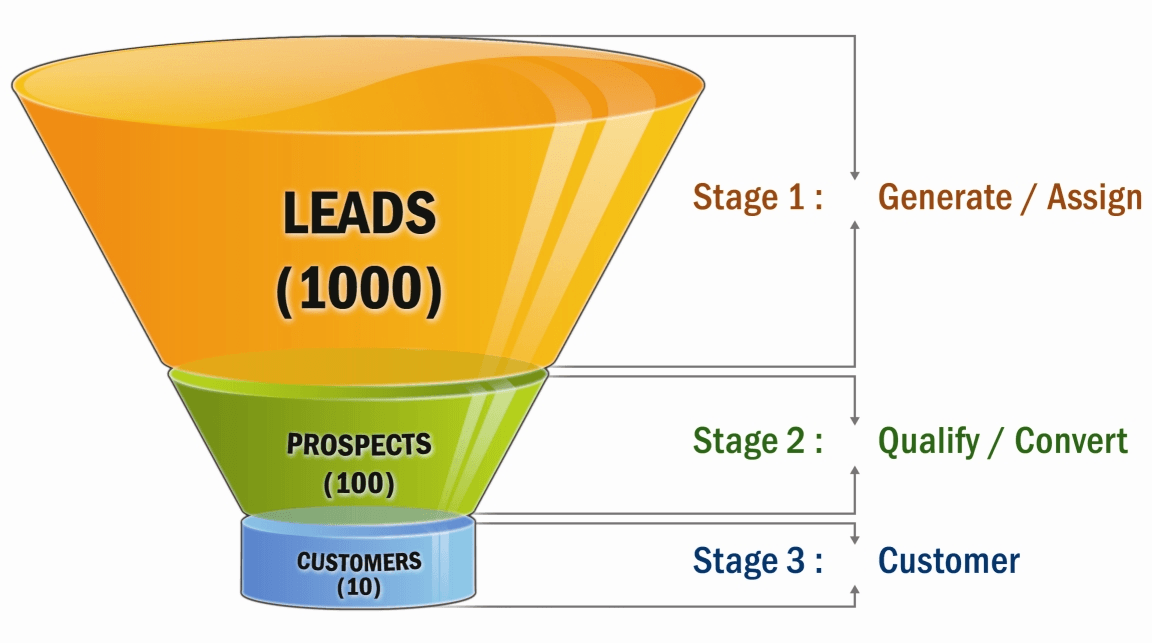
1. Stop rewarding your sales team for having leads in the pipeline

sales_funnel-1

One of the most heavily discussed topics in sales is the number of prospects and leads in a company's pipeline. While a thriving pipeline can be beneficial to acquiring new customers, many sales managers and sales execs place too much emphasis on the pipeline as a metric.

Jason Lemkin, founder of SaaStr and Adobe Echosign (check out what his co-founder Jeff Zwelling said about our sales software), points to a shift in thinking as one of the key tactics that his VP of Sales, Brendon Cassidy, used on the journey to $100K MRR. Jason recalls,

“He ended pipeline as a metric — and any real credit for it. Pipeline is an important sales tool. But it doesn’t matter if you don’t close it. Brendon ended endless charts and discussions of pipeline. We discussed actual deals, that could close. But Pipeline as a metric to aspire to, died on Day 1.”

In the early days of a SaaS product, you need to focus on driving real results. Jason explains that “Pipeline for This Month is useful, but still dependent on how various reps get probability right.”

The key takeaway here is that you need to focus on increasing your revenue per lead and the rate in which those leads are closing. Focusing on anything else can lead to vanity metrics.

2. Don't say yes to everything (even for money)

What’s the Profitable Distraction Trap? It’s when you have a product that you’ve been trying to sell for months, but are distracted by a new one-off opportunity like creating a custom app for one of your prospective customers.

The challenge with saying “yes” to these opportunities is their potential long-term impact. Consequences range from your resources and focus being shifted elsewhere to missing out on a learning exercise to figure out why your product doesn’t fit their needs.

As Yoav Schwartz, the founder and CEO of Uberflip, explains it:

When you add a feature, you have to consider how it impacts every other portion of your offering. So inevitably, adding a seemingly small feature takes longer for you than it would for a custom shop starting from scratch. More importantly, when you’re done developing this feature, you have to support it as it’s now part of your offering. Was that feature really serving the greater good, or does it have a whole bunch of bells and whistles only valuable to that one customer that paid you?

If a feature requests aligns with your roadmap, great! It might just be a matter of moving ahead of schedule. However, if a feature doesn't align with your overall vision, prioritize your product’s future over a seemingly easy win in the present.

3. Price point influences the value you offer

Wiley Cerilli, Venture Partner at First Round and former co-founder and CEO of SinglePlatform, believes that price is more important than most people think.

Cerilli gives the following advice: “They will believe your product has whatever amount of value you tell them. If you charge $20, people will think, ‘Oh, it’s only worth that? I don’t want to spend time on something that’s only giving me $20 worth of value…'"

To test the impact of pricing, Cerilli would run A/B tests where he would charge one group more than the other to see how it influenced engagement. He found that the more people paid, the more likely they were to log in and use the system. From there, he’d fix the price with a discount and the customers would feel like they were getting a deal.

Derek Halpern, investor and founder of Social Triggers also understands the importance of pricing:

When people pay for something, it gives those people a sense of accomplishment, pride, and ownership, meaning they’ll value the goods or services more and complain less. Who doesn’t want satisfied customers who don’t complain? Exactly.

Don’t be afraid to charge what your product is worth. You'll know if your SaaS product is too cheap if you never lose customers because of pricing.

4. Create a sales presentation focused on customer success

When you love the product you’re selling, it’s easy to fall in love with the different features. It’s more common with founders, but there’s still a handful of salespeople who focus on features more than they focus on results.

Your customers want to know how your product can help them, not how many features it has.

Share success stories from customers who have been able to achieve goals similar to your prospects’ goals and it will increase your conversion rates.

To successfully share these stories, follow the “situation, solution, success” formula recommended by executive speech coach and President of FrippVT, Patricia Fripp:

  • Tell a story about a satisfied client using the client’s own words to illustrate the situation. Imagine one of your clients asking for your help; how would they articulate their challenge or their problem?
  • The solution can be delivered in your words. For example, “This is what we did to help Client X. We did this, this, this, this.”
  • The success – the happily ever after – has to be in the client’s words. This is because only your client’s words can adequately express how wonderful your product / service / solution is.

Using this framework will turn your customer success stories into great, compelling stories—stories that drive customers to buy.

5. Your sales team needs to be consistent

sales_motivation

Whether it’s sunny, wintry, the end of year, or 6 AM in the morning—your sales team needs to consistently deliver results. The best sales people put in the effort, day after day after day.

Too many sales professionals and entrepreneurs are falling into the trap of believing that you can work smart, rather than work hard. That’s BS.

In SaaS sales, you need to be willing and committed to doing both. Work smart by ensuring you have all the tools you need to optimize your sales funnel but work hard to ensure that those leads and prospects feel as if you’re focused on their problems.

Pick up the phone. Send the email. Always be shipping.

Learning never stops

If you want to succeed in SaaS sales, you need to consistently invest in your own development and personal growth. You need to stay on top of the technology that can give you an upper hand and study the strategies that will help you close deals faster.

We’ve already covered some of the best insights for selling SaaS. In our free sales success email course, we deliver even more insights for those looking to master their craft.

This course covers how to give a demo that actually sells along with seven deadly sales sins that startups often commit. Be sure to check it out—you’ll be glad you did!

If you have any questions about how you can use these suggestions in your company, leave a comment below, and we’ll try to help you out.

02 Dec 17:13

Services matter—but making stuff is the core of any strong economy

by Kevin Carmichael
Worker inspecting car door parts

A healthy goods-manufacturing sector is the foundation of any economy. (Oli Scarff/AFP/Getty)

We’re a nation of consultants. And accountants and bankers and lawyers, not to mention baristas, stylists and editors. But let’s focus on the first batch of professions. Those are the ones that make parents proud.

“Canada is a services economy,” the Conference Board of Canada declared this summer. As the employers of four in five Canadians, service providers lack the attention they deserve, the research group contends. “While much attention has been paid to the surge in popularity of Canada’s natural resources over the past decade, Canadian companies have been quietly and steadily increasing their international sales of services,” wrote the Conference Board’s Jacqueline Palladini.

It is a worthwhile effort. Data on services are weak. It is easy to measure the contribution of brake pad manufacturing to gross domestic product; it is harder to determine the value created by a team of Stantec Inc. architects and engineers on assignment in the Caribbean. Palladini uses the example of the smartphone, everyone’s favourite symbol of the modern economy. The devices—goods—are useless without a telecommunications network, the operators of which are providing a service. Selling the phone in profitable numbers requires an international advertising campaign (service). Retaining customers necessitates an effective help desk (service). The gear (goods) that went into the phone probably were manufactured by various subcontractors, requiring a team of supply-chain managers (service) and logistics providers (service) to get the final product to market. Many of those white-collar service jobs pay more than factory work, as they are occupied by people with higher educations, according to the Conference Board.

But does that make Canada a “services economy,” as the board says? Not really, in my opinion. Nor should we aspire to be one.

Service companies employ lots of people, sure, but they almost always owe their existence to the producers and harvesters of tangible things. A country that focuses too much on services is one that chooses to outsource its economic destiny. There’s a reason the United Kingdom suffered so dearly during the financial crisis: It allowed its economic centre of gravity to shift to banking. In the 1990s, India liberalized its economy in a way that favoured its budding information-technology companies but hurt its factories. Now India’s government is trying desperately to turn the country into a manufacturing hub, and IT-outsourcing giants such as Infosys Ltd. and Wipro Ltd. are struggling to grow, as the rise of cloud computing reduces their previous competitive advantages.

Canada has no obvious comparative advantage in services. Our universities generate lots of smart people, but so do schools in the United States, Europe and Asia. We have nice cities of the kind in which highly educated people like to live—as do a dozen other countries.

Our advantage is in food and resources. Consider trade with India: Half of Canada’s exports to that country of 1.3 billion people is represented by pulses, potash and, more recently, uranium from Saskatchewan. As drought afflicts more and more of the world’s farmable land, Canada guards a precious supply of water. Oil may never again reach triple-digit prices, but there will continue to be demand for it. We are among the limited number of countries with plentiful supplies of oil. That gives us the opportunity to become a truly diversified economy.

Yet the economy isn’t as diversified as it could be. There were 2.1 million factory jobs at the start of 2007 compared with about 1.7 million now. There is a tendency to fetishize manufacturing. But in resisting that impulse, we shouldn’t at the same time deny that there is something special about the making of things. A dense body of academic work demonstrates that one factory job correlates with multiple service jobs. For Canada to be a “services economy,” it must continue to be a manufacturing economy. The focus of policy-makers should be on the latter. The former will follow.

MORE ABOUT INTERNATIONAL TRADE, EXPORTS & THE ECONOMY:

The post Services matter—but making stuff is the core of any strong economy appeared first on Canadian Business - Your Source For Business News.

02 Dec 17:10

8 Tips To Integrate Content Management With Enterprise Processes

by Thomas Schneck

There’s some groundwork that needs to be laid before your enterprise jumps headfirst into implementing a content management system.

Regardless of how you choose to implement or the software package you’ve picked, there are some key considerations you need to make before integrating content management software into your current processes.

Prioritizing Pre-ECM Implementation Tasks

Priority #1: Examine the current state of the organization by asking the following questions: Are processes documented in detail? Is documentation current and do they meet the objectives of the enterprise? With the added advantages behind a content management system, do opportunities exist to streamline these processes?

Priority #2: Consider the regulatory and compliance requirements of the processes mentioned above, and ensure the ECM system is built around these controls first. Processes should be compliance-ready; avoid trying to retrofit compliance requirements on top of existing processes.

Priority #3: Formulate an implementation plan to maximize success. Focus on matching enterprise needs to software deliverables, and ensure user adoption is a main focus of the plan.

8 Tips To Ready Your Organization’s Processes For Change

Below are the steps outlined in Kotter International’s “Model Of Effective Change” to help ease the impact of organizational change:

  • Increase Urgency:Examine your market and competitive realities to identify current crises, potential crises and major opportunities.

  • Build Guiding Teams:Assemble a group with enough enterprise power to lead the software implementation.
  • Get The Vision Right:Create a vision to direct the overall transition, and develop strategies to achieve that vision.
  • Communicate For Buy-In: Use every communication channel possible to discuss the new vision and strategies. Demonstrate new behaviors and processes by example.
  • Enable Action: Eliminate obstacles to change, and alter systems or structures that seriously undermine the vision. Encourage risk taking and nontraditional ideas, activities and actions that support the end goal.
  • Create Short-Term Wins: Plan for visible performance improvements, create those improvements, and reward employees who lead and are involved in the improvements.
  • Don’t Let Up: Use this increased credibility to change systems, structures and policies that align with the new vision. Hire, promote and develop the employees who are inspired by and want to implement the vision.
  • Make It Stick: Articulate and emphasize the connections between the new behaviors and enterprise success, and create the means to ensure leadership development and succession.

An ECM Post-Implementation Content Lifecycle Example

In today’s enterprise organizations, delivering information to customers through content is increasingly important. While speed to publication is critical for these enterprises, getting the message right is equally important. Yet these two priorities are often in conflict.

For example, marketing, sales, and research and development departments may work together on a press release for an upcoming product lunch. Through an ECM system, these departments collaborate: R&D notes that a technical detail needs updating, while sales modifies pricing based on a strategic pricing meeting, and marketing alters the product description to fit the changing competitive landscape. Instead of waiting for each department to add its input, each department can alter the document alongside other edits without stepping on toes.

An ECM system supports parallel workflows to allow multiple parties to work together simultaneously and ensure publishing standards and checks-approvals processes are maintained. Content generation that formerly took weeks is trimmed to a day-and-a-half.

Prioritizing Pre-Implementation Technology Considerations

Define Metadata: The metadata associated with each document helps improve document searchability in the content management system. Metadata should serve at least one of three functions:

  • 1.) It’s a useful way to locate the document at a later date
  • 2.) It helps define security restrictions
  • 3.) It’s used to define the decision stage in a workflow

Lock Down Document Data Location: Where and how are you currently storing document data? Is this information on the document itself or is the data located in another application that might be integrated into the ECM system.

Perfect Workflows: Understand how documents travel through the intended system and what workflows these documents are part of. What workflows might be put in place to automate these business processes? How do you currently deal with exceptions to the process?

The 3 Parts Of Effective Enterprise Content Management

The success of any enterprise content management initiative depends on the people, processes and technology.

Focus on removing obstacles and giving your people what they need to work more efficiently — more access to data and the right tools to make the right decisions.

In terms of process, focus on streamlining, ensuring standardization and compliances while eliminating variability and inefficiencies.

The technology, the content management system itself, should possess the right security with the right features and the kind of interface that increases usability.

Learn more about how to integrate content management practices across your entire enterprise and get the most out of an enterprise content management plan by downloading our tip sheet.

Published originally on November 12th 2015 on the DocuWare blog.

02 Dec 17:09

FreshBooks takes on Square with $30 card reader that connects in-store payments with accountancy software

by Paul Sawers
Freshbooks

Cloud accounting software company FreshBooks has revealed that it’s entering the mobile-payments space with the launch of a new card reader that lets merchants accept credit card payments through a smartphone.

Similar to Jack Dorsey-owned Square, which recently filed to go public, FreshBooks has a branded contraption that plugs into an iPhone’s audio jack. It is designed as a simple solution for smaller merchants who want to go “cash-free,” and accepts most of the common bank cards as payment. The Toronto-based company is inviting small businesses to apply for early access ahead of the service’s expected launch in the U.S. in the first half of 2016.

FreshBooks Card Reader

Above: FreshBooks Card Reader

Image Credit: FreshBooks

Besides the $29 up-front cost of the card reader, merchants will also be charged 2.7 percent + $0.30 for each Visa and MasterCard transaction, while American Express (AMEX) will cost 3.4 percent + $0.30. This is marginally more expensive than Square’s current rates. The reader will also accept both the old-style magnetic-stripe bank cards, and the new security-focused EMV chip cards.

On the surface, this may seem like an odd vertical for FreshBooks — a company that provides cloud-based invoicing, expense-management, and time-tracking tools. But it’s entirely in keeping with its recent strategy, and when you delve into the details, it makes a lot of sense.


From VentureBeat
Ready to think outside the (ad) box? We’ve got the secret to successful F2P ad monetization and we’re ready to spill the details – for free. Sign up here.

Back in October, the company launched Payments by FreshBooks, aimed at helping small businesses accept online credit card payments. So the expansion into brick-and-mortar stores is a natural extension of this. For small merchants, FreshBooks’ key selling point over more established competitors such as Square is that its card reader will be integrated directly into FreshBooks’ broader accounting and payments offering, which means that invoices and other reports are synced in real time as each payment is processed.

FreshBooks already claims existing relationships with millions of merchants, so this will put the company in a good position to cross-sell its new card reader. It’s not coming in from a standing position, so it should see some interest from merchants seeking a fully integrated point-of-sale system.

“Since day one, FreshBooks has been committed to helping service-based small business owners save time, get paid faster, and look professional, and the FreshBooks Card Reader is the next step as we continue delivering on our promise,” said Mike McDerment, cofounder and CEO of FreshBooks. “Seventy-five percent of small businesses already use mobile devices to run their businesses, and the FreshBooks Card Reader will offer them with yet another way to streamline their workflow while on-the-go.”

Though FreshBooks’ first hardware product will initially only work with iOS devices, a spokesperson told VentureBeat that support for Android will follow some time next year.


02 Dec 17:09

United Kingdom Launches Inquiry into Cloud Storage Pricing

Cloud Storage Pricing

Cloud technology is quickly becoming the new normal in the United Kingdom. Research shows that up to 40% of adults in the UK use some form of cloud storage to store their files.

Given cloud storage's rising popularity, some organizations have taken this as a green light to begin gouging customers on the price of their services.

As a result, several complaints have been filed by citizens of the UK, and an investigation has begun with the Competition & Markets Authority (CMA) into whether or not cloud storage providers are playing within the rules.

The Cloud Storage Bait and Switch

An example of one of the most common complaints that the UK's CMA has received is that cloud service providers will offer a free or reduced trial. Once the customer is signed up, the service provider baits and switches the customer into paying more for the storage product than they originally anticipated.

"Cloud storage is a dynamic and growing sector which is already highly valued by consumers," says Nisha Arora, CMA Senior Director of Consumer goods.

"If our review finds breaches of consumer protection laws we will take further action to address these, which could include enforcement action using our consumer law powers, seeking voluntary change from the sector or providing guidance to business or consumers," added Arora.

UK's CMA Begins Investigation

The CMA's investigation into cloud storage pricing will focus on providers changing the terms of their contract with the customer.

For example, a customer may sign up for a cloud storage service thinking that they are getting unlimited cloud storage, only to have that company rescind the offer at a later date.

Another target of this investigation is price comparison websites. Consumers have exhibited the fact that these types of websites may not always be the best indicators of price reductions, discounts, deals, etc.

The CMA will provide a report with its findings and provide remediation paths for customers, should the agency find that any consumer laws have been broken.

The post United Kingdom Launches Inquiry into Cloud Storage Pricing appeared first on CloudWedge.

02 Dec 17:07

What Is Sales Performance Management Software?

by Jeremy Boudinet

A new sub-genre of enterprise software is emerging. It goes by the term, “Sales Performance Management Software.” Here is a quick introduction.

Ever wanted a software that could actually codify your sales culture, objectives, process and performance expectations in real-time?

You’re in luck. Welcome to the age of Sales Performance Management Software.

This new breed of enterprise technology is a logical outgrowth of internal business intelligence, gamification and real-time data analytics. And it’s primed to take over the world of inside sales.

An Introduction to Sales Performance Management Software

Think of Sales Performance Management Software as the wingman to your CRM, Phone System and Sales Leadership. It’s the sentinel that ensures you’re getting maximum value out of your investments in your sales team’s talent and technology.

It’s taken a few years longer than initially projected, but the emergence of sales performance management software is finally starting to come into focus.

A successful inside sales organization optimizes people and process. Doing so requires a healthy culture (competitive, collaborative and consistent) and healthy process (focused, transparent, data-driven and goal-oriented).

Sales Performance Management software directly impacts both sides of the coin by fusing culture and process together as one, via a mix of features like TV Leaderboards, contest and incentive automation, real-time data tracking, on-demand exception reporting, performance scoring and other functions.

Ambition, along with a host of other tools such as LevelEleven and Rivalry are taking the lead in creating sales management software that, unlike gamification alone, operates on the left side of the sales stack.

For companies looking to establish an activity-driven, competitive culture, or, looking to automate real-time recognition and insights regarding performance, these tools are right on the money.

Inside sales teams or brokerage firms, in particular, are the perfect foils for sales performance management software, especially those who have a Millennial-driven sales force.

To learn more about Sales Performance Management software, download The Ultimate Toolkit for Your Salesforce or The Inside Sales Software Guide for 2015.

02 Dec 17:07

20 Big Data Companies Leading the Way - Datamation


20 Big Data Companies Leading the Way
Datamation
Many organizations are at the point when they have figured out how to get data in Hadoop -- or other big data stores -- but not how to get the data out and derive value from it,” Gartner analyst Svetlana Sicular wrote in a June blog post. Forrester ...

and more »
02 Dec 17:07

3 Common Misconceptions about Personal Branding (and How to Overcome Them)

by Annaliese Henwood

Let me start by saying the obvious: we all have a personal brand, whether we like it or not.

The question I have for you is: what are you doing about it?

Personal Branding Issues: Introduction

I’ve read articles from people on LinkedIn and beyond, where the author insists that personal branding is fake or a waste.

There are many misconceptions about personal branding, and I’d like to take some time to clear things up a bit.

Below are just 3 of the common personal branding issues people have mentioned before. It is my goal that after reading this article, you’ll be better informed as to the true value of personal branding and what you need to do to make the most of it.

———

Personal Branding Issues:

1) It’s out of our control.

Personal Branding Issues: Control

When you focus on your job, career and personal life without taking the time to see its effect on your reputation, you are in fact letting your personal brand get out of your control.

However, if you take the time and put forth the effort to monitor and maintain it, you do have the control you need.

Personal branding can be controllable if you are willing to invest the necessary resources for it.

It may require time. It may have a cost. However, it’s something we have to accept if we want to have control over how others perceive us.

2) It’s too time-consuming.

Personal Branding Issues: Time-Consuming

Yes, personal branding takes time to maintain. You have your online presence via your website and social media, and you have your offline presence via networking and in-person events.

It is time-consuming, but it doesn’t have to be overwhelmingly so.

If you are properly prepared and organized for your branding efforts, you’ll have the resources to be more efficient, saving time as a result.

We all have busy schedules with our jobs and personal responsibilities, and it can seem like personal branding is a commitment we don’t have time for.

However, we all have to spend at least a moment of each day to check how we are viewed in the public eye.

If our brand is portraying us as distant and unavailable, we will lose opportunities, especially these days with the importance of a social media presence. I’m sure you don’t want that to happen, right?

Use the tools out there to be more time efficient. There are so many resources out there for productivity and time management. Take a look at my productivity tips article to learn some best practices and discover a few handy tools, as well.

3) It makes us less human.

Personal Branding Issues: Less Human

I read an article a while back that said calling ourselves a “brand” was a bad thing because it made us seem less human. I see what the author was trying to say, but in truth, there is no denying or avoiding the fact that our lives are public and branded online.

Have you searched for yourself on Google recently? I’m betting you’ll see several results about your online history when you do. It could be your social media presence, a website or other activities and contributions.

All the websites, the social media posts, the blogs… They are all part of your online story. Calling it a brand is just a way to simply explain our presence online for people to understand.

It doesn’t make us less human. In fact, it makes us more recognizable and respected as human beings.

Working on your personal brand is an effective way of giving your name a face and voice. When you are actively building your brand, you allow others to get to know, trust and respect you. It’s not something to be frowned upon but rather embraced.

———

Let’s reflect on this for a minute:

  • We can have a sense of control over our personal brand if we’re willing to invest the resources in it.
  • Personal branding is only too time-consuming if you allow yourself to be negligent or disorganized.
  • Instead of making us less human, personal branding can actually give people the opportunity to get to know you as an individual.

Personal branding is one of those things that you either actively maintain or allow to go astray.

It doesn’t matter whether you monitor it or not: your presence is being recorded online with or without you noticing.

Why allow your online presence to go in random, disorganized directions when you can control it, without getting overwhelmed, while still being human?

Personal Branding Issues: Conclusion


02 Dec 17:06

The Sales Metrics That Will Actually Matter in 2016

by mrenahan@hubspot.com (Mike Renahan)

measurementsstockphoto.jpg

For the longest time, sales reps have been bound to activity metrics. How many calls are you making? How many emails are you sending? How many product demonstrations have you booked? These metrics (along with quota) helped managers determine whether a rep was doing their job well or falling short.

But what if those metrics suddenly lost their value? What if instead of activity-based reps, we had something totally different?

As another year comes to an end, the old sales playbook is starting to fade, and an entirely new school of thought is emerging. It’s one that’s focused less on making the maximum amount of calls or sending the maximum amount of emails, and more on developing, maintaining, and strengthening relationships.

And this means that what is being measured is changing, too. Here are three sales metrics that will matter more than ever in 2016.

1) Customer Success

How successful is your customer after they purchase your product? What type of impact does it have on their business? Has their pain point turned into a point of strength?

Sales is no longer about getting someone to sign on the dotted line, setting up their new service, and then wishing them good luck. Instead, reps need to ensure that their customers are not only surviving, but thriving with their product. They must follow up with clients, offer assistance with problems, and help them strategize for the future.

As Forrester's Kate Leggett points out in a blog post, customer success is what’s behind increasing existing revenue, and influencing new sales. One customer’s success can prompt another prospect to try to your product or service in hopes of attaining a similar outcome. But this virtuous cycle only kicks off if you actively promote and track customer success.

To measure customer success, formulate a customer "health" score. What do the financials look like? How many customers do they have? Get a handle on their business' health as it pertains to your product and then monitor the metric over time.

You can also measure your customers' growth. After all, the best sign of business success is growth. Ask if the company is hiring, taking on more business, or improving customer retention rates. 

2) Loyalty

Churn is still a great metric to measure, especially on a rep-to-rep basis. A rep who maintains a healthy relationship with each of their clients is likely to have a lower churn or cancellation rate. Again, sales is about relationships, and rapport makes a huge difference.

Loyalty, however, is not only about the customer’s feelings towards the sales rep, it’s also about the rep’s loyalty to the customer. According to Jason Wesbecher, “The best [sales reps] are intensely loyal to their customers and step in to solve problems. If things happen to go awry after the sale, the sales rep works on their behalf to fix the situation. This is the social contract that all great salespeople live by.”

The easiest way to measure loyalty is through net promoter score. An NPS measurement simply asks whether or not someone is likely to recommend your service or product to someone else. The rep, and their relationship with the customer, plays a major role in this rating.

3) Customer Feedback

The final thing to measure is your customers’ feedback. What are they saying about your reps? What do they like about their connection to the company, and what do they not like?

Customers need to feel that they have a voice. Offering them a chance to give feedback and provide insights is a great way build a long-lasting and meaningful relationship.

This HBR article from Tom Atkinson and Ron Koprowski points out that the two biggest pet peeves a buyer has with sales reps is a failure to follow their company’s buying process, and a failure to listen to their needs. Managers can determine from customer feedback how well their reps are working with clients in these areas if they take the time to solicit regular feedback. It might be unpleasant to hear where your sales process is failing customers, but getting the chance to right a wrong before a customer jumps ship is invaluable.

To collect customer feedback and report on it, send out a survey. Pose a few questions to your customer base and determine how they feel about your sales process and reps. Remember: Customer feedback shouldn't be solely about the product; it should also cover how clients feel about the company as a whole.

You could also hold a customer day. Invite some folks to your office or headquarters for lunch and talk to them one-on-one. Note their facial expressions and body language when they reflect on their rep.

Instead of making calls for the sake of making calls, reps are instead turning their attention to relationships and what happens after they make a sale. The metrics that matter have shifted, and the modern sales rep is adjusting accordingly. These three metrics are worth watching as you bring your sales team into 2016.

Get HubSpot CRM today!

02 Dec 17:06

5 Mistakes You Need to Avoid When Marketing IT Solutions

by Jeff Kalter

5 Mistakes You Need to Avoid When Marketing IT Solutions

No one said that tech marketing was easy. After all, you’re trying to reach IT leaders — some of the busiest people on the earth. Not only that, other companies are hot on their trails too. Naturally, they’re seeking cover, doing everything they can to avoid vendors and stay focused on their never-ending to-do’s.

Given the challenges of reaching your target audience, you need to have your marketing and sales ducks in a row. Where are marketers going wrong?

Letting Potential Leads Slip Away

Too many IT company managers think their offering is so unique that people will be clamoring for their products, services or solutions. As long as they have a “Contact Us” page on their website, they’ll be able to capture leads.

Not so. You need to have an easy way to capture leads on your website.

IT managers need a reason to part with their contact information. You have to earn it by providing something of value…like an e-book, white paper or webinar. Creating an attention-getting landing page that focuses 100% on the content offering. Make it easy to sign up for and download.

Not Qualifying Leads

Not qualifying leads is the source of the age-old divide between sales and marketing. When the sales team doesn’t consider the marketing leads to be qualified, they will not follow up on them. When that happens, the marketers end up frustrated with the sales people for frittering away hard-earned leads. The sales team is equally upset because they feel the marketing team is wasting their time with leads that are not ready to buy.

It’s essential for marketing and sales to concur on the characteristics of a qualified lead. Such an agreement is the foundation for sales and marketing alignment. Once you know the characteristics of a sales-qualified lead, your inside sales team or telemarketing team can call, qualify and pass only the leads that meet the agreed criteria.

Not Warming Up Leads

When you sort through your leads, you’ll end up with a fraction that are initially sales qualified. While some of the unqualified leads will never transform into qualified leads, others have potential. They will buy in the future. When they do, you want to ensure they choose your company, not the competition.

To increase the odds that they will come your way when they are ready, keep these leads warm. Nurturing with emails works well. The occasional phone call is an effective touch. Both tactics enable you to build relationships and trust over time. Do it right and you’ll boost your results. According to Marketo, “companies that excel at lead nurturing generate 50% more sales ready leads at a 33% lower cost.”

Not Making the Most of Events

Technology events are costly. As a result, marketing and sales people have a tendency to focus on the sizzle and not the steak — a booth that outshines the competition, glossy brochures, a party with free-flowing refreshments and mouth-watering hors d’oeuvres.

But it’s sometimes the less glamorous details that make the difference between an event that pays off and one that simply consumes the budget. If you want targeted IT decision makers at your event, send out invitations. Follow up by phone to make sure they received (or have seen) the invitation. Even if you don’t reach the individual, a voice mail can help. If you reach them, set up an appointment for a face-to-face meeting with one of your salespeople at the event.

Your job is not over when the event shuts down. There’s still work to do. Many marketing leaders simply divide the leads they generated among their sales people and move on. Here’s the problem. Salespeople, for the most part, don’t follow up because many of the leads are not qualified. They throw the proverbial baby out with the bathwater. Before distributing the leads to sales, call them to qualify them. Do it quickly. Thirty-five to 50% of the sales go to the vendor that responds first.

Forgetting that Leads Are Human Beings

It’s easy in this age of marketing automation to think of leads as a number. But when it comes to business-to-business tech marketing, it’s really about human-to-human marketing. Each lead is a human being with their own concerns and interests. They want to do business with other human beings, not faceless companies.

The company that develops a human relationship is often the one that seals the deal. Also, by continuing to build that relationship with the customer, you’re more likely to retain them.

Open the lines of communication. Call your leads and ask questions to find out the problems they are facing and how you can best help them. Make sure your conversations are direct, open and relevant to the individual. When you talk with a prospect about what matters to them, they will remember you. Also, you’ll learn information you can use to help make the sale — not only the problems a company or individual faces, but also their objections and competitive offerings that they may be considering.

Make sure you have an easy way to capture leads, you nurture and qualify them, make the most of your events, and, above all, treat your prospects like human beings. If you take this advice, you’ll likely be ahead of your competition. If you don’t have the resources to do this in-house, work with an experienced B2B telemarketing company with professional business development specialists who are ready to help you.

02 Dec 17:06

I Finally Had the Guts to Ask This Sales Question — The Answer Surprised Me

by jillkonrath@jillkonrath.com (Jill Konrath)

To me, Rule #1 of Selling is to be crystal clear on your value proposition. Unless you can clearly articulate the outcomes a client gets from using your product or service, it's nearly impossible to get them to change from the status quo.

02 Dec 17:06

Event and Trade Show Etiquette: 4 Tips to Make Your Booth a Success

by VerticalResponse

As the new year approaches, are industry events and trade shows part of your marketing plan? Before you go, make sure you’re set up for success by considering the importance of booth etiquette.

Here are four tips to think about the next time you’re on the show floor:

1. Be aware of your body language.

Remember you’re acting as host of your booth. Maintain a friendly demeanor with a welcoming stance as booth visitors approach your space. Keep your arms naturally at your sides or fold them behind your back. Avoid crossing your arms as it can be perceived as defensive and might cause people to walk past you.

Event and Trade Show Etiquette: 4 Tips to Make Your Booth a Success

2. Make sure to have an ice breaker on your signage.

Your signage is usually the first thing an attendee sees. Why not pull them into your booth with a statement about your value proposition or a differentiator from your competition?

In the picture below, we use our “freemium” model to our advantage by mentioning it on our backdrop. The “Free Email & Social Media For Your Business” statement stimulates a lot of conversations. It peaks people’s interest and allows the booth host to tell them exactly what it is and why it’s something to try.

Event and Trade Show Etiquette: 4 Tips to Make Your Booth a Success

3. Pre-populate your browser with specific pages you want to show from your website.

Many trade shows and events have less than ideal internet service. Whether it’s the free wifi provided by the venue or the portable hot spot you brought along, be prepared for slow loading pages. One way to combat this is to open individual tabs on your browser. This way when showing booth visitors your website, you can easily transition from page to page without dealing with slow load times.

Event and Trade Show Etiquette: 4 Tips to Make Your Booth a Success

4. Emphasize the benefits of your product or service in an easy-to-digest package.

It’s time-consuming, if not impossible for attendees to hear pitches from every booth. Condense your message to a short overview that leaves visitors wanting to follow up and find out more.

Give them a takeaway like the example below. Anticipate questions visitors might have and provide the answers.

Event and Trade Show Etiquette: 4 Tips to Make Your Booth a Success

Conclusion:  Think about your ideal customer. What kind of experience do you want to create for him or her? Then apply these four tips to make the most of your trade shows and events in 2016.

02 Dec 17:05

Health Care Providers Need a Value Management Office

by Robert S. Kaplan
dec15-02-487761347-01

Many health care organizations today are striving to deliver better patient outcomes at lower cost and to be rewarded for accomplishing both. Most have begun this journey with pilot projects to obtain valid measures of outcomes and cost for one or two medical conditions. They implement process improvement and standardize care pathways from a patient’s initial office visit through all aspects of treating the condition, and then explore offering new value-based payment models, including bundled payments, for those conditions. To accelerate the dissemination and adoption of this value agenda for many more medical conditions, leaders should now consider establishing a new central office to oversee the creation of all the capabilities and information for such initiatives.

A “value management office” can greatly enhance an institution’s ability to improve outcomes and costs across the enterprise. At a minimum, it can serve as a center of excellence to assist decentralized clinical units in outcomes and cost measurement and management, set priorities for continuous improvement projects, facilitate the creation of value-based payment models with insurers and employers, and ensure that new information technology platforms are aligned with the value agenda.

While leaders of many care organizations may be fearful that a new centralized staff function would add to corporate overhead and bureaucracy at a time when they are trying to reduce expenses, becoming adept at the delivery of value-based care requires capabilities that provider organizations currently lack. It makes much more economic and operational sense to create and leverage a central cadre of professionals than to ask each clinical unit, on its own, to acquire such expertise. Staffed with dedicated professionals armed with the requisite skills, experience, and credibility, a central group can accelerate the realization of value improvements — better outcomes, more efficient processes, lower costs, and aligned payment models — across the organization.

Insight Center

  • Leading Change in Health Care
    Sponsored by Optum
    A collaboration of the editors of Harvard Business Review and NEJM Group, exploring how pioneering providers are making change happen.

Two pioneers in establishing such a centralized group are the Houston-based University of Texas MD Anderson Cancer Center and the Hospital for Special Surgery (HSS), a specialty hospital for musculoskeletal care based in New York City.

MD Anderson Cancer Center established its version of a value management office, the Institute for Cancer Care Innovation (ICCI) in 2008 with Thomas Feeley, a senior anesthesiologist and a coauthor of this article, as its head. ICCI now has five full-time employees with expertise in analytics and project management and three part-time graduate students. In addition, it appoints faculty and staff from MD Anderson’s 11 cancer center practice units as associates when they work on ICCI projects.

ICCI serves as a center of excellence for measuring the outcomes that are most important for patients, significant for clinicians, and suitable for value-based reimbursement contracts. In 2010, when MD Anderson decided to introduce time-driven activity-based costing, a method for measuring costs of treating a patient’s medical condition across a cycle of care, the ICCI provided the leadership and resources to develop the capabilities for a pilot project and then to scale the approach across the institution.

ICCI’s role subsequently expanded to integrate outcome measurement and reporting into MD Anderson’s new electronic-medical-records system. ICCI is now playing an important role in providing outcomes and cost data to MD Anderson’s enterprise data warehouse, which will integrate multiple types of clinical and financial data into clinical care and research. ICCI also led the negotiations with one of MD Anderson’s largest private insurers to adopt the first cancer-care bundle in the United States.

The Hospital for Special Surgery (HSS) established its Value Management Office in 2014 to institutionalize continuous value improvement and provide greater coordination and resource focus for its value agenda. HSS appointed Dr. Catherine MacLean, a coauthor of this article, to be its first chief value medical officer. A clinician by training, she had previous experience managing quality-improvement programs at a large national payer. Her mission in her new role: To coordinate and lead efforts for value measurement and improvement throughout the organization.

The Value Management Office’s initial projects are focused on three key areas:

Improve the collection of outcome measures. HSS has a long history of measuring and improving patient outcomes, including eight institutional registries for specific procedures among more than 136,000 patients. The Value Management Office promoted the development of shorter and more usable measuring instruments for collecting outcomes data by HSS researchers.

One example is in the area of patient-reported outcomes. HSS’s recently validated “HOOS JR” and “KOOS JR” contains three-dozen-fewer questions than the extensive standard metrics on the Hip Disability and the Knee Disability Osteoarthritis Outcome Scores (HOOS and KOOS) — two widely used instruments for measuring pain and function for patients with hip and knee arthritis.

The office then conducted a pilot project in which patients used a mobile application to complete the HOOS JR and KOOS JR surveys. The mobile app also tracked patients’ daily steps as an additional indicator of their level of activity. HSS researchers are now evaluating the relationship of such “passively” collected data and patient-reported-outcomes measures in the hopes of further streamlining the collection of important functional patient outcomes.

Integrate quality data into care delivery. The Value Management Office is integrating the collection and reporting of process and outcome measures into real-time clinical care. Many patient-reported outcomes that were traditionally collected only for registries will be introduced into patients’ electronic medical records for clinicians to use in much the same way as lab tests.

Physicians will see these scores, along with information on patients’ preferences, when they meet with patients. This information will help clinicians determine how likely treatments are to be successful and, with the patient, choose the treatment most aligned with the patient’s goals. After surgery, these same tools will be used to direct the intensity and duration of rehabilitation needed to attain the functional goals set by the patient. In addition, institution-wide outcome dashboards that previously just showed metrics required by external agencies will display the patient-reported outcomes. The internal reporting of outcomes allows clinical teams to identify care practices that are working to achieve patient-desired outcomes and those that are not so their processes and procedures can be changed to optimize those outcomes.

Expand from process excellence to population management. HSS has multiple groups that drive efficiencies in discrete parts of a patient’s episode of care (i.e., all the services involved in treating a patient for a particular condition within a specified period). For example, the Operational Excellence group focuses on operating room efficiencies and improving clinician workflow, while the Care Management group concentrates on surgical patients’ immediate post-discharge period. The Value Management Office now partners with these different groups to realize efficiencies across the full episode of care. It has begun a new program to manage the activities for patients’ preventive and follow-up care, which will be the foundation for new bundled-payment programs for treating musculoskeletal diseases within defined populations. HSS deliberately chose a chief value medical officer with prior experience in a payer organization to promote a more informed approach when engaging with private payers and employers around value-based reimbursement models.

Institutions should house the expertise needed to produce superior outcomes for patients and truly bend the cost curve in a central group as MD Anderson and the Hospital for Special Surgery have done. Doing so will help units throughout the organization move far more rapidly from a world that rewards the volume of procedures that are performed to one that rewards the delivery of superior patient value.

02 Dec 17:05

Contradicting Common Objections To LinkedIn

by Ruthie Abraham

Contradicting Common Objections to LinkedIn

I think we’ve well covered why and how LinkedIn can be one of the strongest social media tools at your company’s disposal. The potential it offers for lead generation and targeted company growth is truly unparalleled.

But most people don’t realize just how huge and powerful a business networking site LinkedIn has become, and just how many high quality contacts actively use it.

Further, many people have certain objections to LinkedIn, and I think they are worth addressing:

1) THIS IS NOT FACEBOOK. I get that people have objections to Facebook, whether it’s the privacy issues, sharing your whole life with people, or not wanting to create personal posts. I’m actually not a huge Facebook user myself – removing the app from my phone has done wonders for my productivity and positivity:). But LinkedIn—I’m on it multiple times a day. It’s a part of the business—we’ve had wonderful clients find us and contact us through LinkedIn! This isn’t social media for the sake of social; it’s a hugely valuable professional networking site. So don’t be turned off just because you’re not into Facebook or other social sharing sites. Facebook can be such a time suck, but LinkedIn will give you a return on the energy and effort you put into it.

2) You’ll hear from many people you respect—colleagues, others in the industry, even large companies in the space–that they’re not on LinkedIn. Don’t let them impact how you feel—there’s a huge opportunity there, and you should take it. Just because they’re not there doesn’t mean that there aren’t a huge number of people who are there, who are active in your industry. Reach non-active people the same way you’ve utilized marketing in the past, pre-LinkedIn, but you should still take advantage of the site to reach all the millions of NEW contacts who are active.

3) If someone rejects your connection because they haven’t met you in real life, don’t worry about it–this has nothing to do with you.  They’re just playing small. When this happens to me, and I get a response to a connection request saying something along the lines of, “Do I know you…?” I just respond nicely, “No, we haven’t met; I came across your profile on LinkedIn and thought it would be valuable for us to connect. No problem if that’s not of interest to you.” Some people approach LinkedIn from an old school mentality, but I think that’s missing the point of utilizing modern technology to improve our lives and the lives of others around us. If you’re only going to connect with the people you know on LinkedIn, then what’s the value of the site? If you want to get in touch with someone you know use email. This is about finding new people to connect with, it’s about relationships that wouldn’t exist otherwise. Don’t get down if you get rejections; it’s their loss, and there are still plenty of opportunities out there.

4) It’s not valuable to connect for the sake of connecting. You don’t have to have a million connections, you only need 1,000 real people and quality connections in your industry who are interested in knowing you. Always remember: quality over quantity any day.

Despite what the naysayers might think, there’s no question that LinkedIn can be one of the most important tools in a company’s social media arsenal. In fact, building a strong LinkedIn presence is often one of the first steps we take when working with a new client, and is frequently a key factor in several goal-oriented strategies. But in order to get the optimal results form the platform, it needs to be optimized to its fullest and wielded correctly. To get a better idea of how to do so, check out our new ebook on LinkedIn Domination.

Your ultimate guide to LinkedIn Domination!

02 Dec 17:04

The Dead-Simple Guide to Start Sharing Content as a Sales Professional

by Craig Rosenberg

Today’s guest post is from Amar Sheth from Sales for Life.

content selling, social selling

If you’re in sales, you’ve likely heard about the importance of sharing content with your social networks and with prospects directly.  While marketing departments increase budgets on content marketing, the disconnect between sales and marketing has never been more real.

Marketers cite reasons of awareness, visibility and branding as the primary reasons to share content, when it comes down to it, sales really only cares about one thing:  achieving/overachieving the quota.

How do we bridge this gap?

It All Starts With the Buyer

The data around how much information buyers are consuming online is abundant.  You may have heard that 57% of the buying journey is now done online before a buyer even engages with a supplier (CEB), but that number is 67% in a Dell/Carnegie Mellon study and 70% in a study by Forrester.

From all angles the evidence is clear that we as sales people need to be where our buyers are – of course – but we also need to actively demonstrate to them why we’re worthy of their budgets. This ebook is a great resource to help understand how you can use content to educate and engage buyers before your competitors.

Sharing Content Produces Sales Conversations

What many sales professionals don’t realize is that sharing content isn’t just something you do passively, but an effective way to spark real conversations with prospects directly and within your social networks.

Think about it:  a simple like, comment or share on the content you share can produce a real and tangible sales conversation.  If opening doors is your goal, then sharing content becomes an invaluable ally.  It allows you to educate even without your physical presence.  We shouldn’t miss this powerful opportunity.

How Should You Start Sharing Content?

It all starts with finding content to share.  This is where sales professionals spend a significant amount of time wondering if what they’re finding will get attention and capture prospect mindshare.  If you’re just starting out with content sharing, or may already be on that path, there are two drop-dead simple ways to find content without wasting any neural energy:

1.     Share what you read:  that’s right, if you are immersed in your industry and read about it regularly, share your new-found discoveries with prospects and social networks alike.

2.     Ask prospects what they’re reading:  quite simply, e-mail your top 5 clients and ask them what they read regularly.  This research may reveal some obvious sources but it will likely surprise you as well.  Once discovered, these sources should become regular reading for you.

Use Content Aggregators

Content aggregators are online tools that help centralize everything you’re reading into one place.  No more going to different websites; you can log into one spot daily and even get news from that tool on your smartphone.

Need a few good suggestions to try out? Give these a look, they’re certainly worth your time.

  1. Flipboard
  2. Pocket
  3. Feedly

They’re easy to set-up and simple to use.  Once you add all of your own content sources, these tools will also auto-suggest content to you.

Schedule Content Daily

One thing I do is find content daily from my content aggregator and then schedule it.  You can check out these free tools to get started:

  1. Buffer
  2. Hootlet

Instead of manually sharing content at different times of the day, you can schedule content to be shared on social networks at dates and times of your choosing.

Practice Makes Perfect

Like everything else that’s important in our sales roles, we have to make time for this.  Whether it’s cold calling, e-mailing, researching, roleplay time, etc. we must invest our time into this to make it happen.

Sharing content is no different.

If you’re serious about meeting the modern buyer on her/his new turf, scheduling 15-20 minutes daily is something you’ll want need to do.

The Bottom Line

Sharing content has equalized the playing field for sales professionals.  We have equal footing with our buyers.  If they’re finding content and doing research without us, we can now share ideas, thoughts, and education back with them.

If you take one thing away from this blog, let it be this:  setting up and sharing content is worth your while.  It produces real sales conversations, nurtures deals and helps convey your expertise in the market.

Are you sharing content today? Tweet me your thoughts @amarsheth or Connect with me on LinkedIn to let me know.

Great image from Sean MacEntee

02 Dec 17:03

4 Strategies to Win Against Price-Cutting Competitors

by will@thebrooksgroup.com (Will Brooks)

price-cutting-competitors.jpg

In a crowded marketplace, it may seem that price wars are inevitable. But slashing prices to beat the competition will hurt your credibility, brand image, and margin more than it helps.

We get what we pay for. Even if your buyers try to convince you otherwise, they understand this principle. So instead of racing your price-cutting competitors to the bottom, leverage your product’s strongest assets to create value that outweighs a lower price. Using the following four factors, you can build a strong competitive advantage.

1) Stand by your premium pricing.

It may seem contradictory, but charging a premium price -- and sticking to it -- can actually be used as a competitive advantage. It’s common to assume that all buyers will be making a purchasing decision based largely on cost, but it’s rarely the primary reason a person buys.

A prospect may lead you to believe price is the deciding factor, but buyers actually tend to be leery of prices that seem too low -- it sends a message about your product’s quality. Instead, standing by your premium pricing and acknowledge that your product is more expensive -- it makes a strong statement about your credibility as a solutions provider.

2) Sell value, not price.

Value, not price, is almost always the most critical factor in a purchasing decision. Having a valuable product is one thing, but having the ability to sell value is what will set you apart in a sea of cheaper competitors.

In order to create value for your buyers, you must understand the unique standards and expectations of your prospect. For example, what makes a valuable tire? To determine that, you’d have to answer these questions:

  • What are you going to use the car for?
  • Does the tire need to get the driver through the Indy 500?
  • Do you need a racing slick? An off-road tire?

Using value as a competitive advantage requires customizing your solution to best meet your buyers’ needs.

3) Master product delivery.

Delivery is a part of your business you absolutely must excel at if you want to sell at a higher price than your competitor. In competitive industries, a company’s ability (or failure) to deliver a product or service in a timely, agreed-upon manner can make or break a customer relationship.

When prospects tell you they can “get the same thing somewhere else for less money,” silently ask yourself this essential question: “Then why are they even talking to me?” Because if they really can get the same thing down the street, right now, for less money, why are they still engaging with you? Whether it’s implementation support or superior customer service, delivering a timely and better onboarding experience than your competitors will help you justify a higher price point.

4) Practice helpful selling.

The ability to reach out to prospects in a professional way, on their own terms, is the currency of sales success in today’s competitive marketplace. Today’s buyers are more in control of the sale than ever before, and with that added control comes a decreased willingness to talk with salespeople who only care about getting the deal.

Elevating your product or service from an interchangeable, turnkey fix to a solution to critical business pain means you’ll have to add value in a way that goes beyond price. And focusing on value over price is better for you, too. Buyers who understand value, and the higher price tag that accompanies it, will be better long-term customers than those with a transactional mindset. 

How do you differentiate yourself on factors other than price? Let us know in the comments below.

get the free hubspot crm

02 Dec 17:03

How to Charge Maximum Price Without Scaring Your Buyers Away

by nevmed@gmail.com (Neville Medhora)

piggy_bank_with_money-3.jpg

Let’s say you’re a consultant of some sort (in this example we’ll say that we design websites for people). 

You got into this business by accident, and you want to take it to the next level. You charge $75/hour.

You are thinking of trying to double your rates to $150/hour, but that’s already scaring away some clients ... and frankly, you feel uncomfortable doubling your rates.

So what are you to do?

The trick is to use this three-pronged pricing technique. This is a psychological technique borrowed from the world of copywriting.

Let’s say you are too scared to increase your price. Keep it the same! But do it this way.

Split your pricing into three different tiers:

3_price_structure.png

See what we did? We made a basic option that everyone can afford (and not cause them to go into sticker shock), but we also provided some larger options just in case they are okay with a larger price.

hmm.png

The "Hourly Work" rate is there to not scare people away. The "Full Package" is there to get people to pay more yet be happy with that decision. The "Professional Package" is there to maximize revenue in case someone wants it all, and also makes your services seem more valuable.

Now, there should be definite benefits to each different package, with the “top” package being a full VIP-type service. For example:

3_options.png

In the past we’d just charge a $75 hourly rate to every client, and maybe bill five to 15 hours per job. But with this new pricing strategy, it’s likely the majority of clients will opt for the “Full Website Package” because it’s affordable, and yet they get a lot of extra work.

And believe it or not, about 15% of the time people will go with the Professional Package! At $75/hour it’s going to be tough to bill a client $4,000+ for a job, so this is a huge bump in revenue when you snag a Professional client. 

But remember, the main point of this pricing is to get clients to choose the middle option most of the time:

just_right.png

Your naming convention will also have bearing on which option customers pick. Some pricing package naming ideas:

  • Basic plan
  • Beginner's plan
  • “Toe in the water” plan
  • “Try me out” package 
  • Intermediate package
  • Manager package
  • Medium package
  • VIP package
  • “I’ll take care of everything” plan 

These lists of trigger words and headlines might help you come up with more names.

Just like in comedy, there’s a “Rule of Three” before the pricing structure starts getting too complex. So keep it simple and try not to give many more than three options.

Examples of three-pronged pricing in the B2B world:

pricing_tier_ex_1.png

pricing_tier_ex_2.png

pricing_tier_ex_3.pngAlmost every SaaS business uses this pronged pricing technique. I hope you can use it too!

Here’s a template you can use (make a copy of the doc for yourself and fill it in):

template_pricing.png

Enjoy this technique!

Get HubSpot CRM today!

02 Dec 17:02

How to Address the Sales Productivity Gap

by Bob Marsh

More than ever before, companies are facing a productivity gap with their salespeople — especially in B2B organizations where buyer behavior is changing constantly. According to a recent article from The Value Shift, “70% of the buying cycle is over before the sales rep even get introduced! That’s an alarmingly high percentage, but it’s due to the consumer having many more resources and tools at their disposal that they can use to research. Now, the rep needs to show value through their conversation by expressing their ability to solve the buyer’s problems. They need to do this with messaging and insights relevant to each stakeholder in the buying process.” If the rep can’t communicate that value because they don’t have the knowledge or technique to tailor their message, the conversation is over and the deal will disappear, or worse – stall and go into the land of ‘no decision’.

For modern sales leaders, getting their salespeople to focus their time on what’s most important for the business is paramount for success, but often overlooked (or avoided). Think about all of the decisions — both big and small — salespeople must face each day in terms of where to spend their time. Who should they call? What should they be selling? What marketing activities should they focus on? What meetings should they take (or skip)? What emails should be responded to first? The list is nauseating — and it only seems to increase each day. Modern day leaders realize that maximum productivity is the only way to achieve company success, and enabling their team to be more productive is of top priority. But that’s certainly easier said than done. How can modern sales leaders increase productivity while eliminating distractions for their salespeople — no matter what position or role they operate within?

Forbes and Brainshark recently teamed up to produce a very insightful article entitled “The Power of Enablement”. Below are several key themes throughout the article that directly apply to how modern sales leaders can bridge the productivity gap within their sales teams. Let’s dig in:

1. Focus on VALUE

Simply “selling product” isn’t the goal, even though that may seem counter productive. The goal is to know the customers needs so well that the salesperson can provide a solution – a value to what they need, versus immediately resorting to a tactical response. Value will make buyers lifelong customers and believers in not only your product, but your company vision. Focusing on value is a learned behavior, though, and it isn’t something salespeople inherently know how to do. So how can you train them to ensure their conversations are value focused? First, ensure they always deliver a consistent message to the buyer throughout the entire sales process – from marketing to signed contracts and even through renewals. Forbes and Brainshark revealed that 74% of the best salespeople, as defined earlier, focus on “consistency of execution” throughout the sales cycle.

2. Coach your front-line managers

Starting at the top of your sales organization enables your company to get the greatest return. Coaching your front-line managers will result in also influencing the 6-12 people that work for that manager. These managers are having 1:1’s with team members, instructing, teaching, and helping salespeople each and every day. It’s important to ensure those manager, before anyone else, have the right mindset and are focused on delivering incredible value. Dan Smoot, Executive Vice President, Market Readiness at Salesforce.com, commented, “Front-line managers are the most important people to hire in the company. If you don’t have great sales leaders, that is your first line of fault. We [Salesforce.com] had some issues, and now we spend as much time talking about sales leadership as we do about individual contributors.”
The Forbes article goes on to explain that “74% of top companies cite coaching or mentoring of salespeople as the front-line managers’ MOST important role”. It only makes sense to focus on the front-line managers first and foremost, as they each coach a number of individual salespeople. How can you ensure your front-line managers will be successful? It starts with ensuring they have the right information, as well as the right tools.

3. Fine tune efficiency and effectiveness

For companies that want to close the productivity gap, they need technology in place to enable salespeople to focus on their most important priorities: creating, progressing, and closing business. According to the Forbes article, “Top performing companies are investing [in technology] at a higher rate than their counterparts in underperforming companies. And they are looking to sales enablement technologies, analytics, and CRM systems to make the difference for their teams”.

Productivity isn’t just about eliminating wasted activity, and it isn’t just about having quality, value focused conversations. Both are extremely important, yes, but one of these without the other won’t move your company forward. According to CSO Insights, salespeople dedicate only 37% of their time actually selling (Wow, unbelievable!), and yet 58% are struggling to hit quota. There’s a massive disconnect in how salespeople are actually spending their time, and much of it is due to the distractions they get caught up in during their days. They may (and probably do) believe they are focused on the right activities. But without technology in place to simplify their roles and help them focus on the most important initiatives, their most important KPIs will suffer due to lack of focus and lack of direction.

4. Close the gap

Focusing on value, coaching front-line managers, and building efficiency + effectiveness with tools are all critical components of bridging the productivity gap. But for most companies, this can seem incredibly overwhelming. Where should you start? What can you do today that will impact your sales team tomorrow?

Without data and without understanding where your team is at today, there’s no way to improve. Begin by looking at data from your sales team, and determine what the most important KPIs are by role (sales development, field sales, mid-market, etc). Then, ensure each team member is fully aware of their KPIs – not just their quotas, but the activities they need to strive to reach every day in order to fully achieve success. Ensure those KPIs are not only visible to your salespeople, but are integrated into everything you do to serve as a constant motivator and encourager for the desired behavior.

Sales performance companies like LevelEleven believe focusing on data is a great place to start, and can help your company begin to put best practices in place to close the productivity gap with industry leading technology.

The post How to Address the Sales Productivity Gap appeared first on OpenView Labs.

02 Dec 17:02

Sell Something Boring? Be Funny

by Amanda McGuinness

selling b2b b2c

Political policy is complicated and not something you want to hear as soon as you roll out of bed at 5:00 a.m. Yet, while I’m getting ready in the morning, I often find myself playing last night’s episode of the Daily Show with Jon Stewart. He talks about foreign policy, presidential candidates, and media blunders, but I don’t mind. Why? Because he is funny.  He makes the most complicated matters hilarious, and watching makes me culturally relevant, both for knowing what is happening in the world, and for knowing about his jokes. Talking to friends later, I’ll ask “did you see the sketch on the Daily Show?”

The takeaway? Humor makes boring things interesting. Do you sell something boring? Do you watch the hilariously odd Old Spice “Smellcome to Manhood” ads and think, I wish my product lent itself this well to humor? Old Spice sells deodorant, something you need to make yourself smell less bad, not something inherently cool. Humor is the best way to get people to talk about something boring, and not only for B2C brands, but B2B too. Here are a few tips, and examples to get humor working for you.

When you sell something, you are selling it to people. This seems obvious, but it is often forgotten, especially when you sell business to business. There is a misconception of “we are selling to a corporation, and corporations don’t have personalities.” However, corporations are made up of people, not robots (usually). By making your brand fun, you are establishing rapport, building memorability, and aligning yourself with your audience, says Kevin Daum at Inc. Getting buyers to like your brand  is not dissimilar from getting people to like you. When you go on a first date, you want to be pleasant, interesting, and memorable in order to get to a second one. This is the same for your product. A Nielsen Global Trust in Advertising and Brand Messages report found that 47% of global survey respondents said that humorous ads resonated with them most. So, use humor to get your brand the second date, so to speak. People are more likely to fondly remember something different that made them laugh than yet another ad that throws out industry terms and step by step functionality. A highly regarded B2B example of this is this ad for the Cisco ASR 9000, which advertises this industrial office equipment as the perfect, romantic Valentine’s day gift for your girlfriend.  Even if the viewer of this ad is not currently in the market, this unique approach is likely to catch their attention and stay in their memory for when they are.

Aside from humanizing your brand and making it memorable, humor works because people want to share it with their friends; especially today, when online sharing has become so integral to our culture. As Portent points out, this is because it brings validation to their own humor. As I mentioned before in regard to the Daily Show, being aware of big trends, such as popular ads, sketches, or viral anything, makes you culturally relevant. People will want to share the ad with their networks just to be associated with its humor and reflect their own personality. Its like a bad example of the transitive property, or a syllogism: this ad is funny, I thought it was funny therefore, I am funny. How many of us tweeted #winning when Charlie Sheen went on his rant? We want to show we are in the know. If you create something people find worth sharing, it will be shared.

Yet, not everyone feels comfortable taking the humor route. This is because humor can be very subjective and tends to be hit or miss. As I mentioned the “hilariously odd” Old Spice ad in the introduction, there is a chance that some of the people who watched it thought it was just plain weird, and not funny at all. This can be overcome, however. In her Forbes article, Ekaterina Walter points out a few jumping off points for corporate humor as defined by Tim Washer, the man behind the Cisco ASR 9000 ad. Washer suggests basing your humor in pain, more specifically, the pain point your product will help solve. Write a script based on the problems of your ideal customer and put a silly spin on it. Your clients will find it relatable, and therefore funny. Washer also suggests self deprecating humor, showing that your brand doesn’t take itself too seriously, and making it more human. If you begin your quest for humor based in what you know about your niche market, you’re more likely to get it right.

Humor in advertising has emerged as a huge trend in the past decade that transcends its historical use in just beer and fast food ads. One of my favorite ads from this past Super Bowl was for TurboTax, again, not inherently funny. Also, don’t be discouraged if you are not a huge brand and can’t hire a clever ad agency, as Marketing Dive points out, local businesses, like repo man Walter Salmon, can use humor with the best of them. So, give it a try. Humor is proven to get people talking about boring things. For some inspiration, check out HubSpot’s list of brands that successfully used humor in their marketing campaigns.

Best Practices Guide for Success on the Shelf

02 Dec 17:02

Reasons to Ditch “Batch and Blast” and Get Started with Email Marketing Personalization

by VerticalResponse

We all like to believe we’re special. Or as anthropologist Margaret Mead wryly put it, “Always remember that you are absolutely unique — just like everyone else.”

That belief (or state of denial) is why so-called “batch and blast” email is usually less effective than email campaigns customized to your unique market. In a recent study of marketing professionals by Experian Marketing Services, 62 percent said a personalized email subject line is crucial.

The study also revealed that personalized promotional emails generated transaction rates and revenue per email six times higher than non-personalized emails. The personalized mailings had 29 percent higher unique open rates and 41 percent higher unique click rates. For triggered email campaigns (in which emails are triggered by a calendar event, a business action or an action taken by a website visitor), personalization doubled transaction rates.

Because today’s email marketing services allow for more detailed data about customers, users can implement some pretty impressive personalization that likely wouldn’t have been possible a couple of decades ago. Logistics like fully optimized mobile applications and time-delayed messaging are now par for the course, as is message micro-customization based on consumer behavior.

“With so many available tools, businesses of all sizes can now employ the best email strategies for reaching customers,” writes Jayson DeMers in the Huffington Post. “When used correctly, these tools let businesses of all sizes compete with even the largest corporations. As more marketers discover the value of personalized marketing, businesses that don’t personalize their efforts will likely find their campaigns are largely unsuccessful.”

Reasons to Ditch

“To get started with such customization, conducting customer research is imperative,” explains Vertical Response Senior Content Marketing Manager, Linzi Breckenridge. “Your success with email marketing lies in understanding as much as you can about your contacts so you can better communicate with the groups of people likely to find your message relevant,” she says.

Since personalizing messages for a world’s worth of potential customers is probably still out of technology’s reach, here are tips for identifying whom to target in your next campaign.

  • Identify your target market(s), segmenting the groups of customers most likely to buy your goods and services. Think about which segment of the population has a problem your product is able to solve. Narrowing that down keeps you from wasting time and energy, and maximizes your chance of gaining and keeping customers, growing profits and expanding market share.
  • The most common ways to segment are by demographics, geographic location, purchasing behavior and/or psychographic segmentation (interests, hobbies, lifestyles, values and attitudes). The most common demographics used are age, gender and income level, notes social media blogger Lisa Furgison, all of which can be collected from your customers and embedded for reference onto your website or blog platform.
  • To help you form your messages, some marketing professionals recommend identifying common themes among your best customers and conceiving of actual “personas” that represent them in their various forms — including their shopping objectives and possible objections to buying.
  • Further fine-tune your target market by analyzing email data to identify customers who answered calls to action, like clicking to open windows announcing new product arrivals. “Knowing if, when and how contacts engage with your email is useful in determining which contacts find the message relevant,” notes Breckenridge. “You can continue the communication with those who respond, and tweak or completely change the message for those who don’t.”

  • Limit your target market to a manageable size. Warns Furgison: “If you overdose on segmentation, you could get frustrated and make your email marketing strategy more complicated than it needs to be.”
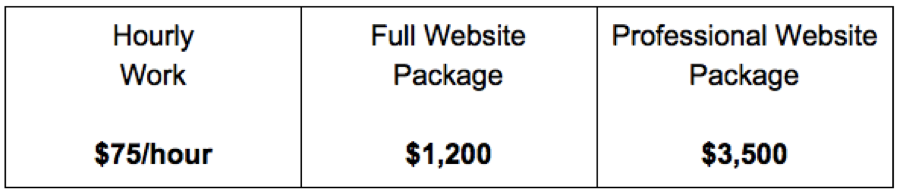

  • Consider rewarding loyal customers with discounts or special sneak peeks of products. “With a marketplace overflowing with options, repeat buyers are a much smaller segment than they once were,” Furgison notes.
  • Identify, target, and maybe reward brand advocates — customers who praise your products on social media or provide you positive feedback.
  • Make an effort to bring back inactive customers, possibly with a promo. Such emails have titles like “We miss you!” or “It’s been a while,” notes Furgison, who also advises that surveys should find out why customers have strayed.
  • Place the customer’s first name or user ID at the top of the message to quickly capture attention, advises Kevin Gao on targetmarketingmag.com. “If the user took the time to register with your business, then there is some implicit trust between both of you,” he says. “Remind them of your relationship by promptly showing their names. This tactic is especially important for consumers on mobile devices as the limited space means brands need logical personalization right away.”
  • Ask customers for information so you can provide even more apt customization in the future. “But avoid being greedy,” warns Gao. “Customers don’t want to spend time with a detailed registration page that asks for demographic data or other personal information. Ask for the minimum, use that in personalized emails, and expand your data as the relationship grows.”
  • Messages to customers triggered by real-time behaviors — such as reminders that items have been left in a “shopping cart” — can be very effective. “Even if the visitor receives it minutes after leaving the site, it does help the brand to stick in their mind,” states Gao. “Personalization should also be included in standard messages, such as shipment confirmations, where companies can suggest additional products or services, perhaps at a discount.”
  • Consider customizing email messages to arrive at the optimal times for your customers depending on demographics and time zone. For example, emails to student customers could arrive in the evenings when they’re most likely to be browsing via computer.

Lastly, always test your email campaign before sending. Having more than one pair of eyes review the email reduces the chance of suffering from an error. After making the effort to boost open and click rates with personalization and segmentation, the last thing you want is to waste it on a typo.

Conclusion:  Move beyond the old-fashioned and ineffective approach of “batch and blast” to get the best results with email marketing.

02 Dec 17:01

Strength in Strategy: Crafting Your Online Marketing Approach

by Ruthie Abraham

Strength in Strategy: Crafting Your Online Marketing Approach

Marketing is a very idea-oriented business. Creative ideas and approaches are a big part of what pushes businesses forward and further, and we’re all for that.

But there’s a danger in throwing out ideas on how to change your company’s online marketing strategy without knowing what those ideas are meant to achieve. Why are you changing strategies? What hasn’t been working that you need to work better? Which numbers aren’t you hitting that are actually important for you to be hitting.

“If you aim at nothing, you’ll hit it every time.”

Zig Zigler

Before you go into the specific components that make up your marketing plan, you need to formulate the goals of that marketing plan. You need some sort of structure, an idea of what you’re really seeking so that you don’t muddle your strategy with unsubstantial methods that sound good on paper, but don’t actually have an impact on your business. You need to know your top level goals from the get go so that your campaign isn’t wasted by pursuing the wrong things.

Marketing is populated by facts and figures, many of which won’t actually qualify how well your business is doing. A strong, focused strategy will ensure that you don’t get swept up in the wrong numbers.

When establishing goals, many business owners will make blanket statements that sound like they fit within the business realm. For example, we hear a lot of, “I want to generate more traffic to my site.” And that’s great…in theory. But it’s not enough just to throw out generic goals that might not have a real effect on your business.

Remember that not every business is the same. Your goals need to reflect the individual needs of your own business–not anyone else’s. It’s possible that you’re actually doing really well on the website traffic front, but those visitors aren’t converting into leads.

I use this example because it’s precisely what happened with a client of ours. He came to us wanting to increase traffic, with an emphasis on keywords–he wanted us to dominate certain keywords, and ensure that we’d have all the traffic relating to those phrases. But with a little research, it was clear that this wasn’t what he needed at all. He was already dominating those keywords, and ranked 1st and 2nd for a large majority. He was already getting the traffic from these terms. We explained that our focus should not be on keywords, since the impact he’d feel from those changes would be negligible, but instead should be on capturing that traffic, and turning them into engaged, quality leads.

We built out his marketing plan around that goal, ensured our specific efforts were in pursuit of that result, and 7 months later his business has seen a 70% increase in revenue.

Without a deep dive into how the data reflected his past efforts, time could have been wasted pursuing goals that simply didn’t apply.

So before taking any steps into the inbound world, you need to craft a strategy for your business, and set goals that are right for where you stand. Identify the hole in your business’s marketing-sales funnel–whether it be attracting visitors, capturing leads, closing customers, etc.–and build your plan around how to patch up that hole.

You need to establish measurable and meaningful campaign objectives that will impact your business in the right areas. Never lose sight of the fact that your ultimate goal is to grow your business; you just need to determine which of the smaller, more actionable goals will get you there.

Here