Shared posts

02 Dec 17:09

The High Road Is Full Of Losers.

by Dan Waldschmidt

You’ve been told to take the high road.

To deal honestly with others. To bring class and dignity to your craft — even at the expense of quick gains and self-serving manipulation.

Make no mistake, the high road is a tough pathway to walk. While others get away with underhanded tactics, your code demands more from you. Your calling necessitates something different.

Honor. Dignity. Honesty. And candor.

You’re committed to doing the right thing, even when it hurts.

It’s always the right thing to do the right thing. There is no excuse for taking shortcuts or stepping on other people to get to where you want to be.

That sort of behavior is short sighted and always comes back to hurt you in the long run.

But just taking the high road isn’t good enough.

Honesty isn’t all you need to be successful. Doing the right thing isn’t enough to make you a winner.

The high road is full of people losing. Full of people being honest and delivering value honorably — but stuck in a miserable, dark and lonely place.

The high road isn’t good enough. You need the hard road.

That’s the path you need to be pursuing if you want to be successful. That’s the journey you need to put yourself on.

A place that’s usually abandoned. Wide open and ready for conquest.

It’s a place where every step forward is a painful one. A place where danger and panic loom at every decision.

You’re never as prepared as you want to be.

Your weaknesses are more exposed than ever before. Your resolve is tested without abatement. Your courage is proven without finish. Your energy is demanded without limits.

You have to want to be there to stay there.

A place that is usually avoided at all costs.

All of your excuses compel you to stay away. To turn around. To go back.

Logic defies you being there. Critics, skeptics, friends and allies — all watch on with horror at your madness.

The only reason to take the hard road is if you want desperately to achieve greatness. If you demand more from yourself than just being better than a few other people around you.

If you want to change the world and live a life with unparalleled accomplishment.

You can’t win big and avoid the hard road. It’s the only sure way to get to where you want to be.

Stop avoiding it. Find it. Stay on it.

The post The High Road Is Full Of Losers. appeared first on Dan Waldschmidt: Author of EDGY Conversations.

Copyright by Waldschmidt Partners Intl... Not sure that all that legal stuff really matters. If you want to share this material, do so. Just don't charge for it and don't tell people you wrote it. Both of those are uncool.

Other than that, all rights are reserved to you to change your life. If you are ready to be amazing, now is the time to get started. Onward...

02 Dec 17:08

Giving Away an App Can Lead to Long Term Growth

by Andrew Gazdecki

pregnant

They say if you’re good at something, never give it away for free; but what if I told you that free apps aren’t free?

You’re not giving away an app out of the goodness of your heart (unless you’d like to). Instead, by building an app for free, you’re creating an opportunity for new revenue streams and clients. Never give away an app without knowing exactly what you’re getting back in return. Monthly recurring revenue, sponsorship, referrals and lead generation are all acceptable forms of return. Let’s run through what to expect from your giveaway.

Foot In The Door

Whether it’s referrals or lead generation, the benefits are worth the cost of the app. But it’s good to remember that the bigger you are, the higher your app’s perceived value. For instance, if you’re just starting out, it’s best to give an app away in exchange for referrals. The client may be wary of the fact that it’s free, but you need to assure them that the app holds plenty of value—you simply want to spread the word since you’re just starting out. They’ll be much more willing to help when you’re honest upfront.

Lead generation is much bigger when you’re more established. Chris Yano of RYNO Solutions understood this, and it inspired him to donate an app to a local charity golf tournament auction. He traded the app for a booth, where he networked with attendees and leveraged those relationships into 4-6 more deals.

Sponsorship

Some of our most successful partners see incredible success by giving their apps away to local schools. Ken George gives his apps away to entire school districts, then reaches out to local businesses to sell in-app sponsorships. George and his team promote the benefits of the apps and their appeal to the schools. Using this method, he can sell the value of the sponsorships to the businesses. He’s made thousands of dollars per app and has substantially diversified his business.

Just do it

There’s nothing preventing you from offering a free app. Remember: it’s about the value of the app to the client and your business. One app can easily become 4-6 in a short amount of time. It’s all about hitting your long-term goals, even if that means sacrificing short-term revenue.

A friendly reminder: there’s no right or wrong way to do this. You can give the app away entirely or just build it for free but continue to charge a recurring fee. The most important thing is getting a return on your investment.

02 Dec 17:08

Key questions to ask your sales organization — and how to get the right answers

by VB Staff
shutterstock_162654698

SPONSORED:

This sponsored post is produced in association with The TAS Group.


There is no deficit in the amount of data available to sales managers to help them do their job. There is, unfortunately, sometimes a deficit of insight into that data. The reasons for this inconvenient truth are multiple:

  • Sales managers are really busy and data-based sales management can take a lot of time.
  • Even if the time and the will are there, it’s very hard to interpret sales data consistently.
  • Most analytics are predictive (here’s what might happen) or leap to being prescriptive (here’s what you should do), without first being descriptive (here’s what this means in the context of this deal).

All of this adds up to a situation where many sales managers – who are already preoccupied with pipelines, sales forecasts, and quarterly reviews – simply eschew data analytics as a cumbersome waste of time, and thereby end up missing-out on the potential goldmine hidden in all that data.

And there’s the problem with most sales analytics in a nutshell. Now, what’s the solution?

Fantasy? Nope. Not if you know the right questions to ask.

The right questions (and how to ask them)

As a matter of rote, every sales manager should constantly assess the answers to these key questions:

  • What are my must-win deals?
  • Are there opportunities in my pipeline that are inactive or stalled?
  • What is my actual win rate (as measured by dollar value, not just count of opportunities)?
  • What happened to the deals John forecasted last month?
  • Are we losing deals late in the sales cycle?
  • What is the difference between our performance for qualified opportunities (deals that get to Stage 2 or 3 in the funnel) and all opportunities?

The questions are as old as time. Getting to the right answers, however, is a constantly evolving challenge based on client demands, morphing competitive landscapes, and a rising seas of big data that can sometimes overwhelm even the best-intentioned of sales managers.

So what’s the differentiator in getting to the right answers?


exclamation-001Learn more: Join our upcoming live webinar “The Secrets to Maximizing Sales Performance.” 

Register here for free.


Domain expertise

Nothing trumps experience. If you don’t know how to enrich data signals (e.g. those data points that have specific value in telling you what matters in getting a deal done), if you don’t know what metric to pay attention to in your pipeline, if you don’t know what questions to ask of your key performance indicators and how to interpret them into detailed action plans, then you are setting your sales team up for failure.

Until every sales manager in your organization is capable of doing these things, you’ll need to rely on automated solutions to do the heavy lifting for you. In the ideal world, this technology will free the sales manager from a world of reports, charts, and best-guess interpretations, and allow them to focus on managing their sales team and pipeline to optimal performance.

The Holy Grail is the ability to apply the solution today and understand what’s going on in your business better tomorrow. Ideally, your unicorn tech will be native to a top CRM, such as Salesforce, and will deliver specific, contextual advice to get the most out of every sales opportunity while leaving no room for misinterpretation – superior sales-force management, no analytics needed.

Describing the ideal solution

The typical approach most tools take to analyze data and provide answers to these questions is to predict sales performance in three or four buckets:

  1. Core Data — The data that exists in your CRM
  2. Situational Analytics — Typically represented by reports or visualizations, these tell you what happened in the past
  3. Predictive Analytics — Based on patterns from the past, what is likely to happen in the future? (Lots of challenges here to differentiate between causation and correlation)
  4. Prescriptive Analytics — Based on those predictions, what should we do about it? (Flawed, of questionable value, and risky)

The missing component goes back to being descriptive — determining what parts of the data actually matter and what data enrichment is needed before the data can be a reliable source for prediction and, ultimately, prescription. The TAS Group’s solution, Sales Performance Manager, does a good job of adding in the descriptive part of the equation and the end result is technology that seamlessly leverages the power of hard-core analytics to enable sound, metrics-driven coaching that sales managers in any sized organization can apply with confidence.

The true potential of big data in sales management is to identify small opportunities to improve the outcomes of each lead in the pipeline. Done well, this means letting sales managers ask key questions and get detailed answers that provide the level of granularity required to consistently manage risk out the pipeline, and squeeze out small but meaningful performance improvements across individual sales people, accounts, and opportunities.

Making it simple for sales managers to make sense of data and create plain-language action plans to optimize sales performance is what good automation tools can and should do, because sales management shouldn’t (and doesn’t have to be) so hard.


Sponsored posts are content that has been produced by a company that is either paying for the post or has a business relationship with VentureBeat, and they’re always clearly marked. The content of news stories produced by our editorial team is never influenced by advertisers or sponsors in any way. For more information, contact sales@venturebeat.com.


02 Dec 17:04

The tablet market is dying, but new hybrid devices are set to explode next year

by Alexei Oreskovic

Panos Panay

The tablet market is set to shrink 8% in 2015, but the new breed of hybrid tablets with detachable keyboards could help breath new life into the business, according to a new report by research firm IDC.

Global tablet shipments will total 211.3 million units in 2015, according to IDC, representing a decline of 8.1% compared to 2014.

The weakening consumer demand for tablets has been evident throughout the year, with Apple reporting in October that iPad sales in its fiscal fourth quarter dropped below 10 million units for the first time since mid-2011.

But there is hope for the market in the new crop of hybrid, or "detachable," tablets such as the new Apple iPad Pro, Microsoft Surface Pro, and Google's Pixel. These tablets have snap-on keyboards that make them ideally-suited for business users who need to do more than just browsing the web with them. 

According to IDC, the detachable tablet segment will grow by 75% in 2016. That's off a small base, since many of these detachable tablets were only recently released, but it's still an encouraging sign for the battered tablet market. 

Apple's new iPad Pro for example is the "only" reason that Apple will gain market share in the tablet market in the coming years, IDC said.

But this biggest beneficiary from the rise in detachable tablets may be Microsoft. Windows-based devices (including "slates" and detachables) will more than double in market share by 2019, IDC said, as PC and smartphone vendors create tablets running Microsoft's operating system. 

SEE ALSO: Why you should stop asking if a tablet can replace your laptop — and what to ask instead

Join the conversation about this story »

NOW WATCH: This 28 year old is the most right-swiped man in New Jersey on Tinder

02 Dec 17:02

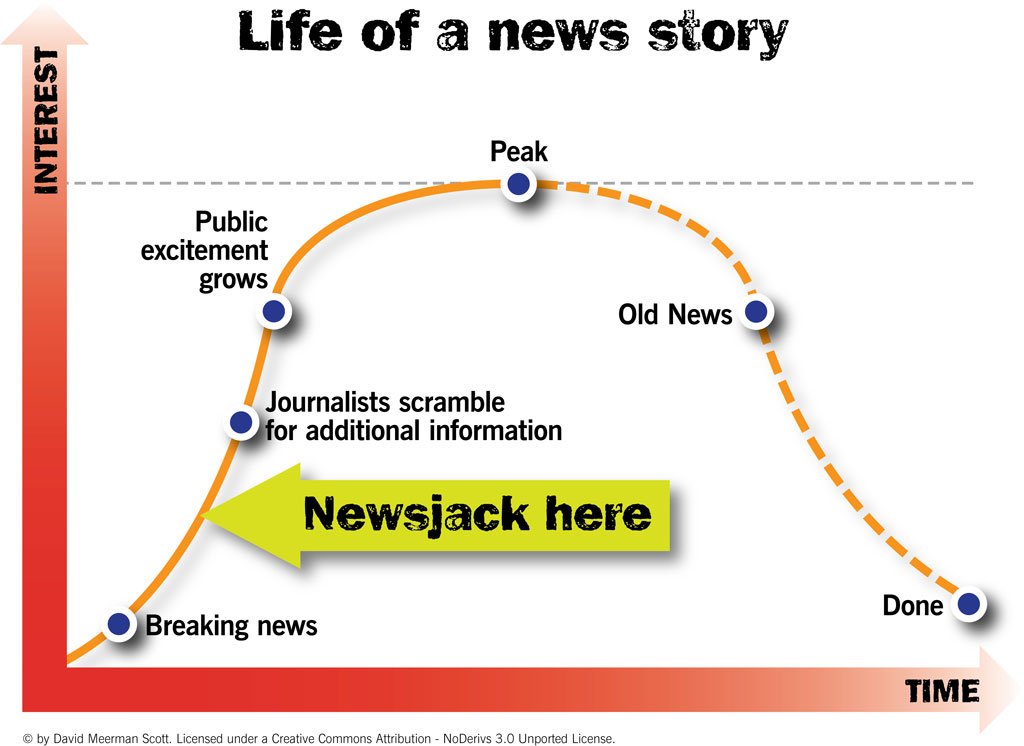
Generate sales leads and grow business with new Master Newsjacking course!

Recently I shared that for the past six months I’ve been working on an online course called Master Newsjacking! In that announcement, I asked if you have any questions or advice for me as I finalize the content of the course.

Wow!  The response was overwhelming. I received well over a hundred questions, ideas, and suggestions on social networks, email, and as comments on the blog post. Thank you! This feedback has helped me a great deal as I’ve been putting the finishing touches on the course.

02 Dec 17:02

4 Ways to Keep the Magic Alive After the Sales Call

by Steve Yastrow

“During our meeting the customer was really excited about working with me.  I was certain I'd be able to close this sale. But then I was never able to get him to answer my phone calls or emails after that.”

I've heard different versions of this story from many sales people. While with a customer, they create excitement and interest. But after the meeting, the customer's interest wanes.

What's going on?  And what can we do about it?

Ditch the PitchA good sales person is able to create a conversation that is engaging and interesting to a customer. The sales person's presence and conversation skills are a key driver of this engagement and interest. But if they are the only drivers, it's not hard to understand why the customer won't be as interested tomorrow. You need to make sure your customer really understands and believes in the substance of what you are discussing.

Here are four tips to ensure that the customer has lasting beliefs about the “meat” of what you are talking about:

  1. Consider this question: “Tomorrow, if this customer is telling a friend about his meeting with me, what do I want him to say?” Answering this question will force you to think of key takeaways that you want to leave with your customer. And, it will force you to focus your message.
  2. Use language your customer would use. It's always important to avoid jargon, and it's especially important during a sales call. Your customer can only create clear, lasting beliefs about his conversation with you if he can frame those beliefs with words that are natural and familiar to him. Pay attention to the way he talks, and be sure to offer your information in language that matches the language he uses.
  3. Give your customer opportunities to summarize. Give your customer room to recap his thoughts. Don't be afraid to ask your customer to summarize what he’s taking away from the conversation.  This will give you a chance to see if he's understanding the things you want him to understand, and it will also help him solidify his thoughts.
  4. Give your customer a recap — now and in your follow-up note. If your customer isn't able or willing to summarize his takeaway, give your own summary to the customer as the conversation is winding down. And, if appropriate, recap those points in a follow-up note.

Your customer leads a busy life; he doesn’t spend a lot of time thinking about your product, and he doesn’t care as much about this sale as you do. For these reasons, it’s unlikely that he’s going to remember your conversation as clearly as you will. Use these four tips to help him create motivating, lasting beliefs that will encourage him to buy.

Shortlink for this post: http://yastrow.com/?p=4233

The post 4 Ways to Keep the Magic Alive After the Sales Call appeared first on Steve Yastrow.

02 Dec 17:01

4 Simple Strategies to Get More Leads in Your Local Market

by Kathleen Booth

Over the course of the past week, I’ve spoken to a handful of clients, all of whom are using inbound marketing to reach a local geographic market. They’re doing everything right – from regularly posting keyword-rich blogs, to promoting their content on social media, and using email marketing to stay in front of their audience – but wanted to explore additional strategies that could help get them in front of even more people within the specific geographic area they are targeting.

This is something that comes up a lot, both with our clients and prospects. So, like any good content marketer, I thought I’d address it here in our blog. After all, any question that someone asks in person is probably also something they are looking up on Google, right?

To get found locally, you still need to begin with a solid inbound marketing strategy. Once that is in place, there are some simple things you can do to get more mileage out of the content you are creating and increase the number of visits and leads from your local target audience.

1. Get Your Business Listed in Online Directories

Remember the Yellow Pages? Not the online version. I’m talking about the big, yellow book that used to arrive at your doorstep every year. It used to be the best way to ensure a business got found locally, and companies went so far as to pick their names to optimize placement in Yellow Pages listings. That’s why there are still so many companies with “AAA” in their names.

Now that people use the Internet (and not a big yellow book) to find local businesses, directories are still important, but the key difference is that they are online. There are five main aggregators of location data that send information to U.S. local search engines: Infogroup, Neustar Localeze, Acxiom, Factual and Foursquare. When someone goes online to find a local business, search engines like Google rely on location data from these sources to provide search results.

yellow_pages_directory_listing.jpg

Getting your business listed online is important, but setting up all those listings – and keeping them updated – can be incredibly time consuming. For this reason, we recommend that our clients use a service like Moz Local or Yext. For a reasonable annual fee, they enable you to create and manage a master listing they then push out to a long list of websites, directories and data aggregators. This approach saves time and ensures that your listings are accurate, up-to-date and consistent.

2. Use Paid Social Promotion to Get Your Content in Front of a Geographically-Targeted Audience

Paid social advertising is a great way to get your content in front of a larger, but targeted, audience. Think about it – we give social platforms like Facebook and LinkedIn a ton of information about ourselves. And I’m not just talking about our names and job titles.

“Paid social advertising is a great way to get your content in front of a larger, but targeted, audience.”

They know things like:

  • Where we live (which means we can target users by city)
  • Our age and gender (interested in reaching men over a certain age? this is a great way to do it)
  • What we’re interested in (we can create ads targeted at people with particular hobbies or interests)
  • Our relationship status (helpful info if you’re a wedding planner and want to target newly engaged people, or a marriage counselor looking for couples to work with)
  • The businesses we frequent (every time you “like” a business page, you’re sending advertisers a signal about what interests you)
  • The company we work for (thanks to LinkedIn, you can target ads directly at employees of particular companies) and our job titles
  • The schools we graduated from (want to target alumni of a local high school or college?)
  • And a LOT more…

sponsored-post.jpg
By combining geographic location with other targeting options, you can zero in on the exact audience you are trying to reach and have the comfort of knowing they are located in your local market. With this degree of certainty, its worth increasing your cost per click because you can be pretty confident in the results you’ll get.

When it comes to social advertising, I always advise our clients to tap into a pain point rather than promote a direct offer. This is a more effective way at reaching buyers at the top of the funnel, and will most likely get you better results. An example of this would be a financial adviser who runs a promoted post ad on Facebook about a blog on saving for college – as opposed to a direct offer like “contact us for help putting together a college savings plan.”

3. Tap Into Your Referral Network and Spotlight Them In Your Content

Do you get clients through referrals from other area professionals? Leverage that network by spotlighting them in your blog or premium content. Using the example of the financial adviser again, let’s say you get referrals from accountants, estate attorneys, etc. Invite your top referral partners to guest blog on your website. In doing so, you strengthen your relationship, promote them to your audience and give them a reason to also promote your content to their audience.

Can’t convince your referral partners to write a blog post? No problem. Just get on the phone and interview them, and then turn those questions and answers into an interview-style blog like this post we created for our client, a local insurance agency:

hwp-blog-screenshot.png

If you’re concerned about appearing to favorite one referral partner over others, an easy solution is to create crowdsourced content. For example, our financial adviser might ask five different local estate attorneys what the top challenge is when it comes to passing your estate to your children, and then take all five answers and turn them into a post called “Five of the Areas Top Estate Attorneys Discuss the Toughest Estate Planning Challenges.”

Regardless of what format the content takes, the point is to shine the spotlight on those who refer clients to you and give them a reason to help promote your content.

4. Publish Your Content on Other Local Blogs

Sometimes the best way to get your content in front of a local audience is to piggy back on someone else’s audience. Start by going online and Googling “[your city name] blog.” Odds are, there will be several results for bloggers talking about your city or town. Your local newspaper might also have a blog.

Reach out to these bloggers and offer to create content and guest post for them. Make sure you’re not just promoting your business. Instead, offer their readers something educational. My fictional financial adviser might reach out a local wedding blogger and offer to create a post about paying for your wedding or financial planning tips for newly married couples.

Another great option is to become an approved blogger for Patch.com. There are hyperlocal Patch sites throughout the country, and each of them includes a blogging section where locals can create and post their own content. Again, don’t be sales-y or your blog might not get approved. But if it does, this can be a great way to get in front of a local audience. Here’s an example of a post we published on blog for a client who is a local DUI defense attorney:

patch_guest_post.png

The Bottom Line

While all four of these tactics can be great ways to get you in front of a local audience and convert that audience into leads, they are no substitute for a solid inbound marketing strategy that includes keyword-rich blogs, geotargeted landing pages and premium content offers. This is the block-and-tackle stuff that any business needs to be doing to get found online. Without it, all the other stuff just won’t be as effective.

The ABC

01 Dec 17:23

How One Man Used Artificial Intelligence to Generate Genuine Sales Leads

by Grant Davis
A CRM startup gets the hookup to find leads via machine learning about its best customers.
01 Dec 17:22

Why millennials shun sales careers, and what to do about it

by Murad Hemmadi
Young woman looking at a wall of Post-It Notes

(Luis Alvarez/E+/Getty)

The traditional list of desirable vocations has expanded in recent years, as parents begin to recognize that it’s possible to make good money doing jobs today that didn’t exist when they were growing up.

But while ‘doctor,’ ‘lawyer’ and ‘engineer’ have been joined by ‘entrepreneur’ and even ‘YouTube celebrity,’ one historically high-achieving and well-paid career remains conspicuously absent: salesperson. “Young people do not look at sales as a realistic, ideal career path,” says Jamie Scarborough, co-founder of the recruitment firm Sales Talent Agency and a PROFITguide columnist.

Sales can be a very lucrative vocation—Scarborough points out that the best salespeople often earn more than most C-suite executives within a business, and that about a fifth of CEOs come from a sales career path. “But these young people don’t know that,” he says.

Pop culture’s presentation of sales has created something of an image problem for the profession. Per Mad Men, sales means closing deals via boozy meals and schmoozing; per Glengarry Glen Ross, it means working for a target-obsessed tyrant like Alec Baldwin’s Blake. Young people don’t want to be associated with the stereotype of the used car salesman trying to hoodwink a naïve customer. “There are crooked lawyers and crooked salespeople and crooked everybody,” observes serial entrepreneur Gerry Pond. “But for whatever reason the vast number of people say [of sales], ‘Well that’s not a respectable job.’”

But Scarborough points out that some of the buzziest names in the business world today are sustained by massive sales machines—Apple sells devices, while Google and Facebook sell ads. “Sales is about problem-solving in today’s day and age,” he maintains. Early experience working retail or interacting with a pop-up shop at the mall convinces young people that sales is about pushing things consumers don’t want. “[But in] corporate sales you never sell anything that people don’t need or want,” says Scarborough. “[Businesses] don’t buy passionately, they only buy economically and efficiently. You’re selling things that are either going to make more money for the company or make them more efficient.”

To generate interest in sales roles amongst young people and help them learn some of the basic skills of the trade, Scarborough’s company organizes The Great Canadian Sales Competition, now in its second year. Post-secondary students can enter any time until January 30, 2016, by filming a 30-second pitch for something they’re already passionate about. In the second round, contestants are introduced to corporate sales via the methodology of one of 25 sponsoring companies (including the likes of Air Canada, Corus, Google, and Scotiabank). For the final round, 25 finalists are flown to Toronto and mentored through a live sales meeting.

Pond’s solution is to integrate sales into the post-secondary situation itself. He likens it to other professional designations like accounting, law and medicine. To work in these professions, people must obtain an academic degree, and then obtain qualifications from an industry association. “The post-secondary degree, along with an association test creates a bona fide practitioner of a particular skill set in our society,” Pond notes.

Making aspiring salespeople go through a similar process of qualification would raise the desirability of sales as a career, Pond believes. To encourage this formalization, Pond has offered a $500,000 incentive to the first Canadian institution to create a degree program in international sales. It’s already being done in the United States, he says.

Both entrepreneurs insist sales is a skill-driven profession. “Sales is about relationship-management, people-management, problem-solving,” says Pond. “Those are all skills that are taught at universities around the world.” There’s also a more clear path to assessment than in many other professions, he points out. “If I get a purchase order, that’s counted and that’s cash—that can be audited and managed as an outcome,” he says. “Not too many disciplines in business or anywhere can be managed that accurately.”

Measurable performance is also an intrinsic incentive to get into sales. Scarborough points out that few jobs have as direct a relationship between performance and compensation. But he insists that the skill set is a valuable one to cultivate regardless of a young person’s career ambitions. Interviewing for jobs, promoting ideas internally, negotiating—all these are sales skills, he says.

Until academic institutions confer their seal of approval on this particular function, companies of all sizes will have to get millennials into sales by actively recruiting and training them. “Young people have got the potential to be great employees in a sales capacity, but they’re not coming out of school completely job-ready,” says Scarborough. “What you need to remember is that the first year or two out of school is a learning process. You’re getting that talent, but you need to augment that with education.”

This post originally appeared at ProfitGuide.com.

MORE ABOUT SALES, HIRING, MILLENNIALS & JOBS:

The post Why millennials shun sales careers, and what to do about it appeared first on Canadian Business - Your Source For Business News.

01 Dec 17:17

IoT Hardware Opportunities

by Adam Lesser

The proliferation of connected devices that is the heart of the Internet of Things, both at a consumer and an industrial level, represents a significant opportunity for hardware makers. The overall connected device market will spur growth from the data center to the edge device. But within that broad growth the application needs of IoT will favor certain hardware makers over others and provide new opportunities for those hardware developers that can produce processors, sensors and communications chips capable of addressing the unique and evolving needs of IoT.

Key findings include the following:

  • Future hardware growth markets fueled by IoT include microcontrollers, sensors and communications chips.
  • Chip manufacturers that offer excellent power envelopes, small size, competitive pricing, along with the possibility of integration of multiple applications (security, networking, sensors) will offer additional competitive products.
  • Unlike the x86 Intel dominated microprocessor space, a degree of customization for applications and a diverse product line are important factors for a successful microcontroller producer.
  • The sensor market carries risks of commoditization and favors those companies that can amass and package multiple sensors.
  • We remain far from settling on dominant standards for IoT, and a number of different communications protocols are competing. Communications chip makers will need to both remain flexible and ally themselves with standards bodies that have support and excellent interoperability.

Table of Contents

    IoT Hardware Opportunities originally published by Gigaom, © copyright 2015.

    Continue reading…

    Related research and analysis from Gigaom Research:
    Subscriber content. Sign up for a free trial.

    01 Dec 17:17

    Several world leaders say fighting global warming requires ‘big fat price’ on carbon pollution

    by CB Staff

    LE BOURGET, France – One of the smartest ways to fight global warming is putting a price on carbon dioxide pollution, some key world leaders said at Monday’s international climate summit.

    Either a tax on carbon dioxide emissions or trading carbon pollution like pork bellies, which puts a price on carbon, will help use capitalism to get closer to a day when the world isn’t adding heat-trapping gases to the atmosphere, according to leaders of France, Germany, Canada, Chile, Mexico and Ethiopia, as well as heads of the World Bank, International Monetary Fund and Organization of Economic Cooperation and Development.

    The number of countries, provinces, states or cities putting a price on carbon has tripled in the past year and is now at 40, including some U.S. states, said World Bank Group President Jim Young Kim. Kim and others pointed to straight carbon taxes in British Columbia, Sweden and France as examples of what works.

    Economists have known since 1923 that “smart economics puts a tax on bad things and not on good things,” said World Resources Institute President Andrew Steer, a former Wharton economist who wasn’t part of the multi-nation initiative on carbon pricing. He compared it to taxing cigarettes to reducing consumption, although other methods of trading carbon pollution credits aren’t quite the same, he added.

    “We simply cannot afford to continue polluting the planet at the current pace,” World Bank Group President Jim Yong Kim said. “Carbon pricing is critical for reducing emissions, preserving our environment and protecting the most vulnerable.”

    New Canadian Prime Minister Justin Trudeau said British Columbia’s “world class” carbon tax proves such a device doesn’t harm the economy.

    There are already costs — called externalities — to burning fossil fuels in terms of public health and deaths, costs that the U.S. Supreme Court has recognized, said Wesleyan University economist Gary Yohe, who was not part of the Paris event.

    “Cheap and dirty energy is not cheap for the planet or the health of our people,” Chilean President Michelle Bachelet said at the Paris climate summit. “When green taxes are incorporated into our climate policies, we can harness market forces that can lead to profound changes in our emissions patterns.”

    Europe has carbon pricing and the key in the future is that that every nation has to have some kind of uniform carbon pricing, so that energy interests don’t go to another nation for dirty power, German Chancellor Angela Merkel said.

    Kim said carbon trading can work as well as a carbon tax, but OECD Secretary-General Angel Gurria said that a tax, even if it doesn’t raise new funds and replaces other taxes, clearly works best: “We should put a big fat price on (carbon) in order to penalize it.”

    The post Several world leaders say fighting global warming requires ‘big fat price’ on carbon pollution appeared first on Canadian Business - Your Source For Business News.

    01 Dec 17:16

    5 Reasons Why Video Is Your New Secret Weapon

    by Kristen Craft

    iStock_000045933478_Small

    The saying “out of sight, out of mind” rings true for a reason. We’re often drawn to people that we see more, and interactions don’t even have to be positive to have this effect. Psychologist Robert Zajonc studied this at length and documented this as the “mere exposure effect”, the phenomenon that people are predisposed to like the people or things that they’re exposed to more frequently.

    So how does this tie into sales and marketing? If a prospect or customer sees you more often, you’re more likely to be at the top of their mind, in fact they may even think better of you and your company. But this is hard to do at scale if it means you need to meet with each one of them in person. Fortunately, videos make this task far easier. In fact, companies that use video to get in front of prospects can actually sell more. This is because video lets you convey complex information clearly and succinctly; it’s a medium that lets you show as well as tell. Most importantly, it allows you to have a face-to-face conversation with your prospects anytime (even if that face-to-face is happening asynchronously).

    Videos are the next best thing to meeting someone in person and there are a number of great ways you can leverage them to drive new sales. Let’s explore 5 reasons why video is an increasingly important part of your marketing arsenal:

    1. Create an Emotional Connection

    Most of the things we remember from our childhood are on one end of the spectrum—either really exciting or really scary. This is because we are all hardwired to remember events that are more emotionally charged. Good marketers know how to leverage this fact.

    You need to help people feel an emotional connection towards your brand, and there’s no medium more emotional than video. This format lets you convey so much more than mere words. Your facial expressions show people your excitement, your tone of voice tells a compelling story, and even your use of music helps people feel something when they watch your video.

    Look for different ways to leverage this emotional opportunity. If you use case studies as part of your marketing mix, try a video case study. If your support team is interacting with customers via email, phone, and support ticketing, use a video to introduce those team members in a new way. You can even create an emotional connection to your product. I love this example from Zendesk, a company that builds support software.

    Emotional connections are important because they help people remember you. The goal is to make people feel inspired, delighted, or joyful when they see your content. In remembering you positively, they’re more likely to buy from you, come back as a repeat customer, and even recommend you to someone else. An emotional connection will help you stay memorable and drive more sales your way.

    2. Use Video in Your Emails

    Once you’ve made an emotional connection, what can you do to move the relationship along? Let’s assume that you have their email address (if not, you should be asking for an email address within every video you publish)–you’re trying to send them interesting, useful content, right? You’re including a clear call to action, but how do you get people to click on it? Try using video as the call to action in the body of the email, and you’ll see higher click-to-open ratios than you’d see with any other CTA. This is because video is the most appealing call action you can put out there. People want to click play, especially if you can choose a really friendly, interesting thumbnail image. And ideally, you’re tailoring what you send them, so that they’re not seeing the same video multiple times.

    3. Pay Attention to When People Watch

    The third thing you have to do is take advantage of timing. It’s in your best interest to get in front of somebody at the right time, such as when they’re in the middle of their purchase evaluation process. If they’re already in the market for your kind of product, you have a higher chance of seeing the conversation go well. You don’t need to convince them that they need you; they already know it. Strike while the iron is hot! But how can your sales team tell if someone is considering you? Well, you can create alerts to let a salesperson knows when prospects watch your videos. You can even specify which videos or that you want to know when someone watches 100% of the video. For example, if someone watches your pricing video, it probably means they are pretty close to buying. If they watch all of it, that’s even more telling. If on the other hand, a viewer watches a video on your company culture, that person isn’t necessarily as close to making a buying decision.

    4. Send Video Voicemails

    If you’re also communicating with your prospects by phone, make it easy for them to connect with you. Let’s say your sales team is calling on prospects. Hopefully, their prospects pick up the phone. But what if they don’t? Maybe they don’t like unknown callers. Or maybe they had to go home sick, or they’re picking up their dog from the vet. Just because they’re not around when you call doesn’t mean they’re not interested. Make it easy for someone to get back in touch with you and do so in the friendliest possible way. I love this example from Sarah at BambooHR because I find myself empathizing with her. In sending this via email to her prospects, Sarah is keeping herself on their radar, establishing an emotional connection, and she’ll even know when someone watches it. She (and other salespeople) have found that this new tactic goes a long way in getting prospects to return calls and, ultimately, getting them to buy.

    5. Scale Your Message

    At the end of the day, we all want technology to make our jobs easier, not harder. Video lets you scale your touchpoints with customers, while marketing automation makes it easier to keep the relationship going. When you use them together, you can tackle a lot of goals that would otherwise be too time-consuming to accomplish at scale. Together, video and marketing automation enable you to scale your message (and the story you want to tell) and send the right message to the right person, at the right time. By combining the two, you’re helping point people towards the content that is most targeted to their unique needs and interests.

    Using both video and marketing together is a one-two punch that can have a big impact on sales. Are you using other strategies to sell more with video? I’d love to hear about it in the comments below.

    01 Dec 17:15

    Don’t Sell Scared (The 4 Steps to Being a Badass)

    by Kira Moore

    The most destructive emotion a sales person can have is fear.

    Fear will kill a deal in two seconds. Fear will drop the price of your product or solution 30% in the blink of an eye.  Fear is the nemesis of good sales organizations.  When sales people sell afraid, they are out of control.  To avoid selling with fear:

    (a)                  Build enough value in what your selling so the customer is the one that has more to lose

    (b)                  Have a healthy pipeline so not everything relies on one deal

    (c)                  Don’t need the commission check (have money in the bank)

    (d)                  Know you are a good sales person

    Selling scared is a train wreck.  Your customers and prospects can smell it.  You lack confidence, you don’t hold your own and your customers go for blood. Value, solutions, and anything productive gets lost in the feeding frenzy of reducing price out of fear you’re gonna lose the deal. Don’t be a train wreck. Know the value you bring to the table and stand tall, because if you don’t, selling scared will crush you.

    Don’t sell scared!

    01 Dec 17:14

    This $3 billion startup with no outside investors could turn out to be the most successful tech IPO of the year (TEAM)

    by Eugene Kim

    atlassian cofounders

    The IPO market may be cooling down for a lot of tech companies, but that doesn't seem to be the case with Atlassian, the business software maker best known for its JIRA and HipChat products.

    Atlassian set its IPO price range, between $16.50 to $18.50, giving it a $3.8 billion valuation at the high end, according to its latest paperwork filed with the SEC. That's slightly higher than its last private market valuation of $3.3 billion from last year.

    That means Atlassian could turn out to be the most successful tech IPO of the year, drawing solid interest from the public investors and giving the company a market cap exceeding its private valuation.

    Some of the most anticipated tech IPOs this year saw lower than expected interest from the public market, significantly cutting its value on its way to going public.

    Square, for example, lost nearly half of its value when it went public earlier this month compared to the $6 billion valuation it got in the private market last year (though shares popped on the first day of trading). Box, too, saw its IPO price bring its market cap below its previous VC valuation when it went public earlier this year.

    One of the reasons for Atlassian's popularity may have to do with its strong financials. Unlike a lot of the tech startups that are losing money, Atlassian has been profitable for the last 10 years, and is still growing at a solid pace. It's also achieving its growth without spending too much on sales and marketing, which is typically the biggest expense item for most software companies. 

    Atlassian was founded in 2002, but it hasn't taken any outside investment. The last two funding rounds from Accel and T. Rowe Price were done to let employees sell some of their shares.

    At $18.50 per share, Atlassian will be able to raise $370 million from its IPO. But the price range could change again on the day of listing, depending on how much interest it draws from investors.

    SEE ALSO: Here's a startling fact about Atlassian, the $3 billion company that just filed to go public

    Join the conversation about this story »

    NOW WATCH: Why Korean parents are having their kids get plastic surgery before college

    01 Dec 17:13

    Sales Process? You Should Probably Call It a Pursuit Process

    by Anne Grason

    What do you think is the intent of your company’s sales process? Maybe I should step back and ask: does your company even have a sales process?

    What I’ve found is that many clients interpret the purpose of a sales process to be overcoming objections or outlining the skills necessary to close a sale. Those certainly are elements of a sales process, but the real value comes from an overall framework for pursuing opportunities — beginning with initial research and ending with negotiation, closing, and expanding the relationship. In essence, the sales process is really a pursuit process.

    In many companies, if there is any kind of sales process at all, it’s usually random or informal, and few people follow it consistently. Some individual sales professionals may have their own processes, relying on tried-and-true formulas that they’ve used throughout their careers, but there isn’t a single process that is followed by everyone in the company or is based on outcomes that have been proven to be successful.

    Some companies do have formal sales processes, but they may be so rigid that few stick with them in practice; instead, the process might become a reference or a template for adding opportunities to the pipeline.

    Then, there’s the dynamic sales process, which provides both structure and latitude for sales professionals to determine where they are in the pursuit of an opportunity, how to move to the next steps, and how to gauge confidence in forecasting. The process itself provides the flexibility to change and adapt as the selling environment changes.

    The difference between a formal and dynamic process might look like this:

    • THE FORMAL PROCESS provides defined directives. Research the prospect, prepare for the meeting, and develop a presentation.
    • THE DYNAMIC PROCESS takes direction a step further by providing context and guidance. Research the prospect, and identify contacts using one or more of these tools: prepare for the meeting, following the checklist that was developed based on the actions of the company’s high performers, and develop a presentation based on the feedback gained in dialogue with the prospect when discussing possible options. Regular monitoring and feedback on the process allows refinements and modifications to accommodate market changes.

    Richardson frequently consults with clients to create just such a dynamic process, providing an overarching framework that supports sales professionals and managers with guidance for working through the many phases of pursuit: prepare and approach; develop the opportunity; develop the solution; present the solution; negotiate and close; and maintain and expand.

    If sales skills are the “how” of all the actions required to pursue opportunities, then the process itself is the “what”: what do I need to do; what do I need to do next; and what do I need to do after that? We create and validate custom frameworks based on discussions with the client company’s top performers, sales leaders, and other stakeholders who can provide insights into the sales or account management cycle.

    Within each phase are actions, dialogue models, and verifiable outcomes that are leading indicators of success. The process aligns with the activities of both the seller and the buyer, and it embeds best-in-class practices and relevant measurements. In this way, the process builds greater accuracy and confidence in forecasts, which is certainly preferable to looking back and wondering, “What happened? Why didn’t that opportunity close?

    In my experience and after an industry search, we have found that companies who have and use a dynamic sales process significantly outperform their peers in quota attainment, plan attainment, and frequency of wins.

    With outcomes like these, it makes good business sense to think about your sales process as a pursuit process. Then, make sure that it fits your culture, is dynamic, and drives a consistent approach to pursuing and winning sales opportunities.


    The post Sales Process? You Should Probably Call It a Pursuit Process appeared first on Richardson Sales Enablement Blog.

    01 Dec 17:12

    Turning a Side Business into a Full Fledged Company: Lessons from the Founder of Email on Acid

    by Baiyin Zhou

    Six and a half years ago, John Thies, along with his sister and co-founder, Michelle Klann, first formulated the idea for a company that would later become Email on Acid — a platform specifically devoted to optimizing and testing email marketing campaigns. Today, the product allows customers to preview emails on 44 different clients and mobile devices and test those emails against 23 spam filters and 72 of the most common blacklists. With more than 80,000 customers, Email on Acid has transformed from a part-time business into a full-fledged technology platform.

    In this exclusive interview, John reviews eight of the most important lessons he’s learned over the last six and a half years.

    1. Find a Need in the Market

    Inspiration for Email on Acid came from the consulting business John, a back-end developer, ran with his sister, Michelle, a graphic designer. Client after client came looking for help with email design and development. Customers would then take the beautifully designed and coded emails and send them through third-party email providers only to discover problems with formatting and functionality. John and Michelle found that aspects of their designs didn’t translate over to certain email clients. And, while there were products out there that allowed users to test and preview design, none of them went deep enough.

    “We decided the market — and our customers — needed a tool that would actually dig through email code and pinpoint exactly what was and wasn’t supported by specific email clients. That’s where the idea for Email on Acid came from. Now, did we have any idea that it would become what it is today? Absolutely not.”

    2. Take Risks

    John and Michelle both took huge risks to give up their lucrative consulting business by putting everything they had into Email on Acid, but in the end it paid off.

    “It was very difficult,” says John. “But, you know, you have to take risks. Michelle and I were definitely entrepreneurial types and never envisioned having the same job or doing the same thing over and over for the rest of our working lives, that’s why consulting was the perfect opportunity. Prior to our consulting business, I’d been working for the government, but decided to leave because I couldn’t handle all the red tape. I needed something that would challenge me. The transition to consulting was scary, but it was worth it.”

    But, as their business grew and the idea for Email on Acid further crystallized, Michelle and John started devoting more and more time to developing the platform.

    “We were of the mindset that we would just see how things progressed. Then as we started getting attention and attracting paying customers, we ramped things up further. Of course our steady revenue stream from the consulting business made things a little less riskier — it wasn’t like I had to quit my full time job, but we were dedicating all of our remaining waking hours to Email on Acid.”

    Running a business no matter what kind of cushion you have entails putting a lot on the line. John knows that not everything he and his team come up with will be a success, but taking risks in the first place can be small victories of their own.

    “We fail often and we fail fast. We find those couple of things that stick — those that have really taken off. And in the end, we wouldn’t recognize the winners if we didn’t fail all those times before.”

    3. Build Your Product on Technology that will Allow You to Scale

    Like any business, Email on Acid has evolved over time and John has learned many valuable lessons along the way. Unfortunately, when it came to the cloud, John learned things the hard way.

    “Had I known better, I would have put all of our hardware on Amazon right from the start,” he says. “Unfortunately, we had different mindsets at the time. We wanted more control over our hardware and back-end computing.

    “Now looking at it, it was kind of a waste. I’d say 95% of our technology is up in the cloud today. And it’s a godsend. I sleep so much better at night knowing that someone else is taking care of that for us. With everything in the cloud we can quickly scale to any capacity.”

    4. Surround Yourself with People Who are Smarter than You

    Having built his business with his sister Michelle from the start, John understands the value other team members can add. He’s made a point of surrounding himself with not just A players, but with people who are smarter than he is and have deep expertise in areas where he does not.

    “I try to surround myself with people smarter than I am. You don’t grow if you aren’t constantly learning something new or getting a different perspective on things. We want our colleagues to be a part of our family, not minions or just cogs in the wheel. I want them to be involved and I want their input on all aspects of the business, from support up to high-level strategic decisions.

    “If you don’t listen to the ideas all of your team members are putting forward, then you’re really selling yourself short. We maintain an open environment, which has enabled us to come up with some of the greatest ideas and innovations we’ve had for the product.”

    5. Your Customers are Your Best Source of Inspiration

    While many of the best ideas for Email on Acid come from within the company, John has also found his customer base to be a great source of not only feedback, but true inspiration. But, as with all things, when it comes to incorporating customer ideas, there has to be a balance — customer input must be weighed against the company’s own goals and vision.

    “I love customer feedback, whether it’s good or bad, because it’s the only way to truly know how well you’re doing. This is precisely why I’m constantly engaged with my teammates who are on the front lines, those who have direct interaction with our customers.”

    And no matter how inconsequential a piece of feedback or idea might seem, John takes every bit of advice to heart.

    “If just one person has an idea, it’s possible that hundreds of people might benefit from the product tweak that could come from that idea. Our team truly believes that any feedback is good feedback, so we look at everything objectively and continuously ask ourselves how we can be doing things better. Is it the be-all, end-all? No. But if more than one person mentions it, then hey, we might be on to something. It might be worth investing the time and money to make the change.”

    6. Hire for Culture Fit

    Despite the growth Email on Acid has experienced over the last few years, John is still very involved with hiring. The company is, after all, a family business so maintaining a family culture is a top priority.

    “I’m definitely very involved when it comes to hiring and culture is our top priority. We hire on the 60/40 model meaning we’ll hire 60% on a cultural fit and 40% based on skill level. We have teams in place that can teach people how to do the job but we can’t teach someone how to be a cultural fit. We can’t teach a potential teammate to joke around with their colleagues or to appreciate the open environment we’ve built. It’s loud, it’s noisy, there is a lot of interaction. There is a lot of feedback, but that collaboration is really what we’re after.”

    7. Family Makes a Great Coworker

    A big part of Email on Acid’s culture comes from its roots in family. But a brother-sister duo is far from typical in most startups. Again, maintaining the working relationship is all about balance.

    “Working with family definitely has its ups and downs. The biggest thing we have to keep in mind is that when we’re in the office, we’re colleagues, we’re not brother and sister. That’s something we’ve really had to get used to. We still have our disagreements, but I love her to death and I wouldn’t want to be business partners with anyone else. I trust her more than anything and I think you can really only get that kind of trust with family.”

    8. Love Your Business

    At the end of the day, John is truly passionate about what he and his colleagues are building. And perhaps his best piece of advice to any would-be CEO is to do what you love and build a team that you love working with.

    “I’m constantly inspired every day by the people around me and what they bring to the table. Knowing that what we build is saving people time and frustration is truly my biggest motivator. I love coming into work every day. I wouldn’t trade it for the world. It’s always been my dream to help run a start-up company. It’s definitely exciting to see the business grow and evolve.”

    The post Turning a Side Business into a Full Fledged Company: Lessons from the Founder of Email on Acid appeared first on OpenView Labs.

    01 Dec 17:10

    How to Adjust Your Schedule to Accommodate the Modern Buyer

    by mrenahan@hubspot.com (Mike Renahan)

    schedulestockphoto.jpg

    A few days ago I caught up with a sales rep for a cup of coffee. We were talking about the strategies behind developing great relationships with his clients, when he said something really interesting:

    “I woke up at 2 a.m., checked my phone, and responded to an email I had just received from one of my clients. She loved that I responded when I did, and it gave her a chance to plan her schedule the next day accordingly.”

    By simply responding to an email when it came in, his client was really excited, and saw an immediate return on her investment of time.

    Now, I’m not saying that sales reps need to constantly be tuned into their cell phone or email, but there is something to be said about adjusting to the modern day buyer’s schedule. No longer are folks working from nine to five, and then going home. In fact, employees are now averaging roughly 47 hours of work per week.

    Here are a few easy ways for reps to adjust to the modern buyer’s schedule, and build a strong relationship at the buyer’s preferred cadence.

    1) Be available.

    Again, you don’t need to wake up at 2 a.m., but by scheduling time during the day specifically for checking emails and voicemails, you’re making yourself available to your customers and prospects.

    Sales manager Rizan Flenner writes that great salespeople are available above all else. “Just by being there, by answering questions as they come up and participating in decision meetings, these guys create a level of trust and security that most other reps miss out on,” according to Flenner.

    Make the extra effort to answer questions from your prospects when they come in, be flexible in scheduling meetings that work for them, and work outside of normal business hours if the situation calls for it. Availability is part of what makes a great modern rep.

    2) Respond efficiently.

    Customers and prospects don’t like waiting. They want to hear back as soon as possible from their reps, because time is their most valuable resource. With each hour they wait, their need to move forward becomes more and more urgent.

    The good news is the bar isn’t too high in regard to response time, so you can easily beat it. One study found that the average first response time for B2B sales was 42 hours. That’s nearly two days to respond to an email or phone call. Besting that time should be a piece of cake if you commit yourself to being responsive.

    It’s also important to remember that responding efficiently doesn’t always mean sending the complete answer right away. Sometimes a quick email that says: “Hey, I’m looking into it now. Stay tuned.” will do just fine. Keep in mind that any response beats no response -- even if you don’t have an answer yet.

    3) Let the customer make the call.

    Instead of you choosing a meeting time, let the customer or prospect decide when is best for them to hop on the phone or grab lunch. There is nothing worse than a rep scheduling a time … and then being late.

    As a sales rep, it’s up to you to adjust to your buyers’ schedule, and not the other way around. And with the help of scheduling tools such as Google Calendar, Calendly, or Appointlet, it’s easy for prospects to choose a mutually beneficial time. For more on how to get the most out of scheduling apps, check out this post.

    The modern buyer’s schedule is dramatically different. Some folks like to get up early, others take the afternoon off, and some even prefer to work through the night. The modern sales rep needs to adjust by being available when their prospects are.

    There’s no need to wake up every hour on the hour and check your email, but simply being available to a prospect, responding as efficiently as you can, and finding some extra time in your calendar can speak volumes about how much you value the relationship.

    Get HubSpot CRM today!

    01 Dec 17:08

    The 10 Things That Make or Break Your Sales Emails

    by lye@hubspot.com (Leslie Ye)

    make-or-break-sales-emails.png

    The average professional sends 34 business-related emails per day -- and as a salesperson, you’re probably sending even more.

    When you’re doing something so frequently, you might as well do it well. Yet the crappy sales emails we’ve all gotten in our inboxes is a testament to the fact that many reps are falling short.

    But there’s hope -- incremental improvements can have a dramatic effect on the quality of your emails. The 10 things below can make or break your business missives, so double down on the things that work, and cut out what doesn’t.

    5 Things That Break a Sales Email

    1) Grammar mistakes

    Your writing is the first thing prospects will notice. Emails that are riddled with writing mistakes don’t reflect well on you or your company. Whether it’s confusing the “your” / “you’re” distinction or misspelling key pieces of information (like your prospect’s name), grammar mistakes do your reputation and authority no favors.

    2) Inappropriate asks

    Asking too much of your prospect -- or too many things at once -- is an easy way to overwhelm them. It also undermines your credibility if you ask a prospect who’s just been introduced to your brand if they’d like a product demonstration. They will assume (rightly) that you have no understanding of where they are in the buyer’s journey or what they need.

    3) Making everything about the transaction

    Don’t get me wrong. You’re a salesperson, and your job is to close deals. But a sale is far more than a transaction -- it represents a prospect taking the first step to solving a business problem. Focusing on the exchange of money for a service completely misses the point.

    Successful reps know that framing everything in the context of problem solving is far more effective. For example, instead of asking your prospect, “So when do you think you’d want to buy by?”, ask, “When do you want to solve X problem by?”

    4) Lack of focus

    Our attention spans are incredibly short -- 8.25 seconds short, to be exact. So if you don’t get to the point (or try to make too many points) in your sales emails, you’ll lose your prospects.

    Unfocused sales emails are also confusing. What exactly do you want your prospect to do? If there are multiple asks, how are they supposed to prioritize them? Don’t try to prompt more than one action per email to keep out ambiguity.

    5) Excessive length

    Almost half (43%) of people delete or abandon long emails within the first 30 seconds of opening them. Keep your emails short so your prospects can read and respond quickly.

    5 Things That Make a Sales Email

    1) Brevity

    Remember -- you only have 8.25 seconds to grab your prospect’s attention. So to keep them reading, get to the point right away. Check out this blog post for more pointers on how to write sales emails your prospects will actually read and keep them interested.

    2) Clear action steps

    There’s nothing more frustrating than getting to the end of an email from a person I’m trying to achieve a goal with and realizing it hasn’t advanced our progress at all. The sales process is inherently a partnership, and every communication you have with your prospects should advance the process. Always provide next steps, even if they’re on your end, so your prospect knows what you’re up to and what they should be doing in the meantime.

    3) Understanding your audience

    Ah, email templates. Copying and pasting one email to 50 people on your outreach list is tempting because it’s just so easy. But as easy as it is to send a generic email blast, it’s even easier for your prospect to see you’ve written a bland, cookie-cutter email and hit the “delete” button.

    Understanding your prospect’s needs is crucial to writing a good sales email. Use these 11 sales questions to uncover exactly what prospects are looking for, and do research before sending a first email so you can tailor communication to your prospect’s industry or online activity.

    4) Providing insight

    Sales isn’t a one-way street. You need your prospect to buy from you, but they need you to help them understand why they should give you their money. Although buyers are more knowledgeable than ever, there’s still an inherent imbalance of power between you and your prospect -- after all, you’re an expert in your product and how it’s used by successful customers. Be generous with your knowledge and experience, and you’ll not only foster a better relationship with your prospect, you’ll cement your status as a trusted advisor.

    5) Building a relationship

    Your relationship with your prospect doesn’t end when you close the deal. It doesn’t end even if you lose the deal to a competitor. There’s always the possibility of a future vendor switch, or an upsell opportunity, or another type of sales opening down the line.

    Being open, honest, and respectful of your prospects isn’t just good manners -- it’s good business. You should always lay the foundation for a long-term business partnership by remembering to act human and letting your prospects know your door is always open.

    What do you think makes or breaks a sales email? Let us know in the comments below.

    get the free hubspot crm

    01 Dec 17:08

    Wake Up, Cold Callers: 6 Reasons I’ll Never Buy From You

    by lye@hubspot.com (Leslie Ye)

    annoyed_on_phone-1.jpg

    Every so often, I’ll get a cold call or email -- probably four to six a month. I used to ignore them, but since I started writing for this blog, I’ve had a professional interest in watching sales reps in action. Call it field research.

    So I started picking up. And in the nine months I’ve started reading cold emails and picking up cold calls, I haven’t gotten a single good one.

    Maybe I’ve just been unlucky, but nine months of bad cold outreach seems like a trend to me. So for all the salespeople out there who keep calling and emailing me, here’s why I’ll never buy from you.

    1) I have no idea who you are.

    I’ve never been to your website. I’ve never heard of your company. I’ve never done anything (that I can recall) that suggests I’m interested in your product or the problem it solves. In fact, the very definition of a cold call is that it’s cold -- the prospect has no connection to your company at all.

    Cold calls don’t work precisely because they target prospects who haven’t signaled any interest. Calling inbound leads or professionals you’ve interacted with on social media is a far better way to engage prospects.

    2) You have no idea who I am.

    I once got a cold email from someone who wanted to sell me a CRM consulting service -- a product that, while potentially useful to someone in HubSpot’s sales division, is not even remotely related to what I do.

    And yet, I know exactly how it happened. I write about sales, and my LinkedIn job title contains the word “sales.” The rep probably assumed that I was a salesperson, and reached out.

    A simple Google search or LinkedIn skim would have revealed that I was far from the right person to call. The takeaway: Never pick up the phone without doing preliminary research about who your prospect is and what their concerns are likely to be.

    3) You’re obviously using a script.

    Here’s a cold email I received a few months ago.

    Subject line: Secure Data Sharing For You and Your Team

    Hi,

    Do you work with large files? I know this area very well, and it requires a lot of caution. [Company name] is something you should have a look at. It’s a unique storage device that lets you seamlessly move data from public to private storage clouds. [Company name] can sync all the data even large files for FREE. With this storage it always can be accessed and discussed with built chat, even if some of the participants turn off their laptops.

    For instance, [Agency name] is successfully using [Company name] to share large image files and confidential data among teams and clients, without killing the Internet connection or uploading everything to a public cloud.

    We want to provide professionals with this amazingly useful technology. Let's schedule a quick 15-minute call. My fellow [sales rep] can tell you more about how you can change the way you share files, using our solution.

    Best regards, [Salesperson]

    It doesn’t get more generic than this. There’s no mention of what I do, how the product helps professionals similar to myself, or why I’d be interested in this particular storage solution. The fact that I work at a software company and yet the case study cited is specific to an agency use case is another sign the rep cut corners and sent out a mass email blast.

    In an age where internet research and basic customization are so easy, there’s no excuse for such a generic message. Always tailor emails and calls to what you know about your prospect’s situation, and make an effort to find out as much specific information as you can.

    4) You won’t let me off the phone.

    This happens rarely, but when it does, it’s incredibly frustrating. A few months ago, I got a call from a salesperson who positioned herself as conducting a research survey. When I declined, she said, “Okay, if you don’t have time for the survey, can I tell you about X product that’s related? It will only take two minutes.”

    I declined again, and wished her a good day. But she pressed on twice more, giving me what was obviously an elevator pitch.

    The hard sell rarely works to begin with, but it’s even less effective when the person on the other end of the line has already checked out of the conversation. When your prospect is clearly trying to get out of the conversation, do yourself a favor and let them go -- don’t damage the relationship further by relentlessly talking at them.

    5) You want me to buy something right away.

    Here’s the typical cold email I get:

    “Hi, I’m X from Y company. We make Z product or service, which does A, B, and C -- here’s a link to our pricing page. Would you like to schedule a call to learn more?”

    Nope, I wouldn’t. I’d barely absorbed your name and company before you moved right into product features and pricing.

    Asking too much of prospects up front is a surefire way to lose the deal altogether. Taking a more measured approach that respects the buyer's desired pace is not only better for the buyer, it also increases the odds you’ll be able to see the sale through to the end.

    6) You launch right into your pitch.

    The corollary to #5, leading with an elevator pitch completely breezes by the buyer’s needs. On the off chance you’ve cold called someone who is interested in what you have to say, starting with a pitch is a great way to completely ruin the opportunity for the sale.

    Always err on the side of listening, not speaking. It’s the only way you’ll be able to work with your prospect to come up with a mutually agreeable solution.

    Cold calls and emails are annoying, interruptive, and rarely useful. And it’s no wonder: With more information available to buyers and sellers than ever before, customized outreach isn’t a nice-to-have -- it’s the bare minimum. Get wise to this fact before your cold-calling peers do, and you’ll have a clear leg up on your competition.

    subscribe-to-inbound-sales-content

    01 Dec 17:08

    4 Apps to Boost the Speed and Strength of Your Startup

    by Megan Totka

    Four Apps to Boost the Speed and Strength of Your Startup

    “Faster than a speeding bullet. More powerful than a locomotive. Able to leap tall buildings in a single bound.”

    That’s how the old Superman television show was introduced each week as Americans stared at the grainy pictures on their black-and-white television sets.

    Today, a variety of apps and cloud-based services put superpowers like those in the hands of the average business professional. Although there isn’t an app yet that empowers us to leap over buildings, there are many that multiply our “strengths” and allow us to react at speeds unknown just a few years ago.

    And this is a good thing because the real power these apps and services deliver is the ability for even inexperienced entrepreneurs and first-time managers to be successful, and to illustrate that let me start with a cloud-service you might not consider too sexy at first.

    HR infrastructure

    One reality founders quickly face is the need to provide the infrastructure that employees and government regulators require of a business. However, creating an HR department or even dedicating a single person to the task adds to the overhead and that’s like Kryptonite to a small business or startup, if I can return to my Superman analogy for a moment. Yet, providing these services is critical.

    Justworks takes care of this for startups and smaller businesses. It has the tools you need to handle payroll, compliance, benefits, onboarding, vacation time, and all the other details that entrepreneurs would rather not have to worry about.

    Frankly, there have been others in this space, but Justworks may be the first to really give us the kind of logical dashboard interface that we’re used to working with.

    Scheduling

    Another thankless task that saps time and energy is scheduling meetings. Let’s face it, this is one of the main reasons people used to have administrative assistants. Founders and small business owners can’t afford to up their burn rate with that kind of overhead expense.

    There are a few of these out there, but Doodle consistently scores high marks and since plans start at free, the price is right. They even keep my Superman thread going with their boast that Doodle empowers you to find a meeting date at twice the normal speed.

    Sales

    Now that we’ve given you back your time by liberating you from all kinds of mundane tasks, let’s start selling, which is why you’re in business in the first place, right? While there are apps and cloud services with more bells and whistles, everyone I know who uses Pipedrive loves it, and more importantly, they continue to use it.

    The learning curve on some of the more complicated systems discourages people from ever unlocking all their features, and sometimes they just give up on them. Pipedrive users stick with the system and that makes them experts at it over time.

    Feeding the funnel

    To feed the sales funnel that you’re carefully nurturing with Pipedrive, you need to keep names coming in at the top. A funny thing happened on the way to finding lead generation software or services – most of them that say they do this, don’t.

    There are plenty of automated customer relationship management systems that take over once you fuel them with some leads, but no matter what they say, they don’t really generate the leads, and that’s because finding prospects is difficult and not easily translated into a slick mobile device app.

    However, you can greatly speed up lead generation with a predictive dialing service. Calltools has a good one and when you put it to work you can start stuffing beaucoup prospects into the top of your sales funnel.

    As I finish this guide, I realize that I’ve sort of organized it in a way that will cause most readers to use it from the bottom up. You’ll use a predictive dialing SaaS to get your leads, you’ll use Pipedrive to see them through the sales funnel, you’ll be scheduling meetings during the sales process with Doodle, and when you get beyond an employee or two (or a couple of freelancers), you’ll sign up with Justworks so you don’t have to be hassled with all the details of creating your own HR department.

    01 Dec 17:07

    The Ideal Facebook Cover Photo Size (And How To Make The Most of It)

    by Sandrine Sahakians

    The Facebook cover photo… it feels like it should be easy to pick one, and yet it feels hard at the same time.

    You only get one, one photo, one chance to make a good impression, one chance to convey a specific feeling, so what should it be?

    The Facebook cover photo is one of the first things people will see when they come to your page, that is why it is important to make the best first impression possible and for the cover photo to convey exactly what it is you are aiming for. And that’s what I would like to help you with.

    Let’s jump in and figure out the best way to make the most out of your Facebook cover photo together.

    pablo (25)

    Let’s start with basics:

    The ideal Facebook cover photo size is …

    851 pixels wide and 315 pixels tall according to Facebook

    Facebook even provides a really neat graphic showing you exactly the dimensions around your profile image so that your cover photo fits perfectly around your profile image and crucial information doesn’t get covered up.

    Facebook Cover Photo guidelines

    How To Create Your Cover Photo

    We might not all be designers, but that doesn’t mean we can’t all have a beautiful Facebook cover photo. Here are some places you can look at to create your cover.

    Your Photos

    Your Facebook cover photo should be all about you/your business, so why not use one of your own photos that represents you?

    For example, my cover photo is a picture that I took when I visited Scotland of a blue police box. With it I’m sharing a hint at something I’m passionate about, Doctor Who, and the hope is that other fans will relate to it as well.

    sandrine facebook cover photo

    Stock Photos

    If you don’t have any personal photos you would like to share, how about using a beautiful stock photo? We even shared 53 free image sources for you to find the perfect image for your cover photo. My favorite websites to find beautiful stock photos are Unsplash and Pixabay.

    I would encourage you to edit/enhance whatever photo you pick with Pablo, Canva or PicMonkey to make it more personal. You could even enhance your own picture with those tools if you wanted to. For example, you could pick one of your favorite quotes and lay it over the photo, Pablo even has a few beautiful quotes you can pick directly in there.

    Canva

    If you don’t want to use a photo or if you’d like even more help to create your cover photo, Canva offers pre-made templates for you to use and/or customize however you would like.

    canva facebook cover photo template

    How To Select Your Cover Photo

    Now that we know how to create your cover photo, the question is what kind of cover photo should you select? Are there cover photos that work best than others? Let’s investigate.

    Best practices

    First up, let’s discuss some of the best practices when it comes to Facebook cover photo. Hubspot and fusion farm have put together a great list of Do’s and Don’ts when it comes to cover photos. Here are some of the highlights:

    • Follow Facebook’s guidelines
    • Respect Facebook’s required dimensions (851px wide by 315 px tall)
    • Have a high quality image
    • Stay mainly visual
    • Don’t hide content behind your profile picture
    • Right align objects in your cover photo
    • Integrate you cover photo design with the rest of your page
    • Have an image that is original and unique that relates to your brand

    What Type of Image Attracts People

    We recently looked into some of the components that make images shareable which turned out to be:

    • Emotion: Making people feel, leads them to take action
    • Relevance: Including something that fits with your audience’s interest
    • Colors: Picking the right colors that will lead to the most shares
    • Typography: Choosing the right font that will make your message clear
    • Hashtags and Text: Find the right words that will lead your audience to interact

    These components can also be applied to your Facebook cover photo in order to make people feel a certain way or take a specific action when they come to your page.

    For example Coca-Cola’s cover photo uses the brand’s universally recognized red as a background with one simple word “Happiness” using a beautiful typography made out of a straw. This of course in the hopes of making people feel happiness when thinking go Coca-Cola and/or to make the connection in people’s mind that drinking a coke means happiness. Simple and effective!

    coca-cola facebook cover photo

    Where Do People Look?

    When coming up with your perfect cover photo it might be interesting to look into some eye tracking studies. Something that I found particularly interesting in an article from Kissmetrics (https://blog.kissmetrics.com/eye-tracking-studies/) on the subject is the idea of “directional queues.”

    It was found that if you would like to draw attention to a specific item in an image, having a visual queue like a person’s gaze looking at that item will guide viewers to what they should look at next. This could be an interesting way to use a person’s gaze in your Facebook cover photo.

    8-baby-face-eye-tracking

    Something else Kissmetrics found that might be worth playing around with is to include an element that “pops” in your cover photo. That element should be the one that matters and the one that calls for action.

    Playstation is letting people know that Call of Duty Black Ops III is now available, clearly letting people know they can go purchase it now.

    playstation facebook cover

    Adele’s cover photo also lets people know that her new album is out, which encourages people to go purchase it.

    adele facebook cover photo

    Thinking Outside the Box

    The cover photo is a great way to express yourself but also a way to stand out when people visit your page. Here are some original ways you can use your cover photo (a few are inspired by Fishpond’s article):

    • Tie Your Profile Photo to your Cover Photo

    demilked facebook cover

    • Change your cover photo based on special occasions, events, sales or holidays

    tiffany and co facebook cover photo

    • Use your cover photo to send people to your website

    schweppes facebook cover photo

    • Use your cover photo to send people to a special offer

    ticketmaster facebook cover photo

    • Ask your fans to “Like” your page
    • Ask your fans to share your page
    • Include Easter Eggs that lead fans to a special giveaway or special event

    Who Does It Well?

    Now that we know what makes a good Facebook cover photo, how about we take a look as some of the pages that do it well. Hopefully you might find some inspiration :)

    diesel facebook cover photo

    The Ideal Facebook Cover Photo Size (And How To Make The Most of It) The Ideal Facebook Cover Photo Size (And How To Make The Most of It) The Ideal Facebook Cover Photo Size (And How To Make The Most of It) The Ideal Facebook Cover Photo Size (And How To Make The Most of It)

    Over To You!

    Before I turn it over to you, I have one last cover photo I wanted to share with you… yes you guessed it, it’s the Buffer cover photo!

    Buffer facebook cover photo

    With our cover photo we wanted something that reflects what Buffer is and Buffer is nothing without the people behind it. Our team is such an integral part of Buffer that it makes sense they would earn the coveted cover photo spot on Facebook! The photo also gives a face to the company that people can connect with and seeing how community is very important for us, it seems like the perfect choice!

    What about you? How do you use your Facebook cover photo? Do you have any tips or suggestions on what makes a good one? I would love to hear all your thoughts and ideas in the comments so that we can all create the best cover photos ever!

    01 Dec 17:07

    Top 3 Ways You’ll Waste Your 2016 Marketing Budget

    by Marisa Smith

    Top 3 Ways You'll Waste Your 2016 Marketing Budget

    ‘Tis the season for annual budgeting and planning, and it’s a perfect time set the stage for success, or to set yourself up for failure. We’ve been talking to a lot of people who are frustrated with the results they got from their 2015 Marketing Budget, and are now working with us to avoid making the same mistakes in 2016.

    Here are the most common issues we see—and how you can fix them!

    Top 3 Ways To Waste Your Marketing Budget

    1. Exclude your sales team from planning

    Most people think that the marketing plan should be developed by the marketing team, so they go off in a magic conference room to brainstorm ideas—and fail to ask their most important customer for input. What results is a plan to spend most of the year’s marketing budget on a beautiful new logo or a shiny new website that fails to attract more ideal prospects or generate new sales to help your company achieve its goals. Meanwhile, the sales team is still slogging through requests from unqualified leads, spending hours educating prospects, or struggling to close deals with poorly written proposals and ugly presentations.

    Solution: Get your sales team involved

    Who better to give you input about what’s working and what’s not working than the sales team? Invite them to participate in your planning—from documenting and refining your buyer personas, to brainstorming blog and content ideas, to identifying ways to automate and shorten the sales cycle.

    Listen to what the sales team struggles with on a daily basis, then help them remove those obstacles with great content, a usable website designed to educate visitors and convert them to customers, and automation to eliminate repetitive tasks. Not only will you come up with a better plan, but you’ll also get more cooperation and buy-in throughout the year if sales understands what you’re trying to accomplish—and how they can help!

    Solution: Start thinking about your SMARKETING budget

    While you’re at it, stop thinking of your marketing budget as the money you spend to raise brand awareness and drive leads to your sales team. Instead, start thinking of it as your Sales+Marketing (SMARKETING) budget—the money you spend to attract more qualified leads, and enable your sales team to convert more of those leads into sales.

    This means spending money on tools and tactics that will help your sales team:

    • collect lead intelligence
    • research prospects
    • automate communication
    • track data
    • continuously improve your sales process

    It also means budgeting for your marketing and sales teams to:

    • spend time together reviewing results
    • collaborating on content to educate your prospects and customers
    • developing new ways to improve your process

    What you invest here will directly impact the results you see at the end of the year, so don’t be stingy. You’ll only handcuff your team and leave them feeling frustrated and disempowered—bad for your culture, and your bottom line.

    2. Hire one person to be your marketing unicorn

    Another common mistake people make is trying to hire an “all-in-one” marketer that knows how to code, design, write, project manage, optimize for SEO, develop an engaged social community, manage paid advertising, and analyze all your data. Oh yeah, and this person should also come up with a killer strategy that aligns with the company’s goals, and stay on top of all the latest marketing trends in his or her spare time.

    As someone who would LOVE to hire a team of marketing unicorns, I can tell you that these people don’t really exist. And if they did, you couldn’t afford them :)

    Solution: Build a team of specialists

    What you really need is a team of specialists who are truly great at a couple of these skills. You can find coders who also design, writers who can optimize for SEO, project managers who can write, etc. But it’s rare to find someone who can do more than two or three of these things REALLY WELL. You’ll also need someone to lead the team who has solid marketing, sales, and general business expertise who can set the strategy, hold people accountable, coordinate with sales, remove obstacles, and communicate with your company’s leadership team.

    Many companies can’t afford this whole team, so they hire marketing agencies that put together a team of people tailored to their needs. This team may be shared with multiple clients, so you’re getting a set of skills you couldn’t ordinarily afford—and the agency can apply the knowledge they’ve gained on other client accounts to yours.

    Some companies can get by with a couple of internal people and an outsourced team of freelancers—it all depends on your needs and long-term goals, and how much you want to DIY.

    3. Try to do too much and then run out of steam (or money!)

    Lots of people start the year with renewed energy and resolve, pouring a substantial portion of their time and budget into rebranding, or a large website redesign project. Or they blog like maniacs, launch a weekly webinar, and commit to exhibit at 10 trade shows in the first two quarters. After working madly for the first few months, they start to run out of energy and budget mid-year, disappear over the summer, and then wonder why their sales suck when September rolls around.

    Solution: Establish discipline and maintain a consistent pulse 

    The key to avoiding this cycle is to establish discipline and maintain laser focus on realistic goals and consistent activity levels. We like to help our clients get crystal clear on what they’re trying to accomplish, and to pick 2-3 strategic priorities to focus on (and COMPLETE) each quarter. This establishes a predictable monthly budget, paces the team’s energy, and produces more consistent results. Because we also stop to take our pulse every month, we can adjust our course when tactics aren’t working as planned.

    We’d rather launch a simple and elegant 10-page website in 2 months, and then add a couple more pages per month, instead of waiting 6 months to launch the perfect site (thus wasting 4 months of opportunity to see results). We’d also leave some budget to drive traffic to your awesome new site, instead of letting it sit there like a beautiful house that nobody lives in or visits.

    Consider launching 4 AMAZING content offers that are perfectly tailored to your ideal customer’s needs, instead of cranking out 12 so-so offers that don’t impress anyone. Or write 8 compelling blog posts that actually educate your visitors, instead of 20 blah articles full of fluff content that nobody reads or shares.

    Stop Wasting Budget, Start Seeing Results

    Take a look at your 2015 Marketing:

    • What worked, and what didn’t?
    • What got accomplished, and what did you abandon?
    • What opportunity did you miss because you spent time and money on the wrong stuff?

    Now pick the 3-7 most important marketing & sales issues to solve in 2016, and come up with a plan to knock them off your list —for good.

    Take Off With Inbound Marketing

    01 Dec 17:07

    Pandora CEO: This is why giving people access to music that's 'free all the time' is a problem

    by Brian McAndrews

    Pandora CEO Brian McAndrews

    Brian McAndrews is the CEO of Pandora.

    A music industry executive was speaking to a class of undergraduate students at one of the top universities in the country.

    He asked them how many listened to terrestrial radio and a number of hands went up. Then he asked how many listened to Internet radio, and nearly all were raised.

    He then asked how many listened to music “on-demand” and virtually all the hands stayed up. His final question was “how many of you pay for the on-demand service?”

    Not one hand stayed in the air. Was this the year 2000 at the height of Napster’s file sharing? No. This was about a month ago. 

    Growing up, like tens of millions of others, I listened to terrestrial radio all the time (we just called it “radio” back then). I didn’t pick the songs on WABC and WPIX; they were picked for me by a DJ. And every new song and new artist I discovered and loved, I first heard on radio. If I wanted to listen to a particular song or group of songs “on-demand,” I bought the album at a record store. The business equation was simple: music discovery leads to music ownership.

    Historically speaking, this meant album sales or concert performances.  Said another way, discovery and trial were free to me and supported by ads, but listening to a particular song or album over and over cost me my paper route money.

    Today, advances in technology have resulted in a far better listening experience, but fundamentally the paradigm is the same: Internet radio services are largely ad-supported, free-to-the-consumer, and “programmed.” The listener does not pick which song they’ll hear next, but enjoys programmed favorites and discovers new songs and artists. On-demand services then allow a listener to hear any song or album she wants to hear whenever she wants to hear it. Internet radio is sampling and discovery; on-demand is the modern equivalent of ownership.

    Only that’s where the analogy breaks down. Because today it is far too easy for on-demand consumers to continually “own” music for free. Not just a free trial, but free all the time

    Years ago, if anyone could have walked into a record store, legally taken every record home for free, and listened to the exact songs they wanted for as long as they chose, the music industry model would have completely broken down. But that is exactly the situation the music industry faces today.

    record albums

    Free-to-the-listener on-demand services are driving down music’s intrinsic value by creating a “gray market.” By that I mean a market where listeners can perpetually access licensed, free, on-demand music. An ever-growing number of listeners are happily lingering in music’s gray market, enjoying full access to all music without paying for the privilege and with little incentive or intention to convert to a full-paying subscription.

    Defenders of free on-demand music will surely counter by reminding us every song they play is paid for with royalties. I also expect some will argue that free on-demand is an essential on-ramp to a sustainable subscription business. And both of these statements may well be true.  But I would argue that an on-demand on-ramp is one thing; a permanent, free on-demand highway is another. The first is good for the long-term health of the music industry. The second is not.

    This gray market is unsustainable. If consumers can legally listen to free on-demand music permanently without converting to paying models, the value of music will continue to spiral downward to the benefit of no one.

    In order to reverse this trend, we need to fully understand how we got here. Consumers are doing nothing wrong; many are naturally seeking the lowest price available for on-demand music. But it is the agreements between content rights holders and some on-demand streaming services that enable the free on-demand construct that have created this hole, and they are the only ones who have the power to patch the leak. If they don’t, genuine attempts to get consumers to pay for music will increasingly fall on deaf ears.

    This problem is imminently fixable: limit free on-demand music to truly trial. Countless other industries successfully convert their consumers from limited-time trials to payments. Ad-supported radio models will continue to lead to exposure and discovery, on-demand services will convert a sizable subset of those listeners to subscribers, and we can all work together to banish the gray market experiment of recorded music.

    SEE ALSO: The ‘Freemium’ Model Is Brilliant, But It’s Ruining My Life

    Join the conversation about this story »

    NOW WATCH: If You're Going To Pay For Music — Pay For This

    01 Dec 16:49

    [Podcast] Matt Heinz’s Data-Backed Methods to Unify Sales and Marketing

    by Cara Hogan

    Can sales and marketing ever get along? It depends who you ask.

    With a shift in focus, Matt Heinz thinks it is possible. “Sales has always felt very acutely the need to drive revenue, and marketing hasn’t,” he explained. “Marketing has to measure what’s most important and that’s not leads or even qualified leads — it’s sales pipeline. How did marketing influence sales pipeline being developed — that’s what most important.”

    Heinz is the President of Heinz Marketing Inc., a B2B marketing and sales acceleration firm. Heinz is an award-winning blogger with 15 years of marketing and sales experience in a variety of industries, and he focuses on delivering measurable results leading to revenue growth, product success and customer loyalty. Because of his background in both sales and marketing roles, Heinz is uniquely positioned to analyze the constant disconnect between the two departments.

    In the latest episode of Million Dollar Insights, Heinz shares how data-driven strategies can help marketing and sales teams work more cooperatively to achieve better results.

    Listen now:

    Technology and data combined have greatly improved the ability of marketers to better target and understand leads, according to Heinz.

    “With less resources and significantly smaller budgets, high tech marketing teams are able to get the same pipeline momentum,” he said. “Our leverage of data is enabling the level of precision that we can market to individuals. I can say I’ve got 4 different target groups, but they may be at different stages of the buying process. How do I identify that? Data can tell us that.”

    In this exclusive 17 minute interview, Heinz explains:

    • How data analysis is making marketing more efficient and effective
    • How predictive intelligence can help you identify buyers
    • Why you should care less about the cost to acquire leads
    • …and much more.

    Learn more about how data can help your sales and marketing teams excel in the newest episode of Million Dollar Insights.

    30 Nov 19:16

    6 ways to strengthen your company's data culture

    by Sponsor Post

    Team meeting

    There's a data revolution happening, and younger businesses, like Netflix, Uber, and Airbnb, are at the forefront. These companies are reaping the benefits of being able to quickly gather, render, and interpret data to make key business decisions.

    A "data culture" not only empowers employees, but also strengthens businesses against competition. If you don't build one, you may lose talent to younger companies that offer more freedom and satisfaction.

    Here are six ways to improve your company's data culture:

    1. Map the data.

    To effectively use data, the entire company needs access to it. The best way to do this is through a data map, which shows where data is coming from and what it means. Data maps can also uncover "dark data" — information that may unused or undervalued simply because it has yet to be studied. Cross-referencing seemingly unrelated data could lead to major savings.

    Through mapping data, insurance companies are increasing fraud prevention, and streaming video services are able to tap into new markets. It's an important first step that gets everyone involved.

    2. Encourage different interpretations of the data.

    Seeing value in interrelated data requires a creative eye — or many. Data can be viewed in a number of ways. Your team members should feel comfortable expressing what they see in the data, and as a leader, you should encourage employees to share their various interpretations.

    3. Cultivate transparency.

    Once the data is collected, share it with the entire company. Data shouldn't be kept private by a single team or department. Being transparent with the data ensures it can be utilized fully, often for unexpected purposes, that can benefit the company. Transparency is a keystone of an accurate data map.

    4. Reward people who use data effectively.

    It's helpful to recognize and rewards individuals and teams for successfully using data to achieve company goals. Not only does it boost morale, but it will encourage more employees to do the same. Create positive data-based goals for your employees to work toward — such as new ways of understanding customer behavior, or identifying new markets — and generously reward them for accomplishing those goals.

    5. Identify areas of friction.

    In outdated business models, certain departments may develop rivalries based on conflicting goals. Internal debate and compromise is a healthy part of any business, but businesses with a successful data culture will defer to the data to solve conflict between departments. Emotional rivalries can be counterproductive, so using empirical data to settle conflicts is a smart solution.

    6. Focus on strategy and innovation.

    Innovative companies like Facebook and Whirlpool host ideation sessions and hackathons, where employees are encouraged to participate in strategy planning. This contributes to a dynamic, transparent data culture. When employees have access to data and freedom to make recommendations based on that data, the company will thrive in the long run.

    Adapted from a Cognizant whitepaper, "How to Create a Digital Culture," by Poornima Ramaswamy.

    This post is sponsored by Cognizant.

    Find out more about Sponsored Content.

    SEE ALSO: More Digital Business Decoded

    Join the conversation about this story »

    30 Nov 19:16

    5 Ways Improv Can Improve Your Sales Game

    by Chris Gillespie

    iStock_000001957113_Large copy

    Improv is a form of comedy that revels in off-the-cuff honesty. I started taking Improv classes as a substitute for toastmasters to practice public speaking and got completely addicted because it’s the complete opposite of a stale, pre-rehearsed performance; it’s zany and free-flowing. Instead of gavels and podiums, Improv delivered imagination and laughter. And, there’s a lot that it can do for your confidence and to help you loosen up, but the benefits don’t end there. Improv can make you more dynamic, more positive, easier for clients to understand, a better teammate, and, in so many words, a much better sales rep.

    Curious what Improv is like? Here’s an exercise to get you acquainted—when I give you a word, look away and think of the first seven adjectives that come to mind.

    Here it comes–the word: Company

    1,2,3…5

    How’d it go? It probably got difficult near the end because your brain ran out of pre-prepared responses. This is because you have a workplace filter that tells you to think before you speak. There’s definitely a time and a place for that, but Improv is about removing that filter and learning to say the first things that come to mind. Typically, after the fifth adjective, your subconscious starts spitting out answers that skip the filter and come straight from the heart. It can be hilarious because it’s so disruptively honest.

    Seem difficult? It’s really not and it just requires practicing the rules of Improv. Adopt these 5 rules at work and see how free-thinking comedy can make you a more effective salesperson:

    Rule #1: “Yes, and…”

    Always accept and incorporate suggestions. Don’t say “No,” say “Yes!” and add on to whatever was said. In Improv, if someone hands you an imaginary lobster, you take it and start cooking. Even if you don’t like the lobster, say yes anyways and then redirect the story. This forces things to keep moving in a positive direction.

    Results as a salesperson: You’ll become more positive. You’ll realize how often people at work offend each other and create unnecessary friction with the powerful word “No.” You will suddenly find yourself equipped with “Yes,” which will empower people with your willingness to hear them out. Even if you disagree with someone, you can use “Yes, and…” to take it in another direction or politely educate them on the facts. You’ll transform into someone that everybody wants to share with, which will make you great at getting things done within and outside your company.

    Rule #2: Contribute something

    This is about adding value and not being a drag. Someone who says “What do we do now?” puts all of the responsibility on their Improv partner to decide what happens next. Don’t be that guy. Take some responsibility by suggesting something. Instead of emailing prospects “When is a good time to meet?” go ahead and suggest times that work for you. If you see a teammate failing for words on stage, you jump in and save them. It’s all about helping each other out and making each other look good, which, in the end, helps you develop an acute situational awareness.

    Results as a salesperson: You’ll become a better teammate. You’ll find yourself to be much more perceptive to group dynamics. You’ll hear other salespeople having tough phone calls and you’ll jump to the whiteboard and write helpful advice or support. You’ll see guest speakers at your all-hands meeting ask a question to a silent audience and you’ll be the one to raise your hand and save them. You’ll find yourself being an all-around team player and high-functioning workplace contributor, and clients and teammates will trust you to have answers.

    Rule #3: Don’t try too hard

    When you try really hard to be funny, you lose your humor because you stop being genuine. If you’re genuine, the funny situations will arise naturally. If you’ve ever seen a comedian not getting any laughs and felt embarrassed for them, you know exactly what it looks like when someone is trying too hard to foist “funny” upon their audience. One of my favorite Improv scenes ever involved a skit where three characters were killed off in quick succession, each in a more fantastic way, and instead of the fourth following them with a yet even more dramatic exit, she simply sat there and said, “Well, that escalated quickly” and the audience died laughing. That’s the sort of “call it like it is” honesty that happens when you stop trying so hard.

    Not trying too hard is also the surest possible antidote to the scourge of modern business: corporate-speak. This is dense language that’s full of buzzwords like “action-oriented, results-positive, or fire-drill.” It’s fake, and people can sense it. With Improv, you’ll become more concrete in your word choice—tell it like it is and people will love you for it.

    Results as a salesperson: You’ll be easier to relate to. At work, you’ll stop trying to have all of the answers and being everyone to everybody. You’ll allow some of your personality to show. When you don’t know an answer, you won’t fake it but instead tell the client that you’ll get back to them. And you’ll stop responding to everything with “Awesome,” which many salespeople do by default. Many things are not awesome, so be honest. By not trying to appear infallible, you’ll be more human and relatable. Clients will find you to be a breath of fresh air to talk to and someone that they can confide in, which will put you in a great position when the sales cycle becomes competitive and they start sharing what your competitors are telling them.

    Rule #4: Make your partner look good

    In Improv, you can be anyone–any character that the scene calls for. Often, you need to be someone who is the weirdo, the side attraction, the foil for your counterpart to react to. Sometimes you’ll be the helpful hunchback, the crazed mistress, or the illiterate gold miner. And the crazy thing is that you don’t know any of this going into the scene. And that’s totally fine, because magic happens when you become comfortable not knowing your role and focusing on helping other find theirs.

    Results as a salesperson: You’ll become more dynamic. It’s often said that the recipe for disappointment is having expectations and Improv will teach you to have none. You will become dynamic and effective no matter what is thrown at you. When your “sure-deal” for the month calls and says they’re buying from a competitor, you laugh and talk them out of it. When a consultant unexpectedly joins your call and throws in a wrench, you artfully deflect it. It makes you a dynamic powerhouse who is unwilling to accept failure and you’ll get better at closing deals in the eleventh hour.

    Rule #5: Tell a story

    This is where you start tying all the loose ends together into a plot. In Improv, you start with nothing but as you give each other names, jealousies, and back-stories, a captivating drama unfolds. In sales, you also start with a blank slate and develop the story that your client needs to hear. Through the discovery process, you may learn that they feel burned by a previous vendor, are a fast-moving company, or that support is their number one priority. You have all the pieces you need to craft your demo so that it shows how your service meets all of these needs. Tell the story that you’ve uncovered.

    Results as a salesperson: You’ll sell more value. Improv will help you evolve into a value-statement ninja. Because you’ve become attuned to picking up on details and nuances on-stage and at high speed, you’ll start to hear and retain vastly more details about your sales prospects. You’ll pick up on where people are from, whether they have kids, what they’re interested in, and you’ll find yourself breathlessly tying all of the features of your product or service back to their specific pains. “Carol, this software comes with stellar support. As a parent, you of course understand the importance of having someone there 24/7 in case something goes wrong—we take the same approach here.” The result is that you’ll have a much easier time positioning yourself against your competitors and will win your deals much faster.

    See now, was that so hard? Start practicing these rules and you’ll see immediate effects. Improv loosens you up to perform better in all environments. It gives you the ability to occasionally turn off your workplace filter and just say what you mean, diffuse tension, and build trust. It will make you quicker on your feet and generally more capable of navigating the sales role. I highly recommend checking out what this free-thinking comedy can do for your sales career.

    Do you actively practice any of these principles at work? What positive effects have you seen?

    dec-31


    30 Nov 19:16

    Enterprise sales: How to deal with "lazy" stakeholders

    by steli@close.io (Steli Efti)

    Your software product is up for renewal. You know it’s a great fit for the company, but the administrator responsible for your software seems uninspired.

    She’s slow to answer emails or doesn’t answer them at all. She’s unfamiliar with the most basic features of your software and simply doesn’t care.

    You go crazy, imagining the administrator lying around all day, picking the lint out of her belly, while she should be working. She becomes the target for all your frustrated hopes and ambitions. You’re itching to run to her boss with a laundry list of complaints.

    Take a step back and breathe.

    If you’ve reached the renewal point of a software sales and are only now trying to remediate issues with the administrator, you’ve already screwed up. It's too late to salvage the situation.

    The most likely reason an administrator seems “lazy” or “disinterested” is that you’ve been lazy—you never put in the work to make the relationship work.

    Your approach is fundamentally flawed, and it’s time revamp your entire sales process.

    What you need to understand is that nobody’s obligated to be on your side—having an amazing product doesn’t automatically guarantee you a software renewal.

    Nurture these 3 relationships to foster long-term success

    It feels great to close deals and get checks in the mail—these are easy indicators of success. But SaaS sales are built on more than just closing. They require an iron bedrock of solid relationships and good communication that is built over time.

    Especially with subscription based software sales, closing with the CEO is just the first step. If you think he’s the only one involved in the decision-making process, you’re deluded.

    To succeed at SaaS sales, there are 3 other critical relationships you have to nurture.

    Let’s run through the key players:

    • The administrator: the person at the company responsible for the implementation of your software.
    • The boss: the person with the budget, the ultimate decision-maker.
    • Everyone else: all the other stakeholders involved in the deal.

    enterprise_sales_stakeholders_keyplayers

    You <-> admin

    The day-to-day application of your product will almost certainly be delegated down in the organization to an administrator or project manager, and it’s critical that you secure this person’s backing.

    You want to turn her into an internal champion of your product at the company by doing the following:

    • Provide the admin with training materials.
    • Present her with KPIs to evaluate your product.
    • Allow her to understand how this can advance her career.
    • Take a genuine interest in her as a person.

    When it comes to deciding whether or not to renew, the administrator of your software is the first one approached, and you need to take the time to sell her on your product.

    Admin <-> boss

    The most powerful way to get the admin on your side is to make her look good in front of her boss. You achieve this by aligning her success with the success of your product. Find out what her needs and motivations are.

    From the start of the relationship, ask the boss about the administrator:

    • “What’s your relationship like with the admin?”
    • “What are her responsibilities in relation to mine?”
    • “What’s the best way for me to work with her?”
    • “What are her deliverables?”

    The Law of Reciprocity in sales applies. Make the administrator look good in front of her boss, and she’ll make you look good when it comes time for renewal.

    You <-> everyone else

    Enterprise sales is a complex process that requires the effective collaboration of multiple stakeholders across the board—legal, procurement, technical team, and so on. Identify these key stakeholders and reach out to them immediately.

    You can’t always know who has influence on the deal, which means that nobody’s too unimportant to sell to. Sell to the intern. Sell to everybody in the room. You want to integrate your product across all levels of the company, from the bottom up.

    How to navigate interpersonal issues

    Going the extra mile to build relationships with all stakeholders preempts a lot of problems. You develop a base of internal support within the company that’s actively enthusiastic about your product.

    If you’ve taken the time to invest in the administrator and she remains uncooperative, reach out to the boss.

    Here’s how you should proceed and what your options, based upon his response.

    Test the waters …

    Start with the facts.

    “Hey, we’ve been working together for a month or two. This is what’s been working.” Slip in a nice promotional detail on how well your product works for the company.

    Then, tread into grayer territory, doing your best to remain objective.

    • “Here’s some questions I have on how to proceed going forwards due to issues x, y and z.”
    • “Here are my internal communications with the administrator.”
    • “What do we need to do to make sure this issue gets resolved? Should I take on more responsibility? How can we reconfigure expectations to everyone’s benefit? ”

    Instead of assigning blame, describe the situation, and outline the problem as factually as possible. Demarcate the parameters within which you’re working.

    And close the renewal

    The response you receive from the boss will likely fall along two lines, which will determine how you proceed.

    1. The administrator is acknowledged as a weak-link or struck down by an exotic avian-borne virus.

    You find someone else in the company who is aligned with you and on your side. In this scenario, it’s appropriate to be more open about the issue and your problems with the administrator.

    You’ve put in the time and built relationships with stakeholders—try to get them and the boss towards renewal.

    2. Your concerns about the administrator are brushed off, and you’re told to resolve the problem on your own. (“That admin is perfect. I think you should find a way to fix it.”)

    You can let the matter lie with your fingers crossed, and hope for the best come renewal time, or take your issues more directly to the stakeholder and confront them—it’s a coin toss.

    You’ve tried your best to invest in the administrator, demonstrated interest in their success, and you’ve reached out to other stakeholders as well.

    Even if the deal collapses, you’ve done everything you can. Investing in people is just good business practice, and will facilitate your future success.

    Stack the deck

    There are no guarantees in sales, particularly when the deal involves diverse interests and multiple stakeholders. But it’s not a crapshoot either.

    You can position yourself for the most favorable outcome by shifting your sales mentality from short term transaction-based thinking to focusing on long-term relationships, which is really where you build the most value for your customers, your company, and yourself.

    Always keep in mind that the growth of your SaaS businesses is built on enabling the success of others. By incorporating this framework into your sales approach, you open yourself to near infinite upside.

    30 Nov 19:15

    “You Don't Get What You Deserve. You Get What You Negotiate.”

    by Kristin Wong on Two Cents, shared by Whitson Gordon to Lifehacker

    Ideally, we’d all earn what we deserve and our employers would give us raises according to our skill level, experience, and professional value—we’d never even have to ask. Of course, reality doesn’t usually work out that way. As author Chester Karrass has said: “You don’t get what you deserve. You get what you negotiate.”

    Read more...

    30 Nov 19:15

    Connecting Kickbox + AWeber to Maintain a Healthy Email List

    by Monica Montesa

    The following is a guest blog post written by Jessica Martinez, the marketing whiz-bang over at Kickbox, a company that helps email marketers improve their email reputation by separating low-quality email addresses from high-value contacts. She is responsible for digital branding, engagement and content creation for the Dallas-based startup. Before Jessica got snatched up by email verification powerhouse, Kickbox, she earned her marketing stripes working at a leading ecommerce beauty brand for over a decade.

    Email remains the best channel for getting a great return on investment. According to many digital marketing experts, that’s not going to change anytime soon. That said, if you use email marketing, you’re probably busy strategizing and dreaming up clever campaigns to increase conversions and build your email list.

    After all, effective list building is at the core of any good email marketing strategy.

    But are you taking it too far?

    Signs you might be an email hoarder.

    Just as you can collect and save mass amounts of anything, it’s also possible to hold on to subscribers in your email list. Not sure if you’re hoarding emails? Ask yourself these questions: 

    • Do you obsess over the number of subscribers on your list?
    • Do you find yourself boasting about the size of your email list to friends or colleagues?
    • When someone unsubscribes from your list do you cringe and/or feel a sense of pain?
    • When you get a new subscriber do you experience a euphoric feeling?
    • Does the thought of parting with any of the email addresses on your list make you ill?

    If you’ve answered “YES” to any of these questions, then you might be an email hoarder.

    While a large subscribe list doesn’t necessarily mean you are hoarding emails, if you are focused solely on building your list and/or have never consider clearing out the clutter, your good intentions can quickly get out of hand. Email hoarding happens slowly over time, and many marketers don’t even realize they have a problem until it’s too late – which occurs when they notice any of the following:  

    • High Bounce Rates – Bounce rates approaching 10%
    • High Volume of Business Emails – B2B lists tend to degrade faster than B2C lists.
    • Old Lists – The older the list, the greater the risk.
    • Poor Email Performance – Your emails are not converting like they used to.
    • Warning from ESP – Your ESP will suspend or block your account if you have too many bounces or invalid email addresses before putting their own network at risk.

    Thankfully, however, there’s a cure.

    Kickbox, the cure for a cluttered email list.

    No one is pointing fingers. We’ve all been guilty of email hoarding at some point in our marketing careers. However, you should understand that list building without routine list maintenance can have serious ramifications.

    All email addresses are not created equal. People change jobs, change names, switch email providers, use fake or disposable addresses, hit the wrong keys or buttons, you name it. But when that happens, it can prevent your emails from getting into the inbox.

    Additionally, a list riddled with incorrect data can damage your sender reputation and negatively impact email performance. Here’s the general rule for maintaining subscriber lists for both B2C and B2B business owners:

    • B2B lists should be cleansed every 6 months due to high turnover.
    • B2C lists should be cleansed at least once a year.

    So where does Kickbox fit in?

    Kickbox is a list cleaning powerhouse that allows AWeber users to check the health of their email lists and identify the good, the bad and the ugly email addresses lurking in their database. The seamless integration lets you easily pass data back and forth between AWeber and the Kickbox app to help you clear the clutter in a matter of minutes.

    Kickbox will provide you with a plethora of data about each email address, letting you know if the address is Deliverable, Undeliverable, Risky – even Disposable, Accept All, Role, and Free.

    They also provide an additional metric, called the Sendex™ Score, which allows you to further rank the quality of each email address based on their proprietary scoring system.

    Armed with this data, you can make informed, stress-free decisions about which emails to keep, which emails you should ditch, plus you can segment to your heart’s content.

    Kickbox + AWeber

    To see how connecting Kickbox with your AWeber account can help you easily maintain your email list, check out the video below:

    Ready to give Kickbox a try? Log in to your account now to get started.

    The post Connecting Kickbox + AWeber to Maintain a Healthy Email List appeared first on Email Marketing Tips.

    30 Nov 19:14

    The Buyer’s Journey: Need a Map?

    by Amanda McGuinness

    Buyer's JourneyToday’s consumers have all of the information they need at their fingertips. People no longer need to be interrupted by brands with information on a new product. When they need such a product, they will find it themselves online. When a consumer seeks a solution to a problem, they are beginning the buyer’s journey. This journey has evolved in the past ten years to become completely buyer-centric. A Forrester statistic notes that 70-90% of the buyer’s journey is complete before they reach out to a vendor. With buyers being completely independent, how do you get your product in front of them without being pushy? Content is the general answer, but the type of content also matters. Buyers are looking for all different sorts of online resources at each stage of their buyer journey. Identify where in the journey your potential buyer is and create content for that stage, cultivating interest by  being helpful, not disruptive.

    What are the stages of the Buyer’s Journey?

    The buyer’s journey is the path from realizing a product is needed to finally purchasing one. Today’s buyer journey is divided into three stages, which HubSpot lists as awareness, consideration, and decision. In the awareness stage, the buyer has begun to identify that they may have a problem, and is doing research into potential solutions to their potential problem. In the consideration stage, the buyer has a definitive problem, has identified multiple solutions to the problem, and is doing research to establish which avenue will provide the greatest return. Finally, in the decision stage, they have decided upon a method to solve their problem and are doing some final research before making their choice. Throughout this journey, however, buyers are not looking to consult the same kinds of content. According to Forbes contributor Daniel Newman, there are three main types of content that accompany each stage of the buyer journey: expert content, which is generated by 3rd party credible sources, brand content, which is generated by the brand, and user generated content such as online reviews.

    Awareness:

    During this stage of the buyer’s journey, buyers are relying heavily on 3rd party expert content in order to identify their concerns and possible solutions or opportunities for improvement.These people are reliable because they typically have industry experience and aren’t just trying to make a sale. Though this type of content may be difficult to accrue, a study done by Nielsen and inPowered found that expert content, generated by credible 3rd party sources, is the most sought after and trusted by consumers. To this end, , your brand may want to encourage industry professionals to try and review your product objectively on their own blog or publication, so this kind of content exists for the buyer. For these preliminary searches, HubSpot suggests including keywords such as: resolve, improve, optimize, or upgrade.

    Consideration:

    At this stage, buyers have found a few possible solutions and are doing research on those brands specifically. This is where they will be looking at brand generated content like videos, e-books, and case studies that demonstrate the exact benefits and functionality of a product. Include this collateral on your website with keywords specific to your field and product. This will give potential buyers a complete understanding of what you do, and keywords specific to your product’s functions will land customers on your site.

    Decision:

    At this point in the cycle, the buyer pretty much knows what they want, and is just doing some final research to ensure they have covered all of their bases. They are looking at everything, but especially objective reviews from experts and former clients. Even after a client has purchased your product, you want to be sure to continue to produce content for them, notes Pardot. If you continue to provide customers with relevant content  such as best practice guides or  user briefs , you will have satisfied customers who will give you positive reviews and circulate your product throughout their network.

    Consumers are five times more reliant on content today than they were five years ago. They do most of their own research before they reach out to a brand to discuss their product. Since you will not be able to make a first impression off the bat, you need to make sure you are producing the right types of content to engage consumers each step of the way on their buyer journey. With a diverse portfolio of content available, you have more visibility and a higher chance of  making it to the end of the journey.

    New Call-to-action