
Google takes a small step to improve collaboration on its mobile productivity suite, Firefox gets pushy with new notification support, Apple updates Snow Leopard (for real!), and more in today’s news leftovers.
Google takes a small step to improve collaboration on its mobile productivity suite, Firefox gets pushy with new notification support, Apple updates Snow Leopard (for real!), and more in today’s news leftovers.
The bond market is freaking out about the wrong oil companies.
Investors are worried about US producers, but it’s the emerging market oil producers who have bigger financing needs, according to Societe Generale analysts Guy Stear and Juan Esteban Valencia.
They highlight the chart below, which shows bonds and loans due in the US dollar high-yield energy sector by region of issuer. As you'll see, emerging markets make up the bulk of the issuers.
"The chart reinforces our view that the biggest short-term refinancing problems lie with EM oil companies," the note said.
Here is the key paragraph:
Redemptions are not the only way a company can go bankrupt, of course, but given that the operating cash flow of the oil companies is still positive, we do think that redemptions and interest payments are an important part of the analysis of the sector for the year to come. And we do still think that the outlook for the US high yield market is better than the outlook for the EM high yield market – even though markets are not pricing things that way at the moment.

Join the conversation about this story »
NOW WATCH: Everyday phrases that even smart people say incorrectly
As social selling is currently the big buzz term, I interviewed a social selling expert for this blog post to find out what is fact vs. fiction.
The following is an interview with Julio Viskovich, VP Marketing at rFactr, who has been involved with social selling and employee advocacy programs since 2012.
Julio and I are also participating in a social selling webinar on February 24th, 2016 and invite you to join.

THE INTERVIEW
Julio, you’ve managed to put yourself into one of the hottest spaces in social media this year: social selling. It looks like your company has been getting some great traction and reviews in the market. Help “the rest of us” to understand social selling better.
1. How do you define “Social Selling”?
Social Selling is simply the strategic use of social media channels to positively and strategically impact the sales process. Like it or not, buyers have changed and now use digital channels to research products/services but also to communicate – sellers have to be present.
2. Who can benefit most from Social Selling?
3 Audiences Benefit Most:

Source: rFactr
3. Is Social Selling now mandatory for a company to stay competitive? What if you don’t have the resources?
It is absolutely mandatory. Social media, like it or not, is a channel that every single buyer is using in some way – whether it’s to research solutions or engage with their peers.
“If in 2016 you have not empowered your sales team to use social media in their process, it is no different than not providing them a phone or email system.“
Companies who don’t are at a disadvantage and on the sidelines while competitors are social selling. Whether it’s having someone in-house, engaging 3rd party content services, or choosing a platform that can provide content and training – either or all can help solve many of the initial roadblocks to getting started right.
4. Can you talk about some of your customers and what benefits they have derived from your solution? As you know, I like numbers and ROI.

Source: rFactr
One of the reasons I knew I liked you right away when we met was because you tell it how it is! We at rFactr are the same – we don’t use fluffy metrics when discussing results. We have had some amazing successes with some of the F1000 companies, but some impressive results came from the mid-market as well – in particular involving B2B sales organizations.

Source: rFactr
5. You and I see eye-to-eye when it comes to the big picture. We both believe that silos don’t work. How do you see social selling fit in with the rest of an organization, e.g. their marketing, customer service and other departments?
I totally agree. Right now departments like sales, support, and marketing are still figuring it out. It’s like swinging at a piñata, if you can work together with others results will come quicker.
6. You knew I would ask: How do companies find the content that keeps the social selling wheels spinning?
Since lots of crap content is everywhere, it has become increasingly important to:
Most companies or individuals are still figuring out the first step – understanding your specific (niche) buyer persona and what sources of content they read and trust. That will be a good start in understanding where to find consistently impactful content and something we’re trying to solve with our Forbes partnership.

7. Is there anything else you’d like to mention?
Social selling is not difficult; it uses many of the skills we use in regular conversations each day. Find out which networks your buyers are using, create a professional profile, and share valuable content. Results will happen!
And don’t miss to sign up for our upcoming social selling webinar.
Content marketing has officially turned the corner from trend to cornerstone of an effective marketing strategy. Most companies are doing some form of content marketing. Unfortunately without a clear view of what you are trying to accomplish and how you’ll measure the impact, this can often result in limited results and wasted investment.
For B2B companies, the challenges look a little different than B2C. The B2B customer journey is unique. Many stakeholders and unique roles are typically involved, and their level of involvement varies based on where you are in the buyer journey. For example, senior executives may not get heavily involved until initial research has been completed. The sales cycle is longer (often 6 – 12 months or more), so there are many more touchpoints at which to engage a target account. Personal and firm risk associated with the purchase are higher, so there is a heavy reliance on content that lends credibility from sources such as peers, market influencers, third party experts and existing customers.
Content marketing to a B2B audience can seem like a daunting black box, considering multiple account segments, sales channels, buyers and influencers, audiences and geographic considerations. In our own client work and research, we’ve found a few universal building blocks to an effective B2B content strategy:
First, you need to actually document your content marketing strategy including target audiences as well as business and marketing objectives. If you haven’t done this yet, know that you are in good company – less than 1/3 of B2B firms have a documented content strategy. A critical part of this strategy is having a clear view of your customer journey. In the B2B world, this includes both the B2B journey as well as the end customer’s journey.
Second, to justify investment and drive for continuous improvement, you then need to continually measure effectiveness and efficiency of your content marketing program. In 2015, 57% of B2B marketers note that measuring content effectiveness is a top concern.
Lastly, companies that try do it all in-house get over their skis in a hurry. If developing content in-house is a challenge, consider outsourcing content development. In 2015, less than 60% of content was generated in-house, with syndicated and outsourced material gaining in popularity as the market matures.
The reality is that content marketing is not going away so it’s time to tackle this black box. Depending on how far you are down the path, your needs and best next steps will vary. At Lenati, we’ve developed this Content Marketing Maturity Assessment to provide companies a step-by-step guide tailored to your content marketing sophistication level. Take the online assessment to get your tailored report with recommendations on where to go next.
Originally published on Lenati.com
There’s no escaping it. Unlike earlier generations that grew into their roles in purchasing, today’s millennials are buying beyond their years. So how can companies accustomed to seasoned buyers make the cultural shift and reach out to this up-and-coming generation? Here are three musts:
1. Reaching Millennials Starts with Being Responsive
Work and play. Desktop and mobile. For millennials in the manufacturing space, they’re all one and the same. Today, one in 10 millennial engineers are using a mobile device to conduct the majority of his or her work. That matters. Since 70 percent of engineers turn to manufacturer websites first when researching products, a seamless, responsive experience across all devices is crucial for company websites as well as any other content produced.
It’s not just millennials who say this shift to a mobile mindset is necessary. Business giant Google has mandated it. The Web giant recently launched a new algorithm that significantly favors mobile-friendly content in search rankings.
2. They’re Social, So You Need to Be Too
Think engineers aren’t social? That’s old-school thinking. This new generation of decision makers is also looking to social platforms – Facebook being their favorite – to get the information they need.
Millennial engineers are also more interested in contributing to online discussions about manufacturing. While simple searches for product information may be the extent of online interaction reported by tenured engineers, millennials want to take a more active role. They enjoy sharing their own videos or blog posts about engineering.
By soliciting stories, expertise and input from these millennial customers, marketers can engage with them in new and compelling ways that fit naturally into this group’s existing online habits.
3. Actual Face Time Still Matters
They may be labeled “digital natives,” but millennials still greatly value human-to-human interactions. In fact, they prefer straightforward, in-person meetings with vendor representatives during their initial research period, according to an IBM survey of over 700 multigenerational B-to-B buyers, 60 percent of which were millennials.
Once they meet a business partner face-to-face, millennials prefer to continue the conversation via e-mail or phone. When they’re ready to buy, they want a quick, easy and digital interaction. This is the exact opposite path to purchase than that of their more seasoned colleagues. Veteran buyers, typically, like to begin the purchase path with digital research and work up to in-person interactions.
These vast changes in communication preferences require a significant change in marketing strategy. Millennials already have a huge seat at the table when it comes to making purchase decisions in the manufacturing industry. As more and more baby boomers reach retirement age, millennials’ influence will only continue to grow. It’s not enough to relate to these new buyers digitally. You need to look at every point of their decision process and deliver the right content and communications at the right time. Only then can you start building a long-term relationship with this audience that will pay dividends for years to come.
Would you invest in training your sales people for 45 minutes every day?
The reaction of most sales managers would be “Hell No! That’s at least 10% of their productive time, I need them out selling!”
My friend Tory Hornsby, COO of Sharpshooter Marketing and Powersports Marketing, has quite a different response. He would say, “I can’t afford not to!”
Tory and his sales management team take the entire sales team through 45 minutes of training every day! They start their mornings with a meeting dedicated to celebrating what people have accomplished and developing new skills.
Each day, has a specific purpose and agenda. Typically, Tory himself leads the Monday meeting. His sales manager may lead the Tuesday meeting. Sometimes sales people take the lead for other days.
The meetings are very structured and purposeful. They mix learning by listening to learning by practicing to learning by sharing experiences.
Reinforcement is critical. Too much training is based on an “event” orientation. People participate in a workshop, then they go back to do their job, getting little coaching and reinforcement in developing and cementing the skills into their work process.
Tory’s team has learned that it takes at least 4 weeks of nearly constant reinforcement before someone has internalized the skills and built the “muscle memory” to continue to execute them.
You’re probably still thinking, “But that’s more than 10% of my people’s productive time—every day! Where’s the pay off?”
The pay off can be measured in a number of ways, but I’ll focus on one—25% year over year growth—sustained over many years!
The conversation I had with Tory was one of the most interesting discussions I’ve had in some time. We covered a lot of things beyond training, including key metrics, performance management, developing a sales focused culture and others. Enjoy this podcast!
Podcast Note: If you’ve been listening to our podcasts, you’ll notice something different with this Podcast. Chris Frascella is our “Podcast Master.” In addition to hosting the podcast, he’s doing a tremendous job in helping improve the quality of what we produce. Our plan is to increase the amount of content we make available through the podcast quite dramatically in the coming weeks. I couldn’t do it without Chris’s expertise!


While many onlookers have been pretty sure the death of Adobe's Flash Player is all but inevitable, a new report suggests that day could come a little sooner than expected
Flash, once ubiquitous in browsers, is on "life support" and will all but disappear in the next two years, predicts a new report from encoding.com. The prediction follows the report's findings that use of Flash decreased by 15% in 2015, compared with the previous year
While it hasn't disappeared entirely, the report notes that the technology is now primarily used in banner ads and older browsers. Read more...
More about Flash, Tech, Apps Software, and Apps And Software
A computer just beat a champion of the complex strategy game Go, a feat that may have enormous implications for artificial intelligence (AI) research.
Go isn't a particularly popular or well-known game in the west, but it is popular worldwide, where it is played by about 40 million. There are Go tournaments that are held, at which regional and world champs are crowned
One such celebrated player, European Champ Fan Hui, just had his hat handed to him (five games to zip) by AlphaGo, a computer-based Go-playing AI built by Google's DeepMind.
More about Google, Facebook, Mark Zuckerberg, Science, and Artificial Intelligence
It’s important to read the fine print with just about everything—especially credit cards. Credit card companies use some pretty sneaky tactics to get you to sign up. They lure you with tempting offers that seem legit, but if you miss one iota of fine print, you’re royally screwed. Here’s what to watch out for, specifically, when you apply for a new credit card.
Why is it important to test your startup idea?
Picture this: You’re about to embark on a trip and are holding a one-way ticket. Other than a sense of your general direction, your destination is unclear. Once you are on that journey, it’s hard to turn back.
That’s how we felt when we started building Hubstaff. My co-founder and I knew that we wanted to build a time tracking tool to help remote teams work better. We understood the problem we wanted to solve and had an idea about the general concept of what might help. What we didn’t know was how to solve the problem, how to test our startup idea, or how the market would react to our solution.
These unknowns are exciting adventures for entrepreneurs. When I wake up in the morning, I don’t have a deep desire to go skydiving; I feel the need to solve a problem. There is a great sense of urgency to provide a better solution than before by creating something valuable where there was once nothing.
Unknowns are exciting adventures for entrepreneurs.
Looking back on it now, part of me wishes I spent a little more time addressing those unknowns. The great privilege and responsibility of growing Hubstaff hasn’t gotten any easier after three years, and part of the challenge came from overlooking the unknowns when launching a startup.
This post will discuss various considerations that I would recommend evaluating before starting a business. It’s an unfinished list that took almost eight years to develop, and I wish I spent more time with it when I was developing my business concept.
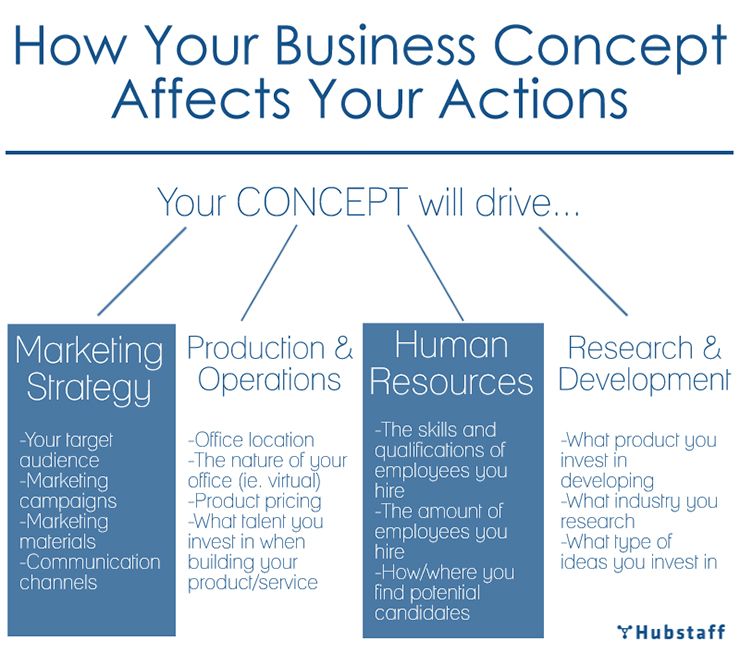
The concept you choose is the single most important decision you will make in your company, so be sure of your startup idea before you buy that one way ticket. Most entrepreneurs don’t get 10 or 20 chances to create a business that takes off. I’ve launched three different concepts over the course of 12 years; one from 2003 to 2009, another from 2009 to 2013 and one from 2013 to the present.
The concept you choose is the single most important decision you will make in your company.
My advice on concept validation is summarized below in a series of considerations to test your startup idea. If your startup idea can pass most of these tests, go ahead and buy that one way ticket. I’ve divided the list into three sections; Model, Market and Concept.
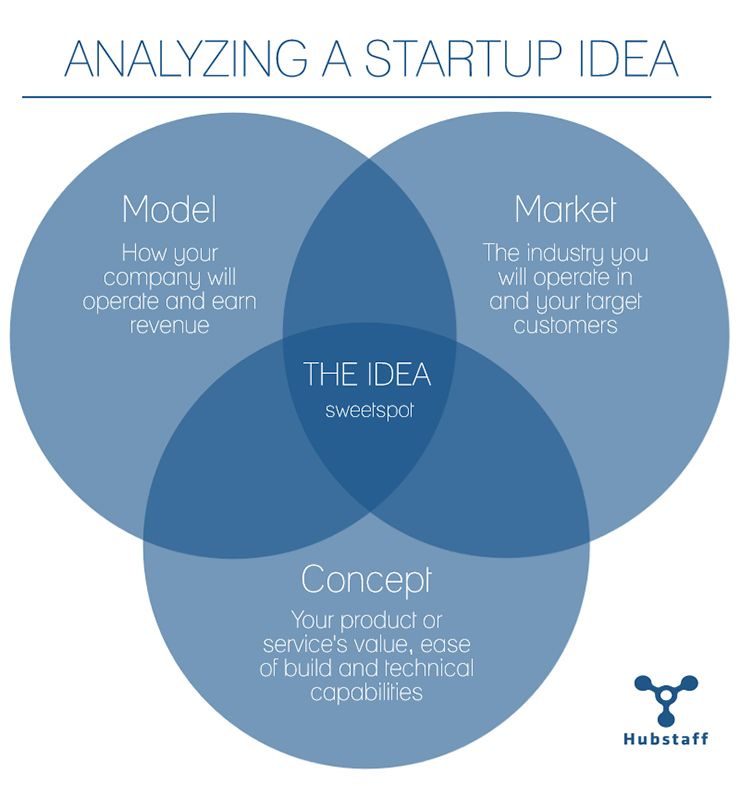
Your business model refers to how your company operates and earns revenue. Take note of how your competition operates and what are acceptable industry practices.
Customer acquisition is expensive. One-time sales are unreliable and offer low rewards for effort. On the other hand, recurring sales add stability to your business. If your company cannot rely on recurring revenue from your main product, think about add-on’s that could bring in steady income. These add-on’s can come in the form of information, memberships or regular tuneups.
Hubstaff Analysis
Pass. Hubstaff was always meant to have a SaaS business model and everyone in the market follows the monthly subscription model.

I had an ecommerce business selling firearms accessories that I built up to $30,000 in revenue in less than 60 days. I shut it down. Even though I was doing well in revenue, I was spending it all on inventory. In addition, I was shipping fragile and expensive parts like scopes, which caused stress. Even though there was massive opportunity in the market, I didn’t pursue it because most web searches were brand-specific and my price points couldn’t compete with large retailers.
Hubstaff Analysis
Pass. We achieved this because of good engineering, but it’s something that we could have easily failed at. The traffic we get, the screenshots, and the complexity of the product could have added high monthly overheads if not engineered correctly.
Look at the average price that your competition is charging. There are markets where the average price per month is easily in the hundreds. Focus there. You could come in and be a low cost provider with a small product and still get a decent price per month. I’d look for at least 60 – 70 a month in monthly recurring revenue (MRR) per client.
Look for at least 60 – 70 a month in monthly recurring revenue (MRR) per client.
Hubstaff Analysis
Fail. Hubstaff is operating in a market where users typically pay $4 to $10 a month. Since our average team size is approximately five people and we charge $5 a user, we earn around $25 per month from our customers. We are working on ways to increase this, but it’s become a problem for revenue and growth. This is an area I should have invested more time and research in while developing our business concept.

Your business model should be able to make at least $1,000 a month from some subset of your clients. You don’t have to make this with all your clients, but you should at least have a model in place that enables it.
Hubstaff Analysis
Pass. For Hubstaff, this opportunity comes from larger customers of 200+ people.

Investors want to see you operating in a billion dollar market. You should have a healthy supply of clients in your industry. It’s better to have 1% of a massive market than 20% of a minuscule market.
It’s better to have 1% of a massive market than 20% of a minuscule market.
Hubstaff Analysis
Pass. We are in a large market. Although there aren’t many searches for “time tracking software for remote teams,” the virtual employee market is large and getting larger. There are plenty of remote teams around the world, and it’s a business model that is gaining popularity.

Any business I start must have the ability to be globally accessed and utilized. I learned this lesson in my first ecommerce business, where I had customers from all over the world (I learned that there are some incredibly friendly Australians). After working with a global market, it’s almost impossible to go back to locally limited businesses. Working with international clients is not only fun, it also opens multiple opportunities for your business.
Working with international clients opens multiple opportunities for your business.
Hubstaff Analysis
Pass. Currently, approximately 50 percent of Hubstaff’s client base is outside of the USA.

You need to know exactly where to find your customers. You need to know where they hang out online. Ideally, you should have a specific demographic to sell to (ie. chiropractors, lawyers, golfers, etc.). This makes advertising simpler and helps make your marketing more effective.
You need to know exactly where to find your customers.
Hubstaff Analysis
Fail. This is one area that Hubstaff struggles with. In the early business conceptualization, I understood that this would be a large challenge, yet still bought my one way ticket into the idea. I should have done more research in the early stages of the business.
While I was operating in a market wherein someone else was the specialist, I had to pay for content creation. That isn’t ideal. You should build up your own audience and be able to create content on demand.
You should build up your own audience and be able to create content on demand.
Hubstaff Analysis
Pass. Hubstaff is based around my expertise (management), and I love it because I can create content all day long. It’s my specialty.
Your business concept is the foundation of what you’ll be doing every single day for the foreseeable future. It determines the audience you will target, the industry you will be in and the type of customers you’ll serve. Testing your startup idea and putting enough time, effort and thought into this concept will help shape your company’s direction immensely down the road.
If we were operating in a Web-only business, we could have finished our product more than 12 months earlier. One of the benefits of having desktop software is the large barrier to entry. It’s hard to get right, so there aren’t many companies who have a quality, functional product. However, there are multiple businesses that can be created without anything more than online work. If I had to reconceptualize Hubstaff, I’d focus on Web only.
Hubstaff Analysis
Fail. We learned the hard way that desktop software is costly to develop, both in regards to time and money. It’s also difficult to find developers, and it takes plenty of technical skill to get it right. In other words, it was extremely difficult to take our product from Web only to a desktop software.

What value does your customer receive from your product? Does it save them money or time? Does it make it easier for them to make money? What is the ROI of your product?
Hubstaff Analysis
Pass. Providing something valuable to our clients was the entire reason we built Hubstaff. Before Hubstaff, it was difficult for me to manage my team without micromanaging. Hubstaff makes it easy to see what each team member is doing and ensure efficient work with minimal monitoring. It’s also billed as a SaaS application instead of taking 8 to 11 percent of payroll fees. This saves some of our customers more than $20,000 annually.
The viral aspect of a concept refers to how well it can grow and spread without the organization having to pay for user acquisition. When a concept has the potential to go viral, it means the idea can spread with little or no effort thanks to the nature of the product or service provided.
Hubstaff Analysis
Pass. Hubstaff has a high viral aspect of growth thanks to the nature of our product and the market we serve. Virtual business owners use Hubstaff to monitor their freelancers, who in turn are introduced to Hubstaff and recommend it to their other clients. As the number of businesses and independent contractors who use Hubstaff grows, so does knowledge of the Hubstaff brand.
How simple is it to get people to use your product? Can you onboard new users with one easy click? Or do new users have to jump through hoops in order to begin using your product or service? Make it easy for your current users to invite new users, and for potential customers to sign up and begin using your product. For example, KISSMetrics and mixpanel requires users to have events set up and developers involved. In comparison, Google Analytics is up and running after installing js code.
Make it easy for your current users to invite new users and begin using your product.
Hubstaff Analysis
Fail. In order to onboard a new user in Hubstaff, you have to invite your team and download the Hubstaff app (Mac, Windows or Linux depending on what your team member is using). There may be pushback from the team, your employees might not understand how to install the Hubstaff client, or other technical issues might arise.
Attribution relates to brand recognition. It refers to how well your brand can be attributed through your service and other channels. For example, Hello Bar is a service that allows different websites to take advantage of the typically underutilized space at the top of a web page. Each Hello Bar, used on multiple websites, are all branded with a link to the Hello Bar homepage.
Hubstaff Analysis
Fail. Hubstaff doesn’t currently have any way to gain brand recognition through attribution channels. Our product operates seamlessly in the background, and is not at the forefront of virtual businesses or online marketing. Therefore, our product and services often go unseen by everyone except our users. Even our users’ clients, who may receive automatically generated Hubstaff time and activity reports as part of their invoices, don’t know that the data comes from Hubstaff.
How much support will you need to provide to gain one paying customer? Ideally, you would only have to provide support to one person for every one paying customer. Keeping the ratio of users who need support to paying customers low will help control the time and effort needed from your support teams.
Ideally, you would only have to provide support to one person for every one paying customer.
Hubstaff Analysis
Fail. Hubstaff must support multiple users in order to earn one paying customer. For example, in our five-user plan, we must support five users for a single paying customer. In our 10-user plans, we have to provide support to 10 users for one paying customer. There’s also the possibility of lowered onboarding levels, because even if just one out of 10 users encounters a problem, it might be enough to dissuade that one paying client from continuing with our product.
Is this a product that your customers are going to incorporate into their daily routine? If your customers rely on your product, it will limit cancellations and reduce turnover. Services such as web hosting, Gmail add-ons, WordPress plugins, Intercom.io and email services are inconstant use by the customer. This type of business concept proves useful on a daily basis, whereas services such as Gotomeeting may not be needed very often (I use it about 3 hours a month).
Hubstaff Analysis
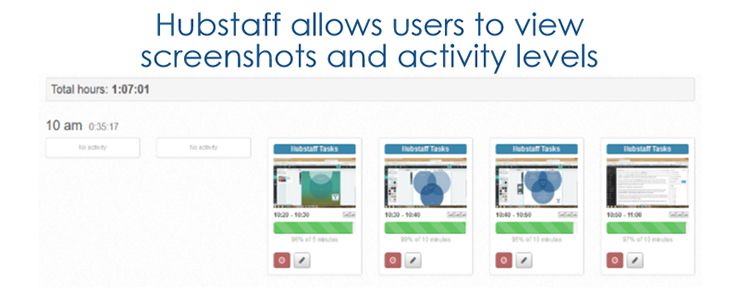
Pass. Our customers manage their entire teams on Hubstaff. They use our software to pay employees and invoice clients based on time worked. Managers are able to see daily reports, screenshots of employees workday and analytics of how productive an employee was.

I’ve seen products get to MVP (minimum viable product) in less than 30 days. Talk to a good developer and understand the timeframe.
Hubstaff Analysis
Fail. The first phase of Hubstaff (MVP) took about seven months to complete due to the overall complexity of the product. We had to worry about complex user settings, permissions, timezones and features that other products just don’t have. In addition to building a complex web application, we also had to develop our desktop applications. We needed to invest large amounts of time and money into building a quality, functional and valuable product before we could even start distributing and billing our clients.
As you can see, Hubstaff scored 9/16. Overall, Hubstaff was an excellent venture, but not without its challenges. If I were to revisit the early stages of my business concept, I would have paid more attention to the areas where Hubstaff failed and researched what we could do to remedy its downfalls.
Analyze your methods, market and concept before you buy that one way ticket.
The list above will help you test your startup idea and can warn you of any potential issues with your concept. Make sure you consider each test to understand the strengths and weaknesses of your startup idea. Analyze your methods, market and concept before you buy that one way ticket.
The post Test Your Startup Idea: A List that Took Me 8 Years to Develop appeared first on OpenView Labs.

$1 trillion in capital left China in 2015.
That's worse than even the most bearish China analysts could have even imagined.
A few numbers put this in perspective:
In other words, the situation has deteriorated very rapidly, and everyone got it very wrong. Last year, China's foreign exchange reserves dwindled for the first time since 1992. (They fell by $513 billion to $3.3 trillion.)
A Bloomberg News survey found that investors think that, this year, reserves will fall another $300 billion. Of course, that was taken before everyone knew how bad the 2015 outflow situation was.
The precarious situation comes at a delicate time for the country. China is undergoing the crucial transition from an economy based on investment, to one based on consumption. It's battling problems like debt and overcapacity and growth is slowing. To deal with all of this, the government needs its reserves.
You can blame a good portion of this on the depreciating value of the yuan, which has spurred holders of the currency to ditch it for something more stable.
Analysts were also way too rosy on how that would shake out, though.
 "The risk is that depreciation triggers capital flight, dealing a blow to the stability of China’s financial system. Our calculation is that a 1% yuan depreciation against the dollar triggers about $40 billion in capital flight," Bloomberg economist Tom Orlik wrote in a note this summer.
The yuan has depreciated around 5% against the US dollar over the last year so, yeah, that $40 billion figure turned out to be a little low. (At Orlik's expected rate, outflows should've been about $200 billion.)
In December alone, the government spent $108 billion to stop the yuan from falling too fast.
In September, star China analyst Charlene Chu — known for her bearish outlook on China's credit and liquidity situation — wrote out a dark scenario on foreign exchange reserve depletion. Her worst case scenario saw outflows from September to December 2016 hitting $180 billion. For the full year of 2016, they would hit $540 billion.
If that played out, she posited, China's liquid reserves would come to equal only 80% of the International Monetary Fund's precautionary requirement.
Right now even her estimates seem conservative.
 That is why the Chinese government has undertaken the gargantuan task of stabilizing the yuan.
Of course, the government has tightened capital controls (though businesses find ways to get around them).
But, more colorfully, it's also started threatening and short squeezing yuan traders into submission. In an editorial on Monday the government said that traders shorting their currency should expect to suffer huge losses.
It even went as far as to warn legendary hedge fund manager George Soros, who famously squeezed the British pound, to stay away. Soros said that China was bound for a hard landing last week at the World Economic Forum in Davos.
This is how you know things are serious.
Another way to tell: After the $1 trillion figure came out, a Chinese official gave a speech about the risks of currency outflows. He was swiftly arrested for corruption — a common feature of President Xi Jinping's China.
That's a too-common solution for extraordinary circumstances.
SEE ALSO: The forcefield around China's economy isn't as strong as you think
Join the conversation about this story »
NOW WATCH: How to know if you're a psychopath

The most powerful word in your arsenal as a marketing professional is “no.”
No is an easy word to forget. When a decision-maker asks you to expand the company’s audience to a new segment, it’s easy to feel compelled to say yes. The same is true in any number of other marketing decisions. Should we try that new social media platform out? Post that meme? Acknowledge that seemingly little request?
Though those “little” requests may seem insignificant, if you accommodated every single one of them, it wouldn’t be long before you found yourself behind the wheel of a marketing machine with no direction and an even smaller chance of success.
It’s time that we as marketing professionals embraced the value of no. As strategy expert David Maister remarked in 2006, strategy means saying no.
Direction is important, and even small choices can quickly point you in the wrong direction. I see it time and time again in conversations with prospects. The quickest way to fail in your marketing efforts is to try to be all things to all people.
The urge to chase every single shiny object off in the distance is real, but do you really need to attempt to branch out to a new audience, or would your time be better spent perfecting your messaging for the folks who matter most? Is that new social media platform a fast track to tangible ROI, or a distraction that will make all your other channels worse?
Some might claim that embracing the power of no means staying set in your ways and failing to adapt to change. I’d argue that it’s exactly the opposite. It’s much easier to say yes to every new suggestion that comes across your desk than it is to be discerning in your decisions—to say no to those choices that won’t drive your business forward. Embracing the value of saying no doesn’t mean being a luddite. It means being strategic and thinking long-term.
When making strategic decisions about your marketing, reviewing spending, or responding to questions from leaders in your organization, don’t be afraid to say no.
In the end, it’s better to be excellent at a few things than it is to be mediocre at a lot of things. That’s a hard reality to contend with at a time when everyone in marketing is pushing towards the new and the next, but it’s one we as marketers must come to accept if we want to succeed given limited resources and sky-high expectations.
Ask for the Sale Five Times – At Least!
By Mike Brooks, Mr. Inside Sales
How many times have you seen a commercial (either a TV ad, a public billboard, ad in a magazine, etc.) for Coke-a-Cola? Perhaps I should say how many times a DAY do you see one?
Now you’d think that people already know about Coke-a-Cola, but did you know that Coke still spends billions of dollars a year on advertisements?
Why do you think that is?
It’s the same reason that infomercials run over and over and over again. After you’ve seen the same infomercial 50 times, you begin to consider it. After another 50 times you think you might actually use it. Another 50 and some of you decide that you’ve got to have it – I mean, heck, they’ve run this commercial at least a thousand times, there must be some value to this, right?
I remember my first sales manager used to say to us that we weren’t even in the closing arena until we had asked for the sale at least five times (and gotten a “no” five times, by the way). After that, he’d say, you’re finally closing…
How many times do you ask for the sale? Do you ask for it in a round-about, soft way and then give up if your prospect says no? Or do you even ask for it at all?
On the other hand, how much more successful would you be if you asked for the order five times and had a prepared response to each objection and, after answering it, asked for the sale again?
Now I know there is a fine line between being obnoxious and being persistent, but the more you’re able to be persuasive and persistent, the more deals you’re going to close.
It’s like Coke-a-Cola. If they had run one ad and quit, we’d all be drinking Pepsi today…
So, how do you ask for the order over and over again? You have options: you can use trial closes, assumptive closes or flat out closes. Here are some scripts to get you started:
Close One:
“Have I given you enough to say yes yet, or do you need to hear more?” (Soft trial close)
Close Two:
“Do you have any more questions or have you decided to put us to work for you?” (Soft trial close)
Close Three:
“Most people choose the starter pack and that works out great. Would you like that, or do you think the professional package is better for you?” (Alternative close)
Close Four:
“Our system can be set up in a matter of a week – and the sooner you give us the O.K., the sooner it’ll be working for you. Would you like to get started with this today?” (Close)
Close Five:
“….And that’s how my other client got over that hurtle. I’d recommend you do the same; you’ll always be glad you did. Let’s go ahead and get you signed up for this – which credit card would you like to use today?” (Close after overcoming an objection)
Close Six:
“Since your (partner, spouse, etc.) goes with whatever you think is best, they’ll probably go with this as well. In the meantime, let’s go ahead and get the paperwork done and a delivery date set. If they change your mind, you can simply call back in, but in the meantime, you’ll have all this completed. Now how would you like to pay for this?” (Overcoming the partner objection close)
Close Seven:
“Now ________, we can go back and forth on this and I’m sure you can come up with many more reasons not to do this – but let’s face it: you know you need it, and I know you want it! So let’s go ahead and move forward. What’s your preferred payment method today?” (Flat out close)
Close Eight:
“It sounds like you understand this now, so let’s get you started. What address do you want this delivered to?” (Assumptive close)
Close Nine:
“Did I answer that for you? Do you have any more questions? No? O.K., great – then welcome aboard! I know you’re going to enjoy this as much as my other clients do. How would you like to pay for this today?” (Close)
Close Ten:
“As my dad used to say, “There’s nothing to it but to do it!” So let’s do this today. Where did you want us to send this to today?”
If you’ve done your job and properly qualified your prospect, then chances are they actually want to buy from you. So make it easy on them by asking for the sales at least five times. Remember, the magic happens around the seventh close.
If you found this article helpful, then you'll love Mike's Completely Updated and Revised eBook, “The Complete Book of Phone Scripts.” Now over 130 pages of powerful and effective scripts to help you easily get past the gatekeeper, set appointments, overcome objections and close more money!
Visit: http://mrinsidesales.com/completescripts.htm and find out why Jeffrey Gitomer, Brian Tracy, Tom Hopkins and many others recommend Mike’s ebook of Phone Scripts!
Do you have an underperforming inside sales team? Talk to Mike to see how he can help you and your team reach your revenue goals. To learn more about Mike, visit his website: http://www.MrInsideSales.com

There is one thing for certain when it comes to the Internet of Things (IoT) for this coming year: the numbers of online products and consumer goods will be increasing. It seems they could be increasing exponentially from here on out. According to Gartner Inc.’s forecasts, 5.5 million new “things” will get connected every day in 2016, with a total of 6.4 billion connected things in use worldwide during 2016. This is a 30 per cent increase from 2015. Gartner’s prediction also says that the number of connected devices and products will reach 20.8 billion by 2020.
Internet of Things Categories
The Internet of Things crosses through different categories, not just tech devices and computers. There are a number of areas, including consumer devices, merchandising, and IoT services that will all see growth because of the expansion of IoT technologies and reach. We will see an increase in all areas related to IoT, but one of the areas to focus on is IoT services, which can be the real driver of value in IoT. Consider the following two tables from Gartner with statistics on the Internet of Things categories.
Table 1: Internet of Things Units Installed Base by Category (Millions of Units)
| Category | 2014 | 2015 | 2016 | 2020 |
| Consumer | 2,277 | 3,023 | 4,024 | 13,509 |
| Business: Cross-Industry | 632 | 815 | 1,092 | 4,408 |
| Business: Vertical-Specific | 898 | 1,065 | 1,276 | 2,880 |
| Grand Total | 3,807 | 4,902 | 6,392 | 20,797 |
Source: Gartner (November 2015)
Table 2: Internet of Things Endpoint Spending by Category (Billions of Dollars)
| Category | 2014 | 2015 | 2016 | 2020 |
| Consumer | 257 | 416 | 546 | 1,534 |
| Business: Cross-Industry | 115 | 155 | 201 | 566 |
| Business: Vertical-Specific | 567 | 612 | 667 | 911 |
| Grand Total | 939 | 1,183 | 1,414 | 3,010 |
Source: Gartner (November 2015)
The Internet of Things Ecosystem
Business Insider explains how The Internet of Things will have such an impact on products and the way we do business that it is the next Industrial Revolution. “It will change the way all businesses, governments, and consumers interact with the physical world.” The components of the IoT ecosystem include devices, analytics, networks, and security. Business Insider has composed a report on the Internet of Things with an analysis and predictions for growth. According to this analysis, IoT numbers will be much larger than those initially forecasted by Gartner. Here are five key points from the report:
Internet of Things Trends to Watch
As the Internet of Things expands and grows, as always, there are trends to watch. Consumers might be slower to adopt IoT devices than businesses, but as more consumer products hit the market and innovate the way we live, IoT consumer goods will become more and more prevalent. At present, wearables make up a big part of the IoT consumer goods market. The area of fitness is a big consumer goods area that will continue to see growth and adoption. Smart home technology is one of the areas that will also see the most growth in the IoT market. MediaPost details that 70% of consumers who bought their first smart home product are more likely to buy another one. Smart home technology products include security options, temperature controls, lighting, and safety. In addition to wearables and smart home technology, other IoT consumer products to look for in 2016 include:
List Source: MediaPost
5 Ways the Internet of Things Will Change the Way We Work
In many ways, the future is here and now. IoT has finally brought science fiction from the screen into reality with technology that we will see implemented in 2016. Many of the new things that consumers will purchase moving forward from cars to appliances will be “smart” or connected in some way. For businesses, IoT can mean big savings, new techniques and tactics, and better offerings for employees.MAR Services outlines the following 5 ways that IoT will change the work place in 2016:

For apps everywhere, getting installs is the first step towards app domination. While installs aren’t everything (in truth, they’re just the starting point), they’re essential for boosting your user base and beginning your incredible journey to app success.
App ads comes in all kinds of shapes, sizes, and styles, but today, we’re focusing on user acquisition ads with the sole goal of upping installs.
What makes an exceptional app ad, and what elements are essential for driving installs?
Let’s take a look at seven examples of real app ads found in the wild, see what they’re doing right, and find out what key techniques we can lift from them.
This app install ad from Zipcar shows up in the Facebook app’s news feed, blending seamlessly with the natural, organic posts that surround it.

Zipcar does a great job of using an eye-catching illustration to draw the eye, along with concise, to-the-point copy with a pointed CTA button, “Use App.”
Zipcar uses the top ad copy to highlight the benefits of Zipcar – affordable wheels when you need them – and uses the bottom ad copy to zone in on the desired conversion task while still managing to highlight Zipcar’s value – “Download the app. Get driving.”
What’s Working Well:
This app ad from Hotels.com is found amid a packed Twitter feed. As with the other social media app ads, Twitter’s sponsored tweets use native designs, allowing the advertisements to feel natural and blend with the organic Twitter posts.

This ad for Hotels.com’s app features a large, bright banner image that shows a cozy hotel room, conjuring dreams of vacations and getaways.
The copy does a solid job at articulating value without going crazy on copy. Secret prices and “paying less” sound like enough to win over most deal-hunting hotel hounds.
This is another app ad that makes use of social proof, showing the app’s great star rating and the number of users who have already downloaded the app. This integration is fantastic if your app is well-rated in the app store, but can be a detriment if your stars aren’t as stellar. Make sure you’re doing everything in your power to boost your app store rating.
We’re also again treated to a nice “Install” CTA that makes it clear we’re downloading an app, not visiting an outside website.
What’s Working Well:
This BillGuard app ad is a great example of smart audience targeting.
BillGuard is an app that allows users to track and manage their finances. They’re seeking out users who are smart spenders and care about tracking their money. To earn those users, BillGuard placed ads in a complementary app, Slickdeals, which is a deal-discovery app.
This is a great way for BillGuard to tap into the Slickdeals user base because they are exactly the types of people BillGuard wants to attract.

One unique aspect of this in-app ad is that the budgeting app doesn’t even bother to display its name.
It’s a risky move, but maybe it’s a smart one – for smaller, no-name brands, knowing your app’s name might not make much of a difference to users. Instead, the minimal ad copy space is used to show app value via a user testimonial and make the ad feel like a natural part of the user interface.
This user testimonial is cleverly worded, detailing the app’s value, “It saved me $700 and now keeps me updated on all purchases,” while also highlighting a powerful review from a real user to encourage app installs.
What’s Working Well:
This app ad for Abs Workout is a pop-up that appears as the user is exiting a fitness app.

The Abs Workout app is a great fit for fitness-focused users already using the 7 Minute Workout app, and the high star rating coupled with the “50,000 Downloads” copy acts as strong social proof.
Instead of the “Install” CTA, we see a “Get From Google Play” call-to-action, which works just as well – maybe even better due to the added specificity. Of course, this CTA would need to be changed depending on the user’s device, substituting a “Get From the App Store” message for iOS users.
What’s Working Well:
This app ad for Pokemon Shuffle comes from an Instagram feed. This app install ad clearly has some smart targeting at work, since I hold a big soft spot in my nostalgia-heavy heart for Pokemon.
While I haven’t interacted with the Pokemon brand on Instagram, I have liked Pokemon on Facebook, and with Instagram’s access to Facebook targeting, that’s probably how they found out that I am an aspiring Pokemon master.

As we note in our post about Instagram app ads, these app install ads are great because they blend well with Instagram’s natural feed full of user-uploaded photos.
The screenshots within the ad show what the game looks like, so users get a taste of what to expect.
Thanks to Instagram’s nice collection of app-oriented CTA buttons, this Pokemon game uses the “Install Now” button to drive Pokemon masters to the mobile game.
What’s Working Well:
Another great banner app ad comes from Audible, which appears at the top of the screen within the Podkicker podcasting app.

Audible focuses on the 30-day free trial as a call-to-action, and rather than an “Install Now” CTA, uses an arrow button that suggests users will be taken to another spot where they can begin downloading bestselling audiobooks.
The real genius in this Audible app ad has to do with relevance. Showing an ad for the Audible audiobook app within Podkicker, a podcast management app, makes for a clever connection. This strong association and relevance means that Audible is reaching their perfect, audiophile audience, and will likely get much higher conversions from Podkicker than any other regular, unrelated app they might advertise with.
Clever audience targeting like this saves money and bumps up installs considerably.
What’s Working Well:
Found within the Zedge wallpaper and ringtones app, this app install ad for the TurboTax app appears as a banner at the bottom of the screen.

TurboTax makes sure to include their logo, helping to provide instant brand recognition. The bright orange button with the great “Get Free App” CTA to the right of the text is difficult to ignore and begs to be clicked.
One interesting element of this ad is how the ad message changes – it flips between one banner that focuses on the value gained from using the app (“Do taxes on your phone for $0”) and another message that reiterates how users can use their smartphone to complete their taxes. The second banner even includes a small image hinting at how users will be implementing the app to gather info from their W-2s.
What’s Working Well:
To recap what we’ve seen today, let’s consider what makes an exceptional app ad that drives installs. Some of the lessons we’ve learned from our in-the-wild app install ads include:

Design is a way of life, a point of view. It involves the whole complex of visual communications: talent, creative ability, manual skill, and technical knowledge. Aesthetics and economics, technology and psychology are intrinsically related to the process.
—Paul Rand
When thinking about lead generation, it’s impossible to ignore the science of psychology. From copy to colors to placement to incentive, your audience’s preferences and ingrained human tendencies impact the way they engage with your marketing tactics.
Psychology is a fascinating topic for any marketer—but particularly those of us tasked with driving conversions. Here are 5 key psychological principles you can tap to ensure that your user experience is designed for lead generation success.
Dr. Susan Weinschenk, psychologist and cognitive scientist, says in The Psychologist’s View of UX Design, “I am beginning to think that the whole idea of attention is a key to designing an engaging UI.” When it comes to designing a user experience where lead gen is involved, I can confirm that attention is usually one of the biggest challenges for marketers.
Traditional lead gen tactics like pop-up forms, takeover ads, and landing pages work well in terms of capturing a user’s attention—but they’re often interruptive and annoying. Instead of fitting seamlessly into the user’s original activity, lead gen tactics are designed to pull the user away from their task—whether it’s reading, watching a video, or clicking through to another piece of content.

Source: SumoMe
On the other hand, lead generation tactics that are less obtrusive often perform poorly. If the design or placement of a subscriber form, for example, is too subtle, users will never even notice it. Even if your visual design is attention-grabbing, weak copy or a confusing form can also negatively impact conversions.
So what can you do to ensure users see—and also engage with—your lead gen tactics? Here are a few quick tips:
An alternative to using forceful or flashy lead generation tactics is to rely on novelty to get your users’ attention.
In Brian Massey’s webinar Writing Killer Conversion Copy, he talks about two “bastards” in the brain that filter out content perceived to be “typical”: Broca’s Area and Wernicke’s Area. Both areas are highly engaged when someone is consuming content.

Source: Stroke Center
Broca’s Area is the part of the brain that’s responsible for taking words, casting a visual representations of them, and then triggering action inside the motor cortex. It serves as the first line of defense for the motor cortex, preventing unnecessary actions from being triggered when we see or hear something. So if something is ordinary or predictable, Broca will usually just ignore it.
The second is Wernicke’s Area, which takes a noun and attaches it to memories we have associated with that noun. This is the source of all of the info we need to associate words with past memories. Then it gets passed back to the motor cortex to trigger action.
In order to prevent your calls-to-action from being “bounced” by Broca, you need to present something atypical, something it doesn’t have cataloged in its list of usual suspects. By using unexpected, unbelievable, or even incorrect elements in your lead generation flow, you can surprise this area of the brain enough to pass information through to Wernicke, which will then trigger actions from your users.
Ideally, the lead generation process should be as simple and streamlined as possible for the user to increase the likelihood of conversion. However, in many cases, your business needs a decent amount of information from the user in order to evaluate whether they’re a good fit for your products or services.
When considering your data capture user experience, feedback is a crucial element. If you don’t provide enough feedback, or provide feedback in a confusing way, the user will quickly become frustrated. And frustrated people are much more likely to say “screw it” to your form than calm people.
A few types of feedback you can provide during the data capture process include:
Missing data feedback: Point out exactly which fields a user has skipped.

Source: Unbounce
Invalid information feedback: Identify which fields have invalid information and tell the user how to correct their mistakes.
Formatting feedback: If your form fields require information input in a specific format, provide an example showing the right way to do it or instructions on the form itself.
Confirmation feedback: Once a user has successfully submitted their information, tell them! Nothing is worse than submitting a form and not knowing if your entry actually went through.
Lead gen optimization specialists have found time and time again that removing unnecessary elements from the conversion flow increases engagement. For example, in this case study from Conversion Fanatics, they were able to increase the conversion rate on a signup form by 37% by removing a secondary call to action on this form page.

What’s the psychology behind this? Well, humans aren’t very good at multitasking. If your pages are cluttered, it makes it harder for the user to glean the key information and stay engaged with your messaging.
That said, even with some serious de-cluttering, you can still end up with a lot of information or form fields. In these cases there are two things you can do to provide a better user experience:
I’ve seen this approach used in many eCommerce checkout flows, but the same principles can be applied to B2B lead gen flows as well.
The majority of B2B lead gen marketers already know that, if you want to get information from your users, you have to give them something in return. In psychology, this is called reciprocity, and it explains why content offers and giveaways are so effective. Asking someone for their information without offering them anything in return isn’t very compelling. Giving someone something for free and then asking for their information inclines them to pay back the favor—like giving your email in exchange for a t-shirt.

Source: InVision
When thinking about your lead gen user experience, you should find ways to build in valuable freebies for your users so that, when they do reach a point of conversion, they’re primed to participate.
When considering how to tweak your existing lead generation user experience, psychology is your friend. The more you understand about how your users think, the better able you’ll be to design conversion flows that resonate.
Before you go: What psychological principles do you use in your marketing program? Let me know in the comments.

Daniel Heimlich posted the following photo on his LinkedIn page. Not sure who the conference speaker was, but the five statistics represented on this slide — from well-respected organizations like Forrester Research, IDC and Harvard Business Review — are a good representation of how B2B prospects are behaving on their “buying journey.” I’ve seen many of the statistics (or close approximations) individually, but not in one spot like this. And since my team and I make our living by connecting B2B buyers with B2B sellers, we are vitally interested in how the buying journey is shifting over time.

Let’s make this discussion actionable by taking each of the buyer journey stats and discussing what we can do to take advantage of specific trends:
By the way, I am by no means a blind follower of statistics. As Mark Twain said, there are three kinds of lies: lies, damned lies and statistics. But these particular stats are backed up by our experience and data working with many B2B companies. By understanding the B2B buyer and preparing for the new buying journey, you will be much more effective in finding and closing business.

Reps reach out to folks in their pipeline every day as they try to create connections with potentially great fit buyers. And this means salespeople are often hunting for the best way to start a conversation with a potential buyer.
But with so much emphasis on starting the conversation, salespeople can sometimes forget the other side of the equation. How the heck do you end a conversation with a buyer? A bad ending to a conversation can leave a sour taste in a prospect’s mouth, and derail the sales process.
Below are four key common mistakes salespeople make at the end of a call.
By not informing the prospect about what’s next, reps are put in the awkward position of sitting back and hoping the prospect decides to follow up on their own. Unfortunately, this often results in the prospect doing nothing.
Instead, at the end of every call, offer a clear list of next step options for the prospect to choose from. Whether it’s setting up another call or organizing a product demonstration, providing options for the prospect to choose from will keep the conversation moving forward.
If sales reps don’t go over the key points discussed at the end of the call, the prospect will likely struggle to determine if this is the right solution for them because they’ve forgotten critical details.
A call with a prospect can last for an hour or more. Much like a teacher has a review day before a test, sales reps should set time aside at the end of every call to review key points to ensure the prospect fully understands what the rep presented and the rep understands what the prospect shared.
Not taking time for questions at the end of the call doesn’t allow the prospect to seek the information that matters most to them as they try to determine if this is the right solution for their business. Prospects are likely looking to clarify key facts the rep just shared with them. Without time for questions, prospects are unable to clarify and might leave the call unsure of how the product can benefit them.
At the end of every call, reps should leave 10 to 15 minutes for questions from the prospect. Not only will this provide the prospect a chance to clarify and fully understand how this product can help them, it gives the rep a chance to discover more about what matters to this prospect and the pain points they’re struggling with.
Salespeople should never hang up a call without getting some sort of buy-in into the next stage of the process. Without clear buy-in from the prospect, both the rep and prospect might be unsure of which step to take next.
By getting an agreement that the prospect wants to take a next step -- whether it’s another call, a product demonstration, or something else -- the rep can move the conversation forward because they know the prospect actively wants to learn more.
It’s great to have a tremendous start to every call you make with a prospect. But, as so many of us know, it’s not how you start -- it’s how you finish. By taking the extra time to end a call with a prospect properly, reps can keep the prospect’s interest piqued and put themselves in a position to eventually close the deal.

These 12 Dimensions of Trust represent the 12 ways a seller can build or erode trust with buyers. Each associated action creates a connection or causes a disconnection. Knowing about all 12 Dimensions of Trust empowers a seller who wants strong connections founded in trust. Not knowing leads to buyer mistrust and seller confusion. Consistency […]
The post If You’re Not Doing This, Your Buyers Won’t Trust You appeared first on People First.

As I began building my first sales team from scratch at Felix in 2011 there was one thing that I wanted to make absolutely sure: I gave my reps every possible tool they needed to be successful.
I had a product that I knew very well how to sell. I also had a repeatable script that worked, clear product market fit, knew where to prospect the best leads and how to prioritize, and I’d been able to clearly train up other reps to do the same.
I slowly began to hire groups of 7, 10 and later 15 sales reps at a time and built up a large SMB floor. I made sure that I did all the hard work for my new reps, so they could step onto the floor and immediately be successful.
When new reps came in, I ran them through a rigorous training process that gave them all the product market and competitive information they would need to know. They had a script they were to learn cold and use for at least their first ~50 sales (after which they could stray slightly if they were so inclined). I supplied them with A+ leads, ranked them appropriately in their CRM and forbid from prospecting outside of their assigned leads to not waste time or duplicate territories.
Throughout their tenures, we had weekly and at times daily training where their managers or I would walk through group sales lessons/strategies, or listen to calls (“game film” as I called it) to dissect what was going well and what needed improvement in order to address those issues.
The result: we built a very successful sales floor. We had a machine that could take a rep from 0 experience and have them selling ~30 sales / month within 60 days. We had a sales team of 70 where the average rep on the floor was hitting around 2 sales a day, blowing away our competition.
But there was a problem that was becoming clear as we grew; the onus for innovation and improvement lay solely on my shoulders. In working so hard to make everything turn-key for my reps, I essentially killed the team’s entrepreneurship. If I didn’t tell them to do it, they didn’t need to know.
In fact, the system I had built indirectly “punished” reps for not staying inside the lines of the process we built, which I thought was for their own good. Thus, unless I explicitly gave a new direction, it didn’t happen. I foolishly trained and treated my managers similarly.
 By the time I had a team of 70 people behind me I was no longer able touch everything and be the single force driving change. I could not understand why people were not willing to take charge, try new things and help drive things forward.
Eventually, I realized the problem and worked to foster a spirit of entrepreneurship on the team, but at this point it was not easy. I had hired smart, creative people but I wasn’t getting the most out of them. I needed to relax many of my rules, which first led to some chaos, but later proved to be the right move. Upon digging in I found that my team was indeed unsatisfied with the old processes and ways. It was a job, and they could do it well, but it left them creatively uninspired.
Don’t:
Do:
When I began building my next team, at Foursquare, I knew this lesson well. This time I consciously left some holes in the material. Even though I thought I knew better, I often left it up to the reps to learn the hard way. Rather than give them all of the answers, I worked to guide them to figure things out for themselves, course correcting when necessary.
Our training meetings were more of a socratic seminar, focused on asking the right questions, rather than lecturing. My team at Foursquare became better sellers, we were able to navigate in and out of many complex challenges and product changes and my reps were better suited to take major steps in their career–my ultimate goal.
I guess the moral of the story is one that I’ve known and lived by for some time: moderation in all things. Too much of anything, even a good thing like sales training, can often turn out badly. I’m cognizant of this now as I build my teams for the future based on this principle.
The post Sales Training Shouldn’t Be Dogmatic, Is Yours? appeared first on Sales Hacker.
The Hierarchy of Metrics written by John Jantsch read more at Duct Tape Marketing

I spent this past weekend with a group of Duct Tape Marketing Consultants determined to gain a better understanding of how to use metrics to guide our own business and increase the value we bring to client engagements.
Perhaps the greatest discovery for me was that while there are many things we can and should measure, there’s a hierarchy to how we approach what gets measured and like any hierarchical structure if you don’t set up the base, you can’t hope to reach the pinnacle. (More on that in a bit.)
Business owners shy away from the topic of measurement, likely because it’s hard. But, if one of the primary objectives of owning a business it to grow and improve then this is your truth – you can’t improve what you can’t measure.
Now, others have said some variation of that statement, but with a culture of measurement, I believe your business is destined to float around aimlessly. You may indeed get to your destination, but at what cost?
Of course, the flip side is that you can overwhelm your brain with every possible measurable detail and then you might just end up worse off in the end. I mean you do have clients that need some attention too.
Perhaps the toughest chore is determining what indeed needs to be measured. There’s no shortage of candidates. You have money metrics, content metrics, social metrics, conversion metrics, growth metrics, and even a few competitive metrics that all must be considered to understand a complete picture.
But, in the end, there may only be two things that matter.
I don’t think most would argue that if you had a very firm handle on both of those numbers and could then focus all of your attention on dialing them in, this whole business thing would be pretty simple.
As I’m sure you’ve concluded, however, the progression to get to either of those numbers is where the work lies.
The first task is to accept that you can’t simply measure what’s easy, you have to measure what matters, and that’s a process as surely as a skill.
First and foremost you must develop or, at least, acknowledge that you have several priority objectives that require tremendous focus and therefore measurement.
Typically, business objectives fall into a list that looks something like this:
Of course, while every entry on the list above is noble and worthy, experience tells me that you can focus on no more than two or three objectives at any given time if you are to make significant progress. Each objective above could likely spin off dozens of projects and experiments and spread what resources you have to devote thin.
Once you determine your key objectives, it’s time to establish target goals for each and figure out how you will gather the data you need to gauge whether or not you are on track.
If a key objective is to increase retention by 12% for example, you’ll need to know what retention is today of course, but you’ll also need to understand what activity, person or data point you’ll need to keep track of the variable.
Don’t overthink this one, you may just need to make sure there’s someone who’s accountable for looking into the CRM system to extract that number each month.
While many businesses are still held together by spreadsheets and meetings, increasingly dashboards and collaborative spreadsheets are making their way into everyday reality.
Tools like Google Sheets, Dasheroo, and Cyfe make viewing the data you want to track much easier once they are set up. Business owners and consultants alike now have tools that can help keep key success metrics in front of the people who need make decisions based on what’s happening day to day.
Of course, a great deal of what passes as measurement is simply a snapshot view of what happened. While this can be useful to report to an executive team or board, the real value comes by way of analysis.
With the right metrics in place, you might start to see why something happened, what trends the data suggests, and what you might do to make improvement. This, ultimately, is the true value of measurement.
Finally, if metrics and reporting are an afterthought at the top, it will be very difficult to suggest that anyone in the organization by led by numbers.
What if instead of thinking of metrics as something that told the story of days gone by you began to use them to begin with the end in mind.
What if everyone’s job was to increase the lifetime value of a customer? How would that change the way people went to work?
If a consultant walked into your business and said the ultimate goal of their work was to help you increase the lifetime value of a customer – would that get your attention?
Of course, before you run you’ve got to do a little walking – and perhaps even crawling.
The hierarchy of metrics suggests that you have to start measuring the little things first – you have to set your business and technology up so you can get a glimpse of the basic activity of the business – how your content is performing, how your social and email audience is growing, where your website traffic comes from and how leads are generated.
Something as simple as proper Google Analytics setup and reporting can give you a great deal of this information. The native social media platform and email service provider analytics can round out a great deal of the activity measurement. Tools such as Google Analytics dashboards, Megalytic and SproutSocial help with visualizing these reports.
While these numbers don’t tell a rich enough story to help you understand why someone buys and why they don’t, they are the foundation you must put in place to start to get to the next level.
With an analytics foundation in place, you can aspire to gain even more insight into the performance of your marketing initiatives.
In the performance phase, you’ll start to crave metrics like percentage of leads closed, individual campaign conversion and perhaps even the cost attributed to generating a new client.
This is the bridge stage and may take some time to master as campaign conversion, goal setting, testing and tracking is an art and science on its own.
However, tools like ClickMagick, kissmetrics, mixpanel and ClickMeter are designed to help you track and test conversion funnels. Even using goal setting and funnel visualization options in Google Analytics can give you greater insight into campaign performance.
Once you understand, track and focus on lead generation and conversion channels you are on the path to understanding how every activity contributes to the overall health of the business.
In the ROI phase, you can turn your attention to sales and marketing integration, CRM performance, Brand awareness, business development and yes – the lifetime value of a customer.
Yes, I know there is a great deal that can be done and a great deal that must be done to use data to drive your business decisions, but like every great journey, it begins with a step beyond where you are today.
So begin wherever you are with the end in mind, and the hierarchy of measurement be your guide.

Does the name ‘John Wanamaker’ ring a bell?
Probably not, but around the turn of the last century, he was a brilliant marketer and founder of a department store chain. He pioneered merchandising, was the first to add price tags to items, and introduced the money-back guarantee on purchases.
But perhaps more than anything, old Johnny W. is best known for his humorous take on his investments in marketing. You know the quote: Half the money I spend on advertising is wasted; the trouble is I don’t know which half.
Fast-forward to today, and the truth is that many social marketers likely ponder similar issues. Over 150 years later, marketers and communicators are still wrestling with what we today call ‘attribution’.
On one hand, it feels great to measure success based on the number of fans, followers and subscribers a brand has. After all, views, likes, shares, and tweets are clear indications that your audience appreciates what you have to share. There’s definite value in creating brand awareness and affinity.
But on the other hand, this isn’t 2010 anymore. CMOs are under increasing pressure to show demonstrable ROI (or attribution). Every marketer must now correlate social marketing with the bottom line. Are those Facebook likes translating into web form completes? Are Twitter campaigns reducing acquisition costs of search engine marketing? What happens after somebody shares your blog posts on LinkedIn?
Just ask any sales exec and they’ll be quick to tell you what they want from social. Quality leads.
Generating leads from social marketing is the new measure of effectiveness, but the majority of organizations fall short. While 83% of marketers use content to generate leads, a mere 21% are able to correlate ROI against the goal.
So what’s a marketer to do? Let’s check out five social tactics that can help you delight your sales team and measure the value of your investments.
The key to being a great conversationalist is to be a great listener, right? Social marketing is no different.
Of course you want to deliver great content, but social listening is a short path to lead generation. Not only does it enable you to discover what topics are generating interest and what customers are saying about your brand, it equips you to hone in on key ‘buy words’ that indicate an active interest in finding solutions pertinent to your products and services. You’ll need to adjust your listening filters based on your specific situation, but imagine the value of detecting associated terms like ROI, RFP, considering, opinions, evaluation, buying, review, etc.
Next, leverage the insights you’ve gained through social listening to join the conversation. Make that research actionable. Monitor where conversations are happening, and align content to topics generating the most interest.
For the best results, apply social insights to drive broader marketing decisions. One quick win opportunity is to target specific customers with 1-to-1 social advertising on Facebook, Twitter, LinkedIn or Instagram. Be sure each call to action enables you to track the prospect to the next phase—this is not the time for fleeting marketing messages.
Associating social identities to CRM records enables you to continue the conversation on other channels like email. The best approaches use every customer interaction—regardless of channel or stage in the customer lifecycle—as an opportunity to connect the dots. Imagine a day where your marketing can be “channel-agnostic” and technology helps to determine the best way to reach a prospect at a particular time. That day starts now with identity consolidation.
Customers are accustomed to providing an email address or phone number as a unique identifier. Are you requesting social handles as a standard part of every interaction you have with them? How about your peers in support? Or better yet, even earlier—do your online purchase forms include fields for social identifiers? Your product registration process? Webinar registration forms? Surveys?
Be sure to identify all critical touch points throughout your customers’ journeys. It will likely reveal new opportunities to connect social identities to data already stored in your CRM platform.
It’s not uncommon for social leads to meet some initial resistance from the sales team. Because the strategy is unfamiliar, there’s a tendency to perceive the source as less valuable than more traditional types of leads.
That’s a dangerous assumption. Consider that only 27% of all leads—regardless of how they were generated—ever receive any type of follow-up from sales (and most of those don’t receive any within the first 48 hours). Talk about a negative impact on ROI!
Marketing will have a hard time changing that culture: It has to come from sales leadership. As it relates to social leads, let sales leadership know what they can expect from your team in terms of volume and quality, and gain agreement on SLAs for follow-up.
It’s also a good idea to provide some coaching on how to best follow-up on social leads. They should be handled differently than other qualified leads. The chances are that you’ve carefully curated the interest over time, and a heavy-handed response from sales can quickly unravel what had been a ‘soft sell’ up to that point.
Last but certainly not least, carefully track the results of your social efforts. Avoid the temptation to solely use marketing metrics. Instead, speak salespeople’s language—analyze and share results based on sales-centric measures like number and value of leads, opportunities and closes.
For added validity, be sure you’re able to answer the proverbial ‘as compared to what?’ question in reports. With social lead generation being new, it’s easy to classify it as a new sales tool with no peers (and thus no comparison). But the budgets, resources and marketing efforts could be spent doing something else.
And of course, be honest with your reporting, even if you don’t see immediate efficacy. Driving leads through social can take time, but few doubt that building 1-to-1 social relationships will continue to become ever-more critical.
If social isn’t a critical component of your lead generation strategy, now is the time to start. For more insights, watch this recording of ‘How Salesforce Uses Social for Community Management’. You’ll hear first-hand how our team of social experts listen, publish and engage with their online communities.

Telemarketers are THE most hated people on telephones. If you look at feedback, nobody wants to entertain telemarketers’ inquiries or have anything to do with telemarketers at all. It gets even worse as articles on telemarketing are those on how to avoid them. You cannot blame people for hating telemarketing.
However, there are a few good men out there. The blame really goes to marketing agencies that want to get results no matter what. But telemarketing, when used correctly, can become one of your most results-driving marketing tactics.
Here are reasons why you can turn it into your best lead contributor.
This might be hard to digest, but with the right direction, telemarketing can become as strategic as your favored social media plans. Like anything in marketing, telemarketing uses data to be effective. Once data is dismissed, then it becomes a dangerous tool. Data fuels all marketing tactics and through customer data, telemarketing becomes a relevant activity that prospects welcome. When telemarketers work blindly, they come up with calls without respect and clear objectives. Always remember that data makes the difference in telemarketing.
Conduct your market research, analyze your data before you start a call.
Telemarketing is active as opposed to other tactics that are reactive. When you feel that you need to contact customers and prospects fast, then use telemarketing to do that. This way, you find out what you want to find out compared to waiting for people to come to you for the information that you want. When things need urgency such as important, life-threatening information, don’t wait, pick up the phone and call.
By underscoring urgency in setting appointments, you could get more sales and improve your revenue.
When you need prospects to recall your brand, telemarketing can help you start that process. In addition, even if you don’t get to talk to your specific target, you can always leave a message on their voicemail.
Telemarketer should take all the chances and start leaving effective voicemail messages that will keep prospects interested. That way, your calls aren’t wasted.
We all need that window to an opportunity. Telemarketing can be that opening. The problem with most marketers is that they cram every objective into a tactic. Consumers cannot take that practice anymore where you seem to want everything from them without giving them something in return. The best telemarketing strategies out there are the simplest ones; those one liner scripts that save the prospects’ time when talking to you; and that single objective every time you call. Telemarketing is one step at a time and that is how prospects can appreciate calls from telemarketers, so plan your calls carefully.
Telemarketing is here to stay. It is not going to go away. Telemarketing is not dead, it is STILL an unstoppable force in marketing.
This post originally appeared at Callbox Blog.

At HubSpot, like at many organizations, we’ve built our own sales talent. We hire new graduates into business development representative roles (BDR) which we often then promote to account executives (AE), usually after 18-24 months in the role. Even when we hire AEs from outside of the organization, they usually only have just two to three years of work experience -- sometimes not even in sales.
I wish I knew about these types of jobs when I graduated college. New appointment setting salespeople have to earn their stripes (often making around $50k/year in most metros in the US) , but after just a few short years, good salespeople can earn hundreds of thousands of dollars annually. Given that the median household income in the US in 2013 was $51,939, sales is clearly a path to above-average incomes early in one’s career.
But most sales jobs aren’t easy. Unfortunately, many new salespeople don’t last very long. In the 2015 edition of their annual survey, The Bridge Group found that average annual rep turnover rate (excluding promotions) at 234 software-as-a-service companies is 34%, with involuntary turnover making up almost two-thirds of that number.
In order to succeed, a salesperson must have the raw strengths and be willing to overcome their sales weaknesses. But most importantly, they must embrace learning and continuous improvement. The first years in particular require an intense commitment to learning and improving, not to mention a whole lot of hard work and hustle.
So, how do you know if you have what it takes? When I interview salespeople, one of the things I often ask is “What’s the last thing you learned and how did you learn it?” Ideally, the candidate learns in multiple ways including: seeking out a mentor, acting on advice from a manager, reading a book, reading blogs regularly, taking a course, trial and error, practice and repetition, etc. I find that people who learn in multiple ways are much more likely to thrive in a fast-paced and complicated sales environment.
So I’m always amazed when I speak with salespeople who haven’t ever read a sales book. Doctors read journals all through their lives. Accountants, teachers, policemen, and machinists -- they all read and study in order to stay on top of their profession. If a salesperson hasn’t read one, it’s not a show-stopper, but it’s certainly a huge plus when a sales job candidate can share their takeaways from their favorite sales book and how they applied these lessons in their last sales position.
The issue with sales books is that there are a million of them. Some aren’t suitable for new salespeople as they cover more advanced topics, or don’t really relate to someone new in sales.
Here are the three books I recommend to new salespeople along with an explanation of why. I recommend them in this order.
Personally, I think this is a fitting name for the book. In Warren Greshes’ The Best Damn Sales Book Ever: 16 Rock-Solid Rules for Achieving Sales Success!, he lays out everything a new salesperson needs to hear in order to adopt the right mindset about selling. Greshes discusses developing the right attitude, the importance of being committed to success in sales, being confident in your ability to deliver value, and how to motivate yourself. The first half of the book acts like a step-by-step workshop helping new salespeople create plans that will help them achieve the success they desire. It’s easy to understand, but even easier to implement immediately.
In the latter part of the book, Greshes talks about how to approach and influence prospects by selling more than just your product or service, and truly focusing on the value it delivers. He talks about the importance of really knowing what a customer wants and what makes them tick, as well as why it’s critical to become an expert so that customers see you as a resource, and ultimately, an advisor.
In Greshes’s own words, “This book is about what successful salespeople do to be successful.”
I highly recommend you pick up the audiobook version. Greshes reads the book himself, at the pace of a prototypical New Yorker and with the skill of someone who has spent the last 30 years giving speeches that have addressed hundreds of thousands of people around the world. Not only is his reading fun, captivating, and enjoyable, but it's also convincing because of the passion that only a 40+ year sales practitioner can pull off (which gets transferred to the listener). With that level of success, clearly, he’s qualified to help new salespeople.
Buy on Amazon here.

The most critical activity for any new salesperson’s success is prospecting. I’ve found that when building a funnel and learning the ropes, the most important daily activity is calling new prospects. Whether your marketing team provides you with enough sales qualified inbound leads or not, a new salesperson must spend a good portion of their day identifying and connecting with prospects. While it can be monotonous, as it involves a lot of repetitive and simple tasks such as dialing the phone (I do recommend you use a CRM dialer these days, by the way), salespeople must learn to love this activity if they want to be successful. And part of loving something involves getting good at it.
Unfortunately, I find that a lot of rookie salespeople figure it out as they go -- or worse, they develop bad habits from their peers or (ineffective) managers. At this point in a salesperson’s career, they should be learning from experts. Mike Weinberg -- the top producer at three firms before writing this book and a trusted sales advisor to many successful sales organizations -- is an expert.
In New Sales. Simplified. The Essential Handbook for Prospecting and New Business Development, Weinberg provides a clear framework for any salesperson interested in taking full control of -- and responsibility for -- the quality and quantity of qualified opportunities that enter the top of their funnel.
Don’t get me wrong -- Weinberg is a straight shooter and he doesn’t let company leadership off the hook so quickly. He bluntly talks about the ways in which companies fail their salespeople by distracting them, not rewarding new business appropriately, and failing to arm their sales teams with a compelling story. (So don’t be afraid to drop off a copy of this book on your sales leader’s desk.) However, successful salespeople never blame their company for their own failure. And Weinberg arms them with what they need to know and do so they never find themselves searching for a scapegoat.
Practically speaking, New Sales. Simplified. teaches salespeople how to identify good fit prospects, how to do the right research on them, and how to effectively connect. Once connected, the book teaches readers how to tell effective sales stories that highlight problems and pains as well as opportunities, and how to formulate related “Power Statements.” In short, Weinberg helps new salespeople learn how to communicate value to prospects in a way that will make them say, "I want that."
Buy on Amazon here.

I may have a soft spot for Dave Kurlan’s Baseline Selling for a few reasons: it was the first sales book I ever read; the sales assessment Dave Kurlan created helped me identify the sales weaknesses I needed to overcome; and Kurlan Associates’ training program taught me the skills I needed to be successful in sales. We all have non-family members that have measurably helped us achieve whatever success we’ve achieved. Dave is in my top five of this category.
However, I’m not the only one who thinks very highly of Dave’s book. Hundreds of sales training organizations around the world recommend not just Dave’s books, but leverage his sales skills assessment. His sales training organization -- which teaches Baseline Selling -- is consistently ranked in the top 20, and his decades-old blog is one of the top sales blogs on the interweb.
But, for the purpose of this article, let’s focus on why Baseline Selling is great for new salespeople -- like I was when I read it (for the first time).
In short, Baseline Selling teaches salespeople how to spend their time with the prospects who are most likely to buy. It teaches the importance of having a sales process, achieving mutual qualification, and getting buy-in from prospects at every step of the process. Spending time with tire-kickers and being unaware of why and when a prospect will buy are two issues that plague new salespeople. Dave’s book helps rookie reps avoid these issues.
How does it do this? Baseline Selling, unlike most other sales books, spells out how to run a full sales process from suspect to prospect to qualified to close. Dave uses a base path analogy from the game of baseball: first base (suspect), second base (prospect), third base (qualified), and home plate (close). If you love baseball, you’ll love Dave’s metaphors. In Baseline Selling, the on-deck circle is a way to prepare for selling, the infield why rule helps reps get to the root cause of problems, the suicide squeeze helps in addressing resistance, and speed on bases equates to a measure of salesperson credibility and trust.
But even if you’re not a baseball fan, Baseline Selling outlines a very simple system that new salespeople can apply immediately, thanks to detailed tactical examples written in a conversational dialog format. Mark Gibson has written a great review of Baseline Selling and Evan Carmichael conducted an excellent interview of Kurlan, which is embedded below in case you’re interested in learning more.
Baseline Selling also provides great reinforcement for the concepts in The Best Damn Sales Book and New Sales Simplified. As I was reading Greshes’ book, I felt like I was listening to Kurlan’s brother from another mother. Each author keenly understands what weaknesses and bad habits prevent sales success. (And Dave, because of his assessment company, actually has the data to back it all up.) Like Weinberg’s "Power Statement," Kurlan’s positioning statements help salespeople position value and avoid feature and benefit dumps that lead to early rejection.
Together, these books make an excellent trio for a new salesperson. All three teach the importance of goal setting and reinforce the activities required to be successful.
If I could offer one piece of advice to new salespeople, it would be this: Don’t solely rely on your company to provide you with the training you need. Seek out training external to your company. Start with these three books, but also consider hiring an expert to help you. These books, the training I got from Kurlan, and the coaching I received from Rick Roberge set me up to be a successful individual contributor, manager, and sales leader.
Have you read any of these books? How have they helped you? Are there other books you recommend for new salespeople? Please share in the comments.


Author: Sean Zinsmeister
It used to be that prospect management meant dolling out “Glengarry Leads” to add to your Rolodex, keeping a spreadsheet of top prospects, or most recently populating an empty CRM database with leads that seem to “look good.” But as the predictive sales and marketing landscape has flourished (with new vendors emerging and $242 million in venture capital funding last year alone), old school definitions of prospect management are quickly losing their relevancy. Today, you can pinpoint the best net new prospects with unprecedented precision–a better way to feed hungry salespeople and avoid forfeiting deals you don’t know about to your competition.
Customer data is exploding, and it’s now spread across several different systems inside and outside a company. While this is essentially a good sign that your lead generation is working, unfortunately, when data systems don’t talk to each other or track prospect activity in the same way it can feel nearly impossible to interpret each customer breadcrumb for valuable insight. This is one reason why some companies still rely on “spray and pray” marketing techniques. Another is that the data in front of them is limited to very basic information (and can be stuck in closed systems), making effective personalization a daunting challenge.
In addition, many businesses still struggle with conflicting vocabulary across various parts of the organization that each have their own system of record. The sales team probably speaks the CRM language of “opportunities” and “closed/won” deals, while the marketing team lives and breathes “demand waterfall” terminology like MQLs (marketing qualified leads) and SQLs (sales qualified leads). This disparity plays a role in the common disconnect between sales and marketing over what defines a good lead, and breeds confusion and friction by requiring employees to translate their work for each other.
But solutions are emerging to help solve all of this and change the way we manage prospects—predictive solutions. So what does it mean for marketers? Here are three primary ways that smart marketers can reinvent their approach:
This step entails looking across all the attributes of your current and future customers, and finding ways to slice and dice your full prospect universe into easy to describe, easy to target profiles. As account-based marketing gains steam, it’s important to note that this universe encompasses more than your current CRM (customer relationship management) or marketing automation platform (MAP) customer database; it includes external signals and net new accounts you should be targeting.
Rather than honing in on 3-4 rigid “personas” for individual buyers or attempting to target huge groups based on geography or company size, advanced segmentation leverages all of your available customer data to get more granular. This approach lets you create a portfolio of key customer profiles. As described by AgilOne’s Omer Artun in his book, Predictive Marketing: “Marketers need to recognize that different groups of customers have different value and different behaviors and take different actions based on these distinct customer segments.”
There are many ways to understand your portfolio of prospects beyond their common demographic and firmographic characteristics. Now you can look at more dynamic “technographic” traits, like what applications and platforms their company is currently using, or you can pull in predictive scores that track how good of a fit they are for your product and where they are in their buying journey. Furthermore, you can measure lead effort, such as how many touches a contact has received from your sales team.
With all of this fluid insight, you can define more narrow, yet more flexible and descriptive prospect profiles–i.e. low effort, high fit scores in APAC or SMB accounts with contacts with external behaviors–and provide a common vocabulary that spans all of your go-to-market groups and their programs. This makes it easier to navigate your marketable universe and allows for more meaningful, personalized interactions with prospects. This is key because it’s not enough to just decide who your top prospects are. To be successful, especially with predictive-driven marketing, you need effective techniques to segment and target these groups.
The next step is to figure out which tactics or campaigns will do the best job of accelerating prospects along on their path to purchase. For some profiles, this means engaging sales development reps and monitoring their service level agreements. Maybe you kick off an automated workflow in a sales development automation app for email communications. For other groups, it’s about getting the contacts to engage with your marketing programs by determining the content that’s most likely to draw them in. Perhaps you try a custom content marketing or mobile marketing program targeted at the accounts you care most about.
Marketing is all about doing sales at scale, so regardless of which prospect group you’re focusing on, it’s always important to provide the sales team with air cover. But to do this right with limited resources, you’ve got to nail your focus and ensure that you’re aligning effort with impact vs. trying to boil the ocean. Predictive models can help guide you by recommending the right kind of engagement–whether that’s a sales or marketing task–with the right message at the right time. Predictive scoring uses both the valuable internal data from your CRM and MAP systems plus thousands of external signals from a variety of data sources outside your company. It also uses machine learning to look at all kinds of combinations in the data that humans could never grok on their own–taking the guesswork out of the equation.
After implementing predictive sales and marketing strategies, you might start to feel like you’re exhausting your existing market. The logical next step is to rinse and repeat, but you don’t need to start from scratch. Artificial intelligence (AI) can help you determine where to go next and give you more insight into your lead database.
Predictive applications can go out and find more people that are a fit for your business based on the criteria you identified back in step one. Just as consumer services like Pandora, Waze and Amazon deliver increasingly personalized recommendations over time, B2B marketers can leverage the same virtuous cycle. New models can hone in on the most important feedback mechanisms and time triggers for your marketing programs and help to make them more and more impactful.
For example, you can use data science to automatically calculate pipeline metrics and determine the predictive value (i.e. projected revenue, conversion rates, and sales effort) of new market segments, as opposed to focusing on a raw metric like lead volume. And by obtaining a deeper understanding of net new prospects across a variety of signals, such as which technologies a company is leveraging in its stack, you can also use “hyper-segmentation” to deepen your level of personalization and construct more meaningful communications.
The companies that have an edge on their competition in the arms race for data are those that find ways to augment and optimize their sales and marketing stack around these new predictive methodologies. Prospect management can become so effective that it takes on a role as the brains of sales and marketing. It’s no longer a mundane task that’s seen as a barrier to entry for CRM or marketing automation systems. Rather, it’s a wholly new approach that automatically interprets data, makes that information easy to act on, and removes much of the unnecessary manual intervention required in marketing operations today.
How do you think a predictive solution would impact your marketing? Will you be implementing any this year? I’d love to hear in the comments section below.

How to Evolve Your Prospect Management in a Predictive World was posted at Marketo Marketing Blog - Best Practices and Thought Leadership. | http://blog.marketo.com
The post How to Evolve Your Prospect Management in a Predictive World appeared first on Marketo Marketing Blog - Best Practices and Thought Leadership.
Most companies have realized that a blog can be a powerful inbound lead generator. But it has the potential to be so much more.
Many of us are so focused on acquisition and growth, that we aren't taking advantage of our blogs throughout the entire sales process.
Here are the different ways your blog can help you sell, from prospecting all the way to making upsells.
One of the underlying benefits of blogging is the opportunity to learn what interests your audience and how you can add value for them.
Make a list of five topics that touch on different pain points your brand solves. Come up with two different headlines for each pain point, leaving you with ten article ideas.
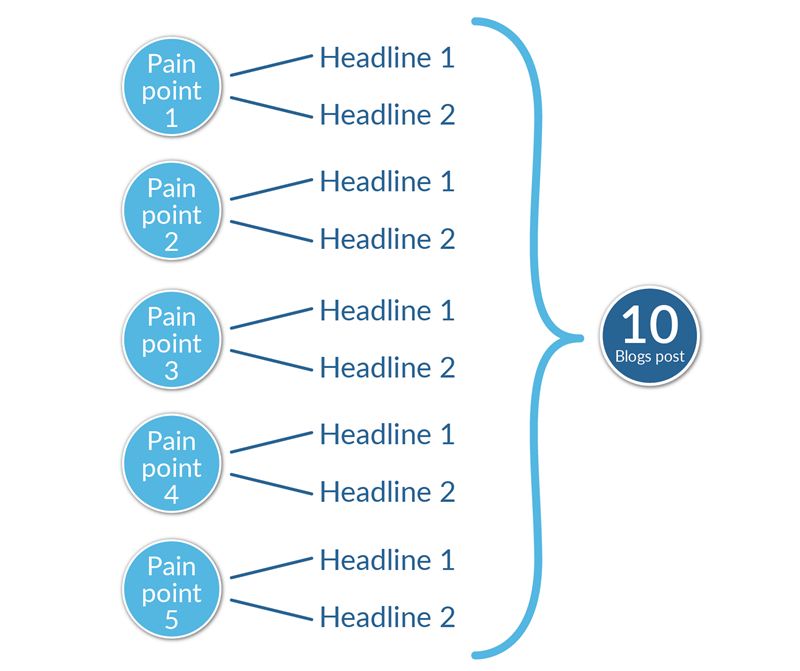
Get creative and have some fun with your ideation. What topics have been top of mind, what do you want to write about?
For example, we share useful information related to sales, conversions, relationships, sales pipeline management, and startups. We’re not shy in giving away our secrets. We want our audience to be successful in driving sales. If they aren’t, they have no need for us.
Test a few different formatting options such as lists, essays, videos, or images to learn what performs best. Worry less about making them perfect and more about making them actionable and valuable. Focus on getting them published and delivered to the right audiences.
After publishing 5–10 posts, measure specific KPIs that will help determine which topics work best. KPIs include:
To measure pageviews, time spent, and bounce rate, set up Google Analytics for your blog. Once set up, go to: Behavior → Site Content → All Pages.
For social shares, go to: Acquisition → All Traffic → Sources/Medium.
For email addresses and trial signups, set up conversion goals in Google Analytics. This step is slightly more complicated. Check out this helpful video from KISSmetrics.
Your blog analytics will tell you where your audience finds and consumes information. Use the GA instructions above to a look at what social channels drive the most traffic to your blog and website. Let this lead your social strategy—where you put more time and resources.
If Facebook is driving far more traffic than Twitter, double down on Facebook. If that’s the case, consider promoting your most popular piece of content to a relevant audience with a paid boost.
Use Google Analytics to learn about any forums, websites, or newsletters that have linked to your site or content. These are opportunities to build relationships with relevant outlets; they’re sources for qualified leads. Go to: Acquisition → All Traffic → Referrals to identify websites, blogs and forums driving traffic.
For email newsletters, go to: Acquisition → All Traffic → Campaigns. If you don’t recognize the name of the campaign or newsletter, try a quick Google search.
You’ve successfully been interesting enough to capture the attention of a potential lead, congratulations! Now the fun starts.
Since you have their attention, use pop-ups and scroll boxes to collect their email address in exchange for future content. Here are some examples of brands effectively communicating value added in return for an email:
Invision:

In Invision’s scroll box, they lead with their one million subscribers to validate the value of their content. The box also looks different from most blogs, which you’ll notice below.
Help Scout:
Help Scout also validates the quality of their content with a number while relying on simple, non-intrusive design.
GrooveHQ:

Yet again, Groove leads with how many subscribers they have, along with the exact topic you’ll receive posts about. If you’re on Groove’s startup journey blog, it’s likely because you want to know about how they are growing their business. They hook their visitors by promising helpful tips for growth.
We've tested both static bars and pop-ups and found that popups are much more effective at capturing emails. SumoMe's Welcome Mat collected exponentially more emails than the sidebar option. However, as a team, we decided against the use of popups because it ultimately made the experience for our website visitors worse.
To uphold a quality experience for your visitors, only deliver the type of information you promised them. Don’t try to make a hard sell if you promised tips and tactics or else you’ll be marked as spam real quick. Focus on building a relationship first, selling later.
If you don’t have content like a newsletter, ebook or academy to share, use this opportunity to learn about your captive audience. Present them with a survey asking about their interests: what type of tools they use, what topics interest them, etc. Then use this intel to drive your future content strategy.
Now that you have a captive audience consistently returning to your blog, keep their attention and build their trust.
By giving away all our sales secrets, we’re letting our audience know that we care about their success and that we practice what we preach. It demonstrates that our team is genuine and authentic; that there’s real people behind our brand who are here to help them.
We’re also big on encouraging one-on-one email communication. We found that email allows for more relevant and real interactions than public blog comments. That’s why Steli always shares his email address when he speak at events and in many of our videos. We enjoy getting questions and comments from readers and viewers. We genuinely want to know how we can help.
The insights gathered in these email exchanges almost always lead to a new content idea that our entire audience can learn from. That one customer or visitor who emailed in probably isn’t the only one with that story, question, or piece of feedback. Here’s an example of an email we’ve received recently:
Hiten/Steli,
Customer of Close.io, listener of your podcast here. Not sure if it was a direct tip you guys gave or an amalgamation of several, but I sent out an email to a customer just after they signed up and just got right to the point. Something to the effect of:
“Hi <name>,
Thanks for signing up. I took a look at your reports (they’re great BTW) but I think we can make them even better. <=== I showed that I actually know who they are and what they do
Are you free tomorrow at 2pm for a quick 15 chat?” <=== Suggest a day & time, don’t be open ended”
They responded immediately, we had our call, and 7 days later, just signed an annual contract of $60k / year.
I’m going to give Steli 51% of the credit and Hiten 49% on account of being a Close.io customer :)
But seriously, thanks guys, you empower the rest of us.
This success story has nothing to do with our product, but rather, the content that we’ve shared, which is exactly why we do what we do. We’re not just pushing our product or service with this approach, we’re solving a pain point for our visitors.
Use your blog to educate your audience on use cases and benefits your product offers. If you’re writing about a pain point your audience experiences, include a customer’s story in your post. Show your offering in action so they can see how they can apply it to solve their problem. Kind of like how I did above. ;)
Mention, for example, asked Customer.io (a Mention customer) to contribute to their academy on improving your media monitoring skills. Although the post provided actionable tips beyond “use Mention,” the author highlighted how they use Mention to better communicate with their audience with this screengrab:
Another option is to be more direct and use your blog to state the value you’re offering with a call to sign up. Check out how Buffer is currently putting this to work on their blog:

Once your leads become customers, they’ll expect to learn more about how your offering can help them from your content.
Use frequently asked questions, visitor emails, and blog comments to drive this content. Leverage use cases. Is one of your customers using your offering in a totally unique way? Write a blog post about it!
One of our case studies, for example, features Foursquare. They had to make 16 mouse clicks to log a single call when they were using Salesforce. In Close.io, it took them only 2 clicks—14 clicks might not sound like much, but if you’re dealing with 20, 30 or 100 reps who make 100 to 150 dials a day, that’s a huge productivity gain. What’s more, because of the nature of their business, thy don’t just use Close.io for sales, but also for account management by tapping into the power and extensibility of our API.
Another great example of how a customer is using our offering in a totally unique way is Patrick McKenzie’s (@patio11) detailed breakdown of how he used our inside sales software for his self-funded software business. (Check out his post Systematizing sales with software and processes.)
Create case studies and blog posts around particular industries, fields, and roles, then deliver this content to relevant customers.
Let’s say you have a customer who works in fashion and found a new way to use your product to make their jobs easier with your premium features. Share this story with your other customers in the fashion industry. Clearly explain how they can apply the same methodologies and make it easy for them to buy the added features. The result is a helpful solution they can put to work and a more engaged customer.
The best part about your blog is that it’s yours! Write about the topics your audience wants to learn more about, but do it in your own style. Your blog is your chance to show off your brand’s personality and to get your leads to like you for who you are. Make sure to let us know how it goes!

NEW YORK, N.Y. – Soon, losing your ATM card won’t be the financial life-stopping event it used to be. Just don’t also lose your phone.
JPMorgan Chase customers will soon be able to withdraw cash or initiate other transactions using their cellphone at Chase ATMs being upgraded later this year.
The move will include new cash machines that don’t require a card and upgrades to existing machines that will allow customers to withdraw more money and in different denominations, said Chase spokesman Michael Fusco. The withdrawal limit will also be substantially higher, up to $3,000 during branch hours.
The first generation of these new ATMs will allow customers to access the machine by inputting a code found on their Chase mobile app, Fusco said. Future upgrades of machines will allow customers to use their cellphone’s near-field wireless communication feature to access their accounts, using the technology that enables shopping checkout features such as Apple Pay and Samsung Pay.
Customers will still be able to use their ATM cards if they want to, Fusco said. The cellphone technology will just be an option.
The bank’s plans were first reported by the New York Post on Monday.
Chase and other banks have been rolling out new and upgraded ATMs in a continuing effort to replace the fleets of bank tellers at each branch once needed to handle routine customer transactions. Fusco said Chase now does more transactions each month via ATMs than with tellers.
Tellers will still be in branches, however, to help with specialized customer transactions, Fusco said. Chase is also moving tellers from behind the counter to the branch floor to help customers navigate the new machines.
Other features being rolled out with the new machines eventually, the company said, will allow customers to cash checks, and pay Chase credit card bills and mortgages at the ATM. Those features will arrive within the next two years.
___
Ken Sweet covers banks and consumer financial issues for the AP. He can be followed on Twitter at @kensweet. Read more of his stories at http://bigstory.ap.org/journalist/ken-sweet.
The post Chase planning rollout of card-free ATMs appeared first on Canadian Business - Your Source For Business News.
When Frankie Best asked three groups of Nunavut students if lung cancer or other smoking diseases had killed someone close to them, the stunning response was the same each time.
Nearly all the Inuit young people put up their hands to indicate they had been touched by cigarette-related death, recalls the tobacco-control specialist.
A new, international study makes clear why.
It found the Inuit of Canada and other countries – once relatively cancer-free – suffer from the steepest rate of lung cancer anywhere in the world, a striking illustration of how southern lifestyles can upend far-northern peoples.
The phenomenon is blamed on off-the-scale smoking rates, officially pegged by Statistics Canada at about 63% of adult Inuit, even worse according to local research.
Nunavut-led surveys indicate that more like eight in 10 of the territory’s mostly Inuit population smokes – a remarkable five times the rate in the general Canadian population, says Best.
And about 90% of Inuit women puff during pregnancy, she says.
“Smoking provides huge challenges to our health system, and it has huge societal impacts,” says Natan Obed, president of Inuit Tapiriit Kanatami, the national Inuit organization. “It’s something that people think about every day, whether they are smokers or non-smokers.”
In response, territorial governments are pumping millions into an array of anti-smoking programs , some of them stressing that smoking is not a traditional part of Inuit culture – a message underscored in Nunavut by the tagline “Tobacco has no place here.”
There are early signs of success, such as the many people who now avoid lighting up inside their often-cramped homes.

“People do go outside and smoke, even in minus-50 and minus-60-degree weather, and that’s an enormous success,” said Best, who works for the Nunavut health department.
Yet the new study has a sobering caution: even if smoking and other risk factors are dramatically reduced today, the lag time in the appearance of tumours means it will be “decades” before the disease rates drop.
The article just published in the International Journal of Circumpolar Health tracked rates of various cancers among different ethnic populations around the Arctic.
Co-authored by Kue Young, dean of the University of Alberta’s public health department, it found cancers that once were rarely seen in the far north, including breast and colorectal, are an increasing concern generally.
Most notable is the rising rate of lung cancer among the 165,000 Inuit of Canada, the United States and Denmark, the researchers concluded.
People do go outside and smoke, even in minus-50 and minus-60-degree weather.
“Cancers such as lung and breast can be viewed as an indicator of the rapid social, economic and environmental changes that Arctic populations, especially indigenous peoples, are experiencing” say the researchers from Canada, U.S., Finland and Denmark.
Though some First Nations people in southern North America have used tobacco ceremonially for centuries – and even introduced it to Europeans – it was not a part of Inuit life until the 1700s.
That’s when whalers, fur traders and other Europeans began arriving in the communities, and tobacco was slowly introduced to Canada’s northernmost indigenous group.
Smoking rates in the general population peaked in the 1960s, before newfound knowledge of the health risks precipitated a steady drop – to about 15% today. But why did the Inuit not butt out at a similar rate?
It may be partly because smoking has become an integral part of social life in a harsh land, said Obed: “It helps them through the day.” Meanwhile, the Inuit’s other modern challenges – from poverty to food scarcity and mental-health problems – have tended to monopolize attention, he said.
“Our lives have been hard and a lot of people don’t see it as their primary concern,” said the Inuit leader. “That isn’t necessarily an excuse, it is just a reality.”
Anti-tobacco campaigns are made more difficult by the great distances between remote, fly-in communities, but there are indications – beyond just people smoking outside – that attitudes are changing, said Best.
When she and colleagues ask who the “cool kids” in school are, teenagers inevitably point to the minority who do not smoke.
“We hear from young women … that they don’t want their children to smoke, and they wish their Mom had told them not to smoke when they were growing up,” said Best.
“People recognize that they don’t run so fast in soccer, play so hard in hockey if they smoke. They understand it does affect their health.”

 Tweet This