Shared posts

03 Feb 17:19

The Inbound Sales Matrix: What It Is and What It Can Do for You

by stousley@hubspot.com (Scott Tousley)

How do you know how much effort you should put into pursuing a specific prospect? How can you prioritize one contact over another? Those scenarios aren’t always easy to navigate.

Prospecting is a spectrum. There are going to be sales opportunities worth pursuing to different degrees for different reasons. But, how can you tell what those degrees and reasons actually are?

The sales matrix is a tool you can use to make sense of different opportunities. Let’s take some time to establish what a sales matrix is and how you can use one to improve your prospecting efforts.

Sales matrices are designed to show you how receptive a prospect might be to what your business has to offer. It allows you to consider a prospect’s potential fit and general interest when deciding how to allocate its resources on outreach or prospecting.

One of the key metrics to an inbound prospecting matrix is fit. It covers the more technical side of the process. It’s where you consider factors like company size, annual revenue, industry, and purchasing authority.

The other side of the inbound prospecting matrix is interest. Companies can check all the conventional, practical boxes for your product, but if they aren’t actually sold on you, you won’t win their business. If you find a business is a great fit but lacks interest in what you offer, you should do your best to nurture that lead.

Sales Matrix Example

Why Make a Sales Matrix?

A sales matrix — specifically an inbound prospecting matrix — is a great way to help you prioritize your leads and coordinate your outreach more efficiently. It helps you understand which prospects will be most receptive to more involved sales efforts, which ones are going to be best to nurture, and which ones won’t be worth your time.

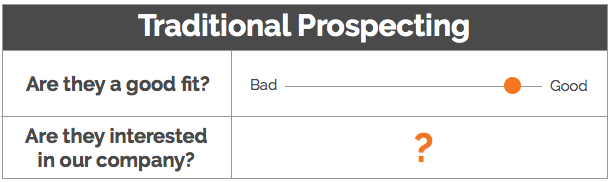
But how do you determine both factors in a matrix? Figuring out fit is more straightforward. You should have an idea of what kinds of businesses are best suited for your product. That’s where traditional prospecting tends to end.

Outdated prospecting model

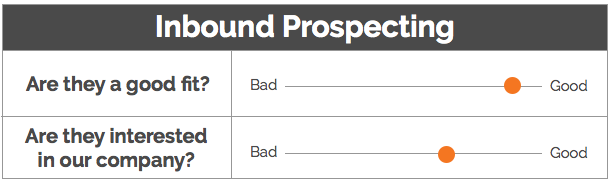
The concept of inbound prospecting considers whether a company is actually interested in your business. It gives a more holistic view of the viability of turning a prospect into a customer.

Modern prospecting model from sales matrix

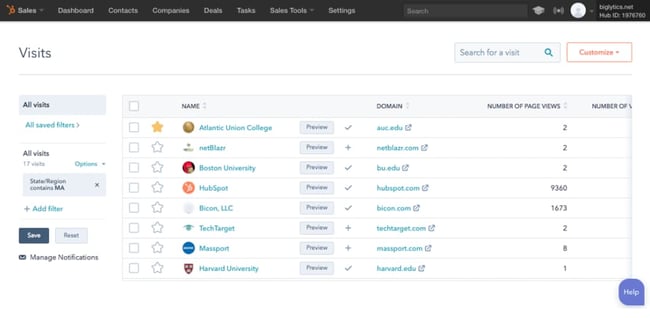
But how do you gauge interest? What can a company do to show it’s inclined to do business with you? Website visits can be a valuable reference point. Having resources that allow you to keep track of those visits can be crucial to any inbound prospecting efforts.

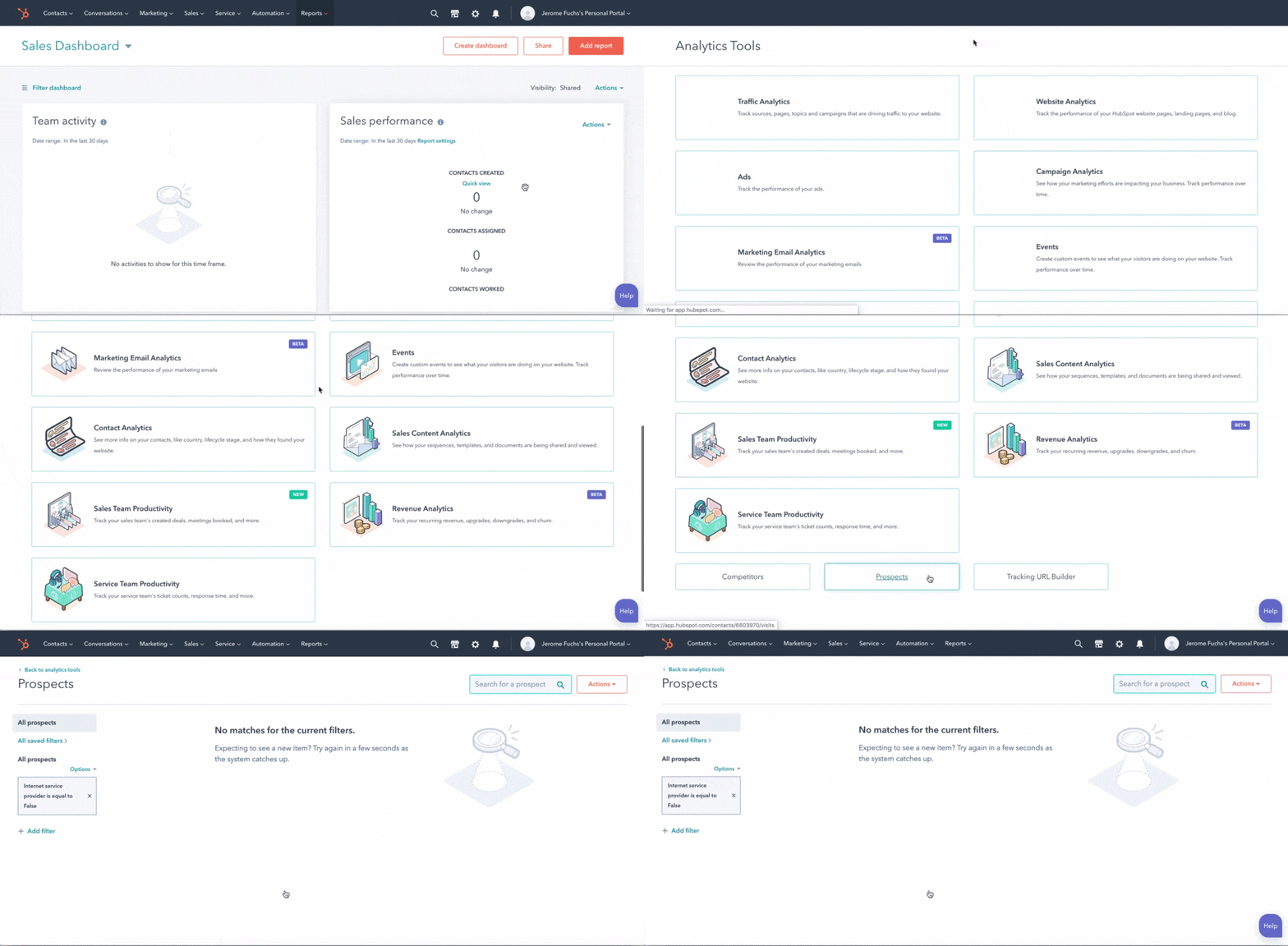
HubSpot’s prospecting tools within Sales Hub can help you do that. They allow you to view what companies have been visiting your website. It looks like this:

HubSpot's prospecting tools to support sales matrix

Someone who’s viewed 24 pages on your website is more open to hearing from you than someone who's never heard of your business. That's why it's crucial to consider interest alongside fit when prospecting.

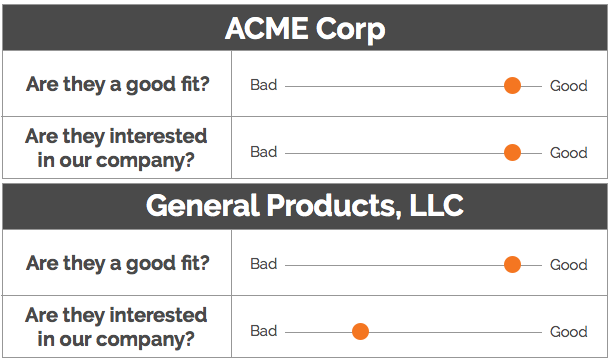
For example, take these two prospective companies (let’s call them ACME Corp vs. General Products, LLC). Which would you prioritize?

Sales matrix comparison

The answer is obvious: ACME Corp.

However, unless you had inbound prospecting tools, it would be impossible to know whether or not either company is interested in your business before you contact them. And without understanding someone's interest in your company, you'll waste time barking up the wrong tree time and again.

Inbound prospecting flips this problem on its head, with the easy-to-understand Inbound Prospecting Matrix:

Sales matrix for prioritizing prospects

If a prospect is a good fit and interested in your company, they should be your first priority.

Other prospects should either be nurtured or removed from your pipeline, dependent on their location on the matrix. Here's how to get started with the Inbound Prospecting Matrix.

Step 1: Find companies that are visiting your website.

To find companies that are interested in your company, you can for the free HubSpot CRM and navigate to its Prospects setting. This will show companies that have recently visited your website:

HubSpot prospecting demo for sales matrix

SM PROSPECT

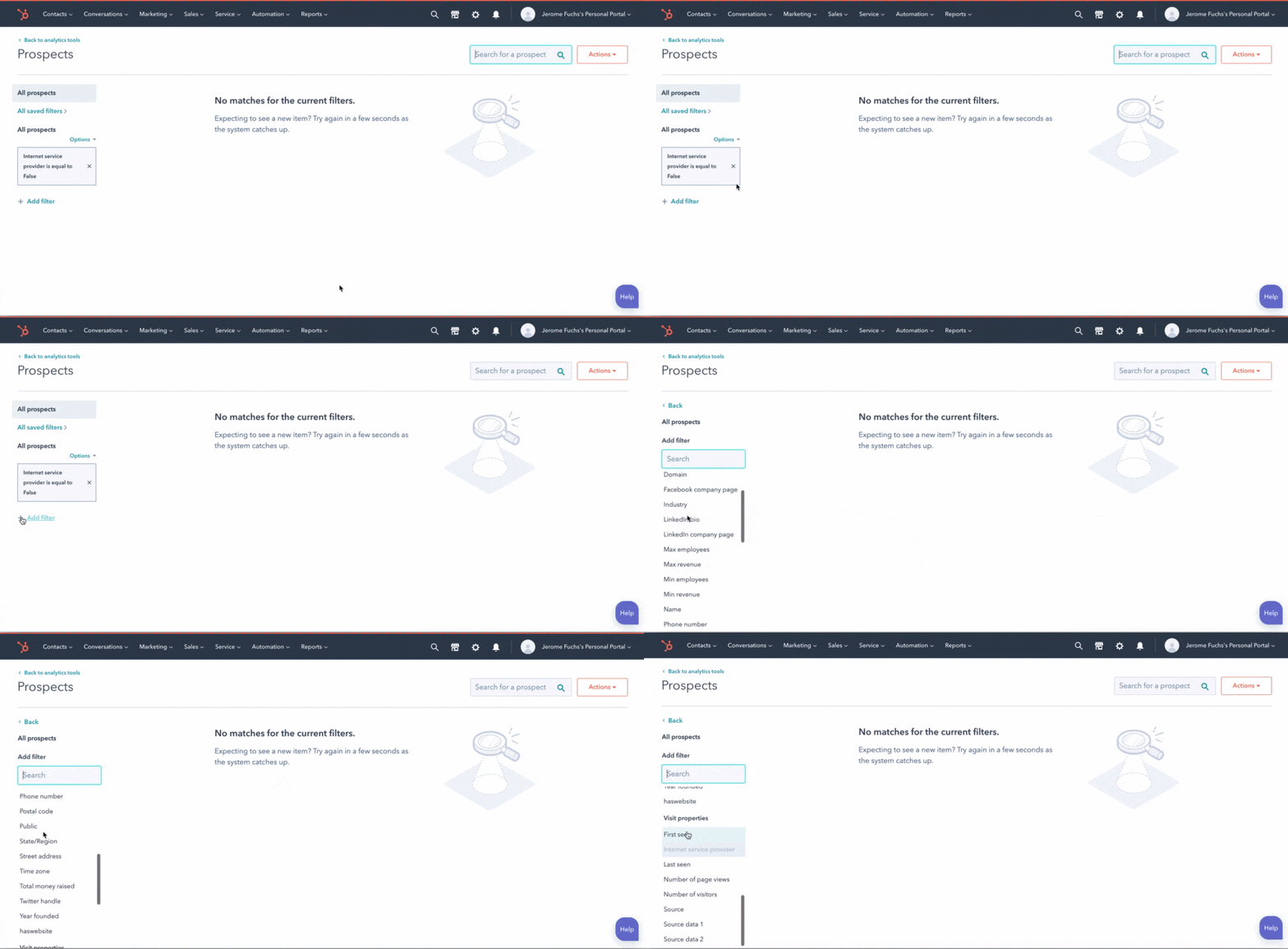
Step 2: Filter companies that are a good fit.

You'll now have a list of companies that have visited your website. At this point, you can apply filters to identify companies that are a good fit, such as:

  • Number of times they've visited your website
  • Date they were last active on your website
  • Company size
  • Location
  • Industry

The possibilities are endless.

To execute this, click Add filter on the left-hand side of the screen and apply whatever filters are important for your business.

HubSpot filters demo for sales matrix

Bam! You’ve just added companies into your Inbound Prospecting Matrix that are:

  • Interested in your business (i.e. viewing pages on your website)
  • A good fit in terms of industry, size, location, etc.

These are your hottest prospects most likely to close. As the Inbound Prospecting Matrix dictates, you should contact them immediately.

Sales Matrix about primary contacts

Step 3: Be notified when these prospects visit your website.

With HubSpot Sales Hub, you can receive notifications when specific prospects or those who meet predetermined criteria visit your website. You can use that information to gauge their interest and contact them accordingly.

You have the option to see which pages they’re visiting as well. If a prospect is visiting a page listing case studies or pricing, chances are they're interested in purchasing your products or services sooner rather than later. This notification provides insight on when it's best to reach out.

Understanding when companies are interested in you — as opposed to when you're interested in them — helps structure the conversation in a way that is maximally helpful to the buyer.

Inbound Sales isn’t about making 80 cold calls and then celebrating three answers. It’s about delivering customized, relevant messages to prospects who are already interested in your business.

Stop disrupting, and start helping.

Editor's note: This post was originally published in February 2, 2016 and has been updated for comprehensiveness.

03 Feb 17:18

Evolution of mobile is shifting the balance of power between Google’s parent and Apple. Again.

by Chris O'Brien
alphabet blocks

ANALYSIS:

When the stock markets open this morning, it’s quite likely that the company formerly known as Google (GOOG) will seize the title of world’s most valuable company from Apple (AAPL).

It is the latest twist in Silicon Valley’s favorite feud between two giants who once were friends until they became bitter enemies and rivals. And while there are many subplots and personalities involved, the main thread running through their competition is the rapidly evolving nature of mobile.

Mobile still seemed somewhere over the horizon when Google went public back in 2004. For the next four years, Google was more valuable than Apple, which was just regaining some momentum, thanks to sales of Macs and iPods.

Then came the iPhone. And suddenly, their fortunes seemed reversed.

By April 2008, Apple’s stock was racing ahead and managed to top Google in value. Google released the first commercial version of Android later that year, but for a long time, it left investors and analysts scratching their heads. What good is a free mobile OS to a company’s bottom line?

It also sowed the seeds of the rift between the two friends. Google CEO Eric Schmidt would step down from the Apple board. Apple CEO Steve Jobs seethed that Android was a cheap ripoff, and launched a proxy legal fight against its leading partner, Samsung.

In the meantime, it seemed the real business was hardware (made more compelling by Apple’s slick iOS, of course). Indeed, even as Android phones eventually gained the upper hand in terms of market share, iPhones were still commanding most of the profits in the mobile game. Google briefly regained the market cap lead but Apple topped it again after February 2010, just a few weeks after the iPad was unveiled.

Once again, Google and other challengers were scrambling to catch up with Apple in a new market, this time tablets.

As Apple soared, Google fought off critics. The accelerating shift to mobile created concerns about Google’s revenue from mobile search versus desktop search. The company began to tinker with building hardware. It bought Motorola’s handset business to take Apple-like control over hardware and software development (and then sold it Lenovo a couple of years later).

Along the way, the companies changed leaders. Tim Cook replaced Steve Jobs, who died just a few weeks later. At Google, Eric Schmidt handed the throne back to Larry Page.

The two companies continued to pursue their visions of the future in their own different and idiosyncratic ways.

Apple preferred to keep its every move shrouded in mystery, even as rumors of work on a watch or car bubbled up. Google preferred to experiment in public, with things like Google Glass, driverless cars, and a host of other so-called moonshots.

For all of Google’s fantastical future gizmos, investors remained dubious that they would pay off in the immediate future. And Apple seemed out of reach until the past year.

A year ago, Apple posted blockbuster earnings on the strength of massive sales of its larger iPhone 6 and iPhone 6 Plus. But at the same time, sales of iPads continued to stall and then drop. In the most recent quarter, sales of iPhones were relatively flat as Mac sales also fell.

Despite a busy year of product launches (Apple Watch, new Apple TV, Apple Music), there doesn’t seem much indication that these new products will drive significant revenue any time soon. Since last July, Apple’s stock is down 26 percent.

The result is a big question mark hanging over Apple’s near future: What if the days of growing hardware sales are over for good?

In that case, the company has to rely on software and services to grow. And while App Store sales continue to surge, its reputation for services (Apple Maps, iCloud services, for example) are not nearly as stellar.

Meanwhile, Google has continued to tinker. The most obvious sign of this is in its rebranding, when it announced that the parent company would now be called “Alphabet” and that each of its products would be broken out separately.

None of these has yet, as we learned in Alphabet’s first earnings report yesterday, produced much revenue. Though they are sucking up a lot of investment dollars.

The Google division accounts for 99 percent of revenue, and the news from that corner delighted Wall Street. The company says big gains in mobile search drove increased revenue. Executives point to a change in ad formats for mobile that were implemented last year as the impetus behind this new momentum.

And YouTube viewership on mobile reaches more 18 to 49-year-olds than any U.S. cable channel, the company claims.

Thus, after months of momentum gathering behind its stock, Alphabet looks like it will finally nudge past Apple.

Alphabet’s stock was already up more than 12 percent from last July. In after-hours trading, Alphabet’s stock was up 5.32 percent, or $40.00 to $792 per share.

If that holds, CNBC estimates  that Alphabet will have $570 billion market cap, topping Apple’s value of $535 billion at the close of trading.

More important than ephemeral market values, which are based on the whims of investors, is the real bottom line: In the last week of earnings, investors and Wall Street seem to be making a clear statement that they believe software and services will determine the king of mobile.

Of course, as we’ve seen over the past decade, the evolution of mobile can be cyclical. Apple may have temporarily downshifted to neutral, but it would be silly to think they can’t or won’t re-accelerate.

But for now, the fight for the future of mobile has moved back to Google-Alphabet’s home field, where it certainly holds an advantage over Apple.


More information:

Powered by VBProfiles


03 Feb 17:17

A government document dump just confirmed the ugliest things Wall Street didn't want to believe about Valeant (VRX)

by Linette Lopez

valeant stock exchange

On Thursday, Valeant Pharmaceutical's CEO will testify before Congress on his company's drug pricing practices.

You can expect there to be some heated words from the bipartisan committee, which is helmed by Rep. Elijah E. Cummings, (D-MD). 

Before the hearing, Cummings' office dropped a memo quoting a bunch of internal Valeant e-mails, confirming what everyone on Wall Street who rode the stock up over the last few years refused to believe — that the company's business model was completely dependent on drug price increases.

Valeant was a hedge fund darling until October, when criticism over its drug pricing practices and accusations of malfeasance from a short seller tanked the stock. The company was forced to react, vowing to end a relationship with a controversial pharmacy in its network and conducting an internal investigation into accusations of fraud levied against the company.

Valeant stock over one year

It also changed its business model slightly by partnering with Walgreens and lowering prices in exchange (ideally) for increased sales volume. Even after that, though, then-CEO Michael Pearson told anyone who would listen that his company was not dependent on aggressive acquisitions, drug price hikes, and spending next to nothing on R&D.

"What we want is strong growth and volume growth but the skeptics have said it's all price," he said on CNBC back in December.

"Our model does not depend on acquisitions, but it was enhanced by acquisitions," he explained. 

E-mails leaked in the Cummings memo directly contradict that. Some Wall Street analysis calculated that only one-third of Valeant's growth came from price increases. That doesn't hold up either.

From the memo:

On May 21, 2015, then-Chief Financial Officer Howard Schiller sent an email to Mr.Pearson with the subject “price volume.” He wrote: “Last night, one of the investors asked about price vs volume for Q1. Excluding marathon, price represented about 60% of our growth. If you include marathon, price represents about 80%.”

Valeant picked up 2 drugs from Marathon in 2015. 

The memo focuses specifically on Isuprel and Nitropress, two heart medications Valeant bought last year and then increased their prices by 525% and 212% respectively. 

Valeant executives and outside consultants carefully considered how to raise the prices of those drugs without drawing too much attention from healthcare providers.

From the memo [emphasis ours]:

On December 29, 2014, an analyst with an outside consulting firm sent an email to Mr. Pearson with a presentation on Isuprel and Nitropress. He wrote: “In a nutshell, most of the products reviewed (Marathon, Covis, and VRX) are not on the radar and have material pricing potential.” The attachment stated: “Smaller/older products (e.g. Isuprel and Nitropress) are not reviewed on formulary … Products have been in the system for so long that reviews are practically rubber stamped.” It added: “However, some P&T [pharmaceutical and therapeutic] committee members have noticed a spike in older product pricing (and supply issues). … Select manufacturers have pick [sic] up these types of old products and raised prices dramatically … Manufacturers have used product shortages to drastically increase price post-resolution … P&T committee starting to look into use of drugs that exceed certain pricing threshold (e.g., increase of 2x, price/dose $200, total cost >$20k).”

Elijah CummingsThe memo also shows how Valeant purposely tried to push media attention toward its patient assistance programs (PAPs) to make it look like the company was trying to help patients. 

In reality, though, the PAPs were a way for Valeant to keep pricing drugs to maximize profits and to force patients to go through a Valeant distribution model to buy drugs.

Here are some of the more damning quotes in the Cummings memo [emphasis ours]:

  • A presentation dated January 16, 2015, from an outside consulting firm entitled “Nitropress and Isuprel Pricing Flexibility Review” stated, with respect to Nitropress: “With roughly 1 year of data showing essentially static volume performance after a substantial price increase (350%), MME [Medical Marketing Economics] believes pricing flexibility may still exist for the product up to the perceptual price point of $1,000 per vial.” The presentation concluded: “With current WAC [Wholesale Acquisition Cost] pricing at $214 per vial, Nitropress is likely to still have flexibility by multiple orders of magnitude.” Regarding Isuprel, the presentation stated: “Similar to Nitropress, one year of market data does not indicate negative consequence, following a substantial price increase (350%). … MME believes the price for one vial of Isuprel may be adjusted to $700.”
  • An undated presentation summarizing Valeant’s neurology business unit showed the “Top 10 brands responsible for 63% of revenue.” Isuprel, the first drug listed, had a “FY 2015 Plan Revenue” of “$279.30” million and a “Revenue Contribution” of “14.52%.” Nitropress, the third drug listed, had a “FY 2015 Plan Revenue” of “$245.52” million and a “Revenue Contribution” of “12.76%.” According to the presentation, 2014 revenues for Isuprel and Nitropress were only $54.5 million and $98.7 million. The presentation explained these dramatic increases in revenues: “Aggressive Pricing through consultant recommendation.”
  • On July 20, 2015, Mr. Pearson sent an email to a number of Valeant executives asking for “updated neuro, dental, and generics forecasts.” The next day, Brian Stolz, a Senior Vice President for Neurology & Other, Dentistry and Generics replied, writing: “Overall, the numbers are down as Xenezine looks like it is at risk. … Here is what we are planning: Take a price increase this week assuming we get agreement. … Take additional price increase on Isuprel and WBXL.
  • The presentation also identified “Critical Risks” to the program, including “PR Mitigation.” Two “Objectives” to mitigate this risk were to “Privately address concerns from patients, insurance companies or managed care providers to prevent public displays of negative sentiment” and “Minimize media coverage of the pricing increase.” The presentation also identified “Payor Risk … At What Price (Per Patient Per Year) Does an Orphan Drug ‘Hit Your Radar Screen’?”
  • An undated internal Valeant analysis outlined the company’s “Orphan Drug Model” for three drugs used to treat diseases affecting small patient populations—Syprine, Cuprimine, and Demser. The analysis stated: “Assumptions: Maintain current sales/patients … Take initial 25% price increase to drive patients into the restricted distribution model … High deductible copay requires increased foundation support.” The analysis stated: “Assume target price increases of 100% for Demser and Cuprimine ($8,924 & $1,970.4) … Assume target price increases of 500% for Syprine ($9288.90).

J. Michael Pearson, Chairman of the board and Chief Executive Officer of Valeant Pharmaceuticals International Inc., speaks during their annual general meeting in Laval, Quebec May 20, 2014. REUTERS/Christinne MuschiValeant marketing executive Jeff Strauss later said, in response to patient concern about the increase in Sypreine's price:

"Valeant undertook an initiative to ensure all patients would have access to these lifesaving medication whereby we provide the drug at minimal or no cost to the patient (no more than $25/30 day supply). These patients are not profitable for Valeant therefore the price increases offset the costs associated with supporting this initiative.’… Kind of hard to paint us as greedy if we have removed financial barriers for patients."

Valeant was constantly prepping and modeling and planning for when generic challenges to its drugs would hit the market. That, according to the Cummings memo, was always factored in to how much the company should increase a drug's price.

What's more, they confirm what Valeant constantly denied about its business model — that it was dependent on acquiring drugs through M&A, gouging their prices, and extracting as much revenue from them as it could before generics hit the market. The company was guided by one idea and one idea alone — do whatever you need to do, but never give on price.

Valeant has already countered Cummings' memo, saying the calculations regarding Isuprel and Nitropress pricing were in the hands of outside consultants.

"Those consultants concluded that, given the significant reimbursements hospitals received under bundled rates for procedures, the prices of both drugs did not reflect their true value to hospitals and patients," Valeant said in a statement on its website.

"We try to set our prices at the appropriate levels, but we also listen to the market. In this case, we’ve heard from hospitals, as well as from Congress, that we set the price for these two drugs too high, and we’ve responded by offering volume-based discounts of up to 30% for each of them."

Should be a fun hearing.

Join the conversation about this story »

NOW WATCH: 5 of the most successful 'Shark Tank' stories of all time

03 Feb 17:08

How to Focus on the 5 Areas of Lead Generation Processes

by Lawrence Anderson

Successful B2B marketing is a static, so it is very critical for marketers to keep up with the new trends and opportunities.

Business investors and buyers have become pickier with social networking and other modern tools, using them for product research and exchange information in peer-focused meeting paradigm. Today’s marketing people need to factor this into their lead generation tactics so that they can attract and convert these prospects into qualified leads. There are five major areas to pay attention in managing lead generation.

Content-based for Buyer Personas

Content creation is important in the area of lead generation because it helps boost engagement with the prospects. Different buyer personas need different content and buy that, marketers should not rely on generic content and target prospects.

Boost quality Data

More and more data is being fed in your prospects and current customers, marketers need to ensure that they are giving the quality data to their leads unless they want to frail their credibility.

In 2011, a rapidly growing number of companies are launching lead generation management systems to help them filter and maintain consistent, error-free data that will boost their lead generation campaigns.

Go Mobile

With both iPhone and Android being activated nearly as 500,000 a day, mobile is one of the fastest growing marketing opportunities to come along in a long time. Since buyers are in the area within mobile marketing, marketers cannot miss this chance to reach their prospects. They should utilize mobile-friendly apps.

Social Media

Many companies are calculating the ROI in using social media, and while doing that you should be sure how to plan out the social media action before actually using it. By doing that, you can have a comprehensive layout on how would you want to know and reach people through social media actions.

Trained Team

Most of all, you need people to do all the job mentioned above. Having poor performing individual in your team will definitely flank the rest of your lead generation processes. Not only you have to engage with your prospect but you might want to establish first a strong relationship with your own people. They are the biggest factor if your lead generation process will flop out.

03 Feb 17:00

How Marketing and Sales Development Can Work Together to Book More Demos

by Sam Laber

Marketing and sales alignment is a topic that has been absolutely beaten to death by just about every SaaS vendor I can think of. A quick Google search pulls up 7 unique ads that all (somehow) appear above the fold, mercilessly dwarfing the organic results and promising greater conversion, productivity, and sales.

1 How Marketing and Sales Development Can Work Together to Book More Demos

So I guess that begs the question: is sales and marketing alignment truly where it’s at for B2B companies?

Hmm yeah, it kind of is…

Whether you’re a VP of Sales or a VP of Marketing, your main goal is to get business in the door. Everyone is familiar with sales quotas, but as a marketer, I can assure you that we have quotas too, and we sure as hell can’t get there without our sales team.

Since covering the spectrum of topics on “sales and marketing alignment” is such a daunting task, I’ve chosen to narrow the focus a bit and hone in on sales development and marketing alignment. So many top B2Bs are adopting the account-based approach, while simultaneously investing heavily in inbound marketing, which means more leads, more touch points and (unfortunately) more confusion, frustration and – dun dun dun – scapegoating.

At Datanyze, things are pretty rosy. Our sales development director, Jason, is a stud and his reps are solid. Jason and his team are in the process of moving towards account-based selling, while ratcheting up our inbound lead generation to fill the funnel. For others that are making the switch or have made the switch already, I’ve compiled my thoughts on the two main challenges of this setup — attribution and conversion.

Attribution: Is it inbound or is it outbound?

Challenge: When ramping up both your inbound lead generation and your SDR team, you’re going to encounter some overlap between leads driven by marketing and leads sourced by sales. There will be many “fringe” cases where one side may have to concede, but if you have a firm sales/marketing service level agreement in place and the right tools to measure influence, you’ll do just fine.

Thoughts: First things first, marketing and sales should have their own individual numbers to hit, but they should be working towards the same larger revenue goal. Once everyone’s on the same page with an overarching goal, you’ll want to create an SLA between the two departments that defines what constitutes an inbound versus outbound lead/opportunity.

Here are some factors to consider when a lead comes in:

  • Was this lead last touched by sales or marketing?
  • Was a sales rep working any other leads in the department or company?
  • How many people work at this company?
  • Was there any prior correspondence between a sales rep and this lead?
  • Did a sales rep set a task to follow up with this lead?
  • Did this lead come directly to the site or were they driven by a marketing channel?

Once you’ve created the SLA, make sure you hang it up somewhere in the office so everyone is on the same page. Know that it’s not going to cover every case, but if you do it right, things will even out over time so that no one side is favored.

Another detail to consider when discussing attribution is influence. As a marketer, influence is almost as important as lead generation. For example, knowing how your middle and bottom of the funnel content is impacting sales conversion is just as important as knowing which top of the funnel article drove the most leads. To measure this, I recommend looking at the campaign level.

In the below example, you can see our Dreamforce campaign divvied up by opportunity stage. Now, it would be silly to measure Dreamforce ROI solely on new opportunity generation, so in this case, we created a campaign report that helps keep track of every lead we met that was part of an open opportunity. Keeping tabs on how these progress through the funnel will inform our sponsorship decision-making process next year. (Yeah, okay we’re gonna go no matter what.)

2 How Marketing and Sales Development Can Work Together to Book More Demos

How can marketing help SDRs break into their toughest accounts?

Challenge: When the SDR team moves from a wild wild west outreach strategy to one dictated by a dedicated list of accounts, hyper-personalization becomes a huge point of emphasis. In most cases, reps are glued to their list of 150 or so accounts, and in order to get more, they have to have made sufficient headway with the accounts they’ve got.

Solution: There are many ways marketing can help the SDR team penetrate their target accounts, but I’m going to cover the data side — i.e. what information can marketers provide to their sales team to make their outreach that much more relevant and timely.

Providing Lead Intelligence

It’s pretty simple – the more informed your SDRs are, the more personalized they can make their pitch and the more likely their prospects are to respond favorably. Marketers must strive to give their SDR team the most timely and accurate lead intelligence out there so they can put their best foot forward in conversations with executives.

At first, lead intelligence was all about having firmographic data on a company — SDRs would use data points like location, employee count, revenue and funding to qualify out accounts and tailor their outreach. If you were a rockstar rep, maybe you’d even read a few of your prospect’s recent press releases or skim a 10-K – but that’s reaching.

I would classify this information at “baseline intel,” meaning that it can be very helpful in deciding which accounts to prioritize, but probably won’t get your reps very far in finding a solid hook.

More recently, reps have begun to supplement the baseline intel they receive from marketing by digging into each decision-maker via social. This means a bunch of things:

  • Googling the prospect’s name
  • Researching the prospect’s work history and accolades on LinkedIn
  • Checking out what the prospect finds interesting on Twitter
  • Gathering information on a prospect’s current initiatives via conversations with gatekeepers

This kind of research can uncover some valuable prospecting information that may give way to a hook or two (finding mutual connections, mutual LinkedIn groups, or mutual alma maters) — however, I can assure you that prospects are getting tired of feeling obligated to respond just because they have a personal detail in common with a sales rep. This leads me to the final layer of lead intelligence marketers can provide to SDRs – the one that takes the cake as far as I’m concerned.

In my mind, you can know exactly who to reach out to AND how to hook them, but if you call your prospect 2 weeks after they’ve already invested in a competitor’s product, you’re history.

That’s why context and timing are the keys to success as an SDR. Give your reps this, and they’ll be running through accounts so fast, you’ll have to hire more closers.

But as a marketer, how do you provide lead intelligence that offers context and timing? The key to success is buying signals. In SaaS, this could mean:

Here’s an email that puts everything together. In this case, the rep noticed that we started using a sharing tool that was hosted by his competitor. I wasn’t even looking for alternate solutions, but this email blew me away to the point where I just had to respond.

3 How Marketing and Sales Development Can Work Together to Book More Demos

Yeah it’s long, but it absolutely held my attention because it:

  • Acknowledges that we’re using one of their competitors products
  • Highlights why his solution provides more value and functionality
  • Gives a stat to support his argument

So that’s that — well not quite. I’d love to hear about any challenges you’ve encountered when working with marketing. What processes have you put in place to ensure success? Feel free to leave your answers in the comments!

02 Feb 17:13

Canadian companies starting to reap benefits from low loonie: ‘We see this as an opportunity’

by Jen Skerritt and Frederic Tomesco, Bloomberg News

The benefit of a weaker currency is beginning to spread through corporate Canada.

Companies such as CGI Group Inc. and DHX Media Ltd., which sell services abroad designed by workers in Canada, are emerging as big winners from the currency’s almost 30 per cent decline in the past three years. Forestry, autos and manufacturing are also getting a lift as they win market share with cheaper products.

“The drop in the Canadian dollar means that if you find a U.S. company that will move their work to Quebec, just on the currency alone, they are going to get a 30 per cent discount,” CGI’s Chief Executive Officer Michael Roach said in a phone interview last week. The CEO is on the prowl to lure more U.S. work to its Quebec operations along with a major acquisition. “We see this as an opportunity.”

Shares of CGI, which gets almost one-third of its sales in the U.S., surged to a record after reporting better than forecast fourth-quarter earnings on Jan. 27. The company generated $1.3 billion in cash in the past 12 months, and Chairman Serge Godin said in the same interview the Montreal-based company could spend as much as $8 billion in cash on a deal.

Teletubbies Sell

Canada’s economy has been hobbled by the commodity slump as energy and mining companies cut investment and jobs, and analysts have lamented the inability of non-resource exporters to make headway amid competition from countries such as China and Mexico. Beneath the surface, the currency’s tumble to 2003 lows is stirring a revival.

Greg Taylor, a fund manager at Aurion Capital Management Inc in Toronto, which manages about $8 billion, is buying CGI and DHX Media, the largest independent producer and distributor of children’s shows, including the Teletubbies, because of their international exposure. DHX shares have declined 11 per cent over the past year, after rising more than four-fold in the two years before.

“That’s a constant thing that everyone’s going through now, is trying to screen their companies for foreign revenues to try and get in those areas,” Taylor said in a Jan. 20 telephone interview. DHX, based in Halifax, Nova Scotia, declined an interview request with Bloomberg News.

Ontario Manufacturing

Manufacturing is also feeling the loonie updraft, particularly those companies hooked into the booming North American auto industry. Solid export gains and accelerating household disposable income growth lifted auto sales in Ontario to a record last year and a further increase will probably occur in 2016 as exports gain momentum, Carlos Gomes, economist at Bank of Nova Scotia said in a report last week.

Even with sluggish global demand, 17 out of Ontario’s 21 manufacturing sectors posted export gains above 9 per cent in 2015, with more than half reporting advances of more than 20 per cent, Gomes said. Export gains are also expected to lift economic activity and vehicle sales in British Columbia and Quebec, he said.

Ontario clothing manufacturers posted 47 per cent growth in the 12 months that ended in November, while fabricated-metal producers saw gains of 30 per cent and wood manufacturers gained 26 per cent, according to data compiled by Bloomberg.

“Strengthening exports are particularly evident in British Columbia, with nearly half of all manufacturing industries posting export growth in excess of 20 per cent in 2015,” Gomes said in the report.

Canada’s two big auto-parts suppliers Magna International Inc. and Linamar Corp. have slumped in recent weeks as investors worry auto sales have reached a peak, leaving the company’s price-earnings ratios at 7.7 per cent and 8.9 per cent respectively.

Oil Drags

Canadian National Railway Co., the country’s biggest railroad, has benefited from both the export boost and the lower costs wrought by a declining currency, reporting earnings last week that exceeded analysts estimates.

“We are in position to support those shippers for whom the weak Canadian dollar has become a cost advantage like the manufacturers, like the service industries that are selling into the U.S. market, for example the forest product industry and the Canadian port-terminal industry,” said Jean-Jacques Ruest, chief marketing officer, in a conference call.

Manufacturers with exposure to the oil sector are having a tougher time. Canadian exports overall are at about the same level they’ve been since September 2014.

“A falling currency is nice but it’s not going to solve the weak market dynamics we have to face,” Velan Inc. Chief Executive Officer Tom Velan said in a telephone interview.

The Montreal-based industrial steel-valve manufacturer has seen a lot of delays and cancellations in orders in the oil and gas sector and “that’s not going to change even with the dollar at this level,” Velan said. While a weaker loonie helps lower costs and make Canadian production more competitive, the dollar is still quite high when compared to Asian currencies and the company announced the closure of a Montreal-area plant in October, he said.

Educate Customers

New Flyer Industries Inc., the largest transit bus manufacturer in North America, has Canadian customer contracts that are impacted when the loonie drops as they were priced and bid with a significant U.S. dollar input cost, Chief Executive Officer Paul Soubry said in an e-mail. While dramatic drops in the loonie can help the company’s U.S.-based motor coach business, it has established a supply base that “makes it very difficult” to change suppliers to take advantage of the low dollar, he said.

“We do not operate our business to gain or lose on FX movement,” Soubry said. The company’s shares have gained 93 percent over the past year.

Roach at CGI said it takes time to convince customers.

“The average guy in the United States doesn’t necessarily follow the Canadian currency, and we have to educate them on that,” he said. “It’s only a matter of time.”

Bloomberg News

02 Feb 17:10

Alberta aims to diversify beyond energy extraction with petrochemical support

by CB Staff

CALGARY – The Alberta government aims to create thousands of jobs and reel in billions in investment by providing $500 million in royalty credits to the province’s petrochemical sector.

The Petrochemicals Diversification Program announced Monday is one example of how the NDP government aims to encourage more value-added processing in Alberta — turning raw materials into more lucrative products within the province rather than shipping them elsewhere.

“We understand that to create long-term sustainable jobs, we need to diversify beyond just energy extraction into other areas of strength,” said Economic Development and Trade Minister Deron Bilous.

Alberta’s petrochemical industry has a tough time competing with Texas and Louisiana because of higher construction costs, he said. The program seeks to narrow that gap and attract investment.

The initiative will focus on two types of natural gas: methane and propane, which can be used in the manufacturing of fertilizers, plastics and other products.

The government said it expects 3,000 jobs during construction and 1,000 directly and indirectly once plants start up. It said there’s the potential for two or three new facilities to be built in Alberta and investment of between $3 billion and $5 billion.

Ed Gibbons, who chairs Alberta’s Industrial Heartland Association, said the program is good news for the Edmonton area, which is home to numerous petrochemical plants and refineries.

“We anticipate that today’s announcement will provide the tipping point for investors with the scale now pointing toward Albertans’ direction,” said Gibbons, an Edmonton city councillor.

The credits will be paid out over three years once the projects are complete in an effort to reduce risk to government. The idea is for the petrochemical companies to trade or sell the credits to oil and natural gas producers, which can use them to offset their royalty payments to the province.

One recommendation from last week’s royalty review report was to examine ways to encourage more investment in facilities that turn raw resources into more valuable products. In addition to natural gas, the expert panel also recommended looking at ways to make higher-value products out of oilsands bitumen.

The application process for the program opens this week and will close in April. Bilous said shovels could hit the ground this year.

University of Calgary economist Trevor Tombe said there are times when government subsidies are justifiable — but this isn’t one of them.

“If a facility is not able to compete in the market on its own grounds, then — absent a market failure — a subsidy will actually lower GDP,” he said. “It will actually harm the economy.”

At a time when the province is contending with a hefty budget deficit, it’s a questionable spending choice, Tombe said.

“Things like child care or education, health care, homelessness support — these are areas where subsidies can be justifiable on social policy grounds. Dollars spent on the petrochemical industry means those are dollars that can’t be spent in other valuable areas.”

Follow @LaurenKrugel on Twitter.

Note to readers: This is a corrected story. A previous version said the Alberta government estimated that the program has the potential to employ up to 3,000 people for each new facility during construction.

The post Alberta aims to diversify beyond energy extraction with
petrochemical support
appeared first on Canadian Business - Your Source For Business News.

02 Feb 17:09

IBM is ditching its contentious employee review system for one that employees asked for (IBM)

by Julie Bort

ibm

IBM employees are being judged in an entirely new way, by a new employee review system internally called "Checkpoint," IBM confirmed to Business Insider.

It is ditching its 10-year-old system and using a new one crafted in conjunction with the employees themselves, IBM’s chief human resource officer Diane Gherson told Fortune, and IBM also told Business Insider.

IBM's old performance review system was somewhat notorious.

It was your classic annual review, where employees had yearly goals and performance was analyzed at the end of the year.

And it included a "stack ranking" element in which employees were compared to each other, not just to how well they did on their own goals. At IBM, managers would meet and compare their employees, Fortune reports.

This was a popular concept from the 1990's best known because of GE's Jack Welch. It was widely adopted by a lot of companies including Microsoft and Yahoo. Employees disliked it as it pits them against each other.

It has now become popular to ditch it. For instance, Microsoft famously got rid of stack ranking in 2013, after CEO Steve Ballmer announced his plans to step down.

Employee review = layoff red flag

IBM is currently going through a big transition, moving away from its hardware roots and toward new areas like cloud computing and big data. And CEO Ginni Rometty has the painful task of changing the workforce to match the new goals.

Ginni RomettyAs such, IBM is trimming jobs in the traditional hardware areas while hiring in the new areas.

IBM has shed thousands of employees, mostly by selling business units.

But it has also been doing ongoing rolling layoffs for years. IBM calls them "resource actions" and "workforce rebalancing." IBM doesn't disclose any information about its layoffs, beyond how much such "workforce rebalancing" costs the company every quarter.

For years, IBM employees have said worried that the annual employee review could give them a red flag, even if they had previously received high ratings, making them vulnerable to being cut. 

And so, internally, there was a lot of politics and angst all focused on that performance number. 

Thousands of employees helped create the new system

When IBM decided to revamp its employee review process, it asked employees what they wanted to see. The HR department asked for feedback on IBM's internal employee social media site, Connections. The post was read by 75,000 people and got 2,000 comments, Gherson told Fortune.

Visitors walk past the IBM booth at the 9th China International Software Product & Information Service Expo in Nanjing, Jiangsu province September 6, 2013. REUTERS/China Daily HR also conducted online mini-polls where employees could vote on topics like work priorities (how do you value teamwork, skills development, innovation), and so on, an IBM spokesperson told us.

Not surprisingly, employees asked to ditch the stack ranking process.

Employees also wanted feedback more often, and the ability to change their goals as the year went on.

So the new system will no longer label IBM employees with use a single number, a spokesperson says.

Instead, it will include shorter-term goals, feedback at least every quarter and employees will be reviewed based on five general topics: business results, impact on client success, innovation, personal responsibility to others, and skills.

"At the end of the year, managers evaluate employees on the five dimensions - whether they have exceeded, or achieved expectations, for their role, or whether more is expected," a spokesperson confirmed.

SEE ALSO: Yahoo expected to cut more than 1,600 jobs as part of big cost-cutting plan tomorrow

Join the conversation about this story »

NOW WATCH: What to do with your hands during a job interview

02 Feb 17:09

How to Get the C-Suite to Respond to Your Emails

by Heather R Morgan

Have you set your sales goals for 2016 yet? Do you want to increase sales by an extra 30% by targeting a new industry? Or maybe you want to land a meeting with a CEO from one of the fastest growing companies in America?

You can achieve all this and more by learning how to use cold email to fearlessly start conversations with decision makers and C-level executives.

Whether you’ve tried cold email in the past and weren’t successful, or you’re already having some success and are looking to improve your existing efforts, these three tips can help you get more responses to your emails and crush your 2016 goals.

Cold Email Tip #1: Do Your Research Before You Even Write A Single Email

As a child, do you recall knowing which adult was most likely to say, “Yes” to you than the other? You already knew who to ask and exactly what to say in order to get what you want.

The same concept still applies to cold emails.

Before you start emailing prospects for your business, make sure you research the people you intend to reach out to. Get to know how they think and speak, what they value and dislike, and what kinds of content they read.

One way you find general material on them is to “e-stalk” a handful of them via social media (i.e. LinkedIn, Twitter, and Facebook). You’re looking for common trends, keywords, and interests. Maybe you’ll discover that many VP of Sales in the SaaS space tend to love science, tend to be more analytical, and are numbers-driven.

So instead of saying something like this in your email:

“We have the best software in the business and win lots of awards.”

You should be saying:

“Our software helped [Client x] double their qualification rate from 15% to 32% in only 3 months.”

Always keep in mind that you can never have too much insight into how your prospects think. You never know what tidbit you can turn into an intriguing subject line that will catch their eye, or a powerful introduction sentence that can instantly build rapport with even the toughest audiences.

Cold Email Tip #2: Always Have an Alluring Subject Line

No matter how full your inbox is, the subject lines that grab attention will be opened first.

If you know what keeps your prospects up at night or what they need to achieve in order to get a big promotion, you can create a subject line that feels like it’s reading their mind.

Imagine you are your recipient: What subject line would you most be inclined to open?

For example, if your prospects’ biggest concerns are the risk of a potential data breach and you have a solution to that, you might try a subject line like this:

SUBJECT: {!Company}’s next data breach

This email was sent to CIOs and had a 57% open rate with an 8.6% positive or neutral response rate.

Emails that leverage a strong emotion like fear have a high chance of getting opened, but you have to be careful with these so that you do not upset the recipient and get them to hit spam.

Use fear cautiously and carefully. If you use a subject line like this you need to very quickly point out your solution in the email in a way that is sensitive to their pain point.

If you think your audience will react too negatively to a fear-driven approach, you can just stick to more positive, value-driven subject lines. However, testing a more edgy subject line can have big payoffs if you do it correctly.

Cold Email Tip #3: Create a Powerful Call to Action

Even a pretty compelling pitch can be killed by a weak Call to Action.

The final sentence of your email is prime real estate. It’s your opportunity to incentivize your prospects to respond and start a conversation with you. There’s no point in sending cold emails if your CTA is confusing, or not there at all.

The following CTA is feeble and pathetic:

“If you have any questions, feel free to message me at any time. Hope to hear from you soon!”

Would you be enticed to respond if you read that in the last sentence of an email?

If you hope to get a response, the last sentence of your email should be clear, actionable, and enticing.

Use words like “when” to subliminally put it in your readers’ minds that they should talk to you. Generally speaking, emails that have a call to action with the word “when” outperform those that have yes/no questions. And as a general rule, calls to action calls should always be put in the form of a question.

Here’s an example of a call to action that came from an email template with a high response rate:

Example: “When do you have time for a short call to hear how Linkedin was able to double their sales productivity?”

This CTA works well because it promises to deliver valuable advice (successful strategies from Linkedin’s sales efforts) if the prospect agrees to a call.

So no matter who you’re emailing and trying to start a conversation with, remember to do your homework before writing a single email, and to both start and finish strong.

Whether you’re sending a single one-on-one email or a massive email campaign to thousands of individuals, here are a few more insights to help you make your emails feel more thoughtful and persuasive.

02 Feb 17:09

Can Your Content Influence Buyer Behavior?

by Michael Wight

Young woman dreaming about something. Consumerism concept.

It does not matter how nicely your website is designed or how much moolah you’re spending on advertising and other such things. If your website does not have the right kind of content, you will find it difficult to find success on the web.

This is largely due to the fact that Google scans content when it comes to ranking websites. If you do not have enough content or the content is not of high quality, then you will find it difficult to rank well on search engines. In addition to this, content can also help influence behavior. Yes, with the right kind of content you can get your desired results from your visitors.

The main focus of successful marketing is to drive behavior and for that you need to have content that would generate leads and drive profitable customer behavior. Given below are few simple steps that can transform your marketing plan into a force of attraction for consumer behavior.

1. Identify Different Segments and Buying Process

People are more likely to enjoy and respond to content that they believe is of some personal use to them. By identifying your customers and dividing them into proper segments according to their buying behavior, you can create content that is more meaningful to each segment and individual client as well. Every person has different needs, roles, priorities, and problems. One-for-all would not work in such cases.

2. Use One Call-To-Action (CTA) Per Page

To drive customer behavior in an efficient and effective manner you should add just one clearly defined call-to-action (CTA) on each page. If all the pages do their job right then the overall goals of the website will be met. However, make sure you do not go over the top, CTAs should be subtle and not forced.

3. Build Promotion Into The Content

Content is king. But if you don’t have effective delivery and distribution of the content then the content cannot showcase its value and do its job that is – to influence behavior. You need to build a strong community that shares and consumes the content generated. If the promotion of the content is not adequate then you can never know its full potential. Efficient delivery requires a combination of networking in the industry, public relations, editorial visibility and social media.

4. Show and Not Just Tell

Most people do not have the time to go through articles to get the point. It has been proven that most people merely scan through an article to find what they’re looking for. With falling attention span one needs to turn to other ways to attract attention and what better than visual media? Videos is a different ballgame, but one can definitely stick to infographics that sum up tons of information in a few words. These have been proven to help and must be given a try.

5. Consistent and Repeated Exposure

Consistency is the key. Your content should be delivered repeatedly to your clients after a specified time period. Repeated exposure to your content would definitely place an impact on your clients and would make a long lasting impression on their decision making.

In addition to all this, your content should be of high quality and attractive for it to be able to leave the desired impression.

02 Feb 17:09

A British billionaire just opened a grocery store where everything costs 36 cents

by Hayley Peterson

easyFoodstore

The billionaire founder of the airline EasyJet is getting into the discount grocery business. 

Stelios Haji-Ioannou is launching a chain called easyFoodstore that sells non-name-brand groceries at cheap prices.

The first store opened this week in West London. For the month of February, everything in the store costs 25p, or about $0.36.

Haji-Ioannou has indicated in previous interviews that prices will eventually rise to about 50p, or $0.71, on average.

The no-frills store is stocked with items like coffee, pasta, cookies, bread, soup, canned vegetables, potatoes, orange juice, and sugar.

It's advertised as a cheaper option to Aldi and Lidl, the most popular discount chains in the UK, and it's intended to serve the poorest neighborhoods in the UK.

Aldi and Lidl have upended the grocery market in the UK in recent years, forcing the nation's largest supermarkets to dramatically cut prices and lay off workers to stay competitive.

easyFoodstoreThe CEO of Asda, the UK's second-largest grocery chain, has called the new competitive environment created by Aldi and Lidl "the worst storm in retail history."

Now Haji-Ioannou is trying to shake things up further in the grocery market with EasyFoodstore. The new chain's slogan is "No expensive brands, just food honestly priced."

Haji-Ioannou told The Guardian in 2014 that he decided to launch the business after reading about the growth of food banks in the UK.

easyFoodstoreHe said he plans to keep the new chain in operation even if it runs at a loss, if it meets a need in the communities where it opens.

"This is another way the easy brand can serve the less well-off," he says in a statement on easyFoodstore's website. "Given my experience in distributing food for free in Greece and Cyprus, this is a more commercial attempt to sell basic food for 25p per item to those unwaged or low waged living around Park Royal."

Haji-Ioannou has distributed food to the poor in Greece and Cyprus through a charitable organization.

easyFoodstore

SEE ALSO: Aldi is fixing its biggest weakness, and that should terrify Whole Foods

Join the conversation about this story »

NOW WATCH: What those 'sell-by' dates on your groceries really mean

02 Feb 17:07

Starting a Business in the 21st Century – A Complete Guide

by Mike Brcic

We live in a golden age of entrepreneurship. Now, more than ever before, it’s easier to start a business, and easier than ever to scale that business to stratospheric heights.

Witness Uber. The darling of Silicon Valley (if not the media or the taxi industry) is just 6 years old yet has managed to achieve a market capitalization (the total value of its stock) of over $50 billion. That’s 50 billion dollars in just over 6 years. That’s higher than the market capitalization of GM, which was founded in 1908.

Another comparison? It took GM 30 years to reach a market cap of 1 billion. Uber? Just over 3.
The technological tools that entrepreneurs have at their disposal now give them an unprecedented ability to build a business model, find customers, test their business model, and reach a large target market – just some of the activities that entrepreneurs need to undertake in order to get traction for their idea.

STARTING A BUSINESS – THE OLD WAY

Flash back 25 years or so. This is how you might have gone about starting a business back then:

  1. Come up with an idea.
  2. Spend 3-4 months writing a business plan.
  3. Go to a bank for financing.
  4. Get rejected by the bank.
  5. Approach another bank.
  6. Repeat steps 4 and 5 several times.
  7. Get financing.
  8. Spend 6-12 months building a prototype.
  9. Spend 3-6 months customer testing.
  10. Build the product.
  11. Approach the bank for production and marketing $$$.
  12. Repeat steps 4 and 5 again.
  13. Get 2nd round of financing.
  14. Launch your business.
  15. Pray.

By the time you felt like you had a product that’s ready to go and were ready to launch, you’d have probably spent 2-4 years of your life, $50,000 to $500,000, and probably felt and looked something like this:

STARTING A BUSINESS – TODAY

Contrast the method above with a new way to launch a business today, with minimal risk and maximum efficiency.

When I work with and advise startup entrepreneurs, I follow a well-defined method for clarifying, testing and validating the business model – before going to market and spending thousands or tens of thousands of dollars on prototyping and/or marketing.

The method looks like this (I’ll describe each step in detail):

  1. Discover a problem.
  2. Build the business model (not the business plan).
  3. Validate the business model.
  4. Test the business model.
  5. Get some startup $$$.
  6. Launch a Minimum Viable Prototype.
  7. Get customer feedback.
  8. Improve the product.

This methodology is inspired by lean startup principles (for a great read on this topic, check out Ash Maurya’s great book, Running Lean.

Let’s go through these steps in detail.

1. DISCOVER A PROBLEM

Instead of starting with an idea, start with a problem. Ask yourself:

“What customer group has a problem that I can feasibly solve?”

Start with your hunches, then learn everything you can about those customers and their problems.

I’ve seen too many would-be entrepreneurs fail because they fell in love with their idea. Their whole business was so oriented around their idea, their product, and their vision that they forgot that the central goal of business is to solve a specific problem (or problems) and create value for its customers.

To this day it amazes me how many entrepreneurs totally leave their customers out of the equation.
So shift your thinking, and start thinking about who your customers will be, what problems they have, and how you will solve them better (cheaper, faster, more elegantly, etc.) than their status quo. If you can imagine that, then you have yourself the beginnings of a viable business.

2. BUILD THE BUSINESS MODEL

I’m not a fan of business plans. In fact, I think they’re pretty much worthless, unless you need one to pull the wool over an investor or bank manager’s eyes.

They’re worthless because:

a) they take a ton of time to put together, and then they gather dust on a shelf or hard drive and are rarely ever referred to on an ongoing basis
b) they’re laden with assumptions, many of which are typically disproven once you actually launch.

What’s the alternative?

Build a business model, using one of the many modeling tools out there.

I started using the Business Model Canvas (download available here) about 6 years ago, when I launched my first social enterprise incubator, Project Wildfire.

A completed Business Model Canvas

It was, at the time, a revolutionary tool for describing the workings of a business, with ‘blocks’ that described the most important aspects of a business model, such as Customer Segments, Value Proposition, and Revenue Streams.

Unlike a business plan, the canvas was and is meant to be a dynamic, living document of your business, adapting constantly to shifting conditions and new information. If you find, for instance, that a particular customer segment isn’t responding to your Value Proposition, for instance, simply add another to the canvas and then get to work testing your business model with that new segment.

A few years later, I discovered the Lean Canvas. I found this canvas more suitable to the entrepreneurs I was working with, most of whom were in startup (or pre-startup) mode and didn’t have things like Key Partners or Key Resources (two of the blocks of the Business Model Canvas).

The Lean Canvas is a fantastic tool, but it was lacking some key information pieces that the entrepreneurs I worked with – most of whom were social entrepreneurs looking to achieve a societal benefit as well as profitability – needed to capture in their business model.

Hence the Impact Canvas was born. This is a tool I developed in 2014 based on the Lean Canvas, but with modifications designed to capture the ‘social good’ aspect of the business.

The Impact Canvas, designed for businesses that incorporate a social component

These are but 3 of many tools in existence to help you capture your business model. Take a look at them, and others, and see which works for you, then use it to take your idea out of your head – or off the napkin – and into a full-fledged business model.

It’s important to note that this stage simply involves capturing your Plan A – an initial draft of what your business might look like. As you get into the process further, testing and validating your business model, chances are that significant aspects of your model will change – and that’s OK (and expected).

3. VALIDATE THE BUSINESS MODEL

Now that you have captured your initial business model, you’ll want to get some feedback on whether you’re on the right track or not. This is where those all important people, customers, come in.

In the beginning stages of developing your business, your focus needs to be squarely on customers: who they are, what makes them tick, and what their problems are (this should always be a significant focus of your business, but particularly during the modeling and validation phase. This is where good ol’ fashioned sit-down-and-talk-to-people work comes in.

Start by identifying at least 3-5 people who fit the customer segment profile you outlined earlier in the ‘Build The Business Model’ phase. Perhaps you already know this people, but if not, use your network – identify the types of people you want to talk to as clearly as possible and with as much detail as possible, and then ask your networks (friends, social media contacts, etc.) if they can introduce you.

Once you’ve identified your first 3-5 people, you should be able to get referrals from them to more.
Schedule meetings (face to face whenever possible, or phone meetings if in-person meetings are not feasible) and get to know them. These are the questions you should keep in mind when talking to potential customers:

  • Who are they? (ask demographic questions that are relevant to your idea)
  • What are their wants/needs/fears? (what are the problems that keep them up at night?)
  • Is their problem worth solving? (how badly do they want to solve it?)
  • What is their status quo – how do they solve the problem right now?
  • What would convince them to switch to another solution (yours)? What would hold them back from doing so?

Your goal in this stage is not to sell people on your idea – this will turn them off and make them unlikely to open up to you – but to learn as much about them (in the context of your idea) as you can.

When you’re done talking to people, ask them if they can recommend 2-3 other people that fit the same profile/have the same problems. This will allow you to quickly expand your network of interviewees.

At bare minimum you need to talk to at least 10 people, and have significant evidence from a majority of them that there is a problem worth solving – one that you can feasibly solve.

10 is a bare minimum, but I recommend talking to at least 20 people. This may seem like a waste of time when all you want to do is get busy building your website and marketing to customers, butevery minute you spend talking to potential customers at this stage of the process is many minutesof time not wasted marketing and selling the wrong product to the wrong people.

Also, keep in mind that the people you talk to who validate your business model are also your first leads, for when you actually launch the business – so keep track of them in a spreadsheet or database tool.

4. TEST THE BUSINESS MODEL

Once you’ve gotten some initial validation from talking to customers (if you haven’t gotten validation, it’s time to revisit your business model), then it’s time to actually test your business model.

This is where free and inexpensive tools really make the job of launching a business much easier. For a few hundred dollars, you can get real feedback on your business model.

An example of a pre-launch landing page.

Here’s how I test two of the most important parts of my business model, Customer Segments and Unique Value Proposition:

1. I set up a landing page with a headline summarizing the Unique Value Proposition (also known as UVP – a concise summary of the value my product will create for my customers), a bit of descriptive text, and an email capture form. To do this I use landing page software such as Unbounce (they offer a free 30-day trial, more than enough time to test out a business idea).

2. I then use Unbounce’s split-testing feature (otherwise known as A/B testing). This allows me to set up an identical clone of the landing page, but change the headline and text to reflect a different Unique Value Proposition.The software will show version A to 50% of the visitors, and version B to the other 50%. After I’ve sent enough traffic to the page to get statistical significance, Unbounce will show me conversion data – the version with the higher conversion rate (the % of visitors who enter their email address) represents the winning UVP.

3. I set up a mailing list in Mailchimp (free for up to 2,000 subscribers) and integrate the landing pages with that list in Mailchimp (there’s a pretty easy integration between Unbounce and Mailchimp). The bonus is that after I’m done testing my business model, I have a list of potential leads that I’ll email when I’ve launched, with a special launch offer.

4. To test Customer Segments, I’ll use Facebook ads. I can easily test 2 customer segments against each other by creating 2 different ad sets, each targeted at a different audience. If I run the same ad to those 2 different audiences, both pointing to the same Unbounce landing page, I’ll eventually get some good data telling me which audience is responding better to the ad and landing page. This will tell me which Customer Segment is more responsive to my idea!

EXAMPLE: I had a woman in one of my workshops a few weeks ago who wanted to start a Jamaican restaurant. To help her avoid spending $100,000 opening a restaurant without any evidence of a need for another Jamaican restaurant in Toronto, I suggested she test her business model. We explored a couple of innovative ideas for a Jamaican fusion restaurant:

1) Jamaican pasta (there’s already a successful Jamaican pasta restaurant in Toronto called Rasta Pasta – and there’s surely room for more)

2) Jamaican sushi (we were brainstorming quickly).

I suggested she could set up a landing page similar to the one above, with version A offering a headline like ‘Love Jamaican food? Love pasta? Enter your email address below to be notified when we launch!’ and version B offering the same but with ‘sushi’ instead of ‘pasta’.

She could then target an ad on Facebook to 2 different customer segments, for example, people in Toronto who like ‘foodie’ type Facebook pages and people in Toronto who like Jamaican-themed Facebook pages.

After spending a few hundred dollars on ads (typically you can expect to spend anywhere from $200 to $500 to get statistical significance), she should have a pretty good idea of which restaurant concept resonates most, and which customer segment (foodies vs Jamaica lovers) is more promising. This process can be repeated, of course, to test additional UVPs and additional customer segments.

5. GET SOME START UP $$$

Just 30 years ago, your main sources of funding would have been friends and family or a bank (equity investing of the type found in Silicon Valley was – and still is – not available to most of us). These days there is an explosion of innovative business financing tools.

These include:

  • Crowdfunding
  • Crowd equity financing
  • Community Bonds: The Centre for Social Innovation (CSI), where my office is based, is a pioneer in this field)
  • Microloans
  • Private loans
  • Peer-to-peer lending
  • And many more coming online each month

Of all the many options available these days, crowdfunding remains my favourite, mainly because not only is it a source of potentially significant financing, a successful crowdfunding campaign is also a significant additional validation of your business model. People who are willing to pre-pay for your product are showing that there is a demand and willingness to pay for your product.

For a great guide on crowdfunding, check out CSI and Hivewire’s excellent Crowdfunding Guide for Nonprofits and Charities. Although it’s targeted at nonprofits and charities, much of the advice is also applicable to for-profit businesses.

A friend’s Kickstarter page (it went on to raise over $800,000)

6. LAUNCH A MINIMUM VIABLE PROTOTYPE

Once you’ve validated and tested your business model and have raised some startup funds, it’s time to launch an MVP. Note that my definition of MVP is not the standard ‘Minimum Viable Product’ but rather ‘Minimum Viable Prototype’. I feel that this more accurately describes what you are looking to launch in those early days.

The simplest definition of an MVP is the most basic product/service I can launch that will solve my customer’s #1 problem better than their status quo.

It doesn’t need to be way better than their status quo – just better enough that they can justify spending the money (and time and effort) to switch to your solution.

Any time and money you spend on developing a better/more elaborate solution than the MVP is time and money you could have spent soliciting actual customers’ feedback (and generating actual revenue) – rather than relying on your own intuition to build out a more advanced product/service (and spending more money).

These days it’s cheaper and easier than ever to build a prototype. For actual physical products, technologies such as 3D printing have lowered the cost of prototyping exponentially. Self-publishing platforms such as Lulu allow you to self-publish a book cheaper than ever, allowing you to completely circumvent the publishing industry. Services such as InvisionApp allow you to prototype an app for free.

Once you’ve got the product/service figured out, you’ll need to get set up with some basic digital tools:

WEBSITE

It used to cost $5000-$50,000 to pay a developer to build you a website, even a basic one. These days, you can build a beautiful website from a pre-designed template for as little as $8/month. My preferred options are Squarespace or a managed WordPress account.

ECOMMERCE

Nowadays you can quickly and cheaply set up an e-commerce system that will allow you to list products and take orders online. Both of the above options include e-commerce capability (Squarespace comes with it pre-loaded, while WordPress offers plugins like WooCommerce), or you can launch a Shopify site.

ACCEPT CREDIT CARDS

It used to be you had to apply to one of the major merchant credit card providers – with a lengthy and tedious application process – in order to be able to accept credit cards. These days, service providers such as Stripe and Square can get you up and running, and accepting credit cards, within minutes.

GET SITE TRAFFIC

When I work with startups with limited marketing budgets, my advice is almost always to start a blog.

Why?

A blog is a proven, and free, tool for getting targeted traffic to your website. Almost every website platform, from Squarespace to WordPress, offers blog functionality built in. Once your blog is set up (and capturing leads via tools such as SumoMe), you can use it to write content that is useful and interesting to your target customer. This will draw visitors to your website and help you generate leads.

With the help of tools like BuzzSumo (what’s with all the ‘Sumo’ tools?) you can find the content that’s out there and already doing well, and use this as a starting point for writing your own content. You can also use BuzzSumo to help you connect with influencers in your industry – develop mutually beneficial relationships with them and you’ll soon find them sharing and spreading your content, bringing thousands – or even hundreds of thousands – of visitors to your website, all for free.

TOTAL OUTLAY FOR ALL OF THE ABOVE: $8-$40/month

Contrast the above expenditures with the $50,000 or more – and hundreds of hours – you might have spent a decade ago to get set up with a website, ecommerce, credit card processing and marketing!

7. GET CUSTOMER FEEDBACK

Now that you’ve launched your MVP, you want to ensure that you are getting feedback that is going to allow you to improve the product (by product, I mean product or service).

Build feedback into your product. Set up an autoresponder to email your customers a few days (or a few weeks, whatever’s appropriate for your product) after they purchase your product with a link to a Surveymonkey survey. Ask them for feedback on your product – how are they using it? What do they like? What don’t they like?

I also highly recommend talking to as many customers as possible, either in person or on the phone. You’ll get amazing insight as to what they value and what they don’t – these conversations will help drive strategy, uncover opportunities, and give you the chance to provide amazing customer servicer.

If you need some help with the customer interview process, I’ve compiled a list of 18 powerful questions you can ask your customer.

One of my favourite companies in this regard is Freshbooks. They offer their users a $100 gift certificate (of their choice) if they’ll come in and spend some time (an hour, I think) with one of their staff, showing them how you use their service.

From these experiences Freshbooks staff get invaluable advice for how their users are using it, what frustrates them, what they love, and additional opportunities for features or services (i.e. additional revenue opportunities!) they might be missing.

Make customer feedback an integral part of the customer experience and your operations!

This is the end-of-trip survey we use at my adventure travel company Sacred Rides, just one of 4 surveys (post-booking survey, pre-trip customer service survey, mid-trip survey, and end-of-trip survey) our customers get between booking their trip and the end of their trip.

8. IMPROVE THE PRODUCT

Now that you’ve got the feedback, keep iterating and improving the product, based on your customers’ feedback. If you follow this process, you’re sure to develop a devoted and loyal following.

Originally published at The Social Entrepreneur

Want to take your business to the next level? Take my free 7-day ‘Change the World’ email course, with 1 powerful, action-based email in your inbox every morning!

02 Feb 17:06

Convert Your Content Into Slides to Increase Website Traffic

by Neil Patel

convert-content-slides-traffic-cover

With so many kinds of content marketing, how do you choose the best methods? In my opinion, the more content methods you use, the better.

Why? Because more methods mean more traffic.

One of those powerful methods is slides. Using slides is such a strong method because you can virtually double or triple your level of traffic with only half the work. Plus, you reach an audience that is focused, engaged, and likely to convert.

What does it mean to convert your articles into slides?

What do I mean by converting articles into slides? First, let me be clear about slides.

Nearly everyone in the business world has seen or created PowerPoint or Keynote presentations. PowerPoint presentations are so commonplace and notoriously boring that the term “death by PowerPoint” is a thing.

Plenty of people know that PowerPoint errors persist, and try to correct the problem.

Even though people may make fun of PowerPoint and say that it is boring, they still use slides, read slides, and benefit from slide presentations.

The world’s highest-traffic slide presentation site is SlideShare.

highest-traffic-slideshare

LinkedIn’s SlideShare is basically a slide-sharing service. The platform allows users to upload and share their slide decks (PowerPoint, PDF, Keynote, or OpenDocument).

SlideShare is a content marketer’s dream come true. Here’s why:


.@SlideShare has a page authority of 79 and a domain authority of 95. In other words, it has killer #SEO
Click To Tweet


Obviously, there are a lot of benefits to using SlideShare. Yet, many marketers who use the platform do so only occasionally. This is a problem because the real benefits of SlideShare build up as you add more content.

Converting your articles into slides is as simple as turning a blog article into a slide format. Let me show you an example:

WordStream published this great article, 5 Psychological Tricks to Exploit in Your PPC Ad Copy, by Margot da Cunha on July 20, 2015.

WordStream-published-article

It’s a strong long-form piece of content from a recognized authority. The article has images and plenty of helpful advice.

Now, take a look at this:

WordStream-article-slideshare

Does it look familiar?

It’s a SlideShare presentation – 5 Psychological Ad Copy Hacks to 3x CTR – authored by Margot and uploaded by WordStream on Dec. 10, 2015.

The idea of the content is the same – theme, data, points, etc. The format is different.

For example, her SlideShare point states, “Spark Engagement through FOMO, Rewards, & Uncertainty.”

Margot-different-platform

But her article states, “Appeal to the I-Don’t-Want-to-Be-Left-Out Fear.”

Same idea. Same basic concept.

Two different platforms.

Margot was smart. Not only did she use this content on a blog and SlideShare, but she also used it in a webinar. Triple repurposing!

That is the basic idea. You take a great article that you produced on your blog, place the content into a slide presentation, and upload to SlideShare.

How do slides fit in with a content marketing strategy?

According to CMI’s definition, “Content marketing is a strategic marketing approach focused on creating and distributing valuable, relevant, and consistent content to attract and retain a clearly-defined audience – and, ultimately, to drive profitable customer action.”

Following this definition, SlideShare features some of the most powerful content available. Spend a few minutes browsing SlideShare, and you’ll discover the following:

  • Valuable content
  • Relevant content
  • Consistent publishers
  • Attractive content
  • Targeted audience
  • Conversion-focused content

One of the most common misconceptions about content marketing is the idea that it has to include blogging. Blogging is, of course, a really valuable form of content, but it’s not the only one.

In fact, some brands are excellent content marketers without a blog.

How does this work? Effective content marketing starts with identifying your target audience and understanding how they access content.

SlideShare has an audience of highly engaged users, many of whom are professionals on LinkedIn. The SEO authority of SlideShare’s site means that content featured on SlideShare is likely to have SEO value. The content itself is presented in a format that is easy to read and digest.

The bottom line is this: SlideShare is an excellent component of any content marketing strategy. If you’re producing blog or article content anyway, then turning it into slides is an obvious move. You’ll receive more and better traffic.

Why you should turn articles into slides

Besides more and better traffic, what other reasons are there to turn articles into slides? Here are some:

  • It’s easy. You’ve already done the exhausting brainwork of research, writing, development, and explanation.
  • It’s fast. It’s easy to waste time making slide presentations from scratch. If you have a presentation template and some handy images, it doesn’t take too long to place your article into a slide presentation.
  • It has a high ROI. Considering the time that you spend flipping an article into a presentation, you’re getting a massive return on your investment.
  • It produces traffic from a different source. SlideShare visitors may not be familiar with your brand or product. Delivering content via SlideShare is a great way to access new sources of traffic.
  • It offers searchable discovery. SlideShare users often search for their preferred topic using SlideShare’s search bar or categories. The content they see is the content they want. The advantage for you is targeted and relevant traffic.

How do you do it?

I hope you’re convinced of the “should-I” reasons for conversion. Now, here are a few “how-do-I” pointers.

Obviously, SlideShare is a different platform with a different content model. Your ideas remain, but your format will change.

  • Adapt your outline into stand-alone points. Your article likely has an outline. Make sure that your outline is clear and can serve as a logical structure for your presentation.
  • Use one slide to feature your main point.
  • Use the next slides to develop your main point.
  • Make sure that each slide includes only one idea. Try not to use a lot of bullet points.
  • Use attractive images. Some designers favor a full-screen image for each slide. You might not have the time or resources to do so, which is fine.
  • Use a lot of slides – it’s OK.
  • Include a call to action at the end of your slideshow.

Let me share an example. If you wrote an article about the rise of mobile communication, one of your main headlines might be something like this: “Beyond Texting.”

Within this point, you discuss six types of mobile communication other than texting. You have six sub-points – voice, images, videos, money transfer, dating, and image recognition.

This outline works perfectly for a SlideShare presentation:

Main point: Beyond Texting

Main-point-beyond-texting

This main slide includes a preview of the upcoming six sub-points.

Sub-point: Voice

Sub-point-voice

The Voice sub-point slide is image-intensive. The only text is a single sentence about the voice functionality of four popular mobile apps. The images reinforce the point.

Sub-point: Images

Sub-point-Images

This second sub-point uses a lot of color and imagery. The slide communicates the large number of users and information shared via Snapchat. While the slide could have been adapted from a full paragraph in an article, it contains only 19 words.

The full presentation is 29 slides. The seven main points are coherent and focused. The slides that follow are image-rich and data-driven. It’s a compelling and focused presentation.

And here’s the great thing. You can create all kinds of presentations from all kinds of articles. In fact, if you want, you can create several presentations from a single article.

Of course, not every article can be so easily converted to a presentation. For example, the articles that I write on Quicksprout and NeilPatel.com are usually between 1,500 and 4,000 words. These are tactical, how-to posts with detailed instructions on executing content and SEO strategies. The nature of those posts does not lend itself well to a presentation format.

Conclusion

With a bit of creative thinking and some familiarity with SlideShare, you can unleash a whole new component to your content marketing strategy. The more content tactics that you can understand, use, and master, the more effective your content marketing becomes.

As you continually refine, streamline, and improve your content, you will grow into an unstoppable marketing force. Converting blog articles into slides is one such way to augment your content marketing strategy, showcase your thought leadership, and drive tons of fresh traffic to your website.

Have you tried converting blog articles into SlideShare presentations? What do you think?

Ready to convert to an email subscriber at the Content Marketing Institute for daily or weekly insight to help you improve your content marketing success? Sign up today.

Cover image by Joseph Kalinowski/Content Marketing Institute

The post Convert Your Content Into Slides to Increase Website Traffic appeared first on Content Marketing Institute.

02 Feb 17:05

How Effective Are Your Sales Professionals?

by Kevin Smith

In conversations I’ve been having lately with prospects and clients, I’ll ask how well their sales professionals are performing on the job. Their answers focus on the more tangible areas of sales performance. They might refer to lagging indicators, such as where the sales person is in relation to quota goal, revenue attainment, number of closed deals, and growth vs. the prior year. On the other hand, they might reference leading indicators, such as the number of opportunities created, value in the pipeline, or number of calls or meetings with prospects.

Even with all of these proof points, what they’re not able to evaluate very well is this simple question: How good are they? How well does each sales professional perform during those crucial moments when they’re interacting with the buyer? This kind of assessment is important because it’s really where the rubber meets the road — in those human moments of interaction.

Part of what differentiates a seller in the buyer’s mind is being able to trust the seller and knowing that the seller understands the buyer’s business and the issues that the buyer face. It is the quality of interaction, more than technical knowledge, marketing materials, or the value proposition, that creates a connection and convinces the buyer that the seller has his/her best interests in mind.

So, when I probe to find out how sellers’ sales professionals are really performing when interacting with prospects, they often don’t know. They have no idea because, for the most part, sales professionals perform alone. They don’t have managers or colleagues who witness them in action very often. Every now and then, there might be a ride along or a final presentation that high-level executives from their companies attend. However, for the day-in and day-out interactions that they have, during which the prospect decides whether or not to trust the sales professional with his/her business, they’re on their own. No one really knows how they’re doing.

As a proxy, I’ll ask prospects about the sales training that they provide to sales professionals. How do they develop their sales skills? Often, they will respond by talking about the message platform that they provide, a set of insights, a value proposition model, or technical capabilities. Training tends to focus on products, marketing strategy, or knowledge about new offerings. What it doesn’t focus on is developing the actual skills to help sales people perform in those key moments of human interaction.

To me, they’re missing the boat, and the solution seems basic. Sales leaders need to understand the set of critical selling skills that come into play during times of human interaction. What are the consultative selling skills necessary to prove to prospects that you truly understand them? What are the ways to build credibility and trust? Is active listening practiced? Are questioning skills honed? They need to continually develop their people and reinforce the importance of these intangibles, which ultimately lead to achieving tangible results.

From an organizational standpoint, instead of just measuring leading and lagging indicators, sales managers can more effectively coach their people to improve in those areas of interpersonal skills that matter. Through scenario-based training and role modeling, they can reinforce the knowledge, skills, resources, and motivations that encourage people to take ownership of changing their behaviors.

Whether or not sales leaders directly observe their sales professionals in interactions with prospects or coach in a way that asks the right questions of the sales professionals in order to understand what is happening, they should commit to collaborating with their people so that they can continually improve their craft of selling in interpersonal situations.

sales-management-process

The post How Effective Are Your Sales Professionals? appeared first on Richardson Sales Enablement Blog.

02 Feb 17:04

11 Incredible Video Marketing Stats from the Past Month

by Claude Harrington

To kick off February, we’ve put together a list of the most interesting video marketing statistics from the past month. Some of these stats piqued our interest because of what they say about the state of video marketing, whereas others helped identify the type of content that has been successful in this quickly growing space.

Whatever the case, the more research reports and white papers we read, the more impressive the number appear to be. Below are 11 of our video marketing stats from the past month:

1. All Aboard the Video Marketing Bandwagon: According to Wyzowl’s new survey, “The State of Video Marketing in 2016,” 61% of businesses stated that they currently use video as a marketing tool. That’s impressive, but more impressive is this; of that 61%, 2/3 were not using video just one year earlier.

2. They Key is Explanation and Understanding: Wyzowl’s survey also revealed that 93% of businesses who use video believe it has increased user understanding of their product or service. The survey also notes that 98% of users say that they have watched an explainer video to learn more about a product or service.

3. Mobile Clicks Nearing the Majority: According to Merkle’s “Digital Marketing Report: Q4 2015,” phone and tablet click shares now make up nearly 50% of all clicks (48%). And actually, phone and tablets were responsible for 52% of Google search ad clicks in Q4.

4. Facebook’s Video Boom: According to Facebook’s Q4 earnings call, 100 million hours of video are now being watched per day on the social media platform. “Video is an important part of the Facebook experience,” CEO Mark Zuckerberg said during the call. “and continuing to invest here is important for allowing people to share and consume some of the most engaging content.”

5. Speaking of Facebook… According to recent performance stats published by Nanigans, a campaign management platform, return on ad spend–for their clients who advertise on Facebook–jumped 87% on average in Q4. Additionally, purchase rates increased 68% and the average order value rose 49% as compared to Q3.

6. Can Snapchat Catch Facebook? According to an article in Fortune, Snapchat users view videos on the app over 7 billion times per day. That’s a impressively rapid increase from the 6 billion per day number reported by The Financial Times late last fall (which we referenced in our 9 Incredible Video Marketing Stats)

7. A Kingdom United by Mobile Video: The UK’s Office Of Communications reported that video accounted for 58% of all mobile data traffic in 2015; a significant increase from the year prior, where it accounted for an already impressive 39%.

8. Big Growth in Little China: According to a recent report from Analysys International, a Beijing-based business information firm, digital video ad spending in China grew 43% in 2015; reaching RMB24.31 billion ($3.90 billion). It is also estimated that growth will be even faster this year, with digital video ad spending reaching RMB36.50 billion ($5.86).

9. Retailers Accelerate YouTube Advertising: According to Pixability, a YouTube ad buying and video marketing platform, our nation’s biggest retailers are betting big on digital video ads. And fast. For example: between Q1 and Q4 in 2015, Walmart increased YouTube spending from $600,000 to $2,579,000. Similarly, Target’s increase between those same two periods catapulted from $57,000 to $1,889,000.

10. Mobile Ads Breed Brand Awareness: In a recent survey conducted by Trusted Media Brands and Advertiser Perceptions, US media decision-makers were asked to choose the top three benefits of mobile ads. “Increasing brand awareness” topped the list as the answer from nearly half of the respondents (47%). Additionally, just over a third stated that “better engagement and interaction” was one of the other primary benefits.

11. Display > Search: According to eMarketer, digital display ad spending in the US will surpass search ad spending in 2016. In their report, entitled ”US Digital Display Advertising Trends: Eight Developments to Watch for in 2016,” one in five dollars devoted to digital in 2016 will go to “banners and other” digital display ad types. Video will also command a large portion of ad spending allocated to digital in 2016: 14.3%, up from 12.8% in 2015. The report goes on to note that “spending growth in the categories of rich media and video will both be significant: 36.4% and 28.5%, respectively.”

02 Feb 17:04

Develop Your Company’s Cross-Functional Capabilities

by Paul Leinwand
feb16-02-469604503

Most companies struggle to differentiate themselves. The few that succeed are those which stand apart because of their distinctive capabilities: the things they excel at doing, time and time again. In this excerpt from their new book, Strategy That Works, Paul Leinwand and Cesare Mainardi explain why distinctive capabilities are vital to success, and address a fundamental question that many companies overlook: How to bring these capabilities to scale, so that every part of the enterprise can call on them.

It’s tempting to think of distinctive capabilities as a kind of artistry performed by an elite corps of high-potential talent: the elite players work long hours and deliver unusual results, while the rest of the organization struggles along in its usual incoherent fashion. This approach rarely leads to success, especially if you have coherent competitors that have brought their capabilities to scale.

Building scale for your distinctive capabilities must be at the top of the CEO agenda. The best approach will vary from one company to the next, but at its heart lies the challenge of transcending functional boundaries—a difficult achievement in itself. This means centralizing and systematizing activity throughout your company while still fostering participation and experimentation. In the end, whatever your industry and whatever your enterprise’s size, scaling up your distinctive capabilities is one of the most difficult and yet essential things you can do.

When we began our research, we expected to hear a lot about organizational design. We thought that creative, capability-rich companies would have paid a lot of attention to the way they organized and the value that restructuring gave them.

Instead, our interviews found a willingness to let organizational forms and structures evolve naturally, developing in line with the identity of the enterprise. This makes sense, given what we know about organizational design: the best designs, as our colleague Gary Neilson has pointed out, are those which are “fit for purpose”: designed to reinforce the distinctive capabilities of that particular company.

We only uncovered one recurring pattern in organizational design, and it was closely related to the ability to bring distinctive capabilities to scale. The companies we studied, each in its own way, had transcended the limits of functional boundaries.

In other more conventional companies, work on capabilities takes place within separate specialized departments. You’ll often find customer relationship management within marketing, budgeting within finance, supply-chain management within operations, outsourcing within procurement, training within HR, and new product development within R&D. You’ll find some capabilities sitting in multiple versions in parallel functions: IT, HR, and operations will all have their own version of an outsourcing capability, with people sometimes only dimly aware of their counterparts in other functions.

The functional model of organization dates back to the 1850s. Some of the first business functionaries were railroad telegraph operators who managed schedules. Then came sales forces, finance departments, and R&D labs—including the original labs of Thomas Edison and Alexander Graham Bell. As companies grew steadily, the “corporate staff” (as it was originally called) grew accordingly. The functional model has been ingrained ever since, so much so that it is rarely questioned. Business units come and go, but finance, HR, marketing, IT, legal, and R&D seem to last forever.

We are not proposing the elimination of functions. Their value is undeniable; no company could do without them. They perform the essential task of marshaling people with important skills to manage crucial activities. But functions as they exist in many companies, without a clear link to distinctive capabilities, tend to drive incoherence and widen the strategy-to-execution gap.

On one hand, functions are treated as sources of expertise within the enterprise, which gives them an incentive to emulate world-class functions in other companies—to whom they will inevitably be compared. On the other hand, they are set up as cost centers and service bureaus, mandated to meet the needs of all their constituents as rapidly as possible under the ceiling of their budget. The entire budgeting process often facilitates and reinforces this—with functional leaders often incented and driven to protect and extend their functional reach just to maintain the resources they need. Meanwhile, as they juggle an endless list of (sometimes conflicting) demands from line units, they become skilled at solving the problems of the moment. They focus their attention on expedience, not on the most important distinctive capabilities. Aligning the functions to capabilities, which is often the only strategic way to resolve these pressures, may not even be considered.

The functional model of organizations is an important reason why so many companies struggle with the gap between strategy and execution. It makes a company good at many things, but great at nothing. When functional boundaries prevail, there is no construct for managing capabilities. It isn’t clear who owns the capabilities, how to track spending on them, or how to connect them to the strategy or to each other.

Much of the task of scaling up capabilities depends on resolving this issue—on transcending the limits of functions. For distinctive capabilities are inherently cross-functional. The most important capabilities systems do not fall neatly into groupings designed many decades ago. Indeed, much of the distinction in a powerful capabilities system stems from the sparks created when people with different backgrounds, skills, technologies, and perspectives build practices and processes together. Frito-Lay’s direct-store delivery capability brings together IT, marketing, logistics and distribution, and financial analysis. The IKEA product design process involves design, sourcing, shipping, manufacturing, and customer insight. Apple’s distinctively intuitive product and user interface design similarly involves customer insight, engineering, manufacturing, marketing, and distribution. In all these cases, the teams work collaboratively rather than sequentially; they think together, rather than throwing projects “over the wall” to each other.

Adapted from

The most common organizational solution is the cross-functional team: a committee of people drawn from the relevant departments to solve particular problems. Unfortunately, many cross-functional teams fall far short of delivering effective and efficient solutions. They rarely have the time they need to resolve their different ways of thinking. They are also limited by their conflicting functional priorities and sometimes by a lack of clear accountability. What’s more, many of these teams are temporary; they will dissolve once the project is over, and their members may not work together again. There are also far too many of these teams, and the more there are, the more they tend to proliferate. When all cross-functional teams are temporary, an organization has little incentive to overcome these hurdles.

Permanent cross-functional teams tend to fare better. A growing number of long-standing innovation groups, for example, bring together disparate functional skills (typically R&D, marketing, customer insights, and IT) to facilitate the launch of new products or services. Some of these teams are relatively informal, whereas others involve major shifts to the organizational structure. In one case, to develop its portfolio management capability, Pfizer Consumer (before it was sold in 2006) set up communities of practice: semi-formal ongoing networks that included lawyers, health professionals, and marketing experts. These communities helped spread key ideas and best practices to brand and product groups around the world.

From permanent cross-functional teams, it’s only a small step to having formal capabilities teams. These operate outside the functional structure entirely, led by top executives with newly created job descriptions: Chief Digital, Risk, or Innovation Officer. Members of these teams, no matter how specialized their skills, follow a cross-functional career, reporting to people who may not share their background but who have a common commitment to the capability and all the projects associated with it. The functional departments, instead of managing projects, focus on learning and development and specialized guidance for the relevant staff assigned to capabilities. Examples include the IKEA sustainability team and Natura’s supply-chain management council, whose purview includes sourcing, manufacturing, logistics, and aspects of the relationship with sales consultants. The capabilities team model can be likened to a symphony orchestra; the conductor is responsible for the whole work, but if a soloist needs help, he or she will turn to masters of the particular instrument for guidance.

The most farsighted functional leaders are not just waiting for these changes to affect them. They are taking the first step by helping evaluate the current state of their company’s capabilities system and suggesting ways to bring it closer to its potential. This is part of the functional leader’s new mandate as a strategic partner for the enterprise: delivering not what individual constituents demand, but what the whole enterprise needs.

When you build a few critical cross-functional capabilities—and scale them—you break free of the trap of trying to be world-class at everything but mastering nothing. Don’t treat benchmarking as the path to success. Instead, compete on the select few capabilities that deliver on your strategy, and instill them everywhere you do business.

Adapted from the Harvard Business Review Press book Strategy That Works: How Winning Companies Close the Strategy-to-Execution Gap.

02 Feb 17:03

Here’s What 25 B2B Marketers Think Are the Key Trends in 2016

by Paul Gillin

I was delighted when B2B Marketing Zone – a website and newsletter that I devour – asked me to be one of 25 contributors to its “B2B Marketing Trends for 2016” e-book.

I love this content concept, and it’s an idea more B2B marketers could adopt. Contact influencers in your market – or even your own customers or subject matter experts – and ask them for short paragraphs on a topic, then combine that content into an e-book.

Then do what Tom Pick and Tony Karrer of B2B Marketing Zone did – make it easy for people to compose posts like this one and share the book through their social networks. Your contributors will be flattered to be included and you will get to tap into their often substantial followings.

The authors identified three powerful trends driving B2B marketing right now:

–Changing buyer expectations fueled by the availability of rich information and ease of access and purchase;

–Pressure to demonstrate ROI as marketers learn to do more with less; and

–New tech tools and big data so that we can no longer say half our budget is wasted but we don’t know which half.

I picked a few quotes from the e-book that I really like.

Moran“2016 will be the year where B2B marketers finally realize that, while they can always make more content, their customers can’t make any more time.” – Mike Moran (l.)

“Every B2B site should produce cornerstone reference content that is comprehensive and authoritative; something that people link to and return to read again and again.” – Steve Rayson

“A buyer persona is not a zombie—but a profile based on your understanding of a real customer and their real needs.” – Ambal Balakrishnan

Williams“It’s time for B2B marketers to let go of their obsession with perfect production values and get on with just putting good content out there for customers and prospects.” – Elizabeth Williams (l.)

“Channels and tactics will come last, not first anymore, at last.” – J-P De Clerck

“Is 2016 the year of B2B brands finding a personality and sense of humor?” – Michael Brenner

Andrews“With marketing now responsible for helping to nurture and advance the buyer through 70% of the purchase cycle, there are monumental inefficiencies if the sales team is knocking on cold doors rather than closing sales-qualified, warm leads.” – Debra Andrews (l.)

“If you have 30 reps, each sharing just five pieces of content per week, that’s an opportunity to get your message out 7,200 times!” – Shannon Pham

“[Workforce brand ambassador programs are] a win/win. The company benefits from more authentic communication, and employees build personal brands.” – Cheryl Burgess

“The average click-through rate is 0.1%, banners don’t work anymore and people are much more likely to trust peer to peer recommendations than traditional advertising.” – Joe Fields

Neufeld“No longer will marketers schedule an email campaign for Wednesday morning at 10 AM. Rather, marketers will configure an email campaign and technology will determine the best time and day to deliver the message.” – Brian Neufeld (l.)


“The 2015 Annuitas B2B Enterprise study found that only 7.5 % of respondents reported the skill set of marketing personnel was highly effective. Clearly, we need to do better.” – Erika Goldwater

“If your marketing is great but your product is bad, that, ultimately, means your marketing is bad, too.” – Carla Johnson

And my own contribution:

I believe B2B marketers have finally realized that merely throwing content into the ether is both expensive and wasteful. They’re adopting buyer personas, content targeting and matching content to stages of the buying cycle. I think content marketing will continue to be a huge growth area for B2B in the coming years but we’re going to get a lot smarter about how we invest our resources. Marketers are beginning to realize the buyers are people, not demographic segments, and they are appealing more to the motivations that influence human behavior.

02 Feb 17:03

Your Brand is Either a House or a Home

by Jim Signorelli

What makes your brand special?

If you answered by talking about your brand’s unique advantages and consumer benefits, you own a house, not a home.

Don’t feel lonely. There are plenty of companies doing the same thing. And they all have lessons to share.

Take Xerox for instance. At one time, having a Xerox machine in the office had become a necessity. Instead of asking, “Can I get a copy of that?” it was commonplace for people to ask, “Can you make me a Xerox?” Having achieved a great deal of success, the company decided to cultivate other ambitions. For one, Xerox wanted to get into computer technology and data processing. They spent many years and millions of dollars before finally throwing in the towel. Why? Because they couldn’t get buyers to believe that a copy machine company could make a good computer. In effect, Xerox found out that it was a house, not a home.

Chiquita is another example. Chiquita had to admit defeat after trying to convince us that they make a good frozen juice bar. Country Time Lemonade was forced to stop trying to sell Country Time Apple Cider. Ponds barely got out of the starting gates with Ponds toothpaste before it quit. And Smith and Wesson (yes, the maker of guns) tried to sell a bicycle of all things. Thousands of stories like these exist.

But then many brands tell a different story. Apple has gone from selling computers to phones, to tablets to who knows what’s next. Nike started out selling waffle-soled running shoes but is now the leading brand of athletic equipment, gadgets, and apparel. Perhaps a more extreme example is Virgin with its long list of unrelated products and services: phones, records, airplanes, casinos, satellites. In case you’re sick and in jail, Virgin even provides a prison health service. Add Harley Davidson, Disney, Starbucks, and anything that Oprah labels to the list. See any similarities? These are brands that grew by creating homes, not houses.

When we think of these brands, we don’t just think of a single products or service. We think of the ideas, values and beliefs their names represent. To their buyers, they offer something more important than functional benefits. They provide a sense of belonging. In fact, their buyers aren’t really buyers. They are more like members of the same household who share similar beliefs. Virgin could sell mud flaps if it wanted to. No doubt, they’d become the best selling mud flaps available. ( Hey Branson, you heard it here first!).

How To Turn Your House Into A Home

If you’re interested in turning your house into a home, here are 5 simple rules to follow:

  1. Check out your brand’s foundation. Does it provide a solid base that will support any additions, or is will it only hold up your house as is?
  2. Improve its curb appeal. When people see it from the outside, will they think ” Looks nice” or will they think “This could become a good representation of me and what I stand for?”
  3. Get rid of the clutter. Throw out everything that distracts away from the one simple but important truth that your home represents.
  4. Hire the right agent. Anyone can help you find renters or even buyers. Hire someone who can tell your story in a way that will attract followers.
  5. Conduct a permanent Open House. Stay real, authentic and open to transparency.

Making a distinction between a house and a home has many advantages. Just remember, a house functions as a place to shelter you from the elements, provide you with ample closet space and a place to park your automotive status symbol. Homes serve a very different purpose. They provide belonging, and support for values you can identify with.

The extent to which your brand can offer customers a home instead of a house will determine the size of your family.

02 Feb 17:03

How To Sell And Win More Million Dollar Deals

by Keenan

If you sell enterprise wide, large, million dollar deals, you get how complex and difficult it can be. Even if you’ve been killing it for years, and are highly successful, you know that complex selling has changed considerably. Over the past few years, selling big deals, million dollar deals, has become increasingly harder than it’s ever been. Social media, the Internet, competition, and as CEB has discovered, more buyers in the buying process have made selling the big deal one giant complexity.

Let’s be real. Selling big deals is a bitch.

Yet, fear not my friends.  NY Times best-selling author Tim Sanders is gonna make it all better fo you. In episode 23 of The Word, I get to rap with Tim about his new book, DealStorming and what it takes to sell really big frickin’ deals.

DealStorming is not only the name of his book, but a new and highly effective way to win the big sale.  Tim’s used the approach to sell billions of deals His story about winning a huge Disney deal is priceless.

Today’s sales world demands new approaches and methods to winning require new, innovative approaches to win the sale and Tim delivers. Watch Episode 23 of The Word and bring your sales game to the next level.

You can also download The Word on iTunes here:

See all The Word Episodes here.

02 Feb 17:02

What Motivates Best-in-Class B2B Sellers? You'll Be Surprised.

by peter.ostrow@aberdeen.com (Peter Ostrow)

motivate-b2b-sellers.jpg

The age-old alignment of motivation and behavior in professional sales management has never strayed far from a reliance on cold, hard cash. “Pay for play” remains a universal standard, but surprising new research from Aberdeen points to the need to augment simplistic approaches to sales performance management with more nuance.

References to steak knives may be getting old, but they still matter: Plenty of sales leaders still don’t get it.

It’s almost too easy to present sales effectiveness research findings and mention lines from Glengarry Glen Ross, but so many modern sales organizations still pursue 20th century management styles that the metaphor is far from irrelevant.

Cash Is Still King, But There Are Plenty of Viable Crown Princes

This aggressive posture is born out of fact, not opinion. No one debates that the smartest way to drive results among B2B sales professionals is through variable financial compensation. When survey respondents in Aberdeen’s latest research report were asked to name the most effective way to optimize sales results, “individual financial compensation” was chosen 59% more often than the next leading option, “internal recognition for positive performance.” But when comparing these answers to previous years’ responses, we find a significant shift of priorities among modern sales managers (Fig. 1)

Figure 1: Dramatic Changes in the Relative Importance of Financial vs. Other Sales Performance Motivators: 2013 through 2015

ostrow-fig-1.png

Only two years ago, a mere 2% of best-in-class companies didn’t name cash compensation as a top-three motivator. This slice grew to 24% in 2014, and 36% today.

Why? According to Aberdeen’s research in Young & Talented but Lazy? Not So Fast, Millennials are the Real Deal!, corporate leaders who emphasize employee engagement, work-life balance, and teamwork see measurably stronger business results than old-fashioned firms that only focus on how staff contribute to the bottom line.

Fig. 1 is the hard data backing up the benefits of the softer side of sales management – motivation through non-cash incentives such as recognition, engagement, and personal development. Money still matters the most, but by itself is diminishing as a sole methodology of driving desired enterprise sales results.

Even Hardened Salespeople Appreciate a Pat on the Back

Let’s take a deeper look at the second most popular sales motivator, which has held steady at second place but increased in percentage over the last two years: Simply being told, “good job!”.

When the business outcomes of respondents indicating internal recognition as a top-three motivator are compared with non-adopters, we see that such “internal recognizers” achieve a series of stronger key performance indicator (KPI) results:

  • 22% higher Marketing-to-Sales lead acceptance rate (60% vs. 49%)
  • 21% stronger customer retention rate (75% vs. 62%)
  • 8% better annual team attainment of total sales quota (67% vs. 62%)
  • 2x the annualized improvement in customer relationship management (CRM) adoption (6.8% growth vs. 3.4% growth)

While these hard numbers should provide plenty of motivation to bolster warm-and-fuzzy internal recognition efforts, the benefits of back-patting go beyond performance metrics and move into the heart and soul of effective, customer-driven selling (Fig. 2).

Figure 2: Smart Selling Proficiencies Improve with Engaged, Recognized Sales Management

ostrow-fig-2.png

These competencies – which, on average, the best-in-class report as 75% stronger than all other firms – represent crucial sales effectiveness strengths identified by Aberdeen as crucial to top sales results. Improvements in these areas can be motivated by better sales employee recognition practices -- while millennial sellers are no less interested in reaching President’s Club than their predecessors, they also perform better when they feel appreciated and engaged. They see higher quota attainment while effectively digging into the nuances of their buyers’ needs. They also expect a greater degree of sales mobility than ever before.

Marrying Motivators, Recognition, and Results: Gamifying Your Sales Team

A common thread that runs through Figures 1 and 2 is the importance of data: To increase effectiveness, sales leaders need to leverage the myriad ways in which sales analytics solutions can improve manager- and rep-level decision-making. One popular tactic is using gamification.

The 83 (32%) of survey respondents who indicated that sales gamification tactics are formally deployed in their organizations, report a 30% shorter average sales cycle (233 vs. 336 days), a 20% stronger lead conversion rate (37% vs. 31%), and 13% more reps achieving individual annual quota (56% vs. 50%). These enterprises also deliver stronger year-over-year results when compared to non-adopters (Fig. 3).

Figure 3: Better Performance Results Accrue to Gamified Sales Teams

ostrow-fig-3.png

What does all this mean for you? Check it out in the full report.

HubSpot CRM

02 Feb 16:40

3 Ways to Prevent Leads from Dying on the Vine

by Marilyn Rogers

As an inbound or outbound marketer, you understand that generating quality leads requires a healthy budget and well-executed campaigns, public relations efforts and events. You also understand that these efforts are wasted if the leads are left to die on the vine.

If you’re a marketer who’s filling the funnel with leads, but you’re hearing through the grapevine that your leads are low quality or they don’t convert to sales, you can benefit from the three strategies that are outlined below.

1. Align with the Sales Team on the Definition of a Marketing Qualified Lead

Often times when leads are dying on the vine it is due to the marketing and sales teams not being aligned on the phases of the sales funnel, and there’s lack of definition of each phase of the funnel.

Keep in mind there are four stages of the buyers’ journey. These stages are defined as Attention, Interest, Desire and Action (AIDA). Furthermore, the sales funnel is typically defined as Contact, Suspect, Prospect, Marketing Qualified Lead (MQL), Sales Qualified Lead (SQL), Opportunity and Customer. For your marketing and sales efforts to work effectively, these two tracks should be aligned.

It is also important for sales and marketing to align on the definition of each stage of the funnel. Thus, it is of upmost importance that the sales and marketing teams are in agreement of what constitutes a Marketing Qualified Lead. For example, the lead might have shown interest based on behavior that is tracked through your website and email marketing programs. Or, the lead might meet a demographic and firmographic profile. Or, perhaps several leads from the same company are showing interest. All of these characteristics and behaviors can be identified and tracked, and assigned scores (lead scoring). Leads assigned to agreed-upon scores can be identified as Marketing Qualified Leads, and hence prioritized for the sales team to work.

With this being said, if you don’t have an analytics platform in place to track demographics, firmographics and behavioral data/trigger events, sales and marketing teams can still align on what defines a Marketing Qualified Lead. For example, in some businesses, leads that originate from chat and phone tend to convert to sales more often than those from downloaded white papers or various web forms. Gather the data and align with the sales team to define the characteristics that determine how likely these leads will convert to sales based on the lead source.

2. Nurture Leads Through Email Marketing Programs

Every good farmer knows that you can’t plant some seeds and leave them in the ground. It’s necessary to nurture those seeds to ensure they are productive. The same theory applies to your leads. Successful marketers plant seeds to build brand awareness through their inbound and outbound marketing efforts. But just building brand awareness isn’t enough because leads rarely convert to buyers overnight. It takes time.

Typically, marketing teams are responsible for filling the funnel with leads and the sales team is responsible for following up on the leads that fall within the middle and the end of the sales funnel. Today, this strategy no longer works. Marketers need to walk customers further down the funnel because purchase behavior has changed.

For example, there’s a multitude of information that can be found online. Thus, customers make buying decisions based on their online research. According to a study by GE Capital Retail Bank, 81% of consumers research online before going to a store. This buying behavior doesn’t just apply to B2C. Typically, most B2B customers make a buying decision before reaching out to a sales rep.

Consequently, when marketers fill the top of the funnel with leads that are in the “awareness” and “interest” phases and toss those leads over the fence, sales teams start to believe that the marketing leads are low quality. Salespeople stop following up and your valuable leads die on the vine.

You can keep these potential customers from leaking out of the funnel by creating drip marketing campaigns. The most effective email marketing campaigns offer useful content assets that move the leads through each phase of the buyers journey and sales funnel. This prevents these leads from dying on the vine – or worse – going to your competitors.

Once a lead has been captured through a web form, chat form, a trade show or other type of campaign, the workflow of your nurture campaign would appear similar to the example below with well thought out timing between the delivery of each email message. Movement to each phase depends on behaviors, such as opening an email, downloading an asset, visiting a web page or completing a form. Once the lead becomes a Sales Qualified Lead (SQL), content assets can still be offered, but may originate from the sales team. Of course, this handoff varies from business to business.

SalesFunnel

Nurturing through email marketing might sound complicated; however, several marketing automation and email marketing platforms are available that allow you to create and automate these email marketing campaigns. Some are designed for small or medium business, while others scale for large businesses.

3. Ensure Service Level Agreements (SLAs) are in Place Between Marketing and Sales

Disparities commonly occur between sales and marketing teams because sales teams believe that marketing is wasting their time with low quality leads and marketing believes that the sales team is ignoring their leads. This can be resolved simply by collaborating to create service level agreements (SLAs) between sales and marketing teams.

As discussed, the definition of a Marketing Qualified Lead and lead scores should be agreed upon by both teams. Goals should also be established, such as the number of leads that are generated and the percentage of leads that are worked. These goals should be based on revenue targets and sales quotas.

Ensure you establish who works the marketing qualified leads. Are the leads passed to an inside sales team or third party who further qualifies the leads or do they go directly to field reps, outside sales or partners? Do certain types of leads get routed in different ways? Does the marketing team continue to nurture these leads? These responsibilities should be defined.

It is also is imperative that you establish the number of minutes, hours or days that are acceptable when following up on a lead based on the lead source and/or lead score. You should establish how many contact attempts the sales person makes before the lead is returned to marketing and these intervals should be clearly defined.

What’s Next?

With all the factors considered, keep in mind that marketing is not just a science, but also an art. The data doesn’t always give you a complete picture and you have to be creative in order to get buyers attention in a noisy world. Keep an open mind and revisit the definition of your sales funnel, your nurture programs and SLAs regularity. When data, creativity and sales and marketing alignment come together, and you practice continuous improvement, you will find fewer leads dead on the vine.

Featured Photo Credit: Rob Bertholf/Humbold County

02 Feb 16:40

Growth Driven Design Reporting – 6 Metrics That Matter

by Jenny Traster

Growth Driven Design

Growth driven design (GDD) can keep your website fresh, relevant and optimized – as long as it’s working. And the only way to know if the continuous website changes at the core of GDD are performing at optimum levels is through regular reports. Routine GDD reporting is par for the course to ultimate success, particularly when you regularly review these six key metrics.

Site Bounce Rate

Your site’s bounce rate is the percentage of sessions where a visitor left your site after viewing only the single page on which they initially landed. A high bounce rate can stem from poor site design, website usability challenges or even engagement issues. If a visitor is not immediately captivated or intrigued, he may quickly move to another site that may do the trick. In 2000, the average human attention span was 12 seconds, in 2013 it was only 8 seconds (1 second shorter than a goldfish!). Clearly, goldfish should now be involved in your website user testing – kidding!

Time Spent on Site

The amount of time a visitor spends on your site can be a solid indication that you’re doing the right thing – or not. The longer a user hangs around, the more engaging your site is likely to be and the more likely it will be to have a visitor convert to a lead. Content contributes to intrigue and engagement, but so does your website’s organization and design. Start by making sure your website addresses the relevant business problem at hand. How do you solve a particular business problem or pain point? Here’s a simple example – Dollar Shave Club. What problem do they solve? A great shave for a few bucks a month. No commitment. No fees. No BS. It’s right they when you land on their site – above the fold. A key pain point – high priced razors.

Average Page Views per Session

This metric indicates the average number of pages viewed during a session on your site. The more pages an average user views, the more likely your site is doing something right. Like time spent on site, average page views can give you an indication of user satisfaction. If users are enjoying your site, they’re typically eager to explore more of it. If Time Spent on Site and Average Pages Views per Session metrics are low and your site is optimized for mobile be sure your content is speaking to the correct buyer personas and answering question these personas might ask.

Google Analytics User Flow

The Google Analytics Users Flow report gives you a visual representation of the different paths users took through your site. You’re first alerted to the source that led a visitor to your site, followed by the various pages they visited until their exit. Tracking a visitor’s path through your site can show you which sources and pages are performing well – and which pages may prompt a hasty exit.

Landing Page Conversions

Landing pages capture a visitor’s information through a form provided on the landing page. They typically contain only explanatory copy and a form to capture info, keeping visitors focused on what they’ll receive in return for filling out the form. Newly converted leads might receive a guide, how-to checklist or ebook in exchange for contact information. A conversion event occurs when a visitor fills out the form, with a high amount of landing page conversions indicating a highly effective landing page.

Call to Action Conversions

Call to Action conversions tally up the number of conversion events that occurred as a result of your call to action (CTA). You may be asking people to subscribe to your mailing list, visit a landing page for a free download or take any other type of action related to your overall goal. The higher your CTA conversion rates, the more effective your CTAs.

Keeping an eye on these six metrics gives you incredibly detailed insights on how your GDD strategy is performing. Weak results help you pinpoint specific areas that need improvement, while strong results show you strategies that can be duplicated in other areas to achieve similarly high levels of success.

EBI Case Study Web Design and Inbound

02 Feb 16:39

How to get things done even when you can’t concentrate: Return on Attention

by Grow Community

return on attention

by James Hahn II, {grow} Community Member

Put yourself in 1999.

You just turned 19 years old and got your first “grown-up” job selling furniture. You want to do everything you can to succeed, so you go searching for all of the books, tapes, and advice you can find to be successful.

Brian Tracy, Jeffrey Gitomer, Dale Carnegie. You devour it all in search of that gem that will bring your dreams of world domination into reality. You believe you’ve found it in one simple question:

What’s the best use of my time right now?

For decades this question has haunted me. It seems like a really simple question, and it’s one many personal development and productivity experts advocate.

But here’s the problem: I have ADHD. Serious ADHD.

ADHD: The Entrepreneur’s Superpower

If you’re a fellow entrepreneur, you might be in the same boat. People with ADHD are born entrepreneurs. We get bored easily and we hate doing what people tell us to do. Running our own business is a natural fit for us. The challenges of each new day makes us feel alive, and we don’t have to report to a boss.

But we often struggle. People with ADHD lack “executive functions” in the brain that make prioritizing simple tasks extremely difficult. We are masterful procrastinators.

Heck, I just spent an hour and a half looking at pictures of a trip I took with friends to Muskegon, Michigan in 2007 just to avoid writing this post!

So, you might be able to understand how a question like “What’s the best use of my time right now?” might be a problem for me. Here’s how it plays out.

James, what’s the best use of your time right now?

I don’t know.

You never know. My goodness, what’s wrong with you? Get it together, man!

In other words, the question many leading experts hold up as the gold standard in productivity leads to a moral interrogation of my self-worth. Unlike Folgers in your cup, this is not the best part of waking up!

Return On Attention: Removing Guilt from Productivity

Realizing this has been a long journey of self-discovery. It hasn’t been easy. But, as American opera singer Beverly Sills once said, “There are no shortcuts to any place worth going.”

Today, I’m two years into my second business. Since I went out on my own again in January 2014 I’ve continued to grapple with my task-prioritizing issues. A few months ago, I had a major breakthrough.

“What if I stop focusing on the ‘best’ use of my time? What if, instead of asking a broad question that leads to moral self-judgement, I focused on doing my hardest tasks when I am the most ‘dialed-in’?”

It worked! I left the energy-draining fear of not getting my work done behind and embraced the exhilarating feeling of plowing through tasks like an MDOT truck on a snow bank in February.

I decided to call this new paradigm “Return on Attention.”

Maximizing Your Peak Attention Time

Whether you have ADHD or not, your body has a natural rhythm. You might be a night owl, or you might be an early bird. Either way, you know there is a time of day or night when you are unstoppable.

You know the feeling. This is when you churn content with reckless abandon. Ideas flow through you so fast you could swear you’re channeling Hemingway at a Spanish bullfight in 1932. Sales calls you would usually dread feel as easy as calling to catch up with old friends.

Did I get that TPS report? I WROTE that TPS report!

This is what I call your “peak attention” time. Personally, mine is between 7AM – 11AM. Knowing I have a four-hour window each day to get my hardest work done, I focus on “eating the frog” as quickly as possible.

Any work I get done over and above what I set-out to accomplish is lagniappe. It makes me smile, and ensures I’m productive day-after-day. Instead of days in a row at random intervals weeks apart.

How to Determine Your Hardest Tasks

Depending on your personality, determining which tasks are the “hardest” might be as perplexing for you as it is for me to decide what is the “best” use of my time.

Thankfully, there is a solution, and it’s called Getting Things Done (GTD).

GTD was developed by David Allen over the course of decades. He published his landmark book on the subject in 2002. He recently published an update to address the overwhelming complexity technology has brought into professional’s lives since the first version.

The main premise of GTD is this: you can’t be productive when you try to manage dozens of projects and hundreds of tasks in your brain and email inbox. It’s impossible to be creative if you don’t have any “psychic bandwidth.”

Think of your mind like a computer. When your computer’s memory gets close to capacity, what happens? It slows down and ultimately freezes up.

Have you ever left the office exhausted, and then asked, “What did I even accomplish today?”

You’re experiencing the mental fatigue that comes from a maxed-out mental hard drive. The solution is simple. Get everything out of your mind and into a trusted system.

How do you do that? I just so happened to put together the following tutorial to answer that question.

What about you? How do you maximize your Return on Attention? I’m always looking for ideas to keep my business growing, so please leave your best-practices in the comments!

James Hahn II Founder, Tribe RocketJames Hahn II is the Founder & CEO of Tribe Rocket Inc., a media company that creates “Oil and Gas Stories that Sell”. He is host of the Oil and Gas Careers Podcast and Oil and Gas This Week, the #1 oil and gas podcast in the world. Learn more at triberocket.com or follow James on Twitter@JamesHahnII.


The post How to get things done even when you can’t concentrate: Return on Attention appeared first on Schaefer Marketing Solutions: We Help Businesses {grow}.

02 Feb 16:39

Lead Nurturing: The Channels You Should Be Thinking About

by Ross Barnard

So how can you move prospects further down the sales funnel and turn them into qualified leads? It’s called lead nurturing and here we share the six marketing channels you should be thinking about when devising your strategy. Plus the option to download our free guide, Lead nurturing: The secret is in CRM, for the seven dos and don’ts of developing a successful lead nurturing strategy.

  1. Email

The key to building relationships and trust with your prospects is a one-to-one approach, and email is one channel that allows you to do this (and automate it). A lead nurturing email program is a great way to onboard potential customers. You can set up and send triggered emails that introduce your brand, the services you offer and why you’re better than your competitors.

  1. In store

Stores are a physical touchpoint of your brand so the need to provide a consistent customer experience is essential. What do your marketing communications say versus the spiel from your in-store sales team? Make sure everyone’s on the same page and your customers will be too.

  1. Social networks

With more than 2 billion active social media users worldwide, it’s obvious you should be across the different networks. But which ones? You’ll need to work out where most of your prospective customers are, and tailor your messaging depending on which social networking sites you’re focusing on. What you post on LinkedIn should be different to what you say on Twitter, for instance; two very different audiences.

  1. Retargeting ads

This approach is a good way to tempt potential customers back to your site. Ads tailored towards the different parts of your sales funnel, and targeted at the appropriate prospects, is a good “hi, we’re still here” reminder. Throw in an exclusive limited-time offer and the sale could be yours.

  1. Events

Sometimes there’s nothing like a bit of face-to-face interaction to build up that all-important relationship. Here’s your chance to get key leaders in your organization to showcase the USPs of your product and do some networking. After all, 75% of digital marketers say face-to-face events are the most effective marketing tool (source: Usabilla Blog).

  1. Website personalization

As your lead nurturing strategy progresses, you should be collecting as much data on your prospects as you can. Every additional interaction your potential customer has with your brand should be more personalized than the last, and your website is an important place to do this. Use the data you hold to serve up different web experiences for unknowns, cold engagements, warm engagements and sales-ready leads.

Don’t know what to do next? Download our guide which will equip you with the dos and don’ts of developing a successful strategy.

Lead Nurture Guide download

02 Feb 16:39

Break Through on Email with Easy-to-Use KPIs

by Jamie Lewis

iStock_000071350619_Small

While it may seem like there is a new marketing channel available almost every day (I’m devising my smart fridge strategy as we speak), email marketing, when done right, is still one of the most profitable acquisition and lead retention channels available. To clarify, by “done right” I mean permission-based email marketing with content that is personalized, relevant, timely, and highly optimized. And if you don’t have a great email program like this already, then you’re leaving tremendous value on the table.

Be data-cated

So how can you craft a slammin’ email channel to drive value to your stakeholders? The answer is actually quite mundane: you need to have the right set of metrics to analyze your email marketing channel and optimize it to stardom. This set of metrics is called your key performance indicators (KPIs) and should be very closely tied to your organization’s primary business goals. In fact, they will be a direct measure of how well you are achieving those goals.

Traditionally, email analytics has been hard because all of your demographic data, open rates, etc. resided in your email service provider (ESP) database, while all of your web traffic and conversion data was being tracked by your content management system (CMS) and/or Google Analytics. This was a problem because unifying your end-to-end data is really hard, not to mention time consuming. Nowadays, this problem is being solved by the adoption of marketing automation platforms that unify email and conversion data in an end-to-end fashion.

Now let’s talk data. When choosing KPIs that help measure your business goals, it is important that you follow these three rules: keep them very simple, produce them in a timely manner, and make sure they are useful. In other words, make it so that people can view your KPIs, quickly understand what they mean, and then take action on them immediately. This is critical because in today’s world we all need to act fast!

There are three categories of data you will analyze when it comes to optimizing your email marketing channel. When creating your KPIs, you need to always be thinking about these things:

1. Engagement

Engagement is a category that encompasses email campaign metrics and reveals how your emails are resonating with your target list. It measures things such as: how many emails were sent, who you sent them to, and what the result was. Here are some great KPIs that help measure the business goal of driving deeper engagement within my list:

  • Delivery rate: (# of emails – bounce backs)/ (# of emails) – measures the quality of your lead list.
  • Open rate: (# opened/# emails delivered) – represents the success of your “from” field and subject line.
  • Subscriber retention rate: (# subscribers – # bounces – # unsubscribes)/# subscribers) – measures how well you are targeting your database and if you are delighting them.
  • Click to delivery rate: # of clicks/# of emails delivered – helps you understand the mailing list quality and email content relevance.

2. Behavior

Behavior is a measure of what happens after the viewer clicks a link on the email. It answers: what do they do on my site, how well they engage, and do they buy? Here are some great KPIs to measure the business goals of deeper engagement on my website, elevated content consumption, and an increase in Sales Qualified Leads :

  • Bounce rate: (# of clicks to the website with a single page view / # visits) – a great measure of the alignment between email and landing page.
  • Depth of visit: (% of email campaign visits that last longer than xx pages) – especially important for non-ecommerce.
  • Actions completed: (% of visits that took the call-to-action on the landing page)

3. Outcome

Outcome is a measure of the goals, conversions, and revenue you drove through your email channel. Tracking all of these conversions and attributing it back to your email programs is critically important. Here is my list of outcome KPIs that measure the business goal of increasing total revenue:

  • Macro conversion rate: (revenue producing conversions / visits) – How successful are you at targeting your audience with the right message at the right time.
  • Avg. revenue per email sent: (total revenue / # of emails sent) – Use this to measure how clean your list is.
  • Profitability: (rev generated – cost – cost of goods sold) / # emails sent) – the “Holy Grail” of KPIs

One last thing to note is that there is no one size fits all when it comes to email KPIs, you must be willing to experiment with your campaigns and how you analyze them and change your approach accordingly. Nor is it always possible to track all of these metrics all the time. I find that choosing one from each group may be sufficient. For example, if I wanted to keep it simple I would choose “click to delivery rate” for engagement, “bounce rate” for behavior, and “profitability” for outcome as my top three and go from there.

Metrics are critical for building success and identifying what works and what doesn’t. With the right ones in place, you can realize the full potential of your email channel.

What KPIs are you currently tracking for your email programs? Share them in the comments below!

mar-30

02 Feb 16:39

Segmentation: 5 Steps to Help You Send Emails That Your Prospects Actually Want to Read

by McKenzie Ingram

email segmentation

The percentage of emails being considered SPAM is hovering somewhere around 70%, This means that email marketers need to be savvier than ever when figuring out how to reach potential customers.

If your inbox looks anything like mine, you’re constantly being inundated with emails that have absolutely no relevance to you, your job, your interests, or your needs. Furthermore, what all of these unwanted emails likely have in common is that they’re an annoyance, taking up space, wasting your attention and your time.

If you’re on the flip side of this – you’re the one sending these generic blast emails – I’ll be the first to ask you to kindly stop. Take a hint from your high unsubscribe rates/low conversion rates and rethink your strategy. The answer to these email marketing woes is segmentation and personalization.

Delivering the right content to the right person may seem like an impossible goal, but it’s both doable and worth it: it’s an incredibly impactful way to boost revenue from your email marketing efforts. In fact, companies who use segmentation say it increases conversion rates by up to 30%.

Segmentation is nothing more than a very strategic way to apply intelligence you’re probably already gathering, and it results in delivering targeted information that feels more personal to the recipient. Here are five easy steps to sending targeted email messages that your prospects will actually want to read:

Step One: Truly Understand Your Audience

I know you probably understand the basic outline of your audience – you know that your most frequent buyer is an HR manager or a sales professional. These general buckets put you one step closer to understanding your audience, but do you know what keeps them up at night? Do you know what their biggest pain points are? Do you know which technologies are currently giving them a massive headache? While these data points might seem too granular, they’re actually the first step in understanding exactly what your target audience is looking for, and furthermore, where your company’s solution might enter the picture.

When gathering data about your target audience you’ll want to explore both demographic/firmographic and behavioral trends to truly understand what makes your prospects and customers tick. A good way to get a pulse on your audience is to conduct a survey – we sometimes use SurveyMonkey or Ascend2 to help us ask the right people the right questions so we can make data-driven decisions. Another way to understand your buyer is to spend time talking with your sales team. Most often, sales departments have the closest relationship with prospects and have the most in-depth conversations with individuals about their role, frustrations, and successes.

Remember that this first step is 100% about the audience and 0% about your company’s product or solution.

Step Two: Identify Important Data Points

If you’ve successfully completed the first step and have gathered tons of market research, you’re hopefully swimming in a deep pool of useful data about your target market. But what’s important and what’s trivial? Well, that’s a tougher question. If you’re lucky, your data returned an “AHA!” moment, and you’ve gleaned incredible new insight on your target market. However, what’s more than likely is that you’ve just gained a whole lot of data that you’re a bit unsure of how to sift through.

There really aren’t any concrete rules about what data should be used to help segmentation. However, in order to get the most from your efforts, focus on data points that highlight the differences in the survey responses. Some ideas might be job title, buying habits, industry, pain points, current technology stack, geolocation, familiarity with your company or your competitors. Data that is most helpful is data that helps you craft your unique and personalized messages.

As an example, one company we know found that 90% of the leads that converted to sales for them used a particular type and brand of technology. Knowing that allowed them to craft messaging that spoke directly to that fact.

Step Three: Create Unique Buyer Personas

Even if you only sell one product, it’s very likely that there’s a lot of variety in the people who are buying your services, and they may purchase for completely different reasons. This is where buyer personas allow you to understand the differences in the people you’re marketing to.

We suggest creating a worksheet in order to granularly understand each individual persona. Most companies can identify three or more buyer personas within their target audience. Using your new understanding of their pain points, interests, and other psychographic characteristics, begin to create avatars who embody your different personas. Give them memorable names such as “Molly the Marketing Machine” or “Frank the Feisty Founder”. These personas will help you craft your messages and speak to commonalities within your target market.

Step Four: Tailor Content According to Personas

Now that you’ve put the “person” in persona, it’s time to figure out how to speak directly to individuals in a one-to-many way that feels as though it’s one-to-one. People respond best to content that’s closest to their own situation, content that is recognizable. Would a CTO have the same needs and wants as an entry-level IT analyst? Of course not. If you’re using a marketing automation system, it’s easy to segment your contacts based on these personas to deliver the right message to the right person.

Buyer Personas

The most important thing to remember during this stage is that you’re no longer speaking to groups, but instead to individual people. With all of this knowledge about your target market, you’re now able to deliver content by understanding and leveraging the personal dimension.

This stage is all about matching the correct content to the correct audience, and furthermore, moving away from B2B or B2C marketing and into H2H (human-to-human).

For an added touch, use fields in your database to add the recipient’s name, job title, or industry into your emails in order to make them feel more personal.

Step Five: Analyze and Adjust

Just as your company and solutions are always evolving, so are your personas. It’s important that you don’t lose touch with the wants and needs of your target audience. Put processes in place so that you can measure the results of your segmented email marketing campaigns and if you notice that your messaging may no longer be resonating with a certain audience, adjust it. Keep testing your subject lines, key messages and calls to action. Sometimes what works best isn’t obvious.

The End Game

Segmenting and tailoring your email marketing efforts allow you to truly demonstrate your value proposition. People notice that you notice who they are … and everyone likes a little attention, of the right kind. If you’re speaking directly to people’s individual needs, wants, and pain-points, you suddenly have the authority to say “We understand, and we can help.”

Lead scoring and segmentation toolkit

01 Feb 18:03

BlackBerry: ‘The Priv device is essentially our transition to Android’

by Evan Blass
BB10_lgo

A BlackBerry senior director has gone on record to The Economic Times with some of the most definitive language yet in acknowledging the end of the road for the BlackBerry 10 platform. The employee also revealed that the company is preparing two distinct Android handsets for launch at price points lower than that of the premium Priv.

In an interview on the occasion of Priv’s India launch, senior director of APAC product management Damian Tay told The Economic Times:

The Priv device is essentially our transition to Android ecosystem. As we secure Android, over a period of time, we would not have two platforms, and may have only Android as a platform. … The future is really Android.

This frank assessment is one of the most concrete we’ve yet heard about the presumed complete abandonment of BB10 — even more definitive than CEO John Chen’s revelation at last month’s CES that no devices powered by the operating system would be released this calendar year.

However, Chen still kept the door open by suggesting that a successful Android business might lead to a new round of BB10 handsets in 2017 or beyond — a concept that we were somewhat skeptical of.

BlackBerry has been attempting to maintain a delicate balancing act with respect to its messaging, following its announcement that an Android device was being developed. While it’s trying to draw in new customers with the popularity and app abundance enjoyed by the world’s most popular mobile OS, it’s also been careful to assure loyal BB10 fans that it has not forgotten them.

Separately, Tay reportedly told The Economic Times that BlackBerry will be adding two lower-priced Android phones to its lineup. Only one such handset, codenamed Vienna, has been seen thus far. At $700 ($925 in India), Priv is currently one of the higher-priced handsets on the market.


01 Feb 17:59

Improve Your Networking Skills With the 24/7/30 Method

by Kristin Wong

From finding a job to finding a mentor, there are a number of reasons we network. You might not know how soon after meeting someone it’s appropriate to follow-up and connect with them. Entrepreneur’s Ivan Miser makes the process simple with the 24/7/30 method.

Read more...

01 Feb 17:47

Book Excerpt: From Impossible to Inevitable – Are You a Nice-To-Have?

by Aaron Ross
Sales Nice to Have

Editor’s note: It won’t even be available to the masses for another week, but today we have a sneak peek into Aaron Ross and Jasom Lemkin’s new book, From Impossible to Inevitable. For companies challenged to achieve impossible growth rates, this book reveals the indispensable playbook already being used by the world’s fast growing companies. Brought to you by two of the preeminent B2B sales gurus around, it’s a must-have addition to any sales arsenal.

From Chapter 1 of From Impossible to Inevitable:

Do you believe your intended buyers need what you’re offering? Or are you a nice-to-have? One clear sign that you’re a nice-to-have: Everyone you show your product to says, “cool!” but no one buys.

Consumers don’t buy what they need; they buy what they want. How much do consumers spend on Porsches and ice cream compared to broccoli and psychotherapy?

But businesses don’t buy “nice-to-haves”

For example:Impossible to Inevitable Book

  • Marketers want a beautiful website—but they need a website that converts visitors to outcomes such as leads or purchases.
  • CEOs want “happy employees”—but they need people to show up and do their jobs, for products to be released on time, or for cash flow to be improved.
  • A VP Sales wants “increased sales productivity”—but they need and buy what contributes to it, such as leads, accurate reporting tools, and training.
  • Venture capitalists want to invest in honorable founders—but they need to generate above-average returns, which may or may not come from companies with honorable founders.

It takes a lot of energy to buy and use something new, so if you’re a nice-to-have, it won’t stick. Nice-to-haves fall to the bottom of the “must do” list.


It takes a lot of energy to buy and use something new. If you’re a nice-to-have, it won’t stick
Click To Tweet


If the buyer doesn’t need your solution, they won’t be motivated to go through all the work to convince their people, justify the purchase, roll it out, and get people to use it.

  • What problem is painful enough that a team of people will spend both their money and time to fix it? If you are solving a need, how can you describe what you do differently, so prospects also see it that way?
  • What differentiates the customers who need you from the ones who don’t?
  • Where can you create the most financial value?
  • Where can you get permission to create case studies or get references? (With some types of markets or customers these are almost impossible to get)
  • How can you “sell money”?
  • How can you sell “things”?

“Sell money” means proving to customers that your product will help them make more money, spend less of it, reduce the risk of losing it, or stay compliant (avoiding fines and legal risk). Demonstrate how spending money with you will make them more money.

Make money by proving to customers that your product will help them make more money, spend less of it, reduce the risk of losing it, or stay compliant.

If you say you’ll “increase revenue” or “decrease costs,” you sound just like everyone else. What’s equivalent to money in their mind—leads?

Close rates? Social activity? Collections? Employee engagement or fulfillment? Although we know engaged employees and fulfillment are vital, how do you prove to customers that you can help them make money with better employee relations, or with better resources and tools for their employees? How can you make the case that your product is needed?

Example: What ACME Learned from Failing at Outbound Lead Generation

A $15 million SaaS company, let’s call them ACME Corp., came to us and said, “We need to grow, we need more leads!” ACME had grown to that point by being a partner of Salesforce.com and getting referrals from them. These referrals closed at a high rate, quickly. Well, clearly, it was because they were referrals.

ACME was growing, but wanted to grow faster, to double their rate with paid lead generation. Referrals and organic growth weren’t enough. But ACME assumed that if they just got twice as many leads, they could grow twice as fast.

  • Trouble Clue #1: They’d been trying different online and offline marketing campaigns for the past three years, with results ranging from abysmal to crummy.
  • Trouble Clue #2: They started an outbound prospecting program (with Aaron’s help) and totally failed. A total zero. It took four months (well, on top of the prior three years), but the key learning was that ACME wasn’t ready to grow faster.

This company hadn’t Nailed a Niche. The signs were there before. But they didn’t want to accept it until they tried outbound marketing and hit a wall. Any kind of paid or nonorganic lead generation (like marketing or prospecting) can be a forcing function that makes you confront the reality of whether you’ve nailed a niche or not. If it doesn’t work, you need to rethink your target customer … and possibly your solution.


Paid lead gen can make you confront the reality of whether you’ve nailed a niche or not.
Click To Tweet


ACME was in a noisy, commoditized market. All of ACME’s target prospects already had something “good enough.” Their targets’ pains weren’t ones ACME could credibly solve. To the prospects, anything ACME could offer beyond what they already had was just a nice-to-have, and not worth the pain of switching systems. However excited the ACME team was about their own stuff, prospects didn’t get it. They didn’t need ACME’s solution.

Target, Pain and Solution

Your niche isn’t just picking an industry vertical or target, though being selective about whom you’re targeting is important. It also sits at the intersection of the pain they have and your solution.


Your niche sits at the intersection of the pain they have and your solution. @motoceo
Click To Tweet


Now, if you’re in the same situation, do you blame the prospects for not getting it—or do you admit you have work to do?

The post Book Excerpt: From Impossible to Inevitable – Are You a Nice-To-Have? appeared first on Sales Hacker.

01 Feb 17:45

The Only B2B Marketing Stats You Care About

by Rachel Cunningham

For many B2B marketers, it’s all about metrics, analysis and data – and for good reason too. Without the right metrics, we don’t know what actually works and where our leads are coming from.

In an effort to make your life easier as you pitch your digital marketing strategy or plan out your firm’s marketing strategy, we’ve compiled B2B marketing statistics that will help determine your strategy and convince those skeptics.

Let’s take a look at the only B2B marketing statistics you care about when it comes to creating an effective, comprehensive marketing strategy.

B2B Digital Marketing Stats

Digital marketing for B2B firms covers a range of channels and mediums, but it’s helpful to take a broad look at marketing before diving into specific channels.

When purchasing online, B2B buyers rate pricing as the most useful information (This doesn’t necessarily mean special offers or discounts, it can mean general pricing and typical budget ranges).

The next most important topic to B2B buyers is technical information and product or service specifications.

Interestingly enough, product demonstrations are least valued by B2B buyers purchasing products or services online.

76% of B2B buyers use three or more marketing channels for researching a vendor or partner.

66% of B2B marketers report using search engine marketing (SEM), making it the most used paid marketing tactic among B2B companies.

The average B2B buyer is 57% through the purchase decision before engaging a supplier sales rep. (That’s a lot of decision making before talking to a firm directly!)

B2B Content Marketing

Content marketing is taking a more central role in many comprehensive marketing strategies, especially for B2B firms. However, many firms are doing content marketing simply because everyone says, “Do content marketing.” Rather than just jumping blindly into content marketing, it’s best to understand what content marketing is and why it’s an integral part of a successful B2B marketing plan.

80% of B2B decision makers prefer to get information from articles rather than advertising.

This is a strong argument for why articles should focus on education rather than promotion. B2B decision makers are looking to learn helpful information that can help them do their jobs better.

88% of B2B marketers currently use content marketing as part of their marketing strategy, yet only 35% have a documented content marketing strategy.

Statistics that make you go, “Yikes!” Would you bring a new product to market without a strategic plan? No, of course not! Before you start jumping into blogging and creating content, create a strategic plan so you don’t waste your time or your prospect’s time.

76% of B2B marketers say they will produce more content in 2016.

This number is both great and scary. As long as content is created according to a carefully constructed plan – great! Producing content just to throw something up on a blog is pretty scary. Purpose – that’s the name of the game for content.

61% of the most effective B2B content marketers meet with their content team daily or weekly.

Consistent and open communication is essential for executing an effective content strategy. Talk with your team. They can keep you in the loop on what works and what stinks.

The top B2B content marketers allocate a larger portion of their budget to content marketing: 42% of their total budget, compared to 28% for less-effective marketers.

To create high-quality content, you need the right resources. Ideally, you are working with expert content marketing professionals and top-notch writers, so it’s important to allocate budget appropriately.

Blogging for B2B Firms

Often, the blog is central to a successful content marketing and sales strategy. It’s also the most commonly misused medium for B2B firms. A successful blog isn’t an online store, it’s an educational hub. Sure, clients can learn about your products and services on the blog, but they should be learning why your services are helpful, how they work, and how to best utilize them.

81% of businesses have reported their blog as “useful” or “critical” to B2B lead generation.

Why is a blog useful to lead generation? Because it sets your firm up as the expert or thought leader in your industry. Your prospects want to work with the best of the best. Show them why you are the best by sharing helpful information that makes their jobs easier!

Companies with over 200 blog articles have 5x more leads than those with 10 or fewer.

Don’t worry, you don’t need to create all your blogs right now. Start with 2 a month and at the end of the year you have created 24 new blogs.

82% of marketers who blog see positive ROI for their inbound marketing.

The more information you share on your website, the longer prospects will stay on your website. The better information they find on your site, the higher the chance they will see you as a trusted resource. Trust and credibility are essential to generating and closing online leads.

Social Media & B2B Marketers

Social media is not a lead generation tool for B2B firms – let’s be clear and upfront. It’s a brand management and customer communication tool. It’s essential to have a strong presence on social media since your clients and prospects want to engage with your firm online.

55% of B2B buyers say they search for product or vendor information on social media.

If more than half of your prospects are searching for information about your firm on social media, you can’t afford to ignore your social media.

The sad fact: Only half of B2B marketers maintain an active corporate social media presence.

85% of B2B buyers believe companies should present information via social networks.

While you can’t necessarily accommodate everything client’s or prospect’s request, it’s important to be accessible. Social media is a great way to make your firm and your B2B content easily accessible for current and future clients.

66% of B2B marketers rank LinkedIn as the most effective social media platform for their business. Other successful platforms were Twitter (55%), YouTube (51%), SlideShare (41%) and Facebook (30%).

In the B2B world, LinkedIn is one of the most effective ways to connect and interact with other business professionals. In our experience, as a B2B marketing agency, we’ve found LinkedIn to be useful for reaching a very specific target audience.

99% of B2B marketers believe social media is critical to their communication campaigns, with 94% indicating their key social objective is to build brand awareness.

Social media is a one-to-many solution for building brand awareness. It’s critical that your firm is controlling the message about your B2B brand on social media and elsewhere online.

What other B2B marketing statistics do you care about? Let us know in the comments.

Sources: B2B PR Sense, Biznology, BlueNile, CEB, CMI, Earnest Agency, HubSpot, HubSpot Inbound, LinkedIn, MediaPost, Regalix