Shared posts

26 Feb 18:34

Terence Corcoran: The great green carbon tax grab

by Terence Corcoran

Touted by economists as a wondrous market mechanism that will deliver Canada from the evils of climate change, carbon pricing is emerging out of the political swamps as a regulatory nightmare. It is also shaping up as the Great Canadian Carbon Tax Grab.

In advance of a first ministers’ meeting next week with Prime Minister Trudeau in Vancouver to begin setting national carbon objectives, Ontario Premier Kathleen Wynne announced that – just as consumers are beginning to benefit from lower oil prices – her province’s cap-and-trade version of a carbon tax will add 4.3 cents to the price of a litre of gasoline. Natural gas prices will also go up $60 a year per household.

More fiscal details are to come in a budget Thursday, but a Globe and Mail report says the government will ultimately collect $1.3 billion a year in fresh revenue from its cap-and-trade taxes on gasoline and natural gas. The money will slosh around a Greenhouse Gas Reduction Account to be distributed by a greenhouse central planning authority to fund industrial and other initiatives deemed essential to give Ontario a new, green low-carbon economic nirvana.

On Wednesday, the province also introduced its cap-and-trade legislation, grandly titled the Climate Change Mitigation and Low Carbon Economy Act. Ontarians should get ready to pay.

The province already has a low-carbon electricity regime, imposed at a high cost of $9.2 billion in long-term indirect taxes on electricity consumers, to fund wind and solar. Electricity prices are soaring. The province also clearly intends to do the same to fossil fuel consumers, only more so.

As the economic brainiacs at an organization self-styled as Canada’s Ecofiscal Commission never fail to mention, 4.3 cents a litre at the gas pumps – equivalent to a carbon tax of maybe $20 a barrel – would be essentially useless as a carbon-reduction incentive. This is just the beginning. Much more is needed.

Paul Booth, a Western University economist and an Ecofiscal “commissioner,” said during a Google Hangout this week that Canada will need a carbon tax of “$150 to $200” if it is to have any hope of meeting the carbon reduction targets the Trudeau government agreed to at the Paris summit. Math: A $200 carbon tax would mean 43 cents per litre at the gas pumps. Total annual Ontario government revenue grab at that level: $13 billion.

That’s a lot of annual dollars when multiplied across Canada. If the carbon tax were to eventually rise to $200 a barrel nationally, the annual national carbon tax burden could soar to $40 billion or more.

A $40 billion annual carbon price burden may seem like a politically impossible tax grab, but fiscal reality might force such drastic action. Former Bank of Canada governor David Dodge told CBC Radio last month that, as Ottawa and the provinces run into growing spending deficits, the crunch will come. “At some point the government of Canada, as has the government of Alberta, for example, will have to look at revenue increases. Then something like a carbon tax or an increase in GST would be the most economically sensible way to go about doing it.”

Using energy as a cash cow is nothing new for governments. Dressing up such taxes as a carbon reduction scheme takes tax grabbing to a whole new level of moral fakery. Said Premier Wynne: “We need to deal with climate change. The cost of doing nothing is much, much higher than the cost of going forward and reducing greenhouse-gas emissions.”

The Ontario carbon tax revenues will come from joining a cap-and-trade system that already exists in California and Quebec. Industrial firms will have to buy permits to emit carbon, others will be able to sell. With the Canadian dollar in a slump, the cost of California permits is now much higher. The Ontario system, moreover, will also give some industries carbon price holidays by allowing “for transitional allowances to large industrial emitters.” The allowances will be phased out over time, but it is clear the carbon tax will be a new competitive burden to Ontario industry.

Carbon tax theorists, and apparently the Trudeau government, believe Canada needs the equivalent of a national carbon tax floor price set by Ottawa or at least by interprovincial agreement.

If pricing carbon were all it took to chase away the carbon dragon, such a tax might be tolerable, assuming climate change is a global crisis and Ontario can help. But economists who for years have been touting a carbon tax as a slick and efficient use of market forces to bring in a low-carbon economy are now backtracking furiously. We need more that a simple carbon tax. What we need, they now say, is a big carbon tax that ratchets up dramatically over the next few years plus a truckload of regulation, government economic meddling, incentives, winner-picking, controls and limits, compliance systems, subsidies and penalties, grants and incentives.

The original claim was that carbon tax revenue was to be revenue neutral and given back to consumers. As Philip Cross notes on an oped today, “cash-strapped governments in Alberta, Ontario and Quebec are simply raising carbon taxes with no offsetting tax cuts elsewhere.”

The new objective of the green state is to manage carbon emissions down. Growth, they say, will come if governments plow the carbon tax cash back into government-planned green development to encourage low-carbon growth. That means government controls the nature of the growth, the technology developed, the future of the energy, the future of the economy.

25 Feb 17:01

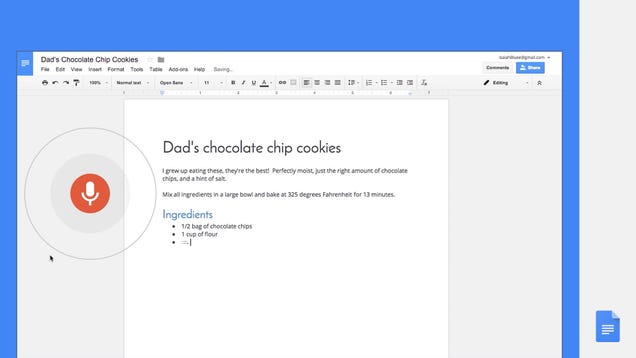
Google Docs Now Lets You Edit and Format Text with Your Voice

by Melanie Pinola

Google Docs added voice typing last year , but now you can also edit and format docs without your keyboard.

Read more...

25 Feb 17:01

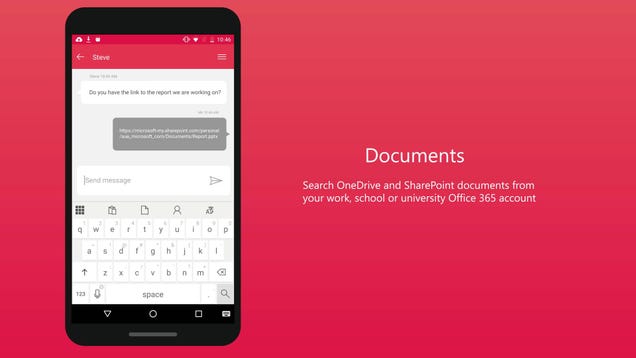
Microsoft's Hub Keyboard Quickly Copies Info from Other Apps, No App Switching Required

by Melanie Pinola

Android: It’s kind of a pain to switch from the app you’re in just to grab some info in another app to paste in. Microsoft’s new Android keyboard, called Hub keyboard, ends this inconvenience and also includes a translation tool.

Read more...

25 Feb 16:57

How Trudeau’s first national inquiry could become a quagmire

by John Geddes
Native protesters rise a banner during a blockade at the VIA train tracks and Wyman's Road near Shannonville, Ont., on Wednesday March 19, 2014. The protesters want justice for murdered and missing indigenous women. Lars Hagberg/CP

Indigenous protesters raise a banner during a blockade at VIA train tracks near Shannonville, Ont., on Wednesday March 19, 2014. The protesters want justice for murdered and missing Indigenous women. Lars Hagberg/CP

The federal government hasn’t yet announced the exact mandate of its promised inquiry into missing and murdered Indigenous women. What the Liberals want to avoid, though, is already clear: a repeat of British Columbia’s missing women commission of inquiry. When retired appeal court justice Wally Oppal released the B.C. commission’s five-volume report in a downtown Vancouver meeting room in late 2012, he was greeted by heckling from Indigenous protesters, bitterly dissatisfied with how he had conducted the two-year inquiry.

Indigenous Affairs Minister Carolyn Bennett and Justice Minister Jody Wilson-Raybould are now grappling with tough questions about how to make their inquiry different. They are expected to launch it by early summer. Last month, they consulted Oppal. “What I told Jody is, your biggest problem is going to be to keep everybody happy, because the expectations are so high,” he says. “Some people are going to want you to solve murders that happened in 1996, for instance.”

Indeed, sorting out how the inquiry will deal with claims of police indifference or incompetence going back decades is the biggest challenge facing Bennett and Wilson-Raybould. Dawn Lavell-Harvard, president of the Native Women’s Association of Canada, says the inquiry must be “very tough, very inquisitorial” on police conduct. “But that kind of inquiry,” she adds, “is very different from the kind of safe space you would want to set up for the families.”

Lavell-Harvard says police must answer hard questions about past cases, but the families of victims should be able to tell their stories without fear of intimidating cross-examination by lawyers representing those police. Oppal’s inquiry—into how police failed for years to recognize that mainly Indigenous women vanishing from Vancouver’s Downtown Eastside were being preyed on by serial killer Robert Pickton—allowed adversarial clashes between victims’ families and police lawyers. “We’ve had some conversations with some of the families who were part of the B.C. inquiry who say they were revictimized through the process,” Lavell-Harvard says.

But Brian Gover, a Toronto lawyer who has often acted as counsel for inquiries, says any police forces or individual officers whose conduct might be faulted by the inquiry will have to be given a chance to defend their reputations. That could lead to hearings packed with lawyers arguing at length over the details of cases stretching back many years. “If you have this very elaborate fact-finding process, you’ll end up with a lot of truth and not enough reconciliation,” Gover warns.

There are ways, though, to limit the amount of courtroom-style arguing over disputed facts. For instance, Gover proposes that the commissioners, who haven’t yet been appointed by the government, assign teams of fact-finders to look into allegations and report back to them. As well, he suggests the government consider limiting the inquiry’s mandate to issuing findings of misconduct against police forces, not individual officers, which would cut down on the amount of hearing time devoted to hammering out exactly what happened in particular cases.

Lavell-Harvard says she has heard the arguments for restricting the inquiry’s mandate when it comes to issuing findings of misconduct. She says that would be acceptable to her group only if the government pledges that after the inquiry completes its work, which is expected to take two years, another process would investigate specific complaints. “Things are going to come out, and if this initial inquiry isn’t going to be mandated to [pursue] individual cases where they find misconduct, there has to be a firm commitment to set up the forum, to set out the time frame, for those cases to be dealt with,” she says. “We can’t say we’re going to identify these cases and then just not deal with them.”

Even the number of deaths the inquiry must consider is far from settled. A 2014 report by the RCMP found that 1,017 Indigenous women had been murdered between 1980 and 2012, and another 164 were missing. But Bennett made news earlier this month by declaring, based on consultations with Indigenous groups, that the number is “way, way higher.” Status of Women Minister Patty Hajdu said an estimate of 4,000 missing or murdered women is credible, based on complaints from First Nations leaders about police often failing to investigate suspicious deaths in their communities, too quickly deeming Indigenous women to have committed suicide or died accidentally.

Oppal says he has no doubt that police have discriminated against First Nations, but Ottawa’s inquiry should dig deeper. “It’s all about poverty, homelessness, lack of education, alcoholism and drug addiction, violence against women,” he says. If the inquiry is to seriously tackle any of those issues, though, the government will have to find a way to keep it from being overwhelmed by the controversy over policing before it even begins.

The post How Trudeau’s first national inquiry could become a quagmire appeared first on Macleans.ca.

25 Feb 16:50

17 Ecommerce Tools that Will Drive Sales and Generate Revenue

by Genia Stevens

Online sales accounted for more than half of total retail sales growth in 2015, according to the U.S. Commerce Department. Ecommerce sales remained strong in 2015 and online sales totaled $341.7 billion for the year. For online retailers, accomplishing this kind of success is no easy feat.

A well designed ecommerce website will provide an exceptional customer experience, but managing an ecommerce ecommercewebsite can be challenging and time consuming. Operating an ecommerce business requires business owners pay close attention to tons of details – everything from inventory control to pricing to team collaboration.

The success of any ecommerce business depends on many moving parts. Hundreds of online tools are available to help businesses manage day-to-day tasks. Here’s a list of 17 tools to get you started.

Analytics

It’s crucial for ecommerce businesses to understand the marketing data collected using various analytics tools. Knowing what the data means can help businesses make informed and strategic decisions related to marketing, sales and other areas of the business.

#1. Clicky is a web analytics tool that allows users to access system information in real time. Cicky has a unique feature that a lot of other analytics tools don’t have: it can track Ajax and Flash events. This analytics tool is best for small to medium size ecommerce businesses.

#2. GoSquared provides real time revenue metrics and sales figures. GoSquared allows users to quickly and easily compare revenue and sales data to previous weeks or months. This tool also provides revenue and conversion predictions.

#3. Metrilo is a tracking tool that allows users to track product performance and conversions across all devices. Metrilo also creates funnel reports that provide an overview of the customer’s purchasing process.

Product Pricing

Competitive intelligence is very valuable for ecommerce businesses. Automated product pricing tools help ecommerce businesses remain competitive. The ability to make smarter sourcing and pricing decisions helps businesses drive sales and increase revenue.

#4. CamelCamelCamel tracks pricing data on Amazon products allowing users to gain a better understanding of a product’s sales performance. Users can setup history charts, price watches, and price drop alerts. Access to this type of data helps businesses make more informed decisions while product sourcing.

#5. UpstreamCommerce tracks, compares and analyzes current and historical competitor pricing data. The software helps users develop an actionable pricing strategy. UpstreamCommerce also helps users remain competitive with their pricing.

User interaction

It’s important for ecommerce businesses to monitor website visitors’ behavior. Knowing what visitors are doing – and how you can get them do more of it – can help increase conversions. User interaction tools can help ecommerce businesses determine what’s going on when visitors get to their website and how they can capitalize on that behavior.

#6. Chalmark is a user interaction tool that allows users to get feedback on designs before those designs are implemented. With Chalmark, users can perform first click testing – tests that ask people to click on what they would look at first – on screenshots and visual designs.

#7. Bounce Exchange tracks website visitors’ cursor movements in real time. When a visitor is exiting the website, Bounce Exchange serves them a call-to-action that includes a special offer. This tool helps capture visitors before they leave your website.

Content management

A dependable content management system is a necessity for any ecommerce business to function efficiently. A good content management system streamlines content publishing and almost all of an ecommerce business’s daily activities.

#8. Magneto is an ecommerce platform built on open source technology. This inventory control system is a content management tool that offers users a lot of control of their online store. Magneto allows control of the content and functionality of your online store and offers additional extensions to broaden the platform for specific functionality.

#9. PrestaShop is an open source ecommerce content management tool that comes with over 275 features. PrestaShop is designed for small and medium-size businesses. Users can track visitors, view customer profiles, track orders and sales, catalogue statistics and track affiliate Statistics.

#10. OsCommerce is an open source online store management software program. It has over 7,000 free add-ons that can be used for customization. OsCommerce can be used on any web server that has PHP and MySQL installed.

Cloud storage and back-up

Storing data in the cloud offers ecommerce businesses many advantages. Backing up data using external hard drives or backup tapes isn’t always easy, simple, secure or affordable. Cloud storage makes system backups fairly simple and affordable for most businesses. Cloud storage also makes it more affordable to perform routine backups on a more consistent basis.

#11. Carbonite provides data backup, rapid recovery and 24-hour access to your data from anywhere. Carbonite provides ongoing backups for your data and works on both the Windows and Mac operating system. Carbonite’s cloud backup and recovery plans are designed for small and midsize businesses, in addition to home offices.

#12. Mozy provides automated cloud storage for backup protection and syncing. Files are encrypted and accessible remotely, even from a smartphone. Mozy’s smart data protection knows which files to backup and when.

#13. CrashPlan creates multiple copies of your data and allows mobile file access. CrashPlan provides continuous local and offsite backup protection. There are no storage size limits, file-type restrictions or caps on bandwidth.

Team collaboration

Team collaboration can help simplify ecommerce business processes. When teams function cohesively, business operations are simplified, the company saves money and the organization runs more efficiently. Teams are more productive and efficient when they work together and collaboration tools can help make that happen.

#14. Pingboard: This Org chart software builds interactive organizational charts designed to share within the company. This software makes it easy to keep track of each team member’s skills, interests, and team information. Team members can view the org chart from anywhere, including their mobile device.

#15. Trello is designed specifically with teamwork in mind. Trello’s drag and drop design allows users to manage projects by simply dragging cards between lists to indicate a project’s progress. Trello is a visually-driven project management tool that simplifies team collaboration.

#16. Skype collaboration tools include group audio calls for up to 25 people and video conference calls for up to 10 people. Businesses can create accounts and allocate credit, subscriptions and features for teams. Skype-to-Skype communication is free and the software is accessible on desktops, smartphones, and tablets.

#17. Teamwork is a team collaboration and task management tool that combines project management with billing, reporting, time logging, real time messaging and trouble ticketing. Teamwork has a central file management system, email and Google Drive integration, and a simple price structure based on users.

­­­Experts predict that more traditional retailers will turn to ecommerce, small businesses will find it harder to compete with online retailers, and marketing automation and integration will be the key to success.

Forrester Research predicts that ecommerce revenue will increase by 45 percent in 2016, reaching a total of $327 billion, and it will account for almost 9 percent of total retail sales. Online retailers have to be as efficient and profitable as possible to enjoy this kind of success.

This article first appeared on Huffington Post.

25 Feb 16:50

Compgun takes the work out of figuring out sales commissions for your small business

by Ken Yeung
Statement View - Row Disputed

In the United States, companies spend more than $800 billion each year on salesforce compensation, making it one of the largest marketing investments for any enterprise business. But the ways for managing this model are antiquated and time-consuming, which makes it prime for a drastic shift. Compgun is banking on that, launching a service today to transform sales commission in a manner similar to what Gusto has done with payroll.

“We’re trying to create the first sales commission software that everyone can love,” CTO Tim Sze told VentureBeat. Compgun functions as a self-serve platform with companies being onboarded in less than a day.

Founded by Sze and CEO Jake Seip, this Y Combinator-backed startup allows its customers to build, test, and administer their commission structures for salespeople. It also provides real-time analytics that lets you monitor individual performance and team rankings. Customized dashboards and graphs are also available in the subscription platform. Compgun will host your sales data and metrics, which it uses to build intermediate calculations and goals for your team to keep track of.

The founders are longtime friends, and when they started a previous business together, they discovered that sales commission is a giant pain point for businesses.

“Most companies are managing this in email and Excel,” Sze explained.

Statement View - Dispute Resolved

Its name is an homage to Mailgun, the transactional email API service for developers. Seip said that the premise is to make a compensation service as easy as shooting emails to people.

Compgun offers two pricing tiers, depending on how many people are enrolled. It charges $25 per user per month for organizations with fewer than 25 people and $35 per user per month for those with more than that, with no commission on top of that. It’s looking to appeal to sales representatives, managers, and administrators.

So what’s to stop a company like Salesforce from entering the market and dominating the sales commission space? Seip said that right now it’s difficult for the enterprise cloud company to do so because it doesn’t have any native commission built in. “It’s a great CRM and a great way to house relationship data,” he said, but “if you want to calculate commissions, you need something with the scale and the ability to analyze in real-time.”

Salesforce Dashboard - Sales Rep

Sze said that Compgun offers an integration with Salesforce and will also pair with internal SQL databases; it can pull data through FTP sync, and an API feed is in the works.

The company said that it has over $400,000 in booked annual revenue run rate with companies such as Optimizely, Intercom, and Shopkeep POS. Seip said that the number of companies Compgun works with is in the “low double-digits,” but is calculating commissions for “hundreds and hundreds” of sales reps. Since joining Y Combinator this season, it claims to have increased bookings by 50 percent.


25 Feb 16:49

Conquer Common Sales Objections in 6 Easy Steps

by Alice Heiman


Are you or members of your sales team having trouble closing deals because of the objections the prospects raise?6 Steps for Handling Sales Objections

How often do you lose a deal because of a price objection? It’s important to determine the percent of time that price is the issue. Is it more than 10% of the time? If the answer’s “yes,” and your products are priced fairly then you could use some tips on handling objections.

Price is only one type of objection and often a price objection masks other types of objections. Prospects will have objections about timing, features, service, shipping and a myriad of other things but sometimes instead of explaining those to you they object to the price.

Objections are a natural part of the sales process. When you and the prospect are taking the steps to move forward in the sales process it is natural that objections will arise.

Sometimes people are just not interested but don’t know how to say no. Maybe they really can’t afford your product or service and don’t want you to know that. Learning to handle objections is important so that you don’t spend time with prospects who are not going to buy.

What are Objections?

Objections are a signal that the customer is interested but not ready to buy. Objections usually arise because either you or the prospect don’t have a full understanding of something important. People want to feel good about their purchases whether business or personal. They want to be sure they made the right decision. So sometimes an objection is really the prospect saying, “Tell me why your product is so great, so I can feel good about my purchase.”

Most objections are legitimate and should be treated that way. Many salespeople talk about having to overcome objections. I always use the term “handle” instead. If I have an objection, I don’t want to be “overcome.” I want to know how you will handle that objection and make sure the purchase is a good solution for me. As a prospect, this will tell me a lot about how you will respond in the future if I become a customer.

4 Categories of Objections

Objections usually fall into one of 4 categories: price, timing, product or something the prospect will not disclose to you. The 4th is something like, “My brother sells the same product and I need three quotes but I’m going to buy from him.” Or, “I don’t like you, but I’m not going to tell you that so I will throw out some other objections.”

No doubt, you have come across all of the common objections; the next step is to make sure you have a process for handling them.

The following exercise will help you:

  1. Make a list of the objections you commonly hear.
  2. Write several solutions that are appropriate for those objections.
  3. Craft questions that will help you understand the objections.

Here’s an Example

Objection: The price is too high.


Possible solutions:
Provide financing, develop at payment plan, explain the return on investment, help them work it into the next budget, discuss the value.

Possible questions (you wouldn’t ask all of them):

  • What have you discovered in comparing our product to the competition?
  • How much were you planning on spending?
  • What is your budget for this purchase?
  • Would financing make the purchase possible?
  • What features and benefits would make the price work for you?


Handling objections is something you will always need to be prepared to do. New objections come up, but typically we hear the same objections and need to come up with good solutions to handle those. It is good to do the above workshop several times a year and remember to use the process for handling objections below.

6 Steps for Handling Objections

1

Listen:

Listen carefully to the objection.

2

Validate: 

Make a statement of validation to show you listened.

3

Ask:

Confirm your understanding of the objection by asking a clarifying question.

4

Solve:

Answer objections with the appropriate solution.

5

Confirm:

Confirm that your solution covers their objection.

6

Move on:

If the customer is open to the solution move on to the next step in the sales process.

Handling objections is something that should be easy for you to do. Objections are a natural part of the sales process. In fact, if I don’t get any objections when I’m selling I get a bit worried. I would rather handle objections before I close a sale than after because I never want a buyer to have “buyer’s remorse.”

Need help handling objections at your company? Click here to set up your free strategy session with Alice.

The post Conquer Common Sales Objections in 6 Easy Steps appeared first on Alice Heiman, LLC.

25 Feb 16:48

The Four C’s of Marketing

by Justin Wong

checklist

This blog was originally written in May 2013.

Last week, we discussed the four P’s of Marketing. This week, we thought we’d discuss the Four C’s of Marketing. Created in 1993 by Robert Lauterborn, the Four C’s is an updated classification system of the Four P’s. His model shifts the focus from the producer to the consumer and is a better blueprint to follow for smaller businesses that are marketing to a niche audience.

Consumer replaces Product:

Rather than pre-defining the customer into a product, the consumer model puts the impetus on satisfying the customer’s needs. The Consumer model should be seen as a conversation between the customer and the business, which come together to create a custom product that satisfies a customers needs. With tools like social media and email marketing, businesses have new ways to communicate with their audiences.

Cost replaces Price:

The price is only one factor in acquiring customers. Cost reflects the cost of using the product, which can include inconveniences (changing from one computer software to another) and customer ethics (such as choosing between organic and non-organic eggs).

Convenience replaces Place:

Convenience (whether geographical or through search engines) influences the perceived value of a product. The ease in which a consumer can purchase a product is crucial in deciding what business acquires customers.

Communication replaces Promotion:

Communication views the promotional process as lateral, involving conversation between the customer and business. This is in contrast to the traditional mode of promotions, which is vertical and involves one-way communication. Communication is as much about listening as it is about talking! We recommend setting up a Google Alert for your business and your industry and monitoring relevant hashtags on Twitter to tune in.

The Four C’s model is better tuned to the needs of smaller businesses that don’t yet have a strong brand-name equity. As such, it is crucial that these businesses develop a two-way relationship with their target audience!

25 Feb 16:47

How to Write a Popular Blog Post – Without Writing

by Jessica Lunk

How do you become a leading voice in your industry? For that matter, how do you even get your foot in the door? The answer is content —blog posts, eBooks, whitepapers, articles, infographics and more.

BUT – what if you don’t like that answer? What if the thought of sitting at your desk and hammering out a blog post on your keyboard sounds about as appealing as gauging out your eyeballs with a dull spoon?

Then this post is for you!

Writing relevant blog posts and consistently sharing great content positions you and your business as an industry leader. But finding the time and mustering up the talent to put together great content can be really tough.

That’s where lists – those irresistible listy listicles – come in.

You don’t have to be much of a writer to create content that gets eyes on your brand and people to your website. By curating content, you can leverage excellent articles and information that already exists to keep current and potential customers engaged. You’ll become trusted voice in your industry, a disseminator of trusted and reliable information. And you won’t have to do the dirty work of writing original content.

Creating a List Post that Gets Found and Shared Online

Just like where you sit at lunch dictates your popularity in high school, the company you keep online can make or break your brand. The power of list posts is that by linking to and mentioning other websites, thought leaders and influencers, you give lift to your own brand and gain exposure to new audiences.

Here are 9 types of list posts to create and share with your audience:

  1. Ask influencers: Tweet a question to people in your space that have a big presence and compile their answers into a blog post, like we did with our post, The Most Important Online Marketing Lessons of 2015 for Small Businesses.
  2. Ask your audience: Your customers and prospects want to hear from people who are just like them. Ask your audience a question to come up with a list of engaging, fun content – similar to when we asked our audience of small business owners about their Thanksgiving Traditions.
  3. Tap into employees: Ask your employees one question and put their answers in a blog post. We did this with our blog post, What Our Core Values Mean to Us.
  4. Use comment sections and reviews: Is there a topic that’s sparking conversation? Show your readers what others are saying about a hot topic in the comment sections on your blog or other blogs, linking back, of course. For instance, we compiled what our customers where saying about us on several review sites in this blog post.
  5. Make a list of resources: Are there business tools you use that you would recommend to your customers? For instance, a bank might have a list of the 20 most affordable colleges within 100 miles, or a used car dealer may have the 10 best subcompact cars with links to each company that builds them. We put together a list of the 8 Marketing Podcasts Every Entrepreneur Should Hear for our audience of small business owners.
  6. Help your audience find more content: Where do you go to find content about your industry or niche? Create a list of blogs or resources for your audience, like our list of 21 Great Small Business Blogs.
  7. Be an inspiration: What keeps you motivated and moving every day? Put together a list of quotes or a fun list of internet memes. We shared small business inspiration in our Monday Motivation Quotes post.
  8. Find examples: You know a good thing when you see it in your niche. Curate and share those instances of excellence using images and links to tell a story. For instance, at Hatchbuck, we know good content marketing when we see it, so we put together this post on 12 Awesome Examples of Content Marketing Done Right.
  9. Link to old posts: If your business and blog have been around for a while, you probably have a good amount of blog content. Find a theme and make a list – kind of like we’re doing in this post right now!

When it comes to content marketing and blogging, create a list of curated content might sound a little bit like cheating. But, the reality is, these types of post aren’t just easy to create, they’re easy for your audience to digest and share. Mentioning other brands, leaders, and even your own employees can get new people to share your content, broaden your network and help your list posts gain instant popularity.

When you don’t want to write a blog post, make a list. You’ll save time while growing your audience and showing potential customers your value.

This post originally appeared on the Hatchbuck blog.

25 Feb 16:47

7 Horrible Mistakes Marketers Make for User Engagement

by Craig Zingerline

How many times do you ask yourself, “Is my content valuable and enjoyable enough to capture the attention of my users, and will it keep them engaged?”

User engagement is all about motivating and encouraging your users to interact and share your content so they become attached to your business or brand. In simple terms, more user engagement leads to more growth and loyalty for your business.

However, in today’s technology-dominated world, marketers tend to forget the most important variable in their marketing strategies: the people! It’s all about how your content adds value to them so they take the next step of interacting and sharing it. Engage people, entertain them, and delight them with your content if you want your business to grow. Provide real value to them with your content and they will love your business.

As marketers, we make a good number of mistakes, but the key is to learn from them and make our content and product incrementally better for users. Here are some of the awful mistakes that marketers make when they create content for high user engagement:

  1. No emotional connection: One of the biggest mistakes marketers make is that their content does not emotionally connect with their users. It is important to know what your customers really need, what will attract them the most, and how you can deeply connect with them on an emotional level. In the recent years, Coca-Cola has done an incredible job in connecting with their users through understanding user motivations and creating nostalgic feelings in their campaigns. Take a look at the following campaign by Coca-Cola to see how they make an emotional connection with their users.
  2. Your content is not visual: Let’s be frank, nowadays users do not have enough time to read every long-form post and article that’s being produced, and thus marketers need to find new ways to attract their attention. That is why your content needs to be more visual. In recent times, this has led to higher user engagement and the ability to drive conversions, and consequentially the huge popularity of platforms such as Instagram and Snapchat. Even if you are creating content on other platforms such as Facebook, Twitter or your own web page, make sure it is visually engaging for your users and share it out in all networks.
  3. No incentives or benefits: There has to be some incentive or benefit for your users to engage with your content. This is a great way to motivate and encourage them to take part in your experience. Pearl Jam created a bracket voting contest called Pearl Jam Madness for their users where they could vote for their favorite Pearl Jam songs and had a chance to win prizes along the way. This campaign had an emotional benefit to the users (songs they love) and a tangible benefit of winning a prize (the incentive). This led to high social sharing and commenting by users and nearly a million votes.PJ
  4. Failing to build relationships: Many marketers simply fail to build relationships with their users. Your content should be focused on building a strong bond with them. Make it fun, valuable and allow users to communicate with you about the content. When writing, think about your community. The best campaign I can think of is Toms Shoes‘ One Day Without Shoes Instagram campaign, where users could upload pictures of their bare feet and use the #withoutshoes hashtag. The company would then give away a pair of shoes to someone in need. As a result, the company was able to give away a million pairs of shoes and generate high user engagement.toms-instagramNot capturing feedback: Feedback not only helps you make necessary changes to your content, but also helps in building credibility and loyalty towards your brand. Make your users feel important and know that you value their input and they will in turn have more positive connections with your brand. Some of the ways marketers can get feedback is through surveys, a comment/feedback box on their website, through in-app messaging, or by reaching out directly to their users.
  5. Your content is cluttered: This is a major mistake that marketers overlook when they are trying to create engaging content. Either there is too much text, information is hard to find, or there is a cluster of social icons and calls to action and users don’t know what to click on. Make your content easy to understand and actionable and you’ll see better results. Take a look at the website below. Do you think your users will easily find information or take action on something? I bet not.Picture1
  6. Not being transparent: The last mistake is not being transparent with your users. In this digital age where consumers have access to so much information, they have become highly sensitive to the feeling of being exploited. Being transparent with your content – the goals you have behind it, what actions you are looking for, etc. – is the key to achieve their trust and loyalty. If you are not being transparent in your content, user engagement and brand loyalty will surely drop.

Takeaways

Content marketing ROI is based on successfully reaching your audience and generating high user engagement to fulfill your goals. Keep your content simple, actionable and be transparent. Look to not just satisfy your users, but to delight them with your content. And avoid these 7 horrible mistakes at any cost!

Vinay Chand and Craig Zingerline contributed to this post. This post was originally published on the Votion Blog.

25 Feb 16:47

A Simple Trick to Winning More Business on LinkedIn

by John Nemo

Let me start with this – never, at any time in the history of humanity, has it been easier to create, grow and market a product or service online.

The traditional gatekeepers that kept watch over the radio airwaves, printed word and television signals are gone, replaced by Podcasts, Blogs and YouTube.

Opportunity concept.

An Opportunity … and a Challenge

For anyone attempting to market his or her product or service online in the 21st Century, this presents both an opportunity and a challenge.

The opportunity is simple – anyone with mobile device and Internet access can literally reach the whole world in moments thanks to the power and viral nature of social media.

The challenge, of course, is that you’re literally competing with everyone on Planet Earth for the time and attention of your prospects online.

The Reality Right Now on LinkedIn

On a platform like LinkedIn, for instance, it’s no longer enough to simply state who you are and what type of service or product your company provides.

We’ve never had more choice as consumers, and when there are countless people out there offering us the same (or a similar) type of product or service, how do you stand out from the crowd? (Remember, LinkedIn has 400 million members!)

The answer is easier than you think.

Boxing Gloves

Enter Your “Secret Weapon” on LinkedIn

In fact, I’d even go so far as to say it can be the “Secret Weapon” of your entire LinkedIn profile, assuming you deploy it in a wise fashion.

Ready for it?

The Secret Weapon is …

You.

Yes, you!

What I mean is that at the end of the day, all things being similar, prospects will always choose to do business with someone they Know, Like and Trust.

I don’t think anyone reading this post would disagree with that reality.

The key is this – how do you create instant Likability, Credibility and Trust online?

Video is the Answer

With video, that’s how!

Next to being face-to-face with someone in person, nothing works faster at creating the “Know, Like and Trust” elements of a transaction like online video.

This is especially true on LinkedIn, where, next to your profile photo, the fastest way to begin building a relationship with prospects is by “talking” to them virtually via a LinkedIn profile video.

LinkedIn allows you to embed videos directly on your profile page – it’s as simple as copying-and-pasting a YouTube or Vimeo link.

Here’s an example of how it looks on LinkedIn Riches student Lisa Anderson’s profile page:

Screen Shot 2016-02-22 at 11.59.09 AM

See how it visually “pops” for the viewer? See the title where it says “VIDEO” in all capital letters? A prospect is instantly clued in on Lisa’s smiling face so he or she can get to Know, Like and Trust Lisa more.

A video goes where text cannot – it adds facial expressions, emotion, your voice and personality to the mix.

When, as a prospect, I get to see and hear you speaking in a way that feels like you’re talking directly to me, I begin bonding with you on a level far beyond scanning profile text. You instantly become more trustworthy, likable and credible in my eyes because I can see and hear you. I can look you in the eye, so to speak, and that makes an enormous difference as we begin our relationship.

LinkedIn Profile Videos – Examples

Here’s an example of my LinkedIn profile video, where I share my personality and the story about why I became a LinkedIn Trainer:

Notice in the example below from Lisa Anderson’s video how she parlays an award she received into instant credibility:

In this example, notice how Dan McKnight is able to integrate both his personal experience and the benefit/value his company provides its clients:

See how personal and powerful those examples are?

Don’t you feel like you know each person in those videos much more than you would have if you’d just read some brief text on LinkedIn?

Your Turn – Add Video to Your LinkedIn Profile!

Now, the next step for you is to make your own video!

I’ve got a slew of free resources, suggestions, and tips on my DIY Video page – this covers everything from on-camera videos to off-camera ideas as well, in case you’re uncomfortable being under the bright lights.

The important point here is to utilize video in one form or another, and then add it to your LinkedIn profile page. I’d even suggest you paste in your video at the bottom of all your LinkedIn posts. Use a title like “VIDEO: Meet John Nemo!” and put in your profile video at the bottom of the post along with any other Call To Action (CTA) items you want to utilize.

With all that said … lights, camera, action!

25 Feb 16:46

12 common mistakes with customer analytical models

by Expert commentator

Optimise your customer analytics by getting the models right

Customer analytical models can deliver huge value for companies that invest in them to improve their sales and marketing activities. But even well-known big brands can get it wrong when designing, implementing and operating these models. From Barclays to John Lewis, Cineworld to Pizza Express, businesses across all sectors are benefiting from the use of customer analytics. These days, it is unusual to find a company that does not analyse customer data, even in its simplest form. Customer analytics may fall under business intelligence, marketing operations, finance or even customer support, but wherever it lies it will have the potential to improve the optimisation of sales and marketing functions.

customer analytics

Companies often want to know which products or services specific customers are most likely to purchase, which customers need a nudge to help them to complete a sale and which customers are most likely to leave them. When used intelligently the results that customer analytical models generate have a direct and quantifiable impact on the revenue and profitability of a company. Given this, one would expect that the development and operation of customer analytics would be second-nature to businesses, and a well-established methodology. At Intilery however we often find that companies have little or no use of analytical models within their sales and marketing functions. In addition, where models have been implemented, common mistakes are evident.

Areas for focus

Typically, there are three areas which need the most attention (not accounting for having no model at all).

  1. The planning, design and definition of the models.
  2. The deployment and operation of the models.
  3. The refinement and lifecycle of the models.

We'll look at the mistakes I see across these three areas:

1. Setting the wrong customer value

The second most utilised customer analytics model is the one most often designed incorrectly. The most common design flaw in the definition of the retention model is the valuation of the customer (sometimes referred to as CLV - Customer Lifetime Value). Consultants often encounter CLV definitions that do not represent true lifetime value, rather a current or recent customer valuation.

Utilising the value attributed to a customer, a retention model may assign a deep discount or a margin-heavy offer to a customer who has only recently become a high-value customer and is likely to churn (either churn completely by leaving or churn to a lower value-level).

Conversely the retention model attributed via the customer value may offer too shallow an offer or incentive to customers likely to churn who were previously high-value customers.

“The retention model should look at the value the customer has previously generated for the company and provide appropriate offers/incentives to the customer to either bring them back to their historically high level of value or stop them churning.” The problem is that by looking at

The problem is that by looking at recent activity or overly averaged values, the wrong or inappropriate offers and incentives may be applied to the customer. Instead, the retention model should look at the value the customer has previously generated for the company and provide appropriate offers or incentives to the customer, either to bring them back to their historically high level of value or prevent them from churning.

2. Not utilising customer value propensity

The second issue with valuing a customer for retention is not taking into account the customers’ propensity to increase/decrease in value, by only looking at current value and/or past value. If this is the case, you limit your model to events that have happened and not events that could happen. 3. Ignoring the social value of a customer The third issue with retention modeling is not taking into account the social network value of the customer. If a customer leaves, or does not receive the service or incentives they expect (yes some customers do expect incentives), then the customer may broadcast this on their social network. Taking into account a customer with a very well connected (virtual or physical) network, you may wish to increase the value of a customer and incentivise accordingly for retention.

3. Not retaining customers all of the time

Another issue with retention modeling is that they are often only run at the beginning of the month to identify customers likely to churn within that month (or any other given period).

To be effective the retention model needs to operate in real-time identifying customers and visitors that are likely to churn and applying the required action to prevent it. Churn triggers are used to identify customers that are most likely to churn. These could include; a product being out of stock, a late delivery, a slow loading page, very few (or no) search results or simply gesturing to leave the page.

For a retention model to be effective, the model must include periodic (daily, weekly or monthly) analysis of churn detection along with real-time churn-triggers. Using these together it is possible to apply offers/incentives or other actions to retain customers and more importantly do so in a cost-effective and margin protecting way.

4. Ignoring seasonal variations

Another common error is developing a retention model that doesn’t take into account seasonal variations, or using a single retention model all year. Customers behave differently according to the season and according to seasonal habits. An obvious example is the increase in browse or spend at Christmas, but what about other calendar events? All variations should be accounted for. Also, products and services may have seasonal variations - such as buying cycles or budgets - and companies may have unforeseen variations due to unpredictable trends.

Whatever the seasonal variation, retention models should be careful to incorporate these into the design.

Segmentation Models

5. Lack of granularity

Segmentation models are the most implemented model across all companies and industries, and yet often the least used. Typically, this model will only place customers into high-level segments and built around value, product, basic behavioural data and sometimes geo-demographic segmentation. The issue with this approach, whilst valuable, is that it does not empower companies to deliver ongoing actions. Instead, it drives businesses to shape themselves around the customer segments and shape their offerings for them. For example; a company discovers it has a noticeable percentage of older customers and therefore develops specific services/products for that customer segment.

The issue with high-level segmentation is that it doesn’t take into account the detailed segments, where segments may contain a small number of customers or even a segment of one customer (known as one-to-one marketing). Detailed segmentation allows a company to take action (often in an automated way) on the various individual behaviours of its customers. The results of of this type of segmentation are much more useful and clear. For example, a detailed segment in the travel industry could show how each specific customer behaves; the number of searches before booking, the prominent day of the week for engagement, the seasonal variation in browsing behaviour, the likelihood that a customer “surfs for vouchers” before completing or a change in the type of service/product the customer views/purchases.

Examining customers across detailed segments enables companies to take specific actions to change or influence behaviours, such as, targeting customers with offers when they are most likely to be receptive or delivering an upsell incentive for a customer who has dropped down to a lower than usual price-point. The key learning is that by deploying detailed segmentation it is possible to target specific actions rather than shape your company around a few high-level customer segments.

Channel Migration Models

6. Migrating customers for the wrong Reason

Companies often devise methods to migrate customers from one channel to another, for both marketing/sales communications and for customer services (sales and service). The mistake here is to do this for the wrong reason or at the wrong time. Companies will try and lower the cost of managing a customer by migrating them from a higher-cost channel to a lower-cost channel, the operational cost for managing customers may be reduced, but this could greatly reduce the lifetime value of the customer if the migrated channel is not sufficiently sales focused. Also a company may migrate customers from social to email, or from branch to online-chat. Again the operational cost of communications may be reduced but not taking into account the sales effectiveness of the new channel could result in lost sales.

Activity Optimisation Models

7. Selling instead of helping

Companies can model the lifecycle of a customer at an engagement level to ensure that each customer has their particular needs met, though often a company will only look at the sales category of actions to try and sell the next product or service to them. While this model is useful and can be used to forecast revenue, it fails to capture the bigger picture.

The next action a customer needs is dependent on many individual and personal factors. Companies should design a number of actions that can be applied (with personalisation) to satisfy the customer and promote customer loyalty. More worryingly, only looking at the sales channel and bombarding customers with constant messaging about products or services they can buy could actually disengage customers completely. Intilery recently worked with a client that had succesfully increased sales in the short-term but had not been able to see the long-term damage it was doing to customer loyalty and retention.

“A well designed model will take into account all possible needs of a customer and communicate solutions to the customer at the right time”.

For example: -

  • Informing a customer about the company’s app and its benefits
  • Tell the customer about different ways they can get in touch
  • Provide post-purchase advice and information, e.g. destination guides or product info such as warranties
  • Provide details of other channel services, e.g. physical store location or opening hours
  • Collect further personal details or preferences (but clearly explain why)
  • Ask the customer for a referral (perhaps with incentives)
  • Show the customer how to share their purchase/booking to help validate purchasing decisions Know when NOT to communicate with a customer (for a period of time)

Strategic Mistakes

8. Working in silos

Another common mistake is not gaining adequate internal support or buy-in from across the business. Stakeholders from all areas of the business should be involved with the design and operation of a customer analytics model. We recommend that when planning this type of model that you use a RACI matrix for identifying and involving stakeholders.

Why involve other areas of the business?

Ask yourself:-

  • Can the business operationally support outputs and actions of the model?
  • Will there be operational costs that need to be budgeted for?
  • Will customer support need to implement new policies and practices?
  • Does marketing need to work with new key messages?
  • Will sales need to adjust revenue targets?
  • Do new KPIs need to be setup to ensure the model has buy-in longevity?

9. Treating new customers like everyone else

New customers must be treated very carefully, they top-up the customer base and directly impact churn levels. A new customer is the most receptive to offers and cross-sell, but is also the most likely to churn. Reasons for failure are often categorised as too much or alternatively incorrect engagement. Getting this right is key to a long-lasting and profitable relationship with customers. One approach is to simply not contact new customers for a period of time as the behavioural profiles of new customers does not usually reflect their long-term behavior. While this will improve the churn rate of new customers it will affect the bottom line. Instead, a better approach is to design a welcome programme that utilises next-action analysis, detailed segmentation and of course seasonal variation.

The actions that are taken for new customers should be unique and personalised to every individual customer, this may mean that for certain new customers no contact is made at all, for others a full suite of engagement activity, website personalisation, offers and cross-sells are applied.

10. Not refreshing models

As part of ongoing operations, a typical mistake is not refreshing the customer analytical models. Few companies revisit and analyse the ongoing effectiveness of their customer models. Failure to do so depletes the effectiveness and efficiency of the models and can lead to less profitability and increased churn.

As time passes, the ability to gauge the effectiveness of the analytical models increases, therefore companies should regularly assess their models. A variety of assumptions will have been made following the design and deployment of models, when it was simply not possible to analyse or predict the outcomes or understand the customer environment. Taking the time to periodically review your models will allow you to test your assumptions against new real-world data.

Also important is the changing landscape of the business, as company strategies, operations and marketing activities change, the structure, desired outcomes and operations of the analytical models may also require updating. Taking the time to update these to match the direction of the company will ensure strategic alignment.

11. Testing the wrong way

The final common mistake concerns testing. Testing of analytical models should be based on clear and rigorous statistical analysis, but also “business common sense”. While a test result may show a clear and statistically sound increase/decrease in a measurable variable, looking at this from a different perspective may prove the opposite.

This is commonly caused by uncontrollable environmental factors or over reaching on causation/correlation. The most effective way to test customer analytical models is to test them over a number of business periods, whilst applying statistical methods, and finally simply asking the question “does this make sense”.

Gareth James is CEO of Intilery and board member of Bikmo. A self-taught coding and programming prodigy in his formative years, Gareth became one of the minds behind MoneySupermarket.com. As Chief Architect and International IT Director he was hands-on with both the creation of the ground-breaking price comparison software and the business model which transformed first insurance, then financial services, travel and more.
25 Feb 16:43

How to Write a Sales Email: The Definitive Guide

by lye@hubspot.com (Leslie Ye)

how-to-write-a-sales-email.jpg

Sales emails are difficult to get right. They’re time-consuming to write, time-consuming to tailor, and aren’t guaranteed to pay off.

But it’s time to stop thinking about email as a necessary evil. Yes, writing good email is a skill that must be practiced, but once you master it you’ll be deploying effective messages in no time.

Luckily, we’ve got your back. Get HubSpot's free CRM here to start sending customized sales follow-up emails.

This post is the ultimate guide to writing each of the 10 types of sales emails, with a bonus section on how to make your writing shine. Use the jump links to navigate through this post.

The Basics of Good Email Writing

Prospecting Emails

Follow-Up Emails

Trigger Event Emails

Breakup Emails

Call Summary Emails

Closing Emails

Handoff Emails

Post-Sale Check-In Emails

Upsell and Cross-Sell Emails

Request for Referral Emails

Writing 101: 9 Tips

If someone got you something you really wanted, but it was wrapped in moldy newspaper, you wouldn’t get anywhere near it (I hope).

Emails work the same way. Even if your substance is valuable and relevant, packaging your writing the wrong way will turn off prospects and prevent your message from being heard. The 11 tips below will keep your writing clean so your prospects can focus on what you want them to.

1) Proofread religiously.

It may seem obvious, but there’s nothing worse than opening any piece of writing and finding it riddled with errors. It calls into question your professionalism, expertise, and authority. After all, if you can’t be bothered to check whether you’ve used the right “their/they’re/there,” why should your prospect take the rest of your message seriously?

2) Triple-check that all included information is correct.

Your prospect might forgive a typo, but you can bet they’ll remember if you mess up their name, their company’s name, your name, your company’s name, or their job title. Especially when you haven’t already established trust (if you’re sending a prospecting or follow-up email, perhaps), this is an easy way to get sent to the “Junk” folder.

And this covers everything from spelling to accuracy. Don’t ask your prospect for a meeting on “Thursday, November 16th” when November 16th is actually a Wednesday. Make sure you’ve attached the resource you promised and that your included blog post links work. Double-check your WebEx or GoToMeeting links, and that you’ve provided your correct office number.

You can’t guarantee every sale will go smoothly, but control everything you can so if a deal goes bad, it’s not because of a blunder you made.

3) Use formatting to your advantage.

The shorter you can keep emails, the better -- we’re all busy. But sometimes you’ll have to write longer ones, so follow these formatting rules to keep things clear:

  • Bold, underline, or italicize important points and dates
  • Break up blocks of text into short paragraphs for readability
  • Use bullet points when presenting a list of options
  • Highlight, bold, or otherwise emphasize next steps, action items, and calls-to-action

4) Use active voice.

Active voice is so named for a reason. It’s more energetic and more confident. In turn, it makes you sound stronger and more authoritative.

“To passive-proof your text, start by doing a CTRL-F for the word ‘by,’” Eddie Shleyner writes. “That’ll quickly highlight sentences in which the subject may be receiving the action rather than doing it.”

5) Use second person.

Dale Carnegie famously said that a person’s name was, to them, “the sweetest and most important sound in any language.”

Don’t go overboard by writing your prospect’s name at the end of every sentence -- that’s just weird. But place them squarely at the center of your emails by using second person (the narrative mode this post is written in). It’s a more personal way to communicate, and will get your prospect to imagine themselves doing the things you’re telling them to.

6) Get rid of adverbs.

Adverbs are words that modify verbs. (Think: quickly, very, overly, excitedly.)

“If you want your writing to grab people by the collar, replace that mediocre adverb-verb combo with a single punchy, potent verb,” Shleyner writes. “Instead of writing ‘adverbs are very, very good at weakening your writing’ you can write ‘adverbs sabotage compelling sentences.’”

He recommends counting your adverbs and cutting that number in half -- then in half again if you can.

Check out this blog post by Grammar Girl on how to eliminate adverbs from your writing.

7) Remove weak words.

Adverbs aren’t the only thing that weaken your writing. Weak words and phrases like “I think,” “Actually,” and “I just” can also undermine your standing. Prospects want their sales reps to be assured, steady experts, not waffling novices. The free Gmail plug-in “Just Not Sorry” will highlight troublesome words and phrases as you type so you can eliminate them before pressing “send.”

8) Give a reason why.

Explaining why you want someone to do what you ask -- no matter how ridiculous the reason -- increases the chances they’ll do it by more than 50%. So instead of saying you’d like to set up an exploratory call, say you’d like to have a conversation to determine whether you can help your prospect increase sales productivity.

9) Be specific, using data if you can.

Which statement would you be more persuaded by?

“HubSpot serves many customers just like you, and helps develop their marketing strategy.”

“HubSpot serves 18,118 companies around the world, 74% of whom see a sales revenue increase within seven months of starting to use our software.”

The second statement has a higher level of detail, more specifics, and demonstrates clear value. If you’re going to make any claims in your sales emails -- especially ones about value and results -- back them up with stats. Otherwise, why should prospects trust you?

I know this seems like a lot to keep track of. But if you consciously run through this checklist a few times, it’ll soon become second nature.

For more tips on how to improve your writing, check out these blog posts:

(back to top)

How to Write Sales Prospecting Emails

1) Draw a connection between you and your prospect.

Hook your prospect within the first two sentences of your email. An unsolicited email is inherently interruptive, so don’t throw away your shot to connect with a weak intro.

Examples:

  • “I see you’ve been consistently reading our blog posts.”
  • “You just downloaded our guide to the most popular floral arrangements for summer weddings.”
  • “Congratulations on the new position! I see your previous company used to use our software.”
  • “You fit the profile of many of our most successful customers.”

P.S. If you can’t think of a single good reason why you’re reaching out, don’t.

2) Provide immediate value.

Follow up on your reason for reaching out and offer guidance or suggestions, establishing yourself as a trusted advisor.

Examples:

  • “Have you seen this article addressing Y problem you tweeted about last week?”
  • “We’ve seen success in X area with A, B, and C strategies.”
  • “Companies like yours who follow X strategy often fall short in the areas you’re researching. Try A, B, or C instead.”

3) Leave them with food for thought.

If you have additional resources or more insight to offer, that’s great! But don’t write your prospect a dissertation. Include one or two links to additional articles or attach a more in-depth resource that digs deeper into the issues you’ve already brought up.

For example, if you’ve offered advice on social media strategy and you see your prospect is strong on Twitter but not LinkedIn or Facebook, you could include a more in-depth guide to getting started on either of those social networks.

4) Include a call-to-action that’s aligned with their buyer stage.

There’s no easier way to appear too salesy than to ask for too much. If your prospect has downloaded research, ask for a preliminary call to talk about their needs and their problems to see if you can help. On the other hand, if they’ve downloaded bottom-of-the-funnel content, feel free to ask for a call to discuss whether you’re a mutual good fit.

(back to top)

How to Write Sales Follow-Up Emails

1) Make the subject line stand out.

For whatever reason, your prospect hasn’t responded to you. Either they deleted your original email, missed it, or forgot about it. None of these possibilities bode well for you. So make sure your email stands out from the get-go with a great subject line.

Check out these suggestions:

2) Continue to provide value.

Don’t just nag your prospect -- “just checking in” emails are the worst. Instead of asking why they haven’t responded or trying to get them to do so now, provide something that’ll compel them to respond.

In a second email, you need to provide more value than the first. This means doing a bit more research -- looking for press coverage, social media activity, or company news that hints at what’s important to your prospect. Build on the advice you gave in your first prospecting email or take a different tack if you think your first attempt was off the mark.

3) Provide clear next steps.

Just as you did in your prospecting email, ask for a clear next step that’s aligned with their stage in the buyer’s journey. Make your prospect do as little work as possible, especially if they’ve been too busy to respond.

(back to top)

One variation on the follow-up email is …

Trigger Event Emails

Sometimes, you’ll think a deal is long dead and gone, but then your prospect’s situation changes -- and so yours does too. Trigger events such as new rounds of funding, executive changes, reopened emails sent long ago, and site revisits by prospects who have gone cold are all good reasons to reach back out. Check out this blog post for a list of nine sales trigger events that warrant an email and how to approach each one.

(back to top)

How to Write Sales Breakup Emails

1) Make them short and sweet.

Breakup emails inherently come after a series of unsuccessful attempts to get in touch with your prospect. The best bet you have to get them to respond is to not take up any more of their time than necessary, so keep your emails snappy.

Try these three breakup email templates, which each clock in at 51 words or shorter.

2) Keep it light but direct.

At this point in your relationship with your prospect, you haven’t built a mutual obligation. Neither of you has betrayed a commitment you made to the other. So although you might be annoyed and disappointed that your overtures didn’t go the way you’d hoped, never let your frustration creep into the email.

Wrap the relationship professionally and there’s a possibility you’ll be able to rekindle it in the future. Treat your prospect badly and you’ve burned a bridge.

3) Make the prospect’s next steps clear and easy.

In keeping with #1, don’t ask your prospect to do more than the absolute minimum to end the relationship or keep it open. Give them options of one-word or even one-letter replies (X for “Close my file” or Y for “Keep it open, please!”).

(back to top)

How to Write Call Summary Emails

1) Introduce yourself to new stakeholders.

You can’t be expected to have every stakeholder on the line for a first discovery call -- it’s not a good use of their time if it turns out to be a bad fit. So at the end of every call, ask your prospect who should be included on the recap email and on the next call. Then, CC the newcomers on this email so you have a chance to introduce yourself. This can be a simple summary of who you are, what you’ve done, and what’s coming next. For example:

Hi New Stakeholder Nancy, I’m Sales Rep Sam and I’ve been working with your colleagues to improve your customer onboarding experience. In our conversations thus far, we’ve identified two major weaknesses -- 1) you don’t have a uniform implementation strategy across account management, and 2) you have no consistent processes for collecting feedback during onboarding. In our next call, I’ll be walking you through our onboarding software and showing you how we can help improve these pain points. I’ve attached a case study of one of our customers who faced similar challenges to put things in a real-world context.

2) Limit yourself to a few high-level points.

Most calls won’t require step-by-step recaps (technical calls, complicated product demos, and legal reviews are a different matter). Instead of sending back a near-transcript of your call, pull out the most important takeaways and just include those. By keeping it short, you focus your prospect on what matters, and make it more likely they’ll read the entire message.

Examples:

  • After a discovery call: “We spoke about your concerns over X strategy -- namely, A, B, and C. I’ve attached a bit more information on those problems and how you can think about addressing them.”
  • After a goal-setting call: “We determined that you’d need to do X, Y, and Z to address your pain points by next quarter. Based on that, we agreed to schedule a product demo next week.”
  • After a demo: “Here are the main features we discussed, and how you can use each to improve performance in X, Y, and Z areas.”
  • After a closing call: “You said on today’s call that you’d be ready to buy by the end of the week. I’ll send over a payment link in the next hour, and will expect to hear back from you by Friday.”

3) Attach relevant content.

Every sales call should move the process forward, and whether that means asking your prospect to do a little preparation or drilling down into a discussed topic, make sure you’re including something in your sales emails that furthers your prospect’s knowledge.

Examples:

  • After a connect call: Introductory content related to your prospect’s greatest concern
  • After a discovery call: More educational content that’s more advanced (e.g. How to Run Your First Social Media Campaign vs. Introduction to Social Media for Businesses)
  • After a goal-setting call: Case studies or testimonials demonstrating how successful customers with similar problems saw success with your product.
  • After a product demonstration: Recording of the demo, along with any general product walkthrough collateral that’s relevant
  • After a closing call: Documents needed for purchase approval, legal review, or contracts

4) Clearly define next steps.

Reiterate agreed-upon action items for both you and your prospect, using clear formatting to make them jump out. If there’s only one thing for each of you to do, you can list action items in paragraph form, with one paragraph devoted to each item.

But if there’s a lot to keep track of, include action items in two separate bulleted lists -- one for you, one for your prospect. Clearly label action items by stakeholder if there are multiple, using their names or initials.

(back to top)

One variation on the call summary email is …

Sales Closing Emails

These emails follow closing calls and are crucial to get right. Prior to a closing call, you should have established your prospect’s purchasing process -- does it require a legal review? An RFQ? A procurement review? Your prospect should also be familiar with what’s required of them. Will they have to physically sign hard copies of contracts? Can they sign contracts electronically online? Will they need to provide certain materials to your team to process a purchase?

Following a closing call, follow up with a recap of anything your prospect needs for a purchasing decision, as well as the actions you’ll be taking on your end. You should already know these processes, but reiterate them one last time to ensure you’ve gotten it right.

All your sales emails should include timeframes, but it’s particularly important that you attach dates to every single next step in a closing email. You need to meet your number, after all. Get verbal commitment for a purchase timeline, then put it in writing.

(back to top)

How to Write Sales Handoff Emails

In an email addressed to your prospect with the account manager CCed …

1) Reiterate their goals.

Reaffirm that you understand why they made the decision to buy as a last assurance they made the right choice. This is also a visible demonstration that you’ve correctly communicated their objectives to the rest of your team.

2) Introduce them to your post-purchase team.

Think of this as a mini-referral email. Your prospect clearly has a level of trust with your company, since they’ve decided to buy, but they’re about to place their future in the hands of someone they’ve never met before and they don’t know what comes next. Build some rapport between your prospect and your account management and customer service teams and get their relationship off on the best foot possible.

3) Reassure them you’ll always be there.

One of sales’ great tragedies (or boons, if you’re dealing with a difficult prospect) is that you spend a good deal of time earning a prospect’s trust, learning about them, and helping them, only to vanish at the end of the sale. Set the expectation that your account management and support teams will be their primary points of contact (you don’t have time to field support calls all day), but don’t disappear completely.

Especially if you’ve built a strong relationship, it can be jarring for your prospects to never hear from you again. So let your prospects know you’ll always be available -- even if they know it, it helps just to hear you say it.

In an email addressed to your account management team …

4) Give your account management team the inside scoop on your prospect.

Do your account management and customer service teams a solid and brief them on your relationship with your prospect-turned-customer and their goals so that complaints, feedback, successes, and potholes are put into context. Just as importantly, update them on your prospect’s personalities and work styles, especially if they’re particular or more difficult to work with.

(back to top)

How to Write Post-Sale Progress Check-In Emails

1) Offer help preemptively.

Being proactive about being helpful will reinforce your customer’s positive feelings about you and your product, and goes a long way toward ameliorating anything negative they’ve experienced. You’ll also reassure your prospect you’re still in their corner.

2) Ask specific questions.

Referring to specific goals you set together during the purchasing process demonstrates that you still care. It also gives your customer a direction and primes them to think about the larger picture.

Just asking, “How’s it going?” could refer to any number of things. Maybe your customer’s having a hard time implementing a specific part of the product or had a hard week, and you certainly don’t want them to fixate on that.

Instead, try asking something like the following: “When we last spoke, you said you wanted to reduce overhead costs by 25%. Have you been able to set up a processes that are moving you toward that goal, and how can I help?”

3) Provide guidance on difficulties.

Even if your job isn’t to interact with customers post-sale, you were still their right-hand man during their introduction to your product, and you know them well. If you sense they’re having trouble or are confused about something, coordinate with your account management team to help them through.

(back to top)

How to Write Upsell and Cross-Sell Emails

1) Point back to prior success.

If your customer hasn’t yet seen success with your product, wait for it. Trying to sell a struggling customer an add-on is in bad taste and won’t work. Target your most successful customers for potential upsells, and emphasize their continued track record of success as your basis for reaching out.

2) Find out if their goals have changed or have been achieved.

If your customer has realized a return on their investment, it may very well be that they’re now freed up to tackle other strategic goals or items lower on their priority list.

Just as you did in your original outreach, don’t push a product right away. Reopen a conversation by asking how your customer’s objectives have changed and seeing if you can help.

3) Make strategic recommendations.

Only recommend additional purchases that supplement your customer’s existing priorities, further progress toward an existing goal, or flow into a new strategic area that makes sense in the larger context of their objectives.

That’s not to say you can’t introduce an entirely new product line if you work for a multi-product company. Just make sure you have a very good reason for taking your customer in a new direction.

(back to top)

How to Write a Request-for-Sales-Referral Email

1) Before you ever write a referral email, set the expectation that you eventually will.

You shouldn’t be asking for referrals before your customer has seen real value from their purchase -- after all, you can’t expect to get something when you haven’t yet delivered. Instead, Geoffrey James suggests, ask for permission to ask for referrals down the line. James provides the following template you can use:

Wonderful! Thanks for agreeing to become our customer. I have one request. I want you to think of some friends and colleagues who you think should be doing business with us -- providing we are as incredible as I’ve been claiming we are. Once I’ve proven to you, beyond all doubt, that we can deliver and delight you, I’m going ask you to contact those people to suggest they meet with me. Does that sound fair?

2) Stay updated on your customer’s progress.

If your customers have hit an implementation roadblock or have communicated they feel they were oversold, it’s not a great time to reach out for referrals. Instead, keep up with their progress and reach out to your top five or 10 accounts periodically.

3) Provide a referral email template.

You’re asking for a favor, so make it easy for your prospect to oblige. Send them a prewritten email template they can simply copy and paste to their acquaintance. For examples, check out our collection of referral email templates.

(back to top)

What are your tried-and-true techniques for writing great sales emails? Let us know in the comments below.

HubSpot CRM

25 Feb 16:40

Guest Post: The future of enterprise software is abundance

by Auren Hoffman

Fragmentation Continues, and Software Budgets Growing Rapidly

We’ve seen a massive change in the enterprise software market in the last dozen years and it can be described by four numbers (20, 10, 12, and 4).

Here is the summary of how the landscape has changed in the last 10 years:

  • 20x increase in software vendors
  • 10x the number of software products companies buy
  • 12x the number of internal “buyers” inside companies
  • 4x increase in budgets for software solutions

(Note: This is from hundreds of surveys Siftery did of many of the largest software buyers. Siftery helps companies discover enterprise software they should be using. Disclosure: I am an investor and board chairman at Siftery).

The high-level macro is that the world of software is getting way more crowded and way more complex.

Buying software is daunting … but it is also REALLY impactful. The right software gives you a competitive edge. Software isn’t just eating the world … it can help you eat your competitors for brunch. Choosing the right vendors is really important for businesses to succeed … so we would expect companies to be spending much more time selecting vendors … and they have.

The Four Numbers: 20, 10, 12, and 4

In the last dozen years, we have seen a software explosion. This is mainly due to software being easier to buy, integrate, deploy, and use because it no longer needs to be hosted on premises. This software is usually lumped together as SaaS (or DaaS or even some other name) … but the main take-away is that one does not need a really expensive on-premises integration and therefore it can be tried and used quickly and with less risk.

When we talk about “software”, we’re not just talking about code you run inside your corporate firewall. And we’re not just talking about traditional SaaS products (like Salesforce, Workday, etc.) either. We’re also talking about data services your company consumes (like Bloomberg and Acxiom). And services that help market your business (like ad networks and Google search spend). And subscriptions you use to help your business (like LinkedIn and Glassdoor).

20: The number of software vendors has increased 20x in just ten years

That’s right. There are twenty times the number of software vendors that there were just ten years ago. There are a lot of causes of this rapid increase:

  • As stated earlier, it is much easier to buy software, so there is more software to buy.
  • The really large software companies have embarked on a strategy of growing their product and feature set by acquiring companies (or sometimes partnering) rather than developing these features and products in-house.
  • Seeing this opportunity, venture capital firms have poured tens of billions of dollars funding software companies.
  • It is now much cheaper to start a software company because of things like distributed computing and the rise of software companies that help other software companies.

10: The number of software products (unique vendors) a company buys has increased 10x in the last ten years

This is an even crazier statistic than the first macro trend. Take the average large retailer — ten years ago they had maybe 40 software vendors across their organization … and today they will have 400. One large retailer polled by Siftery has over 2,000 software vendors!

The right software stack gives your company a competitive advantage. And because it is so much easier to buy today (and there are more people making buying decisions), companies are becoming increasingly open to buying from a large number of vendors.

The major beneficiary of this trend has been start-ups … they can get a beachhead in large companies much faster than they could in the past.

Of course, this trend is happening in some industries faster than others. Retailers are super fast adopters — probably because their business is so competitive and the market leaders there (Amazon, Walmart, etc.) are filled with incredibly smart technologists.

Companies that have many regulatory requirements to keep their data on premises (like financial institutions and healthcare) have fewer software vendors … but even there we have seen a massive increase in the diversity of vendors.

12: The number of internal buyers has increased 12x in the last ten years

The number of people buying software (or influencing the buying) of software in a company has grown dramatically. Almost every professional in a company is now a buyer. Software engineer? Buyer. Salesperson? Buyer. HR Manager? Buyer. Finance person? Buyer. Lawyer? Buyer. Marketing? Definitely a buyer. In 2012, CEB did a study that found buyers did “60% of a typical purchasing decision—researching solutions, ranking options, setting requirements, benchmarking pricing, and so on—before even having a conversation with a supplier.”

In fact, only 12% of the users of Siftery are in traditional IT. The other 88% care just as deeply about the software for their organization.

And it is easier than ever to buy. Companies like New Relic and Sendbloom have built their company selling one seat at a time to an organization and then using their internal advocates to get larger deals. Freemium software like Slack, Glassdoor, and Cloudflare make it easy to try. Freemium or low cost products mean less red tape and less need for budget approvals in the initial stages of adoption.

Engineers, lawyers, salespeople, finance, HR, marketers, etc. that can pick and implement software are the ones rewarded with promotions and bonuses. Professionals that do not develop the core skill of picking the right software vendors will find much more limited career paths.

4: The spend on software has increased 4x in ten years

A 4x spend is an astonishingly large increase — and it is because software is easier to buy and it is becoming more and more powerful. Of course, since the number of vendors a company has increased 10x, the dollars per vendor has decreased dramatically in the last ten years. This trend might be worrisome for the giant enterprise software companies but it is really good news for software companies that are innovating and are on offense.

One thing to note is that during the last ten years, these same companies that are spending so much more on software have not significantly increased the number of people they employ. In fact, many companies have FEWER employers today than they did ten years ago (even though revenue has increased). The take-away is that companies are choosing to spend on software INSTEAD of people. This may or may not be a good thing for the world … but it is happening and will likely continue to happen.

The fragmented world of software will continue

Most every macro data point on Siftery shows the trend of the last ten years will continue in the next ten. It’s easy to dismiss that this abundance and fragmentation is just part of a cycle that’ll eventually move towards consolidation. But if one digs a level deeper to look at the forces that created such a vast, fragmented and active product ecosystem, it becomes apparent that this isn’t a trend but a transformation. More business processes are automated now than ever before – run by software or reliant on it. In many cases, we see software talking to software, APIs talking to other APIs. As long as this data can be integrated well, there will be more software.

This means there will be even more software companies in the future than there are today. And buyers will be even more overwhelmed and will need help deciding what to buy, how to buy, how to integrate, and how to best use the software.

I invested in Siftery (www.Siftery.com) because I love their unique way to help discover software. Siftery believes the products you should use is dependent on the products that you do use.

About Auren Hoffman:

Auren Hoffman is the former CEO and cofounder of LiveRamp (sold to Acxiom) — the largest middleware provider in marketing technology. He is Chairman of Siftery – using data to help companies better buy enterprise software. He previously served on the board of BrightRoll (acquired by Yahoo).

He is the founder of the Dialog Retreat and investor in over 65 active technology companies (https://siftery.com/groups/aurens-portfolio).

Auren holds a B.S.E. in Industrial Engineering and Operations Research from UC Berkeley. You can find him on Quora and Twitter (@auren).”

25 Feb 16:40

Sales Then and Now

THEN

It was very difficult for buyers to find independent information about the products and services that interested them.

NOW

Blogs, review sites, and social networks like Twitter, Facebook, and LinkedIn allow people all over the world to share content and connect with the companies they want to do business with.

25 Feb 16:39

Big Companies Should Collaborate with Startups

by Eddie Yoon
feb16-25-548760019

Campbell, the food company best known for its soups, is investing $125 million in a venture fund to help finance food startups, according to the Wall Street Journal. Other large consumer companies are doing the same. They share a motive: Growth is increasingly hard to come by, so large companies are increasingly looking to entrepreneurs to help them find it.

Consider the numbers. Over the last four years, the entire U.S. grocery store’s entire food and beverage category grew just 2.3% a year. The largest 25 food and beverage companies contributed only 0.1% of that annual growth rate. Who drove the growth? It came from 20,000 small companies outside of the top 100, which together saw revenue grow by $17 billion dollars.

Despite that aggregate revenue growth, not every startup is successful — in fact, the vast majority will fail.

Ironically, startups and established companies would both improve their success rates if they collaborated instead of competed. Startups and established companies bring two distinct and equally integral skills to the table. Startups excel at giving birth to successful proof of concepts; larger companies are much better at successfully scaling proof of concepts.

Startups are better at detecting and unlocking emerging and latent demand. But they often stumble at scaling their proof of concept, not only because they’re often doing it for the first time, but also because the skills necessary for creating are not the same as scaling. Startups must be agile and adapt their value proposition several times until they get it right. According to Forbes, 58% of startups successfully figure out a clear market need for what they have.

In contrast, big companies often end up launching things they can make, not what people want. Successful established companies are focused on increasing scale and are often better at scaling proof of concepts than creating new products from scratch. They have huge advantages in procurement, distribution, and manufacturing, as well as sales and marketing advantages. But they have a challenge not only creating a proof of concept, but leaving it alone until it is ready to scale.

Insight Center

Large companies can assist and gain access to startups’ prowess at creating proof of concepts via early-stage funding and later-stage M&A. But ideally these relationships are more than just financial and transactional. That’s because capital is abundant, and there are more buyers than sellers; if the first time an established company is made aware of a startup is by receiving a deal book from an investment banker, it’s already too late. Moreover, established companies that try to win by making the biggest bid will hurt themselves by driving acquisition multiples even higher. Successful collaboration between startups and established companies must go beyond financial deals: it must be personal and mission-oriented.

Personal knowledge is the first place to start. Most times, established companies are woefully unaware of startups. These companies are too small and fly under their radar. Big-company executives must choose to become personally more aware of new, growing companies. This is actually easier than it sounds, because areas of emerging and latent demand are often highly concentrated. A consumer packaged goods executive should regularly spend time in Boulder, Colorado and Austin, Texas, a couple of the  hothouses of consumer packaged goods startups. They should take their teams and regularly walk the aisles of Whole Foods, which is as much a greenhouse incubator of the hottest new brands as it is a retailer. They should explore up and coming datasets. SPINs is a retail measurement company that covers the natural and organic grocers. Yet too many companies don’t even bother to acquire this data because they dismiss it as too small to matter.

Just as important as personal knowledge are personal relationships. A McKinsey global survey notes that CEOs spend about 17% of their time with customers. Not only should that number be higher, but the mix needs to skew more toward emerging customers. The community of entrepreneurs is also very tightly knit. Building personal relationships within these communities is essential. It’s also vital to connect with key people who have tight connections with both startups and established companies in your industry. For example, one of us (Steve) was successful at big companies (ConAgra, Tropicana) and also smaller companies (White Wave, Boulder Brands). Reach out to executives like these to help you navigate and build relationships in these communities.

Finally, collaboration needs to be mission-oriented, meaning it has to be focused on something larger than financial success. Within both the startup and established companies, there are missionaries and mercenaries. For successful collaboration between a startup and established company, correctly match-making like mindsets is critical. But beyond that, our experience is that missionary mindsets have more upside than a mercenary mindset. A missionary mindset provides protection to a proof of concept that is being scaled or sold in an established company or as a startup.

Steve has personal experience around building a new brand in a mission-oriented fashion. Mike Harper, the former CEO of ConAgra, had a heart attack in 1986. It caused him to want to improve his lifestyle, but also put him on a mission to create a heart-healthy food brand: Healthy Choice. He anointed Steve, who’d previously worked at ConAgra and Tropicana, as the “brand mama” who helped grow this from launch to over $1 billion dollars in a few years. Much of its success was due to Mike protecting Steve and allowing him to adhere to the mission of the brand and grow the business without the usual “organ rejection” that can happen in a new company.

Later, when Steve was CEO of Boulder Brands, he acquired Udi’s, a gluten-free brand, for $125 million.  When he bought it in 2012 it had $93 million in revenue. Three years later, it had $300 million in revenue, as Steve adhered to its mission of providing delicious, safe food for gluten-intolerant consumers. In fact, on each of Boulder Brand’s acquisitions — Smart Balance, Earth Balance, Glutino’s, and Evol — Steve retained key leadership teams and founders to ensure the mission and DNA of each brand was retained as the Boulder Brand’s platform was leveraged to drive scale.

Executives who wish to tap into the growth of these smaller companies will find that having a big checkbook is not going to be enough, and that waiting for an investment banker to bring them deals is the wrong approach. A mercenary mindset will only go so far. When big companies try to engage with startups, a missionary mindset will create better odds of success.

25 Feb 16:39

8 CRM-ready sales email templates for every step in the sales process

by ramin@close.io (Ramin Assemi)

This is a guest post from Nick Persico. He was one of the first people to use Close.io, and has been helping teams get the most out of it ever since. He’s now running sales at Smart Host.

As startup salespeople, we’re in constant pursuit of a scalable and repeatable sales process. We all want our sales team running like a well-oiled machine, but there’s always one aspect of the process that is fragmented and tough to track. The part of the process that seems to be the least repeatable are salespeople’s effectiveness with sales emails.

One question you need to ask yourself is: “Do I know what my sales team is emailing people?”

Probably not. Just like the phone, salespeople always have their own styles of communication. Same goes for email. What they are emailing to prospects is just as important as what they are saying to them on the phone or in person.

But do you look at what they send? Are you spending the same amount of time on email review as you do with call review? Chances are that your salespeople are losing most of their deals in email exchanges.

Here are some sales email tips and templates to help streamline your process on tracking results and training your team to be successful with email.

4 rules to follow with Close.io’s Email Templates

When I work with a sales team that’s using Close.io, I tell them to follow these four simple rules for getting the most out of Email Templates:

  1. Always be testing, but stay in control.
    • Let anyone on your team put together a template and try it out. Give them the freedom to test any template idea, but let them know that they always need to report the results. 
  2. Follow a common email template naming structure.
    • Always use the same title for the type of email you’re sending.
    • Associate template names with a specific campaign.
    • Put the person’s name in the template name to identify who came up with it.
    • For example, if you are sending cold emails: “Cold Email - Test #1 (Nick Persico)” 
  3. For cold emails, send a minimum of 100 emails before looking at the results. If you are sending it to a smaller sample size, try to send at least 30.
  4. Export the Sent Email Report data every quarter and start all over again.
    • The list of Email Templates can get long and confusing. Clean everything out and put the best performing email templates back in for everyone to use.

Now that we have some guidelines in place, here are 10 sales email templates that I’ve used in Close.io over the years for different stages of the sales process.

A simple cold email structure

To start, cold emails should have this simple structure:

Subject: {Company Name} + {Your Company}

  1. Hi, my name is Nick with {Your Company}.
  2. We help {specific company type} with {one liner}.
  3. I wanted to learn how you handle {thing your company handles} at {Company Name} and show you what we're working on.
  4. Ask for a quick call tomorrow afternoon.

The structure is simple because you want only one thing to happen. That one thing is a quick call as soon as possible. Don't use the email to explain everything you do. All of that information should be on your website, which they almost always go check out before they decide to reply.

As an example, here is a cold email I would send if I trying to sell Dropbox to a law firm:

crm-ready-sales-email-template-basic

The point of writing the email this way is to quickly explain who, what, why, and when. If the prospect opens the email, they will go to the website and decide if they want to learn more. Their decision to reply has very little to do with what your email says. It's all about what your website says.

The email is also soft selling the prospect. The reason for this is because you’re not sure if the prospect is even qualified to buy your product. You just want to learn about what they currently do, and if they are qualified you can move forward and show them what you’re working on.

The follow-up email

Keep in mind that you are asking someone for time out of their busy schedule. Handle the situation with care and make it simple for them. Stop asking them if they got your previous email. They did. They just chose to ignore it.

Move on and just directly seek out what you’re looking for:

crm-ready-sales-email-template-follow-up.png

Make it as simple as possible for the prospect to respond with what you want. This email clearly states that you want them to respond with a day and time for a call. Adding three explicit times for a call implies that you wrote this email for them specifically. It implies you looked at your calendar and sought out three openings for yourself.

Another helpful tip is to show the times in their time zone. Make it easy for them, don’t make them figure out time zones. That’s your job.

If they reply with a time and it’s already taken, tell them and suggest other times or have a colleague take the call. They’ll understand.

Close.io Time Zone trick: Before you import leads, add a column to your leads called “Time Zone”. Then have your team research which time zone the prospect may be in. Import that column as a custom field. That way you can add a custom time zone to your email template to save time, like so:

  • Wed @ 11AM
  • Thur @ 2PM
  • Fri @ 3PM

The quick feedback email

Quick feedback emails are designed to get people to react to developments with your product or service. When you want to inform a prospect about something new, don’t start from the beginning by pitching them your entire product or service.

Cut to the news you want to tell them, and ask for feedback on that specific thing:

crm-ready-sales-email-template-quick-feedback.png

The point of this email template to get a reaction of some sort. The replies will be all over the place, but it will give you some direction on how to proceed with the pitch.

Following up with a lost opportunity

As your product and company matures, your lost opportunity pipeline can be a treasure chest of new customers.

Make sure your team is logging why they decided not to move forward in the first place. With that information, you can send an email reminding them why they didn’t move forward and let them know you’ve addressed it:

crm-ready-sales-email-template-quick-update.png

Use Custom Fields in Close.io to log the reason why opportunities were lost. So when a new feature gets launched, you can reference the lost opportunities in Close.io with a specific tag and pitch them again. For example:

  • Create a custom field called “Reason For Loss”.
  • Make it a drop down selection, so salespeople have to distill the reason down to one thing.
  • Add selections like:
  • Budget
  • Missing “Specific Feature X”
  • Using Competitor (List the competitors)

Follow up with an opportunity that disappeared on you

We all have experienced them. An opportunity is progressing nicely, then they suddenly disappear.

Don’t take these situations personal. Email them to simply get a reaction.

crm-ready-sales-email-template-follow-up-again.png

Again, you’re just looking for a reaction. Following up with the next step will help guide the prospect back on course.

The “I just called” email

Cold calling your opportunities is an effective way to get a quick response. Even if you call them to schedule the next call, it can save you a lot of time and send a message that you are serious about moving things forward.

When they don’t answer your call, it’s best to not a leave a voicemail. Voicemails are annoying, leave a big footprint, and nobody checks them anymore.

Send them an email message instead:

crm-ready-sales-email-template-missed-call.png

The “what else do we need?” email

We’ve all experienced this situation: You’re at the point in the sales process where you have everything to close the deal. But it’s not closed yet. You say to yourself “there’s got to be something missing”. But what is it?

Here’s an email template to test that theory:

crm-ready-sales-email-template-objection.png

The point of this email is to communicate to the prospect that you’ve done everything they’ve asked. There shouldn’t be anything else, but if you have a suspicion there’s something else holding things up, it’s on you to figure what that is and address it as soon as possible.

Asking for the close

This type of email is perfect to use when you don’t know what do next. You think they’re a great fit for your product, and they’ve even said that. But why aren’t you working together yet?

A good way to measure how far away you are from closing the deal is asking for the close. When you ask early and often, the prospect will tell you what’s missing from making the deal close.

They will give you the directions required to reach your destination. Asking for the close requires you to assume they are going to become customers:

crm-ready-sales-email-template-close-deal.png

With this type of email, there are really only three responses they can give:

  1. No response (that’s always a possibility).
  2. They respond with a time that works for them and they know your intent is to onboard them.
  3. They respond negatively saying you are moving too fast. In that response, they usually tell you what else is required for them to move forward.

All of these templates are short, why do they need to be templates?

Indeed, the email templates are short and easy to remember. However, the reason they are templates is not necessarily for the content. They are templates to help your team figure out which type of email yields the best results.

If you know that your “asking for the close” template yields a better response rate than your “quick feedback” template, your sales team will be better off.

The content of your sales emails will be a constant work in progress, and the way to make sure that progress is positive is by tracking how they perform.

Copy-paste-ready templates for Close.io users:

Ready to use the templates above? Click here for 8 copy & paste-ready templates that you can modify for your own needs.

Recommended reading:

5 cold email templates that will generate warm leads for your sales team!
Cold email templates for sales professionals. Cold calling 2.0 approach as well as direct sales approach templates.

Six simple steps to getting started with cold sales emails
Learn the basics of lead generation via cold outbound emails.

3 unusual ways to make your sales emails stand out
The average B2B buyer gets over 100 emails a day, opens 23% of them, & clicks through only 2%. Here are 3 tips to make your sales emails stand out.

25 Feb 16:38

If You’re Churning More Than 10% of Your Salespeople, They Aren’t the Problem

by Aaron Ross

From Chapter 13 of Aaron Ross and Jason Lemkin’s new book, From Impossible to Inevitable.

Sales culture is different compared to pretty much every other function in that it expects most people to fail or succeed almost totally on their own. Companies assume “We’ll hire 10 salespeople to sink-or-swim and a quarter to half won’t make it.”

CSO Insights’ studies show average sales team’s annual turnover of around 25 percent (it varies by a few points year to year), with half quitting and half fired. That means out of 100 salespeople, 25 are lost every year. So you need to hire (and train, and ramp, and transition pipeline or customer accounts for ) an extra 25 salespeople per year just to tread water.

But—what the hell? Would you hire 10 HR people and then expect to fire three to five? Managers? Supply chain people?

Beating the Odds On Sales Team Churn Rates

Losing a quarter of your engineering team, total employees, or customers would be a board-level catastrophe. But it’s accepted, even expected, in sales. Sales team churn is especially expensive because of the time required, the lost opportunities, and customer frustration. They are your face to customers, people!

At EchoSign, in growing from $1 million to $50 million in revenue, no one quit from VP Sales Brendon Cassidy’s team. They were making a lot of money, knew what they were doing, and had fun. Why would you want to leave that?

Imagine you work at a growing company, and you might be hitting or beating team-wide sales goals. But internally the team’s struggling with growing pains, such as:

  • Missed quotas: 30 percent, 40 percent, or more of the sales team is missing quota.
  • Team attrition: Salespeople just keep coming and going … 10 to 50 percent of the sales team is leaving every year (whether voluntarily or involuntarily).
  • Ramp times keep lengthening for new sales hires, such as going from two to four months when you were smaller to now six to eight or more months.
  • Rep count is growing faster than leads: As the team has gotten bigger, each rep is getting fewer leads passed to them. Lead generation isn’t keeping up with sales team or goal growth.

And despite all this, and the other reasons, the board is still telling you to keep hiring more salespeople to drive growth! It’s pouring water faster into a leaky sales team bucket.

It’s Not You, It’s Me

Now, if say, 30 percent of a sales team is missing quota, is it the fault of the people or the system? Was 30 percent of the team really mishired? If you are losing 25 percent of your sales team a year (whether they leave or are fired)—is it the people or is it your system? If almost every new sales hire is taking twice as long now to ramp, is it them—or your system?


If 30 percent of a sales team is missing quota, is it the fault of the people or the system?
Click To Tweet


See the pattern here?

Who sets quotas and incentives? Who defines territories, roles, and responsibilities? Who’s ultimately responsible From Impossible to Inevitable by Aaron Ross and Jason Lemkinfor hiring and training? Who promotes, hires, and trains the sales managers on the front lines?

It’s not the salespeople. Ultimately, it’s the responsibility of the VP Sales and CEO to ensure sustainable sales success, not the individual salespeople. Your sales “system” and environment have enormous effects on salespeople, either helpful or hurtful.

Until you fix the systems, you’re going to struggle getting repeatable success.

Defects in the System

Your ability to scale a sales team depends on making everything a system. When salespeople leave for any reason—missed quotas, dissatisfied, bad apple—it means you have “defects” in your system.


Your ability to scale a sales team depends on making everything a system. @motoceo
Click To Tweet


Your ability to scale a sales team depends on making everything a system.

Sales team attrition should be much lower—say 10 percent or less per year overall (and with 0 percent voluntary attrition). Not only is it incredibly expensive in time, money, and lost opportunities—it also frustrates prospects and customers when their point people keep changing. A commonly accepted estimate of the cost of one lost salesperson is one and a half to two times their annual comp.


Commonly accepted cost estimate of 1 lost salesperson is 1 1/2 to 2X their annual comp.
Click To Tweet


At two times their comp, losing five salespeople with targets of $150,000 is a cost of $1.5 million.

A $200 Million Loss?

In 2013, rumor had it that Salesforce.com lost 750 of their 3,000 people in sales (25 percent attrition). If their average comp was $125,000 (which is probably low), then this was a cool $187.5 million lost.

That much turnover disrupts everything in the sales team and with customers.

Common Sales Attrition Causes

There can be a million underlying causes behind high sales attrition, but the three most common ones are:

  • Lead generation: The company isn’t doing enough to support the reps with quality leads.
  • Specialization: The company isn’t specializing at all, the right ways, or going far enough with it.
  • Management: Leadership (mostly the CEO & VP Sales) isn’t connected with what’s going on “in the trenches,” or is still very traditional or conservative. We love this quote: “People leave managers, not companies.”

Do Your Salespeople Have a Headwind to Success?

You need to dig and discover the root problems that are making it so hard for people on the team to succeed. Is it that they need more leads? Maybe your products are weak or are targeted to the wrong markets.


Discover the root problems that are making it so hard for people on the team to succeed.
Click To Tweet


Maybe you’re an early company with completely wacky sales expectations. Or you’re targeting a “slog” market. Maybe some of your sales managers or leaders are doing more harm than good with their management style. Maybe your VP Sales is a bit crazy and is just hiring a bunch of random people into a disorganized system (it happens), and you gotta rebuild it before even lead gen matters.

Don’t Make Assumptions

In addition to looking at those areas of Lead Generation, Specialization, and Sales Management, go talk to your people, one by one, and identify patterns that lead you to discover the main one or two problems that are causing high attrition.

  • Don’t just blame salespeople for failing. What else contributes to the systemic problem(s)?
  • Keep up the one-to-one coaching, and don’t let individual salespeople use team wide problems as an excuse to give up.
  • Great reps with a great (or even good) manager and fair compensation will prefer to stay.
  • People leave managers, not companies. Which managers have high churn, and why?
  • Voluntary attrition should be 0 percent.
  • Overall attrition should be 10 percent or less, but but not 0 percent, because no company has perfect hiring and coaching.

Voluntary attrition should be 0 percent. @motoceo @jasonlk #ImpossibleToInevitable
Click To Tweet


The post If You’re Churning More Than 10% of Your Salespeople, They Aren’t the Problem appeared first on Sales Hacker.

25 Feb 16:38

High Tech for Offline Success

by David Leonhardt

When we hear about the tech needs of small business, we often think specifically of online business. Most of those needs have to do with marketing automation, e-commerce, funnels for turning leads into customers, and various other SaaS tools geared to automating the sales process.

But technology isn’t just an online phenomenon. From the GPS gadgets of African safari tour guides to the hand-held meters that confirm the strength of current in wiring at a new hotel, even offline businesses increasingly rely on technology.

Many industries require specific high-tech equipment. GPS and electric current meters might be too specialized technology for some offline businesses, but there are some technologies that many offline businesses should be using. Here are a few of them.

Payroll Automation

Gone are the days when you have to enter each employee’s presence individually in a ledger and tabulate their pay at the end of the week. Or, as Min Cho puts it, “an Excel spreadsheet isn’t going to cut it in the long run.” Automated software can calculate their pay, their deductions, and their benefits — whatever adjustments are necessary — in just a few minutes each day. If some of your employees are part-time, automation also relieves you of trying to keep track of how many hours each employee has worked on different days (Imagine doing that by hand; can you spell n-i-g-h-t-m-a-r-e?).

Modern tools go beyond just payroll by helping managers schedule employee shifts so that there is enough staff on the job at all times. You can also submit payroll records to government bodies electronically instead of filling in forms, and that should save you more time than the cost to get started with automation.

Payment Processors

Nobody carries cash anymore. Well, almost nobody. But everybody carries plastic, whether that’s a credit card or a debit card. PayPal might act as a payment processor at an online store, but people offline need a way you make their payments.

The faster and the more secure the better, and ideally you’ll be able to take payments in almost every way your customers want. The digital wallet is on its way, so get ready to service people with and without plastic. Also, new EMV chip readers are slowly replacing the old magnetic stripe readers for one simple reason: Consumers prefer to shop at stores that are using the most up-to-date payment security methods.

Signs of change

Digital Signage

Every business needs a sign. That is the most basic form of publicity. But that does not mean you need a basic, static sign. Signs that can change messages are certainly not new. Gas stations often change their pricing several times a day. And we have all seen those roadside signs that can carry any message you like, as long as you manually change the letters.

Digital signage lets you display a much greater variety of messages, including rotating three different messages, such as is often done in fast food restaurants.

Furthermore, there is no comparing the image quality and interest level of a digital sign next to a roadside letter message.

Best of all, digital signage can be changed in real time, so you could even interact with your customers as events transpire, engaging with them on social media while they are in your store. And these days, you can run it all from a USB key you can take with you wherever you go.

Inventory Control

If you are dealing with anything physical, you need to keep track of your inventory. Walmart keeps track of thousands of individual items. The government tracks each of its computers, monitors, phones and other devices. All hard goods need to be tracked.

There are several reasons you need to keep track.

  • Know when to restock when you get low.
  • Understand seasonal cycles better, so you can plan ahead.
  • Simplify mandatory inventory reconciliation, for audit and reporting purposes.
  • Save on extra shipping costs by keeping stock replenished before you get an order for something you’ve run out of.
  • Know which locations are selling which product.
  • Achieve ultimate customer satisfaction. If you are tracking down to the actual item, your customer service will be in a position to win friends…or at least not make enemies.

Digital Rewards

People love rewards, and it has been shown that loyalty programs turn casual customers into repeat customers. Given how costly it is to find new customers, compared with the much lower cost to keep customers, a loyalty program makes sense. Running it from an app that people can track online and that can be accessed from any location, makes your job easier and makes the customer feel like a partner in the relationship.

Security Apps

You’ve probably seen the ads for home security, where you check the view from various cameras right on your phone, no matter where in the world you might be. Your business could use these too. You can be alerted instantly when an unauthorized person breaks into your business.

Given that the police these days are too overworked to investigate break-ins, you stand a much better chance of identifying the thief if you can catch him in the act.

Bonus: Consider Taking Your Offline Business Online With a Website

Just because your business is run mostly offline, doesn’t mean you wouldn’t benefit from an online presence. You don’t need to start an e-commerce website or worry about making something overly complicated. Just start with something simple to help online shoppers know how to find you. People like to compare prices, check out colors, and do other research online, even if they come into your store to shop.

There is no escaping technology. We might hear jokes about “kids these days” who are so busy staring at their little screens that they would not even notice a stampede of rhinos in front of them, but tech and business are a serious combination. These are just a few of the more obvious tech needs of most businesses. What additional tech tools do you need?

25 Feb 16:38

5 Powerful Tactics to Help Your Sales Team Close More Leads

by Scott Lambert

sales-team-tips.jpgHelp your sales team guide more qualified leads to closing and empower them to build a bigger base of repeat customers with these five (5) simple, sales-centric inbound marketing tactics.

1. Begin Re-Engaging Dormant Contacts

According to HubSpot, the average email list loses about 25 percent of its active contacts over the course of a typical year. That’s an unacceptable loss rate. Fortunately, it’s easy to counteract.

Here’s how to re-engage dormant contacts and nudge them back into your sales funnel:

Identify your inactive contacts: Determine each contact’s “age” relative to your average buying cycle to figure out which contacts should qualify as inactive. Define and set these criteria.

Create an inactive contact list: Set up a rolling-date list to ensure that you’ll always know which contacts are inactive based on the criteria you set.

Send re-engagement emails: Emails can take many different forms, including “we miss you” emails, feedback surveys, invitations to opt in to your mailing list, time-limited offers and more.

Template and automate your emails: Select an appropriate template for each type of re-engagement email. Automate them so that you don’t have to manually reach out to dormant contacts.

2. Set up a Lead Scoring System

Lead scoring basically defines the quality of your company’s leads. It’s a great way to quickly visualize your prospect population and determine the best way to allocate marketing resources across it.

The best lead scores use a wide mix of factors, including demographic information, motivations, interest level, actions taken and more. Each bit of information is assigned a numerical value that indicates its quality. Taken together, these values produce a lead score.

To set your sales team up for success, you need to determine a cutoff score. Above this level, leads are considered “sales-ready.” Below this level, they require more nurturing. Pass sales-ready leads along to your sales team and assign non-ready leads to the lead nurturing workflow described below.

3. Create a Lead Nurturing Workflow

Creating a lead nurturing workflow is a multi-step process. Here are the basic sequence of events that get you from point A to point B:

• Plan out your workflow’s steps: Figure out who you’re trying to nurture and what the end goal of this nurturing activity is. In many cases, you’ll simply aim to get as many prospects sales-ready as possible.

• Visually map out your workflow: Draw a diagram or visual representation of how your workflow will look. In other words, lay out the sequence of events and “touches” that you’ll apply to each prospect.

• Build your workflow’s list: Populate your workflow’s contact list with non-sales-ready leads.

• Create and build a goal list: Create a dynamic list that captures all of the workflow leads who take the action you nurture them towards. This helps you measure your success rate.

• Create and automate nurturing emails: Use automated lead nurturing emails to cost-effectively reach and nurture leads. Remember to test your workflow prior to operationalizing it. Once it’s cranking, analyze it on a regular basis.

4. Designate Your Prospects’ Lifecycle Stages

Sales-centric inbound marketing relies on a keen understanding of the sales lifecycle. Accordingly, you need to segment all of your prospects, leads and customers into different lifecycle stages. Knowing where each of your prospects stand at any given time provides valuable visibility into your lead nurturing operation and ensures that you don’t let any leads fall through the cracks.

Inbound marketers generally assign prospects to one of eight lifecycle stages:

• Subscribers
• Leads
• Marketing qualified leads
• Sales qualified leads
• Opportunities
• Customers
• Evangelists
• “Other,” including dormant contacts, closed accounts and the like

5. Upsell and Cross-Sell Throughout the Lifecycle

Inbound marketing’s “secret sauce” is a robust program of upselling and cross-selling that takes place during the latter stages of the sales cycle.

To launch your upselling and cross-selling operation, you need to identify your existing customers and sales-qualified leads. Determine the products or services for which they’d be most receptive to upselling and cross-selling overtures. Create and automate an email- and phone-centric operation that nudges them to squeeze more value from their relationship with your organization and add more value to your bottom line.

Learn How to Use Inbound Marketing for Sales

These inbound marketing tactics are effective tools in virtually any company’s marketing arsenal. If you rely heavily on an internal sales force to close deals with prospects, you’re sure to find them valuable and potentially lucrative.

However, there are plenty of other inbound marketing tips you can learn about by downloading the free report “The State of Inbound Marketing 2015.” You just have to figure out which ones make the most sense in your specific situation and devote your limited marketing resources appropriately.

Download State of Inbound

25 Feb 16:38

The Data-Driven Sales Team: Why Social Selling Works

by Mark Schaefer

data-driven sales

Over the last three years I’ve been doing quite a bit of “social selling” training for big companies and it has been an interesting experience.

I see that some people are eager to embrace the change. Others are in the class because they are being FORCED to embrace the change. And still others nod their heads in vigorous agreement to get through the workshop … and then go back to their notebooks and Rolodex files.

I once had a sales person in Europe challenge me about the use of data and technology in sales: “My customer wants to see me EYE TO EYE,” he exclaimed. “And so I don’t need your data to do that.”

Of course social selling is more than data. It is a new mindset, a cultural shift, a strategic direction. I believe part of the reason for this resistance is that data and technology don’t seem as important in a profession where personal relationships can still make a difference.

Why is data relevant in a relationship business like sales?

I recently came across a post by Bryan E. Jones, vice president of commercial marketing for North America, Global OEM & IoT at Dell. Over the last few years I have spent some time with Bryan and admire him as one of the most driven and passionate people I’ve known when it comes to social selling. In his post “IT Trends and Implications: Why Marketers Should Care,” Bryan makes his case better than I ever could.

His main points included:

Data Mean Sales

The amount of customer data collected from connected devices continues to grow. In order to make sense of this, organizations will need to not only employ data scientists, but also data-driven marketers as well. Dell’s recent Global Technology Adoption Index found that organizations actively using big data show 50 percent higher revenue growth rates than those who aren’t, but despite the benefits, 44 percent of organizations globally still struggle with how to approach big data effectively.

Sales Needs to Adjust to Compete

With the growth in smart devices and the Internet of Things, we’ll have more platforms that can deliver insight on human behavior and preferences, enabling marketing and sales teams with new, more effective ways of customer engagement. The breadth and depth of devices alone will present a new level of challenges to marketers and sales teams who fall behind.

Social Selling Works

There is no question that data-driven social selling can drive sales. According to findings from recent research on the impact of “social selling” in large IT organizations, 75 percent of B2B buyers are influenced by information found on social channels. What’s more, 97 percent of the time, cold calling is ineffective.

The B2C – B2B Cross-over

Increasingly, B2C data analysis is being applied to the B2B world. We’re now seeing B2B marketers explore programmatic buying (a method of online display advertising) which originated in B2C. While programmatic buying helps B2C marketers produce voluminous leads, B2B marketers are more concerned about quality over quantity. As a result they are taking programmatic one step further by discovering best practices to help prioritize leads.

I love this guidance from Bryan because it really highlights why sales MUST embrace digital. In fact, if you’re not developing and improving marketing strategies that leverage IT trends, you’re vulnerable.

I see so many people in sales who have trouble making this adjustment. Embracing the changes before us can be scary. Sure, it can be a competitive edge but I think above all, it is a matter of relevance. Will you have that job next year?

Lead the change!

This post was originally written as part of the Dell Insight Partners program, which provides news and analysis about the evolving world of tech. For more on these topics, visit Dell’s thought leadership site PowerMoreDell sponsored this article, but the opinions are my own and don’t necessarily represent Dell’s positions or strategies.

Illustration courtesy Flickr CC and antonioluisousa

The post The Data-Driven Sales Team: Why Social Selling Works appeared first on Schaefer Marketing Solutions: We Help Businesses {grow}.

24 Feb 17:27

Everyday mindfulness linked to healthy glucose levels

Dispositional, or "everyday" mindfulness is the inherent trait of being aware of one's present thoughts and feelings.
24 Feb 17:19

Vancouver-based nanomedicine startup targets genetic solution to diseases

Vancouver-based biotech firm Precision NanoSystems Inc. (PNI) has created a tabletop device that produces “self-assembling” molecules that carry drugs and gene therapies directly into the cells of the human body. Using the unique physics of fluids at the nano-scale, the NanoAssemblr combines active ingredients — such as therapeutic strands of DNA or RNA — with complementary particles such as fatty molecules to form a kind of armoured transport. The active ingredients are encapsulated until they reach their target.
24 Feb 17:19

Spare Rides app brings carpooling into the 21st century

The Vancouver team behind Spare Rides, a new ride-on-demand app that pairs drivers with riders along the Broadway corridor, had modest expectations when the commuter-share business launched on Monday. “In the first two days we’ve had 400 people sign up, which is insane. We were hoping for 20 people,” said CEO Kristoffer Vik Hansen, a UBC computer engineering grad who co-founded Spare Rides with university pals Josh Andrews and Alexey Indeev. “We were actually hoping for a quiet launch. Right now we are doing what we are calling a drivers’ launch, we are trying to build up the mass of drivers who want to be using this app for their everyday commute.”
24 Feb 17:09

The Anatomy of a Terrible Sales Resume

by Keith Johnstone

Optimized-bad resume pic2 (1)The sales resume is often the first contact a hiring manager will have with the person who could become the next best performer on his or her sales team. However, with managers stating that one in five hires are “bad” or “regrettable”, the reality is that most have trouble distinguishing a bad salesperson from a good or a great one. To mitigate hiring risk and expedite the recruiting process, hiring leaders need to be able to quickly identify a great resume from a terrible one.

A recent survey from The Society of Human Resource Managers reported that an incredible 53 percent of the resume they reviewed contained false information – anything from altered job descriptions to inaccurate employment dates and false degrees. Moreover, we have found that more than eight in ten hiring managers have interviewed salespeople who have exaggerated their sales accomplishments and selling activities.

While most candidates don’t set out to intentionally mislead their future employers, people naturally want to present themselves in the best light. They may stretch the truth to cover up an unfortunate job choice or try to elevate their experience to be considered for a position for which they are not qualified.

To help you uncover great salespeople and easily identify resumes for the reject pile, here we dissect the anatomy of a terrible sales resume.

1. No quantifiable results

The best salespeople have a resume that states their accomplishments in a clear, concise manner, supporting their claims with quantifiable results and examples. Their resume includes concrete examples of key customer wins (logos), large deals, quota achievement, and/or how they started key channel partnerships that lead to a defined revenue number. For example:

  • “Delivered 122% of sales target.”
  • “Sold $2.2 million of software against a $1.7 million quota.”
  • “Achieved a 25% cold call closing rate.”

“Great salespeople aren’t afraid to showcase their achievements, and they know that detailing their sales results on their resume is an effective way to separate themselves from average and below average sellers” – Brent Thomson, CSO of Peak Sales Recruiting.

If these statistics are not on a resume, that is a cause for concern. “If I don’t see these stats, I become suspicious,” says Dave Stein, author of Beyond the Sales Process. “I’ll ask the candidate to send me their performance against quota, year by year.”

What separates the top sellers from the rest, however, is that in addition to the metrics listed above, they list closing ratio, average sales size, repeat order percentage, and average sales conversion time from prospect to close. They also take it a step further by listing details on how their numbers compare to past employer averages or industry benchmarks. Put simply, the best candidates provide detailed number breakdowns, while the worst try to conceal their failures.

How to peel away the artificial layers

It is easy for candidates to inflate the numbers on their resume – how often do you see candidates list “Achieved 50% of quota”? But the majority of salespeople miss their targets – more than 60%. That’s why experienced sales interviewers ask for more details on specific numbers during the introductory, screening interview (click here to find download a list of the interview questions every great hiring manager asks a sales candidate). Should the candidate make it into the final phases of the assessment process, interviewing references that were in a supervisory role, and checking W-2s to verify the claims made by the candidate are proven methods to further reduce hiring risk.

Requiring candidates to complete a career history form adds another layer to the assessment process that employers can leverage to eliminate poor performers from the recruiting process. This is a lengthy account of the person’s selling history, requiring much more detailed information than can be found on a résumé. If a candidate responds that the information is on their CV or that they will fill it out if they go further in the hiring process, it may indicate they are not serious about the position, or they are trying to hide less than stellar sales results.

A career history form doesn’t come without its drawbacks, however. The form can discourage great salespeople from continuing through the hiring process since they are too busy focusing on achieving their sales targets than to be filling out lengthy application forms. Confidentiality agreements also hinder the usefulness of this from since it restricts candidates from disclosing key client acquisitions or specific deals. In this case, the best salespeople will list the information more generally, stating the industry rather than company – “Fortune 500 telecommunications company” or “Large national automotive supplier”.

2. Lack of awards and achievements

Annual top salesperson, top revenue, units sold, sales trips and other incentives are common awards given to top performers on a sales team – and the best salespeople are constantly winning. “The best salespeople on my team wear their awards as badges of honor”, says Eliot Burdett, CEO of Peak Sales Recruiting, “They take every opportunity to showcase their accomplishments.” Salespeople who have earned these awards are proud of their achievements and will highlight these on a resume. If this kind of recognition is missing, this is not a great salesperson.

3. Titles

There are as many titles for salespeople out there as there are companies, with organizations of varying sizes selecting identical titles with vastly different responsibilities and success metrics. A VP Sales, for example, could be responsible for a team of 150 reps in a multinational company, or lead a team of 3 reps in a Fortune 10000 company. This makes it easy for salespeople to list a title on their resume that inflates their role and level of responsibility.

When sales recruiting, the best hiring managers look beyond the candidate’s title and examine the responsibilities listed on the resume. The actual level, experience, and success of the candidate should quickly become apparent.

A great resume for a Vice President of Sales, for example, would highlight responsibilities and success metrics such as increasing company revenue, increasing profit margin, team growth, and market growth, not cold calling stats and number of demos booked.

4. Too many non-sales responsibilities

Great salespeople are busy doing what they do best: sell. The best sales resumes focus on sales-related activities. Watch for non-sales activities listed such as:

  • “Responsible for monitoring the day-to-day tasks performed by the sales team”
  • “Fostered effective relationships between sales and marketing teams”
  • “Participated in the restructuring of sales incentive packages”

If there are too many non-selling activities on a resume, this indicates the person has not been actively selling. Again, the best salespeople let their results speak for themselves.

5. Gaps in employment

Top performers are always gainfully employed and producing results. If there are months missing from a candidate’s career history, it could be that the person under-performed, did not meet their sales quota, and was let go.

However, there are also good reasons why a person may have months missing in their career history, such as time off to spend with a new child or caring for an ailing parent. A great candidate will be candid about these gaps and proactively address them to prospective employers.

“If their last three jobs were sole proprietorships where the candidate ‘worked’ for themselves, take a closer look,” says Stein. “Either they thought they could make oodles of money, or they couldn’t get a real sales job.”

Also, beware if a resume lists years only rather than month and year – this can be an attempt to hide periods of unemployment. If there are too many gaps, best to take a pass.

6. Too many jobs in a short period of time

While it can be good for salespeople to have diverse experiences in different industries and positions, be wary of those who have had many jobs in a short period of time. It may be that they were unemployed and took any position they could get at the time.

“When a salesperson has worked at five companies in a seven-year period, something is wrong,” says Mike Weinberg, author of Sales Management. Simplified. and New Sales. Simplified. “There are no unemployed ‘A’ player salespeople.”

There can be good explanations for shorter stays such as a company merger or acquisition, or company-wide lay-offs. However, since top salespeople only represent 10-15% of the entire sales population, the best are retained, even in these situations.

7. Too much superfluous language

Does the resume include vague or verbose language to describe simple tasks or “soft skills”? This usually indicates the candidate is trying to conceal a lack of results by making average or non-selling tasks appear more important.

Consider this example from an actual resume: “Generates a high volume of sales through implementing creative strategies and solutions to meet individual customer needs”.

First, “high volume of sales” should be documented as an actual number, either as a percentage of sales target or total dollar revenue against quota. Second, “creative strategies and solutions to meet individual customer needs” is vague and does not give concrete evidence as to what selling methodology was used and how the solution was tailored to meet the customer’s requirements.

Dave Stein also warns against resumes filled with too much “techno-speak”. “Architectures, programming languages, platforms, etc. Noise!” says Stein. “This is usually misdirection away from selling capabilities they probably don’t have.”

Our article “Words We’d Rather Not See on Resumes This Year” lists some revealing adjectives for which hiring leaders should be on the lookout. Some of the most commonly used include:

  • Results-driven
  • Well-rounded
  • Experienced
  • Seasoned veteran
  • Team player
  • Dynamic
  • Motivated

One consideration that has to be made when assessing sales resumes is that the best salespeople are busy hunting new prospects and closing business and may not have the time to keep their resumes up to date. These are passive candidates who are happy in their current roles and not actively searching for a new position. The best recruiters understand this reality and question any gaps during the pre-screening interview phase.

8. College or University Degree

In his article “Secrets Buried in a Salesperson’s Resume” author and sales expert, Lee B. Salz points out that in the education section of the resume a hiring manager should look for the school attended, degree attained and the year. While it is true that some people may omit the dates in order to hide their age, there are those who may not have completed their studies.

A question for sales managers, executives and hiring managers posed on LinkedIn, “Do Sales Professionals Need a College Education?” elicited some interesting answers.

“There are many successful business men who never graduated from a college.”

“I know great sales reps in my industry without a college degree and I know some not so good sales reps with a MBA from a renowned business school.”

“Do you want people who can sell, or those who can spell?”

Your company may agree with these sentiments. Or, you may value post-secondary education for demonstrating the person’s discipline to complete a program of study, as well as learn valuable skills such as critical thinking, persuasive communication and maintain intellectual curiosity.

Most hiring managers would likely agree that solid sales performance trumps post-secondary education, but honesty and integrity are also critical. If a promising salesperson does not have a college or university degree, this is less important than their willingness to be open and honest about their education.

9. Professional Development

Many of the best salespeople have taken formal sales training or achieved a designation to continue to improve in their profession. It is easy to list training programs completed on a resume because hiring managers rarely check. Terrible résumés don’t list the date of certification completion.

Example of a Bad Sales Resume

Here is an example of an actual sales resume – the names and employment details have been changed.

Bad resume

Most of the points on this resume are vague and fail to give a clear indication of the actual task, responsibility, and performance against these responsibilities.

Here are some other observations:

  • Extensive list of sales-related activities with no reference to concrete sales numbers and performance against quota
  • Dates are presented as years, not month/year
  • Superfluous language
  • Vague education section
  • Spelling mistakes
  • Picture included

“The easiest way to determine whether or not the candidate’s claims are legitimate is through the interview process,” says Peak CSO Brent Thomson, “Ask questions regarding their accomplishments in multiple ways to assess whether or not the answer is the same. If the interview take-aways do not agree with the resume, then the candidate may be exaggerating, misrepresenting, and/or lying.”

Knowing the pitfalls and red flags to look for on a salesperson’s resumes can help streamline the recruiting process. It helps to reveal the stars and quickly eliminate average and below average sellers so you can fill your position with a salesperson with the competences required to hit aggressive growth targets.

The post The Anatomy of a Terrible Sales Resume appeared first on Peak Sales Recruiting.

24 Feb 17:09

The kings of New York dining are agonizing over a decision that could change their business forever

by Linette Lopez

Tao

Dining is a ritual in New York City.

Consider that many New Yorkers use their kitchens as a dual-storage space and take-out-dining center.

A bare refrigerator is a normal thing; many contain only a few condiments.

We dine out a lot. It's sacred.

That's why some of the kings of New York dining — the businessmen with restaurants spanning the country and grossing millions in revenue — are agonizing over a decision that could drastically change that ritual.

We're talking about tipping, and right now there's a debate raging within the industry over whether or not to do away with tipping altogether.

Danny Meyer, founder of Union Square Hospitality Group and habit-forming burger joint Shake Shack, has already eliminated tipping — and he's known for his obsession with service.

Others are not so sure they want to say goodbye just yet.

"America is built on incentives," said Rich Wolf, a founder at dining and nightlife behemoth TAO Group. "There will always be people who will work hard and break their asses. And there will always be people who do nothing.

"I'm not sure this country is ready for the end of the culture of tipping. For every problem it solves, a new one arises," Wolf said.

The dynamics

Tipping has become an issue because of New York's recent decision to raise minimum wages. The wage hike is pretty straightforward when it applies to staff who don't earn tips. They get paid an hourly wage, and it just went up.

For staff who earn a huge portion of their pay in the form of tips, though, things got more complicated. And to restaurateurs and their customers who may see prices go up, it is more unfair.

There's a special process used to determine wages for the hospitality industry in the state. It's called a "hospitality wage order." When the minimum wage is increased in New York, a commission is formed to explore how the hospitality industry's wages should rise in comparison.

american cut steakhouseA board convenes to discuss whether or not wages should be increased, and a commissioner ultimately makes the call.

That's how the minimum wage for non-tipped workers was hiked from $5 an hour to $7.50.

When the commission was convened, industry groups tried to present a proposal that Andrew Rigie of The New York City Hospitality Alliance called a "progressive" solution.

Any tipped employee who makes $7.50 an hour with tips gets paid $5 as a base. If the tipped employee makes less, they get paid at the $7.50 hourly rate.

But their proposal was denied.

"We were quite unhappy," Rigie told Business Insider. "The issue is you have more and more money going to employees who aren't really minimum-wage employees."

The owners at high-end restaurants say the waitstaff don't need the wage increase that they're getting. Some of their waitstaff were making six-figure salaries in the old regime.

"People who work making $7 to $8 an hour without tips, maybe they should get $15 an hour — God bless them," said John Meadow, CEO and founder of LDV Hospitality.

His restaurant group owns the American Cut steakhouse, nightclub No. 8, and Italian restaurant Scarpetta, among others.

"But my server making $90K a year? I'm proud I created a business that made that happen. Treating fast food the same as fine dining? That's totally inappropriate."

The house

Another problem with this wage increase, say restaurateurs, is that it makes inequities between front-of-house and back-of-house employees that already existed even worse. It leaves the back-of-the-house behind.

The people who handle your food in the kitchen can't legally share in the front-of-house's tip pool. Restaurants can use their discretion to pay them more, but a 50% increase in wages to waitstaff is going to make it harder to hike wages for the back-of-the-house.

So that's when people started talking about doing away with tipping altogether.

"Nobody's talking about the real reason why there's movement in the tipping world," Wolf said in a phone interview. "Laws and regulations around labor are just getting harder to comply with. I would challenge the state of New York and the City of New York to start their own restaurant and follow all the rules."

Restaurateurs have a solution, of course.

"You've got to either increase your prices or get out of the business. We're not doing this for charity," said Scott Gerber, CEO of Gerber Group. His company operates food and beverage programs in hotels like the Viceroy Central Park on 57th Street and W New York — Union Square.

Viceroy hotel nyc roof

That's what Meyer did in his dive into the non-tipping world. He instated a "hospitality included" policy, increased prices, wrote customers a note about it, and eliminated the tip portion on your bill.

That price hike isn't what's giving these businessmen something of an existential crisis, though. It's more about the culture of the business they know, something they think of as definitively American.

"Because of how I was brought up, I want people to work for their tips," Gerber said.

Proceed with caution

andrew cuomoThe calls for an even larger minimum-wage increase can be heard all over the country.

On Tuesday, New York Gov. Andrew Cuomo hit the road in his "Drive for $15" initiative, a statewide tour in a blue-and-red bus that's kicking off in Manhattan.

"All New Yorkers deserve a fair day's pay for a fair day's work, and we're taking this message statewide," said Gov. Cuomo.

"Together, we're going to set a national precedent with a $15 minimum wage and ensure that those who work hard will be able to make a decent living and enjoy a better quality of life."

In the hospitality industry there's a fear that another minimum-wage hike would initiate another hospitality-wage order, one that could be just as imbalanced as the last.

"This is a challenging operating environment with a trifecta of hospitality head winds in rent increases, the wage tip credit increase and clients' increased focus on value, creating price compression," said Altamarea CEO and owner Ahmass Fakahany.

"For Altamarea we are slowing pace and taking a cautious view, focusing on efficiency, quality consistency, and our clients."

In other words, we're not moving until we see the whites of their eyes. This is too important a decision to take lightly. A chunk of New York culture is at stake.

Join the conversation about this story »

NOW WATCH: This is how the Internet feels about Kanye West’s $53 million debt

24 Feb 17:07

MakeSpace Raises an Additional $17.5 million and Unveils Strategy to Make Public Storage the Next Blockbuster Video

by Mark Suster

MakeSpace, the leading provider of next-generation storage for consumers, today announced an additional $17.5 million in funding on TechCrunch led by Harmony Partners and Upfront Ventures to double its footprint of 3 cities (New York, Chicago & Washington DC) to 6 in 2016. We raised this capital in what has increasingly become a difficult market for fund raising so I’d like to share with you some details on how we get it done.

MakeSpace Warehouse

Strategy
When Sam Rosen brought me the idea of MakeSpace 3 years ago we both marveled at some obvious facts. The public storage market was $24 billion (now approaching $27 billion) in the US alone (> $50 billion worldwide) and the largest player in the space – Public Storage – had less than 10% market share. Fragmented markets can be a great target for disruption. Public Storage does about $2.4 billion in revenue and has a public enterprise value of $44 billion.

US Storage

Why is it so valuable? Basically it’s traded as a Real Estate Investment Trust (REIT) and its investors likely see a large property portfolio with a steady stream of cashflows from full facilities and the ability of storage companies to increase prices every year on captive customers who in our research mostly won’t drive more than a few miles to take their goods to storage.

And where they see stability we saw a sitting duck. They are the classic case of the Innovator’s Dilemma because they fundamentally can’t innovate on their product and can’t lower costs or their business craters. They have high-priced property and zero innovation. And it’s easy to run circles around them as our product differentiation shows. Incumbents became increasingly annoyed with our successes in the country’s largest market – NYC – that they started even taking out ads against us. Little old us. Sound familiar?

no brainer product

Public Storage is the Blockbuster Video of their industry and we set out to build Netflix. If you want to know how that worked out for the respective parties see the chart below. It’s no wonder incumbents don’t want us to exist.

blockbuster netflix disruption

The Early Years
I’m a stickler for focus, being efficient with capital and building out operational excellence, so our strategy initially was very constrained. We wanted to launch in one market (the largest – NYC), with a simple product offering (bins, not furniture) and prove out product/market fit. Check. It worked perfectly. In just one year we captured 2% of all new customers in NYC who wanted to store household items other than furniture.

Here’s Sam in the early days taking our first ever delivery of bins.

Sam early days

Expanding to Cities
My partners were perhaps the best retail investors through the 1980’s/90’s having backed companies like Costco, Starbucks, Dick’s Sporting Goods, Ulta Beauty & Cosmetics amongst many others. They had instilled in me a discipline that few well-funded but inexperienced startups have. They basically said that retail businesses that worked well in one city or location often struggled when they went multi city.

There are some obvious reasons for this. The most important is management bandwidth. What you could previously do in a day’s drive now required remote management and processes. Companies have to decide how much centralization or decentralization of resources should exist in, for example, marketing: Local campaigns & budgets or centrally coordinated ones? There are no easy answers.

So at MakeSpace we decided to hold our product constant (bins) and learn how to build multi-cities. We launched in Chicago and Washington DC for reasons I’ll withhold for trade secrets but our goal was to build an “operating playbook” for a market and a “marketing playbook” and build a management layer that could handle coordination across cities. And while Sam has always been the face of the business one of our secret weapons was that we had Rahul Gandhi running operations. This division of labor and responsibilities has proved invaluable and they are both on the board so we have good and robust debates.

I’ll admit that this process was more difficult than any of us expected. It tested our beliefs about pricing, products and marketing overall of our service. We had long debates about what the market differences were and what our best responses were. Honestly? This was painful. And it happened as we were contemplating fund raising. We knew we could ramp up marketing spend and show increased user numbers but we felt that was the wrong decision because our CAC was higher than we wanted, our conversion was lower than we wanted and our payback was too long.

So we went in the opposite direction. We decided to cut costs for a few months until we figured out our best approach.

Growing our Product Lines
We realized two things in our product-line extension. First, customers in these new markets didn’t want to buy in “bins” and they demanded furniture. Of course we always knew the market would want furniture and we knew that 50% of the market wouldn’t store with us unless we had furniture. But taking furniture meant increasing product complexity to better handle warehouse management, truck sizes, number of pick-up /deliver agents and even insurance policies.

So we took a breather to build our software and processes before launching. We knew we had competitors in the market offering furniture but we didn’t want to be distracted by what our competitors were doing – we wanted to launch the product we wanted from a position of strength. We quietly then launched furniture in Chicago and Washington DC and – BOOM – game changer.

The Perfect Storm
We figured out a whole bunch of things that came together at the same time in what I can only describe as “product / market fit.” Our ARPU tripled (for obvious reasons) our CAC went down by 50%, our conversion rate on our home page went up by 350% and our payback on CAC was cut in half. It was a perfect storm. We had also built out a sales team and a marketing team and they had become fully operational.

NYC furniture

The truth is that we also became better at telling our story. Customers knew how to buy our products better because in stead of packaging and pricing the way we thought made sense “by the bin” they were able to more effectively compare us to local alternatives. The above graphic shows our current pricing for NYC storage and you can see a direct comparison with our legacy competitor in NYC with the upper tiers used more for small businesses.

Manhattan Mini Storage

We started sharing our data with Mark Lotke at Harmony Partners who immediately understood the inflection points in our business. We truly had a meeting of the minds in terms of how to build a brand, roll-out products and scale a company. Mark was an early investor in E*TRADE and so many of his lessons from there resonated with Sam, Rahul and me.

Building a Large Software Lead
In the past 3 years we did a lot of things the outsiders simply didn’t know about us. We built warehouse management processes and software. Sure, new entrants can get up and running easily with third-party storage facilities but we aren’t in this for quick momentum. We’re in this to build the Amazon of storage. So we starting building at industrial scale. We built logistics tracking, hub-and-spoke routing, least-cost route optimization, photo processing software and mobile apps. 80% of our software was “below the surface” and not apparent to the market or competition. We were fine with that.

I’ve heard all of the VC arguments about using other people’s facilities, not wanting to invest in physical infrastructure (warehouses, trucks) and even silly ideas like wanting peer-to-peer storage. This simply comes from being better at spreadsheets than operations. Amazon became the 800-pound gorilla by knowing how to use CAPEX as a strategic advantage and how world-class logistics offered an unparalleled cost advantage and quality advantage in the long term. So we’ve been popping up facilities like these (some large – hubs, some smaller – spokes and some soon to be mega-warehouses) and we see our unit costs dipping to the point where it will look positively arcane to have a clunky storage facility in middle of a major city like Manhattan or San Francisco.

New Warehouse

What Comes Next?
There is simply no doubt in my mind a startup in this industry will be worth several billion dollars. It’s up to MakeSpace to execute well and maintain its market leadership position. We know that others will build serious products, have great teams and will raise money from great firms. Frankly, if there weren’t strong entrants it only means this isn’t an attractive market opportunity and our view that more people want to take us on only validates the market.

We’re simply not focused on anything other than the green field in front of us because we know the legacy players control the majority of the market share. We want to turn Public Storage into Blockbuster sooner rather than later. We want to leverage our Amazon-inspired logistics infrastructure to massively lower the cost of storage for all. The Innovator’s Dilemma teaches us that through lower costs and lower margins we can expand the total market opportunity by encouraging totally new customers and use cases.

We have already begun to extend our software to build new product offerings not yet announced. You will see unparalleled innovations in customer service, scheduling, tracking and pick-up / delivery options.

We can’t wait to show you what we can do now that we’re able to take the belt out a notch or two and bring MakeSpace to more cities and I hope to a neighborhood near you in the near future.

24 Feb 16:57

Social Selling Expert Interview: Mario Martinez Jr.

by Julio Viskovich

Every 2 weeks I interview someone who’s innovative and who has left a lasting impact on the social selling space. Today I got to interview one of my friends and influencers Mario Martinez Jr. More about Mario below.

Mario, you’ve managed to put yourself into one of the hottest spaces in social media this year: Social Selling. You’ve spoken at some of the biggest sales conferences including LinkedIn Sales Connect about the value of integrating digital and social into the sales process.

I’d like to help our audience understand what your views are on the topic…

Q1: How do you define the buzz term “Social Selling”?
A1: First off thanks my brotha for the compliment. I’ve only learned from the great social sellers like yourself! Your question though is a Great Question Julio. So many are confused by this term and they immediately think of sending an inMail from LinkedIn or they think “yeah my Marketing team handles social media.”

So let’s define it correctly. As my friend Jill Rowley says, Social Selling is Leveraging Social Networks to do RESEARCH, be RELEVANT, build RELATIONSHIPS, which drives REVENUE. Simple.

What I just described as Social Selling, is not the function of a marketing or sales operations team. It is a function of Sales. Sales, researches their own prospects, tries to show relevancy to their buyers, must build a relationship with the buyer and ultimately is responsible for closing net new revenue.

Simply put what I am suggesting Sales Leaders and reps do today is augment the traditional prospecting methods with Social Selling.

Q2: Is Social Selling now mandatory for a company to stay competitive? What if you don’t have the resources?
A2: Well, I would argue depending on the brand of your company you might be able to get by without implementing Social Selling in 2016. This is possible. However, most organizations are not without competitors. Add in, 90% of most buyers say they don’t respond to cold outreach (Harvard Business Review). So, can you afford to not invest, learn, and understand? I would argue no.

Therefore, Sales leaders need to understand where their buyers are at and “GO” where the buyers are. Think of it like this – would you buy flank steak at the car dealership? Of course, not you would go to the butcher shop or the local grocery store. So where then are your buyers if they are not picking up the phone or their spam filters are filtering out your email?

Also, think about how many times you check your personal Facebook, Twitter or LinkedIn accounts in a day… That is probably around the same number of times your buyers are doing the same exact thing.

So I would argue within a year, yes Social Selling will be mandatory for a company to stay competitive.

Q3: Can you talk about some the results you’ve seen, either personally or in some of your social selling projects?
A3: With the last organization I worked with, I implemented a full-scale social selling program. The company attributed $1.4 million in annual contract value (ACV) of pipeline in the first 45 days out of the gate to Social Selling. In 6 months, they attributed nearly $4 million in ACV and they closed over a $500K in ACV. These were staggering results given the average deal size.

On a more personal level, when I left my last company as the VP of Sales to start my own practice, two Fortune 100 organizations reached out to me directly to ask me if I would consider helping them launch a social selling program. Just prior to leaving the last company, the CEO of another Fortune 100 flew me to corporate headquarters to discuss with the CEO and the executive lead team enabling a complete Digital Sales strategy.

It’s important to note these individuals found me. How? They either noticed me on social or found me via my content, interviews, video’s or speaking sessions. Remember, I was not a known entity on Social 3 years ago… However, I took the time to brand myself via Social and as a result, my new buyers started coming to me.

Now, I’m advising some of the highest levels of Sr. leadership at some of the world’s largest brands. Social is fast and it all started with a decision I made to engage with Social Selling. Then the results came in!

Q4: You and I see eye-to-eye when it comes to the big picture. We both believe that silos don’t work in the long run. What do social selling programs need to succeed and how important is working with other departments like Marketing?
A4: Great question Julio. Running in a silo can work for a very short period. However, it will quickly catch up and your Social Selling program will become a #FAILURE. I believe 49% of Social Selling is taking content and mapping it to your buyer’s journey within your network. For that reason, you need to have Marketing’s involvement to ensure they are producing enough of the right content that can help you target your buyers once they enter into your network.

Furthermore, you want to ensure you engage your Marketing, Enablement, and Salesforce team to help assist with the tracking, reporting, measuring, communications, and creating & driving the adoption program. Marketing & Enablement are key departments to help you.

Q5: You are one of the better sales leaders I’ve seen at finding and sharing content valuable to your target audience. How do you keep the content wheel spinning while maintaining your busy schedule?
A5: The first thing you have to do is decide what your social personas will be. Most think they need to find ONLY content which maps to their buyer. No. You don’t want to do this. Your buyer does not want to see content only related to what you sell. They want to get to know you. Now that I have my own firm and I am doing Social Selling training, coaching and development, I made a decision to have 3 social personas. This means, I post content surrounding three areas only:
1. Social Selling & Advocate Marketing (Employee, Customer or Partner Advocacy)
2. Leadership Development / Motivational in Nature
3. Sales in General

From time to time you will see me post content related to Technology trends.

I spend at a minimum 30 minutes in the morning, noon and evening sourcing content. On a personal one off basis, I’ve used tools like Hootsuite, Feedly or Sendible to source and schedule content delivery. I hate to say this – but nearly everyone does it, so let’s keep it real… Use your bathroom time wisely! LOL!

Of course, if I was working for a corporation we would look to leverage tools like Social Port from rFactr for a full company-wide Employee or Sales Advocacy solution.

Q6: Is there anything else you’d like to mention about your 2016 outlook?
A6: 2016 Outlook is all about learning how to leverage Social to grow the pipeline. If it were me and I were a rep or a business owner who doesn’t have a formal training program, I would I would spend up to 5K of my own money learning how to leverage Social to advance my own sales. Period.

Of course it’s better for the org to invest in you, but if they don’t believe in it or don’t want to invest then I’d do it myself with a coach. If you do it, you will catapult yourself to the top and be found.

—–

About Mario

mario

Mario Martinez Jr. is a sales leader, speaker, social selling & LinkedIn evangelist. He has 18 years of experience managing sales activities & customer satisfaction within the Global, Enterprise, SMB and Public Sector channels. In addition, he is a Keynote Speaker with a LinkedIn Social Selling Index (SSI) score of 99 out of 100! As a Speaker he teaches, trains, motivates sales leaders and teams on how to take themselves & their pipelines to the next level. Follow him on LinkedIn, on Twitter at or view his website.

24 Feb 16:56

How the CEO Can Enhance Sales, Marketing, and the Executive Branch

by dan.mcdade@pointclear.com (Dan McDade)

how_CEOs_can_enhance_revenue.png

Someone once told me that CEOs don’t care about leads. They only care about revenue. Unfortunately, as a result of this thinking, marketing spends a ton of money generating leads for sales that are never followed-up. They go into a black hole (sometimes called CRM). It doesn’t have to be that way. Here are 5 things CEOs need to consider in order to fix what is broken:

  1. What is the CEO’s role as it relates to marketing and sales?
  2. Is 60-70% of the buying process over before prospects want to engage with a salesperson?
  3. Are outbound and cold calling really dead?
  4. Is sales development about hiring some young hungry kids to bang on the phones?
  5. What should I know about Account-Based Marketing? Isn’t it demand generation with a new name?

1. What is the CEO’s Role as it relates to marketing and sales?

From Mike Weinberg’s book, New Sales. Simplified.:

"Where I’m from, it’s the chief executive’s job to determine and articulate the company’s strategy. It’s essential to be able to inform the sales team about: our reason for existence, the direction of the company and why it’s the correct course, what we sell and why we sell it, which markets to pursue, the competitive landscape and the pricing model."

I believe the main reason there is a lack of alignment between marketing and sales is that the CEO cedes some of the decisions Mike mentions to others in the organization; and leaves it up to them to align by bridging gaps and mending fences—often resulting in poor marketing spend, ineffective sales follow-up and lower revenue. If the CEO does his or her job, there will be a common definition of a lead and clear market definitions… these are missing in most companies today. I also recommend that companies put into place a “Judicial Branch” to inspect leads that either go into the black hole or are returned with insufficient effort by sales. You can read about the “Judicial Branch” here.

2. Is 60-70% of the buying process over before prospects want to engage with a salesperson?

From Julie Schwartz, ITSMA, January, 2016:

"It’s widely believed that 60-70% of the buying process is over before prospects want to engage with a salesperson. The premise is that there is so much information available online that salespeople are thought to be unnecessary in the early stages. ITSMA’s data says that for high consideration technology solutions, this is a myth. In fact, we believe just the opposite: 70% of B2B technology solution buyers want to engage with sales reps before they identify their short list. In fact, buyers perceive value in interacting with sales at every stage of the buying process—even the early stages. In the epiphany stage they want education and unique perspectives; in the awareness stage they want product information and subject matter experts (SMEs); and in the interest stage they want benchmarks and best practices."

I whole-heartedly agree with Julie! Waiting until the buying process is 60 – 70% complete guarantees that your company, at best, is going to provide column fodder (a comparative quote) in an evaluation that has already been won by a more agile competitor that did not wait until late in the process to engage.

3. Is outbound and cold calling really dead?

From Aberdeen Group:

"Tele-prospecting is a valued complement to content marketing and inbound marketing and should be a component of any MQI-to-MQL Nurturing program. In fact, Aberdeen research shows that 60% of leads, on average, still come in through outbound marketing efforts – vs 40% from inbound."

From Mike Weinberg, New Sales. Simplified.:

"Many in what’s called the Sales 2.0 movement harshly declare that proactive targeting and prospecting for new business is dead. These so-called experts proclaim that cold-calling is ineffective and pursuing prospects that aren’t coming to you is a waste of time. These false pronouncements are having a severe negative impact on sales performance."

Also from Mike Weinberg, New Sales. Simplified.:

"Trust me. If inbound marketing was a magic bullet and perfect panacea for creating demand, then we could stop proactively pursuing target accounts. But it isn’t. Anyone who is intellectually honest and not employed by an inbound marketing company will admit: It’s a fantasy that search engine optimization (SEO), Facebook and tweeting about our community-building , value-creating blog are sufficient to produce the volume of face-to-face sales meetings required to hit our new business objectives. Fantasy, plain and simple. Inbound marketing is a magnificent supplement to, but not a replacement for, one of our most potent sales weapons – the outbound proactive telephone call."

As I’ve said many times, inbound marketing has made it easier to get more, poor-quality leads to sales faster than ever before. And, inbound leads generate smaller deals with lower level decision makers. That is because not every senior executive wants to be treated like the human equivalent of a pin ball—capturing your attention only after they have hit the right bumpers and scored enough points (this basically describes how marketing automation works).  

4. Is sales development about hiring some young hungry kids to bang on the phones?

From: Jill Konrath’s interview with Trish Bertuzzi about Trish’s new book The Sales Development Playbook:

Jill: "I talk to a lot of these companies, and everybody I know seems to be interested in hiring a Sales Development rep and they think, 'We'll just hire somebody to make the calls for us.' Do you find companies thinking that that's all it takes? That they just have to hire somebody to make the calls?" 

Trish: "Well, I think there's been an evolution about that role. I used to hear a lot, 'I'm just going to hire some young hungry kids to bang on the phones.'

"But then I think we started to realize, 'Well, wait a second. I only have one chance to make a first impression, and someone who's young, hungry, and banging on the phones isn't necessarily creating the impression with my potential buyer that I want.'

"I think there has been a shift to hiring people who are much more articulate, who are much more fluent in the buyer's language, who could establish credibility much faster. And that became a trend, but then those people became impossible to find because demand so far outstrips supply."

From SiriusDecisions (2016):

"The positioning of tele-prospecting at the center of most organizations’ demand creation schematics suggests that it should be treated as highly strategic. Often, however, nothing is farther from the truth, leading to tele-prospecting being one of the most mismanaged functions in b-to-b today."

Amen! I often say that so-called “Telemarketing Companies” don’t get invited to the client Christmas party while the advertising agency does. That is because the market looks at outbound as tactical—simply dialing for dollars while the agencies are looked at as strategic. In most cases nothing could be further than the truth. Good outbound prospect development companies provide highly qualified sales leads, effective market coverage and actionable market intelligence—not to mention best-in-class nurturing and Account-Based Marketing processes.

5. What should I know about Account-Based Marketing? Isn’t it demand generation with a new name?

From Jon Miller, Engagio (co-founder of Marketo):

"In many ways, account based marketing turns traditional demand generation 'upside down.' If demand generation goes left, then account based marketing goes right; when demand generation goes down, ABM goes up; if demand generation calls heads, account based marketing calls tails. In particular, here are the seven ways that demand generation and account based marketing are opposite sides of the same coin":

Demand Generation

Account Based Marketing

Fishing with nets

Fishing with spears and harpoons

Primarily inbound

Primarily outbound

Person­-centric data model

Account-centric data model

Drives pipeline creation

Supports pipeline creation

Offer-focused campaigns

Account-focused campaigns

New business

New business and existing customers

Measure leads and opportunities

Measure engagement and sales productivity


ABM is not new. It has been around since 2003 (ITSMA). ABM is about selling to markets of one. Unfortunately, too many marketers are confusing ABM with IP and other internet based marketing. IP and other internet marketing are just a small part of what ABM is about. One meeting I sat in on recently (hosted by a very well-known industry analyst) featured a young marketer who spoke about how well their ABM program was working (it was all IP based)—when pressed for results she said there weren’t any as it was “too early”. This wouldn’t be the first time that marketers flocked to black-box solutions that cost a lot of money and yield close to zip. Note that I am a big fan of ABM, it is just much bigger than presenting banner ads based on IP addresses.

I hope at least one of these tips helps you fix something that is broken in your company. If I had to prioritize, I would ask you to make sure there is a shared definition of a lead, the market is crystal clear and that you put a judicial branch in place to inspect leads that currently end up in a black hole.

Readers: if you have other tips I would love to hear them. 

how much are you paying for leads?

24 Feb 16:55

Landing Pages for Lead Generation: 8 Conversion-Driving Tips

by Margot da Cunha

“I’m getting tons of traffic to my page, but conversion rates are low.” Sound familiar?

Whenever I hear this complaint, it’s not hard to troubleshoot the source of the problem – the landing page. It’s like having a talented soccer team that can execute everything aside from scoring the goal; there’s no shot in generating leads if you can’t get them in the net.

Often, when marketers test their landing pages to try to up conversion rates, they’re focused on the small stuff, like testing button colors and placement, when they’re missing key elements on the page (like a headline! or a value proposition!).

There’s also a clear distinction between a purchase or check-out page and a landing page for lead generation. Acquiring a new contact from a lead generation landing page is just the start of convincing them to convert. When your business model requires a bit more TLC to push prospects down the conversion funnel, the lead gen landing page to capture new contacts is one of the most critical, make-it-or-break-it parts of a new visitor’s journey.

landing pages for lead generation guide

When your sales cycles are longer, the last thing you want to worry about is a lack of conversions on your landing pages – there’s already enough work to be done once a new contact comes into the system. So make your life easier by making these 8 smart improvements to your landing pages for lead generation.

#1: Keep Forms Short & Sweet

I’d estimate 80% of forms I see on landing pages ask for more information from the prospect than is actually needed. Nowadays more information about a prospect is a Google search away so why do you need to know their biggest fear and social security number?

Even if you’re not taking it to that extreme, spend some time evaluating your forms and weighing what information is truly needed to take a lead to the next phase of your purchase funnel. People don’t like giving out more information than they need to – it’s time consuming, taxing, and feels like a privacy violation. Chances of losing them mid-form increase as each new form field is added.

forms for lead generation landing pages

Take a look at the well-done form from a Campaign Monitor lead generation landing page above. All the lead has to do is fill out four basic bits of information to start their trial – it’s that easy! Asking for too much data off the bat is a good way to lose potential leads to a competitor.

#2: Be Consistent In Your Messaging

An easy way to turn new visitors away is by not delivering what you originally promised. I’m not talking about promising a demo and offering a white paper, I’m talking about the language and messaging you’re using to entice people to visit your page.

This is something to be especially cautious about if you’re generating traffic to your landing pages via paid search, because it’s easier than you realize to use keywords and ads that don’t reflect your landing page. You need to use consistent messaging throughout your entire PPC campaign – from the keywords you’re bidding on to the ad copy to the landing page. If your messaging differs as the prospect moves from SERP to landing page, your leads will feel confused or misled and leave.

lead gen landing pages

Your PPC keyword should be reflected in the headline of your ad and landing page. If someone searches for “affordable project management software,” your ad and landing page should feature that same language. This may mean that you need to create more landing page variations, but it’s worth the effort for the higher conversion rates that will follow.

#3: Write Scannable Copy

Landing pages for lead gen should contain copy to explain why your prospects need to sign up, right? But how does the copy on your landing page appear to the distracted eye? You need to remember we live in a multitasking world with diminishing attention spans. Visitors are not going to see large paragraphs of text and feel the slightest bit tempted to read them.

The best approach is to keep your landing page copy short, sweet, and to-the-point in an easy-to-scan format (think bullet points, arrows, dashes).

Here’s an example I came across from Core Power Yoga’s instructor courses below. Can you image if those bullets were stringed together in a large block of text? There’s no shot leads would be reading and feeling compelled to take action. The list layout makes the page much easier to take in.

landing page for lead generation copywriting

#4: Tell a Story with High-Quality, Relevant Visuals

The brain processes visuals 60,000 times faster than it does text, according to this QuickSprout infographic. And content with relevant images get 94% more views than content without. Great visuals can take your lead gen landing pages to a completely new level, instantly expressing what you’re all about.

Take a look at Base’s lead generation landing page below. Not only does this image make their business feel more human, it tells a story and gives you a sense of what kind of company they are (young, hip, productive).

how to create landing pages for lead gen

#5: Provide Validation from Big Brand Clients

There are certain brands we all know, like Coca Cola and GE; then there are some that are less familiar. This doesn’t make them bad brands, but if the majority of potential leads don’t recognize them then their logo isn’t especially useful on your landing page.

However, if you do have some of these popular well-known brands in your customer base, then you should be sharing that on your landing pages, like Upshot Agency did below. This not only provides legitimacy to your brand, but it increases trust. If Google uses this agency then they must be good, right?

landing page customer logos

#6: Implement a Chat System on Your Landing Pages

This tip is only applicable if you have the bandwidth to support it. If your customer success team is either non-existent or incapable of giving attention to chat during business hours, then bypass this advice. But know that a chat system is an excellent way to provide A+ service and increase your chances of gaining new leads.

landing page chat system

Being available to answer questions about pricing, service, etc. exactly when your prospects are looking for those answers is an extremely effective way to get a hot lead and maybe even close the deal.

#7: Include Trust & Privacy Signals

Often with new leads, the biggest barrier is trust. Why should they trust you with their contact information, not knowing if you plan to have your sales reps cold-call them at all hours of the day and night? Depending on the industry, it can be even harder to gain a lead’s trust (think legal or medical), but regardless you should always incorporate trust signals and privacy policies on your landing pages to ensure your visitors that you’re not going to make their information public or misuse it.

Check out the example below from Lead Pages. They include a line about providing 100% security and a link to their privacy policy to put visitors at ease.

trust symbols for landing pages

Once you click the button, there’s even more reassurance that your information won’t be misused!

landing pages for lead gen tips

#8: Remove All Distractions

I just told you a bunch of things you should include on a lead generation landing page, but what should you leave out? Anything that serves as a distraction! It can be tempting to link all over your site, but this mistake often leads to visitors becoming distracted and further away from the goal of filling out the form.

Get rid of the navigation at the top of the page, don’t link elsewhere within the copy of the page, and remove all unnecessary distractions to keep your leads focused on the ultimate goal.