Shared posts

09 Apr 21:13

Too many distractions? Try these tech solutions

by Peter Nowak
Levitating office worker with people shoving work at him

(Sorbetto/Getty)

Office dwellers have always had to deal with distractions—from a ringing phone to a chatty colleague. But the digital devices have now filled our lives with texts, email notifications and the ever-present temptation of surfing the web. A brave few have enough willpower to ignore the buzzes and bleeps and get stuff done. For the rest of us,  there are tool to boost concentration.

For desktop computer users, there’s SelfControl and Freedom, respectively available for Mac and PC. The apps let you block access to certain websites for an allotted period of time. They’re great tools for people who can’t help checking Twitter or Facebook, because no matter how many times you restart your browser—or reboot the entire computer—those sites won’t be accessible until the set time limit has elapsed.

SelfControl is free, while Freedom pricing starts at $2.42 (U.S.) a month. Freedom boasts more than 100,000 users, ranging from writers and software developers to researchers and executives.

For those who don’t want to entirely block contact with the outside world but who could use help concentrating, there are several apps that incorporate the Pomodoro Technique-a time-management method developed in the 1990s by productivity consultant Francesco Cirillo. The technique encourages users to work for 25 minutes, then take five-minute breaks in between.

Focus for Macs and FocusBooster for both Mac and PC encourage users toward those goals by letting them see how much time they have left before the next break. Focus helps out by displaying inspirational quotes, while FocusBooster double as a productivity tracker by aggregating usage data into handy graphs and pie charts.

Single-user Focus licenses are available for a one-time fee of $19 (U.S.), with discounts for multiple users. Brad Jasper, the app’s creator, says the app is currently geared toward individual users, but he is also working on new team-oriented features, to be released soon.

FocusBooster is free, with paid versions that include data-tracking features starting at $3 (U.S.) a month. Creator Alice Coleman is also working on a team view function that will display results for multiple employees. “The Pomodoro Technique and FocusBooster are very effective for individuals and their increased productivity will have an overall benefit on a company,” she says.

On the mobile side, both Android and Apple phones tout little-known do-not-disturb modes that can block all incoming communications or notifications. They’re better than simple silent or vibrate modes, since they completely eliminate potential interruptions, rather than simply making them less obtrusive. The features are also customizable, so that certain callers or alarms can be marked as “priority” and let through. They can also be programmed on a schedule so that they kick in at the same time each day – like when you get to the office.

These do-not-disturb modes can transport you back to a simpler time, when the only interruptions we had to worry about were our overly-talkative cubicle mates. Unfortunately, there’s no app to help with chatty colleagues—yet.


MORE ABOUT THE FRICTIONLESS OFFICE:

The post Too many distractions? Try these tech solutions appeared first on Canadian Business - Your Source For Business News.

09 Apr 21:12

What Donald Trump Doesn’t Understand About Negotiation

by Deepak Malhotra
apr16-08-ft-negotiation

The next president of the United States will need to be an extremely effective negotiator. Armed conflict, political deadlock, and diplomatic crises abound. The president will be called upon to resolve the war in Syria, manage complex relationships with Russia and Iran, handle hot spots such as North Korea, Libya, and Ukraine, navigate competitive tensions with China, and revive a modicum of bipartisanship in Congress. Ironically, the only presidential candidate who has been asserting his prowess as a great negotiator is someone who has precisely the wrong instincts and experience for the types of conflicts the president will face. The Donald Trump approach to negotiation would be not only ineffective but also disastrous — and there are clearly identifiable reasons for this.

One of us was the chief British negotiator for Northern Ireland, helping reach and implement the historic Good Friday Agreement, which put an end to years of violence between Catholics and Protestants. The other has advised on scores of multimillion- and multibillion-dollar deals around the globe and is the author of a new book, Negotiating the Impossible. Both of us have worked behind the scenes in advising heads of state on negotiating armed conflicts and political stalemates.

One question we often are asked is how negotiating in business differs from negotiating through back channels, with defiant coalition partners, in war zones, and in the shadow of severe mistrust and hostility. One crucial difference is your goal. When you’re negotiating a business deal, your job is to figure out how much money is on the table, to consider all of the ways in which the deal could be structured, and to find an agreement that will allow you to capture more or most of the value that is being created.

That’s not how it works when you’re negotiating a high-stakes, protracted, multiparty conflict that has escalated to potentially devastating levels. There will not be multiple solutions from which to choose. If you’re lucky, there is one deal that everyone can live with — and there are countless barriers standing in the way of achieving even that. Your job is not to convince or threaten the other side into accepting your preferred solution, but rather to use everything at your disposal to knock down the barriers that are making the conflict seem unsolvable. In most cases you are not trying to beat the other side; you are trying, often in collaboration, to reach the one and only deal that can avoid disaster.

This difference between buying real estate, for example, and ending wars, building coalitions, structuring global agreements, and balancing military and diplomatic leverage has serious implications for the kind of negotiator a president should be. Consider these five features of negotiating on the world stage and ask whether what we know of the Trump approach and temperament is suited to surviving (much less succeeding) in such contexts.

  • Preconditions and ultimatums are usually bad ideas. However reasonable your requests may seem to you, issuing them as blanket ultimatums or as preconditions to engagement will typically create unnecessary barriers to negotiation — or, worse, lead to destructive escalation. Trump plays it differently. His precondition for participating in a January Republican presidential debate on Fox News — demanding that moderator Megyn Kelly be removed — had a number of consequences, none of which helped his cause: The execs at Fox dug in their heels, Trump was forced to miss the debate, he lost to Ted Cruz in the Iowa caucuses three days later, and he had to admit that skipping the debate may have cost him the victory. Trump has said he would have dealt with Iran in much the same way as he did Fox News — i.e., walk out if the country rejected his preconditions to nuclear talks. He fails to mention that he showed up at the next Fox News debate, where Kelly was a moderator.
  • You don’t need an amazing deal — you need an implementable deal. Combing through Trump’s rhetoric on the Iran nuclear deal, it is hard to identify a single U.S. concession that he would have approved of. According to him, we should have extracted an even better deal in exchange for giving nothing. Perhaps Trump has examples of business deals where that’s how things transpired. Nonetheless, unlike in most business contexts, breakthrough agreements in international deals and disputes are not the end of a negotiation — they are just the beginning. The Good Friday Agreement was followed by nine more years of negotiations before it was implemented. The Oslo Accords, between Israel and the Palestinian Liberation Organization, were met with rejoicing in the mid 1990s, but the failure to implement the agreement had disastrous consequences. Just as counterproductive as a bad deal is the “great” deal that the other side accepts only reluctantly or due to coercion; if they perceive it to be unfair, it will never stick.
  • They lose does not equal you win. Trump tells us “I beat China all the time” and promises to “beat Mexico,” “beat Japan,” and so on. The underlying belief, that negotiation is fundamentally a zero-sum game in which only one side wins, is dangerously misplaced in the context of protracted conflicts and complex international deal making. When you negotiate with newly elected individuals on the other side of a trade or security deal, for example, you are not just their adversary; you are also a partner whose job is to help them think more creatively, overcome mistrust, and, most importantly, sell the agreement to their constituents. Trump has probably done business deals where he “won” simply because the other side was inexperienced or negotiated poorly. No deal with Iran, Russia, or China on any foreseeable issue, however, will be devoid of mutual interests, and in no negotiation with them will it be possible to judge U.S. success on the basis of how badly we “beat” the other side.
  • You have to help them save face. Even your most generous proposals may be rejected if accepting them will make the other side lose face. When the deal you offer is the only one that can help them avoid economic or military disaster, it might be refused if they can’t sell it as a victory. Trump does not understand these dynamics, as is evident from his most consistently articulated foreign policy position: building a wall on the border with Mexico and having the Mexican government pay for it. The backlash to this position reached a crescendo when Mexico’s former president Vicente Fox announced with force and profanity that Mexico was never going to pay for such a wall. Trump’s response? “The wall just got 10 feet higher.” This seems to be his way of saying, “If you reject my ridiculous opening offer, I will escalate matters by making even more ridiculous demands.” We’re not familiar with any legitimate business context where this tactic actually pays off (although it can in poker, and on the set of The Godfather).
  • You have to have the courage to tell supporters what they don’t want to hear. The record is clear that on almost every major issue — including gun control, universal health care, abortion, and taxes — Trump’s stated views have changed drastically over the years. Although he is more than willing to say provocative things, he has demonstrated not the courage of his convictions but rather the savvy to pander to his latest audience. This does not work for a president, who will deal with countries and entities that are perceived as dangerous or evil and who will need to make the case for engagement to skeptical or angry constituents. If you have never taken a stance against what your supporters want to hear, you cannot hope to negotiate effectively — or lead — when it matters most.

Throughout history, the U.S. people have done a remarkable job of entrusting the handling of great crises to individuals of sound judgment and temperament. President Lincoln led an aggressive military campaign against the Confederacy to save the Union but had no desire or tolerance for exacting revenge after the victory. President Kennedy defused the Cuban Missile Crisis partially with the threat of military engagement but more with profound empathy for Soviet Premier Khrushchev’s perspective and constraints. President Reagan stood up to what he considered the “evil empire,” but he was still willing to engage, collaborate, and negotiate with Mikhail Gorbachev in pursuit of mutual interests.

These presidents, both Republicans and Democrats, understood that effective negotiation requires not only strength and toughness but also humility, empathy, and patience to find solutions, build and sustain coalitions, de-escalate conflict, and achieve economic and military objectives.

What lies ahead is not a real estate deal or a campaign rally or a hiring decision on The Celebrity Apprentice. The U.S. president will be facing the world of complex global concerns and grave matters of war and peace. In this world, insults lead to escalation. Ultimatums lead to impasse. Bankruptcy means people die. We need a president who understands this.

09 Apr 21:12

One quote from Warren Buffett is the perfect advice for investing in the age of Uber and Netflix

by Bob Bryan

warren buffett

  • Warren Buffett is the Berkshire Hathaway CEO and an investing legend.
  • Buffett's investing advice is much sought after and he typically shares it at Berkshire's annual meetings.
  • Berkshire's 2019 meeting is on Saturday.
  • But one piece of advice from the 2000 edition of the meeting is great advice for investors.
  • For more follow Markets Insider's coverage of Berkshire Hathaway's meeting.  

While Berkshire Hathaway is holding the 2019 edition of its annual meeting on Saturday, one piece of advice from Berkshire CEO and market sage Warren Buffett from the 2000 meeting is a great adage for current investors.

While Buffett has been a wellspring of investing insights, one of the most integral parts of Buffett's outlook on investing has a bit of a medieval flair to it: moats.

While Buffett has been espousing this idea for years, and we've highlighted the idea indirectly before, a note from CLSA's Damian Kestel included one of the most relevant pieces of Buffett's investing strategy we've seen.

Here's the bit, from Berkshire's 2000 annual meeting:

So we think in terms of that moat and the ability to keep its width and its impossibility of being crossed as the primary criterion of a great business. And we tell our managers we want the moat widened every year. That doesn't necessarily mean the profit will be more this year than it was last year because it won't be sometimes. However, if the moat is widened every year, the business will do very well. When we see a moat that's tenuous in any way — it's just too risky. We don't know how to evaluate that. And, therefore, we leave it alone. We think that all of our businesses — or virtually all of our businesses — have pretty darned good moats.

Buffett is essentially talking about the competitive advantage that a business has over others — some sort of unique aspect to the good it offers or way it offers it that is difficult for other actors to replicate.

The quote also emphasizes another huge part of Buffett's thinking, the idea that hundreds of external factors could go wrong for a business. This doesn't mean the moat has disappeared; it just means you need to be patient.

As we've noted before, having a longer time horizon on investments helps to smooth out the bumps along the way, and if you stick around long enough, you're more likely to have strong returns.

But it's not all peaches and cream from Buffett, who also highlighted the dangers for businesses, moat or not.

"It gets extra tough when a fanatical small competitor — like a Rose Blumkin, or a Les Schwab, or a Sam Walton sets their sights on your particular marketplace," Buffett said.

"How do you compete against a true fanatic? You can only try to build the best possible moat and continuously attempt to widen it."

Naming disruptors who built a huge furniture chain, a massive tire retailer, and Walmart, Buffett is pointing out that while you can't predict the kind of disruptions that are coming for the industry, making the moat as wide as possible will make this disruption more difficult.

This is especially important considering the constant discussion over disruption in today's economy. Companies such as Uber, Netflix, and even fintech are challenging old ways of business, even to the detriment of Buffett's portfolio.

This means that identifying legitimate moats could be a big challenge, and opportunity, for investors going forward. There is no set way to identify "moats," though Kestel suggests measuring profits against cost of capital and making sure this is maintained over time.

Of course, if finding moats were easy, anyone could replicate Buffett's success, but achieving this may be the most important goal for investors.

SEE ALSO: You should invest like the Masters golf tournament

Join the conversation about this story »

NOW WATCH: We tried the 'Uber-killer' that offers flat fares and no surge pricing

09 Apr 21:11

The secret behind Orphan Black’s success? The woman behind the clones.

by Jaime Weinman

MAC15_ORPHAN_BLACKMERGE_CAROUSEL

The fourth season of Orphan Black, beginning April 14 on Space, continues the story of a group of identical clones played by Emmy nominee Tatiana Maslany. With 30 episodes down, and another 10 to come this season, it’s no longer a shock to see Maslany interact with many different versions of herself. “The first season was a crash test in trying to figure out how to do this thing, and if anybody was even going to believe that we were all different characters,” Maslany says. Now Orphan Black is passing the test faced by any high-concept drama: keeping its grip on the public even after the initial gimmick has worn off.

Of course, Orphan Black is far more than just a gimmick show. Like many serious science fiction writers, creators Graeme Manson and John Fawcett have tried to present real-world issues, like identity and the morality of modern science, in the guise of a fantasy plot. But to get viewers thinking about the issues, a show has to hook them first, and what initially hooked people on Orphan Black was its audacious central conceit: one performer, Maslany, playing several characters who looked the same but all acted and talked differently. “It is quite remarkable when you consider what she’s doing,” says Jon Arklay, senior vice-president of brand creative and marketing for the show’s producer, Bell Media.

It was not only an acting feat for Maslany, who instantly became one of the most talked-about stars on TV, but it was a technical feat, too, demonstrating how Canadian TV could match any nation’s industry for special effects. “It’s pretty complicated,” Maslany says. “We use a special camera called the techno-dolly, which memorizes the camera’s moves in its internal computer. I have to talk to my clone double, Kathryn Alexandre, or, when she has to be removed from the scene, to an X on the wall or a tennis ball or something.” No wonder Arklay says that in selling the series initially, “the focus was on the clones.” The very fact that it was being done at all was astonishing to everyone.

Related from macleans.ca: Why you should care about Orphan Black

Now, though, viewers are used to this kind of complexity. That means the series no longer depends on the surprise value of seeing what Maslany and the technical team can do. While the producers still sometimes roll out new clones—“We introduce a new clone in the trailer for the fourth season,” Maslany points out—it’s no longer a shock to see them turn up, and the promotion no longer treats it that way.

Instead, the show depends on its increasingly complicated unfolding conspiracy plots, which pit a mysterious scientific cult against a mysterious religious sect. The writers are constantly adding new interlocking mysteries, or revealing new things about stories that seemed to be settled. The series began with the death of one clone, whose backstory will be examined in more detail this season, and Maslany says that one of her characters “kind of goes back down the rabbit hole to discover new information and answer questions that we’ve been posing since season one.”

In theory, the increased complexity of a show like this could be a turnoff. Most high-concept shows have a relatively easy time selling the first season, not just because the premise is easy to understand, but because networks put a lot of money and effort into getting them noticed. Once they get to later seasons, they don’t usually have the same fanfare, and the premises can seem thin or unwelcoming to people who aren’t already interested. Person of Interest, the CBS show about a machine that can identify victims of future crimes, was launched five years ago as one of the most anticipated dramas on TV. But this spring it will go off the air, a victim of declining interest and an idea that was stretched as far as it could go.

Orphan Black hasn’t even come close to burning out. In Canada, Arklay says, it’s “a flagship show for Space. The fanbase is incredibly engaged, and that engagement grows over time.” Maslany adds that in the last three years, at conventions, “we talk to fans about why they connect to the show, and they watch the show closer than even we have watched it; they know these characters inside and out.”

The show has also received increased award exposure. For Orphan Black’s third season, the Emmy Awards finally recognized Maslany with a nomination after facing heavy criticism for not doing so before. Instead of breeding contempt for the show, increased familiarity actually makes people respect it more.

So what does Orphan Black have that keeps it fresh? For one thing, it may have benefited from the growth of a progressive cultural climate in North America, and the yearning to see it represented on TV. In the show, the creators of the clones have literally tried to write a patent into their DNA, and much of the series revolves around women rebelling against the people who claim to “own” them. TV Guide’s Sadie Gennis wrote that the women Maslany plays are constantly “reaffirming that their skin, their body, and their decisions are theirs to control.”

The non-preachy political slant has made the show a huge hit with the fan communities that have sprung up on Tumblr, Twitter and on blogs. “I think the show has a lot to offer in terms of feminism because it features many facets of women and their struggles with sexuality, domesticity, and consent,” says Alissa Medina, founder of Fembot magazine, who wrote an article praising the show two years ago. “There are so many different characters that represent so many important feminist themes and issues—from being transgender to being a woman in the science field.”

In other words, what seemed at first like a stunt—one woman playing multiple women—may have a greater social appeal: the gimmick strikes a chord with viewers because Maslany represents the idea that women come in all forms. “Obviously, there isn’t a representation for everyone, but to have some semblance of what women face—in terms of sexuality, motherhood, etc.—is progress,” says Medina.

The show is also helped by today’s TV viewing culture, which makes it easier for a complex, serialized show to bring in new fans. Not that long ago, any show with as complicated a plot as Orphan Black would have been inaccessible to new viewers: the only people who got into it would have been the ones who had been with it since the first season.

Today, though, streaming and other formats have made it possible for new fans to catch up on a show from the beginning. Arklay points to Breaking Bad, a serialized show with a gimmicky premise, which built a big audience thanks to the people who discovered it on streaming services. Orphan Black, which is streaming on Bell’s CraveTV service, hopes to pick up more viewers that way. “They can marathon-watch, get caught up, and hopefully be interested in the new season,” Arklay says.

At the same time as it tries to get new people interested, though, it benefits from that intense connection with existing fans. A lot of the promotion behind the series involves trying to reach out directly to people who are fascinated by the characters. One of the posters for the current season, by American designer Jeff Langevin, was the result of a fan contest co-sponsored by BBC America, the network that runs the series in the U.S. BBC America also announced that it will start showing Space’s post-show discussion series, After the Black, where people talk about how the episodes are made; this technique, pioneered by U.S. shows like The Walking Dead and Breaking Bad, helps give fans a sense of intimate connection to the show, and builds their interest in guessing what’s to come.

“More and more,” Arklay notes, “it seems that people aren’t just watching shows, they’re becoming fans of them.” That means a show like Orphan Black, which caters to a small but passionate fan base, may actually be a better bet for long-term success than a show that tries to have more generically broad appeal.

None of that means Orphan Black is going to be Game of Thrones. The previous season’s premiere on BBC America drew half a million people. “We’re not going to get five million viewers. It’s niche within a very popular genre,” Arklay says. “Our expectations are in check.” But its high-concept premise and serialized storytelling makes it a bigger phenomenon than some of the more seemingly accessible dramas that Canada has produced in the past, and creates a level of fan engagement that a simpler science fiction story couldn’t. “Now that we’ve got an audience, and we’ve gotten to know these characters,” Maslany says, “I find the challenge is to keep deepening them and making sure they don’t fall back into territory that we’ve already tread.” In today’s TV, a show may be a better bet if it doesn’t have a lot of repetition. Of storylines, anyway. Repeating the same actor is fine.

The post The secret behind Orphan Black’s success? The woman behind the clones. appeared first on Macleans.ca.

09 Apr 21:10

20 Ways to Build an Email Marketing List

by Dan Forootan

Smart marketers know that a good, growing email list is gold. The size of the list needs to increase and evolve to sustain the widest reach possible, as does the quality of those email addresses, reaching the right people the right way with messages they value. Good lists are the foundation of email marketing — which still dominates ROI — so follow these steps to make sure your email lists are a dynamic, on-target and growing foundation for profitable customer relationships.

  1. Make it worth opting in — with a program that’s targeted to subscribers’ real needs and interests.
  2. Be clear up front with what recipients can expect to receive and how you will respect their privacy and preferences.
  3. Add a form to your video to collect email names and subscribers
  4. Post a template of informative videos on Facebook, (whether or not they were created by others). Use a widget to add a form that invites viewers to “get more like this.”
  5. Make a share board; post it regularly on social.
  6. Create one-page landing page templates that contain calls to action and provide coupons or other incentives.
  7. Send a new-customer welcome email that contains a discount coupon — and has a form to refer a friend to get a discount coupon.
  8. Embed email templates on your existing blogs and web sites with forms, offers and calls to action.
  9. Be sure to include a subscribe button on your communications so that a reader can become a relationship.
  10. Social sites like Facebook should feature a prominent opt-in that promotes the program and invites readers to join.
  11. Promote the email program on all your printed materials.
  12. Promote the program at in-store point of sales.
  13. Visitors to your website should quickly and clearly see the email opt-in.
  14. Position the e-mail sign-in at consistent locations for all the different phases of a visit to your website.
  15. Accompany any sign-in form with an email opt-in and program description.
  16. Make some promotions, sales, etc., available through email only.
  17. Make the email opt-in an easy gate to jump, knowing that there will be other opportunities to learn further customer preferences.
  18. Sell the program – concisely – at opt-in locations.
  19. Promote an online webinar or contest and collect email addresses from sign-ins.
  20. Create different email subscriptions that will target specific segments of your audience according to their needs and interests.
09 Apr 21:10

Why You Should Add Live Video to Your Social Media Strategy

by Anna Osgoodby

DSC_0018The trend to make your brand experience more engaging and personable on social media continues to evolve and live video has quickly become a favorite tactic. Live video allows you to connect with your audience in real-time — adding elements of transparency and accessibility beyond what other channels can offer. Not only is it a great way to connect and expand your audience, but Facebook has also shown support for brands using the service. For some time, Facebook has favored video content in its newsfeed and it has continued to support video options by notifying users by default that like brand pages when they use Facebook live. Here’s a look at some of the reasons why live video streaming might be a good fit for your brand.

Tapping into Element of Urgency

Because live video is created it real-time, there is already a sense of urgency applied to it. There are no rewind or replay buttons, which gives consumers urgency to either tune in to your content or risk missing out on valuable or behind-the-scenes content. It is for this reason that live video can be a great option for:

  • Live webinars
  • Live Q&A sessions
  • Sneak peek at office, events, or other behind-the-scenes
  • Sneak peek at new products, services or exciting business news

Because you want people to tune in for your exclusive live stream, it’s a great idea to let your audience know in advance when you will be live and what they can expect. This will allow you to expand your reach and also build momentum for your stream.

Providing Value to your Audience

Depending on your business, your goals may vary some. Service-based businesses can benefit from live streaming by providing insight in the form of webinars or Q&A’s to engage their audience. While, product or media based companies might instead be focused on giving their audience exclusive content to build more personable relationships with their followers. No matter your goals, it is a good idea to brainstorm the type of unique or exclusive content you can provide to drive interest in your brand. This is your chance to go beyond posting photos, links, or videos so make it count!

Real-Time Engagement

One of the most alluring features of live streaming is the opportunity to have real-time engagement with your followers. This allows you to take your social media engagement one step further by being able to talk to your community in real-time and allow that conversation to guide your interactions. This direct approach allows you to respond directly to your followers with shout-outs or answering their questions, which can help build a stronger connection between you and your audience. Not only does live video offer opportunities to expand your audience but because it taps into a highly engaged audience it often results in more business leads than other social media tactics.

Variety of Service Options

Ready to try live streaming? There are a number of different services you can use for your brand. Here’s a look at some of the most popular options:

Do your research and look into a variety of platforms to test out different services to see which connects with your audience best. If you have a large Facebook audience, you may want to start with Facebook Live. Whereas if a majority of your audience is on Twitter, Periscope might be a better option. Explore and take advantage of all that live video has to offer for your business!

09 Apr 21:10

Tired of Getting Out of the Way of the Sales Associate? So Am I.

by Susan J. Campbell

The customer experience. It’s a common trending concept that draws a number of experts into the conversation. The contact center studies it in spades, speeding time to answer, focusing on first call resolution and integrating the omnichannel experience to give the consumer what he wants. Is it enough to remain competitive?

The answer to this question truly relies on the industry in which a company operates. An interesting study is that of the physical retail world. eCommerce has changed the game when it comes to consumer trends, and Amazon has certainly written the rules. But that doesn’t mean the death of the physical retailer. Instead, it means significant change.

Positioning – Who’s Making the Call?

For years, retailers positioned themselves in a number of different ways: price, product, fads and more. With the right business plan, product and pricing, a company could easily dominate the market – at least for a little while. Those who catered to the flavor of the month generally met the same fate. Those willing to take a bigger risk could carve out a healthy share. The same doesn’t ring true for today’s retailer. It requires something more.

Just a decade or so ago, a certain retail giant tried to position itself in the market as the leading location for low prices and the customer experience. The typical consumer would encounter a friendly smile, the products they need and the pricing they wanted to pay. On top of that, the company was actively giving time and money back into the communities in which it operates, making the consumer feel great about the purchases they made.

Change Dictates a New Game Plan

Fast forward to today and this retailer has become a caricature of its former self. Lower pricing is still a consistent positioning, but the company no longer promises the same experience as they are no longer able to deliver it. Expect pallets in the center of the aisles while you’re trying to shop during typical business hours; sales associates who don’t care if you’re finding what you need or might be blocking your way to the right product; and chaos is a regular occurrence when managers don’t schedule according to the volume of traffic in the store.

In this case, the retailer did it right – they stopped offering hollow promises of the customer experience as they believed they would survive and even thrive on lower prices alone. They still get people in the door in mass quantities, but is that enough for long-term profitability? Will this retailer continue into the next retail wave, operating on this same strategy? Or, has the digital age and the growth of the millennial generation changed the rules of the game?

Consider the options consumers have when it comes to satisfying their needs. For immediate satisfaction, Amazon is working on its drone technology. But the pricing needed to support this next level of innovation won’t match that of the discount retailer still trying to appeal to the masses. The game changer is that Amazon won’t need to attract anywhere near the same volume of business as the discount retailer to achieve the same level of profitability.

Given this challenge, which is the better strategy in the new age of retail? With the right strategy in place for the customer experience – the answer is likely to be clear.

4 Things to do Today to Improve the Customer Experience

Support Mobile

Large retailers are now making it much easier to navigate aisles, access coupons and store preferences on mobile apps. The next level needs to be suggested items, store mapping, product availability notifications and delivery options, all on the mobile device.

Expand to Omnichannel

Whether in-store or online, consumers want instant access to information and interactions. Companies seeking to dominate in retail must be proactive in their approach, not only anticipating needs, but using the voice of the customer to design options and continually innovate.

Study Your Competitors

It’s always more expensive to start with a blank canvas. Instead, watch your competitors, note what they are doing well and then develop a strategy for how you can do it better. Once that strategy is tested, proven and in place, develop an aggressive marketing strategy that will position your brand as the dominate leader, even before market share supports the notion.

Invest in the Frontline

Don’t forget the value of the frontline players on your team. More times than I can count, I have to get out of the way of the young sales associate at a local retailer who missed the day of training where common courtesy was the primary focus. That kind of behavior often drives my preference for a competing retailer as the offending either doesn’t apply proper training or doesn’t hold their employees to a higher standard.

Once these strategies are firmly in place, the investment in the customer experience must be targeted at all levels within the organization, especially in the physical store. Even with the best marketing campaign in the industry, if your customers don’t experience what you promise with your brand, they will quickly turn it into something else and you’ll find you’re on a quick road to obsolescence. If that isn’t in your business plan, it’s time to start over.

09 Apr 21:06

6 Ways to Overcome Sales Productivity Pitfalls

by Shelley Cernel

We all have too much to do and too little time. Sales reps in particular have a full plate, from cold calling and following up with prospects to setting and preparing for meetings. It’s easy to get distracted, off-task, or even overwhelmed, and the end result is that sales productivity suffers. Unfortunately, the efficiency, effectiveness, and productivity of the sales force has a direct and significant impact on revenue.

What is Sales Productivity?

Sales productivity means maximizing sales results while minimizing the resources expended, such as cost, effort, and time. According to the 20/60/20 rule, only about 20% of your sales team are top performers who often meet or exceed quota, leaving a majority of your sales team with room for improvement. Therefore, optimizing sales productivity should be one of the most important aspects for a business to focus on.

Sales Productivity: By the Numbers

Studies show that industry-wide sales productivity is continually on the decline. While many organizations are growing their sales teams and increasing revenue goals, they aren’t scaling their processes, best practices, and sales productivity tools appropriately.

Let’s take a look at some of the data:

  • Sales productivity is the #1 challenge for almost 2/3 of B2B organizations (The Bridge Group)
  • The average sales rep spends only 15% of their time engaging with prospects or customers (Alexander Group)
  • 2/3 of sales reps fail to reach their annual sales quota goal (Aberdeen)
  • Since 2007, sales quotas have risen 33%, but the percentage of reps hitting quota has fallen by 25% (TimeTrade)
  • The average sales rep spends over 50 full days away from core selling activities each year (Domo)

Productivity Pitfalls

Every sales rep and sales manager is sure to encounter one or more of these challenges, and in today’s competitive and fast-paced sales environment there is no room for mistakes.

  • Internal pressure to perform and expectations to overachieve
  • Misalignment and lack of communication between the sales and marketing departments
  • One-and-done sales training
  • Lengthier sales cycles
  • Hesitation to adopt new technologies, processes, or best practices
  • Relentless distractions (i.e. smartphone alerts, emails, meetings)

Sales Productivity Solutions

Fortunately, there are several steps that sales leaders and sales reps can take to overcome these pitfalls and turn their productivity slumps into productivity peaks.

1. Provide the right content at the right time

Sales reps spend about 1/3 of their day looking for or creating content – one of the biggest consumers of a rep’s time. Yet 70% of content never gets used by sales because they are unable to find content that is relevant and at a time when they need it. To make content productive, the sales team must know what collateral to use and when to use it. A sales enablement tool can recommend and surface best practice content based on the sales situation, saving the sales rep the time they would have spent looking for and / or creating content.

2. Get social

The power of social selling can help sales teams relate to and engage more intelligently with buyers throughout the sales process, from networking and prospecting to customer service. With prospect insights such as demographics, company and industry news, and where buyers encounter pain points, sales reps can quickly and effectively drive an engaging and meaningful conversation. An Aberdeen study even shows that social-savvy sales reps are 79% more likely to attain quota.

3. Enable sales reps with the proper tools and technologies

High-performing sales teams have access to and leverage the best sales tools on the market to work smarter and more efficiently. Sales enablement technologies, for example, aim to align marketing processes and goals and then arm sales teams with the tools and content to improve sales execution and drive revenue. Sales enablement, by nature, empowers and enables sales reps to work more efficiently.

4. Don’t hesitate to automate

Less than 1/3 of a sale person’s time goes to core selling. For example, the average rep needs to update over 300 CRM records per week. Automating these unproductive or repetitive tasks will save steps and time so that reps can get back to core selling activities.

5. Make metrics matter

Many organizations are not consistently improving their sales productivity because they do not regularly track productivity gains and results. In fact, a CIO Insights report shows that 40% of organizations indicate that scattered information and limited visibility into data impair their sales organizations. Determine which metrics are most important (such as call rate, sales cycle length, pipeline conversion rates, and average number of touches until conversion), and use dashboards to visualize trends and gain valuable insights into sales rep activity. Then take a step back and use this data to determine what makes top performers so successful, as well as what is inhibiting under-performers. This is not to say that you should be cloning top reps and ignoring the strengths and weaknesses of individuals. It’s about identifying and leveraging the habits and methods used by the A team and adopting those best practices across the sales team. This strategy is effectively utilized by 89% of the world’s largest and most successful sales organizations, according to Miller Heiman.

6. Work smarter

A recent study conducted by Wrike, found that working on too many things at the same time is a problem for 60% of sales reps, and unclear priorities is a problem for over half of reps. When you are nearing the end of the month or end of the quarter, identify the most critical tasks you must achieve and then prioritize accordingly. Focus on quality over quantity for best results. For example, instead of prioritizing prospecting, reconnect with past customers and lost opportunities – those people who have already journeyed through a majority of your sales funnel.

Kick your sales productivity into high gear. Download this e-book to learn the secrets of the world’s most productive salespeople.

09 Apr 21:03

16 Essential Questions to Ask Yourself to Streamline Your Sales Process Efficiency

by pcaputa@hubspot.com (Pete Caputa)

streamline-sales-process.jpg

If you read past this article’s headline, you are probably eager to increase your sales efficiency by improving your sales process. That's a good attitude to have. Even after hundreds of millions of dollars in sales, HubSpot’s sales teams are continuously striving to gain efficiency through sales process improvement and new technology adoption.

As Mark Roberge reveals in his book The Sales Acceleration Formula, the efficiency gains our process, technology and data enabled has been a major key to the success we’ve achieved so far.

Don’t think fine-tuning your sales process or adopting new sales technology is critical for your business?

In my experience working with hundreds of small businesses, chances are you'll stay small if you don't take the same approach as HubSpot. Even if you don't want to grow fast or big, I've seen many small business fail because they failed to maximize efficiency and effectiveness by documenting and improving their sales processes over time.

Use the checklist of questions below to evaluate your sales process efficiency against the best practices we've tested and proven out in our business over the years.

16 Questions That'll Make Your Sales Process More Efficient

1) Have you defined your ideal buyer profile?

The biggest killer of small business sales efficiency is the all-too-common habit of trying to be all things to all people. When every prospect is drastically different, every sales approach will end up being different. It doesn't hurt to have multiple types of buyers, but it's very difficult to build a sales process and marketing machine that serves drastically different buyers. So always focus your proactive marketing and selling efforts on one at a time.

Consider these questions as you define your personas:

  • Do you have a document that describes your ideal buyer?
  • Do you define characteristics of your ideal buyer like company size and industry?
  • Does it include other firmographic information that might be unique to your typical buyer?
  • If you sell larger deals to B2B companies and have multiple contacts you approach when selling your service, what are their typical titles and departments?
  • What else is unique about them? Are they usually male or female, junior or senior, managers or individual contributors?

Here are 20 more questions to ask yourself as you're defining your typical buyer persona.

2) Do you have a sales process?

The second most common mistake I've seen is not having a sales process. Every sales pursuit ends up being a bit different. But similar things have to happen in most of them. Figure out what those similar steps are and build a process.

Here are some questions to consider when you are building your process:

  • Have you defined the different types of sales calls you normally have at different stages of a prospect’s buying process?
  • Do you have a prospecting process for getting prospects on the phone that involves researching them using email, voicemail, and social?
  • Do you have a process for identifying their goals and priorities?
  • Do you have a process for ensuring you can help them and get their buy-in to do so?
  • Do you have a standard method (such as a presentation, demonstration, or contract) that lays out a typical agreement?
  • Do you have a process for getting buy-in on contract details?
  • Do you have a process for helping your new clients or customers take advantage of your services?
  • Do you have a process for managing your existing accounts?
  • The above steps are table stakes for most companies. But they might not be enough for your business. If you're in a services business, you might need a step-by-step process for delivering your services, reporting and reviewing results with clients, as well as renewing and upselling clients. If you sell a physical product, you'll need a process for delivery and installation.

Having trouble getting started? Customize the process provided in HubSpot's free sales training video course to start building yours today. 

3) Is your sales process documented?

A process isn't a process unless it's documented. To scale your process, you need to create actual documents that describe how to run each call in your sales process, as well as what happens before and afterwards. When selling new accounts, have you defined the questions you usually ask, when to tell what stories, and the criteria that must be met to move a deal from one stage to the next?

Use an internal wiki or Google Docs to manage this process. Google Docs is especially helpful because others can log in, leave comments, suggest edits, and ask questions. This enables you to change your sales process over time.

Why should you do this? Your team will uncover better and additional ways of approaching and acquiring customers, and your process should change to reflect these improvements. In addition, your marketing campaigns, product and service capabilities, and competitive landscape most likely change too. So, use collaborative documentation to keep improving your sales process in real time without the hassle of sharing and losing track of the latest revision.

The best processes are a result of collaboration between front line reps, managers, and a sales consultant who has experience implementing a strong sales methodology in multiple scenarios. Leverage sales consultants because they’ll bring experience from other companies as well as widely applicable, off-the-shelf sales methodologies and frameworks. Involve front line sales reps so they can test processes and provide feedback as you tweak them. This also ensures their buy-in -- frontline reps are much more likely to follow a process if they have a hand in building it. Finally, make sure sales managers are involved to ensure effective execution of the process.

4) Do you have an efficient way for identifying best-fit leads?

So you've defined your ideal buyer profile. Next, identify companies that match it and find contacts within those companies that match your buyer persona. Ideally, you are attracting the right contacts to you via inbound marketing. Prioritize those leads as long as they fit your ideal buyer profile. (If your company doesn't currently practice inbound marketing, here are three inexpensive sources of inbound leads.)

After inbound marketing, small businesses report networking, referrals, and word-of-mouth as their best sources of qualified leads. Lastly, use data sources to find companies that match your profile.

Whatever you do, make sure you have views for your hottest and best leads built right into your CRM, so you don't have to go hunting for leads every time you are prospecting. (You can easily create custom views in HubSpot CRM.)

5) Do you have an efficient system for researching your leads before you reach out?

Once you've identified leads, start learning about the companies and contacts you plan to approach.

If they are inbound leads, take a look at what brought them to your website and what content they read. That content is an indicator of their interest, so it’s a natural starting point for your first outreach. If they are not warm leads, develop a sales research ritual. Look at their website and social media profiles to find conversation starters. (Here’s a list of additional ways to do prospect research.) Incorporate these conversation starters into your emails, voicemails, and of course, your conversation.

6) Do you make up your voicemail script as you leave it?

When you're reaching out to prospects by phone and get their voicemail, do you have a script for leaving a voicemail that is tailored to the type of company and the contact you're calling? Does it incorporate your research? Do you avoid talking about yourself? (Hint: you should.) Have you practiced it, recorded it and reviewed it with others?

7) Do you write emails from scratch every time you pursue a new prospect?

Since you're unlikely to connect with prospects on the phone, you should have a handful of email templates created that you can quickly customize and send. Make sure you personalize your email templates based on the research you've gathered.

Email-Templates-H1-506218-edited.png

Here are five more questions to ask when creating email templates:

  • Are you using standardized templates that are easily customized?
  • Does your template management system automatically populate your messages with CRM data so you don't have to type your prospect's name and company name over and over again?
  • Are your templates so focused on yourself (and not your prospects) that you'll get ignored by most of the people you send it to -- or do they reference what you've discovered about your prospect so they will be more likely to conclude that you're interested in getting to know them?
  • Do you personalize your email templates based on the research you've gathered?
  • Do your templates include standard places to input your research?

Make sure your template system tracks which emails have the highest open and click rate. Track which emails help you connect and which don’t so you can use the ones that do and create more like those.

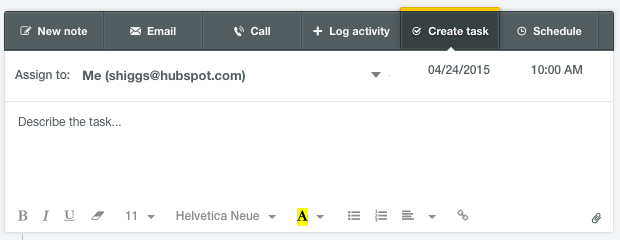
8) Do you have a system that reminds you when to follow up with a prospect who hasn't returned your email or voicemail?

Do you have an easy way to create a task once you reach out for the first time? Since most prospects won't return the first few emails or voicemails, make sure you create a task to follow up. Here’s what creating a task looks like in HubSpot CRM.
create-task-hubspot-sales.png

Make sure you create tasks for yourself when you need to follow up with active opportunities too, as well as referral partners and existing clients.

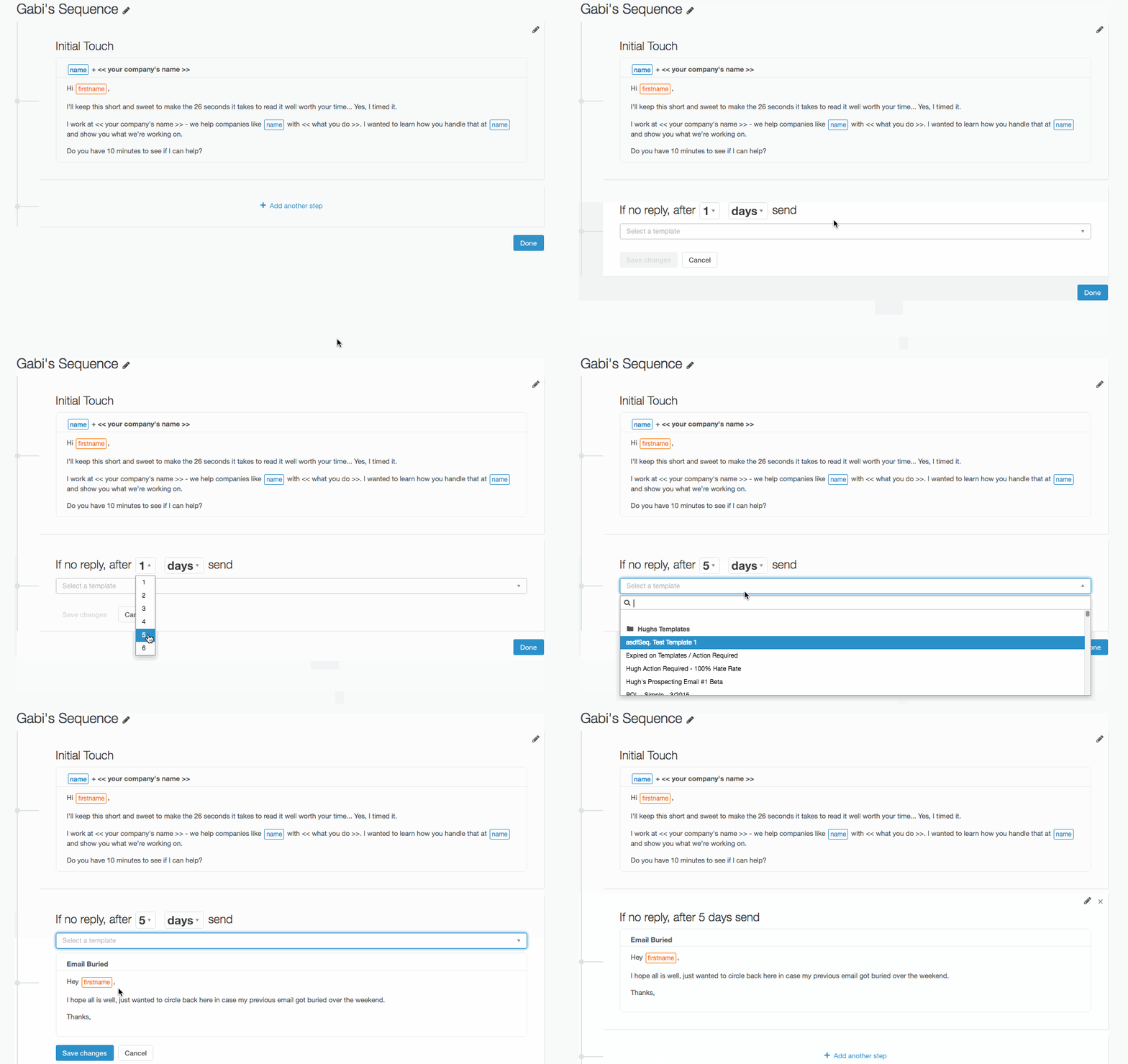
9) Have you created at least five email templates and voicemail scripts that you can use in a sequence?

Do you have multiple templates with varied messages that you can send to an individual prospect? Prospects are busy and the first message might not resonate. Make it easy for yourself by crafting a few messages at once and scheduling them to send on future days.
Sequences_GIF.gif

Warning: Make sure your system doesn't send subsequent messages after the prospect responds.

Don't just use sequences for prospects. Customers also might not respond immediately to your requests. Use email sequences for getting back in touch with them too. Whether you have a request for your customer or you want to make sure the implementation process is going smoothly, set up an email sequence to lighten your workload.

Want to stay in touch with referral partners so that they know you’re available to help too? Don’t hesitate to automate some of that outreach so that you’re sending them an email on a monthly basis.

10) Do you have multiple sets of email and voicemail sequences to use for target accounts?

If you think you can really help a company, don't give up after a few attempts. When pursuing those perfect-fit accounts -- the ones that can make your year -- make sure you're putting in extra research time and really varying your connect approaches.

For these opportunities, since they are probably bigger deals with bigger companies, make sure you have messaging tailored to different roles. If your attempts to reach multiple contacts have failed, devise another set of sequenced emails to use that are customized to the different “hooks” most likely to grab their attention. If your first connect sequence didn’t work, try try again!

11) Do you have a plan for who you’re going to call each day or are you calling random contacts at random times?

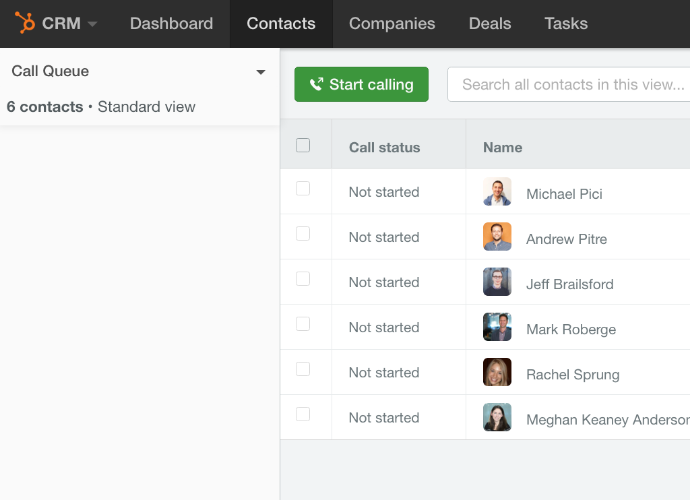
Call technology has advanced rapidly over the last few years, but many sales organizations haven’t kept pace. When you're phone prospecting, do you queue up who you want to call and work down the list? Or do you take time between each call figuring out who to call next and dialing them manually?

The most efficient salespeople block off time to make calls. They create a list of prospects to call so that they can maximize phone time when they start dialing. When you're watching the episode of the Bachelor or House of Cards at night or sorting through your emails at the end of the day, add prospects to a queue for the next day's calling.
Calling-A3-959454-edited.png

12) Does it take several back-and-forth emails to schedule a call with a prospect?

There's nothing worse than going back and forth with prospects over email when trying to schedule a phone call, especially when there's multiple people involved. Looking at your calendar and finding times, sending over a list and waiting for them to check those times in their calendar, then providing alternate times -- is a slow and painful process. Before you know it, you've booked a meeting a month out because neither of you had visibility into the other's calendar and your prospect just said, “Screw this” and sent you dates way in the future because it was easier. All of this is precious time wasted -- not to mention a massive delay and a bad buyer experience.

Instead, use a system that allows you to share your free slots with your prospect. Let them see exactly when you're free and choose the time that works best for them. Some sales reps even put these links right in their prospecting emails or email signatures. “Feel free to book time if this is a priority for you” certainly beats, “When do you have 10 minutes to talk?”

Meetings-A3-021952-edited.png

13) Do you have to spend time searching through your inbox and calendar to figure out when you last communicated with a prospect and what the correspondence was?

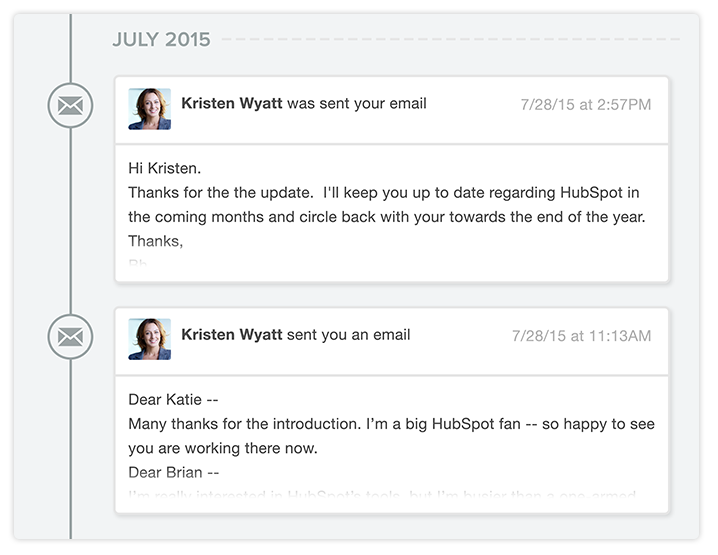
If you have to do any digging to dredge up old prospect correspondence, you're just wasting time. Instead, automatically log your emails, recorded phone calls, and scheduled meetings right to your prospect’s record in your CRM. This helps you easily see all the communication anyone on your team has had with a prospect in just one click. Stop the searching and sorting time-suck. Use that saved time to sell, instead.
timeline-1.png

14) Are you manually taking notes during phone calls?

Some salespeople still use a paper and pen while they're on a phone call. Of course, that’s the right way to do it when you're selling face-to-face. But on the phone I find that it's only good for capturing a few highlights, as it takes too much time and focus to handwrite notes -- not to mention that it’s slower. (My mother failed to teach me short hand, but luckily she forced me to type my own papers -- after 6th grade at least.) Today, I find that Evernote (or the note-taking app of your choice) is a much more efficient way to take notes on calls over the phone. Of course, some say not to take notes at all.

Whether you love Evernote like me or have stuck with the old-school pen and pad, you risk missing something important. After all, if you don’t hear something, you can’t write it down or type it. A smart salesperson plays back their calls to uncover important details they might have misheard or completely missed. The best sales managers listen to their rep's recorded calls to help them determine and prep for the next step in the sales process. Not only is this impossible if you don't record the calls, but it's a pain to pass files around. Instead, automatically capture call recordings and attach them to contact records in your CRM. Sales reps and managers alike can then access recordings of active deals.

More sophisticated organizations use call review and annotation software like ExecVision.io or Refract.TV to review calls and coach asynchronously.

15) Do you have canonical documents you can use during multiple sales processes?

Towards the end of your sales process, when you’re demonstrating your capabilities, finalizing scope or handling last minute concerns, documents come in handy. Later stages of your sales process when prospects ask for static information like product pricing or case studies, content is very reusable.

You can organize your content for your whole team to access it, then track when prospects read it or share it using Documents in HubSpot Sales.

Documents-GIF.gif

If you regularly send contracts or quotes that require a lot of customization, consider using document automation software and electronic signature software like HelloSign or PandaDoc to make it easy. If your salespeople must configure each quote with a unique set of products or services, document automation will make that process simpler and quicker. Just make sure your contract tool integrates with your CRM to instantly customize the contract with prospect contact data. (Disclaimer: I’m an advisor to PandaDoc, and both HelloSign and Pandadoc are HubSpot Connect partners.)

16) Do you have a simple way of tracking which deals are in which stage of your sales process?

Now that you’re identifying, connecting and advising prospects through their buying process (AKA your sales process), it’s critical to keep track of which deals are at what stage. Close dates and close likelihood should be estimated. Many reps still do this in a notebook or whiteboard because changing it in a CRM is time consuming. (I know I did.)

But with modern CRMs, changing deal stages is often just a drag and drop exercise. You can see what changing deal stage looks like in HubSpot CRM below.

sales-pipeline-1.png

Changing deal stages in the CRM not only helps sales managers forecast better, though, it also helps marketing know which marketing activities are working to drive hot prospects that close at a high rate and with a short sales cycle. Providing this information to marketing helps them improve the quality of leads they can deliver to the sales team.

Continuous Sales Process Improvement Crushes Competition

Virtually all businesses rely on a steady flow of new accounts for their survival. Companies that master customer acquisition don’t get there by accident -- they’ve built a process very purposefully, constantly benchmarking themselves against peers and the competition. Their dedication to continuous improvement helps them efficiently acquire more clients and crush their competition.

While technology does not make a sales process, it certainly enables reps to follow one efficiently. As you build out your process, focus on the customer, but also consider the steps every rep must take to get their job done. When reps are more efficient, they can help more prospects. Win for the rep. Win for the company. Win for the customer.

Which of these 16 tips are you already using? Share your success stories in the comments. What other ways have you improved processes and efficiency for your sales team?

HubSpot CRM

09 Apr 21:02

6 Ways Inbound Can Change Your Business Model

by Paul Schmidt

iStock_000061032878_Medium.jpg

Organizations have been using inbound for years to augment their marketing and sales efforts. For some companies, however, it’s turned their entire business model upside down. Regardless of how deeply you’ve embedded inbound in your business, there are additional opportunities you may be missing out on to increase revenue and growth.

Here are 6 ways inbound can change your business model:

1. Content as an Advertising Revenue Stream

Publishers have been doing it since the beginning. Build a large following and sell ads to promote to your readers. Nothing surprising here. However, for marketers without a publishing background, the idea of selling ad space on your blog can be foreign. To make it easy on you, programs like Adsense and Outbrain allow you to monetize your traffic by promoting others’ content on your site. This monetization strategy should not be used on all sites, but if your website serves as one of your industry’s top resources and if you have a high repeat visitor rate, this is a safe bet.

2. Lead Generation Campaigns for Advertisers

B2B publishers are starting to catch on more to the monetization power of their website visitors. Instead of just selling ad space to advertisers, publishers are creating and promoting entire lead generation campaigns on behalf of their advertisers. These lead generation campaign could include promoting the advertisers whitepaper or webinar and then collecting lead information on publication’s website. Having actual contact information of a lead is exponentially more valuable than just having an impression metric. Once the publication collects the lead information, they can sell this back to the advertiser on a per lead basis. This is huge revenue potential if you can generate a lot of leads for the advertiser.

Organizations that are not b2b publications can mirror this same strategy by selling these types of campaigns to players in your industry. One major factor to keep in mind with this strategy is to make sure you are getting the consent from your leads. This consent gives permission for you or your advertising partners to follow up with them for future promotion. These lead gen campaigns can sell for 5-6 figures depending on your ability to generate qualified leads for your advertisers.

3. Using Inbound to Create Channel Opportunities

Many organizations, like HubSpot, rely on their channel partners (aka agencies) to resell their products/services. As a way to diversify your revenue channels, channel partners can open up a new business model that’ll help your brand grow. As your brand begins to pick up steam in the marketplace, you should be educating potential partners in your space that could benefit by using your solution with their target audience. Inbound can change your business model by opening up new sales channels.

4. Using inbound to sell products outside of your core offering

Companies typically add extensions, add-on’s and upgrades to growth their revenue. To diversify your revenue channels you can use inbound to promote products outside of your core offering. Here are couple examples: a. Distilled Conferences: Distilled is a world-class marketing agency that has carved a huge space in the search marketing industry (and other marketing areas as well). Besides it’s core agency business, they also gain revenue from the conference (SearchLove ) and online learning space (DistilledU ). Distilled uses inbound to educate users and encourage them to buy tickets to their amazing conferences, and to sign up for their online learning platform.

  • Gary Vee’s books: Entrepreneur and agency-owner Gary Vaynerchuk uses inbound across nearly every social and website channel to drive users to engage with his content. Gary Vee sells a ton of books and does conferences as an added revenue stream outside of his agency revenue.

5. Using Inbound to Lower Your Customer Acquisition Cost

Inbound leads typically have a lower customer acquisition cost. Inbound leads by their nature weren’t sourced from a cold call. So as a result the need for outbound sales reps decreases. This frees up resources for organizations to hire in other areas, invest in new product lines and focus in areas that can completely change the business model.

6. Using Inbound to Increase Your Lifetime Value of a Customer

Lastly, organizations that invest in inbound content for existing customers are able to reduce churn, increase repeat sales and increase word-of-mouth referrals. These are all areas that can change your business model and help you focus on how consumers are researching and buying your industry’s products in 2016. What are some ways that inbound has affected your business model?

10 Steps for Building an Inbound Marketing Campaign eBook

08 Apr 16:47

How to Easily Collaborate on Google Drive with Online Annotation

by Briallyn Smith
drive-online-annotations

Google Drive is quickly becoming one of the most popular tools for those interested in collaborating on documents, presentations, PDFs, and spreadsheets. Google Drive’s native tools (including comments, a chat feature, and different levels of editing powers) are a great set of features, but there are specialized annotation web apps available that integrate with Google Drive and make communicating with others about your document, PDF, or image file easier and more effective. What’s The Point of Annotations? Annotations allow those involved in creating a document to add individual, targeted comments to existing material through text, drawings, and highlighting without altering the original material...

Read the full article: How to Easily Collaborate on Google Drive with Online Annotation

08 Apr 16:46

Henrik Fisker's new supercar is brash, bold, and most definitely loud

by Matthew DeBord and Mike Nudelman

BI_Graphics_Fisker VLF Force 1 design annotation

One of the biggest car stories so far of 2016 was somewhat unexpected. Henrik Fisker — who made a splash several years ago with a gorgeous Tesla competitor, the Fisker Karma, and startup car company that later went bankrupt — staged a comeback with the debut of his Force 1 V10 supercar.

The Force 1 was unveiled at the Detroit auto show earlier this year and is the flagship of VLF Automotive. It's essentially a Fisker-designed shell laid over a Dodge Viper. The V10 engine makes 745 horsepower, the 0-60 mph will probably be around 3 seconds, and the interior thoughtfully included a Champagne rack between the seats. 

Fisker says that its an American supercar, selling for $300,000, that embodies American values. One of those values is clearly the American freedom to enable Danish car designers to pull out every riff in their grandiose playbooks. There's really nothing subtle about the Force 1, starting with the name and extending through the various heavily amplified and distorted power chords rippling across its silvery surface. This is a car that's fully intended to rattle your teeth and grab you in the guts. It is not a cerebral undertaking. It is blunt and brash and arrogantly cool. It's what a comeback is supposed to look like.

SEE ALSO: Check out America's latest supercar — Henrik Fisker's VLF Force 1

Join the conversation about this story »

NOW WATCH: This is what it's like to drive Chevy's Tesla-killer

08 Apr 16:31

Why the Future of E-Commerce Depends on Better Roads

by Edward Humes
apr16-08-83150480

In the cavernous basement of the Olympic Building, a line of boxy, dark brown delivery trucks rolls out to the early-morning streets of downtown Los Angeles, a chorus of tires squeaking across smooth concrete. Five floors up, in the UPS district president’s office, Noel Massie allows himself a brief moment of contentment as he feels the building vibrate around him and then fall still with the last of his fleet’s departures. This is the reassuring physical signal that his part of the never-ceasing, get-it-now economy has successfully turned one more notch on its endless loop — a cycle repeated at 2,000 similar United Parcel Service delivery hubs around the country and the world.

It is fair to say that Massie’s days are dominated by two things: trucks and minutes. He has too many of one and too little of the other, with 2 million shipments hanging in the balance every day. He is the door-to-door economy incarnate. His fiefdom is the southern half of California, from the Mexican border to Fresno, plus Hawaii, southern Nevada, and western Arizona. Massie’s purview includes an array of far-flung distribution centers, truck terminals, an international airport, and 20,000 employees. He serves a customer base of Amazon-using, iPhone-buying, one-day-delivery shopaholics, along with many of the businesses that serve and sell to them. But his relentless delivery schedule is up against a landscape of traffic and sprawl seemingly designed to make daily drop-offs and pickups all but impossible.

“I am in the business of minutes,” Massie says. “If the plane leaves at 7 AM, you either get there or somebody doesn’t get what they need in time — brain scans for someone’s surgery, tissue samples for the lab. You can’t mess that up. Minutes matter in this business….Minutes make us or break us.”

Lately those minutes are braking bad for Massie — pun intended. For all their convenience to consumers, the rise of e-commerce and the allure of same- and next-day delivery have hit the goods movement industry like a tidal wave, UPS more than most, multiplying the number of trips each day by several orders of magnitude. Big Brown’s original lucrative model has shifted from truckloads of business-to-business delivery to those same truckloads dropping off a parcel at a time at a hundred different home addresses. Traffic is the enemy in this new reality, and it’s getting worse, not better, over time.

Massie singles out two shortcomings that loom as threats to goods movement, and to car traffic as well. The first is too little national investment in infrastructure; the U.S. backlog on repairs and improvements to aging roads and bridges has reached a staggering $3.6 trillion. The second is that money spent on transportation is too often squandered on megaprojects that have great ribbon-cutting moments but don’t “fix” traffic because they are based on myth and obsolete thinking.

Case in point: The billion-dollar lane expansion of a 10-mile stretch of Interstate 405 in Los Angeles did not ease congestion. Cars and trucks now take longer to drive those 10 miles during rush hour than before the project, because adding lanes only attracts more cars. It’s called the rule of induced demand, and it’s like trying to solve overeating by loosening your belt. Meanwhile, mundane road maintenance is delayed, adding to the estimated $124 billion annual damage to the national economy wrought by traffic jams. Another case in point: Just one small, poorly maintained bridge on Interstate 10 in Hell, California (you just can’t make this stuff up), cost the trucking industry $2.5 million per day in delays and extra fuel costs after it washed out in a storm. That was just one bridge in a nation with 61,000 of them in as bad or worse condition as the bridge to Hell.

Spending to maintain the transportation system we have would seem to be an essential part of any strategy to keep traffic from getting worse. But are there ways to make it better that actually work — and without breaking the bank? Turns out there are, and because goods movement and people movement share the same space, solving one helps the other. Here are four ways to ease traffic.

Pay your own way. It’s time to end the gas tax, which hasn’t been raised at the federal level since 1993 and now only covers half of transportation spending. Replace it with a user fee for major highways that goes up at peak times and drops at off-peak times, just as electricity is priced in many parts of the country. Half the trips during rush hour are not work related and so could be shifted to other times. Congestion pricing provides the incentive that’s now missing to make that shift. Presto: Rush hour would be smooth sailing. Just don’t call it what it is: a toll. The change requires very little infrastructure investment beyond electronic toll scanners and monthly billing systems, and will benefit both individual drivers and goods movement.

Time shift. This is a no-brainer, and it doesn’t have the public toxicity of the word “toll.” Either through voluntary program or tax incentives, persuade businesses in major employment centers to stagger work start and finish times during the week. Letting just 10% of total commuters work at home one day or even a half day per week would have a dramatic effect on congestion. These are essentially cost-free measures that would be far more effective than adding lanes.

Convert carpool lanes to goods movement or transit-only lanes. Carpool lanes are a failure. Fewer than 9% of commuters carpool, less than half what it was 35 years ago. Converting some of those 3,000 miles of carpool lanes to dedicated big-rig lanes in major goods movement corridors would provide a much bigger bang for the buck, particularly in the chronically congested highways connected to the nation’s major ports and rail hubs. As for transit, it’s only attractive to car owners when it gets them there faster than driving. In major traffic nightmare areas such as New York, Los Angeles, Houston, DC, the Bay Area — you get the idea — turning HOV lanes into bus-only high-speed lanes would be a cheap alternative to building new rail systems, particularly in partnership with ride-share companies (as Lyft proposes) to solve the first-mile-last-mile problem. Down the line, automation will allow buses to operate like virtually linked trains at a fraction of the cost of rail. This would be particularly attractive as suburban conduits to major airports.

Recognize that some traffic congestion is good. Traffic jams on major highways and arterials is bad. But traffic in major business zones — downtowns, central areas — is good. It is evidence of economic activity, commerce, shopping, and recreation; it signals that people want to be there. Major cities and small towns should slow traffic on selected streets in such areas, adding pedestrian and bike protections to further stimulate economic activity.

What’s needed is a clear differentiation between “streets” — which are primarily public space and engines for creating wealth — and “roads” — which are conduits to get people and goods from point A to point B as quickly as possible. The current strategy is to create what Charles Marohn of the nonprofit Strong Towns calls “stroads.” Stroads are 40-plus-mile-per-hour multilane avenues that try to be conduits and centers of commerce — a terrible hybrid because stroads serve neither purpose well and are a major contributor to pedestrian fatalities. Keeping the two distinct will shift congestion to the areas where it’s actually desirable while keeping other thoroughfares speedy and safe.

08 Apr 16:30

What’s Your Difference? Achieving Competitive Advantage With Your Customer by Establishing a Value Edge

by Dave Stein

Differentiation is a powerful tool for achieving competitive advantage, and in sales it’s a term we hear often. It’s likely you’re well-versed in how your offerings differ from those of your closest competitors, and in many cases, your customer is almost as familiar with those details as you are. But effective differentiation is more than simply laying out those differences and hoping your customer understands the distinctions. Effective differentiation means creating a customer preference for your solutions. It means establishing a value edge based on more than product features and pricing.

Think of your value edge as the difference between the value you propose to deliver to your customer and what your competitor proposes.

Ideally, you’ve built a relationship with your customer’s team based on trust, credibility, and value creation and co-creation. Your customer already has a positive perception of the solutions, advantages, and business value you offer. You’ve shown them how your solution fits their business and addresses their challenges. After you’ve established customer mindshare, the next step is to expand it into customer preference—for the fit of your solutions and the uniqueness of your business value. To accomplish this, you must call upon your thorough understanding of your customer’s external drivers (factors impacting their business over which they have no control), business objectives (how they plan to address those drivers), and internal challenges (the roadblocks to achieving their objectives).

Equipped with this knowledge, you can create customer preference in three fundamental areas:

  1. Your solution’s fit against your customer’s requirements. You’re able to demonstrate the overall fit of your solutions against what’s important to your customer. The stronger your fit, the more powerful your differentiation will be.
  2. The uniqueness of your business value. When your business value connects directly with your customer’s drivers, objectives, and challenges, you can clearly demonstrate how you will ensure your customers success by helping them meet and exceed their objectives.
  3. A partnership with your organization. When the customer wants to work with you and believes your organization is the one they can partner with most effectively, you can often win the business even if your fit isn’t the strongest or your value the most unique.

Defining your value edge means creating space between you and your competition, and your customer has multiple ways to evaluate your organization:

  • Products. The customer believes that your products are superior to your competitors products.
  • Resources. The customer believes that your people and technology will enable their success.
  • Expertise. The customer believes your people are knowledgeable, credible, and able to share relevant best practices.
  • Services. The customer believes your service levels are higher and more proactive.
  • Customer Experience. The customer believes that your work and experience with comparable organizations reduces their risk.
  • Brand/reputation. The customer believes in your reputation for quality, service, and product excellence, and you derive competitive advantage as a result.

Ultimately, your goal is to establish unique differentiable value: you can deliver a type of value to your customer that no one else can; you are capable of distinguishing the uniqueness of that value in the six areas mentioned above; and your customer recognizes and acknowledges it.

When the customer finds you “value-able” in ways that they don’t find anyone else valuable, and those areas of value connect directly with what’s most import to them, you have something very powerful. When you demonstrate that you understand your customer’s value expectations, it’s likely you are having conversations with your customer that no one else can have. You have gained the value edge.

That’s how to win business.

The selling landscape is changing — fast. Download our free e-book to find out how can salespeople close deals smarter and more efficiently this year.

08 Apr 16:30

The Ultimate Guide to Articulating Differentiation

by Rachel Clapp Miller

appels_and_oranges.jpgIn complex B2B sales, there’s always a competitor in the sales equation. Even if your biggest competitor is “No Decision,” effectively articulating your differentiation, and the value you provide to your customer can make the difference between a closed deal and a lost opportunity.

Best-in-class sellers know how to effectively articulate differentiation in a way that connects back to the positive business outcomes their customers are trying to achieve. Having a solid grasp on how your products, services and company are different and better than the competition creates the opportunity for you to show value to your buyer.

Differentiators Categories

Unique Differentiators: Describe attributes of your offerings that are not available from other competitors. They are helpful during the early stages of the buying cycle when customers are defining their decision criteria. If a unique differentiator is part of their required capabilities, then you are likely going to win the opportunity.

Comparative Differentiators: Describe attributes of your offerings that are superior to or different from competitive alternatives. They play a critical role in the middle stages of the buying cycle, when customers are evaluating different vendors and available options.

Holistic Differentiators: They are less about features and functions and more about your company in general (e.g., financial stability, share of the marketplace, etc…). Holistic differentiators may include financial stability, company longevity and position within the industry. These differentiators are most helpful during the latter stages of the buying cycle, when mitigating risk and committing to a vendor are top of mind. Says Who?

How Can You Provide Value

Effectively articulating the value and differentiation of your products and services can make or break an opportunity. If you can’t describe to your customer how your solution provides value and how it is different or better than your competitors, one of two things will happen:

1. You’ll be forced to lower your price to win the business.

2. You’ll end up losing the opportunity.

Differentiators play a critical role in the middle stages of the buying cycle, when customers are evaluating available options. The right differentiators should map to your customers’ needs and influence their buying criteria. They should also be defensible. Rattling off reasons why you’re unique or better than your competition won’t get you very far, if you can’t show customer value.

Learn what two questions you should be asking to improve your sales messaging by downloading the eBook below. There’s no form to fill out!

articulating differentiation in the sales process

08 Apr 16:29

Built to Fail: 4 Referral Marketing Mistakes to Avoid

by Zach Taylor

Over the last year, I’ve had conversations with numerous sales and marketing executives about one of the world’s oldest — and most effective — customer acquisition channels: Referrals. Most of those executives have gone on to help their organization implement successful referral marketing programs, but some have flat-out failed to generate the results they expected.

In most cases, those failures were easily preventable.

While we routinely share referral marketing best practices with our clients, not every prospect chooses to follow that guidance. Instead, they opt to carve their own path — often building referral programs in-house that ignore the techniques that brands like Ria Money Transfer, Volusion, and SAP have used to generate thousands of new customers from referrals.

This leads to a couple of key referral marketing mistakes that almost always lead to poor results:

Mistake #1: Right for you, wrong for your customer

If your customers transact with you on a weekly or monthly basis, then it makes sense to incentivize referrals with account credits or discounts off future purchases. If, however, your customers purchase from you less than a few times per year, that reward won’t carry the same weight. In fact, it might send signals that you don’t really understand your customers.

So, what’s the right approach? If your customers transact only a few times during their lifecycle, you need to reward them with something of immediate value. Providing access to yet-to-be-released products can work, but cash and gift cards are virtually foolproof. In fact, a 2016 Nielsen Harris Poll conducted on behalf of Ambassador found that 77% of Americans prefer to be rewarded for referrals with money.

Ultimately, for referral marketing to work, brands must be selfless. Focus on what’s right for your customers and give them a relevant reason to send you referrals today. If your referral incentives fail to provide immediate, tangible value, your program will fail, too.

Helpful tip: Dual incentives, where the customer and friend both receive a reward for a referral, are a proven way to accelerate sharing and drive purchasing behaviors. For a full breakdown of this incentive structure, check out Ambassador’s latest eBook, “More Referrals, Less Hassle: The Modern Marketer’s Field Guide to Building a Highly Productive Referral Marketing Program.”

Mistake #2: A referral program that’s too complicated or hard to find

Here’s an existential question to answer: If you have a referral marketing program in place and no one knows about it, does it really exist?

If your referral program isn’t public facing or it’s difficult to use and share with the click of a button, then you’ll severely limit your ability to drive word-of-mouth and referrals. Also, if you’re requiring customers to manually input a potential referral’s information, good luck. For customers, this annoyance creates a barrier that significantly hinders referral activity.

How can you avoid that? Start by answering these questions:

– Where and when is it most likely that customers will want to share your brand/products?

– Are you requiring those customers to do the heavy lifting to find friends who might be interested in your company?

– Are you limiting your referral program to only current customers?

Here’s the bottom line: Your goal must be to make it simple for anyone (customers, fans, admirers, influencers advocates, etc.) to share your brand with everyone who might be interested in it.

Helpful tip: Ask for referrals at the point of purchase and after the first user experience. At this point, customer excitement (and the likelihood of referrals) is at its highest.

Mistake #3: Starting small with a half-hearted pilot

Over the last year, I’ve seen massive companies with millions of customers attempt to launch a referral program by testing it with just a few dozen or few thousand targeted customers. That “pilot” approach has failed. Every single time.

Here’s why: Just like converting web traffic into actual customers (and converting those customers into repeat buyers), referral marketing is a numbers game. It requires a funnel and, if you don’t put enough names into the top of that funnel, nothing will come out the bottom.

Another problem with this approach is that you can’t really know who your biggest fans and ambassadors are until you execute a referral marketing program at scale. Trust me. I’ve consistently seen clients assume they know who their “best” customers are, only to see disappointing referral results from that base of contacts. When they open up the program to everyone, however, amazing things happen. In some circumstances, people you wouldn’t expect to generate referrals end up being your best ambassadors.

For example, I’ve never been a customer of GetOutfitted, but I’ve shared the company with my friends and several have converted into regular customers. I love the idea. I love the company. And, until the time comes for me to be a customer, I’ll gladly sing their praises.

Helpful tip: While it might seem to make sense to test first and scale later, that approach typically results in “test and fail.” A better strategy is to keep it simple by starting with two programs — one that’s public facing and incentivizes new shoppers to make their first purchase, and a second one that’s tailored specifically to existing customers.

Mistake #4: Assuming no customers means no need for referral marketing

Referral marketing isn’t a magic wand. You can’t wave it and suddenly make up for poor web traffic, a weak email list, or a lack of new customers. That said, you don’t have to wait to hit a critical mass of customers to invest in referral marketing. In fact, the easiest and cheapest way to acquire new customers is through referrals.

Yes, you still need a healthy list of contacts in your funnel and you need a working website, but there’s an argument to be made for understanding the value of investing in a program before you’ve acquired hundreds or thousands of happy customers. Doing this gives you time to get it up-and-running while you scale top-of-funnel activities (SEO, shopping cart technology, inventory management, inbound marketing, paid ads, etc.). When all of that’s ready to go, your referral program will be, too.

Lull Mattress is a great example of this. The company implemented its referral program early in the process of scaling its brand, and referrals are now a critical driver of web traffic and new customer acquisition.

Helpful tip: It’s never too early to put a referral marketing strategy in place. Success is dictated less by the stage of your company and more by how well you weave every aspect of it into your overall marketing plan.

A roadmap to a more effective referral marketing program

As customer sophistication grows, the use of ad-blockers rises, and marketers are pushed to show ROI on their investments, referrals will become more and more important.

So, if you’re cognizant of the fact that referrals work and you’re prepared to invest in the benefits of referral marketing, my advice is to do it right the first time or don’t do it at all. Truth is, approaching referrals the wrong way won’t just fail to deliver value — it could do irreparable harm to your brand, as well.

More Referrals. Less Hassle.

08 Apr 16:29

The Surprising Truth About Consensus

by Liz Kislik

Consensus sounds so nice: Everyone agrees and moves forward together. Kumbaya! Seems like a good thing, right?

But here’s how one client described the way his company practices consensus (with my italics): “We have to take all these teeny little baby steps to get to consensus, one painful meeting after another. So by the time we get close, we’re all bought in, and we smile and swallow the Kool-Aid, even if it tastes like battery acid.”

A Common Drawback to Consensus Management

In my client’s company, new decisions may only be taken after everybody gingerly and repetitively tests the waters. Managers ask themselves and each other: “Where and how have we been the most successful? Where will our leaders be comfortable enough and perceive the least possible risk — of failure, of confusion, of dissension?”

My client describes the current initiative as “pretty vanilla, but we’re trying to make it extremely digestible so it’s easy for people to try.”

In “groupy” companies like this one, where there’s a high value placed on avoiding conflict and getting along, there can be significant penalties for raising challenges, even if those challenges could strengthen the decision or initiative. People who speak up with opposing views are often made to feel as if their comments — or they themselves — are a problem.

Another Consensus Predicament

team-consensusConsensus is often a core value in start-ups and family-run or privately-held businesses. Some founders and owners declare that every employee’s opinion matters. Unfortunately, this claim can translate into an expectation that every voice be heard on every subject, regardless of knowledge, skills or expertise.


Even more dangerous is the cultural norm which dictates that the group will not move forward until all participants are satisfied. This can become a formula for the group’s weakest links or its least satisfied or least agreeable members to assume de facto leadership.

Too many people just like to hear themselves talk, and some even use their personal anxieties or hesitance to hold back an entire group. Anyone who’s willing to be the most difficult, oppositional, or critical can win in the end, even if their view is ineffectual or outright wrong.

When it comes to business decisions, all opinions are not inherently equal — and they don’t all need to be formally expressed as part of the decision-making process. Insisting that “everyone holds hands” may be a dodge to shield individuals from personal responsibility or blame for mistakes.

Are You Experiencing the Downside of Consensus at Your Company?

If your organization expends more effort on reaching consensus than on making good decisions, you’ve probably noticed some of these ill effects:

  • Reduced creativity and suppressed innovation — even when leaders say they want it;
  • An inherent lack of diversity of thinking, which leads to a stunning lack of diversity in people;
  • Lots of wasted time caused by procrastination, extra meetings, and delays — leaving everyone overly busy even while initiatives stall;
  • Fear and anxiety about giving offense;
  • Dread of backroom deals;
  • Poor, superficial thinking;
  • Passive-aggressive behavior and communication at all levels;
  • Turnover of the best and brightest once they figure out what’s really going on.
08 Apr 16:29

Good Bosses Create More Wellness than Wellness Plans Do

by Emma Seppala
apr16-08-513618995

In the name of employee wellness, and in response to insurance company demands, corporations are offering well-being initiatives with financial incentives. Complete this cholesterol screening, say, and you’ll get $100 added to your paycheck; participate in some number of wellness programs, and you’ll receive another bonus. In this quest to increase employee wellness, however, organizations are often unwittingly making things worse. Is it any surprise that initial studies on wellness programs are showing they don’t lead to any visible results?

At best, these initiatives are nothing more than lip service or PR. But at worst, they actually cause more stress. Having to jump through hoops, do cholesterol blood tests, and fill out well-being questionnaires is just one way that these programs can add yet more to-dos to an already full schedule. As one employee shared with me, “I feel like my workplace wants me to take care of my wellness yet pressures me with such tight deadlines that I barely have time to eat lunch at my desk. I know it would be good for me to attend, but I also feel anxious when my manager and colleagues frown at me leaving my desk to go stretch. What’s more, at the end of the day I feel guilty because I didn’t take care of my well-being and attend the yoga class.” Well-being becomes not a needed break from the pressures of work but just one more job requirement.

When you look at the data, employers seem to be missing the point. It is not by obligating employees to participate in these kinds of classes or screenings that well-being will improve, nor is it by providing material perks; a revealing study showed that employees actually prefer a happier workplace to a fatter paycheck anyway.

So what leads to employee happiness? A workplace characterized by humanity. An organizational culture characterized by forgiveness, kindness, trust, respect, and inspiration. Hundreds of studies conducted by pioneers of positive organizational psychology, including Jane Dutton and Kim Cameron at the University of Michigan and Adam Grant at Wharton, demonstrate that a culture characterized by a positive work culture leads to improved employee loyalty, engagement, performance, creativity, and productivity. Given that about three-quarters of the U.S. workforce is disengaged at work — and the high cost of employee turnover — it’s about time organizations start paying attention to the data.

Research suggests that the most powerful way leaders can improve employee well-being is not through programs and initiatives but through day-to-day actions. For example, data from a large study run by Anna Nyberg at the Karolinska Institute shows that having a harsh boss is linked to heart problems in employees. On the other side of the coin, research demonstrates that leaders who are inspiring, empathic, and supportive have more loyal and engaged employees. So checking in with employees about their families once in a while may help more than offering a mindfulness class at lunchtime.

Leaders set the tone for their organization, and their behavior determines whether interactions in their organization are characterized by trust, forgiveness, understanding, empathy, generosity, and respect. For example, one Fortune 500 corporation in the Bay Area has a system in place whereby the CEO is immediately informed if an employee comes down with a major illness or has experienced a personal tragedy. Within 15 minutes, no matter how busy he is, the CEO makes time to call that person and offer his support.

We have forgotten that organizations are first and foremost places of human interaction, not just transaction. Research shows that our greatest need after food and shelter is social connection — positive social relationships with others. If we create work environments characterized by these kinds of positive and supportive interactions, we create organizations that thrive. Organizations with very low turnover. Organizations that inspire. And organizations that enjoy superior results for employees and employers alike.

This is not to say that leaders and managers should be too “soft,” nor does this mean that an organization becomes a place that is too “nice.” You can still lead powerfully, you can still exert authority, you can still influence, and you can still communicate frankly while remaining courteous, empathic, and understanding. Rather than adding more and more wellness initiatives and material perks, employers can actually do something much simpler — not to mention cost-effective — that will have much greater results. By creating a values-based culture characterized by humanity, they can create an organization with true workplace well-being.

08 Apr 16:28

The Customer Journey: Is It Really That Predictable?

by Dave Brock

I saw the Princeton Marching Band for the first time in the early 80’s. I was working in Manhattan, a few of my colleagues were Princeton grads, so every once in a while, we’d take the train to Princeton to watch a football game–and the “memorable” Princeton Marching Band.

Take a few minutes to watch this video, contrasting Lehigh and Princeton. Lehigh is first, very disciplined and orderly. If you want to skip to just past the mid point, you’ll see Princeton (just past 7 minutes). They’re chaotic, they’re all over the place.

It’s sheer comedy to see them try a “formation.” When I went, they’d try to do a spell out, but either wouldn’t have enough members to complete spelling the word, or would misspell it. For the most part, their formations were hopeless–which made it so much fun.

Recently, in “rationalizing” their style, the call themselves a Scramble Band.

You’re thinking, what’s the Princeton Marching Band have to do with the customer journey (buying through implementation.)?

A disclaimer before I go further. I think understanding our customers’ journeys is important–both their buying journey and their experience/journey in implementation and utilization.

Most articles portray this journey as structured, disciplined, perhaps predictable. Using the video below, it looks much like the structured and disciplined performance of the Lehigh Marching Band.

But is this reality. We know our customers struggle mightily. We know a majority of customer buying journeys end in no decision made. Primarily because of the proverbial 5.4–or whatever number you prefer. The more people involved, the more difficult it is to align agendas, priorities, motivations, goals. Too many buying decisions end in a whimper with no decision made, simply because the buying team isn’t as organized or disciplined as we think they are or would like them to be.

For those that make a decision, the journey to implementation and results is often equality chaotic. Think of how many CRM or Marketing Automation, or other projects you’ve seen fail. Think of how many projects get derailed, never achieve the desired outcomes, or are very late, or are stopped part way through and the customer goes in a new direction.

While we try to identify and map, with precision, the customer journey. In reality it is seldom that structured or precise. It looks a lot like the Princeton Marching Band. There are moments, when they have a great formation, then it falls apart as people scramble to the next formation. Sometimes they are successful, sometimes, they don’t quite make it.

What’s this mean to us? We’re trying to get our customers to buy, we’re trying to get them to have a successful experience.

In order to efficiently support the customer in these activities, we try to simplify them, to map the journey’s, to develop models of these journeys so that we can organize our own resources to support them as well as we can–creating huge value in the process.

I think it’s important to do these. It’s critical to model the buying journey and their subsequent implementation. It provides us a framework and a starting point to engage, support, and create value for the customer.

But there’s a danger rigidly structuring what we do to match these journey’s. The problem is they don’t represent any single customer’s or all of our customers’ journey. In reality, while they are only an approximation, and we have to understand each customer’s journey, aligning ourselves with them.

There’s a huge opportunity for those who understand this. They have a framework and a starting point—it’s terribly ineffective and inefficient to start everything from scratch. These frameworks (for example a selling process) give us a starting point. But as we engage the customer, we have to learn what their journey is. Perhaps it’s very structured and disciplined, like Lehigh’s Band. It’s very easy to align ourselves with their journey.

More likely, it’s a mess. Like Princeton’s band, there may be moments of structure and discipline, but there’s an awful lot of “messy stuff” going on. It’s not because the customer wants to be undisciplined and unstructured–in fact they are hungry to make the process easier, to put a structure in place. It’s just the challenge of getting groups aligned, focused, “marching in the same direction,” in cadence, on the same beat, with the same song.

This presents a huge opportunity for leadership and value creation for sales. We have rich experience in supporting customers in making decisions, having successful implementations, and realizing the value we claim. We can provide a lot of leadership, direction and support. We can help the customer align themselves, structure their approach, develop and execute their plan, whether to buy or to implement. We can help them avoid the mistakes, avoid going the wrong direction. We can help them become successful.

Enjoy the video, make sure you hang in long enough to watch Princeton’s band. It’s hilarious!

08 Apr 16:28

Explosive IoT Growth Expands Scope of Identity Management

by Derick Townsend

More and more, Identity and Access Management (IAM) professionals are being pulled into projects that go beyond their traditional purview of workforce identity management. Their scope of influence and responsibility is expanding into customer-facing strategic business initiatives as new technologies transform the edge of the enterprise. In addition to Customer Identity Management projects that support digital consumer engagement, a major trend demanding increased IAM involvement is the Internet of Things (IoT).

To say that IoT is growing fast is an understatement. Gartner says that the number of IoT devices has increased by as much as 30 percent since last year, and their 2016 prediction that stated 5.5 million new things will be connected to the Internet each day is now reality.

IoT devices are an extension of the customer experience. Consequently, these devices need to be linked to human identities, and as IoT devices evolve and become more advanced, they will store increasingly sensitive customer data. In short, IoT needs identity management.

However, it’s interesting to note that of all the IoT projects being initiated across a diverse range of industries, many of these projects are not run by IT. A recent survey of US-based enterprises shows that IoT ownership is shared roughly equally across three main business segments: operations, business and IT. This dynamic closely mirrors the breakdown of Customer Identity Management (CIM) ownership. Gartner reports that CIM projects are also evenly split between three main segments: business, application development teams and enterprise IT/IAM groups.

A parallel trend to note is that even when IT is not the CIM project owner, IT and IAM professionals are being pulled onto implementation teams. Business leaders recognize that successfully launching these customer engagement programs is a complex, multi-faceted undertaking that requires specific IAM expertise.

As IoT follows a trajectory similar to CIM, a new question emerges. Will the trend of IAM professionals being called upon to support a broader scope of projects repeat itself in the IoT world?

We believe it will for many reasons. Identity management is a specialized skillset that encompasses many of the concerns inherent to getting IoT right. Scale, performance, data security, multi-factor authentication are crucial to IoT’s success.

Yet, there are some key differences between IAM for workforce and CIM use cases and IAM for IoT. It’s important that IAM professionals become fluent in IoT’s distinct characteristics, such as device authentication, device registration, communications protocols and standards as well as the new IoT business models and business metrics. With this additional understanding, IAM pros can leverage the in-demand skills they have honed over their career into even greater value for their organizations facing new digital business challenges.

Explosive_IoT_Growth_IAM_Button.jpg

08 Apr 16:27

3 Sales Strategies to Be Assertive Without Appearing Aggressive

by jeff@mjhoffman.com (Jeff Hoffman)

Have you ever swallowed a question or backed off from a certain topic for fear of offending your buyer? This happens on sales floors around the world every day. Reps let their qualification questions slide so as not to flare tempers.

But the truth is, salespeople are often more worried about the potential of pissing off prospects than the situation warrants.

Free Download: A Guide to Inbound Selling Best Practices

I find that the ones who obsess over not coming across as pushy often create boundaries for themselves that don't need to exist -- and ultimately kill their effectiveness.

If you're worried about crossing the line from assertive into aggressive, the following three strategies will help you to strike the perfect balance.

Assertive vs. Aggressive

"Assertive" and "aggressive" are sometimes used interchangeably, but there are key differences between these descriptors. Being assertive involves pursuing a desired outcome or stating and standing by an opinion while still being mindful and respectful of the desired outcomes and opinions of others. Aggressiveness, meanwhile, is characterized by relentlessly pursuing your desired outcome while ignoring or attacking the opinions or desires of others.

1. Offer the conclusion, and then the explanation.

Many sales reps think aggressiveness is a voice tone issue. They figure that if they don't sound aggressive, they'll be fine. However, I beg to differ.

You could use the most respectful tone in the world and still come off like a pushy jerk. How? It all comes down to your phrasing. 

Which of the following two options comes off as more presumptive to you?

  • "Who in Procurement is working on this project?"
  • "You know what would be easier -- why don't I just talk to Procurement directly. Who should I contact?"

Even though the salesperson using the second phrase might have a more empathetic voice tone, it's actually the more aggressive question. Providing the explanation before the question comes off as passive-aggressive, because it implies that the salesperson's conclusion -- in this case, talking to Procurement directly -- is not up for debate.

When putting forward a question, don't explain why first. Just ask. The shorter and simpler your questions, the smaller the speed bumps you'll encounter. If your prospect asks for the explanation behind your question, offer it honestly -- but not before they request it.

2. Accept the answer you get (even if you don't like it).

When it comes to offending prospects, the damage is rarely done as a result of the question posed. The damage is done as a result of how the salesperson handles the answer.

Let's say a salesperson asks their buyer "What's your budget for this project?" and the prospect responds, "I don't feel comfortable sharing that with you." Most reps in this situation would think "Uh oh -- I just crossed a line." But from my perspective, if you simply accept the answer and move on to your next question, you show the prospect that you're not afraid to dig deep -- and also that you can take "no" gracefully. And that's precisely the kind of rep buyers want to work with.

The wrong thing to do in this situation? Steamroll past the buyer's response by countering with something along the lines of "Okay, well, would you give me a ballpark?" The prospect already gave you an answer -- and it was that they didn't want to answer. Take the no, and move on. If you don't, you risk being perceived as pushy and aggressive -- exactly the type of rep buyers want to hang up on.

Assertive Communication

Assertive communication can be characterized by a variety or combination of signs, including: stating an opinion or desire clearly and firmly without attacking the other person's, not interrupting others and letting them share their ideas as well, accepting responsibility instead of assigning blame, and stating perceptions instead of accusing and judging. Assertive communication might be awkward in sales, but it absolutely shouldn't be tense, heated, or in conflict.

3. Set the bar early on.

Many times, salespeople will wait until they build rapport with their prospect before asking them "hard" questions. The salesperson reasons that if they can get on friendly terms with the buyer, the buyer will be more willing to open up, and the rep stands less of a chance of pissing off the prospect. 

But there's a problem with this approach, and it has to do with expectation setting. If a salesperson only asks easy questions early on, the "hard" questions later will seem out of context. The buyer might also conclude that the only reason the rep was nice at first was to butter them up -- in other words, the rapport isn't genuine. Far from getting the answers you want, you might just get the anger you were so hoping to avoid.

My rule of thumb is to go heavier earlier. Ask those hard questions before you've provided the prospect with everything they want, such as a demo or a trial. That way, you have some leverage that will help you get the answers you're looking for -- not to mention that you set the expectation that the sales process won't always be 100% comfortable or easy.

If you spend too much time worrying about coming off as aggressive, you probably won't be assertive enough to get the information you need to help prospects. Use these three strategies to stay on the right side of the line, and sell more deals.

To learn more, read our tips for being perceived as a trusted sales advisor.

Inbound Selling How to Close and Negotiate
08 Apr 16:27

Salespeople Have No Idea What Buyers Actually Want [Research]

by lye@hubspot.com (Leslie Ye)

buyers-speak-out.jpg

Ask most salespeople whether they think they’re good at their job, and their answer will probably depend on how that month or quarter is going. And why wouldn’t it? Sales success has always traditionally been defined by the ability to meet or exceed quota, so it makes sense that salespeople measure themselves this way as well.

But quota is only one piece of the puzzle. Yes, it signals whether reps can bring in money, which in turn is an indicator of business health and buyer perception. After all, big numbers mean happy buyers, right?

Not necessarily. HubSpot Research’s new study, Buyers Speak Out: How Sales Needs to Evolve shows that there’s a huge chasm between how buyers want to be sold to and the way salespeople are actually selling.

The misalignment starts with the very first sales call. Almost two-thirds (58%) of buyers reported wanting to discuss price, while only 23% of salespeople answered the same. Salespeople reported wanting to spend more time on qualifying topics like the company’s overall goals (61%), the timeline for purchase (42%), and why the company needs to buy (63%). The percentage of buyers who wanted to discuss these topics was drastically lower -- 32%, 24%, and 37%, respectively.

The report also found that while buyers do research in different places (for example, they preferred search engines in the Awareness stage but wanted to speak with sales once they were ready to buy), the information they seek is the same throughout the buyer’s journey.

Check out the infographic for even more insight into differences between seller and buyer attitudes, and read the full report here.

sales-infographic-v2_1.png

HubSpot CRM

08 Apr 16:26

Why Platform Disruption Is So Much Bigger than Product Disruption

by Juan Pablo Vazquez Sampere
apr16-08-49976762

How does disruptive innovation differ when it’s applied to a product versus a platform?

For the sake of clarity, let’s call a product “a platform that is used for one or very few products” and a platform “a structure upon which many variations of products are built.” These definitions recognize that product vs. platform isn’t black-and-white, but let’s use them for practical purposes. For example, using this definition, a Tesla car battery is a product, because it powers only a few cars. But as more electric cars enter the market (including more Tesla models) and there are more uses for rechargeable electric batteries, perhaps the battery will one day move up the scale to become more like a platform.

Similarly, it’s useful to distinguish between types of disruption.

There’s high-end disruption, which means entering the market with a product or platform that is superior to incumbents’ offerings — again, the Tesla Model S, or, to take a completely different example, Chobani yogurt. Starting a high-end disruption is expensive and challenging, requiring a lot of capital up front. Even Chobani needed almost $1 billion dollars of funding to get going. High-end disruption also requires challenging incumbents head-to-head at the outset, something that’s very difficult to pull off.

A second option is low-end disruption, which is making a product or platform more affordable and simpler to use. Markets are especially ripe for low-end disruption when the existing products or platforms overserve the mainstream customer base. To take just a couple of examples, think of Toyota and Honda entering the U.S. market with the Corolla and the scooter, respectively. Low-end disruptions are more common than the high-end variety because they’re less expensive to get off the ground and, at least in the beginning, they don’t directly challenge incumbents — instead, they gain market foothold with the incumbents’ least-profitable customers.

Insight Center

  • The Platform Economy
    Sponsored by Accenture
    How online marketplaces are changing the face of business.

A third type of disruption is new-market disruption, which emerges from nonconsumers and usually creates a new category, or even new industries. For instance, in the medical sector, stents gained market foothold in the catheter diagnosis market but now are slowly and relentlessly capturing a significant share of the heart-related extracorporeal surgery market. Again, they didn’t initially challenge incumbents directly; they gained a market foothold in an adjacent space.

In all the examples above, a company engaged in a disruptive process using a product. But it’s also possible to engage in all three kinds of disruption via a platform.

Platform-based high-end disruptions are very uncommon, mostly because they are expensive to fund and bring to profitability, though the few that exist get a lot of attention. They also directly attack incumbents head-to-head in a highly visible way, just as with product-based high-end disruption. But instead of challenging the incumbent on the basis of one product, you’re often contesting the entire customer portfolio. This often leads incumbents to counterattack aggressively.

The poster child here is Uber, which uses a platform to market its eight products, has raised over $9 billion so far, still is not profitable, and is being counterattacked by the taxi industry. Successful high-end platform disruptions often stem from “open innovation” initiatives: When all goes according to plan, potentially disruptive companies are co-opted into being resellers for the incumbents or partners with them (think of Apple Pay) rather than being direct competitors.

Low-end platform disruptions make things cheaper and more affordable for overserved customers. They include platforms such as Flash memory, the Boeing 737-200 (the plane that enabled low-cost airlines), and many “cheaper and simpler” service businesses. They may be less visible than their high-end disruption cousins, at least at the outset, but they are no less dangerous to incumbents. Unlike low-end disruptive products, low-end platform disruptions can change the dynamic of an entire industry.

Consider a simple case of low-end product disruption: personal computers. People used to buy computers mainly according to speed and storage capacity (which were expensive); today, shoppers look for convenience and battery life. If you are a computer maker, it may be challenging but not impossible to introduce a cheaper laptop with less storage capacity and more battery life. But it is much more difficult to launch a whole new product category to stop a disruptive low-end platform.

Then there’s platform-based new-market disruptions. They not only create new categories but also enable a whole new population of people to make money (think of Airbnb, ING Direct initial deposit, Quicken for your taxes, etc.). Like new-market product disruptions, when they begin they’re not even on the radar of incumbent firms. But the effects reach further because what the incumbent once considered a toy is now challenging the economics of a product and the entire rationale of how that entire industry is going to work.

Thus it makes a big difference whether you start with a product or a platform. Product-based disruptions have a strong “within the industry” effect; after all, being a serious threat or replacing the incumbent is a big deal. But platform-based disruptions have effects not only inside the industry but also well beyond industry boundaries. They can create strange competitive bedfellows as companies in different industries are affected, which is the case for many marketplaces such as Amazon or Alibaba, where competitors act as buyers and sellers at the same time. They can even cause industries to collapse, as in the notorious case of Craigslist and the newspaper industry. And they can enable massive numbers of people and businesses to make money from excess capacity (like a guest bedroom that you never use or a passenger seat that often sits empty), ideally reducing waste and increasing people’s incomes at the same time.

While it’s difficult for incumbents to respond to disruptive products, it’s even more difficult for both incumbents and regulators to respond to disruptive platforms. Incumbents that are used to dealing with product-based competition often don’t know how to react to a platform that competes at an ecosystem level, and as the case of Uber demonstrates, they usually turn to regulators. But the massive number of people that platform-based disruptions attract makes regulating them difficult; a successful platform such as Uber gets so big, so fast, that it’s tough to put that genie back in the bottle. Even if a platform disruptor can be stopped (such as Napster), once the idea is out there it is only a matter of time until someone figures out how to commercialize it in a more legal way (iTunes, Spotify, etc.).

While product-based disruptions change what people buy, platform-based disruptions result in more far-reaching societal shifts. Today, they enable people to complement their salary with part-time work or rent out their underused assets; tomorrow, as more of these companies become bigger and more sophisticated, these trends may accelerate so that, paradoxically, people who make a living out of a few platform-based jobs have more job security than today, when their income comes from a single source.

Since Clay Christensen popularized the theory of disruption more than 20 years ago, we have seen a first wave of product-based disruptions emerge and become a serious threat to incumbents in a variety of industries. We observe how the disruption process doesn’t stop — it might go at a different pace, but it does change things. A recent survey indicates that about half of the S&P 500 will be replaced over the next 10 years, a generational change that we call “disruptive change.”

We are now at the beginning of something new, something different. There is a new wave of platform-based disruptive enterprises that will not only change industries but also bring a deep societal change. It will change how we live, how we make money, and how we interact with each other, and it will give us many new opportunities.

08 Apr 16:25

The Importance of Disqualifying Leads

by Andrew Tate

Sales reps don’t want to disqualify leads. Even if a lead doesn’t initially look like a winner, they still want to give it their best shot. They presume they have ability to show the true value of the product, to find the need for the client and — ultimately — close the deal.

Even if they can’t close every deal, the thinking goes that the more opportunity there is in the top of the funnel, the more there will be at the bottom, leading to more revenue.

But this mindset can be devastating for company and reps alike. It means hours of wasted time chasing bad leads, which results in less time focused on each individual prospect, which means less revenue for your company. Chasing every lead means that you aren’t fully focused on making your prospective customers, or your sales team successful, successful.

Here is why it’s crucial that you start a disqualification process within your sales and marketing team, and how you can set it up to make sure everyone wins.

Why It’s Crucial To Disqualify Early

Badly-qualified prospects lead to two significant issues within your company, both of which lose you revenue. By using up valuable sales reps on leads that are going nowhere, you are both wasting their time (and your money), and inflating your pipeline with dead end prospects.

It Takes Up Time

It’s a cliche, but time really does equal money. In sales, in particular, every hour wasted on a bad lead is an hour that isn’t spent moving a viable prospect further along the funnel.

For instance, if a sales rep has a $1M annual quota, then each hour of their time is worth $460. For every hour they spend with a lead that:

  • doesn’t have the budget for your product
  • doesn’t use a workflow that your product fits in
  • doesn’t have a particular need for your product

They, and the company, are losing $460. All these issues could be determined with an effective qualifying process, but if that process isn’t in place, with reps adhering to it, then not only is the company not making money, it is actively losing it as well.

Take the following scenario:

Here there is a nice martini-glass-shaped funnel, with plenty of initial leads being whittled down through the qualification process. But what happens if we allow a few more leads down our funnel; leads that aren’t really qualified and thus are never going to be Closed-Won?

The Effect of Qualification on the Funnel

In each stage, the funnel with 10% more initial “qualified” leads has more opportunities. These get sequentially disqualified in the different stages as the issues that should have been raised at the top of the funnel (or before) are found.

But at each stage they are now using up resources. In particular, they are using up $460-an-hour sales reps. If we use some average numbers for the length of each stage of the sales cycle, we can see how much time and money this is costing:

Stage Extra Opportunities in Stage Average Time in Stage Extra Days in Stage Extra Hours in Stage Extra Cost of Stage Evaluation 63 14 days 882 7056 $3,245,760 Buying Process 18 9 days 162 1296 $596,160 Fulfillment 6 7 days 42 336 $154,560 Total 30 days $3,996,480

From just these small increases in qualification rates in each stage of the funnel, it could be costing up to $4M.

It Can Screw With Your Metrics

When put side-by-side with the headline that your reps could be losing millions due to not disqualifying leads, the fact that it also could put your sales metrics out of whack might seem like a small concern. But again, not having an efficient disqualification process can cost you money.

There is always going to be natural loss in your funnel. Prospects making the informed decision not to purchase, or sudden changes to their company that were unforeseen. But if you allow badly-qualified leads into the funnel, then the likelihood that they are going to end up in Closed-Lost is 1. Therefore, they are skewing your funnel metrics, as they shouldn’t have been there in the first place. If you lose a prospect mid-funnel due to an issue that should have lead to their initial disqualification, it is a sign your qualification process has failed.

Above you can see how this can impact your sales funnel. Having more prospects within your funnel, but not ultimately converting those prospects to Closed-Won leads to a misrepresentation of your conversion rates between stages.

This type of mis-qualifying can bias your sales cycle as well. This can happen in two ways: 1) Sales reps or prospects artificially elongating a stage thinking it can still be converted 2) postponing badly qualified leads temporarily until they meet the qualification criteria.

For instance, if either postponement or indecisiveness lead to an extra 2 days on every cycle, using the average time in stage numbers from above, the full cycle (not including qualification) would go from 30 days to 36 days:

The Effect of Qualification on Sales Cycle

Not only does this take the cycle outside of a neat monthly window, it adds 20% more time on to the entire cycle. This means over the course of a year there are 2 less full sales cycles. Depending on the revenue for each cycle, this could mean further millions lost in wasted time.

By disqualifying early and often, your metrics will more closely track the valuable customers that will eventually convert. This means you can spend more time with them, and allow more time for your reps to be successful.

Setting Reps Up For Success

Getting only the best-qualified leads into your sales funnel means building a company-wide process around disqualification. When everyone in every stage is looking out for only the best customers that you can make successful, it means not only are you in a position to make them successful, but you are also making sure your reps will only be given the highest quality leads and that they are set up for success.

Pre-Funnel Research

The vast majority of disqualifications should come before opportunities get anywhere near the sales funnel. A well-planned research phase can help you identify the prospects that fit your ideal customer profile exactly, keeping the top of the funnel clean for just the most specific questions of the qualification process.

In the research phase, business development reps, or another established role within your company, can pare down possible clients in your target industry to just the potential customers that fit your ICP. They are looking for customers that are:

  • Ready—they have a specific problem that your product can solve.
  • Willing—they are ready to solve that problem and are actively looking for solutions.
  • Able—they have the means to solve the problem.

This is where alignment between sales and marketing is crucial. Once potential customers that fit your profile are identified, marketing can start a targeted campaign aimed directly at them. This has the effect of driving home the qualifying criteria, emphasizing to the potential customer that they have the need for your product, and that your product specifically is the solution.

If the BDR discovers potential customers just outside your ICP—perhaps with a need, but not actively chasing a solution, or currently without the funds to solve their problems—marketing can tailor specific messages to these prospects as well. Your BDR can then check in with these prospects again in a determined time frame (every 3 months), or when there is impactful news (the company received funding).

By defining a specialized phase to effectively pre-qualify your ideal customers, you can reduce the size of your funnel to only the very best possible prospects before they even reach the top of your funnel.

Disqualification Stage

Once the lead has reached the top of the sales funnel they will then go into the sales-specific qualification stage. As your sales reps pick up the lead from marketing/BDR, they need to immediately adopt a disqualify-first mentality: expect the lead to not be good enough and only move them on to the next stage when the rep is completely satisfied they could take them all the way to Closed-Won.

It’s at this point that the acronyms start flying around: BANT, CHAMP, FAINT, GPCTBA… there are plenty of choices. They all come down to expanding on the issues your BDRs identified that should make these ideal customers. At InsightSquared, the sales team uses RAMPACT. This allows the reps to dig much deeper into the pain points and abilities of a prospective client. It means they can find out everything that they need to know about a prospect quickly, and that they can qualify or disqualify them easily:

RAMPACT stands for:

  • Requirement—Does the prospect have a real, genuine need for your solution. This is the backbone of the whole deal, so finding out as much as possible is vital.
    • Questions to Ask: Is this solution a nice-to-have, or a need-to-have? What will happen if the problem is not addressed? What are the implications to the company if this problem is addressed?
  • Authority—No one makes a decision in a vacuum. In any large company, even the CEO might need legal or finance to sign off on a purchase. Beware getting caught with just a single contact at the company.
    • Questions to Ask: After your decision, what happens next? At what stage does legal and finance get involved?
  • Money—Obviously this is a vital piece of information. If there is no money available then, no matter what else, they won’t be buying your product.
    • Questions to Ask: How do you prove ROI? How did you set up your budget?
  • Priority—Any growing company is likely to have a number of competing projects running at once. Finding out where this particular project will rank within internal priorities can help you judge whether this is something they are going to take seriously or not.
    • Questions to Ask: Is solving this issue something you consider urgent? Where does this project rank in importance?
  • Action (Mutually Agreed Next Action)—This is an oft-missed step but one that can really help to reduce your sales cycle. Deciding with the prospect exactly what is going to happen next takes any ambiguity out of the equation. If you get mutual agreement on the next steps, then everyone has a clear objective.
    • Questions to Ask (In this case a statement rather than question): We’ll talk again this time next week, when I will have got you that extra material, and you’ll get your CEO on the call.
  • Competition—If your prospect is savvy, you won’t be the only solution they’r looking at. Know who or what you are up against so you can devise an appropriate strategy.
    • Question to Ask: Who else on the market are you looking at for this type of solution?
  • Timelines—Another step which is all about getting your sales cycle shortened and moving prospects between stages. It’s important that everyone knows what the timeline should be at at what stage a) you are at now, and b) which stages key decisions have to be made.
    • Questions to Ask: When is the earliest you’ll be able to make this decision? When do you want us to meet your key objectives?

Rest Of Funnel

Once an opportunity has passed the qualification phase, it should only be a matter of demonstrating the value of the product. If you’ve performed the (dis)qualification process properly, everything else should be in place for success. But that doesn’t mean reps shouldn’t be wary of any signs that the prospect could still be Closed-Lost. Warning signs might be:

  • A change in your contact within the company
  • Suggestions that the budget might need to be lowered
  • Less contact overall

Spotting these signs comes down to the individual reps own acumen, and the sales leaders ability to coach reps successfully.

No rep, nor company, wants to turn down opportunities. But by building a concrete disqualifying process you allow yourself more bandwidth for high-value opportunities, ones you know will end on closed-won conversions. Not only does it lead to more revenue, but it also means your metrics will be on-point, giving you a more realistic version of your sales pipeline.

08 Apr 16:25

How to Use Social Media to Accelerate Startup Success

by Taylor Moore

When it comes to business success, social media have become indispensable. In order for a new company to be properly promoted, creating a strong online presence on sites such as Facebook, Twitter, LinkedIn, Pinterest or YouTube is no longer just a possibility – it is now a matter of priority. When used right, social sites can build brand awareness through online word-of-mouth and create a steady flow of referrals to business websites.

However, what many new entrepreneurs don’t realize is that creating accounts and expecting miracles to happen will guarantee nothing but failure – being successful on social media requires time and effort. The following tips will help you learn how to leverage the power of social media to accelerate your startup success.

Startup

Image source: www.pixabay.com

Strategic Planning

Before engaging in any social media activity, what you should definitely do is produce an overall strategic plan. First off, you need to know which goals you want to achieve so you can start planning and thus avoid chaos.

During the planning stages, try to select social networks that best fit your goals. Each site has strengths that can support different types of businesses and marketing campaigns. Consider the following:

  • Facebook. With over 1.6 billion users, this site offers opportunities to reach a wide audience.
  • Twitter. About two-thirds of its users buy from the brands they follow. The site works well for content distribution.
  • LinkedIn. A great social network for startups that are looking to find business partners, team members, and service providers.
  • YouTube. Video content has become a powerful and productive marketing tool.
  • Pinterest. An image sharing site that is especially suitable for startups with physical products.

These are just several examples – there are other social networks you might find useful for your startup. In any case, after you´ve selected appropriate venues, you can start building your social media presence.

Attractive Profiles

First impressions matter. Your social media profile serves to introduce your business to your audience, so it must provide an accurate, informative, and entertaining view of your brand. Whichever site you are using, make sure to create a complete profile that includes your company´s name, location, website address, and contact data. Don’t forget to use a nice profile picture – maybe your brand´s logo – and an interesting yet professional general description. Your company´s profile should communicate professionalism and friendliness while attracting the attention of users. With such a profile, you will make every first encounter with your company count.

Moderate Advertising

Some startups get off on the wrong foot by viewing social media exclusively as avenues for promotion, so they bombard their audience with boring and aggressive sales pitches, eventually putting them off. Never do that. What you can do instead is find creative ways to nudge people toward your brand without becoming overbearing. In other words, while it is sometimes necessary to advertise your products and services directly, try to do it creatively and in moderate amounts. Otherwise, you will not see you audience grow.

Discreet Brand Promotion

BrandPeople will not talk about a brand that does not engage them. The need to engage social media users forces companies to find creative ways to captivate user attention while promoting their brand at the same time. Enter storytelling.

Storytelling promotes a brand in a discreet yet entertaining way. How to do it? For example, you can create a story in which the lead character is your buyer persona who solves a certain problem or fulfils a certain need. You can also use customer testimonials and pack them into captivating storytelling. If you tell interesting stories, people will become aware of your brand without feeling forced to make purchases. You can post those stories on your website and then, of course, promote them via your social channels. Such social media posts will drive traffic to your website and eventually convert prospects into buyers.

Engaging Content

In addition to providing engaging brand-related stories, you should remember to offer value to the community by posting content that helps people improve their lives. Rather than filling the company´s social media page with dry content, try posting how-to articles, lists, tips & tricks, customer success stories, videos, jokes, and other types of informative and entertaining content without asking for anything in return. A company with an exciting, unpredictable social media presence will enjoy a large number of returning visitors who will eventually become customers.

Excellent customer service

Image source: www.pixabay.com

Image source: www.pixabay.com

If you show your customers that you are here for them, you will endear yourself to the community more than some other brands that only want to close a sale. That´s why you need to provide outstanding customer service, and social media platforms are perfect for that purpose. Why? Because people love to use them to share their opinions, ask questions, and seek help.

When clients leave comments, inquiries or complaints, they should promptly get a thorough and respectful response. When responding, show empathy and appreciation, and then proceed to resolve their issues. If they say something nice about your company, make sure to thank them. With such an excellent and respectful treatment, you will satisfy your customers and make them spread the word of their good experience, which is precisely what you want to achieve.

Connecting with People

Great customer service is a must, but you should also use social media to connect and communicate with people in different ways as much as you can. Talk to your fans and followers – seek their opinions, solicit feedback, make them participate in your decision-making processes. Do some more – like their statuses, re-tweet their tweets, re-pin their images, share their videos, and so on. Go a step further – orchestrate contests and giveaways, people love those. Try different ways, and always make sure to keep the communication alive. The more your startup interacts with people, the further the word of its existence will spread.

Friendly and Professional Communication

Social media gives you a chance to project the image of your startup as pleasant, friendly, and professional. This needs to be enhanced through the way you communicate. When conversing on social media, try to convey the right tone by reflecting the style of your visitors. If they are causal and use emoticons, reply in the same manner. Use humor, but do it carefully because sometimes users can misunderstand it and take offense. Most of all, make sure to use proper spelling and grammar. People will lose confidence in a company staffed by individuals who cannot write properly.

Image source: www.pixabay.com

Image source: www.pixabay.com

FINAL THOUGHTS

Successful startups use social media to generate leads, drive website traffic, and boost sales. When used to build a community around a brand and engage users, social media can indeed accelerate success. By following these tips, you can contribute to the growth of your startup. However, don’t forget to evaluate your strategy and check your channels regularly. Available online tools can help you monitor your social media success, allowing you to plan new tactics, change your approach, and develop new and innovative ways to make social media strengthen your company.

07 Apr 21:15

3 Business Tools That Will Send Your Blogging ROI Through the Roof

by Matt Press

Nowadays, most savvy business owners know that blogging is just about the most cost-effective marketing tactic out there for achieving fast growth.

But there’s a huge difference between blogging and smart blogging.

While some brands have a killer content marketing strategy and consistently create amazing and popular content, the majority of us struggle.

We’ve read a lot of strategy, but we flail around a little wondering why we’re not seeing tangible results from all our hard work.

Sometimes, life’s not fair is it?

You’ve heard that content marketing is the next big thing. So you spend hours, sometimes days, on creating an amazing blog post.

You’ve sweated over every word and continually fine-tuned your copy for what seems like an eternity.

You reach the end of your journey and you hit ‘publish’.

You post your article on a few social media platforms, tweet it about a handful of times, that sort of thing.

And then…

… nothing.

Literally nothing happens.

It all feels like a colossal waste of time and effort.

Does that sound familiar?

Don’t worry, you’re not alone.

But today, that’s about to change.

I’m going to reveal 3 great business tools that will help you create and publish the sort of content that works hard for your brand 24/7.

And not only that, but I’m going to walk you through how to use them in a simple step-by-step fashion.

These 3 tools have helped me create multiple blog posts that have transformed my business by boosting my website traffic and generating many new leads.

Tool 1: Buzzsumo

What does it do?

It reveals the popularity of different content topics.

Why do you need it?

Because the first mistake that most bloggers make is that they pluck a topic out of thin air and write about it.

By contrast, Buzzsumo offers some validation for your idea.

For instance, I’m a copywriter. Suppose I fancied writing a post about grammar. Instead of just writing it and rolling the dice, I can use Buzzsumo to see if there are any pieces of content about grammar that are popular.

If there are, then it’s probably okay to go ahead.

What Buzzsumo does is remove the element of guesswork that comes with blogging. It offers vindication. And that alone will immediately put you a step ahead of your competition.

How do you use it?

There is a free version and a paid version. The free version just returns fewer results that’s all.

But regardless, the process is simple.

You head to Buzzsumo and the search bar hits you in the face:

Screen Shot 2016-04-07 at 10.08.52

Enter a topic and the results will fire up just below:

Screen Shot 2016-04-07 at 10.09.44

You can see what articles have earned the most shares and, importantly, which platform those shares took place on.

Tool 2: Canva

What does it do?

Canva makes it really easy to create graphics and images for your blog posts.

Why do you need it?

Because every good piece of content includes images.

Everyone loves reading a blog, but no one enjoys being confronted with huge blocks of intimidating text.

In order to get the maximum engagement from a blog post, it needs to be visually attractive.

And Canva can help you. It makes life very simple for you, even if you’ve no experience of image design whatsoever.

Oh and one of the great things about Canva is that all their image templates are separated into loads of different categories. They all have different, automatically set properties, depending on how you want to use them.

For instance, let’s say you want a Facebook cover.

Their image templates are the perfect size for Facebook covers.

The same goes for Twitter headers, YouTube thumbnails… etc.

No matter why you need an image, they have every scenario under the sun covered. And because these templates are set at the correct size, you’ll never have to worry about optimal image dimensions ever again.

How do you use it?

You need to register an account. Many of the images are free, but in any case, the paid ones only cost $1.

Let’s start at the beginning and suppose you want to create a heading for your blog post.

(By the way, I used Canva to create the feature image for this blog post.)

Firstly, you click on Create a design:

Screen Shot 2016-04-07 at 10.11.46

Then you scroll down and choose Blog Title:

Screen Shot 2016-04-07 at 10.13.05

Pick one of the layouts on the left (either free or paid):

Screen Shot 2016-04-07 at 10.14.14

Then just click on the different sections and edit at will:

Screen Shot 2016-04-07 at 10.15.05

When you’ve finished, just hit Download in the top right-hand corner (then it’s yours to use wherever you want):

Screen Shot 2016-04-07 at 10.15.46

Tool 3: Ahrefs

What does it do?

Ahrefs is a versatile SEO tool, but one great thing is does is help you get exposure for your blog post after it’s published.

Why do you need it?

Whenever you publish a piece of content, you need to use tactical outreach to promote it.

So, after using Buzzsumo to identify published articles that are similar to yours, you can use Ahrefs to see which websites have linked to them (and thus promoted them).

Then, assuming your piece of content is better, you can reach out to those third-party sites and pitch your post.

How do you use it?

You need an Ahrefs subscription. It does cost, but it is worth it.

Log in to your Ahrefs account and click on Site Explorer:

Untitled

Next, enter the URL of the content you want to examine and click on Search.

I’ve entered the URL of one of the popular grammar articles that I found via Buzzsumo earlier (one that earned over 300,000 shares):

Screen Shot 2016-04-07 at 10.25.08

From the results, we can see that 331 other sites have linked to this article:

Screen Shot 2016-04-07 at 10.25.51

The number 331 is a hyperlink, so click on it to see who has linked to it. There are too many results for one screenshot, but here’s a selection:

Screen Shot 2016-04-07 at 10.27.12

Now we have a list (a long list in this case) of targets that we can contact and promote our blog post to.

(Our better version of the original grammar article.)

But the point is, these are targets who have an active interest in our topic. They’ve shown that.

Now it’s your turn.

Try out these tools for yourself on your very next blog post.


Now if you excuse me, I’ve got a blog post about grammar to write…

07 Apr 21:14

The 7 worst mistakes you can make in your 30s

by Business Insider

man bench thinking stressed sad

Your 30s are typically a time for settling down after using your 20s to take risks and find yourself.

Many 30-somethings are busy rising through their work hierarchy, developing a serious romantic relationship, and possibly raising a family.

Those who have already been through that decade say that as their responsibilities accumulated, it became easier to neglect relationships and ignore opportunities that they would never get again.

Quora users discussed lessons they learned in the thread "What is the biggest mistake you made in your 30s and what did you learn from it?"

We've collected some of the most insightful responses below:

SEE ALSO: 33 things everyone should stop doing in their 30s

DON'T MISS: 13 things mentally strong people don't do

You aren't driven by purpose.

It's common for undergraduate college students lacking specific career goals to pick a relatively safe, well-tread path with the hope that things work out. At some point in their 30s, some of these same people may have multiple degrees and wealth, but realize that they are deriving no meaning from their careers.

This happened to designer Jack Sheu when he was 35. "I learned that if you don't have your purpose, then make it your obsession in life to find it," he writes. "It took me over a year, and I was completely disconnected from the rat race during that time. Don't stop until you've got it. You'll know when you have."


You don't set up a financial foundation for the future.

If you developed a spending habit in your 20s at the expense of saving for your future, it's not too late.

An anonymous poster wrote that when his salary increased dramatically, he started spending excessively on things like expensive cars, a motorcycle, and a boat. Only in retrospect did he realize the danger of burning through money.

"Had I invested the money instead, I could have comfortably retired now (I am 44)," he writes.


You neglect your personal relationships.

You'll likely spend your 30s in a senior position that requires significantly more time and energy than your job did in your 20s. For the sake of your well-being, you should be vigilant about scheduling time specifically for your family and friends. The fulfillment you can gain from keeping loved ones close will keep you happier and more productive.

"Don't just work," writes Microsoft product designer Michael Dorian Bach, now in his late 30s. "Make memories. The older you get, the harder it is to make meaningful relationships. Foster those while you're young."


See the rest of the story at Business Insider
07 Apr 21:07

‘We’ve been too conservative’: Study of clouds warns global warming may be worse than experts think

by Seth Borenstein, The Associated Press

WASHINGTON — Most computer simulations of climate change are underestimating by at least one degree how warm the world will get this century, a new study suggests.

It all comes down to clouds and how much heat they are trapping. According to the study published Thursday in the journal Science, computer model simulations say there is more ice and less liquid water in clouds than a decade of satellite observations show.

The more water and less ice in clouds, the more heat is trapped and less the light is reflected, said study co-author Trude Storelvmo, a Yale atmospheric scientist. She said even though it is below freezing, the clouds still have lots of liquid water because they don’t have enough particles that help the water turn to ice crystals.

As the climate changes, there will be more clouds with far more liquid, and global warming will be higher than previously thought, Storelvmo said.

This is just the latest in a series of studies that have found that mainstream science may be too conservative in estimating the pace and effects of warming, including melting ice sheets in Antarctica.

“None of this is good news,” Storelvmo said. “You always hope that climate isn’t as sensitive to carbon dioxide as we fear, same with the ice sheets, but we’re calling it as we see it. Several studies have come out and show that we’ve been too conservative up until now.”

Paula Bronstein /Getty Images
Paula Bronstein /Getty ImagesThe Passu glacier in Pakistan melts in the sun.

Uncertainties in mainstream climate science are more “on the bad side” than on the side of less harm, said climate and glacier scientist Richard Alley of Pennsylvania State University, who wasn’t part of the study. “Climate science thus is probably more open to criticism of being too conservative than being too alarmist.”

How much warming is predicted for the next 80 or so years depends a lot on whether society cuts back on carbon dioxide emissions. In the worst-case scenario, with no carbon reduction, the United Nations Intergovernmental Panel on Climate Change sees temperatures rising by about 3.7 degrees Celsius (or 6.7 degrees Fahrenheit) by the end of the century, and Storelvmo said the liquid cloud factor would add another degree or more.

You always hope that climate isn’t as sensitive to carbon dioxide as we fear, same with the ice sheets, but we’re calling it as we see it

While the study is “well-reasoned” and “sobering,” there are uncertainties with the satellite observations that raise questions for Chris Bretherton at the University of Washington, who wasn’t part of the study. If the Yale team is right and there’s a bigger cloud feedback, he asked, why hasn’t warming so far been even higher?

That’s a legitimate question, Storelvmo said, but computer simulations may also be underestimating the cooling effect of aerosols that mask the warming but are diminishing in the atmosphere.

07 Apr 20:55

Transitioning Your Company from Product to Platform

by Nathan Furr
apr16-07-513575472

Platforms can be a strong source of competitive advantage. But how do you build a successful platform if you only have products? In our recent HBR article, we explain the fundamentals of transforming products into platforms. Like riding a bike, it’s easy to describe the physics but hard to actually do. What are the “best practices” of building platforms from products?

In our research, we found that platforms emerge and grow akin to companies, people, and products. They don’t just appear — they evolve. Thoughtful management on both the demand side and the supply side can smooth the transition.

Demand-Side Evolution

Creating a new platform out of your product involves attracting a large number of users, but our research suggests that user growth isn’t linear. It occurs in stages:

  1. Structuring an external product “love group”
  2. Transforming the love group into early platform adopters
  3. Leveraging early adopters to accelerate platform adoption

Makerbot, the 3D-printer developer, followed this approach by first attracting a group of devoted product fans among the maker community and rallying them to the cause of making desktop 3D printing accessible to all. Makerbot structured and expanded this group through a series of projects, conferences, and events that built momentum for the product (phase 1). For example, many of the early product fans helped build printers for Makerbot when demand began to overwhelm the company’s production capabilities.

After this, companies transform the enthusiasm of the love group into early adopters for the platform (phase 2). For example, the enthusiasm of the Makerbot love group to propelled the growth of its then-new Thingiverse — an online platform where makers can post designs and users can download them to print.

Insight Center

  • The Platform Economy
    Sponsored by Accenture
    How online marketplaces are changing the face of business.

Finally, with the early platform in hand, Makerbot leveraged the work and devotion of their early adopters to create broader momentum for their platform, their product, and for 3D printing (phase 3).

Makerbot’s cultivation of its users as it moved from product to platform was immensely successful. As you consider the demand-side evolution, note the role of emotion and support: Companies nurture their users’ enthusiasm and support them through these different stages. Both familiar players like Google, Apple, and Microsoft and lesser-known companies like Minecraft, Valve, and Id Software have gone through similar stages on the user side to get their platforms off the ground. That Makerbot has faltered lately, however, has everything to do with the fact that its core product was difficult to defend — demonstrating one reason that so many product-to-platform attempts fail.

Supply-Side Evolution

As firms move from product to platform, the company also evolves through several stages:

  1. Internal product R&D + external complementors
  2. Internal platform R&D + blended complementors + community management
  3. Hybrid business model management

During the first phase of company evolution it is appropriate to have an internal development team focused on creating momentum for a great product through continuous refinement of the core product so that it inspires customer adoption and enthusiasm. But as companies start the move to platforms they often benefit from including outsiders in the process. For example, Lego benefited from the Stanford graduate student who saw the opportunities in opening up the code for the company’s Mindstorm robots to create a platform, transforming a toy into a tool for schools for education and experimentation. In these early stages, firms don’t necessary need to sweep out their development teams but they do need to engage external complementors to explore new opportunities to create value through a platform (stage 1).

In the next stage, firms typically have to expend a fair amount of internal R&D effort to create the platform itself from the initial seeds of ideas from complementors. But at the same time, not all this effort is exclusively internally focused. Instead, platform project leaders find themselves increasingly managing two key groups: complementors who may be outside the company or transitioning to internal roles inside the company and a growing community that can benefit from an internal function inside the company devoted to promoting and managing it.

Nest, the smart thermostat that has become a home products platform, has to actively work with other companies to develop Nest compatible products, deciding which complementors to keep outside the company (nurturing them without scaring them away) and which to bring inside the company. To illustrate, Nest recently acquired Dropcam, which produces cameras that allow customers to see and monitor their home — ensuring that Dropcam would become a complementor rather than a competitor to Nest.

In the final stage, companies embrace a hybrid business model and reallocate revenue streams to optimize for total value creation and capture rather than focusing on one — the product or the platform — at the expense of the other. Qihoo, one of China’s most successful internet firms, started as a security software product that cross-subsidized the development of a new platform with products that they gave away for free, creating more value in the end for the entire platform.

The real challenge is to create the business model flexibility to iterate on a well-established product and turn it into a platform. Several of the companies we studied appeared to have developed potentially viable platforms out of their products, but struggled to move from capturing value based on products to capturing value based on the combination of products and platforms through a hybrid business model that combined both product and platform elements.

Like many transformational strategic moves, the successful transition from product to platform should happen in stages that demand flexibility. The reward is that they are hard for others to imitate and create enduring growth.

07 Apr 20:54

Could Your Brand Imagery Be Costing You Sales?

by Darnelle O'Brien

Regardless of whether your business is service or product based, every business portrays a brand image. But do all businesses use brand imagery?

There are several benefits associated with brand imagery that you may not be taking advantage of. So read on to learn the difference between brand image and brand imagery and how it can help grow your business.

Brand imagery Vs. Brand image explained

Brand imagery relates to the unique components that consumers attribute to a brand and encompasses all five senses (sight, touch, smell, hearing and taste).

The amazing thing about brand imagery is its ability to make an audience unconsciously think of a brand, without noticing. For example, when you see a shirt with a large tick on the front, what do you think of? Nike? That’s the beauty of brand imagery.

Brand image on the other hand is a direct reflection of your brands’ promise. It’s solely intangible and evolves as consumers’ experience your brand and develop their own perception. A great example of brand image is a business’s promise to deliver exceptional customer service.

Why brand imagery?

Brand imagery is a powerful brand ally. Capable of conveying experiences and feelings from the past, associated with a brand, brand image has a huge influence on purchasing decisions.

Key components of brand imagery

  • Purpose: does the image pose a clear value proposition to the customer?
  • Shape: can the shape of the image develop an emotional response?
  • Colour: can increase brand recognition by up to 80%
  • Keep it simple: less is ALWAYS more. Don’t over load the senses!
  • Uniqueness: dare t be different and stand out to avoid diluting your brand message.

Get started

Develop brand imagery that connects your audience with your brand. Start by assessing your value proposition and marketing plan.

By understanding your brand identity and strategy, developing brand imagery becomes relatively easy.

Top tip: Constantly reassess your brand and situation to ensure your brand imagery is not out-dated or missing the mark.