Shared posts

07 Apr 21:03

Plan Ahead to Smoothly Navigate Pricing Objections

"That price is too high."

“Why is this so expensive?”

“I have a better offer. You’re going to have to lower your price.”

The dreaded pricing objection. We've all had to deal with it at some point in our careers. Regardless of what form it takes, it can be one of the most frustrating challenges sales professionals have to face.

As part of a series of articles, we'll be taking an in-depth look at what you can do to overcome this most difficult of client objections. We start today by tackling the question of how to prevent the pricing objection before your clients bring it up!

Address it from the start

If price always seems to become an issue for you, one of the most effective strategies is to preempt the question by dealing with it up front.

Don't be afraid to talk about price. Train yourself to bring it up first and put it on the table as early as possible in the sales dialogue. Try telling your prospective client something like:

“I want to be up front that our product won’t be the cheapest available. You will always find someone who is less expensive than us, and you will always find someone who is more expensive than us. We are always competitive. Knowing that we are not the cheapest, does it make sense for us to go ahead?"

When you ask this question, one of two things will happen:

  1. The buying cycle will end immediately because the client only wants the cheapest product and you don't have it. Don’t be alarmed. This is good news. There's no point wasting your valuable time with someone who has no intention of buying.

Or

  1. The client will say, "No problem, we're not making our decision on the basis of price alone." This will effectively eliminate the client's ability to raise this objection later on, and allow you to move forward with a high degree of certainty that price will not become an issue.


Give a ballpark figure ahead of time

Another way to reduce the number of times you hear "your price is too high" is by literally telling your customers your price (or an estimate of your price) before you give it to them in writing. This will allow you to deal with any potential pricing concerns in person, before your client receives a formal proposal.

NOTE: The estimate I give is always about 20 percent higher than I think the real highest price will be. This helps ensure I have a little breathing room later on.

Be ready with alternatives

When you're ready to talk price, have several options prepared beforehand to handle your client's response, whatever it may be. This will enable you to retain some control and momentum regardless of whether their reaction is positive or negative.

If the client reacts negatively through body language — such as flinching, shrugging, rolling their eyes, or falling off their chair onto the floor — you can say:

“I sense I’ve missed the mark. What were you expecting to invest?”

Or

“You don’t seem comfortable with that price. Have you found something lower?”

Notice that both of these questions have two distinct parts. First, you acknowledge that the client appears to be uncomfortable. This will help build trust and get them on your side. Second, you ask a direct question. You can use this formula every time you are faced with an objection.

If the client verbally tells you that your price is too high, your first move is to take a breath and remain quiet for a full three seconds. Then ask them, "I guess you're looking only for the cheapest price?"

They will either say yes or no. If they say no, you can ask, "Really? What else is there?"

If they answer yes, you can say, "Okay, knowing that we will not be the lowest price, does that mean we will never get the chance to do business together?"

Utilize the key word for managing objections

When it comes to handling sales objections, "never" is the most powerful word in the English language.

Most people hate it. Very few are willing to commit to it. As a result, the vast majority of prospects will respond to it by saying, "Well, no… Not never!"

In that case, your job is to simply ask, "Really? Why?" The client will then either tell you what it will take to do business with them or ask you for something that you can't provide. Either way, this puts the control back in your hands by letting you choose between making the sale or turning down the deal and walking away.

If a client is dead set on getting the lowest price and you know you can't offer it, then you may as well end the conversation right now and get to work on deals that have a better likelihood of closing. Spending time trying to sell to someone who is never going to buy from you is a bad decision — and a costly mistake.

Create and fine tune your best responses

The final step is to sit down (on your own or with your team) and brainstorm your best possible answers to every potential objection.

Practice your responses out loud until you've mastered them. Make them your own. Then review your work each quarter to make sure that everyone on your team knows which responses are working best.

Overall, if you can reduce the number of objections you receive, you will sell more. Period.

Feel free to visit our website, where you can find more articles on the best ways to handle pricing objections. https://www.engageselling.com/


07 Apr 21:02

10 Essentials Missing From Your Business Website

by Amber Racer

Business Website

You want a business website that sells. If your online marketing fails to pull in prospects, then you may be missing some essential digital marketing features.

There are plugins and website features that make your life easier. Having a place for people to comment, send you information, and follow or sign up for content can reduce the amount of effort it takes to connect with online customers.

Better Comments Setup

It’s hard to get someone to comment on your blog when the act of leaving a comment is so difficult! Make it easy for them with an awesome comment plugin like Disqus, CommentLuv, or the like to get more people engaged in your website content.

Call-to-Action & Unique Value Proposition

There are two things a solid brand identity and your business website absolutely need to succeed. First, you want a strong Call-to-Action (CTA) that compels your visitors to move down the sales funnel. Second, you need a Unique Value Proposition (UVP) front and center to immediately convey what it is that you offer and a unique reason they should choose you over the competition.

Contact, Order, or Request Form

Almost any business website will benefit from a contact form that allows customers to instantly “reach out” online. Depending on your type of business website, you can add a contact form that sends messages straight to your email inbox or allows customers to request and order specific information or products. A form on your website allows customers to interact with you at any time and will keep you from losing business.

Automated Marketing System

There are two parts to an automated marketing system, the offensive and the defensive. The offense of marketing automation takes the shape of content marketing campaigns that help you build a sales funnel. Offers that insist customers “sign up” using an email allow you to capture a lead and nurture the customer until they are ready to make a purchase.

On the other hand, the defense is analytics. Integrating a good marketing analytics system is an essential aspect of succeeding online. It’s always a good idea to check your website monthly for internal errors, and get a good overview of top pages, keywords, and “user flow.” This will help you adapt more effective marketing campaigns. It’s a good idea to get an overview of each system by comparing marketing automation platforms, since they are highly customizable, and certainly not “one size fits all.”

Responsive Web Design

The future of website design is mobile. Last year Google reported more searches on mobile than desktop in 10 countries, including Japan and the United States. Together smartphones and tablets equal 29 percent of total searches via Google. This means that mobile strategy is becoming increasingly important for online marketing. To get the best mobile friendly website available, try a responsive web design that responds and fits the screen size of any device. How does it do it? It just knows, (but really, thank your programmer — it’s all in the HTML).

Link to Your Social Media

You want people to follow you, right? To get more people “hooked” on your brand name, you’re going to have to give them something to grab onto. Adding your social media icons to the top of your pages, on blog articles, email signatures, and pretty much anywhere that’s appropriate is a great way to add more website visitors and contacts to your online community. You can even add a Facebook “like” box, Twitter feed, Instagram feed, Pinterest plugin (for sharing pictures), or other social media plugins to connect your online profiles.

SEO Plugin

An SEO Plugin is just what you need to double-check the search engine optimization “health” of your pages before publishing. Plugins like Yoast SEO allow you to add and customize your meta descriptions, and inspect the SEO on the page by establishing target keywords. Yoast SEO lets you know whether your on-page SEO is going to be effective with ratings from red to, orange, yellow, and green, with green being the best.

Faster Cache Plugin

Slow website dragging you down? Good site speed is key for User Experience (UX). One thing you can do to speed up your pages is install Comet Cache (formerly Zen/Quick Cache). Cache is a temporary place your computer stores online page data. This means that your computer stores stuff it sees on a particular website, and (using quick cache) renews this information without rewriting everything over again. It saves your HTML and serves it from the cache instead of reloading the PHP scripts from WordPress every time you make a change. Voila — your site loads faster for visitors!

List of Prices

Instant gratification is becoming an online trend. Oftentimes, the customers who visit your website want to see the numbers. Many customers who search around for products online are there to compare prices. Believe it or not, this could mean the difference between winning and losing business. Prices are not perfect for all websites, and it’s a good idea to A/B test pricing pages to see if they successful.

Business Blog

Is blogging uncool? You might think so, but this has no bearing on your success in the marketing world. The reality is that you need a blog. Why? Because you have to please the search engines to get more online customers. Members of your target audience can be found using the keywords and queries your customers have entered with a search.

Using these keywords throughout your website and blog by regularly posting increases the chances that your pages will be found. More importantly, the search engines like fresh content. They crave it. The more you post fresh content, the more chance you have to rank with Google search engine.

What else do you think is missing from most business websites?

07 Apr 21:01

What Canadians can learn from the Panama Papers

by MoneySense
The T1 General tax form for 2015 is shown in this recent photo. Tax season is upon us once again and the Canada Revenue Agency has implemented several new measures in an effort to help streamline the filing of income tax returns. (Graeme Roy/CP)

The T1 General tax form for 2015 is shown in this recent photo. Tax season is upon us once again and the Canada Revenue Agency has implemented several new measures in an effort to help streamline the filing of income tax returns. (Graeme Roy/CP)

Most Canadians regard paying taxes as a task that falls somewhere between a chore and an obsession. It’s akin to fuelling up your car. No matter how diligent you are about keeping an eye on pump prices, you’re convinced that there’s an even cheaper per litre price somewhere close by.

Perhaps that’s one reason why the Panama Papers–the massive data leak detailing how the world’s uber-wealthy use off-shore accounts to shelter billions of dollars from the tax man—is striking a nerve.

The idea of avoiding taxes is appealing to just about every Canadian, regardless of their income bracket. In part, because we as Canadians pay a lot of taxes. On average, a working Canadian (single or family income) earns just over $79,000, but paid $33,272 in total taxes, as of 2014. To put this in perspective, that same Canadian paid just $28,887 on food, clothing and shelter combined. So unlike the world’s wealthy who sock their money into off-shore accounts, the average Canadian spends 42.1% of their income on taxes and only 36.6% on basic necessities.

It should come as no surprise, then, that wealthier Canadians have a long history of finding ways to avoid paying tax. Six years ago, the consumer advocacy group, Canadians for Tax Fairness, released data that showed how firms and individuals were sheltering as much as $170 billion in offshore tax havens in 10 locations across the globe. Executive director Dennis Howlett stated, at the time, that the “$170 billion figure almost certainly under-represents the problem.”

So, what is a tax haven? 

To help provide context, the Organization of Economic Cooperation and Development (OECD), a Paris-based group of 30 developed countries, uses three key attributes for identifying whether a country is a tax haven:

1. There is no or only nominal tax. While a tax structure can vary from country to country, the one common characteristic of a tax haven is that it charges little or no taxes to non-residents who park their money or assets in that jurisdiction.

2.  The jurisdiction protects personal financial information. Tax havens will zealously protect personal financial information—going as far as to pass formal laws or enact administrative practices that will prevent scrutiny by foreign tax authorities.

3. Lack of transparency. No scrutiny also means little or no transparency and that can mean sudden legislative changes because of behind-closed-doors secret rulings.

Canadians, be wary of these tax strategies

Of course, most of us don’t even come close to the net worth required to take advantage of off-shore tax havens, like the ones uncovered in the Panama Papers leak, but that doesn’t mean you can’t get nailed for tax evasion.

Over the last decade, at least a handful of tax evasion strategies have come under the Canada Revenue Agency scrutiny. These strategies include (but aren’t limited to):

1. Dubious charitable donations. Five years ago, the CRA began to crackdown with audits on every gifting tax shelter available to Canadians. That’s because at that time, approximately 170,000 taxpayers were allegedly dodging tax by claiming as much as $5 billion in dubious donations to not-so-legitimate charitable organizations.

While there’s not a lot, if any, of these schemes around anymore, the key to not getting caught up in this type of tax evasion scheme is to apply the too-good-to-be-true rule: If you invest $100 and get a charitable donation receipt of $130 then consider that too good to be true. That’s because no legitimate charity will claim you donated more than you did nor will they issue a tax receipt for an inflated donation.

2. Business income, not investment gains. Have you opted to skip the stocks to invest in real estate? Don’t immediately assume that the profits from the sale of those investment properties will immediately qualify for the principal residence or even the preferential capital gains tax treatment.

About five years ago, the CRA began to crack down on real estate profits. For example, the CRA forced a taxpayer to fork out $11,400 in penalties, in addition to tens of thousands in back taxes, for trying to claim tax exemption on seven homes—that she’d bought and renovated in six years. The CRA denied her the principal residence exemption on all seven of the homes—making all profit fully taxable. Worse, the CRA ruled that the profit was actually business income, not capital gains, because the house-flipping was actually a business and not an investment.

3. Tax-free trusts. Up until a decade ago, smart investors could get juicy tax-free returns of 8 per cent to 12 per cent by investing in income trusts. But in October 2006, the government suddenly announced that income trusts would be taxed and the value of these trusts plunged overnight. But that doesn’t mean you still can’t take advantage of income trusts. Even with the income trust tax, some trusts are still yielding seven per cent.

If you decide to include income trusts in your retirement portfolio, Dan Hallett, vice-president at HighView Asset Management in Oakville, Ont., suggests that you keep them outside your RRSP. That way you can apply the dividend tax credit to the income they provide. If income trusts are held inside your RRSP, the income you get is taxed at the regular income tax rate when it is withdrawn.

Take heart, you can still save on taxes

Still, for those actively trying to prepare their T1s for the tax deadline of May 2, there are legitimate ways to pay less tax.

Here are a few suggestions:

1. Income splitting. While the new Liberal Budget 2016 has eliminated income splitting for couples with children under the age of 18, that doesn’t mean you can’t save taxes through income splitting.

If one spouse is a high-income earner you could consider setting up a family trust that names the other spouse (and any children under age 18) as beneficiaries. Then loan the trust a sum of money, say from your investment portfolio, and charge the trust a low-interest rate, say of 1%. That way, the income from the trust portfolio is taxed in the hands of your spouse and kids, at a much lower tax rate. (Just make sure you keep the loaned money in the trust for at least three years.)

2. Spousal retirement plans. Another option is to set up spousal RRSPs and TFSAs. The spouse with the higher income contributes to them and when the spouse with the lower income withdraws the money, it’s taxed at a lower marginal rate.

3. Shelter your biggest asset with an exemption. The payment of capital gains tax applies to all property, however the Canada Revenue Agency offers an exemption that shelters any capital appreciation on your principal residence from being taxed. Suppose you owned a property that you used as a vacation home for 14 years, but then sold your principal residence and lived in it as your principal residence for the next 14. From a tax perspective, you owe tax on any price appreciation in the first 14 years you owned the property. However, for the remaining 14 years—when you lived in the property as your principal residence—any appreciation in value is exempt from capital gains tax.

Related from MoneySense: Capital gains tax: Declaring a new principal residence

4. Use legit tax shelters. Of all the ways to thwart the tax man, the easiest and most effective way is to use two legit tax shelters: the RRSP and TFSA.

The RRSP lets you defer paying taxes on a portion of your yearly income (the amount you contribute to your RRSP) and give you a tax rebate in the year you make the contribution. These contributions then grow, tax-free, so you don’t have to pay income, dividend, interest or capital gains tax regardless of how much your investments earn in your RRSP. When you finally withdraw the money, you’ll have to pay tax, but for most Canadians they’ll end up paying less tax because their income in retirement is less than during their working years, putting them in a lower marginal tax bracket.

TFSAs are similar to RRSPs in that contributions put into these accounts grow tax-free. Unlike the RRSP, TFSA contributions earn no up-front tax refund, but the government doesn’t get a dime of your money when funds are withdrawn.

5. Harvest tax losses. Another way affluent investors can smooth out their tax hit is to use their losses and gains in the stock market strategically. When investors harvest an investment loss—by selling the tanking stock—they can apply that loss against gains in that same tax year as well as any gains in subsequent tax years, so they end up paying less tax overall. To learn more, read our article on the Secrets of the rich.

6. Use life insurance. If you die at a ripe old age, you’re not likely to have dependents who are still relying on your income but that doesn’t mean your family won’t face big expenses when you die. For example, if you own rental property, you can’t pass it to your children tax-free; your estate will be on the hook for capital gains taxes, whether or not your heirs sell the real estate. The same applies to investment portfolio, RRSPs and RRIFs.

Related: Use the principal residence exemption to save on taxes

Truth is, once you and your partner have died, the final tax bill on your estate can also be enormous. That’s because once both of you die, the RRSP and RRIF investments are fully taxable in the year of death. Depending on your province, that means up to 53% of your nest egg will go to the government instead of your children, grandchildren or charity.

As part of a comprehensive estate plan, you might consider a permanent life policy with a death benefit designed to offset all or part of your final expenses, including the final tax bill. The premiums can be very high if you don’t get the coverage until late in life, but the payout is guaranteed. If you know you won’t need the cash while you’re alive, it may be the best way to keep your wealth in the family. For more see our article on using life insurance to thwart the final tax bill.

Finally, for those of us that fall on the chore side of the tax paying equation, take heart. You don’t have to do a lot to shave the amount of tax you pay on your investment returns. For a great primer on what to keep in a tax sheltered investment, such as an RRSP or TFSA,  and what to leave in unregistered (not tax sheltered) accounts, see our previously published article, Asset Location: Everything in its place.

Sources: Associated Press, Investopedia, MoneySense, Rob Gerlsbeck

The post What Canadians can learn from the Panama Papers appeared first on Macleans.ca.

07 Apr 21:00

9 Common Trade Show Mistakes & How to Avoid Them

by Sarah Leung

Trade shows are a huge part of many manufacturers’ and distributors’ marketing budget, and there’s huge pressure to succeed at these events. So what are some of the biggest trade show mistakes that exhibitors make? In this article, we outline nine common missteps and how to avoid them.

9 Common Trade Show Mistakes

1. Underestimating the importance of pre-show marketing.

The most successful exhibitors at any trade show will always be those who’ve done their homework before the show has even begun. Create an effective pre-show marketing plan to build anticipation, notify attendees that you’ll be at the show, and include a call to action to visit your booth.

Sending out direct mailers to both existing and prospective customer can be another great pre-show marketing tactic, You can even set meetings and appointments before the show. Remember, time is money, so planning out your time at the show beforehand can be a great way to ensure you get a return on your trade show investment.

2. Starting your trade show booth design without a clear goal in mind.

If you aren’t sure what you’re trying to achieve with your trade show booth’s design and graphics, the design process is going to be long and torturous––for both you and the exhibit house.

Having a clear vision in your head beforehand will help you provide clearer feedback, preventing multiple (expensive and time-consuming) redesigns. Also make sure that all of your internal stakeholders sign off on ideas before giving directives to the exhibit house.

3. Forgetting to calculate shipping, drayage, and labor costs.

Trade show budgeting is incredibly important and in all the chaos surrounding the process of designing a booth, creating marketing collateral, and making travel arrangements, it can be easy to forget about the logistics involved in getting your booth materials to the show, moved into the event space, and assembled.

Make sure that you’re factoring these costs into your budget, and remember that the size, weight, and packing of your exhibit will all have huge impacts on cost.

4. Going overboard on technology.

When used effectively, technology can have a big impact on your ability to engage attendees at a trade show. But it’s also possible to waste a lot of money on technology that you either don’t need or are unable to use effectively.

You don’t want to spend thousands of dollars on touch screens or virtual reality experiences, only to have them be ignored, improperly installed, or simply unable to add value to your booth experience.

5. Focusing on lead quantity, not quality.

It’s pretty easy to lure people to your booth with offers of drinks, free samples, prizes, and other giveaways. It’s also easy to ask people to drop business cards into a bowl or add their name to an email list.

These efforts, however, don’t work alone. It’s important to qualify those leads in order to get a real understanding of whether or not someone is a potential customer. Make sure that if you attract people to your booth, your booth staff is engaging with them one-on-one long enough to know if they are actually interested in your offering. This will also make following up after the show much more effective.

6. Too many giveaways.

Giveaways are a constant presence at trade shows. Brands spend hundreds or even thousands of dollars on water bottles, bags, car chargers, pens, stress balls, and other little trinkets to give away to any attendee who stops by their booth.

But what are those giveaways really doing for you, especially if you’re handing them out to anyone who walks by the booth––even those who may or may not be in the market for your products? Try diverting your investment to better incentives reserved only for your top prospects––the people you’ve had actual meetings and conversations with.

7. Not engaging with attendees

This one seems like an odd “mistake” to bring up. Isn’t the whole purpose of going to a trade show engaging with the attendees at that show? Well, just take a minute to think about how your staff is actually conducting themselves at a trade show.

Are they on their phones? Are they gathering in groups and talking among themselves? Are they eating in the booth? Are they sticking to the booth interior, rather than standing on the outer edges and in the aisles? While this may seem obvious, it’s crucial to train your booth staff to ensure that they are actively engaging prospects, starting conversations, and projecting the right attitude and body language to welcome attendees to learn more about your brand.

8. Forgetting about social media.

Most trade shows have a social media presence, with thousands of followers. For brands that forget to tap into that audience, there can be huge opportunities lost. Make sure to engage with the show’s hashtags on social media in advance of the show, track conversations, and find out who influencers are. Continue that engagement at the show and use social to share content, invite people to your booth, and notify attendees of promotions, etc.

9. Haphazardly packing and unpacking your booth materials.

You’re stressed, tired, and all you want is to get set up (or dismantle) quickly. But taking enough time to properly set up and dismantle your booth is critical. This will make assembly and repacking at the next trade show much easier, and present any costly damage to your booth.

What do you think are some of the biggest mistakes people make at trade shows? Let us know in the comments!

07 Apr 20:58

5 Tips To Overcome Generational Differences At Work

by Ryan Jenkins

In 1945 following World War II, economists, businesses, and policymakers began using a new unit of measurement to study demographics: the labeled generation. The Baby Boomers—those born between 1946-1964—were the first generation to adopt a widely accepted label. They achieved their generational label due to the spike in birth rates following the war.

5 Tips to Overcome Generational Differences at Work

Generations (typically a 15-20 year span) are formed by significant events (world wars, the moon landing, terrorist attacks, etc.) or advances in society (the Internet, technology, etc.) during the moldable years of an age group.

It’s important to note that generational spans are getting shorter because of increased level of exposure to significant events thanks to the Internet and our hyper-connected world.

Why do generations matter? 52% of workers say they’re least likely to get along with someone from another generation.

An individual’s age is one of the most common predictors of differences in attitudes and behaviors. Generational differences lead to disengagement in the workplace which can lead to poor communication, decreased productivity, leadership miscues, and more.

5 Tips to Overcome Generational Differences at Work

1. Awareness and appreciation

Before bridging the generational gap, one must be aware of how generations are formed and then they must appreciate the differences that exist across generations due to the different time period that the generation came of age.

Make it a priority to consider the viewpoint of other generations when interacting and working across generations.

2. Be respectful

It was Ralph Waldo Emerson who said, “Every person I meet is my superior in some way, and in that I learn from them.” We can learn something from everyone. The key is to be open to learning from anyone, no matter their age. You will build a stronger connection across generations if you approach the individual with your hat in your hand.

This posture of respect is also likely to open others up to explore how they can learn from you.

3. Find common ground

Common interests are the foundation for strong relationships. Establishing common ground allows for a deeper connection to be forged. Leadership expert, John C. Maxwell was spot on when he said, “It’s difficult to find common ground when all you’re focused on is yourself.” Focus on others and strive to find common ground.

Keep in mind that beyond generations, we are all humans with the same needs and aspirations. We all want to be fairly compensated, to achieve a healthy work/life balance, and the opportunity to fulfill our potential. Leverage these similarities to find common ground.

4. Slay your assumptions

It’s easy to assume how Millennials want to be led, how Generation X prefers to collaborate, or how Baby Boomers want to communicate. Don’t let your assumptions blind you to reality, instead ask how different generations prefer to be led, collaborate, or communicate in the workplace. Then adapt your approach to best connect with that generation.

5. Pursue cross-generational interactions

The best way to continue learning about other generations and what they value and how they view life is to rub shoulders with them. Explore ways at work or volunteering or through an association to begin interacting with different generations.

In conclusion, all generations bring value to the table through their unique perspective and experiences. Finding ways to leverage their uniqueness will be a 21st-century competitive advantage.

Question: How do you overcome generational differences?

07 Apr 20:57

How Intel’s acquisition of Altera could transform IoT and the data centre

(c)iStock.com/Jason Doiy

After a relatively quiet transaction that began on June 1 2015, in December Intel officially acquired the Altera Corporation and reformed it as an internal department dubbed “Intel Programmable Solutions Group.”

This acquisition represents a crucial step in the industry-wide transition towards data centre architectures that allow faster processing and lower latency. Altera’s Field Programmable Gate Arrays (FPGAs) provide a critical building block in the link between data intake and the rapid, efficient processing demanded by virtualisation, analytics, Internet of Things (IoT) sensor arrays and other computing-intensive use cases.

Bringing on the Altera team internally means that Intel can now develop sophisticated processing architectures and ICs that embed FPGA capability within to unlock powerful parallel processing capabilities. Applications and systems vendors who wish to stay on the cutting edge of these developments can read on to learn more about what these advancements may bring and how to leverage the full extent of functionality with a value-added system integration partner like UNICOM Engineering.

Taking a tour of an Altera FPGA

As processing loads place increasing demands on CPUs, companies like Intel look for solutions to maximise simultaneous computing loads, with an aim towards near-parallel processing for intensive operation. Since CPUs are technically restricted to working on one linear process at a time, Intel has invested countless time and capital in R&D to make computations as close to parallel as possible. Hyperthreading and NVDIMM DDR4 RAM processing all pursue this goal, as does the development of GPGPU technology.

FPGAs bypass many of the complications associated with these advances precisely because they are programmable for specific tasks versus general workloads. Each FPGA array consists of an IC containing clusters of logic cells. These cells are configurable in a nearly infinite number of gated combinations, allowing for the streamlining of one specific logic process or the flexibility to reconfigure logic pathways on the fly. Perhaps most importantly, FPGAs can sequester specific clusters of logic cells to allow for true parallel computing.

Combined with Intel’s latest CPU architecture, FPGAs can allow for rapid linking between two CPUs or within virtualised machine systems. Eventually, the hope is that CPUs and FPGAs can be co-packaged on the same IC ecosystem, integrating the two seamlessly through intermittent clusters of logic cells spread throughout the CPU and local IC.

When fully realised, this technology has the potential for rapid virtualization of multiple VMs through one CPU while simultaneously running Network Function Virtualization (NFV)which is touted as the future of network security and stability.

Put simply, the dynamic capabilities that FPGA technology contains could help reinvent the processor and, subsequently, the data centre as we know it.

Increasing speed to market while decreasing R&D investment

Making the most out of FPGA/CPU combinations will not be an easy technological hurdle for the average applications developer to clear. Once they have a stable build of their intended product, they will need to build-test and modify it to make best use of all the new levels of computing functionality at their disposal.

Since this secondary development period introduces an excessive amount of time and risk, developers could instead build on Intel through the expertise of UNICOM Engineering. Read our recent blog post to learn more about how UNICOM Engineering can help induct you into the emerging world of ultra-low-latency computing.

07 Apr 20:57

Despite not being an election promise, how did Liberals’ $2B campus infrastructure fund make the budget?

by Andy Blatchford, The Canadian Press

OTTAWA — The Liberal government has launched one of the most expensive items in last month’s federal budget — a $2-billion post-secondary infrastructure fund that wasn’t even mentioned in the party’s election platform.

In a budget that left out a number of marquee Liberal election promises, how did a big-ticket upgrade to university campuses elbow its way into the fiscal plan in only a few months?

It’s a question lobbyists and interest groups are asking themselves as they try to figure out what makes the new Liberal government tick.

The government has committed up to $2 billion over two years to modernize university and college research facilities. Science Minister Kirsty Duncan kicked off the program’s application process Wednesday.

Universities Canada pitched a similar idea to senior government officials in the weeks leading up to the March budget, framing the request as “strategic investments to strengthen research and innovation capacity,” said the group’s president and CEO.

The concept was well-received, Paul Davidson said in a recent interview.

“We said, ‘Look, here is a solution that could work to create some immediate economic activity and then, more importantly, the foundations for long-term success’ — and the government really did respond to that,” said Davidson, whose organization represents 97 institutions.

“I think it’s fair to say the conversation moved very quickly to: ‘How could we do this and how fast could we do this?’ ”

The proposition from Universities Canada hit the right tone at precisely the right time.

In the weeks leading up to the budget, Finance Minister Bill Morneau’s office was shopping for new ideas that would not only pump federal money into the economy right away, but also help Canada’s competitiveness over the long term.

Morneau’s staff summoned a list of possibilities from the department — and the university concept was on it.

The idea leapt to the top.

Since it first appeared in the budget, it has become a favourite for Morneau. He has frequently mentioned the fund as a way to help boost future productivity.

For Universities Canada, the notion to ask for the creation of a campus infrastructure fund also came late, Davidson said.

The group, he said, only added the recommendation to its wish list — as its top request — after watching the price of oil and the value of the dollar plunge in the months that followed the October election. It was tough stretch for the economy that also saw unemployment numbers rise.

Davidson did not discuss his meetings with Liberals in detail, but federal lobbying records show he met three times with Duncan, twice with Labour Minister MaryAnn Mihychuk, and once with Roland Paris, Prime Minister Justin Trudeau’s foreign policy adviser.

He also sat down with other senior policy advisers and deputy ministers from several departments.

In his pitch, Davidson said he mentioned how the Conservative government committed $2 billion over two years for post-secondary infrastructure projects in 2009 as part of its stimulus response to the 2008 recession.

The Liberals replaced a Tory government that had spent the last few years trying rein in spending. They also rode to victory on a platform filled with billions of dollars in promises that caught the attention of interest groups.

Since the October election, the volume of lobbying activity in Ottawa skyrocketed — to the point that February shattered the one-month record.

That month — just prior to the budget — saw 3,021 lobbyist interactions with government officials and opposition MPs, according to data from the Office of the Commissioner of Lobbying of Canada.

The previous record of 1,978 was set in November 2014.

The relationship-building process with the Liberals has not been smooth for everyone.

Dan Kelly, the head of the Canadian Federation of Independent Business, said the group has had decent access at the ministerial level, but it failed to get a pre-budget meeting with a federal finance minister for the first time in its 45-year history.

What’s more, they were blindsided by a Liberal budget decision to ice a key campaign vow that would have continued lowering the small business income tax rate to 9 per cent by 2019.

Instead, the government followed through on the previously promised move to lower the rate to 10.5 per cent, with additional cuts deferred indefinitely.

“The fact that we didn’t meet with the finance minister was surprising, but not now that we know that that was what they had in store,” said Kelly, whose federation represents over 109,000 small business owners.

“So, it feels like a giant burn.”

With a new government in power, times have changed.

“Early reviews suggest that those going and asking for big cheques have found a more receptive audience today than they have in the past,” said Kelly.

The group’s new focus will be on reminding the new government at every turn of the importance of small business owners, he added.

07 Apr 20:56

Tesla says it just made car history (TSLA)

by Benjamin Zhang

Tesla Model 3 Reveal

Tesla announced on Thursday that it has taken more than 325,000 pre-orders for its mass market Model 3 sedan.

Tesla's announcement — made through a post on the company's blog — comes just one week after the electric-auto maker began taking $1,000 deposits for the car.

In the blog post, Tesla claims the aggregate value of the reservations to be equal to about $14 billion in future sales. 

According to the company, the staggering reaction to the Model 3 makes it "the single biggest one-week launch of any product ever."

"Unlike other major product launches, we haven’t advertised or paid for any endorsements," Tesla wrote in the blog post.

"Instead, this has been a true grassroots effort driven by the passion of the Tesla team that’s worked so hard to get to this point and our current and future customers who believe so strongly in what we are trying to achieve."

Tesla unveiled the first prototypes of its mass-market electric car last Thursday evening in a ceremony in Hawthorne, California.

Tesla expects the Model 3 to enter production at the end of 2017, although industry analysts believe that date is likely to be pushed back. The Tesla Model 3 starts at $35,000 before incentives. 

SEE ALSO: Tesla blames 'hubris' over the Model X as it falls short of quarterly delivery target

Join the conversation about this story »

NOW WATCH: The real estate trick billionaires use to sell their penthouses faster and for more money

07 Apr 20:56

Mark Cuban, Kobe Bryant, and 15 other people whose incredible work ethic paid off

by Jacquelyn Smith

Mark Cuban

Talent, connections, and money can help you get to where you want to go in live — but those things alone won't do it. You also need to work hard to be truly successful.

Despite their obvious gifts, successful people like Kobe Bryant, Tim Cook, and Sheryl Sandberg wouldn't be where they were today without having insane work ethics.

Here are the stories of 17 people whose hard work paid off:

This is an update of a story originally written by Max Nisen. Aaron Taube contributed reporting. 

Apple CEO Tim Cook routinely begins emailing employees at 4:30 in the morning.

Steve Jobs left incredibly big shoes for Cook to fill. However, the man got the top job for a reason. He's always been a workaholic, and Fortune reports that he begins sending emails at 4:30 a.m.

profile in Gawker reveals that he's the first in the office and last to leave. He used to hold staff meetings on Sunday night in order to prepare for Monday. 


Dallas Mavericks owner Mark Cuban didn't take a vacation for seven years while starting his first business.

At first glance, Cuban's amazing success looks like a stroke of luck. He sold his first company at the peak of its value and got into technology stocks at exactly the right time.

Cuban writes on his blog that it took an incredible amount of work to benefit from his luck. When starting his first company, the now billionaire routinely stayed up until 2 a.m. reading about new software, and went seven years without a vacation. 


Mary Barra rose to the top of General Motors after 33 years at the company.

Barra started at the very bottom of General Motors at age 18, when she enrolled in an engineering college sponsored by the company. There, she spent half the year inspecting parts at a Pontiac plant, according to Fortune.

She worked her way up the ladder with smart decision-making and a willingness to give the company everything she had. The Financial Times reports colleagues recall her being the first person in the office every morning and responding to emails after 11 p.m.

In 2013, her dedication was rewarded when she was named GM's first ever female CEO. She took on the role in early 2014.


See the rest of the story at Business Insider
07 Apr 20:55

Hillary Clinton – Shares Lessons In Mindful Presenting

by Maurice DeCastro

Hilary

As the founder of a revolutionary presentation skills training and development business our mission is very clear; we exist to:

‘Help professionals make the leap from simply sharing information and achieving an intellectual understanding to also creating a memorable emotional connection which inspires action.’

To achieve our objective we know that at the heart of the long and arduous challenge the key to our success is mindfulness. That of course leads straight to the question we are asked every day; what place does mindfulness have in presenting and public speaking.

As we share on our website we believe that to present mindfully you need to:

  • Be fully present
  • Identify and understand your communication style and habits
  • Know exactly what works and doesn’t work for you personally as well as your audience
  • Put yourself in your audiences shoes
  • Craft a clear and powerful strategy
  • Challenge the status quo and stand out for all of the right reasons

Democratic presidential candidate Hillary Clinton visited a Baptist Church in Milwaukee, Wisconsin last week to participate and speak on the subject of gun violence.

A few weeks before that she spoke in Miami, Florida at what is known in American political campaigning as ‘Super Tuesday’.

In two completely different speaking forums with strikingly contrasting tones I believe that we saw much of what we have described as Mindful Presenting.

At the Baptist Church in Milwaukee without the use of a lectern, notes slides or script Hillary Clinton opened by saying:

“This church is in a Zip code that has seen too many lost lives. The epidemic of gun violence spares no one but it is concentrated in areas that are short on hope …”

The premise of ‘hope’ was a mindful way to begin her speech given that according to The Milwaukee Homicide Review Commission homicide is reported as the leading cause of death among 15-24 year old males in Milwaukee.

In a Baptist church surrounded by a community of people who were no strangers to the tragic effects of gun violence and in a country where it’s sadly become a regular global news feature Hillary Clinton made a point of impact which could not be disregarded.

“We lose, on average, 90 people a day from gun violence; that is 33,000 people a year. If anything else, a disease were killing 33,000 Americans a year, we would come together and say ‘How do we deal with this?”

Mindful presenting isn’t just about the words that come out of your mouth and their relevance and value to your audience, it’s much more than that as Senator Clinton so eloquently demonstrated.

This poignant address on such a topical and vital issue warranted words which resonated with the audience but delivered in way which would capture their hearts as well as their minds.

On this occasion the demonstration of mindfulness in this speech was manifested in:

  • The sincerity in her pitch, tone and pace of voice
  • Timely pauses allowing the significance of the point to be absorbed
  • The calmness and conversational control of her words
  • The congruence of her facial expressions
  • The powerful and poignant use of stories and examples
  • The well positioned use of facts and statistics
  • The considered use of eye contact engaging the whole room
  • The expression of empathy throughout every aspect of her speech
  • The authoritative and compelling expression of anger without raising her voice
  • The thoughtful and eloquent way of answering questions

I could offer many more salient points demonstrating Senator Clinton’s mindful delivery of such an important speech which meant so much to a community but you may wish to watch the talk for yourself and make up your own mind.

The power of Contrast

A few weeks prior to that event Hillary Clinton showed us the other side of her speaking prowess which we have seen so many times before and which has clearly served as a significant asset in her presidential campaign.

‘Super Tuesday’ called for an entirely different approach, tone and demeanor yet equally important its mindfulness in terms of objective, intent and respect to the audience.

Despite my very limited knowledge of American politics I believe that ‘Super Tuesday’ is hugely important because it is one of the last chances for the candidates to change the path of the election.

With that in mind the way you begin your speech is of course of even more importance and what better way to start than by politely yet powerfully using one of your own opponents saying against himself to support your own campaign.

“America prospers when we all prosper. America is strong when we’re all strong.

And we know we’ve got work to do. But, that work, that work is not to make America great again. America never stopped being great. We have to make America whole. We have to fill in what’s been hollowed out.”

It doesn’t end there of course as when you clearly feel that your opponents campaign is believed to be seen as a little divisive, being mindful of the disharmony and damage that may cause Hillary Clinton went on to say:

“I believe what we need in America today is more love and kindness.”

Love and kindness are not two words that you would normally associate with any form of politics so to hear a presidential candidate using them in the same sentence at the time when there is a slight sense of political divide sounds like a thoughtful plea to make.

As I mentioned before though, words are critically important but they can never stand alone. The manner in which you deliver your message in a completely different setting to a disparate audience takes a great deal of thought and work.

Whilst the audience and message may be different the one thing that has to remain consistent is the speaker’s integrity and authenticity.

On this occasion the demonstration of mindfulness in this speech was manifested in:

– The energy and passion in her pitch, tone and pace of voice

– The bold, expressive and animated use of hand gestures

– A wide, genuine and consistent smile of excitement

– The strong emphasis of key words of personal importance to the audience

– The open expression of thanks and gratitude

– The enthusiastic use of eye contact engaging the whole room

– Timely pauses allowing the significance of the point to be absorbed

– The congruence of her facial expressions

– The powerful use of stories and examples

Once again I could offer many more thoughts on Senator Clinton’s mindful delivery of such an important speech at a critical time in her campaign but you may like to watch it and make your own mind up.

The stark contrast of Donald Trump

As I have mentioned before, I have no strong interest in politics and certainly have no personal agenda or political bias when it comes to the American Presidential Campaign.

I do however have an insatiable interest in what I believe is the art and science of public speaking. Last summer I wrote an article about Donald Trump’s oratory skills offering him a few tips to help him along his campaign; 8 Presentation Tips for Donald Trump. http://mindfulpresenter.com/mindful-blog/8-presentation-tips-for-donald-trump/

At the time I didn’t imagine for a moment of course that he would read it but nevertheless I’m still disappointed that he clearly hasn’t.

In clear contrast to my perception of Senator Clintons speaking skills as I’ve shared in this article when it comes to Donald Trump I think he still has a very long way to go in terms of ‘mindful presenting’.

Watching his ‘Super Tuesday’ press conference it seems to me that not much has changed since the article I last wrote about him. In this particular address my view is that Donald Trump’s presentation lacks mindfulness because:

  • It seems to me to be largely about him and his ego
  • When it’s not about him it’s about just how bad his opponents are

I am aware of course that some will argue that Donald Trump presents his campaign in the way he does because he is completely mindful of his approach and goals.

That may well be true, but even if it is I’m convinced that if he were to be more conscious of his content and delivery he would make a far more appealing presidential candidate purely in terms of his public speaking skills.

I’m also aware that in terms of our mission as a business some people may well also say that Mr Trump is indeed creating a ‘memorable emotional connection which inspires action.’

That too may also be true although for me the question is where does that action lead?

Arguably Mr Trump is also ‘challenging the status quo’ but some may ask; is he doing it for the right reasons?

In the meantime, purely in terms of what I regard as ‘mindful presenting’ Hillary Clinton gets my vote.

You may want to watch the video for yourself to see what you think.

I really hope you enjoyed this post. If you did, please feel free to share it through your preferred social media channels below and subscribe to our mailing list so you won’t miss any future posts.

Image: Courtesy of flickr.com

07 Apr 20:55

What Do Millennials Really Want at Work? The Same Things the Rest of Us Do

by Bruce N. Pfau
apr16-07-545857861-3

Saturday Night Live recently featured a sketch poking fun at Millennials. It opens with a young woman frantically texting on her iPhone, approaching her boss and asking for a promotion. The boss asks how long she’s been with the company. She replies, “Three days.”

Everyone gets it. Conventional wisdom holds that Millennials are entitled, easily distracted, impatient, self-absorbed, lazy, and unlikely to stay in any job for long. On the positive side, they’re also looking for purpose, feedback, and personal life balance in their work. Companies of all kinds are obsessed with understanding them better.

The fascination with Millennials has given rise to a new consulting industry. Hundreds of firms, speakers, authors and individual experts are vying for a share of the “Millennials are Different” segment of the $150 billion-a-year global HR consulting market. A dizzying array of books, seminars, and articles such as Ties to Tattoos and “Dude, What’s My Job? Managing Millennials in Today’s Workforce” promise to help turn generational differences into an asset. There’s even a consultancy that specializes in helping other consultants hone their message to tap into this lucrative market.

While pithy descriptions of what makes Millennials unique are presented as self-evident and seem to have a ring of truth to them, very few are supported with solid empirical research. On the contrary, a growing body of evidence suggests that employees of all ages are much more alike than different in their attitudes and values at work. To the extent that any gaps do exist, they amount to small differences that have always existed between younger and older workers throughout history and have little to do with the Millennial generation per se.

There are plenty of examples to cite. For one, a group of researchers from George Washington University and the Department of Defense analyzed more than 20 published and unpublished studies examining generational differences and concluded that meaningful differences among generations probably do not exist in the workplace. The small differences that do appear are likely attributable to factors such as stage of life more than generational membership. The researchers go on to say, “targeted organizational interventions addressing generational differences may not be effective.” As Elspeth Reeve wrote in The Atlantic in 2013 “It’s not that people born after 1980 are narcissists, it’s that young people are narcissists, and they get over themselves as they get older.”

Even the most widely accepted stereotypes about Millennials appear to be suspect. Last year, IBM’s Institute for Business Value released a report titled “Myths, Exaggerations and Uncomfortable Truths: The Real Story Behind Millennials in the Workplace.” Based on a multigenerational study of 1,784 employees from companies across 12 countries and six industries, it found that about the same percentage of Millennials (25%) want to make a positive impact on their organization as Gen Xers (21%) and Baby Boomers (23%). Differences are uniformly minimal across nine other variables as well.

W160401_PFAU_MILLENNIALSOLDER


A 2015 national study commissioned by CNBC echoes these results. Looking at the importance of six traits in a potential employer — ethics, environmental practices, work-life balance, profitability, diversity and reputation for hiring the best and brightest — CNBC found that Millennial preferences are just about the same as the broader population on all six. In fact, countering hard-to-please stereotypes, Millennials reported being more satisfied with the training and skills development they receive, compared with 76% of the rest of the population; 76% were satisfied with their opportunities for promotion, 10 percentage points higher than the rest of the population.

While it’s one thing to point to research surveys, it’s another to see similar findings at your own organization. At KPMG, the Big Four accounting firm where I work, Millennials now make up a majority of our 30,000-person work force. We also found a lack of difference between Millennials and others on our annual employee survey. Of the 88 dimensions of morale and work life assessed by the survey, Millennials’ favorability ratings were within +/- 5 percentage points of everyone else’s on 70% of the items, and equal to or more favorable than their colleagues over the age of 35 on two-thirds of the items. KPMG’s Millennials are also virtually identical to their older colleagues on every measure of overall engagement such as pride in the organization, optimism about the firm’s future, trust in leadership, and willingness to recommend KPMG to a friend.

Moreover, when we invited all of our employees to tell us about their higher purpose at work in an online initiative we called the “10,000 Stories Challenge,” many of our leaders predicted the initiative would appeal mostly to our “purpose-hungry” Millennial employees. Instead, we received more than 40,000 employee stories and participation rates across the generations were essentially the same.

And while voluntary turnover is higher among our Millennial population, that’s nothing new. Our employees under age 35 are more likely to move on to new opportunities than their older coworkers generally, but that has been true for at least the past two decades. In fact, our current employees under the age of 35 are actually less likely to leave the firm than their same age counterparts in years past.

Indeed, writes Ben Casselman for 538.com. “the myth of the job-hopping Millennial is just that — a myth. The data consistently shows that today’s young people are actually less professionally itinerant than previous generations.”

In light of all this evidence, it’s likely that companies pursuing Millennial-specific employee engagement strategies are wasting time, focus, and money. They would be far better served to focus on factors that lead all employees to join, stay, and perform at their best. So why in the face of such overwhelming evidence do the myths about Millennials persist?

Part of the reason is the proliferation of poor “research,” or overreaching and invalid conclusions based on otherwise valid facts. The most glaring examples of faulty research are “studies” of Millennials that lack comparisons to any control groups of other workers or young people of other generations. Thomas C. Reeves and Eunjung Oh, two researchers at the University of Georgia, reviewed dozens of studies on generational differences. “Gross generalizations based on weak survey research and the speculations of profit-oriented consultants should be treated with extreme caution,” they concluded.

It’s also more attention-grabbing to talk about differences among groups and changes in the workplace than it is to report on how alike they are. In a digital world that doesn’t always distinguish between high quality and low quality research, studies with the most provocative findings often get the most views, giving them an aura of validity. Since most of us prefer to believe that we are on top of the most current and innovative thinking, there is a tendency to move like a herd when the news of conventional wisdom begins to get circulation.

Finally, by attributing challenges with workforce engagement to generational forces that are largely beyond our control, it may provide organizations with a rationale to avoid addressing more difficult workforce engagement issues such as workload, career development, sufficient financial reward, and meaningful work.

In the research presented in our 2002 book, The Human Capital Edge, Ira Kay and I found that whether one looks across generation, race, or gender employees have generally wanted the same things from work. Four key questions continue to recur when employees are deciding whether to join, give their best effort or stay at an organization. And they appear to stand the test of time:

  • Is this a winning organization I can be proud of? Employees want to be proud of the organization they work for. They want to work for a successful, high-performing company and for leaders with a blend of competence, integrity and vision.
  • Can I maximize my performance on the job? Virtually all employees want to be able to do a good job. That means working in an environment that will make the most of their skills and which provides the resources, information, authority and training necessary to perform at their best.
  • Are people treated well economically and interpersonally? People want to work in an inclusive environment where they are respected, valued and treated fairly. They want their opinions to count, and they want their contributions recognized and rewarded both financially and psychologically.
  • Is the work itself fulfilling and enjoyable? Everyone wants to enjoy the work they do and the people with whom they work. They also want to derive a sense of meaning and purpose from what they do every day.

Companies that create environments in which employees answer each of these four questions with a resounding “Yes” – regardless of their generation – are those most likely to win the war for talent.

07 Apr 20:54

The Power of Thinking Small

by Jen Phillips April

Big thinking is great. Without it you won’t dream, set goals and be inspired. Maybe your “big thinking” is that you want to write a book or grow (or launch) a business.

the power of thinking small

Take a deep breath. Tiny actions lead to big results.

Maybe you’ve started…and run out a steam….

A month goes by, maybe six. You realize your dream is on the back burner and never really gets moved to the front.

You’ll say it’s because you “got busy.” It’s hard to find the time.

I’d also say, it’s because declaring an ambition is fairly easy. Even if it’s a long held dream. When you recognize it you get excited, you feel a fire inside you. Yet, it flames out because you don’t know the steps to help you achieve what you want.

Hey, we all do it. Everyone has something “big” they want to accomplish. The difference between success and regret is getting started and continuing on the path.

You Don’t Have to See the Whole Road

You know that expression, “How do you eat an elephant? One bite at a time?”

If you apply that to your BAHG (Big Hairy Audacious Goal) you’ll recognize it’s the same thing. You take it one step at a time. Break it down into bite size chunks, do one, then the next. Pretty soon, you’re making progress.

Here’s an example I see frequently. As a social media coach and trainer, I work with business owners and entrepreneurs on gaining clarity on their social media. How to break down the “big” thing (using social media for business results) into a series of action steps so they can start seeing those results.

For many people “getting on social media” and using it for marketing is huge task.

In some cases, they’ve been resisting it for years but now that it’s 2016 see that’s no longer an option. So, they half-halfheartedly make a couple of Facebook posts, maybe post a couple of pictures on Instagram and then forget about them for weeks.

They don’t know how to use the tools strategically and they’re not at all sure how to find potential clients.

So we break it down.

In my current social media marketing class, we start with defining who your buyer is. What do they care about? Why do they buy from you? What platforms do they use the most? Who else is marketing to these people and what are they doing well?

Next we focus on one particular platform — maybe it’s Facebook, maybe it’s Instagram but focus on one for four weeks. Then we go out there and get comfortable on that tool. Make sure your account looks professional, find your ideal clients, etc.

There three main components to developing a successful social media presence. I’ll talk about each of them in this post.

The first one? Be a spy!

Be a Spy

If you’ve ever had a desire to be James Bond this is your chance.

Go to Facebook’s search bar and start typing in terms related to your target market.

Facebook search bar can help you find your ideal client.

Facebook search bar can help you find your ideal client.

If you’re selling vegan clothing then type in vegan and see what shows up.

If you’re selling nutrition coaching, type in “nutrition,” “nutrition coaching,” “health”, “health coaching” and every diet you can think of to see what’s out there.

This let’s you see what else is going on in your industry on Facebook. Yes, you can do the same thing on Pinterest, LinkedIn, or any other social media platform.

Make notes about what you see.

I like to make a quick spreadsheet with categories for Pages and Groups and note some of the most asked questions. That gives you fuel for your content and networking development later.

Here are three more tips:

  • “Like” the pages of the membership associations in your niche
  • “Like” the magazines in your niche.
  • “Like” the pages of complementary businesses – if you’re a local organization like a bricks and mortar shop, “like” the pages of the other area shops. They’ll appreciate it.

Once you’ve done this, review your spreadsheet (or notepad) and notice what stands out to you.

Do you see any holes in the market? If so, does your product/service fill those? Who do you see who could be a possible referral partner? (i.e., you agree to promote one another.)

Start small.

If you can only dedicate 15-20 minutes a day, then plan to like another 10-15 pages a week.

If you can dedicate more time, join relevant groups and participate. The goal is to see what people in your niche are talking about and connect with them. “Like” some of those posts and comment on them if you have something to add.

It’s through participation that you grow your social media presence.

That’s so overlooked by many that I’m going to repeat it.

If you want to gain new “likes” and followers, you need to participate. This is a contact sport so when you have an opportunity to have an active dialogue, take it. Add value. Be in “helping” mode, not “buy my stuff” mode when you interact with others and you’ll naturally grow your business.

Add Value

This often trips people up. Maybe it sounds cliché or over done or you just don’t understand it.

That’s ok. Here’s the idea. Whether you sell SaaS (Software as a Service), coaching services or shoes, you focus on the solution you provide.

When it comes to SaaS, maybe you offer a great social media scheduling program like Buffer. They have an information packed blog where they share great social media tips and how to get more out of their tool.

If you sell any type of services from health coaching to accounting, there are dozens of ways you help your clients save time, money, improve their health, etc.

You can provide a series of “how to’s,” testimonials, case studies, etc. via video, blogging and social media posts.

It’s all about slicing and dicing all that great information you know into bite-size nuggets and sharing it via social media tools.

Be Consistent

This is a biggie for a lot of SMB and entrepreneurs. You’ll join a real life networking group that meets every week and show up there for a year or more before you start getting real business but you’ll show up on Facebook six times in as many months and declare “it doesn’t work.”

It does work, you just haven’t put in the work.

Lack of consistency is one of the biggest causes of social media failure when it comes to business. You can reap the rewards with a little patience, doing your homework and creating a plan about what types of things to post where and when.

It all starts with taking small daily actions.

Week 1:Spend 15 minutes a day researching your target audience, where they hang out and what’s on their minds. “Like” other pages and make notes on what you like that others are doing.

Week 2: Review your research. Where does your target audience hangout most? Instagram? Facebook? LinkedIn? What are the top questions you see coming up? How does your product/service answer those questions?

Week 3: Develop 10-15 posts that answer the most often asked questions. Use Picmonkey or Canva to create images. Review your social feed daily. “Like” and comment as appropriate.

Week 4: Start posting your content on the social channel of your choice — your Facebook page for example. Continue networking.

If you do this in small increments, in a few minutes a day you’ll start gaining new followers. You may even make a sale or two right away. Ultimately, you’ll develop a true sales funnel — email list/offers to bring people to your website and invite them to opt in to your webinar, download your White Paper, etc. and you’ll truly see the power of social media.

Whether it’s social media marketing for small business or some other big goal staring you in the face, I hope you can see that small, daily actions will help you reach your goal. That’s the power of thinking small.

07 Apr 20:51

Achieving Prospecting Success by Segmentation – 2

by Tibor Shanto

By Tibor Shanto – tibor.shanto@sellbetter.ca 

This past Monday we looked at how to tailor your approach to engaging with different segments in your potential buyer pool.  Monday we looked at the readiest segment of three groups you are likely to encounter in the course of prospecting, those who are Actively Looking. The next segment is slightly larger, but brings a different set of challenges, this group is the Passively Looking segment. This group is aware that they will need to engage, to make a purchase decision, but do not have the same sense of urgency as the Actively Looking segment.

Those in this group may be planning an expansion or a new facility to open in 24 months, and what you sell is relegated to be purchased six months before opening; or they have a piece of equipment that will need to be replaced in say 18 months; or any scenario where the potential prospect believes they have the luxury of time. Last time it took them six to nine months to select and buy, as a result their mind set is they have nine months before they need to fully engage. This group may be 20% or more of any given segment.

I find many sellers fall into one of two groups. The first are those who when they hear 18 months, think their “sales cycle” is usually three to six months, so they abandon the opportunity to look for Actively Looking prospects. The second, believe that their “solution” is “so right”, that they spend their time trying to convince the buyer that they should make their purchase now. Ignoring the buyer and their organizations objectives, timing, budgeting and more. They figure if they can create “urgency”, everything will fall into place, after all, that’s what their brochure says.

The reality is that the Passively Looking buyer segment is full of potential as long as you understand what you are dealing with and adjust for it.

The first thing to take into account is that while at ties you can shorten the buyer’s timelines; it is the anomaly rather than the rule. This does not mean the first group has it right, you should not walk away or park the opportunity for later. But you have to be real and understand that most likely the deal will come in later, usually next year’s quota, not this year. But that’s not a bad thing, having a number of good and real opportunities lined up for next year will pay dividends. Even better, you have a real long runway to work with the prospect, educating, becoming a great resource in process of becoming their emotional favourite. You have the opportunity to prove your worth long before they a) have to pay for it; b) before the crowd shows up and starts pitching price. This is why the first group tends to lose, by the time they come back, when they estimated the buyer will be actively looking, you have built your credibility and dependence.

The other distraction for many is the “all or none” approach. They are so fixated on the “big prize”, that they miss opportunities to build a commercial relationship on small pieces at a time. Sure we all want to share the big solution, but the buyer has made it clear that is not going to happen for a time. But the more you understand their objectives, and how they plan to achieve them, the more you can introduce other ideas, things they have yet to consider, again challenging the premise, not the individual. In the process you can get them to consider things they can use now in their current setting, these can be small add-ons, software that enhances their current solution, ways of testing alternatives, and more. The result of this may not be big revenue, but it makes you a vendor, and incumbent, someone that will very much be included in the big discussion when it comes. And if the current incumbent waits, you could also be the one that sets the agenda for the big buy. A bit of revenue now, the set up for the ultimate decision. If you can make quota from others, ready to act now, position yourself as the emotional favourite with the Passively looking buyers, you will succeed now, and moving forward; everyone wants a blended pipeline, don’t they.

Become one of the thousands of sales professionals receiving my latest updates on sales execution, tools, tips and more.   

Join Now!

The post Achieving Prospecting Success by Segmentation – 2 appeared first on Renbor Sales Solutions Inc..

07 Apr 20:50

How to Develop a Stronger Sales Messaging Strategy

by Rachel Clapp Miller

Your_Next_Sales_Meeting.jpgIt’s tough to charge a premium for the service or product you’re selling, if you don’t align it to the needs of your buyer. A strong sales messaging strategy is built on a sales team that clearly understands how to articulate value and differentiation in a way that has meaning to the buyer.

If your organization is plagued with low average deal size and long sales cycles, you likely need a stronger sales messaging strategy.

Here are some key action steps your team can take to develop a stronger sales messaging strategy.

Dig Deep on the Business Problem

Remember, each buyer has specific business objectives and positive business outcomes. To prepare the most impactful sales message, you need to fully understand the impact of the problem you’re trying to solve. Here are some key questions your front-line managers can use to verify if the rep has truly uncovered enough pain to suggest a solution:

  • What is the compelling event? What is the business impact if they don’t take action or take the wrong action?
  • What are the business problems the customer is trying to solve? What is the impact to both the individuals and the business?
  • How have you calculated the negative consequences? Do you have customer agreement on the quantifiable impact?
  • Who benefits from the customer buying your solution?
  • Who are the people that are most impacted by the Positive Business Outcomes? Are they involved in the sales process? Are they compelling enough for the buyer to take action?

Outline Benefits and Points of Differentiation

A list of features doesn’t sell a product. Buyers really need to see and hear how a solution deeply addresses a problem that improves the bottom line and what makes it different from competitors’ solutions. Arming your reps with the ability to articulate differentiation in a way that relates to buyers’ needs is a critical component to an effective messaging strategy.

Ask five of your reps what makes you different from your biggest competitor. If you get five different answers, you need a strategy that creates clarity around your differentiation. The more familiar your salespeople are with your solution’s comparative differentiation, the easier it is sell on value, charge a premium and avoid discounting at the close.

Ditch the Early Demos

If you sell software or a SaaS platform, demos can be a crutch for your salespeople. The buyer no doubt wants to see what your solution can do. However, if you do demos too early, you run the risk of showing more than the buyer wants or missing key components that will drive action for the particular prospect. (Listen to this podcast to hear a story about how demos can hurt a salesperson’s ability to move a deal forward quickly.)

Demos can absolutely help you move a deal forward, but only if you’re able to align the demo with the customer’s needs and business pain.

Develop a Framework to Drive Consistency

Taking the time to develop a sales messaging framework can drive consistency across your sales organization. When your reps are aligned on the value and differentiation of your solution, they’re enabled to drive high-level sales conversations. The framework gives your reps an easy tool to leverage no matter the customer conversation. It drives consistency because everyone is using the same tool with the customer.Download our Ebook: The ROI of Sales Messaging

07 Apr 20:48

Walking the B2B Tightrope

by Curran Corrigan

Every B2B marketer walks a lead qualification tightrope, and to fall to either side imperils the reputation and success of their entire department. On one side lies the Void of Over-Qualification, where marketing sets interest thresholds too high and leads never qualify. Sales begins to ask, “what marketing even does,” and marketing struggles to provide an answer grounded in financial results. This is a terrible place to be, and many companies overcompensate by over-correcting, and plunging in the opposite direction only to land in The Chasm of Trash Leads, where the bar is so low that anyone with a pulse and an email address is passed to sales. In this scenario, sales knows exactly what marketing does: waste their time.

shutterstock_214059553
How does a marketer stay balanced?

  • Recognize that marketing is more than just technology-
    Many companies over-correct lead qualification issues by trying to fix the problem with looser lead scoring in their marketing automation system, when the real issue is unappealing content. Technology connects your content to your customers. Content is what connects your customers to your company.
  • Know your buyer-
    Companies often have two kinds of content;fluffy thought-leadership pieces and salesy product-centric pieces. It should come as no surprise when someone who engages with a blog post on industry trends fails to continue through the pipeline after receiving a heavily-branded data sheet (yes, even if you send it at 2 PM on a Tuesday, which is definitively the BEST time for buyers in your space).Chart out the cognitive steps a buyer takes, and align your content to the challenges they face in each step. If someone comes in at one step, send them content that will appeal to them in the next step of the buying process you have taken the time to document. Each piece is important and where the buyer consumes the content it important too. Allow them to binge on content as well – give them the opportunity to consume content when they want it.
  • Give your prospects time-
    Many marketers have lead quotas they need to hit. Email brings in a lot of leads, and running a fast email cadence can be a dangerous temptation. Before you send someone two emails a week (every week) until they unsubscribe, take a step back and remember that buyers could care less about your metrics. Make your nurture cadence dynamic, based on engagement, so that buyers who respond to content can receive nurturing more rapidly than those who have not shown interest.

In the face of technology that allows marketers to score and nurture prospects on an individualized basis, it is easy to lose site of the other elements that make marketing and demand generation effective. Lowering lead scoring thresholds is a seductive way to ignore problems with your content. Walking the B2B tightrope requires balance between content and technology, and the understanding of your buyer to know which part is unbalanced. It also requires the strength to fix it so that the People, Process, Content, Technology and Data are always about the buyer, no matter what.

Author: Curran Corrigan @Curcor Senior Consultant, Strategy, ANNUITAS


The post Walking the B2B Tightrope appeared first on ANNUITAS.

07 Apr 20:48

What Happens to Sales in a World Without Voicemail?

by lye@hubspot.com (Leslie Ye)

world-without-voicemail.jpg

Voicemail is an essential tool for salespeople. You’re never guaranteed to reach a prospect on your first call attempt, so salespeople spend hours practicing and perfecting a compelling voicemail template that will hook buyers’ attention and get them to call back.

But what happens when leaving voicemails just … isn’t an option anymore?

We’re probably years away from a voicemail-less world, but the trendlines are already starting to point away from voicemail. Coca-Cola got rid of voicemail for 94% of its employees last year, JPMorgan Chase has removed voicemail for a portion of its employees (with Citigroup and Bank of America considering following suit), two-thirds of Americans no longer check voicemail, and HubSpot CEO Brian Halligan doesn’t even have a phone at his desk.

All of which suggests that even if voicemails still exist, they might no longer be the best or easiest way to reach buyers. While salespeople probably won’t stop leaving voicemails any time soon, it’s not a bad thing to start investing more time in getting really good at other sales techniques.

What do those strategies look like? Here are four skills salespeople should make sure to perfect so that if voicemail does ever become obsolete, they’ll be ready.

1) Writing really good emails

This one’s no surprise. Email is a less interruptive method of reaching a prospect than a voicemail, since they get to decide when and if they respond. But it’s also hard to stand out -- prospects get dozens, if not hundreds of emails every day, and there’s no guarantee that yours will get read.

Good sales emails include a catchy subject line, compelling value proposition (a reason your prospect should respond to your email, not buy your product), and something that provides value to your prospect. And even if you think you’re better in person than through a screen, reflect on what exactly makes your voicemails so compelling -- then put it in your emails!

Still, writing good email isn’t easy. You have to invest time into really researching prospects so they’re hooked by highly relevant content from the first sentence. Writing also may not come naturally to some salespeople. For more tips, check out these resources:

2) Social selling the right way

Social selling is much-hyped but also oft-criticized. It’s easy to dismiss the tecnique as so much social noise if salespeople are overly promotional and post irrelevant content. But done right, it’s an incredibly powerful way to meet buyers on their own turf and talk about the issues they care about.

Research the social platforms and online forums your buyers are most likely to be active in, then join them and start participating. The key to successful social selling is to shed your salesperson identity. Instead, act as an advisor and industry expert. Provide helpful advice and link to relevant content. Only talk about your product if you are explicitly asked about it.

If this seems like a foreboding amount of work to you, try starting out by just sourcing your target accounts on social media. Monitor their activity and jump in with advice where you can. Eventually, you’ll be comfortable enough with social selling to make it part of your regular routine.

3) Providing value before a sale

You might traditionally think of all pre-sale activity as Marketing’s responsibility. And while marketers certainly have a huge role to play in nurturing and educating leads, salespeople have a great opportunity here as well. Whether it’s social selling (see above), creating original content, speaking at conferences, or running educational webinars, the more valuable you can make yourself to a prospect before they even think about purchasing a product, the more likely they’ll think of you and be willing to take your call when the time comes to make a decision.

4) Leveraging their existing network

Referrals are powerful. Salespeople who can leverage their existing networks for referrals are at an advantage -- after all, you have an objective third party backing up their value proposition who your prospect presumably already knows and trusts.

Salespeople leave voicemails and send prospecting emails to get an introduction. But plumbing your networks for referrals completely skips over needing to make that initial connection yourself. For more tips on setting up a referral program, check out Joanne Black’s blog post on the subject.

What do you think will happen to sales if voicemail ever becomes obsolete? Let us know in the comments below.

HubSpot CRM

07 Apr 20:46

Your next loyalty ‘punch card’ will be driven by AI

by Jon Cifuentes
6B24BBD1-3659-4D0F-8E4D-60B0E61B0CE8

VB INSIGHT:

Loyalty can be a tough metric to master. It can also make or break your business. Once you can accurately calculate customer acquisition costs and lifetime value in a reliable way, you’re an investment away from achieving scale. In a modern marketing ecosystem with 1-1 engagement becoming the rule rather than exception, the old “buy ten get one free” punch cards of yore won’t cut it. Grubhub CMO Barbara Martin Coppola explained earlier this week at VentureBeat’s Mobile Summit that anticipating your customers’ next steps by developing a real-time feedback loop was critical to sustaining growth in mobile.

In fact, flok — formerly LoyalBlocks, one of the first loyalty apps — recently surveyed its customers and discovered more of them prefer personalized services over freebies (70 percent). Flok serves over 100,000 businesses in the U.S. and Canada. In their new loyalty app platform, they discovered that creating loyalty wasn’t about incentivizing customers with discounts, but creating conversations that drive sales for the business.

Flok-Chat

Flok is essentially a platform that allows small brick-and-mortar businesses to easily create their own customized experience to do more than just give customers incentives (which is proven to drive return visits). Flok uses intelligent and automated features, like understanding where customers are relative to a business’s location and pinging them with deals that make sense for them.

Flok analyzed thousands of data points in their network over the past year and showed customer interaction actually increased when sent automated, personalized messages instead of manual push messages or emails. For example:

– Push notifications – Human: 18 percent engagement; Automated intel: 69 percent engagement
– Visit reminders – Human: 28 percent engagement; Automated intel: 46 percent engagement
– Requests for an online review – Human: 1.2 percent engagement; Automated intel: 11 percent engagement

Of course, it makes little sense for a small business owner who’s busy, you know, running a business to spend time managing a loyalty program, chatting with all these customers. “Flok runs in the background, employing an advanced automation engines to manage customer relationships — automatic chats, messages, rewards, incentives, and reminders across several mediums (app, push notifications, chat, email). This removes the need to manage the program on a daily basis,” Ido Gaver, cofounder and CEO of flok, told me in an email.

Of course, there are many other players that have emerged in this space over the past few years. The winner is likely to emerge based on 1) how easy it is for merchants to set it up, which is based on 2) how well the AI works. Flok is continually working to improve their AI by developing smarter ways for merchants to handle incoming chats.

Flok is also pretty well-positioned to take advantage of the explosive growth potential in mobile commerce. According to Statista, U.S. mobile retail revenues are expected to exceed $130.12 billion, up from $56.67 billion in 2014. A recent eMarketer forecast projects that 95 million Americans ages 14 and older, or over half of all digital buyers, will make at least one purchase via a smartphone in 2017.

Flok is based in New York City, with offices in Tel Aviv, with over $18 million in funding from top tier venture firms including General Catalyst Partners (Warby Parker, Snapchat, and Boxee) and Gemini Israel Ventures (Primesense, Outbrain). Companies like The Salvation Army, Subway, and Pet Paradise use flok to communicate with customers.


Get more stories like this:  twitter  facebook


07 Apr 20:46

Yahoo's patents could be worth $4 billion (YHOO)

by Eugene Kim

Marissa Mayer, President and CEO of Yahoo, participates in a panel discussion at the 2015 Fortune Global Forum in San Francisco, California November 3, 2015. REUTERS/Elijah Nouvelage

Some of the biggest tech giants are keeping a close eye on Yahoo's patent portfolio that could be worth as much as $4 billion, according to the New York Post.

The report said that companies like Microsoft, Amazon, Salesforce, and LinkedIn have been closely following Yahoo's sales process because they realize the intrinsic value of the company's massive patent portfolio, which includes 6,000 intellectual properties in the field of mobile, data, and advertising technology. 

Yahoo's patent portfolio could draw between $3 billion to $4 billion in value, the report added, citing unnamed "intellectual property experts."

So far there haven't been any bidders interested in just buying the patent portfolio alone, as Yahoo has been unclear about which patents it's planning to sell as part of the core business, the report added. Yahoo said in its latest earnings that selling its non-strategic assets, including non-strategic patents and real-estate, could generate as much as $3 billion in cash.

It also noted that private equity firms have been secretly calling, as they don't want others to know about it. If Yahoo could find a way to unlock the value in its patent portfolio, shareholders could end up with potential goldmine they didn't see coming.

The report comes on the heels of a Re/code article that said the company projects a 15% decline in revenue this year. It said the company expects to spend roughly $1 billion on traffic acquisition costs, which will bring its earnings before depreciation, taxes, and amortization down to $750 million this year.

Yahoo is currently in hearing bids for its core internet business. Potential buyers will have to make their bids by April 11, according to the WSJ. Some of the most frequently mentioned potential buyers are big communications companies like Verizon and AT&T, and private-equity firms like TPG and KKR.

SEE ALSO: Yahoo CEO Marissa Mayer downplayed the biggest threat facing the company, and it could end up getting her fired

Join the conversation about this story »

NOW WATCH: Stop making the biggest mistake when it comes to texting etiquette

07 Apr 16:30

Email Language That Works: 5 Subject Line Tricks

by Maggie Wise

By 2017, 132 billion business emails will be sent everyday. With roughly 1 billion email accounts, that is an average of 130 emails sent and received—and that is just the business emails. Consumer and personal email statistics are much, much higher.

[Source: radicati.com]

Add to that, the fact that most emails are now opened on mobile devices—anywhere between 45 and 75%, depending on the statistic you look at.

Impressive statistics. But what does it all mean for your average B2B marketer? if you are trying to get the attention of prospective clients in an email, you better be sure your email language is right on target.

But first that email needs to be opened—not cast immediately into the trash.

Today, you’re going to learn how to write a subject line that piques a reader’s interest and makes them far more likely to open and read your email.

Step 1. Capture Your Email’s Key Message

The purpose of your subject line is simple. It communicates what’s in the body of your email. So begin by reading your email from start to finish. See if you can boil it down to a single key point. That’s your subject line.

Of course, writing a great subject line is never that straightforward. It can get complicated if there are multiple components to your message. If that is the case, the trick is to figure out which points need to be referenced in your subject line and which can be left out.

Suppose you want to promote an upcoming webinar. Your email language will have to consider at least three important pieces of information:

  1. That you are having a webinar
  2. The topic (or title) of the webinar
  3. The date of the webinar.

At the very least, you’ll have to include 1 and 2 in your subject line, but omit 3. On the other hand, if you want to convey urgency—or you are sending out a reminder about tomorrow’s webinar—you may want to include all three. Here are three strong subject lines to promote a webinar.

Examples:

Webinar: 6 Ways to Control Construction Costs

Aug. Webinar: How to Control Construction Costs

Reminder: Construction Costs Webinar is Tomorrow

Step 2. Keep it Short

According to research conducted by email service provider MailChimp, subject lines of 50 or fewer characters tend to perform better than longer subject lines. This makes sense because many email browsers truncate long subject lines—usually somewhere around 50 characters.

Working within this limit may feel frustrating at first, but it comes with a hidden benefit. It forces you to distill your message to its essence. And that makes your message more powerful.

Consider the following subject line:

Download our 2015–2015 research study on federal IT security threats, issues, and priorities

At 92 characters, it’s a bit overgrown. Let’s see what happens if we do some clipping.

Download our latest federal IT security study

That’s a lot shorter! 45 characters. It easily falls under our 50-character threshold and we didn’t sacrifice anything important.

  • We replaced “2015-2016” with the word “latest.” That seems to work.
    We pruned “threats, issues, and priorities,” but they were dead wood anyway. The word “security” sums those up nicely.
    And the phrase “research study” seems downright redundant.

While we’re in slasher mode, could we possibly trim this any further? Let’s find out.

New study on federal IT security

This subject line is a skeleton of its former self, but it seems to convey everything you need. The only question is whether the verb “download” would improve open rates.

Fortunately, a simple experiment will answer this email language question. It is called a split test. Send an email using the slightly longer subject line to half your list, then send it again with the shorter subject line to the other half. You’ll soon have your answer!

SEE ALSO: Critical Email Marketing Do’s and Don’ts for Professional Services

Step 3. Remove Sales Language

Buyers of professional services are deeply suspicious of hype. But they will respond to a subject line that provides a clear offer—as long as it’s relevant and useful. Let’s look at a couple of examples.

Here’s a subject line that’s not likely to get many opens:

“Hurry! This Accounting Services Special Offer Ends Soon!”

What’s wrong here? Well, it’s a little vague and punctuated with exclamation points. The real problem is that it uses consumer sales language to sell a complex and expensive service. Even the most impulsive professional services buyer is going to think twice about this one.

In fact, the problem with this email only begins with the subject line. The entire strategy is flawed. While a better subject line might produce more opens, few, if any, readers are going to take the next step.

What would be a better approach? Get rid of the hyperbolic language and make sure the topic is relevant for the intended audience. Here’s an example of a stronger subject line that promotes similar services:

“Try the Accounting Firm That Is Built for Small Businesses”

Assuming it was sent to a list of small businesses, this subject line has a much better chance of success. For one thing, it is clear who it’s for (small businesses)— answering the question, “Is this relevant to me?” And while it’s written as a call to action (in essence, “Try us”), the message is delivered without hoopla. Because this accounting firm is “built for small businesses” it has a powerful focus that makes it appealing to its target audience.

Step 4. Be Clear, Not Clever

Research by Marketing Experiments and others has shown that clever subject lines almost always underperform clear, straightforward language. One study, showed that clear subject lines resulted in a 540% increase in open rates over their clever alternatives.

So when you want people want to take a specific action (such as read your email), you are better off stating your point without irony, humor or creativity. There’s a place for clever language in your marketing. But your subject line isn’t it.

Step 5. Avoid Stop Words

Below is a list of words that have been associated with lower open rates or triggering spam filters:

Percent off

Reminder

Help

Buy

Clearance

Earn $

Make $

Earn

From home

Biz

Cash

Claim

Collect

Income

Get out of

Increase your

Prescriptions

Free

Millions

Urgent

Dear

Unless you have a good reason to use any of these, we suggest leaving them out of your subject line There is one possible exception, however. The word “free.”

“Free” has a well documented power to persuade. You may want to experiment with a split list test and see how it performs. Many of our clients have had good results with “free” and the benefits outweighed the potential negatives.

07 Apr 16:28

Stay on Pace to Reaching Sales Quota with These 5 Questions

by Gillian Sontz

In sales, time flies! With so many prospecting conversations happening and research being done, it’s very easy to become disorganized if there is little focus on structure and process. This is especially the case when reps are trying catch up and hit their sales quota. As sales managers, it’s necessary to train sales development reps on how to organize their month effectively in order to stay on pace and even exceed their goals each month.

Consider these 5 tips to set your SDRs up for success:

1. Have you rolled out your expectations to the team?

Get in the habit of rolling out goals and expectations to your team of sales development reps on the first day of every month/quarter. Not only does this clearly communicate what is expected, but it gives your team time to prepare and organize their approach. If SDRs know what to aim for, let’s say it’s 13 fully qualified leads per month, they can focus their efforts on producing 4+ leads a week and easily identify whether they are falling behind and course correct early. This also makes it easy for sales managers to track progress throughout the month and help get ahead of any challenges.

2. How often are you sending performance reports?

It’s much easier to hold your sales reps accountable when you have reporting in place that tracks their pace to goal. Reporting can be sent to each individual rep, or as an analysis of everyone on your team using benchmarking technology such as Ambition. An advantage of displaying the performance of all your reps on one sheet is so that they can see how they are doing compared to their peers. A little friendly competition never hurt anybody!

3. What are the daily metrics being tracked?

What do your SDRs need to do on a daily basis in order to be successful? Whether it’s 40 outbound dials or introducing 2 new accounts per day to their call plan, having daily expectations helps busy sales rep stay focused and organized. This can also help them plan their day-to-day. If reps are not hitting their metrics, it is most likely they are not on pace to goal either.

4. Do you schedule regular check-ins with your reps?

A simple weekly check-in alongside a weekly report is yet another way sales managers can help their SDRs stay on pace to reaching their sales quota. Schedule 5 minutes with each of your SDRs every week. This way, you can set aside time to have a brief discussion concerning where they are from a goal standpoint and what steps need to be done in order to get back on track or continue cruising.

5. Are you waiting until it’s too late?

Make sure your reps hit the ground running at the beginning of the month. SDRs are in a much better position to hit their goals if they are ahead of pace during the first or second week of the month. Scrambling and working long hours at the end of the month/quarter can be avoided by working hard from the very start. Reaching your sales quota early can only help you, not hurt you!

Creating structure and a process that works will help your SDRs stay organized and on pace to reaching their sales quotas from the start. It can also prevent against procrastination and scrambling at the end of the month. There is nothing more stressful than realizing 6 days before the end of the month that you are not nearly close to your goal. By rolling out goals first thing, sending weekly reports, setting daily metrics, and having weekly check-ins with management, there is no excuse why an SDR should not know if they are on pace to goal. SDRs: don’t get frazzled when it comes to the end of the month. Track your pace and make sure you always know where you stand. Happy prospecting!

How do you ensure everyone on your team reaches their sales quota?

07 Apr 16:28

Inbound Sales: How to Sell the Way Prospects Buy

by mroberge@hubspot.com (Mark Roberge)

In today’s digital world, the traditional methods of outbound sales are no longer as effective as they once were. Inbound sales offers a solution.

So what is inbound sales?

Inbound sales is a customer-centric approach that focuses on providing value and building trust with potential customers. Instead of pushing sales onto consumers, inbound sales allows them to come to you by offering valuable content, insights, and solutions.

Inbound sales transforms the selling process to meet the empowered buyer where they are using a personalized, empathetic approach. See more below.

What is inbound sales?

Inbound Sales vs. Outbound Sales

The Buyer’s Journey

Building Your Inbound Sales ProcessFree Download: Sales Plan Template

What is inbound sales?

Inbound sales is a modern approach that focuses on providing customers with value before pitching your product or service.

The process begins when potential customers learn about your business through content marketing, social media marketing, and other online channels. They engage with this information and learn about the brand. Later, your sales team reaches out to continue nurturing the lead.

An empathetic salesperson is key to inbound sales. An inbound sales representative connects with their lead and learns about all their needs to ascertain if they are a good fit for their product or service.

An inbound sales representative takes on a personalized, consultative approach. They continue to build trust with the potential customer and determine how their product can best solve customer pain points. Of course, the goal is to make a sale, but not at the expense of customer delight.
Inbound sales process, what is inbound sales?

Instead of cold calling strangers, inbound sales is focused on customers who reach out to the company directly after valuable experiences with their content and other online channels.

Check out the video below to learn about inbound sales and how it compares to outbound sales.

Inbound Sales Statistics

To understand the power of inbound sales, let’s look at a few quick stats:

  • According to LinkedIn, 62% of B2B customers respond to salespeople who connect by sharing relevant content and insights with the buyer.
  • 41% of B2B buyers view 3-5 pieces of content online before interacting with a salesperson.
  • Personalization can help breed inside sales success. Nearly half (49%) of consumers say they will likely become a repeat buyer after a personalized shopping experience.
  • Sales reps focusing on delivering value to customers during calls are 96% more successful.

The Challenges and Purpose of Outbound Sales

Compared to inbound sales, outbound sales can be difficult to implement for several reasons.

  1. Rejection. Outbound sales involves reaching out to potential customers who may not be interested in the product or service being offered. This can lead to a high rate of rejection and can be discouraging for sales representatives.
  2. Lack of personal connection. In outbound sales, representatives often contact potential customers through cold calls or emails. This can make it difficult to build a personal connection with the customer and create a sense of trust and rapport.
  3. Time-consuming. Outbound sales can be time-consuming, as it involves reaching out to many potential customers and following up with them until they make a purchase decision. This can take a lot of time and effort and may not always result in successful sales. On average, it takes 18 calls to actually connect with a buyer.
  4. Changing market conditions. The market conditions are constantly changing, and sales representatives need to be aware of these changes and adapt their approach accordingly. This can make outbound sales challenging and unpredictable.

However, there are instances in which outbound sales is effective.

For example, when a company is launching a new product or service and needs to quickly generate interest, outbound sales can be helpful. By proactively reaching out to potential customers, the company can create awareness and generate leads that can be nurtured into sales opportunities.

Nevertheless, inbound sales is much simpler. However, the challenging part is creating a strong inbound marketing foundation consisting of helpful, SEO-optimized content, and strong social channels to attract potential customers.

Simply put, inbound sales might take more work upfront, but it’s ultimately the easier approach once you’ve created a strategy. Outbound selling is more time-consuming and challenging because you’re selling to people who haven’t expressed interest in your brand.
Inbound sales versus outbound sales.

Next, let’s review The Buyer’s Journey and how it affects your inbound sales tactics.

The Buyer’s Journey

It’s important to understand the buyer’s journey to effectively support the sales process. By developing an inbound sales process that aligns with the buyer’s journey, you can create a more personalized and effective sales experience for your potential customers.

The buyer’s journey consists of three stages: awareness, consideration, and decision.

Awareness

In the awareness stage, the potential customer becomes aware of a product or service that could potentially meet their needs. This awareness can be triggered by various factors such as advertising, word-of-mouth, or personal experience.

At this stage, the customer is looking for information about the product or service and is researching different options. An inbound salesperson should aim to understand how potential buyers describe their challenges and goals and how they attempt to learn more.

Consideration

In the consideration stage, the potential customer has identified their problem and is weighing the pros and cons of different options. This stage is characterized by a high level of research and comparison shopping.

Here, businesses need to provide potential customers with helpful information and content to guide them in making the right decision.

An inbound salesperson should know what other solutions buyers may be investigating and how your product can meet their unique needs.

Decision

Finally, in the decision stage, the potential customer has narrowed down their options and is ready to purchase. This is where businesses can provide a seamless and easy buying experience to convert the lead into a paying customer.

At this stage, sales representatives should aim to understand the buyer’s criteria. They can address any concerns and ensure they have a unique selling proposition that differentiates them from the competition.

Buyer’s Journey Example

To put it all together, imagine a recruiting company — let’s call them Tyre Recruiting — that focuses on helping healthcare and tech companies hire salespeople.

The Buyer’s Journey for their customers may look something like this.

Inbound marketing process, buyer’s journey example.

Building Your Inbound Sales Process

Once the buying journey is defined, the next step is to build your sales process. The inbound sales process supports the buyer through their purchasing journey. As a result, salespeople and buyers feel aligned through the buying and selling process, not at odds with one another.

To develop an inbound sales process, ask yourself what your salespeople can do at the awareness, consideration, and decision stages to support buyers.

We recommend the following four-part framework for your sales process, or the Inbound Sales Methodology:

  1. Identify.
  2. Connect.
  3. Explore.
  4. Advise.

inbound sales process, buyer’s journey and inbound sales methodology.

Identify

The first step in the inbound sales process is to identify potential buyers who may be interested in your product or service. This can be done through market research, social media listening, or customer profiling.

By understanding the demographics, interests, and pain points of your target audience, you can create an ideal customer profile. This makes it easier to target prospects who are most likely to be interested in your offering.

When identifying potential leads, it’s important to prioritize inbound leads who convert via a form on your site over passive buyers.

Connect

Once you have identified your target prospects, it’s time to reach out to them and establish initial contact. This can be done through various channels, such as email, social media, or phone calls.

This step aims to introduce yourself and your company and provide some initial information about your product or service. It’s important to be friendly and professional in your communication. Lead with personalized communication aligned with the prospect’s goals.

To personalize your outreach, you’ll need to nail down buyer personas. Define who decision-makers are at the organizations you are ideally trying to sell to.

In our Tyre Recruiting example, some buyer personas may be as follows.

  • Persona A: VP of Sales at a technology company
  • Persona B: Director of Recruiting at a technology company
  • Persona C: CEO at a technology company
  • Persona D: VP of Sales at a healthcare company
  • Persona E: Director of Recruiting at a healthcare company
  • Persona F: CEO at a healthcare company

All of the above personas are decision-makers at the types of companies that Tyre recruiting would like to sell to. However, each persona has different goals, preferences, pain points, and areas of expertise that must be considered when crafting the most personalized connection.

Once you have identified your personas, you can craft an outreach strategy tailored to each persona.

Here’s an example of an outreach sequence for Tyre Recruiting’s Persona A.

Attempt

Medium

Action / Content

Next Attempt in:

1A

Call

Passive Call #1 / Persona A

0 days

1B

Email

Passive Email #1 / Persona A

0 days

1C

Social

If Twitter handle exists, follow and retweet.

2 days

2A

Call

Passive Call #2 / Persona A

0 days

2B

Email

Passive Email #2 / Persona A

0 days

2C

Social

If company blog exists, subscribe and comment on recent article.

3 days

3A

Call

Passive Call #3 / Persona A

0 days

3B

Email

Passive Email #3 / Persona A

0 days

3C

Social

If the buyer responds on social, send a LinkedIn connect request.

4 days

4A

Call

Passive Call #4 / Persona A

0 days

4B

Email

Passive Email #4 / Persona A

0 days

4C

Social

If the buyer responds on social, send a LinkedIn connect request.


Explore

The explore phase of the inbound sales process is all about engaging in conversation with your prospect to understand their needs, pain points, and goals. This is where you can gather valuable information about their business and industry, and tailor your solution to their specific needs.

To help guide an exploratory conversation with a prospect, consider creating a guide that outlines different steps of a conversation.

Here’s an example guide for our Tyre Recruiting example, featuring some dialog that can help guide a real sales call.

Step

Sample Questions and Comments

Build Rapport

  • So, how well do you know [Common Connection]?
  • That article you wrote the other day was great. How did it perform?

Recap Prior Conversation

As we discussed on our initial call, you aren’t happy with your current website. You and your partners feel it does not accurately reflect your work's scope, quality, and impact. As a result, you are losing candidates to other, more digitally savvy firms.

Does that recap sound right? Would you like to add anything?

Set Agenda

Can we talk about how I can help your mid-sized professional services firm compete with more digitally savvy firms? I have experience working with similar firms and can provide advice based on that experience.

However, I find that every firm is unique, so I'd like more context about your goals, challenges, plans, timelines, and constraints. Are you available for a conversation today?

Challenges

I know that many healthcare partners, like yourself, have struggled with internet marketing in the past. And if you’re working with a web company for social media, SEO, and pay-per-click advertising, you might feel like nothing is improving.

Have you ever faced any of these challenges? I’d love to hear about your experiences and see if there's anything I can do to help.

Goals

Do you have specific hiring goals and have you calculated how many candidates and applicants you need to reach them? Are there any additional goals for your hiring efforts?

Plans

  • What are you currently doing to help hire new salespeople?
  • What approaches have worked well for you in the past, and what hasn’t worked as well?
  • What strategies are you using to increase traffic to your careers page?
  • Can more people in your firm contribute to your website or blog to attract potential hires?
  • Are there subject matter experts within your firm who could contribute their expertise through interviews or written posts?
  • Have you considered outsourcing some of your content creation to external subject matter experts

Timeline

  • What happens if you don’t start hiring more salespeople by the end of the year?
  • Do you have a date when you need to hit X number of salespeople on staff?

Negative Consequences

  • If you don’t achieve this goal, what happens to the company? What happens to you? What happens to others (your boss, coworkers, etc.)?
  • How important is overcoming these challenges to your company?

Positive Implications

  • When you start hitting your sales hiring goals again, what will you do next?
  • When you no longer have to worry about losing sales hires to other local firms, how will you feel?

Authority

  • How have decisions been made like this in the past?
  • Who needs to be involved in this decision?
  • Usually, when my clients are making this decision, the following people need to be involved: Multiple partners, the associates who will drive the ongoing work with our firm, and the partner who manages the budget for outsourced services. How do you do it? Who covers those responsibilities for your firm?

Budget

  • It sounds like you’re facing a difficult decision regarding sales hiring. It’s a tough situation, and I understand the challenges you’re facing.

    • Do you have a budget set aside to avoid these issues?
    • What do you plan to invest going forward so you’re 100% confident that you’ll hit your goals?
    • If I were to come back with a plan that projects we can get you to five new hires per quarter, what would you be willing to invest now?

Advise

The advise stage of the inbound sales process is when a sales representative provides personalized recommendations and guidance. The sales representative should tailor their advice to the customer’s needs and make a compelling case for their product or service.

By uncovering the buyer’s context and tailoring their proposition accordingly, the inbound sales representative provides value beyond the generic information available online.

For more advice on optimizing your inbound sales process, check out the following video to learn more strategies to become an inbound closer.

Leveling Up With Inbound Sales

Inbound sales hinges upon developing a relationship with a potential buyer and truly understanding their needs. You’ll need to do the legwork to accomplish this goal. That includes gathering helpful content and building thoughtful personas for different types of buyers.

All this hard work is well worth the effort. Soon, your pipeline will be filled with leads who are more likely to buy.

Interested in learning more about inbound sales methodology? Check out HubSpot Academy Sales Training to begin your journey toward modern sales stardom.
sales plan

07 Apr 16:28

Dynamic Duo: Close More Deals with Sales and Marketing Alignment

by Stacey Thornberry

Dynamic Duo - Closing More Deals with Sales and Marketing Alignment

A joint Marketo and Reachforce research piece found that businesses are 67% better at closing deals when sales and marketing work together. And in previous posts I’ve written about how critical it is for marketing and sales to work together to create best practices, deliver more quality leads, and drive higher-impact deals.

Recently, I spoke about sales and marketing alignment during my presentation,“Close More Deals with Effective Lead Scoring”at the InsideSales.com Sales Acceleration Summit. I also had the opportunity to step away from our booth to listen to a complementary session with Craig Elias, founder of InnerSell and author of Harness the Trigger Events That Turn Prospects Into Customers. He spoke about “Lead Generation: Strategies that Kill the Competition.”

Combined, these two sessions created a powerful and holistic view of how sales and marketing can partner to attract, engage, and close customers. The key lesson that emerged was the importance of engaging prospects at the right time through these various strategies:

1. Lead Scoring

There are a few strategies that enable you to follow up with prospects at precisely the right time, but the one that appeared in both presentations was lead scoring.

Lead scoring is a method of ranking leads for their sales-readiness, agreed upon by both sales and marketing, and it’s essential to ensuring that your organization is well aligned. According to MarketingSherpa, 61% of B2B marketers send all leads directly to sales; however, only 27% of those leads will be qualified (aka in that “right time” window). And Gartner reports that up to 70% of sales leads are not properly leveraged or are completely ignored thus wasting marketing programs dollars. This all seems like a waste of everyone’s resources­—and something that can easily be addressed by implementing lead scoring.

As you implement lead scoring in your marketing automation platform, think about creating metrics based on:

  • Demographic or Firmographic Scoring
    • This scores your prospects based on information like their job role, job title, technology used, country, industry, etc. The closer the prospect is to your ideal customer profile, the higher the score.
  • Asset Scoring
    • Align your content to stages of the buying cycle and score each asset accordingly. For example, a top-of-funnel asset might have a lower score than a middle-of-funnel or bottom-of-funnel asset to indicate that the buyer is at the beginning of their buyer’s journey and perhaps just becoming aware of your company.
  • Behavior Scoring
    • This indicates your prospect’s readiness to buy. Track data that indicates interest, such as website activity (downloads, page visits), channel participation (PPC, events, inbound calls), and email engagement.
  • Interest Scoring
    • This ties into behavior scoring, but with a focus on what specific content your prospects are interacting with to determine which products or services your they might be interested in.

So how does lead scoring fit into the big picture? In his presentation, Craig Elias notes that along with receiving a bounced email address (goal: find out if there is someone new in the company), the other top two times to follow up with a prospect is when they download purchase justification assets (which likely have high scores) and when they reach your agreed upon scoring threshold—or as we call them, a Marketing Qualified Lead (MQL). More on that next!

2. MQLs

MQL, one of the many marketing acronyms out there (just to start, think: ABM, SQL, BEO…the list goes on and on). What is an MQL? MQL stands for marketing qualified lead—and represents a prospect who’s lead score (see above) adds up to an agreed upon value (at Marketo, we chose 100) with a combination of those multiple values: demographic/firmographic “fit” score, engagement score, and buying intent.

Once a prospect hits this threshold, it’s time to send this lead over to sales because they are considered warm and ready to be called. In fact, according to Craig Elias, you’ll have the most success with someone if you call them within 5 minutes of a trigger event (example: when someone fills out a form for a justification asset). But he warns, don’t try to sell RIGHT THEN–ask some probing questions:

  • Did you receive the email with the links you were looking for?
  • What resonated with you from this content that made you want to check it out?
  • What happened recently that made this content more relevant/important to you?

After sales follows up on the MQL, they can then turn it into an SQL (yes, another acronym that I’ll define in the next section).

3. SQLs

You probably figured out from MQL what an SQL is—and you’re right! SQL = sales qualified lead. And what exactly does that mean? A SQL is a lead that has been accepted by an Account Executive after demonstrating BANT criteria:

  • Budget: Do they have the money to purchase your product or service?
  • Authority: Are they a decision maker or can they influence the decision maker?
  • Need: Does your product or service fulfill their needs?
  • Time: What is their time frame for evaluating and purchasing your product or service?

Ultimately, SQLs are the people that sales think has a HIGH potential to actually purchase the product. And these clearly are the ones you want to be following up with at the right time!

Dwight

Additional Tips

Now that you’re convinced that you need to follow up at the right time to get the better results—and that strong alignment with sales and marketing is going to help you along the way—here are some additional notes to help you close more deals:

  • Don’t be shy—call on VPs or higher. As Craig Elias notes, they hold the authority, influence, and $$$.
  • Hit up those bounced emails, stay up-to-date on organizational changes in your target accounts, and be aware of new employees. Craig Elias shared that 80% of new marketing VPs spend $1M in their first 90 days, so call them up and use verbs to describe the value of becoming your customer so that when you’re done talking, they’ll want to know “How do we do that?!”
  • Inquire about sales intelligence tools like Marketo Sales Insights that live natively within your CRM. This can help you prioritize your lists of leads based on quality to help reps know how “hot” a lead is and where to start first with their calls.
  • Craig Elias also shared this impressive statistic: success in closing a deal goes up 3X by adding another person in the room for a meeting, so be sure to ask, “Is there anyone else we should include in our next meeting?”
  • See if your marketing team can automate these processes for success! Ask them if they can set up notifications and reminders likes the ones below to help sales stay on top of those MQLs and not miss out on opportunities.

Notification

And the last takeaway that I want to highlight: be the first to strike on emerging opportunities—these are the people who will become the most loyal customers and advocates. Try to find that window of dissatisfaction when someone is unhappy with their current situation, but haven’t had time to evaluate yours yet. One way to find this is to track your competitors’ sales reps (customers HATE account executive turnover). According to Elias, you’ll have a 74% success rate if you hit this sweet spot!

The moral of the story? Teamwork makes the dream work! SiriusDecisions reports that companies with aligned sales and marketing teams achieve up to 19% faster growth and 15% higher profitability. Don’t you want to be part of these success statistics?

What else have you seen work to tie together sales and marketing to lead to more success? Teach me your magical ways in the comments below!

may-2

07 Apr 16:27

QUIZ: Can You Spot These Dumb PR Tactics?

by Wendy Marx

Can_You_Spot_These_Dumb_PR_Tactics.jpg

We all make dumb mistakes. And while some PR mistakes might include minor infractions like neglecting to add a link to a piece of content, other wrong-headed PR tactics have more damaging consequences.

Remember when a sales manager at Dell’s Texas campus hired a fake gunman to storm its office, demanding employees rush to the lobby? Turns out it was a lame and illegal attempt at stirring up excitement for the release of Dell’s new tablet. Not funny, right? The police didn’t think so either. The masked man and his supervisor were both arrested and charged with misdemeanor offenses.

Not exactly a shining PR moment.

“It takes 20 years to build a reputation and five minutes to ruin it. If you think about that, you’ll do things differently.” ~ Warren Buffet

OK, that dumb PR move was easy to spot (and a bit horrifying). But, can you spot these slightly-less-dumb PR tactics?

Increasing Site Traffic – Spot These Dumb PR Tactics

Your online presence is everything. So, of course you want to boost your site traffic. What is the smartest way to do this?

1. Make sure you load your pages with keywords so that search engines find you

2. Host a blog

3. Include plenty of videos and images on your home page to grab people’s attention

4. All of the above.

Did you spot the real answer? If you guessed “Host a blog,” then you guessed right! Hosting a blog that strategically uses (but doesn’t overuse) keywords increases the chance Google will find you. Each blog post (provided it has it’s own URL) is a new page for search engines to crawl.

What about those other two choices? Are they really dumb moves? Well… yes! Loading pages with keywords is old school and will help Google find you – and mark your post as SPAM. So don’t do it.

Next, burdening your home page with too many images and video slows down load time. Three seconds — that’s all you have to capture your viewers’ attention before they scurry away from your page. Three seconds! So if your page is laden with video that loads too slowly, you’ll lose your viewer before you even have them.

Emails — Spot These Dumb Moves

Email marketing is science mixed with emotion. It’s tricky. Can you spot these dumb PR tactics — and pick out what you should be doing?

1. Conserve resources — send the same email to everyone on your list

2. Buy email lists to ensure maximum reach

3. Segment contacts and spend time sending different emails to different contacts

4. Use email automation

Did I throw you a curve ball here? There are two dumb things in this list, and two smart things in this list.

First, you always want to segment your contacts. Not everyone is at the same stage in the sales funnel. A person you just made contact with isn’t ready for a pitch asking him to sign on for a year-long commitment.

Second, using email automation allows you to easily send the right offers to the right people, at the right time. If your automation system notifies you that someone has downloaded an offer, you certainly don’t want to harass the person with an email that same day (for more info on how to nurture B2B leads with low-pressure emails, check out this post).

However, putting that on your to-do list for later in the week can be a recipe for disaster as well — you’ll likely forget or won’t have time. Email automation solves this with pre-designed workflows that send follow-up emails to the right people at the right time.

We’ve covered why conserving resources and sending the same email to everyone is a bad idea.

Now, on to number 2 (shudder). Buying email lists is not only a slimy thing to do, but it’s plain ol’ illegal. Just don’t do it…ever. Plus, you’re not doing yourself any favors since most people on the list are going to report your email as SPAM or opt out anyway.

Press Releases — Spot These Dumb PR Moves

Press releases continue to evolve. Have you kept up? Let’s see if you can spot some of these dumb PR tactics and pick out the right ones:

1. Inform the media of any changes within your company

2. Don’t use any images

3. Share the release on social media

4. Use industry-related vernacular and acronyms

Hopefully this one was a no-brainer, but just in case… let’s review. Did you answer “Share the release on social media?” Then bravo!

Always share your press release on social media, as well as in your own online newsroom. You’ll get much further reach and to the right audience as well.

“People share, read and generally engage more with any type of content when it’s surfaced through friends & people they know and trust.” ~ Malorie Lucich

Press releases shouldn’t be boring text-only scrawls of random information. They should always serve a purpose to your audience. Ask yourself if anyone will really care about the contents of your release. The public doesn’t need to know everything you’re doing.

Always include visuals — just one is fine. Visuals capture the eye and help to explain what you’re talking about. According to Business Wire, press releases with multimedia assets generate 3X more activity than text-only releases.

Lastly, avoid using industry jargon and vernacular. Press releases are read by those who may not be involved in your industry, so don’t try to sound smart by talking over your audience in terms they don’t understand and don’t even need to understand.

Marketing Strategies/Media — Can You Spot These Dumb Moves?

See if you can spot the dumb PR moves in this list:

1. Launch your initiative when your CEO is away so that he/she doesn’t have to be bothered

2. Write a piece of content without getting your partner’s conceptual buy-in

3. Offer exclusives to several outlets, but run your piece in any and all who will bite

4. Issue a report for a U.S.-based audience that features broken English — it will sound more exotic.

5. Tout the glories of your company to bloggers and reporters so they will write about you.

I really hope you recognized all of them as dumb PR moves!

Yes, launching a major initiative while your CEO or key spokesperson is away is a dumb PR move of epic proportions!

Getting a partner to buy in to a great piece of content before you create it should priority number one. There’s no sense in putting the cart before the proverbial horse.

There’s never an excuse to use shoddy grammar. If your audience is based in the U.S., make sure your content is written or edited by someone who not only knows English, but is a master of the language.

When you offer an exclusive, it should be exclusive! You certainly don’t want to alienate people you will need in the future.

Lastly, bloggers and reporters have no desire to receive self-promotional communications. If you wish to connect with them, do so in a genuine way — by getting to know them and appreciating their work.

Alright, how did you score? I bet you got an A+! If you didn’t (or even if you did), how about brushing up on some current PR trends and tips?

Check out my presentation, The Bottom Line About PR. You’ll learn about what PR is not, plus you’ll get some great ideas on how to create PR initiatives that bring results.

Get free access to the presentation by clicking below. I wish you success in all your PR endeavors!

New Call-to-action

06 Apr 17:02

Social Selling is Back to Basics

by Bernie Borges

In early spring, U.S. Major League Baseball teams convene for six weeks of spring training before the season officially opens in April. One common trait among all the teams is a focus on the basics. Even with the sophistication of training methods, modern equipment and the use of analytics, baseball players must be proficient at the basic fundamentals to succeed at their craft in the big leagues.

Baseball basics just like social selling

And, so it should be in the big league of professional sales. Even in the evolution of what has become known as social selling, the fundamentals are as important as ever.

Successful sales professionals are – and always have been – effective at building trust with their buyer and solving a buyer’s need.

Social Selling Tips from the Pros

I set out to gather insights from leading social selling practitioners. The following is as comprehensive a summary as I could deliver in less than 2000 words. I want to be on record that there are many other qualified people with social selling insights not included in this article. If you are one of them, I welcome your insights, comments, thoughts, ideas, etc.

Jill Konrath – Practice your profile.

In keeping with the baseball theme, practice is a key element. Every baseball player practices before a game. It’s true of all athletes in all sports. No athlete ever steps into a game situation without extensive practice of game day scenarios.

Jill Konrath points out the importance of practicing what you want to communicate in your LinkedIn profile before you publish it live. Considering that most buyers will eventually end up on your LinkedIn profile, it’s only logical that it’s ready for game time. Unfortunately, too many of us don’t update our LinkedIn profile often enough, don’t write it from the lens of our buyer and don’t rehearse it before we publish it live.

Jill Rowley – Build trust.

In an age where the buyer is in control, what the buyer needs most from a seller is reliable information that solves a need. Building trust is the equivalent of creating a magnet for buyers to seek you out because you are a trustworthy resource.

Jill Rowley points out that your actions in social media should enable your buyer to discover you as a trustworthy individual in order to be desirable to the buyer because you are a valid resource, or as Jill says “an information concierge.”

Jon Ferrara – Sales as a service.

Sales has always been a social activity. A sales professional with a service mindset is generally well received by her customers.

Jon Ferrara points out that social media brings us back to the “small town” feel of people interacting in life and business. Jon emphasizes the benefit of sales professionals allowing their network – which can include customers and prospective customers – insight into their personal lives. He points out how the lines between business and personal have become blurred through social media. And, he points out that the modern sales paradigm is a service model.

Jack Kosakowski: Make it about the buyer’s experience.

No one cares about the seller’s journey…It’s about the buyer’s journey. In a B2B scenario, a typical buyer goes through not less than six stages in their journey from start to transaction.

Jack Kosakowski points out how sales professionals should integrate social data, social engagement, the phone (yes, the phone) and in-person meetings, and integrate each element to make it a better experience for the buyer.
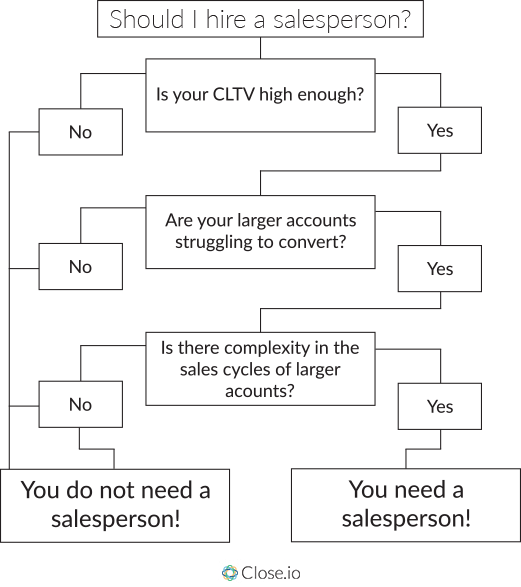
Peter Strid: Training and support are key.

Organizations have always invested in sales training. However, the most common form of sales training is focused on product training and sales process training.

Peter Strid points out that social selling should integrate into existing sales workflow so that it doesn’t complicate the current process. It should become a part of the sales process. Training and ongoing support are a necessity for the sales team. And, even as social selling becomes naturally integrated into the culture and process of the sales strategy, training and ongoing support are still needed to evolve best practices.

Koka Sexton: Don’t forget your customer.

We’ve long understood that creating more business from existing customer relationships is lower cost than acquiring a new customer. As if the economics isn’t enough to motivate your social selling efforts to remember your customer, the relationship value might be.

Koka Sexton points out that a social selling methodology is not only about finding new prospects and new business, it’s also about engaging and keeping your current customers.

Peter Caputa: Integrate social into prospecting.

All sales professionals prospect. While cold calling is generally considered ineffective, there are ways to get results from the phone.

Peter Caputa points out ways to integrate social into your prospecting. He offers tips on how to send emails, leave voice messages, and engage on LinkedIn, through an integrated approach.

David J.P. Fisher: Don’t look stupid on LinkedIn.

When LinkedIn opened up its publishing platform beyond its influencer program, anyone with a LinkedIn account became eligible to publish articles. The LinkedIn Publishing platform provides an opportunity for anyone to demonstrate your knowledge of industry trends.

David J.P. Fisher points out that some sales professional should avoid making fools of themselves if writing is not their strength. Since a key element of social selling is to build trust and authority, a poorly written article is not going to help you accomplish this.

Julio Viskovich: Beware of fakes on LinkedIn.

In many ways, social channels level the playing field. Anyone can have a digital presence, publish, curate and engage. Unfortunately, there are unscrupulous people who create fake accounts for the sole purpose of aggressive selling, which is NOT what social selling is about.

Julio Viskovich points out that the rise of fake LinkedIn profiles makes people more defensive and less likely to connect with people they don’t know. This reinforces the importance of earning trust in order to earn social connections.

Cheryl Burgess: Social leadership is key.

Social selling is a strategic decision. In many organizations, it requires a paradigm shift. It also requires an investment in resources that includes people, process and technology.

Cheryl Burgess points out that social leadership is crucial to an organization who embraces the social employee. The absence of social leadership risks slower adoption of best practices, due at least in part to insufficient investment in people, process and technology for a successful social employee strategy.

Bryan Kramer: Selling is “H-to-H.”

We tend to speak of sales industries as falling into two buckets – B2C and B2B. And, while there are distinct differences in strategy and tactics between the two, there is one thing we can all agree on in both. People buy from people they know, like and trust.

Bryan Kramer says that social selling should be called “social helping.” He points out that “It’s not B2C or B2B, it’s H-to-H.” He gained worldwide exposure when he first introduced his H-to-H concept in a TED talk. Social sellers who routinely help others build trust, build relationships and ultimately win more customers.

Amy Heiss: Social media is a tool like the telephone.

The sales profession has evolved. And, so has the communication tools available to sales professionals. Consider how the telephone and email were both once new communication tools. Likewise, social media is a communication tool that can be used to connect with customers and prospective customers.

Amy Heiss points out that social media is a tool that can be used to connect people in every part of the business, not only in sales. She emphasizes the importance of listening before jumping into a conversation on social.

Carlos Gil: Be social…

Your prospects spend time on social media either to unwind and enjoy non-work content, or to grow professionally through content, networking and providing their own thought leadership. They are not on social media waiting for your sales pitch.

Carlos Gil points out that the key to social selling is being social vs. simply being on social media.

Guillaume Decugis: Leverage content for lead generation

In the age where a B2B buyer is at least 60% of the way through the vendor selection process before ever speaking with a sales person, content is mission critical. Simply stated relevant content, addressing each stage of the buyer’s journey, should be fueling sales leads. Whether the marketing department supplies original content, or you curate relevant content, put it to work for you.

Guillaume Decugis points out that you need to think like a teacher and educate your buyers through relevant content.

Timothy Hughes: Social selling is change management

Let’s face it, some organizations still view social media as a waste of time in any business setting. It sounds hard to believe in 2016, but it’s true.

Tim Hughes points out that social selling is a change management program. It requires buy-in from key stakeholders. They need to understand why social can be integrated into sales processes, and how it’s done. Once stakeholders see results, the buy-in usually happens quickly.

David Graham: Provide people a reason to connect with you.

I get a lot of invitations to connect on LinkedIn. Many are from people I’ve never met. Unfortunately, the majority of them don’t personalize their invitation. In other words, they don’t give me a reason to connect.

David Graham suggests (and I agree) that you should never use the default invitation text provided by LinkedIn. Always provide a reason to connect. And, when they accept your invitation, thank them. Do NOT sell to them.

Sarah Goodall: Employee advocacy is way bigger than social selling.

Employee advocacy refers to a strategic initiative whereby employees in a business across different areas willingly engage online to “advocate” for the brand through authentic behavior.

Sarah Goodall points out that social selling is a form of employee advocacy because sales is just one of many functions within a business. Organizations who embrace employee advocacy are more likely to be successful in their social selling efforts.

The Social Business Practitioner

The 2011 Sales Benchmark Index (SBI) research findings reported that 57% of the buyer journey was completed before a salesperson was actively involved in the process. By 2015, this number had reached 69%. We can expect to see this number increase in the future.

Putting into practice the strategies, tactics and tips listed here won’t neceesarily make you a social selling pro. Nor do they fix all sales problems in a business…We do however suggest that embracing the modern culture and technology of social engagement can have a profound effect on revenue.

I’ll close by asking you to consider this paradigm not as social selling, but rather as being a social business practitioner. A social business practitioner is someone who uses social media strategically in combination with SMART goals to achieve sales results by engaging in digital channels to help, build trust and influence people so that prospective customers WANT to do business with you.

06 Apr 16:48

8 Killer Tips for Harnessing the Power of SlideShare

by Nicki Howell

Savvy marketers have called SlideShare the “sleeping giant.” But while this content distribution platform is giant, it’s no longer sleeping. The reach is massive, as it captures the attention of 70 million unique visitors monthly and is one of the top 100 most-visited websites in the world.

SlideShare

In fact, statistics show that SlideShare is driving higher results than some of the most popular social sharing sites. Business owners are receiving 500 percent more traffic from SlideShare than from Facebook, Twitter, YouTube, or LinkedIn. But many marketers aren’t tapping into its full potential. So how can you more effectively use this tool for maximum results?

1. The first step: research

Many marketers create content they think will perform well. But they unknowingly generate assets that miss the mark, as they overlook something very important: a highly strategic topic.

As with other marketing efforts, start by defining your target audience and brainstorming topics that will resonate with them. But don’t stop there — confirm that your hunches are correct.

Popular content tools, such as BuzzSumo, allow you to see what topics have produced the most viral results. You can use this to confirm your hunches or generate new ideas for SlideShare topics. Another option is looking for high-performing content that you already have produced — blog posts, webinars, or white papers. You can then turn those topics into SlideShare presentations.

2. Get attention … and keep it

On average, eight out of 10 people read headline copy, but only two out of 10 will read the rest of the article. So both your headline and the first slide must be stellar. Otherwise, every slide after the first doesn’t matter. For example, Jay Baer, founder of Convince & Convert, captures attention right away on his first slide. He tells you the benefit (he’s going to crush common myths about social media and content marketing!) and divulge details that you don’t know about these topics.

Crushing 11 Big Myths About Social Media and Content Marketing from Jay Baer

Jonathon Colman, Product UX + Content Strategy at Facebook, generates interest on his first slide “Why our Content Sucks” delivering a headline that is unexpected, giving specific examples, and telling us how to make our content better.

Why Our Content SUCKS from Jonathon Colman

Start by offering the reader a promise. What pain will your presentation relieve? Then design every slide after the first to facilitate the delivery of that promise. At the end of the SlideShare, your reader should feel satisfied and that they got what they expected — and even more.

3. Tell a story

Customers are experiencing information overload, with content inundating every corner of our lives. We consume about 74 gigabytes – nine DVDs worth – of data every day. “It’s amazing we’re able to process and make sense of it all,” wrote Susie East and Ben Tinker in CNN in 2015. But what can make your information memorable, what readers are actually demanding, is stories — with 92 percent saying they want brands to tell stories.

Integrating storytelling into your slides hits an emotional chord with readers, keeping them engaged throughout your content. Rachel Gillett of Fast Company wrote, “When we read a story, not only do the language parts of our brains light up, but any other part of the brain that we would use if we were actually experiencing what we’re reading about becomes activated as well.” That’s engagement. One way successful brands are using this method in SlideShare is by telling customer stories. They highlight a common pain point and walk readers through the detailed solution, then finish the story with an upbeat picture of success. For example, Zappos shares stories about customers who are blown away by their service in the SlideShare deck “10 Inspiring Zappos Customer Support Stories.”

10 Inspiring Zappos Customer Support Stories from Infinit-O Global, Limited

With the right language, this creates emotion that helps readers invest in the story and see themselves in it.

4. Create more frequently

Some marketers have experimented with SlideShare, but their efforts are inconsistent — and so are their results. When you create and update frequently your results will multiply.

This platform rewards presentations that were created most recently. So getting featured on SlideShare’s home page or top content lists is more likely if you create presentations often. Consider using this technique on older presentations by updating them to provide additional information and value.

5. Share your presentations

A well-created SlideShare presentation will generate organic traffic, but it’s also important to deploy a targeted promotion. Share through social media and embed the SlideShare in your existing website content.

Connecting with influencers when creating the presentation is also a powerful strategy. Get their ideas about the content. Then share the published SlideShare with influencers, and most likely they will share it with their own audiences, greatly expanding your reach.

6. Create an interactive experience

The functionality of SlideShare has come a long way since its inception. Most recently, it added multimedia capabilities, giving marketers tools to make their presentations highly interactive.

For example, you can insert YouTube videos. This is helpful for using SlideShare for step-by-step product demonstrations and tutorials about using products or services. Andreas Von Der Heydt, Head of Kindle at Amazon recently created “The 7 Qualities of a Successful Leader of the Future.” He designed slides that contain very few words and simple, straightforward graphics.

The 7 Qualities Of Tomorrow´s Top Leaders (Video) from Andreas von der Heydt

Content marketing agency Column Five embedded video into their deck to provide a deeper understanding of products and explain the value of data visualization.

The Value of Data Visualization (Motion Graphic Video) from Visage

Engage readers more deeply by leveraging these capabilities to bring your content to vivid life.

7. Think visually

Many marketers are thinking about SlideShare in the same way they think of other types of content such as blogs, case studies, or white papers. But SlideShare is much different because it’s truly a visual platform. This requires a shift in thinking.

For starters, avoid putting too many words on the slide. On average, 45 percent of SlideShare decks have 24 words per slide (which is about two average sentences). The highest performing presentations are generally about 10 to 30 slides total.. For example, Von Der Heydt recently created “The Magic to Think Big.” Most of the slides have 3 to 9 words each and the total deck includes only 17 slides.

The Magic To Think BIG from Andreas von der Heydt

So also consider the size of your presentation, and make it a visual and interactive experience.

8. Leverage existing content

You’re already hair-on-fire busy, and adding another project into the mix could be overwhelming. But another great thing about SlideShare is that you can repurpose other types of content, which is a huge time-saver. Take inventory of existing content marketing assets – especially those that performed well in the past.

For example, review your blog posts. Gather the best performers and leverage those tested posts to created SlideShare presentations. Twitter chats, webinars, infographics and eBooks are also great sources for SlideShare content.

Fueling growth in the future

You’ve got many different options available for content marketing, but SlideShare’s well worth considering, as it’s proving to be a highly effective tool. It can fuel growth, generate leads, and capture more organic traffic as you establish your company as a thought leader in your space.

The key is to test and modify often. Doing so will allow you to truly understand the topics and content that resonate and connect with your target audience most.

Have you used SlideShare in your content marketing efforts? If so, please share your experiences and tips.

Curious how SideShare fits into your overall marketing strategy? Like all marketing channels SlideShare and social media specifically, are most effective when integrated into a larger cross-channel marketing plan.

Download Act-On’s eBook, “5 Ways to Integrate Social Media Across Marketing Channels,” to learn five things you can do right now to integrate social media marketing into your marketing strategy!

5 Ways to Integrate Social Media

06 Apr 16:47

It’s Time to Bury the Idea of the Lone Genius Innovator

by Greg Satell
apr16-06-luis-del-Rio-camacho-lone-genius
Luis Del Río Camacho

When Alexander Fleming, a brilliant but sometimes careless scientist, returned to his lab after a summer holiday, in 1928, he found his work ruined. The bacteria cultures he had been growing were contaminated by fungus. As it grew, it killed all the colonies it touched.

Most people would have simply started over, but Fleming switched his focus from the bacteria to the fungus itself. He identified the mold and the bacteria-killing substance, which he called “penicillin.” Seemingly in a single stroke, Fleming had created the field of antibiotics.

At least, that’s how the story is often told today, and that telling meshes with how people see innovation: a single, simple observation, a flash of brilliance, and — eureka! — a new world is born.

The truth is messier.

It wasn’t until 1943 that penicillin came into widespread use. Why did it take so long for the miracle drug of the 20th century to make a measurable impact?

When Fleming published his results, in 1929, few took notice. He was not a chemist and was unable to study penicillin in any detail or synthesize it into a workable compound. Put simply, Fleming didn’t have the requisite skills to engineer his discovery into a practical solution to the problem of disease. So instead of changing the world, the world’s first antibiotic remained buried as an obscure finding in a scientific journal.

It wasn’t until 1939, a decade later, that Howard Florey and Ernst Chain, came across Fleming’s paper, immediately understood its significance, and developed a method to produce penicillin in quantity. They began experimenting on mice, and eventually on humans, and saw incredible results. It was clear that this new drug had the potential to transform medicine.

Yet to make a significant impact on the world, penicillin had to be produced in massive quantities, something that was far out of the reach of two research chemists. Florey reached out to the Rockefeller Foundation, which provided further funding to develop new fermentation methods so that the drug could be mass produced.

By 1943, with World War II raging, the U.S.’s War Production Board enlisted 21 companies to produce supplies for the war effort, saving countless lives and ushering in the new age of antibiotics. This finally gave the drug the scale it needed to have a real impact. In 1945, Fleming, Florey, and Chain received the Nobel Prize for medicine.

Take a look at any significant innovation, and the myth of the lone genius and the “eureka moment” breaks down.

First, a big idea or a new discovery is never enough. For any innovation to have an impact, there needs to be a discovery on an important insight; a viable, scalable solution; and, finally, a business model that allows the new idea to be adopted.

Second, geniuses rarely act alone. Fleming’s pioneering work on penicillin not only was supported by Florey and Chain but also built on the work of earlier scientists, such as Ignaz Semmelweis, Louis Pasteur, and Robert Koch. Moreover, the science would never have found its practical application without support from the Rockefeller Foundation and the U.S. government.

And consider that although government support has been instrumental in both medical breakthroughs and technological developments, such as the internet and GPS, the vast majority of innovators have to stumble ahead on their own when it comes to innovation’s final step: figuring out the business model.

That was exactly the problem that Chester Carlson, a very different kind of innovator, had to overcome. He worked for years tinkering with his invention, even while holding down a day job and going to law school at night. When his wife got tired of the explosions he made mixing chemicals in the kitchen, he moved his work to a second-floor room in a house his mother-in-law owned.

After more than a decade, he teamed up with the Haloid Company, whose product was superior but cost nearly 10 times what competitive machines did. They tried to interest the great companies of the day — Kodak, IBM, and GE — but all demurred. There just didn’t seem to be a value proposition that would justify the cost.

Then Joe Wilson, the president of Haloid, had a billion-dollar idea: Instead of selling the machines, why not lease them? The idea took off, and the company we now know as the Xerox Corporation was born.

And while Carlson’s product innovation was scientifically brilliant, it required Joe Wilson’s business model innovation to create an impact on the world.

So while we sometimes like to believe that some people are innovators and others are not, the truth is that everyone has a potential role to play: scientists and engineers, marketers and accountants, salespeople and production specialists. That’s why we need to treat collaboration as the ultimate competitive advantage, especially today, when the problems we need to solve are so much more complex than in the past.

And that means we need to radically rethink how we approach innovation. First, as the authors of Collective Genius point out, we need to create a culture that inspires teamwork rather than just individual accomplishment. Great innovation happens when a diverse set of skills are integrated to effectively solve problems.

We also need to rethink organizations themselves. In recent years, we’ve seen a new breed of innovators, such as the Institute for Applied Cancer Science at MD Anderson, the Joint Center for Energy Storage Research at Argonne National Laboratory, and the National Network for Manufacturing Innovation, that bring together government, academic institutions, and the private sector to solve our toughest problems.

It’s time to put away the old myths about lone geniuses and eureka! moments. Truly breakthrough innovations are not a single event, nor are they achieved by one person, or even within a single organization. Rather, they are when ideas combine to solve important problems.

06 Apr 16:47

Google’s Accelerated Mobile Pages (AMP) Explained

by Mike Whitney

One of the most talked about marketing developments of 2015 was the fact that mobile search queries on Google officially overtook desktop searches. It’s not that this shocked industry experts – the writing had been on the wall for some time – it’s just that it solidified the monumental changes that have been transforming the digital marketing industry.

Companies and marketers from all different industries were going to have to contend with the fact that large swaths of their audience would be using the web on the go and not in their homes or offices.

The mobile web browser experience is completely different from the desktop one; and so far, it frankly hasn’t been as good. Lagging load times within mobile browsers have been an issue since the advent of the smartphone, and developers are often forced to spend time and resources developing apps instead of user-friendly mobile websites.

Google, in partnership with some of the most prominent sites and publishers on the web, is hoping to change that trend. February marked the introduction of the long-awaited Google AMP (Accelerated Mobile Pages) Project, which aims to create pages that load more quickly than their traditional, non-AMP counterparts. The hope is that with faster loading mobile pages, users will be able to move through the web and accomplish their mobile goals – what Google has termed micro-moments, which refers to intent-rich consumer behaviors (such as wanting immediate access to information) on mobile devices – more easily and efficiently.

So, what are AMPs and how are they going to load faster?

For a website to load faster, it needs to be stripped of its bulky, unnecessary parts. For the AMP Project, that meant narrowing the tools with which web developers build pages. Some coding languages – while useful in a desktop setting – bog down a mobile experience. Because of this, AMP HTML (which is essentially, “HTML extended with custom AMP properties,” according to AMP Project) limits the use of JavaScript to a prescribed “AMP JS library” designed to only use JavaScript elements that enable a fast load time. In addition to JavaScript, AMP HTML also restricts some parts of HTML and CSS; the AMP Validator enforces all of these restrictions.

This does make it sound like pages will be pretty simplistic in design, but to make up for its limitations, AMP HTML does define, “a set of custom elements for rich content beyond basic HTML.” This means that you are able to add some custom styling to your AMP pages, as long as you are not utilizing any of the predetermined disallowed styles. Below is an example of a basic AMP HTML file highlighting the section within the where custom styling can be added.

Pro Tip: If you (or your developer) aren’t sure if your AMP pages will make the cut, use the AMP Validator to check for errors!

Accelerated mobile pages styled coding

Google has also instituted an AMP cache that delivers content to browsers via proxy server. It collects the HTML page (the article), caches it, and uses a validation system that guarantees that the article load will work, and work fast. In other words, large swaths of content on AMP can be pre-rendered by Google (or one of the other partnering publishers, like Twitter) to decrease load time. This is one characteristic that makes AMP so comparable to Facebook’s Instant Articles. It keeps users within a Google framework as opposed to sending them off to individual publisher’s separate mobile sites. As WIRED put it, “With AMP, Google is amassing content on its own servers and keeping readers on Google.”

http://www.mainstreethost.com/wp-content/uploads/2016/04/Google-AMP-Demo-Video.mp4

Source: https://googleblog.blogspot.com/2015/10/introducing-accelerated-mobile-pages.html

What’s the benefit for publishers?

As you can see above, AMP-optimized news stories will now appear at the top of Google’s mobile search results for a relevant query. So even though Google is hesitant to describe AMP capability as an SEO ranking factor in and of itself, AMP pages get sent straight to the top of the page, which is precisely what makes people care about ranking factors in the first place. Also, unlike Instant Articles or Apple News, Google’s AMP pages will be open source, which means the source code will be made freely available and can be contributed to, redistributed or modified by anyone.

Plus, improved speed naturally leads to improved user experience. As users get used to choosing web pages from the AMP carousel, they’ll be delighted with the immediate reward of a lag-free mobile experience. According to early reports, these content templates will improve 15%-85% of load times. Considering mobile users typically abandon pages that take longer than three seconds to load – 15% is impactful, 85% is monumental.

It’s important for publishers – especially small and medium-sized ones – to note that developing AMP pages and adhering to the ascribed rules won’t necessarily lead to an immediate boost in organic rankings. As Richard Gingras, Google’s senior director of news and social products, told AdAge, “AMP doesn’t mean adopt AMP and get a massive boost in search ranking … But if we had two articles that from a signaling perspective scored the same in all other characteristics but for speed, then yes, we will give an emphasis to the one with speed because that is what users find compelling.”

SEO for both mobile and desktop has always been a game of subtlety and long-term effort, not quick fixes. AMP pages, like all web pages, need to be built with a holistic approach towards delivering genuine value to users and doing so quickly (on their devices). The “quickly” part is where AMP site attributes can help both publishers and users achieve their goals.

Advertising on AMP

While streamlined load times and smoother mobile UX will help publishers make their readers happy, they’ll also cause some headaches in the advertising department. Many in the industry have worried that the tools publishers rely on for ad revenues will be restricted or forbidden on AMP pages.

These fears are understandable, especially considering the shaky ground the entire ad tech industry appears to be on in light of the FTC’s native advertising restrictions and the growing prevalence of ad blockers.

As of now, AMP pages appear to be only showing static, square ads that load as the user scrolls. But I think it’s important to remember that the effectiveness of a mobile ad campaign has to be judged subjectively. Its success can only be understood relative to what else could have been done with that money and how competitors’ campaigns are doing in the same spaces.

While the concerns about ad revenue are valid in light of that restrictiveness, it’s a framework that all publishers are forced to deal with in AMP pages. Also, Google developers have repeatedly made comments suggesting that there are more complex (and, presumably, profitable) solutions being worked on that are still compliant with AMP’s coding criteria. In the meantime, publishers will be forced to play by the current rules: simpler ad tech within the fast-loading AMP pages; complex, interactive ad tech on any other mobile pages they are building.

As a publisher, it will be imperative to stay agile and adaptable as the AMP criteria evolves. With mobile pages loading more quickly and showing up in horizontal feeds at the top of search results, publishers can take time to judge the effectiveness of the pages based on user engagement and feedback. As mentioned above, mobile advertising is bound to undergo some seismic shifts in the coming months, so a lot of the concerns with AMP’s ad capabilities may be soon rendered obsolete.

In the meantime, publishers (and their readers) should finally be treated to a taste of what a fast, seamless mobile web experience can be.

User Experience conversion mobile

06 Apr 16:47

Segment adds third-party sources like Zendesk and Stripe to help companies truly understand customer experience

by Jon Cifuentes
Segment

VB INSIGHT:

Segment is an increasingly popular customer data aggregator that makes it easy for engineers to track funnel events, test new analytics partners, and combine data collected from websites, mobile apps, and servers. In a marketing technology universe littered with customer data tools, this can be really useful. At VB Insight, I studied the marketing analytics landscape and counted 700+ tools marketers use to house customer data and generate marketing insights. I didn’t collect all of them, and Segment doesn’t integrate with nearly all of them. Even still, in the classic “build vs. buy” dialectic — which was alive and well at VentureBeat’s own Mobile Summit this past week — Segment has historically offered the compelling alternative of “try.”

The new release, called Sources, is potentially much more powerful than that.

While web and mobile app data can be a massive undertaking unto itself, what about the droves of data collected in email campaigns, customer support channels, or payment systems? After all, customers don’t just use websites and mobile apps. They open emails, have conversations with salespeople, chat with customer support, and pay for stuff. These data sources typically live in their own silo — and in large, oftentimes fragmented companies, they are managed by their own engineering team with their own release and update cycles and data analysts.

In this model, tons of data gets left behind. And even in digitally mature companies thoroughly invested in customer analytics, they still have a hard time combining data sources with third-party systems — like contact center or payment information — and making it mean something.

Segment’s new offering is interesting because it’s drawing from rather than sending to cloud providers like Salesforce, Zendesk, Stripe, SendGrid, Mandrill, and Twilio, pulling information into a single database with just a few clicks. I usually scoff at the “5 mins to install, no engineering time required” vendor speak — but in Segment’s case, it’s actually true.
sources
More importantly, with all of this actual customer data in one place, companies can finally understand the complete customer experience and explore how touchpoints across communication channels affect revenue, engagement, retention, and churn. It allows engineering and marketing teams to stop focusing so much on data collection and start thinking about the customers behind the data. I like to use the analogy of water at a well. Are your highly paid data analysts best used pumping a cistern or gathering water? Or would be they be more effective with an effective infrastructure in place, building cool irrigation apps with that water system to make your products grow? With sources, Segment customers can truly focus on growth initiatives. For instance, they can see which pages in an app prompt the most support tickets, or whether customers opting in via text are more engaged than those in email, or even how support tickets can drive purchases.

Trunk Club, Instacart, Mapbox, Udacity, 99Designs, and Angie’s List are some of the launch customers using Sources and spending less time gathering water. Combining data this way puts typically near-impossible tasks, like quantifying the value of customer support — or understanding the effects of email and text message campaigns over time — very reachable, if not downright testable.

I also caught up with Segment CEO Peter Reinhardt to learn a little more about what the release means for high-performing teams and what’s possible with all of this disparate third party data living in one place. Perhaps, most importantly, are the types of sources available on the product now and on the way. Reinhardt said, in an email, “We have 8 sources to start (Salesforce, Stripe, Zendesk, SendGrid, Mandrill, Intercom, Hubspot, and Twilio) with 2 more currently in beta (Mailchimp, SalesforceIQ). We’re planning to significantly increase the sources catalog in the coming months. The new categories we’ll start with include advertising (Google Adwords, Facebook Ads) and databases (MongoDB, Postgres).”

Segment has also seen significant growth over the past year. Reinhardt told me, “Sources builds on our considerable momentum over the last year, which includes the launch of new products like Warehouses, a Series B led by Thrive Capital, and an increase in headcount from 30 to 80.”

More information:

Get more stories like this:  twitter  facebook


06 Apr 16:45

10 Traits of Stellar Sales Teams

by adrian.cordiner@workstar.com.au (Adrian Cordiner)

stellar-sales-team.jpg

A successful, motivated, and engaged sales team is gold -- if you can build one. Every sales leader dreams of managing a dream team of sales superstars who will elevate their business. Below are the 10 habits your people should possess in order to produce consistently successful results.

1) They possess natural energy and charisma.

Collectively and individually, your sales team should radiate energy, warmth, and charisma. It’s infectious, and it will always impact your team’s relationship with your customers.

Salespeople without natural energy and charisma can often appear cold, inauthentic, and untrustworthy. These aren’t traits that can be taught, so it’s important to hire people who are naturally able to connect with and put prospects at ease.

2) They invest their time with customers

The backbone of your business are your customers. Engaging and interacting with them frequently is critical to the development of your success. Successful sales teams build meaningful relationships so they can gain deep knowledge of their prospects’ relationships and help them with precisely what they want and need. This approach to prospect relationships builds trust and rapport.

Research has demonstrated that excellent customer relations increases sales outcomes and team performance -- 74% of consumers report spending more money with a company as a result of excellent customer service.

3) They never stop learning.

Successful sales teams thrive in environments where they continually learn and are encouraged to seek knowledge. This skill enables reps to thoroughly explore buyers’ problems and indicates that they’ll put in the time and effort to become experts in their space. Consistently effective sales teams are always up-to-date with comprehensive product knowledge skills, they role play sales calls before they happen, and they’re always reading educational resources so they’re at the top of their game.

4) They have structured goals (and they’re not afraid of big ones).

Every successful sales team should have structured and transparent goals that are regularly assessed and easily measured so they can be iterated on as necessary. Likewise, managers should never be afraid to increase and stretch goals. Every great sales professional loves a challenge.

5) Each team member holds themselves accountable to their goals.

Just as a collective team should be accountable for the sales success of the business, so too should the individual. KPIs shouldn’t just be established -- they also need to be tracked and monitored, with consequences for not achieving them.

Successful sales professionals send their managers regular summaries of their work. This innate sense of autonomy fosters a strong sense of leadership, discipline and pride, characteristics that make it easy for teams to hold themselves accountable for missed goals.

6) They communicate and collaborate.

The best sales teams communicate with each other well. This not only builds team rapport, but also ensures absolutely everyone is on the same page, has the correct knowledge and the latest updates everyone requires to do their job.

While each successful sales team enjoys structured daily and weekly communications, they also collaborate by sharing advice, overcoming obstacles and providing genuine support. It’s always helpful to get multiple perspectives on a particular sales challenge.

7) They make use of their larger internal network.

High-performing sales professionals benefit from spending time with larger networks within their company and having access to their business leaders. The sharing of ideas and company objectives between high-level management and sales professionals empowers the latter to gain a sense of ownership and to have a greater sense of context with their work.

Empower your sales team by sharing broader strategic goals or company initiatives so they understand the full impact of their work and can leverage other resources at the company to help them sell better.

8) They possess excellent time management skills.

Truly effective sales reps manage their time carefully. They know that time is money, so they plan their days in advance, prioritize their tasks, organize their pipelines, and always find new ways to streamline their processes.

9) They don’t make promises they can’t keep.

The most effective sales teams not only gain sales, but they also successfully follow through with each and every one of the promises they made to prospects during the sales process.

Failing to deliver causes customer disappointment and presents a churn risk, which is bad for business. That’s why great reps never make commitments they can’t keep and would rather tell a prospect “I don’t know” instead of overpromising.

10) They celebrate their successes.

More often than not, businesses are focused on results and sales data. However, truly effective sales teams also celebrate their successes. Taking the time to recognize accomplishments not only creates better energy within the workplace, but has a greater effect of motivating the team to better their efforts. Besides, who doesn’t love the thrill of success?

What do you think the best sales teams have in common? Let us know in the comments below.

HubSpot CRM

06 Apr 16:43

How to recruit your first top-notch sales rep for your startup

by steli@close.io (Steli Efti)

Most startups suck at outbound sales recruiting.

They either recruit too early, or too late. Too aggressively, or too passively. They pursue the wrong candidates, or no candidates at all (fyi: good salespeople are not going to come to you).

The good news is they don’t have to. Create an outbound recruiting machine and you’ll have a pipeline of high-quality sales candidates. Here are the steps you can take to start building your recruiting process today.

When is the right time to hire a salesperson?

Hiring your first full-time salesperson is a huge step. Are you sure the timing is right? Too soon and you risk losing touch with your market.

Ask yourself these three questions to find out if your startup is ready for a full-time sales hire:

  1. Is my customer lifetime value high enough? You should have a CLTV of at least $1,000 before you consider hiring a full time salesperson.
  2. Are my larger customers struggling to convert? If larger trial accounts convert at the same rate as smaller accounts, you don’t need a salesperson.
  3. Is there complexity in the sales process for my larger accounts? A salesperson probably won’t make a difference in a frictionless sales process.

Should-I-hire-a-salesperson

If you can answer “yes” to all three questions, you’re ready for a salesperson! But where do you start?

Talent trumps experience

It might be tempting to browse job boards like Craigslist or Indeed to find a qualified salesperson with 10+ years of experience.

Don’t! That’s the biggest mistake founders make with their first sales hire.

Good salespeople aren’t looking for work. The kind of candidates you’ll find on job boards aren’t salespeople, they’re scam artists who are great at selling an inflated resume.

Startup-sales-recruiting-advice

Instead of looking for sales experience, look for sales talent. Here are some of the key characteristics of successful startup hustlers:

The best place to find people with those traits? Your immediate network.

How to recruit sales talent within your network

Who do you know with hustler DNA?

Don’t limit yourself to salespeople. Your next great sales hire may be working as a teacher, engineer, or mechanic. Identify the people in your network with an entrepreneurial spirit and talk to them about joining your startup.

If you can’t find anyone in your immediate network, then ask for referrals. Explain what you’re looking for in a salesperson and ask your contacts for introductions.

If that doesn’t work, start looking outside your network.

How to recruit sales talent outside of your network

Forget job boards. When recruiting outside of your personal network, start with businesses in your market who are a couple years ahead of you.

Find one with an established and successful sales team and reach out to one of their junior reps. Say:

“Hey John, this is Steli from Close.io. I really admire what your company is doing and I’m hoping you could help me out. You’re part of an incredible sales team and we’re trying to hire amazing sales talent like you for our inside sales CRM. Would you be willing to hop on a call with me this week and tell me what you were looking for when you joined a company?”

Most reps will be flattered and take the call. Use that opportunity to explore whether or not they’d be a good fit. If it seems like a match, be upfront. Say:

“This might sound crazy, but is there any chance you’d join our company? You’re exactly what we’re looking for.”

If they’re interested, keep the momentum going by setting up a formal interview. If they aren’t, thank them for their time and ask one final question.

Turn rejections into referrals

Some of the best hires start as referrals.

If the rep rejects your job offer, that’s okay. Thank them for their time and, just before you get off the phone, ask for a referral that’s totally out of your league. For example:

“Thanks for your insights, John. Before I let you go, I have one more question. Now that you know what we’re looking for in a salesperson, who do you know that’s so insanely talented at sales that they’d probably never work for us?”

This twist on the standard, “Who do you know who would be interested?” makes people really think and leads to higher-quality referrals.

Create long-term relationships

When you reach out to this referral, keep in mind that the goal isn’t to hire them on the spot. If you rush it, you’ll lose the opportunity. Approach the conversation like this:

“Hi Mark, this is Steli from Close.io. I was speaking with John about building an amazing sales team and he said you’re the best salesperson he knows. He also said that I’d never be able to hire you, so I’m not even going to try. But would you be willing to talk with me about your sales experience?”

If you’d be interested in working with this person in the future, start building a relationship immediately. Find a way that you can provide lasting value on a consistent basis and check in with them once or twice a month.

It may take awhile (I knew my Close.io co-founders for five years before I could convince them to start a company with me), but if you’re willing to invest the time no one else is, you’ll win them over.

And if you don’t? You still developed a powerful relationship that can be valuable in other ways.

Always be recruiting

Outbound recruiting is a lot like outbound sales.

You identify a prospect, qualify them, and go for the close. If you don’t get it on the first try, you follow up relentlessly.

And if you don’t start looking for prospects until you really need them, you’re in trouble. Don’t wait until you need to hire to start recruiting. If you start making those connections today, you’ll have a list of highly-qualified candidates when you need them.

Like sales, recruiting is a never-ending cycle. Start preparing today for tomorrow’s crisis, and there won’t be a crisis at all.

Recommended reading:

The ultimate sales hiring guide for B2B startup founders!
This is the ultimate sales hiring guide for startup founders. Learn when to hire sales people, who to hire and how to manage them at every stage of your sales process.

Hiring for startups: How to recruit the un-recruitable!
How do you find high-performers? And how to make them want to join your team? Here's come unconventional startup recruiting and hiring advice ...

My startup hiring interview hack: Why? Why? Why?
A simple strategy to x-ray through the bullshit answers applicants give you and get real insights into what makes them tick.