Shared posts

11 Apr 18:10

Better Copywriting in Four Minutes For Better Sales

by Darren Rowse

office-notes-notepad-entrepreneur-38556If you’ve got four minutes to spare today, I can help you nail your sales copy.

I recently heard Ed Dale of The Challenge and MagCast speak at a conference on the topic, and I took pages and pages of notes – copywriting, marketing, and sales are the biggest things I’ve struggled with, as I imagine plenty of you do too.

For most, selling doesn’t come easy. Sometimes we can feel sleazy and pushy, or we are so worried about coming across that way that we undersell or don’t do anything at all. Ed talked about how we should flip it around in our head and remind ourselves that we are helping our readers solve a problem, or providing value in their lives.

If you’re selling a quality product (or want to!) and you’re stuck on how to write things that will encourage people to purchase, then you might want to give this exercise a try. As I said earlier, it can take as little as four minutes, but can make a huge impact on your income.

I want you to sit down and do today’s copywriting challenge and let me know how you went.

This exercise could also be useful in a whole heap of other places

  • Best place to try this is before you create the product – what are your readers pains and desired gains
  • Thinking about starting a new blog or niche
  • When choosing categories for your blog
  • When creating opt-ins for your blog
  • When brainstorming and deciding what to write about
  • When writing a post – get in touch with the specific need

What do you struggle with? Is it the feeling and emotion attached to selling? Is it the technical side? Is it the writing? Or idea creation?

Further Reading

The post Better Copywriting in Four Minutes For Better Sales appeared first on ProBlogger.

11 Apr 18:08

The Real Way to Get More “Shares” Has Nothing to Do with Titles, Techniques, or Technology

by Scott Aughtmon

how do you get people to share your content?

“I’ve always wanted to be somebody, but I see now I should have been more specific.” – Lily Tomlin

Steve Rayson wrote something on Moz.com that has really got me thinking about social media “shares.” His conclusion confirmed a lingering assumption I’ve had for a while.

My assumption is: What if we have it all wrong?

What if the way to get more shares has less to do with titles, techniques and technology and more to do with something else that’s deeper and ultimately more powerful?

I’ll explain more of what I mean in a minute, but first you really need to hear this story. Why?

Because hidden in this story is the real answer to getting more shares.

The Mistaken Identity

Friedrich Schleiermacher was, among many things, a well-known philosopher of his day. (He lived in the late 1700’s to the early 1800’s.)

There is a story that one day, in later years, the old gentleman was sitting alone on a bench in a city park.

As he was sitting there, he began to drift off. A police officer saw him and, not recognizing him, mistook Schleiermacher for a vagrant.

So the police officer went over, shook him and asked, “Who are you?”

Schleiermacher replied sadly, “I wish I knew.”

The Results from Analyzing 1 Million Articles

Many people want to know “the secret” to getting their content shared. And there are many theories out there about how to get more “shares.” Some of the theories are based on:

  • Titles
  • Time of day
  • The sharing tools you use
  • And more

I think these things are all very important, but what if “the secret” to social shares is something else that we’re all overlooking?

That leads me back to the post I mentioned.

Steve Rayson, Non-Executive Director of BuzzSumo, wrote a post written back on September 8, 2015 called Content, Shares, and Links: Insights from Analyzing 1 Million Articles.

The post contained the results of research that BuzzSumo did with Moz where they analyzed the shares and links of over one million articles.

What were the results? Well, if you really want details, then you should download the 30-page report and read the in-depth results for yourself.

Three Facts That Stood Out

But there were three facts that really stood out to me:

1. The majority of posts receive few shares and even fewer links

2. There was NO overall correlation of shares and links. which implies that people share and link to posts for different reasons

3. One specific type of content does have influence over shares and links

They were other important factors, but these ones stood out to me. (Read the post to see more of the facts and Steve’s insights.)

What was interesting to me about these facts is that most people’s posts are not getting shared or linked to – and there’s no specific technique or technology that can ethically fix this!

What about that one specific type of content that does have an influence of shares and links? Steve reveals what this type of content is…

“During this analysis we found that opinion content from these sites, such as editorials and columnists, had significantly higher average shares and links, and a higher correlation.”
Steve Rayson

BuzzsumoMozSurvey, how to get more shares, how to get people to share your content

Results that revealed that opinionated content receives most shares and links

THEIR CONCLUSION:

The conclusion was that well-researched, authoritative content that expresses an opinion is the content that gets the most shares and links. Read the full blog post to see why this is true.

When I read this conclusion, it got me thinking about what I believe is the real, unspoken reason that content has influence, is shared, and is linked to.

This is the Real Way That I Believe You Get More Shares and Links

The real way to get more shares and links has less to do with WHAT you write, or the techniques and technologies you harness, and more to do with WHO has written an article or blog post.

seth godin social influence, how to get more shares

EXAMPLE: Seth Godin can write a post with an average, even obscure title, and a bazillion people will open it and share it, because of who he is.

Is it because he used such a powerful and amazing title? No. It was just an average title.

But because SETH GODIN wrote the post, it carries a level of anticipation and expectation that causes people to want to read it, share it, etc.

If I took the same post, with the same title, and put the name “Joe Schmoe” on it, I probably couldn’t get even one of the same people who read it and shared it with Seth’s name on it to read or share it with my imaginary buddy J.S.’s name on it.

  • It can’t be the content that influenced the shares, because it’s the same exact post.
  • It can’t be the title that influenced the shares, because it’s the same title.

The only difference is that it has “Joe Schmoe’s” name on it! The only thing that changed is the WHO, not the WHAT!

I think most of us never think of the almost invisible impact that anticipation and expectation has on the content we present to people.

Now is Seth an awesome thinker and writer? I personally think so! Do most of his posts contain much better insights than the average blogger? I’d say, “Yes!”

But we still need to realize something important… the power of anticipation and expectation is giving Seth a leverage with his titles and content that most newcomers don’t have right away.

Now don’t get me wrong.

I agree 100% with the importance of headlines and I think they have a big impact on content that is consumed. And I definitely think that techniques like the ones that Moz.com teaches and tools like BuzzSumo has are very important.

My only point is that we need to remember that WHO is a powerful, overlooked force that is influencing shares and links.

Now it wouldn’t be right to tell you how important the “Who” of your content is without telling you some ways that you can improve your “who,” so let me leave you with four ideas.

4 Ways to Change Your “Who” and Increase the Anticipation and Expectation for Your Content

Here are four methods that will help you to begin to improve your “who” and boost the anticipation and expectation for the content you create:

1. It comes from people’s previous experience with your content.

That means you still need to do your best at presenting ideas in the best possible ways you can. There’s no way around it.

Anticipation and expectation won’t make lame content better. It might make good content seem better. But it’s not magic. Sorry.

2. It comes from how you carry and present yourself and your content.

OFFLINE: Pay attention to how you dress, your posture, how you speak or write, because it creates anticipation and expectation.
ONLINE: Pay attention to the profile pictures you use, the “voice” you write in, etc. But it not only comes down to the way you look, it also comes down to the look and the layout of your blog.

Make sure that the “you” you portray gives off the correct anticipation and expectation you want for what you are saying.

3. It comes from what people have heard about you from others. (I am going to be focusing more than ever on this.)

If everyone says you are funny, or smart, or great at something, then people will believe and expect you to be. (This is even more true if the “everyone ” who says these things is the “media” in your industry or niche.)

You need to think about how many people currently share what you say with others on the various social media outlets, how many people currently “Like” your content, etc.

Then do whatever you can to get people who think highly of your content (and who are thought highly of in your industry/niche) to share your content AND their opinion of you with others.

4. You must have an opinion, share it boldly, and back it up with facts.

This is what Steve Rayson said gets content shared and linked to, but I believe it’s also what gives you an identity and amplifies or improves your “Who.”

If you are just putting out the same safe content and saying the same safe things, you and your content will just blend into the background.

But if you boldly give your opinion, then you’ll attract a following. You’l, of course, also also attract detractors. But who cares? The people who succeed and standout all have personalities that stand out!

It’s not just true of people. It’s true of businesses and brands too.

Every successful business stands out in their category because they stand for something. They each have a different personality or feel.

In fact, I believe that it’s impossible to have a strong personal brand or business brand, if you or your business doesn’t have a “personality.”

How the Story I Shared Reveals This Truth

I told you at the beginning of this post that the story about Friedrich Schleiermacher reveals the real answer to getting more shares.

After all that I shared with you, do you see how it does? If not, let me reveal it to you now.

If the police officer realized that the old man sitting on the bench was THE great Friedrich Schleiermacher, then he would’ve treated him much differently than he did.

If Schleiermacher would have told the officer who he was and shared just a few of his brilliant and bold ideas, then the officer would have apologized and probably walked off whispering and pointing to anyone near and far, “Do you realize who that is!?! Do you realize who I bumped into today? Do you realize what he said to me?” (This is the offline equivalent of online “shares”.)

But Schleiermacher, the philosopher that he was, had gotten to the place in life where he wasn’t even sure who he was. So his only reply to the policeman was, “I wish I knew.”

And so the world responded the same.

If you want more shares and links, then you better first know who you are and then you better work on presenting that to the online world. (The four methods I shared above will get you started.)

Until then, all the titles, techniques, and tools will be little help to you! (But once you’ve done this, then use any and every title, technique, and tool that can help you amplify your “who” to the world!)

Which of the four methods will you be focusing on?

11 Apr 18:06

2016 Sales Performance Index [eBook]

by Jeremy Boudinet

Editor’s Note: The following is an excerpted chapter from Ambition’s 2016 Sales Performance eBook. Download it here. 

Most sales organizations define their core personnel in one of three ways – Business Development, Account Executives and Sales Brokers.

In the case of Business Development and Account Executives, the key sales KPIs assigned to each role are largely similar across different industries. Broker KPIs are more varied based on industry, though you can still find some core commonalities.

The 3 Types of Sales KPIs

In every organization, there are always three types of performance metrics: Activity metrics, Objective metrics and Moneyball metrics.

Activity metrics are daily “hustle” metrics (calls, emails, conversations) proven to drive longer-term Objective metrics (revenue, contracts signed). Moneyball metrics (or Advanced metrics) bridge the gap between Activity and Objective metrics, showing how efficiently your team is operating.

Here’s a look at the performance benchmarks today’s industry-leading experts recommend you measure across your sales team – broken down by role.

Business Development

Business Development leaders are under the 8 ball nowadays to harness and guide the fastest-evolving role in the sales landscape.

The emergence of Sales Development as the new lead generation bellwether has been a blessing for analytics-savvy sales organizations, since BDRs are the first sales position primed for data-driven performance evaluations. Companies with a fully-developed market position, segmented selling process and modern sales technology can easily track performance across the most important Sales KPIs.

With that said, it’s worth reviewing TOPO’s analysis of the BDR position in its 2015 Sales Development Report, where it set forth the following pre-conditions for success:

“A successful framework must be rooted in a firm understanding of your target market, average lead volume, and sales process. This begins with your SQL definition, which is the founda:on of the sales development organization.”

Once that is accomplished, the report finds, “the most successful SDRs exhibit commonalities in their outreach cadence and live call execution, across areas like inbound lead response time, number and types of touches used, lead pursuit duration, and live call length.”

From a Moneyball Metrics standpoint, leading organizations are already finding compelling advanced metrics that cut to the core of personnel performance.

As an example, a study the Bridge Group performed with QuotaFactory discerned Reach Rate (percentage of accounts that engage in a meaningful, forward-progressing conversation), Pass Rate (percentage of accounts passed to a sales counterpart) and Pipeline Rate (percentage of accounts accepted into the sales pipeline) as the ultimate arbiters of SDR success.

Learn what success looks like for Account Executives and Sales Brokers by downloading the full eBook here. 

Ambition eBook CTA

The post 2016 Sales Performance Index [eBook] appeared first on OpenView Labs.

11 Apr 18:06

The Real Secret to How I Got Started

by Chris Brogan

Screen Shot 2016-04-11 at 10.28.15 AM There’s a super easy answer to how my career really got started. It’s all related to one simple detail: I connected with people who were doing cool projects in the space I wanted to work in.

Screen Shot 2016-04-11 at 10.28.26 AM

Continue Reading

The post The Real Secret to How I Got Started appeared first on chrisbrogan.com.

11 Apr 18:01

DocSend raises $8M for smarter document sharing

by Anthony Ha
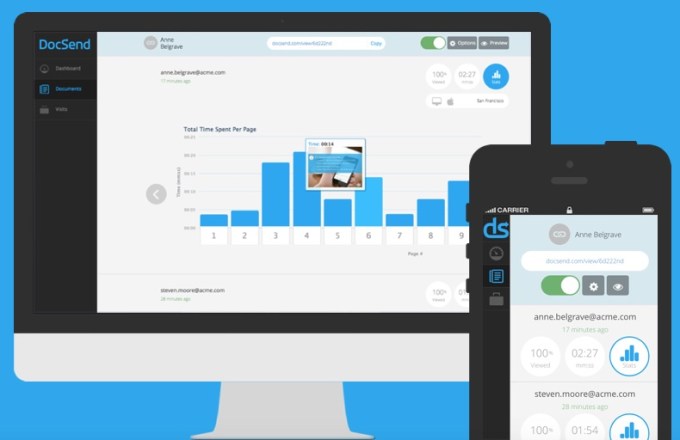
DocSend Document analytics startup DocSend has raised $8 million in new funding. Naturally, co-founder and CEO Russ Heddleston said he used his company’s tools to make the deal. DocSend launched at our Disrupt NY conference two years ago, offering users a different way to send email attachments. The attachments are presented in a web viewer, meaning that you get notifications whenever someone… Read More
11 Apr 18:01

The Most Successful B2B Industries on Social Media

How do audience size and engagement level on social media vary among various B2B industries? To find out, TrackMaven examined full-year 2015 data from 316 leading B2B brands on five social networks. Read the full article at MarketingProfs
11 Apr 17:50

Don’t trust Google to structure your local data

by Andrew Shotland
As Google increasingly incorporates direct answers and other types of featured snippets into search results pages, columnist Andrew Shotland points out that businesses may want to get smarter about marking up their pages. The post Don’t trust Google to structure your local data appeared...

Please visit Search Engine Land for the full article.
11 Apr 17:50

How Minimalism Brought Me Freedom and Joy

by James Altucher

I have one bag of clothes, one backpack with a computer, iPad, and phone. I have zero other possessions.

Today I have no address. At this exact moment I am sitting in a restaurant and there’s no place for me to go to lie down.

By tonight I will find a place to lie down. Will that be my address? Probably not.

Am I minimalist? I don’t know. I don’t care. I don’t like that word. I live the way I like to live no matter what label it has.

At any moment, you are exactly where you want to be, for better or worse.

A lot of people get minimalism confused.

It’s not necessarily a good way to live. Or a free way to live for many people. It’s just the way I like to live.

I like to be a wanderer. Without knowing where I am going to end up. To explore with no goal. To love without expectation.

For now. Maybe not for later. Maybe not yesterday.


“Does minimalism mean not having a lot of possessions?”

No, not at all. I think minimalism means having as little as you require. That means different things to everyone.

For me, having little means I don’t have to think about things that I own.

My brain is not so big. So now I can think about other things. I can explore other ways of living more easily.

Some people don’t like that. I know many people who love roots. Who love being sentimental towards items. This is fine. Who am I to judge?

The other day I threw out my college diploma that was in storage. I threw out everything I had in storage. The last objects left in my life.

At 48 years old I have nothing and nowhere. Other than the people I love and the experiences I love.

A friend asked me, “You worked hard for that diploma. Are you sure you want to throw it out?”

Yes. I’ve worked harder for other things since then. I don’t keep all of these things around either. They are gone.

Society tells us a diploma is a special life achievement. It isn’t. It’s yesterday. I don’t hold onto all the things society tells me to hold onto


“How do you deal with kids if you are a minimalist?”

Like 50% of Americans or more, I’m divorced. I have two beautiful children with my first wife. I love my children very much.

I miss them almost constantly. I’m not minimalist if minimalism means having zero attachments. I’m attached to my kids.

I see them as much as I can. Sometimes they visit me (wherever I am) and sometimes I visit them. And some times they stay with me for an extended period of time.

I hope to talk to them every day for the rest of my life. If they lived with me I probably wouldn’t be able to live the way I do and I probably wouldn’t want to.

But life has delivered me to this shore. So I pick myself up and explore the jungle on this new island.


“Do you have to get off the internet to be a minimalist?”

Sometimes. For four million years we were “disconnected.” For 20 years we have been “connected.”

I have 238,795 unread emails in my inbox. Emails are a suggestion but not an obligation.

Love and spirituality and gratitude are found in personal connection. Not in an email response.

Sometimes I might return an email ten years later. Those are fun. I pretend like I just got the email a second ago and I return it, “Sure I’ll meet you for coffee tomorrow!” I get fun responses.

I never answer the phone. I have no voicemail. My phone number is 203-512-2161. Try it and see.

I go on Twitter one hour a week to do a Q&A every Thursday from 3:30 – 4:30 EST. I’ve been doing that for six years.. I post articles on Facebook but don’t really use it for anything else.

I have a kindle app on my iPad mini and read all of my books there.

I understand real books are beautiful. So I go to bookstores for hours and read them. But I won’t own them because they won’t fit in my one bag.

I never read random articles on the Internet unless they are by people I know. Mostly I read books I love.

A friend asked me, when he heard all of this, “But aren’t you afraid you’re going to miss some information?”

I asked him, “What information?”

99% of information we read, we forget anyway. The best way to remember is to “DO.”

Otherwise, I look at nothing online.

Experiences happen when you disconnect. And I choose experiences over goods or information.


“Does minimalism mean having few emotional attachments?”

I love my friends. I love my children. I love talking to people at a party or a dinner or an event and learning from them.

Love is minimalism. Desire, possession, and control are not minimalism.

Minimalism of things? No. Minimalism of fear, anxiety, stress, mourning.

I don’t like any intrigue. I don’t like to gossip about people.

When I do that, I feel like I am carrying those people in my backpack. So the more I gossip, the heavier my baggage is.

I don’t like feeling bad if someone doesn’t like me. That’s also baggage. I try to leave that behind.

And we’re all different. You never really know why someone is doing the things they are doing.

Sometimes its for deeply sad reasons. Sometimes they are projecting. Sometimes they had a bad day, or a bad life. Sometimes It’s for reasons we’ll never understand.

“Why did they do this?” or “Why is this happening to me?” won’t fit in my one bag.

Did I check the box on physical health, emotional health, creativity, and compassion today?

Those items don’t need to fit in my bag. They are gone by end of day. I’ll find them again tomorrow.

How do you get rid of an attachment that is in your baggage? I don’t really know.

I certainly carry around extra baggage. So I just get back to the four items I said above starting with physical health.

Then I always find my baggage is a little lighter.


“Does minimalism mean having no accomplishments?”

No. If anything, the more you accomplish, the more you can afford to get rid of the things society uses to hold you down.

Or, the reverse. Either way.


“Is minimalism healthy?”

Yes. Sometimes. For instance, I don’t like to eat more than I need. Although going extreme on that becomes an obligation to carry around.

I don’t like to have experiences that are unhealthy.

For me, experiences are always more important than material goods. A story is more important than a gift.

A material good might not fit in my bag. But a joyful experience is lighter than an atom.

I get to look forward to it beforehand. I get to have it. I get to remember it forever afterwards and learn from it and love it. And it weighs nothing.

What if an experience is not so joyful.

One thing I know: joy is a choice inside and not an emotion given to you.

Sometimes I make the wrong choice. I can’t help it. But sometimes I make the right one. I hope today I will.


“What are minimalist emotions?”

Love, joy, wonder, curiosity, friendship connection. These are things you give away. Not take from others.

Emotions that can’t fit in my bag: possession, control, anxiety, fear.

I don’t include anger. Anger is just fear clothed. When I’m angry I try to find the underlying fear. Get naked with it.

Am I good at this? Not really. I try to get better.

If I judge myself for something I did wrong then I just did two things I don’t like to do: the wrong thing, and the judging.

Minimalism is about not judging yourself or others.


“You have to have goals to succeed! How can you be a minimalist with goals?”

Goals are ways the mind tries to control you. “I need X to be happy.”

When I feel like I need something outside of me to be happy, I have to make room in my bag for it.

I don’t have enough room. I have some shirts and pants and toothpaste and a few other things. Goals don’t fit.

I have interests and things that I love to do. If I get better at those things each day (or try to) I feel good.

When I have less things in my bag, I feel more free. Did I get 1% more “free” today, whatever free means?

When I spend time with friends, I find joy in the connection. Sometimes the only thing we need in life is not a goal achieved but a hand to hold.

These three above items catapult me to achieve every goal I never had.

It’s magic.


“Should I sell my house and get a smaller house?”

No. Or…I don’t know. Don’t do it for a label. If you like your house, keep it. If you like your job, keep it.

Figure out the 10-15 things you want in your bag before you die tomorrow.


“What’s the first step I should take? Should I throw things out?”

I have no clue.

This is the problem with self-help books. They seem to be written by someone on a pedestal giving advice without having any blemishes.

I have too many blemishes to give advice. I am a homeless man with no address, with some failures and some successes and no possessions.

Today I can start over. Or today I can ask too many times: “Why?”

But there’s one thing I can do: I can always help someone else. That makes my day and life lighter.

Anyone can have miracles in their life.

Miracles don’t happen. Miracles are given.


“If you are a minimalist how come sometimes you have really long articles?”

Because I don’t care what you think about me.

The post How Minimalism Brought Me Freedom and Joy appeared first on Altucher Confidential.

11 Apr 17:49

Tony Robbins' mom made him turn down his dream job at age 15 because his ego was getting 'too big'

by Kathleen Elkins

tony robbins

At a young age, Tony Robbins decided he would become a professional baseball player.

That dream was shattered when he tried out for the junior high team. "I just couldn't hit the curveball," he recalled in a LinkedIn post. "I was completely devastated."

He settled on the next best thing: a writer and sportscaster.

"I signed up for two classes I was certain would catapult me to the press box big time — typing class, and short-hand writing," the self-made millionaire wrote.

His career took off. He landed interviews with big names, such as legendary football coach Woody Hayes, sports journalist Howard Cosell, and Hall of Fame quarterback Joe Namath, he told Lewis Howes on a recent episode of Howes' podcast, The School of Greatness.

A local California newspaper, The Progress Bulletin, was impressed and hired him at age 13.

"And then I got this huge break," he told Howes.

"Here in LA, KTTV Channel 11, now a Fox channel, was trying to get viewership and they kept trying different kinds of sportscasters — they even tried Fannie Fox, the stripper. Somebody watched some interviews I did and went, 'Holy s---, this 14-year-old kid is getting interviews nobody else is getting.' So they called me up and they offered me the job to be the nightly sportscaster, as I was turning 15."

It was Robbins' dream job — "I was out of my mind," he told Howes — but his mom promptly took the wind out of his sails.

"My mom said to me, 'Your ego is too big, and if I let you do this, it's going to get bigger,'" he recalled. "She not only would not let me take the job, she made me quit my job working for the Progress Bulletin doing sports. I hated her and I was devastated, but it created a sensitivity inside of me."

It instilled in him the importance of grace and humility, attributes that he credits for his success today.

"I certainly have plenty of pride in what I've been able to accomplish, but I always know I'm just a guy, and while I've worked my a-- off, I've also had grace in my life," he told Howes.

"When you achieve things, it comes from incredible, obsessive focus; it comes from massive action and figuring out how to execute and do things effectively; and it comes from grace. I never forget that that's a part of the formula for where my life is today."

SEE ALSO: Tony Robbins shares the most important thing he's learned from coaching billionaires

Join the conversation about this story »

NOW WATCH: A psychologist reveals a trick to stop being lazy

11 Apr 17:48

10 Ways You’ll Be Using Facebook Live This Year

by Rob Nightingale
facebook-live

Just before the New Year rolled in, we predicted 2016 to be the year in which live video streaming would explode. Facebook has just proven us right. The 1.5-billion user company just made two major announcements. Both of these show Facebook’s commitment to ensure you enjoy as much live-streamed video as you can. Live Streaming For Everyone The first announcement is the grand expansion of Facebook’s live video-streaming service, Facebook Live. On his Facebook page, CEO Mark Zuckerber said, “Anyone with a phone now has the power to broadcast to anyone in the world”. This live streaming capability has been available...

Read the full article: 10 Ways You’ll Be Using Facebook Live This Year

11 Apr 17:48

How to Optimize Your Email Campaigns With Interest-Based List Segmentation

Most email campaigns do a lousy job of turning warm leads into customers. But with interest-based segmentation, you'll not just dramatically increase your results... you'll do so without annoying prospects. Read the full article at MarketingProfs
11 Apr 17:48

Why Should I Buy From You?

by John Spence

For the past 17 years, I have been a guest lecturer on the topic of strategic thinking at the Wharton School of Business. I do not teach this class to undergraduates, but instead to a group of the top financial advisors in America. One of the key things they want to learn is how to strategically differentiate themselves in an extremely crowded and competitive marketplace. Although I spend several hours on this topic, I can boil it all down to one simple, but incredibly hard-to-implement idea.

To be successful in the marketplace, you must deliver a product or service that is unique, compelling, and of very high value to your target customers that is difficult, if not impossible, for your competition to copy and that you can execute on flawlessly.

Go back and read that again.

In other words, you have to sell something that is exciting and clearly different in a way that your customers are eager to pay whatever reasonable price you ask for. It also needs to be differentiated in a way that is extremely difficult for your competition to copy and you must be able to deliver it to your customers exactly as you promised, when you promised it, and for the price you promised. I challenge you to take a few minutes and write down precisely how what you sell meets all of these criteria.

Now, if you thought that was hard, try this: What do you personally, as the salesperson, do for your customers that meet the same criteria? What is unique, exciting and compelling about you? How are you, your skills, and expertise differentiated from all the other salespeople in your field, and in a way that is very, very hard for them to copy? How, specifically, do you deliver more value and better customer care than anyone else in your industry? Often times when a customer asks, “What is different about your product compared to your competition?” Many salespeople will say, “You get me!” Again, I challenge you to write down exactly what YOU do that meets all of the criteria I have listed above and undeniably makes you the special value-add in the sales equation.

Lots of salespeople say they want to be positioned as a “Trusted Advisor,” and achieve a very high level of sales success, but very few are willing to do the difficult things and hard work necessary to attain that success. If you want to be among the best in your industry I encourage you to think deeply about what I’ve shared with you here and develop a plan to deliver, demonstrate and communicate how you and what you sell is truly of extraordinary value to your customers.

I’ll be sharing more insights on how to succeed and differentiate during my presentation at the Sales Machine Conference NYC 16, presented by Salesforce and Sales Hacker.

Want more sales tips to crush your quota? Download the free Salesforce e-book for 100 of them!

11 Apr 17:46

The Best Advice for Using Social Media With Your Business

by Camilla Bradley

Social Media marketing has become a full time job and with good reason, it’s free and millions of people over the world are using it. Like anything it takes time to become successful on social media, but if you do it correctly and creatively you’ll soon stand out from the crowd:

Build your followers

Without followers none of your posts can be seen instantly, making your content pretty much worthless. Keep a watchful eye on your competitors, follow new users and build your conversations with other organisations, local businesses and partners. If users see you interacting and engaging with other people they may follow you.

Customer Service

The provision of customer service on social media has become axiomatic. Phone support service is becoming less the more we receive replies on Twitter and Facebook chat.

One in four UK consumers visit social to make a customer service complaint or query. Your customer service skills are on social media for the world to see so make sure you are seen helping consumers and keeping them informed.

Engage with your audience

The first thing people do is search for the business on social media. You can tell a lot about a business from their social media so it’s important to keep this in mind when creating your content and interacting with customers online.

You want to be seen as an approachable brand, a brand with a high reputation and friendly service.

Live stream

Live streaming has taken social media by storm. Periscope live video updates on Twitter are sharing over 350,000 hours of video each day and Facebooks new live video function update in January 2016 now lets users share live video with a click of a button.

Live streaming apps are the next big thing; try them out from your events, shows and offices. This tool is huge in keeping users interested and engaged in your content. Be creative!

We’re all humans

We’re all humans behind social media; don’t expect anything less than the odd typo or broken link. It’s human error that occurs every day on social media no matter how big your brand is, so don’t hit panic stations, simply delete and reword or reuse the same content another time.

Social trends

Trends on social media are the most common topics of live conversation. These can be seen on most of your social media accounts as soon as you log in.

If you can be creative with your content and link into social trends you are onto a winner! Trends are great for engaging in new conversations and expanding your reach.

Video

Video is the hottest trend out there today. Over 70% of marketers report that video converts better than any other content medium on social media. Facebook and Snapchat are now getting more daily views than YouTube so keep your videos smart, shareable and personal.

If you don’t have video content for the biggest platforms you’re going to lose on social media. Get filming!

Competitors

Follow, Follow, Follow! It’s important you keep up to date with your competitor’s activity online and ensure your brand is always that next step ahead. It can be a great way to pick up new innovative ideas to help you compete with one another too.

Content

Where would we be without it? If your content isn’t creative, interactive or engaging it’s pointless.

We all know the best content for social media is video and images but be clever about this. Think about what your audience want to see, what they like, their interests and what you want to get out from your posts before you make any rash uploads.

If some of your content isn’t timely you can use it over and over again. Just refresh and re-word it.

11 Apr 17:44

Working at a startup may be weird, but it's one of the few jobs that can make normal people rich

by Matt Rosoff

facebook ipo

Journalist/comedy writer Dan Lyons is on a publicity tour for "Disrupted," his new memoir about working for marketing tech startup HubSpot. He wrote a summary version of his experiences there for the New York Times.

He's right about a lot of criticisms, but ignores one very important point: Successful startups share some of their wealth with employees more broadly than almost any other company in any other field.

That means that rank-and-file employees can gain sudden life-changing wealth by working there. Where else can that happen?

First, the parts he's right about.

Startups do often have a cult-like atmosphere, complete with funny language and overblown rhetoric about changing the world. Managers do tend to be young — sometimes younger than their direct reports. Some startups do fire underperformers or conduct layoffs with little or no warning, although that's common in other companies as well. A lot of hyped-up tech startups have gone public without making profits, including Twitter (which lost over $521 million in 2015), Box (lost over $202 million in the year ended January 31, 2016), and Square (lost nearly $180 million in 2015). And, yes, HubSpot lost $46 million last year.

As Lyons writes, "Wealth is generated, but most of the loot goes to a handful of people at the top, the founders and venture capital investors."

That is true. The investors and founders, who take the biggest risk, tend to own the biggest percentage of a company and reap the highest rewards when they go public or get swallowed by a bigger company.

But most tech startups dole out stock options and stock grants much more broadly to rank-and-file workers, including engineers and salespeople. That means they share in any happy outcome. 

I personally know plenty of former startup employees who used their exit money to buy a first home. Or to travel the world. I even know one who traveled, then bought a house on the beach in the country he fell in love with. He's not an entrepreneur. He's not an executive. He's a lucky programmer who happens to be very good at his job and has picked a couple winners.

In today's economy, how else can a rank-and-file worker suddenly get a life-changing sum of money? By winning the lottery?

I don't want to put too much of a shine on it. Most startups fail. Most startup workers' options and grants end up being worth zero. It's wrong to exchange too much salary for equity, and you should never make any big bets based on the value of unvested pre-exit options.

But still, in the hollowed-out economy of today, there are few jobs that offer a better prospect of upward economic mobility than working in a young tech company. It's not paradise, but it's not a horror show either. 

SEE ALSO: Before joining a startup, read this book and be warned

Join the conversation about this story »

NOW WATCH: JOHN MCAFEE: Why downloading free apps is dangerous

11 Apr 17:43

Why Telling a Buyer You Work With Their Competitor Is an Awful Prospecting Approach

by apowell@hubspot.com (Ali Powell)

contrast.jpeg

Have you or a peer in sales ever used the following phrase with a buyer?

“You know, Competitor X uses our product, so maybe you’d like to check it out … ”

I know a lot of salespeople who have taken this approach. Does it grab prospects’ attention? Sure. But what happens next isn’t always what the rep wants or expects.

To me, this approach feels a little sleazy, not to mention out of place in an introductory call or email (I don’t even know who you are, and you’re telling me about my competitor?). The sales rep is playing on the buyer’s emotions. They assume the buyer’s jealousy will be piqued, and that the prospect will take a call because they want to keep pace with their competitor.

But there’s a big problem with this assumption: People don’t want to be exactly like their competitors. They want to be different -- specifically, better!

If you’re using this approach in your prospecting to shock buyers into taking meetings with you, stop. It’s not only underhanded -- it’s also ineffective. Prospects who are approached this way often get turned off by the idea that they’ll automatically want to take a meeting with you based on what their competitor is doing. And that’s a shame considering that you probably have something of value to show. Something that they might benefit from, regardless of what their competition is doing.

In addition, this approach also puts you in an awkward position, assuming the prospect bites and books a meeting. How are you going to differentiate your services from what you’re already providing to the buyer’s competitor? They’re both customers, so it doesn’t serve you to play favorites, but the prospect won’t accept this explanation easily. They want to be better than their competitor, which means you need to provide a differentiated product or service than what their competitor is getting. I don’t need to tell you that this is going to be an uphill climb. Good luck with that ...

Instead of going down this path, get back to good selling -- learn about the company and show value in order to spark their interest. That’s doing your job the honest way, not the slimy way.

There are far better ways to engage your buyer in your introductory call or email than bringing up what their competitor is doing. Rather than preying on your buyer’s feelings of jealousy, show genuine interest in what they’re doing, and offer help. That’s the way modern buyers want to buy, and so that’s the way you should sell.

HubSpot CRM

Editor's note: Ali Powell is an inbound marketing specialist at HubSpot.  Join the Women in Sales Slack channel to connect with like-minded ladies in sales here.

11 Apr 17:42

6 Apps That Help You Digest News Faster

by Steve Young

digest your news faster apps

I don’t know about you, but I’m inundated with links, news, and feeds. It’s so overwhelming that I find myself not consuming as much news as I would like.

That’s why I looked for apps to help me digest the top news today faster and on-the-go. Here are six apps that will help you consume news faster and more efficient.

Colony FM

colony_fm

If you are one of those who always want to be in the loop but simply does not have the time to sit down and read the news, Colony FM makes it all easy for you. This app presents content in narrated form so you can listen to blogs, articles and even Reddit while you are on the go. Curated content are narrated into short podcast-like clips by real people and it is offered completely free at this time.

So whether you are on desktop or commuting to work, all you need to do put in your earbuds as not to miss the latest news, the sizzling showbiz updates or the new interesting blog posts.

Quartz

quartz

If you prefer actively discussing the news with someone instead of passively reading them off from a site, Quartz may be a fun and engaging alternative for you. First off, you choose which topics you want to be alerted about and from there, Quartz will send you messages, photos, GIFs and links so you can pursue to ones you are interested in.

You can respond and keep an ongoing conversation about the topic but each session is short and sweet so it’s perfect for those scenarios where you just want to kill time.

BriefMe

briefme

Getting hold of the most important things can sometimes be overwhelming as it takes checking out dozens of news sites equating to hours of your time. BriefMe is an app which delivers you only the hottest Top 10 news at the moment saving you a chunk of your day without missing out on the most important events of the day.

The app’s ranking system calculates the most popular items chosen by ordinary people to determine how viral an article is in real time. It is also made up of different sections, such as sports, politics, business but compared to other sites, it only delivers that ones that matter.

NYT Now

nyt_now

NYT Now is a free, easy -to-use app from The New York Times. Their curators scout The New York Times and the World Wide Web to bring you the best selections delivered in summary and bullet point format so you can get your daily dose of content in the most efficient way possible.

Their articles are updated round the clock with the freshest ones pushed on top of your news feeds. You can also enjoy a feature which can prop you up before you start your day: the Morning Briefing.

Pocket

pocket

When you stumble into an interesting content but don’t have time to read it just yet, most of the time you bookmark them or send a link to yourself but alas, once you get the chance to view it due to idle time in the train, there is no internet connection and it won’t load at all. This is one of the issues that Pocket has solved for people who need to save discovered content for accessing at a later time or for them to recommend the content to friends.

The stories you save syncs across your devices so you can come back to it again without the need for Wi-Fi. It also makes it easier for you to print items you tagged, gives you unlimited storage, offers text-to-speech capability, auto dark mode and has Dyslexie for all users, a font which was designed to make reading more pleasurable for people with dyslexia.

Instapaper

instapaper

Instapaper is another app where you can download an article for later and access it without need for internet connection. It boasts one of its main features, a text-optimized view, where formatting of the content had been modified depending on the device being used for maximum reading efficiency.

It also prides itself with adjustable fonts, color themes, spacing options, text-to-speech, article-sorting capabilities, the presence of folders for organization, the ability to highlight sections and social media sharing. Instapaper makes internet reading a clean and uncluttered experience for everyone.

11 Apr 17:30

Artificial intelligence just isn’t as smart as everyone thinks

by Peter Nowak
Lee Sedol playing a move against AlphaGo

Lee Sedol, the reigning world champion in Go, played a five-game tournament against Google’s “AlphaGo” computer in March 2016. (Google/Getty)

There’s a lot of angst around artificial intelligence these days. It’s the media’s role to point out problems that need to be addressed, and with AI’s quick growth—demonstrated poignantly with the recent defeat of Go champion Lee Sedol by a Google computer—it’s a worthwhile subject to discuss.

However, there is always the likelihood that such conversations take on an unnecessarily alarmist tone, which is probably the way things are going when it comes to AI. It doesn’t help when luminaries such as Stephen Hawking say that AI “could spell the end of the human race.”

Many people who actually work within the field cringe when they read such headlines, mainly because they don’t believe AI is anywhere near as advanced as the news would have us believe.

The human brain and natural intelligence are far from being understood, and without that fundamental knowledge coming first, it will likely be impossible to create a truly thinking machine, they say.

Current AI, therefore, isn’t so much “artificial” intelligence as it is “augmented” intelligence—despite decades of advances, computers are still merely doing what we’re programming them to do.

They’re quite good at it, especially when it comes to crunching data quickly and then spitting out something useful for us to do with it. This is the near-term future of AI, researchers believe, and it will be largely benevolent.

One great current example of how augmented intelligence might help is the new grand challenge from the Defense Advanced Research Projects Agency, the Pentagon’s mad science wing.

DARPA is offering $2 million (U.S.) to the brilliant mind who can come up with an AI solution for managing wireless spectrum, which are the airwaves over which cellphones, radios, TVs and other things transmit.

It’s getting incredibly complicated to manage the never-ending growth of devices that are communicating over those wireless frequencies, and who controls them. Here are the guaranteed-to-strain-your-eyes allocation maps for both the U.S. and Canada:

A map of Canada’s radio spectrum A map of the United States’ radio spectrum

“The current practice of assigning fixed frequencies for various uses irrespective of actual, moment-to-moment demand is simply too inefficient to keep up with actual demand and threatens to undermine wireless reliability,” said William Chappell, director of DARPA’s Microsystems Technology Office, in a DARPA press release.

Uh, yeah. Looking at those maps, one thing is clear: no human in his or her right mind would want to manage that. And with usage and demand growing, it’s only going to get worse. Much worse.

I recently spoke with Guruduth Banavar, vice-president of cognitive computing for IBM Research, and he put it succinctly:

“The beneficial use of AI probably far outweighs the dangers that people are worried about. The risk of not working on AI are far greater,” he said. “We’re either going to be incapable of making decisions, or we’re going to make decisions that will make our problems worse.”


MORE ABOUT ARTIFICIAL INTELLIGENCE & MACHINE LEARNING:

The post Artificial intelligence just isn’t as smart as everyone thinks appeared first on Canadian Business - Your Source For Business News.

11 Apr 17:29

Looking for signs that Canada is in recovery mode? Check out our big bank stocks

by Greg Quinn and Theophilos Argitis, Bloomberg News

Canada may no longer have an oil boom, but it still has its banks.

With Bank of Canada officials preparing for an interest-rate decision Wednesday, one thing that will comfort governor Stephen Poloz and temper consideration of further interest rate cuts is the health of the nation’s lenders.

Credit to households has accelerated in recent months and loans to businesses continue to grow at above historical averages, even with the recent commodity slump, fueling an economic expansion that’s on track to be among the fastest in the Group of Seven this year. That’s one advantage Canada has over other regions like Europe, whose banks continue to struggle with bad loans and are more reluctant to lend.

“We still have a clean banking system,” Mark Chandler, head of fixed-income research at RBC Capital Markets in Toronto, said of why monetary policy seems to be more effective in Canada. “In places elsewhere, it’s not the case.”

FP0412_Business_Loans_C_MFBank rescue

It’s another example of Canada’s banks, ranked the soundest by the World Economic Forum, riding to the rescue. The country emerged from the 2009 recession as one of the most robust economies in the western world largely because its lenders avoided the trouble that ensnared global peers.

Now, as Canada struggles with the collapse in oil prices, those banks are keeping lending channels open.

Total credit to businesses in Canada in February was up 6.3 per cent from a year ago, according to Bank of Canada data. While the pace has slowed over the past year, it’s still at about average since the recession and above average over the past 25 years. Credit to households has been growing at a pace of more than 5 per cent year-over-year since last August, the highest levels since 2012.

On this front, Canada is a world beater. Total credit to the non-financial sector in Canada increased to 285 per cent of GDP in the third quarter, an 18 percentage point gain from a year earlier, according to data from the Bank of International Settlements. Among major economies, only Australia has posted a bigger increase.

Negative rates

In Europe, banks continue to keep their money idle even with the ECB implementing negative rates, where commercial banks are charged interest on deposits.

“When you go down the granular reasons behind why Canada’s financial system has weathered the storm better than elsewhere, they are very good reasons,” said Derek Holt, an economist at Bank of Nova Scotia. “That’s enabled the country to avoid the overwhelming financial-sector problems that have plagued Europe and the U.S.”

The credit is in turn fueling a recovery that investors believe will keep Poloz from lowering interest rates again this year. Employment jumped by 40,600 new positions in March, quadrupling the median forecast, Statistics Canada said Friday. A week earlier the agency reported the fastest monthly economic growth since 2013. Economists surveyed by Bloomberg News last week project growth of 2.9 per cent in the first quarter.

FP0412_Bank_stocks_web

‘Great white short’

That marks a turnaround from last year when Poloz cut rates twice as the economy tottered toward recession. At the time, the “Great white short” bet against Canada’s banks and lenders was a prevailing theme. Canadian financial stocks had their worst start to the year in a quarter century in 2015, fueled in part by Poloz’s first rate cut and concern about declining oil prices, an inflated housing market and indebted consumers.

Betting on Canada’s banks to underperform is turning into a money loser.

The eight-company Standard & Poor’s/TSX Commercial Banks Index, which includes Canadian Imperial Bank of Commerce and National Bank of Canada, has climbed 3.8 per cent this year, compared with the 13 per cent decline of the 24-member KBW Bank Index of large U.S. lenders. The Bloomberg World Banks Index of the 157 largest banks is down 10 per cent this year. 

Looking forward, bank-stock performance may turn out to be a better gauge of Canada’s economic health than oil.

Bloomberg News

11 Apr 17:28

As thousands of protesters gather in Reykjavik, the Pirate Party emerges as Iceland’s favored political party

by Alexander Quon

After massive political unrest in the wake of the Panama Papers, almost half of Iceland’s population would vote for the Pirate Party, a new poll of 800 Icelanders has found.

The Pirate Party received 43 per-cent of support in the poll, placing them as early favorites for the next general election over the governing coalition of Progressive and Independent parties. Combined, those parties received only 29.5 per-cent in the poll.

The poll comes as the ruling coalition, shaken by the resignation of Prime Minister Davíd Gunnlaugsson, defeated a no-confidence vote in the nation’s parliament on Friday, 38 to 25.

Gunnlaugsson was the first major figure to be brought down by links to the Panama Papers, a leak of more than 11 million financial documents from a Panamanian law firm, that showed tax avoidance practices of the rich and powerful.

Gunnlaugsson has denied that he did anything wrong and has insisted that both he and his wife have paid their taxes.

Protesters who had gathered outside the parliament every day last week were unhappy with the result of the vote. Nearly 6,000 protesters gathered outside the Icelandic parliament on Saturday to protest. They called for the new Prime Minister, Sigurdur Ingi Johannsson, to hold new elections.

Instagram Photo

In a blog post before the vote Birgitta Jónsdóttir, founder of the Icelandic Pirate Party, along with other Pirate Party members also called for new elections.

“The next logical course of action is for the government to recognize that they should resign. It is wholly unacceptable for them to shun the will of Parliament,” they wrote. “New elections are the only acceptable resolution to this crisis.”

The Icelandic Pirate Party was founded in 2012 as an offshoot of the European “Pirate” movement that seeks to secure internet freedom and enshrine the principles of direct democracy. In four years, the Icelandic Pirates has become the movement’s most successful standard bear and currently holds three seats in the country’s Parliament.

In the poll, the Progressive Party received 21.6 per-cent of support, the Left-Green movement received 11.2 per-cent, while the Social Democratic Alliance received 10.2 per-cent.

Only 7.9 per-cent of the population said they would vote for the Independence Party.

The margin of error for the poll, conducted by Fréttablaðið, Stöð 2 and Vísir, was ± 3.5 per-cent.

11 Apr 17:28

As rents skyrocket, more Vancouver-area seniors facing homelessness in their golden years

by Kelly Sinoski, Postmedia News

When Mark Bennett moved into the Lookout Society’s homeless shelter, he was relatively lucky. Being in a wheelchair, he got his own room and could keep his 13-year-old German shepherd Nova by his side.

That was six months ago. The former welder now wonders if he will ever get out of the shelter and find a more permanent space of his own.

“I’m still homeless, and I’m not the only one,” he said. “The situation doesn’t seem to be getting any better.”

Bennett is among a growing number of older people, including seniors, who are living in shelters, vehicles or on the streets after losing their homes as a result of so-called “renovictions,” extended hospital stays, or other circumstances.

Since 2002, the number of people 55 and older (the age that advocates use to categorize seniors facing homelessness) has been steadily climbing. In that year, 51 seniors were homeless in Metro Vancouver, according to its Homeless Count, which tallies those living in shelters, on the streets or couch-surfing with friends or relatives. By 2014, that number had risen to 371.

Advocates say the reasons vary, but are typically linked to four root causes: loss of spouse or career; loss of job or fixed income; a family crisis or trauma; and eviction.

Ric Ernst/Postmedia News
Ric Ernst/Postmedia NewsMark Bennett, 53 spoke to The Vancouver Sun Tuesday March 29, 2016 about being evicted from his home after the BC government decided to turn it into housing for those with mental health needs.

Bennett is two years shy of 55, but appears set to join the growing ranks of the aging senior homeless population. Confined to a wheelchair with rheumatoid and osteo-arthritis, Bennett has struggled to find a permanent home since he underwent lung surgery in 2013 and spent four months in hospital. He landed at the Dunbar Apartments, run by Coast Mental Health, before he was evicted last fall.

“I wasn’t the only one in the building,” he said. “None of us wanted to lose our apartments.”

Rebecca Bell of the Greater Vancouver Shelter Strategy said there has been a huge rise in what she calls the “newly homeless” — people like Bennett and others who may have lived in a neighbourhood for decades before finding themselves squeezed out of the rental market with no place to go. She noted that a senior who was paying $300 in rent for a unit 10 years ago now faces rent of up to $800 a month. On a fixed income, many can’t afford to keep their homes.

A study by the Greater Vancouver Shelter Strategy found during April 2011 and March 2012, that those 55 and older made up 11 per cent of all stays in Metro Vancouver’s emergency shelters. The following year, that rose to 16 per cent and, if the trend continues, the organization expects seniors could make up 23 per cent of all stays in shelters this year.

“It’s been a constant increase,” Bell said. “(Rents have been) rising over a period of time, but if your income is not going up, you’re going to look to cut in other areas.”

And even if they can afford their rent, some seniors don’t have a choice in the matter. Coast Mental Health claims it evicted Bennett because he was chaotic, yet didn’t provide any explanation on his eviction notice. Others come out of lengthy hospital stays only to find that their landlord evicted them while they were away.

Brian Dodd, executive director of the Seniors Services Society, a non-profit organization helping older adults, said many seniors in hospital without family to handle their affairs, such as paying their rent, often find themselves evicted when they get out. Others, who get new hips or are deemed in “precarious situations”, are often not allowed to return home to a three-storey walk-up or an SRO.

Seniors are usually offered a motel room for six days before going to a shelter. In a recent case, 82-year-old Fran Flann ended up in a North Vancouver homeless shelter after being discharged from hospital, where she had undergone a mastectomy for a lump in her breast and was then treated for pneumonia. She eventually was able to return home, but others aren’t so lucky.

The Seniors Services Society provides temporary housing with 16 units to shelter people coming out of hospital for three to six months, but the demand means they could fill five times that number of units, Dodd said. The society also works with B.C. Housing to help seniors find market housing or supplement their income if they don’t have enough to pay their rent.

In 2013-14, the society had 1,500 seniors make use of its services, but last year that rose to 2,300, Dodd said. The demographics are also changing: In the past, most homeless seniors were in Vancouver, but there has since been growing demand in Burnaby and New Westminster.

“Our phone is ringing daily,” he said. “We have a whole program focusing specifically on seniors coming out of health care into homelessness, and we can’t keep up. What we really need is a place to put these individuals until we can find them long-term housing.”

But even those in subsidized housing aren’t necessarily safe as that housing stock ages.

Some seniors living in cottages that are run by the Fair Haven United Church Homes, a non-profit senior housing provider, worry they could be out on the streets after the organization asked Burnaby city council for approval to redevelop its duplex cottages on Rumble Street and build 139 units. One resident, who didn’t want to give her name, said she was already looking for another place to live, but worried it might be more than she could afford.

Fair Haven CEO Carol Mothersill maintains the cottages, built in the 1940s, are in desperate need of a rebuild.

“They clearly are deteriorating, we had to do something,” she said.

Mothersill said more than half the tenants have already found alternative accommodation, while 80 per cent of the new units will offer rents at below market value.

“Our mission is to provide affordable housing. We have been doing it for eons,” she said.

But as the region’s population of seniors continues to swell, and without more affordable housing to accommodate them, Dodd worries for the future. Seniors aren’t suited to shelters, he said, because shelters are noisy and chaotic, and they kick tenants out during the day.

“It doesn’t really jibe with the seniors’ clocks,” he said. “If you go to any library in Metro Vancouver, count the number of seniors on a rainy day. We’re seeing the numbers go up. We’re calling it a crisis situation.”


11 Apr 17:14

Google axes free Fiber option in Kansas City

by Stan Schroeder
Google_fiber
Feed-twFeed-fb

Google's fiber-optic broadband service, Google Fiber, has grabbed headlines for offering gigabit Internet for as low as $70 per month, but it also has a 5Mbit/s, free option for users willing to pay for the installation fee. 

Recently, however, Google removed that option from the table in Kansas City, the first city where Fiber became available in 2011, replacing it with a $50 per month, 100 Mbps option. 

The situation is the same in Atlanta, where Fiber is scheduled to arrive next, but the option is still available in the other two Fiber locations: Austin and Provo, Texas. Pricing has not yet been announced for other future Fiber locations.  Read more...

More about Kansas City, Google, Google Fiber, and Tech
11 Apr 17:10

12 Audience Considerations for Your Real-Time Content

by Rob Garner

12-considerations-real-time-content

Diving into the world of real-time content, where your tweets, posts, blogs, etc., are consumed the minute they’re published, is not for the rigid. Every viable business is solving someone’s problem or making someone’s life better, which means that no matter the subject, someone will care enough to read about it – and you’ve got to be prepared to roll with what the audience is telling you.

In fact, that’s where you need to start – from the perspective of the people who will be consuming your content. These 12 tips will help keep your audience top of mind – and keep your content engaging.

1. Be strategic and answer the question of “why”

As a rule of thumb, always ask “why” when setting your audience engagement strategy and approach. Make your purpose known to your teams from the very beginning of planning and execution. The voice of your target audience should be evident in the content itself, in the sense that that reader would conclude, “this is written for me.”

2. Embrace the natural language of your audience

Your audience communicates in a conversational manner, and you should as well. Embracing the natural language of your audience allows you to connect at a deeper level and engage them as part of your brand conversation.


Your #audience talks in a conversational manner & so should you to connect deeper says @robgarner
Click To Tweet


Embracing language enables the spirit of the audience to become part of your brand and voice, and helps balance your business identity toward your audience. What literal language cues does your audience use, down to the keyword level, and how do they speak generically about your product or service?

3. Monitor the transient conversations of your audience for content cues

Publish and converse on your primary platforms such as Facebook, Twitter, Instagram, etc., but also monitor and engage one-off conversations in smaller forums, blog comments, and other user-generated content communities. The sum of those smaller conversations can often exceed that of the larger networks, and your consideration shows that you and your business value your audience no matter where they may congregate. These conversations also can be invaluable for identifying new content ideas that resonate across your entire audience target.

4. Know social content signals can affect your search audience

As an active real-time content publisher, your social footprint creates signals that result in deeper exposure in both search engines and social networks. Know how your social media management efforts impact search visibility, and vice versa. Be prepared, as Moz’s Rand Fishkin advises, because the next generation of search engines will start to emphasize engagement related to social shares. And, in turn, searchers can comprise a new and qualified audience for you.

5. Know the keyword and SEO tactics that help improve your audience effectiveness in social channels

Keywords are not just an SEO tactic; they are connections to people in social channels. Having good search chops also can help you find deep conversations in social, as well as new networks and audiences. Having clean SEO and tech hygiene on your own blog and website also helps your content reach other people via automated processes, such as social sharing and search crawling, indexing, and retrieval.

6. Engage one bird to attract whole flocks

Engaging with your audience and key influencers can help extend your messaging and communications from one-to-one then one-to-many, and finally many-to-many when those influencers share and converse. People will listen to you, of course, but key influencers who carry your message are incredibly valuable and compelling.

7. Give a lot, and you get back a lot

Most businesses are competing with “free” in some way. Some of the best things to give to your audience are your time, content, and digital assets. If you feel like you are giving away too much, then you probably are on the right track. (This approach works for businesses of all sizes.) You are actively working to build your audience – and the loyalty of your audience.

8. Encourage and demonstrate trustworthiness with your audience and with search engines

Trust is a social thing and a search thing. Build trust with your audience, but also build trust with search engines by policing spam, providing good content, and keeping good SEO hygiene with your digital content assets. You need this trust to resonate with velocity and in real time across networks and search engines.

9. Find the conversational demand of your audience in social spaces

Study in-the-moment conversations to discover the evolving and living language and triggers of your audience. Use this language to engage with your audience and inform your content marketing strategy. Conversational demand is findable by keyword triggers and by human review.

10. Listen to your audience

Your audience will leave you feedback – they’ll tweet to you, comment on your blog, etc. Use this feedback to inform future and current content – inform your business approach, inform your products and services; share accordingly with the right people in your organization.

11. Remember that you are part of a shared content conversation about your company

Engaging your audience is a two-way street. You will be able to speak on behalf of your company, but respect the fact that there may be a separate conversation about how your audience perceives you as an individual.

12. Remember that you are never done

Audience identification and management is iterative; it is not a campaign-based initiative. It is a manifestation of your business and requires a significant live presence. This can be an exhausting thought as you ramp up for a real-time content presence. But once you get going, it becomes a lot easier, especially when you set your expectations accordingly. Your audience won’t stop reading, so don’t stop producing fresh content to put in front of them.

There’s a lot more to the practice of producing and disseminating real-time content, but keeping the audience’s perspective at the forefront of your strategy is a big step in the right direction.

Want tips and insight to improve your content marketing delivered to your inbox? Subscribe today for the free daily or weekly CMI newsletter.

Cover image by Viktor Hanacek, picjumbo, via pixabay.com

The post 12 Audience Considerations for Your Real-Time Content appeared first on Content Marketing Institute.

11 Apr 17:09

CVI Perspectives: Do Sales People Really Know What Training They Need Most?

by Leif Kothe

By Tim Riesterer, chief strategy officer, Corporate Visions

Tim-1-close.jpgMany companies rely on asking salespeople what training they think they most need and want when planning their skills training program. Is it possible, however, that salespeople may not actually know what training is best for them? And, asking this question may actually lead your training plans astray?

I’ve talked before about the concept of “declared preferences” (what they say or feel) versus “revealed” preferences (what they actually do). It’s a concept most often referred to by behavioral economists to explain the discrepancies between opinion polls and actual behaviors.

Well, the same can possibly be said for salespeople’s ability to judge their training needs versus what the results of a behavioral outcomes-based assessment says they actually need most.

First a quick backstory: Last year, when we published our latest book, The Three Value Conversations (McGraw-Hill), we launched a parallel self-assessment tool aligned to the key skills and concepts detailed in the book.

Specifically, the assessment measures sales reps’ proficiency in three critical areas: creating value (differentiation skills), elevating value (executive conversation skills), and capturing value (negotiation skills). Since that time, nearly 300 sales professionals have taken the online behavioral assessment.

In each of the three value scenarios, we asked reps what selling challenge they felt was their biggest selling hurdle (from a list of six). And, then we compared their feelings with what their actual answers to the behavioral outcome survey indicated.

In each case, we found a discrepancy. The challenge reps believed was their biggest problem area did not correspond to the one that was indicated by their answers to the questions:

Create Value (Objective: Defeat the status quo and differentiate your solutions)

  • Participants declared: Illustrating a sharp contrast between a customer’s current state and a desired future state was their top challenge.
  • The data revealed, however: Creating and confirming urgency by stirring emotions is their actual top challenge.

Elevate Value (Objective: Make a business case that passes muster with executive buyers)

  • Participants declared: Winning access to executive buyers rather than being delegated down was their top challenge.
  • The data revealed, however: Identifying specific financial metrics that their solution will impact is their actual top challenge. 

Capture Value (Objective: Protect pricing and expand deal size during tense negotiations)

  • Participants declared: Getting customers to reveal underlying motivations was their top challenge.
  • The data revealed, however: Gaining agreement to mutually beneficial terms in response to your concession plan is their actual top challenge.

These findings hint at a natural contradiction between the results of personal opinion-based questions (declared preference) and behavioral outcomes-based questions (revealed preference).

In light of these results, you may be wondering: Is my team underperforming where I think (or they believe) they’re underperforming, or does my team have skills gaps I’ve either underestimated or haven’t even considered?

Only one way to find out: Have them take this short self-assessment to see where your team is performing well and where there may be room for improvement.

11 Apr 17:08

How to Lower Your Churn Rate With Email Automation

by Thomas Hajdukowicz

Churn rate, or attrition rate, is a marketing concept measuring the average customer lifetime or your average revenue loss. The churn rate is a closely monitored by data-driven marketers. This is becoming more relevant as digital companies start adopting a SaaS model and every paying customer gains a larger life-time-value.

There are multiple ways to improve your churn: optimization of your funnel, regular updates that will keep your customers aware and stuck to your products, contractual binding periods and so on. Of course, email has a key role to play here; as a personalized communication channel. Thanks to a proper email automation strategy, you’ll be able to lower your churn rate considerably! Here’s how:

First, how do I measure my customer churn rate?

To calculate your monthly customer churn, subtract the number of users you had at the beginning of a month by the number you have at the end of it. Divide that result by the number of customers you gain at the beginning of the month. Here is your churn rate. If you had 1000 customers on January 1st, and only 900 on January 31st, your churn rate is (1000-900)/1000 = 10%. This means that on average, your customer lifetime is around 10 months. In other words, the lower your churn rate, the better your engagement and, hopefully, the higher your revenue.

Note that if your churn rate is negative, this is a good sign for your company, meaning you’re gaining new customers as you go forward, which can lead to higher revenues and profit.

How can email can help?

As mentioned earlier, there are multiple methods to lower your churn rate. Obviously, you want to prevent any revenue and customer loss, and during the process be as resourceful and cost-effective. That’s why email automation is a great way to spot and address the different pain points your customers may have, increase their lifetime spend, and in the end lower your churn rate.

In a study published in 2013, Email Institute showed that automated emails generated open rates 72.6% higher than standard marketing emails, and an impressive 152.3% higher rate for clicks. These figures are still seen today, and with engagement this high, can you afford to overlook email marketing automation?

To lower your customer churn rate, rely on a good onboarding workflow, to present all the advantages of your product and services to the newcomers as they sign up. Anniversary emails, product recommendation and service updates or re-engagement emails are all messages that you can schedule to send over time to better engage with your users, remind them of your offerings and even transform them into brand ambassadors.

On the revenue churn rate side, studies have shown that emails automatically sent after a user abandoned his or her cart, generate a 50% lift in revenue. If you see that the number of abandoned cart emails grow, it can also mean that your purchase workflow can be optimized.

In the end, automated email workflows are here to ease your life and improve your customer retention. So don’t forget to integrate them into your global marketing strategy from the start and optimize this workflow as you evolve and grow.

11 Apr 17:08

How to Fix Incomplete Comparisons

by Grammarly

You might have noticed some sodas that are advertised as having 50 percent less sugar in them. Or some foods that apparently have 17 percent less fat. Or some dishwashing liquid that foams 30 percent more and can thus clean more dishes. And while there’s nothing wrong with cutting your sugar and fat intake or using a dishwashing liquid that offers great value for your money, if you were to use the products that advertise this way you would never really know whether you’re making better choices for your diet and cleanliness or not.
Why? Because of the incomplete comparisons, of course.
The very basic rule of creating comparative sentences is that you need to have at least two elements that you’ll compare in the sentence. Here’s an example:

Jenny’s bike is faster than Mike’s bike.

“Jenny’s bike” and “Mike’s bike” are the two elements that are necessary for a comparison. There’s a comparative adjective, “faster,” and a function word, “than,” between them. This is a complete comparison, and you can understand what is being compared (the bikes), which criterion is being used for the comparison (speed), and which one is the winner (Jenny’s bike).
With incomplete comparisons, we lose a crucial piece of the puzzle that gives meaning to the sentence. Let’s have a look at two examples of incomplete comparisons:

Jenny’s bike is faster than Mike’s.

Jenny’s bike is faster.

In both cases, we can’t be sure what it is that Jenny’s bike is faster than. In the first sentence, it could be Mike’s bike, but it could also be his unicycle, or his car, or even his couch. Context doesn’t always make it clear. In the second sentence, we’ve removed Mike completely, and we just know that Jenny’s bike is faster than something. That’s not a comparison, and neither is saying that something has 50 percent less fat or sugar in it.

Luckily, incomplete comparisons are easy to fix. You just need to make sure that the comparative sentence is symmetrical, so to speak. If you have Jenny’s bike on one side of the comparative adjective, you should also have a bike (or unicycle, or car, or whatever you’re comparing) on the other side of it. You can have more than one bike, though, and you can say that Jenny’s bike is faster than Mike’s and Paul’s bikes. You can even say that Jenny’s bike is faster than Mike’s bike, but not as fast as Paul’s bike. As long as you remember that comparisons need at least two elements to work, you’ll stay on the safe side.

And as for the advertising-speak that contains 50 percent less information than needed to create a comparative sentence—just skip to the nutrition labels. Unless it’s the dishwasher liquid, that is.

11 Apr 17:08

4 Tips for Finding the Root Cause of Your Sales Team’s Struggles

by Rachel Clapp Miller

Root cause of your sales teams struggles

Putting a band-aid on a problem with your sales team only delays its evolution. If you want to drive true sales transformation and create real sales impact, you need to identify the root cause of your team’s struggles. (Hint: it’s not likely that they just need to make more calls)

We’ve worked with hundreds of sales organizations and in our experience, the primary root issues that negatively impact most sale teams fit into a few common categories. Here are four areas that we see most often and may help you identify the root cause of your team’s struggles:

Your Customer Message

What You’re Seeing

If your have a message problem, you’re likely seeing reps who:

  • sell on features rather than business value
  • frequently lose deals to the competition
  • sell too low in the organization

These challenges often result in a low average deal size, low margins and decreased market share. If you ask your reps what problems you solve for your customers and you get a wide-variety of answers, you likely have a sales messaging problem.

Your Solution

Your organization needs a rhtyhm around articulating value, differentiation and the proof that you can drive the results you promise. Developing a messaging strategy that makes it easy for your reps to have these conversations can be the one thing that creates bottom-line impact for your organization.

How You Engage with Your Customers

What You’re Seeing

Perhaps your problem lies more in how you’re engaging with customers. Is your sales process aligned with how your customer’s buy? If not, you’re likely seeing:

  • Lengthy selling cycles
  • Inconsistent opportunity qualification criteria
  • Reps taking shortcuts during the sales process
  • Frequent losses to “no decision”

Your Solution

Your reps should have a clear understanding of what activities they should be doing at each stage of the sales process and what qualification triggers signal that they move a deal forward. Developing a sales process also provides your front-line managers the line-of-sight they need to drive accountability. If your process is too cumbersome, identify ways to simplify it. It should be repeatable, consumable and aligned with your buyer.

How You Forecast Revenue

What You’re Seeing

Without a structured territory, account and opportunity planning process, you’re likely seeing:

  • a high number of salespeople missing quota goals
  • inability to forecast revenue accurately
  • the majority of deals closing late in the quarter or year

Your Solution

The starting point to accurate forecasting is a clear structure for reps and managers to follow. A predictable sales planning process avoids these pitfalls by improving coverage of its territories and accounts. Managers need a repeatable rhtyhm that guides the sales planning and execution processes. The result is a better balance between new account sales and existing account up-sells and cross-sells.

Your Sales Talent

What You’re Seeing

Even with the best message strategy, selling process and planning systems, a lack of sales talent can still cripple your business. If you have a sales talent challenge, you’re likely seeing:

  • Frequent mis-hires
  • Loss of key talent to the competition
  • Lengthy time to productivity
  • Insufficient bench strength for growth

Your Solution

In order to hire and retain top performers, you need effective tools and processes. That starts by developing a success profile that clearly defines the knowledge, skills, and behaviors that people need to succeed in your sales organization. Talent analytics can provide you “teeth” in your sales talent strategy, putting data behind the traits and behaviors that drive sales performance.

Once you’ve defined what success looks like, you need an integrated set of tools for recruiting, interviewing, on-boarding, coaching, and developing your talent. The tools need to be easy to use and practical. Otherwise, they won’t be used and will create unnecessary burdens on the very people you need focused on driving revenue.

Conclusion

The diverse range of surface problems you face in selling can seem overwhelming. However, locating the root issue by categorizing it into one of four common areas can aid your ability to efficiently target the problem and identify resolutions. Learn how we approach these challenges differently than our competitors. Download our guide below.

Sales Transformation Decision Guide

11 Apr 17:05

5 Spammy Sales Tactics Salespeople Need to Stop Using on LinkedIn

by pcaputa@hubspot.com (Pete Caputa)

LinkedIn has become an amazing sales tool -- so much so that InsideSales.com declared, "Cold Calling is Dead, Thanks to LinkedIn." Unfortunately, salespeople have also moved many of their bad habits onto the platform. And I'm not just talking about sending spammy InMails. Salespeople are abusing LinkedIn in many other ways.

I'm not the only one noticing this problem. I asked a few buyers and sellers what LinkedIn-enabled sales approaches they hate most. Here are four of their responses.

1. Uncustomized, Cold LinkedIn Connection Requests

"Too many salespeople use the default connection request message,” Greg Linnemanstons, president of Weidert Group, a 25- person B2B inbound marketing agency, says, “They don't bother to customize their note with their reason for requesting a connection.”

Instead, "make yourself visible and relevant in a believable way,” Linnemanstons suggests. “For example, subscribe to your prospect's blog and comment on a post if you can add to the conversation."

Of course, not every company blogs or monitors their blog comments very closely. So if your prospective customer doesn't have a blog, comment or like a post that your prospect has shared on linkedin. If they haven't shared anything, read what they've liked and engage them with context from that article by saying, "What did you like about that article?" If they are completely inactive on LinkedIn, it's probably a sign that they don't use it that often. 

"When salespeople make this small amount of extra effort, and then reference our shared behavior as common ground, I'm far more likely to accept their connection request," Linnemanstons added.

2. The Quickie LinkedIn Sales Pitch

Salespeople aren't stopping their spammy ways once prospects accept their connection requests. In fact, they're using LinkedIn in the same way many abuse email, by sending unsolicited, uncustomized, long-winded, self-promotional InMails.

Lori Richardson, sales expert and owner of Score More Sales, coined this all-too-common use of InMail: the Quickie LinkedIn Sales Pitch.

This type of pitch happens “when a salesperson with a mutual connection or two requests to connect with you, then proceeds to send a very self-serving, promotional InMail within hours of accepting the connection request. It's tempting to ignore these salespeople, but their connection with your trusted colleague implies they're worth knowing."

I recently realized I had 4,000 unaccepted LinkedIn requests. Since I had zero interest in individually reviewing every request that has piled up over the years, I accepted a few hundred of them.

Within hours, I began receiving many "quickie sales pitch" InMails from salespeople. The messages were all about them, their amazing business, and why I should stop what I'm doing and schedule a call with them. The barrage of spam certainly discouraged me from accepting more connections. I imagine I'm not the only one that doesn't accept connection requests for fear of being spammed. And that’s ultimately bad for salespeople -- how long before buyers stop accepting new connections altogether?

Of course, it doesn't make sense to stop connecting with prospects. As Richardson admits, "It is fine to connect to prospects you don't know through someone else on LinkedIn. I even do it occasionally." But instead of spamming them right away, Richardson suggests waiting one or two weeks to familiarize yourself with your connection’s LinkedIn activity.

That way, you can "make sure you have something that will be truly relevant and valuable to them. In other words, target your connection and introduction requests to people you know you can definitely help."

Richardson also suggested spending more time to customize your invitation.

"When crafting your note, make it about them, not you,” she said. “Comment on something they did or share some industry news and why you think it'd be relevant to them. If you're going to talk about yourself, do it in terms that will resonate by talking about how you've helped companies similar to them."

Also, if you actually know someone that knows your prospect, consider requesting a connection through LinkedIn from a trusted mutual contact using LinkedIn's introduction request feature. These types of introduction requests are a lot less likely to be ignored. Why? If a mutual contact passes along your note, it implies you are worth talking to, especially if they add an endorsement. 

3. Spamming LinkedIn Group Discussions

This spammy sales tactic is a personal pet peeve of Krista Moon, a sales veteran turned sales and marketing consultant. 

"Way too many salespeople post their content on LinkedIn Groups,” she said. “Some even pop in and out of multiple groups just to post links to their content in each one."

This behavior has destroyed many formerly active forums. I previously managed a forum for marketing agencies until it was overrun with threads from salespeople more interested in promoting themselves than engaging in a dialog. Managing memberships and moderating became too time-consuming, so we declared bankruptcy on the group entirely.

Krista offers a very simple alternative approach in her article, 3 Questions to Ask Yourself Before Posting in LinkedIn Groups.

"Be a helpful resource that your potential customers can rely on and trust,” she writes. “Focus on adding value with each interaction vs. pitching your products. Whatever you do, don't be sleazy enough to hijack a thread like this salesperson did."

4. Creating Fake LinkedIn Accounts to Spy on Competitors

Instead of creating their own demand, some salespeople spend a lot of time figuring out which competitors they can steal clients from. LinkedIn lets their members see second-degree connections by default, so some salespeople connect with their competitors on LinkedIn to see who their competitor's customers are.

Of course, most salespeople are smart enough not to connect with their competitors. So, in very competitive industries, salespeople resort to creating fake accounts.

"That’s right -- some sellers will actually go so far as to create fake LinkedIn profiles that look like people their competitors want to connect with,” Rowley writes. “And once they trick them into accepting the phony account’s request, they go to town digging through their network. "

I imagine these same salespeople won't think twice about sending un-customized connection requests and "Quickie InMail Sales Pitches" once they do connect with their competitor's customers. These deceitful thieves are the salespeople we really need to stop.

5. Blasting Your Great-Uncle's, Coworkers Cousin on LinkedIn

We've all been guilty of this at one point or another. HubSpot Sales Director Dan Tyre says, "While this might not be a tactic of old, it's a modern tactic that's already tired. Just because you have a distant, third-degree connection doesn't mean they're a qualified prospect." 

Instead, Tyre recommends joining pertinent groups on LinkedIn and commenting on or sharing relevant articles your prospects post. He also recommends reaching out only once you've made a meaningful connection (i.e., When they've commented to thank you for sharing their blog.). 

Lastly, Tyre warns salespeople to "always reply in kind." If a prospect "likes" an article you shared, don't immediately send them an InMail asking for their number. Instead, thank them for the like or extend the same courtesy to them the next time they share an article.

"This might not be the fastest way to move leads along," Tyre says, "But it will be far more successful than pushing a relationship before the other party is ready."

LinkedIn Is a Treasure, Let's Treat it Like One

Most salespeople agree that LinkedIn and especially LinkedIn Sales Navigator is probably the best sales prospecting tool ever created. The value, of course, is that it provides efficient ways to identify, connect, and engage LinkedIn members. It is a treasure trove of prospective customers as well full of insights about those prospective customers. It is a dream come true for new business sales professionals.

But if salespeople don't stop employing the shortcut sales tactics above, we risk killing our prospecting gold mine. Not only will buyers rely less on LinkedIn, LinkedIn will be forced to constrain our activity (even further) in order to protect their golden goose: active engaged members.

Even paid LinkedIn Sales Navigator customers can only send a certain amount of InMails per month. Why do you think that is? Because with no limits, salespeople would abuse the system. Imagine if LinkedIn had to clamp down even further because prospects got fed up enough to leave the site.

Let's cut out this spammy sh*t before it's too late.

HubSpot CRM

11 Apr 17:01

Is sales training important for growing your business?

by Will Smith

This could be a very short blog post. The answer, in a word, is “Yes.”

But let’s look a little deeper into the reasons why sales training is important for growing your business.

First, consider these assumptions:

  • Sales professionals drive revenue.
  • Within every sales organization is a range of skills, talent, and capabilities.
  • The B2B selling environment, with ultra-informed buyers, continues to grow more challenging.

Some might argue a new way of selling is needed to succeed in today’s digital, connected, mobile world. The good news is that while enhancements might be necessary, there’s a lot about selling that hasn’t changed.

Buyers may be more savvy and demanding, but they still need guidance to make the best decisions – and trust is still a major factor in making buying decisions.

What this means is your sales professionals must be skilled in connecting with the buyer on both a personal and business level. They must be authentic in establishing credibility and earning the right to ask questions. Then they need to gain pertinent information about the buyer’s situation, tailor insights and ideas, and provide a differentiated solution.

These are a higher-order level of consultative selling skills, requiring a greater degree of preparation, assertiveness, and initiative. The sale is still made in the dialogue; it’s just that the path for getting there is a tougher climb.

But if your organization has an effective sales process, one that all sales professionals understand and follow, each step of the way will be clearly marked. The ideal sales process is a formal, dynamic process involving a series of steps, stages, activities, verifiable outcomes, and high-impact questions. It is also flexible and scalable, with sufficient room for sales professionals to use their good judgment.

The process should follow a logical progression, while being aligned with specific actions, dialogue models, and outcomes to measure the status of an opportunity or relationship. Sales professionals must also be able to master the art of what we call the Sales Conversation Pendulum, alternating between sharing insights and asking open-ended questions, with a good measure of active listening and observation to know when to switch approach.

The elements leading to a successful sale, and improved results over time, are not new. They have just grown in importance to the point where sales professionals need to understand, practice, and gain (or regain) mastery of these skills.

And, just like the sales environment today, training has changed, incorporating new learning elements and knowledge sustainment tools. Successful training is made in the dialogue, where sales managers become coaches, sales activities become part of role plays, systems are aligned to reinforce learning, and steps are taken to prevent relapse of behaviors.

The bottom line is that investing in sales training is important because it leads to better results. With the right partner, organizations can achieve sustained behavior change in their sales teams and greater confidence in their pipeline of opportunities.

The post Is sales training important for growing your business? appeared first on Richardson Sales Enablement Blog.

11 Apr 17:01

5 Steps to Using Instagram for a B2B Brand

by Bonnie Harris

B2B brandInstagram is growing and shows no sign of slowing down. There are currently over 400 million users and it’s expected to increase 15% this year, far ahead of any other social media platform. If you’re a B2B brand, you might be wondering if this could be your next big customer acquisition channel? Maybe, but only if you approach it in the right manner. Instead of jumping on the bandwagon, it makes more sense to take a strategic approach.

1. Understand Instagram’s Demographics

Irrespective of its increasing popularity, Instagram is an effective social media platform only if its demographics match that of your customer. According to Pew Research, Instagram is extremely popular among 18 to 29-year-olds, with 53% using the platform. Instagram reveals that 75% of its user base exists outside the U.S, with half of the last 100 million users coming from Europe and Asia. If this group makes up a small percentage of your total customers, there is still a silver lining. Your audience may be small, but it will be highly engaged. Trackmaven found that Instagram provides 20 times more engagement than LinkedIn, the standard B2B social media platform.

2. Determine Your B2B Brand Key Performance Indicators

Establishing a key performance indicator (KPI) verifies your level of success in marketing on Instagram. A KPI brings objectivity to your efforts and helps ascertain the effectiveness of your endeavours. Examples of KPIs include number of followers, engagement rate, and traffic to your website. Which KPIs you choose will be a function of your marketing objective. B2B marketing efforts are typically focused on generating quality leads and getting sales. Since sales can’t be made directly from within Instagram, it’s imperative that your Instagram audience finds their way to your website landing page. If this is the goal, there are some characteristics of Instagram of which you should be aware.

3.Work Within The Limitations of Instagram

Instagram is a platform made for socializing through the sharing of pictures. It wasn’t made specifically for B2B brand marketers. Except for paid advertising, images that are shared don’t contain links. The only way for an Instagram user to get to your site is via a link in your bio. Consequently, your profile should be treated as more of a mini landing page, with a strong call-to-action. Some posts should encourage your audience to click on that link in your profile, to help drive traffic back to your site. Paid advertising is another option worth considering as a call-to-action is allowed within the ad.

4. Extend Your Content Marketing Efforts

Instagram is a unique social media channel with its own customs and conventions. As such, your content marketing efforts must extend to incorporate the individuality of this platform. Images rule when it comes to Instagram, and this can pose a challenge for many B2B marketers. Here are a few ideas to help keep your stream interesting:

  • Provide a behind-the-scenes view. Showcase what you do by using a quality educational image, thoughtful caption and a great filter to make that picture pop.
  • Use video. If a picture is worth a thousand words, how much is a video worth? Instagram now allows videos up to 1 minute in length, so you can even demo your product or service. Alternatively, you can repurpose your YouTube channel content by providing small snippets on Instagram.
  • Showcase company culture. Some B2B brand marketers just post images of their employee’s activities. It’s a great way to boost engagement and provide a personal touch.
  • Think outside the box. Don’t just talk about your company. Instead, relate your business’s activities to the world as a whole or other interests you think your audience may possess. Use relevant hashtags and see if you can get involved in the conversation. It’s a great way to get discovered by people that weren’t looking for your company in the first place.

5. Always Be Testing

Eventually, all good thing comes to an end. Uber’s Andrew Chen call this the law of shitty clickthroughs.” So continually test and refine your marketing approach. Follow other Instagram accounts in your field to keep an eye on the competition, but don’t rely solely on their actions. Use your own data to guide your decisions in determining what works best for your situation.

Depending on your market, Instagram can be an effective customer acquisition channel for a B2B brand when approached in the right manner. Start small, track your efforts, analyze your data and refine as you go.

11 Apr 17:01

How To Set Marketing Goals, A Management Guide To Revenue Generation

by Andrew Nguyen

A marketing goal is so much more than a target objective. Good marketing goals are a prescription for action, telling your team how to reach them.

Setting a lofty a goal is one thing, being able to set a goal that is obtainable and realistic is another. You can’t have the latter without a firm understanding

of what data and forecasts tell you. You cannot set good goals without knowing what’s realistic, what’s impossible, and what’s a stretch goal.

When it all goes according to plan, it’s the kind of magic that propels careers and gets marketers noticed for the vision, project management and creativity that went into hitting a revenue goal.

In this post we’ll discuss building a strong foundation in order to set and hit revenue goals — revenue goals that are higher than last quarter, of course.

Goal Setting Rests On A Culture Of Data And Testing

In research funding, you have to prove that your research has “promise” before you get the green light and a check. You need to prove something first.

You need to show evidence that you will succeed in answering your research question. And what’s the best measure of success? Past success.

Many researchers will tell you that writing a research grant involves reporting and teasing the results of research you’ve already done. It’s counter intuitive, but you get a research grant after you’ve completed most of your research and have a decent understanding what the answer is to your research question.

Like a research proposal, you should have a good idea of the answer to the question: how much revenue should we expect next quarter?

Like research funding, you’re being trusted to succeed in what you set out to do.

It’s a revenue goal, but it’s also a prediction that you expect has a high chance of coming true. And this takes the ability to study data and run tests to understand what’s possible in terms of goals and stretch goals.

Foundations For Revenue Goals: Essential Reports

marketing_goals_diagram

What would you test and observe to understand revenue and predict it in the form of revenue and pipeline goals?

To answer this question, start with the most important reports pertaining to each section of the funnel. We think of the funnel as having three parts: top-of-funnel (TOFU), middle-of-funnel (MOFU), and bottom-of-funnel (BOFU) transition stages or stages in your funnel.

For each stage you’ll want to know the ROI or dollar efficiency, i.e. how much do you get with for $1 in spend for a lead, opportunity and customer? You’ll also want to know how quickly that $1 dollar turns into a lead, opportunity, and etc., measured by velocity.

These two measures help you set an attainable goal.

Next, we’ll focus on the reports you’ll need for each funnel stage to understand dollar efficiency and velocity.

Top Of The Funnel Marketing Goals

marketing_goals_top_of_funnel_b2b_marketing

How do we drive demand and fill the top of funnel better? Answering this question is how you reach a demand goal, and set goals that are higher than before, hopefully without having to spend exponentially more money.

To understand how to fill the top of funnel more efficiently, begin with a Leads by Channel report. This provides an overview of channel performance.

For this you’ll need a marketing attribution solution that pulls real data from your marketing platforms.

For leads, we use U-Shaped attribution model which distributes credit for anonymous First Touch and Lead Create touch. This model represents an accurate estimation of channel performance, measured by how many leads each channel should be credited for.

Why does this matter?

In order to run an analysis or make a forecast to help you set attainable marketing goals, you need data that represents how well your channels are actually performing. Using a single touch attribution model to measure performance will make some channels look like they are performing better than they actually are, or worse than they actually are.

After understanding your baseline channel performance numbers for the past several months or quarters, you can plot them and begin to see the month-over-month (MoM) growth, and get a sense of what next month’s or next quarter’s goal should be.

You can use Excel or another tool to create a trendline, or take the average MoM growth rate to set demand goals.

But there are metrics you can include and tests you can run to gain an understanding of what’s possible as a result of more spend or optimization improvements. We’ll cover that in the next section.

How To Set Middle-of-Funnel Marketing Goals

marketing_goals_middle_of_funnel_b2b_marketing

To understand the trends for lead-to-opportunity conversion rates, you’ll need to run an Opportunities By Marketing Channel Report. This describes channel performance from an opportunity creation point of view.

Marketing is so much more than generating leads, which is why we champion the pipeline marketing mindset.

By understanding how well your channels are converting opportunities, you can set opportunity goals in marketing. Same rules apply as previous, you want to use a multi-touch attribution model to accurately estimate which channels and touchpoints were influential in driving the opportunity. At Bizible, we use W-Shaped attribution.

There are additional reports you can run to help you set marketing goals. By looking at average velocity of lead to opportunity conversion and cost data, you can begin to understand the levers that move opportunity conversion. If you can improve velocity or reduce cost per opportunity, you can set higher goals, or simply have greater control over how many opportunities you generate.

At Bizible, we track every touchpoint date. In other words, every interaction and engagement gets tracked with a timestamp so we can understand which campaigns and channels are associated with faster velocities.

Why does this matter?

A marketing goal is much more powerful when it’s reached because of you and your team. Plenty of goals will get reached at your organization if you do nothing. Sales will close deals, customer success will upsell, developers will build products, and the world goes on.

But how do attribute accomplishments to your marketing team? By setting a goal that can only happen when marketing teams reach their full potential.

With a firm understanding of the the efficiency of your middle-of-funnel conversion rates, and the effectiveness of your content and tactics, you can build a roadmap to reaching marketing goals that have business value. An 2x improved in MOFU conversion rates is one example of a marketing goal with business value.

What goals will you set?

How To Set Bottom-Of-Funnel Marketing Goals

marketing_goals_bottom_of_funnel_b2b_marketing

We’ve discussed the levers that move the top and middle of the funnel, which is all important for predicting how many prospects will cross the finish line to become customers.

Once you control the top and middle, you can begin to control the bottom of the funnel.

What’s required to reach X dollars in revenue?

Once you know this, you can confidently set a marketing goal that is aligned with the rest of your organization’s goals. For example, perhaps converting opportunities into customers becomes highly important to the executive team. You can now set an attainable goal, given your knowledge of the improvements you can make across channels and campaigns.

Begin with a Revenue By Marketing Channel Report for a baseline reading. Using W-Shaped attribution, revenue gets distributed to the three most important touchpoints: Anonymous First Touch, Lead Create Touch, and Opportunity Create Touch.

Here you can see which channels are contributing revenue, which ones need improvement, and the performance for each one required to hit a revenue goal. You should focus on the campaigns and channels associated with the Opportunity Created Touch. This way you can begin thinking about what influences opportunities to become customers.

Tactics like account-based marketing (ABM) work great for converting opportunities to customers. Your ABM should be measured in terms of influence and revenue. You can use Bizible to uncover the ABM-driven touchpoints such as retargeting and mailers.

Next, run an Opportunity to Customer-Closed velocity report to understand when you can expect revenue.

With these reports in hand you have an understanding of how much revenue you can expect, and begin setting revenue goals.

Once your teams have their marching orders, and you the right tools for the job, you can be confident that next quarter you’ll be enjoying what comes with the sweet smell of reaching an impressive revenue goal.

Making Sure Your Team Has The Right Tools

Hitting marketing goals is a team effort. Like any kind of team, each member needs the right tool to accomplish their job.

For media managers this means have the kind of reporting that includes granular data that saves them time during the reporting process. This saved time can be used for more important work like optimization.

For Directors of Demand Generation, they need accurate data that is consistent across all channels that drive demand.

Marketers need to ensure their team has the right tools to set goals and go about reaching them.

When considering marketing technology, it’s essential to evaluate the value both in terms of impact from a technology standpoint and a people standpoint.

Does it improve collaboration? Does it provide access to a new set of information? Does it make content production more efficient? Does it improve productivity so teams can focus less on operations and more on big ideas?

A focus on operations is a core part of helping teams meet bigger revenue goals.

Conclusion

Marketing leaders must inspire their team to reach new milestones. Setting a marketing goal is setting a vision that says: We have everything in our power to be a driver of growth for our organization. Your goal setting abilities are a reflection of your leadership as a marketer.

Being proficient in data analysis and marketing attribution means you have a firm understanding of what’s possible and how to achieve them.

 The Marketing Operations Survival Kit Learn how to navigate the growing MarTech landscape Download Now