Shared posts

25 Feb 18:07

10 Genius Smartphone Hacks You Should Know

by Rahis Saifi

We look for hacks for just about everything – from cooking better to coping with everyday life. Essentially, hacks are the tricks or tips that help us do things efficiently and in lesser time.

With smartphones and similar devices becoming an indispensable addition to our daily lives, it is only natural we have some cool hacks for them as well. In my search for the best gadget hacks, we came across many, but only the best made onto this list. These hacks can not only help you save time, but can also simplify or amplify your user-experience.

Hack 1: Charge your phone faster

The biggest hassle in our daily lives is getting our bricks charged. While there are some with state-of-the-art C-type charging support, what’s the rest of crowd supposed to do?

The trick is simple; turn on your phone’s Airplane Mode while charging. Better yet, turn the phone off. This way, the phone will not burn energy in a continuous effort to connect to cell phone towers and plot GPS.

Also, avoid using your phone while charging. As Li-ion batteries have a limited charge cycle, manufacturers discourage phone usage while charging to forestall battery replacement. Why else do you think they pack a short charging cable?

Hack 2: Avoid Ads while playing games

Any in-app ad can be avoided by turning on the Airplane mode or turning off the Internet connection. Hence, by turning off your mobile data or Wi-Fi, you can steer clear of annoying ads that keep interrupting your game.

For ads that persist even after turning off the Internet, simply clear your cache and enjoy an ad-free experience.

Manufacturers, too, understand the need for a feature that disables ads while playing games. To put an end to the users’ misery, many up and coming phones have a dedicated Game Mode that helps avoid ads. If supported, this feature can be found in Settings menu of a phone.

Hack 3: Ask Your iPhone to Set Call/Reply Reminders

Apple is known to surprise its users with features that are both perceptive and unique. iOS comes packed with features like ‘auto-reply’ and ‘remind me later’ that can help you deal with calls when you are busy. Remind me feature sets a GPS-based or timer-based prompt for the user and can be triggered while the phone rings. Thus, based on the chosen option, you will be reminded to call back.

Hack 4: Don’t know something? Upload a picture and get it identified

Long gone is the time when you had to type in the search bar to get the answers. With image recognition software, identifying specific objects in a picture has become a reality.

Google Goggles, the search engine giant’s very own photo recognition tool, does all that it advertises.

Whether you are forgetting or coming across the name of something for the very first time, goggles can ID it in a jiffy. It runs the query against its massive image database to come up with near matches and provides reliable results most of the time.

Hack 5: Project an augmented reality Map

Whether meandering through dark lanes, foggy roads, or unfamiliar places, maps always come in handy. But, what if your map could be projected onto the windshield of your car? Cool, right? Play Store has an app that does just that. What’s even better, the app works without any extra equipment.

Hack 6: Get a Recycle Bin for Android

Windows has Recycle Bin, Mac has Trash, what does Android have?

Even iPhone has a feature that stores deleted pictures and videos for 30 days before deleting them permanently. Files deleted in a hurry or without contemplating the consequences can be restored easily with such a feature.

However, Android developers, as usual, never disappoint.

There are some apps in Google Play that offer such protection to user files.

Hack 7: Turn your Phone into a master remote

Until a decade ago, or before Apple launched a selfie-camera iPhone, the title of ‘most-used device in the history of mankind’ would have probably gone to remote controllers. From TVs to ACs to cars, everything of utility came with a small wand that had rubber buttons on it.

Although the aforesaid world title has been usurped, the fad hasn’t yet faded.

Phones now come with IR blasters that can be paired with IR-controlled devices. This means you don’t need to search between the sofa seats to shut your TV down. Your phone’s enough.

Not only that, you can use your smartphone to check whether an infrared-based remote is working or not. Infrared rays cannot be seen by the naked eye, but they sure are visible from your camera. Infrared rays show up as a white or purple light in the camera’s viewfinder.

Hack 8: Take Selfies Using Headphones

Yep, read that right. Not only with the volume button of their phones, iPhone users, and many Android ones, can click a picture by simply hitting the volume button on their headphones.

Bet you didn’t know that.

Hack 9: Delete the last digit in iPhone Calculator

Imagine that you are calculating something really important. In the chain of long numbers, you end up mistyping a digit. Now what? Start over?

Nah.

Just swipe right or left. Problem deleted.

Hack 10: Measure using your smartphone

Turns out, in the 21st century, you don’t need a tape to measure length, height or width. Your smartphone is sophisticated enough to do that. You just need an app to do so. You can measure just about anything – from the height of your cup to the width of a park. There are plenty of cool tools in the Play Store as well as in the App Store lining up (pun intended) to be put to use.

These were the top smartphone hacks that can simplify your daily life. Now that you know that your phone is an awesome device capable of doing amazing stuff, don’t forget to give these hacks a try.

25 Feb 18:06

Unforced Sales Errors

by Anthony Iannarino

There are as many or more ways to lose deals than there are ways to win them. One way to lose, but likely not the most common, is to be outsold by a competitor. Fair enough, you have been on both sides of that story. However, the most common way to lose is by unforced errors, the mistakes you make in your pursuit of a client.

There are also unforced errors that cause you to produce results that are far short of the results you are capable of.

There are a few classes of mistakes, but for our purposes here, we’ll bundle them into three categories. The first category is errors in planning or preparation. The second category is errors in execution. The final class being strategic errors.

Caused by a Lack of Preparation

You can and will lose deals when you are unprepared or through a lack of planning.

If you have not been trained, and if you are not working on developing the mindset, skill sets, and toolsets to succeed in sales, you will lose deals because you are unprepared to sell effectively. By not being aware of where you are in space, without understanding what you are seeing, hearing, and experiencing, you will lack the ability to know what your choices of action are or how to make good decisions.

If you have not prepared for a sales meeting, you are less likely to produce a positive outcome or move your prospect forward. The deck you put together the morning of the meeting, the one that has your last prospect’s name on the third slide, indicates that you are not buttoned up or detail-oriented. For your client, this is a preview of things to come. One salesperson walked into a client’s office and said, “So tell me a little bit about what your company does.” (It was a very brief meeting, as you might have guessed).

Starting your year without goals and a plan to reach your quota, starting the week without a plan, and beginning your day in your inbox all make you reactive, and will eventually cause you to lose deals–or to not have any deals to pursue.

Caused by a Lack of Execution

Selling is made up of conversations and commitments. The lack of disciplined execution of things like nurturing your dream clients and prospecting will cause no end of stress and poor results due to a lack of meaningful opportunities. Taking poor notes–or no notes at all–leaves you open to forgetting what your prospect believes is important. Poor energy will show a lack of enthusiasm for your prospect and their business, an outcome that could easily have been avoided with a good night’s sleep.

The inability or an unwillingness to create real, differentiated, compelling value for your prospect will have them looking elsewhere for help, as will a pitiful attempt to acquire the next commitment your dream client needs to make to realize their goals. Add poor presentation skills with a pitch that misses the mark, and poor negotiation skills that feel like an ultimatum and smack of arrogance.

No more pushy sales tactics. The Lost Art of Closing shows you how to proactively lead your customer and close your sales. The Lost Art of Closing

Caused by Poor Strategy

You can lose deals because you do too little work designing your approach to the pursuit of a deal. It’s also possible to lose by underestimating your competition, believing them to be too weak to beat you. You may find the path to a loss that runs straight through your belief that you have the right answer, even if the prospect has hinted their disagreement.

By not matching your strategy to the situation, you make an error of ignoring context and stubbornly sticking to an approach that reality rejects.

It’s difficult enough to win. Don’t make it impossible.

Essential Reading!

Get my first book: The Only Sale Guide You'll Ever Need

"The USA Today bestseller by the star sales speaker and author of The Sales Blog that reveals how all salespeople can attain huge sales success through strategies backed by extensive research and experience."

Buy Now

The post Unforced Sales Errors appeared first on The Sales Blog.

25 Feb 18:05

How to Perfect Your Wireless Sales Script

by Jon Mikow

Every successful sale starts with a successful script. From the opening conversation to the final close, each step is essential to providing the best experience for your customers. Let’s take a look at four tips for perfecting your wireless sales script.

Present value over price

Always promote value over price. In addition to understanding the advantages of every product so they can point customers to value, train your team to establish expectations early. When a customer knows what to expect and why it’s important, you’re sure to have greater selling success while building positive and trustworthy relationships.

Provide extensive training

Part of perfecting your script is perfecting its delivery. Extensive sales training can help. Starting day one, a protection partner can assist in sales education, ensuring your team has a clear understanding of what protection plans they’re selling. More than just guiding salespeople toward the right verbiage, this kind of preparation helps you and your team better position your products to show exactly how they can benefit customers.

Sell more protection

Finally, folding protection plan sales into your script can add value to your offerings and revenue to your bottom line. By explaining the benefits of purchasing these warranties along with a customer’s new device, it shows you’re looking out for them beyond the day of the sale—creating additional revenue for your business and providing an extra layer of security for your customers.

Remain flexible and willing to adapt

When talking with customers, you never know what they’re going to say that might throw your script off the rails. That’s why you and your team should use your script as a guideline while also listening intently to the customer’s needs. In doing so, you can quickly adapt to the direction of the conversation and find the right solution. While you have a script, your customers don’t. Instruct your team to avoid canned responses and prepare them for detours in the discussion by adding options culled from popular customer responses. Remember: your people—not your products—are your best weapon in securing the buying decision.

Following these four script tips can lead to better customer retention, additional revenue options, and a well-trained sales team—increasing your chances for wireless sales success.

Originally published here.

25 Feb 18:05

Pricing Disruptive Innovations - market-following or value-based pricing?

by Rashaqa Rahman
190221_thumnail3.jpg

At Ibbaka, we periodically conduct research as part of our ongoing work to create ongoing dialogue around pricing excellence. Our latest study captured insights on how organizations create, communicate and capture in price the value of their innovations. You can access the Pricing Innovation report here. 

Our research participants fell into two distinct categories - sustaining innovators and disruptive innovators. Sustaining innovations are product-driven, the goal is to create incremental value-add for existing offers or markets. Disruptive innovations are consumer-driven, addressing unaddressed customer needs in unique ways. Interestingly, this clustering was found by our segmentation and clustering software and not imposed on the data. It shows how deeply this framing has established itself among people who work in innovation.

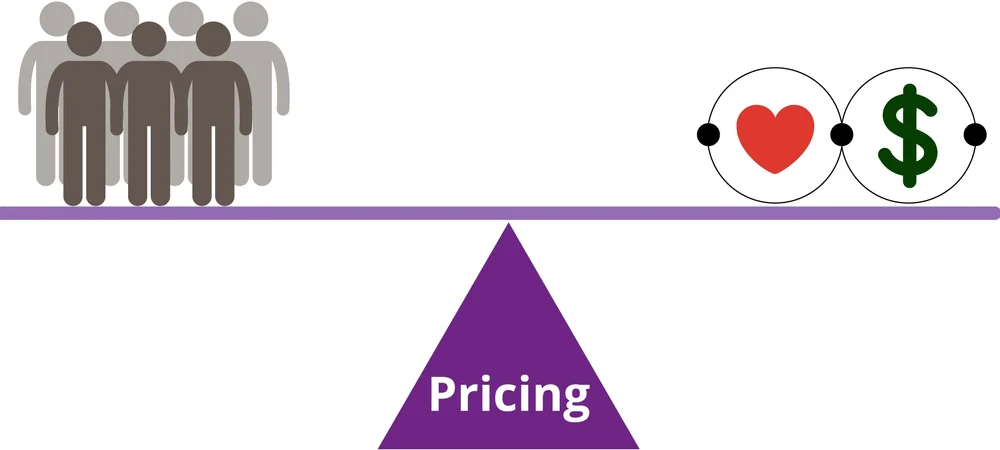
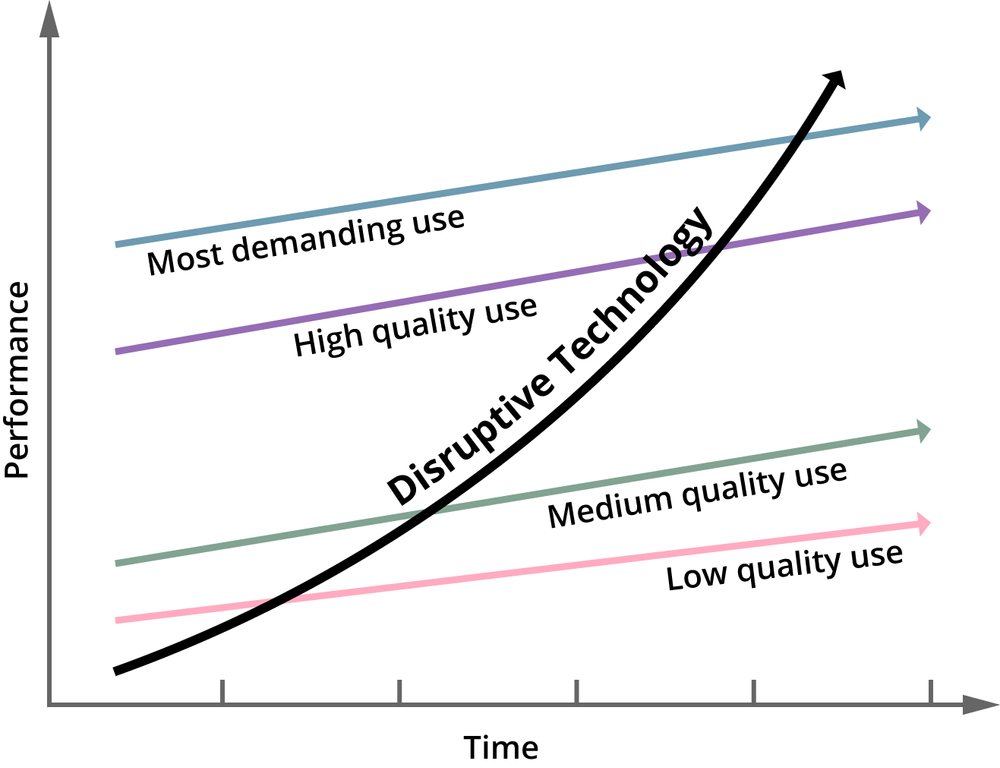
The most interesting insight to come out of this research was the difference between how disruptive innovators and sustaining innovators approach pricing. Sustaining innovators tend to use value-based pricing while disruptive innovators tend to use market-following pricing. We are surprised by the revelation that significantly more disruptive innovators resort to market-following pricing. Perhaps, this finding makes sense in light of  Clay Christensen’s work on disruptive innovations (see diagram below). Christensen distinguishes between "low-end disruption" and “new-market disruption”. Low-end disruption targets customers that are currently underserved as they do not need the full performance valued by customers at the high end of the market. New-market disruption targets customers whose needs are currently unmet by incumbents.

  190221_graph.png  

So, disruptive innovations enter the market at a low price point and sell to underserved markets. This low price is set relative to a more expensive incumbent. Disruptors often inadvertently resort to market-following pricing as they are trying to use low pricing as a wedge to enter the market and to reflect lower performance on the well established value drivers..

In value-based pricing, the price of an offer is based on an in-depth understanding of the differentiated economic (monetary) and emotional value of the offer. The differentiated value is value that a potential customer cares about, is willing to pay for, and cannot easily get from another source. As long as there is a viable product or service, pricing of innovation should not be left to market forces. Market-following pricing takes away pricing power. Passively letting market forces set prices does not get to the core of customer value creation and value capture. Innovations have the potential to shape the market and pricing is central to how the value of the innovation is communicated to the customer. Market-following pricing does not effectively capture customer value creation and without value capture there can be no ongoing innovation.  

Sustaining innovations are innovating on existing value drivers that are already well understood by the market. This makes it easier to map value creation to value-based pricing. Disruptive innovations can create differentiation through new value drivers (economic and/or emotional) or through new ways of delivering on existing value drivers that the customer cares about. This creates the opportunity to price based on new value drivers, for both underserved and unserved markets. Pricing on a new value driver can make it difficult for the incumbent to compete. Under such circumstances, pricing based on market-following would result in weakening the competitive positioning and leaving the door open for larger companies to barge in.

We will be conducting follow-up research soon to better understand the reasoning behind and implications of market-following pricing on disruptive innovations.


25 Feb 18:04

Barrick Gold proposes merger with Newmont Mining to create the 'world's best gold company' (NEM, GOLD)

by Jonathan Garber

Liquid gold is poured to form gold dore bars at Newmont Mining's Carlin gold mine operation near Elko.

  • Barrick Gold has proposed a merger with Newmont Mining.
  • The proposal values Newmont Mining at $17.8 billion, according to Bloomberg.
  • Barrick says its proposal is "far superior" to Newmont's deal to buy Goldcorp for $10 billion.
  • Watch Barrick Gold and Newmont Mining trade live.

Barrick Gold is making a play for Newmont Mining in a deal that it said would create the "world's best gold company" and unlock more than $7 billion net present value (pretax) of real synergies.

Barrick proposed an all-share transaction that would pay Newmont shareholders 2.5694 Barrick shares per Newmont share, valuing the company at $17.8 billion, or $33.50 a share, according to Bloomberg. The deal would give Barrick shareholders 55.9% of the merged company, with the rest going to Newmont shareholders.

"The combination of Barrick and Newmont will create what is clearly the world's best gold company, with the largest portfolio of Tier One gold assets and the highest level of free cash flow to drive future growth and support sustainable shareholder returns, run by a management team with an unparalleled record of delivering value," Barrick's president and CEO, Mark Bristow, said in a press release.

Barrick says the proposal is "far superior" to the deal that Newmont made in January to buy Goldcorp for $10 billion, creating the world's largest gold miner. That deal is expected to close in the second quarter of 2019.

It has been a busy time for mergers and acquisitions in the gold-producer space. Last September, Barrick agreed to a deal with Randgold Resources that closed earlier this year.

Join the conversation about this story »

NOW WATCH: Bud Light's 'Dilly Dilly' just made a comeback at the Super Bowl with a weird crossover ad with Game of Thrones — here's what the phrase means

25 Feb 17:59

Some Sales Aphorisms

by Anthony Iannarino

The likelihood of winning a deal is inversely related to the number of days you have been working it.

Your ability to acquire a meeting is a measurement of the imbalance between the time your client gives up in exchange for the value you create.

Every “no” moves you closer to a “yes,” to the degree that you are willing to change your approach, learn from the feedback you receive, and persist over time.

Your choice of medium for difficult conversations is a projection of how confident you are in your ability to create value for your client.

The most difficult clients to win are the easiest to retain.

The percentage of the first ten minutes you spend in your first sales conversation focused on providing proof that your company and products are worth buying, the lower the odds of you selling those same products.

The greater your client weighs your pricing as the determining factor for a decision to buy from you, the shorter the time they will be your client. When this isn’t true, you will retain the client but regret having acquired them.

The more discovery questions you ask on a cold call, the more you eliminate the possibility of obtaining a meeting.

Learn Anthony's core strategies & tactics for sales success at any level with The Only Sales Guide You'll Ever NeedThe Only Sales Guide

The worst time to win a client is the first time they make a low frequency, high significance decision. The third time they make the decision is the best time to win them. Having been disappointed and having confronted the reality, they are educated enough to be retained.

The prospect who ceaselessly complains about your competitor is likely to be as big a nightmare for you as they are your competitor.

A contact that displays low moral intelligence throughout the sales process will expect you to be complicit in their bad decisions after they sign your contract.

The longer you effectively nurture a client, the closer you are to an opportunity. The loyalty they show your competitor is the loyalty they will extend to you.

The more you perceive the grass being greener somewhere else, the more weeds you will become exposed to once you walk across the street.

Your odds of keeping a client after making a mistake is proportional to the time it takes you to respond multiplied by the leadership you exercised multiplied by the time it takes to execute divided by how much you try to blame external factors.

Essential Reading!

Get my 2nd book: The Lost Art of Closing

"In The Lost Art of Closing, Anthony proves that the final commitment can actually be one of the easiest parts of the sales process—if you’ve set it up properly with other commitments that have to happen long before the close. The key is to lead customers through a series of necessary steps designed to prevent a purchase stall."

Buy Now

The post Some Sales Aphorisms appeared first on The Sales Blog.

25 Feb 17:50

How to Create a Winning Sales Presentation

by Richard Hammond

The quality of your sales presentation can mean the difference between a successful sale and a prospect choosing one of your competitors.

Despite its obvious importance, many salespeople still struggle to deliver presentations that are engaging and compelling.

To help you master this vital skill, this article will share several essential steps for creating a winning sales presentation.

1) Research the prospect

Before you begin preparing any sales presentation, it’s important to spend some time thinking about the person or business you are selling to. By understanding their goals, motivations, and concerns, you will be able to devise a successful sales presentation that is very convincing. There are multiple ways you can research a prospect, including:

Check for past interactions with your business

Has your business pitched to the prospect before? What feedback did you receive? Were they concerned about price or expected additional features from your product or service? Did they appear to enjoy the format of your last sales presentation or will you need to shake it up?

Identify the key demographics of the prospect

Learn the key demographics of the prospect including geographical location, sex, age range, socioeconomics, market share, income/cash flow, market role and so on. If they are a business, take a look at their annual financial reports to determine the stage the business is at and the challenges they are currently facing.

A man doing research

Check their social media

Social media is a wonderful resource for learning more about a prospect. It can tell you more about a prospect’s interests, values, culture, goals, motivations, and interactions. You can even use social media to identify shared social connections, which helps you build rapport with a prospect.

Interview current customers that are similar to the prospect

If you have customers that are in the same demographic or industry as a prospect, consider asking them about their current motivations, problems, and goals. They may be able to shed some light on what a new prospect is interested in.

Perform industry research (business prospects)

If you are pitching to a business, look at what is happening in their industry. Are there any legislative changes coming that may force change upon their business? What are the industry-wide trends that may be affecting your prospect? What are businesses in this industry good or bad at? This information will help you identify the prospect’s current needs.

Search for trigger events online (business prospects)

A trigger event is an occurrence that creates a sales or marketing opportunity with a prospect. This could be a change in leadership, a customer announcement, company expansion, new product announcement and so on. These events mean the prospect is changing in some way. They may now be interested in a particular type of solution which you can provide.

2) Look for ways to connect your offer with the prospect

Now that you know more about the prospect, identify their major motivators and find ways to connect those motivators with your product. Here are several questions to consider which will help you find the links between the prospect and the product.

  • How does the product relate to the prospect’s desire for gain or fear of loss?
  • Can the product be linked to other prospect motivators like affordability and functionality?
  • What major benefits are associated with the product and how do they solve the challenges that the prospect is currently facing?
  • Explain how the product will give your prospect a competitive advantage.

The answers to these questions can be used to create the core components of your sales presentation. Once you have explained how your offering is perfectly matched to the prospect, they will be jumping at the chance to purchase it.

3) Think about product differentiation

Some sales presentations fail because the salesperson neglects to think about product differentiation, or in other words, doesn’t sufficiently explain why their product is better than products from other companies. Unless the item you are selling is extremely unique, you should:

  • Explain why your offering is different in terms of functionality.
  • Explain how your product provides better value-for-money than other products — discussing it from the point of view of the purchase price, running costs, and return on investment.
  • Identify why your product is easier to use than other products.
  • Identify any other competitive advantages that are unique to your product.
  • Share any changes in styling or aesthetics which make it superior to other products.
  • Share details of any product rebates or volume discounts unique to your company.

4) Neutralise objections and concerns before they are voiced

Winning sales presentations will often incorporate a section where the salesperson pre-emptively neutralises any objection or concerns that a prospect has. If you expect a prospect to be concerned about price, emphasise how much value-for-money your product provides or how high the ROI will be. If they are likely to be concerned about the necessity of the purchase, spend more presentation time highlighting features that the prospect will find useful.

5) Back up statements with data

Data on a tablet and sheets of paper

Whenever you make an important claim about your product, provide data to back it up. Ideally, this should in the form of easy-to-read graphs, infographics, animations, and charts. Avoid displaying raw data in spreadsheet tables as your sales presentation will quickly become boring for your prospect.

6) Use sales presentation software to put it all together

Sales presentation software can dramatically improve how well you convey information during a presentation. Presentation software makes it simple to include engaging visuals including charts, graphs, images, and videos to convince the prospect of the value of your offering. When it comes to sales presentation software, you have two paths you can choose — free presentation software such as Google Slides and Open Office or commercial presentation software such as PowerPoint, Audience Advantage or Keynote.

Free sales presentation software

In the past several years, some excellent free sales presentation apps have been released. The types of functionality and stylistic approach offered by each free solution can vary greatly.

Advantages of free sales presentation software:

  • They are free!
  • Many of these applications are web-based, which means you can share your presentation whenever there is an Internet connection
  • Easy to share your presentation
  • People don’t need to buy commercial software to view it

Disadvantages of free sales presentation software:

  • Lack of functionality and features
  • Limited support

Commercial presentation software

Commercial sales presentation software has come a long way since PowerPoint. There are many advanced commercial sales presentation software apps available now and they tend to have more features than free apps, but there are some costs involved of course

Advantages of commercial sales presentation software:

  • Commercial presentation software like PowerPoint is available on most Microsoft computers
  • Usually has more export and import options
  • Usually has more sophisticated transitions and animations

Disadvantages of commercial sales presentation software:

  • Can be expensive
  • You may need to bring your own computer to a meeting to play the finished presentation

When selecting sales presentation software, look for a platform that you feel comfortable using. You can try the free packages out and download demos of various commercial applications to test their functionality.

6) Order your sales presentation correctly

Now that you know the kinds of content that should be added to your sales presentation, begin building it. In most cases, the following presentation format will obtain the best results:

  • Step 1: Build rapport
    Introduce yourself and your business. Briefly mention any relationships that you have with businesses or individuals that the prospect knows. You can also ask questions of the prospect during this stage to identify their motivations and goals.
  • Step 2 Identify needs
    Lay out the reasons why the prospect might need the product, using the information that you obtained during the research stage.
  • Step 3 Showcase
    Step through the various features of the product and explain how they meet the prospect’s needs. Talk about features, benefits, price, time frame, product differentiation and so on.
  • Step 4: Build confidence
    Neutralise any objections and concerns that the prospect might have. Discuss the product’s warranty, support system, and reputation for success.
  • Step 5: Conclude
    Present a summary of your key points and take questions. Take feedback if it is provided, paying particular attention to any objections that the prospect has. Write these down for later reference, as it will help you the next time you deliver a sales presentation.

And that is it, go and find some prospects, create a winning presentation and deliver it with confidence and you will make sales!

25 Feb 17:50

Matt’s App of the Week: MadKudu

by Matt Heinz

I’ve long railed against the largely arbitrary nature of most lead scoring systems and methodologies.  We assign points to activities and triggers we believe are important or valuable, but how often is that based in what’s really worked in the past?  How often are our lead scoring methodologies tied to proven attributes of current customers and past converted prospects?

MadKudu helps solve that problem, looking at what your best prospects and customers have done and scoring new leads accordingly.  They can append external and in-app performance to help your sales team focus on the most likely to engage and buy prospects.

If you’re doing demand generation in volume and want to improve sales efficiency and lead conversion, it’s definitely worth a look.

The post Matt’s App of the Week: MadKudu appeared first on Heinz Marketing.

23 Feb 18:39

B2B Reads: Planning Pitfalls, Love Languages, and Productivity Hacks

by Kailee McKinney

In addition to our Sunday App of the Week feature, we also summarize some of our favorite B2B sales & marketing posts from around the Web each week. We’ll miss a ton of great stuff, so if you found something you think is worth sharing please add it to the comments below.

Top Five ABM Planning And Execution Pitfalls To Avoid
Some ABM mistakes you definitely want to avoid. Thanks for the tips, Laura Ramos.

What’s Authentic Leadership, & How Do You Practice It
What does it really mean to be an authentic leader? Thanks for your thoughts, Caroline Forsey.

My Single Best Productivity Hack!
Don’t let all your tabs and windows pile up and distract you from what your working on. Thanks for the advice, David Brock.

Fear the Conversations You’re Not Having
Sometimes what’s not being said is what you should be worrying about. Great article, Art Petty.

Sales & Marketing Relationship Therapy: Decoding the 5 Love Languages
How sales and marketing can use the 5 love languages to better relate to one another. Thanks, Emily McKeown.

How to Make Your Writing More Powerful
Some great writing exercises to make you a better, more powerful writer. Thanks for the tips, Ann Gynn.

7 Ways CRM Improves the Customer Experience
A look at some of reasons CRM is so important. Thanks for your insight, Lisa Loeffler.

11 Ways You Give Up Control of the Sales Conversation
Are you giving up control during your sales conversations? Here are some ways you might be, and ways to avoid it. Thanks, Anthony Iannarino.

How to create an effective pitch deck: A data-driven analysis of what makes successful slides
Some great tips for creating the most effective pitch deck. What makes the best slides? Thanks for your thoughts, Matt Rubright.

What B2B Firms Get Wrong About Thought-Leadership Content
Don’t underestimate the impact of thought-leadership content, make sure it’s good quality. Thanks for your advice, Ayaz Nanji.

The post B2B Reads: Planning Pitfalls, Love Languages, and Productivity Hacks appeared first on Heinz Marketing.

23 Feb 18:39

Jeff Bezos just gave a private talk in New York. From utopian space colonies to dissing Elon Musk's Martian dream, here are the most notable things he said.

by Dave Mosher

jeff bezos blue origin 2x1

  • Jeff Bezos, the founder of Amazon, gave a talk to a members-only event at the Yale Club in New York on Tuesday.
  • During the 30-minute lecture, Bezos said his private aerospace company, Blue Origin, would launch its first people into space aboard a New Shepard rocket in 2019.
  • Bezos also questioned the capabilities of a space tourism competitor, Virgin Galactic, and criticized the goal of Elon Musk and SpaceX to settle Mars with humans.
  • Ultimately, Bezos said he wants Blue Origin to enable a space-faring civilization where "a Mark Zuckerberg of space" and "1,000 Mozarts and 1,000 Einsteins" can flourish.
  • Bezos advised the crowd to hold a powerful, personal long-term vision, but to devote "the vast majority of your energy and attention" on shorter-term activities and those ranging up to 2- or 3-year timeframes.

Jeff Bezos may be the richest human on Earth, as the founder of Amazon, but his ultimate dreams reside within a relatively obscure company called Blue Origin.

In fact, as Bezos told the CEO of Business Insider's parent company in April 2018, he liquidates $1 billion of stock a year to fund his private aerospace outfit.

"I believe and I get increasing conviction with every passing year, that Blue Origin, the space company, is the most important work I'm doing," Bezos said at the time.

On Tuesday, Bezos revisited his grand plans for humanity and gave updates on the work that Blue Origin is doing to help realize that vision. This time he spoke during a private event at the Yale Club in New York City. The Wings Club, a professional aviation group, organized the 30-minute lecture, which was moderated by Jeff Foust, a senior staff writer at Space News.

Their conversation covered everything from Blue Origin's progress on developing 21st-century rocket engines to backstopping the Mars-settling visions of Elon Musk and SpaceX. Bezos even at one point thanked the crowd for shopping at Amazon and the e-commerce companies it owns.

"Every time you buy shoes, you're helping fund Blue Origin, so thank you," Bezos said. "I appreciate it very much."

Business Insider has transcribed, lightly edited, and highlighted parts of the talk here.

SEE ALSO: SpaceX's list of competitors is growing — here are 9 futuristic rockets in the pipeline for the new space race

DON'T MISS: Jeff Bezos nearly died starting his rocket company Blue Origin — here's what happened

Bezos said commercial spaceflight today is expensive because it prioritizes reliability, which has the industry stuck on conservative launch systems. He thinks we need more practice to prove the worth and safety of reusable rocket systems.

Jeff Foust: The aviation industry is a mature, strong safe industry. Commercial spaceflight is still well on its way to hitting that goal. Where do you see the parallels between aviation and commercial space, and what role will Blue Origin play in that?

Jeff Bezos: I really do think we're at the barnstorming phase. It's a very interesting analog to early aviation, because a lot of industries — new technologies — are first used for entertainment. It's happened over and over again across industries, and of course, barnstorming was one of the first commercial things that small aircraft could do a long time ago. You see that today.

A very prominent case today is in machine learning and artificial intelligence. GPUs [graphics processing units] are instrumental in doing machine learning, but they weren't invented for machinery — they were invented to play video games.

One of the things that I'm very excited about with New Shepard, which is our suborbital tourism vehicle, is using that to get a lot of practice. One of the equilibriums we're at today with space launch is that we don't practice enough. The most-flown vehicles may fly a couple dozen times a year launching payloads into orbit. Anything we do just a couple of dozen times a year, you never get really good at.

Let's say that you're going to have some surgery. You should make sure that the surgeon does that operation at least five times a week. There's real data that backs up the fact that the practice effect makes that surgery much safer if your surgeon is doing it at least five times a week. And so we need to be going to space very frequently in a very routine way. One of the reasons that aviation is so safe today is because we do have so much practice. There are a bunch of reasons why it's safe — that's one of them.

We need to have [more] missions. If your payloads cost hundreds of millions of dollars, they actually cost more than the launch. It puts a lot of pressure on the launch vehicle not to change, to be very stable; reliability becomes much more important than cost, and it's hard to get off of that equilibrium. It actually drives you the wrong directions, where you have fewer launches and very expensive satellites, and that's what you see happening in many cases.


Reusable launch system's aren't good enough alone, Bezos said. They have to be easy to reuse or costs get too high, negating the point of their existence.

Bezos: What we want to do at Blue Origin is try to get on that practice groove, and to do that you have to have an operable reusable vehicle. The key point there is operability.

The space shuttle was only reusable in the most [daunting] of senses. In reality, they would bring the space shuttle back, inspect it in very elaborate ways, and then re-fly it. It would've been better to have an expendable vehicle.

You can't fly your 767 to its destination and then X-ray the whole thing, disassemble it all, and expect to have acceptable costs. And so that reusability is really the key. What we want to do, our goal — you asked, 'What is Blue Origin's goal in this?' — we want to drive down costs using reusability, and the vision is to figure out how there can really be dynamic entrepreneurialism in space.


Bezos said he admires that Mark Zuckerberg helped create Facebook in a dorm room using existing internet infrastructure. Bezos thinks "a Mark Zuckerberg of space" can't exist yet — but that Blue Origin is trying to make that possible.

Bezos: I've witnessed this incredible thing happen on the internet over the last two decades. I started Amazon in my garage 24 years ago — drove old packages to the post office myself. Today we have 600,000-plus people, millions and millions of customers, a very large company.

How did that happen in such a short period of time? It happened because we didn't have to do any of the heavy lifting. All of the heavy-lifting infrastructure was already in place for it. There was already a telecommunication network, which became the backbone of the internet. There was already a payment system — it was called the credit card. There was already a transportation network called the US Postal Service, and Royal Mail, and Deutsche Post, all over the world, that could deliver our packages. We didn't have to build any of that heavy infrastructure.

An even more stark example is Facebook. Here's a guy who literally, in his dorm room, started a company — Mark Zuckerberg started a company in his dorm room, which is now worth half a trillion dollars — less than two decades ago.

How do you get that kind of entrepreneurial [advancement] in space? You need to lower the price of admission right now to do anything interesting space because it requires so much heavy lifting and so much infrastructure development. The entry price point for doing interesting things is hundreds of millions of dollars. Nobody is going to do that in their dorm room. You can't have a Mark Zuckerberg of space today. It's impossible. Two kids in their dorm room can't start anything important in space today.

I want to take the assets that I have from Amazon and translate that into the heavy-lifting infrastructure that will the next generation to have dynamic entrepreneurialism in space — kind of build that transportation network. That's what's going on, that's what Blue Origin's mission is. If we can do that, then the whole thing will take off and there will be thousands of companies doing creative things.


See the rest of the story at Business Insider
23 Feb 18:38

Who Are the Best People to Add to Your LinkedIn Network?

by Wayne Breitbarth

What is your strategy for adding people to your LinkedIn network?

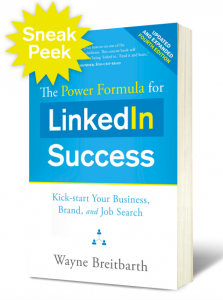
This was the question I was addressing when I wrote the 12th chapter of the soon-to-be-released 4th edition of my best-selling book The Power Formula for LinkedIn Success. This new version includes updated screen shots, revised content, and a brand new chapter about LinkedIn mobile. Preorder your copy now, and it will be delivered by April 2, 2019.

Here is an excerpt from Chapter 12 that includes a list of the types of people you may wish to add to your network. Please bear in mind, however, that these are general suggestions. Only you know why you're using LinkedIn and what your personal strategy is for building your network.

Click the image to preview the contents of the new book (36 pages) and read Chapter 12 in its entirety.

As you can tell from previous chapters, the winner of the searching aspect of the LinkedIn game is generally the person who has a lot of connections. However, please continue to keep in mind that when you first start using LinkedIn, I recommend you only add to your network people whom you know and trust, because when you add a new contact, you put your extremely valuable network in his or her hands. Remember, it is your network. It is a possession you have worked your entire career to build, and when you add a connection on LinkedIn, it is like handing your Outlook database to that individual and trusting him to treat it as professionally as you would treat his.

Once you start getting more comfortable with the way LinkedIn works, I typically recommend that you start selectively adding people you may not know but would like to get to know. Everyone’s situation is unique, but here are some general suggestions that will help you understand what types of people you may want to connect with to strengthen your network and help you enhance your brand, find a job, assist your favorite nonprofit, or grow your business.
.

Who can help you enhance your personal brand?
.

  • People who have had similar career paths to yours
  • Leaders in your industry associations
  • Individuals who have large networks (LinkedIn or otherwise) concentrated in your region or industry
  • People who work for some of the well-respected companies in your region and industry
    .

Who can help you find a new job or advance your career?
.

  • People who work in your industry and region
  • People who work for companies you are interested in
  • Recruiters who specialize in your industry
  • Consultants and experts in your industry
  • Human resources professionals who work at your target companies
    .

Who can help your favorite nonprofit thrive?
.

  • People who volunteer for or sit on boards of similar nonprofits
  • Individuals who work at large corporations, foundations, etc. and tend to support nonprofits like yours
  • People who are involved in groups that have large volunteer pools (e.g., religious organizations, schools, clubs, etc.)
  • People who work for media outlets
    .

Who can help you generate sales leads, market your company's products and services, and grow your business?
.

  • Individuals who are the direct decision-makers for the purchase of your products and services
  • People who are indirectly involved in the decision to purchase your products and services (strategic influencers or people from the company who weigh in on the decision)
  • High-ranking officers at the companies that purchase your products and services, even if they're not the direct decision-makers
  • Individuals who hang around with the people listed in the first two bullets (probably deliver similar services to the same purchasers)
  • People who are recognized industry experts
  • Leaders of your industry associations and/or people who manage industry events
  • Individuals who are well networked in your region or industry
  • Experts who provide educational content for the industry

If you improve the quality of your LinkedIn network by connecting with the above-referenced people, you'll be strategically positioned to enhance your brand, find a job, assist your favorite nonprofit, or grow your business.

Don't wait—click here now to preorder your copy of my completely updated and expanded book on Amazon.

Note: Amazon has a price guarantee. If they drop the price between now and the April 2 publication date, they'll refund you the difference.


The post Who Are the Best People to Add to Your LinkedIn Network? appeared first on Wayne Breitbarth.

23 Feb 18:24

Sales Person as Sense Maker

by Dave Brock

The world, both our customers and our own, is best characterized by turbulence.

By this, I mean each of us, at least if we are paying attention, is pummeled by information overload/overwhelm, massive disruption, escalating change, increasingly confusing choices, increasing complexity, transformation, time compression, risk, uncertainty, and distraction.

Too often, our customers are struggling to cope, to keep up, to understand, often to survive. At the same time, they are trying to learn, to grow, to improve, to achieve.

In the face of all of this, how can we create the greatest value with our customers, how can we be most helpful?

I think it is encapsulated in the concept of “Sense-Making.”

By that, I mean, helping the customer make sense of the turmoil and turbulence they face. Helping them sort through everything thy are being pummeled with, helping them identify a path and chart a course forward, to solve their problems, to achieve, in fact to thrive, despite the turbulence.

I believe sales people are among the best to do that–at least in the context of the problems that we solve. Whether it is helping with massive, enterprise wide change, or taking something off their plate, so they don’t have to worry about it.

We are the best equipped to help our customers manage, learn, and grow, because we see others addressing the same issues every day. We can help them understand and navigate the issues they face, providing greater clarity.

Being a sense maker requires, perhaps, different skills and mindsets. We have to have the empathy to understand how our customers feel. We have to understand them, their businesses, their markets, their customers. Perhaps, it’s helping them feel less alone, that they are the only people/organizations facing these issues.

We have to help them figure out where they want to go, how they should be thinking about the issues and the potential solutions. We have to help them learn how to mobilize within their own organizations, navigating both their problem solving and buying processes.

These are non trivial issues, there are no easy solutions, but we can help them discover these and move forward. We can help them make sense of what they face and what they want to achieve.

23 Feb 18:24

5 Tips for Managing Virtual Teams

by Melissa Ingold

There are as many leadership styles as there are stars in the sky. As entrepreneurs, we’ve all got our favorite methods for motivating our teams, and preferred ways of keeping the work flowing smoothly.

This is NOT a bad thing! Anyone who tries to tell you there’s “one right way” to lead a team of freelancers is blowing smoke.

Effective leadership is going to look different for each leader and feel different for each team member; in fact, trying to force freelancers to follow a single, rigid management style may backfire spectacularly. So take all leadership advice with a grain of salt, including mine. 🙂

That said, I’ve spent many years managing my own virtual team and found that there are a handful of basic-but-vital leadership guidelines that work across styles and methods.

Regardless of your virtual team makeup and management approach, these 5 tips can help you manage workflow and workers more effectively.

Managing Virtual Teams Tip 1: Centralize all correspondence

WHY: Allowing your freelancers to use their preferred systems of communication shows flexibility … but can also lead to endless confusion.

Spreading team correspondence out across different systems – email, Slack, FB messenger -increases the likelihood that things will get lost and projects delayed.

HOW: Use a project management system to keep all correspondence, files, and notes in a single, centralized spot. This will allow all your virtual team members easy access to the information they need to stay on task and move work forward.

Managing Virtual Teams Tip 2: Recap and review completed work

WHY: Ya know that old saying about how people who don’t know their history are doomed to repeat it?

Well, team members who aren’t allowed the time and space to discuss completed projects are doomed to make the same mistakes!

As leaders, we need to create opportunities to look back so we can look forward more effectively.

HOW: Make a habit of scheduling a “debrief” meeting after a large project or launch so your entire virtual team can review what worked and what didn’t.

As the leader, it’s your job to make sure this discussion isn’t about blame; keep it constructive and focused on steps and activities that were successful or unsuccessful. Then adjust procedures and project planning going forward.

Managing Virtual Teams Tip 3: Trust your team members

WHY: Freelancers and contractors have their pick of gigs these days. If your virtual team members feel like you are constantly breathing down their necks, they may simply choose to take their skills elsewhere!

Trust is essential to contractor longevity and happiness.

HOW: Aside from keeping correspondence in one shared space (see tip 1!), allow your team to manage their own tasks and projects however they see fit.

Don’t hover or micromanage. As long as the end result is on target, how your virtual team gets it done is irrelevant.

Managing Virtual Teams Tip 4: Be flexible

WHY: Being a strong leader isn’t about maintaining a “my way or the highway” attitude.

In fact, the majority of effective leaders are good listeners, flexible thinkers, and always open to feedback from both peers and team members. Inflexible leaders make their team feel distrusted and disrespected; bad news!

HOW: Ask for (and be open to) input from your virtual team members. They will often have ideas for doing things differently that can make everyone more efficient

Many of their suggestions may save you time and money, too! Stand strong when you need to, but in most cases, be flexible and open to feedback.

Managing Virtual Teams Tip 5: Give positive reinforcement

WHY: All virtual team members need to know they’re valued and appreciated. In fact, some are more motivated by praise than money!

Letting your contractors know when they’ve done stellar work encourages them to do MORE stellar work. (And builds loyalty.)

HOW: Offer praise whenever you can. Don’t heap on false compliments or force yourself to praise shoddy work: constructive feedback is important, too, and should be given whenever necessary.

But positive reinforcement is a much better motivator than negative input. If a project goes particularly well, or a graphic or blog post turns out beautifully, say so! It costs nothing, but offers tremendous value to your freelancers.

Again, your virtual team may need to be managed in very specific ways, and your leadership style may clash with some of these suggestions. Use what resonates, and feel free to leave the rest!

I’m offering these 5 tips because they’ve been absolutely priceless to me over the years, and I wish I’d known them sooner. I hope they’ll help YOU with managing your tasks and the awesome people on your virtual teams more easily and effectively.

23 Feb 18:20

The Sales Hacker Disco Demo Guide: How to turn Discovery calls into Demos that Win

by Alli McKee
sales hacker sales disco demo guide

After interviewing 200+ sales and marketing pros and analyzing hundreds of sales materials, we wrote the Sales Hacker guide to building a killer Sales Deck. If you can change what a sales rep sees, you can change what they say. Better Sales Decks = Better Sales Demos.

But as a buyer, I still see bad Demo after bad Demo. After about a dozen, I could see that the root cause of the problem was deeper than just decks.

Turns out, the root cause of a bad sales Demo isn’t about what a rep says. It’s about what the rep doesn’t say (or ask). The root cause of bad Demos is bad Discovery.

It sounds obvious now, and it’s something we all know… in theory. But in practice, it seems as if most of us have forgotten that our job as sales professionals isn’t just to pitch. It’s to listen.

If you want a sales Demo that wins, you’ve got to start with Discovery.

This guide is built to help you nail both your Discovery and the Demo, and give you the tactics and visual tools you need to do it.

RELATED: 7 Steps for an Incredible Sales Discovery Call

Demo, Disco-Demo, or Discovery then Demo?

The importance of Discovery isn’t new, but here’s what is: your buyers’ attention is at an all-time premium. Noise is going up, and patience is going down. Personalization is your only viable weapon.

And it pays off. Gartner predicts that B2B companies that use personalization will increase revenues by 15%. What does this mean for Demos? It means you’re not going to win giving your prospect a firehose of product features. Instead, it’s about focusing to find the fit for that prospect.

sales disco demo guide personalization image

Demo expert Peter Cohan agrees that the number one cause of bad Demos is poor Discovery, and the data supports his claim: Demos conducted without Discovery are 73% less successful than those with Discovery. Chris Orlob puts it well,

“Demos without Discovery are just guessing.”

But what’s the ideal sequence? Do you separate Discovery and the Demo into two meetings, or just do one Disco-Demo call?

While it depends on your sales process, separating them does help avoid single-threading deals. By splitting the two stages, you’re able to tee up the key end-of-Discovery ask: “For our next call, who else on your team might want to see this?”

Set your Foundation with Discovery

Start your Discovery call with the end – talking about next steps. Even a simple: “We’d planned on today’s goal being X, but how does that sound to you?” works to make sure you’re aligned. Here, you can take advantage of the persuasion principle of Commitment to get your prospect to agree early, so they are more likely to agree down the line.

Over the course of the conversation, your goal should be 11-14 questions, according to Gong’s research. Starting with Layer 1 questions, get Qualification out of the way first by ticking off each topic on this simple Disco Discussion map:

sales disco demo guide foundation image

Then, dive deeper to zone in on their 3-4 key pain points. Once you’ve identified the key areas, ask further questions to quantify the pain, so you can attach a dollar value to it.

To avoid making the prospect feel interrogated, you can layer in Customer Stories as a way to add value while facilitating Self-Discovery. Remember, your offering at this stage is not the product you are selling, but the expertise you bring.

Listen to their problem, and then recount it back to them, using a story about another customer in a similar situation. Your goal in Discovery is to facilitate self-Discovery.

Six Steps to a More Successful Sales Demo

Once you have set the foundation with a Discovery call, it’s time for the Demo. Here are the six steps to have more success:

1. Flip your Agenda Upside Down.

First, rethink the structure of how you will communicate with your prospect during the Demo. Many sales reps are conditioned to create suspense in their Demos, going for the big reveal to keep the prospect’s attention (that’s how movies work, right?). But here’s the difference between your Demo and a movie: in a Demo, you don’t have a captive audience – yet. You’re in a race against your buyer’s already-waning attention span.

As a result, even the sentences you speak during a Demo should be structured with the “So What” first, not the other way around:

Good sales rep: “Our product has Feature X, so… you can save time.”

Great sales rep: “You save time, becauseFeature X enables it in these ways.”

sales disco demo guide mindset image

Starting with the “So What” gives them only enough to stimulate their imagination, and allows them to dive deeper with questions. If you try to go bottoms up and give them too much, you risk confusing them, and if you confuse them, you are guaranteed a ‘no’.

2. Show your face(s).

Now that your mindset is adjusted, it’s time to start your Demo. If you’ve done the post-Discovery transition well, there should be new stakeholders in this meeting. Great! Start off with a simple introduction slide showing everyone’s faces, names, and roles. It takes 2 minutes to grab their names and photos from Linkedin, and nearly guarantees a Wow, they care!” moment.

sales disco demo guide team introduction image

This tactic has another secret benefit to it: It creates accountability when you ask to align on Next Steps at the start of the call.

By attaching names to faces in a visual way, you’re capturing the commitment they’ve already made to join the conversation and evaluate your solution. Since people want to be seen as being consistent, this tactic helps increase your chances when it comes to time for the decision.

3. Twist the Knife.

Before you begin addressing how you can help, you need to pick up where you left off in that Discovery Call – with your prospect’s pain point. Remember all of those exceptional Discovery questions you asked to uncover their pain? Here’s the place to really dig into it. Replay the key themes you heard, in their words, about the top three problems.

For example, you could show a simple slide like:

sales disco demo guide solutions image

As Doug Landis says, “Your first slide needs to be about what you’ve learned from YOUR CUSTOMERS. Use the voice of your customers to give you credibility.” Nothing builds your credibility – and their commitment – like hearing their own voice up top.

Spend at least one-third of your Demo time aligning everyone – especially newcomers – around the quantitative impact of the problem. Your biggest competition is the status quo, so you have to do the work up front of making sure you’ve correctly highlighted the most severe pain points and quantified them.

For example, we show a slide like this one, customized to our prospect’s specific pain points:

sales disco demo guide pain points image

What if you get it wrong and highlight the wrong issues? Great! By making this visual you’re giving them the chance to correct you and redirect the conversation towards the right problems.

4. Show Them The Goal.

You’ve revealed and reminded them of the pain, and now you need to assure them you can make this pain go away. To do this, show them the outcome your product is promising. In Conversations that Win the Complex Sale, Erik Peterson offers this framework to guide how you discuss your product, using Tylenol as an example:

sales disco demo guide product overview image

Most people don’t really care whether Tylenol is made of acetaminophen. What they care about is how Tylenol improves your life: what it means and what it does.

If you can nail what your product means, then they’ll be asking what it does. As Rob Falcone explains in JUST F*ING Demo, you want to get the audience to say, “Yes, that is what we want, but now show me how your product makes that possible?”

Set up your prospect to feel like the driver, not the passenger, of your Demo.

5. Match each Pain Point to a Benefit.

Now that they know what your product means, pick no more than three areas to show them what your product does. Each unique job your product does should map precisely to each pain they’ve articulated – in their own words – only minutes before.

sales disco demo guide product benefits image

By setting the foundation with Discovery, and now Discovery Recap, you’re focusing your Demo and aiming for Fit (not the feature firehose). Sales reps who tie their Demos to specific pain points are 35% more likely to win a deal.

As you discuss your product, don’t forget that the scarcity principle is at work here. Less is more, so give them only enough to share a taste of what it does. The less you say, the more they ask. The more they ask, the more tailored the Demo will be and the more engaged they will become.

This sounds straightforward, yet it is the exact opposite of what most reps do.

6. Eliminate Uncertainty.

You have five minutes left, and they’re asking for more. But don’t keep diving deeper down the product pyramid. You can always make more time for that later. Besides, focusing on it now won’t move the deal forward.

Instead, circle back to the contract you used to start the meeting. It’s time for them to make a decision:

sales disco demo guide next steps image

Forcing the decision here during the meeting reduces the number of deals who end up in no man’s land. As Chris Voss puts it, “The sooner you cut off negotiations with someone you shouldn’t be dealing with, it gives you the chance to move on to a more profitable deal.”

Post-Demo Follow-up

No matter how strong your Demo is, your deal won’t go anywhere unless you follow up, especially because there is an average of 6.8 people involved in a B2B buying decision today, up from 5.4 two years earlier.

If you want to make sure your message travels from the buyers you met to those you didn’t, share the customized deck that guided your Demo. That way, your champion is prepared to sell internally on your behalf:

sales disco demo guide follow up image

If you don’t, your deal turns into a game of telephone. As Cory Bray and Hilmon Sorey write in Triangle Selling, “Telephone didn’t work in fourth grade, and it doesn’t work in the business world, either.”

While attaching a generic white paper rarely gets results, customized content actually gets opened – and shared. Why? Because it’s about the Customer, not your product.

By listening carefully on Discovery, offering your expertise via Customer Stories, and capturing the insights, you’re guaranteed to deliver value. And you’ve made your champion look good, helping them come prepared to their internal buying decision discussions. Armed with custom content, your champion becomes your best sales rep.

Disco/Demo that Wins

In this sales environment with more noise than ever, your ability to listen is more important than your ability to pitch.

Tightening that Discovery/Demo loop ensures that your sales process can deliver the customized buying experience than any champion expects today. And following up with custom content ensures that that customized message can travel – and close the deal.

Check out the Full SlideShare version, with Templates here:

The post The Sales Hacker Disco Demo Guide: How to turn Discovery calls into Demos that Win appeared first on Sales Hacker.

23 Feb 18:19

Buyers are Busier than Ever: What to Do | Sales Strategies

by Colleen Francis
We’re finding that buyers are limiting contact with sellers to manage their time. In fact, Jill Konrath put it best when she said, “buyers are busy and long-term planning is sometimes only a few weeks.” Your buyers are ready to …
Read More »
23 Feb 18:19

How Buyer Research Behavior Impacts Content Consumption

by Matthew Grant

Can we see obvious differences in the content consumption habits of people conducting buyer research in a particular space?

That’s the question we asked ourselves. To answer it, we took at look at the online content consumption activity in the ERP space undertaken by 26,265 unique users, representing 26 different countries, during the week of 1/22/19-1/29/19.

These users came from 1,620 unique user domains, visited 129 unique publishers, and consumed roughly 7,100 unique articles/pages.

As a result of our analysis, we were able to determine the top ten articles these users looked at over the course of the week:

We then looked at these users in terms of their overall profile. Specifically, we identified all those users who seemed to be actively conducting buyer research. (We do that by setting an historical baseline for each account, and then seeing which accounts have increased activity above that baseline).

As you can readily see, buyers in an active research phase gravitated to a different set of articles:

While the relative sample size is small, there are some interesting lessons to learn here, both in terms of buyer research around ERP as well as in terms of buyer research more broadly.

First of all, we notice a more concentrated focus on emerging technical innovation in the ERP space. The top six articles include two on machine learning, one on blockchain, and one on AI.

Second, we see an absence of high-level interest in specific solutions. The articles on Uber Freight and Oracle appear on the broader list but disappear from the “researching” list.

Finally, the general interest story about Chinese New Year, the most popular by a factor of two on the broad list, drops to 10th on the focused list.

A Few Takeaways

While I wouldn’t bet the farm on one quick example like this, it does confirm some of my basic assumptions about buyer research and how marketers should think about targeting active research.

  1. At the beginning of the buyer’s journey, people want to understand what’s possible. As a result, they want to know how the latest solutions are incorporating the technologies that currently have the most buzz (machine learning, blockchain, etc.).
  2. Buyer’s want to know what’s next. No one wants to make a major investment in technology only to discover they bought yesterday’s paper. This explains all the interest in coming trends and what executives can expect.
  3. The latest news is a distraction for buyers conducting research. They have practical questions to sort out, and breaking news or articles of current interest won’t generally help them do that.

Do you know which specific companies are currently in-market to buy your product?

Wouldn’t it be easier to sell to them if you already knew who they were, what they thought of you, and what they thought of your competitors?

Good news – It is now possible to know this, with up to 91% accuracy. Check out Aberdeen’s comprehensive report Demystifying B2B Purchase Intent Data to learn more.

23 Feb 18:15

What Advocate Marketing Software Is and Why You Should Use It

by Megan Mosley

You may have heard the term brand advocate before. A lot of businesses actually rely on the influence of their customers and employees to gain exposure for their brand.

Why? Simply because it works. It’s no secret that people trust the recommendations of loved ones over a paid ad from the business itself. As a study by Nielsen found, recommendations from friends still remain the most credible form of advertising.

And a customer may be able to get you in front of new eyes that you might not have been able to reach. It’s their well-established networks that work well at amplifying your reach because the element of trust is already involved.

But how can you harness the power of your customers and employees and turn them into advocates?

You might consider a channel of advocate marketing.

What is advocate marketing?

Advocate marketing is simply the spreading of brand recognition through an affiliated source, whether that be a partner, employee, or customer.

the word what with each letter made up of question marks

In fact, many types of marketing can fall into advocate marketing, and as we see it, it’s more of an umbrella term that fits under word of mouth marketing.

If you were to do a quick Google search, you’d likely find a variety of ways to do advocate marketing. Including using referral marketing, influencer marketing, affiliate marketing, reputation management, etc. Knowing this, you may immediately recognize the many benefits associated with this type of marketing.

The benefits of an advocacy marketing program

If you run a successful program there are many benefits. The obvious is increasing your word of mouth, thus increasing referrals.

But there are a few others that should be noted.

  • Increased brand recognition and building brand awareness
  • Providing a channel for customer engagement to occur
  • Creating a shorter sales and onboarding process
  • Receiving feedback to create a more customer-centric product

In many cases, you’ll find a business uses a platform or software to help streamline their advocate programs, making achieving the benefits listed above much easier. Creating and automating specific workflows can make scaling an advocate (or other types of marketing) much easier to do, not to mention make it easier to track the process.

What is advocate marketing software?

“Customer Advocacy Software is designed to support a company’s marketing, sales, and customer success efforts” as said by TrustRadius.

analytics 2156083 640

More specifically, this type of software can help you find an advocate so that you can engage with them and get them to spread the word for you. Whether that means by sending referrals, writing a review, or even participating in different surveys like NPS.

Advocate marketing software is something that is used to help you amplify your reach by using your existing customer base to do the heavy lifting. All while increasing your social proof and expanding your overall brand awareness in a more trusting way than traditional marketing methods (aka paid ads and signage).

This type of software easy bleeds into many other software types like referral marketing software, review management software, to brand awareness software.

We’ll cover the different types now.

Different types of advocate marketing software

We’ve found that there are a variety of different software platforms that can fall under advocate marketing software. There are a few that actually are marketed as such, while others are simply categorized into it.

Let’s start off with a few examples of advocate marketing software.

Advocate marketing software

As we have mentioned a few platforms can squeak into the advocate marketing software category, but the ones listed in this section can actually be marketed as advocate software.

EveryoneSocial

“The Leading Employee Advocacy & Social Selling Platform”

pasted image 0 19

EveryoneSocial is a platform that helps you equip your entire team from sales to marketing, and everyone in between with the right content and tools they need to be part of the digital world.

EveryoneSocial is one of the original employee advocacy platforms. Meaning you create the content and resources for your team, and they share it on their social networks (helping you increase your marketing efforts by a lot).

Since EveryoneSocial has been around for a while, you have a tried and true, not to mention an easy way to aggregate, review, approve, and of course, push content out to your people.

everyonesocial

SoAmpli

“SoAmpli enables sales teams to sell more”

pasted image 0 15

The tool, SoAmpli uses both human and artificial intelligence to provide your team with the best content to share. And it helps in connecting them with relevant prospects. The platforms gives your sales team access all the relevant content they need so they can share relevant and on target information on social media.

Since your team will be given the perfect content to share, they will be able to increase their network and turn otherwise cold leads into real customers.

soamp

Influitive AdvocateHub

“Give advocates what they crave: exclusivity, recognition, and rewards”

pasted image 0 17

AdvocateHub helps businesses create a community of advocates by offering a personalized game design and challenges and using gamification to make advocating a rewarding experience.

You can design challenges to help educate, get feedback, collect NPS surveys. You can also provide missions to complete like providing a testimonial, a reference, or even writing blog content. Influitive is really turning more towards advocate marketing to help B2B companies become successful by using the voice of their customers and employees to build recognition

GaggleAMP

“Employee Advocacy Made Easy”

pasted image 0 18

GaggleAMP focuses on helping brands engage their employees, partners, and stakeholders to use word of mouth for them. They know that a business needs to focus on more than just likes and follows, and to instead needs to engage.

The platform is all about helping businesses create and execute their vision by aligning the right content with their team.

Bambu by Sprout Social

“The easiest employee advocacy platform”

bambulogo

Bambu is an employee advocacy platform that provides employees with curated and pre-approved content to share across social networks.

Since 2015 the platform has been used to help improve employee advocacy. This helps employees act on behalf of their company in a more effective way. Because employee advocacy can turn your organization into a powerful marketing engine that boosts the business functions that matter the most.

bambu

Amplify by Hootsuite

“Boost your social reach”

pasted image 0 20

Amplify is an employee advocacy solution which encourages employees to share content through their social networks.

Amplify is built around the idea that employees are the best advocates for the work they are doing. By empowering employees to become industry experts, businesses can share content through tons of new channels and into new social circles.

amplify

Referral marketing software

Referral marketing software often gets tied into advocacy software because it also uses the power of existing customers, partners, and even employees to spread the word of a business.

Typically speaking, people in referral marketing programs are incentivized to share the business. And new customers are also incentivized to buy. Though incentives aren’t necessarily required.

These type of recommendations work because people trust their friends and family to share only relevant and high-quality things with them. And since social currency is involved for the person referring, it is more likely they will only share and refer businesses that they actually use and like (regardless of whether an incentive is involved).

Brand awareness tools

Brand awareness tools also get categorized in advocate marketing because they work at achieving the same thing, brand awareness.

Most of these types of tools help businesses see where they need to make changes in order to get the brand recognition they desire. Social mention tools and social analytic tools help make this possible.

Influencer marketing software

Influencer Marketing Software can also sometimes be identified as an advocate marketing software. Except it uses celebrities, bloggers, social media gurus, and those with a high following to spread the word. Most of these people are sent products to use in their content.

Influencer marketing works because influencers have a pretty good influence over their followers (hence the name).

This is why you’ll see brands use celebrity endorsements. Instagram, for example, often uses high profile grammars and celebs to promote and endorse their products. This is why some brands have been able to pop up out of nowhere. Like Fashion Nova, who regularly has celebrities, like the Kardashians help them promote new clothing styles on Instagram. And it’s often the reason these styles sell out.

Customer loyalty software

Though customer loyalty software has also been categorized as an advocate software. This one doesn’t necessarily help businesses get customers to refer, it does get customers to come back.

Eventually, customers can become an advocate for the business and will talk about and potentially recommend that business to others.

Starbucks, for example, uses a loyalty system where customers who purchase with their app earn points towards future treats. The people who regularly purchase this way have the potential to create content on behalf of the business. Think of all the Starbucks selfies posted on the web. On Instagram alone, it has 33.6 million hashtags!

Summary

As you can see, a lot of things can make an advocate. It’s basically anyone who is willing to share your business. True advocate marketing software, as we have found, relies more heavily on employees, rather than customers like some of the other tools that often get categorized the same way.

Either way, advocacy marketing software is a way to help businesses increase their brand awareness with content shared by either employees, customers, or partners.

22 Feb 17:04

What Is SIM Card Swapping? 5 Tips to Protect Yourself From This Scam

by Emma Roth
sim-card-swapping

Your SIM card’s number is a gateway for relentless criminals. With something as simple as a string of digits, hackers can swiftly deplete your bank account.

Do you want to know the scariest part? Cybercriminals don’t even need to steal your phone to gain access to your number and personal information. This recent trend in hacking has become known as SIM card swapping.

Let’s take a closer look at what SIM card swapping is, and how you can avoid it.

How Does a SIM Card Work?

Before we dive into the nitty-gritty of the SIM swapping fraud, you’ll need to know how a SIM card works. Do you remember when you purchased your last phone? You might’ve noticed that one of your carrier’s representatives swapped your SIM card from your old phone to your new one.

A SIM card stores vital information concerning your mobile account

Believe it or not, that tiny chip in your phone stores all of your essential account information. When its 20-digit ICCID number falls into the hands of a skilled criminal, you’re in trouble.

What Is the SIM Card Swapping Scam?

SIM card swapping involves a lot of trickery and deception. Hackers contact your service providers and hope to speak with an especially trusting employee. They’ll impersonate you to get what they want: your SIM card data.

If their scam is successful, your SIM card data will transfer to the criminal’s SIM card. No, they aren’t interested in your text messages or phone calls from your friends; they’re focused on receiving two-factor authentication (2FA) messages from accounts that hold your valuable information.

Most banks require 2FA when you sign in to your online account. But instead of you inputting the one-time password (OTP) received through SMS, the hacker does.

Tips to Protect Yourself From SIM Card Swapping

While there’s not much you can do once a hacker gets hold of your SIM card information, there are still methods you can use to prevent it from happening. Here are some of the most effective ways to halt hackers:

1. Change Your 2FA Method

Receiving your 2FA through text messages is convenient and all, but it can only make your situation worse when you’re a victim of SIM card swapping.

Opting to use an authenticator app like Authy or Google Authenticator associates your OTP with your actual phone, rather than your phone number. Simply connect the app to your most important accounts and you’ll receive your security codes through the app instead.

2. Set Up a PIN with Your Mobile Carrier

Adding a PIN to your account makes it harder for a hacker to gain access to it. A SIM swapper will have to provide your secret PIN or passcode when trying to make changes to your account, and that’s why it’s so important to have one.

Fortunately, you can add a PIN to your account by visiting your carrier’s website.

If you’re a customer at Verizon, you’re required to have a PIN. To edit or add a PIN to your account, sign in to your account Verizon’s PIN management page. After you determine your PIN, re-type it, then hit Submit.

To create a PIN on T-Mobile, sign in to your My T-Mobile account. You’ll have to pick a verification method and hit Select. Once this is complete, enter your PIN code, and click Next to confirm.

With AT&T, you can add a passcode to your account by signing in, and going to your Profile. Under Wireless passcode, hit Manage extra security. Clicking the checkbox will require you to provide a passcode when making major changes.

You can add a PIN from the Sprint website by signing in to your account, and selecting My Sprint. Click Profile and security, then locate the Security information section. Simply add or edit your PIN, and hit Save.

3. Separate Your Phone Number From Your Accounts

Have you ever used your phone as a way to change your password? When hackers steal your SIM card data, they can too.

Once hackers have locked you out of your own accounts, they’ll gather as much information as they can. Criminals won’t hesitate to take money out of your bank account, or even worse, sell your personal information on the dark web.

Deleting your phone number from your most important online accounts can save you the headache of worrying about a SIM card swap. If you’re required to have a phone number associated with your account, get a VoIP number with Google Voice instead.

To delete your phone number from Google, sign in to the Google Account page and head to the Personal Info section. If you see your phone number, make sure to delete it.

Google Personal Info Settings Erase Phone Number

In the Security section, scroll down, and remove your phone number from the Ways we can verify it’s you option.

Google Security Settings Erase Phone Number

For Amazon, click Your Account, and then navigate to Login & Security. Erase your phone number or add a VoIP number from there.

Amazon Security Settings Erase Phone Number

You can also erase your phone number from PayPal by clicking the gear icon in the corner of the web page. Under the Phone section, choose to change your number.

PayPal Security Settings Erase Phone Number

You should also erase your phone number on major social media sites, online retailers, and especially your online banking account.

4. Use Encrypted Messaging

SMS doesn’t support encryption, which means that hackers can easily spy on your messages and steal your 2FA codes. Using an encrypted messaging app such as iMessage, Signal, or WhatsApp can prevent nosy hackers.

5. Beware of Phishing Scams

You should always delete sketchy emails that ask for your personal information. Banks and other institutions will never request confidential information via email. These types of emails are always a result of a hacker trying to steal your information.

Learn more in our article on phishing attacks and how to avoid them.

Are You a Victim of SIM Swapping?

Many victims don’t realize they’ve been SIM swapped until it’s too late. The biggest warning sign of the fraud is a loss of cell reception.

Some banks and mobile carriers have security measures that prevent SIM card swapping from happening in the first place. Your carrier may let you know if your SIM card has been re-issued, while banks will usually send you an alert if it detects unusual activity on your account.

Having your mobile number attached to your accounts makes signing in simple. However, you can’t always count on your phone number staying safe forever. SIM card swapping poses too much of a threat to guarantee your privacy.

Be on the lookout for phishing emails, as answering those malicious inquiries can make a hacker’s job easy. Don’t know what a phishing email looks like? You can find more information in our article on how to spot a phishing email.

Image Credit: VitalikRadko/Depositphotos

Read the full article: What Is SIM Card Swapping? 5 Tips to Protect Yourself From This Scam

22 Feb 17:00

Top 10 Instagram Trends You Should Follow Now

by Greetje den Holder

Did you know that over 80% of Instagram users follow at least one business, with more than 200 million visiting at least one business profile every day? Instagram is no longer just a place to post pretty images. The platform is a space to engage with customers, share new experiences, and build a community of raving fans that keep coming back for more. After writing about how to use Instagram Stories in 2019, I wanted to know what other Instagram trends we should follow. The trends below will help you battle low engagement levels, increase your following, and help you track what content is most successful. I have found these trends in Lizzie Davey‘s article.

‘Top 10 Instagram Trends You Should Follow Now’ Did you know that over 80%25 of Instagram users follow at least one business, with more than 200 million visiting at least one business profile every day? Instagram is a space to engage with customers, share new experiences, and build a community of raving fans that keep coming back for more. These trends will help you battle low engagement levels, increase your following & help you track what content is most successful: http://bit.ly/InstaTrends19

1. Instagram trends: Personalized content experiences

Instagram carefully curates a user’s individual feed by using data from other posts they have liked and interacted with. This provides users with a highly curated, personalized experience, but brands can also get creative and build personalized experiences for every user outside of Instagram’s algorithm. In fact, marketers see an average increase of 20% in sales when they create personalized experiences.

Use Instagram as the starting point for your personalized campaign. Direct users to a landing page where they can take a quiz or choose from several options to get a more personalized outcome. Use the information you have collected to promote specific and relevant products to the user.

2. Instagram trends: Brand customized AR filters

At Facebook’s F8 conference, the focus lay heavily on Augmented Reality and Virtual Reality. And, although it seems like a feature of a futuristic sci-fi film, these types of technology are going to become the norm on social media.

Take the “cutesy” face filters that are already doing the rounds; these are a form of AR and show the creative possibilities this technology has. We will also see more custom stickers on Instagram as more and more businesses create their own GIPHYs and stickers that can be used in Stories to promote their brand.

Currently, brands have to work directly with Instagram to create their own branded filters. This will change over the next year when you will be able to create customized filters instantly. For now, start thinking about ways you can use AR and custom stickers to promote certain product lines.

3. Instagram trends: Instagram Shopping and product tagging

There are talks of a new shopping app that is coming to Instagram in the next couple of months. Instagram Shopping will let users scroll through products from brands that they follow before purchasing directly in the app. When you take into account that 4 out of 5 Instagram users follow at least one business, this could be huge news for brands on the platforms.

Shopping has become an increasingly popular activity on Instagram, and this new feature will take the frustration out of users having to navigate away from the platform to make a purchase. In fact, almost a third of online shoppers say they use social networks to browse for new items to buy, with Instagram taking the second spot after Facebook as the most popular channel to shop on.

If you cannot wait for this new app to come to fruition, there are other options. Tag products in Instagram posts and Stories by selecting a photo, tapping the products you want to tag in the photo, and entering their names. If you are a verified account on Instagram, you can use the “swipe up” feature in Stories to link directly to a landing page.

This will give brands the chance to share their latest lines with consumers.

4. Instagram trends: Instagram story ads

Four hundred million people watch Instagram Stories every single day. At the same time, Facebook advertising is increasing in cost, which means many brands are turning to Stories advertising. Although it is still early days with this form of advertising, it is already reaping huge results for brands and will likely be one of the biggest Instagram trends in 2019.

Connect your Instagram account to your Facebook Ads Manager. Create a new campaign in your Facebook Ads Manager, and click the option to display it in Stories. Choose an objective and demographics for your campaign. Create eye-catching graphics. Make your Stories ads as real as possible, so they blend in.

5. Creative use of Instagram Stories

Instagram originally limited its Stories feature to 15-second-long videos, but now, if you want to upload a longer video, the app will automatically slice it up into 15-second segments that seamlessly follow on from one another. This means you do not have to worry about timing your videos to the second. Instead, you can focus on creating epic content that your audience will love.

Upload your video as you normally would to a Story. If you’re happy with the way Instagram Stories has segmented the video, click the “Next” button to share it with your followers.

6. Instagram trends: Greater emphasis on user-generated content

Research shows posts that feature user-generated content have a 4.5% higher conversion rate on Instagram than those that do not. Therefore, you should be incorporating content made by your customers into your marketing plan. This kind of content, which might include reviews or images of your products taken by customers, is well-trusted by potential future buyers. Leveraging user-generated content also allows you to have quick access to lots of content that you have not had to create, fund, and distribute yourself.

Create a hashtag. Encourage your followers to post their images under this hashtag by announcing it in your posts, Stories, and other social media channels. Then, re-post the best content on your own feed or as Stories

7. Instagram trends: Niche content

70% of marketers are creating more content than ever before, and that number is only set to get higher. This means that there are increasingly more marketers fighting to win the attention of the same audience, which is no easy feat. As a result, we see more and more brands niching down their focus to target a very specific segment of their overall audience.

Consider the different segments of your audience. Rather than targeting everyone who might like your product or service, choose a specific segment to focus on.

8. Instagram trends: Influencer marketing with nano-influencers

Brands are increasingly choosing to side-step working with Instagram influencers with millions of followers. Instead, they are opting to collaborate with much smaller users, some of which have as little as 1,000 followers. According to a Nielsen report, 92% of consumers trust recommendations from individuals more than brands even if they do not know them. This means that, in 2019, we will see more brands opting to work with nano-influencers in an attempt to reach a more focused audience.

Identify key figures in your industry and look at engagement levels rather than follower count. Send these users a selection of your products to snap photos of or create an experience that they can share. Also, work with nano-influencers to come up with campaign ideas that fit their niche audiences.

9. Instagram trends: Instagram destinations

More and more “Instagram-friendly” venues are popping up all over the world. For instance, cafes are painting feature walls, and restaurants are placing more emphasis on the presentation of their food. These places are heavily focused on the Instagram shares they can get.

Set up a real-life, offline place where users can come to snap Insta-friendly photos. Encourage visitors to share pictures of your designated “destination” with posters and social media shout-outs. Then, share uploads from visitors with your followers by re-posting or including them in your Stories.

10. Customize nametags

Instagram’s newest feature, the Nametag, has taken off and is set to be one of the biggest Instagram trends of 2019. Instead of having to spell out your handle to potential followers you can now show or send them your Nametag to scan, which leads them straight to your profile and that all-important follow button.

However, like with anything on Instagram, brands are starting to get more creative with the way they use these Nametags. As well as personalizing them with selfies, cute emojis, and brand colors, you can also customize them to focus on specific annual events or holidays.

Gain followers faster by making it as easy as possible for potential leads and customers to follow your Instagram feed by displaying your Nametag wherever you deem appropriate.

Instagram tips

With more content being published than ever, it is time to get creative and stand out. It is safe to say that 2019 will be an exciting year for this ever-popular social media platform. You can follow these Instagram trends mentioned above, but you can also master the older tips I gave you. In 16 Killer Instagram Hacks and Features for the Entrepreneur, you will learn five ways to establish a consistent brand presence on Instagram as well as sixteen killer Instagram hacks and features. The Ultimate Guide to Hashtags on Instagram gives you tips and tools for hashtags on Instagram, allowing you to grow the reach of your posts and, ultimately, your company. I hope that helps!

22 Feb 16:59

SFU Collaboration Sparks Sustainable Electronics Manufacturing Breakthrough

Burnaby, BC, February 22, 2019--Simon Fraser University and Swiss researchers are developing an eco-friendly, 3D printable solution for producing wireless Internet-of-Things (IoT) sensors that can be used and disposed of without contaminating the environment.
22 Feb 16:59

3 Ways to Build Meaningful Customer Relationships Through Email

by Syed Balkhi

Email marketing is by far the simplest, most cost-effective solution to get in touch with your customer base. Statista reports that there are more than 3.8 billion email users worldwide, proving it to be a solid tactic to get in touch with consumers and increase sales.

But simply sending out email after email isn’t going to bring you high volume conversions or spiked levels of engagement. If that were the case, any company who sent out a few emails would be guaranteed booming success.

If you’re going to be a brand that successfully reaches its audience, you need a revamped email marketing strategy that takes the consumer into all accounts. That means knowing who they are, anticipating their needs, and conducting research for improved future results.

Let’s look at three surefire ways your brand can use its email platform to build meaningful relationships with customers.

1. Segment subscribers

If you want a higher chance of subscribers opening your emails, you need to segment your email list. This means dividing up your subscribers into groups based on different factors so that you can send them targeted content that meets their needs. By understanding each different group, you’ll be able to increase your conversions and receive a higher level of engagement because you’re showing them relevant content.

MailChimp found that when they segmented their email campaigns, they received 14 percent higher open rates than emails that weren’t segmented, meaning their strategy to target users based on their preferences got them higher conversions.

Groupon does a good job of this by emailing subscribers who have abandoned their carts in the hopes they’ll reconsider purchasing:

You can segment your email list based on multiple factors:

  • Interests
  • Preferences
  • Lead magnet they signed up for
  • Open rate
  • Location
  • Cart, page, or form abandonment

Using this information to connect with subscribers is important because it shows them that your brand is taking extra time and effort to give them products and content tailored to their interests. It makes you stand out from thousands or millions of other businesses who send out robotic email after robotic email and expect a riveting response.

2. Send a friendly welcome email

You don’t want a visitor to sign up waiting for an email from you that either comes too late or never arrives at all. With email, timing is everything. You have to make sure that users hear from you shortly after they sign up. If not, this makes your brand look lazy and disorganized, and it’ll be difficult to build a strong customer relationship.

Create an inviting welcome email that gets automatically sent to new subscribers so that you don’t have to worry about if they received it or not. Introduce them to your brand and its mission and show users what it’s all about. Write like you would to a friend with conversational language so your audience can relate to you on a comfortable, friendly level.

3. Add personal touch

It’s hard to build a meaningful relationship with subscribers when they feel like another number to your business. The less personalized your strategy is to connect with consumers, the harder it’ll be to build an email list that brings in revenue.

An Epsilon survey discovered that 80 percent of consumers are more likely to purchase when brands offer personalized experiences tailored to their needs. When they sign up, it’s likely you’ll have their name in your database. Send emails that address them by the name they put in your optin form. This will catch their attention and shows that your brand is one that aims to connect with its audience instead of just asking them to make purchases.

Consumers want to be treated like they’re human beings with specialized buying behaviors and preferences. Salesforce’s State of the Connected Customer report found that 52 percent of consumers are likely to switch brands if a company doesn’t make an effort to personalize communications to them. If you take the extra steps to make them feel special, it could mean a loyal customer for life as well as five to eight times the ROI, according to Harvard Business Review.

Wrapping up

Improving the relationship you have with customers will be the most valuable tactic you implement into your business. Being successful is dependent on the consumer, and if they decide your brand isn’t connecting with them on a deeper level, it could mean the death of your business. Pay attention to what they like, what they want, and how you can personalize the CX for them using personalization and email segmentation. How will you build relationships with your customers?

22 Feb 16:55

6 Tips for Software as a Service (SaaS) Companies Targeting Small and Medium-sized Businesses (SMB)

by Nick Hollinger

Software as a Service (SaaS) companies that are looking to target small and medium-sized businesses commonly face similar issues. The two most common issues they face are:

  • customer churn or attrition (the rate at which customers are canceling) is higher
  • average revenue per account (ARPA) is lower

when compared to companies targeting enterprise level clients. Driving churn down and ARPA up can be a not-so-fun balancing act that puts the validity of your business model in question. Not to worry though, there are a number of companies that have succeeded in going “downstream” like this. These companies have several characteristics in common and almost all use the following strategies.

  1. Be as low-touch as possible

Due to the fact that your ARPA is low when compared to other business models, you want to ensure you are able to drive sign-ups, onboard users, and keep them engaged while minimizing 1-to-1 human interaction. The more 1-to-1 human interaction needed, the harder it is for you to scale quickly. To minimize human interaction, utilize these strategies:

  • Automate as much communication as possible
  • Simplify your UI/UX so that users can understand it themselves
  • Build resources so that users can self-learn and troubleshoot
  1. Marketing-driven vs. sales-driven business model

Similar to the tip above, because you’re ARPA is on the lower end, you likely can’t have a sales-driven business model. Just picture your sales team having to prospect, pursue, and close clients, taking them 1-3 months, all for $50 per month – this just doesn’t work. Instead, use marketing efforts to drive users onto free trials and then close their business via automation. Further information about sales-driven vs. marketing-driven business models can be found in this article.

  1. Drive down your cost per acquisition (CPA) through high potential marketing efforts

In order to scale quickly, you’ll have to monitor and drive down your CPA by utilizing high potential marketing efforts (some would call these growth hacks). Essentially, how you want to think of it is – how can you drive a high number of qualified sign-ups, at a low cost per sign up? Some common strategies to consider are referral programs, content creation, and partnerships. All of these examples have the potential to generate a high number of sign-ups at a low cost.

  1. Work on your service

Generally speaking, you should always be developing your service further in order to lower churn rate, increase conversion rate, and drive more sign-ups. A good way to think of this is that your product department is a revenue-generating department because you don’t have a large sales team.

  1. Run promotions regularly

Without devaluing your brand/service, run promotions regularly to encourage clients to convert. Sometimes, SMB purchasers need an extra little incentive to purchase (commonly in the form of a discount). I recommend running them every 2 months or so to empty your funnel of any users that are on the fence.

  1. Offer annual plans at discounted rates to increase engagement

One of the biggest issues you’ll face is that your low-price causes users to sign up with you before they’ve fully thought through their use case. While you may think this is great because it is such a low price, users will set it up and forget about it; not becoming engaged with your service. This will lead to them churning quicker, as low engagement generally means they aren’t seeing the value in your service. However, if you offer annual plans, they are forced to pay a larger price upfront, which will then cause them to engage more with the system.

22 Feb 16:53

The Free Way to Find Keywords that Are Worth Your Time

by Chris Meyer

The keyword research tools you pay for are a lot better than the ones you get for free.

But that doesn’t mean you can’t do some damage with the clever use of a few free tools.

In fact, you probably already have two of the four free tools I’ll talk about. You just need to know how to use them.

Let’s start with the two tools you might not know.

The Hoth’s Search Competition and Rankings Checker Tools

The Hoth provides a bunch of free tools but for now we just need the Rankings Checker and the Search Competition tool. You can access both tools for free on their site. (I have no affiliation with The Hoth.)

Start by entering your website into the Rankings Checker. Then export the data into a spreadsheet and do a custom sort based on each keyword’s position in ascending order. You’ll end up with something like this:

If you find URLs that are ranking for keywords in position 7 through 10, or 11 through 20, take a look at the content on those pages. You may be surprised to find that the content isn’t even optimized for the keyword(s) it ranks for.

If possible, incorporate the keyword into the headers, body, title and/or meta description. But don’t force if it doesn’t make sense.

Why focus on pages ranked in position 7 through 10 and 11 through 20?

Based on January 2019 data from Advanced Web Ranking you stand to gain the most traffic if you can boost a page that ranks in either of those positions.

Grabbing Competitors’ Keywords

Once you’ve compiled the list shown in the picture above, it’s time to find the keywords generating traffic for your competitors. To do this, first enter your website’s name into The Hoth’s Search Competition tool.

This tool will show you the websites that are ranking for the same terms as your website. So grab the domain names of your top search competitors and plug them each into the Rankings Checker.

Export the data so you can sort it to find the keywords that:

  1. Are relevant to your business.
  2. Have decent search volume.
  3. Are generating the most traffic for your competitors.

Using Google My Business for Local Keywords

Admittedly, the utility value of Google My Business’s (GMB) search insights depends on the nature of your business.

That said, these keywords are high in commercial intent and local-focused. So they’ll generally have low search volume but they’re highly targeted to a valuable subset of searchers.

To find these, sign into your business’s GMB profile and navigate to the “Insights” tab. Adjust the time frame to Quarter for the largest set of data.

Using Google Search Console for Missed Opportunities

Sign in to your Google Search Console and navigate to the “Performance” tab. Apply filters to the performance report so it shows data for the past 12 months. Then scroll down and click on the word “Queries.”

From here, it’s easiest to export the data into a spreadsheet for further analysis.

Once you’ve done that, find the queries (aka keywords) that are generating lots of impressions but very few clicks. These are the keywords for which your site has pages showing up in the search results yet failing to generate traffic.

See if you can figure out why that keyword is generating lots of impressions but not actually attracting clicks.

It may be that the meta description is missing or poorly written. But in some cases it’s because the content is not a good fit for that query.

If you discover that the content isn’t a good fit but it’s still generating lots of impressions for a certain keyword, then you know your site can rank even higher (and generate traffic) if you create new or revamped content that matches the keyword.

Next-Level Keyword Research You Don’t Have to Pay For

Tools are, have been, and always will be just that — tools. (Until the robots take over) keyword research in 2019 requires a savvy combination of qualitative and quantitative analysis.

If you have that, these free tools (and others) can take you at least as far as you need to go to prove the value of a paid tool to yourself or your boss.

22 Feb 16:51

The Comprehensive Guide to Income Statements

by donald@thesalesevangelist.com (Donald C. Kelly)

A company’s income statement serves as its report card. It reveals the important parts of any organization that you can’t immediately see on the surface.

This comprehensive guide to income statements will provide everything you need to know about a company’s sales activity, its cost of producing or buying, and its expenses. The income statement reflects the financial activities of the business during a specific accounting period, which can be monthly, quarterly, annually, or some other finite period of time.

Take control of your success with the help of this free business plan template  and checklist.

In a nutshell, it’s what comes in, what goes out, and what’s left over at the end. It’s also usually the first document in an annual report or financial filing.

As a seller, understanding a company’s financial health will enable you to build a business case for the product or service you’re selling.

In order to effectively lead customers to mutually beneficial decisions, you must be able to understand and master financial metrics. Rather than offering vague suggestions about how much money your company can save the prospect, you’ll have definite figures to support your claims.

If a company’s stock is publicly traded, it's legally required to file financial disclosures with the Securities and Exchange Commission. The SEC’s search feature will allow you to search for companies and their financial filings and will also allow you to request updates on new filings.

What is an income statement?

The income statement records a company’s profitability and tells you how much money a corporation made or lost. The income statement reports earnings over time so interested parties can evaluate how the company is performing over a specific period.

Typically, an income statement reflects three accounting periods: the current one plus two previous ones. The span of three periods allows users to assess the business’ earning trends over time.

Balance Sheet vs. Income Statement

The balance sheet and income statement are two different financial reports. Balance sheets report on assets, liabilities, and equity at a specific point in time, while income statements report on revenue and expenses over a period of time. They have different line items and they're used to monitor varying aspects of financial performance.

A balance sheet reports a company's assets, liabilities, and equity to determine if it has enough liquidity to cover its financial obligations. It's a snapshot of the business' financial standing at a single point in time.

And the income statement takes a look at revenue and expenses over an accounting period, which is typically 12 months. It reports the company's net income or loss for that period. The primary use of the income statement is to determine if the business has enough profit to pay its liabilities.

Income Statement Format

There are two types of income statements: single-step and multi-step income statements. No matter which type you're creating, the income statement includes five key components.

  1. Sales or revenue: Total amount earned by selling the business’ products or services. It’s the total of all the sales or revenue accounts. The top line of the report may use the terms sales or revenues interchangeably. Either is acceptable.
  2. Cost of goods sold: Total amount spent to buy or make the products or goods that were sold during the specified period of time.
  3. Gross profit: Amount of money a business earned before operating costs, figured by subtracting the cost of goods sold from sales or revenue.
  4. Operating expenses: Amount of money spent on operating costs such as salaries, administrative fees, utilities, and advertising.
  5. Net income or loss: Whether the company made a profit or a loss during the specified period, figured by subtracting total expense from gross profit.

Also known as the “profit and loss statement,” income statements often include many subcategories and, as a result, many more line items. Even so, the document boils down to income, expenses, and the difference between the two.

Income Statement Example

Income is always listed before expenses, and the company’s bottom line is exactly that: it’s the last line of the document. Let's take a look at an income statement, or statement of operations, from Amazon.

Source: SEC

Here are some things to note when reading an income statement:

  • The report likely won’t include minus signs to indicate deductions, though it may use parentheses to signal them.
  • The final profit will have a double-underline so you can easily spot it, but it may be called earnings, income, surplus, or net income instead of profit.
  • You won’t be able to tell how many unique sales were made; only how many different customers purchased from the company and how the sales were distributed over a specific period of time.
  • Revenue gets counted when the goods are delivered, not when the customer pays for them.
  • If the bottom line is a negative number, then the company suffered a loss over the time period in question.

How to Prepare an Income Statement

  1. Determine a timeframe to report on.
  2. Calculate the revenue amount.
  3. Add up the expenses.
  4. Determine any secondary expenses or revenue items.
  5. Calculate net income.

An income statement can be prepared on a monthly, quarterly or annual basis. Before you can prepare an income statement, you'll need to determine how much revenue your business generated, and the expenses it incurred over the selected accounting period.

While there are often many line items in the income statement, it can be summarized with the following formula:

Revenues - Expenses = Net Income

Understanding the Income Statement

If you’re tasked with reviewing an income statement, begin by checking the math.

The only math skills you need are addition and subtraction to verify that the numbers are calculated accurately. Whether you find an error or not, adding and subtracting the values will help you increase your understanding of how the entries fit together.

1. Find the bottom line.

First, find the company’s bottom line. A positive number means that the company earned more than it spent and it has the resources necessary to pay its employees and its bills. (The company is considered “in the black.”)

If the bottom line has a negative in front of it, is printed in red, or is enclosed in parentheses, then the company spent more than it earned, and it’s important to understand why. (The company is considered “in the red.”)

A net loss isn’t always catastrophic, especially in the case of start-up companies which have higher expenses without profit in the first couple of years. Likewise, cyclical businesses like agriculture have different yields each year and should expect to see up and down years.

The key is to watch for trends that suggest the company doesn’t have enough cash to fund its expenses.

2. Identify income.

Revenue is generally the simplest part of the statement because there is a single number that reflects all the money a company earned. Increasing revenue is often the fastest way to improve profitability.

Check to see that the income makes sense for the business in question. Watch for one-time gifts that aren’t sustainable because they aren’t guaranteed to repeat.

Then, look for one-off income sources that may not repeat, such as special events that don’t occur every year. Continuous, predictable revenues are the most desirable.

3. Evaluate expenses.

Expenses will typically include salaries, wages, rent, insurance, interest, and supplies.

The largest expenditures vary based on the business type: for service businesses, salaries will be the largest, but for manufacturing, supplies and materials are the largest.

Look for illogical items. In a company with very few employees, are the salary expenditures unexpectedly high? This is something to keep an eye on.

4. Look for trends.

Since income statements typically include three reporting periods, watch for performance over the course of those three periods.

If the document doesn’t reflect the percentage change in each category, calculate it by figuring out the difference between the two figures in question, and then dividing that number by the original number. Multiply your answer by 100. If the answer is negative, the change represents a loss.

Think logically about the numbers reported on the statement, and seek explanations for things that don’t make sense. In some cases, there will be logical explanations. In other cases, discrepancies may exist.

Consider that when Lehman Brothers filed for bankruptcy in 2008, the company had $639 billion in assets, and its income statement made the company appear profitable.

5. Draw conclusions.

When a company’s revenues well outpace its expenses, that company can be said to have a high-profit margin. High-profit margins indicate that the company is controlling its costs well or that its revenues are growing faster than its expenses.

These companies typically have an advantage over their competitors because they have a better cushion during downturns, and they often have the resources to improve their market share during hard times, emerging even stronger afterward.

6. Understand the metrics.

Sales reps must be able to demonstrate the business value of a product or service to the decision-makers within a company. You must demonstrate the return on investment you can provide in order to convince them to buy.

Sales professionals who don’t understand finances will find it difficult to sell effectively because they don’t understand the financial benefits of their product or service. They’ll find it difficult to negotiate without the ability to understand concepts such as ROI, capital expenditures, or operating expenses.

B2B selling in particular demands that salespeople demonstrate quantifiable savings in time, effort, or money for the prospect. Sellers who can’t adequately understand how companies operate their finances will struggle to demonstrate financial value to their customers.

7. Solve problems.

Understanding your prospects’ net worth and liabilities can help you qualify your prospects and determine whether they have the budget to afford what you’re offering.

Your ability to understand your prospects’ financial situation will help you speak to them in relevant terms and prove your product’s worth. And to learn more about financial statements, check out this breakdown of earnings before interest, taxes, depreciation, and amortization (EBITDA) next.

Business Plan Template

22 Feb 16:47

5 Key Technology Solutions That Distribution Businesses Should Adopt to be Successful in 2019

by Joe Scioscia

Cloud computing is a game-changer for businesses of all sizes, enabling them to compete with larger enterprises by giving them access to the advanced technology they require to improve efficiencies, reduce costs, and grow in one simple deployment. The CIO’s of today are no longer solely responsible for the management of IT, but also for supporting business growth by driving innovation in an effort to build a strategic advantage. As we advance into the New Year, here are some of the key technology solutions that wholesale distribution businesses should adopt to be successful in 2019.

Mobile Order Entry: Enterprises everywhere are being dramatically impacted by the rapid expansion of new mobile technology. Mobile solutions can turn ordinary smartphones into powerful business tools that can access different applications to help improve efficiencies, enhance customer service, and increase sales. One application that is seeing tremendous traction in the industry is Mobile Order Entry. Having a web presence alone is no longer sufficient as online activity continues to shift to mobile. This rise in mobile device usage means that mobile apps have become a key sales tool for companies of all sizes. Giving sales teams immediate access to account and product information can make the difference between getting the sale or not. In addition, these apps can be given to customers making it simpler for them to place orders directly with your company. Quick easy access to ordering can result in increased order frequency, customer loyalty, and an improved bottom-line for your business.

Suggested Purchasing: Automated purchasing systems help businesses reduce inventory and increase sales, while helping maintain customer service levels and retaining customers. Advanced purchasing tools can forecast demand and predict long-range trends, as well as seasonality for each item. These solutions can optimally push order quantities up to get prepaid freight, hit vendor minimums, or cube out a full container, saving distributors significant time by doing so automatically and accurately.Another major benefit is that suggested purchasing tools can consider multiple warehouses and check for overstocked items to facilitate stock transfers before buyers place orders to the vendor. Companies that utilize automated forecasting and purchasing tools will have a strategic advantage in lower costs and increased profits.

Warehouse Management: Warehouse management systems have been a proven tool to help companies improve warehouse operations, increase employee productivity, and insure customer satisfaction. What is new about these solutions is that companies can now take advantage of low cost mobile devices to effectively manage their inventory at a fraction of the cost of what it previously used to cost. In the past, companies could expect to pay anywhere from $2,000 to $4,000 per device for a rugged RF unit. Today, companies can combine a low cost mobile device with a Bluetooth scanner and automate their warehouse for approximately $400 to $1,000 per unit. Mobile warehouse apps have been designed to make transaction processing in warehouses lighter, easier, and faster than ever. By leveraging the enhanced touch screen display on the mobile device, data can be presented in a clear concise easy-to-read format that reduces training time and speeds up operations. Automating warehouses provides a wide range of benefits from space savings, lower building costs, improved productivity, more efficient material flow, less people, and safer operations, to reductions in inventory, reduced operational costs, better ROI, and lower lifecycle costs.

Business Intelligence: In today’s highly competitive market companies need to constantly evaluate the success of the activities their business engages in. Analytics software is one of the most valuable tools for businesses, as it provides organizations with both high-level monitoring that focuses on the overall performance of the enterprise, and low-level monitoring that focuses on departmental metrics. Modern ERP systems generate massive amounts of data and it is critical that companies leverage business intelligence tools to help them easily identify anomalies that could turn into significant business issues, and identify trends that could lead to business opportunities. Access to this data is vital to grow revenue, protect margins, and improve profitability.

CRM / Marketing Automation: When organizations focus their efforts on cutting costs, too often they forget about sales growth. One of the top ways a company can achieve revenue growth is to align and automate their sales and marketing efforts. With powerful automation tools, companies can engage subscribers depending on how they have responded to previous messages by sending a series of specific action-based emails. Whether thanking a customer for their business, informing them of a promotional offer, sending a birthday message, or reminding them about an important deadline— marketing tools enable businesses to reach out to subscribers at every opportunity for longer and more meaningful connections. Interacting with audiences regularly can build trust and brand recognition, and with automated workflows, businesses can give their subscribers the information they want during each stage of the sales funnel. It also enables businesses to create a workflow that will automatically separate and send emails to subscribers based on their response to previous campaigns, scores, shopping cart activity, web page visits, and much more for more personalized, valuable communications. With advanced marketing automation, companies can nurture prospects and customers with highly personalized, useful content that helps convert prospects to customers and turn customers into delighted customers.

22 Feb 16:47

How to Stop Your Tech Stack From Failing Your Salesforce

by Jay Thomas

Free-Photos / Pixabay

Think of a tech stack as the reinforced steel holding up a skyscraper. For most users, the steel is fundamental to its function but completely invisible. Workers in the building merely see the concrete, glass, and furniture that they interact with daily. Architects, with years of expertise, perceive the design principles, noticing the spaces, natural light, and harmonious design.

Likewise, tech stack users have different experiences. Buyers appreciate its function but have no clue it exists. Sellers know and use the marketing jargon, program names, and interfaces. Software developers understand the programming languages, databases, and servers behind it.

Whatever your level of expertise, it’s important to realize that a tech stack is fundamental to function. It has a direct effect on digital marketing strategy.

Some tech stacks, like skyscrapers, fail all at once and collapse. More likely, your tech stack will deteriorate over time if not properly utilized and maintained.

The first step to avoiding tech stack failure is to identify and adopt best practices in design.

What is a good tech stack?

A good tech stack will make difficult processes easier. Through a well-coordinated group of clever applications, you can eliminate many of the day-to-day hassles of marketing.

For example, a tech stack might help you:

  • Manage content. A content management system like WordPress helps host your website or blog content.
  • Promote content. A social media platform like Hootsuite can schedule content promotions and measure engagement.
  • Manage relationships. A customer relationship management platform like Salesforce can track customer relationships and gain insights into behavior.

These are just a few of the thousands of applications available. However, you only need a handful of programs in your tech stack for a faster, smarter, and better sales force. A tech stack should be simple. It should organize, analyze, and improve your results.

And yet, it seems nobody is succeeding at tech stacks. Only 3 percent of marketers believe they’re fully utilizing the available marketing technology. Why is this?

How a tech stack fails its users.

Free-Photos / Pixabay

Utilization is king. Without users, tech is a failure.

When a skyscraper isn’t used, cracks can develop in the concrete. With no witnesses, these cracks aren’t repaired, weeds grow, and the building becomes uninhabitable. If rain seeps in, the steel reinforcement rusts. Eventually, the entire structure could collapse.

In the same way, tech stacks start to fail when they are underused. Getting sellers on board and using the tech solution is key to its success.

Unfortunately, this is harder than it sounds. Why are sellers so disinclined to embrace technological change?

  • Salespeople have a familiar and successful way of doing things. Many sellers have developed a personalized work pattern. It might be outdated or simple, but it works. Therefore, the salesperson can understandably be resistant to introducing more tech.
  • Salespeople are overloaded by tech options. Adding new technology means adding stress on the sales floor. There will be expectations placed on sellers to learn tech quickly and use it to become more efficient—often with little training. If the tech is not adequately communicated or well-timed, the stress overload can hurt performance.

But it’s not all the fault of salespeople. Tech stacks can be overly complicated.

  • Tech stack instructions can be too complex. Why should the office worker be an expert in reinforced steel? It might be nice to know the finer details, but it’s not necessary for everyday living. Likewise, the tech stack user doesn’t need to know every last detail within the software.
  • Marketers may fail to keep it simple. There’s a tendency for a simple product or project to expand during development. Known as “feature creep” or “scope creep,” it causes projects to bloat with wishlists and optional add-ons. The skyscraper might grow to include a rooftop pool, gym, or movie theatre. But, if the steel reinforcement is rusted, nothing else really matters.

Keeping your tech stack simple and user-friendly is the key to avoiding failure. There are, however, some signs of stress to watch for to prevent failure if it’s already underway.

What are the signs of a failing tech stack?

Pay attention to the signs of a failing tech stack. Distress signals include:

  • Low utilization by the general sales team. Don’t just pay attention to the best salespeople. Look at how the overall team is using your tech stack. Everyone needs to be on board with the technology.
  • Lack of repeated use by salespeople. If they use your tech once but don’t come back, your tech stack is failing. The tech has to be easy for all users to implement. Using it should be second nature, something they don’t even need to think about how to do.
  • Lack of feedback from the sales team. Many people think no news is good news, but that’s not the case with your tech stack. If your sales team is using your tech stack, they’ll have feedback to contribute.

If your sales team is giving tech the cold shoulder and going elsewhere to complete the sales process, you might have to step in and make some changes.

What steps can you take to recover a failing tech stack?

The first thing you need to do is be salesperson-centered, which is also customer-centered. Get your sales team back on board by emphasizing the connection tech provides with the end user. Bring them back to the customer journey and what the end benefits will be.

To start down this path, know that salespeople are generally skeptical of marketing. If they ask for help, provide incremental change they can grow with. Don’t dump all the information on them at once.

Also, don’t present the tech stack as a miracle cure that will instantly transform your salesforce. Moving in phased steps will help them to adapt to the new tech.

If you need further help, find an expert in this area. There are plenty of people in the industry who have been in your position and come out the other side. Nothing beats the real, firsthand experience of those that have developed and trained in marketing and sales technology. You wouldn’t attempt to build a skyscraper with no expertise or experience, so why do the same with your tech stack?

Align your tech stack for success.

Like a building’s steel reinforcement, a tech stack is so important and, yet, almost invisible.

If this essential element is not recognized or used, either because it’s too complex or sellers don’t want it, it falls into disrepair and fails. This unused framework will begin to corrode slowly, bend over time, and eventually collapse.

How do architects and software developers prevent such failures? By getting to know their users.

Remember, the first user is the salesperson. When your salesforce is using your tech stack, they will be more knowledgeable and comfortable. An empowered salesforce creates customers that come back again and again.

22 Feb 16:47

Five Ways Your LinkedIn Sales Message is Like a D**k Pic (guest post)

by Matt Heinz

Editor’s Note: What started as an email string complaining about bad sales emails became….this.  It’s a stark comparison to say the least, but a handful of B2B buyers we showed a draft of this to agreed wholeheartedly.  Special thanks to Marilyn Cox, a B2B marketing veteran and recipient of a constant barrage of sales pitches, for writing this for us.

Sometimes you have a deadline and you find yourself stuck on the same five sentences for days on end. And other times inspiration strikes you at the oddest time – or actually, inspiration pops up, uninvited, while you’re working.

I’m certain many of you can relate to my story. I was on LinkedIn, reading the latest Matt Heinz post (or a post above or below that one) when out of nowhere my LinkedIn Messaging window popped up. It was someone wishing me well, even though we’ve never connected, and immediately propositioning me – with a sales offer.

I haven’t been single for quite some time, but I’ve witnessed enough online dating nightmares among my friends to realize that some of these tactics are beginning to mirror the rampant unsolicited nude selfies ricocheting across many a digital app. It’s social slutiness at its worst – giving it up to anyone who glances your way – or even those that don’t glance!

Seriously, here are five ways your LinkedIn Sales Messages are like a d**k pic:

  1. 99% of the time it’s uninvited – in fact it’s downright disruptive and creepy. Is it too much to ask for a little sales foreplay? Do your research, get to know me, and find out if we’re a match first.
  2. It’s not nearly as impressive and important as you might think. We know, you’re really proud of what you have and you want everyone else to be just as amazed, but it’s very likely that to me, it’s just background noise. Insight and intelligence is always sexier.
  3. Been there – done that. We’ve seen it all before. Whether you’re threatening to withhold future emails, or making assumptions that I haven’t responded because I’m trapped under a rock (eaten by an alligator or any other nonsense) – sales email gimmicks rarely work. We’ve seen ‘em all and honestly, they all kinda look the same. There has to be something more intriguing to get our attention.
  4. We’re not really sure what we’re supposed to do with it. Is it really for our use – or is it all about you? You send these to us as if it’s a gift but there’s no value. It feels like you’re already approaching the relationship self-centered. Don’t forget our needs.
  5. Let’s be honest, in the end we just share it with our friends and laugh. This is true. This is what happens with bad messages – they’re circulated as warnings to our friends and colleagues.

Here’s the thing, I don’t expect every sales communication to be a home run. I mean, I’m sure I’ve been responsible for a number of terrible outbound communications. What’s troubling is the increased frequency across every digital channel. So here’s my advice – reign it in. Before you send your next unsolicited message, reflect back on this list and ask “am I providing value or just another d**k pic?”

Guest post by Marilyn Cox, B2B marketing bad-ass and forwarder of bad sales emails.  Don’t let yours be next.

The post Five Ways Your LinkedIn Sales Message is Like a D**k Pic (guest post) appeared first on Heinz Marketing.

22 Feb 16:47

Magnet Marketing: A Proven Way to Increase High Value B2B Prospect Meetings

by Michael Phelan

Editor’s Note: This article was first published on LinkedIn here.

As I work with CMOs & CROs on their demand generation plans for 2019, I hear concerns that traditional inbound marketing supported by BDRs may not be sufficient to meet revenue growth plans for 2019.

The reasons are the following:

  1. There are north of 120,000 BDRs in the U.S. market and B2B buyers are proactively disengaging with them.
  2. Most content marketing is really vendor-centric content trying to mask as customer-centric content. B2B buyers are getting smart about vendor-centric content – they are refusing to provide company-specific contact information for fear of becoming sales targets for these 120,000 BDRs.
  3. B2B buyers are overwhelmed with the volume of B2B content marketing clutter. Even the best content is not getting through – this will get worse in 2019 as marketers produce & distribute more content.
  4. Sales approaches to corporate buyers tend to be basic and unsophisticated. Buyers want a high- level, value-add and insight-driven discussion focused on solving their problems before listening to vendor pitches.
  5. B2B marketers still fail to fully understand what B2B buyers really want from early-stage vendor engagement. It comes down to two things:

“Help me be a better B2B buyer and make the best decisions for my company.”

“Help me understand how my best-in-class peers are solving my most pressing problems.”

Vendors who do this will be invited to the table and asked to pitch. In addition, they will establish critical buyer credibility and trust.

Magnet Marketing

Magnet marketing is a proven methodology to attract prospects to a best practices study focused on solving a problem of interest to prospects. It’s all about attracting prospects who want to solve the same problem your company is solving. If a prospect is not interested in this specific problem, they’re unlikely to buy from you. You’re better off focusing on prospects who are actually interested. This is effectively prospect-reported intent data delivered in real time.

This methodology identifies key people at each prospect who are interested in solving this problem. The essence is a prospect-informed identification of the actual buying team. No B2B MarTech or database solution does this today. Here’s how it works:

  • Prospects self-identify as valid in-market buyers by expressing an interest in the best practices study.
  • Contacts who take the study are typically key influencers or members of a buying team for related technology.
  • Contacts who take the study are asked who else in the company should take this survey or who else is interested in solving this problem. This identifies additional & often unknown influencers of the buying team – most of these contacts are unknown to B2B marketers and are typically not obvious by title. I often see B2B marketers over-market to members of the executive team and under-market to members of the buying team.
  • Some contacts do not take the study but ask to see the report out.
  • The study participants typically attend the report out, inviting colleagues and sharing the study with their peers. This type of prospect-centric sharing and endorsed marketing is highly effective in terms of prospecting.
  • Study participants often use the best practices study report out to justify technology investments,  giving excellent exposure to the technology solutions providers who sponsor the study.

I have personally conducted hundreds of prospect interviews for my clients. One client closed their largest retail deal in history from this program. Sales professionals who participate in prospect interviews also learn consultative peer-relating selling skills. Sales can leverage their findings in subsequent sales calls to add value and move up the sales sophistication curve.

Finally and importantly, prospects are more interested in the best practices of their best-in-class peer companies than they are in vendor pitches. However, when you deliver this type of content to them, they will always ask: “What do you do and how can you help?” This is exactly the question that technology vendors need to hear and is often the start of a more positive and trusting relationship.

This is where magnet marketing comes into play. This is basically inbound marketing in reverse – here’s how it works:

  • The process starts with an externally moderated best practices interview with high-value prospects. It’s focused on solving critical buyer problems and sales is always involved.
  • Best practice data is collected during each call, aggregated and published back to the market via authentic customer-centric content.
  • When buyers ask, “Where did this come from?” You say, “From respected peer companies who participated directly in the study.” They will immediately take notice.
  • This program attracts prospects who are interested in solving the problems your company is focused on. They’re often folks you have not spoken to or did not consider reaching out to, but are playing a hidden role in solving the problem.

Sales loves this process because they just need to show up at prearranged prospect meetings and marketing gets fresh customer-centric best practices that prospects actually care about.

The post Magnet Marketing: A Proven Way to Increase High Value B2B Prospect Meetings appeared first on OpenView Labs.

22 Feb 16:45

Discover 4 Vital Benefits of a Sales Enablement Program

by Jay Thomas

Nik MacMillan / Unsplash

It’s no secret that marketers use data and technology to gain insights. It’s been this way for decades. But something big is now changing.

Sales enablement has changed the game. As such, it’s showing dramatic growth. The percentage of companies using these types of technology-led platforms has almost doubled in recent years. Many more companies will be buying into this space in 2019.

But what makes sales enablement a valuable tool? Mostly, it’s helping your staff to sell more by utilizing systems, platforms, and technological tools.

What are the benefits that come from sales enablement? And how do you sort the hype from real solutions?

1. Sales and marketing alignment.

Steven Lelham / Unsplash

FACT: The best companies know that to be successful, marketing must work hand-in-hand with sales. Top performing businesses are more than twice as likely to say their marketing always provides sales with quality leads, and vice versa; the best organizations were twice as likely to say their sales provides insights for marketing.

Unsynchronized sales systems can spell trouble. For example, your marketers claim their valuable content goes unused. Meanwhile, your salespeople say they never found the right content. With everyone telling a different story, you’re not sure who is wrong or how to fix the problem.

A sales enablement platform gives your sellers a single rallying point. It’s transparent, so no hiding behind excuses. Suddenly, all the best and latest content from marketing is one place. This one-stop-shop approach reduces wasted time and money by aligning your sales and marketing teams.

2. Consistency with customers.

FACT: Without a centralized platform to store knowledge and customer data, your sellers are wasting more than 30 percent of their days just searching for what they need.

The buyer’s journey is complex to track. But modern business’s must stay agile and pay attention to the customer’s changing experiences. How do you support your salespeople to find, monitor, and follow trends in the marketplace?

A sales enablement platform is the gathering point for all knowledge across your business. Sellers can dip in and take from the central “knowledge fountain” at will. Your experts, sellers, marketing, and leaders are all logged into this forum that provides real-time business insights now—and useful data for the future.

3. A customized customer experience (CX).

FACT: 77% of buyers want their sales reps to integrate custom data or insights into their pitches.

Gone are the days of one-size-fits-all, mass-market thinking. Today’s customer expects a personalized transaction that is thoughtful and authentic. To achieve this, sellers need to harness the data to refine their message.

However, you can’t spend hours nurturing each customer. Is there a way to automate this?

A sales enablement platform is part of the solution. It helps disperse all of marketing’s broad thoughts into bite-sized, sales-ready packages. The technology puts the power in the sales reps’ hand to quickly and accurately harness data to find successful content for each buyer.

4. Monitor performance and results.

FACT: The majority of marketing content never gets used at all. Less than 10% of content gets used more than five times.

Your business could be hemorrhaging thousands of dollars on creating content that never gets used.

Why on earth is so much content going unused? Perhaps it might help to take a look from your sales team’s point of view. They may not use the content because:

  • It’s not easily accessible.
  • It’s unusable due to technical issues.
  • It’s not right for a certain platform, such as mobile.

How do you improve this fragmented environment?

A sales enablement platform allows you to get closer to your content than ever before. Through the sales enablement platform you will be able to:

  • Audit your current stock
  • Identify your top-performing content
  • Eliminate your lower performing sales materials
  • Survey your sales team’s activities
  • Produce regular reports for leadership

By taking a deep dive on your current resources, you can cut down on the clutter and enable sales to produce at a higher level.

The benefits of sales enablement: further research.

Daria Nepriakhina / Unsplash

These benefits are just the beginning. There are many more potential benefits to research. But the amount of complex marketing technology out there can be overwhelming.

FACT: There is a mind-numbing number (over 5,000) of solutions being offered in martech.

The best place to start in sales enablement is within your own business. Think about what your buyers want. This will keep your marketing and sales teams happy, and more importantly, help your team rally around the most important person to your business — the customer.

22 Feb 16:45

What Is Sales?

by Mark Hunter

Sales leadership is nothing more than interacting with others to make a positive impact. We can break it down even further and say that sales leadership is just people connecting with people. Sales and leadership are one and the same.

Sales is only as complicated as we want to make it. I feel like we too often over complicate it and then wonder why our customers aren’t buying. We need to get back to seeing our role as simply impacting others in a positive manner.  That’s the gist of selling, and we need to get back to the basics.  When we do this, we will earn the right, privilege and honor to be able to meet with that person again, because we’ll have his/her respect.

Watch this 40-second video on the subject…

The number one issue I feel people struggle with in sales is understanding their purpose. Early on in my sales career, I was solely focused on my sales goal. Customers were just a tool to help me meet my quarterly number. Having a relationship with them was irrelevant to me. It wasn’t until I changed my perspective that I began to see sales for what it is. Sales is helping people. A funny thing happened when my mindset shifted: my numbers actually went up, and I was more successful. The reason for greater success was my better understanding of the customer. I was able to really connect with them and ultimately, that led to closing deals faster and for larger amounts.

Whenever I share this with sales teams whether in large meetings or one-on-one coaching sessions, I’m struck by how many people suddenly feel like a giant weight has been lifted from their shoulders. The weight was the quarterly number they have to achieve both to get paid and to keep their job. Many of you reading this probably feel similarly.

So, just because your mission is to interact and positively impact others, you cannot sit back and become passive. With relationships as the goal, you should be more aggressive, because you know there are people out there that you can impact. When you have the ability to change a person, whether it be B2B or B2C, you want to do it. There is something inside of you tugging at your emotions telling you to help that person.

Sales is still an aggressive activity, even when you’re 100% people focused. It’s aggressive, because there are so many salespeople out there spewing false information and taking advantage of customers. Also, not everyone you come in contact with will understand your purpose and how you want to help them. The big difference is when you’re aggressive in wanting to help people, you will do so with the right motive. Your motive is a desire to help others. That motive becomes your passion, and that is vastly different than the person who just wants to make their quarterly number.

Am I saying that making your quarterly number is unimportant? No, it’s essential! I’m saying that you will make the quarterly number more frequently and even blow past that number when you focus on the customer first.

This is an issue I’m very passionate about and one of the reasons I’m writing a new book scheduled to release later this year. It’s titled “Monday’s Are For Selling.” I trust that you’ll find this book to be a refreshing take on sales. It will probably even negate a number of myths you currently have about sales. Over the next couple months, I’ll be sharing portions of the book here in my blog and on social media. Send me all your thoughts, feedback and questions on the content. I look forward to helping you be more successful. Sales is leadership and leadership is sales.

Copyright 2019, Mark Hunter “The Sales Hunter.” Sales Motivation Blog. Mark Hunter is the author of High-Profit Prospecting: Powerful Strategies to Find the Best Leads and Drive Breakthrough Sales Results