Shared posts

21 Feb 17:55

Why You Can’t Give an Effective Sales Demo Without Doing Homework First

by Agnes Jozwiak

“You can bring a B2B lead to a demo, but you can’t make them buy.” Or so the expression should go.

Even reaching the demo stage can be a cause for celebration. You’ve nurtured this lead, step by step, through the funnel. Now that they’ve crossed the threshold to sales-readiness, you reached out to offer them a one-on-one demo walkthrough of your product. They responded right away, and the demo is booked. Yes!

But your work has only just begun.

A successful sales demo is a relevant sales demo

The days of the generic, one-size-fits-all sales demo are long gone. Nowadays you need to make sure to get personal.

Most of the evaluation work is already history, don’t forget. If it’s demo time, then your lead has passed the point of verifying your clout in the industry, researching your customer reviews, and checking out your success ratings. You’ve succeeded in convincing them that you have an effective, successful product. Now you need to take it one step further and use your demo to show how your product serves them.

Using one fixed script for all your sales demos is a recipe for failure. Sales representatives need to deliver personalized demos that are focused on each potential customer. You can still show them around the various key modules of your product, but you need to do it in a way that is relevant to your customer’s needs.

A time to ask, and a time to tell

During sales discovery calls, one of the best ways to move a lead further down the funnel is to ask plenty of open-ended questions, and to listen carefully to the answers. It helps build a relationship with the buyer and allows you to tailor your sales presentation to match their needs.

But when it comes to running a demo with a c-level executive, asking questions is a big no-no. The time for questions is before your demo. C-level executives expect you to be fully informed about their pain points and current solutions. They want you to arrive armed with deep knowledge about their business, and to use your demo to show them how they can solve their challenges.

They don’t want to spend their sales meeting telling you about their needs. They want you to present a personalized, relevant sales demo that shows exactly how your product meets their needs and adds extra value.

That’s why you have to do your homework in advance.

How to do your research for an effective sales demo

Here is a three-step guide to help you do your homework efficiently, so that you can prepare an effective, personalized sales demo.

1. Investigate your lead

Before you can go any further, you need to learn everything you possibly can about your lead. That includes their professional life, such as their role in the company and their individual responsibilities, and their personal connection with the project too. Try to determine what role your contact plays in key buying decisions, which is especially important in the age of “buyer committees.”

2. Organize your information

Every piece of data can be valuable when it comes to personalizing your sales demo. For example, knowing that your contact manages a team of five people will make a difference to the use cases you emphasize in your demo. Knowledge is power – but only if you can access it when you need it. Use your CRM to record, augment, organize, and mine your data for relevant insights into the target company and its decision makers. Ideally by now, you’ll know a good amount about:

  • Their strategic objectives and KPIs
  • Their biggest pain points
  • What solution they are using at the moment
  • What other products they are using that would operate alongside your product
  • Which of your competitors they’re also evaluating
  • How they heard about your product and what made them interested to learn more
  • How and where they signed up to your information (use your website analytics to find out how they arrived at your site, and to track their path through your site)

3. Explore your lead’s path to your product

If you haven’t already covered this, it’s good to find out what brought your lead to your product. You should be able to use your analytics to see what search query brought them to your site, for example, and then follow the path they took through the site. Checking the web pages your lead visited and uncovering their search queries gives you added insights into their primary pain points, most pressing goals for your product, and what they are hoping to achieve with your solution.

How to prepare a personalized sales demo

One of the best tools for creating a personalized demo is a powerful webinar platform. This allows you to create a virtual environment that shows exactly how the sales prospect would use your product.

Use your research to prepare a custom demo that is as real as possible, so that the prospect can literally picture themselves deriving significant value from your product. You’ll also gain key points for trust, as you’ll effectively demonstrate that you have your prospective customer’s best interests in mind, as opposed to just closing and moving on.

Incorporate engaging storytelling into your sales demo, using relevant use cases. Retelling ways that your product brought value to a similar organization, and to an individual in a similar role, helps your prospect to fully appreciate the benefits of your product. Screen-sharing technology enables you to share your view, so that you can walk your lead through the process of onboarding and using the product. You can even use a virtual whiteboard as part of your presentation to illustrate comparative ROI with calculations that you walk through together.

But make sure not to overdo it. If you load your sales demo with too many examples and features, you’ll risk overwhelming your prospect and could lose the sale. Stick to only those features that will be the most useful for the company.

An effective sales demo requires a firm foundation

An effective sales demo can only be based on directed research into the assets, needs, and pain points of your sales prospect. When you do your homework, you’ll be able to present a personalized, relevant sales demo that is fully targeted towards your lead.

There’s no shortcut to an effective sales demo – just old-fashioned hard work.

21 Feb 17:40

Best Practices to Boost Your Buyer Engagement

by Marissa Gbenro

The evolution of B2B buyer behavior has become startlingly similar to consumer purchasing. Case in point: When I wanted to purchase a social media management tool, I started with a quick Google search, just as if I was buying a new phone or gadget.

And similar to making a major consumer purchase, I didn’t feel confident in my vendor of choice until a helpful rep gave me a demo. Despite an abundance of information online, I still needed to engage with an actual seller to finalize my decision. For many modern buyers, this experience is very familiar.

Like consumers, B2B buyers know they have a need, but they may not know exactly what solutions are available. Digital advancements now allow buyers to do a lot of initial research on their own, but when it comes to closing a deal, it’s often because a sales rep engaged the buyer with timely and insightful content.

Today’s B2B and consumer buyers expect a dynamic buying experience that provides meaningful and valuable engagements during every interaction.

In a cluttered world where buyers are receiving nearly 3000 advertising messages a day, it can be difficult for sellers to know exactly when and how to effectively engage buyers.

Yet the secret to engaging buyers is surprisingly simple. If buyers are acting like consumers, it stands to reason that sales should engage them in similar fashions. B2C brands are masters at making connections with their customers, sending thoughtful emails, promoting new products at the right times, and making consumers feel special. Translated to the B2B world, this means:

  • Personalized
  • Insightful
  • Timely

At this critical juncture of quantity and quality, sales leadership and sales enablement can help the reps effectively engage buyers by ensuring that sales activities hit on these three points.

Personalization Makes Sales Activities Stand Out

Ensuring that your sellers know how to make their products stand out in a noisy, competitive world is crucial to sales success. Consider that 79% of buyers only consider brands that understand and care about them, and that 70% of buying experiences are based on how customers feel they’re being understood.

This means that sending generic emails en masse is no longer acceptable. You need to arm your sellers with tools and content that speak directly to a buyer’s unique pain points and business needs.

Insightful Content Solidifies the Buyer and Seller Relationship

According to the Salesforce State of the Connected Consumer report, 80% of customers say that the experience a company provides is as important as its products and services, and 67% of customers say that their standards are higher than ever.

A chief part of providing an outstanding customer experience is providing insight to your buyers; people remember the people that helped them. Choosing relevant and educational content to engage buyers will demonstrate that you have spent time carefully thinking about their needs. Make sure your reps have the assets they need to give buyers the insight they crave.

Timely Content Helps Reps Close Deals

In sales, timing is everything: too early and your buyers may not be ready to purchase; too late, and you may have missed the boat.

Over the span of the buyer’s journey, there will be many opportunities to reach out. By using analytics to fuel your outreach activities, you can ensure that your sellers are using their time effectively and only engaging buyers when they’re ready. Content analytics can also ensure that you’re sending buyers the right content at the right time.

Best Practices Take Buyer Engagement One Step Further

Effectively engaging a buyer will transform the sales process, from the first pitch to the moment they choose your product. Beyond the points above, achieving the perfect balance of personal touch, frequency, and content means understanding these best practices:

  1. The best buyer experiences win more deals
  2. Traditional sales pitches don’t work anymore
  3. A modern sales pitch includes touch points across the buyer’s journey
  4. Buyer engagement strategies need constant evaluation
  5. Choosing the right technology can make or break your engagement strategy

To discover the full scope of these success patterns, and to learn the keys to successful implementation, download our new eBook, The Modern Sales Pitch: 5 Best Practices to Engage the Modern Buyer.

21 Feb 17:39

A Complete Guide to Using Infographics for Lead Generation [Infographic]

by James Patterson

Lead generation has become increasingly challenging over the years, and it remains as one of the most critical tasks of a marketing professional. As far as tactics go, 93% of B2B companies agree that content marketing is the way to go—it attracts more leads versus traditional methods.

This statistic makes sense, as content marketing focuses on giving readers relevant information and solutions that can help them learn or solve problems. Research shows that 66.6% of people willingly give their information in exchange for something of perceived value. One of the goals is to get data from them that in return will help you provide them with more relevant and personalized content, and ultimately nudge them further down the marketing and sales funnel.

When you think of creative lead generation tactics fueled by content marketing, infographics probably don’t immediately come to mind. Well, it should.

According to Bandwagon, visual content such as infographics receives 94% more clicks and 30x more reads. This dominant content type also boosts site traffic by 12% and is proven to increase social media engagement as well. More importantly, brands who use custom visual content garner 7x higher conversion rate.

So, why not reinforce your other lead generating channels and strategies by integrating your infographics where ever you can?

After all the resources you’ve spent on an infographic, you’ll want to milk it for all it’s worth. You can start with integrating them into your social media and email campaigns, content offers, and even in your offline marketing collaterals. This way, you increase your chances of converting those visitors into leads.

Here’s a visual guide to help you increase your chances of converting visitors into leads with infographics.

Now that you’ve caught the missed opportunity, it’s time to optimize your infographics as a lean, mean lead generation machine. Scroll down below to learn about the different parts of an infographic, its various formats, and the best lead gen channels to post them.

21 Feb 17:39

What’s the Difference Between Sales and Marketing? A Simple & Easy Primer

by mhart@hubspot.com (Meredith Hart)

What’s the difference between sales and marketing?

At a high level, marketing is all about informing leads and attracting them to your company, while sales is about working directly with prospects to highlight the value of your company’s solution to convert those prospects into customers. Sounds simple enough, right? But it turns out that the difference between sales and marketing is more complicated than you might think.

In this article, I’ll go through what these two vital business functions are, as well as how they differ in terms of planning, goals, and more. Then, I’ll share some of my personal thoughts and expert tips on how to ensure sales and marketing are aligned within your organization.

Free Download: Sales Plan Template

Table of Contents

Sales includes all of the activities that lead directly to a sale. Salespeople are responsible for managing relationships with potential clients, or prospects, as well as providing solutions that eventually lead those prospects to turn into paying customers.

In contrast, marketing encompasses all of the activities that help spark interest in your business. Marketers use market research and analysis to understand who their potential customers are and what they care about, and they run campaigns to attract people to their business’s brand, product, or service.

Digital marketing expert Kyrus Keenan Westcott offers a helpful analogy: “Marketing and sales are like siblings with the same goal: helping a company succeed. But just like siblings, they have their own distinct personalities and roles to play.”

Westcott continues, “Marketing focuses on getting people interested in a product or service, while sales focuses on closing the deal and making sure the customer leaves happy.”

Clearly, there is a lot of overlap between sales and marketing — but there are also a few important differences. So, let’s dive a little deeper. How exactly do these two business functions differ?

marketing vs sales, marketing and sales are like siblings with the same goal: helping a company succeed. but just like siblings, they have their own distinct personalities and roles to play.

Marketing vs. Sales

To ensure your marketing and sales departments are set up for success (both individually and together), it’s essential to understand the core elements of each. Below, I’ll share some key differences between marketing and sales, including differences in planning, goals, tools, and more.

Planning

Both marketing and sales plans typically start with an overview of the company’s history and its overarching goals and initiatives. However, that’s where the similarities end.

After this basic information, a marketing plan lays out what the product is, its price, who it’ll be sold to, and where it will be sold. This is also known as the 4Ps of marketing: product, price, place, and promotion. Goals are set, marketing channels are chosen, and a budget is defined for the various campaigns that the marketing team plans to pursue.

In contrast, sales plans include details about the sales process, team structure, target market, and goals, as well as the action plan, tools, and resources that will be used to hit these targets.

Goals

Similarly, while the high-level goal of both sales and marketing is to generate revenue, the two departments pursue different specific goals in light of that larger objective.

The primary goal of marketing is to promote the company, offering, and brand. Marketing departments are responsible for pricing their company’s products and communicating how these products address customers’ needs and wants. These goals are often fairly long-term, as marketing campaigns can span many months or even years.

Sales, on the other hand, is focused on hitting shorter-term quotas and sales volume goals. Sales goals are often measured month-over-month, with sales leaders defining targets and calculating how much their department, team, and/or individual salespeople need to sell to meet corporate goals.

Tools and Resources

Sales and marketing teams also differ substantially with respect to the tools and resources they leverage.

To be sure, they do share some tools: A CRM database can be used by sales, marketing, and the company as a whole to help all departments manage relationships with contacts at any stage of the customer lifecycle. I’ve also found that both sales and marketing departments can leverage social media, with marketers using it to promote content and sales using it as part of a social selling strategy.

But beyond these basics, there are several tools that are specific to each department:

Marketing Tools

On the marketing front, here are some of my favorite kinds of marketing tools to consider:

  • Conversion Rate Optimization (CRO) tools.
  • Search engine optimization (SEO) tools.
  • Project management tools.
  • Data reporting software.
  • Content creation tools.

Sales Tools

And on the sales front, here are some of the types of sales tools I always recommend:

  • Meetings apps.
  • Documents tools.
  • Invoicing software.
  • Email management tools.
  • Inventory and order management software.

It’s also important to note that new tools and technologies emerge constantly. For example, AI and live chat are two newer tools that marketing and sales teams have begun using to personalize their communication with leads. While not every tool will be a good fit for every team, I firmly believe that to stay competitive, it’s essential for organizations to evaluate and consider adopting new tech as it’s created.

Strategies

Because sales and marketing have different goals, it’s only natural that these departments pursue different strategies as well. For example, common marketing strategies include:

  • Internet marketing.
  • Print marketing.
  • Blog marketing.
  • Search engine optimization (SEO).
  • Social media marketing.
  • Video marketing.

Similar to marketing strategies, sales strategies also vary depending on a company’s industry, products, market, and target customer. Some of my favorite sales methodologies are:

  • SPIN Selling
  • Solution Selling
  • N.E.A.T. Selling
  • Conceptual Selling
  • SNAP Selling
  • CustomerCentric Selling
  • Inbound Selling
  • MEDDIC
  • The Challenger Sale
  • The Sandler System

Each of these sales strategies can help prospects solve a problem, achieve a goal, or satisfy a need — which, hopefully, will help the sales team close a deal by turning those prospects into new customers.

How Sales and Marketing Work Together

Clearly, there are many differences between marketing and sales. But that doesn’t mean that the two shouldn’t work together.

To the contrary, over the course of my career I’ve learned firsthand just how important it is to ensure that sales and marketing are aligned in service of common business goals.

As branding expert Sean Dougherty explains, sales and marketing are “two departments that sometimes feel worlds apart. It’s a common and challenging dynamic: The marketing team crafts the message, and the sales team closes the deals. But the synergy between the two often gets lost in translation.”

But, Dougherty continues, “When these two departments work together, qualified leads improve and revenue soars. You experience a cohesive approach that drives success.”

In other words, making sure that sales and marketing are aligned is critical for any organization to succeed. But what does this look like in practice?

First and foremost, it means defining all the different processes, goals, tools, and strategies that each department will pursue — and then taking steps to address any conflicts or inconsistencies.

More tactically, one of the most effective tools I’ve used to keep sales and marketing working together is a service-level agreement (SLA). An SLA is a contract that establishes a set of deliverables that one party has agreed to provide another, making it one of the best ways for disconnected marketing and sales departments to come together into a fruitful partnership.

The SLA offers a framework for both departments to define their shared goals, identify their buyer personas or ideal client profile, and standardize lead definitions. It also sets a protocol for lead management, and it outlines how sales and marketing performance will be measured.

At the end of the day, I’ve learned that when sales and marketing teams establish an effective SLA that keeps them aligned, they’re able to work together to attract and qualify more leads — and ultimately, to generate more revenue.

sales and marketing, it’s a common and challenging dynamic: the marketing team crafts the message, and the sales team closes the deals. but the synergy between the two often gets lost in translation.

The Power of a Marketing and Sales Partnership

I’ve learned that the best way for marketing and sales to succeed is for each department to have clearly defined roles and goals. This ensures no stepping on toes. However, since the two are ultimately part of the same business with the same goal, they need to be closely aligned to provide the best experience for customers and the highest possible revenue for the company.

21 Feb 17:39

Before Sales Outsourcing, Stop and Think About These 4 Things

by Josh Slone

TeroVesalainen / Pixabay

What exactly is sales outsourcing?

Sales outsourcing is when you purchase sales functions (lead generation, cold calling, etc.) outside of your own in-house sales department to help promote your company’s products or services.

Sales outsourcing has been at the center of sales management debates for over a decade now. Many companies prefer to be in “full control” and are hesitant to trust third-parties to operate crucial parts of their pipeline. To outsource, or not to outsource, that is the question.

What is the answer?

The answer is, unfortunately, is that there is no definitive answer. Sorry!

Every company’s infrastructure and products are different and will require various combinations of in-house and outsourced sales resources.

Before you start shopping around to outsource your entire sales department, it is essential to consider the best option for long-term sustainability and affordability for your unique sales pipeline.

Nowadays there are many options for finding specialists and agencies to help with your pain-points or a function in your sales department you do not have the personnel to execute well.

They are there to help, and many are incredibly reputable, bringing better results than a company could produce on its own. In other cases, employees can be the best advocates for your product, and might only need help with one smaller area, or perhaps no help at all, they are entirely self-sufficient.

This article will serve as your one-stop guide to b2b sales outsourcing, giving you tips on how to design your sales department, what to outsource and why, and what to keep working on in-house.

Every business is different, and every sales manager and operations executive have their own strengths and weaknesses to consider, in addition to their budget, and existing personnel.

Before sales outsourcing stop to consider these 4 things to help customize and optimize your department for maximum long-term sales results with minimal costs.

Before We Get into That — Why Not Automate?

Sales outsourcing may or may not be a good thing for small businesses. But automating almost always can be.

Using LeadFuze, you can:

  • Search for highly-targeted leads.
  • Send leads automatically to your favorite sales tools (Like Mailshake and Orca).
  • Use those tools to automate your outreach!

Doing this can effectively “outsource” your lead generation and outreach. The only thing you’ll have to do (once it’s setup) is talk to leads who respond.

Now, back to the subject matter at hand.

1 Consider Your Sales Cycle and Product

Your particular sales development style might not suit an outsourced model.

Especially if you are B2C or B2B2C. Any product with a contract value priced below $1,000 has difficulty fitting into many outsourcing services. It might be hard to balance account executives and SDRs in a meaningful way.

If your product is over $1,000 and has a longer sales cycle, you might be a better fit for outsourcing.

When personas are more important than reaching a large pool of prospective consumers, outsourcing lead generation makes more sense.

If your business has a short sale cycle with endless potential leads, your strategy, more so, needs to revolve around getting as many people to know about the product as humanly possible.

Cold-calling could be a good fit, but inbound marketing strategies might be a better use of budget. Consider your product and customer before outsourcing.

2 Budget and Bottom Line

Budgets, every company has one.

This number might carry the most weight in your decision to outsource, and in many cases, the decision starts and ends here. While it is incredibly important to stick to your sales department budget, remember to not limit yourself to this point as the sole thing driving your decision to outsource or not.

At a glance, fees for outsourcing firms can seem like an unreasonable monthly burden on a budget. It always feels “extra” because it exists outside of the company.

When pricing out services it is important to remember your total insourcing costs, and the potential in-house costs that could be cut and the potential sales there are to gain through outsourcing.

In-house SDR salaries are quite expensive ranging from $47K to $62K, just for the base.

Then there is training to consider. For the first year, an SDR might only cost the company money. It is these hidden costs we forget to weigh against the seemingly hefty price tag of outsourcing. Remember to look at the whole picture and don’t forget that you aren’t just trying to find the cheapest labor.

But you are trying to build an incredible sales department that will increase their revenue each quarter and develop long-term relationships with your clients.

3 The Illusion of Control

Those who are actively against outsourcing often think they are more in control by keeping their sales department completely in-house. This tends to be a total myth, and if control, or rather the illusion of control is your reason for insourcing, you might need to reevaluate your motives.

It is natural to feel protective over your potential clients, but similarly, you cannot hover over every shoulder in your own office.

While you think you have more control over your SDRs, you cannot control every word they say or type; sales is very much a solo operation.

Outsourcing can free up your in-house SDRs to help them execute your strategies more effectively. So, residual benefits like this can bring you the control you are seeking. You get to decide where the energy of your in-house employee goes, by paring away more draining tasks and entrusting them to the care of specialists.

You can have control when it comes to both insourcing and outsourcing, control isn’t about eavesdropping on every conversation, it is about deploying and delegating tasks to the parties best equipped to handle them.

4 A Fresh Perspective

You might think you have a 360-degree vision of your company when everything is in-house, but you could be missing out on a useful perspective from an outsourced agency.

They will have more specific reporting systems and record potential buyers’ attitudes and opinions on your product. Completely in-house agencies can have a lot of blind spots that hiring a third-party can illuminate.

Finally, Consider this Before You Outsource Sales

The most outsourced sales function continues to be Lead Generation. Why? Lead generation agencies will systematically produce results.

They do so by using tried and true methods that are then customized to fit your product or service.

There isn’t just one kind of lead generation or sales process to outsource. You can hire inbound lead generation agencies for content marketing and social selling or outsource to outbound lead generation agencies that specialize in cold calling and email prospecting.

There are also lead services that focus on relationship building. And SDR to follow up on opportunities to free up time for your account executives.

Every business is different.

Sales outsourcing is only successful when you have fully considered your options. Without analyzing your existing capabilities and setting a realistic goal — it’s not going to work.

Don’t expect outsourcing or taking everything in-house to be an overnight cure!

Whatever sales issues you were facing last quarter will likely still be there. Refining your sales department is a constant process and will continuously need evaluation as your company and product grow and evolve with your client base.

20 Feb 17:41

Answer: What's the story... of these ruined buildings?

by Dan Russell

Hope you enjoyed the drone video... 

... as I said, it was a bit of a surprise to discover those old buildings suddenly appearing in my camera's view!  


round building lost in Napa


As you can see from the image of the round building just above and the video below (link to the YouTube video), there are quite a few buildings up this remote Napa canyon.  They're just past the stone gates--out of sight from the road, and out of mind of the good people of Napa.  


As you watch the video you see what looks like a long, rectangular building that seems a little like a castle, complete with crenelation.  Near to that is a rather large circular building that seems like it was once several stories tall.  

This drone flight posed a mystery for me:  What's going on here?  Or maybe, what was going on here?  


What's the story with these buildings?

In particular, what's the story of that large, round building?  


I was impressed with how quickly the SRS Regulars were able to figure this out.  

Judith used Image Search, which I admit I didn't try because I didn't think anyone else would have photographed this place.  (How wrong was that?!)  

As Kate (and others found), a search for [ Napa valley castle] isn't very productive.  Turns out there are multiple castles (or castle-like objects) in Napa!  So we need something a bit more discriminating.  

What worked best for me was a simple descriptive search with a place name, like this: 

     [ Napa circular ruined building ]  

(Other simple descriptive queries work just as well.  One Regular Reader used  [ Napa valley ruins historical ] and got the same results.)  

Looking at Images with this query fairly quickly led me to Napa Soda Springs as a place name.  Then, a search on Google Maps for [ Napa Soda Springs ] gave me this image of the grounds... complete with circular building.  


You can see the circular building in the satellite view of the springs, along with the crenellated buildings.  Note also the Wikipedia link to Napa Soda Springs, which tells us that this was ALSO called "Jacksons Napa Soda Springs."

Now that we've located it, what's the story of this place?   In a case like this, where I don't know much, I start with a very open query:  

     [ Napa Soda Springs ruins ]     or    [ Napa Soda Springs history ] 

In these queries, the terms ruins and history are context terms.  That is, extra terms that describe the kind of result you're looking for in the search.  

Here's that SERP:  


These results are fascinating:  The first hit "Napa Soda Springs" takes you to ExploreNapa.org (a local history and Napa Valley promotion site), with a fairly extensive history.  The whole page about Napa Soda Springs is worth a read, but here's my distillation of what they say: 

1855,  27 springs of mineral rich cold water were found about seven miles north of Napa City by Amos Buckman.   
July 1856, the first resort hotel had opened at the springs, owned by San Francisco lawyer Eugene Sullivan and run by W. Allen
1860, the earliest known ad promoting the water at the spa appeared in the Napa Reporter. The newspaper gave regular updates about the legal battle during 1861. 
1861, the newspaper reported that while Buckman was away discussing his case with regional legal authorities, J.H. Wood and companions attacked Mrs. Buckman and workers at the springs, beat them, and destroyed the bottling works. Wood and his associates were each sentenced to a $75 fine or 35 days in jail.
1862, arsonists struck the bottling works operated by Whitney and Wood. Restored to working within a few months.  
1872,  Dr. J. Henry Wood sold the Soda Springs property to Colonel J.P. Jackson for $120,000.  
1874, Jackson had built the place into a health and pleasure resort. Visitors could bowl, play tennis or billiards. They could hunt, fish, ride horses, or stroll among the olive and almond, citrus and apple trees. The grounds were over one hundred acres, with twelve miles of “pleasant walks through the hills and canyons.”
April 21, 1877, the resort introduced the Rotunda, a 75 foot high circular building topped by a glass cupola. There were two stories of outside rooms and a large interior drawing and reading room, lighted from the dome shaped roof by a sixteen foot chandelier. 
1881, the resort opened to overnight guests.
1884, many changes and improvements at the springs, including the Tower House, Ivy House, Music Hall, Garden House, clubhouse and pagoda.  
1889, The Register reported that Colonel Jackson’s new residence, Bellevue, was almost done, as was the new swimming pool, 150 by 50 feet, situated just below the lawn tennis courts. 
September 26, 1900 Colonel Jackson suddenly died, leaving the property to his wife, marking the start of a long, slow decline.  

In 1914 the First World War, following shortly by Prohibition in 1919 led to the closing of its doors to guests. Napa Soda (aka “Jackson’s Napa Soda” after John Jackson bought the place) continued to be sold through the Second World War, mostly through its outlet in San Francisco.  The site itself was burned in an arson fire (again!) in the early 1960s.  

Looking for a bit more context, I searched for "Napa Soda Springs" in both the Library of Congress Chronicling America (archival newspapers collection) and in Google's Newspaper Archive (available under Google Books--click on the "Newspapers" tab under Tools).  In both cases I found LOTS of articles from the 1860s onward.  

In 1888, Napa Soda Springs was still mentioned among the "leading resorts of California" in the Boston Evening Transcript (Oct 8, 1888).   

I noticed that doing a search for "Napa Soda Springs" gives lots of results up to about 1890.  After that search for "Jackson's Napa Soda" gives more results.  

Doing this kind of search in Google Books leads to all kinds of interesting results, including books like Mines and mineral resources of the counties of Colusa, Glenn, Lake, Marin, Napa, Solano, Sonoma, Yolo.  (Bradley, W. W., and California State Mining Bureau,
1915.  California State Printing Office.) 

Including this excellent photo of the Rotunda: 

From: Mines and Mineral Resources... (1915) 

While we're at it, what other resources can we find?  

Checking Google Images for [ Napa Soda Springs ruins ] leads to a great assortment of images, both ruined, and when it was in full flower... 


From this SERP, you can see the interior of the Rotunda as it was: 

Courtesy of the Napa County Historical Society

Including a nice exterior shot that was captured as a colorized postcard: 


And, interestingly enough, a YouTube video that shows a hoop dancer moving around through the ruins as they are today.  (I really hadn't expected that.)  


From that video we can grab a frame that shows the Rotunda as it is now, albeit with a hoop dancer in front. 


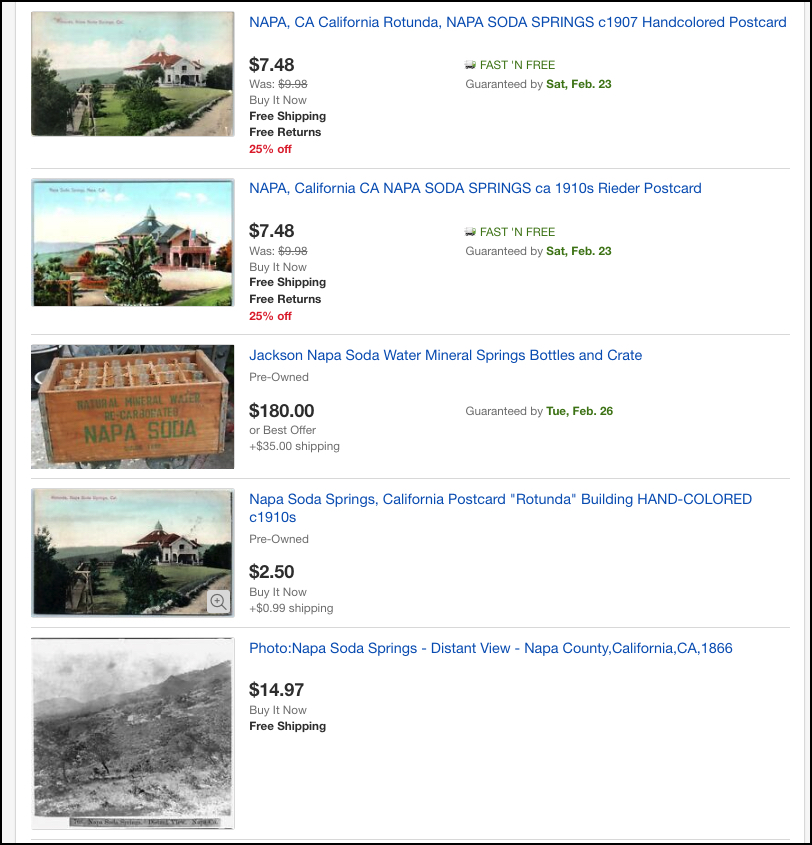
Perhaps the most surprising find (for me) was when I was glancing through the collected Napa Soda Springs images and finding Napa Soda Springs bottles for sale!  That made me think of searching on eBay for "Napa Soda."  I was really somewhat flabbergasted by what I found... page after page of artifacts from the glory era of Napa Soda Springs--photos, postcards, bottles, crates, and ice picks!  

A few of the items for sale on eBay from the Napa Soda Springs


I could go on and on with the fascinating story of Napa Soda Springs.  There are lots of images and stories out there, but here's the one I like best, showing an overview of the resort in its prime.  

Courtesy Napa County Historical Society showing the music hall and cottages.  
And there are stories, such as the time President Benjamin Harrison stayed at the resort which was then owned / operated by John Jackson.  Sure, Napa Soda Springs was famous, but enough to attract a sitting president?  

You have to know that John Jackson worked in the law offices of former Congressman Bellamy Storer.. along with the future President Benjamin Harrison.  Forty years later, Harrison would come to visit his longtime friend Jackson at his stylish resort in the hills above the Napa Valley, luxuriating the spring waters.  

So...what's the story?   

The Napa springs were discovered in 1855, then developed into a fairly famous resort that had extensive grounds and buildings. There were music rooms, a dance floor, a pagoda, spring houses, and buildings including the fabulous Rotunda, 75 feet high with a glass cupola at the top. It was the quintessence of a Victorian-era resort.  

In the early 1900s it fell into decline, and is now mostly just moody and remote abandoned buildings.  The magic isn't gone, but very different than what it once was. 

It all ended when Napa Soda Company gave up in Napa and moved to San Francisco.  (This notice is from the 1920 edition of The Stirring Rod, Volume 7, 1920.)  


Search Lessons 


1.  Even simple descriptions can work well. Much to my surprise, the obvious queries describing what you could see in the drone video actually led to useful results!  Simple is good.    

2.  Start with an open-ended query and see what you can learn.  You should dive into the topic ONLY after you've done a broad survey.  (I spent a lot of time looking at articles about the place before zeroing in on specific topics.) 

3.  Use multiple resources.  In this case, both a Map of the area was useful (for the place name "Soda Springs") and the Newspaper archives to give a historical context to the site.  

4.  When searching for history, consider using Books as a resource.  I didn't go into much detail here, but there are a LOT of mentions of Napa Soda Springs in various books, including a great report from the California Mining Department that talk about the water from the springs as “… series of chalybeate [i.e., containing iron salts] springs…with “Lemon” at 66F (flow, 1 gallon in 5 minutes); “Old Bottling House” spring, 67F (1 flow gallon in 2 minutes)… and “Pagoda” spring at 66F.  The last two have considerable excess gas (CO2).”   

5. Consider other sources than plain Google when dealing with a manufacturer.  I was surprised to find Napa Soda bottles for sale on eBay.  I spotted them first on the Images SERP, but when I started searching, I found hundreds of artifacts and articles (and endless postcards), some with intriguing notes from family members visiting Napa Soda Springs in its heyday.  


Hope you enjoyed this romp into history.  

Search on!  


20 Feb 17:38

It’s Time to Escape from the Dark Side of Distractions to Live a Better Life

by Brian Solis

Are you struggling with any of the following?

  • Focus
  • Procrastination
  • Anxiety
  • Self-esteem
  • Forgetfulness
  • Creativity

You are not alone…

Somewhere along the way, we have become distracted. Maybe we don’t realize the extent to which our everyday rituals, favorite devices and apps, or where we focus our attention is affecting us.

It’s time to escape from the dark side of distractions to live a better life.

Introducing Lifescale, a new movement to discover what’s really important, break bad habits, establish rituals and learn routines that will help you achieve your goals.

Reading Lifescale is like holding up a mirror, and revealing a new you, as your obsessive relationship with distractions melts away. From simple first steps to reclaiming your attention, to becoming more satisfied, inspired, and creative, this book will lead you through your own journey of lifescaling: redefining success on your own terms.

Who’s in charge of your destiny? Is it you?

If you find yourself unable to go longer than a few minutes without checking your phone, or falling victim to some other digital distraction, you aren’t alone.

Contrary to popular belief, distractions and multitasking may be a way of everyday life, but their effects are incredibly corrosive. We are capable of more. We are capable of doing better by doing less of everything and more of what’s important. But, what’s important?

This is where our Lifescale journey begins.

Lifescale is a journey of self-discovery and growth. It’s about getting back into balance, and mastering our destinies.

Pre-orders are important and I’m hoping you may feel that this book is something that may help you and someone important to you.

Amazon

Barnes and Noble

800CEOREAD

BAM

Thank you.

_____________

Brian Solis

Brian Solis is principal analyst and futurist at Altimeter, the digital analyst group at Prophet, Brian is world renowned keynote speaker and 7x best-selling author. His latest book, X: Where Business Meets Design, explores the future of brand and customer engagement through experience design.

Please, invite him to speak at your event or bring him in to inspire colleagues and fellow executives/boards.

Connect with Brian!

Twitter: @briansolis
Facebook: TheBrianSolis
LinkedIn: BrianSolis
Instagram: BrianSolis
Youtube: BrianSolisTV
Newsletter: Please Subscribe

Image Credit: Kyle Glenn, @kylejglenn, Unsplash

The post It’s Time to Escape from the Dark Side of Distractions to Live a Better Life appeared first on Brian Solis.

20 Feb 17:38

The State of Marketing Training in 2019

by Derek Gleason

U.S. companies spend billions on training each year. What about marketing departments? How much do they spend? What are they getting out of it? And what are they struggling to solve?

We surveyed 462 marketing leaders—CMOs, VPs of Marketing, Marketing Directors—to find out.

Respondents completed a 10-question survey that covered:

  • The perceived skill level of marketing teams.
  • Processes and accountability for training marketers.
  • Budgets for marketing training.
  • Primary challenges when upskilling marketing teams.

Here are seven key takeaways. If you want the full report, download the PDF.

7 things we learned

1. Bigger companies feel better about their skills.

Do larger organizations have greater in-house marketing skills? They certainly think so. Companies with 1,000–5,000 employees have the highest average estimate of marketing team skills.

Overall, the larger the organization, the higher the perceived skill:

It’s easy to speculate why this may be the case:

  • Larger organizations are more likely to have employees with specialized training and experience compared to smaller organizations, which may feel the lack of deep expertise acutely for some marketing challenges.
  • Larger companies have deeper pockets to afford top talent.

2. Training budgets aren’t big, but they’re getting bigger.

Each year, the average company spends $994 per employee on training. More than half, however, spend significantly less, if anything:

  • 61.9% spend $500 or less.
  • Nearly 1 in 5 spends nothing at all.

Note: We asked respondents for the training budget on a per-employee basis; some responses clearly provided a total training budget (e.g. $1 million). We omitted responses we believed did not reflect a per-employee budget.

Larger organizations tend to spend more—62.5% more than small businesses and 16.1% more than medium-sized companies:

Our current career development budget for our 60-person agency is $1,000/person/year. We find this is the right budget to get them to a solid conference in the area, or do an online course if they prefer that.

Ross Hudgens, Founder and CEO of Siege Media

For almost half of all respondents, budgets are getting bigger. Only 1 in 16 companies is reducing its upskilling budget in 2019:

Most of that added investment is coming from large enterprises. Nearly two-thirds (66%) of enterprise organizations plan to spend more on training in 2019 than they did last year:

Does more money translate into a higher perception of skill? Not really. There was only a weak correlation (0.20) between the amount spent on training and the perceived skill of the marketing team. Why?

  • Small companies may have urgent needs that siphon off resources from long-term investments in training. Individual practitioners at those organizations may spend more time learning through experience.
  • Teams that overestimate their skills—those, perhaps, that are convinced every member is a “10”—may not think there’s anything left to learn.

Being a successful marketer [. . .] demands a solid grasp of a multitude of different disciplines. Acquiring all these skills can seem overwhelming, unless you get the proper training. If you ask me, upskilling your marketing team is one of the best investments your company will ever make.

Michael Aagaard

So what does correlate with strong marketing skills? The amount of business you do online.

3. Companies that live online have better marketing skills.

SaaS, B2B, and ecommerce organizations had the highest perceived marketing skills:

Government and non-profit sectors trailed for-profit businesses. (The sector listed a “limited budget” as their primary training challenge.)

It’s easy and common for even the most experienced marketers to gloss over the basics and lose touch with the fundamentals of good marketing. A good training course is rooted in these principles, even if the topic is more tactical or execution in nature.

Hana Abaza, Director of Marketing at Shopify Plus

Earning more resources often requires demonstrating ROI, something far easier for online companies that can tie marketing efforts and revenue tightly together.

The three industries with the highest skill levels were also near the top when it came to having a “clear, structured process” for training. Surprisingly, agencies trailed all industries: Only 2 in every 5 has defined a process:

That means that roughly…

  • 3 of every 5 agencies
  • 1 of every 3 B2B, SaaS, or travel companies
  • And half of all ecommerce, media, non-profits, and governmental organizations

…are struggling to create a structured training program. So who’s responsible for those programs?

4. Direct managers own marketing training.

In 2 of every 5 companies surveyed, direct managers are accountable for training their teams. In nearly three-quarters (74.7%) of all businesses, either the direct manager or a marketing leader—who, in some instances, is also the direct manager—is accountable for the skills of their team:

Only 5% of organizations reported having no accountability, although an additional 14.3% reported autonomy (anarchy?) when it came to training.

Accountability was especially lacking in small organizations.

5. Autonomy at small companies applies to training, too.

Of the 89 respondents who stated that there was no formal oversight of training, a disproportionately large share came from small businesses:

“The best thing you can possibly do for your career is also one of the easiest things [. . .] which is spend the time to learn something. If you spend an hour every single day—or 30 minutes or maybe even 25 minutes—you’re going to be leaps and bounds ahead of your competition in two years.”

Chad Sanderson, Microsoft

Still, about two-thirds of small-business respondents (67.8%) had some oversight of skill development programs. The management challenges, however, extend beyond top-level accountability.

6. A structured process doesn’t guarantee training success.

Having a “structured process” for training programs isn’t the only organizational challenge, as marketers made clear in their open-ended responses:

  • By the time everyone gets trained, the knowledge may be outdated. Marketing leaders highlighted the challenge of identifying what their teams needed to learn next, or how to find a program that could help future-proof their department.
  • CMOs and VPs of marketing also struggled to measure whether training knowledge translated into more profitable marketing strategies—or to test retention months down the road.

We have our own internal academy with our own execution recipes run by our Director of Training. The most important part of their job isn’t to add new content [. . .] but to actually audit the students and make sure they know everything we teach as second nature. You’d be shocked at the lack of knowledge retention unless you make sure you audit, and audit repeatedly—we do every three months.

Johnathan Dane, Founder and CEO of KlientBoost

The other major challenge? Finding the best employees and getting them to stick around.

7. Finding talent that wants to learn—and keeping them—is hard.

See if this sounds familiar:

  • You struggle to find capable employees who are willing to learn new skills. Highly trained employees are often out of your price range, and undertrained employees need a structured, well-funded program to progress.
  • You worry that highly trained employees will jump ship after you invest in their development. Training makes your employees more productive—and more attractive to companies trying to lure them away.

When you invest in your teams, you don’t just build loyalty and engagement—you build a force that grows with your business, stays ahead of the market, and seizes opportunities that keep you ahead of your competition.

Ryan Engley, VP of Product Marketing at Unbounce

Other HR challenges, many respondents told us, ranged from long-tenured employees unwilling to adapt to fresh college grads without technical skills.

What else is there to learn? Download the PDF with all the details from the 2019 State of Marketing Training survey.

20 Feb 17:35

6 Digital Marketing Trends for 2019 and How to Adopt Them

by Ann Smarty

6 Digital Marketing Trends for 2019 and How to Adopt Them

While the way that businesses have used marketing campaigns over the years has changed, the reasons have not. Every business wants to reach its ideal customer just when that customer needs it.

With the constant flux of new technologies, the way that companies need to reach these customers has to evolve to make up the difference.

Here are 6 digital marketing trends to consider for your 2019 marketing strategy.

Digital Marketing Trend #1: Omnichannel Marketing

Today’s consumer uses multiple channels to research, compare, buy from and interact with businesses. These can be both online and offline channels, and the latter include your own website as well as Amazon, eBay, Facebook, etc.

What is omnichannel marketing?

Omnichannel marketing is a type of marketing that connects the dots between multiple channels, ensuring a consistent user experience and encouraging the consumer to engage with your brand at every touchpoint across multiple channels.

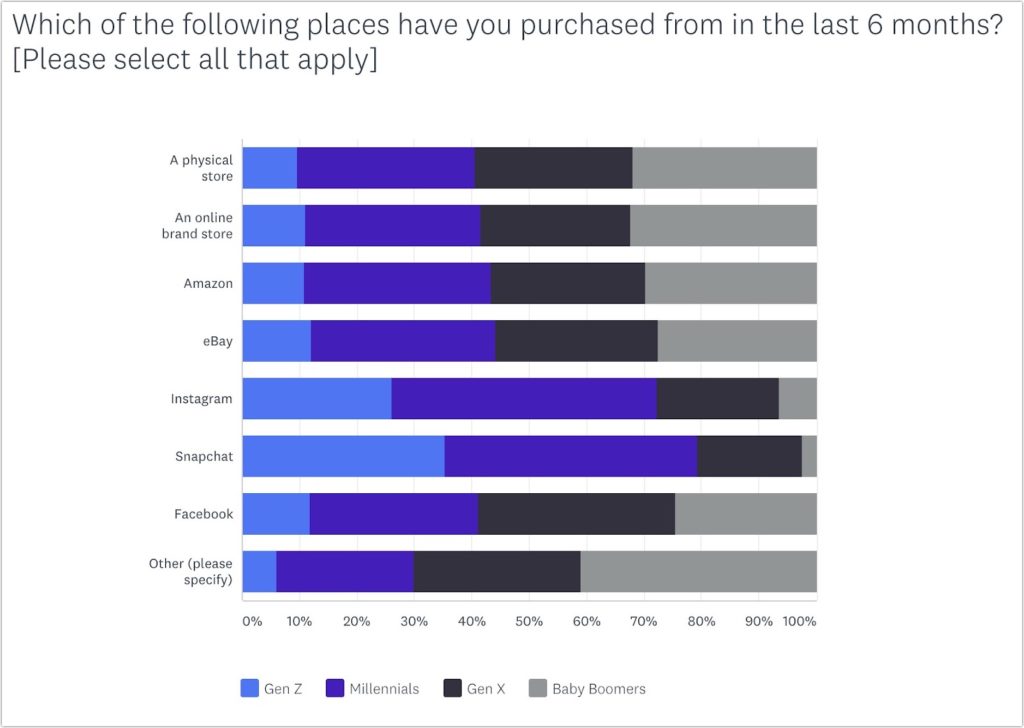
The newest research study by BigCommerce offers a detailed look into how different generations of consumers approach omnichannel shopping, as well as what they expect from brands throughout their buyer journey.

The takeaways from the study are very interesting:

  • These days nobody shops exclusively through a single medium
  • Younger generations use all kinds of media to purchase products, but they also know no other way to shop
  • Younger generations shop in physical stores considerably less (only 9.6% of Gen Z reports buying items in a physical store), they are more likely to return products and they value speed and ease of shopping experience.

Gen X purchase products statistic

With omnichannel presence becoming an expected shopping experience, ensure your product placement everywhere you can. It’s not just about outright selling: being everywhere means brand recognizability, which is another solid way to increase your ROI in the long run. The most obvious channels in which your brand needs to be include:

  • Facebook and Instagram (including Facebook+Instagram ads)
  • Amazon (Remember: Amazon is also a search and product discovery channel, so you need to be in its algorithm)
  • Google’s Shopping Actions: Google’s multi-channel platform that ensures your buyer’s consistent experience whichever medium they use to search. For example, they can search by voice, use voice commands to add products to cart and make the final purchase from the desktop.

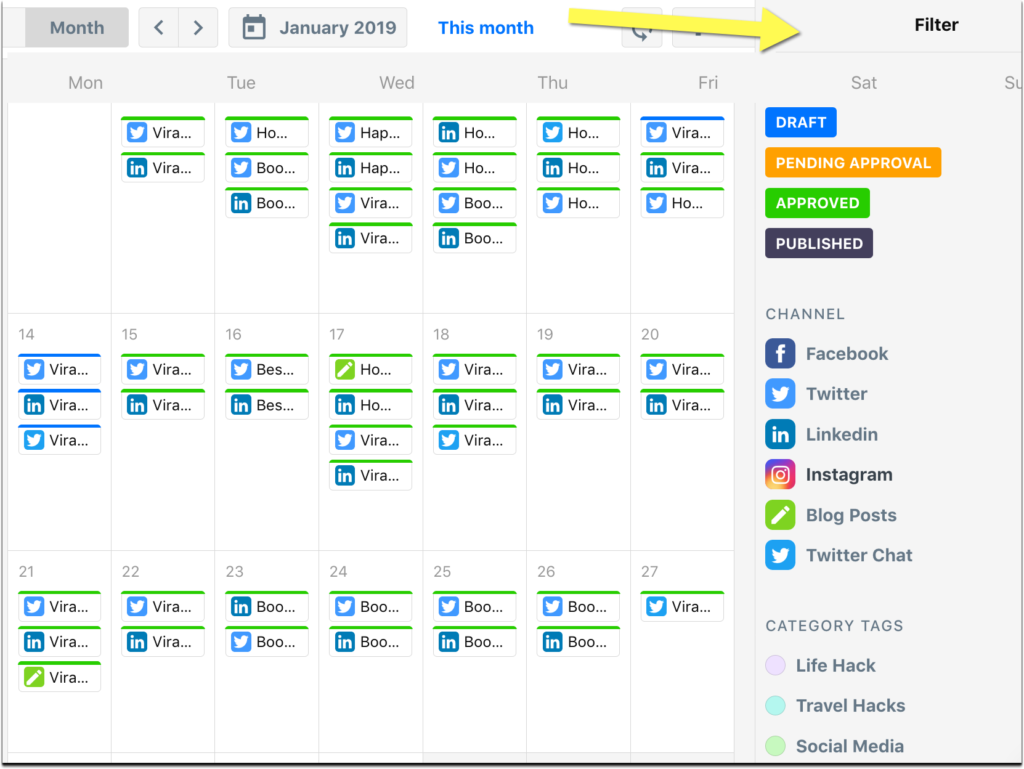
Apart from that, creating consistent brand presence across multiple platforms is an effective way to build familiarity with the brand and engage customers across many channels more consistently. ContentCal is a solid tool that can help you accomplish just that in a more productive and cost-effective way.

ContentCal allows you to cross-post your social media updates across multiple channels, as well as set up a multi-step delegation and moderation process: encourage your whole team to add unique social media updates to ContentCal’s “Pinboard” and have one (or more) moderators who will ensure the updates align with the brand’s voice and then will schedule them easily via drag-and-dropping functionality.

Content Cal

Digital Marketing Trend #2: Artificial Intelligence and Machine Learning

What is artificial intelligence (AI)?

Artificial intelligence (AI) is the branch in computer science that is all about teaching the machine to think and act like a human being.

Machine learning is usually what runs behind AI algorithms. While AI basically is all about teaching the machine to replace human beings, machine learning is about teaching the machine what a human brain cannot grasp, e.g. complex data mining and future predictions based on current patterns.

In many cases, machine learning and AI are two terms that are used interchangeably.

To make it easier to fathom, here are a few examples of AI-driven technology we already witness in our digital lives:

  • Gmail Smart Compose and Smart Reply features allow the user to compose an entire email with AI based on past emails and typing habits.
  • LinkedIn prompts value-add introductions based on with whom you interacted in the past.
  • Facebook Messenger sends auto-responses to your Facebook followers on your brand’s behalf.

The two well-known pioneers in AI-empowered marketing are:

  • Amazon: Using AI to analyze each particular buyer’s decisions and suggest products to them they didn’t even know they want or need.
  • Netflix: Using AI for content recommendations and beyond. Netflix successfully applies AI for product development too. They have analyzed years of viewer data to create successful products of their own, including the hit “House of Cards” show. Put simply, thanks to AI, Netflix knows what people want before they do.

With each new generation, consumers tend to rely on AI-powered algorithms for product discovery more and more. BigCommerce found that consumers in the age range between 18 and 23 rely heavily on AI-powered personalized product recommendations, seeing ads on social media and engaging with a brand’s social channels.

One of the best ways to take advantage of machine learning right now is to pick a solid partner who already has the technology built in and running in the background.

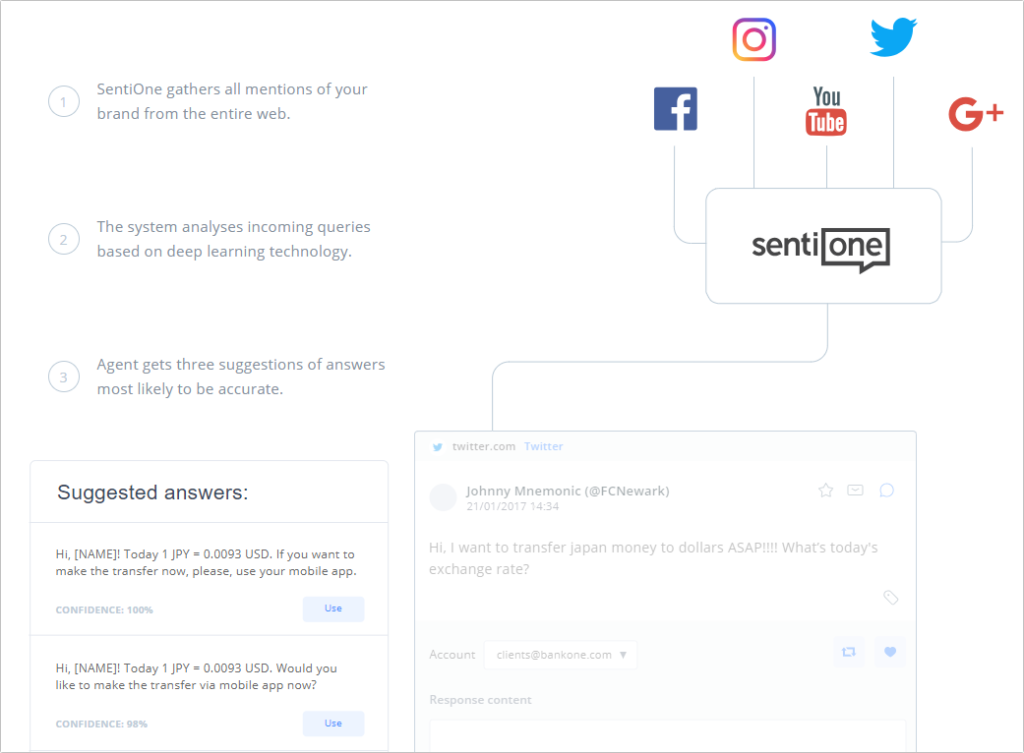
AI-powered sentiment analysis is the most powerful example of machine learning in action. Today’s sentiment analysis software not only can extract mentions that need your attention but also can help your team handle them properly.

Sentione is a solid example of this forward-thinking sentiment analysis approach. It implements machine learning and natural language mechanisms to extract online context around your brand. Next, Sentione’s AI-powered self-learning agent suggests further action based on collected data and previous communications with clients.

Sentione

Digital Marketing Trend #3: Voice Search

The emergence and fast adoption of smart speakers (also known as digital home assistants), like the Amazon Echo, the Google Dot and Apple’s Homepod, is causing new searching behavior, i.e. voice search (also known as conversational search).

These smart devices make searching far easier and entirely hands-free. “Alexa, when is the next movie time for The Avengers?” It’s that easy.

With a daily average of nearly 40% of adults using voice search back in 2016, this technology adoption has been increasing quickly over time as it becomes more intuitive and reliable. Domino’s has taken the lead, incorporating voice search as a way to increase sales.

With voice and on-the-go searching ability, online search queries have become longer and more specific. But, in reality, targeting long-tail queries is only the tip of the iceberg. Google has been preparing its algorithm for natural-language searching for ages now. After its Hummingbird update and Rankbrain announcement, we have seen just a few hints of what Google is working on.

Thanks to machine learning, Google understands intent and context much better now than it used to, which makes keyword matching useless. These days, keyword research is a more complicated process. There are a few smart tools already on the market offering a much more sophisticated approach to keyword research. The two tools I mentioned previously are:

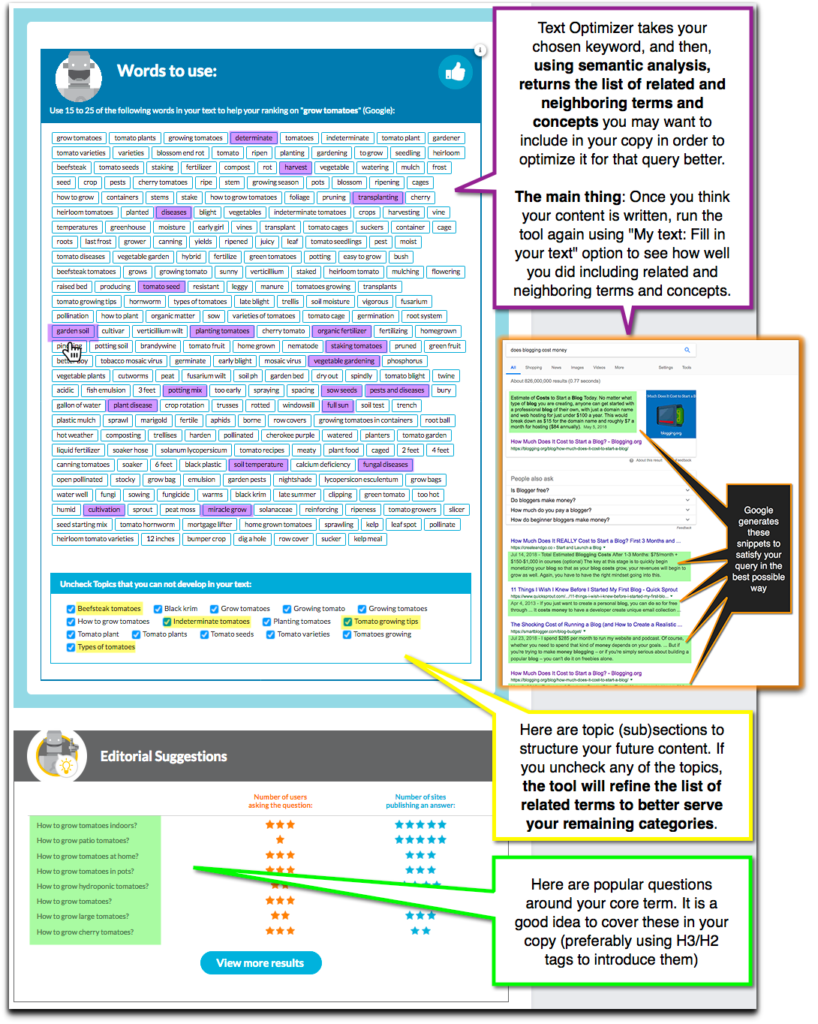
TextOptimizer allows you to optimize content to match Google’s (and its users’) expectations (i.e. intent) by analyzing search snippets for each query and suggesting the related terms, concepts and categories.  TextOptimizer has a web-based version, as well as a Google Chrome extension and WordPress plugin.

How TextOptimizer Works

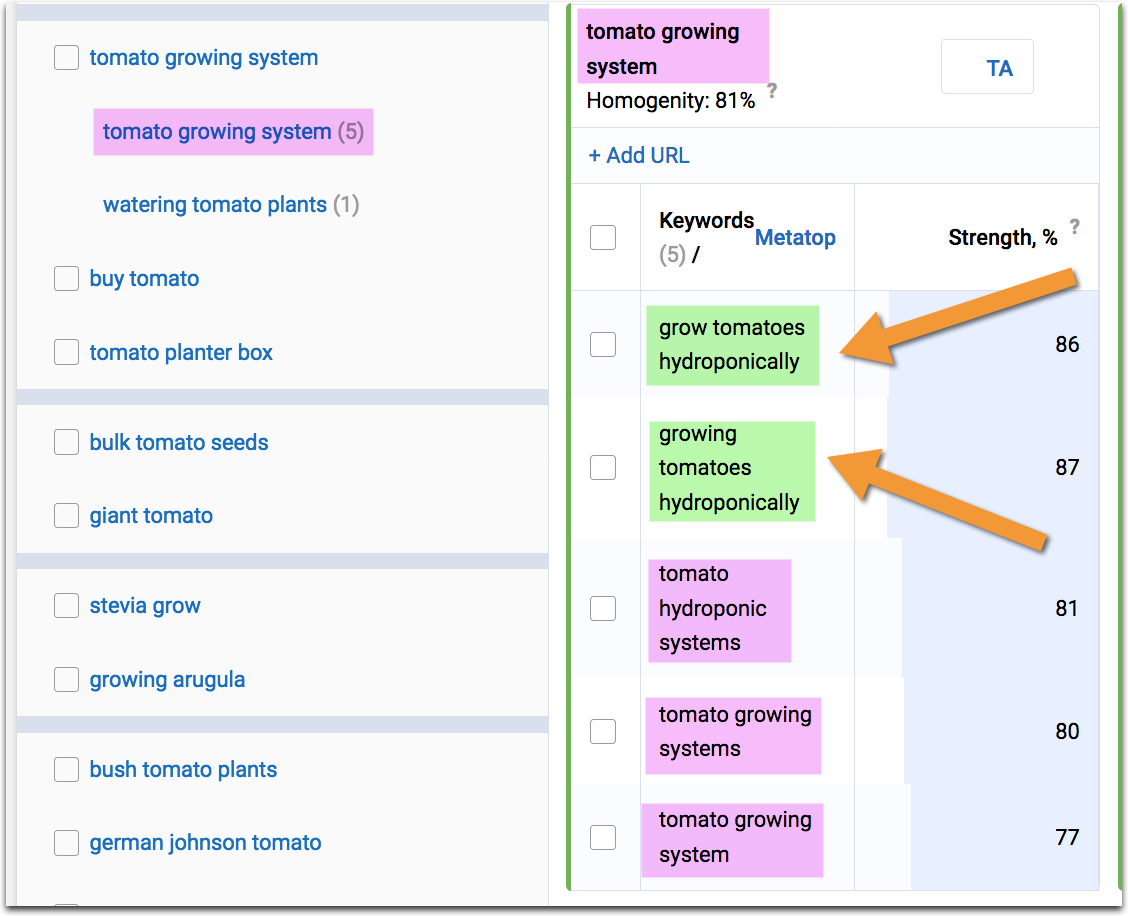
Serpstat analyzes Google’s search engine result pages, finds overlapping URLs and groups your keyword lists by relevancy allowing you to discover concepts behind your queries and optimizing for groups of related keywords:

Serpstat keyword clustering

Read more about keyword clustering here.

Both suites represent the new generation of SEO software allowing you to analyze and optimize beyond keyword matching, to better optimize your content and to prepare for any kind of search behavior, (be it typed words or voice commands.

Digital Marketing Trend #4: Personalized Marketing

What is personalized marketing?

Personalized marketing means providing individualized user experience targeting each separate user of your site or subscriber to your email list.

According to Evergage, nearly 96% of consumers agree that personalized marketing fosters relationship building with the brand. Forrester has found that almost 80% of consumers have recommended or paid more for a product thanks to a personalized service or experience.

Personalized Shopping Statistic

Despite what you may have heard, increasing security and privacy concerns are not going to kill personalized marketing. Today’s consumer expects to receive personalized experience and is ready to give away their personal data in return.

BigCommerce has found that younger generations of consumers don’t mind sharing their personal data in return for perks and personalized experience.

Data Collection and Personalization

Sites like Netflix, Amazon and Pinterest, not to mention Google and Facebook, all use personalized marketing campaigns. They mine your search history, what you liked and didn’t like, and provide recommendations for similar products you didn’t even intend to buy.

Digital Marketing Trend #5: Video Marketing and Influencer Marketing

While YouTube is what many people think of first, video marketing can be utilized across social media platforms, like Facebook, LinkedIn, Instagram stories and Snapchat.

If your videos are short, concise and entertaining, people will be more likely to share them on other social media sites.

This can have a more substantial impact if an influencer is well-known on the platform and can put their hat in the ring. These leaders of industries can help spread the word for your products or content quickly.

Know your target audience, find where they are and get to work. For more details and tips on various influencer marketing tactics, check out these resources:

Digital Marketing Trend #6: Visual Search

With the increased availability of smartphones and on-the-go access to the Internet, searching capabilities are evolving.

While voice search eliminates the need for typing your keywords in a search box and does away with the screen to interact with the results, visual search transforms the concept of the keyword itself. You don’t need words: you can search by showing a photo.

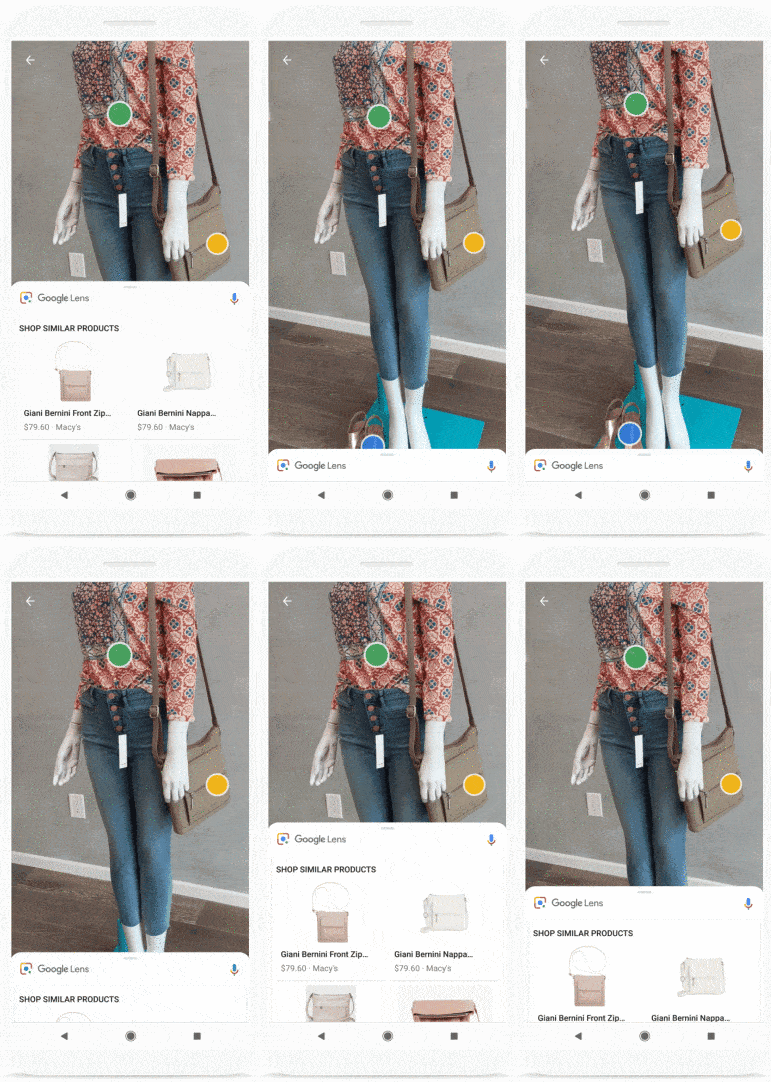
Apps like Google Lens make it possible to use your camera as a search tool. Landmarks, clothes, art, books and business cards all can be searched through a single image. Product prices, reviews and retailers can be found through a photo of a book or a photo of clothing.

Google Lens

The best ways to make the most of visual search are:

Google Image Search

Conclusion

In 2019, the ways consumers search for information and shop have evolved to include AI-powered personalization, advanced segmentation and new content types, slowly incorporating more of these new technologies.

These new technological advances have amazing potential within the marketing sector if you know how to use them to your advantage. With so many other businesses you are competing against across your industry, the faster you learn how to utilize new techniques (including voice and visual search, as well as personalization and influencer marketing), the more competitive your business will become.

For video and personalized marketing, revisiting your current strategy and altering it to fit the needs of your audience is essential. Whatever technique you decide to use moving forward, keep yourself informed of new advances to keep your business ahead of the game.

The post 6 Digital Marketing Trends for 2019 and How to Adopt Them appeared first on Convince and Convert: Social Media Consulting and Content Marketing Consulting.

20 Feb 17:14

Successful Selling = Intelligent Choices, not Fixed Formulas

by Bob Apollo

Free-Photos / Pixabay

I’ve just spent a few minutes completing the annual survey from one of the world’s most widely respected sales training organisations. Of course, I haven’t yet seen the results, but I was intrigued by the implications behind a number of the questions.

There appeared to be a strong implied endorsement of the value of adopting a structured sales process – a theme that is promoted by many of the established sales methodologies. But I’ve come to believe that this is now an outdated approach, particularly if taken to extremes.

In fact, the very word process is unhelpful. It implies linearity and a “production-line” approach to selling – which as any observer of complex buying decisions will know is completely at odds with how typical buying decisions are actually made…

Non-linearity is the true reality

As Gartner recently pointed out, significant B2B buying decisions are inherently non-linear and sometimes verging on the chaotic – you’ve only got to look at the image above. Customers often revisit previous assumptions, loop back to previous phases and re-evaluate what they are looking for based on changing circumstances and perspectives, or the introduction of new and opinionated members of the decision team.

Assuming that our customer has a clearly-defined buying process often proves to be a serious error, as does assuming that our initial qualification (assuming that we actually conducted some measure of formal qualification) remains valid for the duration of their buying journey.

I’m not suggesting that we descend to fighting chaos with chaos, or that we ignore the opportunity to significantly improve our sales performance through the application of effective practices and proven winning habits – simply that we should be thinking in terms of flexible frameworks, rather than rigid linear processes.

Rather than fixed formulas, rigid processes or inflexible methodologies, we should be thinking in terms of helping our sales people to make intelligent choices based on a thoughtful appraisal of the customer’s situation and the dynamics of their buying journey.

That, of course, turns out to be how the most successful salespeople tend to sell anyway. They demonstrate situational fluency. They avoid relying on untested assumptions. They take steps to fill in the blanks in their knowledge. They know that they should never rely on the face value of anything they are told.

Avoiding ignorance and ineptitude

And while their strategy and execution may not be perfect, they tend to make fewer errors than their less-effective colleagues. Atul Gawande, in his hugely influential “Checklist Manifesto”, referred to the two primary causes of knowledge-related failure as errors of ignorance and errors of ineptitude.

Errors of ignorance relate to information that exists, but which we failed to uncover. This is primarily a function of ineffective conversation, questioning and listening techniques, and these are and should not be left to acts of randomness.

Successful sales people suffer fewer errors of ignorance because they prepare more effectively for every sales conversation, and because they have better conversations with their customers. This is not – as you might think from some sales methodologies – exclusively about asking the right questions.

They also listen and interpret more effectively. Rather than focusing on the answers they are hoping to hear, they are looking for the meaning and intent that lies behind what the customer is saying. They have a plan for where they hope the conversation will go but are also prepared to adapt it in the light of what they have just heard.

Errors of ineptitude relate to information that already exists somewhere in the system but has not been applied. One of the characteristics of the most effective sales people is their ability to learn from the past, to recognise patterns, and to leverage the experiences they have accumulated over time.

This is, of course, even more powerful when applied at an organisational level – by sharing pragmatic experiences of what works and what doesn’t across the entire sales population, as part of a flexible sales framework the reflects the accumulated (and continuously) evolving experience of everybody involved.

A customer-centric perspective

Rather than promoting our “sales process” we need to be coaching and equipping our sales teams to diagnose the customer’s situation, their motivations, and what phase they are in with regard to their decision-making journey.

Rather than implying linearity, we need to equip our sales people to have value-creating conversations and to apply the sales strategies and tactics that are relevant to the customer’s actual situation.

We can do this through playbooks and sales frameworks that allow our sales people to access situationally relevant sales tools and buying enablers and encourage them to think for themselves, rather than relying on following a fixed regime.

One of the most obvious considerations is whether the customer thinks of their exercise as a well-understood and familiar transactional process (in which case we need to make their task as friction-free as possible) or an unfamiliar and significant strategic decision (in which case we need to help them fully understand all the implications).

Our guidance needs to take the form of a supportive and flexible skeleton rather than a rigid and unyielding cage or shell. And we need to establish mechanisms that allow and encourage sales people to share their latest learnings with each other.

Learning, adapting and evolving

It probably hasn’t escaped your notice that this implies a significant amount of emotional intelligence, domain expertise and business acumen on the part of our sales people. And yes, some sales people who appear to have been historically successful might struggle to keep up with these demands.

In today’s world, 20 years of the same sales experience repeated every year is far less valuable than a much shorter period of active and progressive learning. Attitude and aptitude invariably turn out to be far more accurate predictors of future sales success than an apparently impressive CV.

We need to hire for these qualities. We need to train for these qualities. We need to recruit people who are capable of thinking for themselves and encourage them. We need to establish supporting systems that guide them in making situationally-appropriate choices rather than following a fixed formula.

Some of our existing sales people will relish the challenge. Others will never be able to make it. And a significant number of middle-of-the-road sales people, armed with the right attitudes and supported by the appropriate encouragement and guidance, will show us that they are capable of doing better than any of us might have thought possible.

20 Feb 17:14

Increase Repeat Purchases with Cohort Analysis

by Murry Ivanoff

In my daily work with ecommerce brands, I see two types of companies:

  1. The first type focuses on acquisition and conversion.
  2. The second relies on retention.

The second type is winning. Why?

Overall acquisition costs for both B2C and B2B have gone up by 50% in the past five years. Sooner or later, relying on new customers will break you. To offset these costs, you need to earn more repeat purchases from existing customers.

Repeat purchases are often cheaper because people already know the brand. As a result:

  • They’re converted via email.
  • They’re converted via organic or direct traffic.

Thus, with the same ad budget, you get more orders—three times more, according to research. That means better margins, more profitability, and cost-efficient scaling.

This post gives you a data-backed approach to win more repeat sales. The key is to identify and persuade your most valuable cohorts.

Why to monitor the post-purchase experience by cohort

google analytics cohort analysisIn Google Analytics, the Cohort Analysis Report is time-based, though you can apply a segment to a cohort.

Cohorts vs. segments: What’s the difference?

In marketing, cohorts are groups of customers who exhibit similar behaviors during a certain time span (e.g. buyers during a holiday promotion). Segments include any “subset of your Analytics data” (e.g. mobile purchasers).

As Alistair Croll and Benjamin Yoskovitz detail in their book, Lean Analytics, cohort analysis has special relevance for the customer lifecycle, enabling marketers

to see patterns clearly against the lifecycle of a customer, rather than slicing across all customers blindly without accounting for the natural cycle a customer undergoes. Cohort analysis can be done for revenue, churn, viral word of mouth, support costs, or any other metric you care about.

This post uses the broader definition of “cohort”—“a group of persons sharing a particular statistical or demographic characteristic”—to avoid toggling between “cohort” and “segment,” even though some “cohorts” listed below are not explicitly time-bound.

Benefits of cohort analysis

When it comes to increasing repeat purchases, cohort analysis provides three key insights:

  1. The post-purchase behavior is directly influenced by the initial experience, so the motivation for the first order—incentive, timing, product, exposure—is a strong unifying factor for the cohort.
  2. Also, cohort behavior often reflects the use of the product over time. For replenishable products, if most people place their next order on the fifth week, that’s when they run out of it. Or for products like clothing, shopping every three months suggests when people get ready for the new season. Such details help identify when it makes sense to push marketing and when there’s no point.
  3. Lastly, cohorts provide buying behavior insights to adjust your marketing so every customer feels the communication is personal. Since one customer inevitably falls into more than one cohort, the analysis gives meaning to their lifecycle behavior from different perspectives—the product they bought, the campaign that converted them, when they ordered, and so on.

So which are most important?

Which cohorts to monitor

You can probably come up with dozens of characteristics by which to segment your customer base, but start with these five:

  1. By first product bought. The first item the customer purchases determines all next interactions with your brand.
  2. By month of first order. The temporal tipping point signals a customer’s motivation for buying.
  3. By campaign of first order. The most telling cohort, perhaps, is which promotion locked in the sale.
  4. By coupon used at first order. The exact coupon code that converted people speaks volumes about the kind of promotions that influence their decision to buy.
  5. By traffic source. Where customers come from to shop for the first time may influence their behavior.

The behavior of each cohort helps you identify which customers have the greatest influence on profitability.

How repeat purchases influence profitability

Without cohort analysis, it’s hard to make connections between customers and profitability, especially at scale. Cohort analysis consolidates the data from individual customers into meaningful bundles from which you can draw conclusions.

Each cohort has a distinct financial performance. Usually, there are one or two strong cohorts with lots of high-value customers that drive profitability (while dragging less-profitable customers behind). The good cohorts repay their Customer Acquisition Costs (CAC) quickly and bring higher margins over a long period, accumulating the lion’s share of returns.

cohort analysis chart

Cohort metrics can help drive more repeat customers.

Three characteristics help identify the most valuable cohorts:

Average order value (AOV). A larger AOV can make up for a shorter customer lifespan. If you’re looking to boost short-term results to placate investors or expand into a new market—and paid acquisition is a must—a focus on AOV can earn more revenue for the same CAC (and, often, the same shipping fees). Increasing the AOV boosts the margin on individual orders, especially if one of the products is more profitable than others.

Number of orders per customer. This metric reveals the longer-term relationship. Some product categories don’t drive many repeat orders. For those that do, each consecutive order comes at a lower CAC (or even free). Even if the first sale is at no margin—as often happens in competitive niches—the next ones offset the loss. With a strategy in place to boost repeat purchases, occasional spikes in CACs will be more manageable.

Lifetime value (LTV). LTV reflects both the average order value and the number of orders per customer. High LTV numbers mean your brand enjoys true customer loyalty (not to mention they are highly appreciated by VCs in case you seek funding). Companies with a high LTV have a strong brand image, earn word-of-mouth and organic referrals, and enjoy “search monopolies”—conversions by brand name search.

Once you gain visibility into the LTV of each cohort, you’ll begin to learn a lot about your customers.

CAC and LTV balanceProfitability is a balance between CAC and LTV. (Image source)

What you’ll learn about your customers

Before you start increasing repeat purchases, you have to find the gaps and opportunities in the data. Along the way, you’ll learn a lot about the post-purchase experience consumers have with your brand.

1. Get a complete view of the customer lifecycle

To improve the customer experience and drive more repeat sales, you want to see how repeat purchases are already happening naturally:

  • When do the second, third, or fourth orders happen in your store?
  • When do most people in the cohort reach the end of their customer lifecycle?

Mapping the entire customer lifecycle reveals connections between marketing, sales, and the customer. You gain a better understanding of how often customers need your products, which is a good starting point for more personalized and better-timed email marketing, rather than the popular blanket approach that constantly bombards customers with promo emails.

2. Understand purchasing habits

It’s not just about what happens over time, but also how:

  • How much do people spend at each consecutive order?
  • Does this amount change over time?
  • Do they buy a lot in a few orders or place numerous small-amount orders?

Some cohorts will accumulate huge lifetime values over just six weeks; others will spread out equal-order values over long, long periods. Knowing such details about your customers’ spending allows you to tailor your communication to stimulate the desired behaviors—like rewarding repurchases or prolonging the customer lifetime.

The key is to take what they already do and gently nudge them to do it more often. Such marketing is non-intrusive and better fits consumers’ needs.

3. Find out what drives customer loyalty

As mentioned above, the first order—which product a consumer purchased and the motivations that led to that purchase—shapes the rest of the journey.

Products

Unfortunately, not all products bring the same level of satisfaction, and some drive customers away. In categories like food, clothing, and beauty, look for products with mostly one-time buyers and low repeat rates.

Of course, this won’t work in other categories—like bikes or baby gear—that people typically buy once. To measure the performance of those products, I suggest throwing some add-ons in your mix (e.g. maintenance, upgrades) to drive repeat purchases and assess satisfaction with the initial purchase.

compare cohorts by ecommerce product Comparing product cohorts can help identify the most profitable segments of your customer base.

Detecting unsatisfactory items as soon as possible might save your reputation, marketing budget, and customers. Drop sub-par products and concentrate on the ones that consistently bring repeat purchases and good reviews.

We had a client selling personalized jewelry who discovered through a retention analysis that 40% of his products didn’t drive any repeat purchases. He scrapped them from his store, giving more visibility to the others that worked well.

When you know exactly which products people use, the lifecycle will show you how often they need complementary products (e.g. filters, cleaning supplies), how long before they’ll replace it, or when they’ll stop using it (i.e. when the purchases of complementary products stop).

Some products have clearly defined periods of use. If you sell diapers, for example, you can estimate quite accurately the needs of first-time buyers: They’ll probably stay with your shop for three years, at best. So when you notice outliers—with a longer lifespan, for example—you can test a bundle offer as they may have kids at different ages.

Marketing strategies

Some changes you make will influence conversions at the specific time you implement them. So time-based cohorts (by time of first order) are closely connected to what was happening in your store and on your site at that time.

Maybe last month you changed how you share social media content and attracted new followers. Or you lowered shipping costs in a country and won new business. Or, perhaps, you added a few colors to your product line. Maybe your search rankings improved, making it easier for potential buyers to find your site.

Any of these changes can bring an influx of better-fit customers with a higher repurchase rate. Monitoring how people who bought in the same month behave afterward sheds light on the long-term effect of those adjustments.

Marketing campaigns and promotions

Knowing how each promotion works in the long run solves many digital marketing mysteries:

  • Where you should put your money;
  • How to formulate a campaign to attract the desired people and behavior;
  • Which channels are home to long-term customers, and so on.

Where loyal customers come from is important for social media management, ad placement, partnerships, affiliate links, media features, etc. For more post-purchase conversions, you’d better double down on the ones that bring strong cohorts with high retention rates.

A retention analysis of coupon codes reveals a lot about your customers. Not just the revenue a coupon brings, but which messaging and discounts works, where it should be placed, whom to target, which products to include, etc. People in the “Last chance, 70% discount” cohort will have completely different behavior than the ones in the “New Collection, Early Bird” cohort.

Now it’s time to apply your knowledge—and win more repeat sales.

How to drive repeat purchases by cohort

Our client, Barrington Coffee Roasting Co., had a problem: tons of traffic but no conversions. They analyzed their traffic and retention and realized that channels like Google Ads brought low-quality traffic and little brand loyalty. They shifted their efforts to review sites that did bring quality traffic, and ROI increased with unchanged budgets thanks to repeat purchases.

Data-driven marketing tailors marketing campaigns to consumer behavior. Cohorts offer valuable context and suggest which behaviors to target. You’re able to time your marketing messaging more closely to the purchasing cycle, drive engagement in a way that feels natural and useful (instead of salesy and pushy), and focus your marketing money in the channels that matter.

Here’s how to do it for four key cohorts.

By first product bought

This segmentation gives plenty of opportunities for ongoing engagement.

  1. Ask for feedback after a sensible period of time (so the customer has time to test the product). You can automate this step, but try to have customer service reps reply personally to positive and negative reviews (and, in the case of the latter, fix the problem).
  2. Give usage tips to encourage more frequent use. The more people use the product, the more involved they are with your brand.
  3. Create a separate social media group for users of various products and invite them to join a relevant one. You’ll be able to craft specific content to share with each group, and user-generated content will help foster a real community.
  4. Offer add-ons when you see a drop in the cohort repurchasing rate. If fewer and fewer people are placing a third order, for example, that’s when you should offer an accessory, an upgrade, or a replacement of the old item at a special price.
  5. Send just-in-time emails for replenishable products like cosmetics, food, or anything else that needs to be replaced. Time communications to arrive before consumers run out. Use the average time between orders as your guide the first few times. Then, you can sub-segment each cohort even deeper and send almost one-on-one emails to match individual repurchase times. This is convenient for consumers and keeps you top-of-mind at the perfect moment.
  6. Offer recycling or replacement service at the end of the estimated product lifecycle. The Department of Planning, Transport and Infrastructure in South Australia has had sweeping success the past two years with their OLD4NEW campaign to replace life jackets on boats. They issue vouchers for new and safer replacements to be redeemed at participating stores—bringing extra sales to stores while doing public good.

australian life jacket buy-back program

The Australian government timed a voucher campaign to incentivize boat companies to upgrade life jackets—and boost sales at retailers. (Image source)

By month of first order

The time of the first purchase can give you clues on how to engage afterward.

  1. For holiday shoppers, one of nearly every store’s biggest cohorts, when are the next orders placed? Look for changing seasons and major holidays. Those shopper may, more often than not, be shopping for gifts and incentivized by special offers. Sending those offers proactively (e.g. two weeks before Mother’s Day) will be well received.
  2. Look at the timing of campaigns. What was the main initiative during the months when you attracted your best cohorts? Keep the cohorts engaged with content related to the initial campaign.

By campaign of first order

The campaign that brought in a new group of customers says a lot about their motivations and shopping habits.

  1. Which campaigns brought in the most loyal customers? What was the message? Replicate those to try to attract as many similar customers as possible. Give your most loyal customers early bird offers, limited edition items, and premium service.
  2. Maintain the lightmotif for niche campaigns—keep the post-purchase experience consistent to preserve the connection. This may even mean creating a different style of communication for niche cohorts.
  3. Don’t expect high customer retention in cohorts from deep-discount campaigns. Those customers seeks deals and are not brand loyal, so they can be stimulated to buy again only with more discounts. The good thing is that you can do it for the deal-hunting cohorts only and not eat your margins with the rest.
  4. Products included in a promotion also signal customer’s preferences. Some want only the newest models and others shop for clearance items. Effective marketing is to give each their own and not waste budget or effort on trying to change behaviors.

By traffic source

Where your loyal customer came from informs the place for post-purchase engagement, too. If they trust social networks, blogs, magazines, etc., enough to buy from links or ads in those sources, they’re more likely to do so again.

  1. If long-tail keyword searches attract high-value cohorts, optimize your site them.
  2. If direct traffic doesn’t increase customer loyalty, work on your reputation and brand image. People obviously type it in with the intention to buy but, for some reason, are disappointed.
  3. For cohorts coming from social media, tailor the content to their product preferences.
  4. For cohorts from referral sources, like an affiliate link, measure their lifetime ROI against the cost. Then, monitor behavior for drops in sales and work with the referrer to increase engagement.

What to do with cohorts that don’t buy again

Some cohorts will not become repeat purchasers. Their lifecycle map is a dead end. Here are a few tactics to turn that around:

  1. Remove products leading to one-time purchases. By now, you should know which products fail to stimulate loyalty (or stimulate below-average loyalty). Consider dropping products if they don’t lead customers down the path you want them to take.
  2. If a cohort looks dead but AOV or LTV are quite good—accumulated in a few big orders, perhaps—ask for feedback. You’ll learn what it may take to reactivate a potentially lucrative cohort.
  3. Try to replicate the customer engagement of more successful cohorts. Proactively reach out via email around the time for reorder (average time between orders) to activate the inactive cohort.

Ecommerce analytics tools to help with cohort analysis

While some level of cohort analysis is possible in Google Analytics or with (clunky) spreadsheet calculations, ecommerce analytics tools provide cohort data that expedites and deepens analysis.

G2 Crowd lists more than two dozen providers in the ecommerce analytics category. For cohort analysis, there are five primary providers, listed alphabetically below:

  1. Custora
  2. Glew.io
  3. Kissmetrics
  4. Metorik
  5. Metrilo

Conclusion

Cohort or segment analysis is one way to track and analyze buyer behavior and its effects on your ecommerce business over time. This kind of segmentation sheds light on how a common first-order trait influences the customer journey and deepens understanding of buyers’ needs.

When you routinely perform cohort analysis, more opportunities to drive repeat purchases appear. You’ll be able to ditch the blanket approach and build a more meaningful relationship with each customer. Relevant offers and adequate timing turn marketing from an intrusion into a useful interaction.

Best of all, in my opinion, is that the retention-heavy strategy comes at practically no cost—it continually brings in more sales without pouring more money into marketing.

20 Feb 17:11

Get Paid Faster, With Active Escalation on Accounts Receivable

by Karl Sakas
Get paid faster by escalating Accounts Receivable at your agency.

Get paid faster: Be the squeaky wheel on Accounts Receivable.

An agency owner was having an Accounts Receivable problem—several clients weren’t paying on-time.

As her coach, I asked what happened. She emailed: “Majority is still due to outstanding invoices going unpaid.”

I notice she used passive voice—”invoices going unpaid.” That’s likely an underlying factor behind the financial issues she’s experiencing—and that you may experience, too.

If your agency isn’t paid on-time—every time—it’s time to actively escalate your Accounts Receivable.

This means outlining payment terms (and consequences) up front, and then consistently enforcing those terms unless there’s a good reason to deviate.

When it comes to agency A/R, the squeakiest wheel gets paid. If you no longer handle accounting yourself, share this article with your finance team.

Recognizing the Control You Have

Drop the passive voice—you always have at least some control when it comes to clients and payments. For example, you or your accounting team can:

1. Monitor payments daily (or several times a week).

2. Escalate your reminders to past-due clients. (See all of my articles on collections.)

3. Choose to withhold services when past-due. (This should be in your standard client agreement.)

4. Require larger up-front deposits, or (this is unusual for agencies but possible) require a “first and last payment” up front.

5. Say “no” to clients who seem financially tenuous.

You’ll adjust those based on your business confidence—sometimes you’ll intentionally choose to relax your standards because you need the money. Your agency is important to your future—”intentional” is different from “accidental.”

Adding Escalated A/R Followups to Your Routine

Tactically, part of this is adding financial reviews to your weekly process—once you’ve made the sale and delivered the service, Accounts Receivable (A/R) is the lifeblood of any agency.

Collecting the payment is the “last mile” of running your agency profitability. It’s the final step in my Agency Value Chain framework.

I’m in my company’s QuickBooks Online (QBO) a few times a week, so I can immediately see the dashboard reminder if someone is past-due. Your accounting person is likely there every day.

Escalation Steps: Email, Email, Phone

Here’s how I escalate my [rare] collections issues at Sakas & Company:

1. I send the invoice email (via QBO), with a copy to myself.

2. I immediately Boomerang the email back to myself 2-3 days later, so I can email the client (or their accounting contact) to confirm receipt.

3. The day it’s due (or the day after, depending on the client’s payment history), I’m emailing another reminder.

4. Once it’s past-due, I’m sending regular followups—by email, and then escalating to phone.

You don’t need to be mean about it. And reminding someone they owe you money—that’s not mean. It’s just business. (And another reason not to provide services to your family members.)

My mindset is that people are going to pay. They may currently be overwhelmed; it’s my job to help them make paying me a priority.

Consider when to accept installments. Perhaps they can pay half now and half later. Half now is better than nothing now—take the payment, and ask their ETA on the rest.

Auto-Pay: No More Waiting

You can bypass the “waiting for an invoice” completing by putting clients on auto-bill (especially for retainers). Since doing that for coaching, I never wonder if someone is going to pay.

Most of my clients pay via credit card (~3% fee) but you can also do ACH eCheck debits. To me, that 3% is worth it because it gets me paid faster, with fewer headaches, and with less uncertainty. (Here’s more on why you should accept credit cards.)

In the occasional situation where someone is past-due (I have a client with a disorganized internal Accounts Payable process… they’re now on auto-pay), I’m not shy about [gently] following up. They owe me money for services I’ve already delivered, and there’s absolutely nothing wrong about my pressing them to fulfill their side of the obligation.

The key is to actively escalate, rather than overreact… or ignore.

What About Automated Reminders?

Your accounting software likely lets you automate some of the invoice reminders. Should you send automated reminders? Probably, because they’ll go out even if you forget.

But you still need to be actively monitoring things. Why? Clients are more likely to ignore an automated email and less likely to ignore an email or call from their account manager.

If They’ve Gone Out of Business

If your past-due client has gone out of business, your chances of collecting are low—but not impossible, on at least a partial basis.

How so? Sometimes people feel guilty and they want to send you some money to feel less guilty—you should probably take it! And don’t be scarce: The squeaky wheel gets paid first.

If they formally declare bankruptcy, it’s more complicated, and you’ll want to get help from your accountant and/or attorney.

All the more reason to stay on top of this—the longer they’re late, the higher the chances you won’t get paid at all.

Set a Goal for Yourself

Another coaching client shared he had a sizable past-due Accounts Receivable balance. I asked how that came about. He said he just hadn’t focused on it amidst other priorities in running the agency.

I challenged him to dedicate time each week to A/R collections—both for him and his account managers.

The result? He and his team collected 20% in the first two weeks, and they’re continuing to collect!

Imagine what you could collect if you made Accounts Receivable a priority.

Reflecting: Root Causes for Your A/R Issues

Think about your situation. From what I’ve described:

  1. What do you think are the root causes for your not being paid promptly?
  2. What’s your reaction to realizing this?
  3. What do you want to change in the future?

Question: What’s your next step, on getting paid faster for your agency’s Accounts Receivable?

20 Feb 17:10

If you really want to shorten your sales cycle, slow down!

by bob@inflexion-point.com (Bob Apollo)

HourglassIf the conversations I’ve been having with sales leaders recently are anything to go by, our sales pipelines are full of opportunities that start off looking like they are going to end up in a quick sale, but then get stuck somewhere in the middle (or towards the end) of the process.

And if my observations accurately reflect the underlying reason, then it’s worth us reining in our sales people’s natural enthusiasm and helping them to recognise that they will be more effective in shortening their sales cycle by slowing down their initial interaction with the customer.

It’s a subject I’ve referred to before, but it’s worth returning to again. If our customer acknowledges a need that we know we can address, it’s a natural (but wrong) reaction for a sales person to want to explain how they have a “solution” for their customer’s problem.

This tendency to premature elaboration (and the associated temptation to demonstrate and propose our solution as soon as we can) may initially give the impression that the sales cycle is moving forwards, but it all-too-often simply stores up avoidable future delays...

The critical importance of discovery

Our prospective customer’s acknowledgement of a potential need should simply be the necessary first step in a detailed discovery process, not the springboard for a poorly-timed and almost always ineffective product or solution pitch.

The customer’s acknowledgement of a potential need – rather than triggering a knee-jerk “sell” reaction – should instead fuel our curiosity. We should seek to discover when they first identified the issue, whether they have already tried to address it, and with what outcomes.

We should aim to understand the impact of the issue, and whether they regard the issue as frustrating, important or critical. We need to identify the other people and functions that may be affected, and how the issue is impacting them.

We need to understand where they are in their decision journey, if there is a decision team, and whether there are defined decision criteria and whether there is a formal decision process. We need to understand what the relative priority of this issue is compared to all the other potential initiatives they could be considering.

Identifying unconsidered needs

And, of course, we must not restrict our discovery to the implications and ramifications of the already acknowledged issue. We need to apply our experience of similar organisations in similar situations to explore additional potential issues, needs and implications.

That’s what I mean by slowing down in order to shorten our overall sales cycle. If we ignore the chance to learn more about the customer’s full situation, we may never have a suitable opportunity to revisit it again.

We are likely to find ourselves racing to propose a “solution” to a problem that the customer - in the grand scheme of things - regards as insignificant and unlikely to be worthy of any significant investment.

And in doing so, we may miss the opportunity to develop the initial issue into something that will require the customer to take decisive action – as well as missing the chance to uncover and develop previously unconsidered needs and implications that could lead our customer to the conclusion that our approach is significantly superior to all their other solution options.

And in rushing we often fail to recognise that we should have qualified out an opportunity that was never likely to do anything, never likely to buy from us or never likely to turn into a profitable customer before we wasted valuable sales effort pursuing it.

"Closing problems" = "opening problems"

Most “closing problems” turn out to be “opening problems” and in particular result from failures to conduct proper discovery. Developing good discovery skills is far more valuable – and far more effective – than trying to teach sales people slick, formulaic and typically ineffective closing skills.

And yet I understand how it happens. I understand why a sales person – after a series of frustrating customer calls or meetings that have gone nowhere – finally uncovers a problem that they believe they can solve and can’t wait to add the opportunity to their pipeline.

I understand why they might be tempted to talk about or demonstrate their solution. They may have been misguidedly encouraged to do by their sales leaders. I understand that they may be suffering from the “itch to pitch”. It’s just that these are the wrong instincts. They are instincts that reduce their chance of making a sale, rather than increasing it.

Top sales performers know better. They have learned that the time they invest in qualification and discovery is paid back multiple times over in qualifying out bad opportunities early and running more effective sales cycles for the remaining well qualified prospects.

They know that if they really want to shorten their sales cycles, they first need to slow down. It’s a lesson that every sales person would do well to adopt.


ABOUT THE AUTHOR

bob_apollo-online-1Bob Apollo is a Fellow of the Association of Professional Sales, a member of the Sales Enablement Society, a regular contributor to the International Journal of Sales Transformation and the Sales Experts Channel and the founder of Inflexion-Point Strategy Partners, the leading UK-based B2B value-selling experts.

Following a successful corporate career spanning start-ups, scale-ups and market leaders, Bob is now relishing his role as a pro-active advisor, coach and trainer to high-potential B2B-focused sales organisations, systematically enabling them to transform their sales effectiveness by adopting the proven principles of value-based selling.

20 Feb 17:10

How to Get an Appointment With Anyone in 3 Simple Steps

by ebrudner@hubspot.com (Emma Brudner)


In order to sell someone, you have to book a meeting with them first. And as any salesperson can tell you, that's far easier said than done.

Download Now: 101 Professional Networking Tips

Reps make countless calls each day, hoping and praying that one of their prospects will pick up the phone. And when someone finally does, what do they say?

"I'm too busy for this."

"Can you just send some information?"

"Is this a sales call?" *Click.*

You don't even get the chance to pull out your attention-grabbing statistic or perfectly phrased value proposition before the call ends. And you find yourself back at square one.

If salespeople can even slightly boost their odds of booking that critical first meeting, their pipelines will be in good shape. At an AA-ISP's Inside Sales Leadership Summit, Mike Scher, CEO of Frontline Selling, shared a three-step process proven to increase the chances of booking an appointment.

"We looked at different reps and the ones that were most effective did three very simple things every time they had a key player on the phone," Scher says. "Those three steps are called disarm, purpose, and question."

1. Disarm: Get them to lower their guard.How to set an appointment: Disarm: get them to lower their guard

On the off chance a buyer actually answers the phone, one thing is certain—they're busy. With this in mind, Scher says that reps with the highest connection rates acknowledge this fact up front.

He suggests "introducing yourself and your company and acknowledging they're busy,"

For example: "Hi, this is Ann Jones with ABC company. I'm sure I caught you in the middle of something.”

Why introduce yourself? Scher points out that people are naturally suspicious when they pick up the phone, and the best way to get them to lower their guard is by saying outright who you are and where you're calling from.

"Disarming them gets their attention off whatever else they're doing and gets them focused on you," Scher says.

2. Purpose: Explain why you are calling.How to set an appointment: Purpose: Explain why you are calling.

Every sales rep knows the point of a first call is to set up an appointment. But according to Scher, "the number [of reps] that actually ask for an appointment is very small."

After disarming the prospect, Scher advises reps to dive straight into their purpose — asking for a meeting. For instance, reps might say something like, “The purpose of this call is to get 20 to 30 minutes to discuss how we can reduce your operating costs by 20%.”

Why 20 or 30 minutes? Scher explains that this block of time was deliberately chosen.

"When you ask for less than a 20 or 30-minute block you're doing yourself a disservice," he says, "Lots of times, people ask for five or 10 minutes — all you're doing is indicating it's not important."

3. Question: End with a specific question on how to accomplish your purpose.How to set an appointment: Question: End with a specific question on how to accomplish your purpose.

Scher advises reps to end their prepared speech with a specific question.

"Ask a question on how to accomplish your purpose — like, 'Would Tuesday at 10 or Wednesday at 2 work best for such a call?' If we ask the question, they have to answer it."

Unless, they don't. During Scher's presentation, an audience member brought up the fact that a prospect might ignore the question entirely and ask, "What is this about, anyway?" In this case, Scher recommends a rinse and repeat—disarming, stating the purpose, and asking a question all over again.

If the prospect still evades an appointment after three cycles of this process, Scher suggested sending a piece of informational content in a calendar invite.

"The obligation for them to read the materials will never be higher than at [that moment], so use that opportunity to lock down the appointment," Scher says.

How to Ask for an Appointment Over the Phone

If you're speaking to the prospect on the phone, there are additional tips you can use to book an appointment with them.How to ask for a sales appointment over the phone

1. Understand their level of interest.

During your initial call with the prospect, communicate the purpose of the meeting you'd like to book with them. Will your solution give them the benefit of lower costs, more revenue, or gains in efficiency?

Listen for their interest level once you communicate the purpose of the meeting. If they're skeptical, carry on with the conversation, but don't push too hard for an appointment. Instead ask, "Would you be interested in having an initial conversation about [solution/benefit]?"

If the prospect is interested in your solution, move the conversation forward with questions like, "I'd love to have an initial conversation with you about [solution/benefit]?. What's the best way to book time on your calendar?" or, "When's a good time to discuss [solution/benefit] in more detail?"

2. Communicate the value of the appointment.

What does the prospect have to gain from meeting with you? Instead of focusing on selling your product, let them know the value the meeting will provide for them. Whether you can help them solve a problem or offer advice, let them know what they'd get in return from the meeting.

3. Give them a choice.

Providing the prospect with a choice of meeting times keeps them engaged in the conversation. Ask them, "We can meet this Wednesday at 2:00 PM. Or does next Monday at 3:00 PM work better with your schedule?"

Move the conversation forward by avoiding "yes or no" questions. By giving them options, they'll have to make a choice — and by suggesting different meeting times, that choice will likely lead to an appointment.

How to Ask for a Meeting by Email

On the other hand, email is the preferred method of communication for prospects who prefer asynchronous communication.

How to ask for a sales appointment by email

1. Build rapport.

Don't start the email with your ask. That would be rude over the phone or in person, and it's just as rude over email. Instead, start by asking your prospect how their day is going and what they're focusing on this week, or include a personalized comment about the weather or an event happening in their area.

For example, "Hello Ellie, Hope you're having a great week. I hear Denver is hosting the Great American Beer Fest this weekend. Will you be dropping by?"

This rapport breaks the ice, humanizes the conversation, and can earn you their attention for a few more seconds.

2. Keep it short.

Don't include the history of your company or your time with the company in this email. If you must, share that when you get in front of them in a pitch or finally get them on the phone. Instead, keep your email brief — no more than three to four paragraphs — and focused on the prospect and their needs.

3. Always include a close

Always have a goal for each time you communicate with your prospect. It should be the thing you close with in your email. This ensures your reader is primed to take action and you haven't wasted their attention.

For example, you may end your email by saying, "I'd love to earn 15 minutes of your time to learn more about your team's goals in Q1 of 2020. If you're interested, book time on my calendar here: [Insert Meetings link]"

Here's what that all might look like in practice:

Hello Zach,

How's your week going? I saw it's been surprisingly warm out in San Francisco so far this month. Have you had an opportunity to get to Baker Beach or Golden Gate Park? Regardless, I hope you've had a chance to make the most of the good weather.

I was taking a look at your marketing collateral and noticed your company hasn't really pursued any co-marketing partnerships. Your tech is obviously cutting edge — I think it could be the industry standard for higher-ed curriculum and schedule planning — but you're selling yourself short by staying siloed in terms of partner marketing.

I'd love to earn 20 minutes of your time to talk more about whether you intend to pursue co-marketing partnerships and the resources you might use to do so. If you're interested, book some time on my calendar here: [Insert Meetings Link]

Best,

Sunny

Tips for Booking an AppointmentTips for booking an appointment in the sales industry

1. Personalize your outreach.

Personalizing your outreach means tailoring your message to the recipient's specific interests or needs. Doing this makes it clear to the prospect that you've done your research and have made the initial investment into helping them solve their biggest problems.

2. Leverage existing connections.

Leveraging existing connections can be a powerful way to reach new people or make introductions. Tap into your network and see if anyone can provide a warm introduction or vouch for your credibility. This can increase your likelihood of getting a response.

3. Be concise.

Everyone is busy and has something else they could be doing other than reading your email and responding to it. Get to the point quickly and highlight the most important information or benefits. Avoid unnecessary jargon or overly lengthy explanations.

4. Follow up strategically.

Following up strategically is essential to ensure your message doesn't get lost or forgotten. Be mindful of the recipient's preferred communication channel and follow up in a timely manner. Consider using tools like reminders or automated follow-up sequences to stay organized and consistent in your outreach.

With these steps and tips, you'll be able to book a meeting with anyone.

Editor's note: This post was originally published April 28, 2015 and has been updated for comprehensiveness.

This article was written by a human, but our team uses AI in our editorial process. Check out our full disclosure to learn more about how we use AI.

professional networking tips

20 Feb 17:03

Comparing News Consumption and Active Research

by Amy Koski

Data visualizations can map out data in ways we might not notice otherwise. For example, the shape of the lifespan of news stories. They can also illustrate correlations we might not have made without seeing them depicted.

“The Lifespan of News Stories,” a mesmerizing and interactive multi-part data visualization illustrates how news enters and exits the public consciousness.

The various modules of the visualization explore news story lifespans from three perspectives:

  • geographical (where interest originates and how it spreads)
  • time in the spotlight (some stories stay in public view and some fade away)
  • by shape (the shapes of graph plots can speak to the nature of the attention a topic gets)

The Information Behind the Visualization

The visualizations reminded me of my days in SEO when I tracked the performance of stories in Google Analytics, and the term “attention economy” also made me think about the data science and methodology of tracking buyer intent signals, content consumption, and active research being conducted on the web.

(You’ll have to head over to the The Lifespan of News Stories website to view their huge, complex, interactive data visualizations.)

Though the following visualization is far less complex, the methodology is similar.

Figure 1: Average Weekly Research Activity by Topic (# of Companies)

visualization depicts average weekly research activity by topic and maps it against in-market companies

This visualization depicts the average weekly research activity by topic and maps it against the number of companies in-market for a purchase. Using site-level cookies and tags, and bidstream metadata, Aberdeen tracks active research. This research is conducted by folks at some stage of a buying journey across hundreds of industries.

The folks behind the Lifespan of News Stories visualization relied on search metrics, unique search terms, the Google Trends API, and geographical context to collect and synthesize their data. Aberdeen’s algorithm that tracks active research similarly uses other contextual pieces of information to make connections. Namely, what is being researched, by individuals at which company location, and when they are doing so.

Aberdeen’s purposes, of course, are to determine which research conducted by in-market companies indicates actual intent to purchase, and the Lifespan of News Stories project sought to determine, or at least illustrate, the lifespan of online news stories.

The nature of news, of course, differs from nature of the content a B2B buyer researches before making a tech purchase — but can understanding the way news content persists or fades in the public memory lend insight into the staying power of B2B content aimed at users in various stages of their buying journeys? Let me know what you think.


Do you know which specific companies are currently in-market to buy your product?

Wouldn’t it be easier to sell to them if you already knew who they were, what they thought of you, and what they thought of your competitors?

Good news – It is now possible to know this, with up to 91% accuracy. Check out Aberdeen’s comprehensive report Demystifying B2B Purchase Intent Data to learn more.

20 Feb 17:03

Overcoming “Me Too” Marketing With a Simple Question…

by Dave Wakeman

As marketers, we have a tendency to not want to be left behind by whatever is popular at the time.

You’ll see this play out as people claim to not one their clients to have “FOMO” or when someone describes something like the “Uber of X.”

All of these things happen in every industry and it is usually sold as some sort of shorthand or more ludicrously as “the way the industry does this.”

As I know every child heard at some point when they were growing up, “Just because your friends are jumping off a bridge, should you?”

What all of this me-too marketing does is creates a vacuum in buyers’ minds that hurt sales and puts businesses in danger.

It is almost obvious that most marketers never take the time to stop and ask a simple question: “Why me?”

I’ve been covering “The Differentiation Gap” for a while now, but I think in its simplest form, “The Differentiation Gap” comes down to a simple concept or question: “Why me over you?”

How you answer that question makes all the difference between success and failure.

So, how do you avoid the trap of trying to make your business sound like everyone else’s?

Here are a few ideas:

Think in terms of impact:

In talking about strategy, I often remind people that they can come up with a refocused strategy by answering only 3 questions. The first one being, “What’s the value I want to create for my clients?”

This value is usually expressed in some form of impact.

It could be improved sales number.

Maybe, faster time to market.

It might just be more leads generated per ad campaign.

Whatever the case may be, the big thing for you in standing out to your market is that you need to express your value in terms of impact.

If everyone is talking about lead conversion, maybe you talk about how your lead conversion turns into dollars.

If everyone is talking about engagement, maybe you put some meat on the bones of engagement by talking about what engagement means in the form of money.

The key point is to make sure your value is expressed in the form of some kind of impact.

I may have made it sound like most of your competitors are sharing impact as well, but most likely they aren’t. So you’ll have a key advantage in getting by them.

Talk in a way your market understands:

There is a big battle between the general and the specific going on and in most cases, the specific is losing.

While I’m a generalist in the fact that my practice focuses on a process as opposed to an industry, the language that I use to share my value proposition is pretty specific to the market I serve.

I talk about revenue, profitability, and return on investment.

That connects with my market: people with revenue responsibility, people responsible for the financial results of an organization.

Your mileage may vary, but you have to focus your language on the kinds of things that will be impactful to the people you hope to serve.

This could be conversions, hits, or whatever terms are relevant in your area of focus.

Just make sure that your language reflects what is important to your market.

Don’t try to be everywhere or everything to everyone:

A lot of the comments and advice you receive will point you towards just trying to do MORE!

That’s not always the right idea.

Instead of trying to do more, you need to do only the stuff that is going to create an impact for you.

What I’m trying to tell you is that you don’t have to be everything to everyone.

Certainly, you don’t have to try and be everywhere. That isn’t even possible.

What you can do is focus on the areas that are going to enable you to hit the mark with your potential buyers.

Ask yourself the question: “Who is the person that is going to pay for my value and where will I be able to reach that person?”

This might mean you spend more time focusing on networking or going to conferences.

You may find that your marketing strategy requires a tremendous amount of time speaking at conferences or writing articles.

The how isn’t important. What is important is that you focus on reaching the people you need to influence where they are likely to be ready to hear your ideas or see your information.

If you focus on these things, I think you will find that your marketing is more impactful and, hopefully, you will find your business closing “The Differentiation Gap” between where you think you are and where your market thinks you are.

20 Feb 17:02

B2B Personalization Strategy: Treat the Buyer’s Journey Like a Bingo Card

by Dave Parsons

b2b personalization strategy

In a blog post I wrote at the end of last year, I explained how to prioritize your personalization campaign ideas so you can achieve the quickest time to value. This is a good approach to ensure your efforts deliver an ROI, but you’ll also want to think more broadly about the buyer’s journey at the same time. If all of your campaigns are at the top of the funnel, even if they are effective campaigns that deliver value and drive people to the middle of the funnel, all your hard work is for nothing if you don’t also drive people from the middle to the bottom of the funnel.

You want to ensure that you deliver a relevant and engaging experience at all stages of the funnel so that no matter which stage a prospect falls into, he or she will find material that helps them reach their ultimate purchase decision.

In this blog post, I’ll describe a fun framework for helping ensure you have the right mix of campaigns to cover the whole buyer’s journey.

The Bingo Card Approach

Think of the prospect journey as a bingo card: the columns (letters) are the key stages in the journey, while the numbers are the plays or use cases that you can take from your prioritization matrix. Thinking about the journey as a bingo card is fun, and it reflects the fact that you are working to check off each of the plays and that the journey is not always sequential.

By the way, here’s what a bingo card looks like (in the US, that is, although the analogy is equally applicable to UK bingo cards).

b2b personalization strategy

At the most basic level, we might classify the key stages of the journey as “Top of Funnel,” “Middle of Funnel” and “Bottom of Funnel.” Within each stage, we have goals that we are trying to meet. At the top of the funnel, you might be trying to reduce bounce rates or increase engagement with blog content. In the middle of the funnel, you likely want to encourage visitors to sign up for your emails or download a piece of content. And at the bottom of funnel, you probably want to get visitors to request a demo or start free trial.

By understanding your goals of each stage, you can select campaigns that will meet that goal and drive people to the next stage of the funnel.

Campaigns Ideas

Personalization campaigns can be targeted either to segments (visitors in a specific industry, interested in a certain topic, or who came in through a certain ad campaign, etc.) or to individuals using individualized, machine-learning-based recommendations. Ideally, a personalized experience isn’t very obvious. Instead, you want to guide visitors to the next stage of the journey in a way that feels natural. Any messages they see should make them feel comfortable and reassure them that they are making the right decisions.

At the beginning of the funnel, you may want to talk to the visitor based on the industry she is in. As she lands on the site and begins her journey, you can show her images and copy that relate to her industry. For example, if she works in technology, she could see a hero image with racks and servers. If she is from a medical or biotech organization, the same hero area might show a doctor with patients. These are very subtle changes, but they let the visitor know that your site understands them, and this encourages them to continue their research.

In the middle of the funnel, you can track the pages and content she has consumed on your site to present her with a relevant case study. She has a much higher chance of reading the case when it is aligned with her interests and presented at the right stage in her journey.

Finally, at the bottom of the funnel, you could present her with a message to get a demo or get in touch with the appropriate salesperson when her actions indicate she’s ready to take the next step.

As you’re planning your bingo card, think about the needs visitors typically have at each stage of the funnel, and plan campaigns around how and when to address those needs with personalized content.

Abandonment Campaigns

You’ll also want to add a few abandonment campaigns to your bingo card. These campaigns encourage people to rethink the decision to leave your site or a key page and drive them to the next stage of the funnel in the moment. These are much less subtle than your other personalization campaigns, but they act as a last-ditch effort to re-engage a visitor.

For example, you may deliver an exit intent message on the first page a person visits if it looks like he is going to bounce from the site before viewing another page. This can be done by tracking their mouse movement. If you can get just a small percentage of the people who are about to leave your site to engage with another piece of content, then you are widening the funnel.

At the other end of the journey, you can leverage a form abandonment campaign. If someone is in the process of filling out a form, but he goes to another page, hesitates, or starts to exit the process, you can present him with a message highlighting the benefits of completing the form (e.g. to get a demo or a free trial). If you can get 10% of those people to reconsider and complete the form, you’ll drive many more conversions.

Of course, the more personal you can make each of these “last-ditch effort” campaigns, the more likely they are to make an impact on the viewer. For example, if a first-time visitor came in through an ad campaign around a specific topic, your exit message can recommend content in that topic. Or, your form abandonment campaign can highlight the benefits of your solution to that visitor’s industry or area of focus.

With all of these campaign ideas, your bingo card may look something like this:

b2b personalization strategy

Example “Bingo Card” with abandonment campaigns italicized.

Summary

My advice to B2B marketers pursuing a personalization initiative is to keep evolving.

Once you have launched one campaign for each of the stages of the buyer’s journey, go for a second or third — just like filling up a bingo card! But unlike bingo, you don’t have a limited number of squares. You can add as many squares to the card as you’d like, continually finding ways to enhance the experience and increase visitor engagement and conversions.

Also, be sure to iterate on your successful campaigns. Analyze which prospects are responding well to a campaign and which are not. Further segment your audience and change the messaging for the those who don’t respond to find something that will resonate with them. With the bases covered, you can take the time to optimize and continuously improve your prospects’ experiences…and shout “BINGO” each time one converts!

20 Feb 17:02

What the AI-Delivered Buyer’s Journey Will Look Like in 2030

by kniemisto

It’s a new year, and you know what that means: new annual predictions. ‘Tis the season for companies to publish their thoughts and plans for 2019, including us. And we’re betting on big changes, like the growing importance of the customer experience and artificial intelligence (AI).

Our forecasting is based on research and deep knowledge of industry trends. But technology is always evolving—sometimes by leaps, but often by tweaks—so it can be difficult to notice incremental changes. That’s why we find it helpful to glance back over our shoulders to see just how far we’ve come.

Take the iPhone, for example. A decade ago, the smartphone was a year and a half old and only beginning to infiltrate schools, offices, and dinner tables. Now, the technology is ubiquitous. It’s hard to imagine life before—or without—smartphones. In 10 short years, Apple has had a tremendous impact on society.

We believe that AI has the potential to create a paradigm shift at the same level. So instead of looking to the past, let’s fast-forward a decade into the future and consider how AI could transform the buyer’s journey by 2030.

Search and Discovery

Picture Jane, a buyer. In 2019, Jane’s interaction with AI may be limited to chatbots that answer basic questions. At home, she might use digital assistants that learn from her preferences and offer personalized recommendations.

By 2030, AI’s power to collect and analyze large quantities of data will drive ever-improving customer experiences. Companies will be able to create a comprehensive picture of Jane based on her browsing preferences and past purchasing behavior. Her smart assistant will learn from her habits, then base its interactions and buying suggestions on those patterns.

AI will also completely change how marketers interact with customers. When Jane goes online to search for products, she’ll engage with a fully cognitive website. Every aspect of her search will be tailor-made just for her. It will be assembled from hundreds of pieces of microcontent and built-in real-time based on what resonates with her.

In the next decade, AI will make product search and discovery more frictionless—and Jane will feel heard and understood. Companies, by extension, will need to do less work to convert that feeling into a transaction opportunity.

Research and Review

While the early days of AI brought advancements like machine-powered image recognition and responsive retail, by 2030, we’ll have moved into the era of predictive commerce.

With more customer data available than ever before, AI will be able to evaluate trends and behavior patterns for every stage of the buying journey. Companies will have a much fuller grasp on what occurs during the research and consideration phase and will be able to create smarter funnels that lead to greater conversion. Every action Jane takes—from what she purchases to what she doesn’t purchase—will add to a growing knowledge base about her and audiences like her.

In 2019, we see first-name personalization in emails. By 2030, we’ll also be using information like what platforms Jane uses, the depth of her brand relationship, her location, and her social identity to facilitate AI-guided decision making.

From Jane’s perspective, these advancements will help her research and pick the most relevant products for her needs. Things like product recommendations and personalized offers delivered through email or new modes of communication will entice Jane without overwhelming her, as AI will make irrelevant sales pitches and marketing messages a thing of the past.

Marketers will also use AI to integrate insights from across all their tools. CRM data will combine with marketing automation and customer service information to create one extensive dataset. By breaking down silos, AI can unlock the true power of these tools and create a more comprehensive picture of customers like Jane.

This will give marketers a deep understanding of preferences and intent, allowing every contact with her to feel like it’s one-on-one. And with a granular understanding of the products available based on her location, AI will continue to create increasingly better recommendations for Jane. It could even actually predict what she might need next—and where she can find it.

Predictive Purchasing

In 2030, buying products will be faster, more customized, and even predictive.

Retailers will help Jane find products in her precise moment of need. In fact, AI may offer targeted products before Jane even recognizes the need herself. If she’s shopping online for party supplies, like balloons and paper plates, a retailer might anticipate that she’ll also need gift wrap. AI will do the hard work for her by instantaneously sorting through the data, like current price trends and local inventory, and offer her a selection of wrapping paper that she can bundle into her current purchase.

This degree of forecasting relies on identifying patterns within massive datasets that are always changing. AI will help marketers match Jane’s purchasing history and product preferences to local product location, pricing, and inventory for a seamless, intelligent shopping experience.

According to the Baymard Institute, nearly 70% of online shopping carts are abandoned. How many of those will become completed purchases when AI transforms “I’m just browsing” into “You knew just what I needed”?

Service and Support

No two buyers—and no two buyer journeys—are exactly alike. Just as AI will provide the tools to create intelligent websites and marketing campaigns, the evolution of AI-powered customer service platforms will ensure completely personalized, always-on customer care.

Currently, it can be difficult to evaluate how well customer support is functioning. Complex and disparate chains of logistics, like call centers, repair shops, and customer service departments, mean that cohesive information may be lacking. But in the next decade, AI will use data to standardize, measure, and optimize processes, ensuring buyers always receive top-notch service.

For Jane, this is great news. Holidays, time zones, and language barriers will no longer impede service. If Jane is assembling a piece of furniture and needs help at 10:00 p.m. on a Sunday, AI will make assistance available through advanced chatbots that can resolve complaints and answer questions 24/7.

And when the on-demand and predictive elements of AI meet, Jane will be alerted to products of hers that need upcoming support. She won’t have to remember when her car needs service, because AI will—and it will offer to book the appointment for her, too.

2030 is Right Around the Corner

Eleven years will pass in a flash. In fact, we’re already seeing some of these AI capabilities in marketing today. As the power of machines continues to expand exponentially—and the price of these tools continues to decline—AI, automation, and machine learning will completely change the face of marketing by 2030.

We owe it to ourselves to start thinking about what this future will look like now so we can play our own role in reshaping the marketing industry with AI by our side.

The post What the AI-Delivered Buyer’s Journey Will Look Like in 2030 appeared first on Marketo Marketing Blog - Best Practices and Thought Leadership.

20 Feb 17:02

How to Be a Memorable Salesperson Part 6: Take Risks

by deb.calvert@peoplefirstps.com (Deb Calvert)

In a research study with 530 B2B buyers, we gathered information about buyer experiences with sellers. In related research, we collected over 500 stories from sellers about their own personal best in selling.

Every single one of the sellers’ stories had something in common. Most of the buyer examples about preferred sellers suggested the same common ingredient, too.

In all these recollections of extraordinary sales and preferred sellers, there was an element of change required. There was an obstacle or a challenge that loomed large. What got remembered and appreciated was the sellers’ efforts to improve the situation.

So, how to be a memorable salesperson? Buyers notice when sellers take chances and are unafraid to try new things. In some of the buyer comments, the seller did not succeed. Nevertheless, those sellers’ efforts were remembered.

20 Feb 17:02

9 Things Terribly Wrong With Sales Today

by Keenan

Sales is suffering from 9 brutal ills:

  • The Bro Culture,
  • Lack of Coaching
  • Too Product-Centric
  • Not enough sales people understand the game/rules of sales
  • Too much reliance on selling tools.
  • Not enough training in the industry/space
  • Too much activity management
  • Little respect for prospects and buyers time
  • Not enough humility

Sales is the greatest profession in the world in my opinion. Sales makes the world go round. Yeah, it’s a cheezy saying but it’s accurate: Nothing happens until something gets sold. It’s this unique element that I love about selling and the sales world.

Another word for selling is influence and that’s what I find so powerful about sales. When people are selling, they are influencing, influencing outcomes. No matter what the product, situation, or environment, if you can influence an outcome, you have power, prestige and most importantly the ability to help people.

Sales is a helping profession and when done right sales people should be the most sought after, helpful, and desirable people on the planet, but unfortunately, we’re not. The stereotype of sales people being pushy, annoying, selfish, dishonest, etc. is all too often true.

The issues in sales that drive the negative stereo type are ubiquitous, and effect, in one way or another, every sales organization in the country, if not the world.

Over the next few weeks, I’m going to break down what’s wrong with sales today, why these issues exist and how to avoid them. As stewards of the sales profession, we owe it to the industry to behave differently and to weild the great power of influence in a positive, customer-focused, way, not in a self-serving, money-grubbing way.

The Bro Culture:

The “Bro” culture has to go. Enough is enough. I’m guilty of it too. I played sports, I’m super competitive, I can be overly aggressive, so I get it, but it’s time to change. The athlete-centric, male-centric, overly aggressive, in your face, what have you done for me lately, super competitive, sales culture has got to go. It’s not the 80’s any longer. We’re not neanderthals. Brute force, rough, overtly masculine, hard driving, rigid, cutthroat, Glengarry Glen Ross selling organizations need to cease and give way to more sophisticated selling methods and organizations.

Selling is not a contact sport. It’s about helping. It’s about influencing. It’s about assisting buyers in solving business problems and needs. It’s about understanding your buyers current world and the issues and challenges they are facing. It’s not about leader boards. It’s not about exceeding quota by selling unnecessary upgrades or products. Sales isn’t about riding sales people like oxen, getting every last sale out of them or creating a dog eat dog environment. It’s about cultivating and developing sophisticated consultants, who are viewed as valuable assets by your buyers, for their expertise, knowledge, creativity, support, and commitment.

It’s time we make the transition to become more sophisticated and complete selling organizations. It’s time we put the boiler room, hyper-competitive, old school bro sales culture to bed. It’s time we focus more on the customer then on quota. It’s time we stop pushing for deals to close at the end of the month because you need to make your number. It’s time we stop patting people on the back because they upsold a useless add on. It’s time we stop propagating the stereotype that sales people are extroverts. It’s time we stop viewing athletes as the ideal sales candidate. It’s time we move into the 21st century of sales and end the bro culture. It’s just time!

The post 9 Things Terribly Wrong With Sales Today appeared first on A Sales Guy.

20 Feb 16:56

Top 10 Sales Management Mistakes

by Miranda Toops

 
Successfully hiring and managing salespeople are two of the most important things you will do as a sales manager.

So how do you do this without making common sales management mistakes?
sales management meeting
The first step is realizing that the industry’s so called “best practices” are, more often than not, sales management misconceptions.

Here are ten sales management mistakes and misconceptions and how you can avoid them.
 

Top Sales Hiring Mistakes and Misconceptions


1. I have a golden gut.

A sales candidate is typically on their best behavior during the interview. They want to portray themselves as personable and motivated to succeed.

After all, they want to get hired for your open position.

And this may cause you to feel like “Wow, I just know in my gut that this person will be a good salesperson.”

However, more often than not, the interview will be the best performance you see from them.

This is because Drive is easy to fake and anyone can be likeable for a short period of time. The problem is, this does not tell you if your candidates have the real ability to sustain high performance in the tough world of sales.

So, it is critical for businesses to implement a scientific hiring process. That is a process that consists of a sales assessment and a well-conducted behavioral interview to get past the candidate’s initial impression and at what is really under the surface.

The combination of a powerful sales-specific assessment and a well-conducted behavioral interview will give you the insight needed to make a well-informed decision based on objective aptitude data and past performance and not just subjective intuition.

Now, gut instinct is not all bad. It can be great when determining a person’s culture fit. You just should not solely base your hiring decisions on it.
 

2. A sales presentation during an interview predicts success.

A sales presentation during the interview can tell you if your candidate did their homework, is able to put together and deliver a presentation and how well they communicate.

But what the presentation will not tell you is if the candidate will be able to consistently bring in new business for your company.

A sales presentation will show you if the candidate can sell, not if they will sell. It is important to know the difference.

Business people in office at presentation
 

3. Salespeople from big companies are better.

Small to medium-sized companies and/or manager’s hiring their first salesperson commonly think that if they just hire a salesperson from a large company, surely they will be successful.

This is not always the case.

It is important to first ask yourself:

  • What lead to the salesperson’s success at that company?
  • Was this candidate relying on a well-known brand and lots of collateral materials?
  • And was this candidate going out and sourcing new business or simply closing warm leads brought in organically by the brand’s reach and reputation?

Instead of assuming a salesperson with experience at a large company is the best hiring choice for you, consider:

  • Looking for candidates that have two to three years of sales experience, to ensure they know the selling basics.
  • Experience selling for a company that is similar in size to your company, so you know they are familiar with and understand the challenges that selling for a smaller company might present.
  • And lastly, when looking for someone to hit the ground running from day one, you need to only consider candidates who score a four or five on Drive.

A highly-Driven individual with two to three years’ experience at a similarly sized company will be much more likely to sell successfully for you than a salesperson from a large company.
 

4. Churn and burn is the best approach to hiring.

As a hiring manager, you may have been disappointed one too many times, that you have given up hope on finding and hiring the right salespeople; concluding that churning and burning through salespeople is the best approach for your company.

But this is a dangerous approach and here’s why.

The effects of an underperformer or downright bad salesperson are far greater than most people realize.

A bad salesperson has a ripple effect on a company. It is much like throwing a stone in a lake.

Their presence and lack of performance could be negatively affecting your client relationships, your company culture and your bottom line.

And your existing problems are only going to get worse if the position is filled with an underperforming salesperson.

So, although, it takes a little bit more time upfront to develop and implement a strategic hiring process, the payoff is far greater than the risk.


Top Sales Management Mistakes and Misconceptions


5. Anyone can be trained to hunt.

In order to be a successful “Hunter” salesperson, your candidate needs Drive.

Drive is the non-teachable characteristic that research shows is the most important factor for sales success.

And Drive consists of three traits that cannot be taught or changed past the age of 21-22.

  • Need for Achievement: The inner desire to do well, just for the sake of doing well.
  • Competitiveness: The natural push to want to outperform their teammates and win over the customer.
  • Optimism: The ability to handle rejection as merely a part of the process and move on the next sales with confidence and certainty that they will succeed.

Now selling behaviors can be shown to anyone but that does not mean they will engage in those behaviors.

Additionally, research shows that only about 20% of the population is high in Drive. So, chances are many of your “Hunter” salespeople are not truly high producers and would likely be more successful in a different role.

The difference between a salesperson who can sell and a salesperson who absolutely will sell, and sell successfully, is Drive.
 

6. Money is every salesperson’s top need.

A common belief among sales managers is “I need to hire a salesperson who is motivated by money?”

But when you look to hire someone with external financial pressures – like a mortgage, car payment, student loan debt – there will inevitably come a time when those pressures are relieved.

Then, you will be left thinking, “This salesperson has sold successfully before, I have seen them do it. So, what happened?”

When you hire someone motivated by money, they will eventually figure out what they need to do to hit their goals and then they will maintain that level of production going forward. They will flat line.

That is why it is much more important that you hire salespeople based on their core personality traits and not their current motivations.

High-Drive salespeople look at sales as points on the score board. They will never be ok with hitting a certain number and quitting. They will keep pushing to increase that score day-in and day-out.


7. A motivational speaker can increase my team’s Drive.

As mentioned before, Drive is the non-teachable personality trait shared among successful “Hunter” salespeople.

At an early age, Drive is a mixture of nature and nurture. Someone with high-Drive is born with consciousness. This is hardwired at birth. But Drive is further developed through how someone is raised. They are held accountable for their behaviors and given responsibilities to uphold as a child. (Think household chores or being discipline in learning to play an instrument.)

However, past the age of 21-22, this trait is set in stone and cannot be altered.

So, thinking a motivational speaker will increase your team’s Drive is wishful thinking.

A motivational speaker may boost immediate performance for a day or two but overtime your sales team will resort back to normal behavior.

Think of it this way…. a motivational speaker can give your sales team a treasure map to find the treasure, but they cannot go out and actually dig it up for them.

If you are looking to help your sales team improve, consider bringing in a skills trainer instead. This person can assess the team’s current skills and help them improve from there.


8. A great salesperson will make a great sales manager.

Many sales execs want to give their high-performing salespeople a sense of career progression, so they promote them to sales managers.

The thought being if they were successful as a salesperson, surely they will be successful as a sales manager.

But assuming the transition from top salesperson to great sales manager is hazardous.

Your top salespeople are good at bringing in new business themselves. As a sales manager, they are now reliant on the success of others.

This makes top-performing salespeople miserable. They are no longer in control of their success. They have to manage others that may or may not have the same level of ambition or dedication to sales as they do and chances are, they will face a salary cut (no more commissions).

So before you promote one of your best salespeople to a sales management position, know that sales management require an entirely different skill set and personality than typical sales positions.
 

Top Sales Assessment Misconceptions


9. Generalized personality tests are sufficiently predictive of sales performance.

Measuring someone’s overall personality can be important and is ok to look at when hiring in other roles.

But when looking to hire “Hunter” salespeople, aka new business developers, you need to be using a sales-specific assessment.

The best sales assessments are calibrated specifically for sales, are measuring the personality traits that will impact sales performance and are validated using salespeople.

Additionally, more general assessments or broad personality tests tend to have questions that are written in a way that are easy for candidates to figure out what the company is looking for and answer favorably.

An example of this type of question might read “I am personable. Rate this from 1 (not personable) to 5 (very personable).” How do you think the candidate is going to respond?

More challenging sales assessment, use a question format called forced-choice. These questions ask the candidate to pick a statement that is most like them and a statement that is least like them from three equally positive sounding statements. This makes the assessment much more difficult for a candidate to fake.

When looking to fully understand your candidate’s true intentions you need to be using a sales-specific assessment with a forced-choice format.

The DriveTest® sales assessment checks all of these boxes. Assess your first candidate today for free by requesting a free DriveTest® trial.
 

10. A cheap assessment is good enough.

A common misconception about assessments is how much they should really cost.

In doing research, you will find that assessment prices vary drastically. Some assessments are priced at $20 or $50 but keep in mind many of these assessments are your more generalized personality tests.

When shopping for an assessment it is important that you remember it is just like buying anything else . . . you get what you pay for.

Your broader personality tests are going to be at the cheaper end of the scale.

Your scientifically validated assessment, that look specifically at sales personality traits and sales role types, are going to be a bit more expensive to produce, so the price will reflect that.

Premium cars come with premium prices tags because of the work it took to build them. A well-constructed assessment is the same way and will likely sport a price tag around a few hundred dollars.

Now, while the price of the assessment is important, the bigger question is: What is the cost of hiring a bad salesperson?

With the cost of hiring a bad salesperson averaging around $50,000, your company cannot afford to take the cheap route with its assessment choice.

Safeguard your company from wasting thousands on an underperforming salesperson by taking the initial steps in the beginning of the hiring process to implement a sales-specific assessment.


In Closing

Hiring and managing salespeople can be difficult but you do not have to make things worse for yourself by following these management misconceptions.

It all starts with hiring the right talent and we are here to help.

Discover whether your sales candidates have the Drive necessary to succeed in sales and implement a strategic hiring process at your company today with SalesDrive.


The post Top 10 Sales Management Mistakes appeared first on SalesDrive, LLC.

20 Feb 16:56

B2B Lead Generation: Leveraging Prospect Engagement Tools to Uncover Intent

by Kara Widdison

Peanut butter and jelly. Peas and carrots. Interactive assets and qualifying leads.

That third pair may not be as well-known as the other two, but it should be—at least among B2B marketers. B2B lead generation would be far more effective if more marketers used interactive assets to uncover buyer intent.

Why? Because interactive assets stand out from the sea of static content that B2B buyers are so familiar with. These assets don’t have to be gated, and they provide your prospects with some value in exchange for their information. As a bonus, interactive prospect engagement allows for personalization—something B2B buyers value highly. It also improves marketing and sales alignment, helping marketers qualify leads that their sales team will approve of.

Creating an interactive experience for prospects will help you uncover their intent, whether you start with a new blog post, white paper, or webinar, or you repurpose existing content. Here are the benefits of using interactivity in your lead generation marketing campaigns.

1. Interactive Assets Get Better Engagement Than Traditional Lead Generation Content

Who wants to read yet another text-heavy white paper? Not many of us. Especially if we have to fill out a lead generation form to gain access to the white paper. However, that form is going to result in a flurry of sales calls and emails—calls and emails that won’t consider who we are or if we need their product or not.

Interactive assets maneuver around the resistance to B2B lead generation forms because people don’t have to fill out a form to engage with you. If the lead gate exists at all, it’s optional. So, prospects can view your content (which you paid a lot for them to be able to see). And because there is no lead gate, more B2B prospects will look at your content than would see it if you kept it locked up behind a lead gate.

So, does it work? You bet. Successful B2B content marketers are more than twice as likely to incorporate interactive features into their templates.

2. Interactive Marketing Tools Allow For More Personalization Later On In The Buyer’s Journey

You know how vital personalization is right now. B2B buyers expect it. In fact, 72 percent of them “expect vendors to personalize engagement to my needs.”

Businesss Buyer Expectations - State of the Connected Consumer

Interactive assets rely on sales enablement questions to bring the prospect along on their journey with your brand. It responds when a prospect clicks on it. It changes based on their inputs. Overall, it provides a more engaging experience than a static pdf.

Like it or not, most of us would often rather not read unless there is obvious value to be gained. Utilizing interactive assets will help get your message through.

3. Interacting With Prospects Delivers Detailed Buyer Insights To Sales

Asking leading questions is definitely beyond the capabilities of static, text-only content. And the questions we can ask result in B2B lead generation gold. Questions allow us to qualify leads, for starters. That means marketers can identify the high-quality leads and give them more attention and resources. This is a crucial goal for marketers today. Lead quality trumps lead quantity in most B2B marketing departments.

But that isn’t the only reason it’s good to ask questions. The answers to those questions let us personalize other marketing campaigns, like follow-up emails.

Even if you only ask B2B prospects one or two questions while they engage with your asset, their answers will let you deliver more tailored—and thus more useful—marketing and sales campaigns.

4. There Are Plenty Of Interactive Formats To Choose From For B2B Lead Generation

By customizing interactive asset templates with sales-qualifying questions, you can know ahead of time whether the subject matter is something your audience is interested in or not. Creating these assets has a significant benefit: It means you don’t have to worry if people will like the new content. So, look at your top 10 most popular pieces of content in the last year and ask yourself, “could any of those be made into a quiz, an assessment, a poll, or some other form of engaging content?”

For example, assessments are particularly useful as a B2B lead generation tool to use with email nurturing. All those questions people answer on assessments can be crafted into personalized content. But there are plenty of other content formats to pick from.

This interactive quiz from CoreSite, for example, lets the marketers do several things at once. For starters, the quiz is an interesting piece of content that attracts people to their site for the first time, so it worked as a demand generation tool. But it also worked as a lead generation tool. And by asking a couple of carefully-chosen questions, CoreSite’s marketers were able to qualify the leads this quiz attracted.

The questions also allowed CoreSite’s marketers (and salespeople) to learn a lot more about each prospect. Integrating the answers to these questions into tools like Pardot or SalesForce will append this data to a prospect’s file. As a result, duplicate leads or data quality don’t become a problem.

All those answers can also be used to tailor customer experiences and interactions, too. More useful and relevant assets lead to more trust and authority with the prospect. After a series of touchpoints like this, many prospects will be ready to talk to a live salesperson.

Finally, at the end of the quiz, the prospect sees an old-school lead generation form. The only difference is that it’s optional. Only people who truly want to hear from the company will complete the form, once again giving the marketers substantially higher-quality leads.

Also, notice one more twist: By filling out this form, the prospect can benchmark themselves against their peers. They’ll get a customized report. So, there’s some more personalized content for them.

Quizzes aren’t the only possible format for prospect interaction that you can use for a B2B lead generation application like this. The chart below shows what other marketers have said are most successful for the early, middle and late stages of the buyer’s journey:

Closing Thoughts

Prospect engagement tools and interactive assets complement each other beautifully, and they solve a slew of problems in B2B lead generation.

Your messaging will benefit from having interactive capabilities. These assets are more intriguing to potential prospects than static text content. They allow for personalization, both while the prospect is interacting with the content of your asset, and later on when they have customized experiences based on how they answered any questions.

The questions asked also allow marketers to qualify leads and improve marketing outcomes. So, the tool generates not just more leads, but better leads. It’s an elegant solution to many of the problems B2B marketers face. And it fits in perfectly with most existing marketing automation programs.

20 Feb 16:56

How Sales Managers Should Use the 5 Most Important Sales Reports

by Josh Bean

Sales reporting is essential for every data-driven company. These reports don’t just make your Monday morning meetings more informative; they make your everyday decisions more effective.

Visually, each CRM reports on information differently, but all can quickly capture a large amount of information on everything from leads to goal tracking, sales to follow-ups. Use them to understand when your process is working and when it’s not, which of your sales reps needs more training or is ready for a promotion, what outreach methods are earning the highest ROI, and more.

Your CRM can run a number of helpful reports. The five detailed below offer the most helpful high-level insights, including the number of quality deals you’re closing and your performance against goals. Below, learn how to use each of the five most important sales reports to be a successful sales manager.

1. Strengthen lead generation and increase closed deals with the sales funnel analysis report

Think of the sales funnel analysis report as your 30,000-foot view of each step in the sales funnel:

  • Percent of leads qualified
  • Percent of qualified leads given a quote
  • Percent of quotes moved into the contract phase
  • Percent of contracts won

As the potential customer makes his/her way through the sales funnel, they become more qualified, and their chance of conversion increases. If leads continually drop off at a certain stage, you can pinpoint the reason and make improvements.

Not only can you see how the team as a whole is performing, but you can also drill down to see each individual’s experience within the funnel as well. Use it to identify stages on which your team may need additional coaching, as well as the individual whose success would make them a great trainer. The team as a whole may struggle with moving leads from quotes to contracts, but the report would also identify the salesperson who is strongest in that area.

Additionally, if you see a high level of leads converting but never being quoted, you can use the sales funnel analysis report to determine if your qualification process needs repair or if follow-up is the problem. Or if you see an inordinate amount of business was lost between “Pitched” and “Won,” it might be time to coach your rep on closing the deal.

2. Ensure marketing efforts are effective with the incoming deals volume report

How did that recent marketing campaign work out? Are the newsletters still generating opportunities? Should we still be using Twitter?

Neither you nor the marketing team wants to leave anything to chance. The information in the incoming deals volume report differentiates between what generates interest and what generates business. Use it to calculate exactly how much business the marketing team is bringing to the table.

The report breaks down the number of deals registered over a period of time and percentage of total deal count. With a CRM, you can also filter the incoming deals report by team member or tag.

3. Determine which unclosed deals will most benefit the company financially with the sales forecasting report

Sales forecasting doesn’t just predict expected revenues — how much money your team can realistically expect to bring in over a specified date range and from where. Sales forecasting also helps you pinpoint which deals you should be focusing on closing and is an excellent motivator for your sales reps.

This report pools data on the deals your reps create and estimates the likelihood of closure based on where the deal stands in the pipeline. Allocate your resources accordingly to efficiently reach your sales goals in the short- and long-term.

Bonus: If your CRM platform has the capability, also look at forecasted sales by source to understand where your lead came from, whether it be word of mouth, your website, a referral, or some type of ad. Combine these insights with the incoming deals report data when working with marketing (see above).

4. Track your sales goals progress with the sales revenue goals report

As a sales manager, you likely reference the sales revenue goals report more often than the others on this list. After all, revenue generation is why your team exists. You should always know how well you’re doing that, which is possible only if you’ve set specific, measurable, attainable, relevant and time-based sales goals. Your CRM will help keep you honest.

When you input sales revenue goals into your CRM dashboard, you create a benchmark for performance and give your team members something to strive for. When your goals change, update the CRM to reflect the new numbers. Your CRM should be as on-board and up to date about revenue goals as your CEO is.

Sell’s CRM allows you to set individual team member goals for sales revenue and number of deals won. The dashboard offers a quick snapshot of progress for a given reporting period — you can select monthly, quarterly, or annual intervals for your goals. Sales revenue goal reporting will let you know which reps on your team are excelling at their jobs and which ones could use a nudge.

5. Identify who makes the most sales with the won deals goals report

How is the new guy working out? Is Jane still closing the most deals? Put personality, politics, and perceptions aside and use the won deals report to find out exactly what each of your team members is bringing to the table. It shows you who is making the most sales and who is struggling over any period you choose.

The won deals report also paints the bigger picture of how your whole team is doing and if they are meeting their deal quota for the resolution period. With Sell, the cumulative team goal is displayed at the top of the bar graph, making it easy to determine if your team is on track or if it’s time to get cracking.

Notice that one person is pulling the weight of the entire team? Pick their brain — learn what they are doing differently and how others on the team could learn from them. Or maybe everyone on the team is performing similarly and could use the stimulus of a friendly competition. Use the information in the won deals report to celebrate good performance and to motivate even better performance.

Leverage sales reports

When it comes to sales reporting, don’t rely on estimations or gut instincts. Use these five important, detailed sales reports to bring facts to the table and optimize prospects and processes.

Don’t settle for a CRM that doesn’t offer a high level of insight, and don’t overlook the opportunity to use it. Make your team meetings meaningful and your conference table contributions count. The whole company benefits when the sales team thrives – that’s the bottom line.

20 Feb 16:56

How to Set Up Google Analytics In Under 15 Minutes

by Victoria Taylor

How to Setup Google Analytics In Under 15 Minutes

Trying to setup Google Analytics on your website?

It’s not as hard as you think.

If you’re completely new to Google Analytics and need help from start to finish, here’s a step by step guide to help you get set up in 5 easy steps.

And if you get stumped by any Google Analytics (GA) jargon along the way, feel free to refer to the terms glossary we included below.

Feel free to follow along as you start your Google Analytics account for the first time.

Let’s get started…


Step 1: Create Your Google Analytic Account

Since all Google services like Google Drive, Google Calendar, Google+, or YouTube are connected to one Gmail account so is your Google Analytics account.

How to Setup Google Analytics In Under 15 Minutes

Ensure that when you sign up for your Google Analytics account you’re using the email that you want it to be associated with it. You’ll have to keep using that email to access data from your Google Analytics account.

After you click the Sign-Up button, you fill out information for your website.

How to Setup Google Analytics In Under 15 Minutes

Pro Tip: If you plan to let an agency handle your Google Analytics it’s best to create your account for yourself and then just grant them access. The last thing you want is someone to create an account for you with their Gmail account and then leave with all your website data, never to see it again. This happens a lot more than you think.

Google Analytics accounts are based on hierarchies systems so you can organize your account better. You can have up to 100 Google Analytics accounts under one Google account. Plus add up to 50 website properties under one Google Analytics account. You can have up to 25 views under one website property.

If you’re not sure what all these words mean you can check out the Google Analytics Glossary

Below you’ll be given the option to decide how you want to collect, process, share or store your Google Analytics data. Check all the boxes, even if you don’t plan to use them now, later on, they may be helpful to your GA account manager.

How to Setup Google Analytics In Under 15 Minutes

Pro Tip: If your going to rely heavily on Google Analytics, or have a profession in it, having the mobile version on your phone is a plus. You can keep track of campaigns and goals.

How to Setup Google Analytics In Under 15 Minutes

Step 2: Collect and Add Your Google Tracking Code

Once you’ve finished your sign up you’ll have a list of Google Analytics terms and conditions to agree to.

How to Setup Google Analytics In Under 15 Minutes

After you’ll be taken to the ADMIN section of your account where you can view your Tracking ID and Website tracking code to install in your website/blog. You’ll be using this so that Google Analytics can track and collect your website data.

Don’t worry, it’s not as complicated as it sounds.

How to Setup Google Analytics In Under 15 Minutes

If you’ve already created your GA account or accidentally left this page, that’s okay, you’ll always have access to your tracking ID and code in the ADMIN section of your account.

  1. Look on the right side of your Google Analytics dashboard and click the gear icon for the setting.
  2. View the “Property” Section on your ADMIN page.
  3. Underneath “Property” Section select “Tracking Info” and from the drop-down options click “Tracking code.”

How to Setup Google Analytics In Under 15 Minutes

Now you know how to find your Google Analytics Tracking ID and Website Tracking Code, it’s time to put that code to work on your website.

Not everyone uses the same website builder or online platform so knowing how to install your code depends on what type of website you have. Below you’ll find tutorials for your platform. If you plan to use more than one site for the same brand or business then you may want to have separate codes to track your data properly.

Once you’ve successfully installed your Google Analytics tracking on your website give it some time before you to start seeing reports and data displayed on your Google Analytic dashboard.

Pro Tip: You can also use plugins to install your Google Analytics tracking code for Shopify or WordPress so it’s easier to manage. If you have problems connecting your website and Google Analytics account your plugin can help to fix the problem.

Step 3: Set up goals

Now that you’ve successfully installed your tracking code on your website or online store you can move on to one of the best things about Google Analytics…Goals.

What’s so important about goals?

Google Analytics goals and events help you to track only the data you want to track your marketing campaigns or customer conversions. With Google Analytics you can create specific goals to track.

Google Analytics allows you to track goal conversions so you can determine how or what’s preventing this goal from being accomplished.

Let’s say you want to track how many people successfully download your ebook. Setting a goal helps you to see which pages people exit before completing the goal or how many people actually complete the goal can give insight on how to improve.

There are four categories of goals you can create with Google Analytics.

Revenue: these are goals that are related to purchases or revenue, like completing a product purchase on your online store.

Acquisition: create goals related to creating leads and completing sign-ups on specific pages.

Inquiry: track your business request like a sample, contact info or filling out forms by making them goals.

Engagement: create goals that, when completed, are related to elements on your site, like video, media, etc.

Custom: creating your own custom goals.

Pro Tip: You can create up to 20 goals per view in your Google Analytics account. So try to use your views and goals wisely before you run out. It’s always best to ensure that your views and goals align with each other.

Now that we know how great goals can be, it’s time to create your own!


Go to your ADMIN icon on your left side, then look under the “View” section and listed below select “Goals”.

How to Setup Google Analytics In Under 15 Minutes

Then you’ll be taken to a page where you’ll see the option to create a “New Goal”. Whenever you create goals this is the section they’ll all be located. You can always edit or delete them in the future so you won’t be stuck with goals you don’t want.

How to Setup Google Analytics In Under 15 Minutes

Google Analytics gives you goal templates you can use to create a specific goal. You do have the option below to create a custom goal for your website but if you’re new to Google Analytics it’s always best to stick with the basics for now.

How to Setup Google Analytics In Under 15 Minutes

Pro Tip: When choosing the goal template that requires a URL, like “Make a Payment” always place the URL that’s from the last page you want customers to be on for them to complete the goal. For example, if a customer completes a purchase and the URL seen is:

Examples:

http://fashionstore.com/thank-you
http://fashionstore.com/thank-you/
http://fashionstore.com/thank-you.html

That’s the URL you want to add to this section below. Anything else and you’ll end up tracking the wrong page or nothing at all.

How to Setup Google Analytics In Under 15 Minutes

Step 4: Setting up Site Search

The next task to complete setting up your Google Analytic account like a pro is Site Search.

If your website has a search box, and most websites do, setting up Site Search report from your Google Analytics is one of the most valuable reports you’ll use.

How to Setup Google Analytics In Under 15 Minutes

Site Search report helps you to see the keywords and pages visitors are using on your site to find the things they want. You can only access this information after setting up Google Analytics Site Search for your website.

Go to your Google Analytics ADMIN icon…again, and in the “View” column click on “View Settings.”

How to Setup Google Analytics In Under 15 Minutes

You’ll be taken to the Basic Settings, from there go ahead and grab your site’s URL and place in the form below. Be sure to leave off the “https://” or it won’t work.

How to Setup Google Analytics In Under 15 Minutes

Then scroll down to SIte Setting until you see Query Parameters, this is usually an s or q. To find your website query parameters take your website URL and Google it.

Look in the URL and see if there’s “a” “s” or “q”. Take a look at the example, when I googled Google the query parameter was q.

How to Setup Google Analytics In Under 15 Minutes

Then place your s or q in the Query Parameters section and turn on Site Search Tracking. Now you’re good to go.

How to Setup Google Analytics In Under 15 Minutes

Pro Tip: You can use your Site Search report to create targeted marketing campaigns to increase sales or traffic. Let’s say you’re a book company and you’ve noticed visitors are searching for a specific book on your site. If you don’t have that book, you can order it knowing it’s in demand, if you do have that book you can start doing ads to let people know your online store is the place to get it.

Step 5: Add or Share Account Info on Google Analytics

Now that you’ve got your Google Analytics up and running, somewhere down the line you’d probably want to share your account info with an expert or add team members to help manage or view specific data.

Go to your Google Analytics ADMIN icon again, and in the “Account” column, click on “User Management.”

How to Setup Google Analytics In Under 15 Minutes

From there you can search, add and edit access to the emails of the persons you want to add to your account. You can also remove person’s once you’ve finished giving them access.

How to Setup Google Analytics In Under 15 Minutes

Popular Google Analytics Reports to Know

At first, it can be a bit confusing, you’re probably wondering which reports using, what data matters, how do I even create a custom report.

Been there done that…

So I’ve created a list of the most used Google Analytic reports. These are the reports you’ll be using the most, based on what your goals are.

Acquisition: this report shows where your website traffic comes from, traffic from search engines, social media, email marketing campaigns and links from other websites. Located under the Acquisition tab.

How to Setup Google Analytics In Under 15 Minutes

Keywords: we all know how powerful keywords can be. Your keyword report tells you what words visitors search and use to find your website and with what search engines like Google, Bing, Firefox. Located under the Behavior tab, under Site Search.

How to Setup Google Analytics In Under 15 Minutes

Conversions: this report helps you to track visitors who have turned into customers, subscribers or even community member sign-ups. Located under Conversions tab and select a specific of conversion report you’d like to see.

How to Setup Google Analytics In Under 15 Minutes

Lifetime value: one of the most undervalued report, despite the name. This report provides data on first-time visitors conversions, return visits, future purchases and more. This can help you to understand your buyer behavior to turn them into lifelong customers. This can help you figure out what turned these visitors into customers and what made them keep coming back so you can implement changes. Located under the Audience tab.

How to Setup Google Analytics In Under 15 Minutes

Landing page: use this report to know which landing pages on your website are visited the most. You can see where they’re coming from and what’s on your page making them stay. Located under Acquisition, under the Search Console. You’ll find this across different reports under the landing page column. If it’s not enabled you’ll see a message like the one below.

How to Setup Google Analytics In Under 15 Minutes

Active users: this report gives you data on how many visitors are actively on your page at a specific time frame, for example, active users within the last 7-days or month. You can use this report to see which pages visitors leave or stay on to learn how to keep them on your website longer. It’s located in the Audience tab under Active Users.

How to Setup Google Analytics In Under 15 Minutes

Now that you have the basics down, here’s more on using Google Analytics as a small business.

Pro Tip: To get the most out of your reports you can also use Google Tag Manager (GTM). It connects to your Google Analytics account and sends information when a specific URL or GTM script is triggered. it’s highly recommended to use both Google Analytics and Tag Manager you get a better look at your data plus it can be used for more advanced tracking as your site grows.

Google Analytics for Social Media

Google Analytics isn’t just for your website, it’s can also be used for your website’s social media. Here’s a list of the best ways to use:

Pro Tip: You can use Google Analytics URL Builder to track your links in Google Analytics. You can also create custom links for your marketing campaigns and more so you identify which pages or platforms are popular with your customers.


Tools for Google Analytics

Now that you have your Google Analytics account started let’s say that you’ll probably be too busy to check your Google Analytics account every day.

Or you’re not a big fan of Google analytics for whatever reason but you still need access to your website data.

Take a look at the best tools that can help you get more out of Google Analytics in less time.

  • Quill Engage: One of my personal favorites. Quill sends you easy to understand reports on your site performance. Quill Engage will do an analysis and deliver the most important insights from Google Analytics emailed right to your inbox. So you don’t have to check in every day. You can also customize how often you want reports so you’re not overwhelmed.
  • Cyfe: You can create dashboards for your site with widgets like Facebook, Google Analytics and more for all your websites or online platforms.
  • Segment: Segment takes your customer data and managing your analytics, marketing, sales, support, and testing platforms so you know what’s working from what’s failing to bring results.

Summary

You’ve just learned How to Setup Google Analytics in 5 Easy Steps like

  1. How to Create Your Google Analytic Account
  2. How to Collect and Add Your Google Tracking Code
  3. How to Set up Goals
  4. How to Set up Site Search
  5. How to Add or Share Account Info on Google Analytics

It’s a lot to take in when you just start using Google Analytics, but the more you use it the more comfortable you get with it. You can also take online classes or get certified for Google Analytics to help deepen your understanding.

I hope you enjoyed the article.


Google Analytics Glossary

  • Account: an account is where a property is kept on your dashboard. You can multiple properties in one account or create multiple accounts with different properties. An account can have up to 50 features.
  • Property: A website, blog or mobile app you want to track is called a property.
  • Views: This allows you to access, customize, and analyze your data. A view allows you to “view” reports and analysis tools. You can create customized views or give persons access to specific views.
  • Tracking ID: this is a unique ID or code you add to your site that allows Google Analytics to track it. Each Tracking ID is unique to every account.
  • Conversion: this tracks visitor that have turned into customers or potential customers
  • Channel/Traffic source: the term is used to help you know where your visitors are coming from, such as referrals or links from other sites, search engines, social media, and emails.
  • Session duration: how long visitors spend on your site or specific pages.
  • Bounce rate: the percentage of visitors that view only a single page.
  • Event: this is a specific behavior or task done by a visitor, example a customer adding an item to their cart or downloading a file is an event.
  • Landing page: the first page a visitor sees when they click on a link to your website link.
  • Organic search: when someone finds and visits your site from a link on a search results page
  • Segment: as the name states it’s a segment or category of filtered information. For example, you can create a segment if you want to know who many visitors using a mobile vs. desktop.
20 Feb 16:55

Efficiency is Visible in Your Win Rate

by Anthony Iannarino

The question a leader must ask themselves is, “If someone else was given the resources in my charge, would they produce a better result?”

The idea of efficiency in sales consumes us. Much of what masquerades as sales development and improvement is directed towards efficiency—not effectiveness.
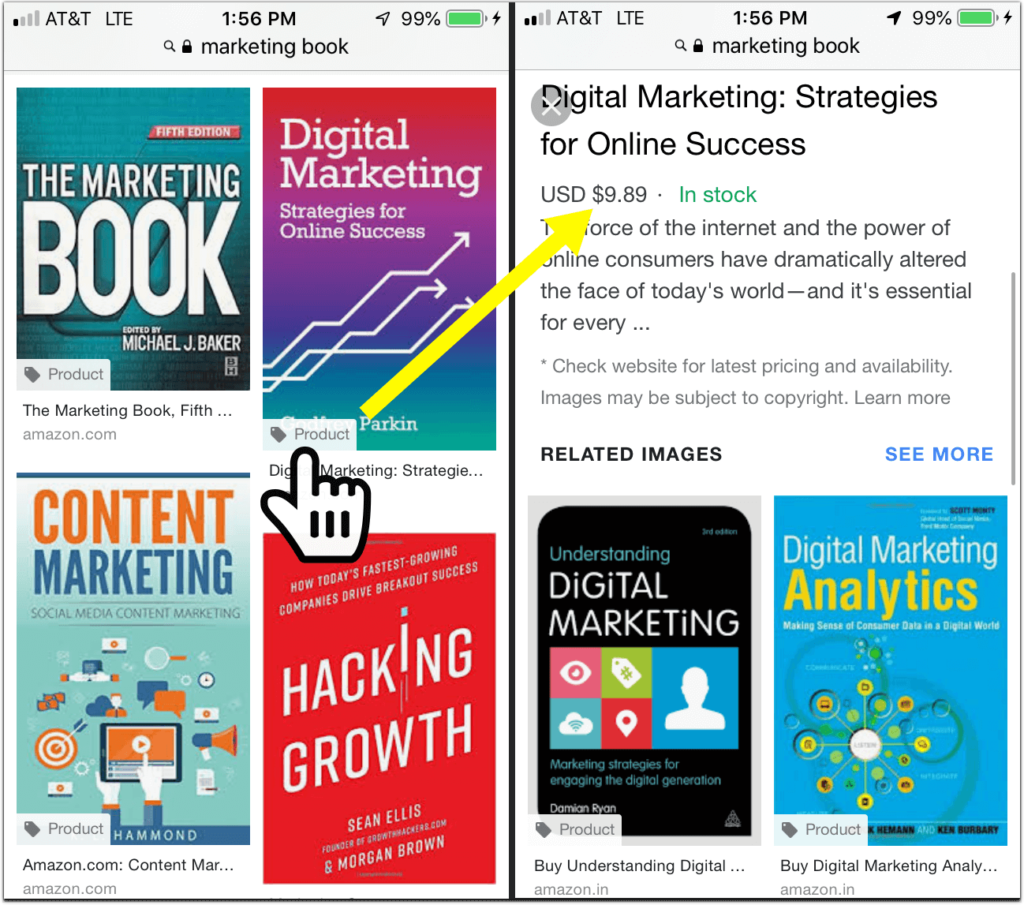
Taylorism

To achieve greater efficiency, we have redesigned the roles required to acquire a customer into ever thinner slices of responsibility. Frederick Winslow Taylor would have applauded this decision, recognizing the specialization of the function as a way to create greater efficiency.

There are now “salespeople” whose only role is to “qualify” their “leads” and prospects, something that isn’t often perceived as valuable to the person being qualified.

Mediums

There are more choices of mediums available to salespeople all the time, while none of the options have been eliminated or have “disappeared” (as some have stated, and some have wished). The choices include face-to-face meetings, video-enabled meetings, video messaging, web conferencing, telephone, text messaging, chat, and email.

Some mediums are more effective than others when it comes to producing certain desired outcomes, but because email is efficient, it is often chosen over all others—even when you don’t obtain the outcome.

Automation

Many things can—and likely should—be automated. Others don’t lend themselves to automation. If you want to develop a relationship with your dream client, automated emails from your marketing department aren’t likely to accomplish that goal.

Automation isn’t caring. It doesn’t say, “I was thinking of you,” or “I want you to see this because I believe it is important.” One-to-many isn’t the same as one-to-one.

Win Rates

The question isn’t whether or not the ideas above improve efficiency. If you measure efficiency by the time and energy it takes to do something, they all pass the test. However, were you to measure the effectiveness, you might be surprised to discover that some outcomes don’t lend themselves to being automated, like setting up a recurring order with the florist to send your wife a dozen roses on your anniversary (You can check the box, but you will not have achieved the outcome).

The effectiveness of the role might be improved, but so might the design of the roles altogether. You may be able to improve the message, but often you improve things by changing the medium. Humans are not as efficient or reliable as automation, but as long as human beings still decide, the inefficient human still does better at caring than any technology.

If you want to improve your results, look first to effectiveness and then to efficiency.

The post Efficiency is Visible in Your Win Rate appeared first on The Sales Blog.

20 Feb 16:55

Your Sales & Prospecting Assessment

by Mark Hunter

Ask yourself the following 10 questions to help assess how you’re doing with prospecting and selling:

  1. What do I feel is the #1 reason holding me back from being more successful? What is my plan to do something about it?
  2. What would I say is the strongest part of my sales process, and what can I do to leverage it more?
  3. What is the weakest part of my process and why?
  4. How much time do I spend customer facing? What can I do to increase that?
  5. What would my professional life be like if I could increase my sales performance by 50%?
  6. What can I change in my day to give me more time to prospect?
  7. What does my perfect customer look like?
  8. What outcomes do I help my customers achieve?
  9. What do my customers say about me?
  10. What can I do to shorten my sales process?

I trust these questions will push you to seriously think about how you’re doing. Honestly evaluate yourself and your work. Without a doubt, sales is a great profession. Why? Because you get to help others see and achieve things they didn’t think were possible. This is exactly the reason why I gave you this survey, so use it to your advantage! Ask yourself how you can improve at selling and prospecting today.

Don’t forget: A coach can help you excel in your sales career. Invest in yourself by checking out my coaching program today!

Copyright 2019, Mark Hunter “The Sales Hunter.” Sales Motivation Blog. Mark Hunter is the author of High-Profit Prospecting: Powerful Strategies to Find the Best Leads and Drive Breakthrough Sales Results

20 Feb 16:55

Set Yourself Up for Successful Prospecting: Truths 41-50

by Mark Hunter

Sales is not a destination; sales is a journey of continual learning. Throughout my many years of selling, I have been constantly gaining new insights and ideas. The discussion continues about whether sales is an art or a science. People are quick to point out the number of new sales tools created by advances in technology; however, all of this is just noise. It’s up to you to determine how you want to hear the noise. I do see technological advances helping us in sales, but sales is still about human interaction and emotional decisions. I don’t care what you sell or who you sell it to. Even if there is zero interaction with humans, somebody somewhere is still involved and somewhere along the way emotion entered into the process. This is where prospecting has to come in.

I want you to be successful, so my last 10 truths are to help you have success in your prospecting. Before you read them, be sure to go back and read the first 40. I’ve posted the links below to help make it easy on you. When you put all of the “50 Prospecting Truths” into action, I promise that you will achieve your sales goals and more!

Truths 1-10: It’s Your Job

Truths 11-20: Your Prospecting Plan

Truths 21-30: The Art of the Sales Call

Truths 31-40: Social Media & Email for Prospecting

Here are truths 41-50:

41. Prospecting is an omni-channel activity. It is not just email, the telephone, or social media. It is about using every tool in a deliberate manner.

42. Be ruthless in your follow through! Your objective is to work with customers, not to spend time with suspects who pretend to be prospects.

43. Never use the excuse of not having a tool as to why you’re not good at prospecting. Honestly, your best tools are your mind and your attitude.

44. Know the difference between prospects and suspects. Suspects do nothing but take up your time.

45. Your most valuable asset is time, so use it wisely. It’s not about being busy, it’s about being productive.

46. What and how you spend prospecting this month and this quarter will determine your outcome when closing next month and next quarter.

47. Prospecting is not an activity. Prospecting is a lifestyle.

48. Prospecting fuels sales. Sales fuels business. Business drives the economy.

49. Prospecting is freedom. When you prospect, you control your destiny and ultimately determine your level of success.

50. The only thing holding you back from success in sales is you!

Well, there you have it! That is the last ten of my “50 Prospecting Truths.” So, what’s the state of your emotions? I’m a firm believer in each one of these truths, but how could I not be? If I didn’t believe in each one of them, I wouldn’t be able to call them a truth. Among these final 10, two have always stood out to me. When I made these two part of the cornerstone in my business, amazing things began to happen. The two are: #47 and #50.

Out of all 50 truths, let me know which ones stand out to you! Also, share with me how you’re using them to shape how you prospect and sell.

If you’re serious about taking your sales game to the next level, I suggest you take this quick survey. Your answers might just change your future!

Don’t forget: A coach can help you excel in your sales career. Invest in yourself by checking out my coaching program today!

Copyright 2019, Mark Hunter “The Sales Hunter.” Sales Motivation Blog. Mark Hunter is the author of High-Profit Prospecting: Powerful Strategies to Find the Best Leads and Drive Breakthrough Sales Results

20 Feb 16:55

How To Win More Deals With Better Sales Prospecting Automation

by Tom Martin

SALES PROSPECTING AUTOMATION

Recently I participated in an interesting discussion on the #Digital360Chat Twitter Chat hosted by Bernie Fussenegger around the idea of sales & marketing automation, specifically about automating the connection process on social media. It’s hard to really go deep on a subtopic in a Twitter Chat, so today I thought we could explore this key social selling concept a bit more.

Why Should You Invest in Sales & Marketing Automation?

Simple. Sales & marketing automation software lets you scale your lead gen efforts efficiently. By putting forth a bit of preplanning, you can automate things like drip email and social messaging campaigns. For instance, you could automate a behavioral marketing campaign designed not to sell or create connections pers se, but instead, to uncover sales signals that you can then use to help you target your sales connection and nurturing efforts.

You can leverage sales & marketing CRM software to not only keep a database of leads, but more importantly, by utilizing intelligent tagging strategies, you can make it easy to share relevant content with a short message and a few mouse clicks.

For example, one of my most engaged email lists isn’t really a list but an approach. When I find a great piece of content that would be relevant to one of my sales prospects, I search my database by the appropriate tag associated with that kind of content. Then I use a simple personalized email template titled, Thought You’d Find This Interesting, include a short synopsis for this curated content, and send. Presto, somewhere between 1 and maybe a 100 of my sales prospects now receive something they should welcome into their inbox and be grateful I sent. Is it automated? Absolutely. Is it personal and helpful? Absolutely. But again, it’s not connecting as much as it is reaching.

And that’s the true power of sales & marketing automation software. It helps you reach more folks more often. But if you want it to help you do a better job of connecting at scale, you have to track their interactions. This tracking data will help you discover the best way to connect with them to start a real conversation. A conversation that can convert to a customer.

Why You Can’t Automate Connections

The main reason you can’t automate connections is because most humans have pretty good built in bullshit detectors. And for those folks whose detectors might be on the fritz, social platforms make it really obvious that you’re automating.

For instance, right now everyone is very pro “use LinkedIn messenger for prospecting” and there are scores of companies that have software to help you automate that effort. The problem is LinkedIn, like pretty much every messaging service, threads conversations. So the second, third, fourth and fifth message a person sends you is threaded right there together. And because the automation software ensures you get those messages every X days, the reader can easily scroll back and figure out these messages are just spam. The person is automating the connection effort.

You might be asking yourself, but Tom, how is that different than what you just wrote above? The answer is – it isn’t! And that’s the point.

You can scale reach but not connection.

But you can use technology to help you create better connections and do so more efficiently. And in the end, that will translate into more deal flow.

Using Technology to Make Better Connections

For instance – birthday messages are great ways to connect. Most folks just drop a note on their connections’ Facebook or LinkedIn page like Pavlov’s dog when they see the “Your friends are celebrating birthdays” email. And you can certainly do that or you could use the opportunity to truly connect or reconnect. In this instance, let the tool (Facebook/LinkedIn) automate the reminder but then take the opportunity to actually connect.

It takes just as long to type a note on someone’s Facebook Newsfeed as it does to type the same note on your phone in the form of a text you send. Better yet, call them. Or if you’re trying to scale your connection efforts – send a recorded audio message via text or email.

And if you really want to connect and rise above the crowd – send a video message. Go ahead. Try it. You’d be surprised how fast you can record and send a half dozen or more personalized video birthday greetings where you can highlight something special about the person or reference a shared passion or experience. And you’ll love the responses you get. In fact, unless your experience is markedly different than mine, most folks will be amazed and appreciative of the effort you put into it — even when they know it was Uncle Zuck that reminded you of their special day.

sales prospecting with video

You’re using technology to help you scale your connecting time, but you’re doing something that is actually meaningful. And that’s the difference between mass personalization and personalizing en mass. The former is mechanical and easy. The latter is personal and requires commitment. And that’s they key to personalization. It’s not about using someone’s name in an email. Personalization is when you send someone something that was specifically created or sent based on the recipients’ likes, dislikes, life moments, or needs. It’s this intent behind the message that creates the opportunity for connections to form or grow.

Hey if you are lucky enough to sell a bomb-dot-com kind of product or service that everyone can’t wait to buy, then scaling reach is all you need. But if you’re like the rest of us, selling something that can certainly be purchased elsewhere, or fulfilling a need that a sales prospect may not even realize they have, then you need to invest in connections over reach. You need to break through the noise and become signal. You need to build a relationship that over time results in a new customer. And that my friend, that starts with making an initial connection.

20 Feb 16:55

3 Things to Know Before Making your SaaS Product Marketing Plan

by Charly Mostert

FirmBee / Pixabay

The SaaS market is going crazy.

Like, 17.3 percent year-over-year market growth—to $85 billion in 2019—kind of crazy.

Helping your SaaS firm grab a piece of that pie might seem daunting at first. But if you resist the urge to create an “all the things, all the time” SaaS product marketing plan, you can succeed. How? Do your homework, and establish these three things before you start planning:

1. Your Hero Statement

Trying to be everything to everyone in that $85 billion SaaS market is a sure-fire way to overextend your resources—probably on a lot of people who aren’t going to buy from you anyway. Instead, pick out the customer segment that’s a perfect match for your SaaS product, and rock every part of that customer experience.

Enter your hero statement, which helps you focus on the right target customers for the right reasons. to It’s a combination of the company profile or persona you serve best with the problem that you’re best at helping them solve. It might sound simple, but it requires a bit of advanced research to get these two elements nailed down:

  • Buyer Personas: These are semi-fictional representations of your ideal customers based on market research and real data about your existing customers.
  • The Jobs You’re Best at: In essence, this is the Jobs-to-be-Done Theory applied to your SaaS product. Thinking along these lines can help you discover which alternatives—including and going beyond your traditional competitors—your target customers are currently using to meet their needs. HubSpot Academy offers an excellent overview of identifying which “jobs to be done” your customers are actually “hiring” your SaaS product to achieve. (Spoiler alert: They might not be the jobs you think.)

Here are some hero statement examples:

  • My SaaS firm is a hero to CIOs of $3-10 million companies who need to reduce data storage costs by 25 percent within two years.
  • My SaaS firm is a hero to marketing managers at $1-3 million non-profits who want video content to generate over 30 percent of website conversions within the next year.

As you develop your product marketing plan, check your marketing activities and goals against your hero statement to ensure you’re in alignment.

2. Your KPIs

Before you can identify KPI goals for your SaaS marketing plan, you need to identify which specific marketing metrics you’re going to track and how to access them in a repeatable way.

Our e-book on SaaS marketing strategies that deliver quick wins and long-term victory is chock-full of KPIs you might measure across your marketing. But because I’m on the CRO team here at SmartBug, I’ll toot my own horn and stick with the number-one website metric: conversion rates … toot!

Conversion Rates

Having a lot of website visitors is great, especially if your goal is brand awareness. But it’s the actions they take once they’ve arrived that move the needle.

If you’re just starting out, at least establish a repeatable means of tracking conversions—whether form submissions, CTA clicks, or video views—on your most valuable pages. That way, you’ll have some baseline data to measure against all of the specific CRO optimization efforts that you note in your marketing plan.

Best of all? Most common website metrics are directly tied to conversion rates.

Bonus Points: Try to develop your KPI goals as SMART as you can: Specific, Measurable, Attainable, Realistic, and Timely. Even if you don’t have years’ worth of data to pull from, SMART goals can help you set a baseline to work from next time.

3. Your Sales and Marketing SLA

When creating a successful SaaS product marketing plan, your sales and marketing teams need to be on the same page.

Create this alignment by having both teams commit to a sales and marketing SLA (service-level agreement), which tells the two teams what to expect of each other.

A basic sales and marketing SLA has two parts:

  • Marketing must provide a certain number of leads to sales per month.
  • Sales must contact those leads within a certain time frame and follow up at regular intervals.

Pro Tip:

Tasking marketing with delivering a certain number of leads per month is a great starting point for your SLA, but it doesn’t account for the quality of those leads. A basic SLA like the one above can still lead to misalignment if marketing provides the required amount of leads, but sales loses interest in contacting them due to poor lead quality.

True alignment comes from tasking both teams with a common goal: revenue. Or to be more specific in the case of your marketing team, average future expected revenue. Starting with your customers, work backwards through the conversion rates of your funnel to determine:

  • How much revenue does an average customer represent?
  • What percentage of sales demos/trials go on to create new customers?
  • How many sales interactions result in a demo/trial?
  • What percentage of leads is sales able to contact?
  • How many of marketing’s leads does sales interact with, and how soon after receiving them?
  • How many leads does marketing send to sales each month?
  • How many leads do different marketing activities generate?

It’ll take some time and lots of data to calculate, but with an average future expected revenue goal for your marketing team, you’ll find yourself making better decisions in your product marketing planning.

As you get a better handle on the quality of your leads and how much revenue value they represent on average, you should update your SLA accordingly.

20 Feb 16:55

2019, What’s Good? 3 Trends That Are Blowing Up

by Markus Linder

When discussing trends, it can be easy to fall into the trap of discounting continuing trends and only focus on the new, but this can be a major mistake. Genuine trends are those that have been around for longer. They are the ones you should pay attention to in 2019.

That’s why, in the past few weeks, we’ve reviewed multiple expert interviews, opinions, and past and current predictions to identify the 3 key trends that have shaped e-commerce and will continue to have a profound influence on businesses in the digital space.

For easy consumption, here’s what your focus should be in 2019 according to our research:

  • Customer experience will be the key brand differentiator.
  • Social selling will help savvy companies drive greater sales.
  • Artificial intelligence and chatbots will become the norm.

Companies that have embraced these trends and moved them to the forefront of their corporate agendas have managed to distance themselves further from the competition.

Trend #1: Customer Experience

“Stop me if you think that you’ve heard this one before…”

Time and time again, customer experience is showing up on virtually all trend prediction roundups, and this hasn’t changed in 2019.

What has changed is that businesses have realized that delivering an epic customer experience is no longer “nice to have” or a buzzword, but pretty much the required standard to remain competitive in 2019.

Two things will be necessary to deliver the experiences that customers expect:

1) Personalization

If you want to effectively personalize experiences in 2019, you need to look beyond capturing implicit data such as demographic data or browsing behavior.

You have to combine it with the Voice of the Customer, which is explicit data in the form of the customer’s expectations, preferences and aversions. Only this will give you the opportunity to truly understand your customers’ needs and serve them the contextually relevant content and products they want to see. Understanding context will be key in 2019.

How to collect this explicit data, you ask? This leads us to the second imperative:

2) Engagement

Establish a direct conversation with your customers. Get to know each one. Ask questions.

To build personalized experiences, you’ll need to ask questions and engage with customers in the right moment, in the right way. This is how you’ll gain important insights about their opinions, wants, preferences, situations, and needs.

In the end, customers are human and seek personal relationships and engagement. They want to feel valued, heard and understood – even when interacting on digital channels. In 2019, it’s all about breaking down the thick walls the digital world has created between businesses and customers. 2019 will be the peak of the Engagement Economy, which essentially aims to humanize the digital experience.

Ask questions to involve your customers (engage), listen to them across every channel to understand their preferences and desires (learn) and create experiences based on this understanding (act).

Do you want to better understand your customers’ wants and needs to deliver more engaging, intuitive and informative shopping experiences?

During our research, we looked at different companies, and the ones that motivate their customers to engage are the ones that stay relevant, drive long-term growth and gain a competitive advantage.

Speaking of engagement. The next hot trend to watch is social selling.

Trend #2: Social Selling

Social selling is “the process of leveraging social media to do lead generation, build meaningful relationships, and eventually, close sales.” (Social Media Today).

A study by Sales for Life found that businesses that leverage social media not only to engage and support customers but to connect with new buyers see a 119% higher ROI compared to traditional sales tactics.

Here are more impressive stats from Social Media Today:

  • Close to half the world’s population (3.03 billion people) are on some type of social media.
  • 59% of internet users between the ages of 18 and 29 use Instagram and 33% of internet users between the ages of 30 and 49 use Instagram.
  • 64% of online shoppers say that a video on social media helped them decide on a product to buy.

Social Media provides great revenue opportunities for businesses that successfully implement a social selling strategy.

In 2019, we predict that social selling, especially on visual platforms such as Instagram and Pinterest, will see substantial growth. It allows customers to purchase products without having to leave their preferred platforms.

Although interest-based, personalized marketing can feel unsettling for customers, given all the information that is being shared, it’s convenient and therefore, customers are unlikely to give up these benefits in the near future, provided that the served-up content is relevant and personalized(!).

Trend #3: Artificial Intelligence and Chatbots

This trend has marinated for quite a while.

Thanks to busy consumers who demand immediate answers and assistance, in 2019, this will be the most popular trend.

Artificial intelligence (AI) helps businesses scale customer interactions and more brands (large and small) will start integrating it in their customer journeys.

Whether it’s to answer common customer questions, have a personal sales assistant on call 24/7, or customize brand experiences through advanced machine learning, AI, digital assistants and chatbots are no longer futuristic concept, they are becoming the norm.

To top it off, in a recent article, ThinkWithGoogle proclaimed that “Digital assistants are the next marketing revolution.”

Conclusion

Consumer expectations require brands and online sellers to:

  • create better experiences than competitors
  • leverage personalization to deliver relevant, in-context engagement in the right moment.
  • make shopping more convenient through social selling
  • use AI and chatbots to make 24/7 support and assistance available

Are you already ready for these trends? Because your customers are.

This article has been originally published at Guided-selling.org.