Shared posts

06 Jul 15:41

Report: 7 countries benefit most from technology innovation

by CB Staff

GENEVA – A report by the organizers of the Davos forum says the United States, Singapore, Finland, the Netherlands, Sweden, Switzerland and Israel are getting the biggest bang for their buck in economic and digital innovation.

The Geneva-based World Economic Forum says in its new Global Information Technology Report released Thursday that trends suggest individuals, not business or government, are driving the digital revolution and an already large gap in infrastructure between rich and developing countries is widening.

WEF competitiveness chief Margareta Drzeniek-Hanouz says “government or businesses are not leveraging digital technology sufficiently.” She said developing nations could benefit by providing more affordable access.

The post Report: 7 countries benefit most from technology innovation appeared first on Canadian Business - Your Source For Business News.

06 Jul 15:30

How to Make Infographics That Don’t Look Terrible

by Benjamin Brandall

how to make infographics

If images are the snacks of the internet, and articles are the main course, then infographics are somewhere in between. A light brunch, if you will. Packed with sustenance, but digestible enough to get down in a short period of time.

I’m not going to waste time talking about how important infographics are because that’s been done to death over the period of several years. Instead, I’m going to go through some common mistakes, basic design principles and processes that teach you how to make infographics that don’t look terrible.

First things first: Formulate your data

Since infographics are supposed to be scannable, you’re going to need to first break down the data into chunks, which will make up the main sections of your infographic. An important part of making a quality infographic is getting the content into place first. Design comes second to content.

For a good example of how you can chunk down a big data set, check out the infographic made with Venngage for this SaaS pricing pages post. At the start of the article, I lay out the key points. At the end of the post, these key points are put into an infographic.

SaaS pricing key points

Action step: Extract the 5-7 key points from your data set or article, and bullet point them, like this:

  • The average number of packages is 3.5
  • Only 50% highlight a package as the best option
  • Just 69% of companies sell the benefits
  • 81% organize prices low to high
  • 38% list their most expensive package as ‘Contact us’
  • The most common call to action is ‘Buy Now’

Put the data in context with the introduction

Data means nothing without context. Out of context data is the stuff of shady politicians and delibrate deception. Use the first section of your infographic to put the data in context and introduce what you’re about to talk about, just like you would with a blog post.

SaaS pricing intro

Action step: Describe where you got the data from. Introduce a data point that frames the rest of the infographic and shows your audience why it’s relevant.

Make a series of logical points, one by one

Using illustrative icons and graphs to help visualize the data, now make the rest of your points, one by one. I’ll go deeper into the design aspects here later, but the important thing to do at this point is to sketch out the general structure. Use a notebook and a pencil, if you need to.

Infographic sketch

Action step: Organize your remaining key data into a series of logical points.

Time to apply your plan and make the infographic

To make infographics, we use Venngage. It has a simple interface like Canva, but is able to make much more complex graphics.

Go make a Venngage account if you’re not already signed up, then formulate your rough sketch into text and graphics.

At Process Street, it’s easy to know which colors and typefaces to use because we have a solid brand style guide. If you’re not sure, there are a few things to keep in mind…

Don’t use typefaces that are too similar

One key reasons design can look terrible is a poor choice of typefaces. As the old rule goes:

“When you start tweaking the fonts of your document, be sure to apply no more than three typefaces per design (or page). That’s not to say that you can’t use multiple styles within a font family (i.e. Neutra Bold for headlines and Neutra Thin for photo credits), just be mindful of not mixing too many typefaces and styles”

Here’s an example of what that exactly means:

Serif and Sans

Too similar typefaces

Even though it’s not totally obvious that the 2nd picture’s fonts are different, it looks a bit off. Personally, it makes my eyes boggle a bit.

For further reading, here’s an appropriate infographic on combining fonts.

Don’t choose colors at random

As I said before about brand design guidelines, you won’t see companies that are trying to build a brand using colors randomly.

I can’t say it better than Gregory Ciotti, writing about the pyschology of color at Help Scout. Here’s a couple of images that help explain why you might pick particular colors to support your point.

5-17-personality

And, obviously, some topics lend themselves well to particular colors.

An infographic about the ocean might use blue as its primary color, whereas one about environmental chance might use green.

5-17-colors-alt

There are two main types of color palettes: one uses analogous colors (those next to each other on the color wheel). And the other uses those directly opposite each other.

Process Street Pricing Colors

Process Street uses a mixture — two analogous colors and one contrasting color.

Keep padding consistent around elements

What I mean by padding is the amount of space that surrounds the text, icon, or section. Padding is an element web designers know well, and it’s easy to get right in CSS, but when it comes to infographics you need to use guidlines for assistance. Firstly, I’ll illustrate what I mean:

Even padding

The spacing around the elements in the below image is relative and even, making it look clean and presentable.

Even Padding

Uneven padding

The spacing in the elements in the below abomination is uneven, making it look awful.

Uneven Padding

It’s as simple as that!

With Venngage, you can see if an element is lined up because its shows you a green line, like this:

Equal Spacing Venngage

State your points with text, illustrate with images

Since infographics are a predominantly visual medium, you should use icons and charts to illustrate the points you make in the text. Here’s a prime example from Venngage:

Icons and Text

As you can see, the designer has supported their text with a simple icon to make it easier to visualize.

Stay away from terrible stock images

Refer to the below image for a full and detailed explanation.

shit

Yeah, don’t do that.

Our tool of choice for making infographics: Venngage

At Process Street, we use Venngage for creating infographics quickly. It’s a lightweight tool and set up perfectly for infographics, unlike Photoshop. The free plan is fine for hobbyists, but for teams and brands you’ll want the business plan, which means:

  • You can save your brand colors as default color palettes
  • You can store your brand icons and other graphical assets in their own folder
  • You can store your brand’s selected typefaces as a default choice
  • You can export infographics as PNGs
  • You can control member access and permissions, which works well for managing a team of designers

Venngage has put together an excellent intro video for new users to get a grip on how the platform works, so this is best explained by them:

So, arm yourself with a Venngage account and march forth, creating nothing but excellent infographics for the rest of your days.

marching kirby

06 Jul 15:28

The ridiculous world of single-use IoT devices

by Ryan Matthew Pierson
Amazon-dash-button-tide.png

The rise of IoT comes with all the promise of self-driving cars, smartwatches that do everything from track your heartbeat to acting as your credit card, and homes that can be entirely controlled with your smartphone from anywhere in the world. However, this isn’t where many brands are taking the technology. There is also a rise of single-use IoT devices that only do one thing, and that one thing is only really useful in occasional circumstance.

It’s actually difficult to find many cases of single-use IoT devices in today’s ecosystem.

Even wristwatches which used to only tell time are now responsible for delivering your text messages, tracking your steps and heartbeat, updating you on the score of the game your favorite team is playing, and any number of other things. The same can even be said for programmable lights which can be programmed to blink when you receive a tweet or turn on when you are within a mile of home.

Enter the Amazon Dash Button

Perhaps the biggest example of this category is the Amazon Dash Button. We’ve written about this device before, both in how its original purpose takes the concept of IoT too far and how its extended purpose could make IoT technologies more useful.

At first glance, these buttons would appear to be an April Fool’s joke by the retail giant. How ridiculous would it be to have buttons attached to various places in your home that order things on your behalf?

These buttons are purchasable for $4.99 that do one thing: order an item from Amazon when you press it. Certain promotions through Amazon available to Prime customers enable users to receive a credit for $4.99 after their first purchase using the device. This makes the button essentially free, as long as you can prove that you’re willing to use it to restock on things like laundry detergent or macaroni and cheese.

But in reality, do we really need a dedicated button in our home to resupply our cache of Slim Jim meat sticks? Do we need a button inside our cabinets or attached to our appliances that do nothing more than add single items to our cart on Amazon?

The case for convenience

If there is one argument to be made in favor of these gimmicky devices, it’s convenience. In a household that uses Amazon as its primary source for groceries and other goods that can survive a trip through the mail, this simple button is an added convenience to remind you that you are running low on something when you might otherwise forget.

Instead of whipping out your phone and adding a box of Tide to your cart, you just push a button. It’s convenient, and that makes you more likely to buy.

For Amazon, these buttons are great. It makes Amazon a more logical choice for consumers that could otherwise drive down to their local grocery store for these goods. From the moment someone brings a Play-Doh button into their home, it’s safe to say that Amazon will be their source of Play-Doh from that moment forward.

This makes these single-use devices like the Dash Button a convenience for the consumer and a sale-generating tool for the retailer.

Security and single-use IoT Devices

Then, of course, there is the security concern that comes up every time an IoT device is introduced to a network. That concern being that with each new system to add to a network, your susceptibility to intrusion increases.

Thankfully for Dash Button users, this isn’t a big issue with this particular type of device as it doesn’t do anything more than send an HTTP call with its unit ID. That HTTP call tells Amazon to add one of that item to the consumer’s cart. If someone listening in to network traffic really wanted to use this HTTP call against the owner of the network, at best they could mimic the HTTP call themselves. Of course, this could also happen if a child were to wander over to the button and playfully mash on it.

As for other concerns such as open ports and two-way communication leading to someone accessing other systems in your home, it’s not a huge problem with the Amazon Dash Button – at least not in its original programming. Unless the Dash Button communicates directly with those other systems, or receives commands itself, it isn’t a particularly big security concern on the network.

Where security becomes a concern is actually with the more complicated devices. Devices that receive commands from the cloud and execute those commands, such as the Philips Hue smart bulbs which have been found to be susceptible to malicious attack in the past, rendering them useless unless the owner disconnects them entirely from the network and uses them like a regular light bulb.

This isn’t to say that Amazon’s Dash Buttons are entirely safe from malicious foul play. Just that their digital reach is far shorter, making them a poor target.

Getting more out of Amazon’s Dash Button

Clearly, the Dash button concept can be used to do incredible things like open all the blinds in a room, change the lighting to match, and fire up your television and/or stereo simultaneously. This is cool, and exactly what a proverbial IoT red button should be used for.

It is also one of the reasons that Amazon finally released an IoT version of its Dash Button, giving developers the opportunity to put this button concept to more productive use. Now, this little hackable button could be used like the electronic ignition of a car, firing up your coffee pot or turning on your lights for you.

Indeed, the real value of this device is in its potential. Sure you can order goodies with it, but if you could also use it to do things that provide actual value to your life, why not?

For all the gimmick and silliness that buying a button to refill your supply of Nerf darts, Amazon really did create a concept around a uniquely useful single-purpose networked device. While it might not be the revolutionary hot new item in retail, it could have a lasting impact as developers find new ways to put this simple product to good use.

The post The ridiculous world of single-use IoT devices appeared first on ReadWrite.

06 Jul 15:26

5 Lesser-Known Tools to Identify the Right Point of Contact at Any Target Account

by stuheinecke@gmail.com (Stu Heinecke)

identify-right-point-of-contact.jpg

I'm on a mission to change your life by honing your ability to reach virtually anyone.

Fortunately, we live in the Information Age, a time when all sorts of intelligence sources are literally at our fingertips. Most of these sources are free, some require a fee, and some, while intending to charge for their service, leave the door open to distributing critical information at no cost.

This is important for many reasons. Practitioners of Sales 2.0 and social selling have pronounced utterly and completely dead the days of walking blindly into a prospect’s office, knowing nothing of what they do, what their challenges are, what their passions and hobbies are, and how those all fit together to form a composite. There is no excuse for not knowing who you’re calling on, what currently has their attention, and how you fit in terms of the value you can deliver.

If you don’t know those things, you don’t belong in your target prospect’s life; you haven’t earned a few minutes of their time. Fortunately, the solution is an easy one. Do your homework. Prepare a dossier on each of your contact targets. Engage them on social media. Get to know them before you get to know them.

But the first step is understanding who you should research. Of course, you can (and should) use LinkedIn, Google, and Twitter to find out Below are five lesser-known sources of intelligence you can use to research your target accounts before you ever reach out.

1) Hoover’s

This is an old-guard corporate data service, and it’s very useful for gathering basic and correct contact information. The free part of their site shows a company’s full name and headquarters address with great reliability.

If you’re inclined, you can go much further behind their paywall, where you can pick up names of key executives and employees and titles. If I’m looking for their help, I’ll Google the company’s name along with the words, “corporate headquarters hoovers.” That always returns the result I’m looking for, which is the company’s main profile page on Hoovers.

2) Data.com, Jigsaw.com,etc.

These are paid information services, also excellent, and also worth mentioning if you have the budget for their use. But they tend not to have the kind of basic information in front of their paywalls that Hoover’s does.

3) CharlieApp

This is an interesting intel source, because it does the work for you, but only for the people already on your calendar. If you have a call set up in your Google or other calendars, the Charlie app scours the Web and reports to you the day of the meeting with an entire dossier on your contact target.

The information includes a description of the person in their own words, pulled from one of their profiles, and continues with relevant mentions in the media. It’s a wonderful tool that makes getting to know your target simple and easy.

4) WHOIS

There is a trend among some businesses to obscure their contact information on their websites. If you find yourself unable to locate an address or even the name of a compan owner, this information is sometimes available in a WHOIS search.

You won't do this if you're targeting a Fortune 500 or even an Inc. 5000 company, because you won’t find relevant information on C-level executives (it's likely the information will be obscured or belong to the IT department), but you might find contact info for the owners of smaller, private companies.

Netsol.com, GoDaddy.com, and other domain registrars all have a WHOIS link on their main pages, and it’s easy to use. Sometimes the registration information for the domain holder is obscured by a privacy service. In that case, I’ve sometimes had luck using Geektools.com’s WHOIS search, which seems to be a bit more robust than the others.

5) The Target Executive’s Website

Websites are not uniform, so you will find some are helpful, while others are a waste of time. The best examples will feature an “Executive Team” section, which often includes a profile picture, bio, and description of their responsibilities, along with their proper title and the correct spelling of their names.

If you’re not targeting the actual CEO of the company, it’s still a good idea to gather intel on the top executive and other possible stakeholders while in that section. Knowing who the contact’s boss, colleagues, and team members are will be useful as you devise your approach.

Editor's note: This blog post was excerpted from "How to Get a Meeting With Anyone" and is republished here with the author's permission. 

Stu Heinecke is also a Wall Street Journal cartoonist, co-creator of the NASP's 30-day behavioral program, "The Power of Contact Marketing," host of Contact Marketing Radio and founder of Contact, a contact marketing agency devoted to helping enterprise sales teams break through to named accounts with greater efficiency.

HubSpot CRM

06 Jul 15:26

How to Maximize the True Long Term Value of Influencer Marketing

by Heidi Sullivan

Randi Dukes_InstagramDelicious Long Term Value

What’s more delicious than apple pie?

Not much, but long-term ROI from blog posts comes to mind!

Randi Dukes is a savvy and successful blogger and creator of Dukes & Duchesses. An influencer herself, she has mastered the techniques to give her blog posts lasting utility. She advocates for a natural fit between influencer and brand, understanding the immense work that goes behind content creation and the joy of finding new ways to speak to your key demographic.

Dukes & Duchesses is a DIY project and lifestyle blog that contains everything from inventive recipes to innovative home projects where Randi enjoys “creating our place in the world”.

In This Episode

  • Why it’s advantageous to only work with brands that fit your audience
  • How to create evergreen content that lends itself to long-term searchability  
  • Why it is important to understand the true value of your blogging voice
  • How to put in the work behind the scenes to make content creation look easy
  • How to maximize your SEO for your blog posts


Quotes From This Episode

“I will only work with brands that are a natural fit for me.” —@DukesnDuchesses (highlight to tweet)

“Value what you do because the voice that you have, and the audience that bloggers have, is really worth something.” —@DukesnDuchesses

“I think brands need to realize that they’re scoring so big to work with bloggers. When you think about the influence that a blogger has, it’s really amazing. We have an audience of people that are willing to listen to what we say, especially if we’ve built up an authentic relationship. They’re willing to hear what we have to say, willing to look at products that we like.” —@DukesnDuchesses

“You’re almost getting a lifetime ad with bloggers.” —@DukesnDuchesses (highlight to tweet)

“My goal in every campaign is to think about how can I showcase this product or idea in a way that hasn’t been done before and that will make my readers come back for more and keep pinning it.” —@DukesnDuchesses

“If you just spout out a lot of messages but nobody ever follows up on it, you’re probably not a good influencer.” —@DukesnDuchesses

Resources


Would You Rather

Would you rather never be able to eat warm food again or never be able to eat cold food again?
Oh, wow. I would say cold food. I love a hot meal.

Would you rather be stung by a jellyfish or pricked by a porcupine?
I’m going with porcupine. You know the solution to getting stung by a jellyfish, right?

Would you rather that your private diary be published, or that a tape be released of you singing loudly in the shower?
Equally awful. This is why I don’t write a diary, but I’m definitely going with in the shower.

       
06 Jul 15:25

Hyperloop One proposes half-hour travel time between Helsinki and Stockholm

by Darrell Etherington
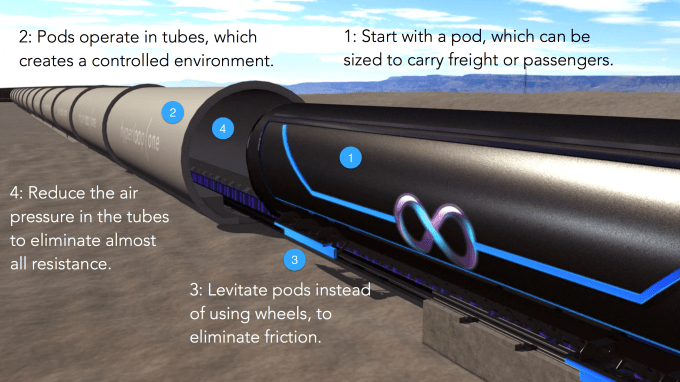
hyperloop-one-parts Shervin Pishevar’s Hyperloop One recorded another first today, though not one as exciting as making a hunk of metal go really fast in the desert – it created a business case. The business case (via Gizmodo), created in partnership with engineering firm partners and consulting firm KPMG, is meant to walk potential investors through the value proposition inherent in a proposed… Read More
06 Jul 15:25

Thought Leadership Lesson: LinkedIn Pulse

by Angie Geffen

Thought-Leadership-Lesson-LinkedIn-Pulse

Thought leadership helps you to elevate your brand by establishing your authority in your niche. Instead of being just another player in the game, you can position yourself as an expert in your niche. There are many ways that you can become a thought leader, such as by publishing books and white papers, presenting at conferences, and leading webinars. But one of the easiest ways to establish yourself is through online publishing tools.

Here’s your next thought leadership lesson: LinkedIn Pulse edition:

How to Establish Thought Leadership

The methods for establishing thought leadership align with the methods for reaching your audience and providing value to them. One of the easiest ways to establish your thought leadership is to educate. Find out what problems your audience has and then help them find solutions.

You see this all the time in articles and videos in which brands teach their audience how to do something, such as get more followers on Facebook or get more conversions from their email marketing campaign. You can educate through blog articles, videos, webinars, ebooks, white papers, slideshows and much more. Try a variety of mediums so that you can reach more audience members by appealing to a large variety of learning styles and preferences.

The other methods for establishing your thought leadership are not as clear cut, but they can be just as effective. These include illustrating your expertise and your best capabilities, encouraging your employees to find ways to be of service, and finding ways to connect with, engage and serve your audience in a genuine way.

The same methods you use to educate can be used to show off your expertise and your best capabilities, as well as social media and your own website. The key to success here is to lead the conversation around trending topics that are important to your audience and to express a unique point of view. Of course, you’ll also have to be right, and you’ll have to be sharing something of real value with your audience.

You can encourage your employees to be of service by requiring them to blog. Writing regular blog posts will help them to better understand what your customers need and will put them in the frame of mind to find solutions to customers’ problems. Employee-written blogs also help to establish your brand’s authority — assuming that they actually provide unique insights and authoritative information.

Increasing user engagement is a little harder. However, one of the best strategies you can use for it is to present information that provides value, such as solving a customer problem. Users will automatically be more interested and engaged when you are solving a real problem for them.

LinkedIn Pulse

Now that you understand the importance of thought leadership and how to establish it, it’s time to look at LinkedIn’s blogging platform, Pulse, and how it can help. LinkedIn Pulse allows you to publish blog posts and articles on the site that can be distributed to your own connections and to others on the site. You can follow the same guidelines for establishing thought leadership above when writing your posts. Using LinkedIn Pulse in addition to your own blog or another publishing platform has many benefits.

Pulse allows you to reach more of your audience thanks to its inclusion on LinkedIn, which has 340 million members. Not only will LinkedIn promote your content, but users on the site will also go searching for your content based on keywords. Make sure you have optimized your post properly and that you have great information waiting when users find it.

Not only will your reach more people on LinkedIn thanks to the site’s promotion based on user interests, but you’ll also reach more people through organic search. LinkedIn is a major network with a lot of SEO pull, and the better your article performs on the site, the higher it will appear in general search with engines like Google and Bing. Your article can also rank on search just because it is included on LinkedIn. Think of it the way a video can rank when it is included on YouTube, but not necessarily if you host it exclusively on your own site.

Finally, Pulse helps you to reach more users by keeping your content evergreen. LinkedIn will gradually delete your status updates as they get older, but it does not delete Pulse posts. That longevity helps you to stay relevant with users and in search for longer. You can use LinkedIn Pulse to complement your strategy for establishing your thought leadership, or you can use Pulse exclusively. You will start to see results in either scenario.

By establishing your thought leadership, you will improve your brand’s reputation and gain your customers’ trust. You’ll increase sales and get more conversions with less effort. All of your future marketing campaigns will be more successful.

06 Jul 15:25

Why You Should Add Landing Pages to Your WordPress Site

by James Scherer

Why You Should Add Landing Pages to Your WordPress Site

Are you driving traffic to your WordPress website?

Are you creating content, paying for ads or invested in social media?

All of these strategies cost money (even if it’s your time). Do you want to know the single factor that can ensure you’re getting the maximum value out of your dollar?

No, it’s not the targeting of your Google Ads. And no, it’s not creating more content or focusing more on search optimization.

It’s the page you’re sending people to.

Think about it. Let’s say you’ve spent $100 on Google Ads or in the complexity of creating a free trial, 10% discount or new consulting course and promoting them on social media. If you send those people to your website you’ll maybe get 5% of them to sign up for whatever your campaign is.

If you send them to a page dedicated to the campaign – a dedicated landing page – that number can go from 5% to 50%.

This article will show you why that’s the case and also how you can add landing pages to your own WordPress site.


Introduction to WordPress Landing Pages


In marketing terms, a landing page is a distinct page on your website that’s built for one single conversion objective. A landing page should be designed, written and developed with one business purpose in mind.

WordPress landing pages focus your traffic’s attention on one conversion goal and improve your campaign’s success.

With a WordPress landing page plugin, every time you create a campaign, you also create a landing page. In the same way you have a strategy to promote your campaign, you have a page devoted to converting people.

Landing pages are characterized by a few things:

  • Devotion to a single campaign objective: This could be a free trial conversion, ebook downloading, course subscription, VIP demo, etc)
  • Simplicity of message: Deliver exactly what your visitor needs to know and nothing more. Over-stimulating your visitor will just confuse them. Keep it high and tight.
  • Obvious conversion goal: A WordPress landing page should feature what we call a “call-to-action” button prominently. This is the entire focus of the page and should contrast. If the goal of your landing page is hidden in a link within a paragraph, your page won’t convert
  • Limited links off-page: You want to keep your landing page traffic on-page. This means limited (or no) navigation bar

A WordPress Landing Page Example


Let’s say you’d just released a new app for your design software. Smart marketers know to give the app its own specific product page. It has enough selling points to stand on its own.

Here’s an example of a WordPress landing page template for an app (this is the “stock” template you’d start out with):

Why You Should Add Landing Pages to Your WordPress Site

Templates like the one above make the creation of a WordPress landing page super fast and easy. You can simply plug in your own logo, images and info and hit “Publish.”

And there are always enough (more than 100) that whatever your needs are, whatever your industry is, you’ll be covered:

Why You Should Add Landing Pages to Your WordPress Site


How to Add a WordPress Landing Page to your Site


Any good WordPress landing page plugin should have a simple embed process. Once you’ve finished creating your landing page it’ll give you a few options for publishing. If you have the WordPress plugin already installed, just click the “WordPress Plugin” tab and copy the code into a new WordPress Page and hit Publish (that’s the top image below):

If you don’t have the WordPress plugin, simply click the “Script” tab and copy the code into your website Page manually (the bottom image above).

Top Tip: To remove your WordPress navigation bar and other layout and design elements which are already embedded in every Post (all that stuff at the top and bottom bar), add this bit of code:


WordPress Landing Page Best Practices


The templates you saw above already follow WordPress landing page best practices, but if you want to optimize even further, here are 7 best practices to remember…

  • Be sure your call-to-action button contrasts clearly with the design of your page. Avoid paragraphs whenever possible. Use bullet points or columns instead.
  • Have a catchy, specific headline that matches the messaging of your traffic source (the ad copy or social media post).
  • Use professional images exclusively. Avoid stock photography.
  • Remove external linking as much as possible. Any link off-page will lessen your page’s focus and decrease conversions.
  • Include customer testimonials or positive reviews on applicable pages. This increases trust and conversion rates.
  • Remove any form fields (from lead generation pages specifically) that you don’t need to convert leads in the future. More fields will just intimidate visitors.

Wrapping it Up


Hopefully this short guide has given you enough of a background in WordPress landing pages to recognize their importance.

If you have any questions whatsoever, don’t hesitate to reach out in the comment section below.

06 Jul 15:24

Keep Your Audience Moving: An Interview With Ardath Albee

by Dan Trefethen

Ardath-Albee-Tuning-Fork-Feature_0.png

The next time you’re browsing through a bookstore or Amazon looking for your next good or guilty read, chances are you’ll stumble upon a review that claims the work a real “page turner.”

Though you may unfortunately disagree with the statement upon your own read, the “page-turner” label for fiction, and even nonfiction, is usually a good measurement of success.

And while you may be hard pressed to get a customer or a prospect to make a similar, book-review statement (“Deeply gripping and thoroughly riveting!”) about your own marketing content, that doesn’t mean you shouldn’t strive for the same page-turning action. By this I mean, your content should always be moving your audience along, furthering them in their discovery.

So agrees Ardath Albee, CEO and marketing strategist for Marketing Interactions – a B2B consulting firm. Ardath uses her 20 plus years of business marketing experience to help her clients create highly-converting and customer-centric strategies. Her writing has appeared in B2B Magazine, Selling Power, and CRM Today, among others.

In this week’s Tuning Fork interview we, talked with Ardath about the importance and differences of relevant content and resonant content, the relationship of storytelling with marketing, and how you should be measuring success for your own campaigns.

What do you think is the difference between relevance and resonance? Do they overlap?

Relevance, of course, has to be there, or something’s never going to resonate. That step between “okay, it’s relevant to me – but does it resonate?” There’s a step in there that has to happen. So for example, I can know my vegetables are good for me, and I’ll eat them, but I’m not going to take a picture of them and share them. That doesn’t resonate with me. But it’s relevant, because I want to live a healthy life. Do you know what I mean? So there’s this difference there between relevance and resonance, but without relevance, you don’t have a shot.

As you work with your clients, is there anything that you try to encourage them to do, or that you’ve found is really successful to get that action, that next step to take place?

Sure. I think about it in storytelling. I teach my clients, if you will, turning the pages of the story – going from chapter to chapter. As you move forward, how do you get them to engage, to take that next step? And for me, the only way I’ve been able to figure out how to help my clients do it successfully was to go back to my storytelling roots and take the Hero’s Journey and rejigger it for a business story. And so you have to figure out – well, what are all the different components of this? What are their pain points, what do they care about, what are they trying to achieve? And then, how do you write a story about that that has momentum?

Quite often, marketers measure statistics. “Oh look, my post got a thousand views. Woo.” And it got shared 300 times on social media. Woo. Okay, so how did that contribute to the bottom line? Or the top line? Or whatever line. And if it can’t back into that, then we’re creating more waste.

Do you think that people don’t understand their audience because they’re not taking the time to create personas, or because the personas they’re creating aren’t effective?

Probably both. You know, I have yet to have a client come to me who says they have personas and been able to do a project for them based on the personas they have. One of the reasons is because either the information doesn’t have enough depth or it wasn’t designed to be useful.

Do you think that resonance could happen at any stage of the funnel? Or is it worth pursuing at any stage of the funnel, or is it more valuable in one area or another?

I think it has to be in every stage of the funnel. But I would say that the pre-buying information, where people are thinking about it – if you can become the content that resonates with them at that stage, they’re going to turn to you first, because you’re going to be the one that helped them get there. So if you can continue to resonate – you can get them to continue moving forward. If you only focus on resonance in some areas, then it’s kind of like hit-or-miss.

Have you seen marketers that are particularly good at getting buy-in on focusing on resonance?

I don’t think “resonance” as a separate concept is on the priority radar yet. But let’s say you’ve gotten good at producing content that people will read. And you can say, “Look at how much more traffic we’ve driven. But we’re not getting the conversion-to-customer that we should be getting given those increases.” Resonance is what will help them respond, create empathy, get us to next step, and that creates the momentum we need to actually move to the next stage, which is taking all that traffic we built up, and all the engagement we built up, and actually turning it into business. So you have to base it on business.

I think it’s very rare that I talk to a client that doesn’t see a bottleneck in the middle of their funnel. Because they’re really good at top-of-the-funnel content, they’re really good at sales-stage content – but they’re not really good at how the people make the transition through the middle, because they don’t understand how to get them to keep moving.

So, I think that’s where resonance could make a play, and I think that’s how you would support it, is saying “look, we can have all the views in the world, and have all the traffic in the world, but if we don’t actually motivate somebody to do something, they’re not going to convert and buy from us.

Making that transition from relevance to resonance can then cause that response that builds that momentum of forward movement, that gets people to making the decision. I think that’s how I’d position it if I was trying to get buy-in for the concept.

That makes a lot of sense. I’ve been thinking a lot about if there’s a resonance metric – how we could think about the metrical impact of resonance, but I think it’s different for everyone.

Emotion trumps logic. You could actually do an A/B test, and write something with some relevance, that doesn’t have any emotional quality to it at all, and put it up against something that is really tied into the persona and the emotion or the passion they have about solving the problem, or whatever – and see which one will get more response.

One of the concepts we’ve been playing around with is the effect personalization has on a specific piece of content resonating. What do you think about that?

I only work in B2B, so we’re selling to a committee, but we’re also selling one-to-many. So we’re not doing the one-to-one stuff that the sales team gets to do, which they can personalize really well and specifically for that individual, with that team that they’re engaged with. As marketers, we can’t. We’re marketing to a list of 10,000 for a particular persona. To me, personalization is the commonalities across that flock of people that will enable you not only to be relevant, but also to create something that resonates. My job is to help my clients reach the widest group of that segment as possible, and get them to do something. Lots of companies I know – their idea of personalization is, “Hi Dave.” That kind of personalization isn’t going to help you with anything.

So I liked what you were saying about the difference between relevance and resonance. Do you think there’s a similar distinction between “valuable” and “resonant”?

I think that value and resonance are kind of the same thing. But the biggest difference is that value, in some cases, can be tangible. Resonance is never going to be tangible. And so, if resonance is value, then it can also be demonstrable, which gets toward that tangibility thing. I would say it’s hard to separate the two, because I think the more something resonates with you, the more valuable it’s going to be to you. And of course, it depends on what it is you’re talking about. I would say those are synonyms more than differences. But that is the challenge: how do you make it tangible?

Four Key Takeaways From Our Conversation

  • Make sure you’re measuring the right metrics – getting high shares or big traffic doesn’t mean success if you’re aiming for higher conversion.
  • Really spend time thinking about and pindown who your audience is.
  • Put yourself in your buyer’s shoes and empathize with their painpoints.
  • Think of your content as telling a story in the buyer’s journey, and always be aiming to keep your audience moving on to what’s next in the story.
06 Jul 15:24

10 Things Your LinkedIn Profile Should Reveal in 10 Seconds

by Personal Branding Blog

head-1250008_640Some people call LinkedIn the Facebook of the working world. While the platform definitely draws comparisons, employers don’t search it to be updated on your latest party or to play Candy Crush. They want to learn more about you and your professional experience.

Once an employer reaches your profile, they’ll want to know some things right away. Your profile should answer these ten questions quickly in order to satisfy employers who don’t have a lot of free time to spare.

What’s Your Current Position?

First, employers need to know what you do. They need to know how you make your living. Make this clear right at the top of your profile, where you can fill in a professional headline. This will catch potential employers’ eyes right away.

Which Job Titles Suit You?

Chances are strong you’re not a one-trick pony. Your areas of expertise stretch beyond your college major or your current workplace. You may be a software developer who also handles the public relations sector of your business. You could be a lawyer who owns a construction business.

When you meet someone new, you talk about your careers. What would you say to this new person? That’s the job title that suits you. If all else fails, you can list a few titles that would fit you perfectly in your summary.

What Makes You Credible?

There’s one major place employers look to when wondering how credible you are: your work experience. Fill it out to the best of your ability. List where you’ve worked, cite what titles you held and provide a cohesive list of your responsibilities.

One new trend for this section is to quantify your responsibilities. Don’t just say “wrote code” or “sold houses.” Enhance your credibility by showing off the numbers: For example, perhaps you “wrote X lines of code for Y amount of apps” or “sold X houses in quarter Y.” These numeric values will instantly stand out from the rest of your profile.

Another place where employers look for credibility is your recommendations — we’ll have more on that later.

How Well Do You Write?

One thing that will be obvious to employers right away is your writing ability. In order to succeed in this world, excellent writing skills are paramount.

The use of noticeable spelling mistakes, run-on sentences, SMS language and slang will all result an instant “no.” You’ll never hear from your dream job if your profile is written poorly.

What’s Your Personal Brand?

Job hunting is all about marketing yourself. Think of the commercials you see on TV — they make products seem appealing and flawless.

Personal branding is like a commercial for you, and like most commercials, a branding statement is usually the driving factor. In this statement, you need to indicate what separates you from the rest. Create a tagline that is targeted towards your ideal employer.

Other things that can help you market yourself are logos and stylistic continuity.

Do You Know Your Field?

Brag all you want about your skills, but employers will know when you’re absolutely clueless. It will show in your work.

Companies and organizations want someone who is both comfortable and confident enough in their field to talk about it clearly and concisely on their profile. Your target employer should know exactly what you’re talking about. Nothing should be ambiguous!

Here’s a good example. His profile clearly conveys his role as the president of his own real estate agency and shows what he did to work his way up to that position. His posts about the latest industry news develop him as a thought-leader in the field – something that’s critical if you want to catch the eyes of a recruiter.

Demonstrate your knowledge of the industry in the posts you share, the updates you make, the companies you follow, and the media you add.

What’s Your Greatest Professional Accomplishment?

You started your own business. You won an award for best employee. You helped navigate a company through a rough year. Whatever it is, you accomplished something big, and it made you feel on top of the world. Why not let a potential employer share a little of that awesome feeling?

When you make your greatest professional accomplishment clear, it sends a message to employers that you’re successful and you can work through adversity to achieve greatness. That sounds like a model employee.

How Experienced Are You With Certain Tools?

So you’re a graphic designer: Great! The employer scrolls down the page to see what programs you know… and doesn’t find anything. There’s no proof that you’re a Photoshop wiz. Discouraged, the employer moves on to the next candidate’s profile, hoping for better results.

Your profile should include every tool, every program and every system you know. It only improves your chances.

Even if you only know something at a basic level, include it. Be sure to include metrics for each skill — novice, intermediate and advanced are easy labels to start with.

What Do Others Have to Say About You?

Employers will eat up recommendations and quotes from former bosses, coworkers and even friends. They can’t ask outright about you unless they want to hire you, so the second best thing is seeing other people’s opinions.

If you don’t have any recommendations, asking around is easy. Go to people you trust, especially in your professional setting, and ask what they value most about you. Ask what you bring to the table on a daily basis. Ask what makes you stand out from the rest. They’ll be happy to let you know.

What Do You Care About Most?

Believe it or not, LinkedIn is an emotional investment. You have to convey your passions through words and pictures to someone who has never met you before.

It’s definitely hard and time-consuming to make your profile appealing. As a hardworking professional, writing about your career may flow more easily as you work your way through your profile. If you care about your work in real life, chances are it will show on LinkedIn.

06 Jul 15:24

Why we need to balance the digital vs. human touch

by Sponsor Post

GettyImages 165129716

Consumers are changing the way they interact with brands. While digital accessibility remains a major force in meeting customer needs, the human element of interacting with brands is proving to be more important than ever in order to capture and appeal to customers. Today, consumers can purchase, research and tweet anytime, anywhere about a brand or product, but that’s not enough. Now more than ever, retailers must find a way to create an experience that blends the need for digital with the customers’ desire for authentic, personalized human interaction.

While brands work to remain relevant through innovative technology, consumers still want the option to do things the old-fashioned way. In fact, according to a recent study from Accenture Strategy, 77% of surveyed individuals want human interaction when they need guidance. They may want to ask about clothing care or about upcoming sales. And when consumers are disappointed in their purchase or need more information about something they’d just bought, they’d much rather speak to a real person — 83% of US consumers want to speak to a knowledgeable human being when something goes wrong.

Companies need to invest in technology, but can’t forget that they need to feel accessible and personable. “It all comes down to choice for customers,” says Kurt Grossheim, COO of Synchrony Financial. “Different people want different things. Some people want to self-serve online — up to a certain degree of complexity. Others prefer to immediately seek human assistance. This ‘spectrum of comfort’ is what helps ensure a seamless integration of quality service, regardless of where a customer goes to seek that service.” Additionally, a recent study from Synchrony Financial shows that 73% of customers find it important to interact with a knowledgeable sales associate in order to ask questions and get advice on their purchase.*  

* 2015 Synchrony Financial Major Purchase Study

The human component

Most humans are empathetic and curious — and they want that from the brands they’re loyal to. A satisfactory customer experience depends on how well a company can relate to a customer on an emotional level. To create memorable experiences, employees who are curious and have a genuine desire to assist the customers can set brands apart.

It’s rarely a perfect science, but finding the proper balance can lead to a loyal following and strong brand advocacy.

People are passionate about where they shop. Writer and business consultant Chris Malone, who, along with social psychologist Susan T Fiske, researched a variety of companies for their book, "The Human Brand: How We Relate to People, Products and Companies," say consumers prefer companies in a way similar to how we feel about our friends. Their book breaks down a sample set of corporations into four quadrants, in a manner similar to the graphic below:

The four customer experiences

Synchrony four quadrants updated caption

Success comes from respect

We all seek a positive customer experience, even if we have to pay for it. According to a recent study conducted by Synchrony Financial, more than half of shoppers are willing to pay a higher price for the customer experiences they value most.

Companies have figured out how to blend technology with human interaction. Malone ranks Amazon and Zappos in the top quadrant. “It’s not that technology is necessarily bad, but it tends to engineer out human contact,” says Malone. “Amazon and Zappos try to compensate for this by demonstrating their good intentions and goodwill with easy returns and free shipping both ways. They’ll also talk to you on the phone at any time of day about anything.”

As Grossheim points out, “digital technology is simply a tool to assist in the overall customer experience. It’s not THE customer experience. Let customers select their path: technology or human; ensuring both are available is crucial to creating satisfaction.”

Retailers that focus on the customer experience can help sustain customer loyalty over the long term, which can translate into increased spending over time. So, while finding the balance between technology and the human touch can be difficult, getting it right is well worth it.

Learn about additional customer experience insights from Synchrony Financial.

This post is sponsored by Synchrony Financial.

SEE ALSO: More Retail Innovation

Join the conversation about this story »

06 Jul 15:21

Pop That Color: Make Your Email Design Stand Out

by Kevin George

With the introduction of MIME (Multipurpose Internet Mail Extensions) internet standards, Rich interactive content based HTML email designs have broken down the monotony of Text based emails.

Let’s explore the various color schemes (apart from the various customizing options), so as to help you understand the emotions attached with different colors; and design the most responsive, profitable, popular email templates.

Eye-Catching Visuals

It takes about 100 milliseconds for you to form an impression of someone. Your customers are forming impressions of your emails just as quickly, with up to 90% of those instant judgments based on color or visual cues, according to Emerald Insight. Since ‘First Impression is the Lasting impression’, the right color should convey the value of your emails instantly, but before choosing the right color, correct color model is important.

RGB or CMYK – Choose Your Model

  • RGB (Red, Green and Blue) is the additive color model of light waves. The more color you add, the closer you get towards white. RGB color model is mostly used in electronic displays.

Fig: Graphical illustration of RGB and CMYK

  • CMYK (Cyan, Magenta, Yellow, Key (Black)) is the subtractive color model. You subtract colors to get to white. CMYK color model is mostly used in Print media.

Achromatic, Multichromatic and Everything in Between – Color Schemes

A color scheme is the choice of colors used in design for a range of media. Once you have finalized your color model, you can choose your color scheme out of a color wheel.

Achromatic Color Scheme: Chroma is the Greek word for color and hence Achromatic means ‘One without color’ i.e. black and white scheme. The most powerful color scheme to create minimalistic contrasting visuals, it is widely used to demonstrate contrast using negative space.

Fig. The flyer for a T-shirt designing contest for PETA shows how negative space can be used.

Analogous Color Schemes: Analogous color schemes are formed by pairing one main color with the two colors directly next to it on the color wheel. This scheme creates a softer, less contrasting design.

Monochromatic Color Schemes: Monochromatic color schemes choose one main hue and multiple tints of the same. Lacks the contrast, but provides a clean and polished image.

Triadic Color Schemes: As the word ‘Tri’ suggests, it makes use of three colors which are equally spaced on the color wheel.

Complementary Color Schemes: Complementary color schemes are made of only two colors which are on the opposite sides of the color wheel.

Color-Scheme

Triadic and the Complementary color schemes provide great contrast, but in doing so can be overpowering. Tone it down by choosing one dominating color and tints of the remaining color(s).

For your email to look professional and inviting, you need to have a master color i.e. base color. The best way to connect with your customers is to associate email design with a Company’s brand which stands for the company’s value proposition, personality and presentation. Here is an interesting example:

Color can affect mood, productivity, hot/cold response and ‘visual ergonomic’ or protecting vision from unnecessary strain. The above image shows various brands’ logo, their adopted color and the personality traits associated.


For instance, Coca-Cola associates itself with youthful and bold personality, which reflects on their shade of red they used in every email.

Apple is an example, wherein their company belief is Balanced and Calm and all their email employs a great use of white space and a clear central focus on the product which is displayed with pops of color to add interest and the information is perfectly aligned and placed, with a vertical hierarchy for easy skimming. The use of different type sizes and grayscale colors let readers understand what’s important and what’s less important with a Blue CTA calling you to ‘Buy’. – also known as the Isolation Effect.

Blue is incidentally also one of the most favored colors for email CTAs irrespective of ages and gender. A study by Joe Hallock has cited that majority of men (57%) and women (35%) picked blue as their favorite color.


Also, button color of CTA has a big effect on the overall conversion of the page. Here, A/B Testing done for Perfomable shows that out of the two different CTA colors, the red button outperformed the green button by 21% since it provides a striking contrast to the overall green theme of the page. This fact holds true for email design too.

The grey-blue color accents are soothing while black or white text on grey makes it easy for you to scan the email quickly as seen in the two J. Crew emails below.

Burberry kept tan as their basic color scheme, clean lines separating each section and a mid-close shot of the trench coats and a close up exhibiting the uniqueness of each coat.

Profitability Through Colors in Email Design

Excessive use of colors in emails colors can defeat the core purpose of your mail by distracting the attention of the reader from the content to color scheme.

^B848806238A8B952A491393E1CD29A000A06490EEA29A3156F^pimgpsh_fullsize_distr

Some More Pitfalls to Avoid:

Harsh Colors: Stay away from colors that are overly bright or fluorescent. Tone them down so they don’t compete with your words.

Too many colors: Choose just one or two colors for your emails. The fewer colors you use, the cleaner your design so the reader won’t be distracted from your message. Pick colors that your brand uses elsewhere.

Light text on a dark ground: The most readable combination is dark text on a light ground, so stick to that whenever possible.

Cultural Association: Colors are not universal to all humans in all cultures. In the United States, black is associated with death; but in other cultures, colors like white, purple, and gold are used during the mourning period.

The urge to be dynamic frequently: Once you’ve got the design looking good, resist the urge to keep changing it. Choose a look and stick to it for a while so people recognize your mail in a quick glance.

Color Blindness: Almost 5% of the entire population is color blind – the most common type being Protanopia (red-green color blindness). Such people do not see a complete lack of color instead; they have a harder time distinguishing the two colors from each other as the red color will look like green. This is appropriately depicted in Campaign Monitor (as shown below):


Takeaways

  1. Choose just one or two colors for your emails
  2. Choose your color scheme around a master color, preferably brand colors. Tone down overly bright or florescent colors.
  3. Blue is the most favored color. Use it as a failsafe option.
  4. Choose your CTA button color by taking advantage of the Isolation Effect.
  5. Grey-blue color accents are soothing and black on grey aids in skimming by increasing readability.
  6. In an international mail, take heed into the cultural relevance of the color scheme you select.
  7. Stick one specific design which helps for your mail to be recognized quickly.
06 Jul 15:20

Does Your Copy Pass the ‘Forehead Slap’ Test?

by Brian Clark

One of the most repeated rules of writing compelling copy is to stress benefits, not features. In other words, identify...

The post Does Your Copy Pass the ‘Forehead Slap’ Test? appeared first on Copyblogger.

06 Jul 15:19

There's only one buyer of stocks this year

by Bob Bryan

No one is buying company stocks...except the companies themselves.

Bank of America Merrill Lynch included a chart in its weekly note detailing what the bank's clients were buying and selling in the first half of the year.

The only clients who were net buyers in the first six months of 2016 — meaning they bought more than they sold — were firms doing share buybacks, according to Jill Hall and Savita Subramanian, equity strategists at BAML. These companies purchased a net $20.6 million worth of equities so far this year.

Hedge funds sold a net $5.8 million of stock, retail investors sold a net $9.5 million, and institutional investors sold a net $22.8 million. Additionally, all sectors and firm sizes saw net outflows as well. The only other inflows were into exchange traded funds, which had a small inflow.

This is just BAML's clients, but it does provide a look into the mindset of investors so far this year.

Screen Shot 2016 07 06 at 9.12.01 AM

SEE ALSO: http://www.businessinsider.com/whats-a-buyback-and-why-do-some-investors-hate-them-2016-6

DON'T MISS: Wall Street is buying itself

Join the conversation about this story »

NOW WATCH: People with these personality traits have more and better sex

06 Jul 15:19

Google Chromebooks Just Got Supercharged with Android Apps

by Robert Woo

In late June, Google released an update to Chrome OS which allowed some Chromebooks to run Android apps, and this update will roll out to many more in July. While this new feature has been relatively quiet, it’s pretty big news not only for Chromebook owners (and potential buyers), but to app developers who might have a new device to consider. Let’s dive into why the app industry should be paying close attention to this news.

Chromebooks sell really well.

In May we learned that, Chromebooks outsold Macs for the first time ever, moving nearly 2 million units to 1.76 million Macs in Q1. In some ways, that’s not surprising. Chromebooks are cheap, selling for as low as $150 for very usable models. Remember those underpowered netbooks that cost around the same but struggled to perform under the weight of Windows or Linux? Chromebooks cost even less than they did, and are far more powerful and capable.

One example of the Chromebook’s popularity is in US classrooms where even back in 2014, they had “displaced iPads as the most popular new devices shipping to U.S. schools.” So what do we expect will happen when young students grow up using these devices? It’s likely they’ll bring them home as well. Chromebooks are poised to take over the tablet market in general, as evidenced by Dell giving up on tablets altogether to focus on Chromebooks.

chromebook switch

Android apps can do anything.

With over 2.2 million apps in the Google Play store (which is .2 million more than Apple), Android’s usefulness has very few boundaries. Need to do something on your phone? There’s an app for that, to borrow a phrase. One of the limitations of Chrome OS was the lack of web apps to really rival the Android side of the business. The Chromebook had access to all the basics to make it a robust device: Google Drive, Dropbox, Evernote, YouTube, etc. But there were frustrating gaps as well. Skype is a big example of something you couldn’t easily get on a Chromebook.

It was to be expected to some extent. With app developers focusing on Android, many couldn’t be bothered to also develop a version for Chrome OS. Yes the Chromebooks were popular, but not quite ubiquitous enough to spend time and resources on for the average SMB app maker. But now with access to the millions of apps made for Android, that’s no longer a concern for both the developer and for the user.

source: gizmodosource: gizmodo

Chromebooks might be the ideal 2-in-1 device.

People love being mobile. People love apps. But people also love keyboards and not paying a lot. The Chromebook is a strong contender to be the non-smartphone device in the post-PC world we live in. Powerhouse laptops aren’t going anywhere; professional video and photo editing requires more than an internet-dependent device. Same with gaming. But for the majority of the population that can get by with light internet apps, the Chromebook is a compelling device now that their favorite apps can be used, unadulterated. Even right now, we’re hard-pressed to find too many needs that a Chromebook + Android Apps combo can’t satisfy.

App developers also don’t need to change their game-plan, at least not for the moment. Since the Android apps will run in its own container on the Chromebook, there’s no resizing or redevelopment that needs to happen. We think that will change once this “apps-on-Chromebook” idea gets more popular (because, why wouldn’t app developers want to take advantage of a new audience?), but for right now, your Android apps can simply be used on a whole new screen. This could lead to new revenue streams and more downloads. And that’s good news for everybody. Well, maybe not Apple.

What do you think of Android apps on Chromebooks? Let us know in the comments below!

06 Jul 15:18

What’s New in Social? Platforms Are Raising the Bar on Personalization

by Lisa Marcyes

What’s New in Social? Platforms Are Raising the Bar on Personalization

There’s never been a more exciting time to be a marketer. Social media platforms are constantly changing in new and exciting ways, allowing us to connect with our audience on a whole new level. However, with the adoption of social platforms in people’s everyday lives, buyer expectations are concurrently changing. The lines are merging as users, who are interacting with friends and family around the clock, naturally expect brands to react in a similar fashion.

With 2.3 billion active users, according to We Are Social, social platforms offer brands a way to meet these expectations and build relationships that feel more like friendships and less so like transactions. After all, the core of social media is “social,” which represents interactions within the community, NOT a platform for simply pitching products. Buyers are looking to their social communities for purchasing advice and recommendations. And with over 80% of buyers doing their own research online before purchasing, as reported by Retailing Today, the stakes have never been higher for brands to find a way to engage buyers to hook them and keep them coming back for more.

Let’s take a look at how four social media platforms are stepping up their personalization capabilities and gamifying their platforms to stay relevant in the ever-changing social landscape:

1. Twitter: #Stickers and Video Length

Last week, Twitter announced the launch of “stickers,” which incorporate a selection of emoji, props, and accessories in a library that you can “stick” on your photos to make them more fun and engaging. You can resize, rotate, and place them anywhere on your photos, making it a unique way to personalize them. The most interesting aspect of this new integration is that after the photo with the sticker is posted, the sticker itself becomes searchable, essentially becoming a visual hashtag. Tapping on the sticker in a tweet will elicit the same functionality as tapping on a hashtag within the platform, taking you to a new timeline where you can peruse how people from all over the world are incorporating the stickers into their photos.

As if that’s not enough to get you engaged, Twitter also announced important changes to their video options. You can now post videos up to 140 seconds long (up from 30 seconds). And with their new ‘Watch Mode,’ the platform will highlight an option to watch similar content to boost on-platform video consumption.

By incorporating these new features, Twitter is opening the door for brands to further engage their audiences in new and interesting ways. With the addition of stickers, brands have a new medium to create the personalized, fun content they’ve previously had to hire digital graphic artists to produce. Making the emojis searchable also gives social media marketers a new way to gauge brand perception and sentiment when monitoring conversations, which means we’ll have new insights into what emotions or (emoticons) are most associated with brand channels. With longer videos, marketers can tell a broader story, opening the door to further brand awareness and engagement. As a social media manager, these are very big wins in my book!

2. Snapchat: Acquisition of Seene

In my opinion, Snapchat is by far one of the most engaging platforms to create personalized content, with capabilities that allow users (and brands) to add multiple filters to each photo or video. You can add emojis, text, and stickers, view and share links, and share multiple photos at once. You can even add text and stickers while on video calls. What’s next on the horizon? Earlier this month, TechCrunch reported that Snapchat acquired the 3D photo app maker Seene (also known as Obvious Engineering). One of the coolest features they offer is that you can scan your face in a matter of seconds and create a 3D selfie. As they state, “Most augmented reality apps use your phone’s camera to recognize a 2D image (a QR code for instance) and inject a 3D object on your phone display. Seene can go a step further as it can inject 3D objects around real life things.”

But what does that mean for us, as marketers? This feature allows everyday users (including marketers) to tell stories in ways they’ve never been able to before. How could Snapchat incorporate this into their current platform? I foresee a future where photos and videos will become an interactive journey that every person with a mobile device can take. Brands will be able to bring their products to life, incorporating movement, animations, and graphics—all at the touch of a button. Want to replace your head with a 3-D elephant? You’ll be able to. Want to create a quick photo journey where you can touch an object on the screen and have it respond in a certain way (perhaps for a step-by-step product tutorial)? Easily done. This will open the door to engagement rates, the likes of which we’ve never seen. Take a look at the example below of how this new technology enables digital content to interact with physical objects. When this feature is made widely available, the possibilities are endless for how brands and users will be able to create unique, personalized content.

3. Facebook: Canvas and Slideshow

Recently at Cannes, Facebook announced updates to their storytelling tool Canvas that incorporates a tilt and pan feature on photos and videos, providing a holistic, interactive experience to users. Also, they also announced a new tool called Slideshow, which prompts you to create a slideshow if you’ve taken five or more photos within 24 hours and allows you to add both photos and videos, music, and themed filters to it. Essentially, users can create a short story of what they’ve been up to in the last 24 hours. Sound familiar? This seems like Facebook’s answer to the ever-looming threat Snapchat is presenting.

With these new features, marketers can tell their stories in a more visual, connected way. While marketers could previously only post one photo, now, you’ll have the ability to post several photos at the same time to stream together a story, telling a more continuous story and encouraging your audience to interact with your content longer.

4. Pinterest: Interactive Shopping

Pinterest just announced a series of new tools, which they’re looking to launch in the next few months, that aim to personalize the shopping experience on their mobile app. These tools will give users the ability to take a photo of an object (think of that amazing hotel you stayed at in Maui), and Pinterest will essentially aggregate a list of recommendations, taking into consideration the style and features within the photo.

Talk about the ultimate personalization experience! These new updates will give your buyers all of the information they want at their fingertips. With a quick snap of a photo, the research is done for them, and an algorithm will show them exactly what they’re looking for. For marketers, I can see this becoming an important channel for search optimization, similar to Google. You’ll want to make sure your keywords and descriptions are relevant to what your audience is looking for.

But, Pinterest didn’t stop there! As the company stated on its engineering blog, “Since an image can contain dozens of objects, we wanted to make it as simple as possible to start a discovery experience from any of them.” If there are multiple objects in your photo, you can easily tap a visual search icon (located at the top of the pin), expanding dots on all of the individual items within the pin to display further information about the individual products. Then, just click purchase and you’re on your way to looking like a million bucks! Think about the infinite possibilities for product placement. Brands will now be able to place multiple products in one, simple post.

Pinterest gif

These changes are just a few of the many changes we’ll continue to see as social media platforms evolve to improve the user experience, for both buyers and brands. I’m excited to see what’s in store for the future!

Which of these new features will you consider adopting for your brand? Share your thoughts in the comments below!

06 Jul 15:18

Why Marketers Can’t Afford to Chase a Silver Bullet Strategy

by Todd Ebert

Why Marketers Can't Afford to Chase a Silver Bullet Strategy

It takes a silver bullet to kill a monster—at least, that’s how it works in the movies. What does the myth of the silver bullet have to do with B2B marketing? More than you think.

Digital technology has transformed marketing. One dangerous drawback of the “measure everything” age is the myopic focus on attribution. While marketers once accepted as fact that they didn’t know which half of their ad budget was wasted, today they’ve done a 180 and believe that if it can’t be measured, it’s not worth doing. Not only is that mentality flat-out wrong, it breeds an obsession with finding a silver bullet marketing tactic to capture customers. Consequently, you hear some B2B marketers making boneheaded comments like, “we put all our budget on search engine marketing because we get leads.” That’s not something to brag about.

Search is certainly vital for converting customers who have expressed their buying intent, but what about all the prospects who haven’t expressed interest yet because they are at an earlier stage of the buying journey, or maybe not even in the market yet? Should we not bother marketing to them?

Rather than trying to use a silver bullet, B2B marketers need to take a holistic view of the buyer’s journey and apply the right marketing tactics (plural) to each phase of the journey. If you don’t do anything to drive brand familiarity and interest at the beginning of the journey, then it won’t matter how well you optimize at the end because you won’t be invited into the buyer’s consideration set. After all, the buyers are now self-educating online through the majority of the buying journey before they contact possible vendors. So if they aren’t aware of your offerings then you’re not likely to make it onto their list of possible vendors when they are ready to buy. This is especially true if you sell high dollar, high consideration products or services where the buyer does a lot of research and takes a lot of time to make a decision.

Listen to More Local Radio Jingles

On my morning commute, I listen to sports talk radio to find out what I already know: that my favorite teams aren’t as well as they should be. During that long drive, I also hear a lot of commercials for local businesses, even though I’m usually not in the market for what they are offering and tune out the details. But does that mean the ads didn’t work on me just because I didn’t listen to every last detail or write down the phone number? Of course not.

As marketers, we know that these types of ads are all about creating brand familiarity, brand recall, and brand preference over time. Local business owners operate in very crowded, competitive markets (think about all the plumbers, car dealers, and restaurants in your city) and know that if they don’t regularly and repeatedly capture mindshare of consumers, then they’ll start losing more and more of them to competitors.

Unfortunately, many of my B2B marketing colleagues haven’t learned this lesson and skip brand marketing altogether, thereby missing the opportunity to engage all potential customers, not just the ones who are ready to buy at that minute.

One of the ads I hear every day is for a local plumber. It’s a catchy spot. Of course, I don’t need a plumber everyday. In fact, I haven’t hired a plumber in more than a decade. But then one day the need arose when my water heater quit, so I did what anyone else would—I Googled plumbers in my area.

A lot of marketers would say that my journey began at that moment, but I’d argue that my journey began years ago when I first heard the ad because that was the moment I associated this particular brand with plumbing services in my area. Naturally, Google gave me a lot of relevant results, but guess which one I clicked on? The brand I was most familiar with—the one that had been talking to me about plumbing since before I needed a plumber.

My point isn’t that every B2B marketer should start using radio ads, but rather that by creating a strong brand identity in the marketplace, you’re giving yourself a head start on engagement throughout the rest of the buyer’s journey. If my plumber only invested in marketing that they could measure, then they would stop advertising on the radio, and I probably wouldn’t have clicked on their search ad. For decades, the best marketing strategy has been to combine brand advertising and intent advertising for maximum return. Back in the day, it was magazine ads plus yellow page ads, and today it’s digital display ads plus search engine ads.

Stop Selling and Start Educating

According to several recent research studies, B2B buyers complete over 60 percent of the buying journey before contacting vendors to get a proposal from a sales rep. That means that today’s customers aren’t relying on your sales team to educate them and steer them toward your product, as they did in the past. But that doesn’t mean B2B marketers have lost the opportunity to educate potential buyers; in fact, content marketing gives B2B marketers several great ways to engage buyers during the research phase.

Unfortunately, only about 30 percent of B2B marketers say their organizations are effective at content marketing. Is the problem that B2B marketers don’t have podcasts? Nope, there’s that silver bullet mentality again—”If only we had a podcast, customers would be beating down our door.” No one medium is better than another for engaging B2B buyers with content marketing. Some industries favor podcasts, but some companies do better with whitepapers or blogs. What works with one audience won’t necessarily work with another.

You have to experiment, and you have to give value to get value. Content marketing isn’t about selling prospects on your products. It’s about helping buyers locate valuable information while they’re in the research phase—or better yet, helping them self-educate about solutions to their key challenges. So if your content marketing reminds you of your sales materials, it’s a good bet that you need to make a change—fast.

Still, the middle of the B2B buyer’s journey isn’t exclusively about content. Trade events and trade publications represent two proven channels for engaging buyers. But it’s no longer enough for B2B marketers to place an ad in a monthly print publication or appear once a year at a trade show, since those engagements with prospects are few and far between. Instead, B2B marketers need to focus on digital tools that work 365 days a year.

Why not use digital advertising to promote your ebook or video on a major challenge in your industry? That way, you broaden the audience for your educational content to the people who can use it most. Programmatic advertising is a perfect tool in that regard, since it identifies and targets people who have shown interest in your solutions by reading articles or researching topics online that are related your industry, your business, or even your competitors.

Bring It All Together With Analytics

For most organizations, analytics play a bigger role the further you go down the buyer’s journey. Many B2B marketers (especially the ones who only spend on search engine marketing) focus solely on lead conversions. But there’s actually a much larger and more important lesson here. Sure, on a small scale, you want metrics that help you identify and make sales. But on a larger scale, analytics help you understand how well you are doing at each phase of the buyer’s journey.

Here are some questions to ask yourself:

  • How well are you building awareness of your solutions with your target audience of buyers/influencers? The answer relies on the analytics that track ad impressions, website visits, social account views, search clicks, branded searches, and so on.
  • Which companies are visiting your website? And what percentage are on your target account list?
  • How well does your sales team do at following up with leads? (Look at response time, contact rate percent, etc.)
  • How many RFPs do you get per month or quarter? And are you seeing an increase or decrease over the previous period?
  • What level of engagement do you get with your content assets like ebooks, videos, etc.? (Look at downloads, likes, shares, and inbound calls.)
  • How do customers feel about your company? Are online reviews positive or negative? More importantly, can you use those reviews to spotlight systemic issues with your product, or exploit larger market opportunities?

Embrace analytics to answer the above questions, and you’ll have the power to transform an organization from one that is fixated on a single performance metric to a more holistic enterprise. Not only can you refine your marketing tactics and adjust your messaging to specific buyer types, you can make data-driven decisions about how you allocate resources. By connecting each aspect of your marketing to the larger whole, you’ll gain deeper, more actionable insights into each customer’s journey, as well as a better understanding of how you can engage throughout each phase of that complex process.

That kind of transformation is much more challenging than looking for a silver bullet, but unlike a silver bullet, a holistic approach is incredibly effective—and the analytics can prove it.

Get more content like this, plus the very BEST marketing education, totally free. Get our Definitive email newsletter.

06 Jul 15:18

BANT Criteria in a Buyer-Centric World? No More

by Erika Goldwater

Everyone in sales and marketing knows what BANT stands for – Budget, Authority, Need and Timeframe. This concept was first introduced by IBM in the early 2000s and was the gold-standard for qualifying sales and marketing “leads.” It was used religiously to determine sales-ready leads and almost every sales representative (inside as well as outside) and marketer knew the value of these qualifiers.

No more BANT criteriaIs BANT still meaningful in 2016? Not so much. The ways in which buyers buy is fundamentally different today than when BANT was first introduced. Vendors and sales people are not the gatekeepers of information any longer and multiple analyst reports state that buyers are generally through 50-70% of their buying journey by the time they first interact with sales. Information is at a buyer’s fingertips anytime, anyplace and generally speaking, for free ( it may cost an email address).

In a 2016 article by SalesHacker, BANT Sales Qualification for a New Era the idea of BANT today, especially for SaaS companies and in our buyer-centric world, is outdated. I’m not suggesting qualifying questions aren’t necessary anymore, but asking these static questions as a way to gain insight into if a buyer is ready to buy is just not useful or realistic anymore.

Why?

  • If we are a buyer-centric organization, the buyer’s behavior (offline and digitally) and content consumption patterns will show and tell us when they are ready to buy.
  • If we are a buyer-centric organization, we know there is generally a buying committee for B2B organizations, not a single buyer.
  • If we are buyer-centric, we know our buyers well enough not ask if they have purchasing authority or budget, because it doesn’t really matter when engaging a buyer to help them solve their problem.

With strategic demand generation, sales and marketing work together to help educate our buyers as they proceed through this buying process. In doing so, the buyers obtain the information they need to solve their challenges and address their needs. As the consumption of content occurs, they are also qualified as they indicate various buying signals. This approach is far more complex and accurate than BANT.

If your organization is still using BANT as a primary or even secondary method of qualifying sales-ready leads, it might be time to reassess your lead management process. The era for BANT is over in a buyer-centric organization because we all know that buyers will buy when they are ready, and not when they fit our pre-determined buying criteria.

Author: Erika Goldwater CIPP/US @erikawg Vice President, Marketing, ANNUITAS

The post BANT Criteria in a Buyer-Centric World? No More appeared first on ANNUITAS.

06 Jul 15:18

Sales Practices That Must Be Eliminated

by Matt Goldman

If your company sells anything, whether it be a product or a service, your sales staff is critically important to your success. Throughout the day, the sales team is speaking with incoming leads, and even reaching out to outbound leads. They must have ample knowledge of what they’re selling, but perhaps more importantly, they need good sales practices.

If they’re rude, not dedicated, or giving out incorrect information, not only are they not going to close the sale, but they might also do harm to the reputation of your company as a whole.

As a result, it’s imperative that members of the sales staff purge any of the following sales practices.

1. Giving up

One of the easiest ways to lose a sale is to give up after a few tries. According to our data, “leads close after 9 or more follow-ups, yet sales reps give up after 1 or 2 follow-ups 44% of the time.”

While it might be time consuming, sticking with a potential client is necessary. “Only 2% of sales occur when two parties meet for the first time” yet nearly half of all sales people are giving up after that meeting. One trait of a sales superstar is persistence, but some people take that to mean only on a call-by-call basis.

Unfortunately, that’s not enough. If the potential client isn’t sure about the viability of your product after the first call, that’s completely OK, and in fact a likely outcome. Most people aren’t going to commit after one call, as they need time to weigh their options and explore other solutions. This is where the work comes in. You need to follow up, keep explaining what your product can offer, and move towards a final conclusion.

2. Sales scripts

No two people, and no two companies are exactly the same. They might have similarities, but that doesn’t mean everyone should be treated identically. If you don’t listen to what they’re saying, and you try to pitch the exact same message, it’s not going to work. You’re a salesperson, not a telemarketer. You don’t need a script. Customize your pitches to what the customer actually needs by having a real conversation.

If someone keeps asking you a question about how your service increases productivity, but you keep trying to sell them on the price point, the customer isn’t learning anything. They have certain questions that need to be answered before they can consider buying anything, and it’s a waste of everyone’s time if you try to stick to a sales script.

3. Cold calling

Cold calling is dead, long live cold calling. “With the amount of information at your fingertips today, there is no excuse to make a phone call without any knowledge about who you’re calling. It’s a waste of time, and frankly – ineffective. Only 2 percent of calls actually result in an appointment”

sales practices

You have time to research the ins-and-outs of every company, and exactly who you’re going to speak with, so make sure you do it. If you start a phone call asking who you’re speaking to, and what the company does, you’ve likely already annoyed that person. They didn’t ask to be contacted, and even worse, there doesn’t seem to be a tangible reason as to why they’ve even been contacted.

4. Failing to follow up

Did you tell someone you’d return a call or get back to them at a specific time? Then do it. Punctuality is greatly appreciated. Nobody likes waiting around for a call they were supposed to receive, or for a salesperson to finally show up for a meeting.

Heavy traffic or unexpected delays aren’t excuses. They might explain why you were late, but that doesn’t make it OK. You likely won’t guarantee a sale by showing up 30 minutes early, but you very well could lose one by being 30 minutes late.

5. Leading with your product

This goes hand in hand with using a sales script. Don’t lead with your product, lead with the customer.

Unless you are Apple, you’re not Apple. Trying to open an opportunity by leading with your product mostly causes resistance. It also makes it appear that what you sell is a commodity.

Find out what they’re looking for. Assess the relationship. Will both parties make a good fit? The answer to that might be no, which is fine. While a sale might not happen, the experience you provide them with will stick, and could lead to referrals, or at the least, positive feedback.

6. Treating customers poorly

This should be common sense, but in the digital age, it’s infinitely more important than it was just 10-15 years ago. Before the internet was accessible in everyone’s pocket, a bad sales experience was only known to the people on the call. That’s no longer the case however.

With countless review systems and social media, just a few bad reviews can have serious consequences for a business. Obviously a company like Comcast can take a hit, but look at what was on the front page of Reddit just a couple days ago.

sales practices

One bad experience led to 800 words from a customer bemoaning the poor treatment they received. This is hardly unique, as Comcast has won (lost?) the worst company in America award twice in the last six years. Fortunately for Comcast, and unfortunately for customers, there’s not a lot we can do to get rid of them at the moment. But for a smaller company that’s just getting its legs, an article like that could spell the end.

7. Making promises you can’t keep

Did you tell a potential client that your product could do x, y, and z? Then it better be able to do all those things. Sure, making the sale is what you’re trying to accomplish, as you have quotas to hit and commissions to make, but if you make a sale based on faulty information, you’re going to be in a world of trouble.

There aren’t too many things worse than lying in an attempt to win business. Lies of omission aren’t any less harmful, which is why you have to set the right expectations, even when you feel that it will threaten your deal.

Just look at what’s going on in the U.K.. One of the strongest reasons for leaving the E.U., according to the Leave campaign, was that it would save the U.K. £350 million per week, and allow them to funnel those resources into their own National Health Service.

Now it turns out that not only was the £350 million figure not accurate, but neither was their promise of sending that money to the NHS. Trying to get someone to vote for your campaign, or buy your product with misleading information is never a good idea, and it will come back to haunt you.

8. Trying to hide the negatives of your company.

During a sales call, a potential customer is naturally going to ask a lot of questions. Most of them might be specific to their company, and why they should buy your product, but they could also turn the tables and ask a question about your company.

“61 percent of prospects read online reviews before making a purchasing decision. 72 percent consult Google, and return 2 or 3 times to dig up more information. Point being – your potential customers are doing A LOT of research online before they get to you. They know who you are, where you stand in relation to competitors, and why your company, product or service is worth considering. They also know what problems your past customers have had.”

Put more simply, don’t lie to make your company seem like it hasn’t had issues. Every company has. Whether it’s a database outage, or poor communication, there’s always something negative. No company has a flawless track record across the board. So when that one failing is brought up, don’t try and sugar coat it. Tell them what happened, how the issue has been addressed, and why it won’t happen again. Giving closure will afford them a good state of mind.

06 Jul 15:17

25 Experts Share The Top Content Marketing Trends for 2017

by Helen Nesterenko

Content marketers who keep track of the current trends will have an advantage when it comes to planning for the future.

Isn’t it great when you know which way content marketing is heading in the next few years and which areas to focus their efforts on?

So, to find out what to expect from content marketing in the future, we reached out to 25 experts and asked them this question:

What are your top 3 content marketing trends for 2017 and beyond?

Their responses offer a variety of predictions, and many believe that more focus will be placed on live video, visual content, interactive content, virtual reality, personalised and niche content, content promotion and distribution, and that more businesses will seek out content creators and marketers. Some see the focus shifting towards writing longer, better quality, more in-depth content, while others think that the trend of too much bad quality content will continue.

We’ve listed all the responses below:

Top 3 Content Marketing Trends for 2017 and Beyond

(According to 25 Experts)

A. Aaron Agius, Adrian Cordiner, Andrew Davis, Andy Crestodina

C. Chad Pollitt, Chris Garrett, Cindy Readnower

D. Donna Moritz

F. Frank Strong

G. Glen Gilmore, Guy Kawasaki

H. Hana Abaza

J. Joel Klettke, John Jantsch, Jordan Scheltgen

K. Kohlben Vodden

M. Marcus Sheridan, Mark Schaefer, Matthew Grant, Michael Brenner

N. Nathan Ellering

P. Pawan Deshpande

S. Scott Severson, Steven Stefton

T. Ted Rubin
Aaron-Agius

Aaron Agius

1) Personalisation. Content that is created and focussed as much as possible on specific people and personas. This allows the content to be of as much value as possible to the readers.

2) Interactive Content. Professionally designed and developed content that enables readers to choose different paths in the content, click on sections that are of interest and are applicable, and that is more entertaining than the standard text heavy content we see today.

3) Data Lead Content. Content that is driven by data that supports and proves interest in the topic, and that shows that there is a hungry audience behind the content being created.

Aaron Agius is a marketer, web strategist, and entrepreneur. Find more about him at louder.online.

Back to top

Adrian-Cordiner

Adrian Cordiner

  1. More rich media content – video, interactive tools, gamification – as audience tastes and expectations evolve, so will the types of content being created.
  2. More niche content – with the escalating arms race, and the massive volumes of content being created on a daily basis (2+ million blog posts per day), it’s getting more and more expensive and time-consuming to create content. It won’t be possible for smaller companies to compete on broader topics (which are getting saturated anyhow), and so people will direct their focus towards narrower niches, personalised content, more targeted channels, where they’ll get lower volume but higher quality engagement.
  3. Higher rates for content creators – outsourcing and freelancing has commoditised much of content creation (such as design and copywriting). However, as the stakes and levels of entry get higher, and as people start to realise that the content they’re creating represents their brand, companies will start to see the value in investing in premium quality content creation.

Adrian Cordiner is the director of Digital Rhinos and Prozely.

Back to top

Andrew-Davis

Andrew Davis

  1. A split within Social media and content: Social Media will be split into 2 areas, the visual web and the community focused web. Visual content will increase at a rapid pace but so will messaging platforms.
  2. Algorithms will play a bigger role in how your content will be seen. We are already seeing it with the big social platforms.
  3. A lot of brands will give up on content marketing as they are not seeing short term results. This can be a great thing for anyone who is playing the long game.

Andrew Davis is a social media consultant and trainer and has worked with some of the biggest brands and celebrities over the last 17 years. Based in the UK and having worked in digital content for some of the largest organisations (BBC & MySpace), he now has carved a niche for himself in the training sector and also has a cool site called Thinking Outside The Blog.

Back to top

Andy-Crestodina

Andy Crestodina

  1. Google will buy Twitter for tens of billions of dollars. They won’t change Twitter much, but there will be more ads. The ROI for buying advertising in Twitter will go up.
  2. Machine learning will become part of optimization tools. Tools like Unbounce will make recommendations based on huge data sets and then let you make changes with a single click. Websites will continually optimize themselves for better conversions and usability.
  3. Live events will set huge attendance records and companies will all try to get more live events into their mix of content types.

Andy Crestodina is the co-founder and strategic director at Orbit Media. Find more about him on Twitter.

Back to top

Chad-Pollitt

Chad Pollitt

  1. Content marketers will be demanding AND receiving much larger budgets for content promotion and distribution.
  2. Native advertising networks, third-parties and managed service providers will offer cost per engagement (CPE) post-click buying options. This is a must-have for content marketers.
  3. Agencies and publishers’ content studios will compete head to head for enterprise content marketing business.

Chad Pollitt is VP of Audience and co-founder of Relevance. Find more about him at www.chadpollitt.com.

Back to top

chtis-garett

Chris Garrett

I see prospects are retreating from blanket marketing and are consuming and acting on more personalized, niche content and discussions more than ever. So for my new site http://makerhacks.com I have been promoting to specific audiences for each piece of content, rather than try to find people who are interested in everything I write about. You will see more movement from marketers towards adaptive content and granular marketing automation sequences.

It’s also clear that customers are sick of the brute force tactics, misleading, bait and switch messaging, and clickbait. People are increasingly cynical and protective of their inbox, they won’t respond just because something is free and has a “you will never guess what happens next” headline!

Last, virtual reality and augmented reality is right now a bleeding edge field, but in the coming years expect it to go mainstream, and that could change a lot for all kinds of business.

Chris Garrett is an online business consultant, teacher, coach, new media industry commentator, writer, and speaker. Find more about him at http://www.chrisg.com/.

Back to top

Cindy-Readnower

Cindy Readnower

  1. People are inundated with information. They will continue to click away from anything that is not easy and convenient to read. Blogs that are too long, have too many pop-ups that obscure the main text, or do not have enough pictures and images to intrigue the reader, will not get read.
  2. Those that are active on social media need lots of good content to post and this will continue. If you want to be re-tweeted or shared, you need to have something different to say. Keep your message designed to entertain or educate. Get to the point quickly and give your reader something to take away from their time spent reading your content. They don’t want to hear about your angst, they want to know what’s in it for them.
  3. People will start to click away from sensationalist headings. Those words that you see everywhere such as, “You won’t believe this,” or “Shocking truth revealed,” have been overused with content that does not live up to the hype. People will wise up and avoid the time spent only to be disappointed.

Cindy Readnower is an author, columnist, and owner of Skinny Leopard Media. Find more about her at www.cynthiareadnower.com and on Twitter.

Back to top

Donna-Moritz

Donna Moritz

  1. Live Video will be integral to a true connection with your audience.
  2. Paid Social will be accepted as a necessary part of any social media strategy.
  3. More than ever we will need to be “human” in our marketing as fans want to know the people behind the brand.

Donna Moritz is a social media strategist and visual marketing specialist. Find more about her at sociallysorted.com.au.

Back to top

Frank-Strong

Frank Strong

  1. A re-evaluation of content output. Research shows upwards of 60-70% of B2B content goes unused. In content marketing, more and better seem to be two divergent trends. Instead of creating more, brands will focus on creating better.
  2. A renewed focus on content distribution. This goes hand-in-hand with the first trend in that brands will seek to get more out of existing content. This calls for a renewed focus on distribution including channel development, maturity and content re-purposing.
  3. Buy vs. build an audience. The shift in social media towards a paid model demonstrates the value of building an owned media platform and developing a community online for brands. However, for those just getting started, they may not have the time or patience it takes to foster a community. In that case, there is another option: buy it. For example, while many see Microsoft’s acquisition of LinkedIn as a technology or data position, some see it as play for the audience. Indeed, over the next several years we’ll see more and more brands looking at opportunities to buy into a content marketing plan by acquiring media outlets.

Frank Strong is the founder & president of Sword and the Script Media.

Back to top

Glen-Gilmore

Glen Gilmore

Content marketing success will demand that marketers get much more tech and data savvy. Prepare to create more video, do more live-streaming and dive into the rabbit hole of augmented (AR) and virtual reality (VR).

AR, VR, and the Internet of Things (IoT) are coming of age and create incredible opportunities for marketers.

The best content marketers will be those who tap into the incredible data being generated by so many connected devices and the new platforms being spawned by IoT, AR and VR.

Leveraging User-Generated Content will make the journey easier. And think personalization.

Glen Gilmore is a digital marketing strategist, author of Social Media Law for Business, and has ranked as a Forbes Top 20 “Social Media Power Influencer”. Find more about him at www.glengilmore.com and on Twitter.

Back to top

Guy-Kawasaki

Guy Kawasaki

Live video, live video, and live video.

Guy Kawasaki is the chief evangelist of Canva, an online graphic design tool. He is on the board of trustees of the Wikimedia Foundation, a brand ambassador for Mercedes Benz USA, and an executive fellow of the Haas School of Business (UC Berkeley). He was also the chief evangelist of Apple. He is also the author of The Art of the Start 2.0, The Art of Social Media, Enchantment, and nine other books. Kawasaki has a BA from Stanford University and an MBA from UCLA as well as an honorary doctorate from Babson College.

Back to top

Hana-Abaza

Hana Abaza

According to a study by CMI and Marketing Profs over 70% of B2B and B2C marketers plan to produce more content in 2016 than the previous year. But only 20% of marketers can measure the success of their content. While I believe the increase in content creation will continue in 2017, there will be a greater focus on measuring the value and success of your content efforts across key performance metrics that impact the business.

We’ve all heard that people are betting big on video (especially Facebook) – while a shift in content formats will skew to more visual forms (like video) there will still be a need and demand for long-form content. Writing isn’t dead.

Marketers are starting to understand that great content isn’t enough to meet their goals. They need to create a well-optimized and targeted content experience. Moving into 2017, marketers will place a bigger emphasis on creating compelling experiences that are integrated into their overall strategy and technology stack.

Hana Abaza is a digital marketer and the VP of Marketing at Uberflip. Find more about Hana Abaza at hanaabaza.com and on Twitter.

Back to top

Joel-Klettke

Joel Klettke

A shortage of capable content creators (seller’s market).

  • There’s still way more demand for capable content creators than supply to fill it – so those who are exceptional at their work will continue to be able to command strong rates and stay very, very busy.

Focus shifting away from long-form content.

  • So much emphasis has been placed on long-form content for SEO, links and so on – but the smart companies are realizing that an enormous guide isn’t always what their leads need.

Growth in visual content.

  • Writers have ruled the roost for a long time – but more companies are tapping into video, slideshares and the visual elements of written content to differentiate – so design folk will be busy for a long, long time.

Joel Klettke is a copywriter and digital marketer. Find more about him at businesscasualcopywriting.com and casestudybuddy.com.

Back to top

John-Jantsch

John Jantsch

Less is more – Longer, more in-depth content is the bar for entry now – the 300–500 word warmed over blog post, no matter how often it’s posted, won’t cut it. 1500–2000 words with lots of value. The good news is you can write less often and still benefit.

Lead capture is personal – Driving traffic to your content is essential, but the ultimate payoff is capturing a lead for future content. The generic eBook won’t drive conversion any more. Your lead capture device must be highly in line with the topic that attracts the reader.

Content drives advertising – Advertising effectiveness will soar if you adhere to points one and two!

John Jantsch is a marketing consultant, speaker and author of Duct Tape Marketing, Duct Tape Selling, The Commitment Engine and The Referral Engine, and is the founder of the Duct Tape Marketing Consultant Network. Find more about him at ducttapemarketing.com .

Back to top

Jordan-Scheltgen

Jordan Scheltgen

In 2017 and afterwards, we’re going to see a couple things happen with regards to content marketing.

(i) More and more businesses will seek out to hire content creators and marketers, not merely hand off the marketing responsibilities to someone juggling several other jobs within an organization.

(ii) There will be a big focus on quality over quantity; producing one great piece of content will produce more positive results for a company than 100 mediocre pieces.

(iii) Snapchat will no longer be a novelty, but something most businesses have, accompanied closely with the use of live video on Facebook/Periscope.

Jordan Scheltgen is a Managing Partner at Cave Social.

Back to top

koe

Kohlben Vodden

  1. Artificial Intelligence – A truly fascinating trend is the emergence of AI journalism companies such as Narrativa and Narrative Science that use data to create human quality text based content. We see a not too distant future where AI creates content along side writers and is managed by tech savvy editors.
  2. Immersive Content Formats – A little more obvious is the pervasive adoption of immersive content formats such as 360 video and Virtual reality by your audiences. These formats are fast moving beyond the realm of early adopters and with both Facebook and YouTube both now supporting these formats, you can expect to see widespread audience adoption in 2017/2018.
  3. Science-based content marketing – StoryScience is pioneering this new evolving field of content marketing. Science-based content marketing combine behavioural, data and cultural science with creative storytelling to plan and deliver advanced content marketing solutions that surpass best practice benchmarks.

After over a decade of future proofing and delivering competitive advantage for the world’s best-known brands, by commercialising emerging consumer and technology-driven trends, Kohlben Vodden predicted a seismic industry change towards science-based marketing solutions and left the global agency world to launch StoryScience and who are pioneering science-based content marketing.

Back to top

Marcus-Sheridan

Marcus Sheridan

  1. Many companies will fail at content marketing because they feel it’s too complicated and competitive – therefore not worth trying.
  2. More and more companies will start to embrace in-house video content, hiring their own videographers and eventually, offering more video-based content than text.
  3. More than ever, companies will seek after recent journalist graduates to fill their content and social media marketing needs.

Marcus Sheridan is the president of The Sales Lion.

Back to top

Mark-W.-Schaefer

Mark Schaefer

The most important trend is the increase in information density. A few years ago content was a still a novelty, but now it is harder to compete and stand out.

So the second trend is that content is no longer the finish line. It is the starting line. Most businesses will need a promotion and distribution strategy.

Finally, virtual reality will be mainstream in a few years. This will change how we tell our stories and connect to customers in profound ways.

Mark Schaefer is a college educator, marketing consultant, and author of five marketing books including The Content Code.

Back to top

Matthew-Grant

Matthew Grant

Top Trend #1: People will continue to churn out crappy content

As someone who has been producing “content” – in one form or another – for the last 16 years, I’ve been alarmed at the sheer quantity of content that is being produced and saddened by its diminishing quality and utility. I do not see this trend abating. There is more stuff out there than anyone can “consume” (let alone digest) and, unfortunately, when people do take the time to dig in, they will find the dish none too satisfying. I do not see the flow ebbing.

Top Trend #2: Content will get useful or get ignored

As I said, there’s too much content and too much of what’s out there just isn’t any good. It’s either a rehash of what someone else said or it’s written at such a high level, that you can’t apply it to anything. For content to have an impact, it needs to be useful. This means, first and foremost, that you can’t create content for everyone. You have to create content for a specific community that is dealing with specific problems, and your content has to address and, ideally, solve those problems. Content created within communities will continue to be valuable. Everything else will not.

Top Trend #3: Marketers will realize that it is not about the content

When talking about content being useful, it’s important to remember that content has a number of uses. Yes, it can be used to learn something (like how to open a durian fruit or improve your email subject lines), but you can also use it to grow or interact with an audience. In fact, the audience, in the end, is more important than any one piece of content. For example, when a company licenses a Forrester report (or an Aberdeen report ) for a demand generation campaign, there are only two things that matter: the title and the fact that it comes from Forrester. Will the people who fill out the form to download it read it? Who knows! If they filled out the form, the content served its purpose. Content marketers need to keep their eye on the ball. Unless you are selling your content directly, which 99.9% are not, then the “use” of the content does not reside in the content, but in its use and usefulness for the business.

Matthew Grant is Director of Content Strategy at Aberdeen.

Back to top

Michael-Brenner

Michael Brenner

  1. Brands find a niche. As more and more content is being published, brands will find that they need to define a topic or niche that they can own – one that truly reflects their unique expertise and reason for being. We’ll see a shift away from generic content on broad topics to more specific areas of coverage in brand’s content marketing efforts.
  2. Visual content continues to dominate. As a society we are consuming more visual content. This will push brands to define strategies and to hire experts in the fields of design, photography, videography, data visualization, and visual storytelling.
  3. Personalization. It’s tough to break through the noise. Brands will start to target content down to individual preferences, desires, and interests.

Michael Brenner is CEO of Marketing Insider Group, co-author of the best-selling book The Content Formula, and one of the leading voices in Marketing today. Follow Michael on Twitter (@BrennerMichael) and connect with him on LinkedIn.

Back to top

Nathan-Ellering

Nathan Ellering

Predictive data shows blogs, social media, and video will undeniably continue to flourish into 2017 and beyond. Additionally, my fun predictions are that smart marketers will begin to invest in bigger content projects like creating free and robust online tools, writing the go-to books in their industries, and creating environments where their customers can build a community to share knowledge.

Nathan Ellering is the content marketing lead a CoSchedule. Find more about him on Twitter.

Back to top


Pawan Deshpande

Paid social and promoted content will become a major and standard way that content is promoted.

The line between content creation and content curation will blur.

B2B content marketers will be held accountable not just for how much content they create, but what it does for the business much like demand generation teams.

Pawan Deshpande is the CEO of Curata.

Back to top

scott-emerson

Scott Severson

  1. Focus on efficiency

As companies continue to invest in content marketing, there is a tremendous opportunity for content marketers to focus on content operations. Selecting the right content marketing platform can help marketers create more and better content in less time.

  1. The rise of the Content Librarian

According to a recent survey, 50% of marketers now have more content than they can efficiently manage. The Content Librarian, whose job is to organize, label, and manage content, can solve for the “content shock” marketers are experiencing.

  1. User-generated content

It’s nothing new, but user generated content is how time-strapped content marketers can gather, moderate and distribute content at scale.

With nearly two decades of experience in digital marketing, Scott Severson is a passionate advocate of digital content marketing and combining storytelling with technology to grow businesses. In his role as Brandpoint’s President, Scott works with a broad array of brands and agencies to craft strategic, effective and measurable content marketing programs.

Back to top

steve-sefton

Steven Sefton

With 200 million blog posts being published every day, the need for creating deep content is more apparent. Take this article your reading for instance. There are multiple experts feeding you their best tips from all around the world. Getting all these experts together is no easy task and making sure the article is promoted properly and a huge success is even harder.

The best thing about it is most people are inherently lazy. If you can be the one who creates articles that is the best on that subject, and follow up with an amazing promotion plan, you’ll forever change your business.

Instead of posting a 500 word article every week, spend more time and create an article around a subject that is going to be a powerful asset to your website.

Take this article named ‘Top 100 Scottish Wedding Venues in Scotland‘ from a Ceilidh Wedding Band called The Jiggers. It’s the best on the subject. It’s also generated nearly 57,000 new people to their site and ranks in the top page of Google for over 30 keywords and phrases.

This type of content creation and traffic can be a game-changer for small businesses.

Quality trumps quantity. Without a promotion plan, your content won’t go anywhere. When you create a new article, make sure it’s the best article online for that subject.

Find more about Steven Sefton at www.seftonmedia.com and on Twitter.

Back to top

Ted-Rubin

Ted Rubin

2017 needs to be the year of doing what I call… Looking People in the Eye Digitally. The last few decades of marketing tactics have made us lazy communicators and I’ve had just about enough. Most often we don’t even pay attention to who we are talking to other than via the data we collect (and even that’s a maybe). In order to fix this and really start to benefit from the content we produce (both as individuals and as companies), we need to start looking people in the eye digitally… which means “Listening, Connecting, Relationships.”

Ted Rubin is a social marketing strategist, brand evangelist, keynote speaker, and acting CMO of Brand Innovators. He has also ranked #13 on Forbes Top 50 Social Media Power Influences. Sign up for his newsletter, watch his talk, and find more about him at www.returnonrelationship.com and tedrubin.com/recognition.

Back to top

A huge thank you to all the experts who contributed to the post. What do you think content marketing trends will be for the years to come?

We’d love to hear your thoughts on these trends, and your content marketing predictions for 2017 and beyond. Please share in the comments below.

06 Jul 15:17

What’s Ahead for Marketing & Sales Organizations

by Jennifer Sullivan

Without question, B2B marketing and sales organizations are undergoing nothing short of a revolution thanks to increased investments in technology and the continued proliferation of mobility, automation and data intelligence tools.

As a result, we’re seeing a dramatic shift in how marketing is working with sales. Roles are continuously blurring and there’s greater fluidity in where the lines are drawn between tasks that are the domain of a marketer vs. a sales rep.

For most B2B marketing and sales organizations, this continued evolution will likely drive more CMOs to share greater responsibility for their company’s revenue metrics with their counterparts in sales.

Against that backdrop here are five mega trends that are shaping sales and marketing organizations:

Trend #1: Marketing and sales teams will become more closely aligned.

The success of any organization depends on this interlock. Teams are realizing their co-dependence, and actually beginning to embrace it. Sales teams need collateral and content generated by marketing to drive and convert leads. To better craft content, marketing needs sales to provide customer insights, objections raised, and competitive intelligence. Sure, there will always be finger pointing between the two groups, but it will be balanced with high-fives.

Trend #2: Sales enablement roles will continue to evolve.

As the alignment between marketing and sales has become stronger, we’ve already seen many organizations establish the role of sales enablement director to bridge the gap between the two departments. That relatively new role is evolving rapidly to focus more on sales enablement effectiveness, with factors such as sales readiness and learning, as opposed to efficiency.

Trend #3: Training event budgets will spread out.

Studies show that, within 90 days of a training event, 80 percent or more of the information given during the event is forgotten. But the national sales meeting isn’t going away any time soon. Instead, companies will shift funds to emphasize ongoing coaching and training over a longer period of time. Marketing and sales organizations are catching on to the fact that practice and coaching are key to message absorption, increasing win rates, and implementing methods and tools to reinforce learning.

Trend #4: Video will emerge as a pervasive sales enablement tool.

Video is everywhere in businesses today. Studies show that employees spend about 45 minutes a day watching video, with this number likely to double by the end of this year. Modern marketing and sales organizations are already harnessing the power of video to give their teams a competitive advantage in capturing, curating, and sharing best practices from the field, as well as onboarding reps and providing ongoing coaching to sales reps. Video’s accessibility and ease of use – particularly when coupled with mobile technology – allows sales reps instant access to relevant content they need, when they need it. Knowing that more than 4 billion videos are viewed on YouTube every day, it makes sense that video is being embraced in the workplace.

Trend #5: Social selling will become ubiquitous.

We know that social media is an incredibly powerful tool for identifying and researching prospects, which is why – for several years now – the trend of social selling has been popping up on year-end predictions lists. However, all selling is social, which is why we’ve never differentiated between “networking-with-friends selling” or “going-to-networking-events selling.” Social selling will become a standard practice, so much that the label “social” will eventually get dropped and it simply becomes just another part of selling.

With better collaboration, training, and technology, forward-looking organizations can navigate these changing currents and set themselves on a path to capture market share this year and leverage the combined power of sales and marketing organizations working in tandem.

06 Jul 15:17

More is Not Always More: Be Wary of the Volume Game in B2B Demand Generation

by Heidi Bullock

More is Not Always More- Be Wary of the Volume Game in Demand Generation

Often in life, more can be wonderful. For example, I like more tacos. If possible, I would like seven, not two. I would also like more Amazon Prime boxes and more NBA playoffs.

Historically in B2B demand generation, more has been better too. More leads? You bet!

Many LeadsMore Leads

But wait, let’s go back to college for one second. Remember the law of diminishing returns? There becomes a point when more is not more and the level of profits or benefits gained becomes less than the amount of money or energy invested. This is a very important concept to understand in marketing, especially for demand generation.

Point of Diminishing Returns

More is not more, and here are three reasons why you should be wary of focusing solely on volume in demand generation:

1. 20,000 Names Is Not Winning

If you bring in 20,000 names from a tradeshow or inbound marketing tactics, but the leads do not convert–so what? It’s important to remember that a name is not a lead. A name is just someone who enters your database (e.g. a student doing research or a candidate looking into your company), but a lead is someone with the right profile–specifically the right demographics and behavior, and ideally even the right account type. It is very important to have a method for making the distinction between what a name and a true lead is.

So how can you distinguish the two? Define a revenue model with business rules that determine a prospect’s movement from one stage to the next and at which point a prospect should be handed from marketing to sales. At Marketo, a lead has to meet three criteria to become a lead: right demographics, right behavior, and right account profile. You can score your leads to understand their unique demographics and behaviors so that you can deliver high quality leads to your sales team.

Revenue Model

2. Focus on the Right People and Accounts, Not Just Volume

Even if you bring in leads who buy your product or service, if they ultimately churn, that is not an optimal outcome. All leads are NOT the same. Some buyers will make better customers and are more ideal for your business. These might include customers who buy additional products or upgrade their current ones, refer your company to their peers, and advocate on your behalf.Not All Leads Are the Same

So how do you determine the right leads to focus on to maximize their customer lifetime value? It’s critical to analyze your customer base to understand what attributes make up the ideal prospect. Is there a buyer persona that is more successful for your business? It may be a specific company size, vertical, buyer type, or all of these combined. You can use predictive scoring to help you identify the profile of an account or individual that is more likely to be a profitable and account-based marketing tactics to market to them in a focused, streamlined manner.

3. Think About the Lifecycle, Not Just Acquisition

Acquisition is really important, but it’s only part of the picture. Yet, many marketers are still primarily focusing their investment and activities into driving acquisition. In fact, according to a 2014 Forrester Content Marketing Benchmark online survey, only 12% of content marketers are focusing on retention, cross-sell, and upsell. More Than Acquisition

That means marketers are missing out on revenue that they could generate from growth opportunities that are much more affordable. By spending the majority of their efforts on costly acquisition techniques, marketers are leaving money on the table (data from Bain & Company shows that a 5% increase in retention yields between 25%-95% increase in profits).

The action here? Don’t get tunnel vision with the number of leads you acquire and spend time thinking about the right customers for your business and the programs you have in place to continue to engage, retain, and delight them. How have you tweaked your marketing strategy to focus on obtaining quality over quantity? Share your experience in the comments below!

06 Jul 15:16

10 Terrific Instagram Tools for Business

by Carlo Pacis

10 Terrific Instagram Tools for Business (+ App Giveaway!)

Unless you’ve been living under a rock for the past several years, you’re aware of Instagram’s rise to prominence as a platform for more than artsy photos of ice cream and early-morning hikes. It’s now a powerhouse social network for marketers that rewards great content.

If social media is part of your marketing strategy, chances are you’re already using Instagram… and we both know using Instagram is so much more than just a photo-posting application.

There are so many awesome tools for Instagram – visual editing, analytics, content management, sales – it might be hard to know where to start.

In this article I’ve compiled 10 of the best Instagram tools to keep in your Instagram marketing toolbox.

10 Terrific Instagram Tools for Business (+ App Giveaway!)

#1. VSCO

Price: Free
Available For: iOS, Android

VSCO is a constant staple on the App Store’s “Top 100 Free Apps” list, and for good reason.

Though one of VSCO’s primary features is its own photo-sharing social network, most users keep this app close to hand because of its wide variety of high-quality filters and photo editing capabilities, which feature enough tools to keep all but the pickiest Instagrammers satisfied.

10 Terrific Instagram Tools for Business (+ App Giveaway!)

via VSCO

Though Instagram offers its own filters and has made strides towards offering a greater variety of editing tools, many users find themselves drawn to VSCO’s filters and tools nonetheless. This is no surprise considering the company built filters for Adobe Lightroom and Apple Aperture before creating its own app.

Applying filters to photos you’re planning to post to Instagram – whether they’re taken on your iPhone or your DSLR – is a good way to make them a little more unique and iron out some wrinkles. On top of that, being consistent with the filters you apply will help to maintain Instagram brand consistency. Learn more about that here: 20 Tactful Instagram Tips You’re Missing Out On.

Take advantage of VSCO’s filters and tools to make your photos pop, and, more importantly, stand out in a crowded Instagram feed.

10 Terrific Instagram Tools for Business (+ App Giveaway!)

#2. Enlight

Price: $3.99
Available For: iOS

If you’re one of those picky Instagrammers I mentioned earlier (I’m guilty), Enlight may be more up your alley. Compared to VSCO, Enlight is a more fully-featured app that provides more options than its counterparts.

In addition to the usual garnishing, like saturation and color temperature, Enlight features slightly more “artsy” modifiers like two-toned gradients, decals, custom typography, and curve adjustment. It also provides more drastic editing tools, photo reshaping, “healing” brushes, and even effects that turn your photos into paintings or sketches.

One of Enlight’s most popular features is its Mixer tool, which allows you to mix several images together to create art with a double exposure effect, as in the second photo below.

10 Terrific Instagram Tools for Business (+ App Giveaway!)

via Enlight

This app is perfect for the businesses who demand a little more functionality (and bells and whistles) from their editing apps. More than that, however, Enlight is for those who’d prefer to stick with a single app to take care of all of their adjustments. It’s truly an all-in-one photo suite – an impressive feat, especially for a mobile app.

10 Terrific Instagram Tools for Business (+ App Giveaway!)

#3. Font Candy

Price: Free/$3.99 (full version)
Available For: iOS

A picture is worth a thousand words – there’s no doubt about that. But once in a while, you might find yourself needing a couple more. Font Candy is our typography app of choice, and is perfect for adding clean, stylized text to the photos you upload to Instagram. This week, the newest version of Font Candy was released, featuring tools that will be very useful for marketers (more on that later).

The app features a multitude of fonts and styles in addition to a large suite of editing tools. So you have full control over the text you add to your photo. It also has spot-editing tools, in case you’d like to hide text behind a certain part of your image. In my testing, I found Font Candy to be the typography app with the most options and the best features.

10 Terrific Instagram Tools for Business (+ App Giveaway!)

Image via Font Candy

In terms of business use, text can be incredibly helpful. Often, Instagram users scroll quickly through their feeds without stopping to read captions. Using text (in small amounts!) on your photos to alert customers of a new product or present them with a call to action can be a great way to increase engagement. Using large, bold text can grab users’ attention, but can just as quickly distract from the photo – so don’t get too carried away!

The newest version of Font Candy, which just launched this week, includes a feature called the Import Tool which allows users to import PNG file types (like logos) and font files to use in the app. This is great for businesses as it gives them the ability to overlay their logos and use their own fonts while using Font Candy. Imagine being able to easily create branded materials on the go!

10 Terrific Instagram Tools for Business (+ App Giveaway!)

#4. Boomerang

Price: Free
Available For: iOS, Android

Deep within Instagram headquarters, scientists bred a photo and a GIF… and out came Boomerang. Part of Instagram’s full set of accompanying photo tools, Boomerang is sort of like a video, except it’s 1 second long, you take it like a photo, and it plays back and forth (hence the name). Still don’t get it? Okay, here’s an example:


Pretty flippin’ sweet, huh? The advantage of using Boomerang is the fact that it can convey movement or action without the effort required for an entire video. Think of Boomerang as the real-world equivalent to those moving photos in Harry Potter. Creative business uses for Boomerang include moving product shots and silly workplace selfies – it’s a great tool to liven up an otherwise still feed, especially if you’re too busy to shoot longer videos.

10 Terrific Instagram Tools for Business (+ App Giveaway!)

#5. Layout

Price: Free
Available For: iOS, Android

The second of Instagram’s trio of companions is Layout, the Instagram’s official companion collage app. It’s a simple app that features several layouts for stitching several of your photos together. We love this app – it’s fully-featured but not bloated, with all of the tools (and nothing more) we’d expect from a collage app. This goes without saying, but make sure not to use the app too often or stitch together too many pictures. Keep your content focused.

10 Terrific Instagram Tools for Business (+ App Giveaway!)

Image via Instagram

I’d say the Layout app is ideal when looking to feature multiple shots from the same product or event. For example, three different shots of your happy employees from your recent company outing, or the four colors available for your newest product. Ensuring each post has only a single purpose or focus ensures your message isn’t lost among your readers.

10 Terrific Instagram Tools for Business (+ App Giveaway!)

#6. Crowdfire

Price: Free-$200/month
Available For: Web, iOS, Android

Originally a “who unfollowed me on Twitter” app, Crowdfire has grown into a tool that allows you to analyze people you follow, people who follow (or more importantly, don’t follow) you, and people you should follow.

Though this seems relatively simple, it’s a great tool for businesses. Chances are, most of the accounts you’ve followed are users within your industry or target market that you’re hoping will follow you back. By seeing and unfollowing the users that don’t follow you back, you can clean up your Instagram feed, trim down your “followed” count, and subsequently increase that ever-important follower:following ratio.

10 Terrific Instagram Tools for Business (+ App Giveaway!)

Images via Crowdfire

Crowdfire also shows you Fans and Admirers – followers you don’t follow back and your most engaged followers, respectively. This can help you pinpoint accounts you might want to follow back or engage with. Finally, the web-based application allows you to copy followers from other accounts, which can be a great way to engage with accounts who follow your competitors and alert them of your presence. Crowdfire also has a post scheduling tool, but I’d recommend Later, which (spoilers) I’ll talk about a little further down in the article.

Though Crowdfire offers a free plan, it’s incredibly limited in its features. If you’re looking to seriously use it within your marketing strategy, consider one of its paid options.

10 Terrific Instagram Tools for Business (+ App Giveaway!)

#7. Iconosquare

Price: $30-$500/month (7 day trial available)
Available For: Web

For those looking to get into the nitty-gritty of Instagram for business, Iconosquare is an analytics and marketing platform for the social platform. Recently rebuilt from the ground up, some of Iconosquare’s features include:

  • Monitoring of follower growth
  • Follower location information
  • Identification of follower influence
  • Optimal post timing
  • Post engagement rate
  • Benchmarking against competitors

10 Terrific Instagram Tools for Business (+ App Giveaway!)

Image via Iconosquare

If it isn’t clear yet, Iconosquare is a great analytics platform for professionals or businesses looking to improve their performance on Instagram. If Instagram is an integral part to your marketing strategy, having analytics data is invaluable for tracking performance and planning your next move.

If you choose to add Iconosquare to your marketing stack, focus on using it for identifying key segments and reaching out to them through Instagram-based campaigns like contests or discounts. If Iconosquare recognizes one of your followers as a key influencer, consider asking them for a shout-out in exchange for a product sample. Instagram is a platform ruled by influencers, so this is a strategy that’s particularly important to this social medium.

10 Terrific Instagram Tools for Business (+ App Giveaway!)

#8. Later

Price: Free-$50/month
Available For: Web, iOS, Android

Though there’s a wide variety of scheduling applications available for pre-planning Instagram posts, our top pick is Later (formerly Latergramme).

A key thing to note when considering Instagram automation is that the platform doesn’t actually allow other apps to post on your behalf. This can be especially difficult if you’re used to using apps like Buffer or Hootsuite to schedule posts for Twitter and Facebook around-the-clock. Unfortunately for the automation-savvy, Instagram management can be a full-time commitment.

Luckily, however, Later makes it easy to stay on top of your Instagram schedule. The app, which syncs across your computer and all of your mobile devices, features a visual content calendar within which you’re able to schedule your posts. This calendar allows you to upload images from your computer, Google Drive, or Dropbox, and write a caption to be posted with the image. Due to the aforementioned limitations, Later won’t actually post the image when it reaches the scheduled time.

10 Terrific Instagram Tools for Business (+ App Giveaway!)

Images via Later

What it does do, however, is send you a notification on your device reminding you to post. It streamlines this process by copying your image straight to Instagram along with your caption – so all you need to do is hit “post.” That’s about as easy as it gets when it comes to automating your Instagram posts.

Use Later on your business account to optimize your post timing and to spread out the frequency of your posts in order to reduce flooding followers’ feeds and to maintain a relatively consistent content schedule.

If your business uses a particular hashtag, Later makes it simple to search through posts with this hashtag, so you can feature user-generated content on your own profile. The app even offers DM marketing tools to help your business connect with customers through Instagram (and Twitter) direct messaging. All in all, I’ve found Later to be a great, fully-featured Instagram scheduling app, with its functionality gated only by Instagram’s own limitations.

10 Terrific Instagram Tools for Business (+ App Giveaway!)

#9. Repost

Price: Free
Available For: iOS, Android

Repost is a book you can judge by its cover, because it does exactly what it says. The free app makes it hassle-free to repost Instagram photos from other users. It instantly copies the photo you’d like to repost and places a small text box with the handle of the user you’re reposting. It also automatically copies the photo’s caption onto your device’s clipboard if you choose to feature it when posting.

10 Terrific Instagram Tools for Business (+ App Giveaway!)

Image via @repostapp

Depending on your business, you may find value in featuring user-generated content on your Instagram feed. It’s a great way to incentivize users into spreading the word about your product through social media, and it’s great for highlighting the features and benefits of your product. You’ll find more success if your product has at least some sort of aesthetic appeal, especially because Instagram is a platform centered around looking pretty.

In terms of best practices, make sure you credit every user you repost; I’d also make it a point to ask them (in a comment or direct message) for permission to feature their photo on your page. Most are happy to comply, but it’s best to ask, just in case. Finally, either feature the caption the original user wrote, or make your own comment on the post.

10 Terrific Instagram Tools for Business (+ App Giveaway!)

#10. Have2Have.It

Price: Free-$300/month (30 day trial available)
Available For: Web, iOS

“Check out the link in our bio!”

How many times have you seen this on Instagram? One of the platform’s biggest limitations is its lack of locations for links outside of an account’s bio. Links posted in photo captions aren’t hyperlinks, meaning viewers need to copy it or manually enter it into their browsers – not exactly convenient. This is a particular frustration with accounts owned by news publications or retailers, as they’re constantly looking to lead their audiences towards different links within their websites (e.g. new products or articles).

10 Terrific Instagram Tools for Business (+ App Giveaway!)

Image via @lulu_frost

Soldsie‘s solution is Have2Have.It, a service that provides Instagram accounts with a single link for your bio (see image above) that showcases content and allows you to link photos to content.

Basically, it creates a page with a clone of your Instagram feed with the difference that each photo links to whatever you’d like it to, whether that’s a product page or a new article. The service offers conversion tracking, and analytics; and supports multiple products per post, as well as integration with Shopify.

10 Terrific Instagram Tools for Business (+ App Giveaway!)

Image via Have2Have.It

For example (see above), a jewelry company like Lulu Frost can link each photo on their Have2Have.It page to the product page for the item featured in each item. This is a huge solution to Instagram’s one-link problem, as constantly updating your bio link means people wanting to find links to content featured in older posts won’t be able to. Giving your customers a greater number of opportunities to find your products means increased traffic and (hopefully!) conversions.

Finally, each Have2Have.It page features a form to collect Instagram handles and emails from viewers, which will help you bolster your list of leads. Because these leads have already shown a great interest in your product (i.e. they visited your Instagram profile, clicked the link in your bio, and gave you their contact information), they’re much more likely to convert than leads from other sources.

06 Jul 15:16

10 Demand Marketing Strategies That May Up Your Game

by Triniti Burton

CategoryBadge_RevenueResponsibility.pngWe’ve been on a mission for the last year to help demand marketers up-level their game. Recently, we facilitated a recognition program to shine a spotlight on the Top 40 Demand Marketing Game Changers. And now we’re working to unearth their demand marketing secrets so we can not only learn from them but share them with you.

If you missed the recent Game Changers in Action webinar, then this article is for you. Demand Marketing Game Changer Scott Fingerhut, WW VP of Demand Generation at Elastic, shared some sage marketing advice that can help us all be better demand marketers.

I’ve distilled Scott’s 20 minutes from the webinar into 10 demand marketing tips that will hopefully give you some new ideas on how you can approach your role and your relationship with current and prospective customers.

Experiment Fiercely

A culture of experimentation seems to be a vital attribute among game-changing organizations. It’s important to continually test new things and not be afraid of failure. The only time failure is a negative is when you continue making the same mistakes over again and fail to correct course.

Adopt an Always Be Testing mentality. Yes, this does mean testing subject lines, CTAs and landing page layouts. But it also means testing new ideas, different ways of doing things and devising creative campaign tactics to engage your audience. Don’t be afraid to step outside the box.

Educate First, Convert Later

There’s something to be said about the power of helping people without expecting anything in return. It delivers impact that extends far beyond conversion metrics – building trust, credibility and relationships. Scott and his team at Elastic take an educate first approach when engaging with their users. They share content openly and provide numerous opportunities for those people to opt-in to deeper value formats (e.g., webinars, global meet-ups, user events).

Use High-Touch Tactics to Engage High-Level Contacts

Let’s face it. Sometimes engaging C-level execs can be a bit challenging. They’re often the busiest in the organization, aren’t typically responsive to marketing emails or sales calls, and it can sometimes seem like the Great Wall of China is built all around them. But if you send them a hand-addressed card, it’s going to get through the gatekeepers. Just make sure you’re putting something valuable into it.

Watch the on-demand webcast to see how Elastic used this tactic to engage a select group of CIOs.

Measure Everything

Creative marketing is great. It’s the stuff some of us live for. But even your most creative, personal campaigns must have some measurement tools in place (at least if you want to get buy-in from the powers-that-be to keep putting those creative strategies to work).

Of course, it’s more difficult to measure your offline campaigns than it is your digital marketing efforts. But even in the digital world, effectively tracking first touch through to opportunity and eventually customer can be daunting. It’s not entirely unheard of for marketing ops to manually connect the dots (ask our demand marketing + ops guru Kate).

Several of the game changers shared their favorite analytics and attribution software in the eBook: 155 Tips & Tactics from Demand Marketing’s Top 40 Game Changers. You can grab your copy here.

Live the Data but Don’t Abandon Your Instincts

As important as data is, don’t let it supersede your instincts. Machines aren’t perfect, and sometimes numbers lie. If the story the data is telling you goes against everything you know should be true, dig deeper. You may uncover an error with the way the tracking was set up or a problem with your visitor journey. Regardless of how sophisticated MarTech becomes, it’ll never replace smart marketers.

Perfect Your Processes Before You Scale

The quality-versus-quantity balance has been top of mind for demand marketers for some time now. At the end of the day, we all know quality (opportunities and customers) trumps volume (leads and contacts). But if we don’t keep enough net-new leads coming in the funnel, then it can be difficult to hit our numbers.

Regardless of these volume mandates, Scott shared some important advice for marketers struggling with this conundrum.

“Ask yourself if you’re delivering the best experience to engage and convert your visitors. Focus on the best experience to convert people already in your lead funnel instead of just shoving more people in your funnel. And until you’re doing a good job there, you shouldn’t move to other tactics.”

You need to understand the big picture of how people move through your funnel. Ask yourself if you have the right content, the right tech and the right people to deliver a good experience to the people you’re engaging. Only once these elements are in place and the processes are working smoothly should you consider opening the flood gates.

Personalize When Possible

If you use this goal of delivering the best experience possible as your guide, and you combine it with some personalized messaging across your website and in your email, you’ll find that great things are possible. When Elastic added real-time personalization throughout key pages of their website and executed it with a native feel, they saw more than a 50% on average YOY growth when it came to converting website visitors into net-new leads.

That’s game-changing in my book.

Let Your Business Model Be Your Guide

As much as we’re advocating learning from your peers, Scott is a huge proponent of letting your business model guide your strategy. The advice he shared has worked wonders for his company, Elastic. But Elastic is an open-source model. What’s right for them may not be right for you. Map every aspect of your strategy and to the big picture of what your business is trying to accomplish:

  • Use only the KPIs and metrics that make sense
  • Define your lead funnel stages according to that strategy
  • And only choose the tech that’s right for you

Be Personally Responsible

Personal_Responsibility.pngPersonal responsibility is important at Integrate. It’s actually one of our five
cultural pillars. And it was refreshing to hear Scott touch on this. If you truly want to drive change and big results in your organization, it doesn’t come from an outside directive. Well, it can… but change from the top-down is rarely effective.

If you’re on a mission to build a smarter, faster and more impactful marketing organization, we invite you to own it.

What’s Around the Next Turn for Demand Marketers?

We asked Scott to take a few minutes to answer the closing question that we didn’t get a chance to cover during the webinar. And this is what he had to say:

“To me, the blind spot and next place I believe we’ll get better is in the early stage opportunity-creation-to-advancement optimization (especially at scale). There’s a ton of work that goes into knowing what happens after an opportunity is created.

Many marketing organizations have adopted “predictive” technologies to help qualify an MQL and attempt to be transparent. I don’t yet see anything near pervasive sales definitions on what the expected process is after an SDR creates an opp. This is going to change as we have a new breed of technology savvy sales reps who work with sales ops to “science the shit” out of their area. There’s also some great new technologies coming to market for this. And, enterprise software will get a much better view of the end-to-end process. We’ll be able to identify systemic vs. isolated issues.

On the marketing side, I’m not yet bought into “machine learning.” We do a lot of audience segmentation, slicing and dicing, but what I’d like to see is insights that come out of broad audiences – show me some kind of statistical subset (a segment, an “in common” group) that performs amazing and those dogs that don’t. Then I can pull out those subsets (i.e., guided audience development). Again, I’ve tried some machine learning vendors and it’s not there yet IMO.”

If you’d like more practical and actionable demand marketing advice from Scott and the rest of the Game Changers, grab the new eBook: “155 Tips & Tactics from Demand Marketing’s Top 40 Game Changers.” And stay tuned for more great content from the Top 40 over the coming months.

In the meantime, happy marketing!

155-demand-marketing-tactics

06 Jul 15:15

The 10 Things HR Leaders Need From The VP of Sales

by Susan Halliwell

10 things HR needs from sales

To enhance the ability of HR to find qualified, proven sales talent, sales leaders need to provide deep insight into the sales organization including: team performance, culture, hiring timelines and ideal profiles, compensation plans, and individual development plans. 

In the most successful organizations, human resource and sales leaders partner to drive their company forward. They share mutual respect, have structured and transparent communication practices and standards, and are fully aligned with the corporate strategy. However, without a clear structure to facilitate an effective sales and HR relationship, problems can arise that undermine the performance of both departments when trying to achieve their human capital objectives.

Sales Vice Presidents can prevent problems between the two departments by providing HR executives with a clear vision of their team and objectives, and empowering them with the information they need to do their job.

This detailed outline of 10 things HR leaders need from Sales VPs creates a shared foundation for effective sales recruitment and retention initiatives.

1. Performance of Sales Team to Date

The performance of a sales team to date gives HR leaders a clear understanding of what’s working and what’s failing on the personnel side of sales and gives recruiters a key reference point to leverage when courting candidates.

The Boston Consulting Group found that of 22 HR functions, recruiting and onboarding had the biggest impacts on both revenue and profits. If a company experiences growth stagnation and sales teams experience high turnover and low quota achievement levels, HR leaders need to assess the potential gaps in their recruitment process and implement changes that support better outcomes. This often starts with how candidates are assessed during the interview phase and if third-party tools are being properly leveraged — or leveraged at all.

Alternatively, consistently high performance from new sales team members confirms for HR leaders that their hiring practices are working. Moreover, elite salespeople always want to join teams that exhibit an outstanding record of quota achievement. Information about the performance of sales team to date empowers HR with the statistics to substantiate the organization as a market leader while speaking with prospective candidates.

2. Clear Communication and Agreement on Hiring Process and Timelines

Clear agreement on hiring processes and estimated timelines creates a mutually beneficial framework for the recruitment process. VP of Sales should advocate for a rigorous three-tiered interview process that eliminates average and below-average salespeople. This approach leaves only candidates who exhibit the skills, experience, and sales DNA to excel in the specific sales environment.The first interview qualifies the candidate; the second interview measures skill-level and experience; the third interview analyzes behavior, including role play scenarios and a psychometric assessment. Sales Interview Process

Finding proven sales talent takes longer than recruitment for other roles. Our data shows that across the technology, professional services, and industrial and manufacturing industries, the average time to hire the top 10 percent of gainfully employed salespeople is between 95-125 days. Use this benchmark as a guide, working toward a timeline that works for HR personnel and sales.

3. An Onboarding Strategy

For HR leaders to create a top-notch onboarding program, they need a clear strategy from VP of Sales that aligns with revenue goals. Research from The Sales Management Association indicates the importance of this alignment; B2B sales organizations with excellent onboarding programs exhibit a 10 percent higher sales growth rate and 14 percent better performance than competitors with poor or misaligned onboarding strategies. In these firms, new-hire salespeople also reach productivity 3.4 times faster than counterparts in ineffective onboarding programs.

Onboarding salespeople stat

There are three primary components of an onboarding strategy that VPs of Sales need share with HR: clear objectives for onboarding, pre-hiring materials, and a sales playbook. Each aspect of the strategy ensures alignment across sales and HR around a pivotal process for both teams.

By sharing clear benchmarks and objectives, VPs of Sales give HR leaders a bird’s-eye view of the goals of the onboarding program. Sales-specific reading materials provide HR with a tool to educate new recruits before their first day. And once a new hire arrives at an organization, a detailed sales playbook serves as a textbook during the onboarding process.

By giving HR leaders the resources they need to conduct a thorough onboarding, sales leaders create the optimal environment for new employees to reach productivity.

4. A Strong Sales Culture

Without strong sales culture, HR personnel can’t attract and retain top salespeople. The best talent wants to work and grow in a sales team that is engaging, competitive, and respected within the larger organization. VP of Sales need to diligently work to ensure that these characteristics are a part of the fabric of their company, or HR will struggle with recruitment and retention.

First, a VP of Sales needs to incentivize managers to support the success of their reps every day. Harvard Business School found that managers of high-performing teams offered five to six pieces of positive feedback for every criticism. Combined with a healthy dose of competition and regular performance reviews, this positive foundation develops a culture of continual progress and high achievement.

Second, VPs of Sales need to champion the role of their teams in the wider organization. As sales expert Troy Harrison suggests, if a CEO asks sales to grow the revenue stream by 15 percent but decreases the production budget by 10 percent, it’s setting up the two departments for conflict and failure. Top sales leaders advocate for their department as the source of revenue for an organization. By championing their team within a company, VPs of Sales contribute to a culturally integrated company that appeals to candidates and seamlessly partners with HR.

“The best talent wants to work and grow in a sales team that is engaging, competitive, and respected within the larger organization. VP of Sales need to diligently work to ensure that these characteristics are a part of the fabric of their company, or HR will struggle with recruitment and retention.”

5. Profile of Current Top Performers

A profile of current top performers serves as a blueprint for HR as they seek ideal candidates for sales roles. Mark Roberge, Hubspot’s Chief Revenue Officer refines this profile with a predictive index that he developed during the company’s first year.

Before hiring any reps, Roberge wrote a list of 12 criteria for reps that he thought would correlate with high performance and weighted them by importance. He marked each candidate with scores (from 1-10) in every criterion. After a year, Roberge conducted a regression analysis that correlated interview scores to on-the-job performance. Every year, Hubspot repeats the process, ensuring that recruiters continue to recognize the profile of top performers as the company scales.

Sales leaders who want to adapt Roberge’s method can start with a list of their top salespeople and the characteristics that set these reps apart. Pass these criteria to HR leaders, and ask internal recruiters to rate candidates according to these metrics.

6. Identified Skills, Experience, and DNA

These three characteristics — skills, experience, and DNA — help recruiters to narrow a group of potential salespeople to those who are most likely to excel in their organization’s unique selling environment. Since over 80 percent of employee turnover results from bad hires, the more specific VPs are with HR leaders about the exact characteristics of an ideal hire, the lower the chances of a hiring mistake.

Primary Skills:

Here are some of skill sets of an outstanding salesperson:

  • Ability to connect prospect needs with a solution set that is tailored to meet those needs
  • Ability to collaborate with prospects and persuade them to achieve positive results
  • Strong ability to successfully negotiate and close deals
  • Excellent product and market knowledge
  • Excellent ability to minimize a prospect’s perception of risk
  • Ability to sell against profit/loss statements
  • Ability to think creatively and problem solve
  • Ability to sell to multiple stakeholders

These identifying characteristics give HR leaders — and their teams — a baseline for qualifying candidates during interviews.

Qualifications:

The best salespeople exhibit an extensive track record of sales achievement. VPs of Sales benefit from detailing the level of experience expected from ideal candidates such as “five years of successfully surpassing quota within the same industry.”

If a sales organization needs to hire entry-level salespeople, sales leaders should encourage HR personnel to focus their efforts on recruiting sales program graduates. Current research suggests they onboard 50 percent faster and are 30 percent less likely to turnover than on other reps.

Sales Program Graduate Stats

Sales DNA:

The Harvard Business Review identified empathy and ego drive as the two key components of sales DNA. Robert N. McMurry summarizes, “The salesman’s empathy, coupled with his intense ego drive, enables him to hone in on the target effectively and make the sale. He has the drive, the need to make the sale, and his empathy gives him the connecting tool with which to do it.” The synergy between these two traits creates the perfect combination to drive and close leads — ask HR to test candidates for these attributes using 3rd party psychometric assessments.

7. A Short, Compelling Job Description

A short job description ensures that a posted job accurately reflects the key metrics, required qualifications, objectives of the open position, and why the company is an ideal place to advance a candidate’s career and earning potential. VP of Sales can ask managers to list five to ten primary responsibilities of each open role in their order of importance. These responsibilities should reflect the primary goals of the position without extraneous detail. Also, compare the job description with listings by competitors. The ideal job description will surpass the competitors’ in its clarity, brevity, and substance.

Job descriptions should include a short brief that indicates the reason for hiring and entices candidates to consider their team. InsightSquared, for example, included this short and catchy brief for their Business Development Representative (BDR) role:

Driving HR and Sales Partnership

These job descriptions are essential for empowering HR to recruit outstanding salespeople to their organization. Here are three templates you can put to use, depending on the role you’re hiring for:

VP Sales Job DescriptionSales Manager Job Description Template

Account Executive Job Description TemplateSales Engineer Job Description Template

8. Key Differentiators

To promote the sales department as a unique and rewarding place to work and earn a large paycheck, HR needs a list of key differentiators that highlight a company’s positioning as an employer of choice for salespeople. Richard Mosley, author of The Employer Brand, argues that company leaders and other executives need to work with HR to help solidify their “pitch” to candidates.

In particular, VP of Sales can create an Employee Value Proposition solely for sales teams and for specific roles within those teams. 

Sales Recruiting Employee Value Proposition Tips

Companies that are startups rather than established sales organizations can frame their sales team as up-and-comers, emphasizing the prestige of their funding, top advisors, investors, and the material impact that candidates will have on the success of the company. These key differentiators give HR talking points for the interview process, ensuring that recruiters communicate the value of working for their organization.

9. Clearly Defined Compensation Package and Ranges

To guide the hiring process, create an on-target earnings (OTE) for HR that includes 50 percent base pay and 50 percent commission for salespeople in non-leadership functions. This compensation ratio entices top salespeople to reach for higher levels of performance while offering some stability.

Above-average pay ranges also give recruiters the flexibility to negotiate with the ideal candidates in a competitive hiring market where top performers will only consider opportunities that allow them to achieve their large financial goals. Compare the packages to other companies in the market, and if possible, move up the compensation to incentivize prospective reps.

Make sure to relate any additional perks to HR beyond the standard company benefits. Sales roles often provide extra flexibility on the job, travel opportunities, and annual trips with the sales teams. In the age of perks, these small benefits can have a meaningful impact on recruitment efforts (especially with millennials).

10. Professional Development Plan

A professional development plan helps HR to know the skill sets that newly hired salespeople need to acquire to grow in their current roles and work toward leadership positions. With this information, HR can bolster the accomplishments of salespeople and encourage retention.

According to Salesforce, the average cost of losing a single core sales rep can reach up to $1 million in lost revenue, productivity, and replacement efforts. To prevent this kind of loss, VP of Sales need to give HR an explicit professional development plan that specifies the business strategy for developing employees.

This document should include both the long-term and short-term objectives for the sales team, as well as competency development for sales reps. These competencies must include a balance of hard and soft skills — such as technical knowledge, negotiations training, and communications skills — that directly link to the goals of the sales team.

The most effective plans also establish a development approach for frontline managers and leaders. Propose workshops and projects that continually stretch the skill level of top talent, requiring increased ingenuity and an expert grasp of a complex sales landscape. By supporting a mastery of sales skills, HR keeps even the strongest sales leaders and reps engaged on the job.

Effective Recruiting Requires A Strong HR & Sales Relationship

This partnership between sales and HR is the backbone of effective recruitment and retention practices. With these ten things from the Vice President of Sales, human resource leaders can build a strong talent pipeline of salespeople that will consistently drive profitable revenue and achieve their sales targets.

The post The 10 Things HR Leaders Need From The VP of Sales appeared first on Peak Sales Recruiting.

06 Jul 15:15

The Best Advice for How to Use Content with Retargeting

by Callie Hinman

Fellow marketers, let’s be honest: Poorly executed retargeting campaigns can be annoying to your prospects and end up repelling buyers instead of attracting them. They can also quickly eat up your marketing budget.

But retargeting campaigns that are based on a prospect’s unique behavior and give him a reason to like your brand—for example, offering him content such as free buyer’s guides and eBooks—can bring in the kind of quality leads sales reps love.

Using content in retargeting campaigns allows you to casually reconnect with two types of visitors: 1) those who didn’t convert during their first interaction with your company, and 2) visitors who did convert but who aren’t opportunities yet. Read on to learn the essentials of how to use content with retargeting.

1. Start with Existing User Data

How your visitors interact with your site speaks volumes. User behavior data is a well you should always tap when building a marketing strategy, especially when you’re creating retargeting campaigns.

  • On which pages of your site do users spend the most time?
  • Which blog posts do they view most frequently?
  • Is there a consistent exit point from your site?

Observing these behaviors and identifying trends helps you determine what information is important and interesting to your visitors and what isn’t. With this data you can effectively use existing content or create new content for your retargeting campaigns.

For example, if you notice users who read one particular eBook consistently become customers, make sure to use that high-performing download in your retargeting campaigns. Or say your company offers employee workforce management software, and you see a large amount of traffic to pages about mobile integration. A good high-funnel content piece for retargeting could be “How to Manage Your Workforce from Anywhere.”

2. Segment Your Audiences

As with most marketing, casting too wide of a net usually leads to high cost and low return.

Take a Goldilocks approach to dividing your retargeting lists—in other words, not too broad and not too narrow. Reaching a huge audience gets your name out there, but the probability of conversion is a lot lower and the chance of wasted spend is a lot higher. A campaign only targeting a few hundred people is unlikely to yield positive results either.

NOTE: If you’ve just started your retargeting efforts, it’s OK to use an All Visitors audience (for example, every visitor to your site in one list, regardless of which actions they’ve taken). But as your reach and lists grow and you’re able to spot patterns along which you can segment audiences, retire the All Visitors list.

If you segment retargeting audiences by level of intent, it allows you to serve the most appropriate content. Here are some example audiences:

Buyers_Journey

Buyers_Journey

You may look at the above chart and say to yourself, “If a visitor has downloaded an eBook, the sales team has their contact information. Why should I spend money on retargeting them?” Two words: lead nurturing.

Just because someone submitted their email address doesn’t mean they’re ready to pull the trigger on buying your product or service. Retargeting with content helps prospects feel more and more comfortable with the idea of doing business with your company since you’re positioning your brand as a helpful partner. If they received a phone call from a sales rep pitching your solution right after they had only downloaded a single eBook, it could push them away.

3. Manage Ad Schedules and Geo-targets

If your budget allows, keep your retargeting campaigns live 24/7 and serving to the largest geographic area, at least at the beginning. Your goal is to collect as much data about your prospects’ demographics and behavior as possible, and if you limit your campaigns too much you’ll miss out on crucial information.

Make sure your ads are displayed at the times when your audience is the most receptive. For instance, your target buyers may prefer to read content after work, between 6 and 9 p.m. But if you’ve limited your retargeting campaigns to only run during standard business hours (8 a.m. to 5 p.m.), you’ll be missing out on potentially great leads.

Likewise, your content may be appealing to buyers on the West Coast, but East Coast buyers might not feel the same. Perhaps buyers in the South love your eBooks and aren’t big fans of your webinars, while Midwest buyers are in the opposite boat. Read the story your data is telling you and adjust your strategy accordingly.

When building and optimizing retargeting campaigns, always think about CATS:

Retargeting_Campaigns

4. Vary Your Ad Copy and Conversion Opportunities

Bombarding your audience with the same ad over and over probably will make them hate your brand, not love it. And serving someone an ad for a content piece they’ve already downloaded will bug them, as well.

Good thing your retargeting lists are segmented! You can more easily avoid these pitfalls.

If your resources are restricted and you only have one relevant piece of content to offer each audience, create two to three variations of the ad copy that highlight different benefits of the piece. This keeps the ad from becoming stale.

Take the same strategy for an audience consisting of visitors who have viewed the landing page for a particular eBook but didn’t submit the form. Something about the eBook captured their attention initially (they did visit the page after all), so tell them a couple more reasons why it’s worth the download. You can also take advantage of FOMO, or the Fear of Missing Out. Use language like, “Don’t miss your opportunity to read our expert guide!”

Whether your content supply is limited or extensive, make sure your ads rotate evenly and you implement an impression cap, which limits the number of times your ads are shown to one individual during a given period. This guarantees your audience isn’t served any of your ads hundreds of times in one day. Ad fatigue is a quick way to stunt your campaign.

Digital marketers face two distinct challenges: 1) empowered consumers 2) with short attention spans. Content can start the conversation and content can continue the conversation. Use content and retargeting to prove your worth and stay top of mind. Don’t forget: Retargeting is not a “set it and forget it” strategy. Regularly check on your campaigns, and don’t ignore the data. To borrow a (slightly modified) quote from “Glengarry Glen Ross”: “Always be optimizing.”

05 Jul 17:18

Building smart cities starts with smart people

by Lauren Marinaro
HiRes

City, enterprise, and startup thought leaders are in the midst of designing the cities of tomorrow, but how do we decide what makes a smart city actually smart?

Perhaps the place to start is not with the latest smart tech, but rather the smart people that understand key problems cities are facing and how connected tech can enable solutions to these problems.

We spoke with Gordon Feller, consultant at Cisco HQ and co-founder of Meeting of the Minds (@MeetoftheMinds), to see what — to him — makes a smart city, smart.

Meeting of the Minds is a global thought leadership network and knowledge sharing platform focused on urban sustainability. The group now convenes 15,000 to 20,000 leaders around the world who want to engage in a dialogue about how to embrace innovation to change the trajectory of the future.


ReadWrite:  Can you tell me a little bit more about Meeting of the Minds and your mission?

Gordon Feller: [Meeting of the Minds] is a non-profit organization established as a unit in World Bank headquarters in early 1990s in Washington, DC.  The idea was to help cities and national governments think about innovative alternative futures — what would it take to shift the trajectory of their cities from more poverty, more pollution, more congestion to a better future. Then, in 2000, we spun off as an independent non-profit organization, and relocated to California. We’ve been established for the last ten years as a living, breathing, year-long conference summit meeting for leaders who want to engage in a dialogue with each other about how to embrace new innovation and make it integral to the city, and not just an afterthought.

RW: In terms of Meeting of the Minds — in beginning and where it is now — how has the conversation changed over the last decade?

GF: The focus started with two tracks, how do we achieve more environmentally sustainable and financially sustainable cities, and gradually added was social sustainability because of the inclusion challenges cities face as they grapple with poverty.

In early 2000s, we realized that we have enablers and technology was probably the key enabler. We made the judgement that we needed to connect the sustainability and poverty fighting agenda with these new emerging solutions. So, now, we talk about sustainability plus connectivity and how these two are integral to each other; not an end in itself, but a means to achieving policy goals.

RW: How do you define a smart city given your diverse background between enterprise and non-profit?

GF: A smart city for me is a city that knows me and the choices I’m going to make throughout the course of day. The city is increasingly becoming more friendly to the commuter, not necessarily because the city or government makes it that way, but because it’s in the best interest of the businesses that operate within the city.

If I am operating an enterprise in the city, I depend on city services in my buildings, for my employees, to secure visitors, and also for delivering services, faster, cheaper, and smarter. If I am a services provider for transportation services, water, power, etc., I want the smart city to help me deliver those services faster and more intelligently with less pain and cost.

Which is similar to the enterprise perspective, but now I have a legal mandate, because I am taking money from my rate-payers, for water or power, or I am taking money from my commuters. I have a legal obligation in that hand shake to deliver a good quality of service. The demand is becoming audible and visible. People are not going to put up with industrial age services when you are paying 21st century prices.

We will become dinosaurs if we are resisting the tide of history. So what cuts across all these different vantage points? All of it is about harnessing the power of emerging technology to make the city better. Better at delivering services, creating a better experience for the customer, the citizen, and the visitor, enabling better outcomes. I want less homelessness and more affordable housing. If technology can enable me to do that, which it can, I want to harness the power of that resource just like I am using other resources. I am using financial capital, human capital, and energy; I want to use it as a vital resource, to not only make the cost less and the experience better, but to discover other revenue opportunities.

RW: What are the major challenges facing cities today that being “smart” can solve?

GF: To me, there are four major challenges looking to be solved: Personalization and Customization, Economic Development, Sense of Place, Personal Safety.

First, the personalized, customized reach of information that is relevant to me.  We are bombarded with information that mostly has no relevance to us.  I’m not buying a car, but you’re presenting me with car ads all day. I’m not particularly interested in solving my erectile dysfunction problem, but you keep having Viagra ads pointed towards me. All that stuff that goes on in the ad and media environment that I’m not particularly interested in, and doesn’t speak to me. So personalization and customization is one.

This creates relevancy for the second challenge, which is solving the problem called local economic development. I want to know that if I am interested in getting “x” and I really care about my neighborhood, that I have easy, quick, instant access to a provider of “x” that is within a ten block radius, not because it is physically convenient, but because I can physically go and have a conversation with someone in my neighborhood. It’s less automized and is more personalized commerce that is micro-geographic. I want to add value, if I am an employer, and I want to add value to the local economy especially if my employees believe that it is a good thing. So that is job creation, that is economic development, that is building a tax base – all those things the city cares about.

The third thing is creating some kind sense of place, which means I know when there are special events coming —  I know when there are special opportunities for interaction with artists, or startups, or if the local police department is coming — that sort of high-touch interaction with resources from my city, because I feel left out when I don’t have a regular stream of those those things.

The city wants that to retain the talent, because every city in the world is competing for the creative millennials and every company is competing for them. So you can be proud that people want you, but the challenge is how to keep “you” from the city’s standpoint.

Sense of place leads to safety of place, so you don’t want to be in a city where you are constantly looking over your shoulder and worried about crime and insecurity. So the question is how to deliver that better without the intrusion of loss of privacy, the hand of Big Brother, and the invasion of your personal space. You may want some of that in order to be able to make sure that the people in your building are supposed to be there, for example. The question is how can that be achieved seamlessly behind the scenes?

To learn more about emerging urban-innovations, and to meet Gordon Feller — and another 350 other leaders like him — be sure to check out Meeting of the Minds in the San Francisco Bay Area on October 26-27.

The post Building smart cities starts with smart people appeared first on ReadWrite.

05 Jul 17:18

13 things successful people do right before bed

by Jacquelyn Smith and Rachel Gillett

reading bed

The last thing you do before bed tends to have a significant impact on your mood and energy level the next day, as it often determines how well and how much you sleep.

Successful people understand that their success starts and ends with their mental and physical health, which is almost entirely dependent upon their getting enough sleep.

That is why good bedtime routines are a key ritual for so many of them.

Here's what many successful people do right before bed:

SEE ALSO: 14 things successful people do in the first 10 minutes of the workday

1. They read

Experts agree that reading is the very last thing most successful people do before going to sleep — US President Barack Obama and Bill Gates are known to read for at least a half hour before bed.

Michael Kerr, an international business speaker and author of "You Can't Be Serious! Putting Humor to Work," says he knows numerous business leaders who block off time just before bed for reading, going so far as to schedule it as a "non-negotiable item" on their calendar.

"This isn't necessarily reserved just for business reading or inspirational reading. Many successful people find value in being browsers of information from a variety of sources, believing it helps fuel greater creativity and passion in their lives," he says.


2. They disconnect from work

Truly successful people do anything but work right before bed, Kerr says. They don't obsessively check their email and they try not to dwell on work-related issues.

Studies have found that if you associate your bed with work, it'll be harder to relax there, so it's essential you reserve your bed for sleep and sex only.

Michael Woodward, PhD, an organizational psychologist and author of "The YOU Plan," agrees, saying:

The last thing you need is to be lying in bed thinking about an email you just read from that overzealous boss who spends all their waking hours coming up with random requests driven by little more than a momentary impulse.

Give yourself a buffer period of at least a half hour between the time you read your last email and the time you go to bed.


3. They unplug completely

Disconnecting from work means not checking your email right before bed, but this doesn't mean you should turn to social media or games on your phone, either. Researchers agree that any kind of screen time before bed does you more harm than good.

The blue light from your phone mimics the brightness of the sun, which tells your brain to stop producing melatonin, an essential hormone that regulates your circadian rhythm and tells your body when it's time to wake and when it's time to sleep. This could lead not only to poor sleep, but also to vision problems, cancer, and depression.

If you don't believe the research, take it from Arianna Huffington, The Huffington Post's cofounder, president, and editor-in-chief. After collapsing from exhaustion, Huffington completely revamped her approach to sleep. As she details in her book, "Thrive," she has completely banned iPads, Kindles, laptops, and any other electronics from the bedroom.


See the rest of the story at Business Insider
05 Jul 17:18

A woman who was in a wheelchair two years ago is now hiking the Appalachian Trail thanks to an incredible new technology

by Caroline Praderio

Stacey Kozel 4

At this very moment, Stacey Kozel is walking on the Appalachian Trail — the 2,190-mile hike that spans 14 states, five national parks, and a whole lot of unforgiving, mountainous terrain. 

Two years ago, she was in a wheelchair. 

Now, Kozel, 41, is using her hike to spread the word about the revolutionary technology that made it all possible — one hard-fought step at a time.  

An autoimmune disease left her immobile when she was 19 years old. 

Kozel was diagnosed with lupus — an autoimmune disease in which the body attacks its own tissues and organs — when she was 19 years old. The disease attacked Kozel's brain and spinal cord, compromising her ability to move. And in March 2014, an unusually severe flare-up rendered her almost completely immobile. 

"I needed a power wheelchair when I was finally released from the hospital," Kozel told INSIDER in an email. "I quickly lost all mobility, couldn't sit up, lift my head up — it was the worst feeling."stacey kozel

She learned about a new type of high-tech braces. 

After her release from the hospital, Kozel used her laptop and her left arm — her only functioning limb at the time — to research ways she could get back on her feet. That's when she found out about a new technology called the C-Brace, manufactured by Germany prosthetics company Ottobock and first introduced in the US 2012. 

Traditional leg braces support the leg in one position: straight. They allow patients to walk around, but only with a locked-knee, stiff-legged gait.

The C-Brace is like a high-tech exoskeleton that helps paralyzed people walk.

It has built-in computers and sensors that automatically adjust in real time to support the legs in any position — not just when they're straight. They allow people with nerve damage, post-polio, and varying levels of paralysis to walk smoothly and naturally (as long as they are able to stand up on their own and retain some amount of hip muscle function). Even though each brace costs a whopping $75,000, Kozel was determined to get them. 

But in order to be a candidate for the technology, she needed to regain mobility and control in her core and arms. So Kozel fought through months of grueling physical and occupational therapy until she could finally sit up and push herself around in a wheelchair.

That's when she asked her doctors about C-Braces. No one on her rehab team had heard of them before, but they wrote her a prescription — and even helped her battle the insurance company that refused to cover the devices at first, deeming them "not necessary." After a year, Kozel's claim was approved by her insurer and she was fitted with the high-tech braces — she was finally on her feet. 

stacey kozel 3 edit

In March 2016, she set out to hike the Appalachian Trail — with the help of the C-Braces.

For Kozel, the hike is about more than just personal achievement: She wants to spread the word about her braces so others who struggle with walking can learn about them, too. She also wants insurance companies to see the value in the devices.

Without her C-Braces, she said, she'd have to push herself in a wheelchair. But with them, she's already traveled about 900 miles on foot, without any assistance. 

“I figured if I can show insurance companies I can get up and down mountains, maybe they would see they're necessary to improve the quality of life for other people,” she told WVIR.

She still has a long way to go — but she's not giving up.

This weekend, Kozel reached what hikers call the "psychological halfway point" of the trail: Harper's Ferry, Virginia. She's still not sure when she'll reach the finish point at the summit of Mount Katahdin in Maine. 

"It takes most hikers five to seven months, so it will probably take me longer," she said. "Unfortunately, there are times I need to come off the trail to charge my braces and rest. I knew it was going to be very challenging, and my hiking wasn't going to be fast or pretty."stacey kozel 2

She hopes her hike will inspire others to fight through their own setbacks. 

"Everyone is struggling with something — lupus, another autoimmune disease, disability, loss of a loved one, loss of a job. Whatever it is, I just hope people do not give up." she said. "We never know what positive things are in the future unless we keep going."

See more photos and follow Kozel's hike on her Facebook page

Join the conversation about this story »

NOW WATCH: A company created a way for paralyzed people to play baseball

05 Jul 17:06

Gamification: How to Win at Work


Everyone wants work to be fun. Even your boss or client or customer would rather that you enjoy your work. No one wants to be around unhappy people, regardless of how productive they are.
But what if you could change your business so that workers got more done because they were having fun?
Enter the world of gamification.
It may just sound like the newest business buzzword, but gamification allows businesses to take standard parts of the work day and turn them into games. This makes for happier, more engaged workers. And that leads to greater quality and higher productivity — a classic win-win situation.
You might think that this is the kind of thing that only high tech companies could do. But that’s not true. In fact, in its most fundamental form, gamification has long been part of the way businesses are run. Sales bonuses are a kind of game. They aren’t usually presented that way, of course. But sometimes they are, complete with leader boards and different “prize” levels.
A good example of how gamification is being used by a regular company can be seen at the automotive retailer Pep Boys. They have a program called Axonify where employees play a quiz game that deals with inventory management and accident prevention. When employees do well on the game, they can win prizes. When they don’t, they get a quick refresher on the issues being quizzed.
Big companies like Pep Boys aren’t investing resources into gamification because it is a fad; they are investing in it because it works. One of the biggest problems facing companies is the lack of employee engagement. And a surprisingly large number of workers are actively disengaged. These workers often do great harm to company morale and ultimate the bottom line.
Of course, gamification isn’t as simple as deciding that you are going to have a “fun” workplace. In the following infographic, we look at all aspects of gamification: how companies are using it, what it could do for your company, and how you can implement your own system. You have only grumpy employees and low productivity to lose.


Everyone wants work to be fun. Even your boss or client or customer would rather that you enjoy your work. No one wants to be around unhappy people, regardless of how productive they are.

But what if you could change your business so that workers got more done because they were having fun?

Enter the world of gamification.

It may just sound like the newest business buzzword, but gamification allows businesses to take standard parts of the work day and turn them into games. This makes for happier, more engaged workers. And that leads to greater quality and higher productivity — a classic win-win situation.

You might think that this is the kind of thing that only high tech companies could do. But that’s not true. In fact, in its most fundamental form, gamification has long been part of the way businesses are run. Sales bonuses are a kind of game. They aren’t usually presented that way, of course. But sometimes they are, complete with leader boards and different “prize” levels.

A good example of how gamification is being used by a regular company can be seen at the automotive retailer Pep Boys. They have a program called Axonify where employees play a quiz game that deals with inventory management and accident prevention. When employees do well on the game, they can win prizes. When they don’t, they get a quick refresher on the issues being quizzed.

Big companies like Pep Boys aren’t investing resources into gamification because it is a fad; they are investing in it because it works. One of the biggest problems facing companies is the lack of employee engagement. And a surprisingly large number of workers are actively disengaged. These workers often do great harm to company morale and ultimate the bottom line.

Of course, gamification isn’t as simple as deciding that you are going to have a “fun” workplace. In the following infographic, we look at all aspects of gamification: how companies are using it, what it could do for your company, and how you can implement your own system. You have only grumpy employees and low productivity to lose.

Read more