Shared posts

05 Jul 17:14

Do Consumers Love Your Brand Or Value It?

by Mark Di Somma

Do Consumers Love Your Brand Or Value It?

It’s increasingly easy to be a brand that people talk about in glowing terms, part of a sector that appears to be booming, and yet on a downward slide financially.

Marketers have traditionally put a lot of onus on loyalty because it’s seen as a key conversion marker. People who like your brand, the reasoning goes, will continue to buy more from you, and that in turn will drive up the value of your brand. That equation, I would suggest, hails from a time when there were less options and consumers were more inclined to take sides. But a recent article on the digital music scene highlights that even brands that are widely perceived as successful, such as Spotify, are struggling to make money because they simply cannot meet the costs of their business.

As marketers we have become hooked on popularity. I am constantly told about a product’s social media numbers as a gauge of demand, but I have yet to see the research that definitively links visibility alone, especially through digital channels, with profit. Consumers may know you, they may like you, they may talk about you – but that doesn’t automatically translate to an upsurge in sales. Reach in a digital context is not substance. Conversation is not a synonym for conversion.

There’s a confusion here and it’s distorting where brands put their emphasis. It’s as if we’ve become so hooked on having numbers, and the size of those numbers, that we’ve forgotten what they actually mean. Big numbers are often read as “proof” of success, but the wrong numbers, however impressive, amount to nothing but warm feelings. The hunt for visibility and mentions, particularly through a social media lens, may loom large in the daily to-do list of brand managers but that doesn’t mean it has anything like that significance for consumers. Brands have confused what they have to do with what they want consumers to do. Many still seem to assume that if they make their brands more visible, they automatically make them more valuable. Incorrect. There is no quid pro quo as of right here.

And as more and more brands crowd into markets looking for ways to shine, they incorporate more and more of the features that consumers would once have paid for into their entry-level offerings. That damages their brand and everyone else’s – because it raises consumers’ inherent presumption. Consumers assume greater and freer access to services, and that in turn lifts their reluctance to pay for what they can get without paying. Once again, too many brands confuse a features list with differentiation. They believe that by offering more they are different from those around them.

That’s not the case of course. Because often, they have simply created a ‘unique’ product that can be quickly matched (although whether that matching can take place profitably is moot). True differentiation should create a much higher barrier to entry or parity than that. Indeed, it should spring from a mindset that is fundamentally at odds with the industry’s agreed wisdom. And it should do it, not just to be different for difference’s sake, but to hook into a compelling want or need of the consumer that remains unrecognized, untapped or unfulfilled.

One of the great mind-set shifts in the digital age has been the belief that brands should fund their way into viability. There’s been a strong tendency to ship first and ask the difficult questions later – and what that’s meant of course is the proliferation of brands that never realistically plotted how they would get to break-even and beyond, but instead depended on a public offering or buy-out to make them work. To do that, they’ve done what I alluded to earlier – put up numbers to make their case that don’t actually reflect whether the brand is truly valued by buyers or not in terms of inclination to part with cash. The fact that so many of the digital music services cannot survive on their own, or are struggling to do so, suggests that they had the wrong lie of the wrong land. This, from Mathew Ingram’s article on the disintegrating profits in the digital music sector – “The only way for anyone to even come close to making it work is to make it part of a much larger company, like Apple or Amazon or Google. That way they can absorb the losses, they have the heft to negotiate with the record industry, and they can find synergies with their other businesses.”

Often brands explain away their inability to turn a profit as a work in progress. They are becoming more valuable they point out, and therefore the economics of trading profitability are less important. True – to a point. But I think we need to distinguish here between real value – the value that a brand has based on the cash it actually generates – and empty value – the value that a company assigns its own asset based on what ‘feels’ right. In the case of tech brands in particular, those two perceptions can be entirely out of sync. In a recent article, Peter Atwater asks whether Microsoft’s purchase of LinkedIn is an example of goodwill gone crazy. Intangible assets, he suggests, have ballooned out of control, adding trillions of dollars in nominal goodwill value to corporate balance sheets as the Goodwill Boom has taken hold. But there’s a very real risk, he suggests, that, as we have seen in previous financial cycles, what goes up can also crash. “In 2007-2008, we learned the hard way in housing what happens when soaring asset values and soaring debt return to earth.”

At one level, Ingram’s point makes sense as more and more brands become part of large ecosystems. At another, Atwater’s arguments suggest that those driving these brands have confused the visible equation and the value equation and that the valuations that have been assigned to some brands lack tangible substance and will collapse in a heap when the hot air cools.

Certainly, there’s a lesson in there for all of us, no matter what the scale of the brands we work with. Don’t necessarily believe what you see. As brands expand and appear more successful there’s an increasing inclination for management teams to focus on the metrics that reinforce their feelings of success rather than those that remind them of the bottom-line realities. Back in the real world, the recent collapse of Keystone Group in Sydney (with its portfolio of popular eatery brands and its franchise rights to Jamie Oliver’s Italian) is a reminder of what happens when you over-reach without an underpinning, profit-focused strategy. The lesson – popularity hunting generates car crashes at speed. Scale may make some businesses viable, but scaling in sectors with notoriously low real returns (like hospitality) can quickly accelerate failure.

Every brand wants to be a success, to be loved and talked about. The question for brand owners and managers is – yes, but what’s that actually worth to consumers?

The Blake Project Can Help: Accelerate Brand Growth Through Powerful Emotional Connections

Branding Strategy Insider is a service of The Blake Project: A strategic brand consultancy specializing in Brand Research, Brand Strategy, Brand Licensing and Brand Education

FREE Publications And Resources For Marketers

05 Jul 17:13

Your Inbound Marketing Summer Reading List

by Greg Cawood

It seems like every year, one book becomes the summer’s “beach book,” the thing it seems like everyone is reading as they relax on the sand.

A few years ago, it was Gone Girl. Then The Girl on the Train. This year, we’re hearing a lot of buzz about a novel called The Girls. (There seems to be a pattern when it comes to naming literary thrillers.)

But sometimes, summer reading means work-related reading. So let’s take a trip back in time to your school days, where your English teachers would assign you books to read during your break. Here’s your inbound marketing summer reading list:

The New Rules of Marketing & PR by David Meerman Scott

New_rules_of_PR_book_cover.jpg

According to its subtitle, the fifth edition of Scott’s bestseller is designed to teach its readers “How to Use Social Media, Online Video, Mobile Applications, Blogs, News Releases, and Viral Marketing to Reach Buyers Directly.”

Scott bases his arguments on real life examples, discusses inbound marketing and offers updated information on YouTube, Facebook, Twitter, Snapchat and other social media platforms.

Publisher’s Weekly calls it an “excellent look at the basics of new-millennial marketing” that “should find use in the hands of any serious PR professional making the transition.”

Smart Marketing for Engineers: An Inbound Guide to Reaching Technical Audiences by Rebecca Geier

51BdunDgMnL._SX384_BO1204203200_.jpg

Geier, CEO and co-founder of the Austin-based TREW Marketing, has been named one of America’s 10 most innovative entrepreneurs by the Wall Street Journal.

In this book, she details ways to use inbound marketing to create awareness and demand in technical business-to-business markets.

The book offers data that shows engineers how to read browsing behavior and preferences and includes examples from a number of industries, including automotive, IT, manufacturing, aerospace and energy.

Inbound Marketing and SEO: Insights from the Moz Blog by Rand Fishkin and Thomas Høgenhaven

inbound_marketing_and_seo_book_cover.jpg

Moz CEO Fiskin and Better Collective chief strategy officer Høgenhaven collaborate on this work, an anthology from the inbound marketing blog Moz that looks at current SEO and inbound trends.

The book covers topics such as content marketing, social media, conversion rate optimization and search engine optimization, and focuses on ways to leverage existing platforms such as social media accounts for inbound success.

The Sales Acceleration Formula by Mark Roberge

1119047072.jpg

Roberge’s book is aimed at – per its subtitle – “Using Data, Technology, and Inbound Selling to go from $0 to $100 Million.”

His aim is to teach readers to apply data, technology and inbound to every aspect of sales acceleration, from hiring and training to managing and generating demand.

“In today’s digital world, in which every action is logged and masses of data sit at our fingertips, building a sales team no longer needs to be an art form,” the book’s description reads. “A formula does exist.”

Purple Cow by Seth Godin

514FKvz8Z9L._SX361_BO1204203200_.jpg

The title of this book might sound like a fluffy children’s story, but Godin’s thesis is important for anyone who wants their business to stand out.

The idea is that customers see a lot of products and services that are the same – brown cows, if you will. The purple cow is a company that does something remarkable.

In this book, Godin argues companies need to create something noticeable with everything they do. This book was first published in 2003, turning Seth Godin into the marketing guru he is today. The concepts have stood the test of time.

And when you’re done these…

We wouldn’t be doing our jobs if we didn’t mention one of our own longer reads. Be sure to check out our latest white paper, Critical Questions When Selecting a Digital Inbound Marketing Agency.

You’ll learn what to look for when it comes time to find an agency to market your business. We can’t promise it’s as addictive as Gone Girl, but you’ll have a better idea of how to navigate the marketing world. And once you’ve finished, you can get back to this summer’s beach read.

05 Jul 17:13

More is Not Always More: Be Wary of the Volume Game in B2B Demand Generation

by Heidi Bullock
More is Not Always More- Be Wary of the Volume Game in Demand Generation

Author: Heidi Bullock

Often in life, more can be wonderful. For example, I like more tacos. If possible, I would like seven, not two. I would also like more Amazon Prime boxes and more NBA playoffs.

Historically in B2B demand generation, more has been better too. More leads? You bet!

Many LeadsMore Leads

But wait, let’s go back to college for one second. Remember the law of diminishing returns? There becomes a point when more is not more and the level of profits or benefits gained becomes less than the amount of money or energy invested. This is a very important concept to understand in marketing, especially for demand generation.

Point of Diminishing ReturnsMore is not more, and here are three reasons why you should be wary of focusing solely on volume in demand generation:

1. 20,000 Names Is Not Winning

If you bring in 20,000 names from a tradeshow or inbound marketing tactics, but the leads do not convert–so what? It’s important to remember that a name is not a lead. A name is just someone who enters your database (e.g. a student doing research or a candidate looking into your company), but a lead is someone with the right profile–specifically the right demographics and behavior, and ideally even the right account type. It is very important to have a method for making the distinction between what a name and a true lead is.

So how can you distinguish the two? Define a revenue model with business rules that determine a prospect’s movement from one stage to the next and at which point a prospect should be handed from marketing to sales. At Marketo, a lead has to meet three criteria to become a lead: right demographics, right behavior, and right account profile. You can score your leads to understand their unique demographics and behaviors so that you can deliver high quality leads to your sales team.

Revenue Model

2. Focus on the Right People and Accounts, Not Just Volume

Even if you bring in leads who buy your product or service, if they ultimately churn, that is not an optimal outcome. All leads are NOT the same. Some buyers will make better customers and are more ideal for your business. These might include customers who buy additional products or upgrade their current ones, refer your company to their peers, and advocate on your behalf.Not All Leads Are the Same

So how do you determine the right leads to focus on to maximize their customer lifetime value? It’s critical to analyze your customer base to understand what attributes make up the ideal prospect. Is there a buyer persona that is more successful for your business? It may be a specific company size, vertical, buyer type, or all of these combined. You can use predictive scoring to help you identify the profile of an account or individual that is more likely to be a profitable and account-based marketing tactics to market to them in a focused, stream-lined manner.

3. Think About the Lifecycle, Not Just Acquisition

Acquisition is really important, but it’s only part of the picture. Yet, many marketers are still primarily focusing their investment and activities into driving acquisition. In fact, according to a 2014 Forrester Content Marketing Benchmark online survey, only 12% of content marketers are focusing on retention, cross-sell, and upsell.  More Than Acquisition

That means marketers are missing out on revenue that they could generate from growth opportunities that are much more affordable. By spending the majority of their efforts on costly acquisition techniques, marketers are leaving money on the table (data from Bain & Company shows that a 5% increase in retention yields between 25%-95% increase in profits).

The action here? Don’t get tunnel vision with the number of leads you acquire and spend time thinking about the right customers for your business and the programs you have in place to continue to engage, retain, and delight them. How have you tweaked your marketing strategy to focus on obtaining quality over quantity? Share your experience in the comments below!


More is Not Always More: Be Wary of the Volume Game in B2B Demand Generation was posted at Marketo Marketing Blog - Best Practices and Thought Leadership. | http://blog.marketo.com

The post More is Not Always More: Be Wary of the Volume Game in B2B Demand Generation appeared first on Marketo Marketing Blog - Best Practices and Thought Leadership.

05 Jul 17:12

Can Blogging Still Be A Lucrative Career Option In 2016?

by Laura Cole

While the word blogging is well-known and widely used in 2016, this generic description does little to capture the diversity of the discipline. After all, blogging can be practised in various ways and to achieve a number of alternative goals, while these subtle differences also impact on the effectiveness of your efforts.

There is a world of difference between business and personal blogging, for example, with the former capable of everything from driving traffic to converting leads. The diversity and potential impact of business blogging is reflected by the fact that 76% of B2B markets will produce more content this year than they did last, while analytics suggest that commercial websites with blogs have 434% more indexed pages on average.

Can Blogging still be a Lucrative Career Option? Here’s how

The same, compelling argument cannot be said for personal blogging, however, as while some may use this as a forum to educate readers the primary goal of this discipline is to generate income. While this remains one of multiple ways in which you can make additional cash in the digital age, it is also exceptionally challenging without adhering to several rules and stringent criteria.

With this in mind, here are three things to keep in mind when deciding to blog as a professional career: –

Make Blogging a full-time Commitment

According to the 2015 Women’s Blogging Industry and Business Annual Report, only 11% of all attendees earned more than $30,000 through their various outlets. A staggering 68% of bloggers earned less than $5,000, and these findings seem to reaffirm that it is harder than ever to make a viable living from this pastime.

Interestingly, 6% of big earners actually made more than $60,000 annually, with the majority of these individuals blogging full-time and committing to this as a career choice. Only an estimated 10% of respondents invested all of their time and capital into blogging, and this places the statistical evidence in an entirely different context. More specifically, the amount of money that you generate from a personal blog will correlate directly with the amount of time that you commit to it, so those who operate full-time will have a far greater chance of building a lucrative career.

This must be scaled, of course, so do not be afraid to launch your blog alongside a full-time career before scaling your efforts organically to generate income.

Understand the importance of Content and Contacts

While personal blogs need to be scaled gradually into full-time careers, there are other considerations that will determine precisely how much money you will earn through this medium. These universal metrics will apply regardless of the precise model that underpins your blog, while your ability to leverage them will translate directly into page views, reach and audience engagement.

The first of these is content, which is crucial for both B2B marketers and personal bloggers. From the latter perspective, it is important to draw from your expertise and experience, creating relevant and insightful content that truly engages a predetermined audience. This can then be leveraged to help monetise your blog, as you steadily build your ranking and offer viable advertising opportunities to brands.

From a contacts perspective, content can also be leveraged to build genuine and mutually beneficial relationships through social media and other blogging platforms. Sharing your content across an integrated social platform will enable your voice to reach a larger audience, attracting subscribers in a similar field. This creates multiple opportunities for monetisation, whether you offer paid posts to industry experts who wish to contribute to your blog or are allowed to publish on external sites and build a natural, back-link profile.

Have a Clearly defined Blogging Business Model

With high quality content and an active social network in place, the final step is to determine a clearly defined blogging business model and your precise combination of income streams. The majority of income will not come from blogging directly, and while there is no right or wrong way it is important to develop income streams that are sustainable in relation to your blog.

In terms of advertising (which is a staple and stabilising blogging income stream) experimentation with Google AdSense is key. This will help you to invest in superior ad positioning, ensuring that your blog benefits from an optimal number of click-throughs and an optimised revenue stream. Soliciting informative and reputable guest bloggers can also generate steady income once your blog has begun to garner some traffic, with paid content an excellent way for individuals to build organic links and engage consumers.

If you are someone who also sells products online as a sole trader, you can leverage your blog as a crucial informational source. Even if the blog sits separate to the channel through which you sell, blog provide an outstanding resource for building narratives and engaging potential customers with the story behind your product. This may also open up additional opportunities through affiliate sales, where you offer to sell alternative goods and promote these through your blog in exchange for a fixed commission fee on each unit sale.

Regardless of which model and combination of income streams that you choose, make sure that they are sustainable, manageable and most importantly relative to the content that you publish on a regular basis.

05 Jul 17:11

7 Types of Technologies That Will Help You Get an Edge in Sales

by Danny Wong

Developing a strong sales team without the right tools is an impossible task. With so many companies fighting you for every single lead, you need to do as much as possible to give your sales staff an edge.

Here are seven types of technology that will help your sales team fight off the competition and make more sales:

1. Social Selling Tools

Evidence shows that salespeople who focus on social media platforms outsell their colleagues over 75% of the time. If you hand your team social selling tools, they will clearly have an edge. Three different types of social selling tools you will want your team using are:

  1. Listening. You will want to know exactly what your audience cares and talks about. You can use social listening software to break down the interests of your audience and your most important influencers. Most importantly, you can track any mentions of your brand or even your competition.
  2. Content creation and posting. Managing social media platforms is time-consuming, so you need something to make it easy. The right social media software suite will be able to schedule posts across multiple platforms. You can even do things like automatically send people a direct message to wish them a happy birthday or sales anniversary.
  3. Integration. Lastly, you will want the ability to augment your existing customer records with the information you have from social media. By investing in a social CRM, you will have a better picture of exactly who your prospects and customers are, and you will be more prepared to pitch them.

2. Email Tracking Software

Tracking your email campaign’s open rates, attachment opens and click-throughs are not enough to give you an edge since everybody has that information. You will need something like Yesware that goes above and beyond by focusing on prescriptive analytics. This type of information is focused on actionable events and real-time results, telling you exactly what to do to improve your email marketing. This kind of flexibility makes it easy for your sales team to reach more prospects and close more business.

3. Motivational Tools

Salespeople must be extremely competitive to be successful, so it is important to provide them proper incentives at all times. Tools such as LevelEleven make it easy to instantly create and update sales leadership or performance recognition programs. It even integrates with certain CRM systems to update everything automatically for you. Sometimes a little extra incentive is all your sales team needs to outperform the competition.

4. Web Conferencing Tools

A web conferencing tool that enhances communication between your sales team and your customers or prospects is one of the most valuable investments you can make. Conferencing software like Zoom allows your sales team to instantly create conference rooms that allow for video conferencing and screen sharing on the fly. For maximum convenience, you can create a Zoom Room, which creates a permanent conference room at a set URL. If a customer has a quick question you can simply send them the link to your Zoom Room and conference with them on a minute’s notice.

5. Competitive Analysis Tools

Finding untouched high-value accounts is a struggle for any salesperson. That is why competitive analysis tools such as Datanyze are the key to strengthening your team. By taking a look at your existing valuable accounts, Datanyze is able to instantly generate a model that finds similar untouched accounts. Using an enormous customer database of their own, you will be provided a list of potentially high-value prospects that are likely to buy from you. This automatic competitive analysis allows your team to spend less time researching and more time selling.

6. Document Analytics

Generating quotes is a critical task, but many companies do not pay much attention to it. Some salespeople issue quotes that are so high that it scares prospects away, while other times they may share quotes that are so low that they leave cash on the table. For instance, software like PandaDoc simplifies the quoting process, automatically calculating profit margins and discounts, and using your existing CRM system to generate quotes. It also helps streamline the document management process, saving your sales team a great deal of time.

7. Predictive Dialers

Responding to leads in a timely manner can be tough to coordinate for busy salespeople who often have little downtime in between sales calls. However, sales teams can use a predictive dialer system my team and I at Tenfold have developed, which improves performance by logging every call automatically and enforcing best practices among your team. Incoming leads are pushed to the front of the queue, ensuring no leads are ever left hanging. By automating the process and forcing efficiency, more leads are called. In the end, your team reaches more interested prospects and thus closes more business.

Your sales department is the lifeblood of your company. If they aren’t performing well, revenue will falter. By providing your sales team access to the seven technologies described above, your sales team and your company will have a huge edge over the competition to tip the scales of success in your favor.

05 Jul 17:11

8 Science-Backed Ways to Help You Get Higher Conversions

by Expert commentator

How to nudge your customers towards conversion

Take it as an established truth: your customers are lazy. They want you to come to them, offer your product and ask minimum effort in return. They will pay you more if you allow them to be lazy.

This means your first concern is to check whether your website will be admired by anyone except you. Ask your friend to “buy” something there. Did they manage it in 4-5 clicks? Have you made your registration form too complicated? Are delivery prices and conditions clear? To scale this to a more, I recommend you run a series of user tests with services like User Testing or What Users do in this Smart Insights list of online customer research tools.  You can also review this checklist for eCommerce beginners with which you can verify your online store. For those who want to get a bit more advanced, here are 8 of the top psychologically and statistically proven tricks your website should possess to attract everyone.

science

1. Don’t you want to know about us?

"About us" is dead, long live "About us"! The 'About' page gets a significant number of page views on any website, though often its content isn't given enough attention. Your customer will certainly come there, because nobody likes buying from complete strangers. She will come, find it dull and leave in 5 seconds. But what if we completely rebrand the “About us” section by one simple move — calling it "Start here"? The energy changed immediately. One no longer expects to find there boring contact telephone numbers and "My name is John, I studied economy at Princeton University" stuff. You give them a call to act and more — immediate direction, you basically control their motion. If you want more pros check out this article on how it works.

This doesn’t mean you have to delete everything about yourself — it’s important to leave a contact number, where they can call in case of questions or difficulties, and facts about your journey of "struggle and success". But the accent is customer-oriented. Think: what do they get out of it? (P.S. And photos! Photos everywhere!)

2. Hocus Pocus and behold the magic of storytelling

This leads us to the importance of storytelling. People love personal stories (That’s where the popularity of all those reality shows comes from). And here comes the question of content. Science says that if you add a background and the right words, people will trust you. This principle is tested by charities: people are more likely to donate to a living person with a face, name and specific problem, than to some intangible general program for saving hundreds of them. How can it be applied to online sales? There was an experiment about selling goods, each with a unique emotional story, called "Significant objects". What made them significant? Their descriptions were written personally and meaningfully by a pool of special authors. And this description, this unexpected background, immediately added a meaning to the item being sold.

You can see the product becomes significant and valuable right away with the magic of storytelling. Forget about "Cotton T-shirt, M, S, XS, $20 each". Use your imagination or, if you are not that imaginative hire professionals to write something unusual. That is the way to stand out.

3. Personalization: love me, adore me, praise me

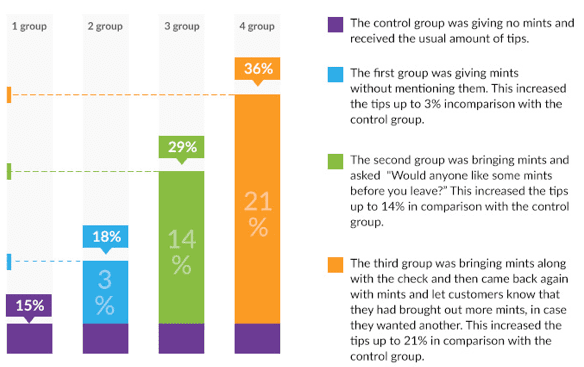
Add some follow-ups there if you want their loyalty! I love being praised (oh, we all do, don’t you deny it). I love when a waiter brings a small piece of chocolate with a bill, I will always leave them bigger tips and come back again. And there’s a whole survey on how mints influence waiters’ tips. Waiters gave the customers mints with no mention — 3% increase of tips. They mentioned mints — 14% increase. Waiters mentioned them once and then came back and mentioned them again — 21% increase. So, add some mints there and don’t be shy to let them know about those mints.

Subscribed to our newsletters? Here's our appreciation — exclusive stuff not mentioned on the main page. Bought something? We add a postcard with your name to your package. Your attention is what counts. They will come back if they feel their custom is considered valuable. The main idea is to create a feeling that your mutual cooperation does not end with a first purchase, but you are ready to please each of your customers, even if they don’t pay for it.

waiters tips

4. I care what you say: feedback from your customers

Why bother reading someone else’s comments? “Don’t care what they say” — said your mom and Christina Aguilera. In reality, we always want to know if our choice is approved by others. This reaches back to the power of social proof (check out this experiment with an elevator) — people do what other people do, they love feeling like a part of a cool gang.
Surveys show that 70% of Internet users read customer reviews before making a final decision. The same surveys demonstrate that 75% of reviews are positive. Consequently, customer reviews are an absolute must-have for your website.
To make customer reviews work for your e-store, spend some time collecting positive feedback from your clients. Also, make a dedicated section with testimonials on your website, and optimize it for search engines to help people find it on Google.
There’s another tip that is crucial for your e-store and often neglected: explicitly ask your customers to review your products. The Internet is made of hyperbolas, so don't be afraid of asking people to add some sugar. Believe me, satisfied buyers will never say no. Also, adding photos of your customers with your products will help you maximize the positive impact of customer reviews and boost the credibility of your service.

5. Know your worth and the psychology of pricing

There are hundreds of studies on this topic (here’s the fullest collection pricing strategies I know). I will only show you my favorite 3:

  • No matter what they say, people love limits. Even more — they can’t stand the lack of regulations that makes them freeze and choose doing nothing over making decisions. That is why a big choice is worse than a small. That is why the identical items should cost different amounts. That is why sometimes it’s better to have less than too much. And one more thing. Regulations and prices should be clear, no whats, whys and whens left. If a customer has any doubts about delivery prices or additional payments, you have lost him/her.
  • Time- and choice- limited discounts. Is it “The discount will be active until Thursday” or “Last three days of the discount! You had better register right away”? Procrastination tortures us all, so if we have the possibility of doing it now or later, we always choose later (which sometimes means “never”). All those “remind me later” for software updates are in this category. But imagine they say “if you don’t update it today, tomorrow your finance report for the whole year will be deleted”. No later possible, huh?
  • I don’t mean to sound banal, but classics are classics, and $0.99 price is just the never-ending, scientifically proved beating-them-all king of classics. Still, keep those prices as simple as possible — $1,499.99 looks way more expensive than $1499, fewer digits are always a better choice.

importance of security by age and device

6. In security we trust

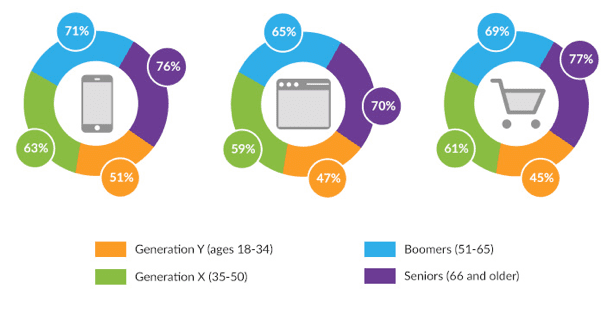
As long as you work calmly without accidents the security issue shouldn’t bother you, but when was the last time you actually read the news reports about those criminals? Yesterday they hacked Jennifer Lawrence’s iCloud, today they pirated Tarantino’s “The Hateful Eight” and tomorrow they will steal your customer’s money. And naturally the customer worries about it. As polls say: one third of online buyers hesitate to buy because of credit card information thefts, so they are more likely to trust big companies like Amazon and PayPal, and the older they are, the more security concerns they have. There’s an interesting thing about big companies, people do trust them more, but about half of the customers think these giants still don’t do enough to protect private information.
Do you see my point? While you’re simplifying all possible sections this one has to be a real five-level top-secret fortress. Your first duty is to take care of all security issues — of your online store itself and of the payment system in general. This can become an even bigger problem for small bloggers who may have decided to add a small store to their blog and didn’t aim to incorporate commerce sites in the first place. People trust them the least.
And after you have improved everything possible you’d better doubly explain to your buyers that they are protected. Add it briefly to the order form and also explain all security guarantees in an independent section of your online store.

customer service

7. Heart-to-heart conversation — Customer Service.

People get into trouble from time to time. It’s just the way we roll. And if their problems result from working with you, why come to you ever again? I’ll tell you why. Because you’re going to be a live person to them and are there, in person, to solve their issues. Providing qualified customer service is a connection you can’t lose. Whether it’s a telephone consultation or a chat talk, remember 3 must-haves of any good support:

  1. Speak your customer’s language — I’m sure you’re a big expert in your field, and it’s tempting to use all those narrow terms you learnt over the past year. But buyers don’t want this, they want a flesh and blood person who will tell them why their delivery is delayed without delving into the economic situation in your country.
  2. Make it personal (by using the customer’s name, adopt friendly positive impressions etc). Do it in a more informal “buddy-to-buddy” way. “I can’t” and “it’s not” are forbidden, you are to stay positive. And person such as “we” doesn’t exist at all. It’s you they are talking to online.
    Endeavour to be time-saving. Sometimes it’s just yes or no. Be concise whenever you can. After all they came for actual help which requires your concrete answer and not long hours of debate. So fight against wasting your and your customer’s time!
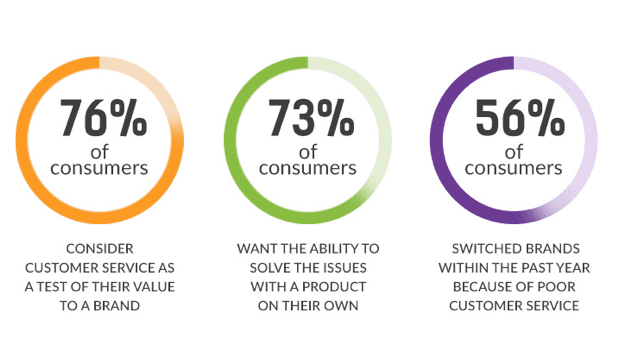
  3. According to the 2015 survey about what people think of customer service 76% of pollees consider it as a real sign the company appreciates them. This only proves that in the most cases you don’t even have to interact with your buyers, all they need is the confidence of the availability of such an option.

7. What a “picturesque” store!

Would you prefer to see The Grand Canyon once or to hear your friends’ telling about it a thousand times? When I was a child the first thing I always asked about every new book was "Are there any pictures in it?" There was no need to read what it was about — I saw a beautiful princess on a cover and knew, right away, it was for me. I grew up and so did technology. Now the first thing I always ask when Googling something is "Are there any pictures for this query?". Well, pictures are good, they help you to acquire information faster. And the very anatomy of our brain speaks to our advantage, too: according to studies, we can get the sense of a visual scene in less than 1/10 of a second and (better sit down!) visuals are processed 60,000X faster in the brain than text.
That is why people like that upper line Google suggests for every query — the line with pictures. Now, please, meet SEO, you’ve probably met this guy before, but somehow he is going to host this party as well. Or you can refresh your acquaintance with SEO. Pictures from your website, if optimized properly, should make it to the first 10 random ones Google suggests when someone searches for your niche. Pure SEO as it is. So, imagine, John wants to buy a hanger. He still doesn’t know where or how. All he wants is to read some Wikipedia article about this interesting product. John Googles and the first thing he sees are pictures of what he’s looking for. Why bother himself reading, if he can just look? So he opens the first nice picture and sees the link to your store, selling exactly what he wanted — the best hangers on the West Coast.
And now we’ve come to the point, image SEO is easy and you should definitely do it:

  1. The very filename of the picture you upload to your website matters a lot, no “screenshot345” should be considered. It should be meaningful and contain your keywords — “the-best-hangers-on-the-west-coast”.
  2. Pick out the most practical image and file size. The actual image can’t be 2400×1300. Fortunately the file size can be reduced with the help of any graphics editor you have handy.
  3. Write captions — the text which usually appears grey under the picture and briefly explains what it’s all about.
  4. Add “alt tags”. The alt text describes what’s on the image and the function of the image on the page. So, this is the way search engine bots see your picture.

Conclusion

Trends change in a blink of an eye. I typed this sentence — designers came up with a new trendy texture. You read the next one — web designer chose red-green colour combination as the best one of 2016 (just kidding, don’t you ever combine those two unless you’re a fan of Freddy Krueger’s sweater). And “evergreen classics” do not exist on the Internet. So, keep moving forward - only your original approach matters.

Emily Hunt is a content marketer and startup advisor at Startup Hub. Focused on helping people to start websites of their dreams. Active citizen of the Internet with all the consequences and passionate about latest Internet trends, new media formats and rescuing cats out of trees. Follow her on Twitter.

05 Jul 17:11

5 Ways to Supercharge Sales with Predictive Lead Scoring

by Sean Zinsmeister

predictive-lead-scoring-sales.jpg

Even if you’re not the “early adopter” type, you’ve probably heard about the rise of predictive analytics for sales. Perhaps your marketing team has tried out HubSpot’s new predictive lead scoring capabilities and is recognizing the value this kind of data-driven insight can bring. If you’re wondering whether predictive intelligence could make your sales team’s job easier as well, the answer is a resounding yes.

Predictive technology has matured rapidly, and there’s now a whole community of forward-looking businesses that are already showing proven results. Rather than rely on human intuition to guess who your best leads are, why not use advanced predictive scoring models that take into account thousands of signals and employ sophisticated data science to compute accurate predictions?

lead-scoring-1.png

Here are five ways smart sales teams should leverage this technology to double down on the most promising opportunities in their funnel:

1) Employ intelligent lead routing

It’s time for sales managers to stop routing leads based on relatively arbitrary attributes like geography or industry alone. Instead, with predictive scoring, you can evenly disperse high-potential accounts (whether inbound or outbound) across your top performing reps. This is a great way to avoid inadvertently overloading sales development reps or account executives with more good leads than they can reasonably handle. Our customer, Social Tables reinvented its definition of MQLs and started filtering anything below leads rated an “A” or “B” out of its sales queue -- and this more focused approach resulted in a $500,000/month increase in their pipeline.

Another approach we’ve seen is giving the lowest-scored leads to your newest reps. This minimizes the risk that you’ll lose key deals while untrained reps are coming up to speed, and it takes the pressure off them while they’re still practicing the pitch. For example, you can try a tiered training program, in which new reps spend some time working D-rated leads (those that aren’t a great fit for your product), then some time working C-rated leads, and eventually graduate to “B” leads. Once they show mastery by hitting the team’s average conversion rate, you can start feeding them their share of your hottest leads.

2) Refresh your sales SLAs

The problem with the guess-and-check approach of traditional SLAs is that they often focuses on one data point (like lead type) rather than leveraging all of the prospect information available. Just because someone signs up for your free trial doesn’t mean they are a good fit to buy your product. On the other hand, when you remix your SLAs to leverage predictive scores, you can align your team’s effort with a lead’s true likelihood of conversion.

At Infer, our inbound lead management SLA requires SDRs to follow up with inbound “A” and “B” leads within five minutes. Our “C” and “D” leads go directly to the marketing team, who put them in an appropriate nurture campaign until they show more interest. This approach allows us to minimize our response time and increase the number of meetings we book, as opposed to wasting time calling companies that are unlikely to make a purchase.

3) Narrow your outbound focus

Predictive can also play a big role when you’re expanding into new markets or segments. With outbound prospecting, it’s even more critical to focus on the right target accounts as opposed to trying to boil the ocean. No rep enjoys slugging through a purchased list with thousands of bad leads, just hoping to hit the jackpot with one good prospect.

Armed with a simple predictive score for each account, you can pinpoint a stack-ranked list of your top prospects. Don’t get hung up on the size of your list -- outbound is all about big deals, and predictive analytics can show the value of an account (i.e. its anticipated deal size, revenue impact and other metrics) before your team engages. With this quality over quantity approach, you’ll have confidence they’re spending their time in the right places. For the best targets, you might use sales acceleration software to trigger alerts or tasks that prioritize high-touch outreach. For others, it’s often better to pass them to marketers, who can first warm them up with account-based marketing programs prior to having your reps reach out.

4) Tailor personalized conversation points

It’s no secret that customizing prospecting messages can make a big difference. But most reps are missing out on a chance to go deeper with their emails and sales calls. By understanding key attributes for each account -- such as their business model, what technologies they use, etc. -- you can determine which pain points they likely have that your product can alleviate.

New tools can uncover this insight automatically, as an alternative to manual research. Some predictive solutions now push at-a-glance sales intelligence right into your CRM interface so that you can easily check out important prospect characteristics, like technographics. This allows your team to pre-plan meaningful conversation points that communicate a clear value proposition.

5) Ensure no lead is left behind

Last but not least, you should use predictive scores to prioritize “old” prospects and avoid missing out on any big opportunities. There’s always potential revenue stuck in your pipeline with leads who never responded to your initial outreach, as well as buyers who postponed their decision or chose a competitor (but might make a switch down the road). Most reps are so focused on hitting their immediate number that they forget nurturing isn’t just the job of marketing. Lighting up inactive accounts is a great way for sales to uncover hidden gold in the funnel.

When you see good, but older, leads owned by quota-carrying AEs (perhaps because they built strong relationships with champions during the sales cycle), you need to remind them to follow up more aggressively, or consider sending some back to SDRs who have more time for outreach. One approach is to carve off a couple nurture-specific SDRs and develop new scripts for them that go beyond the standard pitch for fresh prospects. That way, they won’t be distracted by their natural recency bias, and you can set quotas aligned with realistic conversion rates.

All of these predictive techniques greatly ease the grunt work of sales without risking pipeline opportunities. You can gain major lifts in win rates and conversions by prioritizing your flow of leads. Honing in on the most valuable prospects will accelerate the process of finding qualified leads, help you figure out where to focus your team’s energy, and give you a leg up on your competition. So, instead of looking in the rearview mirror and waiting to see which leads convert, put your resources where you’ve got the best shot at winning.

HubSpot CRM

05 Jul 17:11

6 Cringe-Worthy Sales Situations (And How to Avoid Them)

by aja.t.frost@gmail.com (Aja Frost)

awkward-sales-situations.jpg

Uncomfortable situations are inevitable in sales, but they may be doing far more damage than you realize.

A study published in the Journal of Experimental Social Psychology found that seeing a four-second pause in a six-minute video made people feel “distressed, afraid, hurt and rejected” -- even though they were completely unaware the silence had taken place.

And it’s worth noting these participants were only watching the conversation. Can you imagine the effect an awkward conversation has when your prospect is actually participating in it?

For stronger relationships (and ultimately, a higher close ratio), master awkward situations. Here are our tips for dealing with the six most common ones.

1) When the Prospect Asks, “Where Did You Get My Number?”

Answering “Where’d you get my number?” can be a little tricky. After all, responding with something like, “You provided a phone number when you downloaded my company’s ebook at 2:04 p.m. yesterday,” will definitely jog your prospect’s memory -- but it also sounds a little creepy.

To head this awkward moment off at the pass, immediately provide some context in your greeting.

For example, if you’re reaching out for the first time, you could say, “Hi, I’m Ned Stark from Westeros Co. I noticed you downloaded our ebook on preparing for winter -- are you simply looking to learn more about winter prep, or are you looking for a cost-effective solution?”

If they’re not an inbound lead, you might say something like, “Hi, I’m Ned Stark from Westeros Co. I’m reaching out because I stumbled across your company’s blog. You’ve got some really high-quality content, but I noticed you’re not using any calls-to-action. Would you be interested in discussing how you could increase leads from your blog by doing it a bit differently?”

Giving context is also important during your later interactions with prospects. Not only do most people have a lot on their plates, your call could be coming during a hectic time in their day, so it’s understandable if they forget who you are. Avoid any confusion by opening with your name and purpose, like so: “Hi Jon, it’s Ned Stark from Westeros. I’m calling about the product demo.”

2) When Both of You Fall Silent

Awkward silences crop up fairly often in regular life. But they’re even more stressful in sales, since it’s the rep’s responsibility to smooth them out.

Fortunately, a little prep goes a long way. Picking out two or three rapport-building questions before your conversation will give you something to say during uncomfortably long silences.

Doing some research before the call or meeting is also a great strategy, since you’ll know which areas of the prospect’s business to hone in on -- and thus, which questions to ask.

But some awkward silences actually play to your advantage. Staying quiet after you present an offer or argument makes the prospect more likely to provide you with more details, simply to fill the dead space.

You also shouldn’t confuse keeping the conversation going with talking incessantly. To learn the distinction, read our ultimate guide to active listening.

3) When You Make a Bad Joke

It happens to all of us: After letting loose with a zinger, you immediately realize it wasn’t funny at all. Cue your prospect’s fake laugh (or worse, silence).

There are two ways to recover from a bad joke. First, you can acknowledge how badly it flopped by chuckling and saying something along the lines of, “Ouch, that was terrible.”

Alternatively, use some self-deprecating humor. For example, you might say, “No one ever tells me to try comedy,” or “Can’t say that was my finest hour.”

Either option shows the prospect you’re aware the joke failed, but you’re not embarrassed.

What you shouldn’t do? Attempt to explain the humor. The only thing more awkward than a bad joke is listening to the reasoning behind it.

4) When You and the Prospect Both Talk at Once

Even if you’re careful to let prospects finish talking before you begin, it’s easy to mistake their pauses as periods. You both start talking at the same time, then you stop to let each other go ahead, then you start again -- and awkwardness ensues.

Next time you’re caught in a verbal crossfire, retreat immediately. It’s much easier to resolve this situation when one person simply stops talking, so even if the prospect pauses to allow you to talk, keep quiet. They’ll quickly pick up their thread of thought, and you’ll be back on track.

5) When They Say Something Bizarre

Dealing with your prospect’s awkwardness is almost as tricky as dealing with your own. The last thing you want to do is make them embarrassed -- after all, you want them to feel empowered around you, not self-conscious.

With that in mind, the most effective response to a weird statement is pretending it wasn’t weird. Simply act like you hear similar things every day. To give you an idea, here’s some sample dialogue:

You: Do you have any local restaurant suggestions?

Prospect: I don’t eat out much because my mother makes me lunches. Oh, um, that just slipped out …

You: Have to admit, I’m pretty jealous. I could really go for some of my mom’s lasagna right now.

6) When You Blurt Out an Offensive Remark

You’d do anything to go back in time and say something else, but it’s too late: You accidentally said something offensive, and now the mood is (understandably) tense.

In this case, don’t ignore or make light of what you just said. Doing so would imply that you’re okay with the remark -- which you’re definitely not.

Instead, instantly apologize. A simple and sincere apology is best; for instance, you could say, “I’m sorry, that was definitely out of line,” or “I’m so sorry, that’s not what I intended.”

Then, change the subject with one of these lines:

  • “As we were discussing …”
  • “I think you were talking about …”
  • “Should we move to [next item on the agenda]?”

Cringe-worthy moments are hilarious when you’re watching The Office or Curb Your Enthusiasm -- but in sales, they can actually hurt your bottom line. Now that you’ve got these six tricks up your sleeve, avoiding them should be much easier.

Email tool in HubSpot CRM

05 Jul 17:06

Growth Doesn’t Happen By Accident: 4 Business Growth Principles

by Ryan Shelley

GROWTH DOESNT HAPPEN BY ACCIDENT - 4 BUSINESS GROWTH PRINCIPLES

Growth doesn’t happen by accident. Last year I began a journey. A journey to transform my side business into an agency. While I have been in the online marketing sphere since 2009, I never really gave it my all and just let business happen. 2015 brought a lot of change for me both personally and professionally. These changes forced a new level of potential out of me and as a result we more than doubled. This year, well, that’s a whole new story.

While we saw over 100% growth in 2015, there was one big thing we did not accomplish – landing a Hubspot Inbound retainer. I had put in the hard the work, created persona-focused content and promoted the heck out of it. To be honest, I was frustrated. To make things worse I had 3 “sure thing deals” slip away at the end. This year, I was determined to change that stat. The groundwork had been laid and the time for action was now.

I began 2016 by emerging myself in Seth Godin’s altMBA. This 4 week intensive program was life changing to say the least. Having to juggle a growing agency and growing family was already a lot and when it came time to begin altMBA I was unsure if I could handle it. Instead of crushing me, the added commitment helped me to prioritize my time and only focus on things that actually mattered. It’s so easy to get caught up in daily tasks that seem important but really are just time suckers. I also learned not only how to write down my goals, but how to achieve them. I learned how to leverage constraints, let others speak into my work, challenge my lizard brain and the power of finding my why. Coming out of this experience I had a plan to improve upon what I had already started building just 12 months before.

1. Define Your Why

“People don’t buy what you do; they buy why you do it. And what you do simply proves what you believe”

Simon Sinek , Start with Why: How Great Leaders Inspire Everyone to Take Action

Do you know why you are doing what you are doing? This is a much harder question to answer than it seems on the surface. Finding your “why” is essential if you want to create a business, product or agency that impacts your industry. Just look at all of the great brands, they got there because they had a strong “why.” Figuring out why I wanted to grow and who I wanted to reach was a must if I was going to get to where I wanted to go.

To find my why, I began to ask myself a few questions.

  • Why do people do business with me in the first place?
  • What areas of my work am I passionate about and what drives that passion?
  • If someone were to ask one of my clients a question about me or my agency, what would they say?

While these questions alone wouldn’t give me the answer, they did steer me in the right direction. So are you wondering what my “why” is? We exist to connect people with businesses in a more personal, human and authentic way. Everything we do, from web design to SEO, is driven by this why. We are driven by why we do it and not what we do. This makes work feel like, well not work.

2. Sell Like A Human

When it comes to generating traffic and leads I feel like I have a good idea of what I am doing. Sales on the other hand, scares the junk out of me. I think the root of it comes from the fear of “no.” When I talk to other agency owners I get the feeling that many of them struggle with this as well. Inbound is great and the process works, but in order to sell you have to eventually pick up the phone and ask. For months I was sitting back, driving leads and hoping they would call and beg for my services. Guess what, this never happened. Never.

Since January we have generated an average of 60 leads a months. Here’s the kicker though, what good are these leads if they just come once, get some free content and never return? If we exist to connect in a more personal way, we need to be developing relationships and trust. This can only be done authentically through human interaction.

“To sell well is to convince someone else to part with resources—not to deprive that person, but to leave him better off in the end.”

Daniel H. Pink , To Sell Is Human: The Surprising Truth About Moving Others

If I was going to be able to turn some of these leads into partnerships I had to push past my fear of no. I had to pick up the phone or send a personal email to encourage the next step. Without having a conversation, I would never be able to share my why and sell my solutions. This wasn’t something that just clicked. It is still very much in the works, but I can say that we have closed 4 inbound retainers and have 2 more in the works. Not to mention the more than 15 websites and new SEO clients. Learning to sell is a process. It take patience, consistency and perseverance. One day I hope to be decent at it.

3. You Can’t Scale Alone

As a long time soloprenuer I had become accustom to doing everything on my own. I was suffering from what Chris Ducker calls “ Superhero Syndrome.” I believed I had to do it all – the books, the websites, the SEO, all the inbound… everything. What I hadn’t realized was that trying to do it all was bottle-necking my growth.

During the altMBA I set a goal to build and empower a team around me to take my agency to the next level. Since I had never really “hired” anyone, this was terrifying. Thankfully I was exposed to two great companies to help me get started. The first was eaHelp. This company helps you find and hire the right US based virtual assistant. Not only did they find me a great assistant, Rhonda has now become a very important piece to the growth of our agency.

The second position I needed was a developer. For years I was designing, building, launching and marketing sites all on my own. I needed help. To find a good developer, that I could afford, I used Virtual Staff Finder. Their team interviewed multiple candidates and narrowed it down to the top 3 for me to do a final round of interviews with. While this process was a little more work for me, I was able to hire I very good developer that fit my budget.

By handing off things others can do for me, I was now free to do the things no one else could. I can now focus on marketing our “why” and prospecting new clients.

4. Defining Processes

“Building smart processes to streamline the workflow can make the work easier and the results more reliable, which keeps my head above water and my clients happy.”

Mark Mason

Without clear processes you are just finding things to do that make you feel productive. The key to actually achieving your why is a clear plan that everyone on your team understands. Now, I am not even going to try to claim that I have this down pat, because I don’t. But I am learning and willing to put in the work to get it right.

When developing your processes, don’t do it alone. You will end creating them for you and will have to go back and explain yourself to your team. This defeats the whole purpose of planning it out. Having your processes laid out will give your team members a gameplan to carry out the work they are assigned to do. So make sure they get it. Involve them in the process, let them ask questions and challenge you when something seems off. This helps make your processes more accurate and helps build your team’s trust in you and your vision.

What’s Next

I have some lofty goals. I want to grow but not just for the money. I truly believe that we can and do help people and businesses connect in a more personal, authentic and human way online. The internet was created to build community, not to spam and create noise. I believe the more we can create genuine connections the better chance we have to expand our views and learn to live in peace with each other.

The good news is, when you work out your why, people want to do business with you. At this time last year we had already beat our previous year’s revenue. Well, as I finish writing this post, we have not only beat last year’s revenue, we have already seen 70% growth and are projected to grow revenue by 257% this year.

The numbers do make me smile, but what makes me happy is that I am building a business I am proud of and people love to work for and with. I have more time with my family and I truly believe we are making an impact. This didn’t happen by accident. It took hard work, partners like Hubspot and BrightInfo, some amazing team members and businesses that share the same why as us. The first half of this year has been a blast and I can’t wait to see what’s next!

Building a Business That Connects

05 Jul 17:06

Building Trust In Social Marketing Metrics With Attribution

by Jordan Con

Reproaching social media marketing’s vanity metrics is now almost a cliche. Unfortunately, many marketers continue to use them, and their limitations still hold true. Managers, directors, and executives don’t want to hear how many ‘likes’ or clicks a post received when they’re expecting business results.

Here is the problem: When ROI is framed in terms of the traditional social marketing metrics, trust is lost.

So how do paid media marketers – social marketers, in particular – build trust in the organization with the metrics they report?

We’ll answer this question, but first, let’s look into the history of mapping technology for context.

Maps and Mapping Technology

A couple decades ago, if you wanted to travel to a place that you had never been before, you had to rely on paper maps and your directional skills. You could go to AAA or another map store and purchase a map of the region you’re interested in, and then you would have to spend a few minutes orientating yourself with the area. Beginning with where you were and then where your target destination was, you had to figure out a path that would take you from point A to point B.

mapping-technology-old

As the internet developed and became more ubiquitous, companies like MapQuest made important progress in mapping technology. You could tell them point A and point B and they would map out and give you step-by-step directions that you could print out. This is a big step forward, but it wasn’t without major limitations. What if there’s traffic on that route or a major accident? What if the road is closed for construction? What if you miss a turn? If there was anything unexpected, you’d be completely thrown off course. The directions were static.

Now, there are apps like Waze and Google Maps that have a lot more capabilities, such as re-routing to the best route available based on real-time conditions. The progress is obvious and it has changed how we think about traveling. Getting to a place we’ve never been before is no longer a worry.

gps-map

Today, we have complete trust in our maps and the mapping technology behind it.

The history of maps is a lot like the history of marketing attribution. Businesses have always wanted to close the loop on marketing by connecting it directly to revenue. In closing the loop, they could better understand the customer and optimize the journey.

Decades ago, marketers knew how much they spent on marketing (point A) and they knew how much revenue they made (point B). Then, they had to figure out on their own how they got from point A to point B. It was largely a best guess.

Then came single-touch attribution. It’s progress, but it drastically oversimplifies the reality of today’s marketing. In a buyer journey that can often require dozens of touchpoints over many weeks or months, it’s not accurate to describe the journey and attribute the revenue credit using just one of the many interactions.

Accurately measuring the impact of B2B marketing is actually even more complicated than mapping a journey across the city. There’s multiple marketing channels, decision-makers, and more. In the world of maps, it’s like mapping a journey from point A to point B, but switching from walking to flying to driving to taking public transportation multiple times over, all while figuring out how to carpool.

And we’re back…

Ok, back to the original question as promised: How do social marketers build trust in the organization with the metrics they report?

In other words, how do we get to the Waze or Google Map-like stage in our social marketing measurement?

Social marketers can build trust in their metrics by using proper marketing attribution. (Attribution, quickly, connects marketing to revenue. If you’re unfamiliar, you can read more about attribution and how it’s different from other marketing measurement tools here.) Proper marketing attribution comprises a framework of three traits:

  1. Multi-touch: it considers the entire journey, not just one touchpoint
  2. Omni-channel: it uses common metrics for every marketing channel
  3. Centralized: the sum is equal to its parts, no double-counting

With these three attribution characteristics, marketers can be sure that the metrics they report are accurate and meaningful. In short, they’re metrics your manager and executives can trust.

By using this data, you will be able to prove the value of your work, meaningfully answer questions from leadership, and grow your role in budget and scope.

1. Multi-Touch

At its simplest, multi-touch attribution gives fractional credit to multiple touchpoints along the buyer journey. This runs in contrast to single touch attribution, which give 100% of the credit to a single touchpoint (usually either the first touch or the last touch).

The issue with single touch attribution is that it creates channel bias. Because you choose to only use one touchpoint to represent the entire buyer journey, the rest of the marketing touchpoints receive zero credit. For example, in a first touch attribution model, the marketing channels that engage the top of the funnel receive all the credit. Therefore, they seem like they’re extremely impactful, while the rest of the marketing channels look ineffective. This is channel bias.

Multi-touch attribution and multi-touch models eliminate the impact of channel bias because they track multiple touchpoints throughout the entire buyer journey and spread partial credit. In a W-shaped model, 30% of the credit is given to each the first touch, the lead creation touch, and the opportunity conversion touch. The last 10% is dispersed equally among the remaining touchpoints.

multi-touch-measurement

With an attribution model like W-shaped, credit is given throughout the entire funnel, meaning no marketing channels are over or undervalued due to a channel bias in the model.

Switching from Single-Touch to Multi-Touch Attribution

At Bizible, when we switched from single-touch attribution to multi-touch attribution, the insights from the data caused a significant change in our Social strategy.

When we used single-touch attribution (a first-touch model), Social was being credited with driving 43% of our leads and 35% of our revenue. Without changing our marketing, but switching to multi-touch attribution measurement (a W-shaped model), we found that Social was actually driving 42% of leads, but only 27% of our revenue. That’s nearly a 30% difference in revenue (35% minus 27%, divided by 27%).

Social’s impact on revenue was being overstated because we used it as a top-of-the-funnel channel while also using an attribution model that was biased in favor of the top of the funnel.

With this new insight that Social wasn’t having the revenue impact that we previously thought it was, combined with the new ability to measure our marketing at each stage of the funnel, we adjusted our Social strategy to engage our audience at each stage of the funnel. We now promote content like blog posts and ebooks at the top, case studies at the middle, and then demo and trial-related content at the bottom.

Now that we’ve expanded how we think about and use Social, it drives 30% of our leads, but 31% of our revenue. Fewer leads, but more revenue. It’s a much more efficient use of our ads, the sales team is happier, and our ROI has improved.

Multi-touch attribution gets rid of channel bias, which creates data that managers trust and the marketing team can use to improve ROI.

2. Omni-Channel

Social does not exist in a vacuum. Just like in the mapping metaphor, cars must be aware of buses, trains, pedestrians, bikers, taxis, etc.

The second pillar of the framework is having an omni-channel view of your marketing measurement. In Social, you must use, track, and report on the same metrics that other channels are using. Likes and clicks don’t hold up when other channels are talking about pipeline and revenue.

omni-channel-measurement

Imagine a budgeting meeting, where the director of marketing or CMO is trying to decide how to allocate the budget for the next period.The events marketer reports driving 100 leads, which turned into 10 open opportunities worth $100,000 in pipeline and one customer worth $20,000 in revenue from two events that cost a total of $10,000. The search marketer reports driving 200 leads, which turned into 15 open opportunities worth $150,000 in pipeline and two customers worth $10,000 in revenue from their $10,000 in marketing spend. If the social marketer reports driving 5,000 social engagements with 75% positive sentiment and nothing else from $10,000 in marketing spend, what’s going to happen? To effectively optimize budget allocation, it needs to be possible to make an apples-to-apples comparison.

3. Centralized

When it comes to teamwork and culture, 1 + 1 = 3 is a dream. When it comes to measurement, that’s a nightmare.

The third and final pillar of the social measurement framework is that your attribution has to be done centrally. When attribution isn’t centralized, you run into the problem of double counting.

centralized-measurement.jpg

Double counting is a problem that hits Social particularly hard because social marketers like to use social-specific measurement systems, be it Facebook Insights, LinkedIn Analytics, or a third-party social measurement tool. When you use social channel-specific conversion tracking as the basis of your attribution, none of the channels communicate with each other. Facebook Insights doesn’t check with AdWords Analytics before counting a conversion. So if you have a Facebook touchpoint on Monday, then an AdWords touchpoint on Tuesday, and then the visitor converts, both Facebook and AdWords will claim the full conversion. At the end of the month when you consolidate your marketing data, you’ll think you had two conversions, when in reality there was only one.

When your conversions don’t add up, you lose trust. Managers will ask questions and teams will point fingers at each other. That’s not how marketing measurement should work. Attribution should work for the marketing team, not cause problems.

Through centralized attribution, the channel data communicates with each other and allows for fractional credit to be allocated dependent on the attribution model. The sum is equal to its parts, which builds trust.

Conclusion

When we started using a smarter, more advanced attribution solution, and made changes based on the new insights, our performance improved. While Social’s contribution to our total leads dropped by 25%, it contributed to 10% more impact on revenue.

When marketing teams are able to optimize Social for business outcomes, not the marketing activity itself, they are able to prove a lot more value and build more trust and respect within the organization.

Definitive Guide To Pipeline Marketing  Everything you need to know to be a revenue-focused B2B marketer.  Download Now

05 Jul 17:06

9 Proven Steps to Build a Small Business Sales Process

by Dave Schoenbeck

There are hundreds of sales experts that opine at great length about the most impactful tips and tricks to ensure sales success. Most of them have great techniques that small business owners can learn from. However, what is usually overlooked is a bit more fundamental and not very glamorous. Instead, I encourage you to first start with the design of a small business sales process. Believe me….this is the place to start.

What is a Small Business Sales Process?

A small business sales process is an organized, well thought-out list of sequential steps that every sales person should follow. The goal is to ensure that every suspect and prospect experiences the same “touches”, in the same way the owner has derived from successful past sales.

The beauty of a documented sales system is that it allows the business owner to step away more often from the sales role to work on strategy development. If that sounds appealing, pay attention.

Step 1: Write down the specific sales steps that have proven to be successful in the past. Be sure to include a list for inbound leads and prospects and another one for outreach prospects.

Step 2: Have another experienced salesperson or your coach/mentor look for gaps that should be included.

Step 3: Convert the written steps, or milestones, to a flowchart.

Step 4: Focus on the prospects that are noted as undecided and then develop a multi-week “drip” campaign that will bring them closer to you.

Step 5: Plan out the time intervals between your drip outreach steps to the undecided.

Step 6: Design the specific collateral sales materials that you need to effectively convey your message.

Step 7: Redraw your small business sales process flowchart to include steps 5 & 6.

Step 8: Select a simple CRM tool that can incorporate your sales process and allow you to carefully monitor the progress.

Step 9: Put your plan into action by training your sales team and then closely watch their activities.

04 Jul 17:22

Crush your goals with this 5-task to-do list

by steli@close.io (Steli Efti)

When was the last time you completed your daily to-do list?

A mere 11% of professionals worldwide say they accomplish everything on their to-do list by the end of the workday.

Not a great looking number.

It seems like the more successful we become, the longer our lists grow. Eventually, they become so unmanageable that it feels like we spend more time adding tasks than completing them.

Let’s change that.

Have less to do, get more done

Reality check: A long to-do list isn’t the mark of a productive person. It’s the mark of an unfocused one.

ClickToTweet__A-long-to-do-list-min.png

Focus is the fuel your startup needs to succeed, but it’s a limited resource. You only have so much to give, so invest it wisely.

That 100-task to-do list? It’s not only unwise, it’s impossible. By the time you finish those 100 items, 200 more will take their place.

It’s time for a new system: a to-do list that can actually be done. Here’s how to use the power of prioritization to regain focus, take back control, do less, and accomplish more.

Your new 3-step, 5-task to-do list

Step one: Create a 25-task to-do list. For most people, the problem won’t be finding 25 tasks. It’ll be limiting it to 25.

Step two: Circle the 5 most important tasks on the list. In this case, “most important” either means urgent, or exceptionally high ROI.

Step three: Separate and date the circled items. Your five circled tasks are now your to-do list, and the twenty left uncircled are your reserve.

Now here’s the catch: You can’t add new items to your list until you’ve completed all five tasks. This creates forward momentum that becomes more productive with each completed job.

Once you’ve finished all five items, add any new tasks to your reserve and repeat the cycle: choose your top five, separate the lists, and start crushing it.

Commit to productivity

The idea of “doing less” will be hard for some people to accept at first. If that’s you, ask yourself: “Would I rather complete 100 half-assed tasks each month, or totally crush five?”

If you’re hesitant, commit to this new system for 30 days and measure your results. By the end of the month, you won’t even dream of going back. Trust us.

Want to take your new to-do list to the next level? Make it public and have your team hold you accountable.

Let them watch you crush it.

Recommended reading:

Effective entrepreneurship: The not to-do list
Every founder, every entrepreneur, everybody who works in a startup knows the burden of the to-do list. Here's how to get more done by keeping a not to-do list.

5 questions that prove you probably don’t need to have a meeting after all
If you have ton of work on your plate and think meetings are just a waste, you're not alone: Half of all employees think meetings are a big waste of time. But it doesn’t have to be that way. Make your meetings meaningful (or eliminate them) by asking these 5 questions.

The unbottleneck hack
Ever feel like you've become a bottleneck for others in the team who rely on your input? Here's a simple hack to unleash team productivity ...

04 Jul 17:21

7 New Books All Geeks Should Read In July 2016

by Dann Albright
geek-books-new

Lots of fantastic new books are released every month, many of which are guaranteed to appeal to geeks. Here, we offer a selection of those titles; some about technology or geek culture, some being science fiction or fantasy novels, and some being books we just think you’ll like. So, without further ado, let’s dive into some of the great books we think you should be reading this month. You never know what gold you’ll find lurking inside. Women in Game Development: Breaking the Glass Level-Cap Edited by Jennifer Brandes Hepler The gender pay gap is a well-attested theory, and most people...

Read the full article: 7 New Books All Geeks Should Read In July 2016

04 Jul 17:21

Read the bizarre Olympic Committee demands that led Oslo to pull out of the 2022 hosting race

by Rob Beschizza

olympics

Oslo wanted to host the 2022 Winter Games, but has decided against it because of the International Olympic Committee's demands for special treatment. The IOC's imperial arrogance and opulence would be amusing—were it not the tip of an iceberg of corruption and despotism that floats from city to city every two years.

• They demand to meet the king prior to the opening ceremony. Afterwards, there shall be a cocktail reception. Drinks shall be paid for by the Royal Palace or the local organizing committee.

• Separate lanes should be created on all roads where IOC members will travel, which are not to be used by regular people or public transportation.

• A welcome greeting from the local Olympic boss and the hotel manager should be presented in IOC members' rooms, along with fruit and cakes of the season. (Seasonal fruit in Oslo in February is a challenge ...)

• The hotel bar at their hotel should extend its hours “extra late” and the minibars must stock Coke products.

• The IOC president shall be welcomed ceremoniously on the runway when he arrives.

• The IOC members should have separate entrances and exits to and from the airport.

• During the opening and closing ceremonies a fully stocked bar shall be available. During competition days, wine and beer will do at the stadium lounge.

• IOC members shall be greeted with a smile when arriving at their hotel.

• Meeting rooms shall be kept at exactly 20 degrees Celsius at all times.

• The hot food offered in the lounges at venues should be replaced at regular intervals, as IOC members might “risk” having to eat several meals at the same lounge during the Olympics

04 Jul 17:20

Nigel "Brexit" Farage, having tanked the UK economy, retires to "get his life back"

by Cory Doctorow
animation (2)

https://www.youtube.com/watch?v=oOMLtMSljyA

Nigel Farage, a stock broker who spent years pretending to be a working class lad in a flat cap, has announced that he is quitting as leader of the United Kingdom Independence Party because now that he has "[his] country back" he wants to "get [his] life back." (more…)

04 Jul 17:20

4 Personality Traits to Look for in a Sales Enablement Manager

by Anna Westendorf

So, you’ve narrowed your field of candidates and carefully assessed their resumes. They all have the professional background you’re looking for and you think they’ll perform well as your new Sales Enablement Manager. Congratulations, you’re in the home stretch! But there’s still one x-factor” that will have a significant impact on their success in the role — personality.

Similar to a Sales Operations role, a Sales Enablement Manager’s job is to create better organization and execution across sales. That’s why it’s crucial to not only find the right candidate whose skills and experience touch upon many different areas but someone who has the right temperament too.

Here are some personality traits to look for in interviews, and the questions you should ask to dig deeper.

1. What you’re looking for: Someone who’s highly organized.

Let’s be honest — in an interview, everyone claims to be highly organized. It’s simply one of those things you say in an interview, along with being “reliable” and “punctual.” But this is an important characteristic that shouldn’t be overlooked, particularly in Sales Enablement Managers.

How to find out: Ask questions about their email inbox. Do they use any apps to help keep it organized? How many unread emails do they have right now? When they read an email they need to respond to later, what do they do with it? They don’t need to use the latest apps or be strong believers in keeping their inbox at zero but beware of people who have 582 unread emails in their inbox and no clear system of organization.

2. What you’re looking for: Someone who’s intellectually curious.

You not only want a smart candidate, but one that’s also willing (and enthusiastic!) to go the extra mile. This may sound like a no-brainer, but no candidate will know everything and having someone interested in continually expanding their knowledge and skillset is a boon to any company.

How to find out: Ask about what they’ve read recently, both sales-related and recreationally. What did they like or dislike about the last book they read? Are there any blogs they read regularly? They don’t need to have the same reading tastes as you do, but they should be able to list a couple titles fairly easily. You don’t want a Sarah Palin-type who claims to read newspapers (“all of them, any of them”) yet somehow can’t name a single one.

3. What you’re looking for: A clear and patient communicator.

In addition to a healthy thirst for knowledge, they should also be a good teacher. Since it’s the Sales Enablement Manager’s job to be the ground zero of sales — actually enabling them to be in a better position to sell — it’s important that they’re able to easily communicate to the rest of their team. Clearly conveying concepts while avoiding being condescending can be challenging. How good are they at explaining topics?

How to find out: To learn more about their ability to teach, ask them about their hobbies or interests. More importantly, ask them questions about their hobbies and pay attention to how they address your questions. Are their answers clear and concise? Do they make sure you’re understanding it? Are they condescending? Are they approachable when it comes to follow-up questions? This test will serve as an example of what they will be like as a manager and team member.

4. What you’re looking for: Good people skills.

Ah yes, the one thing every company says they want but most have difficulty actually finding. How do you assess someone’s “people skills”? Sure, you talked to them in the interview and they seemed nice and gregarious enough, but does that really tell you about how they manage a team and work with others?

How to find out: To dig further into this trait, give candidates a difficult hypothetical scenario (such as a team conflict) and ask how they would handle it. This is less of a “right answer vs. wrong answer” question, but one that’s more revealing of their thought process. How do they arrive at their decision? How do they address stakeholders? Pay close attention to the consideration they give the members of their team, and respect paid to the team members’ knowledge and experience.

04 Jul 17:20

The best hiking apps

by Simon Hill

If you're looking to go off-road and offline for an adventure, you might want to check out a few apps geared toward the outdoors. Here, we've rounded up the best hiking apps which cover everything from offline maps and apps that track the stars to mountain and trail identifiers.

The post The best hiking apps appeared first on Digital Trends.

04 Jul 17:19

Britain is plunging towards an economic nightmare, and it isn't just because of Brexit.

by Will Martin

fear cloudOn Monday morning, Markit released its latest set of data on the state of the UK’s construction sector, and to say things didn't look good would be an understatement.

The sector slipped into contraction for the first time since April 2013, hitting just 46.o, a shock fall from an already poor base last month, and the biggest single month fall since 2009. All this helped confirm fears about a coming crash in the UK's construction industry.

Generally speaking, Markit doesn’t make grand proclamations and or use strong language about its data, but on Monday representatives from both Markit and CIPS, which jointly produced the survey, variously said that "the rate of decline was not as sharp as that experienced during the last recession" and called the data "a clear warning flag for the wider post-Brexit economic outlook."

When the best you can pull from a dataset is that it is not quite as bad as during the worst recession since the 1930s, you know things are not looking good.

Here's the chart showing just how sharply construction fell last month:

markit july 4 skitch

While it is less than two weeks since Britain voted to leave the European Union, it is already clear that uncertainty and fear stemming from the result are now predominating in almost everything people do. The Bank of England has already warned that it will likely have to act to combat a coming economic storm by implementing a programme of quantitative easing and rate cuts, and there is some evidence that firms are already delaying investment in the UK, with several major multinationals even thinking about pulling jobs from the country in the wake of the Brexit vote.

Brexit's effect on the economy is undoubtedly going to be huge. If predictions are right households are going to defer consumption, and more and more firms will delay investment. That, in turn will lower demand for labour and push up unemployment. Britain is going to slip into recession and things are going to get very messy very fast.

The big thing that is going unnoticed however, is that even pre-Brexit, the UK economy looked to be heading in the wrong direction. Sure some of that pre-referendum slowdown could be put down to jitters about the result, but that goes only some way to explaining why Britain's economy simply hasn't performed in the way it should have. While Brexit is weighing on the industry and the wider economy to some extent, it certainly isn’t the only thing causing trouble.

Here's an extract from a Pantheon Macroeconomics note back in May (emphasis ours):

It is hard, however, to attribute the decline in consumer goods demand solely to Brexit risk. Consumer confidence has ebbed lately, but it has remained high by past standards. We think that weaker demand for consumer goods reflects a fundamental slowdown in households’ real income growth. Inflation is slowly picking up, employment growth has faded markedly, and welfare spending cuts intensified in April.

Monday's construction contraction coincides with a fall in UK GDP growth. Last week, the ONS confirmed that GDP growth fell to just 0.4% in the first quarter of 2016, meeting expectations, but well below the 0.6% growth seen in Q4 of last year. When the GDP figures were first released back in May, the fall was quickly dismissed by chancellor George Osborne as a reflection of fears surrounding the impending Brexit vote, but that explanation only went part of the way to explaining what caused the slide.

As Pantheon Macroeconomic said on the day of the GDP figures: "The downward trend in GDP growth since 2014 suggests that the EU referendum cannot be blamed for all of the economy’s ills. The fiscal squeeze has tightened this year after a pre-election pause, while the boost to growth in household spending from falling saving and rapid employment growth has run its course."

The data paints a bleak picture. The construction industry is declining rapidly, the manufacturing sector is only just keeping its head above water, real wage growth is negligible, GDP growth is slowing, and as this recent chart from Barclays shows, consumer spending is cooling off massively:

BarclaysGenerally speaking, consumers are the great rescuers of the economy, but if they stop spending, things could go very bad, very quickly. As we pointed out in March, people have shifted spending from consumer goods to food, suggesting that disposable income has lowered significantly, which has in turn led people to exhaust their savings.

Spending is also likely to cool off in the post-referendum landscape. With uncertainty predominating, it is only natural that instead of spending on consumer goods, British citizens will look to increase their savings to weather any potential storm. Ironically, that is likely to make things even worse. 

The logic is simple — when people are worried about the state of their finances, they stop spending, and when people stop spending, that can signal serious problems on a macroeconomic scale.

If things look bad now, they could be about to get even worse. A recent note from Morgan Stanley argued that growing political uncertainty globally has the potential to impact heavily on consumer spending, particularly in areas where major political events will happen or have happened. The report cited impeachment proceedings in Brazil, November’s US Presidential election — and of course, the EU referendum — as reasons to worry about consumer spending.

Weak consumer confidence and spending on their own aren’t catastrophic, but add an equally grim picture in UK industry, and slowing GDP, and things start to get really problematic, especially considering that Britain’s biggest economic bright spot — the so-called ‘Jobs Miracle’ — also looks to be coming to an end.

With just 5.1% unemployment we’re pretty much as close to full employment as we’re realistically going to get. The ONS’ latest employment report showed that unemployment was little changed over the last period. 

We're all out of options

Things might not be quite so scary if there were any tools left to deal with the impending doom facing the British economy, but we’re pretty much out of ammo. The Bank of England’s base rate is stuck just above zero, and despite the fact that governor Mark Carney hinted last week that the Bank will cut rates further this summer, the prospect of negative rates doesn’t exactly hold much promise. Bar a little bit of pick-up in the Swedish economy since their introduction, and an uptick in eurozone GDP, negative rates haven’t managed to spur anywhere near as much activity as intended.

Governor of the Bank of England Mark Carney delivers a speech about murdered MP Jo Cox before the Dinner to the Bankers and Merchants at The Mansion House in London, Britain June 16, 2016.Carney even noted in his press conference last week that there is only so much the BoE can do, saying that part of his remit is "ruthless truth telling." "One uncomfortable truth is that there are limits to what the Bank of England can do."

"One uncomfortable truth is that there are limits to what the Bank of England can do."

The Bank’s other alternative is so-called helicopter money, where central banks create new cash and give it directly to people to spend on whatever they want, but that’s not going to happen here any time soon, even if banks like Morgan Stanley have suggested that it could be the way forward. Carney says he is "not a believer in the concept" and has effectively ruled out helicopter money, saying that it can lead to a "compounded Ponzi scheme." 

Even though we'll be getting a new Conservative leader and prime minister in a couple of months, it is unlikely we'll see any huge shifts in economic policy. The Tories won last year's election on a manifesto of cutting the budget deficit (although Osborne has now scrapped the target of totally eliminating the deficit by 2020) and controlling spending, so the likelihood of the other alternative — big fiscal stimulus in the form of heavy borrowing, and investment in infrastructure projects like railway lines, hospitals, tech ventures, and schools, is very low indeed.

Britain's economy is falling off a cliff, and we're yet to feel the full force of our vote to leave the EU. Things look scary, very scary indeed.

Join the conversation about this story »

NOW WATCH: These are the phrases that will get your email flagged at Goldman Sachs

04 Jul 17:19

When Being Strategic Is a Weakness

by Liz Kislik

During a recent visit to a client company, I spent time with two different leaders whose initiatives weren’t progressing satisfactorily.

The first leader was chatty and made sweeping motivational statements. Her team was deeply committed, but their work had been dragging along at a slow pace, never meeting their growth targets. The second leader, who was less outgoing, was spearheading a new project that drew participants from various areas of the organization. The members of his ad hoc group were theoretically committed to the idea of the new project, but most of them were really protecting their own interests and departments rather than participating actively.

Both projects were complex and multifaceted, but these leaders had run other projects successfully, had funding and support from the top, and could draw expertise from other groups almost without being questioned. So what wasn’t working?

Strategic Alliances: Not

when-being-strategic-weaknessWhen I met with these leaders to explore how they could accomplish their goals, what most struck me was that they didn’t just explain their work or the variety of challenges they faced. Instead, they each emphasized how strategic they were, and how others — particularly those who weren’t cooperating fully — were not.
To hear these leaders talk, you would think that “strategic” meant smart, qualified, and deserving of success. They both attributed their problems to other people’s lacks. And each used “strategic” to explain that they knew what they were doing.

Because they were so convinced of their own rightness, they didn’t seem to consider it their responsibility to persuade others to behave in ways that would generate the results they needed. In fact, it wasn’t clear if they even knew how to generate the results they needed.

Strategic. Planning. There’s a Big Difference.

What they did know was that they had a plan of action in mind, and a clear idea of how things — and people — should work. And they firmly believed that merely having ideas — rather than relying on someone else to make decisions — made their leadership, by definition, strategic.

I couldn’t help thinking of the scene in The Princess Bride when Mandy Patinkin as Inigo Montoya challenges Wallace Shawn as Vizzini: “You keep using that word. I do not think it means what you think it means.”

My judgment? These folks were tactical, with conviction. Neither of them appeared to hold any kind of long-term or big-picture context. Neither of them took into account what the company needs to accomplish. They both focused on their projects as if they were the most important things happening in the company, rather than particular sets of activities that needed to be integrated into the company’s other initiatives.

A Strategic Defense or the Defense of Real Strategy?

Interestingly, most people who truly are strategic don’t describe themselves that way. They just think their thoughts and do their work, integrating their efforts into the larger picture, keeping both the future and their impact on others in mind.

Unfortunately, it’s become such a status prerequisite to be considered strategic that some people assume that strategic competence is conferred with their titles, whether or not their behavior justifies it. They get too caught up in their own PR instead of focusing on what’s going on around them or how to work well with other people and events.

You don’t have to be naturally strategic to lead well. Depending on your role, you may not even need to be strategic to be successful. But it helps to know the difference between being strategic and having opinions about what to do next — and to understand the match between your real strengths and the part you’re actually expected to play.

04 Jul 17:18

How to Compress a PDF With Free Tools

by Joe Keeley
compress-pdf

PDF files have been around for a long time and remain a hugely popular format for document sharing. But their file size can mount when they run many pages long or have heavy graphical elements, which can cause issues when trying to send them on. To help you with that, we’ve rounded up some free tools that will help you compress a PDF and reduce its file size. You can use a downloadable program to achieve this, but you can also use an online service; we will explore both. If you have your own free PDF compressor to recommend, please do...

Read the full article: How to Compress a PDF With Free Tools

04 Jul 17:12

How will Brexit affect sales strategies and tactics in the UK?

by bob@inflexion-point.com (Bob Apollo)

Brexit_trimmed.pngIt doesn’t matter which way any of us voted as individuals: the nation has spoken, and impact of the decision to Brexit will inevitably affect anyone who sells for a living in the UK - and any global organisation with a sales presence in the UK.

We’re entering uncertain times, and I suspect that there is going to be a huge difference between sales people and organisation that adapt their sales strategies and tactics to the new realities and the remainder (no pun intended) who carry on as before in the hope that buyer behaviours won’t have changed very much…

None of us can tell what will happen in the long term. But it’s pretty clear that in the short term, we can expect UK buyers to be more conservative (with a small “c”), more risk averse and more concerned about achieving stakeholder consensus than they ever were before.

The implications are clear for sales people: unless your prospects see a project as being both compelling and urgent, there is a strong chance that they will defer their buying decisions until the economic climate becomes clearer.

This is particularly going to affect discretionary purchases (i.e., the ones where the prospect could decide to simply stick with the status quo and “do nothing”), although even required purchases - such as essential goods or raw materials - could see spend levels being reduced and cost negotiations being even more aggressive.

If - like most of the clients I work with - your product or service is a discretionary or optional purchase, simply promoting the virtues of your solution isn’t going to be enough. Having a strong ROI isn’t going to be enough, either. Nor is out-performing our competition. Even getting selected by the decision team isn’t going to be enough.

THE IRRESISTABLE LURE OF THE STATUS QUO

We’ve also got to persuade our prospect (and that includes everyone involved in making and approving the decision) that sticking with the status quo is actually likely to be more costly and risky than accepting the need for change - by a margin.

In these uncertain times, being slightly less risky or slightly more cost effective than the status quo isn’t going to be nearly enough to drive the change agenda - the difference needs to be clear, and the evidence needs to be credible.

In other words, before we can hope to sell our solution, sales people and sales organisations - more than ever before - need to “sell the problem”, and the reasons why our prospect cannot afford to ignore it.

Simply relying on the fact that the prospect has declared that they have a well-qualified need that we are well positioned to address is probably not enough. Having an allocated budget is probably not going to be enough - we can expect existing budgets to be slashed and already allocated spend put on hold.

We’re going to have to work with our prospect to dig deep into all the implications and ramifications of their current situation. We’re going to have to help them see that the consequences of the situation they have identified are even more significant than they might have imagined. And we’re going to have to do our best to find a bunch of previously unconsidered needs with significant implications.

BUILDING A COMPELLING CASE FOR CHANGE

All these threads need to be woven together into a compelling case for change that is accepted by our champion(s) and which they are equipped to “sell” to everyone else in the prospect organisation that has an opinion or a say in the matter.

Having our champion(s) buy-in to the need for change won’t be enough. We also have to be confident that they are well equipped to persuade all the other stakeholders that change is necessary, and that sticking with the current situation is unacceptably risky.

Having a long-term payback probably isn’t going to be enough either. Our prospects are going to have to believe that they are spending to save in the near future, or spending to eliminate a clear and present current risk. Every participant in the decision-making and approving cycle is going to have to believe that it’s in their company’s, their department’s and their personal interest to make the necessary change, and to make it now.

If the Cost of Inaction isn’t clear or compelling enough, if there is no Compelling Reason to Act, we can expect the sales cycle to be very hard fought and subject to delay or abandonment - and for our pricing to be put under extreme pressure.

We can also expect our prospects to evaluate potential options not just in terms of maximising payback but also - and this is critical - minimising risk. This is going to be particularly challenging for less well known brands who are competing against established market leaders. We'll need to be both credible and creative in positioning ourselves as the least risk solution.

HOW STRONG IS THE CHANGE AGENDA?

Here’s what I recommend: urgently review every qualified opportunity to determine the strength of the prospect’s change agenda. Reinforce the case for change as strongly as you can. Make sure that there’s a positive “what’s in it for me” message for every stakeholder. Show how your company and your solution is the least risky of all the options that are currently open to them, including “do nothing”.

Of course, you also need to be very aware of any newly implemented corporate spend guidelines, and know what the prospect’s “must do” business priorities are in the current climate. You might also want to explore the possibility of sharing some of the risk with the prospect in managed way as a sign of your commitment to their success.

But please, whatever you do, don’t succumb to the hope that it’s going to be “business as usual”. It won’t be, at least in the short term. But the sales people and organisations that adapt and evolve will emerge far stronger at the end of this.

By the way, the implications of Brexit mean that the strategies I have suggested are particularly relevant to the UK sales community - but in an increasingly turbulent, risky world, I believe that the principles are inevitably going to be of growing importance to every sales person and sales organisation, wherever you are located.

How do you expect Brexit to affect your organisation, and how are you planning to deal with it? Drop me a line and let me know...

Bob Apollo is the Managing Director of UK-Based Inflexion-Point Strategy Partners. He writes and speaks regularly on the critical importance of establishing scalable sales processes in driving B2B sales success.

Related articles:

 This article was originally published on LinkedIn

Image copyright: http://www.123rf.com/profile_jegas

A Simple Guide to Sales Process Design for the Complex Sale

04 Jul 17:12

Most paid versions of free apps aren't worth the money. But here are the ones that are

by Samantha Cooney

apps on apps

The App Store is full of opportunities to throw money down the digital drain.

And it doesn't help when your favorite free apps try to hard sell you premium subscriptions. 

Tech Insider rounded up which subscriptions are worth the cash, and which ones aren't. 


SEE ALSO: Apple CEO Tim Cook says a new iPhone feature was inspired by Steve Jobs

Spotify

What's included in the free version? Spotify's free mobile app allows you to listen to your playlists on the go — but only on shuffle mode. And your music will be interrupted periodically by ads.

What's included in Spotify Premium? Spotify Premium typically costs $9.99 per month (although there's a current promotion that allows customers to buy three months of Premium for only $0.99 if you purchase before June 30). The mobile version of Premium drops the ads, allows users to play any song they want, and offers users the opportunity to download certain playlists to stream without Wi-Fi or to save money on data costs.

Is Spotify Premium worth it? Spotify Premium is worth the money, especially if streaming music on the subway is leaving you with a bigger phone bill from going over on your monthly data usage.


Hulu

What's included in the free version? Unlike Hulu's chief competitor Netflix, Hulu does offer some free content. Users can watch recent episodes of network televisions shows if you link your Hulu account up to your cable package, though they'll usually have to wait a week after the newest episode airs to watch it for free. And there are ads.

What's included in Hulu Plus? There are two Hulu Plus options — a $7.99 per month version with ads and a $11.99 per month version without ads. Hulu Plus users can watch the newest episodes of network televisions shows the morning after they air. Additionally, they can stream Hulu's original content, including "The Mindy Project" or the Aaron Paul-fronted "The Path," and its slew of nostalgic TV offerings, like old seasons of "Saturday Night Live," "My So-Called Life," and "The Hills."

Is Hulu Plus worth it? Hulu Plus' offerings aren't as in-depth or as mainstream as Netflix, and Hulu's ad-free version costs a few dollars more than the perpetually ad-free Netflix. So if you're looking to pay for only one streaming service, you're better off sticking with Netflix and using the free version of Hulu to catch up on recent broadcast TV.


Tinder

What's included in the free version? The free version of Tinder allows users to swipe right or left on about 100 potential matches per 12 hours, Super Like (which essentially only indicates to a person that you really want to match with them) one person a day, and have conversations in the app.

What's included in Tinder Plus? Tinder Plus, which costs $9.99 if you're under 30 and $19.99 if you're over 30 and now has over a million subscribers, gives users an unlimited amount of swipes per day, an unlimited number of Super Likes, allows users to go back to an old swipe if they regret their right or left choice, and doesn't have any ads. Tinder Plus users can also change their location to find potential matches in different states or countries.

Is Tinder Plus worth it? Unless you're a Super Like fiend or have your heart set on finding a mate across the ocean, the free version will more than suffice in finding you some potential dates in your city.


See the rest of the story at Business Insider
04 Jul 17:10

The Science of Selling – Key Trends and Tactics to Boost Online Sales

by Richard Stevenson

With online revenues surging, what are the main drivers that every SMB retailer can leverage to ensure they win online?

Whilst online sales revenues are growing, it is also clear that consumer expectations have never been so high. Nowadays, we make few mental allowances between large and small retailers online, and the challenge is to ensure that your own business stays fully relevant and accessible for modern shopping habits. The good news is that studies show that Americans love buying from and supporting small, local retailers as long as they remain convenient. Below are four key drivers of online retail success right now, against which all retailers would be wise to benchmark their activities.

Key drivers for small retailer success

Omni-channel

Research has shown for a while that the strongest growing retailers are the ones that sell over both online and off-line channels. This combination helps consumers love to dip in and out of SMB retail depending on their circumstances and budgets.

The model works best when both ways of purchasing promote each other, drive awareness and footfall in both directions and essentially ‘give life to each other’

SMBs have the benefit that they are agile enough to experiment with omni-channel techniques (such as cross channel promotions) and can win rapid growth this way. Future solutions like ‘beacon tech’, essentially location-based phone alerts and discounts for shoppers, will be a great boost for small high street retailers.

Mobile

The importance of mobile search for shoppers has intensified for nearly every type of goods or service – even expensive items such as cars or new kitchens now start with a mobile search. This means that the visibility and accuracy of search results are now a big deal for every small retailer. Accurate local SEO and directory listings are critical for SMBs to compete with larger retailers and each other.

Story telling

We all love small retailers because it feels highly satisfying to buy goods that are perhaps a little special or niche, from an expert who is sharing a passion for their goods. Story-telling is the big differentiator in e-commerce – the reason why buying from / supporting an SMB can feel a more powerful experience than from a larger retailer.

For retailers, it is far easier to increase traffic than conversion – story telling is the most effective way to build a trust with your consumers that will reduce abandon rates on your website. Online consumers wish to buy from experts, passionate and attentive, and will pay more for the experience Social selling and reviews are instrumental and can mean SMBs achieve rapid growth through social referrals. Furthermore, ethical shopping is not just a fad – data shows it is a growing part of the retail landscape.

Marketplaces

Consumers in most markets are ‘hard-wired’ to value SMBs, however they need to see that there is easy access and relevance to their modern shopping habits, which for many includes marketplaces. These, such as Amazon Marketplaces, offer the best route to traffic, and the trust that shoppers have in familiar online portals. SMBs can use marketplaces to achieve volume effectively, however, it is essential to simultaneously develop your own brand and story or risk commoditization.

Ways to optimise an online store

E-commerce is getting super competitive. If a visitor comes to your online shop and does not like the experience, they will be just one click away from one of your competitors.

In short, getting the design elements right in your online shop plays a key part in keeping your customers on your website and encouraging them to buy. Appealing design, good-quality product images and user-friendly navigation: all these and many other factors can affect a user’s experience. Here are my quick fixes for increasing conversion:

Get design basics right

  1. Keep your content slider clean

A couple of years ago, having large header pictures at the top of every page was a standard look on many ecommerce websites. Today, this is considered a waste of space. Instead, present your top products using a content slider. Don’t overload it with graphical elements and text; keep it clean and ensure there is a clear call to action (CTA).

  1. Don’t use a welcome text

Welcome text at the top of your home page might seem like a nice way to engage with your customers and add a personal touch, but it takes away valuable space which you could use for prominently placing products or special offers.

Our recommendation is to skip the welcome text and add a call to action image or a special offer to lead your customers where you want them to go. If you want to have SEO-optimized text on your home page, place this at the bottom.

  1. Write individual and unique product descriptions

Often, shop owners settle for describing their products with one or two basic sentences or, even worse, by just copying the original product description of the manufacturer.

Not only does this negatively affect your Google ranking but it also sends the wrong message to your customers. Take time to write your own unique product descriptions that are easy to read and show your customers that you know your products well.

  1. Avoid using clichéd stock shots

Your website is the main face of your business but you don’t want to have the same appearance as your online competitors. So stay away from standard stock photos and try taking pictures of your own products.

Authenticity and personality are more important than ever. Show your customers what makes your shop unique. If you are not able to produce your own pictures, take some time to look for stock pictures that fit your shop perfectly.

Check your typography

Designers often say that the text makes up 90% of a website design. Whether or not that is true, textual aspects certainly contribute to the user experience. Apart from enhancing the actual content of the copy, it is also very important that we consider the visual impression made by the text.

Some typefaces are very generic and neutral, whereas others project a distinctive, individual style. Important issues here are the target audience and the branding. We recommend that you avoid using more than two different typefaces on your website. When selecting these you should aim to achieve a good level of contrast between the two styles. The text should be correctly formatted from a semantic point of view. Thinks to avoid include justifying or centering your body copy, underlining text (apart from in links), and using too many format styles together (such as bold and italic).

Colors for retail

In e-commerce, color has long been used by larger retailers in the science of selling – it’s a driver to gain attention, trust and support the purchasing decision – the skill is to balance the aspirational with the practical.

Firstly, select a sparing blend of appropriate colors, only two or three in total, that support a mood conducive to your market, brand and products. For example, greys and silvers evoke trust and sophistication, reds and pinks offer fun, youth or romance, blue is trustworthy and financial, and greens and browns suggest a connection to nature and well-being.

Think carefully about background color – bright white is not necessarily best – often, shadier whites or light greys are more comfortable to view. However, for clearly masculine or feminine target audiences or brightly colored or exciting products, explore darker backdrop options, such as black, pink or green, that will elevate them onto a stage. The isolation of color is also key – firstly, use an absence of color to draw attention to product USPs or prices, and also deploy one standalone color as a ‘trigger’ color on add-to-cart, check-out and live-chat buttons, that uses consistency and repetition to guide a shopper logically through your order and payment processes.

Managing color not only means your buttons, boxes or backgrounds, but also the colour of your images. In general, we advise merchants to use mood pictures of their products in order to place them in the right context and emotion. The products must always be the focus, so settings should be well lit, in greys or light colors to give products prominence. Of course, a customer must be able to recognize right away what your store is selling, and only if this is unimpeded, may color then be added into images to steer a wider emotional response.

04 Jul 17:10

Business Acumen vs. Business Intelligence

by Robert Brodo

Business-acumen-business-inteligence

In today’s volatile, uncertain, complex, and ambiguous world of business, one of the most difficult challenges organizations and leaders within organizations face is executing their business strategy through people. I believe very strongly that Business Leadership is equal to execution of your business strategy.

Over the past few years, there has been a strong recognition from business leaders and talent development professionals that one of the most critical competencies that drives success is the competency called Business Acumen.

The data illustrated below shows the importance and criticality of Business Acumen in all levels of organizational leadership. According to a SHRM competency model, Business Acumen is important for early leaders, mid-career leaders, and senior leaders. It becomes extremely critical for executive leaders.

So what do business leaders think Business Acumen is? Very simply, Business Acumen can be defined as knowing and understanding the system of business. It can include things such as understanding strategy, reading financial statements, and measuring business performance through financial reports.

business-acumen-importance

Despite the fact that much of the work we do is in the areas of Business Acumen and Business Leadership skill development, this blog presents a new and different perspective on what’s missing from the complete paradigm.

Over the past few months, I have come to believe from working with many leaders in different organizations that when leaders say they “Want to develop the Business Acumen of their people” they actually mean something else; “Business Intelligence”. If Business Acumen is defined as knowing and understanding the system of business, then Business Intelligence is defined as knowing how to be successful in business.

I present 5 elements of Business Intelligence that can be used today to become more successful in business. These include:

Preparation

With an infinite access to data, information, and tools, it’s inexcusable for any business professional to be unprepared for their work, meetings, or any other aspect of their jobs. It is up to today’s leaders to coach and provide feedback on how to use Business Intelligence to prepare to do their jobs every day.

Follow-up

Again, with an infinite access to data, information, and tools business professionals must follow-up on commitments, promises, and responsibilities of their jobs. It is up to today’s leaders to illustrate what are the best practices and Business Intelligence of following-up, how to do it, and how to be accountable for commitments.

Manage Tasks and Time

Every business is made up of a complex set of tasks that support and deliver the value proposition of the business to customers. Every business professional needs to have the Business Intelligence to manage tasks and time and it’s up to our leaders to provide the skills and coaching to be effective at it.

Prioritization

It is too easy for employees to get lost at work and become very busy on things that are not of critical importance to the full value proposition being delivered to customers. Business Intelligence is the ability to prioritize what is important and not waste time on the things that aren’t important.

Assess People and Situation and Understand the Business Impacts

The last point related to business intelligence is that ability for employees to assess people, situations, and the business impacts. In other words, determine if a situation is critically important and if it is, what is the business impact? For example, if you are working with a new customer and the customer seems to be extremely diligent and has a strong attention to detail, don’t show up late and unprepared to a meeting with that individual.

My suggestion is to review these five elements of Business Intelligence with yourself in a self-assessment, and then discuss in an open and honest way with your teams. If you can identify some gaps, immediately prepare action plans to close those gaps.

04 Jul 17:10

Leaders You Can Learn From: How Graze Uses Direct Mail and Social Media

by Suzanne Stock

The Graze Way

Graze delivers healthy snack boxes in eco-friendly boxes to their customers by post, the majority of whom are busy office workers. With over 100 healthy snacks to choose from, its success has been driven by a four-channel marketing approach, with direct mail as the focal point.

1. Direct mail

Graze’s DM offer taps into the “bargain” culture that’s prevalent in difficult times by offering free and discounted boxes. However, to get the free nibbles, Grazers have to register online. The DM offers tear off coupons, so friends and colleagues can also benefit from the offer.

2. Network marketing

By offering freebies to the prospect and their friends, Graze generates interest around the office and gets people talking. Just like the pyramid selling of old, each customer gets new ones on board.

3. Social media marketing

By providing tasty nibbles and great offers, Graze has incentivised its customers to also get online and talk about it to friends and colleagues beyond the office walls. Each customer gets a unique promotional code (which is generated on the website) to talk directly to their Twitter or Facebook profile. Every time the code gets used, the customer gets £1 off another box. There are cards with their code on in every box so customers can keep giving them out to their friends and colleagues and let social media do the rest.

4. Email marketing

Once customers are on board, Graze keeps them engaged with friendly and informative emails that make it easy to change their settings and take part in activities that earn them discounts on future boxes. Graze’s personalised, humorous email marketing has been held up as exemplary by marketing businesses such as ClickZ.

How to do the same thing

Obviously you can’t replicate the Graze product, but there are some simple steps to take to make sure the DM you create gets your customers talking online:

  • Include all of your social media contacts in the DM design and incentivise customers to get sharing
  • Get personal and use the data you’ve got on your customers to create really relevant offers they can’t resist taking up or talking about
  • Use PURLs (Personalised URLs) to make your prospects’ online experience extremely targeted
  • Use QR codes to make it easier for customers to respond to offers online.

You can get more information on how to combine social media with your direct marketing strategy here: How to integrate direct marketing and social media.

It’s all part of the plan

Creating personalized DM campaigns like this can really make you stand out. But the long-term value will only come from your customers going online to engage with your brand there, spreading the news in their social networks.

So despite its physical presence, B2B direct mail should actually be part of your email, online and social media marketing strategy to:

  • Raise brand awareness
  • Generate leads
  • Create brand advocates
  • Grow social media followers and content shares.

Image: urbanbuzz/shutterstock.com

04 Jul 17:10

A top Google exec shares her secret for having a fabulous career

by Julie Bort

Diane Greene

By all accounts, especially her own, Diane Greene has had a fabulous career. Today she's running Google's cloud business, but she's best known as the cofounder and first CEO of the giant IT company VMware.

EMC bought VMware in 2003 for $635 million, and Greene moved on from the CEO role shortly after that.

After she left VMware, Greene was happy to stay out of the limelight, investing in and advising startups, many of which also did spectacularly well.

But before becoming an iconic Valley entrepreneur, she did a whole bunch of other things. She was a world-class sailor (the national dingy champion one year). She designed ships and oil rigs. She even had a job running engineering for a windsurfing company.

It's always about the doing, not about the money

Her advice for others is based in her outlook on life.

Honolulu, Hawaii"I just do what I want to do," she tells Business Insider. "I look at what’s interesting to me."

The secret, she says, is to keep your sense of curiosity.

"Kids are curious, and if you don't lose that, then everything is an adventure."

She acknowledges that she has been fortunate enough to have financial security. (She has done so well that when Google bought her last startup, Bebop Technologies, for $380 million in 2015 as a precursor to her taking a job at Google, she dedicated her entire take, $149 million, to charity.)

But she says to her, life has never been about money.

"One of the happiest times of my life, I lived in a tent on a porch on Hawaii," she tells us.

Instead, a great career (and a great life) is about having a "vision" of what's possible then "getting excited about building it" and, most important, surrounding yourself with people you like to work with.

Carefully planned small steps

Green FootprintsBut Greene says there's another key secret to making it all work: execution.

"If you know where you are going, you have this sixth sense about if everything you do along the way is lined up with that," she says.

And then it's matter of planning: Create shorter-term goals, each of which create value and are worth doing on their own. These milestones must be lined up with your long-term vision and goal. Then you will eventually get there, achieving your planned milestones along the way.

The 2 good reasons to quit

Greene acknowledges that even with all the planning in the world, things will go wrong. Everyone will face setbacks and have to decide whether to keep at it or quit.

Lotto QuitIn her philosophy, there are two good reasons to quit. The first is whether you have lost interest in the work, the plan, the goal, or the vision.

"If your mind doesn't want to think about it, it's not a good use of your time," she says. It's a signal to go find something else that excites you.

The other time is if someone in a position of power is blocking you from "doing what is possible," she says.

If a boss or executive or other significant person is insisting on a tactic that you think is wrong, and you can't get the person to change course, or go around them, then you can change your own course and part ways.

That may mean giving up the project or company that you once loved. But it also frees you up to pursue your next interesting adventure.

And that's her secret to success.

SEE ALSO: How the queen of Silicon Valley is helping Google go after Amazon’s most profitable business

Join the conversation about this story »

NOW WATCH: A NASA spacecraft just recorded these haunting sounds around Jupiter

04 Jul 17:05

A One > Two Combination That Still Delivers Sales

by Tibor Shanto

By Tibor Shanto – tibor.shanto@sellbetter.ca 

Much of the discussion around social selling vs. traditional selling, or even old school selling like cold calling, has distracted many from the central issue, successful selling. When was the last time someone congratulated you on landing a big account and asked you “BTW, Ann, did you use social or other selling to win this deal?”. It is more likely that someone would ask about the steps and techniques that could be repeated to deliver similar results consistently.

There is one tried and true approach, that when executed properly can help you and the buyer in a number of ways to come to the right decision in a shorter and less painful time frame and atmosphere. No magic or silver bullet, but a series of questions framed around two simple words and concepts:

  • Why
  • How

Using these two in a one – two combination helps you resolve a number of potential hurdles but avoid some as well.

One common example is when you have worked a sale in accordance to your process. You have interviewed the buyer(s), qualified them, understood their objectives, and then validated them for good measure. You deliver your proposal, expecting to have some discussion, shall we call this ritual “negotiations”, leading to a decision (preferably a buy decision, but at times any decision will do). Only to be told that they need to take it to someone who has not been part of the process to date (owner, boss…). None of us can pretend this has not happened to us. Using the Why > How early in the cycle can reduce or eliminate this, but only if you leave the product out of it, and focus on the buyer’s objectives; and by buyer, I am talking about the individuals and the collective organization.

Start by asking Why they chose the product or process now in place. No pre-bias or agenda, just an honest question as to “why that”? If they are able to clearly articulate why they chose the product/provider, and this should be in detail, and that means you needing to be ready with a number of follow-through questions in order to fully explore specifics. What were they trying to achieve, why didn’t like some of the common alternatives? Why automate instead of outsource? Why on premise vs. cloud? Go deep, don’t just skim the surface. Many will be able to provide answers that are really talking points, but to get real answers, answers that give insight into the situation and the person’s role in the situation, you will need to have at least three follow up questions.

  • Why that objective?
  • How do they measure that?
  • Upside of achieving the objective
  • Implications of a miss; etc.

If they can go into detail about these, contrasting the choices they had to deal with and why they landed where they did, then you are more likely dealing with someone who was involved in the decision, vs. someone who cannot, and therefore was not likely core to the decision, clear signal you’ll need to engage someone else, and now.

Along with the Why questions, you need to introduce How questions. “Great, I understand why you went with that route (product service, provider, etc.), tell me How you went about selecting Vendor X?” The goal here is to get a step by step of the How, giving you a window into how they make decisions. Again, if they can detail How the decision was made, you’re in the right place heading in the right direction. If not, and it is clear that they were secondary in the process, then it is clear that you need to engage others. The goal is to do this really early in the discovery phase, where curiosity and interest are rewarded with information, especially as the questions you are asking relate to them, but provide you with multi level insights.

Again, if you are ready with your follow through questions, then you will also be in a position to learn who was involved in the decision, and is likely necessary to get a decision now.  The great thing is that once you make this Why > How combo part of your routine, you’ll discover that it is a very conversational and inclusionary approach, where buyers are allowed to reflect and share info rather than interrogating or pitching.

They Why > How works on almost any element of the sale, but it does require practice and preparation. In the next post, we’ll go deeper and wider with this proven and easily implemented one-two punch.

Become one of the thousands of sales professionals receiving my latest updates on sales execution, tools, tips and more.

Join Now!

The post A One > Two Combination That Still Delivers Sales appeared first on Renbor Sales Solutions Inc..

04 Jul 17:03

Become A Salesman First. Then Become A Copywriter.

by Ron Chatterjee

Too many copywriters think that they are “writers”. They work on their grammar. They work on their spelling. They work on the proper sentence structure. But what they completely forget about is, learning to sell — perhaps, the most important part of copywriting.

I mean, if you ask me, copywriting is just selling, a modified form of selling nonetheless, but the essence is the same. So are the fundamental techniques, common to both selling and copywriting. In this post, I am going to write mainly about those sales techniques that you can use in your copywriting piece. In short, we are going to talk about “copywriting salesman techniques”.

Sounds quirky, right?

Well, it starts by accepting the fact that you are a salesman (or a saleswoman). Whatever.

You are NOT a writer. So forget it. Your primary job is to sell, sell and sell some more.

Rule #1. Never, ever lead your prospect. No, your prospect leads you.

You ask questions. You learn about his pain points. You learn about his core complexes. You find out what disturbs him. You learn what delights him. You sell him that idea. As simple as that. Here’s what Jen Odom from Syrup Marketing writes:

FEAR
“Pass up this offer and you’ll be living in a van down by the river.”

GREED
“Get the Benjamins! The Swashbuckler’s Guide to Becoming a MultiMillionaire”

GUILT
“If you don’t help us meet our donation goal, the orphaned puppies will not survive!”

ANGER
“Don’t let the man take away our libraries! Vote Today!”

EXCLUSIVITY
“For Your Eyes Only: Rock-bottom computer prices too good to share.”

SALVATION
“We can protect you from our nation’s greatest threat–bears!”

FLATTERY
“You’ve been selected as one of Beep Bop Boy Band’s cutest fans! Join the official fan club.”

Takeaway: Find out what motivates your prospect and sell him that.

Sales Rule #2. Be Different. Be Unique. Be Special.

Oh, I can’t harp on this more. You have to have a unique angle to your copy. We, copywriters, like to call that the Big Idea. Big Idea is nothing but a bigger concept that surrounds your piece. Like in the Volkswagen ad, the big idea was to “think small”. It didn’t refer to the ad. It referred to a unique concept that was relevant in those times, to think frugal, to think small. And people ate it like crazy.

You have to find out that unique concept that sells your prospects. You have to find out that one simple idea that pushes through the benefits of your product, but more importantly, lets you connect with the reader on a LARGER level.

It’s an art, and you just can start to produce Big Ideas right away. If you start now, you can probably create a handful of Big Ideas during your entire career.

Whew! That’s depressing.

The good news is, you need only ONE idea to change the whole game. Or, in this case, only one idea to sell the product or service for the next 20 years. I am not kidding!

Takeaway: Look for the next Big Idea, always.

This leads to our next rule…

Sales Rule #3. Research, Research and Research.

You should research about your target audience.

You should research about your particular prospect (that is, gather as much data about him as you can).

You should research market trends.

You should research relevant news.

You should research social media on what’s in.

You should study mathematics. You should study economics. You should study sociology. You should study philosophy. You should study biology. You should study chemistry…

In short, you should study each and every little and big thing that you can lay your hands on.

Takeaway: A copywriter needs to be learning, and that helps him to sell.

Sales Rule #4. Speak To A 5-Year Old.

You have to be so simple as even a 5-year-old can understand what you are selling.

You can definitely use industry jargons. (I myself do that.)

But you must make it simple for your prospects to grok them.

Always remember that your prospects might not know anything about the product. Heck! They might not even know why they need your product. It might just be a subconscious need that you have to yank out on the surface. You have to make him feel the need. For that reason, he needs to understand the whole concept.

As I often work as a financial copywriter, I have to use certain financial concepts from time to time.

And mistakenly, I used the term ‘ROI’ in a landing page once. The result didn’t seem that impressive. After giving it some thought, I conjectured that it might be because of that little acronym. I quickly ran an A/B test by substituting the word “ROI” with “value for money”.

You can guess what happened.

So, there you go.

Takeaway: Make it as simple as you can, but not simpler. Listen to Einstein.

Sales Rule #5. Always Be Closing

It has been found that 85 out of 100 sales persons don’t ask for the sale.

I mean, how foolish can you be?

If you don’t ask for the sale, why would someone buy?

Let’s just imagine this for a moment.

You have gone to the car showroom. The sales rep did a great job explaining all the features and benefits of the slick red car you are standing in front of. Deep inside, you already feel somewhere that you are going for this handsome fellow.

You are looking intently at the sales rep. And he is staring back at you. Without any further words. You smile. He smiles. You gestured at him. He questions, “what?”

You walk out of the showroom. Sale rejected!

So, as Blake from Glengarry Glen Ross would probably say to you, “Always be closing, bitches! You are in the man’s game. Toughen up, or run back to your wife…bla bla.”

Takeaway: Always be asking for the sale. Persist till you get it.

I don’t really write lists, stats or such. I believe in facts. I write facts in my blog. I don’t like to make a nerd data analyst. I want you to take charge, get out there and fire out your shit as a great salesman would do.

Remember, you are not a copywriter.

You are a salesman.

Nothing else.

04 Jul 17:02

Stop Annoying Your Prospects by Learning to Read Digital Body Language

by nicholas.little@fileboard.com (Nicholas Little)

digital-body-language.jpg

If someone analyzed every single script salespeople use when they’re calling prospects to check where they are in the pipeline, I could almost guarantee the recommended soundbites would boil down to two of our most despised phrases: “I’m just checking in” or “I just wanted to touch base.”

There are endless posts about creative ways to rephrase those same words. They will tell you to “Erase those old phrases from your memory and use these instead,” when their new suggestions are essentially identical.

What really replaces “just checking in” and “touching base”? If every celebrity sales leader, business owner, and blogger is begging you to stop pestering them and their colleagues with unwanted follow up calls on every day of the week that ends in “-day,” what do you do?

When you’re in a sit-down meeting with a number of clients and could pitch face to face, you can easily read their body language. Are they playing with their phones and look bored, or are they sitting up, asking questions, and double-checking their printouts? Humans have spent the past millennia evolving our senses, so we’re instinctively good at reading emotions in other humans we’re in the same room with.

However, when you only know your prospect as, Phil@newprospectivecustomer.com, you’ll have no idea if his short reply to your initial email -- “Looks great- I’ll give it some thought” -- really means “Not interested, go away” or “I want to learn more about this.” 

We’re in the business of educating sales teams how to read digital body language. No, we don’t mean dissecting the meaning of every word in Phil’s “Looks great- I’ll give it some thought” reply. We’re talking about learning how they’re going over your content, and matching the information you gain in your email client to what you would learn in the meeting room.

Digital body language is essentially the aggregate of the digital activity seen from an individual, as described by Steven Woods in his book on the subject in 2009. Here’s a sneak peek -- 88% of buyers don’t want a face-to-face meeting anymore. This doesn’t necessarily translates into a dislike of reps, but these days more and more work is conducted online, and therefore there’s more keeping your prospects in their seats instead of meeting you for coffee.

This is why inside sales has exploded in popularity over the last decade. 

Working the phones and emailing leads is how many startups and larger companies are pushing through to get in touch with their prospects. Reps invest less upfront time in connecting with prospects than if they had to fly across the country to meet a new contact, which means many inside sales organizations are able to contact dozens of prospects a day. How does your sales team not get caught up in the endless stream of contacts and emails, and pull workable, interested prospects out of the noise? 

Our sales reps do this by reading digital body language.

If I email Phil back with a proposal, I won’t gain any insight unless I understand what pages of my presentation or proposal he’s actually looked at. For example, when one of my SDRs sends out a prospecting email and their lead spends more time looking at the presentation slides regarding Fileboard’s screensharing software than any other part of the deck, my SDR’s next call to that lead is going to chiefly include a discussion of that software -- an identified point of interest to that lead. 

But digital body language goes beyond tracking engagement with a document. Tracking prospects’ social media posts, pages visited on your website, and their company blog are all equally valuable ways to leverage online information to create a profile that reveals what your prospects are interested in.

When we onboard new SDRs, we teach them how to read these signs to inform how they pitch prospects. They don’t need to ask, “What are you interested in?”, because with their ability to read digital body language, they already know the answer to that question with each and every lead.

Instead, they can ask more targeted follow-up questions like, “What were you hoping to achieve when you downloaded X piece of content?” or, “I saw you visited Y pages on our website this morning -- what information were you hoping to find?”

Reading digital body language correctly isn’t just going to help your team out; it’s helping salespeople across the world become more efficient and have more meaningful conversations. Realizing when you’re holding some dead leads and moving on quicker enables your reps to spend time with interested prospects. 

As more team members access the DBL of their prospects, we’re generating more data points to make smarter decisions about our buyer’s journeys. The bottom line is: Our sales team can learn what their prospects actually want before they ever connect, enabling them to deliver even more value once they do.

HubSpot CRM

04 Jul 17:02

These apps will help you sell more and make a lot of money

by Eugene Kim

jonah hill the wolf of wall street

Sales is one of the most competitive fields when it comes to business software.

From apps that simply store sales data to the more sophisticated ones that can predict certain purchasing behavior, sales-related apps are completely reinventing the industry.

Apttus, a $1 billion software maker that simplifies the contract signing process, has recently published the "Top Sales Trends of 2016" report, and included a list of "Top 10 Sales Tools of 2016," based on their own conversations with sales experts, authors, and executives.

You can read more about it by downloading the Apttus "Top Sales Trends of 2016" report here. From the report, we've pulled the top 10 best apps that will help you close more deals:

SEE ALSO: How to build a killer sales team, according to a $1.7 billion marketing-software maker

LinkedIn

What it does: Most people know LinkedIn as a place to upload resumes, but it's actually one of the most used apps by sales people to find prospects. Especially, there's a paid service called "Sales Navigator" that gives custom lead recommendations and lets sales people save or follow up with leads easily.

"With LinkedIn’s sophisticated algorithm, this sales tool gives you lead recommendations that are tailored to you," Apttus writes.

Market Cap: $25.2 billion (Sold to Microsoft for $26.2 billion)


Insidesales

What it does: Insidesales is a software that provides predictive analytics for sales people. For example, it can tell you when's the best time to make a follow-up call to certain leads.

"The platform fuels sales rep performance and provides buyer personalization with breakthrough innovations in predictive sales communications, engagement tracking, forecasting, rep motivation and hiring," Apttus writes.

Funding to date: $201.2 million


Clearslide

What it does: Clearslide helps sales people connect with customers faster and easily through its platform, and provides real-time analytics to make better decisions.

"ClearSlide’s Live Pitch allows you to engage customers with power and agility. Start a presentation in just one click, without having to worry about technology hassles with your customers," Apttus says.

Funding to date: $89 million


See the rest of the story at Business Insider