Shared posts

08 Jul 17:15

These Windows 10 Apps Are Actually Worth Installing

by David Nield on Field Guide, shared by Andy Orin to Lifehacker

Microsoft’s concept of universal apps that run seamlessly across computers, tablets, and phones are a hallmark of the company’s newest operating system. The problem is most people don’t know which apps they should be using. With the Windows App Store growing all the time, there are plenty of ways to try out the new feature. Here are the best Windows 10 universal apps that are actually worth installing on your desktop.

Read more...

08 Jul 17:14

Watch Kurt Vonnegut Explain the Emotional Shape of Creative Stories

by Eric Ravenscraft

It’s impossible to quantify what, exactly, makes a good story. However, underneath most popular stories, there are only a handful of familiar story arcs that we tell over and over again. In this video, author Kurt Vonnegut demonstrates these arcs by drawing them.

Read more...

08 Jul 17:02

LinkedIn Premium Membership – Pay to Play

by Colleen McKenna

One of the most frequently asked questions that we hear is whether you need to upgrade your LinkedIn membership to Premium. More and more, the answer is a resounding YES. Why?

LinkedIn is continually reserving their new features for Premium members and is, little by little, removing features from Basic. Remember, Premium Memberships are one of the three ways LinkedIn drives revenue. Incidentally, as of the Microsoft/LinkedIn acquisition announcement, only two million of the 433 million+ LinkedIn members have Premium memberships. To better understand the various LinkedIn Premium Memberships, check out my colleague, Lindsey Stemann’s overview on the various LinkedIn Memberships.

Please note, we are not referring to LinkedIn’s Sales Navigator here. If you have a basic LinkedIn membership it’s best to go to Premium before heading over to Sales Navigator.

I look at this small number as a way to get ahead of the curve and stand out, and do more to maximize your value and network. Premium membership only makes sense if you are on LinkedIn every day or, at the very least, multiple times per week and have one of the following roles or functions:

  • Business leader
  • Selling professional
  • Recruiting professional
  • Job Seeker
  • Career Opportunist
  • Young Professional
  • Subject Matter Expert

There are many, but here are 3 key reasons to upgrade your membership to Business Plus or Executive:

  1. You’re an early LinkedIn adapter and you’ve proven you know how to build a strong LinkedIn presence for yourself; your network is healthy and active, and your LinkedIn use has resulted in meetings and new business opportunities.
  2. You’ve thought about, have determined or are ready to hone in on a strategy for LinkedIn to boost your sales, recruiting, and branding efforts.
  3. Your business goals, quotas, and performance are based on increasing business, finding the right people and delivering value to your organization. You have no time to lose on outdated techniques and cold calling.

And, now that you’ve concluded you should upgrade, here are 3 ways to pay for your LinkedIn Premium Membership:

  1. Write up your LinkedIn plan with measurement goals, present it to whomever you report to and ask for their support and accountability. Ask if they will pay the monthly cost for each month you achieve your LinkedIn objectives.
  2. If your company provides any discretionary funds for networking, professional development or personal marketing, ask that your monthly LinkedIn membership comes out of that particular fund.
    Invest in yourself.
  3. Pick up the tab yourself. You will be more likely to use what you pay for and will benefit the most from the activity and network you build in LinkedIn.

Upgrading is well worth it if you log in and work it. It’s like anything else; you’ve gotta pay to play.

08 Jul 17:01

With connected cars, the payoff is the model

by Brendan O'Brien
starlink_videos_03_navigation

With the collision of IoT and connected cars, we are also seeing a collision of technology and business models.

To understand more about this change in revenue models, we sat down with Brendan O’Brien, the co-founder of Aria Systems, a cloud billing and monetization platform

Brendan O’Brien: The reason IoT was of interest to us was because when we look at IOT and the available business models, what we see is are technology advances that blend themselves readily to recurring business models if you want to do it right. But all of that said there is still absolutely a lot of trepidation around this and it’s because a lot of companies can’t kind of wrap their heads around the business case.

What we’re talking about the origination of whatever the value that’s being delivered in a physical device. So more often than not people who are thinking about the physical device are those that are accustomed to building and delivering and selling physical devices. And if that’s the world you come from then that’s that by its very nature usually not a recurring revenue world.

Take the car manufacturers. Their systems, everything is built around that assumption, and that assumption is based on I am going to make my profit on that one high transaction and then after I do that I am going to incent people to go to the dealers so that the dealer can make some money on maintenance. And I am going to do what I can to send them updates on the next model year so I can woo them back into the dealership. But at the end of the end of the day, it’s simply not a recurring revenue business model.

ReadWrite: Well that’s because they see them as a product and not as a node.

BOB: That’s exactly correct and I love that phrasing. They do not see their product the way they should and the way they should is to see it as a barrier to entry, right? The value is going to be a lot once you woo the customer into a relationship that yields profit over time.

Now that sounds great that sounds very you know mom and apple pie but if you are centered around the notion that I have to build something that costs $42 dollars then I have to sell it for at least you know fifty dollars  wholesale right? If that’s the way you think, wrapping your head around giving this thing away for free or make it a ridiculously low price point…this is very hard for a lot of organizations to get their head around.

Brendan O’Brien, co-founder of Aria Systems

Brendan O’Brien, co-founder of Aria Systems


RW: Why do you think that is, why do you think it’s so hard?

BOB: You know If you were the CFO of Volkswagen and the world is telling you hey connected cars, but all the KPIs around which you measured the health of your business are built around the fundamental notion of making margin on the sale of the vehicle. And all you’re telling people in Volkswagen who are talking about connected cars is to add more expenses or maybe d more hardware and cross my fingers that I am going to make money off the back end? it’s a hard pill for a lot to swallow. It requires KPIs for measuring the success of their business that is fundamentally different from the KPIs they’ve used up to that point of time.

RW: These aren’t just new products, they are new business and revenue models as well.

BOB: Here is a great analogy and it’s not an IOT analogy but it’s a shift from one-time sales into recurring revenue analogy is Adobe. In the software world, Adobe is the poster child of having the cojones to get into the recurring revenue business model. They simply said we’re no longer going to sell shrink-wrapped products and make our margin that way. We are instead going to let you come online offer you the same product the same capability but make money over time based on monthly or annual subscription. 

They were punished hard for that, but their stock rebounded and everybody now agrees they made the right choice and so now every other manufacturer of traditional shrink-wrap software is scrambling to figure out how to get on that same gravy train.

But part of the problem also is there is no single silver bullet for monetization around any of this stuff, I am not smart enough or prescient enough to know exactly which monetization structure is going to work for exactly, which connected car product or exactly which IOT product. I don’t know what the market is going to require or like or hate today versus three years from now versus five years from now so the general advice is don’t limit yourself to one model.

audi-at-home2

RW: And with these new models you are taking old products that were sold as a single transaction and selling them as services. You even have tire companies realizing that they don’t really sell tires now, they can sell distance and have a recurring revenue relationship with their customers that way.

BOB: I love that and it’s relevant because we just signed Subaru as customers. I haven’t come around in terms of what we’re exclusively going to be recording for Subaru because it’s in a 2018 car model, and by the way that is part of the problem: OEMs in the connected car space have a very long development cycle by the nature of what it takes to roll cars out the market. And you do know they are thinking hard they are thinking faster moving fast unfortunately fast means 2018 right now…

RW: Yeah, there’s fast and there’s “car fast…”

BOB: Yeah, there’s “OEM fast.” And one of the things that the CIO of Subaru said when we were initially speaking to them is we at Subaru have to stop thinking of ourselves as a big iron company and we need to start thinking of ourselves as a data company. Unfortunately, the follow-up question is what do I do with the data? How is that data of value to me? And the example you gave is a great one. I’ll give you another one although I can’t name the OEM who’s doing this because it’s a coming feature but you know how progressive auto insurance offers you a device that you can plug into the OBD on a car?

RW: Allstate does it too.

BOB: Exactly it measures your driving habits, rates you as a driver on a continuum in terms of your safeness and then offers you discounted or potentially inflated rates based on the way you drive. So what one of the OEMs is doing is doing that themselves, they have obviously natively accessed the exact same data, pumped in that data into their own cloud performing that scoring analysis on the data and then for those customers that gain a good score reaching out to them directly and saying click right here you’re going to get a better rate from this insurance provider, this partner or this partner.

RW: So they are dis-intermediating the insurance companies?

BOB: That’s exactly right, they natively have access to the data by virtue of all the connectivity there already and the telematics data. All they have to do is come up with their own scoring algorithm, gather the data, come up with their own scoring algorithm and then they act as the gateway to those exact same attractive discount. You know nobody subscribes to this service they just got it for free and in exchange, they’re given a discount and when that discount is taken up this OEM gets a kick back from the providers, from the insurance providers. So expect the same model to extend to preventive maintenance from the dealers to tires to whatever analysis you’re capable of measuring. Which is pretty much everything. 

The post With connected cars, the payoff is the model appeared first on ReadWrite.

08 Jul 17:01

Business Culture and the Ability to Support Innovation

by Travis Barker

Building your business culture requires taking into consideration the homeostatic mechanisms that both reinforce and sustain existing norms. When these norms are counterproductive, if not in direct conflict, with what your customer requires then your products or services are likely to fall out of favor as well. In this case maintaining the status-quo is no longer an option. The challenge is supporting the business’ stakeholders to recognize existing beliefs, values, assumptions, and cultural artifacts are in cross purpose with the business’ long term goals.

Innovate Vancouver - Short to Long Term Goal Setting - Culture Creation

Although there may remain several paths to the same destination this does not mean that each path is equivalent.

The path taken to reach your business’ long-term goals, including building a business culture that supports innovation and creative engagement, does matter as it reflects the business’ core values.

The ends do not justify the means. Similarly, focusing on short-term benefits despite long-term customer driven objectives will not only damage your business’ reputation it will also make your services and products less relevant. Homeostatic business processes are those that help maintain equilibrium. When equilibrium maintains the status quo the business’ ability to leverage existing and future assets & opportunities decreases. Examples of ineffective homeostatic processes include the following:

  • Delegation without follow-up, oversight, coaching, or accountability
  • Silos and role boundaries that limit cross-departmental collaboration and the use of feedback mechanisms (if they exist) to increase transparency
  • Poor documentation or steps taken, failures faced, and lessons learned
  • Limited communication or avoidance of difficult conversations around contract or regulatory compliance areas, performance concerns, product/service specifications, etc.

These are just a few examples of homeostatic mechanisms that can drive your business into misalignment with your customers’ needs. The talent, wisdom, and passion that initially made your business successful will become outdated and possibly leave.

Innovate Vancouver - Elements of Culture & Innovation

In most cases the mechanisms needed to maintain your business’ ability to continue to generate value and innovative solutions (including those that modify existing solutions to meet individualized customer needs), and retain the skills necessary to deliver these solutions, are one and the same = The creation of a business culture that values creativity, out of the box thinking, risk taking, feedback, informal leadership, and accountability through coaching and clear & iterative goal setting.

Don’t let the comfort afforded by focusing on short term gains cloud your judgment. You may be missing an opportunity that could help your business become more resilient, innovative, and engaging for its stakeholders.

How does your business work towards the co-creation of and business culture that supports innovation, creativity, and sustainable stakeholder engagement? Write your comments below!


Reference

Katzenbach, J., Oelschlegel, C., & Thomas, J. (2016, February 15). 10 Principles of Organizational Culture. Retrieved March 16, 2016, from http://www.strategy-business.com/article/10-Principles-of-Organizational-Culture/

08 Jul 16:59

3 Keys to Success From a Lesser-Known Billionaire

by Ryan Niessen

When you think of billionaires, Bill Gates and Warren Buffett come to mind.

But how about Charlie Munger? Ever heard of him?

Though he’s less well known than Gates or Buffett, Charlie is Buffett’s billionaire business partner, and both Bill Gates and Warren Buffett say he’s the smartest person they know.

Since we have it from a fairly good source that Charlie’s a pretty smart guy…

Let’s dive into 3 of his best tips, which I think you’ll find helpful in your pursuit of success.

3 Keys To Success From Charlie Munger

Tip #1: Avoid These 2 Terrible Traits

“What do you want to avoid? Such an easy answer: sloth and unreliability. If you’re unreliable it doesn’t matter what your virtues are. You’re going to crater immediately. Doing what you have faithfully engaged to do should be an automatic part of your conduct. You want to avoid sloth and unreliability.”

People seem to get worse at these over time, so it’s that much easier to stand out nowadays by being reliable and doing what you say you will do.

Live by this code and you’ll be successful long term.

Tip #2: Keep Learning, and You’ll Keep Rising

“I constantly see people rise in life who are not the smartest, sometimes not even the most diligent, but they are learning machines. They go to bed every night a little wiser than they were when they got up and boy does that help, particularly when you have a long run ahead of you.”

Be a learning machine, grow as much as you can each day, and you’ll find before long that you’re continually reaching bigger goals.

Tip #3: You’ve Got To Earn It

“The safest way to get what you want is to deserve what you want. Deliver to the world what you would buy if you were on the other end.”

In a world where we can access so much instantly, with ease, at the tip of our finger, it’s easy to fall into the trap of thinking that success should be the same way.

However, we never get anything we haven’t earned. Therefore, put in your very best effort each day – the effort and value that you would want to receive if you were on the other end – and you’ll get what you want (and deserve).

So remember Charlie’s 3 tips: avoid sloth and unreliability, keep learning, and give the world what you would buy if you were on the other end.

For more great tips on how to achieve success in your life, how to find and get your dream job, and make a real, positive impact in the world – check out this free video.

We’ll tell you where to find the most inspiring, game-changing companies, and how to get their attention and get the job.

08 Jul 16:59

Creating Infographics That Stick

by Bill Shander

Why do you create infographics? Is it just to pass the time, or is there a strategic purpose for it? Maybe you’re trying to educate your audience about some important concept…or market an amazing new product…or advocate for some world-changing cause

Whatever the reason, you want to change hearts and minds with your work, which means you really want it to stick! Ultimately, your infographic has to be seen, understood, and remembered to be able to have the effect you want.

I’m not here to talk about getting it seen, but there are certainly tactics you can employ to be sure your work is understood and remembered.

I’ve put together a list of five research studies that look at different aspects of information design and data visualization. They all have something to say about creating infographics that will stick in the minds of your friends, followers, potential customers, or just about anyone who sees them!

Visual-800x480-00


Chart Junk is Good

In 1990, Edward Tufte, arguably the most influential thinker about information design for the past 25 years, introduced the term “chart junk”. He was referring to cosmetic decoration, or the nonessential design elements that, at best, dumb down visual displays of information and, at worst, obscure and confuse, obliterating sense and understanding.

This has been gospel since he said it, and the data visualization world has collectively looked down its nose at works where ornamental design outweighs the statistical communication.

Luckily for us, someone finally decided to study chart junk! And as it turns out, chart junk can no longer be declared categorically bad.

Let me admit that I’m a minimalist. I prefer simpler design and subtler communication of information. But for some audiences and some data, there is clearly an argument for going a bit chart-junk crazy.

This research shows that people do not have a reduced ability to accurately interpret a highly ornamented chart. In fact, they have a higher ability to recall the chart even two to three weeks later. That’s sticky.

So feel free to ignore Tufte’s other oft-quoted concept and experiment with a low data-ink ratio. You can try devoting more of the “ink” in your data displays to things other than the data.

Visual-800x480-01


Aesthetics Matter

In a related topic, another study has found (unsurprisingly, but with specific and useful details) that aesthetics matter, even in data visualization. The study authors were focusing on a specific selection of hierarchical data visualizations like TreeMaps, IcicleTrees, Polar Views and Sunbursts.

They asked participants to “reflect on the aesthetic quality of the image” for six seconds, and then they had to “rate the perceived beauty of the shown visualization display”. Additionally, the participants were tested on their ability to accurately understand the data and how long it took to do so (or to give up on the attempt!)

Read also: Seeing is Believing: 5 Studies about Visual Information Processing

In the end, the study revealed a strong correlation between aesthetics in data visualization and the ability of users to understand what is being communicated. In the study, the sunburst visualization of hierarchical data was ranked the highest, and it had the best overall performance by other measures as well. The authors’ reasoning: “if the user finds a positive affection towards an object, our brains are encouraged to think creatively in order to solve any problem in which the object might present“.

In other words, if you like it, you’ll have more patience to figure it out, even if it’s complex!

Visual-800x480-02


Bow to the Glance

Whatever you do in your design, just be aware that your design will only be consumed in tiny, tiny chunks. Humans can only focus on a very small area at a time.

This means that we will look at an infographic, focusing on one portion (likely the middle of the visible graphic, since we have a fixation bias toward the center of graphics), and what we are able to see in our peripheral vision will drive where we look next.

In other words, as this study has proven, it is all about the glance. You have to design your graphics with the understanding that the goal is to determine what the initial glance will be and how to draw the eye to the next place you want people to look.

The short story is that irregularly shaped decorative elements (shapes that aren’t blocks of color and very simple) will not be visible in peripheral vision. Therefore, they won’t be something that a person will see and want to glance to next.

In a large infographic, this may be a counter-argument to the chart junk study we talked about earlier.

You can be creative with your design, but try to stay adhere to a careful strategy of using simple blocks of content to draw the eye.

Visual-800x480-03


Let’s Get Emotional

As Maya Angelou said “I’ve learned that people will forget what you said, people will forget what you did, but people will never forget how you made them feel.” Emotions are powerful, sticky things.

If you can evoke emotions in your work, you should. However, as this research has shown, it’s really hard to activate emotion in people. But when you do, especially if you can activate positive emotions, it can have a powerful effect – increasing memorability, visual judgment, and accuracy.

Visual-800x480-04

Read also: Building Company Culture Through Emotional Investment


Say it Again

As a proponent of minimalistic design, I hesitate to encourage you to be redundant. The designer in me shudders at the explosion of labels this could encourage. However, as these researchers have found, there is a place for doing more, not less.

For instance, data redundancy is when you repeat the data itself by having bars whose height might clearly reflect a value (because the y-axis is well-labeled) but also including the actual value on the bar itself.

Message redundancy is when non-quantitative information is repeated, like when you use a country flag in addition to the country name for a categorical label. Both types of redundancy, again unsurprisingly, result in an increase in recall and understanding among your audience.

Visual-800x480-05


The field of data visualization has not been a hot-bed of research generally, but has more recently drawn a great deal of interest from researchers across a range of fields, both inside and outside of academia.

This research is leading to many interesting discoveries allowing us to create work that both feels right based on our general design experience or intuition and is driven by proven best practices for data communications. By taking what we’re learning and applying it to our creations, we will be able to design more and more effectively, with confidence that we’re creating infographics that stick!

08 Jul 16:59

Solving Useful Problems: Innovation at Work

by Travis Barker

Identifying which problems to solve is open to your business’ core competencies, industry, and values. The ability to identify problems worth solving can thus be used to differentiate essential business product or services versus those that are nice to have. The difference between these two can be substantial as the former category is arguably more sustainable and has the potential to have a larger impact in the customer’s life.

Business Problem & Solution Trends

In a world of plenty and scarcity, the ability to identify problems to solve represents an opportunity to make a difference. Where plenty exists one could imagine that few opportunities to make a difference are also available. Whereas where scarcity exists there is likely an absence of resources, technologies, and scalable ideas to solve the problem. Between these two (plenty vs scarcity) represents an opportunity for innovation and to make a positive impact in the world.

Problem x Solution Matrix

Supply & Demand Matrix: Identifying Core Customer Problems to Solve

Learning to do more with less represents the ultimate challenge for those of us who are looking to positively change the world as it exists. An iterative change of how existing resources and assets are used is unlikely to have the same impact on the world as – a dramatic change. The term Disruption is often used to denote not only a large scale systemic impact but the dramatic and novel mechanism (or tool) used to achieve it.

Whether this market ‘disruption’ realizes real value is depending on one’s perspective but it can be argued that evaluating quality is potentially less arbitrary. Using scalability or profit as metrics for evaluating impact, or identifying problems worth solving, face the same challenges in that these are not measures that emphasize the customer; instead, they emphasize business drivers that determine the relative success and sustainability of the team’s effort.

Customer impact is not the same as business impact. In order to generate sustainable values, both of these impact domains need to be incorporated into ongoing planning discussions, process & performance evaluation, as well as product & service design efforts.

Building Business Impact: Metrics & their Relationship to Sustainable Impact

Customer impact can be defined as:

  • The extent to which their problem is solved (a higher rating is better)
  • Satisfaction rates (a higher rating is better)
  • Customer attitudes (a higher rating is better)
  • Customer experience (a higher rating is better)

Business impact can be defined as:

  • Profits (a higher rating is better)
  • Customer acquisition costs (a lower rating is better)
  • Development costs (a lower rating is arguably better depending on goals, resources, & inputs)

Both of these converge on the following metrics:

  • Retention rates (a higher rating is better)
  • Upsell rates (a higher rating is arguably better depending on markets, customer demographics, & targets)
  • Referral rates (a higher rating is better)
  • Organic brand promotion rates (a higher rating is better)

Additional ‘vanity metrics’ are also available, although these are weakly correlated with impact:

  • Likes
  • Shares
  • Follows
  • Comments

Vanity metrics provide a useful example of just how important it is to balance internal & stakeholder interests. Business measures alone are unlikely to drive innovation and sustainability initiatives sufficient to retain external stakeholders (users of the business’ products/services). Customer retention requires the offering of products & services that solves a bona fide need.

The key to developing a profitable and sustainable business resides in also recognizing that internal & external impact goals drive which business model is adopted. This in turn influences which products & service offerings are developed.

A system’s approach to product & service design, development, evaluation, and execution is significantly more likely to produce sustainable benefits to both stakeholder groups. The following three questions can be used to evaluate what product & service offerings (when compared to other opportunities or priorities) are likely to offer the most value:

  • Is your offered ‘solution’ a nice to have service/product or essential to the customer’s quality of life? Essential products & services are typically easier to promote and are likely to have a larger impact on the customer’s lifestyle.
  • How is their life changed with your service/product? Essential products/services are more likely to have a dramatic impact on the customer’s lifestyle than ‘nice to have’ products/services.
  • Is your service/product ‘readily’ available to the customers who have this problem? If your business’ products/services are inaccessible to customers (due to price, etc.) the potential and beneficial impact is diminished. As access is increased so is your business’ ability to positively impact the customer’s lifestyle.

In an effort to increase accessibility (and business sustainability) the executives’ core focus may begin with early adopters of the business products/services, iterative improvements to increase scalability/value/& costs, and gaining a better understanding of the customers’ needs. With each step, the business model comes closer to realizing a vision that can truly make a difference.

KPI Customer Development Metrics & Evaluation Framework

How you go about delivering impact is just as important as the results. This turns the traditional supply vs demand model on its side by ensuring that both internal & external stakeholders are represented in each group. This insight is not just limited to the processes and decisions made during the initial stages but also refers to how projects are prioritized and evaluated, resources are allocated, and the branding that results.

Creating Business Impact - Metrics

Conclusions

Hopefully, your business’ vision is about more than just making profits. If it is you will likely find it difficult in competing with rivals in your industry, keeping customers satisfied, and setting benchmarks & standards as the industry leader. The perceived tension between internal (business) and external (customer) drivers is more a myth than a reality. A collaborative relationship between the two benefits both the business’ sustainability as well as helps solve the customer’s problems. Although there will always be elite products to sell and market to the elite, the impact (evaluated based on normative non-financial values) these products & services have on the world is open to debate.

Identifying which problems to solve is open to your business’ core competencies, industry, and values. Access has a lot to do with what values can be realized and the impact a business can achieve. As a result, the world continues to need early stage investors, startups, entrepreneurs, and visionaries to identify where things can improve. Don’t use scarcity as an excuse to avoid developing a solution. Use it as an excuse to innovate and lead the industry with new solutions!

How did your business first identify which problems to solve? Leave your comments below.

08 Jul 16:59

Steal These 5 Online Personalization Tricks From Amazon

by Meni Morim

Try to remember the last time you walked into a brick & mortar store.

Most likely, after a few minutes, someone stepped up to you and asked you if you needed help. Then they asked you what you are looking for, and tried to find the best fitting product for you.

Now, can you recall a moment when this happened to you during an online shopping experience?

If you’re finding it hard to remember more than a handful of sites you noticed this on, don’t worry – you’re not alone. In a recent study by Deloitte and ExactTarget, 50% of CMOs said they will soon implement personalization strategies on their stores.

The reality is, real e-commerce personalization has been quite hard to achieve in the past. However with new technologies and innovative startups, you now have a lot of options to choose from.

In this post I’ll try and review the different personalization opportunities, dive into some use cases and explain why each is worth exploring.

1. Cater to your customers’ specific product preferences.

Let’s start with what might just be the easiest trick to implement. Personalized recommendations are product recommendations like the ones pioneered by Amazon.com, see my screenshot below.

01_amazon_recommendations

The idea behind this type of recommendation is to cross-sell (“need a memory card for that camera?) or up-sell (“Why not buy the fancier model? Better sensor, better lens.”) based on your customer’s interests, or the behaviour of similar customers.

In fact, 70% of Amazon’s homepage is dedicated to product recommendations. Studies and research done by Forrester and Gartner show that a well-deployed, personalized recommendation strategy can increase revenue by up to 300%, conversion rate by 150% and average order value by 50%. See? That’s why Amazon is so crazy about it, and that’s also why you shouldn’t neglect product recommendation either.

2. Give your customers a tailor-made experience

This might just be the holy grail of personalization, as it takes the experience one step further.

Let’s go back to the brick & mortar store example. Imagine going into a store and finding that it’s arranged based on your personal preferences. The products in the window are selected to reflect your taste, the sections you like to shop are in the front of the store, and the specific products that you prefer are on the top of every pile.

The equivalent in e-commerce is to personalize every aspect of the store, from which banners the customer sees when they land on your homepage, to the order of product categories, all the way down to the ordering of the products themselves. In fact, 86% of consumers say personalization plays a role in their purchasing decisions (Infosys).

Let’s go over what options you have for personalizing the content you show your customers.

They say a picture is worth a thousand words, so let’s try it. Here’s a picture of Amazon’s homepage, when I visit it from a “fresh” browser without any cookies, simulating a first visit:

02_visitor

And here is their homepage, when I visit it as a logged-in user:

03_logged_in_customers

See? It’s completely different!

Amazon looks at my browsing and purchase history, and builds the homepage based on that, to highlight the products that they think are relevant for me.

And it doesn’t end on the homepage. They also change the order of the categories based on my personal profile, and even the order of the search results, based on what they think I’m looking for. At the end of the day, I do my shopping online for a reason. I want to save time, get better deals, and be better informed about my purchases. Personalization on this level help me achieve all of the above.

3. Talk to your customers like you really know them

While you’re visiting a certain store, you might get some on-site messaging with coupon offers informing you of sales or other offers. Based on Dr. Robert Cialdini’s work, 6 principles of persuasion, different people will respond to different incentives.

For example, some people will respond really well to scarcity, so saying “only 4 left in stock, buy now!” would work really well on some people. For other customers, you might want to try social proof – where people will do things that they see other people are doing. In this case, promoting the number of reviews a product has, or saying someone just purchased it, might do a better job. (By the way, with a loyalty program, you can increase user-generated content that can help you to achieve this goal.)

04_popup
Here is an example of how a pop-up can be used to encourage customers to make purchase. The bottom line here: not only does your messaging need to be well-timed, (offer a coupon when someone enters your site, or just as they are about to leave) but the message’s content also needs to be well-planned.

4. Give your customers a reason to come back

A lot of customers will leave your site without buying, this is the reality of online retail. The question is, what can you do to make sure they come back, and this time – convert them into a customer?

A lot us receive emails from e-commerce sites that we visit, but how many of them do we actually open?

The key here is to send post-visit emails that really help. Let’s take another example from Amazon. I wanted to buy a Chromebook a while back, and I had gone to Amazon. I searched for Chromebook, and filtered my search by RAM capacity, as I wanted a powerful machine. I didn’t find anything with a good balance of RAM, screen and price, so I left. A few days after, I got an email from Amazon with the subject “Looking for a new Chromebook?” My answer was an immediate “Yes!” and I opened the email. The email was prefaced with my name, and suggested a Chromebook that I might be interested in.

05_amazon_email

Amazon looked at my search and browsing behaviour and saw I didn’t buy anything, so they recommended a product via email that was on pre-order, but really fit my needs.

Needless to say, I ended up buying this Chromebook :)

5. Predict your customers’ interests, from the very first keystroke

Most people use Google’s search engine, at least once a day. This creates a problem – they expect every search engine to be as “magical” as Google’s is, to know exactly what they’re looking for, even before they press Enter.

Even though most e-commerce sites don’t have quite the amount of data on their customers that Google has, there are still many ways to create a personalized search experience for your customers.

06_auto_complete_search

Much like Google’s search suggestions, Findify’s autocomplete technology changes the suggestions based on the behaviour of customers in your store.

You see, most search engines, return “static” results, based on text relevancy. But this approach doesn’t cut it for customers anymore. When searching and browsing your site, customers are implicitly telling you what they are looking for, what their interests are and what are the hottest products right now. Harness this data to dynamically change the order of the search results. Someone is looking for a MacBook, and the new MacBook Air was just announced? Automatically push it up the ranking. Has a user been browsing some high-end products in your store? Make sure other high-end products are showing up at the top.

07_list_products

This is how you can show personalized product offers to your customers based on their search histories. Put products that your customers have already searched for in the first-place spots.

Start building personalization techniques into your site, now!

E-commerce personalization is the future, and it’s no longer so difficult to achieve. There are so many open source technologies and tools which make personalization more affordable than ever. Personalization helps you make every customer feel like they’re getting a unique, tailor-made experience. And who doesn’t love that?

What’s your best online personalization experience so far? What kinds of tactics have you used before to offer in-store personalization for your ecomm shoppers?

Tell me in the comments section below and let’s talk about it.

08 Jul 16:58

27 SaaS Webinar Marketing Examples

by Brandon Gains

27-saas-webinar-marketing-examples-8

Webinar marketing is used by B2B companies to share their industry expertise and start a conversation with prospective customers that are further down the marketing funnel. Let’s take a look at how a few leaders in SaaS are using webinar marketing to nurture their high-value prospects.

Uberflip

2-uberflip-site

Uberflip helps companies aggregate and manage their content on a single platform. In fact, a few of the webinar site examples that we’re looking at today use their solution.

3-uberflip-sorting

You’ll notice that content here is labeled by Read Article, Watch Video, View Post, and more. Drop-down menus at the top of the page allow all this content to be sorted by type of resource, topic, and a variety of other methods.

4-uberflip-webinardescription

“You will learn” ←- three powerful words that immediately inspire trust in the content. This is especially effective when followed with concrete examples of what the lesson ahead contains. A way to further build trust is to include an about-the-creator section laying out the author/host’s expertise and title.

5-uberflip-leadgen1

The way Uberflip asks for lead generating information is very interesting. Initially, the viewer sees a single field (as seen above).

6-uberflip-leadgen2

Clicking that single field expands the form to reveal three more boxes to fill out. Since the viewer has already committed to one field, they’re likely to complete the rest.

Uberflip offers a wide variety of content arranged using their personal expertise. There’s plenty of content marketing know-how to dig into here and I highly recommend doing so.

Kissmetrics

7-kissmetrics-header

Kissmetrics is all about helping SaaS and eCommerce clients optimize their marketing tactics through a suite of analytics. Their webinars are filled with helpful advice with a focus on how data can unlock the potential of any campaign.

Right off the bat, Kissmetrics is advertising their upcoming webinar. Just by surfacing a simple time and title, they’re already creating excitement around their next webinar event.

8-kissmetrics-categories

It’s awesome that the webinars here are sortable by category and the individual icons for each draw the eye. It’s also nice to see someone having fun with a few of the titles, a little bit of humor helps a piece stand out from the pack.

9-kissmetrics-pop up

Side note: not all pop-ups suck. Here’s a great example of one that works. Kissmetrics draws attention to their case study using humor and a very clearly laid out message.

10-kissmetrics-email

Kissmetrics delivers the invitation to view their webinar through email. It’s a simple click through to the webinar, but it’s important to note that this is only just the beginning of their campaign. Over the next week, a series of emails from Kissmetrics Director of Marketing Tomasz Borys will appear in your inbox highlighting what this company can do for you.

11-kissmetrics-webinar

Once you’ve clicked through the email, you’ll find yourself on a plain page with the embedded webinar and the opportunity for a 14-day free trial.

Kissmetrics has set out a streamlined path with their webinars. They’re easy to find, informative to watch, and it’s interesting to see their tricks for engaging a potential future client.

Wishpond

12-wishpond-header

Wishpond’s online platform and tools allow customers to build landing pages, website pop-ups, lead generation forms, social promotions, and more using visual editors.

13-wishpond-webinars

The Wishpond webinar page is very simple. Their current four webinars are clearly laid out showing the host, title, viewing length, and a short blurb explaining the lessons within.

I especially like that each webinar includes an image of the host. It helps returning users spot their favorite speakers at a glance.

14-wishpond-video

Unlike many of the other webinar sites we’re looking at today, Wishpond keeps their webinars on YouTube. Although it takes the viewer away from the Wishpond site, this is an easy, inexpensive way to host content and make it as shareable as possible.

HubSpot

15-hubspot-header

Inbound marketing giant HubSpot is best known for their sales software and marketing platform. It also hosts an amazing collection of resources for marketers of all stripes.

16-hubspot-sorting

The HubSpot marketing library is huge and frankly, a little intimidating at first. Because of the sheer amount of content, HubSpot has done a lot to make it accessible. First off, see how the list is sortable by topic and content type? This, combined with the ability to arrange by publish date and title makes for a much easier time of finding desired content. Secondly, the Search and Recently Viewed Content options are excellent for returning users.

17-hubspot-sidebar

Side note on the sidebar: All of HubSpot’s social media channels are listed for easy access.

Webinars on HubSpot come in two flavors: On-demand and Events. On-demand webinars can be viewed at any time from the HubSpot marketing library with the sole requirement being filling in the lead generation form.

18-hubspot-webinar

Event webinars are a little different. They still require a completed lead generation form, but they happen at a specific time. By listing these webinars as timed events, HubSpot is able to generate excitement around them.

19-hubspot-email

Once you’ve signed up, you’ll find a save-the-date style email sitting in your inbox. This email is later followed by an invitation to view the webinar on the date of the episode. Once the event is over, HubSpot adds the webinar to their ever-growing marketing library for future viewing.

HubSpot has made a name for themselves in the content market and it shows in the way they deliver their webinars.

Unbounce

20-unbounce-header

Unbounce is a marketing platform that helps companies create full-featured landing pages.

21-unbounce-sorting

Webinars are easily found in the resources section of the Unbounce website. As Unbounce has a significant amount of articles, courses, ebooks and webinars available, having sorting and searching options makes for a much easier experience. Notice how each webinar displays a clear title, a short summary, and the video length. This helps the searcher find exactly what they’re looking for in record time.

22-unbounce-webinarlandingpage

Tapping the Watch Video button opens a new tab (great for folks looking for multiple webinars!) with the webinar’s landing page. Here we find more information on the webinar and a few blanks to fill in to gain access to the video. By including drop down choices for the two qualifying questions “How do you build your landing pages?” and “What marketing channel are you most interested in improving?” Unbounce makes gathering a general sense of what the viewer is looking for a snap.

23-unbounce-webinar

Unbounce embeds their webinars within their site. This allows control over who sees their content, but in exchange for shareability. You’ll also notice that the page the webinar is hosted on is a repeat of the previous summary. However, the form just filled out has been replaced with a free trial offer for Unbounce’s service and demo scheduling option. This is a great way to reuse content and resurface the webinar’s key points.

Kapost

24-kapost-header

Kapost is a content marketing platform that helps companies manage the production and promotion of their content with a variety of tools.

25-kapost-sort1

Again, sorting and searching makes for a much easier experience, especially when you have so many different kinds of content to share.

The team at Kapost has done a lot to streamline content and delivery for viewers. By clearly labeling the type of content as Customer Success, Strategy, Distribution, and more, a viewer can quickly pick out topics of interest. Similarly, Kapost’s webinars tend towards the 15-minute mark, making them very attractive to the marketer on the go.

27-kapost-webinar

Like many of the other sites we’ve looked at, Kapost embeds their webinars on a page, however, they also include buttons to share the webinar using Facebook, LinkedIn, Twitter, and email. Additionally, offering an embedded link to the webinar is an aid to bloggers wanting to spread the word.

One particularly smart idea that Kapost has had here is to include a side ad for an ebook touching on the same topic as the webinar. If I’m intrigued by the lessons in the webinar, I’m certainly going to download an ebook with more advice.

Overall, Kapost’s webinars are easy to find and access. They do a fantastic job in making their content shareable and by offering related content, Kapost’s team is sure to engage their viewers.

28-kapost-leadgen

Let’s review some of the simple ways these companies have set themselves up for success.

Save the date. If your webinar is a timed event, send a booking notice and reminder to every attendee. It’s a great way to engage the subscriber and get them to mark the event on their calendar.

Add sort and search. You’ve got the content people want. Help folks find it with ease. Adding these features early will help down the road when your resource library is overflowing with excellent articles and webinars.

Label it. You’ve put hours of work into your webinar. A clear title and summary will help clients choose to watch it. This is a great opportunity to introduce your presentation with personality.

Offer more. Once the viewer is finished with your webinar, they’re likely going to want to follow up. Give them options to sign up for free trials, 1 on 1 demos, or related ebooks.

Send a note. You have their email from your lead generation form follow up to say hi and a little more information about the webinar they were interested in. This is an excellent opportunity to give them a link they can share with their team.

content-upgrade-swipe-file-webinar-marketing

Images sources:

Uberflip

KissMetrics

HubSpot

Unbounce

Kapost
08 Jul 16:58

Why You Should Be On LinkedIn

by Jonny Rosen

Why-You-Should-Be-on-LinkedIn

LinkedIn started out as a novelty in the social media world. Instead of offering users another way to talk to friends or post pictures of their weekend shenanigans, it gave people a way to tout their professional accomplishments and to make connections that could advance their careers. If used properly, they could even find their next job with the site.

Now the site has 414 million members, and businesses are taking notice of its potential for reaching new customers. If you aren’t already, here are a few reasons why you should be on LinkedIn:

Establish Your Authority

Whether you want to promote yourself as an individual or as a brand, LinkedIn allows you the opportunity to establish your authority by touting your credentials.

You can list your full resume on LinkedIn, including your job titles, the companies where you worked, dates of your employment, and your responsibilities. You can include awards you’ve won, special recognitions and certificates that you’ve received and additional training that you have taken. You can also include publications and presentations you’ve given.

Former bosses and co-workers can provide testimonials or endorse you for certain skills, showing others that you aren’t just tooting your own horn. If you are a business, you can create a company profile. Your “resume” can include your specialties, the size of your company, and more.

You would include a synopsis of this information on your website, but you wouldn’t include the information in as much detail. LinkedIn allows you to list all your credentials so that you can show others why you are an authority and why they should trust you.

Find a New Job or Employee

Many jobs are now posted to LinkedIn before they are posted to anywhere else — if they are posted to anywhere else at all. You can find jobs on LinkedIn by looking at company profiles or joining industry groups where they might be posted.

If you upgrade to a LinkedIn Premium account, you can highlight your resume so that you stand out to hiring managers. The Premium account also provides an analysis of your profile to let you know how you compare to other candidates, and the account gives you permission to contact hiring managers. Sometimes, simply having your profile on LinkedIn can help you get a job since hiring managers will browse through profiles when they need to fill a position.

As a company, you can use LinkedIn to post your job openings and find the best candidates. You’ll gain access to a wide pool of qualified candidates, and you’ll have more options for assessing their credentials. You’ll be able to contact their connections, look at their testimonials, and verify their job history. The site will also give you more exposure for your job posting — after all, you have a field of potentially 4.4 million applicants.

Network

LinkedIn is one of the best places to network with like-minded individuals. Unlike other social media sites, the purpose of the site is to talk business, so you don’t have to worry about people messaging you to try to “get to know you.” The messages you receive will be about career topics.

Another great way to network is to join groups that are focused on topics in your industry. There are so many groups on LinkedIn that you are sure to find several that appeal to your career interests. As a business, you can network in or out of groups in order to build relationships with potential customers. LinkedIn is especially great for networking with other businesses, whether you are a B2B brand or you are looking for business partnerships.

Best Practices

If you are going to get the most out of LinkedIn, you need to follow a few best practices. Whether you are an individual or a business, you need to fill out a complete profile. LinkedIn will show you what is missing from your profile and give a percentage of how much is done. Make sure that you fill out every last scrap of information and your profile is 100 percent complete.

Get testimonials and endorsements from a variety of your contacts to establish your credentials. Try to get the best referrals that you can. Obviously, a referral from the CEO of a company will have more weight than a referral from a fellow volunteer. Post semi-regularly, but don’t overdo it. Keep your sales talk to a minimum or else people will ignore you as a spammer.

Share interesting and informative posts and articles to continue to offer value to your connections. They’ll be more likely to engage with you and to keep you as a connection. Occasionally, show off your authority by sharing a quality post that you wrote or an accomplishment that you have achieved.

LinkedIn can be a valuable tool. Make sure you are on the site, and follow these tips to get the most benefits from it.

08 Jul 16:57

The Link Between Marketing and Pricing Strategies

by David Tomas

When you are mapping out your company’s marketing strategy one of the largest factors to predicting its success is the pricing model that you’ve committed to and ensuring that this pricing is sustainable and efficient for your brand. When your company is just starting out, pricing may fluctuate and change before you get it just right, but before you jump into the low price competition and create a marketing plan to reflect that, there are some things you must know.

It is very challenging to compete in the low price pool so you will need to analyze your business product or service to be sure it is even a real possibility for your brand. To do this you will need to focus on various things such as the buyer’s journey to purchase your product or service, your cost advantage over the competition, your ability to grow fast, your company culture and the ability to be efficient and consistent with the product quality.

Marketing Strategy and Pricing Strategy

Buyer’s Journey

The pricing strategy depends a lot on the way in which a consumer goes through the process of purchasing your product. If this process requires a long decision and research period then it will be more difficult for your company to be successful with a marketing strategy that solely focuses on low prices. The consumers need more information to help them make a decision, which is when native advertising or content marketing should be a key part of your marketing strategy. Certain examples that will require a long research and decision process are if your product has a very high price point, fixes a very critical problem, has a long contract or permanency, etc. If your consumer does not need much time or research to come to a decision then a low price strategy is a possibility for your brand and it’s marketing strategy must place a large focus on this.

Cost Advantage

This is when it is important to do extensive research on your competition, getting to know all of their prices and advantages over you. If the majority of your competition already has extremely sustainable low prices then the last thing you want to do is enter yourself into a price war. This only ends in one way – frustrated and without high profits. If your prices can compete with that of the competition, and you are able to sustain these prices long term then your marketing strategy needs to reflect this in every campaign. Focus your marketing messages on the biggest advantage that you have – your low price!

Grow Fast with Consistent Quality

If your company has decided on a low price strategy then it needs to be prepared to scale quickly and bring in a large quantity of customers. Once you start launching your marketing campaigns focused on low price then you need to be ready to move fast with precision and quality when the customers start buying. If you’re not ready to scale quickly while maintaining this consistent quality then it’s key to ensure your marketing doesn’t bring in more customers than you can handle. The results can be worse when you bring in too many clients than when you don’t bring in enough. This starts to build a reputation that your brand isn’t reliable, can’t satisfy customer needs and should not be trusted. The same result is produced if you don’t keep the quality bar high and consistent with each and every customer.

In today’s technology and social network driven society one unhappy customer can very swiftly turn a group of happy customers against you and lead prospects toward the competition’s doorstep. Don’t let this happen to you; plan for long-term production and growth before driving sales and marketing teams at full force.

Efficiency and Culture

This is one aspect of your company that you must be absolutely certain about before deciding on your pricing strategy. Every team needs to be efficient but a team with a low pricing model must be on a whole new level of efficiency both in terms of processes and cost. You need to ensure that your processes are extremely efficient and every cost that your company must take on is completely necessary and unable to be lowered. One of the best ways to make sure you are efficient with your costs is by being very tough, yet fair, with supplier terms and supplier prices. You also need to make sure that the production process is completely optimized and every employee is adding measurable value to the company.

You can keep track of your team’s added value by using a system that marks goals and then tracks all of the metrics related to these goals. Meet with your team at least once a week to go over the progress obtained and make sure each person has enough support to meet their goals and add value to the entire team and company. A low price model doesn’t have wiggle room when it comes to budget, you simply cannot let employees fall through the cracks and become inefficient or unproductive. In addition to setting measurable goals and continually following up there needs to a culture set in place that naturally enhances motivation and increases productivity. This can include, allowing for a work/life balance, fun activities to build the team spirit, group rewards for achieving goals, sharing of ideas and taking them into account, team retreats, etc.

When you’re putting together your marketing strategy, look to your pricing, make sure it is the perfect model for your company, and then make sure all of your marketing campaigns reflect this model. This article from Harvard Business Review helps to determine the possibilities of success with a low price model if you are unsure. If a low price model isn’t for you then native advertising and content marketing are two great ways to help educate your customers and guide them along the buyer’s journey to the final decision of purchasing with your company. On the other hand, if the low price model works best for your brand then marketing campaigns displaying the low prices are without a doubt the best route to success!

08 Jul 16:55

Budgeting for Leadership Development Without Breaking the Bank

by Darleen DeRosa

Making the business case for leadership development can be tough, especially when leaders at the top are committed to doing more with less.

However, just as Henry Ford once observed that a man who stops advertising to save money is like a man who stops a watch to save time, scaling back your investment in leadership when your company is focused on improving your bottom line amounts to making a similar mistake.

Companies that reduce their commitment to leadership development will be less prepared to identify successors for key positions and will ultimately face talent shortages. Yet of the more than 900 leaders we surveyed in our own research, 46 percent did not have a program in place to fill key management positions.

If your company is among them or you find yourself struggling to get approval for new leadership development initiatives, here are five ways to make every dollar count.

1. Focus on Competencies That Make a Difference

Rather than offering basic leadership development programs with a broad focus, use competency modeling to identify the leader behaviors that are most critical to the future success of your organization and focus on them.

Internal data, such as performance management data or 360° feedback, can help you determine key development areas. For example, if leaders need to successfully operate in a matrix organization and enhance accountability, it is beneficial to offer programs that will help leaders build these skills. In addition, if data suggests leaders are strong in delivering results but weaker in strategic thinking or managing change, this information helps prioritize training needs.

2. Take Learning and Development out of the Classroom

Many organizations are creating activities that provide on-the-job learning opportunities such as cross-functional teams, job rotation and action learning projects where leaders work on solving real business problems. Recently, Hartford Steam Boiler recognized a need for its senior managers to enhance their level of customer focus and strategic thinking. The CEO sponsored an action learning project where high potential managers worked in two teams to solve important business issues. The teams generated high-quality recommendations to address these challenges while gaining knowledge that addressed their development needs.

3. Focus on Identifying High Potential Employees and Critical Roles

When training dollars are scarce, focus on identifying and developing high-potential employees who will be critical to future success. Using leadership assessments will provide objective data that is more reliable. In addition, determining what roles are of strategic importance to the company will help ensure there is a talent pipeline. While succession for key executive positions is important, it is also beneficial to identify potential gaps in bench strength for other critical roles (e.g., sales management or procurement positions) throughout the organization.

Investing differentially in talent is a strategic decision that pays off. GlaxoSmithKline implemented a leadership acceleration program to develop future leaders. After identifying high potential employees, employees participated in ongoing developmental activities to prepare them for additional responsibility. Despite the challenging economic environment, GSK proactively took steps to prepare leaders for mission critical roles.

4. Use Blended Learning

Rather than simply reducing the number of leadership development programs, use creative ways to ensure leaders receive the necessary training to be successful. Due to travel restrictions and a need to increase efficiency, many organizations offer online training programs or blended learning solutions (a combination of web-based and in-person meetings), which can result in significant savings.

Other organizations leverage internal line managers to facilitate their leadership development programs.

5. Measure the ROI of Leadership Development

Companies with data that illustrates the ROI of leadership development initiatives have a powerful business case for talent management. Senior executives who understand the importance of strategic talent management continue to invest in their leaders. Therefore, it is important to implement a measurement plan that demonstrates the value of talent management initiatives. For example, data that shows the link between leadership development and customer satisfaction is compelling.

Although it can be difficult and require a clear vision and strong commitment, companies that continue to invest in succession management and leadership development during tough times are more likely to see the pay off when tough times are a thing of the past.

Leadership Development: A Long-Term Investment

Ultimately, leadership development is a marathon, not a sprint. While it’s important to demonstrate the return on your investment, it’s impossible to fully capture the long-term benefits you will realize over time. And like every journey of a thousand miles, it starts with a single step. In this case, that first step is often convincing your boss of its value.

Need help starting the conversation? Take a moment to download these talking points to help sell your boss on leadership development.

sell-boss-on-leadership-development

08 Jul 16:55

Which Leadership Style Are You? 3 Common Leadership Styles and What You Can Learn from Them

by Rosy Callejas

Although every leader has their own unique methods and techniques for directing people, most leaders can be classified into one of three archetypal leadership styles. By learning to understand these styles, business leaders can learn how to adapt their own approach to better fit different situations.

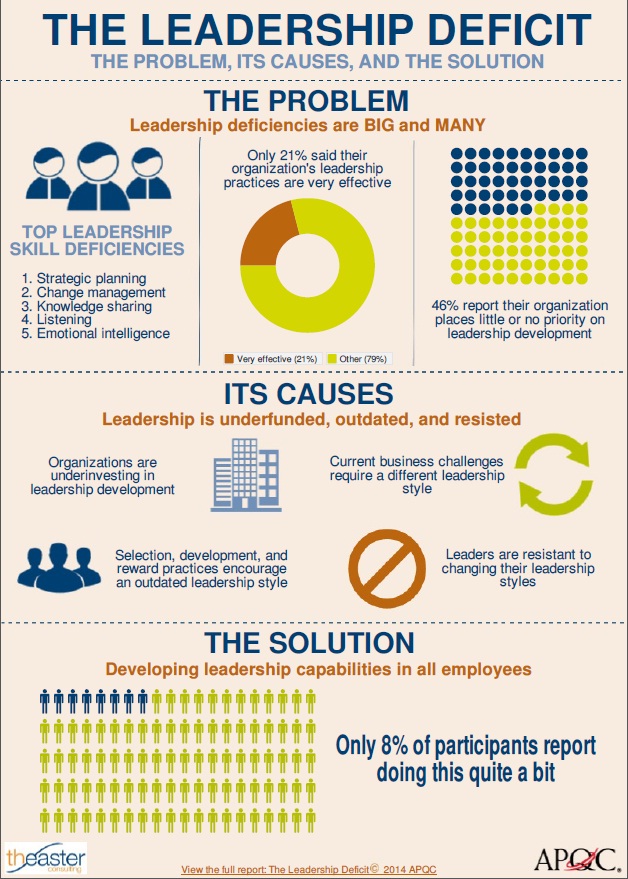
According to recent studies, only 21% of companies said that their organization’s leadership practices were very effective. This is a real problem, given that 62% of the most successful companies identify effective leadership as the most important factor in improving an organization’s agility. It’s obvious that leadership plays a significant role in the success or failure of any organization. However, there is no single, correct way for leaders to direct their subordinates. Each leader must instead develop a specific leadership style unique to their own personalities and circumstances.

Take a moment and consider your own leadership approach. Do you prefer to issue commands authoritatively, or would you rather nurture and guide your subordinates? Do you allow your employees equal say in the direction that your team or organization takes, or do you choose instead to seize total control, assuming the rights and risks of leadership solely for yourself? Recognizing how you prefer to lead is a vitally important aspect of command.

Researchers have identified three archetypal leadership styles that can be used to describe most leaders in most situations. By gaining a better understanding of the strengths and weaknesses associated with the method of leadership that most comfortably fits your personality, you’ll be able to leverage your skills to reach more consistent success. To that end, let’s briefly address the three most common methods of command that have been used by leaders throughout the ages:

1. Autocratic

The autocratic leader is one who understands the strength of authority. These are the leaders who see their subordinates as cogs in a greater machine—vital and valuable cogs, but cogs nonetheless. These leaders are not interested in the opinions or suggestions of their underlings, and they are certainly not interested in opening up the decision-making process to the entire group. Instead, they choose to bear the yoke of leadership completely alone, and they expect those who fall under their authority to either follow orders, or make room for someone who can.

Advantages: Autocratic leaders are able to improve efficiency and productivity by streamlining the work process. They create firm deadlines, and generally have a very clear set of expectations for their subordinates. Likewise, in a time of crisis or emergency, autocratic leaders can quickly decide upon and implement responses without having to gain the support of the rest of the team. Due to their unwillingness to delegate, autocratic leaders cut down on the kinds of misunderstandings that arise when information and directives are passed through multiple layers of management. This may also result in subordinates who are better trained, and who are more productive, because the autocratic leader is able to supervise his or her team directly.

Disadvantages: Autocratic leaders have only their own ideas and experience to draw upon, and are generally unwilling to accept advice from underlings. This means that any creative input that could be offered by other members of the team will likely go unspoken, which is unfortunate, given that many such leaders lack creative problem-solving skills. Additionally, those who work under autocratic leaders often end up resenting their manager, because they feel as though their own contributions aren’t being recognized and their suggestions aren’t being heard. Autocratic leaders are also much more likely to micromanage, which studies have shown can result in increased likelihood employees taking extended sick leave. Autocratic leaders often find themselves at the center of a hostile or low-moral work environment, which can lead to high employee turnover.

When to use this style: The Autocratic leader is most valuable when times get tough. By taking control and being willing to make quick and difficult decisions during times of crisis, you’ll be able to minimize damage and better lead your team to success. During times of emergency, your team will appreciate a strong and decisive leader. An Autocratic leadership style may also come in handy when team correction is necessary. However, when times of crisis pass, it is generally more beneficial to allow the group to provide input and take part in the decision-making process, at least to a certain extent.

2. Democratic

Democratic leaders are those who encourage the free exchange of ideas throughout a group. Within these teams, all members have an equally valued voice, and the ‘leader’ acts as more of a spokesperson or facilitator, ensuring that decisions reached by a consensus are carried out. Democratic leaders rely on the participation of the group, and put a great deal of value in the expertise each member of the group brings to the table. A democracy lacks one single, powerful leader. Instead, every employee shares the freedoms and responsibilities of leadership equally.

Advantages: Democratic leaders enjoy the boundless creativity of the entire group. This means that difficult issues are more easily addressed, and better solutions are more likely to be found. At the same time, the internal communication gap that often develops between employees and management is generally reduced in a democratic environment. Likewise, team unity generally grows as a result of democratic leadership, and common office politics (gossiping, cliques, manipulation, etc.) become much less prevalent. The end result is that the work environment improves, and employee turnover is reduced.

Disadvantages: Deliberation is a luxury that sometimes simply cannot be afforded. When decisions need to be made quickly in the face of impending deadlines or other emergencies, a democratic leader may find that their subordinates are unable to adapt and function under the stress. Democratic leadership may also result in team members being unclear as to their own responsibilities, thus creating stumbling blocks when individuals members are forced to work without the benefit of the rest of the team. It can also be difficult in a democratic workplace to identify those employees who aren’t fulfilling their own responsibilities, as it’s much easier for them to simply ‘blend in’ with the rest of the group.

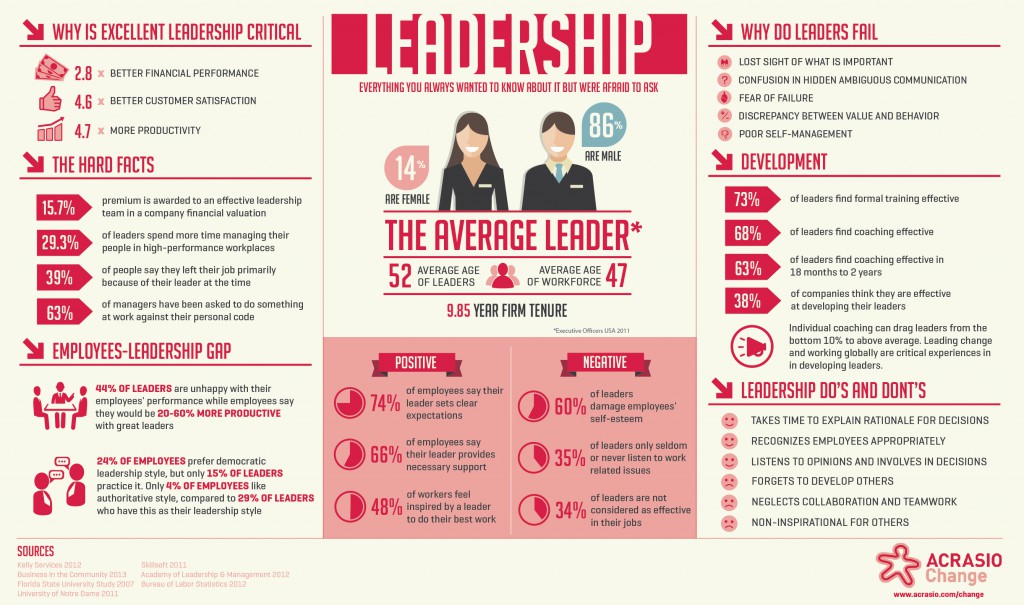
When to use this style: A democratic leadership style gives your team a feeling of ownership over specific clients, projects, results, and the overall success or failure of the team. In fact, given that many business leaders identify the democratic leadership style as the overall most effective method for day-to-day work, the real question here should be when not to use this style. This particular style is less effective during times of crisis. 24% of employees prefer democratic leadership, but only 15% of leaders practice it.

3. Laissez-Faire

Laissez-faire leaders are best described as ‘hands-off.’ In essence, they exist to assign tasks to their employees, but once the task has been assigned, and the necessary resources have been provided, these leaders simply cease being involved. Therefore, it’s up to the employees themselves to decide on the best approach in order to fulfill their responsibilities. Laissez-faire leaders put a great amount of faith in their subordinates, trusting them to remain self-motivated, on-task, and accountable. Of course, should any particular issues arise, the best laissez-faire leaders are those who remain available to offer direction to their employees when needed. However, as this direction is only given upon request, the laissez-faire allows each member of his or her team to succeed or fail based upon their own abilities.

Advantages: Laissez-faire leadership allows team members to operate completely free from unnecessary restrictions or inefficient interference from management. This gives skilled and self-motivated employees a chance to reach their fullest potential. Additionally, laissez-faire leadership helps promote employee morale in the workplace. This leadership style can also help streamline the overall work process, by eliminating superfluous steps designed to monitor and guide team members in completing their tasks.

Disadvantages: Without the firm hand of leadership to keep it on track, a team operating under laissez-faire leadership may quickly drop in productivity. Deadlines may not be reached, crucial steps in the process may be skipped over, and the overall quality of work may suffer due to a lack of guidance.

Likewise, with each team member pursuing their own goals in their own ways, team unity may begin to suffer. And, with leaders being seen as distant and possibly uninterested, team members may also begin to lose interest in the work, which can lead to significant losses for the organization (it’s estimated that disengaged employees cost American businesses between $450 and $550 billion per year).

When to use this style: A laissez-faire leadership style is one that relies upon the skill, motivation, and capabilities of every member of the team. As such, it should only be used when team members show the necessary drive and have the necessary training to be able to function without needing supervision.

In reviewing these three archetypal leadership styles, you may find you don’t fit perfectly into any one category. This is probably for the best, as the most successful leaders are those who are able to jump between leadership styles, picking and choosing techniques that best fit the issue at hand, and adapting their own unique methods on a consistent basis.

Remember, these styles exist to serve your organization, so don’t feel as though you have to conform your approach to fit some pre-determined mold. The most important leadership skill that you can develop is the ability to objectively recognize what aspects of your personal leadership style work in any given situation, and which aspects generate unfavorable results. By understanding these most common leadership styles, you’ll be able to consciously move between them to better position your team for achieving success.Effective leadership is, and always has been, about knowing what techniques to use and when. So, when faced with an impending crisis, a disengaged workforce, a lackluster creative process, etc., review your own methods and see where they might be lacking. A leader sets the tone for the entire team, and by changing the way you lead, you may find that your team will naturally adapt, evolve, and improve as well.

08 Jul 16:51

Budget vs Affordability – There Is a Difference

by Keenan
NOw only $55,000

NOw only $55,000


af.ford.a.bil.i.ty – noun — the fact of being cheap enough that people can afford to buy it or pay it

budg.et – noun — an estimate of income and expenditure for a set period of time

Notice, the definitions are not the same, but yet too many sales people treat them like they are.

It’s not uncommon for a salesperson or even the entire sales organization to accept a customer can’t afford their product or service because a customer or prospect says they don’t have the budget.  This is a HUGE mistake because not having the budget is not the same a being able to afford something.

Yes, not having the budget is tough. I get it. When an organization doesn’t have the budget, it makes the sale more difficult. You have to bring your A-game. You have to show tremendous value. Getting a buyer to exceed budget or reallocate budget to buy is legit selling, mastered by but a few truly bad ass sales people.

Making this happen requires a keen and powerful expression of the value proposition and its impact on the buyer’s organization.  Without it, buyers will wait or just not buy.  The risk or concern for exceeding the budget does not exceed the value proposition.

Let me say that again.

When a buyer doesn’t have the budget, if you want to get the sale the solution no only has to provide enough value to be worth the price, it has to provide enough value to be worth the price PLUS exceeding budget or stealing budget from another line item.

Affordability, on the other hand, has nothing to do with the budget. Affordability simply means the buyer does or doesn’t have the money.  It either exists, or it doesn’t. Affordability doesn’t address a willingness to spend money, or not. Affordability only addresses the availability of money for an organization to pay. When it comes to sales, this is a substantial differentiation.

When an organization can’t afford something, when they say they don’t have the money, move on.  The phrase you can’t get blood from a turnip applies. They can’t give what they don’t have.

When an organization doesn’t have the budget, well that’s a very different situation. When an organization says they don’t have the budget, what they are saying is the weren’t planning on spending money at this time, on this type of solution. It doesn’t mean they don’t have it.

When a customer or prospect says they don’t have the budget, that’s not the same as saying they can’t afford it.

When a customer can’t afford it. The sale is over, walk away.

When a customer doesn’t have the budget, the deal just gets more complicated.  It’s time to hone in on the value proposition and the impact to the organization. When lack of budget is present, that’s the time to show ROI calculations or address opportunity costs. This is the time to demonstrate that sticking to the budget costs MORE than sticking to the budget.  If the return is there, the budget will be found. You just have to work a little harder.

People WILL find “the budget” if the value is there.

Don’t make the mistake of assuming budget and affordability are the same. They’re NOT!!!  Thinking they are is the sign of a rookie sales person. Don’t sell like a rookie.


08 Jul 16:50

How to Use a "Hold-Back Device" to Leave Prospects Wanting More

by stuheinecke@gmail.com (Stu Heinecke)

hold-back-device.jpg

Whenever you're selling, you should be thinking about starting valuable relationships based on delivering unique and substantial value to your VIP prospects. That should be happening throughout your entire company's marketing and sales strategy, but it operates in overdrive once you, the salesperson, makes contact with buyers.

Put yourself in the prospect’s place for a moment. You’re busy. Maybe you’re getting ready to travel or make a presentation to your board of directors. The phone rings constantly and, without your assistant’s help, your email inbox would swell with thousands of messages from people you don’t know, all of whom want a piece of your time and a chunk of your business. It’s relentless and quickly becomes annoying background noise to which you are committed to filtering agg essively.

As a salesperson, your challenge is not just rising in importance to the target executive, but aligning your mission to what is important to your prospect. We can assume they are all focused on achieving and exceeding their goals, on peering into the future to find new competitive advantages, and squeezing more efficiency from their operations.

That’s a good place to start and, in some cases, may be enough to put your campaign on target. But what if it isn’t enough to get the target executive to commit time to your call or meeting?

I employ a strategy I call the "hold-back device" to capture my target prospects' attention.

Your hold-back device should be an extension of the initial theme and message, but should offer something of irresistible value. To deliver value uniquely tied to you, your company, and your offering, you need to come up with something all your own. To offer true value, your campaign should focus on the recipient’s needs, circumstances, and goals -- but it should be suggestive of your value as a new confidant.

That requires an honest inventory of your company’s unique assets. What is it you do that could be of value to the target VIP? If your company provides consulting services, is there a way you can produce an eye-popping report on the target executive’s company? Most executives are hungry for honest intelligence that helps them see their company in relation to their competitors and the market ahead. And they would gladly welcome such a report.

If not a report, how about doing a bit of probing to identify the things the executive is talking about, and collecting a set of articles on the subject? Is there a book you feel best expresses the direction you’d like to take the target executive’s company within your own offerings? Both of these make fine hold-back devices.

The hold-back device in your should not become a bribe, because that won’t work with VIPs. They can afford the football phone if they really want one. Your challenge is to provide something they can’t get elsewhere that helps them achieve their goals. More than anything else, it is to provide a compelling reason why the target executive needs to strike up a relationship with you and your company.

How a Hold-Back Device Supercharges Your Chances for Success

In any new business relationship, it’s imperative that you always have more to offer. If you are the pursuer, you need to keep the process moving. In the early steps of your contact efforts with your VIP prospects, that need is magnified because they’d still rather ignore you at that point.

Hold-back devices can be thought of as that critical Step 2 of your contact process. If you’ve gotten an executive’s attention with your initial contact effort, having a powerful second step ready to go enhances your success rate.

By the time you have delivered your hold-back device, you will have had three critical and positive points of contact: the initial campaign touch, the meeting or phone conversation, and the reward for having participated. You’re already 90% there.

Of course, you still need to have a cogent case for your proposed sale or strategic alliance. But by the time you have delivered your hold-back device, you will have broken through the “I don’t have time to talk with this person” wall. The target contact will have heard your Anti-Pitch and gotten to know you and your company, and you’re now in a position to get some clarity on where the two of you go from there.

That’s hugely significant progress toward changing the scale of your business. Moreover, if your outreach efforts have done their job, the target contact not only knows you, they’re starting to like you. They like the way you approach challenges, the way you think. And it’s all tied initially to the quality of thinking behind your outreach. It just makes sense that a campaign that carries you through three critical steps of contact is going to be more effective than a campaign that only offers a single upfront touch.

Remember:

  1. Hold-back devices operate like premiums, providing a critical push to get your VIP prospects to follow through on your request to meet or talk.
  2. Hold-back devices are something of unique value to the target executive that are relevant to their own lives and goals.
  3. Hold-back devices may be branded, but the less you focus on your brand and the more you focus on the target executive’s current issues, the more valued the devices will be.

Editor's note: This blog post was excerpted from "How to Get a Meeting With Anyone" and is republished here with the author's permission.

Stu Heinecke is also a Wall Street Journal cartoonist, co-creator of the NASP's 30-day behavioral program, "The Power of Contact Marketing," host of Contact Marketing Radio and founder of Contact, a contact marketing agency devoted to helping enterprise sales teams break through to named accounts with greater efficiency.

HubSpot CRM

08 Jul 16:49

Q&A: The Big Email Marketing Questions Answered

by Dave Chaffey

Q&A- The Big Email Marketing Questions Answered

I recently participated in a Marketo webinar on Key Email Trends European Marketers Need to Know (that really all marketers need to know). We left some time for questions, and we received plenty of interesting questions on email marketing—from basic to advanced. It was interesting to see how similar these questions were and the common themes that arose, despite the different topics we covered.

Because we couldn’t address all the questions in the session, I’ll answer some of the most frequently asked questions in this blog. I’ve grouped them into the categories of evaluation, growing and profiling your list, segmentation and targeting, and email frequency:

Email Marketing Evaluation

Q: What responses should I be receiving for my emails?

A: Although most marketers measure their email success with open and click-through rates, a practical tip is to combine these measures to look at the click-to-open rate (CTOR%). This shows you how effective your creatives and offers are for different types of campaigns.

To evaluate your email marketing campaigns in a more realistic way and identify ways to improve them, I recommend breaking out your overall responses by:

  • Type of email: Categorize your responses by the types of emails you send. For example, personalized, event triggered emails tend to perform better than untargeted newsletters or 3rd party email advertising (sometimes known as a solus emails), which can make the average meaningless if you group them together.
  • Lifecycle stage: Emails sent to recipients who are in an earlier stage of the customer lifecycle, like welcome emails, usually work better than emails to long-term subscribers, so you need to break these out accordingly.
  • Segment: Your response will naturally vary by how it resonates with different audiences, so break out your response by the different audience types.
  • Subscriber type: Determine how your responses vary by the subscriber type, such as between Gmail, Live Mail, and iCloud addresses and company addresses. This can help you identify delivery or rendering issues between each type.

Evaluating your emails with these factors in mind will give you a much better idea of the engagement your email campaigns are getting and how you can optimize them (if your email provider supports it).

Q: Given the increasing number of email clients that download images automatically, how important are open rates as a metric now?

A: Email open rates have always been potentially misleading since some email clients may block or download images by default or some users will change their preferences to automatically download them. Today, Gmail and Apple Mail on iOS tend to download images by default, so this doesn’t necessarily suggest interest in your emails, but more so that a reader has clicked on the subject line.

However, I believe that open rates are still relevant for comparing email effectiveness between recent email sends. Comparing open and click rates helps you measure the different types of email sends (outlined in the previous answer) to reveal which perform the best. Ultimately, what really matters is whether the emails you send are helping you reach your goals. For some marketers, one of the best measures of effectiveness is sales value generated per 1000 emails sent.

How to Grow and Profile Your List

Q: What are the best ways to encourage opt-in?

A: I recommend brainstorming alternative techniques for capturing e-mail addresses. Map out all the opportunities available for capturing a buyer’s information between your different channels and audience segments (shown in the matrix below) and use this to generate new ideas. Take a look at what you and competitors are currently doing and then do a ‘gap analysis’ to select options you aren’t currently using.

Here are a few examples you could start with:

Lead Capture Matrix

Q: Should I be using pop-ups?

A: Pop-ups are increasingly being used in many industry sectors, particularly retail, publishing, and travel. This is because, when well-defined and tested, they will almost always give you significantly more new contacts in your database. We discussed this in depth in the webinar, when I described how well they have worked for Smart Insights, increasing the conversion of visitors to leads by 35% on a site where we already use a range of prompts to encourage subscription.

Q: What about the quality of the people from pop-ups?

A: If you use pop-ups to boost your subscriber numbers, it’s inevitable that there may be some decline in quality—but from my experience, they are still very worthwhile. To maintain the quality, it’s important to be able to profile visitors efficiently. Also, follow best practices to be sensitive to the user experience and don’t display a pop-up too quickly. You can address this by adding a time delay or detecting exit intent (e.g. when movement of the mouse to the navigation bar suggests users are about to leave the page).

Q: How much do I need to profile subscribers?

A: There’s a balance between asking for too much profile information and thus reducing the number of new contacts added to your database and not asking for enough. Identify two or three ‘killer question’ profile fields to ask subscribers that are most important for enabling your business to send more relevant emails. For example, at Smart Insights, we ask about the subscriber’s role, sector, and the number of people in the marketing team and then tailor our welcome emails based on the responses.

Q: How can I target better without asking too many questions?

A: A good rule of thumb for this is to ‘watch, don’t ask’ or ‘sense and respond.’ Instead of asking interruptive questions, monitor your recipients’ clicks to better profile them and understand their needs. Then, trigger follow-up communications accordingly. Some examples include:

  • Monitoring click-throughs to different types of content or offers within your emails.
  • Recording which content or offers are browsed on your website and then adding them to the individual’s profile.
  • Recording products or categories searched for and then following up with relevant information.

Over time, you should continue to add details about your buyers to gain a better picture of them by asking additional questions or tracking their behavior. For a B2B organization, I recommend defining a common customer profile (CCP), which includes all the data you could potentially collect in addition to the data you already have on a subscriber. I worked with one B2B organization that had three levels of profile and separate goals for each: level 1–basic contact information, level 2–position, market sector, and application and level 3–detailed information about standards and preferences.

Segmentation and Targeting

In the webinar, we looked at results from different research studies which revealed that detailed segmentation and targeting for email is still surprisingly rare. We also did a poll which showed that around 40% of the hundreds of marketers that attended the webinar didn’t target their audience. So, we received some interesting questions about how to get started.

Q: Where can I begin to improve email targeting?

A: Ideally, you want to start your targeting with a quick-win technique that is simple, but achieves the best results. Some options you could consider include:

  • Creating two (or more) alternative versions of your standard newsletter. For example, you could create different versions for larger or smaller businesses, staff in different sectors, or male or female subscribers.
  • Changing your welcome email content to be relevant for different audience segments.
  • Sending post-purchase emails to promote similar products or related products in different categories (cross-sell and upsell).

You can send these variations by creating distinct rules in your marketing automation or email system. This is a relatively quick win, and while it is efficient, it may not scale to multiple content types. This is where I recommend ‘dynamic content’ insertion (which I’ll cover next).

Q: How can I get started with dynamic content insertion?

A: With dynamic content insertion, you can add different content to a single section or block within your emails. For example, many emails have a ‘hero’ section at the top email, which often have the biggest impact because they are seen first. Dynamic content insertion will enable you to tailor images and text in this block to appeal to different audiences.

Once you roll this out, you can develop a dynamic content marketing model that gives better results. In the webinar, we looked at this personalized B2B email example in which a series of dynamic content blocks were displayed:

  • Hero block content varied based on lifecycle stage (new subscriber vs. engaged subscriber vs. lapsed subscriber)
  • Secondary block content tailored by product category interest
  • Tertiary block content varied by discounts and offers relevant for the audience

Frequency for Email Marketing

Take a look at this data gathered from UK email marketers that shows a huge variation in the number of emails they send every month.UK Marketers Email Frequency

Accordingly, if you send just one email a month to your subscribers, you might be under-mailing and missing out on opportunities. But, if you’re emailing your subscribers more than eight times a month, you’re probably sending too many emails and are in danger of being seen as a spammer. The next question will explore how to get the balance right.

Q: What is the best frequency to send emails?

A: This is one of those ‘it depends’ questions since email frequency depends on the industry, audience, and what you’re looking to achieve. In retail, it’s common to email more frequently to prompt sales—at least weekly; whereas, in many business sectors, this may be considered too much.

Here are three techniques you can use to determine the ideal frequency for your business:

  • Test varying frequencies for different groups. This method will only be practical for larger businesses since it’s far more involved than A/B testing a subject line. You can classify a control or ‘hold-out’ group which has the original frequency and then create different segments for varying frequencies. For one financial services company we worked with, we originally set the frequency to be monthly and then increased it to weekly and fortnightly. In this case, we found that the increased frequency resulted in more product sales without causing a big issue with engagement or unsubscribes.
  • Vary frequency by individuals depending on activity. One of the biggest challenges of email marketing is inactive subscribers. For many businesses, a large proportion of their subscribers haven’t engaged with their emails in the last six months or even a year. While some would argue that you should still regularly email these subscribers to stay top-of-mind and increase the potential of sale, I would argue against this since you could be identified as a spammer, negatively impacting your email deliverability. Instead, if an email subscriber becomes inactive, you can try to win them back to start regularly engaging with you again, and then add them to a different email group that you mail less frequently, but hopefully, with more impact!
  • Vary frequencies throughout time using automation. This is a more sophisticated approach where individual frequency is controlled by the rules in your prospect or nurturing campaign. The emails you send to your subscribers depends on where they are in the lifecycle (new or older subscriber) and their behavior as they interact with different products and offers across your channels. Using this approach, you can increase email frequency (and offer a personalized message) when a subscriber shows more intent or engagement with your product.

As you can see, we received a lot of great email marketing questions during the webinar. I hope these insights help you assess your current methods, try new approaches, and improve your email marketing. If you have any other questions, please feel free to ask them in the comments below!

08 Jul 16:49

The New Face of Outbound Marketing Balances Inbound

by Amy Chick

inbound_outbound_blog_graphic.pngContent creation has become a main B2B marketing focus over the last few years. Until fairly recently, however, many marketers have leveraged their content for inbound marketing strategies alone, while neglecting all the possible impact it could have via outbound marketing strategies. But that’s all changing, and for good reason.

Imagine your business is a brick-and-mortar cheese shop, and your marketing strategy is limited to the free samples you offer pedestrians as they pass by your door. Think about all the customers who shop at the grocery store around the corner, but never appear on your doorstep because they don’t know you exist. Think about the foot traffic you’d miss, and the potential new customers that would never even show up on your radar.

Believe it or not, many businesses rely on this approach when marketing online.

Why inbound alone isn’t enough

Inbound marketing has become the darling of the digital marketing world in recent years, partially because it’s a seemingly less-obtrusive approach to customer acquisition. But when you implement an inbound-only strategy, your business is limited to customers who find you by chance – through search, social media, or otherwise. This means you’re very likely missing the opportunity to engage with prospects who don’t already shop (or search) in your virtual neighborhood.

In this sense, inbound marketing creates a very finite funnel. Your content will eventually tap out, having recruited all the interested prospects that already have a presence in your corner of the internet. You’ll get the occasional nibble, but your leads will taper and your demand generation ROI will diminish along with it.

This kind of inbound-marketing tunnel vision is also highly inefficient. Depending entirely on inbound traffic to generate new contacts (that hopefully convert to pipeline opportunities) forces you to continually pump out new, engaging content.

When this content inevitably loses steam after an initial traffic spike, you must speed up the hamster wheel just to maintain a certain pace of lead volume. This isn’t efficient…or good for team morale.

Creating new, valuable content for your audience is always a good idea. But it’s also smart to ensure that content has the biggest impact possible. Supplementing your inbound efforts with a strong outbound strategy puts your high-performing content in front of new audiences to efficiently scale your business.

Outbound marketing with a facelift

At one time, outbound marketing had a bad reputation for taking an intrusive broadcast approach to lead generation. But marketers have since adapted the permission-based tactics of inbound to target persona- and account-based audiences with valuable, educational content.

outbound_content_marketing.jpg

Remember your cheese shop? Imagine you start offering your free samples at boutique grocery stores in the area, along with a recipe card stamped with your store address. You’ll probably find plenty of new customers who are already interested in specialty cheeses, but didn’t realize there was a shop in the next town over. Some of these new customers will take a trip to your store, and others may tell a friend about the delicious cheese they sampled at the grocery store. This is outbound marketing in action.

One of the most effective ways to take this approach involves content syndication: working with media partners to build outreach campaigns and put your content in front of new, proven audiences with relevant interests. Instead of collecting leads as they appear on your doorstep, you can proactively generate new contacts and pad your sales pipeline by seeking out qualified prospects who would otherwise be unaware of your business.

Why outbound marketing can seem like too much

Despite the effectiveness of outbound tactics like content syndication, this approach can become overwhelming as it scales. For one, the orchestration of outbound tactics and demand marketing campaigns is pretty labor-intensive. It can take hours, days, or even weeks to develop and test a new campaign, go live with the content, set up tracking systems to collect metrics, and address logistical issues that arise. And you have to do this for each campaign, with each media partner.

Lead management and analytics create additional headaches – especially when each of your media partners delivers your information in a different format, and with different parameters for qualification. Combined with the sheer volume of leads you can generate through content syndication, these issues make it difficult to engage and convert before they decay, which eats into your ROI.

Top-funnel demand automation to the rescue

Traditional outbound tactics were difficult to automate and measure, making it difficult to stand up against the gratification of inbound. But marketers have created smarter ways to make outbound more like inbound, so you can tackle demand marketing holistically, and in a scalable environment.

top-funnel_marketing_automation.png

Top-funnel marketing automation platforms allow you to manage multiple data sources, marketing channels and media partners from one dashboard, so every campaign is integrated and streamlined according to overarching strategic goals. This makes it easier to boost your content’s impact, ensure the integrity of your database and avoid lead decay, maximize resources and measure all program elements (data providers, media partners, assets, tactics, etc.) holistically for better optimization.

It’s time to add outbound marketing to your demand generation efforts. You’ll quickly see results as your content reaches new audiences.

Iron-Mountain-Demand-Gen-CTA

08 Jul 16:48

3.5 Ways To Plug Sales Funnel Holes Your Inside Sales Team Is Missing

by Diana Cárdenas

water funnel

Do you have a leaky sales funnel? Are you losing leads?

If you fail to pay consistent attention to prospects at all points in the sales journey, eventually your closers will have nothing on deck. By continually qualifying targeted, sales-ready leads, an outsourced lead nurturing service plugs holes in your sales funnel that your inside sales team may not even recognize.

You can maximize the effectiveness of your sales funnel in 3.5 ways:

#1: By Continually Adding Prospects At The Top Of The Funnel

An inside sales team working on a long sales cycle can be so focused on a few active leads that it doesn’t recognize no new prospects are entering the funnel.

For instance, if you have an eight- to 12-month sales cycle, your sales staff may be putting all its time and energy into nurturing the four or five leads that have shown interest. Say your staff closes on three of those leads – terrific! Except there are no leads above them in the funnel, which is going to leave you with a significant revenue gap in eight to 12 months.

You need to be refilling the funnel with new leads each and every month. An outsourced sales partner can regulate the flow of prospects for you. While your in-house team focuses on closing on those five prospects, your partner ensures you have five prospects that are 25% to 75% of the way through the funnel. Then, your reps can start working with these warm introductions and educated leads while your outsourced partner fills the funnel again.

#2: By Evaluating The Sales Process In The Middle Of The Funnel

Many companies experience problems during the sales process but lack the larger perspective that enables them to identify and solve those problems before they get out of hand. An outsourced sales partner patches up your sales funnel so it doesn’t leak – or even replaces it with a new, stronger, less leaky funnel.

For instance, your outside partner can evaluate your sales process if you’re having problems. Since your partner likely is working in several different industries – including numerous other companies working in your industry – it’ll know what techniques have proven effective. Your outsourced partner has a robust sales force infrastructure, including experienced managers who know what to look for. This type of tribal knowledge is rarely available in the limited scope of a single in-house sales team.

Thus, rather than figuring out a solution on your own by trial and error, or hiring a consultant to come in and troubleshoot this single issue, you can rely on the extensive knowledge base represented not just by the outside manager you usually work with but by all of his or her colleagues as well.

#3: By Accelerating The Close At The Bottom Of The Funnel

The bottom of the funnel – the close – is another area where you can benefit from your outsourced sales partner’s breadth and depth of experience. Different industries and different client personas call for different closing methods, and since your partner is likely familiar with many of them, it can train your in-house staff on proven methods that may be new to you.

For instance, are you familiar with the technique of using a trial close to accelerate the sales process? Early in the sales process, ask a prospect, “If this made sense financially, would you go for it?” If the answer is “yes,” you’ll be able to move quickly through the other steps of the close, such as systems integration for a software sale or switching providers for telecom.

If you’re not successfully closing on your sales, you have a significant gap in understanding, and an experienced partner can help your inside team with this problem.

#3.5: By Diversifying Throughout Your Funnel

Just as you diversify your stock portfolio to make sure you’re not too reliant on any single stock, you should be diversifying your sales channels. This ensures that opportunities don’t fall between the different channels. Add an outsourcer to the mix, and you add another way to be successful, and another way to mitigate the risk of excessive reliance on your other programs.

Ready to let an expert sales partner plug the holes in your sales funnel?

» Discover The Data-Driven Benefits Of Outsourcing Sales

08 Jul 16:48

How to Build an Event SLA For Marketing and Sales

by Phoebe Farber

Marketing and Sales don’t have a great history of agreeing on things, but alignment between the two teams is critical for event success. Service-level Agreements (SLAs) are an effective way to outline agreed-upon goals and expectations between two teams. Since in-person events require a lot from both Sales and Marketing, it’s necessary to have an event-specific SLA.

Sales and Marketing Event SLA

Most Marketing and Sales SLAs focus on the journey of passing over marketing generated leads and the expected follow up from Sales. Marketing is accountable for sourcing leads that meet a certain criteria while Sales is accountable for proper follow-up with those leads. Events require their own SLA because they are one of the more complex, hands-on marketing tactics.

Each component of your SLAs should answer these questions:

  • Who is involved? What teams or people are responsible?
  • What is the expected action? What exactly do you need Sales/Marketing to do?
  • What is the timeline/deadline?

Your Event SLA should include the following three sections:

1. Driving registration & attendance

Who is involved?

  • Marketing:
    • Marketers who are responsible for setting up registration, event logistics and planning, marketing automation, and event marketing.
  • Sales:
    • Customer Success and Sales Reps who own the relationships with potential attendees. They will have the highest likelihood of connecting with your ideal attendees and should help drive registration and attendance.

What is the expected action?

  • Marketing:
    • Marketing needs to develop and share an event marketing plan that includes:
      • Event information: venue, time, date, location, agenda
      • A goal for registrations
      • Timeline for invitation & reminder emails
      • Outline of what content needs to be created for emails and promotion
      • Cadence of email invitations
      • Create a curated list for Sales of people to invite
      • An outreach schedule for Sales, including email templates
  • Sales:
    • Reach out to target list of invitees via email, social, phone, etc.

What is the timeline/deadline?

  • Deadlines for each of the deliverables should be outlined in a clear and concise way at the beginning of the event planning process and be in a place easily accessible by the team. There should also be visibility into progress towards your registration goal from within your CRM/Marketing automation.

Example from Attend:

We meet with our sales, customer success, and marketing teams prior to every event. Marketing determines the event format, content, & venue and shares the capacity of the event, registration goal, & target audience with sales.

Marketing shares an email template to be used for personal invitations from reps, the link to the registration page, and a Salesforce list of registration targets and their owner. The sales team reaches out with personal invites & confirmations while marketing sends emails as air cover to ensure that we meet our registration goal and get the right people to attend.

2. Engaging attendees on-site

Who is involved?

  • Marketing:
    • Whoever is in charge of managing the event, specifically the registration list and check-in logistics.
  • Sales:
    • Members of the team who will be attending the event.

What is the expected action?

  • Marketing:
    • To prepare for the event, Marketing and Sales should review the registration list and develop an engagement plan so members of the Sales team know who will be in the room and who they are responsible for connecting with onsite.
    • Marketing is responsible for optimizing event check-in so that getting attendees in the door flows well. The team should plan to incorporate technology to ensure that all attendance and on-site engagement data is captured accurately.
  • Sales:
    • At the event, Sales team members should know who they are supposed to connect with and have done some research on them to prepare for a meaningful conversation. Sales should have a process for knowing when their contacts arrive and be able to view contextual data on those attendees. They are responsible for making the effort to speak with them and subsequently get their notes back into their CRM.

What is the timeline/deadline?

  • Marketing:
    • Pre-event, Marketing should plan for their event check-in flow, test any technology they plan to use to aid in their efforts on-site and develop their engagement plan.
    • At the event, Marketing should plan to arrive several hours early for set-up after determining what is required and who will be assisting.
  • Sales:
    • Sales should use the week before the event to prepare for their event responsibilities and arrive that the event at least an hour in advance.

Example from Attend:

For a recent event, we scoped out our venue and decided that we would have check-in at the entrance to our event, manned by two members of the marketing team who would greet attendees and print a name tag for them. The marketing team also called a pre-event team meeting a week before the event to review logistics and the on-site engagement plan so both teams were on the same page.

As people arrived on event day, the sales team member who “owned” the attendee got a notification. The sales team mingled with guests during the event and uses the Attend app to mark who they spoke to, what the spoke about, and to sync that data with Salesforce.

3. Following up quickly

Who is involved?

  • Marketing:
    • Members of the marketing team who deal with event marketing, marketing automation, and content marketing.
  • Sales:
    • Members of the sales team that will be at the event, have prospects or customers who registered for the event, or will be expected to follow up with attendees.

What is the expected action?

  • Marketing:
    • Event attendance data needs to get back into the system of record as soon as possible. Marketing will send an email sent to attendees and an email to no-shows.
    • On the marketing automation side, all attendees should be scored, have their program/campaign member status updated, and passed over to sales properly. Marketing should share their follow-up plan and timeline with sales and offer guidelines around how sales should follow up with templates and/or talking points.
  • Sales:
    • For timely and contextual follow-up to happen, records of event engagement (who spoke to who) and event conversation notes need to be properly logged in the CRM.

What is the timeline/deadline?

  • Marketing:
    • Fast follow-up is extremely important for event success. To facilitate expedient follow-up, event attendance data updates and lead handoff must be made almost immediately post-event. Marketing email follow up should be completed within a day of the event.
  • Sales:
    • Sales reps need to start the follow-up process within a day of the event (if not during or immediately afterward).
    • Sales reps should follow a pre-defined timeline and cadence for follow-up (emails, phone calls, social engagement, etc).

Example from Attend:

We use Attend’s check-in app which syncs with our Marketing Automation platform in real time. When we walk in the door the next day, our lists are queued up and we’re ready to send out our marketing follow-up emails. We keep those generic with photos and/or links to content like a recap or slideshare.

Similarly, we have workflows set up to distribute leads and let reps know that post-event follow up is required. Since our sales team took notes on site or at least indicated that they had a conversation, follow up is faster and more effective.

Having this SLA in place will help for future events since you will have the framework available. You also have the benefit of learning as time goes on and making necessary adjustments.

Developing an Event SLA with input from both the Sales & Marketing teams will make your events run more smoothly from beginning to end. Understanding who is involved with each step, what exactly the deliverables are, and when they are due helps to unite the teams behind one, agreed upon plan so everyone can more forward in lockstep.

08 Jul 16:47

4 Times Phil Schiller Showed Us What Being a Marketing Boss Looks Like

by Devin Pallone

If you don’t know who Phil Schiller is, Google him – you’ll be glad you did. Phil Schiller is Apple’s Marketing Chief, but this is just his official title. In reality, Schiller is a technology guru, mega media influencer, and social marketer extraordinaire.

What makes Schiller so great? For starters, he isn’t afraid to troll the Twitterverse and school users on the proper pluralization of Apple products. (In case you were wondering, it’s “I have two iPhone devices,” not “I have two iPhones.”) Phil Schiller is a walking, talking example of what it takes to master marketing, and we should all take a page from his book.

#1: Winning the Title of the World’s Most Influential CMO (x4)

In 2015, Schiller topped Forbes/ScribbleLive World’s list of the 50 Most Influential Chief Marketing Officers (CMOs) for the fourth year in a row. The fourth year in a row. Not only did he make the list of the top 50 Most Influential CMOs from around the globe, but he did it four times—last year with a score equal to more than the next eight most influential CMOs combined. Many attribute Schiller’s influence to Apple’s high-profile product debuts, but his influence extends well beyond such unveilings.

Schiller’s influence comes from a combination of his killer social media skills, mobile marketing prowess, and incredible marketing innovation. His ability to influence a range of global business and marketing topics sets him apart from the Average Joe—yet he remains as down to Earth and approachable as your next-door neighbor. This stellar combination is marketing magic and has led to Schiller being recognized as the world’s most influential CMO year after year.

#2: Dominating Content Marketing

You may believe Schiller’s near-perfect marketing abilities are unattainable to the lowly Everyman CMO, but with a few simple steps, you may be closer than you think. After the 2015 list came out, Skyword Content Standard published an article with this infographic:

Post 2 Image 2 Infographic

According to this analysis, content marketing is the number-one topic every influencer on Forbes/ScribbleLive World’s list is currently talking about. This doesn’t come as a surprise. Content has been the buzzword on everyone’s tongues for quite some time now. Content marketing seems to transcend time and technological advances, remaining relevant into the foreseeable future. It has evolved from the written word to photo and video, but its main goal remains the same: to reach a brand’s desired audience with powerful, relevant information.

Schiller remains true to the main goal of content marketing in every aspect of his life. He has been with Apple for over 20 years, and in this time, he has shaped the way the brand interacts with consumers. While in charge of business and product marketing, Schiller created campaigns for some of the biggest devices in history, including the iPod, iPhone, and MacBook. These products used to sell themselves, but now Apple faces advancements from competitors such as Samsung and Android. Still, Schiller manages to sustain revenue growth.

#3: Telling Stories Heard ‘Round the World

Post 2 Image 3 Phil Schiler

Your own brand can conquer content marketing by honing one main skill: storytelling. At its core, content tells a story. It weaves a narrative about your brand, goals, purpose, and the product or service you offer. If your content falls flat and fails to express your brand’s story in a compelling way, don’t expect to hook your audience or retain consumers.

Phil Schiller shows off his own storytelling chops every time he takes to the stage for a new product debut. Schiller’s are world-famous, due to more than just the fascinating products he introduces. His ability to paint a picture with his descriptions goes a long way toward selling the product to the public and connecting with Apple’s target audience: technology consumers.

As the voice of Apple, Schiller is under immense pressure to sell a product without sounding too salesy. And ladies and gentlemen, he pulls this off gorgeously. For example, in his recent iPad Pro unveiling, Schiller leads his audience through the many features of iPad Pro with a focus on the user instead of the product itself.

He makes jokes such as mentioning how “sad” it is that over 600 million people have PCs over five years old, keeping his pitch lighthearted to connect with his audience on a personal level. He masters the art of storytelling with his sales pitches, allowing the world to see Apple products through his eyes.

#4: Connecting With Apple’s Audience Via Social Media

As I mentioned earlier, Phil Schiller really knows how to tweet. His Twitter presence extends beyond the typical duties of a CMO. Not only does Schiller announce new products and push sales, but he also connects with Apple fans personally—encouraging mass retweets and shares. By engaging with fans and customers on Twitter, Schiller boosts brand awareness and keeps Apple relevant.

Social media campaigns are incredibly important to a brand’s health in the 21st century. As the Millennial generation continues to gain more buying power, business owners need to tailor their marketing efforts to attract a younger audience. The number one way to achieve this is through social media marketing.

If you aren’t taking the time to master social media marketing, it can damage your revenue growth in the long run. From participating in 2014’s ALS “Ice Bucket Challenge” to responding to fans’ tweets on Twitter with snarky comments, Phil Schiller continues to extend his influence to today’s buyers, ultimately boosting sales for Apple.

From Social Media Maverick to Global Influencer, Schiller has many titles—but you don’t have to be a marketing expert to share in his success. Keep your marketing strategy relevant by engaging with your audience via social media, and remember to tell a story with your content. Above all, keep in mind that consumers want to feel a connection with your brand. You can be that connection.

07 Jul 15:40

4 Roles of a Demand Generation Strategy Consultant

by Jennifer Harmel

I love my job. When people ask me what I do for a living and I reply with “consulting” there’s always that glazed-over look in their eye. Some nod and pretend they know what I mean. Others are curious enough to ask questions such as “consulting for what?” or “consulting for whom?” When I explain that I’m a Demand Generation Strategy Consultant the confusion and lack of understanding is further magnified. I can see their gears turning. What is Demand Generation? Why would there be consultants for that and what does that mean you actually do?

shutterstock_267821777Perhaps I should put it in terms everyone can understand. How about this….I work with large businesses that sell to other businesses to help them figure out how to generate awareness, turn the awareness into sales opportunities, and ultimately drive revenue from their marketing and sales efforts. We do this using buyer research, technology, content, data and lead management best practices. Even that is quite a mouthful, isn’t it?

Yes, it is a mouthful but it’s an honest answer to the question. I may not be splitting atoms or curing cancer, but I’m helping enterprise companies understand their buyers, leverage technology, and build marketing programs that will generate real results which are ultimately, measured by revenue. There are four roles that Demand Generation Strategy Consultants play:

Researcher-
One of the reasons I love my job is that I have the opportunity to work across many different industries. The first thing a Strategy Consultant does when working with a new client is conduct copious amounts of research to understand their market and their buyers. Without a deep understanding of a client’s buyers, it’s impossible to build an effective Demand Generation strategy. Over the course of my past eight years as a consultant, I’ve learned about everything from band saw blades and financial software, to medical devices. I know just enough to be dangerous (and entertaining at a cocktail party). This keeps the job extremely interesting and challenging at the same time.

Business and technology strategist-
In addition to learning our clients’ business, a Strategy Consultant must also stay up-to-date with industry trends, best practices and technology. Because we’re on the “outside” our clients expect us to be knowledgeable and armed with all the latest facts, figures and statistics. We must know what works and what doesn’t and why or why not across all industries, across all technologies. It’s a lot of pressure, but it’s also why we have an insatiable appetite for information and strive to always be learning. No one ever said the life of a Strategy Consultant was dull.

Therapist and mediator-
One of the most challenging things a Strategy Consultant does is drive alignment between different groups, both internally and externally. As with the changing industries we work with, we also work with different personalities and cultures as we move from client to client. Let’s be honest – transforming the way an enterprise company conducts their demand generation efforts is no small feat. There are always people within the client company who believe in what we’re working towards. But there are always just as many who are threatened by it or even opposed to it.

Therefore, a critical role we must play is to ensure everyone is moving toward the same goal. We must try to read our clients, identify quickly who those people are who aren’t in favor of the pending change, and do our best to prevent them from spreading the negativity to others, or better yet, get them to open their minds to the possibility of positive change within their organization. It’s really about change management and it takes time. And as a Strategy Consultant, you ARE the change. Some days that means playing the role of psychologist or group leader. Some days it means simply listening and making people feel heard. It’s a slow-moving process but worth the effort and a definite requirement of the job.

Educator-
Running somewhat hand-in-hand with driving change is the opportunity for Strategy Consultants to teach. Having the opportunity to work in various industries, companies and cultures, we can share our learnings not only among ourselves, but also with our clients. This insight allows us to continuously hone our methodologies and benchmark our efforts against ourselves, as well as others in the industry.

One of the most rewarding things to have happened to me was when a client expressed how much they’d learned through the eighteen-month process of Demand Generation transformation. I remember when we first started working together everything seemed foreign to this client – from the language to the coding, to the notion of personas, to the new technologies we implemented. However, within a couple months, I heard this client repeat back to me the terminology I’d been using with her and I knew that something had resonated and she had turned a corner. By the time we reached program launch, she could train her internal team as well as I could have. That means a consultant has done their job well.

I’m sure this role I love so much will continue to evolve as our organization grows and as the industry continues to develop. The role of Strategy Consultant is not for everyone. I’d be lying if I said there weren’t frustrating days, ridiculous timelines, and challenging situations to contend with. However, I can’t think of another role in which I’d have the opportunity to learn so much and drive such change within my clients’ organizations.

Author: Jennifer Harmel @JenniferHarmel2 is EVP, Demand Process Strategy Practice and Principal, ANNUITAS

The post 4 Roles of a Demand Generation Strategy Consultant appeared first on ANNUITAS.

07 Jul 15:40

8 Sales Books to Read in Summer 2016

by jillkonrath@jillkonrath.com (Jill Konrath)

To stay on top of your game, you need "deep reading"—the kind that engages your brain. Books are the key. 

07 Jul 15:40

Millenial Speak: Can’t Even

by Jason Harris

I’m a linguistic nerd. I often wonder why words are used in certain ways throughout the globe. English is a perfect language for a linguistic nerd because it’s used all over the globe and often regions close to one another use English terms differently.

Continuing our series on terms being used on social media (yesterday we looked at ‘literally’), today we’re looking at a phrase that’s commonly used amongst the millennial generation: “can’t even”.

For those unfamiliar with the term, the meaning of the phrase is one “that denotes so many emotional responses that the user can’t even comprehend what has been said or seen.” With that, let’s see how “can’t even” is played upon social media, looking at the last half-year of social data, provided by Sysomos MAP.

OMG. So Many Results, Can We Even? Yes, We Can.

I looked in MAP for the last 6 months and found 14.1 million mentions of the term across Twitter, Tumblr, blogs, forums, and news outlets.

Can't Even - 6 months

What does the initial data pull tell us? It says that the term “can’t even” is not a trending term – it’s been used steadily for this time frame and beyond. Just to confirm, I pulled 12 months of data and found the same pattern. So, the key is now to see what folks on Twitter “can’t even” about in recent memory.

Cant Even Sentiment

As with “literally”, the story here isn’t how frequently “can’t even” was used, but the context in which the term was said. Looking at Sysomos MAP’s sentiment analysis, one might think the situation is dire. But, let’s remember the term we’re discussing. “Can’t even”, by definition, recounts an outward exhibit of an emotional outburst. One so strong, that the best response is a lack of response. Thereby, I can’t muster a response.

Now, let’s use Sysomos’ text analytics to see more context around the phrase usage. My favorite graph is the Buzz Graph as it shows words used in conjunction with “can’t even”.

CantEven-BuzzGraph

When looking at the Buzz Graph, the terms in darker orange and with dark lines show strong correlations between those two words coming out of our “can’t even” results.

Looking at the visualization above, these messages point to usage of the “can’t even” with associated words such as says, saying and say. These terms correlate with a high number of tweets that discuss a negative situation and the subject not knowing how to react or what to say. Also, there are secondary associations on display with feel, feelings and feels, these reflect the emotional nature of many of these tweets.

CantEven-WordCloudSwitching gears over to the Word Cloud, it’s interesting to see “SMH” occur as “SMH” is an abbreviation for “shaking my head” and is used when such a response is warranted.

Trends prompt people to ‘can’t even’

When looking at large timespans, the data doesn’t show specific causes of folks venting frustration. However, if you drill in to specific news events, that’s when the nuggets of gold are found.

For example, when Donald Trump clinched the Republican nomination for the upcoming election, “Trump” spiked in correlation with “can’t even”. “Trump” is visible on the word cloud above that looks at the last 6 months.

More recently, #Brexit and UK-related terms have trended in the last two weeks as the world discusses the EU without the United Kingdom as a part of the international body and are tweeting with #Brexit alongside “can’t even” as a trend.

More Ladies Can’t Even

Looking at the gender split with the term, more women use the term than men. As can be seen below, 55% of the usage on Twitter is from women. Compared to “literally”, “can’t even” is more of an even split and used universally by both genders.CantEven-Gender

Do you use the term “can’t even” as a part of your vernacular? If so, in what contexts?

(Header image credit: Flickr user zoidberg72)

The post Millenial Speak: Can’t Even appeared first on Sysomos Blog.

07 Jul 15:39

How to Send Emails Like a Pro [Infographic]

by Louis Foong

215.3 billion emails are sent and received every day. 70% of digital marketers consider email marketing to be great for ROI, but this isn’t the case if your emails are badly-crafted, badly-timed, or badly-targeted. Sending the wrong message to the wrong person means that you’ll probably be sent straight to the oblivion of the Junk folder – this can even happen if you send an email to the right person, but use the wrong subject line. 22% of opt-in emails don’t even make it to the inbox. Ouch. With everything that can go wrong with emails, it’s understandable that a lot of marketers aren’t really sure how to get the most bang for their buck. Luckily, OnBlast Blog offers a comprehensive primer on sending out emails like a total professional. Let’s see what they have to say.

How to Write a Killer Subject Line:

  • Promise something good
  • Keep it short and sweet and provide a clear benefit
  • Use numbers or statistics
  • Use an exclamation point or emojis
  • Try to tickle the reader’s curiosity or ask a question
  • Use power words
  • Add personalization, like geo-localization or the recipient’s name
  • Point out common mistakes
  • Make the recipient feel special
  • Show a sense of urgency

How to Boost Engagement:

  • Make sure that your call to action is located near the top of your message, so that the reader doesn’t need to scroll down to see it
  • Make sure that your message is optimized for mobile – 67% of people use mobile as their main device for checking email, so your message is likely to be ignored if it doesn’t work on a phone
  • Start small – your first emails should introduce your readers to your company and products, and you should build trust before aiming for bigger goals
  • Use pre-headers to grab your reader’s attention

When to Send:

  • 24% of emails are opened within the first hour after they are sent, but your chances depend on the time and day you send, and your target audience
  • The best hours for opening rates are 8am-9am and 3pm-4pm. 38.7% of emails are sent between 6am and noon, so most people’s email boxes will be cluttered at that time
  • If your audience is 30-50 years old, try to send in the early afternoon when they are likely near a computer and before 4pm when many of them start their commute home
  • The best days for opening rates are Tuesday and Thursday, and the best day for click-through rates is Friday

How to Avoid Spam Filters:

  • Be CAN-SPAM compliant and make sure to include a link to unsubscribe – since 25% of subscribers have signed up unintentionally, giving them an opt-out is good customer service
  • Avoid misleading subject lines and spam trigger phrases like “Pre-Approved”, “Earn Money”, or “100% Satisfied”
  • Don’t use purchased lists for your mailing
  • Ask readers to add your email address to their whitelist in order to keep receiving your emails in their inbox

Recipe for a Perfect Email:

  1. An attention-grabbing subject line that clearly outlines the value you offer.
  2. Personalization that is tailored to the reader.
  3. A body that is direct and to-the-point, without any needless fluff.
  4. One message or topic per email – any more than that can strain the reader’s attention span.
  5. An explicit statement of value.
  6. A clear call to action.

OnBlast recommends a number of email productivity tools: URL Profiler, Sidekick, YesWare, Boomerang, Bulk Email Checker, and Canva. Does your company use any of their tools? Which would you recommend? Let me know in the comments!

resting Infographics: How to Send Emails Like a Pro

07 Jul 15:39

One of Facebook’s most important sources of revenue is exploding (FB)

by Kif Leswing

Zuck smile

When app developers want to advertise to gain new users, they usually turn to Facebook. 

In fact, Facebook is the "largest platform for app marketing," according to a new analyst note issued by Citi on Thursday.

Here's one statistic that drives that home. Citi estimates that 1.15 billion apps will be downloaded through marketing on Facebook properties in 2016. That's up 33% from last year, when 867 million apps were downloaded through Facebook, Facebook Messenger, Instagram, and WhatsApp, according to Citi's research.

Here are some more nuggets that showcase Facebook's success with app marketing:

  • The average price of an app install from Facebook is $3.40
  • The average smartphone user downloaded .35 apps through Facebook in 2015
  • Mobile app install advertising accounted for 17% of Facebook's total ad revenue in 2015 or $2.9 billion (for context, total US mobile app-install ad revenue was projected to top $4.6 billion in 2015). 
  • Facebook will be responsible for over 4 billion cumulative downloads by 2017, according to Citi's projections

App install ads are a lucrative niche for Facebook, but Citi's projections could be overly optimistic. One reason why Facebook is getting so much app marketing money is because the main app stores run by Google and Apple aren't great at allowing consumers to discover new apps. But both companies have made changes to their app stores recently, and Apple recently introduced app install advertisements of its own. 

Also, the general slowdown of the smartphone market could mean there are fewer first-time smartphone users to throw ads at. 

Regardless, here's how Citi thinks Facebook's app-install business will grow:

Citi chart

Citi gives Facebook a buy rating and a target price of $141. 

SEE ALSO: Everyone needs to tell their college friends building an app to stop right now

Join the conversation about this story »

NOW WATCH: How to use Facebook’s awesome new 360-degree photo feature

07 Jul 15:32

How “unified communications” helps small businesses get more done

by Sarah Niedoba
Cloud with various communications devices embedded in it

(Justin Poulsen)

This time last year, things were going well for QuickContractors.com—very well. The Guelph, Ont., company, which connects retailers with contractors willing to deliver and assemble products for their customers, was in the middle of a blistering growth spurt. In a little over a decade, it had expanded from a scrappy upstart into a thriving outfit with dozens of employees, a database of 1,500 contractors and such industry giants as Lowe’s, Home Depot and Canadian Tire as clients. From 2009 to 2014, its sales increased by 4,184%.

For a business built on fast and efficient service, this success created some logistical problems—especially on the communications front. “We had inquiries coming in from our contractors and our retailers, and we had information coming in from Twitter, Facebook and Instagram,” explains Trevor Bouchard, the company’s president and CEO. “Our business has a multitude of touch points—we have a software component; we have to co-ordinate contractors; we have invoices and accounting—and we were trying to reconcile all of that with different systems.” With diverse types of messages (complaints, requests, updates) coming in and going out via different platforms (phone, email, social media posts, live chats), it was becoming increasingly difficult to keep track of who was saying what and to whom. “We had people answering live chats while answering the phones,” Bouchard recalls. “It wasn’t an effective way to handle our communications. That’s when I realized, ‘OK, we need to start unifying these different channels into one.’”

Enter unified communications, or UC. Bouchard had heard the term being tossed around, and the more he learned, the more curious he became. In basic terms, UC refers to the integration of workplace communication tools. Solutions range from a simple video-conferencing client built onto a core telephony platform to more complex offerings that integrate instant messaging and file sharing. Many provide a single interface that can be used across multiple devices to receive and share information. It’s all intended to facilitate better communication, without the fuss and guesswork.

If this seems a bit confusing to you, you’re not alone. It’s extremely common for people considering UC to get overwhelmed, according to Simon Dudley, CEO of Austin, Texas, consultancy Excession Events and a frequent contributor to the industry website UCStrategies.com. “A wide range of products fall under the UC banner,” he says, “and some are easier to use than others.” The best way to start, Dudley says, is to evaluate and rank which features matter most in improving communication.

That was Bouchard’s approach. After Googling UC implementations and asking around at industry events, he had plenty of information but no clear idea about how to proceed. So he put some thought into what would make UC successful at his business. Given the volume and variety of employees who would be using a UC platform at QuickContractors, he realized it was paramount to choose an option with an intuitive interface. “I thought if I could figure it out—and I don’t have formal technical training—it would be fairly intuitive for the rest of our staff, the ones actually using it.”

So it was with ease of use in mind that Bouchard started testing options. He signed up for several platforms from vendors offering 30-day free trials and spent some time “playing around.” This gave him a no-strings way to experience, in very practical terms, how each system might really work within his company and to assess whether people would actually use it.

This hands-on experimenting led Bouchard—who urges anyone considering UC to take advantage of these trials—to a cloud-based UC platform from California vendor Zendesk, which QuickContractors adopted late last year. Bouchard loved the ease with which the platform integrated with the company’s existing VOIP technology and the “Google-esque” (read: simple to use) interface. “It only takes 15 minutes for users to grasp the basics,” he explains.

User interface might seem a superficial criterion for such complex technological integrations, but Dudley asserts that simplicity and ease of use are huge factors in successful UC launches. “People hate change,” he explains. “If it doesn’t benefit their life in a way they can understand, they will simply go back to what they’ve done before. You want something your employees are actually going to use.”

Bouchard is confident a user-friendly interface has been essential in introducing employees to UC. While some staff were initially skeptical, over the past six months, he says, “basically everyone” at QuickContractors has embraced the technology. In fact, as the longer-term benefits of UC become more apparent, it’s helping to engage employees with their work in several ways. For instance, before the implementation, workers had no meaningful way to measure the efficacy of their communications. “Now they’re able to see real-time stats about how they’re performing on a daily, hourly and weekly basis,” explains Bouchard. “They feel more confident standing behind those scores, and they’re able to really take a larger view of things.”

While it’s still too early to measure savings—especially since QuickContractors is now paying for technology it wasn’t a year ago—Bouchard says UC has already improved the way the company manages client interactions, which he expects to yield returns in the future. Moreover, he no longer worries about inquiries getting mishandled or, worse, missed: “We’re now routing everything much more efficiently,” he says. “And that is a great advantage.”


MORE ABOUT PRODUCTIVITY & COMMUNICATION:

The post How “unified communications” helps small businesses get more done appeared first on Canadian Business - Your Source For Business News.

07 Jul 15:25

Gartner Research Insights: 5 Innovation Hacks to Boost your Digital Return

by Ben Gross

Hackathons, internal innovation programs, open innovation, technology acquisitions…these days it seems like everyone is jumping onto the innovation bandwagon. However the popularity of these concepts is equaled by the confusion surrounding them. How is innovation best performed? Can guidelines for innovation be created?

Recently, Gartner released a presentation, “The 5 Most Effective, Least Used Digital Innovation Hacks”1 outlining the results of a survey performed, asking CIOs regarding their best practices for innovation and came back with some surprising results. The survey revealed five key innovation practices which delivered the highest improvements in performance. Interestingly, the CIOs also indicated that these five practices were the least employed. Here is a brief look at these key techniques.

  • CROWDSOURCING

Once upon a time innovation was a technique practiced by lone inventors. In the 1950s corporate R&D departments began to take over this role. Today innovation talent pools are growing even larger. Companies are realizing that all their personnel can help contribute to the ideation process – not just a designated few. Other companies are going even further afield and turning to their customers or the general public to help them solve problems and create new products.

Companies are well-coordinated environments for amassing and managing highly specialized knowledge to address problems and create opportunities. But using a loose and decentralized crowd exposes a problem to widely diverse individuals with varied skills, experience, and perspectives. This brings much more weight to bear on a given issue. A crowd can function at a scale that exceeds even that of the biggest and most complex global corporation.

The CIO’s interviewed by Garther say that you can start testing out the crowdsourcing technique internally with a few non-essential ideas. Once you feel more comfortable, move on to more meaningful problems. Then once you feel you’ve got the knack of it, try looking for solutions outside the company by posting a (specific) problem or request on your website or social media. You will be surprised by the response.

  • DEDICATED FUNDING MODELS

Experimentation takes time and requires leeway. But traditional funding models are focused on the bottom line, which may not properly reflect long term ROI. For example, one company saw they were making most of their sales from their traditional products, so they focused on that. A short while later they were pushed out of the market by companies that had innovated and created new products.

So innovation often requires its own unique funding model, which is clear even without the Gartner research. Today there are two main kinds – those of corporate labs and venture capital-backed start-ups. Professor of Investment Banking at Harvard Business School, Josh Lerner, says both have very real strengths, but also serious limitations. Corporate labs have plenty of steady funding, but too often concentrate on what’s worked in the past, rather than looking at the needs of the future. Start-ups, meanwhile, are intensely focused on upcoming needs, but are beholden to the impatience and boom-and-bust cycles of the venture capital industry, which often expects quick returns. In his new book, The Architecture of Innovation: The Economics of Creative Organizations, Lerner says the key to success lies in adopting a hybrid model that combines aspects of both.

Funding innovation requires a mindset that encourages disciplined experimentation with a portfolio approach. Before changing existing funding processes, try creating a small “slush” fund for digital innovation projects. Next explain to management that not exploring digital opportunities may prove riskier than taking on uncertain-but-important experiments.

  • DEDICATED METRICS

Metrics are critical for gaining insight into what works and what doesn’t in any given process. But for many, a practice as spontaneous and creative as innovation may seem something incapable of being measured. After years of experiment, however, successful innovators have shown that not only can innovation be measured successfully, it already is by hundreds of different organizations.

This is one of the more important insights gleaned from the Gartner research: The first rule of innovation metrics is to focus on more than just ROI. A few years ago the most popular innovation metrics were output metrics: number of new registered patents, number of new products/services less than three years old, percentage of revenue from new products, ROI from innovation spending. But these provide little insight into the process itself and what works best.

If you focus only on the bottom line, you will lose out one of innovation’s most precious rewards – deeper understanding and new ways of approaching problems. Innovation therefore requires an entirely new set of metrics just for itself. You should therefore add input metrics – those variables which set the preconditions for successful innovation. These could include: percentage of staff trained in innovation, leadership time spent on innovation vs. regular operations and percentage of budget that is invested in innovation projects.

Perhaps most importantly, you should also add process metrics: Average time from idea generation to first revenue, number of ideas submitted by employees/month, number of opportunities moving on to the next stage, types of innovation tried (internal, external, hackathons, etc.).

  • START-UP ACQUISITIONS

An alternative approach to generating new innovative ideas is to search for external ideas that have already been development – ideas which have evolved into technologies, products, strategies and even companies. This is what many large organizations do. In fact, the 2014 GE Global Innovation Barometer survey reports that 85% of corporations said that collaboration with start-ups and entrepreneurs will drive success for their organization in the future.

Businesses today must continuously reinvent themselves in order to adapt to increasingly complex and dynamic market realities. Standardization makes it difficult for companies to differentiate themselves from competitors. So buying innovation externally is a smart option.

While buying a start-up is obviously a costly enterprise, it provides many unique benefits. One of the greatest is the assimilation of disruptive technologies. In recent years, many established market leaders have been eliminated almost overnight by new entrants with disruptive innovations that do new things in ways that the existing market did not expect. By buying out the competition, they eliminate this threat.

Another major reason is the urgent need for growth. Many major corporations today have gone through an extended period of cost reduction and now have tons of cash on hand. Buying successful companies with innovative products is an easy way to generate quick growth.

Start-up acquisitions also provide companies with numerous additional benefits that internal innovation efforts can’t deliver. They get to market faster by acquiring ready-made and tested products. Along with the product they usually acquire a talent pool of professionals highly qualified in a number of relevant fields. They prevent their competitors from acquiring the technology and using it to steal away their market share. If the start-up has customers you usually acquire them as well – which is a good leverage for future growth. In addition, their products and technologies can often enhance your products, boosting sales in existing markets.

  • FORMALIZED INNOVATION MANAGEMENT

If “Dedicated Metrics” was one of the most important insights to arise from the interviews Gartner held with the CIO’s, this is THE most important insight: Once you’ve got the knack of the above and other successful techniques, build a program that drives repeatable, productive innovation practices. This will help overcome fear of risk and company group think which are common obstacles. Create a special area just for innovating – a place where the most outlandish ideas can be discussed without being ridiculed. Install an innovation platform which can record, distribute and serve as a discussion platform for new ideas. Encourage innovative thinking by rewarding innovative thought. Hold creativity workshops or hackathons, run a rapid prototyping exercise, or introduce a “creativity moment” into your staff meetings. Do all of the above, but most of all formalize the process so that it becomes ingrained and entrenched. Then you will begin to see “new’ things really happen.

Make These Techniques Work For You

As we mentioned above, the most surprising thing all of these techniques have in common is that they are used very infrequently. In order to change that, it helps to have a system which can help implement all of the above techniques into your company’s innovation processes, as well as adding numerous other tools to streamline your innovation flow and your idea management.

Qmarkets’ Idea Management system allows users to share ideas with people located in widely different geographic locations. The best environment for helping innovation thrive is a collaborative environment, one where ideas are shared, helping to inspire others. Qmarkets’ system provides dedicated models both for funding and for measuring returns, ensuring that you are able to keep track of your financial situation and how it meshes with your innovation processes. Qmarkets’ Q-scout tech scouting platform is ideal for start-up acquisitions, as well as mergers and partnership deals.

Qmarkets provides an all-inclusive, all-encompassing platform to formalize your innovation management, idea management and all of your innovation processes.

Contact Qmarkets to consult with our experts and discover how your enterprise can innovate and transform ideas into results!

1. Gartner Research,. The 5 Most Effective, Least Used Digital Innovation Hacks. Gartner Research, 2016. Web. 06 July 2016.
07 Jul 15:18

This $10 billion drug maker is the hottest thing in the industry — and it knows it

by Lydia Ramsey

cancer cells

Medivation is the drug industry's hottest takeover target, and it is doing everything it can to milk that. 

The company has received at least two bids from Sanofi, and earlier this week said it entered into confidentiality agreements with other potential bidders.

Medivation's appeal lies in an experimental breast cancer treatment called talazoparib. It still hasn't been approved for use, but the drug also has potential as a treatment of cervical, lung, and ovarian cancers.

And so, as it enters into talks with potential buyers after rebuffing them for weeks, Medivation is counting on talazoparib as it tries to push its value higher. Sanofi has already said it'll make an additional payment to shareholders — starting in 2022 — depending on the drug's sales.

That's not good enough, and Medivation held a conference call on Wednesday to pitch investors on the drug's importance.

The drug, the company said, has the potential to be "best-in-class" among so-called PARP inhibitors —  a new type of medicine that block a particular enzyme that's used by our cells to repair DNA so that tumors can't survive. 

The presentation cited quotes from Wall Street analysts:

Screen Shot 2016 07 07 at 9.19.25 AM

As well as side-by-side comparisons with other PARP inhibitor drugs that are available or being developed. 

Screen Shot 2016 07 07 at 9.20.13 AM

But Medivation can only go so far with this line, some analysts say.

It's true that the hunt for new drug pipelines has driven record-breaking takeovers in the drug industry in recent years, but  — like any drug in development — talazoparib carries some big risks. It's not just that it has to get past FDA approval, but also that it faces competition both from other PARP inhibitors and other kinds of cancer treatments in development.

Jefferies analyst Biren Amin, who rates Medivation's stock a hold, used a pun to sum up his thoughts on the call: "PARPosterous Expectations for Talazoparib." 

"The view that added clinical benefit is derived from PARP trapping vs inhibition could not have been more strongly communicated," Amin wrote in a note. "Eventually any acquirer must assess what value it hopes to place on this pipeline asset."

Talazoparib's phase 3 data will be out soon, so why even sell the company at all, RBC Capital Markets analyst Simos Simeonidis asked in a note after the call. His reasoning (emphasis ours):

"We think it's because CEO Dr. David Hung is actually a very seasoned and astute executive. He has done a remarkable job getting Medivation up to this point, in our view. But he also understands both risk in drug development and how to make a deal (anyone remember the 2008 deal he made with Pfizer for Dimebon? That was for $225M upfront...in 2008). So, we believe that despite all the talk about the potential of this agent, MDVN understands both 1) the risks still in front of them in terms of talazoparib's own development, and 2) the shifting competitive landscape in the PARP space. Therefore, we believe that if and when a much improved offer comes (and we believe it will), from either Sanofi, or another party, that assigns significantly higher value to the company in general, and to talazoparib specifically, MDVN will be a lot more realistic than they may appear to be on the surface and will end up doing the right thing for shareholders and for themselves."

SEE ALSO: Medivation just rejected Sanofi's $9.3 billion takeover bid

DON'T MISS: This cancer drugmaker is reportedly exploring a sale — and the stock is jumping

Join the conversation about this story »

NOW WATCH: 5 of the most successful 'Shark Tank' stories of all time

07 Jul 15:16

7 Killer Tips to Boost Your Infographic Performance

by Nicki Howell

7 Killer Tips to Boost Your Infographic Performance

B2B marketers are creating an increasing number of infographics, and it’s not because of anything in the water. Sixty-five percent of people are visual learners. This single statistic alone might explain why quality graphics are shared at triple the rate of other types of content — and it might explain why marketers are creating more infographics than ever.

But even if you’re creating this type of content, it’s possible that you’re not getting the maximum results for your efforts. According to Neil Patel, a consistent method, unique story, and reliable statistical data are critical to the success of your infographics.

But what other factors transform an average infographic to one that yields excellent performance? Here are seven easy tips for boosting the performance of your next infographic.

1. Start with the right topic

Marketers often make the mistake of selecting topics that are far too general. Instead, start with the main pain points of your target audience, and then get really specific with the content of your infographic.

For example, one strategy is to create a time-bound graphic that shows the evolution of something that’s important to your customers.

For example, Google created a timeline of music trends from 1950 to today. They’ve also created a microsite for this content that allows them to optimize for SEO and makes the infographic simple to share.

Infographics are a great way to engage with your audience, sharing information in a fun and easy to digest way. This post offers seven tips to boost your infographic performance.

Note that this infographic is also interactive, which will probably be an increasing trend in the future (more on that later).

Another example is the Content Marketing Institute’s infographic, “A Brief History of Content Marketing,” which traces this type of marketing from circa 4200 B.C. (“Six Ways This Spear Can Save You From a Wild Boar.”)

A Brief History of Content Marketing

After providing rich, graphic intensive information, the infographic includes a call to action with promotional information about an upcoming event.

After providing rich, graphic intensive information, the infographic includes a call to action with promotional information about an upcoming event.

A UK-based car loan company takes a different approach, and shows how road technology is changing through their infographic titled “The Road of the Future.”

The Road of the Future Infographic

A timeline is just one style of infographic. Others that work well include:

  • A comparison between two popular options
  • Big trends that matter to your target audience (check out Google Trends for ideas)
  • Maps that show best practices and processes

The key is to test different styles and formats to determine what works best for your target audience. They may prefer one format over another or one tone of voice or one visual style. This will become clear as you create and measure the performance of different types, formats, and styles of infographics. You’ll know when you look at your engagement numbers.

2. Promote with greater success

Most marketers know they need to promote their infographics, but how much is enough when it comes to this task?

First, share your infographic over all of the social channels in which your target audience participates. For B2B marketers, this is likely to be LinkedIn and Twitter.

Second, regardless of channel, ensure you’re engaging in more than one round of sharing.

You can make each share fresh by selecting several different data points from your infographic. During each new round of sharing, highlight a different point. You’ll find different audiences respond to different talking points. Also, don’t be afraid to ask for help with sharing. Ask colleagues, audiences, and others to share your content; make it easy to do through social plug-ins. Pick an image or icon to visually carry your message.

3. Partner with influencers for greater impact

Connect and nurture relationships with influencers in order to expand your reach. Start by identifying the trendsetters for your target audience. These are the people your target audience follows, listens to, and engages with regularly. Once you have identified them, connect with these individuals, share their content and start building a relationship.

Request interviews for blog posts and other types of content, then pull some of those quotes into your infographics to bring them to life. Plus, when you add influencer quotes, influencers will be more compelled to share your infographics with their audiences (double win!).

Remember, these people need good, fresh content to share with their own audiences, so they’re looking for interesting things to share.

4. Keep it simple

One of the best things about great infographics is their simplicity. Good ones distill complex ideas into a much simpler form. So avoid the temptation to be needlessly complex, and stick to your topic closely.

For example, PC Magazine published the infographic, “The Current State of Backup.” The infographic is simple, highlighting the best (and worst) practices of Mac users and addressing the worries of their target audiences.

The Current State of Backup_Infographic

Another example of keeping it simple is this surprising infographic published by No Nonsense Insurance:

How Music Affects Your Driving_Inforgraphic

This infographic is centered on a single theme – the specific effects of music on driving – which makes it easy (and consistently interesting) for the target audience to follow.

5. Create something unexpected

Take a look at all of the infographics created by competitors about topics that interest your target market – and then do the complete opposite. For example, Massive Health and Column Five created the infographic, “Why Eating Fat Doesn’t Make You Fat”:

Carbs are Killing You_Infographic

The infographic lets fat off the hook by explaining specific steps involved in weight gain, and by dispelling common myths.

6. Use quotes as social proof

As we mentioned above, quotes are great resources for infusing your infographic with personality. Plus, they’re great social proof (especially if they’re from the influencers).

Quotes also make your content more entertaining and boost shareability. For example, this infographic from the Glow agency in Liverpool is targeted at design professionals, with a goal to entertain and inspire them in their work. The very first quote here is “The client may be king, but he’s not the art director.” — Von R. Glitschka. Doesn’t that make you want to read and share the rest?

google infographic

7. Don’t forget a call to action

It’s surprising how many great infographics are missing a call to action. When selecting your topic, don’t forget to define the purpose of the infographic. Ask yourself these questions:

  • After people read the infographic, what do you want them to do?
  • What might they appreciate next?
  • How will you know that the infographic performed well?

For example, maybe your audience would follow you on Twitter if you asked them, or download a gated eBook on the same topic offering more information (generating leads with clear interests). You can avoid missing great (and obvious) opportunities by never forgetting a call to action when producing infographics.

For example, Venngage created an infographic that plays on the recent release of another “Star Wars” movie to leverage key design principles. (On a side note, these design elements are great to consider when producing an infographic, so take a look):

Design With The Force_Infographic

Unlike too many infographics, this one remembers to include a call to action. It’s very clear, very simple, and very direct.

Venngage

Test and Learn

Infographics and other visual content will continue to be increasingly popular. New trends, such as interactive infographics and quizzes, may also become popular as marketers experiment with the power of direct engagement with their audiences through interactive content.

As with all marketing efforts, it’s important to continue to test and modify your approach based on the results. Test so you can identify what resonates best with your target audience, so you can leverage that information to better serve its needs. Keep testing, as trends change, our audiences change, and your own key messages change.

Does your company use infographics? If so, what have you found to be most successful in creating these pieces of content? What’s the most successful infographic you’ve made?

4 Steps to Content Plan