Shared posts

09 Jul 17:45

How Identity Management Ignites Marketing Relevancy

by Caroline Castrillon

Ignite_Relevancy.jpgChris Hood is a digital strategist and technology entrepreneur with over 20 years of experience in online entertainment and marketing for TV, film, music and video games. Previously, he worked as Director of Web Technologies and Digital Marketing at Fox Broadcasting. He currently teaches in the IT department for Southern New Hampshire University.

UnboundID: Companies are talking more and more about content marketing and video streaming as key marketing activities. What’s changed in these practices and what is getting harder or easier for marketers?

Hood: While these trends are not new, people are understanding them better. These tactics evolve around how we want to engage with consumers. The total amount of content available continues to grow and it started with the introduction of TV, and then cable, and then people moved to online TV with Netflix and Hulu and others.Generally, people don’t care so much where the content is coming from but if they are able to consume what they want and when they want to consume it. If you want to attract people to your website, you need to provide content that is relevant, interesting and shareable. Once you’re able to do that, how do we keep them? That’s when you have to look at introducing variety, such as through podcasts and videos.

Content is the means to connect and get people to engage and stay with your brand. As consumers we still have a very short span. On Facebook if you’re scrolling down the newsfeed and see a video, you want to see in a few seconds whether it’s worth watching the whole thing.

UnboundID: Ad blockers are one example of tools that attempt to thwart marketers’ engagement efforts. What other barriers exist for marketers today and how can we overcome them to build good customer relationships?

Hood: Ten percent of all users are blocking ads now. From a marketing point of view, ad blocking might actually be a good thing because it is forcing us to find new ways to be relevant. Now, marketers have to come up with new channels and methods that don’t rely on ads. People are paying more to get services like Netflix and Pandora without commercials, and intrusive ads are just one problem. Nobody is clicking on these banner ads that are still all over the Internet.

Single sign-on is one example of a technology that helps make content access easier across many sites and applications, and therefore breaks down the barriers between companies and their audiences. You’ve got to make the experience quick, relevant and easy for the user. I am a huge Disney fan. I live near Disneyland and I go to the park often. But I still don’t click on any ads for Disney because I’m getting the content I need through other channels, like social.

UnboundID: SnapChat is the social media buzz right now. For branding, this makes potential sense for B2C companies targeting Millennials, but what about for B2B companies?

Hood: First consider the demographics of SnapChat. About 45 percent of users are between 18 and 24, so if your product or service targets that demographic, you are in a much better position to succeed. SnapChat is so popular because it has become a replacement for texting and the reason is because messages are not retained. There is a clear privacy value in using it. I have a friend with a 16-year-old daughter who uses this to communicate with her mom all the time. For marketers, it’s a potential branding tool but there’s not a core ROI you can measure. People are not using SnapChat to discover products or search for them and my guess is most users really don’t want to be marketed to on this platform. For B2B companies, it’s not relevant at all. I look at SnapChat as just one more channel for a large brand like Disney to promote their products, in this case films.

UnboundID: Sharing and social media have not slowed down, even though the players continue to change. This does bring about privacy concerns, yet the average consumer doesn’t seem to care much given the volume of activity on top social media sites and apps. Is there a solution here?

Hood: It’s not just about social media. There is a privacy risk with everything we use that is digital, such as connected devices like smart locks and cars. Because everything is becoming connected in some way, the consumer point of view is that the security should just be there. Consumers expect that Facebook and Instagram are securing everything for them automatically. User-centric design is the term for what people want to use and what is comfortable for them, but now security-centric design is what we are hearing about more. These terms are almost one and the same. If users believe that companies are going to protect them and then those companies don’t do that, I tend to feel that people will find something that is more secure. That’s why SnapChat so popular; it was built with privacy in mind.

UnboundID: What else is interesting to you on the 12-month horizon for digital marketing trends?

Hood: Big data or what we sometimes call predictive analytics. This helps us realize what the latest trends are with consumers and from that insight, we can create new tools to offer predictive experiences. Another way of describing this is personalized content. Every time someone comes to your site or app, the content is refreshed based on the latest information about that individual, such as what they bought or interests that might be filtered in through social media.

This is related to identity management. If you already know who I am and can connect to all my devices, that increases the relevancy. My refrigerator is connected to the Internetand it can discern what I need and then even place an order at the local grocery store or send me coupons. Of course I still go to the grocery store on my own! But this trend, as witnessed by the popularity of wearables, is that by sharing data between different devices and apps we are able to help people, make recommendations, or even improve their quality of life.

Forrester_Research_Webinar_IAM_for_IoT.png

09 Jul 17:45

A Foolproof Guide to Optimizing Your Content for Search

by Nadya Khoja

For those of you who were born yesterday and do not know what SEO is–it stands for Search Engine Optimization. In a nutshell, this means using different methodologies to increase the amount of organic traffic to your site.

In the past, many people used methods which would today be coined as Black Hat SEO techniques. No, this does not mean that you wear a black hat while working towards boosting your SEO. Rather, it means using risky methods that Google does not like, resulting in your site’s penalization. In fact, even today people still use these tactics and wonder why they are not moving up in PageRank.

Google literally runs the world. Think of Google as Sauron the all-seeing eye from the Lord of The Rings. If you think of Black Hat SEO techniques as the One Ring, then whenever you use them, Google will find you.

eye of sauron

Terrifying, right? So how do you avoid the wrath of Google? You need to use White Hat SEO techniques.

white hat seo

What is White Hat SEO?

Simply stated, White Hat SEO is the opposite of Black Hat SEO. It refers to using methods that boost your performance on a search engine results page (SERP) without going against the laws set forth by Sauron/Google.

In other words, it means creating high-quality original content, that people want and need. Easy, right?

Unfortunately, there are approximately 2 million blog posts written and published every single day. So ensuring that your content even manages to get seen is a struggle and a half!

In this section I am going to cover how to produce and optimize your content so that it ranks highly on Google. To do that, we’re going to explore:

  • Deciding what content to write
  • Keyword density percentage and meta description
  • Ensuring your content is P.E.A.C.

Once you master these strategies, getting your site to rank as #1 on Google will seem as easy as tying your shoelaces.

Deciding What Content To Write

survery results

If you selected rarely or never, don’t worry. You’re not alone. In fact, 74% of marketers don’t have a content distribution plan at all when it comes to increasing blog traffic. While it’s still possible to rank high on certain long-tail keywords, if no one is searching for those terms to begin with, what’s the point of even creating the content? You might get a few new visitors, but not nearly as many as you could be.

By doing keyword research before you write an article, you can get a better sense of what type of content is most likely to bring higher volumes of traffic to your site.

Here’s a story for you:

The Venngage team recently put together a Game of Thrones Infographic because of the increase in excitement for the new season premiere. We knew that we wanted to create an infographic about all the betrayals that occurred throughout the previous five seasons, but we didn’t know which keyword would be best to target.

keywords game of thrones

As you can see here, the term “Game of Thrones” receives nearly 7.5 million average monthly searches, and haslow competition.

What this means, is that a lot of people are Googling “Game of Thrones.” Naturally, with that many people looking for information on the series, there is an abundance of content on the subject.

Although the term is low competition, the first thing that appears on Google is HBO. For those of you who are not familiar with Game of Thrones, HBO is the official network broadcasting the series.

Guess how many inbound links that page has? It’s 4066…so far. The second site is IMDB and the third is Wikipedia. Yeah, we’re dealing with the big guys here.

Meaning if we wanted to rank as #1 on the term “Game of Thrones”, we would be competing head first with HBO, IMDB and Wikipedia. On top of that we would need more inbound links directed to the infographic on our blog, or at least more high-quality and relevant backlinks. Though I like to keep an open mind, that is almost impossible for a little infographic company like ourselves.

So we opted not to target that keyword. We decided instead to settle on either the term Game of Thrones Betrayals with 50 average monthly searches, or Game of Thrones Infographic with 880 average monthly searches and therefore more potential for increased blog traffic.

Although the content was relevant to the betrayals which took place in the series, the term infographic is far more relevant to our site and has a much higher volume of traffic.

And at last:

game of thrones ranking

Now whenever someone searches for “Game of Thrones Infographic”, there is a good chance they will find our source naturally.

Here are the steps you’re going to take the next time you sit at your computer to write a blog post:

1. Create a list of keywords.

Now I use Google Keywords Planner to build my keyword lists, but I’ve heard some great things about Long Tail Pro as well.

Sticking with the example of Game of Thrones, let’s assume you run a GoT fan site. Naturally, the majority of the content you create would be relevant to the series. Type the term “Game of Thrones” into the keyword tool and then export the list of suggested words.

If you are an infographic maker like Venngage, then you would type the term “infographic” and find similar terms. Makes sense?

You’ll get something like this:

keywordsplanner

There are going to be a lot of terms in this document that will be of no use to you. So you’re going to select everything, then click on the data tab, and sort the column that shows you the Average Monthly Searches. Like this:

average searches

Most of the content you create on your blog is going to bring in long tail traffic, so aim to target a keyword that gets more than 400 monthly searches, but less that 10,000. Why? It’s just going to take a lot longer to rank on some of those higher volume keywords right away.

That being said, it all comes down to preference, so if you rather target really high volume words, go for it, but you will need patience and hard work.

hard work

2. Filter your list.

We’re going to aim to target keywords that are between 400 to 1,300 average monthly searches. Start by filtering out everything that doesn’t fall into that category. We’re also going to focus on optimizing for words that have a low competition.

Lucky for me, due to copyright laws, many terms related to Game of Thrones are not super competitive keywords!

competitionwords

Some people will tell you to target high competition keywords. If they are high competition and you can somehow outrank them, then it’s a win, right? But why would you waste your time and money working towards ranking for just ONE term, when you can rank for 20 different terms that are low competition and still bring in the same, or even more traffic, right? Just my opinion.

google meme

I did not intentionally mean to use so many Lord of The Rings memes and gifs. It just happened…in case you were wondering.

3. Select the top 10 relevant terms.

From your filtered list, you should now choose the top 10 relevant keywords to target. Let’s say your Game of Thrones fan site specifically blogs about family strife, or the tension between different houses. The keywords you choose to target would probably look something like this:

topwords

Nice work! Now you have some inspiration for new content as well.

Keyword Density Percentage And Meta Descriptions

The next thing to keep in mind when optimizing your content for SEO is the keyword density percentage and meta descriptions. This is probably the most exciting part about SEO!

excitement

I’m totally joking. I can’t believe you fell for that again.

It’s really not that exciting at all…

All this means is that throughout your article or blog post, you need to be using your chosen keyword frequently enough that Google considers it to be relevant content, but not so frequently that it seems like you’re keyword stuffing.

There is no exact percentage that is considered perfect, but typically anything higher than 10% is a bit much. I like to aim for 2% to 6%. All this means is that in a 100 word article, if you use your keyword 10 times, your keyword density would be 10%. So in a 1000 word article, using the word 10 times is a keyword density of 1%. Get it? Pretty straightforward right?

A good way to check your keyword density is with Seobook’s Keyword Analyzer.

keyword analyzer

You can just copy and paste your entire article as plain text and you will end up with something looking like this.

densitythrones

Notice that the words with the highest density percentage all make up our targeted keyword, “Game of Thrones Infographic”. Add up the percentage of each of those words and that’s the keyword density! As you can see, we hit a 4.38% keyword density which falls within the range we wanted.

I’m telling you, SEO doesn’t need to be that complicated!

The H2 Tags and Meta Descriptions

Your meta description is a short sentence describing what your article or page is about.

meta tag

The keyword you are targeting should be present in the meta description, in the title and in the URL.

It’s a great idea to plug your keywords into your H1, H2 and H3 tags when it makes sense. Your H1 tag is the the title tag. In the case of this article you are currently reading, the H1 is 37 Proven Methods To Increase Blog Traffic and Boost Engagement. The H2 tag is the sub-header of your article, in our case that would be, “Step 1: Increase Blog Traffic by Understanding Your Audience Personas”. Your H3 is the heading within your H2 section, “How To Figure Out Who Your Optimal Audience Is”.

These tags basically function as bullet points for Google’s all-seeing eye to track down your content with more ease. It alerts Google that the content you are writing is in fact what you claim it is.

Based on all of this information can you tell what keyword I am optimizing this blog post for?

It’s “increase blog traffic”.

Ensuring Your Content Is P.E.A.C.

The most important part about optimizing your content for SEO is actually producing very high quality content. Remember how we talked about Black Hat SEO before? Well, one of the techniques from the olden days that falls into the Black Hat/Grey Hat SEO category was to produce mediocre content very frequently at about 500 words per article.

ahrefsstrategy

Ahrefs talks about this in more detail in their seo strategy. Basically, they go on to explain that they deleted almost 180,000 words from their blog, because producing excessive low-quality posts was actually harming their overall traffic.

Create P.E.A.C. Content:

Instead of creating tons of meh articles, it better suits your time to focus on writing high-quality and informative blog posts. In other words, write P.E.A.C. content.

What is P.E.A.C. you ask?

P.E.A.C. stands for Practical value, Entertaining, Awe-Inspiring, and Credible.

Practical value:

As a writer, marketer, businessperson, elf or wizard, your goal should be to provide value for your readers and users. Content that answers the questions your readers are asking and that is actually helpful is far more likely to result in natural inbound links. Also, people tend to shy away from overly promotional content and hate you more for publishing it.

Entertaining:

I mean if your content isn’t remotely entertaining and you don’t even bother injecting your personality or tone into the article, it’s boring. People don’t like boring. It puts you to sleep. And let’s face it, the core of a lot of marketing-related subjects are naturally boring, so it’s your job to make them interesting. Don’t be afraid to write with a conversational tone and add some humor to your posts.

Awe-Inspiring:

Does your content make people go Woooooah? If you ever watched Oprah, you might remember that she often talked about reaching that “Aha!” moment. If you’re goal is to teach your readers something, chances are there will be at least one person who reaches that “Aha!” moment. Even one little success is worthwhile.

Credible:

Use links. Lots of outbound links to relevant sources is a good thing. So many bloggers forget to include outbound links in their content. Not only does it tell Google that you’ve done your research and that your content is on point, but it tells your readers that the information you are sharing is credible and has been put to action by other people as well. Use lots of links, heck link to this article too!

Creating high-quality and high-value content is not just important for SEO, but it’s important if you want to make an impression on your readers. If you produce lot’s of blah or meh content, no one is going to trust your word, and no one is going to link back to you because your writing won’t be in depth enough.

Don’t just address a subject lightly, delve deep and get to the root of the topic. Show your readers that you know what you’re talking about. If you do a good enough job, they will reach out to you and thank you and ask for your opinion on their own content! And that’s a nice feeling.

Things to remember

If you got too lazy or you’re just too busy to read the whole article, that’s totally fine. I’ve put together a quick breakdown of everything you need to remember.

  1. Google is like Sauron. They see everything you do, especially when you use Black Hat SEO tactics, so stick with using White Hat SEO instead.
  2. Do keyword research before writing your content so you know which terms will increase traffic and which have the least competition.
  3. Use a tool like SEO Toolbook to figure out what the keyword density is in your blog post. Aim for less than a 10% keyword density, and at least a 2% keyword density. My recommendation is to hit between 4% and 6%.
  4. Include your keywords in the title, H2 and H3 tags when possible. Also include your keywords in the URL and the meta description of your blog post.
  5. Make sure your content is high-value by sticking to the rules of P.E.A.C.
  6. P.E.A.C. stands for Practical value, Entertaining, Awe-Inspiring and Credible.
  7. Don’t create mediocre or meh content. Offer your readers something that will help them and don’t be afraid to inject your own personality and tone when writing.
  8. Use lots of outbound links to relevant sources to reinforce the credibility of your content. For instance, if you write an article about SEO, you can link to this blog post because it will be relevant.

What might have taken you 7 minutes to read the full article, only took 30 seconds to read the key takeaways. I sincerely hope this is useful to you, it certainly has been to us at Venngage when it comes to trying to increase blog traffic. Your comments below are always very appreciated, and so are your tweets, Facebook and LinkedIn shares. Stay tuned for Part 3 where I will cover White Hat SEO outreach and link building tactics.

This content was originally published on the Venngage blog in the increase blog traffic post.

09 Jul 17:45

Nuts and Bolts of Lowe’s Canada: How Rona’s Data Fends Off Rivals

by Bryan Pearson

Lowe’s recent purchase of the Canadian chain Rona is described as a strategic move to improve profits via a new market. Of critical importance in doing so is Rona’s participation in a coalition loyalty program, which has been key in fending off Home Depot in the past.


If the only tool a DIY retailer has is data, then could it not approach every challenge as if it were a customer engagement exercise, and nail it?

This is a question raised by the finalization of Lowe’s $2.4 billion acquisition of Rona, creating one of Canada’s largest home-improvement chains. Lowe’s describes the purchase as a key step in accelerating its growth strategy, which in Canada is an understatement: Rona brings 496 locations to Lowe’s 43. Perhaps more important than locations, however, is what Rona knows about its valued shoppers, and how it has used this knowledge to retain shoppers in the past.

Photographer: Cole Burston/Bloomberg

Photographer: Cole Burston/Bloomberg

Both Lowe’s and Rona are careful to point out the benefits the buyout will bring to its Canadian customers. In a press release, Lowe’s chief development officer, Richard Maltsbarger, stated the deal would deliver “meaningful long-term benefits to shareholders, customers, suppliers, employees and the communities we serve.”

The careful wording carries significance when considering the recent history of Canadian retail expansions. This is the second time Lowe’s has attempted to acquire Rona (in 2012, its efforts were stymied by shareholder and political considerations). And some Canadians are likely wondering how the Lowe’s rollout will stack up against Target’s failed attempt to win the Canadian consumer in 2014.

However, the Lowe’s strategy has had an advantage over Target from the start, because it has acquired with Rona a highly detailed database of customer behavior that is supported by a wide network of merchants. Rona is a member of AIR MILES, Canada’s largest coalition loyalty program, and this has helped it outsmart Home Depot years ago.

Beating Home Depot

For those unaware, a coalition loyalty program is a rewards strategy representing not one brand, but dozens or hundreds of brands across industries. Shoppers can earn their points by spending with any partner in the coalition, say a gas station and a favorite restaurant, and then redeem them all with another – perhaps plane tickets.

Though commonly practiced in Canada and Europe, coalition programs are relatively new to the United States – the American Express Plenti program comes the closest to representing this model in the U.S. A key difference of the program in which Rona participates is that partners share their customer data; one can learn how its best shoppers act within the walls of another merchant to better understand their preferences and to anticipate needs.

Back in 2005, Rona was a 10-year member of AIR MILES and among the largest home improvement chains in Canada. Sales for the year rose 10.5 percent, to nearly $4.1 billion, and net earnings advanced almost 27 percent. It controlled 15 percent of market share, according to its 2015 annual report.

Still, Rona did not take its leadership position for granted when Home Depot planned an expansion into its trade areas. It knew from ongoing research that whenever a Home Depot entered a Rona market area, its existing stores suffered double-digit sales declines within weeks.

So Rona turned to the insights from its loyalty data and devised an early defense plan to counteract exactly where Home Depot was looking to build its new stores.

First, it identified potentially affected stores by examining where its shoppers lived in proximity to a new Home Depot location. Then, because Rona was a partner in a coalition loyalty program, it was able to work with other retail partners in the same program that catered to similar shoppers. People who regularly shopped Rona might also frequent a specific gas station, for example.

Rona invited these merchants to participate in a campaign wherein they would offer special rewards to customers who visited Rona before and after the Home Depot openings. These partners also distributed coupons to customers to encourage them to return to the chain.

The result: Rona sales did not drop off at all, let alone by double digits. Instead, the size of transactions among customers who used the offers rose by an average of 8 percent. Total sales among loyalty members increased by 5 percent.

Measure Twice

This case study highlights the value of shared data more than a decade ago; just imagine what those insights and new data enabled by recent technologies would accomplish today when paired with a smartphone as a delivery mechanism. The Rona story also emphasizes the insights Target lacked when it entered Canada.

However, in addition to data, Lowe’s is making other, more practical decisions that should position it well:

– Lowe’s has assigned a Canadian to the helm. Sylvain Prud’homme, who was hired as president and CEO of Lowe’s Canada before the Rona deal, will oversea the combined chain. He had formerly headed some of Canada’s most respected retailers, including Loblaw and Sobey’s West. Target, by contrast, had put its U.S. management team in charge of its Canadian expansion, and their lack of market understanding was quickly evident.

– It is staying close to home. Lowe’s will relocate its Canadian head office to Boucherville, Quebec, where Rona is based. Importantly, it also will continue to buy from Canadian suppliers, a crucial decision when navigating different supply chain challenges.

– No name changes. Evidently aware of Rona’s 77-year history and brand integrity, Lowe’s will continue to operate the stores it is buying under Rona’s names. Target entered Canada through the acquisition of Zeller’s, a beloved chain among thrifty shoppers, many of who did not like the brand switch.

– The people factor. Lowe’s said it would keep the “vast majority” of Rona’s staff and management. For maintaining regular shoppers, and professional customers in particular, this is a vital decision. Lowe’s will need to rely heavily on the intelligence of Rona’s management and executives if it wants to better understand the shoppers and stores in the network of its vast new marketplace. In particular, the Rona team will enable Lowe’s to understand the insights its loyalty program yields.

To put it in DIY terms, Lowe’s is measuring twice so it only has to cut at the Canadian market once.

This article originally appeared on Forbes.com, where Bryan serves as a retail contributor. You can view the original story here.

09 Jul 17:44

6 Tips to Create Business Proposal Copy that Wins Clients

by Sheree Whiteley

With 28 million small businesses in the United States alone, the playing field is crowded in most industries. Higher levels of competition and the lack of an experienced writer who’s well versed in your brand can make crafting a winning proposal seem a lot like tying your shoes with one hand — not impossible, but pretty darn difficult.

Here are six tips to help you figure out what to say in your business proposal copy, and how to say it.

1. It’s not me, it’s you

As author Shervin Freed told Entrepreneur magazine, “If you don’t understand the client’s problem, you certainly can’t propose a methodology that is going to solve the problem.”

It seems obvious, but in order to find a solution, you have to know what the problem is. Try to discover whether or not your potential client has sought a solution in the past, and why that solution didn’t work out. Also, try to get a sense of what’s most important to them — such as customer service or pricing.

Revisit any buyer personas you’ve created. If you’ve received an RFP, make sure you know it like the back of your hand. Once you have a good idea of the organization’s needs and background, you’ll have an easier time tailoring your proposal copy.

2. Why are you so special?

Now that you know the client, it’s time to take a hard look at your company. If you don’t already have an elevator pitch memorized that clearly outlines what makes your company stand out, bookmark this article and go figure that out right now. Assets like battle cards can be useful because they analyze the competition and highlight your company’s strengths.

Once you know what to say about your company, make sure you say it like your company. Nobody likes mixed signals, and that’s what makes brand voice so important. Everything you create for your company should sound like it came from the same place.

3. Lookin’ good

Our brains are wired to love images and videos — Zabisco found that 90 percent of the information that enters the brain is visual. Images and videos are being included in more types of content than ever before. Take press releases for example — PR Newswire found that releases containing images were viewed 1.4 more times than text-only releases.

Make the most of technology (you’re already sending your proposal electronically, right?) and include short videos about your product, company, and customer testimonials. Graphs, tables, and infographics also help to break up text blocks while conveying information.

4. If you build it, they will trust

Once upon a time, the world believed that nothing could beat the hard sell. Then customers learned to ignore overly aggressive pitches. As Inc.com columnist Molly Reynolds wrote, “The hard sell may have been effective at one time, but these days, folks know that they have a plethora of choices. Generally, they want to work with people that they like.”

To get potential clients to like you, you need to speak their language and gain their trust. Backing up your claims with data and testimonials helps your credibility and makes potential clients feel like you’re helping them to make an informed decision.

5. Channel your inner detective

Researching your competition and industry trends is imperative to winning new business. If butcher block countertops are all the rage in your area, and you’re the only store that doesn’t offer them, you probably won’t be in business much longer.

Industry-specific publications and organizations, the Small Business Administration’s website, and your competitors’ websites are all valuable sources of information. Consulting available online reviews about your competitors and their social media pages can also help you learn where they shine, and find their faults.

6. Typos are no-goes

Nothing says “we don’t value attention to detail” like a proposal filled with errors. Global Lingo found that 59 percent of study participants would avoid doing business with a company that made obvious grammatical errors.

In general, any customer-facing text shouldn’t go out the door with only one set of eyes on it. Consider hiring a freelance proofreader, or asking a friend or colleague to look things over. Also, consider using document creation sites that offer internal commenting features. By making it easier to collaborate, you can ease the pains of the editing process.

You’ll learn what works by monitoring the performance of your proposals. If you’re delivering documents that you’re proud of, but not getting the results you expected, make sure you’re viewing data and analytics on how your recipients are interacting with it so you can continually improve them. Content creation may be more art than science, but forming a hypothesis, testing, and evaluating the results can help you discover what really wins clients.

09 Jul 17:44

3 Things You Can Do with an Email Address (Other Than Send an Email)

by Larisa Bedgood

email Marketing Strategy

How often do you make a transaction, either for a product or for information, without an email address coming into play at least once? If you didn’t notice it before, you certainly will now. On a normal day of errands I may stop at a clothing retailer and as I’m checking out they’ll ask for my email address to receive special offers. Then I’ll head to a health conscious grocery store where I’ll put in my email address in at the register to access my online coupons. Maybe I’ll stop for lunch at my favorite salad place and the cashier will request my email address to access my loyalty account. While waiting for my lunch to be made, I’ll check my social media accounts for notifications- by using my email address to log in. The restaurant is busy, so I’ll also have time to log into my wedding registry…using my email address. In just a few hours I’ve used my email to do basically everything BUT send an email. I’ve also made a pretty comprehensive profile of myself as a consumer. My email is now tied to my purchasing habits (retailer), my lifestyle interests (health conscious grocery and restaurant choice), my age and gender (social media profiles), and my impending life event changes (wedding registry). I basically have a target on my head that says “Send me customized content!”

In an omni-channel world it can be hard to put the pieces together for a truly clear view of your customers, but luckily there are commonalities in these channels- such as emails- that can be used to leverage data in innovative ways.

If you’re only using email addresses to send emails, you’re missing out.

Here are just 3 of the ways marketers can use an email address, without even hitting the send button yet.

Get The Nitty-Gritty Data

According to a report by Radicati, by 2019 the number of email users worldwide will be over 2.9 billion. These billions of emails are assigned to billions of people who are using them as a means to log into countless websites that are collecting their information. Not to mention the mobile app data that’s being collected as they use their email addresses to purchase and log into applications on their phones.

Email Data Provider

While some of this data may seem trivial, it all adds up to form comprehensive consumer profiles. Marketers can then use these profiles to draw conclusions from the data of their most profitable customers to create highly targeted prospect models via look-alike modeling. Many mobile applications request access to mobile location data, which is then tied to the accountholder’s email, providing the data needed for precise geo-fenced messaging.

Contact Through Other Channels

Email marketing is a known powerhouse for ROI. Study after study has assigned various dollar signs to its value, and the consensus lands somewhere around $38-$40 revenue for every $1 spent on quality email campaigns. But not every audience is immediately receptive to email marketing, and not every message is best sent to the inbox. Some consumers are more influenced by social media ads, direct mail pieces, or web ads. Some marketing messages are best tailored for a quick social video or a banner ad on a consistently visited website. The beauty of capturing an email address is that then a data aggregator can use the address to put the pieces together and ensure that optimized messages are being deployed through the most appropriate channels to exact individuals. Because email addresses are so prevalent, data append services can accurately link them to mailing addresses, phone numbers, website traffic, and social media accounts to launch campaigns. By the same token, reverse append services can fill in an email address with pieces of the other correlating information and then fill in the blanks.

email data list

Predict the Future

One way to explain how an email address can form highly granular consumer profiles is to consider the “if-then” relationships of consumer data. Just like in algebra, if x=y and y=z then x=z. For example, if a consumer uses their email address to log into a popular real estate search website and begins saving homes for sale in Texas then it’s safe to assume they are a good target for realtors in Texas. If a woman uses her email address to sign up for a baby shower registry, then she’s a good prospect for child-focused retailer. Perhaps a consumer tweets their frustration that their car is broken down again, then they may appreciate a Facebook ad or direct mail piece from a local auto repair shop or dealer. Add in the geolocation data from mobile apps and an email can open the door to countless cross-channel marketing opportunities.

If you aren’t taking advantage of the emails or ensuring that your customers and prospects are tied to correct addresses, you could be missing out on valuable insights. Email marketing can produce great ROI, but don’t forget that there are other ways to take advantage of an email address.

Email Marketing Guide

09 Jul 17:43

How to Define Your Target Accounts for Account Based Sales Development

by Brandon Redlinger

The whole point of account-based sales is to focus your efforts on a smaller and more narrowly defined number of high-value accounts that have the greatest potential impact on your bottom line. That’s why the most important piece of the account based sales model is to select and target account.

The term account-based sales development could refer to a wide range of strategies. Since we wrote our last ebook (The Account Based Sales Development Playbook for Revenue Driven Teams), we’ve had a chance to talk to other leaders who are implementing this approach as well as learning from honing our own processes. Most companies don’t approach account based is an all-or-nothing strategy.

In fact, most organizations that are doing account-based sales development are also still implementing contact-basted sales where they spend less time prospecting and personalizing their outbound efforts. We’ve even talked to teams that have three tiers of accounts they are going after. No matter which way you cut it, it all starts with defining the right accounts.

Defining Your Target Accounts

There are three types of data inputs that will help you target and pre-qualify accounts: firmographic data, technographic data, and behavior data.

Firmographic Data

What demographics are to people, firmographics are to organizations. We want to identify the characteristics of organizations that will best predict a positive result.

Firmographic data might include:

  • Company size
  • Industry and vertical
  • Financials
  • Growth trends
  • Number of locations
  • Status or structure
  • Market share or industry position

The best sources of this information are:

Technographic Data

Technographics is a relatively new form of data but highly relevant in today’s high-tech environment. Knowing what technologies an organization is using can give you great insight into how that organization functions. It’s becoming common for companies to build technology that sits on other platforms. A typical example is a company that interfaces to Salesforce.

Technolograhic data might include:

  • Competitive technologies
  • Complementary technologies
  • Technologies that indicate relevant information (e.g., a startup won’t be using Netsuite)

The best sources of this information are:

Behavioral Data

Behavioral data is less concrete and often more timely. There are certain events or triggers that will push individuals or companies into buying mode. For example, it’s a company just raised a large series A round of funding, it’s highly likely they will be looking to bring on new talent.

There are also events or triggers that will make decision maker at a organization more open to buying. For example, research shows that 28% of vendor changes are a result from a change in personnel.

Behavioral data signals intent, and skews towards the predictive and automated side of data.

Behavioral data might include:

  • Interactions with your content (eBooks, webinar, whitepapers, etc.)
  • Job postings
  • Funding
  • M&A

The best sources of this information are:

Those are three different types of data, and you will have to figure out which one or combination will give you the most accurate data to predict which accounts you will have the most success targeting.

The more data you can incorporate into your account selection process, the more accurate you can become at selecting target account. Once you figure out which data points are the most important to you in your company (which we will cover in the next section). You can then select the technology or service that will give you that data.

Won Sales Analysis

If you are starting from scratch and are putting together your first list of target accounts, the best place to start is looking at the largest deals you’ve already closed. This is where a Won Sales Analysis comes into play.

Just as executing ABSD is a team effort, planning ABSD is also a team effort. When going through this Won Sales Analysis, include not only your SDRs and AEs but also your AMs and CSMs. Your AMs and CSMs are underutilized assets in the planning phase because they usually have the best insights into the successfully close target accounts.

When we’re looking for the firmographic, technographic and behavioral data the first two are relatively straightforward. Collecting the behavioral data from your best customers is a little trickier and will take more thought. One of the best guides I’ve seen to collect behavioral data in a Won Sales Analysis comes from the book SHiFT by Craig Elias and Tibor Shanto.

Some of this information you’ll be able to get from the sales reps who closed that account and account manager. However, I suggest that you actively get on the phone with the decision-maker of your 10 best accounts and ask the questions in each section below. Don’t assume you know why the deal closed — assuming is dangerous. If you’ve done a good job closing the account and managing the relationship thereafter, the DM will have no problem jumping on the phone and helping you out.

There are five parts which we will cover here: identify, find, clothes, improve, and classified. Let’s dive into each.

1) Identify.

The first step is to identify the events, triggers, and pain points that led to the purchasing decision.

The gold comes when you can identify the exact moment a prospect decided to proactively seek a solution. The chances are that they were already feeling the pain and aware of solutions, but you are looking for an exact point in time that spurred the prospects to act. When we can tone in on this window of time we can start to uncover valuable information, things like: what changed to make solving this problem the priority? What created the sense of urgency to become proactive? Why isn’t current solution no longer viable? Why does their current solution no longer meet expectations, sparking this trigger? What are their current expectations?

There’s a value equation we can use to quantify when a prospect enters into this window of dissatisfaction: Dissatisfaction = value of current solution < expectations

There are two sides of this equation. To get into the window of dissatisfaction, there may be a decrease in the value of their current solution or an increase in their current expectations.

2) Find.

When and how did they find you? The primary objective here is to identify how you can get to highly motivated decision-makers before your competition.

In an ideal world, you will be able to anticipate when a prospect begins to search proactively for a solution instead of wait until they find you. Start by asking questions about the sequence of events happened before the trigger event that pushed the prospect into the window of dissatisfaction. For example, “What purchases made this problem become more of a priority?”

We know that the more emotional people become, the more likely they are to act. So the question becomes what series of events caused the prospect to become emotional?

We also know that emotions change, and over time, the prospect will begin to cool off. Therefore, if we can figure out how to find prospects as soon as they experience the trigger event the more likely we can close the deal.

3) Close.

What made them choose you? Another critical part of this step is to determine the buyers expectations for a solution, and also for you. This provides a strong indication of how long they will stick around and if they will buy from you again.

How did the prospect justify to themselves and their team to purchase from you?

What got you excited about our solution? What is the biggest benefit you see from choosing us over our competitors? What are the results you’re expecting with our solution?

4) Improve.

How can you make it easier to do business with you?

By now you know two critical pieces of information. First, the condition, circumstances, and context that a prospect faces causing them to seek a new solution. Second, do you know why someone buys from you? Now we want to close the gap between the time it takes for a prospect to go from A to B.

You have to find a prospect who is motivated to change (rather than stick to the status quo), and you have to create enough value and emotion to get them to change. We can lower the hurdle for our prospects by getting to them faster after a trigger event and making it easier for them to buy.

Questions you want to ask your best customers are: what can we do to make it easier for prospects looking for solutions like ours? How can we make it easier for prospects to understand the value and benefit of our solution? How can we make it easier to buy from us? How can we add more value sooner?

5) Classify.

What are the key characteristics of prospects highly likely to buy from you?

There are many different situations in scenarios in which she will be engaged with a prospect. Here we want to identify the different types of prospects you’re dealing with so you can predict with more accuracy the ones that will close.

Here we want to find out information such as:

  • Customer demographics: size of the business, title, and background of the decision-maker, type of business, etc.
  • The source of the lead:
  • The size of the sale
  • The link of the sales cycle

Just as you would in your normal sales process, in a Won Sales Analysis utilize clarifying and probing questions to get a full picture. Say things like:

  • ”Which means…”
  • ”Tell me more.”
  • ”What else?”
  • [Silence]
  • Repeat that last sentence in instead of a period make it a question. For example, if they say we needed to increase rep productivity you say “you needed to increase rep productivity?” You’ll often find the prospect has more to say.

By completing a Won Sales Analysis, you will get more insight into events and triggers and bring you the best prospects, what value you bring to customers thus why they buy, and how you can close more deals.

09 Jul 17:43

How to Develop B2B Case Studies That Actually Convert

by Wendy Marx

How to Develop B2B Case Studies That Actually Convert

Case studies have a huge potential to convert. However, the term doesn’t really lend itself to a whole lot of excitement. Memories of term papers or scientific papers laden with field jargon might immediately come to mind.

The truth is that when a case study is created properly, it’s not only palatable, but becomes an indispensable tool for your marketing tool belt.

In this post, we’ll examine:

  • The nature of case studies
  • How you can convince a client to participate in a case study
  • How to compose a case study
  • How to use your case study as a marketing tool that converts

What are B2B Case Studies and Why Should I Use Them?

Case studies are essentially anecdotal articles that provide concrete proof that your product or service is effective. They share a previous client’s experience with your company in a way that gives credibility to your brand.

“…there are only so many ways you can describe yourself. A case study brings your product to life.” ~ Andrew Angus

Why do they work? Well, when potential clients visits your website, they’re already throwing up mental roadblocks for why they shouldn’t work with your company. It’s just human nature. You’ll likely find that the majority of your clients, if not all, needed some convincing before they signed on the dotted line.

Case studies validate those fears and objections, while providing solid evidence that those same doubts are unfounded. Someone else has tried your product or service and had undeniable success. Sharing a client’s positive experience is far more effective than expecting prospects to just take your word for it.

How Can I Get a Client on Board with Becoming a Case Study?

Some clients may feel hesitant to be the subject of your case study. Truth be told, even some B2B companies are reticent about producing case studies. Why all the timidity?

Clients may want to remain anonymous for fear of giving away competitive secrets — or appearing in a bad light. Additionally, B2B companies may feel hesitant to reveal the names of their clients lest they may be wooed away by another brand. Or they may believe that a case study will reveal too many details regarding their processes.

Let’s lay those fears to rest right now. You can still build a case study without revealing your trade secrets or your client names. Instead of naming your client, you can say “This is how we helped one Fortune 500 technology (or name your sector) company.” You also don’t have to get into the nitty gritty details of your methodology. More about that later.

Some brands have found it useful to offer a discount to clients willing to participate in a case study. Financial incentive usually helps, but more often than not, if a client is delighted with the results you’ve produced, you won’t need to sweeten the pot for sharing the good outcome you’ve had from working together.

In short, a case study is essentially an elongated testimonial that is backed up with real facts and figures. No threat there.

How to Compose a Brilliant Case Study That Converts

Now that you have your client on board, and you’ve successfully completed an initiative with your client, how do you write up the case study? And more pointedly, how do you create a case study that converts?

The style and tone of your case study should fit your brand. You may decide to present it as an article, similar in length to a blog post. In that case, aim for 750-1200 words. Or you may decide that your story is better told through visuals. Perhaps a video or a SlideShare would work best. There should be no hard and fast rules for the format of your case study, but it should fit with the identity of your brand and target the interests of your perspective buyers.

Next, let’s talk about content. What should you include in your case study? Let’s identify several elements that every case study should contain:

  • Challenges the client faced
  • Concerns the client had with signing with your company
  • How your company met those challenges and alleviated the client’s concerns (talk about how you tailored your product or service to their needs, etc.)
  • Facts and figures to back up your claims (client increased sales from $X to $XX in just 6 months)
  • Direct quotes from your client
  • A clear call to action

After outlining your client’s story, you should keep in mind that a prospect is unlikely to sign up immediately. So refrain from saying things like, click here to start seeing the same growth in your company.” Instead, a call to action saying “let’s talk” might be more effective. The prospect may still have some concerns and after reading how you helped one company to overcome challenges and roadblocks to success, will likely want to know what you can do for him or her. This is your opportunity to explain your process and results.

What to Do With Your B2B Case Study

Now that you’ve assembled this beautiful and useful marketing tool, what will you do with it? The key is to market it. One effective way is to do a press release provided your clients is willing. Be sure to include the name of your client in the headline if it is a brand name client; of course you will need your client’s permission. This will help boost your search engine ranking not to mention people’s interest in your release. You’ll also want to pitch your case study to relevant media outlets, who may want to feature your client.

You’ll also want to share your case study on social media, particularly on Twitter and LinkedIn. Lastly, you’ll want to promote your case study in your owned content. Display a CTA for it prominently on your home page, in your blog posts, and anywhere else on your site that it makes sense to do so.

You also might want to test paid ads such as retargeting ads. Retargeting tracks visitors to your site and displays your ad to them during visits to various sites or social media outlets. So, obviously an attractive CTA, or ad, is crucial to the success of your campaign.

So are case studies worth the investment? You betcha. In fact, go ahead and check out one of our most popular B2B case studies. See how we took an emerging startup and placed it in the limelight in Forbes, Businessweek and on Bloomberg TV? Yes, we helped Pricing Engine receive 20 press mentions, 4,000 page views and 164,300 headline impressions in just 7 months. Check it out!

New Call-to-action

08 Jul 17:21

Dying Sales Funnel? Bring Dead Leads to Life Through Lead Nurture

Rather than just pass leads off to Sales, marketers now shape and guide prospects through the sales funnel until purchase intent is clear. Thanks to lead nurturing, doing so is easier and more effective than ever before. Read the full article at MarketingProfs
08 Jul 17:21

The Perils of Email List Buying – Rookie Mistakes 101

by David Fowler

David Fowler_Digital Insights

I’m not one for getting all political in my musings, however there’s so much activity in politics that it offers a window into all kinds of marketing practices. A political race is, after all, to a great degree a branding exercise, dependent on brand awareness and trust, and reliant on paid, earned, and owned media. And sometimes, on occasion, a politician hands you a wonderful example that underscores what NOT to do.

Here’s one that will resonate with all email marketers: A complaint has been filed (June 29, 2016) with the US Federal Election Commission (FEC) that alleges that Donald Trump been sending campaign fund-raising emails to foreign elected officials. Two points:

  • Accepting campaign donations from foreign citizens is forbidden in accordance with US federal election law.
  • It is also against US campaign finance law to knowingly solicit donations from those who are foreigners.

Evidently foreign diplomats from Britain, Australia, Canada, Iceland, and Scotland have received fund-raising email solicitations from the Trump campaign. You know this means those email addresses had foreign email domain names (such as .uk), so it’s unlikely that anyone cleaned those lists with an eye to how the lists would be used.

Tim Watts, Australian MP (Member of Parliament) on receiving emails from the Trump campaign.

Tim Watts, Australian MP (Member of Parliament) on receiving emails from the Trump campaign.

If I were advising a political candidate (any political candidate) on the appropriate behavior when purchasing list data, this would be it, in four words:

JUST DON’T DO IT!

As you can see from the rookie mistake the Trump campaign made – an obvious list purchase, with no list cleansing – the outcome is a foregone (unhappy) conclusion. (Full disclosure: I am neither for or against the Trump candidacy. But I am firmly against sloppy email campaigns, and this is a glaring example.)

Here’s the issue: Batch and blast a bought list; that’s so 2003.

Beyond the risk of breaking international laws with a poor quality list, this is a sharp-focus illustration of the most common problem with buying lists:

People who don’t expect your email may not like receiving it.

That dislike could range from mild irritation to extreme disgust, and could get your email marked as spam. That, in turn, will harm your deliverability – possibly even to people who did opt in the receive your commercial email.

Predictably, the Trump camp encountered some negative feedback from the recipients on their purchased list.

One example: As the BBC, Daily Kos and others report:

‘Conservative MP [Member of Parliament] Sir Roger Gale calls for Donald Trump campaign emails to be blocked on the House of Commons email system.

‘Sir Roger raises a point of order to complain that many MPs have been “bombarded with emails from Team Trump on the behalf of someone called Donald Trump”.

‘While he is in “all in favour of free speech” he does not wish to be “subject to intemperate spam”, adding that “efforts to have these deleted have failed”.’

Another example: English MP Natalie McGarry posted the email the Trump camp sent her on her Twitter feed:

English MP Natalie McGarry posted the email the Trump camp sent her  on her Twitter feed.

How to mitigate the damage from buying an email list

Now, with a few simple steps the Trump team could have ensured some levels of oversight pertaining to their investment:

  1. Don’t buy the list in the first place – that’s an outdated tactic
  2. Cleaned and validated the data via a data analytical organization
  3. Had the campaign research and apply email compliance initiatives to their campaign
  4. Did I mention not to have purchased the data in the first place?

It’s easy to point fingers at the Trump campaign about their practices, but the reality is … they didn’t do anything illegal in the purchasing or rental of that data.

It’s a known fact that data acquisition (I am officially retiring the word “list”) in 2016 is a risky and problematic business practice. The receiver community especially frowns upon this activity, for the right reasons. Sending to unwilling names that have been questionably acquired will – and should – affect your ability to send mail. (You also often paying for garbage names, spam traps, etc.) A report published in Advertising Age estimates that nearly 60% of Trump’s first-ever fundraiser emails were tagged as spam and automatically relegated to recipients’ spam folders. That spells serious trouble for any more campaigns sent from that IP address.

It remains to be seen what will happen with the case of Mr. Trump’s email fundraising program, as he’s attracted the attention of the law-enforcing Federal Electoral Commission, not to mention irritated diplomats of the Commonwealth and what remains of the United Kingdom – people he might need to work with some day, if his campaign is successful.

There’s a reason why .gov addresses are exempt from the CAN-SPAM act. Stay local, Mr. Trump.

08 Jul 17:20

Berlin and London are the hottest startup cities in Europe, but No. 3 is a rising star

by Matt Rosoff

In the wake of Brexit, somebody drove a mobile billboard around London with a message on it imploring startups to "Keep calm and move to Berlin."

But as this chart from Statista shows, Berlin doesn't really need the help. It's already the top of the heap in Europe when it comes to size of venture capital investments, and investment is growing faster there than in London. Interestingly, VC investment in Stockholm skyrocketed last year, vaulting the Swedish capital ahead of Paris. 

20160708_Startups

SEE ALSO: 4 things that could hurt Netflix in its quest to take over the world

Join the conversation about this story »

NOW WATCH: HILLARY CLINTON: The problem with corporate America's obsession with 'quarterly capitalism'

08 Jul 17:19

4 Conference Call Headaches to Avoid

by Kyley White

When my CMO, Jeff Valentine, sent out this video from Tripp and Tyler, I was expecting a few giggles. But as it turns out, it is eerily accurate. As someone who has participated in countless conference calls, they really captured the struggle. If you haven’t already seen it and have four minutes to spare, give it a watch:

The fact is, most of the “fails” in this video are so commonplace in a conference call that we don’t even notice them anymore. But guess what? The majority of these hang-ups have already been solved! Read on for four everyday conference call hiccups and easy solutions to eliminate them once and for all.

  1. Dropped calls – One minute you’re talking to your colleagues; the next minute you’re talking to yourself. To avoid this, make sure you have a clear understanding of your phone service provider’s continuity record. Fonality, for example, has an excellent track record and is still completely transparent when issues arise. In fact, Fonality publishes its uptime and complete breakdown per type of service on trust.fonality.com for everyone to see.
  2. Can’t tell who’s on a call – I don’t know about you, but saying “Kyley is here” every time I join a meeting feels mildly ridiculous. Instead of being forced to take attendance every 10 minutes, opt for a business phone platform that offers employee presence. With employee presence, everyone on the call can see who’s there and who isn’t. No more, “Brandon has entered the room.”
  3. Billion-digit access codes – Tired dialing every digit of π to join a call? The solution is simple: drag and drop calls. With drag and drop, you can join a conference, drag a colleague into your conference, or place a call on hold with the click of a mouse. No more access codes!
  4. Screen sharing is a headache – There’s always that one person who doesn’t have the plugin or update necessary to screen share. To avoid this frustration, invest in a unified communications platform that offers real-time screen sharing for conferences and sales presentations, without third party software.

I have just one question for you: why, oh why, are you putting up with the headache of outdated conference calling? Update your system today and experience painless conferencing!

08 Jul 17:17

5 Small Business Apps That Will Change the Way You Work

by Han-Gwon Lung

5 Small Business Apps That Will Change the Way You Work

Today, I used Facebook Chat to talk to friends, Venmo to pay my partner for lunch, and Vanguard to check on the status of my retirement accounts. There are 20+ apps on my phone, and while I don’t use all of them every day, they help me stay on top of my personal life.

But when it comes to work, I’m not nearly as app-savvy. The number of apps I use on a daily basis is much lower, and I don’t think that’s a coincidence. Outside of the tech industry, many people (myself included) are “late adopters” with slightly dated views on how to do work. (highlight to tweet) It’s hard for us to get used to things like Slack, for example, because we’re so stuck on traditional email threads.

There’s something to be said for being as app-savvy in the workplace as we are in our personal lives. If we were, we could save tons of time and boost our productivity. Here are five of the best small business apps that you probably aren’t using.

1. Gusto

There are plenty of payroll, benefits, and compliance solutions out there. There aren’t many that roll them all into one easy-to-use platform. Gusto manages to do just that. Its intuitive interface lets employees easily onboard themselves, so you can automate your payroll taxes, pick and choose workers’ comp insurance and health benefits, and keep track of 1099s, digital signatures, and all financial records—all from your smartphone.

The best part? It integrates seamlessly with most accounting software, like Quickbooks.

2. RescueTime

Timekeeping apps are a dime a dozen, so it’s easy to ignore all of them and just keep track of everything you do in a traditional to-do list or calendar. Unfortunately, this doesn’t actually give you true insight into how you spend your time during the workday. Most of us spend way too much time:

  • not working,
  • being distracted,
  • and spending way too much time on low-priority tasks.

RescueTime helps you gain perspective, so you can spot inefficiencies in your workday, create personal and professional goals (like spending only one hour per day checking email), and set alarms that tell you when you’ve run over time on any given task. It even delivers detailed daily reports, weekly email summaries, and productivity scores to every team member.

3. Habitica

Gamification has lost a lot of its steam in the years since it first splashed into the business scene, but Habitica is an excellent example of gamification done right. It takes the monotony out of the daily grind by allowing users to incentivize their habits, dailies, and to-dos. By completing tasks, players can earn experience points and gold which they use to level up, buy gear for their avatar, and earn rewards.

It’s perfect for teams and even schools because it motivates rather than monitors (like a timekeeping app). That being said, it probably isn’t for everyone, and will probably best fit people who already play games.

4. Zip Schedules

Next on the list is Zip Schedules, a team-based project management app that helps managers both schedule and communicate with team members and better keep track of attendance. Zip Schedules allows employees and managers to communicate with one another to find replacements for last-minute shift swaps, sick days, or requests for time off. Managers can create schedules from their desktop, tablet, or mobile phone, and employees have the schedule in their back pocket.

It’s tailor-made for restaurants, retailers, and more traditional stores where a manager won’t always be around their employees, but it’s just as useful for office teams that have to work together to tackle big projects with many moving parts.

5. Nimble

Then there’s Nimble, a different kind of social media-centric CRM. It’s the first sales and marketing CRM that works wherever you engage with your customers—including over social media channels like LinkedIn, Facebook, and Twitter. This is an upgrade to Salesforce’s much more basic email integration and allows account managers and sales teams to keep leads and customers top-of-mind at all times, opening up new opportunities for on-the-spot engagement.

By doing away with data entry, keeping a log of all client interactions no matter where they happen, and automatically suggesting other key contacts based on your connections, Nimble is an account-based marketer’s dream come true.

Work Better, Feel Better

It’s no big secret that being productive at work will make you more successful and help you leave the office earlier. Yet, for some reason or another, we all make excuses and fall back into old, uninspired, nine-to-five habits.

Here’s a challenge: Try out one of these five apps (or a different one, as long as it’s new to you), and see if it helps you finish work even just ten minutes faster than usual. Stick with it for a month, and see how much more time you save once you’re familiar with it. Then try another one.

Being willing to adopt simple phone apps like these in your business life (just like you do in your personal life) will help you work harder, faster, and smarter. And they just might help you get out of work by 5:00 p.m.

Get more content like this, plus the very BEST marketing education, totally free. Get our Definitive email newsletter.

08 Jul 17:16

5 Attributes All Winning Teams Share

by Chuck Cohn
In the words of Michael Jordan, "Talent wins games, but teamwork and intelligence win championships."
08 Jul 17:16

The Top 5 Sales Enablement Mistakes To Avoid (But You Are Probably Aren’t)

by Brian Fravel

There is no doubt that sales enablement technologies are a huge trend for forward thinking leaders looking to increase sales and find a better way of doing things. Unfortunately, as organizations implement and adopt these new technologies, we are seeing some common practices that can actually backfire and work against improving sales performance.

It is noted that the main challenge sales reps face seems to be the same, no matter what the industry is. The number one reason sales people miss quota is that they can’t articulate value, according to Sirius Decisions.

When you dig into this, many sellers report not feeling prepared when they talk to customers, and, according to IDC, 65 percent of salespeople say they can’t find content to send to prospects. With all this stumbling around, it’s no wonder that a low percentage of first meetings convert to a second one.

To help sellers perform better in these situations, new technologies were developed. The whole idea behind sales enablement is to help a human being (salesperson) have a valuable conversation so they can move a sale forward and close it. The process, tools and coaching ultimately help salespeople perform better and sell more.

As you adopt and use the awesome sales enablement tools available, keep in mind that there can be a few pitfalls along the way that slow your progress and not result in the success you are counting on. Make sure to avoid these five common mistakes and misconceptions.

1. Focusing on just the content

If salespeople say that they can’t find the content, it is easy to have a knee-jerk reaction and perform a content audit, consolidate repositories and tag everything from a marketing point of view.

Since Sirius Decisions reports that only 30 percent of marketing content is actually used, this activity may help but you’ll likely still have a content graveyard. Remember, even if it is easy to find, the content alone doesn’t close the deal. PEOPLE close the deal. Too many companies forget to help sales reps with what content to use, when to use it, and how to present it.

  • Make content manageable.
  • Have coaching prompts alongside the content so sellers have better conversations.
  • Predictively recommend content and align with the sales stage (don’t rely on the seller to find it).

2. Thinking that technology will solve everything

Content isn’t going to align sales and marketing by itself. If content isn’t being used, it may be for reasons other than it couldn’t be found. Does the content resonate with the sales team and/or the prospect?

  • Include sales when creating content. The content that marketing creates should help sellers to have better selling conversations.
  • Align the content with sales training. Too often marketing has no idea what sales methodology the company uses and how to create marketing content that is useful when practicing that methodology.

3. Placing too high a priority on reporting

Having reports with colorful charts and graphs may give you a prettier picture of what is wrong, but it doesn’t help the salesperson perform better. Reports tend to be for the marketers and management. Reports can be insightful, but place higher priorities on features that actually help sellers. Consider the sellers first. Does it help their performance? Does it fit into their daily workflow?

  • Look at tech solutions that have a seller-centric point of view – not just from the management or marketing perspective.

4. Thinking you are saving seller time

Sellers are spending too much time looking for content and often end up creating their own material and presentations. Some applications feature presentation tools for sellers to easily create personalized presentations, but this can turn them into content creators, not better salespeople. This doesn’t necessarily save them time or maximize their strengths.

  • Rely on applications that can suggest “just in time” information to recommend materials already created.
  • Deliver coaching prompts, alongside the marketing, to guide sellers on how to present the information that has been proven to work in other deal wins.

5. Measuring the wrong metric

What exactly do you want to measure? Ultimately, you want more sales and therefor should measure performance, but often companies measure just efficiency. The content challenge will often cause companies to immediately jump into measuring how much content was reduced. You probably gained some efficiency, but that alone isn’t enough – you need to look at increasing revenue. Did saving time equal more sales?

  • Measure rep performance – before and after implementing a new process or tool.
  • Measure the correlation between content’s role in moving deals through the pipeline and ultimately if the deal closed.

The bottom line is that sellers need to be your focus. Always ask yourself, “What are we doing to help the sales rep?” Technology and tools are a means to an end and certainly helpful if used appropriately. If sales enablement makes it easy for sales to find the right thing at the right time for a better conversation and it saves a lot of time, the reps will embrace it with enthusiasm and sales performance will improve.

Learn the five key ways you can get the most value out of Sales Cloud — making your sales organization much more effective. Download our free e-book today.

08 Jul 17:04

A former lawyer who's been running a business remotely for 8 years shares her favorite tools for working on the road

by Anisa Purbasari

Jodi Ettenberg on a motorbike with laptop

Working on the road is not easy.

Spotty Wi-Fi, noisy cafes, and constantly changing time zones are all par for the course. 

But these stumbling blocks haven't stopped Jodi Ettenberg, a former corporate lawyer who left the legal profession to travel in 2008, from working while roaming from continent to continent. 

Ettenberg sustains her travel through multiple income streams, including sales from her online store, freelance writing, social-media consulting, and, more recently, speaking engagements at summits and conferences around the world.

Business Insider recently spoke with Ettenberg, who shared the tools that keep her productive and functioning on the road.

SEE ALSO: I spent a year preparing to quit my job to try my side gig full-time — here are the 2 biggest steps I took

DON'T MISS: I run my own company – here are my favorite tools to manage my business, money, and life

Project management 

Ettenberg uses Trello to manage both her personal and work to-dos. 

Trello is a web board where you can pin "cards" with different categories. Under each category, you can create to-do lists, deadlines, discussion notes, and more. The format is similar to sticky notes, and you can share each individual card with anyone you want to.

She writes on her blog, Legal Nomads, that she has both personal and work boards on Trello. She shares her work boards with team members who are part of that particular project and manages her workflow using the Getting Things Done (GTD) system by David Allen.


Note-taking and curating 

Ettenberg is a big fan of Pocket, which she says she uses "for everything." 

Pocket allows you to save articles or videos that you want to read or watch later, even if you don't have an internet connection. You can tag articles to categorize them and to help you search for them later.

For example, Ettenberg has tags for each country that she plans to visit.


Laptop stand

Ettenberg uses the Roost laptop stand to bring her screen to eye level.

Ettenberg, in a Facebook post, explained that the Roost stand has helped diminish the back pain she often experiences when she types.


See the rest of the story at Business Insider
08 Jul 16:57

Anchor content is the key to getting your content machine to deliver results

by Gavin Llewellyn

Tie your audience down with Anchor content

As the Smart Insights - HubSpot Content Marketing 2016 research shows, content now forms an essential element of nearly everything we do as marketers. Planning, creating and distributing great quality content is not just the domain of content marketers; it covers email, advertising, CRM and just about anything else we’re involved in. Content excellence is now so crucial to how we communicate and gain traction with consumers that it’s become an important priority for many marketers in 2016 and beyond.

Yet, despite its importance, gaining consumers' attention is becoming more and more difficult. In an attention economy, that’s become increasingly competitive, ‘content shock’ the incessant deluge of mediocre content that is blinding audiences to brands’ content efforts - means that content has to have genuine quality and relevance to achieve cut-through.

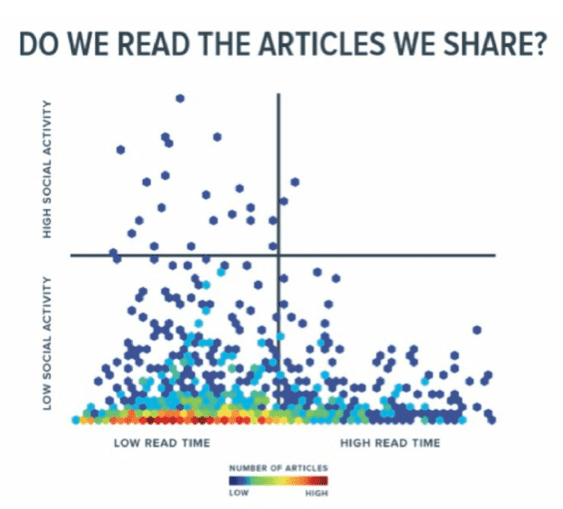
The rise of ad blocking software, the decrease in organic reach on social platforms such as Facebook and declining referral traffic for many brands are all signs that the bar for quality content has been raised. And this impression is backed up by data from Chartbeat and Buzzsumo that indicates that much of the content being produced is not being read, shared or linked to:

do we read the articles we share

Source: Chartbeat, 2016

The chart above indicates that there is no relationship between how much a piece of content is shared and the amount of attention an average reader will give that content.

total shares across all networks

Source: Buzzsumo, 2016

The chart above shows that the vast majority of posts receive very few shares or links, two metrics that indicate proactive engagement.

Download Expert Member resource – Evaluating Content Marketing ROI Guide

This guide is aimed at helping you improve your confidence in the value of content marketing by stepping you through a range of techniques to help marketers evaluate and prove their content effectiveness. These techniques will help you to prove to your colleagues or clients which content types and distribution techniques are most effective.

Access the Evaluating Content Marketing ROI Guide

Build your content plan around an anchor

Let's consider a publication such as Wired. What is it about the content that Wired produces that keeps people reading and subscribing? Although Wired offers many different articles every month, there are often one or two stand-out features, as well as regular features, that grab people's attention and keep them engaged.

This is also true for services like Netflix. Whilst there are hundreds, even thousands of different series and movies to choose from, it’s the flagship shows such as ‘House of Cards’, ‘Making a Murderer’ and ‘Orange is the New Black’ that gets people hooked and encourages them to keep on watching and, more importantly, subscribing every month.

These features are authoritative, data-driven and remarkable. They’re different from everything else and can be described as anchor content. Like a real anchor, this content has weight, substance and connects everything together.

The concept of anchor content was first explored by Eric Enge in his excellent post for Marketing Land in March. The methodology that works so well for Wired and Netflix can be applied by marketers and provides a useful framework for anyone involved in content planning across different channels.
The figures below illustrate the positive impact of anchor content on a regular email programme:

content plan

The graph above shows the decrease in engagement over time once the initial buzz and interest of the campaign dies away. The content being produced (the green circles) is useful, relevant and seasonal, but without anything remarkable to spark interest the brand is left with dwindling engagement levels.

anchor content plan

The second graph, however, shows how the inclusion of anchor content (the orange circles), including key features and high-quality evergreen content, can boost engagement over time and keep the audience motivated to keep clicking through and reading. The brand has identified what resonates with the audience and has planned in advance where to include anchor content to maintain interest.

Three key principles of anchor content

The principles of anchor content are not new but they are useful for reminding ourselves and clients of what makes an effective content campaign. Three principles that stand out for me include:

1. Start with a weighty anchor

A piece of solid, authoritative anchor content can form the centre point of a campaign, from which less detailed, more supplemental content can be added.

In the email campaign example above, the spikes in engagement were the result of strong anchor content that introduced a theme for the quarter. In the following weeks and months, other pieces of supplemental content ‘riffed’ on the main theme, building on the interest the initial piece generated until the next quarter.

2. Quality beats quantity

An endless stream of ‘OK’ content is unlikely to have a positive impact. The days when large quantities of content could achieve results, particularly in search, have long gone as a result of advancements such as Google’s Panda algorithm update. Audiences are busy, distracted and have more choice than ever before so they expect better.

However, it’s impossible for everything to be ‘hero’ content, there just isn’t the time, resource or audience appetite. But that’s not the point of the anchor content approach. Instead, content planners should consider how different campaigns or programmes can be structured in a way that uses key features at certain points in time to anchor interest and generate buzz.

Some of this type of content was explored in our post on ‘10x content’.

3. Focus on what your audience finds fascinating

Data is your friend! With so many analytics tools and resources available, there’s really no excuse for not measuring activity to identify what is resonating with your audience.

Look at the trends and patterns between the different pieces of content that generate high and low levels of engagement. What is it about each that works well/ not so well? What can you take from the data and apply to your next piece of anchor content? This insight will help you to narrow down the content themes, formats and distribution channels that work.

Summary

The sheer deluge of content consumers receive today means that brands and marketers must work increasingly harder to achieve cut-through and generate engagement. The anchor content approach is based on the concept that specific pieces of high quality, authoritative content can be used as part of a new or existing campaign to spark interest and keep audiences engaged.

Anchor content is about producing content that stands out from the crowd to help you establish yourself in an increasingly noisy mediascape. The goal should not be about producing large quantities of content but creating content that is remarkable, adds value to those that are listening (i.e. not always the mass market) and is data-driven.

08 Jul 16:54

Inbox by Gmail – What to Consider When Creating Email Campaigns

by Kim Stiglitz

Inbox by Gmail was launched by Google way back in October 2014, through a private invitation system. Invites were the hot ticket. And it wasn’t just Gmail users who were keen to get their hands on an invite, but email marketers were desperate to see what their emails looked like in this new email client.

By the end of May 2015, Google announced the product officially open to anyone with a Gmail account. Google has made several changes to Inbox by Gmail in terms of how users interact with their emails. Which, you guessed it, can impact your email marketing campaigns.

For this post, we partnered with Jaina Mistry to bring you everything you need to know when creating campaigns for Inbox by Gmail.

Let’s start with what we know about Inbox by Gmail

No support for media queries

Much like Gmail, Inbox by Gmail does not support media queries. At the moment. Who knows when or if it will support media queries. In the meantime, design your emails with mobile in mind. Either by implementing a hybrid approach or simply sticking to single column emails, with large, finger-friendly click-through buttons and avoid a font size smaller than 14px.

Get verified on G+

Google plus - verified

While Google+ is seen as the runt of the litter among social media platforms, the only way you’ll be able to have a profile image displayed next to your sender name is with a verified Google+ account. Without a verified Google+ profile page your profile image will be the first letter of your sender name. It’s a great idea to get this done so your emails stand out in the inbox, look more legit and it helps with ensuring a solid branding experience for subscribers across different mediums.

Use a consistent sender name

With bundles activated on Inbox by Gmail, the first part of your email campaign that your subscriber will see in Inbox by Gmail is the sender name. Ensure this is relevant, recognizable and consistent. It may be tempting to change your sender name to perhaps get more attention, but this may confuse subscribers. Imagine if you started to give yourself multiple names and expected your friends and family to keep up! Keeping a consistent sender name will make sure your subscribers will always recognize your emails by the sender name alone when it’s bundled with other emails.

Optimize your subject lines and preheader text

Gmail - optimize inbox

Along with keeping a consistent sender name, optimizing your subject lines and preheader text should be one of your top priorities when considering Inbox by Gmail. Next to the subject line, like Gmail, Inbox by Gmail displays one line of preheader text. Use this space wisely to entice your subscriber into opening your emails.

Essentially, don’t neglect the basics of email marketing when considering creating campaigns with Inbox by Gmail in mind. Perfect your subject line and preheader text combos and keep that sender name consistent and recognizable.

Glanceable Newsletters

At the beginning of May 2016, the Google team added some new functionality to Inbox by Gmail. Along with the ability to save links to the email client and streamlining how events are shown in Inbox by Gmail, they also introduced Glanceable Newsletters.

Glanceable Newsletters in Inbox by Gmail show a preview of the links in your newsletter, along with some images, and links to your previous newsletters. Your subscribers will no longer have to open your emails in order to click-through the content.

Glanceable email - highlights

This feature isn’t something totally new for Inbox by Gmail. The Highlights feature works in a very similar way, for emails containing order confirmations or flight bookings. All the key information for these emails is displayed and you can interact with them, without even opening them.

Let’s take a look at an example:
When an email that’s glanceable arrives in Inbox by Gmail, the full subject line or preheader text won’t be shown and there will be a bulleted list of three articles in the email. So remember to have a consistent and recognizable sender name.

Glanceable email - Digg Science Glanceable email - Digg Technology

(Glanceable newsletters don’t show the full subject line nor the preheader text, and the bulleted content pieces disappear)

When you click on any part of the message, including the articles, the email will be expanded. You’ll see the three articles that you previously saw in the bulleted list, as well as one more.

Glanceable email - Inbox

To access the email, which features the articles in the featured section, subscribers have to go to the related items just below it and select the email they want to open.

Currently, it looks like the Glanceable Newsletter functionality is catered more towards digest type emails, which have a set structure to them, rather than marketing emails which are more design led.

It’s not all bad news with Glanceable Newsletters

These developments may seem a little disconcerting but one of the positives about Glanceable Newsletters is that the links in your newsletters are instantly accessible to subscribers, without them having to open the email. While this could lead to a decline in open rates from subscribers using Inbox by Gmail, you could see an increase in click-through rates.

With this in mind, you may have to reconsider your main success indicators for your email marketing campaigns. With the ability to click on email content without opening the email, your open rate may be less important as one of the main key success indicators. So, create article headlines with the click-through in mind – think of them as calls to actions that need to drive subscribers to your site.

Not all emails are Glanceable

You can breathe a sigh of relief, Glanceable Newsletters aren’t currently active on all email newsletters. Currently, there’s only a small group of senders whose emails are being made “glanceable”. Over at TechCrunch, a Google spokesperson revealed that the Glanceable feature only works with some of the more popular newsletters and the team will continue to add more over time.

At the moment, it doesn’t look like you can opt-in or opt-out of being a Glanceable Newsletter. And there’s no way of telling Inbox by Gmail which content to include in the glanceable areas. As this feature develops, we’ll keep you updated on anything that might potentially affect your email campaigns.

Do my subscribers use Inbox by Gmail?

Right now, there’s no way to tell which users are using Gmail and which are using Inbox by Gmail. Other than app download numbers, which can be slightly inaccurate, there’s no clear number. You’re likely to have some Inbox by Gmail users. The biggest change to email in Inbox by Gmail is the Glanceable Newsletter feature, which hasn’t rolled out to all emails, so no need to worry about it too much. Plus this feature looks like it’s catered more towards email newsletters whose content is more article based, rather than your typical marketing email.

Wrap up

The main takeaway is to carry on creating relevant and engaging emails for your subscribers. Stay consistent with your sender name. Write interesting subject lines combined with preheader text that further pique the interest of your subscribers. Value your customers by delivering them content they will value. By sticking with email marketing best practices you should ensure your emails still stand out in Inbox by Gmail.

08 Jul 16:54

The Relationship Between Sales And Customer Support Is A Circle, Not A Line

by Laura Ballam

Because they function as two separate departments, many businesses make the mistake of viewing sales and support as independent operations. They see the customer journey as a straight line where the customer comes into contact with the business, purchases a product or service and seeks help from support should any issues arise.

This linear viewpoint ignores the value of existing customers and misses out on the opportunity to “wow” them and create long-term value so they will renew, add seats, and potentially add additional features. Current, satisfied users of your product are perfectly primed to increase their subscriptions and also provide word of mouth referrals. Sales and support should work as a circle, not as a straight line.

Using support to fuel sales
Your business should use its support team to funnel existing customers back to sales and increase usage. It’s easier to sell additional services to existing customers because you already have a relationship with them.

customer satisfaction

It’s easier to increase sales with satisfied customers.

You don’t have to repeat the marketing process like you do with new customers, and you don’t have to work as hard to convince customers that working with your company provides numerous benefits over the competition. As long as these customers are happy, increasing sales should be a breeze.

Customer satisfaction is the result of multiple factors, but your support team is in a unique position to help. If a customer is dissatisfied because he or she encounters issues with your product, your agents have the opportunity to fix the problem and turn the relationship back to a positive one.

“Support reps have unique insight into how customers use your product.”

In addition, support representatives have unique insight into how customers use your product. Armed with customer support software that records previous tickets, provides customer notes, and supplies agents with a list of the products customers have purchased, your reps can easily suggest additional features to help your customers meet their business needs. This is where customer support can be proactive – they can let customers know about new features and options available that will help make their lives easier.

Upselling when appropriate
Upselling isn’t a tactic agents should use without discretion. Kissmetrics noted two occasions when it’s inappropriate to try and sell additional products to your customers. The first is when they aren’t satisfied with your business. Attempting to sell products to unhappy customers makes it appear as though your company is more focused on profits rather than customer satisfaction.

“B2B support software that monitors satisfaction gives a good indication of customer sentiment.”

It’s sometimes difficult to gauge a customer’s attitude toward your business, but B2B customer support software that monitors satisfaction gives your team a good indication as to how customers feel. For example TeamSupport includes a Customer Distress Index (CDI) that estimates the customer’s point of view by evaluating variables such as number of open tickets, number of closed tickets, average resolution time and other elements. What’s most beneficial is that your business gets to choose the weights of the variables the system uses to evaluate customer distress, so your team gets metrics appropriate to your unique business.

The second inappropriate situation is when the suggested product or enhancement provides no additional value to your customers. You don’t want to sell customers things they don’t need simply to increase revenue. Rather, you and your agents should position your business as an ally in your customer’s endeavors, providing them with the exact tools they need to succeed in their goals.

customer_service_partner

Acting as a true partner will increase sales.

This is why customer support is great for upselling. Agents know how your customers operate better than anyone, so they can provide the best suggestions to help them work more efficiently. Acting as a true partner and providing suggestions for best practices and tools that can enhance efficiency will automatically lead to increasing sales. Agents also know which services customers are looking for and can use this information to supply ideas to your developers for products that fulfill a customer’s unmet needs.

Your customer support team is a great asset in selling additional licenses, features and services to existing customers. Businesses shouldn’t think of support and sales as separate. Instead, they should focus on how the two can work in harmony to better assist the needs of your customers. Should customers encounter any problems with their new services, they already know and trust your support team to be reliable and helpful.

08 Jul 16:54

Help Your Customers Do Something More Important!

by Dave Brock

All of us want to be selling products and services that are mission critical for our customers. Imagine having a solution core to your customers’ business success, without it they couldn’t survive, grow, or thrive.

The unfortunate reality is, for most of us, many of our products don’t fit that category. Don’t get me wrong, they provide great value, but they aren’t at the forefront of customers’ minds. Regardless how well be position the problems they solve, how well we quantify the value, often, the customer says, “I can scrape through for another year. I just don’t have an urgent need for your product.”

If we are lucky, they may put it in the budget for next year, we mark our calendars to call the customer on January 2 (or whatever their fiscal year start is), asking, “Did you get the budget? Can we move forward?”

Sometimes they get the budget, but often, it’s diverted. Something more important or critical arises and they divert “our funding” to something else.

How do we catch their attention? How do we get them to buy? We have a great business case, but we aren’t on the critical path of the things they have to achieve, we’re somewhere on the sidelines.

Perhaps, the real opportunity we have and the real value we can create is actually freeing the customer up to do something more important. Rather than trying to become mission critical, where we really aren’t, we can free them up to focus on those things that are mission critical.

Let’s walk through the logic of this.

We know whatever problems you help customers solve is important enough that they are doing it–somehow. Maybe they are doing it manually, maybe they have a very old system or solution held together by whatever today’s equivalent of “Duct tape and bailing wire.” It’s not critical to their core business or strategies, but they have to do it and get it done, they can’t stop.

We also know our customers are time poor. It’s not often, I walk into someone’s office finding them twiddling their thumbs, trying to figure out how they spend their afternoons. Most have too much on their plates, they simply can’t get everything done. They are overloaded and overwhelmed!

Perhaps our strategy should be simply to take something off the overloaded plate. Give them one less thing to worry about. Free up time so they can focus on something more important.

Rather than trying to make what we do important to the customer, perhaps making it unimportant, but getting it off the customer’s plate is more effective.

Facilities management companies, cafeteria services, office supplies–all have done great jobs in leveraging this strategy. Think about it, making sure wastebaskets are emptied, offices are dusted/vacuumed, windows are cleaned, or bath rooms are cleaned probably doesn’t drive a penny of revenue for the customer. These services aren’t critical to their growth or ability to serve their customers (unless in retail, hospitality, food/beverage).

But it’s something that has to get done!

Customers don’t want to have to worry about making sure they clean the offices every day, they get someone else to do it, so they can focus on those things that drive revenue.

Sometimes, rather than trying to be more important to the customer, the value we really create is letting the customer focus on what’s really important, leaving us to solve the stuff that still has to get done.

As another idea, I use virtual assistants for a lot of things in our company. The things they do are things any of us could do, but using VA’s free’s each of us up to invest time in things that only we can do and which drive revenue growth!

If you struggle to be important to your customer, but just can’t become mission critical, how can you help customers by freeing up their time to focus on what’s mission critical?

We still have to provide a cost/business justified solution. But a large part of the business value, which too often we don’t include in our models is the value to them to be able to do something really important, rather than what you do.

Perhaps, that will help capture the customer’s attention, help them find the money to do something now, rather than get to it when they have the time. The reality is they will never have the time–so they and we miss a huge opportunity.

08 Jul 16:53

Using Digital Exhaust to Improve Sales

by Mark Kovac
jul16-08-101784633

Customer relationship management software revolutionized how companies manage their sales pipelines. It also allowed organizations to communicate and coordinate more effectively across large sales account teams.

Now a new breed of software applications is reshaping sales force management. Their common characteristic: Using digital data exhaust, which is the data generated from the regular activities of a sales force or their customers, to change the behavior of frontline sales representatives in ways that dramatically improve sales productivity and effectiveness.

I will highlight three tools that hold particular promise, though many others are proving valuable as well.

VoloMetrix, acquired last year by Microsoft, scrapes an organization’s calendar and email metadata to analyze how employees collaborate and spend their time, providing a high-resolution dataset that complements traditional tools like sales force surveys, interviews, and “ride alongs.” Among other things, the software shows how the sales capacity is being deployed across different customer segments, so managers can see whether their sales organizations are truly focused on high-priority customers. And it provides hard data on what resource allocations and which behaviors – such as collaboration between generalist and specialist reps – correlate with better sales outcomes.

At one B2B technology company, for example, account managers were supposed to focus their efforts on their highest-value, “top of the pyramid” accounts. But VoloMetrix data showed a different picture: Account managers were spending more than one-third of their time on accounts at or near the bottom of the pyramid. The company also looked at which activities took up reps’ time. Whereas reps reported spending 60% of their week, on average, meeting or communicating with customers, VoloMetrix showed that in fact they spent less than 30% of the week directly with customers; the bulk of their time was spent going to internal meetings and attending to non-customer emails, administrative tasks, and other activities. These insights spurred the company to realign its sales force to match the intended coverage model. Once that happened, executives realized they had too much sales capacity, and were able to take out costs by reducing sales resources.

Insight Center

A second software tool, currently in pilot stage by Citrix’s GoToMeeting business, uses voice recognition technology to scan conversations between inside sales reps and existing or potential customers, and then analyzes the text to determine which behaviors correlate with positive outcomes such as closing deals or increasing deal size.

The tool’s analysis of inside sales calls at one company found that although reps had long been coached on a broad set of practices, four specific behaviors correlated most closely with sales close rates. For example, reps were using phrases that described product features or conveyed empathy more frequently than they used language that qualified customers or helped them quantify product benefits. When the GoToMeeting team looked at the relationship between language and sales outcomes, they found that the less-frequently used phrases actually correlated more strongly with sales.

The tool showed individual sales reps how they performed on the desired behaviors, and provided targeted coaching to improve performance in areas where they were behind their peers. Sales reps found the data-driven insights and targeted coaching to be a valuable complement to coaching from sales managers, which often is broader and more subjective. More than 70% of reps changed their behavior after receiving insights from the tool. (Transparency and security around employee data collection is essential, of course, if these tools are to work. VoloMetrix pulls the data anonymously and aggregates it. Data collected by the GoToMeeting tool is protected by strict privacy policies.)

A third class of software, which does predictive analytics, uses a different type of data exhaust to identify the prospects, on any given day, who are most likely to close a deal and spend above-average amounts. For example, Lattice Engines’ analytics software pulls data from third-party vendors and independent websites including information about firms’ regulatory and compliance activities, changes in credit rating, financial performance, job posting trends and firm-related social media traffic. It notifies a company if one of its competitors files a credit check on a customer, signaling potential defection. It combines that external data with firms’ own internal customer data, such as loyalty scores and product purchase history. The software assembles an evolving digital portrait of each account, and its algorithms flag the accounts that merit an immediate sales call. This type of software has consistently improved call response rates, close rates and average order value.

These are just three examples of software that taps digital exhaust to improve sales force performance. There are dozens of others, as well a vastly broader suite of tools that help optimize compensation, integrated planning, and other sales force management tasks. Increasingly, the challenge for sales managers is figuring out precisely what they want to accomplish, and then selecting the right tool from an abundance of options.

08 Jul 16:52

Tenant farmers: how "smart" agricultural equipment siphons off farmers' crop and soil data

by Cory Doctorow

800px-StateLibQld_1_123166_German_farming_family_and_farm_in_Fassifern,_ca._1890

The agricultural sector is increasingly a data-driven business, where the "internet of farming" holds out the promise of highly optimized plowing, fertilizing, sowing, pest-management and harvesting -- a development that is supercharging the worst practices of the ag-business monopolies that have been squeezing farmers for most of a century. (more…)

08 Jul 16:52

The Dos and Don’ts of Working with Emerging-Market Data

by Anna Rosenberg
jul16-08-70220419

Executives are usually taught that data is an objective and critical input for strategic planning and operations. Applying this, however, is much easier said than done — especially among companies operating in emerging markets.

Emerging-market data can be challenging to work with due to significant data gaps, biased data, and outdated or incorrect numbers. Of course, these issues can cause a headache for any company, in any market. But because they are so prevalent when it comes to emerging-market data, the challenges are exacerbated. They can lead executives to make misguided investment decisions, and put a company’s reputation and jobs at risk.

As multinational companies seek to strengthen their emerging-market portfolios, they must have a better understanding of what their data can and cannot do, and when to trust it. The margin for error in business has become substantially smaller as global growth slows.

Based on our research at Frontier Strategy Group, we’ve found that companies can avoid the pitfalls of evaluating emerging-market data, and successfully use it to support strategic decisions, if they follow a few key do’s and don’ts.

Emerging markets’ data have considerable gaps. To understand a product’s sales potential, executives want industry-specific indicators. For example, if a company sells toothbrushes, it uses toothbrush sales forecasts to determine yearly targets. However, the more specific the information, the less likely it is that data will exist, especially in less developed markets.

Yet companies still expect their data providers to offer this industry-specific information. In order to bridge the gap between what companies need and what data are available, data providers sometimes use models to create the data, which can lead to serious data quality issues. And executives are often not cautioned to take those models with a grain of salt.

For example, the alcoholic beverage company Beta decided to prioritize Iran as an opportunity market for its drinks. According to available data, Iran’s alcohol consumption was comparable to that in India. However, alcohol consumption is illegal in Iran. The numbers were based on outdated statistics from the 1970s, when Iranians, prior to the Iranian Revolution, were emulating Western lifestyles. Growth forecasts were placed on top of these outdated numbers, without taking decades of conservative rule into consideration. As a result, Beta had to restart its market prioritization process without the erroneous industry-specific data.

The solution is to be creative in gathering data. Finding the right proxy indicators can help fill in gaps. For instance, in order to understand potential demand for cables in Kenya, companies should not try to look for an indicator that specifically quantifies cable sales; instead, they should draw on macroeconomic numbers for government spending and investment in infrastructure, where such cables could be in demand.

Remember:

  • Don’t expect your approach to developed-market data to be applicable in emerging markets
  • Do be creative and critical about your use of industry-specific indicators

Data is biased, particularly in emerging markets. Data can be biased for a variety of reasons. First, organizations tend to use local governments’ historical data, which typically reflects whatever agenda the government may have. While developed markets have stronger institutions that can challenge government estimates, this often is not the case in emerging markets, leaving data more susceptible to political interference.

Furthermore, many organizations have stakeholder-driven agendas that occasionally add political bias. For example, as Greece returned to financial crisis in 2015, the IMF forecasted 2.5% YOY GDP growth in its April World Economic Outlook. (Greece’s actual 2015 growth was -.8%.) While it was clear that the Greek economy would not grow, the IMF was involved with the country’s bailout program, giving it a disincentive to forecast recession. The IMF’s intentions were good — a negative growth outlook would have made Greece’s circumstances worse —but the forecasting process was not objective, undermining the ability to devise realistic business plans.

Companies must ensure that their data have been collected by sources with no interest in dressing up the numbers. Find out whether the numbers were reviewed by analysts with in-depth market knowledge. And when looking at forecast data, consider that it faces the same challenges as historical data, with regards to bias, gaps, and lack of comparability, but there are even more assumptions built on top, and therefore more opportunities to make mistakes.

  • Don’t blindly trust data, even when it comes from a reputable source
  • Do question potential motivations behind numbers

Data in emerging markets can be incorrect. Erroneous data, often based on missing information, creates various planning difficulties for companies. It can lead to executives to miss investment opportunities or to develop faulty strategies.

One case we came across was logistics company Omega. Their China team conducted an analysis to understand which provinces in China might offer the best opportunities. Examining provincial data from the Chinese government, Omega’s China team felt that growth was reported at higher levels than it saw on the ground. The team learned that because provincial governments were evaluated on their economic activity, they overstated the economic figures. The official national figure was actually only 7% YOY for 2014, while the combined official provincial statistics figure added up to nearly 10% YOY GDP growth. So not only was the data biased, it was also wrong. Had Omega’s China team used the provincial data, the company’s targets would have been far overstated.

If official numbers contradict your understanding of the market and actual sales performance, do not ignore it. Wrong data is likely responsible for the misrepresentation of realities on the ground. Base sales expectations on local market dynamics and sales performance numbers, and adjust your strategy and targets if you notice something amiss.

  • Don’t take numbers at face value if they make no sense
  • Do investigate further by checking data sources against local market observations and expectations

Data is used and interpreted in different ways across an organization. Many different individuals and teams require data for different reasons. For example, local executives use data to make the case for a good opportunity, while corporate executives frequently use data to pressure local teams to deliver on expectations.

One illustrating case of this was technology company Alpha, whose industry-specific data provider predicted computer sales growth of 90% in Ukraine for Q1 2015. Alpha’s U.S. office set aggressive sales targets for Ukraine, based on a data source that was reliable for most Western countries. However, on the ground, Ukraine was facing a war, a devalued currency, and a drop in spending across all industries. Alpha’s local team faced an impossible target.

While the use case for data can vary substantially by stakeholder, so do the skills of the individuals interpreting that data. Many executives understand this but do not appreciate the extent to which it happens. The result is often a culture that ignores data and relies on hunches and guesses that contradict the data focus at headquarters.

To avoid bias and analyze data objectively, executives have to provide clear guidelines and training for data collection, usage, and interpretation across the organization—not only for market monitoring staff but also for the executives regularly using data to make business decisions.

  • Don’t assume your team uses data consistently
  • Do establish clear organizational standards for gathering and interpreting data

Companies often use outdated data to make forward-looking decisions. Many companies are turning to macroeconomic indicators, such as consumer spending or industrial production, to get an idea of how demand for their products may evolve over time. These data points are key for understanding how external economic developments could affect business plans and targets.

However, companies frequently misinterpret indicators as “leading” when they are actually lagging, as most official data are released on a lag. It’s important to understand the timeline you’re working with to get a sense of how macroeconomic changes, such as slowing growth, and industry changes, such as regulations, can impact your bottom line.

For example, consider consumer goods company Vega, which had long used consumer spending as a leading indicator to understand consumer demand. This was not helping Vega set targets and deploy resources across markets because it was outdated. To solve this problem, Vega engaged in a predictive analytics exercise to understand the real demand drivers for its products. The results showed that while some countries’ demand was driven by income and other spending factors, others countries’ demand was driven by larger factors that impact consumer purchasing power, such as inflation. By identifying the true leading indicators of demand in key markets Vega was able to rightsize targets and reapportion its marketing spend to the most attractive growth opportunities.

  • Don’t focus on outdated, lagging indicators
  • Do identify forward-looking demand drivers

Understanding data and using it correctly is essential for a company’s success in emerging markets. There will be several practical challenges to doing so, but they are not insurmountable. On the contrary, with the right mix of critical thinking, questioning, and creativity, most data problems can be overcome.

08 Jul 16:50

4 Psychology-Backed Decision-Making Frameworks That Drive Buyers' Actions

by rogerd@dooleydirect.com (Roger Dooley)

decision-making-frameworks.jpg

Philosophers, then psychologists, and, more recently, neuroscientists have been trying to explain how people think and make decisions for centuries.

From all of this work, there’s one key concept we need to understand. People aren’t always rational, and that’s because, in large part, we all have at least two ways of thinking and making decisions.

As salespeople, your natural tendency is often to focus purely on rational argument -- features, specifications, pricing, discounts, company capability, and so on. This ignores that most of our decision-making that is non-conscious -- according to Harvard scientist Gerald Zaltman, as much as 95%.

Scientists have divided our thought processes in various ways. Let’s take a brief look at four common dichotomies.

1) Right Brain vs. Left Brain

Work by Nobel Prize winner Roger Sperry and other neuroscientists showed that our brain hemispheres have somewhat distinct roles. The initial research was done with subjects whose hemispheres had been surgically separated.

The left hemisphere, they found, tends to be associated with logic, math, and verbal skills.

The right hemisphere tends to be associated with emotion, music, and art.

Pop psychologists seized on this research and launched a thousand books about “tapping into your right brain” and similar topics that over-simplified how our brain hemispheres interact.

In reality, most thought and decision processes involve multiple brain areas in both hemispheres. One never sees an fMRI brain scan or EEG brain wave display in which one hemisphere is lit up while the other is completely dark.

Furthermore, our brains are highly adaptable. If we suffer a brain injury, our brains can often redistribute responsibility for key functions to other areas.

Neuroscientists tend to downplay the popular left brain/right brain stereotype, but I include it here because it’s the most familiar dual brain concept for many of us.

2) Lizards vs. Lemurs

Another approach that you may have heard of divides the brain into three parts. The “triune brain” theory refers to the reptilian, old mammal, and new mammal brains.

The highest level of thinking takes place in the new mammal brain, with the reptilian brain handling things like aggression and sexual desire.

The triune brain theory is mostly out of favor among scientists today, but it surfaces often in marketing and sales discussions due to its emphasis on non-conscious behaviors and decision-making.

When people talk about “selling to the lizard brain,” (or, sometimes, the “dinosaur brain”), they are referring to this theory and suggesting that to be persuasive you need to appeal to very basic human instincts.

3) System 1 vs. System 2

The most widely accepted division of thinking and decision-making today comes from Nobel Prize winner Daniel Kahneman. His bifurcation of human thought isn’t rooted in brain structures, but rather how we think.

System 1 is a thought process that is fast, intuitive, and often based on emotion. It may also rely on rules developed in previous experiences. These rules are called heuristics, and are mental shortcuts that avoid consciously re-evaluating something.

System 2 is what most of us think about when we think about thinking. (Got that?) It’s the rational process where we look at pros and cons, evaluate alternatives, analyze specifications, and think about consequences.

If you are choosing a restaurant, and say, “I feel like Mexican!” you are using System 1. If you start narrowing your choices based on what you know about the preferences of other members in your group, how much money is in your wallet, how much time you have, and so on, you are using System 2.

One of Kahneman’s key insights is that our brains are lazy.

That isn’t an entirely bad thing. Our brains already consume an outsized portion of our body’s total energy, and we unconsciously strive to conserve that energy.

One result of this drive for energy efficiency is that our brains look for shortcuts when presented with the need to make decisions.

You need to understand this preference and adjust your strategies as needed. System 1 is quick and energy efficient. If we can make a decision based on past experience, emotion, heuristics, or any other built-in “programs,” we’ll do that. System 2 is hard work and consumes precious energy. We are capable of making mental spreadsheets of pluses and minuses. We can compare probable outcomes and consequences. But, if we don’t have to do that work, we won’t.

4) Conscious vs. Non-Conscious

This is my preferred split, and one used by much of the consumer neuroscience industry. Conscious and non-conscious map, more or less, to Kahneman’s System 2 and 1.

People almost always have multiple influences when they make a decision. Some are conscious. For example, a product has to work for the intended purpose. It has to fit within the available budget. We may want it to have better reviews and expert ratings than other products.

Non-conscious influences are those we can’t or won’t articulate. They may be based on emotion. They may be due to one or more of the dozens of cognitive biases scientists have uncovered. They may be the basic impulses that evolutionary psychologists talk about.

For example, if asked why a brand of beer is our favorite, we will probably say we like its taste. In reality, we choose it over similar-tasting beers because its brand image is consistent with our self-image or aspirations.

We probably won’t admit to being influenced by a celebrity endorsement or a sexy model promoting the product, but these are typical non-conscious influences that do, in fact, affect our behavior.

In Each Model, Both Kinds of Thinking Are Important

It’s tempting to think we can focus on one type of decision-making process. The most common error is to emphasize logical points of persuasion, like features, benefits, and price.

A few products, like fragrances, rightly design their ads to appeal entirely to emotions and non-conscious processes. When was the last time you saw a perfume ad that claimed it was “rated as better-smelling by 72% of fragrance wearers?” Or pointed out that it “costs 25% less than the leading brand?”

Most purchasing decisions, whether business-to-consumer or business-to-business, have both conscious and non-conscious components. Products have to work, but when multiple products can satisfy the basic criteria, non-conscious factors come into play.

Even when a decision is made based on non-conscious factors, conscious factors can play an important role in justifying the decision.

To practice your powers of persuasion, download my free Persuasion Slide workbook here.

Editor's note: This post is excerpted from "The Persuasion Slide: A New Way to Market to Your Customer's Conscious Needs and Unconscious Minds" and is republished here with the author's permission.

HubSpot CRM

08 Jul 16:50

What Separates Sales Professionals From the Sales Posers? These 6 Characteristics

by arts@businessbyphone.com (Art Sobczak)

One weekend, I was in Chicago for a baseball game with some friends. We all had similar mid-morning flight times out of O’Hare the following Tuesday morning. Being a group of six, we needed a large vehicle to get us from downtown to the airport.

Free Download: A Guide to Inbound Selling Best Practices

No problem. The doorman at the hotel hooked us up with Leo, a private driver. He called Leo and told him what time we needed to be picked up.

Being a skeptical road veteran and having been left waiting too many times for rides that didn’t show up when I needed to catch a flight, I asked the doorman for Leo’s number and called him myself to get reassurance he would show at the scheduled time. Leo said the right things and I was comfortable that he’d indeed be there. And he had the right "sound" -- a positive and upbeat voice, good articulation, solid listening skills. I was actually looking forward to meeting him.

At about 15 minutes before the scheduled time my phone buzzed. It was a text from Leo saying that he was in the black Suburban parked in front of the hotel. He also attached a selfie with him and the SUV in the background, so I knew what and who to look for. Nice.

As we walked outside, he smiled and waved to us. He ran up to my group, shook hands, and grabbed as many bags as he could so we wouldn’t have to load them in ourselves. My friends and I piled into the neat and clean vehicle.

We left early enough to give ourselves a comfortable time cushion, knowing what Chicago traffic is typically like. Things were flowing smoothly for the first five miles ... and then traffic came to a screeching halt.

The highway became a parking lot.

Now we were getting a bit worried about time. Leo remained calm. He checked his phone and informed us there was an accident a couple of miles ahead.

"Not to worry," he assured us.

With the skills of a NASCAR driver, Leo navigated through groups of cars, wiggled over to the shoulder, and got off the interstate. He told us he planned to bypass all of the trouble.

We got an up-close view of the neighborhoods of the North side of Chicago as we cruised west toward the airport. He had an uncanny way of timing the traffic lights perfectly so we rarely came to a stop.

Knowing my way around Chicago reasonably well, I asked if we were going to stay on the street we were on all the way to Rosemont, just by the airport. "No," he replied. "We're going to get back on the interstate just ahead."

Uh ... okay. I was skeptical.

But sure enough, he navigated back onto the interstate -- now moving at full speed.

I jokingly told Leo that it seemed like he knew what he was doing. He looked at me with a smirk and a wink: "That’s what 20 years of experience will do for you."

We pulled into the airport with plenty of time to spare. Leo hopped out instantly to unload the bags, thanked us profusely, and asked us to call any time we were in Chicago. I assured him I would, and tipped him heartily.

What could've gone very wrong went very right. It was a professional job, done by a true professional.

Sales Professionalism

Sales professionalism includes the etiquette, characteristics, and mannerisms that are expected of salespeople. These characteristics and habits improve the ability of salespeople to communicate and build rapport with prospects.

What does this have to do with you and sales?

In my perspective, there are professional salespeople, and there are people who are merely in sales jobs.

We’ve all had what we considered "just a job" -- we showed up, we were present, we did the work with varying degrees of effort and accomplishment, we would have rather been somewhere else, and we got a paycheck for it. It was a means to an end.

On the other hand, there are professional salespeople -- just like Leo.

What does a salesperson do?

A salesperson finds prospective customers for their company's products and services through online research, email and phone outreach, and social media messaging. They work with these prospects to identify their challenges and needs, and ultimately find a solution. And this leads to the sale of the products or services that solve the problem.

These are a few of the key activities that professional salespeople do to sell their products or services.

  1. Research: The salesperson learns more about the lead or prospect.
  2. Prospect and outreach: They reach out to the prospect via email, phone, or social media.
  3. Build rapport: Through their conversations, the sales rep builds trust with the prospect and asks questions about their goals and challenges.
  4. Find a solution: The salesperson comes up with a custom solution to address the prospect's needs.
  5. Close the deal: If the prospect is interested in the solution, they'll purchase the product or service with the help of the salesperson.

So, how can a salesperson become a sales professional?

What is a sales professional?

A sales professional is someone who sells products or services to potential customers. They seek to solve prospects' challenges through the products they sell. Great sales professionals will have strong selling and communication skills.

Here are six characteristics of a true sales professional.

1. Competence

Professionals are obsessed with getting better. They are lifelong students who know they will never graduate because there’s always more to learn.

I’m amazed at how few salespeople invest in their own self-development. They spend more on coffee than on what they do every day -- the work that puts money in their pocket.

Maybe you think it's your company's job to train you. But in my opinion, whatever your company does for you in this area is a bonus. Professionals know their level of competence and subsequent achievement is ultimately up to them.

Leo took pride in the fact that he had experience, and it was obvious that he works at learning whatever it takes to get people from point A to B in the best, most efficient way.

2. Communication

Professionals are excellent at connecting, engaging, and carrying on a conversation.

From the first moment we spoke by phone, to the helpful text, to the banter in the car, Leo built a relationship and instilled a feeling of confidence that we picked the right person.

In sales, everything we do relies on our ability to communicate. To me, communicating isn’t blasting out mass emails. That's being a computer jockey. Instead, it’s constantly learning, practicing, and refining your sales messaging.

One thing that hasn’t changed in our hyper-technologically advanced world is that the best way to sell is still by talking to a person. Instead of whining about how hard it is to get to buyers, professionals figure out a way to get through, get in, and have meaningful conversations.

3. Customer-First Attitude

Recently, I was dealing with a person who I would describe as someone who "holds a sales job." It was evident he did not care whether I bought or not. He sounded as if I was keeping him from something more important, and was actually annoyed when I asked questions that required him to -- gasp! -- research some information. (Which, you won't be surprised to hear, he ultimately did not do.)

Professionals know that customers buy for their reasons, not yours. That’s why I always tell salespeople to start by first examining customers and prospects, and what they want.

Leo had this nailed. He thoroughly understood what his customers wanted and delivered on every checkbox.

4. Reliability and Responsibility

It’s sad that standards have generally been lowered so much across the board to the extent that when people actually do what they say they’ll do, it’s somewhat of a surprise.

When Leo showed up 15 minutes early, I knew I was dealing with a professional. Professionals do what they say they’ll do. Period. Whatever it takes, you can count on them -- regardless of how major or minor the commitment.

You know people like this, and you also know the opposite. You can come up with names right now, can’t you?

Which group are you in?

5. Appearance

You know professional when you see and hear it. Everything about Leo’s smile, walk, talk, and vehicle projected a professional image.

Even if all or most of your sales take place primarily over the phone, you most certainly still project your appearance through the way you sound, your voice quality, your delivery, and your equipment.

Appearance also comes through in writing. Are your emails filled with value? Or are they closer to the untargeted canned templates that so many lazy sales-job-holders blast out?

6. Poise

It’s said that you can tell a lot about a person based on how they react in the face of adversity.

Any warm body off the street could take an incoming call order. A real sales professional proactively puts herself in risky positions all the time, because that's where the real selling takes place. She isn’t flustered by a tough screener or deterred by prospect objections. Resistance actually prompts her to ratchet it up another gear, bear down, and gracefully employ the correct words to address the situation in a calm, conversational way.

Do you think this comes naturally to people? Nope. It comes through learning, practice, and falling and getting back up time and again.

Leo didn’t panic, beat on his steering wheel, blare his horn, or curse at other drivers when we got stalled in traffic. He calmly assessed the situation, and thought, "Okay, what do I do next?" and then did it.

I love working with real sales professionals and have had the privilege and honor of dealing with thousands over the years. The best thing about being a professional is that you decide and control if you are one or not.

If you are now, congrats -- I know you'll keep it up.

If you aren’t yet at the level you’d like to be, no worries. Make the commitment, do whatever it takes in all of the above areas, and you'll get there.

Professional sales is, in my opinion, one of the best vocations in the world. We help others and deliver massive value while being rewarded handsomely in so many ways.

It’s an elite club. I’m glad you’re part of it.

To learn more, check out these steps to build a high-performing sales team next.

Editor's note: This post originally appeared on Smart Calling Online and is republished here with permission.

Inbound Selling How to Close and Negotiate

08 Jul 16:50

There’s No Place Like Home: Centralizing Your Marketing Channels with Marketing Automation

by Patrick Groover
There’s No Place Like Home- Centralizing Your Marketing Channels with Marketing Automation

Author: Patrick Groover

I’ve a feeling we’re not in Kansas anymore.

The marketing landscape has changed rapidly in the past few years and continues to evolve with new technologies and channels. While email remains a valuable source for communication, many companies are struggling to extend their reach on other channels, such as mobile, without increasing the strain on their already over-extended marketing resources.

In the past, technology and marketing often had opposing business constraints and objectives. To effectively execute compelling campaigns, marketers had to leverage modern messaging and techniques. But without the aid of an integrated multi-channel marketing automation platform, the technology and resources needed to execute such a strategy lived in disparate locations and represented a growing expense that many companies cannot afford.

The good news is that services-oriented marketing automation platforms, which leverage APIs to connect disparate data and information, can deliver true multi-channel communication. In this blog, I’ll walk you through the reasons why multi-channel marketing has lived in silos and how a complete marketing automation platform can enable cohesive messaging:

Siloed Multi-Channel Marketing 

To some marketers, being able to coordinate cross-channel communications can feel like a dream straight out of the Wizard of Oz. These marketers typically use a step-by-step approach for executing targeted offers that’s similar to an assembly line:

  1. Identify the target audience
  2. Pull counts based on audience criteria
  3. Verify count accuracy
  4. Develop targeted messaging/layout with offers
  5. Align program audience/offer personalization
  6. Execute the campaign

While this approach offers a reliable method for ensuring that the right messages reach the right audiences, it puts enormous strain on the marketing team during peak seasons.

Due to previous technical limitations, progressive companies extended communication into other channels by investing in devoted systems for the new mediums. These companies believed in the value of impressions within the new channels and were willing to invest in the additional personnel needed and technology to staff these programs. The result? Multi-channel marketing with a larger marketing team and more complex execution.

Other companies have looked at the potential cost and complexity of multi-channel marketing and have taken a wait-and-see approach. Now entrenched in world-class and highly-refined processes for executing email marketing, the thought of adding new methods of communication presented a level of risk that produced a sense of dread. Until…

Technology is Paving the Yellow Brick Road

Services-oriented architectures are now allowing marketers to develop content and define audiences with a drastically lower impact on the technology stack while drawing upon efficiencies produced from shared datasets and functionality. For example, previous attempts at managing marketing offers within smartphone applications might have required unique coding within a devoted platform. Aside from having to hire individuals with specialized skills, this presented support concerns from IT and still left marketers with the additional challenge of connecting offers to specific audiences within a separate customer database.
But now, rather than having to set up unique configurations within the application itself, marketers with access to a complete marketing automation system can develop content within a marketing-friendly platform that connects to their applications through a standard API. With a centralized location for content development, marketers can also properly attribute audiences with targeted campaigns through the same platform, resulting in centralized marketing with a lower cost of implementation and management and higher returns.

The Implications for the Future

One of the largest impacts of a connected and centralized marketing automation platform is that it greatly reduces the amount of strain placed on the IT Team for supporting marketing initiatives. Once the core services and structure are in place, advanced marketing automation platforms allow marketers to build audiences and push communications to other platforms without having to change system code. This can represent a significant opportunity for both teams to accelerate their initiatives and deliver higher-quality results for the business.

A second benefit is the ability to manage a cohesive strategy. With the right marketing automation platform, it becomes easier to build and execute campaigns across multiple channels with tightly coordinated timing and consistent content. All of this leads to increased results and revenue. Improved audience definition and management means that less time is spent rebuilding and coordinating personalization across disparate systems. With content being created within a centralized and familiar platform, more can be done with existing resources while reducing the complexity and strain placed on your talented employees. This ultimately leads to an improved customer experience and higher levels of employee satisfaction.

What Next? Off to See the Wizard

If you’ve been a little shy about considering a multi-channel marketing strategy, take a moment to evaluate marketing automation solutions that can support a cohesive and centralized marketing approach. If you’ve experienced challenges executing a multi-channel marketing strategy with your current processes or marketing automation provider, there may be new alternatives that can pull these strategies together.

Here are a few questions worth asking during your marketing automation evaluation:

  • How important is multi-channel communication to our campaign success?
  • Can this platform support multi-channel marketing within a central system or will it cause your marketing team to have to manage communication through multiple, disconnected features?
  • Are we sacrificing the opportunity to make customer impressions within certain marketing channels because we are comfortable with what we’ve been doing to date?

Have you already adopted marketing automation to engage in true, multi-channel communications with your buyers–without the headache? I’d love to hear about your experience in the comments below.


There’s No Place Like Home: Centralizing Your Marketing Channels with Marketing Automation was posted at Marketo Marketing Blog - Best Practices and Thought Leadership. | http://blog.marketo.com

The post There’s No Place Like Home: Centralizing Your Marketing Channels with Marketing Automation appeared first on Marketo Marketing Blog - Best Practices and Thought Leadership.

08 Jul 16:49

Roundup of the 6 Best Tools for Outbound Email Prospecting

by Tukan Das

Traditional outbound lead generation typically involved a dial tone and a mind-numbing array of telephone numbers. Today, it’s more sophisticated – and more digital.

Email has become one of the most important touch-points between your sales team and their prospects. It opens the door to a larger conversation, and can result in long-term nurturing while prospects consider making a purchase.

Here’s a list of our top six favorite outbound email prospecting tools, so you can unlock the fullest potential of your leads.

Outreach

Screen Shot 2016-07-05 at 6.34.24 PM

Outreach is a powerhouse account-based sales platform. It enables sales teams to email, or call, their prospects and learn when is the best time to follow-up. As it focuses on account-based selling, it provides unique multi-persona targeting so your team can reach the right people within a company.

Price: No free trial; starts at $75 per month

Pros:

  • Voice dialler, so you can follow-up with prospects via phone as well as email
  • Salesforce and Gmail integrations
  • Customizable workflows
  • Sales analytics
  • Access to experts in account-based sales
  • Sales automation, which learns when is the best time to send messages to your prospect

Cons:

  • May require training of sales staff in account-based sales best practices, if not already familiar

PersistIQ

Screen Shot 2016-07-05 at 6.34.59 PM

PersistIQ is an outbound sales automation platform that combines intelligent data with the human touch. It enables sales teams to develop personalized outbound email drip campaigns at scale, while leveraging data and automation to deliver the best results.

Price: No free trial; starts at $59 per month

Pros:

  • Highly flexible automation – automate as much or as little of the sales process as makes sense to you
  • Sales analytics
  • Ability to personalize emails while delivering large-scale campaigns
  • Salesforce, Chrome and other web integrations
  • Smart follow-up technology

Cons:

  • Email-only, does not integrate with phone or other communication channels

Close.io

Screen Shot 2016-07-05 at 6.36.33 PM

Close.io helps you close more deals by bringing your sales workflow into one place and requiring no manual data entry. Emails sent and received are tracked automatically, and your sales team can make and receive calls – also tracked – with one click.

Price: 14 day free trial; starts at $65 per user per month

Pros:

  • Lead activity appears as soon as you connect with that lead, so all information is available immediately
  • Automatic data entry
  • Emails can be tracked and sent from either Close.io or your own email client
  • Easy CRM migration tool to bring in leads and sales data

Cons:

  • Reporting may not be as strong as other platforms

Yesware

yesware-compose-templates

Yesware helps sales teams identify the best possible message at every step of the sales process, by analyzing open rates, attachment opens, link clicks and more. It also enables email drip campaign creation, to engage prospects on a consistent basis.

Price: Free trial; starts at $12 per user per month

Pros:

  • Gmail, Salesforce, Outlook integration
  • Provides prescriptive analytics to help sales team make smarter choices
  • Combines email automation with phone dialer and custom email templates
  • Easy-to-use reporting and analytics
  • Fully functional mobile app

Cons:

  • Prescriptive analytics must be added on and may be expensive

toutapp

Screenshot_Main4

Toutapp is a sales platform that enables sales teams to increase their pipeline, drive and close more deals, and manage and forecast using precise data. Reps are able to use email and other methods of communication to reach out to and follow up with leads consistently.

Price:14 day free trial; starts at $49 per user per month

Pros:

  • Integration with Gmail, Outlook, phone and calendar
  • Fast and easy deployment
  • Enterprise-level security
  • Ability to create a sales playbook so that reps have best practices for any situation
  • Robust data and health checks

Cons:

  • Email replies from leads are not pulled into the system; have to use external email client to view

Replyup

maxresdefault

An email-focused sales tool that enables teams to automatically send friendly follow-up emails to prospects until they are answered.

Price: Forever free plan; unlimited plan: $8 per user per month

Pros:

  • Integration with Gmail
  • Easy to use and set up
  • Smart automation stops sending follow-ups once response is received
  • Metrics show how each email was engaged with

Cons:

  • Smaller feature set than other solutions – only offers email automation

So there you have it! Our top six tools for outbound email prospecting. Let us know your thoughts on the tools above, or any other recommendations you have.

08 Jul 16:48

Questions to Ask Before Investing in Lead Generation

by dan.mcdade@pointclear.com (Dan McDade)

questions_to_ask_before_investing_in_lead_gen.pngAbout this time of the year we start to receive calls from prospects wishing to start new lead generation projects ASAP. It happens every year. Our ramp up time for a new program is about four weeks. When prospects hear this their response is always, “That’s just too long. I need leads NOW!” The fact is they needed leads before now. At this point, rushing to get a program up and running will be of little or no value. I guarantee any company promising a “rush delivery” will not be the kind of company you want generating your leads. Desperation is a bottom feeder’s dream. As the saying goes, “a fool and his/her money will soon be parted.” There will always be someone to promise leads in a hurry—and the fool will have wasted his or her money in the process.

So, no matter how desperate you are for leads, before investing in lead generation ask yourself these questions:

  • How have the leads generated or received during the first half of 2016 performed?
  • How many were generated?
  • How many were accepted by sales?
  • How many were proactively rejected by sales (vs. simply ignored or otherwise passed over)?
  • How many made it to the forecast?
  • How many are progressing?
  • How much did you spend on marketing in Q1, and if you had a gun to your head and had to come up with a reasonable estimate, how much business will close as a result of that?

If you can answer any of the questions above you are doing better than most. In many, if not most, companies, raw, unfiltered so-called “leads” are dumped on sales and fall into a black hole. The most common reason for this? There is no agreement between marketing and sales on the definition of a qualified lead. If you don’t start by fixing that problem, you won’t see any improvement next quarter or the one after that. This is a problem marketing and sales cannot solve alone. If they could, they would have by now. What’s needed is senior management intervention AND the establishment of what I call a judicial branch to make sure that no lead is left behind. The judicial branch reviews every lead that is proactively returned by sales to marketing (which doesn’t happen very often as most leads are simply ignored). They also review leads that have not progressed to the status of “sales accepted,” but for whatever reason haven’t been returned to marketing, either. While the process is tedious, there will be no improvement if both of these steps, the lead definition and the judicial branch, are neglected.

On average, five out of one-hundred suspects convert to high quality sales opportunities during a single cycle of contact. What the majority of companies miss is that there can be up to ten additional highly qualified sales opportunities that are just a few telephone calls away. Just ask if you want to know I arrived at this number.

Be wise and take heed. “Don’t throw good money after bad!” You are far better off doing the right thing rather than just doing something.

Let us help you meet your revenue goals.

08 Jul 16:47

4 Ways to Empower Your Top Sales Talent

by Will Humphries

Getting top sales professionals inside your company doors is a virtual coup in selling. However, you need to empower your sales talent to keep them around and to truly leverage these tremendous assets to your organisation.

The following are four ways that you can empower your top sales talent to achieve optimum results.

Offer Them Support

Salespeople are successful when their roles are supported in a collaborative environment.

The selling function in most organisations is productive when aligned effectively with marketing, customer service and support.

These departments all work together to provide the best message strategy and communication system with buyers.

You also need to equip your reps with resources. Give them the dedicated coaching and training experiences that help them grow. Make product literature and training materials readily available when they need them.

Make Morale a Priority

Your primary roles in leading a talented sales team are to motivate, coach and maintain morale.

Assuming two companies have equally talented sales teams, a positive, high-morale culture is often the factor that separates the better producer.

Quality employees with options normally go for the more enjoyable or optimistic work culture.

Building cohesion within your team is one critical component to maintaining high morale. Hold regular team meetings to promote collective goals and group rapport.

Communicate role expectations and accountability to the group so everyone understands their required contributions to team success.

Maintain Stability and Efficiency

It is difficult for leaders to empower their team members with constant change. It frustrates salespeople when the people and approaches in management change regularly.

Sellers thrive when they can get comfortable with a particular system, and experience it consistently.

It frustrates salespeople when the people and approaches in management change regularly. Sellers thrive when they can get comfortable with a particular system, and experience it consistently.

Empowered salespeople also depend on decisive managers. Make efficiency a priority in your decision-making so your reps aren’t sitting around waiting to move on sales leads.

top-sales-talent

Stable leadership and coaching allows reps to get more comfortable in their roles, decisions and actions.

Minimise Administrative Tasks

Salespeople get frustrated when they are pulled from their primary roles of converting sales leads into buyers. Therefore, the more you can eliminate unnecessary or tedious administrative tasks, the more empowered your reps will feel.

A common area that overwhelms salespeople is customer relationship management. You definitely need a strong CRM system that includes data input from salespeople.

However, it is best to implement a program that allows your professionals to input as much data as necessary for marketing effectiveness, without any wasted time or effort.

Conclusion

Empowering top sales talent is generally based on a balance of freeing them to exercise their abilities while equipping them with adequate resources.

Maintaining high morale, stability and efficient decision-making also helps you empower your team.

08 Jul 16:47

10 Explanations Of Omnichannel Marketing That Will Make You Rethink Your Strategy

by Amber Tiffany

thinking dog BLOG

Does it seem like we as marketers are always one step behind our audiences? People started Googling everything, so we figured out paid search. Then they started spending all their time on Facebook, Twitter, and Snapchat, so we started focusing on social. Now our audiences are using all types of devices during the customer journey, so we have to figure out how to reach them through multiple channels with a cohesive and personal experience.

That’s essentially what omnichannel marketing is: providing a seamless customer experience, regardless of the channel or device. That means your messaging, design, and execution need to be in sync with your brick-and-mortar store, your mobile app and your Facebook retargeting ads. Do this, and you’ll be head and shoulders above the competition. Fail, and you will lose customers.

We all know we need to be doing it, and yet, very few of us are…successful so far. To get a better idea of what an omnichannel marketing strategy looks like and how it should be part of your business, here are some quotes from our favorite marketing influencers.

What is omnichannel marketing?

1. John Bowden, Senior VP of Customer Care at Time Warner Cable

Omni-channel, however, is viewing the experience through the eyes of your customer, orchestrating the customer experience across all channels so that it is seamless, integrated, and consistent.” (Source: Marketo)

The difference between omnichannel and multi-channel marketing can be a little fuzzy. John shows us that multi-channel is the operational view of how customers complete transactions with each channel, while omnichannel marketing is multi-channel marketing done right. It makes the entire customer process fluid and anticipates the needs of your customers.

2. Jacquelyn Wossilius, Director of Bowlmor AMF

“Omni-channel marketing opens the door for you to provide an interconnectedness among touch-points for your audience as they engage with your brand. You can display one mind and one voice at every point in which you are communicating with your consumer.” (Source: Blue Fountain Media)

Jacquelyn perfectly sums up omnichannel marketing with the phrase “one mind and one voice at every point.” Omnichannel isn’t just about channels; it’s about consistent branding, messaging, and design to give your audience a unique and engaging experience.

How does omnichannel marketing work?

3. Loren McDonald, Vice President Industry Relations, Silverpop, an IBM Company
@LorenMcDonald

“From an execution perspective, [omnichannel] means listening to and capturing data and behavior from a customer across all channels and then responding back through the channel, or channels, that best moves that individual customer on to the next step of the journey.” (Source: Marketing Sherpa)

Loren highlights just how important data is to omnichannel. We have to have the right tools in place to “listen” to our customers so we can understand their needs, preferences, unique customer journey, and how we can best respond and help them in that journey. Omnichannel data and attribution must account for all customer touchpoints, online and offline.

4. Jason Goldberg, SVP of Commerce at Razorfish
@retailgeek

“Every retailer needs an attribution model that encourages omni-channel behavior. All stakeholders from the C-suite to the stockroom need to agree on, buy into, and understand how to measure the performance criteria.” (Source: Media Post)

Jason explains one of the biggest barriers to omnichannel marketing is attribution. When you make it easy for people to shop online, in store, and both at once, it is incredibly tricky assigning credit. One of my favorite tips from Jason: distinguish attribution from accounting. One of the simplest ways for retailers to achieve omnichannel attribution is to give each channel credit for sales influenced. The credit you give may add up to more than the total sale, but this isn’t accounting, the point is to see what’s working.

5. Gregory Ng, VP at Digital PointSource
@GregoryNg

“Optimizing an entire consumer decision journey for multiple and mixed channels may be nearly impossible. Building relevant next actions for individual touchpoints, however, is much more manageable.” (Source: Monetate)

This approach is all about testing, which can help you pinpoint the best approach for each segment. Marketers just need to focus on small tasks that make it possible to create engaging experiences for the customer.

6. Aaron Agius, Hubspot contributor
@IAmAaronAgius

“Every company must develop its own unique omni-channel infrastructure, and you’ll need to work closely with several departments in your company to develop this strong strategy. While building your own program, look to the following stakeholders: Executives, IT, Marketing, Customer Service, Staff directly involved in the experience.” (Source: HubSpot)

For a successful omnichannel strategy, you need to look outside of the marketing room. Both teams and individual stakeholders need to be involved to make sure goals are met, and that you’re putting out the best campaigns possible.

7. Yoni Ben-Yehuda, Chief Marketing Officer at Blue Fountain Media

“Making the most of your campaign by utilizing omni-channel strategies allows you to take your creative ideas and deliver them to an audience. Through research and data analytics, you can target the right people rather than all of the people. Because at the end of the day, that specifically targeted group is the one you really want to influence.” (Source: Blue Fountain Media)

When we think about omnichannel marketing, we tend to think more about media channels as opposed to the creative. As we try to reach our customers with great media placement and content, we also need to emphasize the creative. Sometimes the right creative team with the right idea will make your brand stand out more than anything else.

8. Clare Price, VP of Research at Demand Metric

“Mobile engagements are driving omni-channel growth across online and offline shopping environments. Solution providers that are enabling brands to embrace the mobile platform and modernize interactions with in-store shoppers will be at the forefront of the omni-channel retail customer experience.” (Source: TouchCommerce)

There’s no doubt that omnichannel marketing is being fueled by mobile activity, which drive both online and offline engagement. Retailers have to think about using mobile to enhance and improve the in-store experience, and even use mobile to drive in-store visits or phone calls.

Omnichannel and the customer experience

9. Daniel Newman, President of Broadsuite
@DanielNewmanUV

Stop thinking of your customers in terms of “X” number of leads down the funnel. Treat them as real people and focus on personalizing each of their interactions and experiences with your brand.” (Source: Entrepreneur)

With all of our analytics, we’ve gotten used to thinking of our customers in terms of numbers, but we have to remember they are people. This thought process is effective in all types of marketing, not just omnichannel. We should always be thinking of the individual and how best to cater to their needs. It’s our responsibility to eliminate friction for our customers. While their shopping behavior can be unpredictable, our marketing tactics don’t have to be.

10. Michael Hinshaw, CEO McorpCX
@MichaelHinshaw

“An omnichannel approach puts the customer at the center of its strategy and is based on an “outside-in” view of the world. It recognizes that not only do customers continually switch channels, they often use channels simultaneously.

“On the other hand, many companies focus on driving maximum performance from each channel. This is more of a multichannel strategy, and it is often the result of an “inside-out” view of the world. These channels are typically managed in different silos and groups, with their own revenue goals and reporting structures.” (Source: CMO.com)

Michael makes it clear that marketers need to make a fundamental shift in their thinking, reporting, and organization structures in order to achieve a true omnichannel customer experience that puts the customer at the center.

08 Jul 16:47

Why Taking A Full-Funnel Marketing Approach Is Critical

by Jordan Con

If you’re a B2B marketer, you are more than likely familiar with the buyer funnel. In its simplest form, there is the top of the funnel (TOFU), middle of the funnel (MOFU), and the bottom of the funnel (BOFU). The exact definitions of these stages are fluid, but for the most part, the top is problem awareness, the middle is solution consideration, and the bottom is the product decision.

While marketers know that the three stages exist, all too often B2B marketers don’t fully plan and execute their marketing to impact each of the stages. And as a result, their marketing suffers.

Marketers are most successful and organizations get the best results when the marketing team does full-funnel marketing.

full-funnel-marketing

There used to be a clear distinction between the marketing team and the sales team, and which interacts with the prospect at what stage. Marketing would focus on creating awareness and building the brand. If a prospect wanted to learn more, they would contact the sales team and marketing was done.

Today, though, this isn’t the case. Prospects are going through a lot more of the buying process online and on their own, which is expanding the potential impact of marketing to the entire funnel. According to research from SiriusDecisions, two-thirds of the buyer journey is now done digitally, rather than in-person or over the phone.

To capitalize on this potential, marketing organizations must develop full-funnel strategies. That means paid media targeted at prospects for their specific funnel stage, content that addresses the questions at every stage, email tracks for multiple segments depending on their funnel stage, and more.

Full-Funnel Paid Media

Paid media is one of the most effective ways B2B organizations can get in front of qualified audiences. However, many marketers still see a key component of paid media, Social, as only a TOFU channel. As social ad networks continue to develop, there are more and more ways to segment audiences and deliver content to them at multiple stages in the funnel.

One of the more simple methods is to create retargeting segments based on the pages that people have visited. Anyone who has only visited your homepage or a blog post is part of the the top of the funnel segment. If they’ve visited your product page, you can move them to the middle of the funnel segment. And if they’ve visited your pricing page, you can move them to the bottom of the funnel segment.

One of the problems with this is that retargeting based on web pages is a really simple proxy for identifying true intent. Therefore, it will still include a ton of unqualified people in campaigns who may have just been casually browsing and clicking around your website.

A more advanced method to identify funnel stages for paid media audience segmentation is to use stages that you’ve identified through your attribution solution. Because you’re using attribution, you can use any of the granular lead and opportunity stages (e.g. marketing qualified lead, opportunity stalled). When leads first come in, you can offer top and middle of the funnel content. As they move to more down-funnel stages, you can match content to where they are in their buyer journey.

Full-Funnel Content Marketing

According to Matt Heinz, president of Heinz Marketing, too many content marketers focus on the middle and bottom of the funnel. After all, it’s human nature to want to talk about your product. Furthermore, it feels like BOFU content has a higher and more direct impact on ROI.

Heinz says that true TOFU content, however, should “relate to their customers’ experiences and their issues — even if those topics are only marginally related to what you sell — start to build trust, credibility, and attention with prospects.”

There is long-term, compounding value to content marketing. TOFU content may not have returns right away, but over the long run, it will build trust which contributes to lower acquisition costs.

With content targeted at every stage of the funnel, prospects can find answers to whatever question they have for the stage that they are in. In an age of self-service research making up the bulk of the buyer journey, full-funnel content marketing is critical.

Full-Funnel Email Marketing

A marketing email will rarely be a prospect’s first interaction with your company. Nevertheless, that does not mean email marketing cannot or should not be a part of your TOFU tactics.

Our email marketing strategy, for example, includes approximately bi-weekly emails to our leads who aren’t immediately qualified based on things like firmographics, depth of engagement, etc. The content of these emails is closely connected to our content marketing strategy. Most often, these are education-first pieces of content, with little mention of our product.

But in addition to these TOFU emails, we have multiple nurturing tracks based on what mid-funnel content prospects have engaged with. We understand that prospects are going to go through the funnel at different paces and in different ways. Having multiple segments allows us to account for this and still reach people at whatever stage they may be in. We can meet prospects wherever they are in their journey.

Finally, we also work closely with the sales team to ensure that all of our emails have the same voice — come from the same brand. At Bizible, we think of the marketing and sales funnel as the same funnel (called the pipeline funnel). But if your organization doesn’t, working with the sales team ensures that your messaging is aligned throughout the entire funnel.

All told, we’re using email at every stage of the funnel.

Aligning Metrics and Goals

As you may have noticed, full-funnel marketing requires, at the very least, some alignment between the marketing and the sales team. As you get closer to the bottom of the funnel, the line between marketing and sales blurs. So how do you make sure that both teams are happy? You have the same goals.

When the marketing team is responsible for hitting lead goals and the sales team is responsible for trials, pipeline, and revenue, the two teams are not aligned. When business goals aren’t met, each department points fingers at the other. Marketing didn’t drive quality leads; Sales didn’t close them.

Full-funnel marketing means that marketers care about the entire funnel. Since the funnel ends at revenue generation, not lead generation, both the marketing team and the sales team should have the goal of generating revenue.

The next question, then, is how do you track and give revenue credit to marketing at each stage of the funnel? Goals are only valuable when they are provable, after all.

Full-Funnel Marketing Measurement

Through a multi-touch attribution solution, marketing activities can receive revenue credit no matter where it impacts the funnel. Because multi-touch attribution spreads partial credit to marketing touchpoint throughout the buyer journey, rather than just choosing a single touchpoint, the entire funnel can receive the credit that it is due.

In a W-shaped attribution model, for example, the marketing touchpoint that sparked the first website visit (awareness) is given just as much revenue credit as the touchpoint that converted the visitor into a lead or an opportunity. The full funnel is represented.
Through full-funnel marketing measurement, marketers can see how their efforts are paying off in terms of revenue and ROI, no matter where in the funnel they hit. Seeing the revenue payoff for all marketing, even TOFU efforts, reinforces the ideals of full-funnel marketing and demonstrates why it is so critical. 2015 State of Pipeline Marketing  Get the inside look on sales alignment, attribution, top channels, and more.  Download Now