Shared posts

09 Sep 00:00

Growth Hacking Strategies: 6 Tactics That Always Work

by Rafi Chowdhury

When it comes to achieving growth for companies, new tricks always seem to keep popping up. But, there are a few tactics of growth hacking that almost always are able to provide positive results. There are tons of tips and tactics that work as well for startups as they do for established businesses (so long as they have a startup mindset).

And right now is a very good time for building growth for startups

But, for achieving marketing success, here are some of these sacred tactics and tools that always render positive results.

Before I jump in though, I wish to add my two cents about why growth marketing and growth hacking is doing wonders in the business world, and consequently, why startups must believe in it.

A Word about Startups First

No matter what continent we refer to at the moment, startups spell the present and the future. Unlike a decade ago, these sorts of enterprises and entrepreneurs are neither dissuaded, nor laughed upon, and this is why they are only looking ahead.

We see the example of how Hotmail sold itself to Microsoft just one and a half year after its launch, it already had 12 million users (out of 70 million), and we are astounded by these results:

image211

Marketing is a big factor in startup success, and growth marketing even bigger.

And of course, there are definitely some more reasons for startup success, but for now, let’s consider just this one.

Why Startups Should Put their Faith in Growth Hacking

The number one reason is that growth hacking is not a novel concept at all. It is probably one of the most traditional ideas when it comes to marketing.

The truth is that it growth hacking is a concept that intelligently fuses and merges traditional marketing, new marketing tools, strategies and ideas that work wonderfully well for the growth of any organization – new or old; startup or established.

But, the results are awesome.

Then What Makes It any Different from Marketing?

growth-hacking

Growth Hackers, as Sean Ellis christened these specialists in a 2010 blog post about startup marketing, are much more than marketers for each endeavor of theirs is targeted only towards growth; towards growth that is scalable.

They do the work of two – a marketer, and a coder as well. The job is not just about making growth strategies, but constantly monitoring them, drawing conclusions with processes like A/B testing, and tools like viral factor, landing pages, etc make this growth better, faster, and even better, and even faster.

I do not say this because I fit into this profile myself; I say this because this kind of endeavor is much more durable, and much wider spanning than the ordinary brand of marketing. And I have seen growth hackers who have no degree in marketing at all, but are doing a wonderful job at it. I, myself, do not belong to a management or a marketing background, but it is my entrepreneurial thirst that brought me to this arena.

So, here are some of the tried and true growth hacking tactics that have stood the test of time, and will probably continue to do so for a long time.

1. Welcoming the New Trends with Open Arms

This age loves the viral stuff, and I know you agree with me. Trends come in and make a mark, even if as fads. Facebook came in as a fad but it is a phenomenon now. What startups may usually fall into is what we call ignorance. And, no matter how much Alexander Pope believed in ignorance as bliss, it is definitely not bliss when it comes to entrepreneurship.

businessman

No.1 – You’ve got to be aware of what’s trending.

No.2 – Embrace new trends with open arms.

Doing the first mentioned task, followed by the last mentioned, you will definitely be one step ahead in marketing your brand.

I will explain this with an example. Suppose you

Suppose you are, say, a travel business. Now, no matter how platforms like Pinterest are suited to the promotion of your business, since you do not know much about it, or do not tend to like it, you may not include it in your social media program. Or, say, you don’t think very highly of Instagram, and exclude it too, you may be missing a chance to reach thousands of more customers.

Options wherein people can simply login to your site through platforms Facebook, or Google Plus always work. The point is that they have mass appeal, even if you find them to be unnecessary.

The best marketing companies will always recommend embracing the latest of the marketing trends. So, be open to them, and see your reach grow by leaps and bounds.

2. Landing Pages are Still the Favorite Trick

Any business with an online presence will not be able to do without it. And yes, it is one of the simplest yet one of the most effective ways to market your brand well.

advantage-of-dedicated-landing-page

Making landing pages is one growth strategy that is almost unrivaled for initial client acquisition. No matter how impressive and user-friendly your website is, in absence of landing pages, you may not get too far in making and keeping customers.

Not only each product or service of yours needs a landing page, all new launches and offers deserve one too.

Suppose you need to launch a new line of clothes in your exiting business. A mere mention on your website is not enough! You need a dedicated landing page that announces the launch, before the product or category can actually be launched. This will promote signups prior to the launch, and will prove to be a very handy marketing tool for creating the much-needed buzz about your brand.

Lading pages are key because they ensure more conversions if you know how to set them up properly.

3. Learning from the Competitors

Even if you have no marketing skills what so ever, competitor analysis is a natural habit. Competitors will always be there, unless you’re doing something that nobody has dared to venture into yet. You must not take your competition as a threat; rather take is a teacher. You know, to be where your competitors are, you need to learn what they do, and how they do it.

You may call it a sort of reverse engineering. First you find out how they got there and then follow their strategy by engineering it to suit your brand. Find out what worked for them – social media campaign? A new ad campaign? SEO and link building? A redesigned website? Whatever it is, study it well, analyze it, and follow it, but not blindly. Make sure you are always optimizing your campaigns to your specific audience.

And there are certain tools that can help you do this – Google Advanced Search Operators, SimilarWeb, MOAT, etc.

Growth_Hacking

4. Being Pro Early Bird

The early bird must always get the worm. Yup, do not forget this lesson that your mother taught you when you were a kid. Any startup should be open to benefitting the initial customers. That is the rule of the thumb, and it never, ever, ever fails.

Mark my word for it.

And, don’t just stop there. Your initial customers should always be made to feel special. Keeping customers is as important as making new ones. This is one important lesson to learn in

Keeping customers is as important as making new ones. This is one key lesson to learn in growth hacking. Offering perks every now and then, or at special occasions or festivals, is a good way to bag their loyalty. Putting an efficient early adopters program in place is a sure shot tactic that works every time.

This will increase your popularity, grow your business by way of referrals, and even get you some customer evangelists, which are a prized commodity during any phase of a business’s lifecycle.

5. Fortify the Communication – Hype is the Idea

Today, an enterprise is not an enterprise if people do not know about it. The key to good marketing has always lied in letting people know that you

The key to good marketing has always lied in letting people know that you exist, and that you are doing great already. If there is one element of traditional growth strategy that cannot ever fail, it is email marketing. And yes, it is always about creating hype. This helps effectively in fetching leads and conversions as well. I am not talking of spamming here. Remember, more around 70% of emails worldwide are spam. You should not make yourself a part of that. Email those people to whom your products or services make sense, and keep a check on the frequency.

This helps effectively in fetching leads and conversions as well. I am not talking of spamming here. Remember, more around 70% of emails worldwide are spam. You should not make yourself a part of that. Email those people to whom your products or services make sense, and keep a check on the frequency.

Email those people to whom your products or services make sense, and keep a check on the frequency. Viral marketing is one thing, spamming is another.

It is never a bad idea to use a service like MailChimp for managing your email marketing campaigns. Marketing automation is pretty easy now compared to what it used to be three decades ago…

Also, don’t forget about social media. It plays a vital part in creating the much-needed hype for your business. Likes, shares, retweets while not the most ROI-driven success metrics, are still instrumental in telling you that you are going in the right direction. Creating a hype around your business, product or idea is half the battle. Providing your audience with constant reminders of your brand presence; seeing a company name all over the place on social media; hearing about it everywhere…

That kind of hype really makes a big impact.

6. Giving – More than Taking

Any business which believes in only taking cannot sustain for long. But when it comes to startups, this happens so very often. Since the enterprise in new, with limited resources and capital, it may usually be the case, only to earn initially. But that is an approach which can soon lead to stagnation.

Even before you break even, you must give more than you are taking.

This alternatively means, giving back products or services worth more than the value than what they are paying you, if not always, then at least on occasions. Free giveaways have been a winning growth trick forever. You wanna know why? It’s because they work.

But, well, I heard a lot of skeptics saying that growth hacking may soon be dead. But do I believe that?

NO!

Why not? Because that is what I do for a living? Absolutely not! Niet!

Growth Hacking will never “die” because it is process that believes in re-iteration through re-invention. And, it does not use the same growth strategies or marketing tools blindly for every business. New situations necessitate new tools and new hacks. This is exactly how dynamic any efficient growth hacker should be.

Growth Hacking Framework

Devising the ways to shoot up the growth is not just a onetime goal for this sort of marketing. It is a constant goal.

You do it once, and do not come down; you keep devising ways to keep going up; you look at old strategies, make changes to them in new contexts; even make entirely new strategies altogether; in short, all that needs to be done to keep growing.

The point is, and it must be noted if you wish to make any good out of this process, that growth hacking may start with a startup, but doesn’t leave you a startup. It helps you move towards the status of an established business, but still doesn’t become a redundant or obsolete technique for you. It grows with your business and keeps it growing in turn.

This is why companies like Facebook and Pinterest have full-time growth hackers devoted entirely to chalking out growth tactics constantly.

As for those who may think that its death is near, they probably have not yet realized the potential that growth hacking shows. As for me, I fully realize it, and see how I and my clients benefit from it.

As for the tactics that I talked of, those are not all that a growth hacker does. Just like entrepreneurs must do some things and stop doing other things to succeed in business, this procedure also changes with the needs. The tactics I listed are only some of the very basics of growth hacking that barely scratch the surface.

Ultimately, you can use these ideas for when you are just starting out and create your own combinations of tools, tactics and strategies that may only ever work for your specific business. Who knows? When it comes to growth hacking, there is no set formula. The sky’s the limit.

Have any questions for me? Please tweet me or leave them in the comments section.

08 Sep 23:57

Pricing – Your Achilles Heel?

by Douglas Wick

Pricing. 

08 Sep 23:56

Sales Team Names: A Comprehensive List For 2016

by Jasmine Bosch

List of sales team names

While it’s easy to dismiss sales team names as a nonessential element of team membership, the fact remains that a relevant and unified sales team name creates alignment and helps foster a sense of unity within a group dynamic. Ultimately, the sense of belonging that comes from being in a group is a powerful component of success, and attaching a name that instills a sense of unity is an important element that sales leaders can leverage. In light of this, we’ve assembled a comprehensive list of over 50 sales team name ideas you can use within your sales department.

In fact, Peak’s Chief Sales Officer and Managing Partner Brent Thompson knows first hand the value that can come from a cohesive sales team name. In the early days of his career, Brent was employed at Fast Lane Technologies. He was a member of the sales team the Hounds in the Pound: read on to explore the comprehensive list of the best sales team names we have seen at Peak since, and to learn how the name the Hounds in the Pound came to be.

60 Sales Team Names:


A-Team

The A-Team

Ask to Answers

Ask to Answers

Aggressive Achievers

Aggressive Achievers

Business as Usual

Business as Usual

Business Bulldogs

Business Bulldogs

B2B Bandits

B2B Bandits

BD Bulldozers

BD Bulldozers

BD Dominators

BD Dominators

Captains of Commerce

Captains of Commerce

Cold Call Captains

Cold Call Captains

C-Suite Sellers

C-Suite-Sellers

Commissioners of Cold Calling

Commissioners of Cold Calling

Dynamite Dealers

Dynamite Dealers

Earning Eagles

Earnings Eagles

Eliminators

Eliminators

Elite Group

Elite Group

Empty Coffee Cups

Empty Coffee Cups

Fast Talkers

Fast-Talkers

Fast & Furious

Fast-&-furious

Fear This

Fear This

Fans of the Boss

Fans of the Boss

Hawk Insights

Hawk-Insights

Hounds in the Pound

Hounds-in-the-Pound

Hot Shots

Hot-Shots

Hungry Hunters

Hungry-Hunters

Hunting Hounds

Hunting Hounds

It’s Business Time

Its Business TIme

Ker-Pow!

Kerpow

Keep Calm & Sell On

Keep Calm and Sell-on

Leaders of the Hunt

Leaders-of-the-Hunt

Money Makers

Money-Makers

Miracle Workers

Miracle-Workers

Over Achievers

Over-Achievers

Product Pushers

Product-Pushers

Power Sales

Power-Sales

Power Grabbers

Power Grabbers

Prospect Persuaders

Prospect Persuaders

Prospecting Powerhouses

Prospecting Powerhouses

Peak Performers

Peak Performers

Quality Control

Quality Control

Revenue Revelers

Revenue Revelers

Risky Business

Risky Business

Sales R Us

Sales-r-Us

Sales Express

Sales Express

Sales Xpress

Sales-XPress

Spin Sellers

Spin-Sellers

Sons of Strategy

Sons-of-Strategy

Sale on a Sail

Sale on a Sail

Super Sellers

Super-Sellers

Solution Sellers

Solution Sellers

Sultans of Sales

Sultans of Sales

Team Prosperity

Team Prosperity

The Target Markets

The Target Markets

The Sellouts

The Sellouts

The Value Propositions

The Value Propositions

Territory Tyrants

Territory Tyrants

We Are Dynamite

We are Dynamite

Wheeler Dealers

Wheeler-Dealers

Qualifying Leaders

Qualifying-Leaders

Quota Crushers

Quota Crushers

As for the story behind the Hounds in the Pound, the company Brent worked for was a software start-up that was expanding fast, and the organization was simply outgrowing the tenth floor office space it occupied. The founders were in the midst of expanding and carving out their team and, simply put, the sales team went from an airy tenth floor open concept to no windows in a dingy basement in the span of an afternoon.

What Brent and his fellow sales reps discovered was that they didn’t require a fancy office—or really, an office at all—to be successful and enjoy their work environment. They had t-shirts made up for their team, set up a hockey net, aptly named themselves The Hounds in the Pound, and excelled as the number one team in their organization.

When their office space finally expanded, the basement dwellers didn’t want to leave. There was a strong sense of alignment and a cohesive team identity that they wanted to protect. “It was the best team I’ve ever been on because we all cared and we were all in it together,” he explains. The accomplishments of the Hounds in the Pound remains his favorite team to this day.

Out of our top 10 sales team names, which is your favorite?
A Team
B2B Bandits
Cold Call Captains
Empty Coffee Cups
Hounds in the Pound
Hot Shots
Keep Calm & Sell On
Money Makers
Sons of Strategy
The Sellouts
Other
Please Specify:

Quiz Maker

Sales team names can be one of the foundations of a great sales organization. What sales team names have you comes across? Leave them in the comment section below! 

The post Sales Team Names: A Comprehensive List For 2016 appeared first on Peak Sales Recruiting.

08 Sep 23:56

Creating a strategy for using LinkedIn for B2B marketing

by Steve Phillip

Developing a strategic approach to LinkedIn Marketing for B2B companies - advice from Steve Phillip of Linked2Success

In this interview, Steve Phillip, a leading Coach and Expert on using LinkedIn shares his approaches and explains how his clients are using LinkedIn. The interview covers the essentials of using LinkedIn such as overcoming barriers to entry, avoiding the common mistakes, strategy planning for first time adopters, plus more advanced tips and hints on how to use this successfully. Barriers and solutions to using LinkedIn to generate B2B business are also covered.

For more details on how to use LinkedIn strategically, use our Smarter guide.

Download Premium Member resource – 7 Steps to LinkedIn Marketing

Understand how to best use all of the features of LinkedIn as an individual or as a business.

Access the Smarter LinkedIn marketing guide

Q. From your personal experience of working with companies who are new adopters to LinkedIn , what would you say have been the main barriers for companies and how should they overcome them?

I'd say there are the 2 main issues here:

  • 1. Limited knowledge base  of staff meaning they are not fully comprehending the full range of functions LinkedIn provides the business user. [See our A-Z of LinkedIn Marketing for a quick run through these functions]
  • 2. Sustained time and focus. We have trained many hundreds of individuals during the past 3 years, most of which were genuinely excited and initially determined to use LinkedIn for their business. In a number of cases, weeks or months on, they had not moved any further forward, due mainly to the demands of other more familiar aspects of their working day.

Q. How have you worked toward helping clients overcome these barriers?

Firstly, our training programmes are always linked to the client's measurable objectives.

Where the client sees a direct link between using LinkedIn and business outcomes then they become more motivated to use it.

Secondly, our training programmes provide continuity support and follow up to review progress made by our clients and providing additional coaching.

We find that training and a well planned, focused social media strategy will help clients increase their sales, create new opportunities and gain increased ROI through this social media platform. For example, working with EnviroVent’s sales teams, he overcame their barrier to adoption by providing easy to follow steps and giving them the confidence to join in discussion groups. As a result, they received an order that represented 33% of their sales territory annual target.

Mistakes to avoid with LinkedIn

Q. What have been the common mistakes which companies are making which we can all avoid?

It's simple. Lack of a clear strategy is the biggest mistake. Users sign up to LinkedIn but then have no clear plan in mind how they will use it.

Q4. What advice would you give to a company with planning their LinkedIn strategy, if they have little resource?

They should be clear about who they need to be building relationships with and be specific - Industry sector, company, job title of relevant decision maker, geographic location and then share information; news updates; web resources; own blog content etc that will be of value to their network.

Also make a decision to focus on one or two aspects of LinkedIn, such as networking and engaging in discussions in 3-5 LinkedIn groups maximum.

With limited resource, it will become extremely time-consuming to attempt to work in more than 3 groups really, whilst searching for new prospects - using Advanced search, checking who's viewed your profile and posting status updates.

Also decide, which aspects of LinkedIn will help you to engage with the right business connections and focus on these only.

LinkedIn features for lead generation and brand awareness

Q5.  Can you name your top 5 features in LinkedIn which companies can use to create leads or brand awareness?

Almost every aspect of LinkedIn will have an impact on generating leads and raising brand awareness, but here are my top 5 tips of practical actions you can take to support business goals:

  • 1. Brand awareness - Post useful updates once a day from your personal LinkedIn profile and if you have one, your LinkedIn Company page (see more advice from Annmarie Hanlon) - this activity has had a significant impact on brand awareness for our business and others we work with.
  • 2 Brand awareness - Be active in 3-5 LinkedIn groups consistently - share good content, discussions and other interactions - be a Thought Leader.
  • 3. Lead generation - Use LinkedIn's advanced search facility to locate useful business connections by name, company, university, job title, geographic location.
  • 4. Lead generation - Don't just connect with other LinkedIn users - always send a thank you response message, particularly to relevant contacts, then share useful content monthly that directs them to your website or email database sign up.
  • 5 Lead generation - Check who's viewed your profile daily - this is a great source of hot leads - after all, they've looked at your profile for a reason.

Benefits for Non corporate LinkedIn members

Q6. From your experience of working with non corporate LinkedIn members (individual profiles), what benefits have you seen them realise?

Benefits have been varied, from saving time, to generating new sales and raising brand awareness and increased website traffic. Many are finding the quality of resource information available on LinkedIn incredibly beneficial, probably one of the reasons that LinkedIn is placing considerable emphasis on content sharing going forward.

Steve Phillip is a recognised Expert in the area of personal branding and leadership coaching, Founder of Linked2Success. When it comes to helping companies apply social media to their business development and relationship goals, he understands the importance of individual and team strategy to ensure that tools such as LinkedIn, Twitter and Facebook are used toward specific and measurable business outcomes. Based in Harrogate, he speaks around the UK and is known for energetic, inspiring and informative presentations on LinkedIn, personal branding and business networking strategies.  You can connect with him via LinkedIn, Twitter  or Facebook


08 Sep 23:55

This little-known software company just became one of the kings of the UK tech industry (HP)

by Sam Shead

minions mic drop crown royalty

There's a new big dog in the UK tech industry and chances are you haven't even heard of it.

Micro Focus, an IT company headquartered in Newbury, Berkshire, bought Hewlett Packard Enterprise (HPE), HP's software business, on Wednesday in a deal worth $8.8 billion (£6.6 billion), creating one of the UK's largest software businesses by revenue, according to The Financial Times.

A quick analysis suggests that Micro Focus, which provides software and consultancy services for clients updating legacy systems to more modern platforms, may even be the biggest UK software company by revenue.

Revenues in the newly-formed company stand at $4.5 billion (£3.4 billion), according to the official press release announcing the deal, meaning it has a higher turnover than UK tech giants like Newcastle software firm Sage (£1.4 billion, 2015) and recently acquired chip designer ARM (£968 million, 2015).

Micro Focus, which was admitted to the FTSE 100 last week, is now valued at £5.4 billion by the London markets.

The 40-year-old company, which was founded in 1976, will gain 50,000 HPE customers, including 94 of the Fortune 100 companies, as a result of the deal.

HPE includes the assets of Autonomy, the UK software company that HP bought from entrepreneur Mike Lynch in a controversial deal in 2011.

Kevin Loosemore, executive chairman of Micro Focus, said in a statement: "Today's announcement marks another significant milestone for Micro Focus and is wholly consistent with the long-term business strategy we have been pursuing to be the most disciplined global provider of infrastructure software.

"The merger will create one of the world's largest infrastructure software companies with leading positions across a number of key products and represents a compelling opportunity to create significant value for both companies' shareholders by applying Micro Focus' proven approach to efficient management of mature software products. "

Loosemore told the BBC that he approached Hewlett Packard about the deal in February and was not put off by the market turbulence that came after the Brexit vote in the UK in June.

Join the conversation about this story »

NOW WATCH: Apple got rid of the headphone jack — here’s how you’ll listen to music on the iPhone 7

08 Sep 23:55

8 Common Red Flags You Need to Avoid Demonstrating in Sales Interviews, According to Experts

by afrost@hubspot.com (Aja Frost)

Welcome to “The Pipeline” — a weekly column from HubSpot, featuring actionable advice and insight from real sales leaders.

Sales interviews are like speed dating. In both cases, you‘re given a tight, stressful window to prove that you’re worth a sizable investment of time and effort — and like a speed date, an otherwise smooth interview can be ruined by you demonstrating glaring red flags.

So to help you avoid the sales interview equivalent of wistfully talking about how you and your ex “used to come to this place all the time” and/or going on an unprompted rant about how Limp Bizkit's cover of “Behind Blue Eyes” is better than the original, we've asked some experts to give their perspective on the big-time red flags you need to avoid at all costs while interviewing.

Let's take a look at what they had to say.

Free Kit: Everything You Need for Your Job Search

1. Not Demonstrating Any Evidence of a Growth Mindset

According to Tracy Graziani, Owner and CEO of Graziani Multimedia, recruiters are wary of candidates who don't exhibit curiosity and sincere ambition.

She says, "I always ask people what was the last thing they learned that wasn't required for work or school. I also ask what skill they want to improve and what their plan is to do so. Both are going for the same thing — is this person a lifelong learner? Someone who strives to be better?

“If not, they won't be successful in our industry. Things constantly change and we have to continuously be learning to remain competitive. No evidence of a growth mindset is a definite red flag for me.”

2. Lacking Self Awareness

Benjamin Goldman, Sales Lead at Canva, suggests sales candidates should demonstrate a knack for self-reflection and some degree of humility.

He says, "I have a few questions to gauge self-awareness. My favorite is, ‘What would your current manager say is the biggest risk in us hiring you for this role?’ If the candidate can‘t think of anything substantial, it either means they’re perfect (unlikely) or have some pretty big blind spots."

3. Being Too Risk Averse

Greg Linnemanstons, President of Weidert Group, Inc., says recruiters keep an eye out for candidates who come off as indecisive and reluctant to be assertive.

He says, “I always ask how they buy big-ticket items, like a car or a house. If they're decisive with a bias for action that's a plus, and they're comfortable expecting the same behavior from customers. If they take forever and are extremely risk-averse, that's a red flag.”

4. Being More Arrogant Than Self-Assured

Louise Varley, Business Development Manager at EDITED, suggests that recruiters tend to be mindful of whether a potential sales hire seems a little too confident.

She says, “I'd probably say someone who comes across as arrogant rather than having a good level of confidence and being self-assured. Arrogance suggests a lack of coachability and someone who would probably find it difficult to drop old habits.”

5. Not Being Able to Cite Times You Tried and Succeeded to Get Something You Wanted

Kristin Dennewill, Co-founder & President of Denamico, says interviewers often make sure candidates have both the tenacity to pursue objectives and skills to actually attain them.

She says, "A red flag for me is a salesperson who doesn‘t have examples of where they’ve had to be tenacious to get something they wanted and were ultimately successful in doing that.

“It's one thing to check a box and say you did what you were supposed to do, but that's often not enough to win the deal. Being successful in sales requires having a lot more grit and perseverance than the average person.”

6. Only Being Motivated by Money and Status — Not Solving for the Customer

Tobbias Schloemer, CEO of Thought Leader Systems, says interviewers generally make sure sales candidates are in the field for the right reasons.

According to him, "The most detrimental thing about new sales reps would be if they claim or seem to be motivated by money or status. Today, only helping customers can win and should be an intrinsic motivation for all salespeople.

“Inbound sales would not be possible without a service mentality among sales reps. Candidates should have demonstrated this capability at some point in their lives. That doesn't necessarily have to be in a previous sales role — it can even stem from an experience in a service role.”

7. Treating a Sales Role Like a Stepping Stone to Another Field

Kelsey Corcoran Galarza, Co-Founder and Principal Consultant at Orange Marketing, says she looks out for potential hires who aren't “all in” on pursuing a sales role.

She says, “I'd be wary of someone who is really looking for a 'different' job and is using a sales role as a stepping stone to another field. They often don't plan to work their butts off as a sales rep, and your investment in training can be wasted.”

8. Not Being Able to Shift Gears in a High-Pressure Conversation

Trygve Olsen, Business Development Director at BizzyWeb, sees value in a rep‘s ability to have dynamic conversations — that’s why he thinks candidates who can't shift gears mid-discussion when speaking to interviewers might not be the best pick.

He says, “I always ask a sales candidate to tell me a joke. If they can't be in a high-pressure situation like an interview and then completely turn on a dime and go in a different direction in a meeting they aren't a good fit.”

So there you have it — eight crucial red flags you need to be mindful of when interviewing for a sales role. Obviously, this list isn't exhaustive, and there are a number of other ways you can rub an interviewer the wrong way.

Still, be sure to stay on top of the “no-no” actions and tendencies covered here — and put yourself in as solid a position as possible to nail your next sales interview.

Apply for a job, keep track of important information, and prepare for an  interview with the help of this free job seekers kit.

08 Sep 23:55

5 Sales Data Struggles Only a “Sales Nerd” Would Understand

by Cynthia Hancock

An original support team veteran, I recently switched gears to start a new position within the SalesLoft team, tasked specifically with the goal of becoming the guardian of our sales data. In the last few months, the role has grown into a sales operations role that we like to call the SalesLoft Data Scientist, or, as I like to refer to it, the resident sales nerd.

What is a sales nerd? To best understand, you must first know one thing: managing sales data is hard. It needs to be sorted, laundered, and organized — and it’s never-ending. So where does a sales nerd start? What are the best tools to help with this project? What does success look like?

To answer these questions, I created a 90-day plan to document, measure, analyze and improve our sales data. To say the least, it’s been a journey filled with plenty of epic victories, and a few hair-pulling frustrations — but what’s success without a little struggle?

Here are a few of those struggles I’ve encountered that only another sales nerd would understand, and the solutions I’ve learned along the way:

1. There’s a mountain of sales data to clean.

The Struggle? Looking ahead at a mountain of sales data to manage, where do you start?

salesoppscindy1

The Solution: Create a bit-by-bit plan. I started by learning the basics: what are all the sales data sources, what feeds them, and how are they touched throughout the sales process? I then kept tabs of all of our sales technology, and created flowcharts for easy reference of the data flow all the way from top of the funnel marketing to renewal. From there, I measured the current state of our sales data, analyzed it to see the gaps, and found ways to improve based on my findings.

The man who moves a mountain begins by carrying away small stones.” – Confucius

2. The data scrubbing job is never over.

The Struggle? Cleaning sales data is constant — especially when there are so many inputs from too many different sources.

salesoppscindygif

The Solution: Accept help from third party apps and automation. Rules like Salesforce’s de-duping rule have allowed me to be more proactive on the sales data coming in, and by preventing duplicates upon creation, the rule also encourages merging practices. Then, by managing the data at a high level, using an installed data quality dashboard package, I can see where the pain points are in the sales data, and what the potential causes for those pains could be.

3. There’s an app for everything! Seriously… for everything.

The Struggle? You just budget-approved a handful of third party apps to help you wrangle your 80’s hair-like Salesforce data — congratulations! But wait! Now you have 10 new apps…  new tools you need to manage… all to help you manage your sales data. Am I talking circles?!

The Solution: Keep the apps to a minimum. Tools should only be used if they truly help you, and make your sales process easier. For example, with lead routing, data enrichment, and account-based targeting, we use LeanData, Social 123 and, EverString, respectively. Clean, simple, and easy to manage.

4. Getting reps to fill in data fields makes you feel like a nagging mom.

The Struggle? Frontline sales reps are much less concerned with sales data integrity than they are with hitting their numbers.

salesoppscindy3

The Solution: Come up with creative solutions to motivate them. Minimize the number of required fields within their CRM without sacrificing any sales data that your organization needs. Enforce these fields by making them mandatory, normalize them by using pick lists, and ensure they’re being filled out by using validation rules. Then, streamline the rest of the data by using process builder or enrichment.

5. What is the meaning of all this sales data?!

The Struggle? What is the one true definition for your metrics? Keyword here being “one,” i.e. one singular definition. Too many times does the meaning of sales data get lost when the data is reported in too many ways.

giphy (6)

The Solution: Precision of not only the data, but of the language, is key. Make sure all stakeholders are aligned on a metric. This determines precisely what sales data needs to be collected in order to be meaningful to the overall organizational goal. Hold weekly meetings to get alignment from the start, and stick to the original metrics.

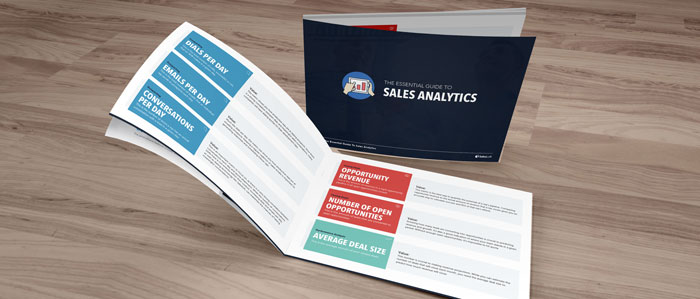
In fact, we created the eBook, The Essential Guide to Sales Analytics,” to help prioritize your metrics from beginner’s analytics, all the way to the intermediate and advanced level.

sales-analytics-ebook


Download our Sales Analytics eBook today


The true value in analytics and predictive sales isn’t just simply a sales nerd making smart decisions. It’s about improving overall team efficiency, and increasing value of your business processes as a whole.

This advantage gives your company a competitive edge in the market place, where sales data is the foundation of all information. It’s just a matter of the quality of your data, from completeness, to validity and accuracy. But any true sales nerd can break through the struggles of sales data management and find the solution to achieve analytical success!

Sales operations is the glue that holds the sales team together. In fact, it’s safe to say that sales operations leaders are the true masters of the sales universe in the modern age.

Learn exactly what sales operations is, how it works, and how it can be crucial to your sales organization by downloading our free eBook, Sales Operations Leaders: Masters Of The Universe.

sales data

The post 5 Sales Data Struggles Only a “Sales Nerd” Would Understand appeared first on SalesLoft.

08 Sep 23:55

A Millennial’s Guide to Generation “E”

by Jarrell Chalmers

I graduated college in 2015 with a degree in political science — and no hope for a job. After 100+ interviews, I ended my job search. I published my own portfolio and decided that I would find work in the social media space on my own. I took really awesome photos and advertised them as a social media service. Before I knew it, I was taking photos for several start-ups. What started as a cool “photo-op” soon turned into a full-blown social media agency. This is just a small example of how millennials may eventually be known as Generation “E” (and no, the E isn’t for “Entitled”, it’s for “Entrepreneur”).

Google Sensei Is a Millennial’s Best Friend

How, exactly, did I start an agency with just photos? Like everyone else in my generation, I used the Internet. “Google sensei” taught me how to optimize hashtags, write SEO friendly blog posts, and even how to use Photoshop. The secret to my sauce was figuring out what I needed to Google. Every social media client I gained had their own needs. With every individual need came something new I had to Google. For instance, if I had a client in the wedding space, I ran to Google for details on the industry.

While my political science degree is certainly something I value, Google has become my eternal instructor that I confide in for just about everything. I even used Google to write this article. I wanted to write about how other people my age are changing the world. What did I find? Were there any truths to my claim?

Here’s what I found on Google…

A World of Entrepreneurial Opportunities

On average, there are 50,000 new Uber drivers a month. There are over 2 million Airbnb listings. Why is this relevant? More and more people are using the Internet to fund themselves. Those with hustle enough to make the most out of Uber are making over $40,000 a year. The same can be said for those taking advantage of Airbnb. This is unprecedented in our society. The Internet has become a tool from which our generation can derive its living. Who needs a job when an application can help you build your income?

Even more interesting is how our generation is taking advantage of social media. More young people are opening Instagram accounts to reach their target audiences. Facebook is making it easier and easier to literally upload products on to your profile page. Anyone can do this. The barrier to starting your own business is now thinner than it ever was. You don’t have to wait for a mass media outlet to connect with your customers when you can build your own.

At the same time, you have individuals who have become social media stars. Bloggers like IamGalla travel the world for free because of the size of their Instagram accounts. The best bloggers are making hundreds of thousands of dollars a year just by posting about product.

Earlier this week, YouTube travel channel stars Damon and Jo appeared in an ad for the MTV VMA awards. Since when are “Internet-famous” people hosting the VMA’s? In this way, it’s clear that millennials have set their sites on transforming the media landscape as well.

In my case, I used the Internet and Google to create and maintain my legitimacy as a social media entrepreneur. Others are using the Internet to make money off of hosting strangers in their homes. Some are using it to sell things, or provide car rides, while others are using it to host MTV shows. What are some other millennial stories you’ve heard, or millennials that you know who are reinventing the term Generation “E?”

The post A Millennial’s Guide to Generation “E” appeared first on Social Media Explorer.


Related Stories

08 Sep 23:53

Gaming Your Way To Productivity

by Deborah Sweeney

From playing softball with the company team to a simple round of solitaire on the computer, people love the interactivity and goals set up by games. The recent success of Pokémon Go has shown that a simple goal can motivate an entire group of people to get up and walk around their neighborhood, even if those same people are infamous for their sedentary lifestyles. Gaming has the incredible power of getting people to do things they would not normally do. A lot of companies realize this benefit and have created some activities within their company to get their sales force motivated. Gamification of the workplace gets everyone to see a goal and reward giving them a simple reason to try a little harder than they otherwise would. Because of this, gamification can also be used for your non-sales departments to get productivity up to a whole new level.

The Reason

In a successful game, progression is an important component. When players take part in a game, they want to feel like their actions meant something. In baseball, hitting a home run is an amazing feeling, but there is a reason beyond the action itself. The home run signifies an increase in a team’s points. This outcome is the progression that gives meaning to the action performed. This sense of progression has developed many successes. The recent example of Pokémon Go’s gamification phenomenon spreading to everyday life shows the importance of progression. The main hook of the game is the idea of collecting and leveling up your characters. Every action you perform in the game gives you points that fill a bar, which when full grants the play a higher level. Walking a certain distance, catching Pokémon and battling them gives the player experience points that move the needle a little forward at a time. The satisfaction of filling the bar, watching their collection grow and getting to the next level helps give the player a sense of accomplishment, even if the actions are quite minimal. Pokémon Go is not the first game to do so and its many addicting properties come from honing characteristics that help make the player feel accomplished.

The Game

This progression characteristic comes from Role-Playing Games that were introduced to the mainstream audience by the 1974 tabletop game Dungeons & Dragons. In the Dungeons & Dragons game, players were given quests to complete with the characters they chose. They took on the role of these characters and explored, scavenged and battled through their world to complete their quest. Each action gave them points to help level up their characters. This formula has been followed many times since 1974 and has created many successful games. This makes it the best choice to create a new game for your non-sales departments.

The game you create should incentivize each action an employee performs in their regular workday. These actions should have point values attached to them when the action is completed. The more difficult and time consuming an action is, the more points it should be worth. All the actions that an employee usually performs can have a new incentive when they earn some type of points. Completing an assignment, logging documents printed, returning phone calls and other little tasks will have meaning that creates motivation to do more in less time. If your employees hate performing and tracking certain necessary tasks, giving the task could give the employees a reason to actually perform the action. Employees will go out of their way and spend an extra minute performing a task because they will now perceive that there is a justification for it. Taking the important tasks that the employees feel are redundant or are a nuisance and giving them a reason to perform it will automatically create a more productive force because the overall game has created a fun way to get this work done. Also, tasks can highlight both individual goals and team goals that can help motivate teamwork as well as individual value to the company.

After giving the tasks value and outlining how many points are necessary to complete a level, your workforce needs a reward system where they feel they accomplished something. Rewards do not have to be monetary but they should be something your workforce wants. These could be reaching a productivity goal for a department gets them to decide where the catered lunch is from, doubling output for an individual could get them an extra half-day of vacation time or giving the most productive employee a gift card are all viable solutions. Competitions could help make employees excel in their positions while team goals can make employees work together to help struggling employees raise their performance.

The Outcome

By implementing this sort of gamification in your non-sales departments, the company can increase the performance of these subdivisions. They will enjoy the accumulation of points that makes them feel that every small action performed was for a reason. It will give them a better feeling of accomplishing something at the end of the day than they currently feel. They will want to perform better and help their co-workers perform better so they achieve the rewards with every level they reach. This keeps your employees happy and working hard while you receive the benefit of a company getting more things done faster and better in a shorter amount of time.

08 Sep 23:51

Open-Ended Questions Yield More Information: 10 Examples

by PFPS

Open-ended questions are far more effective than closed-ended questions in getting a buyer to open up and share more information with you.

open-ended questions

In a previous CONNECT2Sell Blog post, we illustrated how closed-ended questions can hurt your ability to understand buyer needs and limit your sales conversations. Let’s dig into how you can improve the questions you ask buyers by making them open-ended.

Notice the Differences in these Closed-Ended and Open-Ended Questions

Look at these “before” and “after” questions to see how closed-ended questions have been retooled. The “after” questions yielded more information for the seller and were viewed by the buyer as more interesting, more thought-provoking and of higher value. In some cases, the open-ended questions also sounded less threatening to the buyers.cover for site 2015


Before: Can you walk me through the new RFP process?

After: Please walk me through the new RFP process.


Before: Do you prefer a monthly billing cycle?

After: Tell me about your preferences for billing.


Before: Is this important to you personally?

After: How important is this to you personally?


Before: Does this concern you?

After: What about this concerns you most?


Before: May I ask about your budget?

After: What is the budget that’s been allocated to this project?


Before: Were you interested in seeing any other options?

After: What additional options are you interested in seeing?


Before: Would you describe your preferred customer?

After: Describe your preferred customer.


Before: Is quality the reason you are looking for a new vendor?

After: What led you to look for a new vendor?


Before: Are you the sole decision maker?

After: Who else will be consulted in making this decision?


Before: Wouldn’t you like to increase your productivity?

After: What goals do you have in relation to productivity rates?


The “after” open-ended questions are broader, more inviting and less restrictive than the “before” closed-ended questions. By turning closed-ended questions into open-ended ones, sellers have a better chance of getting high levels of buyer engagement and more information.

The closed-ended questions aren’t bad questions. In fact, some of them may be preferred to their open-ended alternatives. That would depend entirely upon what the seller wanted to achieve. If a seller only wants a narrow bit of information such as confirmation, then a closed-ended question like “Do you prefer a monthly billing cycle?” is appropriate. Knowing the difference in question construction plus having a clarity of purpose for your questions helps you achieve what you want.

Next Steps:

  • To learn more about DISCOVER Questions® and how you can make every question count, order your copy of this bestseller from Amazon.com
  • When you need sales or management coaching, customized sales training, or a dynamic speaker call us at 408-779-PFPS or book an appointment with Deb.
  • Check out these resources for sales managers and front line sellers. New webinars, infographics, research, podcasts and more added every month!

BlogAward

The award-winning CONNECT2Sell Blog is for professional sellers who believe, as we do, that Every Sale Starts with a Connection.

Deb Calvert, “DISCOVER Questions® Get You Connected” author and Top 50 Sales Influencer, is President of People First Productivity Solutions, a UC Berkeley instructor, and a former Sales/Training Director of a Fortune 500 media company. She speaks and writes about the Stop Selling & Start Leading movement and offers sales training, coaching and consulting as well as leadership development programs. She is certified as an executive and sales coach by the ICF and is a Certified Master of The Leadership Challenge®. Deb has worked in every sector and in 14 countries to build leadership capacity, team effectiveness and sales productivity with a “people first” approach.

The post Open-Ended Questions Yield More Information: 10 Examples appeared first on People First.

08 Sep 23:51

7 Automation Trends for Digital Marketers to Follow

by Adam Frankel

The online marketing industry is increasingly relying with automation to manage their campaigns, and their successes validate the shift. Success in online marketing depends on:

  • How much time one spends
  • How much effort he puts in

Marketing automation tools are a benefit to inbound marketers. Using such tools saves time, simplifies the work process and reduces errors.

Here’s how digital marketing agencies are levaeraging the automated functionality now available to them.

Managing multiple accounts

Digital marketers have multiple social media accounts. It’s difficult to manage all these accounts individually. You either need increased manpower or a centralized access point from where you can manage these accounts.

The former is more expensive than the latter. The latter, although less expensive, is a bit challenging.

To overcome the challenge, marketers can leverage automation platforms. SMM tools like Hootsuite, Buffer, Viralheat and SproutSocial ease basic operations as well as complex tasks such as user demographic monitoring, online reputation management, measuring virality score, etc.

The biggest benefit of SM account management automation is single platform. Once you log into Buffer or Hootsuite, you can access your LinkedIn, Facebook and Twitter accounts. From a single custom dashboard, you can view how each network is performing. Such dashboards fetch social analytics from different networks and suggest future strategies.

Prospect tracking

Via social media, brands gain access to prospects. There are plenty of relevant and qualified social prospects out there and they are highly likely to turn into leads. But tracking them is challenging.

Marketing automation allows you to evaluate them, weigh the likelihood of their becoming your customers.

Automation and analytics tools enable you to track the activities of social prospects and optimize your social presence for them. Brands fail to engage with prospects for the below-mentioned reasons:

  • Not communicating regularly with them
  • Not making the interaction meaningful
  • Not gauging their lead score

Automated tools like Quintly or Socedo remove communication bottlenecks, make interaction with prospects meaningful and assign lead score to prospects, thereby making it easy for brands to decide which of them are to target. Prospect tracking eventually paves the roads for

Engagement with prospects

Cutting-edge tools have smart approval system, which works like a filter. Prospects are given approval or disapproval based on the lead score assigned to them, for further interaction.

Engagement initiating signals are

  1. Facebook like, comment and share and comment length
  2. Retweet, Twitter follow backs and direct messages
  3. Repin on Pinterest
  4. Like, comment and share on LinkedIn along with hashtag use

You don’t have to bother. The automation tool you use will intercept all these signals, analyze them and sort the prospect list to find the most likely candidates for conversion pitch.

Your job is to tune the engagement pitch. The pitch should be in accordance with the likes and dislikes, fancies and whims of the prospects. Of course, there will be holistic analysis in the background done by the tool, taking into account link-click through, follow-backs, replies, private messages, upvotes/downvotes and plenty other engagement metrics, making engagement easy.

Facilitate conversion

Engagement with prospects leads to conversion. Automated tools monitor the conversion process, inform marketers about possible errors and offer them other actionable insights throughout the conversion process.

The factors that are critical to sales conversion include

  • Marketing campaign scaling
  • Strong customer relationship
  • Competitive edge

And here’s what automation can do:

According to Gartner Research, by 2020, automation will greatly eliminate the need for human interaction. Automation tools can initiate dialogues with new prospects and reengage with existing prospects in the most opportune time, which boosts conversion. The state of the art analytics allow them.

Unable to scale hinders conversion. Automation streamlines the business process and reduces clutters.

Gaining competitive advantage is tough unless a business adopts automation. What separates automation users from non-users is they report when competitors outgrow them. What follows is tracking competitors to get a sense of the edge that can outbalance the scenario. Once again, only automation tools can achieve this.

Better CRM ROI

Automation platforms integrate CRM tools. This not only connects the marketing and sales team better but tracks CRM. A lot of CRM data go to waste because enterprises don’t automate CRM.

If they use an automation platform that has an integrated CRM, then campaign ROI reporting would be easier, and so would be tracking and increasing revenue.

Automation software allow for CRM-level bi-directional syncing.

What benefits does that yield?

A loop originates and the campaigns created by the platform remains within it. The reporting capability enhances as revenue, marketing speed and marketing decisions map back to the CRM.

A study by Pardot shows buyers want targeted content. The more targeted your marketing messages, the better the outcome is. Without CRM integration, it’s impossible to deliver targeted messages as marketers don’t get a granular view of customer behavior.

Behavioral marketing

I mentioned above about customer behavior. It’s a crucial factor. Marketing around customer behavior yields profitable outcomes. Automation increases its effectiveness.

Here’s what the sales cycle looks like:

Customers browse the features → Read blogs → Check and compare the pricing → Purchase.

Some customers leave after browsing the features. Some leave after viewing the price. Some leave when they don’t find the suitable payment option.

Automation platforms monitor and keep a track of all these touch points. When enterprises obtain the analytics details, they compare the touch points and speculate the reasons behind cart abandonment.

They make changes on their site accordingly.

Email marketing automation

A report shows a staggering 61% of marketers in the US rely on blast emails for lead generation. Less than 5% use automation solution. Automation connects email marketing to behavioral marketing, we’ve just discussed.

Some automation platforms are so advanced that they allow for real-time marketing based on CRM data and customer tracking info. But real-time marketing is not a walk in the park. It requires the sales rep to be street smart. Once you activate drip campaign, emails are automatically sent to customers based on the same data, but in the right time. This way, the email open rate improves, and so does the reply rate.

Summary

The wave of automation is sweeping off the digital marketing industry. Automation is impacting every marketing touchpoint. A marketer can manage multiple accounts, track a prospect, monitor his behavior, make a sales pitch in real time or run a drip campaign. This way, he can grow his business using automation solutions.

It’s impossible to prevent automation from taking over the digital marketing industry. What you can do is to embrace it, understand it and follow the tips shared here. Doing so will increase your odds of success.

Image Courtesy: pixabay.com

08 Sep 23:50

The Naked Truth: Outbound Marketing Is Still Important

by Judy Caroll

I was trying to come up with reasons why companies should still use outbound marketing when I read what Guy Kawasaki, a household name in marketing circles, said about the subject:

“If you have more money than brains, you should focus on outbound marketing. If you have more brains than money, you should focus on inbound marketing.”

I could’ve just totally changed the topic of my article because Mr. Kawasaki made total sense there. But, I cannot just roll over and die and drag every outbound marketer’s cause to my grave (I have a soft spot for outbound marketers). I have to at least put this on record.

In sibling analogy, Inbound Marketing is the long-awaited newborn, the baby everybody in the family is enthusiastic about. He’s the apple of everyone’s eyes; he gets all the attention, the special treatment, the biggest slice of the cake. That’s because, first, everyone’s bored of the big brother (one can only be so cute for so long). Wait, that’s about the only reason.

Big brother, of course, is Outbound Marketing. He used to be the favorite, but when everyone learned baby brother is coming, the joy he used to give them became nothing more than an afterthought.

But to all fans of big brother, fret not because whether they admit it or not, big bro still holds some tricks cute little brother could only wish he had.

izismile.com

Credit: izismile.com

And that money-brains theory of Mr. Kawasaki? Yes, it’s true to some degree, but it’s not a rule. And if it is, you can always be the exception.

Here are some outbound marketing strategies that still drive sales and earn marketers more than just a pat on the back.

Email marketing

In a study by Fractl and Moz, there’s a question that says “What is an effective way for a company to attract your business?” The top answer – favored by 53.5% of the respondents was, “Mailing me offers for discounts, coupons, or free trials.” It was followed by 53.2% who answered, “Offering free content about a topic I’m interested in.”

For all the credit given to inbound marketing’s efficient passivity, it cannot be denied that buyers still expect a more aggressive approach. By creating and sending emails to hype promos, events, newly launched products, and the like, you can attract a specific audience – those who are half-expecting a notification from you, because email marketing uses leads that are already in your company database, you have better chances of reaching leads that are more sales ready. After the initial spending on a lead list, the expenses allocated for email marketing are almost insignificant, which gives it a very high ROI.

Event marketing

The good thing about event marketing is, you know you’ve already won half the battle. You see, the fact that the prospect you invited attends your event is already an indication of interest in your brand, product, or service. So whether it’s a webinar or a tradeshow, a seminar or a public demo of a product, it gives you the chance meet your prospects in a more personal manner and reel them in further. Needless to say, event marketing is a great way not only to generate leads but create lasting, meaningful relationships with current and prospective customers.

Inside sales

Think of outbound marketing as tag-team wrestling where the two members of the team take turns until the opponent succumbs to their relentless efforts. It doesn’t sound nice and cute, but it operates on teamwork and cooperation. In this case, the outbound marketers do the initial pummeling – softening the prospects until they’re ready for the inside sales team. The inside sales team then calls and qualifies the leads using CHAMP methodology until they are ready to be passed on to the “closers”. Inside sales is essential in any outbound marketing strategy since they are the ones who follow up on the leads. Without them, all the leads your frontliners have generated will be for naught.

Lead nurturing and lead scoring

Several studies show that outbound marketing is more effective in B2B transactions precisely because it is easier for companies and big organizations to trust partners they have had some degree of interaction with. This is the result of marketing efforts that turn leads further down into sales pipeline for nurturing. Truth be told, a good percentage of the leads you have generated are not quite ready to buy yet. But through lead nurturing, these leads are gradually tenderized until they are in perfect position (and attitude) to buy. Ideally, a good pipeline assigns leads scores based on how purchase-ready they are.

Tri-media

In this age of computers and mobile technology that evolves faster than people age, you’d expect newspapers, radio, and television to heave their last collective breaths. But no, this triumvirate is here to stay for a while. These traditional platforms are still getting a significant chunk of the marketing budget because, although businesses may use inbound marketing to research for trusted partners, they ultimately seek out those that are established and have had a history of credibility and are amplified by their sometimes decades-long presence in tri-media ads. One more thing: because it has become “outdated”, advertising through these means has actually become cheaper. This is why outbound marketing seems to have inbound marketing’s number, especially in business-to-business marketing. Thus, telemarketing is still relevant and effective marketing medium.

Bottom line

The truth is, Inbound Marketing is getting all the love these days. This entire concept about “attracting more bees with honey” actually makes a lot of sense, but it would be foolish for any organization to abandon outbound marketing altogether in favor of inbound marketing. As many marketers — even those who have jumped over the fence to inbound marketing – would admit, outbound marketing helps businesses target specific prospects more accurately, and thus,produces positive results faster.

So don’t but fall for that “more money = outbound, more brains = inbound” principle hook, line, and sinker. Just be smart and strike the right balance between the two.

This post originally appeared at The Savvy Marketer’s Blog

08 Sep 23:49

Amazon slashes price, adds Alexa to new Fire tablet

by CB Staff

NEW YORK, N.Y. – Amazon wants to be under the Christmas tree this year. It’s cut the price of its new Fire tablet almost in half and added its popular voice assistant, Alexa, in hopes of making it a hot holiday item, despite a slump in overall tablet sales.

The new Fire HD8 tablet will cost $90, down from $150. Mixed-use battery life is up to 12 hours from 8, and the base storage is doubled to 16 gigabytes.

The biggest change is that the tablet will have Alexa functionality. That means that when users tap and hold the tablet’s home button, they can ask the assistant for anything from weather reports to news queries, and also get the device do things like adjusting the lights or temperature on compatible smart-home devices.

The tablet market in general has been slumping. Most people have already bought one who wanted one and see little reason to upgrade. Worldwide tablet shipments fell 12.3 per cent to 38.7 million in the second quarter, according to the International Data Corp.

But Seattle-based Amazon.com Inc. has managed to grow its share by slashing prices of its Fire tablet and encouraging people to buy more than one. Its base model, with few bells and whistles, costs just $49.

The Fire HD price cut in particular makes it attractive to buyers, IDC research manager Jonathan Gaw said.

“The rest of the tablet category has pretty much taken a dip, whereas Amazon has been able to increase their share,” he said. “They are not necessarily out to make a great margin on the device itself so it works out pretty well for them.”

Alexa voice-recognition software will be available on all the new tablets, as well as via a free over-the-air software update for Fire HD 8 tablets from last year. The software was originally part of Amazon’s Echo $180 smart speaker, which is activated by voice commands.

Third-party devices have begun to use it too. A home-intercom system called Nucleus and a portable speaker from Triby also come with Alexa software built in.

On the tablets, users can see visual cards, similar to what’s on the Amazon Echo app, for each query they make.

Kevin Keith, Amazon’s general manager of Fire tablets said he expects tablet users to use Alexa mainly while using tablets for entertainment like movies and e-books.

“It’s a way to enhance the entertainment experience,” he said.

The post Amazon slashes price, adds Alexa to new Fire tablet appeared first on Canadian Business - Your Source For Business News.

08 Sep 23:49

Inbound Selling: Should Sales Create Content?

by Samantha Rivero

More often than not, sales people will tell you their function is to sell. Makes sense, right? Well, not so fast.

If you thought about going up to a person on the street (or to their door for that matter) and pitching them a product, idea or service, you would likely get a lot of dirty looks and hostility. That’s because consumers aren’t prepared to talk to salespeople as early as they used to be. They want to do research on their own and they want to independently investigate their options before you shove a product or service down their throat (or P!SS them off!) Queue: Inbound selling.

What Does Sales Have to Do With Content?

Sales is arguably the most client-facing aspect of many businesses. They are the first point of contact for a lot of relationships that your company has with prospects. This means that they have a wealth of knowledge about the questions and needs of your potential customers.

So, what does this have to do with content creation?

If you are looking to be the resource your prospects come across when doing their aforementioned independent search, you want to answer these exact questions before your sales team gets involved (AKA inbound selling)! This results in though leadership and authority that you could not get otherwise.

Now, those salespeople reading this are thinking to themselves (or out loud) my job is to sell, not to write. This is true. But before we discuss your options, we need to be on the same page about how invaluable sales opinions are to the prospects on your website and searching Google. So, do you agree that you have the missing puzzle piece to your company’s content creation? OK, now we can move forward.

“But Sales Doesn’t Have Time to Create Content…”

If you have the time and skills to write a blog in it’s entirety, hats off to you! In fact, most subject matter experts do not.

So… where do we go from here? Interviewing, outlining, recording, re-purposing… the list goes on forever! There are so many ways to create content when you don’t have the time for it, that many people never consider.

If you’re working with a skilled inbound agency, you will likely have these options:

  • Interviewing: This is a great option if you’re working with an agency. Here at Quintain, our content manager interviews client subject matter experts, and then we write the blogs for them. In one hour, she can usually knock out four topics, and come back to fully-formed blog posts that simply need your stamp of approval!
  • Outlining: Maybe you don’t have time to write a whole blog, but you have some ideas you can quickly jot down. Pick your persona, and then write top-level ideas or arguments with two to three bullet points that you want to touch on in the blog post. For most agencies, this should be enough for them to craft a blog post that captures what you’re envisioning. (Pro tip: add a relevant article to give your writer extra guidance, if your topic is extremely industry specific.)
  • Recording: If interviewing and outlining don’t work for you, simply record your conversations with prospects, or record your thoughts after you have a meeting with a potential client. With that recording in-hand, an agency should be able to extract and draft a blog post or two! However, be sure to structure your thoughts and give context so that the recording makes logical and chronological sense.
  • Video: One of the quickest ways to create great content is video. So if you feel more comfortable speaking your thoughts and ideas rather than writing them, you can take a page out of our own Kathleen Booth’s playbook with a video blog series.

All of the methods above work just as well for creating other types of content, too. And if you already have sales content, great! You can extract blog posts from that and give your writer some guidelines or re-purpose it as-is. If you don’t follow the steps to creating blog posts, just re-purpose them chapters of an eBook. This method requires some strategic guidance to get it right, but if you work closely with your agency you can nail it!

What do salespeople have to say about it?

How much should/does your sales team participate in content creation? This question was asked in a sales-focused LinkedIn group, which has since expired. The post got a lot of response, but the jury is still out. Half of the responses indicated that they think there would be a gap in their content without sales opinion, the other half was insulted that sales should be a part of the process because they need to be selling.

So… what do you think? Should sales be involved? Have you included sales in your content creation and noticed a difference? We’d love to hear from you!

sales met

08 Sep 23:48

Take Your Audience Down Memory Lane for Better Marketing Results

by Jessica Mehring

Have you heard of that “Pokémon GO” mobile game?

Just kidding. Of course you have.

It’s all the rage right now.

You’ll read all kinds of articles about why that is, too.

  • It brings people together!
  • It gets players out of their houses!
  • It motivates you to explore new places!

Yes, yes, and yes.

There’s one more thing many people don’t recognize when they’re raving about this game of collecting anime creatures and doing battle with other players.

Pokémon triggers nostalgia for many people.

It brings back memories from our childhoods, or memories of raising our own children.

Nostalgia, at its core, is a sentimental longing or affection for the past.

It can be triggered by almost anything – including familiar smells, sounds, sights, keepsakes, or even feeling lonely – and is unique to each individual.

Research shows that nostalgic reflection results in people feeling …

  • A stronger sense of belonging
  • More continuity between their past and their present
  • That their lives are more meaningful
  • Higher self-esteem and more positive mood

In other words, nostalgia, though it does mean longing for the past, actually makes us feel good.

And making people feel good is always a winning marketing strategy.

Here are 3 ways to incorporate nostalgia into your next marketing campaign to engage your audience and get better results.

Revive Old Favorites – Thoughtfully

Take an old favorite and make it new again. Just don’t change it so much that it no longer feels familiar to the people who loved it.

If at all possible, gather customer feedback on your plans before you go public with them. Then you’ll find out if you’re bringing up happy memories or triggering audience anger (à la the new Ghostbusters movie) before you spend a huge chunk of your marketing budget on the campaign.

Here are a couple of good examples.

After Coca-Cola’s disastrous launch of New Coke in 1985, the soda giant has epitomized nostalgia in their marketing ever since. From the throwback videos their YouTube channel to the return of their classic glass bottle, Coca-Cola has nostalgia down to an art.

Check out this interactive timeline walking you through the evolution of the Coca-Cola bottle.

cocacola.jpg

Another example of bringing old favorites back to live, MTV has created MTV Classic, a new TV channel that plays — you guessed it — only classic MTV shows. Check out their Twitter feed. It’s a gif lover’s dream come true, and each of those tweets brings the audience back in time.

MTV-classic.jpg

Use New Mediums

We live in a digital age. Take old fan favorites and update them for modern audiences.

This is something Nintendo, makers of Pokémon GO, did a fantastic job with. They took the characters from the classic Pokémon trading card game and TV series and brought them into the digital world of 2016 using augmented reality video-game technology.

In other words, they made Pokémon accessible to the average smartphone user while bringing up happy childhood memories for users. Smart move.

There are many new forms of content out there to play with today, and lots of new technology available to breathe new life into old favorites.

Instagram did it with their photo filters.

Pinterest did it with virtual bulletin boards.

Mazda did it with their multimedia, story-driven “Driving Matters” campaign.

Whatever trip down memory lane you want to take your audience on, take it down a contemporary path.

Get Your Audience’s Attention in a Targeted Way

By using a hefty dose of nostalgia in their marketing campaign, data-backup company Intronis saw a 650% ROI and a 35% conversion rate.

How’d they do it?

They ran a direct-mail campaign in which they sent Atari game players to their target audience.

Intronis-Atari.jpg

(Image credit: Ad Age)

The tactic certainly had the desired effect of getting target buyers’ attention.

It also had the benefit of triggering nostalgia for their target audience of males 30-50 years old who liked gadgets.

What Intronis did right with this campaign was that they first understood who their target audience was, then they boldly reached out to these people in a way that brought them true value (in this case, that value was childlike fun and happy memories).

Memory Lane Can Be a Great Move for a Marketing Campaign

Nostalgia is a bittersweet experience for most of us. It makes us long for the past, but it also plunks our psyches down in a happy place full of meaning and fond memories.

Making your audience feel happy, connected and even wistful will help them associate those positive feelings to your brand.

08 Sep 23:45

Common Sales and Marketing Acronyms: A Quick Guide

by Callie Hinman

Sales and Marketing Acronyms

Acronyms can make correspondence between sales and marketing more efficient. (And any digital marketer will tell you they’re also helpful when you have character limits.)

But if a sales or marketing rep doesn’t know what a particular acronym stands for, he or she will have to ask someone to translate and then efficiency goes right out the window. And misunderstandings can lead to frustrations, which can lead to further strain on the already-tense relationship between sales and marketing.

Since aligning these departments is becoming more and more important, it’s crucial they understand one another’s jargon. This post will define some of the more common sales and marketing acronyms.

CRM: Customer Relationship Management (software)

What is it?
Software used to centralize customer data (including contact information and user behavior) into one easily accessible database. CRM software is also used for marketing and sales force automation.

Why is it important?
Customer relationship management software gives you valuable insights into prospective and current buyers, which help marketers and sales reps provide more personalized experiences.

CTA: Call-to-Action

What is it?
Graphics or text urging buyers to complete a specific action—for example, Click Here, Call Now or Learn More.

Why is it important?
Calls-to-action draw buyers in and allow businesses to start (or continue) engagement with their brand. Placing CTAs to gated content within a blog post or email can help move prospects through the sales funnel.

CTR: Click-Through Rate

What is it?
A performance metric calculated by the number of clicks a link or ad receives divided by the number of times the link or ad is viewed.

Why is it important?
Marketers can see how effective their efforts have been by looking at the click-through rate. A high CTR usually means the offer or content is relevant and interesting to the audience, whereas a low CTR indicates a need for tweaking.

PRO TIP: Don’t evaluate CTR in a vacuum. A high CTR doesn’t always imply good performance. It could just mean your language is too broad. Always consider conversion rate (which is the percentage of users who perform a desired action—for example, download a piece of content, sign up for a newsletter or watch a webinar) as well.

CX/UX: Customer Experience/User Experience

What is it?
Every interaction a customer or user has with your brand throughout each stage of the buyer’s journey—Awareness, Consideration and Decision.

Why is it important?
Customer experience dictates a buyer’s perception of your brand, so make sure every time an individual engages with your brand, it’s positive and helpful. A positive experience encourages prospective buyers to become customers and current customers to stay.

KPI: Key Performance Indicator

What is it?
A key performance indicator is a metric used to evaluate a brand’s success and its progress toward achieving its goals.

Why is it important?
Key performance indicators are objective measurements that help companies make informed decisions about the effectiveness of their sales and marketing techniques.

MQL: Marketing Qualified Lead

What is it?
An individual who has engaged with a brand’s marketing (for example, downloading an eBook or signing up for a newsletter), indicating they have a higher interest in a company and could become a customer.

Why is it important?
MQLs are usually in the top or middle of the sales funnel but can be nurtured into SQLs (defined below) when the marketing and sales teams collaborate.

ROI: Return on Investment

What is it?
A performance metric that measures profitability and is calculated using this formula:
ROI = (Revenue – Cost) / Cost

Why is it important?
ROI helps businesses determine if a potential investment (for example, marketing automation software) will be worth the upfront and ongoing costs or if a current investment should be continued or terminated.

PRO TIP: ROI isn’t the same as profit margin. ROI measures the relationship of the costs incurred to the profit gained from those costs; profit margin measures the relationship of revenue to profit—in other words, the percentage of a brand’s revenue that is profit. A company’s ROI can be several times the cost of the investment, but the profit margin cannot exceed 100 percent.

SAL: Sales Accepted Lead

What is it?
An MQL who has been passed to the sales team, has been reviewed by a rep for quality and is determined to be worthy of pursuing.

Why is it important?
Having defined criteria for what qualifies an MQL to become an SAL helps a sales rep decide whether they should invest their time and resources into following up on a lead.

SLA: Service Level Agreement

What is it?
An SLA officially defines what the sales and marketing teams expect from each other. A marketing SLA specifies the quantity and quality of leads marketing is responsible for delivering to the sales team, and a sales SLA establishes how the sales team will pursue each qualified lead received from the marketing team.

Why is it important?
A service level agreement ensures that every party involved—sales, marketing and the client—are all on the same page regarding expectations.

SQL: Sales Qualified Lead

What is it?
An SQL who has demonstrated a high level of intent to become a customer and who fits the predetermined criteria for a high-quality lead. SQLs are ready to be contacted by a sales rep directly.

Why is it important?
SQLs have been vetted by both the marketing and sales departments and have the highest potential to become customers, as long as the sales rep engages them correctly.

PRO TIP: Sales enablement is a great way for sales and marketing to work together to convert SQLs into opportunities and opportunities into customers.

This list is by no means exhaustive, but it can certainly make communication between your sales and marketing departments a bit easier. Be sure to bookmark this post to use as a handy reference the next time you have an email that looks like alphabet soup.

08 Sep 23:45

How to Build Your Email List: The (Better Than) Ultimate Guide

by Aaron Orendorff

build-email-list-ultimate-guide

It’s not “like” or follow. And it’s not even add to cart, buy now, or confirm purchase.

The most profitable online click is subscribe.


The most profitable online click is subscribe says @iconicontent.
Click To Tweet


Why?

Because, as McKinsey & Company’s much-cited study revealed, email is a staggering 40 times more effective at acquiring customers than Facebook and Twitter combined:

91% of all U.S. consumers still use e-mail daily, and the rate at which e-mails prompt purchases is … at least three times that of social media … (and) the average order value is also 17% higher.

But that was in 2014. Certainly the landscape has changed?

Nope. As marketing automation platform GetResponse’s 2016 State of Email points out:

For every $1 invested, email marketing generates an average return of $38.


For every $1 invested, #email marketing generates an average return of $38 via @getresponse.
Click To Tweet


That’s a 3,700% ROI, which explains why — according to the same report — 57% of marketers planned to increase their email marketing budget in 2016.

Of course … you knew all that already. What you probably don’t know as well is how to build your email list.

Good news, that’s exactly what this post (as well as this handy downloadable checklist) contains. To do that, we’ll break this down into three main categories:

Options

  • Content offers
  • Non-content offers
  • Pleasure buttons
  • Painful buttons
  • Short forms
  • Long forms
  • Multi-step forms

On site

  • Landing pages
  • Entry pop-ups
  • Exit pop-ups
  • Scroll boxes
  • Sidebar sign-ups
  • In-line sign-ups
  • Header sign-ups
  • End-of-post sign-ups
  • Contact sign-ups

Off site

  • Twitter
  • LinkedIn and Medium
  • Facebook

Options to build your email list

Most of this checklist focuses on the details: the types of forms, where to use them, and how to optimize each one. But all the forms in the world won’t do you a bit of good if your offer isn’t compelling.

1. Content offers

Content offers — also known as lead magnets, carrot content, or bribe-to-subscribe offers — provide immediate, tangible, and concrete value to your subscriber. This free content could be how-to guides, reports, webinars, white papers, e-courses, or even discounts and coupons.

The ultimate goal of your opt-in content is to improve your subscriber’s life by solving a problem. To drive this principle home, I like to frame my content offers in theological terms:

“What hell does this content saved from? What heaven does it delivered unto?”


What hell does this #content saved from? What heaven does it delivered unto says @iconicontent.
Click To Tweet


Creating click-worthy content can be overwhelming. That’s why you should go small. SmartBlogger’s The Quick and Dirty Guide to Creating Your “Bribe to Subscribe” in Record Time offers a fantastic overview of how to create content offers fast:

Instead of trying to tackle all of your audience’s problems, you’ll narrow them down to just one specific problem.

“And to make it super easy, we’ll only consider problems that fit the following template:

“‘I want (goal), but (obstacle).’”

HANDPICKED RELATED CONTENT:
13 Ways to Get More Opt-Ins From Your Content

2. Non-content offers

The need to create content offers is passed around online like gospel. It’s one of those principles where repetition equals truth. Except that … it doesn’t. Test for yourself. Some products and industries simply do not require gated content to get visitors to sign up.

Rebel Growth host Borja Obeso recently told me about his own shocking discovery on this front:

“I’ve been preaching for years that people should provide something in exchange of asking for a sign-up, and they should.

“But in some of the industries we target with Creativiu (a site that offers on-demand online creative classes), it works better to mention the overall benefits people will get from being a part of our community. We tested countless “bribe-to-subscribe” offers, mostly offering people entire courses for free. Then we made this offer:

Creativiu-Cake-Decorating-Offer

To my surprise, the ‘plain’ test absolutely destroyed all the others.”

Popups-Creativiu-Cake-Decorating

While the opt-in box says “get exclusive content and tools,” notice that no specific content tactic is being offered: no e-book, no checklist, no webinar, no white paper, no report. Just a generic “we’ll send you information in the future.” That’s why it fits the no-content offer template. The lesson? The only way to find out if your audience will respond to content versus non-content offers is to test them.

3. Pleasure buttons

What makes a seductive, click-worthy button? Two things: happiness and fear. Let’s look at happiness first.

Even though I opened this article by stating that subscribe was the most profitable button online, using the word “subscribe” is notoriously lame. “Submit” and “sign up” also suck. Instead, you should:

  • Use first-person language – at least try “sign me up” or “send me updates.”
  • Use active language – “give me access” or “start discovering today.”
  • Detail the payoff – “Make me a better marketer.”

Create button copy that shows the value of your offer. My favorite formula is Joanna Wiebe’s “I-want” strategy:

Write button/CTA copy that completes this phrase: I want to ________________. The underlined part becomes the button copy.

Compare these two buttons:

Pleasure-Buttons

Image source: Copyblogger

Notice how the second button completes the “I want to” with “end my scheduling hassles.” It identifies a problem and offers a specific, desire-based solution.

Pleasure buttons are also a stellar place to get playful and clever like Unbounce did on its presidential marketing teardown post:

Pleasure-Buttons-Unbounce

Image source: Unbounce

4. Pain buttons

At the opposite end of the emotional spectrum is fearthe most dominant human emotion. The key is to create an opt-out button (basically a close-the-pop-up button) that hurts.

Again, Joanna Weibe explains:

“When a visitor is presented with an opt-in form, it’s so often the case that said opt-in form has just one button, and that button is there to be clicked if you choose to opt in. If you choose not to opt in, you do not have to click a button to state your preference; you simply X out, click out, or otherwise ignore the opt-in button.

“Most of our opt-ins are active and opt-outs are passive.”

A pain button eliminates the passivity of opting out by giving the viewer a clear choice. Here’s a fabulous example from Joanna herself that catapulted her site from daily double-digit sign-ups to triple-digit subscriptions:

Pain-Buttons

One of my favorites comes from KlientBoost:

Pain-Button-KlientBoost

5. Short Forms

Sign-up forms with as few fields as possible are the low-hanging fruit of building your email list. Content Marketing Institute’s most prominent email opt-in is a single field:

Short-Forms-CMI

So are the vast majority of email sign-up forms, like these from Shopify and Salesforce:

Short-Forms-Shopify

Short-Forms-Salesforce

Naturally, statistics abound on why less is more:

Conversion-Rate-Form-Fields

Image Source: HubSpot

The oft-cited Imaginary Landscapes saw a 120% increase in conversions by reducing the number of fields from 11 to four.

6. Long forms

Shopify and Salesforce both have single-field forms as the leading edge of their sign-up strategies. But neither stops there.

With Shopify, as soon as you go to Shopify Plus, the company’s enterprise-level platform, the fields increase from one to six:

Long-Forms-Shopify

Long-Forms-Salesforce

Salesforce adds more fields for its industry report sign-ups:

What explains the radical difference in the same company’s website forms? Value and qualification.

With the long forms, the visitor seeks something with more value. The bar for access is raised for that greater value.

Long forms also are a preliminary step toward customer qualification (i.e., identifying high-quality leads). The forms also allow the company to know more about their subscribers to better tailor its communication.

7. Multi-step forms

Multi- or two-step forms are tricky even in just understanding the terminology.

“Double opt-in” often refers to the two-step process required by most email providers for someone who signs up for your list. In addition to the original sign-up, the subscriber must confirm from a subsequent email.

Although the names are used interchangeably elsewhere, what I’m talking about here is different. Multi-step forms require a user to take two or more actions to subscribe before the confirmation email arrives. As a simple example, take Leadpages’ subscription process:

  1. It starts with a single button that doesn’t ask for information.Multi-Step-Forms
  2. A pop-up appears with the email submission field:

Email-Submission-Pop-Up

Why require two or more steps?

As Daphne Sidor explains in Everything You Need to Know About Capturing Leads With Opt-in Forms:

With a two-step opt-in form, you make the first request in the form of a call to action on your page, whether it’s a text link, an image, or a button. Once someone clicks, they can easily fall under the sway of behavioral inertia: the principle that once you start down a certain pathway, you’re likely to continue. One ‘yes’ leads to another, until visitors have completed the process you’ve set up.

Breaking up forms also allows you to more easily integrate long forms into your process. Investor Carrot, which builds and maintains real estate investor websites, recently released data on its adoption of the multi-step process. First, it broke the standard lead-generation form into two forms. Second, it included a whopping 12 fields for the second form.

Multi-Step-Forms-Investor-Carrot

What happened? “The two-step opt-in process improved conversions by 46% … with dramatically improved lead quality.”

Build your email list on site

8. Landing pages

These standalone web pages should do one thing and one thing only — drive action. Some best landing-page practices from the pros include:

  • Match the headline of your ad to the headline of your landing page.
  • Make your call to action big and post above the fold.
  • Keep it clear, simple, and focused.
  • Use one call to action. You can have multiple buttons but only one goal for each page.
  • Use videos, which have been shown to notably improve conversion.
  • Craft compelling copy to tell a story instead of stating facts or just selling.

The best practice ignored by the clients I see is the number of CTAs. If the page’s goal is to collect email addresses, visitors shouldn’t be able to do anything else on the page — no header navigation, no links for further reading, no social icons, no products — nothing!

If you have multiple buttons on the landing page, every single one of those buttons should drive your visitor to the same action. One of my favorite examples of a single-goal-focused landing page comes from curation and clipping tool memit. While the page contains numerous buttons with varying CTA copy, each and every one drives readers to the next step in memit’s process: downloading the app.

Single-Goal-Focus-Memit

Image source: memit

9. Entry pop-ups

This pop-up form activates when a visitor enters your site. This type of form often blocks the view of the majority of the screen, forcing engagement.

Just remember, visitors will do one of the following:

  • Comply and supply information
  • Close the pop-up and ignore the CTA
  • Get annoyed and leave

The first lesson here is about timeliness. SumoMe’s Noah Kagan demonstrates the sweet spot for email gathering based on time on page:

SumoMe-Email-Gathering

Image source: AppSumo

To increase the success of pop-up forms, have them appear five seconds after the visitor arrives on page.


To increase the success of pop-up forms, have them appear 5 seconds after visitor arrives says @iconicontent.
Click To Tweet


Also, do not be afraid to show the same pop-up to the same person multiple times. A one-display-per-day rule is optimal. After all, if a person reads more pages on your blog without being bombarded with pop-ups and comes back the next day, she is more likely to subscribe.

Finally, with all pop-ups, be sure you have both a happy button and a pain button.

10. Exit pop-ups

These opt-ins generate when your visitor’s mouse moves toward the “back” or “close” buttons. Exit pop-ups are last-ditch efforts to engage a potential subscriber and prevent the loss of a good lead.

This example from Picreel, which is in the business of building exit-intent pop-ups, is spot on. Since I was on the site Picreel knew I was interested in exit pop-ups. But instead of going for the feature, Picreel goes for the benefit:

Picreel-Exit-Pop-Ups

Pop-ups — both entry and exit — can be awkward and sometimes annoying. But they work. CrazyEgg compiled data from four sites and found staggering results:

  • Nikki McGonigal’s pop-up drove 1,375% more sign-ups than her sidebar alternative.
  • Darren Rowse’s light-box earned 400 new subscribers a day.
  • Ask-Leo.com increased its email conversions by 1,000%.
  • Mama’s Lebanese Kitchen saw sign-ups 10 times greater than the pre-pop-up, opt-in rate.

When creating exit pop-ups, be honest and conversational in your copy. Level with your visitor and admit that the exit pop-up is exactly that. Here are some good examples based on Picreel’s own optimization advice:

  • Keep it simple: Don’t load the pop-up with images and text. Stick to one driving goal and get rid of everything else.
  • Ask questions: “Going so soon? Here’s the guide that keeps 15,000 visitors coming back each day” or “Love dressing up? Join our emails to get the latest fashion news.”
  • Be unexpected: Use words, questions, and offers that visitors don’t expect from an exit pop-up: “You probably hate pop-ups … and this one sucks. But my mom and your financial adviser just called … ”

Don’t load pop-ups w/ images & text. Stick to 1 driving goal & get rid of everything else via @Picreel_
Click To Tweet


11. Scroll boxes

Scroll boxes are the polite form of pop-ups. Instead of consuming the screen they appear unobtrusively.

Not all scroll boxes are created equal. Not by a long shot. Sean Bestor’s article makes the data-driven case that the top 1% of scroll boxes are responsible for 25% of all emails collected. Sean also shares the common denominators from the top performing:

  • Location – bottom right
  • Appearance – 47% scroll depth
  • Design – light with a picture

12. Sidebar sign-ups

Sidebar forms are ubiquitous. Often built into web templates, they’re incredibly easy to implement. Just be sure that your sidebar form collects data and doesn’t distract from more useful forms. They are two kinds of sidebar forms:

  • Anchored and static:

Sidebar-Sign-Ups

Image source: Social Media Examiner

  • Sticky or scrolling forms appear once a visitor passes a certain point on your page:

Scrolling-Sticky-Forms

Image source: Marketing Tech Blog

13. In-line sign-ups

In-line opt-ins are the equivalent of the impulse buy. They work best as part of the natural flow of the text in articles or other long-form content over 2,000 words.

Once you’ve provided value, the in-line opt-in functions as a means to “act now.” Think of in-line forms like a conversational aside, “Oh, by the way, if you like what you’re reading now … then you’ll love the other stuff we do. And to get our ‘other stuff,’ just sign up here.”

For instance, in its previously mentioned presidential marketing article Unbounce includes an in-line sign-up after the introduction and another in the middle of the 6,000-word article:

In-Line-Sign-Ups

14. Header sign-ups

Header sign-ups are incredibly simple. They can host a variety of CTAs. Problogger uses its headers to collect emails, promote its podcast, and advertise its events.

Problogger-Email-Header

Problogger-Podcast-Header

Problogger-Buy-Now-Header

The big-dog provider is Hello Bar, but there are plenty of alternatives especially on WordPress.

Hello-bar-EmailHello-BarHello-Bar-Message

WP Notification Bar offers extensive customization that naturally includes email sign-ups but also countdown clocks and referral messages to welcome visitors from specific sources:

15. End-of-post sign-ups

End-of-post forms cater to your most devoted readers — the visitors who have consumed your content in its entirety. They’re invested. Moreover, they probably are looking for more.

An end-of-post opt-in strikes while the lead is hot. Here’s a general one that can be used at the end of almost any blog post:

End-of-Post-Sign-Ups-CMI

16. Contact sign-ups

Do not overlook the obvious. And don’t underestimate the converting power of contact pages, about pages, and in-depth contact forms.

Here are a few tips to keep in mind:

  • Fewer fields mean greater conversion power. On average, asking visitors to complete three fields results in a 25% conversion rate, compared to six or more fields, which see a 15% conversion rate.
  • Mobile design is paramount. With 81% of smartphone users accessing the internet, if you haven’t tailored your contact form to fit smaller screens, you’re missing out.
  • Ask good questions. Instead of simply leaving the “message” field blank, spur the response with engaging questions that relate to the kind of product or service you offer.
  • Create drop-down options to anticipate email segmentation based on your most important demographics.

Build your email list off site

Just when you thought we’d covered every place to put an email list sign-up form … now it’s time to go off site.

17. Twitter

Twitter lets you collect email addresses with a single click, and it’s free unless you want to connect to your email marketing platform. All you have to do is set up a “Twitter” card through the Twitter Ad page:

Twitter-Email-Single-Click

Tweet it. Pin the card to the top of your profile.

Pinned-Tweet

18. LinkedIn and Medium

Publishing content off site is always risky. On the pro side, your content is in front of a larger audience. On the con side, you’re operating on “borrowed land.” While you might get new LinkedIn or Medium followers from a great post, you can’t convert those off-site readers into profitable email list subscribers without forcing them to leave behind the platform itself.

Now you can. Meet Rabbut. Originally created as a competitor to Hello Bar, Rabbut lets you add sign-up forms to LinkedIn Pulse and Medium. Here’s what the form looks like for an article republished by Sujan Patel on LinkedIn:

LinkedIn-Medium

With just republished content, Sujan has collected roughly 400 new subscribers with a 4.8% conversion rate overall.

19. Facebook

I saved Facebook for last not because it isn’t valuable, but because advertising on Facebook is fraught with challenges. Unlike Twitter, LinkedIn, and Medium, in order to make Facebook work well as an email collection tool, you’re going to have to pay.

You can do this in one of two ways — lead or traditional Facebook ads. Facebook lead ads let you create a complete sign-up process on its platform so your audience never leaves the native environment. Staying native might be an advantage, but the customization options are incredibly minimal.

Facebook

Given those limitations, traditional Facebook ads that drive users from Facebook to your landing page are more powerful. Here’s a great example from Foundr Magazine’s Free Instagram Masterclass:

Foundr-Magazine-Instagram

Nathan Chan shared the data behind this sequence with me:

Nathan-Chan-Instagram-Masterclass

All told, Foundr has been able to cut its cost per lead to less than $1.

Start building your email list

It’s like Joe Pulizzi says, “Once you build an audience (of email subscribers), anything is possible.” And that little parenthetical notation is vital.

Email is hands-down the most profitable marketing channel there is. And building your email list is non-negotiable.

Thankfully, you don’t have to get overwhelmed by all the decisions and methods outlined above. All you really have to do is just get started with a few of them, track your progress, and try alternatives as you go.

Infographic - How to Build Your Email List The (Better Than) Ultimate Guide

Share this image on your site – Just copy and paste code below

<script src=”//my.visme.co/visme.js”></script><div class=”visme_d” data-url=”4doq1n4z-how-to-build-your-email-list-the-better-than-ultimate-guide-3″ data-w=”800″ data-h=”5900″></div><br /><br />

Download or print a handy abbreviated version of the checklist made by Visme.

If you’re already running some of these approaches, then identify a handful of new approaches and get testing.

Of course, the best way to end a post all about email sign-ups … would be to include one:

Want daily tips, insight, and advice on how to improve your content marketing programs? Subscribe (yes, it’s a lame word but you get the point) to CMI’s free newsletter.

Cover image by Joseph Kalinowski/Content Marketing Institute

The post How to Build Your Email List: The (Better Than) Ultimate Guide appeared first on Content Marketing Institute.

08 Sep 23:45

Answers to Six Key B2B Marketing Questions

by Christopher Ryan

B2B Marketing Questions

As I talk to clients, business owners and fellow B2B marketers, I hear the same questions and concerns on a fairly regular basis. Chances are, you currently face one of these questions. And although each question is surely worthy of its own blog post, I wanted to address what I’ve been hearing in digest form. (I will delve into these topics in greater detail in upcoming posts.)

  1. Should we do push marketing or pull marketing? This depends: While I am a huge proponent of pull marketing and have used it to generate millions of dollars of revenue for our clients, it may not be the total panacea for what ails you. It’s likely that you may have awareness and lead generation requirements that can only be met with push marketing techniques. If so, by all means use the tactics that are necessary to meet your lead objectives. But with that said, you should start transitioning your marketing programs towards the pull model right away, and adjust the balance as conditions warrant. If you do this, you can protect your short-term mandate (deliver leads now) while building a much more effective and cost-efficient foundation for future success.
  2. Should we gate our content or provide it for free? I’ve seen companies that won’t let you download so much as a data sheet without providing your name and email address. At the other end of the continuum are companies that don’t require you to register for anything. Usually, the answer is found between these extremes. My practice is to require more when you give more. If it’s a data sheet, let the prospect download it without registration. If it’s a more valuable asset like an in-depth video or whitepaper, ask for at least some minimal data.
  3. How often should we communicate to our prospects? Again, the answers run a wide gamut, from those that communicate once per month to once per day (most fall in between). Of course, this depends on where the prospect is in your sales funnel. If they are active in the buying process (e.g. in the middle of a free trial), an email every other day may be in order. But if they are simply prospects in your opt-in (nurturing) database, a frequency of 2-3 times per month should be most effective. By effective, I mean that they will not forget you, will not unsubscribe from your list, and some reasonable number of them will respond to your offers.
  4. Should we devote time and/or budget to social media? My quick answer to this is “Heck, yes!”…unless you lack something to say or the time to say it. Social media is a key component of most pull marketing strategies. But you need to take it seriously and commit to at least some consistency in blogging, posting, tweeting, updating, etc. I wrote one of my favorite blog posts on this subject over five years ago, titled Is Social Media a Marathon or a Sprint?
  5. How often should I/we blog? The short answer is: as often as you have something to say. But if you can’t commit to once per month (3-4 times is better) it’s best not to blog at all. If you blog for any length of time, you will develop a quality/quantity rhythm. Not every post will be brilliant. If you are prone to waiting for the perfect topic at the perfect time, just remember what Voltaire said: “Perfect is the enemy of the good.” Voltaire was right — set a floor in terms of quality standard, write something and get it out there.
  6. What marketing tactics are performing best? In the B2B marketing world, tactics shift depending on the product, offer, target audience and timing. Generally, we are having good success with pay-per-click, LinkedIn and email (if we can build a quality prospect list). We support these tactics with organic search optimization, content syndication and social media.

Facing unique dilemmas of your own? Feel free to start a discussion in the comments section or reach out if you want to explore in-depth.

08 Sep 23:45

New Research: Case Studies Are The Most Effective B2B Content Marketing Tool

by Rachel Foster

Case Studies Most Effective B2B Content Marketing

We’ve always known that case studies are one of the top dogs of B2B content marketing, but new research from the B2B Technology Marketing Group now proves it.

The group recently conducted a survey with more than 600 B2B marketing professionals about the current state of content marketing.

The results show that when evaluating content marketing effectiveness, lead generation continues to be the top goal. Meanwhile, case studies take the #1 spot as the most effective tactic and format. Case studies topped the results in two categories – the most effective content subject to write about and the most effective marketing tactic.

Why Are Case Studies So Effective?

Today’s B2B buyers are self educated and don’t want companies to constantly sell to them. Adding case studies to your lead generation mix helps build trust with buyers, as they hear about you from your customers’ voices – not from your corporate voice. A hawkeye study found that between 71% and 77% of B2B buyers cited testimonials and case studies as the most influential types of content.

Case_Studies_Buyer_Decisions

When B2B buyers conduct research online, they look for peer reviews, testimonials and case studies. All three of these items provide social proof that your products or services deliver results. This proof helps buyers feel confident when they make purchasing decisions. .

The more compelling case studies you have, the more you can engage skeptical prospects and shorten your sales cycles. A relevant case study can capture a buyer’s interest and motivate them to reach out to you earlier.

Plus, adding more case studies and testimonials to your website can boost your conversions. WikiJobs increased its conversions by 34% simply by displaying testimonials prominently on a web page.

How You Can Use Case Studies

Case studies allow you to tell your story from your customers’ perspectives. They are also a great way to get your best customers more involved with your company and give them recognition for all of the awesome things they are doing.

Here are some places where you can share your case studies to reach a wider audience and engage more leads:

  • Sales collateral for your team
  • Segmented by product or industry, so you can share the right story with the right prospect
  • Event handouts
  • Presentations at conferences, user groups, and other events
  • Social testimonials
  • Email promotions
  • Sprinkled throughout your website as testimonials
  • Blog posts
  • Video content
  • Stories for your white papers and ebooks
  • SlideShare presentations (don’t forget to post these to your LinkedIn profile)
  • LinkedIn recommendations

Case_Studies_User_Experience

A successful case study requires both telling a great story and supporting it with a great user experience. Organize your content so prospects can easily find what they need, develop headlines that capture their attention, and present your content in a way that’s interesting and informative.

Case Study Resources to Help You Convert More Leads

Although case studies are an integral part of your B2B content marketing toolkit, they can be difficult to acquire and execute. Here’s how to create case studies that resonate with prospects and motivate them to say, “Yes!” to your product or service: 5 Ways to Take Your B2B Case Studies from Blah to Brilliant.

Once you have some killer stories here are 21 Place to Share Your B2B Case Studies. And if you’re still in the process of developing case studies, here’s How to Make B2B Buyers Believe You (Even When You Don’t Have Any Case Studies, yet!)

08 Sep 23:44

How to Stop Spinning Your Wheels & Shorten Your Sales Cycle

by Rachel Serpa

Bright city bikes. City bicycles. Bicycles wheels. Three beautiful lady city bright colored bicycles or bikes for woman standing in the summer park outdoors, wheel closeup.

Did you know that the average B2B sales cycle has recently lengthened by 24%, clocking in at just over 8 months? While time for evaluation, trial and decision making is certainly justified, especially when it comes to high dollar deals, most reps have experienced at least one sales cycle that simply felt never-ending.

While much of this elongation can be attributed to market changes, the economy or organizational shifts, there are many things that sales teams can do to take charge of sales cycle length and cut it down to size – and it’s certainly worth the effort. Companies that are able to reduce the sales cycle by just one month can generate over $4M in incremental sales revenue for every $50M in sales territory/quota.

So how is it done? While the temptation may be to spur reps to move faster and push harder, these techniques don’t do much when it comes to today’s highly competitive market and educated buyers. Not to mention, you must beware of sacrifice value for speed. Instead, it’s time to help your team stop spinning its wheels and start closing deals faster by utilizing these three key strategies.

1. Smart Lead Scoring

To help prioritize prospects based on their stages in the buying cycle, companies score leads based on a number of criteria, including content downloads, website visits and much more. This is one way to qualify leads, but lead scoring can also help businesses actively seek out prospects that are likely to bring the most value based on their similarities with previously won deals.

As such, lead scoring should not be thought of as a straight shot from lead capture to revenue; rather, it should be treated as a matrix where a lead is carefully plotted on a plain of desired outcomes and ranked accordingly. To do this, companies can use a series of simple yet powerful formulas to better qualify leads. And the more qualified the lead, the faster it will close!

For example, take lead yield, the formula for which is as follows:

Sales Revenue / # of Leads Generated

Lead Yield

Looking at the image above, you can see that leads from Source B close at a higher ratio and dollar amount than those from Source A. Digging deeper into leads from Source B then, you can isolate the common qualities found within these prospects – i.e. contact title, company size, industry, other technologies in use, etc. Cross referencing these qualities with those found in leads with the shortest sales cycles will help your team effectively prioritize and look for leads that will bring the most value to your business in the shortest amount of time.

To learn about this strategy in more detail, check out this blog post.

2. Measure Success One Stage at a Time

Think about your sales funnel, which is essentially a visual representation of your sales cycle. Now imagine a handful of leads being dropped into the top or wide end of the funnel, and wins falling out the narrow end or bottom of the funnel at varying speeds. If someone were to ask you why some wins were moving faster than others, how would you explain it?

The answer is, you’d have to guess, because you have no idea what’s actually going on inside the funnel. This is essentially what happens when businesses try to shorten their sales cycles just by looking at the velocity of lead to win. Instead, companies must measure the speed at which deals progress through each stage of the sales funnel, from accepted, to qualified, to evaluation, to whatever other stage your business may have in its pipeline.

One of the best and easiest ways to do this is with a Stage Duration Analysis report.

stage-duration-report

This report allows you to track how long deals are spending in each stage of your sales pipeline. It also pinpoints which stages are causing bottlenecks so that you can optimize the activities and communications that are taking place within these specific stages. Which brings us to our final tip: refine your sales process.

3. Refine Your Sales Process

A sales pipeline is merely a representation of a much more complex underpinning sales process that outlines the exact steps reps must take to move a deal from one stage of the pipeline to the next. For example, a structured sales process might require reps to have an on-site meeting, provide a customer reference and receive verbal confirmation that they’ve made the short list of competitors before moving a deal from the Qualified to the Quote stage.

Don’t have a formalized sales process in place? Don’t panic – you can learn all about how to create a measurable sales process that drives predictable sales growth in this eBook. Once you have this process in place and capture the information necessary to glean statistically relevant insights, you can begin to measure and understand many of the customer qualities, rep activities and other dimensions that impact your sales cycle.

For example, there is probably a step in your sales process to identify a decision maker. As your reps follow this process and enter information around the decision makers in their deals, you will soon be able to identify the profiles of the decision makers in deals that moved through the sales cycle the fastest. Similarly, if there is a step in your process where reps are required to secure a customer referral to prove the value of your solution, you may soon discover that prospects who are connected with a particular customer progress to the next stage of the pipeline 2X faster than those who are connected with another.

Stop Spinning

A shorter sales cycle is a common sales KPI, but is difficult to achieve without the right metrics, tools and processes in place. With these three tips, your reps can stop spinning their wheels and start taking more strategic, data-driven steps toward increasing deal velocity.

08 Sep 22:23

How to Successfully Use Snapchat for Business

by Jonny Rosen

How-to-Successfully-Use-Snapchat-for-Business

Remember when everyone was falling all over themselves to get on Pinterest and take advantage of the runaway growth that was taking place on the network?

Those days seem long gone now, and Pinterest is old news. Now Snapchat is the hot new social network that is seeing tremendous growth and enormous marketing potential.

Already, Snapchat has more than 100 million active daily users. Yet although the number of users is growing faster on the site than any other social network, only 2 percent of the businesses that market on social media are using the network.

That’s a mistake. Already, major brands and even politicians are discovering the potential that the platform has to connect audiences. The president and first lady have even used it to promote their policy initiatives at home and abroad.

If you are going to use Snapchat to promote your brand, you will need to do more than post a few pictures with some funny filters. Here are a few tips for how you can successfully use Snapchat for business:

Create the Right Content

Snapchat is unique in a number of ways. It is primarily a visual medium, and any posts — called snaps — that you share exist on the site for no longer than 10 seconds.

Your content doesn’t disappear within 10 seconds of you posting it, but rather within 10 seconds of your followers viewing it. Therefore, you don’t have to worry about the time or the day that you post. Your content will be waiting for your followers whenever they check in.

Because of Snapchat’s unique nature, you need to create content especially for the platform. Think of how you can share your brand’s values or story through fleeting images.

Some ideas include showing a behind-the-scenes look at your company’s operations, including people working or creating your product. People love to see how things are made, so a series of snaps about your product creation would be perfect.

You can also create simple tutorials through a series of snaps or share photos of your product in action.

You can easily repurpose content from your other social networks. You may need to take the pictures anew or add filters to them to make them work for Snapchat though.

Be Creative

Snapchat is all about creative visuals, including unique and funny photo filters, lenses and captions.

The arrangement of pictures and the combination of these effects can be used in just the right way to get users’ attention and make them feel more engaged.

For example, the online ordering company Grub Hub shared a series of images that showed a pizza dwindling slice by slice as it was eaten. In the final images, the brand shared a special promotional code that expired shortly after the snaps were shared.

The beauty product company Dove shared a campaign on Snapchat that used special filters and doodles to share its message of body positivity and natural beauty. The company used photos it shared itself and made a filter available for others to use and participate in the campaign.

The more creative you can be on the platform, the more attention you can get.

Encourage User Participation

We tend to overlook the fact that social networking is supposed to be social. So many brands focus on how to get their message out rather than how to get their users engaged.

To be successful on Snapchat, you will need to encourage user participation.

An easy way to do this is to create a sponsored filter or lens that users can add to their own photos and share. Starbucks did this with a special iced coffee and flashing hearts, and Taco Bell did it with a lens that turned people’s heads into tacos for Cinco de Mayo.

You can also host contests on Snapchat. For example, Sephora asked users to share their makeup or makeup-free selfies with doodles and share them on Snapchat and other social networks.

The more fun you can make the contest, the more participation and exposure you will get.

Include a Call to Action

Don’t settle for followers and brand exposure. Use your activity on Snapchat to increase your sales and leads.

You can ask followers to visit your website or other social network and then provide an incentive by promising them to find a special discount code or other offer there. Or you can create a story on Snapchat and then finish it on your website.

You can also ask followers to take a screenshot of a snap to get a discount code or other incentive. This tactic is useful for measuring the engagement on your feed.

Get creative and figure out other ways that you can include effective calls to action to increase sales and leads.

Snapchat is a growing platform, and you are missing out on great opportunities if you are not using it for your brand. Use these tips to find success on the growing network.

07 Sep 17:22

Who Should Own Sales Development: Sales or Marketing?

by Craig Ferrara

Why can’t sales and marketing just get along? It would be in everyone’s best interest if we could all just sit down, sing Kumbaya, and share our peace pipe!

When you drill down into the complexities of each of their personalities, sales and marketing fall on both ends of the spectrum; either they are far too similar, or they are totally different. The key to their alliance, is finding a bridge between the two.

Where does the sales development team fit in?

In most cases, the sales development team is sandwiched between sales and marketing. They are forced to bow to both departments, scrambling to meet each and every request. Rather than running around trying to keep both parties satisfied, sales development teams should act as a buffer, providing a voice of reason between the two departments. Sales development teams are an untapped resource in determining the true effectiveness of the teams they support. They are able to offer unbiased feedback (good or bad), and provide insight from both sides. They should be thought of as an internal consultant that can provide a neutral analysis on what is and isn’t working.

Does that mean a new department needs to be created?

One way to bridge the gap between the two departments, is by creating a third department independent of sales and marketing. What should we call this department? This is where it gets tricky. The problem is that we all have different terms for this function. Marketing tends to call it “Demand Generation”, and sales prefers to call it “Opportunity Generation”. As a result, it creates a shared ownership issue which can lead to the problem of each department wanting to dictate their own agenda into the program. The “Lead Generation” Department does not sound particularly sexy, but it doesn’t gravitate towards either marketing or sales, which is exactly the stance of the sales development team. Building a team that is neutral is the way to go.

Where to start

If you’re considering building a sales development team, you need to start by identifying where they sit within your org chart. In a perfect world, all three departments—Sales, Marketing, and Sales Development, would all report up to the same department head whether that be a CRO or CEO. Once it is determined where the sales development team will live, it is time to dictate what their responsibilities will include. What tasks will they handle for marketing? What function will they serve to the sales team?

There is no cookie cutter template of what a sales development team should look like, nor what their responsibilities should entail. Every team is different, and needs around marketing and sales vary from company to company. The one thing that can be derived here, is that having a sales development team can help sales and marketing play a little nicer.

What are your thoughts? Is sales development better off answering to sales, marketing, or both?

07 Sep 17:20

Why a Salesperson’s Best Friend should be his CSM

by Emilie Davis

“Customer Success is where 90% of the revenue is.” – Jason Lemkin at the 2015 Gainsight Pulse conference.

In other words, the bulk of revenue is no longer sourced from the initial sale but from renewal, upsell and cross-sell opportunities that exist down the road with your customer’s success.

Knowing this, the key to hitting your sales quota will largely depend on how well you work with your customer success manager (CSM) given their focus on making your customers successful and tapping into these high-potential revenue reservoirs.

There are three key reasons you’ll want to be best friends with your CSM.

1. Effective selling = good storytelling = real customer success stories

Stories are one of the greatest ways to engage your prospect and inspire change/action. As Dale Carnegie said, “He who can arouse in the other person an eager want, has the whole world with him. He who cannot walks a lonely way.”

This is because as humans we’re genetically wired to favor stories: we retain only 5-10% of information shared through statistics but 65-70% when these stats are accompanied by a story.   

While the persuasive power of storytelling is well understood, it’s worth evaluating what makes for a good story and how customer success could be the key to unlocking more potent ones.

For a story to be powerful, and elicit the intended action (purchase), it must:

    1. Have a beginning, middle and end and;

    2. Be relevant and meaningful to the individual prospect

#1 – The story structure

As stories have saturated the selling process – everybody now has a story, even your grandma’s gardener “has a dream” – our modern day prospects (or suspects) are more scrutinizing.

This means you emphatically do not want to tell a beginning-to-end tale describing how results meet expectations. This is boring and banal, and likely seen as BS. Instead, you want to display the real struggle between expectation and reality in all its nastiness. Offer the good, the bad, the ugly: the whole story. This increases your credibility in the eyes of the prospect.

Walk them through how the hero (resembling them) overcame challenges not just during the sales process but post-sales too. How after an early blow perhaps, maybe a disastrous user training or onboarding experience, the hero still emerged victorious using your solution.

In short, give real customer stories. Not just Chapter One (pre-sales) but Chapters 2 and beyond (post-sale).

image00

Alas, to craft better stories, you’re going to need to find out what actually happened to your heroes after you sold to them. Generalizations won’t cut it for our cunning audience; they are too easy to forget. The devil is in the details. Specifics – concrete deliverables, metrics, difficulties etc. – are more memorable so tap into these.

You may like to start by asking your CSM some of the following questions:

  • Did the hero stumble? (Did we face technical challenges when onboarding?)
  • When they fell, what was it on? Was there severe bleeding? (What was the first challenge? Did we lose any buy-in/momentum?)
  • Who else came to assist? (Did we bring in other stakeholders?)
  • How long before they made it to that first peak? (What was the time-to-value? When did they reach their first value milestone?)
  • When the hero looked back, what was their overall feeling? (Were they relieved, delighted, disappointed…?)
  • What’s the next summit? (What’s the next milestone?)

Remember, as the old credo goes, “‘If you want to be interesting, be interested.

#2 – Stories need to be relevant and meaningful

The other key to making a story impactful is making sure it’s relevant to your prospect. The problems and goals of your protagonist need to mirror those of the prospect.

This means one story won’t fit all. You’re going to need stories that fit an XS, S, M, L and XL company – in a range of colors that suit different personas too.

Who has the raw materials for manufacturing these shirts? Your CSM, of course. They have all the details you need to pull together the right shirt (or short story) that will fit your prospect best.

I recently had one of my AEs ask me how we’ve helped customers (similar to their prospect) who are still new to ABM execute on this strategy. Not only could I share a good example of one customer who’s successfully used Node to do this, but I could let the customer do the talking, and happily made the intro.

So if you haven’t already, set up a weekly meeting with your CSM, or better yet, take them to lunch and find out what happened to those long-lost heroes (the prospects from a while back). Value-based storytelling is an expectation in today’s competitive sales environment.

2. Effective selling = refining you ICP = knowing what customers are successful

In the SaaS economy, it pays to take into account not only if prospects are “ready, willing and able to buy…the baseline characteristics of an Ideal Customer Profile” as Lincoln Murphy at Sixteen Ventures says. “But you can do even better by applying the value-add inputs of Successful, Efficient Acquisition, Expansion, and Advocacy Potential.”

After sitting with your CSM and learning more about what happened to your customers down the road, you’ll be in a better position to refine your Ideal Customer Profile and laser focus on those that will bring in bigger dividends later, as well as dollars now.

Can you together identify common characteristics among those customers that churned or failed to realize the full potential of your solution?

If prospects aren’t sticking around and aren’t growing this can undermine your own ability to hit quota. Particularly, if your business adopts a customer success driven mindset and has it such that you receive commission based on renewal and upsell values from that customer.

3. Effective selling = adding value = bringing in CSMs into your sales process

We’ve heard time and time again, that the most successful salespeople are those that add value during the sales process. Despite this, “80% of buyers said that the salesperson did not ‘educate them with new ideas and perspectives’” according to RAIN Group’s ‘Insights Selling’.

So what are some of the ways you can add value?

Start by bringing in your CSM before the deal closes. As mentioned earlier, the CSM can provide invaluable customer stories to help educate your buyer. They also can work with you and the buyer to ensure expectations will be met by your team/solution, which reduces churn risk.

Further, adding the CSM to this meeting 1) gives them valuable context needed to efficiently onboard the customer, expediting their time-to-value, 2) serves to reduce the knowledge transfer burden required of you post-sales and 3) helps them develop the relationship with key stakeholders to ensure ongoing success. Hence it’s a winning play all around – for you, the CSM, the customer and your company.

So take a moment to think for a second, if you’re an AE, “How close are you with your CSMs?” If you’re a sales leader, “How close are you with your CS leader(s)?”

If you cannot answer this with, “We’re basically Batman & Robin,” then you’re almost certainly undermining your potential to close more deals. If you align, you’ll increase the bottom line.

The post Why a Salesperson’s Best Friend should be his CSM appeared first on Sales Hacker.

07 Sep 17:20

The Art of Selling to Women

by Drew McLellan

art of sellingLast week, we talked about the science of selling to women and how our brains differ by gender and how that affects buying patterns and decision-making. So this week, I thought it would make sense to take that science and use it as a filter to think about how to create marketing that resonates with your female audience – or as I like to call it, the art of selling to women.

Don’t skimp on the details: This is a tricky one. Many marketing types go right to the bullet pointed list for the details. That works fine for your male buyers but the ladies need more. This can be where testimonials or case studies will really serve you well.

This need speaks to how you build out your website too. Think layers and details. Everyone who comes to your site will need it to be simple to navigate and find what they’re looking for. Women will need your site to go beyond that. Build in layers of information with links to more detail, photos, FAQs, and stories. You’ll get bonus points from your female website visitors if you make your content easy to share.

Be graphic: Emotions are brilliantly communicated in visuals. Shapes, colors, facial expressions and even packaging all convey emotional connections. You literally want to draw those connections out for your female audiences whenever you can – the art of selling.

Video, and its combination of visuals and sounds, can be incredibly compelling. Multimedia can capture both the facts and the underlying energy of your company or product/service in a very memorable way. This is a great example of being smart about both what you say and how you say it.

Give her a place to listen: Because of the value women place on other women’s opinions, it will also serve your brand to provide a place for these sorts of consumer-to-consumer interactions. Whether it’s a message board, a review site or even your Facebook page, invite and encourage women to share their experiences with your brand.

Women generate seven times more referrals than men, so the more you can get them to tell stories, ask questions, and find like-minded women, the better for your brand. Another benefit is that once a woman is a loyal consumer, she’s your greatest advocate. If someone starts to complain about something, it’s often your own best customers who will defend your honor.

Find the gender balance: This is another tricky one. Women are not the same as men and they appreciate when that is acknowledged. But they don’t want to be diminished in any way. Dumbing things down for them or making something seem less than (like the pink toolbox sets) what is available for men or that they’re not as capable as a man – that’s trouble.

Build a relationship with her: Above all else, women are connectors. It’s how their brain works. It’s how their hearts work. It’s how their lives work. They want to be seen, they want to matter and they want to be in relationship with the people they buy from.

Your communications strategy needs to be for the long haul. Your goal is to be a helpful resource for her. You want her to grow to rely on you and trust your input. Better yet, you want to be so helpful to her that she shares you with her family and friends. That’s the brand/marketing nirvana – when you are trusted enough that she’s willing to share you with those that matter to her.

If you want women to take an interest in what you have to offer — recognize them, respect them, listen to them, help them and above all else – connect with them.

That’s how you become relevant to them.

The post The Art of Selling to Women appeared first on Drew's Marketing Minute.

07 Sep 16:58

How Even Social Media & Social Selling Experts Are Getting LinkedIn Wrong – Part 1

by Kristina Jaramillo

Social-Media-Social-Selling-Experts-Biznology Image 1

In previous posts, I shared how CMOs at Xerox, Lithium, G2Crowd, Wiley and XOJet are getting LinkedIn wrong as they are simply focused on brand awareness, reach and filling the funnel. I showed how the actions of these CMOs and others are the reasons behind why 8 out of 10 sales and marketing leaders are unable to prove a clear social media ROI on LinkedIn.

Now, as I review the actions, thoughts and ideas from some of the most recognized social media and social selling authors, experts and consultants, I understand why business leaders and sales and marketing professionals are failing to drive demand on LinkedIn. These experts including Jay Baer, Viveka von Rosen, Josh Turner, Christine Hueber, Brynne Tillman, Alice Heiman, John Nemo, David Meerman Scott, Dave Kerpen and others are even getting LinkedIn wrong. Keep reading my most controversial and provocative article yet to see what I mean….

Jay Baer Wrongly Believes Shotguns Trump Rifles in Social Media

On his blog (ConvinceandConvert.com), in LinkedIn group discussions, on LinkedIn Pulse and even in his presentations (including the one at Social Fresh), Jay Baer mentioned that shotguns trump rifles in social media. He mentions that a shotgun approach gets a bigger reach and has a better opportunity for going viral. He believes that social media should be a volume play and that you should be focused on broadcasting the same content to the widest possible audience, regardless of the different needs, wants and expectations of your followers or connections.

Jay’s approach is taking the “social” out of “social media” and those sales and marketing executives that follow his approach are just seeing social media as another advertising medium to gain more brand awareness. When you have a high-priced solution with a complex sales process that requires strong relationships, then you better be sure you’re focusing on specific audiences and that you are relevant. Rifles trump shotguns in this case!

Wayne Breitbarth and David Meerman Scott Thinks You Should Be More of a Resource

David Meerman Scott (best-selling author with more than 250,000 books sold worldwide and keynote sales and marketing speaker) believes that only 10% of the content you share in social media circles including LinkedIn should be your own. Wayne Breitbarth (author of the Power Formula for LinkedIn Success) believes that for every 10 updates, 6 should be for content you didn’t create!

This positions you as a resource rather than a thought leader! LinkedIn gives you the opportunity to go directly to key decision makers and communicate to them your business value. Your business value shouldn’t be that you can curate content that would be relevant to them!

Keep in mind that a recent LinkedIn study shows that 80% of IT buyers say that thought leadership content is crucial in their decision making process – and I’m sure that if LinkedIn completed the study in other industries they’d get similar results. If thought leadership content was key, why would I focus on sharing other people’s content more?

Viveka von Rosen, Stephanie Sammons, Melonie Dodaro, Donna Serdula, Christine Hueber and Kurt Shaver Wrongly Use the LinkedIn Publishing Platform

These experts fail to understand that the LinkedIn publishing platform posts are tools that are meant to position you (using it ineffectively takes away from any positioning work that you may have done on your profile as they are linked directly from it.) Most importantly, they should challenge thoughts and actions and drive demand for an alternative option. The platform is not just another place to share content, despite what these experts may believe:

  • Viveka von Rosen, author of LinkedIn Marketing in an Hour a Day and one of the most well-known LinkedIn marketing consultants talks about how to customize your invitations on LinkedIn. Can’t that be found on almost every social media consultant’s website?
  • Melonie Dodaro – a contributor to LinkedIn Sales Solutions blog and best-selling author of the LinkedIn Code shares on the LinkedIn publishing platform 7 messages that you should not send on LinkedIn including the default message (like this hasn’t been written about a million times in the last 5 years.) In her posts about LinkedIn profiles (as well as the posts from fellow Social Media Examiner contributor Stephanie Sammons) you’ll find tips about having a professional photo, a strong headline and a summary that is written in 1st person that is prospect-centric. Notice the same old information just written by another author.
  • Christine Hueber, who self-proclaims herself as the #1 LinkedIn All-Time Top Female Expert mainly uses the LinkedIn Publishing Platform to promote her events, workshops, webinars etc. Most of the posts are blatant self-promotions even though B2B buyers are calling for more value. They want relationships first. They want to see real, differentiated value and how you turn their vision into results they want to achieve. When Christine provides any value in her platform posts, it is generic value. For example, in a post where she talks about how to increase your website traffic 500+% with a simple strategy – she talks about consistent, compelling blogging (like no duh!) and then you have to sign up for a strategy session to learn about an effective system that makes blogging easy, fast and fun.
  • Donna Serdula, a LinkedIn profile makeover expert – uses the LinkedIn publishing platform to share information about completely overdone topics like “Should Your LinkedIn Profile Be Written in 1st Person or 3rd Person.” She also discusses things like the Microsoft Acquisition of LinkedIn, the LinkedIn lawsuit and how LinkedIn caps the number of searches you can complete with a free account. Now, how do these topics relate back to driving demand for LinkedIn profile makeovers?
  • Kurt Shaver (Founder of The Sales Foundry) and many others ineffectively newsjack and push out content. When the news broke, about the Microsoft + LinkedIn acquisition, everyone started creating and sharing articles and posts about it. Kurt Shaver, started writing posts about how it’s mostly a tactic to beat Salesforce (who cares except for anyone in marketing automation) and Why Microsoft Buying LinkedIn is Like the Warriors Signing Kevin Durant. This may have gotten 2000+ views, hundreds of likes and comments and even Jeff Weiner’s attention, but if there is no next step action what good is it? If the acquisition isn’t changing anything now or in the near future for my prospects, why would I write about it?
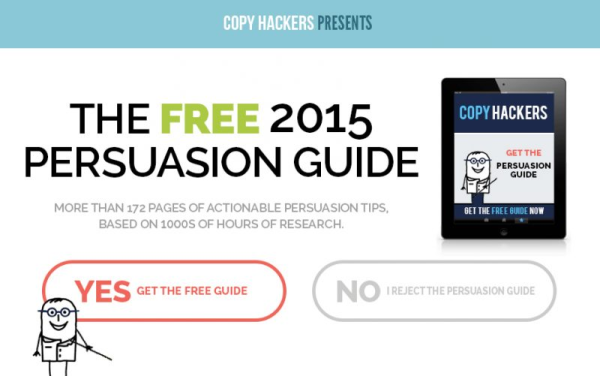
Now notice the content that I’m putting on the LinkedIn publishing platform.

KJ LI Publishing Platform Screen Shot - 9-7-16

Mark White Fails to Recognize the Importance of Mixing Content with LinkedIn Marketing

As of this writing, we’re at the end of August, and Mark White who has been training UK businesses how to use LinkedIn before I even founded GetLinkedInHelp.com only has 4 LinkedIn publishing platform posts and 3 blog posts for this year. He hasn’t blogged since March 14 of this year.

This LinkedIn consultant fails to understand that content plays an important role in:

  • Getting prospects to self-identify themselves inside LinkedIn groups as a prospect who is in need of your services or solutions
  • Challenging your prospects’ current approaches and opening their minds to alternative options
  • Communicating and demonstrating your unique business value
  • Making connections and nurturing key relationships with B2B decision makers as you move them through the buyer’s journey

Judy Parsons and Alice Heiman Tries to Sell How Quick and Easy It Is For Sales Leaders to Use LinkedIn.

Judy Parsons, a UK LinkedIn trainer, has a free ebook: One Hour to a LinkedIn Profile That Gets You Noticed! If she truly understood LinkedIn and how important it is for your profile to not only get noticed but to drive next steps, then she would not be promoting getting it done in just 1 hour. Recent studies show that most sellers are out of sync with buyers and that most sales people fail to communicate business value in person (and we find that even more fail on LinkedIn!) That’s why most of the time we spend on providing LinkedIn profile makeovers (10 to 14 hours overall) is actually spent on the positioning and messaging strategy. This is not something to be rushed as your personal profile is the foundation to your LinkedIn success.

Alice Heiman, one of the top sales consultants, coaches clients that they can achieve success on LinkedIn in just 15 to 30 minutes a day. Do you really think that you can make the right connections, engage in real conversations, and nurture relationships in just 15 minutes per day? These experts are speaking to their potential prospects lack of time to show sales professionals that they can do it. So, LinkedIn is becoming a shopping list of tactics for sales professionals rather than strategic actions that are leading to real outcomes. LinkedIn ROI should be qualitative with results that can be traced to activity, as opposed to actual time on the site.

Now, This Is Only Part 1 of My Series on How Social Media and Social Selling Experts Are Getting LinkedIn Wrong.

In part 2, I’ll be talking about Brynne Tillman, Josh Turner, Judy Schramm, John Nemo and others. These experts may get mad at me for calling them out – but I am trying to initiate change in how we approach LinkedIn for sales, marketing and business development. It’s time that we go beyond awareness, reach and pushing out content on LinkedIn. It’s time that we stop focusing on “time spent.” It’s time we focus on creating real relationships and most importantly on driving demand and revenue.

In my LinkedIn Leads to Revenue webinar, I show sales and marketing leaders how they should be going beyond brand awareness. Click here to sign up for this webinar.

07 Sep 16:57

5 Step Success Strategy to Prioritize Social Networks for Your Business [Podcast]

by Pam Moore

prioritize social networks for business

Every marketer and business leader is faced with the challenge of where to prioritize their time and investment. Time is our greatest asset in both business and life. How we spend our time can make or break business and marketing success.

When it comes to digital marketing, social media and branding, it is no different. In my 20 years of business and marketing experience, I have never heard a marketer exclaim, “I have so much time, resource & budget I don’t know what to do with it.”

Unfortunately, there are far too many “experts” online touting that you must be on every new shiny object and social network. They’ll even go so far as to warn you that if you don’t start snapping on Snapchat, storytelling on Instagram and delivering live video on Periscope that your business is destined to fail. Let me tell you right now this is 100% false.

Marketing and business leaders must give themselves permission to prioritize. You do not need to be everywhere all the time. You do not need to treat every social network equal nor spend the same amount of time and investment on every social network. You do not need to work 24/7, 365 days of the year to be successful. Release your fear of missing out and start prioritizing your time and investment of money and resource.

The truth is that the more you focus and prioritize, the better your results will be. Stop only playing around with the social networks. Instead, get serious, get focused and you will start seeing real results.

What matters is where your audience and target customer is online. You must be where they are. You must deliver them value where they are, using methods, language and mediums that will inspire them, connect with them and bring them closer to your brand.

How do you prioritize what social networks you invest in for business success? How do you know where you should engage? How do you determine where your audience is hanging out online so you can build the most meaningful relationship with them as possible? How do you achieve a positive ROI using social media and digital technologies and strategies?

Take a listen to episode 214 of the Social Zoom Factor podcast to learn our 5 Step Success Strategy and Tactics to prioritize what social networks you invest in for your business.

In this 30 minute podcast you will learn:

  • 5 Step Strategies and tactics to prioritize what social networks you invest in for business.
  • Why you must get real on your time and budget available to invest in social media
  • What skills you must have to be successful at social media for business
  • How to leverage the data available natively via the different social networks such as Facebook, Twitter, Pinterest and more
  • The difference between a business goal, KPI and objective
  • Tips to set goals, measure results and continuously optimize
  • What to look for when you do a monthly audit and refresh of your online social presence and efforts
  • How to prioritize and select tools for analysis, measurement and audience research
  • Suggested tools for audience research
  • Why it’s not about what the technology can do for you, but instead what you can do with the technology

07 Sep 16:57

Questioning Claims That Are Too Good to Be True

by Karen Firestone
sept16-07-169691764

One of the tenets of sensible risk taking is to be skeptical of promises and projections. Yet this is hard to do in practice. We’re surrounded by people (and companies) exaggerating their skills or knowledge or features — and we’re often guilty of it ourselves.

This behavior is called “overclaiming,” and research suggests that it is tied to how individuals perceive their competence. A series of studies found that having some subject-matter expertise can lead people to overestimate their knowledge. So when people believe that they have a strong understanding of a subject — say, finance — they tend to overclaim more, asserting that they know concepts that researchers present to them, even when the concepts are made up. Rather than saying that they don’t know what something is (the nonsense term “meta-differential collateral credit,” for example), they claim to understand the bogus concept, whether it is a financial instrument, a medical device, or a chess move.

This tendency matters for a couple of reasons. Today we consume more and more information, and we do it faster and often without adequate reflection and concentration. Because conversations move quickly, there’s pressure to respond immediately and deliver instant results. This makes us more likely to overclaim, and it is partly why we allow others’ exaggerations to influence our choices — whether it’s for a presidential candidate claiming to make America great again, a real estate agent who insists the property will never lose value, or a hedge fund manager who promises his track record could never falter.

I recently encountered an illustrative case of overclaiming that could translate easily across industries. After one hedge fund I know had a horrendous quarter, the managers wrote to clients, saying that they were concentrating 70% of the entire fund into only five stocks. The managers explained that a recent plunge in prices provided them a rare opportunity to temporarily increase concentration in their strongest areas, which they were sure would soon increase sharply in value. They described this situation as offering lower risk and higher potential return for investors.

The managers desperately wanted to regain their losses, and the trust of their clients. But their action was similar to poker players doubling down on what they believe to be a good hand: They think they have exceptional cards, or in this case, stocks. A hand of four aces is always a winner, but it’s a hand that no one playing the market legally can claim to have.

In my world of portfolio management, it was an extremely risky move, and a perfect example of overclaiming that should make anyone skeptical. It has been proven that the average volatility of an index, comprising many stocks, will be lower than that of its individual components. Therefore, the statement that a very concentrated portfolio would have lower risk cannot be correct. It is also highly unlikely that the fund’s clients — individuals, institutions, and endowments — would want to increase their risk.

The managers said this course of action would result in higher returns. However, any manager who claims unequivocally that placing the majority of their fund’s assets in a handful of names will enhance performance must have virtually error-proof judgment (highly unlikely). A very concentrated portfolio won’t help if the whole market collapses. And an unpredictable black swan event, such as an explosion in a major factory or oil drilling platform, can hit any company. In other words, the fewer the names within one portfolio, the more vulnerable it is when any one name drops in value. The clients exposed to this overclaiming face increased financial risks if these scenarios unfold.

The overclaiming we see here puts clients at real financial risk. The managers should have admitted the mistake, taken the loss, redistributed those assets, and maintained diversification across industries and different stocks that they believed have strong potential.

Overclaiming occurs everywhere: a biotech CEO saying that the company’s tests can determine various diseases from a drop of blood; a marketing executive insisting that she can double her sales from last quarter; a football coach telling his players that they are definitely better than their opponents.

What matters is being able to differentiate between bold claims that may be true and those meant to create an aura of excitement, seduction, and enthusiasm about something that the audience can’t resist. Marketing and advertising claims bombard us constantly, and although we often tune them out, we need to extend our skepticism to overclaimers whom we are inclined to trust.

To avoid making poor choices as a result of overclaiming, be skeptical if:

  • What you’ve been told sounds too good to be true
  • You feel the person is trying to intimidate you into not asking questions
  • You ask a few questions, but the person can’t address them or you don’t understand the answers

Only when you are comfortable and confident with all the information you’ve received should you make a decision. In the case of the concentrated hedge fund, I would ask specifically how long the manager planned to follow the new strategy before returning to historic allocations, what returns they expected during that period, and how their clients should judge them over the next few quarters. If the answers are vague or confrontational, I would put in for a redemption. There are countless situations in which you’ll have to deal with overclaimers. Learn to adopt a skeptical approach.

07 Sep 16:50

Product feature: How Smart Views will keep your salespeople from drowning in tasks

by johanna@close.io (Jo Johansson)

“Can I automatically create follow up reminders?”

This is one of the most frequently asked questions we get here at Close.io.

That’s why we wanted to tell you about Smart Views. Smart Views is a feature that’s unique to our CRM and our customers use it to stay on top of their pipeline. Smart Views tell sales reps who to follow up with and when to follow up. All this, without the use of checklists and tasks.

Let’s take a look at how Smart Views work and how they help our customers prevent things from falling through the cracks.

Why tasks suck for routine actions

Follow-ups are routine actions. Most people today are still using tasks for routine actions in their CRM because they don’t have an alternative or a better way of doing it.

Tasks, while they can get the job done, come with a lot of downsides.

  • They’re menial: Tasks require manual effort. You’ll end up creating the same tasks over and over again even if the task is the exact same thing.

    For example, if it takes an average of 10 follow-ups to close a deal, creating the same task called “Follow up” for every single lead means a lot of time wasted on creating the same task 10 times per lead.
  • They get cluttered up: One example of a routine action is calling a prospect after you haven’t reached them. If your prospect doesn’t answer, you need to manually change the date to set a reminder to call them again, which clutters up tomorrow’s to-do list.
  • They’re distracting: If you create a task every time you need to call someone back, eventually you will be flooded. You’ll start neglecting the task because prioritizing dozens of the exact same task in a meaningful way takes up unnecessary brain capacity.

Let’s say you want to follow up with your leads at least every seven days. Instead of creating tasks upon tasks, you can set up a Smart View that shows you all Leads you haven’t interacted with in the last seven or more days.

The Smart View below has been saved as “7 days ago” and shows all Qualified leads that haven’t been contacted via phone or by email in the last seven days.

Smart Views are dynamic lists and will pull in leads as soon as they fit the search criteria. This means that every time you lose touch with a prospect for more than 7 days, they will show up in this list, no matter how many times you lose touch with them.

sv_new.png

Automate your workflow with Smart Views

Instead of manually creating tasks, Smart Views automatically tell you who to follow up with, when.

  • They’re effortless: Smart Views automatically pull in Leads that require follow-ups.
  • They make you more productive: Smart Views allow you to not have to constantly look at every individual task.

Get rid of your tasks and start using Smart Views to empower your reps, save time and spend your time in more meaningful ways—closing deals.

When to use tasks and when to use Smart Views

Tasks are perfect for accomplishing unique actions. For instance, calling someone back at a specifically requested time, or getting back to a prospect who had a specific inquiry.

Our Tasks feature also integrates with your calendar so that you can get an overview of tasks that need unique action and receive notifications.

Use Smart Views for

  • Routine actions. E.g. reaching out to cold leads. A Smart View is only created once, so there’s no need to create tasks over and over again. Once the Smart View is set up, it will automatically generate a list for your reps to reach out to.

Use Tasks for

  • Unique Actions. Tasks are set up for unique actions such as sending over a proposal or following up with someone at a specifically requested time.

Watch the video below where Kevin explains how to create a workflow in Close.io using Smart Views.

Not using Close.io? Try it for free for 14 days. No credit card required.

07 Sep 16:50

Most Important KPIs by Funnel Stage: Consideration

by Ben Jessup

group of businesspeople looking at graphs pinned on a wall and considering their options

As you’re preparing your marketing budget for the next year, you’ll need to understand the effectiveness of your marketing efforts at each stage of the sales funnel—at the Awareness, Consideration, and Decision stages. Knowing where you’re succeeding and what areas need the most attention in the next year will help guide your budgeting decisions.

We’ve already walked you through tracking your Awareness metrics. Next, you’ll need to track your effectiveness at the Consideration stage. That means you’re tracking metrics that show you how well you’re converting visitors into leads.

You could also track your nurturing in the Consideration stage, but we’ll cover that in another article.

Which KPIs are the right ones to track conversions? We’ll walk you through it.

Visits by Source

Run a Sources report in HubSpot (or analyze the channels in Google Analytics) and look at the number of visits you get each month from each source—organic traffic, search engines, referrals, social media, etc. Dive down on social media and identify which social media channels are performing best and worst for driving traffic.

Identifying top and worst performers will help you determine which sources you need to invest into. More traffic from those sources will help drive more conversions.

screenshot of the sources report

Notice a spike? If you’re adding marketing actions to your campaigns, you’ll be able to attribute those spikes in user activity to specific marketing events that occurred.

Conversions by Source

The HubSpot Sources report shows you how many new contacts you generated in a specified time frame. These are your conversions for the month. The % sign next to the Visits shows your conversion rate from that source. Aim for 30% for source that brings 1000 visits or more.

In addition to knowing which source brought in the traffic, you can do a more detailed breakdown of the who, what, and where—such as which keywords, which social profile, which post, and which referring websites are helping drive the most conversions.

This information shows you how well your sources are leading to conversions. Notice anything that stands out in your top- and bottom-performing sources. You’ll need to investigate what makes them stand out, and how you can improve the cellar dwellers.

screenshot of sources report - drill down on referrers

Visits to Your Website Vs. Visits to Landing Pages

You could be getting a lot of traffic at the Consideration stage, but if visitors aren’t going to your landing pages, you’ve got some work to do. Check the breakdown of visitors to your site vs. visitors to your landing pages. In the Sources report, filter by your landing page domain to see how many of your site visitors are hitting your landing pages. If it’s lower than you’re aiming for, you’ll need to invest into improving that number in the next year.

Landing Page performance snapshot

CTA Performance

One of the most important metrics to track at the Consideration stage is the effectiveness of your calls to action. If your visitors see your CTAs but don’t click on them, you won’t get them to convert on your landing pages. You can track CTA metrics in the HubSpot Calls to Action tool.

For the Consideration stage, focus on tracking these two CTA metrics:

  • CTA views to clicks. This is the click-through rate of the CTAs that your visitors encounter. In other words, what percentage of visitors did the CTA drive to a landing page?
  • CTA clicks to submission. This is the number of form submissions that occur after the CTA is clicked. It shows how effective the CTA is in influencing form submissions on a landing page. Use this to compare different CTAs that lead to the same landing page.

screenshot of CTA performance
Landing Page Performance

Just because someone gets to a landing page, that doesn’t mean they’ll actually fill out a form and convert to a lead. It’s important to know how well your landing pages are performing, once your visitors arrive there.

You’ll need to identify the top- and bottom-performing landing pages and make improvements to your lowest-converting pages, based on what you see in the most effective ones.

Go to the Landing Page Performance report in HubSpot and analyze the Views, Submissions, and New Contacts metrics for the past month. Notice the ratio of new contacts to submissions—this will tell you how many of your conversions are in the nurturing phase of the Consideration stage. As a rule of thumb, for every 1000 visits, you should have at least a 30% conversion rate.
screenshot of the landing page performance report, showing views/conversions/new contacts

Path Performance to Conversions

Most of your visitors will come to a landing page from some other page on your site. And many of them will visit your site multiple times before getting to a landing page. It can be very revealing to track the pathways your visitors take before arriving at your landing pages. The Attribution report shows you the journey someone takes from the first time they enter your website until they convert. This tells you what made your visitors convert.

Use this information to spot the marketing effort that led to a conversion and make smart decisions about where to invest your time and resources.

Tracking the right metrics at the Consideration stage will give you a good handle on the areas where you’re getting the most ROI and where you need to focus your efforts next year. Use that information to identify your needs for next year—and build your budget around that. Having concrete numbers and goals will set you up for a successful marketing budget.

Take the Next Step

  • Get more great content about creating a marketing budget
  • Get a ready-to-go inbound marketing campaign—download our free Cooking with Inbound e-book

Download the Cooking with Inbound eBook

07 Sep 16:48

5 Questions SaaS Sales Leaders Should Ask Themselves

by Danny Wong

Many believe that “sales is sales,” and that the fundamentals of the process are the same whether you traffic in agricultural commodities or commercial jet aircraft. It’s true in a sense; the basic requirements of a successful sales strategy remain the same regardless of the product, including connecting with a customer, communicating value, and understanding their pain points. That doesn’t mean however, that different industries don’t experience their own unique complications on top of those fundamentals, and this is certainly true when you consider sales operations within SaaS startups.

The SaaS industry has emerged so quickly and evolves at a rapid pace, making it hard to stick to any one sales playbook for an indefinite period. This can lead many SaaS sales leaders to question what specific circumstances related to their industry affect their processes the most. In order to build upon sales best practices that you would incorporate in any type of company and create specific avenues for maximizing your success in SaaS sales, these are the five questions you should be asking about your strategy.

1. Does our training program emphasize the ability to create powerful long-distance connections?

Unless you’re in the minority, your SaaS organization probably focuses entirely on inside sales to grow your business. For this reason, SaaS sales reps are often required to create a lasting connection with prospects having never met face-to-face. Some sales professionals inherently excel at forging a long-distance connection, while others rely more on the non-verbal cues and other dynamics that make in-person communication unique. It doesn’t mean that they’re ineffective salespeople, it just means that your organization needs to take extra care to set them up to succeed in this environment.

2. Could we get more reliable results by switching to account-based sales?

It seems like the account-based sales model is on every B2B organization’s mind these days, and this is especially true when it comes to SaaS startups. Products and organizational structures are both increasing in complexity, which has led to an increase in the number of key decision-makers in any B2B purchasing decision. By allowing sales reps to service an entire company and try to grow revenue from within it rather than expending energy and resources going after leads that have a much lower likelihood of materializing, you may be able to scale your growth more dynamically. Not only are clients more often satisfied, since they can get reliably excellent service from their point-person no matter who in the company makes contact, but the sales reps typically find it to be preferable as well. They can leverage previously-established relationships at the company to drive revenue, and use every tool in their sales toolbox to deliver a unique, customized experience for the client.

3. Are we focusing on improving the metrics that the board really cares about?

At the end of the day, the board of directors is going to have a significant say in the future of the company, and it’s up to SaaS sales leaders to deliver results in the metrics they care about (which aren’t necessarily the ones that are prized within the sales department). While sales managers at other types of businesses can often focus on low-level KPIs such as new bookings or opportunity win rate, the board likely wants to look at big-picture results that impact the long-term prospects of the organization in various ways. They’ll be paying attention to revenue growth, of course, but they’re also probably going to scrutinize the churn rate of clients. Studies have shown that minimizing churn, or even getting to negative rates of churn, can lead to exponentially-higher valuation rates for SaaS companies.

4. Is our hiring process optimized to produce technologically-savvy, adaptable SaaS sales reps?

While every sales rep has to be fluent in the language of their industry in order to be successful, SaaS requires an even more specialized level of technical comfort. Both the types of products, and the customers’ buying environments change rapidly in the SaaS world, and sales reps must be able to learn new technological processes and adapt quickly in order to stay ahead of the curve.

5. Does the customer onboarding program create opportunities to deliver an outstanding customer experience?

The customer onboarding period is crucial for building long-term client relationships in SaaS, and the sales department needs to take an active role in helping to ensure that customers receive the best experience with the products. It’s important to train sales reps to get intimately involved in the onboarding process through various measures, such as soliciting feedback from the customers to build a better process, and coordinating requests and events across several different business units. Building a great onboarding program can help you reduce churn and maximize revenue from an existing account.