As you look ahead to 2017, consider these three tips for success (which are included in a new free eBook from Xactly): TIP #1: Coach Toward Shared Learning At the end of each day, ask your salespeople to share with everyone on the team the big thing they learned that day. Also have them share […]
Compare how many views your Google Maps photos get versus how many your competitors get in Google My Business insights.
The post Google My Business adds new photos insights appeared first on Search Engine Land.
Please visit Search Engine Land for the full article.
As the holidays approach, hopefully you’ll have some time to rest and recharge. The holiday break is always a good time to feed your mind with a good book (or three). Here are some of my favorite reads.
The Power of Habit: Why We Do What We Do in Life and Business
Written by Charles Duhigg, a reporter with the New York Times who also spoke at HubSpot’s Inbound conference this year. Duhigg’s premise is that habits can be good or bad and they can be both personal or organization wide habits. We often think of habits, like addictions, as negative. But if you can create positive habits both personally and organizationally, you’ll stand to benefit a great deal from them.
The key to exercising regularly, losing weight, being more productive, and achieving success is understanding how habits work. As Duhigg shows, by harnessing this new science, we can transform our businesses, our communities, and our lives.
Reasoning With Statistics: How To Read Quantitative Research
This is a tough read, but worth it. It’s a college textbook, so don’t expect any whimsical storytelling, but it does expose you to the depth and breadth of statistics both in theory and in implementation. And get a used copy. A new copy is crazy expensive.
This text is designed to help students become knowledgeable readers of cross-curriculum quantitative research literature. It provides a clear inviting view of quantitative research strategies for those students who may or may not have a mathematical background.
With the continued growth of analytics in marketing, the more you understand about how statistics really work and what is a significant statistical finding, the better off you will be. Workers who understand how to make sense of the ‘numbers’ will be the influencers of the decision makers.
The Psychology of Consumer Behavior
An oldie but goodie. This is a very effective foundational book that explains the science behind why consumers do what they do. It’s very much about understanding what triggers certain types of desired (or not desired) consumer behaviors.
After years of study in the area of consumer behavior, Mullen and Johnson bring together a broad survey of small answers to a big question: “Why do consumers do what they do?” This book provides an expansive, accessible presentation of current psychological theory and research as it illuminates fundamental issues regarding the psychology of consumer behavior.
Any one of these three books will enlighten you and make you a better marketer. So get some rest and relaxation in this holiday break but don’t forget to recharge your mind with a book (or three).
As a fan of banks – I like the lollipops they give out – I’m slightly disturbed by services like TalkBank. This Russian company replaces one-on-one teller interaction with a chatbot that can tell you your balance, offer on the spot advice, and even send you cool deals related to your credit cards. Founded by Mikhail Popov, Alexander Popov, and Vladimir Kozhevnikov the company… Read More
"A visual history of social dance in 25 moves" by Camille A. Brown
In her high-energy demonstration, choreographer and dance teacher Camille A. Brown traces the history of social dances performed by African-American slaves in the 19th century.
The dances are forms of artistic expression, but also outlets for expressing resistance and freedom.
"Gene editing can now change an entire species — forever" by Jennifer Kahn
Journalist Jennifer Kahn introduces viewers to CRISPR, a tool used for gene editing that gives humans the power to shape DNA.
CRISPR's potential applications make it apt for many ethical debates and thought experiments, but scientists already have plans to use it for good — they intend to wipe out the mosquito-born diseases malaria and Zika.
We’re always finding ingenious workarounds to life’s problems, big or small. This year we treated pool noodles as all-purpose cushions, removed and saved wine corks, got the most out of a burner phone, and used a simple test to see if the power went out.
At OpenView, we do our very best to deliver thought leadership all year long on the topics that matter most to your software business. Some of our most popular articles this year have revolved around the death of freemium pricing, the greatest sales deck ever made, diversity in the tech industry and so much more.
But one topic in particular has been occupying us lately – what to get our dearly beloved friends, family and colleagues this holiday season. So today, we’re highlighting the best tech gifts to give this year as recommended by some of tech’s most influential leaders.
Truly turn your house into a smart home with Amazon’s surprise hit Echo. The handy little device fills any room with immersive sound played from a variety of sources including Amazon Music, Spotify, Pandora and others through simple voice commands. Alexa, Amazon’s counterpart to Siri, will also answer questions, order you up an Uber, turn lights on and off, control thermostats and so much more.
Who knew cool could apply to a cooler in both senses of the word? The Coolest Cooler features a built-in blender, bluetooth speaker system and USB charger. What more could you ask for? Maybe temperatures warm enough to require a cooler. Might we suggest throwing in a plane ticket to the Caribbean with this gift
Still in pre-order this AI powered robot has already received rave reviews from the likes of Today and the Wall Street Journal. Jibo is a family friendly robot that can recognize faces, greet you with a joke and even put your kids to sleep with an interactive bedtime story. Plus Jibo was created by a woman. Need we say more?
Recommended by: David Chang, Entrepreneur & Angel Investor, Former COO of Paypal
With CEIVA you can take pictures and display them on the mantle mere seconds later. The interactive frame provides users with a shared folder that anyone with access can use to share and upload photos right to the frame. Plus it provides news, sports and weather info and is even covered by a lifetime warranty that includes hurricane coverage! So even if the frame doesn’t weather the storm, your photos will last forever.
Did you know that traffic deaths have increased 10% in just the last year due to phone app usage? The WizGear car mount holder not only keeps your phone safe, secure and visible, it allows you to drive through that holiday traffic with two hands on the wheel.
Apple keeps reinventing a classic and this time one might argue that it’s better than ever. The new MacBook Pro is not only faster and thinner than ever before, it features the company’s best display yet. Plus, Apple’s new Touch Bar gives you the ability to access all of your sites and web apps without the stroke of a single key.
Super compact with a long battery life, the MINI BOOM wireless bluetooth speakers allows music and podcast aficionados to seamlessly stream from virtually anywhere.
It has been said that cursing shows a lack of vocabulary. Maybe so, but I think buzzwords are even more uncreative and obnoxious. And there are far more of them than there are curse words—especially in sales.
More and more buzzwords are flying around these days, as numerous as bees in summer. The newest litany is “account-based”—account-based marketing, account-based selling, account-based everything.
There’s nothing new here. Anyone who’s ever had a list of named accounts did account-based selling. And the smart sales reps adopted a referral program as their #1 way to land and expand within existing accounts.
Use Your Words
A buzzword (a term first used in 1946 as student slang) is a word or phrase used to impress, or one that is fashionable, according to Wikipedia. But sales reps don’t need buzzwords to impress clients. In fact, your prospects are probably as sick of hearing them as I am.
Just because a well-known business leader coins a new phrase doesn’t mean we have to use it … ad nauseam. Why would you want to sound just like everyone else anyway? Success in selling is all about relationships, which means your personality is an asset. So be unique. Or at the very least, don’t be boring.
Back off on the Buzzwords
Some sayings get worn out more than others. Here are seven buzzwords I’m particularly tired of hearing:
Trigger events: Overused and tired, this phrase is not even about a gun, so I find the analogy disconcerting.
Disrupt, disruptive innovation, disruptive technology: What does disruptive innovation really mean? Innovation is something new, something we haven’t seen before, so tacking an adjective before it is nonsensical.
Lift: In many parts of the world, this is an elevator.
Alignment: Sounds like a really nice idea, but I question how frequently sales and marketing will play nice. A new breed of consultant has emerged to tackle this sticky issue.
Low-hanging fruit: Unless you’re a farmer, this makes no sense.
Value-added: I have no idea what this means. Each customer makes that determination for herself.
Drinking the Kool-Aid: I live in the San Francisco Bay Area, and I remember the tragedy that happened in Jonestown all too well. That was a terrible time in our history, and using this phrase is gruesome. Find another way to make the point, please.
Sales leaders, it’s not enough to coach your team on boosting numbers and closing deals. Even the most effective sales techniques fall short if your team sounds like everyone else. This isn’t high school; it’s the business world. And it’s time for sales leaders to pay attention to the words their sales reps use when communicating with prospects and clients—especially when they’re asking for referrals.
Here's my prediction for content marketing in 2017...
The "owned" versus "rented" platform discussion is naturally going to shift to a (mostly) rented strategy (think "hub and hub" instead of "hub and spoke" model). Instead of brands trying to drive eyeballs back to their owned sites, blogs, newsrooms, articles, etc... they are going to focus much more on creating and engaging with content wherever their consumers are (this, is mostly, places like Facebook, LinkedIn, Medium, etc...). I believe that a strong, intelligent and well-pursued content distribution strategy will become more important than the content marketing strategy for many brands. Namely: brands know how to create great content, now they're going to focus on where that content can gain the most audience and how they are going to pay/boost it to garner attention. There will be more complicated and interesting times ahead for marketers... for sure.
What's going on here?
The Six Pixels of Separation content strategy that Mirum has been nurturing and developing since 2003 is going to be more challenged than ever to get you (and people who have never heard of us) to sit up and take notice. Most consumers no longer venture out to explore corporate websites and blogs. They live and breathe in social media spaces like Facebook, Instagram, Snapchat, LinkedIn, YouTube and beyond. From a purely text-based content consumption perspective, they're more inclined to stay within LinkedIn or play in spaces like Medium. Consumers will still stay true to both the major publication publishers as well as their trusted trade and industry publications. So, what happens when your company posts a brilliant article to the corporate blog? Candidly, it's getting harder (and more expensive - in terms of time and money) to get consumers to head over there, consume and care. Time and time again, brands are arriving at the same reality: if they post the same article on Facebook, LinkedIn, Medium or their industry trade publication's website, it gets tons of more action, attention and care. This is where content distribution strategies trumps content marketing. This is also an indicator that buckling down on your owned property (instead of growing your reach and attention where the consumers are) could be a more costly (and risky) proposition. The value, of course, is now coming from those brands that have built up their email lists and are offering their clients (and prospective customers) more exclusive and valuable content via email. This will come as a shock to those who (wrongly) think that email is dead and/or on its way out. Email is only dying for those that have been using the channel as a way to advertise (ad nauseam) to their list, and not to those who are nurturing, respectful and engaging with that most trusted database.
What else is happening in content marketing for 2017?
This was the question that the good people at Content Marketing Institute (hi there, Joe Pulizzi!) asked a bunch of leading industry professionals. The result is a meaty, quick-hit of what we all have to think about over the coming twelve months. In this year's edition of 60+ Predictions On Content Marketing In 2017, you'll better understand the type of content, platforms, technologies and businesses that are going to shape the landscape moving forward. I want to personally thank Joe and the team at CMI for including me in this initiative.
From loneliness to love to black holes, by way of Neil Gaiman, Annie Dillard, and Mary Oliver.
To look back on any period of reading with the intention of selecting one’s favorite books is a curious two-way time machine — one must scoop the memory of a past and filter it through the sieve of an indefinite future in an effort to discern which books have left a mark on one’s conscience deep enough to last a lifetime. Of the many books I read in 2016, these are the sixteen that moved me most deeply and memorably. And since I stand with Susan Sontag, who considered reading an act of rebirth, I invite you to revisit the annual favorites for 2015, 2014, and 2013.
THE LONELY CITY
“You are born alone. You die alone. The value of the space in between is trust and love,” artist Louise Bourgeois wrote in her diary at the end of a long and illustrious life as she contemplated how solitude enriches creative work. It’s a lovely sentiment, but as empowering as it may be to those willing to embrace solitude, it can be tremendously lonesome-making to those for whom loneliness has contracted the space of trust and love into a suffocating penitentiary. For if in solitude, as Wendell Berry memorably wrote, “one’s inner voices become audible [and] one responds more clearly to other lives,” in loneliness one’s inner scream becomes deafening, deadening, severing any thread of connection to other lives.
How to break free of that prison and reinhabit the space of trust and love is what Olivia Laing explores in The Lonely City: Adventures in the Art of Being Alone (public library) — an extraordinary more-than-memoir; a sort of memoir-plus-plus, partway between Helen MacDonald’s H Is for Hawk and the diary of Virginia Woolf; a lyrical account of wading through a period of self-expatriation, both physical and psychological, in which Laing paints an intimate portrait of loneliness as “a populated place: a city in itself.”
After the sudden collapse of a romance marked by extreme elation, Laing left her native England and took her shattered heart to New York, “that teeming island of gneiss and concrete and glass.” The daily, bone-deep loneliness she experienced there was both paralyzing in its all-consuming potency and, paradoxically, a strange invitation to aliveness. Indeed, her choice to leave home and wander a foreign city is itself a rich metaphor for the paradoxical nature of loneliness, animated by equal parts restlessness and stupor, capable of turning one into a voluntary vagabond and a catatonic recluse all at once, yet somehow a vitalizing laboratory for self-discovery. The pit of loneliness, she found, could “drive one to consider some of the larger questions of what it is to be alive.”
She writes:
There were things that burned away at me, not only as a private individual, but also as a citizen of our century, our pixelated age. What does it mean to be lonely? How do we live, if we’re not intimately engaged with another human being? How do we connect with other people, particularly if we don’t find speaking easy? Is sex a cure for loneliness, and if it is, what happens if our body or sexuality is considered deviant or damaged, if we are ill or unblessed with beauty? And is technology helping with these things? Does it draw us closer together, or trap us behind screens?
Bedeviled by this acute emotional anguish, Laing seeks consolation in the great patron saints of loneliness in twentieth-century creative culture. From this eclectic tribe of the lonesome — including Jean-Michel Basquiat, Alfred Hitchcock, Peter Hujar, Billie Holiday, and Nan Goldin — Laing chooses four artists as her companions charting the terra incognita of loneliness: Edward Hopper, Andy Warhol, Henry Darger, and David Wojnarowicz, who had all “grappled in their lives as well as work with loneliness and its attendant issues.”
Laing examines the particular, pervasive form of loneliness in the eye of a city aswirl with humanity:
Imagine standing by a window at night, on the sixth or seventeenth or forty-third floor of a building. The city reveals itself as a set of cells, a hundred thousand windows, some darkened and some flooded with green or white or golden light. Inside, strangers swim to and fro, attending to the business of their private hours. You can see them, but you can’t reach them, and so this commonplace urban phenomenon, available in any city of the world on any night, conveys to even the most social a tremor of loneliness, its uneasy combination of separation and exposure.
You can be lonely anywhere, but there is a particular flavour to the loneliness that comes from living in a city, surrounded by millions of people. One might think this state was antithetical to urban living, to the massed presence of other human beings, and yet mere physical proximity is not enough to dispel a sense of internal isolation. It’s possible – easy, even – to feel desolate and unfrequented in oneself while living cheek by jowl with others. Cities can be lonely places, and in admitting this we see that loneliness doesn’t necessarily require physical solitude, but rather an absence or paucity of connection, closeness, kinship: an inability, for one reason or another, to find as much intimacy as is desired. Unhappy, as the dictionary has it, as a result of being without the companionship of others. Hardly any wonder, then, that it can reach its apotheosis in a crowd.
There is, of course, a universe of difference between solitude and loneliness — two radically different interior orientations toward the same exterior circumstance of lacking companionship. We speak of “fertile solitude” as a developmental achievement essential for our creative capacity, but loneliness is barren and destructive; it cottons in apathy the will to create. More than that, it seems to signal an existential failing — a social stigma the nuances of which Laing addresses beautifully:
Loneliness is difficult to confess; difficult too to categorise. Like depression, a state with which it often intersects, it can run deep in the fabric of a person, as much a part of one’s being as laughing easily or having red hair. Then again, it can be transient, lapping in and out in reaction to external circumstance, like the loneliness that follows on the heels of a bereavement, break-up or change in social circles.
Like depression, like melancholy or restlessness, it is subject too to pathologisation, to being considered a disease. It has been said emphatically that loneliness serves no purpose… Perhaps I’m wrong, but I don’t think any experience so much a part of our common shared lives can be entirely devoid of meaning, without a richness and a value of some kind.
I’ve found no more lucid and luminous a defense of hope than the one Rebecca Solnit launches in Hope in the Dark: Untold Histories, Wild Possibilities (public library) — a slim, potent book that has grown only more relevant and poignant in the decade since its original publication in the wake of the Bush administration’s invasion of Iraq, recently reissued with a new introduction by Solnit.
Rebecca Solnit (Photograph: Sallie Dean Shatz)
We lose hope, Solnit suggests, because we lose perspective — we lose sight of the “accretion of incremental, imperceptible changes” which constitute progress and which render our era dramatically different from the past, a contrast obscured by the undramatic nature of gradual transformation punctuated by occasional tumult. She writes:
There are times when it seems as though not only the future but the present is dark: few recognize what a radically transformed world we live in, one that has been transformed not only by such nightmares as global warming and global capital, but by dreams of freedom and of justice — and transformed by things we could not have dreamed of… We need to hope for the realization of our own dreams, but also to recognize a world that will remain wilder than our imaginations.
Solnit — one of the most singular, civically significant, and poetically potent voices of our time, emanating echoes of Virginia Woolf’s luminous prose and Adrienne Rich’s unflinching political conviction — looks back on the seemingly distant past as she peers forward into the near future:
The moment passed long ago, but despair, defeatism, cynicism, and the amnesia and assumptions from which they often arise have not dispersed, even as the most wildly, unimaginably magnificent things came to pass. There is a lot of evidence for the defense… Progressive, populist, and grassroots constituencies have had many victories. Popular power has continued to be a profound force for change. And the changes we’ve undergone, both wonderful and terrible, are astonishing.
[…]
This is an extraordinary time full of vital, transformative movements that could not be foreseen. It’s also a nightmarish time. Full engagement requires the ability to perceive both.
To read Mary Oliver is to be read by her — to be made real by her words, to have the richest subterranean truths of your own experience mirrored back to you with tenfold the luminosity. Her prose collection Upstream: Selected Essays (public library) is a book of uncommon enchantment, containing Oliver’s largehearted wisdom on writing, creative work, and the art of life.
In one particularly satisfying piece from the volume, titled Of Power and Time,” Oliver writes:
The working, concentrating artist is an adult who refuses interruption from himself, who remains absorbed and energized in and by the work — who is thus responsible to the work… Serious interruptions to work, therefore, are never the inopportune, cheerful, even loving interruptions which come to us from another.
[…]
It is six A.M., and I am working. I am absentminded, reckless, heedless of social obligations, etc. It is as it must be. The tire goes flat, the tooth falls out, there will be a hundred meals without mustard. The poem gets written. I have wrestled with the angel and I am stained with light and I have no shame. Neither do I have guilt. My responsibility is not to the ordinary, or the timely. It does not include mustard, or teeth. It does not extend to the lost button, or the beans in the pot. My loyalty is to the inner vision, whenever and howsoever it may arrive. If I have a meeting with you at three o’clock, rejoice if I am late. Rejoice even more if I do not arrive at all.
There is no other way work of artistic worth can be done. And the occasional success, to the striver, is worth everything. The most regretful people on earth are those who felt the call to creative work, who felt their own creative power restive and uprising, and gave to it neither power nor time.
Everything we know about the universe so far comes from four centuries of sight — from peering into space with our eyes and their prosthetic extension, the telescope. Now commences a new mode of knowing the cosmos through sound. The detection of gravitational waves is one of the most significant discoveries in the entire history of physics, marking the dawn of a new era as we begin listening to the sound of space — the probable portal to mysteries as unimaginable to us today as galaxies and nebulae and pulsars and other cosmic wonders were to the first astronomers. Gravitational astronomy, as Levin elegantly puts it, promises a “score to accompany the silent movie humanity has compiled of the history of the universe from still images of the sky, a series of frozen snapshots captured over the past four hundred years since Galileo first pointed a crude telescope at the Sun.”
Astonishingly enough, Levin wrote the book before the Laser Interferometer Gravitational-Wave Observatory (LIGO) — the monumental instrument at the center of the story, decades in the making — made the actual detection of a ripple in the fabric of spacetime caused by the collision of two black holes in the autumn of 2015, exactly a century after Einstein first envisioned the possibility of gravitational waves. So the story she tells is not that of the triumph but that of the climb, which renders it all the more enchanting — because it is ultimately a story about the human spirit and its incredible tenacity, about why human beings choose to devote their entire lives to pursuits strewn with unimaginable obstacles and bedeviled by frequent failure, uncertain rewards, and meager public recognition.
Indeed, what makes the book interesting is that it tells the story of this monumental discovery, but what makes it enchanting is that Levin comes at it from a rather unusual perspective. She is a working astrophysicist who studies black holes, but she is also an incredibly gifted novelist — an artist whose medium is language and thought itself. This is no popular science book but something many orders of magnitude higher in its artistic vision, the impeccable craftsmanship of language, and the sheer pleasure of the prose. The story is structured almost as a series of short, integrated novels, with each chapter devoted to one of the key scientists involved in LIGO. With Dostoyevskian insight and nuance, Levin paints a psychological, even philosophical portrait of each protagonist, revealing how intricately interwoven the genius and the foibles are in the fabric of personhood and what a profoundly human endeavor science ultimately is.
She writes:
Scientists are like those levers or knobs or those boulders helpfully screwed into a climbing wall. Like the wall is some cemented material made by mixing knowledge, which is a purely human construct, with reality, which we can only access through the filter of our minds. There’s an important pursuit of objectivity in science and nature and mathematics, but still the only way up the wall is through the individual people, and they come in specifics… So the climb is personal, a truly human endeavor, and the real expedition pixelates into individuals, not Platonic forms.
Time Travel: A History (public library) by science historian and writer extraordinaire James Gleick, another rare enchanter of science, is not a “science book” per se, in that although it draws heavily on the history of twentieth-century science and quantum physics in particular (as well as on millennia of philosophy), it is a decidedly literary inquiry into our temporal imagination — why we think about time, why its directionality troubles us so, and what asking these questions at all reveals about the deepest mysteries of our consciousness. I consider it a grand thought experiment, using physics and philosophy as the active agents, and literature as the catalyst.
Gleick, who examined the origin of our modern anxiety about time with remarkable prescience nearly two decades ago, traces the invention of the notion of time travel to H.G. Wells’s 1895 masterpiece The Time Machine. Although Wells — like Gleick, like any reputable physicist — knew that time travel was a scientific impossibility, he created an aesthetic of thought which never previously existed and which has since shaped the modern consciousness. Gleick argues that the art this aesthetic produced — an entire canon of time travel literature and film — not only permeated popular culture but even influenced some of the greatest scientific minds of the past century, including Stephen Hawking, who once cleverly hosted a party for time travelers and when no one showed up considered the impossibility of time travel proven, and John Archibald Wheeler, who popularized the term “black hole” and coined “wormhole,” both key tropes of time travel literature.
Gleick considers how a scientific impossibility can become such fertile ground for the artistic imagination:
Why do we need time travel, when we already travel through space so far and fast? For history. For mystery. For nostalgia. For hope. To examine our potential and explore our memories. To counter regret for the life we lived, the only life, one dimension, beginning to end.
Wells’s Time Machine revealed a turning in the road, an alteration in the human relationship with time. New technologies and ideas reinforced one another: the electric telegraph, the steam railroad, the earth science of Lyell and the life science of Darwin, the rise of archeology out of antiquarianism, and the perfection of clocks. When the nineteenth century turned to the twentieth, scientists and philosophers were primed to understand time in a new way. And so were we all. Time travel bloomed in the culture, its loops and twists and paradoxes.
I wrote about Gleick’s uncommonly pleasurable book at length here.
THE VIEW FROM THE CHEAP SEATS
Neil Gaiman is one of the most beloved storytellers of our time, unequaled at his singular brand of darkly delightful fantasy. His long-awaited nonfiction collection The View from the Cheap Seats (public library) celebrates a different side of Gaiman. Here stands a writer of firm conviction and porous curiosity, an idealist amid our morass of cynicism who, in revealing who he is, reveals who we are and who we can be if we only tried a little bit harder to wrest more goodness out of our imperfect humanity. An evangelist for the righteous without a shred of our culture’s pathological self-righteousness, Gaiman jolts us out of our collective amnesia and reminds us again and again what matters: ideas over ideologies, public libraries, the integrity of children’s inner lives, the stories we choose to tell of why the world is the way it is, the moral obligation to imagine better stories — and, oh, the sheer fun of it all.
Among the many gems in the collection, which include Gaiman’s meditations on why we read and the power of cautionary questions, is a particularly timely short piece titled “Credo,” in which Gaiman writes:
I believe that it is difficult to kill an idea because ideas are invisible and contagious, and they move fast.
I believe that you can set your own ideas against ideas you dislike. That you should be free to argue, explain, clarify, debate, offend, insult, rage, mock, sing, dramatize, and deny.
I do not believe that burning, murdering, exploding people, smashing their heads with rocks (to let the bad ideas out), drowning them or even defeating them will work to contain ideas you do not like. Ideas spring up where you do not expect them, like weeds, and are as difficult to control.
“Memory is never a precise duplicate of the original… it is a continuing act of creation,” pioneering researcher Rosalind Cartwright wrote in distilling the science of the unconscious mind.
Although I lack early childhood memories, I do have one rather eidetic recollection: I remember standing before the barren elephant yard at the Sofia Zoo in Bulgaria, at age three or so, clad in a cotton polka-dot jumper. I remember squinting into a scowl as the malnourished elephant behind me swirls dirt into the air in front of her communism-stamped concrete edifice. I don’t remember the temperature, though I deduce from the memory of my outfit that it must have been summer. I don’t remember the smell of the elephant or the touch of the blown dirt on my skin, though I remember my grimace.
For most of my life, I held onto that memory as the sole surviving mnemonic fragment of my early childhood self. And then, one day in my late twenties, I discovered an old photo album tucked into the back of my grandmother’s cabinet in Bulgaria. It contained dozens of photographs of me, from birth until around age four, including one depicting that very vignette — down to the minutest detail of what I believed was my memory of that moment. There I was, scowling in my polka-dot jumper with the elephant and the cloud of dust behind me. In an instant, I realized that I had been holding onto a prosthetic memory — what I remembered was the photograph from that day, which I must have been shown at some point, and not the day itself, of which I have no other recollection. The question — and what a Borgesian question — remains whether one should prefer having such a prosthetic memory, constructed entirely of photographs stitched together into artificial cohesion, to having no memory at all.
That confounding parallax of personal history is what photographer Sally Mann explores throughout Hold Still: A Memoir with Photographs (public library) — a lyrical yet unsentimental meditation on art, mortality, and the lacuna between memory and myth, undergirded by what Mann calls her “long preoccupation with the treachery of memory” and “memory’s truth, which is to scientific, objective truth as a pearl is to a piece of sand.”
Whatever of my memories hadn’t crumbled into dust must surely by now have been altered by the passage of time. I tend to agree with the theory that if you want to keep a memory pristine, you must not call upon it too often, for each time it is revisited, you alter it irrevocably, remembering not the original impression left by experience but the last time you recalled it. With tiny differences creeping in at each cycle, the exercise of our memory does not bring us closer to the past but draws us farther away.
I had learned over time to meekly accept whatever betrayals memory pulled over on me, allowing my mind to polish its own beautiful lie. In distorting the information it’s supposed to be keeping safe, the brain, to its credit, will often bow to some instinctive aesthetic wisdom, imparting to our life’s events a coherence, logic, and symbolic elegance that’s not present or not so obvious in the improbable, disheveled sloppiness of what we’ve actually been through.
As far back as 1901 Émile Zola telegraphed the threat of this relatively new medium, remarking that you cannot claim to have really seen something until you have photographed it. What Zola perhaps also knew or intuited was that once photographed, whatever you had “really seen” would never be seen by the eye of memory again. It would forever be cut from the continuum of being, a mere sliver, a slight, translucent paring from the fat life of time; elegiac, one-dimensional, immediately assuming the amber quality of nostalgia: an instantaneous memento mori. Photography would seem to preserve our past and make it invulnerable to the distortions of repeated memorial superimpositions, but I think that is a fallacy: photographs supplant and corrupt the past, all the while creating their own memories. As I held my childhood pictures in my hands, in the tenderness of my “remembering,” I also knew that with each photograph I was forgetting.
“We’ve got to be as clear-headed about human beings as possible, because we are still each other’s only hope,” James Baldwin told Margaret Mead in their terrific forgotten conversation about forgiveness and the difference between guilt and responsibility. “To forgive is to assume a larger identity than the person who was first hurt,” philosopher David Whyte echoed half a century later in contemplating anger, forgiveness, and what maturity really means. And yet the dance of anger and forgiveness, performed to the uncontrollable rhythm of trust, is perhaps the most difficult in human life, as well as one of the oldest.
Nussbaum, who has previously examined the intelligence of the emotions and whom I consider the most incisive philosopher of our time, argues that despite anger’s long cultural history of being seen as morally justifiable and as a useful signal that wrongdoing has taken place, it is a normatively faulty response that masks deeper, more difficult emotions and stands in the way of resolving them. Consequently, forgiveness — which Nussbaum defines as “a change of heart on the part of the victim, who gives up anger and resentment in response to the offender’s confession and contrition” — is also warped into a transactional proposition wherein the wrongdoer must earn, through confession and apology, the wronged person’s morally superior grace.
Nussbaum outlines the core characteristics and paradoxes of anger:
Anger is an unusually complex emotion, since it involves both pain and pleasure [because] the prospect of retribution is pleasant… Anger also involves a double reference—to a person or people and to an act… The focus of anger is an act imputed to the target, which is taken to be a wrongful damage.
Injuries may be the focus in grief as well. But whereas grief focuses on the loss or damage itself, and lacks a target (unless it is the lost person, as in “I am grieving for so-and-so”), anger starts with the act that inflicted the damage, seeing it as intentionally inflicted by the target — and then, as a result, one becomes angry, and one’s anger is aimed at the target. Anger, then, requires causal thinking, and some grasp of right and wrong.
[…]
Notoriously, however, people sometimes get angry when they are frustrated by inanimate objects, which presumably cannot act wrongfully… In 1988, the Journal of the American Medical Association published an article on “vending machine rage”: fifteen injuries, three of them fatal, as a result of angry men kicking or rocking machines that had taken their money without dispensing the drink. (The fatal injuries were caused by machines falling over on the men and crushing them.)
Beneath this tragicomic response lies a combination of personal insecurity, vulnerability, and what Nussbaum calls status-injury (or what Aristotle called down-ranking) — the perception that the wrongdoer has lowered the social status of the wronged — conspiring to produce a state of exasperating helplessness. Anger, Nussbaum argues, is how we seek to create an illusion of control where we feel none.
Art by JooHee Yoon from The Tiger Who Would Be King, James Thurber’s parable of the destructiveness of status-seeking
She writes:
Anger is not always, but very often, about status-injury. And status-injury has a narcissistic flavor: rather than focusing on the wrongfulness of the act as such, a focus that might lead to concern for wrongful acts of the same type more generally, the status-angry person focuses obsessively on herself and her standing vis-à-vis others.
[…]
We are prone to anger to the extent that we feel insecure or lacking control with respect to the aspect of our goals that has been assailed — and to the extent that we expect or desire control. Anger aims at restoring lost control and often achieves at least an illusion of it. To the extent that a culture encourages people to feel vulnerable to affront and down-ranking in a wide variety of situations, it encourages the roots of status-focused anger.
Nowhere is anger more acute, nor more damaging, than in intimate relationships, where the stakes are impossibly high. Because they are so central to our flourishing and because our personal investment in them is at its deepest, the potential for betrayal there is enormous and therefore enormously vulnerable-making. Crucially, Nussbaum argues, intimate relationships involve trust, which is predicated on inevitable vulnerability. She considers what trust actually means:
Trust … is different from mere reliance. One may rely on an alarm clock, and to that extent be disappointed if it fails to do its job, but one does not feel deeply vulnerable, or profoundly invaded by the failure. Similarly, one may rely on a dishonest colleague to continue lying and cheating, but this is reason, precisely, not to trust that person; instead, one will try to protect oneself from damage. Trust, by contrast, involves opening oneself to the possibility of betrayal, hence to a very deep form of harm. It means relaxing the self-protective strategies with which we usually go through life, attaching great importance to actions by the other over which one has little control. It means, then, living with a certain degree of helplessness.
Is trust a matter of belief or emotion? Both, in complexly related ways. Trusting someone, one believes that she will keep her commitments, and at the same time one appraises those commitments as very important for one’s own flourishing. But that latter appraisal is a key constituent part of a number of emotions, including hope, fear, and, if things go wrong, deep grief and loss. Trust is probably not identical to those emotions, but under normal circumstances of life it often proves sufficient for them. One also typically has other related emotions toward a person whom one trusts, such as love and concern. Although one typically does not decide to trust in a deliberate way, the willingness to be in someone else’s hands is a kind of choice, since one can certainly live without that type of dependency… Living with trust involves profound vulnerability and some helplessness, which may easily be deflected into anger.
In the collection’s standout essay, titled “Against Self-Criticism,” Phillips reaches across the space-time of culture to both revolt against and pay homage to Susan Sontag’s masterwork Against Interpretation, and examines “our virulent, predatory self-criticism [has] become one of our greatest pleasures.” He writes:
In broaching the possibility of being, in some way, against self-criticism, we have to imagine a world in which celebration is less suspect than criticism; in which the alternatives of celebration and criticism are seen as a determined narrowing of the repertoire; and in which we praise whatever we can.
But we have become so indoctrinated in this conscience of self-criticism, both collectively and individually, that we’ve grown reflexively suspicious of that alternative possibility. (Kafka, the great patron-martyr of self-criticism, captured this pathology perfectly: “There’s only one thing certain. That is one’s own inadequacy.”) Phillips writes:
Self-criticism, and the self as critical, are essential to our sense, our picture, of our so-called selves.
[…]
Nothing makes us more critical, more confounded — more suspicious, or appalled, or even mildly amused — than the suggestion that we should drop all this relentless criticism; that we should be less impressed by it. Or at least that self-criticism should cease to have the hold over us that it does.
“Nothing awakens us to the reality of life so much as a true love,” Vincent van Gogh wrote to his brother. “Why is love rich beyond all other possible human experiences and a sweet burden to those seized in its grasp?” philosopher Martin Heidegger asked in his electrifying love letters to Hannah Arendt. “Because we become what we love and yet remain ourselves.” Still, nearly every anguishing aspect of love arises from the inescapable tension between this longing for transformative awakening and the sleepwalking selfhood of our habitual patterns. True as it may be that frustration is a prerequisite for satisfaction in romance, how are we to reconcile the sundering frustration of these polar pulls?
The multiple sharp-edged facets of this question are what Alain de Botton explores in The Course of Love (public library) — a meditation on the beautiful, tragic tendernesses and fragilities of the human heart, at once unnerving and assuring in its psychological insightfulness. At its heart is a lamentation of — or, perhaps, an admonition against — how the classic Romantic model has sold us on a number of self-defeating beliefs about the most essential and nuanced experiences of human life: love, infatuation, marriage, sex, children, infidelity, trust.
Alain de Botton
A sequel of sorts to his 1993 novel On Love, the book is bold bending of form that fuses fiction and De Botton’s supreme forte, the essay — twined with the narrative thread of the romance between the two protagonists are astute observations at the meeting point of psychology and philosophy, spinning out from the particular problems of the couple to unravel broader insight into the universal complexities of the human heart.
In fact, as the book progresses, one gets the distinct and surprisingly pleasurable sense that De Botton has sculpted the love story around the robust armature of these philosophical meditations; that the essay is the raison d’être for the fiction.
In one of these contemplative interstitials, De Botton writes:
Maturity begins with the capacity to sense and, in good time and without defensiveness, admit to our own craziness. If we are not regularly deeply embarrassed by who we are, the journey to self-knowledge hasn’t begun.
In 1885, a young woman sent the editor of her hometown newspaper a brilliant response to a letter by a patronizing chauvinist, which the paper had published under the title “What Girls Are Good For.” The woman, known today as Nellie Bly, so impressed the editor that she was hired at the paper and went on to become a trailblazing journalist, circumnavigating the globe in 75 days with only a duffle bag and risking her life to write a seminal exposé of asylum abuse, which forever changed legal protections for the mentally ill. But Bly’s courage says as much about her triumphant character as it does about the tragedies of her culture — she is celebrated as a hero in large part because she defied and transcended the limiting gender norms of the Victorian era, which reserved courageous and adventurous feats for men, while raising women to be diffident, perfect, and perfectly pretty instead.
Writer Caroline Paul, one of the first women on San Francisco’s firefighting force and an experimental plane pilot, believes that not much has changed in the century since — that beneath the surface progress, our culture still nurses girls on “the insidious language of fear” and boys on that of bravery and resilience. She offers an intelligent and imaginative antidote in The Gutsy Girl: Escapades for Your Life of Epic Adventure (public library) — part memoir, part manifesto, part aspirational workbook, aimed at tween girls but speaking to the ageless, ungendered spirit of adventure in all of us, exploring what it means to be brave, to persevere, to break the tyranny of perfection, and to laugh at oneself while setting out to do the seemingly impossible.
Illustrated by Paul’s partner (and my frequent collaborator), artist and graphic journalist Wendy MacNaughton, the book features sidebar celebrations of diverse “girl heroes” of nearly every imaginable background, ranging from famous pioneers like Nellie Bly and astronaut Mae Jemison to little-known adventurers like canopy-climbing botanist Marie Antoine, prodigy rock-climber Ashima Shiraishi, and barnstorming pilot and parachutist Bessie “Queen Bess” Coleman.
A masterful memoirist who has previously written about what a lost cat taught her about finding human love and what it’s like to be a twin, Paul structures each chapter as a thrilling micro-memoir of a particular adventure from her own life — building a milk carton pirate ship as a teenager and sinking it triumphantly into the rapids, mastering a challenging type of paragliding as a young woman, climbing and nearly dying on the formidable mount Denali as an adult.
Let me make one thing clear: Throughout the book, Paul does a remarkably thoughtful job of pointing out the line between adventurousness and recklessness. Her brushes with disaster, rather than lionizing heedlessness, are the book’s greatest gift precisely because they decondition the notion that an adventure is the same thing as an achievement — that one must be perfect and error-proof in every way in order to live a daring and courageous life. Instead, by chronicling her many missteps along the running starts of her leaps, she assures the young reader over and over that owning up to mistakes isn’t an attrition of one’s courage but an essential building block of it. After all, the fear of humiliation is perhaps what undergirds all fear, and in our culture of stubborn self-righteousness, there are few things we resist more staunchly, to the detriment of our own growth, than looking foolish for being wrong. The courageous, Paul reminds us, trip and fall, often in public, but get right back up and leap again.
Indeed, the book is a lived and living testament to psychologist Carol Dweck’s seminal work on the “fixed” vs. “growth” mindsets — life-tested evidence that courage is the fruit not of perfection but of doggedness in the face of fallibility, fertilized by the choice (and it is a choice, Paul reminds us over and over) to get up and dust yourself off each time.
But Paul wasn’t always an adventurer. She reflects:
I had been a shy and fearful kid. Many things had scared me. Bigger kids. Second grade. The elderly woman across the street. Being called on in class. The book Where the Wild Things Are. Woods at dusk. The way the bones in my hand crisscrossed.
Being scared was a terrible feeling, like sinking in quicksand. My stomach would drop, my feet would feel heavy, my head would prickle. Fear was an all-body experience. For a shy kid like me it was overwhelming.
Let me pause here to note that Caroline Paul is one of the most extraordinary human beings I know — a modern-day Amazon, Shackleton, Amelia Earhart, and Hedy Lamarr rolled into one — and since she is also a brilliant writer, the self-deprecating humor permeating the book serves a deliberate purpose: to assure us that no one is born a modern-day Amazon, Shackleton, Amelia Earhart, and Hedy Lamarr rolled into one, but the determined can become it by taking on challenges, conceding the possibility of imperfection and embarrassment, and seeing those outcomes as part of the adventure rather than as failure at achievement.
That’s exactly what Paul does in the adventures she chronicles. It’s time, after all, to replace that woeful Victorian map of woman’s heart with a modern map of the gutsy girl spirit.
“No woman should say, ‘I am but a woman!’ But a woman! What more can you ask to be?” astronomer Maria Mitchell, who paved the way for women in American science, admonished the first class of female astronomers at Vassar in 1876. By the middle of the next century, a team of unheralded women scientists and engineers were powering space exploration at NASA’s Jet Propulsion Laboratory.
Meanwhile, across the continent and in what was practically another country, a parallel but very different revolution was taking place: In the segregated South, a growing number of black female mathematicians, scientists, and engineers were steering early space exploration and helping American win the Cold War at NASA’s Langley Research Center in Hampton, Virginia.
Long before the term “computer” came to signify the machine that dictates our lives, these remarkable women were working as human “computers” — highly skilled professional reckoners, who thought mathematically and computationally for their living and for their country. When Neil Armstrong set his foot on the moon, his “giant leap for mankind” had been powered by womankind, particularly by Katherine Johnson — the “computer” who calculated Apollo 11’s launch windows and who was awarded the Presidential Medal of Freedom by President Obama at age 97 in 2015, three years after the accolade was conferred upon John Glenn, the astronaut whose flight trajectory Johnson had made possible.
Katherine Johnson at her Langley desk with a globe, or “Celestial Training Device,” 1960 (Photographs: NASA)
Just as islands — isolated places with unique, rich biodiversity — have relevance for the ecosystems everywhere, so does studying seemingly isolated or overlooked people and events from the past turn up unexpected connections and insights to modern life.
Against a sobering cultural backdrop, Shetterly captures the enormous cognitive dissonance the very notion of these black female mathematicians evokes:
Before a computer became an inanimate object, and before Mission Control landed in Houston; before Sputnik changed the course of history, and before the NACA became NASA; before the Supreme Court case Brown v. Board of Education of Topeka established that separate was in fact not equal, and before the poetry of Martin Luther King Jr.’s “I Have a Dream” speech rang out over the steps of the Lincoln Memorial, Langley’s West Computers were helping America dominate aeronautics, space research, and computer technology, carving out a place for themselves as female mathematicians who were also black, black mathematicians who were also female.
Shetterly herself grew up in Hampton, which dubbed itself “Spacetown USA,” amid this archipelago of women who were her neighbors and teachers. Her father, who had built his first rocket in his early teens after seeing the Sputnik launch, was one of Langley’s African American scientists in an era when words we now shudder to hear were used instead of “African American.” Like him, the first five black women who joined Langley’s research staff in 1943 entered a segregated NASA — even though, as Shetterly points out, the space agency was among the most inclusive workplaces in the country, with more than fourfold the percentage of black scientists and engineers than the national average.
Over the next forty years, the number of these trailblazing black women mushroomed to more than fifty, revealing the mycelia of a significant groundswell. Shetterly’s favorite Sunday school teacher had been one of the early computers — a retired NASA mathematician named Kathleen Land. And so Shetterly, who considers herself “as much a product of NASA as the Moon landing,” grew up believing that black women simply belonged in science and space exploration as a matter of course — after all, they populated her father’s workplace and her town, a town whose church “abounded with mathematicians.”
Building 1236, my father’s daily destination, contained a byzantine complex of government-gray cubicles, perfumed with the grown-up smells of coffee and stale cigarette smoke. His engineering colleagues with their rumpled style and distracted manner seemed like exotic birds in a sanctuary. They gave us kids stacks of discarded 11×14 continuous-form computer paper, printed on one side with cryptic arrays of numbers, the blank side a canvas for crayon masterpieces. Women occupied many of the cubicles; they answered phones and sat in front of typewriters, but they also made hieroglyphic marks on transparent slides and conferred with my father and other men in the office on the stacks of documents that littered their desks. That so many of them were African American, many of them my grandmother’s age, struck me as simply a part of the natural order of things: growing up in Hampton, the face of science was brown like mine.
[…]
The community certainly included black English professors, like my mother, as well as black doctors and dentists, black mechanics, janitors, and contractors, black cobblers, wedding planners, real estate agents, and undertakers, several black lawyers, and a handful of black Mary Kay salespeople. As a child, however, I knew so many African Americans working in science, math, and engineering that I thought that’s just what black folks did.
Katherine Johnson, age 98 (Photograph: Annie Leibovitz for Vanity Fair)
“Words are events, they do things, change things,” Ursula K. Le Guin wrote in her beautiful meditation on the power and magic of real human conversation. “They transform both speaker and hearer; they feed energy back and forth and amplify it. They feed understanding or emotion back and forth and amplify it.” Hardly anyone in our time has been a greater amplifier of spirits than longtime journalist, On Being host, and patron saint of nuance Krista Tippett — a modern-day Simone Weil who has been fusing spiritual life and secular culture with remarkable virtuosity through her conversations with physicists and poets, neuroscientists and novelists, biologists and Benedictine monks, united by the quality of heart and mind that Einstein so beautifully termed “spiritual genius.”
In her interviews with the great spiritual geniuses of our time, Tippett has cultivated a rare space for reflection and redemption amid our reactionary culture — a space framed by her generous questions exploring the life of meaning. In Becoming Wise: An Inquiry into the Mystery and Art of Living (public library), Tippett distills more than a decade of these conversations across disciplines and denominations into a wellspring of wisdom on the most elemental questions of being human — questions about happiness, morality, justice, wellbeing, and love — reanimated with a fresh vitality of insight.
Krista Tippett
At the core of Tippett’s inquiry is the notion virtue — not in the limiting, prescriptive sense with which scripture has imbued it, but in the expansive, empowering sense of a psychological, emotional, and spiritual technology that allows us to first fully inhabit, then conscientiously close the gap between who we are and who we aspire to be.
She explores five primary fertilizers of virtue: words — the language we use to tell the stories we tell about who we are and how the world works; flesh — the body as the birthplace of every virtue, rooted in the idea that “how we inhabit our senses tests the mettle of our souls”; love — a word so overused that it has been emptied of meaning yet one that gives meaning to our existence, both in our most private selves and in the fabric of public life; faith — Tippett left a successful career as a political journalist in divided Berlin in the 1980s to study theology not in order to be ordained but in order to question power structures and examine the grounds of moral imagination through the spiritual wisdom of the ages; and hope — an orientation of the mind and spirit predicated not on the blinders of optimism but on a lucid lens on the possible furnished by an active, unflinching reach for it.
Tippett, who has spent more than a decade cross-pollinating spirituality, science, and the human spirit and was awarded the National Humanities Medal for it, considers the raw material of her work — the power of questions “as social art and civic tools”:
If I’ve learned nothing else, I’ve learned this: a question is a powerful thing, a mighty use of words. Questions elicit answers in their likeness. Answers mirror the questions they rise, or fall, to meet. So while a simple question can be precisely what’s needed to drive to the heart of the matter, it’s hard to meet a simplistic question with anything but a simplistic answer. It’s hard to transcend a combative question. But it’s hard to resist a generous question. We all have it in us to formulate questions that invite honesty, dignity, and revelation. There is something redemptive and life-giving about asking better questions.
For decades, Annie Dillard has beguiled those in search of truth and beauty in the written word with the lyrical splendor and wakeful sagacity of her prose. The Abundance: Narrative Essays Old and New (public library) collects her finest work, spanning such varied subjects as writing, the consecrating art of attention, and the surreal exhilaration of witnessing a total solar eclipse.
In a beautiful 1989 piece titled “A Writer in the World,” Dillard writes:
People love pretty much the same things best. A writer, though, looking for subjects asks not after what he loves best, but what he alone loves at all… Why do you never find anything written about that idiosyncratic thought you advert to, about your fascination with something no one else understands? Because it is up to you. There is something you find interesting, for a reason hard to explain because you have never read it on any page; there you begin. You were made and set here to give voice to this, your own astonishment.
And yet this singular voice is refined not by the stubborn flight from all that has been said before but by a deliberate immersion in the very best of it. Like Hemingway, who insisted that aspiring writers should metabolize a certain set of essential books, Dillard counsels:
The writer studies literature, not the world. He lives in the world; he cannot miss it. If he has ever bought a hamburger, or taken a commercial airplane flight, he spares his readers a report of his experience. He is careful of what he reads, for that is what he will write. He is careful of what he learns, because that is what he will know.
The writer as a consequence reads outside his time and place.
The most significant animating force of great art, Dillard argues, is the artist’s willingness to hold nothing back and to create, always, with an unflappable generosity of spirit:
One of the few things I know about writing is this: Spend it all, shoot it, play it, lose it, all, right away, every time. Don’t hoard what seems good for a later place in the book, or for another book; give it, give it all, give it now. The very impulse to save something good for a better place later is the signal to spend it now. Something more will arise for later, something better. These things fill from behind, from beneath, like well water. Similarly, the impulse to keep to yourself what you have learned is not only shameful; it is destructive. Anything you do not give freely and abundantly becomes lost to you. You open your safe and find ashes.
All life is lived in the shadow of its own finitude, of which we are always aware — an awareness we systematically blunt through the daily distraction of living. But when this finitude is made acutely imminent, one suddenly collides with awareness so acute that it leaves no choice but to fill the shadow with as much light as a human being can generate — the sort of inner illumination we call meaning: the meaning of life.
That tumultuous turning point is what neurosurgeon Paul Kalanithi chronicles in When Breath Becomes Air (public library), also among the year’s best science books — his piercing memoir of being diagnosed with terminal cancer at the peak of a career bursting with potential and a life exploding with aliveness. Partway between Montaigne and Oliver Sacks, Kalanithi weaves together philosophical reflections on his personal journey with stories of his patients to illuminate the only thing we have in common — our mortality — and how it spurs all of us, in ways both minute and monumental, to pursue a life of meaning.
What emerges is an uncommonly insightful, sincere, and sobering revelation of how much our sense of self is tied up with our sense of potential and possibility — the selves we would like to become, those we work tirelessly toward becoming. Who are we, then, and what remains of “us” when that possibility is suddenly snipped?
Paul Kalanithi in 2014 (Photograph: Norbert von der Groeben/Stanford Hospital and Clinics)
At age thirty-six, I had reached the mountaintop; I could see the Promised Land, from Gilead to Jericho to the Mediterranean Sea. I could see a nice catamaran on that sea that Lucy, our hypothetical children, and I would take out on weekends. I could see the tension in my back unwinding as my work schedule eased and life became more manageable. I could see myself finally becoming the husband I’d promised to be.
And then the unthinkable happens. He recounts one of the first incidents in which his former identity and his future fate collided with jarring violence:
My back stiffened terribly during the flight, and by the time I made it to Grand Central to catch a train to my friends’ place upstate, my body was rippling with pain. Over the past few months, I’d had back spasms of varying ferocity, from simple ignorable pain, to pain that made me forsake speech to grind my teeth, to pain so severe I curled up on the floor, screaming. This pain was toward the more severe end of the spectrum. I lay down on a hard bench in the waiting area, feeling my back muscles contort, breathing to control the pain — the ibuprofen wasn’t touching this — and naming each muscle as it spasmed to stave off tears: erector spinae, rhomboid, latissimus, piriformis…
A security guard approached. “Sir, you can’t lie down here.”
“I’m sorry,” I said, gasping out the words. “Bad … back … spasms.”
“You still can’t lie down here.”
[…]
I pulled myself up and hobbled to the platform.
Like the book itself, the anecdote speaks to something larger and far more powerful than the particular story — in this case, our cultural attitude toward what we consider the failings of our bodies: pain and, in the ultimate extreme, death. We try to dictate the terms on which these perceived failings may occur; to make them conform to wished-for realities; to subvert them by will and witless denial. All this we do because, at bottom, we deem them impermissible — in ourselves and in each other.
“Myths are made for the imagination to breathe life into them,” Albert Camus wrote. Ada Lovelace, the world’s first computer programmer, observed a century earlier as she contemplated the nature of the imagination and its three core faculties: “Imagination is the Discovering Faculty, pre-eminently… that which penetrates into the unseen worlds around us.”
This “discovering faculty” of the imagination, which breathes life into both the most captivating myths and the deepest layers of reality, is what animated Italian artist Alessandro Sanna one winter afternoon when he glimpsed a most unusual tree branch from the window of a moving train — a branch that looked like a sensitive human silhouette, mid-fall or mid-embrace.
As Sanna cradled the enchanting image in his mind and began sketching it, he realized that something about the “body language” of the branch reminded him of a small, delicate, terminally ill child he’d gotten to know during his visits to Turin’s Pediatric Hospital. In beholding this common ground of tender fragility, Sanna’s imagination leapt to a foundational myth of his nation’s storytelling — the Pinocchio story.
In the astonishingly beautiful and tenderhearted Pinocchio: The Origin Story (public library), also among the year’s loveliest picture-books, Sanna imagines an alternative prequel to the beloved story, a wordless genesis myth of the wood that became Pinocchio, radiating a larger cosmogony of life, death, and the transcendent continuity between the two.
A fitting follow-up to The River — Sanna’s exquisite visual memoir of life on the Po River in Northern Italy, reflecting on the seasonality of human existence — this imaginative masterwork dances with the cosmic unknowns that eclipse human life and the human mind with their enormity: questions like what life is, how it began, and what happens when it ends.
Origin myths have been our oldest sensemaking mechanism for wresting meaning out of these as-yet-unanswered, perhaps unanswerable questions. But rather than an argument with science and our secular sensibility, Sanna’s lyrical celebration of myth embodies Margaret Mead’s insistence on the importance of poetic truth in the age of facts.
Whatever your business strategy, it should be pursued consistently.
If you have the lowest price because that is the value you intend to create, that should be how you compete. You confuse your customers and your employees when you sometimes try to capture more value. You don’t expect to pay more sometimes, and other times, pay less.
If your strategy is to have the very best product, releasing and selling an inferior one damages your strategy. By releasing something that isn’t up to the standard you set, you lose the loyalty and the willingness to pay for something that is supposed to be of a higher quality, one worthy of a higher price.
If your strategy is the best total solution, you don’t have to have the best price or the best product. Instead, you have to consistently deliver greater value through a combination of things designed to deliver greater value than competitive offerings. To execute this strategy you need to consistently create new solutions that match your client’s needs. When you stop collaborating and caring enough to do this work, you have broken your strategy.
There are companies in every vertical that compete using each of these three strategies. It’s their consistency, however, that defines them in their space. You have to be consistently consistent in the execution of your strategy when it comes to differentiation, and when it comes to pricing.
If you choose to compete by providing the lowest price and eliminating other value you might create, execute that strategy consistently and roll up all the targets who need that value. If you choose to create the best product money can buy, then refine your work and improve it, leaving no doubt that your product is better than any alternative. If you compete on the best overall solution, consistently execute that strategy, which means that you price according to the value you create, not what your competitor’s charge.
Most companies have ethics and compliance policies that get reviewed and signed annually by all employees. “Employees are charged with conducting their business affairs in accordance with the highest ethical standards,” reads one such example. “Moral as well as legal obligations will be fulfilled in a manner which will reflect pride on the Company’s name.” Of course, that policy comes directly from Enron. Clearly it takes more than a compliance policy or Values Statement to sustain a truly ethical workplace.
Corporate ethical failures have become painfully common, and they aren’t cheap. In the last decade, billions of dollars have been paid in fines by companies charged with ethical breaches. The most recent National Business Ethics Survey indicates progress as leaders make concerted efforts to pay holistic attention to their organization’s systems. But despite progress, 41% of workers reported seeing ethical misconduct in the previous 12 months, and 10% felt organizational pressure to compromise ethical standards. Wells Fargo’s recent debacle cost them $185 million in fines because 5300 employees opened up more than a million fraudulent accounts. When all is said and done, we’ll likely learn that the choices of those employees resulted from deeply systemic issues.
Despite good intentions, organizations set themselves up for ethical catastrophes by creating environments in which people feel forced to make choices they could never have imagined. Former Federal Prosecutor Serina Vash says, “When I first began prosecuting corruption, I expected to walk into rooms and find the vilest people. I was shocked to find ordinarily good people I could well have had coffee with that morning. And they were still good people who’d made terrible choices.”
Here are five ways organizations needlessly provoke good people to make unethical choices.
It is psychologically unsafe to speak up. Despite saying things like, “I have an open door policy,” some leadership actions may inhibit the courage needed to raise ethical concerns. Creating a culture in which people freely speak up is vital to ensuring people don’t collude with, or incite, misconduct. Elizabeth Morrison of New York University, in Encouraging a Speak Up Culture, says “You have to confront the two fundamental challenges preventing employees from speaking up. The first is the natural feeling of futility — feeling like speaking up isn’t worth the effort or that on one wants to hear it. The second is the natural fear that speaking up will lead to retribution or harsh reactions.” A manager’s reactions to an employee’s concerns sets the tone for whether or not people will raise future issues. If a leader reacts with even the slightest bit of annoyance, they are signaling they don’t really want to hear concerns.
There is excessive pressure to reach unrealistic performance targets. Significant research from Harvard Business School suggests unfettered goal setting can encourage people to make compromising choices in order to reach targets, especially if those targets seem unrealistic. Leaders may be inviting people to cheat in two ways. They will cut corners on the way they reach a goal, or they will lie when reporting how much of the goal they actually achieved. Says Lisa Ordonez, Vice Dean and professor at the University of Arizona, “Goals have a strong effect of causing tunnel vision, narrowly focusing people at the expense of seeing much else around them, including the potential consequences of compromised choices made to reach goals.” Once people sense the risk of failure, they go into “loss prevention” mode, fearing the loss of job, status, or at-risk incentives. The Veterans Administration learned this lesson the hard way when trying to address the 115-day wait time in their Phoenix hospital. They set a new goal of reducing the wait to 14 days, which resulted in an alleged 24-day wait. But employees said they felt compelled to manipulate performance records to give the appearance of meeting these goals. As many as 40 veterans died waiting for care at the Phoenix center, some more than a year. Organizations must ensure people have the resources, timelines, skill and support they need to achieve targets they are given, especially ambitious stretch goals.
Conflicting goals provoke a sense of unfairness. And once a sense of injustice is provoked, the stage is set for compromise. Maureen Ambrose, Mark Seabright, and Marshall Schminke’s research on organizational injustice clearly shows a direct correlation between employees’ sense of fairness and their conscious choice to sabotage the organization. Consider one organization I worked with whose pursuit of growth created conflicting goals. The head of Supply Chain was given a $3.5 million capital investment to overhaul a plant to triple its production. Some of that funding came from the 25% budget cut in marketing in the same division. At the same time, Sales divided its quota territories to raise topline performance. The intensity of resentment in the salesforce at having to drive revenues with smaller territories was compounded by having fewer marketing dollars to sell more product. The conflicting goals created excess product capacity that was bottlenecked getting to market. Two years later, the organization was indicted for channel stuffing.
Ethical behavior is not part of routine conversation. Too many leaders assume that talking about ethics is something you do when there’s been a scandal, or as part of an organization’s compliance program. Everyone gets their annual “ethics flu shot” in the mandatory review of the compliance policy, and all is well for another year. Nick Eply, professor at the University of Chicago, in Four Myths about Morality and Business, says, “It’s a myth to think ‘Everyone is different and everything is relative.’ You actually have to teach people the relative value of principles relative to choices.” Leaders have to infuse everyday activities with ethical considerations and design policies and norms that keep ethics top of mind. Jonathan Haidt, Professor of Business Ethics at NYU and founder of Ethical Systems, says, “It’s important to talk about the positive examples of ethical behavior, not just the bad ones. Focusing on the positive reasons you are in business, and reinforcing the good things people do strengthens ethical choices as ‘the norm’ of the organization.”
A positive example isn’t being set. Leaders must accept they are held to higher standards than others. They must be extra vigilant about not just their intentions, but how it is others might interpret their behavior. While they can’t control every possible misinterpretation, leaders who know their people well make careful choices in how they react to stressful situations, confront poor performance, how politic they are in the face of controversy, and how receptive they are to bad news. Above all, even in what might be considered the smallest “white lie,” ethical leaders are careful not to signal that hypocrisy is ok. As an example, a leader may casually review an employee’s presentation and provide feedback like, “I think we need to take these two slides out — that data is inflammatory and we don’t want to derail the ultimate outcome which is to convince the budget committee to give us the resources we want.” While the leader might presume he has acted in the best interest of the group — going to bat for resources they need- the person building the presentation has just been told, “We can’t tell the entire truth because it could prevent us from getting what we want.” Leaders must put themselves in the shoes of those they lead to see what unintended messages they may be sending.
Organizations who don’t want to find themselves on a front-page scandal must scrutinize their actions to far greater degrees than they may have realized. In an age of corporate mistrust, creating ethical workplaces takes more than compliance programs. It requires ongoing intensified effort to make the highest ethical standards the norm, and ruthless intolerance of anything less.
That brands need to be part of the conversation in social media is axiomatic and obvious. But can brands be part of a conversation in which they are not participating directly? Yes, through influencer marketing.
Influencer marketing enables brands to cede at least partial control of their message while customers, advocates, online journalists, and others steer the story of the brand and its products and services.
Most of our consulting clients at Convince & Convert are large, global brands. As consumer, most of us would be thrilled to get a Twitter reply from them. Even though many of these companies have broad reach on their own, they also leverage social media influencers to increase niche reach and/or to enhance authenticity.
But this only works when marketers align first with suitable influencers, and then determine how best to work together. Here’s how.
How to Build Trust in a Regulated Industry
Brands in regulated industries care about trust and authenticity as much as companies outside those categories—maybe more so. But because of limits on what can be said and by whom, many regulated brands take a conservative approach to social media and content marketing. The upshot is that the brands that do push harder stand out even more by comparison.
One of our clients is a major insurance company that you see on TV every day. They are comfortable creating strong content for their audience of policy-holders and prospective policy-holders, but they wanted to increase reach, boost authenticity, and supply even more interesting tips and advice online via their blog and YouTube channel.
The goal wasn’t (and isn’t) to create content about their products—because content that is only about your products is just a brochure. Instead, the key is to create content that fulfills the brand’s role as a trusted advisor and resource.
The strategy makes sense, right? Find influencers, and partner with them to create Youtility content that helps people make better decisions about their home, auto, boat, motorcycle, etc. But at the operational level, this kind of program creates a number of questions, starting with, “What influencers do we want to work with, and why?”
For this project, we used software from our friends at GroupHigh to help us identify, analyze, sort, and approach potential influencers—primarily bloggers. GroupHigh allows you to run a ton of different queries when searching for suitable influencers. In this case, we focused on these criteria:
Freshness: How recently had the blogger posted content? How frequently did they post?
Traffic: What is the blog’s traffic? How much audience has the influencer aggregated?
Social footprint: What are the opportunities to work with the influencer in social? Are they active on Twitter? Facebook? Instagram? Pinterest?
Fit: Does their content make sense for our client’s audience and their overall brand vision? (We got at this by doing keyword queries in GroupHigh, which shows if the blog has covered the topic, if the keyword was in the headline of the blog post or just the body, and how recently the keyword appeared on the blog.)
Once we identified potential influencers and vetted them with our client, we worked with the influencers directly to brainstorm and create content that all parties felt showcased the unique points of view and expertise of the influencers. In 2016, we discovered and worked with nearly 100 influencers as part of this program.
Measuring Along an Active Campaign
One of the other big questions around influencer marketing right now is how to measure impact and effectiveness (our Influence Pros podcast has many episodes devoted to this issue). At Convince & Convert, we’re often asked for guidance about how to track an ongoing influencer marketing program. But in many cases, we’re asked to figure this out once the program has already commenced, making pre/post comparisons difficult and unreliable.
So it was fantastic when we were asked by one of our long-time agency partners (we support many independent agencies with their social/digital/content/influencer strategies) to help measure a yearlong travel influencer program for one of the largest states in the nation, before the program started.
We built custom worksheets to help the agency and their client monitor and evaluate success. We included five sections:
Influencer Log: Record every influencer who is part of the campaign, the dates they are expected to contribute, and every social channel or website/blog link associated with them for tracking purposes.
Content Log: The nagging feeling that some tweet or blog post will go uncounted is avoided with a tracking system in place, be it manually recorded in an workbook or auto-saved in the firehose of data GroupHigh collects. We’re fans of the GroupHigh Bookmark and URL Grabber plugins that allow click-to-add to any engagement report.
Keywords: Most experiential campaigns or events have unique dedicated hashtags, but also be aware of other, spin-off hashtags that originate from the experience, as well as keywords for places or products used in the campaign.
Reach and Engagement: We used GroupHigh to measure the reach and impact of each blog post and several other tools to do the same for social media content.
Equivalent Media Values: Marketers are challenged to show ROI on all campaigns. Many agencies are asked to value blog posts and Instagram photos in the context of traditional media placements. Personally, I’m not a fan of equivalency reporting because it measures two things that are quite dissimilar, but I understand why brands and agencies gravitate toward it, so we created an equivalency valuation formula for this project.
Codifying and simplifying the influencer tracking process allowed the agency to see the connections between initial goals and resulting outcomes all the way through the campaign. They were able to make real-time decisions to make the experiences even more effective for the influencers and the tourism client.
Using tools to help find and measure influencers is an absolute requirement. (highlight to tweet) Some brands and agencies still do a lot of this work manually, starting with Google searches and ending in Excel spreadsheet hell, but I’ve got no interest in using time that inefficiently.
Get more content like this, plus the very BEST marketing education, totally free. Get our Definitive email newsletter.
Mulally’s mantras literally rephrased how a factionalized Ford would forge unity of purpose. Ambiguity was ruthlessly annihilated; the new vocabulary created new accountability. Employees who couldn’t or wouldn’t speak fluent Ford, he warned, couldn’t stay. This language provided a scaffold of expectations, communications, and behavior. Ford wouldn’t have succeeded without it.
Serious chief executives explicitly redefine the key words organizations use to explain themselves. Yes, “leading by example” is essential. But enterprises also need a lingua franca to focus and clarify what they seek to accomplish. Ambiguity is the enemy. When the same words mean different thing to different people the result is Babel, not alignment. Leaders with vision create “value vocabularies” that make self-organization, motivation and alignment easier.
Being simple, clear and direct doesn’t guarantee being understood. The words CEOs say, write, and post matter far less than their interpretation. How they’re played back, Mulally and other successful CEO communicators observe, is the true test of understanding.
In other words, if people can’t constructively enhance and advance the CEO’s essential message inside the enterprise and out, then something is profoundly wrong with either the people, the message, or the CEO. Perfecting and polishing a message matters less than how it’s reflected and refined by the intended audiences.
But people aren’t parrots. Successful CEOs push managers to go uncomfortably beyond faithful retransmission: they want their leadership coming up with proverbs and parables to better preach the new gospel.
At one well-regarded web services firm, the new CEO wanted her company to become more customer-focused – indeed “customer-obsessed.” She felt the company’s existing analytics and processes simply didn’t go far enough in improving customer experiences. One of the greatest obstacles in promoting more proactive, pro-user initiatives, she quickly discovered, was that her people were prisoners of their existing vocabulary. They interpreted her calls for customer obsessiveness by intensifying existing efforts rather than discussing or describing new ways to add new value.
After weeks of frustration, she realized she wouldn’t get the improvements she wanted unless and until her company’s conversations around customers changed. She began talking about how she wanted customers to feel and share after interacting with the company’s services. She pushed product managers to present enhancements in UX, not just elevating customer satisfaction scores. Success, which was more gradual than immediate, meant the CEO started hearing her people articulate dimensions of new customer value she hadn’t anticipated. People slowly started describing customer engagement, involvement, and experience in qualitatively different ways.
While the incumbent customer lexicon wasn’t abandoned, it neither drove nor literally defined how marketers and innovators talked about the people they were serving. Intriguingly, the CEO and her leadership circle now struggle to determine how dynamic they want their “value vocabulary” to be: what words should become ontological “constants” and which ones need to constantly evolve along with the technology and analytics.
In an industry that’s changing, superior command of language is even more important for CEOs. Microsoft’s Satya Nadella, for example, has been linguistically maneuvering from a proprietary Windows/Office software legacy to cloud computing, platform, and open systems contexts. Machine learning, for example, is now as integral to Microsoft’s new value vocabulary as great code.
“When you use Office 365 it is not just simply that you are moving to the cloud as a new delivery mechanism, it is about the intelligence that is being infused into the application,” he’s observed. “So we are using the very same concepts of neural networks for example to deliver a focused inbox.”
But Microsoft’s ongoing global challenge isn’t how well the CEO articulates a compelling innovation vision but how creatively its legions of sales teams, marketers, project managers and coders translate those ideas into persuasive actions. The company requires a new vocabulary to express its increasingly innovative self.
We see — or, more accurately, hear — this in financial services where block chain and novel payment/settlement architectures profoundly alter business models and, of course, in health care, where words such as “hospitalist” scarcely existed twenty years ago.
Entrepreneurial founders, of course, have both semantic and rhetorical advantages over their successors in this regard. A company’s creator disproportionately owns and influences its vocabulary. But every CEO leading change and confronting disruption needs people and systems in place that assure key words are understood by all.
In Jacked Up, the underrated business memoir of GE CEO Jack Welch’s speechwriter, Bill Lane describes not just the time and care his boss put into speeches and presentations but how the company’s Crotonville facility was used to indoctrinate GE’s fast-track executives.
Welch, says Lane, ruthlessly and relentlessly reviewed ever senior level presentation his top team made there. Why? To make sure everyone understood – and built upon – his key and core messages. Welch’s skills as a listener, Lane concluded, influenced more change than his vocabulary as a speaker.
Understanding the importance of being understood is what makes great CEOs great communicators.
And, while nobody really knows when the market for SaaS will become saturated, there’s one undeniable fact that all organizations are currently facing – there are tons of solutions to choose from.
The growth in offerings has created a dilemma for buyers. A multitude of options give buyers plenty of free choice, but a lot of ‘noise’ and confusion is created at the same time. After all, with an increasingly crowded ecosystem and lack of perceived differentiation between product offerings, how do you know which solution is best for your company and can deliver on promised value?
It’s a challenge that is prevalent in predictive as well. In a space deeply rooted in complex concepts like machine learning & AI and has specialized use cases that you’re not inherently familiar with, how can marketers and line of business owners identify the best solution for their needs?
Introducing The Predictive Evaluation Series
To prevent marketers from “spraying their marketing dollars” in the hopes of ROI, especially in a hot, emerging category like predictive analytics, we launched the Predictive Evaluation Series.
Put simply, this 3-part playbook series covers how you can assess predictive vendors and build a business case to support this new solution in your marketing tech stack – optimizing your marketing spend and delivering high ROI.
Here’s a break-up of the 3 playbooks and how you can benefit from subscribing to the series:
1) How To Effectively Sell Predictive Internally
Most marketing purchases require buy-in from your team these days – adopting a mentality of building champions within your organization is the quickest path to successful adoption of predictive.
But educating stakeholders about predictive and establishing expectations & value is not an easy task. So, this playbook highlights the best practices you can adopt to kick off your predictive evaluation process on the right note.
By reading this playbook, you will be able to:
Effectively build consensus across your business for predictive
Educate stakeholders about critical factors driving the need for predictive
Navigate the predictive buying journey and proactively engage vendors
2) How To Select The Right Predictive Vendor
Vendor assessment is a critical part of any evaluation process, but predictive isn’t your garden-variety SaaS platform that can be reviewed at face value (nor should it be). We’ve found that the most successful predictive adopters are teams that compare vendors by…
Focusing on the outputs specific to their company’s pain point and use case, as well as the ability of the providers to partner effectively within their requirements, technology ecosystem, and team.
Assess predictive vendors based on your business needs
Implement the definitive assessment framework in practice
Learn from companies that have successfully evaluated predictive vendors
3) How To Build A Business Case For Predictive
Once you have sold the value of predictive to internal stakeholders and assessed potential solutions, it’s time to build a business case. At the end of the day, your executive team cares about cost and revenue – how much will a predictive solution cost and what kind of revenue (and in turn ROI) can you expect from it.
The third and final playbook in this series provides marketers with a detailed process to highlight key top- and bottom-line business metrics, address ROI, and draw budget for such a technology purchase.
By reading this playbook, you will be able to:
Measure key performance metrics when evaluating vendors
Calculate predictive ROI for your business
Effectively draw budget for a predictive investment
Build A Compelling Case For Predictive
Marketers are increasingly adopting predictive as a backbone layer – the system of insights that drives their go-to-market strategy. But in a space plagued by a growing number of marketing technologies, organizations are wary of “spraying their marketing dollars” in the hopes of ROI.
The Predictive Evaluation Series is a great primer for anyone looking to adopt predictive into their tech stack and offers actionable guides & best practices to ensure long-term success.
Email marketing remains one of the best digital channels for return on investment (ROI). In fact, a study by Econsultancy found that the revenue generated from email marketing is rising—with 68% of companies ranking email as the best channel for ROI.
But, these results aren’t that surprising. People spend an average of over 30 hours a week reading email. For marketers who are serious about reaching potential customers through this high-performing tactic, email retargeting can help.
What is email retargeting?
Before we begin, let’s quickly define the concept. Email retargeting allows marketers to seamlessly target site visitors with content tailored to their browsing behavior. Unlike traditional batch sends, these emails can show potential customers specific products they viewed or redirect them to a sign-up page they may have left incomplete. While traditional batch sends can offer marketers a large reach, retargeting gives them the ability to serve their customers ads that relate to their activity online.
5 steps to set up and optimize email retargeting
Email retargeting can sometimes seem daunting. But many of the best practices for traditional email sends can be applied to this tactic. Here are five steps every marketer should follow while setting up and optimizing retargeting performance:
1. Data collection
In order to run retargeting through email, marketers must know when a visitor comes to their site and how they interacted with products pages while there. In order to do this, you must begin by collecting data about your customers. With retargeting, you can do this by placing a pixel on your website or in your email. This will place a cookie on the user’s browser, allowing you to track their online behavior.
You can use data like browsing behavior, product pages viewed, and, of course, email addresses to help you serve highly tailored ads. A good rule of thumb is that the more data you have around how likely it is your visitors will convert, the more accurate your email retargeting will be.
2. Audience segmentation
Once you’ve collected your data, the next step is to break out your audience and create segments based on browsing behavior and purchasing intent. These segments will help you craft a strategy that ensures the most appropriate ads are served to each of your customers. Here are a few ideas that you can use to segment your email addresses for retargeting campaigns:
Site abandonment – This segment includes email addresses of people who visited your homepage, but left without navigating to any other area of your site.
Cart & sign-up page abandonment – This segment consists of visitors who made it to a conversion page. This will include users who made it to things like a shopping cart or trial account landing pages but didn’t convert.
Loyalty – This segment focuses on growing the lifetime value of your customers and will include email addresses of users who have already completed a purchase on your site.
3. Email creation
After collecting and segmenting your data, the next thing you’ll want to do is create highly engaging emails that convince your audience to convert. If you’re having trouble creating high-performing email campaigns, we’ve collected a few pieces of advice for you:
• Consider sending your emails from a person, instead of your entire company. People are 15-35% more likely to read emails from a person.
• Keep your calls-to-action concrete. They should tell readers exactly what their next step should be. For instance, you could replace a vague CTA like “Come Back” with “Finish Your Purchase.”
From here, you’ll want to begin creating your campaigns. Before you begin, make sure to have a campaign objective in mind. This can be everything from upselling past purchasers to recovering cart abandoners. This step is important. Lean heavily on your data to see how your customers are really acting on your site and tailor your content and email cadence accordingly. The frequency with which you email long-time customers should be much different than for a user who’s never made a purchase on your site.
Before setting up a campaign, it’s also important to understand the decision-making process of your customers. Tools like Google Analytics and Kissmetrics give marketers more insight into how people shop on your site. Consider the following while setting up your campaigns:
• How long do customers take to make their buying decisions?
• How many times do they return to your website before finally checking out?
• How often do customers leave products in their cart?
This will give you insight into how potential customers make choices and will help shape your email flow for campaigns. Once this is in place, map out an email automation plan for each of your sequences.
5. Email triggering and optimization
Finally, it’s time to trigger emails so that they send to visitors once they leave your site. Usually, the best retargeting campaigns use predictive algorithms and user-intent signals to determine the best time to send an email that nudges customers to come back. However, if you’re creating an automation map, be sure to keep track of which points were most successful in engaging buyers so that you can optimize for this in the future.
Once this is in place, you can begin monitoring your performance. Look at how your ads are performing and continue to optimize your campaigns to ensure the highest results possible.
Wrap up
While email retargeting is incredibly effective, customers will always have a need for email announcements, newsletters, and other lifecycle marketing programs. Retargeting is a complementary add-on that delivers highly targeted emails triggered by real-time customer browsing behavior and acts as a performance booster overall.
Like many of you out there working on big initiatives with a small budget, marketers in the higher education industry are facing challenges right up your alley. Think back to the 2008 financial crisis when most organizations started to cut marketing spend, and imagine living in a world where that is very much still the reality. Add to this the fact that you have one of the most distinct customers: young kids and teenagers.
When we talk to marketers from most universities, the common theme amongst them is all too consistent: students have high expectations, but universities have limited budgets. We hear everything from “We get what we need to be doing to reach our students, but we don’t have the funds to do it.” to “We have a little money to get things going, but there are so many options for technology. We don’t even know where to begin.” And the list goes on and on. These grievances might sound familar, as many growing organizations from different industries are looking for ways to do more with less.
Speaking with folks at AMA’s 2016 Symposium for the Marketing of Higher Education in Orlando last week gave us insight into a world that most of us take for granted. In this blog, we’ll share how marketers in higher education, as well as other industries, can overcome resource-limited challenges with the right strategy and technology:
When Your Brand Is Coca-Cola, but Your Budget Is Shasta
In a world where big brands are everywhere, marketers are faced with having to recreate brand experiences that used to be able to speak for themselves. And if they don’t, it could cost them. According to a 2015 Inside Higher Ed and Gallup survey, 58% indicated that they had not filled their fall classes by the traditional May 1 deadline. Whether you’re a Badger, Longhorn, or anywhere in between, you need to provide your audience with optimal experiences across the customer lifecycle to improve recruiting, increase enrollment, and engage alumni. However, most universities, along with marketers in other industries, have limited budget to do this.
This is where the idea of needing the brand recognition of Coca Cola, for example, one of the most well-known brands in the world, but only having the resources of a smaller company like Shasta, per say, comes into play. Without the right resources, opportunities to provide the personalization, consistency, longevity, or any other ways to improve the customer experience can feel scarce. But resources don’t necessarily need to come in the form of more budget.
Breaking Down Silos for Better Customer Experiences
How do marketers from government-regulated universities do so much, with so little? The fact that marketers recognize the value of dynamic content across mobile, web, and social media is a huge step forward.
But after speaking with a few organizations at the conference using these methods, it became very clear that each channel was working independently of the other. This creates a tremendous amount of manual work and limits the organization’s ability to work cohesively in driving consistent, effective messages for each channel.
Another caveat of working in a siloed organization is not having the ability to obtain a comprehensive understanding of what your marketing results truly mean. To become a world-class marketing organization, you must ask yourself these critical questions:
What program or channel is the most effective?
Which one is driving the most engagement?
Which is the most cost-effective?
What are the key milestones in a prospect’s journey that translate into a new conversion?
Throughout the week, we had the opportunity to speak with 50 or so different schools about their strategies in 2017. The common theme, by far, was building brand awareness with potential students to increase enrollment. How could they get their brand on billboards, commercials, websites, mobile, print, etc.? But we’d argue that it’s not just about the channels or tactics, and it’s certainly not just about acquisition.
Many of these organizations are blasting their prospective students with monologues, when in reality, they should aim to have dialogues with their prospective students and truly engage them not only during acquisition, but throughout the lifecycle. While acquisition always feels like an urgent endeavor when you’re trying to fill seats in classrooms, being lifecycle-minded offers longevity when it comes to building a brand. It means asking yourself: How do we ekep students engaged to reduce drop-out rates? How do we build our alumni network?
The Way Forward
Today, students and alumni are seeing thousands of competing marketing messages every day. More importantly, just like the typical buyer’s journey, a student’s journey is self-directed and they are looking for answers on their timeline, and on the channel and device of their choice.
According to the 2015 Inside Higher Ed and Gallup survey of college-bound high school juniors and seniors, 77-78% of respondents indicated that college websites make a difference in their perception of the institution. On top of this, 60% of seniors and 55% of juniors said they were more likely to consider institutions that use digital strategies to communicate. That’s not surprising when you consider that buyers jump from channel to channel as they do research and make decisions—many of which are online.
With a sophisticated marketing automation platform, you can coordinate your messaging across channels and throughout the entire student journey—from building awareness with prospective students to staying connected with alumni. Because of this, it’s critical to adopt a marketing solution that empowers you to do the following:
Listen: Your prospects are doing research on your brand long before they reach out to you. In fact, 72% of students develop their shortlist prior to contacting a school and only three schools make a prospect’s shortlist, according to LinkedIn. What if your organization could capture those engagements and understand what the prospective students or alumni are truly looking for? Like we hear often from the executives here at Marketo, it’s great to know who your customer base is, but true success is knowing what they’re doing and how their behaviors define their actions. An advanced marketing automation platform will allow you to track digital body language to get a good grasp on important indicators of interest.
Think: What content should you deliver to your audience? A meaningful experience that resonates will differentiate your organization from others. As the saying goes, content is king. A defining message, keyword, or visual could be the link between binding your brand with your audience. People, especially young students, want to be understood and known. Marketing automation really brings this home and gives you insight into whether your campaigns are relevant to the right personas and how impactful each program and channel is in achieving your objectives.
Respond: While it’s important to segment your audience, each person within the segment will interact in different ways with your brand. It’s critical to speak to your audience as individuals by understanding their unique interests and pain points, and responding to them with relevant messages. Like we mentioned above, the concept of going from monologues to dialogues is a key factor in being a successful marketer. Like any good relationship, we want someone to engage with us on a personal level, not just talk at us—and your prospects and customers want the same thing.
In the world of higher education, a new age of student engagement and intelligence is here. Fortunately, with state-of-the-art digital technology, marketers can now do more with less and understand how to reach and engage our audience base with the right message, at the right time, on the channel.
Are you marketing in an organization with limited marketing resources? We’d love to hear how you’re overcoming your challenges with technology. Share your insights the comments below!
We all know that word-of-mouth is one of the best drivers of new customers.
The problem is, most referral marketing systems are based on best-practice advice that quickly becomes stale.
But referral marketing is important. According to research conducted by Heinz Marketing, 71% of companies report a higher number of conversions with a referral program.
Where most companies fall flat, however, is in understanding their customers. They create referral systems that focus on tools, not a strategy informed by customer insight. In business, we have access to so much data but hardly ever use it.
So, how can you create a referral marketing strategy that offers incentives? What can you do to make your program one that customers are thrilled to be a part of?
In this article, we’re going to outline the importance of customer insight to inform your referral strategy. We’ll also look for the kind of insight you should be looking for and how to use it to optimize your referral strategy.
The Data/Insight Gap
By 2020, more than 50 billion smart connected devices will exist in the world (Cisco).
Samsung has developed a smart fridge that lets you order stocked groceries from its touch screen. The Amazon Dash brings ordering supplies at the touch of a button, literally. These will all become sources of customer data these brands can execute upon.
Whether you’re in the SaaS, e-commerce and app industries, or even a brick-and-mortar business – the amount of data becoming available presents both a challenge and a great opportunity. This infographic from IBM illustrates the situation well:
But before you can use the customer data available to you, you need to understand what you want from it. What is its true value?
These principles can be applied to all forms of marketing. But for the sake of this article, we’ll focus on your referral strategy.
First, understand the context. What are you trying to achieve? Is it more sign ups to your referral program, or more revenue per new customer? What’s the key goal?
You must also define the specific needs that are going to be addressed. In this case, we’re looking at stronger conversions and more sales over a defined period.
Understanding the answers to these questions will help you use your data in an intelligent manner, in all areas of business.
When improving the effectiveness of referral marketing, these are the insights you should look for:
What your customers truly care about
Giving a % discount or cash rewards for your customers inviting their friends works great. But it’s not always the most effective way of doing things.
Take Harrys for example. When launching their shaving subscription service, they created a list that customers could sign up for to receive updates:
Here’s the twist: On the other side of that email subscription gate was a gamified referral system. Subscribers could invite their friends to join the list, receiving bigger and better rewards the more people they got to sign up:
The result? Over 100,000 email subscribers to reach out to on launch day.
They could have given discounted product, but instead, they saw the value in a new customer and were willing to give free products away in exchange for it.
And by giving free products, they attracted an audience who were genuinely interested in what they were offering.
The same can work for your business. Find out what your most popular products are and offer them for free in exchange for inviting their friends.
Use customer development principles, speaking to your customers in person, to learn more about this. Find out why they’re jazzed about doing business with you and offer them more of that.
For a more scalable approach, use surveys. If you’re in the e-commerce space or sell any form of product online (digital or physical), use the data available to you to yield customer intelligence.
How much do people spend with you? What categories do they mostly shop in? How frequently do they shop?
Take the answers to these questions and let them inform the referral rewards you offer.
Discover who your best customers are
Identifying your top performing products is one thing. But have you ever thought of finding your “top performing customers”?
In business, the 80/20 rule is everywhere. A certain percentage of your customers will generate the majority of your revenue.
It would make sense to focus on these keen buyers as targets for your referral marketing program. The question is, how do we find them?
Customer intelligence can help you take customer data and turn them into profiles. This will give you an exact understanding of how your customers are interacting with your business, website or store and turn them into actionable insights.
For example, let’s say you want to find customers who purchased from you more than 5 times over the last month. With customer intelligence, you can segment these customers and tailor your messaging to them.
Those who buy from you most frequently are more likely to spread the word. In fact, they likely already have done. You just might not know it yet.
Here’s an example of what a customer profile looks like, based on real-time data:
Tools & organizational buy-in
Knowing the importance of data and customer insight is one thing. Getting everybody on your team to buy-in is another challenge.
It’s clear that the data-insight gap is a problem beyond marketing. But when it comes to referral strategy specifically it can gain huge wins, fast.
So, start with your marketing team. Get them on board and believing in what data can do for them. Show them what data you have access to and how it can benefit word-of-mouth for your business.
Implementation is easy with the right tools. To get an understanding of your customers, there’s Woopra. For referral marketing, ReferralCandy is a powerful digital tool that’s easy to set up and integrate with your current systems.
If you’re in the “brick-and-mortar” space, Belly provides a comprehensive customer loyalty system. Their system provides your customers with digital loyalty cards, tracking all of your most loyal customers buying behavior.
Conclusion
Referral marketing is the highest performing acquisition channel in many industries. Hearing a raving review from a friend will always hold more weight than even the most creative of ads.
The key is to understanding what your audience cares about. Go big on incentives with rewards that are relevant to them.
Finally, target your best buyers and work on turning them into advocates for your brand. It’s likely they already love your products and services. They just need a little encouragement to spread the word.
About the Author
Elie Khoury is the CEO of Woopra, a customer intelligence platform for the modern organization. Readers of the Duct Tape Marketing blog can sign up for an account here.
What’s the first word you think of when I mention the role of Sales Operations? If you thought to yourself, “process,” then you must be a data-driven sales nerd, too! In truth, the backbone of the Sales Operations role, and ultimately the purpose of its introduction into the modern sales organization, is the implementation of a modern Sales Operations process.
But a well-crafted Sales Operations process doesn’t magically come together by a sales nerd making smart decisions. It’s built using analytics and predictive sales metrics from your home base CRM system, in most cases Salesforce, to improve overall team efficiency, ultimately increasing value of your organization’s business process as a whole.
In fact, The Sales Leadership Forum and Sales Globe surveyed a group of Sales Operations groups from around country to dive deeper into what roles Sales Operations leads in the modern sales organization.
“Of those surveyed, Sales Operations leads performance analytics in 71% of companies, and process definition in 66%.”
But this begs the question, what word comes to mind when you hear the words analytics and predictive sales metrics? That’s right: data! The Sales Operations process is data-obsessed because it’s that specific data that qualifies and prepares the process to be used by your sales team. It’s crucial to have the right processes in place within both Salesforce and a Sales Engagement platform to make sure leads are treated with the utmost care, from first touch to renewal.
And no matter how complex Salesforce data gets, lead and account records remain the building blocks of the Sales Operations process. Before you can create additional functionality, you need to make sure your building blocks are in order. The more streamlined your records, the easier it will be to leverage them throughout the sales operations process.
So how do you manage all of this data and process? We created our newest ebook, “Salesforce for Sales Engagement: Sales Operations Leaders,” to lead you, piece by piece, through the Sales Operations process as it relates to Sales Engagement with Salesforce.
Implementing a Sales Operations process with Salesforce begins with assignments and prioritization, set in motion by the actual activity takes place on the part of the sales reps. Take a look at these three priorities to learn more about each step of the process:
1. Assignments
As the data input is being sorted within Salesforce, it’s also being assigned to specific reps within your sales organization. Keeping this process lean is just as much of a priority as keeping your original data clean.
Essentially, you want to make sure your people aren’t reaching out on top of each other. A good practice here is to add in data rules such as the 30-day rule, which means if an account has been touched within 30 days by Joe, Mary shouldn’t be reaching out to them for at least 30 days. So, whatever your assignment rules are, the priority is to ensure that only one sales rep is reaching out to a particular lead at a time.
2. Prioritization/Tiering
As you select and assign your accounts in Salesforce, it’s crucial to plan your reps’ communication process with personalization to top tier accounts. And the best way to prioritize these top tier sales accounts is to rank them based on their characteristics as they apply to your Ideal Customer Profile, or ICP.
By determining where in the ICP an account fits in terms of size, industry, and vertical, and then categorizing them based first-, second-, and third-level tiers, you’ll be one step closer to converting those top tier sales accounts.
Tier 1 accounts should be handled with 100% personalization and intentionality, Tier 2 with a 10-80-10 model of personalization at scale, and Tier 3 with with automation, so an organization can test a new market without burning time.
3. Activities + Cadence
Once a target account is being worked by sales, the process is directly out of Sales Operations’ hands. However, no part of the sales process should be left to chance, and that includes communication between the sales teams and their leads.
Sales Operations should work to assess and define the most effective messaging and cadence when working a lead.
Sales engagement platforms like SalesLoft allow teams to set up entire cadences, or predefined series of messages, to be sent to specific types of leads. This streamlines the process for sales reps, but also ensures that they aren’t going off script. It offers a degree of control to Sales Operations when it comes to controlling what is said and assessing the success of those messages.
Ultimately, SalesLoft offers comprehensive analytics to Sales Operations teams so that you can assess the success of everything from the words used, to the time of day a sales rep reaches out to an account. That’s why using a Sales Engagement platform like SalesLoft, in tandem with your home base, Salesforce, is the best way for you to enhance your Sales Operations process and take your team’s performance to the next level.
—
Download your free copy today and start getting the most out of Salesforce. While CRMs weren’t built with modern sales tactics in mind, but remember: a team with solid Sales Operations process in Salesforce crushes numbers, while teams that just wing it barely hit quota.
If there were a National Lead Conversion Month—it would have to be December. The month that customers are most apt to spend money or plan to spend money? December. This is the time of year when many businesses are carefully reviewing their finances. Often, they’ve got money remaining in their 2016 budget they need to spend and they need to finalize their budget plans for 2017. They’ve got money to spend—so what can you do to increase the odds of them spending it with you?
You can do your homework.
Just as pilots have a pre-flight checklist before take off, both your prospects and existing customers benefit when you take a few extra minutes to ensure you’re ready to complete the sale.
By reviewing their history, you can prepare options that would ensure you are able to offer them the most effective service possible. Knowing what emails they’ve opened in the past, as well as which links they’ve clicked on, will give you clues as to what their specific requirements are and what they are looking for.
Here are some ways you can prepare for a successful sale:
1 // Gather all the information you can about them ahead of time; it’s a huge advantage when you know every interaction they’ve had with your company. What does that information tell you about their interests and pain points?
2 // Consider as well any interactions that your prospect has had with others on your team or in different departments. Look at the emails they’ve received, which ones they’ve actually opened and what they’ve clicked through on to learn more about. What might that tell you about their sense of urgency and need for what you’re selling?
3 // If your prospect is an existing customer, review their past purchases and buying habits. Reflect on what additional products, services, or upgrades might be logical next steps for their business going forward. What thoughtful questions could you ask that would help your prospect see new possibilities?
4 // Reflect on their geographic location, industry trends, or even any current global events that might impact their business. Your customers do not live in a vacuum. What external conditions may cause challenges that your product or service could make easier?
5 // Prepare any pricing or packaging options so they are readily available at your fingertips during your sales conversations. Listening to your prospects’ sensitivities to pricing will help you make more targeted recommendations. How can you move them forward at various levels of investment?
6 // Consider as well what other products or services—from your company or even another—you could bundle together to enhance the value of your offering. By combining resources and reducing some of the heavy lifting for your prospects, you may well win their business by saving them time and effort. What additional products or services would be advantageous to your prospect and how could you package them with your own offering?
Your prospects are going to need to invest money into their businesses to be successful. They know that. They have challenges, are in need of solutions, and will give their business to someone who taps into their specific needs. Put in the time and preparation so they have no hesitation about choosing you. Go above and beyond to demonstrate why you’re the one who will help them take their business to the net level. And don’t forget to look for ways to continually impress and serve your existing customers—they’ve got money to spend, too!
The world may be more connected than ever, but people are tuning out. Inundated by marketing messaging, consumers are becoming increasingly selective with their attention.
So if you’re looking to increase your company’s organic growth, you have to find ways to meaningfully engage with your audience. Though many companies try addressing customer engagement in more integrated ways, they often don’t know how or where to start.
Below we’ll cover four customer engagement strategies that help drive brand loyalty.
4 Top Customer Engagement Strategies
1. Develop an emotional connection with customers.
Customer engagement isn’t born from competitive price points or aggressive campaigns. Recent research by Gallup suggests that positive employee-customer interactions build an emotional connection with a brand. And these emotions influence buying decisions.
In fact, Gallup defines customer engagement on that premise, calling it the emotional connection between customer and company. Logically, the customers who are most emotionally engaged with a brand will spend more and spread the word. On the other hand, disengaged customers will deter others from buying.
Gallup isn’t the only research company fascinated with this idea. Harvard Business Review (HBR) is also conducting research on how customer emotions contribute to business growth across hundreds of brands and several industries.
So far, HBR’s findings suggest that it’s possible to target and measure feelings that drive customer behavior—or “emotional motivators”—and leverage them to increase customer engagement.
According to the study, one bank successfully introduced a credit card for Millennials by developing an emotional connection with the consumers. The promotion showed a 70% increase in credit card usage and a 40% rise in new account growth. It’s clear—harnessing emotion pays off.
The chart below shows the top “emotional motivators” across the HBR study, with a list of corresponding ideas for how to leverage them.
Source: Harvard Business Review
But as HBR points out, identifying customers’ “emotional motivators” is as good as guesswork for most companies. The motivators above certainly don’t speak to every customer and every brand. The best way to identify your own audience’s desires and needs is to collect customer data, then leverage it.
Bottom line: Customers crave an emotional connection with brands. The greater the connection, the more likely they are to stick around. Consider your audience’s primary values and how your brand aligns with those.
2. Hold a customer engagement summit.
Company-wide meetings typically cover goals, strategy, and revenue. But McKinsey & Company notes that a rather obvious talking point is missing there: the customer.
Their suggestion? Companies should host regular customer engagement summits to talk through engagement methods and reevaluate their overall approach.
A few necessities:
Include all executives and representatives from each department.
Focus on customer engagement—and customer engagement only. This time is best spent brainstorming long-term routes to customer engagement & loyalty.
Include all internal and external resources, like content and communications, key customer engagement metrics, products, customer experience design and delivery, product innovation, brand reputation, and more.
Company-wide summits help the entire organization align on one central goal. This encourages buy-in across departments, and ultimately leads to better results.
The bottom line: Strategic conversations should always involve the customer. They’re who you want to recreate. Make customer engagement a priority at the top level of your company, and show each department how it contributes to your vision.
3. Use social media as an engagement tool.
The average social media user spends almost 2 hours a day browsing social media. Marketers realized long ago that they could harness this power for lead generation and brand awareness, but social media is a hotbed for customer engagement too.
First, it can serve as a seamless support channel. In fact, Nielsen found that 33% of consumers actually prefer contacting companies via social media rather than calling customer service.
When you treat social media as a legitimate support channel, you multiply the paths customers can take to reach you. Plus, the visibility of social care interactions can play to your advantage.
If you resolve an issue that multiple users were facing or just exhibit the company’s high customer care standards publicly, you’ll likely gain a few fans in the process. Look at the time Whole Foods responded to a customer’s tweet about trash bags, of all things, and ensured at least one more follow-up visit in the process.
Then there’s the time Pottery Barn used social media to initiate a conversation after a bad customer experience. By the end of it, the customer was publicly praising the retail giant.
Social media offers customers greater freedom to connect to and talk about your brand—positively or negatively. In fact, 45% of customers have shared bad experiences on social media, and churn can increase by up to 15% if businesses fail to reply to customer concerns over social. When you prioritize social engagement, you have an opportunity to join a conversation you’d otherwise be missing.
Social media also serves as a valuable data source. With the power of permissions through social login, you can collect and leverage data to create a more powerful, personal, and valuable experience to your customers.
Lenovo has experienced success with this approach. By analyzing data they received from social media, they’ve discovered new trends and tailored their messaging accordingly.
Bottom line: Social media is a powerful customer engagement tool. Customers already spend time in that space every day, and they want to talk to you there. Step into the conversation and you’ll reap the benefits.
4. Ask for feedback directly.
It’s near impossible to gauge how satisfied or unsatisfied your customers are without direct feedback. This is where customer surveys come in handy.
Every customer interaction is an opportunity for growth, but it’s easy to miss out on their thoughts. Most customers won’t offer unsolicited feedback unless they’re particularly happy or unhappy—and even then, some just remain silent.
If you take the time to implement a strategic customer feedback program that prioritizes engagement, you can capture customer feedback across the scale of customer satisfaction. That includes the silent majority that lingers somewhere between happy and not-so-happy.
The results? A clearer picture of your entire customer base.
Here are some customer survey tips that boost customer engagement and survey response rates:
When measuring customer service satisfaction, try sending the CSAT survey when the issue is considered resolved—not after every interaction. Customer support teams will often have a CSAT question (e.g. Please rate my response…) embedded in their email signatures. This can lead to flawed results that represent just a sliver of the overall interaction. Instead, try triggering CSAT surveys when a support case is marked “closed.” If your surveys integrate with Salesforce, you can set up Salesforce workflow to trigger CSAT surveys when specific conditions are met (i.e. the case is marked closed). This helps eliminate the manual work your team is doing to collect feedback.
Create mobile surveys that reflect your brand standards. When some people hear “survey,” they think “10 minutes of my life I’ll never get back.” Consumers are used to mind-numbing questionnaires with a scantron-like user experience. When you surprise them with a beautiful, branded survey that works across all devices, you’ll set the tone for your feedback program. The next time you ask that customer for feedback, they know they can expect a great experience.
Tailor the survey to the customer. Like email marketing, personalization is a huge survey engagement tactic. Just including someone’s name tends to increase open and response rates. You can go even further using features like survey piping and survey logic. Both allow you to customize the questions and answers respondents see, which makes your survey more relevant—and thus more enjoyable—for the respondent. The relevancy of their feedback and the integrity of your data just so happens increases along with it.
Don’t forget to follow up. Feedback isn’t the outcome—it’s the catalyst for change. If you receive a negative customer rating, you need to act on that feedback to change the trajectory. That may mean contacting an unhappy customer to repair the relationship, or showing a happy customer gratitude for their loyalty. As mentioned above, Salesforce workflows help automate the follow-up process. You can set up automatic alerts to initiate action as soon as feedback comes in.
Use the data you collect to inform your business strategy. Sales, marketing, product development, customer support, and more all hinge on an audience. That audience includes more than just customers—it’s full of prospects, subscribers, partners, and people you don’t even know are listening. But every department wants to turn those audience members into customers eventually, so feedback from existing customers is the obvious way to get there. Use their voices to frame your strategy, and you’ll find a lot more voices.
Wrap-up
We hear it all the time: “Customers are the lifeblood of an organization.” The more you work to engage them, the stronger that pulse becomes.
And as research shows, customer engagement is born from connection. Your customers connect to your people and ultimately your brand. As you build customer relationships, you also build the voices and the dialogue that will carry your brand forward.
Companies know how much customers matter, but they don’t often think about customer engagement strategically. Sure, social media matters, but how much?
Yes, customer feedback is important, but what do we do with it?
The first step is joining the conversation. When companies prioritize customer engagement, they begin hearing the voice of the customer.
Okay, I’m coming out. I meditate. I have for years. Besides all the health benefits, I believe that meditation has helped me further develop my ability to really focus.
Anyone who has ever talked to me knows that I encourage everyone to take time to really plan for all of their negotiation conversations. You really will get tremendously better results when you plan. But, who has the time?
Recently, I got a lot of push back from a group of training participants. Those folks were government contract negotiators and administrators who negotiate with behemoths like Raytheon and Halliburton. They talked about having more to do with less time, the complexity of their contracting process, and the multiplicity of issues they deal with every day. They had no time to plan!!!
So, rather than harp on an old message that is no longer resonating, I have a new message.
1 Minute Centering
I learned this technique from my business coach and suggest that you try it out for yourself. It is simple, really effective and super quick. Here’s what you do.
Think about 3 to 4 tasks, concerns, or irritations you have on your mind. (As I write this, I am irritated because I have a cold and haven’t worked out; I am trying to get this done before a 3:30 phone call; and I am worried about a client whose business lost a major vendor due to the vendor’s financial mismanagement.)
Verbalize them out loud (whispering works) and as you verbalize each one, mentally place it on a post-it note, off to the side of your desk or on a shelf. (As I listed them, I put them aside by my phone.)
Take a breath and focus on the negotiation in front of you. (I’m feeling calmer after mentally setting those issues to the side.)
Now you are ready to make that call, write that email or attend that meeting. It is amazing to me how much more focused I can become (in a lot less time) after I take 1 minute to center myself to focus on only what is right in front of me at the moment!
Take this pledge: I will take 1 minute to center myself before I do or say anything in any negotiation I am involved in.
You’ll be amazed at how much more clarity you’ll bring to the conversation.
As it continues to add new features and improvements, LinkedIn keeps making it easier for coaches and consultants to win new business on the platform.
If you are a business coach or consultant looking to grow your business online, there’s no better place on the planet to be right now than LinkedIn.
From giving coaches and consultants a ready-made, inbound lead generation source via its freelance marketplace, to an improved blogging and analytics experience, LinkedIn continues to make it easy to find, engage and connect with potential clients on the platform.
Having spent the past few years showing thousands of professionals worldwide how to use LinkedIn to generate new business, I’m seeing more and more coaches and consultants generating some incredible results using the platform.
During a recent podcast conversation with one such high-level Business Coach and Consultant, John Hawkins, we discussed some key strategies he has used to fine-tune his profile and get “found” by prospective clients on LinkedIn.
If You Confuse Them, You Lose Them
If you want to grow your business coaching and consulting business through LinkedIn, the very first thing you need to do is create a client-attracting LinkedIn profile that is more “functional” than “aspirational” in tone and style.
When I say “functional,” I mean ensuring your LinkedIn profile’s summary, headlines and descriptions use simple, common terms that your future clients would actually type into a search box to find someone like you.
“I’ve been around the globe and I’m so much more than just a motivational speaker,” says Hawkins, who has coached for and consulted with for some of the biggest brands and individuals on the planet. “I’m so much more than a leadership coach, and my clients know this and I know this. But at the same time, that’s what people are looking for when they jump on LinkedIn.
“So, in order to be found, in order to get that door open, I don’t use some fancy language or terminology that sounds cool but is ultimately ineffective. Instead, I use something that’s basic and direct.”
For instance, Hawkins’ LinkedIn professional headline reads as follows: “Executive Coach | Life and Business Strategist | Motivational Speaker.”
That’s what I call a “functional” headline. You immediately know what it is that John Hawkins does for work, and, more important, terms like “Executive Coach” and “Motivational Speaker” are commonly searched for by his ideal prospects on LinkedIn.
Think of it this way – what would your ideal client type into a Google Search if he or she were looking for someone who provides your type of product or service?
In the case of a Business Coach, someone might type in the phrase “Business Coach”, correct?
So, while using “aspirational” terms or phrases like “Helping people achieve their professional dreams” might sound great, nobody is typing that into LinkedIn’s search bar when looking for a coach to hire!
Demonstrate Authority – Don’t Just Claim It!
Hawkins also found a key part of using LinkedIn to generate business for himself was becoming a member of and contributing to professional groups where his ideal prospects were hanging out.
“Within those groups, I am active at least twice a week, and I go in and I comment or I bring a post and I share that post to the group,” he says. “I have made a tremendous amount of high-quality connections based on interactions with the groups. In fact, I was shocked at how much interaction [with prospective clients] was actually a direct result of my commenting and posting inside specific groups.”
I would add that this strategy is true for any interaction on LinkedIn. They key is this: Don’t go into groups or comment on articles or status updates to promote yourself. People can smell a self-promoting sales pitch a mile away.
Instead, add value and share your unique insights by responding to questions thoughtfully. Pick and choose your comments and conversations wisely, and engage with the types of people you’d ideally love to turn into your coaching or consulting clients.
LinkedIn Data = “Warm” Leads
Because LinkedIn has so much data on everyone, it’s easy for you to see someone’s job title or whatever other information you need to determine if lending your time and insight to his or her post or comment is a good use of your time and expertise.
The same goes for posting content. When you publish and share an article on LinkedIn that demonstrates your expertise and provides genuine value, it provides additional opportunities for your potential clients to get to know you, like you and trust you.
Even better, you can use LinkedIn insights and analytics to find out more about who is liking, commenting, and sharing your posts. It then becomes easy to go back to those professionals who are engaging with your content and start a conversation that leads into your coaching or consulting programs and services.
Also, since there is context for the conversation, people are already “warmed up” when you reach out to connect and converse.
It’s a model more and more coaches, including John Hawkins, are using to quickly build and scale powerful, client-attracting platforms on LinkedIn.
Today's self-driving cars rely on spinning sensors called lidar that can cost more than $10,000 each. But it took Jonathan Petit just $43 and a laser pointer to confuse and defeat them.
"Anybody can go online and get access to this, buy it really quickly, and just assemble it, and there you go, you have a device that can spoof lidar," Petit, a cybersecurity expert, told Business Insider.
Google, Tesla, and major automakers are racing to build fully autonomous cars, creating a future where many won't need to own a vehicle, the young, old and disabled can get around more easily, and transforming the way we live. One day they could dramatically reduce the roughly 30,000 annual deaths from crashes.
But until we get there, carmakers have to ensure clever hackers — and those less benevolent than Petit — can't cause the cars to go haywire.
Tricking the sensors
When Petit was growing up in France in the 1980s, cars were simpler machines, disconnected from the outside world.
Petit's parents owned a restaurant in France, and whenever they had a good season, his dad would use the opportunity to buy a car. One was a Citroen DS that bounced on its hydraulic suspension, a technologically advanced feature at the time.
"When you think about the old times, there's nostalgia about it," he said. "You always think about, 'aw yeah that was a cool time and you can feel the road.' Yeah, I think that was nice. I really loved that car."
Despite growing up around cars, it wasn't until much later that Petit started devoting all his time to making cars resistant to malicious actors.
Petit began extensively studying automotive cybersecurity as a PhD student at Paul Sabatier University in France in 2007. However, it was during his post-doc research at UC Berkeley, working with its Partners for Advanced Transportation Technology, that he became more interested in the hacking risks for self-driving cars, specifically.
Then, in 2015, two hackers — Charlie Miller and Chris Valasek — took control of a Jeep Cherokee's UConnect system — an Internet-connected computer feature that controls everything from your ability to make calls to the car's navigation system.
From a couch 10 miles west of the highway, the two guys were able to toy with the car's air conditioning, blast the radio, activate the windshield wipers, and ultimately cut its transmission. Fiat Chrysler Automotive recalled 1.4 million vehicles to install anti-hacking software following the demo.
As Petit puts it, the demonstration highlighted the importance of automotive security. Now, hackers could gain access without even leaving the couch. Prior hacking demonstrations required researchers to be connected directly to the car's dashboard.
"When they did the hack remotely that was like, 'wow that's interesting.' Now it's not just looking at having physical access [to the car,]" he said. "It's scary when you start to have remote attacks."
When Petit performed the attack on the lidar, he became one of the first researchers to show how easy it is to hack self-driving cars' sensors. He was able to trick a sensor into thinking objects were there when they weren't, and vice versa.
"So here, you can think that the potential consequence of an attack like this could be, I tried to crash you into a vehicle ahead of you because I'm telling you there is no object here," he said. "So I'm making you blind and now your system thinks it's free."
But that kind of hack can have other consequences too. The car could see an obstacle that isn't there and change lanes to get away from it. That maneuver, designed to keep passengers safe, could disrupt traffic. It could also cause the car to go off course.
"So now you've changed the path of the vehicle by doing this, that's also an impact, which means that then the risk could be I'm sending you to small street to stop you and rob you or steal the car," he said.
Petit not only tricked the lidar system self-driving cars use, but was able to blind the cameras they rely on by using different LED lights. If the car feels it can no longer operate safely because its cameras have been disabled, it could stop entirely, leading to those same kind of problems.
Now, it's important to take these scenarios with a grain of salt. As Petit said, self-driving cars are built with redundant sensor systems, meaning they have multiple cameras and sensors in case one were to fail.
For example, the self-driving cars Uber is using for its Pittsburgh pilot have 20 cameras and several radar sensors to provide 360-degree coverage.
That means even if a hacker compromises one or even a few sensors on a self-driving car, the car may still be able to pull enough information from the ones that are operating effectively to continue driving safely.
But it also depends on when an attack occurs. For example, a self-driving car at night might be programmed to rely more on its lidar system since the cameras can't see as well in the dark, Petit said. If a hacker were to then spoof the lidar, it doesn't have as much data to fall back on, and it could put the car and its passengers in a dangerous situation.
"Even if you're thinking with just my sensors, I'm secure. This is not true," he said.
Exploiting communication channels
Petit has conducted other research highlighting how vulnerable self-driving cars are to hacks even beyond sensor vulnerabilities.
In 2011, when Petit was a senior researcher at University of Twente in the Netherlands, he set up equipment that could pick up the signals cars were sending each other and send them to a laptop. These "sniffing stations" were able to locate a security vehicle within a given residential or business zone on campus with 78% accuracy. Petit could then narrow that down to individual roads with 40% accuracy.
Those sniffing stations were able to track cars by taking advantage of vehicle-to-vehicle (V2V) communication.
V2V communication is something automakers are already starting to use using in cars today, like the 2017 Mercedes E-Class. The communication channel allows the cars to talk to other cars on the road to relay data on traffic flow, accidents ahead, or poor weather. It can then be used to send alerts to the driver so she can change her course if things look bad up ahead.
Some automakers are exploring using V2V for self-driving cars because the cars can use the data to navigate more safely without relying on their sensors exclusively to see obstacles, like a traffic jam, with their sensors.
The cars won't send personally identifying information, but the data, like GPS locations, are sent to other vehicles unencrypted.
But as Petit showed by setting up sniffing stations, hackers could track the data being sent to other vehicles to see their whereabouts.
Petit said he spent roughly $500 on the sniffing stations he used to track the security vehicles around campus. But he said the price of the equipment is rapidly dropping.
For this experiment, Petit only set up two sniffing stations at two busy intersections where they were small enough to sit undetected. Naturally, adding more sniffing stations to different areas would improve accuracy. But even with limited information, Petit could track a security guard's whereabouts in real-time.
Self-driving cars could rely on these types of communication channels, meaning if not secured properly, hackers could easily track the locations of passengers.
The government is actually proposing that all new cars and light trucks be built with V2V communication abilities.
"Privacy is also protected in V2V safety transmissions. V2V technology does not involve the exchange of information linked to or, as a practical matter, linkable to an individual, and the rule would require extensive privacy and security controls in any V2V devices," the National Highway Traffic Safety Administration wrote in a press release about the proposal.
Justin Cappos, a systems and security professor at NYU who specializes in automotive cybersecurity, also told Business Insider he worries about the risks associated with relying on V2V and V2I communication channels.
"Any time you open a new communication channel you raise the risk that bad guys could use that to get in. Both those scare me a lot," Cappos told Business Insider.
Cappos is part of an NYU project that was awarded $1.4 million from the Department of Homeland Security "for the development of technology that can help defend government and privately owned vehicles from cyber-attacks."
He said cars today already have "ten to a dozen different channels" the hackers can exploit. But the worrisome bit is that the number of channels are growing and are being connected to "fairly complicated parts of machinery in the car" over time.
"When you have a lot of complexity then it does certainly have the potential to affect the likelihood of being hacked," he said. "As long as people design them well, which is often not the case, it's easier to secure something."
Finding solutions: 'A tricky line'
Securing self-driving cars comes at a price, and it's a matter of how much automakers are willing to pay.
From a hardware perspective, automakers can add more sensors so that if one were compromised, there are others to take over, Petit said.
But most automakers are looking to reduce trim down on redundant sensor systems to cut down on cost.
Uber is eventually looking to use Volvo XC90 cars integrated with self-driving tech instead of the Ford Fusions currently being used in Pittsburgh. (Uber launched a pilot program that uses the Volvo XC90s in San Francisco this week, but could face legal action from the DMV for not obtaining an autonomous car permit for them.)
Eric Meyhofer, the engineering lead at Uber ATC, said at the Pittsburgh pilot media event that the Volvo XC90 will come with fewer cameras.
"The system functionally is as good or better in every regard, but we make it smaller," he said of the Volvo. "It has smaller lasers, it's the next generation of laser. It has fewer cameras, but not less functionality."
Uber declined to comment for this story.
Petit said that when it comes down to tough decisions, carmakers generally choose to save money.
"In the automotive space, just 10 cents off a dollar is kind of like a no go," Petit said. "It's a tricky line, here."
Cappos said we're already seeing the tension between cost and security play out today, as was the case when Miller and Valasek were able to exploit UConnect to control the car's internal computer network.
The Jeep hack is far from the only example of vulnerabilities in connected cars, but Cappos' point is that automakers are already adding more computers to control different features in cars without thinking critically about securing the network.
"Slowly over time we've added more and more computers with not enough attention made to security and what all that means," Cappos said. "In many cases [automakers] made decisions that minimized the wiring and the cost this would incur."
"I think what happened was they weren't as worried about it. They were worried about other things like cost," he continued.
Petit also said he fears security is being seen as an afterthought by automakers.
"I indeed have the unfortunate feeling that they look at security as an add on, which is a problem," he said. "You should use this opportunity to have security by design and not doing it after thought."
In addition to Uber, Lyft, Fiat Chrysler, Ford, Daimler, and BMW declined to comment on their cybersecurity measures for self-driving cars, specifically. Tesla did not reply to multiple requests for comments.
Some did provide details on how they're addressing security in cars today that could have implications for self-driving cars of the future.
A BMW spokesperson wrote in a statement to Business Insider that communication between vehicles and the outside world "always takes place by means of a backend" operated by BMW to ensure privacy.
A Ford spokesperson wrote in a statement that its hardware has "built-in firewall and "white-listed" functions to separate its entertainment systems from the vehicle controls. That would reduce the likelihood of an attack similar to the Jeep Cherokee one.
An FCA spokesperson wrote in an email that it has a bug bounty program to provide financial rewards when hackers disclose vulnerabilities.
Tom Wilkinson, GM's communications manager for cybersecurity and safety, said in a phone interview that GM is investing heavily in making its "connected ecosystem" safer to secure its future self-driving cars.
"I don't think cybersecurity becomes a concern only when you have autonomous vehicles or automated driving controls," he said. "We look at these as an extension of what we're doing in the connected car."
Wilkinson said the cybersecurity team for connected car products consist of 80 people ranging from mathematicians to cryptologist. GM also works with HackerOne to provide a bug bounty program for third-party hackers that find vulnerabilities.
Self-driving cars are still in their early days, meaning there's still plenty of time for automakers to ensure the cars are secure by design. But players in the self-driving car space will need to consider these risks early to avoid a situation like the Jeep hack, where the cars are already on the road.
Some steps have already been taken.
The National Highway Traffic and Safety Administration released cybersecurity guidance to make automobiles more secure at the end of October.
Additionally, The Automotive Information Sharing and Analysis Center (Auto ISAC) was created in July 2015 so automakers can share cyber threats to address vulnerabilities more quickly.
But Petit said more needs to be done to make cars more secure in the design phase.
"It's a pity that the security community has the feeling that you need to be the bad guy to force them to wake up," Petit said. "I cannot say that I have cracked the formula to get them to do it."
Amazon is building an app that matches truck drivers with shippers, a new service that would deepen its presence in the massive $800 billion trucking industry, a person with direct knowledge of the matter told Business Insider.
The app, scheduled to launch in summer 2017, is designed to make it easier for truck drivers to find shippers that need goods moved, much like the way Uber connects cab drivers with riders. It would also eliminate the need for a third-party broker, who typically charges a ~15% commission for doing the middleman work.
The app will offer real-time pricing and driving directions, as well as personalized features, such as truck stop recommendations and a suggested "tour" of loads to pick up and drop off. It could also have tracking and payment options in order to speed up the entire shipping process.
This is the latest in Amazon's rumored plan to become a full-scale logistics company that controls the entire delivery cycle. Over the past year, Amazon has purchased thousands of trailer trucks and dozens of cargo planes, while launching new "last mile" services like Amazon Flex that take packages straight to the end consumer.
But the broader goal is to improve the "middle mile" logistics space, which is largely controlled by third-party brokers who charge a hefty fee for handling the manual paperwork and phone calls to arrange deliveries between shipping docks or warehouses. It would make shipping more efficient and cheaper not just for its customers, but Amazon itself too, who's been dealing with rising shipping costs lately.
The new service would put Amazon squarely in competition with a number of startups in this space, such as Convoy and Trucker Path, while putting a direct hit on incumbent players, including the publicly listed ones like C.H. Robinson and J.B. Hunt. Amazon is currently a customer of C.H. Robinson, while CEO Jeff Bezos is an investor in Convoy.
Amazon declined to comment.
'Exciting and confidential' initiative
The team for this project is scattered around Seattle, Minneapolis, and Amazon's overseas offices in India. The Minneapolis office, in particular, is expected to have over 100 engineers by next year, mostly working on this project, according to our source.
In fact, one of the job posts for the Minneapolis office says Amazon is looking for a Principal Product Manager to work on "an exciting and confidential initiative in middle-mile transportation organization."
Another job post for a software development engineer in Minneapolis says Amazon's Transportation Technology division is building software that optimizes the "time & cost of getting the packages delivered."
It's unclear why Minneapolis has become such an important part of this project. But the city is close to the headquarters for C.H. Robinson, Target, and Best Buy, possibly making it easy to hire people away from those companies.
$800 billion industry
The opportunity is huge for Amazon. Roughly 84% of all freight spending is on trucking, and the market itself is estimated to be worth $800 billion, according to the trucking startup Convoy.
Trucker Path, another startup in this space, says truck driving is the most common job in 29 US states, but it's a market that's been slow to adopt new technologies, as most of the trucking companies are small businesses, with 90% of them owning less than six trucks.
But unlike its competitors, Amazon has an advantage in not having to worry about demand from the shipper's side. In order to make an "Uber for trucking" marketplace work, you need demand from both sides of the equation (shippers and drivers). But Amazon already has a giant shipping network, and a rapidly growing package volume, so theoretically it shouldn't be hard to find a load match for the drivers on its platform.
There are some regulatory problems that need to be addressed. For example, drivers are not allowed to press more than a single button when making a call while driving. There are also strict hour limits on how long drivers can go without a break. Amazon may be considering adding Alexa's voice-controls and new auto-logging features to get around these issues.
Trucking has certainly been one of the hottest spaces in tech over the past few years, with even big startups like Uber joining the race. Amazon is the new 800-pound gorilla that everyone will have to be aware of.
I had lunch recently with a founder. We were talking about current and future board configuration for his company and he said “Up until this point, all my board seats were simply for sale. Whenever a new investor showed up, they wanted – and got – a board seat.”
I loved the phrase “board seat for sale.” It’s exactly the opposite of how I think about how to configure a board of directors, but I recognize that it’s a default case for many VCs and, subsequently for many entrepreneurs and companies.
In the past few years there have been some interesting changes. In pre-seed and seed stage companies, there’s been a trend against having board of directors. Instead, there is no formal board, or no formalism around the board, so it’s just a free for all between the collection of early investors (angels and pre-seed/seed VCs) and the founders. This can be fine, but often isn’t when there are challenging issues that involve founders, financing, execution, or conflicts. And, when things stall out, figuring out what to do is often harder for the founders because of the communication dynamics – or non-communication dynamics – that ensue.
Post seed boards tend to be founder and investor-centric. This is the norm that I’ve seen over the past 20 years. With each round, the new lead investor gets a board seat and all of the other significant investors get either a board seat or an observer seat. The board quickly ends up becoming VC heavy and the board room expands to have a bunch of investors in it since they all have observation rights. Having been in plenty of board meetings with over 20 people in the room, I can assure you that these meetings are ineffective at best and often trend toward useless.
One approach to this is the pre-board meeting, where only the board members meet with the CEO prior to the board meeting (similar to an executive session of the board.) This is an effective way to deal with part of the problem, but it then makes the board meeting, in the words of a good friend and fellow VC, kabuki theater.
I prefer dealing with reality. I have a deeply held belief that as long as I support the CEO, I work for her. Yes, I do have some formal governance responsibilities as a board member which I take seriously and am deliberate around them. But most of my activity with a company is in support of the CEO. When I find myself in a position where I don’t support the CEO, it’s my job to do something about that, which does not mean “fire the CEO.” Instead, I have to confront what is going on, first with myself, then with the CEO, and finally with the rest of the board, in an effort to get back to a good and aligned place with the CEO.
As a result, especially for early stage and high growth companies, I think the CEO and founders should be deliberate about the board configuration. I like to have outside directors on the board early as it helps the CEO and founders learn how to recruit and engage non-investor directors. The CEO can learn how to build and manage the board and get value out of board members beyond the classical dynamics around an investor board member.
Most of all, I hate the notion of board seats for sale. I get that many investors want board seats as part of their investment. I appreciate that some now have strategies of never taking board seats. But too few VCs think hard about what the right board configuration is at the point in time that a company is doing a new financing. I think that’s a miss on the part of VCs and I encourage CEOs to think harder about this.
The market has quickly changed its mind about what the world looks like, even if fundamentally, things haven’t changed all that much.
Early in 2016, sentiment was extremely poor for cyclicals and commodity-related companies. Investors were worried about deflation and emerging markets, and as stocks recovered into the summer, there was little expectation that interest rates were going up.
Slowly things started to shift, and the result has been a drastic re-positioning of portfolios in the second half of the year, topped off by a belief in Donald Trump’s pro-growth policies.
“I can’t remember the last time we had such a dramatic sentiment shift globally,” said Brandon Snow, chief investment officer at Cambridge Global Asset Management.
The portfolio manager, who runs $4.6 billion in assets, including the flagship Cambridge Canadian Equity Corporate Class, highlighted the U.S. financials as a prime example of the market’s attitude.
Bank of America Corp. fell below US$12 per share in February, but recently hit $23. Yet as Snow pointed out, not a lot has changed fundamentally for the company.
“The market has gone from extreme pessimism in Bank of America and concerns about banks in Europe, now to jubilation and high expectations about what the future can hold,” he said.
The recent inflection in the Financial Select Sector SPDR Fund (XLF) ETF, which is up 16 per cent since the election, prompted Snow to reduce his exposure to the sector.
“It doesn’t mean there won’t be reasonable support for the stock or fundamentals, but expectations have run way ahead of what we have in hand today,” he said.
Snow is simply finding it difficult to find value in sectors like financials and industrials, without pricing in a lot of economic growth.
“I think it’s just a bunch of sentiment re-positioning and monkeying around that’s going on. I don’t think it’s reality,” the portfolio manager said. “Can Trump spend a lot of money on fiscal stimulus, cut taxes and cause the deficit to explode? Sure, but I don’t know if that is sustainable long-term.”
Snow is also concerned about what would happen to corporate bond spreads and companies that have levered up their balance sheets in recent years, if the 10-year U.S. bond yield climbs from 2.5 per cent to 3.5 per cent.
“I don’t think corporate balance sheets can handle that,” he said. “In this market, price becomes the news. If the market was down since Trump’s election, I think a lot of people would be talking about how disastrous his policies are going to be, how big the deficit is going to get, and how disruptive it’s going to be for trade.”
Michelle Siu for National PostBrandon Snow of Cambridge Global Asset Management
Between the middle of 2014 and the beginning of 2016, the strong U.S. dollar was a big problem for various sectors and regions around the world. It has become a threat once again, as China has been forced to put in significant capital controls to stem an outflow of money, something that’s also happening in places like Brazil.
In the coming months, Snow plans to opportunistically add to stable, boring, cash flow-type businesses, while reducing exposure to cyclicals as they price in the good news before it happens.
“On a short-term basis, people are a little to excited about stocks, so our cash is there waiting for a pullback,” he said.
Snow likes parts of the technology sector, highlighting both Activision Blizzard Inc. and Google Inc. parent Alphabet Inc., as businesses with strong secular growth, decent balance sheets, and multiples that are coming down toward that of the market, even though they are growing many times faster.
“Again, it’s just perception and positioning shifts,” he said. “Nothing has changed for them fundamentally.”
Snow is also adding exposure to healthcare, a sector that has been beaten up due to a lot of rhetoric around pricing.
The market has gone from extreme pessimism in Bank of America and concerns about banks in Europe, now to jubilation and high expectations about what the future can hold
Walgreens Boots Alliance Inc. (WBA/Nasdaq), which has been his largest holding throughout 2016, is stable business that’s seen its stock de-rated with the sector. This is despite the company’s ongoing market share gains.
“They are a disruptor in the space, so its providing an attractive opportunity to own a boring business at a good valuation, with upside because of M&A,” Snow said, noting that the Rite Aid Corp. acquisition, which will boost earnings and growth, looks like it will close soon.
“They dispense drugs, they don’t sell them, so they don’t really care what price the drug is being sold at,” he added.” What they want to do is get as many people coming through their store to pick up prescriptions as possible, because they are very good from a retail merchandise point of view.”
Snow also recently added to his existing position in Chubb Ltd. (CB/NYSE), a property and casualty insurer whose combination with ACE Ltd., should improve operational efficiencies.
“There is a lot of opportunity for ACE to use the Chubb brand, distribution network, and customer appreciation,” he said. “A lot of the growth is in their control, and a lot of it is organically driven, so we don’t have to make a macro bet for it to work.”
An example of Snow maintaining some cyclical exposure is Tourmaline Oil Corp. (TOU/TSX), a position he added to after the company’s purchase of Deep Basin and Montney assets in Western Canada from Royal Dutch Shell Plc for $1.37 billion.
“It was basically chief executive Mike Rose buying his old company, Duvernay Oil, back from Shell at about a quarter of the value he sold at in 2008,” Snow said.
While analysts and investors have built in accretion to their model, he doesn’t think they understand how much better a business the deal makes Tourmaline.
Snow noted that the Montney assets are really a sweet spot, which means lower operating costs and better capital efficiencies.
“As they deliver and execute on the assets together, people should ascribe a higher value to Tourmaline,” he said, noting that the stock trades at a pretty significant discount to peers like ARC Resources Ltd. and Peyto Exploration & Development Corp.
“It’s not a call on commodity prices, it’s a call on the actual business itself being undervalued by the marketplace,” Snow said.
For the best value, you want a car that lasts. But not all cars make it to the ten-year mark. iSeeCars.com, an automotive research firm, ranked the most durable vehicles that owners keep for ten years or more.
I hear a wide variety of definitions of the companies’ purpose from technology resellers around the world. Mostly it revolves around products and technologies, such as “We aim to be the leading provider of cloud services in XYZ geography”.
While this may be useful today, it is not very helpful for long-term planning. Nor is it particularly useful for helping new employees understand how the company will make a long-term impact, what it is striving to achieve now, or how they should conduct themselves in pursuit of the company goals.
Vision, Mission and Values are at the heart of a company’s long-term success. However, in the pursuit of survival, profitability and managing chaos they are typically the last things on the mind of the leaders at channel reseller companies. And this is entirely understandable. For many, success simply means that the company is still standing in 5 years’ time!
This short-term mentality is not helpful for either the reseller or the Vendor. It severely restricts the resellers’ potential for growth and also restricts its alignment with the Vendor’s strategy. Resellers that have a formal, well thought out Vision and Mission can capture wider opportunities (for both them and the Vendor) than those who define themselves simply according to specific products and technologies.
Similarly, resellers who have spent the time and effort in formalising their company values enjoy greater success and employee satisfaction. Employees understand how the Company expects them to conduct themselves and how they should expect to be treated by the Company. This guidance helps align everyone in the organisation to achieve the Company’s goals.
Developing Vision, Mission and Values is challenging. Often the best starting point is to look at those developed at other successful companies.
Vision examples:
Heinz – Our VISION, quite simply, is to be: “The World’s Premier Food Company, Offering Nutritious, Superior Tasting Foods To People Everywhere.”
IBM – At IBM, we strive to lead in the invention, development and manufacture of the industry’s most advanced information technologies, including computer systems, software, storage systems and microelectronics. We translate these advanced technologies into value for our customers through our professional solutions, services and consulting businesses worldwide.
AT&T – Being the world’s fastest and most reliable global network, our network is the standard against which all others are measured. To maintain our leadership in this arena, we focus on the future and aggressively pursue innovations. Our vision is to design and create in this decade the new global network, processes, and service platforms that maximize automation, allowing for a reallocation of human resources to more complex and productive work.
Mission examples:
Twitter – “To give everyone the power to create and share ideas and information instantly, without barriers.”
Google – “To organize the world’s information and make it universally accessible and useful. “
Facebook – “To give people the power to share and make the world more open and connected.”
Values example – Zappo’s 10 Core Values:
Deliver WOW Through Service
Embrace and Drive Change
Create Fun and a Little Weirdness
Be Adventurous, Creative, and Open-Minded
Pursue Growth and Learning
Build Open and Honest Relationships with Communication
Build a Positive Team and Family Spirit
Do More with Less
Be Passionate and Determined
Be Humble
As with all aspects of strategy development, developing Vision, Mission and Values is an iterative process. As the new strategy is going through development the Vision and Mission in particular may be refined.
You can download a case study on how one IBM channel partner used Vision, Mission and Values to re-orient their strategy here: Strategy Development Case Study.
As marketers, we know WORDS matter. They’re used to communicate, differentiate and deliver a clear understanding of your brand, company, products and ideas.
We tried something a little different as we assessed 2016. We wanted to get handle on our current state and to understand what we were communicating. Our blog is often the starting point for shaping, sharing and honing our points of view. So, we created a “word cloud” around the Integrate blog to identify the words and topics and we spent the most energy on over the past year.
While our 2017 planning is chalked with forward thinking, it was a useful tool to first assess what we thought was important for B2B marketing in 2016.
Below are the words and phrases that were most often cited. There were not too many surprises when we assembled the data. It does, however, say a great deal about the topics we think were important to the B2B marketing customers and markets we serve.
ABM – Undoubtedly the B2B buzzword and “I think I should be doing that” thing in 2016
Marketing Automation – The rock and “gotta have” platform to nurture, qualify and manage leads
Data – Today’s marketing currency, the value is still in the eye of the beholder
Integrations – Marketers are always looking to kill silos and use tech to unite it all
Pipeline – A big metric for us all; How big was yours in 2016?
Revenue – With customer retention and cross-sell/upsell a big bet for 2017
Marketing Ops – The most sexy, unsexy role in marketing this year
Demand Generation – The marketing profession that is – no pun intended – in high demand
One clear conclusion is that we’re always balancing the here and now – what’s a part of every B2B marketers’ day (see above) – and the emerging topics gaining steam (see below). Here are the up-and-coming phrases gaining steam.
Demand Orchestration – Automating and integrating top-funnel marketing is happening
Top-of-FunnelMarketing – The most money and time is spent here; it’s still so complex
Predictive – We’ve got lots of definition and much promise, yet still much to figure out
What were the words and themes that mattered to you in 2016? And, most importantly, what will be the words and topics that matter for 2017?
Perhaps we have a marketing opsgame changer use predictivemarketing and data integrated with your marketing automation platform to identify the pipeline of B2B marketing words and phrases that will mater in 2017!


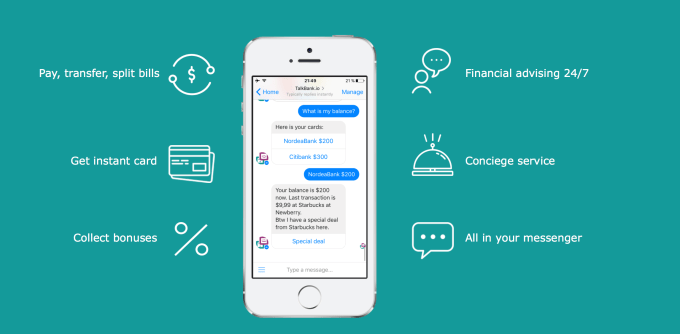 As a fan of banks – I like the lollipops they give out – I’m slightly disturbed by services like TalkBank. This Russian company replaces one-on-one teller interaction with a chatbot that can tell you your balance, offer on the spot advice, and even send you cool deals related to your credit cards. Founded by Mikhail Popov, Alexander Popov, and Vladimir Kozhevnikov the company… Read More













 “You are born alone. You die alone. The value of the space in between is trust and love,” artist Louise Bourgeois wrote in her diary at the end of a long and illustrious life as she contemplated how solitude enriches creative work. It’s a lovely sentiment, but as empowering as it may be to those willing to embrace solitude, it can be tremendously lonesome-making to those for whom loneliness has contracted the space of trust and love into a suffocating penitentiary. For if in solitude, as Wendell Berry memorably wrote, “one’s inner voices become audible [and] one responds more clearly to other lives,” in loneliness one’s inner scream becomes deafening, deadening, severing any thread of connection to other lives.
 I think a great deal about what it means to live with hope and sincerity in the age of cynicism, about how we can continue standing at the gates of hope as we’re being bombarded with news of hopeless acts of violence, as we’re confronted daily with what Marcus Aurelius called the “meddling, ungrateful, arrogant, dishonest, jealous, and surly.”
 To read Mary Oliver is to be read by her — to be made real by her words, to have the richest subterranean truths of your own experience mirrored back to you with tenfold the luminosity. Her prose collection Upstream: Selected Essays (public library) is a book of uncommon enchantment, containing Oliver’s largehearted wisdom on writing, creative work, and the art of life.
  In Black Hole Blues and Other Songs from Outer Space (public library), which crowns the year’s finest science books, cosmologist and novelist Janna Levin tells the story of the century-long vision, originated by Einstein, and half-century experimental quest to hear the sound of spacetime by detecting a gravitational wave. This book remains one of the most intensely interesting and beautifully written I’ve ever encountered — the kind that comes about once a generation if we’re lucky.
 Time Travel: A History (public library) by science historian and writer extraordinaire James Gleick, another rare enchanter of science, is not a “science book” per se, in that although it draws heavily on the history of twentieth-century science and quantum physics in particular (as well as on millennia of philosophy), it is a decidedly literary inquiry into our temporal imagination — why we think about time, why its directionality troubles us so, and what asking these questions at all reveals about the deepest mysteries of our consciousness. I consider it a grand thought experiment, using physics and philosophy as the active agents, and literature as the catalyst.
 Neil Gaiman is one of the most beloved storytellers of our time, unequaled at his singular brand of darkly delightful fantasy. His long-awaited nonfiction collection The View from the Cheap Seats (public library) celebrates a different side of Gaiman. Here stands a writer of firm conviction and porous curiosity, an idealist amid our morass of cynicism who, in revealing who he is, reveals who we are and who we can be if we only tried a little bit harder to wrest more goodness out of our imperfect humanity. An evangelist for the righteous without a shred of our culture’s pathological self-righteousness, Gaiman jolts us out of our collective amnesia and reminds us again and again what matters: ideas over ideologies, public libraries, the integrity of children’s inner lives, the stories we choose to tell of why the world is the way it is, the moral obligation to imagine better stories — and, oh, the sheer fun of it all.
  “Memory is never a precise duplicate of the original… it is a continuing act of creation,” pioneering researcher Rosalind Cartwright wrote in distilling the science of the unconscious mind.
 “We’ve got to be as clear-headed about human beings as possible, because we are still each other’s only hope,” James Baldwin told Margaret Mead in their terrific forgotten conversation about forgiveness and the difference between guilt and responsibility. “To forgive is to assume a larger identity than the person who was first hurt,” philosopher David Whyte echoed half a century later in contemplating anger, forgiveness, and what maturity really means. And yet the dance of anger and forgiveness, performed to the uncontrollable rhythm of trust, is perhaps the most difficult in human life, as well as one of the oldest.
  The English psychoanalytical writer Adam Phillips has written with beguiling nuance about such variousness of our psychic experience as the importance of “fertile solitude,” the value of missing out, and the rewards of being out of balance. In Unforbidden Pleasures (public library), he explores our paradoxical desires and the topsy-turvy ways we go about pursuing pleasure and avoiding pain.
 “Nothing awakens us to the reality of life so much as a true love,” Vincent van Gogh wrote to his brother. “Why is love rich beyond all other possible human experiences and a sweet burden to those seized in its grasp?” philosopher Martin Heidegger asked in his electrifying love letters to Hannah Arendt. “Because we become what we love and yet remain ourselves.” Still, nearly every anguishing aspect of love arises from the inescapable tension between this longing for transformative awakening and the sleepwalking selfhood of our habitual patterns. True as it may be that frustration is a prerequisite for satisfaction in romance, how are we to reconcile the sundering frustration of these polar pulls?
  In 1885, a young woman sent the editor of her hometown newspaper a brilliant response to a letter by a patronizing chauvinist, which the paper had published under the title “What Girls Are Good For.” The woman, known today as Nellie Bly, so impressed the editor that she was hired at the paper and went on to become a trailblazing journalist, circumnavigating the globe in 75 days with only a duffle bag and risking her life to write a seminal exposé of asylum abuse, which forever changed legal protections for the mentally ill. But Bly’s courage says as much about her triumphant character as it does about the tragedies of her culture — she is celebrated as a hero in large part because she defied and transcended the limiting gender norms of the Victorian era, which reserved courageous and adventurous feats for men, while raising women to be diffident, perfect, and perfectly pretty instead.


 “No woman should say, ‘I am but a woman!’ But a woman! What more can you ask to be?” astronomer Maria Mitchell, who paved the way for women in American science, admonished the first class of female astronomers at Vassar in 1876. By the middle of the next century, a team of unheralded women scientists and engineers were powering space exploration at NASA’s Jet Propulsion Laboratory.
  “Words are events, they do things, change things,” Ursula K. Le Guin wrote in her beautiful meditation on the power and magic of real human conversation. “They transform both speaker and hearer; they feed energy back and forth and amplify it. They feed understanding or emotion back and forth and amplify it.” Hardly anyone in our time has been a greater amplifier of spirits than longtime journalist, On Being host, and patron saint of nuance Krista Tippett — a modern-day Simone Weil who has been fusing spiritual life and secular culture with remarkable virtuosity through her conversations with physicists and poets, neuroscientists and novelists, biologists and Benedictine monks, united by the quality of heart and mind that Einstein so beautifully termed “spiritual genius.”
 For decades, Annie Dillard has beguiled those in search of truth and beauty in the written word with the lyrical splendor and wakeful sagacity of her prose. The Abundance: Narrative Essays Old and New (public library) collects her finest work, spanning such varied subjects as writing, the consecrating art of attention, and the surreal exhilaration of witnessing a total solar eclipse.
  All life is lived in the shadow of its own finitude, of which we are always aware — an awareness we systematically blunt through the daily distraction of living. But when this finitude is made acutely imminent, one suddenly collides with awareness so acute that it leaves no choice but to fill the shadow with as much light as a human being can generate — the sort of inner illumination we call meaning: the meaning of life.
  “Myths are made for the imagination to breathe life into them,” Albert Camus wrote. Ada Lovelace, the world’s first computer programmer, observed a century earlier as she contemplated the nature of the imagination and its three core faculties: “Imagination is the Discovering Faculty, pre-eminently… that which penetrates into the unseen worlds around us.”




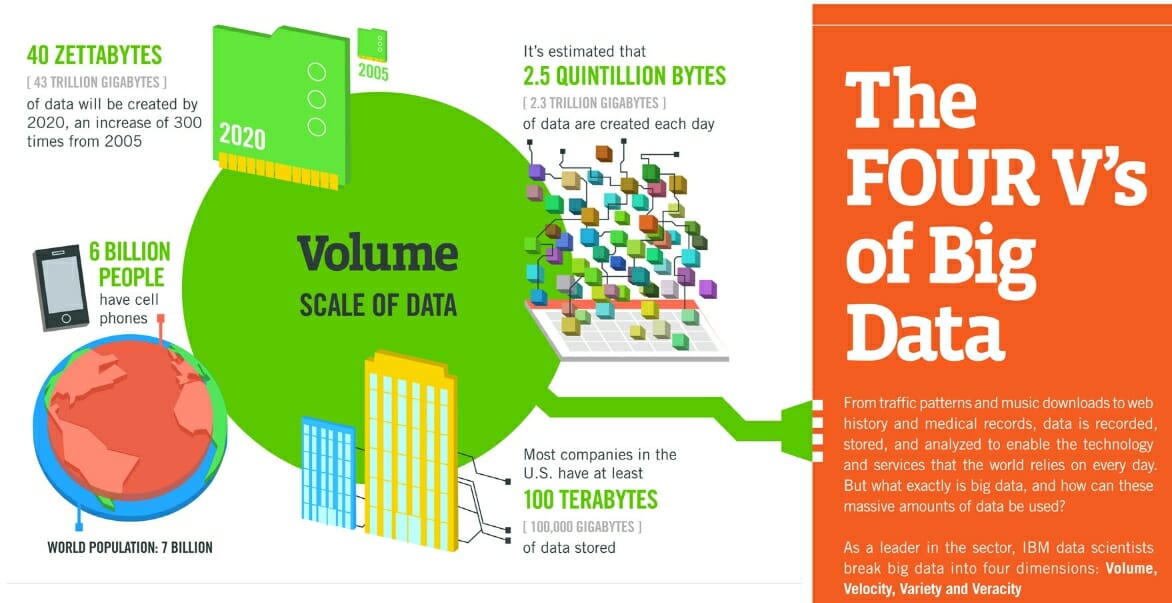








 When Petit was growing up in France in the 1980s, cars were simpler machines, disconnected from the outside world.


 Petit said he spent roughly $500 on the sniffing stations he used to track the security vehicles around campus. But he said the price of the equipment is rapidly dropping.
 Petit said that when it comes down to tough decisions, carmakers generally choose to save money.
 Self-driving cars are still in their early days, meaning there's still plenty of time for automakers to ensure the cars are secure by design. But players in the self-driving car space will need to consider these risks early to avoid a situation like the Jeep hack, where the cars are already on the road.

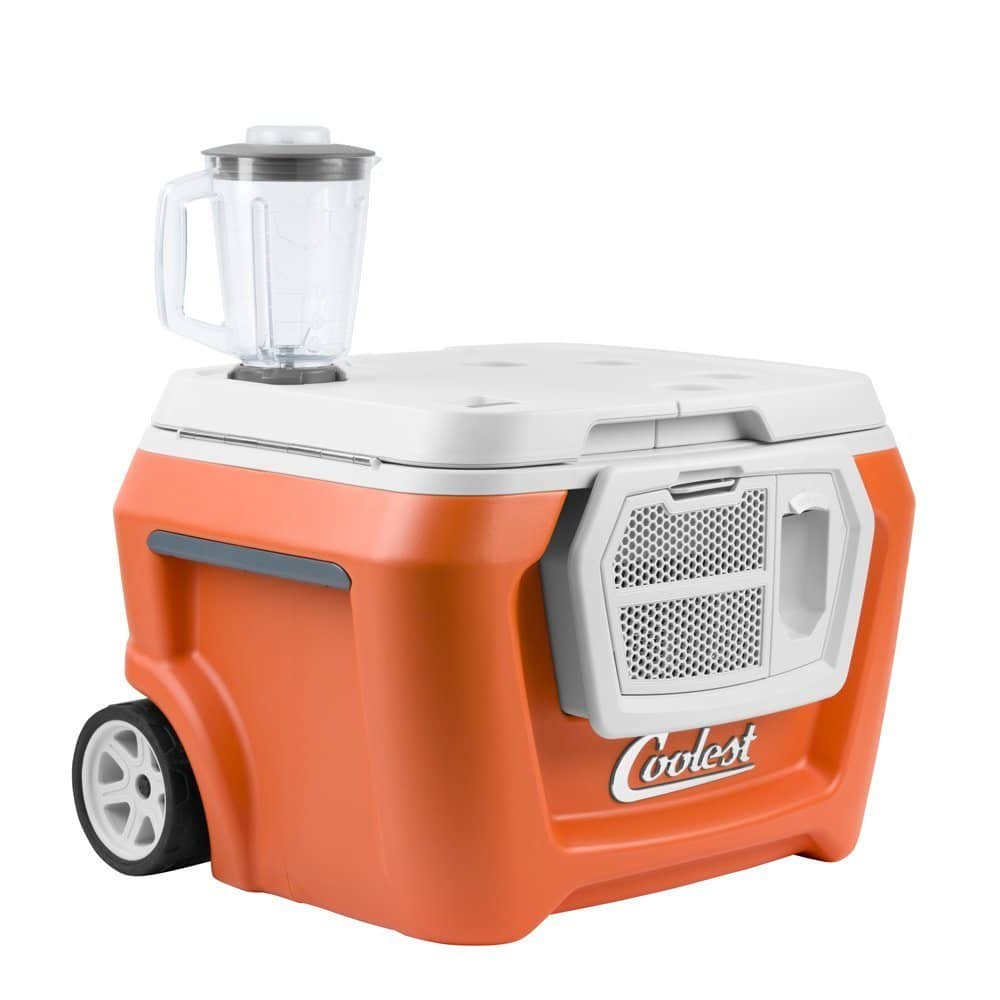


 As marketers, we know WORDS matter. They’re used to communicate, differentiate and deliver a clear understanding of your brand, company, products and ideas.
