Shared posts

19 Dec 16:49

3 Uncommon Ways to Leverage Facebook to Help Grow Your Business

by Nathan Resnick

Facebook has many integrated and valuable tools that we don’t come close to leveraging for our business. The popular forms of using Facebook are popular for a reason: it’s how Facebook makes money.

Every time you use Facebook, whether personally or as your business, they are collecting data on you. This data is primarily used to better improve their advertising platform, boosting returns for the company and businesses that advertise on Facebook.

As a business, whenever you post on your Facebook page, you are encouraged to boost the post. Before the rise of Facebook’s advertising platform, business pages had a very strong organic reach. Now, when you post on your page, chances are less than three percent of the people who like your page will see your post. That is where their utilization of the boost post advertisement feature comes in.

Since Facebook has become smarter with the way it allows businesses to use their platform, it’s time you become smarter as well. Though you can generate incredible returns using Facebook ads, there are still plenty of ways to beat the system.

If you’re a business who is looking to leverage Facebook to grow, see our uncommon growth hacks below:

Utilize Facebook Live

Since today’s culture craves authenticity, live video is your best friend. Gone are the days where the most popular videos are the ones where everything is perfect, the quality is flawless and everyone is wearing a suit. Those still have there place, but today more often then not, they are almost viewed as fake. People want the real, the raw and the authentic. This means you don’t necessarily have to spend thousands of dollars on a fancy corporate video for your product launch. Just live stream it!

You may be thinking that you don’t have anything interesting to live stream. Trust me, you do. Live streaming can involve anything from office shenanigans to employee birthday parties. As an example, Drunk Mode, a mobile app that enables people to stay safe on a night out, often has employees video themselves working on new features. To take it a step further, engage your audience in the process by responding and asking their opinions when they comment or ask questions on your live stream.

Share Viral Content

Not many people know this but Facebook ranks your posts based on engagement. This means the more people who interact with your post, the more Facebook will show it. Since the average business page only sees an engagement percentage of three, when you post viral content that gets a lot of attention, your business page engagement rises dramatically.

Viral content can include interesting articles, funny photos, or creative videos. Baarb, a travel platform that uses artificial intelligence to tailor a user’s booking experience, has a Facebook page full of viral content. On their page you will see photos of gorgeous beaches, breathtaking scenery, and dreamlike hotels. This boosts engagement on their page and dramatically increases the attention of their business’s page.

Build a Group for Your Raving Fans

Facebook has one of the best and easiest online group options. Building a community of people around your business helps you create a tight knit group of people who support your product or service. This stems from people’s desire to connect with others who share their same interests.

When composing your Facebook group, don’t name it after your company. Instead, make it focused around the problem your business solves. Stephanie Joanne, an online business guru who grew a seven figure fitness program, utilizes Facebook groups as a part of her sales funnel. In her signature business system, groups are centered on customer interests or intent. By creating Facebook groups around your business, you will not only have direct access to potential customers, you’ll also be developing a support group for your service.

Facebook is one platform that contains many tools that a lot of people don’t even come close to leveraging for their startup. Though they may seem uncommon, using Facebook live, sharing viral content, and creating groups, are three ways to growth hack your business’s success on Facebook.

19 Dec 16:44

Do You Have a Strong Enough Value Proposition to Close the Deal?

by Rachel Clapp Miller

5_ws-1.jpgAll sales veterans know that simply following a sales process doesn’t guarantee a deal will close. Qualification along the way is critical to ensuring you don’t lose a deal late in the sales cycle.

A key component to qualification is building strong requirements for your solution. Here are some great questions to ask yourself when trying to define if you have strong requirements.

Do the decision criteria reflect the business & technical requirements of all constituents, especially those of the Economic Buyer?

All players in the buying process must be able to connect the dots between the technical features and the positive business outcomes that the customer is hoping to achieve.

Have the Requirements been influenced by you or your company?

It’s important that you not only understand the Requirements, but also influence them. If you don’t exert influence, you can be sure that your competitors will.

Were the Requirements written by the customer?

Although your job is to assist the customer in building the decision “shopping list,” the customer needs to feel ultimate ownership of these requirements. This ownership will ensure that your competitors are accountable to these requirements.

Are the Requirements measurable, quantifiable, & weighted?

To be useful during the technical and financial validations, the Requirements must be tangible. In other words, the customer needs to know when the requirements have been successfully satisfied.

Do the Requirements include Technical, Financial and Vendor considerations?

The technical validation ensures a fit between the requirements and the solution capabilities. The financial justification ensures that the solution will achieve the desired business results that are funding the initiative. Finally, the vendor selection process ensures an organizational fit between the customer and the solution partner.

19 Dec 16:43

A Year in Blog Posts: TopRank Marketing’s Most Popular Influencer Marketing Posts of 2016

by Ashley Zeckman

top-influencer-marketing-posts-2016

If you’re a marketer and haven’t been living on another planet for the past few years, influencer marketing is a term that you’re familiar with. The increasing popularity of influencer marketing has brought every person out of the woodwork sharing their “expertise” and trying their hand at building a program.

In fact, 84% of marketers plan to run influencer marketing programs within the next year. If you fall into that 84% or have already kicked off your influencer marketing initiative, there are some things you need to know.

First and foremost, you need to have a strategy for your influencer marketing program. That strategy should include building relationships with influencers that have mutual interests, audiences and goals.

At TopRank Marketing we have been developing and implementing influencer driven content programs for our clients for many years. We have used that experience (and the expertise of other influencers) to develop the posts below.

Top Influencer Marketing Posts of 2016

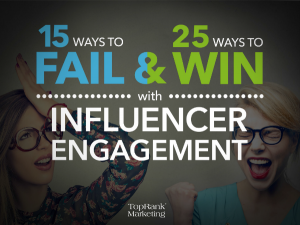
#1 – [eBook] Influencer Engagement: 15 Ways to Fail & 25 Ways to Win

Influencer Engagement - 15 fails and 25 wins


Don't ask me to promote your product in exchange for affiliate revenue. @CarlosGil83
Click To Tweet


The internet is full of fails for almost any topic. Sometimes the misfortune is a funny one, and other times it is not. In today’s world, there is nothing funny about failing at influencer marketing. So many brands have tried (and failed) to implement a successful influencer program. This eBook provides 15 fails, and 25 wins to help your team create a more successful approach to influencer marketing.

#2 – Is Your Influencer Marketing Program Not Effective? Here’s Why

influencer-marketing-not-effective


The core of influencer marketing is building a relationship to ensure mutual value creation. @Konstanze
Click To Tweet


If you’re just starting or smack dab in the middle of an influencer marketing initiative, take some time to slow down and find your focus. Ultimately, a successful program will take time, and focus on the relationships and value created with influencers.

#3 – How B2B Companies are Winning Hearts & Minds with Influencer Content

Lee-Odden-Uberflip-experience


Influencer marketing is the practice of developing relationships to create mutual value. @leeodden
Click To Tweet


Today’s customer journey isn’t quite as predictable as marketers would like. Because it is unpredictable, marketers need to find a new (and better) way to connect with customers no matter where they are in their journey. This presentation from Lee Odden takes a dive into how to incorporate influencers into your content strategy.

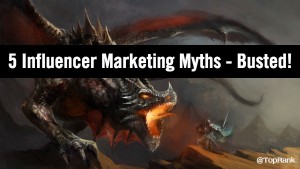
#4 – 5 Dangerous Myths About Influencer Marketing – Busted!

5 Influencer Marketing Myths Busted


Some influencer marketing advice is good, some is suspect and plenty is pure mythology. @leeodden
Click To Tweet


When new trends (like influencer marketing) begin to emerge, you’ll find that nearly everyone you know claims to be an expert. To uncover the truth about influencer marketing, TopRank Marketing CEO polled marketing industry leaders and experts from the UK who help bust some dangerous myths.

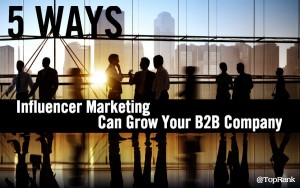
#5 – 5 Ways Influencer Marketing Can Grow Your B2B Company

B2B Influencer Marketing


Justifying resources to manage influencer relationships starts by fully understanding the value.…
Click To Tweet


Influencer marketing can take on many forms, and provide many benefits for brands if implemented correctly. If brands focus on including influencers in their marketing for campaigns only, there is a lot of value left on the table. This post provides 5 helpful influencer marketing tips specifically for B2B marketers.

#6 – Influencer Content Marketing: The Art of Relationships & the Science of Software

Influence Content Marketing


Everyone is influential about something. @leeodden
Click To Tweet


There truly is an art to implementing a long-term influencer marketing program. Relationships with influencers must be built over time and special attention spent on creating value for those influencers. TopRank Marketing CEO Lee Odden has many years of experience working with influencers, and being a marketing influencer himself. In this post you’ll find some powerful insights into what works.

#7 – What is Influencer Marketing? Definitions, Examples, and Resources

influencer-marketing


At its most effective, influencer marketing serves a purpose for everyone involved. @NiteWrites
Click To Tweet


Countless complexities exist within the world of influencer marketing. If you’re new to the whole concept or just need a little refresher, this post is a very robust resource filled with examples of influencer marketing done right.

#8 – How Dell Approaches Integrated & Authentic Influencer Marketing

lauren-and-shelley-dell

Each organization experiences a somewhat different journey as they find which approach to influencer marketing works best for them. And that’s exactly what Dell’s Shelley Ryan and Lauren Mauro did at this year’s Content Marketing World conference. We can all learn from the experiences of this dynamic duo.

Take Your Time with Influencer Marketing

It’s important to remember that developing an influencer marketing program is not a race. Brands are better off taking their time and finding the RIGHT influencers to help advance their business goals.

Disclosure: Dell is a TopRank Marketing Client


Email Newsletter Gain a competitive advantage by subscribing to the
TopRank® Online Marketing Newsletter.

© Online Marketing Blog - TopRank®, 2016. | A Year in Blog Posts: TopRank Marketing’s Most Popular Influencer Marketing Posts of 2016 | http://www.toprankblog.com

The post A Year in Blog Posts: TopRank Marketing’s Most Popular Influencer Marketing Posts of 2016 appeared first on Online Marketing Blog - TopRank®.

19 Dec 16:41

6 Fintech Players Changing the Face of Global Payments

by Kiana Thorpe

The onset of the digital revolution has facilitated diversification, fragmentation and personalisation of spaces as diverse as media, travel and communications. Through the emergence and popularization of fintech platforms, this process is reshaping the payments space. The emergence of fintech disruptors in the payments space is enabling users to take payments to the next level in terms of speed, convenience, efficiency and multichannel accessibility. To add to this, the number and type of fintech players is growing and bringing with them new tools and solutions which are overhauling the payments world as we know it.

As a result, this is no longer a case of faster payment methods but a complete overturning of the idea of ‘value’ and how we transfer it between different entities. In this post, we’ll talk about 6 fintech players to watch out for in four main categories. First, we’ll look at retail-focused fintechs. Second, we’ll examine an employer payroll focused start up. Third, we’ll focus on an online micropayments player. Finally, we’ll look at the fintechs firms expertly taking on the field of international transfers.

The retailer-focused fintech

Consumer-focused payments fintech has already changed the game. Within the last five years, we have seen Apple Pay and contactless cards break into and revolutionise payment markets. With contactless now an established technology, retailer focused fintech companies are looking to expand use of this functionality to every corner of commerce.

One example is iZettle. A leading mobile payments company, iZettle offers small businesses portable point-of-sale solutions as well as free sales overview tools. This allows any individual or merchant to take card payments anywhere, anytime. This solution is based on a free app for iPhone, iPad for Android and two different card readers. iZettle takes minutes to set up and has no start-up costs or monthly fees, making taking contactless payments fully accessible to even the smallest or most occasional retailer.

Another player in this space is Klarna, a Swedish e-commerce company that supplies payment services for online storefronts. The Klarna system eliminates the risks for buyers and sellers by taking over stores’ payment claims and by managing customer payments. In this sense, Klarna acts as a middle agent: users can even pay with just their email address; in this situation, Klarna pays the retailer whilst billing the customer, who then pays at a later date. As a result, their business model differs substantially from that of other online payment companies who collect payments from customers immediately. However, this system has proved attractive to both users and companies with about 40% of all Swedish e-commerce sales going through Klarna. In addition, Klarna operates locally in over 18 countries and as of 2016, is valued at over €2 billion.

The employer-focused fintech

Consumer to business payment fintech is increasingly well established. But some fintech firms are looking to facilitate business to employee payment services.

Doreming, for instance, focuses on financial inclusion for workers, an emerging theme for fintech firms, with the World Bank estimating that 2.5 billion adults worldwide are excluded from traditional banking services. Furthermore, research from Doreming has found that millions are forced into taking loans at high rates from unofficial sources (such as loan sharks). In order to address this, Doreming have created a payroll system that gives workers access to their daily incomes through a linked virtual account. This system lowers the risk of default because payments are made pro rata, rather than a monthly or weekly salary. For employers, their system automatically updates the payroll processing to calculate the accrued salary of workers with taxes, insurance costs and other statutory expenses deducted.

The fintechs operating in the field of international transfers

Payment fintech is not only facilitating consumer to business and business to employee payments, it is also making payments across borders easier than ever. Two disruptors leading this charge are Adyen and Azimo.

Adyen is a multichannel payment company outsourcing financial transfer services to international merchants giving them a single solution to accept payments anywhere in the world. Adyen delivers frictionless payments online, via mobile and in-store, and is also the only provider of a modern end-to-end infrastructure connecting directly to Visa, MasterCard and 250 other payment methods. Among Adyen’s customers are Facebook, Dropbox, SoundCloud, Spotify, Uber, Airbnb and Netflix.

Azimo is also an international money transfer service harbouring a large digital network that allows customers to send money to over 190 countries, from any internet-connected device. A unique selling point of Azimo is that the company is the first international money transfer service to integrate with Facebook Messenger, connecting senders and receivers through their Facebook friend list. This enables users of the service to exchange details immediately through the Azimo App, and make an easy transfer.

Micropayments fintech

Microfinance fintechs are riding a wave of popularity with their social media partners and increasingly facilitating the online sharing community. For example, Flattr, a fintech founded in 2010, enables users to ‘flattr’ creators for their digital content by clicking the Flattr-button next to their content. Each month, you add money to your account and at the end of the month your monthly budget is divided between all the things you flattered and sent to the creators. Flattr aims to ensure that journalists, artists, bloggers and other creators get the money they need, so they can continue to create great things.

The fintech market is an exciting and increasingly integral part of many contemporary markets. Within the payment sector, new and progressive fintech firms are claiming more and more market share, and delivering services that are quicker, more efficient and convenient across a broad range of channels. By connecting across social media platforms, enabling payments at a more local level, and operating new technologies such as cryptocurrencies, fintechs have are drastically defining the financial services space.

19 Dec 16:37

How To Integrate Direct Mail Into ABM (With Real-World Examples)

by Vignesh Subramanyan

Account Based Marketing is the buzzword of 2016 but isn’t a new idea. Sales teams have been selling to prime accounts, taking a targeted, laser-focused approach for a long time. One of the keys to winning this sort of sale is building an honest, empathic customer experience. You’ve got to connect with prospects on all channels.

One channel that doesn’t see a lot of traffic is direct mail. It is also one of the most effective channels – touting a 3.7% response rate and is even more effective when combined with a digital channel like email.

At PFL, we’re huge fans of direct mail – it’s the centerpiece of a lot of our MarTech solutions and the centerpiece of our own ABM campaigns. Using direct mail in an ABM campaign requires a different approach and we thought sharing what we’ve learned from our own campaigns will help you incorporate this responsive, engaging channel into your ABM strategy.

The Reality of Real Stuff Marketing

There are black marks against direct mail: it’s expensive, slow, and can’t be measured. That was all true – decades ago, you know, before the Internet.

Now, direct mail is programmatic, scalable, and works with digital channels, building a true multi-channel experience that’s triggered by user behavior and fits neatly into your existing tech stack.

Direct mail works best when it is personalized for your specific account, or even better, for contacts within that account.

Direct mail’s power lies in engaging your audience, building a powerful connection, and leaving a physical, permanent ambassador of your message.

It can build a memorable VIP experience, which is the real value of a physical channel like direct mail. Here are real-world tips to help you successfully incorporate direct mail into your ABM efforts:

4 Tips for Adding Direct Mail to your ABM Campaign

1) Create a targeted account list for your direct mail send

As with any other marketing campaign, an important first step with ABM is to identify your best audience i.e. define your ICP and create a target account list for your DM campaign.

A good rule of thumb is to build out segments of your target accounts using fit (attributes about the business), behavioral (first-party activity data), and intent (third-party activity data) data. You can get this information from your CRM, marketing automation, and predictive platform.

Once you have your target account list, you want to identify specific contacts that you want to reach from each account. Understand key attributes about each contact to help personalize your direct mail efforts. Are they decision makers, stakeholders involved in the buying process, potential users of your product, etc.? Targeting specific people is where direct mail can really shine, and the more info you can get on them the better.

How to use predictive to build your target account list

There are multiple factors that can affect the outcome of your direct mail efforts – a lot of which is not easily identifiable or readily available to your team. That’s where a predictive platform like Radius can help out.

The benefit of using predictive in ABM is that you can process more information than you could with manual scoring and selection processes.

The majority of ABM programs have a list of targeted accounts in the 500 to 2,000 range, so that’s still a lot of activity to track manually. Predictive is one thing that enables companies to scale their ABM efforts, something which was not possible even a few years ago.

Megan Heuer, SiriusDecisions

Here are two examples of how you can use predictive to drive better insights into your direct mail campaign:

  1. Build a larger, high-converting target account list. With predictive, you can identify existing accounts that are most likely to convert by scoring them based on firmographics, technographics, and other key business signals. You can also source net-new accounts from your highest propensity segments by leveraging an external data source like the Radius Business Graph.
  2. Create personalized campaigns based on key business signals drawn from predictive. Once you identify your target accounts, you can segment them based on firmographic and technographic attributes. Subsequently, you can create specific messaging for each of these micro-segments ensuring higher conversions and engagement due to better personalization.

2) Build a focused campaign based on key marketing objectives

There are so many ideas for what to send in your ABM campaign that decision paralysis is a real problem. When designing your direct mail send, think about what you want the piece to do, how much you can spend on it, and who it will reach. The cadence of the send and the follow-up is critical.

Here are some ideas from our own ABM campaigns:

Personalize direct mail for your target accounts. Let’s put this myth to rest right away: direct mail can be extremely personalized. It’s also a great way to generate ideas for your DM campaigns. You can include specific contact information, copy, and images tailored to an account’s pain points and past interactions. For example, add a company logo or a prospect’s Twitter handle to a mailer. This personalization can also be automated using your existing technology so it’s scalable if you’re reaching out to a lot of contacts from the same account.

Build your top-funnel DM strategy with low-cost mailers. A low cost, flat mailer – a postcard – is a great first touch for direct mail. Their strength is in their low cost. We’ve even used them to verify addresses. Of course, you don’t want to do this with thousand of sends unless you’ve got a way to automate checking returned mail against your list. You could also add low-cost extras to our mailers like we did with a packet of Starbucks Via instant coffee.

Direct Mail and ABM - Low Cost Mailers

Send a group gift or Swag Bomb to a larger audience. Most ABM campaigns focus on targeting the high-level decision makers but sometimes it makes sense to hit influencers that will have a deep, sustained impact on those decision makers. We’ve sent gift boxes that target entire teams, departments, or even divisions within a company to get our message out there. This sort of direct mail trades in-depth personalization for more quantity – a different tactic that can build buzz for your brand.

Direct Mail and ABM - Group Gift

Bundle high-converting content into a handy kit. Send your best content – white papers, case studies, infographics – in a fun kit. We’re a fan of boxes because even the simple act of opening a box engages on a human level. You’re targeting an account, but you’re messaging to a single person. Giving them something to hold, touch, feel and see will make sure they actually read your content.

Incentivize bottom-funnel activities with rewards. We call this idea the ‘meeting maker’ simply because direct mail has been the single most effective channel for scoring meetings with decision makers. We’ve found great traction in sending a highly-personalized kit that promises a big reward if an account schedules and attends a demo of our solutions. Our clients have seen a lot of success with this strategy too – with an average response rate of 14% and being able to land difficult meetings with top decision makers in their target accounts.

Direct Mail and ABM - Reward mailer

3) Combine direct mail & digital to create a true multi-channel strategy

Direct mail works best in an ABM campaign if you can tie it to specific actions within your accounts. Did your meeting maker work? How quickly did the account respond to the meeting maker? Did you generate some influencer interest with a department-wide gift? How can you build on the momentum from your direct mail campaign?

We’ve found direct mail works best when it leads to a digital action or touchpoint. This doesn’t mean you should plaster PURLs and QR scan codes (no one uses that stuff, don’t kid yourself) all over your direct mail. Instead follow up your direct mail send with an email, which we found works best. Direct mail primes your prospect to respond, so when your email shows up they’re more likely to open and engage with your email. The added bonus is that digital actions are, obviously, easier to track and feed into your marketing automation system.

Here are some other ideas to combine digital channels with direct mail:

  • Follow up your direct mail with an email or phone call.
  • Set your retargeting ads to reference the direct mail sends after the direct mail has been received – even a subtle change in creative can elicit results.
  • Go all out and make a personalized landing page for your account, reference it within your direct mail sends.
  • Send an email before you send your direct mail, giving your contact a head’s up that something is coming.
  • Use digital channels to measure direct mail’s performance – drive the user to a personalized URL and track the time from delivery to on-page engagement, the shorter the gap the better the direct mail resonated.
  • Use your marketing automation platform to trigger the send of direct mail based on an account’s interaction with your campaign assets – did they download a white paper? Send them a low-cost mailer that builds on the previous interaction.

4) Nurture target accounts after the deal with direct mail

ABM is about building singular, important relationships, why abandon them after the deal is closed? Direct mail is a great component of ongoing nurturing, advocacy, and onboarding / customer success programs. Use direct mail to send your new customer a welcome kit with best practices, tips, and contact info that will put them on the right path.

Direct Mail and ABM - Welcome kit

Have specific, important contacts within your account? Congratulate them when they’ve hit a personal or professional milestone. This sort of attention carries ABM into its natural conclusion: a vocal advocate.

Wrapping It Up

It’s now easier than ever to add direct mail to your ABM campaign and build a memorable, rewarding customer experience. Direct mail doesn’t have to be expensive, time-consuming, or difficult to measure. So get out there and start amplifying your digital efforts with an equally engaging direct mail strategy.

Want more direct mail ideas for your marketing campaigns? Check out our Tactile Marketing Automation idea book.

19 Dec 16:37

How To Close A Sale With an Inbound Lead That’s Stuck

by Roman Kniahynyckyj

Closed SaleInbound leads are beautiful things. Someone has a business problem, searches for a solution and finds your website. They convert on a landing page and you have a conversation with them. You may even have multiple conversations with them. But then, like Santa after he delivers his gifts and partakes of your (almond) milk and (vegan) cookies, they disappear. That lead becomes an opportunity is stuck in never-never email land. Here’s what to do next.

Meditate on Your Emails

I’m not asking you to go transcendental here. Look back through your CRM and reflect on the emails you’ve sent. Are they repetitive? Does each new email offer value? Did you send the email to simply check it off your ‘To Do’ list? How many sent emails have gone unresponded to? Typically, you’ll see that email just isn’t doing the trick anymore. Your lead might be speaking to multiple vendors, has selected someone else, or maybe is trying to determine how best to navigate internal decision channels. At this point, you’ll need to move beyond email but still offer value.

The Offer of a Joint Call

Even if your lead is a VP or Director level they may not have purchasing authority. They may have dotted line reporting up to a Director of Operations or Director of Purchasing that they’ll need to sell internally to or get approval from. If you don’t have a sense of the org structure (you should by now), try and find out. A call to a stuck lead may go a little like this:

“Hi Betty, it’s Jake. Just circling back on the proposal. Wanted to let you know if you needed me on a call with you and [Director of Op, Purchasing, CEO] to discuss [the solution to your business problem] I would be happy to do that…”

Ask your lead to bring you in as an educator and informer. They may not know the best way to sell internally so this will put them at ease and know that you’ll be there to support them.

The Offer of an On-Site Visit

Depending on the size of your sales budget and the potential size of the deal, you should offer to visit your lead in person. Lunch or dinner with a prospect always softens the relationship and allows them to see you and your company as more than a website or an email address. It also gives you the opportunity to meet with your prospect’s colleagues. Showing up in person, when other vendors haven’t, could ultimately be a huge differentiator for you. Not only does it show extra effort to close a deal it also highlights your desire to build a relationship.

The LinkedIn Reminder

LinkedIn is always a good place to keep tabs on your prospect. Have they connected with a competitor? Commented or liked any relevant articles? Changed companies? They’ll also be able to see you visited their profile which will serve as a gentle nudge to remind them they haven’t given you a yes or no answer yet.

The key to any of the above tactics is to get out of the email loop and leave a voicemail or try to have a voice to voice conversation. It may be too late but the deal is stalled so it’s time to try a new approach. Go forth and prosper you rising sales superstar!

19 Dec 16:37

How to Leverage Data to Keep Leads in Your Funnel

by Sue Krause

BLOG-Funnel.jpg

It’s a challenge that many brands struggle with every day. You finally attract a consumer to submit a web form and they are deposited into your lead funnel. Yahoo! However, you now have the challenge of keeping that consumer in your funnel and nurturing her through it until you ultimately convert her into a paying customer.

But, a consumer’s shopping journey doesn’t always end with her clicking the “send me a quote” button. In fact, many high-intent consumers continue to research their options even when already engaged with a brand as they progress through the decision-making process.

Once she has submitted a lead form and is in your lead funnel, do you continue to monitor that consumer’s shopping activities? Just because she is in your funnel, it doesn’t mean her journey ended at the point of lead submission.

How Behavioral Data Can Help

If you are engaged in lifecycle marketing, you are using behavioral data to inform you about how active your consumers are in their buying journeys so you can market to them appropriately.

What you may not be doing is leveraging behavioral data to identify which of the consumers already in your conversion funnel are still investigating and evaluating and displaying continued shopping behavior. When you have that information, you can deploy strategic actions to ensure they don’t drop off into a competitor’s funnel.
When you have consumer journey insights not only at the time of lead submission, but also for the months following lead submission, you can use these insights to ensure you are putting the most relevant message in front of each consumer at the appropriate time in their journeys.

There are three types of shopping activities you should watch for when monitoring the behavior of consumers in your funnel:

1. Identify consumers that are still actively shopping.

Active shoppers are active buyers. In fact, Jornaya data shows that consumers that are seen visiting industry sites in the week after submitting a lead have been shown to have an 80% higher conversion rates.

What if you were able to get even more conversions out of this high-intent group by prioritizing these leads with your best salespeople and getting the right message in front of these consumers at the optimal time?

By leveraging data sources on a regular basis to get updated views of consumers in your funnel, after the initial query, you can adjust your contact strategy and lead prioritization. This way, you can ensure your brand is in front of these high-intent consumers at the right time to increase conversions.

2. Identify consumers that are actively researching your brand’s offerings.

Jornaya data reveals that consumers who are observed visiting a brand’s web properties in the week after submitting a lead to that brand convert up to 300 percent higher than average. When working leads through your conversion funnel, do you know which consumers are demonstrating an affinity for your brand?

There are vendors that can provide you with an updated view of consumer behavior at points in time after the initial query, including whether that consumer has been seen interacting with your brand’s web pages. You can then leverage these insights to adjust your contact strategy and lead prioritization so that conversions are maximized.

3. Identify any consumers in your funnel who may still be actively researching competitive offerings and are at risk of converting elsewhere.

On the flip side of number two, consumers that are in discussions with your brand but are seen continuing to research competitive options are high-intent consumers that may be at risk of converting with a competitor.

With access to behavioral data, you can identify this activity and target those leads for special attention from your sales team or discount offers.

By leveraging behavioral data, you can continue to regularly monitor your consumer’s behavior at points in time after the initial query, and adjust your messaging strategy and competitive positioning when you see consumers engaging with competitors to increase conversions.

4. Another Use for Behavioral Data: Inactive Leads

A big challenge that most organizations face is prospective customers that accumulate in the section of your CRM where leads go to die: the Inactive Leads section. This is usually an overwhelming number of leads to manage when you have no indication of where they are or are not in their shopping journey. If you are like most companies, you are wasting a lot of time and resources on consumers who may never convert into customers for your brand.

But, how do you know which leads to try to re-engage, when? How can you determine if they are all even worth your resuscitation efforts?

With technologies available that can provide you with an updated view of consumer behavior at points in time after initial lead submission, even if a consumer pauses their shopping journey, you can identify when she becomes reengaged.

When you have access to these insights, you can use them to time your outreach to consumers who haven’t responded before, increasing the likelihood that those consumers will now engage with you. When you reach out to a consumer at a time you know they are actively shopping, your chances of engagement are vastly increased.

For more information on the power of consumer journey data, read the Jornaya 2016 Consumer Journey Analysis: Dissecting the Path to Conversion.

19 Dec 16:37

Do’s and Don’ts for B2B on LinkedIn

by Roee Ganot

Do's-and-Don'ts-for-B2B-on-LinkedIn

LinkedIn is an important social media platform for reach customers, whether they are retail customers or other businesses.

However, if you are a business that sells to other businesses, you will need to up your game on the site. Other businesses know the same strategies as you to reach customers, so you will have to be a bit more sophisticated in your approach.

The overall tactics are very similar, but you have to be more nuanced in your approach.

Here are the top do’s and don’ts for B2B on LinkedIn to give you some ideas:

DO: Treat Your Profile Like Professional Communication

Your profile shouldn’t just be a list of your company’s offerings and accomplishments, nor should it just be a resume for your CEO.

Your profile should instead tell a story about your brand. In sharing the products and services that you offer, you should be telling your clients about your values and what makes you unique. In sharing the experiences of your CEO or other top executives, you should be telling clients what sets you apart from competitors.

No one wants to read a list of someone else’s accomplishments. Use your profile to create a narrative and reach more of your clients.

Consider your profile more like a brochure or other company promotional material. What story do you want to tell?

DO: Join Relevant Groups

LinkedIn has numerous professional groups that you can use to find your clients and to establish your authority.

For example, if you sell finance software, you might want to look for groups for managers, company leaders, or those who are interested in saving money for their company. You will have a captive audience of potential clients who have already indirectly expressed interest in your product.

When you join groups, you can establish your authority by sharing relevant information or offering solutions for the members. Don’t just promote yourself in the groups or you will risk alienating potential clients. Offer solutions and information that doesn’t necessarily have anything to do with you but that provides value to the members. They will be much more likely to listen to you when you are promoting yourself later.

DO: Nurture Relationships

LinkedIn is about networking, not promoting yourself. Make sure that you are actually using the site to network.

Nurture relationships by commenting on the posts that your connections share, as well as the posts that some of their connections share. Make sure your comments actually advance the conversation, rather than offering up something generic like, “Nice post!”

You can also nurture relationships through the conversations that you have in groups and in the comments section on LinkedIn Pulse blogs.

Eventually, you can tap those relationships to promote your products. For now, you should work on building those relationships and making them closer.

DON’T: Constantly Promote Yourself

No one wants to log onto LinkedIn just to hear someone try to sell them something — even if that something would ultimately help them solve a problem.

When you are on the site, think of yourself like a guest at a party. Contribute to the conversation, either by offering up useful information or some tidbit that is funny or interesting. When the moment is right, you can promote what you do as a natural part of the conversation.

You should take the same approach to your interactions on LinkedIn.

DON’T: Let Your Profile become Stagnant

Setting up the right profile is a big part of your success on LinkedIn, but it’s not the only thing.

You need to remain active on your profile by updating the information as necessary and by publishing status updates once or twice a week.

Be sure to change your profile when you make new hires, introduce new products, or have other company news to share. Share interesting articles, blog posts, and relevant products on your status updates a couple of times a week.

DON’T: Use the Default Connection Request

When you request to connect with someone on LinkedIn, the default message says “Join My Network on LinkedIn.”

There’s nothing wrong with that message, but if you want to get more attention, you will create a custom connection message. Choose a message that shows that you have read the business’ profile and that you understand what the company is all about.

The more personal your message, the more likely your request is to get noticed and to be accepted. The more connections you have, the more likely you are to get results from your activities on the site.

LinkedIn is a potentially powerful tool in your marketing arsenal. Make sure that you are getting the most from it by following these do’s and don’ts. You’ll attract more of the business clients you want and start getting leads that can help you meet your sales goals.

19 Dec 16:37

How Do Marketers Using Single and Multi-Touch Attribution Differ? [2016 State of Pipeline Marketing Data]

by Alexis Getscher

In the 2016 State of Pipeline Marketing report, marketers across various industries answered questions surrounding how they execute, track, measure and report their efforts. Regarding tracking and reporting, we specifically asked about marketing attribution.

Here’s what we learned.

Around 65% of marketers have an attribution model in place. Of those marketers, about 60% said they were using a single-touch attribution model, while 40% responded with multi-touch attribution.

Approximately 47% of marketers using multi-touch attribution believe they’re using the right model, while 52% rated the confidence in their marketing data as a 4 or a 5 out of 5. Compare that to just 10% and 31%, respectively, of marketers using single-touch attribution.

Continue reading to uncover more stats on single- and multi-touch attribution users.

Why Do Marketers Choose Their Attribution Models?

Choosing the right attribution model can be difficult, with a number of factors contributing to the decision-making process. For marketers who have attribution in place, why did they choose their models?

Reason for Using Attribution Model.png

Marketers with single-touch attribution chose ease of implementation as their main reason for selecting that model. While ease of implementation can save marketers valuable time, it can hurt in the long run.

Single-touch attribution creates a model bias that overvalues certain channels while undervaluing the others. In B2B, the sales process is long and typically contains multiple interactions that impact buying decisions. Simply choosing to assign value to only one of those touchpoints misses the impact created by all other channels.

That’s why it makes sense that marketers using multi-touch attribution overwhelmingly chose to do so because it accurately gives credit where it’s due. With a multi-touch model, more of the key conversions in the buying journey are accounted for and assigned value.

Do You Believe You’re Using the Right Attribution Model?

Although a majority of marketers with attribution are using a single-touch model, it seems they recognize model bias and that multi-touch is a more accurate solution.

Right Attribution Model?.png

When it comes to believing they’re using the right attribution model, single-touch and multi-touch users are almost exactly flip-flopped in their beliefs. Almost 47% of marketers using multi-touch attribution believe they’re using the right model, while 49% of marketers using single-touch attribution believe they are not using the right model.

In 2017, as education and resources continue to grow, expect more marketers to move to a multi-touch solution. The mindset is already there (almost half of single-touch users know a different model should be used), now it’s just time to make the switch.

What do Single-Touch and Multi-Touch Users Prioritize?

Tracking tends to fall in line with what marketers prioritize. When something is a priority, you pay more attention to it and want to know the outcome of your efforts, so you make sure it’s tracked. With that in mind, it’s no surprise that marketers using single-touch attribution prioritize generating more leads over everything else, while marketers using multi-touch attribution prioritize converting leads to revenue.

Top Marketing Priority-1.png

You can’t prioritize what you can’t track.

Marketers using multi-touch attribution can track leads from first-touch through to closed-won, so it’s understandable they’d prioritize converting leads to revenue. When you have data on the full funnel, why would you stop your reporting at the top?

For the same reason, it’s clear why marketers using single-touch attribution would prioritize generating more leads over everything else. Most of the single-touch models undervalue the bottom-of-the-funnel, so instead they prioritize the top (leads).

Which Channels are Marketers Using the Most?

The 2016 State of Pipeline Marketing survey asked respondents to select all of the channels they currently use for their marketing efforts. We broke that down data by attribution model.

Channels.png

When using a baseline of 80% selection from respondents, we found that six channels were used by marketers with a multi-touch model, compared to only 3 channels by marketers using single-touch attribution.

It seems that the ability to track all touchpoints and measure multi-channel performance, gives marketers the confidence to invest in additional channels. In other words, if you can’t prove the business value of each channel, it may be harder to get the approval needed to invest time and money in additional areas.

What is the Primary Metric Marketers Use to Measure Performance?

What stands out in this data, is that marketers using single-touch attribution prioritize generating leads, but use revenue as the primary metric to measure performance.

Primary Metric.png

Revenue is followed by total opps/pipeline, and total leads rounds out the top three metrics used to measure performance by single-touch users.

Total opps/pipeline, total revenue, and ROI came in as the top three responses from marketers using multi-touch attribution. Meanwhile, total leads was at the bottom of their priorities (2nd to last).

How Confident are Marketers in the Accuracy of Their Data?

Multi-touch attribution tracks every touchpoint through the entire buying journey, which could be why 52% of marketers using multi-touch rated their confidence in the accuracy of their data as a 4 or 5 out of 5.

Marketing Data Confidence.png

Multi-touch attribution acts as a single source of truth for data. It’s a more accurate solution because it eliminates manual inputs and spreadsheets used by marketers to piece together tracking from the multiple platforms and channels used throughout the funnel.

In the same realm as the chart above, over 50% of marketers using multi-touch rated their ability to measure marketing performance as a 4 or a 5 out of 5, compared to just 25% of marketers using single-touch attribution.

Single-touch attribution is better than no attribution when it comes to reporting marketing’s impact, but based on the data from the 2016 State of Pipeline Marketing report it’s clear that when it comes to accurately giving credit where it’s due, measuring performance and reliable data, multi-touch attribution comes out on top.

If you’d like more stats from the State of Pipeline Marketing, download the report below.

19 Dec 16:36

2017 Social Media Trends

by Expert commentator

These big trends will have a major impact on how we conduct social media marketing in the coming year

We are now in a social media dominated world, and marketers and businesses are taking full advantage of it. However, this means that trends and the way brands should best communicate with their customers are constantly changing. Brands need to ensure they keep up with the latest trends to ensure they can achieve their goals, whether that is to increase conversions or improve ROI.

The popularity of social media continues to rise, and 2016 was no exception. Facebook was the clear stand out social media platform and reached 1.79 billion monthly active users in the third quarter of 2016. This was followed by YouTube, which has 1.3 billion users. It is clear social media is here to stay, and businesses need to know what to do to capitalise on it and use the various platforms to their advantage.

These are some social media trends we think will increase in popularity in 2017:

A crack down on “fake news”

Fake news was a huge problem for social media in 2016 and was highlighted during the US presidential election.  While Facebook announced in November that it has banned fake news sites from using Ads, there is still much progress to make.

You only have to look at Google’s struggle to tackle fake news to see the difficulties social media platforms will have. While Google changed its algorithm, it has actually made the search engine more vulnerable to fake news.

This is because pages are rewarded by how often they are clicked on. Fake news is able to gain a high volume of traffic, and therefore increase its ranking on the search engine’s results page.

In a year where ‘post-truth’ was the Oxford Dictionary word of the year, it’s clear fake news isn’t going anywhere anytime soon. In 2017, it can be expected that the big social media platforms will make changes to ensure fake news doesn’t continue to spread.

Social messaging

It’s becoming increasingly popular for people to turn to private social messaging, rather than engaging with social media. These are becoming so popular that in February 2016 WhatsApp announced it hit the 1 billion user mark.

Source: DreamGrow

It is worth noting that the four most popular messaging apps - Messenger, WhatsApp, QQ Chat and WeChat - have a wider community than the top four main social networks.

Companies are already starting to take advantage of the rising trend of social messaging. In November 2016, Facebook announced advertisers can pay to highlight their brand in users’ News Feeds. Clicking on this ad would take users directly to a chat window with the advertiser inside Messenger.

In 2017 efforts will be transferred from social networks to social message applications. Companies will be able to consider this as another ecommerce option.

Virtual reality

Virtual and augmented reality started to take off in 2016, which has caused many tech businesses to invest in VR. GoPro has released a series of VR clips on YouTube. But there is also a big potential for VR to be capitalised on in the social media environment.

There is already the Oculus, which Facebook acquired in 2014. There is also vTime, the first VR sociable network, which allows your to socialise with family or friends in virtual locations. VR is set to change the way people interact with each other on social media, so it can be expected that more businesses will focus on producing VR headsets and creating VR social networks.

We will have to wait and see how businesses are able to handle the ‘dork factor’ - that being that people just don’t look cool wearing VR headsets. The price will also be an obstacle for companies divulging into VR. These will be some of the factors that will determine whether VR truly becomes a big social media trend of 2017, or goes the way of Google Glass and 3D TVs.

Source: Business Insider

Live video

Live video was another trend that took off in 2016, but it has so much more potential that it has yet to reach. There are already social media platforms taking advantage of this - Facebook Live, YouTube Live and Periscope Pro, to name a few, with Instagram recently releasing live video to US residents.

Facebook has recently announced that it will roll out its 360-degree video for Facebook Live users for all Pages and profiles in 2017. YouTube has already announced the same feature.

Live video will be a great feature for businesses to capitalise on. It is now possible for four hours of video to be streamed, and it can even be streamed to groups and event listings. It’s a great way to raise awareness of your brand and build a community.

Social commerce

As a result of the rise of social media platforms and social messaging, companies are going to look to how it can be financially beneficial for them. According to research by Statista, 93 percent of millennials are spending their time on social networks, so it makes sense that businesses would want to capitalise on this trend.

There has already been the rise of WeChat social commerce. In April 2016 it was reported 31% of users initiated purchases on WeChat, which is twice as many as the previous year.

While social media platforms have already gained the trust of users, it still remains to be seen whether people will be willing to go one step further and make purchases.

Twitter has already tested a ‘buy’ button. There are now over one million businesses on Pinterest, with almost 75% of users having bought something they saw on the platform. With the increasing popularity of mobile browsing, it can be expected that social commerce will continue to increase throughout 2017.

Artificial intelligence

Artificial intelligence is advancing and is set to be a game changer for 2017. So much so, that investment in AI is expected to triple in 2017. The need for people to speak directly to faceless machines is set to redefine businesses social media strategies and how they communicate with their customers.

Chatbots are now able to answer customers’ queries, and businesses will be able to use this to ensure they have a sales associate ready to talk to customers 24/7. In 2016, Mark Zuckerberg announced third parties could use Chatbots to create their own personal Chatbot platform. Big companies including Google and IBM have also jumped on board in order to make their services seem more relevant to users.

AI can help brands not only communicate with their customers, but nurture business to business leads and increase sales and conversions. People want their customer experience enhanced, and introducing AI is the perfect solution.

Employee social advocacy

Source: Pexels

Employee advocacy refers to the exposure that employees generate for companies through their online presence. Although employees can use email, chat and discussion forums, social media is often a popular form platform for employee social advocacy.

Employee social advocacy means companies can expand their reach, gain new target audiences and build a larger community. Customers are more likely to form relationships with other people, rather than a brand, and are therefore more likely to share content written by an individual person. If the employee social advocacy is done correctly, brands can expect to see a higher overall ROI.

Altimeter found that since 2013, interest in employee advocacy has grown 191%. Furthermore, 45% of respondents name it as their top external objective. We can expect for employee social advocacy to continue to grow in popularity within agencies and businesses.

Increase in paid social media advertising

It’s becoming increasingly hard to achieve results purely from organic social traffic. This year Facebook changed its algorithm which caused less traffic to be sent to content sites. Rather, the social media platform prioritises posts shared by friends and families, rather than those from publishers and brands.

This means if you want your business's page to be seen, you will have to revert to paid social media advertising. However, while there is an increase in competition as more people use paid advertising, prices also continue to increase. Companies will continue to increase the amount spent on social media - it is forecasted that by 2017, marketers will spend up to US$35.98 billion on social advertising.

The challenge for companies will be to produce interesting ads that will result in conversions. Companies need to focus on communicating their brand message to customers, while also being able to stand out from the crowd.

To increase their reach and community, brands need to concentrate on incorporating these trends into their social media strategies for 2017. These trends allow for businesses to incorporate new ideas to reach new audiences and therefore increase their sales and ROI.

Ben Maden founded Matter Solutions in 2000 and is currently the Director. Matter Solutions are experts in digital marketing with over 15 years of experience in SEO and Web design. You can find Matter Solutions on LinkedIn and Twitter.


17 Dec 18:28

Building Your Personal Brand for 2017 In 3 Simple Steps

by Warren Knight

Building your personal brand

DID YOU KNOW THAT CONTENT SHARED BY AN EMPLOYEE, OR OWNER OF A BUSINESS RECEIVES 8X MORE ENGAGEMENT THAN CONTENT SHARED BY THE BUSINESSES ACCOUNT?

Sharing content online as a thought leader is so important, more important than I realised. I recently came across some statistics from Entrepreneur which reinforced the importance of this for me.

According to Entrepreneur.com, 92% of people trust recommendations from individuals (even if they don’t know them) over brands, and brand messages are re-shared 24 times more frequently when posted by an employee versus the brand’s social media channels.

This brings me nicely to building your personal brand for 2017. We are almost in the new year, and it is time for you to take that next step and become a success, as YOU, as well as YOUR BUSINESS.

So, how can you do this? What I am about to share with you has been tried and tested and has helped me achieve 2.5 million impressions, and 75,000 followers online. I have turned this into a 3-step process.

1. PUBLIC SPEAKING

The first step to my 3-steps to success as a personal brand is public speaking. The trust is, without having the speaking platform that I do, I would not be as successful as I am in the Social Media and Digital Marketing world.

Being a successful professional speaker has been years of hard work, dedication and the ability to accept a knock back or two. I have, and still do approach events/trade shows and get turned down because I am not exactly what they are looking for in a professional speaker.

I have found that speaking at industry specific events which have my target audience (small businesses) attending the event, is a great way for me to build my personal brand.

2017 tip: Do your research, and find all of the events/exhibitions/trade shows that have a speaker programme for 2017, and get in touch to see if you can speak at their event.

2. PUBLISHING

Sharing content. If you’re reading this, it probably isn’t the first piece of content of mine you would have read, and that’s because of the personal brand I have built as a successful, recognised blogger in the social mediaand digital marketing world.

I have earnt a 6-figure income off the back of the content I share online, and I also contribute to various industry-lead websites including Social Media Today, and Business2Community.

2017 tip: Share every single piece of content you write on LinkedIn Pulse to increase engagement, and get involved with a 2-way conversation online.

3. BUILD YOUR SOCIAL MEDIA PRESENCE

The third step to my 3-part process to building your personal brand for 2017 is building your Social Media presence. Speaking at events, and creating great content should be two key parts of your business which you can talk about online to in turn, build your Social Media presence.

2017 tip: Only focus on the social networks that are giving you the results you are looking for. If Twitter is driving engagement, and Facebook is not; stick with Twitter and make that your preferred platform just like I have.

I hope that my top 3 tips will help you build your personal brand for 2017 and beyond. Have a great new year, and I look forward to engaging with you next year!

17 Dec 18:16

31 books successful people read to their kids

by Rachel Gillett

Baby Max lolz

Reading to your children can do wonders for their future success.

According to the American Academy of Pediatrics, reading aloud to your children and talking about pictures and words in age-appropriate books can strengthen language skills, literacy development, and parent-child relationships.

What's more, a study conducted by a number of pediatricians shows for the first time the positive biological effect reading to your kids has on their brains.

MRIs revealed that children with greater home-reading exposure had greater activity in the parts of the brain that help with mental imagery and narrative comprehension.

So what are the best books to read to your kids? Certain successful people offer their favorites:

SEE ALSO: Parents of successful kids have these 12 things in common

DON'T MISS: 30 scientific ways your childhood affects your success as an adult

Robert Fagles' translation of 'The Odyssey'

"Reading aloud was my favorite part of being a parent to young children, hands down," Anne-Marie Slaughter, mother of two and president and CEO of think tank New America, tells NPR as part of the Storybook Project. "I often hunted up and read them books that my grandmother read to me and that I can still recite together with my father. They are enchanted stories, shared memories, distilled love."

When her sons were younger, Slaughter says they would read simplified versions of the Iliad, the Odyssey, and the Greek myths.

"One day when they must have been about 5 and 7 I brought home the actual Odyssey, in Fagles' wonderful translation, and just read them the first page or two so that they could hear what the real thing sounded like.

"They loved it; we read it slowly, but all the way through," she says.

Find it here »


Rosemary Wells' 'Edward Unready for School'

Slaughter tells NPR that her family members are big Rosemary Wells fans and love all her books.

"But perhaps because my oldest son is named Edward, this one became a particular favorite," she says. "Edward is a young bear who just isn't quite ready to join all the happy, busy kids at school. One look at his face on the cover says it all."

Find it here »


Hollie Hobbie's 'I'll Be Home for Christmas (Toot and Puddle)'

Slaughter tells NPR that this is her family's enduring favorite Christmas book.

"Something about the illustrations so completely capture the anticipation of Christmas — the one that gets us every time is a picture of the jet flying over the Atlantic, with only the lit porthole windows visible, but with 'Jingle Bells, Jingle Bells' sailing out into the night air presumably from Toot's seat."

Find it here »


See the rest of the story at Business Insider
17 Dec 18:13

How to Give Your Personal Brand a Tune-Up

by Rick Goodman

To be successful, you have to do more than just transform your business; you have to transform your personal brand. That’s something I tell the executives who engage me for my Focused Fun coaching services. If you really want to crush it, in both your personal and professional life, then you’ve got to turn yourself into one of the real rock stars of your field.

The application of this is endless. For example, I have worked with a lot of attorneys whose goal has been getting more TV time, turning themselves into in-demand legal experts. The results? Better cases, better clients, greater favor from judges, more money, more prestige… the list goes on and on.

You may not be a lawyer, and you may not want to be on TV, per se, but you can still work on improving your personal brand. Let me show you a few ways to do so.

Get published. Ideally, you’ll publish a book—but as you work up to that point, blogs, LinkedIn posts, and even YouTube videos and podcasts can be effective ways of getting your name out there. The point is to show thought leadership. Put your expertise on display, and start showing people that, within your field, you’re the person who really knows your stuff.

Create stories about yourself. Social media provides you with the platform you need to turn your life into a narrative fit for public consumption. Make sure you make it about more than just you: Brand yourself in the context of your team, your hobbies, the causes you champion, whatever it is you’re passionate about. Turn your social media feeds into destinations for people who are eager to learn the next part of your story.

Deliver a report. Make yourself useful to other people in your industry; publish a statistical report or a case study with your name on it. Brand yourself as someone who not only knows what they are doing, but has standard-setting data to back it up.

Become a speaker. You need to attend the big conferences and networking events that the other people in your industry attend—but you also need to sign up to speak there. Nothing helps you build your brand like investing yourself in mass education. Start reaching out to conference planners sooner rather than later.

Get fit. This is important: When you’re healthy, you have more energy and are in a better mood. That shines through, and it magnetizes people. Make a personal fitness plan today, and stick with it through the new year.

What’s keeping you from becoming the rock star in your industry? All you need is a plan and some follow-through; start with these tips, and reach out to me about Focused Fun if you’d like an extra boost!

17 Dec 18:12

Rise to the occasion and check out the 7 most incredible elevators on the planet

by Dallon Adams

The elevator is an oft-overlooked device. While most lifts are fairly uninspiring, there are a few marvels to behold. Here are seven of our favorites from around the globe, whether you're into highrises or outdoor oddities.

The post Rise to the occasion and check out the 7 most incredible elevators on the planet appeared first on Digital Trends.

17 Dec 18:11

11 TED Talks that will make you smarter about business

by Shana Lebowitz

simon sinek

Some of the most compelling TED Talks out there focus on business strategy.

Thought leaders from around the world discuss how to be a more effective leader, how to motivate yourself and your employees, and how to launch a successful business.

Each one challenges conventional notions about the way we work.

We rounded up 11 talks that will make you a smarter, more curious, and more effective businessperson.

SEE ALSO: 11 TED Talks that show how strange and mysterious the human mind really is

Dan Pink: Rewards and punishments aren't always effective in the workplace

Youtube Embed:
http://www.youtube.com/embed/rrkrvAUbU9Y
Width: 800px
Height: 450px

Pink is a motivation expert whose talk focuses on the difference between intrinsic and extrinsic motivation. It's the difference between doing something because it matters to you and doing something because you're getting rewarded for it.

According to Pink, there's a ton of scientific evidence suggesting that intrinsic motivators — not rewards and punishments — are the "secret" to stellar performance. But you wouldn't know it from spending time in a typical organization.

"If you look at the science, there is a mismatch between what science knows and what business does," he says. "What's alarming here is that our business operating system — think of the set of assumptions and protocols beneath our businesses, how we motivate people, how we apply our human resources — it's built entirely around these extrinsic motivators, around carrots and sticks."

Pink suggests that organizations give workers significantly more autonomy. He cites Wikipedia, where people contribute information without compensation, as an extreme example of the kind of environment organizations should create. No economist could have predicted Wikipedia's success, Pink says, but it shows the power of that inner drive to create and succeed.


Jason Fried: It's not your fault you're so unproductive at work

Youtube Embed:
http://www.youtube.com/embed/5XD2kNopsUs
Width: 800px
Height: 450px

If you’ve ever left the office after a full day at work and realized you got precisely nothing done, you can probably identify with Fried’s argument.

According to Fried, the author of "Rework" and the CEO of Basecamp, a company where everyone is allowed to remotely, modern offices just aren't conducive to optimal performance. That’s because we’re constantly getting distracted — by our boss checking in on us, by pointless meetings, by coworkers with urgent requests, etc.

"You don't have a work day anymore," Fried says in his talk. "You have work moments. It’s like the front door of the office is like a Cuisinart, and you walk in and your day is shredded to bits, because you have 15 minutes here, 30 minutes there."

To remedy this problem, Fried advises organizations to implement half-days (or more) of complete silence, during which employees can work uninterrupted. Moreover, he recommends doing away with most meetings entirely so that people have time to actually think.


Simon Sinek: The key to organizational success is a selfless leader

Youtube Embed:
http://www.youtube.com/embed/lmyZMtPVodo
Width: 800px
Height: 450px

In his talk, Sinek, a leadership expert, asks why the modern workplace doesn't look more like the military. The answer, he says, boils down to a difference in management strategy — in the military, leaders put their subordinates first.

"When a leader makes the choice to put the safety and lives of the people inside the organization first," he says, "to sacrifice their comforts and sacrifice the tangible results, so that the people remain and feel safe and feel like they belong, remarkable things happen.”

Sinek argues that the key elements of any successful organization are trust and cooperation. That way, employees spend less time competing with each other and more time collaborating to protect themselves from the potential danger outside. It's the leader's responsibility to create a culture like this, starting by putting the organization's interests above their own.


See the rest of the story at Business Insider
17 Dec 18:11

The Ghosts of Marketing, Past, Present and Future…A Marketer’s Ghost Story

by Lauren Kincke

As the days grow shorter and the nights grow longer the opportunity for a ghost story by the fireplace presents itself. Ghost stories aren’t just for Halloween you see, Charles Dickens did a masterful job of turning the ghost story into a holiday tale as well, with his wonderful book “A Christmas Carol”. Grab yourself a warm drink and sit down as we talk about our very own version of a marketer’s wintertime ghost story.

Mary the marketer has worked hard the past few months. She recently joined the Acme company, who has had Eloqua for many years and has been sending email with abandon since it first launched. Mary spent the last few months understanding her customers, learning her market and planning a path to nurturing nirvana, and today she is ready to build, test and launch! Mary carefully builds each email, landing page and form, places them on the campaign canvas as she should and spends the next few hours testing each and every piece. This evening Mary will go home, enjoy a nice glass of wine and think about what an accomplishment it will be to finally launch this big program tomorrow.

As night falls and Mary drifts off to sleep and dreams she is at a trade show, people are stopping by the booth and angrily talking about how much Acme spams them, how many times a week they receive untargeted, poorly segmented emails from Acme and how, as Acme’s current customers, they are irritated by receiving messages that aren’t relevant. Mary wakes abruptly in a cold sweat. “Work dreams? Really?”, she thinks to herself that maybe, just maybe, that last glass of wine was too much, and looking at the clock she realizes she has only been asleep for an hour. So she calms her mind and drifts off to sleep once again.

Mary’s adventures are not over for the evening however, and as she settles back in she dreams of the day to come, and hitting “Activate” on her epic marketing program. While Mary has tested and re-tested, leading her to believe her program is flawless, she still has that nervous, nagging feeling as she activates the canvas. “That’s normal right?” she thinks to herself. Within a short period of time Mary is receiving angry calls from Sales and Customer Service. They want to know who would send out emails with personalization that says “DEAR NO LONGER THERE” and why on earth a customer would be sent an email from Acme, introducing who Acme is, when they clearly already know.Mary wakes abruptly, and tries to sort out what is causing these awful dreams about work. She is starting to worry about the big launch tomorrow, thinking and rethinking about what she has built and how it will resonate, until she finally falls back to sleep.

Poor Mary isn’t asleep for long before the next of her vivid dreams hits. This time she has a more peaceful dream, thankfully. Now Mary is dreaming of a future that is better, more integrated and streamlined. A future where her marketing programs have the right data, provide it to the right person and the right time in their journey. In this future she is sending MQLs to Sales in great numbers, they are converting and her marketing attributed pipeline and revenue numbers are solid. When her alarm sounds in the morning, Mary wakes up determined to lay to rest all of her terrified dreams of misalignment, bad data and spam. Mary commutes to the office and before hitting “Activate” on that new nurture program she begins to do a bit of diagnosis. Mary gets her handy copy of The Pedowitz Group’s DIY Guide to Eloqua Maintenance and combs through each recommendation to validate the condition and quality of her Eloqua instance. Once she has fully reviewed her instance, Mary prioritizes some key fixes (things that would ruin her marketing program) and gets to work making the necessary changes. As she finally completes the work needed, Mary knows she can hit “Activate” with a sense of calm and feel secure that now her programs and her Eloqua instance are free of the ghosts of the past and present that would hinder her efforts and ruin her march towards Marketing KPIs.

The moral of our cautionary tale, don’t be Mary; do not wait until your program is about to launch to validate that your instance is clean and ready to go! Whether you turn to someone like us to help you or you conduct your own audit, monitor the health of your instance of Eloqua, know what is there, what is running and what could unintentionally sabotage your efforts. When you inherit a system you have no way of knowing what has been done to it in the past.

17 Dec 18:02

How Habits Create The Ultimate Brand Advantage

by Guest Author

How Habits Create The Ultimate Brand Advantage

MBAs are taught that a business is worth the sum of its future profits. This benchmark is how investors calculate the fair price of a company’s shares.

CEOs and their management teams are evaluated by their ability to increase the value of their stocks—and therefore care deeply about the ability of their companies to generate free cash flow. Management’s job, in the eyes of shareholders, is to implement strategies to grow future profits by increasing revenues or decreasing expenses.

Fostering consumer habits is an effective way to increase the value of a company by driving higher customer lifetime value (CLTV): the amount of money made from a customer before that person switches to a competitor, stops using the product, or dies. User habits increase how long and how frequently customers use a product, resulting in higher CLTV.

Some products have a very high CLTV. For example, credit card customers tend to stay loyal for a very long time and are worth a bundle. Hence, credit card companies are willing to spend a considerable amount of money acquiring new customers. This explains why consumers receive so many promotional offers, ranging from free gifts to airline bonus miles, to entice them to add another card or upgrade the current one. Potential CLTV justifies a credit card company’s marketing investment.

Habits Supercharge Growth

Users who continuously find value in a product are more likely to tell their friends about it. Frequent usage creates more opportunities to encourage people to invite their friends, broadcast content, and share through word of mouth. Hooked users become brand evangelists—megaphones for your company, bringing in new users at little or no cost.

Products with higher user engagement also have the potential to grow faster than their rivals. Case in point: Facebook leapfrogged its competitors, including MySpace and Friendster, even though it was relatively late to the social networking party. Although its competitors both had healthy growth rates and millions of users by the time Mark Zuckerberg’s fledgling site launched beyond the closed doors of 
academia, his company came to dominate the industry.

Facebook’s success was, in part, a result of what I call the more is more principle—more frequent usage drives more viral growth. As David Skok, tech entrepreneur turned venture capitalist, points out, “The most important factor to 
increasing growth is . . . Viral Cycle Time.” Viral Cycle Time is the amount of time it takes a user to invite another user, and it can have a massive impact. “For example, after 
20 days with a cycle time of two days, you will have 20,470 users,” Skok writes. “But if you halved that cycle time to one 
day, you would have over 20 million users! It is logical that it 
would be better to have more cycles occur, but it is less obvious just how much better.”

Having a greater proportion of users daily returning to a service dramatically decreases Viral Cycle Time for two reasons: First, daily users initiate loops more often (think tagging a friend in a Facebook photo); second, more daily active users means more people to respond and react to
 each invitation. The cycle not only perpetuates the process—with higher and higher user engagement, it accelerates it.

User habits are a competitive advantage. Products that change customer routines are less susceptible to attacks from other companies.

Habits: A Friend Or A Foe

Many entrepreneurs fall into the trap of building products that are only marginally better than existing solutions, hoping their innovation will be good enough to woo customers away from existing products. But when it comes to shaking consumers’ old habits, these naive entrepreneurs often find that better products don’t always win—especially if a large number of users have already adopted a competing product.

A classic paper by John Gourville, a professor of marketing at Harvard Business School, stipulates that “many innovations fail because consumers irrationally overvalue the old while companies irrationally overvalue the new.”

Gourville claims that for new entrants to stand a chance, they can’t just be better, they must be nine times better. Why such a high bar? Because old habits die hard and new products or services need to offer dramatic improvements to shake users out of old routines. Gourville writes that products that require a high degree of behavior change are doomed to fail even if the benefits of using the new product are clear and substantial.

For example, the technology I am using to write this piece is inferior to existing alternatives in many ways. I’m referring to the QWERTY keyboard which was first developed in the 1870s for the now-ancient typewriter. QWERTY was designed with commonly used characters spaced far apart. This layout 
prevented typists from jamming the metal type bars of early machines. This physical limitation is an anachronism in the 
digital age, yet QWERTY keyboards remain the standard despite the invention of far better layouts. Professor August Dvorak’s keyboard design, for example, placed vowels in the center row, increasing typing speed and accuracy. Though patented in 1932, the Dvorak Simplified Keyboard was written off.

QWERTY survives due to the high costs of changing user
 behavior. When first introduced to the keyboard, we use the 
hunt-and-peck method. After months of practice, we instinctively learn to activate all our fingers in response to our thoughts with little-to-no conscious effort, and the words begin to grow effortlessly from mind to screen. But switching to 
an unfamiliar keyboard—even if more efficient—would force us to relearn how to type.

Users also increase their dependency on habit-forming products by storing value in 
them—further reducing the likelihood of switching to an alternative. For example, every e-mail sent and received using Google’s Gmail is stored indefinitely, providing users 
with a lasting repository of past conversations. New followers on Twitter increase users’ clout and amplify their ability to transmit messages to their communities. Memories and experiences captured on Instagram are added to one’s digital scrapbook. Switching to a new e-mail service, social network, or photo-sharing app becomes more difficult the more people use them. The nontransferable value created and stored inside these services discourages users from leaving.

Ultimately, user habits increase a business’s return on investment. Higher customer lifetime value, greater pricing flexibility, supercharged growth, and a sharpened competitive edge together equal a more powerful bang for the company’s buck.

More on habits…

  • Habits are defined as “behaviors done with little or no conscious thought.”
  • The convergence of access, data, and speed is making the world a more habit-forming place.
  • Businesses that create customer habits gain a significant competitive advantage.
  • Winning via habits requires an experience designed to connect the user’s problem to a solution frequently enough to form a habit.

Contributed to Branding Strategy Insider by Nir Eyal. Excerpted from his book Hooked: How to Build Habit-Forming Products

Don’t let the future leave you behind. Join us in Hollywood, California for Brand Leadership in the Age of Disruption, our 5th annual competitive-learning event designed around brand strategy.

The Blake Project Can HelpThe Brand Strategy Workshop For Startups

Branding Strategy Insider is a service of The Blake Project: A strategic brand consultancy specializing in Brand Research, Brand Strategy, Brand Licensing and Brand Education

FREE Publications And Resources For Marketers

17 Dec 18:02

Most Industries Are Nowhere Close to Realizing the Potential of Analytics

by Nicolaus Henke
dec16-16-146597001

Back in 2011, the McKinsey Global Institute published a report on the transformational potential of big data—and it would take a supercomputer to process all of the articles that have appeared since then urging companies to get on board before some digital disruptor renders them obsolete. And yet for all the hype, most industries have still not come close to realizing the full potential of data and analytics.

MGI’s latest research with McKinsey Analytics on the state of the big data revolution measures the progress various industries have made toward capturing the revenue and efficiency gains we envisioned five years ago. Spurred on by digital-native competitors, the retail sector has captured about 30% to 40% of the margin improvements and productivity growth we identified in 2011. Manufacturing has captured some 20% to 30% of the potential, while the public sector and health care make the worst showings, realizing only 10% to 20% of the value.

Insight Center

Lurking behind these numbers are glaring disparities in performance between a few firms at the cutting edge and the average company in any given industry. An examination of the telecom industry, for example, shows that the analytics leaders have posted three to five times higher returns on their big data investment than the typical telecom company. Lower returns cannot be simply chalked up to the fact that companies are not investing at scale. On the contrary, many executives have made big technology bets but are now wondering why those investments haven’t yielded the kind of payoff they expected. McKinsey recently surveyed more than 500 executives representing companies across the spectrum of industries, regions, and sizes, and 86% reported that their organizations were only somewhat effective at meeting the goals they set out for their data and analytics initiatives.

In many cases, the culprit is a gap between launching a few analytics experiments and embedding these insights into the operating model of the larger organization. Many companies invested in analytics systems without fully appreciating that turning data into real value requires a profound reshaping of their day-to-day workflow. Others are still lagging behind in terms of fully digitizing transactions and processes to generate and collect all the data that could be useful.

An effective transformation strategy starts with clearly articulating how data and analytics will be used to generate value and how the results will be measured. Once the strategic vision is in place, senior leadership, including the CEO, will need to champion it personally in order to overcome institutional resistance and break down silos between departments.

Another critical piece of the puzzle is acquiring the right capabilities. Data scientists continue to be in high demand, but companies are also scrambling to attract or develop “business translators” who can ask the data science team the right questions and apply the results to practical business problems. This role needs to combine data savvy with industry or functional expertise. While it may be possible to outsource analysis, the business translator role requires proprietary knowledge; some companies are therefore providing training to develop these capabilities from within.

Embracing data and analytics is not a tactic; it’s a transformation. Merely layering powerful technology systems on top of existing operations is not enough. Digital-native companies have an enormous advantage because gathering, analyzing, and acting on data is hard-wired into their DNA, while traditional companies have to do the harder work of overhauling entrenched systems, roles, and mindsets.

It takes time to execute these types of organizational changes—and the pace is wholly dependent on the actions taken by management. For companies that fully embrace this shift, investing in data and analytics can yield a higher rate of return than other recent technologies, surpassing even the computer investment cycle in the 1980s. Early adopters are posting faster growth in operating profits, which enables them to continue innovating and solidifying their advantages. In industries where analytics adoption has been slow, there is still an opportunity for first movers to gain a significant edge over competitors.

To keep up with the pace of change, incumbents need to consider a two-part strategy. In an environment of constant churn, they need to consider high-risk, high-reward moves of their own such as entering new markets or fundamentally changing their business models. At the same time, they have to apply analytics to improve the performance of their core operations. Organizations that pursue this strategy will be ready to gain a step on traditional competitors and thwart potential disruptors.

Those disruptors are right around the corner. Data and analytics are already shaking up multiple industries. Companies at the leading edge are beginning to deploy machine learning and deep learning, which can do everything from providing customer service and managing logistics to analyzing medical records. We are experiencing the initial tremors of what will soon be a tectonic shift. Given the size of the opportunities at stake and the very real risk of creative destruction, organizations will have to push through the growing pains and adapt to a more data-driven way of doing business.

17 Dec 18:01

Selling Value Where None Exists

by John Spence
In my last blog, The Big Trends From 2016, I got lots of great comments and questions. I especially liked this question and wanted to share my answer with all of you.   Q: How often do you find executives who expect their salespeople to sell value that does not exist? In my last two […]
17 Dec 18:01

How Discounting Hurts Your Business And What You Can Do About It

by Andrew Tate

Discounting has become a widely used practice within the tech community — and many SaaS companies are suffering because of it.

For many sales reps, discounting is an easy way to close a deal, especially towards the end of the year when hitting quota is the number one thing on their mind. But whether it’s pulled out as a last-minute cherry-on-top to persuade an opportunity to buy, or a demand made by a prospect as a caveat for purchase, discounting is hurting your company in more ways than you know.

Discounting is Catastrophic to Your Fundamental Metrics

According to Merriam-Webster’s Dictionary, the definition of discounting is:

1. to lower the price of (a product)

2. to think of (something) as having little importance or value

So in essence, by offering a discount on your product, you’re detracting from the value of your product. This distracts from the reason your prospect wanted to buy in the first place and may even cause them to question whether it’s really worth the money they’re paying.

We could go on all day about why you shouldn’t discount, but let’s focus on the measurable reasons — the metrics. Let’s look at what a 20% discount across the board does to different business metrics.

Monthly Recurring Revenue (MRR)

For SaaS companies, your MRR is what sustains you. Your customers are often on a time-based subscription so you’re counting on that recurring revenue to keep your company afloat.

This means if you offer a monthly subscription, every month you’re feeling the pain from the discount. Your MRR will be less than it should be and you have less cash flow to pump back into your business.

This problem is more pronounced when we translate MRR into ARPU, Average Revenue per User. This is the average monthly revenue you receive per user. It takes into account the base MRR, but also upgrades and downgrades from your customers.

In this scenario, base MRR is $10,000 per customer. To reach an ARPU of $15,000 through upgrades it takes about 270 customers on a discounted plan. On a normal plan that only requires about 140 customers. That’s almost 2x the number of customers. It also takes the company three more months to meet this ARPU when a discount is given.

This delay in revenue severely stunts the growth potential of your company and limits your ability to give as much attention to each account, as you’re handling more customers.

Lifetime Value (LTV)

Your customer’s LTV is how much revenue you get from them over the course of their lifetime with your product. Ideally, you want to increase this LTV faster so they can repay the CAC and you can begin to turn a profit quickly on each customer.

The problem here lies in the fact that when quotas need to be met, discounting occurs, decreasing the LTV of each customer and elongating the payback period. It takes longer to make up the investment in bringing on a customer when there is less revenue per customer.

Let’s show an example with our model SaaS company from above. Customer Lifetime Value (CLTV) can be calculated using the equation:

This shows that CLTV is based on ARPU and churn rate. Assuming this SaaS company has an “acceptable” churn rate of 7%, which doesn’t change based on the discount, we see that the discount artificially lowers the CLTV.

It again takes about 2x the customers and three more months to reach a CLTV of $200,000 with a 20% discount, compared to regular pricing. In reality, the churn rate will likely be higher as your customer values your product less because of the discount, making this gap even larger.

As Patrick Campbell, CEO of SaaS metrics company ProfitWell, puts it,

“Discounts are the laziest path to a customer conversion and have serious ramifications for your SaaS unit economics over the long term — to the point of reducing SaaS LTV by over 30%.

It just isn’t worth it.

Negative Churn

One metric that is not often tracked, but is important to keep your eye on, is negative churn. It encompasses two things: expansion revenue and churned revenue. Expansion revenue is when your customers are spending more on your products or services this month than they were last month. Churned revenue is the money you’re losing when customers churn out. Negative churn is when expansion revenue outpaces churned revenue so your company is still growing even though you’ve lost customers.

It can be calculated with this formula:

The best way to increase your negative churn is to scale up your current customers to a higher plan. But with customers who are on a discounted plan, you need to scale up just to get them on the same level as the customers who pay your full rate. Not only are you setting yourself up for more work ahead, but you’re also getting paid less for it. And why work more for less money?

In our model, we set MRR expansion per customer rate and MRR churn rate equal at 10%. We see that offering a discounted price depresses the net MRR at a growing rate over time. By October, you’re losing out on about $300,000 in net MRR. In reality, MRR churn rate will likely be higher and expansion rate lower, making this difference even larger.

Discounting can severely affect your metrics and revenue. Unfortunately, your reps aren’t thinking about this when chasing opportunities to fill their quota. So it’s up to sales leaders to keep this front-of-mind and develop alternatives to avoid discounting.

There Are Alternatives at Every Stage

Luckily, there are alternatives to prevent having to result to discounting. Sales Leaders can train reps to be prepared for any situation and redirect the call if discounting is mentioned. While your opportunities may be adamant, by focusing on the value you can redirect the conversation towards a more constructive negotiation. Here are some tips for avoiding discounting at every stage of the sales process.

Design Your Pricing Before the Call

Ideally discounting won’t even be an issue with a strategically designed pricing model. A model based on value metrics means your customers are paying for how much they’re using, such as the number or videos or licenses required. Using value metrics has many benefits:

  • Customers are paying for what they need. By aligning your metric with your customer’s needs, they see exactly how much benefit they’re getting.
  • It’s easy (and valuable!) to scale up. As your customer sees the value of your product, they can upgrade to a larger plan to get more value. This also increases their LTV and your MRR in the process.
  • Customers can start on a lower plan. This way they aren’t paying as much, but they’re also getting less. You’re getting paid for as much as you’re putting in.

Value metrics save you time and effort by making sure you’re getting paid for as much work as you need to put in.

Focus on Value in Early Stage Calls

If an opp is asking for a discount during one of the first phone calls, it’s most likely a way to end the phone call as quickly as possible and stop the selling process cold. The best ways to turn this around are to:

  • Focus on the value your product provides for their company. This is why they were interested in your product in the first place and will keep them hooked.
  • Emphasize how you can help them. Your product is helping them solve a pain point, and you need to keep the conversation focused on that benefit.

It’s still too early to worry about pricing, so you can leave that for a later conversation. By keeping the conversation focused, you’ll help them realize that the benefits are worth the money.

Deep Dive Into Issues in Late Stage Calls

If discounting is brought up later on in the sales process, that usually means there’s a more serious issue that’s come up. They’ve already made it this far without caring about the price, so something must have changed.

The best way to go about this is to ask questions and figure out why it’s suddenly become an issue. Once you find out the reason, you can devise a way to prove the value of your product to counteract that. Here are a few common reasons discounting is brought up, and ways to work around them:

  • They “can’t afford it” or it’s “too much of a risk for the company.” A few hundred, or even a thousand dollars will not make a difference compared to the benefits your product provides. Compare the ROI on your software to their Average Sales Price (ASP) to justify the price rather than bringing it down with discounts.
  • They “don’t feel like it’s worth the price.” Of course, you should focus on selling the value of your product but you can also introduce as many non-monetary points of negotiation as possible. These negotiating factors can include a shorter contract agreement, mention of their company in your blog, or concessions on certain contractual terms.
  • They “don’t have the last say” or “can’t make the final decision.” Honestly, you shouldn’t even be talking to someone who doesn’t have the final say in the first place. In this case, you need to ask for contact information for someone who can make the final decision and speak with them instead.

After The Discount Is Already Given

What about for the customers that you’ve already given a discount to? Maybe your convincing didn’t work and they were a high-quality opportunity that you just couldn’t lose. Or they’re a long term customer who you discounted in the past, but are now not providing enough returns.

While you can’t increase the price on their current plan, it still is possible to scale them up and increase your negative churn that way. The best ways to do that are:

  • Upsell with enhanced features. By providing a “premium” service, such as more interaction or more detailed reports, they will be more willing to pay more for special features.
  • Cross-sell with another aspect of your product. As a software company, there is often more than one aspect to your product. Your customers may not even know the full span of the features you offer. If they realize you can help solve more than one pain point, they may be more willing to pay more for more features.

By scaling up your current customers, you can build longer lasting relationships and turn them into loyal customers.

It’s Impossible to Avoid (Unfortunately)

There are definitely situations where discounting may be hard to avoid — such as building life-long partner relationships with customers or removing friction from the sales process. But that doesn’t mean there’s nothing you can do about it!

Here are some strategies to make sure that you don’t lose too much MRR, and keep your product value front-of-mind:

  • Only enter negotiations when you have an agreement on principle. This means making sure that your opp realizes that your product solves a crucial problem for them and that this problem is worth the financial investment to solve. It’s important not to get side-tracked from the reason they were looking at your product in the first place.
  • Only give up something if you’re getting something else of equal or greater value in return. If you’re lowering the price for them, they need to be returning the favor. This can include anything from a referral to another likely customer, to signing earlier so you can meet your end-of-quarter goals, to agreeing to be used in a case study.
  • Only agree to a trade-off, not a concession. Don’t give in or give up just to close a deal. Make sure you’re getting something in return and maintaining an equal balance.

Slow Down — Discounting is Not Always the Answer

It’s easy to get caught up in the desperation to close a deal and just agree to a discount. Slow down. Think it over. And take the time to convince your opportunity (and yourself) that your product is worth the time and money.

At every stage, there is always an alternative to discounting. Keep the conversation focused on your product value and how you can solve their pain points. Make sure the relationship remains balanced and that you are both getting equal value. This way you keep your customers and your wallet happy.

17 Dec 18:01

3 Ways To Get Your Strategy In Shape For The New Year

by Dave Wakeman

mountain_biking_-_cartoon

As we move quickly towards the end of the year, it is likely a lot of you are already planning ahead for your New Year’s Resolutions!

Am I right?

But have you done any thinking about the resolutions you want to keep for your business?

I’m sure a lot of you have thrown around things in your offices like, “in the new year we need to do____”

  • increase sales
  • get a consistent marketing strategy together
  • improve our b2b sales

Whatever…these are all the same if you think about it.

They are all ways of procrastination and avoiding the hard thinking and actions that will really change the results of your business.

So let’s give your strategy a tune up that will have it in shape for the new year!

1. Do you have any idea what kind of value you are trying to create for the world?

Let’s start at the beginning because in most cases the simplest answer is best.

So let me ask you, do you know what your value is to your clients and prospects?

What do I mean by value?

Pretty simple, what are the tangible and intangible benefits that your product or service deliver to your clients and prospects?

Tangible, think:

  • More sales
  • Faster closing time
  • Improved performance in some measurable way

Intangible, think:

  • Better brand recognition
  • Higher customer satisfaction
  • Less stress from a challenge

Whatever those things are for your business, have you lined them up and thought about them?

If you haven’t, take a few minutes and come up with a list of them.

2. Who in the hell are you really trying to reach?

Do you know who your buyer is, really?

Or, are you in the habit of taking any meeting you can get because it is easier that way?

Do you have a list of buyers or organizations that you want to do business with?

You know the kinds of clients and buyers that you can knock it out of the park with because you have such a tremendous value proposition?

If you don’t have a list, I don’t want to overwhelm you…start small.

Pick 10-15 target clients.

I keep a list of 100 that rolls and changes as my business does.

3. What does your marketing plan look like?

Do you have a marketing plan?

Is it laid out with goals and measures of success?

Are you overwhelmed by the thought of planning out your marketing strategy?

Here’s a simple way to solve that problem:

Take the value proposition you have and marry that will the list of target clients you have. Now ask yourself a question:

“How do I reach these people?”

Is there a magazine for the industry? Blog? Podcast?

Do the executives you want to reach go to a conference? Attend an annual meeting?

Are these buyers active on social media? Do they go to your gym?

Whatever your list looks like, pick a few people and ask yourself what are 3-5 ways that I can try to reach them in a meaningful way.

Then go out and execute on that.

Write an article for the magazine or a post for the industry blog.

See if you can attend that conference.

Is there a person that can refer you to them?

Whatever the answer is, follow through on that.

That’s your marketing plan.

Not, “I need to be on Pinterest because some know-nothing blogger on Inc says I do.”

If you follow through on this little exercise, I can guarantee that your marketing strategy will be back in shape in no time for 2017.

17 Dec 18:01

3 Essential Personal Branding Tips For Introverts

by Irene McConnell

When I work with clients to craft their personal brand, I often ask them:

“Would you describe yourself as an introvert or an extrovert?”.

The answer I get from introverts, 9 times out of 10, is:

“Well, naturally I’m an introvert, but I’ve learned to be somewhat of an extrovert”.

As a self-confessed introvert myself, I often wonder how we found ourselves in a situation where extroversion is perceived as the preferred personality trait in work, especially considering that an estimated 30-50% of the population would be defined psychologically, as introverts.

My theory is that, as a trait, introversion is simply misunderstood.

As introversion expert and author, Susan Cain, explains, “shyness can be defined as the “fear of negative judgement”, whereas introversion is “a preference for quiet, minimally stimulating environments”.

You see, introversion is not about being shy, lacking confidence or not wanting to socialise (I hear those cheers of agreement from the introverts at the back – I get you!).

Introversion is, in its simplest form, a preference for the way in which a person derives energy.

Introversion Explained.

The more stimuli it is exposed to, the quicker the motor turns and the more energy it generates. Crowds, noise, brainstorming, networking, group meetings – these are the stimuli that make the motor spin faster and the extrovert generate their energy.

Introverts can and will perform well in (and enjoy!) these environments, but in contrast to helping them generate energy, excessive stimuli can drain those essential power supplies.

Think of the introvert as a Duracell battery, that bunny will keep on bouncing, but eventually, it needs the time and space to plug in and recharge.

So now we understand each other, let’s talk professional branding for introverts. Specifically, here are 3 ways you can enhance your personal brand by using your introversion to your advantage.

1. Network Online.

Networking has traditionally been an introvert’s worst nightmare. You’d rather get to know someone over a glass of red wine rather than having to working a room full of strangers, right?

And yet, a strong professional network is one of the most successful ways of progressing a career.

For a typical introvert the problem with networking is that it tends to take significantly more energy out of them that their extroverted counterparts.

That was until a little thing called the digital revolution changed everything. The online space is the new professional playground for introverts. It’s a place where they can make lasting and considered connections at the time and headspace that suits them.

Marketing Strategist and Author, Dorie Clark, in her 2013 Harvard Review article points out:

“First, social media may actually be an area where introverts, who thrive on quiet contemplation, have an advantage. With a blog — one of the best techniques for demonstrating thought leadership — you can take your time, formulate your thoughts, and engage in real dialogue with others. Indeed, while extroverts desperate for their next fix are trading business cards at cocktail parties, you can build a global brand on the strength of your ideas.”

2. Hire A Professional Resume Writer.

Your achievements need a voice. However, if you’re an introvert, shouting about your wins and successes does not come as naturally as it does to your extrovert friends.

This can become a problem during job search – especially when it comes to writing your own resume.

Hiring a professional to write your resume may well be the best way of ensuring that you are positioned as a superior candidate.

Let a professional resume writer the analysis and reflection for you – just be sure you choose one who is able to elicit and communicate your value proposition.

3. Clarify Your Value.

Building a strong personal brand begins with having clarity on who you are, what value you bring to the table and what you stand for.

As an introvert you have a natural advantage here because self-reflection is your strength. Use it. Spend an evening asking yourself:

  • What do I stand for?
  • What makes me get out of bed in the morning?
  • What do I care about?

Get in touch with who you are as a leader, a professional and a personality. What are you known for? Which problems do you consistently, reliably solve – better than anyone else you know?

What can people count on you for?

17 Dec 18:00

Wynn Las Vegas Hires Digital Butlers, Places Amazon Echo in 4,748 Guest Rooms

by Brian Solis

hq720

Many hotels offer USAToday for guests. Now guests at the Wynn Las Vegas will simply say, “Alexa, read today’s USAToday headlines.”

I believe the future of any brand is directly tied to the experiences they design and deliver consistently through the customer lifecycle. It’s not just any one thing, it’s everything. That’s the definition of customer experience after all. It’s not the technology company’s invest in, nor the touch points they modernize, nor the new policies and processes they introduce to streamline engagement. Customer experience is just that…it’s what a customer experiences in each touchpoint along their journey. It’s measured in each moment but more so, defined by the sum of all engagements a customer has with a brand. As such, experience must be considered from the customer’s perspective. And as such, it takes an empathetic approach to understand problems and uncover opportunities that were previously undetectable or simply not prioritized.

Here’s a simple story of one company thinking about technology with customer experience in mind.

Have you ever tried to call the hotel concierge or the front desk  just to get simple answers about local destinations, events or even instructions on how to use some of the tech in the room? Sometimes you’re put on hold seemingly forever. Sometimes you have to leave a message. Sometimes you get the answer and you’re able to move on. In a world where human engagement becomes less and less scalable, artificial intelligence, chat bots, apps, et al., are rising up to help people in times of need. But it’s what we do in each moment of truth, in each touch point, that defines the experience that people have and remember (or don’t).

The Wynn Las Vegas hotel started with customer experience and explored technology solutions to deliver against the standard they set out to define. What’s the experience they want to deliver? They want guests to feel like they have an in-room, on-demand butler. Steve Wynn announced that to do so, the company would place an Amazon Echo device in each of its 4,748 hotel rooms. Think of it as a “digital butler” of sorts.

In Wynn’s own words…

“I have never, ever seen anything that was more intuitively dead-on to making the guest experience seamlessly delicious, effortlessly convenient, with the ability to talk to your room and say: ‘Alexa, I am here, open the curtains, lower the temperature, turn on the news.’ She becomes our butler at the service at each of our guests.”

Wynn also shared his perspective of the relationship between technology and customer experience in an official statement…

“If I have ever seen anything in my 49 years of developing resorts that has made our job of delivering a perfect experience to our guests easier and help us get to another level, it is Alexa.  The ability to talk to your room is effortlessly convenient. In partnership with Amazon, becoming the first resort in the world in which guests can verbally control every aspect of lighting, temperature and the audio-visual components of a hotel room is yet another example of our leadership in the world of technology for the benefit of all of our guests.”

Alexa is the brain behind Amazon Echo and other Alexa-enabled devices – just ask and she’ll answer questions, read the news, set timers and alarms, recite calendars, check sports scores, control smart devices in-home, and more. Since Alexa runs in the cloud, she is always getting smarter – plus, it is simple and free for developers to build Alexa skills and integrate Alexa into their own products. In the US, there are already more than 6,000 skills available for Alexa. Beyond that, there are programming platforms, such as IFTT, for experience designers to think about implementing personalized experiences with Alexa as a CX platform.

Alexa isn’t the only intelligent hub on the market either. Google recently announced its Home device, which is similar to Alexa, but built upon Google platforms that boast years of algorithmic development. Either way, Wynn has set the bar for in-room experiences that can be used to inspire new applications that are limited only by creativity, imagination and inspiration.

As Joe Pine and James Gilmore famously predicted, we are now competing in an experience economy. Technology gets us part of the way. But, experience design is the new customer engagement and the new brand. It’s meant to be enchanting, shareable and unforgettable….to leave customers with an experience that, to use Steve Wynn’s words, is “seamlessly delicious.” Those moments need to be designed. The feelings people takeaway must also be designed. That takes empathy. To do so, we must think beyond transact to create value, which translates into meaning. Meaning gives way to memories. Remembrance begets loyalty. And, loyalty drives customer lifetime value.

pasted_image_10_17_16__7_52_am

Please read X, The Experience When Business Meets Design or visit my previous publications

Connect with Brian!

Twitter: @briansolis
Facebook: TheBrianSolis
LinkedIn: BrianSolis
Youtube: BrianSolisTV
Snapchat: BrianSolis

Invite him to speak at your next event or meeting. 

The post Wynn Las Vegas Hires Digital Butlers, Places Amazon Echo in 4,748 Guest Rooms appeared first on Brian Solis.

17 Dec 17:57

AI Tells Us 43/57 Is the Golden “Talk/Listen Ratio” In Sales— Here’s How to Do It (Without Interrogating Customers)

by Chris Orlob

Last month, I wrote an article on SalesHacker called “We analyzed 25,537 B2B sales conversations using AI — here are the 5 things we discovered”

If you haven’t read that article, I suggest doing that first.

The first insights we discovered among the analysis were trends related to the “talk-to-listen” ratio.

As it turned out, the “highest yielding” B2B sales conversations hovered around a 43:57 talk-to-listen ratio.

1-zprxinyahtycpzbjdk_8tq

In other words, the data told us that top-producing B2B sales professionals speak 43% of the time (on average), allowing the prospect to speak 57% of the time (on average).

DISCLAIMER: Be sure you know the difference between correlation and causation before taking this data too seriously. Use your judgment.

But again, most sales reps are talking more than they believe they are (65–75% of the call).

When I first started using Gong’s sales conversation analyzer, I was appalled to learn my average talk-to-listen ratio was 72:28!

Since I started tracking and measuring my own talk-to-listen ratio, it has improved. (I’m trending around 52:48 these days — can you say “Talkers Anonymous”?)

But how do you accomplish that without “interrogating” customers, peppering them with an endless stream of pointed questions until they grow irritable?

When most sales professionals hear the data about the 43:57 talk-to-listen ratio, they usually revert to asking so many questions that it can feel interrogative and annoying.

So here are four unconventional methods to get your potential customer talking more (about the stuff you want them talking about) without peppering them endlessly with generic question after question.

“It Seems Like You __________________________”

In his book Never Split the Difference, Chris Voss calls this technique “emotional labeling” — and it is empathy on steroids.

After you’ve asked your prospect an effective, targeted question, verbally “call out” an emotion you observed the prospect express while they were answering.

You can simply finish one of the following sentences:

  • “It seems like you _________________”
  • “It looks like you __________________”
  • “It sounds like you ________________”

For example, if asked a well thought-out “problem” question and the prospect responds, expressing a hint of frustration with the problem, you can try saying the following:

  • “It seems like you’re personally frustrated by this challenge you’re company is going through.”

If the emotion you “labeled” was accurate, your prospect will feel such a deep level of feeling understood, they will be compelled to release a new floodgate of emotional information.

The two tricks to making this work:

  1. You have to be accurate with your emotional label (i.e. listen carefully)
  2. You must pause after the label and let your prospect fill the void (count to four in your head).

If you speak too soon, you’ve negated this technique’s positive effects.

The Socially Awkward Pause

When I first learned that my talk-to-listen ratio was averaging 72:28, Gong’s CEO Amit Bendov gave me a little tip:

“Chris, you are so eager to respond after the other person is done speaking that you begin speaking as soon as they’re done. Try letting an awkward three seconds go by between the time they’re done speaking, and the time you respond.”

I have to admit, this felt weird the first few times I tried it.

But Amit’s advice didn’t disappoint.

I’m still surprised at how often prospects “add on” to the end of their responses when I just shut up a few seconds more than what feels natural.

And often, that extra information they share with me is pure gold.

Describe Their Problem Better Than They Can Themselves

When you can describe your prospect’s problem more accurately than they can, they will automatically trust you and assume you know the best way to solve it.

Many times prospects will have a lingering problem that they “can’t put their finger on.”

When you can put words to the problem they’ve been unable to, the light bulb in their head will light up. They’ll experience a true epiphany.

Here’s an example of how I’ve applied this in a sales call at Gong:

“Most of the sales managers I speak with, deep down, are afraid of having too many bad months in a row. They do deal reviews with their reps to try to stay on top of things, but they don’t truly know what’s going on in deals since they are blind to what’s happening at the sales call-level. To what extent does this resonate with you?”

If you’ve been able to describe their problem accurately and in emotional terms, they will practically become entranced on the other side of the phone.

Really. Most people do not make the effort to understand another person deeply.

Be the one who does, and you’ll be the “one-eyed man in the land of the blind.”

The caveat to this is you have to do the work to understand your buyers on a very deep level.

There is no shortcut.

Ask Questions That “Subcommunicate” You Know the Answer to Their Problem

This is similar to the technique above.

When you ask a question that “nails their problem on the head,” they will emotionally lean forward and open up.

Here are a few examples we use here at Gong:

  • How often do your account executives forget to hit the “record” button on GoToMeeting?
  • How difficult is it to “capture” amazing sales call recordings to use as training content later on?
  • How familiar are you with what’s happening on the frontlines of your sales organization?

Notice these questions are highly calibrated toward the problem we solve.

They aren’t your generic sales qualification questions that so often lead to a monotonous “interrogation.”

What Else?

I’m sure there are dozens of interesting, tactful ways to not only get customers talking more, but direct the conversation to a mutually beneficial end.

What are some of your tips, tactics, strategies, and insights for getting your prospects to open up in the right way?

I’d love to hear them.


The post AI Tells Us 43/57 Is the Golden “Talk/Listen Ratio” In Sales— Here’s How to Do It (Without Interrogating Customers) appeared first on Sales Hacker.

17 Dec 17:56

Google Pixel: First Look at The Search Giant’s New Smartphone

by Mike Whitney

Recently, we looked at Snapchat’s first foray into hardware, Spectacles, which are sunglasses that record video at the tap of a frame-anchored button. Spectacles form a natural comparison to a previous hardware offering from Google, the Glass. Unfortunately, Google Glass was unable to live up to its lofty expectations due to a high price point.

Now, Google is making another push into hardware manufacturing with its first smartphone: the Pixel.

Google Pixel

Google has always been indirectly involved in the smartphone business through its relationships with phone makers like Samsung, LG, and HTC. Plus, Google plays an important role in the mobile experience on practically any smartphone, regardless of operating system. These partnerships with separate builders have allowed Google to showcase its Android mobile operating system, all while avoiding the costly process of physical design and manufacturing.

That’s all over now. The Pixel will be designed in-house, a first for Google. Reviews from consumer tech publications are already starting to roll in, and so far, the feedback is quite good. It’s likely that Google executives see an entry into the smartphone battle not merely as a pursuit for its own rewards (which are significant), but also as a perfect platform to introduce the world to its highly advanced AI assistant.

Also, Google’s Pixel will likely benefit immensely from the misfortune of Samsung (its partner on the Android-powered Galaxy devices), who was unable to recover from the fiery malfunction that plagued its Galaxy Note 7 model. It opens the field for Google to compete and establishes it as the best platform for its Android software.

Let’s take a look at how the Pixel’s first weeks have gone and see where it might fit amongst the more entrenched smartphones like the iPhone and Galaxy.

The Specs of Google Pixel

The Pixel carries on the precedent set by Apple and Samsung by offering two versions of a smartphone whose main difference is size. The Pixel XL has a 5.5″ display, while the standard Pixel is 5″. The screens for both options are immersive, AMOLED hi-definition and are hailed by most reviewers as extremely vivid.

As for cosmetic design, Google went surprisingly conservative. In fact, most reviewers have observed that the phone looks like the iPhone. With the Pixel being its first phone designed in-house, one might expect Google to be more aesthetically bold. As we all know, the visual branding of new gear can be extremely important to its eventual marketability – or lack thereof.

But this may make sense. After all, Google has always tried to be more substance than flash. Though its logo alterations have always been greeted with great anticipation, they’ve actually been quite minor, not to mention glacially paced. As for site design, Google’s made a living out of spartan design (with the exception of the occasional doodle, of course).

Pixel is meant to wow us with what it does, not what it looks like. Its camera figures to be a dominant part of that. Google’s VP of product management, Brian Rakowski, called the Pixel’s camera, “[Not] only the best camera we’ve ever made, it’s the best smartphone camera anyone has ever made.” Comparing smartphone cameras can be a difficult game, as subjective factors like personal preference and screen quality can be major influences. But early reviews of the Pixel all indicate a highly advanced smartphone camera, at or beyond what we’re used to from Apple and Samsung.

Finally, Google was similarly bold in its claims about the Pixel’s battery life, citing its ability to wring seven full hours of usage from only 15 minutes of charge time. Some reviewers have noted that this herculean charging power was hard to replicate under normal circumstances, and the fine print on Google’s website seems to confirm this. Still though, it’s a step forward.

Project Fi Compatibility

Google’s Project Fi is an attempt to build a wireless network that combines cellular data and local Wi-Fi hotspots to provide efficient, relatively low-cost internet access across the country. When a Wi-Fi hotspot is not in reach, it uses cellular data from Sprint, T-Mobile, and US Cellular to provide service.

One interesting thing to note here is that in some places, Google has referred to Verizon as the “exclusive carrier partner” of the Pixel. This begs the question: how can Pixel owners take advantage of Project Fi, considering Verizon is the one cellular network not included in its scope? Well, for now, Verizon users won’t be able to. Luckily for them, they already enjoy what’s widely considered the best and most reliable mobile network.

As for non-Verizon customers, they can still purchase unlocked Pixel phones, just not from their carrier’s in-store locations. Unlocked Pixels are available online straight from Google. This is likely the result of Verizon giving Google some software control that other carriers weren’t willing to give. Either way, there’s plenty of carrier flexibility with the Pixel – even with regard to Project Fi – as long as you know where to make the purchase.

Google Assistant

Google Pixel

One of the more important Pixel vs. iPhone battles to be fought will be between the digital assistants. While Siri has gained some cultural cachet over the past few years, much of it has been derived from funny Easter eggs and glitches, not her legitimate usefulness. Meanwhile, Google has spent significant resources building up its own personal assistant. Google Assistant (apparently, extensive resources weren’t allocated towards coming up with a creative name) is one of the most talked about aspects of the new Pixel phones, and Google has been very vocal about how far beyond Siri it is.

Writing for The Verge, Walt Mossberg refers to Google Assistant as having “shredded Siri, which has a five-year lead. It not only did on-phone tasks reliably – like launching an app, or creating reminders or notes or playing music – but it understood most of the wider-world questions I asked it. Even more impressively, it remembered the general subject I was asking about, so I didn’t have to repeat the topic with every question.”

Ultimately, Google Assistant’s superiority in things like information retrieval and alarm activation will be moot if it doesn’t continue to push things forward in terms of advanced artificial intelligence. There’s little doubt that both Google and Apple see their assistants eventually being able to learn, communicate, and, well, assist, at or beyond the level of a high functioning human brain. The fact that Google is better at the small stuff, though is a good start.

Looking Forward

Google Pixel Play Store

In terms of the rollout, the aforementioned positive press has led to some feverish demand from customers. In fact, the demand was enough to cause shipping delays for new buyers. As a way to make up for this, Google offered $50 in Google Play Store credits to those who preordered the Pixel and had orders delayed.

Of course, a move like this won’t mean much if the delays become chronic and lengthy. Still, it’s a nice way to show customers – especially those who like your product enough to preorder it – that you appreciate the loyalty. Plus, if you’re Google, having delays caused by higher-than-expected sales is a pretty good problem to have. As for how the phone will fare in the long run, those early sales and glowing reviews are certainly a good start.

Also, it’s always a plus that the phones don’t spontaneously combust.

17 Dec 17:55

B2B ABM: Seven Sales & Marketing Tips for 2017 - Tip #3 Should Marketing Be All In On Inbound?

by dan.mcdade@pointclear.com (Dan McDade)

Sales & Marketing Tips for 2017 - 3.png

Should your company be all in on inbound marketing. Short answer: no. 

Here are three reasons why:

  1. Senior executives are 2.5 times more likely to respond to a quality outbound effort than are more junior executives. Don’t wait for them to contact you. Pick up the phone, leave a message, send an email – be persistent AND professional.
  2. Few senior executives want to be treated like the human equivalent of a pinball, capturing your attention only when they have hit the right bumpers and scored enough points.
  3. On average, inbound leads drive smaller deals with lower level decision makers. If you are selling an enterprise solution with a complex sales process going all in with inbound will drive your average deal size down and you will be missing out on bigger more profitable deals.

What other organizations say about the subject:

CEB - One fascinating trend we uncovered recently is that average performing reps tend to gravitate more toward inbound, marketing generated leads—because they view them as easier to close (due to the customer being more than halfway through their purchase process, already scoped out their needs, etc.). 'This is great; this customer just told me what they want. I don’t have to scope their needs or build consensus on the purchase. I just have to get this order processed and I'll be even closer to goal!'

"So while average performing reps are running full speed ahead toward inbound leads, HIGH performing reps on the other hand actually told us that they progressively disqualify (and even de-prioritize) inbound leads. Instead, high performers opt to hunt down "emerging" demand in the market place by getting out in front of a customer's buying process and helping to shape that customer's perception of their needs through targeted bursts of controlled insights. The idea being that when a customer decides they are ready to purchase a solution to their challenge, they are more likely to have a clearer, more realistic sense of their needs and how you can help (thanks to your targeted insights), and they are more likely to associate you as the incumbent in their vendor selection process.

Read more here.

Heinz Marketing – “Inbound marketing can be both highly effective and highly inefficient. If you’re relying on inbound marketing and leads only today, you will soon reach a point at which you can no longer effectively scale your business.

Why? Because as wonderful and cost-effective as inbound leads are, you have little control over the qualification of those leads. Yes, you can customize your content, triggers and lead registration assets to focus on a particular, designed customer segment. But the majority of the leads you generate will still likely not be ready for your sales team, be ready to buy, or even be the type of customer you want to sell to.”

Dave Kurlan - “Lately there has been a lot of talk about the ‘power’ of inbound marketing and the importance of being extremely active with social media and this idea that cold calling is dead etc. ... and to be quite honest I have been a little irritated by these comments. I still adhere to the fact that most of the people making them are not able to sell themselves and have for years been looking for an excuse and an easier approach and now they have it!”

ITSMA - 78% of executives are willing to respond to unsolicited outreach from companies, if it contains ideas that are strategically relevant. This is incredible news for outbound prospecting proponents and a signal for change for inbound loyalists.

2017 begins the era of accountability and more outbound programs will be layered in to marketing mixes due to growth in Account-based Marketing and for scale. Don’t be all in on inbound marketing.

17 Dec 17:55

2 Questions That Lead to Sales Success

by Lisa Wicklman

For sales managers looking ahead to the upcoming month, quarter or year, deciding on the best route to success can feel overwhelming. It’s tough to know where to start when there are so many different levers available to drive improved team performance. As a result, many managers pull multiple levers in the hopes that one of them will work.

Instead, we urge managers to narrow their focus. At the risk of overly simplifying matters, sales reps need to answer one of two questions to get on the right path to achieve quota:

1. Do I need to find more opportunities to put into my pipeline?

– or –

2. Do I need to win more of the opportunities that are already in my pipeline?

As in Robert Frost’s famous poem, managers and reps really only have two paths to consider, not the 15 or 20 that many think they must evaluate. The starting point for the path to quota, in its purest form, is this: reps need to succeed at either finding more deals or winning more deals. They need to take the right fork in the woods, or the left. These two paths are relevant for every sales person, and nearly every challenge in reaching quota can be traced back to them. When a sales manager steers reps to consider these questions, it enables both manager and rep to be very crisp and granular on a plan for sales success in the upcoming period.

How does this work? If a rep needs to take the road that leads to finding more deals to put into the pipeline, it means he or she needs to excel in the sales activities associated with territory management or account management. If a rep needs to take the other road, the road that leads to winning more of the deals he or she already has in the pipeline, the goal is to excel at the sales activities associated with opportunity management and/or call management.

From “Cracking the Sales Management Code”, by Michelle Vazzana and Jason Jordan

Many sales managers and reps lean instinctively toward the first road, thinking a bigger pipeline means better results. But bigger isn’t always better. That’s where coaching comes in. Sales managers know it’s the quality of the prospects coming into the pipeline that matters most. So when a rep is looking at pipeline size, make sure they understand it’s the number of the right prospects that’s important here. This is a great time to get the fluff out of the pipeline too. Reps must be crystal clear on the definition of what is and is not a qualified opportunity.

But what if your rep already has a respectable number of qualified opportunities in his/her pipeline? In that case, they’ll likely need to take the second road and focus on shepherding their opportunities to an expeditious and successful closing. Caution: don’t fall into the trap of only focusing on the late-stage opportunities. That’s the fun part, but research shows you will be more successful in helping to get the right deals closed if you engage in early-stage opportunity coaching too. See this case study for an excellent example of how coaching reps on early-stage opportunities leads to higher win rates and improved results.

Sure, there are other variables that come into play, including sales skills, market intelligence, sales enablement resources and so on. But strip down next year’s or next quarter’s sales success to the fundamentals, and reps either need more opportunities in the pipeline or they need to do a better job of closing what’s in there. Starting with these two questions enables sales managers to discover the right levers to pull to get more sales reps to quota. And that will make all the difference.

17 Dec 17:55

21 Examples Of The Best SaaS Business Blogs You Need To Read

by Melly Devent

20-examples-of-the-best-saas-business-blogs-you-need-to-read

Everyone has advice and content they want to share…

Right now, type your issue into Google and a plethora of solutions will greet you.

But finding content that is valuable, provides insight, and teaches you something, is an entirely different story.

SaaS (software as a service) companies have seen substantial growth over the last few years, with the barrier to entry decreasing all the time.

Even better, many of these companies (especially in the marketing space) are leading the way when it comes to content marketing and blogging.

So, if you’re looking to boost your traffic, increase sales, give your marketing a facelift, or just want to improve yourself, there are some amazing SaaS blogs out there that you can draw inspiration from.

After reading them, I’m confident you’ll walk away with a new stride in your step. Check out these highly influential blogs and SaaS services, see what they have to offer, sign up for their newsletter, and try their services.

They are in no particular order because all 21 are exceptional.

1. Groove HQ

GroveHQ’s blog is a customer service solution designed to improve response times, organize inquiries, and streamline customer service.

Their mission for their blog is to help clients and businesses shine within their blog content. Each piece dives deep into customer service-related queries and concerns. They provide clear, actionable content that helps any business owner improve growth and satisfaction rates.

groove-hq-for-best-saas-business-blogs

It’s not about promoting their service; instead, it is about empowering businesses to take hold of their customer service, improve it, and grow.

2. FlypChart

FlypChart is a new kid on the SaaS block, but I felt compelled to share their story.

flypchart-screenshot-2

The software itself is designed to help marketers overcome “tool overload” when it comes to running marketing campaigns. The idea is that you can prepare and schedule emails, social media posts, webinars, blog posts and ad campaigns all from one easy-to-use calendar interface. So instead of having six or seven tabs open in your browser, you can just have one.

The FlypChart blog is sharing their startup journey, all the way from idea, through validation, to MVP and beyond. It’s well worth checking out.

3. KISSMetrics

KISSMetrics provides powerful analytics that you can implement into your marketing and web development strategies. They give you insight so that you can predict visitor behavior – and ultimately, improve your conversions.

The KISSMetrics blog is all about tackling those pressing business concerns, such as recovering lost customers, enticing readers, and even colors to use for your website.

kissmetrics-for-best-saas-business-blogs

They don’t just tickle the surface. Instead, they dig deeper into results (results driven by their software) and show you how to build a better site and create higher conversions.

4. Close.io

Close.io revolutionized customer data and cold calling. Representatives can make and receive calls quickly, send emails automatically, and create a streamlined sales workflow process.

Their blog focuses on improving your sales team – including teaching you how to hire a dominant sales representative, how to craft your email templates and close deals.

close-io-for-best-saas-business-blogs

5. Track Maven

Track Maven offers integrated marketing analytics that help you optimize your content over 15 different channels. Their product is all about optimization and improving your competitiveness online.

The blog over at Track Maven provides you with marketing insights, guest blogging tidbits, and even how to take your infographics viral.

track-maven-for-best-saas-business-blogs

6. SaasMetrics

SaasMetrics helps entrepreneurs grow and retain their company’s recurring revenue. They give insight on valuable customers, segments that yield higher profits, and even project growth rates.

The blog on SaasMetrics focuses on interpreting their data, implementing strategies, and a compilation of podcasts.

saasmetrics-for-best-saas-business-blogs

7. Help Scout

Help Scout offers help desk software through a web-based platform for easier access.

The blog at Help Scout focuses on improving customer service as a business owner, and they even have their blogs categorized by most recent, popular posts, growth-centric posts, support, culture, and products.

help-scout-for-best-saas-business-blogs

8. Crazy Egg

Crazy Egg launched their revolutionary application that gives you eye-catching tools, including heat maps, scroll maps, overlays, and confetti, to track real-time metrics on your site.

The blog at Crazy Egg is equally innovative. They highlight common analytics issues (and interpretation issues) that business owners have on their blogs and websites. Most of the blogs on Crazy Egg are lengthy, but every word counts. When you walk away from their posts, you are armed with so much information you will keep yourself busy for days.

crazy-egg-for-best-saas-business-blogs

9. Vero

Vero is an email platform designed for the modern, online business. It helps automate workflow, creates real-time tracking data, and provides insightful CRM information.

When it comes to the blog on GetVero.com, you will find equally astute information. They don’t just boast about their products – they also highlight other companies and how using their software correctly can boost your business.

get-vero-for-best-saas-business-blogs

10. Canva

Canva is a marketer’s dream. It takes the task of creating beautiful images and simplifies it.

Canva’s Design School Blog is breathtaking. They offer everything from social media tips to using creativity in designs to their list of highly recommended fonts for impact. The blog is categorized perfectly for easy navigation.

canva-for-best-saas-business-blogs

11. Unbounce

A website can’t succeed without a great landing page. Unbounce helps the ordinary web designer or business owner create extraordinary landing pages.

The blog on Unbounce goes beyond just landing page design. They also discuss conversion optimization skills, copywriting resources, and more.

unbounce-for-best-saas-business-blogs

12. Shopify

Shopify is a web platform for eCommerce businesses. If you sell something online, on social media, in store, or out of the trunk of your car, their software has you covered.

The Shopify blog is packed full of helpful information. List posts, how-to’s, infographics, case studies, podcasts… Just about anything you can think of. It’s the perfect knowledge buddy if you run an online business.

shopify-blog

13. Leadpages

Leadpages is a leading landing page building software solution. They help you generate more leads, create captivating page headers, and give you a bunch of templates you can make into your own.

The Leadpages blog talks about reaching your audience, features case studies, and helps you unlock hidden marketing opportunities. They have a mixture of long-form and short-form blogs and even link in with free Ebooks.

leadpages-for-best-saas-business-blogs

14. Salesforce

SalesForce is a leading CRM platform that is entirely cloud-based. It works for all industries, all services, and just about any size of business.

On their blog, you will find business motivation. SalesForce believes in encouraging business owners, but also their sales staff and team managers. Their blogs discuss upcoming features, events, and team-building opportunities.

salesforce

15. Moz

Moz is a market leader in SEO, inbound marketing and marketing analytics. They help marketers improve search engine rankings, linking best practices, and branding.

On the Moz blog, there is a plethora of information. They invite some of the country’s leading experts to offer up advice, insights and how-to guides all related to internet marketing and SEO.

moz-for-best-saas-business-blogs

16. Interact

Ok, let me take this list a bit left field for a moment… Most of the blogs so far have been fairly well-established companies, mostly in the digital marketing space.

Interact are a little different, but they are doing some great things when it comes to content. They offer an intranet software to help businesses improve internal communication.

Their blog talks primarily about helpful information to do with internal communications and employee engagement.

interact-screen

17. SEMrush

SEMrush is all about finding profitable keywords. They help bloggers and website owners optimize their content and create a better overall experience for their customers.

This goal spills over into their blog. Here you will find everything from SEO fixes to content marketing strategies and back linking.

semrush-for-best-saas-business-blogs

18. BuzzSumo

BuzzSumo is by far one of the most important tools for content promotion and influencer marketing. It helps writers identify what type of content is working, what content is popular, and helps them tailor their work to take out the competition.

BuzzSumo’s blog is equally impressive. They go in-depth on the science of content marketing, creating shareable content, and dive into what makes content go “viral.”

buzzsumo-for-best-saas-business-blogs

19. Buffer

Buffer makes sharing on social media stress-free. You can share everything and save time by managing social media in one place.

The Social Media Blog on Buffer is all about teaching you to be a social media guru. Their posts are fun, engaging, and in-depth.

buffer-for-best-saas-business-blogs

20. HootSuite

HootSuite operates similar to Buffer and allows you to manage your social media accounts on one platform. You can publish, schedule, and follow from a single screen.

Their social media marketing tips on their blog are brilliant.

You get insight on hashtags (and how to use them correctly), information on Facebook’s algorithms, and social media news roundups daily. Their advice focuses on businesses and bloggers looking to go viral on all social media platforms – including Instagram, Facebook, Twitter, and LinkedIn.

hootsuite

21. Zendesk

Zendesk is a cloud-based customer service platform that streamlines interaction between sites and their clients. They offer contact forms, help services, and strive to improve every business’s customer service satisfaction rating.

Their expertise in customer service spills over into their blog. Here you will find how to encourage happy customer service representatives, to hiring tips, to customer service audits. Their posts are short, concise, but extremely helpful nonetheless.

zendesk-for-best-saas-business-blogs

Learn from the best by subscribing to these SaaS business blogs

SaaS creators and experts are industry leaders. They not only build products that improve your business, but they also craft exceptional blog content that helps you achieve your growth goals.

Even better, you don’t have to purchase their product to learn from them.

If you are looking for ways to improve social media, workflow or just become a better business owner, start subscribing to some of the best SaaS business blogs we’ve featured here today.

With each newsletter, you are bound to learn something new, find out what is trending, and see where you can improve.

As a business owner, you should constantly be working toward improvement, growth and success.

These industry experts will get you there – you just have to take the time to hear what they have to say.

17 Dec 17:54

5 Essential Marketing Strategies for Call Conversions

by Blair Symes

To succeed with calls, CMOs and senior marketers at top brands are making it easy for consumers to engage in conversation with their businesses over the phone. But they aren’t stopping there – these companies are also capturing and leveraging data on calls, callers, and conversations to improve marketing ROI and providing caller experiences that turn prospects into loyal customers.

Here are the 5 essential strategies CMOs and marketing leaders need to implement today:

1. Make It Easy for Consumers to Call You

The first and most basic strategy marketers are adopting is adding phone numbers to their digital ads, offline campaigns, websites, and mobile apps. Making it easy for consumers to call you is both a fundamental step in increasing marketing ROI and an important part of acquiring and retaining customers who want to talk to you before making buying decisions.

call conversions

Marketers are optimizing their websites and digital ads with click-to-call.

2. Capture Complete Attribution for Every Call Conversion

Perhaps the most important strategy for marketers to adopt is call attribution. It’s critical to capture the same granular level of data for call conversions that your team does for online conversions. This call data is necessary to measure the true CPL, CPA, and ROI of every marketing activity, prove marketing’s full impact on the business, and optimize performance to generate more customers while lowering acquisition costs.

call conversions

3. Integrate Call Data With the Tools in Your Marketing Stack

Calls are an important data source marketers are integrating with the tools in their marketing stack. This enables marketers to get a more holistic view of the customer journey and know how to best allocate budget and optimize campaigns to generate the greatest return. It also enables digital marketers responsible for search, social, and display advertising to more accurately target the consumers most likely to call.

call conversions

4. Personalize the Caller Experience to Convert More Calls to Sales

To improve conversion rates over the phone, marketers are now taking responsibility for the call channel – whether calls are going to a call center, remote sales agents, or multiple business locations. They are using the call data captured at the time of the call to tailor and optimize the caller experience to win new customers and upsell existing ones.

Three Strategies to Improve the Caller Experience

Route callers optimally to close more sales:

When shoppers call, they expect to get assistance and answers right away. It’s important to connect them quickly in conversation with the right agent or business location. To do it, marketers are adding contextual call routing strategies to their marketing campaigns, ads, and websites. They are using intelligence captured on each call – including the marketing source, caller location and history, and day and time of the call – as signals to determine where each caller should be sent.

Prioritize your most valuable callers:

Marketers are also using call data to better serve their most valuable callers. For example, some businesses have a priority queue where they place callers they believe have the highest purchasing intent and sales value, ensuring those calls get answered immediately. Some do this based on marketing source – with calls from search ads being the most common leads to get prioritized. But others do it based on a caller’s past history or the web page they called from.

Pass data on callers to sales agents before they answer:

When calls come in, some businesses pass information on the caller and marketing source that drove the call to their sales agents before they answer. Knowing that a call is coming from a specific marketing campaign, referral source, keyword search, or webpage helps sales agents anticipate a caller’s needs and deliver a more seamless, personalized experience to win the sale.

This strategy also improves marketing-sales alignment, a common source of friction for many companies, in two ways. First, it helps marketers arm their sales agents with information to better handle calls. Second, it provides sales agents with regular proof of how marketing is sending them quality leads.

5. Analyze Phone Conversations from Marketing for Actionable Insights

A necessary step in taking ownership of a business’s call channel is monitoring call activity and conversations. That’s why marketers are now analyzing what happens on the calls they generate to call centers, business or franchisee locations, and clients. Analyzing if calls were answered and the content of conversations provides marketers with actionable insights to increase conversion rates and customer acquisition.

call conversions

The CMO Club, in partnership with DialogTech, interviewed seven CMOs and senior marketing leaders from a range of industries to learn the role that phone calls play in their customers’ journey and what they are doing to optimize it. Download the guide to see what they had to say.

16 Dec 16:18

You Should Really Try Working Out with Kettlebells

by Stephanie Lee on Vitals, shared by Andy Orin to Lifehacker

Kettlebell training boosts your power, strength, flexibility, and mobility, all while being gentler on your body than barbell weight training. You can’t just pick one up and go without risking injury, though. Here are all the benefits of using them, and why you should work one into your routine.

Read more...