Shared posts

03 Apr 19:15

Starbucks' new CEO says social engagement is part of the company's 'strategy' — even when it gets controversial (SBUX)

by Kate Taylor

Kevin Johnson

Howard Schultz may no longer be in charge, but Starbucks won't be stepping back from its progressive stances anytime soon.

"Will I continue on the social impact agenda as it relates to the core values of the company? Absolutely," Kevin Johnson, who became Starbucks' CEO on April 3, told Business Insider. "It is what allows us to attract the partners [Starbucks' term for employees] who have an affinity to those values and who are here to serve customers."

The coffee chain has taken action over the years on issues as varied as veteran unemployment, racism in America, and, most recently, supporting refugees. In January, days after President Trump announced an executive order attempting to ban all refugees from entering the US, Starbucks announced it planned to hire 10,000 refugees worldwide in the next five years.

As a result, Starbucks has become a target for boycotts. While the company has maintained that its initiatives are based on principles, not politics, some customers have accused the company of "political brainwashing." In March, a representative for a conservative think tank said in a Q&A at Starbucks' annual meeting that initiatives such as hiring refugees were both partisan and bad for business. 

Johnson believes the exact opposite is true. 

Starbucks' decision to take action on certain social issues doesn't just make for progressive feel-good stories, Johnson said. It is also a strategic way to attract and retain engaged employees who feel connected to the coffee chain. 

Kevin Johnson

"These are not about political statements," Johnson said. "I think they are about our principles and what we are doing to create the environment where our partners are proud to be at Starbucks... We are here to serve others, we are here to help other people, we are here to create opportunities for people. And, that is culturally who we are."

Speaking with Business Insider, Johnson repeated the idea that Starbucks' ability to connect with its customers on a social level is what differentiates the company from its competition. Engaged baristas who believe in Starbucks' values are crucial to creating an environment that sets the chain apart from others that are more focused on speed and convenience, such as Dunkin' Donuts or McDonald's. 

"What is the number one reason that customers come back to Starbucks? Answer: It is the baristas in the store," Johnson said. "We are in the business of human connection... between our partners in our stores and every single customer that walks in." 

During Starbucks' annual shareholders meeting, Johnson referenced a Fortune article with the headline 'Chronic Loneliness Is a Modern-Day Epidemic' in explaining Starbucks' role and relevance. People are lonely, and Starbucks can offer them something more valuable than coffee: connection. 

However, to do so, Starbucks baristas need to believe they are doing more than just peddling drinks — they're also serving up emotional connection. Initiatives that range from paying for employees to go to college to holding employee forums to discussing issues like race relations and immigration are intended to do just that. Johnson himself has started a practice of what he calls "partner connections," or trips where he visits stores to sit down with five to seven employees for an hour and a half and talk about their experiences, aspirations, and dreams. 

"I think our partners are emotionally connected to our mission and those values," Johnson said. "That's why we invest so much in our partners... We believe in the value that our partners create in terms of human connection, and we're going to continue to invest in that."

SEE ALSO: Starbucks has become a target of Trump-loving conservatives — and that's great news for the brand

Join the conversation about this story »

NOW WATCH: Inside Amazon's new Chicago store, where the books have an average rating of 4.5 stars online

03 Apr 19:05

5 Ways to Ensure Your Employee Training Program Isn’t a Waste of Time

by Steve Rossetti

Employee training is frequently an afterthought in strategic planning, treated as a formality without the foundational importance it should have. As a result, training does not drive engagement nor provide end usefulness, with surveys showing 70% of employees forget what they learned in training after just 24 hours. Fortunately, there are steps to take in order to enact a better employee training program.

Start at the Top

The effectiveness of an organization’s employee training program is greatly determined by the level of upper management support it has. As only 25% of senior management find learning and development to be critical to business outcomes, it’s no wonder that many companies struggle in this area. Executive buy-in is essential, and training programs can flourish when upper management recognizes the value of training, provides support, and participates in creating concrete objectives.

Moreover, it’s sometimes forgotten that senior management are employees too. Executive coaching and development training can evaluate and identify areas to refine in their skill set. Management decisions and actions directly shape the entire employee base, and as a result, proper training begins at the top.

Take Your Time

While technology has greatly improved efficiency in business, it has also created a culture seeking instant gratification and results. However, an employee training program is no place to cut corners for the sake of speed. Once a year training programs that cram everything into a single day do little to help employees retain knowledge. In fact, 45% of workers spend 15 minutes each week looking up information covered in employee trainings. Multiply that by each employee and the cost of failed training adds up quickly.

Setting a clear schedule of regular trainings throughout the year is one way to alleviate this challenge. It’s essential to adjust expectations to understand that an employee training program is a practice that improves end processes in small increments and, over time, can make a large impact.

Not limited to job-related-tasks, this mentality is also vital when training to prevent harassment and discrimination in the workplace. Such a topic is far too important to rush through, and one training every other year is not enough to reflect the severity of the matter. Old methods of addressing this and similar topics will only result in the same old results.

Provide One-on-One Training

An employee training program provides maximum effect on a worker when they can receive one-on-one, individualized training. While it is usually unfeasible to fully train every single employee separately, online/digital training is a cost-effective way to inject this strategy into a program. Only 16% of companies use online training methods that allow employees to work at their own pace. Supporting any amount of individualized training possible, even if trainings are broken down to the departmental level, will help increase effectiveness and raise comfort levels in employees.

Consider Safety & Wellness

Safety training should not be limited to manufacturing environments. IT and office settings contain subtle dangers that must be addressed. Extensive work at a computer can strain the back, wrists, and eyes, and training in appropriate ergonomics can guard against these hazards. Simply put, employees cannot be productive if they are unhealthy. Combined with legal requirements surrounding safety including OSHA changes and workman’s comp, employee wellness is a delicate area that all of the best employee training programs include. In addition to physical safety, instruction on staying safe online and protecting information in digital environments can assist in maintaining a healthy business environment.

Conduct Employee Surveys

Organizations tend to find it hard to evaluate the effectiveness of an employee training program. In an effort to gauge this and to also identify future areas of training focus, employee surveys hold tremendous value. Understanding employee engagement levels and workplace culture is an important gauge of what’s currently working or not working and can determine the effectiveness of all the above areas. When the value of the employee perspective is overlooked, training and subsequent performance suffer.

Enacting a Better Employee Training Program

The desire to improve an existing employee training program or implement a brand new one is a great start, but following through on every step can still prove difficult. Turning to training experts can help you achieve business growth by bringing effective methods, technology, and surveys into your organization.

03 Apr 19:04

We are about to find out what happens when a nation becomes so uncertain about its economic future that it suddenly stops buying clothes

by Jim Edwards

Big Ben at dawn

What does it mean when a nation becomes so uncertain about the future of its economy that it suddenly stops buying clothes? We are about to find out.

According to UBS analyst Adam Cochrane and his team, who did a survey of 2,000 consumers' spending intentions, there has been a sudden and significant drop in our desire to buy apparel compared to six months ago.

Although the UK has seen robust growth recently, Cochrane calls this a "false dawn." To state the obvious, the only thing that changed in the economy between then and now is the certainty that the UK will leave the European Union:

clothes

The drop was driven by a decline in consumers' assessments of their personal finances, UBS's survey says:

clothes

Older British people — those who, infamously, favoured Brexit by a large margin — led the way:

UBS

Of course, all of this is just based on consumers' feelings. Has any of it showed up in the real world yet?

According to Samuel Tombs, chief UK economist at Pantheon Macroeconomics, it has. Q4 2016 GDP growth was 0.7% quarter-on-quarter (or 1.9% year-over-year). That's healthy growth. But it is not sustainable, Tombs believes, because it was based on consumers spending down their savings, as opposed to enjoying their income gains. UK consumers' savings rate today is only 3.3% of their total disposable income. That's lower than the rate during the 2008 crisis: 

saving

Why might Brits suddenly drain their savings so that they can't even think about buying new clothes?

This next chart offers one clue. Wage growth is going nowhere:

wages

Wages have been going nowhere for a long time, though. What really changed is the inflation situation. Small wage gains are valuable in an economy where there is no inflation — and there has not been significant inflation in Britain for years. But with Brexit devaluing the pound, suddenly inflation is over 2% and future expectations of inflation are even worse: 

inflationNow this is all starting to make sense: Consumers know that Brexit is causing inflation, so they are spending the money they have now — while it retains its value — before inflation makes them poorer. Clothes in the future are likely to be more expensive, so why buy them?

We noted earlier that consumers were holding less money and taking out less debt since Brexit, and the more recent figures from February show that trend continues. This is money held: 

money

And here is the debt picture:

debt

Suddenly, the UK looks like a country that has reached the end of its savings, spent the last of its money, and doesn't want to take on more debt.

Now let's expand this scenario beyond clothes.

Would you, as a foreign investor, want to put money into a country that is so anxious about its economic future that it prefers to huddle in old rags rather than buy new socks? (I'm exaggerating for effect.) 

In fact, foreign money has poured into Britain in the last few months in large part because the falling pound has made everything suddenly cheaper. This has created a sudden feel-good effect.

But Pantheon's Tombs believes the surge in UK exports — which improved Q4 trade deficit and reduced the UK's dependence on foreign finance — won't be sustained. Here is what that net international investment looks like in a chart against GDP. Note that the peak we are at now is far higher than the zenith of the 2008 property credit bubble:

GDP

Domestic assets bought by foreigners are, by definition, equivalent liabilities for Brits domestically (i.e. if a Chinese person pays £1 million for a factory, they recognise the factory as an asset and we owe them a factory, as a liability.) That stock of foreign assets inside the UK is now at 560% of GDP, Tombs believes:

"The stock of overseas investors' assets in Britain amounts to a huge 560% of annual GDP; sterling would be hit if only a small share of investors take fright. The headline GDP number, therefore, is not a signal that the economy is in fine fettle. GDP growth will slow sharply as households stop slashing their saving rate, while the U.K.'s dependence on foreign finance leaves sterling vulnerable to another crash, further hitting consumers' real incomes."

We're surfing on a wave of foreign money, in other words. If the wave washes out, then the currency devaluation and price inflation we have seen so far will be a mere appetiser before the main course, Tombs argues:

GDP

UBS's Cochrane is so concerned about the fragility of consumer confidence that he called the recent positive numbers from the broader economy a "false dawn." In a note to clients he said:

Expectations to spend have deteriorated significantly.

Consumer confidence has held up well so far but we think with real wages set to decline the discretionary spend will follow. 

We think the better than expected Q4 2016 is a false dawn and earnings forecasts will remain under downward pressure for 2017. However, we think the tough macro conditions will continue into 2018 which limits the upside optionality on earnings upgrades and multiple expansion. 

Business Insider has heard this argument before. Famously, economists expected the economy to collapse immediately after the EU Referendum in June of 2016 — and it did not. Since then, the Leave camp has taken that as proof that the UK can sail on without help from Europe.

Perhaps it can.

Otherwise, pray for warm weather. So that we won't need new clothes.

Join the conversation about this story »

NOW WATCH: Take a look inside the Laguna Beach vacation home Warren Buffett listed for $11 million

03 Apr 19:03

Freelancing: How Value Propositions Can Work for You.

by Deji Atoyebi

Freelancing is no walk in the park; there are tons of difficulties to grapple with. First, is usually the problem of stabilizing income when starting out, followed by difficulties in staying productive, managing finances, efficiently handling workload, scaling the business, and more. Much of the hassle is, however, linked to income-related issues.

For example, a survey revealed that finding clients is the biggest problem encountered by freelancers. And even when there’s enough work, more challenges creep in, including ensuring prompt payments and recognizing as well as avoiding potentially fraudulent clients.

Despite the many challenges, however, the freelance life is worth striving for. Today, I’ll give examples of how the right value propositions can be beneficial to your career.

What is a Value Proposition?

Investopedia defines value proposition as, “… a business or marketing statement that a company uses to summarize why a consumer should buy a product or use a service.” This is an apt definition but, considering that my audience comprises individual freelancers, it isn’t perfect in this context. For the purpose of this article, suppose a value proposition to be some unique selling points that make your service more attractive to prospects.

The story of fast food business system rapid rise to success is just one of many proofs that one doesn’t necessarily have to provide the most stellar product to be widely sought after. All it takes is smartness. Kick-ass smartness. And that’s what value propositions are about.

Incorporating Value Propositions Into your Freelance Career

Value propositions can resolve the income-related issues I pointed out earlier. And, perhaps the best value proposition is to become an expert in a field.

Trust me, no one is ever satisfied with working with someone who can’t effectively perform the task for which she was hired. For a moment, step into the shoes of a Recruiting Manager and decide whether or not you’d rather employ a freelancer who poses as a photographer, designer and marketer (a master of no service!) all at once, over one who’s distinguished herself as a marketing expert. You catch the drift, I guess.

While it’s normal to want to diversify as a freelancer, you shouldn’t push your luck beyond reasonable limits. Be consistent and known for something rather than nothing. Expertise assures potential clients that they’d get value for their money.

Providing clients additional minute but substantial services besides those for which you were hired is yet another great value proposition. You may be an adept writer, but so are a thousand writers out there. So, why should you be hired? What makes your service more attractive? Do you take time out to write search engine friendly content, or are you able to churn out content that satisfies the Skyscraper Technique to link building? What additional tasks can you undertake?

Many freelancers don’t realize how referrals can be an ace up their sleeves. They don’t realize how doing an exceptional job can put an end to long rounds of cold-pitching and job-hunting. They don’t understand how being extraordinarily valuable to a client can open the doors to more patronage. So, they don’t prepare for and do much. Instead, they become mediocre freelancers who bring nothing extraordinary to the table.

You can avoid this by discovering extra, unsolicited values that you can offer your client’s business. McDonald’s didn’t produce the best hamburgers, but it did provide the most appealing service. That’s noteworthy.

Also, since many freelancers set minimum rates for their work, they tend to refuse clients whose offers are just a little below what they can accept. However, with the right value proposition, you can gain a lot, even from a low-paying client. All it takes is simply requesting a specified amount of work within a period of time, which would earn you a substantial amount of money within such period. Although you’d earn less than you bargained for, you’d also be better for it in the long term.

Another example of a great value proposition is given by Joseph Ola in this article, which is aimed at resolving the problem of late payments. Therein, it’s stated how providing a discount or bonus for early payments motivates clients to pay promptly. If you’re the type that usually has an urgent need for your money, this is a good route to follow. Using this, you’d provide clients an incentive to pay as early as possible.

To conclude, value propositions aren’t for corporate organizations only; they ought to be a part and parcel of your freelance armory. There are tons of freelancers competing for the same job as you, and there’s probably a client who’s unwilling to pay you at the right time, or who’s ready to get rid of you after sometime. But then, with value propositions you can have your way, most of the time.

03 Apr 19:03

Captivating App Users Through the Sense of Ownership

by Andreas Vourkos

Ownership is an interesting concept. If you have ever had any contact with a two-year-old, you realise within seconds that they have very strong opinions about what is theirs and how sharing does not sound like something they ever want to do. We all (or at least most of us) learn to conform to what society deems as normal behaviour as we grow up, but still, we all develop a relationship with our stuff and things that matter to us. This sense of ownership, the feeling that something is yours is well recognized in psychology. And is used in all types of interactions we have with things and people around us, including apps. Taking audience retention a step further, app developers are looking into how this attachment can be used to their advantage, helping them build a captivated audience. An audience that finds it difficult to let go of “their” app. How?

Developers try to find different ways to instil users with a sense of ownership, by using different techniques. From personalization, to progress saving, gathering and use of feedback to improve apps, to introduction of collection and loyalty schemes that will appeal to their audience and turn them into loyal app users.

Personalization – Make each user feel at home

Personalization or customization is, simply put, the tailoring of an app to the likes, dislikes and needs of each individual user. Giving each user control over the whole process of adjusting their experience within the app helps increase this sense of ownership. Moreover, the ability of an app to “learn” and adjust to the user’s experience, can turn the usage of that app to an integral part of a user’s everyday life. It’s the same feeling that you have when you get a new computer or mobile phone. It only feels like it’s really yours when you get to open it and set it up exactly the way you want to.

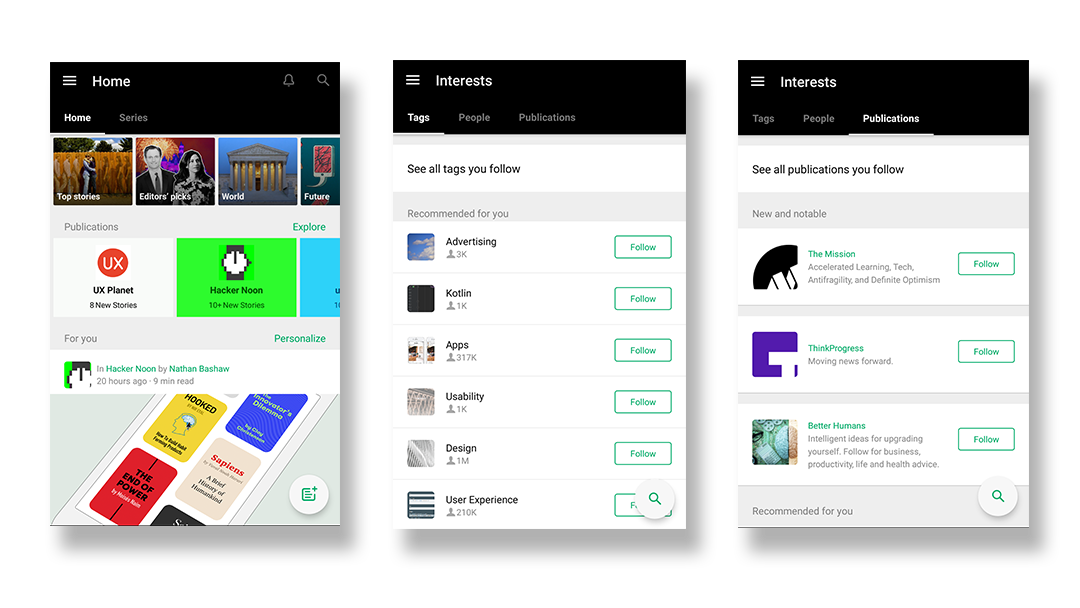
All the major social, news, video or blog networks like Facebook, Twitter, Medium and Youtube are using this approach, too. Adjusting your personal timeline with people or stories you want to follow is one of the main reasons you find yourself coming back to that specific app, multliple times a day.

retention

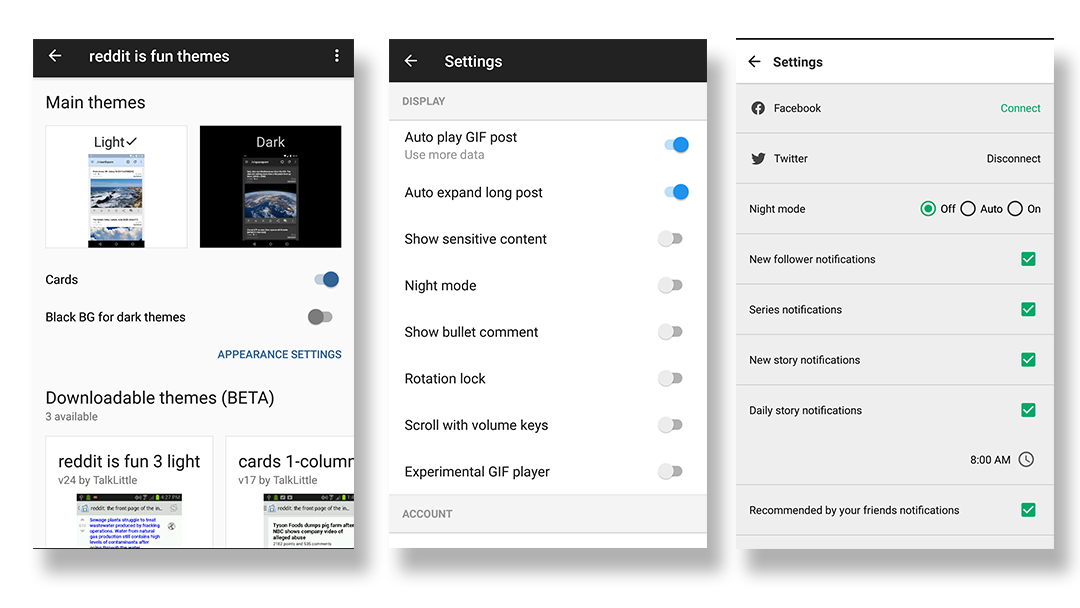
Personalization can take several different forms. Even the ability to customize your app, like changing the background and theme of the app, is something that can change the whole user experience and eventually the user’s feelings toward that app. Looking at the bigger picture, something as simple as a “Settings” section can greatly improve user experience by providing the ability to further tailor the app, adding to that overall sense of ownership.

retention

Spotify uses this basic notion that people express their self-identity through the things (and apps) around them by creating an environment that teaches itself how to evolve along with the user. Actually, it’s a great example of personalization. When using Spotify’s Daily Mix, you can listen to music that you will almost certainly enjoy, based on the genres of music you have listened to so far in the app. These lists are automatically created for you, loaded with artists of your preference and with the great addition of newly discovered tunes of the same vibe. But what is most important, is that the performance of the algorithm grows with the user. How easy is to tear yourself away from such a product and move on to one that does not know how you like to listen to something quiet when you first wake up, but also enjoy a bit of rock when you do your work out?

spotify

Google Now, an intelligent personal assistant created by Google, is also a great example of how personalization can create engagement. Google Now caters a list with several info and suggestions based on your previous search habits and location patterns. It also informs you about transportation, news, events, important emails or meetings making it hard to live without after you get an initial sense of the value it can offer.

goole now

Keeping track of a user’s actions (history) is also a great way to create a sense of ownership. Letting the user see or track his previous actions or previous usage of the app subconsciously gives the feeling that the app knows him well. That’s a really strong feeling. Below you can see an example of how Airbnb tracks previous trips you took through the platform.

airbnb

Save for later – Invest in commitment

Allowing users to take actions and save things of interest, progress, or status for later use, builds on a commitment that can reveal the true value of ownership.

For example, allowing users of a news feed app (like the CNN app you can see below) to bookmark or favorite an article to read on later during a future visit, provides the illusion of commitment; an illusion that will bring the user back to the app.

cnn

SkyScanner, a travel fare aggregator app, is based on the same concept. Users can use it to add and monitor flights with price alerts. By adding a price alert, or choosing to monitor a flight, user will definitely come back to the app in the near future.

sky

Tracking a user’s progress within the app and giving him the option to save his progress also helps create this mood of commitment, and bring the user back to try and increase his status and achievements.

duolingo

Runtastic, for example, allows a user to record his performance and activities and compare them with previous ones, as well as challenge those with new activities. This creates loyal users, directly connected with the app, since all this information is stored in-app. Being able to return and find this readily available, can be really valuable to a user.

runtastic

Feedback – Turn a user into an active part of the process

Asking for feedback and eventually listening and building what users requested, is a great way to turn users into loyal visitors. When a user feels that he is part of the evolution of a product or app, he becomes highly engaged and this in turn, results to ongoing usage of the app.

Major apps have always provided users with a way to leave direct feedback on the app. Airbnb, for example, has a section dedicated to user feedback on a variety of different topics, all in an effort to improve the experience and usage of the app.

airbnb

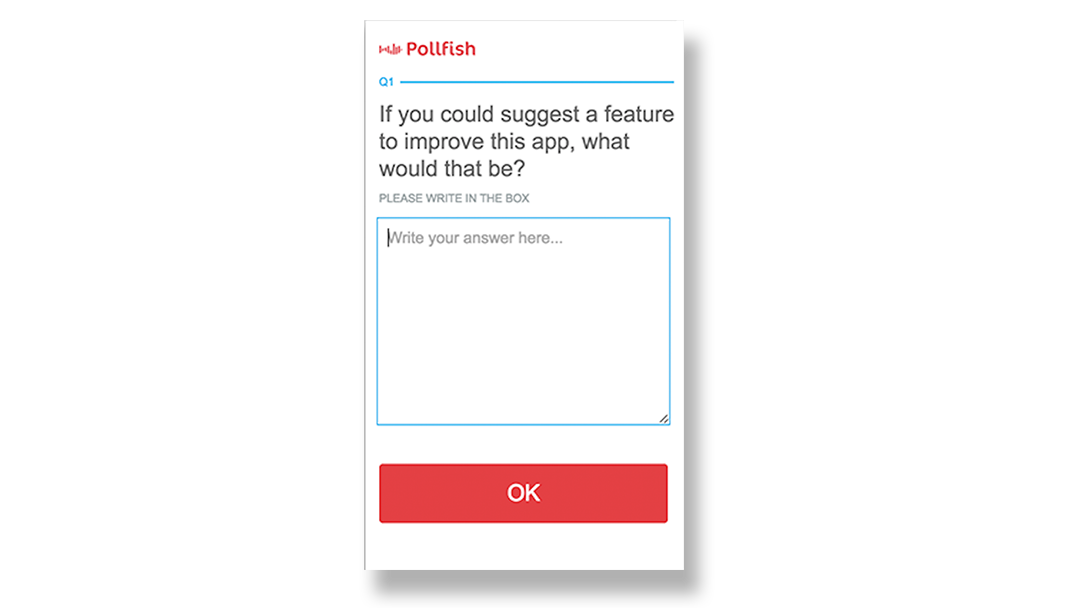
We have seen what giving users this option ultimately achieves at Pollfish, too. Pollfish is a DIY survey platform, where everyone can create a survey in minutes and and get responses from thousands of users through mobile apps, in as little as a couple of hours. When we were first building the platform, we were astonished by the number of people that were actually participating in our surveys. So much so, that we decided to run a survey of our own and ask them: “Why do you participate in surveys?”. Now we know that when users replied that they enjoyed doing surveys “Because I am providing feedback, I am an active participant in the process” and “That way I can really put my thoughts on products out there” we had tapped into that basic feeling, that sense of belonging to a select group of few. Those few that were part of the product development phase, just by giving feedback.

feed

Seeing that users were only too eager to share what they liked or disliked about an app gave us an idea. And that was how giving app publishers the option to survey their own users for free came about. When a user came back to an app to find that the developer took into account one of their suggestions and made a change, that user was “hooked”. Occasional users turned to loyal customers and all this demonstrated a significant increase in retention, the end-goal of every app publisher.

You have to catch ’em all! – Introduce a collection or loyalty scheme

The famous tag line from Pokemon drives players into hunting down all the items of a collection. Owning all those rare Pokemon becomes all-consuming, and users do not stop until they DO catch them all. But the notion of “catching them all” is not actually all that new; we all have a collection of trading cards stashed somewhere. Pokemon Go was build upon this idea. Introducing a concept of a collection in the context of any app not just games can still achieve the same results.

pikachu

Introducing loyalty schemes in apps can arouse the same feeling. For example, OpenTable, a popular reservation app, introduced a dining rewards program where users can receive points for honouring the reservations they made and redeem them at a later day. Killing two birds with one stone: active participants that leave feedback that helps others AND repeat dinners.

opentable

Time is money. Managing to create a user that has invested valuable personal time to an app, helping to make that app better by tailoring it to his needs is a sure-fire way to ensure that he keeps coming back, again and again. Allowing users to customize their experience within an app or even better, personalize the app based on their usage of it, will make it extremely hard for them to leave and move onto another app. Giving users a way to permeate an app with “pieces” of themselves, (like saving their progress or items for later use) gives a sense of belonging. And that drives users back to the app. Pretty much like asking users for feedback and showing them how you have acted on it does. Top things off with a loyalty scheme or a collection to complete and the impact on app retention and engagement is maximized. The feeling that we have as young children that we are what we own does not exactly diminish as we grow older. Basic human needs, like the sense of ownership and achievement, are at the heart of every successful app and are widely used in a mobile app’s design.

03 Apr 19:03

Opinion: Understanding life stories can lead to better health care

by Harvey Enchin

We’re all familiar with Aesop’s boy who cried wolf: After repeatedly and falsely telling nearby villagers he saw a wolf, the wild dog finally appears. But having been fooled one too many times, the villagers refuse to respond, and the boy meets his ignominious end.

Clearly, the fable is meant to emphasize the importance of telling the truth, and more broadly, highlights the value our culture places on truth-telling. But is the story itself true or false?

The question doesn’t make sense. Sure, we could say that neither the boy nor the wolf really existed, and so the story is false. But that would miss the point: Stories often aren’t meant simply to describe a specific state of affairs; rather, they convey meaning, telling us what cultures value.

But not just cultures. Individuals, too, tell stories, and these stories detail what we find important, what we value, what gives our lives meaning. Indeed, psychologists suggest that storytelling is a fundamental aspect of the human experience, the very essence of the way we communicate with each other.

The discipline of narrative ethics has seized on this fact, and emphasizes that by understanding the stories of patients’ lives, health providers can learn what really matters to patients and thereby provide better and more ethical care.

This is true even as patients age and memories begin to fail — even, in fact, for patients living with dementia. Sure, they might forget what happened 30 minutes ago, but they might very well remember what occurred 30 years ago. And even if they don’t, who among us gets all the facts right in the stories of our lives?

In writing and rewriting our life stories, we all highlight certain facts and omit others. And sometimes, certain elements of our stories might even contradict each other. But given the complexity of our lives, this is inevitable: “Do I contradict myself? Very well then, I contradict myself; I am large, I contain multitudes,” wrote Walt Whitman.

So it is with dementia patients. The narratives might not always mesh with the facts, but if we commit to truly understanding a dementia patient’s life stories, we can gain a unique insight into who the patient — the person — really is. The eyes, it seems, are not the only windows to the soul.

At the Tapestry Foundation’s 14th Annual Geriatric Services Conference, to be held in Vancouver, leading researchers and clinicians will discuss what we can learn from patient stories and how this can lead to better care. Renowned University of B.C. psychiatrist Harry Karlinksy will deliver a keynote address on the educational power of stories from film, and conduct a workshop on narrative medicine. And the conference will include discussions of many other issues, including palliative care, financial matters in aging and support for caregivers.

In a special evening session entitled “Going Beyond Old Stories: Exploring, Engaging and Evolving into our Positive Potentials,” family physician Davidicus Wong will discuss how we create our life stories, and how we can evolve positively to achieve our highest potential and support others in achieving theirs. The session is open to the public, and will include time for interaction with the audience.

Tapestry Foundation’s 14th Annual Geriatric Services Conference will be held at the Vancouver Convention Centre on Friday, April 7. For more information and to attend this free evening session, at 7 p.m., with Davidicus Wong, register online at www.tapestryfoundation.ca/education/public-presentation-series or by telephone at 604-806-9480.

Former Sun columnist Peter McKnight is co-chair of the Tapestry Foundation’s Geriatric Services Conference.

03 Apr 18:34

On Those Who Say You Can No Longer Succeed in Sales

by Anthony Iannarino

You don’t want to take advice about how to be fit from someone who is not fit. If what they believed was working, they’d be fit. There are a lot of people who can tell you what to do to be fit and healthy—even though they are not these things themselves.

There are even more people who will tell you about money without having any themselves. They too will tell you what you need to do to increase your income and grow your wealth, having never done so themselves. The people who share this advice will share a certain incongruity, their actions will be in stark contrast to their words.

There is (still) a growing cottage industry of sales experts who can tell you how difficult sales is. They’ll tell you that there is no way you can create enough value as a salesperson to be relevant, how buyers have all the power, how outside sales is dead, and how social selling is the only way to create opportunities. They’ll go on about how you can’t win anymore, and how only their product or service can help you.

What you are hearing from these voices is their own experience. They believe sales is too difficult because they found it difficult. They found it difficult to create value, and therefore, difficult to create a preference. In their experience, buyers have more power than sellers, and because they lack the deep chops to sell as a peer, you must also lack that ability.

You will always hear that cold calling is dead from those who cannot successfully use the telephone to schedule an appointment with their dream client. You will hear from those who can’t win that you also can’t win, and that because they aren’t a peer, neither are you. Their truth is not a universal truth. They only perceive it as a universal truth because it is easier for some to believe that external events are responsible for their poor results than to own up those results.

You should not take advice from people who preach the death of sales unless you are also willing to follow their example. To follow their example would be to leave sales and start a business to support other people who are failing in sales with an offering that promises them better results without having to do the work necessary to sell effectively today.

The post On Those Who Say You Can No Longer Succeed in Sales appeared first on The Sales Blog.

03 Apr 18:24

The Second Revenue Ops Pillar: Process Optimization

by Vignesh Subramanyan

In the first post of this series, we unveiled our new Revenue Ops framework – a cross-functional approach to leverage marketing ops and sales ops together with an increased focus on driving revenue.

While we strongly believe in the concept of Revenue Ops as a whole, to fully leverage this model we need to understand what it looks like in practice.

Revenue Ops Framework

With the help of one of our partners, we outlined the first pillar in this framework focused on Management & Strategy. Next, we’ll look at the second pillar – Process Optimization.

4 questions on Process Optimization with Engagio

After outlining management decisions and planning out strategy, Revenue Ops needs to help define key workflows and execute marketing & sales processes. The goal here is to make go-to-market teams more productive and effective – this can be achieved by finding ways to remove or automate steps, streamline processes, and reduce friction between cross-functional tasks.

In order to fully understand how ops can optimize processes across both the marketing and sales function, we interviewed Charlie Liang, Director of Marketing at Engagio.

1) Why is Process Optimization a core pillar for Revenue Ops teams?

Process optimization is fundamentally important to operations because it’s the definition of good ops. Good process = good ops.

It manifests itself in many forms, but in general, it’s the art of getting rid of excess fat in things that you need to repeat, such as finding your next customer, loading lists from a tradeshow, converting CRM leads to opportunities, or something as simple as bucketing job titles. Truth is, if it saves you time and can get the job done as good or better, it’s good optimizing the process.

2) What kind of processes can help ops practitioners improve their B2B marketing and sales efforts?

Operations professionals should take inventory of how they spend their time and break out activities into two categories: one-time processes and recurring processes. You can certainly optimize both, but in general, you should spend time focusing on improving recurring processes.

There are a few questions to ask yourself when deciding whether or not to try to improve a given process:

Engagio - Process Optimization Workflow

Source: Charlie Liang, Engagio, Feb 2017

3) What are some indicators ops can use to define success in their optimization efforts?

When asked to evaluate the team leading the process optimization project, the more you answer yes to the questions below, the more successful the project will be.

Personnel

  • Does the person(s) in charge of improving the process have the appropriate domain expertise?
  • Is the person(s) leading the project in touch with the right people?
  • Do they have clearance + support to work on the given process?
  • Can the person or team execute well?

Project

  • Are the goals of the project defined clearly?
  • Do you have a good way of measuring the success of the project?
  • Have there been clear timelines established?
  • Does the project have visibility & support from key executives?

4) How do you see Process Optimization affecting ops practitioners in the future?

As long as there are organizations, there will be process improvement. But the failure to continue to streamline processes can be a big risk to companies if they don’t execute well. The larger the company, the more important process optimization is, but also the harder it is.

The larger your company is, the more business processes it has, the more it makes sense to streamline. But no need to reinvent the wheel – many businesses have similar processes, so ask around to see if a solution already exists for what you’re trying to solve. Build things for processes unique to your business – use industry-standard tools and methodologies for all else.

Charlie Liang, Director of Marketing, Engagio

Wrapping it up

Optimizing cross-functional efforts is one of the cornerstones of the ops function. As Charlie mentions, Revenue Ops teams should focus on improving recurring processes, ensuring the right people are leading optimization efforts, and defining KPIs to identify & measure the success of the project.

In the next part of our framework, we’ll look at the third pillar from our framework – Technology & Project Management – with the help of our partner Heinz Marketing.

03 Apr 17:48

Small Business Expert Advice: When to Close Down Your Business

by Jason Acidre

Is it time to walk away?

It’s a question that 8 out of 10 entrepreneurs face in the first 18 months of running their own business.

As a business owner myself, I have certainly asked the very same question to myself a few times in the past 6 years of running my own marketing agency.

And it’s a hard decision to make, especially when there are people (and their families) depending on your business.

So when do you call it quits?

I talked to several business experts to help shed light on one of the most difficult decisions every entrepreneur might have to make in their lifetime.

When is it time to close your business, and when is it not?

Mark Kane
CEO of Sunwise Capital

I’m a bootstrapper. All my initial start-ups required small initial investments. Did they all make money?

No!

I’m fortunate (or lucky) that a $20,000 credit card advance turned into a platform that helped me raise $5M from a hedge fund.

So how did I manage the risk? My approach parallels my 17 years of Wall Street experience. I looked at the business opportunity as an investment. In simple terms, I consider the monetary risks and the financial rewards.

The initial question I ask myself is how much money am I willing to invest to realize a certain percentage of profit? I think of the business opportunity and the investment no different than a stock purchase. What amount of money would I invest in a stock to realize an absolute gain?

That’s the easy part. The tough part is determining how much you are willing to lose. The difficulty is knowing when to cut your losses. Whenever I purchase a stock or start a business, I determine how much I am willing to invest and maybe more importantly, how much I am prepared to lose.

When do I call it quits?

To do this, you need to be extremely disciplined. Unfortunately, for most individuals, they don’t have the mental discipline to stick to their decision.

The challenge for most people is you become too emotionally attached to the business. Once this happens, you become blinded by the need to be “right” versus making money. It’s game over.

It’s the same whether buying and selling stocks or starting and then closing the business.

This strategy serves me well. You must know your numbers. You need to understand how long you can survive at your current churn rate. Losing some money is OK. Losing it all and not having some dry powder to try again is not.

I believe in “go big or go home.” But it doesn’t mean going home empty handed. It also doesn’t mean that you can’t cut expenses, even if it means layoffs and downsizing. I know, I’ve done it. If that’s what it takes to survive another day, cut the fat and lose the weight.

I agree with Mark Cuban when he says, “Doesn’t matter if the glass is half empty or half-full. All that matters is that you are the one pouring the water.”


Kent Lewis
President & Founder of Anvil

Determining the appropriate time to shutter a business is one of the great challenges for any owner. According to Bloomberg, 8 out of 10 entrepreneurs who start businesses fail within the first 18 months.

A whopping 80% crash and burn. With such a high failure rate, this question is always at the top of the minds of business owners.

Unfortunately, knowing when to shutter a business is not an easy or simple decision. While I haven’t been at the helm of a failed business, I have been the co-founder of a failed business and employed by many more. In most cases, the leases, cash flow and compensation for senior executives were major contributing factors.

In one case, however, a company I’d left less than a year previously had prematurely shut its doors based on the threat of a large anti-piracy lawsuit and fine from the government. The $300,000 liability that drove the decision to shut down an otherwise healthy interactive agency turned out to be a $3,000 fine.

In 2009, I was faced with a $35,000 debt after the first year of starting up my second agency, Formic Media. I was seriously considering closing it down and dispersing the employees and clients.

I decided to fund it for one more year. Within five years, it was a $1M business before merging with Anvil Media. That loss turned into a meaningful gain. So the secret sauce, according to experts, is ensuring you have sufficient cash runway to get momentum for a startup or turn the tides with a struggling business.

If you can’t turn a business on or back on track in 6 to 12 months and debt is piling up, you have two options: try to sell the remaining assets or declare bankruptcy. I’m a fan of ensuring you make your employees, customers and vendors whole, but that can be difficult if the losses are too significant.

I’ve relied on organizations like Entrepreneurs’ Organization for help guiding my business over the years, with tremendous success.


Barry Moltz
Author and Public Speaker, BarryMoltz.com

  1. Passion. Do they still have the passion to continue in their business? Do they still look forward to going to work each day? Lose this drive on a daily basis and it’s time to quit.
  2. Cash flow. Is cash flow steady or is it shrinking?

Is there enough cash in the bank to keep going and get through the current stage or is the company running out?

Does a capital infusion need to be made from the owner or borrowed from the bank?

Negative cash flow means a decision whether to keep going needs to be made soon. Without cash, time is not on the business owner’s side.

A lack of either passion or cash flow means that it may be the right time to quit.

Quitting is not a surrender and it does not mean that you are a failure. Remember that the winners in this world actually know when to stop.

By quitting, the small business owner can stop doing what is not successful and start along a path that changes their trajectory.


Kevin Daum
Author & Speaker, Roar & Video Marketing for Dummies

The best rule of thumb when closing down a business is to do it well before bankruptcy becomes your best or only option.

Arsineh Ghazarian
CEO & Co-founder, Zveil

For every entrepreneur it’s important to set out on their new business venture with a clear plan. Though the early stages of a business may be filled with shifts and pivots, a business owner should have a clear sense of their goals over a realistic timeline.

When the day comes that an entrepreneur feels they have exhausted their strategies for reaching their goals, whether it’s because they miscalculated the needs of the market or because their business didn’t have much of a differentiator/ or value add for customers.

Then at that time it’s important to walk away from the confines and preexisting notions of the existing business and to either brainstorm a new concept or build upon the previous concept.

In either case, all is not lost in that you will be in a better place, starting this new venture with a ton of firsthand knowledge about your audience.

Evan Carmichael
Serial Entrepreneur, VC and Author, EvanCarmichael.com

Most people quit on their business too soon and don’t allow the time for momentum to grow. Most people also start a business for the wrong reason. If you’re in a business just to make money then you should quit right now.

You won’t win. The reason to do a business is because you’re insanely passionate about it. That’s the only way you’re going to win. Because you care so deeply about it that you’ll handle any obstacle that gets thrown at you.When should you quit?

If your passion runs out. As long as that fire still burns in you, you have to keep going. Otherwise you’ll live the rest of your life with regret, wondering what if you just gave it a little more?

Holly Reisem Hanna
Founder, The Work At Home Woman

Over the past eight years, I’ve interviewed a lot of women about their business endeavors. Some are still going strong today, others have sold their businesses, and yet others have closed up shop.

From talking to these ladies, I’ve found a few common themes that seem to be good indicators that it’s time to move on.

The first thing is passion. We’ve all heard the saying, “Choose a job you love, and you will never have to work a day in your life.” if you start to dread Monday mornings — there’s a chance that it may be time to move on.

Take time to evaluate if you’re burnt out and need a vacation, or if you need to hire additional staff. If some R&R and restructuring don’t help, you may want to consider selling or closing your business.

The second is aspect is money. If you’re barely able to keep your financial head above water and you’ve been in business for a few years — you may need to consider whether or not it’s worth it to sink more money into the business that’s not generating the revenue you need to survive.

Evaluate your business costs to see if there are excess expenditures that can be trimmed down, as well if there are areas of missed income potential. If your evaluation is grim, it may be time to get out.

The last area is transitional phases. Perhaps you started your at-home business so you could be available for your kiddos — but now they’re in high school and don’t need as much guidance.

Or maybe you’ve been running a business from home, but you miss the social interaction of a traditional office. If you’re in a new phase in your life, take the time to figure out if running a business is still in alignment with your life goals, if not, there’s no shame in calling it quits.

Nick Leffler
Owner, Exprance

I think this is a question everyone has had to grapple with at one point or another. If you haven’t had failure, how do you know you’ve succeeded?

To answer your question, though:

I think there’s one of two signs that you’ll see when it’s time to close down your business. The biggest sign is that your see no path to your business goal. That could mean you’re not adding on customers at a sustainable rate or even you aren’t making enough money for the amount of work you’re doing.

Another sign is that you just don’t have enough money to keep going. Running a business requires capital. If you don’t have the money to invest in your business then there’s a good chance it won’t ever succeed unless you can change that. Either find a way to have the needed capital or decide to close up shop.

If there’s a way up from your current position, then keep on going. If you see no way to get out of your current situation, it’s time to close.

Janet Attard
CEO, BusinessKnowHow.com

The answer really depends on circumstances. If you have been running a business that has been profitable and profits dry up because people don’t want the products or services you sell any more, or they are getting them at low price that you can’t profitably match, it’s time to close the business.

If you appear to have a lot of customers and sales but are losing money, then there are other factors you should look at before closing the business.

First, could one or more employees be stealing from you? Fraud is surprisingly common in small businesses, and it’s often a trusted employee who is the culprit.

Second, are inefficiencies in your operations or outdated equipment or methods be preventing your business from being competitive and earning a profit?

Are you paying for overtime that could be avoided by automating or computerizing any part of your operations?

Can you sell online if you don’t do so now? Would an automated CRM system save employees time and ensure leads are always followed up.

Are you using email marketing to stay in contact with customers and build repeat business?

Weigh the cost of improvements and payback time against savings and possible increased earnings.

If you’ve lost the passion for running your business (or any business at all) it might be time to consider closing the business or selling it if it’s profitable.

Brian Lang
Publisher, SmallBusinessIdeasBlog.com

Quitting a business that you worked hard on can be tough, but it’s something that an entrepreneur must do when necessary. Circumstances can vary, but here are a few reasons to call it quits:

  1. When you’ve lost the drive to continue with it. If other competitors are succeeding in the same business, then there’s usually a way to make it work.But if you’ve lost the drive to continue, then it will be hard to do the hard work to push forward.2. If it is having a long term negative impact on your health, like too much stress or sleeping problems.3. It’s not sufficiently profitable and won’t be getting better in the future4. A better opportunity comes along. I shut down my eBay business when I learned SEO and set up my own e-commerce site, which significantly increased my income.Ultimately, it’s up to the business owner. But it’s important to take the emotions out of the equation and make the right choice based on the facts.

Ivana Taylor
Small Business Influencer, DIYMarketers

Well, let’s start with the basics — you’ve either got a business or a hobby.

Businesses make money, hobbies cost money. So, if you’re NOT making money and/or you’re NOT paying yourself, and it’s been that way for more than 3 years, and you’re living on Ramen noodles, and your spouse is saying things like “How much longer is this going to go on?”

Then you are putting yourself, your family and your fiscal well-being in danger and you should probably do something else. You really have two options:

  1. Call it a hobby and stop stressing about it.
  2. Take a close look at what you need to make this profitable, put a timeline in place to make it happen, be rigorous with yourself and if you get to your deadline – say 90 days and it’s not working — shut it down.

There’s nothing wrong with shutting down a business that isn’t making money. It doesn’t mean anything about you other than your business wasn’t making money.

Thousands of entrepreneurs have started and shuttered businesses and then have gone on to create thriving profitable businesses. There’s nothing wrong with that.

More than 500,000 small businesses close every year. And the reason they close are because they aren’t selling the right thing to the right customers.

It starts with being extremely focused on a specific customer and solving a specific problem. If you’re trying to sell anything to everybody — you’re on the way to shutting your doors.

Find your ideal customer, focus on what’s important to them when they’re thinking on buying what you’re selling and then develop a system that delivers.

Dave Crenshaw
Motivational Speaker, DaveCrenshaw.com

“When you start losing passion for your business, that’s a sign you may need to exit. Small businesses are passion-driven. If an entrepreneur isn’t excited about their small business, it will be difficult to get anyone else to be excited.”

Susan Gunelius
Founder & Editor-in-Chief, Women on Business

I think the time to close your business happens when you hit a wall that makes it impossible to keep it going, sell all or parts of it, or reorganize into something new and better.

However, I think the decision as to what to do with your business when that happens should be made long before it actually happens (so you never truly arrive at the final point of failure).

Every business owner should have a comprehensive exit plan in place from very early stages that includes not only what happens if the numbers tank but also what happens if the owner’s heart (or health) simply aren’t “in it” anymore.

Laurie McCabe
Co-founder & Partner, SMB Group

Here are 3 signs it is probably time to shut down:

  • If there’s no longer a market for your products or services–such as if you owned a video rental store and then Netflix and live streaming came along!
  • If you are not enjoying the business/not motivated.
  • If you’ve been in business a couple of years, aren’t making a profit, and struggling financially.

On the flip side, if sales/profits are lagging, but there is a market for what you sell, if you have a plan to turn things around, and you have the resources to stay the course, it can make sense to give it another shot.

Roland Hanekroot
Business Coach, New Perspectives

It’s a difficult question, but let me give you the short answer: When it’s not fun anymore.

Fun is the key indicator of the health of your business. If it’s Fun, you’ll have no trouble managing the stress and all the competing priorities, it means you’re in the midst of an engaging adventure and it feels like you’re getting somewhere.

When it isn’t Fun anymore and the sense of dread you have about the week ahead or about getting out of bed is overwhelming and you can’t see the light at the end of the tunnel… It’s time to get out.

Roberta Perry
CEO, SrubzBody

I think there are so many different reasons for businesses closing down or ending. My own experiences helped shape who I am and what I do now, so I see every failure as a growth lesson for the businesses that succeeded. I have had two of each.

My design business never really closed, it faded and I still do the occasional design for someone other than my own business. My skin care business, ScrubzBody™, is thankfully an ongoing success.

Now, the 2 businesses that failed did so for different reasons. One was because I lost interest and stopped seeking out new business. I literally watched it implode slowly. Because it was at the same time as my other business was growing it was not a bad thing, just another shift and growth in my career path.

The other business was a total crash and burn. We were 3 ill-prepared business partners who ran head first into a business we knew nothing about. After a year and a half of throwing good money after bad it just ended. I never saw either of them again after that last meeting.

Gene Marks
Small Business Expert, GeneMarks.com

The time to close down your business is when one year before you’re forced to close down your business.

The smartest business owners I know, those who have survived recessions and downturns, are always looking ahead – sometimes two to three years ahead. When you look ahead at least a year what do you see?

A competitor coming into down? Declining demand? Sluggish economy? Meager profits?

Regardless of how much passion you feel or love you have for your business, a business is a business and it exists primarily to provide you with a livelihood.

If you’re not seeing that happening a year from now then now is the time to close (or better yet sell) your business while there’s still some value and while you still have that option.

Liz Jostes
Social Media Consultant, LizJostes.com

One of the biggest challenges I see among entrepreneurs and small business owners is that they fear their business isn’t successful or not on the road to success, but haven’t put in consistent, focused effort with their business.

There are some people who went out on their own because they have tons of ideas and want the freedom to make their own decisions, but their downfall is a lack of execution on their ideas and “staying the course”. You don’t want to close down your business and label it a fail if you haven’t given it the proper chance it needs to be get off the ground.

03 Apr 15:28

Make America Innovate Again

by Ben Gross

As a general rule, we hold our governments to a higher standard than that which we hold private businesses and corporations to. Private sector businesses are expected to only look out for themselves, but the government is meant to look out for us. Why is it then that we’ve reversed the roles, castigating businesses for not showing involvement but accepting the fact that it seems that governments aren’t at all interesting in engaging their citizens?

Is there anything more anxiety-inducing or soul-crushing than visiting the DMV (Department of Motor Vehicles)? Endless lines, inconvenient hours of operation, and a technical workflow leftover from the Eisenhower era all add up to a decidedly uninviting experience. The only thing more unpleasant might be dealing with a local police department. Or the IRS. Or, for that matter, any government body at the local, state or national level.

General wisdom dictates that if any private sector company had such a dysfunctional relationship with its customers, it would “go under” rather quickly. So what do successful businesses do that their public sector brethren can’t seem to? They adapt to the changing digital zeitgeist of their clientele and readily embrace tech innovation to serve their patrons’ needs.

Mind the Gap: Where Is Government Failing Digitally?

america_innovate_government_failingToday, digital tech is crucial in bringing companies closer to their customers. Special offers are promoted via mobile push notifications. Crowdsourcing software polls the client community for new product concepts. Technical struggles are intelligently identified via machine learning and preemptively flagged for customer support.

Companies have caught on quickly that digital connectivity = easier connectivity. With that closer relationship comes the sense that a customer’s voice is being heard, which in turn fosters greater brand trust. It doesn’t take an enormous leap of logic to theorize that stagnating voter participation and low civic engagement might be the results of a technologically underachieving government sector.

Surveys consistently find that public servants are out of step with the private sector in terms of access to and utilization of latest IoT trends. Not only does the US government fall short of domestic businesses, but per some criteria it trails behind the governments of less developed overseas countries. Case in point, two post-Soviet Baltic states, Lithuania and Estonia, lead the world in providing public WiFi access to their citizens. The country that developed this technology in its private telecommunications sector, the United States, is shockingly no longer ranked in the top 20.

Myriad explanations could be offered for these shortcomings. Public sector employees at all levels of government must cut through significant bureaucratic red tape before implementing new, cutting-edge technologies. Security regulations are often tighter in government entities, which curbs the adoption of open-source software. But the most culpable reason lies in the mantra that an organization is defined by the makeup of its staff. And apparently working for the government isn’t exactly a developer’s fantasy.

Where Have All the Techies Gone?

america_innovate_where_techiesIt’s hard to shed a reputation that’s firmly entrenched, and as far as tech-sexiness is concerned no one needs a makeover more than Uncle Sam. The number of young and tech-savvy professionals that choose to enter the public sector has gradually slipped in the past 50 years. A miniscule 2.4% of engineering students list government agencies as their workplace destinations of choice post-graduation. Only 7% of the federal workforce is under the age of 30, compared to an estimated 25% in the private sector.

The Obama administration made some strides in stepping into the digital era, including the establishment of the United States Digital Service and the hiring of a 40-year-old (a teenager, in White House math) Chief Data Scientist, straight out of Silicon Valley. But these rebranding efforts may have been undermined by culture wars between Tech and Gov, notably centered around generationally-divisive issues like data encryption and privacy versus security. The public sector’s rep among Gen Y is stymied further by byzantine hiring processes and a high and well-publicized number of layoffs in recent years. This lack of wired minds in government then leads to a less innovative approach to administering government services, which further cements the outdated image projected to young tech professionals, and thus a vicious cycle perpetuates.

Civic Hackers, Filling the Hole Left by the Government

america_innovate_appsWith governments struggling to sort out their recruiting woes, NGOs have stepped in to pick up the slack. Enter Code for America, the “civic hacking” outfit that counts Google and Microsoft among its grantors. The org accelerates the use of digital tech in the public sector by connecting tech professionals with municipal and state governments, either as paid employees, volunteers or fellowship participants. The third-party and third-sector matchmaking approach appears to be an effective strategy in mobilizing government-skeptical techies, perhaps because it involves them at a local, community level. The partnerships have resulted in a series of groundbreaking mobile apps, which streamline a range of gov-to-citizen services. Nutritional aid is distributed to needy families via an 11-minute signup, the process of expunging low-level crimes from a criminal history is dramatically simplified, and probation case managers can communicate more effectively with their clients via a unified texting service. Now imagine if all government services were that accessible, efficient, and needs-oriented.

To be fair, there are other notable bright spots where the public sector and tech innovation have converged beautifully, sans nonprofit intermediary. Community health agencies in Washington D.C. are now geocoding their patients’ health histories, allowing for more targeted health awareness campaigns. Ohio has embraced the open data movement by creating a platform for local governments to post all their revenue and expenditures online and in public view of residents. Even DMVs, which were admittedly bullied a bit at the beginning of this article, seem cognizant of and determined to fix their technical shortcomings. But these digitized public projects appear to be exceptional, when they should be an expected standard.

Increasing the tech literacy of government employees and digitizing the services they provide are two of three essential pillars needed to narrow the public and private sector innovation gap. But the aforementioned innovations we’ve seen in government are successful not by virtue of merely being innovative and digital, but by virtue of applying digital tech to address real public needs. And who better to articulate those needs, and their possible solutions, than the public itself? The third pillar should be relatively easy to adopt, as it’s ingrained in every member of the workforce from minute one of our first jobs.

Citizens will Talk if the Government will Listen

Any outfit, be it business, government or nonprofit, can get wired given the proper funds and employees. But as Richard Branson has noted, “Your education really begins on the day that you open the doors to customers.” And while we are likely a long way off from an era of electronic direct democracy in its true sense, government can take a major step toward better representing its citizens’ interests by the mere act of listening to them. A government that ignores the public’s voice, suggestions and ideas is as unlikely to succeed as a business that fails to survey its clients.

There is hope, though, for the future. Gartner Research believes that all local government organisations will generate revenue from value-added open data through data marketplaces by 2020. Bettina Tratz-Ryan, Research VP at Gartner, believes that the key will be “automating and extending the user experience to allow citizens and businesses to discover and prepare data, and to find patterns and share them within their community or organisation.”

In another Gartner report, from August 2016, Tratz-Ryan and fellow author Rick Howard outlined their vision of a process towards open citizen engagement, starting at the local government level and eventually reaching a final stage, where “these marketplaces will freely exchange data up and down the tiers of government and across jurisdictional boundaries and industries”.

As the public sector takes on the necessary task of digital transformation, it should do so with the guiding force of collective intelligence platforms, like those offered by Qmarkets. These technologies can serve as a digital dais for society to express its needs and proposed solutions, which gov can then filter, develop and realize for public benefit.

03 Apr 15:28

Tips for Tightening Up Your Cover Letter

by Amanda Clark

Though the debate rages on regarding resume length, many people are in agreement that your cover letter should be short and sweet – no more than one page. There are always exceptions, but this is the general rule of thumb. If you’re onto a second page and still have more to add, chances are you’re missing the point. Furthermore, employers don’t want to read a novel. A cover letter is your way to quickly and succinctly grab their attention. It is not an autobiography, nor should it rehash your entire career or resume.

Start by carefully reading the job description and determining what the top two or three skills or abilities the employer is seeking. What would make the greatest impact in that role? Then consider how your own experience aligns with these targets. While you may want to recount all of the vast accomplishments you’ve achieved, zero in on those which will have the strongest influence. What makes you stand out from others and shows that you have what it takes to succeed in the role?

Don’t forget, the employer will have a copy of your resume too. You’re not ignoring other accomplishments in your cover letter, simply focusing on those that will entice the employer to want to learn more because they see how you may be a great fit. Figure out what makes you pop and what value you would add.

Avoid the temptation to use miniscule margins and microscopic fonts. Stick with the standards. Cramming more information in but making it harder to read is not going to motivate an employer to keep reading. In fact, it may have the opposite effect. If you’re having trouble deciding what to keep and what to cut, have someone else read the job description, cover letter, and resume. See what aspects jump out to them regarding what you bring to the table.

Before you send it off, don’t forget to:

  • Proofread and then proofread again. You don’t want simple spelling or grammar errors to send the wrong impression.
  • Double check your contact information to ensure that it is 100% correct. One missing letter in your email address or a wrong digit in your phone number can mean the difference between hearing from a potential employer and not.
  • Double check the company’s contact information. If you’re updating a previous cover letter for a different job, make sure you’ve changed all of the pertinent information such as company name, contact person, position, and date.

A well-written, targeted cover letter can be an asset to your application package. Unless the job opening expressly notes not to send a cover letter, take the time to create one. You never know when an employer will read it.

03 Apr 15:27

5 Steps to Effective Consultative Selling

by Jamie DeLoe

If you are a sales leader, part of a sales team, or a solo entrepreneur you have a sales methodology of some type – your preferred way of selling. Does your method include building rapport with your prospects? Paying attention to their specific needs? Listening to their concerns and offering solutions without making a full-blown, script-following sales pitch? If you’re not doing those things already, or if you want to improve what you’re doing, read on for some simple steps to make your consultative selling more effective.

What is Consultative Selling?

Consultative selling is a way of selling that puts the customer’s needs first. Their needs are discovered by the salesperson through research and preparation, and really focusing and drilling down into customers’ answers. Consultative selling is not the hard-pressing, aggressive sales pitch of days gone by. Instead, those attributes are replaced by rapport, knowledge, flexibility, and meeting customers where they are so they receive a product that is tailor-fit to their business.

This approach focuses on salespeople asking the right questions to engage customers in a dialogue so their needs are identified. It requires salespeople to request a lot of feedback and to really hear what the customer is saying. Communication is a key point in the consultative sales methodology, and it can make a huge difference in meeting your sales goals.

Steps to Optimize Your Consultative Selling

The following are steps to get you started with consultative selling.

Get to Know Your Customer

Before you meet with your prospective customer, you need to do your homework. Finding out as much as you can about the person you will be meeting with, as well as the company. Social media, Yelp reviews, LinkedIn, and the company website are some good places to start. The more research you do, the more knowledge you will have, and the more likely you will be able to count on a closed deal at the end of the process.

It’s also important to understand the company’s competition. Are they doing something that your prospective client isn’t? And are they successful with it? You may find that your product will help your customer become a better competitor. That will be a selling point in itself.

Ask, Don’t Tell

When you meet with your prospective customer, you don’t want to come out with your guns blazing, ready to put them into your product right away. Building a relationship will go a lot further than simply presenting the product that you think is best for them. Ask probing, open-ended questions to encourage a dialogue – don’t just make a presentation. The idea behind consultative selling is that you open lines of communication, act in your customer’s best interest, and foster a relationship that will last long after your first deal is closed.

Listen Actively

Of course, it follows that when you ask questions, you need to pay attention to your customer’s answers. Don’t just listen, listen actively. That means that you give your customer your full attention and you listen for the things that they aren’t telling you. In an article on Docurated’s website, successful consultative salesperson, Ariana Amplo, says this, “Find out about their challenges and goals…if you ‘listen’ carefully you’ll probably learn the most important is not the first one they tell you, it’s the second or third. If they aren’t talking 80% of the time at the beginning, you are doing it wrong. You will not receive enough information to consult on. Period. From there, it’s easy.”

Use Your Product as Proof of the Solution

Consultative selling is not a sales pitch and then on to the next prospect. The customer must see value in your product and you cannot be ready to present it until you know what the prospect’s needs are. Once you’ve established the prospective customer’s needs, then you can use the specific product to show them why it is the right solution for them.

The following is an example from Selling Power Magazine’s article, Consultative Sales Strategies:

In consultative selling, the salesperson uses the product to demonstrate the proposed solution that emerged from asking the usage scenario questions. For example, a salesman for a company that makes inventory control systems might say, “You told me that, if at the end of each month you could view a report of inventory sorted by date of last use, then you could reduce overall costs. Now let me show you how easy it is to get that report.”

Follow-Up

As with any sales methodology, follow-up is crucial. You aren’t going to close a deal on the first try every time. So your follow-up has to be timely, thorough, and thoughtful. Be patient with your prospect, it may take time to go through the hoops within their company’s hierarchy. But always keep in touch. Whether you do that by sending them relevant content via email, interacting on social media, or contacting them directly by phone, keep yourself and your product in front of them.

03 Apr 15:27

New Quarter – Same Approach?

by Tibor Shanto

By Tibor Shanto – tibor.shanto@sellbetter.ca 

On Friday, I dropped a tongue in cheek, some might say sarcastic (or cynical) thought/comment on LinkedIn, observing how the last day of the quarter, month, and the week, made for B2B sales version of “Triple Witching Hour”.  The icing on the cake (or thought) came around 4:00 PM ET, when I was prospecting a VP of sales on the east coast, she asked I call her back Monday (scheduled time, none of this call me back stuff), because she wanted to keep her line open in case she needs to approve some deals.

But it is easy sniping from the sidelines, that was last quarter, the question is what you do with the quarter starting today?

Time To Reduce

The question of quality vs. quantity plays itself out in many elements of sales, and while it is always a god idea to have a deep pool of opportunities to look to, narrowing your efforts can lead to more of the desired results, and in a shorter timeframe. By narrowing I mean the number of opportunities you focus on, not the level of effort in your execution. Too many sales people try to juggle too many opportunities at the same time, leading to a diluted effort across all their opportunities, and by extension watered down results.

First steps should be rather simple:

How long is your average sales cycle; subtract that number from nine (the number of selling months assuming a Dec. 31 yearend), and you will get a sense of how many new (real) opportunities you will need at the top of the funnel. From there you can drill down to understand that for all the stages of your cycle.

If you have multiple offerings with varying cycles, you will need to ensure that you strive for a blended pipeline, both in terms of deal size and time to close. You need to get the longer deals started sooner than shorter, etc.

Calculate how much quota is left to retire in the remaining nine months of the year, and adjust that to reflect your new quarterly and monthly quotas.

Since it is rare that these numbers will unfold in a linear fashion, we are going to need to factor in seasonality and other fluctuating trends that will require you to make correlating adjustments to your activity as a counterbalance.

With the above in hand you will have a real idea of how many opportunities you will need to generate and take through the cycle. This in turn allows you to be much more in control and not be distracted by things that don’t contribute to your success.

One of the biggest and avoidable distractions comes from having too many opportunities in your active pipeline, and looking at all prospects as being equal or worthwhile. Being selective and reducing the number of opportunities you pursue in the first instance, and decide to continue to sell to, will improve your results. Fewer opportunities, especially a reduction in “Spaghetti Opportunities”, frees up your time while allowing you to use less resources in a more effective way.

If you are routinely and methodically reviewing the outcome of all opportunities that go into your pipeline, you will begin to gain an understanding of specific reasons and actions that lead to Wins, Losses, and No Decisions. You can then use these factors and trends to triage and prioritize opportunities and activities required to win.

Taking Control

One simple way to tier your efforts is to look at two basic criteria. One is:

A. The total potential value of an opportunity
B. The probability of closing them either in a given quarter, or fiscal year.

You will need data and info for this, this is not finger in the air stuff, this why the deal review is key.

Then plot the specific opportunities by name, on a chart where the A from above is one axis, and B the other. Then draw the usual quadrant lines, and you will see your opportunities fall into three groups worth pursuing.

Click on image to download a copy.

Top right quadrant, your best opportunities, high value, and high probability of closing. In terms of prospecting, 50% of your time and effort.

The next best quadrant is something you will need to decide. If you have a product line that allows you to “land and expand”, you may want to look at the bottom right, where the initial value may be smaller than others, but your probability of close is strong, and once you have landed, you can expand, but you’re now “in”.

For others, for a number of reasons, (low turnover, few potential prospects, etc.) you may see the top left as being your second-best group to target.

In either case, whichever your number 2 is, spend 30% of your prospecting efforts there, and the remaining 20% on the third group.

There are a number of other filters you can use, we do with our clients, but the goal is to achieve a selling environment featuring reduced clutter in your pipeline. That will allow you better leverage your most important resources, time. Slowly gaining back control of the things that will allow you to drive and deliver quota, not chase in the hopes of.

Become one of the thousands of sales professionals receiving my latest updates on sales execution, tools, tips and more.

Join Now!

The post New Quarter – Same Approach? appeared first on Renbor Sales Solutions Inc..

03 Apr 15:25

What Is Thought Leadership and How to Attain It

by Wendy Marx

People will often call us for our PR services because they have the goal of becoming thought leaders. Thought leadership is one of those terms that is liberally sprinkled about but often lacks a clear definition.

I thought I’d use this blog post to provide a clear answer to the question, “What is thought leadership — and how do you become a thought leader?”

What Is Thought Leadership?

Thought leadership means being an expert source and a reliable industry authority. Thought leaders have their finger on the pulse of trending issues, and contribute meaningfully to their industry. They are known to deliver consistent and exceptional results that build them a solid reputation as the go-to aficionados of their field. As a result, they have loyal fans and followers and are sought after for their insights.

Thought leadership does not happen overnight, with the publication of an article or the achievement of hundreds of new social media followers. It’s a gradual process that involves a steady buildup of credibility. Think of it as It as a lifetime journey that is fueled by industry passion and patience.

The good news is that you don’t have to be the smartest person in the room or an all-time expert to become a thought leader. There are specific steps you can take to get on the thought leader track.

Let’s examine the 6 essential steps you will need to take in order to become a thought leader.

It’s not pedigree. It’s not where you went to school. Thought Leadership means you provide the best and deepest answers, to your customers’ biggest questions. –Michael Brenner

How to Attain Thought Leadership Status in Your Industry

Step 1: Establish Your Own Personal Brand

Your personal brand is what sets you apart from everyone else. It is a combination of your personality, reputation, history, and expertise. Your personal brand needs to be separate from your company brand — remember, you want to establish your own expertise and reputation.

A robust social media presence goes a long way to developing your personal brand. Leverage your social networks to showcase your unique personality, start conversations around hot-button topics, and share educational content that differentiates you from your peers.

Step 2: Start a Blog

A blog is one of the best ways to establish and maintain thought leadership. It is an ideal place to write and share content about industry news, events, and trends. A blog builds confidence in your readers that you are an expert, and that your products and services are built upon your expertise.

The key to a thought-leadership-quality blog is to be on the cusp of trending issues when they occur, and be ready to offer your point of view on each. To that end, you can use content sites like Alltop and BuzzSumo to see what is currently on the minds of people in your industry.

Long-form content also contributes to thought leadership. Create longer posts of 1600-1800 words that showcase an in-depth knowledge of your industry. Be sure to create various forms of content, such as eBooks, infographics, and videos to satisfy the diverse needs of your audience.

In order to consistently deliver high-quality content, develop a content strategy that leverages several different types of content and broaches a wide variety of topics. Once you have an established, insightful blog, you can widen your audience by guest blogging for popular industry publications.

Many B2B buyers will read thought leader content in trade publications and then Google people, companies and topics to drill down. –Lee Odden

Step 3: Get Involved on Social Media

A solid social media presence is at the core of modern thought leadership. Social networks give you the stage you need to share your content, create conversations and amplifies your voice across the globe.

Don’t forget about social sites like Quora where people search for answers to specific questions. It’s a ready platform to provide your own expert point of view. Not only can you answer questions there but also direct people to your blog for more expert advice on similar industry topics.

Step 4: Accept Speaking Engagements

The prominence associated with public speaking engagements provide a degree of street cred that lends itself nicely to thought leadership.

Are you not yet on the radar for speaking engagements? You can change that with a few simple steps. Choose the industry events or workshops that you would like to speak at — start local and small at first for the best chance of success. Then suggest a compelling topic that you’ 3comfortable speaking about at the event.

As soon as you accept a speaking engagement, start spreading the word. Share the event and your role in it across your social networks, and invite people to join you there. When the day finally arrives, be prepared to market your speaking. Get a video of it, and afterwards upload that video to YouTube and your other social networks.

Step 5: Get Mentioned in the Press

Media mentions can tremendously boost your ranking as a thought leader. So how can you get the attention of the media? One way is to sign up for an online service like HARO (Help A Reporter Out), which connects you with journalists who are interested in talking to people in your industry. If you want to truly break out of the gate, consider hiring a PR agency or a consultant.

Step 6: Be a Genuine, Giving, and Helpful Person

Thought leadership is not a one-way street. If you approach it with the single-minded idea of what you can get out of it, you won’t succeed. Instead, plan to give as much as you receive. Don’t forget the “leadership” portion of thought leadership. Offer your audience real value in every interaction — whether it’s during a speaking engagement, on your social networks, or in your blog.

Knowledge and expertise are only part of the puzzle. A true thought leader will also engender loyalty and respect through his or her authenticity, generosity, and helpfulness.

Thought leadership is an earned status. You should never call yourself a thought leader. Allow others to attribute that title to you. Give yourself a chance to earn that title through your knowledge and innovations. People will most likely reject you as a thought leader if you presumptuously assume that role too soon.

It’s not having access to the information that gives you the edge, it’s your ability to convert information into wisdom that does. –Peter Winick

Key Points to Remember…

  • Thought leadership means being a trustworthy source and the go-to authority in your industry.
  • A regular B2B blog with consistently helpful, expert information can help establish thought leadership.
  • Social media networks are an essential place to share thought leadership material.
  • Never underestimate the power of being genuinely helpful in all your dealings, online and off.

So, what is thought leadership in your industry? Form your own strategy, and patiently work toward this worthy goal.

03 Apr 15:25

Neuroscience Confirms We Buy on Emotion & Justify with Logic & yet We Sell to Mr. Rational & Ignore Mr. Intuitive

by Michael Harris

Harvard Business School professor Gerald Zaltman[i] says that 95% of our purchase decision making takes place subconsciously (aka System 1).[ii] Despite widespread agreement amongst neuroscientists that our conscious rational mind plays a minor role in decision making, why do our sales messages to buyers focus almost exclusively on facts and figures? Doesn’t all of this data flood customers with too much information, and result in paralysis for analysis? Why do we largely ignore the emotional subconscious, the real star of decision making? If we really want to reduce the number of sales opportunities lost to no decision, shouldn’t we also be directing our sales message to Mr. Intuitive, and not just Mr. Rational?

Why we revert to rational persuasion

We default to selling to Mr. Rational because, when we think of ourselves, we identify with our conscious rational mind. We can’t imagine that serious executives would make decisions based on emotion, because we view our emotional decisions as irrational and irresponsible- a vestigial legacy of our animal past. This distain for emotion is backed by 2,500 years of conditioning, beginning with Plato’s view that man is rational and that it is our emotions that interfere with rational decisions.

But emotional decisions are neither bad nor irrational

Thanks to new research, we now understand that our emotional decisions are not irrational or bad. In fact, our unconscious decisions have logic of their own. They are based on a deeply empirical mental processing system that is capable of processing effortlessly millions of bits of data without getting overwhelmed. Our conscious mind, on the other hand, has a strict bottleneck, because it can only process 3-4 new pieces of information at a time due to the limitation of our working memory.[iii]

But what makes our unconscious so intelligent is that it has spent a lifetime learning from our successes and failures. It has evolved to make decisions for us according to rules of thumb. It works most of the time,[iv] which is why experts believe in “trusting their gut.”

The Iowa Gambling Task study,[v] for example, best highlights how effective the emotional brain is at effortlessly figuring out the probability of success for maximum gain. Subjects were given an imaginary budget, and four decks of cards. They could draw any cards they wanted, and the objective of the game was to win as much money as possible.

The subjects were not aware that the decks were carefully prepared: 1) drawing from two of the decks led to consistent wins, and 2) the other two had high payouts, but carried oversized punishments. The logical choice was to avoid the dangerous deck, and after about 50 cards, people did stop drawing from the risky deck. It wasn’t until the 80th card, however, that people could explain why. Logic is slow.

But the experiment was just getting started. Because the subjects were hooked up with a device that measured the electrical conductance of their skin, the scientists were able to track the subjects’ anxiety. This allowed the scientists to discover that after only drawing 10 cards, the subject’s hand got nervous when it reached for the risky deck. In effect, their emotion of anxiety sensed which deck was dangerous in only 10 cards versus 80 for the logical mind. Intuition is fast.

Although we buy on emotion, we don’t decide on emotion

So, it’s our unconscious mental processing that makes decisions, and these decisions are communicated to our conscious mind via an emotion. Reasoning from studies on monkeys,[vi] for example, neuroscientists have been able to see how dopamine levels increase or decrease based on the success or failure of unconsciously anticipating rewards. These positive/negative emotions are then transported to your conscious mind well in advance of a conscious decision. That’s why the risky deck felt emotionally dangerous by the 10th card versus the 80th card for the logical mind.

So where’s the proof that we make emotional decisions?

If it’s true that 95% of our purchase decisions take place unconsciously, then why are we not able to look back through our decision history, and find countless examples of emotional decisions? The answer is that our conscious mind will always make up reasons to justify our unconscious decisions. It does this to maintain the illusion that our conscious mind is in charge. We know this to be true, because neuroscientists have been able to catch the conscious mind red handed in this act of deception. The split brain subjects for this study[vii] were ideal, because they allowed the scientists to trick the brain. The subjects, for example, had the left and right hemisphere of their brains severed in order to prevent future epileptic seizures. Because the left and right side of the brain could no longer communicate, the scientists were able to deliver a message to the right side of the brain to “Go to the water fountain down the hall and get a drink.” After seeing the message, the subject would get up and start to leave the room, and that’s when the scientist would trick the brain and deliver a message to the opposite left side of the brain asking “Where are you going?” Now remember, the left side of the brain never saw the message about the fountain. But did the left brain admit it didn’t know the answer, or say here’s my best guess? No, instead it shamelessly fabricated a rational reason, and said “It’s cold in here. I’m going to get my jacket.”

Sell to Mr. Rational for simple sales, and Mr. Intuitive for complex sales

While the science of decision making remains a relatively young science, and more research needs to be done, there are some guidelines that salespeople can use to help buyers make better decisions. For simple products, it’s better to sell more to Mr. Rational, and for more complex products, it’s better to sell to Mr. Intuitive. This conclusion is backed by a 2011 study[viii] based on subjects selecting the best used car from a selection of four cars. Each car was rated in four different categories. Car 1, for example, was described as getting good mileage, shoddy transmission, etc. Car 2 handled poorly etc. But one car had the best attributes, and choosing the best car was how their decisions were measured. In this “easy” situation with only 4 variables, the conscious decisions were 15% better than the unconscious decisions at selecting the best used car. But for complex decisions with 12 variables, unconscious decisions were 42% better than conscious decisions at selecting the best used car.

How do you sell to Mr. Intuitive?

Admittedly, the evidence for the unconscious advantage in decision making for complex products is far from conclusive; however, it’s now becoming clear that selling exclusively to Mr. Rational for complex products is limited. If you believe this argument has some merit, then you may wonder how to position your complex product to the unconscious mind?

Although people buy on emotion and justify with logic, a customer’s decision to buy is not based on emotion. An emotion is simply the way the unconscious communicates its decision to the conscious mind. So, if you want to influence how a customer feels about your product, instead of appealing to emotions, you must provide the experience that creates the desired emotion.

Experiential Selling: Don’t deliberate– simulate

One of the best ways for a customer to experience your complex product is by sharing a customer story. Studies[ix] have proven that a story activates the region of the brain that processes sights, sounds, tastes, and movement.

Using customer scenarios/stories works for precisely the same reasons that flight simulators are better for pilot training than stacks of instructional cue cards. In fact, the shift in pilot training from deliberate to simulate was one of the reasons why the number of accidents due to poor decision making declined by 71% in the 1990s.[x] Because simulators target the dopamine system that improves itself by studying its errors, this system takes advantage of the way the brain naturally learns from experience.

Thus, a salesperson can share a story with a customer, and due to the transportation effect of story, it feels real. It’s the next best thing to experiencing it live. It’s as if Mr. Intuitive is able to take the salesperson’s product out for a virtual test drive, and discover for themselves the unique value of your product . Contrast this approach to a salesperson delivering a factual data dump to Mr. Rational in the form of an 85-slide power point presentation.

[i] Interview Mahoney & Zaltman, “The Subconscious Mind of the Consumer (And How To Reach It)” Harvard Business Review, Jan 13th, 2003.

[ii] Daniel Kahneman, “Thinking, Fast and Slow,” p. 13, 2011.

[iii] Cowan, Nelson “The magical number 4 in short-term memory: A reconsideration of mental storage capacity”. Behavioral and Brain Sciences, (2001).

[iv] Daniel Kahneman, “Thinking, Fast and Slow,” p. 109-255, 2011.

[v] Bechara, A., Damásio, A. R., Damásio, H., Anderson, S. W. “Insensitivity to future consequences following damage to human prefrontal cortex,” Cognition, (1994)

[vi] W Schultz, P Apicella, and T Ljungberg, “Responses of monkey dopamine neurons to reward and conditioned stimuli during successive steps of learning a delayed response task” The Journal of Neuroscience, 1 March 1993

[vii] Michael Gazzaniga, “The Split Brain Revisited, Scientific American,” Inc. 1998.

[viii] Mikels, Joseph A.; Maglio, Sam J.; Reed, Andrew E.; Kaplowitz, Lee J., “Should I go with my gut? Investigating the benefits of emotion-focused decision making,” Emotion, Vol 11(4), Aug 2011.

[ix] Gerry Everding, “Readers build vivid mental simulations of narrative situations, brain scans suggest,” PhysOrg.com, Jan 26, 2009

[x] Susan P. Baker, Yandong Qiang, George W. Rebok, and Guohua Li, “Pilot Error in Air Carrier Mishaps: Longitudinal Trends Among 558 Reports, 1983–2002” Aviat Space Environ Med, Apr 3, 2009.

03 Apr 15:25

Account Based Marketing – It’s All About the People

by Josh Beaz

ABM human interaction

The world as we live in it today is not the same as it was even ten years ago. We’ve experienced a technological revolution unlike any we’ve ever seen before. As we pursue the latest trends and technologies, we begin to forget that marketing is all about the people.

A rapidly growing trend is account-based marketing, a B2B marketing strategy that focuses sales and marketing resources on a clearly defined set of target accounts. The trick is to remember that the accounts are made of individuals. For our programs to be effective, they need to resonate.

So, the question becomes: How can we ensure our account based marketing programs are personal and relevant?

The answer comes in three parts:

  1. Understand the people
  2. Provide relevant, valuable content
  3. Build meaningful, interconnected relationships

Understand the People

Knowing who you’re marketing to seems like common sense, but despite this, marketing teams too often fall into the trap of using tactics that leverage generic messaging and content. Broad messages will not be as meaningful, and sadly your marketing results will reflect that.

To get positive results, being relevant and targeted is key. You need to first select the target accounts you want to market to, and only after that can you start to drive a deeper understanding of the stakeholders within that account.

In many cases, you may have a user, buyer, and influencer. Make sure you know the key personas in your accounts and what matters to them at different stages of their journey. It is critical to know what their pain points are and what question they need answered. Prospects don’t care about what your product does – they care about how it can solve their problems. That’s how you build an effective ABM program.

Provide Relevant, Valuable Content

By now, you’ve done the work to understand the people who make up the buying committee of your target account and what matters to them. Now it’s time to use this information to craft your content. But content without purpose is easy to spot – it’s generic and full of unspecific actions with no real value and nothing new to offer. Don’t let your content fall into this definition.

Useful content should be served at the right time, be relevant, and personalized when possible. It should map to a buyer’s journey from awareness all the way to purchase and ideally loyalty. As you engage more regularly with these prospects, you can begin to introduce more product-specific offers as you guide them down the sales funnel to a buying decision. The further down you go, start thinking of topics that more closely align with your own services.

Content marketing is a key piece of your ABM program, and when it is done well, it will ensure you stand out. In addition to mapping content to the right buying stage, effective content is interesting! Get creative and think about different formats like video, tip sheets, guides, and infographics.

Build Meaningful, Interconnected Relationships

Now that you have content for your key personas in target accounts, it is time to run key programs to establish a relationship. Building relationships with your prospects takes time, and solidifying trust and mutual understanding takes even longer. If I could describe ABM in one word, it’d be “patience.” This stage is where your patience will really be put to the test. The worst thing you can do is rush a prospect into a buying decision before they are ready. A hard-sell too early in the game could cause future marketing efforts to be fruitless.

All buyers go through a journey, and this should be reflected in your programs. Remember you will want a mix of programs that drive awareness, engagement, and ultimately later stage programs to drive meetings. Make sure you have a set of orchestrated programs you can run for each of the stakeholders.

As more stakeholders see and respond to your programs, the easier it will become to generate consensus among them. Word of mouth among an internal buying committee can accelerate your ABM strategy immensely. Use this to your advantage and ensure that no one is left off your radar.

It’s All About the People

As you’ve seen, a successful ABM program depends on knowing your prospects and what matters most to them at different time points. Defining personas and offering relevant content is critical. The important thing to remember here is that ABM is all about the people. If you lack a firm understanding of who you’re marketing to, what you’re selling won’t make a difference.

People respond to people. In an age where we are reliant on technology and automation, the need for human interaction and interconnectedness only becomes more apparent. We’re not marketing to machines with preset responses based on trigger actions. We’re marketing to people – people who have their own sets of needs, wants, and pains they want solved, but not without first establishing a connection.

So take the time to regain your focus. Put down the spreadsheets and ROI calculators, and stop wasting resources creating content that isn’t bringing back anything in return. Remember that at the heart of it all, at the core of everything you do, are people. Understanding the people, providing unique, tangible value, and building meaningful, interconnected relationships – those are the fundamentals of an ABM program, and the pieces to completing your marketing puzzle as a whole.

03 Apr 15:25

On Those Who Say You Can No Longer Succeed in Sales

by Anthony Iannarino

You don’t want to take advice about how to be fit from someone who is not fit. If what they believed was working, they’d be fit. There are a lot of people who can tell you what to do to be fit and healthy—even though they are not these things themselves.

There are even more people who will tell you about money without having any themselves. They too will tell you what you need to do to increase your income and grow your wealth, having never done so themselves. The people who share this advice will share a certain incongruity, their actions will be in stark contrast to their words.

There is (still) a growing cottage industry of sales experts who can tell you how difficult sales is. They’ll tell you that there is no way you can create enough value as a salesperson to be relevant, how buyers have all the power, how outside sales is dead, and how social selling is the only way to create opportunities. They’ll go on about how you can’t win anymore, and how only their product or service can help you.

What you are hearing from these voices is their own experience. They believe sales is too difficult because they found it difficult. They found it difficult to create value, and therefore, difficult to create a preference. In their experience, buyers have more power than sellers, and because they lack the deep chops to sell as a peer, you must also lack that ability.

You will always hear that cold calling is dead from those who cannot successfully use the telephone to schedule an appointment with their dream client. You will hear from those who can’t win that you also can’t win, and that because they aren’t a peer, neither are you. Their truth is not a universal truth. They only perceive it as a universal truth because it is easier for some to believe that external events are responsible for their poor results than to own up those results.

You should not take advice from people who preach the death of sales unless you are also willing to follow their example. To follow their example would be to leave sales and start a business to support other people who are failing in sales with an offering that promises them better results without having to do the work necessary to sell effectively today.

The post On Those Who Say You Can No Longer Succeed in Sales appeared first on The Sales Blog.

03 Apr 15:24

10 Tips For Creating Compelling White Papers That Generate Leads

by Keith Smiley

Many B2B companies use white papers to generate leads. That’s because they’re still an effective tool for moving prospects through the sales funnel. According to an eMarketer survey of B2B marketers, white papers are the best marketing tactic for generating quality leads. Roanne Neuwirth writes for Content Marketing Institute that white papers still matter and will generate leads. In fact, white papers are still effective lead generators because they educate the reader, and provide statistically sound data. In other words, they’re not trying to sell to your prospect; they’re trying to inform them.

That’s why white papers still remain a powerful content tool for lead generation.

Here are 10 tips for creating compelling white papers that generate leads.

1. Focus on the target reader, not the company

A white paper primarily presents the company’s perspective on an issue or technology. Do not focus too much on the company, but the target audience who will read the paper. Present useful information that keeps the reader interested and meets their concerns. Does it solve a problem for the reader and how?

2. Make the title as specific and unique as possible

The title of your white paper must be very specific and unique to stand out in today’s cluttered marketing environment. If you try to cover too much ground your paper could lose its effectiveness. For example, a white paper titled “Money Management! How Financial Institutions Can Survive The Impending Financial Crisis” sounds a whole lot more appealing than “How To Use Automation To Improve The Performance of Financial Institutions.”

3. Consider using the job function in the title

You can often attract more attention by using the job title of your target audience. For example, if your target audience is sales managers, the title of your white paper could be, “How Online Training Programs Helps Sales Managers Reduce Training Costs by 65%.”

4. Use proper length based on the target audience

Your white paper should be five to eight pages if it is for a business audience. A white paper for a technical audience should be no more than ten to fifteen pages. If you can’t cover the topic in less than fifteen pages then you should break it up in to two white papers. Your audience is looking for good information, but it must be concise.

5. Deliver information that’s useful, practical, and relevant

Your white paper should offer valuable ideas, insights or techniques to help readers cut costs, increase revenue, grow market share, improve processes, or whatever is important to them.

6. Offer information that readers will want to keep and reference for the future

In many B2B situations, people don’t have a current need for your product or service when they download and read your white paper. It may take several months or even a year before they are ready to buy. Make sure your white paper is perceived as valuable enough to save until your prospect’s circumstances change.

7. Make it clear, precise, and engaging

Keep it simple. Convey in the paper why the reader should be interested. Overly long sentences, convoluted syntax, and complex words can make the paper seem incoherent and academic. Write direct and simple and you’ll create a white paper that is engaging and understandable.

8. Do not load it up with technical jargon

Some marketers feel the paper will not be effective without the latest trendy and technical words. Too much jargon can be confusing, can miss the meaning of the topic and key message of the paper, and make it appear like another sales pitch, turning readers away.

9. Know your audience

Do not try to make one paper be all things to all people. Business executives have different concerns about a product purchase than the IT staff or end user. Sometimes, a separate white paper is needed to meet these audience’s objectives and better support the sales process. Within the paper, use of subheads and sidebars can isolate and address the different audience’s concerns.

10. Make it accurate and error free

Errors of facts or omissions can cause legal problems. The information must be accurate and have proof to back it up. Forgetting a statement, a feature, or making claims of a benefit without proper proof can be a costly mistake. Have the engineers, sales and marketing departments check over the white paper thoroughly before it is published.

Prospects read white papers to get solid information, not a sales pitch. A white paper must be fact-filled and compelling with zero hype and written just like an informative article in a business or trade magazine.

03 Apr 15:23

Understanding the Value of an Email Address and Email Signup Popup for Your Website

by Grant Thomas

Email marketing has an ROI of around 4,300% according to the Direct Marketing Association.

But, what does that mean to you?

How much return are you getting from your email marketing?

To truly understand your email marketing ROI, you need to start from the beginning. How much is a new email lead worth to your business? And how much value does email signup popup provide for your email marketing efforts.

Most online businesses don’t understand the true value of an email address, causing confusion when it comes time to determine the ROI of your marketing spend.

Today’s post is going to show you exactly how to calculate the value of an email address, so you can be a part of the companies seeing a healthy ROI from your email marketing.

What’s your Most Valuable Marketing Channel?

How many marketing channels are you currently funneling money to? My guess is you’ve got a mix of email, Facebook, Instagram, GoogleAds – maybe you’re using all of these!

The problem with having so many channels is that you complicate understanding the return on any of your marketing efforts.

While focusing on acquiring new customers through Facebook or Instagram ads is proven to be cost-effective, email marketing is – by far – the best channel to spend your marketing budget.

Marketing_channel_roi.png

[image source]

The true value of an email is considerably higher than showing an ad to a person who isn’t familiar with your brand.

Let’s dig in a bit deeper:

The True Value Lies in Building Your Email List

Understanding your email marketing ROI in comparison to your marketing ad spend is simple: the customers on your email list are much more likely to engage and buy from your brand than a person who’s seeing an ad for the first time.

When it comes to purchases made from marketing, email has the highest conversion rate (66%), when compared to social, direct mail and more.

That’s because email is the most personal place you can speak to your customer: their inbox!

Think of it this way: imagine your email list has 1,000 people on it. The majority of these people either opted-in to your list somehow (they gave permission to be on it) or they purchased something from you before.

Sending these 1,000 qualified folks an email with an offer to buy a new product for $10 costs you $0. You just have to spend the time creating the offer.

81% of those customers will likely purchase a product directly from that email.

That’s an additional $8,100 from one email blast!

In comparison, let’s imagine you run a Facebook ad for the same $10 product.

Even if you run the ad to a very targeted and specific audience, you’re spending money to serve the ad to the audience.

So if you’re able to achieve a marketer’s dream and have a Facebook ad converting at $1. If 810 people converted at $1, you will have spent $810, cutting a chunk out of the profits made.

As you can see, email marketing is king…because it’s FREE.

A Simple Calculation to Find the Value of an Email Address

To find the value of an email address, we’re going to build off of the model in the previous section.

Start with your email campaign. This campaign will either be a single email blast or a series of emails. Here’s the equation to finding the revenue generated by an email campaign:

# of Contacts X Sales Conversion Rate X Average Order Value = Revenue

Here’s an example using a very low conversion rate for email marketing:

1000 Contacts X 2% CVR of email campaign X $10 Average order = $2,000 generated

Note: If you already know your email campaign revenue, you can just plug it into the next equation.

Then use this equation to find the revenue per email lead:

Revenue generated / # of contacts in campaign = Revenue per email lead

In our example:

$2,000 / 1000 contacts = $2 revenue per email lead

$2 per lead isn’t too shabby. However, its totally reasonable to see revenue per lead between $5 and $8.

Now, imagine if you had 10,000 contacts to reach on this campaign. That’s $20,000 from one campaign with a below average conversion rate and a small average order size!

So how do you take your list from 1,000 leads to 10,000 leads and fuel your email marketing campaigns?

Email Popup Signups are the Most Profitable Low-Hanging Fruit

As you can see, an email list is something to be leveraged to increase revenue and nurture customers into repeat customers.

But, you have to actively collect those addresses.

Having a newsletter signup is a great start, but optimizing your email list to transform into a revenue-generator is going to require a more focused and aggressive effort.

email_pop_up_greetabl.png

Start With an Irresistible Offer

Getting a customer to give you their email address is easy if you can make your offer truly valuable.

Customers don’t care about you.

They care about themselves!

What is your offer going to do for them?

One of our clients, ISLE Surf & SUP, understands this perfectly. They created a popup offer that was just too good to say “no” to:

Isle_email_pop_up_contest.png

This “Enter to Win” offer increased ISLE’s email list by 660% – and, it tripled online orders! (You can read the full case study here.)

So, not only did they increase sales from this popup offer, but they grew their email list significantly, creating a qualified base of customers to market to in the future.

How to Get Started On Your Own Email Popup Strategy

Now that you can grasp how valuable an email address is and you’ve seen a good example, let’s look at how to kickstart your own lead capture strategy.

Create a Valuable Offer

What if you don’t have a spectacular giveaway?

Maybe you’re not at the level where you can offer something like a free product bundle or an all-inclusive experience for your audience.

That’s OK!

Remember, customers care only about themselves, so focus on offering something they would find valuable.

Here are a few examples of email popup offers you can easily create:

Also, don’t default to discounts. Yes, they are attractive, but you can also create something of value in exchange for an email address that’s not a discount.

Many ecommerce brands don’t understand you can create “lead magnets” (downloadable PDFs, webinars, checklists, etc.) to incentivize your customer base, too.

If customers get too used to discounts, they can begin to devalue your brand. That’s very difficult to recover from.

Embrace the idea of lead magnets and tailor it toward your brand.

momentum_mag_gated_content_email_pop_up.png

Check out how Momentum Mag does it: they offer a popup to a “Bike Lock Guide”.

The popup explains exactly what the user will be receiving, leveraging transparency to make the offer attractive and communicate its true value.

Or, if you sell products in the pet industry, create a PDF guide relative to the product you sell. Example: if you sell organic dog food treats, create a PDF guide to keeping your dog healthy without spending a ton of money. Inside the guide you can outline money-saving tips while featuring your organic products.

Both of these examples are FREE and valuable content for your website visitors – the lead magnet is still interesting enough for the opt-in to be attractive.

Determine the True Value of an Email For Your Business

In order for your business to fully benefit from email marketing, you first have to understand the true value of a single email address for your company.

The value, as we’ve discussed, can be extremely potent in terms of increasing revenue and sales.

03 Apr 15:22

Sales Training Doesn’t Improve Bottom 80% So Invest In Best to Train Rest

by Michael Harris

The goal of every sales training program is to improve the bottom 80% of salespeople, but that’s not what happens. What happens is that the top 20% get better, and the rest stay the same. Why? The top 20% can apply it in the field, and the rest can’t. So if you want to improve the bottom 80%, then you must share how your star performers are able to apply what they learned. You must use your best to train the rest through peer learning.

THE TOP 20% DON’T GET LOST WITH CUSTOMER KNOWLEDGE

When I taught solution selling, it was my experience that most salespeople couldn’t apply it in the field because actual customers don’t sequentially follow the questioning model like they do in role plays. When customers, for example, jump from question 12 to 18 and then back to 7, most salespeople get lost in a sea of questions. It’s as if they’re selling blind in the customer’s world.

The top 20%, however, don’t get lost, because they have what I call “sales wisdom.” Their curiosity allows them to stack customer knowledge on top of their product knowledge. With an overview of the customers’ world, they are able to improvise, go off the script, and then lead the customer back to the value of their product. This is in stark contrast to what most salespeople do: They lead with their product, and then hope that the customer figures out why they need it.

I understand why it’s scary for salespeople to meet with c-level executives. Most salespeople have never been a c-level executive. When salespeople go off script, it feels like they’re swimming in a sea of uncertainty, so they cling to what they know – the security of their product. It’s what most salespeople revert back to when they hit a bump in the road, such as trying a new consultative sales approach.

LOST & SCARED – I SLAMMED THE DOOR IN THE CUSTOMER’S FACE

I’m embarrassed to say this is exactly what happened to me last December. I received a call from the CMO and CEO of an emerging technology company. They had read my book Insight Selling, and they wanted my help to create a few insights. I thought this will be a quick deal.

After our conversation, I followed up with an email. I knew they were interested because I can track that they opened my email 29 times. We spoke again the next day. I followed-up with an email, but this time they didn’t open it. It seemed odd because I thought the call went well.

It wasn’t until I woke up in the middle of the night that I realized what had happened on the call. How could I have behaved so badly? It all went downhill when the CEO asked me to go in a direction I hadn’t gone before with my product. Instead of creating insight-based stories for his salespeople to share with potential customers, he wanted to apply the insights to digital media. I hadn’t done this before. He seemed so knowledgeable about digital media, and I knew so little.

Instead of listening to the customer and accepting that digital media is one of the many potential doors customers can go through to buy my service, I kept interrupting and arguing with the customer to go in a different direction. I wasn’t consciously aware at that time that I was misbehaving or I would have changed my approach. I’m well aware that my needs will not be met until I first meet the needs of the customer. However, I didn’t abide by this principle, because my ego rushed in to protect me from walking into the unknown world of digital media. As the alarm bells rang, my fight or flight response kicked in: My neocortex shut down, and my vision narrowed onto the perceived threat.

As I lay awake at 4 am, I realized how my self-induced frontal lobotomy had transformed me from a trusted advisor into an inflexible call center agent who is only capable of marching customers down one generic path to a door that leads to their product. No wonder the customer stopped opening my emails. The customer wanted to walk through a different door to buy my product, and I slammed the door in his face. How embarrassing.

First thing in the morning, I called the CEO to apologize for my behavior. With his knowledge of digital media and my knowledge of creating insights, he said together we’d work it out, and we did.

With limited customer knowledge, I understand why salespeople can be afraid to go off the script. Unfortunately, this product-centric approach leaves it up to the customer to figure out the value of the salesperson’s product. The top 20%, on the other hand, have a helicopter view of the customer’s world. This advantage enables them to look up from their script, locate the customer, and lead them back to the value of their product.

USE YOUR BEST TO TRAIN THE REST

If only the top 20% of salespeople are able to improve from sales training, then why invest limited resources training the rest? That’s the question a sales enablement executive was asked after his sales team had just been trained on a well-known sales methodology. He shared with me how on the last day of training, the salespeople were required to apply what they learned and deliver a presentation to a mock customer. The problem was that he felt only 10% of the presentations were any good. I asked him why his enablement team hadn’t shared with the salespeople how the top 10% were able to apply what they’d learned through peer learning. He said “We’re in the volume business. As one of the largest software companies, we have thousands of salespeople to train. We don’t have the time or the resource to customize the material.”

If you want to improve the bottom 80%, then I believe you must share how your star performers are able to apply what they learned. You must use your best to train the rest through peer learning.

03 Apr 15:20

Understanding Your Marketing Metrics: What Matters When It Comes to Evaluating Your Marketing Strategies

by Robert Steers

When you are focused on your digital marketing conversions, there can be so many metrics to consider that it’s hard to decide which metrics add value to your evaluation. As you measure the following metrics: email, social, paid search and display, knowing what matters is essential to improving your marketing campaign. From open rates, to click through rates and conversions, determining whether your marketing is working or not from month to month takes some investigation.

Vanity Metrics Vs. Metrics That Matter

While you may get excited about page views or the number of followers you have, these type of metrics don’t show how many purchases have been made from your website. While it’s fun to see how many people downloaded a free e-book you have to offer, this offers you no value when it comes to figuring out how your marketing strategy is going. Vanity metrics may boost your confidence, but they don’t give you a clear picture of your success. Metrics that matter are those that measure engagement with your website. Your goal is to attract potential customers and keep them coming back for more. Engagement metrics will show you if you are successful at attracting and converting customers.

Evaluating Your ROI through Digital Technology

The return on your investment, or ROI, can be easy to measure using your digital technology. Focus on leads generated per email, the cost per lead, and the quality of the lead that was generated. Measuring your conversion rates from an initial email contact will show you your ROI from any money you spent generating emails to potential customers.

Reviewing Your Social Media Metrics

Gaining followers on social media may eventually lead to more conversions, but the true measure of the effect of your social media is how many leads or purchases come through your social media platforms. While getting potential customers to share your blog posts is good, knowing how many of these shares results in a purchase is better. As you work on your social media platforms, you’ll want to focus on providing relevant, engaging content to your followers. Measuring the number of likes your receive won’t matter, but seeing how many closed deals are made will.

The Relevancy of Your Paid Search Advertising

Whether you are paying per click through, or by page impressions, the number of clicks or impressions you receive has no value if you don’t measure how many of these clicks have led to a purchase. If you are finding that your paid search advertising budget is depleted quickly with few sales, you’ll need to start testing your ads to see what is more useful to your campaign. When you create ads that work, you will see a return on your investment. When your ads don’t captivate the right audience, you’ll waste money on advertising that doesn’t work.

Understanding Your Display Metrics

You can have a high click through rate, but have no conversions. While you can also measure the cost per impression, this is far less valuable than measuring your cost per acquisition. You may discover that you are spending a majority of your budget on clicks to your website, but you aren’t getting any conversions. In the reverse, you may discover that one particular ad is very successful at bringing customers to your website who end up making a purchase.

As you evaluate your marketing metrics, learn the difference between vanity metrics and those metrics that ad real value. Pay attention to how much you are investing in paid advertising, and make sure that you aren’t wasting money on paid ads without testing to see what works best.

03 Apr 15:20

5 Must Have Business Plans

by Adam Rowles

I bet you haven’t thought of business plan #1

You might believe that you only need ONE plan to grow your business.

Today, I will share the must-have business plans to achieve business mastery.

You might think a business plan just fills the need of the board, partners, investors, or the bank.

In reality, a business plan is much more, although it is vital to helping you get the finance you need to make your business flourish it’s a tool that can help you;

  • Prioritise
  • Gain control
  • Communicate business direction
  • Monitor progress

There are crucial business plans that you must have; they are Technology, Marketing, Finance, Operational and Strategy. They are the pillars on which your business is built and are integral to its survival and growth.

Technology Plan

I will start with a business plan you probably haven’t thought about – but an important pillar for success.

Technology Plan

Your technology plan refers to the level of congruence between the technology and its use within your business to achieve the business’ goals. It should cover;

Measure your team’s skills and how they interact with your current system to give you the insight to identify opportunities to keep staff happy, learning and productive.

Gather information about your business’ internal processes to understand of everything in your business from inventory and sales right through to customer satisfaction. An effective audit and detailed documentation of internal process may highlight current or potential bottlenecks in your business.

Define who will manage your IT, if in-house detail the various responsibilities of the management team. If your business doesn’t have the internal capability outsource to an IT management consultancy, who can look after all your IT requirements such as helping you create an IT strategy plan, innovation, and ongoing maintenance.

Due to the sheer number of variables that come with technology use within a business, there is no solve-all answer, but technology plan will highlight how to get more value from IT investments which are increasingly important in the digital business environment.

Set a benchmark and set SMART goals — goals that are specific, measurable, attainable, relevant, and timely. When senior team members have a clear vision of the overall strategy, IT projects, expenditure and priorities can be aligned with business goals.

Marketing Plan

Want more leads & sales? I’m guessing you do, so you’ll need a marketing plan.

Marketing Plan

Running a business involves gathering leads and closing sales, despite this many business owners fail to dedicate the time to defining their marketing strategy.

A marketing plan should include;

  • Current Position Analysis
  • Target Customer Definition (Persona)
  • Unique Selling Point
  • Competitor Analysis
  • Setting SMART Goals
  • Budget
  • Action Plan

It’s important to get as much information as possible about economic, industry, customer, and competitor trends to help you understand your marketplace. Understanding how your business is perceived in the market will define what actions will be effective & profitable.

Once you have identified your market, go further and create a profile for each of your target personas. The persona is a semi-fictional representation of your ideal customer based on your research used to direct your marketing efforts.

The next step of your marketing plan should be to define your Unique Selling Proposition; essentially what differentiates you from the rest of your competitors. By determining your competitive advantage, you can position yourself well against competitors and in your target’s minds.

Complete a competitor analysis to understand how they meet customer’s needs which can provide great insight as well as tactics that can be applied when marketing to your clients.

Goals are an essential part of a good marketing plan. Set SMART goals which are customised for your organisation and should be tracked throughout their progressions. The goals you have set for your team will dictate what strategies will be best for you.

Once you’ve set your marketing goals, you then must allocate a budget that is tailored to your goals & strategies. Consider if you have internal resources and capabilities to execute your plans as some activities may need to be outsourced to a specialist who has the time, skills and experience.

Financial Plan

Financial data plays a significant role in backing up your goals and ability to deliver; astute investors will look closer at your financial plan as much as any other.

Finance Plan

Your financial plan should be developed with a professional accountant or financial advisor after setting the goals for your business. It should cover;

Projections will allow you to build from your sales forecast and complete three critical statements; cash flow, income, and a balance sheet. These are also called Pro-forma statements and are essential for every standard business plan.

Projected cash flow is one of the most critical information tools for your business shows a schedule of the money coming into the business and expenses that need to be paid. The result is the profit or loss at the end of the month or year.

Budgeting is a collect-all term that concerns the calculation of the expenses associated with the running of the everyday and future operations of the business. This data can be collected into two tables called an expense table and capital requirements table.

An expense table is focused on fixed, variable and semi-variable costs of the business. The capital requirements table clearly states in detail the money needed to start the business and grow, outlining how the capital will be used, the source of collateral and the depreciation your assets incur year on year.

Your sales potential is based on not only an analysis of the market conditions but also concerning the inherent potential of the business. The sales potential charts the possibilities for the product, as well as the business, over a set period of three to five years.

Operational Plan

The operations plan is designed to outline how the business functions and addresses the logistics of the organisation including;

  • Used suppliers and vendors
  • Responsibilities of the management team
  • Tasks assigned to each division
  • Further breakdown of capital and expense requirements
  • Specifics about maintaining the property
  • The operations’ cycle
  • Sources of labour and number of employees
  • Data on operating hours and facilities

To execute your strategies, it’s critical to assign responsibilities to actively move you which is essentially the function of an operational business plan. This is connected to the staffing section which identifies, explains the roles and defines the cost of each team member.

It should also outline specific project deadlines, and internal objectives used to stay on track to meet your goals as a business. As a larger part of the operational plan is internal, it will be more concise that a fully detailed financial or marketing plan.

When you have set your goals in place, create and formalise procedural tasks and assignments for different departments. This will outline where resources are allocated and how various parts of the business will interact.

Strategic Plan

Strategy Plan

A strategic business plan paints a larger picture, describing how employees and departments will work together at a high-level to create a successful culmination to the company’s goals. A strategic plan covers high-level views of;

  • Feasibility
  • Growth
  • Business Goals

As you build the strategy for your business, examine your strengths and weaknesses as a business and consequentially decide how to implement it.

Some use the phrase feasibility to refer to a start up. It also relates to the steps taken to validate a technology, product, or market as a target and whether it requires additional strategy and financial projections.

Addressing the feasibility of your business plans is an import for senior management and business owners to address at in the planning stages and throughout the implementation of any plans as it will highlight the value-creating activities which can be repeated.

All business want to grow, highlighting opportunities to do so and how to act upon them deservedly requires a sizeable chunk of your attention.

First, analyse your business and compare it against industry benchmarks while looking to Improve your internal processes. It’s important to start by asking whether you can grow within your workplace and then scouting external opportunities for business growth.

Growth requiring outside investment would necessitate developing and inspecting a cash flow statement which should be included in your strategic plan so you can understand what your needs are now and will be in the future.

Conclusion

By laying out these 5 plans you should understand how your business is put together, which areas of your business you should prioritise, your action plan and have the ability to measure your success.

01 Apr 16:56

Increase Your Business Sales With 4 CRM Tools

by Susan Gilbert

4 Business CRM Tools You Can Use to Increase Your Sales

4 Business CRM Tools You Can Use to Increase Your SalesToday I have some business CRM resources that can truly increase your leads and sales.

Creating great relationships with your customers is a vital component to increasing conversion rates. Your business needs the best tracking tools in order to accomplish this. Do you need to improve your bottom line? Take advantage of these great resources, and let me know how these work for you!

1) Improved sales efficiency – Zoho

You have a great product or service, but need to reach more potential customers in your niche faster. Zoho CRM software is a great tool that will streamline your engagement and tracking so that you can close your deals with the right information. Reach multiple channels and connect with leads on social media, live chat, by phone, etc. Automation and advanced reporting will help you achieve your sales goals much faster.

2) Grow and manage your sales pipeline – Hubspot

If you need a better way to organize, track, and grow your business sales then you will enjoy this smart tool. Hubspot‘s free CRM software provides insights on your leads along with monitoring features on your current deals. Ditch the spreadsheets and over-full email inboxes with this thorough tool — both free and paid options are available.

3) Robust CRM for sales teams – Freshsales

Bring your entire sales team and current projects together in one place. Freshsales includes email integration, user behavior tracking, lead scoring, and sales management in a user-friendly interface. This will help save you both time and embarrassment before your next prospect contacts you and your team as all of you will be on the same page with the best information to better serve your leads.

4) Improve your selling capabilities – SalesforceIQ

Would you like to attract new prospects and make a sale from anywhere? SalesforceIQ CRM integrates all of your email and other important communications so that you can capture deals quickly before they’re gone. The tool also provides insights on customer data and how your sales team is performing to maximize your efforts.

Hopefully, you will find these business CRM tools helpful to building more sales. Are there any that you would like to add as well?

01 Apr 16:50

Douglas Todd: How to ensure non-residents pay tax on Canadian real-estate profits

by Douglas Todd

It should be easy to ensure that offshore property speculators pay capital gains taxes on their Canadian sales, but the B.C. government has given no sign it’s prepared to make the fix.

Immigration lawyers and Opposition politicians are pressing the province to start an information-sharing system that would make it much harder for house sellers to evade capital gains taxes by claiming they are “residents of Canada for tax purposes,” when they are not. Some critics estimate the tax loss at hundreds of millions of dollars.

This tax avoidance was at the centre of a recent B.C. Supreme Court ruling. Justice Kenneth Affleck ordered notary Tony Liu to pay $600,000 to a house purchaser he had represented.

That was to cover the capital gains tax the Canadian Revenue Agency demanded from the buyer, which should have been paid by the non-resident seller of a $5.6-million Vancouver mansion.

A property seller who does not pay income taxes here is required to pay a capital gains tax on 25 per cent of their profit on a house sale. Theoretically, the law is designed to advantage domestic buyers and sellers over speculators, particularly from offshore.

In practice, the capital gains rule is rarely enforced, in large part, lawyers say, because B.C. doesn’t collect or share up-to-date information on whether property sellers pay income taxes in Canada.

That task is inexplicably left to a real-estate industry “honour system” involving buyers, sellers and their agents, says Vancouver immigration lawyer Sam Hyman, who is among several experts offering a simple solution.

Related

“How complicated is it to require a seller to produce proof they paid their income taxes as a Canadian tax resident?” asked Richard Kurland, a lawyer who produces the immigration newsletter Lexbase.

“This really spotlights B.C.’s unchanging position, which is that it refuses to include on government (property-transfer) forms the question: ‘Are you a tax resident of Canada?’” Kurland said.

“B.C. fails to create data that can be checked by Canada Revenue Agency, by not asking the right question. Instead, the B.C. government has begun asking, ‘What is your citizenship?’ But that’s irrelevant.”

In a city in which 45 per cent of the population is foreign-born, Kurland said, it would be straightforward for CRA to run a data match on people who claim they are tax residents of Canada to see if they are really paying income taxes.

“But if B.C. doesn’t go after the data, CRA can’t do its job.”

When B.C. Finance Ministry spokesman Jamie Edwardson was asked Friday if he thought there were problems associated with B.C. buyers being unable to prove sellers pay income taxes, he declined to answer and said the question should be directed to the Canada Revenue Agency.

David Lesperance, an international tax and immigration lawyer based in Toronto, says Canada is failing to collect a “pot of gold” in capital-gains taxes.

Kurland, Hyman and Toronto-based immigration lawyer David Lesperance suggested the solution is for B.C. to build a brief delay into all house and condo sales while the Canada Revenue Agency confirms whether the seller of a property pays Canadian income taxes.

“There would be a nice pot of gold for tax collectors,” Lesperance said, if the B.C. government did this.

Hyman proposes a new property-transfer rule that would require a buyer, or their legal representative, to report each interim property purchase to the provincial land registry and Revenue Canada at the same time.

Tax officials, Hyman said, would then be able to share their information with Immigration Canada and Canadian Border Services, which would ensure the tax and immigration-status residency claims of the sellers are true.

“That way the buyer can obtain a ruling prior to completion of the transaction,” Hyman said. “This would replace the honour system, which allows a dishonest seller to pressure a purchaser who wants to make a deal to look the other way and not inquire of the seller’s tax status.”

The immigration lawyers say buyers in a heated real-estate market often don’t properly investigate the sellers’ claim on real-estate forms about their tax residency because they don’t want to have to withhold part of their payment out of fear the seller will back out of their tentative agreement.

Asked about that scenario, the Finance Ministry official said, “That’s the process in place. I wouldn’t speculate on whether someone’s going to lose a deal.”

B.C. New Democratic Party housing critic David Eby has run into a related reason the B.C. government does not provide data on who pays income taxes.

The MLA for Vancouver-Point Grey discovered in March through a freedom-of-information request that the Ministry of Finance maintains a tax-residency database for only 2014 and earlier.

“So even if you had a release form from a seller, saying ‘You have my permission to disclose to another person whether or not I’m a tax resident of B.C.,’ the province of British Columbia couldn’t tell you because they have no idea themselves,” said Eby.

“The most recent information they have on tax residency status on people is from 2014. Well, it’s 2017 now.”

Given the lack of data, Eby said, a buyer who hires “a diligent notary or lawyer” to search whether a seller really pays taxes in Canada can have no confidence they will find the truth.

If the seller turns out to be lying, the buyer could be liable for tens of thousands of dollars of the seller’s unpaid capital gains profit.

In addition to making it impossible to track down tax cheats, Eby said, the province’s outdated income tax information “opens up a whole series of other questions. If your tax data is three years old, how do you administer personal benefits, whether it’s the Registered Education Savings Plan or free health care?”

dtodd@postmedia.com

Blog: www.vancouversun.com/douglastodd

Follow @DouglasTodd
01 Apr 16:36

Experimenting Your Way to Bolder Innovation

by Colin Palombo

Amazon is one of the most innovative companies on the planet – launching successful, bold new products and services on a regular basis. From dominating online retail, Amazon has extended into areas as diverse as AWS cloud computing services, drone package delivery, Kindle e-book readers, Prime video streaming and Echo home artificial intelligence.

Jeff Holden – “Build a team that has an experimental ethos”

Jeff Bezos, Founder and CEO of Amazon, states: “Our success at Amazon is a function of how many experiments we do per year, per month, per week, per day…”

Peter Diamandis, visionary founder of organizations like XPRIZE foundation, Human Longevity Inc and Planetary Resources Inc, agrees: “Experimentation is a crucial mechanism for driving breakthroughs in any organization. If you want to create a successful, hyper-growth company, you’ve got to focus on empowering your teams to rapidly experiment.”

Most organizations don’t test their innovation ideas with quick experiments to generate real-world evidence. Instead, they rely on in-house opinions, or conversations with lead customers to vet ideas. When data-driven experiments are run (like market surveys), they often take too long, cost too much or deliver little new insight to develop the idea.

For example, at Amazon in the early days, many of the experiments conducted were found to be useless. Jeff Holden, Amazon’s former Chief Product Officer (and now Uber’s CPO) explains: “The experiments had no chance of yielding any value. There wasn’t any point to them. We were just kind of curious. We were just running a lot of experiments, which have a cost by the way, and were taking up slots so others couldn’t experiment.”

So how can companies use experiments to accelerate and de-risk great ideas, while killing or pivoting away from the bad ones? Here are four steps to include experimentation in your front end of innovation process: 1. Encourage bold/crazy ideas 2. Select the best idea for experimentation 3. Use a rapid ‘sprint’ experiment process 4. Interpret results, accelerate action.

ift_moonshot_factory

X marks the spot – Google’s moonshot factory

Encourage Bold/Crazy Ideas

Bold innovation does not start with ‘ho-hum’ ideas. Running experiments on ideas for minor tweaks to your current offerings will be costly and demoralizing. Instead, start with a bold ‘ideation challenge’ – a statement that clearly identifies a big problem for your current customers, or an opportunity to serve new markets with unique, highly differentiated solutions.

The challenge also specifies constraints to the problem and invites a diverse group of people to submit unconventional, unusual and potentially unfeasible ideas for solutions. The goal here is to explore the boundaries of the ‘proximate future’, from as many different perspectives as possible. Bold ideas could be based on using new technologies, business models, processes, services, partnerships or some other approach to create new value for customers.

To get bolder ideas, you also must give license for people to think different, as Steve Jobs put it. Astro Teller, CEO of Google’s moonshot factory, does this by running a ‘Get Weirder Award’ – challenging people to ask ‘weird’ questions, put forth crazy ideas around framing problems differently and to design experiments that really push the limits. The award is given out every two weeks to the people who ran the best experiment in that time.

Select the Best Idea for Experimentation.

Once you have a hopper of bold/crazy ideas for your Challenge, you next must select one or a cluster of them to perform the experiment on. Experiments require time commitment from employees, so you need to be selective in picking experiments that test critical questions for potential bold new solutions.

Astro Teller uses the following three principles to help identify good experiments:

  • Principle 1: Any experiment where you already know the outcome, is a BAD experiment.
  • Principle 2: Any experiment when the outcome will not change what you are doing, is also a BAD experiment.
  • Principle 3: Everything else, especially where the input and output are quantifiable, is a GOOD experiment.

ift_experimentationJeff Holden adds: “Build a team inside your organization that has an experimental ethos, and make sure that the experiment, value proposition, and hypothesis are really thought through before you invest the time and energy to actually do them.”

Jeff continues: “At Uber, if you can’t articulate your hypothesis crisply, or your hypothesis doesn’t matter to the company, then you must not do that experiment. Oftentimes you’ll send folks back to the drawing board or ask them to recast the experiment. Our company learned, and we got much better.”

To select good experiments, set up a ‘screening gate’ in your ideation challenge, where an evaluation team uses a scorecard to evaluate and prioritize experiment candidates. The evaluation team selects the best one, and authorizes an experiment team to dedicate their time to completing it.

To use a “Rapid Sprint Experiment Process” to run effective experiments, you need a reliable method to get valuable information in the minimum time and cost possible. A great example of this is the one-week ‘sprint experiment’, invented by Jake Knapp and John Zeratsky of Google Ventures, described in their book ‘Sprint’ and on this page.

Here’s a quick summary of the process:

First, assemble a sprint team of four to seven people who can dedicate an uninterrupted week to the experiment. This is quite a time commitment, so the people assigned must be willing, able and co-located to participate. The sprint team consists of relevant cross-functional experts – from marketing, sales, technology, product design, supply chain, IT, finance and so on. A facilitator ‘sprint coach’ is added to coordinate the week.

ift_spotlight_sprint

  • Monday – Understand & Map. The sprint team spends the first day developing a common understanding of long-term goals for jobs to be done and outcomes for the customer. They also identify assumptions, uncertainties and constraints to achieving those outcomes. Team members consolidate this knowledge onto a white-boarded value-chain map, graphically showing activities and related issues to deliver desired customer outcomes. The sprint team augments this model by reaching out to other company experts to gather their feedback.
  • Tuesday – Explore & Sketch. The sprint team explores potential solutions to the problems identified. Each team member generates their own solution insights, capturing them in short notes and sketches. The goal is to identify as diverse an insight set as possible – probing the boundaries of feasibility. All insights are then shared anonymously, and each team member creates potential solutions by combining insights in different ways to achieve the desired outcome. The team also starts to recruit five existing or potential customers who represent the targeted customer segment, to participate in Friday’s test.
  • Wednesday – Decide & Focus. By now you have a set of proposed solutions, so the best one needs to be selected to move to the prototyping step. The team critiques each solution, eliminates currently unfeasible ones, and then uses crowd voting tools such as token voting to select the best one to be prototyped and tested. In the afternoon, team members develop a prototype storyboard – a workflow of 10 to 15 actions that the prototype will support, covering the most critical, most uncertain part of the selected solution.
  • Thursday – Prototype. The sprint team builds a disposable, very low-cost prototype to test the specific unknowns and assumptions in the prototype storyboard. Instead of taking weeks or months to do this, the sprint team has to produce the best possible prototype in a single day. It could be a mock-up website, physical rendering of the product (possibly 3D printed), paper-based brochure, video, computer simulation, play-acted service and so on. The team chooses the approach that will be ready in a day, which provides an illusion that enables target customers to react naturally and honestly to the experience.
  • Friday – Test. On the final day of the sprint, your five target customers are scheduled for individual interviews throughout the day. One sprint team member invites each customer to try to complete the desired job using the prototype, and asks the questions about the experience. The other team members observe and takes notes together via a live video stream. During the day, the team will see behavioral patterns that can be further probed in the following customer interview. By the close of Friday, the sprint team has learned a lot, gathered useful empirical data, and is much clearer on how to adapt the proposed solution or pivot to an alternate approach.

Interpret Results, Accelerate Action

Having completed a week-long sprint experiment, Astro Teller’s 2nd principle applies – the team must be able to interpret the results correctly and take action.

Jeff Holden advises: “You have to be able to interpret the experimental results really well. It’s statistics. Know the difference between statistically significant and insignificant results.”

Taking action means learning from the results and fast-tracking the tested solution through your front end of innovation process. This may shave off weeks or months from the idea gestation period. Next, your tested solution needs to be commercialized. It should flow into your portfolio of active product development projects – either as an addition to an existing project, or as a project in its own right. Ideally one or more of the sprint team join the new project team, but at the very least, walk the project team through the entire experiment and their conclusions.

Sprint experiments are not only useful in the front end of innovation. They can also be used to de-risk projects in their scoping and business case stages. In fact, there is a natural progression from using sprint experiments for ideation to using them in an agile stage and gate process for new product development.

Peter Diamandis concludes: “Sprint experiments offer a path to solve big problems, test new ideas, and accelerate the decision-making process. Today’s most successful companies, the ones that are crushing it, started as a series of crazy ideas, followed by experiments to test just how viable those ideas might be. I have leveraged the sprint process across all of my companies.”

01 Apr 16:32

Your Most Necessary Sales Skill Today? Marketing!

by Dave Wakeman

I was having a conversation with a friend a few days back and she mentioned that the biggest challenge she faces in working with sales teams is that the marketing teams and the sales teams are like the proverbial men and women:

One is from Mars and the other is from Venus!

Unfortunately, that just won’t work any longer because now more than ever, marketing and marketing skills are the key ingredient in your ability to be a successful salesperson. With the reverse being equally applicable for the marketing department. Without some sort of sales acumen, you aren’t likely to be a very effective marketer in today’s world.

But the big question for almost everyone is:

How Do I Make Sure Marketing And Sales Are Working Together?

Here are a few ideas that can help you keep your marketing and sales efforts going in the same direction.

Share goals:

Much of the failure of sales and marketing to work together comes down to one of the most fundamental of elements in any successful relationship, communication.

Unfortunately, in too many instances, communication isn’t always at the top of the list…and it often isn’t anyone’s fault, just sort of the outcropping and outcome of a culture that has clearly defined the two roles as being entirely independent of each other. Even when they need each other like air needs lungs.

That’s why I advise my clients that are struggling with this challenge to always focus on shared outcomes and goals.

It never works if marketing is working on building brand value for the long term while the sales team is struggling to sell anything at all.

If you don’t make a sale soon, you aren’t going to have a long term brand to think about.

Am I right?

But putting goals and outcomes together in a focused way can often be easier said than done.

Here’s a few things that can help:

  1. Focus your planning on short, medium, and long term: Again, market pressures today can make the long term irrelevant. By laying out what the short, middle, and long term goals are in a way that both sides can understand, it can enable you to tug together the competing interests that usually separate marketing and sales. Because often sales has more immediate pressure than marketing.
  2. Quantify important things: I mean like revenue. I mean like figuring out how many leads you need to make a sale. I mean like understanding what the sales cycle looks like and how much better phone conversations are than other forms of communication. Or, if in-person is the best. The key thing is that you must absolutely focus on counting the important things so that marketing and sales can have better conversations about how they can achieve their goals.

If you do these two things, you are likely to open up a different sort of conversation between sales and marketing. And, with the focus on pulling together the short and long term, you are likely to see the challenges that strike at the heart of the sales and marketing relationship earlier rather than later. Because the conversation is going to start earlier and not at a moment of intense pain.

Outcomes! Outcomes! Outcomes!

A lot of the fuzzy stuff and crazy stuff that happens between marketing and sales and drives up barriers is pretty simple.

It is the difference between outcomes and activities.

Outcomes versus fuzzy, feel good garbage metrics like “engagement,” “likes,” and “buzz.”

All of that stuff that isn’t outcome focused is likely crap.

You should have targets for your teams that reflect the needs of the business.

If you can quantify buzz or the like in a manner that allows you to tell me how much money it is producing…call me, I want to talk.

That’s why I am preaching outcomes to everyone that will listen.

Your sales and marketing efforts need to lead to a certain number of new conversations, a certain number of new appointments, a certain number of new prospects, but most importantly, a certain amount of new revenue.

By making the revenue goals clear, you are going to really get everyone focusing on the important things.

Many of the failings of the relationship between marketing and sales comes down to the difference between knowing what the outcomes are and managing your activities around things that look or sound good, but don’t produce results.

So focus on outcomes.

Keep communication as an open thing:

Again, most of this comes back down to communication.

But I’ve seen it happen over and over again.

Marketing and sales have some great strategy sessions, come up with great ideas, outline a plan of action and retreat to their corners.

Never to be heard from again until they are in the same situation.

The key about any relationship between sales and marketing team is that communications must be open. The planning and goal setting must be realistic and relevant, but all of this must turn into action.

Without action, everything is destined to failure.

Which circles back into communication. Because if you aren’t talking all the time about activities, outcomes, and expectations, your activities are likely to flow back to their mean. You are likely to go back to doing what you have done in the past. You are likely to fall back on measuring what you have always measured.

That’s going to lead to the same results that you have been getting.

That’s why you have to keep the communications lines open and focus on your shared goals, your activities, and how they are helping you achieve your outcomes.

If you do that, your relationship between sales and marketing is going to go a lot more smoothly.

01 Apr 16:32

How to Boost B2B Lead Generation with Content Marketing

by Rhiza Oyos

In the 2016 report from the Content Marketing Institute (CMI), 62% of B2B marketers said that their organization’s content marketing efforts are more successful compared to a year ago. This is an indication that content marketing is more than just an industry buzzword, but an important business strategy that any organization must have.

The same report also revealed that the top content marketing goal of organizations in the following months is lead generation (80% of all surveyed marketers).

If lead generation is an important content marketing goal for B2B marketers, then the next logical question to ask is: what types of content produce quality sales leads? Here are a number of lead-generating content marketing strategies to consider.

1. Produce content that is genuinely useful.

B2B content must not only be interesting and stimulating but also have utility and practicality. Its reader/viewer must be motivated to think how to apply your blog article, video, or white paper in some way to their own business. It should be your priority to become a leading source of useful, engaging, and quality information in your industry.

To compare, the goal of many B2C content is to inspire or entertain. Red Bull, for example, creates either branded content or shares exciting media. This is great for building brand awareness, but not much for targeted lead generation.

2. Know the basics of an effective landing page.

No matter what form of content you are trying to use to generate leads, it all comes down to great landing pages. Econsultancy reported that only 20% of marketers are satisfied with their conversion rate; meaning, there are a lot of ineffective landing pages that aren’t building leads or making new business.

Formstack, a startup focusing on building online forms, said that an effective landing page has the following:

  • Clear and concise headlines. The landing page headline should not be confusing and compel its target audience to know more.
  • Complementing marketing copy. All other copy in the page must complement the headline.
  • Call-to-action buttons that stand out. The CTA button must be big and bright. Feel free to use keywords that may interest the target customer such as “buy” or “download now.”
  • Trust indicators. Think: money back guarantees, 7-day trial, etc.
  • Impeccable grammar. Speaking of trust, spelling errors and sloppy grammar don’t help with customer trust.
  • All important information above the fold. The viewer must not need to scroll down to get the most basic info. The call-to-action button must also be above the fold.
  • Always test. The only way to know if your landing page is being effective is to change the copy, images, and buttons over time and compare the results before and after the optimization. Consider A/B testing as well, which is essentially running two versions of the same landing page at the same time.

3. Write case studies

Case studies may sound bland, but B2B marketers believe that they are the most effective content marketing strategy in terms of lead generation.

With case studies, your organization will be better perceived as an authority in your industry, and the audience you are targeting will trust you more as you have taken the time to study a problem and come out with a positive result.

Write case studies that won’t come off as a hard sell. Tell a story using your write-ups. After all, a good case study is really a “success story.” Include photos, videos, graphs, and charts to make what a boring chunk of text more visually stimulating as well.

4. Publish an e-book

Publishing an e-book is a great way for B2B companies to generate leads. A PwC forecast shows that the total revenue from e-book sales is estimated to reach $8.7 billion by 2018.

Neil Patel said that you may charge for your e-book or not. Regardless, your e-book, even as a free resource, can:

  • Provide information to prospect leads. A great e-book will answer questions that your target readers have about a certain topic or issue. This is an excellent way to create that connection between them and your organization.
  • Build your reputation and authority. If you want to show your audience (and competition) what you know, e-books are the best way to go. They let you discuss topics in an in-depth manner, which can help build your credibility and authority in the industry.
  • Generate leads. This part boils down to your landing page. Make sure it communicates the value they’ll get from reading the e-book and that it’ll be worth their time and them sharing their contact information with you in exchange.

5. Host webinars

Webinars, like all great B2B content, must offer great value for people to willingly share their email address and other information with you. Make sure your invites provide information on what the webinar can give such as the topic, expertise of the speaker, hands-on training, Q&A sessions, etc.

Take advantage, again, of your landing page (in this case, the sign-up page) to get important information from your audience. You may even consider doing a short survey to measure their interest in your product or service or where they currently are in the sales funnel.

While there is no catchall solution to generating leads through B2B content marketing, these strategies are based on advice from experts that you may want to consider applying in your strategy. Think about your industry and your customers first, then generate content that professionals in your field will find useful and applicable.

31 Mar 16:03

Four Ways to Use SIC and NAICS Codes to Boost Marketing Effectiveness

The SIC and NAICS classification systems were developed in an era of relatively little technology, but they provide a useful framework for the hundreds of industry verticals that manufacturing marketers address every day. Read the full article at MarketingProfs
31 Mar 16:02

Dear Startups: Disrupt Yourself To Disrupt The Industry

by Brian Solis

Here’s something you may not know about me…Before I focused on studying digital transformation, innovation, culture and digital anthropology, I used to exclusively work with enterprise tech companies and startups going back to the (gasp) early 90s. I’ve been through Web 1.0, 2.0, the rise of digital, social, mobile, cloud and every SW/HW/online/app consumer and enterprise trend in between. In all my years, I’ve probably helped launch/advise over 1,000 companies. I’ve even started and exited a few myself (note: I still have to work for a living.)

I share this with you because I’m still very active in the startup and technology scene…just in different ways. I still study disruptive companies and technologies around the world and publish my findings and projections in research, books, presentations and also advise companies and investors on these trends. But the one thing that still do after all these years is share my experiences and lessons with entrepreneurs and investors who are willing to listen. I did just that live at SXSW with my dear friend Frank Gruber, founder of Tech.co (video below)

While startups may think that Silicon Valley is the only place they should build a business and find funding, they’re wrong. Startup hotspots such as Los Angeles, New York, Denver, Phoenix, Austin, are just the beginning. Startup culture is now a global movement and the money is following for innovators willing to disrupt…everything.

In our interview, Frank and I talk about startups, investments, company culture and the differences between iteration, innovation and disruption.

Some of the highlights include:

Why Silicon Valley is a mess.

Plugging into productive startup ecosystems.

Building businesses that solve problems or create opportunities that others cannot or will not see.

Planning for obsolescence.

How to keep things “weird.”

I hope this conversation helps you…

pasted_image_10_17_16__7_52_am

Please read X, The Experience When Business Meets Design or visit my previous publications

Connect with Brian!

Twitter: @briansolis
Facebook: TheBrianSolis
LinkedIn: BrianSolis
Youtube: BrianSolisTV
Snapchat: BrianSolis

Invite Brian to speak at your next event or meeting.

The post Dear Startups: Disrupt Yourself To Disrupt The Industry appeared first on Brian Solis.

31 Mar 16:00

Psychology Says: Make Your Pricing Fair (or at least appear that way)

by Steven Forth

Most of us want to feel that we are both being treated fairly and treating others in kind. And sure, some people are always looking for an edge, but humans by nature prefer deals that seem reasonably equitable. And it’s this preference that can have a huge impact on your pricing and how you present it.

In behavioral economics, this desire for equity is demonstrated in an experiment where people pair off and one person is given say $10. The first person has to offer to share some of that money with the second person. The second person can then accept the first person’s offer or reject the whole situation and return the $10 bill so that both parties get nothing.

Try this with your team and see what happens.

Most people will offer between $3 and $5. Almost everyone accepts this offer (a few people will reject $3 or even $4). A few people will offer just $1. This does not seem fair does it? But according to conventional economic theory, a rational actor will take the $1. Most of us though (myself included and I know the game) will reject the offer as it is clearly unfair and we don’t want to reward bad behavior.

Perceived fairness is critical in pricing. People will look at your pricing model and your competitor’s and will often choose the one that seems fair, not the one that seems best for them. Make sure your pricing page seems fair to your customers.

I ran into this recently. I’ve been reading the Washington Post more often recently and generally run through my free access articles in the first week of each month. So I am considering a subscription. But a few weeks ago, when I clicked to subscribe I got the following page. Look closely.

The highest value offer, the digital subscriptions plus the paper delivered to your door is cheaper than the digital only subscription!! Why is this?

I suspect that people who live outside of Washington, DC and want to subscribe to the Washington Post have a higher willingness to pay. They are willing to pay more than people who live in the Washington DC area perhaps because they see it as a necessary source of information on what is happening in politics. People in the DC area see it as just one alternative among many as a local paper. Another possibility is that the Washington, DC readers are a more valuable market to advertisers, so the newspaper finds them more attractive and is willing to sell to them at a lower price.

Willingness to pay or WTP is a key concept in pricing and pricing experts spend a lot of time trying to figure this out. I would have subscribed to the Washington Post – the pricing for the digital edition is within my ‘willingness to pay’ threshold – if I could have overcome my “Hey, this isn’t fair” reaction.

The Washington Post figured this out recently. When I most recently went to check out their subscription offerings rather than getting the above page I was asked to provide my zip code. I entered a Washington, DC zip code to see what I would get. Indeed, pricing is still cheaper for people who live in Washington than for the rest of us. But it’s now more difficult to discover the fairness disparity.

So, what is the general lesson here?

Make sure that your pricing appears to be fair to your customer. Fair means that you are not charging arbitrarily different prices to different users and that you are not exploiting a user’s momentary weakness or moment of desperation to force them to pay a higher price (Uber has gotten into trouble for this). Smart pricing respects social norms.

But wait a moment; segmenting markets to reflect differences in willingness to pay is pretty central to best practices in pricing. Are you saying we should not do that? Well, no. If the difference in willingness to pay reflects a difference in value received of course you should try to take advantage of this. And in fact the Washington Post is on the right track, even if its execution is a bit clumsy. There is no reason you should not have different pricing pages for different value offers for different segments. Today most SaaS companies have one pricing page with a tiered offer (usually three to five tiers). In the future though, as offer configuration (sometimes referred to as packaging) improves and we move away from one-size-fits-all pricing models, we will see more and more companies with multiple pricing pages. I am currently working with a company in a rapidly commoditizing market that is shifting from offering a software application to business solutions. It makes sense for each of these solutions to have its own pricing page.

Be fair. Deliver value. Capture enough of that value to continue to invest in innovation and provide a return to shareholders. That is the essence of good pricing.

Steven Forth is a co-founder of the skill management platform TeamFit. He also provides consulting on revenue models and pricing strategies to companies in the B2B SaaS and Industrial Internet of Things space as part of the Ibbaka collective.

The post Psychology Says: Make Your Pricing Fair (or at least appear that way) appeared first on OpenView Labs.