Shared posts

31 Mar 16:01

3 Tools to Help Transform Content Creation Forever

by Zac Johnson

Content is king. It’s a trusted adage that has been uttered time and time again since the dawn of the Internet, way before the advent of Google, YouTube and Facebook. And while this old adage remains true to this day – perhaps even more important and even more powerful today – the nature of content creation has dramatically changed online.

Plain old text, in and of itself, composed by a recluse in a darkened basement in some unknown town, just isn’t good enough anymore.

Today the Internet is a visual medium, one that is built upon collaboration and social sharing. To this end, it’s more important than ever that you transform the way you approach content creation if you want to reach and engage with both the largest and the most targeted audience ever. How can you cut through the noise?

Slide.ly Promo

You’ve likely noticed that video has very much become the name of the game online, but not everyone has the time, money and resources to dedicate to high-end video equipment to go with high-end video software and exceptional video editing skills. It takes a lot of work and dedication to get the kind of production value usually reserved for top brands.

At least it used to be. Promo by Slide.ly makes it so much easier.

Instead of having to buy all sorts of expensive equipment, invest in complicated shooting days and learn some increasingly complex video editing software, you can produce super high-quality promotional videos with just a few quick clicks of the mouse.

Choose from a huge library of high quality video clips and music, complete with full, lifetime licensing, and splice it together with incredible editing tools for captions and more. The learning curve is practically nonexistent, and you can have a great video ready to upload on YouTube, Facebook or anywhere else in a matter of minutes.

The videos produced using Promo won’t have any watermarks, and you can use the videos however you’d like. In addition to millions of premium video clips and premium music, you can naturally customize your video with your own logo and text. The rendering engine is super fast, creating your video in a matter of moments. It’s exported as 720p, perfect for online sharing. To date, the Slidely video creation platform has been used to create over 50 million videos.

After the free trial, pricing with Promo starts as low as $49/month for one video a month. If you think you’ll be using it more than that, you can opt for a $99/month plan for 4 videos, $199/month for 10 videos, or $359/month for 15 videos, the last of which includes white label sharing.

Canva Graphic Design

Have you ever seen fancy infographics on your favorite blog and wish you could produce the same for your own brand and website? Have you ever seen utterly fantastic images shared on Instagram and wondered how those other brands were able to create them? You don’t need to break out Adobe InDesign and PhotoShop, when you can use Canva instead.

What’s great is that Canva is actually a set of multiple graphic design tools that all fit under this one neat umbrella. Perhaps one of the most notable and easiest to use is the Photo Editor, which you can also enjoy in the form of an iOS app for your iPhone or iPad if you prefer.

With it, you can quickly filter, resize or edit your photos with just a few quick taps, choosing from a great library of filters and adjusting such settings as brightness, contrast and saturation. This is similar to some of the editing features found in Instagram, but you can use them for any image for any purpose.

But Canva is also so much more than that. Do you want to create an album cover? How about social banners, business cards, gift certificates, infographics, letterheads, postcards and more? There are tools and templates available on Canva to handle all of that, including a huge library of templates to help you get started.

The basic version of Canva is free forever, giving you access to the simple drag and drop editor. This includes up to 1GB of storage, collaboration with up to 10 team members, and access to over 8,000 templates. With Canva for Work, priced at $12.95 per month per user, you unlock additional features like magic resizing, custom fonts, color palettes, folder organization and priority support.

Trello Team Management

No man (or woman) is an island. You’ve likely noticed that Blogging Tips is itself a multi-author blog, and we all have to work together to create compelling content for you to read. Since we don’t all work in the same physical space (or even in the same time zone), collaboration can be a challenge. Trello aims to overcome many of those challenges.

In effect, Trello offers a solution for content team management. The main layout will be familiar to anyone who has worked with “kanban boards” before. The idea is to move all the action items from the far-left column to the far-right column. Everyone stays on the same page, knowing exactly what projects are currently active and what needs to be done.

Trello says that its “boards, lists, and cards enable you to organize and prioritize your projects in a fun, flexible and rewarding way.” Different people can be assigned to different tasks, and each card can be color-coded for ease of reference. It’s a visual way to collaborate on any project, from sales generation to content creation.

For each Trello card, you can add members, labels, checklists, due dates, attachments and more. They can be further enhanced by integrating to related services like Evernote and GitHub. It’s productivity simplified and, you can even stay in sync via the mobile app for Android or iOS. All of this is covered in detail on in the tour section of Trello.

For smaller teams, Trello is offered as a free solution, and you’ll never need to pay a single dime. If you require more advanced controls and unlimited integrations, you can upgrade to the Business Class plan for $9.99 per user per month.

No matter what kind of content you’re creating online, there are scores of tools available to help you create the best and most compelling content for your audience. From graphics to blog posts to professional promotional videos, you’ve got it covered.

31 Mar 15:50

Why video needs to be the centrepiece of your content strategy

by Expert commentator

Will 2017 really be the 'year of video'?

Year after year marketers are presented with the same rallying cry: this is the year of video. However, it's become crystal clear that 2017 may very well represent the turning point for video marketing as we know it. The rise of video isn't exactly a secret among the many trends of content marketing. Video has been traditionally associated with a high barrier to entry, questionable ROI and a somewhat heavy investment in terms of time and resources.

The good news for marketers? Times have changed.

The bad news? Those who don't hop on the video bandwagon sooner rather than later may very well get left behind.

Why Marketers Must Get On Board with Video

The numbers don't lie: video is on course to dominate the web in terms of reach and traffic. According to a report by Cisco released last year, video is projected to account for over 80% of all online traffic by 2020 and consumption will continue to grow from there.

Conventional wisdom tells us that consumers are spending a bulk of their time online via social, but consider how much time is actually spent consuming video. For example, visual social platforms such as Snapchat are exploding in popularity with over 10 billion views on stories per day.

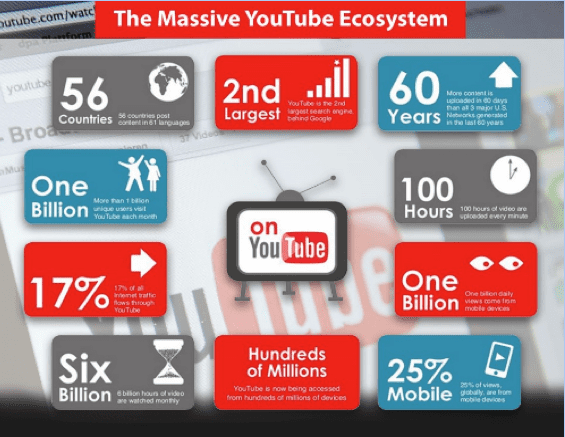
Perhaps the most telling tale of video's reach is YouTube, whose user-base of over one billion are spending millions of hours digesting content on a daily basis.

But what does all of this consumption mean for marketers?

Thankfully, we've gone beyond the infant stages of video and now understand that visual content provides one of the most robust ROIs in all of marketing, blowing traditional written content out of the water.

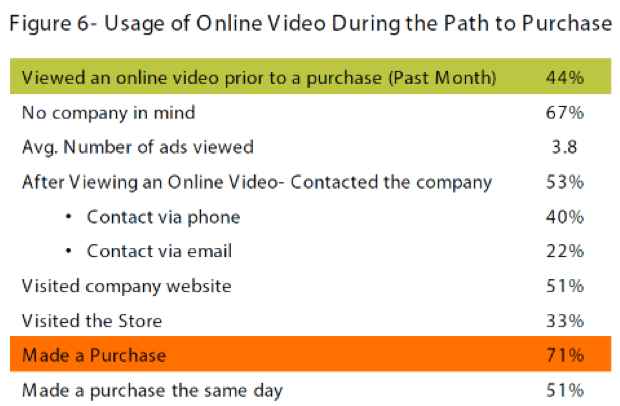
Beyond the 73% of B2B marketers noting a positive ROI according to HubSpot, the presence of videos in marketing messages correlates with higher click-through and conversion rates. Likewise, consider how video is instrumental in influencing buying decisions:

In terms of SEO, video is king when it comes to engaging traffic, as landing pages featuring videos have a lower bounce rate than those without. Considering that video is shared 1,200% more than images and text combined via social, the dream of viral content seems more like a reality when video is involved.

Finally, the aforementioned Hubspot study notes that 87% of marketers are already leveraging video in some way, shape or form. If you are part of the 13% that's not, it seems that now's the time to sink or swim as your competitors are more than likely already on board with video.

Overcoming the Traditional Challenges of Video Marketing

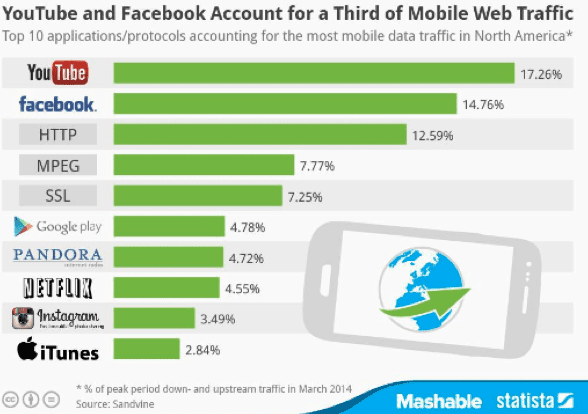
The looming takeover of video has been heralded year after year: so what took so long? Perhaps the writing has been on the wall since YouTube overtook Facebook in mobile traffic all the way back in 2014:

During the early days of video when YouTube served as the go-to platform, the space seemed to only serve expert producers or seemingly irreverent viral videos which meant very little to marketers. With the emergence of new platforms such as Facebook's video hosting and apps like Instagram, coupled with an endless slew of digital tools, times have certainly changed.

Thanks to modern smart phones, the barrier to entry has never been lower. Meanwhile, video is quickly becoming an expectation of today's traffic rather than an exception to the rule. It's crucial that modern marketers begin to think of video as integral to their current content strategies rather than an entirely different beast.

How Marketers Can Effectively Leverage Video Marketing in 2017

Whether you've gotten in on the ground floor of video marketing or just want to get your feet wet, there is no one-size-fits-all strategy. The scope of options for businesses, both big and small, is rather staggering. From education to entertainment, marketers are finding ways to spin gold from video thanks to creative strategies and accessible marketing platforms.

Education Through Webinars and Courses

Showing off your expertise and educating prospects are the bread and butter of the savvy 60% of marketers taking advantage of webinars. Writing about the importance of webinars as part of marketing, Jarek Wasielewski from webinar platform ClickMeeting says that videos and online streaming now account for around 75% of internet traffic.

“Recorded webinars can be edited and broken down into smaller segments. You can use these clips as short educational or training videos that can boost your marketing efforts. These short video clips can be uploaded to video sharing sites or be featured in your blog posts. Video marketing is an essential part of modern day online marketing.”

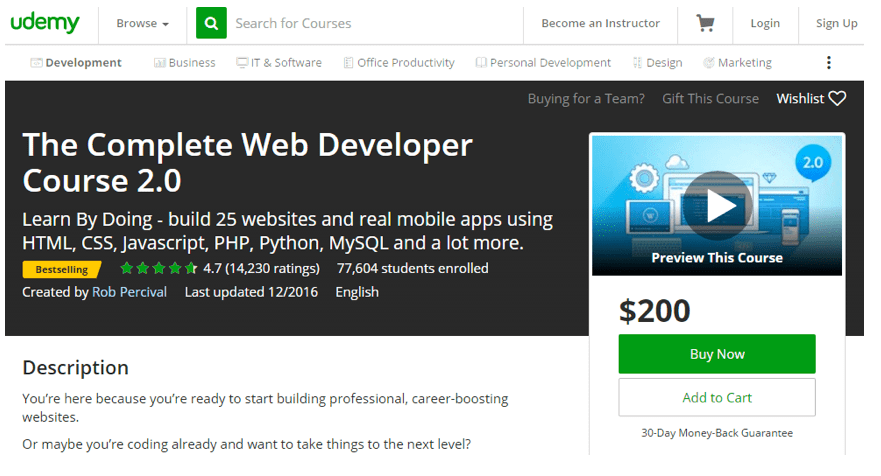
But bear in mind that the e-learning market definitely has room to grow. Representing a multi-billion dollar industry, digital courses require some serious legwork but can also result in big returns by generating leads and buzz alike. Course platforms such as Udemy and Kajabi are attracting more and more creators to their respective platforms, despite critique that the market is over-saturated.

Kajabi, for instance, offers an all-in-one solution which allow for easy integration with email, ensuring creators multiple avenues to engage their audience. Not only do videos represent a great way to position yourself as a big player in your space, but also represent an opportunity to attract new leads to your service.

“It has never been easier or simpler to gain access to knowledge at little or no charge. However, individuals and businesses regularly understand how to harness the brain power at their disposal. If you think about it, over half of the value of the economy in the U.S. is in social and knowledge-based products. This means that knowledge can be a commodity – you just need to know how,” said Kenny Rueter, the CEO of Kajabi. 

Re-purposed Blog Content

 As noted earlier, marketers need to stop thinking about video as a separate entity and strive to integrate it into their existing content strategies.

For example, any given blog post has the potential to a video and vice-versa. This represents a win-win situation as marketers saturate multiple channels (think: the blogosphere and YouTube) whilst also potentially reaping the SEO benefits of both on-site and off..

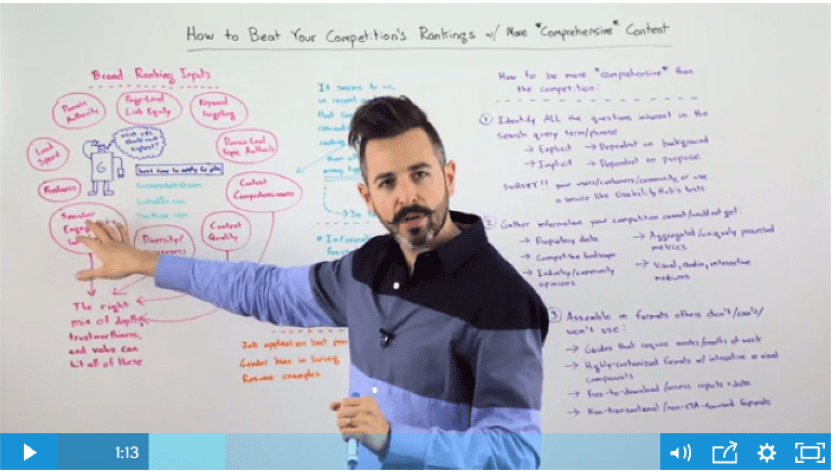
This is exactly what Moz does with their Whiteboard Friday series. This educational series covers the in's and out's of SEO, but obviously touches on some big keywords via their titles (for example: “How to Choose a Good SEO Company for Your Business or Website). 

The video is then coupled with a written transcript which gives the content even more reach and search potential.

 Remember: at the end of the day, video content is still content.

Impromptu Interviews and Live Video

The emergence of Facebook Live (coupled with the fact that Facebook themselves are so intent on pushing it) and Google Hangouts is concrete proof of the noted lower barrier entry to modern video marketing.

While some marketers may pride themselves on the idea of embracing “high quality,” keep in mind that these platforms promote simple, stripped down videos that make you seem more human to your audience. Authenticity matters to your prospects: not everything necessarily needs to come off as a cold, calculated production.

Finally, some food for thought: viewers typically spend three times longer watching a live video versus something pre-recorded. In short, live videos and impromptu presentations require little to no preparation and likewise have tremendous sharing potential.

Why Video Needs to be Front and Center

There's absolutely no doubt that video marketing is here to stay; meanwhile, it'd be rather redundant to say that 2017 is truly, once and for all, the definitive year of video marketing. As our prospects continue to shift toward visual content, companies already on the bandwagon will have a much easier time than those who've been sleeping on video. For marketers who've placed video on the backburner, perhaps there's no better time than now to bring it front and center.

Thanks to Rotem Gal for sharing their advice and opinions in this post. Rotem is Vice President of Marketing at InBound Junction. You can follow him on Twitter or connect on LinkedIn.


31 Mar 15:47

Trending This Week: The Latest on Inside Sales at SaaS Companies

by Alex Hisaka
  • Two Gauges Showing Performance of Company Against Competitors

If you lead an Account Executive (AE) team for a SaaS business, it’s helpful to understand how your peers drive success among their teams. For its SaaS AE 2017 Metrics and Compensation research report, The Bridge Group (led by Trish Bertuzzi) analyzed responses from 384 B2B SaaS companies to uncover the latest inside sales trends. While the report sheds light on many aspects of managing an inside sales team – including team structure, compensation, and top challenges – we want to highlight three findings in particular.

Pipeline Sourced by Marketing

We all know that marketing plays a bigger role in filling the pipeline now that buying committees have more content to aid their decisions. The Bridge Group found that, on average, 36% of an AE group’s pipeline is sourced by marketing. However, as Annual Contract Value (ACV) revenues rise, the percentage of marketing-sourced pipeline falls.

  • pipeline-sourced-marketing

The Bridge Group has seen the percentage of pipeline sourced by marketing decrease as Annual Contract Value (ACV) rises for the past eight years. And it rightly underscores that account-based marketing is focused on driving high-ACV pipeline from strategic accounts. As the report says, “ABM was born, in part, as a way to more effectively engage with larger organizations and their sprawling buying groups.”

This data shows that sales teams should not be relegated to the sidelines of ABM initiatives. In fact, your sales team can be the secret to your organization’s ABM success.

Dials and Emails

The report found that AEs average 33 dials and 33 emails per day. While it didn’t say whether those were cold or warm outreach efforts, it did find that AEs only averaged 6.3 quality conversations per day. Quality conversations included those where “at least one piece of qualifying/disqualifying information is learned.”

Other research has found that 90% of decision makers don’t respond to cold emails or cold calls. Even if your AEs are contacting a known connection, it’s important for them to take steps to build trust with their outreach.

Acceleration Technologies

According to the survey, companies are investing in four different tools to help their reps close deals faster, on average. For companies that invest more into the sales team, that toolkit includes LinkedIn Sales Navigator. While we are biased, we’re not surprised to see that sales acceleration tools are helping reps perform revenue-generating tasks more proficiently. When sales professionals can more easily find the right prospects and share informed insights, stronger relationships are a natural byproduct.

For a steady stream of the latest sales insights and trends, subscribe to our blog

31 Mar 15:47

11 Power Sales Words to Use in Your Sales Emails

by Dan Sincavage

What you say on your sales emails is as crucial as what you’re actually selling. An email is significantly different from a call or a face-to-face meeting. With emails, you can easily be ignored.

Keep your email off the spam folder by catching your reader’s attention. Use sales language that is powerful and can convert your audience into buyers.

1. Benefits

When it comes to sales words, benefits trump specifications and features, almost always. Using ‘benefits’ shifts the focus from impersonal details that may or may not interest your readers. You only have a few seconds before they click the delete button.

So, appeal to their needs. Sell your product’s benefits by talking about how it can improve people’s lives.

2. Value

Engage Selling Solutions owner Colleen Francis once claimed in her book Nonstop Sales Boom that customers “…only care about value and achieving their objectives.”

So, on email, talk about value, not price. Value is a powerful word. Price is objective; value is variable per person. When you use the word, you reach out to each person’s sensibilities. They think and assess for themselves. They might even click on your link to learn more about what you offer.

As Warren Buffet, American business magnate and philanthropist, said: “Price is what you pay. Value is what you get.”

3. Show

As sales words go, ‘show’ is a positive interactive word that you can use to imply your willingness to communicate with your audience. It works better than ‘learn,’ which – regardless of its positive meaning – implies one-sidedness. When you say ‘show,’ you are reaching out and telling your reader that you’re there to help.

Instead of saying “learn more about our product,” say: “Let me show you how our product adds value to your life.” It makes people feel good and signals what could be the start of a good business relationship.

4. You

Sales is not about you, your quota or that sales team leaderboard you so want to top. It is about the client. Without their willingness to listen, you won’t be able to take further steps in making the sale. And, people always pay attention when you start talking about them.

Even on email, your choice of pronouns communicate what you value more. So, use ‘you’ instead than ‘I.’ Because, in the end, you want your reader to think about themselves and the value that your product brings into their life.

5. Because

Harvard University professor and social psychologist Ellen Langer once did a study on the impact of using ‘because’ in phrasing statements. She went out to see if people would let her cut in line using these lines, alternately:
“Excuse me, I have five pages. May I use the Xerox machine?”
“Excuse me, I have five pages. May I use the Xerox machine because I have to make some copies?”
“Excuse me, I have five pages. May I use the Xerox machine because I’m in a rush?”

The last two sentences that used ‘because’ gained around 90% affirmatives. People responded more positively when a reason was offered.

So, when you make a statement – let’s say a claim about your product – add in a ‘because’ and then explain why. People become more open when they try to understand.

6. And

Usually, sales people use ‘but’ when trying to counter an objection. This is a negative word because ‘but,’ as is, signals an opposition. Your prospect knows that you are about to argue with an opposing statement. This is likely to put them in a defensive.

Instead, when you need to append anything to an original statement, use ‘and.’ This is an inclusive word. When used, regardless of how you use it, you sound like you agree.

Take, for instance, these examples by Seamus Brown, a sales trainer:
“I see that you only have a budget of $50,000, but let me tell you why our system costs $100,000.”
“I see that you only have a budget of $50,000, and let me tell you why our system costs $100,000.”

Not only does the second statement sound more positive. It also acknowledges the client’s reservations and offers an explanation to counter the client’s statement, without sounding negative.

7. Power Words/ Emotions

When you sell, you not only appeal to a person’s needs and values. You also appeal to their emotions. Strong feelings, such as joy, fear and distress, come with certain predictable responses.

If your sales strategy requires appealing to these emotions, then you should use words that could evoke them. A good guide is Jon Morrow’s online article called “317 Power Words That’ll Instantly Make You a Better Writer.” The words he put together are known to evoke certain human emotions. Of course, choose your words wisely. Be clear about what you want to achieve first.

8. Free

Ali Abdullah, an entrepreneur, once claimed that: “Two of the most powerful words in the English language are ‘free’ and ‘sex.’ While the latter is a bit racy, the former presents an opportunity all brands should capitalize on.”

‘Sex’ has no place in your sales email – unless, of course, it’s what you’re selling and it’s legal. ‘Free,’ on the other hand, offers many possibilities.

Consider a University of Minnesota 2012 experiment wherein they made consumers choose between similarly-sized lotion bottles. One claimed to offer 50% more free lotion while the other was cheaper by 33%. People chose the bottle with the free content by about 73% of the time.

Dan Ariely, a behavioral scientist, claims that ‘Free’ is always the more interesting offer because it increases the value of the product.

9. Imagine

‘Imagine’ is one of the most powerful sales words you can use in your email. It invites your reader to experience your product vicariously through imagination. When they do this, they stop being passive listeners. They become active participants who, alongside you, are thinking about a better future because of your product.

10. Opportunity

In sales, you want your prospect to acknowledge a problem and then see your product as the solution for that problem. The thing is, ‘problem’ is a negative word. It puts people on the defensive and makes them less open to discussing possibilities.

An easy fix is to use the word ‘opportunity’ instead. Because, in truth, a problem is also an opportunity to achieve something better. You just have to make your prospect see it, and take action.

“Your problem is that you’re hungry.”
“You now have the opportunity to eat what you love.”

Check out the two statements above. They both describe the same situation. However, the second one is more inspiring. It makes you want to reach for the nearby fork and eat with gusto!

11. Their Name

People want to feel that you are speaking to them directly, and that they’re unique to you. You can communicate this simply by saying their names. This is a powerful move and it tells your audience that you’re paying attention.

You can easily do this over the phone or face-to-face. It is harder with sales emails, however, especially when you’re doing blast emailing. A work-around here is to use mailing programs that allow you to use variables in your email text. A simple use of the “first name” variable in the greeting section of your email can make a big difference.

31 Mar 15:46

Why Salespeople Should Never Talk About Their "Thing"

by arts@businessbyphone.com (Art Sobczak)

dont-talk-about-thing-salespeople-compressor-874489-edited.jpg

One of the biggest problems unsuccessful salespeople have is that they talk about their "thing" right away, and it causes resistance.

In emails, InMails, voicemails, and if they ever by chance get to actually talk to a buyer, they throw up all over themselves pitching the details of their product or service. Their "thing."

But people don’t buy "things." They buy results.

One of the oldest, simplest, and wisest quotes about this from Zig Ziglar: "People buy the hole, not the drill."

Let's look at some truths regarding "things" and results.

  • It’s easy for people to object to "things." But people like to dream about, and get results.
  • People can say they are already satisfied with the "thing" they have now. But they usually are open to hearing and talking about a better result than they experience now.
  • People associate spending money with "things." They think about results in terms of return on investment.
  • "Things" are commodities. Results differentiate you.
  • "Things" are simply the means to getting what someone wants. Results are what people want.
  • Buyers try to get the lowest price on "things." They will pay a premium for results.
  • "Things" are factual, which can be boring. Results are emotional, which engages people.
  • "Things" are generic and ubiquitous. Results are personal.

So much sales training in organizations is "things" training, not results training. And it shows in the struggles of their salespeople.

However, I don't mean to imply that talking about "results" instead of "things" is the silver bullet. Consider this important caveat:

Not all results are universal.

I personally don’t care that you can reduce the time-to-market on new pet toy concepts. But, for the VP of Product Development at Pet Toy International, his income and job security relies on that. Especially since his last project came in late, over budget, and missed the holiday buying season.

Results need to be personalized to the individual and organization. Again, a simple concept, but not always followed.

Here’s a simple exercise to get you talking about the right results:

  1. What are the results that you and your organization have provided for others? Brainstorm and list them out. Attach numbers wherever you can.
  2. What would make those results of the utmost interest to someone? Define the situations and circumstances someone might experience that would make your results something they want.
  3. Find the people who are affected by these circumstances and desire those results. Learn about them before you approach them. Then craft your value proposition around those results, personalized and tailored to them.

Do that and you’ll find people buying more of your "thing" to get the results they want.

Editor's note: This post originally appeared on Smart Calling Online and is republished here with permission.

HubSpot CRM

31 Mar 15:46

The One Hack All Marketing Operations Leaders Need

by Charlie Liang

marketing operations hack

Marketing Ops people typically are the unsung heros of their marketing organizations. They may not always be up on stage talking about the latest product announcement, or even tweeting about the latest press release on social media, but the company’s marketing engine wouldn’t be able to run without them. In fact, sometimes they’re tasked with so many projects that they wouldn’t be able to stay above water if they didn’t have hacks that increase their productivity.

One of these hacks carries more weight than others, however, and is essential to the success of all B2B marketing and sales organizations. Why? Because CRM systems haven’t adapted well to marketing and sales’s practice of selling to accounts and not leads. And it’s not new news…clients have been asking for this feature for years – just check out this thread.

The truth is that leads that exist in the CRM double as people and accounts and this throws off more than just your modeling. To solve for this problem, you need lead to account matching, or L2A. In a typical CRM setup, you have leads that are created that are not associated with any account.

With L2A, you are essentially building a tunnel to an existing account, so that you inherit fields from the account such as ADR Owner, Account Owner, Firmographic fields, etc. Here’s a diagram on how L2A typically works:

Lead to account matching L2A

Now that we know how it works, let’s explore the reasons why it’s important. Here are the 4 reasons why modern marketing ops pros have learned that lead to account matching is essential to the success of their jobs.

Simplify Lead Routing

Whether marketing ops or sales ops is in charge of lead routing at your org, this can be a very challenging process, especially at larger organizations. Typically, accounts are segmented by geographical location, vertical or just round-robined between account executives. At some companies, each account executive is paired up with a sales development rep, while at other companies, the sales development reps are round-robined their own set of accounts, uncorrelated with AE ownership.

The problem with this approach in a lead-based world is that dirty data and/or improperly configured rules can cause your accounts to be routed to the wrong SDR or AE, and even worse, the SDR doesn’t realize that an AE has an open opportunity with an account and intrudes on a sensitive deal cycle.

This can all go away with L2A because leads are matched with one single account and inherit all the attributes of the accounts. That means you only have to keep the data clean in one place, and you’ll never have to worry about routing the lead to the wrong SDR or AE. You’ll also have much more transparency into exactly what’s going on at the account because all the communication and campaign information should be centralized at the account.

Streamline Website Forms

The example here is a real webinar form that I came across today. We’ve all seen forms like this. Studies show that each additional form field drops conversion by up to 10%. Now we all know that having good information is essential for SDRs to follow up with people successfully, but do you really need the prospect to fill out 9 fields just to watch a webinar? Of course not.

With lead-to-account matching, you could easily shrink this form down by 3 fields and get rid of country, state and zip code. You’d already have this information available to you via the matched account.

Build Familiarity at Key Accounts

People buy from people. If you can’t send customized emails to all of your prospects, the next best thing is to nurture them with content that is relevant to them. Marketo, Eloqua, Hubspot and a few others were all born on this premise.

Take it a bit further and you can make the argument that emails sent to your potential buyers on behalf of your sales development and account executive teams increase recall and make it easier for them to engage with buyers down the line. Problem with this is, it’s easier said than done and many marketing operations pros struggle with operationalizing this inside of their marketing automation. A main reason it’s so hard is because lead owners are disparate and not clean to begin with, causing the experience on prospects to be disjointed and seemingly a circus. One day, you get an email from one SDR, the next day, you get an email from an AE, the next day another SDR and even throw in a customer success leader in there for good measure. It’s not a good look.

But luckily, L2A matching eliminates this issue by centralizing everything at the account. Now all your prospects at one company will receive emails from the same SDR or AE of your liking. Call it magic or call it common sense.

Understand Engagement at the Account Level

By now, we’ve all heard of lead scoring in some way shape or form. If you haven’t, lead scoring is the practice of scoring individual leads to rank them on their propensity to buy. Typically, you look at characteristics such as company industry & size (firmographic), job title (demographic) and behaviors people have taken (I’m oversimplifying).

The problem with lead scoring is that everything is done at the lead level. At a recent CEB Summit, research was released that the modern B2B buying group now averages 6.8 people per team, up from 5.4. That’s a lot of leads to treat separately in your CRM. Without proper data at the account, this can be a challenge.

Because buying teams are getting bigger and bigger, it’s becoming harder and harder to do lead-based marketing for all the reasons mentioned in this article. You need to streamline things at the account level, so in order to see the full picture, it’s important to see engagement at a zoomed-out account view. See everyone who’s interacting, how they’re spending time and what they’re engaging with. Then reach out.

Conclusion

So there you have it. Marketing ops pros sure have it hard, but we owe it to ourselves to make our lives a bit easier with technology. Less time spent on worrying about making sure data quality is clean and routing leads to the right folks == more time spent chasing the accounts we really care about!

31 Mar 15:45

More Is Not Better: Buying Committee Insights Improve Content Effectiveness

by Maria Geokezas

For years, prospects and customers have been self-educating, conducting research on their own without contacting a sales rep to learn about a product or service they are interested in buying. Marketers have risen to the occasion by creating more content designed to positively influence the purchase decision. In fact, CEB found that 84% of CMOs expect to spend more on content in the next year. But another research finding from MarketingProf’s and Content Marketing Institute cites that just 22% of marketers believe their content strategy to be successful and only 50% use sales to measure the effectiveness of their content marketing efforts.

It’s not surprising that marketers find it difficult to track the effectiveness of their content. The number of people involved in a B2B purchase decision increased from an average of 5.4 two years ago to 6.8 today (CEB). The buying committee, this group of 6.8 people, now involves a greater variety of roles, functions, and geographies. This additional complexity makes it challenging for marketers to target purchase decision-makers and more delicate for sales reps to build consensus and close deals.

Now more than ever, we need to understand the role buying committees and content marketing play in advancing the purchase decision and supporting sales efforts.

Buying Committee Persona

Before you can dig into the individual buyers and their needs’ and pains’, you must understand the members of the buying committee. Like individuals, buying committees have their own personality, role, and operating procedures. Some are quite formal, while others may operate very loosely. Begin by describing the ecosystem of the organization as it relates to your product or service. Then, identify the different individual buyers’ roles you’re more accustomed to.

Buying Committee Flow Chart

Next consider the dynamics of the buying committee:

  • How are decisions made?
  • Is it an authoritarian or a consensus-building style of decision-making that is practiced in this organization?
  • How much influence do individual users or contributors have?
  • How does information flow?

Draw a map of a typical buying committee. Start by categorizing each individual role and title into decision maker, project lead, user, internal influencer and external influencer. Once the roles are mapped, show how the communication flows. This distinction is key to the next step of journey mapping. It helps to demonstrate how content should relate to each persona and how it impacts progression through the buyers’ journey.

Buying Committee Journey Map

Once you have a good picture of the buying committee and the dynamics within the committee, it’s time to map the reactions at each stage of the buying journey. The buyers’ journey map showcases how each piece of content can be used to build decision momentum.

For instance, content that targets individual users should frame the problem so their managers and the project lead immediately comprehend the benefits of change at an early buying stage. Whereas, the content served to executive members later in the buying cycle may include data sheets comparing the costs of change verses the opportunity costs of doing nothing.

Used together, these three tools to understanding the buying committee will help to define a more effective content strategy – one that can truly drive sales. No matter what, each piece of content should be developed with a specific target and a specific purpose in mind.

Want to learn more about how to implement a fool-proof content strategy designed for buying committees? Join Matt Heinz and Robert Pease for an interactive online workshop ABM: From Strategy to Action and Results to learn the strategies, pitfalls and best practices that make a successful ABM program.

31 Mar 15:45

An Introduction to Automated and Interactive Processes

by Adam Henshall

Interactive-Processes-vs.-Automated-Processes

All managers face the same question: “How do I improve the way my business works?”

Well, according to BPTrends 2016 report, the percentage of executives who see processes as the crucial way to drive their businesses forward is 24 times the number who always have standard processes to follow and 6 times the number who always document their processes. Executives see the value yet fail with the execution.

Clearly, we need to investigate how processes can be employed better in the workplace.

Microsoft’s Developer Network see effective processes as fitting into two neat categories: automated processes which are software driven and interactive processes which are human-focused while incorporating automation.

We’re going to split this into three sections:

  • Human-driven processes
  • Automated processes
  • Interactive processes which combine the two

We’ll look at what each is, where each is most useful, and I’ll present use cases for each.

Employing processes within your team

What is a process? A process can be generally defined as the series of steps which need to be followed to complete a task.

Operating with a process increases productivity, helps organize workflows across the company, and increases employee accountability. Standardized processes also make sure that quality is consistently high through making sure best practices are always followed and optimized over time.

At Process Street, we create a process every time we have a task which we need to do more than twice. Repeatable tasks need processes to make certain the task is completed to the highest standard every time. Certain processes which are highly repeatable can be automated – fully or partly – but sometimes a process has to revolve around the individuals undertaking it.

When to take a human-oriented approach

Every time we publish a blog post, as part of our writing workflow we run our pre-publish checklist. This checklist has evolved over time to encompass all the necessary steps to optimize our articles.


It could be big things like checking for filler words and style, undertaking keyword research, or using bolding to make a post scannable. Or it could be small things like checking alt tags on images contain a keyword, checking title and subtitle capitalization parameters are met, and correctly categorizing the article.

The vast majority of tasks within this process are tasks which are better done by a person. They are tasks which require research, scrutiny, and creativity.

Having well documented human-focused processes:

  • Can be more flexible than fixed automated processes.
  • Utilize the wealth of expertise your employees bring to the company.
  • Are important for personal interactions with customers and clients.
  • Can be improved in creative ways through employee suggestions from engagement with the process.

Processes centered around laying out standard operating procedures for your employees are useful in use cases like content creation, sales, customer service, and more.

Processes like these are best allocated to people and can be used to guide the strengths of your employees. These kinds of processes help your employees focus on what they are best at. But they wouldn’t be able to do that if it weren’t for automating the tasks which would normally be wasting their time….

Automated processes and where to find them

Process automation is the use of technology to undertake and complete workflows without the need for human intervention; it is the key to getting more done.

This approach to managing workflows has long been a staple in the manufacturing industry and other related sectors. Automated processes in these areas can increase output, standardize quality, and dramatically improve energy efficiency according to ABB.

Now, through the widespread availability of workflow automation apps, companies of all kinds can look to automate repetitive tasks.

Automate your processes

According to the McKinsey report Four Fundamentals of Workplace Automation, for 60% of US jobs, 30% of their time can be automated. Depending on the sector, this figure rises dramatically. MicKinsey published this interactive data which shows the breakdown for different areas of the economy and their relative susceptibility to automation.

The industry with the most potential for automation of existing duties is accommodation and food services with a whopping 75% of time able to be automated. Second is resource extraction with 63% and in third lies technology, media, and telecoms with 51%.

Third party tools like Zapier, Flow, and IFTTT can be used to automate administrative tasks and many aspects of communication, amongst other things.

zapier ifttt flow interactive processes

How to automate a common marketing workflow

One specific use case which illustrates process automation outside of a technical field might be inbound marketing and email campaigns. Through marketing automation software like Infusionsoft, ActiveCampaign, Drip, or Autopilot, whole campaigns can be constructed in advance and then left to run independently of human interaction.

Through one of the above tools, you could construct a sign-up form to embed into your website to gather leads. Once someone signs up through the form, their details are automatically pulled into your contacts list and tagged on the basis of their actions. Platforms like these can often also tell you where in the world your potential lead is located without even having to ask.

Once you have a user in your platform, they can begin their email journey. You can design a customer journey which sends them a preset series of emails. These emails can each be designed to look professional and be personalized to each customer. You can put time delays between each email to tailor your approach, plus add logic to the journey whereby which follow-up email the customer receives depends on how they interacted with the previous one.

ActiveCampaign interactive processes

If someone has signed up to subscribe to your blog and they have clicked on a button in one of your initial emails to access an e-book or some extra content, you could segment them to receive a sales email at that moment or the next day. Through this approach of segmenting your subscribers, you can qualify potential leads and send an automatic notification to your sales representative to reach out to them.

Without needing to code, and requiring only a short period of setting up, you have automated a huge chunk of inbound marketing. This process is now also scalable as there is essentially no limit to how much work one platform can do in a day – unlike their human counterparts.

Automated processes provide you with:

  • One time setup and execution.
  • A way to avoid wasting time on repetitive tasks.
  • Standardized approaches for consistent quality and performance data.
  • A scalable process which can handle many requests all at once.

However, employee focused processes and automated processes do not have to be separate things. When combined, they can produce powerful, flexible, efficient, and human results.

How to build interactive processes

When Microsoft talks about interactive processes it is referring to the integration of employees’ expertise and software’s lifting power.

Interactive processes enable you to keep the benefits of customer facing friendliness and employee creativity while also cutting out all the waste in between.

Here you’ll find a link to our ebook about business process automation which explains in depth how you can integrate automation tools into your business processes. It contains:

  • The basics and potential of business process automation
  • How to automate complex workflows.
  • An overview of the main tools on the market with added detail.
  • 222 ready-to-use examples of business process automation
  • Use cases of how businesses have saved time and money through automation

However, you may also find the automation of business processes referred to by other terms. Interactive Intelligence, in their report The New Intelligence of Business Process Automation, use the terminology Communications Based Process Automation to specifically reference the way in which most effective automation for businesses rests within the communication of information.

For instance, with Zapier you might create a zap which automatically sends your Typeform survey data straight to a Google Sheets or MS Excel sheet. This zap has communicated data over to another area/person. In the same way, when a person is plugged into these automated processes, they are utilized best when that individual is communicating something important back to the automations.

Their conceptualization of the use of automation tools within business processes is as a communication tool between the person running the process and the machines doing the lifting for them.

The future of interactive processes

intelligent process automation interactive processes

McKinsey even take this further in their outline for the future of process automation. In the previous McKinsey study referenced in this article, the authors concluded that marketing executives could save on average 15% of their working time by integrating automation into their company workflows. Their new report goes even further.

In a recent publication, McKinsey introduce the concept of Intelligent Process Automation which they claim will see the automation of between 50 and 70 percent of tasks for many workplaces and translate to 20 to 35% annual run-rate cost efficiencies.

It hinges on 5 key areas:

  • Robotic process automation to deal with repetitive tasks
  • Smart workflow tools like Process Street to optimize processes
  • Machine learning and advanced analytics to gather large amounts of actionable data
  • Natural language generation tools to allow computers to communicate more easily with humans.
  • Cognitive agents – which act like a virtual employee. A UK insurance firm employing early stage technology in this area saw a 22 percent increase in conversion rates, a 40 percent reduction in validation errors, and a 330 percent overall return on investment.

The conceptualization of future process potential by McKinsey shows the benefit of staying at the forefront of this field when conducting your operations. Yet, fundamentally, what they describe is simply a fully optimized version of the broad category of interactive processes in the vein of that presented by Microsoft.

It is this philosophy of interactive processes which inspired Process Street and drives forward the continuous development of our product.

How to properly execute an interactive process

Process Street interactive processes

One such internal process we use which mirrors these requirements is our BANT sales qualification process. This is an approach which seeks to determine the suitability of a lead for an upgrade to a paid service. The aim is to reduce time spent on low-quality leads, increase paid conversions, and to provide the service most tuned to the client’s needs.

The BANT methodology was developed by IBM and stands for:

  • Budget. What is the prospect’s budget?
  • Authority. Does the contact have the right authority to buy?
  • Needs. What needs does your prospect have? Do they match your product or service?
  • Timeframe. How soon are they wanting to implement a solution?

When talking with a client, we need to assess each of these categories and record the information. The way we record this information determines how useful the information can be, and the way the process is followed determines how efficient this qualification process can be.

We combine Process Street with Close.io to make this process run as smoothly as possible. Process Street allows us to follow the same process each time a new client is assessed while the information gathered is then automatically inputted into Close.io which runs the numbers and stores the information in a way which makes it easily actionable in future.


We integrate this checklist with Close.io via Zapier’s third party automation software. This integration is set up in a one-time building of the process. This means that all the information entered into form fields within the checklist, or selected from drop-down menus, is entered directly into the CRM in a structured manner.

As a result, all leads are categorized and can be segmented within the CRM based on their responses – for example, use cases. By asking for potential budgets and, crucially for us, team size, Close.io can automatically extrapolate that information to determine the size of the opportunity in financial terms, allowing us to better manage our finances and plan for the future.

Processes like these bring the best out of Process Street’s interactive potential. A real person can communicate with customers presenting a human face to the company while the software organizes the administrative elements, parses the data, and creates future predictions based upon the information gathered.

Instead of messing around with repetitive administrative tasks, our sales team can focus on what they do best: talking to clients and engaging with their needs.

You can see more about how this process operates in the video below:

Combine human expertise with software power

Whatever the terminology you want to employ when discussing processes, there is significant potential for increasing the efficiency of your operations and raising the standards of your results.

The key takeaway from the Microsoft perspective appears to be that certain processes are best handled by computers and others by humans – even if computers are helping.

It is up to you as a manager to determine when a process should be fully automated and when you should keep it interactive with a human touch.

Just because you can doesn’t mean you should.

Finding the right balance within your internal processes is one of the key challenges of designing processes which fit the needs of the business. With Process Street, you can easily establish processes, track their success, and iterate them over time. This flexibility allows you to find the right processes which suit the needs of your company.

How do you balance automation of processes within your business? Let us know in the comments and we may follow up with you to learn more.

31 Mar 15:45

The Comprehensive Guide to Account-Based Sales for 2019

by afrost@hubspot.com (Aja Frost)

According to Google Trends, interest in account-based sales is steadily rising. But what is account-based sales?

An account-based model treats every account like a market of one. Instead of one salesperson targeting a single contact within a company, an entire team is dedicated to targeting multiple stakeholders at the prospective customer’s company.

This hyper-personalized approach is typically too high-touch for B2C products, but it can be ideal for organizations selling to enterprises. Read on for a deep dive into account-based sales.

While ABM is the most well-known term, TOPO CEO Scott Albro argues this definition is too limiting. A successful account-based approach requires cross-department coordination. Every team — Sales, Sales Development, Marketing, Customer Success, Finance, Product, Engineering, and the C-suite — must be aligned. Albro proposes we use “Account-Based Everything,” or ABE.

No matter what you call it, this approach isn’t altogether new: Enterprise salespeople have used an account-level approach for a long time. But as Engagio CEO and founder Jon Miller explains, “There are no ‘hand-offs’ in an Account-Based Everything (ABE) model. Instead, Marketing and Sales work together from the very start, and throughout the revenue cycle.”

Executives are also involved in closing these accounts — giving strategic direction, meeting with customer stakeholders, helping the account team acquire any necessary resources, and so on.

ABS maintains this account-level focus after the sale. Customer success managers deliver a custom onboarding experience, then work to develop relationships with multiple stakeholders at multiple levels (rather than leaving an account’s success to a single advocate, power user, or internal champion).

Meanwhile, account managers and marketers work hand-in-hand to identify upsell and cross-sell opportunities. The product team uses insights from customer stakeholders to plan new features and develop potential use cases.

Who should use account-based selling?

Successfully implementing an ABS model requires company-wide buy-in. Before you upend your current business model, determine whether you’re the right fit with the following five questions.

Criteria for Account-Based Sales

1) Who are our customers?

If you’re selling to SMBs, ABS is likely the wrong approach. You can’t afford to dedicate the necessary manpower and resources to every account.

The answer is less black and white if your customers are mid-market. If your average deal size is greater than $50,000, sales expert and author of The Sales Development Playbook, Trish Bertuzzi, highly recommends an account-based approach.

If you provide enterprise or complex solutions, you’re probably targeting a select number of high-value accounts already.

2) How well do we know our ideal customers?

ABS requires laser precision of target accounts. If you’re still determining product-market fit, or you don’t have enough data or existing customers to identify their common characteristics, consider holding off on ABS.

3) How many customer stakeholders are involved in our average deal?

As the number of people involved in the purchasing decision rises, so does the need for a multi-threaded, or ABS, approach. Targeting every stakeholder within the organization (as opposed to one or two) minimizes the risk the deal will stall or fall through if your contact(s) change jobs, go on leave, take a trip, get sick, and so on. It also helps you facilitate consensus: You can identify potential blockers and address their concerns before they stop the deal in its tracks.

4) How long is our average sales cycle?

Deal complexity and sales cycle are highly correlated. If your average sales cycle lasts three or more months, ABS makes sense.

5) What’s the nature of our product?

Because ABS delivers a tightly integrated experience across Sales, Marketing, and Customer Support, it’s a great fit for subscription-based products. Customers are far less likely to churn when your messaging is clear and consistent and you uphold your claims. This also provides an opportunity to upsell and/or cross-sell, making ABE an optimal approach if you offer a variety of packages, tiers, add-ons, or complementary services.

If, on the other hand, you offer a one-time purchase product, explore other possibilities before committing to ABS.

ABS or Nothing?

If you sell to a mixture of mid-market and enterprise companies, going all-in on ABS may not be the most productive approach. Your efforts will be well-suited to your larger customers but excessive for your small accounts.

Some companies have found a workaround: Tiger teams. These independent teams are dedicated to working a select group of potentially huge deals — in other words, it’s ABS on a small scale.

A mixed approach is also useful if you’re hoping to move upmarket. You can pursue more lucrative customers while refining your approach. Once you’ve gotten several logos, identified the key drivers for these accounts, crafted a successful marketing strategy, and most importantly, made your solution more robust, transition your entire sales team to an account-based model.

What's an ideal customer profile?

When you focus your time, energy, and resources on a limited number of accounts, being highly selective with those accounts is crucial. You’re putting all of your eggs in a couple of baskets — if you target the wrong company, it’ll have a noticeable impact on your revenue. Not to mention the opportunity cost: Every poor fit your team targets means you miss out on a potential great fit.

That’s why a huge component of ABS is your Ideal Customer Profile (ICP). The ICP defines your most valuable customers and prospects who are also most likely to buy.

According to TOPO senior demand generation analyst Eric Wittlake, having an ICP lets you decide whether to target an account without bringing together your entire leadership team.

"This ensures we don’t put ourselves in position of gathering in a conference room every three months to debate which companies should be on our list," he explains.

Base your ICP on the following six factors.

A Framework for Identifying Your ICP

1) Input from your team members

ABE relies on tight cross-organizational alignment: If you exclude certain departments, you’ll end up with siloed information and conflicting strategies. With that in mind, involve representatives from Sales, Customer Success, Marketing, Finance, and Sales Operations in the planning process.

Your salespeople know from direct experience which types of accounts are easiest to sell to, while those in customer success can tell you which companies require the least support and see the most success with your product.

Marketers have insight into prospects’ pain points. For example, if your most popular content offer is an ebook on improving poor morale, your customers clearly struggle with low employee engagement.

Meanwhile, your finance team has valuable information on the types of customers that generate the most revenue, how much MRR or ARR you'll need to generate, how much you can spend on marketing expenses, and more.

Finally, ask Sales Ops for conversion rate, sales cycle, and close rate data.

2) Firmographic data

Single out the characteristics of companies that are likeliest to close, including:

  • Industry, market, and vertical(s)
  • Number of employees
  • Revenue
  • Financial performance
  • Type
  • Market share
  • Location and/or number of offices
  • Historical growth
  • Predicted growth

3) Internal data

Your CRM holds a wealth of information about your ideal customers. Review your closed-won accounts, most profitable accounts, least likely to churn, and so on.

4) Technographics

Customers don’t use your product in isolation: They add it to their existing tools or use it to replace a tool they’re no longer satisfied with. Identify your product’s competitive and complementary solutions to gain a more accurate picture of its optimal user.

As an example, HubSpot and Eventbrite integrate. That means a business using Eventbrite for marketing purposes would likely be a good fit for HubSpot’s products, since it wouldn’t need to change or modify its current set-up.

If a potential customer is using a competitive product, they’re clearly aware of — and concerned about — the problem or opportunity your solution speaks to. A technology monitoring tool like Datanyze lets you keep track of the products your prospects are using. Their open job descriptions are also telling: If a company is looking for experience with a certain product, you can infer they currently use that product or are transitioning soon.

5) Behavioral data and trigger events

Pinpointing the common behaviors and events your best customers exhibit is more art than science. But doing so is incredibly beneficial.

Maybe half of your highest-performing accounts launched a new product line shortly before signing up. Your ICP should include “recent product launch.”

However, not every behavioral data point is this extreme or obvious. Perhaps the majority of your best customers sent employees to your annual conference or virtual summit. One of the easiest ways to find these trends is to ask your top accounts, “What initially prompted your interest in our product?” or “Why did you take action then, rather than earlier or later?”

6) Predictive analytics

Predictive analytics can take your ICP’s accuracy and sophistication to the next level. Using data science, these tools comb through your data, note trends and commonalities (some subtle enough you may have missed them), and develop a model of your best customers. Not only can you predict your likelihood of winning new prospects, you can also learn their likely value, when to reach out, and which accounts to target next.

However, it's worth noting you don't need predictive analytics to get started with ABS. Manual research, combined with the information you currently have on best-fit prospects, is enough to compile an ICP — and from there, a target account list.

Defining Your Buyer Personas

Once you've identified which accounts you'll target, establish the key players within those accounts. The average B2B purchase now involves 6.8 stakeholders. To win the account, you'll need to connect with each one.

Review the past 50 deals you've closed that most closely reflect your new ICP. With whom did you engage? Which stakeholders tended to have the most influence? Who was the budget authority?

Now review the past 50 deals you lost. Did you usually fail to engage with a certain member of the buying committee? Were there any relationships that ultimately didn't impact the decision?

With this information, you can map out the key contacts within every account.

Suppose you're selling marketing and sales automation software. The typical buying committee might include the CMO, the Director of Sales, a sales manager, a marketer, a representative from Sales Ops, and someone from Finance.

For each buyer persona, map out their challenges, objectives, professional goals, and their involvement in the buying process. It's also good to know where they go for information and the best way to reach them (email, phone, at events, etc.).

Every stakeholder should receive content tailored to their challenges and communication preferences.

How to Use Content in Account-Based Selling

Like inbound marketing, account-based sales relies on content tailored to a specific audience. The similarities don’t end there: Both approaches use different content and offers depending on the stage of the sales process.

SDRs and marketers should collaborate to find the most effective content for different accounts and buyer personas.

Prospecting

Low-effort:

  • Email: Use personalized emails to connect with stakeholders within your target accounts.
  • Voicemail: Includes a quick tip and/or “warm up” your recipient for your email to deliver value at every touch.
  • Mail: Package and letters can help you grab someone’s attention — provided you’re creative. Print a case study for a similar organization and incorporate the contact’s name, their company logo and name, and other relevant details so it’s clearly meant for them. For example, the cover might read, “[Prospect name], is [prospect’s company] struggling with [challenge]? Here’s how [similar company] achieved [results].”
  • Blog posts, infographics, and short videos: Quickly engage with a contact with “snackable” content.
  • Social media: Engage with customer stakeholders on LinkedIn, Twitter, Facebook, and other social platforms.
  • Report: Position your company as a thought leader by releasing relevant data and research.

Medium-effort:

  • Custom report: Create a report outlining unique suggestions, vulnerabilities, and/or strategies for your target company.
  • Webinars: Target employees from a single company. You might host a webinar called, “How [prospect’s company] can [capitalize on opportunity]” and limit registration to their employees.
  • Workshop: Host a workshop on a topic some of your stakeholders are interested in. For example, if there’s typically an IT supervisor on your account’s buying committee, invite IT supervisors from your current and potential customers to attend a complimentary session on data integrity best practices.
  • Business case: Demonstrate the potential ROI of your product using information you gathered during discovery and from independent research.

High-effort:

  • Company workshop: Narrow your strategy even more, and offer to run an on-site workshop or series of workshops specifically for one of your accounts.
  • Trials: Letting prospects “try before they buy” can be mutually beneficial. Prospects feel safer about the purchase when they’ve experimented with the product and verified the end users will actually adopt it. In addition, they’re likelier to pull the trigger once they’ve invested time and effort into trialing it.

After the Sale

Customer satisfaction is a core element of ABS. If your customers aren’t happy, they won’t upgrade, buy more, or buy again — nor will they connect you with stakeholders within your other target accounts.

With that in mind, it’s important to continue delivering valuable content and guidance after the agreement is signed.

  • Executive check-ins: TOPO suggests holding quarterly meetings between executives from the buyer and seller to discuss what’s going well, areas for improvement, and potential roadblocks. These check-ins also let the buyer explore potential upsell, cross-sell, and referral opportunities and demo upcoming product releases relevant to the seller’s needs.
  • Training sessions: Help clients maximize your product’s value by teaching them how to use certain features or capabilities, avoid common issues, prepare for specific situations, and more.
  • User events: Generate enthusiasm for your product and brand with events bringing multiple customers together.

How to Create a Target Account List

Now that you've formulated the types of accounts you'll target, the people within those accounts you'll connect with, and the various types of content you'll use to engage them, you're ready to build an actual account list.

ABS experts recommend creating a target account list with different tiers. Your team should allocate a different level of resources, personalization, and attention to each, with the smallest tier receiving the most and the largest tier receiving the least.

The first tier typically consists of 20 to 50 accounts. The accounts in this tier receive deep research and one-to-one customized outreach. Sales, Sales Development, Marketing, and executive leadership are involved in bringing in this business.

The second tier includes approximately 200 accounts. These receive personalization based on their industry and persona. SDRs engage with them via phone, email, and social, while the marketing team uses advertising, and events. These multi-touch campaigns span several weeks.

Make sure your Sales Development and Sales teams help you select target accounts. They'll play an instrumental role in converting these prospects to customers — if they don't believe an account is a good fit, they're unlikely to truly pursue it.

How to Structure Your Sales Team for Account-Based Sales

True to form, the standard ABS team includes members from departments that are typically separate: Sales, Marketing, Customer Support, and Solutions/Implementation.

Here are the primary roles:

  • Account executive: Runs internal meetings, shapes the account strategy, acts as the primary liaison with the prospect and works to become their trusted advisor
  • Sales development representatives: Research the account and update the CRM, create personalized messaging and content designed to build relationships with multiple customer stakeholders
  • Marketer: Develops the overall playbook and messaging strategy, coordinates marketing campaigns, tracks success of program
  • Support representative: Keeps the team up-to-date on the account and surfaces issues when they arise
  • Industry marketer (optional): If a company sells to multiple industries, a subject matter expert educates the overall team and makes sure its messaging and strategy are relevant, accurate, and technically sound
  • Product manager (optional): Keeps the team and customer informed on future product updates and changes

Some sales executives recommend a 1:1 ratio for SDRs, AEs, and CSMs. However, the average ratio is one SDR to 2.5 AEs. Larger companies tend to have more AEs for every one SDR, according to a recent TOPO report.

Which ratio should you choose? It depends on your organization’s maturity, size, and objectives. If you want to maximize average account value, have several AEs share one SDR. If you want to acquire customers, assign several SDRs to one AE.

Key Metrics for Account-Based Selling

At the top of the funnel, track how effectively SDRS are engaging prospects. Are they reducing the ratio of outreach attempts to meaningful conversation and from meaningful conversation to meeting?

To gauge your overall ABS success, Wittlake advises tracking average contract value (ACV) or deal size and lifetime value (LTV). TOPO reports some organizations see a 75% increase in ACV and 150% in LTV.

Because you're dedicating greater resources to individual amounts, your customer acquisition cost (CAC) will rise. Compare your previous LTV:CAC ratio to the current one. If your former ratio was 2:1 and now it's 4:1, you're on the right track. The rise in time, energy, and resources to acquire a new account is more than justified by the growth in profits.

Moving upmarket usually leads to an extended sales process, since there's a greater number of decision-makers, internal hoops to jump through, and other factors complicating the deal. But although you might expect your sales cycle to get longer with ABS, Wittlake says this isn't necessarily the case.

"Yes, bigger deals with more complicated buying environments take longer," he says, "but since an account-based approach lets you prioritize on fewer accounts and bring your resources to bear on them, deal times usually shrink (all things held equal)."

How to Implement ABS

One of the biggest obstacles facing ABS practitioners is a lack of understanding around the transition, Wittlake says.

He explains, "People know the value of the change — but they struggle to do it."

If you're currently using a high-volume, high-velocity approach, switching to ABS out of the blue is risky. Your lead flow might dry up before you've begun seeing success with the new approach.

To avoid this scenario, Wittlake recommends shifting in stages. After you've defined your ICP and identified the accounts that fit that profile, put 30% of your organization into tiger teams.

"Once they've started seeing some traction, go to 50% of your team using ABS," Wittlake says. "Then go to 75%, and finally 100%."

How long should the transition take? TOPO says it varies widely, but most companies find themselves vastly outperforming their sales plan, forecast, and objectives in 12 to 24 months.

Organizations that see earlier success typically have watertight alignment between Marketing and Sales.

Here's a high-level view of the steps you'd take to implement ABS:

Account-Based Selling Plan

  • Review best customers
  • Define ICP
  • Define buyer personas
  • Develop a content strategy
  • Create target account list
  • Segment these accounts into tiers
  • Allocate one-third of current sales development team to pursuing target accounts
  • Decide which metrics to track
  • Shift the next 20% of team to ABS
  • Analyze content strategy to decide where to double down and where to course-correct
  • Shift the next 25% of team to ABS
  • Review key metrics
  • Shift last 15% of team to ABS

Editor's note: This post was originally published in July 2019 and has been updated for comprehensiveness.

31 Mar 15:45

Psychology of Sales and How to Master the Art of Selling via Email

by Nina Cvijovic

Psychology of Sales and How to Master the Art of Selling via Email

Simply put, understanding the psychology of sales can lead you to learning how to master the art of selling.

Let me point out one important fact – We are all human beings and our minds function in a similar way.

What triggers me will likely trigger you, and so forth.

Most of our decisions are not completely rational. We don’t have that much time to consider every aspect of information, so we leave this hard work to our subconscious mind to process it.

On one hand, you might be born talented and use these techniques naturally in order to move people in your direction.

And on the other hand, to be a successful communicator you might need knowledge of science that will show you what lies beneath the decisions people make.

Knowing the psychology of sales and these triggers will help you master the art of selling.

I will show you how to understand and implement this psychology of sales science into your email communication.

Persuasion Not Manipulation

Psychology of Sales and How to Master the Art of Selling

Before we start, let’s make one essential distinction.

Using these social techniques as manipulation won’t bring you any good. You might succeed at first, but people will find out soon that they are being deceived and provided with false information.

To persuade is to inform and educate.

And you do that by pointing out something that moves people in directions that are good and beneficial to them.

Similarities Bring Us Together

Psychology of Sales and How to Master the Art of Selling

Studies show that we are more likely to connect with a stranger who shares some similarities with us, rather than with someone who doesn’t.

We like the people who are like us, even if those characteristics are incidental, and we more often say yes to them.

Psychologist Jerry Burger and his colleagues conducted a research about the effect of an incidental similarity on compliance to a request. They showed how incidental similarities, for example having the same name or birthday, can lead to a positive effect.

In these experiments participants were also more likely to agree to a request from participants, who shared similar personality traits with this person than the ones who didn’t.

In other studies they found that even sitting in the same room with the requester or sharing a conversation can change how we respond to their request.

Investigators conclude that these “manipulations resulted in short-lived feelings of attraction, which caused participants to mindlessly respond to the requesters as if they were dealing with friends.”

How to Implement It into an Email

Research your leads.

The more you know about them, the easier it will be to connect with them. You are maybe fans of the same sports club, you like the same music, or you are both environmental activists.

Point out some of the similarities to start a conversation. This can be very helpful if you are reaching out to them for the first time.

Check out this amazing cold email that Dave Daily sent to Noah Kagan, and got to meet him. He even mentioned that they wear the same size shoes.

Subject: How I lost your Sperry’s.. and apt. And why you should meet with me.

I kept bidding them up.. to $600. Then I stopped with 3 seconds left and the other person won. I didn’t want the apartment. I was going to use it as an expensive excuse to get an App idea in front of you…and we wear the same size shoes. I have since bought a pair of Sperry’s..er Sperries? Size 11 – they fit!

Another thing that could be very useful is to try to connect to your leads in person.

Meet them at conferences, exchange ideas, and later make sure you mention that in your email when you reach out to them.

Mutual Exchange

Psychology of Sales and How to Master the Art of Selling

Reciprocity is one of the 6 principles of influence that Robert Cialdini, professor of psychology and marketing, explains in his book Influence: The Psychology of Persuasion.

People will be more willing to say yes if you have given them something that benefits them, something that will help them be better at what they do. If you help them or give them positive experiences they will feel obligated to return the favor.

If you offer them something free they will later more likely choose to buy your product.

How to Implement It into an Email

Offer your customers help and guidance when they start using your product.

Provide content that will help them achieve their goals.

Teach them what you know.

Segment your prospects and send them emails that will help them stay on track with necessary knowledge.

And in the end, you can also offer them a free trial or free usage for one part of your product or service. If they don’t have money to invest in it now, they will remember you when the time comes.

In Search of Social Proof

Psychology of Sales and How to Master the Art of Selling

Another principle of influence that Robert Cialdini mentions is called Social Proof. His research shows that when people are uncertain, they will more likely do what others are doing.

If people you like and trust are using some product or service, it will be easier for you to make the same decision.

How to Implement It into an Email

Make sure you mention the companies or people that are using your product or service. Point out how you’ve helped them grow.

Use positive feedback from customers and companies on your website. You can implement this into an email in the way that will be relevant to your recipient.

Positive Labels

Psychology of Sales and How to Master the Art of Selling

We want to be perceived in the best way and what others think of us plays a big role.

Positive labels are not just compliments — they are something that is important to us, encourage us and we want to nurture them.

When you assign someone a positive label, like having high intelligence or being a good person, that actually cues them up to live up to that label.” – Vanessa Van Edwards

How to Implement It into an Email

When you are talking to your leads or prospects, appoint them genuinely positive labels.

Fake labels have no power. Be honest.

You can tell them:

  • “You are a pleasure to work with.”
  • “You are our most valuable client.”

To Commit or Not to Commit?

Psychology of Sales and How to Master the Art of Selling

That is the question.

Robert Cialdini states that if we say yes, we will be committed to follow through with our previous statements.

There were studies conducted with voters who committed to vote on elections in a phone survey.

Potential voters, who received the phone call and said they would vote on the upcoming elections, later voted significantly more often than the ones that didn’t receive the phone call.

How to Implement It into an Email

If your clients said yes to your proposal once and then somehow disappeared, make sure you follow up. They were probably distracted with other work and didn’t have time to proceed with your offer.

Have this principle in mind and be persistent. Their disappearance should not discourage you.

As Christoph Engelhardt says in his book SaaS Email Marketing Handbook, you should follow up until you get another yes or no. “Most of the people will be excited that you follow up.”

Check out his follow up email correspondence. This is his 6th follow up. He also added a bit of humor.

Hi Patrick,

Did you trip and aren’t able to get up?

Do you want me to call 911?

I’m getting a bit worried over here since you didn’t reply to my previous emails.

This is what his recipient replied:

Hey, Christoph, completely my fault and thank you for staying on top of me. I fell behind on a few things with a recent job transition. I scheduled a time for Tuesday.

Relying on Authority

To be sure that we are making the right decision we want to know what the experts are saying.

We need the proof for products or services we are considering.

To even start a business relationship with someone, we want to know if they collaborated in the past with people or companies that we or others look up to.

How to Implement It into an Email

If you want to pitch someone for the first time, prove them why you are valuable.

Mentioning your past achievements and pointing out relevant companies you worked with will make you stand out.

If one authority company or person can guarantee for your skills, you can later aim even higher.

This cold email pitch that Bryan Harris sent to HubSpot is a perfect example.

Check out how he pointed out his collaboration with KISSmetrics along with other valuable content. KISSmetrics is a great blog, a great authority to rely on, but it is also very relevant to HubSpot.

I work with companies like KISSmetrics and make weekly videos for their blog. Here is one that got published earlier this week on their site: 4 Critical Facebook Reports.

When Things Are Scarce

Psychology of Sales and How to Master the Art of Selling

Another one of Cialdini’s principles of influence is Scarcity. He says that when things are less available they are more valuable.

Products or services can be limited in number or available for a limited amount of time.

These kinds of campaigns influence our brains to make an instant decision, so we buy because we are afraid of missing out on an opportunity, and not because we really need something.

How to Implement It into an Email

Inform your customers how rare and uncommon the features of your product or service are. Offer special features that they will be getting once they become your users.

Make a time-limited email campaign to offer an upgrade for your users for a lower price. Or make special discounts for a limited number of users.

Check out this email that I received from Hootsuite. This is how they used scarcity to upgrade new users:

Subject: Give us 60 days. We’ll make you amazing at social media.

To prove it, we’re giving you 60 days to try Hootsuite Professional, absolutely FREE.

The only catch? This offer expires in three days. So click the button below and start your free 60-day trial now!

Avoiding a Loss Instead of Gaining Benefits

Psychology of Sales and How to Master the Art of Selling

Kahneman and Tversky in their Prospect Theory pointed out that losses are more powerful than gains, in other words, people are more likely to avoid losses than they are to gain benefits.

Even when the losses and gains are equal, we are more motivated to consider the potential loss than a potential gain.

This kind of irrational decision making was also proven by Laurie Santos in her monkeynomics experiments where she showed that primates make the same silly decisions as we do when it comes to choosing between loss or gain.

Cialdini, in his book Influence: Science and Practice, talks about one experiment in which two different approaches were made to the similar customers.

Changing what they were told from “If you insulate your home, you will save X cents per day.” to a sentence that implies the loss “If you fail to insulate your home, you will lose X cents per day.” made a big difference.

How to Implement It into an Email

Send an email with an offer to customers that are using free or basic service to upgrade to a pro version for two weeks.

Show them all the benefits they can get and later when that period expires they will be more likely to continue using it as a paying customer.

The other thing you can do is change the way you are presenting your products or services.

Try a different approach that states that they will lose something beneficial. For example:

  • “If you sign up to the basic version, you will miss out X benefits that a pro version can provide you.”

And instead of saying how much money they will save by paying annually, try this:

  • “If you pay monthly, you will lose X in a year.”

Conclusion

Now as you know what influences people to make their decisions, you can try conducting an experiment on yourself.

Knowing what lies beneath your decisions and leads you in a certain direction will help you understand others as well.

It will take some time and practice to master these techniques, but after a while you will find yourself doing it naturally.

Tell me, have you ever thought about the psychology of sales triggers and are you already using them? I would love to hear your opinion.

31 Mar 15:44

Inbound Marketing for Startups: The All-Star Playbook

by Andy Beohar

Multi ethnic group of succesful creative business people using a laptop during candid meeting.jpeg

It’s often hard for startups to get their name out there and build an audience, especially when they are starting from scratch, sometimes with a lean team and an even leaner budget. However, inbound marketing for startups can help bring customers to you through relevant and valuable content.

What is Inbound Marketing for Startups?

The inbound marketing approach focuses on attracting customers through relevant and valuable content and interactions, rather than interruptive methods. HubSpot describes inbound marketing methodology in four stages: Attract, Convert, Close, and Delight. This is how you take strangers and turn them into brand advocates.

Inbound marketing focuses on reaching prospective customers during each stage of the buyer’s journey through targeted content. By developing compelling and useful content tailored to top, middle, and bottom of the funnel prospects, you can give consumers the information they need when they need it to guide them through the purchasing process.

This approach to marketing works for startups because the expense is typically low with a potential for high ROI, allowing companies to maximize marketing spend. Inbound marketing is also all about connecting with consumers and educating them, which is important for startups that typically work in niche markets.

Funnel-Diagram-1.png

How Can Startups Use Inbound Marketing to Begin Generating Leads?

The ultimate goal of inbound marketing for startups is to bring in more interested and qualified leads. There are a variety of inbound marketing tactics that startups can start using to get the lead-generation process started:

Content Marketing

Content marketing is an essential part of the inbound marketing method. This is how you attract, convert, close, and delight your ideal buyers. With content marketing you are creating and sharing interesting, relevant, and consistent content that adds value for your leads and customers. This content should not be purely promotional, but rather informative and compelling.

1-18.png

Here are some examples of content you can start creating today to help you bring in more leads:

  • Blogs
  • Images and Infographics
  • Videos
  • Podcasts
  • Presentations
  • E-books
  • Whitepapers
  • Case Studies

… and the list goes on! Consistency also important when it comes to content marketing. You need to maintain a consistent voice across content and publish often to hold your audience’s interest. Once you have content assets, you also need to have a plan for promoting them, whether that is through your website, social media, paid ads, or through some other promotional channel. If you want to continue to improve your content to maximize impact, you will also need to have a plan in place for monitoring content marketing success.

Search Engine Optimization

Search engine optimization is another important part of inbound marketing. If you want to bring more leads and consumers straight to you then you’re going to have to go through the search engines. In fact, 93% of all online experiences begin with a search engine. You cannot afford to miss out on that many opportunities to bring in new leads, so you need to optimize your content and website for search engines like Google.

The single most effective SEO technique is content creation. Though there are many intricacies involved with search engine optimization, one thing remains true – the more consistent and quality content you produce and promote, the better you will rank in the search engines. Though it is worthwhile for startups to work with an SEO expert to ensure that their site and content is optimized for search engines, you don’t have to have a complex SEO strategy in place to start creating the type of content that will help you generate more leads. Focus on creating quality content that emphasizes keywords and phrases in your industry. By creating content that addresses your consumers’ biggest challenges, you are already working toward content that adds value.

Email

Picture1-2229.png

Email marketing is another popular inbound marketing strategy that works well for startups. Here are just a few reasons why email marketing works:

  • It’s an easy way to stay connected and keep leads and customers informed.
  • You can drive sales with coupons and special promotions.
  • It’s an effective way to reach mobile users who are on-the-go.
  • Email integrates well with many other inbound marketing tactics.
  • Email marketing is inexpensive, which is great for startups with lean budgets.
  • It’s easy to deliver personalized and highly-targeted content through email.

Picture1-2230.png

Not only does email help you improve lead generation, but it is also a great tool for nurturing leads and current customers. Again, it’s important to provide your leads and customers with valuable and relevant content if you want to hold their interest.

Social Media

Startups can use social media to reach out to consumers who may be interested in their product or service. Social media channels like Facebook, Twitter, and Instagram are great places to promote your content and reach new audiences that you may not have been able to access through search engines alone. The key to effective social media marketing is to be social – respond to visitor questions, comments, and feedback. Don’t be afraid to spend some time in the comments section talking to your leads and customers. Not only will this help you establish better relationships with your followers, but it may also help you gain important insight into their needs, wants, and motivations.

Picture1-2231.png

When it comes to social media, do not try to be everywhere at once. Most startups have minimal time and resources to dedicate to tasks outside of their core business, so it’s not worthwhile to spend time on channels where very few of your ideal buyers spend time. Instead, focus on the social media platforms where you can have the biggest impact. Research which channels your target market frequents and which types of content are most popular and effective on these channels. Targeting your social media efforts will help you save time and money while maximizing lead generation success.

Landing Page And CTAs

Landing pages play an important role in guiding your leads toward conversion. Landing pages are web pages that help you capture a lead’s contact information through a lead-capture or conversion form. You can send leads to a landing page to redeem an offer or download unique content. Since landing pages allow you to target your audience and offer them something that they will find valuable, they often convert a higher percentage of your leads while allowing you to get important lead contact and demographic information.

Picture1-2232.png

Calls-to-Action also play an important role in lead generation and conversion. A CTA is just what it sounds like – it calls on your audience to take a specific action. CTAs can be used on your website and across content offerings to help drive visitors to the next step in the conversion process. The key to developing effective CTAs is ensuring that they are clear and specific so that there is no question about where you want your visitor to go next.

Combining Inbound Marketing with Paid Ads for Immediate Impact

There is no question that inbound marketing for startups can help you effectively generate more leads over time. However, some startups need to start seeing results sooner rather than later. Paid advertising campaigns can help amplify your inbound marketing efforts. By combining inbound campaigns with paid ads, startups can maximize their marketing spend and start seeing results much sooner.

Screen Shot 2017-03-23 at 1.10.39 PM.png

Inbound Marketing + Social Media Ads = Winning Combination

Social media ads are one type of ad platform that can help you amplify your inbound marketing efforts. For example, let’s say that you have spent time and resources creating an interesting and valuable e-book that your target audience will really love. You’ve put the e-book up on your website and shared it across social, but you aren’t seeing the kind of traffic that you’ve hoped for with the e-book. It is most likely because you’ve just gotten started and your SEO and social media efforts haven’t had time to work their magic just yet.

Here comes paid advertising to the rescue! You know that many of your target buyers are on Facebook, so you can use Facebook advertising to target your ideal customers with an ad for your e-book. The ad takes them to a landing page where you gather their contact information in exchange for the e-book. Next thing you know, the leads are rolling in. Though these buyers were always interested in the type of content that you were providing, it just wasn’t visible to them until you invested in the paid advertising.

facebook ads side by side.png

When Paid Search and Inbound Marketing Efforts Work Together Best

You have many paid ad platforms at your disposal, but one of the most effective digital marketing ad channels is paid search or pay-per-click (PPC) advertising. Here are just a few ways that paid search ads can support your inbound marketing strategy:

  • Boost traffic to inbound marketing materials. You can create a paid search campaign with keywords that center around your content offerings to increase traffic to these lead-generating inbound materials.
  • Fill in the gaps in your SEO. Search is highly competitive, and it sometimes benefits you to bid on keywords that your competitors are bidding on in order to let their audience know that you are providing an alternative.
  • Test new landing pages and keywords. When you develop new landing pages or consider new keywords that you’d like to rank for organically, you can use paid search ads for testing. Create paid search campaigns targeting your new keywords and direct them to the landing pages that you’re trying to test. Then, review the data to see where you stand.

The key to maximizing impact and spending your marketing budget wisely is being strategic in your approach to paid ads. Though you can work on developing PPC ad campaigns on your own, many startups will outsource PPC management to an agency. That is because there are many intricacies involved with paid search ads, and if you don’t know how to navigate the world of PPC, you may end up wasting a lot of time and money. It is often more cost-effective and efficient for startups to entrust a PPC agency with their paid campaigns.

The Common Challenges Start-Ups Face

When it comes to inbound marketing for startups, there are some common challenges that many entrepreneurs and startup marketers will face in getting their inbound campaigns up and going successfully:

  1. Building a Conversation-Focused Website
    It’s important for startups to create a website that encourages conversation while also clearly explaining your offering. Not to mention, you will need to optimize your website for SEO so that more consumers can find you in the search engines. There are a lot of moving parts to your website, and it takes time, expertise, and complete focus to ensure that all these pieces come together to create an effective website.
  1. Creating Good Content
    Developing strong content is one of the most important parts of inbound marketing for startups. Creating a data-driven content strategy and consistently crafting informative, interesting, and useful content takes time. This is something that most startups just don’t have. Not only do many startups not have the time to research and write effective content, some also may not have a person on their team who is a talented and dedicated writer or content creator.

Screen Shot 2017-03-23 at 1.15.21 PM.png

  1. Building Effective Nurturing Campaigns
    Once people are interested in your brand, you need to keep them interested. This is where nurturing campaigns come in. However, nurturing your prospects and encouraging repeat business from customers requires knowledge of things like email frequency, subject line optimization, and other marketing expertise that some startups may not have. Not to mention, nurturing campaigns require you to already have an established body of work to offer, which many startups don’t have either.

Screen Shot 2017-03-23 at 1.14.32 PM.png

  1. The Waiting Game
    The truth is that inbound marketing for startups takes time. A lot of inbound tactics like SEO and social media need to be established early and given time to take root before a company can really start to see results. Most startups need to focus on their core business, and they may not be able to dedicate time to establishing and nurturing these inbound marketing strategies.

Conclusion

To overcome these challenges, entrepreneurs and startup owners can look to partner with an established inbound marketing company that has the time and resources to dedicate to their marketing efforts. Even those startups that have a lean marketing budget can work with an inbound marketing agency in the initial stages to ensure that they are on the right track for inbound success. In the end, inbound marketing will help bring more consumers to your brand through targeted content, which saves you the hassle and cost of finding new leads. Whether you hire an inbound marketing agency to handle all your marketing efforts or just get help with a few aspects, your startup with ultimately benefit from a team of dedicated professionals focused on your inbound marketing efforts.

31 Mar 15:41

How to Align Sales and Marketing for Better Lead Generation

by Tukan Das

There are plenty of small tweaks you can make to your sales and marketing programs to generate more and better quality leads. But perhaps the most powerful thing you can do? Align sales and marketing.

While on paper it might look like marketing is responsible for generating leads and sales is responsible for turning those leads into customers, it’s not always that black-and-white in practice. And those businesses that can align sales and marketing see 36 percent higher customer retention and 38 percent higher sales wins.

But because every organization operates differently, there is no one-size-fits-all solution for alignment. Here are some key questions to ask yourself to determine how to best align sales and marketing within your organization:

Who owns target account identification?

This is an important question, and not one that is easy to answer for every organization. If marketing is in charge of identifying new accounts, do they know what pain points and content sales uses in their meetings? Are they able to match accounts to the right sales reps? And if sales is responsible, will marketing be equipped to develop a program that will attract these accounts?

What part of the funnel is each department responsible for?

In most organizations, marketing is responsible for top-of-the-funnel activity like brand awareness and creating interest in your product, while sales is responsible for lower funnel activity like generating sales and purchases.

However, it can help if both teams see the funnel as an organic, fluid structure that they are both responsible for, rather than something with rigid tiers. Encouraging both sales and marketing to focus on revenue can help shift this perspective. This way, marketing must not only generate leads for sales, but they must generate quality leads. And sales can’t just close the book after they’ve made a sale, they have to follow up and nurture.

How do sale and marketing communicate effectively?

Are your sales and marketing teams talking to each other regularly? As marketing’s efforts are oriented towards supporting sales, there should be multiple open channels of communication between the two departments.

Here are some ways to improve marketing-sales communication:

  • Hold weekly meetings. No one likes a long, pointless meeting, but if you set short, regular meetings between the teams to update each other on progress and road bumps, they will have a clearer understanding of what the other is up to.
  • Plan events together. Take both teams out to lunch, or encourage them to attend an industry conference together.
  • Develop goals together. If both teams are working towards the same overarching goal of bringing in more business, it stands to reason that they should both have input when developing specific goals, like monthly targets.

Sales and marketing need to work in tandem for your business to grow. Marketing collateral should be given to the sales staff for pitches, information gleaned from sales calls should be passed on to marketing for customer intelligence, and they both should be working towards the same goals. It isn’t always easy to align these two departments, but it is often a key factor in the most successful companies’ growth.

31 Mar 15:41

What’s The Best Way To Use Interactive Content For Lead Generation?

by Will Humphries

Increased use of interactive content is one of the most significant marketing trends affecting B2B in 2017. Why? Because multiple studies and surveys consistently reveal that, relative to passive content, interactive elements drive a much greater response.

Interactive content captures the readers attention right from the start and ensures they don’t simply breeze past your content. It is a great means of engaging with your prospects and learning more about how to serve them.

It is also extremely effective at educating the buyer about your products and services along with differentiating you from your competitors.

The following is a look at the importance of using interactive content, along with several ideas and tips for creating effective interactive content.

Data on Interactive Content

B2B buyers go online in search of information to resolve a problem. Historically, most of the content companies offered was passive. While this approach is somewhat effective at educating prospects, it isn’t nearly as effective as content that engages the reader actively.

A 2014 Demand Metric study provides some valuable insight into interactive content’s effectiveness.

interactive content more effective than passive content

In the study, 45 percent of respondents said that interactive content was “very effective” at educating them and 48 percent said it was “somewhat effective.”

In contrast, only 6 percent indicated that passive content was “very effective” and 64 percent suggested it was “somewhat effective.”

Other data from the Content Marketing Institute showed that interactive content, such as infographics and quizzes, drives higher click-through and share rates.

Interactive Content Strategies and Tips

With the data illustrating compelling benefits with interactive content, the next step is to create some. The following is a look at some of the best strategies, techniques, and tips for integrating powerful interactive elements into your content marketing:

User-Generated Content

There are few better ways to make your content more interactive than by letting users create it themselves. User-generated content includes social messages, testimonials, on-site comments and product reviews.

This type of content not only gives a voice to your marketplace, but B2B buyers often rely on the input of industry peers as much or more than branded messages from sales reps.

Quizzes and Questions

A quiz related to your industry or products allows you to collect critical data about prospects while also enabling the prospect to assess his current knowledge. After you capture the information and get attention, the stage is set for a follow-up conversation.

The Digital Marketing Institute use this method to capture details of interested parties in signing up for the courses. You can test yourself on a series of questions and they provide you with your overall score. You then have the option of learning more about their course content or spending more time testing your knowledge on a lengthier quiz.

Digital Marketing Institute Interactive Content Quiz

Another major trend in interactivity is the inclusion of questions through content documents that are historically passive. For instance, you could include questions throughout a whitepaper to gather information on a prospect’s knowledge or situation.

Over the course of the whitepaper, the insights gleaned provide you with a deeper understanding of the prospect’s problem as he progresses through the buyer journey.

Interactive Infographics

Infographics have been and remain one of the most viable interactive content elements. These visual features align with a B2B buyer’s natural interest in data and facts that support his thought process during a buying journey.

Infographics also show a high rate of sharing because of the concise presentation of critical information. In fact, 80 percent of marketers reported that they regularly share infographics with other people.

I particularly love this interactive infographic from Google that depicts the explosion of internet growth by internet traffic or by individual browser.

Evolution of the web interactive infographic

Profit-or-Loss Calculator

Remember that the first step in a typical B2B buyer journey is awareness of a problem or situation. Thus, access to helpful tools early in the journey is a plus.

By realising that all buying decisions in a for-profit company come down to increased revenue or lower costs, some form of profit or loss calculator is a useful tool. Identify the key metrics that influence the desired outcome or scenario for a buyer, incorporate them into a formulated calculator, and make it easy for the prospect to punch in numbers and acquire results.

Based on the result of the calculation, you can encourage the prospect to take the next step in the journey.

Call-to-Action

Last, but not least, one of the most important interactive features of content is the simple call-to-action. This is the element used to prompt a prospect to take the desired action.

There have been hundreds of articles written about this particular aspect, covering power words, the length of words to use (short ones work best), placement, button colour, so I won’t re-hash old content.

Wrap Up

Your buyers not only want more interactive types of content, but they respond more regularly in the ways that you want. Taking passive approaches and making them more engaging requires effective content planning and execution.

The key is to identify the right mix of interactive components that align with the interests and path that your typical B2B buyers follow. Build a plan, create your content and execute your delivery!

30 Mar 17:33

I’m Just Not That Into You – Choosing Social Platforms in 2017

by Tara Coomans

What social media platforms are right for your business?

Choosing social media platforms. I get asked which social platform is right every single day. The answer is: “it depends.” It’s common today to launch on a platform because it’s “hot” or to question your presence on a platform because someone says the platform its “dying” but this isn’t a particularly effective strategy.

Here’s why- there is a (large) audience on many social media sites. Your goal is to get the right message in front of the right audience then engage with that audience through content and conversation.

Set the goals and strategies that work for YOU, don’t worry about what your competitor is doing. Choose your strategy and work it, work it, work it.

For the average business, it isn’t necessary to be on every single social platform, invest in a couple and do them well.

Let’s understand something: failures in social media are almost never the “platform’s fault.” The platform doesn’t “suck,” because it doesn’t work for you. Choosing your social media platforms is a balance between content, audience, and goals. Regardless of social media platform, there are spectacular successes and flaming failures.

social media success happens for 3 reasons:

1) absolute audience clarity
2) commitment to goal and objective clarity
3) content creation that matches the audience’s motivations

That’s it. It’s that simple and it’s that complicated.

With that in mind, here are some considerations for choosing the right social platform for your business.

Objectives & Goals

You probably have numerous strategies for social media-now its up to you to decide which social media platforms are right for your business. It’s not enough to say “we’re on social media,” because everything you do hinges on knowing what you’re trying to accomplish. It could

It’s not enough to say “we’re on social media,” because everything you do hinges on knowing what you’re trying to accomplish. It could eyeballs (branding), engagement (building community and fans) or it could be website click-thrus (conversions), all those things are possible on social media, but they require a deep understanding of how and why your audience participates with the platform and what kind of content they engage with.

Be sure your platforms, goals and metrics are all aligned.

One platform might be a better branding platform, another might be a better engagement platform. Engagement might vary by audience on the same platform. I’ll give you an example, in broad strokes, millennials are ON Facebook, but not highly engaged, except millennials with kids, they’re pretty engaged with the right content. Yet, I just did a campaign where our content was so spot on, millennials (with and without kids) engaged on Facebook and the brand wasn’t even on Snapchat (we break rules over here sometimes). My point is – whatever broad strokes we point to, based on the rest of the considerations, there’s always an exception to be made.

Set clear goals and expectations and use content and the right platforms to meet those goals.

Audiences:

Yes, the number of active users matters, but let me put it in context for you. The 2017 Superbowl drew 111 million viewers, making it the 5th most watched Superbowl in history. It cost approximately $5M-$5.5M to run an ad during the Superbowl, and that’s just for the airtime, not including commercial conceptualization, production, etc.

So with that in mind, may I present some of the ACTIVE USER NUMBERS for social media platforms as of January 2017:

Facebook: 1,871 Million
WeChat: 846 Million
Instagram: 600 Million
Twitter: 317 Million
Snapchat: 300 Million

Snapchat, the darling of the social media world has only slightly fewer daily users than Twitter, which is occasionally called a “dying social channel.” Neither of them comes close to the number of people on WeChat. What gives? Why do people say Twitter is dying and Snapchat is hopping and no one in the US is developing WeChat content?

There are some serious problems on Twitter (bots, trolls) which Snapchat isn’t suffering from, and as Snapchat gets some of the “new shiny toy” glow, but let’s put that aside for a moment. On BOTH platforms there is an audience of an extremely sizeable daily audience – 3X the size of the Superbowl. Facebook’s daily audience size is 100X the size of the Superbowl.

So when someone tells you “no one is on that platform,” go ahead and unleash your side-eye.

Audience size matters, but quality over quantity- let’s really consider whether the platform has YOUR audience, whether your audience is engaged there.

Content

First and foremost, you’ve got to consider what motivates your audience to engage with content. Do they want to be entertained or informed? Highly shareable content tends to be something that your audience feels reflects their self-story, so if you want your content to be shared, consider your audience’s self-perceptions of themselves. People share content because they feel it reflects the story they want others to know about them. Someone who considers themselves geeky interacts with different content than someone who considers themselves artistic.

Do they want to be entertained or informed? Highly shareable content tends to be something that your audience feels reflects their self-story, so if you want your content to be shared, consider your audience’s self-perceptions of themselves. People share content because they feel it reflects the story they want others to know about them. Someone who considers themselves geeky interacts with different content than someone who considers themselves artistic.

Highly shareable content tends to be something that your audience feels reflects their self-story, so if you want your content to be shared, consider your audience’s self-perceptions of themselves. People share content because they feel it reflects the story they want others to know about them. Someone who considers themselves geeky interacts with different content than someone who considers themselves artistic.

Almost all platforms are diving headfirst into video and livestreaming. In platforms (like Facebook and Instagram) where video is prioritized in the feed, you’ll see video almost always out-performs other types of content, so be sure you’re considering video in the mix – especially short video. Social media has made our attention spans so incredibly brief – you have about half of a second to engage the viewer and hook them.

Regardless of content type, the key is to create content that’s in the sweet spot of your brand story and your audience’s self-story.

In short, choosing the right platforms depends on your specific mix of objectives, audiences and content. Trust me, there’s a sweet spot for you on social media, whatever platforms you choose when you “get” your audience and create the right content.

Sources: https://www.statista.com/statistics/272014/global-social-networks-ranked-by-number-of-users/

30 Mar 17:32

Modern Sales Builders: Doug Landis

by Matt Wesson

The funny thing about major shifts or inflection points in history is that they often happen so gradually, it’s hard to realize they’re happening until they’re over. The internet, cell phones, and social media. All of these major shifts seem like overnight phenomena looking back. If we had only realized these shifts were happening, we could have helped mold and shape their outcome – and therein – the future.

While these major shifts are over, we’re in the middle of a brand new one that we all have the ability to be a part of and contribute to: the shift to modern sales.

Sales has changed more in the last 5 years than the last 500. It’s adopting new processes and technologies, and the most successful companies are first adopters of that ecosystem. Thankfully, we have the full knowledge of an industry at our fingertips. That’s why we’ve compiled video footage of leaders like Doug Landis focused completely on one topic: modern sales.

Here’s what Doug has to say about sales’ latest shift:

Be on the lookout for more excerpts from some of the top modern sales professionals, including Craig Rosenberg, Tracy Zirbel, Marc Jacobs, and Chris Flores.

Doug

The post Modern Sales Builders: Doug Landis appeared first on SalesLoft.

30 Mar 17:30

Here’s What to Do After Finding Your Buyer Persona

by David Reimherr

Adele Revella returns to share her insights on where to go after the buyer persona is established. Revella, the CEO of the Buyer Persona Institute, has made it her mission to offer companies unique perspectives and insight into their potential buyer and has helped countless entrepreneurs and big brands succeed in marketing.

In this podcast, she returns to discuss where to go after the buyer persona is made, and what to do with your new found knowledge.

As a refresher, Revella reminds companies that a persona is different from the target consumer identification. Instead, the buyer persona is the example that lets a company understand their consumers, their influences, and what turns them off from purchasing a product or service.

The Essentials to a Buyer Persona

Before using a newly minted buyer persona, it is important that all of the essentials be included, such as:

  • How a customer makes their decision
  • When a buyer makes up their mind to purchase
  • The motivation that prompted the buyer to look for a product or service from the start

Distributing Personas to Staff is Not the Proper Way to Utilize a Persona

After a persona is created, Revella points out that most companies make the mistake of distributing that persona to team members. However, a persona is not going to change an organization’s behavior, and employees are not going to sell successfully, while customers will not buy, just because the persona is well-known on the inside.

Instead, she suggests a much different approach by starting with content strategy, messages, and creating more pointed advertisements based on what was discovered in the persona generating process.

Listen to the podcast here: 

Gather a Team

Revella recommends establishing a team of in-house experts, consisting of four to six people. One team member in the meeting should know the competition well.

During the meeting, everyone will review the buyer persona and go through the five categories of insight gained when establishing the new persona.

From the classes of insight, team members will uncover:

  • Four to five triggers that force a buyer to purchase immediately.
  • Four to five insights around benefits buyers care about.
  • Insights about objections buyers have that hold them back.
  • Insights about the obstacles a buyer faces.
  • Six to eight attributes of your company and products/services that consumers look at before deciding.

With all the data in front of team members, they can work to resolve each insight issue and come up with a list of solutions just by asking:

  • How can we help a buyer overcome their obstacles?
  • How can we highlight the attributes customers look for in our company that we have?
  • How can the company address the benefits the buyer cares about and meet their needs?

Answering these questions are relatively easy, says Revella, if you go back to the data and quotes you collected during your initial research phase.

Then, create a way to squeeze into the middle of what a buyer wants to hear versus what your company intends to say so that each side is satisfied.

Testing the Implemented Strategy is Critical

Once a strategy is created through content and marketing, the next stage is testing. Testing on the value propositions in an advertisement can help a company see if their shining new attributes are attracting buyers and meeting the needs of their customers. If it is not resonating properly, then you can adjust your messaging and try another test.

Mainly, you must tweak and refine your message until it repackages all the values that your product/service offers, but also has that hook or substance that brings the buyer to you.

Above the Fold Marketing

Revella highlights that messaging is a fundamental component of marketing, and that message is embedded in every piece of marketing material released by your company. Therefore, it should be on your homepage, above the fold, and easily seen by the customer.

She also points out that a set-it-and-forget-it attitude will not do. Instead, companies must be willing to update their website, revamp the words used, and make sure everything released from here on out is consistent with the strategy designed around the buyer persona.

Most importantly, she suggests hiring a copywriter to handle the messaging aspect, so that a company’s website, blog posts, and social media messages are consistent.

To get more information on developing killer buyer personas, you can follow Revella’s blog at the Buyer Persona Institute or meet with a member of Magnificent to create a way to implement your newly made buyer persona.

The post Here’s What to Do After Finding Your Buyer Persona appeared first on Social Media Explorer.

30 Mar 17:27

Google bets on AI in Canada with Google Brain Toronto and Vector Institute investment

by Darrell Etherington
 Google is contributing to the $150 million going into The Vector Institute, a new initiative housed at the University of Toronto, guided by chief scientific adviser Geoffrey Hinton. The Institute is getting started today, with significant investment from the governments of Canada and the province of Ontario. Google’s contribution is around $5 million, but it’s likely the future of… Read More
30 Mar 17:07

8 Signs Your Sales Comp Plan Is Worth Quitting Over

by teannaspence@cornerstonesoftware.com (Teanna Spence)

unfair_sales_comp_plan-644085-edited.jpg

Changes to the sales compensation plan may make you question if you should stay in your current job. On one hand, you’ve been at this company for a few years and know the ropes. You’re familiar with the products and services you are selling. You like your manager and the rest of the team.

But those details won’t pay the bills. Although you’ve been a top performer who’s gone to President’s Club the last two years, the current sales comp plan will make hitting your targets more difficult.

When deciding whether your sales comp plan justifies a career move, consider these eight points.

1) Your quota increased without justification

Some companies set quota by taking last year’s performance and adding a growth rate. Consequently, reps often make quota one year and miss it the next. Your quota needs to be ambitious yet realistic. It might be time to consider a change if:

  • You’ve tried to renegotiate your quota and failed
  • Management hasn’t shown you solid data justifying how your quota was calculated
  • There aren't new products, marketing efforts, or sales tools that will help you meet this new, more aggressive quota

2) The sales comp plan is confusing or illogical

When your sales compensation plan is confusing, or competing behaviors are rewarded, it’s difficult to know where to focus your efforts.

For example, maybe an accelerator kicks in once you’ve attained 105% of quota. This aspect of the sales plan encourages you to bring in as much new business as possible. However, another clause says you’ll be paid a higher commission rate for any customer who upgrades after six months. Should you prioritize deal size now, or leave wiggle room for adding more seats later?

Trying to navigate these decisions with a poorly planned sales comp plan wastes your time and energy -- not to mention, makes hitting your targets harder.

3) The sales comp plan now has a threshold

A threshold sets a minimum standard of performance for making commission. For example, suppose your annual quota is $2 million and your threshold is $1.6 million in sales (or 80% of your goal). If you hit 79% of quota, you won’t receive any commission.

Consider not only how high your threshold is -- and whether you’re confident you can clear it -- but when it’s reset as well.

Monthly thresholds encourage you to postpone closing deals until you know you can bring in sufficient business. If you’re significantly under the threshold, you’ll wait until the next month to close your deals. This can result in a cycle of high-selling months followed by low ones.

4) It’s difficult to track your progress against the goal

There are two explanations for this phenomenon. First, sales tracking data isn’t available. Some companies still don't have an up-to-date, accessible CRM. Second, and more commonly, sales credit value isn’t determined by what you, the sales rep, control: The value of the closed sale.

Far too often, companies determine when you get credit and how much using factors you can’t control (like cash received) or complex formulas.

5) There’s a flat commission rate

With a flat commission rate, your payout percentage never varies. This approach benefits companies because it’s easy to forecast and administer. However, you’ll likely be more motivated with accelerators, which pays you an increased pay rate after you hit specific revenue targets.

To give you an idea, you might make 1.5X in commission for every dollar you sell between 100 and 110% of quota and 2X in commission for every dollar above 120%.

6) Payment on commission is excessively slow

Some companies only pay once a quarter (or even less frequently). Ideally, commission is paid monthly -- and as quickly after you’ve closed the business as possible. The longer you must wait to receive payment from a deal, the less satisfying it feels.

Quarterly payments are more reasonable with low-leverage plans, in which your Target Incentive Amount (TIC) is approximately 15%. (In other words, if you meet your quota, you’ll receive 15% of that target in commission.)

7) You can’t easily calculate how much commission you’re making

When the commission calculation involves complicated formulas and interdependent events, it’s difficult to know how much you’re making.

For example, sales credit value is determined by netting out the cost of services delivered after a long implementation or linking Product A and Product B. 

In contrast, a simple formula may have rates that change in relationship with the quota, so up to 50% of goal, I am paid X%; from 50-100% of goal, I am paid Y%; and above goal I am paid Z%.

8) Management’s directions clash with the sales comp plan

A mismatch between what the commission plan is telling you to do and management is saying puts you in a difficult situation. Do you keep your manager happy or prioritize your paycheck?

This may arise because your sales manager is compensated differently than you. For instance, suppose as a rep you’re paid on cash receipt -- but your manager is paid on booking. She’d want you to book more business, but you’d be incentivized to follow up with your customers to make sure they've paid.

You and your manager should be working toward the same goals, not competing ones.

How many of these points apply to your situation? If you said "yes" to four or more, you might want to think about finding a new sales job. While there are other factors worth considering beside compensation, it’s an important aspect.

HubSpot Free Sales Training

30 Mar 17:07

3 Effective Ways Sales Managers Can Optimize Their Time

by kevin@toplineleadership.com (Kevin F. Davis)

how-sales-managers-can-maximize-their-time-on-high-value-activities.jpeg

I’ve been training sales managers for the past 20 years. Before I deliver a sales management workshop, I always call and interview a few of the participants.

I ask, “What’s the number one problem you face?” It’s the same answer 99.99% of the time: “I don’t have enough time.”

The typical sales manager arrives at the office at 8 a.m. with a prioritized list of tasks for the day.

By 8:05 a.m., she’s checked her email and seen two urgent requests from salespeople, a message from the marketing department asking her to attend a 9 a.m. meeting, a note from the engineering team asking for feedback from customers, and a question from Sales Ops about the new incentive plan.

In other words, all roads lead to the frontline sales manager. The following three techniques will allow you to redirect your time toward the most productive tasks.

1) Scale Back Non-Coaching Activities

A sales manager’s time is disproportionately spent on non-coaching activities. Case in point: A Fortune 500 company asked me to review their sales manager job listing.

Eighty-five percent of the items were directly or indirectly related to sales coaching. The organization wanted managers who could maximize their sales team’s performance.

However, when I interviewed their sales managers, I discovered they were spending less than 10% of their time actually coaching.

Put another way, they were only devoting a fraction of their day to their most significant responsibilities.

According to a July 2015 report from The Sales Management Association, sales managers spend approximately 15% of their time coaching or developing salespeople.

Those at high-performing sales organizations spent significantly more time reviewing their reps and giving them direction on specific opportunities than sales managers at low-performing sales organizations.

There are three areas of potential time savings, according to the report: Managing internal resources, planning, and administrative activities.

A few quick tips:

  • Invest in sales enablement tools to cut down on administrative work and planning.
  • Delegate your budget and/or marketing requests to someone else -- or dramatically cut down on the energy you give them. You can have a bigger impact by meeting with two reps than trying to negotiate for more content with Marketing.

2) Don’t Take On Your Rep’s Problems

A salesperson who’s promoted into management tends to carry her action-oriented, decisive mindset into the new role.

Unfortunately, this works against her as a sales manager. When a rep comes to her with a problem, she’s inclined to accept responsibility for it.

However, she usually doesn’t have enough information to act right away. So she says, “I’ll look into it and get back to you.”

Now the rep’s problem has become her problem. The manager has essentially agreed to give him a progress report.

Instead, the sales manager should have asked her rep two questions:

  • What have you done about this so far?
  • What do you think ought to be done?

This tells the salesperson they’re accountable for solving the issue -- and that the manager hopes they’ve already taken action. They’ll be more prepared next time they ask her for assistance.

Plus, the rep has far more knowledge about the issue than she does. They might have even helped create it.

The final benefit to this strategy: The salesperson’s answer reveals whether this is a coaching opportunity. If they’re clueless about the next best steps, the sales manager can help them craft a repeatable strategy.

Watch the video below to learn more:

2) Track Your Time

Committing to spending your time more effectively is easy. Doing so is harder.

To ensure you follow through, spend an entire day tracking your time. I like tracking your time on paper rather than with a tool because it really drives home where you're misusing your time.

Every 15 minutes, ask yourself, “What was the most important task I worked on in that increment?” Write it down.

This exercise reveals which projects or requests aren’t productive. For instance, perhaps you spent 50 minutes in a non-sales meeting where you didn’t learn or contribute anything of value.

If those meetings are repeatedly unproductive, stop going.

Or maybe you’re always answering questions from the same group of salespeople. Chances are, the salespeople on your team who aren’t always raising their hand could really benefit from additional attention.

With this in mind, you might increase the hours you spend with them and decrease the time you devote to ad hoc coaching.

The more time you save on low-value tasks, the more time you can put toward helping your salespeople. Use these strategies to maximize your day.

Kevin F. Davis is the author of the new book, "The Sales Manager's Guide to Greatness," now available wherever books are sold.

HubSpot CRM

30 Mar 17:06

The Key to Saas Pricing: Choosing the Right Pricing for Your Customers

by Kyle Poyar

Editor’s Note: The following is an excerpt from Clearbit’s new book Data Driven Sales: How the Best B2B Companies are Using Data to Grow Sales Faster. You can read the full chapter here.

In September 2009, Andy Wilson learned that Inc. Magazine had named his company, Logik, #181 on their list of the fastest growing businesses in the U.S. He had grown the e-discovery services company 1,067% over the prior three years, to $4.4 million in revenue. It was profitable, too. Logik had only 8 employees and brought in $3 million in profit in 2008.

We saw the future and it was not humans managing hard drives and creating databases. That’s going to be done by software.

That same year, the recession hit and Andy made an unconventional decision. He decided to shut down Logik’s core business and transform the company from a services business model to Software-as-a-Service (SaaS). Even though his business had been highly successful, Andy realized it was ripe for disruption. “We saw the future and it was not humans managing hard drives and creating databases. That’s going to be done by software. Software can do a better job, and it’s going to do a better job,” he said.

Andy and his co-founder Sheng Yang set out to rebuild Logik from the bottom up, leveraging automation and software to streamline the process of managing digital information so companies could do it themselves without needing an expensive third-party vendor. Andy counted 2,500 steps that were required to fulfill a client request as a services business. His goal was to cut that down to three steps or less with their SaaS offering. This would make it fast and easy for corporate legal teams, law firms and investigators to organize, search through and review a lot of unstructured data, a process they refer to as e-discovery.

After several years of development, Andy was ready to release the SaaS offering to the market, now branded as Logikcull. There was only one hitch: pricing.

He knew he didn’t want to price like the services businesses of yesteryear, but beyond that he had no idea how to structure his pricing. The e-discovery market had been dominated by old school, legacy services companies that charged exorbitant fees. “There’s a data fee for everything. It’s really unpredictable and can explode on you in a number of ways, like if you had 100 GB of data you needed to sift through, if you went with a legacy e-discovery provider that would probably cost well over $100,000 just to get it indexed and posted for review. And it’s probably going to take a week or more of time,” he told me.

Compared to this old school process, Andy’s new technology saved time, kept data more secure and opened up new use cases beyond e-discovery. Customers would be able to speed up the e-discovery process so it takes minutes or hours rather than weeks, cutting manual labor and associated costs. In other words, the product did a lot more than legacy systems, and he wanted to capture the additional value.

Andy’s first step was to list the problems that he wanted his new pricing model to solve for his business; two were top of mind: lumpy revenue and the commoditization of data. “One of the biggest [problems] was the lumpy revenue problem that you see in episodic types of business models… You’re really in a weird state of unpredictable business growth. So, we wanted to solve that by creating a subscription [model]. We also wanted to move away from commodity types of pricing models and the biggest commodity being quantity of data.”

Andy had one other rule of thumb. He thought that in order to get lawyers to be willing to change their habits, the company would need to provide orders of magnitude more value than existing solutions.

We needed to be ten times better, roughly speaking, and add ten times more value.

To overcome the inertia of the market and lawyers’ reluctance to buy new products, in other words, Andy couldn’t just rest on having a far superior product. He also thought he needed to launch with a cut-rate initial price point.

He decided to start simple: he launched a straightforward subscription model similar to that of MailChimp. The Atlanta-based email marketing provider ties its subscription pricing to the number of marketing contacts a customer uploads and sends emails to, rather than the amount of storage taken up by those contacts. Andy decided to try a similar model and charge customers based on the number of documents they wanted to host inside Logikcull. He set an extremely low price of $0.13 per document per month, which worked out to a much more affordable rate compared to the hefty gigabyte (GB) storage fees customers were paying legacy providers. He liked that this pricing model created a steady subscription revenue stream and shifted away from the amorphous gigabytes of data stored towards a metric that he thought would be easier for lawyers to wrap their head around.

Unfortunately, customers hated it. Unlike MailChimp customers, Andy’s customers had no idea how many documents they were going to have, so document-based pricing wasn’t any easier for customers to predict than gigabytes of storage. Even worse, Andy couldn’t tell a customer how many documents they would need “because the job of Logikcull is to unpack all this information,” counting up and de-duplicating all of the files that a customer puts into the system. Only after a customer used Andy’s product would they truly know their document count and hence the price they would have to pay. Customers’ document counts fluctuated over time, too, which made it difficult for them to commit to a given subscription tier. Andy knew this would hurt his business ultimately since many finance teams won’t sign off on a deal unless they know the exact price they’ll have to pay at the end of the year.

Looking for more? You can read about the solution Andy and his team came up with here.

The post The Key to Saas Pricing: Choosing the Right Pricing for Your Customers appeared first on OpenView Labs.

30 Mar 17:06

WhatsApp with the Future of Social Care?

by Tamar Frumkin

Social customer service has an 800-lb gorilla in the room that’s finally ready to talk.

Last August, WhatsApp announced its intention to release long-awaited business features, updating its terms and conditions to reflect as much and stating on its blog that, “Starting this year, we will test tools that allow you to use WhatsApp to communicate with businesses and organizations that you want to hear from.”

What kind of interactions does WhatsApp envision?

Customer service ones. In its own words, “That could mean communicating with your bank about whether a recent transaction was fraudulent, or with an airline about a delayed flight.”

This is big news and marks 2017 as the year that WhatsApp finally responds to long-time business pressure according to Forbes and becomes a giant in the customer service field.

Here’s why your brand should care:

1. Messaging Apps are the Future of Customer Care

Today’s consumers want instant resolution and, as Shep Hyken, an expert on customer service and New York Times bestselling author wrote in Forbes, “Great companies don’t put customers on hold for extended periods of time.” Legacy channels like phone and email are giving way to more instant mediums like social media. At the same time, consumers want more personal interactions and they’ve evolved away from ugly public spats on social media toward direct message communication.

Messaging apps lie at the convergence of these two trends. They offer direct, authentic-feeling connections to brands as well as quick resolution. As the year progresses, we will only see this trend toward private messaging apps accelerate.

2. WhatsApp has the Largest User Base on Earth

With an estimated 1.2 billion active monthly users, WhatsApp can claim one in seven people on Earth among its base, rivaled only by Messenger. And to-date, these users have received little to no communication from brands on here. This makes it a fertile field for reaching an incredible number of consumers in a neutral environment where they’re used to having frank and earnest conversations, and would also resolve issues and build trust with your brand.

3. It’s Parent Company has Deep Pockets

Facebook will inevitably drive WhatsApp to focus on offering real value. It purchased WhatsApp in 2014 for $19 billion, a whopping 950 times WhatsApp’s 2013 revenue, and then gave it space to grow. WhatsApp was able to drop its selective $0.99 user fee and focus entirely on growing organically, free of revenue concerns, and consumers embraced it as an ad-free comunication shelter.

It is likely that Facebook’s patronage will allow WhatsApp to take the same, thoughtful approach to its business features, testing them extensively and rolling them out in a way that offers real value to both brands and consumers. WhatsApp will thus continue to be an uninterrupted part of consumers’ lifestyles and as far as long-term investments in new channels go, this one will be a safe bet.

4.It’s Hyper-Focused on Engagement, Just Like You

WhatsApp’s founder Jan Koum is deeply committed to avoiding spam and preserving consumer trust. “No one wakes up excited to see more advertising,” he wrote back in 2012, reports TechCrunch, and the August announcement mentions that they “want to test new tools … while still giving you an experience without third-party ads and spam.” In addition, it appears thus far that users will have to opt-into communication with brands.

This should give brands plenty of confidence that while they may not be able to use it as the marketing medium that Facebook’s Messenger promises to be, WhatsApp won’t trigger an exodus of users who are disappointed that their favorite messaging channel has been monetized, to their detriment.

WhatsApps’ move into the customer service space is a long overdue boon for customer service organizations and a must-have channel in the coming shift to messaging support.

What are you doing to prepare for it? Learn more about how to provide the best social care in this, the era of the customer.

30 Mar 17:05

12 Ways to Boost Your Website’s Lead Generation Performance

by Pam Neely

12 Ways to Boost Your Website’s Lead Generation Performance

If you’re in digital marketing, there’s probably one metric you’re more focused on than anything else: leads.

Your goal might be to get more leads, or maybe better leads, or leads that convert faster, or leads that give a higher value. But any way you cut it, it’s still all about lead generation.

The question is, how do you get those leads? There’s no shortage of lead generation tactics. But for this post, we’re going to focus on one channel you’re more likely to use than anything else: your website.

Your website is the hub of your marketing

Smart marketers already know their website is the hub of everything they do. All the social media work, all the email marketing, all the conference connections – they’re all designed to bring people to your website …

… where, of course, you have the opportunity convert them.

That means turning them into a lead. To get them to voluntarily raise their hand to ask for more information or to say they’re interested in your services.

That one action – usually completed through a form – is where the magic happens. For many marketers, it’s that one action that measures the success of everything else.

Of course, most of us are sophisticated enough to not just count conversions anymore. We measure by not only how many leads are created, but by how many convert (aka lead quality), how quickly they convert, and how valuable they are.

Your website can be a core tool in making all that happen. So if you’d really like to make 2017 the year your website becomes a lead generation machine, take a look at the suggestions below. Employing even a few of these can make a major difference.

1. Optimize your forms.

If you’re doing lead generation, you’re using forms. And as you probably know, most people don’t like forms very much.

Why? Forms slow people down. They’re a pain to fill out. And basically, they introduce a huge dump of friction into the conversion process.

“Friction” is that subtle feeling of resistance you get when you kinda want to do something, but it seems hard or inconvenient … or just forces you think more than you want.

Fortunately, there are ways to make your forms easier for people to fill out. Here are just a few tips.

  • Keep forms short. The fewer fields you ask people to fill out, the more conversions you’ll get. (But: If you want to improve lead quality, adding a few carefully-chosen fields to a form is one of the best ways to do it).
  • Make sure your forms are mobile friendly. Test them yourself. On more than one mobile device. Then be honest: Was it a seamless experience?

2. Use landing pages.

If you’re not doing this already, the bad news is you’re losing a ton of leads. The good news is that if you create even a couple of landing pages, you’re going to see a significant jump in how many leads you generate.

Why? Because of another conversion principle: focus. Specifically, something called “Attention Ratio”.

Landing pages concentrate your visitors’ attention on the task at hand. As a result, guiding prospects to these pages tends to get radically higher conversion rates than, say, just dropping visitors onto your homepage and hoping they’ll notice the little call out about the offer they came for.

White paper and research reports (not shown here) are the most common type of gated content. Every time a visitor passes through that “gate,” you’ve got another lead.

Even if someone is already on your site, having a landing page will improve how many leads you’ll get.

And if you’re already using landing pages, you’re testing them … right?

3. Add a “content upgrade” or a lead generation offer at the close of every blog post.

Never leave your readers hanging. Any time they get to the close of a blog post, there should be another related piece of content waiting for them. Maybe it’s a white paper or a research report. Maybe it’s a webinar on demand. Or another blog post.

But never leave them hanging. There should always be a next step.

Whatever that next step is, it should probably be “gated” (i.e., behind a form), which means users will have to hand over some of their information if they want to see the goodies. And that, of course, is where your lead is born.

White paper and research reports (not shown here) are the most common type of gated content. Every time a visitor passes through that “gate,” you’ve got another lead.

This is lead gen 101. But while I was looking for live examples of this to show you (check out the one at the close of this post), it stunned me how many marketers and companies are not employing this tactic.

As always, the bad news here is how much business is being lost. The good news is it’s an easy fix: Get some gate-worthy content together ASAP, and add those lead gen boxes.

On the other hand, don’t go too crazy with gating your content.

Sometimes you’ll get more leads if you don’t require people to fill out a form. Your content (particularly your high-value content) may get more shares if you skip the lead gen form and let the content be accessed freely.

In fact, there’s evidence that not gating content sometimes creates more leads, or higher quality leads. But you have to do it just right. Balance is the key.

4. Make sure your tracking works.

“What gets measured, improves.” If you haven’t yet set up tracking on your website, the time is now. You need to know which pages are generating the most leads, and which pages aren’t performing well enough.

If you’ve got a nice CRM system set up already, great. But even a free Google Analytics account has a good basic tracking feature. Just set up a “goal” for each lead generation page you’ve got. Within a week, you’ll be amazed with the information. If you weren’t doing any tracking before, finding out your results is kind of like turning on the lights in a dark room.

Take note: This will show you which of your marketing efforts are working best. That alone can be extremely helpful. Once you’ve got the information on what’s actually driving your leads, do more of that … and consider backing off from the marketing efforts that aren’t actually working.

5. Archive your webinars for play on demand.

Webinars are a great way to generate leads. Every time you do another one, you get the contact information of hundreds (maybe even thousands) of people.

That’s a good start, but don’t stop there. Post your webinars on your website, too. Gate them … or consider not gating a few of the ones that are more introductory.

This will give your visitors a couple of webinars they can view without having to fill out a form (thus getting those webinars far more views than they’d otherwise get), but it still saves you some content to use for lead generation.

It’s a nice combo – you get great content to share with visitors, but you also get to do some lead generation. And you’ve got a way to balance the cost of all those webinars you’re doing.

6. Maximize “forward to a friend.”

Referral marketing, aka word of mouth marketing, is one of the most effective marketing strategies ever. It works because when a real person recommends your company to another person, that recommendation carries with it more trust than your marketing ever will. (Sorry…)

You can use this for lead generation, too. For instance, at the close of a blog post, instead of offering a content upgrade or a gated white paper, what if you showed a simple form with a call to action that says something like this:

“We hope you found this article helpful. If you know someone who needs this information, please send it to them via the form below.”

Often these are used for “Send to a friend” shares, where someone forwards an article to a colleague via email. Interestingly enough, that’s the most common way for executives to share content. And all that sharing, inevitably, can lead to … well, more leads.

You may want to run a couple of tests to see which copy gets the most referrals. It’s absolutely worth a try. This is an excellent sleeper tactic that can drive quite a bit of leads when it works.

7. Demonstrate how you’ve helped people.

Got a testimonials page on your site? If you don’t, you should. It might not result in leads directly from that page (unless you put a lead gen form on that page), but demonstrating how happy your past customers are is a great way to give your website visitors confidence. That confidence can translate into leads.

Testimonials aren’t the only way to show how you’ve helped your customers. Case studies are excellent, too. These “customer stories” don’t have to be much longer than a page or two. But that brevity packs a punch – case studies are one of the most effective content marketing formats.

Case studies are one of the most effective content formats for B2B marketers.

8. Update your old content – and optimize it for lead generation.

We wrote an entire post about optimizing “older” content not too long ago. This is a super-effective way to get more leads, and for very little investment of money or time.

9. Create an assessment tool.

Or any other type of interactive content, like a quiz. Require that people complete your lead generation form to see the results.

These can be crazy-great for generating leads. Not only will you get people’s information, but if you create a small tool, you’ll also be able to craft your lead nurturing efforts based on how prospects answered the quiz or completed the assessment.

Want to see an example? Try our own assessment, “Are You Ready for Marketing Automation?”

Or here’s another example of an assessment, this time from a nonprofit.

As you can tell, by the time someone has finished the assessment, the company (or nonprofit) knows A LOT about them. There’s every reason to incorporate that knowledge into lead nurturing.

10. Create a “members only” section of your site.

Don’t like the sound of “members only”? No worries – call it whatever you want. But having a section of your site that hold super-valuable content, only available to registered users, is an ideal way to get more leads.

Blogging Wizard does this. The link to the gated section is in the header navigation, so visitors see it from every page. When they click on that navigation link, they’re brought to a landing page (of course) that sells the benefits of getting “free Lifetime Access” to the special section.

Does it work? You bet. In Ascend2’s 2015 Email List Growth Survey, website access was the most effective way to build an email list. I think it’ll work for lead gen, too.

11. Add a call to action to your top navigation links.

This is almost more of a website design recommendation, but once you start to notice it, you’ll see it everywhere. It’s a call to action button in the top right corner of a website, usually the last navigation link.

Something like this:

Or this:

12. Use interstitials, overlays, pop-ups, and sliders – carefully.

These are one of the best lead generation tactics ever. Trouble is, they’re invasive (which is why they work), so many people don’t like them. Google doesn’t like them either and has recently begun to devalue sites that use interstitials too invasively.

This doesn’t mean you can’t use these tactics, though. Just avoid the following pitfalls. Do not:

  • Show them immediately when someone lands on your site. Instead, wait at least 60 seconds, then show the lead gen offer.
  • Grey out the rest of the screen so it’s unreadable. This is one of the flags Google is looking for.
  • Take up the entire screen. Overly large overlays are a nightmare on mobile devices – often people have to back out of the site. So keep your opt-in offers small, and preferably in the top or bottom corner.

Conclusion

As you can tell, there are plenty of ways to squeeze more leads from your site.

Almost too many, in fact.

How can I say that? Because it is possible to over-optimize a site.

You’ve probably seen sites like this. They might be over-optimized for advertising (like Forbes did awhile back) or maybe they’re over-optimized for something else. The point is that they’ve put so many bells and whistles and widgets on their site that using it has become a drag. You can barely get through all the lead gen offers to find the content.

Don’t let that be you. Cherry pick your most effective lead generation tactics. Leave out the stuff that doesn’t work.

You see, typically there’s an 80/20 pattern with lead generation tactics. That is, about 20% of your lead generation tactics will generate 80% of your leads. The remaining 80% of your lead gen tactics will just bring in trickles. So don’t torture your visitors with all those lead gen tactics that don’t work as well.

The question is, of course … which tactics are going to be your top performers? The only way to know that is to try each one, and maybe test it in a couple of different presentations. Every site is different, and what works in the marketing research doesn’t necessarily work on every site.

Back to you

What’s your favorite way to get more leads from a website? Share it in the comments.

30 Mar 17:05

Electronic License Plates for Drones

Should drones be required to broadcast an identifying code by radio?
Photo: DFSB DE via Flickr
Should drones be required to broadcast an identifying code by radio?

In late 2015, mandatory drone registration went into effect in the United States. Since then, anyone who wants to fly a drone (or model aircraft) weighing over 0.55 pounds (0.25 kilograms) must register with the U.S. Federal Aviation Administration to receive a unique identification number. This number needs to be placed on the drone, but there is no requirement for it to broadcast signals to allow for remote identification. That might change in the future.

The FAA Extension, Safety, and Security Act of 2016 required the FAA administrator to “convene industry stakeholders to facilitate the development of consensus standards for remotely identifying operators and owners of unmanned aircraft systems and associated unmanned aircraft.” On Monday of this week, DJI, the world’s largest commercial drone manufacturer, announced a proposal outlining a general scheme for doing just that.

The company’s ideas are more fully described in a whitepaper it issued last week in response to a recent call for papers on the topic by the Association for Unmanned Vehicle Systems International (AUVSI), a trade group involved with “all things unmanned.”

DJI’s proposal attempts to balance public interests in being able to identify who is using a drone in a particular place and time with the privacy interests of the drone’s owner or operator. As the company points out in its whitepaper, drone operators might want to maintain anonymity even if there were people around to witness their flights. Suppose, for example, that a company were surveying land in anticipation of purchasing and developing it. That company might not want to clue in competitors. Or perhaps the drone is being flown for the purposes of investigative journalism, in which case the journalists involved might not want others to know about their investigations.

DJI proposes that drones be required to broadcast an identifying code by radio . . . That code would not include the name and address of the owner, but authorities would be able to use it to look that information up in a non-public database—a kind of electronic license plates for drones.

At the same time, it’s easy to understand why law-enforcement or regulatory authorities would sometimes want to identify the owner or operator of a drone, say, if somebody felt the drone were invading their privacy or if a drone were being flown close to a nuclear power plant. “Many people have concerns [about drone flights] that could be ameliorated if somebody could talk to [the operator],” says Adam Lisberg, DJI’s spokesman for the United States and Canada.

DJI’s proposed solution is to require drones to broadcast an identifying code by radio, perhaps with that code embedded in the telemetry or video transmissions. That code would not include the name and address of the owner, but authorities would be able to use it to look up that information in a non-public database. Essentially, DJI is proposing electronic license plates for drones.

That requirement would not apply to all drones, though: Ones at the small end of the spectrum would be exempt, just as they are from current FAA regulations to register drones and model aircraft that exceed 0.25 kg. DJI thinks that threshold is too low; a more reasonable value should apply to both the current registration requirement and to any future requirement to broadcast an ID number by radio.

DJI’s proposals sound pretty reasonable to me. I am a little skeptical, though, about how well drone owners would comply. Consider that (according to  Aviation Week ) the FAA estimated that about a million small drones would be sold during the holiday season of 2015, shortly after the registration rules were put in place, but the FAA had received only 325,000 registrations by the following February, according to FAA chief Michael Huerta.

Now, that doesn’t necessarily mean that there were 600,000 or more scofflaw drones at the time: Many of the drones sold as gifts could fall under the 0.25-kg limit. And one registration can cover multiple drones. Still, I wonder whether most drones would be registered. “I don’t think anyone knows enough to know,” says Lisberg, who points out that each DJI drone comes with a card explaining how to register it, which may or may not be acted on. “People also don’t read manuals; there’s a limit to how much any manufacturer can do.”

My fear is that the FAA will attempt to boost compliance by imposing harsh penalties for those who don’t register their drones. So far that hasn’t happened—the FAA seems more keen to educate drone flyers about the rules than to fine them. But that could change, especially if hundreds of thousands of drones start broadcasting #0000000000 registration numbers.

Photo: DFSB DE via Flickr ( CC BY-SA 2.0 )

30 Mar 17:05

Common Pitching Mistakes and Simple Fixes

by Beth Adan

Are your pitches falling on deaf ears? Read this article for advice.

How successful have your media pitching efforts been? Have you landed high-quality media coverage from sending emails to reporters? If you haven’t been seeing success, there may be some easy fixes to help you land your next placement. Read on for some advice on honing your pitching strategy.

Common Pitching Mistakes You Might Be Making

The Mistake: Not Pitching the Right Person

The Fix: Research the Publication to Find the Best Fit

If your pitches are being sent to the spam folder, you may not be contacting the right person at the media outlet. Many pitches reach Editors or Assignment Editors who may not be the one writing the story. You can dramatically raise the odds of gaining coverage by getting the “right” journalist interested.

It’s important to remember to visit the publication, read some of their most recent articles and do your research in order to approach the correct person. For example, while you may be conversing with a radio show Host on air during an interview, you will be corresponding with the Producer when you make your pitch. Often, you should approach a Staff Writer instead of an Editor in Chief, as they are most likely to be seeking new story ideas. Take the time to determine the most appropriate contact at each media outlet and address your pitch to them.

The Mistake: Your Pitch is Too Generic

The Fix: Find a Newsworthy Story Angle and Cater the Pitch

How well-crafted is your pitch?

Generic pitches are likely to be ignored; would you write a story without having a solid angle or relevant details? Carefully tailored pitches are more likely to incite a response from a journalist, so make sure to identify the key points and share a story, not a product or promotion. Once you’ve identified a story angle that’s a good fit for the reporter, you should repeat the process for each media outlet you contact.

The Mistake: Your Pitch Isn’t Personalized

The Fix: Double, Triple, Quadruple Check Names and Spellings

How would you feel if you opened an email and your name was spelled incorrectly? What if it was addressed to someone else? You’d probably delete it. Avoid having this happen to your message by remembering to personalize it; lead with the reporter’s name (spelled correctly!) and do not address the pitch to a generic news desk. This will show the influencer you’ve been researching them and took time to make your message personal.

The Mistake: Your Pitch is Off-Topic

The Fix: Find a Newsworthy Story Angle and Cater the Pitch

When pitching all sectors of the media, you should make sure your pitch subject line and introductory paragraph is compelling and draws the reporter in. Identify the most newsworthy portion of your story and lead with that; you want to make your pitch as clear and powerful as possible. Doing your research by reading articles written by your chosen contact is a good way to make sure your communication is relevant.

The Mistake: You’re Just Sending Press Releases

The Fix: Add a Targeted, Personalized Greeting

A press release may cover all of the necessary information you are trying to convey about your business, but they may bog down journalists who are looking for news. There is so much more to public relations than writing and sending press releases. In fact, many times a pitch can be more effective than a press release.

Try pairing a press release with a quick email introduction highlighting main bullet points from the release. Instead of sending a long release with lots of details, break it down into a short paragraph that shares an overview of key points and include it at the top of the release. That way, if a journalist is hooked by your greeting, they are more likely to read the whole thing if they are seeking more information. The reporter will appreciate you taking the time to craft a separate message that simplifies the story and relates it to their readers.

The Mistake: The Pitch is Too Long

The Fix: Keep it Short and Sweet

Long winded explanations of company history or product specs won’t receive a response from a journalist. Keep the pitches short and sweet, including only relevant information. While it may take many paragraphs or pages to tell your full story, remember writing a pitch is about spelling out the basics and teasing the journalist about the newsworthy qualities of your brand. It’s best to leave out most of the information in favor of a few key details; if the reporter wants the full story, they will ask you for it.

The Mistake: You Aren’t Connecting to Their Audience

The Fix: Identify a Strong, Relevant Connection

If you received an email that wasn’t relevant to you, you probably wouldn’t read it; journalists won’t either. A media outlet’s credibility is built on its audience so it’s important to consider not just the reporter themselves, but their readership when determining if your offering is a good fit for coverage. Any easy way to get the low-down on a site’s readership is to follow their social media channels and find out who else is following them. Make sure your pitch is tailored to their audience because this is what ultimately drives the media outlet’s content.

In addition to reading recent articles and checking out fans and followers, you should also research the journalist on social media. It can always help to add a line at the bottom of your pitch saying you are going to connect with them on via social platforms; it shows you took the time to research them (just make sure you actually do it!)

Frequently, Twitter and other social media platforms are used to send pitches to journalists in addition to traditional emails. If you pitch the media on social networking sites, be sure to socialize first, then bring up business by engaging with the reporter on their recent issues. Twitter is also helpful for media research because it’s an easy location to determine a journalist’s specialty.

The Mistake: You Haven’t Done Your Research

The Fix: Read the Reporter’s Last Five Articles

It may be a no-brainer to read the work of the influencer you plan to pitch, but many people miss this step. Take the extra time to skim the writer’s last five or so articles to get a feel for their audience and niche. You should also pay attention to the dates of these stories; you don’t want to pitch a blogger who hasn’t written anything for a few months (or years!)

Different segments of the media should be pitched differently. Specifically, blogs tend to be more personal and tailored to the blogger’s life, so it’s important to take the time to read and research their site and make sure your pitch is a good fit. Many bloggers have a Gravatar or About section where they link all of their personal and professional pages so you can get a full picture of them and their lifestyle.

The Mistake: You Aren’t Offering Anything of Value

The Fix: Share What’s In It for Them

Do you have a revolutionary new product that can transform the life of its users? Show the reporter why it’s amazing! Create a video, press kit or share images of the product in use to engage the blogger and let them know why it’s important that they share it with their readers. However, try not to hog the spotlight.

Make sure what you’re sharing is newsworthy.

While you are writing a pitch to introduce a journalist to your brand and share why they should cover your story, don’t make the mistake of writing it all about you. Instead of touting all of the business or brand’s recent accomplishments and introducing their great new product offerings, make the pitch about the journalist and their readers. Share why your story will benefit them and you’ll be more likely to catch their attention.

The Mistake: Your Subject Line is Boring or Off-Topic

The Fix: Follow This Three-Step Formula

The subject line serves as an introduction to your pitch and a window into you or your client’s world. Most pitches lacking good subject lines are deleted and never read, so learning to craft a good one is worth the effort. Creating a subject line to use for pitching the media is similar to writing a headline for an article. Here are three ways to craft a great one:

  1. Promise Something: While readers and fans will be drawn in from a creative headline, a journalist is looking for a bit more. Searching for a story their readers will love, they are looking for the newest news and the hottest trends. Try writing a subject line that draws the reader in and promises a story readers would be interested in like, “This new sushi trend has taken Seattle by storm.”
  2. Give Them Exclusive Information: Journalists want to be the first ones to cover a story, not recycling news that’s already happened. An essential part of pitching to the media is giving them a fresh story. Trying a subject line that begins with “Exclusive” or offers an interview with an expert, may help.
  3. Try a Question: Does your pitch contain research or access to an industry leader who holds the answers to common questions? Let that be known in your subject line! Try asking a question you know customers are asking and show the journalist you are the best person to answer it. An example is, “What’s the first appliance in your home you should upgrade?” Effective media relations tactics help connect consumers with experts who can help them.

The Mistake: Not Properly Following Up

The Fix: Practice Pleasant Persistence

After you’ve pitched a journalist, you might not receive and immediate response. Following up in a professional and timely manner will help give your pitch more attention than it would otherwise receive.

If you pitched your story to the media and didn’t receive a response, consider revising your offer. Prepare to present an advance product sample, an exclusive interview or a new angle to the story to give it a fresh perspective.

Contacting the media and getting your brand placed in a story all begins with writing an email pitch. Crafting a message that is strong and interesting can be a challenge and these are just several of the mistakes many PR pros may make during the process.

30 Mar 16:47

3 Sales Negotiation Hacks That Help You Close More Deals

by Alex Hisaka
  • Chess Knights Confronting Each Other

You can find negotiation tips everywhere, but many are rooted in old-school sales methodologies. Using outdated negotiation tactics is the equivalent of applying a new coat of paint to your worn-out clunker of a car – you’re not fooling anyone. 

This post offers up three hacks that are relevant to the modern selling environment, where savvy sales professionals often need to engage and close a committee of empowered buyers. Digest and put them to use and you’ll soon be on your way to elevating your game in a meaningful way.

1. Head Them Off at the Pass

As you build relationships with all the members of the buying committee, pay attention to trigger events that indicate change is underway. Examples include plans to pursue a new strategic direction, the appointment of a new executive, and discussions about ways to improve existing processes. By taking careful note of these activities and discerning when a target account is ripe for guidance, you can engage the buying committee early and with relevant insights and advice.

Rather than let them flounder as they cast about for a way to address their pressing issue(s), you can inject yourself into the process early and shape the buying criteria. In other words, you influence the business case and purchase process, changing the conversation from “it’s you against the competition” to “we need to solve for “X” so let’s get down to details.” When “X” is your strong suit (as it should be when you help establish the criteria), you’re not only positioned to win the sale, you’re in position to charge a premium.

2. Win Them Over With Value

When a big purchase is on the line, fear and risk are top of mind among buyers. Your job, of course, is to get them to take that leap of faith with your company. You can ease their worry by giving them plenty of compelling reasons to move forward.

Everyone favors stories over raw data. Get to know your company’s case studies and use them as anecdotes. Share with them real-world examples of your accounts that made the change, are embracing the disruption, and are seeing a worthwhile return on their decision. Challenge the status quo in a way that makes them see it as an opportunity rather than a risk. Get your prospective customer to understand why and how a “do-nothing” decision will leave them at a disadvantage today and going forward. Help them connect your insightful provocations for making a change with the anticipated value over a span of time.

Position yourself firmly as their trusted advisor rather than an order taker. By delivering the type of value and insight that sets you apart from run-of-the-mill sales reps, you will earn their gratitude, trust, and signature on the contract.   

3. Get a Good Get for Your Give

Give-and-take is an accepted part of negotiations, with price and implementation timeline as conventional points of emphasis among prospective buyers. When prospects ask about price or implementation timeline, it’s a good sign that they’re interested. So you don’t always need to agree to their demands. If one of these factors becomes a sticking point, use it as an opportunity to get not only get value in return, but to also subtly express that your solution is superior. In other words, you can call upon “gives” that feel less like concessions and more like wins.

Maybe you agree to a lower price or shorter deployment time frame as long as the prospect agrees to the currently proposed, meticulously defined implementation schedule, meaning they need to sign the deal by the date specified.

Or perhaps you request that the buyer participates in a case study in return for the lower price. This will provide you with real-world evidence of your solution’s value. Plus, it conveys your confidence that the buyer will achieve success, making the prospect feel that much more assured by their decision.

For more ways to streamline the buying-committee purchase, checkout  LinkedIn’s Definitive Kit: Mastering the Consensus Sale.

30 Mar 16:47

4 Types of Stakeholders Who Will Sabotage Your Deal (& How to Counter Them)

by afrost@hubspot.com (Aja Frost)

The more people involved in a buying decision, the less likely you are to close. Getting multiple stakeholders to arrive at a consensus is hard enough on its own, and bringing an additional decision-maker into the fold means adding a potential detractor to the mix.

As you’ve probably seen first-hand, there’s normally at least one blocker in every company — and they can do a lot to sabotage your sales efforts.

If you let these opponents run roughshod over the deal, you’re nearly guaranteed to lose. To help you avoid that, we’ve outlined the four major types of blockers you’ll face, along with the strategies you’ll need to beat them.

Free Download: Sales Plan Template

4 Types of Decision-Makers Who Can Sabotage a Deal

1. The Competitor’s Ally

It might go without saying, but any business making a purchasing decision is likely deciding between multiple options — and in many cases, the stakeholders you're dealing with may be split on them. Your competition might have some very enthusiastic advocates within the company.

This blocker will usually try to undermine you at every opportunity — sharing exclusive insights with the competition, making it hard for you to get meetings with key people, or even going so far as to give other decision-makers false information.

The first step to neutralizing this threat? Figure out why they’re backing the other company or salesperson. Here are three common reasons:

  • They have a personal relationship with someone at that company.
  • They’ve used that company’s solution in the past.
  • A feature or aspect of the competitor’s product will benefit them specifically.

To figure out the cause, lean on your champion. Ask, “Why is [blocker] invested in buying [competitor]?”

Do some digging online as well. Research whether the blocker’s former company used the competitor’s product and investigate any LinkedIn connections between them and your rival company.

Once you know what’s going on, you can develop a strategy. Maybe you meet with them one on one to discuss the ways your product can help them individually or put their fears to rest. However, if they’re trying to help a friend out, your best bet may be to focus on the other stakeholders. There’s probably not much you can do to change the blocker’s mind.

2. The Penny-Pincher

A budget-conscious stakeholder might object to your product simply because it’s a more expensive option. They think they're looking out for their company's best interest by being frugal — but the cheapest option isn't necessarily the most financially sound one.

If you want to deal with this decision-maker, you need to convey that your solution suits their company's financial interests long term — get on their side by showing them that your solution will offer the best economic return.

Don’t beat around the bush — a direct approach typically works best. Send the blocker an email or schedule a call to "discuss your pricing concerns." Open with something along the lines of, "On a scale from 1 to 10, how important is price to you?" You can probably expect they're hovering in the "seven to nine" range.

Once you have a pulse on their concerns, you can acknowledge that your solution costs more, but that the extra cost is more than compensated for by long-term ROI. If you have specific literature, customer references, case studies, or other sales collateral that can affirm that, be sure to share them.

Point to the results and returns you've delivered for other businesses — especially if you have references for their industry peers or companies of similar size — and put to rest any concerns they have about the financial viability of your solution, beyond its price.

For instance, if you were selling a curriculum scheduling software solution to a midsize community college and one of the stakeholders you connected with had reservations about your price, you might say something like:

"We've worked extensively with institutions of your size. On average, our software reduces classroom scheduling conflicts at schools like this by roughly 60%. That shift in efficiency amounts to savings of $25,000 per year — which is more than our annual subscription fee and will cover our implementation costs in just a year. And that's just one of several ways our solution will save you money."

The beauty of this strategy: As soon as the blocker realizes your solution's financial benefits, they might just turn into your most enthusiastic supporter.

3. The Non-Believer

Some stakeholders simply don’t believe your product — or anyone else’s — will work. They’ll repeatedly tell their peers it’s a waste of time to meet with you, let alone make a purchase.

Trying to convince them they’re wrong will backfire: They’ll end up more convinced than ever that your solution is a sham.

An indirect approach will be far more effective here. First, figure out why they doubt your claims. Have they tried a similar product and been unsuccessful? Are they used to a different strategy for solving the problem? Is the product too technical or complicated for them to understand?

Now, you can come up with an appropriate response. If they’ve been burned in the past, show them positive reviews and customer stories to prove your company is trustworthy.

If they don’t think the "new" way of doing things will work, use a customer testimonial to change their mind. If they can’t grasp the mechanics of the product, introduce them to an internal product expert or engineer who can explain it to them.

4. The Risk-Averse Stakeholder

Some stakeholders will block the purchase because it’s risky. They’re worried if they back your product and it doesn’t work out, they’ll lose influence or credibility.

Typically, this type of blocker won’t speak up until other stakeholders start voicing their concerns. That tendency makes it harder to spot them while you’ve still got time to win them over. Worse, they can be the tipping point for a buying committee to turn against you.

To protect your deal, look for potential risk-averse opponents early on. These are usually recent hires or newly promoted employees who haven’t had the chance to build their reputation in their role.

Meet with these stakeholders separately if possible to learn about their personal goals. With this knowledge, you can tie your product’s impact to their objectives. If they think your solution will boost their internal standing, they’re far likelier to have your back.

With these techniques up your sleeve, you can neutralize internal threats to your deal — and in some cases, even turn blockers into allies.

sales plan

30 Mar 16:47

4 Big Mistakes You Might Be Making with Your Marketing Personas

by Hally Pinaud
creating buyer personas

Author: Hally Pinaud

Creating and maintaining buyer personas has been an important task in every role I’ve held as a marketer. Why is that? Personas–when built and used correctly–are a very effective way to channel real empathy for your buyers. That empathy makes it easier to drive winning strategies across the customer lifecycle through campaigns, content, nurture paths, account plans, and sales collateral.

They also happen to be one of the things I speak with our customers about most frequently–hence this blog post! So, whether you’re looking to create your first persona or double-check your approach, here are four things that can limit the impact of your personas:

Mistake #1: Your Personas Were Made in a Vacuum

Have you spoken with your personas lately? No, I’m not talking about some kind of weird, talking-to-a-PDF kind of activity. I mean, have you interviewed the people who would correspond to each persona’s defining factors, specifically to validate that persona? From what I’ve observed, this is one of the most common mistakes when it comes to creating personas.

These “lab grown” personas stem from assuming you know your personas well enough without external validation. Maybe because your organization is pretty open and you have good proximity to prospects and customers. Or maybe you’ve lived in the persona’s shoes yourself (this is a big one–it’s something I struggle with here at Marketo). Lived experiences are valuable, but me, myself and I is a limited and biased sample. Customer and prospect pools are inherently exclusionary.

Luckily, it’s easier to fix than you think: send out some emails and set up some 30-minute interviews. Start with a handful of people–a mix of customers, prospects, and total strangers who look like your persona–and ask them about the details your persona documents. Pro tip: It can be tough to find willing strangers to interview, but a combo of colleagues’ networks, LinkedIn InMails, and $50 Amazon gift cards will get you anywhere.

Mistake #2: You Aren’t Sharing

Hey there, persona hoarder. I see you. You made that great persona and you’re using it to drive your messaging and marketing programs, aren’t you? But have you walked your demand generation team through the persona they’re creating nurture programs for? What about sales or customer success? Have you printed it out so they can tape it to the inside their decks like a Leonardo DiCaprio poster circa 1997? (Always an option.)


Your customer-facing colleagues need to exercise those empathy muscles to do their jobs well. If you aren’t sharing your fresh, validated persona knowledge, they’re going to make it up as they go. So, train and retrain on buyer personas often. Ensure they’re easy to find among your internal content resources and welcome questions, contributions, and ideas from folks who deal with these people each and every day. Personas should make us all better at what we do.

Mistake #3: You’re Fixating on Cute–Not Helpful–Details

A lot of marketers characterize their personas with photos or names. To be clear, those details can be a good thing. It helps humanize a generalized portrait of your buyer and makes it easier for folks on your team to use a persona as a reference point. For example, “Would Emily the Email Specialist want to read this blog post? What tone would she respond to?” The problem I have is when those details run amok.

Emily has a French Bulldog. She drives a Jeep Liberty. She only reads People Magazine when she gets her hair done.

Really? Do those details help your team make better decisions about how to reach Emily? Maybe, if you sell dog sweaters or hair products. Otherwise, elevate your persona details to focus on what will drive business outcomes and catch yourself before you get carried away on the nitty gritty when it doesn’t.

Mistake #4: Your Persona Is Frozen in Time

This is an easy one: update your personas! Revisit them every quarter or two, especially if they’re critical personas like a budget holder or key decision-maker. Yes, we’re busy as marketers, but if your personas haven’t been touched since they were researched during the last Winter Olympics, your hopelessly out-of-date Rip Van Persona might not be helpful anymore. In fact, it may be causing more harm than good–buyers’ challenges, goals, and trusted resources can evolve rapidly in the digital age.

Want to learn more about creating and maintaining personas? I share these tips and a few other persona perspectives in a recent Marketo Live interview with the delightful Ellen Gomes.

Register for Marketing Nation Summit!


4 Big Mistakes You Might Be Making with Your Marketing Personas was posted at Marketo Marketing Blog - Best Practices and Thought Leadership. | http://blog.marketo.com

The post 4 Big Mistakes You Might Be Making with Your Marketing Personas appeared first on Marketo Marketing Blog - Best Practices and Thought Leadership.

30 Mar 16:23

New Research: Understanding Selling Challenges in 2017

by Andrea R. Grodnitzky

Richardson has just launched a new research piece, “Understanding Selling Challenges in 2017.” This annual study of field reps, senior sales professionals, and sales leaders across industries aims to paint a clear picture of existing sales challenges and how they are evolving.

This year’s report continues to highlight a challenging sales environment driven by ongoing shifts in buyer behaviors, competitive pressures, and operational trends. It also suggests that there has never been a better time to understand, challenge, and change how sales are made. With unprecedented access to mobile and digital technologies, sellers can understand their buyers better than ever before, creating new opportunities to build lasting engagements in today’s hyper-connected world.

The new customer expectation — regardless of industry — is one of value and trust. As a result, sales success in 2017 and beyond means acting as a true business advisor by delivering value through authentic curiosity, prepared relevancy, and unmatched credibility.

Survey Details

Over the past few months, Richardson surveyed over 350 sales professionals, managers, and leaders from all industries to gain insight into the challenges they expected to face in 2017. We asked questions that touched upon every phase of the sales cycle, from prospecting to closing. The study compares these results to the results from previous years. In 2017, we dug deeper, expanding our survey to include questions about productivity, team selling, and buyer perceptions.

Our team carefully reviewed the data to create actionable and practical insights to help sales teams determine strategies to overcome these challenges and achieve sales success in 2017 and beyond.

Selling in 2017

Today’s selling environment presents tremendous opportunities for sales professionals who understand the changing dynamics at the buyer’s table. Sellers, like buyers, have a world of information at their fingertips — along with sales and marketing enablement tools and the collaborative efforts of marketing in nurturing warm leads.

Sellers need to use these available tools to understand not just their own product or service, but their buyer’s needs, internal political environment, buying cycle, and both the client’s and seller’s competitors.

The challenges facing sellers today keep us at Richardson committed to our work: helping sales organizations to improve their performance, make stronger connections with customers, and gain confidence in their power to sell.

Click here to download Richardson’s complimentary report, “Understanding Selling Challenges in 2017.”


Richardson Selling Challenges Study 2017Connect with us at 215.940.9255 or info@richardson.com to learn how we can help your sales organization with their current challenges.

The post New Research: Understanding Selling Challenges in 2017 appeared first on Richardson Sales Training & Enablement Blog.

30 Mar 16:20

How to avoid disastrous customer experience mistakes

by James Gurd

Customer expectations are rising fast. Meet them or die.

Today, website visitors expect more than ever before from your website as they compare your user experience against the leaders from different sectors like Amazon, Facebook, HubSpot or Uber. Yet, often there are common flaws in how websites are designed and implemented which means they don't support your communications goals and the customer journey.

While mistakes may not be fatal, if you think of every design or content mistake you make as a defect in the customer journey, that will be repeated thousands of time or more if it's not fixed, it's not going to help you compete since research shows that bad experiences mean that visitors or customers won't return.

The quality of the Customer and User Experiences that businesses deliver through their customer-facing websites is now vital in most industries. The website experience must support the whole customer lifecycle from acquiring customers through to retention and loyalty and will often account for a high proportion of leads or sales.

To help you avoid these mistakes - and correct them - our new free guide explains the most common mistakes we see. It also explains what to do instead so you can create a more effective, persuasive experience.

Download Free Member resource – Common website customer experience mistakes

This free guide is designed to help you review and improve your approach to website design, recognising common mistakes and how to avoid them.

Access the 10 common website customer experience mistakes

Customer experience is not just for E-commerce

Naturally the focus of E-commerce used to focus on getting the sale through effective merchandising. Yet customer experience (CX) is a key topic for ecommerce. We’ve seen the rise of Chief Customer Officer (CCO) from startups to global multi-channel retailers like House of Fraser, as organisations recognise the need to create a joined-up user experience across their channels. Amazon famously even went so far as to put an empty chair in every meeting to represent their customer... At the same time, in-house UX teams have evolved quickly, from a traditional UX/UI design unit sat within IT or ecommerce, to a more mature CX team covering skill sets including user behaviour, analytics, customer research, UX design and CRO (conversion rate optimisation).

Today, for most e-commerce sites, it’s no longer enough to provide a functional site; customers demand a high quality of service, with value defined in different ways. Without someone taking ownership of CX, and ensuring that the business has a clear measurement framework for tracking performance and highlighting issues, websites compromise their growth. A good example is page speed, with slow loading sites proven to impact conversion and revenue, especially on mobile devices. Some teams recognise this and ensure that performance optimisation is an ongoing function of CRO, others lag behind and launch sites but have no structured way of measuring the impact performance has on success metrics.

According to Gartner’s report, Critical Capabilities for Digital Commerce, the digital customer experience is a key differentiator for your organisation. Dynatrace’s Worldwide Digital performance Benchmark Report found that in-house marketers report an average uplift in sales of 19% by personalising web experience. With online taking an ever growing share of retail sales, it’s imperative that ecommerce teams understand CX and how to apply good practice learning to provide the best possible user experience.

How does your customer experience rate?

To help assess your online CX we created this review (click for an enlarged version or download this and 8 other digital benchmark templates free) to help you rate your current customer experience and see how to improve.

In addition, our Digital Experience Mistakes guide helps you understand where to focus by highlighting 10 common CX mistakes and providing a strategy recommendation for each. You can use this information to audit your current capability and identify gaps in your CX provision to help influence ongoing development plans.

If you want to know how to combat these costly customer experience mistakes, check out our digital experience toolkit for detailed advice relevant to all businesses.

30 Mar 16:20

Is inbound vs. outbound antiquated in an ABM world?

by Scott Brinker

Terminus ABM Stack

The following is a guest article by Sangram Vajre, co-founder and CMO of Terminus, founder of the #FlipMyFunnel movement, and author of Account-Based Marketing For Dummies. He’ll also be a featured speaker at the MarTech Conference in San Francisco, May 9-11.

Editorial update: It turns out that there’s actually a martech company named Allbound, which I should actually write as Allbound™, since they have a trademark on their name. I hope this added notice is sufficient for the article below to remain uncontested, as I think it offers a valuable way of reframing marketing and sales collaboration. But perhaps the merging of inbound and outbound should be called “everybound” or “anybound” or “unibound” or, well, you get the idea. Unless any of those are martech companies too… (what are the odds?).

We all know the B2B marketing technology landscape continues to grow. Gartner predicts that 2017 will be the year the CMO will outspend the CIO in terms of technology infrastructure. These days, the typical B2B marketing team has at least a dozen tools in their #MarTech stack: a CRM, marketing automation, a CMS, several social media applications, video, webinars, a creative suite, and so on. You see where I’m going here.

The point is: there are thousands of tools to measure the success of your marketing efforts, web traffic, number of leads generated — you name it, you can probably find some piece of software to help measure it.

So with all of these tools at marketers’ fingertips, how are you measuring exactly what’s working on different channels? In this ever-evolving martech world, I think there’s only one metric that every marketing team should measure: revenue.

Think about it: if you’re measuring the number of clicks on an e-mail, social followers, and new leads generated, but you’re not paying attention to key performance indicators (KPIs) like the number of opportunities created for sales and how much revenue is in your pipeline, then what’s the true ROI of all those martech tools you invested in?

Almost every B2B company has “Sales & Marketing” as one line item on its P&L. If sales is measured by only one metric, revenue performance, then marketing should be as well.

If you’re a SaaS business looking at your company’s top three metrics for success, the magic number is cost of customer acquisition (CAC) that shows the value of your business is revenue + churn. Here’s a great post from OpenView Labs on the topic. If you’re in the range of the CAC, you know you’re running your business responsibly with lots of opportunity.

We know it doesn’t matter how good your marketing is if the revenue number isn’t going up. It doesn’t matter if marketing rocks if customer churn is high. Therefore, it’s a waste of time counting inbound and outbound activities — especially if you’re trying to do account-based marketing (ABM).

Switching to “Allbound”

Now that marketing is focused on revenue and is working with the same list of accounts as the sales team, then the way to measure success is allbound, not inbound and outbound. It’s about looking at all the activity with various contacts in your target accounts.

At my own company, our B2B marketing and sales team recently went through the process of switching to allbound. We originally had two types of demos sourced: inbound and outbound. We found that our sales development (SDR) team was tagging all demo requests that came in from form completions as “outbound” if they had any type of touch on that account.

We needed to find a way to measure demos that represented the influence both sales and marketing had for progressing target accounts further through the buyer’s journey. After much discussion in our “smarketing” (that’s sales + marketing) meetings, the “allbound” metric was formed.

Our team attributes an allbound account as a opportunity that both sales and marketing influenced. Now, all of our account-based marketing campaigns fall into our allbound category because smarketing is aligned on a best-fit set of accounts.

Defining Allbound Criteria

Essentially, allbound refers to existing accounts that are owned and flagged in your CRM that haven’t had activity in the last 60 days. An account that is new to the system (less than 30 days old) and just came to our website, engaged with us at an event, attended a partner webinar, etc., is also marked allbound.

Existing accounts that were already marked inbound or outbound in CRM did not get changed to allbound, especially if they’re over 60 days old. If the account is less than 60 days old when a demo is scheduled, however, we now mark it as allbound.

Inbound/Outbound vs. Allbound

Since marketing and sales are measured as one line item, then the efficiency should be measured on one number: revenue. Tied to the hip and incenting each other to drive revenue. It makes sense to have a common metric that allows you to measure success. Inbound and outbound are two different metrics, it creates more diversion with alignment.

Because marketing and sales are working together to target various contacts in each target account, you can’t call it just “inbound” or “outbound” anymore. Instead, it’s truly “allbound” because of the combination of marketing and sales touches.

However, I want to note that we haven’t totally eliminated outbound. If the account is part of a cold outreach that our sales development reps or account executives are calling and emailing and these accounts have never been touched by marketing through an event, retargeting, form completion, etc., then those would be outbound. If sales schedules a demo without the contact ever having a “touch” from marketing, we want to reward the AE and/or SDR for going the extra mile to get that demo.

But allbound is not just for demo requests; it’s for all of our ABM campaigns that we collaborate on with sales. Marketing plays a part in providing “air cover” materials, emails, advertising, and direct mail while sales is doing their traditional cadences through emails, calls, and social outreach.

How to Do Allbound for Account-Based Marketing

The primary tool we use for measuring success is Salesforce, however, we also use Bizible for campaign attribution. Also, we look at performance metrics on the individual tactics used in our Allbound campaigns using SalesLoft’s Cadence for email opens, clicks, and replies, and Vidyard for personalized videos. Other martech in our allbound stack includes Pardot, PFL, Sigstr, Uberflip, LinkedIn, and our own account-based marketing platform at Terminus.

Another big conversion point where ABM tactics are used to engage accounts is events. Our
marketing team helps identify the target accounts we want to attend the event, or if we get a list prior to an event we’re sponsoring then we scrub the list for accounts that meet our ideal customer profile (ICP) criteria. Marketing works to “warm up” the account with advertising promoting the event, in addition to sending emails, while sales might reach out with personalized videos.

At the same time, sales builds out a full account profile with additional contact information. For our allbound strategy, we want at least three contacts for each account. After all, there’s typically more than one person involved in a B2B purchase decision. We use this strategy for both in-person events (trade shows, conferences, roadshows, and meetups) and online events like webinars and virtual summits.

Lessons Learned with Allbound

With any new change in process, particularly one that challenges the status quo, there’s always pushback. In most B2B marketing organizations, any form completion is considered inbound. We’re changing the way of looking at it from an account-based approach instead of the traditional lead-based perspective. A form completion doesn’t necessarily equal a sale. Plus, more than one contact in the account can fill out a form throughout various stages of the buyer’s journey.

Getting the whole smarketing team on board with tracking and measuring the same way can be tricky. There’s specific coding in CRM to determine the source on all of these activities, which definitely helps us measure our results. Human error is inevitable, though, so we’re having to triple check to ensure everything is correctly inputted for the allbound metrics we’re reporting.

Closing Thoughts

Marketing and sales alignment is strengthened when we work together towards the same goals. We know the game plan for activities and how to measure account progression, so while sales does a lot of the heavy lifting with calling and email, marketing is providing air cover. Sales and marketing are not competing against each other but rather working together as a single smarketing team.

Plus, marketing doesn’t have to rely on vanity metrics like marketing leads qualified (MQL). The new quarterly goal for marketing is the number of demos set from best-fit accounts that meet our ICP. With allbound, we’re really trying to look at the big picture.

I think ABM can stand for account-based marketing as well as “allbound building momentum.”

Martech innovation has shown no signs of slowing down. Having the right tools helps you do ABM at scale, and allbound helps you track those efforts clearly and concisely, looking at the metric that really matters: revenue.

DON’T MISS A CHANCE TO HEAR SANGRAM SPEAK. He will be presenting at the MarTech Conference in San Francisco, May 9-11, along with Nate Hurst of Domo to share the experience of Orchestrating an ABM Campaign with Advertising, Content & Direct Mail. Register now for the “beta” rate discount on tickets to guarantee your seat.

MarTech ABM Session

The post Is inbound vs. outbound antiquated in an ABM world? appeared first on Chief Marketing Technologist.