Shared posts

03 Apr 19:14

Discover Questions Get You Connected. Deb Calvert

by Reg Nordman

Circle-no-questions

Discover Questions Get You Connected. Deb Calvert. 2016.   Written for sales professionals it takes little effort to apply this to anywhere you need to ask questions.   For sales it is exemplary, enough that this will become my 2016 Sales book of the year.  The author makes a great case for  asking the right question early enough so the seller can communicate value.

The book has three major sections

  • How questions help us get better connected.
  • The types of questions to use
  • Practice

The author puts the questions in eight groups that you can remember using the word DISCOVER:

  • Data questions
  • Issue questions
  • Solution questions
  • Consequence questions
  • Outcome questions
  • Value questions
  • Example questions
  • Rationale questions

She works hard to put the materials into context with good examples of situations that any salesperson will recognize.

The book for all sales reps and managers to have right on their  desk to read and reread and apply every day.

Related articles
03 Apr 19:02

The Art Of Branding Generously

by Mark Di Somma

The Art Of Branding Generously

At a time when consumers continue to assume that brands will simply provide more, it may seem strange to suggest that brands should be more generous. And yet the case for brands delivering greater profits by bringing greater joy makes complete sense.

The concept of giving in order to receive was first raised here on Branding Strategy Insider several years ago. Reena Amos Dyes observed that as times become more difficult, people seek out care, empathy, sympathy and generosity. The writer suggested eight ways that organizations could do more to signal kindness and caring:

1. They could be more socially responsible, co-donating to causes that their customers also cared about;
2. They could make changes to their ways of working that actually boosted the environment instead of just limiting damage;
3. They could give things away;
4. They could help customers make better use of products;
5. They could offering new style perks that rewarded consumers in new ways;
6. They could offer more ways for customers to trial products before making purchase decisions;
7. They could engage in random acts of kindness; and
8. They could be warmer and more human in the ways they interact with people.

It’s a sign of just how quickly things change in marketing, and the extraordinary impacts of social media on customer interactions generally, that many of Dyes’ suggestions are now commonplace. In updating what the concept means today, Paige Lansing Valle has suggested that generosity is a powerful way of building bonds with consumers who now value authenticity and the contributions that brands are making to a better world.

Valle suggests that generosity today stems from purpose, uses social media to channel giving and creates a social halo where those that buy from brands that are seen as generous are in turn perceived as generous themselves. Furthermore, brands that engage in these ways to instigate change in the world take that push for change out into the world by building giving-communities that help people work together to achieve mutual goals.

There’s little doubt that social consciousness is emerging as a powerful purchase consideration factor, particularly among younger consumers. The challenge for brands today is to channel that commitment towards a better and more generous world without looking like they are taking advantage of shoppers’ idealism.

In a presentation to Retail’s Big Show earlier this year, Fitch Group’s Tim Greenhalgh pointed out that generosity encompasses more than giving away things. Generosity, he suggested, extends not just to things but also behaviors and experiences. Marketers’ earlier attempts at generosity were bait-and-switch. They talked to people’s love of a bargain, but what they lacked was the fundamental ability to move people emotionally. Today, experiences are the new currency of brands, and companies need to recognize that the generous provision of experiences is now elemental to brand building. What’s more, says Greenhalgh, brands that create experiences that customers judge to be extraordinary achieve financial returns that are more than double the market. Do this, he suggests, in four ways:

  • Stand for something unique
  • Deliver on your most important needs
  • Have better digital services and truly engaging content
  • Strive to make people’s lives better

For me, the take-away from these three viewpoints is that generosity is not something you get to judge and quantify as a brand. Generosity truly is in the eye of the receiver and in the community that the receiver is part of, because only they can decide whether what they are getting exceeds both what they expect and what others are prepared to give. And it’s not about largesse. The most generous doesn’t always win – especially if that gift is perceived to come with fish-hooks.

If you’re looking to infuse generosity into your brands in order to bring your customers closer, here are six ways to provide more in order to profit more:

1. Give your customers something to contribute to through buying from you. That contribution might be literal (like it is with TOMS) or it may be more abstract (in that it is linked to the support of an idea). Either way, it should deliver your customers a feel-good, do-good premium that uplifts them.

2. Bring customers together by instigating and supporting a community for good that enables people to celebrate what they are doing to change the world through your brand. That’s about more than having a Facebook page. It’s about proving real progress and engaging people to share what difference that progress is making for them.

3. Treat experiences as gifts rather than as gimmicks or promotions. Give because you want people to be happy through you – but, quid pro quo, tie your brand strongly to the distinctive emotion that the experience provides and appeal to that through your marketing. Too many marketers simply provide experiences that they haven’t linked back to their brand emotionally.

4. Meet a powerful need, powerfully and consistently. Too many brands pull on the heartstrings to attract interest, but then fail to carry that through into the long-term relationship. As a result, consumers feel they have met a brand that feels right to them, only to discover as they continue to interact, that the brand hasn’t translated that idea past that initial touchpoint.

5. Remind people of the difference you have made together. This isn’t about bragging or self-congratulations. It’s about quantifying what has happened in ways that consumers will react to with warmth and belief. Show how you are being a force for good in the world, and remind your customers that the more they do with you, the closer they get to a world they want to be part of.

6. Frame your generosity within commercial parameters. Brands that keep on giving simply change the expectations of their consumers, meaning generosity becomes the new everyday. To avoid this, understand where your business is going to be generous and how that will contribute to your bottom-line. But at the same time, know your limits.

Don’t Let The Future Leave Your Brand Behind. Join Us At The Un-Conference – Marketing’s Only Problem Solving Event. May 1st – 3rd, 2017 West Hollywood, California

The Blake Project Can Help: Accelerate Brand Growth Through Powerful Emotional Connections

Branding Strategy Insider is a service of The Blake Project: A strategic brand consultancy specializing in Brand Research, Brand Strategy, Brand Licensing and Brand Education

FREE Publications And Resources For Marketers

03 Apr 18:39

5 of the Best Value Laptop Trays (and Why You Need One)

by Joel Lee

I used to be a laptop tray skeptic, but after trying one out, I’ve never been able to go back. Now I’m a firm believer in the benefits of a laptop tray — so much so that it’s an essential purchase for all laptop users. The good news is that you can’t really go wrong when buying one. Even the worst laptop tray makes up for its cost in no time. But if you want to get the most bang for your buck, here’s what you need to consider plus a few recommendations from us. Note that laptop trays, laptop...

Read the full article: 5 of the Best Value Laptop Trays (and Why You Need One)

03 Apr 18:39

Strategic Choices Need to Be Made Simultaneously, Not Sequentially

by Roger L. Martin
apr17-03-76468403

The CEO of a large Australian company called me to relay a particular strategy development problem his firm was facing, and ask for my advice. The company was an eager user of my “cascading choices” framework for strategy that I have used for decades and written about extensively, most prominently in the 2013 book I wrote, with friend and colleague A.G. Lafley, called Playing to Win.

W170324_MARTIN_STRATEGYCHOICE


My Australian friend explained that each of his five business unit presidents was using the Strategy Choice Cascade, and that all of them had gotten stuck in the same place. They had chosen a Winning Aspiration and had settled on a Where to Play choice. But all of them were stuck at the How to Win box.

It is no surprise, I told my friend, that they have gotten stuck. It is because they considered Where to Play without reference to How to Win.

I’ve heard variants of this over and over. Although I have always emphasized that these five choices have to link together and reinforce each other, hence the arrows flowing back and forth between the boxes, it has become clear to me that I haven’t done a good enough job of making this point, especially as it relates to the choices of Where to Play and How to Win.

The challenge here is that both are linked, and together they are the heart of strategy; without a great Where to Play and How to Win combination, you can’t possibly have a worthwhile strategy. Of course, Where to Play and How to Win has to link with and reinforce an inspiring Winning Aspiration. And Capabilities and Management Systems act as a reality check on the Where to Play and How to Win choice. If you can’t identify a set of Capabilities and Management Systems that you currently have, or can reasonably build, to make the Where to Play and How to Win choice come to fruition, it is a fantasy, not a strategy.

Many people ask me why Capabilities and Management Systems are part of strategy when they are really elements of execution. That is yet another manifestation of the widespread, artificial, and unhelpful attempt to distinguish between choices that are “strategic” and ones that are “executional” or “tactical.” Remember that, regardless of what name you give them, these choices are a critical part of the integrated set of five choices that are necessary to successfully guide the actions of an organization.

I had to tell my Australian friend that locking and loading on Where to Play choices, rather than setting the table for a great discussion of How to Win, actually makes it virtually impossible to have a productive consideration of How to Win. That is because no meaningful Where to Play choice exists outside the context of a particular How to Win plan. An infinite number of Where to Play choices are possible, and equally meritorious — before considering each’s How to Win. In other words, there aren’t inherently strong and weak Where to Play choices. They are only strong or weak in the context of a particular How to Win choice. Therefore, making lists of Where to Play choices before considering How to Win choices has zero value in strategy.

For example, Uber made a Where to Play choice that included China because it’s a huge and important market. But being huge and important didn’t make that choice inherently meritorious. It would have been meritorious only if there had been a clear How to Win as well — which it appears there never was. Microsoft made a Where to Play choice to get into smartphone hardware (with its acquisition of Nokia’s handset business) because it was a huge and growing market, seemingly adjacent to Microsoft’s own, but it had no useful conception of how that would be twinned with a How to Win — and it lost spectacularly. P&G made a Where to Play choice to get into the huge, profitable, and growing pharmaceutical business with the acquisition of Norwich Eaton, in 1982. While it performed decently in the business, it divested the business in 2009 because, in those nearly two decades, it came to realize that it could play but never win in that still-exciting Where to Play.

Moreover, no meaningful How to Win choice exists outside the context of a particular Where to Play. Despite what many think, there are not generically great ways to win — e.g., being a first mover or a fast follower or a branded player or a cost leader. All How to Win choices are useful, or not, depending on the Where to Play with which they are paired. A How to Win choice based on superior scale is not going to be useful if the Where to Play choice is to concentrate on a narrow niche — because that would undermine an attempted scale advantage.

Undoubtedly, Uber thought its How to Win — having a easy-to-use ride-hailing app for users twinned with a vehicle for making extra money for drivers — would work well in any Where to Play. But it didn’t work in the Where to Play of China. It turned out that Uber’s How to Win had a lot to do with building a first-mover advantage in markets like the U.S.; when Uber was a late entrant, the Where to Play wasn’t a simple extension, and it exited after losing convincingly to first mover Didi. Perhaps Microsoft felt that its How to Win of having strong corporate relationships and a huge installed base of software users would extend nicely into smartphones, but it most assuredly didn’t. As a Canadian, I can’t help but recall the many Canadian retailers with powerful How to Wins in Canada (Tim Hortons, Canadian Tire, Jean Coutu) that simply didn’t translate to a Where to Play in the U.S. Perhaps there is some solace, however, in retailer Target’s disastrous attempt to extend its U.S. How to Win into the Canadian Where to Play — turnabout is, I guess, fair play.

The only productive, intelligent way to generate possibilities for strategy choice is to consider matched pairs of Where to Play and How to Win choices. Generate a variety of pairs and then ask about each:

  • Can it be linked to an inspiring, attractive Winning Aspiration?
  • Do we currently have, or can we reasonably build, the capabilities that would be necessary to win where we would play?
  • Can we create the Management Systems that would need to be in place to support the building and maintenance of the necessary capabilities?

Those Where to Play and How to Win possibilities for which these questions can plausibly be answered in the affirmative should be taken forward for more consideration and exploration. For the great success stories of our time, the tight match of Where to Play and How to Win is immediately obvious. USAA sells insurance only to military personnel, veterans, and their families — and tailors its offerings brilliantly and tightly to the needs of those in that sphere, so much so that its customer satisfaction scores are off the charts. Vanguard sells index mutual funds/ETFs to customers who don’t believe that active management is helpful to the performance of their investments. With that tight Where to Play, it can win by working to achieve the lowest cost position in the business. Google wins by organizing the world’s information, but to do that it has to play across the broadest swath of search.

It doesn’t matter whether the strategic question is to aim broadly or narrowly, or to pursue low costs or differentiation. What does matter is that the answers are a perfectly matched pair.

03 Apr 18:38

The Email Blast is Dead: Here’s How You Should Really Connect with Your Audience

by Liz Willits

email blast

Email blasts are dead. Email marketing, on the other hand, is very much alive and thriving. In fact, it may be the most powerful tool to drive conversions. Does that seem like a contradiction? Let me explain by quoting AWeber’s founder and CEO Tom Kulzer: “If you learn anything about email marketing as a business owner, let it be this: You are not ‘blasting’ prospects and customers. You’re sending emails in order to make personal connections with people.” Email marketing, at its best, is about making connections with your audience. It’s not a “blast” you send to a mass of faceless people. But how do you transform your “email blasts” into personal, quality emails that build relationships with your audience? In this post, I’ll explain how you can use email to truly connect and build meaningful relationships – and boost sales! And as a special bonus, I'll share access to a free resource in each section of this post to help you apply what you learn.

Give your subscribers content they love

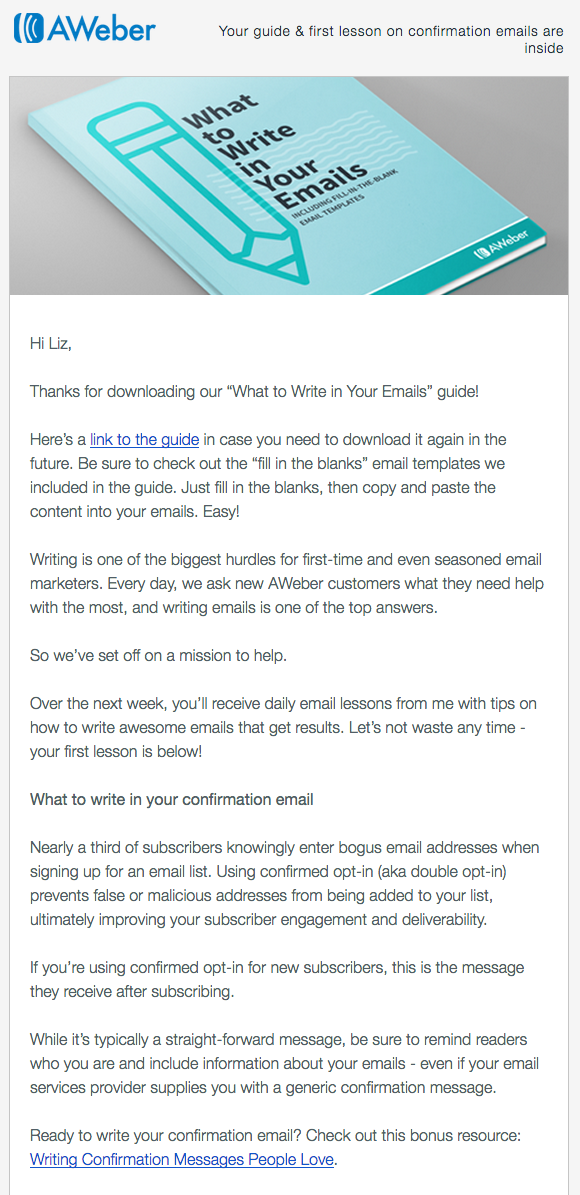
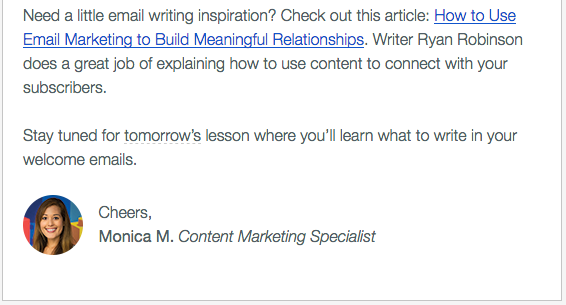
Your subscribers join your email list to get something of value – an answer to a question, a solution to a problem, information or even entertainment. The more you give them, the more they’ll trust and rely on you. And once you’ve given them that value, they’ll be more likely to do something for you in return. In the book Influence: The Psychology of Persuasion, Robert Cialdini calls this the theory of reciprocity – when people feel indebted to someone who gives them something. Cialdini says, “The implication is you have to go first. Give something: give information, give free samples, give a positive experience to people and they will want to give you something in return.” There are quite a few ways you can give information and value to your subscribers. Once someone joins your list, send them your latest blog posts in a weekly newsletter or email automation series to provide valuable information. Or, consider giving people a free lead magnet or incentive in exchange for their email address. The benefits of this are two-fold. One, more people will fill out your sign up form. And two, it’s a great opportunity to kickoff your relationship with subscribers by giving them content they love. For example, AWeber customers often tell us they struggle with writer’s block and don’t know what to write in their emails. To resolve this problem for our audience and grow our list, we created What to Write, a free 7-day email course and guide that includes more than 30 fill-in-the-blank email templates. (Side note: If you want this course, I'm giving it away in your resource pack if you download it!)Screen Shot 2017-03-27 at 3.17.42 PM what to write in your emails After people subscribe for the course, the first email they receive includes the templates and guide we promised. But on top of that, we share two additional, relevant blog posts to give subscribers even more value. Bonus resource: Not sure what valuable content to give your subscribers? Download the bonus content for this post to get 25 Content Upgrade Ideas (That People Actually Want!)

Send targeted emails to segmented audiences

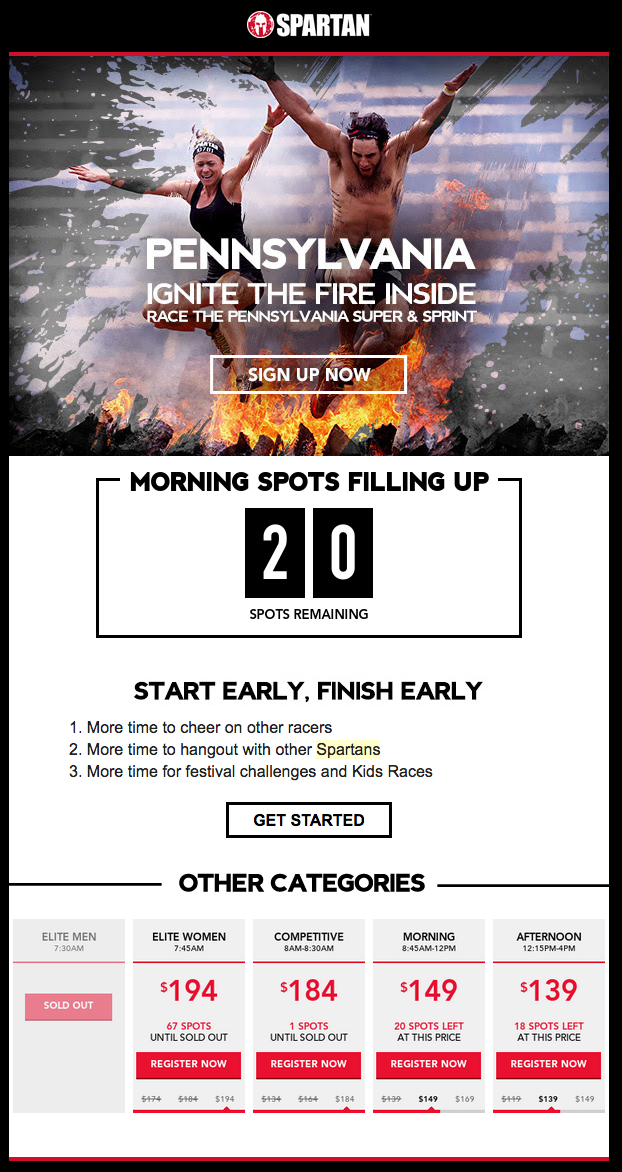
Sending the wrong message to the wrong person can really hurt your email engagement and your ability to build relationships with subscribers. It’s like a door-to-door steak salesman trying to sell meat to a vegetarian. Annoying? Yes. When you send irrelevant messages to a subscriber, they may feel like you’re wasting their time – which can lead to disengagement, unsubscribes and spam complaints. To avoid sending irrelevant emails, try segmenting your audience and sending them targeted messages. Segmentation is when your filter your subscribers into a group based on a unifying factor, such as their geographic location, interests, an action they took or skill level. This allows you to then send a targeted message by emailing relevant content to this segmented group. For example, Spartan Race Inc. sent me an email with the subject line, “Pennsylvania: Don’t Delay, Morning Heats Are Filling Up.” segmentation Since I live in Pennsylvania, this email was relevant to me and immediately caught my attention. Once I opened it, the headline “Pennsylvania Ignite the Fire Inside” continued to address me on a personal level. This segmentation convinced me to open and read this email and likely increased engagement for everyone who received it. Bonus resource: Trying to figure out how to send personal messages? Download our resource pack to get a 7-day course that'll show you how to write more personal emails.

Welcome subscribers to your list

A welcome email is a message you create and set up to automatically send to subscribers when they sign up to your list. Welcome emails get four times higher open rates and fives times higher click-through rates compared to other emails. They're also an important part of building relationships with your subscribers and increasing engagement for future emails. In your welcome email, you should:
  • Thank your subscriber for joining your list
  • Introduce your company
  • Explain what kind of content they’ll receive from you
  • Give them a lead magnet or incentive if you promised one on your sign up form
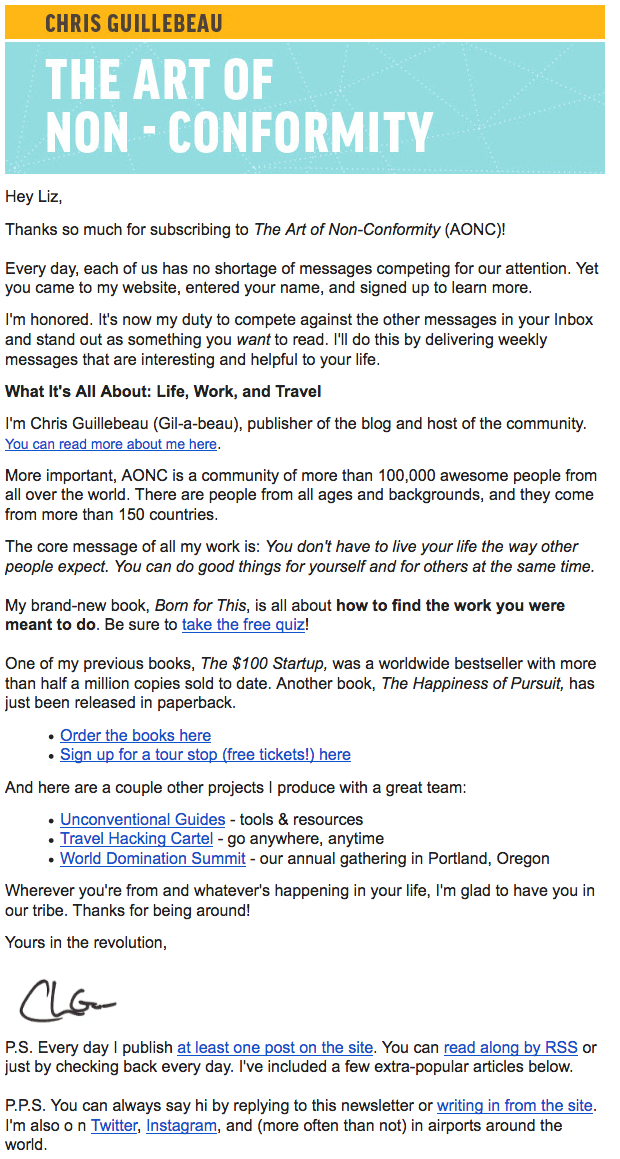
Let’s take a look at this welcome email from Chris Guillebeau of the Art to Non-Conformity. In this email, Chris thanks his subscriber, sets expectations, explains who he is and shares more resources. Screen Shot 2017-03-27 at 4.02.25 PM This email lets subscribers know they successfully joined his list, and sets the tone for future messages. Additionally, it gets people excited for his next email. Bonus resource: Get a free fill-in-the-blank welcome email template and 20 more templates when you claim the resource pack from this post!

Listen to your subscribers

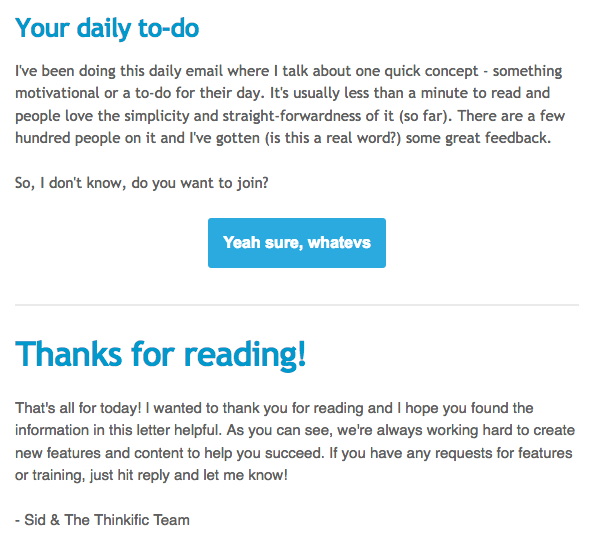
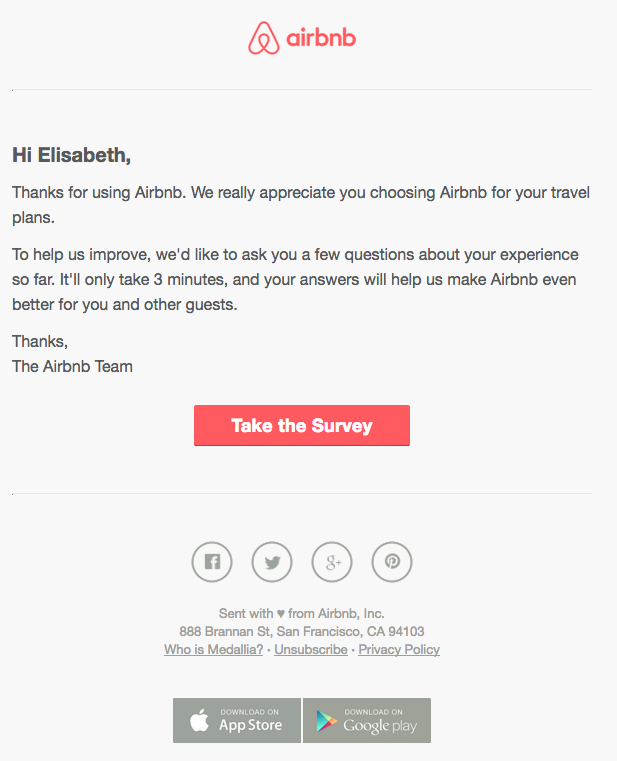
One of the worst things you can do in any relationship is not listen. And this applies to building a relationship with your subscribers as well. Receiving and responding to feedback from your audience is an invaluable way to deepen your relationship with them because it allows you to send even more valuable content in the future. So how exactly can you get feedback? One way is to ask subscribers to reply to your email to share their thoughts, just as Thinkific does at the bottom of this newsletter: Screen Shot 2017-03-27 at 4.26.06 PM Or, email your subscribers a survey. In the example below, Airbnb shares a survey with an eye-catching call-to-action button and mentions how easy it is to complete. Screen Shot 2017-03-27 at 2.49.12 PM Asking subscribers to give you feedback by responding to your emails or completing a survey are great ways to learn how you can improve your emails and offers. And when your emails are better, you’ll be able to build stronger relationships with subscribers. Once you receive feedback, however, make sure you listen and take action. Your subscribers will love you even more for it! Bonus resource: Ready to send your subscribers a survey to get feedback? There are a few mistakes you don’t want to make and guidelines you’ll want to follow. Learn all about them in our Survey Guide and Worksheet in the bonus content from this post.

Stop blasting. Start connecting.

Ultimately, there’s one rule you can follow to make sure your emails build connections with your audience: give them value. Your subscribers should love your emails so much that they’d never consider unsubscribing or marking you as spam. Instead, they should look forward to the next time one of your emails lands in their inbox. By delivering content subscribers will love, segmenting your audience, welcoming them to your list and listening to their feedback, you’ll avoid blasting your subscribers with emails they don’t want. Before you go, don't forget to download all the free resources from this post, like 30+ free email templates and 25 content upgrade ideas!

The post The Email Blast is Dead: Here’s How You Should Really Connect with Your Audience appeared first on Email Marketing Tips.

03 Apr 18:38

10 Easy Customer Engagement Strategies

by Candace Huntly

Like it or not, your customers have the power in your relationship with them. Not only do they make the final decision when it comes to purchase, but they are also connected 24/7 to a network of information – and other options. With the tap of a finger they have the opportunity to compare pricing, check reviews, and ask a friend. The path to purchase has literally become a game show that customers always win at.

Knowing this, there is no excuse for running your marketing strategy on blind hope that it will engage your audiences. You need to build a strategy that is focused on your customers’ needs, wants, and behaviours.

Whether you have a small or a large audience, here are a few strategies that you can incorporate into your own customer engagement efforts.

  1. Use Social media to listen: Everyone knows that one person who ONLY talks about themself. Those times where you sit through an entire “conversation” and your only involvement is to agree with how great they are or express your wonder at what they had to eat yesterday when they went to that fancy restaurant. Don’t be that person. Engage your customers in dialogue and really listen to what they have to say in return. If you haven’t yet built up an engaged community online, find forums where your target audience is engaged online (ie. Reddit, Tumblr, etc). Ask questions, dish out compliments, whatever you can do to elicit a positive response.
  2. Real time updates: If you are running a live workshop, or an event, don’t be afraid to give updates via social media in real time. With so many live streaming options available, you have the platform already set up. Try to get creative, but make sure you stay on brand. If you’re in real estate, why not do a live walk through of a house that just went on the market? If you run a trade show, you could do a live walk through of the show floor and speak to someone at each vendor booth. Look for value add for your customers and for those on camera.
  3. Put the spotlight on customers: User-generated content is a great way to both listen to what your customers have to say while beefing up your own unique content library. Running a contest where customers have to submit photos or stories can be a great way to get product reviews and encourage general brand engagement. And your contest doesn’t have to be run on social media, you can set it up as a landing page on your website, have email submissions, or use a third party.
  4. Loyalty programs: it’s always nice to reward loyalty among your customers. While nothing can guarantee a loyal customer won’t go to one of your competitors, if you treat your customers well, there is a greater chance they will continue to stay loyal to your brand. Here are a few options:
    • Offer a discount for returning customers
    • Offer a volume discount for returning customers (ie. Buy 10 get 1 free)
    • Create a rewards/points program
    • Offer a referral discount
    • Have a regular event for your loyal customers
  5. Engage influencers: You can only engage with so many people through your immediate audience. By having an influencer tell your story, you can then engage with a larger audience as they act as a loudspeaker for your brand. A great way to include an influencer in your strategy is to have them review your product.
  6. E-newsletter: An E-newsletter is a direct line to your audience. They have already shown interest in your brand by signing up for your list. The key is to share valuable content and offers that will keep their interest. And sending a newsletter once per quarter isn’t enough. At the very minimum you should send something monthly so you stay top of mind.
  7. Customer surveys: Once a customer has tried your product, have them complete a survey to get valuable feedback. The key is turning the data into actionable strategies to better the customer experience.
  8. Offer a free trial: Sometimes getting that first nibble can be tough. By offering a free trial you have a captive audience that is trying out your product. This means that they are in the market for what you’re selling and they liked yours enough to try it out. It also gives you the opportunity for multiple touchpoints throughout their trial period to convert them fully to a paying customer.
  9. Content strategy: Your content should address customer needs and concerns. It should answer their burning questions. In short, it needs to provide value. By creating valuable and interesting content, you have a platform for customer engagement.
  10. Quicker turnaround times: Something as simple as not making a customer wait is a great way to engage them. If they send in an inquiry via your customer care channels, try to cut down on the response times and get to a quick solution. The more they wait, the easier it is to walk away.

This article was originally posted to the SongBird Marketing Communications Blog.

03 Apr 18:38

How Sales Analytics Is Useful For Your Sales Team

by Dan Sincavage

Sales analytics represents many things to different sales teams. It could mean hard data, or the various numbers and information put together through your CRM system. It could also pertain to pipeline forecasting, lead scoring and customer information analyses.

Whatever it’s come to represent for your team – how it’s used (or not used, in some cases) to set goals, motivate and assess sales performance – it is something you shouldn’t take for granted. The optimized utilization of marketing and sales analytics is a guaranteed way of forging ahead.

Sales analytics is not just about numbers. It is there to help you put together and manage a formidable sales team.

Sales Analytics Tip 1: Use It To Set Proper Goals.

It is master salesman Zig Ziglar who first said: “A goal properly set is halfway reached.”

Goals motivate your team. It spurs them to work towards something attainable and measurable. However, an unclear or improper goal does the exact opposite, providing only spurts of unsustainable progress.

Sales data analysis provides you with the information you need for setting long- and short-term goals that are clear-cut, measurable and timely. Because it is data-driven, your team will see your goals as something they can achieve. It gives them something they can focus on and measure themselves against.

Look to your sales analytics and then apply the SMART standard of goal-setting, wherein your goals are Specific, Measurable, Attainable, Rewarding and Timely.

Sales Analytics Tip 2: Optimize Your Sales Team’s Performance.

Again, we turn to Mr. Ziglar to start things off: “Don’t count the things you do, do the things that count.”

Why keep doing something that’s ineffective and adds little value to your sales efforts? Sales analytics provides you with the best insight into your team’s performance, and what works and what doesn’t.

Because, the reality for many sales teams is that there is no need to increase the frequency of calls nor the number of agents on the job. What’s more important is to be better at what you do. Make more effective calls. Maximize the value of each call and shorten sales cycles.

Improve your conversion rate by devoting more time on prospects who are likely to buy, based on lead scoring and customer information analyses. Use these same analyses to improve how your team members engage with prospects and customers.

Sales Analytics Tip 3: Gamify Sales.

Sales analytics is a way to make several aspects of your sales processes and data visible to your team members, such as the number of calls, new accounts, and sales value. This can be used as basis in “gamifying” your team’s sales efforts.

Provide incentives and prizes for sales leaders. Assess which sales metrics lag, and reward efforts there. Even the simple act of making ranking visible can ignite each person’s competitive spirit.

Sales Analytics Tip 4: Turn Visibility and Access Into Action

With performance metrics visible and accessible, your team members know exactly where they stand. They know how far they’ve gone to achieve sales goals. Through leaderboards, they can compare themselves with their team mates. They know where each of their prospects and clients are in the sales funnel. They have in-depth insight on their own progress, and if they’re meeting their target calls, close rates and what-not.

This makes your sales analytics a great motivational tool. You could be a sales manager who needs personalized insight on the performance of each of your team members. Or, you could be a sales person who want to take proactive control of your career. When you know how you’re doing, you can take control and work towards improvement.

Sales Analytics Tip 5: Use Your Sales Analytics Tools To Empower Your Mobile Workforce.

It makes a huge difference when you provide your mobile workforce with real-time access to up-to-date information and performance metrics. They don’t suffer from information lapses that might cost them a sale or waste their time on bad visits. When they have the information they need when they need it, they can be more effective in their work, even while in the field.

As Donal Daly, founder and CEO of global sales transformation leader The TAS Group/ Altify, says: “Allowing your remote salespeople to perform the same tasks on the road as they do from their office with a mobile CRM helps them work smarter.”

Sales Analytics Tip 6: Use Your Sales Analytics Data To Identify New And Underserved Markets.

There are several ways to enhanced your sales analytics data. For instance, at the basic level, you can integrate your CRM with Google Adwords when you want to be on top of your online advertising and keyword optimization.

You can also take advantage of third-party information sources, such as Dun & Bradstreet, for industry-specific data. This data, when assessed alongside your internal sales analytics, can provide you with priceless insights to pinpoint emerging and underserved markets.

03 Apr 18:37

What is Word of Mouth Marketing?

by Brandon Gains

If you’ve been to a National Park, you know Smokey the Bear. With the classic slogan “Only you can prevent forest fires.” posted throughout the great outdoors. An earnest brown bear in a wide-brim hat holds a shovel in one paw and points a finger with the other. The message is clear: even in this huge wilderness, you can make an impact.

Just like you can prevent forest fires, marketers can ignite massive conversations with word of mouth marketing. Why is word of mouth marketing important? Because being able to create conversations around your brand is the ultimate goal of your marketing strategy. The power of word of mouth relies on the fact that humans are already social creatures – we will talk.

Today, we’ll dive deep into why word of mouth marketing is increasing in popularity and how to drive results from the strategy. A recent study from the American Marketing Association finds that 64% of marketing executives believe word of mouth is the most effective form of marketing – yet only 6% say they’ve mastered it.

Assisting in this discussion will be examples from five leading brands who are winning with their word of mouth marketing campaigns. Once you’ve read today’s guide, you’ll be able to put the piece together a word of mouth marketing strategy that creates a truly viral level of customer engagement.

What is Word of Mouth Marketing?

Word of mouth marketing is the process of encouraging authentic brand conversations through customers and influencers.

Similar to starting a fire, word of mouth marketing is a strategy that aims to spark a wave of brand engagement, be it in the form of referral visits, first-time purchases, customer engagement, website traffic, social sharing or mobile app downloads. The most effective word of mouth campaigns go viral. When ignited by a targeted offer, engaged customers share it so enthusiastically that it attracts new users in an exponential fashion.

  • 74% of consumers identify word-of-mouth as a key influencer in their purchasing decision. — Ogilvy
  • 88% of people trust online reviews written by other consumers as much as they trust recommendations from personal contacts. — BrightLocal

How Does Word of Mouth Marketing Work?

Simply create something worth talking about. Then guide your audience to talk about it.

If I started a fire, do I need to tell you to gather around it? No. You’d do that naturally. People love to engage another around common interests and share interesting things with each other. It’s the foundational aspect of our social structure.

Whether it’s a funny video, a valuable piece of content, or an offer from a product or service worth knowing about – word is mouth is basic form of communication. The trick is making these branded topics authentic to your users and irresistibly shareable. If you succeed in this, the effect is more word of mouth and more audience engagement, both factors which fuel further revenue growth.

What makes for effective word of mouth marketing?

Jonah Berger, Professor of Marketing at Wharton, cites three factors:

#1 Emotion

Berger’s studies, published in his book Contagious: Why Things Catch On, found that the strength not the type of emotion is what creates sharing behavior. Whether positive or negative, emotional responses are the key to any word of mouth initiative.

(Source)

For example, the “United Breaks Guitars” video came out and accumulated a million views in four days. United stock dropped 10% from this comic-tragic spoof. And when Microsoft had Robert Downey Jr. deliver a real bionic arm to a kid in need, viewers rewarded the deeply caring video with over 2,000,000 views.

#2 Social Currency

“Talking about remarkable things provides social currency,” says Berger. Yes, we share to connect. But also to feel good about ourselves by reaffirming what we believe is important, like holding up a mirror to our lives.

So what does your audience value? By finding what Berger calls the “inner remarkability” of something, we can use that to create positive word of mouth activity. After all, who wants to listen to a boring story. Even if you’re not showcasing awe-inspiring products like Apple, practical products or services all have something worth talking about in an interesting way.

#3 Triggers

“Triggers are the foundation of word of mouth and contagiousness,” writes Berger.

Triggers are a mechanism that reminds us of something else – even when we don’t see an advertisement in front of us. For example, many of us will always associate (and cringe from) the phrase “Wassup!” with Budweiser, no thanks to that 1999 Super Bowl ad. If you’re a beer drinker, no doubt that residual association will encourage you to buy Bud in the future.

(Source)

But if content is king, context is the key. Rather than simple catch phrases, marketers are better off looking for everyday situations their audience can be triggered. For example, Berger points to Kitkat being linked to taking coffee breaks. Since coffee drinkers are die-hard, associating a trigger with chocolate will be a frequent and profitable reminder.

#4 Trust

As with all effective customer engagement strategies, trust is an essential factor. We know that people are 4x more likely to buy when referred by a friend. But even if they’re not buying, people trust what others have to say. It’s more efficient for us to learn from others experiences than suffer through the mistakes ourselves.

How can brands gain trust from potential customers?

Utilizing user-generated content in word of mouth marketing is essential for creating brand trust and social proof to get the desired action. We can encourage user-generated content with targeted campaigns that ask customers at the right time to make a referral, leave a review, share a branded photo, etc..

This is a form of word of mouth your brand can freely employ to engage others. If your audience sees a positive review of your service, they’ll be more likely to buy. When they read a real customer testimonial, they can imagine their own success with your brand. This is why user-generated content helps build brand trust and promote further word of mouth.

5 Ways to Build a Word of Mouth Marketing Strategy

The key to word of mouth marketing is identifying what’s remarkable about a brand that will generate buzz and then fan the flames. Look to where your brand interacts with consumers and leverage various aspects of that relationship to create something worth talking about. According to WOM marketing guru, Geno Church, three different motivations spark conversation around brands:

  • Functional: Users engage in practical conversations in order to get information and better operate in the world around them.
  • Social: Users engage with brands to express their individuality, boost their reputation, and gain peer recognition.
  • Emotional: Users engage when their strong emotions are tapped.

Each brand applies these motivations differently, depending upon their audience and offering. Below we’ve highlighted five leading brands using word of mouth marketing.

#1 Leverage Influencers

(Source)

Who can fan the flames more than an influencer with a huge following? Consumers trust third-party individuals, so pairing with an audience-appropriate influencer can lead to explosive word of mouth success. When Superdry sent David Beckham a few pieces, it was definitely not a sure thing. But the fashionable soccer star took to the jackets and started wearing them out – free of charge! Social media blew up.

This type of social word of mouth paid off huge and led to similar off-the-cuff campaigns with Kate Winslet, Justin Bieber, and Zac Efron. Then Superdry capitalized and launched a YouTube channel to maximize the buzz around these celebrity interactions. By encouraging customers to share across a new channel, Superdry expanded their multi-channel marketing strategy and increased engagement with their target audience.

#2 Tap into Real Emotions

(Source)

Whether it’s shock, awe, sadness, or empathy – your brand needs to appeal to human emotion for word of mouth success. Take TOMS for example: the buy-one, share-one model is hugely profitable because it enables customers to feel like they’re making a change in the world. Regardless of buying a $60 pair of shoes and giving a $2 gift, new and loyal customers get a serious emotional boost by donating to charity.

The buzz is built into the soul of the company. Every time users wear a pair, they’re advertising for the lifestyle and the brand’s positive message. When users are equipped with such an important sense of pride it’s easier for brands to encourage word of mouth activity like referrals, reviews, and social sharing. When doing good is on the line, people are eager to spread the word any way they can.

#3 Involve Established Communities

(Source)

Red Bull knows they can always turn to the extreme sports community for a good jolt of word of mouth. So the beverage brand makes itself available to this audience through a variety of high-profile events, music concerts, on-campus college events, by circulating with Red Bull cars and giving out free samples.

By being available and interactive with consumers, they can’t help but spread the word. A remarkable car? Check. Funny backpacks? Yep. Red Bull knows that influencers will drink their beverage and spread the message, but also makes sure to appeal to their customer base in a fun and engaging way.

#4 Start Conversations Around Customer Service

(Source)

Customer service interactions are always going to be an important area to focus on and encourage word of mouth. If you’re like Starbucks, you’re always exceeding customer service expectations and netting huge word of mouth as a result.

Starbucks has always maintained a premium product, ever since 1971 when it began importing Italian coffee to the United States. An excellent product with a compelling atmosphere, which the brand grew into an internationally recognized fixture with stimulating drinks available across the globe.

From multiple social media marketing campaigns like “Meet Me at Starbucks” to the new Starbucks app, customer engagement has always been a cornerstone of their brand strategy.

We see Starbucks leveraging its product design for the White Cup Contest and Christmas time means #RedCups. Plus, there’s always funny moments to be shared with misspelled names on cups. These are provocative ways to kickstart word of mouth sharing from their target audience. This also gives the brand a unique, non-corporate feel worth talking about.

#5 Make Leaving Reviews Easy

(Source)

Casper knows people love to comment on YouTube videos. So when the mattress company initiated an unboxing campaign for users filming themselves setting up their new mattress and posting it to YouTube, the responses came flooding in.

Not only did onlookers get a taste of the ease of use and a direct testimonial about the cost (the two best features of Casper), people were compelled to comment and leave their own experiences. Plus, viewers could click a link for the full written review.

You want to equip your audience with the means to leave feedback while giving them something positive to talk about. Casper was able to showcase their disruptive product while collecting quality user-generated content and social engagement.

Last Words

Word of mouth marketing is like making a campfire: spark a conversation in the right way and you’ll see customers gather around your brand. Your challenge as a marketer will be to create a meaningful dialogue with your customers and encourage them to share it with their personal network. When building your word of mouth marketing strategy you should take advantage of consumer behavior principles of emotions, triggers, and social proof.

03 Apr 18:37

Sales Training Programs to Improve Your Team’s Selling Skills

by Dan Sincavage

Many sales managers turn to sales training programs for help shaping up their teams. Immediate goals include sales technique and skills improvement; while some seek intervention in their sales processes. Ultimately, the end goal is to improve their bottom line.

Are they always successful? No.

While CSO Insights says that top rated sales training programs help salespeople improve their win rates by 10%, this doesn’t always translate to a sustained increase in sales and profits. The ES Research Group (ESR), an independent evaluator of sales training programs based in West Tisbury, MA, claims that up to 90% of these programs have no lasting effect on sales teams after 120 days.

ESR founder and CEO Dave Stein says: “….It’s not clear whether the investment in sales training is paying off in improved sales for the training provider’s clients. Money is often wasted because companies select sales training providers that are not the right match for them.”

The key to sales training programs that truly impacts your sales team’s long-term productivity and effectiveness is to find one that truly fits your needs and industry.

Evaluation Criteria For the Best Sales And Marketing Training Program For Your Team

There are several important criteria that you need to consider when choosing a sales team training program.

Foremost are: location, budget and focus.

The first thing to consider here, of course, is focus. Which aspect of sales does your team need help with? You can get the most return from a sales and marketing training program provider who specializes in your specific requirements, as well as your industry.

Then, think about your location and budget. Location used to be a non-negotiable. Trainers needed to come to your workplace for training; or, you took a business trip to theirs. Today however, you have online training as a feasible option that suits smaller budgets.

Your team’s schedule should also be considered. The training focus would have bearing here. The more complex your training needs are, the more time you have to allot for it.

Here’s a short list of reliable sales and marketing training programs you might want to consider.

Public Sales Training Programs

Public sales training workshops are open to all individuals who want to move up in sales. You could be a sales manager or sales agent. Or, you might have individual members of your team who need specific help in marketing and sales. Public sales training offers the best opportunities for an individualized investment into your sales career.

Franklin Covey
Franklin Covey is a global training company that was launched after its The 7 Habits of Highly Effective People was released. They offer a variety of sales training opportunities, online and on-site, focusing on several aspects of sales. However, they are best at training teams on critical thinking, leadership, time management and self improvement. Their public sales training programs range from 1-day to 5-day events that will set you back by $500 to $3,000 for a seat.

MHI Global
You can’t lose with MHI Global’s tried and tested standard-format seminars that cover the gamut of sales training topics. Training seminars last between 2 to 3 days, and are held regularly in the US, Canada, Australia and Europe. They are best at enterprise sales training, as well as topics like SPIN selling, large account management and strategic training. A seat can cost anywhere between $1,500 to $3,000.

On-Site Sales Training Programs

When you prefer a visit from your trainer, choose any of these leading on-site sales training programs.

Your SalesMBA™ Workshops
This is the go-to sales workshop in Boston, MA and Menlo Park, CA, run by Jeff Hoffman. A typical workshop is a half-day event packed with masters-scale information. Topics range from getting a prospect’s attention to the entire sales cycle. Fees run from $395 to $595 per attendee.

Driving To Close
Driving To Close is a John Barrows-led on-site sales training program, especially created for B2B sales teams. Typical seminars take a whole day and focus on topics, such as analyzing opportunities, running effective meetings with prospects, and addressing objections. Training comes with a customized manual and sample call scripts and email templates.

Selling Your Stories
Selling Your Stories by the Hoffeld Group is a two-day affair that teaches your team to sell the right story in order to make the sale. This is a hands-on workshop where you get to create and practice your story in front of an audience. It is best for agents, managers and trainers.

Sandler Selling System
The Sandler Selling System takes on your sales process through their ongoing training program, conducted in their training center. The target is B2B sales teams. The program covers practically everything in your sales process. The approach is repetitive and methodical so this is a training investment that will not be forgotten after 120 days.

Sales Presentation Training
The Sales Readiness Group specializes in value presentation. Their Sales Presentation Training trains your team on strategies and approaches to doing relevant and interesting presentations. It spans a day and a half to two days, and is best suited for B2B companies.

Richardson’s Consultative Selling Skills
The Richardson’s Consultative Selling Skills program is conducted on-site for a day or two, and is then continued online through their Accelerate platform. Their focus is on technical skills, value proposition and client assessment. There is no set price, to date.

Online Sales Training Programs

Online sales training programs are slightly cheaper than their on-site counterparts, and offer comparable value. Your choice between online and on-site really depends on your preference and requirements, as well as the schedule of your sales team. Some online courses can be accessed through phones, making them your practical options if you have remote sales teams.

21st Century Sales Training for Elite Performance
This marketing and sales training program by Brian Tracy is a 3-month online course on the 7 key aspects of sales: prospecting, trust and credibility development, assessing buyer’s problems, overcoming resistance, value proposition, closing, and referrals and repeat business. At $997, it comes with videos, exercises, workbooks and bonus training modules.

Smart Calling College
Smart Calling College by Art Sobczak is a month-long course that includes 2 hours of video modules a week. It is designed for companies that rely on the phone as their main method of reaching out to prospects. The weekly videos come with a workbook, online coaching sessions and online forum. The price starts at $795 for a company’s first attendee. Additional attendees from the same company pay only $695.

Sales Training and Strategy
Marc Wayshak’s Sales Training and Strategy program focuses on prospecting, and sales strategy and process. It is designed for entrepreneurs and top-level salespeople. The time frame and cost of the program vary according to client.

Inbound Sales
HubSpot Academy’s Inbound Sales program is best for those looking for inside sales training programs. It spans three hours, and focuses on your sales methodologies, from prospecting to drafting presentations. It is for sales people of all levels. The greatest thing about this sales training program is that it’s free. Once you’re done with the course, you can take an exam and get a badge you can display on your website and LinkedIn profile.

Sales Strategy: Mastering the Selling Process
Conducted by Sales Engine, this 5-week sales training program focuses on Sales 101. It is best for new sales agents and entrepreneurs as it teaches the fundamentals of selling. It is free and you have the option to pay $95 for a certificate.

B2B Inside Sales Training
This online sales training program by Salesbuzz spans 8 weeks, and covers sales skills and processes. It is ideal for inside sales agents, sales development reps, and business development reps. At $2,500 per group, you can include up to 5 agents in the training program. Each session ends with a graded exam to help agents assess their progress.

03 Apr 18:37

400% Returns on Assets

by Don Dalrymple

multiples.png

Take a look at the chart of some sample industries and the multipliers on asset value (business). If you can get net income or profit to $100K in a business like plumbing, you can sell the business for $450K. Every thousand of profit increases the sales price by 4.5x.

You can try and hunt for such returns by finding a better stock at 8%, however, you can’t beat a business profit of 56 times that rate.

Or put your money in a piece of real estate. But finding multiples on asset value would be a rare homerun. You might eke out 15%, and miss out on 30 times the opportunity.

Paper assets, real estate and businesses are holders of value that have different scales of return that the market will bear.

And if you want to exit with a business liquidation event then you focus on the variables to increase the asset value:

  • Operational efficiency and cost savings
  • Expanded paying customers
  • Product pricing
  • Top line revenue
  • Cash flow predictability

The strategy is to maximize the value of your business asset.

Of course, picking an industry that has a conventional return impacts your exit as well. Picking well creates a built-in multiplier effect with leverage.

Ultimately, strategy around leverage is the key component here when it comes to driving an exit that makes sense and the built-in variables govern your maximum upsides and opportunity.

Some leverage strategies to think about in the game you have chosen to play:

  • How much upside are you able to capitalize on?
  • How leveraged is the nature of the industry norms on value?
  • Where can you impact value the most?

If you are in a low leverage, low upside, small impact game (like employment or mutual funds), time will pass and you don’t have a shot converting your energy and time to something major.

If you’re going to have to work anyways, what about thinking a bit more strategically about what game you are in and what the end game looks like?

03 Apr 18:36

Is Your Account-Based Marketing Program Putting the Cart Before the Horse?

by Robert Pease

revisit your ABM strategy

Account-based marketing (ABM) is not going away anytime soon. In fact, Sirius Decisions found that 92% of B2B marketers worldwide consider ABM “extremely” or “very” important to their overall marketing efforts.

It follows on the heels of marketing automation, attribution, and other core themes that are becoming increasingly important as marketing becomes more data-driven. However, all too often, a cool new feature, rather than the program’s goals and objectives, leads the tools and technology decision, giving marketers anxiety. Struck with a sense of urgency, they move forward without thinking through how their strategy should inform their decisions.

To ensure you’re not putting the cart before the horse, revisit your account-based marketing strategy for these three essentials:

1. Align Sales and Marketing

Leverage account-based marketing as the forcing function to drive better alignment between sales and marketing. ABM is an organization-wide initiative and requires buy-in from stakeholders outside of marketing. Because marketing and sales are on the front lines, you’ll need to align both teams around your goals, objectives, strategy, and metrics. Only then can your marketing campaigns and sales outreach weave a consistent story that builds the case for change.

To structure your organization for alignment, define distinct roles that set expectations for how each team will engage and close your target accounts. On the marketing side, who is responsible for generating target account leads, creating personalized content, and supporting sales during deals? Who is growing customer lifetime value through cross-sell and upsell and advocacy programs? In sales, who is outbound prospecting to target accounts and closing the deals? Between the two teams, who is monitoring service level agreements and ensuring database cleanliness?

2. Know Your Audience

In the past, account-based marketing was mainly reserved for the complex enterprise sale. Now, however, new tools and technologies have enabled organizations of any size to put account-based marketing into practice and do what you should have been doing all along.

If you’ve been running ABM programs, you should already have a pretty firm grasp on the segments your business targets, the companies in those segments, and an understanding of the buying process in those companies. How else could you be investing money and resources wisely? If you’ve overlooked this step, then it’s time to take a step back to reevaluate your strategy. Target account selections will vary across organizations, so consider the accounts that are strategically significant for your business. This includes accounts that are likely to generate more revenue, look similar to your existing customers, and/or have a business need that your solution addresses.

From there, map your accounts to different marketing personas to identify key stakeholders: decision-makers, influencers, and gatekeepers. Understand that the buyer’s journey will vary—some may not be in an active buying cycle, some are currently evaluating your solution, and many others are considering options. These people all represent future business prospects, so have some patience and establish yourself as a true partner who can uniquely solve their problem, even if they aren’t looking to solve it immediately.

3. Focus on the Right Metrics

Even when your strategy and tools are aligned, it’s difficult for marketing and sales organizations to shake that old “spray and pray” mindset where a larger volume of less qualified leads are prioritized over fewer, more qualified leads. When vanity metrics like clicks and opens are the focus of marketing status updates, you are blind to how the organization is progressing toward the goals that will actually grow your business. Metrics like penetration, engagement, and active discussions per account as well as the speed at which leads progress through the funnel provide a much clearer path to forecasting the trajectory of your ABM efforts.

This targeted ‘quality over quantity’ approach may initially result in fewer incoming leads, but you’ll gain faster close rates when you reach the right people with the right message in each target account. In fact, MarketingProfs found that companies who practice ABM generate 208% more revenue for their marketing efforts.

Don’t let the ABM cart get ahead of the horse. Whether you’re thinking about investing in ABM or already piloting a program, approaching it with the right strategy will help you generate more results from your efforts. If you’re interested in learning more, join me and Matt Heinz for our interactive online workshop ABM: From Strategy to Action and Results.


03 Apr 18:36

Spending Precious Capital: A Startup How-To Guide

by Derek Hutson

As a technology CEO and angel investor, I am occasionally asked for advice on raising capital, timing, how to invest the capital you do raise and other decisions that can make or break a young company. Often, those questions come from founders or executives who are seeking their first or second round of “institutional” money to launch or grow their company. For those who know me, it’s no secret that I’m a frugal guy. My kids might even be a bit more candid and say, “Dad, you’re just plain cheap.” So be it. I’m proud to admit that mentality extends into my business life too. We don’t need a giant chrome panda to remind us to spend our capital wisely. If you ask Datical employees about our culture and how we invest our capital, they’d probably make comments about focus, creating value and delighting our customers.

We’ve been hyper-focused on execution and remaining lean from the very beginning. Our mentality and approach doesn’t fundamentally change as we grow. We’ve maintained that identity through rapid growth and appropriate follow-on VC funding, critical junctures during which some in the tech startup community get distracted by proverbial shiny objects and lose sight of the real objectives.

While creating a highly enjoyable work environment, offering great benefits and other perks are critical, having the “coolest” office isn’t the objective, nor is serving unlimited meals, snacks and beer. Providing irreplaceable value to customers is the objective. Having happy customers is the objective. Growing the business long-term is the objective. And raising capital is not the goal — it’s a means to those ends.

So once a startup is given some capital, what should they do with it? The adage that you have to spend money to make money is true to some extent, so how can founders, CEOs and other leaders spend capital intelligently, effectively and efficiently, continuing to hit the growth targets and live up to the potential that earned them that capital in the first place? In other words: If they had one dollar left to invest, what should they do with it?

Make hiring talent your number one priority, and don’t compromise.

People are our company’s most significant expense by a long shot, and rightfully so, as they are our most important asset and most vital place to invest. If you establish your company as a place people truly want to work, then the talent comes to you, and talent breeds exceptional products and happy customers. Understand that people want to work with other people who are just as experienced or even overqualified for job they have, to the point that you’ll often hear, “It doesn’t matter what I’m building, just that I’m doing it with this team.” It may seem obvious, but without bringing in premier talent from the bottom of your organization to the top, you can kiss any prospects of long-term success goodbye. Commit capital to this cause.

Invest in exemplary leaders and advisors.

Rock solid leadership makes a company, and nothing breaks a company faster than poor leadership. Use capital to recruit the right leadership team. Prioritizing which leadership positions to hire for first depends upon many factors, including company stage, size and others. Here are a few constants to consider: Hire leaders who complement your own expertise, bring diversity in style and experiences. Hire leaders with proven track records growing companies. And lastly, the saying to “hire people smarter than yourself” definitely applies. When hiring a leader for your company, you need to be able to answer how your company will be materially different within three to six months directly because of the fact that you hired this person. If you can’t readily answer that question, pass.

Scale your sales funnel and business structure.

If you’ve received capital, it’s safe to assume you’ve successfully sold your product a few times. Now for the fun part – repeatability and scale in your sales efforts. Start “professionalizing” your sales organization early. Hire people with a proven track record whose sole job it is to smartly, avidly and repeatedly sell, sell, sell.

Assuming your product is ready to scale, invest in your sales and marketing organizations. Insist on instrumenting your sales funnel, achieving repeatability and measuring everything. Sales and marketing are more science than art. Make sure you understand the key milestones or stages of your sales cycle and activities required to meet them. It’s also important to understand what it takes to optimize the conversion between these stages. A common mistake is believing that you must wait to start measuring pipeline, demand creation, maturity and cycle time. You can (and should) do that from your very first batch of leads and sales.

Never stop innovating on your product, but make sure it’s in the right way.

You got to this point because you built a product that has value – it solves a problem. But don’t rest on your laurels. In parallel with scaling, continuously innovate and build upon your product. As I once heard, “make your product too good to ignore.” Part of using capital wisely is only developing capabilities where you already know there is existing market demand. Invest in product management, cultivate that competence in your organization and ensure there is a sound business case as you add to your product. Innovation is a key part of enhancing value, but it needs to be pragmatic innovation.

Be flexible and adaptable, but don’t thrash.

One of the wonderful things about small, growing companies is that they are adaptable and can change quickly if needed. Be strategic about your investments by deciding on the three or four things you must do, making those investments and then keeping your eyes on the prize by executing without diversion. When you need to make changes, make them fast. Measure results and make the inevitable tough decisions. Some companies lack the discipline and focus to stay the course – they thrash about looking for the proverbial magic to happen. The “magic” happens when you have the right team, product, market and capital in place and you flat-out execute better than your competition.

Raising a substantial Series A or B sum of venture funding is always an exciting time for startups, and exceptionally so for first-time founders and executives. Pressures and questions mount quickly as soon as that capital is nailed down, but the most successful startup leaders always have a plan in place for how they’ll spend the capital before they secure it, and then they stick to the plan both fiscally and culturally. Follow the pieces of advice laid out above and you’ll be in great shape to make your investments count, help your capital go a long way, execute, grow and reach those all-important end objectives.

03 Apr 18:33

3 Dying Digital Marketing Tactics Your Business Might Be Wasting Money On

by Mark Miller

Re-evaluated your marketing priorities lately? The digital landscape is constantly changing, and it’s all-too-easy to miss a valuable opportunity–or overcommit to an outdated channel or tool. As a digital talent agency we frequently encounter potential clients that are “just a few years” behind digital–which of course means they might as well be a century back.

Look at your digital strategy and budget from two or three years ago. Does it look more or less the same as it does now? If so, you’re probably not allocating your resources effectively. It’s time to audit your digital marketing operations (and potentially conduct a digital marketing executive search) and look for tactics that deliver better ROI.

Canned Video Content

Odds are good that in recent years you’ve come across many whiteboard videos featuring a disembodied hand scrawling explanations on a digital whiteboard while generic stock music plays in the background.

Or remember the 3 months that these were popular?

Videos like this are attractive to marketers because they’re simple and accessible to almost anyone. You can pull one together even if you’re camera shy or don’t have animation experience.

However, the content space for this kind of video is now well oversaturated. Instead of helping your organization stand out, it makes you look dated. Consumers engage far more with recorded video of actual people and events.

If you want to make use of video now, you should focus your efforts on developing influencer relationships, producing live content, or creating recorded video that’s remarkably entertaining and informative.

Animated content can still be effective; but avoid the canned animated video options that everyone has already overused. It takes greater effort with talented digital creative staffing, but the result will stand out far more. For instance, here’s how Ford used original art along with minimal animation to tell a touching Fathers’ Day story:

Similarly, whiteboard content still has a place–but you have to attach a charismatic human element. Consider how SEO agency and solutions provider Moz delivers strategy advice through its popular Whiteboard Friday series–with supreme expertise and charismatic hosts.

Pulling Back on Marketing Outsourcing Services

A few years ago, it was common–and often wise– to work with a suite of third-party partners and marketing outsourcing services to manage your digital marketing.

With so many important emerging digital channels emerging at once, it was difficult for a company to keep up with everything. So you’d put your email in the hands of an email marketing agency, your paid ads with an SEM/PPC shop, your social accounts with a community management firm, and so on.

At the time it made sense. But now as so many of those fields have matured, smart businesses at looking at ways to bring those marketing responsibilities back in house.

Marketing outsourcing services and agency fees aren’t cheap. And as digital marketing has become more and more collaborative, juggling and coordinating the efforts of several agencies that all have their own strategies and priorities becomes less effective. Many businesses are experimenting with on-site digital marketing agencies or making use of flexible digital marketing staffing to execute internally.

Nearly 80% of agencies predict their clients will move some marketing services in house this year. If you’re currently handing the reigns of your digital strategy off to others, now might be the right time to retake control.

Marketing on Twitter

Once the daring, darling social network du jour, Twitter is becoming less and less attractive as a primary marketing platform.

Compared to its rivals, Twitter is stagnant in gaining new users and fostering engagement among its current base. Its share among social media users recently shrank to 27.9% and will probably continue to slowly trend down barring a drastic change.

At the same time, other social networks are exploding. Instagram and Pinterest in particular are experience rapid growth. Facebook, the king of them all, may see a slow in growth rate–but it makes up for it with the unparalleled consumer insights and advertising capabilities it offers businesses.

Not only that; Twitter struggles to deliver value to advertisers. Users log in to share a quick thought or get a glimpse of what they’re network is doing. They’re not there to engage or research–at least not as often as on other networks. The lower levels of engagement and weaker targeting capabilities mean paid ads here are usually less effective than on other channels.

Questions about the business’s stability and life span are also making it a less attractive investment.

The company appears to be experiencing internal turmoil, shedding hundreds of jobs over the last two years while continuing to fall short of profitability. Many members of its senior leadership team–including 60% of its top executives–left last year. A potential deal with Salesforce fell through in 2016, indicating big buyers don’t see it as an attractive target.

As Vine recently showed us last year, even popular social channels are not immune to sudden deaths capable of completely disrupting a marketing strategy.

Thanks to its highly anonymous nature and low barrier to entry, Twitter is susceptible to bots and trolls, which not only fill up feeds with spam but can heavily skew analytics.

Twitter will probably retain some meaningful utility as a useful tool for customers who have questions or comments to directly communicate with a brand. In fact, some of the best customer service and brand engagement I ever received was through Twitter.

But when it comes to being a channel for ads, content promoting, and branding, it’s falling behind other faster-growing channels.

03 Apr 18:33

The Changing Content Preferences of B2B Buyers

B2B buyers say they are now paying more attention to the trustworthiness of content sources when evaluating products/services, according to recent research from Demand Gen Report and Uberflip. Read the full article at MarketingProfs
03 Apr 18:33

6 Ways You Can Repurpose Case Studies To Generate More Leads

by Keith Smiley

You’ve created a case study that brilliantly shows how your product or service helped solve a problem that your client was having. Instead of letting it sit on your website why not take that case study and repurpose it in to other content pieces. According to Demand Gen’s 2016 Content Preferences survey 73% of respondents said that case studies were the most valuable type of content that was viewed during their decision making process. So why not get more out of it?

Case studies are great for repurposing because the content comes directly from a satisfied customer. It shows how your product or service helped them solve a problem.

Here are 6 ways you can repurpose your case study to get the maximum benefit.

1. Write A Blog Post

Once you create a case study you should blog about it. Siobhan McGinty writes on Hubspot, “The trick is to write about the case study in a way that identifies with your audience’s needs. It’s important not to center the blog post around your company, product or service — instead the customer’s challenges and how they were overcome.” For example, if you’re an HR software firm, you could have a case study about how your software helped a client become more efficient. It could be titled: “How To Manage all of Your HR Tasks in One Solution [Case Study].” The blog post would then have a mix of tips, stats, and other examples from your case study. You should also have a call to action at the end of your post. The call-to action should provide a link to the case study so that your web visitors can read it.

2. Incorporate It in Your E-Newsletter

A great way to get more mileage out of your case studies is to put them in your e-newsletter. Just like your blog article, you can provide a mix of stats, tips, and examples from your case study. You should also provide a link to your case study so that your prospects can read it.

3. Pitch It For A Bylined Article To Be Used In A Trade Publication

Bylined articles are another great way to use case study materials. The media loves case studies because they make great stories, similar to an action movie. Case studies always describe a problem, the hero (Your company) solves the problem, and a there’s always a happy ending. Case studies can be published in industry or trade publications that accept articles from vendors. It’s a lot easier to get an article pitched and placed in a publication if you have one or two customer success stories you can talk about.

4. Distribute It In A Press Release

Case Studies are also great for PR purposes. You can send a press release detailing your case study across regional or national news wires to get in front of editors and bloggers for potential coverage

5. Use It As The Focus Of A Webinar

Webinars provide a great way to repurpose case studies. They are great for a lead generation campaign or to help further educate prospects that are already engaged with you. The webinar can be centered on one or more case studies or the case studies can be used to support the claims made in the webinar.

6. Create A Video Version

Case studies can also be repurposed for video. A video case study combines customer testimonials with more a more in-depth explanation of how your company’s products and services helped your customer be successful. These case studies usually incorporate two voices – a narrator and the voice of your customer. The video structure follows the same “Problem, Solution, Benefit” format found in a printed case study.

Conclusion

Promoting and repurposing case studies is definitely a win-win situation for you and your client. Your client will get some recognition, which could lead to more business for them. As for you, it could establish you as a thought leader and problem solver in your industry. What more could you ask for?

03 Apr 18:33

Outsourcing Lead Generation – A Business Evaluation Guide

by Will Humphries

Lead generation is one of the most important undertakings for a company or marketing team.

Qualified leads are the foundation of a healthy sales pipeline and a strong business.

However, attracting the right leads for your business, that efficiently convert into paying customers, is much more complicated, challenging and time-consuming, as many of you know only too well.

And the more you delve into this area, the more questions arise.

– What areas of your business do you need to review to help drive the right leads?

– Should you be getting your sales people to focus on converting your existing leads or have them generating new leads?

– Are there gaps in your marketing funnel and how do you identify them?

– Have you got the resources to focus on all leads throughout your funnel, and how should you prioritise them?

Full Marketing Funnel - Internal Results

Focus on the areas where there are gaps in your marketing funnel.

First, you need to build a consistent and coordinated plan for attracting prospects that match your ideal customer profile for a given solution.

Next, you need to gather data to identify the best practices for doing so.

The culmination of your data-gathering efforts is a well-documented and defined system for generating the leads you want and then either handing them off to your sales team for conversion or nurturing them further along their buyer’s journey.

These challenges are the same for all businesses. For this reason, outsourcing lead generation to an experienced and professional partner has become a viable alternative.

The following is a comprehensive guide outlining how to successfully outsource lead generation for your business.

Why Outsource Lead Generation?

To understand why outsourcing lead generation makes sense, compare the benefits of an expert partner to managing this process internally.

A recent CSO Insights study showed that 68 percent of B2B companies struggle in fulfilling their lead generation system.

If your sales team is getting bogged down by the lead generation process, speaking to a lead generation company about outsourcing part of this process may be an option for your organisation. To that end, working with a lead generation partner can prove to be a smart business decision.

Many companies recognise the key benefits:

  • Efficient conversations with top, qualified prospects – Appointments are set with the most qualified buyers, eliminating waste that can impact upon the productivity of your sales team.
  • Improved concentration on nurturing and closing for your sales team – Your team isn’t frustrated and burdened with time-consuming activities that don’t align with their passion or expertise.
  • Access to an established technology-supported system for managing the entire lead generation loop – An expert partner has the infrastructure and tools in place that you need.
  • Faster time from lead targeting to nurturing – Your sales cycle functions more swiftly with better targeting, qualifying and appointment setting, allowing you to complete more sales in a given period.
  • Lower costs – The costs of hiring an expert partner are offset by the time saved internally, and higher productivity.
  • Improved evaluation of results and modification of marketing activities – An expert partner must have a plan for helping you evaluate your lead generation system on an ongoing basis.

Step One: Assessing Your Needs

Before approaching a partner for outsourcing lead generation, conduct an internal assessment to determine where your lead generation efforts are falling short, and what areas you need to focus on to improve your results.

Common areas requiring improvement are as follows:

  • Defining your buyer personas
  • Identifying primary benefits desired by each persona
  • Attracting leads
  • Turning leads into appointments
  • Capturing data and updating records during lead generation

This needs assessment helps you recognise the areas in which outsourcing lead generation offers your company the greatest value.

It is also helpful to go to your potential partner with an idea of where the gaps are in your current sales & marketing funnel.

This knowledge enables your partner to help establish a system that addresses your core concerns.

For example, you may have prospects that are due to close fairly soon, but there is a gap between your top of funnel marketing leads and your high-quality leads.

Or, if you are a startup business, you may have a large number of marketing leads to work on, but you need to get some quick wins on the board. So you need to be getting face-to-face meetings with decision makers.

Step Two: Identifying a Lead Generation Partner

After you’ve conducted your needs assessment, it is time to determine the right lead generation partner.

As with any area of business, not all specialty providers are created equal. Knowing what qualities to look for in a lead generation partner and what questions to ask helps you make the best choice.

The ideal lead generation partner has experience and insight into your particular business sector.

It is a major hurdle to collaborate with a specialist that lacks industry familiarity. You also want a partner that takes a professional approach.

Look for case studies and testimonials from satisfied clients that speak to the firm’s process and solution elements provided.

A company that dedicates itself to learning about your business and customers is also vital, as this allows the partner to function as a virtual extension of your team.

The following are some important questions to ask as you vet potential lead generation partners:

  • How long have you been in operation and how much experience do you have with lead generation in our industry?
  • Can you provide some examples of companies that you’ve successfully helped achieve objectives?
  • What is your process for reviewing our current system, identifying challenges and areas of need, and putting together an ideal lead generation process?
  • How do you work with a partner to coordinate the hand-off from lead generation to nurturing of a prospect?
  • How do you track results of core activities throughout the process?
  • How do you work with a client to review results and suggest modifications based on data?

Step Three: Starting the Process

Following your due diligence and selection of the ideal partner for outsourcing lead generation, the next step is to get the process started.

If you have identified the right firm, your provider should emphasise a collaborative approach that allows them to leverage your value proposition.

Internal Results, for instance, uses our unique prospecting methodology to target your best prospects, and our highly-skilled sales people work to get you appointments.

The number one goal when starting the process is selecting your chosen accounts and identifying key contacts to target.

Sixty-eight percent of B2B marketers view attracting “high-quality” leads as their greatest challenge.

lead generation specialist priorities

At the time of hand-off, you want your team meeting with highly-qualified buyers with a natural interest in the solutions you provide.

Step Four: Tracking Your Results

When you choose the right lead generation partner, the steps involved in your collaboration are clearly defined, which allows you to track results of communication methods and prospect types.

They are also repeatable, so the partnership functions efficiently, and you achieve the highest possible return on your time and resource investment.

Missed opportunities are damaging to a sales organisation.

As you track performance over time, you gain insights into the types of tools and methodology that create success.

You develop a sense of the kinds of demographic, geographic and firmographic data that contribute to top-converting prospects versus those that are a drain on your time.

Some companies (yes, like Internal Results) even ties its compensation to your results by only charging you for landed appointments. This approach puts the pressure back on us to ensure our collaboration sets up the most effective and efficient lead generation activities.

Man and woman meeting

Wrap Up

Outsourcing lead generation may seem like a distant possibility for an organisation striving to achieve a return on investment. But you must bear in mind that you are not outsourcing your sales or marketing operation. You are only outsourcing the lead generation aspect, which is often a drain on internal resources.

However, when you compare the benefits of working with an expert partner to the costs and impediments of going it alone, this strategy is something to strongly consider for your business.

If you do make the decision to outsource, the next step is to find the best lead generation partner suited to your business.

Utilise the actions and questions provided to evaluate your options. A quality partner makes all the difference in your success or failure with outsourced lead generation.

After you identify a great partner, get started with the process of building a repeatable system, evaluate results and revise your efforts as time goes on.

Whether outsourcing your lead generation is an option for your organisation is only something you can answer. But I would say this, as with anything in life, do your homework and talk to experts in this area. Only then can you make an informed decision.

03 Apr 17:47

How to build a truly actionable social media audience

by Mark Schaefer

social media audience

By Mark Schaefer

If you’ll oblige me, I’d like to start with a little story from a conversation I had recently with a woman who had a disappointing experience after taking an online class on how to monetize through webinars.

My friend followed the advice from the class with engineering-like precision and nothing happened. Several webinars. Few attendees. No sales.

So she asked me what I thought was wrong. And I said that the reason it worked for the instructor, and probably didn’t work for her, is that the instructor been doing this for a decade and she is known, and has a large, passionate audience that is ready to buy from her. She has worked consistently, diligently, methodically for years to build an emotional connection and trust with an audience that is now actionable.

My friend really had no audience like that. She was at the beginning.

For most people, it takes years of work before you can hope to monetize an audience. And it takes more than just building Twitter followers. If I went out today and asked my Twitter followers, ‘Hey everybody, buy my book’ here’s how many books I would sell. None.

Most of the connections we build on social media are weak relational links. It’s a beginning. It’s a handshake. It’s an introduction to people we never would’ve met before. But you have to spend that time  to build true relationships that are actionable.

One of the biggest myths I face as a marketer is the customer’s idea that simply building any kind of social media audience correlates to business benefits. Make no mistake, building a social media audience is a good start. It opens doors to a world of potential, but that is all it is — potential.

There’s no shortcut. Over time, we have to build an actual emotional connection to our audience that turns potential into something actionable.

Of course in business there are many ways to build those relationships. When I started out, this meant phone calls, meetings, client dinners, even hopping on a plane. Thankfully, the internet has put a jetpack on those networking efforts and a combination of social media and content has made life easier.

Today, we can effectively build global connections — even loyalty — without ever meeting somebody. We do it, over time, through our content:

emotional connection

Let me give you an example of how this works.

Three years ago, the London-based CMO of a Fortune 500 company learned about me from Twitter and began to read my blog. I didn’t know he was out there, but through my content, he began to discover my thinking, views, and values. Since he was connected to me, he learned that I had a new book out in 2015, The Content Code. I know this for sure because he sent me a note telling me how much he enjoyed the book — the first time I had heard from him.

A few weeks ago, he hired me to conduct a workshop with his global content team at the company’s headquarters … and this is the first time I ever met the man. What are the lessons from this success story?

  • I created content consistently. One or two blog posts would not have built the emotional connection and trust that led to action.
  • My content was meaningful and relevant to this man, my target audience.
  • This relationship took more than three years to result in a business benefit.

Leads versus relationships

When it comes to content marketing, there are two distinct camps. Let’s call the first one the Hubspot model. The goal is to create short-term leads for a room full of telephone sales people. There’s a place for that kind of business but your sales and marketing costs are also astronomical (which has been well-documented in the case of Hubspot).

The other option is to use this content to build real relationships. Frankly this does not fit well in our culture of quarterly-driven sales goals, but for those who can patiently built an emotional connection instead of a “lead,” it can produce dramatic results … if you are willing to put in the time. Here’s an illustration of the process:

emotional connection graph

The goal of any business is to increase the level of engagement with our customers over time by providing opportunities for them to know us, and connect with us in deeper and deeper ways. Historically, this has come through advertising, or in the case of B2B, industry conferences, phone calls, and meetings. Today, we can also provide those provocations through our content.

But, it takes TIME.

The first stage is AWARENESS. At the bottom of the curve, our potential customers are just learning about us and considering whether they want to stick around. This is a non-actionable, weak relational link.

The next stage is RELIABLE REACH. At this point, a customer is following us, subscribed to us, maybe even engaging with us. We are building trust.

What an opportunity. We are building trust with strangers! Over time, perhaps many years, our fans are in a position to finally buy something from us. We are building a deep connection that may even transform to loyalty. At this point, our audience is actionable. They’re advocates and they can’t get enough of us!

Content marketing is not the answer for everybody

Contrary to what some gurus may tell you, content marketing is not for everyone because not every company has a culture that can sustain something like this. Many, many companies are stuck in the advertising/broadcasting mode trying to shout their way to glory. Don’t get me wrong. Advertising still works really well but we are also moving toward an ad-free world. We need alternatives.

I recently coached an entrepreneur who had a desperate cash flow situation. He had written 12 blog posts. “When do the customers start coming in?” he asked me. This poor man has followed some bad advice. I told him the truth. The strategy isn’t going to work in a month, or maybe even a year, because the emotional content that leads to an actionable audience has not been established.

Successful content marketing is a complex cocktail of positioning, consistency, quality, SEO, social media, engagement, analytics, and more. But most of all, it takes patience to build a truly actionable audience, not merely a bunch of social media followers.

SXSW 2016 3Mark Schaefer is the chief blogger for this site, executive director of Schaefer Marketing Solutions, and the author of several best-selling digital marketing books. He is an acclaimed keynote speaker, college educator, and business consultant.  The Marketing Companion podcast is among the top business podcasts in the world.  Contact Mark to have him speak to your company event or conference soon.

The post How to build a truly actionable social media audience appeared first on Schaefer Marketing Solutions: We Help Businesses {grow}.

03 Apr 17:47

What Does Your Business Need To Thrive In Today’s Environment?

by Miles Austin

What does your business need to thrive in today’s environment? The answer is the same things you needed a decade ago and that you will still need in the future. You need leads, appointments and sales. Any business that has an ample supply of leads, with training and technology, can have an ample supply of […]

The post What Does Your Business Need To Thrive In Today’s Environment? appeared first on Fill the Funnel.

03 Apr 17:47

Woo Your Leads With These Nurture Marketing Best Practices

by Malinda Wilkinson

The Evolution of Marketing

Back in the day marketing was about pushing information from seller to buyer. Then, the Internet came and people could “pull” their own information. Now we engage in ongoing dialog and integrate online and offline experiences. This evolutionary change has required marketers to adjust our approach and talk with customers rather than at them. So how do we do this? Que: Nurture Marketing.

So what is nurture marketing anyway?

Nurture marketing is a strategy where marketers stay in front of prospects, providing relevant, worthwhile content to warm them up until they are ready for sales. Targeting prospects based on where they are in the buyer’s journey, nurture marketing is designed to help move them through the funnel more efficiently than traditional email marketing.

Nurture campaigns are setup to automatically deploy messages based on factors like a prospect’s content engagement, website visits, demographic data and more. Ultimately, nurture marketing fills the gap between “I might be interested in your product” and “I’m ready to buy”.

5 Nurture Marketing Best Practices you should Follow

According to Aberdeen Group, it takes an average of 10 marketing-driven “touches” to convert a lead into a revenue-generating customer. This statistic shows that lead nurturing is simply building long-term relationships. The best analogy to understand lead nurturing is to compare it to dating and marriage. You have to ask someone out several times and get to know them before you can propose. You need to foster respect and trust, be a good listener and remember that the first impression is everything. Along with these basic elements, there are a few best practices for nurture marketing to keep in mind along the way.

  • Personalize each campaign

    Content forms the foundation of your lead nurturing programs. If you think about lead nurturing being the engine, content is the fuel that keeps it running. Before launching any new nurture campaigns, make sure you have the content in place to support them. Personalize each touch so your prospect feels as though this piece of content or this message was meant specifically for them.

  • Consistently educate

    Content shouldn’t be just promotional. Your prospects get it, you want them to buy. However, they need to build a trusting relationship with you beforehand. During your nurture campaign send valuable pieces of content. This may include an eBook, blog post, video, white paper, case study, third party publication thought leadership piece or an analyst report. Along with the educational content, it is still ok to sprinkle in some promotional pieces like a free demo, free trial or coupons.

  • Define your workflow and spread your emails out

    Along with spreading out your emails, try nurturing beyond emails altogether. You can do this by adding social media, retargeting, direct mail or phone calls into your workflow. It’s important to remember that nurture marketing isn’t just about email. From the nurture you can do things like set a task in your CRM for sales to follow up or automatically change a lead status.

  • Analyze your results

    No matter what touches you choose to add to your nurture, don’t ever skip over the results. You should always be analyzing your results and looking for ways to improve. Nurtured leads make 47% larger purchases than non-nurtured leads (The Annuitas Group) so chances are, the more you analyze your results and refine your campaigns, the more your success rate will drastically improve.

  • Use a tool to automate your nurture marketing and keep sales involved

    What if your prospect doesn’t even open your emails? Maybe they engaged by visiting your website or attending a webinar. How do you even know when leads are ready for sales? There’s no definite answer to these questions but the consensus is that without the right tools, it’s simply too hard to tell when your processes are fragmented. This is where marketing automation can help.

    By using a tool to automate nurture marketing, you can monitor the progression of leads to keep the dialogue going. The path leads travel is customized by you in your marketing automation platform and includes activities like emails, phone calls and events. And to keep things streamlined, make sure your marketing automation tool is natively integrated with your CRM. Having the two systems connected ensures healthier communication and keeps sales involved throughout the entire process.

Sound too complex?

If nurture marketing sounds too complex, never fear! Forrester Research says companies that excel in nurturing generate 50% more sales leads at 33% lower cost. You can take baby steps to get started with nurture marketing or if you feel confident enough from the get go, dive right in with a more sophisticated nurture. And, it’s important to keep in mind that even though nurture marketing is used most often for leads, it can also be used to provide a meaningful experience for customers and partners – helping grow brand awareness, word-of-mouth and ultimately, build loyal fans.

03 Apr 17:47

41 Fantastic Places to Promote Your B2B White Papers 

by Rachel Foster

Promote-Your-B2B-White-Papers

It takes a lot of time and effort to create an engaging white paper. Here’s how to maximize your investment, get your content in front of the widest possible audience, and attract more leads …

White papers, ebooks, and guides are among the most time-intensive content marketing projects. But the time spent on these marketing powerhouses often pays off. A well-crafted white paper can help you attract high-quality leads and convert them into customers.

B2B buyers – especially technology buyers – rely on the in-depth information in white papers to make informed purchasing decisions. According to Eccolo Media, white papers are the #2 type of content that B2B technology buyers use during their purchasing process – behind only data sheets/brochures.

But creating your white paper is only half the battle. Many B2B marketers put lots of time and resources into producing a white paper and then bury it deep within their website where no one will ever find it.

The key to avoiding content black holes is to create a promotion plan while your white paper is still in development. A promotion plan will help you get your white paper in front of a wider audience, attract leads, and raise brand awareness.

Here are 41 ways to promote your white paper to get more downloads and shares. Many of these suggestions work equally well for guides, ebooks, and reports.

Drive Leads from Your Website

Drive leads from your website

1. Create a high-conversion landing page.

The first thing you need is a landing page that converts. It should clearly explain the benefits of downloading your white paper and make it easy for people to opt in. Making it easy means not asking for someone’s life story in exchange for a white paper. The shorter your opt-in form, the more people will download your white paper.

2. Run Google AdWords campaigns.

Research keywords that your target audience use to find answers to problems related to your white paper. Then, run Google ads on these keywords that point to your white paper’s landing page.

3. Place ads on your website.

Advertise your white paper on related web pages. For example, if your white paper is about cloud security, you can promote it in the cloud section of your blog and in related pages on your website.

Increase Your Social Share and Leads

Increase social shares and leads

4. Promote your white paper on LinkedIn.

LinkedIn is the top B2B social network and a “must” for getting your white paper in front of your target audience. Post a link to your white paper on your company page. Mention it in your personal status update, and ask some of your employees to do the same.

You can also use LinkedIn’s advertising tools to get your white paper in front of your ideal customers. For example, you can target your audience by company size, job function, title, and location. You can buy both ads and sponsored updates to drive readers to your white paper.

5. Upload parts of your white paper to LinkedIn Publisher.

Write an article based on your white paper’s content and upload it to LinkedIn Publisher. Using LinkedIn Publisher is a great way to expand your reach on the top B2B social network. Link to your white paper at the end of the article, so readers can download it if they want to learn more.

6. Share your white paper with LinkedIn groups.

Mention key statistics from your white paper in a few related LinkedIn groups. Just be sure that you’re an active member of these groups and aren’t spamming them with your white paper.

7. Collect leads on SlideShare.

Convert your white paper into a presentation and upload it to SlideShare. You can even embed a lead form in your presentation, so people can request the white paper directly from SlideShare.

8. Schedule a tweet series.

Create a Twitter promotion schedule for your white paper. Instead of just tweeting your white paper’s title, write a series of tweets that tells your white paper’s story.

For example, the first tweet can discuss a key problem that your audience is facing. The next few tweets can discuss some of the market drivers that make the issue important. Then, send out some tweets that discuss the risks and opportunities. Finish with tweets about the tips you offer in your white paper.

You can number these tweets, so your followers know that they are part of a series. Each tweet should link to your white paper’s landing page and include relevant hashtags.

9. Host a Twitter chat.

Host a Twitter chat and invite an analyst that you interviewed in your white paper to be your featured guest. Use the chat to discuss your white paper’s key points and answer audience questions.

10. Use Twitter advertising.

Twitter offers a number of ways to promote your white papers. For example, you can include images to make your tweets stand out and encourage people to visit your landing page. You can also pay for sponsored tweets or use Lead Generation Cards to get leads directly from Twitter.

11. Share your white paper on your Facebook company page.

Start a discussion about your white paper on your Facebook page. You can also create a landing page for your white paper in Facebook to encourage downloads.

12. Use Facebook ads.

Facebook offers a robust advertising platform that allows you to set some pretty incredible targeting options. Add a Facebook tracking pixel to your site, so you can create custom audiences that you can retarget with Facebook ads with content you know they will like.

13. Share an article based on your white paper on Facebook Instant Articles.

Reach a mobile audience through Facebook Instant Articles. Since this platform is designed for mobile, it can lead to 70% less abandonment and 20% more clicks from people on mobile devices. You can also add a sign-up form for your white paper directly within the article.

14. Host a Facebook Live video.

Give your network a sneak peak of your white paper by interviewing one of your subject matter expert’s or talking about a topic related to your white paper. Live streaming on Facebook also gives you an opportunity to answer questions. After your live stream ends, you can continue to promote your video through your social networks and email marketing.

15. Share a native video on your Facebook page.

Since 84% of Facebook’s ad revenue comes from video, their algorithms favour video content. Create a short video that people can watch and understand when the sound is off.

16. Create a Facebook event.

If you are hosting a live video, webinar, or other event that promotes your white paper, create a Facebook event to promote it through your page. You can even use Facebook ads to get more reach on your event.

17. Share a video on YouTube.

Create a video teaser for your white paper. Then, upload it to YouTube, your website, your blog and your social networks. Since YouTube is a powerful search engine, make sure that you optimize the video with keywords to help people easily find it. With YouTube, you can engage a new audience and drive more downloads.

18. Answer questions on Quora.

Use points and statistics from your white paper to answer questions on high-traffic topics on Quora. The higher quality your answer, the better chance it will be featured. Be succinct and use images to draw attention to your answers. Also, add a link to your blog for more information. Just watch that you’re not promotional, or people will vote your answer down.

19. Try an Instagram ad.

Instagram has a powerful ad platform. If your target audience is on Instagram, you can create a video or photo story ad that includes a call to action button.

20. Pin on Pinterest.

If you have created any videos or infographics, pin them on Pinterest. Pinterest is a powerful search engine itself but also ranks well in Google.

21. Get active in industry-specific social networks.

Industry-specific social networks are a great way to reach your target audience. Share information from the white paper in these forums and social networks. When you share this information, be sure to ask an engaging question to get people talking about the white paper’s topic.

Blog Your Way to More Leads

Blog Your Way to More Leads

22. Drive downloads from your blog.

When you publish a new white paper, write a series of related articles for your blog. Encourage opt-ins by running ads for your white paper throughout these posts. For example, you can use LeadPages or OptinMonster to increase your downloads.

23. Submit a guest post to a popular industry blog.

Guest posting is a great way to build your credibility and get noticed. Write a guest post for a leading industry blog on your white paper’s topic. Ask if the publication will let you include a link to your white paper at the end of your post.

Engage Customers Via Email

Engage Customers Via Email

24. Announce your white paper to your list.

Send your list a stand-alone message when you publish a new white paper. If possible, your list should get access to the white paper before you announce it to the general public. Encourage your current subscribers to share your white paper with others, so they can help you reach a wider audience.

25. Mention your white paper in your email signature.

Your email signature is an overlooked marketing opportunity. Add a P.S. to your outgoing messages that invites your contacts to download your white paper. Also, ask some of your employees to promote the white paper in their email signatures.

26. Promote your white paper to third-party email lists.

Find an online publication in your niche with strong readership. Sponsor an ad in their next email for your white paper.

Help Your Sales Team Convert Leads Into Customers

Help Your Sales Team Convert Leads Into Customers

27. Create a ‘cheat sheet’ for sales.

If your sales team thinks that no one wants to read a 10-page white paper, give them an abbreviated ‘cheat sheet’. A ‘cheat sheet’ – or ‘light paper’ – is a two-page version of a white paper that can easily be printed and handed to leads at sales meetings.

28. Empower your sales team.

Of course, your sales team should also have the full version of the white paper. A new white paper gives your sales reps a reason to reach out to prospects. They can work highlights from the white paper into their sales conversations, emails, and voicemails.

Engage Customers at Events

Engage Customers at Events

29. Host a webinar.

Here are three ways you can tie your white paper to your next webinar:

  • Include the white paper with resources that you email attendees after the webinar.
  • Give the white paper out as a bonus immediately after someone registers for the webinar.
  • Make the webinar a next step that leads can take after they read your white paper.

30. Present at a conference.

Conference organizers are always looking for the latest research, best practices, and success stories. If your white paper contains this information, apply to present it at a conference. At the end of your talk, you can ask the audience to download the white paper to learn more.

31. Share your white paper at trade shows.

Hand out your white paper to potential customers at trade shows. If you don’t want to give the white paper away, you can email attendees a link to its landing page.

32. Host or present in a virtual conference.

Boost your company’s thought leadership and promote your white paper by hosting a virtual conference. Invite other industry leaders to present and promote the conference.

Expand Your Audience Via Partnerships

Expand Your Audience Via Partnerships

33. Build relationships with industry thought leaders and bloggers.

Getting your industry’s thought leaders to blog about your white paper can bring lots of leads your way. But if you send them a press release, they’ll probably ignore it.

Instead, build relationships with thought leaders before you ask them to do something for you. Comment on their blog posts and share their content. Once you have a relationship, they might be willing to read and discuss your white paper. Send them a personal email explaining why their readers will find your white paper valuable.

34. Send your white paper to your partners.

Form partnerships with others who have the same target audience. You can agree to share each other’s content. Getting the seal of approval from a partner can enhance your credibility and help you reach a wider audience.

35. Leverage industry associations.

Find out if your industry associations share third-party content in their publications. If so, ask if they will add your white paper as a resource.

36. Add your white paper to resource lists.

Search for resource lists that are relevant to your white paper. Email the owners to ask if they will add your white paper to their lists.

37. Use a white paper syndication service.

Attract more leads by uploading your white paper to a syndication service. These services will promote your white paper to their lists, and you typically pay per lead. Just be sure that the syndication service will get your white paper in front of your target audience and that you’re not paying for bad leads.

Try These Tips!

Bonus tips for promoting your white paper

38. Record a podcast.

Record a podcast where you discuss your white paper’s topic and interview an analyst. Tell listeners how they can download the white paper.

39. Create an infographic.

Infographics are a great way to get links to your website, especially if they contain new data that drives search traffic. Include a call to action in the bottom of the infographic that asks readers to download your whitepaper. Share your infographic with your partners, on your social networks, and through your email list.

40. Issue a press release.

Your latest research can become big news. Every time you create a white paper, write a press release to drive journalists, bloggers, and potential customers to your website.

Most distribution services will submit your press release to major search engines and social networks, which helps to improve your SEO. These services also allow you to target your distribution, so your press release goes to the exact audience you want to reach.

41. Encourage opt-ins via direct mail.

A direct mail piece can stand out among a sea of email. Try sending out a letter or postcard that promotes your white paper.

Key Takeaways

Creating a white paper promotional plan can help you reach a wider audience, attract more leads, and convert them into customers. Try using a few of the suggestions above to expand your reach the next time you publish a white paper.

Also, remember to build excitement for your white paper in advance. Many B2B marketers don’t promote their white paper until after it’s published. But you can create more interest by doing some pre-promotion. For example, send teasers to your list and build anticipation in your social networks.

Download The 41 Fantastic Places to Promote Your B2B White Papers Cheat Sheet.

03 Apr 17:47

Sales Processes That Your Sales Team Should Automate For Best Results

by Patrick Hogan

The most important thing for sales reps to do in a day is talking with potential customers.

However, most company systems are not set up for this. Sales reps are being robbed of their valuable hours in their work day by tasks that they don’t need to be doing. According to a recent study, reps spend less than a third of their time actually selling. How should sales teams spend their time? The best answers are talking to prospects and closing a deal.

Time available for selling is plummeting. Less than 20 percent of a salespeople’s time was being spent directly on customer-related activities. By customer-related activities, we mean preparing for a call, engaging with customers, closing sales, and doing follow-ups. It’s no wonder that sales and quota performance is plummeting as well. Sales reps are basically spending one day a week selling, and the other four days doing other things

Time drains are insidious. Each, individually, look small but combined they conspire to keep sales reps from spending time with customers and prospecting potential new ones. There’s something wonderful about understanding these time drains and eliminating them. Without changing anything about how people sell or their own effectiveness, eliminating time drains drives more customer engagement and higher sales.

“By the year 2020, customers will manage 85 percent of their relationship with the enterprise without interacting with a human.”, according to Gartner, the world’s leading information technology research and advisory company.

As a result, reaching the buyer has become even more difficult and the value of sales reps has shifted. Customers look to the quality of their interactions with representatives as the influence on their buying decision. They require timely, consistent follow-up with the right information to meet their needs – and often without much conversation up front. They want a sales representative to quickly understand them and provide helpful insight for making an informed buying decision. To do this, sales organizations need to arm their representatives with the right tools.

Automation is the key.

Why should you automate your sales process?

An automated sales process can save you and your sales team vast amounts of time. Just imagine not needing to create weekly reports manually – you get the gist. In today’s hyper-competitive business world, sales automation has become increasingly important. Sales automation systems can eliminate many of the essential, but time-consuming, manual tasks that eat up valuable selling time.

Sales process management ensures that companies don’t miss out on any potential opportunities by managing follow-ups and also setting reminders through each stage of the sales process. Sales reps can concentrate on improving the quality of their customer interaction instead of managing follow-up procedures.

Here are some sales processes that every sales team need to automate:

Call Dialing

For most sales teams, manually dialing phone numbers day in and day out can be a drag. Not only does it take precious amounts of time but it also takes away potential company revenue. With the right tools, your team can dial leads directly from their CRM with just one click. According to the Bridge Group, a technology that automates dialing can help reps dial 40% more leads daily.

Your sales team can connect with a lot more people in a single hour by using automated dialing solutions. Automatic phone dialers boost your team’s productivity and effectivity by reaching more contacts in less time. This leaves more time for your sales team to be in a conversation with potential customers. Look for a phone dialer that integrates with your company’s CRM solution to keep information on your entire sales cycle in one place and make it a whole lot easier for your sales team to know which place to look up information on.

Qualifying and Prioritizing Leads

One of the challenges most sales teams face today is the pressure to generate qualified leads and prioritize them.

Automating this will give you and your team the flexibility and process efficiency you need to scale campaigns and generate more qualified leads through a lead scoring model. You can create automated campaigns that nurture prospects to leads without a reinvestment of time and resources. You can also integrate all your efforts on the same platform. This will help you more easily set up the programs needed to pull new people into your marketing pipeline. Apart from that, you can pre-qualify leads based on lead scores to your sales team can focus their outreach on people most likely to buy.

Creating Reports

Creating reports manually can be quite a daunting task especially if you need to create reports daily. Sales teams have a lot of better things to do than spending hours in front of the computer going through multiple data sources, dredging up relevant data, combining it, updating a file (usually an Excel spreadsheet or a Google Sheet), and then distributing that file to multiple users around the company. That’s the primary reason that companies choose to automate reports: to save time.

The number one reason why you should automate reports is to free up time and resources. You will also get access to the report data right away, without having to wait for somebody else to run it. Another important reason is accuracy – the elimination of issues and errors due to manual intervention, like hitting copy-and-paste at the wrong section.

An extra benefit is that, by freeing up time, automation allows your team to have the opportunity to focus on analyzing the data instead of on pulling it.

Sending Emails

It’s amazing how much can be accomplished with a simple note sent at the right time in the right context. But it’s not surprising that many sales representatives see this as a menial task and fail to take the time to do it.

According to a research conducted by Penn State University, it was found that sales departments do not pursue 70 percent of leads generated – something researchers called the “sales lead black hole.” If that figure could be brought down to zero with minimal effort, imagine how many more leads would convert into customers.

With sales process automation, you can draft emails and send them to current and potential customers based on triggers like submitting a form on your website, clicking on an ad, or viewing one of your product pages. What’s more, the email can be personalized with all kinds of details such as the name of the customer or the product they are looking at, ensuring that the email is as impactful as it is efficient.

Companies are now investing more than ever in technology that radically improves sales productivity. According to TOPO research, fast-growing sales development teams now have an average of five technologies in their sales stack. In order to maintain competitiveness, investing in sales productivity solutions like automation is now a requirement to enhance sales processes and amplify team effectiveness.

“The first rule of any technology used in business is that automation applied to an efficient operation will magnify the efficiency. The second is that automation applied to an inefficient operation will magnify the inefficiency.” -Bill Gates

03 Apr 17:46

What is Demand Generation and Why is it so Important?

by Muhammad Rafiq

You’ve heard the buzzwords “Demand Generation” a thousand times. But that doesn’t mean you have a clear handle on what it is, or why you should care about it. Given this, I thought it would be useful for business2community readers to explain what “Demand Generation” is, and how it should fit in with a small-to-medium-sized business’s overall marketing strategy.

Demand generation is any activity conducted by an organization’s marketing department that directly contributes to more revenue (and profit) generated for the company.

This is quite distinct from branding and awareness campaigns, where companies spend thousands (some even millions) of dollars on TV commercials, billboards, radio, or any other form of paid advertising that cannot directly be traced to sales.

Advertising is therefore split into two distinct activities (in reality many more). On the one hand, getting the word out about a company and sowing seeds for sales. While on the other one, generating active demand in the form of tangible leads or sales of goods.

The demand generation marketing manager will be able to trace his or her budget to revenue and ROI.

While it is possible to draw a correlation between branding and awareness campaigns and sales – that is not their overarching goal, so it isn’t as necessary to determine a direct causal link.

As the famous adage goes – you know one half of your advertising budget worked – you just don’t know which half.

This is because it is virtually impossible to measure the impact of a TV, radio, or billboard campaign on your sales team’s pipeline and therefore on the company’s bottom line. Although there are some cases where a company used a special phone number or website to track sales from billboards, commercials or radio.

With demand generation campaigns, the marketing department is focused on generating interest and contactable leads for their sales team. At least in a b2b environment, which is where demand generation marketing staff are more common. This is because there’s an extra step required by sales to undertake in order to close a deal. In the case of b2c, if marketing has been effective, the consumer simply makes a purchase. A call from a salesperson isn’t generally required.

But in a b2b environment, marketing helps sales by enabling quotas to be met, which in turn helps to grow for the company. ROI is measured accurately via marketing automation systems, which plug into their existing CRMs. In this way, marketing – or demand generation – campaigns can be assessed as profitable. Or, if for some reason they are not profitable, staff can analyze the data produced and optimize accordingly.

The 80/20 rule applies here to your target audience. 80% will be conducting research before they make contact with you via your website or sales line. The remaining 20% have already done their research and are now in – or close to – buy mode. Buy mode means that I have ascertained what type of product I want and / or need, and I am now looking for the vendor that can give me:

  • The best value for money
  • The best customer service
  • The best overall experience

After all, purchasers do not buy based on spec sheets and bells and whistles; they buy on emotion.

03 Apr 15:27

Mastering the Sale: Online for Breadth, Offline for Depth

by Jordi Gili
  • online-versus-offline-selling

With Social Selling becoming more and more a standard in B2B demand generation practices, we tend to get comfortable behind our screens and start to think that online social is THE ONLY way to engage with future clients and close more business.

Well, on the contrary, old-school practices still have their place in a well-crafted sales process. Picking up the phone or buying a cup of coffee also works. Really.

The act of buying and selling is a social one with the prime element of trust in one act of commitment.

Two faces of the same coin.

In our experience in training sales executives globally, we present on-line and off-line as the two faces of the same coin.

The older generation is used to traditional practices:

·        Networking events (actually showing up)

·        Attending to conferences (physically going there)

·        Going for coffee or drinks with clients

·        Present at events (stablish credibility)

·        Sending cards (birthdays, congratulations, season's greetings)

·        Calling potential clients

·        Using traditional media for advertising

Millennials find it easier to:

·        Joining and participating in LinkedIn groups

·        Attending Webinars

·        Inviting to Skype and web conferences

·        Post thought leadership pieces

·        Sending emails, messages and inMails

·        Leveraging Sponsored Content

It's all about helping us engage with our potential client and advance the Both online and offline relationship have benefits and painpoints. We need to think about which ones we should select for our process and sales methodology.

Online for Breadth, Off-line for Depth

In our years of training sales professionals to use social, we have finally realized that a good way to synthesize the useful combination of on-line and off-line would be:

·        Use on-line to stablish credibility. Identify, touch, engage and interact with a multitude of potential new clients. Digital tools enable multiple, simultaneous conversations. Digital tools like Sales Navigator enable this. In words of LinkedIn's Paul Terry: "Using LinkedIn is like attending a sales conference and being able to say hello, exchange business cards and start conversations with ALL the attendees"

·        Use off-line to really dive into the relationship with your potential client, to let them be aware that you value their time and to let them know that they have your full attention. Facetoface conversations enable trust generation that  uncover the true motivations and concerns of your potential customers.  There is no better way to truly advance in the relationship (and in the sale!) than looking in the eye of the other person.

Consciousness and mastery of both online and offline as the two versions of your same identity is the key to success in today's sales landscape.

Whichever way you decide to sell, make sure it's personalized. We share our best personalized sales strategies in our eBook, How Personalized Selling Unlocks Competitive Advantage

03 Apr 15:26

How to Combat Decision-Maker Churn at Your Target Accounts

by Alex Hisaka
  • Close-up of Spider Web

Like it or not, decision makers come and go from your target accounts, even while the buying process is underway. The key to surviving these unexpected changes often comes down to the work you did leading up to the change. Did you put yourself in a strong enough position to still close the deal? That’s where multi-threaded relationships come into play.

The Buying Committee Is Splintering

Here’s your reality: You sell to multiple decision makers but the amount of time they stay in their roles is decreasing:

  • One in five decision makers that are director-level and above are turning over every year
  • Average tenure for the executive-level team is two-and-a-half years
  • average-tenure-of-executives

When you’re trying to drive consensus among of a committee of decision makers, these trends can cause headaches. Even worse, they introduce the possibility that your deal will fall apart.

Call Upon Your Web of Connections

As a sales professional, you can call upon the concept of creating strong relationship webs to reduce these headaches and risks.

Think about a spider web. They look incredibly fragile but are actually constructed to withstand a failure or disturbance. First, these webs are built to send signals when something has gotten stuck in the web (think a trigger event). Second, they are designed in a way that ensures a failure in one area won’t take down the entire web.

This is similar to the design of the Internet, which is a network of networks. When one network – or part of a network – within this web of networks experiences slowdowns or goes offline, the overall Internet is able to route around those problems to continue functioning. Both spider webs and the Internet are perfect examples of how multiple connections can help seemingly fragile relationships sustain what would appear to be a devastating blow.

Go Multi-Threaded

You know key players will eventually leave most of your target accounts, so why not build “redundancies” by strengthening your network around them? With social selling, you have access to a web of connections that includes not only the people you know directly, but all the people they know and so on. LinkedIn gives you the ability to tap into a vast ecosystem of decision makers, all of whom can be traced directly back to your core professional circle.

We call this the multi-threaded approach, and you can bolster your position within a target account by strengthening this web of relationships. Get it right and you can convert transience and decision-maker churn from a challenge to an opportunity. Here’s an example of using social networking to create stronger bonds – ones that will absorb shock and outlive change.

Assume you are targeting an account and need to get your foot in the door. In the not-too-distant past, you might have worked hard to find and connect with the key decision maker. You likely would have spent significant time and effort building up a relationship with that person. If she had left the company, you would have had to start the entire process over again.

With social selling and networking, this single-threaded approach becomes a thing of the past. Calling upon advanced search on LinkedIn, you can identify the crucial decision makers at the account. Within LinkedIn Sales Navigator, you might discover that a few of your colleagues are already connected to these decision makers. The TeamLink feature even lets you find out specifically how you are connected to a contact. Through your own LinkedIn network, you even see that a former classmate is also connected to one of these decision makers. You leverage all these resources for warm introductions into the account. As a bonus, whenever you make a connection through the search engine, the LinkedIn algorithm will suggest five new people you should meet for lead recommendations.

Multi-Threading Means More Opportunities in General

Assuming you’re taking advantage of the multi-threading tips above, now you can nurture and strengthen all of these relationships and, if one of these contacts leaves the company, you’ve still got a web of connections there. Even better, because you established a relationship with the person who left, you can “follow” them to their new company and pursue a deal there. 

A web of connections gives you a firm foundation for keeping existing deals moving forward and even turning decision-maker churn into new opportunities. Simply put, a multi-threaded approach helps ensure you don’t leave your deals to chance and your future hanging by a thread.

To understand more about the value of a multi-threaded approach and how it works, check out our eBook, Hanging By a Thread.  

03 Apr 15:26

4 Ways To Motivate Middle Performing Salespeople

by Rachel Clapp Miller

4-ways-to-motivate-middle-performing-salespeople.jpgThink about the best coaches or the best managers you’ve ever encountered. What did they do that made them great? Often, they have the ability to motivate and push you to greater success. The skill behind those traits is the ability to meet people where they are.

There are many sales organizations out there that fall into that 80/20 rule. Eighty percent of the revenue comes from 20 percent of the people. If you could improve that ratio, your sales results would improve exponentially. So how do you motivate those middle performing salespeople in a way that improves their productivity and emotionally connects them to being an A player?

Identify the Challenge.

Too often, sales leaders wrongly perceive middle performers as not being motivated. When in reality, the issue may be a lack of necessary experience, unfocused training or under-developed skills that are necessary to excel in the role. Salespeople are motivated when they feel like they can succeed in the role. Motivation is a combination of training, coaching, mentoring and enablement.

Here’s 4 Ways to Get More Out of Your Middle Performers

Enable them to Execute at the Buyer-level

Too often sales organizations fail to equip their salespeople to be successful at the buyer-level, meaning they can effectively articulate the value of what their selling and what makes it different than the competition in a way that has meaning to the buyer. The best way for organizations to help their salespeople execute is to build clarity around these essential questions:

  • What problems do you solve for your customers?
  • How do you specifically solve those problems?
  • How do you do it differently than your competition?
  • What’s your proof?

If you asked your executive team, marketing, your sales reps, your managers, these questions – how many different answers would you get? Think about what that type of environment does to your salespeople, especially for those who may be struggling because of a lack of training or development.

You are assuming that they’ll figure out the value and differentiation of the solution, instead of owning that clarity as an organization. It’s not solely up to you as a sales leader, it’s up to leaders across your company to build that consistency. It’s a fundamental component to repeatable revenue growth.

Teach Managers to Teach

Being a great sales manager is fundamentally different than being a great salesperson. It requires different skills and different behaviors. Managers need training and they need to be enabled to (1) meet people where they are and (2) effectively coach.

We use our Skill/Will model to help managers meet people where they are. We also cover it in this webinar. Rolling out a simple coaching model for your managers to use can help equip them with a tool they can use in any feedback situation. We use an easy model of Tell, Show, Observe, Provide Feedback.

  • Tell: you want to make sure your reps know what is expected of them – the activities and the behaviors you need them to demonstrate
  • Show: your managers need to show them what you want them to do. People learn from watching others. If you want them to utilize a particular behavior when selling for example, you need to show them. Have them sit on sales calls, have them watch your sales presentations, etc…
  • Observe: Watch what they do, provide practice opportunities like role plays. Give yourself the opportunity to watch them in action so you can provide the right type of feedback.
  • Feedback: Create an environment where reps have the opportunity to practice. In any feedback session, ask the reps to rate their own performance by offering two things they like and two things they would change. They’ll likely reveal any struggles themselves, allowing you to provide future action steps and maintain a positive-tone for the conversation.

Use Your Top Performers

Your top salespeople can be an asset to increasing productivity for your middle performers. People learn by watching. Providing opportunities for your B-level players to watch how your top players execute a sales process can be an effective way to improve their performance. It also extends your reach as a manager by delegating some of those coaching opportunities.

Mentoring

Mentoring has long been a staple of the development process, but too many organizations take a more hands-off, casual approach to the process. A full 56% of high-performing companies say that having a “high-touch coaching/mentoring” program is essential to the success of their employees. Peer-to-peer coaching programs as well as extended time with high-level management both seem to be particularly effective at growing and retaining future leaders.

03 Apr 15:25

The Ultimate Guide to Sales Forecasting From HubSpot’s Senior Director of Global Growth

by afrost@hubspot.com (Aja Frost)

The sales forecasting process plays a major role in a business’s success. As the senior director of global growth at HubSpot, I know firsthand how important accurate forecasts are to ensure realistic growth projections, improve decision-making, and boost motivation.

Download Now: Sales Conversion Rate Calculator [Free Template]

In this guide, I’ll walk you through how to forecast sales and which forecasting models are available. I’ve also talked with other experts to gain insights into data-driven sales forecasting and forecasting accuracy.

Ready? Let’s dive into it.

Table of Contents

What is a Sales Forecast?

A sales forecast is a prediction of what sales will be for a set time in the future. The best sales forecasts are in-depth reports that include metrics for what a salesperson, team, or company will likely sell weekly, monthly, quarterly, or annually.

Most sales forecasts draw from historical sales data and take demand fluctuations into account. While these can be created manually, most firms use some type of sales forecasting software to help automate the task.

Why Sales Forecasting is Important

The goal of sales forecasting is to provide you with information that you can use to make informed business decisions. Sales forecasts impact financial planning, sales targets, marketing strategies, and even staffing.

I’ve seen sales organizations without detailed forecasts, or with sloppy forecasts, file for bankruptcy when their cash flow predictions failed. Some had to lay off a huge chunk of their staff just to remain operational.

Let’s go over some of the main benefits of a sales forecast:

  • Boosts motivation. A sales forecast is a powerful motivational tool. For example, I update my forecasts quarterly and compare them to my team’s progress. If the team is crushing it, we can celebrate and acknowledge high performers.
  • Highlights potential issues. With sales forecasting, my team and I have been able to spot potential issues early, giving us enough time to avoid or mitigate them with new sales strategies.
  • Hiring and resource management. Forecasting allows informed decisions regarding hiring and resource management. For example, if my forecast predicts a 70% uptick in holiday demand, I might need to hire seasonal staff and order production supplies early.
  • Investment planning. Having a strong sales forecast helps plan your cash flow. If I have good data on my cash flows, I can better plan for investments without overextending and know when I might need a cash infusion from a loan.
  • Enables investor relationships. I’ve seen firsthand how forecasting future sales can help you forge partnerships with potential investors. Investors and other stakeholders will want to see if your company can provide a return on investment, and detailed sales forecasts as part of a strong business plan help justify sales revenue estimates.

Common Sales Forecasting Challenges

Challenges in creating sales forecasts.

While sales forecasting offers many benefits, it also comes with its own set of challenges, such as an inaccurate pipeline.

“It can be very difficult to forecast if deals in the pipeline do not have accurate ARRs assigned to them or if they are at the wrong stage,” says Daniel Harding, director of Australian operations at MaxContactAustralia, a customer engagement software platform.

Other challenges include:

  • Lack of sales history. If you’re a new business or a startup, you won’t have much past performance data to work with, which can make it difficult to forecast sales accurately. That said, you can use sales data from industry benchmarks and market research to create initial forecasts.
  • Inaccurate data. If the data used to create revenue estimates is inaccurate or imperfect, your sales forecasts will also be inaccurate.
  • Lack of collaboration. A lack of collaboration between sales and other departments, such as marketing and finance, can lead to inaccurate sales projections.
  • Seller subjectivity. Relying on your salesforce’s gut feelings and emotions rather than objective data will result in inaccuracies.
  • Technology limitations.Businesses use an average of 10 tools to close a sale, but often there’s no integration, making it challenging to gather all the information needed to produce accurate forecasts.

Sales Forecasting Best Practices

Following best practices can help you improve your forecasts.

I’ve developed a set of sales forecasting best practices over the years. These best practices help me stay consistent and produce accurate forecasts for sales planning.

Use technology like AI.

Implementing AI in sales forecasting can help your sales reps close more deals. AI gets a lot of negative press for bad art and poorly written text, but it’s an effective sales forecasting tool. According to a HubSpot report, 85% of salespeople using AI reported that it makes their prospecting efforts more effective.

You can also use AI to analyze customer sentiment (how people feel about your brand) and incorporate this data into your forecasts.

Review and update forecasts regularly.

You should review and update your forecast regularly to ensure it remains accurate. After all, things like market trends and economic conditions are subject to change. How frequently you do so depends on your industry, but we recommend reviewing your forecasts at least once every month.

Account for internal and external factors.

Internal and external factors like policy changes and economic conditions can influence your forecasts. If you create a forecast in a vacuum without accounting for company policies and market conditions, the forecast will fail.

Sales Forecasting Template

Free sales forecasting template from HubSpot.

There’s a common theme throughout sales forecasting methods: Data.

Byron Goodman, head of sales at marketing automation provider Customer.io agrees. “Always focus on the data. If you can’t see the deals, take a look at historic trends to determine if a similar situation has occurred before.”

It’s worth noting that even the most lightweight forecasting options rely on knowing how many opportunities are in each rep's pipeline and the likelihood of the project closing. That’s why we created our free Excel template.

It includes:

  • A dropoff and conversion rate calculator.
  • A deal and MRR pipeline tracker.
  • A template for setting monthly and quarterly sales goals.

You can also automate the process with a free CRM from HubSpot. With it, you can track your actual and predicted revenue and automatically log every interaction (email, calls, and social media), making your ability to gauge the likelihood of a deal closing even more accurate.

Factors That Can Impact Your Sales Forecast

I mentioned the need to consider how internal and external factors can influence the accuracy of a sales forecast. Let’s take a look into some of the most common factors that impact sales forecasting.

Hires and Fires

When reps leave your company voluntarily or are terminated, revenue will decrease unless you have a pipeline of potential hires. Conversely, a large increase in reps joining the company in a short time should increase your sales forecast after a reasonable training period.

Policy Changes

Company policy changes also impact your forecast. For instance, if you introduce a policy where discounts end after the 15th of each month, you’ll likely see a shift in higher close rates in the first two weeks of the month, followed by fewer sales than normal.

Territory Shifts

If your company enters a new territory, it can take time for the sales reps to get familiar with the area and build their pipelines. Likewise, if a rep moves to a different established territory it will take time to settle in. Your forecast should reflect an expected dip in closing rates to account for those changes.

Competitive Changes

Whatever the competition is doing will impact your win rate. For example, if they slash their prices, introduce a new product, or ramp up their marketing efforts, your reps may need to discount more aggressively or risk losing business.

Market Changes

If there are supply chain disruptions, raw material shortages, or even new discoveries of raw material, it affects everything from the bottom up. Market changes significantly impact your sales performance and should also be included in your forecasts.

Likewise, market changes for your customers also affect your bottom line. Tom Snyder, founder and managing partner of Funnel Clarity, a sales consulting and training company, says, “If there’s a shock to the market your buyer is in, it will certainly affect how your prospect views a buying decision.”

Economic Conditions

The state of the economy often has a large effect on your forecasts. Upswings and downturns both have impacts. Whether it’s a recession, inflation, or bull market, it will change the spending power of your clients and their comfort level with investments.

Legislative Changes

New laws and mandates can either help or hurt your business. Sometimes, they create demand for your product, such as security software sales improving after a mandate for stronger customer data security. Likewise, new regulations for emissions controls could make prospects reluctant to buy equipment that may need modifications soon to be in compliance.

Product Changes

I’ve also seen how product changes can impact a business’s sales forecasts. These changes could be rolling out a highly requested feature or removing a feature that doesn’t live up to expectations. Your team members can leverage these changes to shorten their sales cycle and close more deals.

Seasonality

Some items have seasonal demands based on the nature of the product. Others might be in higher demand due to holidays or because your customers are more likely to be taking vacation at certain times of the year. Sales forecasts should account for seasonal swings in demand.

How to Forecast Sales

How to forecast sales.

Guided by my sales forecasting best practices, I use the following steps when creating forecasts to ensure an accurate sales forecast.

1. Document your sales process.

The first thing you need to do is document your sales process. Think about it. If your team doesn’t use the same stages, steps, and definitions, how will you be able to predict the likelihood of an opportunity closing and repeat the success? I set out guidelines for my team for how to determine what step of the sales funnel leads are in, including when they enter and exit the funnel.

Creating a documented sales process is explained in-depth in our guide.

2. Set goals and quotas.

Next, you’ll need to set goals and quotas for individual sales reps and the team as a whole. This will give your team a definition of success and a baseline to make your forecasts.

You can use data from your CRM to set your quotas. Be sure to gather data on how your team performed weekly, monthly, quarterly, and annually to discover trends.

3. Invest in a customer relationship management (CRM) tool.

Investing in a CRM can go a long way in helping you predict future revenue growth accurately. That’s because it gives you complete visibility into your pipeline. As Snyder says, “Momentum during a sales cycle is built by the buyers’ actions, not the sellers’ actions. Therefore, sales stages and forecasting milestones must be based on buyer actions.”

A CRM system also allows sales managers to assess the performance of individual reps.

I recommend using one even if your business is new.

There are many CRMs in the market, but HubSpot CRM is my favorite. It allows sales managers to track sales activity in real time. And the best part? It’s 100% free.

4. Choose the right sales forecasting method.

There are many sales forecasting methods available, and it’s essential to choose one that aligns well with your business model. You’ll need to consider things like the age of your business, your budget, size of your sales team, and the amount of available data before proceeding with a forecasting method.

I’m covering the six most popular sales forecasting methods a little further down to help you choose the best one for your business.

5. Include data from other departments.

While understanding past sales data is critical for creating a viable sales forecast, I’ve found that other departments can also provide data you can incorporate into your sales forecasts. Working with other departments also promotes a collaborative work environment.

Collaborative work promotes buy-in, making reps more motivated to meet sales goals.

Goodman elaborates on cross-functional collaboration: “You can often get granular insight into your business's future performance by partnering with a team such as Revenue Ops.”

6. Review previous sales forecasts.

Now, you can finally dig into previous sales forecasts and current data and compare to find discrepancies.

Ask yourself:

  • How did my team perform this year?
  • Did I factor in major events and seasonality?
  • Were the goals set the prior year unrealistic?

7. Keep your sales team informed and accountable.

Regardless of your chosen sales forecasting method, keep your sales reps informed and communicate often. This is another good reason to invest in a CRM — it keeps your reps updated about every interaction with leads and with each other. After all, they are the closest to and most familiar with your prospects and overall sales performance as a company.

Gather regular feedback from your team about what‘s working and what’s not. Hold your reps accountable for their performance against your sales quotas and sales forecasts.

Sales Forecasting Methods

Not all sales forecasting methods are created equal. Here are the forecasting methods I’ve found to be most useful over the course of my career.

1. Opportunity Stage Forecasting Method

Opportunity stage forecasting is one of my favorite forecasting methods as it’s easy to implement — you can predict the likelihood of a deal closing based on where the prospect is in the sales pipeline.

I recommend breaking down the pipeline into various stages (e.g., Qualify, Demo, and Quote). The further along a prospect is in the pipeline, the better your chances of closing the deal.

Opportunity stage forecasting method.

With this forecasting method, I’ve also been able to predict the value of an opportunity. Let’s say the probability of closing a deal is 20%, and the deal is worth $1,000; the forecasted amount would be $200.

The downside to using this method is that it doesn't take into account how long a prospect has been at a particular stage. For example, a prospect that’s been at the demo stage for a week will be treated the same as one that’s been at the same stage for a month.

Pros

  • It's easy to implement.
  • It’s objective.

Cons

  • It doesn’t consider the age of an opportunity.

Best for: Businesses with busy sales pipelines.

2. Length of Sales Cycle Forecasting Method

Length of sales cycle forecasting is pretty straightforward; it looks at the age of opportunities to determine how likely a deal is to close.

In other words, your sales cycle length (how long a lead takes to convert into a customer) is what matters with this forecasting method. For example, if your sales cycle length is six months and an opportunity has been in the works for three months, there’s a 50% chance the sales rep will seal the deal.

Length of sales cycle forecasting method.

I like this method because of its objective — you won’t have to rely on the rep’s feedback or gut feeling to predict sales outcomes. However, to get the most accurate forecasts, you’ll need to carefully track how and when leads enter your sales pipelines.

One more thing: ensure your CRM integrates with your marketing software and automatically logs interactions. Otherwise, your reps will spend a lot of time manually entering data, decreasing the chances that they’ll take the time to do it.

Pros

  • It’s objective.
  • It’s a quick and easy way to predict future sales outcomes.

Cons

  • It requires that you carefully track data.
  • It doesn’t consider external considerations.

Best for: Businesses that carefully monitor when and how prospects enter the sales pipeline.

3. Intuitive Forecasting Method

As the name implies, this method uses intuition to predict future sales. And while it might be tempting to rely on a sales rep’s instincts, I urge caution when doing so since it’s prone to personal biases.

Intuitive forecasting method.

That being said, if you’re a new business with little to no historical data, you might have to rely on this method.

Pros

  • Doesn’t need historical sales data.

Cons

  • Its calculations are subjective and prone to personal biases.
  • It can’t be replicated since it relies on intuition.

Best for: New businesses or startups without past sales data.

4. Historical Forecasting Method

I find that historical forecasting is one of the simplest ways to forecast sales, as it relies on past sales data to predict future sales. By using sales data from previous months, quarters, and years, you can make slight adjustments to predict how much you’re likely to sell in the same periods in the future.

Historical forecasting method.

For example, let’s say your business made $50,000 last October; you’d assume you’d make a similar amount this October.

While it’s a straightforward way of forecasting future sales, it won’t do you any good if your data is inaccurate. Furthermore, this forecasting method doesn’t consider seasonality, and it assumes that buyer demand is constant.

Pros

  • It’s easy to implement.

Cons

  • It doesn’t consider seasonality or market changes.
  • It assumes past patterns will continue, so those in dynamic industries like SaaS may have to consider using a different forecasting method.

Best for: Businesses with consistent buyer demand.

5. Multivariable Analysis Forecasting Method

Unlike other forecasting methods I’ve covered, multivariable analysis incorporates multiple variables to forecast future sales. These include:

  • Historical sales data
  • Seasonality
  • Market trends
  • Individual rep performance

Multivariable analysis forecasting method.

It’s one of the most sophisticated and accurate forecasting methods available because of the variety of data used. However, that means you’ll need detailed records and sales forecasting software to help you manage it.

Pros

  • It’s the most accurate forecasting method available.
  • You’ll require a sales analytics software package, which can be costly for small businesses or startups.
  • Your reps need to consistently track accurate data.
  • It requires expertise that you might not have in-house.

Cons

Best for: Businesses with sufficient expertise and resources.

6. Test-Market Analysis Forecasting Method

With this forecasting method, you launch a new product or service to a small segment of people to see how well it performs, then use that data to estimate its future sales to a larger audience.

Test-market analysis forecasting method.

Unfortunately, this method can be quite costly to implement, so if budget is a concern, I recommend implementing a different method, such as historical forecasting or intuitive forecasting. You should also keep in mind that not all markets are the same when using this forecasting method.

Pros

  • You’ll get to fix concerns before a full-scale launch.

Cons

  • It’s costly to implement.
  • Not all markets are the same.

Best for: More established businesses launching new additions to product lines.

Start Sales Forecasting Today

Sales forecasting is a powerful tool you can use to build a business that stands the test of time. Follow my best practices, take into account internal and external factors, and use the right forecasting method for you to get a more accurate sales forecast.

Editor's note: This post was originally written in July 2023 and has been updated for comprehensiveness.

This article was written by a human, but our team uses AI in our editorial process. Check out our full disclosure to learn more about how we use AI.

03 Apr 15:25

19 of the Best Email Subject Lines Sales Reps Swear By (and Why)

by ebrudner@hubspot.com (Emma Brudner)

With sales email subject lines, a little creativity goes a long way.

After all, sparking your prospect's curiosity is often the simplest and most effective way to get them to open your email -- and once they've done that, you can win a response by writing a relevant, timely email.

But hitting on a good subject line isn't easy. Plus, what was fresh and inventive eight months ago will make your buyer's eyes roll back in their head today. So I talked to a few salespeople to learn the subject lines they were having success with.

Use these subject lines knowing that they've been tried, tested, and verified to work by reps around the world.

Cold email subject lines

1. "Your yearly [X] target"

Everyone is held to a number, whether they're a writer and editor like me (blog traffic!) or a CIO (achieving SLAs!). So pair "your" with any goal or problem the prospect might be experiencing, and you've got a hyper-relevant email subject line. And if you can't nail down an issue unfolding at the buyer's company? As the redditor who vouched for this subject lines points out, "then you're just spamming an advertisement."

Why it works: It's a well-known anecdotal fact that most people prefer talking about themselves than listening to others, but we now have the science to back this up. Research from Harvard shows that when people talk about themselves, areas of the brain pertaining to motivation and reward spring into action.

2. "Talk on [day] at [1:45]?"

The person who came up with subject line gave me a bonus tip: "Asking for an appointment on the :45 feels less demanding than one that begins on the hour or half hour -- because it suggests you're only going to need 15 minutes of the prospect's time."

Why it works: According to Copyblogger, "A specific headline conveys more valuable information to a potential reader, which acts to draw them magnetically into the content." Although a subject line isn't exactly a blog post title, the principles of specificity still apply, and can help boost your open rates.

3. "[Situation] at [Company]"

For example, "Sales Training at Business Inc." or "HR Services at Organization Y." Whatever it is that you sell, connect it with the company you're prospecting into for a subject line one-two punch.

Why it works: Just like the prospect's own name, buyers are also partial to the name of their company. When in doubt, personalize.

4. "Who is in charge of X at [company]?"

Seeking an introduction to the right contact at the buyer's organization? There's nothing like getting right to your point in the subject line of the message.

Why it works: According to sales trainer Jeff Hoffman, approaching prospects like a curious student instead of a knowledgeable expert boosts engagement. Posing a question in your subject line asking for the prospect's help paves the way for a conversation -- the point of a prospecting email.

Catchy email subject lines

5. "Have you tried [restaurant in prospect's town]?"

The salesperson who suggested this said it has an insanely high open rate. And I'm not surprised; if I got an email asking whether I'd visited Waypoint -- one of the best seafood places in Cambridge in my opinion -- I'd click so fast I'd break the sound barrier.

To use this line, do a little digging to discover A) where the prospect's company is located and B) one of the top-rated restaurants in that area. And you don't have to pretend you've gone there. Inside the email, say something like, "If I ever visit [location], should I go? Does it deserve the hype?"

Why it works: You'll start a rapport-building conversation, show you did your homework, and make the prospect feel like a local expert in one fell swoop.

6. "So, you speak sign language?"

That's an example of a tidbit you can easily learn from someone's bio, personal website, LinkedIn profile, or Twitter account. Personalizing your email subject line -- even if it has nothing to do with the purpose of your outreach -- will earn you lots of opens.

According to Ali Powell, principle account executive at HubSpot, the secret to writing a phenomenal sales email subject line is to make it something about them -- that couldn't apply to anyone else.

Why it works: People prefer personal over pretty. Consider the fact that plain text emails soundly beat beautifully designed HTML emails in a series of A/B tests. Why? They look like one-to-one messages. So even though the subject line "love that you're in a band" doesn't look as sophisticated as "Technology For the Future," it's a lot more appealing to your buyer who moonlights as a drummer and controls the tech budget purse strings for her company by day.

7. "Will cut to the chase"

This subject line manages to be both intriguing and matter-of-fact at the same time. Your reader instantly thinks, "Cut to the chase about what?"

Why it works: According to curiosity-drive theory, people find uncertainty unsettling. Conversely, clearing up areas of uncertainty is mentally satisfying. According to the salesperson who uses this one, it's a big winner.

8. "Might be off-base here, but ..."

What could it be? The prospect will have to open your email to find out.

Why it works: Similar to "Will cut to the chase," this subject line plays on the buyer's curiosity. If they don't click, they'll never learn what you're potentially wrong about.

9. "If you're struggling with [common pain point], you're not alone"

As a salesperson, you have a bird's eye view of your prospect's industry. They only know their own organization. That means what might feel like a unique problem to them may actually be an incredibly wide-spread challenge. You can use your broader perspective in three ways:

  1. Grab their attention with this subject line
  2. Demonstrate your credibility
  3. Reassure them you may have some answers

Why it works: Who likes to be alone? Thanks to the bandwagon effect, the mere fact that other people have done or are doing something is often enough to sway opinions and drive action.

10. "Can I make your life 20% easier?"

This eye-catching subject line is a good option if your solution makes your customers more efficient, accurate, or productive.

Why it works: Combined with a personalized email, this opener helps you immediately focus on value.

11. "[Name], saw you're focused on [goal]"

Pack a one-two punch with this subject line. Not only are you using your recipient's name, but you're referring to an opportunity or objective that's on their mind right now. (Wondering how to identify that opportunity or objective in the first place? It helps if your marketing automation software tells you which webpages on your site they've visited or content they've downloaded. For example, if they just read three blog posts on Google AdWords, it's safe to say they care about getting started with or improving their paid advertising results.)

Why it works: Not only has research shown that people respond positively to hearing their names, the phenomenon of implicit egotism holds that our name-based preferences extend to the cities we choose to live in, and what occupations we pursue.

12. "Will I see you at [event]?"

If you know your prospect will be at the same event as you -- either from the attendance list or social media -- go with this friendly question.

Why it works: Even if your prospect doesn't respond to your email, your name and the event will be linked in their mind. That means they're likelier to wander over to your booth and check out your demo while exploring the floor. And if they do respond? You can schedule a conversation. Boom.

13. "Can I help?"

The age of Always Be Closing is dead -- to be successful, salespeople must practice Always Be Helping. Use this subject line to tell the buyer you're eager to add value.

Why it works: As soon as your prospect sees this in her inbox, she'll wonder, "Help with what?" There's only one way to find out ... Reading your email.

14. "Tired of salespeople who never give up?"

The rep who passed along this subject line said that in the body of her email she writes:

Yep, me too. That's why I promise I won't keep contacting you if you're not interested. :)

Just let me know if you're [seeing, dealing with] any of these three things, which my customers in X [industry, role] often are:

- Issue #1

- Issue #2

- Issue #3

Why it works: Honesty is appealing -- from the outset of your relationship, you're showing your prospect you're a straight-shooter. This approach also lets you empathize with them (let's face it, we are all tired of overly aggressive salespeople.) It's unique and memorable.

Referral email subject lines

15. "[Name] suggested I reach out"

Smart reps know that referrals are as good as gold in sales. According to NoMoreColdCalling.com, referred prospects have a whopping 50% close rate. If you've been introduced to a prospect by someone they trust, make it clear in the subject line that it's referral.

Why it works: Referral sales expert Bill Cates notes that salespeople who get referred to new prospects "borrow trust" from the referral source. This means that instead of coming in cold, the relationship between the rep and the prospect automatically becomes warmer thanks to the relationship between the referred prospect and the referral source.

16. "Contacting you at [Referral]'s suggestion"

This is a slightly more formal version of #6. Use it if you're emailing someone in a less-casual industry; for example, I'd suggest this subject line for a finance professional or higher-ranking employee.

Why it works: All the salespeople who recommended this subject line passed on the same warning -- if you didn't get a referral, don't use this line! It's not worth the risk of your prospect asking your fake referrer, "Hey, did you tell so-and-so they should talk to me?" If that happens, you'll look bad to everyone involved.

17. "[Referral name]"

This is another one from Powell's arsenal. "Just put the full name of the person in the subject line and nothing else. I promise this works!" she writes. For example: "Jane Smith" or "John Doe." 

Why it works: Like #6 and #7 on this list, the "referral name" subject line draws up on the power of referrals. But there's another reason it works -- in a sea of emails labeled with verbs and adjectives, a person's name (and one the recipient knows well) stands out.

18. "[Referral name] loves us & thought you might, too"

Follow up with your happiest customers and use this subject line to set the tone for your communication. As an extra bonus, include a personalized testimony from the referrer in the email or have them introduce you via email.

Why it works: A referral with no context is just a referral, but one that leads with how happy the referrer is stands out — especially if you can snag an email introduction from your referrer.

19. "Fellow [University] grad here!"

This is less of a referral and more of a referring connection. Draw upon a similar hometown, state, or alma mater for instant rapport building.

Why it works: People love to feel connected to one another. Calling upon a similarity with your prospect forges an instant bond and can lead to easier rapport and a few extra minutes of their attention.

Give these subject lines a try and discover which ones work best for you. Hungry for more? Give this roundup of email subject lines that get opened, read, and responded to.

Editor's note: This post was originally published in December 27, 2015 and has been updated for comprehensiveness.

03 Apr 15:25

3 simple steps to sell high-tech products to low-tech buyers

by steli@close.io (Steli Efti)
salespitch.gif

You did it. You developed the next great tech product. The features are endless, the benefits innumerable. It’s a game-changer. So you meet with prospect— traditional buyers— and recite all the ways your solution changes everything. You provide diagrams and data. You discuss industry trends and the future.

But that’s when you see them. The blank stares.

You realize that your traditional buyers just aren’t comfortable with innovative technology. They don’t like change. They don’t get why your product is such a big deal. (It's a common scenario when selling high-tech products, and we cover more on this topic in our free Startup Sales Success course.)

So where’d you lose them? The answer is pretty simple.

You never discussed the cost of ignoring such an opportunity.

Remember this formula:

The Past + FOMO

In these situations, my advice is always the same: relate your new technology to something that happened in the past, then connect it to one of the most powerful motivators in sales—the fear of missing out.

Let’s say you’ve developed a social media ad platform and you want to sell it to car dealers.

Dealers aren’t typically innovative and tech-savvy buyers, but they spend tons of money. If you start with next-generation features and the future of advertising, they’re going to think your pitch is bullshit.

You’ll get questions like, “How does this make any sense for us?” and “How’s this going to help us sell cars?”

When buyers feel overwhelmed, intimidated, or confused, the pitch gets difficult.

Ask yourself the following question:

What was the last technology to disrupt how dealerships do business?

A recent example is Google AdWords. Paid search advertising was something dealers ignored until they could no longer afford to do so. In the beginning, many of them still funneled their ad spends into newspapers, billboards, and TV. The few dealers who invested early in AdWords understood the way people would shop for cars in the future. They saw an opportunity to build expertise in a platform that would give them a competitive advantage in the marketplace.

With this in mind, let’s use AdWords to sell your high-tech product to low-tech buyers.

Step 1: Relate to the past

Remind low-tech buyers of a time when they came upon a new technology too late. Start with something like:

Remember the early days of Google AdWords? Dealers weren’t spending money on paid search. The whole thing seemed crazy, right? Who’s looking for cars on the internet? Most dealers had no clue what it meant for their business.

By recalling a time when technology felt confusing, even esoteric, you’re letting them admit to prior insecurities. They likely weren’t one of the first AdWords adopters, so they know how much it sucked, how much it hurt, when they missed out on a technology that could have provided a competitive advantage. By relating to the past, you’re handing them something tangible—a previous mistake.

Step 2: Pitch the present

This is when you discuss all the great things your new ad platform has to offer. Try this:

I’m going to share something that may seem weird or intimidating, but in the next five years, every one of your competitors will be using this platform. What I’m about to show you, most dealers would ignore. Most dealers would wait until it’s too late.

You’re telling them that this uneasy feeling is the same one their competitors have. It’s what they’ve all felt whenever they encounter new technology.

Explain that your social media ad platform already reaches 500 million people. Highlight major successes with your current run of advertisers. Talk about features, benefits, and your approach to advertising. Do all of this.

But do it after you’ve related your platform to a past technology that’s now become industry standard.

Step 3: Show them the future

This is where you connect to their fear of missing out. By ignoring your platform, they’re repeating the same mistakes. They’re letting caution outweigh innovation. Some of their risk-taking competitors will take you up on your offer. They’ll take the lead, build expertise, and collect all the early money that comes with being first to market.

Tell them:

This platform is so simple and so powerful that it won’t take a lot of your time. And if you invest only a small percentage of your budget, if you make an early bet on this technology, I guarantee that you’re going to gain the upper hand on your competition.

All they have to do is spend X dollars over the next two months. If they see a return, they can reinvest that return to stay ahead of any late adopters.

Your solution may be the future, but don’t forget about the past.

Remind traditional buyers of a time when they rejected technology and regretted it. Maybe it was getting their business online, or email marketing, or Google AdWords. Then, after you’ve looked to the past, connect those missed opportunities to the fear of missing out. Only then will they be ready to think about your product in the right frame of mind.

So go out and experiment with these 3 simple steps. Get crazy. Show low-tech buyers that by embracing your high-tech product, they’ll gain a competitive advantage when it matters the most: right now.

Want more advice on selling technical solutions? Get started with our (free) Startup Sales Success course:

Join the free Startup Sales Success Course today
03 Apr 15:20

Is Your Account-Based Marketing Program Putting the Cart Before the Horse?

by Robert Pease
revisit your ABM strategy

Author: Robert Pease

Account-based marketing (ABM) is not going away anytime soon. In fact, Sirius Decisions found that 92% of B2B marketers worldwide consider ABM “extremely” or “very” important to their overall marketing efforts.

It follows on the heels of marketing automation, attribution, and other core themes that are becoming increasingly important as marketing becomes more data-driven. However, all too often, a cool new feature, rather than the program’s goals and objectives, leads the tools and technology decision, giving marketers anxiety. Struck with a sense of urgency, they move forward without thinking through how their strategy should inform their decisions.

To ensure you’re not putting the cart before the horse, revisit your account-based marketing strategy for these three essentials:

1. Align Sales and Marketing

Leverage account-based marketing as the forcing function to drive better alignment between sales and marketing. ABM is an organization-wide initiative and requires buy-in from stakeholders outside of marketing. Because marketing and sales are on the front lines, you’ll need to align both teams around your goals, objectives, strategy, and metrics. Only then can your marketing campaigns and sales outreach weave a consistent story that builds the case for change.

To structure your organization for alignment, define distinct roles that set expectations for how each team will engage and close your target accounts. On the marketing side, who is responsible for generating target account leads, creating personalized content, and supporting sales during deals? Who is growing customer lifetime value through cross-sell and upsell and advocacy programs? In sales, who is outbound prospecting to target accounts and closing the deals? Between the two teams, who is monitoring service level agreements and ensuring database cleanliness?

2. Know Your Audience

In the past, account-based marketing was mainly reserved for the complex enterprise sale. Now, however, new tools and technologies have enabled organizations of any size to put account-based marketing into practice and do what you should have been doing all along.

If you’ve been running ABM programs, you should already have a pretty firm grasp on the segments your business targets, the companies in those segments, and an understanding of the buying process in those companies. How else could you be investing money and resources wisely? If you’ve overlooked this step, then it’s time to take a step back to reevaluate your strategy. Target account selections will vary across organizations, so consider the accounts that are strategically significant for your business. This includes accounts that are likely to generate more revenue, look similar to your existing customers, and/or have a business need that your solution addresses.

From there, map your accounts to different marketing personas to identify key stakeholders: decision-makers, influencers, and gatekeepers. Understand that the buyer’s journey will vary—some may not be in an active buying cycle, some are currently evaluating your solution, and many others are considering options. These people all represent future business prospects, so have some patience and establish yourself as a true partner who can uniquely solve their problem, even if they aren’t looking to solve it immediately.

3. Focus on the Right Metrics

Even when your strategy and tools are aligned, it’s difficult for marketing and sales organizations to shake that old “spray and pray” mindset where a larger volume of less qualified leads are prioritized over fewer, more qualified leads. When vanity metrics like clicks and opens are the focus of marketing status updates, you are blind to how the organization is progressing toward the goals that will actually grow your business. Metrics like penetration, engagement, and active discussions per account as well as the speed at which leads progress through the funnel provide a much clearer path to forecasting the trajectory of your ABM efforts.

This targeted ‘quality over quantity’ approach may initially result in fewer incoming leads, but you’ll gain faster close rates when you reach the right people with the right message in each target account. In fact, MarketingProfs found that companies who practice ABM generate 208% more revenue for their marketing efforts.

Don’t let the ABM cart get ahead of the horse. Whether you’re thinking about investing in ABM or already piloting a program, approaching it with the right strategy will help you generate more results from your efforts. If you’re interested in learning more, join me and Matt Heinz for our interactive online workshop ABM: From Strategy to Action and Results.

Register for Marketing Nation Summit!


Is Your Account-Based Marketing Program Putting the Cart Before the Horse? was posted at Marketo Marketing Blog - Best Practices and Thought Leadership. | http://blog.marketo.com

The post Is Your Account-Based Marketing Program Putting the Cart Before the Horse? appeared first on Marketo Marketing Blog - Best Practices and Thought Leadership.

03 Apr 15:19

Three Ways Salespeople at SAP Are Winning with Social Selling

by Gerhard Gschwandtner
SAP has trained more than 7,500 sales and marketing employees in social selling in order to leverage modern selling behaviors and tools such as LinkedIn Sales Navigator, Twitter, and Grapevine6 to generate leads, build pipeline, and win business. The results have been well worth the investment.