Shared posts

05 Apr 16:25

Trust the Tinfoil: 5 Ways to Protect Against Remote Radio and RFID Hacks

by James Frew
protect-rfid

The last few years has seen the introduction large swathes of products with either wireless or contactless technology. While these products are mostly sold on the lofty ambition of convenience this isn’t always how things turn out. Not only do they not always live up to their sales pitch, these smart devices they can also be a security risk too. Radio-frequency identification (RFID) tags are a way of assigning data to the item they are applied to. This could be in-store security tags or something far more valuable like the information in your passport. Exploiting RFID RFID was once considered...

Read the full article: Trust the Tinfoil: 5 Ways to Protect Against Remote Radio and RFID Hacks

05 Apr 16:17

Your Metrics Are Your Own

by Anthony Iannarino

What someone else does to succeed has no bearing on what you have to do to succeed.

You might need to make 80 dials to produce the number of appointments that result in the number of opportunities you need to reach your goals. For whatever reason, someone else might need to make half as many. They might be more effective than you are when it comes to gaining the commitment to meet. If they are in a different industry, with a different solution and a different value prop, their metrics might be very different.

You might need 4 opportunities to yield a single win. That metric means in your business, you win 25% of the time. The person sitting in the next room might win 2 out of 4 opportunities, or maybe even 3 out of 4 opportunities. Someone in a different business might win 15%, specifically because of the factors that exist in their business, and another person might win 85% because of how they define “opportunities.”

There is a good reason to measure your performance against your peers, and a good reason to measure your performance against different industries.

By measuring your performance against your peers, you have an idea of what is possible. If someone can produce double your results with half the effort, you want to study them to discover what you need to do differently. If someone in a different industry has an approach that is yielding them greater returns on effort, you want to explore that to see if you can port their strategy over to your business.

That said, your metrics are your own. If it take you 80 dials, you need to make those dials until such a time that you can generate the results you need with fewer dials. As it turns out, making those dials is what helps you improve.

If your win rate is lower than you want it to be, you have to do the work review your wins and losses, get some coaching, and change your strategies and tactics to improve that number.

Know your metrics, and do what is necessary to succeed. Then be thoughtful about learning what adjustments you need to make to do better.

The post Your Metrics Are Your Own appeared first on The Sales Blog.

05 Apr 16:17

How to Minimize Cash Flow Issues when Blogging is Your Job

by David Jones

Some of the more successful bloggers live A-list lifestyles. They have tens of thousands of followers on YouTube and everything they do is right up there with the Kardashian sisters. For the rest of us, life isn’t quite so peachy. Sure, it’s possible to make a living from a blog, but it is not as easy as some people think it is. The stark reality is that until you are considered a serious ‘influencer’ and major brands are queuing up at your door there is no such thing as financial stability.

Most people start out blogging for fun. They write about a subject that’s close to their heart – families, fashion, food, or emotionally unavailable men – and gathering an audience is a bonus. It’s only when they start earning an income from their blog that the idea it could become a full-time job begins to take root in the back of their mind.

In the beginning, blogging around a full-time job is great. Your blog is essentially a hobby and you can leave it alone if there are other things going on in your life. However, if your dream is to become a full-time blogger, now is a good time to create some essential financial stability. If you don’t do this, cash flow issues are likely to rear their ugly head real soon.

Diversify Your Income

It’s foolish to expect your blog to be your sole source of income. In fact, it’s suicidal. Even ultra-successful bloggers have different income streams, from promoting brands to public speaking gigs. Look at your blog and consider where you can make some extra money. The more you can diversify your income, the more secure you will be.
spotlight, this can be a lucrative venture.

Write e-Books

If you are a prolific blogger, you might be able to draw a collection of your best posts together into an e-book. For example, say you blog about relationships and your blog attracts a huge following of women looking for advice on how to deal with a toxic ex. Many of these women would be happy to buy e-books on the subject, so write e-books on relevant topics and add them to your website. As long as your e-books offer value, you should have no problem selling them. Alternatively, branch out into fiction writing. It worked for Zoella so it could work for you.

Public Speaking Events

There are many opportunities for influential bloggers to share their knowledge at speaking events, conferences, and in the media. Plenty of renowned bloggers talk at public speaking events, so if you’re comfortable in the spotlight, this can be a lucrative venture.

Be Business Savvy

Once you have a number of diverse income streams, it’s time to start running your venture like a bonafide business to avoid cash flow issues. You can’t afford to be half-hearted about collecting payments from customers and brands or negotiating new marketing deals. If you lack business savvy, employ someone who does.

Financial stability is hard to achieve, but it’s absolutely vital if you want to make a full-time living from the blogosphere.

05 Apr 16:17

Social Selling Thriving Globally, Across Industries

by Spencer Davison
  • upward-growth

It is more apparent than ever that sales professionals are deriving value from social selling strategies across industries and regions.  LinkedIn’s Social Selling Index, or SSI, tracks a professional’s use of the social landscape to build their personal brand by engaging in networking activities.  In charting SSI trends, it is evident a variety of companies are adopting these strategies at a high rate with demonstrable growth in traditionally offline industries and developing regions. 

On average, SSI across all industries has doubled from 2012 through 2016.  While software sales continues to lead as an early adopter to social selling, the largest disproportionate gains were seen in engineering, manufacturing, transportation, and retail.  Nonetheless, continued growth in technology indicates that there is still room for adoption of social selling strategies in this space. 

  • ssi-growth-by-industry

The global perspective tells a similar story.  Expected gains in North America and Europe can be seen with an average 20% yearly increase.  More so, Africa and Latin America saw the steadiest and, highest average year over year gains in social selling at 30% and 26%, respectively.  

  • SSI-growth-by-region

A key aspect of these social selling trends are how widespread they are.  Growth is not limited to specific areas.   The long tail of few, high performing social selling companies is transforming.  The 2012 to 2016 distributions seen below illustrate highly skewed lower SSI expanding towards the tail.

  • expanding-SSI-curve

The trends above show social selling gaining popularity amongst a variety of sales professionals. No matter which industry or region, it is key to ensure your company not fall behind in promoting these selling strategies.    Learn how to better adapt to this evolving landscape by downloading the Social Selling Index kit today.

Source: LinkedIn Internal Data.  Analysis reviewed > 600K LinkedIn active, non-HR members identified as sales professionals from 2012 through 2016.  SSI distributions examining 100k LinkedIn identified companies with a sales operation.  

      
05 Apr 16:17

Inbound Marketing Costs: The Complete Breakdown

by Andy Beohar

Inbound-Marketing-Agencies.jpgThough inbound marketing is certainly a worthwhile investment, it is important to know how much you will need to invest up front to implement effective inbound marketing campaigns. Below, we will give you a quick breakdown of each of the inbound marketing costs involved in developing and implementing effective, full-scale campaigns.

Inbound Marketing Strategy

Like any other business endeavor, inbound marketing requires a strategic approach to planning and implementation. When you’re developing your inbound marketing strategy, you’ll need to consider the following tasks:

  • Creating Buyer Personas – These generalized sketches of your ideal customers help you better understand buyer motivations and help drive your content marketing.

image00-6-2.png

  • Determining Value Proposition and Market Positioning – It is important for brands to determine what value they can offer their consumers and what makes them different from the competition.
  • Identifying Marketing Objectives – What do you hope to achieve with your marketing? By identifying your marketing objectives from the start, you can ensure that all of your campaigns work toward helping you achieve these objectives.
  • Developing Brand Identity and Messaging – It is important to have a documented strategy that defines your brand identity so that you can keep messaging consistent across time and platforms. This is essential to building a long-lasting and successful brand.

When looking at the cost of developing your inbound marketing strategy, consider that an experienced marketing strategy consultant earns between $71,000 and $137,000 a year, according to Glassdoor. While hiring an experienced freelance marketing strategist with a high success rating on a site like Upwork typically costs between $50 to $125 an hour.

1-18.png

If your business does not currently have an inbound marketing strategy in place, you should expect to pay anywhere between $1,000 to $10,000 to hire a consultant. Of course, this depends on the amount of planning that you require and the experience of the agency or person that you’re working with.

Marketing Automation Software

Marketing automation software is not a requirement for effective inbound marketing. However, it does make your inbound marketing campaigns much easier to implement, not to mention analyzing and tracking your key performance indicators (KPIs) is much easier to do when you have marketing automation software in place such as Hubspot or Marketo.

Screen Shot 2017-03-28 at 10.49.20 AM.pngSource

Marketing automation software allows you to have greater control over every aspect of your inbound marketing campaigns. You can use the software to implement everything from blogging and social media to email and landing pages. Not to mention, full-service marketing automation software offers an easy-to-use platform where you can monitor your campaigns and see how your content performs and interacts.

The cost for marketing automation software will depend on the type of services that your business needs on a monthly basis. Typically, you can expect to pay anywhere from $200 to a few thousand dollars a month. You will also want to consider using a Customer Relationship Management (CRM) system in combination with your marketing automation software. While Hubspot offers a free CRM, products like Salesforce can range from $25 to $300 per user per month depending on your needs.

Inbound Marketing Friendly Website Design

All your inbound marketing efforts eventually aim to bring consumers back to your website. If your site is poorly-designed, it can cause your visitors to run for the hills. That’s why it is important to make sure that your website is inbound-friendly by using a design that works to engage and convert website visitors based on where they are in the marketing funnel. With that in mind, there should be a special line item in your budget for effective website design.

When it comes to inbound marketing costs, the cost of website design will depend on how much work you need to do. If your existing website has a clean and modern design that is easy to navigate and mobile responsive, then you may only need a few updates to content or navigational tweaks. However, if your website design is outdated or hard to browse then it may be time for an entire website redesign.

Picture1-2224-1.png

According to Glassdoor, an experienced web designer makes between $40,000 and $75,000 a year. You can also hire a freelance web designer to work on your website for anywhere between $25 to $35 an hour. If you or someone on your team has some web design experience, you can save a little bit of money by doing the work yourself with a premium website theme that costs around $200 to $250.

If you need a total redesign, you can expect to pay an established and experienced freelance web designer between $2,000 to $10,000 for a simple website design. When it comes to a more complex and fully customized design for a larger-scale website, you may pay a reputable agency between $20,000 and $40,000 for a completely redesigned website. When factoring website design into your budget, don’t forget to include any website management costs that you may incur in the long-term.

Content Creation, Publishing, and Promotion

Creating content is one of the most time-consuming parts of the inbound marketing process, but it is also one of the most important as content marketing plays a big role in attracting, engaging, converting, and delighting your ideal customers. After you’ve developed an inbound marketing strategy, it’s time to start creating and publishing content on a consistent basis.

Some of this content can be created by people who are already working for your company. No one knows your industry and products or services better than the people who are working with them on a regular basis. However, if you and other team members are working to consistently publish valuable content, then there is a good chance that this may be taking away from other parts of your business.

Picture2-24-1.png

Some companies may opt for hiring an in-house content creation team that works to manage content on a regular basis. According to Glassdoor, the national average salary for copywriters is about $55,000 a year. Other brands choose to hire an agency or freelancer to write content on a consistent basis. For quality content that is written by experienced copywriters, you can expect to pay about $75 to $150 per post, depending on the assignments. Depending on how much content you would like to publish on a regular basis and how experienced your copywriter is, you may be paying between a few hundred dollars a month to several thousand.

Search Engine Optimization (SEO)

Though search engine optimization takes time to work its magic, it is a vital part of your inbound marketing strategy. Most consumers start their buyer’s journey online in the search engines. If you want to increase visibility in your target market, you’ll need to focus on SEO so that you can rank higher on the search engine results and reach more of your ideal customers.

Some businesses choose to hire a full-time SEO specialist to complete ongoing optimization for their website and content. According to Glassdoor, SEO specialists make on average between $25,000 and $55,000 a year. SEO standards are always changing and ongoing optimization is often needed to remain competitive. The benefit of having a full-time SEO specialist is that you have someone in-house who is keeping an eye on the latest trends and performing adequate keyword research on an ongoing basis.

Though a full-time SEO specialist certainly has its benefits, some businesses prefer to hire a professional freelance SEO specialist or SEO agency for part-time ongoing work. On Upwork, the standard rate for a freelance SEO specialist with high job success is between $55 and $75 an hour. Some businesses may be able to save money by having a specialist optimize their website and then working on ongoing keyword optimization on their own.

One major benefit of hiring a reputable inbound marketing agency to handle SEO work is that they are always staying up-to-date with the latest trends and tactics to help improve optimization. An agency also offers you the peace of mind in knowing that your content and website are always fully optimized. When working with an agency, SEO work is often part of the total package and offered at no additional cost.

Social Media Promotion

Social media can be a powerful promotional tool and a great place to gain important insight about your customers. However, it’s important that you take a strategic approach to social media management. Managing social network content and engaging with customers across platforms can be a full-time job. Not to mention, social media management requires timely posting and responses to be effective.

Picture1-2231-1.png

Some businesses hire a dedicated social media management to handle their strategy, content creation, analytics, and paid advertising. While other businesses hire an agency or opt to hire a freelancer for part-time help. If you choose to hire someone to handle your social media management in-house, you can expect to pay about $47,000 a year, according to Glassdoor. Experienced freelance social media managers typically charge between $30 and $50 per hour. If you hire an agency, you may be able to get more affordable rates on a retainer basis.

Pay-Per-Click Ads (PPC)

PPC is one of the most important paid advertising platforms at your disposal and is often one of the inbound marketing costs that offers the highest ROI. Ads on Google and Facebook can help supplement your inbound marketing efforts by improving your visibility and allowing you to reach more of your target market.

Though effective PPC management is something that you could tackle yourself, it takes time and expertise to successfully manage and optimize PPC campaigns. Since every ad costs your company money, it is often more beneficial and cost-effective for brands without a PPC expert in-house to hire a consultant or agency to handle their PPC work.

According to Glassdoor, a full-time, experienced PPC manager makes about $50,000 a year. Those who do not need to hire someone in-house can expect to pay between $500 to $1,000 a month for PPC services from a professional PPC management company. Though you also incur an additional cost in paying for the ads, optimized campaigns typically show a positive ROI, making it a worthwhile investment for many companies.

Conclusion

Hiring an inbound marketing agency significantly decreases your marketing costs. Depending on your needs, you could get the expertise of an entire team for less than the cost of one full-time employee. Plus, you can be certain that your campaigns are in experienced and capable hands.

05 Apr 16:17

Mapping Key Metrics to SaaS Growth Stages

by Preetish Panda

It’s quite easy to get overwhelmed by the number of metrics a SaaS founder is supposed to measure. But, we must first keep in mind that the fundamental reason behind keeping track of metrics is to answer questions related to business growth. Coming to the growth part, it’s really tough to build a profitable SaaS business; or as Jason Lemkin puts it – your need to give at least 24 months to get to the initial traction. That means priorities change with time – at one point you’d like to know whether the business is growing or not, and at another point you’d have a different set of questions: “how fast is the business growing?”, “where is the growth leakage?”, “what type of customer is most profitable for me?”. Essentially as a SaaS business evolves and passes through different stages of growth, the questions related to growth increase and become more complex. It’s imperative to focus on the metrics that help you check the pulse of your business at each stage of growth and weed out the vanity metrics.

Now, let’s first lay down each stage of growth:

We’ll be mapping metrics to the above-mentioned stages. Before proceeding let’s look at the two key points related to SaaS metrics:

  • In the very early stage or early stages, the metrics tend to be more qualitative than quantitative. These stages are more about getting high quality customer feedback and gaining deep understanding of the pain points. In the later stages, metrics become quantitative, as it is difficult to talk to thousands of customers. But, it’s essential to get qualitative feedback by talking to at least a specific set of customers.
  • Metrics also gain in complexity with growth. This means you need to factor in several components of growth that are associated with each metric. For example, although the LTV can be calculated by dividing ARPA (Average Revenue Per Account) with churn rate, a better way to calculate this would be ARPA divided by revenue churn rate (considering churn of a high value customer versus a low value customer). This can be further improved by multiplying ARPA with gross margin and dividing the result with revenue churn rate.

Now we’ll explore the right metrics to map to the SaaS Lifecycle.

Product/Solution Fit

At the very beginning, when you are just getting started, it is essential to get the validation from an initial set of customers. The first big must is to ensure that the problem actually exists and you’re heading in the right direction in terms of solution. Hence, you should measure the number of conversions and get customers who say that they must use your solution to solve their problem. This serves as the signal of a viable value proposition to start building your idea. As this phase is highly qualitative, you’d be investing a lot in interviewing your customers to find out the appeal of your value proposition, learning more about sticky features and refining the pricing strategy.

Some of the key questions:

  • How do your customers perceive the value proposition (nice to have or must have)?
  • Which feature are customers willing to pay for and at what price?
  • Why are some customers unwilling to pay, and how can that be changed?

You will primarily use the insights from interviews and demographic information to build a solid .You’ll know exactly where you stand when trying to find out what constitutes the problem and which solution to apply.

Product/Market Fit

At this stage, you’d have figured out the right problem and proven that your value proposition has potential to resonate with customer’s work, pain points and benefits. But, you’re still not absolutely sure that you have a scalable business model. To do that you should work towards gathering evidence that your value proposition is actually creating value for customers by alleviating their pains and creating the gains they desire. In this phase, your product is beginning to gain traction in the market and you’ve gone through the long and iterative process of running tests that have validated and invalidated the various assumptions underlying your business model.

Now you should measure the following:

  1. Ask customers how’d they feel if they lost access to your product:

a) Extremely disappointed
b) A bit disappointed
c) Not disappointed at all
d) No need to use this product

The answer to this question must be “Very disappointed” from at least 40% of existing customers. If that’s not the case, then you need to iterate or look at pivoting.

  1. It needs to be established that you’ll able to sustain a profitable business. You don’t want people just to be interested in your offering, you need customers who are willing to pay for the service you provide. SaaS businesses require continuous investment to acquire new customers. But customer acquisition costs must be recouped in order to eventually obtain profitability. That’s how unit economics kick in.

Your pricing strategy should be driven by LTV (Customer Lifetime Value) and CAC (Customer Acquisition Cost). According to David Skok, LTV/CAC value for a successful SaaS business should be greater than 3.

Calculating LTV:

LTV = Average Customer Lifetime x Average Gross Profit Per Account

Calculating CAC:

CAC = Total expenditure on customer acquisition / Number of new customers added

Figuring out the unit economics early on adds immense value as you’ll be able to leverage that in the rest of the stages when it’s time to accelerate growth.

Scale

In this stage, your business is ready to scale rapidly. You’ve established the right way to market, optimized the sales funnel and work with well-designed processes. When new employees join, they are easily able to follow the sales script to tap into the customer acquisition channel. Now you’re planning to expand business by bringing in more revenue via upsells and cross-sells. That means you’d measure monthly recurring revenue (MRR) and set the goal to achieve the target.

Calculating MRR:

Net MRR =
Monthly Revenue from New Customers +
Monthly Revenue from Expansion of Existing Customers –
Lost Revenue from Churned Customers

While increasing revenue is paramount, it is equally important to make sure that the existing customers will find value in your product. When your customers grow with your product, they should still consider it as a must have product for their business. Ideally, at this point you’d be providing improved plans to them. Focus must be on customer retention to the maximum extent and churn reduction. Note that the cost to acquire a new customer can be five to 25 times more than that of retention. That said, the ultimate aim should be towards negative churn – when expansion revenue from existing customers is more than lost revenue from churned customers.

Calculating Retention Rate:

CRR = (Number of Customers at the End of Certain Time Period – Number of New Customers Acquired in that Time Period) / Number of Customers at the Start of that Time Period

You don’t have to settle, rather keep on learning as much as you can related to your domain and thus, strive to perfect every part of your acquisition process and retention program.

Maturity

At the maturity stage, a business would already have a comprehensive set of metrics and they’ll be complex. The primary reason being that the standard metrics won’t be sufficient which will lead to custom metrics and multiple combinations of existing metrics. You would be measuring MoM and YoY increments of almost every possible growth factor and cohort analysis will already be in place. Your product now caters to bigger customers with higher revenue per account and you are aiming to increase the market share in your vertical. At this juncture, it is essential to get a realistic measure of your revenue, i.e. revenue allocation as per GAAP. In simple terms, the accounting principle says in the case of subscription-based SaaS business, revenue should be accounted as and when the distinctive service gets delivered to the customer according to the contract. For example, if a customer pays you $600 for as 3-month subscription fee, you would consider $200 as the revenue at the end of each month. Note that if a consulting fee is provided by a customer to learn how to use your software, then this would also be accounted for over the subscription period. You can learn more about this topic here.

The key is to understand that ‘time’ plays a major role – how long does it take to become profitable? Gain market share? Become a viable entity and expand in international markets? Note that most SaaS companies take close to 8 years to reach maturity. In this phase, you must be working towards providing best in class service to your customers with unfazed determination to improving the true revenue numbers.

Now it’s time for you to set your guidelines for SaaS metrics. There are several other metrics like stickiness (DAU/MAU ratio), NPS, visitor to sign up ratio and so on. In each phase of growth, additional metrics would be required to measure everything about your business. Growing and measuring metrics stage by stage ensures that you’re always focused on your goals.

The post Mapping Key Metrics to SaaS Growth Stages appeared first on OpenView Labs.

05 Apr 16:16

10 Awesome Ways to Make Incredibly Shareable Content

by Alex Jasin

Image Credit: BuzzSumo

Content creation is growing at an incredible rate.

Every day, approximately 2 million blog posts are created, along with hundreds of millions of status updates, photos, and videos. Many businesses assume they can grow by creating fresh content, but with the amount being churned out every day, it takes much more than that.

You must generate content that stands out from the crowd. That grabs attention. That wows people. And more than anything, that is incredibly shareable. Shareable content generates traffic, which generates more shares, which ultimately boosts the bottom line.

In this post, you’re going to discover 10 ways to create incredibly shareable content.

#1 – Find Out What’s Trending

Trending content – topics that everyone is talking about – is much more likely to be shared due to its relevance. For example, during the 2016 presidential election, everyone wanted to share political videos and posts.

By creating content related to current trends, you can quickly generate more shares.

How do you find out what’s trending?

BuzzSumo allows you to select particular topics, such as Apple, Kate Hudson, or the Orlando Magic, and then receive a notification every time something important happens around that subject. The Trending section of the site will also let you know which content is being shared the fastest on a daily or hourly basis. And, Most Shared can keep you up to date on high performing content from any industry or domain.

Tools like these allow you to find high performing content around any subject and then create even better content that will generate more shares.

Twitter / Facebook Trending

Both Twitter and Facebook have a “trending” section in the sidebar, allowing you to see the current hot topics. These topics are a natural jumping off point for content creation and are more likely to create a buzz.

#2 – Engage With Your Community

Engaging with your online community allows you to discover what matters to them and what burning questions they might have. There are numerous ways to interact, including blog comments, a particular Reddit thread, Quora, emails you’ve received, and social media conversations.

“If you have an active community on your blog or on one of the social networks, read the comments! You will get story ideas just from what people say—things you hadn’t yet considered or different perspectives. If no one is commenting on the content you create, read the comments on other blogs within the industry.”

#3 – Tie In Pop Culture

Whether you like it or not, pop culture and memes drive massive amounts of shares. If you can tactfully use culture or memes in your content, it will drive up the number of shares it receives. Obviously, you have to be careful about this. Unless you’re writing for BuzzFeed, you don’t want your entire post to be about the Kardashians.

#4 – Use Lists

Lists are hugely popular due to how skimmable they are. Studies have also shown that lists tend to generate more social shares than most other forms of content. A study by BuzzSumo showed the following breakdown of shares by content.

#5 – Write Long-Form Content

You might think that shorter articles are shared more, but the opposite is true. BuzzSumo discovered that longer content between 3,000-10,000 words got far more shares. That’s one reason my long-form, 5,000+ word article on how to build a website received more than 10,000 shares.

#6 – Interviews With Influencers

Creating interviews and roundups with experts and influencers is a fantastic way to drum up shares. Why? These influencers are more than likely to pass the post to their own audience, which can be a huge social booster. Plus, people trust these experts, which in turn means they trust the content of the post. I’d even argue that trust is the new marketing currency.

Image Credit: Entrepreneur

#7 – Include Images

Social media, now more than ever, is image driven. Hubspot learned that Facebook posts that include images receive nearly 3x more engagement than plain-text content. If you’re feeling ambitious, create images that directly tie into the content. As Brian Sutter says:

“Level two for marketers is to convert part of their content into an image that works as standalone content. For example, if you have educational content, put together an image of the basic steps to follow, then bundle those steps into one image.”

#8 – Include Social Sharing Buttons

This should be obvious, but must be included. On all of your content, include social sharing buttons for one-click sharing to social media. People don’t want to copy and paste a link into Facebook. Without social buttons, you are shooting yourself in the foot in terms of shares.

#9 – Write Killer Headlines

Few things generate more shares than a killer headline. Your headline is your first impression, the way you reel readers in. A boring headline generates few clicks and fewer shares, while a killer headline immediately sucks the reader in. Don’t be content with a vanilla headline when you could have something compelling.

If you need help, CoSchedule offers a headline analyzer to improve your headlines.

#10 – Create Outstanding Content

Last, but certainly not least, you must produce out of this world content. With so much garbage being made, the one way to stand out is to create something amazing. Making weak, tepid, boring content will hurt your brand, not help it.

People will check out your content if you promote it enough, but that’s where the hard part begins. You need to consistently deliver a memorable experience with your readers, where they’re delighted by the value you offered. Valuable content is not only your key to unlocking and increasing web traffic, it’s how people learn to trust you and your brand implicitly over time.

Otherwise, you’ve wasted your chance to leave a positive impression, and your audience will tune you out and move on. Don’t train your audience to ignore you. Make something great.

Conclusion

In a world filled with “Which Harry Potter Character Are You?” quizzes, quality, shareable content is a breath of fresh air. And, if you take the time to craft brilliant, viral, insightful comment, you can establish yourself as something of an expert.

It’s not enough to create a blog post. Remember, 2 million are getting created per day. Create something outstanding, and people will take notice.

This article was originally published on BuzzSumo.

05 Apr 16:16

60 Essential Tools We’ve Used to Build a Successful Startup from Scratch

by James Scherer

60 Essential Tools Weve Used to Build a Successful Startup from Scratch

Are you looking to start a business, or grow one into exactly what you want it to be?

That’s awesome. Entrepreneurship is an exciting pursuit, but it’s also a bit terrifying. This article will help with that – it’s here to give you a bit of guidance as you get going.

We’ve assembled a comprehensive list of the tools we’ve used in the past few years to grow our startup as well as some of their primary competitors. Along the way you’ll also learn a few things about what to prioritize, what to put by the wayside, and how other top businesses grew their brands.

I’ll also link to some of my favorite entrepreneurship resources.

Let’s get rolling with building your business!

Click on any of the buttons below to navigate this resource:

  1. Tools to Build your Website
  2. Tools to Drive Website Traffic
  3. Tools to Grow on Social Media
  4. Tools to Find Success with Content
  5. Tools to Get More out of your Traffic
  6. Tools to Measure the Work you Put In
  1. Tools to Help your Team Work Better
  2. Tools to Succeed with Email Marketing
  3. Tools to Keep Track of your Customers
  4. Tools to Connect your Tools
  5. Tools to Save Yourself Time

Tools to Build your Website


Step one: you need a website.

You can’t do anything without it, so don’t even try to start. You need a domain name and you need a framework to go on it.

It’s likely you already have this, so I won’t badger you on this for too long, but if you’re really starting from scratch then let’s go tabla rasa – get a domain name and then put something on it.

Tools We Recommend:

  • LeanDomainSearchA leading domain name generator.
  • GoDaddyThe top domain-purchasing site.
  • WordPressThe #1 platform for website creation. Thousands of free and paid themes make it easy to customize your website. WordPress plugins allow you to add elements as you go.
  • ShopifyLooking to sell online? Shopify is the primary framework used by ecommerce retailers of all kinds.
  • Wishpond Landing PagesEven if you use WordPress, it’s likely you’ll have paid a web developer to create your website, and they’ll have done a great job. The challenge, then, is keeping that website up to date. After all, you don’t want to rehire that developer every time you have a new marketing campaign. And that’s where Wishpond comes in. You can create the campaign pages yourself without needing a designer, developer or coder by using a template. You then embed that page’s code (just drag and drop the code we give you) into a new page in your site’s back end.

Honorable Mentions:

  • WixBeautiful themes and templates built with your specific industry in mind.
  • LemonstandA great, cloud e-commerce site framework (and they’re Vancouver-based!).


Back to top ↑

Tools to drive website traffic


Alright, you have a website. You’re ready to start receiveing visitors.

Okay… You’re waiting…

Where are they?

Ahh, yes. Driving traffic to your website. That’s a pretty crucial part of a successful online business, wouldn’t you say?

Tools We Recommend:

  • Google AdsOften referred to as “CPC” (though that’s actually an umbrella term), Google Ads primarily include those search ads you see at the top of your Google search and those display ads you see on the sidebar of your favorite news site.
  • Social Media Ads – Predominantly including Facebook Ads, Instagram Ads and Linkedin Ads, these are your alternative to Google. Cheaper per click than Google, they’re focused entirely on whatever audience you choose to target (instead of what keyword people searched).
  • PR:
    • Google AlertsGoogle Alerts make it easier to keep track of the outlets that feature your company as well as any key phrases (competitors, perhaps?) mentioned online.
    • CisionHelps your business identify journalists and reporters interested in your industry.
  • Syndication:
    • StumbleUponA content amalgamator. Sign up (free) and submit your content to be found and shared by other users.
    • Scoop.itSimilar to Stumbleupon, users create a “scoop.it” account and can upload their content based on different keywords, where it can be found by other Scoopers.
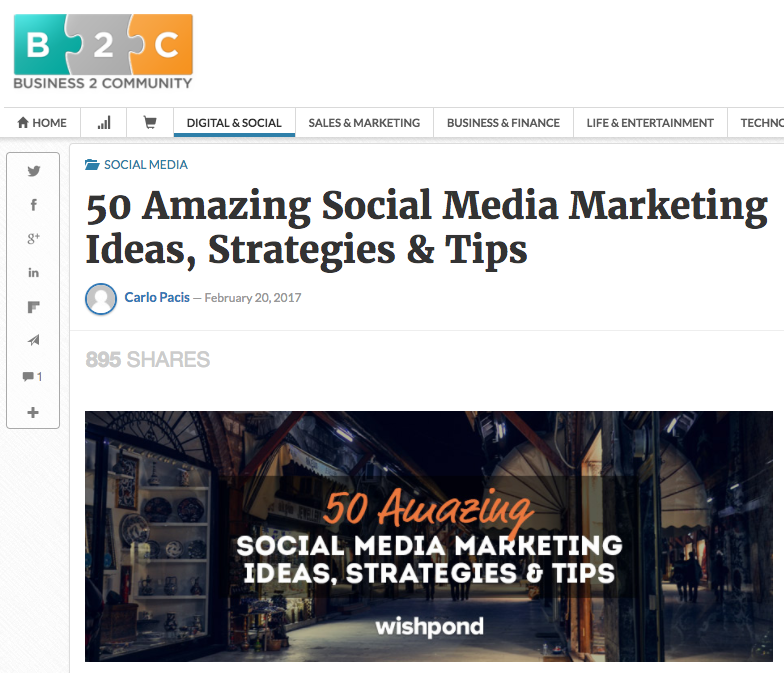
    • Business2CommunityManually submit your articles (or set up an automatic RSS feed-type deal) and have your content republished on the very popular B2C website.

Here’s an example showing a Wishpond blog article which received hundreds more social shares on B2C than it did on our own blog. This increases brand awareness and drives traffic to our site:

60 Essential Tools Weve Used to Build a Successful Startup from Scratch

For more on syndication, check out “6 Places to Syndicate your Content.”

For more on how you can drive website traffic, check out “How to Drive Traffic to your Website.”

Back to top ↑

Tools to grow on social media


Once your website is set up and collecting traffic from ads and PR, your next step is to establish and develop your presence on social media.

Depending on your business, the amount of energy you’ll find rewarded on social media will differ.

For some businesses, particularly retailers and ecommerce, there’s a lot of potential on social media. For B2B and SaaS, social media is often more a place to develop your brand, communicate a certain associated lifestyle, and drive awareness.

Tools We Recommend:

  • Wishpond Social PromotionsThe easiest way to drive new social media followers and engagement is through a social promotion – incentivizing your target market to engage with your brand online by offering a chance to win a prize. Wishpond’s promotion and giveaway apps make it super simple with pre-designed templates and codeless design.
  • BufferBuffer’s our stand-in tool for every great social media management platform out there. These tools allow you to schedule and publish to all your social media accounts from one dashboard. Several of these tools (including another favorite, Postplanner) also help you to discover the right kind of content to best engage your target audience on social media.

Honorable Mentions:

For a complete guide to starting on social media, check out my article “Social Media Marketing Plan: An 11-Step Template

For more on social media marketing tools, check out “199 Social Media and Content Marketing Tools

Back to top ↑

Tools to find success with content marketing


Okay. We’ve established a social presence and an online presence and we’re driving a bit of paid and PR-based traffic. What’s next?

You need to start creating content and blogging.

Why?

  • Content adds heft to your business’ online presence. Without a blog you’re nothing more than a whisper within the massive, complex world of the internet. With it, your voice gets louder and louder.
  • Content allows you to start ranking, organically, for search terms related to your business. This makes it easier for your prospective customers to find you.
  • Content develops your business’ place as a player in your industry. Your reputation increases; people start hearing about you and trusting what you say.

For example, here’s what pops up when you type “contest examples” into Google…

60 Essential Tools Weve Used to Build a Successful Startup from Scratch

Tools We Recommend:

  • Google Search ConsoleGoogle Search Console (part of the Google Analytics suite) makes it easy for your business to see how people are currently finding your website, what they’re searching for, and how you can do more of whatever it is that’s working (and stop doing what’s not).
  • Long Tail ProLong Tail Pro’s software enables SEO beginners to discover the best, most profitable, keywords and calculate Keyword Competitiveness for almost any niche.
  • Google Docs Google Docs stands out for content creators because of its collaborative abilities, revision saving and cloud basis – enabling multiple marketers to work on the same piece of content no matter where they are in the world.
  • BuzzSumoBuzzSumo helps content marketers identify what content is working best for their competitors.
  • GrammarlyWe all need an editor in our corner (even if we already have one, another doesn’t hurt). Grammarly is a web app and a browser extension that monitors the grammar and spelling of anything you write in your browser.

Honorable Mentions:

  • FeedlyA site allowing you to collate all the content of your competitors and the brands you love to read. A place to inspire your own strategy and keep up to date on everything happening in your industry.
  • MozIndustry-leading SEO software (though a bit more expensive than LongTail Pro), offering unparalleled analytics of your current SEO strategy and a data-driven approach.

For more content marketing tools, check out “77 Tremendous Tools to Make You a Content Marketing Superstar.

For more on content marketing strategy, check out “How to Build a More Complete Content Marketing Strategy.

Back to top ↑

Tools to get more out of your website traffic


To get the most out of your ad budget, content marketing expenses and all the other money and time you’re laying down to drive people to your site, you need to be sure you’re doing as much as you can to drive a paid conversion.

Some of this is about website optimization, or Conversion Rate Optimization (CRO).

Some of it is about implementing strategies and tools which reduce your website visitor’s bounce rate (the percentage of visitors to a particular website who navigate away from the site after viewing only one page.)

And some of it is about the strategies which can help your business engage with the people who visit your site but don’t convert on it.

Let’s take a look at some of the leading tools to get more out of your website traffic…

Tools We Recommend:

  • Wishpond Website PopupsNo matter how you feel about popups on other people’s sites, the fact of the matter is that they work. An exit popup with relevant messaging and a desirable offer can reduce your website’s bounce rate considerably. An entry popup notifying e-commerce visitors about a coupon code or limited-time sale can increase checkout rates. A scroll popup on your blog, reminding people they can subscribe to your newsletter and receive valuable information before anyone else, is one of the most powerful strategies for list-building. And click popups? Well, click popups are just about my favorite marketing strategy out there. And all of them are becoming an essential part of website optimization.
  • HotjarHotjar enables you to trigger polls (asking people for feedback) as well as funnel tracking, heat maps, session recordings and more. This gives you insight into how you can redesign your site based on the behavior of your visitors. Is nobody clicking on your “Start Free Trial” button because they don’t want to? Or because they don’t see it?
  • Optimizely Optimizely is the #1 A/B testing tool, and the one we use ourselves. It enables your business to send half of your website traffic to a “control” or original iteration of a page and half to a new design you think will convert visitors better.
  • Adespresso RetargetingThe fact of the matter is that a huge proportion of your website visitors are going to bounce no matter what you do. Before retargeting, they were lost. With it, your site visitors leave with a cookie attached to their browser. This enables you to show advertisements specifically to them, driving them back to your site to complete whatever conversion funnel they left.

Honorable Mentions:

  • CrazyEggCrazyEgg is the scroll-mapping, click-tracking tool used by many businesses to track how people are engaging on their website.
  • PerfectAudience A well-regarded competitor to Adespresso.

For more on using my favorite marketing tool (click popups) intelligently, check out my article “How We Doubled Blog Lead Generation with Click Popups.”

Back to top ↑

Tools to measure the work you put in


Alright. We’ve come a long way, and invested a lot of our time and resources to getting our site up and running, visitors showing up and going away as rarely as possible. So what’s our energy got us?

As yet, we don’t know.

And that’s like driving in a snowstorm with oven mitts on you hands.

Unless you know where you’re going, where you’re coming from and what’s working for you, you’ll quickly end up in a tree.

Yep, I’m talking about analytics.

And even that word is intimidating, so let’s identify some tools that make it easier…

Tools We Recommend:

  • Google AnalyticsGA is the essential tool for determining everything from your website and page traffic to your advertising ROI. It’s the tool every digital marketer uses and, fortunately, also has the most comprehensive (and free) training courses to ensure you understand exactly how it works.
  • Woopra Woopra is, far more than GA, a funnel-based analytic platform. For instance, it allows you to track the number of people who view your homepage, then product page, then signup page, then checkout page – giving a clear depiction of how well your site is optimized from beginning to end.

Honorable Mentions:

  • PingdomPingdom focuses on giving you data about your website’s uptime, performance, and transaction processes.
  • Open Web AnalyticsThis open source web analytics software makes it easy to track and analyze how people use your websites and applications.
  • TableauTableau works with Google Analytics data to provide more insight than you can get with the base tool. It also makes it easier to combine GA with other pieces of software you use (like Salesforce).

Back to top ↑

Tools to help your team work better


Building a successful business is as much about your ability to hire awesome people and get them to work well together as it is about the tools you use, the way you market your product or your ability to deliver.

You might think that you can do it all with email and face-to-face meetings, but why work harder when you can work smarter?

This being the modern era of business, there are better tools that can help you maximize your team’s time, keep them connected and keep them happy.

After all, a happy team is a productive team which sticks with your growing business.

Let’s examine some top tools which help you manage team projects, send campaigns for review, organize to-do lists, communicate and maximize workplace happiness.

Tools We Recommend:

  • TrelloTrello enables your team to set up to-do lists, coordinate projects and manage campaigns from beginning to end. It’s a must-have for any modern growth or sales team.
  • SlackSlack is the leading inter-office communication platform used by businesses to send messages, files and video-conference.
  • JostleJostle is a communications platform. It’s got a chat tool like Slack, but it’s also got a bunch of other features. People can post news and blog articles or share company-wide updates in a live feed. It enables teams to have all the communication benefits, alongside an emphasis on employee engagement not seen anywhere else.

Honorable Mention:

  • AsanaAsana is a leading Trello competitor and the tool used by our marketing and sales teams to manage projects, campaigns and client work.

Back to top ↑

Tools to succeed with email marketing


Email marketing is still the #1 way to communicate with prospective and existing customers. You’re going to get a better view and read rate than you possibly can with social media and it feels far less invasive than a phone call (even if you can get a number).

There are two crucial components of email marketing your new business: Newsletter (encompassing your mailouts to existing customers and blog subscribers) and Email Automation (encompassing your auto-response emails when someone buys and those emails you send to incentivize leads/contacts to become customers).

Let’s take a quick look at some tools which do a bit of both.

Tools We Recommend:

  • MailchimpIf you’re just getting started with email, Mailchimp is the way to go. Their free platform enables young businesses to manage newsletters, email templates, early-stage list-building and segmentation and some auto-response stuff.
  • AweberAweber’s focus is more on email automation than is Mailchimp’s, which is great for businesses who know what they’re doing but don’t have the money for a full-strength marketing automation suite quite yet.

Honorable Mention:

  • Wishpond Email MarketingWishpond’s email marketing tools make it easy to send simple newsletters as well as automate your auto-responses, send internal emails to sales and create email drip campaigns to turn your prospective customers and leads into sales.

If you’re interested in diving into email marketing, you might find our resource, “19 Proven Email Marketing Templates We Use to Sell, Nurture, Onboard, and Reach Out” to be valuable.

Back to top ↑

Tools to keep track of your customers


Once you start generating sales, you need to manage every stage of their experience.

You need to be tracking where they came from, who they are, what their “touchpoints” were within your website and sales funnel, which sales associate they spoke to, the value of their purchase, and more.

It’s a lot of information, and, to determine your return from each and maximize the chance of them selling again, you need to do it for everybody.

This is one of those “Wow I hope there’s a tool to help me with that,” moments.

And of course there are. They’re called Customer Relationship Management tools. And if you’ve ever heard of Salesforce but not totally understood what they do? Well now you know.

Let’s take a look at Salesforce as well as their leading competitors….

Tools We Recommend:

  • SalesforceSalesforce is the leading CRM software out there, and for good reason. Their system does absolutely everything you could possibly need it to when it comes to organizing your prospective and existing customers, keeping track of their transactions, recurring revenue and more. Thousands of businesses consider it well worth the price.
  • PipedrivePipedrive is the CRM platform we use. It’s simpler than Salesforce and offers all the tools we need. It’s a great example of a general truth about choosing the right tool for your business: it’s often worth considering a brand that’s a little lesser-known. They have more to prove and, as they’re up-and-coming, will often deliver more bang for the buck.

Other Great CRM Competitors:

Back to top ↑

Tools to Connect your Tools


Imagine your online business like a basketball team. Now imagine all these tools are the players. Only when they’re working together can you get anything done.

Without connectivity, whether through integrations or the tools I list below, your Center might pass to your point guard but and hit him in the face because wasn’t looking.

Online marketing works the same way.

Unless my campaign page is connected to my email platform, what’s the point in me getting a single subscriber? I can’t do anything with them.

Unless your marketing team can “tell” your sales guys that someone wants a VIP demo (without having to walk over with a post-it note), they’ll never know, and that prospective customer will slip through the cracks.

Let’s take a quick look at a couple great tools which connect your software and tools together, ensuring they can see each other.

Tools We Recommend:

  • SegmentSegment offers more than 180 single-direction integrations, meaning your online business can send data quickly and easily to software without having to integrate directly (Segment already is). This can be a lifesaver for early-stage businesses who need to, for instance, connect a transaction with an attribution tool.
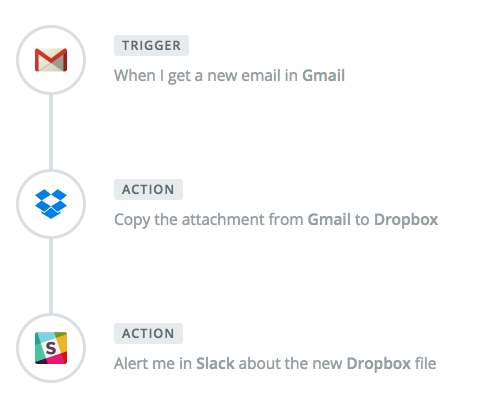
  • Zapier Zapier is the big daddy of “tools that connect your tools.” With more than 750 integrations (including almost every one of the tools in this resource), Zapier is an incredibly powerful platform. It allows businesses like yours to connect one side of your marketing strategy with another, without hours of expensive coding.

Here are a couple examples of Zapier, to clarify how cool it can be. The first is the written example on Zapier’s website, explaining the connection, and the second is a “Zap” that Wishpond used to use to send sales associates the contact info of new leads:

60 Essential Tools Weve Used to Build a Successful Startup from Scratch

60 Essential Tools Weve Used to Build a Successful Startup from Scratch


Back to top ↑

Tools to save yourself time


Now that you’ve got all the tools you need to build a business, there’s nothing left but to get those tools that save us as much time and energy as possible in any given day.

These will cover both the tools which help you get more done as well as the tools which make the complicated easier.

Tools We Recommend:

  • Upwork or FiverrDon’t have a graphic designer in-house? Hire a freelancer in minutes through Upwork or Fiverr. The same goes for content creators, translators, web developers, and any other short-term contract need you have. These tools can save you serious time and money, and allow you to focus on doing what you need to to grow your business (rather than trying to learn Ruby on Rails while you should be sleeping).
  • CanvaIf you do want to dive into visual content creation, Canva will give you a solid leg-up. Templates, easy image editing and hundreds of icons, graphics and font choices make visual content-making simple.
  • Google Chrome Plugins:
    • LastpassWith all these tools, remembering their logins and passwords can be impossible. Use Lastpass to share login details with yourself and your team. All you need is to remember a single “Master” password and you’ll stay secure.
    • Nimbus ScreenshotIf you’re creating content, whether blog articles or case studies, you’ll need a reliable screenshotting tool, and (for me) Nimbus is that tool. It enables section screenshotting and scroll screenshotting as well as some really handy image editing.
    • Keyword Everywhere To quickly and easily determine the search volume for any given keyword, just type it into Google. If you have the Keyword Everywhere plugin, you’ll see the volume, CPC and competition right beneath the search results.
    • ColorzillaAny designer or content creator will love Colorzilla for its ability to quickly and easily grab the hex code of any color within your browser. Colorzilla stores all your “dropped” colors and makes it easy to keep your designs on-brand and visually awesome.

For 11 more awesome Chrome plugins, check out “17 Chrome Apps Every Digital Marketer Needs to See.”

Time-Saving Tools to Remember

  • Social Media Management Software – A great SMM tool will save you hours of time with scheduling and analyzing your social media profiles.
  • Email Automation Software – There is nothing more time-consuming than writing a hundred emails to your prospective customers. Use marketing and email automation tool instead to create the illusion of personalized email without the time involved.

Back to top ↑

Wrapping it Up


Hopefully this resource will help your new business achieve its goals. These are the tools that have helped us grow our business, and without them we’d still be crammed into a tiny room on the 9th floor, drinking Red Bull like it was water and waiting for the other shoe to drop.

With help, hard work, a bit of luck, your business can find success online. And remember, we’re here to help you get there! Don’t hesitate to reach out in the comment section below.

And thanks for reading!

05 Apr 16:14

What Are the Best Practices in B2B Public Relations That Will Drive Success?

by Wendy Marx

What Are the Best Practices in B2B Public Relations That Will Drive Success

Sometimes changes in business are so profound that you don’t recognize the old ways. That’s the case with B2B PR, which on some level is a new profession. Yet, viewed from another lens, certain basic truths remain.

As we look across the B2B PR landscape, what are the best practices that will ensure success? Let’s look at 7 definitive best practices that are guaranteed to help:

  • Goal Setting
  • Education
  • Content Optimization
  • Social Media Amplification
  • Influencer Marketing
  • Storytelling
  • Measure and Readjust

What Are the Best Practices in B2B Public Relations, and How to Use Them Effectively

1. Set Clear, Attainable Goals

Setting goals is nothing new, but nonetheless, it’s essential to success — whether we’re talking about 10 years ago or today. How will you know if you’ve succeeded unless you have clear objectives from the start? They help you to map your progress, see what needs to change, and keeps you on track.

What goals would you like to reach with your B2B public relations? These could include:

  • Boost Brand Awareness
  • Generate and Nurture Leads
  • Establish Thought Leadership
  • Secure Key Media Placements
  • Establish a Solid Reputation

The goals you choose will determine your tactics going forward. For example, if your goal is to build awareness, then determine what people you want to reach and the best way to do so. This could be anything from media relations, to content marketing, to social media, to awards, to speaking engagements, to webinars…you get the idea.

The key is to understand what tactics will be most effective. You can only know that by analyzing your prospects. Ignore that, and you will be unfocused and ineffective. Take the same strategic approach with all of your goals.

2. Educate Your Audience with High Quality Content

Part of effective PR comes down to education. B2B buyers have strayed away from the traditional buyer’s journey. In fact, 94% of B2B buyers do their own research before making a purchase decision. The takeaway? For successful B2B public relations, you should make your website the go-to destination for information in your industry.

Your goal should be to craft blog posts and other content that will answer every possible question your readers could have. Consult with your sales team to find out what questions they receive in their daily communications with prospective buyers, and leverage those questions in your content. This kind of content will establish your credibility and reliability within your industry. When your audience is ready to make a purchase decision, you will more likely be top of mind.

While the educational quality of your content is most important, it will also help you to produce content in a variety of formats that satisfy a range of reading preferences. Your content formats could include:

  • Blog posts
  • Ebooks
  • White papers
  • Case studies
  • Images
  • Videos
  • Infographics
  • Slideshares

Having a variety of content like this can be helpful in reaching prospects at every stage of the buyer’s journey — whether they’re browsing for information, or seriously looking to do business.

3. Optimize All of Your Content

You might have the best and most educational content, but if it’s not optimized for search engines, you’re missing out on a big chunk of potential readers. With a basic knowledge of SEO, and a little effort, your content can show up in organic search results. This will lead more people to your content, and increase your brand awareness.

While short-tail keywords may be easier to write about, there is much more competition to rank for these keywords. Instead, strive for long-tail keywords — perhaps a specific question that people often ask — that has less competition, and will place you higher in Google.


4. Spread Your Message on Social Media

B2B public relations has changed tremendously thanks to social media. Nowadays, you can connect and chat with reporters, send out press releases, and engage with clients all from Twitter or LinkedIn.

One of the main goals of PR is visibility, and social media is a helpful tool to get you there. You can attract more leads to your website by distributing your original content on your social networks. Especially on Twitter, labelling your content with hashtags can help more people to search for and find your content.

There are huge differences between the various social networks, and savvy entrepreneurs understand which ones are best suited for their business and style. –Mike Allton

5. Bring In Influencers

Influencer marketing has blown up in recent years, and for good reason. More and more people are distrustful of brands in general, and are more likely to follow advice from a trusted source. Influencers have gained the trust of their audience. You can leverage that trust by working with influencers that believe in your product.

Start off by engaging with influencers in your industry over social media. Observe them at first to see what content interests them, and how they engage with their audience. Then start to engage with them — comment on and share their posts, and start conversations with them. Once you’ve built a relationship, you can approach them about working with your company in an influential capacity.

6. Implement Storytelling in Your Press Releases

While some believe that press releases have ceremoniously met their finish, we argue that press releases just need to be adapted for the modern, journalistic world.

With news outlets continually scaling back, and journalists under a crunch to find a great story, press releases need to get to the point, and pique a journalist’s interest. One key way that has emerged recently is storytelling. PR professionals are throwing out the rigid — ahem, boring — press release rule book that was commonly used, and creating stories that grip journalists from the first line. A good press release is brief, impactful, and includes visuals.

Stories have the potential to move us to tears, change our attitudes, opinions and behaviors, and can even change our brains. –Kim Garst

7. Measure Your Results, and Readjust When Needed

Sometimes metrics can mean all the difference to the success of your PR. Why? With the large volume of content and ads available across the internet, audiences are more selective than ever of their content. It takes time to find the right blend of content that will resonate with your brand’s audience.

New technology developments mean that you can measure virtually every aspect of your PR — from how many click-throughs you get to your landing pages, to how many likes and shares your social media posts receive. This allows you to see what is successful, and what parts of your B2B public relations would benefit from a slight tweak or replacement.

Whether you use a free program like Google Analytics or a paid program like Trendkite, it is imperative to measure what you are doing.


Key Points to Remember…

  • Create educational content that answers real questions that your audience has.
  • Embrace social media, and post original content that leads people back to your site.
  • Update your press release best practices with storytelling.
  • Measure your results, and be ready to adapt your approach when metrics show a need.

B2B PR is a large investment of time and energy. Make that investment count by adapting your approach when needed. Now that you know what are the best practices in B2B public relations, go out and embrace these changes.

05 Apr 16:12

3 surprisingly easy inside sales methods used by the pros

by ramin@close.io (Ramin Assemi)

inside-sales-methods.png

“Sign this contract RIGHT now!”

“You need this product more than you need AIR!”

“Buy. Buy. Buy. Buy. Buy!!!!”

That’s how many sales professionals come off when they’re talking to prospects.

Sure, coffee’s for closers, but going in for the close immediately is a one-way ticket to getting a cup filled with nothing but grinds. But maybe that’s your style. Maybe you’ve embraced this hard-hitting, sell-sell-sell, buy-buy-buy, take-take-take mentality and have had some success with it—I don’t know.

But I do know that more and more sales professionals are taking a more strategic approach. Why?

Because it works.

The best sales professionals recognize that in the world of inside sales, you need to establish rapport and gain the trust of your prospects in order to close. You’re no longer just competing with your direct competition for your prospects’ attention. You’re competing with email newsletters, social media ads, white papers, blog posts and more.

To close a deal, you need to embrace a more strategic method, a method that can be leveraged consistently to get your foot in the door and showcase the true potential of what you have to offer. In this blog post, I’m going to share with you three of the most popular methods that inside sales professionals are leveraging to do exactly that.

Join thousands who've learned to sell with the free Startup Sales Success Course.

1. The consultative selling method

Consultative selling is one of the most popular sales methods used for inside sales. The term was coined in the early 1970s and is often misunderstood amongst sales professionals. The RAIN Sales Training Group describes consultative selling as an approach to sales whereby sellers maximize value through:

  1. A mix of understanding, shaping, and redefining need; crafting compelling solutions to address the need; and communicating maximum impact for the buyer (core consultative selling).
  2. Inspiring buyers and driving change with ideas that matter (advanced consultative/insight selling).

At its core, consultative selling is built on gathering deep insight about a lead, using it to gain an understanding of their needs, and delivering a message that resonates with the prospect so that they want to take your sales call or buy what you’re selling.

The first step when leveraging the consultative selling method is conducting research and gathering data about the prospect. You’re looking for information that will help you open a conversation with your prospect and begin to understand their needs. Whether it's reviewing LinkedIn connections or the strategic goals established by the company, you want to gain enough information that you can anticipate and develop questions prior to contacting them.

Once you are comfortable with your research, it’s time to craft a compelling story that will resonate with your contact. Reach out with this compelling message and initiate a dialogue where the prospect does all the talking and you do all the listening. Your goal here is to understand their needs and pain points so well that you can craft a message about your product or service that lines up directly with these issues. Keep in mind, you’re not selling featuresyou’re selling benefits [Tweet this!].

After listening to the prospect’s needs and crafting a compelling story, it’s time to close the deal. It shouldn’t be challenging to close the deal after taking these steps because you’ve qualified your lead, painted a clear need-solution picture, and established a strong relationship by adding value before they spend a cent.

2. The empathetic yet strong parent method

Let’s say you’re a parent.

What would you do if you walked into your bedroom and saw your child doing this:

empathetic-strong-parent-inside-sales-method.pngI sure hope you wouldn’t start with the consultative method. Because in this scenario, there’s no time for “I really think you should consider the different things you could chew on right now instead of this cord.”

No, in this scenario, you need to be empathetic yet firm. You need to quickly take action by removing the cable from your child’s mouth (whether they like it or not) and explaining why it was a bad decision.

Just as parents know best, it’s your job to establish yourself as an authority in your domain. If you notice that a client is using something that isn’t going to help them achieve their goals, be empathetic but firm in explaining why. The same way a child trusts a great parent, a prospect trusts a great salesperson.

This method of sales takes the management practice of Radical Candor and places it into a sales environment. During a CEO Summit, Kim Scott talked about the role that Radical Candor played in helping her achieve success while working at Google.

Kim Scott broke down this idea into a simple framework:

radical-candor-inside-sales.pngThe vertical axis is a measure of “caring personally” and the horizontal axis is a measure of “challenging directly.” When using this model in sales, you want to take a stance that falls in the upper right quadrant—strong caring and strong challenging.

You want the prospect to know that you care about their personal success. You do this through the various interactions that lead up to the moment in which you deliver a message with Radical Candor. The follow-up is where winning really happens. It could be adding value by sharing valuable content and letting them know about a product update that helps them accomplish their goals better. Or it could be as simple as sending them a sales email that keeps you on top of their mind and puts a smile on their face.

The horizontal axis is all about challenging your prospect to think differently. If they’re doing something that could reduce their chances of success, address it. View this moment as a chance to help them, a chance to earn their trust, and most important, a chance to showcase why working with you is one of the best things they can do.

3. The competition comparison method

Think about your biggest competition.

It could be competition in the form of a sales colleague who is trying to beat you in reaching a quota. It could be competition in the form of another company that is selling something the industry would compare to your offering.

What if I told you that you could get an advantage over both of them? What if I told you they knew something you don’t? Wouldn’t you be interested in learning more?

That’s why the competition comparison sales method works so well in getting your foot in the door with a prospect. The competition comparison sales method is the tactic of getting a prospect’s attention by leveraging insights about their competition. You don’t even have to be working with their competitors. But the potential buyer needs to be aware that their competitors could very easily gain a competitive advantage by investing in a service or product like yours—if they haven’t already.

Here are a few different ways to frame the conversation when taking this approach:

  • Your competition is currently doing X to solve a specific pain point. From what we can see, you’re not doing anything in that direction.
  • We’re working with companies like your competition and helping them solve a specific pain point.
  • This solution is something that companies like your competition are very interested in to solve a specific/common pain point.

And that’s just a start!

At the end of the day, no one wants to be left behind by their competition. The competition comparison method is a great approach for capitalizing on this reality to establish and close deals.

Here’s your next step

Are you ready to take one of these inside sales methods and try it in the field?

If so, I want you to start this process by investing some time in research. Across all three of these methods, research is where you need to start to make them work. There are plenty of great prospecting tools sales reps can use to gain this insight.

Spend time understanding your current prospects’ needs, their competition and the things they might be doing that require empathetic but authoritative intervention. Once you’ve unlocked these insights, use them to open the door and close the deal.

Have you used any of these methods in the past? Do you have any go-to approaches that you’ve leveraged successfully? I’d love to hear from you! It’s always great to learn how other sales professionals are getting it done in the field.

Ready to become an inside sales pro? In my free Startup Sales Success Course, you'll learn sales advice and strategies you can immediately put into action to win deals. Click below to get started.

Join the free Startup Sales Success Course today

Recommended reading:

Inside Sales: What it is, why it matters, and how to do it right
Inside sales is booming, and it'll only keep growing in the years ahead. Learn more about what inside sales is and how to drive more revenue in 2017.

Wolf or lamb in SaaS sales?
A lot of people who are just getting started in sales mistakenly do it wrong. Either they sell like The Wolf of Wallstreet by being overaggressive or sell like a lamb by being docile and weak. Here's how to avoid either approach.

How to sell to "nonbelievers": Turn doubt into trust
You can't sell without trust. Here's how to instill trust and a desire to buy into nonbelievers and people who have doubts and fears about buying your product.

05 Apr 16:10

Process Makes Perfect With Your MarTech Stack Architecture

by Lauren Kincke

From reading my last three posts in this series, I trust you understand the importance of tackling legacy technology and data. Are you empowered to manage the conversations around those items?

Next up, let’s talk about how to inventory and optimize your processes, and use that data to understand where technology can close the gaps, solve the problems and grease the wheels between processes.

The process of analyzing your processes should start from something basic (but likely difficult to agree upon), a common set of goals and objectives. Yes, we all have the same goal, for our company to succeed. Is that enough specificity to ensure that we are meeting on common ground? No.

This series began with my assertion that B2B marketers need to establish a foundation before putting together MarTech architecture. That assertion is still true, but the foundation starts with organizational alignment and finding a shared set of goals. Whether it is sales and marketing, marketing and IT, or another collaborative combination, establishing a shared set of goals allows you to determine if what you are doing gets you where you want to be.

Step 0: Build a team

Business operations do not function in a silo. Individual members of the organization are tasked with fulfilling different pieces of the process. It is a TEAM effort. The marketing team should represent a cross-functional group that understands different needs within the organization and provides a solution that holistically works for the group.

Step 1: The inventory

No surprises here. Start by creating an inventory of where each business process exists. Basics include:

  • How leads move through your marketing and sales teams (aka lead management).
  • How you build and manage campaigns.
  • How you manage the customer experience (from prospect to customer and up-sell/cross-sell/renewal).

This is not exhaustive, so don’t stop with this short list. Remember, there are likely sub-processes within these processes.

Step 2: Documentation

Take your inventory and document the full state of each process you have listed. Fun, right? Well, perhaps for those who love Visio! Identify who is involved if the process is all human driven, what systems are involved and the level of detail around what data is passed and where.

Step 3: Mind the gap

Now that you have an overview of your processes, what gaps do you notice? Perhaps you cannot see gaps in documents you have created. That’s ok, because you have a team perspective. Business processes develop over time, they evolve (or don’t) based upon who is executing them. Sometimes they have holes and do not reflect an optimized process.

By taking a critical eye to your processes you begin to see where things don’t make sense. For example, if your campaign planning, build and execution process takes 32 weeks (aka half a year) you lose the ability to be agile and it is likely your message is outdated before it is even executed. I couldn’t make that number up; I have actually seen a client process whose original state was 32 weeks from start to finish. It is easy to see as an outsider the insanity.

Your gap assessment is a combination of assessing where processes do not exist and looking for ways to optimize your processes for success, agility and speed.

The practice of assessing your processes may be painful for those who want to just act and move forward. While you may be tempted to skip this step, don’t! Identify your processes and understand what the ideal state looks like. This clarity will enable you to determine your ideal MarTech stack right now and in the foreseeable future.

05 Apr 16:10

The Ultimate Guide to Using Live Chat Software in Sales

by afrost@hubspot.com (Aja Frost)

live-chat-sales-compressor-105292-edited.jpg

In the past, buyers relied on salespeople for product information. Now they can discover the same details online in a matter of clicks.

But salespeople shouldn’t be content to hang back and let their prospects do all the work.

Prospects still have questions they can’t always resolve by reading an FAQ or product page: Can that version do X under these circumstances? Will it support Y? What’s the vendor’s policy on Z?

“When a buyer raises her hand, she’s indicating that she wants to speak with you about something specific,” explains David Meerman Scott, author of “The New Rules of Sales and Service: How to Use Agile Selling, Real-Time Customer Engagement, Big Data, Content, and Storytelling to Grow Your Business.” “This is a moment of enormous opportunity.”

However, Meerman Scott says it also poses a huge challenge. Buyers expect salespeople to know more than the content on their website. They also expect extremely quick responses to their questions. After all, they’re accustomed to receiving information as soon as they want it.

Enter live chat software. Sites with real-time messaging allow you to help prospects in real time, engage them at pivotal moments in their buyer’s journey, and generate inbound leads without salespeople lifting a finger.

How to Use Live Chat Software in Sales

What’s Live Chat Software?

Live chat software lives on your website -- usually on specific pages, such as your homepage, product, and pricing pages -- and enables real-time conversations between your sales team and prospects.

This tool is the latest evolution of buyer-seller communication. In the past, a phone call was the fastest, most direct way for salespeople to connect with prospects. But these calls were often inconveniently timed for the people picking up. Calls also lack context: Prospects think, “Who’s this person, and why should I care?”

Emailing enhanced buyer-seller communication, since a message offers more convenience and context than a call. However, even emails are slower and less efficient than live chat.

When Do People Use Live Chat Software?

Prospects typically use live chat during the consideration and decision stages of the buyer’s journey. Either they’ve defined their challenge or goal and are investigating specific solutions, or they know which offerings they’re most interested in and are determining their final choice.

As a result, most questions will revolve around product benefits, features, proven results, pricing, and various tiers or options.

To make live chat a success, provide a valuable, helpful experience. HubSpot inbound sales consultant Alexis Sells shares her advice on chatting with prospects.

Make Helping Your First Goal and Qualifying Your Second

“Talking to a prospect over live chat is extremely different from sending an email,” Sells says. “They’re talking to you because they have an incredibly specific agenda.”

That’s why your primary purpose is answering the prospect’s question, rather than inciting curiosity, urgency, or giving them a clear call-to-action.

Your secondary purpose is qualifying them for your product or service.

“It’s give and take,” Sells says. “Collect one data point from them, give them a piece of information, collect another data point, and so on.”

She advises setting the expectation you’re happy to help but need context to do so.

“Let’s say a prospect asks me if HubSpot offers mass mail,” Sells says. “I’d reply, ‘Great question. Before I answer, may I ask you a couple questions about your company and goals so we can figure out whether that’s the best solution?’”

In Sells’s experience, prospects are responsive as long as they’re aware why you’re asking for more details.

When those details suggest the prospect is a good fit, say something along the lines of:

“We have a salesperson who can walk you further through [topic]. Do you want to book a time with them?”

When the prospect isn’t a good fit, don’t leave them high and dry. You never know if their circumstances will change or they’ll move to another organization that’s better matched to your offering. Treat them well now, and they could reward you with their business in the future.

Here’s a sample message:

“I’m really happy I could answer your questions. Let me send you an email with a couple additional resources.”

Keep It Short and Simple

Sells recommends capping each message at five sentences or less.

“Prospects start live chat conversations because they want their questions answered quickly and efficiently,” she says. “They’re not looking for an extended discussion. Keep your responses brief, or they’ll get frustrated.”

Along similar lines, reply to the prospect’s first message as soon as you can. According to Sells, prospects typically become impatient if you don’t answer right away.

Once the conversation has begun, you usually have a little flexibility in response time -- the prospect knows you’re there, so they’ll wait longer before exiting the page.

Keep track of your average chat length to determine how many separate threads you can handle at one time.

“My live chat conversations generally lasted three to 10 minutes,” Sells says. “I felt comfortable participating in up to three simultaneously.”

The complexity of the conversations also plays a role. If your prospect’s questions demand your full attention, consider limiting yourself to one at a time. However, if you get the same questions again and again, you might be able to chat with five prospects at any given time.

Just make sure the quality of your responses doesn’t suffer. If a potential buyer feels dissatisfied by the interaction, they may drop you from their list of potential suppliers.

Be Human

When Sells first started using Messages, she was constantly fielding questions about being a robot.

“It’s easy to sound robotic over live chat,” she says. “I was sending rapid bullet point answers. People felt like they were communicating with a bot, not a person.”

To humanize your conversations, Sells suggests using phrases like:

  • “Hi, how are you?”
  • “I’m [your name]. How are you doing?”
  • “Nice to meet you, I’m [your name].”
  • “How was your weekend?”
  • “Great question, let me check on that for you.”

“When a prospect cracked a joke, I’d write ‘LOL’ or ‘haha,’” she adds. “Basically, I tried to be myself.”

If you’re struggling to sound natural, draw inspiration from texts you’ve sent your friends and family members. Replicating that style to a tee isn’t wise, as you’ll sound too casual, but this exercise will help you develop a professional voice that still sounds like “you.”

Emojis can humanize your conversation as well. Sells says they add a friendly tone to your message, although she tries not to use more than one or two per conversation.

Finally, don’t forget your demographic. If your typical customer works in a creative industry, like marketing or design, you can be more informal. On the other hand, if they work in finance or medicine, take a more conservative approach.

Never Say “No”

The worst response you can give is “no,” Sells cautions.

“If they ask a question and you shut them down with ‘no,’ or ‘I can’t help you,” they’ll leave and might never come back,” she says.

When your product is missing the feature or capability a prospect asks for, you don’t know an answer, or you’re confused by their request, Sells recommends asking more questions. This way, you can gather more information and hopefully provide a helpful answer.

Put It All Together

Here’s a hypothetical conversation illustrating the key concepts of this post:

Prospect: How do you encrypt patient payment data?

Rep: Hi there, I’m Evan. Happy to help. Mind if I ask some details about your needs so I can give you a more accurate answer?

Prospect: OK.

Rep: Awesome. What’s the name of your organization, and what type of payments are you processing?

Prospect: BlueHealth. The majority are recurring payments, but we also accept HSA/FSA cards and checks.

Rep: Since you’re processing payments on-site, you’ll need point-to-point encryption (P2PE). Our solution encrypts patient data at the point of interaction (POI) so it’s extremely secure. It’s been validated by the PCI Security Council, so it’s fully compliant.

Prospect: Got it, thanks.

Rep: No problem. :) Would you like to set up a time with Irie, one of our reps? She can walk you through P2PE in more detail.

Prospect: That sounds good. I’m free tomorrow after 1 p.m. EST.

Live chat software benefits everyone. Buyers can resolve their questions near instantly, and salespeople can increase their number of qualified leads.

HubSpot Free Sales Training

05 Apr 16:10

The 4 Golden Rules of a Successful Procurement Negotiation

by rmakela@salesreadinessgroup.com (Ray Makela)

negotiate-with-procurement-compressor-445406-edited.jpg

When the business stakeholder tells you, “We like your solution and will send the proposal to Procurement,” what’s your reaction?

If you think, “Great, my job is done,” you’re committing a significant mistake. Procurement is often a black hole for deals.

Your contract usually goes to the bottom of their pile, where it sits … and sits … and sits, while you get frustrated and are forced to push out the expected close date.

Time is never your friend in sales: While your winning proposal sits in Procurement, a competitor could come in and take the order, the customer’s company might be acquired, your sponsor could get fired or quit, or other priorities could pop up that steal your funding.

Ultimately, your hard work goes to waste because you moved on before the deal was truly won.

Successful salespeople treat procurement negotiations like another stage in the sales process. To make it through the black hole with your deal intact, follow these guidelines.

1) Remember Procurement’s Objectives

Working with Procurement often feels adversarial. Not only are they expert negotiators, they’re trained to drive down costs and get discounts.

However, it is possible to partner with -- rather than battle -- Procurement. To build a mutually beneficial, long-term relationship, reps must treat them as a key stakeholder in the opportunity.

Think about Procurement’s goals and how you can help them accomplish those, just like you’d do with a traditional stakeholder.

Yes, getting the best possible price is a major objective. But Procurement also works to mitigate risk, make sure suppliers are operating ethically and professionally, screen out suppliers who aren’t fiscally stable, and project a return on strategic investments.

Build those goals into your pursuit plan. For instance, if the prospect’s company has had several issues with unethical suppliers, you should highlight your organization’s perfect track record in that area. Discuss how your company’s values align with the customer’s values. Demonstrate why you’re a good partner to work with for the long term.

Wondering how to figure out Procurement’s priorities in the first place? That leads me to my second suggestion.

2) Ask for a Meeting

Don’t wait until the proposal is finalized to speak with Procurement. Request a meeting with them relatively early on. You might ask the business stakeholder, “We’d like to learn more about Procurement’s evaluation criteria. Can you help set up a meeting with them?”

If you have a good relationship with your point-of-contact, it’s a good idea to include them in this meeting as well.

Use these following questions to determine Procurement’s role and priorities:

  • “What do you look for in a partner?” (Or if you work with them already, “What can we do to be a better partner?”)
  • “Do you have a standard operating agreement for suppliers? Can we review it?”
  • “What materials and information do you need from us to finalize the contract?”
  • “Which steps need to happen next, and what is the approximate timeline for approval?”

If you’re unable to get a meeting with Procurement, ask your contact to outline the steps and approximate timelines necessary to get an agreement approved. Document this in an email and send it to all parties involved.

3) Prepare Your Materials in Advance

Once you know what Procurement needs before they can finalize the contract, start preparing those items. They might need to check your organization’s insurance, speak with customer references, run background checks on your employees, perform due diligence, build a business case, and/or run your proposal through an ROI calculator.

Salespeople usually discover what Procurement needs when they get an urgent request. Not only does getting approval take a lot longer than it could, you can’t accurately forecast when the deal will close. Don’t leave these items up to chance or be at the mercy of Procurement to drive the process. Take control of the deal here just like you did during the initial sales conversations.

Think it’s risky to prepare materials before you know if they’ll be necessary? Think again. Failing to take control of this process is far riskier.

In addition, you’re likelier to win the business if you prepare. Having everything Procurement needs sets you apart from the other vendors -- not only does it prove you’re invested in the deal, it also foreshadows how they’ll be treated as your customer.

Being proactive and professional tells prospects you’d be a fantastic supplier.

4) Instill Urgency (Again)

The decision maker clearly understands why having this solution is important now, rather than later. They want to start receiving the benefits of your solution as soon as possible. Yet Procurement often isn’t on the same page.

If you want them to prioritize your deal, make sure they’re aware of the decision maker’s timeline and expectations.

For instance, suppose you’ve established the decision maker needs the product by the beginning of next quarter. You might tell Procurement, “We need to kick off the project by [date and time] so [stakeholders, team, department, company] can hit [X goal]. To do that, we’ll need to finalize the contract by [Z date}. Is there anything that might prevent us from hitting that date?

You should also lay out the cost of waiting. If they know your solution will save them lots of money, they’re less likely to delay.

Many salespeople go on cruise control as soon as their main sponsor gives them the green-light. But don’t take your eyes off the road yet -- if you want that commission check, take control of the Procurement approval process and don’t leave anything open to chance.

Interested in learning more about how to better work with Procurement? Download a complimentary copy of the Clearing the Hurdle White Paper to access key strategies and tactics to prevent deals from stalling out when Procurement gets involved.

HubSpot Free Sales Training

05 Apr 16:09

6 Key B2B Lead Generation Trends To Watch This Year

by Will Humphries

Strategies used in B2B lead generation evolve as companies gain new insights into what does and doesn’t work to attract the most qualified leads. Keeping track of trends in this area will help your business stay at the top of the game in driving prospects who convert efficiently.

With the first quarter of the year now behind us, let’s look at some of the most prominent trends in B2B lead generation for 2017.

Reach Across the Channel

Generating leads doesn’t take place in a singular channel or device vacuum. Instead, you must get your message in front of prospects across multiple channels and devices. After all, B2B buyers typically conduct their buyer journey through various potential points of contact.

Cross-device retargeting, or lead generation campaigns targeting previous visitors on tools such as Google AdWords and BingAds, are standard approaches to reach out to prospects throughout their path.

But if you have many services you sell, make sure to use dynamic remarketing to ensure you are delivering the right message. Dynamic remarketing lets you show previous visitors ads based on products or services they viewed on your website.

Email remarketing is another great way to market new offers to prospects that have previously signed up for newsletters, webinars, product testing etc., but have yet to convert to a full-blown customer. You can do this across your choice of marketing channel such as Instagram, Facebook, AdWords, YouTube, Twitter.

Content Marketing Commitment Escalates

The commitment top marketers have made to content production and distribution has ramped up significantly in 2017. B2B buyers continue to turn to search engines like Google and Bing for information on resolving core business problems.

According to the 2017 Content Marketing Institute report (Full PDF), 61 percent of UK marketers are “extremely” committed to their content marketing strategy.

Competition has increased as well, as 60 percent reported finding more success with their strategies than they had the year before.

Facebook is the Social Media Giant

The most recent Pew Research report showed that Facebook remains the giant of social media, with its user base growing to 79 percent of all internet-using adults. Facebook also leads the way in terms of active monthly user engagement.

These data points indicate the capacity for a B2B provider to connect with valuable prospect accounts or decision-makers with regular, useful messages.

In addition to text-based posts, Facebook offers a lot of visual content options, including live streams, video posts, and images.

61 percent of UK marketers are extremely committed to their content marketing strategy

Landing Pages Seal the Deal

More B2B providers recognise that attracting interest from prospects is just one step toward effective lead generation. It takes a high-quality landing page with desired information and proof points to seal the deal.

Your landing page content needs to quickly and concisely address primary questions of your visitors, and then drive them toward the next step in their journey.

It’s not about clicks and conversions, it’s about getting the right conversions. Your landing pages need to be capturing leads that your sales team can close.

Outsourcing is a Popular Option

The CMI study revealed that a startling 74 percent of UK companies rely on one person or a small team of individuals for all content marketing activities. Optimum success is difficult to achieve with such little investment into this critical area.

However, the costs of building and maintain a larger internal team are challenging. Therefore, companies are looking more to outsourced partners to provide for their content marketing needs, including strategic planning, creation, and distribution.

Account Based Marketing

Finally, we can’t close out without mentioning the three little keywords dominating marketing circles – account-based marketing. According to a survey about ABM trends by Scratch Marketing and demandDrive, seventy-four percent of respondents are planning to invest in ABM this year.

However, it’s also worth noting that in a Chief Marketer survey on ABM the follow stats were revealed by B2B marketers:

  • 43% of B2B marketers claimed to be using ABM
  • 48% indicated that they were challenged with creating the right content
  • 37% claimed their troubles resided in the inability to understand the buyer’s journey of their target accounts
  • Only 21% of B2B marketers are concerned with the first click
  • 49% of marketers indicated cost of conversion as the most important metric
  • Time to conversion was rated as most important by 47% of respondents

Wrap Up

Keeping up with the factors that drive B2B marketing success sets your company up with the best opportunity to achieve its objectives. In 2017, top trends include an emphasis on a multi-faceted communication strategy fueled by lots of content and social media messaging. Outsourcing content creation and distribution to professional partners is also a popular trend.

However, account based marketing is the topic that everyone needs to keep one eye upon.

04 Apr 16:11

5 Working Examples for How to Interview Industry Experts [Infographic]

by Zac Johnson

In the world of websites and blogging, the one common theme across all sites is a never-ending need for more content. In most cases, content creation isn’t the problem… it’s more about content promotion and giving something of value to your audience.

With all of this in mind, one of the best ways to accomplish both of these feats, is to create content based around industry experts. The benefits of creating content around authority figures in your space is vast, such as bringing recognizable authority names to your site, while also having the opportunity for such content to be shared by featured experts as well. The end result could create lots of great content for your site, while also bringing in a nice consistent supply of new traffic as well.

To help with this process of discovering what works best when it comes to interviewing experts online, Blog Reign has created a great infographic on this topic — giving five working examples of how to create authority and experts content on the internet today.

Try each of the content creation methods below and see which might work best with your audience or business model.

Individual Interviews

Want to spotlight some of the best industry experts in your space, while also coming up with full-length articles in the process? If so, why not start creating weekly interview posts with different authorities in your niche. You can ask the same set of questions to all experts, or simply come up with new and original ones for each.

Expert Roundup Posts

A great way to bring a lot of authority and content to your site, is through the use of expert roundups. Ask one question to many different experts, then compile all of their responses into one big mega post. This is one of the best methods out there for getting social shares and massive content fast.

Co-Hosted Webinars

Webinars are a more advanced way to work with experts in your space, as you can co-host free webinars for your audience. At the same time, webinars can be a much more time consuming and costly process. Weigh your options to see if webinars and JV opportunities with other experts is right for you.

Podcast Interviews

If you ever wanted to start a podcast, but weren’t sure about what type of conversation or content you wanted to create, an interview-based show might be a great option for you. The best thing about podcast interviews is that your guest is going to be providing most of the content, while also likely sharing it with their audience as well. You can see a list of the top business podcasts doing this here.

Citations, Quotes and References

Another unique opportunity for including online experts and authorities within your content, is to simply reference their names, websites, quotes or best work right on your site. This type of name association and branding can do wonders for your own site, while also relating with your audience.

Try each of these methods and see which one is best for you and your online brand.

04 Apr 16:11

The Email Blast is Dead: Here’s How You Should Really Connect with Your Audience

by Liz Willits

email blast

Email blasts are dead. Email marketing, on the other hand, is very much alive and thriving. In fact, it may be the most powerful tool to drive conversions. Does that seem like a contradiction? Let me explain by quoting AWeber’s founder and CEO Tom Kulzer: “If you learn anything about email marketing as a business owner, let it be this: You are not ‘blasting’ prospects and customers. You’re sending emails in order to make personal connections with people.” Email marketing, at its best, is about making connections with your audience. It’s not a “blast” you send to a mass of faceless people. But how do you transform your “email blasts” into personal, quality emails that build relationships with your audience? In this post, I’ll explain how you can use email to truly connect and build meaningful relationships – and boost sales! And as a special bonus, I’ll share access to a free resource in each section of this post to help you apply what you learn.

Give your subscribers content they love

Your subscribers join your email list to get something of value – an answer to a question, a solution to a problem, information or even entertainment. The more you give them, the more they’ll trust and rely on you. And once you’ve given them that value, they’ll be more likely to do something for you in return. In the book Influence: The Psychology of Persuasion, Robert Cialdini calls this the theory of reciprocity – when people feel indebted to someone who gives them something. Cialdini says, “The implication is you have to go first. Give something: give information, give free samples, give a positive experience to people and they will want to give you something in return.” There are quite a few ways you can give information and value to your subscribers. Once someone joins your list, send them your latest blog posts in a weekly newsletter or email automation series to provide valuable information. Or, consider giving people a free lead magnet or incentive in exchange for their email address. The benefits of this are two-fold. One, more people will fill out your sign up form. And two, it’s a great opportunity to kickoff your relationship with subscribers by giving them content they love. For example, AWeber customers often tell us they struggle with writer’s block and don’t know what to write in their emails. To resolve this problem for our audience and grow our list, we created What to Write, a free 7-day email course and guide that includes more than 20 fill-in-the-blank email templates. (Side note: If you want this course, I’m giving it away in your resource pack if you download it!)

Screen Shot 2017-03-27 at 3.17.42 PM

what to write in your emails

After people subscribe for the course, the first email they receive includes the templates and guide we promised. But on top of that, we share two additional, relevant blog posts to give subscribers even more value.

Send targeted emails to segmented audiences

Sending the wrong message to the wrong person can really hurt your email engagement and your ability to build relationships with subscribers. It’s like a door-to-door steak salesman trying to sell meat to a vegetarian. Annoying? Yes. When you send irrelevant messages to a subscriber, they may feel like you’re wasting their time – which can lead to disengagement, unsubscribes and spam complaints. To avoid sending irrelevant emails, try segmenting your audience and sending them targeted messages. Segmentation is when your filter your subscribers into a group based on a unifying factor, such as their geographic location, interests, an action they took or skill level. This allows you to then send a targeted message by emailing relevant content to this segmented group. For example, Spartan Race Inc. sent me an email with the subject line, “Pennsylvania: Don’t Delay, Morning Heats Are Filling Up.”

segmentation

Since I live in Pennsylvania, this email was relevant to me and immediately caught my attention. Once I opened it, the headline “Pennsylvania Ignite the Fire Inside” continued to address me on a personal level. This segmentation convinced me to open and read this email and likely increased engagement for everyone who received it.

Welcome subscribers to your list

A welcome email is a message you create and set up to automatically send to subscribers when they sign up to your list. Welcome emails get four times higher open rates and fives times higher click-through rates compared to other emails. They’re also an important part of building relationships with your subscribers and increasing engagement for future emails. In your welcome email, you should:

  • Thank your subscriber for joining your list
  • Introduce your company
  • Explain what kind of content they’ll receive from you
  • Give them a lead magnet or incentive if you promised one on your sign up form

Let’s take a look at this welcome email from Chris Guillebeau of the Art to Non-Conformity. In this email, Chris thanks his subscriber, sets expectations, explains who he is and shares more resources.

Screen Shot 2017-03-27 at 4.02.25 PM

This email lets subscribers know they successfully joined his list, and sets the tone for future messages. Additionally, it gets people excited for his next email.

Listen to your subscribers

One of the worst things you can do in any relationship is not listen. And this applies to building a relationship with your subscribers as well. Receiving and responding to feedback from your audience is an invaluable way to deepen your relationship with them because it allows you to send even more valuable content in the future. So how exactly can you get feedback? One way is to ask subscribers to reply to your email to share their thoughts, just as Thinkific does at the bottom of this newsletter:

Screen Shot 2017-03-27 at 4.26.06 PM

Or, email your subscribers a survey. In the example below, Airbnb shares a survey with an eye-catching call-to-action button and mentions how easy it is to complete.

Screen Shot 2017-03-27 at 2.49.12 PM

Asking subscribers to give you feedback by responding to your emails or completing a survey are great ways to learn how you can improve your emails and offers. And when your emails are better, you’ll be able to build stronger relationships with subscribers. Once you receive feedback, however, make sure you listen and take action. Your subscribers will love you even more for it!

Stop blasting. Start connecting.

Ultimately, there’s one rule you can follow to make sure your emails build connections with your audience: give them value. Your subscribers should love your emails so much that they’d never consider unsubscribing or marking you as spam. Instead, they should look forward to the next time one of your emails lands in their inbox. By delivering content subscribers will love, segmenting your audience, welcoming them to your list and listening to their feedback, you’ll avoid blasting your subscribers with emails they don’t want. Before you go, don’t forget to download all the free resources from this post, like 20+ free email templates and 25 content upgrade ideas!

04 Apr 16:10

How Better Conversations Lead to Sturdy Business Relationships

by Sean Evans
  • click2view-photo

In a competitive industry like marketing, proving your company can get the job done is only half the battle. You’ve got to get to the right people and grab their attention from the outset. And once you’ve got it, you have to know how to keep it.

It’s no small feat, but as commercial director of Click2View, an agency that creates factually led strategic content, Mack Hampson has excelled in the field of social selling. So much so that he’s turned his company’s whole sales approach around.

Having worked with Mack as his Account Manager at LinkedIn, I was curious to find out how he transforms a casual InMail into a lasting and successful business relationship. He sat down with me to discuss the building blocks of his approach.

Sean: I understand your company is working on some exciting projects at the moment.

Mack: Absolutely. Right now we’re currently working with senior level marketers in a variety financial, technology and consumer brands, which is definitely very exciting.

That’s excellent—and some of these are accounts you’ve acquired since using LinkedIn Sales Navigator, right?

That’s correct.

So what was your go-to market strategy like before, and how does it differ now?

Our business is all about selling content that drives people towards a specific action, so it’s difficult for us to engage with our customers using the old methods like cold calling. We have to stand by our belief in the power of great content and use it to power our own strategy.

Previously, we were always heavily reliant on inbound inquiries, but we know that in order to grow the business further, outbound activity is very important.

Everything is different now that we’re using the tool. We’ve been able to introduce some outbound KPIs, and the sales team is much more focused on outreach in constructive and appropriate ways.

Give me an example of how you use Sales Navigator in your new approach.

I personally have the Sales Navigator app on my mobile which is a fantastic tool when on the move and meeting a lot of different clients. I get a notification 10 minutes before any meeting automatically, which is a really beneficial feature that enables me to understand and be up-to-date with all of my clients and their recent activities. Building strong relationships is key to our agency’s success. Showing care and knowledge of the individual by knowing what they have been up to, really helps us to do this easily and quite naturally.

Do you think your clients appreciate the more personalized approach?

Yes, very much so. I think we’ve reached a stage where people are sick of being bombarded with cold calls. For me, that’s great, because I’ve never been a huge fan of making, or receiving them. It’s called cold calling for a reason. It is cold.

These days, it’s about building genuinely good relationships, which starts with personalisation, rather than creating blanket emails which i still see so much of. At Click2View our sales team research what kind of content our potential clients share and like on LinkedIn and use this as a starting point for communication.

Time is an extremely precious commodity for my team and my clients and I don’t really like the idea of wasting anyone’s. Having a quick conversation about content in the feed, rather than making it all about the sale from the outset, ensures you are top of mind without constantly pressing for a sale.

How does Click2View try to understand the type of client you should be reaching?

We actually have quite a specific audience type at Click2View. We like entrepreneurially minded marketers. The ones who have genuine business problems they want to solve with content and are looking for new and unique ways to do that. We prefer not to work with marketers who just need boxes ticking. Instead of trying to go after an entire brand, Sales Navigator allows us to seek out and understand individuals in advance of meetings so we don’t waste too much of anyone’s time. Our team is able to gain a greater understanding of our clients from what they post online, for example. That ultimately gives us a better idea of the type of person we’re dealing with and gives us a stronger agenda when we enter meetings.

Have you seen a greater ROI since incorporating Sales Navigator into your approach?

Oh, absolutely. I initially used Sales Navigator to go through some old relationships and opportunities that Click2View had. Within a week of using it, we were introduced to a new contact at a brand we had considered lapsed and secured a healthy sized project as a result. Most importantly, we have now salvaged an important relationship with a regional marketing manager we could have all but lost.

Do you think your job is being made easier through social selling, or does it take time to develop these relationships?

I’m a massive believer in quickly developing relationships, and that’s what LinkedIn Sales Navigator allows us to do. Before using it, my team didn’t have too many options when it came to reaching out to new potential clients. We were spending a lot of time at events as well as prodding our regulars for more contacts internally, which isn’t always the most effective approach.

Our industry is ultra-competitive. We’re competing with huge agencies, and one of the biggest challenges is just getting some airtime with people—getting them to sit in a room so that we can introduce ourselves and our business. We hire great people because we know marketers aren’t just looking for great work, but they are looking for great chemistry with their agencies too. Social selling allows us to leverage and utilize the personalities we’ve hired in a natural way, and differentiate ourselves by being the agency that cares not only about the content that we create, but also the individual relationships that we make. 

04 Apr 16:10

4 Things Your Innovation Efforts Shouldn’t Focus On

by Alejandro Ruelas-Gossi
apr17-04-8301411

Differentiation should be a prime motivator of any strategy; firms should always look to find an edge. But too often CEOs find themselves stuck in what I call an innovation plateau. They fall into chronic sameness, an inertia driven by a feeling that they must focus on cost, even cheapness, to remain competitive.

A main indicator of how widespread this plateau has become is the decline in corporate investment in R&D, the invisible infrastructure that supports true innovation. Investment in fundamental science, the R, has dropped from more than 2% of U.S. GDP in the 1970s to 0.78% today. The less science, the fewer ideas for new businesses.

Related Video
Innovation Strategy: Timing and Scope
First movers and second movers can be just as successful – as long as companies tailor their innovation strategy to their approach.

If this myopia is going to change, CEOs need to be able to recognize when their strategic inertia is staring them in the face. In my research and consulting work, I have identified four symptoms that should warn executives that they are stuck on an innovation plateau. The four are born of good intentions, but ultimately they are self-destructive:

Obsession with low-cost reduction programs. Rather than paying attention to the numerator (increasing revenues), CEOs focus on the denominator (reducing costs). The excuses I hear for this imbalance are pretty simple: Executives say they want to grow the “quotient,” and attacking the cost side is always the easiest and quickest way to achieve it. I describe this symptom as akin to organizational anorexia. What’s striking is that this symptom is so widespread that firms resisting the race to the bottom now stick out in the crowd. Deere & Co — founded almost two centuries ago, and consistently the leader in what it does — have people dedicated entirely to “imagining” the future. Lean is a powerful management tool, but having the “exact” number for efficiently doing the “work” of today jeopardizes the future by not having “extra” people thinking on it. Efficiency is not innovation.

Obsession with listening to the customer. Almost all customers want their products to be as inexpensive as possible. So firms try to respond to this by delivering the value that they think their customers want. But great CEOs understand that the responsibility of defining greatness is the firm’s, not the customer’s. As Steve Jobs was fond of asking, Am I really going to ask customers if they want an iPad?

Obsession with incrementalism. The benefits of compounded marginal gains can be substantial. “Small ball” can be effective in the short term. But when asked about the future, CEOs almost always talk about their current portfolios. By what percentage will they rise or fall? Radical innovation, when a new dominant design emerges that can lead to a step-change in a company’s fortunes, is often absent in their agendas.

Obsession with acquisitions. When failing to innovate, CEOs acquire talent. Apple spending $3 billion on Beats, or Facebook paying around $19 billion for WhatsApp — this to me is indicative that the companies found themselves stuck on the innovation plateau. I have observed that the more innovative a firm is, the fewer acquisitions it makes. It develops the talent inside, focusing on a few great things. Jobs invested $150 million in developing the iPhone; Tim Cook has invested almost seven times that in Didi Chuxing. That is the tale of Apple during growth-driven-by-innovation, and Apple during innovation stall-out.

How do firms overcome the innovation plateau? Firms are discovering that customers don’t always want to shop on price — exploiting an emotional relationship can help escape the race to the bottom. Natura, a Brazilian cosmetics firm, produced a mother-baby product line that undercut Johnson & Johnson’s leading position in the baby market by linking Natura’s products with the Shantala method, a popular technique in Brazil for strengthening the bond between mother and infant through massage. The campaign allowed Natura to compete with Johnson & Johnson on something other than price.

Deepening the science behind the business, focusing on discovering higher-value market segments through new products and in new industries, and looking to expand globally will all keep the top line growing. For example, the small dairy cooperatives Tatua and Westland in New Zealand developed specialized ancillary products such as complex lipids and the world’s first goat milk with a long shelf life. Rather than trying to make the cheapest steel in the world, the Basques (of Basque Country in Spain) make steel for spacecraft. If firms trading in commodities such as steel and milk can climb the value chain, any company should have the imagination to discover global, high-value markets for its expertise — and remain buoyant even in a world of seemingly fleeting competitive advantage and strategic inertia.

04 Apr 16:09

Content Fitness: A Must Have Tool for Measuring Onsite Content Performance

by Assaf Dudai

How do you know if your content works?

You measure it. You look at the metrics for “time on page” and “conversion”. You multiply these two metrics (or maybe you divide them) to come up with a number that gives you an indication of the strength of a specific piece of content.

How do you know what content your website visitors are looking for?

You track it. You look at the metrics for “pages visited” and “referring keywords” and “source”. You cross-reference the results to come up with the conclusion of the most interesting pieces of content on your website.

What is the downside of the two above processes?

They look at content performance in the micro-level. Meaning, you gain knowledge regarding individual pieces of content; this blog post get loads of social shares, this eBook gets downloaded a lot.

As a result of that, you push your best performing pieces of content and the disparity between them and the rest of your content assets widens. Most companies are familiar with this: they live by the sword of a few content assets and let the rest just fill space.

There’s another issue with this pattern. You’re missing the macro-level understanding of your content.

What is content macro-level?

It’s the bird’s eye view of the thematic breakdown of your content pool. The various themes you deal with in your content are tremendously important to understand. Here’s why.

Every company has different themes it discusses in its content. For example, at BrightInfo we discuss the following themes:

  • Real time personalization
  • Conversion optimization
  • Content performance
  • Website experience

These four themes aren’t just what I’m writing about in my content marketing inroads, they are also ingrained in the messages on our website and landing pages, in our paid media campaigns, even in the communication blueprints of our sales department.

These four themes are our hooks, our conversation openers with our audiences. These are the needs we identified our audience have and that our product can answer. So, as a company, we need to provide relevant, informative and solution-driven content that covers these four themes. And the only way to know how thoroughly we cover each theme and how well each theme drives conversions is by looking at it from a macro-level.

Not how well a piece of content performs, but how well a content theme performs.

We can look at it from the supply & demand prism: what content theme(s) your audience is looking for, what content theme(s) you offer. In order to win, you need to find the balance between the two.

Here’s What Thematic Content Analysis Looks Like

This above analysis is of a cyber security company’s website. This company deals with four main themes on its website, and we can see that they are spread pretty evenly across three of them (with Data Center in the lead.) We can also see that the theme Firewall Auditor gets much less coverage. Maybe that’s OK, maybe their firewall auditing tool isn’t their biggest draw, maybe their audience is less excited by it – and searches less for such a tool. The importance thing is that you get a complete view of how your content is thematically spread.

That’s super important for taking educated decisions as what content to create next.

Drilling Down to a Single Theme

Looking into the Data Center theme, we can identify the main sub-themes this company is dealing with. (This isn’t a map of individual pieces of content, but rather the allocation of sub-themes within a theme.) This gives you a much more refined idea of what topics you are actually covering in your website.

If you know that Data Center Migration is a major pain point of your audience, something that keeps coming up in conversations of your sales team, or is simply a ‘hot topic’ at the moment in your circles, than you can clearly conclude that your next few pieces of content should cover this.

But content isn’t just about how well you cover a theme. It’s also very much about how your audience reacts to each theme.

This is, simply put, the whole deal; a complete thematic analysis of the entire content pool of the cyber security company’s website.

On the left you’ve got the thematic breakdown of content, and on the right you’ve got the overall performance metrics.

You can get the performance metrics also specifically for a theme (and sub-themes):

Now we can know not only how the content is spread, but also how each theme is performing.

So you might find out that the theme that is covered most extensively on your website is actually the weakest performer as far as lead generation. That will teach you that you are putting too many of your eggs in the wrong basket. It might be a theme you feel is a good conversation opener with your audience (or is your content team’s go-to comfort zone when an editorial deadline is approaching) but data tells you a different story: this theme is a poor closer. It might be a traffic magnet, but then you find out it’s not traffic that fills out forms.

We mentioned before that your best performing pieces of content get the spotlight, and are the ones that being most heavily promoted. But when looking at your content pool thematically, you might find out that a group of longtail pieces of content, huddled together under a single theme, actually bring you more value than that blog post from seven months ago that you’re so proud of. That will make you think differently about your on-site content strategy, won’t it?

One more thing…

If you’re unsure what thematic content direction you should take next, a good idea might be to check on your competitors. Looking at your own Content Fitness Analysis next to your competitor’s, will give you a solid indication of how your on-site content strategy fares against theirs.

Obviously you can’t get their performance metrics, but you’ll be able to see their thematic and sub-thematic content coverage. And that’s gold. Since many marketing departments don’t use data to plan their editorial calendar, relying mostly on something between a gut feeling and current air turbulences in the social sphere, having data-backed reasoning to fall on will help your create a deliberate content roadmap.

04 Apr 16:09

Is This the Key to Better Facebook Marketing?

by Lindsay Christensen

Is This the Key to Better Facebook Marketing?

As a business owner, you know that you have to have a presence on Facebook. But, what type of presence should you have? How often should you post? What should you post? What is this “boost my post” button? Facebook is subtly telling you to run ads, but is it worth it? You have 295 likes on your page but it’s saying you only reached 75 people with your last post, why?

Let’s explore the reasons an organic + paid strategy may be the key to better Facebook marketing.

Organic Facebook Marketing

Organic Facebook marketing is utilizing the free tools you have access to in order to promote your business. Gaining likes and posting content will lead you down the path of reaching more people with your brand, but, furthermore, having that content liked, commented on, and shared will ultimately impact the growth and success of your Facebook marketing without paying for ads.

Think of how you use Facebook. What do you like, comment on, or share? Facebook users like videos, pictures, and talking about themselves. They like content that hits home for them. The biggest mistake business owners make with their business pages is posting too much of the wrong thing. The reality is that most people don’t care about the same 10% off promo that you post every week (until they are ready to purchase). They may not care about the pictures you’re posting of random people that they don’t know. They also probably don’t care about how awesome you think your business is.

Picture yourself in the yacht rental business where the majority of your business comes from weddings. Write a bulleted “Things to consider when you have your wedding on a yacht” post that walks them through some helpful tips that you know from being in this business. If you are a veterinarian, remind people that Santa will be there from December 6-23 to take pet pictures and ask people to post their favorite pictures of their own pets during the holidays. Providing information that is helpful to your audience and encourages engagement can make more an impact than an overly promotional post.

The key to success in organic Facebook marketing is finding a way to post content that is not all about you; it’s just a little about you. The yacht example showcases you as the expert and the value you bring is above and beyond just booking their wedding with you. The veterinarian example takes a moment to plug an event and hits on everyone’s tendency to want to share pictures and talk about themselves and their loved ones (with fur and without).

Paid Facebook Marketing

Facebook has an algorithm for their News Feed that determines what posts are shown to what people. The goal of their algorithm is to ensure their users are seeing the most relevant content for their specific behaviors and interests. With the exponential growth of content and users and businesses joining Facebook every day, they need this algorithm to ensure their users aren’t being bombarded with irrelevant content and missing out on potentially relevant content based on the information they reveal to Facebook.

Picture your own behavior and how long you spend on your News Feed. Do you look for a couple minutes several times a day? Or do you go on once a day and spend several minutes to an hour going down through your entire News Feed? Facebook has to cater to all the ways that people utilize their News Feeds. This is why Facebook advertising has become necessary. Facebook can’t show everything to everyone. There are so many options to advertise on Facebook, so don’t close your eyes and jump in just because you know you have to jump in. Go to your Insights tab and review your posts to see which had the most engagement and why.

Boosted Posts

Boosting a post is a form of Facebook advertising, but instead of setting up a campaign and choosing a campaign goal, you put a little budget toward pushing an existing post out to users outside of your immediate community. Boosting your post is completely effective, as long as you are boosting the right post to the right people. When I recently reviewed my Insights tab, I could see that a video that was posted had a reach of 1500, 85 clicks, and 45 reactions. This was far superior to any other content pieces I posted, so if I were going to invest the money in boosting a post, I would boost that one. Since this post hit so many of my friends and their friends already, I would go with the “people you choose through targeting” option for my audience (vs people who like my page and their friends).

Facebook Ad Campaigns

Use your own reporting to make data-driven, strategic decisions on how to spend your advertising dollars on Facebook. Before you spend a dime, you need to identify the goal of your campaign.

  • Is it awareness, meaning you want to make your audience aware of a product or service you offer, reach people near your business, or boost your posts to extend your current reach?
  • Is it consideration, meaning you are trying to drive traffic to your website, drive attendance at an event, and/or collect leads from your business?
  • Is it conversions, meaning you want to increase conversions on your website, get people to visit your store, or get people to claim an offer?

Then you define your strategy. Who is your audience? Where is your audience? What message do you want your audience to take away from your ad?

Once you identify your goal and your strategy, your last step is to ensure you have a great ad. Consider your audience and your message to decide on your ad format, but keep in mind the rule of thumb that your image should contain 20% or less of text. The more text you include in your image, the less reach you will receive.

Learn More

Facebook is an excellent avenue to reach your audience. With almost 2 billion monthly users and targeted audience capabilities, you’re sure to hit your customers while they are spending time on Facebook posting, liking, and sharing content!

04 Apr 16:08

The 6 Scientific Reasons Prospects Are Not Buying From You

by Douglas Burdett

There are six reasons why prospects don’t buy from you, but just one is enough to kill a sale. Preempt these objections and you’ll sell more.

why customers dont buy.jpg

Is your sales team meeting its quota?

Surveys show that nearly half of all salespeople fail to meet their quota every year. Why? Well, it could be related to some Harvard Business Review research indicating that 63% of the behaviors that salespeople exhibit actually drive down their performance. A big part of that is because the way most people sell is not aligned with how their customers make buying decisions.

In The Science of Selling: Proven Strategies to Make Your Pitch, Influence Decisions, and Close the Deal David Hoffeld draws on over 400 scientific studies that show how the human brain makes buying decisions.

David Hoffeld COMBO.png

(Click here to listen to a Marketing Book Podcast interview with David Hoffeld.)

The science affirms that there is a gaping disconnect between how people sell and how humans make buying decisions. And to make matters worse, the way most salespeople are taught to sell is grounded in selling, not buying.

To sell the way our brains make buying decisions, Hoffeld decodes the way buyers formulate buying decisions in a framework called “The Six Whys.” These are six specific questions that represent the mental steps all potential customers go through when making a purchase decision.

When salespeople structure their sales processes to answer and gain commitment to each of the Six Whys, they can guide potential customers through the buying process and into a positive decision.

But, if a buyer rejects one or more of the Six Whys, it will cause his or her decision-making process to break down, which can grind the sale to a halt, usually in the form of an objection.

Hoffeld shows how the root of all objections are found in one of the Six Whys:

1. Why Change?

In physics, an object at rest stays that way, unless something happens. People act the same way unless there is some good reason to change.

This is what makes the status quo so alluring: people have a natural aversion to change. The brain is wired to associate a high level of risk with accepting a new idea or purchasing a product or service.

Ultimately, if you don’t give buyers a reason to change, they won’t. Hoffeld explains that the most compelling ways to incite change is to find problems by challenging the status quo with insights that compel your buyers to think about how they can improve themselves or their business.

But don’t stop there – dig for the cause and scope of the problems, and ask deeper questions that help buyers feel the painful outcomes of allowing those problems to continue. Make it hurt.

2. Why Now?

Once your buyer has committed to change, you need to help them understand why change must occur now. Why? Hoffeld explains that the more time it takes to get a buying decision, the lower the probability the sale will happen.

While you don’t want to become an overbearing hustler (that doesn’t work), you need to help your customer realize that embracing change now rather than later is in their best interest. Otherwise, our brains naturally procrastinate.

3. Why Your Industry Solution?

Hoffeld calls this “the silent sales assassin” because salespeople rarely see it coming. To be successful in answering this question you may need to rethink your definition of a competitor.

For instance, Hoffeld owns a sales training company. Sure, his competitors are other sales training companies, but he also competes with in-house sales trainers and companies that might hire a one-time motivational speaker or buy their sales team a book to read.

You need to make sure your potential customer understands the positive results your solution delivers that those outside of your industry cannot match. What are some of the problems that potential customers have experienced when they have chose a solution outside of your industry? Poison the well.

4. Why You and Your Company?

Numerous studies have revealed that the best way to reduce a buyer’s perception of risk is through trust. Think of trust and risk as opposite ends of a seesaw. When trust goes up, the perception of risk goes down.

The best way to increase trust is to position yourself as an expert and share meaningful insights. Cognitive science studies have shown that when the brain recognizes that someone is an expert, it is far more likely to comply with that person’s suggestions.

Showing experience is another way to communicate expertise. Also, displaying confidence plays a vital part in establishing trust, according to studies cited in the book.

5. Why Your Product or Service?

There are two types of primary advantage: 1) cost, and 2) differentiation. Unless you are Wal-Mart, don’t compete on cost – it is a short-lived advantage and a quick race to the bottom.

To differentiate, Hoffeld’s research showed that offering a concept he calls distinct value is most effective. Distinct value is a unique value that a buyer desires and will receive from your company, product or service.

But there’s a catch: your distinct value must matter to your buyer. It changes from buyer to buyer and most distinct value that salespeople offer is irrelevant to buyers. Your distinct value also needs to be unique. And by unique, Hoffeld means scarce. Think of the word “only.”

6. Why Spend The Money?

When you are asking buyers to purchase something from you, you are also asking them not to do something else. The most effective way to answer this question is to appeal to their dominant buying motives, which are the emotional reasons buyers will buy.

Dominant buying motives are highly influential on purchasing decisions and are comprised of two scientifically validated triggers of human behavior: 1) the desire for gain, and 2) the fear of loss.

Neuroscientists in several studies have proven that the fear of loss is a much, much bigger motivator on purchase decisions. But don’t evoke the fear of loss unless you reveal how the buyer can escape that fear through the benefits they will receive from your company, product, or service.


04 Apr 16:08

3 Sales Communication Myths Secretly Costing You Deals

by jeff@mjhoffman.com (Jeff Hoffman)

common-sales-communication-problems-compressor-178262-edited.jpg

Communication between salespeople and their prospects isn’t always straightforward. Each party has their own agenda -- and these often conflict. The seller is trying to gauge the buyer’s interest, craft a relevant pitch, and learn how their organization makes purchases and who has power. Meanwhile, the prospect is trying to hide their intent to buy so they can get the most competitive price.

Here are the most common communication errors I see between reps and prospects. Once you’ve eliminated these, critical details will stop getting lost in translation.

1) Assuming the Contact Is a Champion

Reps frequently start referring to their host -- or the person who started the relationship, gives them updates, or schedules meetings -- as their “champion.” They interpret her helpfulness or early involvement in the deal as indicators that she’ll back them.

But just because someone is friendly doesn’t mean they’re a champion. I have two criteria for customer champions:

First, they want to buy your product or service as much as you want to sell it to them. A champion believes their problem demands fixing. Not in a couple months, not when they get more budget: Now.

Finding someone with this much urgency is pretty rare. However, the second criteria is even harder to meet: True champions are rule-breakers.

That doesn’t mean they act without integrity, but they need to be willing to circumvent internal policies or use their influence to move the deal forward.

For example, a normal contact would say, “It’s going to take three or four months to get Legal’s approval because they have a long queue of contracts.”

A champion, on the other hand, would tell you, “Legal has a long queue right now, so I’m going to ask my friend in that department to expedite this.”

When reps mistakenly believe they have a champion, they take their foot off the gas. They hear, “It’ll take three to four months,” and they don’t push back -- because they believe their contact is doing everything they can.

A lot of accounts won’t have champions. Either the rep can create one, or they operate without one.

2) Taking Email Commitments as Truth

Emailing prospects is quick and easy. However, never use email to advance the deal: It’s too easy to misinterpret them.

Suppose you get an email from the prospect with the line, “We’re focusing on you now and not looking at other vendors.”

You might construe that statement as, “They’ve eliminated other vendors.” But it could equally mean the prospect has finished evaluating the competition and now needs to check a final few boxes with you.

Being able to clarify in real-time is crucial.

You can email buyers to:

  • Confirm a meeting agenda
  • Get contact information
  • Red-line the proposal
  • Answer non-critical technical questions
  • Send helpful content

But for deal-advancing dialogue, call, web-conference, or meet in person.

3) Putting Too Much Faith in the Prospect’s Decision Date

Don’t automatically take the first decision date your prospect gives you for granted. Take this fictional conversation, versions of which play out on sales calls all the time:

Rep: “When will you be making a decision by?”

Prospect: “The end of the month.”

Rep: “Why the end of the month?”

Prospect: “That’s when our budget expires.”

Then the salesperson puts the last day of the month as the estimated close date.

The question itself is problematic, since it requires the prospect to predict their future behavior -- and that’s nearly impossible for them to do accurately.

In addition, roughly one-third of the time the end of the month falls on a Saturday or Sunday. Customers rarely sign or review proposals on the weekend.

I recommend finding the specific date and verifying it with the prospect. Here’s an example:

Prospect: “We want to make a decision by the end of the month.”

Rep: “Why the end of the month?”

Prospect: “That’s when our budget expires.”

Rep: “I just looked that up on the calendar. It’s a Wednesday. Do you always start new vendor relationships on a Wednesday?”

Prospect: “No. Well, actually we’d probably decide on the Friday before, because that’s when we have our budget meeting.”

Going from a generic “end of month” decision to a real date makes the purchase feel more real for the prospect.

These communication mistakes plague every salesperson. Stop falling prey to them -- your pipeline will thank you.

Get more of Jeff’s insights and advice on his blog.  

HubSpot Free Sales Training

04 Apr 16:06

How to Create an Instagram Marketing Strategy in 2017

by Carlo Pacis

How to Create an Instagram Marketing Strategy in 2017

The year is 2017. If you’re a keen social media marketer, you’re already keeping a close eye on Instagram. The visual media giant has established itself as one of the prime social marketing platforms, arguably edging out old time favorite Twitter and close competitor Snapchat.

The best time to have created your Instagram marketing strategy was yesterday (or last month, or last year) – but the second best time is today. In this how-to guide, I’ll teach you how to craft your Instagram marketing strategy from start to finish, so you can maximize your returns on the platform.

Let’s get started.

Instagram Marketing Strategy Step 1: Determine your content strategy


Your content strategy is the core and foundation of your Instagram marketing strategy. When it comes down to it, if the content you post isn’t engaging or relevant to your target market, you’ll have a tough time being successful on Instagram.

First, determine the type of content you’re going to post. You’re going to want to figure out what kind of photos you want to make up the bulk of your Instagram marketing. Not quite sure what I mean? Here’s a few categories:

  • Product-centric: This is generally the most common Instagram marketing strategy. Having a product-centric content focus means most of the photos and videos you post feature your products. It’s a straightforward way to market on the platform – basically, you’re telling your followers “Hey! Look at the awesome stuff we sell,” in the hopes that they’ll be excited enough about it to buy. As you can see in the Nikelab example below, even a simple product-centric focus can help drive success.

How to Create an Instagram Marketing Strategy in 2017

  • Culture-centric: Sometimes, your product isn’t all that exciting or unique, or your brand just has a really strong company culture. You don’t always need to use Instagram with the goal of monetizing it – it can be a great way to establish your brand identity on social media. Companies like Buffer do a great job of showing their followers what they’re all about through their Instagram profile.

How to Create an Instagram Marketing Strategy in 2017

  • A mix: Of course, you can balance these two strategies. If you do it right, you’ll find you’re still able to maintain a consistent and cohesive Instagram feed, Lululemon is a great example of this – even their product posts show off what they’re all about in terms of athletic culture.

How to Create an Instagram Marketing Strategy in 2017

  • User-generated content: If your brand has enough loyal fans and customers, another strategy you can try out is posting content that’s created by your users. It’s a tough one, and I don’t recommend it if you’re just starting out on the platform. However, it can make for a feed with a ton of cool variety, like Lokai’s below:

How to Create an Instagram Marketing Strategy in 2017

Instagram Marketing Strategy Step 2: Content scheduling


Once you’ve fleshed out your content strategy, you need to determine a content schedule. Instagram’s feed is no longer totally chronological. Instead, it rewards engagement, ordering posts on users’ news feeds based on content from accounts they often interact with.

Posting consistently increases the visibility of your posts, which gives followers more opportunities to engage. It also means you’ll remain a source of fresh content, which helps to entice people into following you and pull people away from unfollowing.

Use a tool like Buffer or Later to schedule your posts in advance. This allows your content creator some room to breathe, since they won’t need to be editing or taking photos right before they’re meant to be posted. This is especially important for small businesses without a dedicated social media manager, as there often just isn’t enough time for a small business marketer to be incredibly active on Instagram.

How to Create an Instagram Marketing Strategy in 2017

Post frequency is all up to you, but whatever it is, keep it maintainable. If you’ve only got enough content in a month for 10 posts, space them out so you’re posting every 3 days or so – you don’t want to post daily for half the month and then leave your profile high and dry for the next two weeks.

Though post timing matters less than ever based on Instagram’s current algorithm, I still recommend you post at times when you’ll receive the most engagement. This depends highly on your target market. Try to identify the times they’re most likely to be active on social media – and as always, test until you find what works best.

Instagram Marketing Strategy Step 3: Media creation and editing


Really, there’s a lot to cover here, so I’ll just give you a quick rundown.

When it comes down to it, Instagram is a social media platform that’s driven by strategic content creation. Users engage with media they find engaging or interesting, and that means you’re rewarded for posting awesome stuff.

Here’s some Instagram content creation best practices:

  • Quality, quality, quality: Look, I know – not everyone can afford a two thousand dollar DSLR or a professional lighting rig. It’s all good! Just try to maximize the quality of the media you post with the equipment you already have on hand. Modern smartphones generally have good enough cameras to get some awesome shots. Photos should be focused and well-lit – those two things go a long way towards making them look great.
  • Editing: Use an app like VSCO, Snapseed or Enlight to make your photos look clean and professional. Edit sparingly – the best edits are those that are barely noticeable. It’s easy to go over the top, so look at some of your favorite Instagram accounts for inspiration before you get all filter-happy. I recommend using the same set of filters (one or two) for all of your photos. This helps you create a cohesive theme for your Instagram marketing.

How to Create an Instagram Marketing Strategy in 2017

  • Captions: If you’re looking to promote your products using Instagram, make sure your captions are action oriented. Direct followers to somewhere they can purchase your products so you can monetize your Instagram efforts.

How to Create an Instagram Marketing Strategy in 2017

  • Hashtags: Hashtags are particularly effective on Instagram, as they’re great for reaching untapped portions of your target market who search for new content using hashtags. You can opt for popular hashtags (#love, #friends), product-related hashtags (#food, #tacos) or my personal favorite, local hashtags (#vancouver, #vancouverfoodie). Adding hashtags increases your exposure and helps you increase engagement.

How to Create an Instagram Marketing Strategy in 2017

Instagram Marketing Strategy Step 4: Additional content


Instagram has been making large strides when it comes to recent app updates, so I’ll go over them quickly here.

The first and arguably most important of these updates is Instagram Stories. Putting aside the fact that it’s a blatant Snapchat ripoff (imitation is the sincerest form of flattery, and all that), Instagram Stories provides a huge opportunity for you to interact with your target market in a way that’s more genuine and less confined by the cage of “polished” content Instagram users tend to favor.

How to Create an Instagram Marketing Strategy in 2017

Using Stories is awesome because it puts your account at the top of your followers’ news feeds, no matter what. Most recent stories show up first, but they’re always at the top of the feed. Posting on your Story frequently with quick updates or even discounts can boost the exposure you get with your followers.

The next is Instagram Live. Though it’s not the best strategy to use if you don’t already have at least a small legion of loyal followers, it can be incredibly effective if you do. In a similar vein to Stories, Live videos show up front and center on your followers’ feeds, before everyone’s Stories and above everyone’s posts.

Use Instagram Live to preview a new product launch, or to host a Q&A with your fans. It connects you directly with the people who engage with you on social media, making it an ideal way to establish your brand identity and create connections with followers.

Finally, Instagram released their Carousel media type for all users. This means you’re able to combine multiple pieces of content – meaning photos, videos and yes, Boomerangs too – into a single post. Though I don’t personally favor them, they’re great for posting multiple photos of products (think different color options) or even telling a story.

How to Create an Instagram Marketing Strategy in 2017

Instagram Marketing Strategy Step 5: Optimizing for monetization


One thing many business owners and traditional marketers have trouble wrapping their heads around is the idea that they can drive real business results (read: $$$) through social media. Though this is a legitimate concern, there’s many ways you can optimize your Instagram profile for monetization.

Let’s go over some of them:

  • CTAs… CTAs everywhere: If you want to turn your Instagram followers and social media traffic into real sales, you need to show these people where they can buy your product. Make sure your bio directs followers to the link in your profile (“See our latest products at the link below”), and add a CTA to your captions as well (“Like what you see? Shop the link in our bio”).

How to Create an Instagram Marketing Strategy in 2017

  • Monetization platforms: I’m referring to platforms like Like2Buy and Have2Have.It, which help you create a page that allows you to link the photos in your Instagram feed to products or other pages on your website. This is ideal, as it reduces the barriers keeping your Instagram followers from becoming customers.

How to Create an Instagram Marketing Strategy in 2017

  • Discounts and promotions: Though Instagram is a great marketing platform, it can be tough to get followers to act and actually buy one of your products. One way to jolt them out of their inactivity is to feature an Instagram-specific limited-time offer, like a coupon or discount. Post a photo with your coupon code (or discount link) and a CTA that tells visitors to act quickly.

How to Create an Instagram Marketing Strategy in 2017

Instagram Marketing Strategy Step 6: Contests


Another great way to use Instagram in a way that directly affects your business is by running a contest. They get followers excited about your products, and can help promote them while giving your followers an incentive to engage.

There’s a ton of different ways to run contests on Instagram, and I’ll outline a few below, but I will mention that the most effective contests are those that help your business generate sales. The best avenue for this is through lead generation: getting contact information from the people who enter your contest so you can market to them in the future through email.

That being said, here are some contest ideas you can run on Instagram:

  • Comment-to-enter: This is the most common type of contest I see on Instagram, and with good reason. Comment-to-enter contests are the easiest to enter, so they maximize the number of people who will participate. Generally, these contests require entrants to like the photo, follow the account (or accounts) hosting the contest, and tag two friends in the comments. This drives massive engagement, helps boost follower count, and helps spread the word.

How to Create an Instagram Marketing Strategy in 2017

  • Sweepstakes: Using a third-party sweepstakes app, you can turn Instagram traffic into leads for your business. Though these are tougher to enter, they’re more effective in the long run because they allow you to market to your entrants more efficiently in the future.
  • Photo contest: You can run these one of two ways. The first, easier method is to get entrants to post a photo with a certain theme using a specific hashtag, which you’ll then compile and choose a winner for. This is great because it’s simple to do and it helps greatly to spread the word about your business. You can also use a photo contest app to run these contests with the added bonus that you’ll be able to collect entrants’ email.

How to Create an Instagram Marketing Strategy in 2017

Instagram Marketing Strategy Step 7: Ads


You can’t have a complete guide to Instagram marketing strategy without talking ads. When push comes to shove, ads are the best way to guarantee your Instagram marketing efforts reach your target market.

While you might be hesitant to pay for ads on a platform that can be hard to monetize, know this: Instagram Ads are, bar none, the best way to reach the people in your target market. As much as you can hope your content gets shared, nothing’s guaranteed. With ads, you can serve ads to the people they’re meant for without worrying about whether or not they’ll be seen.

Here are some Instagram advertising best practices:

  • Use eye-catching imagery: It’s both a blessing and a curse that Instagram Ads show up in users’ news feeds like any other post does. On one hand, they’re native – they don’t feel like ads, meaning they’re more friendly – more digestible – with regards to user experience. On the other hand, they look like any other post, and this means they’re just as likely to be scrolled past as any other post. Creating and posting media that’s likely to grab people’s attention gives your ads the best chance at success.

How to Create an Instagram Marketing Strategy in 2017

  • Target precisely: This is Instagram Ads’ big selling point. Depending on your ad and your product, make sure you create an ads audience that’s precise so you can maximize the performance of your ads. Don’t try to create a “catch-all” ad that hits every part of your target market – instead, identify different segments within it and target those individually.
  • Create an ad-specific landing page: Look, you can send people right to your website, but you’ll be way better off creating a landing page that directly matches what you’re mentioning in your ad.
  • Choose the correct CTA: One advantage ads do have over regular posts is the ability to add a CTA to your ad. Choosing the correct CTA based on your business objective will give you the extra push you need to achieve your conversion goal.

How to Create an Instagram Marketing Strategy in 2017

Wrapping it up


There you go – a complete how-to guide to developing an Instagram marketing strategy that’s fit for 2017.

Instagram has become my favorite social channel lately – it’s less cluttered than Facebook and still seems to drive real engagement between brands and consumers. I’m excited to see where the platform takes us in the years ahead.

As always, if you’ve got questions or I’ve missed anything in this guide, feel free to let me know in the comments below. Good luck with your Instagram marketing!

04 Apr 16:06

What You Should Measure, But Probably Don’t

by Maranda Dziekonski

What You Should Measure, But Probably Don’t

Okay data junkies, let’s pause for a second (or about 244 seconds as this article is a little lengthy), and review what we are measuring in our Customer facing organizations.

You’ve probably heard the saying, “If you build it they will come.” Well l have created a version of my own: “If you measure it, you will have insights.”

I am not proposing sending yourself into a state of analysis paralysis by any means, but having a strong understanding of the world that you own is never a bad thing.

As with anything, you need to look at what’s right for your business, team, and customer base, but here are some core metrics and data points that if you are not already tracking, you should be!

In order to have the full picture of your customers’ experience, I am going to cross multiple chasms here and combine all things Customer Operations (Success and Support).

As you are about to get a lot of metrics thrown at you, I have broken this out into three buckets:

  • The obvious
  • The kind of obvious
  • Whoa, I didn’t think of that

Each bucket will have a mix of customer experience and efficiency metrics.

It’s also very important to note, that while this is customer focused, it is also crucial to measure employee engagement, retention/attrition, and overall happiness (which I do not go into below). Happy, engaged, and empowered team members are probably the strongest lever any organization can have in regards to driving customer success.

Happy, engaged, and empowered team members are probably the strongest lever any organization can have in regards to driving customer success.

Ready to dig in? Great! Engage your data thinking caps, and let’s begin.

The obvious

Many of the points we’re about to get into might seem obvious (especially if you’re a long-time Support or Success professional). Even still, every solid house is built on a solid foundation. These metrics simply can’t be ignored.

  • CSAT: Also known as customer satisfaction score. This is typically a measurement of how happy your customer is with the overall interactions that they’ve had with your team. CSAT is measured on a percentage basis (0-100%). Every positive rating equals 100% and of course negative 0%. Generally speaking, CSAT is sent out after each contact made (or case solved) with your Customer Support Team. Customer Success Managers should get into the habit of checking the CSAT of the most recent interaction(s) their accounts may have had with support. This will help them have a better picture of the overall account sentiment.
  • NPS: Also known as net promoter score. Simply said, that is asking your customers if they would promote your product. There is a lot of information already available on how to conduct a great NPS survey, so I won’t go into it in too much detail here. But, what I will say is make sure you segment your customers appropriately (by MRR, CSM, Sales, etc.), and be sure to follow up on the feedback (good, bad and ugly). There is nothing worse than giving feedback and feeling like it was filed away with no further thought.
  • Time to resolution: How long does it take your team to solve your Customer’s issues (bugs included!) from contact initiation to resolution? This metric is typically owned by Support, but yet another measurement that Customer Success should be knowledgeable about with their customer base. It’s always good to know before reaching out with any proactive tidbits if your customer has a ticket that has been dying on the vine. Save yourself from unnecessary surprises and any degradation of customer sentiment.
  • Churn: This should need no introduction. Are you able to retain customers? How many leave you? How many downgrade (yes – downgrading is a type of churn)? I suggest some key segmentations when you are looking at your churn. There are always telling tidbits when you gather this data and really have a holistic view.
    A few things that I like to segment on:
    – Revenue
    – Products Purchased
    – Time with your company
    – Sales Professional that closed the deal
    – Customer Success Manager that managed the account
  • Overall Contacts (both quantity and reasons): The information that you learn from support contacts (reactive in nature), can really inform your Customer Success Team and help guide them on the areas that they should focus more on during their proactive interactions.
    • For Support, you will need to track how many contacts (emails, tickets, phone calls, chats) and reasons (cancellations, passwords, general help) to understand many things such as:
      – Forecasting for head count.
      – How to provide improved self-service options.
      – Random trends from changes you’ve made in your product.
      – Overall efficiencies.
    • For Success, you should track things in a similar manner, but for different reasons:
      – Forecasting against the different customer segments to better understand and anticipate the different needs that SMB, Mid-Market and Enterprise customers may have.
      – How to become more proactive by learning from each interaction.
      – And just like support, understanding how changes in your product impact your customers.

The kind of obvious

The points that fall into this category are kind of obvious. These are things that you have heard of or even thought about putting into place, but didn’t really have a clear vision around what value they could drive. Now that you have a strong foundation, it’s time to start adding to it.

  • Customer Health Score: Whether you have a homegrown system or use a Customer Success tool, having a health score is a great beacon that can help guide Customer Success and Executives on the overall state of the customer portfolio. This is where you define what activities make a customer successful in your product. And based on the actions that they take and the health profile they fall into, this score will be a guiding point on how to help move that needle.
  • Customer Onboarding: Measure onboarding? Absolutely! Measure time to onboard, create milestones for your customer and measure the success in hitting those milestones. Also, measure post-onboarding feedback. The key is to measure it. Analyze it. Optimize it. Improve it.
  • Upsells/Cross Sells/Renewals: I am constantly hearing and involved in conversations around who owns what in this category (Sales vs CSMs). The honest truth is there are many ways to slice that pie and depending on your model, Success could own it through to completion, or pass it once it reaches the negotiation point. However, regardless of who owns the upsell or renewal, track it. If Customer Success is doing a great job helping the customer achieve their desired value and remain sticky, barring no unforeseen circumstances (customers funding, etc), renewal should be a no brainer. Measure the different upsell and renewal rates across the various CSMs (even if they don’t own the negotiation/closing piece). CSMs do a huge part even getting them to that point.
  • Customer Interactions with your Product: Logins, overall usage frequency, feature utilization – anything that is an interaction with your product – track it, learn from it, and use it to influence product decisions and the success of your customer.

Whoa, I didn’t think of that

And finally, the points below should really get you thinking about how to continue adding to the already strong foundation that you’ve built. These metrics are not actively measured in Customer facing worlds and may be measurements that are frequently missed.

  • CES: Also known as Customer Effort Score is a newer measurement in the customer-facing world. It’s almost like a cross between NPS and CSAT. How much effort is involved for the customer to do business and/or interact with us? There is a lot of helpful information out there on what it is and how to implement. Check out this article by Customer Thermometer about how to measure your CES score.
  • Average Time To First Value: How long does it take to get your customers to what would be considered their first value? This is different than onboarding a customer, as you can be completely onboarded in a product and still not be realizing value. As this may feel subjective, you should work with customers to see what first value means to them. Find trends, group them and then start measuring this by segment: CSM, Sales, and any other cohorts you’d like drill into. Understanding what helps customers get to what they consider their first value quickly is a very powerful tool to have in your toolkit.
  • Cancellation Saves: Track these. Period. This is an important value add to the company (as long as you are saving the customer and solving for the original reason that they were cancelling). Track this at both Support and Success level along with the revenue that you saved. Don’t arbitrarily save someone that will never be successful on your product.
  • Feedback delivered to Product: Yep, track this too! This is very important at the CSM level. CSMs should be having conversations with the highest value customers and understanding what they need to make them successful in your product as they grow and evolve. And unless you get very bizarre requests and all of your customers are on an incredibly different spectrum from each other, what is beneficial for one, will most likely be beneficial for many. Track the revenue associated with the customers that benefit from the feedback items and tie it to their overall value.
  • Customers presented to Marketing for case studies or customer references: Same idea as above. Just like insightful product requests fueled by high value customers are golden nuggets, case studies and customer references help drive revenue and value. Track these and partner with your marketing friends on how many leads your referred case studies have developed (most Marketing teams track these as they want to know their levers).
  • Help Center/Knowledge Base Traffic: What are your customers searching for? Do they find it? Are you providing the right content and keeping your content fresh? How many people are visiting your Help Center on a daily basis? These are all important as you grow, scale, and evolve your product and your customer base.

If you are still here, congrats, and thank you for hanging in there! You made it through a fairly exhaustive list of suggested metrics/data points, that hopefully sparked some thought for you.

Before you take any of this information and start making changes, make sure you are very deliberate in thinking through what outcomes you’d like to drive. Understand the problem that you are trying to solve for before you start changing anything that you are currently doing.

While this list doesn’t have every possible thing you could measure, nor would I want it to, these are the key things that I have personally found to provide me with a strong understanding of my levers for customer experience and efficiencies.

04 Apr 16:06

Complete Guide to Using Instagram to Grow Your Business

by Scott Sims

Visuals play an important role in marketing. They appeal to customers and increase engagement. Hence, Instagram is the perfect platform for any successful Internet marketing campaign.

Unfortunately, few social media marketing teams understand the true value of the platform, especially when sharing captivating pictures translate into engaged followers and more sales. Several social media marketers never even start an Instagram account.

There are some who are under the impression that Instagram won’t yield results. They start Instagram accounts and then close them.

Whether you have tried and failed, or have never even logged in, now is the time to get on the Instagram train. A solid Instagram account can transform your social media following and generate revenue for your business.

Fortunately, Instagram is not as confusing as it initially seems. This guide will help you to understand what Instagram is all about. Then, you will be ready to finally win with Instagram.

Your Instagram Profile

Many business owners dive right into Instagram without taking the time to correctly set up their profiles. That is a big reason why so many businesses fail with Instagram. Take the time to create a compelling profile, and you will gain traction on Instagram.

To get off on the right footing, here are five important components for creating a compelling profile.

Instagram Profile Component #1: First, you need to create an impactful profile photo. Don’t go with a generic photo or people won’t understand what you offer. Instead, use your company logo so that your ideal customer will identify your brand by glancing at your photo.

Instagram Profile Component #2: Your account name is next. No need to come up with anything cute for this. Your company name will suffice.

Instagram Profile Component #3: Use your company’s name again for your username and take out the spaces which aren’t allowed in usernames. For example, if your company was named “My Company,” your username would be mycompany.

Instagram Profile Component #4: Add your website’s URL. You have two options for this. Either use your main URL, or send people to the link that contains your special offer. You can always go back and change this URL as your offers change.

Use your social media listening tools to find out what offers your audience respond to, and then change them accordingly.

Instagram Profile Component #5: Finally, complete your bio. This is your chance to let people know what you offer. Speak in clear language. Explain your business’s value proposition, products/services, and how your ideal customer can reach you.

Instagram Profile Cheat Sheet:

Instagram-Profile-Tips - Using Instagram to Grow Your Business

Build Your Community

Many businesses think in terms of followers when building an Instagram presence. Because of that, they buy followers, or use other nefarious tactics to increase their following. Then, they wonder why they are not getting results.

Instead of thinking in terms of followers, think about building a community. You don’t just want followers. You want engaged fans who will act as brand advocates. These are the people who will comment on your photos and engage in conversations. They will @mention your brand and help build excitement. These actions will help your community grow even bigger.

The thought of creating a community might seem overwhelming, but you already have a community you can tap into. Use your email list to reach out to people. Let your list know that you’re on Instagram and would appreciate a follow.

You should also utilize your social media networks. Announce your account and include a link. Many of your followers will head over to check out your Instagram profile.

As you move your community over to Instagram, it’s important that you keep them engaged. Instagram might be for pictures, but that doesn’t mean you can’t include a call-to-action on those pictures. You can caption your pictures, so use the caption for your CTAs.

Use your caption to instruct people to tag a friend or ask a question below. Use the caption to ask questions and instruct people to respond in the comment section. Play around with different ideas. Over time, you will discover what your audience responds to, and then create more of the same. This will happen sooner than you expect, provided you use social media monitoring tools.

Gain More Traction with Hashtags

You’ve started building your highly engaged community. Now, it’s time to take it to the next level with branded hashtags. Your community members will use the hashtags, and that will increase your Instagram presence. Create a branded hashtag and add it to your bio. That will let your followers know what hashtag to use when talking about your company. People can also click on the hashtag to see the posts associated with it.

Don’t be afraid to switch out branded hashtags from time to time. Create various hashtags for different campaigns. Then, measure your results to find out how your hashtags perform.

It’s Time to Strategize

Once you lay the groundwork, develop an Instagram marketing strategy which might seem like it goes against the very nature of Instagram. It’s true that Instagram photos often contain spontaneous moments. You don’t have to throw spontaneity out the window when strategizing.

Successful social media management teams use two types of Instagram strategies. First, there is the overall strategy. This is the strategy you will employ for all your Instagram campaigns. Then, there is the strategy you will employ for your individual campaigns. This strategy will change from one campaign to the next. For instance, you might run a campaign to get more followers, and another campaign to get clicks to an external URL. It makes sense that these campaigns would have different strategies.

Regardless of the strategy that you’re creating, it needs to contain certain components to be successful.

Begin with your goals

Every strategy must have measurable goals to access whether your strategy is successful.

You also need to think about the types of photos that you will use. You don’t need to list the actual photos. Just think about the kind of photos you will need.

In addition, you need to consider when you’ll post. Think about how many times per day or week you’ll post, and when you will add those posts. Will you post in the morning, or do you need to post at night? Maybe you need a mixture.

Hashtags are also an important component of a good strategy. From branded hashtags to general ones, add the list of hashtags you will use, and include them in your posts.

Next, create a list of the influencers you want to reach. Influencers can amplify your content and help you build trust with your followers. Find out which of your market’s influencers use Instagram, and then decide which ones should be a part of your campaign or overall strategy.

Finally, include a competitor analysis. The analysis will let you know how to overtake your competitors.

Build Your Story

Stories aren’t just for the written word. You can build a story with pictures as well. If you can tell your story with pictures, you will kill it on Instagram.

While there is a lot that goes into a story, it is based on one thing. It’s about your brand. What is your brand’s message? What is the purpose of your brand? If you can answer those questions, you can begin to build your story.

Let’s say that you run a camping supply store. Your brand was built with the goal of increasing happiness for customers by helping them enjoy the outdoors. Using that as the basis for your story, upload photos that show the joy of experiencing the great outdoors.

The joy of experiencing the great outdoors is your main narrative which you can build upon by including pictures that tell their own stories. For instance, include pictures of individuals enjoying the great outdoors. These stories will fit into the main narrative, but they will stand on their own as well.

Reach Out to Influencers

Once you know your brand’s story, you will be ready to reach out to influencers in your market. Influencers are also considered to be power users. These users will help you to rapidly build a following. If you want to be taken seriously on Instagram, this step is essential.

You have three options for leveraging influencers.

First, you can pay for shoutouts. Some of the biggest power users are constantly approached so they charge for the service. You pay a fee, and then the influencer gives you a shoutout. This can be expensive, but it is also effective. Once you receive the shoutout, expect your traffic and followers to spike dramatically.

If you don’t want to spend money, go with the free option. This takes extra work, but it will help you get authentic endorsements, and build some additional trust with your followers.

In order to do this, you need to engage with the influencers. Follow them on Instagram and then comment on their photos. You can also tag or @mention them. They will be notified when you do this.

You should also go beyond Instagram when reaching out to influencers. Find them on Facebook, Twitter, and other platforms. Continue to interact with them on those channels. After you spend time getting on their radar, you can send them an offer.

If that still doesn’t work, you can up your game by offering samples of your products. For instance, you can send an influencer a sample in exchange for an endorsement if he or she likes the product.

Try Your Hand at Ads

There is a good chance that you aren’t familiar with Instagram Advertising. It hasn’t been available for that long, but it is a great tool, because Instagram Advertising is a part of Facebook Ads. That means you can target your ads like crazy and get the results you want.

Choose between image, video, and carousel ads. Include a clickable call-to-action in each of these ads. Your social media management team can track the clicks to find out how your ad is performing. Then, find out which leads are coming from Instagram, and which one originate from different channels. Your team can also find out how much you are spending on Instagram leads. This will help you determine your budget.

Start out small and scale up. Over time, you will be ready to run a huge ad campaign. By then, you should know what your audience wants, and you will be able to get instant results.

Get Creative with Promotional Posts

What’s the number one rule on social media?

Don’t make too many promotional posts.

That might be true on Facebook and Twitter, but you can make lots of promotional posts on Instagram, as long as you get creative.

Instead of making posts with generic shots of your products, have a little fun with it. You can stage your products in a fun way, or include pictures of influencers or fans using your products. You can even use Instagram’s grid layout when showcasing your products.

You don’t have to copy what other brands have done with this. Blaze your own trail in order to get the most engagement.

Get Started Now

Instagram might seem like the great unknown, but anyone can master it. It all comes down to using the right techniques and strategies. Use these tips to build your following and become a power user. Then, you can send people over to your website and make more sales. Get started using Instagram to grow your business today.

Original article was published on the Buzzlogix Social Media Marketing blog.

04 Apr 16:05

10 Half Truths About Sales

by Anthony Iannarino

There are a lot of “truths” about sales bandied about on social media by people who have a something to gain if your believe their half truths. Here are some to watch for.

  1. Buyers are spending their time researching: I am sure there are some people in purchasing departments somewhere researching something they need to purchase for their company. My experience tells me that most decision-makers are not. If there is information parity between you and your prospective client, you are doing sales wrong.
  2. Buyers are well-educated and well-informed: About many things, yes. About you and your industry and the choices that available to them when it comes to producing better results, not so much. Buyers have experience when they repurchase, and most of their education is gained through the experience of having bought and used a service.
  3. Buyers are spending their time on social sites: There are surely some people in business with buying roles that are engaged on social sites. What you’ll find to be true is that the higher up the organizational charts you climb, the fewer people you will find spending their time on social sites.
  4. Buyers now control the process: If buyers knew how to get the results they needed, they’d already be getting those results. When a buyer has a process, it’s called an RFP. What you sell is surely being commoditized,  this process will never serve you, and it rarely serves the company well. You can still control the process if you initiate it.
  5. Marketing is going to generate your leads: Marketing creates awareness. When things go well, they generate leads. The other half of this truth is that those leads will not be enough for you to grow your business. Sales is about opportunity creation as much as it is about opportunity capture.
  6. Marketing automation can nurture your relationships: Marketing can automate messages. Nurturing is something different. You don’t nurture a lead. You nurture a relationship. Your prospects don’t have any relationships with anyone in your marketing department. When they have a need, they are not calling marketing. People nurture relationships with other people.
  7. Inbound is better than outbound: Inbound can be enormously helpful. But it isn’t better than targeting your dream clients, building relationships over time, developing a case for change, and winning your dream client. Outbound still rules the roost.
  8. Salespeople are only necessary to close opportunities: Why, sir, so few opportunities then? If inbound isn’t working, and marketing doesn’t generate leads, where are the opportunities you need going to come from? Salespeople are necessary to create opportunities. That commitment comes way before the commitment to buy.
  9. The best salespeople should not prospect: Closers. Sure. Whatever. The person with the greatest ability to create value for their dream client should prospect and they should be engaged early in the process, where deals are won and lost. Saving the best salesperson for the end of the process and allowing them not to prospect is a bad idea.
  10. There will be fewer salespeople in the future: This is a half truth. If your model is transactional, this is almost certainly true. Where you model is high trust, high value, and high caring, this is not true. In fact, there is already a shortage of salespeople with the necessary skill sets to sell in businesses with these models.

The post 10 Half Truths About Sales appeared first on The Sales Blog.

04 Apr 16:05

How to Align Marketing + Sales Strategies

by Jeremy Durant

It’s always been puzzling to me that marketing and sales can be at odds in an organization. I’ve always viewed them as two departments working towards the same objectives. Think about it. At the end of the day, marketing departments strive to provide MQLs (marketing-qualified leads) to the sales department that they can build a relationship with and hopefully turn into new clients.

The Breakdown Between Sales + Marketing

The breakdown seems to occur either a: when the sales team doesn’t value the MQLs or b: when marketing thinks sales is mishandling the leads.

The solution is to focus on aligning B2B marketing and sales strategies. Why?

Aligning sales and marketing strategies can:

  • Create a seamless customer experience
  • Increase conversions
  • Reduce waste and build efficiencies
  • Improve client retention
  • Maximize ROI
  • Build a better internal environment

Open Dialogue

The first thing B2B marketing and sales departments need to do is check their egos at the door. Both departments have a vested interest in attracting prospects, nurturing them, and turning them into new clients. As such, both departments can more effectively do their jobs with the support and help of the other department. An open dialogue between the two departments is essential to fostering a positive environment where the teams or individuals can align their strategies.

Get Input

Let me start by saying this is a two-way street. Sales should be providing input to marketing and marketing should be providing input to sales. This does not mean they are telling each other how to do their jobs, however, it does mean that they are providing valuable information that can help the other in being successful.

Marketing often has a pretty good idea of the company’s ideal client persona. However, the sales team works directly with these ideal clients and prospects every day. They understand their objections, challenges, and needs. We’ve found that the sales team is often a great resource for content topics and for input regarding marketing campaigns.

On the other side, marketing works hard on different initiatives to bring in qualified leads. Many of these leads are fairly warm and qualified, however, like any lead, they may need some nurturing. This a great spot for marketing to provide sales with a variety of materials, including blog posts and downloadable guides, to nurture prospects and make their job of closing the deal a little easier.

Share Objectives

How can your fellow coworkers support your efforts if they aren’t clued into your objectives? I always encourage marketing managers to discuss their objectives with the sales team. By simply sharing what you are trying to accomplish between your departments, you can get better support. Remember, you can’t get support for your initiatives if no one outside your department knows what they are.

Coordinate Plans

Have you ever been working on a project only to find another person in your organization is working on the exact same thing? Duplication of effort is a common issue affecting sales and marketing departments. Once you have shared your objectives, it’s a good idea to continually coordinate between marketing and sales. This enables you to discover any duplication, reduce wasted time, and streamline your processes and procedures.

For example, if the marketing team has a lead nurturing email campaign in place, it doesn’t make sense for the salesperson to also be calling the prospect to schedule a call. However, it might make sense to include the salesperson’s contact information within the campaign and make them aware of what the prospect is receiving and when, so they can properly handle a call or email from the prospect.

Compare Strategies

The next step to busting out of the internal silos is to compare overall strategies. This can be an eye-opening experience. If the sales strategy is to increase a certain book of business, then it’s important the marketing strategy also includes a focus on attracting that type of business. Similarly, if a particular product or service is popular, but the sales team isn’t incentivized to sell, that could impact the success of the marketing efforts for that service or product. Take a look at the B2B marketing and sales strategies for your organization. Ask if you are both working towards the same goals? Calling on the same mission statement? And using the same approach with prospects?

Report Back

The last stage in aligning the sales and marketing strategies is to report back to each other. The marketing team must get clear feedback on the MQLs they are sending to sales. (This must be data-backed and not anecdotal.) Much of this data can be found in your company’s CRM, but it’s helpful to talk to sales to see what closed, the final dollar amount, and the term of the relationship. Similarly, marketing should communicate their successes to sales to let them know how effective their campaigns are and if they are changing their approach or strategy based on the results they are seeing.

Communication

Communication is often the main conduit for aligning B2B marketing and sales strategies, creating a streamlined process, and improving a company’s overall ROI. Work with your teams internally to create a culture of communication and honest feedback. Creating a focus on the customer experience with both sales and marketing will help both teams to be successful and to build long-term relationships with clients and prospects.

04 Apr 16:05

ROI Reporting Templates and Tools That Really Rock

by Brittany Laeger

Proving the value of your marketing efforts is absolutely essential, but that doesn’t mean that you want to spend hours and hours creating customized reports and searching for data points to show the ROI of your marketing efforts on a quarterly or monthly basis.

With 900 things on your to-do list, finding a ROI reporting template that helps you wrangle business metrics can be an easy way to save yourself some time and create a repeatable process so you can check this item off your list and get to the next thing.

Creating a clear and concise reporting template is essential, because the human brain can better translate data when it’s presented visually instead of in rows and columns on a spreadsheet. And when you’re presenting complex marketing metrics to bosses or clients, that’s even more important. Peter Caputa of Databox explains it like this:

As soon as your audience sees a KPI spreadsheet, their brains must decide whether it is worth the cognitive energy. If you want them to stay engaged with your progress, you need to make it simpler for them to understand your achievements.

Knowing What to Track & Report

First, let’s establish a set of ground rules for measuring your data. It’s important to make sure that you aren’t just pulling information from Google Analytics or your marketing automation software, but instead, keeping an eye on your essential metrics that directly correlate to sales and business.

  1. Uncover Your Key Performance Indicators (KPIs): Spend time exploring the connections between your marketing initiatives and your customers. Try to identify what actions and activities drive the best-qualified business to your company. Is it organic traffic, webinar registration, video views, reading a specific blog post or downloading a certain e-book? By understanding this connection you can start to understand what metrics are the most important to your bottom line.
  2. Set SMART Goals: Once you’ve determined your KPIs, set clear and SMART (specific, measurable, actionable, realistic, time-bound) goals. Try not to get distracted by vanity metrics like views or visits, but instead focus on the core metrics that will ultimately to help your company close new business, like new sales qualified leads or inquiries.
  3. Find a Reporting Template that Fits Your Needs (or Create Your Own): Every business is going to have slightly different needs when it comes to reporting templates. We’ve got some pre-made examples listed for you below, but if you don’t find something that works for your business, don’t be afraid to use custom charts and graphs in tools like Excel, Numbers, Keynote, Powerpoint, Canva or Prezi.
  4. Mine the Data from Your Analytics: Use your reporting template to start tracking the relevant data. You may need to pull information from Google analytics as well as your marketing automation software and possibly your CRM.
  5. Report Data Consistently: If you’ve determined the most essential metrics for your business, it will be vital for you to monitor this data consistently. Find a way to incorporate your reports into a weekly check-in or monthly meeting so that you stay on top of any changes in your KPIs.
  6. Refine Your Marketing Strategy Based on Results: By closely monitoring your most important metrics, you should become hyper-aware of what’s driving better results. Use your new data to drive future decisions. Don’t be afraid to cut tactics and campaigns that aren’t driving results so that you have more resources to focus on the ones that are working.

With the internet full of options, it can be hard to decipher what template will be best for your business. So, we’ve compiled a few of our favorite ROI reporting templates and tools so you don’t have to go scouring the world wide web.

HubSpot’s Monthly Marketing Reports

For HubSpot Users: If you are a HubSpot user, you might want to check out the auto-generated report template before spending a lot of time creating a custom report for your business. It’s a solid baseline report that can save you some time and effort while still allowing you to track the progress of your business metrics.

If you are not already getting these reports, go into the “Profile & Preferences” settings in your Hubspot portal and make sure that you have the “Monthly Marketing Report” box checked. You can also hit the “Resend” button to access last month’s report at any time, but there is no way to access legacy reports, so having them delivered to your email is a great way to make sure that you keep it top of mind.

Screen Shot 2017-03-28 at 1.30.03 PM.png

For Non-HubSpot Users: HubSpot creates great free resources for marketers. Their monthly marketing report is an editable Powerpoint template with charts and graphs that you can fill-in to help show the value of your marketing efforts. While it provides a great starting point for measuring key metrics, you’ll have to gather all the data manually, so it can be a little bit time-consuming.

Download the Monthly Marketing Reporting Template

Databox

If you are looking for a way to create a solution that brings all of your data into one place, Databox might be the solution. It’s a SAAS reporting solution that allows you to connect all of your marketing channels to one place and create “Datawalls” for each of your sources.

It connects to a lot of the major players such as Google Analytics, Adwords, Salesforce, Facebook Pages, Facebook Ads, MailChimp, LinkedIn, and Instagram, as well as many of the e-commerce platforms like Shopify, Stripe, and Paypal. Using Zapier, you can connect out to even more tools like Google Docs, Base CRM, Braintree, Sugar CRM, Magento, and most importantly other marketing automation tools like Marketo and Infusionsoft.

Screen Shot 2017-03-28 at 1.53.07 PM.png

When you connect each app, you can choose some of their pre-made data visualizations or you can start from scratch and make one report that pulls in all of your most important information. This is a great tool if you are looking for one solution to do a marketing report dashboard as well as deep dives into each of your different marketing channels.

Screen Shot 2017-03-28 at 2.18.07 PM.png

My least favorite feature/function is that you have to create separate reports for mobile vs. desktop, even if you’d like them to have the exact same information. It would be great if the data just reformatted for mobile.

DashThis

DashThis is another great SAAS option for marketers who are looking for an all-in-one tracking solution that creates a repeatable and shareable dashboard from a variety of sources. The dashboards are graphic and similar to something that you’d see in Google Analytics, however, it does integrate with many different services out there like Adwords, Google Search Console, Bing Ads, Facebook Ads, Twitter, Instagram, Google +, LinkedIn Paes, Moz, Brightcove, MailChimp and more.

You can also target specific date ranges and export the data as a PDF, which is great for sending the reports to your team or upper management.

Screen Shot 2017-03-28 at 2.48.02 PM.png

EOS Traction Scorecard

As a Traction company, we’d be remiss if we didn’t at least mention the EOS scorecard. One of the main benefits of the traction process is that it forces companies to be really focused on their goals.

Look, I’ll give it to you straight. If your marketing goals aren’t aligned with your business goals, they don’t really matter. You can track the average visitor session for blog posts that were written circa 2002, but why does that matter to your bottom line?

By focusing the key metrics that will help you drive new business, you can get laser-focused on what marketing activities are really moving you closer to those goals.

Download the scorecard along with the other traction materials from the EOS website.

So What’s the Bottom Line?

As a marketer, it’s so easy to focus on your shiniest stories — the one blog that gets 2,000 new page views every month or the piece that got retweeted by the famous person with 20,000 followers. And while these are awesome stories that should be celebrated, they probably aren’t the stories that your business owners and sales team care about the most.

When creating reports to show the ROI of your marketing efforts, remember that upper management and sales want to see how your efforts are impacting the bottom line and contributing new business. Spend some time really understanding what tactics are leading to prospects, customers, and purchases so that you can show the lead and lag measures that contribute to your company.

I’ve found that when it comes to reporting, longer is not always better. People are busy and have short attention spans. If you can create a concise, kick-ass report that helps explain how you are helping the company, don’t water it down. Let your fabulous work do the talking!

04 Apr 16:05

Is Cold Calling Dead? 17 New Prospecting Strategies Salespeople Should Use

by richs@angelfish-marketing.com (Richard Stephens)

Is cold calling dead? Let's be honest. That answer is "No." Cold calling used to be one of the best -- and only -- prospecting strategies salespeople could use.

But in the past 40 years, a variety of more effective alternatives have emerged. While it's likely naive to say cold calling is never effective, useful, or necessary, it's crucial to elevate the rest of your prospecting strategy so it's never your go-to tactic.

In this post, we'll compare warm calling and cold calling, and discuss how to make calls to prospects you aren't very familiar with more productive -- and less intrusive.

Is cold calling dead?

Not really. Cold calling is a traditional sales technique that involves calling people with whom you have no existing relationship. It's still part of the modern salesperson's workflow, but there are better ways to conduct this outreach.

In the words of Mark Twain, rumors of cold calling's death have been greatly exaggerated. Instead, you need to update and finesse your cold calling strategy so you're using all of the resources available to you to build rapport and make a connection. Let's run through the differences between warm calling and cold calling:

Cold Calling vs. Warm Calling

What is warm calling?

"Warm calling" means you establish contact with a prospect before sending them an email. You might connect on LinkedIn, communicate over social media, or have a mutual acquaintance introduce you before you actually reach out to them with the intention of making a sale.

A good prospecting strategy is:

  • Consistent: It reliably generates new leads.
  • High-return: It generates a high number of potential customers for the amount of energy and resources required.
  • Targeted: It connects you with the right prospects, not just any prospects.

What is cold calling?

"Cold calling" refers to calling a prospect you haven't previously made a connection with before sending them an email or calling them on the phone to talk to them about your product or service.

With over 200 million people on the national do not call list alone, T-Mobile releasing data-only mobile packages, and corporations not taking calls unless you have a named contact, it's clear that our desire to speak with people on the phone is dwindling -- especially if those calls are unsolicited.

On top of that, prospects can now research company information, reviews, feedback, and all manner of information online. Cold calling is becoming an unnecessary nuisance -- prospects no longer need salespeople in the same ways they used to.

In fact, it's fair to say that anyone interrupting your day with an uninvited three-minute script is going to have to do some seriously fast and impressive talking to keep you on the line.

The odds aren't on the salesperson's side: Chances are the caller has already had to get creative about how they got through to your desk phone in the first place, and the call itself has probably begun with you being mildly irritated at best.

So, while prospects are annoyed that their days are still being interrupted by cold calls, sellers aren't having a good time either. They most likely have managers who demand more than 20-30 calls a day and expect just as many meetings booked per week.

But expectations and reality could not be farther apart. In sales organizations that rely on cold calling, lead flow is slowing down, the sales team is getting frustrated, and managers are getting increasingly angry.

The Harvard Business Review reported cold calling is ineffective 90% of the time, and more recent research shows that less than 2% of cold calls actually result in a meeting. Assuming a 0.3% appointment-booking rate and a 20% win rate, it would take 6,264 cold calls to make just four sales.

17 Lead Generation Alternatives to Cold Calling

What can the modern business do to protect its future and get new leads without cold calling? The good news is that it doesn't involve a circus act or shameless begging of any sort.

The bad news is that it requires a completely different way of thinking and some serious energy and hard work. Here are 17 alternatives to cold calling salespeople can use to generate leads.

1. Share interesting content that helps prospective customers solve their business problems on social media.

Once you've built up your personal following, you'll have a natural flow of prospects to your products and/or services.

2. Write for a blog.

Focus on the overlap between your expertise and your prospects' pain points and opportunities.

3. Engage on social media with the right people.

By connecting and interfacing with thought leaders in your industry, and potential users who fit your ideal buyer profile, you'll grow your own audience on social and your potential list of prospects.

4. Join LinkedIn groups and answer questions people are asking in your industry.

You'll establish yourself as a helpful and authoritative person people can ask questions and get trusted answers.

5. Share relevant blog posts or interesting articles in online groups.

You'll help kick off the conversation that will help your content be discovered by more people on social media.

6. Create a great series of sales prospecting emails designed to provide inbound leads with helpful information.

Make sure you're moving beyond your regular sales pitch, regular request for a meeting, or product information. Remember, it's about them, not you. Use this sequence to help prospects learn during their research and consideration phase, so they're ready to talk by the time you get on the phone with them.

7. Track your web visitors' behavior

That way, you'll understand when the time is right to reach out with a call at the opportune moment.

8. Set up email notifications when prospects are researching articles on your website.

These moments signify buyer intent such as demos, price lists, and product walkthroughs that could lead to a better chance of closing a deal.

9. Sell based on your expert knowledge.

Don't try to trap customers in a conversational corner to get them to say what you want to hear. Instead, use your knowledge to be consultative and helpful on your call.

10. Use an integrated and intelligent CRM system.

That way, you'll have context for every buyer before you reach out.

11. Keep in touch with prospects after the sales process.

Make sure you continue to send them helpful content even if they decided not to purchase. This helps you do more beyond your initial follow-up and stay in the prospect's mind.

12. Ditch the call script.

Be human, relatable, and consultative in your calls.

13. Offer free half-hour consultations on your area of expertise.

Once you've earned credibility and trust with a potential customer and delved into their challenges, explain how your product can help.

14. Ask your happiest customers to refer you to others who might benefit from your solution.

Make your request as specific as possible ("Do you know any companies of X size in [industry] who struggle with [challenge]?" ) so a name immediately leaps into your customer's head.

15. Make a video featuring your tips for solving a common challenge or capitalizing on a timely opportunity.

At the end, tell viewers you're willing to give them personalized recommendations on the topic if they'd like. Share the video on your social media platforms and send it to your customers.

16. Head to Quora and start answering questions related to your product/service.

Avoid pitching to people here, but build trust and authority with leads who might eventually take the conversation offline.

17. Engage with prospects on social media and always reply in kind.

If you share a prospect's recent article on LinkedIn and they "Like" your tweet, don't immediately DM them. Continue casual social media etiquette by liking their subsequent posts, tagging them in articles they might like, or following them.

Once you start turning your new social and website visitors who are in active research phase into contacts, and prospect using social media, blogs, and your own email campaigns, your prospects will be more receptive and ready to talk -- unlike when they've been unexpectedly interrupted by an unwelcome phone call before their next meeting!

By looking at your website and social pages as powerful lead generation tools, you can get your sales team fully connected with your marketing team. The result? A powerful new approach that will help you nurture your leads and close deals.

To learn more, read about the ideal length of a sales email next.

HubSpot CRM

03 Apr 19:21

Leveraging Your Unique Selling Points to Grow Your Business

by Julie Chomiak

In the past, we’ve discussed the importance of having a brand and how to build a brand that sticks. However, today we’re going to look into utilizing your brand for business growth. Every business aims to increase sales and acquire new customers, yet knowing how to do that can be a challenge. This is where your unique selling points come into play.

Now, you might be thinking, “Unique selling points? What are those?” Don’t fret. We’re going to explore what unique selling points are and how to leverage them to grow your business. You may remember that when establishing your brand, you identified a unique selling proposition (USP). This is the piece that differentiates your business from every other competitor in your space and is what your business likely relies on to attract, convert, and retain customers.

In essence, your unique selling points are the translations of your UPS into actionable ideas, which help you market your business more effectively to your target audience. You probably already enlist them in your marketing efforts without realizing it.

With an understanding of what your unique selling points are, let’s explore how to leverage them for business growth.

Show what your business stands for

Your unique selling points make it possible for potential customers to easily understand what your business is about. A cursory glance at your business website, business card, or other marketing materials should convey your industry, but your unique selling points go deeper. They speak to the passion, character, personality, and values of your business. These characteristics play a major role in purchasing decisions.

By having clearly defined selling points, you are better able to communicate how your business is different from the rest. When you can successfully engage your target audience with your unique selling points, your business is on track of growth. The more attention you can generate and leads you can convert into customers, the more your business’s bottom line will benefit.

Narrow your niche

Unique selling points also serve to narrow your scope and hone in on a specific niche. Your target audience has definitive traits that should align with your selling points. Highlighting selling points about your small business that resonate with a small group of the population means you can get their attention and keep it. When customers feel like a business understands their needs and interests, they are more inclined to do business with that company.

This is exactly what you want to grow your business. By focusing on the right niche, your business can capitalize on its unique selling points and build a community around shared goals, location, and needs. Ultimately, a business could become the authority in certain niches and have a strong and loyal client-base that has potential to grow through community expansion.

Improve your networking skills

Your unique selling points go further than your marketing efforts as they translate to networking. Just like marketing campaigns, networking is a growth opportunity for any business. Meeting new people, making connections, and expanding your network are all components for a successful business.

However, networking does not always come easily to people, and this is where your unique selling points come in. Armed with clear bullet points about your business’s differentiators, it’s more natural to speak about your business and highlight its nuances in the marketplace.

You only have one chance to make a first impression, and using your business’s unique selling points gives you a leg up in networking conversations. Given the nature of the selling points, they are inherently intriguing and entice people to learn more. A casual meeting with an acquaintance could go from cursory conversation to an actual customer in no time when you include your selling points in the dialogue.

Make a bold statement

Business is all about being memorable. With unique selling points that are distinct, your business can position itself as a branded entity to the world. Incorporating intentional language and imagery into print and digital marketing, a small business can establish awareness in the marketplace.

It’s easy to think of three companies whose brands reflect their unique selling points. Aim to make every marketing material, from your website to your profile picture, consistent and compelling, while drawing on your selling points.

Consistency is king when it comes to building a business, and customers want instant recognition with their preferred businesses. By curating a cohesive online and offline presence, your business instantly gains legitimacy within your niche. Take time to develop these products in a cohesive way that represents your USP. This foundational piece sets the stage for your business reputation, which directly impacts your business growth potential.

Growing a business takes time, but armed with the right tools, it can happen more quickly than expected. These four tips will help break your business out of its routine and reveal new opportunities. Leveraging your unique selling points separates your business from competitors while providing new ways to generate revenue.