 Attribution is not an easy thing to do in the case of cyberattacks, especially if the actors have been careful. But the NSA seemed confident enough regarding certain pre-election hacks that it has directly named Russian intelligence as the perpetrators — an accusation rather at odds with President Putin’s claims that the country “never engaged” in that type of activity. Read More
Shared posts
06 Jun 17:09
Attribution is not an easy thing to do in the case of cyberattacks, especially if the actors have been careful. But the NSA seemed confident enough regarding certain pre-election hacks that it has directly named Russian intelligence as the perpetrators — an accusation rather at odds with President Putin’s claims that the country “never engaged” in that type of activity. Read More


Leaked NSA report names Russia in pre-election hacks, contradicting Putin’s claims of innocence
by Devin Coldewey
Attribution is not an easy thing to do in the case of cyberattacks, especially if the actors have been careful. But the NSA seemed confident enough regarding certain pre-election hacks that it has directly named Russian intelligence as the perpetrators — an accusation rather at odds with President Putin’s claims that the country “never engaged” in that type of activity. Read More
06 Jun 17:08


Mastering SaaS Pricing: How to Price Your Product from the Seed Stage through IPO
by Kyle Poyar
The post Mastering SaaS Pricing: How to Price Your Product from the Seed Stage through IPO appeared first on OpenView Labs.
06 Jun 17:07


12 Ways to Ignite Your B2B Marketing #IgniteB2B
by Lee Odden
B2B is no longer the purview of “boring to boring” but instead represents one of the greatest opportunities for innovation in the marketing world. But what ideas, strategies and tactics are igniting the sales cycles, lead nurtures and ROI performance metrics for B2B brands?
To answer that question I reached out to my fellow speakers at the upcoming Ignite B2B Marketing conference, happening in London June 22nd. B2B marketers from major brands including Dun & Bradstreet, Shell, Philips, ADP, Adobe, Cisco, Samsung and IBM as well as my pals Carla Johnson and Doug Kessler chimed in with their insights on everything from the growing role of data to customer experience to virtual reality to continuous innovation.
Whether you’re a marketer based in the UK, Europe, the U.S. or anywhere else, I invite you to ignite your B2B marketing in 2017-2018 with the insights from these top marketers. As a bonus, I threw in a few of my own tips in too.
A more data driven, sales-integrated and accountable marketing methodology is becoming the new normal. @joel_b2beditor #igniteb2b
ABM is Becoming the New Normal
ABM (account based marketing) seems to be transforming the way that B2B marketing and sales people understand the opportunity, and go about addressing it. Whilst there’s an ongoing debate about what is and what isn’t ABM, it’s clear that the principles of a more focused, data driven, sales-integrated and accountable marketing methodology is increasingly gaining traction and becoming the new normal. Examples of organisations using it effectively outside of the tech space are few and far between, and even where it has been deployed there is potential for approaches to be honed further to reap even greater rewards. The vendors are ramping up the hype, but the agencies (at least on this side of the pond) have been slower to respond.

Joel Harrison @joel_b2beditor
Editor in Chief at B2B Marketing
B2B Ignite Presentation: Opening & closing comments plus “Revealed! The habits of highly successful B2B marketers”
Real-Time Data Insights
The sheer quantity of data that can be analyzed and processed in real-time is igniting a marketing revolution. The output achieved from gathering data and insights and deploying the latter intelligently, in real-time, is helping accelerate sales. But this data must be organized, structured, and integrated across the enterprise. In other words, the data must be mastered so the information driving your key business decisions is accurate and fresh. Leveraging Master Data will ignite B2B marketing!

Rishi Dave @RishiPDave
Chief Marketing Officer at Dun & Bradstreet
B2B Ignite Presentation: Panel Discussion on how to succeed in B2B Marketing and “Accelerate!: Creating a Faster Path from Prospect to Profitable Customer”
Content at Scale with Customers
Customer generated content will ignite the B2B marketing world. Stories that are credible , authentic and engaging will replace the vendor vanity that dominates today. We tend to be proud of our purchase decisions however small and need to capture this authentic storytelling and passion much more in the B2B environment.

Emma Roffey @ERoffey
Senior Director Marketing EMEAR at Cisco
B2B Ignite Presentation: “Cisco: A transformation story – how to achieve radical change in your marketing culture, people and process”
B2B companies are recognizing what their B2C peers have long understood: experience matters. @davidburnand #igniteb2b
Experience Matters
In 2017, B2B companies are recognizing what their B2C peers have long understood: experience matters. A recent Accenture survey showed over 90% of B2B companies plan to increase spending on experience and 78% believe it provides competitive advantage. At Adobe, we are seeing the impact, as seemingly ‘traditional’ B2B companies such as Siemens drive personalisation and optimisation initiatives and create new digital experiences.

David Burnand @davidburnand
Director of Enterprise Marketing EMEA at Adobe
B2B Ignite Presentation: “Humanising B2B marketing”
Social Sales Priority
Social selling, and realizing there’s more to it than just firing out InMails to random prospect lists is igniting B2B. We’re finally aligning marketing and sales. Marketers are getting better at tying channel data together to measure interaction values through the customer journey, and map this to lead quality scores. It’s still nascent, but social sales is being talked about as a priority in most businesses.

Matt Owen @lexx2099
Global Social Media Manager at Shell
B2B Ignite Presentation: “Can Artificial Intelligence save social media?”
Perpetual Innovation
Brands that focus on relentless innovation are igniting the B2B marketing world. For too long, we’ve looked at our work as one-and-done instead of continual iteration. Audiences connect with brands that perpetually evolve their experience by looking at ways to stay perpetually fresh, interesting and valuable.

Carla Johnson @CarlaJohnson
Chief Experience Officer at Type A Communications
B2B Ignite Presentation: “Creative on demand: How the habit of creativity delivers exponential outcomes from limited resources”
Digital Engagement with VR
2017 is all about embracing technology and developing memorable experiences that lead to much deeper connections with our customers. In the new digital engagement economy, we as B2B marketers, must inspire, excite and engage when delivering our value stories. For me, VR offers the best platform and opportunity to create immersive experiences that engages the big-ticket B2B buyers.

Sally Wright @sallyannewright
Enterprise Marketing Director at Samsung
B2B Ignite Presentation: Panel Discussion – What’s the Big Idea? Creative excellence in B2B
Martech that Drives ROI
I’m excited by the explosion of marketing technology and what that means for B2B marketers. Now, with AI and advanced analytics, companies of all sizes can derive insights from across the entire business to drive personalised campaigns and prove marketing ROI.

Holly Gage @hollga
EMEA Marketing Services Director at Bluewolf, an IBM Company
B2B Ignite Presentation: “What is the digital marketing transformation curve and why is is it important?”
Customer Data is the New Currency
For instance, It’s key to identify ‘buyers’ vs. ‘shoppers’ within your B2B customers to implement a good pricing model for your portfolio. Hence we need to stop thinking about Customer Decision Journeys and start looking for Customer Experience Journeys to be effective as B2B marketeers.

Sam Talya @sam_talya
Global B2B eCommerce Lead at Philips
B2B Ignite Presentation: “Customer Obsessed Digital Business for OEMs”
Connected Data is King
Data is igniting the B2B marketing world. But not isolated, channel-specific data puddles. Instead, we’re seeing joined-up Data Lakes that combine different data sources (like CRM, marketing automation and web analytics) into one, agile resource. Can lakes ignite? This kind can.

Doug Kessler @dougkessler
Co-Founder, Velocity Partners
B2B Ignite Presentation: “Smash things up!”
Tech Distracts from Core Skills
Technology is igniting B2B. Be careful what you ignite, after all people who play with fire are likely to get burned. Technology has massive potential, but millions of dollars are going up in smoke while marketers are forgetting (or never bothering to learn) the essential lessons of our profession.

Graham Wylie @grahamwylie
VP Marketing EMEA at ADP
B2B Ignite Presentation: “Watch out! It’s our turn to be disrupted”
Content is Influential
With buyer distrust of brand messaging and advertising, B2B marketers need to get creative about making sure content reaches, engages and inspires their customers. B2C marketers have figured out that influencer engagement helps to bypass these obstacles. Likewise, a growing number of B2B companies are realizing that content co-created with internal and industry experts adds authenticity, quality and reach to their marketing. The value of influence is universal and B2B brands are now developing relationships with industry experts and micro-influencers alike to improve their content effectiveness.

Lee Odden @leeodden
CEO at TopRank Marketing
B2B Ignite Presentation: “Influencer Marketing – Mighty hype or great hope for B2B?”
Ignite Your B2B Marketing in London, 22 June 2017

If you’re in the UK and would like to dig even deeper into what’s igniting B2B marketing in 2017, 2018 and beyond, then be sure you’re registered for the #IgniteB2B conference in London June 22nd.
Ignite is the largest B2B marketing event in the UK with 8 different content tracks, top brands and speakers, networking and vendor resources. Top marketing leaders and future B2B marketing leaders will be there learning, making new connections and most certainly attending my keynote on influencer marketing. (I can hope, right?). I hope to see you there!
 Gain a competitive advantage by subscribing to the
TopRank® Online Marketing Newsletter.
© Online Marketing Blog - TopRank®, 2017. | 12 Ways to Ignite Your B2B Marketing #IgniteB2B | http://www.toprankblog.com
The post 12 Ways to Ignite Your B2B Marketing #IgniteB2B appeared first on Online Marketing Blog - TopRank®.
06 Jun 17:06
Operationalizing a High Volume Onboarding Team
by Justin Oberbauer
Operationalizing a High Volume Onboarding Team. How to do it scalably and efficiently while achieving near 100% Customer Satisfaction and lowering time to desired outcome.
If you’ve spent any time in SAAS Customer Success, you’ll understand that one of the most important aspects of adopting a new software product is the onboarding and training period. It’s during this window of time that first impressions are established and initial value is delivered to the team that will ultimately be using your product. Drop the ball here and all the effort your sales team made to close the deal will be lost. I like to say that the most important moment of the customer journey is the buy moment, because that’s when the real race begins. Lincoln Murphy describes this as “time to desired outcome,” the lag between the buy moment and when their ultimate need is served. Customer Success—onboarding specifically—should be purposely focused on winning that race to desired outcome.
Experienced CS leaders understand this and therefore will invest time and people to make sure that their customers achieve that value as quickly as possible. That investment depends on a payback that is achievable, so what happens to the smallest customers where white-glove service can’t be profitable? Typically, you either lose money on them (i.e. invest in their acquisition), or they are relegated to the self-serve channels and the community forums. However, if implemented correctly, it is possible to set-up an efficient, consulting focused onboarding program for smaller customers with ACV < 1500.
When I joined ProsperWorks, I was faced with this exact challenge. ProsperWorks is a CRM product that while highly intuitive and designed with a beautiful UI and dead simple UX, CRM implementation requires significant thought and planning to correctly set-up for success. This is precisely why 47% of CRM implementations fail. With that in mind, we implemented a process for efficiently onboarding our smb customers by applying the following key concepts.
Keep up the Momentum: (Or Minimize the Mistakes)
I have a philosophy that each day starts Green and only based on your mistakes do things turn red. That means that for each new customer, the first interactions contribute to maintaining the momentum created by the sale; delays or missteps will contribute to friction, frustration or other reasons that will ultimately reduce the chances for a successful outcome. Your tactics should be designed to propel the customer through this stage, much like what it takes to keep a hula-hoop spinning around your waist.
- Get the first meeting on the calendar within 24 hours of the deal close.
- Use a calendar APP (such as Calendly) so customers can self schedule.
- Provide resources for homework assignments that customers can complete prior to the first call.
- Be sure to review the sales discovery notes and leverage that info in your first emails and the first call: Very Important!
Establish Ownership
This is a huge concept. Once the Sales team closes the Deal, the customer’s success is OWNED by Customer Success. This means that only one person is on the hook for the account and that starts with onboarding. Now, this doesn’t mean that they are on their own—they must leverage resources and escalate to sales for help—but they do ultimately remain responsible for the resolution.
- Establish a culture of ownership amongst the team that the customer is theirs and that their customer’s success is in their hands.
- Communicate quickly and consistently. Automate as much as possible but emphasize a quality interaction.
- Emails to customers should come from the Consultant, never from a no-reply email address.
- Track the time between customer interactions and be sure to never exceed the maximum allotment between each.
- Define and follow an escalation plan when your customer dis-engages or falls off the plan.
Nail the transitions
In the ideal situation, the Customer would never have to be transitioned to other owners within your company. This is best for continuity of communication, having a single point of contact for all communications, ultimately developing a strong relationship. Reality is, however, that this simply might not be scalable and therefore insufficient Customer communications result in lower quality service. Dan Steinman, from Gainsight, coined the phrase “Nail the Transition,” and he couldn’t be more correct. In my experience, most customer friction begins with poor hand-offs and miscommunication.
- Capture all sales notes during the sales process: Key buying decision and success KPIs.
- Review the account ownership successions (sales>onboarding>CSM) and make sure the customer understands who they should contact and when.
- Gate the handoffs between teams with specific exit criteria and enable the receiving team to veto.
Automate, Automate, Automate
The key to executing on the first three concepts is to leverage data, automation and process as much as possible, freeing up your team from transactional, administrative tasks, and focusing on the higher value interactions. It’s never been easier to automate welcome emails, handoffs, and share knowledge via your CRM, using forms to capture and share data that can be leveraged in your communications. Always be sure to monitor the time between interactions to keep on track.
Combine One-to-Many tactics with one-on-one sessions to maximize time vs quality.
The biggest challenge in onboarding small business customers is time—you simply can’t invest the same time in a $1500 ACV customer as a 15K or 100K ACV. This is where the customer has to contribute to their own success. Prior to the 1:1s ask the customer to study up on the basics. They should watch the training videos, and read the how-to articles, leaving the more complex questions and topics for the one-on-one session.
Continuously measure the effectiveness
At the end of the day, we are diligently focused on the outcomes, not details, so we measure success of this process via three specific KPIs and report on each of these everyday via a dashboard public to the team. It encourages the primary focus of the team, which is to drive towards adoption as quickly as possible, with the highest quality.
-
Product Adoption @ Day 60-90
Adoption isn’t something that can be measured once. It has to be established and nurtured over time. The best way to incentivize focus on adoption by onboarding is to measure it well after the process has been completed. We look at the success of onboarding two full months after, when it’s easy to see whether the customer has truly adopted or not. It also encourages collaboration with Customer Success, since they will have already taken over the relationship by the time we measure adoption. Both Onboarding Specialists and CSMs work together to drive adoption. -
Onboarding CSAT
Survey your customer soon after they transition out of Onboarding to gauge their experience and identify problem areas. Incorporate feedback into the process where relevant, but stay committed to the overall goals. -
Meeting Velocity
Balance quality and outcome with capacity and operational efficiency. The team needs to be effective with quality, but still needs to get the work done. Place a target for the expected number of new customers per month and compensate based on it.
Incentivise the team
Your team should be oriented towards achieving these outcomes, so it makes sense to align compensation plans to those goals. I recommend weighing the bulk of the payout on the long-term leading indicator, which should be adoption, and smaller but accelerated payouts on the short term velocity and satisfaction goals. Payout on short cycles that map to your revenue plan, (monthly vs quarterly vs annual). Benchmark the goals and adjust as the process improves and goals get easier to hit.
I’ll leave the details of the process for you to map to your organization, customer, and process needs. By using this approach we have been able to lower our threshold for onboarding, achieve 95+ CSAT, and reduce churn by over 100% in one year.

06 Jun 17:05

Want To Be Interviewed? Learn How To Do It The RIGHT Way!
by Brian Basilico

One of the tools in the marketing arsenal that I try to teach people in my coaching and my classes, is about getting interviewed. Now, getting interviewed doesn’t necessarily mean that you have to have a book, or you have to have something special. A lot of times, you can get interviewed just because you have a unique way of explaining something that an audience wants to hear.
Now, I get a lot of people sending me emails and requests to get interviewed. A lot of these requests come from PR people and they say, “Hey, I’ve got a great guest for you.” Okay, cool. Here’s the thing that they have to realize: I don’t have time to research their guests. Somebody did something recently which was kind of cool; they went in and immediately gave me a review on iTunes and said, “Hey, I’ve got this great guest.” So, I gave them a little bit more of the benefit of the doubt.
They finally sent me a link to an interview with this guy who wrote a book on leadership. Well, I listened to the interview and it was just boring drab. There was nothing in there that was actionable, there was nothing in there that was of value to the audience. I don’t think you guys would like it. So guess what? I said no. And of course, anybody who’s ever written a book has a form that they send out to every podcaster in the world: “Hey, interview this person.” Well, there’s a handful of things you have to think about before you get interviewed.
Know Your Host

First and foremost, you have to know the host, in some way, shape or form. That’s the only way to go. I’m going to talk about my podcast and how I do things. Other people may do it a little differently.
First of all, I tend to work with people that I’ve met. I’ve had a chance to sit down and have a conversation with them. I already know, like, and trust them. I can also help them pinpoint exactly what we’re going to talk about, which I think is uber important.
Now if I haven’t met them in person, then the next thing that I look at is, was somebody on my show who could recommend somebody that maybe they’ve interviewed? A lot of people start a podcast because they’ve been interviewed on my show, and they’ve had some great guests and I’ve got some incredible guests from people who have been on my show. One example is David Garfinkel, who is the world’s greatest copy writing coach — or so he calls himself — and I would tend to agree with that. He’s great. But he was recommended by Mark [Essay 00:02:33] Smith; I had listened to his show, and there was David and I said, “Oh, I want to get David on my show because the guy is great.”
That’s another way if you want to get on a show — see if you know somebody that’s already been interviewed and ask if they can do an introduction for you. Here’s an example of what NOT to do. I’ve had a couple guys say, “Hey, I was just interviewed on this Neil show and he suggested that I contact you to be interviewed on your show.” Okay, well again, I don’t know Neil, and if I do know Neil, if Neil would have recommended them, there’s a better chance that I might have maybe spent a little time investigating them.

But what these guys are asking me to do is go listen to their interview on somebody else’s show. That’s not how it works. I’m not going to sit here and invest a half hour to listen to somebody else, in order to have them on my show. It’s their obligation to prove to me that they’ve got some great content. I always try to avoid those random PR services, those random emails, and things like that. Now, there are some great people out there who will do recommendations and these are people that I know, like and trust. One is Jane Jackson; she happens to be a very, very close friend to Mark Mawhinney, who is with the Natural Born Coaches. I’ve been on his show, he’s been on my show. If she recommends somebody, I know that she’s going to put the time in to listen to my show and recommend somebody who’s going to be good.
The other one is Nicole Holland; she’s been on my show a couple of different times. Now, she’s an interview coach and she actually helps people learn how to do really great interviews. If you need help with that, that’s something I can help you with as well because I’ve been in the recording business for about 30+ years. I’ve had an opportunity to interview a whole bunch of different people – — all the way from Louis Farrakhan to Leon Spinks, to, The Loveables, Mike Singletary, and a whole bunch of other sports and celebrities and people like that. I’ve had a chance to work through those things and I know how to get the most out of people. I’m really good at interviewing and I’m really good at teaching people how to get interviewed. Think about that if you need some help.
Know The Audience

The second piece of this puzzle is get to know the audience. Before you ask to be on a show, wouldn’t it make sense that you invest a little bit of time and listen to some episodes? Find out what the guests are saying. How are they saying it? How are they being interviewed? What questions are being asked? Now, some shows are very formulaic. An example is Entrepreneur on Fire with John Lee Dumas; he has a specific set of questions. He asks the same thing to everybody that he interviews. You can listen to the show, and you can jot down your basic answer ahead of time because he wants it to move quickly.

On my show it’s very different. I don’t ask the same questions and I don’t let people prepare because I don’t want people to be reading from a script. So, listen to the show. The other thing that you can do to get to know the audience better is read the reviews and the comments. You can go to iTunes and read the reviews; I’ve got 30+ there. Go to my podcast website, baconpodcast.com and look at the comments. See what people are saying about the episodes. See what’s engaging the audience. Find out what they want; that’s super, uber important.
Keep in mind, this is not about you. It’s also not about the person interviewing you. I was interviewed on a show one time and this one lady kept going, “Oh, I do the exact same thing for my clients and this is how I do it.” Every time I’d answer a question, it’s like she was so interested in talking about herself; she barely listened to what I had to say. I was there to prompt her about how great she was. The end result is, the audience loses out. This is about the audience. If they’re going to invest 10, 20, 30 minutes, 60 minutes into a show, they need some actionable takeaways.
Know Your Topic

That brings us to our third point and that is, know your topic. Okay, back to that guy whose show I listened to that I talked about earlier after I had the iTunes review. He was talking about leadership, and frankly, there are a million leadership experts out there. There are a million business coaches out there. The bottom line is, when I interview someone, it’s usually about a specific topic that is unique to them. For example, in my interview with Marla Tabaka, she talked about EFT tapping, which is something I don’t think a lot people know about. She could have talked about mindset or other things like that, and she did a little bit, but she had something unique. If I’m going to talk about leadership, it’s going to be something very specific and to the point.
management concept of balance between invested time, money, skill and cost, speed, quality
So, I’m looking for things like, do you have a special Facebook ads technique? Or something special you can do on Instagram? Or something that’s going to be actionable that people are going to want to work on? Pick a lane, pick a single topic that you can become the expert in, and explain it in a very short period of time. Like I said, deliver actionable tips. Make sure you’re putting things in your comments or in your answers that people can go and try. It could be a link to a website. It could be something they could try on their own and measure, but the bottom line is give some good takeaways. Remember, it’s about the audience and what kind of action they can get from your interview.
Finally, don’t script out what you’re going to say. Don’t write it all out and try to do it that way. Put up some bullet points, some main things that you want to get across. That’s okay, but don’t be so rigid that you have to answer them in the order as received. What you want to do is you want to be fun, personable, flexible. You want to make sure that your personality comes out as you’re being interviewed. You come across knowing the beginning, the middle and the end of what you want to say. Make sure you get out all of the key points that your audience wants.
Take Action…

The absolute bottom line is, know your host, know the audience and know the topic. By doing those three things you’re going to have a better chance of using interviews as another tool in your marketing arsenal.
I would love to hear your stories, thoughts, and comments on this subject. Comment below and share ways that you have can use interviews to build your sphere of influence and grow your business!
06 Jun 17:05
How Are You Going to Lose
by Anthony Iannarino
There are two questions that will help you win more deals. The first question is, “How am I going to win this deal? The second is the other side of that question, requiring an answer for “How am I going to lose this deal?” The first addresses your strategy, your plan. The second addresses your threats.
Winning
You have made a lot of sales calls. You have won your fair share of deals—maybe even more than your fair share. You are following your sales process, and your dream client is deeply engaged in the process. While all of these things are super helpful, what you have to do to win may be something completely different.
Where in your sales process does it tell you that you are going to have to help your dream client come up with the courage to fire their existing provider? Where in your playbook does it address having a conversation about your dream client’s willingness to remove a person they have worked with for years?
Where do you find the guidance to negotiate a deal between the technology owner and the business owner when they come to loggerheads over the solution, the timeline, and the scope of the project? How do you navigate your internal legal review when there is no sense of urgency, and when you can’t agree to terms your dream client wants to change?
Competitive strategy is one thing, and it is part of how you win. But, there is much, much more, and you need a plan that includes want you know to be necessary to winning.
Losing
You may have never asked yourself the question, “How do I lose?” It’s an excellent question. It clarifies your thinking, like an impending hanging.
You might know that your competitor is going to be priced a lot lower than you are. You might also know that your dream client’s purchasing manager values his ability to extract value from suppliers, because he has stated that fact on his LinkedIn profile (true story, this one). When you hand in your proposal and your pricing is not the time to start thinking about how you are going to deal with what could cause you to lose your deal.
You might also be aware of the fact that one stakeholder who is essential to your deal worked with your company in the past, when they worked at another company. You weren’t working for your company when it happened, but the way you failed to execute for the stakeholder’s past company is the worst moment in your company’s history. This threat to your deal isn’t going to resolve itself. You do something now, or you take your chances.
A loss review is an autopsy. It’s too late to do anything to save the patient that is your deal.
The time to identify what needs to happen for you to win, and what you need to do to not lose, is while there is still time to do something about it.
The post How Are You Going to Lose appeared first on The Sales Blog.
06 Jun 17:04


4 New Ways to Get Meetings With Executive Buyers
by afrost@hubspot.com (Aja Frost)

The quickest way to get a deal over the finish line? Call high.
If you start at the bottom of an organization, you’ll need to identify a potential influencer, earn their trust, figure out their boss’s goals, and train them to advocate for you. Then, if everything goes right, you get to pitch to the decision maker.
So skipping the entire process and immediately connecting to the decision maker saves a lot of time. But that doesn’t mean it’s easier -- because executives are extremely busy. They’ve trained themselves and/or their employees to rigorously defend their time.
If you want to win a slot on their calendar, you’ll need to think outside the box. Here are four ideas for calling high successfully.
1) Send a Customized Video
Executives get generic emails from salespeople all the time -- but they rarely (if ever) receive videos. Take advantage of this medium's novelty, and send them a short video.
Luckily, you don't need a great camera, a creative team, or even any production chops. Just turn on your webcam, or ask a friend to film you with a smartphone. Alternatively, if you'd like to point something out on their website, use a free screencast tool like Loom to record your screen.
That brings us to the script. What should you say? Try to add value in some way: Share an interesting and relevant fact, highlight an article they might like, offer to connect them with their equivalent at your own company, or talk about your experiences with their product.
This approach can also be used to gain access via the gatekeeper. Once you've identified who that is, do a bit of research to understand their background and primary responsibilities.
Then record a 30 to 45-second video following this general format:
- Introduce yourself: "Hi [gatekeeper's name], I help companies in [space] see [X benefit]."
- Explain why you're contacting them: "It seems like you're the best person to discuss [executive's] schedule with."
- Foreshadow the benefit of meeting with you: "I think [executive] might be interested in learning about [ways to solve X, opportunities around Y]."
- Defer to their influence in your call-to-action: "If you agree, I'm happy to provide more details. Please give me a call at 867-5309, or reply to this email."
Gatekeepers tend to read more emails than their bosses, so this technique can be highly effective.
Pro tip: Start the video holding a sign with your recipient's name on it so they know they're getting a custom video. Make sure this sign is visible in the video's thumbnail.
2) Give Them Access to Your Early Product
Many executives have gotten to their current position because they’re technically adventurous. In other words, they’re curious about new products and enjoy trying them out.
Use this characteristic to your advantage. Instead of reaching out with a sales pitch, offer access to your beta product. To pique their curiosity, highlight how few of these invitations you’re extending.
Here’s a sample email:
Since you're an expert in [topic] ...
Hi [executive],
As [job title] at [company], I’d guess you have a lot of expertise in [product space]. I wanted to ask if you’d be interested in testing our beta -- we’re looking for about [#] “power users” that can give us the best feedback.
The beta does X, Y, and Z.
I know you’re busy, but let me know if you’re interested. I’d really value your take.
Thanks,
[Your name]
It might go without saying, but make sure you have the green light from your team to give beta access. Nothing would be more embarrassing than having an executive say yes -- only to yank back the offer.
3) Help Them With Their Cause
Do some good while building a potentially lucrative relationship -- find a cause an executive is passionate about, then email them asking if they could use your help.
Let’s break that down.
- Step 1: Go to the executive’s LinkedIn profile. Scroll to the “Causes” and/or “Volunteer Experience” sections.
- Step 2: Pick a program or nonprofit they’re currently involved in.
- Step 3: Go to that program’s website. Are there any events happening near you? Are they running any fundraising campaigns?
- Step 4: Think of a potential way to contribute. Your quickest option is posting a link to a fundraising or membership campaign on Twitter or LinkedIn, but you could also sign up to volunteer, attend an event, make a donation, etc.
- Step 5: Email the executive to thank them or ask a question.
Here’s a template:
Contributing to [cause]
Hi [executive],
Just learned about [cause] via your [LinkedIn profile, bio, personal site]. I’m planning to [participate in X campaign, attend Y event, volunteer at Z location]. Thanks for turning me on to them!
What’s been your experience with the organization so far?
Best,
[Your name]
The key is starting an organic relationship founded on something they care about -- not guilting them into hearing your sales pitch. Let this connection grow naturally. Executives are usually eager to help people once they’ve earned a place in their circle.
4) Request Their Advice
For another method of winning their trust, solicit their feedback. Most people love to be considered a thought leader or insider, so they’re likely to say yes.
Here’s a general request for advice:
My top question around [topic]
Hi [executive],
There are so many things I could ask you about [their area of expertise], but I know you’re busy, so I’ll go with my top question:
[Insert question here].
I’d really appreciate getting your thoughts.
Thank you,
[Your name]
If the executive lives in your area, consider asking for an in-person meeting. It’s easier to forge a connection over coffee than email, calls, or Skype.
Use this general format:
Your thoughts on [topic]
Hi [executive].
Would you be willing to meet for 25 minutes or so? Since you have a ton of expertise in [topic], I’m eager to get your thoughts on X. It would be so great to sit down briefly with you and talk.
Thank you,
[Your name]
Again, don’t go into this thinking you’ll ask a few questions before launching into your value proposition. You’ll lose all goodwill. Wait until they ask you what you do and/or what you sell, give them a brief description, then see if they have any follow-up questions. If so, you have the green light to pitch.
These four ideas require creativity, time, and energy. But that means you’re probably one of few (if not the only) salespeople your prospect has met who’s not simply inundating them with emails and calls and hoping they’ll submit. You’ll stand out -- and when the person who signs the check is impressed with you, business usually follows.
06 Jun 17:04


19-Year-Old Shows Anybody Can Become Known With Commitment
by Mark Schaefer

By Danielle Conte, {grow} Community Member
 In Mark Schaefer’s new book, KNOWN, he makes the case that anybody can attain the authority, presence, and reputation to make their dreams come true. It doesn’t matter what you look like, the color of your skin or how dark your life has been. Mark teaches us that anybody has the opportunity to become known today.
Even if you’re 19.
Josh Shapiro is not only becoming known, he’s becoming incredibly successful through consistent and entertaining content about the American sport of baseball.
“Baseball has been an interest of mine since I was 5 years old,” he said. “I grew up playing baseball and watching the New York Yankees with my Dad. I’ve also been a long-time fan of Toronto Blue Jays pitcher and fellow Long Islander, Marcus Stroman. I love his motto height doesn’t measure heart.”
When he was 16, Josh discovered a world of baseball on Instagram … and he wanted in. He saw an opportunity to create an engaging Instagram community centered around the love of the game. During his sophomore year, he started the Baseball Lifestyle 101 Instagram account with his friend Tristan Matty, who continues to work with him on the business. Josh thought the visually-driven and growing Instagram platform was ripe for baseball fans.
Josh’s commitment to developing eye-catching content, posting consistently, and establishing person-to-person communication on behalf of the brand, paid off. Baseball Lifestyle 101 is closing in on 450,000 followers on Instagram, its primary social media hub.
Here’s how Josh used Instagram to become known in his teen years.
Early-Mover Advantage
Baseball Lifestyle 101 launched on Instagram in 2013 when the platform’s base was around 100 million users. Instagram now boasts more than 700 million active users. Arriving on the Instagram scene earlier than others doesn’t guarantee success. But Baseball Lifestyle 101 has outlasted and surged past its original Instagram competition because of Josh’s dedication to entertaining and consistent content. He stuck with it. Today, Baseball Lifestyle 101 is one of the most influential and active baseball accounts on Instagram.
Building the Right Audience
By searching #baseball on Instagram, Josh started to find his alpha audience. He would then engage baseball fans who shared the love of the game by commenting on their posts and nurturing a relationship.
Over time, Josh encouraged his followers to tag their friends on clever posts such as “Tag someone who cannot strike you out.” A recent post with a caption asking followers to “Tag your throwing partner” has generated 7,733 likes and more than 1,000 comments in two days.
Many posts now feature #100mphclub. When followers like and comment using #100mphclub within the first 5 minutes of the post, Baseball Lifestyle 101 randomly selects a new winner to receive a logo decal. Anyone with that logo decal or product purchased from the website can be entered into the biggest prize of the month valued at over $150. The company continuously builds community through engaging questions, hashtags and giveaways.
Content Roster
 Baseball Lifestyle 101 chose Instagram as their primary content hub for the first few years. The account’s images feature moments, emotions, memes, and symbols of all things baseball, with careful attention given to angles, bold colors, and rich textures that make fans feel like they entered a ballpark through the Instagram checkerboard.
Content moments include photos of a fan sitting in the stands showing a close up of their favorite ballpark snack with the crowd and baseball diamond in the background. Other content includes a “question of the day” or a throwback to legends Jackie Robinson and Babe Ruth as well as short videos that put viewers in the game.
The company launched an impressive eCommerce site last year that sells Baseball Lifestyle 101 apparel and accessories including t-shirts, hats, socks, wallets and jewelry. Once the Baseball Lifestyle 101 eCommerce site was up and running, new products debuted on social media along with special flash sales and giveaways.
Now that Baseball Lifestyle 101 established an audience on Instagram, the team is beginning to diversify. They just launched a podcast on iTunes called The Grounds Crew and a Video Blog (Vlog) on YouTube which recently documented a trip to Fenway Park. Baseball Lifestyle 101 also uses their Snapchat, Facebook and Twitter accounts to connect with their audience.
A Person Behind the Brand
It is important to Josh that the Instagram community knows there is a real human being behind the Baseball Lifestyle 101 brand.
Josh believes one of the reasons their engagement is so high on Instagram is because the community grew and continues to grow with each person to person interaction. For example, he would send direct messages to other baseball companies to see if they would be interested in some free gear, and in return, give him a shout-out on Instagram. This circled around and Josh picked up the phone and talked with companies about sending him free baseball gear in exchange for giving those companies exposure on his Instagram account. Establishing these strategic and complementary relationships helped both parties.
The turning point seemed to be when the Baseball Lifestyle 101 Instagram account hit 10,000 followers. At this point he noticed a big surge in momentum.
Consistent Content Delivery
Consistency remains a big factor to Baseball Lifestyle 101’s social media success. Since the Instagram account was launched in 2013, Josh estimates he has only missed 12 days of posting to the account in four years! The account averages around 9 – 12 posts per day. Josh never wants to let his audience down by going dark on the account and commits to the process every single day.
Strong Social Media, Strong eCommerce
The eCommerce tipping point for Baseball Lifestyle 101 didn’t come until three years after the Instagram community was built. “I invested heavily in building the community on Instagram first and then developed and sold the product line later. I really got to know my audience this way and developed products I knew the fans would love,” explained Shapiro. Baseball Lifestyle 101’s eCommerce business has seen an increase of 10-15% every month since its launch.
Josh Shapiro is currently a business student at SUNY Farmingdale where he was also recruited to play baseball. His social media and business success story continues to be an inspiration for entrepreneurs and for those who wish to become KNOWN.
You can connect with Baseball Lifestyle 101 via their website or on Instagram, Snapchat (baseball_LS101), Twitter, and on iTunes, YouTube, and Facebook. You can also visit their other company Softball Lifestyle 101 on Instagram @Softball.Lifestyle101.
 Danielle G. Conte is a Social Media Marketing and Retailing professor at SUNY Farmingdale and a marketing consultant. Connect with Danielle through youtailretail.com.
The post 19-Year-Old Shows Anybody Can Become Known With Commitment appeared first on Schaefer Marketing Solutions: We Help Businesses {grow}.

Comments
- By: Youtail Retail™ » Guest Post for Mark Schaefer’s Blog ’19 Year Old Shows Anybody Can Become Known with Commitment’ by Youtail Retail™ » Guest Post for Mark Schaefer's Blog '19 Year Old Shows Anybody Can Become Known with Commitment'
Related Stories
06 Jun 17:04
11 Companies That Are Killing It with Their Digital Marketing Campaigns
by Eric Siu

In the ever-changing landscape of digital marketing, it can be hard to truly examine what works—and more importantly, what doesn’t. A great place to start is by looking at the brands at the forefront of the digital marketing world and analyze what worked for them. There is no need to reinvent the wheel.
However, there is a lot of misinformation and poorly executed digital marketing strategies out there. It can be hard, but not impossible, to execute a digital marketing strategy that connects with your customer, increases your brand awareness, and adds money to your bottom line.
So, to help you get started, we’ve put together a list of the top 11 companies we believe have implemented a dynamic digital marketing strategy that increased company ROI and added value to customers. The companies below are not just doing digital marketing—they are creating experiences and content that captivate their audiences and bring outstanding brand awareness. They are the best.
We have also added a bonus section at the bottom of this post of four companies that are absolutely killing the social media world. Social media campaigns are part of digital marketing, of course, but these brands are doing such an impressive job that we had to spotlight them.
Seeing is believing, so without further ado, here are our favorite eleven companies that are doing digital marketing right, and four social superstar companions.
1. Zappos
Zappos, a leader in online shoe commerce, sets the gold standard for online customer care. In fact, their CEO wrote the book on it. It’s no shock that they have a stellar digital strategy.
Not only does Zappos provide a 365-day money back guarantee, but they also have free shipping both ways as well, should consumers decide to return or exchange products purchased on the site. As a result, Zappos doesn’t have to work hard to market its online presence—its policies are so appealing to consumers that shoppers are eager to sing the company’s praises to one another in a completely organic (and viral) fashion.
Of course, Zappos does still invest heavily in online marketing, and its social media campaigns shouldn’t be missed! Notice how they focus on what the customer wants and needs, not on what they want the customer to want or need. This is a key part to any effective digital strategy. Listen to your audience and plan accordingly.

The Lesson: Content marketing is the way of the future, but it must be managed appropriately to be effective. Online content marketing campaigns should strive to produce measurable results in proportion to the resources committed to them.
2. American Express (AMEX)
Plenty of companies talk a big game about “the communities” they’re creating online and the inherent value of the “online conversation.” However, very few actually create any community of value. Far from being all talk and no game, American Express puts its money where its mouth is by leveraging the value provided by industry experts on its Open Forum website.
Open Forum is a collaborative website, on which American Express invites guest authors from a variety of sectors to share their business knowledge and wisdom. The result is a content-rich mega-site that’s popular with the search engines, all created without American Express needing to shell out cash to content contributors.
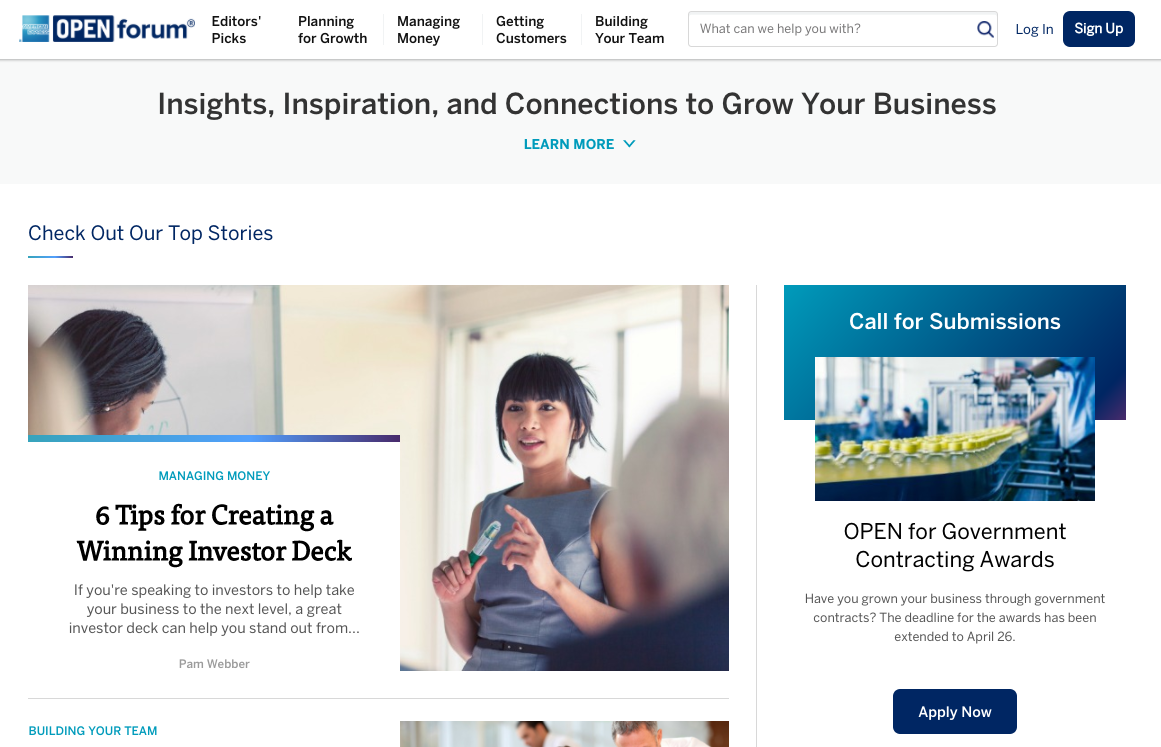
The Lesson: The creator of your content does not need to be you. Find industry leaders that produce great content, and ask them to write a couple articles on your blog. It will build their audience and your traffic, as long as the content provides value. Good content marketing strategies draw on a range of user-generated sources to both grow online communities and minimize financial investment.
3. Mint
Entering the crowded personal finance niche (or any popular niche) is a daunting task for any new startup, but the approach that financial tracking tool Mint took proves that it’s possible to stand out in a crowd through well-executed online marketing strategies.
Although the company was a relative unknown amongst its more popular predecessors, Mint committed to a digital strategy publishing hundreds of high-quality content pieces, from informative blog posts to viral, attention-grabbing infographics (like A Dude’s Guide to Not Going Broke during Wedding Season) to grow their business. As a result of Mint’s digital marketing efforts, the tool gained a massive online following before being sold to Intuit for a whopping $170 million.
In a podcast on Growth Everywhere, Neil Patel discussed why he spends up to $30,000 dollars on content and gives it away for free, and how it is all worth it in the end.
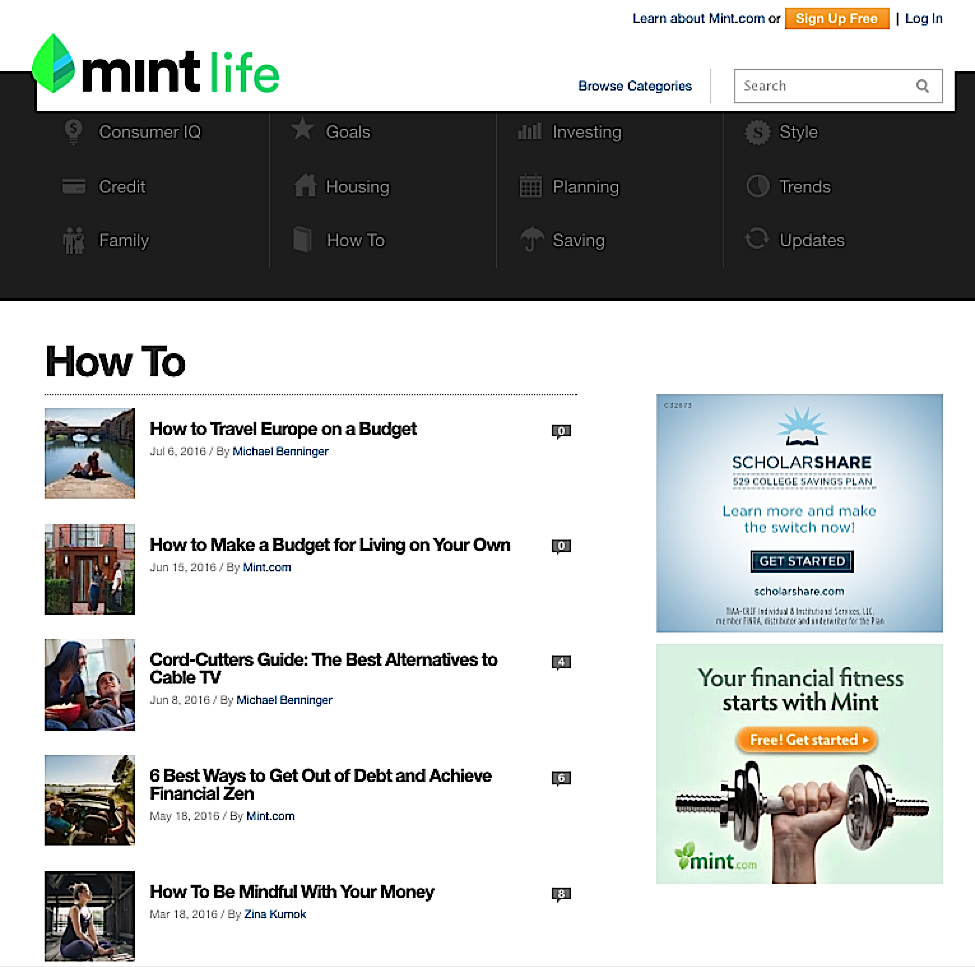
The Lesson: Investing in content marketing often requires significant amounts of time and money, but committing to content production and high-quality standards can build substantial market attention in a short period of time.
4. Dollar Shave Club
Shaving is the epitome of a boring routine, right? If you answered “of course,” then you obviously haven’t seen Dollar Shave Club’s now legendary launch video. DSC shook the notion of its drab, buttoned-up industry and kicked it out the window.
Today, this company has over a million subscribers, its promotional video has been viewed over 24 million times, and it was recently acquired for $1 billion by Unilever. During their hyper growth, Dollar Shave Club continued to share cheeky content such as “Is It Bad to Pluck Nose Hairs with My Fingers?” and “Do I Really Need to Wash My Hands After I Pee?” These guys know how to let loose and get attention.
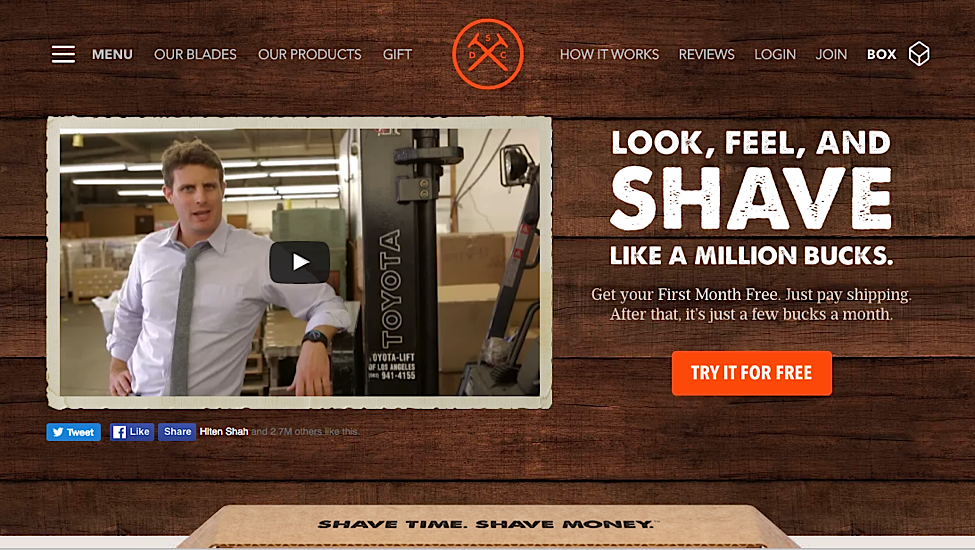
The Lesson: Don’t be afraid to have some fun! DSC doesn’t take itself too seriously (or at all seriously, for that matter). Everything from its marketing to its onboarding, from its packaging to its social engagement is lighthearted, silly, and tongue-in-cheek. And its customers love them for it. They’ve made something as tedious as buying razors and shaving hilarious and entertaining, and that’s what stands out in people’s minds.
5. The Wirecutter
Affiliate marketing can be a bit sleazy, but it can generate big results when done properly and genuinely. The Wirecutter has set the standard since its launch just five years ago. Labeling itself a simple “list of the best gadgets—like cameras and TVs—for people who don’t want to take a lot of time figuring out what to get,” the site generated $150 million in e-commerce transactions in 2015 and was recently acquired by the New York Times for $30 million.
They write reviews for products they love, embed a link to buy it from someone like Amazon, and take a cut of each sale. Their reviews take anywhere from 20 to 200 hours to complete, involving experts and other interested parties depending on the product. It works because they’re real.
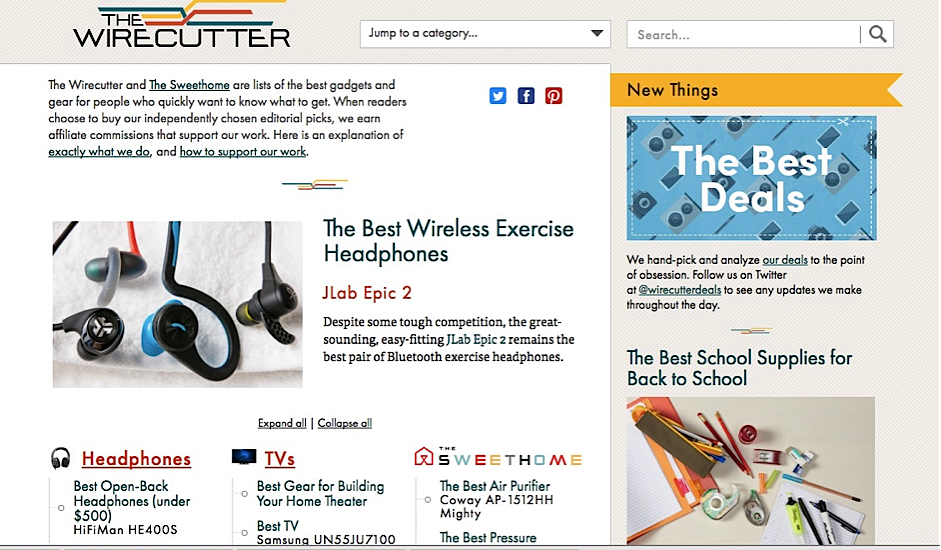
The Lesson: Trust more in the power of real people. Modern consumers are wary of ads, banners, and paid search results. They want real recommendations from real people. And that’s what The Wirecutter delivers with such sparkling success. They’ve made the review (a.k.a. the “ad”) the product. People share them, like them, and rely on them to decide what to buy. The only marketing they have to do is sharing their top-notch reviews. Their fans take care of the rest.
6. Slack
Slack is a collaboration tool that allows teams to communicate more efficiently and share files, all on one easy platform. They’ve had a pretty spectacular rise, with 15,000 users at launch in 2014, just north of 171,000 six months later, over 500,000 in less than a year, and currently sitting at roughly 5,000,000 (nearly one and a half million of which are paid accounts).
Their “secret sauce” is delivering a high-quality customer experience. The company responds to 8,000 help desk tickets and up to 10,000 tweets each month. Even their Twitter feed contains a bunch of 140-character #SlackTips.
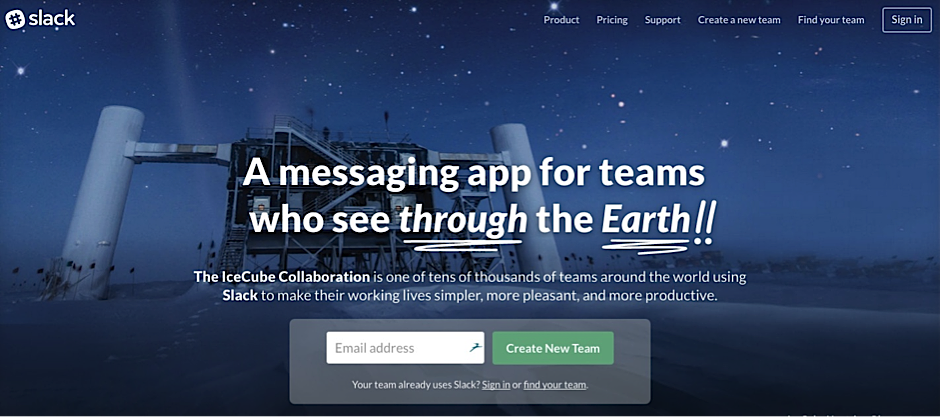
The Lesson: From day one, Slack has been about selling a solution, not a product. They’ve focused on customer experience, believing that one positive experience does more than a big marketing budget could ever hope to accomplish. As their tagline says, they’re “on a mission to make your working life simpler, more pleasant, and more productive.” Make it all about solving your customer’s’ pain points.
7. Airbnb
Airbnb has changed the way we travel and look for accommodations. Launched when its founders couldn’t afford their rent, the site now boasts 100 million users, 2.3 million listings, and a total valuation of $31 billion in 2017.
Their marketing strategy is aimed at getting both travelers and hosts for the platform. Its digital marketing relies primarily on user-generated images and videos on Facebook, Instagram, and Twitter (highlighting the cities and properties in its stable), how-to videos and posts geared towards owners, and popular city guides. Their Instagram campaign matches humor with compelling images of different travel locations around the world, making it more than just a service—it’s a travel forum as well.
When it comes to social media superstars, Airbnb shines the brightest. During a 2015 Instagram campaign, the company received 13.3 million interactions and increased followers by 341 percent.
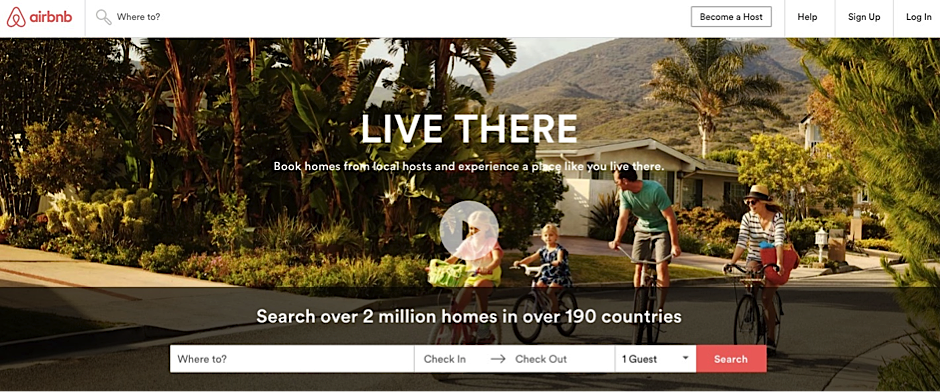
The Lesson: Create demand around your product or service by finding a topic related to your business that’s interesting. For example, Airbnb is ultimately a crowdsourced hotel business, so interesting content for them is related to travel sites around the world. Generate interest with content, and the dollars will follow.
8. JetBlue
One of the biggest mistakes we see companies making when it comes to online marketing strategies is the tendency to post self-promotional materials only. Nobody wants to follow a company that can’t stop talking about itself long enough to post something of real value!
JetBlue, the popular discount airline, is one company that gets it. Instead of using Twitter to post fare discounts and special offers, the company uses its handles to provide fast and easy customer service. In fact, the effect is so profound that nearly all the messages in the company’s feed include @ replies, which is highly unusual in the world of social media marketing for businesses.
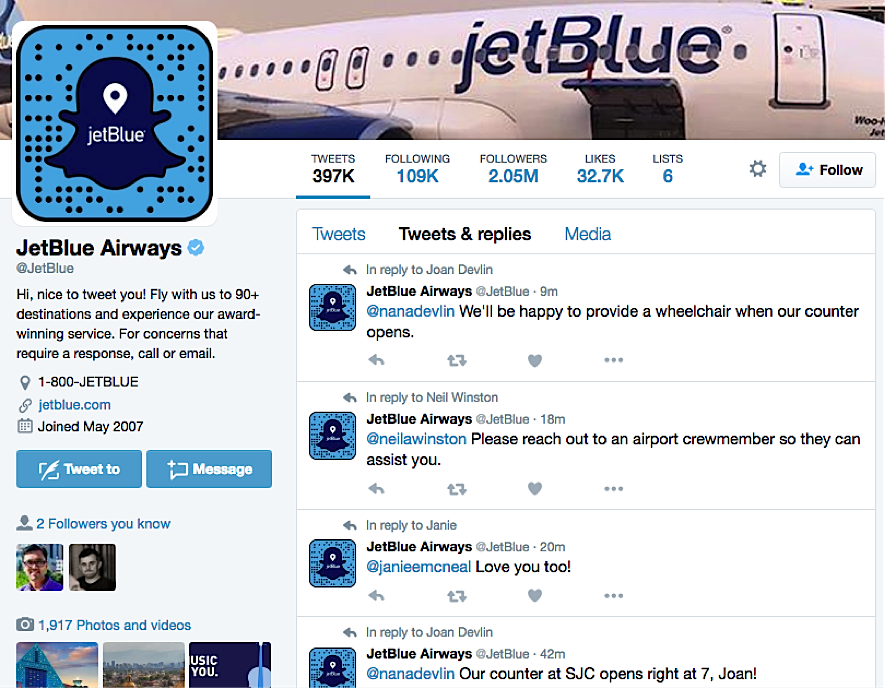
The Lesson: Make it a priority to balance self-promotional materials with information that followers can actually use, and respond to users whenever they interact with your web profiles in order to boost rapport and consumer confidence.
Nobody wants to follow a company that can’t stop talking about itself.
Click To Tweet
9. Yelp
It may seem obvious now, but the idea to combine social networking and online reviews was a “Eureka!” moment for Yelp’s founders in 2004. It wasn’t that review sites were unheard of at the time, but this company approached it a little differently with the social angle. Today, Yelp has 160 million unique monthly visitors, 2.8 million claimed businesses, and 121 million cumulative reviews.
The social element cashed in on the “people trusting people” component that made The Wirecutter and other similar brands a success years later. Reviewers are real people, with real names and photos, and are encouraged to develop a reputation and a following. Users can even review the reviews of other reviewers!
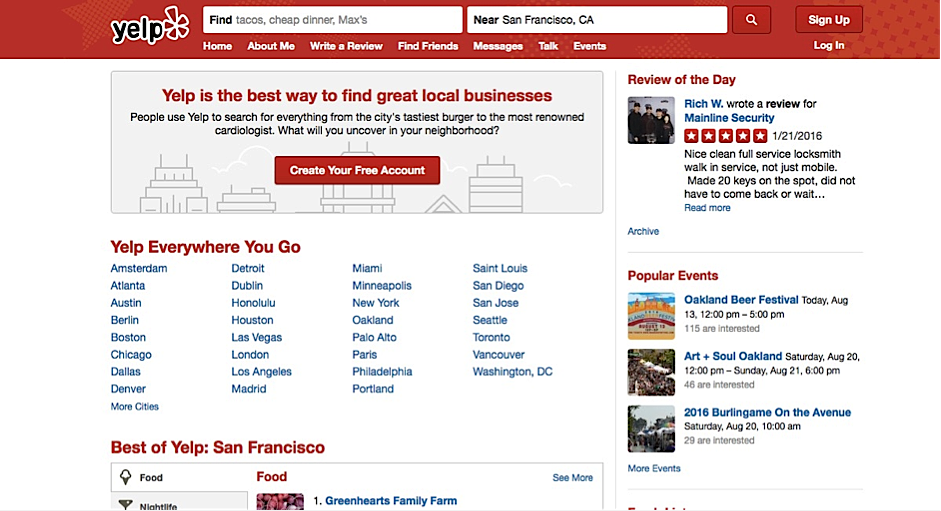
The Lesson: Keep the focus on building a trustworthy brand and a trustworthy community. Yelp wanted to provide the best recommendations for every kind of business. To do that, they need fantastic reviewers, they need the businesses themselves to buy into the program, and they need users to believe what they read. Trust is essential, and that’s what they focused on in their early marketing efforts. Today, a one-star increase on a Yelp rating can lead to a five to nine percent increase in business revenue according to Michael Luca of the Harvard Business Review.
10. Mastercard
Mastercard is the king of “Priceless” surprises. The financial services giant has a knack for creating engaging experiences that excite and retain their customers.
As a major sponsor of the MLB, the company wanted to execute their “priceless” strategy and take advantage of the Chicago Cubs making the World Series for the first time in 71 years. Why? So they could be a part of history if (and when) the Cubs won.
Their main objectives were to (1) connect with suffering Cubs fans and (2) insert themselves into the World Series conversation.

Mastercard went out looking for the perfect way to implement their campaign and came across a great piece of content: A player on a rival team had accused Cubs fans of lacking passion for their team. This was a perfect sound bite to build an entire campaign on, so Mastercard ran with it, titling their campaign the “Sound of Priceless.” They built a sound meter and placed it around Wrigley Field to measure just how loud the fans were. After measuring the sound and learning how loud the fans truly were, they created a piece of video content around the story.
In order to create the ultimate impact, Mastercard released the film online and on social media just as the Cubs won the final game of the World Series. The results were priceless.
The Lesson: When you are trying to create viral digital marketing campaigns, look for content that is already out there, and put a spin on it that will benefit someone else as well as your brand. Also, notice how Mastercard was patient enough to wait until the very last game to release their content in order to maximize the reach. This is key to any great digital campaign. Timing does matter.
11. Uniqlo
UNIQLO is an innovative Japanese apparel company that urges the world to dress casual. Their mission is to provide simple apparel that makes your life better.
If you have ever lived in a major city, you have probably seen a Uniqlo advertisement or shopping bag, but the company wanted to help customers see Uniqlo as a technology focused company, not just a fashion brand. They wanted to build on a statement made by UNIQLO’s President and CEO Tadashi Yanai that said, “We [Uniqlo] are not a fashion company. We are a technology company.”
The best way to do this? An effective digital marketing campaign. Uniqlo created a world-first “fast-moving” image campaign and activated it in 100 locations and online. The campaign utilizes fast moving images to deliver a unique product code which is indecipherable to the naked eye.

Shoppers were then asked to upload the five digit code to the campaign website to redeem a sample from the HEATTECH clothing range. Once on the site, the viewers were directed through a series of informational screens that described in detail the technology behind Uniqlo products before displaying a winning page.
This experience was shareable on social and encouraged friends to uncover their own unique code through similar YouTube and Facebook videos. The results were terrific. Online videos were viewed 1.3 million times, and over 25,000 people signed up to receive the UNIQLO newsletters. In total, the campaign reached over four million people, resulting in 35,000 new customers.
The Lesson: Digital marketing can be a great way to creatively engage with your customers and teach them about who you are and what your product does. By taking control of the conversation with your customer, you can create your own brand story that you want to resonate with the target customer. You don’t need to go to the lengths that Uniqlo did to interact with your customers, but you do need to take control of the conversation.
Other Social Media Superstars
1. Doctor Who
This long-running BBC show attracts millions weekly to follow the adventures of the Doctor and his companions. When it comes to social media, the Time Lord eclipses all other television brands through the integration of a Tumblr blog, Twitter feed, Instagram, and a strong online presence. It’s a match made in heaven—or perhaps near Gallifrey—and a winner in our book when it comes to promoting a brand via integrated social media.
2. The Shelter Pet Project
The Shelter Pet Project uses Facebook to help place millions of homeless animals in danger of being destroyed simply for lack of a home. The project is a collaboration between the Humane Society of the United States and the Ad Council. Their goal? Bring the number of pets euthanized in animal shelters to zero. Nothing less than zero will do.
And they’re succeeding, one furry little face at a time, through a campaign called “Local Legends” that highlights animals at local shelters waiting for adoption. They partnered with Facebook’s Creative Shop to build a memorable campaign that generated strong awareness of the plight of shelter pets. The campaign incorporated two videos and sponsored Facebook ads based on Facebook suggestions for maximum impact.
3. Porsche: The 911 Campaign
The Porsche 911 has been the dream car of almost every American boy for over 50 years and has had a strong hold on the hearts of many car enthusiasts for multiple generations, which is why Porsche’s mobile strategy was so genius. In an age where most people utilize “wallpaper” on their homescreen more than their walls, the company aimed to reintroduce the 911 to a new, mobile-focused generation.
Porsche created six Facebook Canvas ads, a new ad unit optimized for mobile, that acted as an immersive deep-dive into the specifics of six different models. The strategy was an immediate hit, ultimately racking up 15MM impressions and 2MM video views and landing the company as a finalist in the 2017 Shorty Awards.
We love seeing mature companies dive into the digital marketing world with a fresh, new approach. Porsche did not disappoint.
4. Truth #Catmageddon
When was the last time you thought about smoking or its consequences? It’s probably been a while. That is the challenge Truth, the non-profit focused on raising awareness of the negative consequences of smoking, is constantly dealing with.
In an effort to attract attention to the issue, the company launched a campaign titled #Catmegeddon. According to a spokesperson at the company, the purpose was to connect smoking to something their audience cares about as much as themselves: their pets.
65 percent of U.S. households own a pet, which equates to 79.7 million homes. Their objective was to make a cultural impact and change teens’ attitudes about smoking by broadcasting the fact that cats whose owners smoke are twice as likely to get cancer.
Their strategy included paid television ads but mainly focused on “cat-sourcing” original, digital content of famous cats and cat profiles to share awareness of the #catmageddon campaign. Throughout the course of the campaign, there were 18 digital integrations on channels ranging from Vevo and Bustle to IGN and Pandora.
The campaign was the most successful campaign in Truth’s history in terms of cultural impact and changing teens attitudes towards smoking, according to a company write-up for the Shorty Awards. It’s safe to say that a well-executed digital strategy that includes cat videos is bound to turn heads.
5. Sharknado 3
Okay, so we admit it: We’re fans of the SyFy channel’s cheesy, laugh-at-the-bad-special-effects Sharknado series. We’re also fans of great Twitter use, and Sharknado 3: Oh Hell No! deserves the best-in-show award for Twitter interaction with their audience.
The campaign’s goal was to make sure people were talking about the third installment in the series, and they achieved that goal big time. They create custom content that “sharkified” the event, sharing it throughout the Twitter properties linked by the network. Influencers on Twitter and Vine were also part of the campaign to spread the excitement.
A “Twitter War Room” deployed during the premier of the movie also hyped the excitement. Hashtags #Aprillives and #Aprildies let fans weigh in on the fate of the main character. The campaign generated more Twitter activity than when Hillary Clinton first announced her bid for the presidency.
6. Taco Bell
Taco Bell’s iconic brand already dominates social media. But their mobile ordering program boosts brand recognition and helps hungry taco junkies nationwide get their fix, fast. The new app enables fast ordering right from a mobile device, and the company’s launch resulted in 300,000 app downloads the very first day—a sure sign of taco fever and a winning mobile campaign!
Editor’s Note: This article first appeared on SingleGrain.
Get a weekly dose of the trends and insights you need to keep you ON top, from the strategy team at Convince & Convert. Sign up for the Convince & Convert ON email newsletter.
06 Jun 17:03


See the rest of the story at Business Insider
12 people share the best habits they've picked up from others
by Chris Weller

Psychologists have long observed that will power is overrated.
The most successful people build habits that eliminate the need for decision-making. Over time, the routines they establish help them accomplish far more than white-knuckling ever could.
Respondents in a recent Quora thread offered the best habits they've picked up from others.
Here's a sampling of their time-tested strategies.
SEE ALSO: Redditors give 20-somethings advice on how to enter your 30s without regrets
Don't give yourself too many choices.
Nela Canovic says she filled her life with choices thinking it made her happier, until a friend pointed out how much time she was wasting not making a decision.
Now she limits her number of options in restaurants, furniture, clothes, and basically everything to just two or three options.
"It makes my life easier," she says. "It makes me actually enjoy the day."
Exercise judicious patience.
Elizabeth Simmons recalls a senior colleague impressing on her the value of cultivating heaping doses of patience to make important decisions or solve tough problems.
"Often, a period of reflection and consultation will either produce a new solution to the original problem or reveal the presence of a complementary problem such that the two problems may end up being one another's solutions," Simmons writes.
Celebrate your wins.
Matt Sandrini and his friend Phil are accountability partners. Whenever one accomplishes his goals, the other asks how he'll celebrate. It's an important ritual, Sandrini says.
Planning to celebrate keeps him focused on the task, helps him associate goal-setting with pleasure, and gives him a much-needed break when he hits his goal, before moving on to the next one.
See the rest of the story at Business Insider
06 Jun 16:58

24 Phrases Guaranteed to Make Intro Emails Successful
by mrenahan@hubspot.com (Mike Renahan)
Intro Email Phrases
- After researching your business …
- Hi [name],
- It looks like you’re attempting to do [X]. Is that correct?
- Why did you decide to download our resource?
- What’s your top priority right now?
- How can I help?
- I really enjoyed …
- I read what you wrote/shared/commented on on social media and was wondering …
- I’m curious to get your thoughts on …
- Have you ever thought about doing X?
- I have an idea about …
- Congratulations on …
- For more information, check out…
- [Mutual Connection] mentioned me to that …
- How do you know [mutual connection]?
- Did you know that … ?
- What did you think of … ?
- I can help you with ...
- Will you be attending [event]?
- I saw you speak at ...
- What would happen if ... ?
- I can [insert benefit here].
- [Their company name] + [Your company name] intro
- I have something for you.
Writing a great outreach email is tough. You're well-aware that even if your prospect is interested in your value prop, you're competing for their attention with tons of other emails, not to mention all their other to-dos.
So what should you be writing to pique their interest? Hopefully, you're avoiding the phrases that kill an introductory email -- like "Hi my name is X and I work at Y" -- but which ones should you replace them with?
I encourage you to play around and craft your own unique messages. However, if you're looking for some inspiration, these 24 phrases go over well with buyers.
1. “After researching your business … ”
Alerting the prospect that you’ve spent time researching their business sparks their interest and improves your credibility right off the bat.
2. “Hi [name],”
My colleague recently received an email that started with, “Dear [[contact first name]].” Needless to say, she didn’t respond. Including the recipient's name in your email -- and double-checking to make sure the personalization tokens worked -- is a great way to grab their attention early, and make it clear that this email is specifically meant for them.
3. “It looks like you’re attempting to do [X]. Is that correct?”
Asking about changes you’ve noticed sparks a meaningful conversation about the prospect’s goals and overarching strategy. For example, did the prospect recently unveil a blog redesign? Has their company posted a new position on the job board? Ask about the shift, and how it figures into the company’s plan.
4. “Why did you decide to download our resource?”
When an inbound lead downloads a piece of content, “Why?” is a natural question. Asking “Why?” allows the prospect to explain the problem they are attempting to solve. Armed with this information, the rep can better help the prospect and provide value.
5. “What’s your top priority right now?”
Identifying the prospect’s top priority provides you the opportunity to dig deeper into that goal. With better knowledge of the prospect’s most pressing priorities, you can showcase the value of your product in a way that resonates with their struggles and aligns with their goals.
6. “How can I help?”
The best sales reps today adhere to ABH -- Always Be Helping -- instead of ABC. In a crowd of pushy, self-centered salespeople, a rep who strives to serve first is refreshing. Include this phrase in your email to set it apart from the rest.
7. “I really enjoyed … ”
According to Professor Norihiro Sadato, “To the brain, receiving a compliment is as much a social reward as being rewarded money.” Not only does a compliment improve a prospect’s mood, but it is likely to elicit a response when included in a sales email. The more specific, the better.
8. “I read what you wrote/shared/commented on on social media and was wondering … ”
Asking a thoughtful question about a topic the prospect is interested in is an easy way to spark a conversation. If a prospect is writing, posting about, or commenting on a given topic on social media, they’re likely looking to discuss it further.
9. “I’m curious to get your thoughts on … ”
Presenting a prospect with clear next steps keeps the conversation moving forward. With an introductory email, your ask should be small, such as reading a blog post and sharing their thoughts, or taking a few minutes to answer a question.
10. “Have you ever thought about doing X?”
Instead of giving orders, try piquing the prospect’s interest and asking a question around what they’re hoping to achieve. There is more than one way to solve a problem. And as a sales rep, you can present options the prospect might not be aware of.
Sales reps should always strive to give more than they receive. Providing a quick strategy tip or insight can get the conversation flowing and immediately boosts the rep’s credibility.
11. “I have an idea about … ”
Different phrase, same idea. Who doesn’t love free advice? This is an easy way to engage the prospect in a meaningful conversation about a hot topic.
12. “Congratulations on … ”
Promotions and job changes are some of the most valuable trigger events for salespeople. Congratulating your prospect on accepting a new role or moving to a different company can quickly turn into a sales conversation if you play your cards right.
13. “For more information, check out… ”
Including links to relevant blog posts or research reports at the end of your email makes it easy for the prospect to discover more information on potential solutions to their specific problems, and positions you as someone who wants to help.
14. “[Mutual Connection] mentioned me to that … ”
According to Sales Benchmark Index, you’re 4.2 times more likely to get an appointment if you share a personal connection with a prospect. By referencing someone you both know you can improve the likelihood of a response, and ultimately spark a meaningful conversation.
15. “How do you know [mutual connection]?”
Similar to the phrase above, referencing a mutual connection can be very beneficial in starting up an exchange. A shared connection helps you build credibility, and gives you a natural “in.”
16. “Did you know that … ?”
By sharing interesting data with a prospect, the rep can position themselves as a source of valuable information. And if the data sheds light on a problem the prospect is struggling with? You’ve struck gold.
17. “What did you think of … ?”
By asking a potential buyer’s thoughts about a recent industry event or news, you’re not only starting a conversation with the prospect, but you’re also gathering vital information in regards to where they stand on certain issues.
18. "I can help you with ... "
There's no better way to capture a prospect's attention than to make their lives easier. Of course, don't just say you can -- demonstrate what you'll do to help.
19. "Will you be attending [event]?"
If you're attending an industry event or conference, do some scoping beforehand to see if any attendees fit your buyer personas. Attending the same events gives you an automatic leg up when building credibility with your buyers.
20. "I saw you speak at ... "
Everyone likes to be complimented, but generic compliments aren't that compelling. If you've seen your prospect speak at an event, bring it up and stand out from the crowd.
21. "What would happen if ... ?"
Opening your prospect's eyes to a potential future problem or opportunity is one of the most effective ways to demonstrate the value of your product and surface urgency.
For example, you might ask, "What would happen to [company's] revenue if 30% of your customers referred another customer?" The buyer will immediately start seeing dollar signs.
You can also pose undesirable outcomes. Try a question like, "What would happen to [company's] revenue if your website went down for an hour?" Now, the buyer is aware of their vulnerability.
Don't take this too far: You should never create a false sense of hope or fear. But alerting them to a possibility or issue that your product can help them capitalize on or avoid is completely legitimate -- even helpful.
22. "I can [insert benefit here]."
If you've researched your target customer well, you should know their pain points inside and out. Grab their attention immediately by offering your solution. To-the-point statements like, "I've helped businesses like yours raise widget production by 35% in as little as 3 months." can offer just the right hook to earn you a discovery call.
23. "[Their company name] + [Your company name] intro"
This is a subject line format HubSpot Director of Sales Dan Tyre swears by. Its personalized, concise, and friendly. Your outreach doesn't always have to be flashy for you to stand out.
24. "I have something for you."
Want to pique interest? Tell your prospect you have something especially for them. It could be a custom piece of content, an article you think they'd find valuable, or a quick video you made especially for them. Whatever you send, make sure it lives up to the hype and adds value to their day.
While every prospect is going to respond differently to your email, certain phrases increase the chances that your message will hit home and elicit a response. Instead of worrying about messing the email up, try focusing on making it great. These phrases (and these power words) can help.
06 Jun 16:58
‘Orchestration’ is the Common-Sense Approach Marketing and Sales Needs
by Justin Gray

I remember sitting in a sales and marketing meeting when I was fresh out of college as a marketing coordinator. The meetings were on Monday mornings and normally more than a little droll. Lasting right around an hour, sales began by recapping pipeline for that quarter and the remaining month. Then, if we were lucky, someone acknowledged that marketing was in the room.
Being young and ambitious, and at the time new to the company, I decided to make an impact on this meeting. I spoke up. My suggestion was a simple one. We were struggling to get attendance at an annual ‘open house’ event held every year at our offices as a customer appreciation activity. I suggested that our company president, a well-known and respected figure in the community, extend a personal invite. I will never forget what happened next.
From the back of the room a voice that was rarely heard came booming. It was the voice of our top rep, a hand-kerchiefed, Rolex adorned, flawlessly executed specimen who actually rarely appeared at these meetings. Most of the time he couldn’t be bothered to attend, as like many sales cultures, top performers were extended an extreme amount of slack when it came to day-to-day minutia, like this huddle.
As I got over the initial shock of his presence I came to realize he was talking to me, and in a tone that did not convey a friendly exchange. He was not only attacking my idea, he was kicking it repeatedly in the teeth and quite frankly mocking my “stupid” and unwelcome suggestion. The general gist of his condemnation was that there was no way that our company president’s time was well spent on such a low-level task and that I should be ashamed of myself for making such a menial, rookie move.
Questioning conventions
“The world as we have created it is a process of our thinking. It cannot be changed without changing our thinking.”
― Albert Einstein
The understanding that only the most deep-pocketed and longstanding customers had direct access to the executive team was a pervasive one that I saw upheld at company after company. On that day I understood that the sales process was one of qualification, and only when a prospect had truly run the gauntlet, were they permitted to offer at the alter unto the coveted C –Suite.
I was always somewhat perplexed by the degree with which we sheltered our executive teams from their own customers. When I became an executive years later I never wanted to exhibit these same behaviors. I wanted to maintain direct access to my buyers, and up until very recently, in the same manner as that meeting, I’ve been condemned for it – sometimes even by customers themselves.
I’m a very hands-on exec, I may show up at a first meeting or work the door at an event. Often this is perceived as a sign of being “small.” I had a customer recently mistake me for a project manager. I’ve had prospects inquire as to the size of our organization as I reviewed their scope of work personally. We have all become ingrained with the notion that executives are quite simply off limits for most day to day conversations. If a CEO is on a call, someone must have messed up big time or there must be some personal relationship involved that is causing them to feel compelled to stoop down to such a plebeian level.
It’s quite frankly, utter B.S.
With the rise of Account-Based Marketing we’ve finally seen walls come down as we collectively realize the power of relationships. We call this “threading,” or the notion of creating multiple lines of communication and alignment, even early on, in the marketing and sales process. It’s incredibly powerful and quite frankly a no-brainer.
How did we get here?
The answer is simple.
We are fighting a lot of historical conversations that look similar to the one I experienced as I was coming up in my career. Marketing has often focused on creating volume, not value, and therefore it was necessary to shield our best, and quite frankly expensive, resources from this flood of primarily un-qualified conversations.
An Account-Based approach changes all of this by only marketing to pre-qualified accounts and the buying committees within them. When we take this approach it becomes not only best-practice, but critical that we create alignment within them across all points of contact. This is the process of ‘Orchestration’.
Orchestration ensures that we have engagement at all levels within our target accounts – with hyper-personalized messaging delivered by an individual whom buyer sees as a peer.
Can you create conversations between a sales rep and a CEO? Sure, you can. I recently had a bit of a debate on Twitter with Kyle Porter. Essentially, I argued that messaging orchestrated through a best-practices ABM process should be peer-to-peer. Kyle argues that even an SDR can create a conversation with a C-Level executive. This is somewhat akin to men wearing cutoff jean shorts. Can it be done? Yes. Does it take a miracle to pull off? Also, yes. If you’ve curated a list of high-value, high propensity prospects, I would argue that it’s time to put your best foot forward in every interaction – it’s just not worth potentially burning the relationship when you are working with such a small targeted sub-set.
Rather than attempting to ‘scale’ or ‘systematize’ this process with less-expensive resources or technology, marketing and sales is best served by exercising muscles that we’ve long since neglected. Now that we’ve finally broken through the fog of churn and burn conversations we need to put our hyper-personalized approach to work creating high value, relevant messaging executed through a key voice.
Executives need to get back in the game
No longer can executives be content to let their sales teams lead the charge, they need to feel comfortable in the vanguard where the real action is. Your prospects will take note of the investment you’re making and your executives will get better insight into the buying process that actually takes place.
In the year since we implemented a true Account-Based process I’ve had an incredible lift in insight into how our buyers buy and how our services are perceived. I would have never had this visibility through a traditional demand gen model. I can’t help but daydream about that impeccably dressed, yet insufferably misguided sales rep from my first job as I imagine him eating his words… and also potentially his pocket square.
06 Jun 16:58

We're entering the era of accountability in sales and marketing
by dan.mcdade@pointclear.com (Dan McDade)
What's the difference between the status quo--and the era of accountability? I recently chatted with Jonathan Farrington of Top Sales world about the transition from finger pointing to collaboration between sales and marketing. Accountable organizations win bigger deals--and drive a whole lot more revenue. You can listen to the webinar here.
The status quo--where marketing complains about sales not following up on their leads and sales says the leads are no good--is not the place to be. The situation in many organizations today is characterized by:
- A low number of leads (just 42% on average) accepted and worked by sales.
- A almost equally low number of sales reps meeting quota (less than 60%).
- An unrealistic number of leads expected to be sourced by sales (50%).
- Consistently poor sales execution due to a lack of qualified leads.
The era of accountability, on the other hand, paints a much brighter future.
- Every lead turned over to sales is a sales-qualified lead (100%).
- The lead close rate is way higher than average (5X).
- Marketing ROI is measured and credited.
- Sales execs focus on deal making, not sorting through dubious (so-called) leads.
An accountable marketing organization is accountable for lead quality. These marketers accept responsibility for leads--including taking them back to nurture when needed. An accountable sales organization is accountable for follow-up activity. These sales professionals accept responsibility for working all leads to the finish, win or lose. In both camps there's a transparency that hasn't always been present, characterized by a realistic measure of revenue impact of leads--and realistic forecasts. At PointClear, we facilitate accountability that translates into results.
So how do you get from here to there? Ushering in the era of accountability requires leveraging account-based marketing approaches, including:
- Work together to identify targets and target roles. To avoid an inefficient scattershot approach to marketing and sales, figure out the ideal prospect/client profile. Focus on who needs you the most to avoid wasted effort.
- Segment and stratify. Determine which portion of your market you can reach and close most cost effectively. Zero in on prospects with high propensity to buy to keep you from incurring marketing/sales costs that don’t deliver return.
- Use dynamic engagement, including triggers. Map content to audiences of one. Then deliver it via all media (inbound and outbound), across multiple sales cycles, at just the right frequency.
- Analyze, analyze, analyze. You need full visibility into how many touches it takes to generate a lead, your lead rate, and your cost per lead at every stage in the funnel. You need to measure which leads are rejected and why. And you need to know at what rate your leads progress. And why you win or lose.
- Nurture and upsell to achieve advocacy. The goal is not to just close deals, but to create relationships with targets, prospects and clients that last a long time--and that's the job of accountable sales reps and marketers.
For a case study about how one technology company entered the era of accountability (by partnering with our company), read this post. Or give me a call at 770-262-9021.
06 Jun 16:57

Why Your B2B Marketing Strategy is Outdated and How to Fix It
by Chris Pentago
HypnoArt / Pixabay
Is your B2B digital marketing strategy stuck in the Stone Age? The fast pace of the marketing world can make the hottest marketing tactics yesterday’s news in the blink of an eye and leave you struggling to generate leads.
Here’s what you might be doing wrong and what you need to change to step up your B2B marketing game.
Creating “Salesy” Content
If you approach content marketing as if you were writing one continuous commercial for your products and services, potential leads will lose interest after skimming the first couple of paragraphs. Today’s content marketing is all about engagement through the delivery of relevant, high-quality information in a variety of formats.
Pay attention to how your ideal clients search, the keywords they use and the problems they’re looking to solve. Tailor your content to these metrics, focusing on providing answers and offering guidance rather than selling. Update popular existing content pieces with new information to draw people back and attract new customers.
Making Social Media an Afterthought
A recent report from Forbes shows the importance of social media for ROI in B2B marketing. In 2016, 39 percent of marketers said social campaigns generated “significant” ROI, an increase of 30 percent since 2015. However, you can’t get this kind of return simply by queuing up a bunch of somewhat relevant content and deploying it indiscriminately across channels. Real results come from a plan with a balance between your own content and high-quality pieces from other sources shared in an engaging way appropriate for each platform through which you communicate to your audience.
Hanging Your Hopes on In-Person Contact
Trade shows and other networking events aren’t dead, but you’re wasting your time if you make face-to-face meetings the core of your B2B marketing strategy. Your audience is primarily online, researching product and service options on their own time and with their own unique methods. These behaviors can be tracked and analyzed in ways the contacts made at a trade show can’t, and follow-ups are much easier to perform.
Blasting Everyone with the Same Message
No matter what channels you use for marketing, personalization must be part of your strategy. Sending the same message to every potential lead says you don’t understand the unique needs of a diverse audience. The trend of personalization taking over B2C marketing also applies to B2B and must be embraced with customized email messages, landing pages, social media content and remarketing techniques. Create lists and groups for each audience segment, and deliver content tailored to the needs of the decision makers in each segment.
Experienced digital entrepreneur Sam Ovens cites attention to needs as a critical aspect of B2B marketing. Applying this strategy allowed him to build a booming consulting business and power up his clients’ marketing strategies.
Taking a similar approach to your own B2B marketing is essential if you want to support robust sales and create a thriving brand. With a strong plan for the future, you can leverage the latest marketing strategies to create valuable long-term client connections.
06 Jun 16:54
How to Adapt to a More Complex B2B Buyer Journey
by Jessica Edmondson

The B2B buyer environment is more complex than ever before. Unlike marketing in the past, the digital ecosystem changes so fast that marketers and salespeople can barely make one pivot before another one is required. But even though we continue to point to digitization as the reason for this perpetual B2B buyer development, it is but the catalyst. Marketing and sales hold a great deal of responsibility. In response to digitization, marketers and sales realized that the only bit of control they can now wield is in making sure they are in charge of the vehicle driving the buyer.
Thus comes:
- SEO
- Linking building
- Link earning
- PPC
- Social media
- Social media ads
- Blogging
- Content marketing
- Sponsored content
- Referral marketing
As marketers tried to adopt these new digitized strategies these ecosystems became increasingly crowded and the tactics become more aggressive as companies fought for mindshare. Buyers were being flooded with misleading content and bias information. Google and other content hubs saw the declining user experience and realized if they wished to continue to be a credible source of information there would need to be some changes. Consequently:
- Link buying got banned
- Third party content sites created restriction on linking to product pages or a homepage
- PPC quality scores came into effect
- Google PPC banned words for being misleading/spam
- Ad blocker
- Social ads being labeled as sponsored
- Paid brand content got labeled as sponsored
- Wikipedia started requiring the citation of sources and non-bias information
With search engines like Google and content hubs putting more restrictions on marketers’ ability to make an impact digitally, it sends a clear message – user experience is now more important than selling and filling the funnel. And a big portion of that is building trust with the B2B buyer. It is no longer just the age of personalization and automation. Marketing is now in the age of the buyer journey.
How the B2B buyer journey has changed
In 1882 Nietchzsche proclaimed “God is dead.” In 2017, marketers are proclaiming, “Leads are dead.” Both were never meant to be taken literally but rather the idea we once held dear was no more. But what has caused this figurative death?
Buyers have so many different touchpoints involved in their research that the traditional campaign method of serving up an offer and expecting it to illicit the desired response isn’t practical or profitable anymore. Logically at some point a campaign will hit an intended target. But there is a reason that prospecting, ppc, and social campaigns have decreased in effectiveness when done as a campaign. Most of the time campaigns won’t resonate with the B2B buyer because it doesn’t represent where they are in buying journey. It isn’t about filling the funnel anymore but guiding buyers through their buyer journey. In the Forrester blog, Myth Busting 101: Insights Into The B2B Buyer Journey, it shows a chart of the many different contact points that impact the decisions of the buyer journey.

The arrows show just one path a B2B buyer can take among many. Within each point on the buyers’ journey the B2B buyer use multiple resources, and peers or referrals are a big part of it (light blue squares). Zooming in, you will notice that peers are but one of three channels that will build trust with the B2B buyer. This makes it a very important channel to enable.
However, while this chart shows how influence is dispersed. It doesn’t tell us how to optimally impact each touchpoint at each stage. That’s next!
Enable the B2B buyer instead of selling to them
Hard selling isn’t trusted anymore. In the report Be Informed to Connect with B2B Buyers, “Interviewees told Forrester that they want to talk to ‘consultants’ who know their business—at their convenience and with less pressure to sign on the dotted line.” These usually mean peers that can help inform the buyer on the ins and outs of the product or service.
Part of the enabling the B2B buyer journey is getting the individual peer relationships involved. It has been found that an average 6.8 people are involved in each buying decision (Harvard Business review). While this may often be perceived as people within the organization this usually involves at least one person outside of it (a peer) who is giving a referral and speaking for the service or product’s capabilities.
The new B2B buyer requires a new channel strategy – peer referrals
Peers are an integral part of the b2b buying process. In the Forrester Webinar, Today’s Path to Purchase and the Changing B2B Tech Buyer, analysts name peers as the highest source that influences business decision makers (BDM) in the discovery stage and the second highest source that influence B2B tech decision makers (TDM). For most, BDM are the intended target as TDM are more focused on the IT side.
Moving onto the exploration phase, Forrester found that peers still have the highest influence on BDMs and an above average influence on TDMs. This is where peer referrals done in conjuncture with sales can have a tremendous impact on the B2B buying process.
To take advantage of this insight enterprise companies like ADP, Citrix, and RingCentral established an automated referral program to scale peer referrals and increase the influence of the peer on the deal. As shown above, peer referrals are no longer just a strategy or campaign but a channel that includes sales, marketing, and even customer success. This is because peers are one of the main staples of building trust with the b2b buyers as shown in the chart demonstrating the many paths of the buyer journey.
But with so many paths available to the B2B buyers it is impossible to be up front and center at every contact point. Moreover, with budgeting restrictions a company needs to choose what buyer journey path is most important to enable. If peers are your priority discover how referral program software can help evaluate some of that pressure with automation and deliver the most ROI with the free ROI calculator.

05 Jun 16:47
Harvard Business School professor explains the most important problem we have in finance today and how to fix it
by Nathaniel Lee and Josh Barro
Mihir Desai, a professor of Harvard Business School and the author of "Wisdom of Finance" explains why having shareholders who are separate from the managers hold great danger for finance today. Following is a transcript of the video.
Josh Barro: So wait, let's walk through the principal-agent problem and the producers. So why - what's the principle-agent problem?
Mihir Desai: So the underlying principal-agent problem in today's society is we have shareholders who are separate from the managers. 120 years ago, most of us worked for ourselves or had the privilege of working for ourselves. Today, we have ownership in one place and management in another. That is the kind of central problem today because the managers don't necessarily operate on behalf of the owners. That's pretty well-embodied in the story of the producers where Bialystok and Bloom basically raise 25,000% of what they need and then they try to create a movie - sorry, they try to create a play that will surely fail so they don't have to repay their investors. Of course, it's "Springtime for Hitler," it becomes a great hit and they go to jail. But that underlying problem of investors, in their case, these old ladies who they raised money from, it is the problem of investing in companies today which is how do you create incentives and how do you monitor managers so they do the right thing. I think that's - I really believe that's arguably the most important problem in capitalism today. That principal-agent problem and how we solve it.
Barro: How do you fix that?
Desai: Well, we've been trying a lot of different things, right? So if you think about the revolution of equity compensation that has been about trying to solve that underlying problem -
Barro: So this is where it's actually the huge spike in CEO pay, it's that people are being paid in stock and stock options and things so theoretically, for them to make money, the company has to make money.
Desai: I think there's two different issues there, right? One is the level and one is the form. I actually don't care that much about the level, I care more about the form of the form it's taking, which is equity. It was meant to solve this problem but as you know well, and as I think we all know, that revolution has its own set of problems. You know, private equity is a response to that problem - we'll have one strong owner who is going to solve that. Boards are a solution to that problem, accounting is a solution to that problem so it's a really powerful lens. And what I tried to do in the book is then take that lens to parts of your life, you know, once you start thinking about the principal-agent problem, you'll see it everywhere.
05 Jun 16:45
LinkedIn Will Now Rewrite Your Profile For You (Seriously)
by John Nemo
A new LinkedIn feature actually writes a key part of your profile page for you. Here’s how it works.
“Think of your LinkedIn Summary as your elevator pitch – how would you spark interest in just 20 seconds?” LinkedIn asked in a recent post talking about the importance of your profile page.
Cat got your tongue?
No worries if you’re at a loss for what to say. LinkedIn has a new “Suggested Summary” tool which is aimed to help you craft the right keywords and phrases that will help you get noticed by your target audience.
The Elements of a Killer LinkedIn Profile
Why so much emphasis on the summary?
“Having 40 words or more on your summary ensures you show up in search results and people with at least five skills listed on their LinkedIn profile receive up to 17x more profile views,” LinkedIn noted.
Along with your professional headline and profile photo, your LinkedIn Summary is how others will size up who you are and what (if any) interest they should have in your profile, profession and content.
LinkedIn also recently brought back the platform’s popular “All Star” profile feature, which show you what features and content you can add to help your profile stand out.
More Summary Tips
In my own work teaching others how to use LinkedIn to generate business for themselves, I’ve found it critical to take your profile beyond reading like a boring résumé and instead make it what I call “client-facing.”
Here’s why this matters: Prospects you encounter on LinkedIn must be able to immediately understand what type of products or services you offer and the key audiences you serve.
Remember, your LinkedIn profile should not be about you!
Instead it should be focused on what you can do for your ideal audience and what makes you different or better when compared to your competitors.
For example, here are a couple of simple sentences that you can start your “client-facing” profile off with:
WHAT I DO: I help [MY TARGET AUDIENCE] achieve [THEIR GOAL] by providing [MY PRODUCT OR SERVICE].
WHO I WORK WITH:
– [Audience 1]
– [Audience 2]
– [Audience 3]
With this approach, you are making it immediately clear who you serve, what type of product or service you offer and how it helps that audience achieve their goals.
Second, you are laying out 2-3 key audiences you serve, so anyone scanning your profile quickly can see if they are someone you specialize in helping.
Remember: LinkedIn = Google for Professionals
It’s important to remember that these keywords and phrases you strategically insert to create a killer LinkedIn profile are all indexed into LinkedIn’s massive internal search engine.
Hundreds of millions of professionals worldwide are using LinkedIn’s powerful internal search engine just like you and I use Google.
One of the things we know about prospects when they’re searching online is this: If you make it difficult for people to find you, or if it’s not clear cut who you are and what you do, you’ll be skipped over for someone who does!
Make sure that you don’t make that mistake on LinkedIn, and, if needed, let the platform help you with your Summary section!
05 Jun 16:43


How to overcome the “your startup is too small” objection
by steli@close.io (Steli Efti)
You’ve managed to impress a roomful of enterprise-level executives. They love your product. They share your vision. And they laughed at the cat joke you practiced all morning.
But during the Q and A, someone says, “We’re not sure you can handle the work. What happens if you’re sick? Who’s going to take over?”
Many startups get asked this question, especially those with only one employee. Often, they pretend to be bigger than they are. They share photos from coworking spaces and change pronouns from “I” to “we”. Don’t do this.
Want to get my best sales tips for startups? Get started with my free course.
There are drawbacks to working with a small company, but there are also tons of advantages. So when a prospect objects to your size, how can you convince them that one person is all they need?
Start with these three advantages:
They get your undivided attention
Customers want daily access to an industry expert and that’s exactly what you can provide. You won’t delegate to junior associates and interns.
You might say something like:
“When you work with me, you’re getting [X] years of experience. Before I started this company, I was the [senior position] at [big company]. I’m a leader in this field. I’m the person you can rely on. I’ll be in every meeting. I’ll answer every email.”
Larger vendors can’t make that promise. The people doing the actual work are rarely the ones customers meet during sales pitches and status calls.
They get agility
Large organizations take forever to solve problems. They have departments and committees. They schedule recap meetings because Barry was out of town.
By the time a solution gets approved, customers have ninety other things to worry about.
As a one-person company, you don’t need departmental approval. You can make decisions quickly and solve problems in a fraction of the time. You can change course without ever consulting Barry.
Customers can be sure that everyone involved knows exactly what’s going on. There are no breakdowns in communication, like you often see with larger organizations. There’s no need to play telephone. Nobody misses memos or updates.
Plus, you’re flexible. They can call, text, email, or stop by the office. Whatever’s easiest for them. There’s no need to coordinate schedules. You’re ready when they are.
They get influence
You’re giving them an opportunity to create their dream vendor.
You don’t have a 100-page processes and procedures binder. There’s no rule against switching things up. You welcome new ideas because that’s how partnerships flourish.
Come right out and say:
“We’ll design a game plan that works for you. If there’s a certain way you’d like to see reports—or there’s a feature we need to customize—I’m all ears.”
Listen to their product notes and service suggestions. Use their feedback to generate a roadmap for success. They’ll be more invested if they have influence on the end result.
You don’t need to close everybody
In the early days, not everyone will want to be your customer. If they’re not comfortable working with a startup, it’s not a big deal. Reconnect once you’re more established.
For now, focus on pre-qualifying potential customers. Sell only to the companies who are excited (and culturally ready) to partner with a small startup.
Make sure they understand the benefits discussed above. Ask questions like, “What characteristics do you value in a vendor?” and “What were some challenges when you worked with other companies?” to determine whether they’re a good fit.
Maybe a few enterprise-level prospects will qualify, but on Day 1, most are going to be small and mid-sized businesses. That’s okay. There’s always room to grow. You have to start somewhere.
Three tactical pieces of advice
As you think about your response, consider the following ways to project even more confidence.
Create an objection management document
You need to answer this objection in a few concise sentences. Be transparent about the risks, but spend most of your time highlighting the advantages.
Here’s an example:
“I understand why you’re asking, but there are risks with any vendor—large or small. Here are three things larger vendors can’t offer you: 1) the undivided attention of an industry expert, 2) agility and speed, and 3) direct influence over our product and the way we do business. Together, we can create a streamlined, mutually beneficial partnership that’s ready for the future. What do you think?”
How you answer this objection is more important than what you say. Maintain eye contact and smile. Confidence comes with repetition so practice your response regularly.
Share your growth strategy
Take the time to outline your own roadmap for success. If you’re planning to hire ten people in the next twelve months, let them know. Remind them that every company—even the one they work for—started with one or two people. For now, they’ll have exclusive access to your talents. One day, they might not be so lucky.
Offer a money-back guarantee
You can always take risk out of the equation. Give them the power to decide whether you’re delivering value. If they’re not happy after 30 or 60 days, they can get their money back. This might be enough to convince early prospects to jump on board, after you’ve outlined all the other reasons they should be working with you.
There’s a reason why they’re at the table
Most companies won’t be surprised you’re a one-person operation. They do their research. They know you’re not traded on the NYSE. But they took the meeting anyway because there are good reasons to work with you.
When they say, “You might be too small for us,” they’re really saying that they’re afraid to make a mistake.
Just remind yourself that you have a place at the table, too. It’s not a mistake to talk to you. You have a solution. You have experience and expertise. You have skills. You have a way to get them what they want. Yes, you’re a one-person startup, but you can help their company succeed.
Want to learn more on startup sales? Get started with my free startup sales course, just click the button below:

05 Jun 16:40
The Hague paints the town red, blue and yellow in honour of artist Mondrian
The 100th anniversary of the Dutch modern-art movement de Stijl lets two museums put a renewed spotlight on a 20th-century master

05 Jun 16:39

Five things Facebook is doing right
by Mark Schaefer

By Mark Schaefer
Facebook is the tech company critics most love to hate. The company has transformed over the years from a quirky college site to social media mafia don, ruling the landscape with dominant authority.
And yet, from a business standpoint, there is a lot going RIGHT with Facebook. At the five-year point as a public company, it has emerged as a company to be admired, for at least these five reasons.
1. It works
Despite its frontrunner status and the ubiquitous target on its back, Facebook has avoided catastrophic hacks and outages. Even with the mind-boggling stress on its system and increasing complexity of its offering, it is a reliable network — no minor feat. Yes, it has its blips and bleeps along the way, but overall Facebook has managed its growth in a very smart manner from a technology, capacity, and security perspective.
If you’re interested, here’s a view of the scale inside just one massive Facebook data center.
2. Mark Zuckerberg knows what he doesn’t know
As portrayed in The Social Network movie, Mark Zuckerberg comes across as a controlling, monomaniacal geek. But his performance as a real-life CEO has painted a much different picture.
Mark Zuckerberg is effectively building a company for the long-haul, a true legacy. He has humbly surrounded himself with smart people and he listens to them. The company has made a lot of mistakes but they have learned and corrected their course when needed. A recent example is stepping up with thousands of new hires to try to monitor live broadcasts and purge fake news.
I think it’s a good sign that Zuckerberg recently went on a cross-country tour to talk to people about what they think of Facebook. I imagine it’s hard for a guy like that to stay connected to the real world and props to him for taking a humble approach.
My one criticism is that Facebook doesn’t seem to be staying ahead of the ethics curve. Being a dominant social network does come with ethical responsibilities beyond “connecting the world.” It seems like Facebook doesn’t make changes until the public pressure starts. In a recent report to shareholders, Zuckerberg wrote that he learned that connecting the world wasn’t enough, Facebook has to build a positive community. Perhaps this is finally an acknowledgment of the company’s responsibility and a shift in the right direction.
Overall, Zuck gets high marks as a corporate leader.
3. Rapid innovation with an enormous user base
One of the biggest complaints from a marketing perspective is that Facebook makes so many changes … it’s hard to keep up with it all!
But from a business perspective, this is EXACTLY what they need to be doing. The impressive achievement is that they’ve marched forward and iterated feverishly without major mis-steps or long-lasting controversy.
Think about it this way. If Facebook made a change that had a positive impact on 99.9 percent of its user base, that means they would still be upsetting 1.8 million people (due to their gigantic number of customers). 1.8 million angry people would be a crisis. It’s nothing short of miraculous that Facebook introduces improvements at the rate they do, generally without major malfunctions and unintended consequences.
4. Facebook success with monetization
Facebook has consistently exceeded Wall Street’s profit expectations without placing an undo burden on its user base. This is a significant achievement. In their initial IPO filing, they explained their need to capitalize on mobile ads and they’ve done that. There is a challenge ahead, however.
Facebook’s only real monetizable asset is our personal information, which they turn into ads. As the pressure for ever-increasing quarterly profits continues (forever), they will have to come up with more creative ways to turn our personal information into money. So far at least, they haven’t crossed an obvious ethical line where people are pushing back.
Can they sustain this pace? Facebook recently indicated that their ad inventory is drying up – they just don’t have any more space to display ads. This would mean that 1) ad rates will be going up and 2) the company will have to find new ways to monetize our information.
So far, Facebook has exhibited discipline ahead of greed. It knows it has to balance the need for revenue with an acceptable and consistent user interface, one of the factors that doomed MySpace.
5. They are positioned to re-invent themselves
I often get asked, “what will be the next Facebook?”
My answer surprises people because I tell them, “Facebook.”
Facebook will be the next Facebook. What I mean by this is that Zuckerberg has made smart acquisitions into the next cool areas like Instagram, WhatsApp, and virtual reality (in five years I believe their acquisition of Oculus will be regarded as one of the best tech deals in history).
Facebook is disrupting itself. And they have the financial resources, engineering fire power, and technical expertise to kill anything in its path. Right, Snapchat?
In summary, Facebook is hitting on all cylinders right now. Sure, they will continue to face enormous pressures and challenges from security, scalability, ethical concerns, and new monetization channels, but so far, their track record shows they are evolving to meet the challenge.
Facebook’s success seems assured for the foreseeable future.
 Mark Schaefer is the chief blogger for this site, executive director of Schaefer Marketing Solutions, and the author of several best-selling digital marketing books. He is an acclaimed keynote speaker, college educator, and business consultant. The Marketing Companion podcast is among the top business podcasts in the world. Contact Mark to have him speak to your company event or conference soon.
The post Five things Facebook is doing right appeared first on Schaefer Marketing Solutions: We Help Businesses {grow}.

Related Stories
05 Jun 16:37

The 8 Most Common Sales Objections by Prospects & How to Overcome Them
by bryan@topohq.com (Bryan Gonzalez)
Imagine: You know that a particular prospect would be a perfect candidate for what you're selling, and you dial them up. Perhaps they're an inbound lead who has come in through your website and downloaded an offer, or perhaps you don't have an existing connection with them at all.
You dial the phone... only to be met with a resounding rejection that you don't know how to recover from. You've just run headfirst into a sales objection.

If you gave up after every sales objection, your pipeline would diminish completely. In order to close the deal, it's a sales rep's job to understand what is going on in the prospect's mind when they object and, more importantly, overcome that objection.
This sense can be developed over time as you become more experienced with your organization's positioning in the market. A good indicator of this is when you start to hear the same objections from different prospects. So trust us, it takes time to gain that level of familiarity.
The good news is that, no matter what you're selling, objections typically fall within one of four categories. Let's dive into each one.
A successful sale usually happens because the product or service you sell was within the prospect's budget, you had the authority to convince them, they actually needed the service or product, and the timing was right.
This phenomenon is commonly referred to as BANT (Budget, Authority, Need, and Timing). Determining BANT should be part of your routine qualification process.
It also stands to reason that sales objections would be the converse of BANT:
1. Lack of Budget
"It's too expensive."
Objections based on price are the ones you'll come across most frequently. That's because all purchases come with some level of financial risk.
As a sales rep, you'll want to consider the positioning of your product or service and how to demonstrate that value. This turns the conversation into one about risk vs. reward.
By providing value and painting a picture of where your solution will take them, they can be convinced that the reward is enough to justify the risk.
2. Lack of Trust
"I've never heard of your company."
People do business with people they like, know, and trust.
In an inbound sales conversation, the prospect will have likely interacted with your content or will already be familiar with your organization in some way. This objection could be overcome by jogging their memory, or you might consider your sales cycle and whether it's feasible to nurture them through it.
However, not all conversations are inbound conversations, and they may have genuinely never heard of you. It's at this point that you double down on the value you provide with your elevator pitch. Be sure to emphasize the authority your organization has in the market.
3. Lack of Need
"I don't see how this can help me."
This may seem like an objection on the surface, but it's actually an opportunity to give information to the prospect (and get information from them in return). Use open-ended and layered questions to qualify the prospect and evaluate their needs. If you find a fit, leverage it to demonstrate value.
4. Lack of Urgency
"[X problem] isn't important for me right now."
The goal here is to identify if timing actually is an issue or if the prospect is brushing you off. One way to do that is by asking them to elaborate on why it's not important or what competing priorities currently have their attention.
Listen closely to determine if their response involves concrete timing issues or vague excuses. If they're doing backflips to justify inaction on a real pain point, you may have an opening.
When all else fails, schedule an appointment with them at a later date to dive deeper into the issue.
What About Objections While Prospecting?
When we talk about objection handling in sales, it is often focused on the later stages of the buying cycle, usually during negotiations. We focus on pricing and timing issues — the types of objections that prevent a deal from closing.
But what about the objections that occur before you're able to connect and qualify based on BANT?
A crucial yet overlooked aspect of objection handling occurs at the very beginning of the buying process, during prospecting. Sales reps who do their own prospecting and sales development reps encounter a myriad of objections in their attempts to connect with and qualify prospects.
Why Handling Prospect Objections is Important
Prospecting happens very early in the selling process — even before the person you're chatting with becomes a formal lead. That means objections at this stage that go unresolved can prevent you from filling your pipeline in order to close deals later. Therefore, it's imperative that you understand sales objections that come up during the prospecting stage and how they can affect your sales process.
In order to understand just how important handling prospect objections is, you'll need to understand how they differ from other types of objections.
How Prospect Objections Differ From Other Objections
Prospecting is hard. You are typically barging in on someone, so you'll hear objections such as, “I'm too busy, call back next quarter,” “Just send me some information,” “We don't have a budget outlined for this,” and so on. The good news is you will begin to identify a set of common objections during prospecting. The key to success is being prepared to overcome those objections and move prospects to the next step.
The vast majority of objections that sales reps hear during prospecting are knee-jerk reactions from busy people who don't yet see the value in working with you. Nearly all objections at the prospecting phase of the sales process fit into one of two categories:
- "I don't understand the value and I'm too busy to think about it."
- "I'm not ready for a buying conversation."
Usually, there are only a few moments after hearing an objection that a sales rep can clarify the value proposition of the product or service before being perceived as too pushy, resulting in an abrupt ending to the phone call. Here is a quick guide to handling prospecting objections. Then, we'll dig into the specifics.
First, articulate value early and concisely. You can mitigate the value objection by simply respecting the prospect's time and explaining what you want early in your outreach. Every email, voicemail, and phone interaction should lead with the understanding that you won't take much time, followed by a short (30 seconds or less, or one to two sentences), buyer-centric, and customized value proposition.
Second, don't sell the product, sell the next step. It does not matter if the prospect is ready for a buying conversation yet. How could they be? It's possible they've only just learned about you and your product from this call. Don't get into a discussion of the product yet. If they ask a product question, recommend that you show them in the next meeting.
Here are some specific objections you may face while prospecting and how to handle them:
Here are the most common objections prospectors might face, along with some very simple approaches to responding to them.
1. "Just send me some information."
We call this objection style "the brush-off." This objection varies in intent depending on when it comes up in your call with a prospect. If it comes up before you have had the chance to deliver your value proposition and explain who you are and what you do, it's clearly a way for the prospect to brush you off. If it comes afterward, but before you've had the chance to ask qualification questions, there may be interest, but the prospect isn't yet willing to talk about it further.
If it comes at the end of your call, after you've gone through both your value prop and qualification, the prospect may have decided this isn't valuable somewhere along the way. No matter where it comes up in the call, it's the SDR's duty to uncover what is really going on: Do they not yet understand the value, or are they not ready for a buying conversation? Why not?
There are a few potential responses to this one, depending on what stage the call is in.
- Before you've delivered the value proposition: "Can we take 30 seconds now for me to explain what we do, and you can then decide if it's worth a follow-up?"
- Before qualification: "Can I ask you a couple of questions now to better understand how we might help?"
- After qualification: "Typically, people find it more valuable to see how this works in a demo."
2. "I'm not responsible for making these decisions."
What your prospect is trying to convey with this objection is that they're not the best person to have this conversation with. And believe it or not, this is a pretty common occurrence that surprisingly has benefits.
For one, the person you need to communicate with is probably busy and won't have time to check their email, let alone book a demo with you. However, starting the conversation with someone on the team with less responsibility can give you a direct intro to the decision-maker. In turn, your sales process will move along more quickly than if you had targeted them from the beginning.
To respond to this objection, try a variation of the following statement:
"Hi [Name], thanks for letting me know you're not the right person to discuss this with. Who on your team handles these types of decisions? Can you introduce me to them?"
3. "We already work with [Competitor]."
This is where it's important to know why your offering is unique, and you'll want to be able to explain that value clearly. Your prospect just heard, “Hi, we do X” and thought, “Oh, we have a vendor for that, we're good.” Who could blame them? Your prospects are busy — they don't want to fix things that aren't broken. It is your duty to change their mindset, and explain why they need the specific value you provide.
To get around this objection, try the following response:
"At this point, we aren't asking you to change the way you operate day-to-day. A lot of our customers used to or still use Competitor X. We'd just like the opportunity to show you how we are different and how we have provided additional value to our customers. We can present some use cases of other companies like yours who work with us and with Competitor X. When is a good time to schedule a follow-up call?"
4. "Call me back next quarter."
Prospects are more focused on getting through the day and don't always think about making tomorrow better. They're great at recognizing priorities and moving non-essential activities until tomorrow because today is swamped. The key here is to make yourself a priority today. You have a solution they needed yesterday. Reassure them that this is not a buying conversation. You just want to show them how valuable what you do can be to them.
Here's a great response to this type of objection:
"Of course. If it really is bad timing, I'm happy to do that. However, I would still like to set up a five-minute call to show you what we are doing and how we might help. That way, if it's not interesting, we don't have to worry about me chasing you next quarter, but if it is, we'll have more to talk about then. When is a good day and time for us to chat?"
5. "We don't have the budget."
If budget is an important part of your qualified lead definition (e.g. traditional BANT) this may be a stopping point. Even with BANT, however, it is important to dig a bit further to understand what "not having a budget" means. Can they not afford it? Has your buyer burned through her personal budget for the year? Could your buyer find the money elsewhere if you show enough value? In most cases, the prospect doesn't need to have a budget at this stage of the process, and SDRs should leverage this fact to overcome this objection.
Test out this response to get more information from your prospect:
"That's okay. We don't expect you to buy anything right now. We'd just like the opportunity to share what we are doing and see if it's valuable to your company. Can we schedule a follow-up call over the next couple of days?”
6. "Does your product do X, Y, and Z?"
This isn't so much an objection as an obstacle to closing a call with a prospect and getting them to the next appointment, (e.g., a demo, or a discovery call with the sales rep). However, it is one of the most common obstacles that prevent an SDR from converting the lead to an SQL. Not only does getting into the weeds waste time, but you also run the risk of devolving into a features and benefits conversation when you don't need to. The good news is this generally means the prospect is interested. Use this opportunity to end the conversation on a good note and set up another appointment to discuss it.
Here's a response to overcome this objection:
"I am glad you asked that. I think it will be helpful to set up a time where we can answer this question and others with a specialist. When is a good day and time for us to talk?”
7. "Sorry, I have to cancel. I'll get back to you with a better time."
People don't like to say "No" — and that includes your prospects. This manifests in ghosting, procrastination (as mentioned above), and asking for more time.
Sales pro Mike Rogewitz swears by Sandler's Negative Reverse Selling strategy to overcome tricky non-objection objections like these. "You want to call out your prospect's lack of interest and get them to admit the answer is 'No' without going too negative," says Rogewitz. Here's the formula:
Prospect: “XYZ fluffy response.”
Salesperson: “Typically when I hear someone say XYZ, it really means ABC. Is it fair for me to assume that's the case?”
By using this simple script, you'll nudge your prospect into giving you the final answer you need to move on.
Try this response and customize it to fit your situation:
"Typically, when someone cancels and says they'll get back to me, it means they're just not interested in what I have to offer right now. Is it fair for me to assume that's the case?"
8. "Hello, you've reached [Prospect's Name] ... "
Does your prospect avoid your phone calls like the plague? Do they take a while to get back to you and always need approval? Do they give vague answers when you ask about budget and priorities for the year?
If you answered "Yes" to any of these questions, you might be speaking with an individual contributor. They're usually not as comfortable talking on the phone as managers or decision-makers, they need a lot of internal approval, and they aren't privy to important budgetary information or company-wide priorities.
It's important to gain the gatekeeper's trust and learn as much as you can from them, but then you need to move on and build relationships with the people in the company who can actually choose your product or service.
Here's how to respond when you're in this situation:
"Have you ever purchased this type of product or service before?" "Who will be in charge of this buying process?" "Who else should we bring on board for this conversation?"
When an Objection Means No
Prospects don't often give you a chance to explain the value that you can provide. They are too busy and have too little faith in the hordes of SDRs and sales reps that reach out to them on a daily basis. Unfortunately, they have learned through experience that these knee-jerk objections are the best defenses against people who unintentionally waste their time. This means as a salesperson, you have to be more assertive and persistent.
That said, at a certain point, no means no. The responses to the common objections above give you a way to pierce through the reactionary objections prospects give without thinking. However, if you have said your piece and the prospect still objects, let it go. Nobody is going to buy against their will. Get as clear as you can on the objection and try to determine what your prospect is really concerned about, but don't push past the prospect's point of comfort. Rule of thumb: if the prospect says an objection twice, it's real. No means no.
Use these tips and best practices to amp up your strategy for overcoming objections with prospects and close more deals this quarter.
Editor's note: This post was originally published in January 2019 and has been updated for comprehensiveness.
05 Jun 16:32
Messaging Myth 1: Only Extroverts Can Excel
Messaging Myth 2: Companies Need One Voice, from the Top
Messaging Myth 3: Your Message Needs to be Perfect
Messaging Myth 4: Everyone Needs to Learn the Elevator Pitch
The Messaging Myth: 5 Common Types to Overcome
by Jim Karrh
The topic of messaging continues to be a hot one for marketers―at all levels and across industries. Whether your marketing world is B2C, B2B, or a combination (as it was for me while a CMO), the right words, stories, and pictures can set you apart. Messaging drives differentiation, even without your necessarily having to change pricing, distribution, people, or product offerings.
My definition of messaging is simple: the way people talk about the business. Those people doing the talking certainly include executives as well as customer-facing workers. But many others could be—or should be—talking about the business. What are “back-office” workers, current customers, alumni, suppliers, and various professional friends saying as well?
Some executives find the whole topic of messaging to be a bit soft and mysterious. It does involve varying helpings of strategy, branding, communications, and psychology. Still, effective messaging might be more practical and accessible than you think.
The first step might be to leap past a number of false assumptions that hold organizations back from connecting as well as they could. Here are five of the most common and limiting messaging myths I have noticed during the past several years.
Messaging Myth 1: Only Extroverts Can Excel
For a couple of generations, we have been led to believe that gregarious and thick-skinned extroverts are best equipped to “get the word out.” Yet recent research shows that extroverts are neither the most persuasive among us nor the best sales people. Professor Adam Grant at the Wharton School gave personality tests to 340 sales people, then compared their scores to the revenue they generated. The people who are neither introverts nor extroverts (“ambiverts”) earned more than their counterparts on the ends of the scale.
That research confirms what I have seen within sales teams, customer-service teams, and lots of other teams. Contrary to the messaging myth, Ambiverts naturally engage in more give-and-take during conversation. The great opportunity for company leaders to recognize is that there are likely more ambiverts around your company than introverts or extroverts—meaning that most of those who know you well are naturally equipped to carry your message.
Messaging Myth 2: Companies Need One Voice, from the Top
The idea of “one voice” is appropriate during a crisis, when inconsistency and inaccuracy can serve to make the problem of the day even worse. However, much of the opportunity behind effective messaging lies in the horsepower to scale.
The goal should be a general consistency in language, tone, and evidence. But it’s best to allow (and even encourage) colleagues and customers to share your message using their own language.
Messaging Myth 3: Your Message Needs to be Perfect
Some organizations approach their messaging with all the zeal and enthusiasm of someone who is scheduled to be deposed. Sure, there are times when public communications must be vetted (especially when specific claims are involved or in highly regulated industries). Still, if the vibe or messaging myth in your organization is that customer conversations must be perfect, then in most cases the people who know your business the best won’t often engage with customers. Who wants to miss on all those opportunities?
Your message need not be perfect. It won’t be. It just needs to be authentic and believable.
Messaging Myth 4: Everyone Needs to Learn the Elevator Pitch
The art of “pitching” has received a lot of attention. Shows such as Shark Tank, local speed-networking events, and elevator-pitch competitions have turned pitching into a popular form of public performance. The good news from crafting a pitch is the discipline it forces on knowing your value proposition and expressing it quickly. The bad news from focusing on a fast, one-way monologue (breathing optional) is that it ignores the more common dialogues that can really help the business.
Some leaders, in their search for consistency, err on the side of micromanagement; they want everyone to learn a script. Organizations which excel at expressing their value in more natural conversations create an overall structure with some talking points and provide enough practice and encouragement so that most employees feel confident engaging with customers.
Messaging Myth 5: You Should Set It and Forget It
Yes, it is true that companies tend to change their ad slogans too often. When executives get the itch to change marketing strategies, slogans are one of the first areas scratched.
Messaging, however, extends far beyond the slogan or tagline. The stories, offerings, and recommendations in everyday marketplace conversations are a far more dynamic matter. Customers’ options and even the people in your company are changing all the time. To deal with this messaging myth, think of your messaging as “evergreen” and re-visit it on a regular basis.
05 Jun 16:32


4 Telling Trends That Predict the Future of Content Marketing
by Mark Yeager

If the last twenty years is any indication, the future poses significant challenges for marketers, especially in terms of content creation. From the mid-90s, when the internet was a novelty, to now, with our constant connection to technology, disruption has been the name of the game. Marketers have had to continually shift to keep up with emerging digital trends.
While it’s true that technology innovation has a seismic effect on marketing trends, you don’t need to be a fortune teller to predict the future of marketing—you just need to follow the current trends to their logical destinations.
Here are four current trends, and some predictions on how these trends will influence the content marketing strategies of tomorrow.
1. Information Overload Is Real, but It’s Not So Bad
Marketing content is everywhere you look, from the copy on your tube of toothpaste, to the ads in your morning paper, to the constant stream of targeted photos, videos, blogs, and pitches on your internet sidebar. We’re continually bombarded with information, and it’s expected. That said, 77 percent of Americans report that they like having information at their fingertips, and 81 percent feel confident in their ability to use the internet and their connected devices to keep up with the constant flow of information.
Prediction: Even higher quality content will be required to maintain brand trust.
As consumer comfort-level with information overload increases, so does their demand for high-quality content. Modern consumers are self-educating, and they’re adept with finding the information they need via the internet. In order to build a strong platform for your brand, your content will need to enable the self-starting consumer to conduct in-depth research all on their own. By providing easily searchable blogs, videos, and interactive training sites, you will present your brand with confidence that will be appreciated by the internet-savvy consumer. In turn, trust for your brand will grow, because you’ll be known as a company that cuts through the bombardment of information to deliver real value for your customers, even before their first purchase.
In the future, even higher quality content will be required to maintain brand trust.
Click To Tweet
2. People Are Watching More and Reading Less
According to the 2016 Social Media Marketing Industry Report, 74 percent of social media marketers use visual assets in their social media marketing, and 60 percent use video. The push for increased visual content is directly related to shifting consumer habits. Four times as many consumers would rather watch a video about a product than read about it.
Prediction: Video content will continue to dominate.
According to Cisco’s Visual Networking Index, by 2019, 80 percent of all global internet traffic will come from video. According to the following HubSpot graph, video captures—and keeps—consumer attention. Marketers will be able to leverage video to captivate audiences with powerful, thought-provoking messages that are difficult to relay in other mediums. And the effort will be worthwhile, because you will know that, in a majority of cases, your complete message will be consumed.

3. Internet Platforms Come and Go
A decade ago, social media was the new, big thing. Internet users gradually abandoned their personal blogs in favor of Facebook, Twitter, and the host of other sites that followed. Between 2005 and 2016, social media adoption grew by over 60 percent. Today, 69 percent of adult internet users are on at least one social media platform. Meanwhile, once-hot platforms such as Geocities, MySpace, and others have faded into internet history.
Prediction: Consumers will tell you what they want, and where they want to see it.
According to the HubSpot behavior survey, internet users want to see more social posts, news articles, and video. While the top three content types aren’t surprising, the ever-changing habits of users are apparent. Not long ago, podcasts and blogs dominated the content world. Now, consumers say they would prefer online courses, research content, and interactive tools—media types that were generally unheard of, or were difficult to produce and deliver just a few short years ago.

4. Mobile First, or You’ll Be Last
Between 2011 and 2016, smartphone adoption grew by 42 percent. According to a Pew Research study, 77 percent of adults in America own a smartphone. In the 18 to 29 age group, that figure climbs to a whopping 95 percent!
As technology becomes more mobile, people rely less on their home or work computer system for content consumption. They check their email on their phone while riding the train to work, glance at social media on their tablet over lunch, and schedule meetings directly from their smart watches.
Prediction: The smaller the screen, the larger the audience.
As screens get smaller, above-the-fold content placement takes on an entirely new meaning. Marketers will have to prioritize a strong mobile strategy to stay relevant. Consumers are going to access websites through handheld devices more often than not, so it’s critically important that every user journey is accessible on mobile devices. Email campaigns and landing pages should be designed with a mobile-first strategy, and content will need to be short and to the point.
For marketers, new technologies and resulting behaviors will create even more channels for products or services to be discovered by consumers. Marketers who anticipate and adapt to the trends will ultimately build a stronger brand that’s more likely to stay relevant through the future waves of disruption that are sure to come.
Get a weekly dose of the trends and insights you need to keep you ON top, from the strategy team at Convince & Convert. Sign up for the Convince & Convert ON email newsletter.

05 Jun 16:31
How to Make Your Visitors Go, “Wow! This is an Awesome Blog!”
by Christopher Jan Benitez
Oh – so you run a blog?
Regardless of your niche, your presence is comparable to a grain of sand on a beach. According to statistics, there are currently 75 million WordPress websites existing to date – with around 50,000 new ones being brought to life daily. Take note that these figures don’t include sites created with other platforms such as Wix, SquareSpace, and custom web development environments.
If you blog merely as a creative outlet, then you can excuse yourself from all the troubles involved in optimizing your site. But if you fancy the idea of monetizing your blog, then you’re in for a ride.
Remember that the key to a successful blog is to be awesome across the board. You need to have stellar content, a brilliant site design, and an active following that spreads the word on your brand.
Of course, your journey to profitable blogging won’t be an easy one. But if you focus on one step at a time, you will get there – eventually.
Below are the essential steps to get you started:
1. Create Awesome Content
Great content is your bread and butter if you want an authoritative online presence. It is, after all, the only reason why internet users go to blogs. If you can’t offer them anything relevant, useful, or interesting in any way, don’t expect a steady stream of traffic anytime soon.
Truth be told, you’ll need creative flair and skill to produce entertaining blog posts that can keep readers hooked. Still, anyone can create great content if they live by the following fundamentals:
- Valuable – Make sure your content topics deal with the pain points of your target audience. To be in the know, you can use a content research tool like BuzzSumo to spot trends and popular discussions.
- Unique –Although a 100% unique article is nigh impossible to produce these days, you can make yours special by adding your views. This is one of the reasons why you should pick a blog niche you’re genuinely passionate about.
- Concise –A long wall of text can sometimes discourage readers from finishing a post. Sure, a few sentences that instill your personality in your article can be helpful, but you should never keep your readers waiting for the good stuff.
- Organized –Finally, be sure your content flowed well and organized via visible sections to help readers skim for useful information.
- Go Visual –If you have the time and, in some cases, extra funds, then you should consider adding visual elements to improve reader engagement.
2. Build Awesome Landing Pages
It doesn’t matter if you have an affiliate site, online store, or an informative niche blog – you need a lead generation strategy to grow your reader base. The first step is to design beautiful landing pages that captivate the attention of your audience and inspire them to take action.
Today, any blogger can create effective landing pages with only a handful of drag-and-drop tools. These enable you to add elements such as CTA buttons, plan comparisons, and checkout forms without writing a single line of code. Some of them also come equipped with split testing capabilities to help you with future CRO.
3. Foster an Awesome Community

The secret to maximum engagement rate is to provide your audience with the sense of belongingness whenever they visit your site. This is why lead generation is a crucial component of your strategy. To increase the value of your brand in your audience’s eyes, offer exclusivity through additional content delivered via emails or membership sections.
Installing the Simple Membership plugin for WordPress to create private content is a good idea, but it may not work for new blogs with little to no online presence. On the other hand, launching a newsletter campaign with the help of list-building tools can help you slowly—but surely—earn the trust of your audience.
4. Deliver Awesome Performance
A surefire way to ruin your readers’ day is to greet them with a site that takes ages to load. In fact, surveys indicate that 40% of users will instantly leave a site if it loads for more than 3 seconds.
The good news is, you can easily improve the speed of your website with a few simple optimizations. If you’re using WordPress, start by implementing browser caching with easy-to-use plugins. This ensures faster loading times to your repeat visitors. For more site fixes that can improve loading speed, head on to Google PageSpeed Insights for actionable recommendations.
5. Use Awesome Analytics Tools
Finally, a truly standout blog cannot be made overnight; it takes months of hard work to achieve its optimal profit potential. Even then, you shouldn’t stop monitoring its performance and looking for new ways to improve. And for this, you need to be armed with analytics tools to let data lead your blog’s growth.
Remember that analytics work by gauging the performance of every individual page in your blog. Doing so will help you determine the content your audience prefers, the best layout for conversions, and the worst practices you should avoid or replace. It’s a slow, ongoing process that weeds out the mediocre from the diligent bloggers who are capable of online success.
Conclusion
At this point, you need to ask yourself – am I still up for this? Finishing this post is a good sign, but be sure that you can accomplish the tasks outlined above on a consistent basis. It won’t be easy, but once you decided to blog for profit, then you have no other choice but to press on. Good luck!
05 Jun 16:31
How to Create Viral Marketing: 6 Lessons From 10,879 Articles
by Ben Mulholland

Everyone wants to be the next Dollar Shave Club ad. Aside from being a fantastic and effective ad, it’s a perfect example of viral marketing, with almost 24.5 million views and counting.
Unfortunately, most of us can barely agree on what classes as “viral” content, let alone create it at will with a set marketing process. Worse still, much of the existing research on viral marketing ignores one key factor; how big your audience is. That’s like gambling without even knowing how much you’re betting – the theory is solid, but you can’t expect to succeed without knowing more.
So, in an attempt to pin down how a less-established site can produce viral content, I analyzed 10,879 of the most shared articles from last year. Stick around to find out:
- How much your existing audience affects your viral marketing chances
- Which social media platform is best to focus on
- How long your content should be (and how much it matters)
- The link between viral sharing and traffic
- Why spam tactics work, but are a terrible idea
- How to give your content the best chance of going viral (without needing your own audience)
Let’s get started.
Before we begin, a few caveats
Data is worthless if you don’t know the limitations of it, and so first you need to know what the data set I used was, and what the problems with it were.
First up, the method. There’s no set description for how you measure whether content is viral, but seeing as most of us consider viral content to be those seen by millions upon millions of people, I judged the engagement (shares, likes, etc) content received on social media to be the prime factor.
Therefore, I found these articles by searching Buzzsumo for the most shared articles in the past year. Since you can’t search without a core topic, term or website, I went for “business”. After the first round of results I noticed that the vast majority of the results were news-related, and so I stuck “-news” onto the search term to remove whatever I could.
The resulting CSV export totaled 10,879 articles, videos, and pages in general, which I then arranged into an Airtable base to make it easier to sort.

The biggest potential problem here is that we’re using Buzzsumo data, which only gathers data from Facebook, Twitter, Google+, LinkedIn, and Pinterest. Instagram and Snapchat both have sizeable user bases which are highly engaged with the platform, but BuzzSumo doesn’t provide data for either of these sites, and so any conclusions should be taken with a pinch of salt concerning content on there.
There are a few other points which could compromise the findings, but all of these will be brought up along with the points they affect. Essentially, the specifics may not be entirely accurate for your own content, but the trends found (most of which are supported by other research on the topic) are applicable to your own techniques and are worth testing out yourself.
Viral marketing lessons from analyzing last year’s 10,879 most shared pages
Established sites were 19.5x as likely to go viral
This shouldn’t come as a surprise, but sites which were well-established had a much easier time going viral than newer ones. Well-known websites are more likely to be revisited, bookmarked, subscribed to and/or trusted by their readers, all of which boost the number of shares they receive.
Having a set metric for how well-established a website is, however, was difficult. Although there isn’t a set scale, a fairly reliable method is to look at a site’s domain rating in Ahrefs, which is exactly what I did. Domain rating is a value from 0 – 100 and is technically a summary of a website’s backlink profile, but it’s also a pretty good indicator of how long a site has been around, how well known it is, and how popular it is (since all of those are more likely to net them backlinks from bigger sites, thus boosting the DR).

So, with that as my metric, I took a rating of 50 or less to mean that a site was “not established”. In the top 3,000 most shared articles from last year only 146 came from the lower bracket, leaving a massive 2,854 which came from well-established sites.
In other words, having a good enough following and backlink profile to be above 50 domain rating, made a page 19.5 times as likely to go viral. Again, this makes sense, since having a dedicated audience means audiences are more likely to share your content and actively engage with it, and in turn share it with others who will also be interested.
It’s not impossible to do so without an existing following, but it is far more difficult.
Facebook made up 83.68% of social media engagement (in this data set)
Social media management can be a nightmare, especially if you’re just starting out. Rather than putting the time and resources behind testing the various platforms and seeing which will best suit your campaign, it’d be much easier to know which will give you the biggest bang for your buck and focus on that.
Well, for the (almost) 11,000 most shared articles last year, here’s how much of their attention came from each of the big social media platforms:
- Facebook = 83.68%
- LinkedIn = 11.31%
- Twitter = 4.42%
- Google+ = 0.29%
- Pinterest = 0.29%

Now, it’s worth noting that the gap between the number of shares on the various platforms wasn’t actually so big. Buzzsumo counts Facebook “engagement” rather than purely shares, meaning that those figures actually compare the number of shares on other social media platforms with Facebook shares, likes and reactions (potentially even comments too).
There was also a slight variation in the best performing social media platform. Although the top 20 most shared articles last year all got the largest portion of their engagement from Facebook, the 21st gained more shares from LinkedIn.
Finally, once again, Snapchat and Instagram were not included in this data since Buzzsumo cannot collect that data, so the share distribution may be skewed on that front.
Despite this, engagement is engagement, and if you’re really strapped for resources then it’s worth considering (with some prior testing) focusing on Facebook, as this showed to be the most prolific platform for gaining shares.
Remember, however, that we’re talking about viral marketing here – once your content starts to get noticed it should get recommended to more people through shares and breaking into their filter bubble. If you can build a following on these platforms you’ll likely gain the initial kick your content needs to start getting noticed.
In other words, just sharing your content on Facebook isn’t enough. It pays to have at least a small initial audience to give yourself the best possible chance of getting noticed.
3,000+ word articles received at least 3,000 more shares on average than shorter content
Again, while considering the data set’s caveats, the average share count per article was much higher among content that surpassed 3,000 words.
- More than 3,000 words – 18626 average shares (over 240 pages)
- 2,001-3,000 words – 14081 average shares (over 326 pages)
- 1,501-2,000 words – 13443 average shares (over 491 pages)
- 1,001-1,500 words – 14737 average shares (over 1,588 pages)
- 501-1,000 words – 14885 average shares over (3,644 pages)
- 500 words or less – 15640 average shares over (4,590 pages)

This is probably because longer content tends to be more comprehensive and useful. Therefore it is also usually more worthwhile to share and, in turn, more useful to those who see it, and so on. Not only that, but news pieces (and time-sensitive content in general) tends to be shorter, therefore making longer articles more evergreen. Evergreen content will get more attention over time, therefore nabbing more consistent share counts.
However, as mentioned above, there are one or two caveats.
First up, at the lower end of the word count scale, Buzzsumo appeared to get many results incorrect. Hell, 12 articles were counted as having a word count of zero, despite very much having content on their pages. The articles with the highest word counts seemed to be more accurate, although with all results it’s worth remembering that comments are counted in the word count (if they are shown as default).
In short, don’t take it as gospel, but combined with evidence gathered by sources more scientific than I, if you’re looking to get as many shares as possible and have a successful viral marketing campaign, go for as long of a word count as you can without waffling on.
Shares did not guarantee backlinks or long-term traffic
You could make the argument that going viral and getting vast numbers of shares is bound to net you a few backlinks. If that happened your post might start ranking for decent keywords and bring in regular organic traffic.
In this data set, that didn’t happen. Shares alone are not your miracle cure to build a blog.

The top 10 most shared articles of last year got a whopping 7,208,208 shares across social media and engagements on Facebook. The total number of backlinks for them is 8,943 and their total organic traffic is 8,076 (according to Ahrefs). On average, each article got 720,821 shares, but only 894 backlinks and 808 organic traffic per month.
While that might sound like a lot, remember that these are the top 10 most shared articles last year. If we were to compare that same return rate to, say, the average share count of a 3,000+ word article, you’d be getting 23 backlinks and 21 organic traffic per month.
In other words, if you’re looking to use viral marketing to generate long-term traffic or success for your site, you’re better off investing in a solid SEO strategy and spending your time building a backlink profile. It’s less glamorous, but viral marketing isn’t about traffic – it’s about spreading the word and letting people know you exist.
Viral marketing lessons from lower authority sites
While it was 19.5 times as likely for established sites to produce viral content, all hope is not lost – there is much to be learned from the exceptions to the rule. After all, advice like “get popular” is useful to no-one.
Spam was technically viral, but practically useless
Yes, everyone in their right mind hates it, but spam content somehow managed to consistently worm its way into the top 3,000 shared “business” articles last year. Gems like Sparttan use comically typical spam articles to (I assume) gain views for ad revenue or serve as easily replaceable cloaks for Facebook ad campaigns.
At least, I can’t think of another reason why the Facebook engagement was high enough to hit the “most shared” list.

In all honesty, I was originally going to skip mentioning them altogether. What the hell can we learn from spam when we’re trying to go viral in a way that won’t just damage our brand?
Well, unfortunately, there were only 13 pages in the top 3,000 which came from sites with a domain rating of 10 or less (as in, they are brand new, have next to no backlinks, or have been flagged as spam sites). Five of those pages are no longer active (so probably Facebook ad proxies), and four were spam. In other words, the largest portion of low power domains that got shares last year were useless.
It’s tempting to write this off, but with these being such a large portion of the results, there are a couple of valuable lessons here.
First off, if you just want to get a small chunk of shares, it’s possible to do that without creating great content. Again, I can’t say the precise tactics used to promote these pieces, but I highly doubt anyone would share them for their own merits. Having said that, each of these articles only got around 20k Facebook engagements (remember, these aren’t shares alone) and practically nothing else, so even spam tactics will only get you so far.
Second, if you do attempt shadier tactics to promote bad content, you’re pretty much ruining your chance of getting serious engagement or really anything beyond that which you generate yourself. Again, if your content isn’t good quality then no-one will be sharing it on other channels, meaning that practically the only interaction you get will be that which you pay for.
Include influencers in your content to get an initial share boost
If you don’t already have an audience to give you the boost you need to get your content noticed, one of the best ways is to utilize someone else’s by interviewing them. Not only are you taking advantage of their expertise on a topic to create useful content which you (probably) wouldn’t be able to make otherwise, but upon publishing their audience is likely to share and interact with the post.
Of the most shared articles with a domain rating of 10 or less, the only actual article (aside from spam, dead links, and Diply stories) is this post from Behind the Business – a tiny website with three blog posts, two organic keywords, and no traffic.

This confused me, so I did a little digging. Brendan Brummer (the author of the site’s three posts and assumedly the site owner) has only 24 Twitter followers, and the website itself is followed by 194 people on Facebook – nowhere near enough to warrant the share count. However, the guest of the article (Carl Gough) has more than 7,000 Twitter followers. Just by interviewing Carl, Brendan was able to take advantage of a much larger audience than his own, and give the article the visibility it needed to become one of the most shared posts in the past year.
Mike Dillard‘s website is another example, albeit from a slightly more established setting. With a domain rating of 50 it wouldn’t be surprising to see in the top 3,000 most shared articles, but Dillard managed to get four separate pages onto the list. Each and every one was a short summary post to accompany an episode of his Self Made Man podcast, and thus benefitted from both his own audience and that of his guest.
Remember: viral marketing doesn’t mean instant success
If you’re thinking about attempting a viral marketing campaign you need to take a second to wonder whether it’s the right thing to do. Sure, you can get huge amounts of exposure for your brand and product (if you manage to pull it off), but more views doesn’t always equal better business.
Remember the link (or lack thereof) showed earlier between the number of shares on social media and its organic traffic. An instant boost in viewership is all well and good, but it’s not a reliable model to build your business on.
If your aim is to consistently get readers onto your site you need to take the longer road and come up with an effective SEO strategy. This will also probably benefit sales of any products you’re trying to push, since you can target keywords to attract a more relevant audience than if you wrote a highly popular but generic article.
Here’s to the trends found from these articles fueling your own viral marketing campaigns and inspiring your own research into how and when to go viral.
Have any tips of your own for viral marketing? When do you think it’s best to go for shares over organic traffic? I’d love to hear from you in the comments.
05 Jun 16:31

8 Tips For Fast and Efficient Content Writing
by Kristen Dunleavy
Unsplash / Pixabay
The demands on content developers are relentless. Just as you meet one deadline, another one looms.
Not only do you need to create and tap an endless stream of ideas, you must be able to quickly translate those ideas into impactful blog posts, articles, email messages, newsletters, ebooks, infographics, etc. (And then quickly summarize them in 140 characters.)
Demand for content is greater than ever, and only increasing – 70% of B2B marketers plan to create more content this year compared to 2016. If you are a fast and efficient writer, chances are you can stay very busy for a long time. Below are eight useful tips to put to work to speed content development.
1. Know your content-market strategy
First things first. It doesn’t matter how fast and efficient you are as a writer if what you create doesn’t serve to advance your organization’s content-marketing strategy. If you don’t know what the strategy is, you should find out now!
If you determine there isn’t a strategy, you could attain hero status in your organization by helping come up with one. Justin McGill lays out a seven-step “start-to-finish” guide to creating a content-marketing strategy on the HubSpot blog.
2. Create an idea capture system
“If you have a good idea storage and retrieval system, you’ll never run short on ideas,” advises veteran blogger Michael D. Pollock. “You’ll also write faster because you won’t be spending time looking things up.”
The key, of course, is to capture those ideas that often come to you at the oddest times – even in your sleep. Low-tech idea capture systems include keeping a journal or jotting inspirations on 3×5 cards. Or you can save ideas on your phone in a notes app, by typing or speaking them as soon as they come to you. Here are many more ways to make sure you don’t lose that next great idea before you get a chance to turn it into great content.
3. Eliminate distractions
“I can write at least twice as fast – and often even faster – without any distractions,” says Ali Hale at Daily Writing Tips. “If you’re constantly interrupted by friends wanting to chat on instant messenger, by incoming emails, by new posts coming through to your RSS reader – turn everything off. You might think it only takes a few seconds to read each message, but every time you turn your attention away from what you’re writing, you lose momentum.”
4. Do your research first
“Before you sit down to write, make sure you’ve done all your research and are well versed in it,” advises Samar Owais on the Hongkiat blog. “This way all you have to do is write without stopping. Research before writing will also stop unnecessary actions like reading off-topic articles while you are writing.”
5. Know your main idea
“The key to writing faster is knowing what your main idea is,” writes C.M. Smith at Lifehack. “A main idea should be something that you can explain in one sentence and doesn’t take a rocket scientist to understand it. That is, unless you are writing about rocket science.”
6. Begin with an outline
Most of learned about outlining in middle school, but these days chances are that it seems like a luxury – we feel compelled to get started writing. But, perhaps paradoxically, outlining can help us work faster.
“Creating an outline (even if it’s only a mental one) focuses your writing, keeps you on track and eliminates unnecessary information,” according to Write Content Solutions. “You can use a more formal outline, or jot your ideas down while organizing how you want to present them. Cut out any ideas that seem out of place or don’t relate to the topic as a whole.”
7. Draft a working headline
“Crafting a headline keeps you focused on your topic and your purpose,” writes Leah McClellan at Simple Writing. “Even if you end up rewording, a headline makes a promise you have to keep. Having trouble? Write one sentence that describes the topic and the value you’ll provide. Now try variations in rapid succession for five or ten minutes. Just let go and write freely. Sooner or later you’ll get a few good ones.”
8. Give yourself permission to write a bad first draft
“Trying to get everything right in the first draft will absolutely kill your writing speed,” advices Corey Pemberton at Bidsketch. “It’s demoralizing to look up at the clock, see 15 minutes have passed, and realize you’re still on the same sentence!
It’s much faster to blaze through a first draft then go back and polish it up than to agonize over every word. This change in workflow is one of the most important things you can do to pick up your speed dramatically.”
05 Jun 16:30
How Human-Computer Interaction (HCI) Helps to Guide Better UI Design
by Carey Wodehouse

Before laptops, smartphones and mobile applications; before graphical user interfaces (GUIs), browsers and search engines; before user interface (UI) and user experience (UX) design, there was human-computer interaction (HCI)—the study of better, more intuitive ways for humans to interact with technology. Like Design Thinking, HCI is centered on the user: how they behave, how they interact with technology, and what their needs and goals are.
This broad discipline predates UI design and UX design as the very first way programmers sought to make the early desktop computers more user-friendly. Here’s a look at HCI’s beginnings, its evolution, and how it can continue to inform modern UI/UX design.
The Evolution of HCI and the User Interface
In the 1970s, computers with text-only commands and clunky interfaces were popping up everywhere, and they were understandably confounding to the average user. This “software crisis” bloomed as computers became more widespread but remained virtually unnavigable by non-engineers. For programmers, this presented a specific problem: How to make computers easier to interact with.
The need arose for HCI—a new discipline merging cognitive science (how the mind works) and engineering (how computers work). As one of the earliest examples of cognitive engineering, HCI’s many models, theories, and frameworks created a new vision for technology: to empower users by understanding how they think and what they need.
By the 1980s, HCI was a narrow but revolutionary discipline that was paving the way. The focus shifted to productivity and making programs on personal computers easier to use. Enter computer graphics, the true beginning of HCI, and the visual “desktop” with its various icons, creating a visual way to organize and find files and folders. The first user-driven interfaces—accessed via keyboards, the mouse, and even the lowly cursor—were all designed to be simple, useful, and intuitive, thanks to HCI. Users could interact with computers with clicks, not typed commands.
The visual desktop became a bit limited, though, and was difficult to use at scale. With the rise of the internet in the 1990s, search took over as an easier way for people to find things on their computers. Activity moved from the desktop to the browser, and computers evolved to be more like conduits for different tasks—email, chat, website browsing, sharing photos, etc. In light of this, the goal for an interface became to design it in a way that was virtually invisible to a user—so easy to use that it was second-nature and accomplishing the task was the focus.
Fast-forward to today—when hardware, software, and the way we interact with computers are constantly evolving—and HCI remains relevant for UI designers and engineers alike who want to investigate the “Why” behind the “How” of the interfaces they design.
The answer to that “Why?” will almost always be: To make interfaces “easy to learn, and easy to use,” an early mantra of HCI.
Create an awesome job post that attracts freelancers with the skills you need for your project.
From Then to Now: The Evolution of Usability
Over the decades, HCI has become a web of interconnected fields, spanning graphic arts and design, engineering, anthropology, psychology, ergonomics, and more. At the very center of this web of disciplines is user experience and usability—a manifestation of various best practices informed by research, data, iteration, and testing. With design joining the mix, HCI evolved to be less focused on engineering and more design-centric, studying how interfaces can actually affect our decisions and behaviors.
Given that everything we do with computers is through a user interface—hardware and software combined—HCI was created to make technology more simple to interface with. It’s all about usability and experience, which makes it still relevant today.
The two can be broken down like this:
Usability: How interactive design affects what we do with it, how efficiently we accomplish tasks, how easy it is to learn.
User experience: How interactive design makes us feel if it’s entertaining, enjoyable, and aesthetically pleasing.
To arrive at both of those successfully, you have to account for the user’s values—which is where value-sensitive design (VSD) comes in. Like Design Thinking, VSD puts the user’s needs front and center so designers aren’t just creating designs they think looks nice, they’re creating useful designs the user needs.
Human as Component
At its core, HCI involves treating the human and the machine as one system. In order to better quantify the interactions between humans and their machines, it was necessary to develop a means of modeling the human part of that equation as you would any other component in a computer system. The best way to understand what humans want is to test a product directly on its users.
Human Information Processing (HIP)
HIP takes the Human as Component philosophy a step further by treating the human as an actual “computer component” with inputs like the senses of sight, sound, and touch. It does this by finding analogues between how a computer processes information and how people learn. HIP is all about those memory models—you’re probably already familiar with terms like Sensory Memory, Short Term Memory (STM), and Long Term Memory (LTM), which make up the foundations of HIP theory.
GOMS (Goals, Operators, Methods, Selection Rules)
When you’re talking about HCI, one HIP model will come up time and time again—GOMS. It’s a specialized model for mapping the way in which a human interacts with a computer.
- Goals are the goals a user wishes to accomplish using a given HCI. In order to complete their “goal” they must utilize the HCI being designed.
- Operators are the actions that must be taken by a user via the user interface in order to accomplish their goals (e.g. the action of clicking a call to action button to subscribe to a service).
- Methods are the series of operators or sub-goals that must be taken in sequence in order to accomplish a goal (e.g. clicking File, scrolling through the drop down menu, and clicking Save, to save your document.)
- Selection Rules describe how a user will choose one method over another when attempting to accomplish a goal. (e.g. scrolling through a document to find a word vs simply using the CTRL-F hotkey to find the word.)
Together, GOMS can be used to model HCI’s and attempt to quantify the usability of a computer system.
HCI’s Principle Exports: UI and UX Analysis
HCI, while still a fundamental approach and excellent way to conceptualize, study, and evaluate interface design, has given way to more relevant, design-focused disciplines: UX design, UI design, interactive design, etc. These exports of HCI are designed to assess the usability, intuitiveness, and accessibility of modern interfaces of mobile devices, applications, websites, or software.
That’s why knowing the fundamentals of HCI—and even falling back some of its theories like the GOMS model explained above and its variants—can only help inform better, accessible, user-friendly UI design. The touch-level model (TLM), for example, provides a framework for the quantitative analysis of touchscreen devices, taking into account pinch, zoom, swipe, drag, tap, and other operators to interact with a UI, and NGOMS evolved for natural language processing. These variations evolve as designers and developers are forced to constantly adjust to new devices, new screen sizes, and entirely new ways of interacting with computers, like chatbots.
One of the best ways to avoid common mistakes in UI design and ensure designs are useful, effective, and simple is to continue carrying the foundational study of HCI into modern design and engineering. Focusing on the user, anticipating how they think and act, and trying to solve their problems will help designers build interfaces that will provoke new, better experiences and ultimately, improve our way of life.
Get more work done faster with freelancers. Post a job today—it’s free!
05 Jun 16:28

How to Win Against the Competition
by afrost@hubspot.com (Aja Frost)

Salespeople and prospects rarely want to talk about the same things. You want to talk about the buyer’s budget, timeline, and role in the decision making process, while the buyer wants to talk about pricing and the nuts and bolts of the product.
This conflict is especially clear when your prospect brings up the competition. It would be great to keep the focus on your own product -- but if you say too little (or nothing at all), you’ll miss an opportunity to differentiate it from their other options. Say too much, and you typically come across as insecure or desperate.
To walk this line and ultimately win the deal, follow these six guidelines.
1) Acknowledge the Elephant in the Room
You and your prospect both know you’re biased. So why would they ask for your opinion on the competition in the first place? Sometimes, it’s a sign of trust: The buyer believes you’ll put their interests first, even though you have a financial incentive not to.
But sometimes, it’s a test. Your prospect is trying to figure out whether you’ll steer them the right way or give them bad information.
Rather than ignoring the elephant in the room, call it out. Say, “Obviously, I have skin in the game. Happy to answer all of your questions, but I can also point you to some third-party resources you might find helpful.”
Your transparency will make you seem 10 times more trustworthy; plus, you’ll set the tone for a candid conversation.
2) Use External Reviews
While you might not be able to convince the buyer yourself, a third-party review will be very persuasive. Look for testimonials comparing you and your competition where you come out ahead -- maybe from a customer who switched to your product after using a rival one or one who trialed several different tools before choosing yours.
If your prospect asks, “How do you compare to [competitor]?” or “What do you think about [competitor]?”, you can respond:
“That’s a good question. I’m going to send you a review from a customer who [moved over to us after X amount of time, chose our product after evaluating Y different ones, went with my company for Z reasons]. If you have any questions after reading it, I’m more than happy to answer them.”
If you can’t find any online reviews, look for happy clients or users in similar situations. Then ask them to write testimonials that you can send to future buyers. Or, if you work a relatively small number of high-value deals, see if the customer is willing to act as a reference.
3) Turn the Question Around
To avoid talking about the competition and refocus on your product and the buyer’s situation, try these responses:
- “Before we go down that road, may I ask why you’re interested in that?”
- “Quick question first: Is [use case, feature, result] one of your top considerations?”
- “Would you say X is one of your ‘must-haves’?”
For example, if your prospect just asked, “How does your safety lock compare to Saltzer’s safety lock?”, you’d respond, “We can talk about that. But some context might help me give you a better answer. May I ask why you’re specifically interested in the safety lock?”
The buyer will normally say it’s a priority or key feature. Explain the strengths of your product in that aspect, then end with, “I think Saltzer could give you more details than me about their safety lock, so I’d ask them.”
4) Be Honest
Sometimes, honesty truly is the best policy. Tell the buyer, “I don’t want to comment on [competitor] because I’d hate to give you out-of-date information. They’re nice people over at [company] -- I’d recommend asking them.”
This matter-of-fact, straightforward reply will earn you points with your prospect and keep you from smearing the competition.
Alternatively, try a little levity: “I plead the fifth! But seriously, I steer clear of discussing [competitor] -- they’re the best people to ask about [competitor’s product]. Getting back to how [prospect’s company] could use [product] … ”
Politely yet firmly refusing to talk about your competition shows the buyer you’re a class act. More importantly, it suggests your offering is attractive enough to stand on its own.
5) Set the Record Straight (When Necessary)
Not everyone plays fair. You might discover one of your competitors is spreading misconceptions (or even complete lies) about your company, products, or clients.
Imagine a buyer lets you know she’s also considering Vendor X -- whose reps routinely mislead your prospects. The worst thing you can do is say, “Don’t believe what they tell you about Y or Z. They’re liars.” Not only will you sound like you doubt the buyer’s intelligence, you’ll also make the claim sound more believable by addressing it.
However, if you know what your competitor usually attacks, you can proactively bring up those elements in your sales conversation. Maybe they typically say your customer service is non-responsive. During your presentation, highlight your support team’s lightning-fast response time and high satisfaction ratings. This strategy will put your prospect’s mind at ease without directly calling out the competitor.
What if the buyer says, “Vendor X told me … ”?
According to sales consultant and trainer Jeff Hoffman, the most successful response is simply: “That’s not true.” This statement will satisfy most prospects. If they still don’t believe you, they’ll ask a follow-up question.
6) Lose the Deal
High-performing salespeople understand that winning the war often means losing the battle. In other words, if you realize the competition is a much better fit, be honest with your prospect.
Here’s a sample soundbite:
"Based on what you’ve told me about your [budget, use case, objectives, needs], I think [competitor] might be a better fit. But if you know anyone that fits [2-3 buyer criteria], I’d love an introduction."
Buyers are blown away by this level of genuine service. They’ll reward you with positive word-of-mouth, referrals -- and if and when their situation changes, new business.
Some prospects will even say, “[Competitor] might be a better fit product-wise, but based on how well you’ve treated me before I’ve even become a customer, I’d rather go with you.”
It doesn’t matter who you work for or what you sell -- you have competition. And that means buyers want to talk about their other options. Instead of staying silent, or equally damaging, going on a rant, earn your prospect’s trust and influence their opinion by using these six strategies.

05 Jun 16:28


Why So Many Companies Fail to Optimize Pricing and How to Fix It
by Monika Saha
 Editor’s Note: The following is the Foreword of OpenView’s eBook Mastering SaaS Pricing: How to Price Your Product from the Seed Stage through IPO. You can access your free copy here.
Determining the right pricing model for your SaaS product is never easy. But working for a company like Zuora, that serves the needs of the Subscription Economy, has given me a ringside view into the creative ways in which hundreds of business leaders monetize their products and services.
Discussing and sharing these pricing and packaging observations with others in the software community has always been a great passion of mine as well as Zuora and OpenView. Over the years, the single most valuable lesson I’ve learned is that you have to be ready to constantly iterate on both your packaging and pricing. Successful companies are those that think of pricing and packaging in the same way that they think about product development – their pricing is in a constant state of evolution. It’s never 100% done.
The elements that go into pricing design, the trade-offs you make, and the objectives and outcomes that any pricing and packaging decisions must meet should evolve as your company grows. What worked well when you were a $5 million ARR business may not serve you well as you become a $20 million ARR business. But this is easier said than done.
Many companies are unable to optimize their monetization models for multiple reasons, some of which include:
- Their systems hold them back from getting creative with pricing. Pricing and packaging innovation isn’t just about upfront analysis and strategic decision making. In order to succeed, companies also need systems that enable them to maintain a healthy pace of pricing and packaging innovation. Since all pricing and packaging decisions have downstream impacts in billing and revenue recognition, putting your best pricing ideas into practice is difficult if you’re not armed with the right technology. Just as you wouldn’t take a SaaS product to market without thinking through the infrastructure that the product will be deployed on, never underestimate the importance of putting in place the right technology and systems to enable your pricing strategy.
- There is no real cadence or process for ongoing pricing innovation. Once you overcome your systems challenges, you’ll find that you also need to overcome the “organizational inertia” that often gets in the way of making the right pricing decisions. Think through how you might want to align corporate revenue and retention goals with pricing design, who your stakeholder and decision makers will be and who should be tasked with driving the internal alignment process.
- Packaging design doesn’t encourage ARPA/ ARPU growth. In early stages of growth, you’ll likely steer your pricing and packaging design to optimize for market capture and demonstrate YoY bookings growth. However, as your company matures, you’ll need to show growth in net dollar retention. That is, you’ll want to ensure that existing customers spend more with you over time. To do that, you’ll need to build the right tipping points and growth levers into your pricing and packaging.
- Companies shy away from price testing. Building a process and methodology for testing different pricing models as well as evaluating a market’s “willingness-to-pay” are not easy tasks. The good news is that there are a number of industry experts and new technologies that can guide you through this process or even do it for you. The even better news is that in the early stages of growth, this does not always need to be a complex exercise. A number of companies I’ve spoken with tend to overthink the rigor and process they need to put in place to conduct an effective test. Never underestimate the value of speaking to your existing customers or target buyers. A well thought-out interview conducted across key buyer personas can provide great insights to help you develop early pricing and packaging design assumptions.
- They choose the wrong value metric. Decide early on what metric you want to use in order to align the price you will charge with the value your product provides. There are many studies which indicate that more and more companies are pricing by parameters outside of seats and users. But before you go down the path of choosing a metric, ensure you think through the implications. Keep in mind that any metric you use to assign value and ultimately drive price for your product should be easy to understand and easy to map to value for your buyers. Furthermore, you’ll want to ensure that it’s easy for you to measure and track this value within your own system – afterall, you can’t monetize what you can’t measure.
The pages that follow provide valuable lessons on pricing and packaging decisions and further illuminate the ways in which price can be optimized both to deliver value to your company and your end user. In this guide, you’ll find actionable advice on how to design and innovate your monetization models as you grow your company from just an idea to a sustainable business. And if you’re someone like me who learns from real world examples and not just theoretical advice, this is a great resource. You’ll get an inside look into how the most successful startups price their products with examples from x.ai, Meetup and BigPanda, as well as survey findings from over 1,000 SaaS companies.
We hope you enjoy the content herein and most importantly, gain valuable information on how to best price your product from seed stage all the way to IPO.
Looking for more on how to price your SaaS product? You can read the full book here.

The post Why So Many Companies Fail to Optimize Pricing and How to Fix It appeared first on OpenView Labs.
05 Jun 16:25

The Ultimate Social Selling Glossary
by Judy Tian

If you’re new to social selling, you are no doubt seeing terms you haven’t seen before. Even if you’re a sales veteran, some of the terms you’ve known for years have taken on a different meaning when applied to a social sales strategy.
The glossary of terms below offers a brief introduction to the world of social sales by defining the key terms and phrases you will encounter. Use this social selling glossary to navigate unfamiliar terms and situations while also learning how to apply your sales expertise to target, understand, and engage modern buyers.
A
ABC - Always Be Connecting: You may be more familiar with the famous industry slogan, “Always Be Closing.” While old-school salespeople may still adhere to this rule, the modern sales industry has moved away from this pressure-oriented approach. For social sellers, Always Be Connecting means building deeper relationships with buying committee members at your target accounts and winning them over with insightful, value-laden engagement.

Account-Based Marketing (ABM): Account-Based Marketing represents a total alignment of marketing and sales teams, combined with the use of innovative technologies to facilitate this collaboration and improve targeting of top accounts. Instead of taking a shotgun approach to sales and marketing, ABM picks its individual targets carefully.
B
Buyer Behavior: These are the thoughts and actions that lead a buyer to make purchasing decisions. Buyer behavior is reflected by a range of online and offline channels, including social activity, which salespeople can use to identify interested prospects and engage them on social media.
Buying Committee: This group is responsible for evaluating potential purchases and partnerships at a business. For sales professionals, the buying committee is the core group of business professionals to win over in a B2B sales effort.
Buying Signal: Any communication from a sales prospect, direct or indirect, that indicates an interest in making a purchase.
C
Closing: Today, closing has become less of a sales tactic that salespeople perform, instead representing the culmination of a successful sales strategy and process.
Cold Outreach: More familiar to consumers as “cold-calling,” cold outreach is the process of reaching out to unqualified sales prospects via phone or email. According to Harvard Business Review, 90% of decision makers say they never respond to cold outreach.

Customer Relationship Management (CRM): This is software that manages all existing and potential customer relationships. Even if you’re new to social selling, your organization is probably already using some sort of CRM solution. You’ll want to ensure your CRM solution can account for social interactions as well.
D - I
Influencers: Influencers are people who have earned access to a dedicated, engaged audience. Working with influencers is great for sales and marketing strategy, providing an outlet for organic distribution of messages to a relevant audience.
L
Leads: A lead is any potential customer for which you have some information, or have had some prior engagement. Some brands misunderstand social followers as leads, but followers are merely people interested in your brand. Leads have demonstrated potential to make a purchase or conversion beyond merely following your social accounts.

M
Multi-threading: The practice of finding, connecting and engaging multiple contacts within the same target account. As buying committees have expanded, and the likelihood of key contacts leaving has increased, sellers have been forced to break the one-relationship habit in their target accounts.
N - P
Pain Point: The pain point for a prospect represents a need that can be solved by the products or services you offer. It’s important to frame your sales conversations in a way that addresses your prospect’s pain point.
Personal Brand: Your personal brand is the image you convey online – it’s the same image buyers see when they research you. A strong personal brand makes it more likely that prospects will respond to your outreach.
Pipeline: Typically, when a sales lead turns into a sales opportunity, that lead enters the salesperson’s pipeline. Then, the salesperson’s goal is to move the opportunity through the various pipeline stages (which vary by company) and then ultimately to a closed sale in which the lead becomes a customer. A high-quality pipeline is a leading indicator of sales success.
Prospect: Any individual or business that has been qualified as potential buyer is considered a sales prospect. This qualification can be driven through a wide range of data points, including that prospect’s own online behavior.
Prospecting: To build a high quality pipeline, sales pros perform prospecting, which means searching the web, social channels, and personal and company contact databases to find potential buyers.
Q
Qualified Lead: When a lead has taken an action that agrees to communication with the selling party, they become a qualified lead.
R
Referrals: A referral is an ideal sales prospecting method in which a third party recommends a company or salesperson to a buyer. A traditional example of a referral is when a satisfied customer tells a peer why they should patronize a specific business.
S
Sales & Marketing Alignment: True sales and marketing alignment brings these traditionally-siloed teams into close working proximity with one another. Alignment involves evaluating how your separate processes interact with one another. Sales and marketing must also establish common goals, metrics, and buyer profiles so that it’s easier to achieve success via collaboration.
Sales Development Reps (SDRs): An inside sales rep who focuses on prospecting and moving deals through the pipeline. Unlike a quota-carrying sales person, SDRs do not focus on closing deals. Today’s SDRs are more likely to initiate and strengthen relationship via social sales development.
Social Listening: Social listening is a necessary process in which sales and marketing pros observe social media conversations and online discussions that are relevant to their company’s offering. This monitoring is valuable to sales teams because it can help to identify prospects, and can provide insight into how to effectively engage them.
Social Proximity: While sales teams have traditionally divided up sales territories alphabetically or by region to ensure equal allocation among reps, social proximity has gained favor in recent years because it leverages each salesperson’s social connections to maximize the company’s odds of winning the account.
Social Selling: Social selling is about leveraging your social network to find the right prospects, build trusted relationships, and ultimately, achieve your sales goals. This sales methodology is rooted in relevance and value, eliminating the need for sales pros to perform cold outreach.

T
Trigger Event: Any action that signals a buying opportunity. Examples include a new acquisition at a target account, a prospect complaining about their current solution online, or a customer advocate moving to a new company.
U - V
Value Proposition: Your value proposition is a statement that clearly explains what makes your brand—and what you are selling—valuable to your target audience.
W - Z
Warm Introduction: A warm introduction is the opposite of cold outreach. With a warm introduction, you are introduced to a sales prospect through a mutual connection. Why is this important? Statistics show that buyers are 5x more likely to engage when outreach is through a mutual connection.
Now that you understand the lingo, gain access to sales insights that will help you blast past quota when you subscribe to the LinkedIn Sales Solutions blog.

