Shared posts

15 Jun 16:36

‘It’s going to be a marathon’: What Android Pay means for mobile payments in Canada

by Rose Behar, MobileSyrup

After a seemingly endless wait, Canadian Android users finally have access to Android Pay, about a year after Apple brought its iPhone mobile payments platform to Canada with Apple Pay, and seven months after Samsung Pay soft-launched its service in partnership with CIBC.

With mobile payments now fully available on both major mobile operating systems, the last piece has seemingly fallen into place for Canada’s mobile payments ecosystem. But are Canadians really ready to adopt this new way of paying? We spoke with several experts on the current state of mobile payments in Canada today and projections for the future.

What is Android Pay?

For those less familiar with the concept of Android Pay and mobile payments in specific, Android Pay uses Near Field Communication (NFC) — a technology that’s built-in to the majority of modern smartphones and allows two devices within 4 cm of each other to communicate — to pass a ‘token’ that represents (but does not reveal) a customer’s actual credit or debit card number from their phone to the merchant’s payments machine.

From a software perspective, all the user needs is a phone that’s running a non-developer version of Android 4.4 or above. With those prerequisites, the user can then simply download the Android Pay app to get started. For a more in-depth tutorial, check out our how-to here.

The platform arrived in Canada on May 31st, 2017 — almost two years after it first launched in the U.S. during Google’s 2015 I/O developer conference. As of launch, it supports credit cards from BMO, CIBC, Banque Nationale, Scotiabank, Desjardins, President’s Choice Financial, ATB Financial and Canadian Tire Financial Services.

American Express cards and Tangerine are also coming soon, according to Google (though Tangerine offered a less certain sentiment), and select Interac debit cards will also go live on the platform starting June 5th.

Unlike Apple Pay, which confirmed all five major banks at launch, that list of banks notably leaves out two heavy-hitting Canadian banks — the Royal Bank of Canada and TD Canada Trust.

RBC and TD push back

RBC and TD have opted out of Android Pay for now, both have kept the door open to joining Android Pay in the future — evidently a good PR move, since both have been receiving a high rate of requests that they support the platform on social media from customers.

The banks’ respective statements give a good indication of why Android Pay is off the table for the time being, with both referring customers to use their own Android mobile payments apps — an issue that didn’t affect Apple because the company doesn’t allow third parties to access NFC capabilities, which disallows banks from creating their own digital wallet solutions for that platform.

Robert Smythe, financial insights associate at the IDC Canada research firm, suggested that if Google offered more value to banks in the form of data and ownership, both parties would benefit.

“With more value for both their customers and themselves, the banks would be more willing to promote [Android Pay],” said Smythe.

There’s work to be done to enable the technology within their infrastructure

Promotion, he noted, has been sorely lacking for mobile payments so far in the technology’s Canadian history.

Jason Davies, vice-president of digital payments at Mastercard also suggested the lag was due to the banks hanging on to their own technology.

“I think eventually perhaps they will but it’s one of those things where they obviously have a very, very good digital strategy and they’ll engage with Android Pay when it’s best for their organization and their customers,” said Davies.

Jeff Guthrie, chief sales officer at Moneris, a dominant supplier of payment terminals to merchants across Canada, disagreed on the banks’ motives for not supporting Android Pay.

“I don’t think it’s a rejection of that technology, it’s just that there’s work to be done to enable the technology within their infrastructure and set up the ability for customers to sign on and configure their cards […] but it will happen,” he said.

Lowered expectations for penetration

Just how much does Android Pay change the mobile payments scene in Canada? Experts are split on the matter, but in general there was slightly less confidence in a quick adoption rate than there was after Apple Pay’s launch — which is counter-intuitive considering a large portion of Canadian mobile owners are Android users.

But Smythe says the portion of Canadian Android users that exist are not as large as the public might think.

“We’re seeing Apple iPhones are in the low 50 per cent penetration rate, we’re seeing Android in the high 40 per cent penetration rate and the gap of the feature phones is probably in the two to three per cent range,” said Smythe.

This is a decrease from studies done last year, and is just one of the reasons that Smythe is much less optimistic about the quick adoption of mobile payments than when we last spoke.

MobileSyrup

Not as quick an uptake as predicted

“My intuition was wrong,” said Smythe about his prediction that Canada would hit 50 per cent penetration by 2019. “It’s going to be into the 2020s before we see that sort of heavy penetration. Unless something dramatically changes — and I think that would have to be Apple providing bank access to NFC capabilities, and the ability of banks to really enhance the capabilities of their mobile wallets to really entice people to use mobile payments.”

Smythe bases his opinions on insights published in IDC Canada’s Consumer Survey of Digital Banking Expectations and Experiences — Payments, published in May 2017.

While tap has become more prevalent — Moneris says 38 per cent of its three billion transactions last quarter were contactless — the survey revealed that 55 per cent of Canadians think the use of pin and card is perfectly convenient, or at least not inconvenient.

It’s going to be into the 2020s before we see that sort of heavy penetration

“That doesn’t make mobile payments and tap payments that much more interesting to the consumer,” says Smythe.

Meanwhile, only 22 per cent of respondents said they would use any form of mobile payment — Apple, Android or Samsung Pay. In terms of actual usage, IDC found that only one per cent of survey participants used Apple Pay daily and two per cent weekly, across all age segments. Only in the 25 to 29 age range did that spoke to five per cent weekly.

Smythe says part of the disinterest in mobile payments seems linked to the lack of loyalty reward programs. According to IDC’s survey, 44 percent of respondents across all ages were more interested in mobile payments if there was a loyalty link and that increased to about 59 per cent in the 25 to 29 age range.

Cautious optimism

Gerry Gaetz, president and CEO of Payments Canada was also cautious in his predictions, stating that within a three to five-year time period, the technology will likely become mainstream due to the convergence of a continued drive for convenience from consumers, an improvement in mobile computing power and capabilities and the underlying payments ‘rail’ (technology and network) that Payments Canada is working to build along with Canadian financial institutions and other stakeholders in the industry.

“These [new technologies] often start slower than you would think and then they often pick up with more speed and sometimes at a certain point they move faster than you’d think,” adding that in a recent Payments Pulse Survey done by the association they found only 13 per cent of Canadians using mobile wallets, but that the satisfaction rate was quite high at 83 per cent.

“I think that’s an indicator. If people are really happy with something then it’s going to pick up and the word’s going to get out.”

Davies of Mastercard is also optimistic about the effects of Android Pay on the Canadian mobile payments scene, though he too cautioned that adoption would take time.

“It’s not going to be a sprint, it’s going to be a marathon,” he said, adding that he believes there will be a “five-year time horizon for adoption.” He predicts the adoption rate for mobile payments will mirror adoption for contactless payment, which took “five years before it became a ubiquitous piece of a person’s payments arsenal.”

MobileSyrup

Roadblocks to adoption

Canada’s robust tap-to-pay infrastructure makes it in many ways an ideal market for mobile payments. Interac, for instance, says that over half a million merchant locations are flash-enabled and Moneris predicts that half of its transactions will be contactless within the year. However, several experts still see some major roadblocks to adoption.

“Some of the things we see from our survey are for example privacy and security, which are really important to Canadians,” though he notes that in the association’s latest Payments Pulse Survey, 48 per cent of respondents were willing to give up some aspects of their personal information in order to get the convenience of a mobile payments app.

Smythe notes that Canadians trust their banks more than large tech companies like Apple and Google when it comes privacy and security.

“The banks have been tracking their spending on credit cards for many years without the consumer seeing any detrimental impact.”

While Smythe doesn’t think there’s actually a risk that people’s bank accounts will be compromised with any degree of frequency through digital wallets, he notes there’s “a bit of concern there,” which might be assuaged by linking bank wallets and Android Pay more closely.

“I think integration with bank wallets would be an important facet,” says Smythe, adding that, “integration of loyalty is important and making the whole setup and use of mobile payments as easy as tap.”

A case of ‘forming habits’

“I think it’s a case of forming habits and developing new habits,” says Guthrie of Moneris, adding that people are “very much copy cats, we see the person in front of us and think ‘Oh wow, I think I can do that too,’ and so it is one of those things that sort of builds upon itself and that’s what we saw with the conversion from chip to tap and now to mobile.”

While experts espoused less optimism this year than the previous year about quick adoption of mobile payments technology, the overall outlook is still positive for mobile payments platforms.

Though mobile payments may not go mainstream for many years yet, there’s a clear roadmap for the technology in the adoption of contactless technology, and now that a much larger demographic of Canadians than ever before has access to the technology — including the significant group of Android users that are passionate early adopters — usage is only likely to go up from here.

MobileSyrup is a Canadian-focused tech site dedicated to providing the latest news & reviews on smartphones, tablets, wearables, IoT, VR, gaming and automotive.

15 Jun 16:26

How To Generate More Leads Using Your Natural Marketing Stages

by Carla Kroger

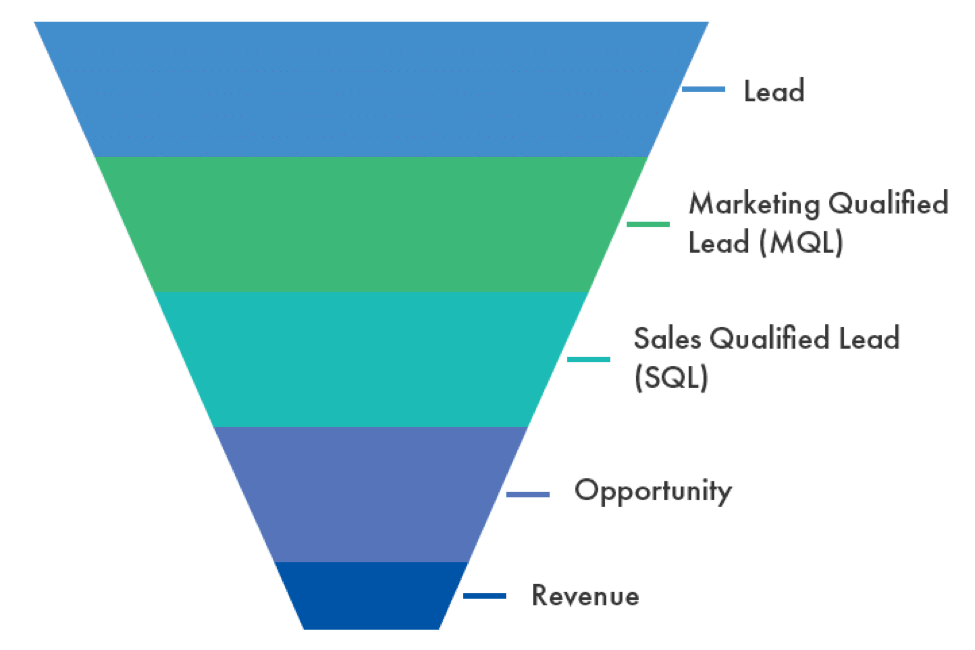
Many small businesses tend to overlook the early stages of a sales and marketing process (funnel) that includes the initial planning and audience building.

Because they are eager to generate sales, they focus their efforts on the middle and last stages that consist of lead and sales generation, where the revenue conversions happen.

This is clearly demonstrated when you see the bulk of a marketing budget focused on SEO, trade shows and ads that direct traffic and prospects to a sales page or a sales call.

The thought is that the faster you bring a prospect to the end of the funnel you can generate sales sooner.

While this sounds good in theory, the question running through your prospects head is: “If you do not want to take the time to see what my needs are, why should I take the time to see what you are all about?”

Ouch!

Although your efforts may be innocent, from the prospects view this is often received as off-putting or being too aggressive, especially from a cold audience.

Here’s the thing, you cannot build trust or a good relationship with potential buyers simply by taking them to the end of your sales process and people simply won’t do business with those whom they don’t trust.

When you do see interest, the results from this approach produces a large amount of lower quality leads that usually don’t convert very well or as least not as easily.

Therefore, you may have to put in more time, energy, and resources into sifting through these leads to make cold calls with the prospect that are not qualified as you hunt for conversions.

If you had focused building an attentive audience, discovered their needs and helped them find the solution to their research with quality content, tips, and trainings, you would have a completely different experience.

There is a reason why there are stages in a sales and marketing process and all of the stages are equally important.

Instead of skipping ahead to make a quick sale, let’s take a look at what these stages are and what you can put in place to help build more trust and generate more qualified leads.

Initial Planning

At this stage, you should determine exactly who you should be targeting and develop a plan on how you are going to communicate with them as they make their buying decision.

This also includes how they prefer to do their research and who also serves the same demographics.

Take the time to plan exactly:

  • Who you will target.
  • Where you can find them in large numbers,
  • How they prefer to keep up on their industry (and yours)
  • How they prefer to purchase
  • What types of things they research before they purchase

Documenting these items will allow you to clearly see where your most ideal prospects are gathered for you in large numbers, what type of information they are searching for, and where you can join in on the conversation.

Awareness Development

With your research completed, you can now begin introducing your business to those may have never heard about it before. Join places where they are gathered and provide tips and answer their questions.

Because there is no trust built yet, this is where can start providing answers or solution to their problems and start building rapport.

You can also build an informative blog or website for this purpose and offer downloadable resources.

Audience Building

Having valuable content on your blog or website will position you as a go-to resource that they can return for additional information, share the link with others, print out to bring to a meeting or simply validate their research.

As a go-to resource, you will begin to create quality traffic to your site. You can capture this traffic by incorporating opt-in forms on your site that offer a deeper dive into the content that they are interested in.

This is also the main entry point for most people that will enter your marketing process. The more you pay attention to building a quality audience here will be reflected throughout your entire funnel

Lead Generation

This is where many marketers jump in with two feet.

In a mad dash to generate leads, they overlook the value nurturing and audience before they are classified as a lead.

Take the time to nurture these potential leads, continue to share valuable resources, ask them what they are interested in and invite them to your workshops, demos or review, trainings, and to connect with your further as they become more familiar with you.

Sales Generation

At this point, those initial strangers have become very familiar with you as they have been engaging with your content and communication messages.

Congratulations, you have built a level of trust.

At the same time, you have made yourself available by sharing tips and answering objections that may have come up.
You now have a highly engaged list of qualified leads. Your next step is to invite your guest to:

  • A consultation,
  • A demonstration or live training, or
  • To work with you directly.

This is where you answer any final objections and make sales.

Conclusion

The goal is to have each funnel phase flow into the next to create one seamless dialog with your audience.

Begin with the initial planning stage to make sure you are building the best marketing “conversation”. Then, review your current funnel strategy and make sure you are communicating the right message at each of these stages.

14 Jun 16:19

Sweden cut its smoking rate to just 5% — here's what the rest of the world can learn

by Chris Weller

Sweden

In the United States, about 15% of people smoke. Over the next three years, the Centers for Disease Control hopes to get that rate down to just 12%.

Sweden, meanwhile, has been living in the single-digits for years. Its national smoking rate is just 5%. According to recent data, the next-lowest rate in Europe is Denmark's, at just over 15%.

The world has a lot to learn from Sweden's success in cutting the national smoking rate — the biggest lesson being that so-called "harm reduction," not death prevention, could make for the greatest leaps forward in public health.

Harm reduction is the philosophy that certain addictions can be rerouted toward less-harmful, non-lethal behaviors. In the case of smoking, it has meant a federal push in Sweden since the 1980s to wean smokers off their cigarettes by getting them to switch to a moist tobacco powder known as snus.

Roughly 19% of Swedish men use snus on a daily basis, while 4% of Swedish women do, according to 2013 data.

"Sweden boasts Europe's lowest male lung-cancer death rate — as well as the lowest male death rate from smoking-related cardiovascular diseases, and the lowest male death rate from other cancers that are attributable to tobacco," professors and public health experts Kenneth Warner and Harold Pollack wrote in The Atlantic in 2014.

Warner and Pollack believe the low cancer rates can be traced directly to the early days of the snus experiment more than 30 years ago. Although snus users still contract oral cancer at higher rates than the non-using population, the rates are lower than among those who smoke.

Harm reduction is a controversial approach to improving public health in many Western countries, because governing bodies and medical organizations feel obligated to advocate for nothing less than total cessation. The mindset is, recommending any product that could cause harm — no matter the potential upside to save lives — ultimately harms public health.

As a result, the US Food and Drug Administration refuses to advertise snus as a healthier alternative to combustible tobacco products. In many EU countries, businesses aren't even allowed to sell it.

Harm reduction advocacy groups claim approaches like Sweden's are more effective in getting people healthier because they meet them "where they're at." They don't ask people to kick their habit all at once; they provide a smoother off-ramp, in the form of nicotine patches, e-cigarettes, and other products.

And, importantly, they help people ditch the actual culprit leading to life-threatening disease: smoke.

"The enemy is not nicotine per se," Johns Hopkins University public health professor David Abrams wrote in 2014. "It's burning tobacco."

SEE ALSO: Sweden tested out a 6-hour workday — and it mostly worked

Join the conversation about this story »

NOW WATCH: These robotic speed bumps in Sweden may be the answer to reckless driving

14 Jun 16:13

Canadian tech is having a big moment and now the trick is not to mess it up

by Gerrit De Vynck, Bloomberg News

Not so long ago, Canadian tech entrepreneurs had a long list of grievances: a dearth of early and late-stage funding, long visa wait times for foreign hires, local corporations that wouldn’t buy their products, the best and brightest decamping for Silicon Valley.

Fast forward to today, and those problems have largely evaporated. Justin Trudeau’s Liberal government, eager to brand itself as innovative, has given tech leaders pretty much everything they asked for, including special fast-track visas for tech workers and hundreds of millions of dollars in venture capital money and support for artificial intelligence research.

Of course, Canada has squandered its tech prowess before (see: BlackBerry). The trick this time is taking advantage of lessons learned so it doesn’t happen again.

First, the good news. Silicon Valley venture firms no longer think twice about jumping on a plane to Toronto, Waterloo, Montreal or Vancouver to invest in Canadian startups. Google, Microsoft Corp. and Uber Technologies Inc. are all building artificial intelligence research teams in Canada, reversing some of the brain drain in what could potentially become the most important field of tech ever.

Venture capital investment in 2016 ballooned 26 per cent to $2.9 billion from the previous year. In 2010 it was just $900 million. U.S. tech giants have also been hiring heavily in Canada, taking advantage of the presence of computer science grads and the relative ease of bringing in workers from eastern Europe and southern Asia. Amazon has nearly 1,000 employees in Vancouver alone and is hiring hundreds more across the country; Google opened a new office last year with room for 1,000 engineers in Waterloo, BlackBerry’s hometown. 

Major U.S. tech companies are making strategic investments in Canadian startups too. Intel Corp. participated in a $120 million funding round for Thalmic Labs Inc. in September and Microsoft invested in Element AI in December.

Handout/Microsoft

In one week alone this month, Toronto venture capitalist and former eBay executive Janet Bannister says she took three calls from U.S. investors who want a piece of Canada. “All three approached me and said ‘I want to talk to you about your companies and about Canada because there’s great stuff going on and we want to be involved,” says Bannister, a partner at Real Ventures. “The Canadian ecosystem is at an amazing point, it’s an inflection point. It’s ours for the taking.”

Yet Canadian tech vets can’t help being haunted by the implosions of Nortel and BlackBerry, multi-billion-dollar, world-beating companies that fell victim to hubris and complacency.

Pessimists say there’s no guarantee the cycle won’t repeat itself. What was supposed to be a parade of hotshot companies going public in the last two years turned out to be more of a trickle. Hootsuite Media Inc., which builds software that manages corporate customers’ social media, is growing more slowly that beforand has put listing plans on hold. Earlier this year, Bloomberg reported that Hootsuite never deserved its unicorn status, although Chief Executive Officer Ryan Holmes said the company indeed had a valuation north of $1 billion. Messaging application Kik Interactive revealed last month that of the more than 300 million people who’ve ever downloaded the app, only 15 million still use it on a monthly basis.

The only notable exception is Shopify, which helps businesses sell online and has generated steady revenue growth, pushing up the share price more than 275 per cent since its May 2015 initial public offering. “I wish we had more Shopifys,” says Boris Wertz, who runs Vancouver-based Version One Ventures and helps source deals for heavyweight venture firm Andreessen Horowitz. “Right now we have one and I’m not sure there’s a second one that’s even close to that scale.”

With the biggest obstacles out of the way, it’s up to entrepreneurs to push past the Canadian habits of avoiding risk and selling their companies early, says Paul Teshima, who runs Nudge Software Inc., a Toronto startup that uses AI to help automate the tedious parts of sales jobs. “We don’t tackle big enough problems,” Teshima says. “You need someone to go for the big, big swing.

The presence of more serial entrepreneurs will go a long way in making sure that happens, he says. Teshima was an founding executive at Eloqua, a marketing software firm that Oracle bought in 2012 for US$810 million. He’s part of a growing class of second- or third-time tech entrepreneurs building in Canada.

“This time around we have a very different attitude towards what building global value is,” says Frederic Lalonde, Chief Executive Officer of Montreal-based flight booking startup Hopper. He sold his first company to Expedia in 2002 and the travel giant still has a presence in Montreal. The old Canadian way of thinking might have been that he’d done a good job, created value for the city and country and should be proud, Lalonde says. But once he saw how quickly Expedia used his technology to recoup the acquisition cost, he wasn’t so sure he’d made the best choice.

“A lot of second-time entrepreneurs in Canada have a very similar story,” Lalonde says. “They made a bunch of money but you’re like, ‘what did we give up in selling to the Americans?”‘

Canadian governments have a conspicuous habit of paying more attention to the tech sector when commodity prices are low and there’s no guarantee that pandering to startup chiefs will be politically popular forever. Data from research firm Pitchbook released last week shows Canadian venture capital had a slow start to 2017. Only $490 million worth of  investments have been made in Canada so far this year, a pace far below 2016.

Says venture capitalist Bannister: “We can’t take our foot off the gas.”

Bloomberg News

14 Jun 15:58

Stop Schmoozing At Conferences! How To Maximize Networking ROI With Accountability

by Gaetano

You don’t go on a job interview unprepared. You don’t go into a sales meeting unprepared. You don’t even go on a first date unprepared. So why would you go to a conference unprepared?

It’s quite simple – most attendees don’t think there’s much to prepare for.

Many become swooped up in the networking hype. The excitement of the big name speakers, the chance to finally get out of the office, the extravagant after parties, the opportunity to rub shoulders with the creme de la creme of your industry.

Well, I’m here to tell you something.

The absolute WORST thing you can do as a conference attendee is just “show up.”

In this article – I’ll explain how to master the art and science of conference networking, and how to extract real value from your conference experience. That includes a pre, during, and post conference game plan.

And yeah – it revolves a lot more than mindlessly sitting through speaker sessions with your laptop open while guzzling down ungodly amounts of coffee.

Recommended Read: The REAL Way to Convince Your Boss to Send You to a Conference

The REAL Way to Convince Your Boss to Send You to a Conference

Why Are You Even At The Conference? 

Before you even step foot into the venue, ask yourself: “What am I really doing here?”

Don’t be one of those people that comes to a conference, leaves and does nothing after.

Hopefully, you’re at the conference to ultimately learn something that will enable you to drive new, tangible results (or improve on existing results) in your business.

The improvement of results requires you to make change. Evoking change requires purposeful action. Following through on your actions requires accountability.

See where I’m going with this?

Just like everything else you do in business (and in life hopefully) – there should be a primary goal, perhaps followed by 1-2 more secondary goals.

Recommended Conference Goals

  • To meet and make a lasting impression on an influencer.
  • To sharpen my social skills; build confidence in my elevator pitch.
  • To make a genuine connection with other practitioners in my field.
  • To engage with a qualified lead who would find value in my service.
  • To revive and reconnect with an old lead that went stale.
  • To walk away with a minimum of 3 new tactics to implement.
  • To change (or correct) a part of my process that is not optimized.
  • To implement one experiment as a result of new knowledge gained.
  • To discover new tools and technologies that can improve my process.

Now here’s the kicker. To see real tangible results, you have to track and measure everything that you do.

As a result of skill X learned (and implemented) from conference Y, outcome Z was achieved which had a quantifiable impact on my business.

Recommended Read: Mastering Network Sales

How To Master Network Sales Without Being Awkward

Pre-Conference Game Plan

Okay remember the part where I said don’t be unprepared? This is where I show you how to avoid that.

Recommended Video: Social Selling Before You Arrive

Step 1: Commit to Accountability 

This is really a mindset shift. You’re telling yourself before hand that you’re going to make meaningful connections, learn something new, try a few experiments, set goals for yourself, and impact change within your organization. Mentally preparing for what you want is key to achieving your desired outcomes.

Step 2: Map out whose going to be there, who you want to meet, why you want to meet them, and how you’re going to do it. 

I learned this from Max Altschuler, but a week out from the event you should create an IMF list. It stands for impressive… yeah you get the rest.

Real Life Example Of How I Do This:

example conference outreach email

Segment A – These are the baddest marketers, sales leaders, etc. who will be attending that you absolutely must make a connection with. Typically, these are highly influential people who have lots of folks nipping at their heels, so craft a purposeful engagement strategy here. Being lazy or trying the same outdated tactics as everyone else will just get you ignored.

Segment B – Then, make a separate list of people that have similar job titles and roles as you; essentially these are your peers. It’s always good to connect with your peers because you’ll get to share new ideas and meet like-minded individuals in a low pressure setting.

Segment C – Last but certainly not least, make a leads list. This is the one rare time in life that you don’t need to cold call someone to make a connection. You can get that sweet sweet face-time that every business development ace dreams of.

Step 3: Engage with your targets on social media. 

There’s no perfect science to this, but here are some tips that have been successful for me:

Engage on Facebook Event Groups / Pages – One of the simplest ways to engage your targets is to do a little research. Learn where they hang out online and be there. Facebook (and LinkedIn) groups are usually a great place to start.

Jump Into Relevant Twitter Threads – Make sure you do this gracefully. Add value to the discussion. Be meaningful with what you say here. Once you successfully make a positive interaction on Twitter (and they respond to you in some fashion) try a quick DM that says:

“Hey INFLUENCER X, noticed you’re speaking at CONFERENCE Y. I’ve been following your work for awhile now. Just a heads up, I’ll be there too and I’m really looking forward to your session. Would be great to catch up for a few minutes at the event. See you there!”

Get a Digital Intro – Have you heard of the “Show me you know me” approach? Well, let me tell you, it’s gold. All this consists of is using LinkedIn to find a mutual connection with said person you want to meet, and having that mutual connection make an intro for you via email or social media. Done deal.

Step 4: Try some good old fashioned email outreach. 

The perfect email is still an art just as much as it is science, and it’s not dead by any means – you just gotta do it the right way. Use a catchy (not corny) subject line, make a strong case for yourself, leave one call to action, and keep it short and sweet.

Step 5: Experiment with Content Marketing.

If you’re a wordsmith of sorts, this might be one to try. Even if you’re not – who cares. Get creative and utilize video.

For example, you can publish an article on your personal LinkedIn that outlines what you’re excited for at the event, who you’d like to meet (and why) and also make the business case for why others should be there.

You’ll come across as someone who genuinely did their research and is on top of their game. This is always a good route to take if it plays to your strengths.

During The Conference Game Plan

sales conferences 2017

This is where you start putting your prep work into action. Time to execute.

Step 1: Look The Part.

Straightforward right? Maybe for some, but for me I usually try to stand out by getting a very unique haircut or reflecting a stylish look that aligns to my personality. That said, you don’t want to misalign to your audience so do it with caution.

Step 2: Be Human With Your Icebreaker.

So, come here often? Yeah that’s not gonna do it. This part gets severely over analyzed. You don’t need some fancy line to start talking someone. All you need to do is introduce yourself and be a human.

This might sound basic, but it works for me. Ask a question. Go!

Hey what do you think of the sessions so far? Any topic in particular that you really enjoyed?

Then introduce yourself and get rolling.

Step 3: Avoid Business Cards (If You Can)

Think about this – when in life have you ever given a prospect or influencer your business card, and it’s actually led to something meaningful?

Chances are… never.

To me, business cards mean “If I hear from you then great. If not, oh well.”

Here’s what to do instead:

Take out your smart phone and have the person you engaged with plunk their contact information directly into an Evernote book.

This way, you remain in control, and are enabled to follow up with that person in a meaningful way.

Step 4: Pick The Right Timing To Engage. 

Nothing worse than approaching an influencer to talk shop while they’re about to take a huge bite into their grilled chicken panini.

Another bad time to approach a speaker or influencer (or lead even) would be when they’re surrounded by other people who already want to talk to them.

Don’t cramp their style and crowd their space. Hang off to the side and wait until the commotion clears out, then approach gracefully.

You only get one first impression, don’t pick a bad time to leave one.

Step 5: Give Your Undivided Attention to Sessions That Are Most Relevant to Your Day to Day 

We live in the age of digital distraction. The controversial headline that claimed humans now have the attention span of a goldfish may be an exaggeration, but to some degree our attention spans are definitely shrinking due to all the push notifications, emails, social media, etc.

That said, don’t be one of those people who come to a conference just to sit through sessions with your laptop open and catch up on emails.

Your company invested in you to be here. Take notes on the sessions that matter to you. Start thinking about how you can apply the insights into your day to day. Take pictures of cool slides and share it on social. be engaged and take something valuable away from what you’re learning.

Recommended Read: 26 Headliners on How to Engage With Influencers at a Conference 

Post Conference Game Plan

sales follow up twitter

This is where you reap what you sow. Where you harvest your crops, so to speak.

Step 1: Follow Up With Everyone You Met

Basic but not something to be overlooked. This is where you go back to your Evernote book and go through the list of folks you met and send them a thoughtful message.

Make sure your message is tailored specifically to them. Recall something you spoke about and mention it. Use your spidey-senses to gauge what the possible next steps could be.

Recommended Read: How to Follow Up in Sales Without Being Annoying

Perfecting The Sales Follow Up: How to Gain Momentum and Win Deals Without Being Annoying

Step 2: Earn The Right To Ask For Something

The golden rule of life. If you take away one thing from this article, let it be this.

Offer value. Over and over again. Lather, rinse, repeat.

Always think of how you can add value to someone else’s bottom line before you ask them to add value to yours.

Earn the right to ask for something. Get respect and trust from those who might want to do business with you. That’s how you sell.

Step 3: Take 3 Things You Learned And Apply Them to Your Day to Day

What did you learn? Anything? Hopefully you did. Maybe new ways to prospect. Maybe you heard of a new tool to try. Maybe you saw a strategic blue print for aligning sales and marketing teams.

Whatever it is – pick at least 3 things and start experimenting.

Step 4: Host a Lunch & Learn to Report Back What You Learned 

This will accomplish many things:

  1. Prove that you actually learned something.
  2. Share knowledge with team mates that couldn’t attend.
  3. Let’s your boss know that it was an investment worth making.

Wrapping It Up

This is where you take it all in and get ready to apply it! Do the work. No shortcuts here.

See you at Sales Machine!

The post Stop Schmoozing At Conferences! How To Maximize Networking ROI With Accountability appeared first on Sales Hacker.

14 Jun 15:56

Pricing Professional Services is a Challenge for SaaS Companies

by Steven Forth

Many B2B SaaS companies struggle with pricing implementation and professional services. They often wonder if they should offer professional services at all. If so, how should they be positioned and what role should professional services play in overall strategy?

There are two contradictory forces at work here. The Pureplay SaaS model vs the Hybrid model. 

Pure Play or Hybrid

Working against offering professional services is a perception that investors discount professional services revenue and the feeling that having to offer professional services at all represents some form of design and engineering failure. As many SaaS companies are product driven, or 'product first,' this strikes deep. The perceived 'best-in-class' examples of SaaS companies are typically pureplay.

Working in favor of a strong professional services offering is the fact that all B2B SaaS offerings of any significance require some level of professional services support. Professional services are also a way to layer in revenues, gain a better understanding of the customers and build differentiation.  

There are two reasons B2B SaaS applications generally require some level of professional sercices.

Some applications are naturally complex and require smart technical people to configure and integrate. It is often the integration effort that requires the most service support as it is not within the control of any one company. Data integrations are increasingly important and even with well defined APIs (Application Program Interfaces, the way in which one software application accesses the functions or data of another application) there is generally a lot of data modeling and hard thought required. 

Other applications address critical business problems, and are only effective when combined with business insight. In this case, one needs to engage with business consultants rather than technical or implementation consultants. One differentiation strategy available to companies that solve thorny business problems is to develop real expertise in solving the business problems most closely associated with your software.

Business vs. Application Complexity

SaaS companies have two distinct strategies around professional services and how they price these services will depend on their strategy. Given that virtually all serious B2B SaaS applications require some level of service support one can try to (i) develop an ecosystem of consulting partners and push services out to these partners (this is the classic Silicon Valley model exemplified by Salesforce) or (ii) develop the capability to deliver these services in-house and make this a revenue driver and part of your differentiation (this is what companies like SAS have done).

How you price depends on your strategy. Most early-stage companies will have to provide some services as it takes time to grow an ecosystem around an application. If the services needed are primarily implementation related these should be rolled into the basic subscription. Why?

  • Keep your pricing simple
  • Make sure you provide everything necessary for customer success
  • Build this into your long-term recurring revenue (and then use this cash flow to invest in ongoing customer success)

Continue to do this until you can offload some of the work onto specialist consultants. Make sure that these consultants can create enough value for customers that they have an incentive to get into the business! Over time, if everyone is successful, these specialist firms will grow until the big consulting firms (Accenture, Cap Gemini, Deloitte, PwC, etc.) will want to pick up this business. This is not likely to happen until the implementation work is a nine figure business opportunity. The big firms will likely do this by acquiring some of the consulting firms that you have helped grow (the way that Wipro acquired Appirio, which got its start implementing Salesforce).

The situation is quite different when there is business complexity, rather than implementation complexity. A different kind of service is called for here. Solving business problems requires business consultants, people who understand the business issues and can speak to the customer in their own language. Business consultants are difficult to find and to train, especially for young companies. Here your best bet may be to build partnerships with experienced independent consultants who are willing to commit to your solution. Over time, you will want to either bring these people in-house, if you are adopting a hybrid strategy, or partner with larger and larger companies, if you want to be a pure play.

The long term trend is to have more and more of the business solution coded into the software. Deep learning and other Artificial Intelligence applications will likely accelerate this trend over the next few years. This means that the skills needed to really deliver differentiated value will include both business knowledge and the ability to weave that knowledge into the application and to create new knowledge using AI.

Implementation and business consulting services are priced differently.

Implementation should be included in the subscription and priced based on the long-term impact of a well implemented solution on the customer's business. It is part and parcel of the software service.

Business consulting should be priced separately from the subscription. The pricing here is the same as pricing any other professional service and will be based on the client-in differentiation (see this interview with Brian Conlin over on the TeamFit blog for a discussion of client-in differentiation). The price here is independent of the price of the subscription and is based directly on the value of the business consulting. The ability to use a powerful piece of software to help solve the business problem becomes part of the business consultant's strategic differentiation.

This is another example of how pricing decisions are dependent on the overall strategy for the company and cannot be made in isolation. Strategy, positioning and customer understanding all inform an effective pricing strategy. Ibbaka exists to help you tie these pieces together.


14 Jun 15:56

Why Change and Why We Need to Change

by Anthony Iannarino

One the most effective competitive displacement strategies available to you is to make the case for change.

If your dream client could produce better results by doing what they are currently doing, they’d already be producing those results. If your competitor was aware of what they could be doing to help produce those better results–and if they cared enough to do so–they’d have already initiated those changes.

When people need things to be better than they are, they are looking for change. They want a different result, and when they are serious about that change and ready to act, they make changes that allow them to do something better. This is when your dream client is most susceptible to change and your competitor is exposed to being displaced.

But this isn’t about your competitor. It’s about you. What do you do when you are exposed to the risk of being displaced to the message of “Why change now?”

I have written about the need to go from quarter to quarter, and year to year, always creating new value. You don’t counter a “Why change now” strategy with a “Why you should stay us with us” message.” You protect yourself from that threat with a “Why we need to change” message.

The difference here is one of being reactive, on your back foot, trying to defend yourself from the knock out punch, or one of being on your front foot, being the effective aggressor, initiating change, never resting on your laurels, and dealing with the threat of complacency so you don’t have to deal with the losing a client.

When you initiate change, creating the next plan for improvement and making changes on your side, you are protecting yourself from threats. You are also building the new value that creates the case for change, for improvements on your side and your clients, before anything that gives rise to the risk of you losing your client to the “why change now” message.

If you are already recommending change, then you are proactively protecting yourself from downside risks.

.

.

The post Why Change and Why We Need to Change appeared first on The Sales Blog.

14 Jun 15:55

McKinsey: It’s time to treat our sales people like customers

by bob@inflexion-point.com (Bob Apollo)

mckinsey_m_200.jpgAs a recent McKinsey article points out, as much as half of a company’s value creation rests with its sales force. Their findings confirm what many other researchers have also found - that the sales experience is a top factor when it comes to buying decisions.

But there’s a perhaps unexpected twist: McKinsey’s study also shows that top performing sales organisations pay as much attention to the rep experience as they do the customer experience: in other words, they treat their sales people like customers…

There are many more valuable takeaways in the McKinsey report than I can possibly hope to cover in this relatively short blog: I strongly recommend that you review the full article. I want to draw your attention here to a few of the most profound findings, and offer my take on the appropriate responses and actions.

THE SALES PERFORMANCE GAP IS A TALENT GAP

Firstly, there is a growing gap between top sales performers and the rest. The difference is at its greatest in complex B2B sales environments, where it is not unusual for performance to vary by a factor of six or seven times between the top tier and the bottom.

This is fundamentally a talent management problem. Even when organisations can identify who their top performers are, they often struggle to understand what sets them apart. They fail to identify the key characteristics, skills and behaviours that characterise their most effective sales people.

Some of the gap can clearly be ascribed to innate capabilities - something I’ll return to when we consider the hiring process. But in my experience a significant element of the performance gap is actually related to learned behaviours - and these winning habits, if they can be understood, can be replicated.

If we can identify these behaviours - you can think of them in simple terms as what the top sales performers have learned that they need to know, do and avoid at each stage of the buying process - then we can train, equip and coach the “willing middle” to adopt them, in the confidence that their performance will improve accordingly.

DEVELOPING THE “WILLING MIDDLE”

It’s probably worth explaining what we mean by the willing middle: after you exclude the top and bottom performing tiers, the majority of the sales force sits somewhere in between. A sub-set of this group (the “willing middle”) is open to the idea of learning from the best. They have the clear potential to improve.

The opposite part of this tier (the “unwilling middle”) are either unwilling or unable to change. Assuming that we've made reasonable efforts to educate them, the obvious conclusion is that these people are bad hires without the potential for improvement, and their unsatisfactory performance means that - along with the persistent bottom performers - they are best persuaded that their careers should go in a different direction.

Our skills development programmes will have the greatest impact when they are focused on making it as easy as possible for the willing middle to embrace the top performers' winning habits. And when our induction programmes equip our new hires to quickly adopt these same winning habits, we give them the best possible foundation for success.

But that, of course, assumes we’re actually hiring the right people in the first place…

HIRING PEOPLE WITH WINNING POTENTIAL

If we haven’t identified the common characteristics a top sales person in our particular sales environment, we’re likely to make more bad hires than good ones. And in most sales environments, factors like attitude, aptitude and ability turn out to be far more reliable predictors of future success than experience.

Traditional hiring approaches - which have often focused too much on experience because it’s the easiest thing to assess from a combination of CV and interview - often fail to pay the appropriate attention to attitude, aptitude or ability, because it takes an effort to assess these factors.

But with the widespread availability of well-proven assessment tools - backed by a growing army of experienced consultants who have the ability to interpret them - there can never be an excuse for failing to understand the common characteristics of our existing top performers, or for not testing new candidates against these critical success factors. The cost and consequences of failure is simply too high.

ADAPTIVE TRAINING

If we’re to fully develop the potential of talented sales people, a one-approach-suits-everyone training programme probably isn’t going to deliver the results that we are looking for. We have to recognise that different people may have different development needs, and will react in different ways to different training methodologies.

In particular, we have to acknowledge the pivotal role that first-line sales managers play in developing the capabilities of every member of their team. We can’t sit back and expect the learning and development department (assuming we have one) to carry the burden of skills development on their own.

What we need is an adaptive training programme that leverages a variety of delivery methods combined with a programme targeted at sales managers that equips and enables them to fulfil this vital role of continual personalised feedback, coaching and development.

This is not a trivial commitment. But the consequences of failing to treat our sales people as customers are far more significant, far more expensive, and far more damaging.

So - what's your experience?

Here’s the link to the original McKinsey article again.

Download our guide to "MOVING THE MIDDLE"

ABOUT THE AUTHOR

Apollo_3_white_background_250_square.jpgBob Apollo is a Fellow of the Association of Professional Sales and the Founder of UK-based Inflexion-Point Strategy Partners, home of the Value Selling System®. Following a successful career spanning start-ups, scale-ups and corporates, Bob now works with a growing client base of tech-based B2B-focused scale-up businesses, equipping and enabling them to systematically create, capture and justify their unique business value in every customer interaction.

14 Jun 15:52

You Found Your Ideal Customer Profile, Now What?

by Alex Hisaka
  • A Lone Green Matchstick Stands Out from the Pack

Salespeople can’t truly excel in their roles unless they have an intimate knowledge of their ideal sales prospect. That’s where customer profiles come into play.

While it might sound reductive to boil your consumer base down to a single persona, understanding the ideal customer profile is much more than a quick characterization of a group of people. It serves as a straightforward guide to identifying and reaching your best client prospects.

Sales teams can use an ideal customer profile to build a strategy for targeting, understanding, and engaging your company’s top prospects. By building sales strategies covering location, job type, online behavior and more, you can target your efforts in a way that inevitably reaches a highly relevant audience.

If you’ve already developed your ideal customer profile, the work of researching and analyzing your customers has already been done. Now you just need to apply that customer profile for more effective sales prospecting. Here’s how to turn that customer profile into tangible sales improvements.

Retaining Your Top Clients

Customer retention rate is a critical metric for most sales teams. Converting new prospects into clients isn’t as valuable when they’re merely serving to replace past clients that are leaving your company.


Effective prospecting and converting needs to be additive. Your ideal customer profile can support this goal by helping you identify your top clients, in terms of sales volume, loyalty, or other metrics. Being able to identify these top clients lets you dedicate your best resources to retaining these customers, preserving your best clients and a large share of your revenues.

Once you have this priority list in place, you can strategize to retain your best clients, setting up a solid foundation to grow your company’s revenues through proficient sales prospecting.

A Template For Finding New Customers

The data composition of your ideal customer profile can be used to identify prospects who are likely to be interested in your company. These identifiers can cover a range of data points, and they should be used to narrow down your potential online audience to the highest-value potential customers.

Since multiple data points are likely to be useful in distinguishing strong prospects, sales teams should establish “market segments” that group prospects into smaller segments based on the data points they have in common with the ideal customer profile. This will make targeting much easier for sales teams, allowing you to design sales strategies and custom content for each customer segment.


For example, in creating your ideal customer profile, you may notice that your customers have a higher likelihood of acquiring other companies within two years before purchasing your solution. Knowing this, you would create an M&A market segment. Then, you would create a custom strategy for targeting prospects at companies that have recently bought another company.  

Your existing customers can tell you a lot about where and how to find new potential clients. Building an ideal customer profile is a reliable way to turn this internal data into an actionable game plan. Once you have this profile in place, use it to reach new prospects with greater proficiency than ever before.

Simplify your own sales strategy by downloading The Effortless Guide to Using LinkedIn for Sales Success.

14 Jun 15:50

Surviving in a Sales 3.0 World: Why Insight, Not Instinct, Matters

by Gerhard Gschwandtner
Sales and marketing executives face a stark choice: adapt or die. But the good news is that tools are now coming onto the market to help the sales function deliver ever greater value to the business. By adopting new ways of working, embracing technology innovation, and taking a positive attitude to change, any sales or marketing executive can survive the shift that’s underway and become a winner in the new world of Sales 3.0.
14 Jun 15:49

Are You Making This Mistake When Using Your iPad or Tablet on Sales Calls?

by Julie Hansen

FirmBee / Pixabay

A growing number of sales teams have put away brochures or laptops on sales calls in favor of iPads or tablets. And with good reason. Used properly, mobile devices allow salespeople to be more responsive to customer’s interests, access information in real time, and encourage greater interaction.

Unfortunately, there is very little information available to salespeople on how to incorporate their iPad or tablet on a sales call effectively. Salespeople are often unaware that they are making mistakes that distract or confuse customers, and can even cost them the sale.

One of the most common mistakes I see sales people making when using their iPads or tablets has to do with managing the customer’s attention. Many salespeople make excellent points that unfortunately, are falling on deaf ears. Here’s why:

The eyes have it

It’s estimated that 80% of people are visual learners. That means if you put content in front of a customer, most of them will try to read it or figure it out. This has very strong implications for salespeople using iPads or tablets.
Consider this:

You’re showing your customer a somewhat detailed screen on your mobile device. As your customer is trying to make sense of it, you are talking about the benefits of this particular feature or capability. The customer, who is looking at the screen, trying to make sense of it, has just missed much of what you said.

Multi-tasking is a myth

Research shows that the brain can really only pay attention to one thing at a time. So if what you are showing on your device is intriguing, complex or simply doesn’t jive with what you’re saying, your customer is likely not hearing all of what you are saying.

To be an effective salesperson, you must be able to manage your customer’s attention and balance it between you and your tablet. Several strategies for doing this:

How to manage your customer’s attention with an iPad or tablet on sales calls:

  1. Eliminate potential distractions.
    Turn off notifications, disable sleep mode. I’ve seen some IM’s pop up on people’s devices that were clearly not meant for anyone else to see.
    TIP: Some tablets require you to disable notifications on an app by app basis. On an iPad you can do it quickly under “Settings.”
  2. Identify seller-focused moments.
    In addition to determining what you want your customer to see on your tablet, decide when your customer’s full attention should be on you. Logical seller-focused moments include: discussion of benefits or value, answering questions, or talking next steps.
  3. Create a neutral resting screen.
    Once you’ve identified those seller-focused moments, you have two options: 1. Put your tablet away or out of sight. 2. Have a neutral resting screen displayed. This could be a simple photo or image that doesn’t compete with what you’re saying, invite distraction or questions.
  4. Watch your own focus.
    Many sellers spend as much time staring at their iPad or tablet on a call as their customers! Customers will take a cue from you and if you’re constantly looking at your screen, they will too. A sales call should be two-way conversation. Not just a presentation or product demo with you narrating from behind the scenes. Customers need to see your face and your eyes to really make that connection.

Managing your customer’s attention is an important for any sales call, but it’s even more critical when you’ve added the attention-drawing appeal of a mobile device to the mix. Follow these few simple steps to make sure your message is received with clarity and impact by your customer.

Find out more about our Mobile Sales Mastery Workshops! What you don’t know could be costing you the sale!

14 Jun 15:49

What Sales Can Learn From Lean Manufacturing — Part 5

by Dave Brock

Ana_J / Pixabay

Whew, we are getting to the end of this series! Thanks to those of you who have hung in and contributed. I’ll be packaging this as an eBook, give me a couple of weeks, but email me if you want a copy.

We’ve gone through the philosophies and principles underlying the Toyota Production System, (TPS), in the past 4 posts of this series.

In this post I’d like to focus on some of the challenges we face in applying these methods in sales and marketing, as well as some of the misleading thinking around the application of these principles.

As you’ve seen, the principles actually have little do to with manufacturing–it’s when you start applying them to particular processes or problems that you start seeing unique applications within a function. In general, they represent great business principles and practices.

The application of most of the principles is pretty easily understood. The principles that people struggle with understanding–and which are, in fact, not totally applicable to sales are Principle 3: Use “pull” systems to avoid overproduction, Principle 4, Level out the workload, and parts of Principle 2: Create continuous process flow to bring problems to the surface.

Some of the overarching goals in applying TPS to manufacturing was the reduction of waste, improving quality, and making the process as efficient as possible. Overtime, it has also evolved to increase flexibility in the workflow to enable much more effective and efficient use of production capacity.

For example, now, you can go into a manufacturing plant and see different models of cars, each with completely different features being manufactured on the same line. Technology, logistics systems, and off line processes enable the right part/component be brought to the right station at the right time.

Variability is the challenge: Variability/variance has always been one of the fundamental challenges in the implementation of TPS. The more the variability, the greater the potential for defects/bad quality, or problems at some point in the manufacturing process. Manufacturing people spend a lot of time trying to understand what drive variability and eliminating it. But in very complex manufacturing processes, sometimes this is very difficult to achieve. Examples include semiconductor, any kind of foundry/casting, and complex precision assemblies. AI is already being used to help improve quality, reduce waste, and improve efficiency as variance happens (if you are curious, I was a cofounder of an AI software company that focused on just this problem, ask me–it’s really intriguing stuff).

To manage variability, you try to do everything you can to create uniformity in the inputs, control the process steps, and the outputs. For example, if every part is exactly the same and there is never a deviation or change, you can eliminate that part as an element of variance. If at a particular station I do exactly the same things, with no deviation, I can eliminate that as an element of variance. (I’ve really simplified this, but you get the point.)

So this is where we struggle with the application of manufacturing techniques to sales and marketing (particularly principles 3, 4, and 2). By definition, we cannot eliminate variability. In fact, we have the opposite case–each customer is different–they have different needs, priorities, goals, mindsets, and so forth. Complicating this, is they change! They may start with a certain set of needs, but change over time. Complicating this, in complex selling we are dealing with multiple individuals with differing priorities–and who change when they look at the group priority. Complicating this, they go at their own pace and cadence—even opting out of our “manufacturing process” whenever they want. As if this isn’t tough enough, it’s different from enterprise to enterprise, it changes over time, and it is neither logical or rational but often emotional.

So you can see that everything is conspiring against us in our goal to try to reduce and eliminate variability.

There are things we can do. We can look at simple or transactional processes or decisions that involve only an individual/or very small team. This helps reduce variability, but only a certain amount. But we’re still left with the complex buying processes. Increasingly we can leverage tools (AI shows great promise) to help us adapt our downstream processes to what has already happened (this is one of the things our AI tool did in complex manufacturing). A very simple example of this is the capability behind IFTTT. But we still find the limitations of our abilities to “control” variances created by customers requires the ability to be very nimble and adaptable our processes. It argues against the rigidity and ultra specialization so many promote.

We start seeing the way to address the limitations of addressing variability require new approaches and skill sets including highly nimble and adaptive systems. Since most of the “system” in sales is people executing these things, it puts different requirements on the skills and capabilities of our sales people.

Complex manufacturing processes have addressed some of these issues with teams, clustered work-cells/groups, increase empowerment and decsionmaking on the floor, as well as tools. We can learn a lot from these, but manufacturing does not face the situation of near infinite variability.

What goes in doesn’t come out. In manufacturing, if we achieve the goals of TPS, we have zero waste. Everything that is started in the manufacturing process ends up in “finished goods” on the way to a customer. We’ve matched production with demand because we only start production once there is an order.

This doesn’t happen in sales–and it is completely out of our capabilities to control this. Customers start, stop, disappear, reappear at any time through our process. Very little of what starts, actually makes it out the end of the process as either a win or loss. We know the majority of complex deals end in no decision made, not because the customer can’t select a solution, but because they can’t negotiate their own buying process.

We can’t smooth the workflow, we are constantly dealing with starts and stops, so there are limitations that prevent us from applying these principles in the way they are applied in manufacturing.

It all starts with a customer order. The fundamental of pull is it starts with a customer order/commitment. Nothing is built until we have that order. In sales, we are trying to achieve an order. We might have some “surrogates” that start the process, perhaps a lead or query. We might drive some predictability on lead flow, but each situation is different. We cannot be happy if we don’t have enough “orders.” We cannot wait for the customer to start the process.

Pull is insufficient in maximizing growth and share. In manufacturing, we start the pull process with the customer order, that stimulates scheduling, parts orders through the supply chain etc. In theory we don’t start anything until we get that pull.

Waiting for the customer to decide they are interested and reach out (pull), causes us to lose huge opportunities. We see all the data, customers don’t involve sales until they are 57-90% through their buying process. Yet at the same time, we know most buying processes blow up when they are 37% through, before they have even created pull!

And what about those customers that are creating pull on a competitor, but not us? Shouldn’t we be going after them? Or those that don’t recognize they need to change–but should?

Pull, strictly applied, is a sure path to under performance in the sales organization!

It’s A Complete System! TPS works because people apply all the philosophies and principles. As you’ve seen, each of the principles are tightly interrelated. They impact each other and are influenced by each other. You don’t get the value that TPS offers by applying selective pieces of it. In fact, you could do more harm by just applying one principle or a small element of TPS. Too many people suggesting the application of manufacturing approaches but just focus on a small element of the process.

Having said this, you have to start some place, but realize it’s a journey and you have to constantly think about leveraging all the principles.

It always starts with the customer! Much of the writing on leveraging manufacturing approaches in sales focuses on maximizing our internal efficiency. We design our workflows, processes, and develop specialists that make us most efficient. But TPS always starts their design point around the customer. The design actually starts from the end at the customer, working backwards with each downstream operation being the customer of the upstream operation. In doing this, TPS creates the most efficient and effective process in meeting customer requirements.

State differently, however efficient our process is, if it isn’t satisfying the customer, then it is worthless!

Relationships count! Along with focusing internally on our own efficiency, rather than the customer buying process/experience, many of the advocates for the “mechanization” of selling lose track that relationships count. People buy from people! Transferring a person from specialist to specialist may make use more efficient, but what about the buyer experience? We’ve all been frustrated calling a customer service number, being shifted from one person to another, retelling our story to each person. Why would anyone think it’s different in sales?

The creators of TPS actually recognized this, the foundations of TPS is a people centric view.

It is all about the people, empowering them, training them, developing them, leading them, and building an aligned culture. The overwhelming thing about TPS is the people and customer centricity. As automated as many manufacturing processes are, the “right automation” serves the people working in the process, and the customers. So many of the pundits seem to accept mediocrity in the sales force as a given, designing processes optimized to a “dumbed down” sales force.

I find this unacceptable and irresponsible. It does our people, our companies, our customers a disservice.

Conclusion: For those of you who have hung in, Thank You! This has been a long series. It actually deserves much more.

I’ll be coming back, in the future, to extend the discussion to Agile. It actually builds on TPS in very powerful ways.

Thanks again for hanging in on this. Would love your feedback!

14 Jun 15:48

Class of 2017: 17 Ways to Impress on LinkedIn

by Sydney Slavin

Class of 2017, your professional journey is soon to begin and your LinkedIn profile is the starting place for your professional story; who you are, what makes you you, and how the skills and knowledge you have acquired from experience and school furthers your passion.

For some young professionals, LinkedIn may not be as high of a priority because they believe it is simply an online resume, but it is so much more than that. It is a business tool that, if used correctly, will open many doors and close many deals. But until you’re ready to close those deals, here are 17 ways to impress on LinkedIn that will further your knowledge, and will make you stand out.

17 Ways To Impress on LinkedIn

  1. Profile: As I mentioned, your profile is your professional story. Craft a great summary and fill out many of the various sections to tell your network more about who you are.
  2. Photo: Your LinkedIn photo should look as professional as possible and should only consist of you. Having your friends in your picture makes it harder for your network to identify who they are learning more about.
  3. Headline: Your LinkedIn profile headline is the second thing that people will see when you come up in a LinkedIn search (the first thing being your name). Make sure your Headline properly captures who you are as a budding professional. Think about optimizing your Headline with important keywords from your chosen industry or field, an attention-grabbing tagline or information about what you’re looking for as a job seeker.
  4. Network: While you’ll want to grow your network, do not be a “quantity over quality” connector. Connect with intention. If you have held summer positions or internships, connect with those you worked with as they are great to have in your network. Professors in your field of study are also great to connect with as well.
  5. Personalized Connect Request: When connecting, LinkedIn is happy to send the default I’d like to add you to my professional LinkedIn network, however, creating a personalized message conveys thoughtfulness and that you care enough to take one or two minutes to craft your own message. If you are connecting to CEOs or to people you met somewhere, add the context in which you know or met them to help them remember who you are and how you know them.
  6. Connect with Alumni: Connecting with alumni is great for building your network. Chances are, you have already connected with your friends but did you miss anyone? What about those a year or two ahead of you that you know? Connect with them.
  7. Alumni Data: The “Find Alumni” page contains data about where alumni work, what they do, what they studied, and what skills they have. If you are looking for a job, do a little digging. You may find someone that you know who works at your dream company which happens to have an opening.
  8. Alumni Group: Joining your college or university’s alumni group on LinkedIn is a great way to stay connected and up-to-date with what is happening at the school. Plus, you may find other alumni to connect to!
  9. Young Professional Groups: There are a large number of groups on LinkedIn pertaining to young professionals. Join one. They provide tips and insight into how to navigate the working-world.
  10. Recommendations: Ask your professors or former employers for a recommendation on LinkedIn. Having a few sentences about you, your work ethic, etc. is great insight for future employers.
  11. Stay in Touch: LinkedIn provides you with ways to keep in touch. This an easy way to engage with your network. Congratulate your connections on new positions, work anniversaries, or wish them a happy birthday.
  12. Engage with Content: Your homepage is comprised of what your connections are posting. If you see something interesting, engage with the post. Either like, comment, or re-share. As important as it is to build your network, it is equally important to engage with your network. By simply liking, commenting, or re-sharing, your connections see your name… seeing your name often keeps you top of mind.
  13. Share an Update: Share informative and interesting articles, events, etc. that you believe will bring value to your network. This is a great way to keep you at the top of your news feed.
  14. Publish Post: Whereas, if you are creating original content, publish it as a post. Publishing posts help build credibility about your expertise.
  15. LinkedIn Students: Still searching for your post-collegiate job? Download LinkedIn Students. Using your LinkedIn Network, LinkedIn Students provides roles, tips, articles, and available positions to help you find your first post-collegiate job.
  16. Lynda.com: This online learning platform offers over 4,000 different courses on a wide variety of topics. If the position you are seeking requires knowledge in a specific area or skill, check out Lynda.com.
  17. Follow Up: While you want to grow your network with new connections, don’t forget about who is currently in your network. Following up every so often with your first level connections with a quick, “Hope all is well!” message is a quick way to convey your thoughtfulness and nurture your current network.

Each of these ideas are continuous and ongoing. You will (and should) update your profile as your professional story continues and you will continue to grow and engage with your network. Turn your LinkedIn profile, network, and activity into a lifelong career asset.

Go get ‘em Class of 2017!

14 Jun 15:47

3 Ways Your Qualifying Questions Are Destroying Your Buyer's Trust

by deb.calvert@peoplefirstps.com (Deb Calvert)

qualifying-questions-destroy-trust-compressor-622362-edited.jpg

Your time is valuable. Every precious minute you spend with a prospect who will never be a viable buyer is a minute you’ve wasted. You need to qualify prospects to make sure they’re serious, not just price shopping or browsing.

The problem is that empowered prospects are impatient with your qualifying questions. They’ve done some research and are talking with you to get their own questions answered. Some of your questions might seem intrusive or premature. HubSpot Research’s study on buyer perceptions revealed there’s a wide gap between your sales process and your prospect’s buying process.

To gather the necessary information without alienating your prospect, you have to strike a delicate balance between understanding their needs and qualifying their ability to purchase. If you flub this balance, you might lose the deal. The number one thing buyers want sellers to do differently is provide information and answer questions in a relevant and timely manner. If you’re perceived as doing anything less, buyers begin to question your trustworthiness.

As you work to qualify prospects and protect your time, avoid these three mistakes.

1) Asking purely self-serving questions

Your questions about the prospect’s needs are welcome and appreciated. Conversely, questions about the prospect’s ability to buy seem self-serving, especially if they come in rapid-fire succession.

There are, of course, certain things you need to know. Is this the decision maker? Who else will be involved in making the decision? What’s the timeline? What’s the budget? What’s the current solution? What other options are being considered?

There’s no shame in needing this information. But the way you ask matters a great deal. Questions that are buyer-focused signal that you care about the prospect. Questions that seem process-focused make the buyer feel marginalized. To get these details without seeming untrustworthy:

  • Explain the purpose for your questions in a way that shows prospects your desire to help them. Say something like, “I know your time is very valuable, and I have just a few questions that will ensure the best possible attention to your needs.”
  • Mix up your questions. Start with a broad, open-ended question to understand the prospect’s needs. You’ll get lots of insight and may even get some of your qualifying questions answered, too. Your opening question will sound something like this: “Let’s get started by talking about your current business needs. What’s going on that led to your interest in (our product)?"
  • Combine your questions so there are fewer of them. Try “Tell me about the process and where you are in your process for making a decision about this,” or “When it comes to all the variables like price, timeline, decision criteria, and such, what are the ideal outcomes you’re looking for?”

2) Being inflexible

True story: At a large, well-known software solutions provider, SDRs are only paid when they set appointments with the true decision maker who has budget authority and final say. A sure-thing purchase in the high six figures was recently lost when an SDR refused to set up a next-steps meeting with a VP, insisting the CEO would have to be present. She was unwilling to accept the VP’s explanation the CEO would take his recommendation and never, under any circumstances, met directly with vendors. This VP went from being a rabid fan of the software to a bitterly disappointed customer of the competition.

This is a classic case of process interfering with progress.

If your processes require you to ascertain where the prospect is located, how much the prospect will likely spend, the number of users the prospect is considering, or other bucketing information, consider how this sounds to the prospect. People want to be treated with dignity, not sorted.

Sellers also lose trust when they’re unable to answer basic technical questions and insist on setting an appointment with someone else. This happens, for example, when SDRs push for demos with the technical team and an account manager. To buyers who only want to get their questions answered, this often seems like a ploy to ensnare them in a thinly veiled sales pitch.

Strive to answer the prospect’s questions in a timely manner and provide basic information without requiring a full demo. Don’t let internal roadblocks stop you from closing deals.

3) Implying someone's not worth your time

There’s an inherent problem with the question, “Are you the decision maker?”

It suggests that you can’t be bothered with someone who is not a decision maker. For a prospect who has been appointed as information gatherer, it may suggest that you’re about to cut them off without giving them what they need.

Buyers often answer in partial truths. Some don’t want to admit their lack of authority. Others have been asked to stand in for the decision maker at this early stage and will represent themselves that way until it’s truly time for a decision. Increasingly, committees of decision makers are appointed but not revealed to sellers until absolutely necessary. It’s not uncommon to have layers of decision making -- the person you speak to first truly is the decision maker, but only for this phase of the process. And so on.

This question really doesn’t do you much good. You risk offending the prospect and operating on incorrect information. Asking someone about their own authority builds barriers between you and makes it more difficult to establish mutual trust.

Instead, treat the prospect like the ultimate decision maker. Demonstrate that you’re on the same side and it’s normal and expected for others to be involved. Ask, “Who else should we keep in the loop as we proceed, and how can I make that easy for you?”

If you correct these three errors, you can qualify prospects without offending them or making them feel like you only care about getting their money.

HubSpot CRM

14 Jun 15:46

7 Outrageous Lead Management Errors and How To Fix Them

by Kevin Joyce

HypnoArt / Pixabay

In last month’s blog post we introduced the five core marketing processes essential to effective and efficient marketing operations. This month we will delve into the first, and most important of these processes, the lead management process.

I believe it is the most important because, if poorly designed and executed, marketing cannot accurately determine how many quality leads it is passing to the sales channels, and how much influence its activities are having on revenue. What could be more important than that?

List of Ingredients for an Effective Lead Management Process

The lead management process outlines the steps for tracking and reporting on leads as they are created and move through a funnel. During this process leads become qualified or disqualified, and eventually pass on to a lead development team and finally onto sales or channel partners.

A typical lead management process includes the following six components:

  • Definition of a sales ready lead
  • Definition of the various lead statuses in the CRM defined funnel
  • Design of the lead processing, routing, and related notifications
  • Design of the lead scoring algorithm
  • Development and agreement on a service level agreement (SLA) between sales and marketing
  • Establishment of funnel metrics

In the process of adding more detail behind each of these, I will include examples of these 7 egregious errors in each, and how to avoid them.

  1. Failure to involve sales in defining a sales ready lead
  2. Failure to add lead status values for purchased list imports
  3. Inclusion of call dispositions as lead status values
  4. Failing to create and use a contact status field
  5. Failing to periodically review and refresh the lead scoring algorithm
  6. Failure to measure and enforce the sales and marketing SLA
  7. Funnel metrics that fail to account for unusual lead flow patterns

Definition of a Sales Ready Lead

Simply put, if you are in demand generation, your output is largely sales ready leads that have the potential to become opportunities for the sales channel. As such, you absolutely require an agreement between sales and marketing as to what constitutes a sales ready lead. And the error too many firms make is allowing marketing to decide what constitutes a sales ready lead all by themselves.

The result is that junk leads from events and the website are tossed over the fence to sales, who quickly recognize them for what they are, and learn to ignore leads from marketing.

It is very important to get sales people and sales management in the room with marketing and knock out a definition that both can live with. Marketing may not be able to get the B.A.N.T. criteria (budget, authority, need, time frame) without the help of lead development reps (LDRs). So what info can marketing solicit through forms, data appending, firmagraphics and observed behavioral data? What info does a LDR have to add? All of this info will inform the lead scoring algorithm discussed below.

Definition of Lead Statuses

Ah yes, you might think this one is easy, take the standard set of values including Inquiry, MQL, SAL, SQL, and Disqualified, and we’re done … right? Wrong. There are a couple of errors here that I see too often.

First, people forget that if you buy a list, or otherwise get a set of leads that have had no communication with your firm, don’t even know how to spell your company name, you cannot import them as “Inquiry.” You need a lead status to reflect individuals who have had zero interaction with you. “Raw” is a good value for that. And whatever you do, do not market to them like they are in any of the other statuses. They are different and need special treatment.

The other error I see is that people put call dispositions into the lead status field for the LDRs; things like “Attempting Contact”, or “Left Vmail.” These are call dispositions, they are not lead statuses. If you have a LDR group, whose output is the MQL passed to sales, then the lead statuses you can add are MAQL (Marketing Automation Qualified Lead from your marketing automation lead scoring algorithm), LAL – LDR Accepted Lead, and lastly “Re-Market” – a place where the LDRs can send the leads when they are not ready to move forward. Do not put the LDR reviewed leads back into Inquiry.

Lead Processing and Routing Flow Design

So check out the graphic below; looks pretty solid right? You’ll probably tell me that Opportunities and Won aren’t actual lead statuses and so don’t belong on here, and they don’t have arrows of lead flow coming out of them really. OK, I get that, but this graphic represents how most people believe lead processing happens, and it is wrong in an important way.

How People Think Lead Processing Happens

How people think lead management happens.

The big error in the single funnel view is that it overlooks the funnel of SQLs that marketing helps produce from “Contacts.” In the most common CRMs, Dynamics and SFDC, you have a concept of Leads and Contacts. They are different objects within the CRM, and a person’s information should be stored in one or the other but not both simultaneously. Shifting a person’s information from the lead object by creating a contact to store the data is called “lead conversion.”

In the flow above people typically convert a lead in the SAL status to a Contact as it changes lead status to SQL, i.e. the final converted lead status is SQL, and it will remain as such forever since the person no longer exists as a Lead in the system, they are now a Contact.

Many companies neglect to create Contact status fields, or build a funnel, just like the one above, for Contacts. This is a big mistake, since many SQLs, who are Contacts, not Leads, will cycle back to being in a “Re-Market” state, and marketing will nurture them, warm them back up to MQL and want to pass them to sales again. Without the contact status field, which mimics the lead status field, you cannot do this, and marketing may be greatly underestimating their SQL production and consequent influence on revenue.

One last problem with the funnel metaphor is that the funnel ends in a purchase. The reality of lead management is that when a person becomes a customer you continue to market, and sell, to them, nurturing them to repeated sales and hopefully making them a customer for life. Your lead management model has to account not just for the first sale, but for the entire customer lifetime. We call this the customer infinity loop and we will cover it at a future time.

Lead Scoring Algorithm

The lead scoring algorithm is built into the marketing automation platform after sales and marketing have had their meeting to agree on what constitutes a qualified lead.

The big mistake people make here is thinking this is a “set it and forget it” situation. It is not. You will want to all agree on how many points from demographic, firmagraphic and behavioral data combine to yield a qualified lead.

Let’s assume for a moment that 100 points is the threshold for MQL status. Don’t change this bar. It will get locked into people’s heads and you don’t want to mess with it. However you can and should alter how many points are given to which attribute or behavior, thereby making it easier or harder to achieve the 100 point level. You can vary the rate at which points from behaviors decay back to zero. You are highly unlikely to get the lead scoring perfect right out of the gate, so be prepared to dial it in over the course of a year or more.

Document a Service Level Agreement (SLA) With Sales and Marketing

So you got agreement with sales on what constitutes a qualified lead, and they agreed to follow up on MQLs within 48 hours. Fantastic! Did you document this? I know you can measure MQL quality because that is what lead scoring helps do. You can measure the effectiveness of the lead score based on how many leads your LDRs or Reps are converting to SQLs vs sending to Re-Market or Disqualify status. But the error many firms make is that they don’t measure how long the leads sit in MAQL or MQL status, i.e. they don’t measure if sales is holding up their side of the bargain and following up promptly on leads. This is not hard to do. It could be as simple as adding a field to track “age in stage” in the lead status field, and it will show how long your hot leads have been sitting there. Failure of sales to follow up on hot leads is a tragic error.

Establish of Funnel Metrics

If you have implemented a suite of lead status and contact status values that are MECE (mutually exclusive and collectively exhaustive), then you are well on your way to being able to do funnel metrics with ‘no lead left behind’! The error that we see happening here is that people expect their funnel to operate in a nice linear fashion … leads progress from Inquiry to MAQL, to LAL, to MQL, to SAL and onto SQL. Good luck with that. They don’t.

For a start, you will have LDRs pulling leads forward when they (the LDRs) are idle, so they pluck the warmer ones out of Inquiry and make them LAL or MQL. You will run an ABM campaign that generates new leads in existing known accounts, and the best thing to do with them is convert them from leads to contacts and in so doing move them from being in Inquiry as a lead, to Inquiry as a contact. No, they are not automatically made into SQLs. These are just a couple of examples. These are tractable issues, you just need to prepare for them in your funnel metrics.

Next Steps

You probably already have a lead management process, and perhaps this litany of errors has inspired you to take a second look at it. Here is the priority order for your audit:

  1. Review the qualified lead definition with sales and marketing in the room together.
  2. Review your lead status values to ensure they are MECE and remap the values in any leads in your system that have deprecated values.
  3. If you haven’t set up contact statuses to measure SQLs generated from contacts, now is the time, especially if you are planning ABM campaigns.
  4. Examine the efficacy of your lead scoring. Plan a quarterly tweak.
  5. Start measuring the “age in stage” for leads.
  6. If you are not already doing it, start measuring not just the quantity of leads flowing through the funnel, not just the stage conversion rates, but the velocity (you will need “age in stage” for this). You’ll be surprised by which leads from which lead sources are slow movers…
14 Jun 15:46

3 Contextual Lead Nurturing Tactics to Speed Up Your Pipeline

by Paul Schmidt

Contextual marketing has increased marketers’ abilities to create unique experiences on their website for each user. When a visitor converts on the webpage, personalization can catalyze further action. Below, we discuss three contextual lead nurturing examples that drive users more quickly along the buyer’s journey.

Retargeting

Providing users with helpful, relevant information after they leave your website is another method to incorporate into your contextual marketing strategy. Retargeting is useful for nurturing leads in your database to guide them further down the buyer’s journey. Here are two contextual marketing tools that can be helpful for lead nurturing.

  1. Snip.ly: This tool allows you to nurture or generate leads from other websites. Here is how it works: On bottom-of-the-funnel retargeting ads, you can send someone to another site where your positive third-party reviews or testimonials live. On this external page, Snip.ly overlays a banner that allows you to promote your other bottom-of-the-funnel offers (like demos, trials, or consultations) and capture leads.
  2. HubSpot’s Smart Forms: These forms allow you to dynamically change based on what we already know about the user. For example, if we already know the user’s company name or job title, there is no need to have that field on the form. Get rid of it. When retargeting users, eliminate as much friction as possible for them to take the next step in the sales process.

Lead Scoring

Whether you are using predictive or traditional lead scoring, you can customize the content on your website based on the quality of the lead. For prospects with an above-average lead score, promote bottom-of-the-funnel offers to get them to opt into a free consultation or assessment.

Email

Email is one of the most powerful ways to nurture your leads. We all get so much email every day, so it’s important you nail your messaging, content, and timing. Here are three contextual marketing examples you can use for your email marketing:

  1. Mobile: Analyze the percentage of email opens you get from mobile devices. This percentage continues to grow each year for most of our clients. To effectively use email for nurturing, keep them short and to the point. You can also use smart CTAs in email so that people can have content emailed to them, instead of having to download a 50-page white paper on their mobile.
  2. Personalized signatures: If your sales team is bigger than one rep, use smart content modules or personalization tokens to make these emails come from the sales rep working the lead. This provides context to the prospect when the sales rep calls him or her.
  3. Location information: Brick-and-mortar businesses or services area businesses that have more than one location should personalize the location information on the emails. This location information should contain the location’s hours, address, phone number, and a local-specific image.

What are some ways you personalize your lead nurturing to reduce your days to close?

14 Jun 15:45

9 Strategies for Using Customer Testimonials in Your Content

by Sujan Patel

customer_testimonials_contentWe look for and act on (even if subconsciously) social proof in all areas our life – including how we behave and the purchasing decisions we make online.

It doesn’t matter if that social proof comes from friends or strangers. What matters is that we’re seeing evidence from our peers – in this context, other consumers – that the decision we’re about to make is the right one.

As OptinMonster, co-founded by Syed Balkhi, writes:

Social proof is a psychological phenomenon where people conform to the actions of others under the assumption that those actions are reflective of the correct behavior.

In fact, according to Nielsen research, “92% of people will trust a recommendation from a peer, and 70% of people will trust a recommendation from someone they don’t even know.”


92% will trust recommendation from a peer & 70% will trust a rec from someone they don’t know via @Nielsen.
Click To Tweet


These recommendations can come in many forms. Word-of-mouth and third-party reviews come to mind, as well as what I’m focusing on in this article – testimonials.

Testimonials are a type of review and social proof. They serve the same purpose (guiding potential customers and helping overcome objections), but they’re different in one big way: Testimonials are sought and selected by you. This means you have full control over which testimonials are used, as well as where and how they are displayed.

We’ll look at ways to leverage testimonials in your content and other marketing materials; but first, let’s talk about how to get them and present them for maximum impact.

Getting and crafting testimonials

The only way to get testimonials is to ask for them – but how?

Randomly contacting customers to request a testimonial can work only to an extent. For best results, implement a system that allows you to request and receive testimonials at scale.


Implement a system that allows you to request & receive testimonials at scale, says @SujanPatel.
Click To Tweet


Follow up with recent customers

Your product or service will be fresh in the minds of your recent customers so this is a great time to ask them what they think of their experience.

Bear in mind that recent customers are only going to be able to comment on their experience with you up to this point. This isn’t a bad thing. Securing testimonials from customers at all stages of their relationship can help you address and overcome a wider range of objections.

Use drip campaigns to automatically send emails to recent customers after a set time to secure their testimonial.

Follow up again later

Expand those same drip campaigns to send emails to two groups of customers:

  • Customers who didn’t respond to your initial email – Perhaps they hadn’t yet formed a solid opinion of your product or service and will be more receptive to a request for a testimonial later down the line.
  • Customers who replied to your initial email with a testimonial – You know they’re receptive to your requests, so why not ask them for another testimonial now that they’re better acquainted with your product or service?

Approach your best customers individually

You know your best customers are going to give you a great testimonial. Better yet, the simple act of reaching out to them personally will strengthen their relationship with you and your brand. It’s a huge win-win all around.

Ask the right questions

Don’t just ask for “a testimonial.” Ask product- or service-specific questions that guide your customers toward writing testimonials that aren’t just complimentary but informative and inspirational as well.

Ideally, aim to extract examples of how your product or service has benefited them. You can do this by asking questions like:

  • How much money did our product save you?
  • How much time does our product save you each day/week/month?
  • What’s the biggest benefit you’ve seen as a result of using our product?

Design great testimonials

We know that a great testimonial should include specific product or service details, but what does this really mean?

It means that vague statements like “great product” or “love it” don’t cut it. Instead, your testimonials should describe what is so great about your product or service and how it benefited your customers.


“Great product” or “love it” doesn’t cut it in testimonials. Describe what’s great or its benefits. @SujanPatel
Click To Tweet


Remember, too, that you don’t have to use testimonials in the exact format you receive them. Edit spelling or grammatical errors and feel free to paraphrase if it helps focus your message and maximize impact. Just be sure to send any significant changes back to the customer for approval before publishing the testimonial.

Include these elements in a testimonial

Alongside the testimonial itself, include a name, date, and photograph of the customer who provided it. If possible, include a link to the customer’s website. This information all serves to help legitimize the testimonial. After all, which of these would you trust more?

These?

testimonial-quotes-wo-imageImage source

Or these?

testimonial-quotes-with-images Image source

Now that you know how to collect testimonials and how to present them for maximum impact, let’s look at nine ways to use them in your content and marketing materials.

1. Blog content

A visitor that lands on your blog via an external source or through a link on your website is a potential customer. Including brief testimonials within your blog content (ideally in the sidebar so as not to be intrusive) can help attract the attention and interest of visitors who have landed on your blog by chance, and reaffirm your credentials to those who are there because they’re browsing your site.

SEO author, speaker, and strategist Stephan Spencer uses a carousel to display a series of testimonials in the sidebar of his blog.

testimonials-image-carouselImage source


Use a carousel to display a series of customer testimonials in the sidebar of your #blog, says @sspencer.
Click To Tweet


2. Case studies

Case studies are detailed analyses of specific instances or events. They’re an awesome sales tool in their own right, but they can be enhanced further with testimonials from the customers in question.

Take a look at this example from U.K. digital agency Koozai:

case-study-papa-johnsImage source

Its placement helps legitimize the case study and adds weight to the claims made.

3. Website product or service pages

These pages play a key role in creating leads and driving conversions. If you’re not including testimonials here, you’re missing out – big time.

In fact, don’t stop at product and service pages. Include testimonials on your home page, About page, and contact page. Basically, any page that could realistically play a part in driving conversions should be enhanced with a testimonial.

testimonials-product-page

That said, don’t just stick any testimonial on any page of your site – make sure each testimonial is relevant to the page.


Don’t just stick any customer testimonial on any page of your site, make sure it’s relevant, says @SujanPatel.
Click To Tweet


That means using general “this company/person/product/service is so great” testimonials on your home page, and placing testimonials praising specific products or services on those corresponding pages.

HANDPICKED RELATED CONTENT:
How to Create High-Converting Content

4. Next to CTAs

Use testimonials to help drive conversions – whether a business inquiry, an email sign-up, or a content download (or all three) – by including short testimonials next to your calls to action.

This is one of the most important places on your site for using testimonials. A testimonial could be the trigger needed to overcome a potential customer’s final objections and get them to buy.

Just don’t forget to match contextually relevant testimonials to the page.

5. Print marketing materials

Print marketing materials often take a back seat to their digital counterparts. That’s understandable. Digital campaigns are generally easier to measure and are more cost-effective than print campaigns.

But that doesn’t mean print campaigns don’t still have a lot to offer. According to a study featured in Forbes by neuromarketing specialist Roger Dooley, print marketing materials are “more ‘real’ to the brain,” “involve more emotional processing, which is important for memory and brand associations” and “produce more brain responses connected with internal feelings, suggesting greater ‘internalization’ of the ads.”


Print materials are more real to brain, which is important for memory & brand associations. @rogerdooley
Click To Tweet


If you’re sending print marketing materials, add weight to your sales messages by including relevant customer testimonials.

6. Email marketing sequences

Enhance drip campaigns used to nurture leads with relevant testimonials. To maximize their effectiveness, match testimonials to the primary objection each email aims to overcome.

Here’s an example from a drip campaign distributed by Close.io:

drip-campaign-exampleImage source

The campaign itself is for a course designed to help start-ups get better at sales. At the bottom, you’ll spot a testimonial from someone enrolled in that same course. What you’ll notice, however, is that the testimonial doesn’t push (or even mention) Close.io’s products. Instead, the testimonial reinforces the value of the course and consequently addresses the objection subscribers are most likely to have at that point: whether or not the course is worth continuing with.

This example highlights the importance of matching the most appropriate testimonial to your marketing materials rather than simply using the one that pushes your product or service the most.

In this example, the testimonial in question encourages “students” to stick with the course and, in turn, become more affiliated with the brand. The result is a highly qualified lead that’s far easier to sell to later in the campaign.

7. Social media posts

Whether you’re using social media to promote your content or to push your product or service, testimonials can help you boost clicks and conversions.

This ad from Life Beam uses part of the ad text to highlight a short customer review.

life-beam-fb-testimonial-exampleImage source

Alternatively, you could include a testimonial within a post’s image. Just bear in mind the limits on the amount of text in an image used in a Facebook ad. You can check whether Facebook will allow your ad to run using this tool.

8. Different formats

Testimonials don’t have to be written. Why not collect audio or better yet video testimonials? Sure, they’re harder to get, but they’re more personal and feel far more authentic. Consequently, they’re widely regarded as being much more effective than their text-based counterparts.


Create audio or video testimonials for more personal touch. They are more effective than text. @SujanPatel
Click To Tweet


They’re also great for promoting on social media (and you don’t have to worry about rules that dictate how much text you can or cannot include).

Or, instead of asking a customer to speak directly to the camera, get on camera with them, and interview them about their experience with your brand.

Just make sure to:

  • Prep the customer – Creating usable content will be quicker and easier if the customer knows ahead of time what you’ll be asking so they can begin to formulate their answers.
  • Keep it brief – This is a testimonial, not a documentary. Three questions should suffice.
  • Edit properly – Even a three-question interview can drag if the customer’s a big talker. Edit out any irrelevant chatter so only the most important information – information that’s going to help potential customers overcome objections and decide to buy – remains.

9. Testimonials page

While I strongly urge you to include testimonials across your site and in other online and offline marketing materials, a page that rounds up all your testimonials or a cross-section of your best ones can be an invaluable asset for both you and your potential customers.

This need is even greater if your products or services don’t fit third-party review sites. Potential customers who are on the fence about getting the ball rolling will want to see as much evidence as possible that working with you is the right choice. Make that easy for them by collating your testimonials onto a single page.

How do you use testimonials? If you have a minute to share your experiences, I’d love to read about them in the comments.

Want to learn more about social proof in the buying process, how to create the best content, what to measure, and much more? Subscribe to CMI’s free daily or weekly digest newsletter.

Cover image by Joseph Kalinowski/Content Marketing Institute

The post 9 Strategies for Using Customer Testimonials in Your Content appeared first on Content Marketing Institute.

14 Jun 15:45

How to Rescue Your Failing Freemium Startup with Product Qualified Leads

by Eric Siu

As a freemium startup, you live and die by your ability to convert free users into paying customers. But thanks to higher customer expectations and intense competition, freemium conversion rates have been slowly declining. One reason for this is the widespread use of Marketing Qualified Leads (MQLs) to qualify and score leads. This is a concept that works for conventional products, but doesn’t fit the freemium business model.

Product Qualified Leads (PQLs) are an antidote to this problem. By separating lead qualification from marketing behavior and aligning it with product behavior, PQLs promise to greatly increase your conversion rates.

In this article, I’ll help you understand this revolutionary concept and how you can use it in your freemium startup.

What Are Product Qualified Leads?

In a nutshell, PQLs are qualified leads based on product-level data such as app usage frequency, engagement metrics, etc. The best way to understand PQLs is to see them in opposition to conventional marketing metrics – namely, MQLs.

A conventional marketing funnel using MQLs looks like this:

This funnel is linear. Prospects learn more about the product as they move further along the funnel. Apart from sales demos, they don’t get a chance to actually use the software until after the sale is finalized.

If you’re selling a freemium product, however, your prospects’ usage pattern is strikingly different. Instead of a linear progression from “lead” to “qualified lead,” prospects move in and out of the funnel as they use (or abandon) your free product.

In other words, freemium customers engage with your business at a product level. Thus selling to such customers requires a product-focused sales strategy.

This is where product qualified leads come into the picture. A PQL funnel looks something like this:

This model recognizes the non-linear nature of freemium software sales. It gives leads – and your sales team – the room to recycle, move and nurture potential customers towards a purchase.

Essentially, this means monitoring your product usage and identifying trigger behaviors that indicate a potential conversion. If this behavior aligns with the user’s known demographics, you can pass on the lead to your sales team. In case of cheaper products, it is even possible to convert users without any sales involvement (i.e. no-touch sales).

Why PQLs Work Better than MQLs for Freemium Products

The concept of PQLs emerged as a response to the challenge of selling freemium SaaS products. Freemium products have an abundance of product data and a deficiency of conventional sales teams. In this context, pursuing a streamlined, no-touch sales process improves conversion rates and profit margins.

Broadly speaking, there are two reasons why freemium products should adopt PQLs over MQLs:

1. CRM-Focused vs. Product-Focused

An MQL is essentially a record in a database. This record is based on marketing behavior such as downloaded content, webpages visited, etc. This data exists outside of your product.

A PQL, on the other hand, is a record of your product usage. This record includes data on how someone engages with your product, how frequently they log in, etc.

Consequently, PQL gives you far more product-level insight into your leads. This insight is a lot more relevant for a freemium startup that already has a large number of users.

2. High-Touch vs. Low-Touch

The MQL model is designed for a high-touch sales process. Once qualified, leads move to sales to be further qualified (SQL). This works as long as the lead volume is limited and the product price substantially high.

With a freemium product, however, this model breaks down. Higher lead volume and lower price make a high-touch sales approach unfeasible. SDRs are expensive; you can’t just call all potential customers and still turn a profit.

The PQL model is perfectly aligned with the low-touch freemium sales process. In fact, highly qualified leads can even be sold to without involving sales at all.

How to Use Product Qualified Leads in Your Freemium Startup

The PQL model pushes low-touch or even no-touch sales. This works best for products in the $5-$500 per month price range with limited customization requirements. It also works mostly for small businesses; enterprise deals are generally too complex to rely on a low-touch model.

Here’s a process for using PQLs in your freemium startup:

1. Have a Lead-Scoring Process

Although conceptually different, both MQLs and PQLs work the same way: you evaluate a lead and assign it a score based on available data.

To generate PQLs, therefore, you need to have a lead-scoring process in place. To develop this scoring process, you need:

  • Paid users’ behavior and conversion data. Analyze your paid users and make note of their in-app behavior and activity leading up to conversion. You can then use this data to identify conversion-oriented behavior in non-paid users. The more such data you have, the better.
  • A clearly identified target market. You should know what your ideal customers look like (including their demographic and firmographic data). It also helps if you’ve clearly identified your economic buyers, technical buyers and user buyers.
  • A streamlined sales process. If you want no-touch sales, you should remove all bottlenecks from the sales process. An existing user should be able to upgrade to a paid plan without any sales involvement. Focus on streamlining the upgrade user experience, especially payments.

Once you have a lead scoring process, you can start tracking product usage and score leads based on how they interact with your app.

2. Track In-App Behavior

Which behavioral metrics you need to track will vary from product to product. A B2C product might want to track usage frequency, while a B2B product might want to track the number of users per account.

At the very least, make sure to track the following:

  • Engagement metrics, such as visit duration, number of actions performed, retention rate, etc.
  • Usage metrics, such as how often a user uses a particular feature.
  • Login frequency, i.e. how often a user logs in to use the product.
  • Freemium account limits, i.e. which users are nearing or have exceeded freemium plan limits (on storage, number of users, etc.).
  • Social and support metrics, i.e. users who have engaged with you on social platforms (especially if the engagement was positive) and support desk.

Besides the above, also keep track of any users who’ve contacted you via the support desk. These are customers who have “raised their hands,” so to speak, and are willing to learn more about your product.

Also take special note of users who have come to you with a problem that can be solved with a paid plan feature.

3. Identify High-Converting Usage Behaviors

Your top priority should be to identify users with a high likelihood of conversion.

Mostly, these are users who have “adopted” the software and are using it frequently in their workflow. Look to data from your existing paid users to identify metrics that signal strong adoption.

Some common indicators of possible conversion are:

  • Tripping free plan account limits
  • Inviting other users, especially those on the same domain (i.e. team members)
  • Engaging with support or inquiring about a paid plan feature

Identify users who fit such criteria and push them towards sales. You can even send them offers or discounts if you want to pursue a no-touch sales process.

4. Use Demographic and Firmographic Data

Product-level metrics tell you what your users do in your app. But for true effectiveness, you still need to know who your users are. For this, you need demographics and firmographics data.

You should already have clearly identified customer personas. If not, look to your successful users and take note of their demographics:

  • Country/region of origin
  • Gender and age
  • Education level

Along with firmographics data (company size, revenues, number of employees, etc.) this will give you a detailed overview of who your customers are. Use databases like Clearbit and Datanyze to supplement your data.

When combined with product-level metrics, this can help you zero in on your highest potential leads.

As an example, here’s a simple product + demographics model for filtering leads:

User logs in a minimum of 10 times
Average duration of each visit is >3 minutes
User’s company has 20-50 employees
User is located in North America

Leads that meet the above criteria can be labeled as “product qualified leads” based on your data.

The PQL concept isn’t the panacea to all your freemium startup woes, but it comes close. By reimagining the sales funnel as a function of product behavior (instead of marketing behavior), it gives freemium startups the ability to find their best converting leads.

There’s a lot to learn about PQLs, but the above process is a good place to start. Focus on collecting data and identifying behaviors that align with successful conversions. Combine it with demographics data to develop a robust, product-focused lead-scoring process.

The post How to Rescue Your Failing Freemium Startup with Product Qualified Leads appeared first on OpenView Labs.

14 Jun 15:44

To Survive, Health Care Data Providers Need to Stop Selling Data

by Harsha Madannavar
jun17-14-70784491

Most data-driven healthcare IT (HCIT) providers aren’t going to survive. Their business models are at serious risk of failure in the next three to five years. To beat those odds, they need to evolve dramatically, and fast, to a point where they are not selling data at all.

Like any number of industries, healthcare is being transformed by the explosion of low-cost data. In healthcare, the transformation is driven in large part by electronic medical record adoption and digitization. There have been many benefits. End users can take advantage of quantities of newly available information to solve problems in population health, clinical decision support, and patient engagement, among other applications. And ease of access means ease of market entry: Emerging data providers can get on their feet quickly and create new sources of competition. For example, AiCure and Propeller Health are using very different methods to generate patient medication adherence data. Competition leads to better offerings and more choice. What could go wrong?

Plenty, actually. End users can be overwhelmed by the flood of raw data and reports that may not fit well with their existing workflow or answer their specific question. And for data providers, ubiquitous availability of information and low barriers to entry means that the competitive advantage gained from the data itself can be quickly eroded.

Insight Center

Yet too many HCIT providers are still pursuing that data-centric advantage. The bulk of HCIT investment supports startups that sell data — clinical or operational information that is otherwise difficult for clients to obtain or to organize. These firms regard data as the source of business value. But as more data and more data providers flood the market, a competitive position based solely on data becomes impossible to defend. Consider the move by the Centers for Medicare and Medicaid Services to publish extensive Medicare enrollment and utilization data, and to make it accessible and easy to interpret via the CMS website. Information that would once have been proprietary — and premium-priced — is now widely available, for free.  CMS’s move illustrates a broad trend. Increasingly, for most HCIT firms, data is a commodity.

What’s a data provider to do?

One solution is to become the authoritative source for a particular kind of information. Some firms have managed it, in healthcare and in other arenas — think of QuintilesIMS as a source of pharmaceutical sales data, Nielsen as the authority on TV viewer habits, and the U.S. Census for information about U.S. demographics. In theory, a healthcare IT provider can follow their lead and try to corner the market on a data set. But to do this in today’s landscape is a tall order. The same dynamics we’ve described — widespread access, low costs, low barriers to entry, commoditization of data sets — mean it’s an open question whether this strategy can work.

A better option is to evolve from providing data to providing insight.

Companies moving this direction aim to solve problems within a use case, for example, decision support. They might focus on a specific population such as cancer, diabetes, or Alzheimer’s patients and a specific insight about disease progression, pain management or treatment options. They address an underlying stakeholder need such as managing the total cost of care. Clients get what’s really needed —raw data transformed to support better decisions. And HCIT providers escape the commodity trap.

The marketplace is rapidly moving in this direction. IBM established its Watson Health business unit to apply cognitive computing analyses to healthcare and in 2016 announced plans to acquire Truven Health Analytics for $2.6 billion. IBM plans to leverage Truven’s vast data collection — sourced from more than 8,500 insurers, hospitals and government agencies — to  support specific use cases, using Watson’s analytical capabilities. For example, some Watson Health initiatives focus on improving oncology diagnostics and identifying the most effective treatment protocols for specific cancer patient subgroups.

Another solution provider, Proteus Digital Health, is engaging with health systems to provide insights into actual medication use and resulting health patterns. Understanding treatment effectiveness for at-risk patients — in particular for patients with uncontrolled hypertension and diabetes —  is a priority for many health plans. Proteus analytics support patient and family engagement and care-team coaching to drive clinical improvement. Other data analytics services based on accurate medication-intake information, in combination with physiological measures, also promise to improve clinical decision-making, reduce doctors’ workload, and improve outcomes.

The transformation from data provider to data analytics services is hard. It requires significant changes in business models, staffing and management approach. But we believe it’s the only option. The late economist and marketing professor Theodore Levitt famously said “People don’t want to buy a quarter-inch drill, they want a quarter-inch hole.” In health care, providers don’t want data, they want solutions that lower costs and improve outcomes. HCIT firms that deliver those solutions are the ones that will be around in five years’ time.

13 Jun 17:38

How free shipping is eating away at margins, and the strategies retailers can adopt to compete with Amazon

by Stephanie Pandolph

Shopping Online More

This is a preview of a research report from BI Intelligence, Business Insider's premium research service. To learn more about BI Intelligence, click here.

Amazon Prime’s free two-day shipping has led to an industry paradigm shift. Online retailers — small and large — are increasingly offering the perk to keep from losing customers to the behemoth marketplace. But free shipping comes at a steep cost: Rising shipping expenditures are eating away at retailers' margins. 

Larger retailers that can better afford to eat the cost of free shipping are battling to gain an advantage over Amazon. But most retailers, particularly small ones, lack the resources necessary to compete with the massive online retailer. This has set off a race in the logistics industry: Large logistics providers are creating new services for small retailers, while logistics startups aiming to address the same market are growing in numbers. 

In a new report, BI Intelligence weighs the costs and benefits of free shipping for retailers and analyzes the effects of the perk on the industry. It assesses the technologies that could become commonplace as retailers and logistics providers fight rising shipping costs. However, implementing a cost-effective free shipping strategy can be difficult, so the report also discusses various techniques that both small and large retailers can use to make free shipping work for them.

Here are some key takeaways from the report:

  • Small and large retailers alike are turning to free shipping to better compete in an Amazon-dominated market. But rising shipping expenditures are eating away at retailers' margins — even Amazon reported in 2016 that its shipping costs jumped 40%.
  • Small retailers face even more challenges than their larger counterparts, as they often lack the resources to invest in supply chain improvements and can’t benefit from the generous shipping discounts large retailers receive. Typically, retailers can get discounts of up to 70%, while boutique shops may only see discounts of about 5%.
  • Both retailers and logistics companies will likely invest in technologies that help to lower shipping costs. These include augmented reality (AR), artificial intelligence (AI), and radio frequency identification (RFID) tracking. Additionally, as logistics providers continue to raise shipping rates, large retailers may move some logistics operations in-house.

In full, the report: 

  • Provides an overview of how consumers' demand for free shipping is shaping the retail and logistics industries.
  • Examines the technologies that may be implemented as a result of  companies seeking to lower shipping costs.
  • Discusses various strategies to implement with free shipping for small and large retailers.

Interested in getting the full report? Here are two ways to access it:

  1. Subscribe to an All-Access pass to BI Intelligence and gain immediate access to this report and over 100 other expertly researched reports. As an added bonus, you'll also gain access to all future reports and daily newsletters to ensure you stay ahead of the curve and benefit personally and professionally. >> Learn More Now
  2. Purchase & download the full report from our research store. >> Purchase & Download Now

Join the conversation about this story »

13 Jun 17:29

Painful day to be a short seller as Bank of Canada drops ‘glaring hint’ rates are soon to rise

by Theophilos Argitis and Maciej Onoszko, Bloomberg News

Count the Bank of Canada out as an enabler.

Investors betting against the Canadian economy lost a key support Monday when the country’s central bank indicated it’s turned bullish enough to consider raising interest rates — a surprise policy change the Bank of Montreal called a “potential watershed.” Governor Stephen Poloz added to the bullish tone in a CBC interview Tuesday by saying rates have been “extraordinarily low,” and that rate cuts “have done their job.”

The comments Monday by Carolyn Wilkins, the central bank’s second-highest-ranking official, are a rebuke to pessimists who say unprecedented household debt and record home prices will trigger a disorderly unwind of Canada’s housing markets, some of which may have entered into bubble territory. The Bank of Canada may have contributed to the negativity. Until now, it’s been slow to acknowledge a sharp economic rebound, suggesting instead the economy wasn’t healthy enough to warrant higher interest rates.

“It was a painful day for those investors holding short positions in the Canadian dollar in the hope of a short-term gain,” said Matthew Strauss, a Toronto-based portfolio manager at Signature Global Asset Management.

The loonie surged after Wilkins’s comments, ending Monday up 1.1 per cent to 74.90 US cents in Toronto, the steepest increase since March and the biggest advance among Group-of-10 peers. The loonie added to gains Tuesday, rising to 75.62 US cents. Odds of a 2017 rate increase almost doubled to 59 per cent, from 30 per cent on Friday, based on trading in the swaps market. Yields on benchmark 2-year government bonds surged 11 basis points to 0.84 per cent, and added another three basis points Tuesday to the highest since January 2015.

‘Real Problems’

Short sellers betting against Canada’s housing market have been emboldened by several factors: price gains that far exceed incomes; the recent run on deposits and share collapse at mortgage lender Home Capital Group Inc.; and a downgrade of the nation’s banks by Moody’s Investors Service. Even while the economy has been on a roll — with annualized growth of 3.7 per cent in the first quarter — the boom times in Vancouver and Toronto look to some investors like the debt-fuelled housing bubbles that wrought havoc in so many Western countries last decade.

“I’m starting to believe that there could be some real problems with Canada,” Carson Block, an investor and founder of Muddy Waters LLC, said in a May 31 interview. Canada may be “the hottest market in the world for short sellers; if not, it could be.” The investor is shorting Canadian miner Asanko Gold Inc.

Famed short seller Marc Cohodes has been betting against Home Capital since November 2014 — when the stock was near its peak. The California investor is also targeting mortgage lender Equitable Group Inc. Net short positions in the Canadian dollar meanwhile hit an all-time high going back more than two decades.

In a speech Monday, Wilkins highlighted how the nation has largely emerged from the oil price decline that prompted policy makers to cut interest rates twice in 2015, citing “pretty impressive” first-quarter GDP growth that was the well above any other G-7 economy. The recovery is also broadening across regions and sectors, giving policy makers “reason to be encouraged” about its sustainability.
She downplayed worries about Toronto’s housing market and, while acknowledging slack still remains in the economy, said policy makers need to keep their eye on the future evolution of growth, not only current economic conditions. The analogy she used was of a car needing time to brake ahead of a traffic light.

“As growth continues and, ideally, broadens further, Governing Council will be assessing whether all of the considerable monetary policy stimulus presently in place is still required,” Wilkins said. “At present, there is significant monetary policy stimulus in the system.”

Market sentiment had already turned more bullish on Canada before her speech. Short-interest positions of Canada’s six-biggest lender are down, with Toronto-Dominion Bank and Royal Bank of Canada — the two largest — now at about 1.6 per cent of the free float, according to Markit data. That compares with about 5.9 per cent at Royal Bank on April 25, and 5.5 per cent in early April for Toronto-Dominion Bank, the data show.

Short sellers have also been easing pressure on Home Capital. Short positions on the shares dropped to 20 per cent earlier Monday, the least since July 2015, according to Markit data. The alternative lender’s stock tumbled in April after Ontario’s securities regulator accused the company of misleading investors about mortgage fraud.

The sense that Canada’s economy is strong enough to overcome any vulnerabilities in the financial system was also the key theme last week at a press conference by Governor Stephen Poloz. The optimism is an about face from earlier this year, when he spoke about the possibility of another reduction in the bank’s benchmark lending rate, after cutting it twice in 2015 to 0.5 per cent.

“This is a pretty glaring hint that policy is now biased to tighten, with the next move likely a lot sooner than many had expected,” Bank of Montreal Chief Economist Doug Porter said in a note to investors.

The Toronto-based bank moved up its call for a rate increase to January, from its previous call for an April move. The bank said an October hike is a “real possibility.”

Bloomberg.com

13 Jun 17:28

‘Unlikely to go away’: Bank of Canada warns of cyberattack vulnerabilities in financial sector

by Mike Blanchfield and Jim Bronskill, The Canadian Press

OTTAWA — Canada’s interconnected banks are vulnerable to a cascading series of cyberattacks that could undermine broad confidence in the financial system, the Bank of Canada warns.

The structural vulnerability could allow for the easy spread of an initial attack that ripples into other sectors such as energy or water systems, says the bank’s June financial review.

The report urges banks to co-operate on countering the threats that are not going away any time soon.

The former head of the U.S. National Security Agency made the same recommendation earlier this month, saying private-sector companies — including banks — have to do a better job of sharing data on attempted hacks in real time to counter the ongoing challenge.

Retired Gen. Keith Alexander told a defence industry trade show that banks have valuable metadata on attempted hacks embedded in the logs of their firewalls and sharing that information can allow them to more successfully fend them off.

Alexander suggested the 2014 cyberattack on the American bank JPMorgan Chase that affected an estimated 80 million accounts could have been prevented if banks had shared information.

Canada’s central bank expressed a similar concern in its most recent update.

“The interconnectedness of the financial system could lead to rapid transmission of stress from a cyberattack,” the report said.

“This is a structural vulnerability that is unlikely to go away. And because of the interconnections in the system, the public sector has a role in co-ordinating cyber defences.”

While those same connected platforms allow the financial services sector to deliver efficient service, they also leave several sectors of the economy vulnerable to attack, said the bank’s report.

“Contagion could occur through financial interconnections or common critical infrastructures in non-financial sectors, such as telecommunications, energy and utilities,” it said.

“A prolonged interruption in financial services, compromised data integrity or a loss of confidence could harm the financial system with knock-on effects to the real economy.”

Canadian Press
Canadian PressThe Bank of Canada building in Ottawa.

There were eight high-profile cyberattacks on banks in 2016, the report said, including an $81-million heist at the Bangladesh Bank.

The report urges private-sector players to work together because protecting against an attack “has benefits beyond an individual institution and can be considered a public good.”

The Canadian Bankers Association said recently that its members “constantly update their security systems and protocols to stay ahead of potential threats.” The association urged customers to avoid opening suspicious emails and exposing themselves to ransomware, malicious software that locks a user out of their data and demands a ransom for its release.

“Canadian banks are leaders in cybersecurity and continue to invest in cybersecurity infrastructure to protect the financial system and the personal information of their customers from cyber threats,” the association said in a May 31 statement.

However, the federal government has expressed concerns.

Public Safety Minister Ralph Goodale is mindful of cybersecurity in the financial sector, making a point of meeting on the issue in London last year with former Canadian colleague Mark Carney, now governor of the Bank of England.

“Although banks tend to be more resourced and mature than other sectors in dealing with cyber threats, there are still a number of recognized gaps throughout the sector,” said an internal Public Safety note to prepare Goodale for the meeting.

It pointed out that the theft from Bangladesh’s central bank was carried out by breaching the Society for Worldwide Interbank Financial Telecommunications, or SWIFT, used to authorize payments between accounts.

“This is a clear example of where the system was vulnerable,” said the briefing note, obtained through the Access to Information Act.

The note also underscored the importance of identifying threats and improving the sharing of incident information.

In that vein, the independent, not-for-profit Canadian Cyber Threat Exchange aims to promptly share threat information between Canadian businesses and government agencies, as well as provide cyber threat analysis and advice for reducing risk.

The Canadian Press

13 Jun 17:24

30 Sales Call Tips: How to Start Conversations so Prospects Don't Hang Up On You

by Sean.Mcpheat@mtdtraining.co.uk (Sean McPheat)

Does the idea of making a cold sales call make your blood run cold? Well, you’re not alone. I made thousands of cold sales calls throughout my career for technology companies like IBM, TELUS, and Open Text.

And, before my tech sales career, I made cold calls selling advertising for a startup women’s magazine. I had originally applied to the company to sell advertising for a luxury lifestyle magazine, but apparently they thought a geeky 25-year-old male sales rookie would be an ideal fit to sell print ads to retailers that catered to fashion-forward, socially-savvy women.

Stand-up comedians would have a field day with that situation.

All of this to say: I know how it feels to call a decision-maker and be rudely hung up on.

Free Resource: 30 Sales Call Script Templates  [Download Now]

The odds aren’t in a sales rep’s favor in the digital age. In fact, according to HubSpot’s Sales Trends Report report:

  • Most prospects (96%) research companies and products before engaging with a sales representative.
  • Only 37% of sales representatives produce the most leads from phone calls with cold outreach.

There are many opinions on how to starts a sales call and make the best use of your “moment of truth” — the first eighteen seconds or so. Well, here are my thoughts on how to start a sales call based on years of experience. You’ll also find great insights from other sales and marketing pros.

Table of Contents

What is a sales call?

First, let’s get aligned on a simple sales call definition.

Sales calls are conversations between a seller and a customer or prospect. They may be face-to-face interactions, or discussions over digital channels like social media, email, live chat, phone calls, or video meetings.

Successful phone and video interactions remain very popular and effective, and they have similar characteristics. According to a recent HubSpot survey, 75% of sales professionals say they use phone calls for remote selling, with 40% saying they use video.

Rookie sales reps and veteran telesales people resist video calls, but they really have to get over being camera shy.

Video sales calls:

  • Enable salespeople to pick up on body language clues that phone calls don’t convey, like posture or facial expressions.
  • Establish a more personal connection compared to emails or phone calls.
  • Are more effective at building rapport and trust.
  • Help sellers to better control conversations by listening for clues on when to stay on a topic a prospect seems engaged in or when to pivot to something they care more about.

I’ve recorded video pitches and embedded them in emails as a way to make a personal connection to get buy-in for a video meeting. My favorite application for this is Vidyard.

Understanding warm vs. cold leads

Cold leads, or prospects, are people who haven’t indicated an interest in a product or service. Sales professionals find them through a variety of methods, including but not limited to phone listings, social media, event attendees, and other online resources. Most cold calls take place over the phone, email, or social media.

I made my cold call goal simple: to secure discovery meetings on my first call. I also found that if a prospect heard my voice or saw my face on a video call, it took the pressure off the crucial start of the call.

In contrast to cold leads, warm leads have already indicated an interest in your product or service. Sometimes, a warm lead takes the initiative and reaches out themself. Sometimes, the seller has contacted them first and “warmed them up.” But because they’re already receptive, these conversations can take place over the phone or video and often require less persuasion.

How to Prepare for a Sales Call

Benjamin Franklin isn’t famous for his sales prowess, but his adage, “By failing to prepare, you are preparing to fail” rings true when it comes to mastering the art of sales call openers.

The most successful sales professionals know that a sales process begins before they even dial a prospect’s phone number. Whether you’re cold calling or working with a warm lead, the key to success lies in preparation, so that a sales call instills confidence and trust right from the outset.

Today’s sales reps have access to more prospect information than ever, thanks to AI, social media, and CRM applications. Knowing how to prioritize and gather the intel you need to convince a customer and build a business case for your products and services is critical.

Sounding nervous or uncertain in a sales call opening pitch can make your prospect wonder whether your company can, in fact, help their business how you describe. An effective cold call script can help you come across more professionally when it’s written conversationally, and you can use it more for support than to read word-for-word.

Many sales people resist using cold call scripts because they think it feels unnatural. My most successful sales calls usually occurred when I had discovered a reason for calling the prospect through research in the news — as opposed to using a “spray and pray” approach.

I remember one sales training course I took where the coach insisted my team write a sales script that didn’t include my company’s name. We were only allowed to describe the business problems my company could help the prospect solve. I tried using the script a few times. The trainer insisted the method worked, but it felt as unnatural to me as it did to the prospects that I spoke to. So, when you’re using a sales script, be sure to tailor it to your style, the conversation at hand, and to be responsive to the prospect on the other end of the line.

1. Research your prospect, their company, and their industry.

I quoted a celebrated American statesman, inventor, and political philosopher above, so I’ll quote a famous economist for my next point. W. Edwards Deming once said that, “Without data, you’re just another person with an opinion.”

When you do your research on a prospect and their business, find some meaningful data points that will convince a prospect to invest their time with you for a sales call. Publicly traded companies are easiest to research about topics like business growth, productivity, supply chain efficiency, or security breaches.

Make sure you have at least a high-level understanding of your prospect and their company. You don’t need to know the name of their childhood pet, but you should have an understanding of the problems businesses in the prospect’s industry face, and how their company is performing relative to their closest competitors. These data points will help you position your products and services in terms of the real challenges they are facing.

Additionally, going into a sales call with data about your prospect not only proves that you value the prospect’s time, but that you took the time to understand the obstacles that stand in the way of meeting their business goals.

Asking what keeps a prospect up at night and giving an uneducated opinion of how buying from you would help them sleep better doesn’t earn you a seat at their table. Doing some research and defining how your company’s offerings can add value to their business does.

2. Identify key decision-makers.

Ideally, your prospect is the key decision-maker, but there are many times when they’re the first call or your foot in the door. If they’re not a key decision-maker, you can explore the challenges they face and how solving them would make them look good to leadership.

At IBM, we called the process of discovering the needs of different tiers in a corporate hierarchy “addressing the pain chain.” For example, a sales director may have challenges with their reps’ forecast accuracy. The VP of Sales will share in that pain, so if your solution can solve their problem, the sales director can be your champion in getting access to the ultimate decision-maker, and thus move the opportunity forward.

Connecting with employees who influence a sales decision is an important step in the sales process. It is often easier to access an influencer who can then help you gain access to the decision-maker than trying to go direct.

I developed relationships with influencers who gave me valuable information on how to navigate their business and what they needed to build a business case for my solution.

3. Prepare a competitive analysis.

A recent HubSpot study showed that standing out from the competition is one of the biggest challenges sales professionals face. In order to stay competitive, it’s important to know what your competitors are doing and how your product or service stacks up.

Consider preparing case studies, testimonials from clients who have switched, or even direct comparisons.

4. Outline the most likely pain points.

By taking the time to outline their likely pain points, you’ll be better able to speak to their needs during the call. While surprises do happen, by preparing up front, you’ll minimize the likelihood of having to change gears or think on your feet during the conversation.

You can use the pain funnel from the Sandler Sales System to uncover:

  • Who in an organization is feeling pain.
  • The severity of that pain.
  • The ramifications if the company addresses the pain versus if they don’t.
  • How your company’s products and services can address that pain.

I used to work with an Open Text executive named Cheryl McKinnon (now a Forrester analyst) who recommended that salespeople categorize their products or services as candy or aspirin.

Solutions that they need to relieve pain can be positioned like aspirin. The products and services they want to buy to increase profitability and growth, etc. are like candy.

I’ve often thought about this comparison throughout my sales and marketing career.

5. Outline the benefits of your product or service.

If you’ve been through any sales training in the past, you’ve likely heard people talking about features versus benefits. While it sounds impressive to say that your product or service has a specific feature, make sure you have a list of why each feature is important.

You can probably come up with a list of at least two to three benefits for each feature, allowing you to speak to your prospects’ concerns quickly and effectively.

6. Identify their likely objections.

Overcoming objections is one of the most important skills of any salesperson. Most objections fall into one of four categories: budget, trust, need, and urgency. However, the specifics depend entirely on your product or service and their business.

By creating a list of your prospect’s most likely objections specific to their company and your product, you can help them understand why buying from you is a good decision.

7. Build custom presentations for each prospect.

Research shows that 80% of U.S. consumers are more likely to purchase if you personalize your efforts. Even if your pitch is almost identical from client to client, build a presentation that uses their name and company logo where applicable so it feels personalized.

Whether you’re presenting to your prospect on a video call or simply discussing their needs over the phone, demonstrate that you have a vested interest in helping them solve their pain. Demonstrating and having put thought into the sales process builds trust. Discuss conversations you’ve had with multiple stakeholders. If you’ve put in the work, get recognized for it!

Let’s say you’ve done your homework, and you are thoroughly prepared to impress a prospect on a scheduled phone conversation, or video conference. It’s your time to shine, and show off your consultative selling skills.

Here are 8 tips to make the most of every sales call.

1. Start things on the right note.

Kick things off with a warm, friendly, and professional tone. Open the sales call by:

  • Engaging the prospect with an intriguing idea or thought-provoking question.
  • Get the prospect into a receptive frame of mind.
  • Encourage engagement throughout the call (because engagement reduces the likelihood of them stopping the conversation). Stop occasionally to check whether you are on the right track.
  • Make it easy for them to make a positive decision with questions that are easy to say “yes” to.

2. Understand the characteristics of good sales calls.

The structure of sales conversations varies by a prospect’s industry and the role the person you are talking to plays in the decision-making process. However, most sales calls — especially the most effective ones — follow a similar pattern:

  • Introduction. Often casual, this usually serves as an icebreaker where you can build a connection.
  • Goal setting. After the initial few minutes, it’s time to transition to the business side of the call. By setting the context, agenda, or goals for the conversation, it demonstrates that you are prepared for the call. Asking the prospect if your agenda aligns with their expectations, or if there are any items that they’d like to add can help you course-correct early instead of going off on a tangent and wasting valuable time.
  • Discussing business challenges and opportunities. The salesperson might share research about the company and then ask the prospect for more details about their challenge.
  • Solution/pitch. In this phase, the salesperson shares how their product or service can solve the problem, with a high-level overview of the potential outcomes.
  • Q&A. The focus here is on clarifying and handling objections.
  • Next steps. Think of this as the call wrap-up, where the buyer and seller agree to next steps, which might include sending over a formal agreement, scheduling the next conversation, or moving on to the next phase of the sales process.

When you understand this structure, you can more effectively navigate your sales presentations and transition from section to section.

sales opening and steps of a good sales call

3. Use an effective hook to get an easy “yes” early on.

After your opening, one way to get people in the right frame of mind is to ask a yes/no question related to what your product or service can help them do.

Wouldn’t it be great if your CRM could help you enrich your customer and prospect intelligence?”

When you get buy-in to your value proposition upfront, it puts them into a more positive frame of mind. They will be more receptive to your proposal to do business. If they don’t answer positively at this stage, it will be easier to handle objections now and keep the sales process moving forward. Failing to address concerns now can create a problem down the line.

4. Encourage them to engage with you.

Keep in mind that while you’re shooting for a sale, your goal on the call should be to keep your buyer engaged — successful calls have “77% more speaker switches per minute.”

“I’ve done some digging ahead of time, but I don’t want to tell you what I think your problem is. I want to listen to you to learn more about what’s going on with your business. I may stop you and ask some questions to get more information.”

Or something like this:

Based on what you shared, I think I can help. Before I go into more detail though, feel free to ask questions as I go.”

Giving them explicit permission to talk early on helps them.

5. Try a trial close to gauge interest, engagement, and enthusiasm.

Sometimes, the best thing you can do is abandon the traditional selling playbook (because people get used to those) and get a feel for where the prospect is in their decision-making process. It can help to motivate the prospect to state their objections and discuss any obstacles.

There are three types of trial close techniques:

  • The assumptive close. You observe buying signals, and you confirm with the customer if you meet their stated needs, and if you can move forward to a transaction.
  • The alternative close. You offer a couple of options for the customer to buy, such as SaaS subscription tiers.
  • The summary close. You recap how your company or your products and services can help the prospect to meet their needs, and then you ask whether based on that agreement they would be willing to buy.

Trial closes are a little like playing chicken, but they can be used at the end of every conversation. It helps sellers to move the sales process forward after every sales call by confirming they are meeting expectations, that objections are addressed, and that you are aligned on what will be addressed during the next sales call.

6. Focus on consultative selling.

The best salespeople strive to differentiate themselves as strategic advisors. Consultative selling is about adding customer value. I found this approach helps in competitive sales engagements and can shift sales conversations from features and costs to strategic value and return on investment.

How do you do this on a sales call? By practicing active listening, confirming you are paying attention, and clarifying any misunderstanding.

“What I’m hearing you say is _____, is that right?”

Sure, your goal right now is to get the first sale. But it’s also the first step in building a relationship that lasts. It’s easier to sell to existing customers than to new customers. 60-70% of customers will buy from a company they’ve purchased from before, because they are familiar with the buying experience and the quality of your products and services. Not only that, if you provide exceptional service and a positive experience, they’re likely to spend 140% more with you.

7. Show your expertise.

Speaking of your prospect's competitors, they likely experience some of the same issues that your prospect does. Your prospect is likely aware, and solving these problems can give them a competitive edge, especially if you can show them some proof.

“We’ve been working with a couple of similarly sized companies within your industry, and they are experiencing two major problems. I wondered whether they were causing you concern as well…”

This shows that you understand their industry and company, and if they didn’t have these concerns before, it also demonstrates that you’re looking out for their needs.

Want to level up your sales game with interactive playbooks that provide the best practices for sales plays, scripts, guides, and more? Get a demo of HubSpot’s Sales Playbook Software to see how it can help you close more deals.

8. Stay positive.

When you believe you can or will succeed, you’re more likely to take the steps that will help you do so. With that in mind, mindset is one of the most important factors in your success.

Our recent data supports this as well, with sales professionals ranking willingness, empathy, and adaptability as the most important traits for effective sales leaders.

While you certainly want to go into each call with an optimistic mindset, it’s also important to prioritize maintaining that sense of positivity throughout your day — and career.

sales call tips

A good opening is critical for successful sales calls. Here's how to start the sales call with openers that engage the prospect so they don’t immediately hang up.

1. Greet the customer or prospect warmly.

Many prospects regard sales calls as distractions, and tune out any call they weren’t expecting. However, if your greeting is warm enough (like an old friend), you may get them to pause long enough to consider what you’re saying. You might open with:

“Hello [Name], how have you been?”

Opening with their name acknowledges the prospect. We're hard-wired to respond to the sound of our name, and this greeting creates a sense of familiarity and respect.

“How have you been?” is superior to “How are you?” because it acts as a pattern-interrupt. The prospect often finds themselves considering if they've met you before, and this may give you an opening to continue the conversation. What’s more, salespeople who ask this question have a 660% higher success rate.

Some prospects view such a warm greeting as misdirection, so do your best to get to the point after the greeting.

2. Mention the research you've done about their company.

Prospects on the other end of your call are less likely to stop you in your tracks when you personalize your approach by showing you have done your due diligence on their business. Try opening up the conversation with something like this:

“My research shows that your company is in the process of...”

This demonstrates sincere interest and you’ve spent some time finding a reason for calling. It also shows you aren’t trying to sell them something right away.

how to open a sales call

3. Drop the name of a mutual connection.

Discussing a mutual connection gives you instant credibility. If you've spoken to someone you have in common with the prospect, consider something along the lines of:

“One of my clients, [Name] at [Company], mentioned to me you are [looking for, might be a good fit for]...”

Your prospect will be curious to know why her contact thought she might need your product or service. Across all industries, people have former colleagues, peers, and partners that they keep in contact with. Make sure to ask for permission to mention their names in conversation.

4. Reference a company contact.

Even better than a mutual connection would be a coworker of theirs who you've had contact with.

“[Prospect], I was speaking to one of your business managers yesterday, and he said that a growing part of your business is through [product, niche, market]. As that’s the case, I can…”

Bringing up your prospect’s coworker tells them to take you seriously, while focusing the discussion on an emerging revenue source ensures you’re talking about a company priority.

5. Use information from their LinkedIn profile.

Speaking of research, you can find valuable things to bring up from a prospect's LinkedIn:

“I was looking at your LinkedIn company profile and saw that one of your major projects this year is...”

Referencing their LinkedIn page and company goals proves you’re interested in discussing something of value to them rather than just pushing your products and services. Keep in mind that it's important to have a plan for how to lead into the sales conversation from there.

6. Avoid referencing your relationships with competitors.

It’s important to pose your introduction as a question; your tone of voice should imply they’ve heard of you and your company before. Be cautious with this tactic. Describing the results from competitive relationships can be a deterrent in some cases. Your competitive relationship may backfire for several reasons:

  • Confidentiality risks or conflicts of interest - Can you, or will you be equally loyal to both companies? Could you disclose company secrets, even accidentally?
  • Eroding trust - Companies don’t like to reinvent the wheel, but the fact that you are sharing information about a competitor’s competitive gains may encourage them to check out your competitors. Case studies are great selling assets, but they are usually thoroughly approved by the companies that are featured in them.
  • Perceived pressure and alienation: If you have an existing relationship with a prospect’s competitor, will your loyalties be influenced by the company that spends the most money with you? Has the prospect’s competitor acted unethically? By extension, does your business conduct business unethically?

Sometimes, a competitive relationship can end a sales call prematurely. If you want to reference a similar company in a prospect’s industry, try and find a company that doesn’t compete with them head-to-head. If the prospect finds out you work with their competitor, assure them that you provide personalized service to your customers, and maintain strict privacy boundaries. If your business already works with competing businesses, explain how you keep each company’s business matters confidential.

7. Don't be afraid to engage in small talk.

Small talk is one way to humanize yourself and build rapport, but it only comes across as authentic if you've done your research. Casually mention something in common, such as:

“I noticed you're from Tucson. I actually met my wife at the University of Arizona.”

If they are familiar with the university — or, even better, if they also attended the university — you can continue the conversation from there.

Remember to respect your prospect's time as much as possible, though. Too much meandering will leave them wondering the purpose of the call.

how to open a sales call

8. Reference topics brought up on their social or marketing channels.

Reading their marketing materials reveals genuine interest in their company. It also implies your recommendations will be pertinent and helpful. You might open with one of these:

“I read your [Twitter, Facebook] post the other day about...”

This opening tells the buyer you’ve done your homework and are calling about a relevant and timely topic.

“[Name], in reading your company blog, I noticed that you’ve had some good reviews from customers on your new [product], and I was wondering...”

Your interest in their blog can open new doors to discuss results that your products have achieved for other clients.

“I see your [annual report, newsletter] was released on your website last week, and it’s looking like you’re expanding your operations in...”

The company likely puts a lot of effort into the annual report, so discussing the topic can create opportunities as you listen for pain points and triggering events.

9. Ask for help or a favor.

You might have become a salesperson because you like to help people solve problems.

Try opening a sales call asking for help, such as help finding the person who would oversee the problems that your products and services address and related purchasing decisions. It’s human nature to be motivated to respond to a request for help if it’s within reason.

Hopefully the prospect will be compelled to do their good deed of the day and help you access the decision maker — or help you by investing the time you need for a discovery call.

I often found being vulnerable and asking for a favor triggered a prospect’s sense of empathy and they dropped their defenses.

10. Ask for permission to speak now or later.

Sales is an honorable profession, and you should be proud to be in it.

If a prospect answers the phone, make the goal of the conversation to get permission to discuss their business now, or at a convenient time for all.

Be frank and unapologetic about your role, but demonstrate you have done your research, and be sure you have some valuable insights that will make your conversation valuable to both of you.

11. Have something of value to offer.

Offering something of value in return for a prospect's time can significantly increase engagement. This could be access to a webinar, an industry report, competitive insights, or a personalized solution that addresses the needs of companies in their industry.

By demonstrating immediate value, you not only capture their attention, but also build trust and set the stage for a more productive conversation.

I once discovered a prospect’s website had offensive content added to it by a disgruntled web designer. The prospect was very grateful I brought the matter to their attention, and I ended up building a great working relationship with their VP of sales.

12. Mention common relationships.

Earlier in this article, I mentioned the value of speaking to multiple people in an organization (or with people from organizations they partner with) to gather insights before approaching a decision maker. Sometimes, I found it helpful to become a member of industry associations, user groups, and other communities as a way to warm up cold calls.

I often found when I had multiple mini-discovery calls in an organization, it helped to gather perspectives about the challenges a company was facing, or the goals they were pursuing. I could then approach the decision-maker with an informed and compelling business case for a discovery call. Of course, I would always ask the people I spoke to for permission to reference our call when speaking to decision-makers.

13. Differentiate yourself as a strategic advisor, not a transactional sales rep.

Positioning yourself as an advisory salesperson rather than a transactional rep can open doors to decision-makers by emphasizing your role as a trusted consultant.

By focusing on understanding their challenges and having personalized conversations, you demonstrate a genuine interest in their success. It can build credibility and foster long-term relationships, making decision-makers more likely to engage with you.

Pro tip: Using tools like HubSpot Breeze to enrich your company’s market intelligence can give you a competitive edge over companies using time-worn sales tactics. AI-powered prospecting agents can accelerate outreach to earn access to decision-makers.

pull quote on sales opening strategies

14. Don’t be cringe-worthy.

Do you ever get LinkedIn invitations without introductions, and you know there will be a sales pitch if you dare accept the connection?

Sales calls that open with cringe-worthy, cliche opening lines make prospects experience that same feeling of dread.

Open your sales call confidently, and make it clear what the prospect stands to gain by investing their time with you.

Position your discovery call as an opportunity to determine whether the prospect’s business has needs that align with your company’s capabilities. Assure the prospect that after the discovery call, they won’t be locked into a sequence of endless follow-ups if they aren’t convinced there is value in it.

This approach can differentiate your sales reps from others and build a solid foundation for a professional relationship.

15. Build reciprocal business relationships.

I was a member of a B2B referral-based network for a few years while I was in sales. If I ran across a need for the products or services that other members of the community could address, I would introduce them to the prospect.

I also worked for several years for technology companies that offered complementary products through an independent software vendor channel. I found that when I sent business leads to my ISV partners, they would often return the favor when they discovered needs within their client and prospect interactions.

As mentioned above, your existing relationships can open many doors, if you’re willing to explore them. Name-dropping a common connection in a sales call opening can ease the uncertainty of your call and build trust.

Make Your Next Sales Call a Success

I hope this guide provides you with the insights you need to open sales calls that build prospects’ credibility and trust in you, your company, and its products and services.

Getting through to decision-makers and capturing their attention and interest is becoming increasingly difficult. Nowadays, you only have about 20 seconds to navigate past a prospect’s instinctive inclination to avoid sales pitches that can disrupt their regularly scheduled business day.

Open sales calls by expressing interest in helping prospects solve business problems. Close sales calls by instilling confidence that you can help them solve those business problems.

Give the prospect a reason to, at the very least, discuss options with you, making it likely the call will end the way you’d like — with a discovery call.

Editor's note: This post was originally published in January 2018 and has been updated for comprehensiveness.

13 Jun 17:24

No B.S. Guide to Powerful Presentations: The Ultimate No Holds Barred Plan to Sell Anything with Webinars, Online Media, Speeches, and Seminars

by News

Knowledge of your audience is the first step in creating an effective, powerful presentation. It is just one of the lessons Dan Kennedy and Dustin Mathews impart in their new book, No B.S. Guide to Powerful Presentations—out today and which, knowing many of our readers are aspiring entrepreneurs and authors, we thought you might be interested in. 

In the excerpt below Kennedy and Mathews tell you that, if you can answer these 10 questions about your audience, you're on the right path.

◊◊◊◊◊

10 Magic Questions That Will Tell You Everything About Your Presentation's Target Audience

The first time I peered through a curtain into a basketball arena and saw 15,000 people there, soon to have me come out from behind that curtain, I briefly wondered if I was up to it. I subsequently appeared on that event tour over 230 times in as many as 27 cities a year for nine consecutive years and never felt trepidation about it after those first few minutes. By then, I had—as arrogant as it may sound—mastered two kinds of knowledge-producing know-how that provided more than enough competence for more than enough confidence.

One of those knowledge sets was the architecture for powerful presentations: the script. Its order, its language, its ebb and flow. The best mix of exposition, assertion, story, humor and more.

The other set of knowledge I’d learned to acquire and use was Audience Knowledge.

When a presentation lands a direct hit on an audience’s interests, beliefs, doubts, fears, hopes, ambitions, pre-existing ideas and pre-existing self-talk, its acceptance and enthusiasm for you as the presenter skyrockets and expands, and it’s nearly impossible to fail. In fact, you’re given more credit than your actual performance may deserve. When you know who the people in your audience are, what their lives are all about, what their daily experiences are, what their deepest-seated emotions are, you can make sure the presentation you assemble and deliver lands one direct hit after another after another.

What is a direct hit? It is an idea, assertion, single sentence, or single story that is precisely and exactly in sync with the audience hearing it. As an example, any time I talk to entrepreneurs about being the lone polar bear in a forest of grizzlies, and then talk about their sense of isolation and loneliness, of being underappreciated and disrespected, of being negatively labeled (workaholic, greedy, evil 1%’er, etc.), I land a direct hit.

When I first heard Zig Ziglar talk to “lowly” salespeople about being in “THE Proud Profession,” being the unsung heroes of the entire economy, the engine on which everything and everyone depended, and as improving lives for a living, I recognized he was landing a direct hit. I’ve borrowed that entire idea for my own presentation, books, newsletters and dialogue with salespeople. 

My somewhat odd “style” for being on stage and delivering presentations would likely have gotten me a big, red “F” in my college speaking class. But what makes it work, or maybe allows for it to work, is my deep and thorough understanding of my audiences. For 40 years, I’ve gone out of my way to create and deliver presentations to audiences I am certain I have intimate understanding of. I believe I can recite for you, verbatim, the late night, kitchen table conversation that occurs in their homes, when one can’t sleep and comes downstairs and the other notices his or her absence from the marital bed and follows. I believe I can recite for you, verbatim, that person’s major, recurring conversations with himself that he has as he drives his car to and from work. 

From about 1979 to 1983, I spoke to a lot of chiropractic and dental groups. Some of these doctors who first saw and heard me then, in small groups of 30 to 100, or on a few occasions at large events of 1,000 to 3,000, are still with me today, as newsletter subscribers and even attending seminars where I speak—34 to 38 years later! It’s important to understand I am not and never was a chiropractor or a dentist, never worked in any capacity in such practices and cannot adjust your back or drill your tooth. But by my presentations to these audiences alone, I have generated at least $20 million in direct revenue, plus countless lifelong customers of considerable value. For these same audiences/markets, I’ve written and developed presentations for 18 different clients who all sell various goods and services, and these, combined, have generated much more revenue. One such presentation is the genesis of a $30-million-per-year business, likely worth at least $150 million if and when it is sold. How is all this possible without having been a DC or DDS?

You don’t have to be one of a particular population in order to develop thorough knowledge about that population: how they think, what they feel and what they truly, deeply want. First of all, a certain amount of human nature, psychology and reactive behavior is either hardwired or deeply embedded in early childhood, by about age 10. This is universal, to all groups, and can be used in embedding “triggers” into presentations that audiences can’t resist responding to.

Second, there are basic questions to ask and know answers to about any target market or audience, for any advertising, marketing, persuasion or influence effort, regardless of how it’s to be done. Here’s this “magic list”: 

  1. What keeps them awake at night, indigestion boiling up their esophagus, eyes open, staring at the ceiling?
  2. What are they afraid of?
  3. What are they angry about? Who are they angry at?
  4. What are their top three daily frustrations?
  5. What trends are occurring and will occur in their businesses or lives?
  6. What do they secretly, ardently desire most?
  7. Is there a built-in bias to the way they make decisions? (Example: engineers = exceptionally analytical)
  8. Do they have their own language?
  9. Who else is selling something similar to their product, and how?
  10. Who else has tried selling them something similar, and how has that effort failed?

Finally, there’s the sense of a group to be gained by reading what they read, hanging out where they hang out, talking, listening or playing anthropologist. For instance, a weekend at a boat show will give you a lot of knowledge about boating enthusiasts. From all three things comes Audience Knowledge, and with Audience Knowledge as the foundation of your presentation, you cannot fail.


Excerpted from No BS Guide to Powerful Presentations
by Dan S. Kennedy and Dustin Mathews.
Copyright © by Entrepreneur Media, Inc.
All rights reserved.


ABOUT THE AUTHORS

Dan S. Kennedy is a multi-millionaire serial entrepreneur with past and present interests in diverse businesses; a strategic advisor, marketing consultant and coach with a cadre of private clients ranging from exceptionally ambitious entrepreneurs to the CEO’s of companies as large as $1.5 billion; one of the highest paid direct-response copywriters in the world; a popular professional speaker and seminar leader; and a prolific author. He lives in Phoenix, AZ.

Dustin Mathews is a direct response marketer known for his unique ability to transform businesses and brands. He runs Speaking Empire, a disruptive company in the leadership training and education space.

13 Jun 17:24

Attention Hacking: How To Reach Your Digital Customers! [Podcast]

by Brian Fanzo

How do I make sure the right audience is reading my content? How do I make sure my customers see what I’m posting on social media? How much is too much content and what social networks should I be on for my company and my personal brand?

For me answering these questions requires a business reply not a social media or marketing answer. For each social network, for each piece of content and for each type of account we must first decide what success looks like, identify individual goals and link that to the tools and platforms we have available.

Attention Hacking is part 3 of the big picture when it comes to digital storytelling.

  1. Philosophy: #ThinkLikeAFan
  2. Mindset: #BeYourself
  3. Strategy: #AttentionHack

I break down exactly what “Attention Hacking” is, why it needs to be a part of all business, entrepreneur and digital strategies as well as some of my favorite tools for doing this including Buzzsumo, RivalIQ and Brand24.

I challenge every FOMOfanz podcast listener to spend time listening and leveraging the data available to us online then highlight the right time as determined by your audience and provide as much value as you possibly can. The results I promise will surprise you.

13 Jun 17:24

B2C Marketing: What No One is Talking About 

by Ellen Gomes

Using rich data is commonplace in the B2B world. It seems though that people have tended to shy away from applying those same data-driven marketing principles to the consumer marketing world or may not have even known that it’s possible. For the businesses that do, it’s a game changer.

B2B marketers have the art of prospecting down to a science. They know exactly what their clients look like and use data insights to guide their ideal targets through the buyer’s journey.

Although the B2C world is different, in some ways there’s a lot to be learned from the way B2B marketers manage their audiences, personalize their customer experiences, and use data to drive strategy.

Let’s take a look at some areas that we’ve traditionally thought of as B2B marketing and examine at the process through a B2C lens.

New Data Economy

I had the pleasure of attending the Marketing Nation Summit recently where Marketo CEO Steve Lucas welcomed us to the Engagement Economy. The process Lucas outlined for success in this new era is to listen, learn and engage. Although this might seem like an obvious way of operating, it hasn’t always been as easy as 1-2-3 for businesses to follow this process.

The area that most organizations have struggled with is the learning part. In order to effectively engage with their customers, organizations must gain insights about who they are, what they care about, and what they are interested in.

Many B2B marketers have successfully overcome this challenge by leveraging third party data to cover information gaps, which allow them to learn as much as possible about their clients, prospects and target accounts. For example:

  • Firmographics—Detailed company characteristics have become widely available through LinkedIn or vendors such as Dun & Bradstreet and ReachForce.
  • Technographics—An organization’s technological profile can now be scraped by companies like Datanyze and BuiltWith.
  • Intent Data—Business users web content consumption can be gathered from social listening tools or web aggregators, like Bombora.
  • Engagement Data—As we all know, this is Marketo’s sweet spot—an engagement platform enables us to track how an individual is currently engaging with your organization across channels and across marketing and sales for seamless communication.

All of this sounds great, right? But you might be wondering if this level of rich data is even available on a consumer level? Well, previously this would have been near impossible. But we have come a long way in understanding individuals to the point that your reliable data options are starting to become plentiful.

In the past, you may have only had someone’s name, address, and their transaction history with your company. While you can glean some insights from this 1st party data, you really need to enrich with 3rd party data to get some real, actionable insights. Let’s look at some of the data points that are now accessible to help drive a strategy for B2C marketers.

  • Contact Information—Accurate and up to date contact information is the first step of engagement. Data append services will allow you to validate and fill in missing contact details as well as update records with the national change of address (NCoA) ensuring you remain in touch with your customers.
  • Demographics —Socioeconomic characteristics can help paint a fuller picture of who your customers are by including information such as; age, gender, education, marital status, religion, ethnicity, and the number of children in the household.
  • Lifestyle Characteristics—These data points take it a step further and allow you to assess details like what type of car they drive, if they are new parents, or their urbanicity category.
  • Professional Information—This is where you can connect the dots of individual consumers and match their profiles with their professional profiles. For example, you can append their occupation, employer, title, business contact information or if they themselves are a business owner.
  • Real Estate Records—Property information allows you to get a better gauge of a household including; real estate value, the number of properties, home ownership, square footage, and length of residence.
  • Wealth Data—You have your customers’ spend history but that is not the same as spending ability. Wealth ratings and scores such as net worth, income, total assets and propensity to spend can be instrumental in helping to maximize your organization’s revenue.
  • Interest Attributes—Lastly, to effectively engage with your customers and prospects it’s helpful to have a better idea of what their interests are and what they care about. For example; what type of charitable organizations they donate to, their political affiliation, their hobbies, and other personal pursuits.

You might be surprised to learn that your company can gain access to these (and many more) consumer data points to enhance your sales and marketing efforts. With these data insights, you can better understand your current customers, find new prospects that look just like your best customers, and craft your messaging to engage your customers and prospective customers most effectively.

If you were surprised to found out your company can gain these deep consumer insights, well it gets even better. You can now also integrate them directly into your marketing automation platform for real-time intelligence.

People-Based Marketing

Another key theme from the Marketing Nation Summit was the recent growth in adoption of Account Based Marketing (ABM). ABM is a B2B strategy where sales and marketing are aligned to penetrate a defined set of target accounts by using personalized tactics for each. This is different than the traditional B2B marketing approach, where broad-reach campaigns are employed to draw in large numbers of inbound leads. Some of the benefits of an ABM approach are a clearer ROI, reduction in wasted resources, and better sales and marketing alignment. The rise in ABM is mainly due to technology advancements making it easier for organizations to closely track engagement within accounts and personalize at scale.

So how does this translate to B2C? There’s a lot to be learned from this more optimized marketing strategy. Firstly, the main principle of ABM is a very targeted approach to filling sales and marketing pipeline, as opposed to casting a large net for lead generation. B2C marketers should embrace this logic by being more proactive in directing their revenue stream instead of trying to convert any and all potential customers that come their way. This can be done through predictive prospecting tactics on the consumer level by using lead scoring (based on the data insights noted above) and only allocating resources towards those that fit the model of their ideal target customer.

The second lesson to be learned here is personalization. At the heart of it all, we are all marketing to people, whether they are part of a target account at a B2B organization or part of a consumer household. By understanding and marketing to real people, not devices or channels, you can successfully engage with your customer and nurture them to become a customer for life. You’ll want to focus on tying all engagement experiences back to the consumer level—in other words, do people-based marketing.

Respectful Marketing

When flipping the script of some of these traditional B2B mindsets to apply to consumer marketing, you might start to wonder if some of these tactics are intrusive? But the truth is, it’s the opposite. By using data insights to drive your strategy you are respecting the needs and interests of your consumer by investing in a way to drive better customer service from day one. To put it simply, putting the customer first.

It’s all about being a respectful marketer, regardless of whether your primary audience is businesses or an end consumer. The goal is to be personal, and relevant. As Lucas, points out in his Blueprint for Success in the Engagement Economy, “The choice is binary. We can choose to engage, choose to demonstrate we understand the values of the buyer, and choose to let them know we want them as a customer, or risk being sentenced to a lifetime of irrelevance.”

People want relationships, and personalized and meaningful interactions with companies they choose to do business with. As marketers, we should strive to overcome the impersonal, high-volume approach to marketing that only leads to frustrated customers.

As we all embark in this new Engagement Economy together as marketers, we should be willing to look at things through a different lens, adopt new technologies to optimize and enhance our campaigns, and think about the customer experience first.

If you are interested in learning more about using consumer-level data to drive your marketing and sales tactics, please join us for this free webinar—Marketing Automation with WE: Using WealthEngine to Personalize your Lead Nurturing.

13 Jun 16:52

Why Cold Emails Are Just Cold Calls in Disguise

by Alex Hisaka
  • in-disguise

Most of us have felt the frustration of getting a cold-call from a sales rep, or worse: a robo-call from an automated machine. Nowadays, it’s rare for businesses to engage in such selling practices, for two main reasons:

1.       They rarely work.

2.       This spammy approach often alienates more potential consumers than it converts to customers.

Cold emailing gets a similar response: Cold outreach is cold outreach. But some companies haven’t been as quick to dispense with their cold email strategies, preferring to lean on email blasts and impersonal copy templates to drive results.

This isn’t just a risky PR play—it’s plain bad sales. Here’s a look at the case against sending cold emails.

Volume is Overrated

In other aspects of sales and marketing, we’ve accepted that quantity is not as valuable as quality. Yet some sales professionals still see email as a tool to reach the masses with a few simple clicks.

There simply isn’t a strong business case to do this anymore. If your sales goals revolve around qualifying leads, filling your pipeline, and closing opportunities, most contacts on your cold email lists aren’t worth your time or effort. You’re better off eschewing volume to focus your efforts on a select group that has displayed signs of being a worthwhile prospect.

With so much inbound activity helping sales teams identify possible leads, why waste time chasing down anonymous contacts through cold emails? Focus your efforts instead on prospects who have qualified themselves as relevant, interested parties. Use available online data to match users to various buyer personas, and target them with a customized approach that includes a much more effective sales messaging strategy.

Actual Personalization Is What Matters

Online users now expect content and experiences to be personalized. When they aren’t—or when that personalization is off-target—it serves as an obvious red flag. This is often the problem with email: It’s easy to identify as cold outreach, often through the sender and subject line alone. This makes it easy for email users to avoid cold outreach altogether by declining to open obviously-cold emails.

A little personalization goes a long way, and it can dramatically improve your email performance metrics, including your cold outreach. As Harvard Business Review points out, one crucial step is to do away with an email template. Craft your own message while leaving room for at least basic personalization.

Even if the entire message isn’t written specifically to each user, it should feature a customized subject line, address the recipient by name, and demonstrate its relevance to that user in the early portion of the email body. To do this, you’ll need to scrutinize your email lists and audience segments—painting with broad brush strokes will lead to irrelevant email outreach and frustrated recipients. As you build these lists, prioritize your audiences so that your resources are devoted first to your most important prospects.

Cold Emails Aren’t Time Savers

Sure, the task of blasting out a cold email to hundreds or thousands of recipients appears to be more efficient than crafting personalized emails to targeted prospects. But it’s important to think about efficient time use as it relates to ROI.

Your cold emails are very likely to drive weak returns. On top of that, you’ll spend more time engaging with middling leads that aren’t as likely to convert as more qualified prospects found through more strategic prospecting and engagement strategies. While cold email starts out as a quick way to reach a large audience, its value fizzles out as the engagement fails to deliver.

Like any form of cold outreach, cold emails can be a necessary evil in certain limited scenarios. But for most salespeople, it’s nothing more than an outmoded means of reaching digital consumers. You’re better off investing time into more thoughtful strategies that focus on a few high-value prospects. It may seem like slower work, but your ROI will make up the difference.

For more digital selling tips, grab a copy of LinkedIn’s eBook, How to Use Social Selling at Every Stage of the Buyer’s Journey.

13 Jun 16:45

Understanding the Modern B2B Sales Process

by Jessica Mehring

It’s been a dramatic last 10 years for B2B sales teams. What worked a decade ago now makes modern buyers run for the hills.

B2B sales cycles have changed. Salespeople and buyers have a new relationship with one another, and it has directly impacted the sales process.

First, let’s nail down this crucial definition. What is a sales process?

A sales process is a set of predictable, repeatable steps that a salesperson takes with a prospect to move them down the sales funnel to become a customer.

It’s a high-level map of expected interactions – it’s not set-in-stone list of activities, but rather it’s a helpful guide for sales reps to follow with each new prospect.

Sales Processes: A History

I personally know some salespeople who are going to want to kick me for saying this – but I’ve got to say it:

Cold calling doesn’t work like it used to.

Traditionally, sales reps would find or be handed a prospect, then they’d pick up the phone and call that person. Within a few minutes, the rep would know if they had a shot of making the sale or not, and they would make the decision to pursue the prospect or move on.

Historically, a salesperson’s knowledge was his trade secret. Prospective buyers didn’t have access to things like pricing, specs, customer reviews, or competitor information. The salesperson was the expert.

Because of this, the sale actually hinged on the salesperson’s ability to sell. Could they convince the buyer she has a problem? Could they make a strong enough case for why she should buy their solution?

While buyers were limited in the information they had access to, sales reps also had limited information on the prospects they were cold calling.

So the B2B sales process often looked a bit like this:

  1. Prospecting
  2. Cold calling to initial contact
  3. Pitch and/or demo
  4. Transfer to the decisionmaker
  5. Pitch and/or demo
  6. Proposal
  7. Negotiation
  8. Close

The Modern B2B Sales Process

Today, however, B2B buyers are taking the lead in the sales process. They do their own research online before considering which solution might be the best fit – even when they’re making an offline purchase. In fact, much of the buying decision has been made before the salesperson ever talks to the business.

HubSpot’s recent research reveals some eye-opening facts about this change.

HubSpot-sale-research-700.jpg

(Source: HubSpot)

Google’s research shows that 90% of B2B researchers who are online use search specifically to research business purchases, and they conduct an average of 12 searches before engaging on a brand’s website.

Average-Searches-700.png

(Source: Think with Google)

According to Forrester Research, 74% of business buyers conduct more than half of their research online before making an offline purchase.

Curious about which web elements are most important to B2B buyers? Here’s how those buyers rank a brand’s website elements in terms of importance:

Forrester-Research-700.png

(Source: Demandbase deck based on Demand Gen Report survey)

With that information in-hand, let’s look at a couple of examples of modern sales processes:

Outbound example (sales rep initiates the relationship):

  1. Prospecting: Sales rep identifies potential customer (smart sales reps also do a lot of customer research in this phase to qualify the customer as much as possible)
  2. Connecting: Sales rep calls or emails potential customer
  3. Researching and understanding: Sales rep asks questions of the customer in order to understand their situation and challenges
  4. Pitching: Sales rep explains to customer how their product/service can solve their problems
  5. Demonstration: If customer shows interest, sales rep offers demo, free trial or complimentary consultation so customer can take the solution for a test drive
  6. Close: When/if customer is ready to buy, the salesperson makes the sale

Inbound example (customer initiates the relationship):

  1. Awareness: Buyer becomes aware he has a problem
  2. Research and comparison shopping: Buyer conducts research to find out how to solve that problem, and discovers possible solutions (including your own)
  3. Education: Buyer finds your company website, which includes high-quality, valuable content, and they begin to see you as an authority
  4. Initial contact: Buyer provides his email address in exchange for some of that valuable content
  5. Funneling: Buyer receives a series of emails from the company educating him about his problem, presenting possible solutions, and finally making a case for why this company’s solution is the right one for him
  6. Ready to talk to sales rep: Buyer reaches out to the company for a consultation / free trial / demo / etc.
  7. Close: With the support of the sales rep, customer makes the purchase

Key Challenges Within the Modern B2B Selling Process

Modern B2B buyers are much more actively involved in the sales process. They are not passive participants – they don’t just trust what the sales rep says, they do their due diligence.

Some of the biggest challenges salespeople face in this new selling environment include:

1. Increased availability of information, which results in prospects entering the sales funnel at much later stages.

“The point of contact with sales comes a lot later, so we have to be well prepared to present our value story to our customers or potential customers much earlier and articulate it in a much simpler manner.” – Renee Richardson, Caterpillar Global Marketing Services Manager, as told to Think with Google

Product details, competitor information, pricing – there is so much information available online today, and prospective customers are spending their time looking through it and using it for planning before even considering talking to a sales rep. In fact, studies show that this increase in research and planning on the buyer’s side has led to the buying cycle getting longer overall.

This doesn’t mean that reps are having fewer interactions, though – it means that often the buyer has been in the sales cycle for quite a while before the interaction occurs. And this, of course, means that the salesperson’s role in that interaction is different than it used to be.

Instead of being a source of information, salespeople are now asked to confirm what the customer has already uncovered about the solution.

Instead of giving a sales pitch, salespeople are now required to be expert authorities available to answer questions and guide the buyer through the purchase process.

2. Sales and marketing are often still separate.

Information is everything in today’s marketplace. Information about customers. Information for customers. When information isn’t shared across sales and marketing, it’s detrimental to your business. Yet sales and marketing teams are often still siloed, with different goals, and sometimes even competing roles.

3. Buyers still want to feel they have personal relationships with salespeople – but technology sometimes complicates things.

Technology has empowered customers and salespeople both, but it hasn’t eliminated the need for personal relationships. Used well, technology makes it easier for customers to connect with sales reps, and vice versa.

Unfortunately, sometimes technology gets in the way of the relationship instead of growing it.

For example, a company uses chatbots instead of providing a phone number for customers to call to talk to a sales rep. (For the record, I think chatbots are great – but it’s still critical to give prospective customers the option to talk to a human being!)

What can a modern salesperson do to stay ahead?

According to a recent report from Forrester, the successful salesperson today has these 6 skills:

  1. Embraces technology
  2. Shares new ideas
  3. Exhibits business accumen
  4. Communicates effectively
  5. Seeks collaboration
  6. Leverages data

What does that mean in practice?

1. Understand your buyer.

Think through the customer buying process and identify the main decision points. Use your experience as a salesperson for this insight, but also schedule time to talk to some of your best customers for firsthand insight.

Now align your sales process to the customer buying process.

Here’s a great post about how to ask the right questions so you can better understand your prospects.

Craft-questions-700.jpg

2. Earn trust.

“Don’t sell anything. Earn the awareness, respect, & trust of those who buy.” – Rand Fishkin

In a 2015 Demand Gen B2B report, 85% of respondents said they were looking for a vendor with knowledge of their industry, placing a high value on vendors who are familiar with the challenges they face

Bring back the human touch. Before talking with a customer, do your research so you’re not asking questions a simple Google search could have turned up the answers to.

I believe the element of trust is why events are becoming popular again. They bring back the human element, put a face to a name, and help customers connect to a company on a more personal level.

3. Don’t just inform – teach.

This the difference between an inbound sales process that works and one that fails. Where many companies go wrong is they don’t take the time to connect their content with the customer’s real struggle. These B2B sellers are only focused on selling instead of helping.

Millie Blackwell, president of Showcase Workshop, shared this insight with me recently, and I think every single salesperson out there can benefit from it:

“We have to be able to do more than just ‘sell.’ We have to be helpful, informative and extremely relevant.

Yes, our buyers have access to more information than ever before – because we keep giving it to them! – but that doesn’t mean that it’s always easy to decode.

Our job as modern sales professionals is to distill all that information and make it relevant for our customers’ unique situation. If you can do that, they’ll be very will to see how your product or service fits into the mix!”

4. Leverage technology.

There is a wealth of software, tools, apps, and devices available at the disposal of salespeople today. Leverage that technology for the betterment of your relationship with your customers.

Consider:

The last bullet point above deserves special attention. Too many salespeople ignore the benefits of social selling, or don’t understand how to use social selling to the fullest advantage.

This infographic illustrating a study by Feedback Systems for SalesforLife sheds light on the possibilities.

74.9% of companies reported growth in their social sales strategy in 2015

The State Of Social Selling In 2016 [Infographic[

(Source: salesforlife.com)

5. Align marketing and sales.

This is a HUGE opportunity for businesses – so sales team leaders, listen up. When sales and marketing teams unite, ROI improves, productivity increases, and customers have a better overall experience with the company.

The result of this alignment is a more efficient funnel and more super MQLs for sales. (Here’s a great breakdown of this process.)

MQL-scale-700.jpg

Is your sales process outdated?

You’ve seen, now, how much more active customers are in the sales process today. You’ve seen how content (information) can help you make the sale – though it does lengthen the sales cycle. You’ve seen how technology can help you establish, grow, and improve your relationship with your customers.

Now it’s time to look at your own sales process. List out the steps. Is there room for improvement? Are there gaps where customers don’t have the information they need to take the next step toward a purchase?

The modern sales process is customer focused. Improve the sales experience for your customers, and you’ll improve your bottom line.

13 Jun 16:44

The surprisingly innovative company revolutionizing Canada’s lentil trade

by Murad Hemmadi
Saskatchewan premier Brad Wall (at left) and then-prime minister Stephen Harper (at right) were on hand when AGT CEO Murad Al-Katib (centre) announced plans for a new pulse milling facility in Regina in 2011 (Roy Antal/CP)

Saskatchewan premier Brad Wall (at left) and then-prime minister Stephen Harper (at right) were on hand when AGT CEO Murad Al-Katib (centre) announced plans for a new pulse milling facility in Regina in 2011 (Roy Antal/CP)

Every Wednesday, a curling team troops into Rosie’s on River Street in Moose Jaw, Sask. and orders a round. Their tipple of choice at this well-loved local: Rebellion Lentil Cream Ale. “They drink pints and pints of it,” says Chris Schubert, the managing partner at Rosie’s. The beer is also popular with summer tourists looking for some local flavour on visits to this small city, he says. “And it doesn’t get much more local than a Saskatchewan beer made with lentils.”

Rebellion Brewery—one of the province’s first microbreweries—produces the ale, using lentils from AGT Food and Ingredients, a processor and supplier of agricultural products. Murad Al-Katib founded the company in his Regina basement in 2001, and took it public (TSX: AGT) in 2007. A decade later, AGT has more than 40 facilities and sells into 120 countries around the world; revenue in 2016 was $1.9 billion. Its success has come from a combination of ambitious expansion into new markets, smart acquisitions, an innovative business model, and good timing.

Canada is the world’s largest producer of lentils, and ranks among the world’s top five producers of pulses—the broader category of legumes that also includes beans and peas. Two factors account for the tremendous growth of the category in recent years: first, booming emerging markets like India, Bangladesh, China and Turkey are driving high demand; second, new crop research at the University of Saskatchewan has boosted yields for Canadian producers, fuelling the supply side.

AGT built its substantial business by connecting those two markets to an extent no one had before, in the process becoming an important hub in the global lentil market, connecting suppliers and buyers around the world. “They’ve got multi-origin, multi-destination capabilities, which most players globally do not have,” says Steve Hansen, a senior vice-president and equity analyst at Raymond James.

Building a global-scale order book was the first phase of AGT’s expansion; the second is now focused on vertical integration, buying key infrastructure up and down the supply chain. In 2015, the company spent $57.5 million to buy Mobil Capital Holdings, which owned and operated Saskatchewan’s Big Sky Rail and Last Mountain Railway. Combined with a previous acquisition, the deal gave AGT control of 683 km of track in the heart of the country’s pulse basket. “They crowded out a lot of the other global majors when they made that purchase, which was smart,” says Hansen. AGT now owns locomotives and loading sites where farmers can drop their crop deliveries in Saskatchewan, along with a terminal in Thunder Bay, Ont.; the company leases a fleet of grain cars that can be handed off to major freight movers to connect the two. There’s also a distribution centre in Tianjin, China, and a processing and storage plant in Mersin, Turkey, among other assets. Owning so many of the logistical control points of the pulse trade is a core part of AGT’s competitive advantage in what is otherwise a low-margin commodity business. “It’s not only about how great my products are,” says Al-Katib, who this month was named World Entrepreneur of the Year for 2017 by consultancy EY. “Infrastructure that is not replicable—that ultimately creates a barrier to entry.”

Most commodity giants move tons of un- or lightly-cleaned dry goods in the holds of bulk carrier ships. But AGT has long focused higher up the value chain, processing the pulses it buys from farmers near the source. Take chickpeas. AGT separates them out by size. The seven millimetre ones go to a hummus manufacturer; the eight- to the company’s own Laval, Que. canning factory; the nine- to a European canner; and the 10- to a U.S. packaging company for the Hispanic market. “Our ability to take that product, segregate the different sizes and attack the different markets, allows us to create margin,” says Al-Katib.

AGT does its shipping in 20- to 50-kg bags via container. The strategy allows it to “really merchandise the product,” Hansen says. The company has worked to create a premium brand—a practice that’s commonplace in the retail world, but less so at the wholesale stage. “We moved to what we call ‘laminated bags,’ which have full picture graphics,” Al-Katib says. The packaging costs AGT $3 to $4 a ton—a considerable sum for an agricultural product. But it clearly differentiates AGT’s merchandise, putting it at a premium to the rest of the market. Al-Katib illustrates with an incident that occurred a couple of years ago. One of the bag shipments was held up, so AGT used its old packaging design. “The importer phones us and says, ‘I can’t sell this product anymore. People will think it’s counterfeit, because it has your old bag,’” Al-Katib recalls.

Growing emerging-market consumption has been the mainstay of AGT’s growth, but the company has also developed a lucrative sideline serving food-conscious consumers in North American and European markets. “There were something like 2,000 products launched in North America last year using pulse ingredients as a major component,” Al-Katib says. Among them was the new Veggie Harvest line from Frito-Lays brand SunChips, which contains AGT’s yellow peas. Pulses, he says, are the perfect ingredient to meet the growing demand from young shoppers for products that check a long list of boxes: high-protein, high-fibre and gluten-free. Hansen says AGT has played a pioneering role in positioning pulse-based starches and proteins as food ingredients.

Another consumer choice trend is likely to boost the use of pulses in food products. Companies using genetically-modified (GM) foods will soon face labelling requirements, Al-Katib forecasts. In a 2016 Health Canada survey, just 26% of respondents said they were comfortable eating GM foods, and 78% want them to be identified as such on the package. While there has been research into GM pulses and the Indian government has contemplated their use, Canadian fields remain free of them. Al-Katib won’t weigh in on any side of the science, but he says pulses’ non-GM status is a “marketing attribute” that gives it an edge over another frequently-used food ingredient, corn. “There’s a target consumer base that isn’t small any longer that is demanding these products,” he says.

That includes lentil beer. Back in Moose Jaw, Schubert says Rebellion’s passes the most important consumer test: taste. “It stands on its own as a good beer, and it just happens to be gluten-free and made with lentils.”


MORE ABOUT FOOD & AGRICULTURE:

The post The surprisingly innovative company revolutionizing Canada’s lentil trade appeared first on Canadian Business - Your Source For Business News.

13 Jun 16:44

7 Lame Content Excuses That Kill Your New Business Before It Starts

by Tom Kuder

Priming the pump: The hardest part of new business startups

My good friend and fellow business-starter Bill told me the other day that for him, the hardest part of starting a new business was… getting started. By that he meant doing all the things it takes to “prime the pump” of a new business to get things flowing from a standstill.

I immediately launched into quoting Goethe:

What you can do, or dream you can, begin it.

Boldness has genius, power, and magic in it.

Only engage, and then the mind grows heated.

Begin it, and the work will be completed!

I thought I nailed it. But Bill promptly asked me to get real and suggested I give my ardent readers some actual advice on how to get started, not poetry.

His probing questions inspired me to launch an occasional series of articles called “Priming the Pump,” focused on moving from Zero to Something.

This is my inaugural entry.

7 reasons not to start a new business

My online business exists to help budding entrepreneurs, founders and freelancers start a new business using content marketing.

So, have you started content marketing yet? If not, why not? What part of getting going is giving you pause?

Chances are you’ve got your… um, reasons.

Okay, let’s just call them excuses, because there’s no reason you can’t overcome these hesitations when it comes to content marketing for a new business.

Your favorite (but lame) excuse is likely to be one of these seven.

1. I don’t know enough about my topic to start

Do you feel like you need to be an expert before you start talking about your new business topic? Are you afraid you’ll look foolish and uninformed?

Well, join the club.

The world is full of people who know more than you… and less than you. But your role as a content marketer isn’t to know more than anyone else. Instead it’s to help others learn about your topic, form a basis for trust and develop a potential new business relationship.

One way to do this from the get-go is to “learn out loud:” Start from wherever you’re at in your topic knowledge, then share your learning with others as you explore your interests further.

Share your questions, and the answers you discover.

Share your successes. Share your failures.

Share what keeps you up at night and the passion that gets you up in the morning.

Share your “Ah ha!” moments and your “Huh?” moments.

Share what others have discovered, and what you think about those ideas.

Learning out loud is an authentic, engaging approach to information exchange… also known as content marketing. Your audience will identify with you and your topic. You’ll build credibility.

And that’s a sound foundation for any new business.

2. My product’s not perfect yet

Many people feel they’ve got to create a strong, robust product before starting to market a new business. Horse feathers!

I’m going to spout some quotes again to address this common excuse:

Don’t find customers for your products. Find products for your customers.
Seth Godin, best-selling author

If you’re not embarrassed by the first version of your product, you’ve launched too late.
Reid Hoffman, LinkedIn Co-Founder

I think the core of these two ideas is that your customers are going to tell you what the perfect product should be, not you.

The only way to get that kind of feedback is to get out there, offer something (even if it’s just an idea) and then listen.

Instead of striving for perfection – and never getting started – use the concept of MVP: Minimally Viable Product.

What’s the absolute least you can offer to begin addressing a business or consumer problem?

From there, what features and functions do your customers ask for most?

The MVP approach gets content marketing conversations started much sooner. It helps you avoid investing heavily in product development, only to have your audience tell you they were looking for something else or aren’t even interested. And it uses interactive marketing to build your new business development plan. Cool!

3. I don’t know what to write about

Even if you have a solid new business topic identified, it can be daunting to know what to put on a blank page when it comes time to write. This is one of the most common questions – and excuses – from content marketing beginners, and it keeps many from starting at all.

It may seem counter-intuitive, but don’t write about your new business solution when you’re Priming the Pump. That doesn’t build trust, a connection or even interest on the part of your audience.

Instead write about the pains, business issues, personal needs and wants for each persona you’re trying to reach. Help them name their pain, understand it and relate it to others who’re feeling the same way.

Organize the knowledge you already have, and build an outline of categories, sub-categories, anecdotes and examples. Then enrich that set of writing topics with your own questions and wonderings, as well as those you hear from customers and prospects.

Finally, write about things that others in your industry have written about, but in your own words and with your own unique perspective.

4. I don’t have time to do content marketing well

It’s true that content marketing can consume a fair amount of time.

But doing it well is a matter of doing the right things in the right order, not the time you spend.

I recommend that you start with focus on your topic definition and value proposition. Then, aim your ideas at the right audience. Once those steps are in place, you’ll have a solid basis to create content, convert viewers to buyers and enhance your campaigns for efficiency.

Follow these five stages in this order, and you’ll do content marketing well. Jump around or skip steps, and your excuse will become reality.

5. I don’t have an email list yet

Which comes first: your content or your list?

The answer is: both.

One of the first things you need to do to get started in content marketing is to build an email list. And the first piece of content you’re going to create is a brief description of your topic.

Doing both of these tasks up front is an example of “doing the right things in the right order.” By describing your topic and asking friends, family and colleagues if they’re interested in learning more about that topic, you can begin to build a qualified email list. And you can do this even before you have a website, a blog or a product.

I did exactly that when I started my Content Marketing Startup business in early 2017. In a few days I had a list of emails for 100 interested people.

To go from 100 to 1000 will take some additional tactics. But successful techniques have been outlined and proven by a number of marketing experts, so it can be done.

6. I’m busy with other things

Sorry, dear reader, but this one’s on you.

If you have a goal to start a new business, there’s only one person standing in your way: yourself.

Busy with other things? Then starting that business isn’t a priority for you.

Already committed to other work? Better look at your own commitment to your new business idea.

Not sure you want to work that hard? Maybe you’re not the new business type.

I know this sounds like a lecture or a sermon. But tough choices, commitment and hard work are the dues entrepreneurs pay to pursue their dreams.

You can do this. You’ve just got to start. (Cue Goethe quote and motivational music.)

7. Others are already writing about my topic

This last one hits home for me, because it almost kept me from getting started.

There are already countless blogs about content marketing including some very good ones (and some very bad ones). The only way I’m going to succeed with mine (and the only way you’ll succeed with marketing your topic) is to do it better!

You don’t have to know more, but you do need to teach better.

You don’t have to have an established audience, but you do need to work hard at getting one.

You don’t need to cover every aspect of a big topic, but you do need to delve into a niche that you can cover deeply.

You don’t need to have the same business model, but you do need to offer value.

Look for ways to differentiate, accentuate, monetize and specialize. Those are the keys to success in a competitive market.

Don’t let excuses crush your new business

The act of starting is perhaps the most critical for your new business. Take a close, honest look at your content marketing excuses to make sure you’ve given your business every chance to succeed.

I’m pulling for you.


This article was originally published here.