By Sharon Gillenwater From the time we’re quite young, we’re assured by the adults in our lives that there are no stupid questions. That may be true when we’re kids – when we need to develop the confidence to ask about what we don’t know; however, the same does not apply to adults working in …
There is growing scrutiny of who is, and who is not, paying what taxes in Metro Vancouver’s presale condo market. It’s not only sellers but also developers and buyers who have to consider if they are liable, or complicit, in avoiding taxes.
This part of the real estate market, which sells condos before they are built, has been exempt from the B.C. government’s foreign buyers tax and disclosure rules for “shadow flipping” — the assigning or selling of a sales contract by one buyer to another before a deal is finalized and officially registered at the land title office.
In recent years, per-square-foot prices for these condos across Metro Vancouver — which are not captured in regular, monthly real estate industry statistics because the sales are not considered finalized — have seen high, double-digit gains of between 40 to 60 per cent, and even steeper.
There is concern that initial access to these units is often limited to a circle of overseas buyers, realtors who are favoured for guaranteeing bulk sales, and the “friends and family” of developers.
These buyers are able to purchase at a lower price and then “assign” or sell their sales contracts to other buyers (who would otherwise not have access to the units) for a higher price, without necessarily paying capital gains or income taxes.
There are now signs that it is not only the sellers of presale condo contracts, but also the developers and later buyers, who may be liable, or at least complicit, in avoiding taxes.
The B.C. Ministry of Finance recently said it will require the collecting and reporting of all presale condo transactions, including assignments, which would improve clarity in the market, from the residency status of buyers and sellers to the volume of assignments at specific projects.
Ahead of this, quietly, some developers are no longer approving or allowing the assigning of presale condo contracts by non-residents (generally foreign buyers, although there are exceptions such as Canadians living abroad) to local residents, says Anne McMullin, CEO and president of the Urban Development Institute.
Some developers have always reserved the right to forbid (or they charge a small fee for approving) requests to make an assignment, but the question is why are some now changing their policies?
Lawyers who spoke off the record said they have tried hard to get clear answers from the provincial finance ministry about whether developers could be viewed as complicit in tax avoidance if they allow non-resident owners to assign a presale condo contract to a resident buyer, who does not have to pay the 20-per-cent foreign buyers tax.
McMullin says the UDI has also asked the finance ministry for an answer.
“There is a difference of opinion, and we don’t know. It’s unclear.”
The ministry says that, currently, the foreign buyers tax only applies to presale condos when the unit is constructed and the land title is registered. It adds that by tracking presale contract assignments, as it plans to do, it can stop tax evasion and understand this area of the market better.
Another possibility is that they may be wanting to stay well clear of approving assignments from non-residents to locals because of new rules unveiled by the Real Estate Marketing Act, which will increase fines for developers filing misleading information or statements about assignments from $100,000 to $1.25 million for the first offence and from $200,000 to $2.5 million for subsequent offences, says Jon Stovell, president and CEO of Reliance Properties and chair of the Urban Development Institute, which represents developers in B.C.
On the flip side, developers don’t want to be seen as discouraging non-resident owners from assigning their contracts to local buyers.
“Isn’t the point of the foreign buyers tax to make more homes available to locals? So when there is an assignment from a non-resident to a local buyer, you are meeting the objectives of the (foreign buyers tax) legislation,” said Stovell, even though the local buyer ends up paying a higher price under this scenario.
Local buyers seeking a presale condo assignment from a non-resident seller also need to know they may be required to withhold, and pay to the Canada Revenue Agency, a percentage of the gains made by the non-resident seller.
Developers and lawyers say the situation has been open to interpretation, but the CRA’s response to Postmedia this week was clear: When there is a sale of any residential property from a non-resident seller to a local buyer, it is the local buyer who is required to either get a clearance certificate or hold back 25 per cent of the gains in order to pay potential capital gains taxes. This is presumably because it is much harder for the CRA to track such payments from a non-resident seller.
If the CRA determines that gains from selling assignments are subject to income tax, the withholding requirement can increase to 50 per cent. This is triggered if a seller sells multiple properties rather than just a principal residence. The CRA says for income tax, the withholding rules do not specify the residency of the buyer, but if both seller and buyer are non-residents, then the requirement applies.
The CRA confirmed the same requirement exists when it comes to selling interests or options in residential real estate such as presale condo sales and assignment transfers: local buyers are required to withhold 25 per cent of the gains made by a non-resident seller.
In October last year, Stovell’s company hiked the fee it charges for allowing presale condo owners to assign or sell a contract at two of its developments, including the high-profile One Burrard project in Vancouver’s West End.
Reliance Properties started stipulating that instead of owners paying it a standard 1.5 per cent of the initial purchase price to get permission for an assignment sale, they would have to pay Reliance 25 per cent of the profit they made between the original sale and the assignment.
The company did not specify it was imposing this fee only on assignments from non-resident sellers to resident buyers. At the time, Stovell said there had been a rapid increase in requests by owners to assign presale condo units at One Burrard.
As well, he mentioned reports of “unauthorized advertising of (One Burrard) assignments” online, in particular, on private realtor websites and through emails and social media.
He explained that Reliance was hoping to dampen speculation. The presale units had long been sold out, and had increased in per-square-foot value by an estimated 40 per cent since they were released on the market in late 2015.
Asked to clarify if what he meant to say the company’s new policy was designed to curb assignments, and in doing so also mitigate any possibility of approving assignments where buyers might not complying with tax withholding rules that haven’t been clear, Stovell said that “the buyer is the assignee, not us, and they would be responsible for the 25-per-cent withholding.”
He advised local buyers of assignments to seek third-party tax advice from a lawyer.
“Is it the developer’s job to warn (local) buyers (of assignments from non-residents) to withhold (money to pay for) taxes?”
Pardon the cliché, but clichés about being busy are a dime a dozen. Time is money. There aren’t enough hours in the day. Use your time wisely. The list goes on.
While using clichés is rarely the best move, clichés exist because they are true. Productivity is critical to success, which is why there are so many clichés about it.
In selling, productivity is imperative. Finding leads can be thankless work, and it’s always in your best interest to find better ways to connect with prospects. Lead response time is a big part of the equation. Wait too long to engage with a lead, and you are more likely to lose out on a sale.
This week’s trending topics include a look at lead response times of B2B companies. You’ll also learn about B2B sales in the digital economy, how to revive a dead lead, how to create the perfect case study, and more.
Here’s What Sales Professionals Are Reading and Sharing This Week:
Drift recently conducted a study on the lead response times of B2B companies. This research was a follow-up to a study they conducted in 2017 which showed that B2B companies took, on average, 42 hours to respond to a lead. Based on a 2011 Harvard Business Review (HBR) study, they also tested how many companies responded to leads in under 5 minutes, which the HBR study showed is how quickly you should respond to a prospect. The Drift 2017 study showed only 7% of companies lived up to that expectation.
Were the 2018 results better? Here are some jarring numbers:
58% of companies didn’t respond to their inquiry at all
90% of companies didn’t respond in under five minutes
Only 15% of companies had live chat on their website
The full blog post goes into more detail about these results and some of the key takeaways, but one takeaway is crystal clear: respond to interested prospects quickly.
Joe Logan of Graphic Controls writes in Forbes about the importance of using the digital economy in B2B sales. He touches on four key points:
Sales, marketing, and tech executives need to evangelize digital engagement
Walk in the shoes of your customers
Don’t get fooled by an occasional “analog” win
Do not remain committed to outdated engagement tactics
In each of these areas, Logan writes about the importance of engaging with customers and leads online. He pushes sales professionals, especially those who have been in the industry for a long time, to get away from selling the old-fashioned way (phone and face-to-face) and start engaging online.
There comes a point when a salesperson needs to stop chasing a prospect. You won’t be able to close every deal, after all. However, you should be careful not to abandon a prospect too soon, as TenFold cautions. In a recent blog post, they included five ways to revive a sale:
Leverage your content
Highlight new features
Make it about them
Find new connections
Get out of your rut
Each of these present a different opportunity to engage with prospects that have cooled. The post serves as a good reminder to always add value, and that sometimes re-engaging a prospect is as simple as connecting with them in a way you hadn’t thought of before.
Ben Sardella at Outbound Works looks at just how valuable a good case study can be, and walks through the process for creating the perfect one. He offers an overview of the basics, including how to choose the right customer, how to collect information, and how to compile it all into a compelling customer story.
The post includes examples and actionable advice on how to build your own case study. It’s a great look into why a good case study balances storytelling with real-world examples of success.
Who are the best people to turn to for sales advice? The ones with the most experience. That’s why we return to Drift’s blog for their interview with Jill Rowley from Marketo.
Rowley has built an impressive career, having worked for companies like Oracle, Salesforce, and Eloqua. The post focuses on Rowley’s career in B2B software sales, but it is a great look into how a successful sales executive climbed the ladder and achieved success in her field.
A massive amount of branded content is being published to the web every day. Every piece makes it more difficult to capture and keep the attention of your target audience.
Joe Pulizzi, Content Marketing Institute Founder, attributes this to the increasing difficulty of “content tilt.” Tilt, according to Pulizzi, is the differentiating factor that makes your brand’s content unique. When your industry is saturated with blogs, eBooks, webinars and podcasts, “tilt” can be nearly impossible to achieve.
While well-done content marketing can create synergy within an integrated demand generation program, there’s no escaping the fact that creating quality content is time-consuming. That’s why you want to get the most mileage possible out of every piece of content you create.
7 Ways to Improve Your Content Marketing for Demand Generation
1. Focus on Problems
You’re in business because your brand has a solution to your prospect’s problems, right?
If your content isn’t hitting the mark, it may be because you’re not focused on your personas’ pains at each stage of the funnel:
Early-stage prospects are just starting the process of solving a problem
Mid-stage leads are considering their options
Late-stage opportunities are looking to overcome their concerns and get buy-in from all stakeholders
Taking a solution-oriented approach to your persona’s problems allows you to position your brand as a problem solver. You can do this in a number of ways:
Creating how-to blogs for every stage of the funnel
Infusing premium content with unique, problem-solving value.
Actively listening to your prospects, leads and customers to understand their problems.
Participating on social media to answer industry questions.
Optimizing SEO for problem-oriented long-tail organic search keywords.
Creating solution-oriented lead nurturing workflows.
2. Address the Customer’s Questions
Content marketers instinctively know they should answer questions. But, answering the right questions makes all the difference.
Here are some ways you can understand what your prospects and customers really want to know:
Analyze the blogs, eBooks and content resources accessed most frequently by prospects and customers
Examine the content resources used most often by sales and customer success teams
Compile a list of questions or topics from social media interactions
Listen in on customer onboarding meetings
Pull frequent keywords or queries from your website chatbot logs
Keep a growing spreadsheet of all customer questions from before the sales process, during the sales process and after the close
3. Leverage 3rd-Party Media Sources
If you’re trying to boost the reach of your content marketing efforts – beyond what your blog, social and SEO efforts can deliver – the next logical step is 3rd-party media sources and lead generation services.
Achieving the best results with 3rd-party lead gen, in our experience, requires:
Identifying qualified media sources
Evaluating potential media partners’ audiences
Researching their account-based marketing (ABM) capabilities and targeting options.
Selecting the right content for distribution
Developing a quick and effective process for lead processing and routing
4. Learn the Art of Self-Promotion
There’s a big difference between good and bad content marketing, especially when it comes to where and how you promote your content. A bad content marketing strategy comes across as spammy and can quickly undermine your brand’s credibility. If you do content promotion well, you come across as a helpful and knowledgeable source.
What to do:
Promote your content where your personas are looking for answers
Be an active, helpful and valuable member of online communities where your personas engage
Build relationships before you link or pitch – this means having real conversations on social media post comments, and only linking to your content if it is truly helpful to audiences in the context of the original post
What not to do:
Don’t send out email blasts to people who didn’t opt-in to your emails (This will become increasingly important as data-privacy regulations, such as the GDPR, expand)
Don’t repeatedly post links to your own content on your personal or business social media profiles
Don’t make a habit of adding links to your content into the comment section of other blogs, Twitter and LinkedIn post – it’s transparent and annoying
Don’t feign involvement in online communities to promote your content
5. Promote Based on Funnel Stage
Content marketing is a full-funnel marketing strategy. Content drives results for brand awareness and lead generation at the top of the funnel. At the middle of the funnel, it helps nurture prospects, facilitating lead velocity, conversion rates and sales pipeline growth. At the very bottom, it supports sales enablement, resulting in more closed-won deals and revenue contribution.
You need content for every stage of the funnel. And, you need to know how to effectively distribute that content to audiences according to stage as well as all relevant stakeholders (i.e., sales and customer success teams).
6. Be Relevant Now
Attention moves fast. Talking about yesterday’s news gets you nowhere. In some industries, relevance is shorter-lived than in others. B2B marketers in particularly fast-moving fields, such as information security, financial technology and similar niches, need to be on top of their game.
Don’t get caught talking about issues or topics that are resolved. It won’t get attention on social media, organic search or other channels.
Creating content in the “now,” isn’t easy, and it requires a great deal of agility. But, it’s just the nature of generating demand in the digital age.
7. Use the Right Tools
Tools aren’t everything, but when you’ve got your processes and people aligned, tools can make all of the difference. Many of the tools most game-changing B2B content marketers swear by are free, easy-to-use and deliver great value.
Here are a few favorites:
Quora: Need an expert quotation fast? With 100 million users and a fast-growing segment of verified experts and celebrities, Quora is a powerful way to source personalized answers from names your audience knows.
Percent Change Calculator: Some tools only do one thing extremely well, and in the case of this percentage change calculator, that’s enough. It’s a great go-to if you need to crunch numbers quickly and accurately.
HARO: Post or respond to source requests from journalists and bloggers, including media at sources such as Reuters, Time and the Wall Street Journal or other subject matter experts.
Atlas: Atlas is akin to Google, but it’s exclusively dedicated to stats, graphs and charts, many of which are free for reuse.
Canva: Perhaps the easiest to use graphic design tool for non-designers available online.
Elevate Your Content Marketing in 2018
Content marketing isn’t simple, but it’s also not an optional component of a full-funnel B2B marketing strategy. To generate leads, nurture prospects and win deals, B2B marketers need to work smarter against increasing content competition.
By adopting the right tactics, including better empathy for your personas’ problems and a commitment to relevant and timely content creation, B2B marketers can shift from simply creating great content to ensuring it’s used to its fullest potential.
Eager to reinvigorate not just your content marketing but your entire demand generation strategy? Get all the guidance and worksheets you need here: Demand Orchestration Assessment Guide and Workbook.
Willingness to pay (WTP) is one of the most popular, and abused, terms in pricing work. Some people assume it equates to value. It does not. It is not even notionally a proxy for value and if your consultant or software vendor suggests that it is, then run the other direction. Other's believe it is fixed, determined by market forces. It is not. Willingness to pay is malleable and part of the work of a pricing strategy is to shape and indeed increase willingness to pay.
So what is willingness to pay? When is it useful? How can it be measured? How can it be shaped? These are critical questions for any pricing program.
What is willingness to pay?
In standard economics term, willingness to pay is paired with a willingness to accept.
"Willingness to accept (WTA) is the minimum amount of money that а person is willing to accept to abandon a good or to put up with something negative, such as pollution. It is equivalent to the minimum monetary amount required for sale of a good or acquisition of something undesirable to be accepted by an individual. Conversely, willingness to pay (WTP) is the maximum amount an individual is willing to sacrifice to procure a good or avoid something undesirable. The price of any goods transaction will thus be any point between a buyer's willingness to pay and a seller's willingness to accept. The net difference between WTP and WTA is the social surplus created by the trading of goods."
As the seller, you have a price you are willing to pay. The buyer has a price they are willing to accept. If WTA is lower than WTP then a deal can be made. The goal of the buyer is to get the price as close as possible to the WTA and the goal of the seller is to get the price up close to WTP. Or is it?
The problem with this framing is that it assumes WTP is fixed and knowable. It is neither. Again, WTP is highly malleable and context dependent. It changes depending on the competitive alternatives, the economic and emotional value, and how well that value is communicated. It is also subject to the uncertainty principle, measuring it changes it, and how you try to measure it matters.
When is Willingness to Pay useful (or not useful)?
There are times when you want an indication of WTP. This is mostly true in the negotiation phase. During negotiations the seller is trying to get the price as close as possible to the buyer's WTP while the buyer is trying to get the price down to the seller's willingness to accept. Giving the negotiator, who is often a sales person, some indication of what the willingness to pay might be can be very powerful, especially as salespeople are generally poorly equipped to negotiate when compared to procurement and supply chain managers. The best of the pricing software platforms try to do this. They infer WTP from historical transaction data and provide this to the sales as guidance. This is better than no guidance, but not as powerful as tools that can move WTP higher.
WTP is much less useful in another common application, setting prices for segments or packages. Some people attempt to segment markets by WTP, dividing all of the prospects into cluster by WTP. There are several problems with this approach.
It does not give any insight into what determines WTP. Two prospects may have the same WTP for very different reasons. If you don't know what is driving WTP you cannot design the most compelling package or value messages.
It does not help you to connect price to value. The central idea of value-based pricing is that the value metric (the unit of consumption by which a buyer gets value) should connect to the pricing metric (the unit in which you price). Different pricing metrics can lead to very different ranges for WTP.
Most measures of WTP are static estimates. In fact, WTP is dynamic and is changing all the time based on perceived alternatives, the flux of emotions in the buying process (customer journey maps can give insight into this) and perceptions of value.
All in all, WTP is a reductive number of limited use.
How can Willingness to Pay be measured?
Traditionally there are two basic ways to estimate WTP. Christopher Briedert, Michael Hahsler and Thomas Reutterer have a good overview of this in their paper A Review of Methods for Measuring Willingness to Pay in Innovative Marketing, 2006. There are methods that look at actual transactions or experiments to reveal the preference, and there are market studies that are used to get a stated preference. The big pricing software platforms take the former approach, inferring WTP from variations in the prices actually paid by similar buyers. Market research firms tend to take the latter approach, using techniques such as conjoint analysis and discrete choice analysis.
Both approaches suffer from the limitation that they are trying to measure willingness to pay directly rather than get at the factors that actually determine the buyer's decision. A more powerful approach is to do what is called a Fermi decomposition (after the Nobel Prize winning physicist Enrico Fermi, in which one estimates a value or range of values by considering the inputs that determine the value. In the case of willingness to pay, these are the economic and emotional value drivers that we are familiar with from value-based pricing.
Product management guru Alan Albert made an important point in his interview with us.
"To date most of this work has been focused on backward-looking data, and the emphasis has been on understanding past customer actions in an effort to help guide future decisions.
In the future, understanding of customers’ perception of value will become more widely recognized as a more effective predictor of their future behavior. We will apply data science not only to behavioral data, but also to information about customers’ values. The integrated customer-centric analysis of these two types of data will fuel great advancements in pricing and product management decision-making." (From Product management and pricing skills - an interview with Alan Albert).
It is best to understand the inputs that drive WTP rather than trying to infer it directly. By doing so you will get insights into how you can shape it.
How to shape Willingness to Pay
The most important thing to understand about WTP is that it can be shaped, and it is the job of pricing to shape this useful symptom of pricing power. You should not try to treat symptoms of course. What matters is to understand what is causing the symptom and then to address the underlying causes.
In this case, what determines WTP are the same factors that shape pricing power. Your economic differentiation determines the range of prices that you could charge, the emotional value drives up WTP and your pricing strategy helps you decide the price you actually should charge.
We have covered a lot of ground in this post, so to summarize, Willingness to Pay is
A dynamic range, not a static number.
A symptom and not something that can or should be treated directly
Best investigated indirectly, using a value-based pricing framework that includes the content, economic value and emotional value
Something that can be shaped through customer targeting, value communication and having the right pricing metric
So by all means, try to track WTP. But do not confuse this with an actual value-based pricing strategy and limit your use of this metric to an indicator that can help sales in negotiations. Do not try to build a pricing strategy on Willingness to Pay.
Subscribe
Sign up with your email address to receive news and updates.
Deciding whether to pivot or double down on a business idea can be quite the challenge. You and I both know that seeing success from a business can take months and even years. With that said, there’s always a fear that you’ll keep working on something that ends up not being as profitable or fulfilling as you’d hoped.
I ran a blog for almost four years before it started making passive income. There were many times when I wanted to throw in the towel, but I stuck with it. Now I’m thankful I decided to stay the course instead of pivoting because the blog makes money. However, there are instances where pivoting from an idea makes sense.
Here’s how to tell if it’s time to pivot:
Time to Pivot Sign #1: You’ve Been Consistent Without Results
I’ll admit it. The reason it took my blog many years to flourish is I lacked consistency. I would post every so often without a schedule. I finally implemented a set schedule for writing content and sharing blog posts on social media which is what led to it taking off.
Be honest with yourself — Have you been consistent in getting your idea off the ground?
Have you been pitching regularly if you’re running a freelance business?
Have you been showing up on social media consistently if you’re building a brand?
Have you been actively selling your course or product online or face-to-face?
It may be time to pivot if you can honestly say you’ve put in a consistent amount of effort with minimal results.
Time to Pivot Sign #2: You Hate What You’re Doing
In a perfect world, we would all start businesses that we love. This isn’t always what ends up happening. You can love what you’re doing initially, but then you take on work you don’t like or clients you don’t love, and your business starts becoming a drag.
It’s a sign you may need to pivot if you find yourself dreading your workdays. You may not have to throw the whole business away. Instead, try introducing new services that you enjoy doing. You could also consider breaking up with some of your clients and searching for new ones. If you dislike your work, you’ll eventually resent your business.
Time to Pivot Sign #3: You’re Not Making Enough Money
I got paid about $25 to $30 per article when I first started freelance writing. The funny thing is, I truly thought I would be able to make a living from taking on hundreds of those articles that paid next to nothing. I kept at it until I became completely burned out from writing non-stop and seeing hardly any income. Eventually, I had to move away from the low hanging fruit so I could pay my bills! I branded myself and pivoted to different types of work that paid more.
Like me, you may not realize that your idea doesn’t pay enough until later in the game. Crunch the numbers and be honest with yourself. It’s time to pivot if a full workload based on your current pricing isn’t going to put you where you want to be.
As a marketing professional, you’ve most likely worked hard to build your network of connections and relationships with people who have helped open doors to new job opportunities.
Networking has always been an important way for marketers to find new opportunities and grow their careers. But as the job market becomes increasingly competitive, it is now more important than ever to build a strong professional network. In fact, 85% of jobs are filled through networking – confirming the power of nurturing meaningful connections.
As experienced marketing headhunters, we often see many professionals abandon their networks when they find a new job. But as soon as they start to look for a new one, they find that it’s a little too late to rekindle these valuable relationships.
Marketing Headhunters Share Networking Tips You Need to Get Ahead
Whether you’re actively seeking a new job opportunity or not, you should consistently strive to nurture your network and keep your relationships fresh. Doing so will make a world of a difference when you’re actually looking for your next opportunity. Or even better, it’ll come to you.
Networking can seem time-consuming and draining. However, just a little bit of consistent effort can prove to be incredibly valuable in the long haul. The right connections can open up new doors for incredible opportunities.
Make sure to keep in touch with your connections and keep them relevant before it’s too late and the bridges are burned. Marketing headhunters share simple ways to nourish, strengthen and build your network to ultimately boost your career forward:
Get (Actively) Involved
Get involved with conferences and networking events that are relevant to your industry. This is a great way to network and meet professionals that may have great insights and connections to help you find your next opportunity.
If you find that your schedule limits you from attending events in person, make sure to get involved in groups online. Take advantage of all of the social networks available. LinkedIn in particular is a great platform for professional networking, as it is home to numerous groups that you can join and contribute to.
Long-Term Relationships for the Win
Networking involves more than just throwing out business cards to everyone you encounter. Anyone can hand a business card out, but forming a long-term relationship is more challenging than it seems. When it comes to networking and establishing long-term connections, quality trumps quantity. It’s okay to be selective to an extent when it comes to who you build relationships with.
Always try to pursue a long-term relationship with those connections you meet and think are valuable. Building genuine connections and long-term relationships with key people will prove its value down the road.
Your LinkedIn Is a Valuable Asset
LinkedIn is the go-to platform for marketing search firms and employers when they’re recruiting for talent. Even if you aren’t actively looking for a job, be aware that people are still able to land on your page and examine your professionalism and expertise.
You want to make yourself noticeable and appealing for any possible opportunities. Keep your professional background, profile image, and any recent projects you’ve worked on updated. Adding life to your LinkedIn page with content and up-to-date information will help keep you fresh in people’s minds.
Don’t Undervalue Person-to-Person Interactions
Growing your network starts in your own office or workplace. Invite your coworkers for some coffee or for a quick lunch. Use this opportunity to get to know them and initiate a beneficial relationship with them.
Reach out to people from past jobs and catch up with them in person to keep these relationships going. People you have previously worked with can be used as a great resource for referrals for future opportunities.
Don’t underestimate the value of meeting with people in person. Real life engagements and interactions truly make a difference and can make a great impact on the dynamic of your relationships.
Lend a Helping Hand
When building mutually beneficial relationships, it should be a two-way street. If you’re inclined to ask for favors, be willing to help others out as well. Lending a helping hand will encourage others to return the favor.
Simply put, don’t make it all about you when networking. Be active on your professional networks by interacting with and responding to content posted by your connections. Congratulate people on new jobs and engage with them in a positive manner. This will help establish yourself as a professional who’s supportive and happy to help others.
Don’t Overlook Your Personal Life
Some of your best connections are found when you’re doing something outside of work. Delve into your hobbies and personal activities you enjoy. This can prove to be a great way to connect with people you have common ground with, while fulfilling your personal life at the same time.
Whether it’s a yoga class or a book club, you can encounter people who may surprise you to be valuable connections.
Don’t be Afraid to Reach Out
If you’re proactively taking control of your career and network, don’t hesitate in reaching out and asking other people to help you make connections or for referrals.
A friendly message on LinkedIn can help you become acquainted with someone that could possibly refer you in the future. As long as it’s done in a tasteful manner, you have nothing to lose and potentially a lot to gain. However, don’t use this as an excuse to spam potential connections – this is a quick way to turn them off.
Conclusion
Marketing search firms recognize that networking requires constant energy and attention. It should indeed be something you are always working on as a marketer because a wide network of valuable connections can truly pay off in the long run.
Continue to establish your credibility as a marketing expert by building meaningful relationships and becoming well-connected in your industry. A conscientious effort in nourishing and building your networking can potentially help you land your dream job in the near future.
Idemia's Rob Mikell on why everyone needs a digital driver’s licensePhoto: Idemia
Digital driver’s licenses are coming to the United States, harnessing biometrics like facial recognition, fingerprints, and iris scanning for security. Iowa in 2019 plans to begin doling out the licenses state-wide, and Delaware, Virginia, Wyoming, and several other states have conducted small pilot studies of the technology.
Photo: Idemia
Rob Mikell
This week, the Connect:ID 2018 conference in Washington, D.C. hosted a session on digital driver’s licenses. It included a presentation from Rob Mikell, director of business development for government solutions at Billerica, Mass.-based Idemia—the company charged with supplying Iowa’s digital driver’s license technology. IEEE Spectrum caught up with Mikell after the conference, and asked him to make the case for digital driver’s licenses, also called mobile driver’s licenses. The interview has been edited for length and clarity.
IEEE Spectrum: Do you think the adoption of digital driver’s licenses is inevitable?
Rob Mikell: I really do. Having a driver’s license on your cell phone is definitely going to happen. It’s part of the digital transformation where everything is available electronically and on your phone.
Spectrum: So what exactly is a digital driver’s license?
Mikell: I’ll tell you what it’s not. It’s not a simple photograph of your driver’s license on your cell phone. It’s a digital, secured rendering of your driver’s license that is dynamically connected back to the system of record—that would be your state’s Department of Motor Vehicles (DMV).
Spectrum: How is it dynamically connected?
Mikell: It can be updated in real-time, and remotely. Say my license gets suspended. That update comes through immediately. Or say I wake up and it’s my 21st birthday. My license will now be formatted horizontally, rather than vertically. There are also privacy versions of the license. So if, for example, you’re purchasing alcohol, you can show the version that verifies that you’re over 21, without having to reveal your address and other information.
Spectrum: What if someone steals the phone?
Mikell: The app containing the license can only be unlocked with your biometrics. Ours is based on facial recognition. And in the meantime, you could let the DMV know and they could cancel it so that it’s not on your phone anymore. If you compare that to a wallet—if someone steals it, that’s it, they’ve got your license and your personal identifying information.
Spectrum: What equipment do cops need in order to validate the authenticity of a mobile driver’s license?
Mikell: They don’t necessarily need anything. Validation can be done visually, and offline. There’s some movement in the headshot photo that is unique to our system and can be used to validate that it’s authentic. There’s also a touch feature involving a spinning star that follows the user’s touch. If you want to use equipment to authenticate it, you could do that through a barcode scan. We’ve also digitally built in some invisible security features that can be read with another app to prove that it’s authentic.
Spectrum: Take us through a traffic stop scenario with a digital driver’s license.
Mikell: After both vehicles come to a stop, the officer, without getting out of the car, taps a button on his in-car laptop, and it sends out a Bluetooth low-energy encrypted signal that looks for mobile driver’s licenses in close proximity. So he initiates the signal. The person in the vehicle that was stopped turns on their Bluetooth, if it’s not on already, and their app receives that signal, recognizes it as friendly, and the signals do their handshake. The driver’s app notifies the driver that her information has been requested, and asks if she wants to provide it. She can accept or decline. If she accepts, it is sent to the police officer, and the information from her driver’s license appears on the officer's laptop screen. If someone had a sniffer device, they couldn’t intercept it because it’s encrypted and the two signals recognize each other.
Spectrum: Would the officer still have to get out of the vehicle?
Mikell: Yes, but the officer can come out of the vehicle with a lower state of tension because he knows who the person is in the vehicle he’s about to approach. And the person who was stopped knows that it’s a legitimate law enforcement official, and that’s reassuring.
Spectrum: Why not skip the app and equip cops with devices that can directly read a face or fingerprint?
Mikell: On a traffic stop, a police officer wants to be able to identify the driver and any occupants in the vehicle as soon as possible. A digital driver’s license is a way for them to know that [information] from the very beginning. If you have a fingerprint reader, you’re not going to be able to use that until you approach the driver. Plus, law enforcement really doesn’t want to carry extra equipment. There’s limited space on an officer for that, and if they have to hold something in their hand, that can decrease their safety.
Spectrum: What about a microchip, like we use on pets? That could be accessed by Bluetooth.
Mikell: I don’t think our culture is ready to walk around with a microchip. But the driver’s license is part of our culture and a mobile driver’s license is an extension of that, and is here and ready. We’ve just been awarded a contract in the state of Iowa to go live. We’ll be providing that in 2019.
Image: Idemia
Digital driver’s licenses such as this one are now being tested in a pilot study in Delaware.
Mikell: Yes. We’ve done some pilot projects there previously. We’re doing one now with the state of Delaware.
Spectrum: There are other companies, such as Gemalto, that are developing and testing digital driver’s licenses. If states adopt digital licenses from different providers, does that create a mess for travelers?
Mikell: Interoperability is essential to making this work for society. If the licenses can’t be validated by law enforcement in every state, you haven’t offered a solution that brings value, you’ve just offered a novelty. Standards are being developed. The American Association of Motor Vehicle Administrators is the umbrella trade organization for DMVs and they’re working on functional requirements. The International Organization for Standardization has requirements they’re working on, among others. I don’t think any state would invest in a mobile driver’s license if it didn’t offer interoperability.
Spectrum: Are other countries adopting mobile driver’s licenses?
Mikell: There is work in the Netherlands and Brazil and other countries, too.
Spectrum: What’s the difference between a digital driver’s license and digital identity?
Mikell: A mobile driver’s license is something used face-to-face. Digital identity, which we call eID, is an online way of proving you are who you say you are. On a website, for example, where today you might use a password—which is hard to remember and can be stolen—you could click a link that pops up a barcode, scan it with your eID app on your phone, and it would unlock the website.
Spectrum: I kind of like my plastic driver’s license. It’s nostalgic. When will I be expected to switch?
Mikell: This concept is brand new to our culture, so as we make this change, we’ll all be carrying both our physical driver’s licenses and our mobile driver’s licenses. My expectation is that we’ll all still be carrying our physical license for some period of time.
Do your team members have a tendency to pick up the next task to work on in case they get stuck with current task because they are measured for ‘utilization’? Such multitasking isn’t just bad, but also has harmful effects and causes stress on the person as proven by a study at Stanford University. Here’s a sample of Scrum board with no limit on WIP items –
Few issues with above view –
None of the Product Backlog Items are done as there are lot of tasks in progress. In case of any outage or downtime towards the end of the Sprint, most likely no value will be delivered by the end of the Sprint.nothing will be in Done state.
This may also reflect a dysfunction that point to team members are working in silos, as everyone is busy working on something, but just not focused on delivering functionalities the most valuable story together as a team.
The flow of value delivery is constrained as the Cycle cycle Time time is more as it takes longer to get any task to completion to complete anything valuable is impeded due to multitasking.
There is a high probability that the motivation and the morale of the team members might be low and in addition Of course there might be is a psychological pressure on the team to finish all the Product Backlog Items selected for the Sprint.
It becomes very difficult to understand the bottlenecks in the flow of tasks from “To-Do” to “Done”.
Recommended steps for Limiting Work-In-Progress:
You will need to have a buy-in from the team regarding issues with no limiting WIP items. Discussing above issues would be a good starting point to educate them.
Have them focus on the outcomes rather than ‘being occupied’. If any of the team members is stuck because the task he/ she is working on is blocked due to external dependency, instead of picking up a new task, review other WIP items of the team and assist the team members to get it done. This may mean learning new skills along the way and also help break down silos among the team.
When picking up work from the Scrum Board, always work backward to ensure that tasks closest to Done is tackled first before moving back towards selecting next item to be worked upon. Such approach will also assist in reducing the Cycle Time.
Above steps will eventually lead to a Scrum Board that will look like the one below where value is continuously delivered to stakeholders during the Sprint –
Have you used this technique? If yes, please share your story.
As we embarked on our 2018 Business Performance Benchmark Study, our goal had not changed from 2017. Altify continues its commitment to providing a definitive guide to improve business performance across all industries in 2018.
This study examines the strategic impact on business in a changing global economic environment. A study like this is especially relevant amidst technology advancements such as Digital Transformation and Artificial Intelligence.
Relative to 2017, there is a decline in the execution of key sales best practices.
↓ 4% Frontline sales teams are able to effectively do their jobs
↓ 10% Sales process mapped to customer
↓ 2% Maximizing the value of each deal
Takeaway: Sales leaders need to invest in sales technology and methodology solutions. This is in order to embed best practices and enable their teams at every stage of the sales lifecycle.
2) Increase focus on frontline sales management
Companies with effective front line sales management report:
Takeaway: Success in driving increased sales rests not in the executive suite, but on the frontline.
3) Understand the customer; unlock sales velocity
Companies that effectively map their sales process to their customer’s buying process report:
16% Increase in a deal size
23% shorter sales cycle
Takeaway: Modern sales teams need to move beyond accounts and contacts. Instead, the focus should be on insights and relationship selling to create value for customers and win business consistently.
4) Make it a Big Deal
Companies that effectively maximize the value of their deal have:
56% Better at uncovering customer business problems
Takeaway: Successful companies maximize deal value by taking a customer-first approach.
Grab the Full Report Here
Download a copy of the full 2018 Business Performance Benchmark Report. You’ll have access to additional takeaways on Disruptive Forces, the sales and marketing gap, why buyers prefer advice from the outside and much more!
This webinar features Matt Cox, SVP Global Sales at SimilarWeb and Lynne Zaledonis, SVP Product Marketing at Salesforce. They discuss key insights from Altify’s Business Performance Benchmark Study.
Sales success starts in the executive suite with the proper strategy and best practices. What are those strategies and practices? How can they help your sales organization?
This webinar discusses best practices to increase deal size, shorten sales cycles, and improve forecasting. Find out by registering to attend our upcoming webinar featuring Joe DiCandilo, Group Vice President of Becton Dickinson.
I don’t believe buyers are usually “damaged,” but many of them aren’t terribly good at what they do, though they have the potential. Companies don’t develop their “bench strength” effectively.
Don’t be bashful about confronting a buyer who wants to involve others to get consensus, or (in a non-profit) is worried about what board members might say, or who feels everything is fine (in other words, let’s not make waves). Some useful language:
• This is a strategic decision, people are looking to your for leadership. Don’t create a belief that you want your team to make the decision.
• HR will, by default, oppose change. They feel threatened by anything they haven’t thought of or are incapable of doing. Use them for implementation (how) but never direction (what).
• The board hired you to run the place. If you go to them with every important decision they’re going to wonder why they need you.
• Everything is never “fine.” If the board gave you a million dollars and told you to invest it where needed most, would you return the money? I doubt it. What would you do with it? That’s our priority.
Researching sales leads prior to the initial sales call can give you an advantage over the competition. After all, the information you discover using these 6 Easy Ways to Research Sales Leads could be what gets your foot in the door with a prospect.
Being informed about a company’s history, what their industry looks like, and discussions that have taken place are all critical pieces of information to know before reaching out to a prospect. Spending the extra hour doing research before a call demonstrates initiative and is the first building block in cultivating a relationship between the buyer and seller.
1. LinkedIn
LinkedIn is the predominant social media platform for professionals.
With more than 500 million users, LinkedIn’s user base of professionals is a valuable research tool to use before the first call takes place. LinkedIn can paint an accurate picture of who a prospect is by providing professional history, current and past positions, and referral opportunities. Additionally, having a shared university connection could be a useful introduction tool to help kickstart the relationship.
Don’t just take our word for it. Studies show that top performers spend on average 6 hours a week researching prospects and connecting with peers.SalesLoft’s integration with LinkedIn Sales Navigator is a powerful way to get alerts for and view relevant user data all in a single platform. Having seamless access to LinkedIn intelligence within the SalesLoft platform saves sellers valuable time, and grants useful insights that help develop deeper connections and relevancies between the seller and prospect.
Professional connections are strong relationship building platforms, and LinkedIn can help be the bridge that brings the buyer and seller together.
2. Facebook and Twitter
Twitter and Facebook are also useful sources of information.
Recent tweets provide news about the company and prospect; it’s an excellent resource for industry news updates and trigger events. The company Twitter feed can also offer insights into how the organization interacts with customers and competitors. Facebook can provide additional intel about personal interests, connections, and events that the prospect is attending. Anything that can help serve as an icebreaker and get their attention is a win.
Social touches are also a great way to establish warm connections and stay connected with a buyer. Engaging with prospects on social networks productively, as a business partner, during discovery can help lead the buyer to your solution. Re-tweeting, favoriting, or replying to a tweet helps keep you in top-of-mind without exhausting a contact with calls or emails.
Learning about a company’s culture, structure, and recent job postings can be as valuable as any social media profile. A company’s core values are essential to how they conduct business. Knowing what they place importance on when looking for in new employees can help you understand what they are looking for from a seller.
Recent job postings also demonstrate where the company is focusing their growth. If they are looking to fill roles that would be using your solution, use that to inform your approach to the meeting.
4. Company Page and Recent News
The importance of understanding the company you are reaching out to cannot be understated. After all, it’s not the seller’s job to let you know who they are and what it is they do. They expect that you’ve done your due-diligence before to reaching out.
Did you know that 88% of sales reps are not adequately prepared for a sales call? Simply visiting the company page can give you a proverbial leg up on the competition. Calling out recent announcements is a great way of demonstrating that you have taken an active interest in learning about the organization.
The company blog can also provide information on what the company has recently been working on. Here’s an example of how this works:
Let’s suppose a company selling a certain frosted breakfast roll posted a press release about store closings. You wouldn’t walk into a meeting talking about expansion. Instead, you’d talk about cost savings and the ROI of pumping the airport full of that intoxicating cinnamon scent (raise your hand if you know what I mean about that aroma ).
5. Visit the CRM
It seems obvious, but your company’s own CRM information can be a valuable tool. CRM usage has a direct impact on customer retention and satisfaction. In fact, nearly 50% of salespeople polled noticed an impact when utilizing their internal platform.
Researching previous engagements provides valuable insight into what didn’t work previously and help you identify solutions that may have since been developed. If a buyer stated that it wasn’t a good time six months ago, perhaps you are better positioned now and a follow up is warranted.
6. Industry News
Having a holistic view of a prospect’s industry is just as important as understanding their company. A 2016 report found that 85% of respondents preferred vendors with knowledge of their industry and the challenges they face (Demand Gen).
Recent news articles provide an excellent opportunity to frame conversations around relevant topics that are important to the company. From developments in technology, trigger events, or competitor actions, the news can be your best friend when it comes to understanding what your customer needs, and why they need it.
Finding connections, hypothesizing pain points based on industry news, and understanding the background of a company are all relatively simple due diligence activities any salesperson can do to set their self apart from the competition.
My apologies, I’m doing a series of rants that are something akin to David Letterman’s Stupid Pet Tricks. Instead these posts are about Stupid Sales Management/Marketing/Sales Tricks.
Sales and marketing are among the most measured functions around. But having these metrics, knowing what they mean, developing and executing plans to improve performance and knowing what to do about them are not well understood.
Too often, we leap to the stupid answer, not to the answers that really turn the dials on performance.
Here are some examples, while they may seem laughable, they are real. I’m not smart enough to make this stuff up.
The sales manager declaring to everyone on the team, “You need to have three time coverage in your pipelines!” He does this because people always seem to use 3X as the coverage model. It doesn’t make any difference that at least 50% of the team have win rates of 20-25%!
The manager then wonders why the team isn’t making their numbers.
Or the marketing/sales manager who declares, “We only got 15K opens on that last 150K email campaign! We need 30K to get the volume of leads to feed sales.” And then what they do is send out twice as many emails.
Or the outbound sales manager saying, “It takes 15 K dials to generate 150 good conversations. We need 450 good conversations, so we need to ramp our dialer to make 45K dials!
So now I get twice as many emails and three times as many phone calls to ignore.
And I know when these marketing and sales managers see the upped volumes aren’t producing results, they’ll up them more.
See, math shows relationships, for example the relationship for between a numerator and a denominator. But math often doesn’t give insight about the number that is produced.
For those of you who are mathematically challenged, the numerator is on top, the denominator is on the bottom (no, I’m not trying to get kinky). Here’s a little picture:
For example, if we win 33 out of 100 deals, the way the math works for our win rate is 33/100= 33% (OK I snuck an extra step in on you, and converted the 0.33 to a percentage. If you need a math tutorial, call me.) If our win rate is 33% and we need to close 100 deals, we need 300 in our pipeline. That’s where those coverage models come from.
Extending the same math to the phone example above, our conversation rate is 1% and the conversion rate on our email campaign is 10%.
Somehow, as we look at the volumes necessary to make our numbers, we treat those conversion rates or percentages as fundamental laws of nature (kind of like the freezing point of water is 32 degrees F, 0 C, or 273.15 K).
I suppose we never challenge those ratios, because it’s hard work! We have to really think about what drives those numbers. It’s just easier to scale rather than change the ratio.
But the magic to productivity and performance is all in the numerator. Changing the numerator for a given denominator really starts tilting all the numbers in our favor.
It’s hard work, it takes deep understanding of what drives success. For example, outbound phone calls are very important to our business. We continually refine who we are calling, how we engage, when we call….. Rather than a 1% answer rate, we have 50%. So, if like the previous example, we need to have 450 conversations, we only have to make 900 dials, not 45K! Our win rates are in the 82-90% range. So we only have to have 1.2 time pipeline coverage. (You might be curious about how we achieve those win rates, we are vicious in disqualifying opportunities, focusing only on real deals in the dead center of our sweet spot with highly motivated buyers).
Ironically, when we don’t tear apart those ratios, understanding what really drives the result–when we just scale those same ratios to achieve the numbers we need, we have to work much harder to achieve the same results(45K dials versus 900!)
It isn’t too hard to understand how to tilt the ratios and numbers in our favor. It takes a little thoughtfulness, analysis, and critical thinking. It takes really understanding what works and what doesn’t work, focusing more time on the things that work.
Unfortunately, as simple as it is, too few take this time, so they are always struggling for results.
Afterword: I’m sorry that I’m venting my frustration on you. I’m just getting tired of simplistic math and thinking from too many “experts” on volume/velocity scaling.
LinkedIn is a salesperson’s best friend. 467 million people use the social platform globally, and it’s a platform professionals feel comfortable sharing their greatness on. But, it can be tricky to maximize LinkedIn to make sure it’s always working for you.
While a sales resume and LinkedIn go hand in hand, the resume copy-and-paste method for a LinkedIn profile can be the reason some sales reps don’t get the job. Your profile needs a unique perspective on career goals, achievements, and experience not listed on a resume. A sales resume must have a compelling “about me” section, interests, and quantitative data to sell your skills.
Below, you’ll find tips on how to amp up your LinkedIn profile and create a sales resume that pairs perfectly. Just want the resume tips? Click here.
How to Make Your LinkedIn Profile Attractive to Recruiters
Why recruiters depend on LinkedIn
Recruiters are always on the hunt for top talent. The conventional way of adding a job posting to a website can be time-consuming and often ends in disappointing results. Today’s recruiters type keywords in LinkedIn search to find potential candidates.
One message from a hiring manager can change the direction of your career in sales. So why not use your sales skills to sell yourself? Here are helpful tips for optimizing your LinkedIn profile.
The importance of keywords
According to a 2018 HR statistics report, “87% of recruiters use LinkedIn to check candidates.” An SEO keyword strategy is the reason certain sales professionals are noticed by recruiters while others find it difficult to find a new job. Use your sales skills to write a compelling profile with common words naturally used in your industry (like “quota,” “President’s Club,” and “software sales”). A profile optimized with keywords in the following areas is more likely to be discovered:
Headline
Current position
Summary
Experience
Skills & Endorsements
Need help getting started? Google AdWords has an “about your business” section to enter your location and potential keywords. It shares the volume of searches in Google for keywords. Whether you’re including a bullet point on your LinkedIn profile, writing a status update, or sharing an article, consider included sentences like:
“As a sales manager I was inspired by [Top Salesperson’s name] success last month with 375,000 in tech software sales.”
“Attended [Sales convention name] in Seattle this weekend. What an experience.”
The first sentence shares a sales vertical (tech software sales) a recruiter might be searching for, and the second example includes the a convention keyword, and a location -- Seattle.
Personalized sales content
Personalized sales content is personal branding at its best. What does that mean? It’s the best way to get personal with connections on LinkedIn. Most importantly, adopt the attitude “Give the sales community what they need.” Personalize the experience with photos of sales trips, blogs on your website, and videos of the sales team celebrating a big accomplishment.
The goal is to start relevant conversations about sales best practices and share advice from sales gurus in the industry. This shows you’re actively engaged in the community and understand the sales landscape and latest strategies.
Time your LinkedIn posts strategically
How many posts should you add on LinkedIn? Studies show posting on LinkedIn at least two or five times a week boosts the visibility of a profile. The ideal times to post on LinkedIn are between 7:00 a.m. and 12:00 p.m., and 5:00 p.m and 6:00 p.m..
Avoid the mistake of adding content that’s unrelated to the sales industry, because the more you post, the easier it will be for recruiters to find you online.
A warm welcoming summary
Copy and pasting the objective on a resume will result in flatlined profile analytics. Add a bit of personality, and give the reader a few different ways to connect (i.e., email, professional website, and cell phone).
HR recruiters are attracted to job seekers with a friendly profile tone. So, now is the time to use personal marketing skills to encourage readers to contact you. Take these two summaries below, as an example.
Clueless about social engagement? As a salesperson, you’re probably pretty good at this stuff. Keep in mind LinkedIn is more formal than some other social platforms, but you can still have fun while networking. Here’s how to increase the chances of being found by a recruiter:
Join a LinkedIn sales group that’s localized by area
Follow all connections related to the sales industry and comment on their status updates, videos, articles, and even their comments on other content.
Amp up career interests
Let human resources, headhunters and recruiters know you’re open to certain job opportunities. Write a detailed note to recruiters, including your years of experience, talents, skills, and your sales niche.
For example, “I’m a sales manager with five years experience in the hospitality industry. I’ve made President’s Club two years in a row, and I’ve reduced hotel vacancies in Orlando by 35% over the last 18 months. I’m especially adept at setting up sales meetings and approximately 80% of my deals renew annually.”
Remember to select from the “Where are you in your search?” drop down box when actively applying. And, when applicable, choose “As soon as possible” under “When would you like a new job?” Select as many job titles as are relevant to your line of work. And don’t neglect these areas either:
Location
Types of jobs you’re open to (i.e., “Full-time,” “contract,” “part-time,” “internship,” “remote,” or “volunteer”)
Industries you prefer (i.e., industries related to previous work experience or level of education)
These tips are meant to maximize the use of your LinkedIn profile to increase the chance of being contacted by recruiters for a new job opportunity. Add personality, enthusiasm, and targeted skills with these sales resume tips. An award-winning resume paired with a profile that shines is a recipe for recruiter attention.
Sales Resume Tips
LinkedIn’s changed the game on applying for sales jobs, and the skills necessary to qualify for a career in sales have changed as well. Buyer-centric reps must do more than just talk and persuade -- and they must highlight their diverse skill sets on their resume if they hope to land a job with a cutting-edge sales team.
In the market for a new job in sales, but not sure how to structure your resume? Here’s what the modern salesperson’s resume should look like.
Sales Resume Sample
(Click to enlarge)
1. Your “about me” section
More important than skills or interests is your “About me” section. This is your opportunity to set yourself apart from the competition with a quick blurb about where you’ve been, what matters to you, and why you’re a great fit for this job. Use the space to your advantage by being honest and up front. Recruiters will likely look to this section to determine whether you’re a good cultural fit for their company. Vary it from your LinkedIn profile summary by including stats or numbers you might not be able to share openly on your profile.
When writing this section, there are the three main areas to cover:
Where you’ve been - Briefly touch on how many years of experience you have in this field -- whether as an intern or a full-time employee.
Your primary goal - What’s your mission? What’s your objective? In our example, Sam’s primary goal is to “solve for the customer.” By listing your primary goal, you can let the hiring manager know what drives you day in and day out.
A specific reference to the job - Include something related to the job you’re applying to. For example, if you’re applying for a management position, you might mention that you’ve developed the skills necessary to lead a sales team.
2. Your relevant experience
Whether you’re applying for an internship or a full-time job, relaying your previous experience in a compelling way on your resume is critical. Hiring managers and recruiters want assurance candidates will be able to hit the ground running after they go through basic training. Having a solid background will allow you to get going faster.
It’s important to only list the experiences that relate to the job you’re applying for, however. While most of us have held a job since we were teenagers, whether the skills you picked up in various roles are relevant or not is something you need to determine before listing them on your resume.
3. Your sales accomplishments
If you’re coming from a sales background, you need to be able to showcase how well you’ve done in your previous roles. If you made quota every single month, it doesn’t hurt to brag about it. When it comes time for the interview, talk about how you were able to crush quota month after month, and how you would bring that to your new position.
If you don’t have a sales background, have you helped customers solve problems? Have you achieved something noteworthy in a different field? These success stories are important, too. Showcasing an ability to maintain a high level of performance in any field is critical.
Another area to focus is on is your accomplishments. How many huge deals were you a part of? Did you help develop a new selling process at your previous company? Did you mentor someone and teach them the ropes? Showing off your achievements is a must-do on any resume.
These are some examples of accomplishments you’d be wise to list on your resume:
Helped develop the sales strategy for our direct team
Exceeded quota 12 out of 15 months at previous position
Worked with over X customers during my tenure
Maintained a response rate of under 24 hours for an entire year
Was referred by customers for new business more than 20 times
4. Your notable skills
What skills make you a unique candidate? Maybe you’ve spent the last few years creating content around sales, or developing an analytical strategy for your team. This section of your resume is your chance to talk about where you shine, and what makes you a great salesperson.
The skills on a sales resume, however, might look a little different than skills on other types of resumes. Here are some examples of a few sales skills to remember to list:
Ability to coordinate prospect research - Every sales rep needs to be able to do thorough research on their prospects. Sales is about relationships, and reps need to know their prospects on both a business and personal level to be successful.
Confident giving product demonstrations - Regardless of what industry you’re in or product you sell, giving a product demonstration is a crucial part of sales. Presenting a clear, informative, and memorable product demonstration is a skill every sales rep should develop – and talk up on their resume.
Ability to build rapport quickly - Most people make a decision about a person almost immediately after meeting them. Having the ability to build rapport with someone quickly and gain their trust and respect is no insignificant feat, especially if you’re asking them to buy something from you.
5. Your responsibilities
What do you do on a day-to-day basis right now, and what have you learned from these tasks that you will apply to future roles? That’s what this section is meant for.
Sales reps juggle a ton of responsibilities in a given day, and being able to handle several at a time makes for a great sales rep. These are a few responsibilities to focus on in the world of sales:
Prospecting efficiently and effectively
Overseeing a team of younger reps and serving as a mentor
Maintaining a busy schedule
Building out a pipeline and staying on top of inbound leads
6. Your interests
More important than where you’ve been is where you want to go. While you don’t have to know where you want to be five years from now (or even one), it’s helpful to have goals. Maybe your goal is to be a manager, or a sales trainer. Ambitions and interests play a critical role in hiring managers’ personnel decisions.
The modern day salesperson has to be able to do more than just call someone up out of the blue and try to make a sale. They have to boast certain skills and unique traits that help them help today’s buyers. When you’re putting together your LinkedIn profile and resume for a new job in sales, focus on the unique skills you bring to the table, and make sure your optimizing your profile for SEO.
The door-to-door, cold call mentality is dead. The sales playbook has changed. It’s time to change how you apply to jobs to keep up.
Some content in this article was contributed by Mike Renahan.
Stop me if you’ve heard this one. Two psychiatrists walk by each other in the hallway. Each says, “Good morning.” After they pass, each one thinks, “I wonder what he really meant by that.”
Have a look at the picture. What do you see?
If you are in marketing, you probably see a visual of something you work to optimize every day. It’s the representation of marketing process and efficiency. You work to put aggregate customer segments – audiences – into this funnel. It controls flow. Marketing people would say “I see a filter.”
But if you’re in sales, you likely see something different. You see layers of waypoints where target prospects sit. They are potential customers waiting for gates to open and move them to the next waypoint. You see the potential to choose specific relationships to foster, for trust to be established, and doors to be unlocked. Sales people would say “I see a gateway.”
And if you put the salesperson and the marketing person together, each might say, “What do you really mean by that?”
Classic battle between sales and marketing
The tension created between sales and marketing is one of the most well-documented relationships in the B2B environment. When that tension is healthy, it creates an innovative atmosphere where adaptation is encouraged, and customer value is created. Marketing ensures that sales teams provide consistency and context to the evolution of the customer’s long-term needs. Sales teams push back on content development to ensure that individual customers are treated as partners rather than demographic targets.
Sales pushes back on content development to ensure that customers are treated as partners. @Robert_Rose Click To Tweet
When it’s unhealthy, the relationship festers. Fingers point. Blame is held. Marketing claims, “We are generating more leads than sales can handle.” Sales responds, “Marketing’s leads aren’t worth our valuable time.”
Over the last few years, maintaining alignment between sales and marketing teams has become one of the most complex challenges for B2B enterprises. Today, B2B sales professionals face an environment where the relationship between them and their prospective customer has fundamentally changed.
It would be easy to chalk up these changes to the internet and the ease with which buyers can gather information. But it’s not that simple. The digital and social world has changed the buying process too. B2B buyers have new challenges and are under more pressure to make the right decisions in an ever more complex marketplace.
B2B buyers are under more pressure to make right decisions in complex marketplace. @Robert_Rose Click To Tweet
B2B marketers understand this, and B2B sales professionals realize that prospects are usually highly educated by the time they connect with sales. Shouldn’t sales trust the content that marketing produces to do more of the initial relationship building? Why are B2B enterprises reluctant to invest in a strategic approach to content?
Three words: lack of alignment.
But what happens when there is alignment – in particular, between content marketing and sales? That’s the question the CMI research team pondered prior to conducting a new study on the topic with LinkedIn this year. Specifically, we wondered:
Can better alignment between content marketing and sales serve as the key for a broader, more strategic alignment between sales and marketing – and drive more success?
What happens when there is alignment between #contentmarketing and sales, asks @Robert_Rose. Read more>> Click To Tweet
In other words, if sales had a better understanding of content marketing — and the role content plays along each phase of the buyer’s journey — could the alignment between marketing and sales improve with frequent collaboration and shared incentives?
Conversely, if marketers understood that the funnel they see as a filter is also a gate — and that prospects have personal and unique needs that sales must address — could they deliver more valuable content?
CMI’s new research with LinkedIn indicates the answer to those questions is yes.
Highly aligned content marketing and sales teams do things differently than those with low alignment
CMI and LinkedIn surveyed 1,246 marketers around the globe representing a range of industries. Narrowing to the 208 B2B marketers in North America, we found:
46% report their content marketing and sales teams are highly aligned.
46% B2B marketers say their #contentmarketing & sales teams are highly aligned. @cmicontent @linkedin Click To Tweet
75% of those reporting high alignment have a documented content marketing strategy.
75% B2B orgs whose content marketing/sales are highly aligned have documented strategy. @cmicontent @linkedin Click To Tweet
The difference in how often highly aligned and less well aligned content marketing and sales teams collaborate on content-related activities was significant.
When asked which one factor would most strengthen content marketing and sales alignment within their organization, the less well aligned marketers’ top response, by far, was “a company culture that encourages alignment/collaboration.”
Alignment empowers marketers to build a better business case for content marketing. Consider:
61% of those with high alignment expected their content marketing budget to increase in 2018 (versus only 35% of those with low alignment). There was much higher uncertainty about content marketing budget among those that are less well aligned. This suggests that highly aligned marketing and sales teams are proving the value of their efforts, either through revenue and/or pipeline growth (which they indicated are their top two success metrics), or other ROI metrics.
Alignment empowers marketers to build a better case for #contentmarketing, says @robert_rose. Click To Tweet
We not only found ways content marketing can help align sales and marketing, but also uncovered best practices for how misaligned teams can increase their ability to work in concert. You can find the complete results in this white paper.
Interestingly, the results showed that content marketing may be the bridge to bring together the sales and marketing teams in a meaningful way. Content marketing might be the key to sales and marketing understanding, “What did they really mean?”
Today’s B2B buying process makes content more critical than ever
For deeper insight into the challenges today’s B2B buyers face, consider the following:
B2B buyers are self-directed. Because of the asymmetry of information, B2B buyers are under pressure to self-educate. Their colleagues and bosses demand it. Today’s buyers feel they can no longer trust sales representatives to educate them on available solutions to their challenges. They have a responsibility to understand the solution set more than any salesperson they speak with. It shouldn’t be any surprise only 12% want to meet in person with a sales representative and 71% start their process with an unbranded search, talking with a sales representative via phone or online chat only when needed.
B2B buyers are teams. Today’s B2B buyers are more frequently part of cross-functional buying committees. Almost 70% of companies with more than 5,000 employees have four or more people involved in buying decisions.
Almost 70% companies w/ 5K+ employees have 4 or more people involved in buying decisions. @MarketingProfs Click To Tweet
B2B buyers seek trusted advice among their peers. Today’s B2B buyer uses social media, search, and all manner of digital tools to connect with colleagues, other customers, and industry experts to acquire the information they need. And they are loath to encounter any pushy sales messaging or overt persuasion in the content they consume.
The empowered B2B buyer is neither concerned with how your organization is structured and who’s responsible for the content on your website, nor are they interested in talking with a sales rep simply because they downloaded a white paper. Your buyers want contextual interactions with both human and digital assets across a holistic, but non-linear journey.
But that brings us back to the inkblot, and the joke about what do you really mean? Marketing and sales professionals in many B2B organizations have fundamentally different views of the customer journey process. Marketing and sales struggle in developing a common vision for the inkblot of the funnel at a broader level. That leaves the strategic content marketing inkblot – still seen as an experiment even within marketing – as an abstract unicorn or butterfly in most B2B enterprises.
#Marketing & sales in B2B orgs have different views of the customer journey process. @Robert_Rose Click To Tweet
Over the last decade, CMI has seen content marketing as a practice that provides an innovative approach for B2B companies. However, in many ways, a consistent, strategic, and scalable approach to content marketing has remained separate, elusive, and mostly ad hoc in many organizations.
CMI’s 2018 annual research found that only 20% of B2B marketers say their organizations are extremely committed to the approach of content marketing. And, only 24% say their organizations are “extremely” or “very” successful with the practice.
Further, more than half of those B2B marketers say their content marketing consists of a “small (or one-person) team” that serves the entire organization.
What are the reasons for such a minimal commitment of investment to content marketing?
For starters, when CMI asked B2B marketers if they measure content marketing ROI, 65% said “no” or “unsure.” Without metrics, marketers can’t build a business case for content marketing, which is key to expanding resources needed.
W/ out metrics, marketers can’t build case for #contentmarketing which is key to more resources. @cmicontent Click To Tweet
And yet the fact remains that most B2B buyers are conducting research on their own, which means they need content – informative, quality content. If a strategic approach to content marketing is taken, it’s more likely that content marketing and sales will collaborate to make sure that type of content is accessible. That collaboration creates better opportunities to create alignment between content marketing and sales, which may also be the key to a broader sales and marketing alignment within the enterprise.
We marketing folks may never see the inkblot the same way as sales does. But as long as we are aligned with sales, we can avoid having any, you know, Freudian slips along the way.
We hope you find the research valuable.
To download the results from the LinkedIn and CMI research – and get started on better alignment between sales and marketing in your organization – click here.
Content Marketing World offers an opportunity for sales and marketing to build bridges. Register today using code BLOG100 to save $100.
Cover image by Joseph Kalinowski/Content Marketing Institute
How many connections do your company’s employees have on LinkedIn? How many followers does your LinkedIn company page or Twitter feed have? It’s easy to get excited as these numbers build, but does it really matter?
Yes and no.
It matters because more connections and followers can result in an increased number of leads and ultimately boost revenues. However, the sad reality is there’s no guarantee that social media buzz will transform magically into qualified leads.
So how do you transform online followings and social activity into bottom-line results? You need to integrate your social media marketing initiatives into your lead generation process.
That’s easier said than done, so let’s break it down into bite-size chunks.
Be Social
You may have connections and followers, but are you engaging with them? This is the first step to building relationships and trust. So what should you be doing on each of the social platforms?
LinkedIn
Once you’ve optimized employee profiles and your company page, start sharing content on your newsfeed. Each time you share information, it’s a chance to remind your connections of your expertise and the company you represent. When you do so, think first about your audience. What do they want to learn about? To serve their needs, curate content from a wide range of sources and mix it with your company’s resource. Even though your business did not create all the content you share, you’ll start to develop a reputation as a thought leader and valued resource.
There are other opportunities to interact, such as when connections have birthdays, change jobs or receive promotions. Congratulate them and say “happy birthday,” just as you would if you were at an in-person networking event.
Twitter
Similarly, on Twitter, engage with your followers by commenting on their tweets and retweeting them. Also, post content — once again, a mix of your own and curated articles.A good rule of thumb is a four to one ratio of curated to company-created content. Within your own content, you can post links to your landing pages, perhaps once a day.
Facebook
The same general principles apply to Facebook as to the other social platforms — engage with people and share a mix of content.
Capture LeadsYour next step is to capture a lead. To do so, you need to attract your target audience to your website by offering them something that’s of value to them — a piece of content that provides helpful insights. That’s why you mix your content with curated content.
You can start small with blog posts. Alone, they will not bring in the leads, but they establish your credibility. You should include a call to action that directs readers to a landing page. It can be at the end of the page or in a sidebar. Offer a free e-book, white paper or webinar in exchange for contact information — email address and first name at minimum. If you’re offering highly sought-after material, such as an industry research report, you’re more likely to be able to capture additional data, such as phone numbers and company names.
Qualify Leads
The truth is, you don’t just want leads. You want qualified leads. And here’s why social- media leads often get a bad reputation. It’s because in many companies they’re treated differently. Somehow they circumvent the lead qualification process.
Instead, review the data you have collected with the objective of winnowing down the list to those who are worth the time to follow up. Unfortunately, that’s easier said than done. You cannot merely look at the email addresses and discard those that use Gmail or a home address because it’s relatively typical for someone not to use a business address on social media. That means you have to do some digging on LinkedIn and other resources, such as InsideView, to establish whether a lead matches with your customer profile.
Once you have honed down the list, have a business development representative conduct a lead qualification call. The purpose is to determine whether this individual or someone else at their organization has the budget, authority, need and urgency to purchase a solution that resolves their problem.
Once the lead has made it through the initial screening criteria, you may want to forward the lead to an inside sales or technical sales person who can ensure your product is a good fit for the individual’s company and determine next steps.Having gone through this qualification process, you should integrate your social media leads with all the others. Now they can follow your standard lead management process, giving you a structured methodology for transforming social buzz into leads, sales and revenue.
So social media lead qualification starts with engaging the right followers and connections on social platforms. Then you want to attract them to your website and capture leads. The qualification process begins with manual screening and matching leads up as much as possible to secondary information. Then take the leads that make it through that process and call them to make sure they are in the market for your product and have the means to purchase it. Finally, add your social media leads to your standard lead management process.
While agile design efforts is current best practice, there remains a tremendous amount of work being constructed according to frameworks long in motion. ITIL and traditional legacy models of building and releasing versions of software every six months or once a year still is the standard for many firms throughout the globe. While each approach has its own benefits, these various development styles are not incompatible.
Speaking of, and representing, my industry, the agile mindset has become increasingly relevant to IT service management, which has been built, in large part, in an ITIL world. How do we make traditional development models more suitable for an agile environment? While the answers might seem complicated, one solution is as simple as taking a marker to a board or a glass wall in a project management approach dating back almost 80 years.
What is Kanban?
The Japanese word “Kanban” means “sign” or “billboard.” The Kanban system was originally designed in manufacturing, by the automaker Toyota, to easily trigger the start of the process for the replenishment of needed supplies. The Kanban ordering system include concepts of Lean manufacturing processes, and it grew quickly in popularity as workers at Toyota embraced the technique to reduce costs and keep up with demands of customers. Since then, thousands of companies in all types of industries have implemented the Kanban system for continuous improvement, originally developed during the waning days of the Second World War.
Kanban for software development
By order of its affiliation with agile development, Kanban has become an extremely popular option for software teams. It differs from other project management methodologies, like Scrum and Extreme Programming (XP), in that it doesn’t use time-boxed iterations – a set period of time that a project phase must be completed. Kanban relies on the continuous delivery of products that must meet the expectations of customers.
One benefit of Kanban is that if customer expectations are not met, a team has multiple opportunities to give direction for course corrections during iterations. Kanban is based on work that is done in small segments so as to reduce the amount of work should any changes occur. Kanban is a work scheduling system that maximizes the productivity of a team by reducing idle time. Idle time can occur within any process, workflow or procedure and can usually be traced back to opportunities within the process itself.
Kanban is not new
Kanban is prominent among today’s agile software teams, but it’s not new, as previously stated. When Toyota began utilizing the processes, it did so based on a model used by supermarkets to track inventory on their shelves, which stocked just enough product to meet consumer demand. With inventory levels matching consumption, supermarkets were able to gain efficiency in inventory management by decreasing the amount of excess stock held at any given time and can ensure that the given product a consumer needs is always in stock.
When Toyota applied the system to its factory floors, the goal was to better align their massive inventory levels with the actual consumption of materials. To communicate capacity levels in real-time on the factory floor, workers would pass a card, or “Kanban,” between teams. When a bin of materials being used on the production line was emptied, a card was passed to the warehouse describing what material was needed, the exact amount of this material, and so on. The warehouse then would provide a bin of new material ready for the production floor. Those in the warehouse would then send a Kanban card to the supplier, which would also have a bin of this particular material waiting and would be shipped to the warehouse.
Ultimately, this process became known as the “just in time” approach.
Kanban evolved
Many changes have occurred in the eight decades since, but the heart of Kanban remains. The software development side of things have developed significantly. According to Kanbanblog.com, the Kanban software development process can be thought of as a pipeline with feature requests entering one end and improved software emerging from the other end. Inside the pipeline, there is everything from informal ad hoc process to a highly formal phased process.
“Kanban is incredibly simple, but at the same time incredibly powerful. In its simplest incarnation, a Kanban system consists of a big board on the wall with cards or sticky notes placed in columns with numbers at the top,” the site says.
There are several different ways you can layout the Kanban board, with columns “to do,” “doing” and “done.” Once the testers have finished testing a feature, they move the card and free up a slot in the “test” column.
Cards represent work items as they flow through the development process represented by the columns. The number of tasks for each column can be limited, with the limits being the critical difference between a Kanban board and any other visual storyboard. Limiting the amount of work-in-progress, at each step in the process, prevents overproduction and reveals bottlenecks dynamically so that you can address them before they get out of hand.
Regardless of whether a team’s board is physical or digital, the function is to ensure that the team’s work is visualized, their workflow is standardized, and all dependencies are identified and resolved.
Agile and Kanban
When applying an agile mindset, you respond more quickly to your customer’s needs. Kanban is an agile method emphasizing work processes instead of teams constantly starting new tasks and getting stopped in the middle for other priorities. Kanban encourages focusing on a singular task before moving onto the next item. In a team setting, working together helps them visualize the task you’re currently working on so they can finish quicker.
Kanban board for calls
Using a specific example, service management teams can work with several columns that represent the various phases a call passes through. Calls assigned to an operator group appear in the “unprioritized” column. The calls can then be dragged and dropped through various columns until it reaches “closed.” When the call moves through the various phases and columns, the development team can then visualize the progress they are making.
Calls can be ranked vertically. If a call is more important than the others, the service management team can just drag it to the top of the column where the call gets picked up and moved to “in progress” at the earliest opportunity.
These features make the Kanban view an ideal way to start a team’s workday. Simply open the Kanban view on a large monitor and quickly identify where the bottlenecks are and which work needs to be picked up next.
How to get started with Kanban
Per David Petersen, founder of Kanbanblog.com, the following steps are those required to set up the program:
Map your value stream (your development process). Where do feature ideas come from? What are all the steps that the idea goes through until it’s sitting in the hands of the end-user?
Define the start and end points for the Kanban system. These should preferably be where you have political control. Don’t worry too much about starting with a narrow focus, as people outside the span will soon ask to join in.
Agree on: Initial work-in-progress limits and policies for changing or temporarily breaking them; process for prioritizing and selecting features; policies for different classes of service (e.g. “standard,” “expedite,” “fixed delivery date”). Are estimates needed? When choosing work, which will be selected first?; and frequency of reviews.
Draw up a Kanban board. All you need is a whiteboard and some Post-It notes. Don’t spend too much time making it look beautiful because it will almost certainly evolve.
Start using it.
Empirically adjust.
Kanban customer satisfaction
In the future, you will be able to use the board for card types other than for just call management. This helps teams prioritize work across modules and ensures a good balance between reactive work, such as calls management, and proactive improvements, such as change management.
Through Kanban project management, firms can expect more flexibility in the number of columns or projects, and how they affect the underlying task cards. Only the column “closed” changes the status of the underlying call. You can then customize how each column affects the status of the card to best suit your business processes. This helps your operators work from the board without needing to open the card and make changes there.
The future of Kanban is likely much like its past, even as it continues to evolve beyond sticky notes and walls. A fast-flowing agile environment means a reduction of the amount of work that can occur, and more just-in-time approaches to project management and development, to meet the needs of customers. Kanban is a work scheduling system that maximizes the productivity of a team by reducing idle time. Idle time can occur within any process, workflow or procedure and can usually be traced back to opportunities within the process itself. With Kanban and an agile environment, development times decrease and customer satisfaction increases.
One of our clients, let us call it AgriCo, recently came to us with a problem: It had created an online platform for sourcing farming supplies to remote farms. The platform meant that it was easier, more convenient, and faster for farmers to get what they needed, whether it was a part for their tractor, cattle feed, or fencing. There was no need to make a telephone call to a distant operator; all the farmer needed to do was log in and order.
AgriCo’s online platform failed dramatically. Bemused, AgriCo asked us to discover what had gone wrong.
On the surface, what the company had done made perfect sense. The platform was well-funded, and AgriCo had used a snazzy design agency, so it looked fantastic and was easy to use. We visited and interviewed farmers in Italy, Germany, and the UK to find out why the platform had bombed. Surprisingly, the interviews did not reveal any unequivocal reasons for why farmers shunned the platform. Indeed, the farmers seemed to have only positive things to say about it.
Next, we observed the farmers at work. It was then that an unexpected answer emerged: loneliness. We noticed that their phone calls to order supplies were not limited to the purely transactional reason for the calls. They didn’t order what they needed and then put the phone down. Farmers, alone for hours on end in the fields driving their tractors, looked forward to calling the operator to place their orders. They enjoyed the company. The phone calls, on average, lasted over half an hour, even though the orders could be placed in a matter of minutes. In fact, the bulk of the calls was the farmers’ inquiring about the operator’s family, personal interests, and other life events. Over time, many farmers had built close relationships with the call center operators; the calls were something of a ritual that they looked forward to.
What happened to AgriCo is a common pitfall for companies trying to engage with their customers: a laser focus on what we call the transactional layer. The close relationship developed through the farmers’ calls simply would not have been possible using the online platform, with its exclusive focus on the transaction.
The transactional layer can be found in most products and services. But, as AgriCo discovered, transactions alone don’t create sustainable engagement. What is critical is the emotional layer, the features of a product or service that tap into the fundamental, and under-the-surface, motivations and emotions of customers.
Beyond Transactional
Consider a familiar situation on an online forum: A user, Claudia, comes onto the forum, scrolls through the first few pages, is confused and overwhelmed by the amount of posts and the cryptic acronyms, feels too embarrassed to post herself, and leaves. Another user, Simon, has a question and posts it just to see what happens next. He never finds out, as he forgets to check back. A third user, Miguel, takes a chance and starts answering posts. He does so once, twice, three times over the next week, and then loses interest, never to return.
What Claudia, Simon, and Miguel have in common is that they probably bought into the forum’s transactional layer. While this first layer is vital, it is not enough. It attracts users to make their first visit, but fails to make them come back.
Connecting with users at an emotional level can translate into concrete monetary gains. As Scott Magids, Alan Zorfas, and Daniel Leemon illustrated in their HBR article “The New Science of Customer Emotions,” fully connected customers are 52% more valuable, on average, than those who are merely highly satisfied. Their relative value is remarkable across a variety of metrics, such as purchases and frequency of use.
How to Identify and Create the Emotional Layer
The question is how to identify this fundamental emotional layer that creates ever-more-valuable customers.
The emotional layer is built through a deep understanding of what your core users want. To gain it, you need a group of users who love your product. We call this the “100 lovers strategy.” The concept: As a starting point, get 100 people to love your product. Airbnb started with this strategy. “It’s better to have 100 people that love you than a million people that just sort of like you. Find 100 people that love you,” advised Paul Graham of Y Combinator, one of the lodging platform’s first investors. Airbnb’s 100 lovers strategy worked.
Your 100 lovers must feel that they are contributing to the creation of a community. The lovers should be able to actively shape the community through feedback loops, which generate key insights about their true emotional needs. Because the community is small, beta testing features is easier and cheaper.
In addition, lovers tend to generate high-quality content, which garners momentum and starts a virtuous cycle, attracting more and more users who want to be involved. The lovers will spread the word through their online and offline social channels, creating buzz and spreading the love.
How Strava Did It
Take Strava, the website and mobile app to track athletic activity. It successfully went beyond the transactional layer and implemented a 100 lovers–style strategy for its nationwide launch.
When Strava began life in 2009, it targeted avid cyclists who cycled more than 50 times per year and were somewhere between occasional amateurs and hardened pros. While cycling as a sport is growing globally, the avid cyclist subcategory is growing even faster. At the same time, GPS devices are becoming ubiquitous, creating large amounts of GPS data related to athletic activities. However, in most cases, the GPS data was not being used to deliver insights on performance. Strava recognized this need, which became its core transactional layer.
Strava’s founders, Michael Horvath and Mark Gainey, identified the emotional layer early on, when they were in a college rowing team:
You first compete with your teammates to try to get in the best boat, and then you compete alongside them to try and beat the other team. That camaraderie, the friendly competition, accelerates the performance. It becomes so much stronger because you have this feeling of competing with your friends. It was really born out of this feeling that we missed the ability to have the motivation that comes from friendly competition.
Horvath and Gainey wanted to translate the feeling of accomplishment and camaraderie and add it to the transactional layer, to give it an added edge. They realized that these feelings were missing for the cyclists who worked out alone. Cyclists who would wake up at 6 AM and climb a seemingly impossible route after months of training wanted the feeling of being able to race against others, or themselves, and of improving their performance.
In other words, Strava’s emotional layer is the motivation to perform better through friendly competition within the community. Strava engineered social motivation for athletes.
To deepen the insights and validate this need, Strava created a rough prototype and tested it on half a dozen cyclists on the East Coast and half a dozen on the West Coast. The users loved it.
Then, to implement this emotional layer in its nationwide launch, Strava targeted formal and informal cycling groups, teams and clubs. It followed a three-pronged approach to launch Strava across U.S. metropolitan areas. First, it used local ambassadors who were motivated to spread the word. Second, it offered marketing tools and discounts to the ecosystems of avid cyclists — retailers, clubs, and teams. Third, it developed targeted marketing campaigns for local cycling blogs, local event sponsorships, and similar things.
These initial core Strava users — described by the company as “mobs” — were key. They were its 100 lovers. Their involvement generated momentum. They vouched for Strava’s authenticity to other avid cyclists who, in turn, could be recruited into the mob. This initial core group not only spread the word about Strava and drew in the “non-mob” masses but also generated high-quality content for the community and kept it active.
Thanks to the emotional layer, Strava differentiated itself from other players in the GPS space like Garmin and Nike. Strava used GPS data to allow users to log, track, and compare their performance metrics and find new routes, groups, and workouts through the Strava community. As one mob member puts it: “The possibility to stack myself up against all the users that have done a particular segment or climb is amazing. I have found a whole new level of motivation, and I find myself singing the praises of the company.” The mob members were very vocal, constantly voicing what they liked and didn’t like — ultimately creating an effective feedback loop.
Building Love at AgriCo
Returning to AgriCo, we explained to the company that its online platform had failed because it was dedicated to the transactional layer while neglecting the emotional one. At the same time, the strength of its relationship with its customers allowed AgriCo to quickly implement the 100 lovers strategy and find its emotional layer.
Building on the crucial insight about the farmers’ loneliness, AgriCo redesigned its call center and made it an integral part of both the customer support function and the online platform. Its customer support agents were renamed customer engagement agents. Farmers now have a dedicated AgriCo customer engagement agent who advises them on relevant AgriCo products and tools. They can connect online with their dedicated agent or call them using the app on their smartphone. The new sales leads enjoyed a higher success rate because the farmers trusted AgriCo’s customer engagement agent. AgriCo transformed itself from just another transactional supplier to a true partner.
Building love is never easy — and maintaining it still harder. But, as Airbnb and Strava show, 100 lovers can quickly allow a company to conquer the world. Focusing solely on the transactional layer of a company’s offering can hamper its chances of finding success and attracting a passionate, enduring customer base. In our experience, the addition of an emotional layer can make all the difference. An emotional layer allows the company to rediscover who its customers are, what they really want, and what they are prepared to pay for.
Nelson Mandela said, “None of us, acting alone, can achieve success.”
With Marketing Nation Summit this week, I have been thinking a lot about fearlessness, partnership, and success. In my role at Marketo, I head up strategy and alliances, which gives me insights to all the partnerships we have across the organization, spanning technology, analytics, and consultant partners, as well as those within our Accelerate and LaunchPoint programs.
With hundreds of partners, and sitting where we do as the world’s largest independent marketing technology company, I wanted to offer my perspective on the unique partnerships that help Marketo remain at the forefront of the Engagement Economy.
Our Newest Partnership: Workplace by Facebook
Marketo seeks partners who are fearless in the face of change, that adapt and predict despite obstacles, and keep the customer at the center of everything they do.
This week, we announced we are partnering with Facebook for its enterprise product, Workplace by Facebook, a tool used by more than 30,000 companies as a communications and collaboration solution. Workplace will allow our customers to bring marketing and sales even closer together to deliver real-time customer engagement. Workplace also integrates with the best of breed SaaS solutions such as Box, G Suite, BlueJeans, and others. It serves as a hub for all your information.
An ecosystem of opportunity for our customers.
Marketo partners are part of an ecosystem built out of some of the most customer-obsessed companies in the world. It affords our customers to fearlessly approach situations and become infinitely better.
Let me back up a step, and explain what I mean by ‘ecosystem.’
An ecosystem is a complex network or interconnected system, by definition. In the business world, this may come to life as the way that your tech stack functions or the way that your partner strategy comes together. For Marketo, it’s a little bit of both.
In the B2B world, I am continually thinking about how we can be brave, fast, and bold with our partnership strategy. It’s my job to suss out who’s doing something new and different, and to consider how it could benefit our customers.
In an ideal ecosystem, we’ll have solutions to complex problems beyond our wildest imaginations. Our customer’s needs, and our own, are met before we even have to consider looking for a solution. We can serve personalization at scale, engage in the right moment at the right place, and be able to deliver world-class solutions to problems without batting an eye.
How to Be the Right Kind of Ecosystem Partner
What does a partnership look like in that ecosystem? It’s a little more than ‘if you scratch my back, I’ll scratch yours.’ It’s also more than asking your neighbor for a cup of sugar or to feed your cat while you’re away for a weekend.
We expect our partners to create meaningful relationships that truly help our customers be the best they can be, providing unparalleled opportunities with tangible, measurable benefits for all. We’re looking to transcend beyond everything we’ve accomplished in the past to paint a brave and bold new world where the marketer is empowered to do everything she needs to with micro-precision.
As an entrepreneur, I look for the following qualities in a partnership:
Bold accountability—if there is an issue with your product, hiding will do you no good. This is the digital age and everything you do is in front of others at all times.
Customer obsession—I am wholeheartedly dedicated to our customers and prospective customers. Our partnerships should be too.
Radical transparency—Don’t tell me it’s ‘coming soon.’ Tell me what’s happening in your process. Tell me about your fears, your failures, and what you’re working to overcome.
It’s partnerships like our most recent announcement with Facebook that allow us to be boldly accountable, customer-obsessed, and radically transparent. We’re creating quality partnerships that will drive value—and you should expect that from your partners, too.
What type of partnerships are you driving today? How have you connected various parts of the Marketo ecosystem to create value for your organization?
When you consider the average employer spends 3.7 – 5.5 months replacing the role of a salesperson and spends $97,690 in doing so, there’s certainly commercial advantage to be gained by retaining top sellers.
On the flip side, a Glassdoor survey reported that “only 19% of sales reps have no immediate plans to leave their companies. Meanwhile, 68% plan to look for a new job within the next year and 45% plan to look for a new job within the next three months.”
Given salespeople are notorious for hop, skip and jumping out the door in the hope of so-called greener pastures, now is the time to reconsider all the reasons why this may be the case, particularly if it’s happening within your own business.
With statistics like those mentioned above already on the table, you can bet your boots one or more of your very own salespeople is currently considering leaving or is in the actual process of tendering a resignation as we speak.
The critical question remains. Which strategies can a business implement to retain top performing salespeople? As we now know, if we didn’t already, their value is greater than gold (well, almost!). As with any staffing challenge, the best place to start is by listening to your people on the ground. What are they telling you? What are they asking for? What are the key things that contribute to success in their job?
1. The Toolbox
There’s a lot to be said for sending your sales team out into the field with the best tools possible. What exactly do these look like? Well, ensuring they have access to a contemporary toolbox that enables them to do the best job possible. Not only will this lead to increased sales over time by shortening the sales cycle but if staff feel they’re provided with the right type of support through the technology they use, pain points and frustration will also be reduced.
It’s necessary as an employer to provide the right suite of tools to enable staff to operate as seamlessly as possible. Otherwise you risk opening the door of temptation for staff to look elsewhere. Their search will prioritize companies that provide competitive edge when it comes to the types of technology and quality of products sellers are expected to use.
Ensure the tools you equip your people and your business with are modern and highly competitive in terms of what others within your industry are utilising. You want to be equal or in front of competitors in terms of the level of sophistication of your sales tools, including the technology platforms used.
2. Sales Coaching
Managers are busier than ever with larger teams, higher sales targets and more pressure on their shoulders. However, despite the fact that salespeople by nature are often fiercely independent types, reportedly they still value strong leadership from their manager and don’t necessarily want to be left to their own devices all of the time.
To assist with addressing this challenge for managers and in order to address time pressures and other constraints resting on their shoulders, sales leaders should consider ways to provide coaching and support for their staff, in times when they themselves may not be available.
Tools such as those that measure deal-by-deal progress often prove to be a great investment, as well as enabling salespeople to have access to real-time analytics so they can identify where their time is best spent and understand best how to prioritize their time.
Another method is to build a “perfect pitch library” where recordings taken of the most successful customer and prospect meetings are readily available. By investing time listening to these recordings, established salespeople can better investigate just what success looks like in your business. New recruits can learn about the various stages of the sales pipeline and learn from the best in your business.
3. Creating a Culture of Success
Irrespective of the size of the business, sales are undoubtedly a determining factor in the profit margins of success in your business. Salespeople recognize the weight of this driver for employers and their value in any business for this reason. Therefore, from an employer’s perspective, there’s a vigorous need for good solid salespeople with strong skills that possess the drive and motivation to succeed. Once hired, give them plenty of reasons to stick around!
Somewhat surprisingly, employees today are increasingly reporting that life at work isn’t all about financial gain. One Harvard Business Review article reported that “higher pay does not produce better performance”. In addition to dollars in the bank, people want to feel their work is valued and that they are actively contributing to the company’s bigger picture. They want to understand how their role fits into the broader success of the company as well as where the company is headed. Essentially, they want to know the role they play in broader business success. This makes transparency fundamental from the top down and is a large contributing factor towards engaging staff at all levels, salespeople included.
Editor's note: The post originally appeared on Sales Initiative on April 30, 2018.
Modern buyers are empowered. They’re less loyal. They don’t see the value of meeting with sellers until it’s time to negotiate price. As a result, products are unfairly commoditised and sellers struggle.
What do sellers need to do differently so buyers will want to meet with them?
Some marketers seem to keep their distance from customer data. When I ask what kind of customer information they are working with, I hear things like, “Oh, Mary is in charge of our data. I leave it to her.” This is unfortunate. I realize that the marketing profession may attract people who prefer to focus on “softer” functions like research, competitive strategy, and value propositions. But these days, it’s a real disadvantage, professionally and personally, to shun data. So, let me offer some painless steps to up your comfort level.
In this context, I am thinking about customer data at its most basic level: the customer or prospect record, which is usually found in a marketing database or a CRM system. This record contains the contact information and descriptive and behavioral data elements we know about the customer. For B2B marketers, it will describe the account as well as the individual contacts.
This subject arose in my mind recently as I read Steven Hayes’s interesting article called Do Marketers Really Want to be Data Scientists? in Oracle’s Modern Marketing blog. Hayes correctly concluded that marketers don’t need to do the science—build the models, run the experiments—but they do need to be familiar with the variables that drive customer behavior, in order to apply the science to marketing decision-making.
So, it behooves marketers to be deeply familiar with the customer record, which is where these variables are housed. This information serves as what I like to call “the recorded memory of the customer relationship,” and it reveals all sorts of insights into the nature of the customers and competitors, what they value, and how to communicate with them effectively.
So, how do you get familiar with your customer records, and make them your friends? Here are three steps to consider.
Take Mary—or whoever manages your customer data—out to lunch. Demonstrate your interest in understanding her world, her challenges and her interests. This puts a personal face to the data, and also makes Mary an ally and mentor in your quest.
Examine a handful of customer records. You’ll find all kinds of interesting things: What do we know about this person? Any ideas on how better to communicate and sell to him/her? How complete and accurate is the record? What additional data would help you develop even better ideas on how to treat the customer? Set an hour on your calendar every quarter or so, to repeat the process, becoming familiar with records from various types of customers and prospects.
Launch an initiative to develop a data strategy for your department or your company as a whole. This means a written policy that identifies the data elements you should collect on each customer, where each element will come from, and how you will use it to drive business value.
I guarantee, if you dive into the data records, your comfort level will rise dramatically. And so will your insight and your skill as a marketer.
Customers are yearning for better experiences. But what are you doing to design a better experience?
How do you know what your customers’ expectations are? What are they trying to achieve? And how well is that going for them? Are you listening to customers? Are you mapping their experiences? How are you driving the necessary change within your company?
What is Journey Mapping?
Let me start with explaining what journey maps are not: they are not lifecycle maps, sales funnels, buyer funnels, buyer lifecycles, etc. Those are marketing tools and are too high level for customer experience design. Customer experience professionals require a lot more detail at a micro level in order to understand the pain points and to, ultimately, fix them. As such, journey maps are an illustration made by walking in your customers’ shoes to capture their steps, needs, and perceptions for some interaction they had with your company, some journey they were taking to achieve some outcome.
Journey mapping is a creative process that allows you to understand – and then redesign – the customer experience. The output is not just a “pretty picture;” once the map is developed, it is meant to be a catalyst for change.
Why Map Journeys
Mapping isn’t just a lame exercise; it’s a learning exercise. Companies learn about their customers and about the experience they put them through to interact with the business.
Done right, maps help companies in many ways, including to…
Understand experiences. You can’t transform something you don’t understand, is what I like to say. Maps bring understanding. They highlight and diagnose existing issues and opportunities; at the same time, they capture what’s going well, too.
Design experiences. Once you understand the current experience and moments of truth, maps help you prioritize and rethink existing processes and/or create new ones.
Implement and activate new experiences. The maps become blueprints or statements of direction for the work to be done to improve and to redesign the experience.
Communicate and share experiences. Maps are great communication and teaching tools. They can be used during onboarding, training, and other ongoing education opportunities to unite the organization around the customer, to teach employees about the current and the future experience, and to further ingrain the customer-focused culture of the business.
Align the organization. Use the maps to get executive commitment for the CX strategy, get organizational adoption of the customer-centric focus, provide a line of sight to the customer for employees, and help employees understand how they impact the experience.
One thing to note is that journey mapping is not just for customers but for all constituents, including employees, vendors, partners, franchisees, licensees, etc. It’s a tool – and a process – to design a better experience for anyone who interacts with your company.
The Benefits of Mapping Journeys
There are a ton of benefits of mapping customer journeys. They can probably best be summed up in the following five categories, which clearly overlap with the reasons you should map.
1. Align the organization
Executive and employees, as well: get everyone on the same page about the importance of delivering a better experience
Break down silos: get people collaborating and sharing data for the benefit of the customer
2. Understand the customer and his experience
Build empathy for the customer: when executives see the steps they put customers through to do business with the company, it’s an eye-opener!
Improve the experience: understand the customer, what she’s trying to do, and how well the company is performing against that so that you can redesign a better experience
3. Identify experience and process efficiencies
Identify and remove ineffective touchpoints
Kill inefficient rules, policies, processes
4. Optimize channels
Learn about the different steps customers take to purchase or use the channel that they use so that you can be prepared to deliver the expected experience at the right channel at the right time for the right persona
5. Shift the culture and the organization’s mindset
From inside-out to outside-in: maps are created from the customer viewpoint and are validated with customers; bringing their voice into the organization is the first step toward shifting that mindset
From touchpoints to journeys: think about the entire customer journey, the entire relationship with the organization; realize that journey thinking means to consider both what happened prior to this interaction that you’re mapping and what the customer will do next
A Catalyst for Change
Based on those benefits, you can really start to see how maps are a catalyst for change. There are so many different ways to use them as part of your overall people-focused culture transformation.
As you can imagine, this is a good spot to jump in and write about how to go from journey maps to a great customer experience. Let me start with some of the things you need to do before you even begin mapping:
Make sure you have the right people involved in creating the map. First and foremost, your customers must be involved; this can happen either during the initial mapping session or later, when you ask them to validate what we call an assumptive map that was built internally based on what we know and have heard from customers about the experience. Second, make sure you’ve got the appropriate stakeholders in the room, as well. No excuses; they must be there. Include folks from various departments in the room because you need to take into account what’s happening upstream and downstream from the interaction you’re mapping. And they need to have a reasonable level of influence on what actions need to be taken as a result of the workshop.
Similarly, ensure that they are committed to act on what they learn. I don’t really need to explain this one much more than that. If there’s no commitment to act, change, or improve, you’ll be wasting everyone’s time.
Select the personas for which you’ll be mapping the experience. Personas are research-based representations of the customer type for whom you’ll be mapping; customer experience personas differ from marketing personas as they include details around problems to solve, pain points, jobs to be done, tasks they are trying to achieve, etc.
Select the journeys to map. You’ll be mapping a lot of journeys over time, but select the most impactful ones to begin with. Where’s the low-hanging fruit? What journeys cause the most pain for your customers today? Where can you make the greatest impact?
Hold a prep meeting with stakeholders. Get everyone in the room before the session to ensure that everyone understands what you’re doing and what their role is/will be.
Outline the scope, objectives, and desired outcomes. Make sure attendees know what they’ll be mapping and why. And, most importantly, what they’ll be doing with the output.
Give attendees homework. Have them start thinking about the journey and what the potential steps are. Have them “mystery shop” the journey themselves, if they don’t yet have a full picture of it. Ask them to get feedback, comments, and insights from their employees about the journey. They can also gather any customer feedback, insights, behavioral data, and emotional data about the journey. And have them bring to the session any artifacts (documents, audio files, videos, images, etc.) that support the journey and bring it to life.
Begin to formulate a plan for next steps. Go into the session prepared. What happens when you leave the room? How will you operationalize the findings? How will you assign ownership? Who is responsible and accountable? How will you manage the improvements going forward? Etc.
Line up process mapping or value stream mapping sessions. Process mapping should be done in conjunction with journey mapping. You can’t fix the front-stage/on-stage experience if the backstage processes aren’t efficiently and effectively supporting it.
Taking Action
I could write another full article on where to go after the mapping session is over, but I’ll give you a couple high-level bullets to get you thinking of where to go next.
Meet after the workshop internally to debrief on how it went, what people heard, action item brainstorm, ownership, action plan, etc.
Gather on a weekly basis to discuss quick wins, action plans for longer-term fixes, next steps, success metrics, etc. This is important to keep the momentum going, to lend oversight, and to ensure nothing falls through the cracks.
Identify the key moments of truth, those make or break moments during the journey that must be executed well in order to satisfy – and to keep – the customer.
Take the breakpoints and prioritize in a systematic way; factors considered include: time to fix, cost to fix, impact on the customer, and impact on the business.
Assign ownership and teams for the improvement items. Develop project plans for each improvement initiative.
Get commitment from executives to assign resources.
Develop a service blueprint and a process map relevant to the journey you’ve mapped. Journey mapping can’t be done in a vacuum; in order to fix what’s happening onstage, you must understand and improve backstage and behind-the-scenes at the same time.
Map the future state to design the new experience – with customers.
Design the new processes to support the experience from behind the scenes.
Implement changes.
Pilot. Test. Fix. Roll out.
As you can see, there’s a lot to mapping and redesigning the experience. Don’t let that be daunting. It’s actually a fun process that has very tangible outputs and outcomes. When done right.
Never confuse movement with action. -Ernest Hemingway
In a recent speech, Alex Azar, the U.S. secretary of health and human services, said, “There is no more powerful force than an informed consumer.” What about an informed provider? If health systems are truly going to improve the value of the care they deliver, they need to enlist doctors in the effort. According to a national survey conducted by University of Utah Health, 89% of physicians believe the overall cost of health care in this country is too high. Now we need to give doctors a chance at engaging in the conversation by developing tools to make cost transparent to them.
For the past five years, University of Utah Health has been working on a tool that does just that. Its Value Driven Outcomes (VDO) initiative provides physicians with cost data to assess health outcomes per dollar spent. VDO is a modular, extensible framework that draws from the health care system’s enterprise data warehouse and provides access to data on both individual patient encounters and populations of patients.
VDO includes data that helps to define quality (for example, national quality metrics and clinician-defined quality metrics) and cost (including supplies, pharmacy, imaging, and laboratory utilization; human resource utilization; and the general ledger, the organization’s complete record of financial transactions, including the acquisition costs for specific medical supplies). The tool uses this data to calculate and integrate cost information with relevant quality and outcome measures. In other words, it provides physicians with the data necessary to make value-based decisions on behalf of their patients.
The operating room is one of the most resource-intensive environments in our health care system. So, as surgeons, we wanted to use the VDO framework to create a tool that specifically addresses the role surgeons play in driving value: providing the benefits of surgery at a reasonable cost. We developed Operating Room Cost Accountability (ORCA), a tool that compiles an itemized list of supplies used for each procedure a surgeon performs.
ORCA itemizes the acquisition cost for every surgical supply item, itemizes supply usage by individual surgeons for every operation they perform, calculates a surgeon’s average cost for the procedure, and identifies the actual cost per minute in the operating room. In other words, it provides surgeons with cost data for the resources under their control. From their offices, they can sit with a computer or tablet and, before going to the operating room, see exactly how much each item costs. They can weigh benefit and cost and ask the fundamental value question: Is it worth it?
The tool also shows how long a surgeon takes to perform each procedure and their average time for performing that procedure. The surgeon can use all of the data to compare their time and costs to all other surgeons who perform the same procedure, and begin to ask questions.
Take groin hernia surgery. One of our general surgeons can search ORCA for all groin hernia cases performed in our health care system. The surgeon can see the cost associated with the supplies used in the operating room and compare her use to her peers’. For the repair of groin hernias, for example, the surgeon would see a sixfold variation in cost related to the different types of mesh that surgeons at our institution select to fix hernias. Yet the current literature doesn’t show any discernible difference in patient outcomes related to the type of mesh used. The use of a more expensive mesh is simply, well, more expensive.
ORCA was made available to all surgeons in our health care system for the last year. What we’ve found is that the real opportunity to drive value arises when groups of surgeons who perform the same procedure get together and decide on standard operations that optimize both clinical outcomes and costs.
For example, some surgeons performing laparoscopic repairs of groin hernias use a specially devised balloon dissector to create a working space in the abdominal wall. Others simply create a working space manually. The surgeons who used the balloon spent an additional $400 but argued that it saved operating room time and therefore cost. The data showed otherwise: The surgeons who did not use the balloon completed their operations faster on average — and with similar outcomes. The balloon users quickly learned from their colleagues how to perform the surgery without it and subsequently shortened their operating times and lowered the overall cost of the operation.
Whether the decision concerns standardizing supplies used for a specific procedure, like repairing groin hernias, or general supplies to stock in the operating room, ORCA allows us to identify the physician stakeholders who should be at the table. Recently, surgeons who use advanced electrical dissecting devices employed ORCA to identify and eliminate some of the more costly devices that provided no additional benefit. This saved 27% (over $250,000) of the overall cost of these devices at our main hospital within the first six months.
High-value clinical care demands that we optimize both patient outcomes and costs. But in order to do that, we’ll need to engage physicians in making value analyses when they recommend treatments for their patients. While we are still far from the goal of achieving a large-scale, sustained, and meaningful movement toward high-value care in this country, our early experience with ORCA shows that knowing just a little about the cost implications of treatment choices gets the conversation going and inspires action. Cost transparency may not be the whole solution, but we believe — and our experience shows — that it’s a very good start.
I try not to make snap judgments. But I do. And apparently so do a lot of other people. Research studies have found that we make several major decisions about another person in those first few seconds. Decisions like: Is this person trustworthy? Successful? Competent? In sales, this can affect everything from how a customer listens to you to whether they decide to work with you or not. So how do you make sure your first impression in sales is helping you – and not hurting you?
Actors live and die by first impressions. When auditioning for a role an actor has to quickly stand out in order to get a chance to be heard. In fact, a casting director may stop an actor as quickly as 20 seconds into a reading if they’re not impressed. While a customer may not physically stop you, they can mentally check out or bide their time until you’re done. So how do you quickly demonstrate to your prospect why you should be heard in those first few seconds?
Your Sales Call is Your Audition
Casting directors are no different than other business people today: busy professionals with a limited amount of time and hundreds of people vying for their attention. Gain an important competitive edge by looking at your sales call as an audition – where you have a very short time to make a great first impression in sales. And follow these 5 audition secrets from casting directors for making a memorable first impression:
5 Audition Secrets for a Great First Impression in Sales
Be prepared:
A professional actor would never walk into an audition without being warmed up or knowing her lines. Once in the room, they are being evaluated so there is no time to “ramp up.” An actor’s preparation includes knowing their material inside and out, as well as preparing their instrument, i.e., their voice and body. Too many salespeople make the mistake of using the first few seconds of their presentation or pitch to warm up. As you’ve seen, that is way too late to make a great first impression. Take a cue from actors and be fully warmed up and prepared before you see or talk to your prospect. Click here for a 7 Minute Sales Warm-up.
Be interesting.
Casting directors and prospects alike are looking for something that sets you apart. Something beyond “the guy in the green shirt.” They’re looking for that one person to wow them and make their decision easy. Most salespeople give prospects very little to work with. No, you don’t have to learn to juggle or tell jokes. But you can get creative. Make an interesting observation about the circumstances, tell a short anecdote, lead with a provocative statement, use a prop. Keep it relevant, but unique to increase the likelihood of being remembered.
Ask unique questions.
Questions can be a great way to start, however don’t ask the same questions that everyone else does. Questions, casting directors say, should be used to clarify and connect—not teach you their business. It’s irritating for customers to be asked to explain their business to salespeople when that information is readily available online. Instead of, “How’s business?” do your research and lead with an insightful question. For example, “I see you just launched your new product line in APAC, any plans for the U.S.?” This is much more engaging and shows interest.
Don’t assume you’ll get another chance.
Like actors, salespeople often make the mistake of holding themselves back until they’ve gauged the temperature of their prospect. But when you only have three-ten seconds (depending on studies) to make a first impression, you can’t afford to be tentative. Take a risk, commit to the moment and give it your best shot. (Improv is excellent for helping you develop this skill. Click here for Improv tips you can use in sales.)
Believe in your value.
Casting directors want to believe that the next actor through the door is the answer to their dreams—and most prospects (no matter how brusque) want to believe that you can help solve their problems. If you don’t believe you have something of value to offer your prospect, neither will they. Apologizing for taking up a customer’s time, excessively thanking them or being overly deferential can make them doubt your value. You can be courteous and respectful without groveling.
First impressions are last impressions. Follow these 5 Audition secrets to make sure yours are strong and memorable and you’ll dramatically improve your sales success.
In my first article of this series, I spoke about how to structure your discovery meetings. In part two, we took a nosedive into what a successful meeting opening looks like with ILPA (Introduction, Last Time We Spoke, Purpose, Agenda. It’s now time to talk about probing questions in sales.
As we remember from ILPA, we have already set the expectation that you will have questions for the prospect. This is to make sure what you share about your product/services will be applicable for them. You have also gained permission and agreement from your prospect that they are open to answering your questions because it will benefit them.
It always amazes me how sales reps know to “ask” questions but they typically have no direction or pre determined/thought out plan on how to ask these questions.
On a first call, regardless of what you’re selling, the questioning should always start the same. I like to start broad and then narrow down. I often see reps making the huge mistake of only asking leading questions that are not open-ended.
1) Steer Clear of “OR”
We want people to describe their goals and pains—not just answer yes/no or provide one-word answers. To do that, we need to understand the curse of the word “or.”
Which question will you get a better and more informative answer from?
What are some of the biggest challenges your department has getting projects out the door?
Vs.
Is the biggest challenge for your department getting projects out the door the ease of collaboration or project management?
The first question is likely to give you a descriptive answer with lots of powerful data points. The second question will probably only give you a one-word answer with not much else. The language you use is incredibly powerful for uncovering important information.
Furthermore, this is the opportunity to build a good rapport with your prospects and show them how you might be able to “help” them (again not sell them).
2) Always (ALWAYS) Start with Your Prospect’s Role
By having a thoughtful and deliberate line of questioning, you have the guidance and outline to ask probing questions or dig in without losing your way.
Your line of questioning should always start with the following:
1) Tell me about your role. I have your title and I peeked at your Linkedin profile. That’s not always indicative of everything you are responsible for!
2) Tell me a little about your team. How it is structured and where do you sit in the organization?
3) I purposefully ask this question broadly—what are you trying to accomplish as a team this year? What are the major initiatives that folks are working towards?
4) How is your team measured?
5) Are you going to hit those goals?
6) What happens if you do/don’t?
7) What top challenges do you face?
Asking someone to describe his or her role is hugely important in a sales process. It can give you insight into what they personally care about (the #1 reason why someone buys). It can also give you insight into additional responsibilities that you did not realize they had.
All of that data can be used to craft a compelling sales pitch that pulls on their personal heart strings.
3) Go Beyond LinkedIn to Research About Your Prospect/Their Team
Same goes for getting a better sense of their team and how it is structured. Every business is different and has quirks that cannot always be deciphered by just doing research using public information like Linkedin.
Getting of a sense of who is who in the zoo will give you a better idea of the biggest beneficiaries of your solution and who the ultimate decision maker or committee might be.
4) Understand Your Prospect’s End Goal
Asking what the team is trying to accomplish is your first step to tying your solution to the overarching business goals.
People buy products and services for personal reasons, but they always have to back up the purchase decision with how this will ultimately impact the business. If you can get initial insight into what those big goals are, you can use those as ammunition on why your solution is so critical. This is essential to overcoming potential objections.
We have all heard prospect use the excuse “We don’t have budget” or “Not good timing.” When you have taken the time to understand their business goals, you have ammunition to challenge and push back.
Try something like this:
“Mr. Prospect, if you are open to be challenged a bit here. You mentioned that you are trying to grow your top funnel leads by 50% this year. But, your current resources are spending 25% of their time just trying to report on goals. I have showed you how our software can enable your team to re-allocate that 25% back to executing projects so that you can ensure you hit your 50% lead gen goal. I would think this is perfect timing given that there are only 6 months left in the year and you’re only at 10% growth.”
Use This Data to Challenge Your Customer
Your line of questioning and starting broad provide massive advantages to connecting your products and services to business and personal needs. There are nuances to the additional questions that you ask based on what you’re selling.
Ensuring you always start with the above fundamental questions will give you ample information to make your sales pitch compelling and galvanize your prospect to take action NOW.
“Strategy 101 is about making choices: You can’t be all things to all people,”
–Michael Porter, Department Head of Harvard Business School and author
Without a strategic focus, your company runs the risk of trying to be all things to all people. In the process, sales and marketing associates waste time and resources pursuing sales with companies that don’t fit well with your business and its product offering.
Account profiles identify the types of companies with which you want to conduct business. While they have always been important, Account Based Marketing (ABM) and Account Based Sales Development (ABSD) have further raised their stature. That’s because they set the foundation for this marketing approach.
Simply put, you cannot implement account-based anything without first zeroing in on your target accounts. That’s because the premise of ABM and ABSD is entirely different from inbound marketing. With inbound marketing, companies cast a wide net to capture leads. Then they sift through them to find those worth pursuing. In ABM, you “flip the funnel” by deciding who is worth catching before going after them.
That means right from the get-go, your sales and marketing teams have to answer the question, “Who do we want to catch?”
In doing so, they should be looking both for businesses that mirror their best customers today as well as those that are a step up — those that have the potential to change the trajectory of your revenues. It all comes down to having a shared sales and marketing definition of the accounts your company wants to land, then personalizing the marketing message and medium to appeal to those businesses and the right individuals within them.
Thus, account profiling significantly lowers the number of “prospects” you target. That’s important because ABM and ABSD are highly personalized techniques, including multiple, customized sales and marketing touches. You cannot afford such an approach with thousands of prospects.
Look at your current sales portfolio. You’ll likely discover that your accounts follow the Pareto rule — approximately 80 percent of your sales and profits come from 20 percent of your customers. Take that 20 percent and determine what they have in common regarding the following:
Company size (number of employees and sales)
Company structure (divisions and subsidiaries)
Industries
Location
Roles/titles of target buyers and influencers
Technology used
Reason for purchasing your product
It’s likely that not all of the above attributes will help you define your ideal account profile. Focus on the universal themes across accounts. You may also find others that I have not mentioned here.
There is, of course, one other critical thing that your top accounts have in common — they all want to solve the issue your product or solution addresses. How do you find others like that?
Add in some predictive analytics that tell you about buyer intent. Companies like Bombora and TechTarget provide B2B intent data based on individual and company activities aggregated from across the web. The data comes from the digital footprints of people engaging with content on publishing, analytics and review sites to try to solve a problem. Layer that information on top of your ideal account profiles and you will find a golden subset — those that are good fits for your organization and are searching for a product like yours!
Just like that, you can find the ideal buyers at the right time.
Piece Together the Puzzle
It’s one thing to know that the right type of company is looking for your product or to identify one person in that organization who is interested. However, it’s not enough. At each account, there’s a team involved in the buying process — champions of the buying decision, influencers and those who hold the purse strings. You need to know who is on that buying team.
So it’s time to build up your database. Buy lists, use online tools such as InsideView, Data.com Connect or ZoomInfo and tap into LinkedIn or other social channels to find the people who are involved in the purchase decision. Then have your business development reps telephone the ideal accounts to talk one-on-one with the individuals you’ve identified and network further. Use every conversation as a stepping stone to the next. It is like putting together a puzzle without having a picture of the result as a guide.
Don’t go for the jugular (a.k.a. sale) at first. Speak with people in the different departments. Figure out the pain points. Get an understanding of the “mood” of the company when it comes to new investment, fresh ideas and change. Learn about the hierarchy and what drives the decisions. Is politics in play? Most large companies have some level of politics that takes hold. People want to protect their empire or secure their roll. In this way, the reps conversations can fill in the gaps to provide a complete picture of how the buying decision works.
Share Valuable Information
While your reps have a lot to learn about an account, they need to be prepared to share information, too. It’s a two-way street.
So never leave your salespeople unarmed. When they call decision makers and influencers, marketing needs to provide the right content with the right message for the right audience. If you can articulate a value proposition that resonates with the individuals’ pain points or needs, one that’s specific to their industry and, more importantly, their role, you are that much closer to closing the deal.
Orchestrate Your Marketing Support
Despite your reps best efforts, deals can still peter out. You need marketing to help scale the personalized outreach. The marketing team can use technology to automate the process of building awareness and keeping your brand and solution top of mind. This will make it possible to reach out in a coordinated and personal way to the key individuals that the salespeople have identified. It allows you to scale the use of display ads, Google AdWords, postcards, personalized email, webinars, social media and more to engage influential individuals at target accounts.
Whatever you need to do to get their attention, do it! A coordinated marketing outreach in conjunction with your business developments reps calling will drive revenue.
Keep Learning
Recognize that the task of understanding the buying process and the team at an account is never complete. People are promoted, they leave companies and team structures change. So stay up to date. That way you’ll always be on the inside track for the next deal.
As you can see, creating the ideal account profile is the first step for ABM success. Everything your business development reps and marketing team does subsequently build on this essential foundation. When you test out this robust sales and marketing technique, don’t skip it. Without ideal account profiles, you won’t know your destination, and that’s a surefire way to miss it.
Having a concrete understanding of your customer journey helps your marketing campaign on so many levels. In this blog, we’ll explain how you can define your customer journey with CRM.
Why mapping out your customer journey is so crucial
Leads tend to follow a similar journey when they discover your company. Knowing what interests them and the average time it takes for them to convert will help you create more relevant content and plan out your messages better.
According to this IT Toolbox article, businesses often focus on the beginning and end of their customer journey and forget all about the middle part:
“The customer’s journey may start based from advertisements they see while browsing their favorite website, or a piece of content you created discussing industry innovations. The start and end point of the journey are useful to note, but many analytics tools feature solely on these areas and ignore the middle. The middle part of the customer journey contains a great deal of useful information for improving the sales and marketing process.”
Ironically, the middle of the customer journey is arguably the most important part. This is where leads tend to fall off because there’s no clear path to the end of the sales funnel.
Here’s how you can map out all stages of the customer journey:
The beginning
Some platforms will be more effective than others when it comes to generating leads. You might find, for example, that your social media posts are doing most of the work, while your PPC ads aren’t performing the way you first imagined.
Whatever the case may be, the important thing is that you keep an eye on how many leads each platform is generating. In general, you’ll want to invest more time and money on the most productive ones, since you know you can reach your audience there. In addition, you may want to change your approach regarding the ineffective platforms.
The middle
As stated previously in the IT Toolbox article, the middle of the customer journey is the most important point from a marketing perspective. Leads often fall off around this stage because businesses don’t know how to keep them engaged.
Having CRM at your disposal gives you a major leg up in this regard. First, you can run an email campaign to stay in touch with leads and advance them in the sales funnel. Over time, you should track the performance of your campaign to see what your audience desires.
Your open rate, click rate, and unsubscribe rate will tell you if your messages are resonating with leads. From this, you can make conclusions about what your prospects need to advance in the sales funnel. In many cases, it’s informative, non-promotional content and regular communication from businesses.
For more specific advice, we recommend creating a content series since it takes care of the typical problems that haunt the middle of the customer journey. The more value you provide here, the more reasons prospects will have to check out your website.
The end
How do sales representatives know when a lead is at the end of the sales funnel? When you deal with hundreds of leads, you’ll start to notice certain patterns in their behavior.
Generally, the further a lead gets in the sales funnel, the more promotional you can get with your messages. Once you’re past the welcome email and introductory messages, you can add CTAs to your content and prompt leads to contact your business.
Since you don’t want to do this to early — or else you may scare them away — it’s best to refer to CRM metrics to know when a lead is ready.
My sales peers and I are always debating hot sales topics — because we genuinely believe salespeople must keep up with the latest to stay relevant and address what our leads care about most.
In this article, I’ve collected the hottest sales predictions for 2025 from leading sales experts and new, eye-opening data in the sales landscape to help you inform your sales strategy this year.
In our HubSpot’s 2025 sales survey, only 14% of respondents prioritized adopting AI tools, while 55% of sales pros have already integrated AI, with 26% reporting AI as a net positive for sales.
Lauren Kiefer, Head of Sales at Americas at Intercom, believes sales reps must adapt quickly as more buyers are becoming reliant on AI.
“Sellers are going to have to deeply understand AI, the new buying process, and how their product is described by these tools to customize their pitch, cut off objections at the jump, and help prospects to understand your value and offering on a deeper level,” she suggests.
She also recommends forming a strong partnership between sales and marketing to help manage the information AI gathers about your product or service.
And she’s not alone in that thought: 18% of sales professionals believe improving sales/marketing alignment would result in the most growth for their company, according to our survey.
2. Buyers will turn to AI for product research.
65% of sales reps believe generative AI tools will make it easier for buyers to gather information about their products or services. Additionally, 69% believe if buyers use AI for research, it will have a significant impact on the way they sell to prospects.
Are they right?
Yes, according to the Adobe Holiday Shopping report. The team collected the data in late 2024 and discovered that retail sites had a shocking 1,300% traffic increase coming from AI-powered chatbots compared to the year prior. Cyber Monday also reported the biggest growth in chat bot usage, up 1,950% YoY.
It’s key to understand both how consumers are using AI and how sales teams can use AI to complement and enhance the consumer experience, according to Ashley Hansen Grech, chief revenue officer at Xero.
“It pays to be AI-optimized,” Grech says. “With an overwhelming volume of products and services available digitally, AI-enabled experiences will mean quicker and more accurate decision-making for customers, based on their inputs.”
Rather than solely focusing on how AI will impact you as a sales rep, step into your buyer’s shoes to understand how they are using AI during the sales process, specifically for research.
Grech suggests thinking like your customer.
“How are consumers using AI tools going to discover what you’re selling?” she states. “How will you use AI in your business to help you improve efficiency and make the right decisions? For example, AI programs can analyze your entire sales funnel and help create bespoke experiences for customers along the way so the right information is provided at the right time.”
3. A human touch will still seal the deal.
While AI plays a significant role in the sales process, specifically for product research, a human touch is still the key to closing a sale.
“Sales professionals remain crucial to the customer sales flow,” says Grech. “AI’s analysis of the customer journey can help sales professionals to do what they do best — to bring a deft human touch to connect with customers and prospects at the right time, with the right information in the right way.”
She adds, “AI [tools] allow salespeople to be human — to really collect on relevant topics, at a relevant time, enabling them to spend their time more effectively.”
Sales reps must continue to hone sales skills like relationship-building and closing techniques to offer prospects the empathy and understanding that AI lacks.
4. The invisible buyer moves to the forefront.
Mark Tanner, Co-Founder and COO of Qwilr, believes that CFOs, IT, and security teams have immense power in the buying journey. To succeed in the year ahead, Tanner suggests sales reps will need to proactively identify these invisible buyers, address their concerns, and equip champions to push for a yes.
Gartner’s sales trends data also points to this shift, highlighting that the number of stakeholders now consists of 5 to 11 stakeholders. Not to mention, 28% of reps say that the biggest reason a prospect backs out of a deal is that they couldn’t get approval from key decision-makers, adding more friction to the process.
To engage a range of decision-makers, Tanner recommends identifying those key players and creating dynamic proposals that not only stand out but make the champion look good to everyone involved.
“Sales material and proposals must account for the invisible decision-makers and prepare champions for the internal sell,” he recommends. “Behind the scenes, sellers need to identify hidden decision-makers, understand whether there is true interest in a deal, and ruthlessly prioritize. In this age, it’s critical that reps spend their time and energy wisely.”
5. Meaningful interactions and personalization will be vital for long-term success.
HubSpot’s Sales Trends survey revealed that 53% of sales professionals believe providing prospects and customers with a highly personalized experience would result in the most growth for their company.
"Customer outreach, discovery, and selling within SaaS morphed last year from strategic to desperate while dealing with the slowdown in tech buying and new product procurement,” recalls Kiefer.
She continues, “Because of that, sellers got into the behavior of pushing bundles or one-size-fits-all solutions to try to get as much juice out of the squeeze. Buyers [now] have pressure fatigue and are desperate for a personalized and custom experience that fits their needs in today's market.”
“As we dive deeper into our customer data, we‘ve seen how much people respond to a shopping experience that feels tailored to them. It’s not just about showing them products they might like, it's about anticipating their needs before they even ask. I expect more brands will be leaning into this, offering customers a smoother, more customized experience that keeps them coming back.”
S&P Global backs Kiefer and Breaker’s predictions with new data showing that people prioritize personalization over privacy and are willing to share their data for relevant offers. Personalization matters most to 20% more Gen Xers and 18% more Millennials compared to the previous years.
Kiefer suggests the best thing sales reps can do is to spend time on discovery. Focus on uncovering the pain their buyer is experiencing and tailor your pitch and demo to solve that exact pain point.
She also suggests creating powerful efficiencies and ROI that align with what each customer values individually.
“This creates immediate buy-in and allows a prospect to see what impact purchasing could have on their broader teams, which will lead to a faster close and, hopefully, a healthy long-term partnership," she says.
6. Data will drive engagements.
Without data, you're just another person with an opinion.
As we head into a new selling year, data will continue to play a critical role in the way sales reps engage with prospects.
Take Gong sales calls analytics. Mintel reported a 34% increase in win rates after Gong’s AI algorithms listened to sales call records and identified areas for sales reps’ improvement.
Measure everything you can reach with built-in analytics features in your CRM. Build custom cross-team (marketing and sales) dashboards in Power BI to understand what drives high-value leads and individual performance.
7. AI agents are the next big thing in sales.
82% of executives from large enterprises plan to integrate AI agents in the next 3 years. Customer agents hold the first position, according to Google's AI Business Trends 2025 study.
For example, Best Buy resolves issues up to 90 seconds faster with gen AI-powered virtual assistants. They take care of managing subscriptions, rescheduling product orders, or troubleshooting product issues.
8. Social selling will play a pivotal role in attracting new leads.
“At Lusha, our data shows that sales teams using integrated social selling and CRM platforms are closing deals 45% faster than those using traditional methods, which I believe will make this approach absolutely crucial by 2025.
Looking at our own growth metrics and market analysis, I'm seeing companies that combine intent data with automated lead scoring experiencing 3x better conversion rates, suggesting this will become the new normal for B2B sales,” shares Yarden Morgan, Director of Growth at Lusha.
What platform comes to your mind for social selling? I bet it’s LinkedIn.
If your salespeople and stakeholders aren’t on social media, you’d better start devising a solid social selling strategy or hire an agency to get you started.
9. Localization — not globalization.
A hard pill to swallow is to acknowledge that English content on websites dropped by 14% between 2022-2025. Conversely, Spanish, German, Japanese, and French are growing.
In turn, Chargebee studied 6,452 SaaS companies worldwide to discover what drives their growth. Surprisingly, localization comes first. Even minor website localization, like adjusting currency and pricing page language, can drive nearly 40% growth.
Justin Smith, CEO of Contractor+, also saw growing engagement rates after implementing localization.
“Europe's B2B markets are exploding, but cookie-cutter strategies backfire. Winners invest in local talent and adapt messaging to cultural nuances. When we stopped treating Germany like France or Italy like Spain, our engagement rates jumped. Local insights beat global assumptions every time.”
Even HubSpot is localized for five foreign languages like German, French, Japanese, Spanish, and Portuguese. We have roughly 30 people on the localization team and LLMs that speed up the process.
How Sales Jobs Could Change in the Next Decade
As some of these trends are shifting, here's how I think sales jobs could change over the next several years.
1. Larger companies will have defined roles, and smaller organizations will look for adaptable people to perform multiple functions.
As effective selling begins earlier in the sales process and the relationship continues after the sales, adaptability will be increasingly important in the sales role. In fact, a LinkedIn report for the most in-demand skills highlighted adaptabilityas the top skill of the moment.
Smaller companies will rely on multi-talented people for account management and customer success, so the lines may become blurred. Larger organizations, however, may break this up into multiple roles but still value cross-functional talent.
2. Robust sales tools will be considered coworkers.
With reliance on AI and cross-functional teams increasing, so too does the need for elegant sales software solutions that enable reps to make data-driven decisions and/or improve productivity.
In fact, sales management, sales productivity, and sales prospecting tools are the top tools sales reps leverage, according to HubSpot’s Sales Trends survey.
A recent study on AI for lead generation and qualification revealed that generative AI in B2B doubles conversion rates thanks to analyzing real-time lead behavior and prioritizing hot prospects in the pipeline.
Bottom line: The more sales tools that are needed (or the more elegant the solution), the more the company will invest in them, money-wise and time-wise. These solutions will be integrated into every facet of the sales process and beyond.
3. Tech-savviness will be part of the job description.
Reliance on email, tech, and now AI is already making tech skills more important in the world of sales. Familiarity with the most popular CRMs, comfortability with email communication and automation, and the ability to navigate the internet, social platforms, and generative AI tools are examples of skills that are necessary now more than ever. As technology advances, so too will the tech requirements for sales hires.
4. Entry-level sales roles will require more experience or focus on soft skills.
As some of the more manual and less strategic sales tasks (such as prospecting and following up) can be automated effectively, entry-level sales roles that previously spent a lot of time performing these tasks will need to evolve.
It's possible that the “entry-level” gets bumped up to require more experience. Alternatively, organizations may evaluate reps based on softer skills, such as writing, to get more out of new hires.
5. More organizations will say goodbye to having the whole team under the same roof.
With SaaS and other solutions emerging, more companies are targeting national or even international pools of customers. This, combined with the need for more experienced sales reps, the need for more diverse teams, and inside sales trends, demonstrates a continuing shift toward remote work.
Hybrid is the norm now, with 64% of leaders saying their workplace is currently implementing a hybrid model. Additionally, 75% of leaders say that their organization will likely change its workplace model in the next two years.
Changing attitudes toward telecommuting and technology, making it even easier to connect with team members, will result in more integrated but geographically distant sales departments. And talent will be more accessible.
6. Salespeople with large existing networks will be highly sought after.
With marketing doing a lot of legwork to fill pipelines, additional prospecting being automated more and more, and a rise in self-serve purchasing, the value that sales professionals add will be in their ability to forge strong relationships and build trust. That puts candidates with existing networks at an advantage with proof of their adeptness at making connections.
Whatever the future of sales is, it's never been a more exciting time for the profession. By having the experts look at where sales has been and where it’s likely going, it’s clear to see the future leaves plenty of room for innovation, education, and kick-ass salespeople.
Editor's note: This post was originally published in May 2018 and has been updated for comprehensiveness.
When you make a mistake, it's best to acknowledge it quickly, reach out to your prospect at least twice in 24 hours, and apologize once before moving on. Apologizing profusely and dwelling on the problem at hand only makes your prospect do the same -- which erodes trust. Instead, move their attention to the solution and how proactively you've rectified the issue. Then, get back to closing that deal.
Shit, I think I screwed up.
Even top salespeople make mistakes. I’m a big believer in being completely transparent when there are small errors in the sales process. And I follow a quick, easy process to get back on track. That leads to trust with my managers, colleagues, and prospects.
In 2018, trust is hard to build, easy to disrupt, and essential to helping prospects make a good decision. If you build trust with a prospect, they’ll respect you, believe you, and, potentially, buy from you. If you don’t build trust with your prospect, you won’t get the deal.
When to Apologize
I can hear it now, “But Dan, what kind of mistakes qualify as minor?” I’m glad you asked.
Missed appointments, a minor error on pricing, delivery expectations that are slightly delayed, or forgetfulness are examples of minor issues you should take responsibility and apologize for.
Most prospects and customers will understand and -- if errors are minimal and caught quickly -- you can continue the sales process without disruption. Here are a few tips to make your mistake right and move your deal forward swiftly:
1. Acknowledge it quickly
If you make a mistake, don’t wait to tell your prospect about it. Identify the mistake, identify a solution, speak to your supervisor or other stakeholders, share the results with your prospect.
There might be scenarios where you should notify your prospect of an issue before identifying a solution or contacting stakeholders. For example, perhaps there’s an issue with your prospect’s demo, a site-wide outage, or simply a form you forgot to send. In these cases, it’s best to acknowledge the mistake and let your prospect know you’re working on a solution.
2. Make two touchpoints in 24 hours
I make two calls and/or emails to rectify misinformation within 24 hours. I prefer a telephone conversation -- to explain the reason for the mistake -- then it’s time to move on.
The first call/email should be to notify the prospect of the mistake and provide a solution or timeline for solution.
The second call or email should be a check-in to make sure the mistake has been rectified on their end or to provide an updated timeline for when they can expect a fix.
3. Don’t apologize too much
Endless apologies and explanations kill the trust you’ve built with your prospect and inappropriately accentuates the problem. It takes the focus off how proactive you’ve been about fixing the mistake and finding a suitable solution and shifts their attention to the mistake itself.
When you’ve made a small mistake, like the ones mentioned above, apologize once, provide a simple explanation of what happened and what you’ll do to ensure it doesn’t happen again, and then spend the rest of your time and attention on a solution.
How Apologizing Can Erode Trust
When you spend too much time apologizing, several things occur that damage your relationship with the prospect and the likelihood you’ll close their business. Here are a few questions to ask yourself before apologizing profusely:
1. How severe is this problem?
Determining whether it’s minor, intermediate, or major will help you decide on the ultimate success of the solution, and the type of steps you need to take next.
I was working an SMB in Utah a few years ago. Early in the sales process, we talked about updating the prospect’s website on the CMS. When I quoted the price, I overlooked that part of discovery, so the quote was $800 or so shy.
My contact looked at the quote and asked, “Does this include the website update?” I picked up the phone immediately, thanked her for reminding me of the website update, sent her an updated quote, and closed the deal.
The severity of this mistake was minor and required a simple apology and immediate rectification of the issue. It was a non-event because I fixed it quickly. If I’d waited for a few days or tried to hardball her on price, I might have lost the deal or had to make concessions on price. Because I acted quickly, we moved forward without issue.
2. What’s the impact of this mistake on the sales process?
Is this a common misconception or a serious mistake? If you identify it as a common mistake, apologize to your prospect immediately, and ask if there are any other stakeholders you need to apologize to.
I once worked a deal with a company in Southern California that was looking to deploy enterprise-wide technology. We engaged in a lot of back and forth, and there was some conflicting information from a variety of stakeholders. In the end, I was asked to include premium services to help with onboarding.
We submitted the quote to the committee for approval -- without the premium onboarding. It wasn’t obvious until the purchasing agent who was assigned to negotiate the process asked about the services included.
I had to backtrack. It was a gray area, but inbound salespeople should be thorough. I updated the payment link, but then it came back incomplete. It looked like it included the services, but something wasn’t adding up. The second error was the killer, and the buyer lost confidence in our ability to manage the process.
Some mistakes can be irreparable. Try to keep those to a minimum. When you make a mistake, fix it, move on, and close the deal. Maintain prospect confidence and you can overcome almost anything. Just don’t keep apologizing. It will erode your confidence as well as the prospect’s.









 SalesLoft’s integration with LinkedIn Sales Navigator is a powerful way to get alerts for and view relevant user data all in a single platform. Having seamless access to LinkedIn intelligence within the SalesLoft platform saves sellers valuable time, and grants useful insights that help develop deeper connections and relevancies between the seller and prospect.
 ).
).


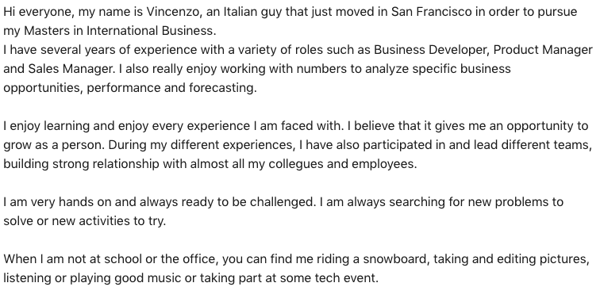

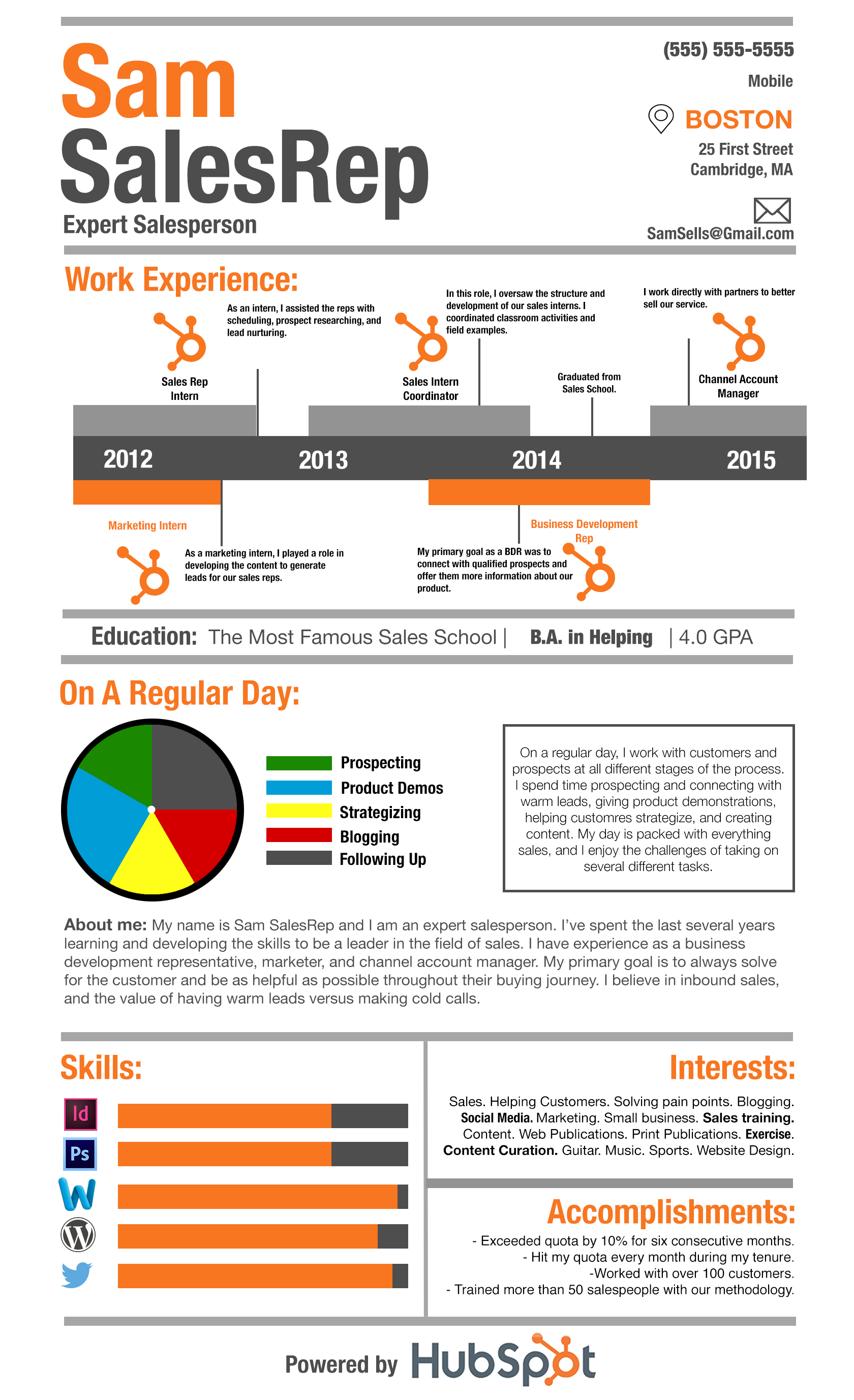

 Stop me if you’ve heard this one. Two psychiatrists walk by each other in the hallway. Each says, “Good morning.” After they pass, each one thinks, “I wonder what he really meant by that.”


 notes. Don’t spend too much time making it look beautiful because it will almost certainly evolve.





![Download Now: 2024 Sales Trends Report [New Data]](https://no-cache.hubspot.com/cta/default/53/9cdc68ed-d735-4161-8fea-0de2bab95cef.png)


