Shared posts

03 May 16:15

8 Techniques Sales Pros Can Borrow From The Helping Professions

by Matt Hayman

Although the titles have changed over the years I've always considered myself to be working in the behaviour change business. Whether it was working in sales fresh out of University, a pivot to work in healthcare, or my return to marketing ten years ago. All involved helping people shift their perceptions.

03 May 15:57

Red Hat CEO: Everyone is freaking out about Amazon — here's how to handle its frightening power

by Julie Bort

Jim Whitehurst, Amazon

  • CEOs these days are terrified of a new phenomenon: Amazon swooping in on their business.
  • Red Hat CEO Jim Whitehurst experienced this first-hand six months ago when Amazon launched its own version of Red Hat's flagship software, Linux.
  • The two companies were, and still are, close partners. And so far, Amazon hasn't hurt Red Hat at all, Whitehurst says.
  • Whitehurst shares his advice for how to deal with Amazon's frightening power.


Amazon has become the poster child for a new kind of business reality: the internet company who partners with you on the one hand, and competes with you on the other, Red Hat CEO Jim Whitehurst tells Business Insider.

As he talks to his CEO customers, which include 90% of the Fortune 500, "everyone is really freaked that Amazon is going to come into their market. And can they really compete?" he said.

They have reason to fear. Amazon's business interests include just about everything from books to original TV shows to cloud computing and enterprise IT to groceries and on and on. And with its scale, it can swoop in and be an instant contender in almost any market, as its acquisition of Whole Foods last year proved.

Whitehurst experienced this phenomenon first-hand about six months ago.

That's when Amazon quietly released Linux 2, its own version of the popular operating system for computer servers. In doing so, Amazon went into head-to-head competition with Red Hat, the largest maker of Linux.

So far, Amazon's entry has been a non-event for Red Hat. Red Hat has delivered a couple of good quarters since Amazon's entry, including signing 169 deals worth more than $1 million in its last quarter alone, a 50% year-over-year increase, it said. And the stock is up about 34% since January, after Amazon launched Linux 2.

Whitehurst says that companies are turning to Red Hat because they want protection against a market dividing between three big players: Amazon Web Services (AWS) the biggest cloud of them all; Microsoft, a solid No. 2, and Google, coming on strong.

"What I'm hearing from customers is, 'Hey if we get down to three major cloud providers that's a very bad world, a concentrated supplier base and that typically doesn't lead to good pricing,'" he said. 

Red Hat has its own cloud offering, but its version of Linux is also available on all of the big cloud providers, and on many small niche cloud providers as well. That means a corporate customer using Red Hat's Linux can more easily move its applications from one cloud to another, or move them from a cloud onto their own servers in their own data centers.

"The cloud providers are saying, 'Come run on our cloud and we'll give you the infrastructure for free [aka Linux].' We're saying, hey, 'Pay for the software and we'll abstract the clouds away,'" meaning make it easier for them to use any cloud supplier or all of them at once, he says.

But Red Hat and Amazon are also very close partners

"Amazon is a great partner," Whitehurst says. "We have a great relationship with Andy and we're doing a lot of things together and we're driving a ton of business together," he said referring to AWS CEO Andy Jassy. "But we compete. I mean, they have Amazon Linux 2."

Whitehurst says that Amazon isn't the only big threat of this kind, either. "Amazon is just the easiest whipping boy. But honestly, what about Google or Facebook?"

Google, for instance, has been known to be a partner one day and a compete the next. Just ask Apple or Yelp or Expedia.

And Facebook is working on a slew of new businesses, from payments in Messenger to a Slack competitor, taking on its own customer advertisers. It's also disrupting the data center and telecom equipmentt industries by building its own equipment and sharing its designs.

The solution for freaked out CEOs, Whitehurst says, is to chill. "Be more open-minded about the opportunities ... and less worried about the threats," he says.

Instead of looking at a black-and-white world of friend vs. foe in the old-school business style, embrace the new ambiguities that Silicon Valley companies are introducing to the business world. 

Go ahead and be a partner and a customer and a supplier and a competitor, all with the same giant internet company. 

"Don't be paranoid to the extent that you end up not participating in new markets," he says. This tactic is working, so far, for him.

SEE ALSO: Amazon has quietly released a game changer for its cloud: Linux software that runs on corporate servers

SEE ALSO: From your brainwaves to your internet: here is all the tech that Facebook plans to dominate in 10 years

Join the conversation about this story »

NOW WATCH: What will happen when Earth's north and south poles flip

02 May 18:10

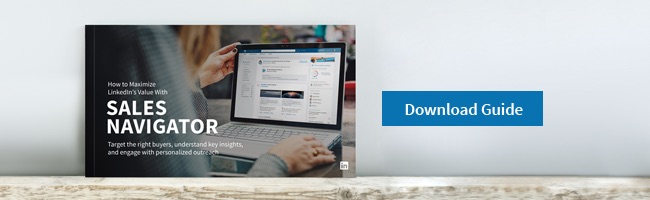
Read This Guide to Make the Most of Sales Insights on LinkedIn

by Alex Rynne
Everything You Need to Know About Leveraging Sales Insights on LinkedIn

Preparation. It’s the foundation for every productive meeting, enlightening interview, and fruitful sales conversation.

Preparation enables you to enter sales engagements with an anticipatory understanding of a prospect’s pains and needs. It uncovers hidden paths to a warm intro or referral. It facilitates a helpful, consultative approach at a time when B2B buyers want partners, not vendors.

There’s no question: preparation is essential in today’s digital sales environment. Teams and companies that excel with this crucial step are outpacing the competition, both in results and reputation.

When it comes to researching and gathering insights that can direct and inform buyer outreach, LinkedIn is your ace in the hole. No resource comes close to matching the platform’s depth of accurate, updated, and actionable professional insights. It’s all about knowing what to look for.

The latest installment in our series of guides, Read Me If You Want to Make the Most of Sales Insights on LinkedIn, will help you discover ways to improve LinkedIn lead gen through a prepared, purposeful approach. What you’ll find within:

●      How to analyze a prospect’s LinkedIn profile

●      Tips for researching a prospect beyond LinkedIn

●      Ways your network can help you secure a warm introduction

●      How to pinpoint opportunities for deepening relationships

●      Ideas for integrating LinkedIn with other sales tools for lead generation

LinkedIn is the perfect network for learning details about a defined B2B audience. Our new guide will show you how to uncover key data and master outreach preparation.

Conduct prospect research the right way after you download and read our latest guide, Read Me If You Want to Make the Most of Sales Insights on LinkedIn.

02 May 18:02

7 Security Tips You Can Learn From the Avengers

by Philip Bates

The Avengers: Earth’s mightiest heroes. You can learn a lot from this team. Iron Man teaches us to recognize the consequences of our actions. The Vision shows that there is great humanity in all of us.

It’s time to consider what else these heroes can teach us—about technology, security, and privacy. (Minor spoilers for Marvel movies follow, but none for Infinity War.)

1. Research Is Important

The film: Steve Rogers has lived a long life, but he’s missed a lot too. At the start of Captain America: The Winter Soldier (2014), Sam Wilson advises the Super Soldier to listen to Marvin Gaye’s 1972 Trouble Man soundtrack: “Everything you missed, jammed into one album.”

Cap adds it to the list of things he needs to catch up on. Incidentally, this list is different, depending on which region you’re watching. Americans will see Steve Jobs and the Moon Landings included; UK viewers will be pleased to note the Beatles and the 1966 World Cup Final on there; while Tim Tams and Steve Irwin appear on the Australian version.

The reality: Your first line of defence is research. You need to keep updated with all the latest security and privacy threats.

This means being on-the-ball, for instance, when there’s a massive leak of Gmail credentials. Or about being aware of the ongoing iTunes gift card scam.

However, it’s also important to know the very basic hacks that continue to plague us, albeit in different iterations of the same idea. Take sextortion for example, which is when someone holds NSFW material of you to gain leverage and get you to do something you don’t want to do.

But it’s more life-changing than ever because cybercriminals have combined the technique with another common threat: ransomware. Traditional ransomware holds your device hostage, insisting you pay up or lose all your files. Combined with sextortion software, it further threatens to send your explicit photos or videos to family and friends directly via email or SMS.

2. Create Backups

The film: “Dormammu, I’ve come to bargain.”

When faced by something terrifying, Doctor Strange went in prepared. In the conclusion of his titular 2016 film, he knew the one way to battle evil was by backing himself up.

The reality: We hate to admit it, but Arnim Zola had it right too. A technological genius, he lived on as an intelligent computer programme after his body failed him. We don’t encourage you to Hail HYDRA, but still think you should be like Zola and create a backup.

These have many purposes—most crucial is their ability to render ransomware almost completely pointless. Taking a back up of your whole system on a regular basis means a scammer putting your PC into lockdown is moot. They can threaten your documents all they like because you have them held securely elsewhere. If you are unfortunate enough to encounter ransomware, we advise you seek a professional to transfer all your data back from your backup.

You do need to disconnect the additional storage device after backing up your personal files, though; otherwise, ransomware can infect that too.

This is one reason cybercriminals still use that type of malware. The other reason is merely that comparatively few people actually carry backups on a regular basis!

3. Encryption Isn’t Absolute

The film: The Sokovian Accords divided the Avengers in Captain America: Civil War (2016), but that gap was widened by the work of Helmut Zemo. Daniel Brühl’s character learned the secrets of Bucky Barnes by decrypting the SHIELD files leaked online—in doing so, he drew a wedge between Steve Rogers and Tony Stark.

The reality: Let’s not underestimate encryption. It’s vital. For data to be sent or held securely, it needs some level of encryption. But let’s not overestimate it either.

This is one of the big myths about encryption. Nothing is impregnable. You use encryption all the time; HTTPS is an everyday example. Smartphone passcodes scramble all the data on your device. And so it all hangs on how strong your encryption key (i.e. password) is.

Furthermore, encryption isn’t a defence against all cyberattacks. Ransomware is still 100 percent effective. In fact, it uses encryption against you, by further encrypting your files. It can scramble your data once more, whether you’ve scrambled it before or not.

4. Limit What You Share

The film: Following SHIELD’s downfall in Captain America: The Winter Soldier, the Black Widow dumped all its secret files on the web. Natasha had formerly hidden behind aliases and fake histories. Now, with all that information readily available, she has to work out who she really is.

The reality: The wealth of personal details we put online has been subject of analysis since the public learned that Facebook data was harvested for political gain by Cambridge Analytica. Everyone seems shocked to find out the social network was gaining from users’ information. But if you’ve been paying attention, this has been happening for years.

If you’re worried about your own privacy, you simply must limit the amount of data you put on the internet. That’s not confined solely to Facebook. It applies to all social media. Without the proper precautions in place, Twitter is a goldmine for fraudsters looking for private details. Instagram also knows a great deal about you. Heck, all free services do!

5. Fight for Personal Freedoms

The film: Freedom lies at the heart of many superhero tales, but none more so than the Captain America films. Check out The Winter Soldier for a prime example of this. HYDRA had infiltrated SHIELD and the helicarriers were primed to eliminate potential threats to mankind.

But the Sentinel of Liberty stopped them. He could see the importance of choice, even a choice between good and evil. He could also see the ambiguity between the two. Steve normally views things in black and white, but this time, the gray area was too great to ignore.

The reality: Our personal freedoms are permanently being infringed upon. Look at all the ways the NSA snoops on us.

The sad fact of life is, you can’t always do something about it. But that doesn’t mean you can’t try.

It’s like the scene in Avengers: Age of Ultron (2015) where Tony asks how Steve and co. plan to defeat a seemingly-unstoppable foe. “Together,” Cap says. Tony cautions, “We’ll lose”. Cap’s reply? “Then we’ll do that together too.”

So make some noise. It’s better than rolling over and blindly accepting what’s coming. Working as a team can achieve great things. Enough uproar can even change government policy. This is the basis for groups like Anonymous, fighting for the privacies of peoples worldwide.

6. Don’t Underestimate the Little Guy

The film: Ant Man (2015) was a surprise hit. Except it wasn’t much of a surprise for long-term Marvel fans who know the character is fantastic. No, it was a surprise for the cinema-going public who thought a movie about a guy who could shrink would be naff. It proved the hero could be just as effective as any other Avenger.

The reality: The message here is not to solely anticipate the big-scale attacks like Thor wielding Mjolnir or Hulk flinging a car at your face. You have to prepare for the smaller threats too by putting into effect basic security measures.

You do this already—at least, we hope you do! If you don’t fall for emails from Nigerian princes with money to give away, you’re on the right step. Confidence in spotting fraudulent activity comes with experience, of course. Some emails scream “fake”, whereas others are increasingly sophisticated.

Again, research will help you in spotting the difference between what’s real and what will compromise your data.

You need to find security software you can trust too. It’s a very basic thing to do; however, some rely solely on Windows Defender or figure installing a virtual private network (VPN) will be just as useful as an anti-virus. But this simply isn’t the case.

7. Share, Share, Share!

The film: For much of Wakanda’s past, its technological advances were kept strictly for the benefit of its own citizens. It was only in Black Panther (2018) that T’Challa, the new King of the African nation, realized that you can’t blindly follow in the footsteps of your ancestors. He decided to help the world, breaking generations of tradition.

Tony Stark eventually decided to share his technology as well. It admittedly took some coercion, but for Iron Man 2 (2010), his friend, James Rhodes became War Machine. Peter Parker got an upgrade ready for Spider-Man: Homecoming (2017). Plus, the Avengers regularly benefit from Stark’s advances, namely in their facilities in New York.

The reality: Users should benefit from developers, and the tech-savvy should help fortify other users’ systems.

What does this mean? It’s all about upgrades. This was a major factor in our assessments of the most secure mobile operating systems (OS) and subsequently of the most secure browser. It’s not solely about exploitations; the vital thing is how quickly developers issue patches for vulnerabilities.

For instance, Google Chrome sends out fixes in good time once a problem is discovered. Sadly 50 percent of users don’t update, but it’s easy: click on the vertical ellipsis, then Help > About Google Chrome. Finishing the process just requires a relaunch.

As for how users can help each other: spread the news about an exploitation and tell others when it’s important to accept an update. We all get lazy when iOS informs us a new version is available. Sometimes, it’s needed.

Then of course, there’s open-source software, notably Linux. The code is accessible, so you can check there’s nothing malicious going on. It also means individuals can contribute to the whole. It’s that sort of admirable teamwork that’s the foundation of the Avengers.

Assemble!

We can’t all save the universe from a major threat like Thanos. But there remains plenty of good we can do for each other—even if that’s ensuring the internet is a safe environment.

Just because you’ve not been bitten by a radioactive spider or can summon the power of Odin, that doesn’t mean you can’t fashion yourself into something Marvellous.

02 May 18:02

6 Growth Hacks to Double Your Revenue Using Email

by Sujan Patel

Email marketing is widely regarded as offering a better return on investment than any other marketing channel.

Image Credit

However, odds are that regardless of how effective your emails are right now, implementing a few relatively simple growth hacks could potentially double (or more) the revenue your emails are generating.

Sound good?

Then here are 6 email marketing growth hacks to try out now:

1. Use FOMO

FOMO is the “fear of missing out. ”It’s a common mental state that causes those affected to become anxious that they’re missing out on something great. It’s arguably become more prevalent since the rise of social media (ever seen a post about friends going on a trip and feeling like you need to go so you don’t miss out on the fun? That’s FOMO), but it’s been leveraged as a sales tool for years.

The premise is simple.

When you send out a sales email, include a condition that whatever’s on offer is limited. This might mean stating that you only have x quantity of a product available, or that the offer is only available for x number of hours.

As a result, you will (ideally) drive recipients to take action then and there. This can have a big impact on revenue since once an email gets closed, the odds of it generating a sale decrease significantly.

2. Segment Your Email Lists to Create Targeted Email Sequences

We already know that email marketing offers the best ROI of all digital marketing channels, but not all campaigns are created equal. Even today, companies are still sending substandard (or downright crap) emails. How many people are going to go to the trouble of reading all this, for example?

Image Credit

It’s safe to say that bad email marketing campaigns won’t be generating the sort of ROI they could be – but even good campaigns could probably be performing better.

You can get more out of your email campaigns with segmentation.

Segmentation (in this context) means organizing email subscribers according to factors that influence the type of email they’re most likely to respond to. It’s a foolproof means of getting more out of your email marketing because it allows you to send emails that are more closely related to each contact’s current circumstances.

You can segment according to almost any attribute you can think of – from location, age, or gender, to past purchases, what content someone’s interacted with, or the pages they’ve visited on your website.

Once you’ve decided how you’re going to organize your email list and segmented contacts accordingly, you can create the sequences themselves.

This could mean creating a sequence of emails designed to help onboard new customers. It could entail promoting particular products to customers, depending on what they’ve bought previously. Or it could involve suggesting content to visitors based on what they’ve viewed already.

You can learn more about creating effective email sequences in The Ultimate Guide to Email Sequences. You can also get started with creating and sending email sequences using a tool like Mailshake (and if you’re missing any email addresses, use a tool like VoilaNorbert to quickly track them down).

3. Upsell

You probably already know that current customers are more profitable than new ones (on average, 40% of an e-commerce store’s revenue comes from 8% of its customers) – but can you honestly say you’re doing enough to maximize profit from your existing customers?

The fact is that many businesses focus far too much on customer acquisition, and not enough on customer retention or upselling.

This is where email comes in.

Email sequences have many uses, but they’re especially valuable when used to target and upsell to your existing customer base. You can segment your customers according to the products they currently use, or their average spend, and drip feed emails to them that demonstrate what they stand to gain if they move to a higher price plan or purchase xyz product.

4. Push for Referrals

Referrals are one of the fastest and most effective ways to generate new business (we know this because consumers consistently state that they trust each other more than brands).

Unfortunately, we can’t rely on customers to refer others without being prompted to do so.

In fact, research from Texas Tech University found that while 83% of happy customers are willing to refer others, only 29% bother to do it.

The lesson here is simple. Want more referrals? You’re going to have to ask for them.

But there’s a precedent.

While you could just send out an email to your current customers encouraging them to refer you to others, you’ll likely get better results if you leverage that email to make it as simple as possible for them to do this – allowing customers to send details to others with the click of a button, for example:

Image Credit

Or upping the ante and giving customers a personalized referral page:

Image Credit

Another thing to consider is incentives.

You might have noticed in the examples above that these brands aren’t just asking customers to refer somebody else out of the goodness of their hearts – they’re ensuring there’s something in it for the customer if they do.

There are loads of examples of businesses that have been built off the back of incentive-based referral schemes. Dropbox. PayPal. Airbnb. None of these companies (and many more) would be seeing the success they are today without the help of incentivized referrals.

If you leverage email marketing to ask for referrals and simultaneously give your contacts a reason to act on your request, you could very easily double the revenue your campaigns are generating (or more).

5. Design Emails for Mobile First

The vast majority of emails are now opened and read on mobile devices (especially among younger generations).

Image Credit

This means that if you want to maximize the impact your emails have, and, in turn, the ROI they deliver, you should be designing them for mobile first and desktop second.

6. Focus on One Thing Only

The downfall of many marketing emails is their focus. They simply don’t have one. They will try and tell customers about too many things at once, and consequently, their recipients don’t really listen to any of them.

Take this example:

Image Credit

They’ve included recommended books, an ad for an eReader, and an offer for a $10 eBook credit.

There’s just too much information.

Emails with a single focus are much more effective. They’re easier to absorb, and as a result, are better at getting recipients to take action.

If you’re currently packing multiple talking points into one email, try paring down to a single point and call to action, and see what impact this has on your revenue (I’m willing to bet you’ll be pleasantly surprised).

Do you have any other ideas for ways to double your revenue using email? It’d be great if you could take a minute to share them, using the comments below.

02 May 18:01

Mistakes Small Business Owners Make When Scaling Their Services

by Guest Post

Mistakes Small Business Owners Make When Scaling Their Services written by Guest Post read more at Duct Tape Marketing

An increasingly global world means there is more competition than ever, and commoditization is a growing threat.

Businesses that scale the right way, are going to be positioned to increase market share as weaker players are sifted out.

Whether you’re growing to your first million in revenue, are well past that and are looking to make your business more automated so that you can profitably scale up, or have hopes of an exit in the near future, it’s imperative that you avoid the mistakes that I’ll be discussing in this post.

Doing so will help you scale with more profit, more ease, and less stress.

Curious as to what these mistakes are? Let’s dive in.

1. You’re too busy to grow

Being stuck in day-to-day tasks is a huge problem because you can’t actually grow the business. Your main job as the CEO is to think and come up with better ways to do things. You need to generate ideas to increase profits, enter new markets, and so on.

You can’t do this if you are married to your routine. You’ll be wearing blinders. And you’ll miss out on the numerous opportunities sitting right in front of you.

Does your alertness follow this curve? When are you most focused and productive?

How to fix it:

peak-time-no-drop-shaddow

  • Carve out at least 5-10 hours per week for growth
  • Start your day with crystal clear intention. Always create a plan for your day with the top 3 most important things you need to accomplish that day.
  • Work within the human natural alertness cycle by using your first “Power Hours” of each day on growth tasks.
  • Schedule email so that you aren’t living in your inbox. Do not check email until at least 11am if at all possible.

2. You’re trying to scale too soon

Many business owners try to scale too soon. Instead, they should first focus on making the business sustainable and bake in as much profit as possible.

Leverage first, then scale.

I often see business owners reach a hump that they can’t quite get over and it’s usually because their pricing structure cannot sustain profitable growth. They know they should increase prices, but fear creeps in.

Many experts may say “Just raise your rates,” but if it were that easy, everyone would have more profitable businesses.

The harsh reality is that clients might not be willing to pay you more.

Why? The answer is risk vs. reward. The risk is too high, and the reward is too low.

Clients are willing to pay much more if:

  • You offer a solution they truly want
  • Your client has access to funds
  • You can sufficiently lower the risk for them to make it a no-brainer

How to fix it:

leverage then scale your business

  • Leverage first, then Scale.
  • Work out that formula to be able to increase fees so you’ll have the resources to grow.
    1. Evaluate the kinds of problems your business can solve
    2. Evaluate your sweet spot by looking at what you enjoy, and evaluating unfair advantages.
    3. Evaluate client type that you can add the most value to
    4. Evaluate ways to better utilize your unfair advantage
  • Only after you’ve increased value, and fees should you scale. Look for cost advantages and ways to decrease the cost of delivery (I’ll dive into that further below).

I’ve seen those who leverage first and are able to double their revenue per client, with little or no growth to their team. It’s pure profit. It works. I’ve seen it work both in my own business and for others that I have worked with.

3. It’s all about you

Everything is about your process and the steps you take, instead of your client’s pain points, and what they want.

If you want to get lost in a sea of downward spiraling mediocrity, then keep focusing your website on the “me show” and only discuss your services, tools, credentials, and so on.

Instead, you should be discussing the problems your ideal prospects want solved. Make everything about them, and the solutions they want. They want their problem solved. End of story.

increase your fees

How to fix it:

  • Choose one painful $100k+ problem to solve, one client type, and one customized (not custom) outcome.
  • Guarantee it, and jack up your fees to price based on the value of the outcome.

4. You’re not solving a big enough problem

Going back to the last two mistakes, if the problem is too small, you cannot charge enough. The problem is rooted in the industry dogma of refusing responsibility for lackluster results.

It’s nearly impossible to sell results and offer some guarantee… if you are selling everything to everyone.

Ask yourself “how can this work for this business?”

Back to the actions in the last step, it’s by solving one painful problem, for one type of client, with one customized solution.

What outcome could you provide? And what needs to be in place to ensure success?

build value for your clients

An agency owner I know realized that for just one niche that they work with, they could consistently add an extra $1M per year to their business.

With this knowledge, the selling conversation shifted from “we are the best Facebook ad provider, we have great results, happy clients, books and awards…” to “we’re partnering with 10 [special niche] businesses that want to add an additional $1M this year without [thing they don’t want]. Is that something that interests you?”

It’s now a qualification process and the business is now able to more than double their fees.

Do you solve $10k problems, or $100k problems? $100k problems, or $1M problems?

Who could you work with where your service provides the highest dollar value?

Given a bigger outcome, and low enough risk, clients will happily invest more. Throw the hourly thinking out the window where either clients leave empty-handed or you leave tens of thousands of dollars on the table.

How to fix it:

  • Create a list of characteristics of past ideal clients you’ve gotten the best results for. What do these clients have in common?
  • Looking ahead, what do new clients need to have in place to be able to guarantee success?
  • Craft an irresistible offer and promise (it should scare you a bit).
  • Create your hit list, and sell!

Clients are demanding better. Are you ready to be part of the change that elevates the industry?

5. You’re too people focused

What do I mean by that?

Most business owners are too focused on finding the perfect staff, and not focused enough on developing their own perfect client solution and then plugging staff into defined roles as they scale their own methodology.

When your business is built around an employee’s skill sets, what happens when they leave? You need to start all over again recruiting, training, and developing this next ‘perfect’ person.

Instead, focus on how to scale a proven methodology and put the right people in place within your framework.

The services you scale are determined by your 80/20 framework. It can be divided into ‘brain skills’, and ‘hand skills’. Brains are more expensive, and in higher demand.

Are you as the owner doing ‘Brain’ work, ‘Hands’ work?

brains-and-hands

Optimize your best skills. Free up capacity for the Brain people to do their best work. Raise profit per project by having the Hands do the rest.

How to Fix:

  • Build your proven methodology by focusing first on the end outcome. Then reverse engineer the stages to where you start the engagement.
  • Breakdown the stages into smaller steps and tasks.
  • Delegate by needed skill level only for each task to optimize staffing budget (save time with my Rapid Delegation Script).

6. You’re not consistently marketing and selling every day

“I’m too busy to do marketing.” I hear this all the time.

This thinking keeps you stuck working with less profitable clients just to meet payroll. You may even have a couple of demanding clients who bring in too much of your income (and most of your problems). You’re afraid to rock the boat because the pipeline to replace the income is near empty.

There is a magical shift that happens in your business as you consistently, and proactively attract excess ideal clients. You become in control. You set your fees. You decide who you will, and who you will not work with.

Organic growth will happen if you are any good at what you do. But do you want to be like the little bird with its beak open waiting for the worm saying “Feed me, feed me?”

Or, are you attracting your best, most profitable, and enjoyable clients?

How to Fix:

  • Build a daily habit to block out time every day on your calendar and each out to 5 ideal prospects. Have one live conversation with someone who might be a prospective client. Every day.

7. You’re being reactive rather than being proactive

Most business owners are reactive. They fight fires, rather than prevent them. They tread water hoping to stay afloat when the next wave hits.

Being proactive is looking for ways to innovate within your company and increase profits. It’s staying ahead of the industry trends. It’s being intentional about the staff you want in your company and developing the kind of culture you want to create.

It’s about actually having a plan and working that plan every day.

growth plan

This seems basic, but most service business owners lack a clear plan to scale their business, so they spend years reaching their goals (that’s if they don’t burn out first).

Do you drive your business, or does your business drive you? This is one tiny hinge that moves a pretty big door.

If you are not clear and proactive about top things you need to accomplish every day to really move your business forward, you’re not in the driver’s seat.

If you are making any of these seven mistakes as you’re trying to scale your services, you’re making it much harder than it needs to be.

Avoiding these mistakes will help you:

  • Build a team that really supports you
  • Work with more ideal clients
  • Consistently and predictably deliver on your company’s promises
  • Increase revenue and get your life back

What mistakes are you making? What will you do this week to take the path to increased profitability and freedom in your business?


About the Author

Mandi Ellefson

Mandi Ellefson is the founder of the Hands-Off CEO. She helps service businesses and agencies achieve life balance, and productivity by freeing up to 20-50% of their work week and achieving cost savings gains of up to 67%. For a proven 5-step plan to scale your service the right way, download her Scalable Growth Roadmap.

02 May 18:01

Should You Buy an Email List?

by Tobin Lehman

This is one of those questions we get asked from time to time, and honestly, my answer to this has changed in recent times. Here’s our view after avoiding it for years and then trying lists for a few clients.

It’s Not Ideal.

I want to make sure we make it very clear buying email should be on the “no-no” list. This is not a go-to-market strategy that reaps great results in the B2B space. We’ll get into the reasons why it does not make “cents” but maybe sense, but also it defies a pretty common practice known as permission marketing.

Permission marketing is this idea, coined by marketing expert Seth Godin, that being able to market to your customers works really when they have given you permission to do so because of the value you bring.

Buying lists flies right in the face of this very philosophy.

So, from the outset, buying emails violates this concept and steps on the very privacy that everyone hates and is really at the center of the CAN-SPAM act. No one really likes getting junk email. But liking it does not mean that it does not work. Junk is in the eye of the beholder…

So, let’s make sure we all know – say it together with me – Buying email lists is not a good plan. But…

There is Always a But…

That is the problem with hard rules, that there is the letter of the law and the spirit of the law. You should not buy email lists if you are not thinking about how it fits into your overall strategy, or if you think its going to be a shortcut to success.

Yet, buying lists is a viable experiment in marketing strategy as you push into trying to grow your universe.

The key is to treat it like a gamble. If you are sinking your last marketing pennies into this strategy, I’d rather you buy your current clients a Starbucks gift card. You’d get more in return. But if you are using this as an experiment and well aware this might be a loss, you’re good to go.

When To Buy Lists

This is the big question. Buying email lists has a lot to do with your goals for the campaign. The most common use of this is to enter new markets where you have lots of volume to explore and a PROVEN MESSAGE. No that is not a typo, that was all caps for emphasis.

You need to have significant volume of prospects because buying email lists and sending has very low return. There is a high likelihood that a 1% return could be a high five moment for your team. So you need to be thinking of buying thousands of names, not hundreds, to increase that return chance.

Second, you need to have a proven message. You need to be working with some messaging, or an offer that you know works. You don’t want to go bat on an experimental campaign with unproven messaging. If you don’t know if you have proven messaging, you don’t. The pain of proving your messaging results in an unforgettable experience and knowledge of such a process.

Conversely, using purchased email lists could be a great way to test a messaging strategy in the macro sense, but maybe not to drive revenue from the gate.

What to Expect and Pay

So the next question is how much should you pay and what to expect in the process.

There are some good and bad list houses. You’ll have to contact me of you want my opinion I can’t publish that here. But you’ll want to explore different houses to see what deals you can get. Your negotiation skills could really make a difference here. I’d budget around .02 to .10 per email address depending on the details of the query.

I’d always go a bit broader on the query than you’d expect. If you are going to target a city like Chicago, I’d grab a 50 mile radius, rather than the downtown zip codes only.

But work with your rep, you’ll get a rep and plenty of attention when you start knocking around the doors of list houses. They have great ideas and they are vested in your success.

Leasing is a good option if you don’t have your own system, or don’t want to buy the list. It can be a bit cheaper and you’ll have more bandwidth for other tactics.

How the Numbers Work Out

The expectations are low on this type of campaign. You are looking at this as much as a branding campaign as a direct response campaign. This means make sure you build brand value in the email, but also look for a very clear call-to-action so the recipient has a logical next step.

As I mentioned previously, you might see a 1% return on a campaign like this. So if you are looking to build some awareness in a new market, that might be enough of a return on a CPM type cost basis. I’ve yet to hear of a email service that would do a cost per click pricing, but that would be amazing.

So if you buy 10,000 names, you might see 100 people click and view your landing page or offer. If you know your funnel metrics, you can run the value from there. So you need to see what makes sense in terms of a cost. If that 10K names cost you, .02/per, or 200 dollars and you can achieve that value in your funnel with your current conversion rates, then it make sense.

Are You Game?

So what do you think? Can you run the numbers to make email buying work for you? It’s a risky strategy , but contains some upsides if its played correctly. Like any investment, its all about leveraging risk and making sure that we understand the risk that we have.

02 May 18:01

JPMorgan's quant guru explains how the 'Uberization' of markets poses an enormous risk

by Joe Ciolli

marko kolanovic half-man half-god

  • JPMorgan's global head of quantitative and derivatives strategy, Marko Kolanovic, has long warned against unstable market liquidity conditions.
  • He recently made an extended analogy comparing the current market environment to Uber's pricing model, all while warning of further liquidity issues.

JPMorgan's quant guru, Marko Kolanovic — a man whose opinion is valued so highly that it can move markets — doesn't think investors have learned their lesson from the meltdown that rocked stocks in early February.

That's because they've become used to a low-volatility environment — one that hasn't been conditioned to withstand sharp fluctuations. As a result, outsized price swings can hamper liquidity, making it difficult for markets to function properly when it's most crucial, says Kolanovic, JPMorgan's global head of quantitative and derivatives strategy.

At the root of the issue are so-called systematic investors, which are forced to reduced positions during times of turbulence and frequently trade in price-insensitive fashion. For evidence of their impact, Kolanovic notes that futures-market depth plummeted more than 90% during the chaotic February period.

If this dynamic still isn't clicking for you, Kolanovic offers a handy analogy, comparing market liquidity to Uber.

When the market is functioning normally, there's ample liquidity, and transaction costs are low, benefitting participants. It's similar to how Uber fares are competitively priced in a normal environment.

But when there's a volatility shock, liquidity vanishes from the market. That's akin to Uber's surge-pricing model, which charges customers more amid external impediments like traffic and weather.

According to Kolanovic, the major difference between markets and Uber is that when the going gets tough for a traveler, they can elect not to accept a ride. In markets, however, there are investors forced to transact — a group that includes the systematic strategies, among others.

"This results in significant intraday volatility and causes damage to investors' confidence in the market," Kolanovic wrote in a note to clients. "Given that financial markets are a critical part of the economy's infrastructure, perhaps more attention should be paid to the risks posed by the Uberization of financial markets."

It's not the first time Kolanovic has warned against the perils of inflexible market liquidity. For months before February's market reckoning, he stressed investor caution. Then during an interview with Bloomberg Television early last month, he downplayed a series of market headwinds, saying that "the only real problem now is low liquidity and market volatility."

Sound familiar? That's because little has been done to remedy the situation.

But fear not — Kolanovic will continue beating the drum as long as there's an issue. And based on his track record, market participants would be foolish not to listen.

SEE ALSO: 'They're changing the whole way that commerce works' — BlackRock's $1.8 trillion bond chief explains how millennials are spearheading an economic revolution

Join the conversation about this story »

NOW WATCH: Why Apple makes it so hard to get a new iPhone battery

02 May 18:00

3 Great Examples of Data Science in Marketing

by George Karapalidis

Data Science in Marketing: Three Great Examples

The term ‘big data’ may sound hyped but there’s a good reason for that. Big data is a marketer’s goldmine, able to pinpoint and understand target audiences with an accuracy and level of detail unimaginable less than a decade ago.

There’s a difference, however, between ‘having’ data and ‘using’ it to your advantage. Stockpiling more records isn’t the answer to better marketing; data science is. That’s the practice of transforming existing data into meaningful insights that businesses can instantly use for decision-making.

Ultimately, data science can be used to enhance multiple areas of marketing including SEO, content marketing, customer responsiveness and engagement, and real-time marketing campaigns. It’s no longer a question whether you should put the accumulated data to use; it’s a question of how you will do that. In this guide, we show you three great use cases of data science in marketing.

1. User profiling

Companies of all sizes and shapes now rush to collect on-site consumer data. However, most of them remain clueless when it comes to exact consumer intentions. Think for a moment how you choose a new book to buy.

A friend posted a review on Facebook gushing about that new bestseller by J.K. Rowling. Of course, it can’t be better than Harry Potter… but you still copy the title and check out the plot on Wikipedia. Afterwards, you check the book on Amazon, but before purchasing you decide to read a few more reviews on GoodReads.com. Eventually, you buy the book via your Amazon Kindle, not the laptop.

Multiple analytics tools enable tracking of such scattered consumer activity online and allow you to accumulate an array of information about the customer’s interest and activities. The information is saved in your ‘user profile’ by the search engine and all the other websites you have visited. However, despite storing a plethora of data about individual consumers, using it to predict future behaviours remains a challenge. How likely is it that you will visit Amazon next time to purchase another detective book and not a different product altogether?

Prof. Michael Trusov from the University of Maryland

Prof. Michael Trusov from the University of Maryland has made a successful attempt to develop a comprehensive model, capable of analysing and grouping various user activities online and using that data for paid advertising campaigns.

The team’s dataset consisted of 45,400 observed households during 12 months. When creating user profiles and analysing common behaviour patterns, the proposed model accounts for three important factors:

  • Website visitation intensity – the activeness of the user during the surfing session and its correlation with roles. This metric is used to estimate how engaged a user becomes when conducting certain activities.
  • Consumer demographics – general data available about the user that enables richer descriptions of consumer profiles.
  • The evolution of roles over time – a factor indicating changes in the user’s website visitation tendencies.

After churning all the data, the team could uncover salient behavioural patterns among users and assign respective roles to them. For instance, in one role a consumer visits mainly entertainment websites, services and games. Hence, the algorithm assigns the alias ‘entertainer’ to that person.

Think about how we interact with the Internet. First, we have a certain urge – say to check out what our friends are up to lately. According to the developed algorithm classification our assigned role would be ‘connector’. Next, we decide what website we’ll head to get that information e.g. Facebook or Instagram. We spend some time there, before we decide to get productive and hop on to reading some financial news. Our role changes and we become a ‘professional’.

Customer segment

This kind of advanced segmentation and profiling allows marketers to drastically improve their display ad campaigns even when limited user data is available. You can target only consumers in the right roles (e.g. a career person) when their online intentions align with your offering.

Here’s a quick case study illustrating the scale of improvements:

  • One agency is paying $2.80 per thousand ad impressions and receives an average CTR of 0.5%.
  • The cost of generating one click to their client’s website is $0.56 and they are charging the client $0.67 per website visit.
  • Their daily budget is $1,000, which equates to 1,786 visits per day with the indicated CTR of 0.5%.
  • The company already uses a certain model to weed out the top 30% most active users based on their online behavioural profiles. The click-through probability for them is 25% – higher than the average. For the remaining 70% of targeted users, the CTR is 11% lower than average. These numbers were chosen to depict the average 0.5% CTA.

Now let’s see what happens when this agency applies a more advanced user-profiling algorithm and is able to distinguish and target top users in the respective roles.

  • The agency could identify 42% of more active users and increase CTR to 0.52%-0.54% depending on their data.
  • The increased CTA will generate a 25%-51% profit improvement, while still charging $0.67/per visit.

Both display advertising and PPC campaigns can be largely improved with similar models.

2. Improved pricing strategy

Uber uses surge pricing at busy times

Price surges on Uber may be frustrating when you try to hail a cab during rush hour, however, it has a massively positive effect on the company’s profits. In fact, price management initiatives tend to increase business margins by 2%-7% over a 12-month period and result in a 200-350% ROI.

E-commerce companies, in particular, can benefit from data-driven price development. McKinsey estimates that standard products generate 75% of an average company’s revenue. For larger companies, those equal hundreds or even thousands of items.

Yet most marketers still rely on the obvious factors such as the product manufacturing costs, standard margins, and competitor’s prices when developing their pricing strategies. The process looks more like art, rather than science, which should not be the case. Enlisting data scientists to do this job means that:

  • You can take into account the often overlooked factors such as the broader economic situation (e.g. currency strength, global supply etc), individual customer preferences and their past history with your brand, and past sales-representative negotiations. You can then identify exactly what drives the prices and the consumer’s willingness-to-buy for each product and customer segment.
  • Uncover hidden behavioural patterns and correlations between discounts and product sales within narrow customer segments and match that with historical transaction data. You will then be able to adjust your strategy accordingly and propose the best offers to those prospects who will take immediate action.
  • Deploy advanced modeling scenarios highlighting costly mistakes and missed opportunities. For instance, get notified when a certain price change may have a negative impact on demand.
  • Sales teams can be empowered with new data showing exactly how a certain discount will impact the deal profitability and probability.
  • Your pricing strategy becomes more agile and adapts quickly to global market trends and conditions, plus matches the top competitors’ offers.

3. Advanced lead scoring

Not every prospect coming your way will become your customer. Being able to separate the most willing prospects from the rest and prioritize all incoming leads based on their likelihood to buy can increase your sales department performance, and ultimately, revenue.

Data science enables you to ‘let the garden weed itself’ in this case. You can create a predictive lead scoring system – an algorithm capable of calculating the probability of conversion and segmenting your lead list into the following categories: eager customers, curious prospects requiring further nurturing and the not-going-to-buy-any-time-soon crowd.

Singapore Actuarial Society has recently published a research note showcasing how predictive lead scoring can impact sales numbers and marketing costs.

Singapore Actuarial Society - Predictive analytics in marketing

Using data obtained from a Portuguese banking institution, the team has developed an algorithm to improve their telemarketing campaign and product sales. The general premises were as follows:

  • The bank needed to contact over 200,000 customers.
  • The cost of a single cold call is $5 and the total activity budget was set at $1 million.
  • One successful call could generate a $100 profit.
  • The historical data suggested that cold calling 100,000 customers results in 10,000 sales or $0.5 million in profit, after deducting the telemarketing costs. So that’s their minimal goal.

The algorithm was supplied with additional demographic data about the customers, along with some historic trends to ‘score’ all the prospects based on their likelihood of saying yes to the offer – that was estimated to be 50% of the list. Here’s how these insights can be used to improve the bank’s marketing:

  • The bank can choose to cold call only ‘warm prospects’ – 100,000 total – and close 80% of sales. That’s $1.1 million in profit after deducting the telemarketing costs.
  • Or they can call only 55,000 customers and still generate $10,000 sales while spending just $0.28 million on marketing – nearly twice less than planned.

The same approach can be applied towards scoring online leads accumulated from PPC campaigns, content marketing and SEO. Each new prospect could be qualified automatically and the algorithm can then predict the most profitable actions to take.

In general, the benefits of predictive lead scoring can be summed up to the following points:

Data-driven decision making

While 68% of B2B companies do lead scoring, only 40% of sales people agree that lead scoring adds value. In most cases, the job is done manually, meaning that only a slice of the company’s recent sales history is analysed; the data remains prone to human bias as both marketers and sales teams often make assumptions based on their gut and/or experience, rather than data in a pure form.

Enlisting an algorithm to perform the same tasks means that you become capable of analyzing a broader range of customer on-site activities, behavioral data and social cues. All the accumulated data is then processed to develop a specific combination of behaviors associated with promising leads.

Improve conversion rates

Better leads mean higher conversions. Lauren Jones, in charge of the global campaigns at Dell, has mentioned that purchase-stage opportunities scored with predictive algorithms converted at 50%, while non-scored converted at only 17%.

Take action in real-time

Most businesses don’t act fast enough on their leads. On average, it takes 46 hours and 53 minutes for a company to respond to a lead. In most cases, these huge delays happen simply because the salespeople have no idea that a dream client is knocking on their door. A predictive lead scoring algorithm can be adjusted to notify your team once there is a prospect falling into the top 15% of your database so that they can act immediately.

02 May 17:59

Creating the Path of Least [Sales] Resistance

by Kyle Taylor

What do water, electricity, and humans all have in common?

Besides not being a good combination, they all take the path of least resistance.

There isn’t one simple solution that makes sales easier. It’s hard. Hearing “no” is hard. Not coincidentally, being a buyer facing a change can be equally as hard.

However, there are ways a seller can make the buying journey as smooth and easy as possible. After all, it’s the seller’s job to create the path of least resistance, not the buyer’s.  If you can do this, you’ll have created a path to sales success!

We’re Not Selling; We’re Educating

Humans like to say “no” when they think someone is selling to them. It’s our default response when someone interrupts our daily routine.

When a salesperson reaches out to a potential customer, we’re taking them out of their normal cadence. The initial “no” could just mean they don’t know who you are, or what you can offer to make their jobs easier.

Here is where educating comes in.

Take the time to provide content tailored specifically towards how your product can impact their day-to-day. This consultative approach benefits both you and the buyer. Studies support this assertion; finding that 95% of buyers choose a solution for which sellers provided ample relevant information early in the buying process. 95% of buyers choose a solution for which sellers provided ample relevant information early in the buying process.

Even more so, 80% of respondents to a 2016 study indicated that personalized content is more effective than “unpersonalized” content.

Use the discovery process to uncover the value your solution can offer a prospect. When a buyer sees that you are trying to help them solve a problem they’re facing, it makes the entire selling experience more comfortable and rewarding. This step builds a relationship of trust and positions you as a business partner.

With the content delivered, maintaining focus on a personalized buyer’s journey is the crucial next step.

Secure Commitments

How do you move the relationship further after you’ve established a partnership? The next step is to secure a more firm commitment.

Don’t end the initial conversation with a vague promise to reconnect at a later date; establish a date and time for the next meeting before hanging up the phone. This way, the customer knows exactly when you will be reaching out next and can be expecting you. Suggest a few specific times; this makes it easier for the buyer to say yes. The end goal is always to make the buyer’s journey as seamless and easy as possible, almost as if everything is on autopilot until the inevitable conclusion of closing the deal.

The Power of the Reminder Email

A simple reminder email can go a long way. We all get busy throughout the week and forget about meetings. It happens, but the best way to prevent this from occurring and avoid rescheduling a meeting is to send a reminder email. Best practice would be sending the reminder at least 2 hours before the meeting. With roughly 36 million meetings occurring daily across the U.S., it’s important to make yours stand out.

The reminder email has a few of advantages. First, it lets the buyer know that you are engaged and interested in speaking with them. Second, it shifts their focus on the meeting ahead. Lastly, it avoids the frustration that can result from missing a meeting. The negative emotion can put a dent in the relationship between a buyer and seller.

Understand That Change is Difficult

Whether it’s changing jobs, changing lanes (for some people *cough*), or changing technology, we all fear change.

Providing the information a buyer needs to see the intricate value of your product is crucial to making the deal go as smoothly as possible. Demonstrating the ROI on the other end of a change is key to moving the buyer through their journey. It also helps to avoid buyer’s remorse.

Any change requires patience. It can sometimes take months for a deal to close. A seller who is patient and not pushy, one who empathizes with the process of implementing new technology, will win in the end.

Providing a Smooth Customer Journey

All of the above tips serve one simple purpose: to create a better buying experience.

Getting around the initial “no” is a task in itself (we have a post on that topic). The most important thing is to make the buying process painless. The roadmap we’ve laid out today can help you provide a smooth customer journey and achieve sales success.

The post Creating the Path of Least [Sales] Resistance appeared first on SalesLoft.

02 May 17:58

Read This Guide to Make the Most of Sales Insights on LinkedIn

by Alex Rynne
Everything You Need to Know About Leveraging Sales Insights on LinkedIn

Preparation. It’s the foundation for every productive meeting, enlightening interview, and fruitful sales conversation.

Preparation enables you to enter sales engagements with an anticipatory understanding of a prospect’s pains and needs. It uncovers hidden paths to a warm intro or referral. It facilitates a helpful, consultative approach at a time when B2B buyers want partners, not vendors.

There’s no question: preparation is essential in today’s digital sales environment. Teams and companies that excel with this crucial step are outpacing the competition, both in results and reputation.

When it comes to researching and gathering insights that can direct and inform buyer outreach, LinkedIn is your ace in the hole. No resource comes close to matching the platform’s depth of accurate, updated, and actionable professional insights. It’s all about knowing what to look for.

The latest installment in our series of guides, Read Me If You Want to Make the Most of Sales Insights on LinkedIn, will help you discover ways to improve LinkedIn lead gen through a prepared, purposeful approach. What you’ll find within:

●      How to analyze a prospect’s LinkedIn profile

●      Tips for researching a prospect beyond LinkedIn

●      Ways your network can help you secure a warm introduction

●      How to pinpoint opportunities for deepening relationships

●      Ideas for integrating LinkedIn with other sales tools for lead generation

LinkedIn is the perfect network for learning details about a defined B2B audience. Our new guide will show you how to uncover key data and master outreach preparation.

Conduct prospect research the right way after you download and read our latest guide, Read Me If You Want to Make the Most of Sales Insights on LinkedIn.

02 May 17:54

Changing the way you work can help you thrive in the digital age — here's how

by Sponsor Post

Two women working on laptop

Why have design-driven brands like Apple and Walt Disney outperformed the S&P Index by more than 200% over a 10-year stretch? Because money follows companies with creativity in their DNA.

Being driven by design or innovation mean very much the same thing and is something almost every type of company is pushing. They all roll up to the need to transcend from product and services and become an experience business. The success of tomorrow’s companies is coming from the creative core. But 77% of CEOs in PwC’s last CEO survey said it was difficult to find the creativity and innovation skills they need for their workforce.

Approaching problems more creatively isn’t always a natural way to work or think for people who have operated as generalists for years. For many of us, it’s overwhelming and anxiety inducing to adapt to a new way of working — and in some cases, people are left behind and skills in high demand become hard to find.

Change is often first met with resistance. Changing your DNA by creating a collaborative model that combines business, experience design, and technology is the most difficult, but most rewarding effort you’ll make.

There are simple ways to make sure you're working in the right ways to creatively solve problems and modeling startup behavior to move quickly.

Build a better rocketship

You can own your future by betting big on a new and better path forward, or sputter behind in the fumes of someone else's rocketship. Transform yourself first. Start by changing the way you build relationships with the people around you — from colleagues to staff to clients.

Do you typically go to the same people over and over to solve a problem — and get the same kind of results? Find your opposites and try reaching across the boundaries of your department or specialty for new answers and new thinking. If you’re leading the finance team, for example, don’t just rely on your fellow analysts to interpret the financial issue standing in the way of a better product; ask the product team to help suss out the problem — and a solution.

If you’re leading a customer product team, engage with marketing and IT before you delve into something new. Cross the barriers between business, experience, and technology (BXT). This momentum and collaboration fuels the solutions and the creative excitement that will keep you moving forward.

Get your entire brain in the trenches

It’s essential to stop phoning in your ideas, or letting others do the same. Being in on the conversations, building on other people’s great ideas, establishing friendships, and developing a healthy appreciation for people whose talents and skills are different than your own is a key component to team building. 

If you want to get your career in order for the digital age, don’t wait for someone else to make those connections or call together those meetings of the mind. Take charge and do it yourself. Yes, that means sending a meeting invite —and not letting anyone be considered optional. Commit to it.

Complex projects at work have many stakeholders and flow through the entire business. Being accountable for ideas and solutions, from identifying an issue to executing an outcome, means that we need to connect with, well, everyone.

Make it Defcon 1

Often for something new to thrive, you have to be willing to eliminate something old. And for self-disruption to stick, you need to believe that changing how you work is inevitable and instill a sense of urgency in the people you lead at the office. Use physical space as a tool, not a place. Doing so ensures that diverse teams can collaborate and cross the lines of BXT effectively.

Train yourself to think differently about who you hire and who you work with. Practical skills and ability matter, but there are other important elements, too. A diversity of talent and richness of perspectives will be able to unlock value from a more effective team. Be purposeful when you look around and decide who to ask to collaborate, who to hire, and who you want to take charge of solving the problems your company faces daily.

Working differently and applying a digital model to your life and career requires flexibility and a constant will to evolve. So what are you waiting for? Learn the process and begin using it to make smarter, faster, and more creative decisions.

Find out how you can better lead your company into tomorrow.

This post is sponsored by PwC.

Join the conversation about this story »

02 May 17:52

Tyra Banks on how to ask for a raise

by Jen Atalla

In "America's Next Top Model," Tyra Banks's memorable catchphrase is "you wanna be on top?" The only way Tyra Banks was able to establish a media empire out of a modeling career was by asking herself this question. 

There are many questions one can ask during every stage in a career. "How can I ask for a raise?"; "Should I just completely change my career?"; or "How do I start my own app?"

Tyra Banks found the answers to all of these questions and featured them in her book, co-authored with her mother Carolyn London, Perfect is Boring. Following is a transcript of the video.

Tyra Banks: Sometimes you have to size step, step backwards, do so many things in order to get the quan, the thing. The thing that you desire so much.

How to ask for a raise.

Here's a big Tyra tip in how to ask for a raise. First I'm gonna tell you what not to do. Do not go to your boss or employer and say, "I can't pay my bills, I need to do this for my kid. I just need this because I just need to shop more. I can't pay my car payment." It is not your employer's interest, their personal interest to actually really truly care for that, and it's not necessarily gonna make them open up the pockets of that company to pay you for that.

You need to sit there and talk about your value. Talk about what you have done that has increased revenues, increased engagement, or how you've been working from nine to nine, even though you are only supposed to be working from nine to six. And that you are a salaried employee, so it's not like you're getting more money. And based on your input, into that company, and based on the metrics and the things that have happened because of the things that you were doing, that's why you deserve the raise. You don't need a raise, deserve a raise.

Persistence is crucial.

Persistence is crucial. You have a goal, you have a dream, you have a desire. You see that thing over there and you want it so bad. It is so important to keep on keeping on, especially when you feel like crap and you feel like nothing that you are doing is getting you there. But one thing that my mother told me is, it's not always about going through the front door. So the dream, it's right on the other side of that front door, there's other entrances to get inside of that house which represents your dream, your goal, your desire. So figure out that way. And what that means is the path is not always straight.

I talk about this a lot. About pivoting, moving on to the next thing. You have to have the nose of like a bloodhound. And know when something feels like it could go stale. Being one step ahead. Or, you know what, I used to love this job and then I used to like it, and now I kinda tolerate it. And it's not necessarily just like, "oop screw this. I'm outta here." And then you can't pay your rent. Sometimes it's about transitioning and doing it smoothly.

Leave at the top with respect, even if you hate that damn job, you don't wanna burn bridges. Get into that next job, still be able to pay your rent and don't piss off your boss because you never know when you're gonna need that recommendation.

Wanna be on top?

If you have an idea, if you wanna be an entrepreneur and you just have no way in, you don't have access to capital to, you know, to make this dream come true, I say, work for companies that have a similar mission product, service that you wish to create. Learn their secrets, learn what makes them tick. And then take that and tweak it. And make it your own. The more knowledge that you have, the more power you have. When you need to sit down in front of a VC or private equity and say, "I need some money to make this dream come true."

And in my career, I have wanted so much but it's not always about this. Sometimes you gotta, it's like a dance. Back, back, side, side, back, dip and attic. And side door, and window, and cellar, and cellar. Get it?

Join the conversation about this story »

02 May 17:49

PR Pros: Do You Have These Tools in Your Tech Stack?

by Jenna Cason

freephotocc / Pixabay

While the relationship-based world of public relations still relies heavily on human interaction, there are plenty of technology advancements that can help PR professionals become quicker and better at their jobs. These tools can save hours of Googling, add context to client accounts, assist in staying up-to-date on industry topics, and even help PR pros better measure the impact of their work.

Do you have these valuable tools in your tech stack?

Anewstip

This product allows you to go a step beyond building a standard media list by taking a look at what media influencers are talking about and how often. Anewstip makes it easy to search for media based on their tweets or news articles, filter by various constraints, and add the relevant results to a media list. This is also a great tool to easily check out what’s being said about your brand and its competitors.

Boomerang

Boomerang is a Gmail plugin that allows you to schedule emails and sets a reminder to follow up if you don’t hear back after sending a message—two useful functionalities when it comes to dealing with reporters. Schedule a pitch to hit a reporter’s inbox when he or she is most likely to read your message, like early in the morning or just after lunch. And get an automated reminder to send a follow-up pitch if your contact didn’t bite on the initial outreach.

Cision

Perhaps the most-utilized tool of communications professionals, Cision is best known for its vast media database. While the product is great in its basic media-list-building capability, Cision also offers services in distributing, monitoring, and tracking brand mentions.

Coverage Book

This tool saves vast amounts of time, as it pulls together screenshots and metrics in a single visual report that clients can easily understand. Reports are stored in one searchable location and can be viewed, edited, or shared from any connected device.

Critical Mention

This media-monitoring service is especially useful when searching for broadcast and radio mentions. Critical Mention allows you to clip and share coverage and provides helpful metrics on audience and reach.

Google Alerts

This free and easy resource sends media mentions straight to your inbox. Set up keyword searches of specific brands, spokespeople, or industry terms and be the first to know when an article is published. This tool is also helpful for PR pros to keep track of when a pitched opportunity has been published.

Help a Reporter Out (HARO)

HARO is a tool used to connect journalists and expert sources. Simply sign up for a free account and list your industry expertise, and HARO notifications will start arriving in your inbox. Reporters often fill out queries looking for experts on a given topic, which can lead to great rapid-response opportunities.

Hubspot

Primarily used as an inbound marketing and sales platform, Hubspot is a good resource for PR practitioners who take an integrated approach to communications and marketing. The tool helps connect the dots between media mentions and upticks in leads or inquiries—valuable for PR pros who are trying to prove return on investment.

Meltwater

A media intelligence company, Meltwater is useful for media monitoring and social media monitoring. The product pulls metrics on items such as website traffic, share of voice, top sources, and trending themes, and it displays data in easy-to-understand dashboards and one-click reports. The product also features a media database and distribution tool.

Trendkite

Trendkite’s software allows you to pick and choose which metrics you want to monitor and displays everything in one intuitive dashboard. The tool helps you easily assess areas of strength and areas that have opportunities for growth. Trendkite also offers monitoring capabilities, so you can easily track brand and competitor mentions.

02 May 17:49

3 Sales Email Templates to Use When Prospects Aren’t Ready to Buy

by pcaputa@hubspot.com (Pete Caputa)

Regular readers of the HubSpot Sales Blog know they should "Always Be Helping." When a prospect has a challenge or goal you can help with, you know what to do -- you take them through your sales process. That’s the best way to help them. 


But what if they are busy with another priority, yours is not the most obvious service to help them, or they just won’t admit they are a good fit yet? How do you help them in a way that makes them likely to come back to you if and when they do need or want your help?

What should you do in these scenarios? How do you nurture these prospects so that they’ll come back to you?

It might sound counterintuitive, but the best way to get them to come back to you is to send them away.

Here are three ways you can help your not-quite-ready-to-buy prospects by sending them away. I've even included a few email templates that you can easily modify and apply to your own situations -- which should make it even quicker.

While it makes sense to prioritize your hottest, best-fit prospects, it's also important to develop your pipeline for the future. These three approaches will help you nurture your relationships and make it easy to stay in touch, while ensuring prospects who aren’t ready to buy today will eventually come back to you for help.

1) Send Helpful Content

One of the easiest ways to help prospects who aren’t ready to buy is to send content.

While any prospect can search and browse online, the volume of content can be overwhelming. Figuring out what's accurate and trustworthy is hard too.

You, on the other hand, talk to people in their situation all day, every day. You're uniquely equipped to point them to the right content for their situation. When you connect with a prospect who is looking for help, but not a good fit customer for you right now, offer to send articles that address their unique needs and circumstances.

Try this template:


Hey [Prospect],

Per our conversation, here is the link to the article I suggested you read. Based on the current challenge you're dealing with around X, I believe this will be helpful.

[Link]

While I think it may make sense for you to look at our service eventually, this article should allow you to fix this current challenge quickly and on your own.

Regards,
[Your name]


At HubSpot, we maintain a simple list of content and corresponding links so that our team can quickly send out content. Here's an example of what it looks like:

Challenge

Resource

Lack of marketing and sales focus   

Buyer Persona Template 

No results from blogging

Blogging Strategy Guide

Not generating qualified leads

Marketing Automation Guide

Ineffective prospecting emails

Sales Follow-Up Email Templates

The best part about being immediately helpful is that you leave the door open for future calls. Assuming you listened effectively to their current challenge and your content is helpful given their specific situation, they'll remember that you were the one who pointed them in the right direction. They’ll be much less likely to ignore your future attempts at connecting.

Another benefit of sending content by email is that you can track when they open the message and when they click the link(s). If you really think they will be a good prospect for you eventually -- just not right now -- make sure you're using a tool like HubSpot Sales to track their actions.

2) Refer Someone Else

Another way to help a prospect is to refer them to someone else who can help them with their immediate issue. Not only do you help your prospect by doing this, but the person you recommend will most likely be grateful for the referral too.

This tactic works particularly well if you have trusting relationships with people who sell to the same buyer, type of company, or industry as you. For example, at HubSpot, I've sold to marketers, agencies, and sales leaders. Over the years, I've referred a bunch of business to complementary providers. The companies I have referred help our mutual prospects and make us both look good -- and they refer me in turn.

Here's a template for this scenario:


[Prospect], meet [Referral]
[Referral], meet [Prospect]

I was speaking with [Prospect] this morning and they mentioned they were struggling with X.

I immediately thought of you because of how you helped Y Company with the same challenge.

Will let you two take it from here.

Regards,
[Your name]

Like the content list above, I keep a running list of people I trust with a description of what they do. Here's an excerpt so you can see:

Challenge

Referral

Individual salespeople who need coaching

Carole Mahoney    

Sales leaders struggling to hire effectively

Dave Kurlan

Sales leaders struggling to find inside sales talent in Boston/New York

Gina Oliveri

3) Suggest an Alternative Service

Sometimes, your product or service just isn't a fit for a customer. For instance, they might need something that's more or less sophisticated than your service.

Here's a template you can use to suggest an alternative to your product or service.


Hey [Prospect],

Per our conversation, I do not think you are a fit for our services at this time. We are more focused on customers who are looking to achieve X goals and ready to invest more aggressively.

However, I would strongly recommend you invest in implementing a Y plan. Here is a link to the service I recommend: [link].

Let me know if you invest in that service and whether it helps you, or if you do something else. The feedback helps me make the best recommendations in the future.

Also, let me know if I can ever help in the future. If you do know any Z organizations that might be a better fit for our service, please don't hesitate to refer them. I'll do my best to help them too.

Regards,
[Your name]

You might worry that you're sending a prospect to a competitor, but I'd challenge you to make a list of companies that offer similar services to yours but don't really compete with you for the same type of customer.

For example, at HubSpot, our marketing attracts a ton of small nonprofit organizations that aren't staffed to do inbound marketing effectively. For these organizations, I usually recommend they get a newsletter started with Constant Contact.

On the other end of the spectrum, I talk to agencies who have built sophisticated websites with thousands of pages of content, plus custom applications they need to update and maintain. In these cases, I often recommend Pantheon, a Drupal and WordPress development and hosting platform. (Disclaimer: I'm on Pantheon's advisory board.)

Even though there is a small amount of overlap in our product functionality, neither Constant Contact nor Pantheon are actual competitors, since our ideal customers are significantly different.

Just like the other scenarios above, I also maintain a table of alternative services:

Challenge

Service

Small nonprofits with little to no resources for marketing

Constant Contact

Agencies struggling to manage devops for large websites with custom applications

Pantheon

Companies that sell complex, long sale cycle deals, but struggle to stay top of mind

SnapApp Interactive Content

By referring other services besides your own, your prospect will remember you as a helpful person who had their best interest in mind. This improves the chances of them coming back to you if and when they might become a better fit for your services.

Bonus Email Template for Following Up

Now that you’ve sent your prospects to get help somewhere else, how can you stay in touch with them (if they don’t immediately come back to you)? Simply check in to see if your recommendation helped them solve their immediate challenge.


Hey [Prospect], 

A few weeks ago, we spoke about a challenge you were having with X.

I recommended you connect with [Referral] to talk to them about their Y service.

My past experiences working with [Referral] made me think that would help you.

How did it turn out? Did you connect? Did you end up moving forward?

I appreciate any feedback so that I can know whether to continue referring people to this service.

Regards,
[Your name]

Buying Processes Are Rarely Straight Lines

In the very beginning of a sales pursuit, you should be generous with your time. It takes time to build rapport and credibility and get prospects to share what’s going on in their world. Once you figure out that someone is qualified, you'll spend more time with them. But once you figure out they are disqualified for your service (or just not ready), use one of these three approaches to quickly help them with their immediate needs.

In other words, even when a buyer isn’t a fit for me to help directly, I try to help them. I refer them to content or other service providers -- both complementary and somewhat competitive. I've probably helped as many people this way as I have by directly by selling my services. But, nothing has helped me nurture prospects and get referrals more than these three networking approaches.

It took me a few years to realize how beneficial it is to develop trusting relationships. It’s a fairly regular occurrence for me to have old prospects come back, and I get referrals whenever I ask for them. Once I zeroed in on these benefits, I made it a goal to never leave a dead end for someone who needs help, to never lose a chance to build or strengthen a relationship.

To leverage these three approaches effectively, you must do a few things, however. First, you must be great at active listening -- not just listening for clues that you can help them directly. Second, you need to get organized around this process. Make a list of content that addresses different challenges and a list of providers that address challenges outside of your scope. Lastly, practice offering helpful advice even when prospects aren't ready to buy.

These things might not be the next step you want to take in your sales pursuit, but they will help you establish a more open line of communication with your prospect. You may get them to drop their guard so you can eventually figure out how you can help directly, or simply keep yourself top of mind when their priorities shift in your direction. When you get good at this, you’ll also earn referrals when your prospects and referral partners run into someone who is a great fit for your service.

And even if a prospect doesn’t proactively come back to you or refer you business, you'll have increased your chances of keeping the lines of communication open. They'll be much more likely to be receptive to a conversation or a request if you call on them again.

In short, do your best to help everyone you connect with, regardless of whether the prospect is ready to buy now, later, or never. Make every interaction count by being immediately helpful.

Sales isn't always a straight line. Be prepared and willing to help buyers navigate their complicated, busy, and overwhelming worlds -- even if you’re not the right or immediate solution to their struggles. If you do, I bet business will boomerang right back to you.

HubSpot Free Sales Training

02 May 17:49

10 Ways to Succeed When Starting a Sales Career

by Mark Hunter

It’s that time of year when thousands of new graduates enter the job market and begin their first job in sales, and with that comes a host of dreams, aspirations and goals.

Within a few months or even a few weeks, reality will set in and some bubbles will burst. A few goals might be changed and some salespeople will have deep conversations about what’s next.

As one who started his sales career purely by accident many years ago, I want to share with you my list of things I think you need to do.  I don’t say these lightly. I list these as serious things for you to jump into as quickly as possible.

I’m sure I would have avoided some big early mistakes if I had the advantage of reading a list like this when I began.

1. Don’t take a job that is straight commission.

As tempting as the lure of big money can be, taking a job like this can mess you up for life. The company that tempts you with straight commission and little or no base pay is not invested in you.  The fact they’re paying you commission means you are a 100% variable cost.

If you don’t perform, they don’t pay anything. What this also means is they don’t have any investment in you, and as such, will not invest in helping you develop your selling skills.   The higher the base pay is as a % of total compensation, the more the company has invested in you, which means the more they are willing to spend to train you.

2. Find mentors who can guide you.

No sense in having to learn everything the hard way. Reach out quickly and find mentors who have been in sales for years and are willing to help guide you.  The insights you’ll gain will shave months and years off your development curve.

3. Develop a mastermind group.

Find a few other hard-charging salespeople like you who will help hold you accountable, just as you’ll help hold them accountable. Sales is not a solo activity. It’s a team sport and you want to be associated with a strong team.

4. Read!

You might be out of school, but that doesn’t mean the reading stops. There are any number of great sales books you can dig into. Make reading sales books and sharing what you learn part of your mastermind group activities.

5. Park the ego!

Don’t allow your ego, regardless how big or small it might be, to make you arrogant. If you’re arrogant, it’s amazing how quickly you’ll stop listening, and when you stop listening, you’ll stop growing.  The best salespeople never stop learning, and one of the best ways to do this is by listening to others and being observant of everything.

6. Guard your time.

Time is the one resource that is finite. Protect it, guard, it, value it, and don’t let others steal it from you. Unlike in school where the clock reset itself each semester, that doesn’t happen in real life.  Sure, your quotas might reset, but the prospecting work and accounts you’ve developed all carry over.  The sooner you become a master of your own time, the sooner you’ll be spending a lot more time in front of customers

7. Eliminate the negative voices.

There are plenty of people who will love to tear you down. They do it because they’re lazy and they don’t want others to succeed. You can’t afford to spend even a minute with negative people. Banish them permanently. It doesn’t matter if they’re your frat buddy, you have to see them as toxic to your future.

8. Be disciplined. Develop great habits.

Sooner you get yourself into a schedule, the better you’ll be. It comes back to protecting your time by ensuring you’re spending it on the right activities.  The habits you create in the first year of your sales career will carry with you for many years to come.

9. Serve others.

Sales is an absolutely fantastic profession because of the people you will meet and get the privilege to help. Having an attitude of serving others will go a long ways to shaping you as a person and how others see you.

Serving others requires a delicate balance in how you manage your time.  Key is to never forget you’re playing a long game. Your career may very well span more than 40 years, and in that time, who is it you want to become?  Do you want to be seen as the servant leader or the egotistical prima donna?  It’s your decision.

10. Never stop believing in yourself and the goals you set for yourself.

Life is lived one of two ways. You can allow life to happen to you, and you merely go through the motions. Or you can be the one making the motions. Never settle for average. Be what you know you can be.  Don’t allow yourself to fall victim to seeing yourself as a victim.  You know you’re better than that. You know you have an unlimited amount of potential. Take control and make it happen.

Now you have my list of 10 things I wish I had embraced when I began my career.  Sales is without a doubt a great profession. It’s one of the few professions that offers unlimited growth opportunities and the ability to positively impact people.   Sales for me has delivered success far beyond what I could have imagined, and for you, the success you achieve starts right now.

A coach can help you excel in your sales career! Invest in yourself by checking out my coaching program today!

Copyright 2018, Mark Hunter “The Sales Hunter.” Sales Motivation Blog. Mark Hunter is the author of High-Profit Prospecting: Powerful Strategies to Find the Best Leads and Drive Breakthrough Sales Results

02 May 17:49

How to Lose an Influencer in Five Easy Steps

by Kerry

lose an influencer

By Kerry Gorgone, {grow} Contributing Columnist

Influencer marketing is a hot topic these days, and it’s easy to see why. Linqia, Inc. recently reported that 92% of marketers who used influencer marketing in 2017 found it to be effective, and influencer marketing generates as much as 11X banner ad ROI.

As brands invest more money in influencer marketing, the stakes get higher and it becomes increasingly important to maintain positive, long-term relationships with influencers. A “one and done” approach to influencer collaborations might yield short-term spikes in social mentions (or maybe even sales), but the impact of a single campaign won’t create lasting benefits unless you maintain some connection to the influencers involved.

Of course it’s possible you don’t like influencers for some reason. Maybe their perfect hair, flawless teeth, and jet-setting lifestyle secretly get on your nerves. Maybe you’d just prefer to free up some budget for other channels. Whatever the reason, you might be hoping to count them out for your company’s next campaign.

Good news: burning bridges with influencers is really easy! Here are 5 easy steps to losing an influencer.

1. Don’t value her time.

Nothing sours an influencer relationship faster than pressing the person for lots of work without offering any meaningful benefit in return. This might be money (and in many cases compensation is appropriate), but it could also be early access to your new line of clothing or your new software program, or “behind the scenes” brand experiences.

If you really want to show influencers how little you value their time, bait and switch them.
Promise an all-expenses paid trip in exchange for some sponsored content and then, when they show up, give them staff tees and put them to work at a trade show booth, like Samsung allegedly did with mobile influencers back in 2012.

If you want to ditch an influencer, waste her time with irrelevant pitches. Request that she share content that doesn’t fit with her personal brand or content areas. Pressure her participate in Twitter chats or conference calls in the middle of the day (without any compensation, of course). Be sure to mention that the “exposure” she’s getting by partnering with you is incredibly valuable, so you expect a high volume of tweets and other social mentions to “move the needle” back at social HQ.

2. Don’t set any measurable goals, or if you do, focus on vanity metrics that don’t impact revenue.

For influencer marketing to work, you need to select the right people who have built a trusted personal brand covering topics relevant to your audience. You’ll also need to have a conversation (or several) about why you’re interested in influencer marketing and what you’re hoping to achieve (brand awareness, improved brand sentiment, larger share of online conversation, lead gen or sales, etc.)

The best influencers are professionals who understand the value of their own work. They will press you for measurable goals so they understand what you need and want, and so they can prove their efforts worked at the end of your campaign. This is why, if you want to lose an influencer, you must avoid setting any goals or, if pressed, set goals that are “fluffy” and do not relate to your company’s bottom line performance.

Try to avoid numbers altogether, but if you must set goals, make sure they’re goals your executive team cares nothing about.

Mentions, tweets or retweets, Instagram Likes, and other social metrics work well for this, provided you don’t lay any groundwork in advance for attributing leads or revenue to those channels through trackable links, landing pages, offer codes, or other means. It will be harder to lose the influencer if they’re able to quantify their successes.

3. Don’t bother getting to know influencers as individuals—just lump them all together.

Some influencers are known for fantastic Instagram stories, others write valuable how-to articles and product reviews, and still others interview speakers and attendees at your events…don’t bother to distinguish between them! Just treat all your influencers the same and assign them the same kinds of duties regardless of their personal preferences or aptitude.

If you want to really tick off the influencer, don’t offer any suggestions or ideas based on their areas of specialty. Forget putting together lists of suggestions detailing how you can offer value to their audience and yours—just say you’re super psyched to work with them and can’t wait to see what they come up with.

Putting all the responsibility for creativity and initiative on the influencer is a surefire way to burn him out, and you’ll be rid of him or her in no time. When you’re trying to ditch an influencer, a “wait and see” approach works best.

4. Act super shady.

One great way to lose an influencer is to play it fast and loose with the legal stuff. Don’t have a written contract, for starters. Written contracts clear up any ambiguity and ensure that the brand and the influencer mutually understand what’s expected. That is why you shouldn’t have one, especially not a good one that covers all the details, like the kind discussed previously on this blog.

Along these lines, insist that your influencers comply with all applicable disclosure requirements, but don’t help them understand how to do it. This might come back and bite you in the form of an FTC lawsuit or fine, but if you really want to burn your bridge with an influencer, nothing does the trick like a reprimand from the government.

5. Use him to recruit other influencers you think are more popular.

This might be my favorite way to lose an influencer: court him or her, then drop the hammer by saying that you’d love for him to connect you with “Influencer X,” because you see that they’re friends and Influencer X has a larger following than they do. Being used has the universal effect of ticking people off, so if you want to sever an influencer relationship and you’re short on time, skip straight to this step.

Here’s a bonus step (although it isn’t really a step, because you don’t actually DO anything). Completely ignore the influencer in between campaigns.

If you want to alienate an influencer, you’ll need to avoid building a meaningful relationship with him. Keep things transactional. To that end, only contact him when you’re about to start a new campaign or brand activation and you want his help. By letting all communication between you lapse except when you need something, you create a negative association in the influencer’s mind. Before long, they’ll stop taking your calls or answering your emails and you’ll be free to reallocate your influencer marketing budget to that advertorial you’ve been dying to do since 1993.

Some marketers are already using these steps to burn influencer relationships at a dizzying pace, but somehow, it seems as though there are always up and coming influencers who are willing to fill the void. You might have to work at it for a while, but eventually you’ll manage to completely sabotage your own influencer marketing efforts. It just takes commitment!

Good luck. And if you should change your mind about that influencer, just turn this advice on its head. That’ll put you on the fast track to a long, successful collaboration!

Kerry O’Shea Gorgone is a writer, lawyer, speaker and educator. She’s also Director of Product Strategy, Training, at MarketingProfs. Kerry hosts the weekly Marketing Smarts podcast. Find Kerry on Twitter.

Image courtesy Unsplash.com

The post How to Lose an Influencer in Five Easy Steps appeared first on Schaefer Marketing Solutions: We Help Businesses {grow}.

02 May 17:48

Do Great Sales Representatives Automatically Make Great Sales Managers?

by Amy Dordek
Sales Representatives

Editor’s Note: This guest post was contributed by Amy Dordek, Managing Director, GrowthPlay.

Spend any time with a sales organization and you’re bound to hear a story about a great sales representative who failed in their transition to sales manager. Let’s consider this story about Austin, a hypothetical character that will help us explore this phenomenon further.

Austin joined the organization fresh out of school and wasted no time demonstrating a true knack for sales. He was charming, charismatic and ambitious, and he quickly parlayed this trifecta into performance that was nothing short of remarkable. Austin was top 10 percent in his territory in his first year on the job and top 5 percent in the region the next year. What’s more, he was the first sales rep in the company to make its “President’s Club” in every year of his tenure.

Austin’s reputation quickly spread, and it wasn’t long before he caught the attention of the company’s chief sales officer. Sales was developing a pilot program based on high-performance sellers, and Austin seemed perfect to lead a team of successful sales reps.

Initially, things couldn’t have gone better. His accounts continued to flourish and his team simply adored him. The CSO constantly recounted the exploits of this up-and-coming protégé.

It was hard to say what went wrong first. There were whispers of discontent among Austin’s team. There were tales of a heavy-handed approach and a leader too quick to push other sellers aside to manage the account the way he thought was needed. The whispers then grew to grumblings and sales started to soften and then decline. Three members of Austin’s team were recruited by a competitor. Five more resigned within a month of each other. Exit interviews flagged a heavy-handed leadership style and too much stealing of the spotlight. Austin took it all in stride with the charm, charisma and panache that was the foundation of his success as a seller.

Why is this story of failure so common and pervasive in sales organizations?

There are a lot of reasons, but a major one is the belief that “talent” in one area automatically transfers to another. The root cause is that no salesperson worth his or her salt wants to work for a manager who hasn’t “carried a bag.” But, it leads to the common and mistaken belief that you can’t lead a sales team unless you carried a bag. This is a belief that is compounded by the equally flawed assumption that a great seller must equal a great leader.

This myth that great sellers make for great managers persists even though a cursory examination of the data quickly reveals its flaws. In my role, I, along with my colleagues, assess hundreds of thousands of candidates for sales and sales management roles and we do this in a way that lets us empirically assess a person’s fit to both roles.

What we found is more than a bit counter-intuitive. First, only about 1-in-6 candidates that are a strong fit for a sales role are also a strong fit for a sales management role. Perhaps equally surprisingly, as many as 5-in-7 candidates that are poor fits for sales roles are strong fits for sales manager roles.

Although the data is clear about trends that doesn’t mean there won’t be exceptions. In analytics, the exceptions don’t prove the rule, and if leaders want to optimize their talent decisions they will play the odds. And, when it comes to sales management at least, the odds are strongly against great salespeople transforming into great sales managers.

So why can it often be a poor decision to move top sales reps into sales management?

Ultimately, it’s because success in sales is about “me” while success in sales management is about “my team.” If I’m driven to prove my personal ability, I find it hard to step back and let others take the spotlight. Watching others succeed just doesn’t do it. Achievement is all about personal success.

Where great salespeople are driven by a need to achieve, great leaders are driven by a need to influence, to have an impact on the world. Most important, influence doesn’t equal personal success. In fact, whereas a great salesperson can only accomplish what they’re personally able to get done, a great sales leader can inspire, train and motivate legions of salespeople and have an influence far beyond what any one person can accomplish on their own.

Achievement points with great pride to what the person, individually, has accomplished. Influence points with equal pride to what others have accomplished.

Each of us has some amount of both motives. And the motives aren’t mutually exclusive. There are people who have little of either, people who have a lot of both, and people who have a lot of one and less of the other. When thinking about a given person’s fit for a particular role, what’s important is the relative proportion of achievement and influence.

It’s only a slight over-simplification to say that a modest amount of achievement and a whole lot of drive to influence is the hallmark of successful managers, while an overabundance of drive to achieve coupled with some but not much influence drive is what makes a successful salesperson.

Leaders who want to get a sense of what drives a given person should ask them to look back over their career and talk about their proudest accomplishment. Achievement will tell you a story that starts, “Well, I was faced with a challenge” and then goes on to recount the things they did to triumph.

Influence will tell you a story that starts with, “The thing I’m proudest about isn’t even really about me, it’s about Marilyn. You see, Marilyn was struggling…” and then goes on to tell how they helped Marilyn with her challenge and took pride in her individual accomplishments.

What’s the bottom-line of the Austin story, this single failed attempt to transform a great salesperson into a great sales manager? The organization lost an up-and-coming great salesperson and lost eight other strong reps. Counting lost sales, opportunities, clients and goodwill, the organization took several steps backward in revenue.

To keep pace with the latest thinking in sales management, subscribe today to the LinkedIn Sales Blog.

02 May 17:48

How to Write a Cold Email For Sales Prospecting & Outreach

by Justin McGill

Ready to scale your sales? Learning how to write a cold email will be critical for your success with cold email prospecting.

Most people shy away from it, because they think it’s spam (it isn’t and here’s why).

Some have tried and failed. Believe me, I did too when I first started out. In fact, I made almost every single mistake there is to make. When I first started in 2008 with my agency, I didn’t do a single one of these things I’m going to outline below.

I gradually tweaked my approach until I figured out what works time and again. It helped me build my first company into a seven-figure marketing agency.

I’ve since left my agency days behind me to launch LeadFuze, which does this exact thing (cold email software) for B2B. I thought I’d share some of the techniques that we apply to cold email outreach for our customers.

Since then, LeadFuze has helped tons of sales reps, teams and small business owners find real leads and get them to respond via email outreach.

You can always go here if you’re looking for a cold email template breakdown. If you’re wanting to learn how to write a cold email yourself, then you’ll want to understand the framework and reasoning behind successful cold emails.

13 Tips for a Successful Cold Email Prospecting Campaign

Learn how to write a cold email like a pro following these simple steps:

Put Yourself in Their Shoes

Imagine the emails your targeted customers receive. Picture them receiving an email from a competitor right before yours. How will you stand out?

Write Like You Talk

Try to read it out loud before you send it, just to see how it sounds. You might even want to act like you are face to face with them. If it sounds strange, make some tweaks.

How to Start a Cold Email

Forget the introduction!

Don’t dedicate any of your message to introducing yourself or your company. They don’t know you and they don’t care.

If they want to learn more, they’ll see your name and URL in your signature and they’ll look into it.

Understand that many of the people you email will see their email on their phone or glance at their preview pane. If you start talking about yourself and who you’re with, you’re going to be easily ignored.

Nowadays, most email tools (i.e. Gmail, Yahoo) allow their users to see the first several words of the email before they open — not just the subject line.

Here’s an example from our content manager’s inbox:

How to Start a Cold Email

Get to the Point

Get right to the point and focus on THEM, not your offer. What I mean by this is, if you offer a project management software you might want to say:

“It’s a proven way to squeeze more work out of your team which will help increase your bottom line.”

They aren’t going to care yet about your features, integrations, etc.

Don’t put your whole email into one paragraph. This isn’t a high school essay. Two sentences at most per paragraph.

Here’s an example of a cold email we recently started sending:

email response examples

Keep it Short

Keep it two to four sentences and 5 sentences at the MOST.

Anything beyond 4 sentences and you’re going to start seeing your response rates decline.

Personalize What You Can

Cold Email Prospecting

It’s great if you’re spending a lot of time researching specific contacts. You’ll need to do this for higher end sales and more enterprise level sales. Your time investment will be well worth it.

However, if you want to do cold email outreach at scale, then this isn’t really an option. So you’ll have to make do with what you can.

Referencing a company name is decent, but even just referencing their industry will typically be enough if you’re providing something of value.

Note: If you are reaching out to fewer than a few hundred leads per week, it’s probably a good idea to do a bit more personalization in your outreach.

Put All Contact Info in Your Signature

Your email signature needs to include your business address. This is a non-negotiable.

It can be a PO Box, but legally you need to include your business address. I’d recommend a phone number as well since that helps build trust and credibility with the person you’re emailing.

How to Start a Cold Email

Avoid Images

Most images you want to avoid. Of course, you can experiment and test things (including images). But, as a typical rule, we like to keep images out and signatures short.

Don’t use call to action buttons or any images at the top of your email. This just makes it obvious that the email is not personal.

Include a P.S.

Which asks if you should speak to someone else. This also serves as a way to fulfill the opt-out responsibility in your email and still keeping it personal.

How to Write a Cold Email

A lot of people will read the P.S. before the read your closing question so it might be a good idea to try adding a P.P.S. with something else of value. Try using a call to action for a white paper.

Like this:

P.S. If you aren’t the right person to contact, let me know! Don’t want to receive any more emails? Let me know that, too!

P.P.S. Here’s the link to [awesome resource], again. Would love to hear your feedback.

Close with a Question

I always recommend closing your cold email with a question, so they’ll respond and then from there it will start the dialogue.

In ours, we combined the P.S. with a question. Here’s the closing question from our example above:

P.S. Idea #6 is my favorite, how about you?

The question leads to a logical next step in the sales process. I’m also not asking them to commit anything. I see a lot of people recommend trying to ask for a 15-minute meeting. Don’t jump the gun.

Ending with a question like the above will usually get them to respond with their targeted industry and a request for more information. Now you can get them on the phone.

Follow Up, then Follow Up Again!

Just because they don’t respond, doesn’t mean you should move on. In fact, nearly 85% of the hot leads we generate come AFTER the initial email send.

Create a series of follow-up messages that go out to people who don’t respond right away. Every 3 to 7 days you should send another.

Test Your Messages

Don’t just use the same email message time and again if it isn’t working. You need to measure three things to determine the success of an email:

  1. Open Rate – This will tell you if your subject line is working
  2. Response Rate – This will tell you if your message is hitting the mark
  3. Sales Generated – This will typically be higher the higher your open rate and response rates are. However, that isn’t always the case. If you’ve tweaked the first two and seen increases there, but it isn’t moving the needle towards sales, then chances are your messaging isn’t really aligned with your sale.

Don’t test too early though. Looking at these numbers when you’ve only sent 50 to 100 emails won’t give you measurable data. Ideally, you’ll want to send at least 200 to 300 before you start making major adjustments.

Consistency

This is the most important thing.

Do some level of outreach every single day. This keeps your pipeline humming. Failing to do this will lead to a dried up pipeline.

Even when you are slammed, you need to find the time to continue doing your outreach.

Tips to Improve your Cold Sales Email Response Rate

We all know how to put together an email when our friends and colleagues from work are the intended recipient.

But, how about emails addressed to complete strangers? Learning how to write a cold email can turn complete strangers into warm prospects.

These emails should be composed in a way that captures the reader’s attention and steers their interest in the desired direction, be it cooperation, service or a product. If you’re unsure how to approach the issue, a few good cold emailing tips may be just what you need.

Essential cold emailing tips for increasing response rates

You can increase your open rates by following some simple, yet essential principles. The following cold emailing tips are based on the best principles and practices related to crafting and sending cold emails.

Cold Email Prospecting

The subject line matters

A subject line is the same as a text title. It has to be catchy and attractive or your email will end up in the trash. A concrete and concise subject line will single you out from the crowd and get you noticed. Make sure to keep the subject line under 50 characters. No need to tell the entire story there. You can even use a single word if possible, or three words at most.

Steer clear of spammy subject lines like DISCOUNT! DON’T MISS THIS GREAT OFFER! They don’t resonate well with readers. You can also add a bit of personal touch by using the recipient’s first name in the subject line. According to experts, it’s a good way to increase open rates.

Pay special attention to the first paragraph

Now that your message has been opened, do your best to ensure it’s fully read – from start to finish. This is where the first paragraph comes into play. It has to speak to the readers and capture their interest. Keep in mind that many email clients are set to preview a portion of the first paragraph of the message, so make the introductory part as attractive as possible for your target audience.

Always state your reason for writing in a clear and direct way. Don’t embellish the text with unnecessary wording. You are writing a business proposition, not a novel. Also, avoid any information about yourself in the first paragraph. People need to know why you have sent them the mail, not your academic background, professional experience or your goals in life.

Add a personal touch

Remember – even though your cold emails are addressed to business entities, they will be read by actual people whose assistance you need to secure. The tone of your email should reflect that.

How to Write a Cold Email

Always include the reason why you have chosen that particular person as a recipient and why you believe they are the right contact. It’s also a good thing to show familiarity with their business. It creates an impression that you’re thorough and serious about your work.

When addressing the recipient – keep it casual. Modern styles of communication rarely include boring and strict forms of address and greeting, like Sir, Madam or Cordially. Use casual forms to give the email a more human, personal touch.

Avoid redundancy when introducing yourself

Of course, you’ll need to tell the reader who you are, what your role in the company is and how you can help them. Make sure to include a few relevant details and links where your potential clients can read more if they want to. But, that’s about it. Don’t write at length about you, your job, aspirations and so on.

Say what you expect from the recipient – be specific

State precisely what you need and what you expect the contacted person to do. Are you looking for a business partner or consultant? Are you selling a product? People shouldn’t have to guess what you need. If you’re offering a product or service, your mail should include a link to your corporate website for additional product details, benefits, advantages, etc. Don’t stuff the mail itself with too many product details.

Ease the recipient’s concerns

Risk is one of the inherent elements of business and hence one of the biggest obstacles to selling. You need to give your potential clients a sense of safety and a reason to respond. People are seldom willing to be the first client of a company with no track record or reputation.

Include a few words about your successful cooperation with another client they are familiar with and the results you have achieved. This way, you will be perceived as less of a risk.

Suggest methods of communication and make it easy to respond

It doesn’t matter whether you want to meet in person, correspond via email, talk over the phone or have a skype chat. The most important thing is to make it easy for your recipient to respond. Craft your call-to-action in a way that speaks directly to something that she would be (genuinely) interested in, and make it easy to say “Yes.”

How to Write a Cold Email

Make sure readers get the gist of what you’re proposing

People receive heaps of emails every day, so you have to make it easier for them to read your mail. Don’t dissipate the essence of your text into a sea of vague sentences without a specific point. Keep your message brief, clear and concise. The reader should be able to grasp the purpose of your communication attempt and your expectations without much effort.

Show them you can deliver

Your cold calling email should create an impression that you are the solution to the recipient’s problems. Briefly address the issue in question and suggest a solution. The point here is – make it easy for people to see the value in your offer. Making them realize that the email (and your future correspondence) can help them resolve an issue will increase the probability of getting a response.

In a nutshell, try to keep your emails short, sweet and simple. Maintain focus on your potential clients, not yourself. Show them you know what they need and convince them that your offer is the perfect choice.

Know to whom you are writing

When it comes to cold emails, it’s crucial to be certain that you are writing to the right person. It’s just as important as the quality of the email itself. You can’t rely on the assumption that the person who gets the email will forward it to the right person.

Let’s say you need the person in charge of making advertising decisions. However you send the email to the person in charge of carpool maintenance. The latter might not even bother forwarding your email to the former.

Try to send your emails to personal addresses, not generic ones such as sales@xycompany.com or info@xycompany.com. Look for the names of the people you want to contact. Check the website of your target recipient’s company. Check LinkedIn and other social networks.

See if you can find the email address of another person who works at the same company. Then, try using the same format with the name of the person you are looking for.

Perform thorough research about the recipient’s company and personal interests. It will help you craft an email which will grab their interest. If people perceive your cold email as generic, you’ll never get a response. Always mention something specific about the company or the recipient to show why you have chosen to contact that particular person.

Make it personal, make it about them

When trying to push an offer, people tend to write too much about themselves in their initial cold calling email. This is one of the most common mistakes that people make in crafting cold emailing templates. Focus on the “customer” instead of writing about yourself. Show intent to help solve the recipient’s problems and needs, not your own.

Try to find shared interests with each one of the people that you plan on contacting. Add value to your email by mentioning said interests. Be confident that you have the answers to the recipient’s questions, but don’t try to oversell. You need to find a good balance to trigger people’s desire to respond to your cold calling email.

You can go out there on the web and find a bunch of cold emailing tips and cold emailing templates, ones which have worked for other people. But, what you need to do is develop templates that will work for you and your business.

Once you have a template, you should carefully customize it to make it sound personal each time you email someone new. The more you personalize your emails, the greater the odds that you’ll get a positive response.

How to Start a Cold Email

Keep it short and specific

The first impression people get about your cold calling email comes from the subject line. Never write long or misleading subject lines. Announce what people can expect after they open your email.

Nobody likes to read long and boring email messages, especially when they come from a person they have never met before. Keep your emails short. Try to say everything you have to say in 4 to 5 sentences, max. Be specific. Include a clear call to action. Let people know exactly what you expect from them.

You can’t say everything you want in one email, so don’t try to do this. Carefully select the information you consider relevant to share in your cold email. Do not attach any documents. Briefly present your offer, tackling the main interest of the recipient, and ask for a response.

Demonstrate credibility

Credibility is one of the key factors that have influence on the recipient’s decision to respond to your cold email. You can’t expect people to be willing to do business with you if you do not first demonstrate credibility.

Start by ensuring you only send emails from an address based with your business domain. Never send a cold calling email from Yahoo, Gmail or other generic email services. Include your full name in your email address.

The next thing you should do in order to strengthen the credibility factor of your cold email is to use referrals. It’s easier for people to accept things which are referred by close friends, colleagues or even mere acquaintances. So, use referrals every time you have the chance. Social proof is another useful tool for demonstrating credibility in cold emails.

Remember to share your contact details and add a photo of yourself in the email signature. Make it easier for people to trust you. Let them know they are about to do business with a real person that has real solutions for them.

Another important aspect that you need to pay attention to is the language. Write conversational emails. Show that you’re confident, but don’t be arrogant. Also, remember to double-check the grammar, spelling, and punctuation. The smallest of errors can cause a lot of damage to the credibility of your cold calling email.

How To Use Referrals to Warm Up Your Cold Sales Email

Referrals can be one of the most efficient ways to gain new clients. By asking your current clients to recommend others that might be interested, you can remove one of the biggest barriers to getting prospects to convert: trust.

People inherently trust their friends more than random strangers, so adding a shared connection to your prospecting emails can bring weight and authority to your offer.

When to Ask

Like anything in life, there are better and worse times to ask for referrals.

Obviously, you don’t want to ask for a referral before your client has had a chance to experience your work.

You probably also don’t want to ask them if they terminate their contract because they are unhappy with it.

The ideal time to ask for a referral is within the first 30 days of your relationship with the client. This gives them enough time to experience their “joy moment” with your service but not enough time for your service to become routine.

Ask for a referral at a time that they are most happy with your service, which is generally right after the initial delivery.

cold sales email strategies

For productized services, SaaS, or other recurring revenue businesses, ask for the referral when you know that the client has had a chance to benefit from the software or service. Companies in this realm tend to ask for recommendation too early, so give your client some time to use it, but try to stay within the 30-day rule.

How to Ask

Regardless of when you chose to ask for referrals, aim to make it simple for your clients to provide them.

Generally, you shouldn’t ask your client to send an introduction email to people they are referring.

Your clients are understandably very busy and asking them to send such an email is a quick way to ensure that it never gets done. Not because they don’t like you, but because you have added another thing to their to-do list, and in most cases, getting you more customers is not very high on that list.

Instead, simply ask for a name and email. Tell your client that you would be happy to reach out yourself, and make sure that they don’t mind if you mention their name when contacting the new prospect.

The exception to asking for an introduction is if you happen to know exactly who you’d like to work with, and your current client is connected to your ideal prospect in some way.

If you ask them to make an introduction, make it as easy as possible for your client. Email your client in such a way that your message could simply be forwarded to the relevant party without being changed.

Contacting the Referrals

Reach out to any referrals as quickly as you can. You want the referral to be fresh in your client’s mind, in case the prospect asks them about it.

Contacting the referrals will be slightly different from sending other cold emails, but many of the best practices are the same.

Be sure to mention your client’s name in your first email to the prospect. This has the effect of immediately breaking the ice and gives the prospect a reason to trust you.

Give a brief description of the work you are doing for the client that referred the prospect, if you can do so without disclosing any private or proprietary information. Follow this up with a short overview of all the services you offer, and mention that your client thought your work might be beneficial to the prospect’s business.

As mentioned in previous posts, close with an open-ended question that will help you determine the prospect’s needs.

Overall, you should aim to be sincere and personable. Your tone and message may get back to your original client, so they should be in line with the conversations that you have already had with your client.

Referrals are awesome when you can get them. They help to warm up prospects by breaking the ice and establishing trust and authority.

When you make it easy for your current clients to refer others, you also make it easy to grow and scale your own business.

16 Ways to Split Test Your Cold Sales Email

Split testing is an important part of cold emailing, but it can be difficult to come up with different things to test to keep your response rate climbing. That’s why I’ve put together this list of 16 things to try in your next batch of cold emails.

Subject Line

We’ve discussed the importance of your subject line before. Unfortunately, there is no sure-fire subject that gets guaranteed opens. Instead, test out a variety of subject lines to see what your audience responds to.

  1. Specific versus vague – Test out subject lines that mention what is in the email specifically versus a more general subject line, such as “30-second question for research on accounting” versus “quick question.”
  1. Personalized vs localized – Instead of personalizing the subject line with your prospect’s name, why not try using their company’s location instead? “Mike, this offer’s just for you.” vs “New York SEO services”
  1. Your company vs their company – Try subject lines that only consist of the name of your company or the name of their company. Super simple, both of these subject lines should see good open rates, though your response rate may be low, since there is no indication of what the email contains.
  1. Questions – Ask a question in your subject line, such as, “Do you need SEO?” With this variation, your open rates may drop, but the proportion that responds should go up, since people who opened the email will have already answered your question in the affirmative.
  1. Oddly specific numbers – Draw your prospects eye to your email by using random, specific numbers in the subject line, like “Why He Paid Google $5,129,346.21”
  1. Percentages – Similar to using numbers, using irregular characters in your subject line can help your email stand out in your prospect’s inbox.

Digital Marketer has a whole host of other suggestions to try, including:

  1. Add [Video] – “Make Your Lead Magnet Sexy [Video]”
  2. RE: – “Re: Watch Me Build Your Membership”
  3. Going negative – “Things Are Bad… (Maybe)”

Content

Getting your emails opened is only half the battle. Your content needs to provide a compelling reason for your prospect to respond.

  1. Humorous vs straight-laced – Injecting a quick joke or unexpected one-liner can help brighten up dull emails. Don’t go overboard, but maybe try using a meme or pop culture reference in your next batch.

How to Write a Cold Email

  1. Saying “Thanks” – Test out different versions of “thank you” in your email, like:
  1. None: no mention of thanks in the email at all
  2. Manipulative: “Thanks in advance for your help.”
  3. Appreciative: “I imagine you’re super busy, so your response would mean a lot!”
  1. Short vs long – It’s been pretty well documented that short emails get higher CTRs, but is there such a thing as too short? Test out variations from 1-2 sentences to 4-5 short paragraphs to find your ideal length.
  1. Text-based vs images – Send out versions of your cold emails that are completely text based as well as some that use 1 or 2 well-placed, content-specific images.
  1. Link placement – If your cold email contains links, test out these links in the beginning, middle, end, or a combination of locations.

Delivery

Sending your emails out at the wrong time can doom them to the Trash pile.

cold sales email strategy

  1. Time of day – Use a tool like Boomerang to test out different times of day to send your emails.
  1. Day of the week – Depending on your target market, your cold email might be better received on weekends or weekdays. Boomerang can also help you test this.

Follow Ups

Most people will not convert off of the first cold email. Develop a system of follow-ups that helps nurture your prospects as they move through your sales funnel.

  1. Number – How many times will you follow-up with your prospects? Test this metric to find the optimal number before a prospect either converts or unsubscribes.
  1. Frequency – Space out your follow-ups at different intervals to find the best converting sequence.
  1. Style – Depending on your prospects’ reaction to your first email, you can place them into 1 of 3 follow-up styles, and tailor your follow-up emails for each specific group.
  • Those who did not open the email – Try the same content with a different subject line.
  • Those who opened your email, but didn’t click – Try putting a time constraint on your offer.
  • Those who clicked on your emails – Try offering a direct incentive for signing up

Conclusion

Cold email prospecting and outreach is a great method for generating leads. I built a seven-figure marketing agency using this approach, and now I’m doing it with LeadFuze.

Hopefully, this post has helped you learn how to write a cold email.

What cold email strategies are you using? Leave your thoughts in the comments below!

02 May 17:48

Online Reviews Are the New Word-of-Mouth: What That Means For e-Commerce

by Holly McQuillan

Your brand is your reputation. And in today’s digitally driven world, news about your business—both good and bad—travels fast.

No matter your marketing strategy, consumers are more likely to trust their peers. That’s why online sellers should think of customers as potential brand advocates, not one-off transactions.

bill quiseng quote importance of online reviews

Customer service expert Bill Quiseng put it best when he said “You do not define your brand. Your customers do,” meaning that treating your customers right and offering the best possible experience is key to defining your brand.

This is where referral marketing (or word-of-mouth marketing) comes in.

Whether it’s an online review, a social media comment or a genuine conversation between consumers, positive word-of-mouth is regarded as the best advertising for your e-commerce business—and it’s a lot cheaper than traditional marketing!

Let’s take a look at the role of user-generated content in e-commerce and why it’s invaluable.

User-generated content as referral marketing

First off, what exactly is user-generated content (UGC)? Regardless of social media having a huge impact on the outburst of UGC of late, it’s not a new thing.

As much as 10 years ago, researchers described it as content that “gives a glimpse into real data from other people, unsanitized by regular media outlets”—a definition that still holds up today.

Unfortunately, UGC in the form of referral marketing is not something that is easily bought. As we recently discovered, a great overall customer experience leads to priceless content from users. However, companies will still make every effort to generate this, artificially or otherwise, because people are four times more likely to buy something that’s been recommended by a friend.

Referral marketing is important when it comes to e-commerce in a number of different ways.

#1. Consumer purchasing decisions

In a general sense, online reviews are useful, but it’s important to dissect when exactly e-commerce derives benefits from the reviews.

Reviews are not only a big determinant of whether people purchase a product online, they also have a dramatic impact on millennial spending. Don’t believe it? Here’s a stat that pushes home the importance of online reviews: they’re 20 percent more influential to the buying decisions of millennials than a brand trying to make a sale over social media.

A study carried out in 2016 discusses consumer motives for researching online reviews prior to purchase and four trends emerged as follows:

  • Information: to glean insider information about the product they’re considering
  • Risk: to reduce the risk of making a bad decision
  • Quality: analyze several online reviews to work out the product’s benefits and drawbacks
  • Social proof: to understand and contribute to a virtual community

Even though consumer behavior is changing all the time, this gives online sellers good insight into what their potential customers might be analyzing prior to purchase.

In particular, social proof is likely the most topical point, especially with UGC spreading like wildfire on social media platforms, as well as the rise of influencers and celebrity endorsement as a form of referral marketing.

#2. Natural endorsement

Moz recently published an article stating that companies should be writing blogs that target influencers in their industry—but why?

Because if blogs are written in such a way that influencers want to share them, that would be considered a strategic move; industry influencers already have an impact on your targeted audience.

The same concept applies to your products online. If you advertise them on social media in such a way that appeals to the most influential people in your industry, they will naturally become interested in your products and start a conversation.

Nowadays, with algorithms on every social media platform being used to push preferences in our faces and celebrity endorsement everywhere, online browsing is permeated with fake promotion and forced marketing. So it wouldn’t be uncommon to see content from people who have been paid to promote a business.

Pinterest’s attitude to UGC is one to note. While the digital scrapbook site understands that marketing strategies are often based on retargeting display ads to get them in front of the right consumer, it can be seen as intrusive. So Pinterest recently introduced a newsfeed without an algorithm to respect the privacy of the online user.

What’s interesting here is that the social network is actively trying to avoid pushing unwanted interests in the face of its users. Perhaps this way, they will find things they enjoy and will continue to use Pinterest, free of advertisements and algorithms.

This is why reviews for online sellers, in particular, are the most honest form of referral marketing because they’re coming directly from the user.

#3. It impacts SEO

It’s easy to say that online reviews increase sales, but what processes lead to this growth? According to MOZ, reviews should make up about 13 percent of how companies are ranked on Google search. To fully understand the quality of reviews for your online store in terms of SEO, four factors must be taken into account.

  • Recency: Fresh reviews encourage trust and relevance and increase discoverability.
  • Quantity: The number of online reviews on your profile tells Google your business should be shown to consumers.
  • Velocity: Did your customers write one-liners or long-form reviews with several details?
  • Diversity: It’s important to have a mixture of positive and negative reviews. If you have just negative, it implies that many of your customers weren’t satisfied by your service. All positive reviews, on the other hand, can look unrealistic.

How can you make referral marketing happen?

  • Exceed expectations: Go the extra mile for your customers every step of the journey; this will increase their chances of sharing their experience.
  • Reward your customers: Thank them for their business. Nordstrom, for example, holds an annual anniversary sale for its loyal customers.
  • Capitalize on employee network: Consider sending a weekly social sharing newsletter internally and get the people who know the company best to kick-start conversations on social media.
  • Ask for a review: Start by targeting the exceptionally happy customers and remind them to reflect on their experiences with you as a brand.

The sum of it?

Word-of-mouth marketing has many forms and serves several purposes in e-commerce, but the importance of online reviews should never be underestimated. Reputation-based referrals should play a part in every marketing strategy—and that starts with providing exceptional customer service. When your work speaks for itself via word-of-mouth marketing, better sales and customer retention will follow.


Get customers talking about you today!

Try xSellco free

Sign up for a 28-day trial today. No credit card needed.

01 May 17:05

The 6 Best Influencer Marketing Studies of 2020

by Kayla Matthews

Influencer Marketing Studies

With the first quarter of 2020 now past us (phew!), it’s a perfect time to examine influencer marketing research to see what it indicates for the rest of the year and beyond. Here are six influencer marketing studies that could impact your marketing decisions for the coming months.

1. “The State of Influencer Marketing 2020” Report From Linqia

This influencer marketing report from Linqia offered some valuable findings regarding how companies plan to work with influencers this year. Some of the conclusions may come as surprises, however.

Grab your copy of “The State of Influencer Marketing 2020” from Linqia.

For example, the highest percentage (77%) of companies hoped to work with micro-influencers who have 5,000-100,000 followers. In contrast, less than a quarter (22%) wanted to hire celebrity influencers with at least 5 million followers.

The Types of Influencers Companies Want to Work With

The Types of Influencers Companies Want to Work With (Image Source)

Then, concerning the platforms of choice, Instagram and Instagram Stories topped the list, with 97% and 83%, respectively. The segment of marketers intending to use Facebook was 79%, and 44% said they’d use YouTube for marketing influencers this year.

Social Platforms Companies Plan to Use for Influencer Marketing in 2020

Social Platforms Companies Plan to Use for Influencer Marketing in 2020 (Image Source)

Marketing professionals also planned numerous ways to measure the success of their influencer marketing efforts. Nearly three-quarters of respondents (71%) looked at engagement statistics, such as likes and comments. However, brand awareness and content impressions were also notable, comprising 62% and 60% of responses about measurement techniques marketers would use in 2020.

2. “The State of Influencer Equality” Report From IZEA Insights

This influencer marketing research report is all about the growing equality in the influencer marketing world. One of the graphs in it concerning payments per post shows that male influencers typically earn more than females across all content types.

Average Cost Per Paid Post Across All Social Platforms

Average Cost Per Paid Post Across All Social Platforms (Image Source)

Grab your copy of “The State of Influencer Equality” from IZEA Insights.

However, the data also illustrates the significant increase in earnings over time for both genders. In 2014, males earned $69 per post, while females got $75. In the following years, males earned more than their female counterparts, but both genders earn substantially more now than they did in the earlier eras of influencer marketing. For example, the per-post income in 2019 was $2,152 for males and $1,138 for females.

Another fascinating statistic showed that people 24 or under had the highest earnings potential. Additionally, the lucrative nature of influencer marketing was particularly prominent for influencers aged 17 or under.

That finding sheds light on why many colleges use influencer marketing. Doing so allows them to target specific groups and address identified needs. For example, research conducted outside of IZEA’s report found that 56% of people looking for university information do so to learn about campus life. Hiring an influencer to distribute the message about the college experience could be especially impactful if the person is an appropriate age.

3. The “2020 Trends” Report From Whalar

This report takes a closer look at the “visual and cultural trends” associated with influencer marketing. It reveals some of the leading priorities in the segment now.

Grab your copy of “2020 Trends” from Whalar.

One of the areas studied was activism. Whalar described how it created a campaign for Burt’s Bees in conjunction with World Earth Month. It featured the hashtag #ForceForNature. That initiative resulted in an engagement rate of 6.08% and earned 13 million impressions.

Athleticism — especially of women — is another trend covered in this influencer marketing report. Whalar collaborated with Strava, Nike and other sports brands to reshape perceptions of fitness. For example, the Strava campaign highlighted how people have different physical activity-related goals. Whether a person aims to compete in the Olympics or run in their first 5K, their aspirations are equally important and valid.

Whalar’s report also brigs up how marketing with influencers also means creating fascinating images. A popular way to do that recently involves the “face as canvas” approach. The influencers who demonstrate it often don meticulously applied, bright and vivid makeup. This shows audiences how they can make strong impressions by using their faces as a starting point to inspire and encourage others to unleash their creativity.

4. The “Influencer Marketing Trends 2020” Report From The Corner

The Corner mentioned that it worked with more than 190 brands and businesses within the influencer space in 2019. It used the expertise gained that year to develop this report about 2020. Regardless of the length of time a person spends in marketing, influencers are highly likely to factor into their efforts today and for the foreseeable future.

Grab your copy of “Influencer Marketing Trends 2020” from The Corner now.

One of the trends featured in this influencer marketing report related to longer partnerships between businesses and influencers. For example, the document clarified how one contract requiring influencer Warren Nash to create content for the LEGO Family channel involved producing four videos per week and maintaining that output for six months.

Genuine storytelling is also gaining ground, the report showed. When people feel influencers are like them to some extent, they’ll find the content more relatable and be more likely to take positive actions after seeing it.

An influencer marketing campaign featuring Harriet Shearsmith, who gives parenting guidance, worked with Heinz Beans to publish posts despite going through a kitchen renovation. The content received more than 90% positive sentiment, likely because people appreciated the honesty of the images.

5. “The Impact of Coronavirus on Influencer Marketing” From Obvious.ly

Obvious.ly is an influencer marketing agency that published its findings concerning the COVID-19 pandemic on the influencer community and the people who hire its members. The data showed 92% of influencers would create content new to them, such as a livestream. That’s crucial, considering more people are staying at home and looking for things to do during lockdowns. Additionally, 23% of influencers recently began hosting such real-time streams to engage with followers.

Grab your copy of “The Impact of Coronavirus on Influencer Marketing” from Obvious.ly now.

Also, the study indicates if charitable brands want new opportunities in marketing, influencers could help. The conclusions revealed that 97% of influencers would post about brands and causes they care about, while 80% were open to taking part in charitable campaigns without pay.

When Obvious.ly ran its #ObviouslyForGood campaign associated with the coronavirus, 237 influencers associated themselves with the effort. It was an unofficial partnership with the World Health Organization (WHO) to combat misinformation.

Obvious.ly’s CEO Mae Karwowski told CNBC, “We’ve heard from so many influencers and brands that they wanted to use their influence to help — and we’ve seen so much misinformation and misunderstanding about the virus over the last few months — that we decided a good first step was to cut through all the mixed messages and provide a definitive source of information — [by publishing content based on guidance from] the World Health Organization.”

CNBC’s coverage also mentioned that the campaign reached 2 million people so far. That statistic emphasizes the power of influencers working together on worthy causes. Obvious.ly’s report said influencers most often choose health care and hospitals as their top charitable causes these days. Giving back and volunteering during the coronavirus were two other priorities cited.

6. “How Marketers Are Using Digital Content Creators in 2020” From Vamp

This influencer marketing report published in February 2020 illuminated how and why companies invest in influencer marketing today. It was a relatively small-scale study with 124 respondents, but the results are still worth studying. Although the report’s title uses the broader “digital content creators” term, the findings solely concern influencers.

Grab your copy of “How Marketers Are Using Digital Content Creators in 2020” from Vamp now.

One finding illustrated how — not surprisingly — marketing professionals experienced numerous benefits after allocating portions of their budget to influencer marketing.

influencer-marketing-benefits

Benefits of Influencer Marketing (Image Source)

Increased brand engagement was the top advantage marketers brought up. Money saved on content creation followed. The study’s results indicated 41% of those polled mentioned that latter perk. Marketers curious about that statistic need only consider that three-quarters of respondents said they asked influencers to handle content creation duties formerly given to creative agencies.

Another conclusion in the Vamp report that spells good news for any company weighing whether to launch an influencer marketing campaign was that 80% of respondents said influencer-generated assets performed as well or better than brand-created materials. Additionally, the majority (60%) of companies currently working with influencers repurpose the associated material in social ads.

Influencer Marketing Is Well Worth Consideration

Many marketers initially hesitate to move forward with a new type of marketing, even if their peers get excellent results. Whether a professional has not yet worked with influencers or is considering scaling up their current relationships with them. both of those moves could pay off, especially given the findings explored in these six reports.

The post The 6 Best Influencer Marketing Studies of 2020 appeared first on Content Marketing Consulting and Social Media Strategy.

01 May 16:39

3 P’s Of Prospecting

by Tibor Shanto

By Tibor Shanto

I find that focus, or maybe even micro-focus is an excellent mechanism for lasting change in how sales professionals execute. It’s all great to have “big audacious goals,” but for most, (80%?) is just a precursor to “big audacious” disappointment. This not because they are incapable, but more because they reached too far ahead, and in trying to impress their peers and managers bite off more than they can deliver on. I have seen too many careers cut short not because they didn’t have what it takes, but because they took on too much and crumbled. Over the long run improving your execution is more likely the result of baby steps than power leaps. Today I’ll unpack three little, but interconnected things you can infuse your prospecting with, one at a time, to help you build a more robust pipeline.

Plan P

This more than a plan, it’s Plan P, the P here is for Pursuit. I know some people feel this may be a bit strong, but not when put in the context of the pursuit of mutual Value. The format of the plan is not new, few things worth doing in sales are, the difference is in the depth of planning and the options it serves up for continuous execution. Our format continuously focuses the rep on two crucial elements, i) how does this person fit into the decision I need their company to take? ii) who else can be or needs to be part of the decision? The great thing is that both of these require engagement, which propels the whole thing again.

How a specific individual impacts a decision requires that we engage, test, confirm and understand key factors. Are they a user or someone that only interacts with the processed output from an end-user interacting with the product? Are they an implementer who does not care about either of the above, they “just want to install and move on.” If they are an influencer, are they likely to influence to the negative or in support? These and other pieces require engagement.

But that’s not enough; it needs to be intelligent and planned, remember we are talking prospecting, not mid-deal. Not easy, unless you understand why you win the deals you win, in great detail, and of course why you lose or clients decide not to decide. Using the 360 Degree Deal Review, you can get the detail and connections you need to understand to have a useful Pursuit Plan – Plan P. (Grabs yours to see)

Prescriptive

One upside to having a plan based on actual outcomes from similar type of opportunities is our ability to be specific about issues that matter to the person you are engaging with not your marketing department. One key thing that most buyers are looking for is a Subject Matter Expert who can cut through the noise, and speak how to achieve objectives, not why theirs is right for a task.

Contrary to popular myth prospects are not better informed than ever, yes they have loads of information but lack insight. This is why it is taking buyers twice as long to decide as they had planned, which likely four times longer than you forecasted.

Once you get in the habit of using the 360 Degree Deal Review, you will see details as to why people did or did not act the way they did, and a range of topics that not only engage but allow you to demonstrate your expertise, not in the product, by their objectives. When you do that, you are in a position to be prescriptive, and help people achieve what they set out to in less time and better outcomes. This is not limited to questions relating to the solution, in fact, more important, is being prescriptive about how they make the decision. Most people know what they want, they lack the how, being prescriptive with the confidence of data and experience, helps you fill that void.

Persistence

You’ve heard this before, and here it is one mo’ gain – persistence trumps all! While there is a lot to be said for being the “first man” in, but there is infinitely more to be gained being the last man standing. This is that much more so for the largest segment of the market, the status quo. But even with actively looking buyers, it could take a lot more than most salespeople are willing to put in. Different studies have shown that it could take 12, 15, 18 touchpoints to get a response from buyers. For that large segment of status quo buyers, 10 – 15 is just the starting point; it could be into the dozens before they engage.

With the status quo, it not only takes more touchpoints but over a much more extended period. Those touchpoints may need to spread over 25 – 30 weeks; I saw one stat recently that suggested 35 weeks. This requires a process, automation and most importantly, creativity; you need to find something compelling to say. The best sellers use it as a means of educating the buyer, not about the product, but the efforts and unanticipated elements of buying, giving them even more value in the eye of the buyer.

Prospecting is not comfortable, the above is just a start, to go deep, and be one of the 20% looking back at the 80% struggling, check out another set of 3 P’s, the Proactive Prospecting Program!

The post 3 P’s Of Prospecting appeared first on TiborShanto.com.

01 May 16:37

6 Steps to a Killer Webinar That’ll Leave Them Begging for More

by Garry Grant

Recently, we posted about how you can use webinars as part of your overall content and digital marketing plan to not only boost your brand awareness and increase your customer base, but also improve your SEO. Now, we’re going to make sure you know how create webinars that leave your audience coming back for more. It’s just six simple steps that once you get down, you can repeat again and again to create a library of useful content for customers and prospects alike.

Man sitting at desk watching webinar and taking notes

Start with the Content

The content, of course, is the main focus of the webinar, so it needs to be on point if you expect it to go over well with your audience. Choose a specific pain point that your attendees are dealing with, and provide solutions to the problem. Keep things specific, because your audience is looking for something beyond, “visit my website for more.”

If you’re struggling to find the right angle, think about how the product or service you’re offering solves problems for your target customer. You can use webinars to build your customer base, to educate them so you position yourself as a credible and trustworthy source, and to demonstrate how to use your product or service.

For example, if you’re selling products to dog owners, you could host a webinar with tips and tricks to help dog owners learn how to train their dogs to do certain tricks, or methods to breaking bad habits. You could also demonstrate your invisible fencing product, or other items you have that will help them keep their dogs secure and safe.

Knowing how you will use the webinar will guide the content and the promotion strategy.

Create a Delivery Outline

If you hand three people your webinar content, those three people would each deliver it in their own way. If you’re the one delivering the webinar, it’s a good idea to create an outline based on whatever delivery method you’re comfortable with. The outline is recommended because if you try to deliver it without any notes, it will be easy to get lost, and if you attempt to script the entire thing, you could come off as though you’re just reading from a piece of paper. Since you want to keep things as natural as possible, it’s best to keep it from coming off as too scripted.

In this outline, make sure you have a few minutes at the start of the webinar to introduce yourself and anyone else who is delivering the content with you. Share the kind of experience you have, and be energetic. In your introduction, you should make sure the audience knows you love what you do, and you enjoy talking about it.

Make Sure You’ve Got Good Equipment

You don’t have to spend thousands of dollars on a fancy camera and microphone, but you’ll want to make sure you have something of quality. If the sound quality is poor, your resulting webinar could be poor quality, and if that’s the case, your viewers could translate your brand as poor quality, too. In addition to good equipment, you’ll also need to make sure you have a reliable, high speed internet connection if you’re planning to do a live webinar. If the connection isn’t stable, or is too slow, you’ll run into issues with playback, which will clearly affect the recording you can save and send to people later.

Pre-Recorded or Live

You can pre-record your webinar and have it look like a live one This is a good option if you’re looking to automate more of your business. It’s important to recognize that not all webinar platforms allow for this function, and those that do may or may not be in your budget.

If you do decide to pre-record your webinar, it’s a good idea to do it live and then record it, so the energy level is higher and you’ll carry the “live” feeling over to the recorded version. You can to the live version without having any attendees – just behave as if there are attendees watching during your recording process.

Choose Your Platform

With everything else in place, you’ll now have to choose your platform. Options include:

These platforms vary in terms of features and pricing. Not all of them allow for webinar automation, though. Depending on the number of attendees you’re expecting, and the features you’re looking for, you should find the right provider in this list. Paid plans will come with a free trial so you can give it a shot to make sure it fits your needs before committing to a financial investment.

Promote, Promote, Promote

For maximum benefit, you’ll want to have the webinar ready to go before you actually host it. Plan a marketing campaign designed specifically to drum up interest and curiosity in the webinar itself, and give yourself at least a month to promote it. Promote it on your social media channels. Use paid ads to drive traffic to a landing page where people can sign up to join your email list and be reminded of the webinar the day before, or an hour or so before it starts. Use a snippet of the webinar content to create a preview you can use to market it on video sharing platforms like Facebook and YouTube. Remind people of the value they’ll get from attending live, rather than waiting for you to release the recorded version after the air date and time. We’ll be covering webinar promotion ideas in another blog post, so keep an eye out for that soon.

Have you used webinars before? What kind of impact did it have? If not, what’s holding you back? We can help you learn to leverage them for an extra SEO boost.

01 May 16:35

Danger! Are You Out of Sync with Your Prospects?

by ceridon+thockenberry@hubspot.com (Todd Hockenberry)

Have you ever engaged with a salesperson who got impatient or upset with you when you didn’t immediately see the “value” of their product or service? Did that salesperson make you feel as if you were the one missing something?

These salespeople see a one-to-one connection between their product and the problem and get annoyed when everyone else sees … well, a salesperson.

This mindset is “features lead to benefits.” And it’s as deep as many salespeople get into the buyer's world. They rarely think of the goals of the customer or how the product helps them in a bigger sense -- the ultimate job to be done -- which is what the customer is really buying.

So, a disconnect develops between what’s sold and what’s bought. But where does the problem actually start?

Unconsciously Uncoupling from Your Prospects

Lack of training

It comes from two places. The first source is a lack of training. Salespeople are often unaware they appear arrogant or self-serving. They lack real empathy or understanding of the prospect.

This salesperson might think they’re being empathetic, but real understanding and care is a daily, intentional practice by successful salespeople. It’s something they practice in every communication and touchpoint they have with a prospect -- and it means they care for the prospect’s needs and well-being over their quota.

Lack of empathy often looks like, “Dammit, I have a great solution, and everyone should just buy it because the benefits are so obvious.” I see this in spam emails and LinkedIn messages that all say the exact same thing, “We have a new [insert product name here] other HubSpot partners love, so you should too. Let’s get 15 minutes scheduled to discuss.” These are salespeople employing an old school selling mindset.

Bias

The second source of disconnect between a salesperson and their prospect is personal bias. This bias is usually held by a product-focused (software, equipment, or services like financial or consulting) salesperson who’s heavily familiar with the technical aspects of the solution.

So how do you tell if you’ve unknowingly become a product-obsessed salesperson? I often ask salespeople to read the text on their website to discern if it’s about features and products or customers and outcomes.

Then I ask whether the website’s goals align with the scripts and talking points they’re using in meetings with prospects. Sometimes, the results of these questions mean a personal or company-wide realignment with customer goals.

But who has insight into the customer and their goals? Often the answer to that is the marketing team. But, let’s be honest, most salespeople don’t love working on marketing, or anyone working in non-technical areas.

Salespeople should start by speaking with customers. Then, they can sell their product/service based on their customer’s problems and the amazing goals that can be met when those challenges are overcome with your solution.

Go Customer-Focused or Get Out

Reach outcome asymmetry

So, you know you must be genuinely invested in your prospect’s best interests to make the sale in today’s online economy -- but that’s sometimes easier said than done.

This situation is what Daniel Pink refers to as “information asymmetry” in his book “To Sell is Human.” Previously, the buyer wanted product information and the seller-controlled access to it. The seller used that information as leverage to guide (or strong-arm) the buyer toward a purchase. Now, information asymmetry is flipped, giving buyers access to information leaving them in control of the sales process.

Enter inbound selling, which “Inbound Selling’s” Brian Signorelli defines as “Any form of selling designed to earn the buyer’s trust … it is a mindset and a philosophy rooted in empathy, well-executed through personalization and prioritizing a buyer’s needs and goals over the seller’s -- always, and without exception.”

Inbound sellers seek outcome asymmetry in reaction to information asymmetry. Outcome asymmetry happens when inbound sellers know how to achieve the customer’s goals and how to get customers to make changes required to achieve them (i.e., to buy their solution).

Inbound sellers are experts at understanding how to achieve the goals buyers value most, including required timing, major milestones, and roadmaps to success. Inbound selling creates content to help buyers make necessary changes to achieve these goals.

When inbound sellers achieve outcome asymmetry, they put themselves back in a position of value and become sought out by buyers earlier in the process.

A focus on culture

In my new book, “Inbound Organization,” co-author Dan Tyre and I say, “Corporate culture refers to an evolving set of values, attitudes, ethics, and beliefs that characterize members of an organization and define its nature.”

A product-centric culture puts technology and products at the core of what happens in the company. The product becomes the basis of most decisions, even if leaders pay lip service to putting customers first. A product-centric culture creates a solution companies think is helpful and tells salespeople to go sell it.

For a customer-centric culture, HubSpot co-founder and CTO Dharmesh Shah says, "The first and most important step is to shift the organization’s mindset to focus on solving for the customer. Make decisions based on what’s in their interest -- because what’s in the customer’s interest is in the organization’s interest too."

Customer-centric organizations start at a high level and need to permeate every conversation and meeting the organization has. In other words, it’s not just on salespeople -- it’s on everyone.

In “Inbound Organization,” Dan and I share a story about a company called customer-centric payment processing company Fattmerchant. The company insists at least one representative from the marketing team attend every company meeting. Their role is to make sure the needs of the customer are front and center, no matter the department or topic being covered.

Make culture and selling style choices

Product-centric cultures maintaining old school selling styles will continue to fall into irrelevance. Buyers have too many choices and no longer tolerate companies and salespeople that don’t put them first.

Image source: “Inbound Organization

I see this type of selling attitude in many traditional industries like finance, banking, and consulting, as well as many industrial and manufacturing companies. If you’re selling in one of these industries, be especially aware of falling into product-focused sales.

Product-centric cultures that adopt inbound selling will ultimately disappoint customers. The promises made by the sales team will be betrayed by the devolution of the company into self-centered behavior. These companies will not stay with the customer and ensure their long-term success.

Customer-centric cultures maintaining old-school selling styles will also underperform. Look for this imbalance in startups that built a product or service on a solid customer foundation, but -- for some reason -- think disruption and spammy behavior still works. These salespeople are the ones sending LinkedIn messages asking for 15 minutes of my time with no personalization, context, or understanding of my business.

Customer-centric cultures that adopt inbound selling will achieve outcome asymmetry and become the companies you love to do business with. Buyers will not only have a qualitatively better relationship with these companies, but they’ll tell others about their experience and build strong momentum for your company in the marketplace.

Companies creating customer-centric cultures with inbound selling methodologies will deliver better customer experience -- which is what modern buyers are looking for. These organizations will also build a sustainable competitive advantage, one that’s on top of the benefits of the product or service itself.

Like what you read more? Check out my new book, co-authored with HubSpot Director of Sales Dan Tyre, “Inbound Organization: How to Build and Strengthen Your Company’s Future Using Inbound Principles.”

01 May 16:34

Friend of a Friend . . .: Understanding the Hidden Networks That Can Transform Your Life and Your Career

by Blyth

The world has become one big public networking scoreboard: 16.5K followers on Twitter. 5,000 friends on Facebook. 700+ connections on LinkedIn. We are living in a time that tells us the higher the numbers, the better our chance at success. If we just pull ourselves out of bed for that early morning business association meet-and-greet, we'll meet the next client that will shore up the bottom line. If we drag ourselves to the bar after work to share a beer with strangers that do our same job, it's possible we'll find a position at a new company. Maybe. Nobody wants to do these things, but we are made to feel that we must. But what if everything we know about networking is wrong? What if you already know all of the right people to further your own success? David Burkus's new book, Friend of a Friend . . .: Understanding the Hidden Networks That Can Transform Your Life and Your Career, introduces us to some new thinking on what successful networking can look like. Think of it as "Networking for People Who Only Want to Talk to Their Friends. And Friends of Their Friends."


Introduction

Or
How I Learned to Stop Networking
And Love Network Science


In 1999, a young computer engineer and aspiring entrepreneur named Adam Rifkin was looking for advice on his next move. In gathering advice, Rifkin sent an unsolicited email to a man he had never met in person named Graham Spencer. At the time, Spencer was one of the hottest names in the Silicon Valley tech community, having just completed the sale of his last start-up, Excite.com.

Although Excite.com is still active, it’s easy to forgive anyone who doesn’t immediately recognize the name. In the age before Google and Facebook, however, Excite was one of the biggest brands on the Internet. Started in 1993 by Spencer and five of his friends, Excite had grown to become the front page of the Internet for a significant percentage of web-surfers. (This was back when people still used that term seriously.) Spencer and the Excite team had grown the website from a humble start-up to a vast collection of websites. They had some financial struggles, but the success of the website in drawing users eventually led them to a major payout. In early 1999, Excite was sold to the telecommunications company @Home for $6.7 billion. Needless to say, once the deal was finalized, Spencer was getting a lot of attention.

That Rifkin sent a cold email hoping for some advice from a Silicon Valley success story isn’t unusual; who wouldn’t at least try? What is unusual is that Spencer agreed to the request. Not only did Spencer volunteer to meet with Rifkin in person and answer any questions Rifkin had, but he went above and beyond that. Once Rifkin had explained his idea, Spencer connected Rifkin to a venture capitalist who became one of the first funders of the new start-up.

The overriding question is why, at the height of his popularity, and at the peak of the demand for his time, did Spencer agree to sit down with someone he had never met in person? Because five years earlier, Rifkin and Spencer had built a webpage about punk rock bands.

More specifically, in 1994, as Rifkin was beginning his studies in computer science, he built a fan website dedicated to the emerging punk rock band Green Day. Despite it being the early days of the Internet, the website took off quickly. In fact, the website was getting so much attention that members of Green Day asked if they could take it over from Rifkin and make it their official website. Rifkin said yes. But Rifkin also received another request, from a young Graham Spencer, who felt that labeling Green Day as “punk rock” was taking attention away from “real” punk bands. So Rifkin and Spencer worked together and built a page on the Green Day website that listed other, lesser known bands. “A completely random set of events that happened in 1994 led to re-engaging with him over e-mails in 1999,” Rifkin said. “Which led to my company getting founded in 2000.” Rifkin had helped Spencer, even though he could have ignored the request. Five years later, Spencer in turn helped Rifkin even though he too could have ignored the request.

While this story might seem exceptional, it’s actually not that uncommon an occurrence for Rifkin. His career has been full of incidents of helping individuals who either were or would go on to be well-known figures in technology and business. Like the time Rifkin gave some contract work over to a young Ev Williams so he could keep afloat with a start-up called Blogger — which he later sold to Google for an undisclosed sum (though rumors estimate tens of millions). Williams would go on to start the company that would become Twitter. Or like the time Rifkin was starting another company and needed office space, and Reid Hoffman offered to let his team crash at LinkedIn until they got on their feet.

Rifkin’s story is filled with amazing anecdotes. He may not be a well-known name to everyone, but to the right people in his industry, he’s more than well known. He’s the best networker in the world. Literally. In 2011, Fortune magazine named Rifkin “the world’s best networker” — since it turned out that he was more connected than anyone else to the most influential people on Fortune’s lists (Fortune 500, 40 Under 40, 50 Most Power Women, etc.).

What is surprising about Rifkin earning this title isn’t just that he is not the household name we would expect, but also that he doesn’t fit the image of the world’s best networker. He is not a tall, extroverted, dapper, energetic, eloquent, highly educated professional. “I am not an extrovert,” he has said frequently. “Meeting people is not my favorite thing.” He describes himself as a little shy and awkward. He prefers a T-shirt and hoodie to a suit and tie. His look is often compared to a panda bear (a comparison he wears fairly proudly). He’d rather reconnect with old friends than work a room full of new people.

What Rifkin does have is an understanding of how networks work. Much of his initial strategy for building relationships and making connections wasn’t gleaned from an advice book about being a power networker. It came from his graduate school work in computer science. “I feel fortunate to have learned networking from many excellent teachers,” Rifkin once said. “And the greatest of these teachers was actually the Internet itself.” To Rifkin, human networks follow similar principles to computer networks. And studying those networks taught him several lessons about how to build and utilize better human networks. While we might think of our network as a collection of contact cards in a rolodex (or more modernly, a collection of names in a contacts app), when Rifkin thought about networks, he saw them not as a collection of contacts but as the map of the connections between contacts. “A network is basically a set of people and the connections between those people,” he explained.

One lesson in particular was that computer networks grow in value as the number of nodes and the number of connections grow. (A similar lesson from network science, often referred to as Metcalfe’s Law, is a mathematical expression of this idea.) “If you go about it the right way, then it’s good for everyone,” Rifkin explained. “If you go about it the wrong way, then it cuts off opportunities, not just for yourself but for others too.” So Rifkin committed himself to making introductions every single day. Eventually, he learned to scale his network building by building a whole community, 106 Miles, dedicated to keeping the tech community well connected. Today 106 Miles has almost 10,000 members who interact regularly. It’s a network unto itself. Although Rifkin isn’t at the center of it anymore, it owes its existence to his perspective on networks and networking.

Rifkin’s own extensive network, and the career success it has brought him, is more than an amazing story. It’s a stern rejection of many of the misconceptions about what networking is and how it’s supposed to work. One reason these misconceptions are widespread is that the majority of books, workshops, courses, speeches, and more on the subject are based on old and misguided advice. Specifically:

  • They say you should write and refine your “elevator pitch.”
  • They say you should never eat a meal alone.
  • They say that you should repeat someone’s name three times in the first few seconds of conversation (sometimes as advice for remembering the name, other times as a trick to get people to like you more).
  • They will offer guidelines on how to work a room or how to meet new connections online.


But all advice is autobiographical. Advice, even advice about networks, represents little more than one person’s single story projected onto others. Advice, at its core, says, “I did this and it worked, so you should do it too,” or the slightly more convincing, “I wasn’t doing this, but then I did and it changed my life.” As well meaning, inspirational, and accurate as another person’s autobiography might be, it’s still one person, with one specific set of skills, one personality, in one specific location, at one specific time. So what if you’re not that person with that personality at that point in life? What if you’re not the tall, extroverted, dapper, energetic, eloquent, highly educated professional who’s giving you the advice? Would it still work for you? Would you even want to try it?

 
Excerpted from Friend of Friend…: Understanding the Hidden Networks That Can Transform Your Life and Career by David Burkus.
Copyright © 2018 by David Burkus.
Reprinted by permission of Houghton Mifflin Harcourt Publishing Company.
All rights reserved


ABOUT THE AUTHOR

David Burkus is a best-selling author, a sought-after speaker, and a business school professor. A regular contributor to the Harvard Business Review, he has delivered keynotes to Fortune 500 companies and his TED Talk has been viewed over 1.8 million times. He lives with his family near Tulsa. 

01 May 16:32

Using A Facebook Page Analyzer To Boost Your Business Sales

by Ivan Ivanov

The top social networking platform Facebook is still one of the most valuable social marketing tools available today. Yet, while just five years ago the simple act of having a business page on the platform could bring you new sales, today the story is quite different.

To achieve better conversion rates, you need to invest in a proper content strategy, marketing campaigns and more. The reason for this change is the increased saturation of different industries on the social media.

In combination with the algorithmic changes of the platform and when you factor in the improved content expectations of audiences, it’s easy to note that having a better Facebook ROI can be a difficult task.

Using A Facebook Page Analyzer To Boost Your Business Sales

Yet, there are certain strategies that might give you a competitive edge. When utilizing different tools, you can advance your social media efforts and ultimately achieve better business results. With the focus on an increased conversion rate, we have decided to take a look at some of the most useful ways you can use a Facebook page analyzer to boost your business sales. Without further adieu, let’s get started!

Learn How to Engage your Audience

The first and most obvious use for a Facebook page analyzer is that it allows you to learn how to better engage with your audience. Providing you with detailed social media metrics and insights, such a tool will allow you to aim for better conversion based on a multitude of factors.

Just one way you can improve your social media strategy, when you have access to detailed analytics is to see what is the most engaging type of content. Especially when you have developed a bigger following on social media, you will have the chance to better experiment with your content strategy to ultimately achieve the best possible conversion for your efforts.

Quality of the content and the response of an audience simply can’t be properly measured in terms of performance without the help of advanced analytics. After crunching the data, a Facebook page analytics tool can provide you with easy to analyze visual metrics.

By having access to them, you will be able to learn more about the demographics of your audience, their engagement, how people react to your content and business, the most active times to post and much more.

Audience Engagement

What can you do to boost sales?

Conversion is by far the most sought after goal in social media management. Simply having a huge following usually isn’t enough. Instead, you have to spend time to first curate your following so that it better fits the demographics of your target audience.

In addition, you have to ensure that the content you post is engaging enough so that your customers interact with your company. When using a Facebook Page Analyzer, make sure to create a detailed report on your current following and consider testing out different marketing campaigns based on a consistent content strategy aimed for better conversion.

Develop White-Label Reports for your Clients

One of the most obvious ways to boost the sales of your business is the automatic scheduling of white-label reports for your clients. Of course, this option is only available to businesses who benefit from social media reporting to their clients. Nevertheless, the potential increase in ROI is quite notable.

Usually, a digital marketing or a social media agency will have their own process of developing reports for the client. Yet, without a Facebook Page Analyzer that lets you do so, you will be required to download and crunch a lot of data via third-party software such as MS Excel. Not to mention, if you want to properly deliver the insights, your team will have to spend additional time with the design of the report.

Yet, when using a performance measurement tool, you are often able to easily create white-label reports. For example, with Locowise, you are able to create custom scheduled reports for the social media performance of your clients with just a few clicks. Not to mention, our reports are fully editable.

Social Media Reports

What can you do?

If you are interested in the scheduling and development of white-label reports for your clients via an automatic system, Locowise can help you do so. With just a few clicks you are able to create detailed and custom reports based on the available social media metrics and the analytics of your competitors.

What’s more, we have further audit options that create automatic audits to better reflect what’s important in the data for your clients. If you are interested, schedule your free social audit right here.

Target the Most Active Users of your Competitors

Competition is ever increasing and being able to advance your audience targeting methods is always a good benefit for a business. When you use an advanced Facebook page analyzer tool, you are able to proactively funnel the right data from your competitors, including their most active users and current responses and sentiment.

There are multiple ways you can use the data to your advantage. Depending on the size of your industry and the particular marketing strategy you are employing, you might be able to effortlessly increase the sales of your business without the need for additional competitor market research.

For example, McDonald’s is a huge worldwide brand and its competition is just as numerous in following. Going through the most active users on Facebook might not be a viable strategy, as ultimately, targeting specific individuals won’t have a huge impact on the overall business of the fast food chain.

Yet, researching the audience sentiment, the most popular posts and the word cloud responses of their competition might help them improve their social media marketing strategy. At the same time, niche industries and startups might be able to increase their business sales by targeting their marketing campaign based on the profile of the most active users of their competition.

Competitor Benchmarking

What can you do?

Depending on the size of your current Facebook following, choose a few competitors that have bigger following and a few smaller ones. Run a multi-profile report on them and note the different metrics. What are the top content posts? What can you learn from them? Which competitor has the fastest audience growth and what is their paid reach? All these valuable insights can help you improve your current social media management strategy.

Run Content Test and Check Insights Before Advertising

One of the biggest benefits that a Facebook page analyzer can help you out with is the valuable insights you can receive from it. Yet, one opportunity most novice marketers overlook is that as long as you have a following and a reporting tool, you can easily create test runs for your potential advertising campaign on the platform.

Now, Facebook does provide you with different post types for advertising to maximize your chances of conversion and paid promotion can potentially have a different response than your usual posts. Nevertheless, you can still experiment with the marketing message itself through post outreach testing via your existing following and audience.

With detailed reporting on the direct response of your audience, you will have access to insights that will let you adapt your content to perform better when using it in Facebook advertising. This sort of testing of your marketing message beforehand can help you avoid major social media disasters, such as the ones we’ve featured in our top viral marketing mistakes to avoid blog post.

Paid Promotion

What can you do?

If you are about to run an advertising campaign, have your team prepare test content for your Facebook feed in relation to the message of the advertising. Try out a few different ways to tackle that particular message through the content and post it at regular intervals that are coherent with your social media strategy.

After the test content is posted, within a margin of error, check the analytics available via your Facebook page analyzer tool. Which content had the best ER? Did any post provoke a response from your audience you didn’t expect? Take the feedback into account and improve upon your advertising. Then, simply run the advertising campaign and reap the results!

Tip: Adapt Your Business Strategy to Reflect your Demographics

A Facebook page analyzer can give you extremely detailed demographics of your current social media audience. Especially if you already have a big following on Facebook of active and potential customers, having this data can help you greatly enhance your current business strategy. In a sense, once properly deployed, a social media marketing strategy can be a two-way street. You both target your specific audience based on your business plan and are able to learn more about how the market responds to your business.

Make sure to use such data to the best of your ability. Especially if you are planning long term, specify certain periods within your social media management to analyze the audience demographics. Then, based on the data, focus on how you can improve your business strategy based on the market report. Are you a digital marketing agency owner? Even better! Gain the competitive edge, by providing your client with detailed insights about how their business can improve their sales via social media metrics.

01 May 16:30

Demystifying Sales Enablement: What It Is, Why It Matters, And How To Do It Right

by Roderick Jefferson
What is Sales Enablement: Demystifying Sales Enablement

To see what selling on steroids looks like, check out companies with the best sales enablement strategies. You’ll discover a lively place, with a lot of things — like revenue, productivity, and win rates — going up, and a lot of things — like speed to revenue, sale cycle period, customer churn, and staff attrition rate — going down.

Sales Enablement is an up-and-down ride that moves the needle where it matters, driving sales teams to peak performance and customers to brand loyalty.

In fact, Aberdeen found that companies with excellent successful Sales Enablement programs have:

  • 32% higher team sales quota attainment,
  • 24% better individual quota achievement, and
  • 23% higher lead conversion rate.

Not only that, over 75% of companies using sales enablement tools report higher sales in the past 12 months, with nearly 40% reporting growth of 25% or more. And 59% of companies that exceeded their revenue targets (including 72% that exceeded them by 25% or more) have defined Wales Enablement functions. Only 30% of underperforming businesses can say that.

Clearly, Sales Enablement has a broad and powerful impact on business success, which means Sales Enablement is no longer an option. It’s crucial for survival, growth, and success in today’s economy.

In this guide, we’ll cover everything you need to know to succeed with Sales Enablement.

  1. Sales Enablement definition
  2. Key functions
  3. Team structure
  4. Process
  5. Reinforcement
  6. Sales Leadership coaching
  7. Examples
  8. Sales Enablement vs. Sales Operations
  9. Metrics and KPIs
  10. Best practices

What is Sales Enablement?

After (20) + years of success in multiple roles in the Sales Training, Sales Productivity, and Sales Enablement space, I’ve narrowed my definition down to this:

Sales Enablement is centered around “Getting the right people in the right conversations with the right decisions makers in the right way. We break the complexity of Sales Enablement into practical ideas through scalable and repeatable practices that will lead to increased revenue .”

It really comes down to increasing productivity by adopting a systematic approach to Support Content that will drive incremental revenue. Of course, based into that is a focus on metrics, tracking, and reporting to substantiate the ROI that you and/or your team brings to the company.

Seems simple enough to do, right? Well if you believe it’s simple, I’ve got a “famous” bridge near San Francisco that I’d like to sell you!

The biggest problem with “Sales Enablement” is there is no one globally accepted definition.

Sales Enablement is a combination of multiple sales functions

If you ask the question, “What is Sales Enablement?” to ten people, you’ll get ten different answers. Some will say it’s training. Others will say that it’s on-boarding new employees and building a solid foundational experience that will lead to long-term success.

Yet another group will say that it’s all about making sure that sales professionals have access to sales tools, templates, and processes.

Finally, some will say that it’s about doing whatever it takes to ensure that a company’s messaging and positioning is deployed consistently to prospects and customers. I would venture to say that it’s a combination of all of these components.

Understanding the importance of Sales Enablement

As Sales Enablement professionals, we often complain that senior leaders don’t understand the importance of our craft and don’t appreciate the value we add. In many cases, though, we’re to blame for this lack of understanding and appreciation, and here’s why:

  1. We often don’t speak the language of business, and we don’t do a good job of strategically aligning our programs to their goals.
  2. Sometimes, there’s little effective communication to define the planned impact and agree on roles and responsibilities.
  3. Most importantly, seldom do we consistently tie our value to metrics around influencing increased incremental revenue.

One of your primary goals should be to provide a roadmap around how to move from being viewed as “training” to being valued as a true business partner with sales and the multiple lines of business within a company.

Key Functions of Sales Enablement

Depending on the specific organization or implementation framework, Sales Enablement may encapsulate different sets of functions.

That’s where the orchestration comes in.

The goal in Sales Enablement is to align the intersecting elements of sales, marketing, customer care, product/brand management, legal, and human resources to improve seller productivity and enhance the buyer experience.

These generally include…

  1. Optimization of technology resources such as CRMs (sales orchestration)
  2. Content development (sales communication)
  3. Talent management (on-boarding, performance analysis, enablement, and coaching)
  4. Customer happiness (buyer journey optimization)
  5. Ongoing process efficiencies (sales collaboration)

In a sense, it focuses on the seller-buyer dynamic and the tools, different systems, methodologies and processes that enhance engagement. It optimizes value (expressed in ROI) for both buyer and seller over time.

Hence, one of the most constant functions of Sales Enablement is to help fine-tune an organization’s sales process so that it aligns perfectly with the journey of its prospects and customers.

Once perfect alignment has been reached, prospects and customers become more emotionally invested in a brand (company, sales team, product). Thus, win rates, repeat business, referrals, sales cycles, and customer success improve significantly.

Sales enablement image 2

Sales Enablement Team Structure

Even after its core functions have been clarified, Sales Enablement — especially the way it is set up in a company — is still evolving.

Unlike well-established departments such as Finance and Human Resources, the team structure of Sales Enablement dramatically varies across organizations.

In its early years, Sales Enablement either emerged as a subset of the broader field of Sales Operations or as a function performed singularly or collectively by other business units (sales, marketing, customer service, etc.) in support of revenue-oriented goals.

Sales enablement image 3

As Sales Enablement matures, it’s becoming an independent unit. Some companies that originally structured it within their Sales Operations unit now run the two units as co-equal branches within the sales organization.

On the other hand, research and advisory firm TOPO recommends a company’s sales and marketing units to assume joint ownership of and collaborate on Sales Enablement. Marketing, they feel, should spearhead content development while Sales heads up efforts to “operationalize” the content/communications assets that help sellers drive better engagement and conversations with customers.

The Sales Enablement Process

Similar to its structure, the processes central to Sales Enablement are still evolving.

On the buyer side, Sales Enablement should:

  1. Help align the sales process with the buyer journey
  2. Customize engagement tools, sales communication, and marketing content with the different buyer personas the organization is targeting
  3. Serve as the feedback loop between prospects, customers and multiple internal lines of business

On the seller side, it can focus on the following:

1) Recruiting and onboarding

Sales Enablement should be a consistent component of the sales interview process. A sales organization needs the right number of top talent to consistently meet targets, grow revenues, and remain competitive.

Too many sellers on the floor can impact profit margins while an insufficient number can retard growth. The talent acquisition team should work closely with Human Resources in finding and retaining qualified professionals with above-par experience and skills, bearing in mind that hiring sub-par candidates will dampen overall team performance.

2) Enablement and coaching

It takes more than qualified sellers to achieve business goals. Top talent needs ongoing enablement and coaching to build knowledge, hone skills, and harness resources to drive customer conversions, sales velocity, and win rates.

In addition to a dynamic, robust, and easily accessible knowledge base, organizations should have seminars, workshops, mentorships, and other training programs to keep their salesforce in top shape.

3) Tools and technology enhancement

Deploying talented and highly-skilled salespeople out in the field will not necessarily translate to success without access to the right tools. In a highly competitive arena, powerful tools that improve conversations, shorten sales cycles, or generate valuable business insights that provide a game-changing advantage.

RELATED: In Search of the Perfect Sales Tech Stack (Here’s What’s Working Today)

The right mix of CRM, content library (videos, articles, infographics, social media assets, presentations, podcasts, mobile apps, etc.), and engagement workflow will help optimize every sales opportunity.

4) Performance/effectiveness assessments

Successful Sales Enablement is a team sport!

How do you know your salespeople are in top shape and your investments are not going to waste? Through assessment tools such as feedback mechanisms and key performance indicators.

Working with the sales First Line Managers (FLMs) to adopt the right performance metrics will give you a 360° insight on:

a) The level of efficiency of sellers and team leaders and how they are achieving their targets.
b) The sweet spots where you can still tweak the numbers to drive further improvements or hack overall growth.

Reinforcement

Reinforcement is the key component that separates sales training from Sales Enablement.

Traditional sales training is made up of one-time events that support your long-term strategy. It may include reinforcement components, but it generally provides little to no metrics — so you can’t evaluate how well it’s working.

On the other hand, Sales Enablement is an ongoing process that is tied to a long-term strategy. When done correctly, it resembles a beautifully played piece of music performed by a seasoned orchestra. And it always has a focused reinforcement strategy.

But what exactly do we mean when we talk about reinforcement? Believe it or not, it’s far more than testing or review.

A world-class reinforcement strategy includes:

  • Sales leadership input, adoption, and execution plans
  • Structured communication plans
  • Scalable and repeatable sales leadership coaching activities
  • Revenue focused, data-driven metrics, and KPIs
  • Continued iterations, updates, and enhancements

Why so involved? This quote by Art Kohn at Learning Solutions explains it well:

“Within one hour, people will have forgotten an average of 50 percent of the information you presented. Within 24 hours, they will have forgotten an average of 70 percent of new information, and within a week, 90 percent of it will be completely forgotten.”

Sales Enablement should act as a hub that interacts with all parts of the organization to drive reinforcement — including but not limited to sales, marketing, product marketing, HR, training, and product management.

Of these, the most important are first-line sales managers. To be truly effective, Sales Enablement must be able to work with and align to them.

At the end of the day, these are the people who will ensure enablement practices, processes, collateral, and tools are used by client-facing reps. So it’s imperative that you get their buy-in and support.

Sales Leadership Coaching

There’s an old adage that goes, “What’s important to my manager, is imperative to me.” This has never more true and accurate than in sales!

Coaching is an essential tool for achieving business goals. Unfortunately, most companies don’t invest enough in coaching to make it effective. Too often, high performers are promoted into management positions — but never actually taught how to lead — so they end up trying to “manage” their teams the same way they ran their accounts, territories, and sales opportunities.

Here’s what Ed Ross at Michigan & Manchester has to say about that:

“Coaching a team may that be a sports team or coaching your team in the workplace, is one of the most demanding yet rewarding jobs you will ever attempt.

To be a good coach, you must understand how to manage the individuals on your team. Different players will respond differently to coaching methods. Because of this, it’s essential to understand how to best motivate and train each player to maximize the team’s performance. Now, doesn’t this sound familiar? Wouldn’t this be important in the world of business as well? Isn’t this precisely what we need in the workplace?”

Sales Enablement Examples

There are many specific ways Sales Enablement can impact process and profits.

Here are some common methods:

1) Build a long-term, strategy that includes roles specific tools, processes and scalable, repeatable best practices. This can be done by partnering with the sales organization to agree upon specific goals, deliverables, milestones and responsibilities.

2) Drive better conversations and achieve higher conversion rates by facilitating seller and buyer access to on-demand, in-context, and high-quality engagement materials.

3) Eliminate silos and bubbles that tend to convey conflicting messaging/processing among prospective buyers. It’s important to adopt organization-wide communications tools that automatically sync everyone on new available resources or workflow updates.

4) Improve bottom lines and scale growth by systematizing sales training activities and coaching to deliver best-in-class outcomes.

5) Gain full visibility to customer behavior using cloud-based technology tools that track engagement with branded content.

6) Optimize sales pitches using sophisticated data analytics software.

7) Communicate early and often to ensure engagement, commitment, and adoption between Sales, Sales Enablement, and the multiple lines of business.

Sales Enablement Vs. Sales Operations

Professionals in non-sales roles sometimes use the terms Sales Operations and Sales Enablement interchangeably. When used in reference to corporate functions, the two terms do coincide in some sense — but they are not identical.

Certainly, both aim to improve the performance of a sales organization, but each technically do so by focusing on distinct areas.

Sales Operations focuses on the entire sales organization and its daily grind, overseeing even processes and people that may not have direct sales roles but are considered part of the sales organization.

On the other hand, Sales Enablement spearheads all programs that directly impact the efficiency and performance of sellers and the experience of customers.

In general, Sales Ops handles the daily operational side of the sales organization — including territory planning, transactions management, compensation, and systems management.

Meanwhile, Sales Enablement leads training, coaching, content development, sales communications, technology optimizations, performance analytics, engagement tools, and process efficiencies.

Common Sales Enablement Metrics & KPIs

Different organizations adopt varying metrics to evaluate their sales enablement efforts, depending on how they structure the unit and which areas it is tasked to focus on.

Here are ten common metrics this function typically tracks:

What is Sales Enablement: KPIs and Metrics

1) Time to Revenue

This metric refers to the time required to close a sale.

2) Quota Attainment

The percentage of sellers in the team that consistently meet or exceed targets.

3) Sales Cycle

The average time duration it takes to close deals from one end of the funnel to the other.

4) Time Spent Actively Selling

The average length of time sellers actively spend engaging prospects.

5) Content Usage

Evaluates the efficiency of each communication material based on unique visits, amount of time customers spend on the content, and other quantifiable factors.

6) Sales Funnel Transition Rates

Specific transition rates from one stage of the funnel to the next (e.g., from prospect to marketing qualified lead, from sales qualified lead to won opportunity and to a closed deal).

7) Average Win Rate

The ratio of closed won deals to the total number of won and lost deals.

8) Attach Rate

The percentage of deals that includes a go-to-market strategy with a Partner.

9) Number of Closed Deals

The number of engaged/closed deals in a specific timeframe.

10) Product Mix

The percentage of products/solutions included in a closed deal.

Sales Enablement Best Practices

The decision to adopt Sales Enablement to support sellers, keep customers happy, and drive revenue carries the additional responsibility of implementing the field’s best practices.

Here’s how to make sure you’re running a best-of-class Sales Enablement program:

1) Set clear objectives for your Sales Enablement program

The goals should not be just to support the sales force in general but to drive specific, transformative, and measurable changes in the organization and its performance. It could be to update the technology stack, quicken the sales cycle, improve margins, or other strategic goals.

2) Make Sales Enablement accessible to all stakeholders

A program won’t deliver its promise if there are hurdles to its actual implementation by sellers.

Ensure that all salespeople know about and are skilled in utilizing your sales enablement assets. Playbooks and engagement material should be uniform and updated across the organization. Use effective communication and training to optimize the benefits of Sales Enablement.

3) Use Sales Enablement to make salespeople more buyer-centric.

Customer centricity has become a success factor in the digital economy where power has already shifted to consumers. Align the program with the customer journey and tailor each engagement to deliver the best buyer experiences.

4) Adopt Sales Enablement as a corporate mindset

Encourage a culture where every non-sales employee believes they are part of the sales support team. Meanwhile, establish sales training as an ongoing process for members of the sales force.

5) Make Sales Enablement transparent, integrated, and measurable

The sales organization should be able to make accurate and quantifiable assessments about the impact of each sales enablement effort. Sales enablement assets should also be synced with the rest of the company’s technology stack.

6) Improve and evolve Sales Enablement processes periodically

This is a continually evolving field. Stakeholders should remain open to technological breakthroughs and new methodologies that can improve current capabilities.

As the mindset, behaviors and needs of your prospects and customers are shifting, you must be prepared to change the way that you support them. In other words, “Learn their language. Don’t expect them to learn yours.”

Key takeaways: Getting Started with Sales Enablement

As customer behavior shifts (especially in the B2B space), Sales Enablement also transitions from being just “valuable” to “indispensable.”

As competition gets fiercer, the need to make Sales Enablement part of the corporate culture has also become more urgent.

At the end of the day, if your company thinks of Sales Enablement as the “fixer of broken things,” you’re setting yourself up for failure. Sales is not broken, but it can always be better!

The key is to position Sales Enablement as a revenue generator and not a cost center. And that starts when you’re able to shift the mindset away from training and onboarding, etc., and begin working closely with first-line managers, internal lines of business, and executive sales leaders to associate sales enablement metrics with sales success.

The post Demystifying Sales Enablement: What It Is, Why It Matters, And How To Do It Right appeared first on Sales Hacker.

01 May 16:30

6 Keys to a Blissful Marriage Between PR & Marketing

by William Comcowich

how to integrate PR & marketing, tips to merge PR & marketing

In the old days PR handled media relations. Marketing oversaw advertising, promotional materials and gathering customer information through surveys and focus groups. PR focused on safeguarding the brand’s reputation, marketing on boosting sales. Today, PR and marketing collide, overlap and intertwine. Either PR or marketing can manage content like social media updates, blogs and guest articles.

As a result of increasing integration, the percentage of in-house communications teams reporting to marketing increased to 26 percent from 18 percent last year, reveals the 2018 Global Communications Report from the USC Annenberg School for Communication and Journalism. Ninety percent of PR agency professionals and 82 percent of in-house PR pros predict PR will become more integrated with marketing over the next five years.

“Combining PR and marketing allows you to consider both the art and the science of relating to consumers, which will ultimately boost your bottom line more quickly and effectively,” says Forbes contributor Amy Osmond Cook, CEO of Osmond Marketing.

Success often hinges on how well those two groups work together. The merger of PR and marketing may sometimes seem more like a custody battle over job functions than a happy marriage.

The following tips can help PR and marketing find professional bliss together – and meet the organization’s overall business goals.

Cooperate early and often. PR and marketing pros can develop effective campaigns by engaging with each other frequently and starting the collaboration early in the process, says Matt Schlossberg, senior account content director at AC Amendola Communications.

Meet the other side. The first step for PR agencies with new clients: Get to know the marketing team and what they are working on, Schlossberg says. Also meet the sales team. Ask questions like: What are customers connecting with? How do they interact with the company? Who are the target audiences? What are the key product messages? What are the product differentiators? And don’t accept stock answers. “Years ago, I might not have thought to do this. Today, I understand that the data I acquire from them will inform the shape of my PR campaign,” he says.

Dump old names. Current titles handed down from the past no longer correctly describe communications functions. Many corporations now discard old titles and old schools of thought and build a new team called integrated communications, says Wendy Dessler for Flarrio. Messages remain the same; ways of communicating change. “The new name puts everyone on the same board and allows the hand-me-down rivalries of the past to be put to rest,” Dessler says.

Find win-win scenarios. Find how marketing assets can help PR gain media coverage. At the same time, find how PR can help meet marketing goals, says Lee Odden, CEO of TopRank Marketing. For instance, social media listening can spot opportunities for sales.

Build a business case. Pursue the easily obtainable “low-hanging fruit opportunities” to demonstrate how PR and marketing can work together to achieve business goals, Odden advises. Then sell the results with performance metrics that executives can appreciate.

Employ comprehensive monitoring and measurement. Marketers may lack information on earned media. PR may lack data on sales and leads. A comprehensive media monitoring and measurement solution can integrate data from all forms of media into a single dashboard. That can reveal winning strategies, such as when leads and sales spike during a major PR campaign or after a high-profile media mention.

Bottom Line: Combining PR and marketing offers substantial benefits and is the prevalent trend. The merger may sometimes involve scuffles over who will control what jobs. Initiating cooperation as early as possible and ongoing, frequent communications between the two groups can ease conflicts and improve results.

This article was first published on the Glean.info blog.

Sign-up for a free demo of the Glean.info media monitoring & measurement dashboard.

01 May 16:30

Real World Tips & Tricks to Maximize Lead Gen Efficiency with LinkedIn Sales Navigator

by Kylee Lessard
sales navigator strategic contributions data

How much is a minute worth?

The question is largely rhetorical, but drives at an undeniable reality: every bit of wasted time has a cost. An inefficient sales process wreaks havoc on the bottom line.

You probably could calculate how much money is lost on every moment spent chasing unqualified leads by factoring in the rep’s salary and a handful of other expenses. But such an exercise isn’t needed to understand the financial implications of futile pursuit.

The key to B2B selling efficiency lies in three outcomes: shorter sales cycles, better qualified leads, and a higher percentage of business closed. And as our customers have reported, refining LinkedIn lead gen with the help of Sales Navigator can contribute to all three.

A Cost-Effective Sales Process Requires Groundwork

For our guide, How to Maximize LinkedIn’s Value with Sales Navigator, we studied a number of the product’s users to see what kinds of results the software was generating.

In one example, Hyland Software attributed the following major improvements to strategic contributions from Sales Navigator: sales cycle reduced by 30% to 60%, 40% to 60% more qualified pipeline leads generated, and more business closed.

Mike Cachat, an account manager for Hyland, said Sales Navigator has helped the sales team adapt to a more complex B2B environment.

“Buyer behavior has changed,” he said. “Instead of an executive making a decision and that whole decision riding on his or her shoulders, they’ve started allocating a lot of the buying process to a project team of six to eight folks.”

Without knowing each person and what their specific buying behaviors may be, it’s nearly impossible to effectively present your solution to the group. Navigator has enabled our team to perform the necessary research and proper due diligence.

This, in turn, helps Hyland cut out needless outreach to the wrong players, while better qualifying specific prospects and engaging them more intelligently. Specifically, Cachat called out Advanced Search with Lead Builder as one of his go-to features, pointing out that it drastically cuts down time spent searching manually through the web or reports or other sources.

He added that making intros in a more sophisticated way, through Sales Navigator tools like InMail, has greatly improved response rate and receptiveness from prospects.

“We see Sales Navigator as a more professional way to reach out to our prospects,” said Cachat. “Instead of sending the same type of emails that are inundating everyone, Sales Navigator provides a more direct-connection channel—and the messaging is resonating at a higher rate.”

With this remark about inbox inundation, Cachat hints at another aspect of improved targeting and lead gen efficiency: It’s not just your own time and money that’s saved.

Prospects Care About Efficiency Too

The saying “time is money” applies for every company, of course. When sales reps reach out to buyers and execs who are not viable leads, it wastes the other person’s time and costs their business money.

A smarter sales prospecting approach, driven by data and insights, yields considerably better experiences for those you engage. People you reach out to are more likely to find value in discussing your solution, and because reps tend to enter sales conversations with built-in knowledge of the account and its circumstances, they can get to the point more quickly.

It goes without saying that your customers, and potential customers, dislike waste the same as you. When you streamline your processes and use Sales Navigator to target the right buyers based on the right info, the savings extend beyond your own organization.

How to Maximize Efficiency with Sales Navigator

How have Sales Navigator power users been able to achieve the aforementioned results when it comes to cutting down the sales cycle and better qualifying leads? Here are some tips derived from Customer Success Stories:

  1. Consult LinkedIn profiles and Company Pages to gather clues about an organization’s objectives
  2. Download the Sales Navigator mobile app to stay updated and discover leads on-the-go
  3. Use TeamLink to search extended networks and find attainable opportunities
  4. Save promising leads and keep an eye on real-time updates for timing cues
  5. Integrate Sales Navigator with your CRM to get the most out of all your data
  6. Reach out to prospects through InMail instead of email to improve response rates
  7. Identify commonalities and mutual connections to foster warm introductions
  8. Use PointDrive to quickly and easily deliver sales content
  9. Interact with contacts frequently to maintain relationships

When you tap into the full extent of its capabilities, Sales Navigator can save your sales team (and the companies you engage) a whole lot of minutes. How much is that worth?

To learn more about Sales Navigator and its various efficiency-boosting features, download our in-depth guide: How to Maximize LinkedIn’s Value with Sales Navigator.

01 May 16:30

The 3 Biggest Factors That Drive Sales Close Rates – And How to Navigate Them

by Frank Dale

For sales organizations, there’s simply nothing worse than losing a deal during the final proposal and negotiation stages. By that point, significant resources have been invested and the sales professional has dedicated much of her time to building the relationship, asking what she thinks are the right questions, and demonstrating value of the solution. These resources are not insignificant, either. For nearly every enterprise sales cycle, considerable time (and monetary) investments are made:

  • Finance and legal teams work hard on contracts, proposals, and revisit redlines
  • Investment is made for travel, onsites, custom materials, and prospect entertainment
  • The sales professional spends significant time spent on prepping for calls, running meetings, conducting admin work, and sending follow-ups
  • The sales leader spends time on the deal during 1:1 sessions, strategic account planning, and helping to quarterback the deal

Salesforce.com released B2B sales data that shows, on average, only 13% of leads convert to opportunities and the conversion rate from opportunity to deal is even lower—only 6% of opportunities convert to deals.

Of course, no company wins 100% of the deals it works on, but the fewer deals the sales team closes, the more and more attention the elusive close rate receives. While there are many factors that go into why a prospect ultimately chooses a partner—some out of the company’s control—there are certainly aspects that can be controlled early on to improve the chances of a successful close and a long-term partnership. Let’s take a look at 3 of those biggest factors:

Factor #1: The Solution’s Value Wasn’t Properly Established Up Front

The first factor that plays an important role in the close rate is whether or not the company’s value proposition was properly articulated up front. Not doing so is common when an SDR or a sales professional wants to keep progressing a deal—even if the prospect clearly isn’t a good fit for the solution. Rather than kill the deal early on, a sales professional may drag the conversation on for weeks or months by engaging the prospect with demos or solution discussions that attempt to progress the deal to the next stage. Tactically, this could mean that a sales professional tells a prospect something like “I’ll go ahead and send you a proposal—just let me know what you think and we can go from there.”

How to Navigate: Rather than keep a deal alive for the sake of showing numbers or trying to force a close even when the prospect isn’t a good fit, it’s best to mutually agree early whether or not to continue sales conversations.

Factor #2: The Decision Makers and Influencers Weren’t Determined Early Enough

One of the most common issues in enterprise sales is working through the complexity of the organization—especially as it relates to stakeholders. Not only are there multiple business units, but usually separate departments in each one. Add on top of that the number of regional offices or even global offices that many enterprise companies have, and it can seem nearly impossible to get to the right decision-making stakeholder (or even true influencers, for that matter). For sales professionals, it can be tempting to start a sales process with an individual at an enterprise company—even if they aren’t quite the right persona target. If they’ll listen and help to champion the deal, that’s often enough.

Nothing can derail a deal quicker than getting through discovery, demo, and even proposal stages only to realize that the financial buyer or the ultimate decision maker hasn’t been included in any of the conversations. In this scenario, the sales process usually starts over—or at least has to rewind several steps in order to ensure proper buy-in to proceed. That not only throws off the deal for the sales professional, but it makes accurate forecasting nearly impossible for the sales leader.

How to Navigate: Sales professionals know that having the right stakeholders involved from the beginning is key, but it can be tricky to ensure that they are—especially since every organization is different and influencers may not even know who the financial buyer even is. The best way to mitigate this issue is to review the same questions on every discovery call so nothing is left out and every base is covered before progressing.

Factor #3: The Competition Wasn’t Identified and Differentiation Wasn’t Established

In today’s explosive SaaS market, sales professionals have to compete against multiple solution providers at any given time. And, even if there is no ‘competition’ to speak of, budget is always negotiable and different vendors (even if they solve different issues) could be fighting for the same dollars. No longer are budgets earmarked for a specific solution category. Instead, budgets are set aside to help solve a problem (like ‘lead flow’ or ‘employee engagement’, for example). In today’s sales world, the organization that proves to solve the most problems or add the most value throughout the sales process wins the budget—it’s usually that clear cut. Sales professionals who don’t conduct deep enough discovery to identify who or what they are competing against will face much larger challenges later on in the process when they find out that they didn’t adequately differentiate both the problem and the solution at hand. Simply reciting product features and getting the prospect to see the solution via a demo has become the elementary form of selling (and it no longer works).

How to Navigate: Sales professionals win by asking questions to uncover problems or areas of opportunity, tailoring every conversation to one of value for the prospect, and finally, differentiating against potential competitors.

What do these 3 factors have in common? Each of them should be initially addressed during the discovery process, and then used as a basis for the entire sales process.

The post The 3 Biggest Factors That Drive Sales Close Rates – And How to Navigate Them appeared first on OpenView Labs.