El líder inspirador está sobrevalorado. En este vídeo te explico por qué el liderazgo no se mide por discursos ni motivación, sino por decisiones cuando las cosas se complican de verdad. #liderazgo #management #recursoshumanos #culturaorganizacional #liderazgoempresarial
La Psicología de las Personas que Ven lo que Otros No Ven explora cómo algunas personas son capaces de detectar emociones ocultas, microexpresiones, cambios de energía y patrones psicológicos que la mayoría pasa por alto.
En este video descubrirás por qué las personas hiperperceptivas suelen sobrepensar, agotarse emocionalmente y sentirse desconectadas incluso rodeadas de gente. Hablaremos sobre hipervigilancia emocional, lectura de microexpresiones, sobreanálisis, intuición psicológica y la necesidad constante de anticipar el dolor.
También entenderás cómo esta sensibilidad puede convertirse tanto en una trampa mental como en una forma profunda de conciencia emocional… dependiendo de cómo aprendas a vivir con ella.
Si alguna vez has sentido que percibes cosas que otros no ven… probablemente este video te haga sentir comprendido.
⏳ CAPÍTULOS: 00:00 Intro 00:42 Ver lo que otros no ven 02:18 La trampa del sobreanálisis 04:16 Cuando entender demasiado te agota 06:08 Aprender a vivir con una mente hiperperceptiva 07:39 Sensibilidad o destrucción emocional
📚 Referencias Psicológicas: • Paul Ekman y los estudios sobre microexpresiones faciales, incongruencia emocional y emociones ocultas en la comunicación humana. • Psicología cognitiva y procesamiento inconsciente de patrones (“thin-slicing”), relacionado con la capacidad del cerebro para interpretar señales sociales en milisegundos. • Neurociencia social y Theory of Mind, enfocadas en cómo las personas interpretan intenciones, inseguridades y estados emocionales ajenos. • Sesgo de confirmación, hipervigilancia emocional y ciclos de sobreanálisis en personas con alta sensibilidad interpersonal. • Mecanismos de defensa psicológicos, máscaras sociales y proyección emocional desde enfoques psicodinámicos y conductuales. • Aceptación emocional, límites mentales y regulación de la ansiedad desde modelos terapéuticos contemporáneos.
⚠️ Este contenido tiene fines educativos e informativos y no sustituye ayuda psicológica profesional.
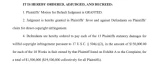
Una coalición de trece editoriales importantes ha obtenido una enorme sentencia en rebeldía de 19,5 millones de dólares contra la biblioteca en la sombra Anna's Archive. Un juez federal de Nueva York aprobó plenamente las solicitudes de los editores y emitió una amplia orden judicial permanente que ordena a más de veinte registros, hosts y proveedores de servicios globales específicos desactivar inmediatamente los dominios restantes del sitio.
etiquetas: biblioteca, anna’s archive, sentencia, eliminación, dominio, global
Los sindicatos rechazaron la última propuesta de la consellera de Educación en una reunión de solo 12 minutos. Un 78% de los profesores votaron en contra al considerar muy insuficientes las medidas propuestas.
etiquetas: dimisión, huelga, conselleria de educación, valencia
ÚLTIMA HORA | Batalla total en el Real Madrid: Riquelme se presenta oficialmente a las elecciones
Enrique Riquelme ha comunicado oficialmente al Real Madrid su intención de competir contra Florentino Pérez en las elecciones a la presidencia del club blanco. El empresario asegura contar con el aval necesario y deberá formalizar su candidatura dentro del plazo marcado por la Junta Electoral, en unos comicios que podrían convertirse en los primeros con votación real desde 2006.
La posible entrada de Riquelme agita el futuro institucional y deportivo del Real Madrid, con la atención puesta en el proyecto que presentará a los socios, la continuidad del modelo de Florentino Pérez y los nombres que puedan formar parte de su propuesta. Las informaciones sobre entrenadores y fichajes deberán confirmarse oficialmente dentro del programa electoral del candidato.
🔞Exención de responsabilidad: Toda la información, material y / o contenido incluido en este programa es sólo para fines informativos y educativos. Invertir en acciones, opciones y futuros es arriesgado y no es adecuado para todos los inversores. Consulte a su propio asesor financiero independiente antes de tomar cualquier decisión de inversión.
Negocios TV no se hace responsable de las opiniones expresadas en el vídeo.
Nvidia ha presentado los resultados del primer trimestre del año y las cifras permiten dimensionar, mejor que ningún otro indicador, el tamaño real de la revolución de la inteligencia artificial. La compañía ingresó 81.600 millones de dólares en tres meses, con un beneficio neto de 58.300 millones y un margen superior al 70%. Y lo verdaderamente impresionante: el valor añadido bruto que generará en todo el año equivale al PIB de Portugal entero, supera al de Hungría y Finlandia, y representa aproximadamente una cuarta parte del PIB de España. En este vídeo dimensionamos la escala histórica de lo que está ocurriendo y analizamos también el principal riesgo que enfrenta el sector.
ÍNDICE 0:16 81.000 millones de dólares en un solo trimestre 0:48 Crecimiento del 20% trimestral y del 85% interanual 1:25 Proyección: 435.000 millones de ingresos para 2026 2:11 Margen del 70%: por qué es excepcional 3:30 Por qué la izquierda confunde ingresos con PIB 4:02 El verdadero PIB de Nvidia: 350.000 millones 4:30 Comparativa: Hungría, Finlandia, Portugal, Chile, Israel 4:52 Una sola empresa = un cuarto del PIB de España 5:21 Por qué Europa se queda atrás sin industria tecnológica 5:57 Nvidia no fabrica chips: el modelo fabless 6:11 TSMC y el milagro económico de Taiwán 6:52 Patrocinio: Universidad de las Hespérides 9:17 La inversión masiva en centros de datos 9:55 El CapEx de las hiperescaladoras 10:50 Cinco billones de dólares de capitalización bursátil 11:11 ¿Y si la curva de mejora de la IA se aplana? 13:21 El paralelismo con el ferrocarril del siglo XIX 14:18 La transformación se quedará aunque Nvidia no domine
El presidente de Cox Energy ha enviado este jueves una carta a la Junta Electoral anunciando su intención de formalizar su candidatura este sábado en la que destaca su intención de mantener el club blanco en manos de sus socios Leer
ÚLTIMA HORA | EEUU e Irán 'sellan la paz': fin del bloqueo en Ormuz y el petróleo se desploma
Estados Unidos e Irán han alcanzado el borrador definitivo para un acuerdo de paz histórico bajo la mediación estratégica de Pakistán. Según informan fuentes diplomáticas citadas por Al Arabiya e IRNA, el documento establece un alto el fuego inmediato y completo en todos los frentes abiertos. El pacto garantiza la libertad de navegación en el Golfo Pérsico y el Estrecho de Ormuz mediante un mecanismo de vigilancia conjunto, eliminando la posibilidad de peajes unilaterales y asegurando la estabilidad del corredor energético más importante del mundo.
El acuerdo contempla el levantamiento gradual de las sanciones económicas impuestas a Teherán a cambio del cumplimiento estricto de los términos pactados, cuyas negociaciones técnicas finales comenzarán en un plazo de siete días. Esta desescalada ha provocado una reacción inmediata en los mercados globales: el petróleo Brent se desinfla por debajo de los 112 dólares, mientras que Wall Street celebra la noticia con el Dow Jones tocando nuevos máximos históricos por encima de los 50.000 puntos en el segundo mandato de Donald Trump.
🔞Exención de responsabilidad: Toda la información, material y / o contenido incluido en este programa es sólo para fines informativos y educativos. Invertir en acciones, opciones y futuros es arriesgado y no es adecuado para todos los inversores. Consulte a su propio asesor financiero independiente antes de tomar cualquier decisión de inversión.
Negocios TV no se hace responsable de las opiniones expresadas en el vídeo.
🎙️ Hoy en el podcast hablamos con Román Orús, físico y miembro del nuevo panel científico de expertos en inteligencia artificial de Naciones Unidas, para entender hacia dónde va realmente esta tecnología. Una conversación técnica, clara y sin hype sobre la IA generativa, los modelos de frontera, la carrera entre OpenAI, Anthropic, Google y China, y por qué seguimos estando en la prehistoria de la inteligencia artificial. Hablamos de agentes, modelos locales, costes de cómputo, cuantización, open source, gobernanza global, riesgos geoestratégicos, creatividad, capacidades emergentes y el impacto que puede tener una IA cada vez más barata y poderosa. Un episodio para comprender mejor el presente y el futuro de la IA desde dentro.
______________________________________________________________________________________________ ⏱ Timestamps: 0:00:00 Trailer 0:02:25 Introducción 0:03:16 La IA como una nueva Revolución Industrial 0:10:40 Cuál es el significado del trabajo 0:14:57 Curso gratuito de agentes de 0 a 100 0:17:40 El Panel Científico de la ONU 0:26:00 Estamos en la prehistoria de la IA 0:32:40 Trabaja con nosotros gracias a InfoJobs 0:37:00 Cuantización y compresión de modelos 0:43:22 IA en manos privadas 0:46:30 La IA no se puede parar 0:49:00 El insostenible coste de la Nube vs. IA Local 01:01:06 Graba tus reuniones con Plaud 01:03:25 La guerra por el Open Source y la estrategia de China 01:08:18 La visión del mundo dentro de unos años con los modelos y agentes 01:10:27 ¿Qué es la Computación Cuántica? 01:15:34 La fusión que lo cambiará todo: IA y Cuántica 01:25:34 La carrera geopolítica y los problemas de Europa 01:28:04 Predicciones: Empleos, Productividad y Renta Básica 01:31:13 Almacena, ahorra o migra tu web con Hostinger 01:35:52 Deepfakes y la amenaza directa a las Democracias 01:38:28 El futuro en los próximos 10 años 01:42:30 El debate de los derechos para la IA y nuevos paradigmas filosóficos 01:47:00 El privilegio de vivir esta singularidad
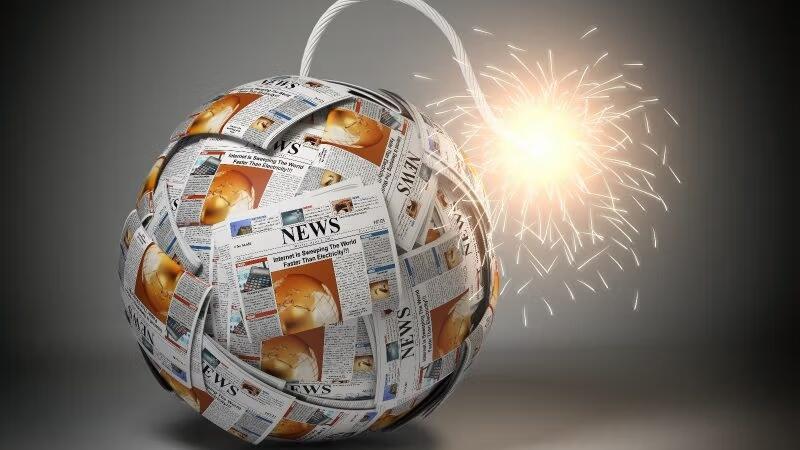
There is a peculiar arithmetic that governs modern health reporting, one that has very little to do with actual risk. Hans Rosling captured it neatly during the 2009 swine flu episode, when he calculated a “news-to-death ratio” of 8,176-to-1. In other words, for every death attributed to swine flu, there were over eight thousand news stories. Tuberculosis, by contrast, received less than 0.1 news stories per death over the same period.
If that sounds absurd, it is, and yet very little has changed.
Take the current hantavirus scare. A cruise ship, the MV Hondius, sits off Cape Verde. There are 7 cases in total (2 confirmed, 5 suspected) and 3 deaths, including a Dutch couple and a German national. Passengers have been confined to their cabins while evacuations and disinfection efforts are organised. It is, undeniably, a dramatic story: a floating Petri dish, a whiff of quarantine, and a hint of the exotic.
In the past week alone, there have been at least 10 to 15 unique news stories, generating hundreds of articles. For a disease that, in normal times, struggles to attract even a single weekly mention, this represents a surge bordering on the hysterical.
And yet it is worth stepping back for a moment and asking, what are we actually looking at?
Hantavirus is a rare disease. In the United States, which diligently tracks such cases, there have been 890 laboratory-confirmed instances since 1993. In the UK, the situation is even less clear: from 2012 to early 2025, only 11 domestically acquired symptomatic cases have been recorded. Surprisingly, nine of these cases were not linked to cruise ships or exotic travel, but rather to a more mundane source—exposure to “pet fancy rats” or rodents bred as reptile feed.
This is not a pathogen ready to spread through the Home Counties. However, the rarity is not the issue; visibility is.
Diseases that afflict the poor, quietly and persistently, rarely command attention. Tuberculosis killed 1.23 million people globally in 2024. Over a million deaths every year, largely concentrated in less affluent parts of the world. It is one of the most lethal infectious diseases known to medicine, and yet it barely registers in the Western news cycle.
Why? Because TB is familiar, it is slow; It lacks narrative flair, and it does not trap well-heeled passengers in their cabins while helicopters circle overhead.
If you want coverage, you need something else entirely. You need novelty, uncertainty, and above all, proximity to affluence. A cruise ship outbreak ticks every box: a disease with a balcony suite.
This is the uncomfortable truth behind Rosling’s ratio: the media does not report risk, it reports drama. And drama requires context that audiences can imagine themselves in.
A rodent-borne virus in some remote rural setting barely registers. Put that very same virus aboard a cruise ship with buffet queues, balcony cabins, and a passenger list that looks uncomfortably like the readership, and suddenly it becomes headline news.
The result is a profound distortion of public perception. We are invited to worry about the improbable while ignoring the inevitable and reality. A handful of hantavirus cases generates dozens of headlines; a million tuberculosis deaths pass with barely a murmur.
If we were to apply Rosling’s lens to the present moment, the imbalance would be obvious. Three deaths linked to a suspected hantavirus cluster have produced hundreds of reports in a matter of days. Meanwhile, tuberculosis continues its relentless toll with scarcely a fraction of that attention.
The modern “news-to-death ratio” may not be precisely 8,176-to-1, but the underlying pattern remains intact.
The lesson here isn’t truly about hantavirus; instead, it’s about how we collectively determine what is significant.
Diseases associated with poverty—those that are endemic, predictable, and devastating—often fail to attract media attention because they don’t instill fear in the right audience or in the right way. No one is interested in the thousands of cholera deaths that are too remote, too ordinary, and lack the dramatic impact that draws interest. What commands attention are diseases that puncture our sense of safety, the kind that can slip past the gangway and make themselves at home on a cruise ship.
This post was written by two old geezers who live in a world where risk is misread, priorities are skewed, and the arithmetic of attention bears little resemblance to the arithmetic of death.
Existen pensamientos y frases que, a pesar del paso del tiempo, conservan su vigencia y continúan encontrando nuevos sentidos en cada generación. Son reflexiones capaces de atravesar épocas, contextos y miradas diferentes, manteniéndose presentes por los valores y enseñanzas que transmiten.
etiquetas: josé martí, solidaridad, educación, felicidad
“Mientras los antiguos egipcios construían pirámides para reyes-dioses y los griegos erigían enormes palacios en Cnosos, la gente del Indo construía algo completamente diferente. En lugar de tumbas repletas de oro y templos inmensos, Mohenjo-daro se centró en sofisticados desagües revestidos de ladrillo y un trazado urbano organizado. En vez de permitir que los privilegios de la sociedad se acumularan en manos de una pequeña élite, los servicios de la ciudad se distribuyeron ampliamente entre los hogares comunes.
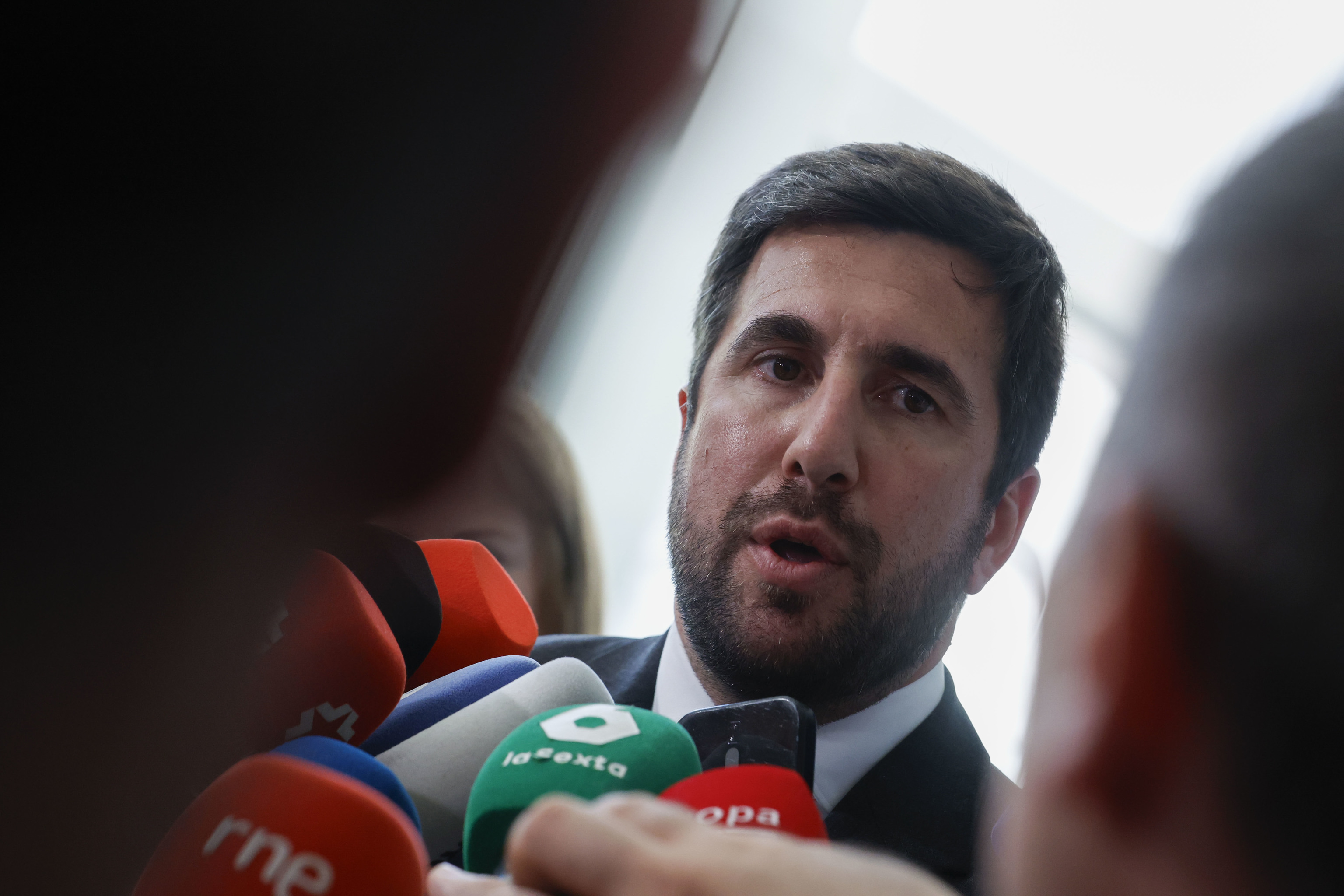
El auto del juez Calama sobre Zapatero es, como se dice ahora, demoledor. Estamos viendo como muchos de Podemos, la cadena Ser o el País están quitando sus manos del fuego. Otros como Javier Ruiz o Sarah Santaolalla no, pero porque no lo han leído. Para eso hago este vídeo, compartan
José Luis Rodríguez Zapatero queda situado en el centro del caso Plus Ultra, la investigación sobre el rescate público de 53 millones de euros concedido a la aerolínea durante la pandemia. La causa ya no gira solo alrededor de una compañía aérea rescatada por la SEPI: aparecen sociedades instrumentales, presunto tráfico de influencias, blanqueo de capitales, la empresa WhatTheFav de sus hijas, la consultora Análisis Relevante, el empresario Julio Martínez, la oficina de Zapatero en Ferraz y una red con ramificaciones en Venezuela, China, Suiza y Estados Unidos.
El juez José Luis Calama ha imputado a Zapatero en una causa que investiga presuntos delitos vinculados al rescate de Plus Ultra, mientras la UDEF ha puesto bajo la lupa empresas del entorno familiar y profesional del expresidente. La Fiscalía Anticorrupción, con Elena Lorente, aparece como una de las piezas clave de una investigación que desmonta la tesis inicial del simple bulo, la denuncia oportunista o el fango mediático.
La parte más jugosa conecta el rescate de Plus Ultra con Venezuela: Nicolás Maduro, Delcy Rodríguez, Juan Guaidó, petróleo venezolano, sanciones internacionales, cajas CLAP, intermediarios, cartas de intención, buques, triangulación con China y el papel de Zapatero como supuesto mediador político y canal de influencia. El relato del “hombre de paz” queda atravesado por una pregunta incómoda: si el expresidente defendía el diálogo con el chavismo, ¿qué hacía su entorno moviéndose alrededor de negocios petroleros, estructuras societarias y pagos millonarios?
La derivada política golpea directamente al PSOE de Pedro Sánchez. Zapatero no era una figura decorativa del pasado socialista: era uno de los grandes referentes morales del sanchismo, interlocutor internacional, puente con Venezuela y China, y pieza de influencia dentro del partido. Por eso el caso Plus Ultra ya no funciona solo como escándalo judicial: abre una grieta sobre la política exterior española, el Delcygate, el giro sobre Juan Guaidó, la Internacional Socialista, la relación con Maduro, el papel de China y la sombra de los lobistas alrededor del poder.
Leer el auto completo es imprescindible y si luego os leeis "Todos los hombres de Sánchez" de Ketty Garat pues vais a entender muchas más cosas tanto de Zapatero, Pepe Blanco, Acento y compañía, como de la salida de Ábalos, su juicio con Koldo, el proceso de Santos Cerdán...
Why are zippers on different sides of male and female jackets? – Agrima, age 13, Delhi, India
Imagine you’re at a clothing store that stocks items for the whole family. You pick up a white buttoned shirt to try on. The style is pretty plain. Was it designed to be worn by a woman or man?
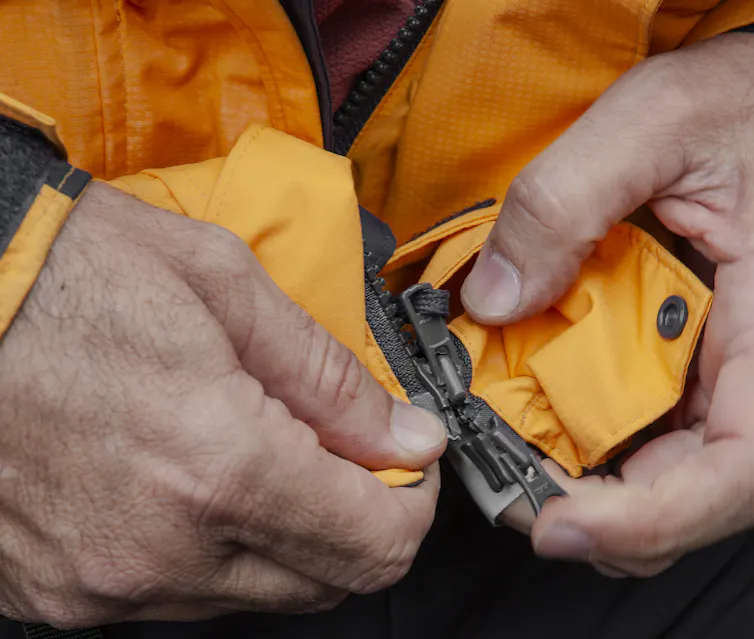
There may be a clue: Many women’s shirts have buttons on the left side, while men’s shirts usually button on the right. Even zippers in pants and jackets sometimes follow the same pattern.
Women’s shirts often have the buttons on the wearer’s left and the buttonholes on the wearer’s right. For men, it’s reversed.
pixelfit/E+ via Getty Images
But why does clothing fasten differently depending on whether it’s made for men or women? Fashion researchersand historians like us have wondered about this gender difference. The answer has a lot to do with tradition, history and the way clothes were made long ago. Even small details, like a zipper, can tell a story about the past.
Clothing is full of hidden history
When people look at clothes today, they often think about colors, comfort or style. But clothing is also part of what historians call material culture: all the objects people use every day. Examining the material culture of the past can reveal how people lived, worked and thought in earlier times.
Fasteners like buttons and zippers aren’t just practical. They also follow design traditions that became connected to gender over hundreds of years.
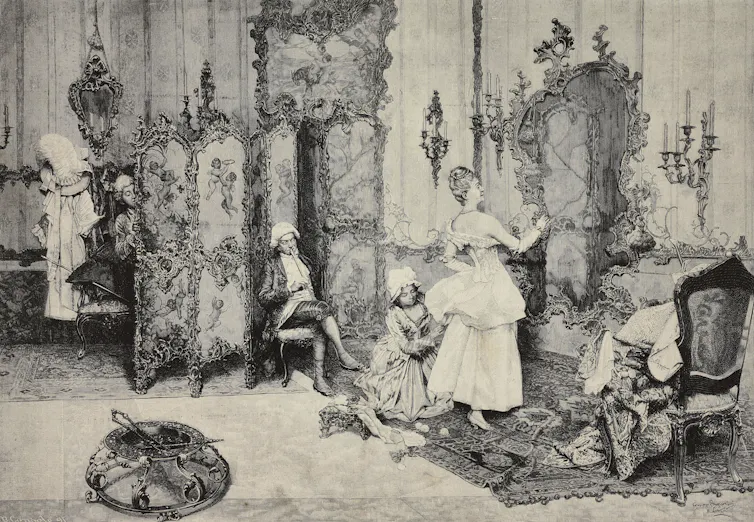
One of the most common explanations for why male and female garments have their buttons on opposite sides comes from European fashion history. A long time ago, wealthy women from the nobility often wore complicated dresses with buttons and fasteners – so complicated that they needed help getting dressed.
Some historians believe buttons were placed in a way that made it easier for a servant to fasten the clothing, reflecting class distinctions.
About 90% of people are right-handed. When a maid stood directly facing a noblewoman to dress her, buttons on the wearer’s left side were lined up perfectly for the maid to use her dominant right hand to fit them into the buttonholes. If you try buttoning a jacket onto a friend or a stuffed animal while facing them, you will see exactly why this layout made the maid’s job so much easier.
Men, on the other hand, usually dressed themselves. So shirts, trousers and uniforms were designed with fastenings that were easy for the wearer to manage himself – meaning buttons on the right side for a wearer to use his own right hand to fasten.
For example, some historians point to military traditions as a possible influence on button placement. Men often wore swords on their left side and drew them with their right hand. The direction jackets, shirts and trousers closed up may have helped prevent fabric from getting caught and in the way.
As zippers gained popularity in the early 1900s, clothing companies just stuck with the same customs about how men’s and women’s garments were supposed to close. Instead of creating brand-new rules, many manufacturers simply kept the same patterns they had used for buttons. So zippers often ended up following the same “direction” as older garment closures.
Today, more brands are making unisex and gender-neutral clothing meant for anyone, and many designers no longer follow the old left-side/right-side rule. It’s just a fashion tradition – there’s no reason zippers and buttons need to go on different sides for men versus women.
It is now more acceptable to break the old rules about which side buttons or zippers should go on. If you make your own clothes, you can put closures – whether buttons, zippers, snaps, ties, Velcro or even something new you invent yourself – wherever you want!
Hello, curious kids! Do you have a question you’d like an expert to answer? Ask an adult to send your question to CuriousKidsUS@theconversation.com. Please tell us your name, age and the city where you live.
And since curiosity has no age limit – adults, let us know what you’re wondering, too. We won’t be able to answer every question, but we will do our best.
The authors do not work for, consult, own shares in or receive funding from any company or organization that would benefit from this article, and have disclosed no relevant affiliations beyond their academic appointment.
Un trabajador de 50 años murió tras precipitarse desde unos 30 metros de altura mientras realizaba tareas en el techo del pabellón, situado en la plaza de Felipe II. El accidente ocurrió sobre las 14:35 en el interior del recinto. Los equipos de emergencia practicaron maniobras de reanimación avanzada durante unos 20 minutos, pero finalmente solo pudieron confirmar su fallecimiento. La escena tuvo un fuerte impacto entre los compañeros que estaban trabajando en el pabellón. Tres de ellos sufrieron crisis de ansiedad tras presenciar lo ocurri...
Vivimos en una sociedad donde se lleva a Dani el de Desokupa a hablar de Zapatero a Telemadrid, y también a Llorente al hormiguero a hablar de salud. Aún pasan pocas cosas para lo imbéciles que nos estamos volviendo.
etiquetas: zapatero, desokupa, telemadrid, daniel esteve
The bond market is beginning to force reality onto Washington, and it may ultimately force an end to the Iran war long before politicians or diplomats are willing to admit it.
For months, investors have focused on missiles, retaliation headlines, oil chokepoints, and the possibility of a broader regional escalation from the Iran War. During the geopolitical noise, I urged readers not to overlook stress in financial markets that was happening before the war even started, namely in places like private credit and subprime auto lending. I called these “real crises” hiding behind record highs while “investors” chase gamma squeezes higher in an ongoing distortion feedback loop that is making things look far better than they are under the surface.
And now, beneath all the geopolitical noise, a much more serious, harder to ignore crisis is unfolding. As Cypher says in The Matrix:
"Fasten your seat belt Dorothy, 'cause Kansas is going bye-bye."
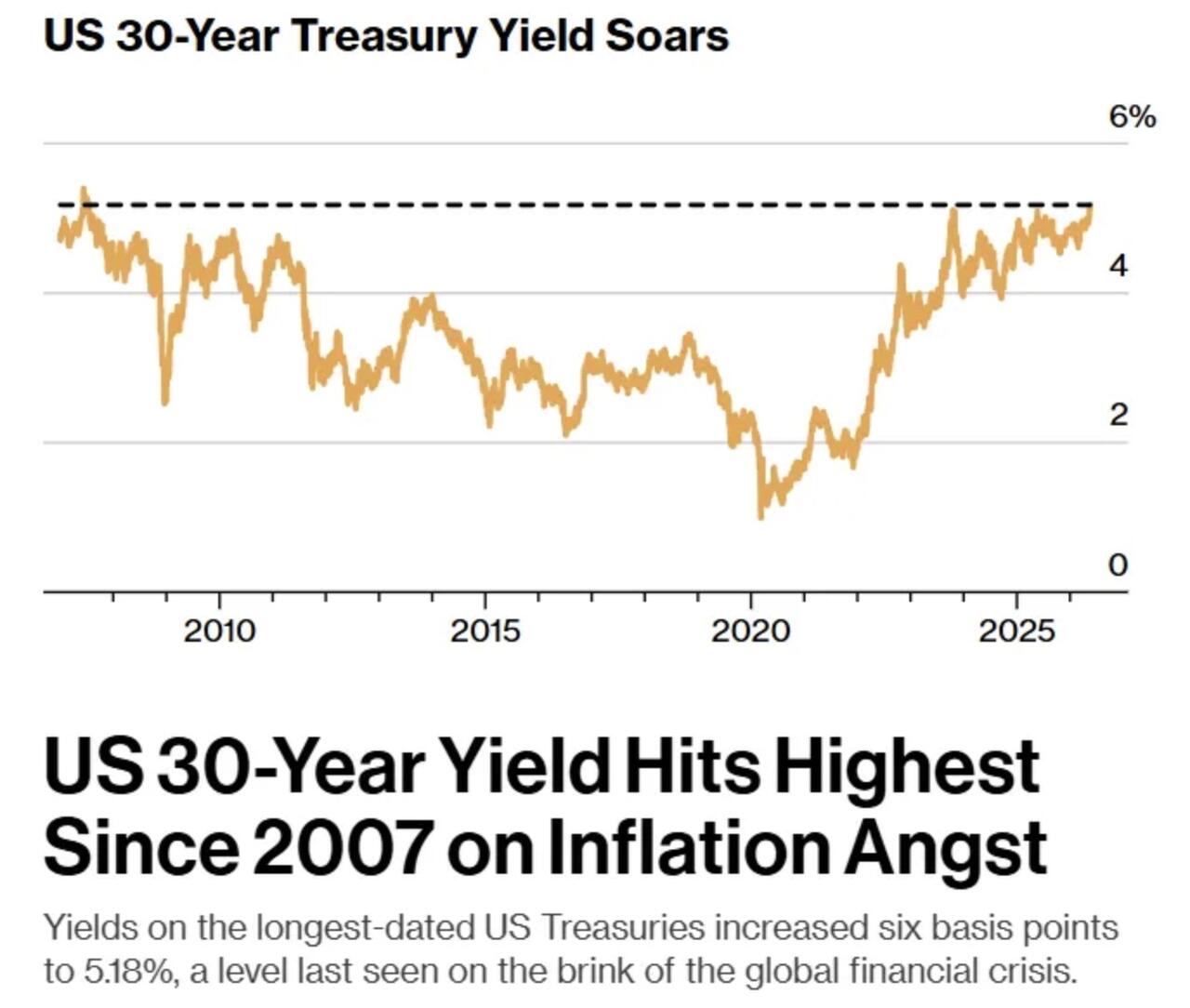
This crisis is in the Treasury market. Bond yields are moving sharply higher, and they are sending a message that policymakers can no longer afford to ignore: the financial system is becoming unstable under the weight of war spending, massive deficits, persistent inflation, and a debt load that was already unsustainable before this conflict began.
The bond market does not give a flying fuck about political narratives, gamma squeezes, meme stocks, retail investors or any other ticky tacky end-around style loopholes that continue to push stocks higher. It cares about math, fiscal policy and monetary policy. And the math is getting ugly very quickly.
The 10-year Treasury yield is arguably the single most important price in global finance because virtually every major asset class is built on top of it. Mortgage rates, commercial real estate valuations, private equity models, corporate borrowing costs, equity multiples, venture capital, and government financing itself all depend on stable Treasury markets. When yields rise too quickly, everything starts repricing at once. That is why this matters so much more than the daily moves in the stock market.
Washington understands this, even if it refuses to say it publicly.
The United States can survive political embarrassment overseas, but it simply cannot survive a disorderly Treasury market.
That is why I believe the bond market is eventually going to force a few things. First, a de-escalation of the Iran conflict. The priority now is no longer “victory” or even geopolitical strategy. The priority is restoring stability before bond yields spiral completely out of control. A prolonged war that keeps oil prices elevated while deficits explode higher is simply incompatible with a heavily indebted financial system already struggling under the burden of high interest rates.
The problem is that America entered this conflict from an extraordinarily weak fiscal position to begin with. This is not World War II, when the country had a young population, industrial dominance, low debt levels, and decades of economic expansion ahead of it. Today the US government is already running deficits approaching $2 trillion annually during what is supposedly a normal economic environment. Interest expense on the national debt has already become one of the largest items in the federal budget. Now add war spending, weakening foreign demand for Treasuries, rising commodity prices, and higher refinancing costs, and the entire situation starts looking dangerously unstable.
This is where the inflation problem becomes unavoidable.
War has always been inflationary, but not just because of oil shocks or supply chain disruptions. The deeper issue is debt creation itself. Wars are financed through borrowing, and borrowing at these levels increasingly requires central bank intervention one way or another. The process is actually very simple: war creates debt, debt pressures the financial system, and eventually the system responds through some combination of money creation, currency debasement, and financial repression.
That is exactly what the bond market is beginning to anticipate right now.
Ironically, as I’ve predicted the past week, before the Federal Reserve eventually steps in to suppress yields, we may actually see another round of rate hikes first. If oil prices remain elevated and inflation expectations continue rising alongside Treasury yields, the Fed may feel forced to tighten policy again simply to preserve credibility and prevent inflation psychology from becoming entrenched. If that doesn’t work, I’ve predicted that the Fed will simply start bullshitting its inflation numbers.
In other words, the system may briefly attempt to defend the dollar before ultimately surrendering to debt realities. That creates the possibility of a brutal stagflationary environment where growth slows, markets weaken, borrowing costs rise, and inflation remains stubbornly elevated at the same time.
For years, markets became addicted to near-zero rates and endless liquidity. Entire sectors of the economy were built on the assumption that capital would remain permanently cheap. But when Treasury yields rise meaningfully, everything changes. Leveraged speculation becomes harder to sustain. Corporate refinancing becomes more expensive. Housing affordability deteriorates further. Commercial real estate faces additional stress. Equity valuations compress. The “everything bubble” suddenly starts losing oxygen and all the shit I’ve written about that I think will blow up — including all 10 area of the market I highlighted here — will implode.
And once again, the people who get hurt the most will not be the financial elite, it will be ordinary Americans. You heard it from the former bartender turned Substack shit-talker first…read this slowly:
Mom and pop savers are about to get squeezed from every direction at once. Their wages will fail to keep up with inflation. Their borrowing costs will rise. Their credit card rates will stay elevated. Their insurance, food, energy, and housing costs will continue climbing. Their retirement portfolios will become more volatile. And eventually, after enduring all of that pain, they will likely watch policymakers step in to rescue the bond market and financial system through another round of monetary intervention that further destroys the purchasing power of their savings.
🔥 50% OFF FOR LIFE: Using this coupon entitles you to 50% off an annual subscription to Fringe Finance for life: Get 50% off forever
Every cycle ends the same way. Wall Street and the financial system are treated as too important to fail, while ordinary citizens absorb the consequences through inflation and currency debasement. Policymakers will present future interventions as necessary for “financial stability,” but stability for whom? Stability for leveraged institutions, overextended governments, and asset markets dependent on artificially suppressed rates.
Meanwhile, the average family gets punished twice. First through inflation, then through the policies used to contain the damage caused by inflation.
And make no mistake, if yields continue climbing, the Fed and Treasury will eventually intervene in some form. Maybe they will not officially call it yield curve control at first. Maybe it arrives through stealth quantitative easing, emergency liquidity facilities, Treasury buyback programs, bank regulatory changes, or coordinated purchases through the financial system. But the end result will be the same: suppress long-term yields because the debt burden has become too large for markets to absorb naturally.
At current debt levels, genuinely free market interest rates are politically and financially impossible. The bond market is beginning to expose that reality.
That is also why I am becoming bullish again on gold, silver, and mining stocks after stepping away from them earlier this year following their enormous run in 2025. If the Fed ultimately chooses to suppress yields while inflation remains structurally elevated, precious metals become one of the clearest beneficiaries. Gold and silver perform best when confidence in fiat systems deteriorates and when governments prioritize debt sustainability over currency stability. I’ve long said I think they will have a sharp fall lower on the initial deleveraging, then probably double off their near term bottom in short order once the Fed’s liquidity starts hitting the market.
And that is exactly the direction this appears to be heading.
The Iran war may end sooner than many expect, not because global leaders suddenly become responsible, but because the bond market is forcing them into a corner. Financial instability is becoming the greater threat. Policymakers now face an impossible balancing act between inflation, debt servicing costs, economic slowdown, and geopolitical conflict.
Something will have to give. Historically, when governments reach this stage, they choose to protect the debt market and sacrifice the currency.
There is little reason to believe this time will be any different.
--
QTR’s Disclaimer:Please read my full legal disclaimer on my About page here. This post represents my opinions only.In addition, please understand I am an idiot and often get things wrong and lose money. I may own or transact in any names mentioned in this piece at any time without warning. Contributor posts and aggregated posts have been hand selected by me, have not been fact checked and are the opinions of their authors. They are either submitted to QTR by their author, reprinted under a Creative Commons license with my best effort to uphold what the license asks, or with the permission of the author.
This is not a recommendation to buy or sell any stocks or securities, just my opinions. I often lose money on positions I trade/invest in. I may add any name mentioned in this article and sell any name mentioned in this piece at any time, without further warning. None of this is a solicitation to buy or sell securities. I may or may not own names I write about and are watching. Sometimes I’m bullish without owning things, sometimes I’m bearish and do own things. Just assume my positions could be exactly the opposite of what you think they are just in case. If I’m long I could quickly be short and vice versa. I won’t update my positions. All positions can change immediately as soon as I publish this, with or without notice and at any point I can be long, short or neutral on any position. You are on your own. Do not make decisions based on my blog. I exist on the fringe. If you see numbers and calculations of any sort, assume they are wrong and double check them. I failed Algebra in 8th grade and topped off my high school math accolades by getting a D- in remedial Calculus my senior year, before becoming an English major in college so I could bullshit my way through things easier.
The publisher does not guarantee the accuracy or completeness of the information provided in this page. These are not the opinions of any of my employers, partners, or associates. I did my best to be honest about my disclosures but can’t guarantee I am right; I write these posts after a couple beers sometimes. I edit after my posts are published because I’m impatient and lazy, so if you see a typo, check back in a half hour. Also, I just straight up get shit wrong a lot. I mention it twice because it’s that important.
Turkey Liquidated Almost All Of Its US Treasuries In March To Defend Crashing Lira
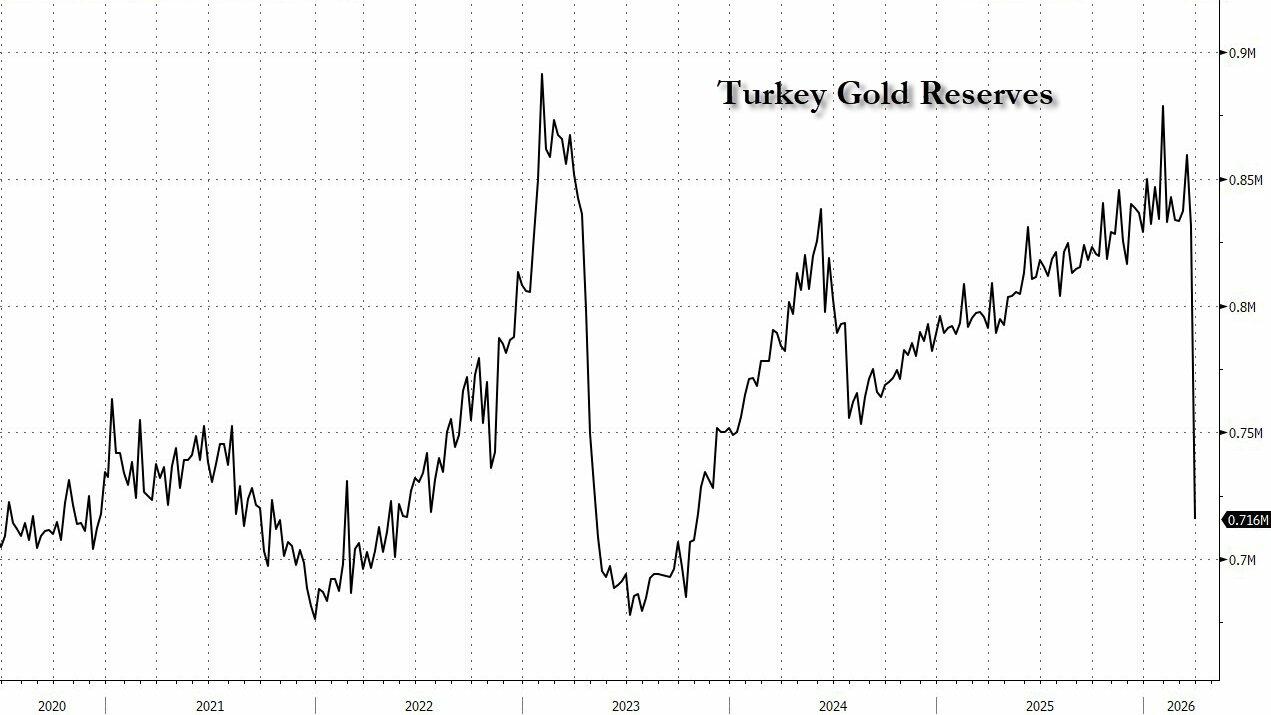
Two months ago, at the end of March, we reported that Turkey was aggressively dumping its gold reserves in a panic scramble to obtain dollar funding, which Erdogan's regime was using to keep the Turkish lira from crashing, and to also pay for energy imports which had suddenly soared in price as a result of the Iran war.
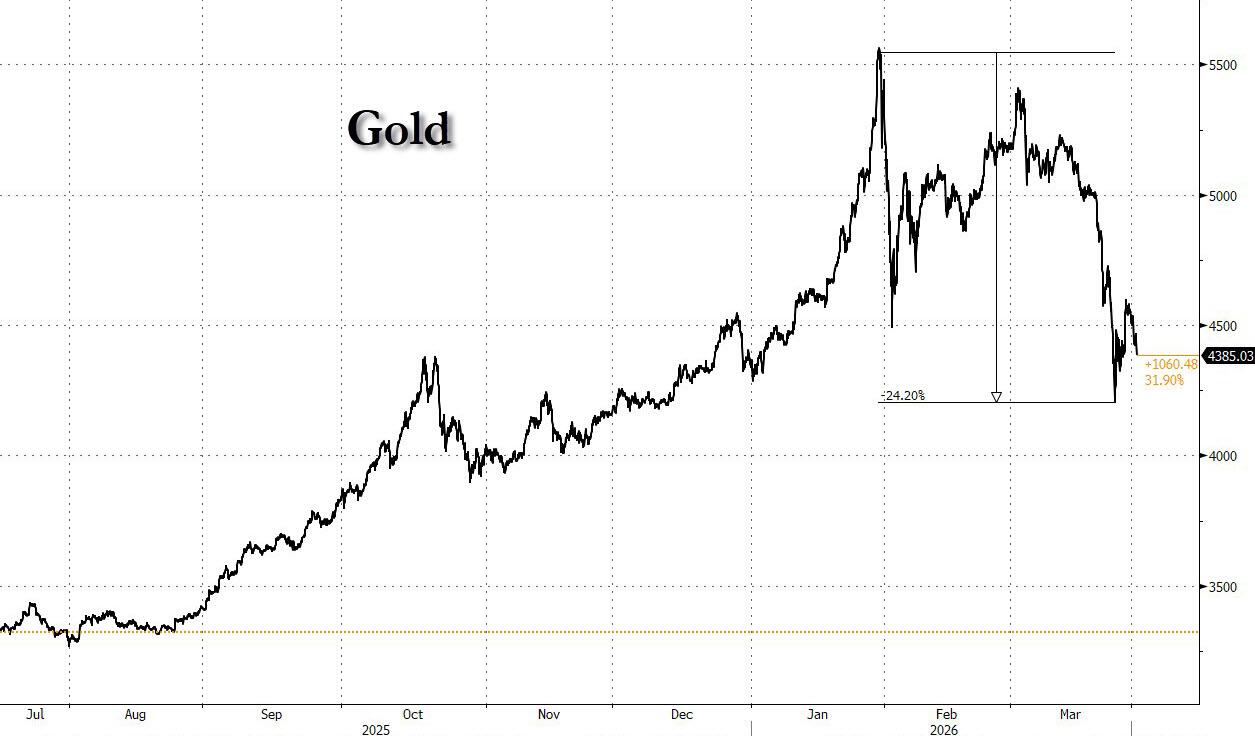
The violent selling by Turkey (and other emerging markets) was behind the brutal plunge in gold prices, which tumbled by more than $1000 from near all-time highs at the start of the war to the low 4000s by the time Turkey had done selling much of its gold.
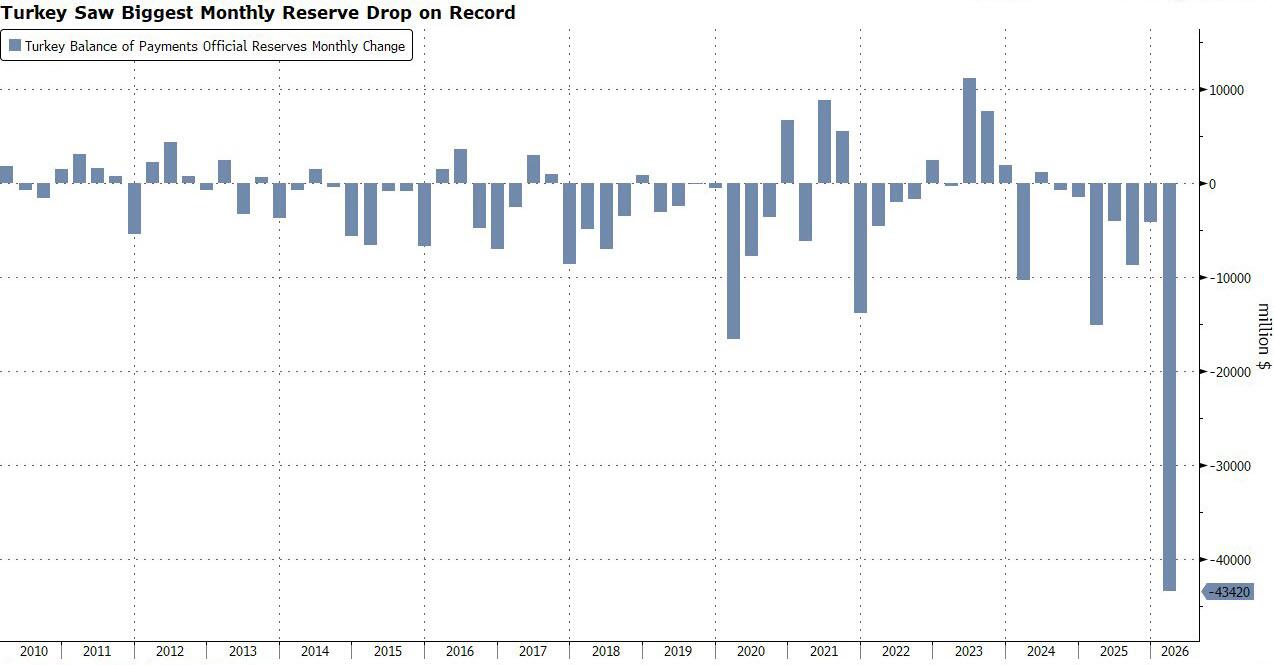
Then earlier this week, we got another confirmation of Turkey's wild liquidation spree when the latest central bank data showed that Turkey’s foreign reserves had their biggest monthly decline on record in March, as the Iran war triggered global selloffs in emerging market assets and strained the lira.
According to balance-of-payments data, Turkey's official reserves cratered by $43.4 billion in March. Part of the decline reflected state intervention to offset portfolio outflows. The current-account deficit, meanwhile, widened to $9.7 billion in March from $7.3 billion in February as a result of soaring commodity prices.
A major energy importer, Turkey has been hit hard by higher oil and gas prices caused by the effective closing of the Strait of Hormuz and the resulting disruptions to world supplies of crude and refined products. Meanwhile, global banks have started changing their formerly favorable outlook on the lira, citing the exploding current-account deficit. Should inflation pressures persist, Turkey will have no choice but to pursue another accelerated devaluation of the Turkish lira.
“As international institutions continue to raise their average oil price forecasts for 2026, disruptions in supply chains and ongoing regional tensions — and their potential negative impact on transportation and tourism revenues — keep upward risks alive in year-end projections” for Turkey, said Istanbul-based economist Haluk Burumcekci.
Turkish central bank Governor Fatih Karahan said last week that the ratio between the current-account deficit and gross domestic product would be “below historical averages” this year while acknowledging the upside risks.
Yet as we said in March, while selling gold is a step of clear desperation for Turkey which had put in much efforts in recent years to build up a substantial gold stock, it is understandable for a regime that suddenly finds itself in a dollar funding crisis, the bigger question is did Turkey do the same with its holdings of Treasuries which are far more liquid and thus far less likely to move the market even when facing a sizable liquidation.
The answer, we learned today, is a resounding yes.
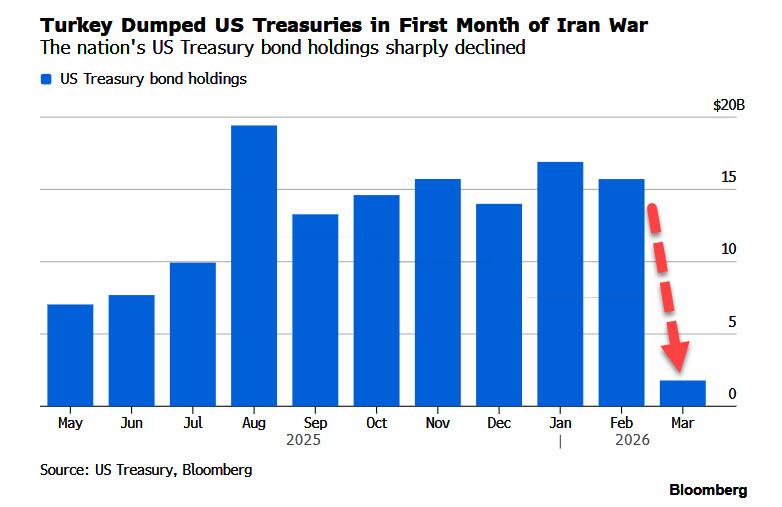
According to Bloomberg calculations based on US Treasury data, Turkey sold almost all of its US Treasuries in March as it stepped up efforts to support its currency during the first month of the Iran war. The amount of Treasuries held by Turkey crashed to just $1.8 billion by the end of March, down from $16 billion the previous month, the data showed. The figure includes securities held by the central bank and other Turkish entities, including corporates.
The decline coincided with a selloff in Turkish markets after the Middle East conflict erupted, sending oil prices sharply higher. The central bank moved immediately to prevent a crash in the lira by tightening funding conditions and selling off foreign exchange and gold assets. Its interventions also included swapping gold from reserves, although now that it has also dumped the bulk of its last ditch dollar reserves, those swaps will almost certainly end up forcing Turkey to hand over whatever gold was pledged.
Turkey’s Treasury holdings were as high as $21 billion in February 2025 after the country spent a year rebuilding reserves. They had peaked about a decade ago at $80 billion, before steadily declining as relations with the US soured over a range of political and geopolitical disputes, and as Turkey consistently sold reserves to maintain a smooth devaluation of the lira.
Despite the interventions, the lira has remained under pressure as the war drags on. Last week, the central bank raised its year-end inflation target to 24% from 16%, after data showed annual inflation accelerated to 32.4%. Turkish bonds have also suffered steep losses, with 10-year yields hitting record highs of 35.75%.
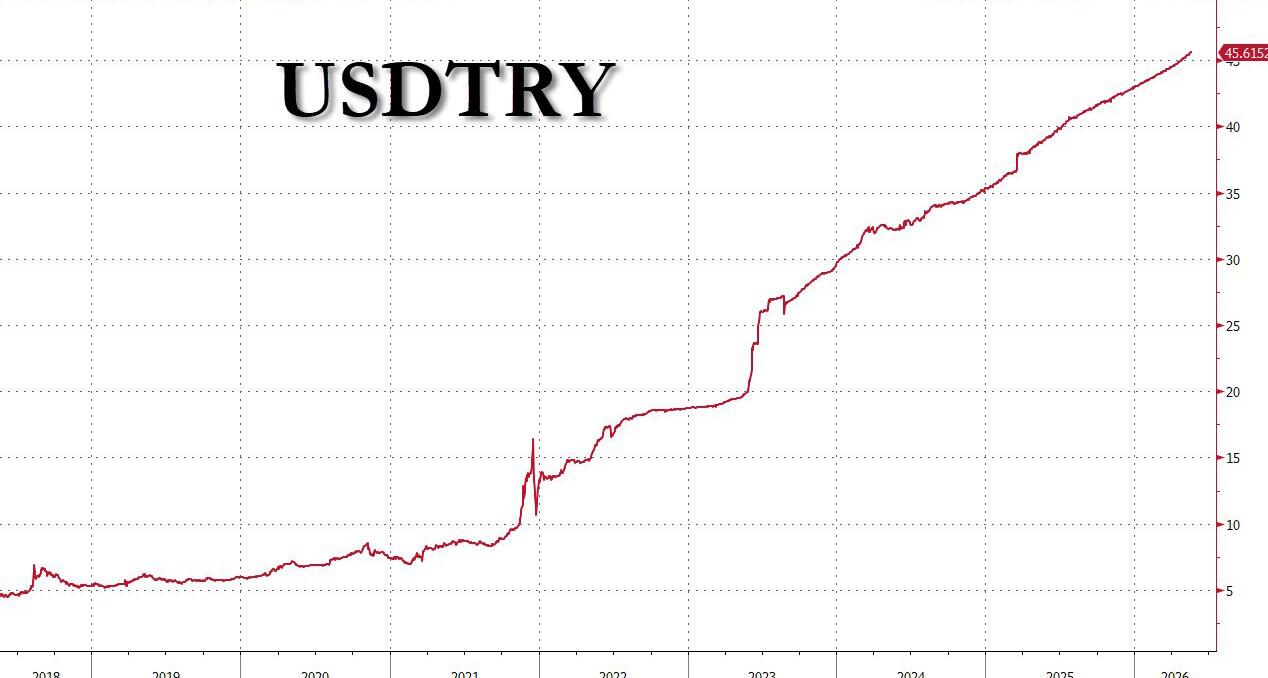
And now that Turkey has no more gold or Treasurys with which to defend the currency, expect a sharp and painful death in the currency which has gone from less than 10 against the dollar five years ago to a record 45.6 today..
Javier Herrero comunica al juez que era alto cargo de Transportes cuando se aprobaron las modificaciones de sólo dos contratos bajo sospecha y se desvincula de cualquier irregularidad. La Intervención detecta que la obra del Puente del Centenario, investigada en la 'trama Cerdán', se infló en cinco millones. Subraya que, según la ley, "la responsabilidad recae sobre el órgano de contratación, que son los ministros y los secretarios de Estado". Es, por tanto, el órgano de contratación [Ministerio de Transportes] el que aprueba los pliegos de
etiquetas: corrupción, contratos públicos, javier herrero, responsabilidad ministerial
The Israel lobby takes out Thomas Massie and kills MAGA in the process. The good news is, we’ve now confirmed how the system works.
Rich Baris is the Director of BIG DATA POLL and author of the new book "Burn It Down: What the Polls Show Young Americans Really Want.”
Paid partnerships with:
Ethos: Protect your family with life insurance from Ethos. Get up to $3 million in coverage in as little as 10 minutes at https://ethos.com/TUCKER
American Financing: NMLS 182334, nmlsconsumeraccess.org. APR for rates in the 5s start at 6.327% for well qualified borrowers. Call 800-685-5696 for details about credit costs and terms. Visit http://www.AmericanFinancing.net/Tucker.
El verdadero poder del imperio estadounidense no era militar, era psicológico. Era la sensación de inevitabilidad. La percepción de que, tarde o temprano, Estados Unidos acabaría imponiendo el resultado final. Podías resistirte, retrasarlo, encarecerlo… pero no cambiarlo. Y esa percepción se ha roto.
etiquetas: orden mundial, geopolítica, eeuu, guerra
El sindicato CIG-Ensino acusa a la Consellería de “acosar y perseguir al profesorado gallego en lugar de poner los recursos para el correcto funcionamiento de los centros”
Entre la desesperación ante el estado de la literatura, la escritura y la lectura en la era de la IA, la autora de la monumental obra Los libros de Jacob anunció, sobre todo, que dejaba de escribir novelas.
Una niña de dos años ha muerto en el municipio coruñés de Brión al quedar olvidada varias horas en el interior del vehículo estacionado de su padre. Según han confirmado fuentes consultadas por Europa Press, el progenitor llevó al mayor al colegio y se olvidó de dejar a la niña en la guardería...
Los expertos dicen que el auto del juez es contundente, pero hemos visto demasiada contundencia en Cataluña o Euskadi, con la financiación de Podemos y Mónica Oltra, y al ocultar el nombre de M. Rajoy en un juicio
La UE da luz verde al pacto comercial que impone aranceles del 15% a los productos europeos. El acuerdo aún tiene que ser ratificado por el Parlamento Europeo y los Estados miembros.
¿Por qué el mercado de renta variable vive en máximos ignorando el mayor shock de la historia?
El mercado financiero se encuentra en un punto de equilibrio complejo y contradictorio. Jaime Garrido, director de información de mercados y estrategia de inversión en CaixaBank Asset Management, analiza el impacto de la inflación persistente, los déficits fiscales elevados y el comportamiento de las curvas de tipos de interés. Garrido advierte que la renta variable cotiza en máximos históricos impulsada por la fiebre de la inteligencia artificial generativa, obviando las consecuencias reales del cierre del estrecho de Ormuz y el shock de oferta y demanda en materias primas y semiconductores. Mientras Wall Street muestra vulnerabilidades ocultas en su consumo y ahorro, Europa emerge como una alternativa de inversión sólida gracias a su gobernanza, seguridad frente a la imprevisibilidad de la administración americana y avances en energías renovables.
🔞Exención de responsabilidad: Toda la información, material y / o contenido incluido en este programa es sólo para fines informativos y educativos. Invertir en acciones, opciones y futuros es arriesgado y no es adecuado para todos los inversores. Consulte a su propio asesor financiero independiente antes de tomar cualquier decisión de inversión.
Negocios TV no se hace responsable de las opiniones expresadas en el vídeo.