La asfixia económica a la que la Comunidad de Madrid somete al campus público afecta a las investigaciones, las becas y la calidad de la enseñanza. En 2024 ingresó menos dinero para sueldos que hace 14 años: “Nuestra situación es insostenible”
Adquirir una vivienda siempre pasa por la firma del contrato de arras, o contrato de reserva. Al margen de la creencia popular, este documento es mucho más que un anticipo del dinero. Es un compromiso legalmente vinculante, con consecuencias económicas severas en caso de incumplimiento.
Si se firma sin revisar los detalles, se puede llegar a perder la cantidad de dinero entregada, que habitualmente oscila entre el 5% y el 10% del precio de venta. Es decir, de unos 10.000€ o más. Por ello, como compradora, debes conocer los principales aspectos legales y los diferentes tipos de arras.
Las cláusulas más importantes del contrato de arras
La compra de una vivienda
Cuando se hace la entrega del contrato de arras para su firma, hay varios aspectos a tener en cuenta sobre los demás.
Primeramente, en el contrato se establece un plazo máximo para formalizar la compraventa ante notario. Normalmente, suele ser de entre uno y tres meses, pero debes asegurarte de que se adapta a tus necesidades económicas.
También se detalla el inmueble y todos los datos del Registro de la Propiedad. Antes de firmas, debes solicitar y recibir una nota simple actualizada del inmueble. Es posible que se haya evitado especificar cargas o limitaciones legales, las cuales sí aparecen en la nota simple.
Por lo tanto, si la nota simple no lo revela, puedes pedir que el contrato recoja que se entrega la casa en la venta libre de toda carga y gravamen.
Asimismo, debes consultar que los gastos e impuestos se reparten respecto a lo que has pactado. Es decir, que cuestiones como los gastos de notaría y gestoría, el IBI y otros, se especifiquen y repartan del modo que hayas acordado con el vendedor.
Por último, debes saber que existen varios tipos de contratos de arras, y debes asegurarte de que se especifica en este cuál se aplica en tu compra. La falta de la especificación, o la ambigüedad, puede jugar en tu contra.
A continuación, te explicamos los tipos de contratos y sus diferencias.
Los diferentes tipos de arras
Las diferencias entre los tipos de arras
Uno de los tipos de arras son las confirmatorias, las que se aplican por defecto si no se especifica otra. Esta prueba el contrato de compraventa y funciona como anticipo del precio. Por su naturaleza, no se puede desistir sin más, pues es de obligado cumplimiento.
La parte vendedora puede exigir el cumplimiento forzoso del contrato ante los tribunales, o bien resolver el contrato con una indemnización.
Otro tipo de contrato de arras son las penitenciales (o desistimiento). Son el único tipo que permite el desistimiento unilateral de ambas partes. Se regulan por el Artículo 1454 del Código Civil.
Si como compradora desistes, “sólo” perderás la cantidad entregada de arras. Si lo hace el vendedor, deberá devolver esa cantidad por duplicado.
El último tipo es el de las arras penales. Por un lado, garantizan el cumplimiento del contrato y cuantifican la indemnización por incumplimiento. Si sucede esto último, se puede exigir el cumplimiento o resolver el contrato, en ambos caso según lo que se haya pactado.
Si aún tienes dudas, o prefieres asegurarte, recuerda recurrir a tu asesoramiento legal especializado para que te ayude en el proceso del pacto y firma de arras.
La pregunta es inevitable. Si realmente se pone fin al cambio de hora, ¿qué cambiaría en nuestras vidas? ¿Qué consecuencias tendría esta reforma que aspira a simplificar los relojes, pero que podría reconfigurar nuestra salud, nuestras rutinas y hasta la economía diaria?
El principio del fin del cambio horario
El cambio de hora se instauró en España en 1974, en plena crisis del petróleo, como una medida para ahorrar energía aprovechando mejor la luz solar. Desde entonces, dos veces al año adelantamos o atrasamos los relojes una hora. En marzo, para entrar en el horario de verano. Y en octubre, para regresar al de invierno.
Pero medio siglo después, los expertos coinciden en que ese ahorro energético es, a estas alturas, casi simbólico. El Instituto para la Diversificación y Ahorro de la Energía (IDAE) estima que el ahorro medio no supera el 0,3 % del consumo total. En cambio, los perjuicios para la salud están cada vez más documentados: alteraciones del sueño, estrés, irritabilidad, menor rendimiento y un repunte de accidentes laborales o de tráfico en los días posteriores al ajuste.
Cambiar la hora dos veces al año ya no tiene sentido.
Apenas ayuda a ahorrar energía y tiene un impacto negativo en la salud y en la vida de la gente.
Por eso, hoy el Gobierno de España propondrá a la UE acabar con el cambio de hora estacional en el Consejo de Energía y… pic.twitter.com/LA9UM0HVfG
Sánchez se apoya en esos argumentos para impulsar una revisión europea del sistema. “Apenas ayuda a ahorrar energía y tiene un impacto negativo en la vida y la salud de la gente”, explicó en su mensaje. Y no es el único en pensarlo: la Comisión Europea ya propuso en 2018 suprimir el cambio de hora, aunque el proyecto quedó estancado por falta de consenso entre los Estados miembros.
¿Qué pasaría si desaparece el cambio de hora?
Si la Unión Europea aprueba finalmente el fin de este sistema, cada país tendría que escoger cuál horario mantener de manera permanente: el de invierno o el de verano.
El horario de invierno —también llamado “hora estándar”— se ajusta mejor al ciclo solar natural: amanece antes y oscurece más pronto. Para los expertos en cronobiología, es la opción más saludable, porque alinea el ritmo biológico con la luz natural. La exposición a la luz por la mañana ayuda al cuerpo a regular el sueño y la energía, mientras que una noche que cae demasiado tarde puede retrasar la producción de melatonina, la hormona del descanso.
El horario de verano, en cambio, es el preferido por la mayoría de los ciudadanos. Mantenerlo todo el año significaría tener más luz por la tarde, algo que favorece el ocio, el comercio y la vida social. Pero también supondría amaneceres más tardíos en invierno —en algunos lugares de España, después de las nueve de la mañana—, lo que podría afectar al rendimiento escolar y laboral, así como a la seguridad vial en las primeras horas del día.
En definitiva, elegir uno u otro no es una simple cuestión técnica. Implica decidir si queremos más luz al amanecer o más luz al atardecer.
Consecuencias en la salud y el bienestar
Los expertos en salud son claros: eliminar el cambio de hora supondría un alivio para el organismo. Diversos estudios —entre ellos, los de Stanford Medicine y la Universidad de Murcia— confirman que los ajustes bianuales del reloj provocan un “jet lag social” que puede alterar el ritmo circadiano, aumentar el cansancio y elevar ligeramente el riesgo cardiovascular en los días posteriores.
Una fotografía simbólica del cambio horario en invierno. Shutterstock
Si se mantuviera un horario fijo, desaparecerían esos picos de desajuste, mejoraría la calidad del sueño y se estabilizaría la productividad. Las rutinas se harían más regulares y la sociedad, en general, disfrutaría de una sensación de continuidad temporal, sin los bruscos saltos de marzo y octubre.
Sin embargo, el tipo de horario elegido influiría en cómo se percibe esa mejora. Los médicos recomiendan el horario estándar porque se adapta mejor a la biología humana. La población, en cambio, prefiere el de verano por su impacto positivo en el estado de ánimo y la vida social. Es el eterno conflicto entre la ciencia y el deseo colectivo.
Un cambio que alteraría nuestra rutina
Más allá de la salud, el fin del cambio de hora afectaría hábitos cotidianos y sectores enteros. Si España optara por mantener el horario de invierno, los días de verano serían algo más “cortos”, con atardeceres antes de lo habitual. Eso podría influir en el turismo, la hostelería o el ocio al aire libre, que se benefician de las tardes largas y luminosas.
Por el contrario, si se adoptara el horario de verano permanente, el comercio y la restauración saldrían ganando, pero el país viviría inviernos con mañanas más oscuras. Las escuelas, los agricultores o quienes trabajan al amanecer serían los más afectados.
Llegó la hora (nunca mejor dicho) del cambio horario de otoño Shutterstock
También habría implicaciones en la sincronización con el resto de Europa. Si cada Estado miembro eligiera su propio horario, el continente podría fragmentarse en un mosaico de husos diferentes, dificultando los transportes, los negocios y las comunicaciones transfronterizas. Por eso, la Comisión Europea insiste en una decisión coordinada.
Conflict doesn't destroy relationships—avoiding it does. When we learn to repair instead of run, we transform our deepest wounds into our greatest source of connection and healing.
00:00 Emotional Regulation: The #1 Relationship Skill 02:20 The Truth About Conflict in Relationships 03:40 The Three Phases of Relationships 05:59 The Power Struggle Phase Explained 08:42 Why We Repeat Old Patterns 10:30 Unhealed Pain & the Need for Repair 13:40 The Cycle of Conflict and Healing 20:25 Nervous Systems & Relationship Triggers 24:41 Building Courage for Healthy Conflict 27:19 Tools for Emotional Regulation 32:31 Mindset Shifts For Conflict Resolution 39:39 Repair Conversations & The 70% Rule 44:40 The Relationship Grid: Blame, Boundaries & Shame 47:01 Trust, Threats & Relationship Safety 52:09 When is Repair Impossible? 56:59 The Slow, Challenging Work of Repair 01:02:00 Emotional Fitness: Practice Makes Progress 01:06:07 Vulnerability, Healing & Self-Love 01:13:11 Authenticity, Integrity & Handling Complexity 01:18:02 Flexibility, Alignment & Evolving Values 01:20:14 Resources, Closing & The Ongoing Journey
Diego Parrilla ha trabajado como inversor en los mayores bancos del mundo (JP Morgan, Goldman Sachs, Merrill Linch) y es el director de inversiones del fondo Quadriga. Ingeniero y economista, está especializado en burbujas económicas y cómo protegerse de ellas. En esta charla con David Jiménez analiza el "crash" económico que acecha ante la tormenta perfecta de inflación, deuda, desorden geopolítico e irresponsabilidad monetaria.
¿Cómo se comportarán el oro, el Bitcoin o la vivienda? ¿Cómo puedes protegerte ante la próxima crisis? ¿Es la Inteligencia Artificial otra burbuja a punto de explotar? Si te interesa el dinero y el mundo que viene, no te pierdas el análisis de este crack de las finanzas.
00:00 Presentación 02:30 Banca de inversión vs mercados 12:30 Burbuja y “antiburbuja” 19:30 IA: productividad, competitividad y ganadores 38:30 Inflación estructural y estanflación 52:30 Bonos, “vigilantes” y YCC 1:10:00 Oro vs Bitcoin 1:19:00 Falsa diversificación y riesgos reales 1:20:30 Vivienda, IPC y salarios 1:29:00 Singapur: decisiones que funcionan
The time has come for a third edition to the summary of our predicament. Not because the world will end tomorrow, but because we are hurtling ever faster towards a global tipping point, when change will accelerate beyond the capacity of many to comprehend. Let’s take this relatively calm period to stop for a minute and to take a broad view in order to escape the siren-song of narrow boundary narratives — both dismissive and catastrophizing ones. In order to remain level-headed, well informed, and to be able to make quick decisions, we must first understand where we are, how we got here and why common prescriptions won’t work. Read this post carefully, and if you’ve found it useful, share it far and wide.
Thank you for reading The Honest Sorcerer. If you value this article or any others please share and consider a subscription, or perhaps buying a virtual coffee. At the same time allow me to express my eternal gratitude to those who already support my work — without you this site could not exist.
Introduction
Recently I found myself writing more and more about what’s happening in the economy, energy, markets and geopolitics. However, we must not forget that there are plenty of other things happening in the background, all converging into what many call the polycrisis... And while the word ‘crisis’ suggests difficult times ahead, it also indicates (at least to me) that all this is temporary, and can be somehow overcome. Nothing could be further from the truth. For reasons laid out below I prefer to call what we are going through a predicament with an outcome, and not a problem in search of a solution. Once you get to the bottom of this list, you will understand why is that so.
This post originally appeared on my Medium blog in 2022. Then, a year later, I published an updated version in 2023 to kick-start a new community on Substack. Now, after two years, I felt the need to share a 3rd, completely revised edition to all readers, not just for those who joined in the meantime. As with previous versions, the primary goal of this article is to educate and give a firm understanding as to why we are experiencing a major downturn — a tipping point — to global civilization. My aim with this piece is not to give ‘solutions’ nor ‘what can we do?’ type of advice. Those will have to wait. I will not judge you either: if you decide not to do anything at the moment, and accept things as they are, that is also a legitimate choice. (Whether you believe in free will and that we have a choice is also up to you.) In fact,
I encourage you to take ‘radical acceptance’ as the first step. Completely and totally accepting with your mind, body and spirit that we cannot currently change the present facts, even if we do not like them, is actually the best way to move past doom and gloom.
Finding what follows depressing, discouraging or simply labeling it as ‘pessimistic’ is a normal human response. These feelings are a part of the long journey towards acceptance — and not a permanent state of mind. Once you come to terms with what I have to explain here, and find your inner peace again, you will be much more resilient to whatever hardship might come. While others will have to confront their shock and their deepest fears of an uncertain future when the first major crisis hits, you will already know what’s happening and why, and perhaps will have already developed plans and mental maps how to move on. Trust me, unless you live in a war-torn, heavily sanctioned, economically ruined country you have seen nothing so far… But do not let that fact stop you from appreciating that what ‘others’ are experiencing at the moment might come to theaters near you anytime soon.
It’s also worth noting that what we are going through as a society is perfectly normal. All civilizations follow a similar pattern of growth, stagnation and decline — ours is no exception. What sets us apart from the hundreds of other fallen societies is our knowledge and information about our predicament. We have developed a scientific understanding why civilizations collapse, what true sustainability is, and how we got further and further away from that. Unlike prophets of prior times, we now have solid evidence for trends clearly pointing in the wrong direction. What’s laid out here is thus not informed by vague prophecies or scriptures written thousands of years ago. Contrast that to our prevalent myth — an unshakeable belief in unending progress and growth on a finite planet — an unresolvable contradiction on its own.
Although the “end of times” were forecast many times before, remember that the “end” did eventually come for all prior civilizations: the Romans, Mayans, and all the others before and after them.
What’s important to note here is that these topics are the net results of many positive and negative trends. None of them are news-bites about single events, which we could dismiss as pessimistic, then move on by reading some good news. Take biodiversity loss as an example: I read dire warnings about the ongoing mass extinction event almost every week, and while there were huge steps made in protecting a few fragile habitats or one or two endangered species here and there, the overall picture still remains a strong downward trend, with no signs of turning. You see, the problem is that we are not addressing the root causes of these issues. We are just fiddling around the edges, achieving quick wins here and there, while business as usual continues to roar full speed ahead… As a result, many of these topics were recurring over and over again throughout our short written history, affecting not just our but almost all civilizations before, while others remain unique to ours due to our use of technology. So, while you are reading the list, do not forget to observe the historic patterns and parallels, nor how they interrelate with one another. Take note also how a number of these phenomena have ended civilizations almost single-handedly before… And now they’ve got company. Quite a big one, for that matter.
This work, however, can never be complete or fully comprehensive: we are dealing with an extremely complex topic here. Therefore my aim here is to give a more-or-less coherent picture according to my current — still rather shallow — understanding of our situation, rather than a fully detailed analysis. I hope it can still serve as a useful guide for you in understanding what is really going on behind the scenes of this great unraveling, and that it won’t stop you from doing your own research. One caveat, though, while doing so, don’t let yourself to be lured into thinking that these issues can somehow be “tackled,” or dismissed out of hand by saying: ‘we will find a technology to solve that.’ It was precisely this hyper-focused approach what got us to this point.
Time is also running short: we don’t have decades to complete an energy transition, figure out a way how to supply an ever growing amount of food, energy and raw materials just to keep things stable, or how to prevent a complete ecological collapse from fully unfolding. As a result of these trends, things have already started to slide and can be expected to worsen exponentially in the years ahead. So, if you still think that high-tech industrial civilization can continue — without a radical simplification lasting many decades — after reading (and processing) the catalogue below, then you might want to broaden your narrow focus and read the list again…
We are in a state of ecological overshoot on a planetary scale. Simply put we, humans, consume and pollute more each and every year than what could be regenerated and absorbed by Nature under the same time period. This worsening tendency has eventually led to the draw-down of many stocks previously deemed ‘inexhaustible’: fish, forests, farmland, minerals, freshwater, wildlife… Thanks to the temporary abundance of food and other resources we — just like any other species in a similar situation — have ended up overshooting the carrying capacity of the world we occupy (i.e. the number of humans an area can feed indefinitely, not just for a generation or two). We are well past the point where our numbers, combined with our level of consumption, have become totally unsustainable. Not just in the developed world, but basically all across planet Earth. Much, if not all, what follows stems from this root cause.
Enter the maximum power principle. In a self-organizing system, such as the natural world, designs that maximize the rate of energy capture and transformation (power) will be selected for — and prevail over — designs that are less efficient. More efficient in this sense means an ability to outproduce and outnumber any rivaling species, leading not only to their extinction, but in many cases to ecological overshoot as well. Thanks to our global civilization, appropriating half of the planet’s habitable land for agricultural use, we have become the most efficient mammals in turning solar power into more bodies. Humans now appropriate 23.8% of the entire planet’s biological productivity — yet we constitute a mere 0.01% of all life on Earth.
We live on borrowed time. All this appropriation of Nature was made possible by the use of finite resources, and especially that of crude oil. The use of this vast energy resource has not only enabled food production, fishing or wood harvesting on a hitherto unprecedented rate, but also smoothed out productivity differences between various regions of the world via ship-borne trade. Diesel powered machines have added billions of human worker equivalents to the global workforce, none of which, on the other hand, required farmland to feed and bio-capacity to maintain… Hence the term: phantom carrying capacity; a productivity gain which is not only entirely artificial but also temporary, and thus by definition even more unsustainable than overshoot alone. Technology just keeps pushing out the boundaries, but cannot replace Nature. It can temporarily increase the carrying capacity of the land by feeding more people than ever before, but only at the cost of destroying the living world and thus our future prospects.
We are already past peak farmland. Thanks to soil erosion, aquifer depletion, urban sprawl, sea level rise, drought conditions turning permanent, loss of soil life and nutrients — all due to our disastrous civilizational practices — the amount of arable land in the world has reached its peak, then began to decline. And while overall farm productivity seems to be increasing still, it comes at a cost of further destruction… Ever since humans developed agriculture, we’ve been transforming the planet and throwing the soil’s nutrient cycle out of balance. The use of mined potash, phosphorous and diesel fuel has just turbocharged this process, giving us a temporary food surplus before peak soil fertility hits and yields start to decline.
Peak fish.Over-fishing, and the increasing demand to feed an ever growing world population, has led to a similar peak and decline in the amount of catch brought to harbors every year. (In case you were wondering why your tuna steak has become so expensive lately, look no further for an answer.) And while fish farming is on the rise, the nutrient pollution released by such enterprises has led to algal blooms — besides making us even more dependent on a range of industries (fish feed manufacturing being chief among them). Again, we are supplementing real carrying capacity with artificial, phantom capacity, making the human enterprise even less sustainable in the long run.
Water scarcity — made all the worse by an increasing frequency of droughts, unsustainable practices and urbanization — will result in a 40% shortfall between forecast demand and available supply by 2030. As most water is used by agriculture, industry (mining, textile and paper pulp manufacturing) and energy production, expect increased conflict over who gets to use the last gallon of water in an area. Again, yet another trend made much worse by our over-reliance on technology and ecological overshoot. (And no, water desalination is not a solution either, as it requires even more energy and finite resources, while producing dangerous waste.)
Global warming is real, and it will get worse. Burning fossil fuels is just part of the problem. Methane and nitrous oxide from agriculture and mining, or deforestation and ice melt, has all contributed to more and more heat being trapped by the atmosphere. With the phase-out of fossil fuels, perhaps paradoxically, the climate predicament is set to worsen, though. A lot of sunlight is currently reflected back into space by particulate air pollution. Once that goes, temperatures are set to jump, as they did after the lock-downs in 2020 and the banning of bunker fuels in shipping cleaned up the atmosphere somewhat. This sudden temperature rise can tip ice and permafrost melt, or the Amazon rain-forest over their respective thresholds, making change irreversible and forcing warming to continue well into the future. Climate change has a profound effect on biodiversity and crop yields (here and here) as well as causing damages to (and a loss of) infrastructure due to intensified rainstorms, hurricanes, sea level rise, wildfires etc. Changes in weather patterns alone have ended civilizations before, and climate change, even at its current rate, has a pretty good chance against our current society as well. However, the full effect of our experiment with the planetary thermostat will still take decades, centuries, if not a millennia to fully unfold — what we have seen so far was thus just a prelude.
Pollution, especially from novel entities. Emissions of toxic compounds such as synthetic organic pollutants and radioactive materials, but also genetically modified organisms, nanomaterials, and micro-plastics are linked to biodiversity loss, endocrine disruption in mammals (leading to a global fertility crisis), insect die-off etc. among many other things. Mitigating these effects and cleaning up what has been already released, however, would cost multiples more than all the profits made by releasing these chemicals into the environment. As long as industrial civilization lasts — with or without fossil fuels — this predicament is set to worsen. As a result of human activities seven out of the nine planetary boundaries have now been breached. This is what ecological overshoot means in practice and how it triggers a range of negative consequences.
Ours remains a civilization powered entirely by fossil fuels. 85–91% of our primary energy still comes from fossil fuels (depending on how you count it). Electricity, even though it is being “decarbonized” is still amounts to a mere 21% of global energy use, the rest comes directly from fossil fuels. This is especially true for transportation, mining, agriculture and construction, where more than 90% of the energy used comes from oil due to its high energy density, portability and affordability. Since coal and metal ores are mostly transported with oil to power plants and smelters, and mechanized agriculture also runs on liquid fuels, peaking oil supply will become themajor limiting factor in everything we do from industry to food production and construction. (Oh, and by the way world natural gas production is also on a high plateau, and expected to decline right after oil begins its long descent.) On such a relentlessly dwindling fossil fuel supply, however, it would be impossible to maintain our current transportation and energy infrastructure, let alone building out (and maintaining) a “new” one.
Alternative energy is just a “smarter” way to burn coal oil and gas. All so called “low-carbon” energy harvesting technologies from solar panels to wind turbines, geothermal power plants to nuclear reactors or hydro require metals, concrete, glass, silicon and a range of other non-renewable inputs. These materials, on the other hand, are still mined, delivered, made and built into said technologies with the power of fossil fuels. So while the production of these so called “green” (but in reality completely non-renewable, and in many cases un-recyclable) energy harvesting technologies might continue even after fossil fuel use begins to decline, their maintenance and eventual replacement will become impeded as the availability of carbon rich fuels continues to shrink. Alternative energy is not really an independent alternative, but a complementary system; built on a range of existing technologies and coming at a cost of further ecological destruction (mining).
In reality we face a net energy predicament — phasing out fossil fuels is just a convenient story we tell ourselves. As oil and gas wells, just like coal mines, have to go deeper and deeper into ever trickier geological formations, at an increasing distance from civilization, and ultimately at an ever growing energy and raw material cost, the net energy returned to society falls. Below a certain energy (and consequently monetary) return on extracting these resources, however, the global economy simply can no longer afford to consume more, as energy gets cannibalized by energy extraction itself. So called alternative (synthetic and bio-) fuels, however, offer even lower energy returns on investment, besides being entirely dependent on cheap fossil fuels to make. In case of hydrogen, for example, we face a net loss of 66% of the energy invested, while the equipment necessary to generate, store and use H2 is still made entirely with coal, oil and gas. Fusion remains an elusive myth; besides requiring rare elements (such as Niobium to make the superconducting magnets around reactors from) or an ultra-rare hydrogen isotope (tritium) to start the fusion reaction itself. Net energy wise, all of these alternatives offer worse outcomes, and look like a relatively good idea only because fossil fuels have begun losing their edge. However, with an ever worsening return on investment in fossil fuels, the energy return on investment of these “alternatives” will become worse still, as we first have to burn carbon rich fuels to get to these non-alternatives.
Mining non-renewable resources is essential to every civilization — ours is no exception. Mines have a certain amount of metals that can be “produced” economically; net returns are just as important and just as limited by returns on energy invested as with fossil fuels. As the highest grade, closest to surface ores (having a higher rock to metal ratio and relatively little overburden) get consumed, the mining industry has to dig deeper and bring up lower and lower grade stuff requiring much more energy to shovel and process. This infers that the extraction of both fossil fuels and minerals are set to peak as the easiest to get (high return on investment) part is gone, then decline below a level where maintaining our current infrastructure, agricultural productivity or industrial activities eventually become impossible. (Due to the huge amount of energy needed, colonizing other planets or mining in space won’t save us either.) Relying on non-renewable, rapidly depleting resources for our technology is what makes our civilization utterly unsustainable. This is why all prior gains in our capacity to feed 8 billion humans, or our tendency to live in cities are both temporary and wholly incompatible with planetary limits. And if a net energy predicament, and the utter reliance of “renewables” on fossil fuels were not enough, we simply do not have the necessary amount of materials to build out even a first iteration of an electrified future — let alone subsequent replacements to all the equipment lost to entropy. Eventually every civilization used up all of its cheap, easy to extract resources available to them, then perished. And while some natural resources replenished over time, allowing successive waves of civilizations, much of these resources ended up permanently destroyed or depleted. Hence, once this industrial saga is over, there will be no more cheap coal, cheap oil or cheap metals to start another high-tech civilization with.
We have already hit diminishing returns to increases in complexity. We respond to challenges by increasing complexity, but it takes more and more energy to uphold our ever more elaborate systems. It also involves creating an increasing number of social roles, specialty areas, expert functions and the like; expanding the portion of people working in overhead, administrative or non-productive roles. Adding more members to an already huge organization, introducing more laws, regulations and norms ceases to be effective beyond a certain point, though. Worse still, as organizations, the number of specialties, technical constructs etc. grow ever more complex with time, they risk eventually becoming gridlocked or plain ineffective. Think large multinational corporations or supranational organizations, such as the IPCC or the EU and NATO, which continue to suck in huge amounts of resources — while raising complexity to a point where solving practical real world problems (let alone disputes with outside parties) slowly becomes unworkable. In the end, they end up doing nothing but a perpetuation of the problem they were created to “solve”, besides producing meaningless communiques no one’s happy about.
Human ingenuity is nowhere near infinite — patents and science, too, have reached diminishing returns. Simply put, more and more scientists and engineers are needed to produce smaller and smaller increments. The reason is simple enough, but often debated: physical limits do apply to both our technology and our brain capacity. As a result each technological and scientific advancement requires greater and greater material and energy investment as we approach those limits — which is at odds with our net energy predicament. Once these two conflicting trends — the exponentially rising energy cost of achieving the next increment in scientific/technological progress on one hand, and the falling net energy available to fund such activities on the other — collide, progress can be expected to halt abruptly.
Jevons paradox explains why improving energy efficiency just keeps worsening our predicament. As a technology (say, an aircraft engine) becomes more energy efficient, and thus cheaper to operate, more and more people — who previously could not afford it — will end up using it. Through this increased overall use of said technology, however, society as a whole ends up consuming more energy at the end of the day, not less. (Similarly, should the 1% give up their consumption, the remaining 99% would happily jump on the bandwagon and use up all the newly freed up resources.) Jevons paradox is the technological equivalent of the maximum power principle, where “designs that maximize the rate of energy capture and transformation (power) will be selected for — and prevail over — designs that are less efficient.” This, however, only guarantees that eventually all available energy and resources will be used up: the only real limit to human endeavors will be resource and energy depletion.
Artificial Intelligence, should in fact be called artificial information. Let’s be clear, while Artificial General Intelligence (AGI) might arrive sometime in the future, AI’s current iterations (running on large language models) are already close to their limits, and quite possibly beyond the point of diminishing returns. So, while there are many claims that AI will take our jobs / solve planetary problems / take over the world (pick your favorite), none of these scenarios seem to be plausible in the near future. And how could we reach and build AGI anyway, let alone achieve any of those goals, on a falling resource and energy base in a failing economic system? AI can’t and thus won’t change these trends: the energy / resources saved or accessed through the use of artificial “intelligence” is already far surpassed by the amount of energy and raw materials needed to build and operate these systems. And should these machines somehow provide a net benefit, we humans would use up those resources made available in no time. So unless AI is somehow granted the power to launch all nukes, it won’t achieve anything ascribed to it.
Fragility and tight coupling. As transactions become ever more efficient and faster and as our technology becomes ever more complex and interconnected, a small failure can ripple through a system and snowball into a disaster faster than a blink of an eye. As the case with the Spanish grid collapse (bringing down Portugal as well) has amply demonstrated, our tightly coupled systems have become more fragile than ever. And what’s our answer to that? You bet, doubling down by digitizing and centralizing even more services while propping up this increasingly fragile system by burning even more fossil fuels.
Technological systems all suffer from lock-in. Our technologies have co-evolved with one another. These technologies form a complex web, a suite of technologies, which is very hard to change as it follows its own logic. Think about your car: it requires wheels made of rubber, an engine, a chassis, an asphalt road to run on, gas stations, oil wells, refineries etc. Despite their planned obsolescence each link in this chain lives for decades. Since it takes many generations of products to get rid of an old design, and massive incentives are needed to facilitate a switch to a new one, it would take many decades to replace an old infrastructure with something else. A time frame we simply don’t have.
Failing infrastructure. An exponential boom in infrastructure building (roads, bridges, dams, transmission lines, pipelines etc.) in the 20th century has brought about a similarly exponential increase in maintenance / replacement budgetary needs in the 21st. What we have built 50–75 years ago have all started to reach the end of its life. Almost all at once. Combined with disasters caused by climate change and war, we are facing an ever steeper increase in infrastructure repair costs in the decades ahead, placing an even higher demand on our dwindling resource base, while providing no added benefit and creating no new added value to society. Damage and deferred maintenance accumulates over time, though, eventually leading to a permanent loss of infrastructure (bridges and roads, power plants, sewage treatment facilities etc.).
There is no such thing as steady-state economics, at least not at this level of consumption. Civilizations are growth machines: they need to expand into new territories, occupying other lands for their cheap resources. Once growth stops, however, maintenance costs quickly overwhelm dwindling incomes and the system topples over. In a globalized economy on a finite planet reaching this point was only a question of when, not if. As you have seen from the above, even maintaining our current level of consumption, state of infrastructure, or manufacturing and food output would require a relentless growth in energy and material supply... Even as energy and mineral extraction itself becomes more and more material intensive every year with the depletion of the easy to get portion of these resources. Make no mistake, we will eventually reach a ‘steady state’, if we don’t, we will go extinct. And while industrial civilization could never reach such status, using permaculture practices, living in earth berm homes made from locally available, truly renewable materials, like wood, stones, clay, hemp etc. we could build a civilization lasting many millennia, albeit on a rather primitive technological level compared to today’s standards.
The financial system risks tipping us into abrupt decline. 80% of our money is literally lent into existence by commercial banks, creating claims on future economic growth which might never materialize. Such a banking system geared towards infinite growth and the expectation that compounding interest can always be paid, however, is by definition unsustainable. You see, monetary claims are just numbers on a clay tablet / paper / computer screen, and thus face no practical limitations — unlike the real economy built on a limited bio-capacity and a set of finite resources. Whether this current experiment with a fiat money system will end in hyperinflation, bail-ins, bail-outs or asset price collapse and a general deflationary crisis is anyone’s guess at this point. History provides us with examples for all of these scenarios.
Humanity is not a static collection of individuals but a constantly evolving complex adaptive system. Fate, as C. Wright Mills observed, is “the summary and unintended results of innumerable decisions of innumerable men.” It’s thus more accurate to describe our collective as a giant superorganism, churning up the planet one bite, one car, one washing machine at the time, than a group of rational actors planning ahead. There is no one in power to decide which direction humanity as a whole takes. No one is to blame, no one is to be held accountable. We are all in this together.
Resource, energy and technology blindness. Perhaps it’s not an exaggeration to say that our elites no longer have the faintest idea how things work. None of the heads of state or CEO’s of large corporations could explain how ecology, energy, technology and human systems interact. Not that any of them would be allowed anywhere near the levers of power should they have a clue how unsustainable everything we do is. This is not a recent phenomena, either. Unsustainable behavior always trumped sustainability. So guess what happens if you have 10 sustainable cultures on a continent, then suddenly an unsustainable one appears among them? Which one survives…? Well, none of them. The later, in its frenzy for resources, kills or outcompetes all other cultures then drives itself extinct. It doesn’t matter if this culture happens to be a bacteria, an invasive species or white colonists on Turtle Island.
Short-termism. Giving priority to immediate profit or reward, quickly executed projects and short-term results prevents any state or corporate level long term adaptions to the coming decline in resource and energy availability to be made. Short-termism is one of the key drivers of the economic superorganism described above. This, however, can only result in rushed decisions, panic and maladaptive behavior once the crisis hits, leading to a rapid reset (bankruptcy). Till that happens the ruling elites across the world will continue to paper over the end of material growth with deficit spending, and going ever deeper into debt. ‘What could possibly go wrong with that?’
Growing inequality. A debt based money system, combined with an unequal distribution of opportunity, virtually guarantees an exponential growth in social inequality. In this system the wealthy get wealthier simply by owning assets and seeking rents, effectively operating a ‘wealth pump’, at the expense of the less fortunate. (Contrary to what ‘trickle-down-economics’ used to teach us, wealth and power can only migrate upwards.) This naturally results in the rise of a billionaire class (called oligarchs or plutocrats elsewhere), and eventually leads to democracy and capitalism self-terminating themselves. As the middle class disappears, consumption declines and people end up spending all of their income on food, medicine, energy and housing, the service and manufacturing sector start to decline as well — leaving nothing but a few monopolies behind. And as wealth gets increasingly translated into political power (hello, donations) this leaves little to no option for counter-elites (still produced in vast quantities) than to attempt a constitutional coup. What usually follows is an increase in political violence, rebellion, or civil war, customarily ending in tyranny, then finally: dissolution or subjugation to rising powers. History books are chuck full of examples — but did we learned anything from those? (Rhetorical question.) Again, growing inequality is yet another sure killer which has caused the fall of many civilizations almost single-handedly before.
Migration. While news cycles are still dominated with stories about international migration, we are still at levels considered normal throughout history (when viewed as a percentage of global population on the move). The true crisis will come from internal migration: people displaced by war, floods, drought, wildfires, infrastructure failure etc. putting an immense pressure on still viable communities and regions. Beyond a certain threshold migration has the potential to spill over to neighboring countries, creating a humanitarian crisis there as well. Sudden inflows of people were already a leading cause behind the fall of many civilizations in the past, it won’t be different this time either.
Declining social cohesion and failed states are a direct consequence of the trends discussed above, as the peoples of all nations eventually lose faith in a common goal and a uniting power. Societies can first be expected to fracture into ever smaller factions, gradually becoming incapable to cooperate in any matter. This is where we are at the moment. As pressures grow on the political system, however, states will become harder and harder to govern, as every faction will have an opposing idea what to do… Some states have already buckled under this pressure, sinking into a permanent state of civil war, chaos and thus becoming failed states. There is really no reason to expect that it would happen otherwise with large countries once material and energy decline really kicks in. Once it becomes clear that nothing can be done to save their country, people will have to start coping with the situation based on a practical approach. Communities will increasingly have to self-organize, focusing on solving everyday matters, such as securing food and water supply, adapting to a drastically lower energy and transport availability, and localizing as many activities as possible.
It gets harder to tell what’s true — the effects of propaganda and ‘truth decay’. In order to preserve their failing status quo and power, elites often resort to state propaganda, the suppression of dissent, narrative management and curtailing free speech via direct government agency interventions. The process eventually reaches a point when even the intelligence agencies, responsible to provide truthful data to the ruling elite, begin to filter and distort information presented to their higher ups in order to support their beliefs and the desired outcome. Group think emerges as a result, as the leadership class drifts further and further away from reality.
Global conflict: the current world order, marked by five hundred years of Western hegemony, is unquestionably coming to an end. This is nothing new, however. Empires grew, prospered and fell many times before, as global power tends to shift with changes in who controls energy flows, industrial and agricultural output. Since these shifts are already well underway, and the tipping point has been already passed, the rise of new power centers cannot be stopped with rhetoric, threats, or tariffs. As this gets clearer by the day, so will our clueless elites become ever more desperate, and this is what makes the times we live in especially dangerous. (Needless to say nuclear war could upend everything in a matter of hours.) Caveat: new power structures on the rise will not have another 500 years to reign, as ecological overshoot, resource depletion and the net energy predicament will equally affect every last one of the nations surviving the coming shift.
Our inability to comprehend exponential growth. Humanity has experienced the greatest growth in its history in economic output, population, GDP growth, consumption etc. in a single human lifetime (from the 1950s to the present day). This synchronous acceleration of trends is known as The Great Acceleration for a reason, yet most of us think it is normal. Exponential growth (the doubling of any variable over and over again), however, is anything but. Even single digit growth (expressed in percentages) leads to a runaway trend: be it interest rates, or pollution. And since we are talking mathematics, there is no upper limit, unless you find yourself bumping into planetary boundaries. So what seemed to be impossible to reach 75 years ago, is just a few years away — or in many cases — is already in the past. Simply put, there won’t be another doubling.
Being hyper-focused on lived (recent, personal) experience and failing to grasp complexity, many upper class citizens still believe that life and technology can only get better. And while there may be temporal setbacks, such as an economic downturn, a loss of a job etc. there is a strong sense among them that human progress cannot be stopped. Sure, humans were not evolved to understand planetary scale phenomena (hyperobjects), but to deal with local issues and minor conflicts within our immediate neighborhood. As you have seen from the list above, however, we cannot exclude ourselves from global trends; eventually they will come back to haunt each and every one of us. Our lives are just a tiny subset of a much bigger whole. Our political system and nations are embedded into a global economic system, which in turn is rooted in a global structure of energy and raw material extraction and distribution. Our technosphere (the human extractive system) is also part of and draws upon a bigger whole: the living world. In fact, it is eating it from within and tries to replace it with its own copies. That, however, is a fools errand as this ultimately leads to the destruction of the very foundations our civilization was built upon.
Everybody believes what they want (conditioned) to believe. From an early age we are all subject to cultural indoctrination, about what’s important, what to expect from the future, what to believe in. This gives us our sense of belonging and urges us to seek information confirming our deeply held beliefs (even though they are not even our own). Too bad that we have been conditioned to believe in a future which is at odds with our bio-physical reality. So when we are faced with all this information, we experience severe cognitive dissonance and grief as (almost) everything we hold dear gets called into question. For most, the discrepancy between the reality of overshoot, resource depletion, climate change and species extinction is too big to bear: hence denial and a retreat into magical thinking. (And I haven’t even mentioned the plethora of cognitive biases, or mental shortcuts, distorting our thinking in so many ways.) ‘Someone somewhere is surely working on a solution’, has become a mantra for many — which is kinda sad, as the quandary we are in is not a problem with a solution, but a predicament with an outcome.
Ultimately, a fall for demagogues, seeking authority and herd mentality is what remains for those, who cannot cope with reality. Naively believing that a self-proclaimed strong leader, an economic policy, technology or war can bring back the good times misses the forest for the trees. No technology, no good (or bad) leader can print cheap resources or restore energy returns on investment to its previous levels, nor reduce overshoot. All they can do is to protect the interests of their donors and supporters: an ever shrinking group of individuals at the expense of the many. Not realizing that we are all in this together, however, can only make matters worse. Remember, there is no way around this bottleneck, only through.
Hey, but it’s different this time!!! No, it’s not. Overshoot is overshoot. Once your civilization starts to consume more than what can be naturally regenerated, in its folly to pursue infinite growth on a finite planet, collapse is only a matter of time. The crumbling of this civilization won’t happen overnight though: it will take decades, if not half-a-century to fully run its course. And by fully I mean a complete breakdown of all current political, economic, and social structures; resulting in a loss of cultural identity and complexity, and leading to a simplified or fragmented state with a much reduced technological and industrial base.
The process starts slowly with stagnation and a series of smaller crisis, leading to an eventual acceleration of events, as growth tips over into decline and as multiple crises converge, overwhelming both economic and governance structures. This is where we are at the moment: on the precipice. Then, as the consumption of resources subsides below a level which can be supported by a shrinking supply of raw materials and energy, a stabilization of sorts follows. That quasi equilibrium, however, will end in a matter of years (or decades at best) as the continued decline of resource extraction and food production forces the arrival of another major downturn. Rinse and repeat, till we finally end up in a much smaller human world, finally fitting into the ecosystem around it.
Knowing what I know today, I became comfortable with the idea of collapse. I’ve also made peace with the fact, that the main issue of overshoot won’t be, and honestly cannot be addressed. There is no one to blame, and nothing to do to save civilization. No leader, be it a dictator or an elected official can turn this around. This is a systemic issue and comes from the very nature of how complex systems form around energy — only to dissipate it all, then disappear into the mist.
Knowing how much of Earth we have consumed in the past two hundred years, how far we have depleted every resource from forests to fisheries or from coal to sand during our rapacious growth period, it is not hard to understand why we got here. Ever since the rise of our first civilizations, societies always struggled with overshooting “their” land’s carrying capacity and depleting “their” resources. It’s really not a tad bit different this time, either. Humanity’s long history, spanning hundreds of thousands of years, has been all leading up to this point in an immensely complex chain of causes and effects. The rise and fall of this fossil fuel based civilization, for me at least, seems just as inevitable in hindsight as the formation of stars and galaxies. The energy and resources were there, and since we were already struggling with overshoot, we’ve started to use them up. The rest is history.
Such is life. Birth, growth, maturing then growing old. The same cycle repeats itself at all scales: from bacteria, to human societies, solar systems and galaxies. This is the world we live in. Be grateful, Dear Reader, for you have seen the peak of human civilization. You have made it! It’s time to make peace with the fact that this way of life now has to end, and to prepare for the bumpy ride ahead. And despite all the hardship and challenges, always keep in mind that the best things in life — friendship, love, a good laughter — will always be free.
May you and those who you care about the most succeed in their journey.
Until next time,
B
Thank you for reading The Honest Sorcerer. If you value this article or any others please share and consider a subscription, or perhaps buying a virtual coffee. At the same time allow me to express my eternal gratitude to those who already support my work — without you this site could not exist.
Los autónomos en España siguen siendo el colectivo más invisible del mercado laboral. Su figura sostiene buena parte del tejido productivo nacional. Pero lo hace a costa de jornadas interminables, ingresos modestos y una protección social que se desvanece cuando llega la enfermedad o la jubilación.
La primera gran brecha que sufren los autónomos en España es la económica. Según los últimos datos de la Agencia Tributaria, el rendimiento neto medio de las actividades económicas fue de 14.826 euros en 2023. Una cifra modesta que contrasta con los 24.657 euros que de media perciben los asalariados
En otras palabras, los trabajadores por cuenta ajena ganan de media un 66% más que los autónomos.
Una fotografía de archivo de la ministra Elma Saiz. Europa Press
Dentro del colectivo de autónomos en España coexisten realidades muy diferentes. Quienes tributan en estimación directa alcanzan una media de 20.054 euros al año, mientras que los autónomos agrarios apenas llegan a los 2.552 euros anuales. Además, alrededor del 11% de los contribuyentes declara pérdidas. Un reflejo de lo frágil que puede ser emprender en un país donde los márgenes son estrechos y la carga fiscal, considerable.
Más horas de trabajo y menos derechos
La otra cara de los autónomos en España es el tiempo. Según la Encuesta de Población Activa (EPA) recogida por 20 Minutos, los trabajadores por cuenta propia dedican de media 43,9 horas semanales, frente a las 36,5 horas de los asalariados. En la práctica, esto significa casi un día completo más de trabajo a la semana. Y si se trata de empleadores, la cifra se dispara hasta las 46,7 horas.
La falta de derechos también pesa. Mientras 29 de cada 1.000 asalariados disfrutan de una baja médica cuando la necesitan, entre los autónomos solo lo hacen 11 de cada 1.000. Una diferencia abismal que tiene que ver con los costes que deben asumir y con una cultura de sacrificio que lleva a muchos a trabajar incluso enfermos por miedo a perder ingresos o clientes.
Los datos de la Seguridad Social reflejan esa desigualdad. Cada expediente de baja médica cuesta al sistema 56,4 euros por asalariado, frente a los 35,4 euros en el caso de un autónomo. Detrás de esas cifras frías, hay una realidad que duele: los autónomos en España enferman igual, pero pueden permitirse mucho menos.
Cotizaciones insuficientes, pensiones más bajas
El sistema de cotizaciones también juega en contra de los autónomos en España. La base mínima de cotización de un asalariado equivale al salario mínimo interprofesional (1.381 euros mensuales en 2025). Pero la media real por la que cotizan los asalariados supera los 2.200 euros al mes.
En el caso de los autónomos en España, el panorama es mucho más complejo. Existen 15 tramos diferentes de cotización. Y, aunque pueden elegir voluntariamente una base superior, la mayoría no lo hace. De hecho, el 83% cotiza por una base igual o inferior a los 1.426 euros mensuales. Eso limita gravemente su futura pensión.
Una panadera atiende a un cliente en su negocio. EFE
Esa infracotización sostenida durante años explica la enorme brecha que se abre al jubilarse. Mientras los trabajadores del régimen general perciben una pensión media de 1.667 euros al mes, los autónomos apenas alcanzan 1.011 euros. Una diferencia del 65%, que apenas se ha reducido en la última década y que, de hecho, es más amplia que la brecha de género existente entre hombres y mujeres en el sistema de pensiones.
Jubilaciones más tardías y con menos seguridad
La consecuencia final de todo ello es que los autónomos en España se jubilan más tarde. La edad media de retiro de un trabajador asalariado es de 64,5 años, mientras que la de un autónomo se eleva hasta los 65,7 años. No lo hacen por vocación o por gusto, sino porque no pueden permitirse dejar de trabajar antes.
En muchos casos, su actividad no solo es su fuente de ingresos, sino también la única garantía de supervivencia en la vejez. Un equilibrio precario que se rompe cuando llega la enfermedad, el agotamiento o la falta de encargos.
¿Qué va a pasar con los autónomos en España a partir de ahora?
La propuesta del Gobierno de subir las cotizaciones ha reavivado el debate. Para algunos, es una medida necesaria que permitirá mejorar la protección social del colectivo; para otros, es un golpe más a un sistema que ya funciona al límite. Lo cierto es que los autónomos en España están atrapados entre dos fuegos: si cotizan poco, tienen peores pensiones; si cotizan más, muchos no logran llegar a fin de mes.
En un país donde más de tres millones de personas trabajan por cuenta propia, el reto no es menor. La productividad, la digitalización y el acceso a derechos reales deben formar parte de una reforma profunda que deje de tratar a los autónomos como ciudadanos de segunda. Porque detrás de cada cifra, hay un nombre, un negocio pequeño, un esfuerzo diario que sostiene buena parte de la economía española sin apenas reconocimiento.
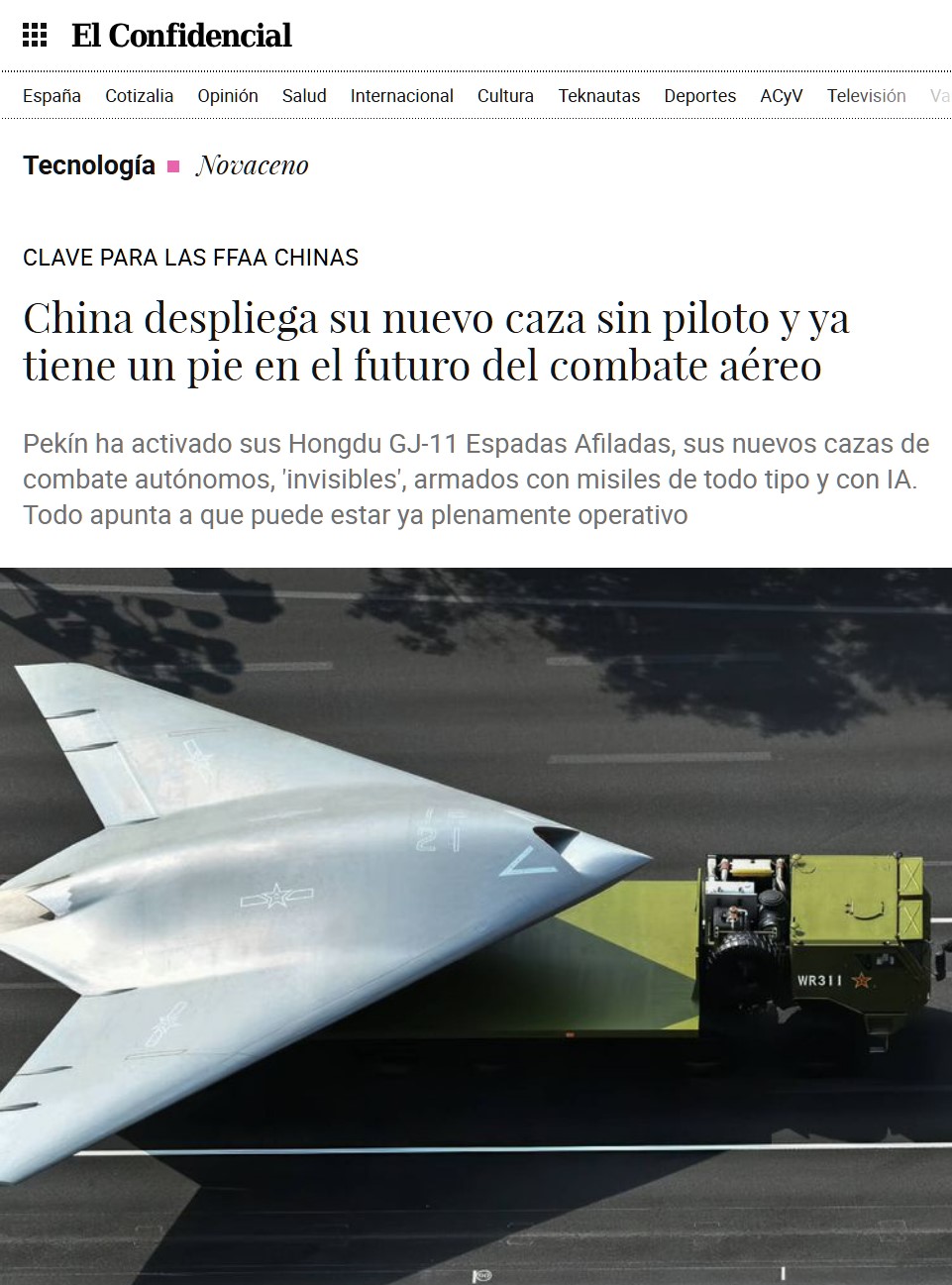
China ha desplegado su nuevo caza de combate invisible e inteligente en su base aérea del Tíbet. El GJ-11 Sharp Sword, un avión no tripulado diseñado para misiones de ataque de precisión y reconocimiento, podría ya estar plenamente operativo y listo para el combate. De confirmarse, sería un paso definitivo en el plan de Pekín para convertirse en el ejército más avanzado y potente del planeta para 2030. @elconfidencial
Coches que conducen solos, robots humanoides, cazas sin piloto… cada día un pasito más hacia el futuro distópico de Terminator.
In this clip from our Live Tom Bilyeu Show on October 17, 2025, Tom explores the growing feminization of culture, workplaces, and institutions. He breaks down how the shift toward more relational and emotionally driven environments is reshaping society in ways few people are willing to talk about.
Tom discusses the difference between masculine and feminine group dynamics, referencing psychological research on how men and women approach conflict, hierarchy, and cooperation. He challenges the idea that all institutions can thrive under the same leadership styles and warns that ignoring these natural differences could lead to cultural breakdowns.
This conversation dives into how the woke movement looks completely different when viewed through the lens of feminization instead of race or class. It asks uncomfortable but necessary questions about truth, equality, and how honesty about gender patterns could help society evolve rather than divide.
If you’ve ever wondered why modern workplaces and institutions feel so different today or why open conversations about masculinity and femininity are becoming taboo, this is a must-watch.
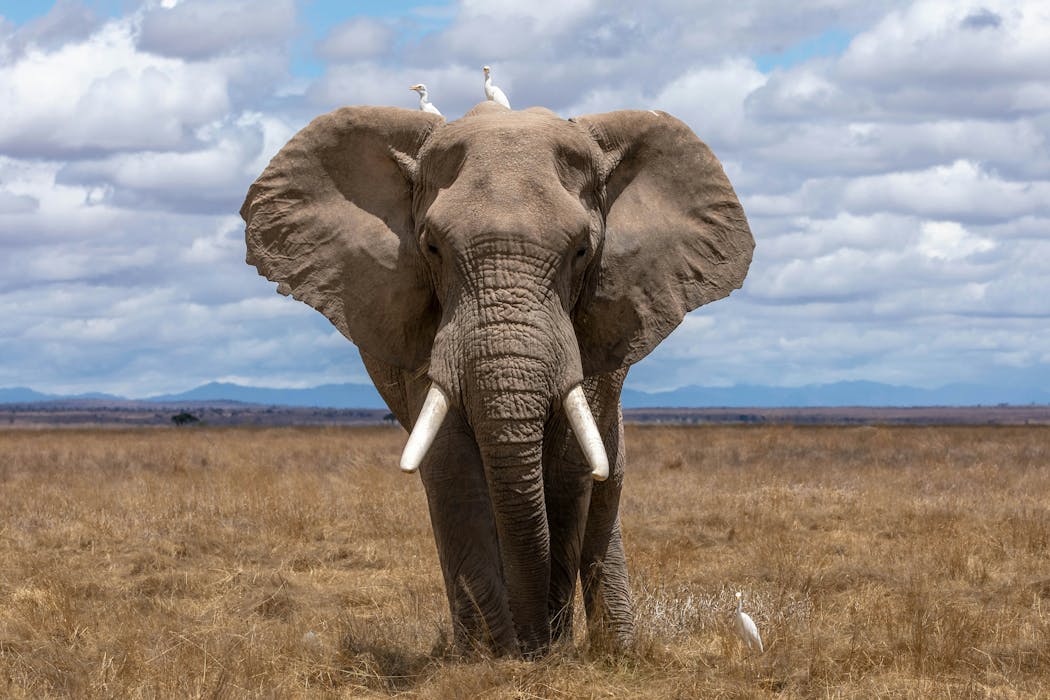
En la actualidad, se han reconocido tres especies diferentes: el elefante africano de la sabana (Loxodonta africana), la especie más grande; el elefante de bosque (Loxodonta cyclotis), y el elefante asiático (Elephas maximus).
Jorge Romero-Castillo
Los estudios con elefantes son especialmente interesantes, debido a que poseen el mayor encéfalo de entre los animales terrestres. Con ellos, surge la siguiente pregunta: ¿existe correlación entre el tamaño encefálico y las capacidades cognitivas?
Una arquitectura neuronal sorprendente
Se ha comprobado que la abrumadora mayoría de las neuronas del elefante (alrededor del 97,5 %) se concentra en el cerebelo. Allí, estas células nerviosas cumplen funciones sensoriomotoras esenciales para coordinar sus enormes extremidades, la trompa y la precisa musculatura facial.
Sin embargo, el número de neuronas corticales –que participan en los procesos más complejos del pensamiento– es sorprendentemente bajo con relación al volumen de su encéfalo: unos 5 600 millones, apenas algo más del 2 % del total. En cambio, el cerebro humano alberga alrededor de 16 000 millones de neuronas corticales, es decir, el 19 % de todas las que posee.
Tamaño relativo, forma y circunvoluciones superficiales de la corteza cerebral de los cerebros de humanos y elefantes. La estimación común del tamaño absoluto del encéfalo del elefante adulto es de 4700 gramos (entre 4050 y 5220 gramos). Poseen 257 000 millones de neuronas, tres veces más que el cerebro humano promedio, repartidas entre corteza (5,6 mil millones) y cerebelo (251 000 millones). Además, poseen un total de 216 000 millones de otras células.
Adaptado de Hart et al. (2008), CC BY
Más arrugas corticales
En esta línea, otro dato fascinante es el grado de plegamiento cortical. La corteza del elefante está plegada sobre sí misma en un índice de 4,18 (mayor que en el ser humano, que es de 2,56). Estos datos indican que dicho plegamiento no se relaciona con el número de neuronas.
Dicho de otro modo: más pliegues no significan más neuronas ni un pensamiento más complejo.
A continuación, una muestra de sus capacidades cognitivas. Algunas son tan llamativas que, en algunos casos, son similares a la de los primates y superiores a las de otras especies no primates.
Memoria de elefante
Los elefántidos recuerdan muy bien las rutas migratorias tradicionales de su especie. Además, son capaces de adaptarse a cambios en el entorno y encuentran nuevos caminos y pozos en entornos áridos cuando es necesario (luego transmitirán este conocimiento entre generaciones). Esto sugiere una capacidad cognitiva excepcional para la navegación espacial y la memoria a largo plazo.
Incluso, pueden recordar la ubicación actual de muchos miembros de la familia. La explicación radica en un desarrollo inusual de su memoria de trabajo, junto a una altísima sensibilidad para los olores.
Comportamiento eusocial en sociedades matriarcales
Las comunidades de elefantes son matriarcales. Durante algún tiempo, varias familias pueden unirse y llegar a establecer grandes manadas para el cuidado cooperativo de las crías. Los machos permanecen en la manada hasta los 13 años, aproximadamente.
Además, distinguen hasta 200 llamadas diferentes que aprenden a través de la observación y la imitación, lo que les permite reconocerse entre integrantes de una misma manada. Este sistema integrado se denomina eusocialidad y da muestras de una estrecha cooperación y solidaridad entre individuos.
Una empatía que deja huella
Jane Goodall (1934-2025) transformó nuestra mirada sobre el reino animal. Con paciencia, respeto y una profunda sensibilidad, fue pionera en reconocer y documentar científicamente los comportamientos cognitivos complejos y los sentimientos de animales no humanos (en su caso, chimpancés). Su empatía también ha dejado en la historia una profunda huella inborrable.
Wikipedia, CC BY
Estos gigantes parecen mostrar más empatía que otras especies no primates. Lo demuestra, por ejemplo, un estudio que ha reunido informes recopilados durante un período de treinta y cinco años. En síntesis, los elefantes pueden anticiparse y responder al daño (en sí mismos y en otros individuos). De igual forma, reconocen la peligrosidad de objetos extraños como dardos o lanzas y ayudan a salir de zanjas, sobre todo a las crías.
También subcategorizan a los humanos en grupos, realizando esta clasificación de forma independiente, según el olor o el color.
Sentimientos de duelo
También experimentan sentimientos complejos asociados con la muerte. Durante sus migraciones, al ver los restos de un congénere, muestran curiosidad y se acercan para investigarlo; olfatean y tocan el cuerpo sin vida con la trompa y las patas.
Después, parecen manifestar signos de angustia, tristeza y compasión, lo que disminuye su actividad en general. Es más, a veces, la manada rodea el cadáver, lo protege y lo venera. La evidencia parece clara: están exhibiendo comportamientos de duelo.
La teoría de la mente como autorreconocimiento
La teoría de la mente, capacidad cognitiva que permite atribuir estados mentales tanto al propio individuo como al resto, resulta fundamental para la empatía.
Uno de los elefantes del estudio de Plotnik et al. (2006), con la marca ‘X’ en la parte izquierda de su cabeza.
Plotnik et al., 2006., CC BY
Una prueba que valora la teoría de la mente en animales no humanos es la prueba del espejo. Consiste en pintar una marca en forma de X en la cabeza del animal y situarlo frente a un espejo. Si el animal utiliza espontáneamente el espejo para tocarse el punto de su cabeza, esto se considera evidencia de autoconciencia y reconocimiento.
Pues bien, al realizar este experimento con varios elefantes, utilizando una marca visual sin olor, se descubrió que su desempeño es aproximadamente comparable al de los chimpancés.
Este vídeo explica los resultados alcanzados en el estudio realizado por Plotnik et al. (2006) sobre la teoría de la mente en elefantes.
Neuronas de von Economo
Uno de los aspectos neurofisiológicos que se relacionan con la teoría de la mente (y por extensión, con la formación de vínculos sociales y la empatía) son las neuronas de von Economo (VEN).
Distribución filogenética de las neuronas de Von Economo (VEN). Las especies en las que se han observado VEN se indican con subrayado; las especies examinadas sin VEN se indican con cursiva.
Adaptado de Hakeem et al., (2008), CC BY
Las VEN se encuentran en regiones prefrontales e insulares del cerebro de ciertos mamíferos, incluidos los humanos. Se caracterizan por tener cuerpos celulares grandes y alargados, junto a un axón largo que se proyecta a regiones distantes del cerebro. Esta morfología parece haber surgido de forma independiente en homínidos, cetáceos y elefantes.
Cabe destacar que, si bien los elefantes poseen VEN, comparten este rasgo solo con otros grupos de cerebros grandes (cetáceos y grandes simios –chimpancés, bonobos, gorilas, orangutanes y humanos–) y no con sus parientes más cercanos.
La especialización de estas neuronas podría ser la consecuencia de una necesidad de transmisión rápida de información social. Quizá, puede ser una característica compartida entre mamíferos de cerebros grandes. Pero, para responder a esta incógnita, sería interesante determinar si jirafas e hipopótamos, por ejemplo, también las poseen.
Uso de herramientas y planificación
A pesar de la importancia histórica del uso de herramientas en elefantes, su nivel y complejidad no se compara con el repertorio altamente coordinado descrito para chimpancés (cuyo cerebro es una décima parte del cerebro del elefante).
Los elefantes pueden llevar en las trompas ramas de árboles para protegerse de las moscas, rascarse con un palo y arrojar palos o piedras a los roedores que compiten por la fruta debajo de un árbol.
Recientemente, se ha analizado por primera vez la capacidad para resolver problemas en ejemplares salvajes asiáticos con un dispositivo de acceso múltiple, una especie de rompecabezas. El éxito obtenido muestra que son capaces de planificar movimientos para resolver problemas complejos y adaptarse a las demandas de su entorno.
A la izquierda, un elefante macho interactuando con una de las cajas del rompecabezas. A la derecha se observa un diagrama del rompecabezas con las puertas cerradas y abiertas: la puerta superior es de empuje, la puerta de en medio es de tiro y la inferior es corredera. Con este método, se evalúa la innovación: la capacidad para descubrir una o más soluciones. De los 44 elefantes que interactuaron con la caja, 11 resolvieron un tipo de puerta, 8 resolvieron dos tipos de puerta y 5 elefantes resolvieron los tres tipos de puerta en todas sus interacciones.
Jacobson et al., (2023), CC BY
Más que un privilegio antropocéntrico
En compañía de estos titanes, hemos visto que, más que el tamaño absoluto del cerebro, las capacidades cognitivas parecen relacionarse con factores como la distribución y conexiones de las neuronas, especialmente en la corteza cerebral.
¿Quiere recibir más artículos con enfoque positivo como este?Suscríbase gratis a ¡Buenas noticias!, nuestro boletín quincenal con una selección de artículos optimistas para ponerse al día sin sobresaltos ni preocupaciones.
Jorge Romero-Castillo no recibe salario, ni ejerce labores de consultoría, ni posee acciones, ni recibe financiación de ninguna compañía u organización que pueda obtener beneficio de este artículo, y ha declarado carecer de vínculos relevantes más allá del cargo académico citado.
En el episodio de hoy charlaremos con Luis Falcón sobre el problema de la vivienda, la demonización de los pisos turísticos y las soluciones reales que pueden hacer frente al alto precio de la vivienda.
📚 Capítulos: 00:00:00 Introducción 00:02:18 ¿Por qué sube el precio de la vivienda? 00:06:55 El ataque del gobierno al alquiler turístico 00:18:16 La competencia al sector hotelero 00:25:43 La subida de precios en los hoteles 00:32:05 Los beneficios del alquiler turístico 00:36:45 Mejores países con la gestión del alquiler turístico 00:38:57 Por qué hay tanta crispación con la vivienda 00:51:32 Ciudades intersantes con la gestión de la vivienda 01:01:25 El cortoplacismo de la política española 01:09:34 La mejor política social en España
🤓 Y si te mola la Filosofía y quieres APRENDER MÁS de un modo sencillo, ameno y accesible, consigue MI LIBRO: "¿Hay filosofía en tu nevera?". ¡TE ENCANTARÁ!
¡Hola, filoadictos! Soy Enric, tu profesor de filosofía en Youtube, y esto es Adictos a la Filosofía, el canal en el que amamos a Platón, Aristóteles y todos los grandes filósofos. Es conocidísima la anécdota de que Platón, en realidad, no se llamaba Platón, sino Aristocles: "Platón" habría sido un apodo que le pondría su profesor de gimnasia por tener las espaldas anchas ("plátos" en griego significa amplio), o en otras palabras, por estar básicamente mamadísimo. Todo el mundo lo sabe, se repite en manuales, libros de filosofía, clases de universidad, vídeos de Youtube... ¡hasta yo lo he repetido varias veces en este mismo canal! Pero, ¿acaso es verdad? El historiador James Anastasios Notopoulos lo puso en duda en un artículo de 1939, y he de decir que, después de leerlo y llorar mucho, me parece bastante convincente. ¡Te lo cuento! (Perdóname por destruir este mito)
(Un vídeo ideal como introducción a la filosofía, o para el Bachillerato y la Selectividad)
🕘 ÍNDICE: 0:00 - Me comí la mayor mentira de la historia de la filosofía 0:48 - ¿Qué significa el nombre Platón? 3:30 - El origen de la anécdota 8:10 - ¿Cuál era el verdadero nombre de Platón?
😱 Y si estás leyendo ESTO, es que perteneces al 0.5% de la gente que se lee las descripciones HASTA EL FINAL! 👏 Déjame un comentario con un emoji de león 🦁 para hacérmelo saber; si veo muchos, ¡me alegrarás el día! 😄
📚 FUENTES principales: ► James Anastasios Notopoulos, "El nombre de Platón" (en inglés) (¡Enlaces en el comentario fijado!)
❤️ PATREONS y MIEMBROS (¡mil gracias!) Bruce, Elias Aram, Fabrizio Barone, David Castro, Magdalena Villena, Will Luzader, Fabiola L., Juan Diego Sánchez, José Luis Garrido, Juan Ignacio Cantarero, Matías Ochoa, MrNetaar, Andrés E. Castaño, Ana Alvarez, Rodrigo Banegas, Tojo labal, Alfredo Sánchez
The National Transportation Safety Board confirmed Sunday that it is investigating an airliner that was struck by an object in its windscreen, mid-flight, over Utah.
“NTSB gathering radar, weather, flight recorder data,” the federal agency said on the social media site X. “Windscreen being sent to NTSB laboratories for examination.”
The strike occurred Thursday, during a United Airlines flight from Denver to Los Angeles. Images shared on social media showed that one of the two large windows at the front of a 737 MAX aircraft was significantly cracked. Related images also reveal a pilot’s arm that has been cut multiple times by what appear to be small shards of glass.
Este artículo fue publicado originalmente en Catalunya Plural. Puedes leerlo en catalán aquí.
Peter Thiel no es solo un millonario excéntrico. Cofundador de PayPal, Palantir y uno de los primeros inversores de Facebook, es también una de las figuras más controvertidas –es decir, más peligrosas– del capitalismo tecnológico que cada vez domina más ámbitos de la vida democrática de Estados Unidos. Su influencia va mucho más allá de las finanzas: alcanza la ideología, la política y las tecnologías de vigilancia masiva.
En un ensayo de 2009 titulado The Education of a Libertarian, Thiel escribió que “la libertad y la democracia ya no son compatibles”. La frase resume gran parte de su pensamiento: cree que el progreso exige decisiones impopulares, liderazgos fuertes y, sobre todo, que las mayorías no interfieran en los planes de las élites innovadoras.
Thiel combina libertarianismo económico, darwinismo social y una visión casi religiosa del futuro. Defiende la idea de que los individuos más brillantes deben liderar sin trabas burocráticas ni regulaciones. Según esta lógica, el Estado solo sirve si protege la innovación y castiga la disidencia.
Ha sido promotor de ideas radicales como las seasteads –ciudades flotantes sin leyes nacionales– y ha invertido millones en investigación sobre la inmortalidad, la inteligencia artificial y la criogenia. Todo ello desde una visión tecnocrática que idealiza un futuro gobernado por ingenieros, algoritmos y capital privado.
Palantir, vigilancia y control: la distopía hecha software
Uno de los proyectos más polémicos de Thiel es Palantir Technologies, una empresa especializada en el análisis masivo de datos y la vigilancia predictiva. El nombre proviene de El Señor de los Anillos: las piedras mágicas que permiten ver a distancia. Pero, como en la novela de Tolkien, su uso tiende a corromper.
Palantir ha trabajado con el Pentágono, la CIA y especialmente con ICE (la agencia de inmigración de Estados Unidos), proporcionando herramientas para rastrear, perfilar y detener a personas migrantes. En 2021, sus contratos públicos superaron los 1.500 millones de dólares. No es una startup cualquiera: es una pieza clave del nuevo complejo militar-digital.
A diferencia de otros magnates tecnológicos, Thiel no oculta su posicionamiento ideológico. Fue uno de los pocos multimillonarios de Silicon Valley que apoyó públicamente a Donald Trump en 2016. También financió las campañas de candidatos ultraconservadores como J.D. Vance y Blake Masters, defensores de restringir el voto, controlar internet y restaurar un “orden natural” jerárquico.
Su proximidad con pensadores neorreaccionarios como Curtis Yarvin refuerza esta preocupación. Yarvin propone un modelo posdemocrático en el que Estados Unidos sería gobernado como una empresa, por un CEO vitalicio. Thiel no ha suscrito abiertamente esta idea, pero sí ha financiado espacios donde se promueve.
Peter Thiel defiende la innovación radical, incluso si implica destruir lo que existe. Su visión es la de un mundo reconstruido desde cero, donde los valores ilustrados –igualdad, libertad, derechos humanos– son obstáculos a superar. Para él, la democracia es un lastre y la historia, un campo de batalla donde solo sobreviven los mejores.
Su lectura de pensadores como Carl Schmitt –jurista del Tercer Reich– o Leo Strauss le permite justificar “la excepción” como forma legítima de gobierno. En su mundo ideal, el soberano no es el pueblo, sino el empresario. No se trata de política, sino de eficiencia.
¿Un nuevo tipo de mesías tecnológico?
Thiel ha dicho públicamente que “la muerte es un problema técnico pendiente de resolver”. Y ha invertido millones en empresas biotecnológicas que buscan prolongar la vida indefinidamente. Su ambición no es solo dominar el mercado: es conquistar el tiempo, el cuerpo y la conciencia.
En este sentido, no estamos ante un simple inversor: es un ideólogo, un estratega y un actor con capacidad para modelar el futuro político y tecnológico. Su figura recuerda a los industriales del siglo XX que financiaron el ascenso del autoritarismo en Europa. Solo que, esta vez, el poder no se viste de uniforme, sino de algoritmo.
Peter Thiel es al mismo tiempo síntoma y motor de un ecosistema donde el capital, la tecnología y la ideología convergen. Un ecosistema que, lejos de reforzar la democracia, la pone en cuestión. En nombre de la eficiencia, del futuro o de la libertad, se diseñan hoy sistemas que concentran poder, desmantelan derechos y reducen lo común a datos.
¿Puede la democracia sobrevivir al asalto del tecnoautoritarismo? ¿Y qué ocurre cuando los amos del código quieren reescribir el contrato social? Thiel, con su fortuna, su influencia y sus ideas radicales, encarna esa pregunta. Y, por ahora, va ganando.
Google ha implementado una medida significativa que afectará a la forma en que los usuarios interactúan con la información sobre centros educativos. A partir del 30 de abril de 2025, la compañía ha decidido eliminar por completo las reseñas y valoraciones de colegios primarios y secundarios, tanto en Google Maps como en Google Business Profile. Esta decisión implica que ya no será posible ver, añadir o editar las opiniones y puntuaciones que los usuarios han dejado sobre estos establecimientos educativos. La medida se aplicará de forma global.
La conmoción es máxima en el seno de la Policía Nacional por la investigación judicial de este parricidio y que tiene en la diana a un agente con más de dos décadas de trayectoria, con una destacada labor defendiendo los derechos de sus compañeros, como así lo demuestra que en 2023 fue reelegido por votación como secretario general provincial de Justicia Policial (Jupol) en Ávila -un cargo que ostentaba desde el año 2019-.
Antes de que el Planeta lo ganaran los Juan del Val y las Sonsoles Ónega, hubo un tiempo cada vez más lejano en que el millonario y más prestigioso premio literario del mundo de habla hispana lo ganaban escritores de la talla de Ana María Matute, Torcuato Luca de Tena, Ramón J. Sender, Juan Marsé o Manuel Vázquez Montalbán. Cuando el escándalo del plagio de la novela con la que Cela ganó el Planeta en 1994, Miguel Delibes se vio mezclado de forma involuntaria en el turbio asunto al revelar ese año que le ofrecieron el premio pero que lo rechazó
"Funcionarios del Gobierno de EEUU han cometido un asesinato y violado nuestra soberanía en aguas territoriales. El pescador Alejandro Carranza no tenía vínculos con el narco(tráfico) y sus actividad diaria era pescar", aseveró el mandatario colombiano en una publicación compartida en su cuenta en la red social X.
etiquetas: estados unidos, asesinatos, nardos, guerra
El actor Robert De Niro habla sobre las manifestaciones “No Kings” del sábado en EEUU, el liderazgo demócrata y la importancia de “combatir el fuego con fuego” frente a Donald Trump.
etiquetas: robert de niro, trump, stephen miller, nazi, goebbels
Pekín ha activado sus Hongdu GJ-11 Espadas Afiladas, sus nuevos cazas de combate autónomos, 'invisibles', armados con misiles de todo tipo y con IA. Todo apunta a que puede estar ya plenamente operativo
Mientras grandes nombres militares como el general Rosety han abandonado Vox después de criticar el seguidismo de Abascal con Trump, el general Budiño está convencido de que a él le hicieron la cama desde dentro del propio partido. Según dice, están convirtiendo Vox en un chiringuito, y denuncia que en el partido se empezó a crecer por amiguismo y no por méritos. "Lo hemos visto en otros partidos en los que ya se ha consolidado cuotas de poder importantes y están formadas por diferentes familias".
Tras la muerte de su hija, José Manuel López preside la asociación Trencats, dedicada a combatir las violencias en las escuelas y a asesorar a familias como la de Sandra, la última víctima mortal del acoso escolar
Las hileras de olivos recién plantados se extienden hasta el horizonte. Envueltas en plástico blanco, las interminables filas de plantones semejan tumbas en un paisaje convertido en un cementerio de biodiversidad. En un muro de Nossa Senhora das Neves, un pueblo cerca de la ciudad de Beja, puede leerse “Olivar aquí = ††† (muerte)” como protesta contra una plantación intensiva de olivos establecida a pocos metros de las casas. En todo el Alentejo, en el sur de Portugal, grandes olivos antes cultivados de forma tradicional se apilan junto a las c
Las imágenes verificadas por Sky News muestran a una milicia de Gaza transportando suministros desde la dirección de una base del ejército israelí o la frontera israelí.