
Oh just continuing a theme from 16 years ago.
Oh just continuing a theme from 16 years ago.
No es sorpresa para nadie si decimos que vivimos en la era de la urgencia. Los mensajes nos llegan en milésimas de segundo, los pedidos se entregan en horas y los resultados, en todos los ámbitos, se exigen de inmediato. En este contexto, la paciencia parece haber quedado relegada a ser una cualidad anticuada, casi incómoda. Sin embargo, la historia del pensamiento y nuestras propias experiencias cotidianas demuestran que pocas virtudes resultan tan decisivas como la capacidad de esperar sin desesperar.
La paciencia, entonces, no debe de ser entendida como resignación pasiva, sino como una forma de resistencia activa frente a la prisa. Es la habilidad de sostenerse en el tiempo, de aceptar que algunos procesos —personales, sociales o naturales— requieren maduración.
Desde la Antigüedad, la paciencia ha ocupado un lugar central en la reflexión filosófica. Los estoicos ya la consideraban un elemento fundamental de la vida buena, y el cristianismo la incorporó como virtud cardinal, vinculada a la esperanza y la fe. Para Tomás de Aquino, por ejemplo, la paciencia era la capacidad de soportar los males sin caer en la tristeza, una disposición que fortalecía el alma.
Las tradiciones orientales también la elevaron a principio moral. En el budismo, la kṣānti —una de las seis perfecciones— implica tolerancia y perseverancia: el arte de no reaccionar impulsivamente ante el sufrimiento. En el taoísmo, un proverbio advierte: «La paciencia es poder; con el tiempo y la paciencia, la hoja de morera se convierte en seda». En todas estas enseñanzas la paciencia se asocia al dominio de uno mismo, al equilibrio interior que permite convivir con la incertidumbre.
La paciencia no debe de ser entendida como resignación pasiva, sino como una forma de resistencia activa frente a la prisa
En la literatura occidental también abundan los ejemplos. Quizás el ejemplo más claro esté en la Odisea, donde la paciencia, además del ingenio, se presenta como el atributo que permite la victoria del débil frente al poderoso, frente a los dioses mismos. Ahí tenemos a Ulises esperando veinte años para regresar a su hogar, ahí tenemos a Penélope tejiendo y destejiendo, tejiendo y destejiendo, y esperando.
Más allá de la tradición, la paciencia tiene efectos concretos en la vida cotidiana. La psicología la define como la capacidad de tolerar la frustración y de posponer la gratificación. El célebre experimento del malvavisco de Walter Mischel en los años 60 mostró cómo los niños capaces de esperar para obtener una recompensa mayor tendían a desarrollar mejores competencias en su vida adulta. Aunque el estudio ha sido matizado con el tiempo, su mensaje –que la paciencia abre camino de autocontrol– sigue vigente.
En el plano social, la paciencia funciona como un cemento invisible. Las relaciones humanas —amistades, vínculos de pareja, la crianza— requieren un tiempo de espera, de escucha, de acompañamiento. Una sociedad sin paciencia se convierte en una suma de choques constantes, incapaz de construir confianza. La política misma necesita paciencia: los procesos de cambio colectivo no se resuelven en días ni en semanas, sino en décadas.
La falta de paciencia, en cambio, genera ansiedad, irritabilidad y una permanente insatisfacción. El filósofo Byung-Chul Han, en La sociedad del cansancio, describe cómo la presión por la inmediatez produce individuos agotados, incapaces de sostener el tiempo de las cosas. La paciencia, en este contexto, se convierte en un antídoto contra el desgaste.
La psicología la define como la capacidad de tolerar la frustración y de posponer la gratificación
Si hay un terreno donde la paciencia parece más amenazada, es en internet. Las redes sociales, las aplicaciones de mensajería y los servicios de streaming han configurado un ecosistema donde todo ocurre en segundos. Los algoritmos premian lo instantáneo: un vídeo de 15 segundos, una respuesta inmediata, un me gusta al instante. La espera se vive, en cierta forma, como fracaso.
Paradójicamente, esta aceleración reduce la calidad de nuestras experiencias. Las investigaciones en neurociencia muestran que el cerebro necesita tiempo para procesar, para consolidar memorias, para crear asociaciones. La impaciencia digital produce un consumo constante de estímulos que rara vez se asientan en aprendizajes o recuerdos duraderos.
Por eso, cultivar la paciencia hoy es también un acto de higiene mental. Apagar el teléfono durante unas horas, esperar sin consultar el reloj, dedicar tiempo a una lectura lenta o a una conversación prolongada, son gestos mínimos que contrarrestan la tiranía de la inmediatez.
Así pues, reivindicar la paciencia es recuperar el tiempo humano, su pulso verdadero y natural, frente a la prisa tecnológica. La paciencia nos enseña que no todo puede lograrse en el acto, que el crecimiento personal y social requiere demora, ensayo y error. Tal vez la verdadera modernidad no consista en ir siempre más rápido, sino en aprender a esperar.
La entrada Apología de la paciencia se publicó primero en Ethic.
A la filósofa, directora y cofundadora de Equanima, María Ángeles Quesada, le importan mucho las palabras. Conversamos con ella tras su participación en la mesa de diálogo ‘Las palabras: el poder de nombrar el mundo’ que tuvo lugar durante las últimas Jornadas de Sostenibilidad de Redeia. Como ella misma sostiene, son las herramientas para conectar el mundo exterior con nuestros pensamientos. Por ello, es importante cuidarlas y pensar antes de usarlas, porque si no se vacían de significado.
¿Por qué las palabras son importantes para nombrar el mundo?
Porque conectan lo exterior con nuestro pensamiento. Son la manera que tenemos para dialogar y relacionarnos con los otros, y por lo tanto construir el mundo que queremos con los demás. Nos permiten el nexo del pensamiento colectivo.
¿Qué ocurre entonces cuando usamos palabras erróneas para expresar lo que pensamos o sentimos?
Esto no es nuevo, ya que ha ocurrido también en otros momentos. Pero la aceleración de la sociedad, el enfoque de la educación más instrumental y otra serie de fenómenos han hecho que hoy haya más gente que tiene problemas para expresar lo que tiene dentro o incluso saber lo que piensa. Lo que ocurre es que surgen confusiones y el otro no te entiende bien. Por ello, yo defiendo que necesitamos entrenarnos en habilidades de diálogo.
«La aceleración de la sociedad ha hecho que hoy haya más gente que tiene problemas para expresar lo que tiene dentro»
Zygmunt Bauman ya decía que, en un mundo tan cosmopolita, necesitamos aprender sobre todo a dialogar. Nos encontramos con personas diferentes, con todo tipo de particularidades, y por eso necesitamos habilidades no solo para contar lo que tenemos dentro, sino para que nos entiendan. Una práctica que no es definitiva, sino que es continua y que nos realiza como seres humanos.
¿Ese «nombrar el mundo» tiene que ser entonces una reflexión individual y colectiva?
Totalmente. El problema es que hoy sufrimos una carencia en las dos. En la primera pata, porque casi no hay espacio para pararnos a saber lo que pensamos. Y al mismo tiempo, no existe ese ejercicio colectivo: no hay espacios públicos donde desarrollar esas habilidades. En las zonas urbanas, por ejemplo, cada vez hay menos lugares donde sentarse o apoyarse, donde poder charlar con un vecino o amigo sobre las problemáticas de cada uno. Por ello, creo que es necesario habilitar espacios para ello en zonas públicas y también en escuelas, en empresas, en instituciones…
¿Qué es más importante: pensar lo que dices o decir lo que piensas?
Hoy por hoy es mucho más importante pensar lo que dices. Si bien en momentos históricos la libertad de expresión ha sido fundamental –porque el poder estaba más concentrado–, ahora que estamos en una sociedad con medios más accesibles y en la que la gente puede decir lo que quiera, el derecho a la libertad de expresión sigue siendo importante, pero debe estar acompañado de un pensar lo que se dice. Nos encontramos en un mundo en el que muchísima gente, sin ningún tipo de conocimiento y sin conciencia, dice lo que quiere.
Una de estas palabras cuyo significado se ha pervertido hoy en día es la de sostenibilidad. Tanto que muchas veces es utilizada según la conveniencia de cada uno. ¿Cómo la definirías tú?
La sostenibilidad es una palabra que necesitamos para estar dentro del juego político, económico, social… aunque se use de manera más cosmética que ética. Un término que no tiene una reflexión profunda. Por ello, se ha vaciado de significado. A mí me gusta mucho ligarla con el cuidado. El ser humano es altricial, es decir, que los bebés necesitan mucho tiempo para acabar valiéndose de sí mismos. Somos extremadamente dependientes. Por ello, para mí la sostenibilidad tiene que ver con preservar lo que soy yo, a las personas de mi alrededor y lo que me permite vivir. Lo entiendo como un concepto de simbiosis, de interdependencia de todo lo vivo. La sostenibilidad no es solo reciclar, plantar árboles o descarbonizar, sino que tiene que ver con la interdependencia de todo lo vivo y la necesidad de cuidarlo.
«La sostenibilidad no es solo reciclar, plantar árboles o descarbonizar, sino que tiene que ver con la interdependencia de todo lo vivo y la necesidad de cuidarlo»
Interdependencia, interconexión y cuidado. ¿Vivimos alejados de los demás, olvidándonos de esas tres palabras?
A pesar de esa necesidad de cuidado, este no está en el centro de la sociedad. Están el dinero y la rentabilidad. Por eso la sostenibilidad choca con esos términos continuamente. Son dos paradigmas completamente diferentes. A esto se suman la digitalización y los móviles, que hacen que estemos más ensimismados en nosotros mismos. Nos encontramos en una situación límite donde se dan muchos factores que no ayudan. Entre ellos, el estar encerrados en nosotros mismos por culpa de sesgos de confirmación que nos dan las redes sociales, con una fisicalidad metida en un espacio pequeño que no se corresponde a lo que somos y con una vida muy sedentaria e individual. Y, como decía antes, dentro de una sociedad que pone el foco en la rentabilidad. Por ello, es muy complicado que el cuidado, la interdependencia y la interconexión estén en el centro.
¿Cómo podemos hacer para volver a ellas? ¿Cómo podemos recuperar ese significado de la sostenibilidad?
Con el diálogo. Parece un cliché, pero tiene mucho que ver con mirar al otro, con poner atención. Tenemos que recuperar la curiosidad, el interés, el preguntarnos por los demás. Algo genuino que tenemos todos los seres humanos y que también nos ayudará a entendernos a nosotros mismos.
Y de esta forma, aprenderemos a utilizar mejor las palabras.
El conocernos nos ayudará a entender lo que pensamos mejor, a pensar lo que decimos y, por tanto, a usar las palabras con mayor propiedad. Y no como discursos vacíos.
La entrada «Necesitamos entrenarnos en habilidades de diálogo» se publicó primero en Ethic.


Ver post completo: “¿Los jóvenes de ahora se van a jubilar a los 70?”

Según los datos de Eurostat, Bélgica tiene una de las tasas de paro más bajas si solo se contabilizan los ciudadanos nacidos en el país ‘informante’ (reporting country), con un desempleo del 4,5%. Sin embargo, cuando se analiza la tasa de paro de los ciudadanos no nacidos en la Unión Europea, Bélgica es el país con la cuarta mayor tasa de paro de toda Europa, con un 14,5%, 10 puntos porcentuales de diferencia entre el desempleo de los nativos y los ‘extranjeros de fuera de la UE’, una brecha que preocupa y mucho a un Gobierno que ya ha hablado alto y claro, admitiendo que 6 de cada diez parados en Bélgica no tienen origen belga. Ahora, el Gobierno busca soluciones y cree haber encontrado el camino. @eleconomista

Ver post completo: ¿Pero no iban a pagar las pensiones?
At Google Cloud, we’re constantly pushing the scalability of Google Kubernetes Engine (GKE) so that it can keep up with increasingly demanding workloads — especially AI. GKE already supports massive 65,000-node clusters, and at KubeCon, we shared that we successfully ran a 130,000-node cluster in experimental mode — twice the number of nodes compared to the officially supported and tested limit.
This kind of scaling isn't just about increasing the sheer number of nodes; it also requires scaling other critical dimensions, such as Pod creation and scheduling throughput. For instance, during this test, we sustained Pod throughput of 1,000 Pods per second, as well as storing over 1 million objects in our optimized distributed storage. In this blog, we take a look at the trends driving demand for these kinds of mega-clusters, and do a deep dive on the architectural innovations we implemented to make this extreme scalability a reality.
Our largest customers are actively pushing the boundaries of GKE’s scalability and performance with their AI workloads. In fact, we already have numerous customers operating clusters in the 20-65K node range, and we anticipate the demand for large clusters to stabilize around the 100K node mark.
This sets up an interesting dynamic. In short, we are transitioning from a world constrained by chip supply to a world constrained by electrical power. Consider the fact that a single NVIDIA GB200 GPU needs 2700W of power. With tens of thousands, or even more, of these chips, a single cluster's power footprint could easily scale to hundreds of megawatts — ideally distributed across multiple data centers. Thus, for AI platforms exceeding 100K nodes, we’ll need robust multi-cluster solutions that can orchestrate distributed training or reinforcement learning across clusters and data centers. This is a significant challenge, and we’re actively investing in tools like MultiKueue to address it, with further innovations on the horizon. We are also advancing high-performance RDMA networking with the recently announced managed DRANET, improving topology awareness to maximize performance for massive AI workloads. Stay tuned.
At the same time, these investments also benefit users who operate at more modest scales — the vast majority of GKE customers. By hardening GKE's core systems for extreme usage, we create substantial headroom for average clusters, making them more resilient to errors, increasing tolerance for user misuse of the Kubernetes API, and generally optimizing all controllers for faster performance. And of course, all GKE customers, large and small, benefit from investments in an intuitive, self-service experience.
With that said, achieving this level of scale requires significant innovations throughout the Kubernetes ecosystem, including control plane, custom scheduling and storage. Let’s take a look at a few key areas that were critical to this project.
When operating at scale, there’s a need for a strongly consistent and snapshottable API server watch cache. At 130,000 nodes, the sheer volume of read requests to the API server can overwhelm the central object datastore. To solve this, Kubernetes includes several complementary features to offload these read requests from the central object datastore.
First, the Consistent Reads from Cache feature (KEP-2340), detailed in here, enables the API server to serve strongly consistent data directly from its in-memory cache. This drastically reduces the load on the object storage database for common read patterns such as filtered list requests (e.g., "all Pods on a specific node"), by ensuring the cache's data is verifiably up-to-date before it serves the request.
Building on this foundation, the Snapshottable API Server Cache feature (KEP-4988) further enhances performance by allowing the API server to serve LIST requests for previous states (via pagination or by specifying resourceVersion) directly from that same consistent watch cache. By generating a B-tree "snapshot" of the cache at a specific resource version, the API server can efficiently handle subsequent LIST requests without repeatedly querying the datastore.
Together, these two enhancements address the problem of read amplification, ensuring the API server remains fast and responsive by serving both strongly consistent filtered reads and list requests of previous states directly from memory. This is essential for maintaining cluster-wide component health at extreme scale.
To support the cluster’s massive scale, we relied on a proprietary key-value store based on Google’s Spanner distributed database. At 130K nodes, we required 13,000 QPS to update lease objects, ensuring that critical cluster operations such as node health checks didn’t become a bottleneck, and providing the stability needed for the entire system to operate reliably. We didn’t witness any bottlenecks with respect to the new storage system and it showed no signs of it not being able to support higher scales.
The default Kubernetes scheduler is designed to schedule individual Pods, but complex AI/ML environments require more sophisticated, job-level management. Kueue is a job queueing controller that brings batch system capabilities to Kubernetes. It decides *when* a job should be admitted based on fair-sharing policies, priorities, and resource quotas, and enables "all-or-nothing" scheduling for entire jobs. Built on top of the default scheduler, Kueue provided the orchestration necessary to manage the complex mix of competing training, batch, and inference workloads in our benchmark.
Beyond Kueue's job-level queueing, the Kubernetes ecosystem is evolving towards workload-aware scheduling in its core. The goal is to move from a Pod-centric to a workload-centric approach to scheduling. This means the scheduler will make placement decisions considering the entire workload's needs as a single unit, encompassing both available and potential capacity. This holistic view is crucial for optimizing price-performance, especially for the new wave of AI/ML training and inference workloads.
A key aspect of the emerging kubernetes scheduler is the native implementation of gang scheduling semantics within Kubernetes, a feature currently provided by add-ons like Kueue. The community is actively working on this through KEP-4671: Gang Scheduling.
In time, support for workload-aware scheduling in core Kubernetes will simplify orchestrating large-scale, tightly coupled applications on GKE, making the platform even more powerful for demanding AI/ML and HPC use cases. We’re also working on integrating Kueue as a second-level scheduler within GKE.
AI workloads need to be able to access data efficiently. Together, Cloud Storage FUSE with parallel downloads and caching enabled and paired with the zonal Anywhere Cache, allowing access to model data in Cloud Storage buckets as if it were a local file system, reducing latency up to 70%. This provides a scalable, high-throughput mechanism for feeding data to distributed jobs or scale-out inference workflows. Alternatively, there’s Google Cloud Managed Lustre, a fully managed persistent zonal storage solution that supports workloads that need multi-petabyte capacity, TB/s throughput, and sub-millisecond latency. You can learn more about your storage options for AI/ML workloads here.
To validate GKE's performance with large-scale AI/ML workloads, we designed a four-phase benchmark simulating a dynamic environment with complex resource management, prioritization, and scheduling challenges. This builds on the benchmark used in the previous 65K node scale test.
We upgraded the benchmark to represent a typical AI platform that hosts mixed workloads, using workloads with distinct priority classes:
Low Priority: Preemptible batch processing, such as data preparation jobs.
Medium Priority: Core model training jobs that are important but can tolerate some queuing.
High Priority: Latency-sensitive, user-facing inference services that must have resources guaranteed.
We orchestrated the process using Kueue to manage quotas and resource sharing, and JobSet to manage training jobs.
To begin, we measure the cluster's foundational performance by scheduling a single, large-scale training workload. We deploy one JobSet configured to run 130,000 medium-priority Pods simultaneously. This initial test allows us to establish a baseline for key metrics like Pod startup latency and overall scheduling throughput, revealing the overhead of launching a substantial workload on a clean cluster. This set the stage for evaluating GKE's performance under more complex conditions. After execution, we removed this JobSet from the cluster, leaving an empty cluster for Phase 2.

Figure 1: Phase 1: Establishing a performance baseline by deploying a massive pre-training workload of 130,000 Pods on a clean cluster.
Next, we introduced resource contention to simulate a typical MLOps environment. At first, we deployed 650 low-priority batch Jobs (totaling 65,000 Pods), filling up half of the capacity of the cluster’s 130K nodes.
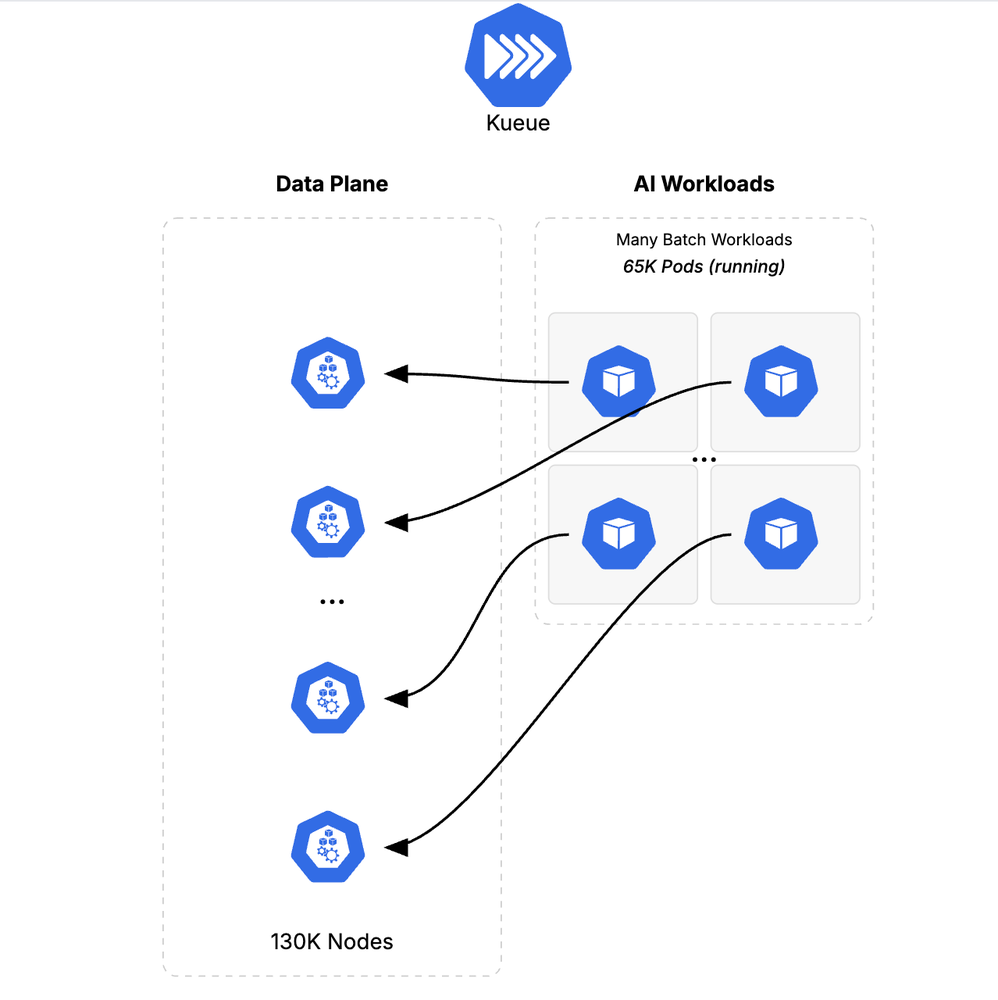
Figure 2: Phase 2: Simulating a realistic MLOps environment by introducing 65,000 low-priority batch job Pods to fill 50% of cluster capacity.
Then we introduced 8 large, medium-priority fine-tuning Jobs (totaling 104,000 Pods), taking 80% of the cluster capacity, and preempting 60% of the batch workloads (which represents 30% of total cluster capacity). This phase tested GKE’s ability to manage mixed workloads, as well preemption within a mixed workloads environment. In this scenario, we observed Kueue in action, preempting existing workload and gang-scheduling a large number of batch jobs all at once to allow for fine-tuning jobs to be scheduled. This highlighted Kueue's advantage over kube-scheduler: preemption happens much faster, and switching between workloads is almost instantaneous.

Figure 3: Kueue in action: Preempting low-priority batch workloads to accommodate 104,000 Pods for higher-priority fine-tuning jobs.
Phase 3: Prioritizing and scaling a latency-sensitive inference service
In this phase, we simulated the arrival of a critical inference service by deploying a high-priority Job, totalling 26K Pods, or 20% of the capacity. To accommodate it, Kueue preempted the remaining low-priority batch jobs.

Figure 4: Phase 3: Prioritizing a critical, latency-sensitive inference service (26,000 Pods) by preempting the remaining of lower-priority batch jobs.
We then scaled the inference workload to simulate a spike in traffic, first, preempting part of the medium-priority fine-tuning jobs. The inference workload scaled up to a total of 52,000 Pods, representing 40% of the capacity. Once fully scaled, we ran a 10-minute traffic simulation to measure performance under load.

Figure 5: Simulating a traffic spike. Scaling the inference workload to 52,000 Pods (40% capacity) triggers partial preemption of fine-tuning jobs.
Finally, we evaluated the cluster's ability to efficiently recover and reallocate resources once peak demand was over. We scaled down the high-priority inference workload by 50%, returning to its original initial phase. This demonstrated GKE’s elasticity, ensuring that valuable compute resources were not left idle as workload demands change, thereby maximizing utilization and cost-efficiency. Again, Kueue took care of admitting back the preempted fine-tuning workloads that were waiting in the cluster queue.
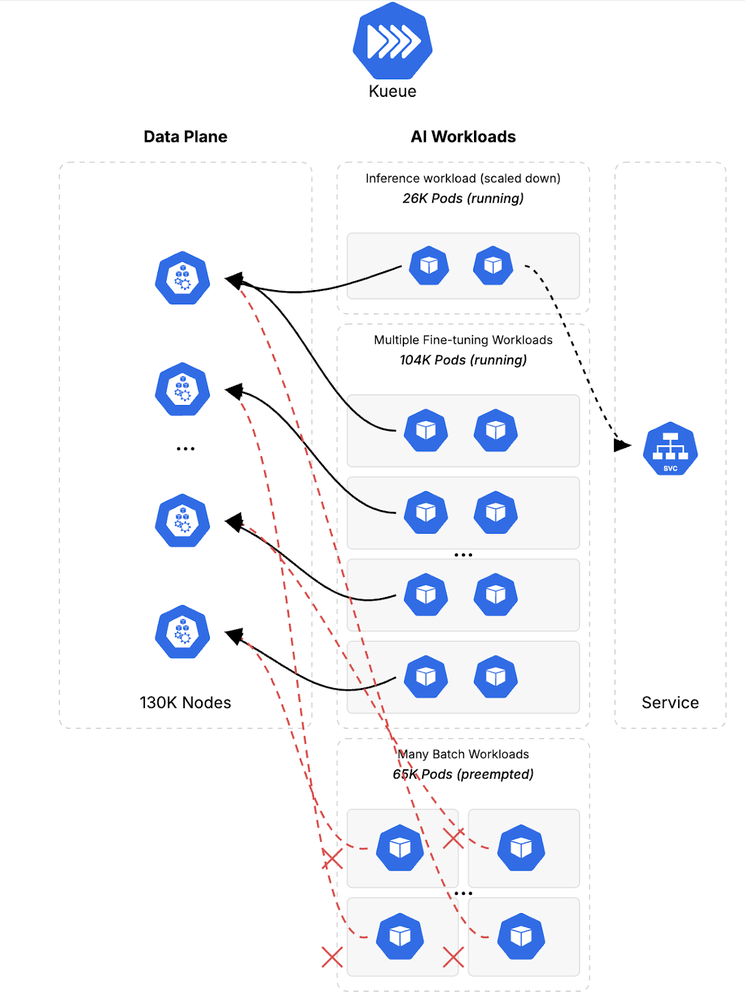
Figure 6: Phase 4: Demonstrating cluster elasticity by scaling down the inference workload and automatically recovering resources for pending fine-tuning jobs.
With the benchmark concluded, the resulting data paints a clear picture of how GKE handles extreme-scale pressure.
The four benchmark phases tested multiple performance dimensions. In Phase 1, the cluster scaled to 130,000 Pods in 3 minutes and 40 seconds. In Phase 2, the low-priority batch workloads were created in 81 seconds, an average throughput of around 750 Pods/second.
Below is a diagram showing the execution timeline of the workload, highlighting the various phases of the benchmark.

Figure 7: Execution timeline highlighting the four distinct phases of the large-scale AI workload benchmark.
Overall, the benchmark demonstrated GKE's ability to manage fluctuating demands by preempting lower-priority jobs to make room for critical training and inference services, showcasing the cluster's elasticity and resource reallocation capabilities.

Figure 8: Total number of running workload Pods over time, demonstrating GKE's ability to maintain high utilization through dynamic preemption and resource reallocation.
For this benchmark, Kueue was a critical component for enabling workload prioritization. In Phase 2, Kueue preempted 60% of the batch workloads (30% of the cluster capacity) to make room for medium-priority jobs, with the remainder preempted in Phase 3 for the high-priority inference workload. This simulation of urgent tasks taking precedence is a common operational scenario, and this large-scale preemption highlights how the combination of GKE and Kueue can dynamically allocate resources to the most critical jobs. At its peak in Phase 2, 39,000 Pods were preempted in 93 seconds. The Pod churn during the preemption of batch workloads and admission and creation of fine-tuning workloads reached a median of 990 and an average of 745 Pods/s, as seen below.
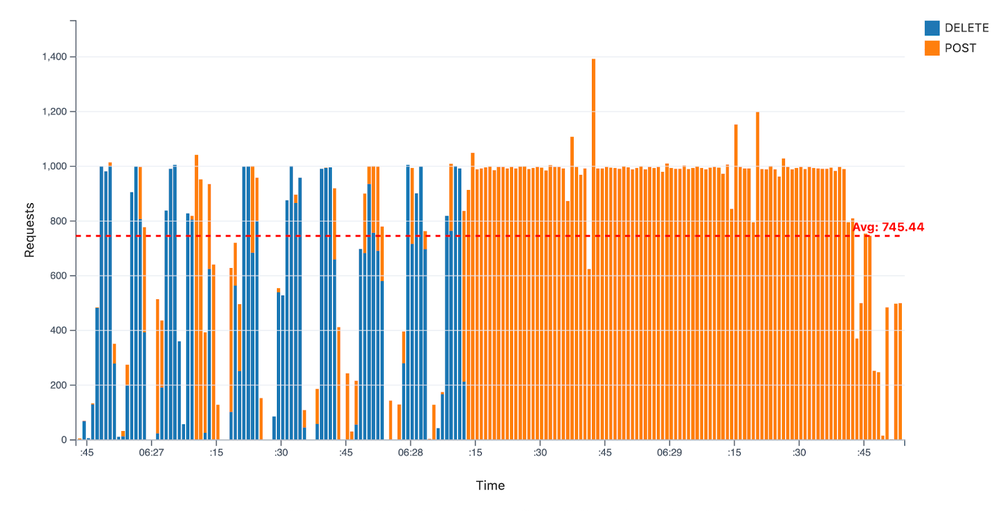
Figure 9: API request throughput during preemption events, showing a mix of POST and DELETE requests averaging Pod churn of 745 Pods per second.
Checking the status of the admitted vs. evicted workloads from Kueue shows that many batch workloads were initially admitted, only to be preempted later by fine-tuning and later inference workloads.
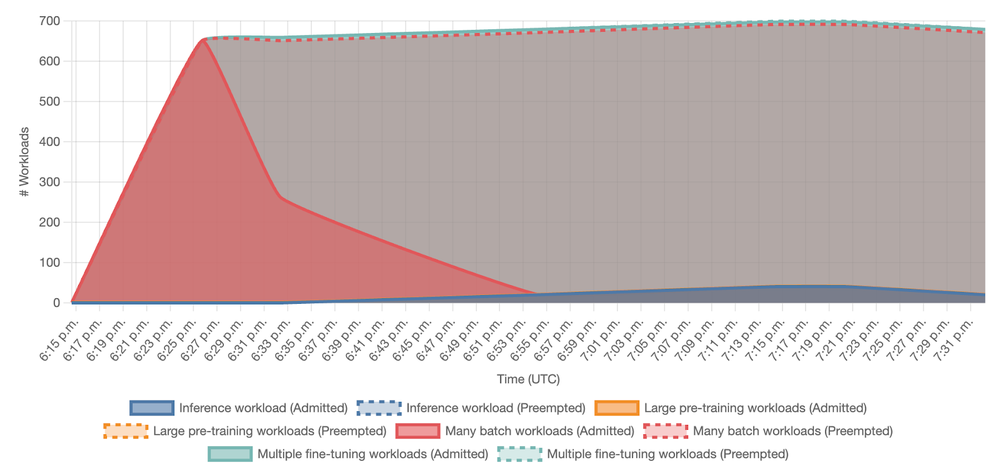
Figure 10: Workload status over time, visualizing the volume of jobs admitted versus those preempted (evicted) by Kueue as priorities shifted.
The key measure of Kubernetes’ control-plane performance is its ability to create and schedule Pods quickly. Throughout the benchmark, especially during the most intense phases, GKE consistently achieved and sustained a throughput of up to 1,000 operations per second for both Pod creation and Pod binding (the act of scheduling a Pod to a node).

Figure 11: Control plane throughput: Sustaining up to 1,000 operations per second for both Pod creation and Pod binding during intense scheduling phases.

Figure 12: Detailed pod-creation throughput statistics (Average, Max, P50, P90, P99) across large pre-training, batch, and fine-tuning workloads.
At the same time, pod-creation throughput was matched by low Pod-startup latencies across all workload types. For latency-sensitive inference workloads, the 99th percentile (P99) startup time was approximately 10 seconds, ensuring services could scale quickly to meet demand.
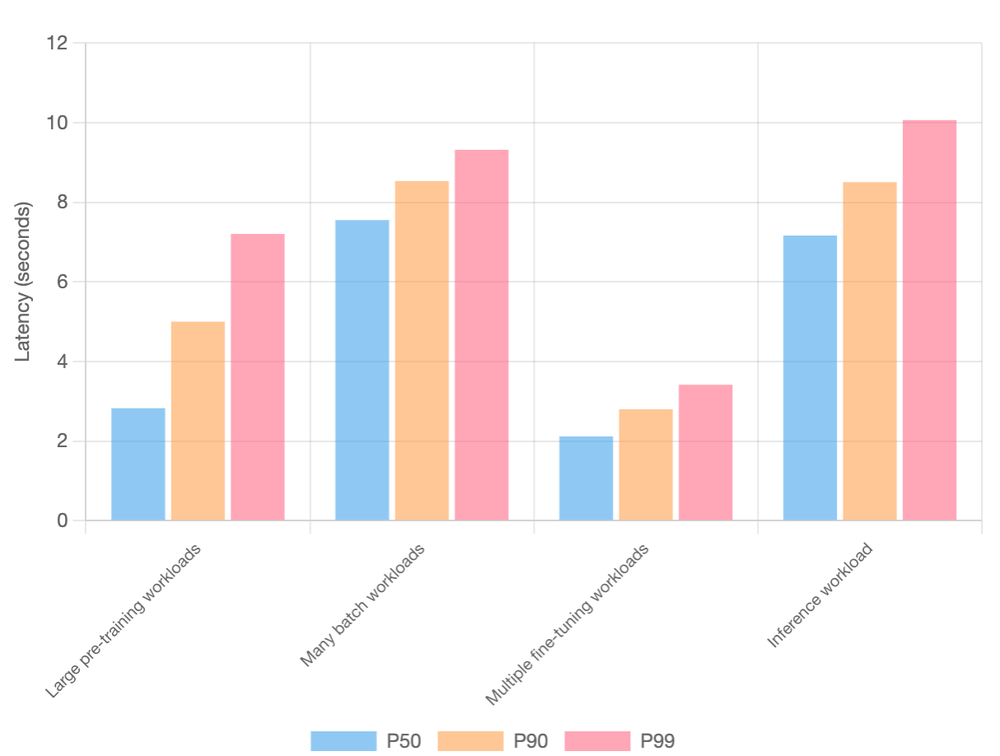
Figure 13: Pod startup latency across workload types.
GKE’s cluster control plane remained stable throughout the test. The total number of objects in a single database replica exceeded 1 million at its peak, while API server latencies for critical operations remained well below their defined thresholds. This confirms that the cluster can remain responsive and manageable even at this scale.
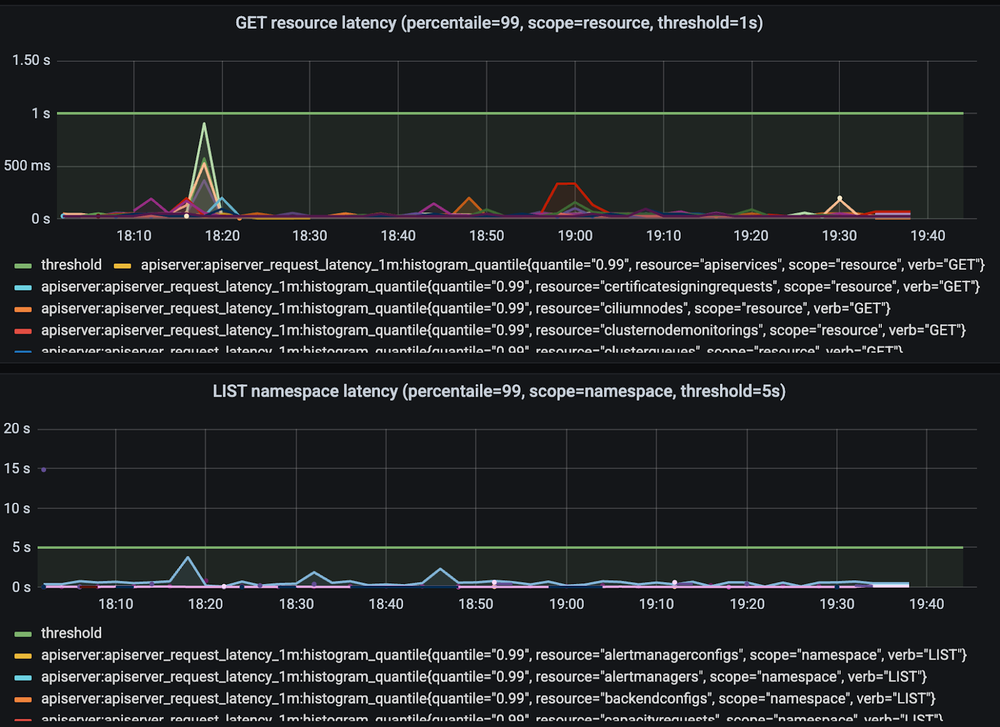
Figure 14: API Server latency for GET and LIST operations, remaining stable and well below defined thresholds, and despite the cluster’s massive scale.
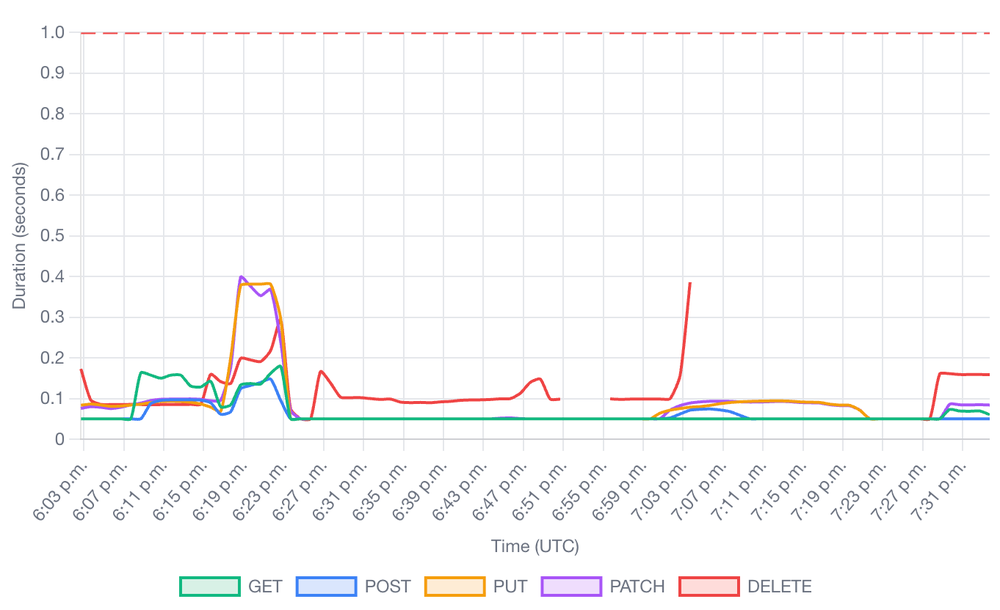
Figure 15: API request duration broken down by verb (GET, POST, PUT, PATCH, DELETE), confirming consistent response times under load.

Figure 16: Duration for LIST operations specifically, remaining stable throughout the benchmark phases.

Figure 17: Total count of Kubernetes objects (including Pods, Leases, and Nodes) in the database, exceeding 1 million objects.
All told, this experiment demonstrated that GKE can support AI and ML workloads at a scale well beyond current public limits. Further, the insights we gained from operating at this scale are helping us plan the GKE’s future development.While we don’t yet officially support 130K nodes, we're very encouraged by these findings. If your workloads require this level of scale, reach out to us to discuss your specific needs! You can also enjoy these wonderful conversations on scale and other topics from KubeCon at Atlanta with Google experts and analysts.
Update November 25, 2025: We clarified the pricing section and encryption techniques in use.
Today, we’re announcing virtual private cloud (VPC) encryption controls, a new capability of Amazon Virtual Private Cloud (Amazon VPC) that helps you audit and enforce encryption in transit for all traffic within and across VPCs in a Region.
Organizations across financial services, healthcare, government, and retail face significant operational complexity in maintaining encryption compliance across their cloud infrastructure. Traditional approaches require piecing together multiple solutions and managing complex public key infrastructure (PKI), while manually tracking encryption across different network paths using spreadsheets—a process prone to human error that becomes increasingly challenging as infrastructure scales.
AWS Nitro based instances provide automatic hardware-level encryption through the Nitro System, delivering transparent traffic encryption with no performance impact. Using AES-256-GCM encryption (state-of-the-art symmetric encryption), the system anonymizes in-transit traffic between instances. While this built-in security is valuable, organizations need straightforward ways to extend these encryption capabilities across their entire VPC infrastructure. They require centralized visibility and control over encryption status, without managing complex key systems or sacrificing performance. This is particularly important for demonstrating compliance with regulatory frameworks such as Health Insurance Portability and Accountability (HIPAA), Payment Card Industry Data Security Standard (PCI DSS), and Federal Risk and Authorization Management Program (FedRAMP), where these frameworks require organizations to demonstrate comprehensive encryption across their environments.
VPC encryption controls address these challenges by providing two operational modes: monitor and enforce. In monitor mode, you can audit the encryption status of your traffic flows and identify resources that allow plaintext traffic. The feature adds a new encryption-status field to VPC flow logs, giving you visibility into whether traffic is encrypted using Nitro hardware encryption, application-layer encryption (TLS), or both.
After you’ve identified resources that need modification, you can take steps to implement encryption. AWS services, such as Network Load Balancer, Application Load Balancer, and AWS Fargate tasks, will automatically and transparently migrate your underlying infrastructure to Nitro hardware without any action required from you and with no service interruption. For other resources, such as the previous generation of Amazon Elastic Compute Cloud (Amazon EC2) instances, you will need to switch to modern Nitro based instance types or configure TLS encryption at application level.
You can switch to enforce mode after all resources have been migrated to encryption-compliant infrastructure. This migration to encryption-compliant hardware and communication protocols is a prerequisite for enabling enforce mode. You can configure specific exclusions for resources such as internet gateways or NAT gateways, that don’t support encryption (because the traffic flows outside of the AWS network).
Other resources must be encryption-compliant and can’t be excluded. After activation, enforce mode provides that all future resources are only created on compatible Nitro instances, and unencrypted traffic is dropped when incorrect protocols or ports are detected.
Let me show you how to get started
For this demo, I started three EC2 instances. I use one as a web server with Nginx installed on port 80, serving a clear text HTML page. The other two are continuously making HTTP GET requests to the server. This generates clear text traffic in my VPC. I use the m7g.medium instance type for the web server and one of the two clients. This instance type uses the underlying Nitro System hardware to automatically encrypt in-transit traffic between instances. I use a t4g.medium instance for the other web client. The network traffic of that instance is not encrypted at the hardware level.
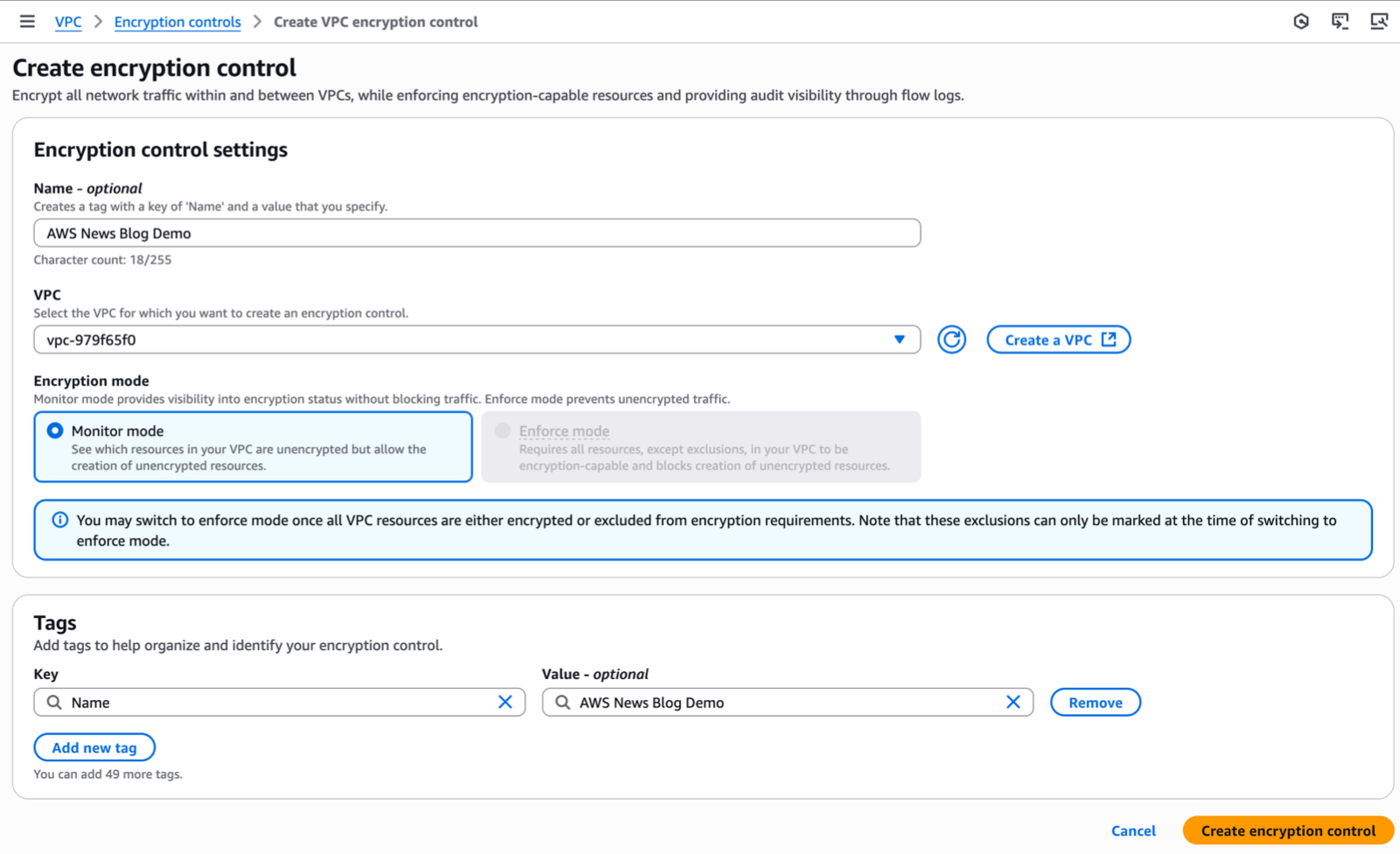
To get started, I enable encryption controls in monitor mode. In the AWS Management Console, I select Your VPCs in the left navigation pane, then I switch to the VPC encryption controls tab. I choose Create encryption control and select the VPC I want to create the control for.
Each VPC can have only one VPC encryption control associated with it, creating a one-to-one relationship between the VPC ID and the VPC encryption control Id. When creating VPC encryption controls, you can add tags to help with resource organization and management. You can also activate VPC encryption control when you create a new VPC.

I enter a Name for this control. I select the VPC I want to control. For existing VPCs, I have to start in Monitor mode, and I can turn on Enforce mode when I’m sure there is no unencrypted traffic. For new VPCs, I can enforce encryption at the time of creation.
Optionally, I can define tags when creating encryption controls for an existing VPC. However, when enabling encryption controls during VPC creation, separate tags can’t be created for VPC encryption controls—because they automatically inherit the same tags as the VPC. When I’m ready, I choose Create encryption control.
 Alternatively, I can use the AWS Command Line Interface (AWS CLI):
aws ec2 create-vpc-encryption-control --vpc-id vpc-123456789Next, I audit the encryption status of my VPC using the console, command line, or flow logs:
aws ec2 create-flow-logs \
  --resource-type VPC \
  --resource-ids vpc-123456789 \
  --traffic-type ALL \
  --log-destination-type s3 \
  --log-destination arn:aws:s3:::vpc-flow-logs-012345678901/vpc-flow-logs/ \
  --log-format '${flow-direction} ${traffic-path} ${srcaddr} ${dstaddr} ${srcport} ${dstport} ${encryption-status}'
{
    "ClientToken": "F7xmLqTHgt9krTcFMBHrwHmAZHByyDXmA1J94PsxWiU=",
    "FlowLogIds": [
        "fl-0667848f2d19786ca"
    ],
    "Unsuccessful": []
}
After a few minutes, I see this traffic in my logs:
flow-direction traffic-path srcaddr dstaddr srcport dstport encryption-status
ingress - 10.0.133.8 10.0.128.55 43236 80 1 # <-- HTTP between web client and server. Encrypted at hardware-level
egress 1 10.0.128.55 10.0.133.8 80 43236 1
ingress - 10.0.133.8 10.0.128.55 36902 80 1
egress 1 10.0.128.55 10.0.133.8 80 36902 1
ingress - 10.0.130.104 10.0.128.55 55016 80 0 # <-- HTTP between web client and server. Not encrypted at hardware-level
egress 1 10.0.128.55 10.0.130.104 80 55016 0
ingress - 10.0.130.104 10.0.128.55 60276 80 0
egress 1 10.0.128.55 10.0.130.104 80 60276 0
10.0.128.55 is the web server with hardware-encrypted traffic, serving clear text traffic at application level.10.0.133.8 is the web client with hardware-encrypted traffic.10.0.130.104 is the web client with no encryption at the hardware level.The encryption-status field tells me the status of the encryption for the traffic between the source and destination address:
The traffic originating from the web client on the instance that isn’t Nitro based (10.0.130.104), is flagged as 0. The traffic initiated from the web client on the Nitro- ased instance (10.0.133.8) is flagged as 1.
I also use the console to identify resources that need modification. It reports two nonencrypted resources: the internet gateway and the elastic network interface (ENI) of the instance that isn’t based on Nitro.
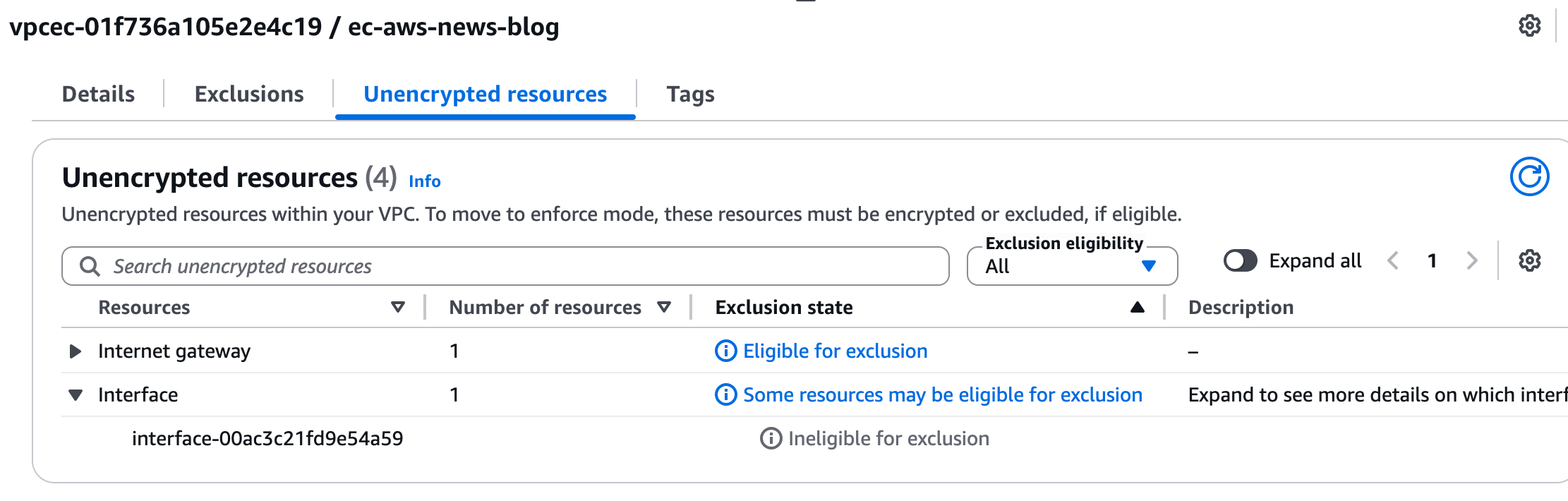 I can also check for nonencrypted resources using the CLI:
aws ec2 get-vpc-resources-blocking-encryption-enforcement --vpc-id vpc-123456789After updating my resources to support encryption, I can use the console or the CLI to switch to enforce mode.
In the console, I select the VPC encryption control. Then, I select Actions and Switch mode.
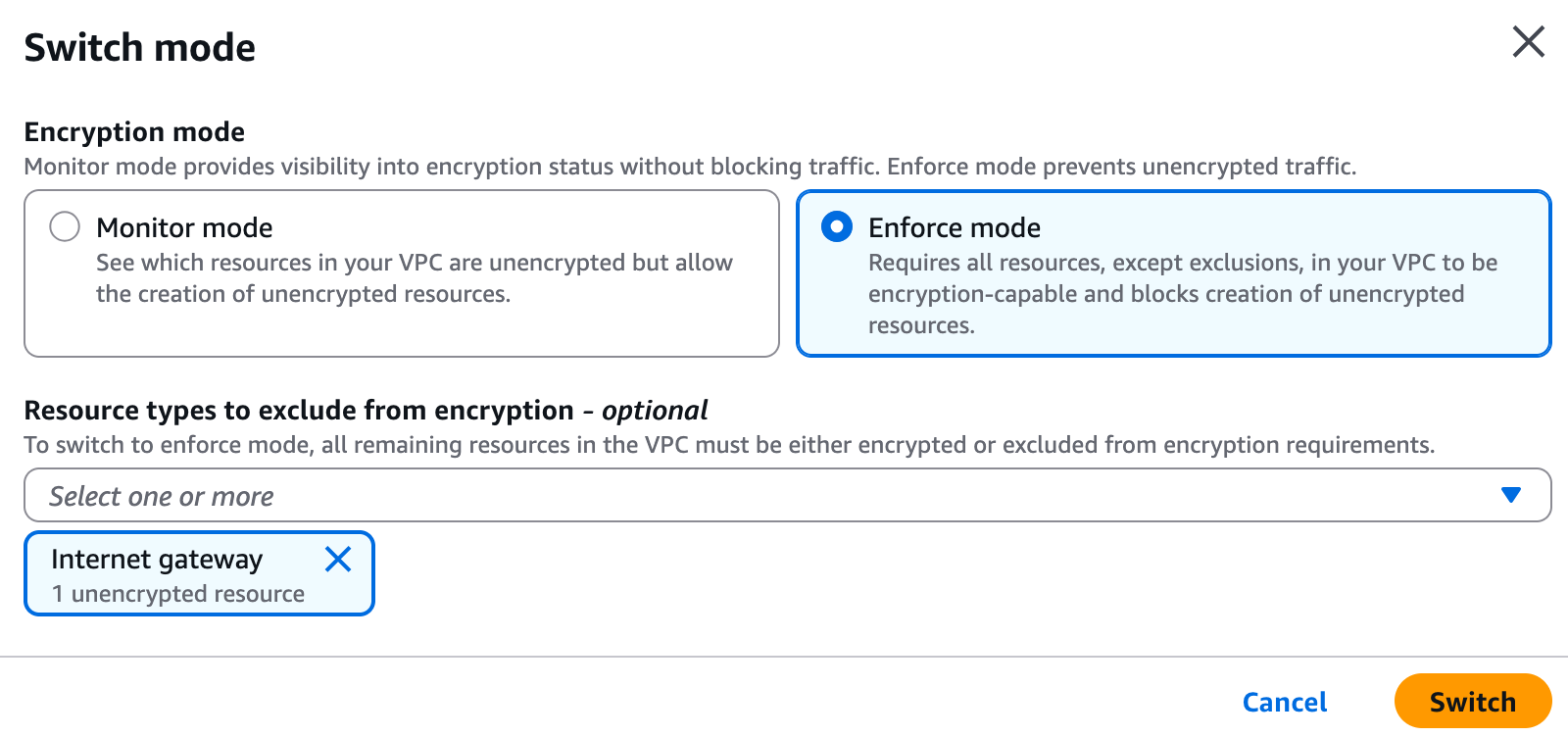 Or the equivalent CLI:
aws ec2 modify-vpc-encryption-control --vpc-id vpc-123456789 --mode enforceHow to modify the resources that are identified as nonencrypted?
All your VPC resources must support traffic encryption, either at the hardware layer or at the application layer. For most resources, you don’t need to take any action.
AWS services accessed through AWS PrivateLink and gateway endpoints automatically enforce encryption at the application layer. These services only accept TLS-encrypted traffic. AWS will automatically drop any traffic that isn’t encrypted at the application layer.
When you enable monitor mode, we automatically and gradually migrate your Network Load Balancers, Application Load Balancers, AWS Fargate clusters, and Amazon Elastic Kubernetes Service (Amazon EKS) clusters to hardware that inherently supports encryption. This migration happens transparently without any action required from you.
Some VPC resources require you to select the underlying instances that support modern Nitro hardware-layer encryption. These include EC2 Instances, Auto Scaling groups, Amazon Relational Database Service (Amazon RDS) databases (including Amazon DocumentDB), Amazon ElastiCache node-based clusters, Amazon Redshift provisioned clusters, EKS clusters, ECS with EC2 capacity, MSK Provisioned, Amazon OpenSearch Service, and Amazon EMR. To migrate your Redshift clusters, you must create a new cluster or namespace from a snapshot.
If you use newer-generation instances, you likely already have encryption-compliant infrastructure because all recent instance types support encryption. For older-generation instances that don’t support encryption-in transit, you’ll need to upgrade to supported instance types.
Things to know when using AWS Transit Gateway
When your VPCs with encryption controls enabled are connected via a Transit Gateway, you’ll need to manually activate encryption controls on the Transit Gateway to encrypt traffic between the VPCs. This can be done using the AWS console, the modify-transit-gateway command or API. Enabling encryption on an existing Transit Gateway won’t disrupt the traffic flowing between VPCs attached to the Transit Gateway.
Traffic is encrypted across all links when a Transit Gateway and its attached VPCs have encryption controls in enforce mode (with no exclusions).
When creating a Transit Gateway through AWS CloudFormation with encryption support enabled, you need one additional AWS Identity and Access Management (IAM) permission: ec2:ModifyTransitGateway. This permission is required because CloudFormation uses a two-step process to create a Transit Gateway. It first creates the Transit Gateway with basic configuration, then calls ModifyTransitGateway to enable encryption support. Without this permission, your CloudFormation stack will fail during creation when attempting to apply the encryption configuration, even if you’re only performing what appears to be a create operation.
Pricing and availability
You can start using VPC encryption controls today in these AWS Regions: US East (Ohio, N. Virginia), US West (N. California, Oregon), Africa (Cape Town), Asia Pacific (Hong Kong, Hyderabad, Jakarta, Melbourne, Mumbai, Osaka, Singapore, Sydney, Tokyo), Canada (Central), Canada West (Calgary), Europe (Frankfurt, Ireland, London, Milan, Paris, Stockholm, Zurich), Middle East (Bahrain, UAE), and South America (São Paulo).
There is no charge to use VPC encryption controls during the introductory period from November 20, 2025 until February 28, 2026.
Beginning March 1, 2026, we will charge a fixed hourly rate for VPCs that have encryption controls enabled, in monitor or enforce mode, and that have a network interface. When you enable encryption control on a Transit Gateway, AWS will charge the same hourly rate per VPC attached to the Transit Gateway, irrespective of their encryption control state.
As usual, the VPC pricing page has the details.
To learn more, visit the VPC encryption controls documentation or try it out in your AWS account. I look forward to hearing how you use this feature to strengthen your security posture and help you meet compliance standards.
— seb
¿Con qué movimiento maestro nos va a deleitar ahora el cada vez más acorralado Pdro Snchz?



Ver post completo: Pedro Sánchez: “La democracia se puede perder en un instante. Es un privilegio que hay que defender cada día”.

Sí, Juan Soto Ivars es el nuevo Get Lucky.

Con Jordi Wild, sobre casi todo (jóvenes, viejos y videojuegos incluidos). Son dos horas y media, así que tómenlo con calma. @PerezReverte
Dos horas muy entretenidas.
Ver post completo: Pérez-Reverte vuelve a visitar a Jordi Wild.

Ricardo Galli, creador de Menéame:


Extra: La mano derecha del fiscal general organizó los aplausos «espontáneos» durante el juicio.
Today, AWS announces the general availability of the AWS Secrets Store CSI Driver provider EKS add-on. This new integration allows customers to retrieve secrets from AWS Secrets Manager and parameters from AWS Systems Manager Parameter Store and mount them as files on their Kubernetes clusters running on Amazon Elastic Kubernetes Service (Amazon EKS). The add-on installs and manages the AWS provider for the Secrets Store CSI Driver.
Now, with the new Amazon EKS add-on, customers can quickly and easily set up new and existing clusters using automation to leverage AWS Secrets Manager and AWS Systems Manager Parameter Store, enhancing security and simplifying secrets management. Amazon EKS add-ons are curated extensions that automate the installation, configuration, and lifecycle management of operational software for Kubernetes clusters, simplifying the process of maintaining cluster functionality and security.
Customers rely on AWS Secrets Manager to securely store and manage secrets such as database credentials and API keys throughout their lifecycle. To learn more about Secrets Manager, visit the documentation. For a list of regions where Secrets Manager is available, see the AWS Region table. To get started with Secrets Manager, visit the Secrets Manager home page.
This new Amazon EKS add-on is available in all AWS commercial and AWS GovCloud (US) Regions.
To get started, see the following resources:

El análisis muestra un pequeño aumento en las poblaciones de especies que se alimentan de insectos después de la decisión de 2018, pero la recuperación completa puede llevar décadas. Los neonicotinoides son la clase de insecticidas más común del mundo, ampliamente utilizados en la agricultura y para el control de pulgas en mascotas. En 2022, cuatro años después de que la UE prohibiera el uso de neonicotinoides en los campos, los investigadores observaron que la población de aves que comían insectos en Francia había aumentado en un 2%.
etiquetas: francia, pesticidas, neonicotinoides, prohibición, insectos, aves, abejas
» noticia original (www.theguardian.com)

Unos días después de anunciarse que dará las Campanadas de TVE junto a Silvia Abril, Andreu Buenafuente ha decidido apartarse temporalmente, lo que no afectará a la retransmisión de las Campanadas de Fin de Año, dejando en el aire la continuidad de 'Futuro imperfecto' por prescripción médica. Así, El Terrat, la productora de Andreu Buenafuente y que está detrás del programa que lidera el prime time de los jueves en TVE, ha enviado un comunicado del que RTVE se ha hecho eco en sus redes sociales anunciando la retirada del presentador.
etiquetas: buenafuente, descanso, prescripción médica, futuro imperfecto, campanadas
» noticia original (eltelevisero.huffingtonpost.es)

"El deber de colaborar no puede transgredir la protección de datos. Y la constatación de los fallos en el programa de cribado, y la identificación de su origen, corresponde única y exclusivamente al SAS", explica en este texto remitido al gobierno andaluz.
etiquetas: sanidad andaluza, cribado cancer, amama
» noticia original (cadenaser.com)

El Gobierno saca un contrato "de urgencia" contra inundaciones en las zonas afectadas por la DANA.
etiquetas: valencia, gobierno, dana
» noticia original (okdiario.com)
Muy buenas gente. hace unos días que Youtube me bombardea con contenido basura con un tema muy concreto: crisis de la soledad de hombres y mujeres.
Pero el algoritmo youtubero no me manda opiniones diversas y con algo de base para poder reflexionar sobre un problema que está ahí. Me manda pura mierda. Son cotilleos de baja calidad. Textos narrados y videos que se presentan como reales cuando son todo inventos, historias y cuentos. Al principio era contenido en inglés pero hoy ha empezado a llegar en español. Son videos donde las mujeres quedan como tontas o zorras interesadas y se racionaliza esa conclusión, no hay término medio y la mujer "de hoy en día" tiene la culpa de la baja natalidad y los problemas de la sociedad capitalista moderna. Una legión de creadores de contenido ( de contenido de mierda) difunden esta basura. Ejemplos:
www.youtube.com/watch?v=P_faTL9EGEk
www.youtube.com/watch?v=3UgGYeDGyyg (español)
www.youtube.com/watch?v=RaO7uF0kwCI
www.youtube.com/watch?v=DWIxrirGRU4 (español)
www.youtube.com/watch?v=3ZHx46EHgDY (español)
¿Cómo pueden estas generalizaciones y simplicidades generar tantos clics y convencer a algunos? Yo diría que se aprovechan del ser humano y sus sesgos cognitivos igual que hace la propaganda: sacando partido de nuestra necesidad social de compañía, aprovechando nuestros instintos más primarios como la defensa del territorio, atacando sentimientos o debilidades que se dan en ciertas etapas de la vida... Al final son temas de toda la vida de dios: no encontrar pareja, que te engañen, que no te aprecien... pero me están vendiendo que es culpa de las mujeres y que se solucionaría si no fueran tan "promiscuas". Y por supuesto es la izquierda la culpable de que se les hayan metido todas estas cosas en la cabeza.
Y hay que recordar que este contenido funciona porque tiene algo de verdad en algún sitio. Por ejemplo, ser madre ya muy entrada en años es problemático y es más habitual hoy en día que hace años, cuando la mujer no trabajaba de la manera que se hace hoy.
Bueno, hasta aquí mi queja furibunda sobre este contenido de mierda. Os dejo una canción relacionada, que no me vengan con que es un problema únicamente del siglo xxi:
www.youtube.com/watch?v=2HwVIgmWlkg
etiquetas: artículo
» noticia original ()

Repaso de hormonas, aditivos y alimentos producidos en EE.UU., sus efectos y por qué están prohibidos en la Unión Europea.
etiquetas: alimentos, estados unidos, aditivos, alimentación, hormonas
» noticia original (www.youtube.com)


