Shared posts
La lucha obrera contra el comunismo: una historia negada

Los 5 pilares de la vida. Javier Santaolalla
¿Sobreproteges a tu Hijo? Por qué esto podría Dañar su Futuro (Psicólogo)
publi Elige con criterio también en tu banca: haz clic en el link y descubre imagin: https://trackertr.pro.caixabank.es/?entw=537ab31f6b30aab46c07527357912911
📙 Recibe la lista completa de las 18 necesidades clave para el desarrollo de tu hijo gratis aquí: https://bit.ly/424rfyY
Únete a nuestra newsletter y recibe regalos, contenido exclusivo, herramientas e invitaciones a eventos antes que nadie. https://tengounplanpodcast.com/#newsletter
🎧 Escucha nuestro libro totalmente gratis con la prueba de Audible: https://amzn.to/435yTLc
📘 Más de 150 podcast resumidos en un libro, “Lo que Ellos saben y Tú no” disponible aquí: https://amzn.eu/d/8ZcVldi
¡Bienvenidos a Tengo un Plan! 🎙️
Rafa Guerrero es psicólogo clínico y experto en neuroeducación, especializado en el desarrollo emocional y el comportamiento infantil. A lo largo de su trayectoria ha trabajado con familias, docentes y niños para entender cómo influyen las emociones y el cerebro en la conducta. Su enfoque combina psicología, educación y neurociencia para ayudar a mejorar el bienestar emocional y las relaciones desde la infancia.
TE COMPARTIMOS RECURSOS ÚTILES:
Instagram: https://www.instagram.com/rafaguerreropsicologo/
Sitio web: https://rafaguerrero.com/
Su libro “Adictos a las pantallas”: https://www.planetadelibros.com/libro-adictos-a-las-pantallas/448702
📢 ¿Quieres colaborar o ser patrocinador de Tengo un Plan? Puedes contactar aquí:
https://tengounplanpodcast.com/colabora-nueva/
Imagin, marca comercial de imaginersGen, S.A., agente de CaixaBank, S.A. Comisión de mantenimiento de la cuenta de 0 €. La cuenta no se retribuye 0 % TAE, 0 % TIN. CaixaBank, S.A., entidad que ofrece la cuenta bancaria. Comisión de emisión y mantenimiento de la tarjeta de 0€. Tarjetas emitidas por CaixaBank Payments & Consumer, E.F.C., E.P., S.A.U.
Recuerda compartir el episodio si te ha gustado, ¡y no olvides suscribirte a nuestro canal de YouTube y valorarnos con 5 estrellas si nos escuchas en plataformas de audio!
¡Nos vemos en el próximo episodio! 👋
Agentes secretos, masones y crímenes en serie: un análisis profundo de un caso legal extraordinario.

Nota previa del editor el blogEn la entrada anterior revisamos pormenores generales sobre la organización de la masonería y el tema principal referente a un grupo de criminales masones dentro de una logia, dicho grupo está siendo actualmente procesado en el Tribunal de lo Penal de París desde fines del mes de marzo de 2026. Realmente son pocos los masones que están siendo juzgados, pero fueron “peces gordos” de la Logia Athanor los cerebros de la organización criminal, fungían de empresarios en sus actividades cotidianas, además participaron ex oficiales de inteligencia pertenecientes a la DGSE (Agencia de Inteligencia Exterior Francesa) y de la DGSI (Dirección General de la Seguridad Interna), militares y policías. Los cargos son por asesinato y sicariato del piloto Laurent Pasquali y el intento de asesinato de Marie-Hélène Dini en 2020.El siguiente artículo -que complementa la entrada anterior- es un repaso del origen el caso (affaire en francés), fue preparado en enero de 2021 y actualizado en octubre de ese mismo año, cuando las investigaciones policiales y de fiscalía seguían su curso legal. Habría que pasar más de cinco años para que los implicados se presenten ante el Tribunal.Aquí el mencionado informe de Elodie Guéguen de la Unidad de Investigación de Radio France.
Una investigación sobre un caso criminal extraordinario donde se mezclan espías falsos, expolicías, mercenarios y políticos.
Athanor, une officine du crime au cœur d'une loge maçonnique


Weekly Commentary: Gradually Transitioning to Suddenly
Also on Wednesday, just a couple miles west along Constitution Avenue in the Marriner S. Eccles Building, an FOMC decision to leave rates unchanged with a loosening bias produced an eight to four decision. It was the first meeting with four dissents since the Greenspan Fed’s aggressive crisis-fighting easing cycle back in 1992.
May 1 – Reuters (Michael S. Derby): “Federal Reserve Bank of Cleveland President Beth Hammack said Friday she dissented against the central bank holding on to an easing bias this week due to uncertainty around the economic and inflation outlooks. ‘Uncertainty around the economic outlook has increased in 2026 and makes the future path for monetary policy more uncertain,’ Hammack said… The official said she voted against the Fed’s policy statement… that left the interest rate target range unchanged… because it retained language that pointed to ‘a pause rather than an end to the easing cycle. I see this clear easing bias as no longer appropriate given the outlook.’ Hammack said there are now upside risks to inflation and downside risks to the job market. She added inflation pressures are ‘broad based’ and ‘and rising oil prices present an additional source of inflationary pressure.’ Hammack’s dissent took place amid an unusually fractious Federal Open Market Committee vote that saw four officials break from the consensus.”
May 1 – Bloomberg (Matt Grossman): “Minneapolis Fed President Neel Kashkari wrote Friday that heightened inflation risks from the Iran war led him to object to the Federal Reserve policy statement that followed this week’s meeting, because the statement implied that the Fed’s next move is likely to be a rate cut… ‘If the Strait of Hormuz remains closed, it is hard to see how oil, gas and other important commodities produced in the Middle East could find alternative routes to market,’ Kashkari wrote. Given the risk that rising energy prices could extend a long stretch of above-target inflation, the Fed shouldn’t be signaling that its next move is more likely to be a cut, Kashkari wrote. ‘I believe the FOMC should offer a policy outlook that signals that the next rate change could be either a cut or a hike, depending on how the economy evolves,’ he wrote.”
May 1 – Bloomberg (Catarina Saraiva): “Federal Reserve Bank of Dallas President Lorie Logan says she is increasingly concerned about inflation and the central bank’s policy guidance should be more explicitly pointing to the risks of both a rate hike and cut. ‘I am increasingly concerned about how long it will take inflation to return all the way to the FOMC’s 2% target’… Logan dissented at the Fed’s April 28-29 meeting, disagreeing with language in the post-meeting statement that still pointed to an easing bias. Says inflation was running ‘meaningfully’ above 2% even before surges in oil and other commodity prices. ‘The conflict in the Middle East raises the prospect of prolonged or repeated supply disruptions that could create further inflationary pressures,’ Logan says, adding that the labor market is stable.”
It's worth briefly touching on Greenspan Fed policy tensions, which led to an eight to four decision at the FOMC meeting on October 6, 1992. The Fed had slashed rates five full percentage points over the previous two years to a then extraordinary 3.0%, as Greenspan orchestrated a steep yield curve and stealth banking system recapitalization. CPI, while down significantly from 1991’s 6.0%, had stabilized by late 1992 at a still elevated 3.2%. By the October meeting, the economy was recovering from recession. “Stagflation” concerns were central to a contentious policy debate.
Three inflation hawks led dissents: Cleveland Fed President Lee Hoskins, Dallas Fed President Robert Boykin, and Fed Governor Wayne Angell. And while inflation was an issue in 1992, the much more pressing systemic risk somehow went unrecognized. Fed-directed loose conditions had fomented a dangerous speculative Bubble in bond and derivative markets.
After trading to 9.0% in April 1990, 10-year Treasury yields were down to 6.35% by September 1992. Speculative excess and market manipulation - by the likes of Salomon Brothers and Steinhardt Partners - would later be investigated and prosecuted. The Bubble burst in 1994, with disorderly speculative deleveraging spurring the collapse of the Askin Funds and disarray throughout the mortgage derivatives marketplace.
Curiously, 1992’s eight to four decision also included an uber-dove, with Governor Martha Seger arguing for additional easing. This Wednesday’s FOMC meeting saw Stephen Miran crystallize his reputation as a devote Trump acolyte and credibility-challenged central banker. What serious central bank official would today believe it appropriate to further loosen U.S. monetary policy?
Especially this week, it was the hawks that were building credibility.
April 30 – Associated Press (Matt Ott): “The number of Americans filing for unemployment benefits tumbled to their lowest level more than 50 years last week... U.S. jobless aid applications for the week ending April 25 fell by 26,000 to 189,000, down from the previous week’s 215,000… This week’s number for new jobless aid applications was the fewest since September of 1969… The total number of Americans filing for unemployment benefits for the previous week ending April 18 fell to 1.79 million, a decrease of 23,000.”
April 29 – Bloomberg (Mark Niquette): “US orders for business equipment increased in March by the most since mid-2020, extending a yearlong stretch of solid capital investment fueled by spending on artificial intelligence. The value of core capital goods orders… jumped 3.3% after an upwardly revised 1.6% advance in February… ‘The stunning degree of strength during a month when firms would have had valid reason to be cautious attests to the substantial energy in business investment that was bottled up last year due to policy-related uncertainty but is being unleashed over the past several months,’ Stephen Stanley, chief US economist at Santander US Capital Markets LLC, said…”
April 30 – Bloomberg (Vlad Savov): “The biggest US tech firms now plan to spend as much as $725 billion this year on capital expenditures, primarily on AI data center equipment. Alphabet Inc. and Meta Platforms Inc. both raised their full-year guidance for capex, while Microsoft Corp. gave its first estimate for spending through the end of December, matching Alphabet at $190 billion. Amazon.com Inc. was alone among the big four data center developers — which have come to be referred to as the industry’s hyperscalers — to keep its figures unchanged, at $200 billion, though it reported a surge in spending in the March quarter that whittled down its free cash flow.”
The ISM Manufacturing Index was unchanged at a four-year high of 52.7, with 13 industries reporting growth versus only three experiencing contraction. Notably, Prices Paid surged almost six points to a much stronger-than-expected 84.6 points – the highest since March 2022. The Manufacturing PMI Index jumped two to a near four-year high 54.5. The Output index rose to the high since April 2022. Elsewhere, Housing Starts popped to a much stronger-than-expected 1.502 million annualized rate, the strongest since December 2024.
April Personal Income was reported up 0.6% (double forecast), the high since July’s 0.7%. Up 0.9%, March Personal Spending was the strongest since December 2024 (1.0%). At 5.7%, y-o-y spending growth was the most robust since January 2025 (6.0%). March’s 3.5% y-o-y PCE (Personal Consumption Expenditures) reading – the Fed’s preferred inflation indicator - was the highest since May 2023 (4.0%).
Overheating risks are today highly elevated. Bubble “Terminal Phase” dynamics are by their nature highly unpredictable, capricious, and precarious. Destabilizing liquidity overabundance is a hallmark, the upshot of rapid system Credit growth coupled with exorbitant leveraged speculation.
As we’ve witnessed, it’s a fine line between liquidity overabundance associated with melt-up speculative excess - and “risk off” speculative deleveraging and liquidity challenges. Shorting and hedging play prominently. Market pullbacks see heavy hedge fund shorting and market-wide put option buying, setting the stage for intense reversals powered by short covering and the unwind of hedges. FOMO kicks in and it’s off to the races. Squeezes, unwinds, and leveraged speculation are powerful liquidity creators and financial conditions looseners.
When President Trump is asked about gas prices, he now quickly shifts the conversation to record stock prices. A booming stock market seems central to the administration’s midterms campaign strategy. But at this point, a surging equities Bubble and attendant loose conditions risk acute bond market instability. At this stage of the cycle, overheating and inflation risks are both highly elevated and responsive to loose conditions.
Two-year Treasury yields jumped 10 bps this week to 3.88%, with 10-year yields up seven bps to 4.37%. Benchmark MBS yields surged 13 bps to 5.33%. Treasury and global bond yields are increasingly vulnerable to upside breakouts. Italian yields rose eight bps (to 3.86%), and Greek yields gained seven bps (3.80%). German bund yields traded to a 15-year high (3.11%) in Wednesday Trading. Japanese 10-year JGB yields rose another eight bps to 2.52%, trading this week to new highs back to 1997. Australian yields were back above 5%.
April 30 – Wall Street Journal (Richard Rubin): “The U.S. national debt now exceeds 100% of gross domestic product, crossing a once-unthinkable threshold, on the way toward breaking the record set in the wake of World War II. As of March 31, the country’s publicly held debt was $31.265 trillion, while GDP over the preceding year was $31.216 trillion… That puts the ratio at 100.2%... That figure will likely climb for the foreseeable future because the federal government is running historically large annual deficits of nearly 6% of GDP... The government is spending $1.33 for every dollar it collects in revenue, and the budget deficit this year is projected at $1.9 trillion. That is little changed from 2025 as Republicans’ tax cuts kick in before their spending cuts take effect. The final tally will depend on Iran war spending, tariff refunds and the strength of the economy.”
April 30 – Politico (Michael MacKenzie): “Fitch Ratings is warning the US’s credit grade faces the challenges of a widening deficit that leaves its debt burden ‘far above’ other nations that share its AA score. Deterioration is likely in the US fiscal position this year due to tax cuts in the One Big Beautiful Bill Act, despite offsets from tariff revenue…”
For years, there has been talk – from Fed officials to Wall Street analysts - of Treasury debt on an unsustainable trajectory. But words of caution are always followed by reassurance that the day of reckoning remains off sometime into the future. How does one go broke? Well, it’s famously stated as “gradually then suddenly”. Suddenly is feeling increasingly imminent.
The Iran war comes at a critical juncture for vulnerable global bond markets. Crude oil is now up almost 80% y-t-d, with U.S. unleaded gasoline futures having now doubled. The Bloomberg Commodity Index’s 3.0% weekly advance boosted y-t-d gains to 27.8%. Up 8% this week, crude prices signal months of inflationary pain.
April 29 – Bloomberg (Courtney McBride, Roxana Tiron and Jen Judson): “Pentagon officials said the Iran war had cost $25 billion so far, offering the estimate in a contentious congressional hearing that saw Defense Secretary Pete Hegseth trade barbs with Democrats over the administration’s handling of the conflict… The $25 billion figure offered by the Pentagon raised questions given the huge cost of missiles and bombs expended in Iran, the ongoing naval blockade, as well as damage to US installations and destruction of equipment.”
The Iran war will meaningfully boost deficit spending for several years. Replenishing our depleted munitions will be an expensive multiyear project. While initially not much beyond a pipe dream, the administration’s $1.5 TN defense budget has quickly become a not so unreasonable estimate of spending requirements. Surely enormous amounts of rare earths and expensive metals will be required. Will the Chinese readily accommodate?
April 28 – Bloomberg (Malcolm Scott): “China’s dominance of rare earths supply chains gives President Xi Jinping economic leverage worth $1.2 trillion in his planned summit meeting with US President Donald Trump in Beijing next month. Fresh analysis from Bloomberg Economics finds that around 4% of US GDP — totaling some $1.2 trillion — is derived from industries that use rare earths. While some US industries may be able to work around any supply disruption, most don’t have good substitutes and some would need to shut down in the event of any cut-off. ‘In some cases, rare earth inputs are ‘golden screws’: In the event of a disruption, manufacturers would be hard-pressed to substitute away or would need many months, if not years, to do so,’ BE’s Nicole Gorton-Caratelli and Chris Kennedy wrote…”
April 29 – Bloomberg (Ye Xie and Greg Ritchie): “For much of the past few years, US Treasuries have failed to serve their traditional role as a sure-fire refuge from global market meltdowns. During the last three big ones — caused by the post-pandemic inflation shock, President Donald Trump’s tariff rollout and, more recently, his war on Iran — US government bonds offered little protection. In fact, each time they declined alongside risk assets like stocks. In 2022, Treasuries tumbled even more than the Dow... Inflation was the biggest culprit… And that’s kept key bond yields pinned well above where they were in late 2024, despite several interest-rate cuts from the Federal Reserve since then. But the episodes shine a spotlight on a deeper, more permanent shift that analysts say is underway: the gradual erosion in recent years of what’s known as a ‘convenience yield’ enjoyed by Treasuries.”
April 30 – Bloomberg (Subhadip Sircar): “The Indian central bank’s intervention in the derivatives market rose sharply in March with its net short dollar position surging to a record $103 billion. Net short dollar positions rose $25.4 billion from February… The data… rose as the authority intensified its defense of the currency in the midst of surging crude prices following the US-Iran war. ‘The massive buildup was expected as the central bank defended the currency in the spot and forwards market due to the Iran war,’ said Madhavi Arora, chief economist at Emkay Global Financial Services Ltd.”
April 27 – Financial Times (Kate Duguid): “Wall Street dealers’ Treasury holdings have jumped to the highest level since the global financial crisis as the Trump administration’s cut to regulation nudges banks back into the $31tn debt market. Net Treasury inventories held by primary dealers, big banks that underwrite US government debt, have risen to about $550bn on average this year, from less than $400bn in 2025… The holdings represent nearly 2% of the overall Treasury market, the highest proportion since 2007. Analysts, investors and financial industry executives say the loosening of US capital rules is encouraging big banks to facilitate more Treasury trading, helping them regain a sliver of the ground they ceded to other financial groups after the 2008 crisis.”
It's unclear where all the demand will be for Trillions of additional Treasuries supply. Interest from traditional buyers appears to be waning, replaced by hedge funds and Wall Street trading desks. Caution is advised when extrapolating the past few years of unprecedented “basis trade” and other levered Treasury purchases. The Treasury market is one major deleveraging episode away from serious trouble.
A high-risk inflationary environment. Out of control deficit spending. A deeply divided Fed in a most-uncertain transition. Fed independence in jeopardy. Historic AI arms race-related borrowing and spending. An incredibly fraught geopolitical environment. A global leveraged speculating community fully loaded in Treasuries and global bonds. Throw in a global crisis of confidence in U.S. leadership, and there’s enough to initiate preparations for Gradually Transitioning to Suddenly.
The S&P500 added 0.9% (up 5.6% y-t-d), and the Dow increased 0.5% (up 3.0%). The Utilities gained 1.2% (up 10.0%). The Banks increased 1.0% (up 2.9%), while the Broker/Dealers lost 1.6% (up 5.1%). The Transports declined 1.4% (up 18.7%). The S&P 400 Midcaps were unchanged (up 10.1%), while the small cap Russell 2000 gained 0.9% (up 13.3%). The Nasdaq100 advanced 1.5% (up 9.7%). The Semiconductors added 0.8% (up 49.4%). The Biotechs increased 0.7% (unchanged). With bullion down $95, the HUI gold index sank 7.6% (up 5.6%).
Three-month Treasury bill rates ended the week at 3.5724%. Two-year government yields jumped 10 bps to 3.88% (up 40bps y-t-d). Five-year T-note yields rose 10 bps to 4.01% (up 29bps). Ten-year Treasury yields gained seven bps to 4.37% (up 20bps). Long bond yields increased five bps to 4.96% (up 12bps). Benchmark Fannie Mae MBS yields surged 13 bps to 5.33% (up 29bps).
Italian 10-year yields gained eight bps to 3.86% (up 31bps y-t-d). Greek 10-year yields rose seven bps to 3.80% (up 37bps). Spain's 10-year yields increased five bps to 3.50% (up 21bps). German bund yields added four bps to 3.04% (up 18bps). French yields rose five bps to 3.69% (up 13bps). The French to German 10-year bond spread widened about one to 65 bps. U.K. 10-year gilt yields rose five bps to 4.96% (up 49bps). U.K.’s FTSE equities index was little changed (up 4.3% y-t-d).
Japan’s Nikkei 225 Equities Index slipped 0.3% (up 18.2% y-t-d). Japan’s 10-year “JGB” yields jumped eight bps to 2.52% (up 45bps y-t-d). France’s CAC40 declined 0.5% (down 0.4%). The German DAX equities index increased 0.7% (down 0.8%). Spain’s IBEX 35 equities index recovered 0.5% (up 2.7%). Italy’s FTSE MIB index gained 1.2% (up 7.3%). EM equities were mixed. Brazil’s Bovespa index fell 1.7% (up 16.3%), and Mexico’s Bolsa index dropped 2.0% (up 5.4%). South Korea’s Kospi rose 1.9% (up 56.6%). India’s Sensex equities index increased 0.3% (down 9.7%). China’s Shanghai Exchange Index gained 0.8% (up 3.6%). Turkey’s Borsa Istanbul National 100 index added 0.2% (up 28.2%).
Federal Reserve Credit increased $2.8 billion last week to $6.657 TN, with a 20-week expansion of $166 billion. Fed Credit was down $2.233 TN from the June 22, 2022, peak. Since the September 11, 2019 restart of QE, Fed Credit has expanded $2.930 TN, or 79%. Fed Credit inflated $3.846 TN, or 137%, since November 7, 2012 (703 weeks). Elsewhere, Fed holdings for foreign owners of Treasury, Agency Debt was little changed last week to $3.018 TN - just off the low back to October 2010. “Custody holdings” were down $260 billion y-o-y, or 7.9%.
Total money market fund assets (MMFA) declined $11 billion last week to $7.623 TN. MMFA were up $718 billion, or 10.4%, y-o-y - having ballooned a historic $3.042 TN, or 66.4%, since October 26, 2022.
Total Commercial Paper increased $4.3 billion to $1.423 TN. CP gained $19.7 billion, or 1.4%, y-o-y.
Freddie Mac 30-year fixed mortgage rates rose seven bps to 6.30% (down 46bps y-o-y). Fifteen-year rates gained six bps to 5.64% (down 28bps). Bankrate’s survey of jumbo mortgage borrowing costs had the 30-year fixed rate unchanged at 6.51% (down 40bps).
Currency Watch:
May 1 – Bloomberg (Jack Ryan and Paul-Alain Hunt): “Aluminum gained, with traders seeing little prospect of an imminent opening of the Strait of Hormuz that would ease availability of the metal… The lightweight metal rose as much as 1.7% to $3,534 a ton… Prices for aluminum — used in everything from cars to beer cans — recently hit the highest in more than four years, with the Iran war bringing shipments through the critical chokepoint to a near halt. Roughly 10% of global aluminum output comes from the Middle East. ‘We are in a very large supply hole here,’ Greg Shearer, head of base and precious metals research at JPMorgan… told Bloomberg TV. Prices are likely to hit $4,000 a ton even if the strait is reopened, he said, given the length of time required for smelters to restart and supplies to come back online.”
For the week, the U.S. Dollar Index declined 0.4% to 98.156 (down 0.4% y-t-d). On the upside, the Japanese yen increased 1.5%, the Australian dollar 0.7%, the Canadian dollar 0.6%, the Brazilian real 0.5%, the British pound 0.4%, the Swiss franc 0.4%, the New Zealand dollar 0.3%, the Norwegian krone 0.3%, the Singapore dollar 0.2%, and the Swedish krona 0.1%. On the downside, the South African rand declined 0.8%, and the Mexican peso slipped 0.5%. China's (onshore) renminbi increased 0.6% versus the dollar (up 2.34% y-t-d).
Commodities Watch:
April 27 – Bloomberg: “Nickel rose to the highest in almost two years, as reduced mining quotas in major producer Indonesia and a global sulfur shortage tighten the supply outlook for the battery metal. Futures in London have risen about about 7% since the start of the Iran war, which is driving a surge in prices of sulfur — a key reagent used in processing — and fueling concerns over disruptions to global mining…”
The Bloomberg Commodities Index jumped 3.0% (up 27.8% y-t-d). Spot Gold declined 2.0% to $4,614 (up 6.8%). Silver slipped 0.5% to $75.361 (up 5.2%). WTI Crude surged $7.54, or 8.0%, to $101.94 (up 78%). Gasoline jumped 3.8% (up 110%), and Natural Gas rallied 10.2% to $2.78 (down 25%). Copper declined 1.7% (up 5%). Wheat jumped 2.7% (up 23%), and Corn rose 2.9% (up 6%). Bitcoin increased $525, or 0.7%, to $78,150 (down 10.8%).
Market Instability Watch:
May 1 – New York Times (Jeff Sommer): “The world’s leading central bankers are stuck. In stately succession this week, policymakers in Tokyo, Washington, London and Frankfurt decided that despite long-stated intentions to shift short-term interest rates, this was not the time to take action. In each case, they concluded that they had better just leave short-term interest rates alone. The central banks all face a gigantic and imponderable problem. Inflation is surging, economic growth is slowing and it’s not clear how long the energy shock set off by the war in Iran or these broader economic effects will last. To one degree or another, the bank in each jurisdiction has been forced to adjust its preference — with the Bank of Japan delaying presumed rate increases and the others altering, and perhaps ultimately reversing, a tilt toward lower rates.”
April 28 – Bloomberg (Edward Bolingbroke): “Traders in the Treasury options market are bracing for long-dated bond yields to surge past 5% as a rally in oil prices continues unabated. A flurry of demand has emerged this week for options hedging a bigger bond market selloff over the coming days, pushing yields higher, as Brent crude has topped $110 a barrel… Among the risks weighing on Treasuries are ‘sticky inflation, fiscal concerns, and rising global bond yields,’ said Collin Martin, head of fixed income research and strategy at Charles Schwab.”
May 1 – Bloomberg (Toru Fujioka): “Japan likely spent around $34.5 billion Thursday in its first currency intervention to prop up the yen since July 2024, according to a Bloomberg analysis… This was the first intervention under the direction of Finance Minister Satsuki Katayama and the first since Sanae Takaichi became prime minister.”
April 27 – Bloomberg (Ruth Carson): “Government bond yields are set to stay higher for longer as the Iran war keeps inflation elevated, according to BlackRock Investment Institute. Inflation pressures were already percolating before the latest conflict in the Middle East, strategists including Jean Boivin and Wei Li wrote…. The oil shock from the war will only compound those risks, piling even more pressure on central banks to keep monetary policy tight to rein in prices… ‘We think higher yields are here to stay – and that long-term government bonds are no longer effective diversifiers against equity declines,’ they wrote.”
April 30 – Bloomberg (James Crombie): “Private credit rookies selling into a downturn poses a potential threat to corporate debt, Citigroup Inc.’s Mickey Bhatia warned. ‘If the cycle turns and these tourists, rather than working out loans, just start selling them at below the economic value — what happens to the rest of the market?’ Bhatia, the firm’s head of spread products, asked… ‘That’s a big worry,’ said Bhatia…”
U.S. Credit Trouble Watch:
May 1 – Bloomberg (Olivia Fishlow and Laura Noonan): “The world’s top financial stability watchdog is examining the potential risks posed by an influx of retail investors into the $1.8 trillion private credit market, according to a person with knowledge of the matter. The Financial Stability Board, which convenes central bank governors and finance ministries from the world’s largest economies, is overseeing the assessment through a subcommittee of members that monitors emerging risks to the financial system… Private credit is slated to become the next focus of the FSB’s task force on nonbank data, as regulators globally step up their scrutiny of the ballooning asset class.”
May 1 – Wall Street Journal (Jonathan Wei): “When a publicly traded private-credit fund trades for a big discount to its net asset value, it’s a signal that the market doesn’t trust the fund’s balance sheet. That is often for good reason. Shares of these funds, known as business-development companies, have slid hard. The S&P BDC Index is down to 86% of NAV and hasn’t been at a premium since September. Investor concerns include the potential for artificial intelligence to disrupt software makers that are major borrowers. But another factor might also help explain some of the recent shakiness: BDCs are more loaded with debt than they used to be, often in ways that are hard to discern. This means they are more fragile and have less room for error. Sometimes the extra leverage doesn’t count against the funds’ legal limits, because the debt resides off their balance sheets.”
April 28 – Bloomberg (Hannah Levitt): “JPMorgan Chase & Co.’s Jamie Dimon again cautioned that a credit market downturn could be worse than expected… In private credit specifically, the fact that there are more than 1,000 firms in the space probably means not all of them will fare well when the cycle turns, Dimon said… Some firms ‘may be brilliant, but I guarantee you not all 1,000 of them are,’ Dimon said. ‘So in my view, because of that and the underwriting standards, we haven’t had a credit recession in so long, so when we have one it will be worse than people think.’ ‘It won’t be terrible, it’ll just be worse than people think in private credit,’ he added. ‘That may be true for some banks too, by the way.’”
April 28 – Wall Street Journal (Margot Patrick and Elena Vardon): “Barclays warned about the risks in lower-quality corners of credit markets after its loan loss provisions rose above $1.1 billion in the first quarter. Executives at the British bank… said it would pull back from lending to some structured-finance borrowers and platforms… Barclays also tweaked its calculations for anticipating possible credit losses. The moves come after Barclays in the quarter wrote off around $300 million of its exposure to London mortgage broker Market Financial Solutions, which collapsed this year with creditors alleging fraud. That sent credit-impairment charges to 823 million pounds, equivalent to about $1.1 billion, the highest quarterly figure since the Covid-19 pandemic in 2020.”
April 27 – Financial Times (Lee Harris and Sujeet Indap): “Apollo’s former risk chief has warned that some Wall Street-backed life insurers will be ill-prepared to manage policyholder funds in a downturn… Chak Raghunathan said some newer life insurers could struggle to stay afloat, citing their heavy reliance on private credit and newer savings products that may be vulnerable to policyholder withdrawals. Raghunathan worked at Apollo from 2008 to 2014... ‘When you’ve got asset manager owned insurers, who are not traditional life insurance people, you get in trouble, because the liquidity premium that has been assumed away is a significant risk,’ he told the FT. ‘Some of these guys, in my opinion, are going to be in trouble.’ Over the past decade, dozens of private capital firms, including Apollo, KKR and Blackstone, have built credit investment businesses that manage trillions of dollars of insurance liabilities.”
April 30 – Bloomberg (Jonathan Randles): “A lender that owns First Brands Corp. debt sued auditor BDO USA P.C., alleging it failed to detect problems at the auto parts supplier before it collapsed into bankruptcy and federal prosecutors accused founder Patrick James of fraud. Funds managed by Black Diamond Capital Management said… BDO’s audits did not comply with generally accepted auditing standards because they missed ‘numerous’ risk factors, including First Brands’ extensive use of factoring and hundreds of millions of dollars in transfers to James’ personal trust.”
April 26 – Wall Street Journal (Ryan Felton): “Doug Horner has seen plenty of customers walk into his northeast Ohio Mercedes-Benz dealership who owe more on their trade-ins than those cars are worth. But being $40,000 underwater on a pickup truck is a scary sign of a growing trend. A prospective buyer recently sought to trade in a Ford F-150 Lightning for a Mercedes GLE Coupe, but that potential customer owed about $87,000 on the pickup truck. Horner estimates the Ford pickup truck was worth about $47,000… ‘This is a battle that we’re fighting every day,’ Horner said… More Americans turning in their cars to buy new ones are encountering a difficult reality: Their vehicles aren’t worth what they owe. About 30% of borrowers in the first quarter who traded in a car to buy a new one had negative equity… Those borrowers owed about $7,200 on average before getting a new loan, a 42% jump compared with the same period five years prior.”
Global Credit Watch:
April 30 – Bloomberg (Davide Barbuscia and Aaron Weinman): “After a $300 billion AI debt binge that spanned every corner of the credit market, investors are starting to show some signs of fatigue. Make no mistake: There’s still appetite for those deals. But bankers have had to work harder to sell them lately, offering more incentives and higher compensation to investors who are spoiled for choice.”
April 30 – Bloomberg (Caleb Mutua, Michael Gambale and Gowri Gurumurthy): “Meta Platforms Inc. sold $25 billion of investment-grade bonds, hitting the market with a jumbo deal for the second time in six months as investors are starting to show some signs of fatigue. Nearly all of the six portions of the bond sale were priced at higher risk premiums than Meta’s October sale, signaling that investors are demanding more compensation to buy debt from the parent of Facebook.”
April 30 – Bloomberg (Caleb Mutua, Michael Gambale and Gowri Gurumurthy): “Investors placed about $96 billion of orders for Meta Platforms Inc.’s bond sale…, as the Facebook parent boosts spending on infrastructure for the artificial intelligence boom. The company launched a $25 billion sale of investment-grade note on Thursday…”
April 28 – Bloomberg (Yash Roy): “Bank of America Corp. expects this May to be the busiest since the Covid-19 pandemic for US investment-grade corporate bond sales… About $190 billion of high-grade bonds are expected to be sold next month, a roughly $15 billion increase from April, strategists Yuri Seliger and Sohyun Marie Lee wrote… That will probably be driven by fundraising for hyperscalers, mergers and acquisitions, and data centers, BofA said, with much of it likely front-loaded in case Treasury yields rise, sending bond prices lower.”
April 30 – Bloomberg (Paula Seligson, Gowri Gurumurthy and Jeannine Amodeo): “CoreWeave Inc. launched a first-of-its kind leveraged loan deal… backed by customer contracts for microchips from firms including OpenAI, opening a new front in the borrowing binge to finance the buildout of artificial intelligence infrastructure. While the $3.1 billion offering marks CoreWeave’s fifth so-called GPU financing… the previous transactions were private and only open to a handful of investors.”
April 27 – Bloomberg (Gerson Freitas Jr. and Gowri Gurumurthy): “Firms swarmed the US primary markets with new debt sales on Monday… The investment-grade bond market is seeing its busiest day since March 5, with 12 companies including Intel Corp., Walmart Inc. and American Airlines Group Inc. selling a total of $24.3 billion of notes. At least 11 other issuers are looking to raise funds from riskier bond and loan deals…”
Iran War Watch:
May 1 – Associated Press (Toqa Ezzidin, Munir Ahmed and Collin Binkley): “U.S. President Donald Trump rejected Iran’s latest proposal to end the war between the countries, saying Friday he still was not satisfied while blaming Iran’s ‘fractured’ leadership. Trump turned back the latest proposal almost as soon as it was delivered. Iran’s state-run IRNA news agency reported that Iran handed over its plan to mediators in Pakistan on Thursday night. ‘They want to make a deal, I’m not satisfied with it, so we’ll see what happens,’ Trump told reporters Friday…”
April 30 – Bloomberg (Patrick Sykes, Eltaf Najafizada, and Omar Tamo): “Iran’s new supreme leader gave a rare statement on Thursday, vowing not to give up the country’s nuclear or missile technologies and signaling Tehran would keep control of the Strait of Hormuz. The Islamic Republic will ‘guard’ its ‘advanced technologies’ like it does its own borders, Mojtaba Khamenei said in a written statement. It will ‘secure the Persian Gulf region and dismantle the hostile enemy’s exploitation of this waterway,’ he added, referring to the vital strait.”
April 28 – Reuters (Samia Nakhoul, Parisa Hafezi and Asif Shahzad): “Two months into a war with the U.S. and Israel, Iran no longer has a single, undisputed clerical arbiter at the pinnacle of power — an abrupt break with the past that may be hardening Tehran’s stance as it weighs renewed talks with Washington. Since its creation in 1979, the Islamic Republic has revolved around a supreme leader with final authority on all key matters of state... Mojtaba Khamenei remains at the apex of the system, but three people familiar with internal deliberations say his role is largely to legitimize decisions made by his generals rather than issue directives himself.”
April 28 – Bloomberg (Golnar Motevalli and Patrick Sykes): “Now, the sides are preparing for another tough negotiation, this time to formally end a two-month conflict that’s wreaked havoc across the Middle East and sent oil prices soaring. Complicating the matter is a clash of styles between a country led by a real estate mogul who prides himself on quick dealmaking and the revolutionary ideology of the Islamic Republic, a sworn enemy of the US for almost half a century. ‘Negotiating with Iran requires a high dose of patience, time and hard-slog diplomacy,’ said Ellie Geranmayeh, senior policy fellow and deputy director of the Middle East and North Africa program at the European Council for Foreign Relations. ‘It also needs an understanding that once Tehran enters a diplomatic process, optics of respect and dignity are critical for success.’”
April 26 – Wall Street Journal (Benoit Faucon, Laurence Norman and Natalie Andrews): “President Trump scrapped a trip by U.S. envoys Steve Witkoff and Jared Kushner to Pakistan for talks with Iran, leaving himself tough choices over how to force Iran to make concessions the White House wants to strike a deal. Trump said Iran can reach out to the U.S. if it wants to negotiate an end to the conflict. ‘They can call us,’ he told Fox News’… On Saturday, Trump said he decided to cancel the trip by his envoys because an offer from Iran had fallen short of the White House’s expectations, adding that U.S. officials had received a better one shortly after canceling the trip.”
April 28 – Axios (Marc Caputo and Barak Ravid): “The Iran conflict has entered a Cold War-like phase of financial sanctions, gunboat interdictions and talks about having talks. The tense stalemate has no immediate end in sight. So higher energy prices appear certain for months — and a hot war could break out at any moment. Several U.S. officials told Axios they’re concerned about America getting drawn into a frozen conflict of no war and no deal. In this scenario, the U.S. would have to keep its forces in the region for many more months. The Strait of Hormuz would stay closed, the U.S. blockade would remain, and both sides would continue waiting for the other to blink or fire first. With the November midterm elections now six months away, ‘a frozen conflict is the worst thing for Trump politically and economically,’ one source close to the president said.”
April 30 – NBC News (Gordon Lubold, Courtney Kube, Dan De Luce and Monica Alba): “Iran is taking advantage of the ceasefire with the U.S. to dig out its weapons, according to a U.S. official and two other people familiar... The regime has stepped up its efforts to excavate missiles and other munitions it hid underground or that were buried beneath rubble from U.S. and Israeli airstrikes… The U.S. believes the regime wants to quickly reconstitute its drone and missile capabilities so it could launch attacks across the Middle East if President Donald Trump decides to resume military operations, the sources said.”
April 30 – Bloomberg (Prejula Prem and Julian Lee): “A few Iran-linked vessels are making their way through the Strait of Hormuz, as the crucial waterway remains effectively closed to most international shipping amid blockades by both Tehran and the US. Just a single Iran-linked fuel tanker was observed entering the Persian Gulf on Thursday morning, with no exits for the day recorded so far… That follows just three outbound and two inbound transits of dry cargo ships on Wednesday, most of which have ties to Tehran.”
April 27 – Financial Times (Najmeh Bozorgmehr and Andrew England): “As US and Israeli air strikes pounded Iran, the country’s rival factions joined together in a rare show of unity, rallying around the regime as it fought what they viewed as an existential battle. Yet in the three weeks since the ceasefire came into effect, longstanding divisions among rival camps within Iran’s political elite have broken into the open again, fuelling a domestic debate over what the Islamic republic should do next. At the heart of the dispute, which has played out in parliament and state media, is a push by Iran’s most hardline politicians to oppose the Islamic republic negotiating with the US over its nuclear programme.”
Iran War Ramifications Watch:
April 24 – Wall Street Journal (Chelsey Dulaney and Jason Douglas): “The war in the Middle East has bolstered America’s status as an energy-exporting powerhouse, with Asia and Europe clamoring for every shipment of U.S. crude, natural gas and jet fuel they can get. U.S. exports of crude and petroleum products rose to a record last week, nearly 12.9 million barrels a day... Shipments of liquefied-natural gas have also jumped…, with exports setting an all-time high last month. The frenzy shows no signs of slowing: More than 60 empty crude supertankers were steaming toward the Gulf Coast as of Wednesday, roughly triple prewar levels and a sign that U.S. exports will only rise further in the months ahead.”
April 29 – CNBC (Julian Hast, Emma Sanchez, Kevin Crowley and Leonardo Nicoletti): “As the Iran war strangles natural gas supplies, countries across Asia and Africa are rationing fuel and enduring blackouts. In Europe, the conflict is raising the risk of an energy crunch this winter. Thousands of miles away, in the heart of US shale country, gas is so plentiful that producers have to pay buyers to take it off their hands. Drillers in the Permian Basin of West Texas and New Mexico have helped make the US the world’s largest oil producer. In the process, they’ve also glutted the region with natural gas, which is extracted there as a byproduct of crude. There's so much gas, in fact, that it exceeds available pipeline capacity to get the fuel to customers or export terminals on the coast.”
April 27 – Reuters (Che Pan, Liam Mo and Hyunjoo Jin): “The conflict in the Middle East has disrupted supplies of crucial raw materials and pushed up prices of the printed circuit boards (PCB) used in almost all electronic devices, from smartphones and computers to AI servers, industry sources and executives said. The disruption is a fresh blow to electronics manufacturers which are already grappling with soaring memory chip costs and highlights the broadening impact of the Iran war that has wreaked havoc on supply chains, plastics, and oil supplies. Iran struck Saudi Arabia's Jubail petrochemical complex in early April, forcing a halt in production of high-purity polyphenylene ether (PPE) resin — a critical base material used to manufacture PCB laminates.”
April 27 – Financial Times (Chris Kay, Alice Hancock and Amy Kazmin): “Indian Prime Minister Narendra Modi’s flagship road-building push faces widespread disruption and delay as the US-Israeli war on Iran chokes off supplies of essential bitumen. A collapse in shipments from the Gulf of bitumen — the thick, viscous hydrocarbon used as a binder in asphalt — is causing increasing concern in countries from Italy to Australia, where shortages are adding to the cost and complexity of combating potholes… The alarm is particularly acute in India, which has a government target of building 100km of highway a day and which imports about 40% of its bitumen, almost all of it from the Gulf.”
April 28 – Bloomberg (Tsuyoshi Inajima): “Supply chain disruptions stemming from the conflict in Iran are beginning to create chokepoints across Japan’s auto industry, including the network of companies surrounding Toyota Motor Corp. ‘We’re hearing from smaller suppliers that suddenly say they won’t be able to deliver parts in two weeks’ time, which makes things very hard to predict,’ Koichi Ito, president of Toyota Industries Corp., told reporters…”
April 27 – Bloomberg: “Goldman Sachs… lifted oil-price forecasts as the prolonged closure of the Strait of Hormuz spurs ‘extreme’ inventory draws. Brent is set to average $90 a barrel in the fourth quarter, up from a previous outlook for $80… ‘We estimate that 14.5 million barrels a day of Persian Gulf crude production losses are driving global oil inventories to draw at a record 11 to 12 million barrel-a-day pace in April,’ they said. Given that such ‘extreme inventory draws are not sustainable, even sharper demand losses could be required if the supply shock persists longer,’ they added.”
Trump Administration Watch:
April 28 – Wall Street Journal (Alexander Ward, Laurence Norman and Summer Said): “President Trump has instructed aides to prepare for an extended blockade of Iran, U.S. officials said… In recent meetings, including a Monday discussion in the Situation Room, Trump opted to continue squeezing Iran’s economy and oil exports by preventing shipping to and from its ports. He assessed that his other options—resume bombing or walk away from the conflict—carried more risk than maintaining the blockade, officials said. Yet continuing the blockade also prolongs a conflict that has driven up gas prices, hurt Trump’s poll numbers and further darkened Republicans’ prospects in the midterm elections. It has also caused the lowest number of transits through the Strait of Hormuz since the war began.”
April 30 – Bloomberg (Kate Sullivan): “President Donald Trump said he was sticking with a naval blockade of Iranian ports even as oil prices hit a wartime high amid concerns the vital Strait of Hormuz would not reopen anytime soon. ‘Their economy is crashing, the blockade is incredible,’ Trump told reporters… ‘Their economy is a disaster. So we’ll see how long they hold out.’”
April 28 – Axios (Barak Ravid): “President Trump claimed Tuesday that Iran told the U.S. it is ‘in a state of collapse’ and wants to open the Strait of Hormuz ‘as soon as possible.’ It’s unclear what Trump is basing his comments on. Iran hasn’t confirmed it is willing to reopen the strait. Trump’s claim comes days after Iran proposed a deal that would reopen the strait and lift the blockade first, postponing nuclear talks to a later stage. ‘Iran has just informed us that they are in a ‘State of Collapse.’ They want us to ‘Open the Hormuz Strait,’ as soon as possible, as they try to figure out their leadership situation (Which I believe they will be able to do!)’ Trump wrote…”
April 29 – CNBC (Holly Ellyatt): “U.S. President Donald Trump threatened Iran in a Truth Social post…, saying the country ‘better get smart soon!’ ‘Iran can’t get their act together. They don’t know how to sign a nonnuclear deal. They better get smart soon!’ Trump posted… shortly after 4 a.m. ET on Wednesday. The post was accompanied by an AI-generated picture of Trump holding a gun with explosions in the background, and the words ‘NO MORE MR. NICE GUY!’”
April 30 – Bloomberg (Jack Detsch, Paul McLeary and Stefanie Bolzen): “President Donald Trump’s announcement… that he was considering pulling some U.S. troops out of Germany stunned defense officials, who scrambled to figure out if the president was serious about following through on his threats this time. Trump’s social media post was the first that many had heard of a potential new push to take hundreds, if not thousands, of American troops out of Germany… It strongly contrasts a recently concluded monthslong review of the Pentagon’s global troop footprint, which did not call for major pullbacks from Europe.”
April 28 – Politico (Gregory Svirnovskiy): “President Donald Trump assailed the leadership of German Chancellor Friedrich Merz on social media Tuesday, as he continues to criticize Europe’s response to the U.S. and Israel’s ongoing war in Iran. Merz, Trump wrote…, ‘thinks it’s OK for Iran to have a Nuclear Weapon.’ ‘He doesn’t know what he’s talking about!’ Trump wrote. ‘If Iran had a Nuclear Weapon, the whole World would be held hostage. I am doing something with Iran, right now, that other Nations, or Presidents, should have done long ago. No wonder Germany is doing so poorly, both Economically, and otherwise!’”
April 28 – CNBC (Lim Hui Jie): “The U.S. Treasury warned financial institutions… they could face sanctions if they engage in dealings with Chinese refineries that process Iranian oil. The Treasury urged financial institutions… to avoid facilitating transactions involving independent refineries, known as ‘teapots,’ that import Iranian oil… China purchases approximately 90% of Iran’s oil exports…, with teapot refineries accounting for the majority of these imports.”
Trade War Watch:
May 1 – Bloomberg (Josh Wingrove, Gabrielle Coppola and Jorge Valero): “President Donald Trump said he was raising tariffs on cars and trucks from the European Union to 25%, claiming that the bloc had failed to fully comply with a trade agreement negotiated with the US. ‘I am pleased to announce that, based on the fact the European Union is not complying with our fully agreed to Trade Deal, next week I will be increasing Tariffs charged to the European Union for Cars and Trucks coming into the United States,’ Trump said... ‘The Tariff will be increased to 25%.’”
April 28 – Associated Press (Paul Wiseman): “When the Supreme Court killed his favorite tariffs in February, President Donald Trump promptly rolled out temporary import taxes to replace them. But those stopgap levies expire in less than three months. Now the administration is scrambling to put more durable tariffs in place to keep revenue flowing into the U.S. Treasury and to shore up the president’s protectionist wall around the American economy.”
April 27 – Wall Street Journal (Raffaele Huang): “China has banned Meta Platforms’ acquisition of artificial-intelligence startup Manus on national security grounds and ordered that the $2.5 billion deal be unwound. China’s National Development and Reform Commission, which has the authority to review foreign investments, said… it has banned the acquisition and ordered it to be rescinded. ‘The transaction complied fully with applicable law,’ a Meta representative said... ‘We anticipate an appropriate resolution to the inquiry.’”
April 28 – Financial Times (Peter Foster): “Export restrictions on critical raw materials have increased fivefold since 2009 despite continuing efforts by advanced economies to diversify their supply chains, OECD research has shown. Analysis of export restrictions on important ingredients for defence, technology and green energy supply chains also found that an increasingly broad range of countries were now imposing controls. The research found that advanced economies had made scant progress in addressing critical mineral chokepoints after being alerted to the risk 15 years ago when China imposed a de facto embargo on rare earth exports to Japan… ‘China temporarily stopped access to rare earths in 2011 and since then, not a lot has changed in terms of exposure to that risk,’ said Marion Jansen, head of the OECD’s trade and agriculture directorate. ‘The use of export restrictions has increased for 15 years in a row. The curve is flattening but it’s still increasing.’”
April 27 – Wall Street Journal (Sharon Terlep and Gavin Bad): “Foreign-based automakers have warned the Trump administration that they are looking at pulling their cheapest car models out of the U.S. market if the U.S.-Mexico-Canada Agreement isn’t renewed or is watered down, according to people familiar... Companies such as Nissan, Hyundai and Toyota are among the few carmakers to offer U.S. consumers new models of small, affordable automobiles after Detroit-based automakers ditched such cars in recent years in favor of SUVs and trucks.”
Constitution Watch:
April 30 – Reuters (Susan Heavey and Katharine Jackson): “U.S. President Donald Trump asked on Thursday when ABC would be firing late-night talk show host Jimmy Kimmel and said ‘it better be soon’. Trump made his comments on Truth Social days after his wife Melania Trump called out for ABC to ditch Kimmel over a monologue he delivered prior to a shooting at a high-profile dinner in Washington.”
April 28 – Financial Times (Anna Nicolaou): “Federal regulators have ordered a review of all broadcast television stations owned by Disney for violations of rules including ‘unlawful discrimination’, in a significant escalation against a network that has angered Donald Trump. The Federal Communications Commission said on Tuesday it had been investigating Disney’s ABC stations. While it did not mention the comedian Jimmy Kimmel, the filing came at the same time that the US president and allies lashed out at the Disney television host for a joke about Trump’s wife. The White House’s communications chief Steven Cheung… called Kimmel a ‘shit human being’ and said Disney’s ABC needed to ‘fire him immediately’.”
April 29 – Bloomberg (Kelcee Griffis and Saijel Kishan): “The Federal Communications Commission’s decision to accelerate a license review of Walt Disney Co.’s ABC TV stations caught many people in the agency by surprise, laying the foundation for a likely protracted legal battle over a norm-shattering strategy shift. Calling for an early license review is a rare step, one that many industry watchers didn’t think FCC Chairman Brendan Carr would take. Although the license review order cites potential workplace discrimination as the reason for scrutiny, people familiar with the matter said it was precipitated by President Donald Trump’s plea for ABC to fire late-night host Jimmy Kimmel on Monday.”
April 28 – Axios (Avery Lotz and Josephine Walker): “Former FBI Director James Comey… has been indicted by the Department of Justice for a second time. The charges involve a 2025 social media post by Comey featuring seashells arranged to display ‘86 47,’ which some Republicans at the time interpreted as a threat against Trump. The indictment… charges Comey with making threats against the president and transmitting a threat in interstate commerce. The indictment alleges that ‘a reasonable recipient who is familiar with the circumstances would interpret’ the seashells arranged in the ‘86 47’ pattern ‘as a serious expression of an intent to do harm to the President of the United States.’ ‘You are not allowed to threaten the president of the United States of America,’ Acting Attorney General Todd Blanche said…”
Budget Watch:
April 27 – Bloomberg (Daniel Flatley): “Recent shifts in US tariff policy may add $1.1 trillion to federal budget deficits over a 10-year period, though exact calculations aren’t yet possible, according to the… Congressional Budget Office. ‘We haven’t gotten to a point at which we’re comfortable making that kind of long term’ estimate, CBO Director Phillip Swagel said… The Supreme Court’s decision striking down President Donald Trump’s ability to impose tariffs using emergency economic powers on its own adds $2 trillion to deficits over a decade, Swagel said. Trump’s moves so far to replace the revenue stream with other trade measures add up to $800 billion to $900 billion — or ‘just shy of half’ the revenue canceled by the ruling, he said.”
New World Order Watch:
April 30 – Bloomberg (Kate Sullivan): “President Donald Trump indicated he was open to drawing down American military personnel from other NATO members a day after saying he was reviewing US troop levels in Germany. Asked if he was considering pulling troops from Spain and Italy as well, Trump responded, ‘yeah, probably.’ The president raised concerns about those countries’ willingness to help the US in its war against Iran. ‘Look, why shouldn’t I? Italy has not been of any help to us, and Spain has been horrible, absolutely horrible,’ Trump told reporters…”
May 1 – Politico: “U.S. President Donald Trump said Thursday he would ‘probably’ remove American troops from Spain and Italy, in renewed attacks against Spanish Prime Minister Pedro Sánchez and Italian leader Giorgia Meloni. Speaking to reporters in the Oval Office, the American leader said Italy had ‘not been of any help to us,’ and accused Spain of being ‘absolutely horrible.’ Both Spain and Italy have denied U.S. military planes that are taking part in the Iran war from using their bases.”
April 28 – Associated Press (Jon Gambrell): “The United Arab Emirates said… it will leave OPEC effective May 1, stripping the oil cartel of its third-largest producer and further weakening its leverage over global oil supplies and prices… ‘Having invested heavily in expanding energy production capacity in recent years, the bigger picture is that the UAE has been itching to pump more oil,’ Capital Economics wrote… ‘The ties binding OPEC members together have loosened,’ it said, particularly after Qatar withdrew from the cartel in 2019. Regional politics are also likely at play. The UAE has had increasingly frosty relations with Saudi Arabia…”
April 29 – Wall Street Journal (David Uberti): “A fractured OPEC. A blockaded Persian Gulf. A U.S. emboldened by its world-leading fossil-fuel output. The Iran war is scrambling the longstanding foundations of the oil market, ushering in a more fragmented and potentially more volatile energy world. The free flow of petroleum across oceans is out. Resource nationalism is in. The latest rupture of the global energy map came Tuesday, when the United Arab Emirates said it would leave the Saudi Arabia-led Organization of the Petroleum Exporting Countries, dealing a major blow to a cartel of oil producers… Instead, the U.A.E. is striking out on its own. That and other moves are accelerating a shift from an oil market structured around economic efficiency toward one shaped by politics and conflict.”
U.S./Russia/China/Europe/Iran Watch:
April 27 – Financial Times (Anne-Sylvaine Chassany): “Friedrich Merz said the US was ‘being humiliated’ by Iran, as the German chancellor warned that he saw ‘no exit strategy’ to end the Middle Eastern conflict any time soon. The comments from a staunch Atlanticist leader underscore growing irritation in Europe as the US-Israel war on the regime in Tehran hurts growth, disrupts global oil and gas supplies and strains transatlantic relations… Merz said Washington ‘quite obviously went into this war without any strategy’ and had ‘no truly convincing strategy in the negotiations either’. The Iranians were ‘obviously negotiating very skilfully — or simply very skilfully not negotiating’, he added. ‘A whole nation is being humiliated by the Iranian leadership.’”
May 1 – Associated Press (Ben Finley): “The United States will withdraw about 5,000 troops from Germany in the next six to 12 months, the Pentagon said Friday, fulfilling President Donald Trump’s threat as he clashes with the German leader over the U.S. war with Iran. Trump had threatened to withdraw some troops from the NATO ally earlier this week after Chancellor Friedrich Merz said the U.S. was being “humiliated” by the Iranian leadership and criticized Washington’s lack of strategy in the war. Pentagon spokesman Sean Parnell said in a statement that the “decision follows a thorough review of the Department’s force posture in Europe and is in recognition of theater requirements and conditions on the ground.”
May 1 – Financial Times (Demetri Sevastopulo, Henry Foy, Steff Chávez and Christopher Miller): “Washington has warned European allies, including the UK, Poland, Lithuania and Estonia, to expect long delivery delays for US weapons as it scrambles to replenish stockpiles depleted by the Iran war. The Pentagon had told the countries to expect serious delays for several missile systems… The delays are partly driven by acute concerns about US inventory levels given the high volume of weapons used in the past two months in Iran. The American military has already been forced to move weapons from other regions, including the Indo-Pacific, to make up for the shortfalls.”
Ukraine Watch:
April 28 – Politico (Veronica Melkozerova): “Ukraine struck Russia’s oil infrastructure in the Black Sea port city of Tuapse for the third time in a month… ‘There is another serious state of emergency in Tuapse after an attack by enemy drones; a large-scale fire occurred at the oil refinery. An evacuation is now being carried out for the safety of the residents of the houses located near the refinery,’ the local governor, Veniamin Kondratyev, said…”
April 30 – Bloomberg: “Ukrainian drones struck a major refinery deep inside Russia and again attacked an oil-pumping station nearby, further crippling Moscow’s crude-processing capability. The attack caused a fire and damaged the key primary processing unit at Lukoil PJSC’s Permnefteorgsintez refinery, ‘essentially putting the unit out of action,’ Ukraine’s SBU security service said…”
Taiwan Watch:
April 30 – Bloomberg (Yian Lee and Chien-Hua Wan): “Taiwan’s economy grew at its fastest since 1987, overcoming disruptions caused by the war in Iran as the island continues to ride demand for its tech products supporting the build-out of artificial intelligence computing. Gross domestic product expanded almost 13.7% in the first quarter from a year earlier, compared with about 12.7% in the previous three months…”
AI Bubble/Arms Race Watch:
April 29 – Axios (Jim VandeHei and Mike Allen): “Six facts. No hyperbole. All in the past 60 days. AI is the fastest-growing product category in world history. One of the latest models is so powerful that its maker won’t release it to the public. OpenAI and Anthropic say their most powerful AI coding models are now building themselves. AI companies are growing less transparent as models grow more powerful. The federal government requires zero transparency. AI resentment is building fast… AI havoc is no longer theoretical: This year’s great software rout erased $2 trillion in value as investors realized, week by week, new human tasks that the latest models would wipe out, from coding to real estate services to legal research to financial management.”
April 29 – New York Times (Karen Weise): “For the past two years, Amazon, Google, Microsoft and Meta have repeatedly set records for how much they are spending on artificial intelligence. On Wednesday, the four giants did it again. In the first three months of the year, the four companies reported in their financial results, they plowed a total of $130.65 billion into capital expenditures, largely spending on data centers that power A.I. That figure… was more than… 71% higher than what the tech giants spent in the same quarter a year earlier. All of the companies said they would be spending even more, totaling roughly $700 billion this year. Meta, for one, raised its spending forecast for 2026 to between $125 billion and $145 billion, up from its previous prediction of $115 billion to $135 billion. Google also boosted its projection, to at least $180 billion, and said its spending would be ‘significantly’ higher next year. ‘Every sign that we’re seeing in our own work and across the industry gives us confidence in this investment,’ Mark Zuckerberg, Meta’s chief executive, said…”
April 29 – Financial Times (Stephen Morris, Ryan McMorrow, Hannah Murphy, Rafe Rosner-Uddin and Michael Acton): “Google outshone its rivals in first-quarter earnings with faster cloud growth as the search giant and its Big Tech peers upped their AI infrastructure spending plans again to $725bn this year. The big four ‘hyperscalers’, which include Amazon, Meta, Microsoft and Google parent Alphabet, are together expecting to spend 77% more in capital expenditures than a record $410bn last year… Recent increases in revenue suggested the big players can shoulder the vast capex costs, he added. ‘The bear thesis is garbage.’”
April 29 – Financial Times (George Hammond, Stephen Morris, David Keohane and Tim Bradshaw): “OpenAI’s $500bn Stargate plan to secure computing power is being reworked and, in places, abandoned... In recent weeks, the group has halted planned data centres in the UK and Norway, declined to expand its flagship site in Abilene, Texas and seen several senior figures tied to Stargate leave for rival Meta. Originally announced in early 2025 by Donald Trump as a $500bn joint venture between OpenAI, Oracle, Abu Dhabi fund MGX and Japan’s SoftBank, Stargate was designed to finance and build dedicated data centres for OpenAI’s use. The idea was to pool capital to tackle the cost and complexity of AI infrastructure.”
April 28 – Bloomberg (Will Wade): “US spending on power-generation equipment for data centers may reach $65 billion by 2030, up from $2.6 billion last year…, according to… Wood Mackenzie Ltd. US data center capacity may reach 110 gigawatts by 2030, and total US spending on power-plant equipment may climb to $215 billion. The staggering growth reflects the massive buildout of computing systems in the US, where the race to deliver artificial intelligence systems has been deemed a matter of national security by the Trump administration. Data centers accounted for less than 2% of the power-equipment market in 2020, but the energy-hungry facilities are expected to drive 68% of total load growth through 2030.”
April 30 – Wall Street Journal (Sarah Tilto): “A contemporary house on San Francisco’s Russian Hill has sold for its full asking price of $24 million… The six-bedroom home went into contract a week after going on the market… The speedy sale is a far cry from the last time the house went on the market, for $19.995 million in 2022. That time around, it took more than a year to sell for just $9.99 million—about half its asking price.”
Bubble Watch:
April 29 – CNBC (Jonathan Vanian): “As Meta pumps increasing amounts of cash into artificial intelligence, the company’s metaverse efforts continue to bleed money. In its first-quarter earnings report…, Meta revealed that its Reality Labs division recorded an operating loss of $4.03 billion while bringing in $402 million in sales… Meta’s Reality Labs unit, which builds virtual reality and augmented reality technology as well as wearable devices, has accumulated over $80 billion in total operating losses since late 2020.”
April 29 – Bloomberg (Bailey Lipschultz and Georgie McKay): “Shares of Bill Ackman’s Pershing Square USA Ltd. plunged 18% in its debut after the combined initial public offering for the closed-end fund and his alternative asset manager raised $5 billion… The $5 billion haul was the bare minimum to keep the early investors who signed up to buy $2.8 billion locked into the deal, and fell well short of the lofty $25 billion that Pershing Square sought to bring in about two years ago.”
April 29 – Financial Times (Zehra Munir and Antoine Gara): “Starwood’s high-profile property fund has halted redemptions as it seeks to prevent a flight of assets amid mounting pressure on its bet that property markets would quickly recover from interest rate rises in 2022 and 2023. Starwood Real Estate Income Trust, one of the first retail private markets funds, pinned its decision to temporarily suspend most redemptions on interest rates that have ‘remained high’… The issue was ‘not the real estate,’ said Barry Sternlicht…, but rather ‘the pressure created by elevated redemption requests, which rose quite suddenly when interest rates spiked and remained high’.”
Inflation Watch:
April 30 – Associated Press (Christopher Rugaber): “A key inflation measure jumped in March as gas prices soared… An inflation gauge monitored by the Fed rose 0.7% in March from February, up sharply from the previous month… Compared with a year ago, prices rose 3.5%, the biggest increase in almost three years. Excluding the volatile food and energy categories, core inflation rose 0.3% in March from February, and it was 3.2% higher than a year earlier… Gas prices jumped nearly 21% in March from the previous month, the report said, while grocery prices actually slipped 0.1%. Clothing costs climbed 1% just in March.”
April 30 – CNBC (Spencer Kimball): “California gasoline prices hit $6 per gallon on Thursday, a 30% increase since the U.S. and Israel launched the war against Iran in late February. Drivers in California are paying the most in the nation at $6.01 per gallon on average… Prices in the Golden State are at the highest level since October 2023…”
April 29 – Bloomberg (Anuradha Raghu, Hallie Gu and Pyotr Kozlov): “The extended closure of the Strait of Hormuz and extreme weather have jolted farm commodities prices to a two-year high, as fertilizer headaches and the prospect of smaller harvests drive food inflation risks. The Bloomberg Agriculture Spot Index, which tracks 10 of the world’s top-selling crop products, has climbed for a third straight month to the highest since November 2023.”
April 28 – Bloomberg (Will Kubzansky): “Jet fuel exports from Asia to California are at the lowest point in at least a decade, adding another pressure point to a burgeoning air travel crunch on the West Coast stemming from the war on Iran. With two days left in April 2026, only one confirmed cargo of jet fuel has departed Asia for California, according to… Vortexa Ltd. The Jag Parth, carrying 210,000 barrels of jet fuel, departed South Korea on April 19 and is expected to arrive in the Los Angeles area on May 8. Prices for oil and refined products have soared around the globe… Jet fuel prices have risen faster than nearly any other oil product.”
April 24 – New York Times (Christine Chung): “This summer is shaping up to be an expensive and uncertain time to fly, especially if you’re planning a European vacation… European airlines like Lufthansa and KLM have announced they are cutting flights, and others could follow. Carriers everywhere are increasingly passing costs on to passengers wherever they can by raising airfares, charging more for bags and tacking on additional charges for fuel. Some are canceling flights. For travelers, the prospect of a reasonably priced summer vacation is growing dimmer by the day.”
April 27 – Reuters (Savyata Mishra and Anuja Bharat Mistry): “The fragile demand recovery seen by consumer companies globally is at risk of getting stalled by chances of more prices hikes as a result of soaring energy and commodity costs due to the Middle East conflict… A Reuters review of company statements since the war began shows 24 companies have withdrawn or cut financial guidance, 35 have flagged price increases and another 36 have warned of a financial hit. ‘Inflation across food, energy, healthcare, and many other areas of spending has taken a toll on consumers and how they assess value. Recent geopolitical events have elevated this to a new level of concern,’ P&G finance chief Andre Schulten said…”
April 28 – Bloomberg (Michael Hirtzer): “Wheat surged to the highest in nearly two years as drought in the US was pressuring yields at a time soaring fertilizer costs prompted farmers to pare back planting of nutrient-intensive crops such as grains… The US Department of Agriculture… kept crop ratings unchanged at just 30% rated good or excellent, although the percentage of wheat rated poor or very poor increased. ‘Drought persists and recovery prospects remain slim,’ No Bull Ag analyst Susan Stroud said.”
April 30 – Wall Street Journal (Kirk Maltais): “Increasing drought levels across the U.S. Plains lifted U.S. wheat prices near two-year highs, while potential for an El Niño could make things even drier this summer. Chicago wheat futures have gained nearly 30% since the start of the year… due to the combination of U.S. drought, global fertilizer shortages and a looming El Niño… Heading into the harvesting season for the key winter wheat crop, much of the western side of the U.S. Plains are locked in drought. Over 81% of Southern Plains is experiencing some form of drought… Nearly 20% of the region is experiencing either ‘extreme’ or ‘exceptional’ drought.”
April 29 – Wall Street Journal (Don Nico Forbes and Ed Frankl): “German and Spanish inflation climbed again in April to multiyear highs as tensions in the Middle East continued to drive up energy prices. Consumer prices were 2.9% higher than a year earlier in Germany, an increase in the annual rate of inflation from 2.8% in March…, its highest since January 2024. Spain’s statistics agency INE said inflation rose to 3.5% in April from 3.4% in March, reaching its strongest level since June 2024.”
April 29 – Wall Street Journal (James Glynn): “Australia’s consumer prices jumped in the first quarter, hitting the highest level since September 2023… The consumer-price index rose 4.6% in the 12 months to March, the Australian Bureau of Statistics said Wednesday. That compares with an annual inflation rate of 3.7% in February. With inflation now well above the Reserve Bank of Australia’s target of 2.5%, pressure will be high on the central bank to deliver its third interest rate increase this year in May.”
April 29 – CNBC (Jeff Cox): “An unusually divided Federal Reserve… held its key interest rate steady as policymakers grappled with the policy impact of persistent inflation and awaited a looming leadership transition at the central bank. In what may have been Chair Jerome Powell’s final meeting at the helm, the rate-setting Federal Open Market Committee voted to hold the benchmark funds rate in a range between 3.5%-3.75%... However, the meeting saw a dramatic turn amid a groundswell of officials who opposed messaging that further rate cuts could be ahead. Amid expectations for a routine vote to hold the benchmark funds rate steady, the FOMC instead was split along 8-4 lines, with officials expressing different reasons for their vote. The last time four FOMC members dissented was in October 1992.”
April 29 – Bloomberg (Enda Curran): “Jerome Powell said he’ll remain at the Federal Reserve as a governor after his term as chair of the central bank ends, putting an end to months of speculation as to whether he planned to stay or go. The decision breaks with the precedent of past Fed chairs leaving the institution when their leadership term expires, but Powell said ongoing threats of criminal investigations into him and the central bank left him with no option but to stay. ‘After my term as chair ends on May 15, I will continue to serve as a governor for a period of time to be determined’… The last outgoing chair to remain on the board was Marriner Eccles, who stayed on as a policy maker until 1951 after his term as head of the central bank ended in 1948.”
April 30 – Wall Street Journal (Nick Timiraos): “At his Senate confirmation hearing last week, Kevin Warsh told lawmakers that the Federal Reserve needed a serious shaking up, with ‘messier meetings’ and ‘a good family fight’… He may be getting all of that and more… The man he’s set to replace as Fed chair, Jerome Powell, announced he wouldn’t be leaving right away. Three of Powell’s colleagues delivered a pointed warning that they are in no mood to cut rates anytime soon… Powell’s announcement that he would remain on the Fed’s board as a governor after handing the baton to Warsh next month broke with that precedent. It underscored how far the Trump administration’s pressure campaign had pushed the Fed into uncharted territory.”
April 29 – CNBC (Matt Peterson): “Federal Reserve chair nominee Kevin Warsh believes the Fed’s statutory independence doesn’t fully extend to international policy issues, he said in in written responses… to Senate Democrats’ questions about the Fed’s authority to establish swap lines… Swap lines have become an urgent question in Washington after the Wall Street Journal reported earlier this month that the United Arab Emirates had discussed opening one… Treasury Secretary Scott Bessent later said many countries in the Persian Gulf and Asia have requested swap lines.”
April 27 – CNBC (Yun Li): “Billionaire investor Ray Dalio warned the U.S. economy has slipped into a stagflationary environment and said it would be a mistake for potential Federal Reserve chair successor Kevin Warsh to lower interest rates… ‘We are certainly in a stagflationary period,’ Dalio said… on CNBC… ‘Because of the issues that are here, in terms of a more immediate inflation, farther from the target’… ‘Certainly, you would not cut interest rates now,’ Dalio said. ‘You will lose your credibility. The Federal Reserve would lose its credibility, particularly now. ...If you look at monetary policies by other countries, you’re not going to see them cutting,’ he said. ‘So whatever your benchmarks are, you’re not going to be inclined to cut … not with today’s information.”
U.S. Economic Bubble Watch:
April 28 – Bloomberg (Caitlin Reilly): “In March, Washington state passed the first income tax in the state’s history, a 9.9% levy on personal income exceeding $1 million annually. Washington is one of five states led by a Democratic governor that have increased income taxes on the wealthy in the past five years. Several more are considering following suit. The trend underscores a deepening strain of populist anger at the rich. A December Economist/YouGov poll found 61% of Americans believe billionaires are taxed too little. It also reflects a need to raise revenue in states facing budget shortfalls…”
April 29 – Reuters (Lucia Mutikani): “The U.S. trade deficit in goods widened more than expected in March as a rise in imports outpaced exports… The goods trade gap increased 5.3% to $87.9 billion last month… Imports of goods increased $9.6 billion to $299.3 billion, reflecting an 11.0% surge in motor vehicles. There were also solid increases in imports of food, consumer and capital goods as well as industrial supplies… Goods exports increased $5.2 billion to $211.5 billion in March amid rises in shipments of food, motor vehicles, capital goods and industrial supplies, which include petroleum. But exports of consumer goods dropped 7.5%.”
April 29 – Bloomberg (Julia Fanzeres): “New residential construction in the US rose in March to the highest level in more than a year as homebuilders boosted production despite ongoing affordability concerns. Housing starts increased 10.8% to an annual pace of 1.5 million homes in March, the highest since December 2024… New single-family home starts rose 9.7% to a 1.03 million annualized rate, while multifamily groundbreakings also advanced… Building permits, a leading indicator of future construction, fell in March to an annualized pace of 1.37 million, the lowest level since August…”
April 28 – Wall Street Journal (Jessica Coacci): “U.S. home-price growth slowed in February as affordability pressures shaped home buyer decisions. The S&P Cotality Case-Shiller National Home Price Index… rose 0.7% in the 12 months through February, compared with a 0.8% increase in January. ‘More than half of major U.S. metropolitan markets posted year-over-year price declines in February, signaling that the housing slowdown has broadened well beyond its Sun Belt origins,’ said Nicholas Godec at S&P Dow Jones Indices.”
April 29 – CNBC (Diana Olick): “Mortgage rates began climbing again last week, and that took a toll on refinance demand. Homebuyers, however, seem finally to be ready for the spring market… Applications for a mortgage to purchase a home rose 1% for the week and were 21% higher year over year. More supply has come onto the market, and consumers appear to be getting used to the ever-changing news regarding the war with Iran.”
April 28 – Associated Press (Matt Ott): “U.S. consumer confidence rose modestly in April despite growing anxiety over soaring energy prices brought on by the war in Iran. The Conference Board said… its consumer confidence index inched up to 92.8 in April from 92.2 in March. Though the gauge measuring American consumers’ confidence has ticked up the past two months, the reading remains mired near its lowest level since the COVID-19 pandemic… The index for consumers’ assessments of their current economic situation fell by 0.3 points to 123.8.”
April 28 – Axios (Emily Peck): “The share of Americans who say their financial situation is getting worse is higher now than at any point in the past 25 years, per new Gallup data… Americans are struggling after years of higher inflation and a recent surge in gas prices due to the Iran war — a major challenge for President Trump and Republicans as the midterm elections come into view. 55% of respondents to a poll conducted April 1-15 said their financial situation is getting worse; that’s up from 53% last year and 47% in 2024. The number is higher than at any point since 2001, even compared with recessions during the pandemic or in the wake of the financial crisis.”
China Watch:
April 28 – Bloomberg (Akriti Sharma): “China’s central bank has instructed some commercial banks to expand loan issuance in April… The People’s Bank of China in a meeting asked banks to ensure the outstanding loan balances post positive month-on-month growth in April to underpin the economy…”
May 1 – Financial Times (Zijing Wu): “Huawei is set to capture the largest share of China’s AI chip market this year, with sales jumping by at least 60% amid strong demand from Chinese companies seeking domestic alternatives to Nvidia. China’s tech groups have placed large orders for Huawei’s latest Ascend processor 950PR, according to two people with knowledge of the matter, as the Shenzhen-based company races to make inroads into a sector long dominated by the $5.1tn US chip group.”
April 30 – Bloomberg: “China Vanke Co.’s state-owned backer reported its biggest annual loss in two decades, driven largely by its investments in the embattled developer, which has been grappling with a liquidity crunch for more than two years. Shenzhen Metro Group Co. posted a 37.5 billion yuan ($5.5bn) loss attributable to shareholders last year… It marks the company’s biggest annual loss since at least 2006… The results highlight how Vanke’s deteriorating fundamentals are weighing on the metro operator.”
April 28 – Wall Street Journal (Hannah Miao): “For the past several years, millions of disenchanted young people in China have embraced a mindset dubbed ‘lying flat.’ In an economy with limited well-paying jobs, many have rejected societal pressures to overwork or have stopped working completely. On Tuesday, the country’s intelligence agency blamed anti-China influences from abroad for stoking youth disillusionment. ‘The youth represent the future of the nation and are the primary targets for ideological infiltration by foreign anti-China hostile forces,’ the Ministry of State Security said…”
Central Banker Watch:
April 30 – Financial Times (Sam Fleming and Olaf Storbeck): “The European Central Bank and the Bank of England have warned they may need to raise interest rates in the coming months, as central banks grapple with the energy shock triggered by the war in the Middle East. The two central banks on Thursday followed the Federal Reserve in holding interest rates at their current levels, but both indicated future rate rises could be necessary if soaring energy costs spill over into persistently high inflation. ECB president Christine Lagarde said the central bank’s governing council had discussed a rate rise this month ‘at length and in depth’ before voting for a hold. BoE governor Andrew Bailey said if price pressures triggered by the conflict proved to be severe, a ‘forceful tightening’ would be required.”
Japan Watch:
April 28 – Bloomberg (Toru Fujioka): “The Bank of Japan left its key interest rate unchanged in a split vote that boosted the chance of a June hike. But the weak yen saw only a brief respite as Governor Kazuo Ueda cast doubt on the economy’s outlook. The BOJ held its policy rate steady at 0.75% at the end of its two-day policy meeting Tuesday... The 6-3 vote represents the biggest divide under Ueda’s governorship, suggesting swelling pressure to normalize policy.”
Emerging Market Watch:
April 29 – Bloomberg (Martha Beck and Beatriz Reis): “Brazil’s central bank cut its key interest rate by a quarter point for the second straight meeting while signaling that more easing is not set in stone as policymakers grow increasingly wary of accelerating inflation. Board members… lowered the benchmark Selic to 14.5%...”
April 30 – Bloomberg (Alex Vasquez and Carolina Millan): “Mexico’s economy shrunk by the most in more than a year in the first quarter… Gross domestic product fell 0.8% in the January-to-March period compared to the prior three months, the largest fall in a quarter since 2024.”
April 27 – Bloomberg (Anup Roy): “India is facing inflation threats from heat waves and below normal rainfall this year, creating new economic pressures for policymakers already grappling with soaring energy costs. Temperatures of as high as 117F have gripped parts of northern India this week, and power demand has surged to a record in the country as households cranked up air conditioners and fans to cool down. The government is also predicting below-normal rains between the June and September monsoon season, which is crucial for farming activity.”
Leveraged Speculation Watch:
May 1 – Bloomberg (Katherine Doherty, Paula Seligson, and Sridhar Natarajan): “Jane Street Group’s journey to the top of Wall Street has been a lucrative ride for its workforce. The firm doled out $9.38 billion in compensation last year — more than double the amount in 2024 — as the market maker vaulted past its biggest Wall Street rivals… Jane Street’s rise has been a boon for the employees and shareholders that have tagged along. On a per-employee basis, that equates to $2.68 million on average — almost seven times as much as rival Goldman Sachs… The market-making firm has become a giant in a corner of finance, helping to facilitate trades in assets from stocks to corporate bonds and exchange-traded funds. The company pulled in about $39.6 billion in trading revenue last year — a haul that outranked Wall Street banks and market-making peers.”
April 29 – Financial Times (Harriet Agnew and Robin Wigglesworth): “Hedge fund billionaire Ken Griffin has questioned whether wealthy individuals truly understand the risks of investing in private credit and warned that they might struggle to access their money in the event of a downturn… The sector — typically comprising investment funds that make direct loans to private equity-owned companies — has exploded in popularity over the past decade… As a result, the private credit industry’s assets have surged to more than $3.5tn, according to the Alternative Investment Management Association, with funds targeting wealthy investors emerging as one of the fastest-growing areas of the asset management sector. ‘The real issue here is the liquidity mismatch between the retail investor and the duration of the investments,’ Griffin said… ‘We live in a world where retail investors have become accustomed to having immediate liquidity for their investments… investing in private credit is a different story.’”
April 27 – Reuters (Michael Msika): “Hedge funds are using the US equity rally to reduce risk, according to… Goldman Sachs… prime brokerage desk. As a rapid rebound in the S&P 500 Index drove the benchmark to a record high last week, hedge funds were cutting the total size of their long and short positions in equities by the most since September last year... ‘US long-short gross leverage fell 4.6 percentage points last week, as US equities saw the largest notional de-grossing in seven months, led by risk unwind in single stocks,’ they said…”
Social, Political, Environmental, Cybersecurity Instability Watch:
April 25 – Bloomberg (Lauren Rosenthal, Erin Ailworth, and Ilena Peng): “Farmers across the Great Plains are confronting an intense drought that threatens winter wheat harvests and is pushing cattle producers toward costly feed purchases… The dryness is expected to persist through spring... Drought now covers nearly 90% of Nebraska and Oklahoma, with more than half of Nebraska in ‘extreme’ drought… ‘We’ve got a lot of modern precedent for these very rough conditions heading into the spring growing season, but this certainly ranks up there with some of the worst we’ve seen,’ said Brad Rippey, a meteorologist for the US Department of Agriculture.”
April 29 – Financial Times (Kenza Bryan and Steven Bernard): “Continental glaciers and the Greenland ice sheet will continue to shrink in coming years, scientists say, after data showing Europe has warmed twice as fast as the global average… The EU’s Earth observation service Copernicus and the World Meteorological Organization drew on work from more than 100 scientists for the annual ‘state of the climate’ report. ‘The loss of ice mass throughout the century will continue,’ said Carlo Buontempo, director of the Copernicus Climate Change Service. This could expose people ‘across the planet’ to flooding risk, with each 1cm in sea-level rise thought to expose 6mn people to coastal flooding.”
April 27 – AFP: “Signatories of the landmark nuclear non-proliferation treaty began a meeting Monday at the United Nations as fears of a renewed arms race escalate, with atomic powers again at loggerheads over safeguards. In 2022, during the last review of the treaty considered the cornerstone of non-proliferation, UN Secretary-General Antonio Guterres warned humanity was ‘one misunderstanding, one miscalculation away from nuclear annihilation.’ On Monday he warned ‘the drivers’ of nuclear weapons proliferation were accelerating. ‘For too long, the treaty has been eroding. Commitments remain unfulfilled. Trust and credibility are wearing thin. The drivers of proliferation are accelerating. We need to breathe life into the treaty once more,’ Guterres said…”
Carta a quien me dice “relájate
Sección:
TENGO UNA CARTA PARA TI:
Cuando la ansiedad habla

CARTA A QUIEN ME DICE “RELAJATE”
Querido benefactor :
Agradezco tu intención de ayuda, pero esa palabra no ayuda, es como si te digo a ti ponte nervioso . No sirve que te lo digan. Si pudiera relajarme con una simple orden mental, ya lo habría hecho hace años.
"Decirme que me relaje no solo no funciona, sino que me hace sentir aún más defectuosa y expuesta, porque me recuerda que mi tensión es evidente y que estoy incomodando al resto."
Mi cuerpo está en alerta máxima, detectando peligros que mi razón sabe que no existen, pero que mis emociones sienten como reales.
Lo que necesito en esos momentos no es que me pidas calma, sino que aceptes mi nerviosismo sin juzgarlo, que sigas actuando con normalidad para que yo sienta que mi ansiedad no es el centro de atención.
Abrazos
Xxxxx
Robots que saludan, cintas que trabajan

Lo que estamos viendo en Japón no es exactamente una revolución consumada, pero sí una señal interesante de hacia dónde van algunas economías cuando el mercado laboral deja de ser una simple variable y se convierte en un cuello de botella estructural. El experimento de Japan Airlines en Haneda no es menor: la propia compañía lo define como un demonstration experiment, lo plantea por fases a partir de mayo de 2026 y lo enmarca en operaciones de asistencia en tierra a aeronaves donde la carga física, la escasez de personal y la necesidad de seguridad conviven de manera incómoda. La idea, además, es probar robots con forma humana porque, según JAL, pueden encajar en infraestructuras ya diseñadas para personas sin exigir grandes reformas. Ese matiz es importante: más que una apuesta por la espectacularidad del humanoide, es una apuesta por la compatibilidad con el mundo heredado.
Ahora bien, conviene no comprar la narrativa promocional sin pasarla antes por el filtro de la realidad: el problema de muchas historias sobre robotización es que confunden una demo con una capacidad industrial, una puesta en escena con una cadena de valor o una promesa con una operación. En este caso, además, el material visual difundido resulta casi involuntariamente cómico: el robot parece acercarse a un contenedor, amagar un empujón y hacer un gesto bastante teatral, pero el contenedor empieza a moverse cuando es un humano quien activa la cinta transportadora. Es decir, más que contemplar el nacimiento de un nuevo estibador aeroportuario, lo que vemos es una escena de marketing tecnológico todavía muy verde. Y eso no invalida la tendencia, pero sí obliga a describirla con precisión: esto no es «ya están sustituyendo personas», sino «están intentando averiguar si algún día podrán complementar tareas humanas».
La razón por la que este tipo de ensayos aparece antes en países como Japón y Corea del Sur no tiene nada de misterioso. Ambos países llevan años funcionando como laboratorios adelantados de lo que ocurre cuando el envejecimiento demográfico, la baja natalidad y la rigidez en la oferta de trabajo empiezan a apretar de verdad. La OCDE, en su nota sobre Japón, recuerda que la población en edad de trabajar cayó un 16% desde su pico de 1995 hasta 2024, y que la ratio de dependencia de mayores se ha más que duplicado. En Corea del Sur, la misma institución subraya el descenso sostenido de la población de 15 a 64 años, junto a la tasa de fertilidad más baja de la OCDE y una caída proyectada del empleo sobre población de aquí a 2060. Cuando una economía entra en esa lógica, automatizar deja de ser una opción glamourosa para convertirse, simplemente, en una forma de seguir funcionando.
A eso hay que añadir la presión coyuntural, que en Japón no es precisamente menor. Según la Japan National Tourism Organization, Japón recibió 3,618,900 visitantes en marzo de 2026 y 10,683,500 en el acumulado de enero a marzo. Más turismo significa más equipaje, más rotación, más presión sobre operaciones aeroportuarias ya tensadas por la falta de mano de obra. El robot, en ese contexto, no aparece como un sustituto total del trabajador, sino como una muleta para un sistema al que cada vez le cuesta más encontrar personas disponibles para hacer tareas duras, repetitivas y físicamente ingratas, como comentaba hace algunos años: en algunos entornos no se automatiza porque la tecnología sea perfecta, sino porque la alternativa humana empieza a no estar disponible en la cantidad, el coste o las condiciones necesarias. Si intentas buscar camareros humanos en Seúl, seguramente acabes antes pagando un robot, aunque no trabaje igual de bien.
Corea del Sur encaja aún mejor en esa lectura. No solo comparte el mismo estrés demográfico, sino que además lleva años mostrando una tolerancia social y empresarial muy alta a la automatización cuando esta resuelve un problema operativo concreto. No es casualidad que siga encabezando los rankings mundiales de densidad robótica industrial: la International Federation of Robotics sitúa a Corea en 1,220 robots por cada 10,000 empleados en manufactura en 2024, con Japón en 446, y ya en datos de 2023 la IFR colocaba a Corea en 1,012 y a Japón en 419. No hablamos, por tanto, de países que «empiezan a robotizarse», sino de economías que llevan mucho tiempo interiorizando que el capital automático es una respuesta razonable cuando el trabajo humano escasea, envejece o se encarece.
Sin embargo, hay un punto que me parece esencial para no dejarnos arrastrar por el fetichismo del humanoide: una cosa es automatizar y otra muy distinta es insistir en que la automatización tenga brazos, piernas y una especie de teatralidad antropomórfica. Muchas de las funciones que hoy vemos resolverse con éxito en logística, almacenes o restauración no necesitan en absoluto un robot que se parezca a nosotros, sino sistemas especializados, discretos y eficientes. El humanoide fascina porque permite contar la historia de «la máquina que hace mi trabajo», pero en la práctica muchas veces es una solución más difícil, más cara y más frágil que un diseño específico. En ese sentido, el gesto de saludar al contenedor no es solo ridículo: delata hasta qué punto seguimos vendiendo imaginación cinematográfica cuando aún estamos muy lejos de la robustez operacional que exige un aeropuerto.
Los aeropuertos, además, son un entorno especialmente incómodo para la retórica triunfalista. Un trabajo reciente sobre robots en espacios de tránsito, «Walking with robots: video analysis of human-robot interactions in transit spaces«, recuerda algo que la propaganda tecnológica suele olvidar: moverse entre humanos no es solo locomoción, es interacción social, ajuste mutuo, lectura del contexto y comprensión del propósito de los espacios. Los autores sostienen que robots técnicamente competentes pueden, aun así, perturbar el orden social de un aeropuerto porque no entienden bien cómo se desplazan y coordinan las personas. Dicho de otra forma: el verdadero desafío no es empujar una maleta, sino hacerlo sin estorbar, sin generar riesgos y sin convertir el entorno en una coreografía incómoda de humanos adaptándose a la torpeza de la máquina.
Y, sin embargo, sería un error descartar todo esto como simple humo. El mismo mes en que JAL presentaba sus ensayos aeroportuarios, hemos visto cómo un robot humanoide lograba en Beijing un tiempo de media maratón superior al récord humano. El dato, por supuesto, no significa que tengamos trabajadores robóticos de propósito general listos para cualquier tarea, pero sí indica que motores, control, percepción y autonomía están avanzando a una velocidad que hace muy difícil seguir despachando el fenómeno como simple ciencia-ficción. La cuestión no es si habrá más robots, sino dónde tendrán sentido antes y dónde seguirán siendo, durante bastante tiempo, una puesta en escena cara en busca de un caso de uso convincente.
En el fondo, Japón y Corea del Sur nos están enseñando algo muy incómodo: la robotización no llega cuando la tecnología alcanza una perfección abstracta, sino cuando la sociedad que la recibe tiene problemas suficientemente urgentes como para aceptar versiones imperfectas. Esa es la verdadera transición: no la del robot milagroso que sustituye sin fricción a un trabajador, sino la de economías que, empujadas por la demografía y por mercados laborales tensos, están dispuestas a tolerar máquinas todavía limitadas porque el coste de no usarlas empieza a parecer mayor. Por eso conviene mirar a Haneda con una doble lente: con escepticismo, porque hoy hay mucho gesto vacío, mucha demo inflada y mucho robot que todavía «interpreta» el trabajo más de lo que lo ejecuta, pero también con atención, porque cuando una sociedad empieza a considerar útil incluso una automatización torpe, normalmente no está anticipando el futuro: está reconociendo que el futuro ya le ha alcanzado.
This article is openly available in English on Medium, «These robots aren’t ready. So why is Japan using them anyway?»
María José Rubio: «No es que pensemos menos: pensamos peor, más deprisa y con menos profundidad» | Ethic
Para la neurocientífica María José Rubio, la fatiga cognitiva es una de las grandes epidemias silenciosas de nuestro tiempo.

Países perdiendo confianza en Estados Unidos [eng]
La confianza en los Estados Unidos ha disminuido en todos los países encuestados del G7 y los BRIC. Canadá muestra la caída más pronunciada con el -52%. Alemania y Japón también muestran descensos significativos en -15% y -16%. El Reino Unido ha bajado un -13%. Estos no son movimientos aislados. Apuntan a debilitar la confianza en las asociaciones de larga data. El patrón se extiende más allá de los aliados occidentales. Brasil y Sudáfrica disminuyen más del -20%. India y China muestran cambios más pequeños pero aún negativos en -10% y -9%.
etiquetas: estados unidos, pérdida confianza, aliados
» noticia original (www.visualcapitalist.com)
Análisis de ajedrez | La fuerza de Vaishali
La prueba clave: Red Eléctrica dejó por escrito que los fallos en la red iban a empeorar solo cinco días antes del gran apagón

¿Qué número de viviendas te convierte en especulador?

He llegado a vivir en un coche (Cat)

El ex-militar español Luis Gonzalo Segura ha escrito España, cara B. Farsa, corrupción y fraude (Lola Books), donde repasa críticamente el franquismo, la transición y los gobiernos del PP y del PSOE con una mirada crítica marca de la casa. Recordemos que Luis Gonzalo Segura fue expulsado del ejército español después de haber publicado Un paso al frente (Tropo), donde denunciaba la corrupción justamente en el ejército. Traducción en comentarios.
etiquetas: ejercito, corrupción, franquismo
» noticia original (www.vilaweb.cat)
Reevaluating Post-Incident Reviews | Mandi Walls | SREday NYC 2026 Q1
Grab your ticket for the next SREday: https://www.sreday.com
Upcoming SREday CFPs: https://cfp.ninja/?q=sreday&status=open
Chapters
00:00 No AI Just Upstream
01:13 Why Post Incident Reviews
02:42 PIR Output Storytelling
04:12 Action Items Accountability
05:10 Learning Not Blame
05:37 Include Support Product
07:39 Common Pain Points Tools
08:38 Better PIR Mechanics
10:34 Why PIRs Matter
12:19 Root Cause Myth
14:21 Blameless Psychological Safety
16:48 High Performing PIR Habits
18:28 Getting Started Sharing
19:51 Insights Trend Analysis
20:58 Homework Links Wrap Up
When Incidents Fix Themselves: AI SRE in action | Birol Yildiz | SREday NYC 2026 Q1
Grab your ticket for the next SREday: https://www.sreday.com
Upcoming SREday CFPs: https://cfp.ninja/?q=sreday&status=open
Chapters
00:00 Kickoff and Goal
01:16 On Call Pain Points
02:19 Who I Am and Why Agents
03:27 Ops Automation in 2026
04:45 What Agents Really Are
05:24 Live Incident Demo Setup
07:36 Root Cause Found and Fix
08:38 Key Learnings Building AI SRE
12:48 Agent UX Beyond Chat
15:41 PR Review and Alert Triage
17:48 Live Triage and Q&A
21:59 Wrap Up and Thanks
The AI SRE Landscape: From LLMs to Multi-Agent Ecosystems | Francois Martel | SREday NYC 2026 Q1
Grab your ticket for the next SREday: https://www.sreday.com
Upcoming SREday CFPs: https://cfp.ninja/?q=sreday&status=open
Chapters
00:00 Intro Before Lunch
00:43 Why So Many AI SREs
02:56 Hype Versus Reality
04:08 AI Levels Explained
06:59 Context Engineering Matters
08:53 AI SRE Landscape Map
11:37 Hawkeye Demo Walkthrough
15:14 Q&A Building Topology Map
17:35 Q&A Learning Data Model
19:23 Vision GitOps Orchestration
24:32 Buyer Advice And Next Steps
26:06 Final Q&A Alert Triage Budgets
Responsible Kubernetes | Maria Garcia Garcia & Lucia Lopez Barrero | SREday NYC 2026 Q1
Grab your ticket for the next SREday: https://www.sreday.com
Upcoming SREday CFPs: https://cfp.ninja/?q=sreday&status=open
Chapters
00:00 Welcome and Topic
00:40 From Zero to Platform
01:45 Jenga in Production
03:16 Ignoring Cost Reality
04:37 The Dedicated Pool Mistake
07:04 FinOps Wake Up Call
09:02 Looking at Real Data
09:38 Tools to Right Size
14:03 FinOps Meets GreenOps
16:53 Cloud Is Not Invisible
17:39 Key Lessons and Mindset
19:57 Teach Juniors Early
20:34 Wrap Up and QR
La Nobel de la Paz iraní Narges Mohammadi, ingresada en un hospital por su "catastrófico" estado de salud
La Premio Nobel de la Paz Narges Mohammadi ha sido ingresada este viernes en un hospital de la ciudad iraní de Zanyán debido al "catastrófico" empeoramiento de su estado de salud, tras "140 días de negligencia médica" e iniciar una huelga de hambre en febrero de este año para protestar por las condiciones de su detención.
La fundación que lleva su nombre ha emitido un comunicado en el que informa de que Mohammadi ha sido trasladada de urgencia desde la prisión de Zanyán, en el norte del país, a un hospital situado en la provincia homónima.
Ese "deterioro catastrófico de su salud" ha incluido dos episodios de pérdida total del conocimiento y una grave crisis cardíaca, según se lee en el comunicado, en el que se advierte de que este traslado "desesperado" y en el "último minuto" podría llegar "demasiado tarde".
La familia ha venido pidiendo a las autoridades iraníes anteriormente que la Premio Nobel fuera trasladada a Teherán para ser tratada por un equipo especializado, sin que sus recomendaciones hayan sido escuchadas.

En marzo, se informó que Mohammadi se encontraba en un estado de salud extremadamente delicado, que había sufrido un presunto ataque al corazón y que se le había denegado atención médica especializada.
"En los últimos días, su presión arterial ha sufrido fluctuaciones extremas (...) Ha experimentado varios episodios de angustia grave y dolor agudo en el pecho", ha contado en redes sociales su abogado Mostafa Nili.

La Premio Nobel de la Paz fue arrestada el pasado 12 de diciembre en el acto en memoria del abogado Josrou Alikordi, que falleció semanas antes en "extrañas circunstancias". Casi 40 personas fueron detenidas durante el evento, según confirmó la Fiscalía de la ciudad iraní de Mashhad.
Mohammadi había sido puesta en libertad provisional en diciembre de 2024 a raíz de una solicitud por motivos médicos aprobada por la Fiscalía de Teherán. Meses antes fue hospitalizada después de que su familia denunciara que las autoridades llevaban más de dos meses impidiendo que recibiera tratamiento pese al deterioro de su estado de salud.
La activista, que ha pasado la mayor parte de los últimos 20 años de su vida entre rejas, ha sufrido múltiples infartos y fue sometida a una cirugía de emergencia en 2022. Mohammadi ha sido condenada hasta en cinco ocasiones hasta acumular una pena total de 31 años de cárcel, fundamentalmente por su papel en las protestas contra el estricto código de vestimenta en Irán.
Aliança Catalana apuesta por la 'reemigración' tras eliminar de su web todas sus viejas ideas
Aliança Catalana (AC), el partido liderado por Sílvia Orriols que hizo de la inmigración su principal campo de batalla en Cataluña eliminando los tabúes sobre el tema, imita a Vox y arrastra a los demás partidos independentistas a su terreno. Si en un principio fue la consigna “primero los de casa” y el rechazo frontal a la inmigración ilegal y las restricciones a la llegada de foráneos, ahora apela al concepto de “reemigración” para oponerse a los flujos migratorios. De hecho, la ‘prioridad nacional’ de que presume Vox ya había aparecido en los primeros postulados de AC.
El partido de la ultraderecha reclama “el cierre de fronteras y una política firme y responsable de reemigración. Cataluña no se rendirá. Restauremos el catalán y salvaremos el país”. La consigna fue lanzada por Jordi Aragonès, responsable de Estudios de Aliança, considerado el ideólogo del partido. Y corrió como la pólvora por los foros independentistas en tan solo unas horas. La consigna colmó las expectativas de un sector del catalanismo ávido de adrenalina política contra el enemigo.
Aragonès recurre, en ocasiones, a la hipérbole: “Las colas para la regularización ya saturan nuestras calles. Como durante el franquismo, el PSC inunda Cataluña con millones de inmigrantes sin que la catalanidad pueda absorberlo. Sin escuelas, sin hospitales y con un mercado laboral que cada vez necesita menos mano de obra”, alertaba Aragonès. El segundo de AC, Oriol Ges, mostraba también, paralelamente, una inmensa cola de inmigrantes ante una oficina de Vic, grabada en vídeo con cámara disimulada.
Aragonès acusa al PSC de “aumentar exponencialmente la población de Cataluña con gente que no tiene ningún sentimiento de pertenencia a la catalanidad. Así como el franquismo duplicó la población de Cataluña en muy poco tiempo, ahora, el PSC y el PSOE apuestan por inundar Cataluña de una inmigración del tercer mundo que, además, en muchos casos, no comparte nuestros valores”.

En un discurso desacomplejado con tintes xenófobos, también afirma que en Barcelona “tenemos 9 de los 10 kilómetros cuadrados con mayor densidad de la UE. Pero eso no es acogida. Esto no es un acto humanitario. Esto son centenares de miles de personas que llegan a Cataluña provenientes de la pobreza y colocan al Principado [nombre que los independentistas dan a Cataluña] ante las situaciones más difíciles de resolver a nivel lingüístico, económico y político”.
El discurso académicoEsta deriva parte de la base de una filosofía que demoniza la inmigración. Tanto Aragonès como otros dirigentes echan mano de Miquel Vila, director ejecutivo del Catalonian Global Institut (CGI), una plataforma creada en Suiza para internacionalizar el conflicto catalán y articulista de la revista ultra Esperit para justificar sus bases. Vila, a quien en alguna ocasión se ha referido incluso el expresidente Quim Torra, apuntala los cimientos de la postura antiinmigración.
“Si la hipótesis de que la inmigración está fundamentalmente motivada por la demanda de obra barata es cierta, entonces deberíamos ver una corrección bastante automática con detención de nuevas llegadas y aumento de salidas. Seguramente no será así, lo que muestra que hay un trasfondo de incentivos económicos y políticos que va más allá de las supuestas necesidades del mercado laboral”, afirmaba Vila este martes,
Bernat Mallén, doctor en Economía de la Universidad de Barcelona, alertaba el mismo día de que la inmigración aposentada en Cataluña puede acabar con la sociedad catalana. “Además, los inmigrantes que aprenden catalán son, precisamente, los que echan raíces, no los de paso. Por lo tanto, si hay una proporción de recién llegados que ya había vivido en Cataluña anteriormente, lo más probable es que sean personas desarraigadas, con un conocimiento ínfimo de nuestra lengua”.

Ante ello, el académico concluye que si no se pone freno a la inmigración y se cambian las reglas “las consecuencias no son sólo en el uso y conocimiento del catalán, también en la cohesión social, la seguridad, la sostenibilidad de los servicios públicos y tantos otros. El PSC y su distópica Cataluña de los 10 millones nos aboca al colapso como país”.
Los textos 'desaparecidos'Estos principios, que coinciden con los postulados de Aliança, no están en la web del partido. De hecho, en su portal, Aliança Catalana ha hecho desaparecer los detalles de sus postulados ideológicos. “Queremos para Cataluña una moratoria en inmigración. Nos hace falta cerrar las fronteras a los inmigrantes económicos hasta que Cataluña vuelva a tener capacidad de integrar a los extranjeros en la lengua catalana”, decían sus principios sobre inmigración hace un par de años, bajo un lema inequívoco: “Cataluña primero: no regalaremos Cataluña”.
Abogaba por “una política de asilo con controles estrictos para Cataluña y Europa”. Proponía crear “zonas seguras” en África y Oriente Medio para acoger a los migrantes de zonas en conflicto y liberar a Occidente de la presión, y también prometía reconducir "las ayudas y servicios públicos a los ciudadanos de Cataluña, no a los ciudadanos extranjeros”. Es la forma catalana que AC tuvo de mostrar la “prioridad nacional”.
Todos estos postulados han desaparecido de la web de AC. Lo mismo que la afirmación de que la inmigración “supone una carga social y provoca que la red de protección pública sea inaccesible para la mayoría de los catalanes, que ven cómo su gobierno los deja desamparados cuando más lo necesitan”.
El propietario de «The Telegraph» y «Politico» afirma que los periodistas deben apoyar a Israel o dimitir (inglés)

Mathias Dopfner ha sido acusado por los periodistas de injerencia editorial debido a sus políticas a favor de Israel. El propietario de The Telegraph y Politico ha afirmado que los periodistas de estos medios deben apoyar a Israel o dimitir, lo que ha suscitado acusaciones de que la independencia de la redacción se ve amenazada. Las tensiones dentro de Politico quedaron al descubierto esta semana después de que el director ejecutivo de Axel Springer, Mathias Dopfner, comunicara a la plantilla que el apoyo a Israel constituye un valor...
etiquetas: the telegraph, politico.com, sionismo, mathias dopfner, israel
» noticia original (www.middleeasteye.net)
UK: La unidad del Ministerio de Asuntos Exteriores encargada de investigar posibles incumplimientos del derecho internacional por parte de Israel cierra debido a los recortes presupuestarios [EN]

El diario The Guardian ha podido saber que la unidad del Ministerio de Asuntos Exteriores encargada de investigar posibles violaciones del derecho internacional por parte de Israel en Gaza y, más recientemente, en el Líbano, ha sido clausurada debido a los recortes presupuestarios en el departamento. La decisión de cerrar la unidad de derecho internacional humanitario se produce tras una revisión llevada a cabo por Olly Robbins, el secretario permanente del Ministerio de Asuntos Exteriores destituido la semana pasada por el primer ministro a ra
etiquetas: uk, oficina, cierre, crímenes, israel, recortes, presupuesto
» noticia original (www.theguardian.com)
Ayuso alerta de un posible fraude electoral en 2027 y las redes estallan ante su nueva invención: "No hay nada más atrevido que la ignorancia"

Isabel Díaz Ayuso ha advertido de un posible fraude electoral en 2027 y ha pedido al PP que esté "atento" y tenga "personas en todas las urnas para asegurarnos que sea garante". Ante esta nueva burrada de la presidenta madrileña, las redes han criticado sus declaraciones con una mezcla de asombro e ironía: "Para eso están los interventores. Y los apoderados. Esta gente habla para tontos o algo". "Pues menuda incomodidad con lo pequeñas que son", ha contestado otra cuenta.
etiquetas: ayuso, cateta del pinganillo, fraude electoral
» noticia original (www.publico.es)
Recibe el alta cuando esperaba la camilla para bajar al quirófano: "Juegan con nosotros"

El ferrolano Ángel Aguilera Carmona (72 años) lleva un par de años de lucha contra un cáncer de pulmón. Debido a la evolución de la enfermedad los facultativos que lo tratan acordaron intervenirlo con carácter de urgencia, por medio de la vía rápida de Prioridad I. Su sorpresa fue mayúscula cuando en la mañana del día 30 nadie lo bajaba al quirófano, pese a estar preparado y medicado para la intervención. "Tenía fijada la operación para las ocho de la mañana pero a las nueve todavía no me habían bajado. Lo que más me llamaba la atención es...
etiquetas: cáncer de pulmón, intervención, quirófano, alta médica, camilla, ferrol
» noticia original (diariodeferrol.elidealgallego.com)
Condenan a los "ultras de extrema derecha" de Expediente Royuela que relacionaron a Cendón con Tito Berni

[C&P] "Se hizo justicia". Así resume el secretario general del PSOE de León, Javier Alfonso Cendón, la sentencia que condena por delitos de calumnias con publicidad e injurias a dos personas que le relacionaron con la trama de Tito Berni y que, como él mismo recuerda, "llegaron incluso a afirmar que poseíamos cuentas bancarias en el extranjero". Así, el líder de los socialistas leoneses celebra la decisión judicial contra quienes define como "ultras de extrema derecha".
etiquetas: javier alfonso cendon, expediente royuela, bulos, condena
» noticia original (www.diariodecastillayleon.es)
La intérprete judicial de Texas Meenu Batra es liberada tras haber estado varias semanas recluida en una cárcel del ICE

En Texas, Meenu Batra, una intérprete judicial de larga trayectoria, la única en dicho estado con licencia para interpretar en punjabi, hindi y urdu, ha sido liberada de una cárcel del Servicio de Inmigración y Control de Aduanas (ICE, por sus siglas en inglés), después de haber estado recluida durante casi dos meses
etiquetas: texas, meenu batra, ice, eeuu, intérprete judicial, encarcelamiento
» noticia original (www.democracynow.org)
La Policía Nacional expulsa a 100 multirreincidentes extranjeros de Catalunya este año

En 2025 fueron 441 devoluciones de criminales a sus países de origen. Los sospechosos acumulaban numerosos antecedentes por delitos de todo tipo, principalmente robos y hurtos, y por eso se inició la tramitación para conseguir los correspondientes decretos de expulsión de la Subdelegación del Gobierno o la orden de expulsión de la autoridad judicial, si acumulaban varias causas penales en los juzgados
etiquetas: policia, nacional, expulsa, 100 reincidentes, extranjeros, cataluña
» noticia original (www.elperiodico.com)
Se vuelve viral la nómina mensual de un ingeniero de 1992: "Mi padre vivía con casi el triple de ingresos disponibles"
"El salario bruto del mes fue de 615.704 pesetas. Ajustado al IPC, equivaldría a 120.000 € brutos anuales hoy en día. Un ingeniero con ese mismo perfil gana entre 35.000 y 45.000 € actualmente. Un tercio. Un maldito tercio del salario real que mi padre tenía a su edad", ha señalado.
etiquetas: nómina, 1992
» noticia original (www.telecinco.es)
El descenso a los infiernos de Verónica Forqué, contado por su hija

[...] «Desde la producción de MasterChef debían de darse cuenta de que mi madre no estaba bien. Así que tuvieron que decirse: 'Uy, está fatal, está como unas maracas; qué bien, cuánta audiencia vamos a tener...'». Y añade: «Era una loquita. ¡Y una loquita competitiva, o sea, una loquita por partida doble! ¿Había algo mejor que eso para elevar la audiencia de un programa de televisión?».
etiquetas: maría iborra, verónica forqué, masterchef, suicidio, enfermedad mental
» noticia original (www.abc.es)
Trump ordena retirar 5.000 soldados de Alemania y redobla la tensión con Europa y la OTAN tras las críticas por su guerra en Irán
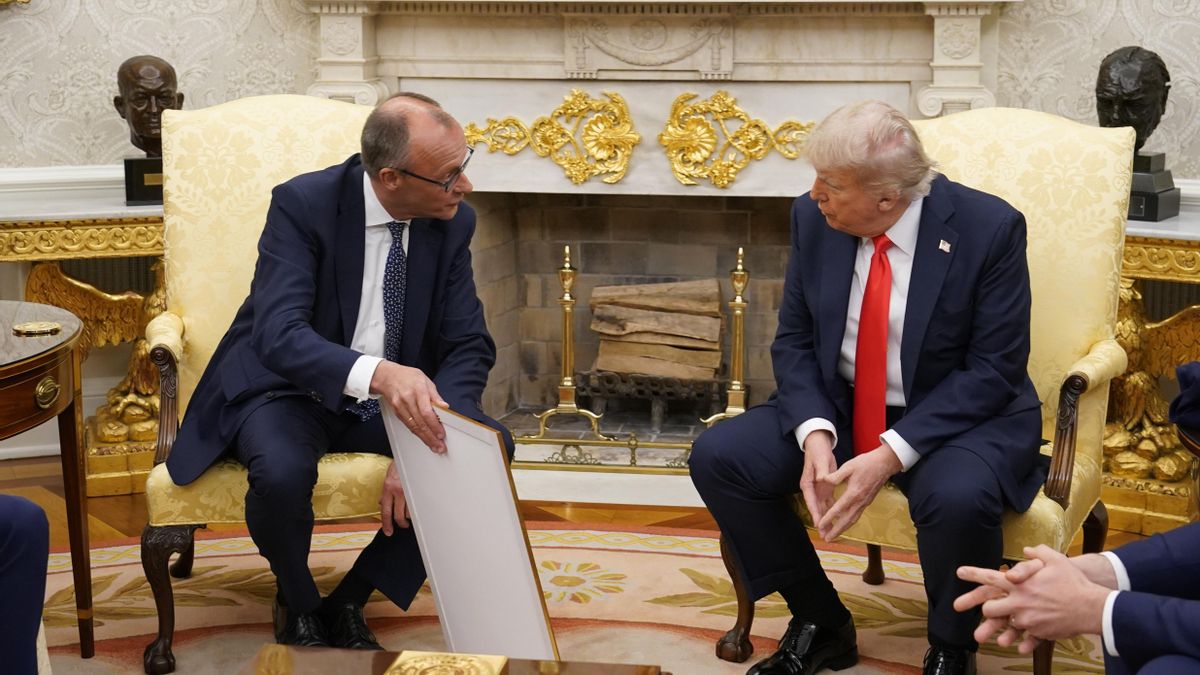
El presidente de EEUU da la orden de replegar 5.000 soldados de los 36.000 desplegados en Alemania como represalia por la censura del canciller alemán a la guerra de EEUU en Irán
Trump comunica al Congreso que la guerra con Irán “ha terminado” para sortear la autorización del Capitolio
5.000 soldados menos en Alemania. Es la orden que ha dado el presidente de EEUU, Donald Trump, y que este viernes por la tarde ha anunciado el portavoz del Departamento de Guerra, Sean Pernell.
Parnell ha declarado que el secretario de Guerra, Pete Hegseth, ha ordenado la retirada, en respuesta a «las necesidades y las condiciones sobre el terreno».
“El secretario de Defensa ha ordenado la retirada de aproximadamente 5.000 soldados de Alemania”, ha afirmado Parnell: “Prevemos que la retirada se complete en los próximos seis a 12 meses”.
“Les hemos instado a adoptar un enfoque práctico y pragmático para construir una OTAN liderada por Europa; no siguieron ese consejo, y este es el resultado”, cuentan fuentes del Departamento de Guerra a Newsnation, una cadena afín a la Casa Blanca, que asegura que los aproximadamente 5.000 efectivos serán reasignados desde Alemania a otros destinos, probablemente al territorio estadounidense o a la región del Indo-Pacífico.
El ministro de Defensa alemán, Boris Pistorius, ha respondido este sábado que si bien la retirada parcial de soldados estadounidenses de Alemania era “previsible”, su presencia en Europa, y especialmente en Alemania, “es de nuestro interés y del de Estados Unidos”.
La decisión del Pentágono deja claro que Europa “debe asumir más responsabilidad para velar por su propia seguridad”, ha señalado Pistorius en un comunicado.
El canciller alemán, Friedrich Merz, afirmó hace unos días que EEUU estaba siendo “humillado” por la guerra en Irán, lo que en la Administración Trump ha sentado muy mal por “ser comentarios inapropiados e inútiles”.
La medida también se produce en un momento en que el presidente Trump se siente frustrado por la falta de apoyo de Alemania y otros aliados europeos a su guerra en Irán.
Amenazas y ataques a España e Italia
Trump ha seguido este viernes con sus ataques y amenazas contra España. “Les parece bien que Irán tenga un arma nuclear”, ha acusado en falso Trump a los gobiernos de España e Italia: “Cualquiera que piense que está bien que Irán tenga un arma nuclear no es muy inteligente, y sería terrible en el futuro que se les permitiera tener un arma nuclear sin que eso supusiera un problema”.
“Si lo hubieran dicho amablemente, o si hubieran dicho: 'Vale, ayudaremos'”, afirmado Trump: “Y les ayudamos con Ucrania. Nos separa un océano. Es cosa suya. Es la puerta de su casa. Nosotros les ayudamos. Y cuando los necesitamos, no estaban ahí. Tenemos que recordar eso. Y por eso tenemos un gran problema, porque no necesitábamos ninguna ayuda con Irán. Teníamos a Irán controlado desde el primer día. Y ellos, en todos los casos, dijeron: 'No queremos involucrarnos'. Y, ya sabes, lo sorprendente es que ellos utilizan el estrecho. Nosotros no lo utilizamos. No lo necesitamos. Tenemos mucho petróleo, y ellos lo utilizan. Y uno habría pensado que dirían: 'Nos encantaría ayudaros', pero no lo hicieron”.