Portlan-based photographer Lanakila MacNaughton created the Women's Motorcycle Exhibition of her photos "to document the new wave of modern female motorcyclists." It's currently on view at the Riverside Art Museum near Los Angeles. To me, MacNaughton's photos have a timeless quality to them, depicting women who are basking in the thrill and freedom of the ride. You can see many of the images online: The Women's Motorcycle Exhibition
I’m back from my vacation, and jumping right back into Helen Andelin’s Fascinating Womanhood. I know I picked up some new readers over the holiday break (huge thanks to Fred Clark at the Slacktivistfor featuring me)– which, welcome!– so it’s possible many of you aren’t familiar with Helen. I did an introduction to my review series that has all the quick-and-dirty facts you’ll need, and if you’re interested in catching up on the series, you can find them all under my Archives–>Projects tab. I’ve been doing an extended review, examining Helen’s book for its damaging teachings.
~~~~~~~~~~
We’ve got about a third of the book left, and starting a completely new section: “The Human Qualities.” Up until now Helen’s been talking about the “Angelic Qualities,” and she divides these traits up thusly:
And she certainly starts off this section with a bang:
Femininity is a gentle, tender quality found in a woman’s appearance, manner, and nature . . . She has a spirit of sweet submission and a dependency upon men for their care and protection. Nothing about her is masculine– no male aggressiveness, competence, efficiency, fearlessness, strength, or the ability to kill her own snakes.
When I first hit this paragraph, I couldn’t imagine that Helen means exactly what she says here, but oh, she does. Does she ever. She actually does intend for women to be the exact opposite of what she views as “masculine.” Women are to be hopelessly dependent, weak, and incompetent, and she argues for this unabashedly.
This chapter– which is, thankfully, brief– focuses on what goes into “outward” femininity, and she spends most of her time focusing on clothes. Granted, this was hysterical the first time I read it. I ended up reading it out loud to Handsome (that’s my partner’s nickname here, for the newbies) in my best Margaret Thatcher/Julia Child voice. The main point that she makes, though, is that to “acquire a feminine appearance,” women must “accentuate the differences between yourself and men.” We can do this by wearing “only those things” that make the “greatest contrast to their apparel.” Because, after all, “[m]en never wear anything fluffy, lacy, or gauzy.”
Really, Helen? Never?
She tells us ladies to pay attention to our fabric choices– no tweed, herringbone, woolens, denims, plaids, or anything else ever used to make a suit, really, or worn for work at all. First of all, I’m really curious why these fabrics automatically disqualify an outfit from being feminine. I’ve seen Pinterest. And, just because Helen wrote this back in the 60s, I was curious. Was there something about how these fabrics were used that made Helen think that they could not possibly be used in a feminine way?
Nope. That’s all tweed. She looks pretty feminine to me. And warm. In Helen’s world, women can’t be warm, because we have to wear crisp cottons, linens, chiffon, lace, sating, angora, organdy, and silk. Can’t go around looking for comfort, warmth, or durability from our clothes– that would be unfeminine. Also, all those fabrics? They’re upper-middle class fabrics, and completely unpractical for anyone who does anything more physically strenuous than dust. Which I suppose is probably the point. It also just highlights that Helen is completely blind to her privilege– I have no idea how much money her husband made, but how on earth is an ordinary woman supposed to have a wardrobe made up of anything like what she’s describing?
But, it’s not just the fabrics. We can’t wear “drab colors used by men,” which amounts to anything in the “neutral” category. We should aim for prints, not solids, and assiduously avoid anything “tailored” or “mannish,” like pants or sleeves with buttons. She goes on to tell us to look for “trim”– lace, ribbons, embroidery, beads, and braiding– and all of that also says money to me. And, for our accessories, never carry anything that might look like a briefcase, and always be sure to top off our outfits with scarves, flowers, and jewelry.
Then she moves away from clothes and starts talking about “grooming.” She gives a head-nod to cleanliness and hygiene, with the ridiculously made-up assertion that the women on the Mayflower “may not have had enough water to drink, but they sneaked enough to wash their white collars and caps.” She really can’t help it with the “I have to twist historical realities in order to make my point!” thing.
However, the point of this section isn’t cleanliness, it’s makeup. Apparently, women have “for generations … applied eye makeup and used fragrances.” To a certain extent you could probably make that argument, with a caveat: for generations, noble or extremely rich women have used eye makeup and perfumes. So did men, for that matter. “Women today are essentially the same,” she says, though, and it’s because we do things like “have a wide variety of makeup” and “from time to time fix up their makeup.”
I’d like to take a moment to stop and talk about that.
I love me some makeup, don’t get me wrong. I even have a whole Pinterest board dedicated to the stuff, and I have literally spent days watching makeup tutorial videos on YouTube, just so I could learn to do this:
However, Helen remains completely silent on any sort of warning, or caution, about makeup. She endorses it without any reservations, and encourages women to apply it multiple times a day so that we can look pretty for our husbands (bottom of page 273). She completely ignores the reality of the beauty industry, which was just gaining steam in the 60s.
Most of what I’d say is in a video by the incredible Laci Green:
Helen falls right in line with what Laci critiques in this video: that the beauty industry has almost single-handedly created a completely unnatural definition of beauty. We spend an insane amount of time now making our lips redder, our eyes bigger– we learn about contouring so we can make our noses narrower and our cheekbones higher. And that… that is sad. It’s ended up getting to the point that when I did a google images search of “movie stars no makeup” what I got was an endless stream of Hollywood’s most glamorous looking as unattractive as possible. Or that I had a dudebro in an airport tell me I was obviously a lesbian because I idly commented that makeup wasn’t “worth the effort most days.” Or that whole studies have “revealed” that makeup is necessary in order for a woman to be respected. Or that 68% of men say that prefer women “without makeup” but 73% of men, when shown images, preferred women in makeup over no makeup at all. Or that, in college, three different men told me that I “obviously didn’t care” because I didn’t wear makeup.
When I asked them “care about what?” the response was “looking good” or “trying to get a guy’s attention.” Three men were offended enough by my lack-of-makeup-wearing to comment on it and tell me that it was bad that I didn’t care about getting a guy’s attention, and that this was somehow a mark on my character.
And Helen blows all of this off with an offhand “Your husband wants you to look pretty,” that he even “wants his wife to look pretty to everyone.”
We have to look pretty.
Not be strong, or capable, or competent, or efficient.
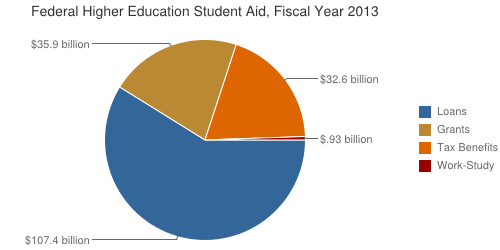
Here's an analysis of the New America Foundation's Federal Education Budget Project, a wide-ranging and thorough look at the way the government spends on education. It shows that the total take from American universities in tuition for undergraduate programs is $62.6B, while the Federal government is spending $69 billion on grants, aid loans, tax breaks and other funding.
The implication is that it would be cheaper to give away university education than to charge for it, but that's not quite right (federal education funding pays for more than tuition -- it also includes housing, food and other expenses, and the feds are already subsidizing colleges out of their $69B spend). But it does suggest that the education system is really screwed up, an expensive boondoggle that is optimized for paying bondholders who own student debt, rather than turning out an educated, resilient and adaptable nation.
Of course, we're not going to start from scratch (and I'm not even sure we should want to make state schools totally free). But I like to make this point every so often because I think it underscores what a confused mess higher education finance is in this country. On the whole, Americans seem to want affordable colleges that are accessible to all. But rather than simply using our resources to maintain a cheap public system (and remember, public schools educate 75 percent of undergrads), we spill them into a fairly wasteful and expensive private sector. At one point, a Senate investigation found that the for-profit sector alone was chowing down on 25 percent of all federal aid dollars.
If that story sounds awfully similar the problems the U.S. faces with healthcare costs, well, that's because it is similar. Americans have an allergy to straightforward policy solutions involving the public sector. And for that, we pay a price.
While there is a question of degree, it seems quite certain that Chromebooks had a pretty good 2013. Many are attributing this to price – most Chromebooks cost $300 or less – and they’re almost certainly right. It seems like yet another case of disruption: a cheaper, inferior product enters the market against a competitor with margins to protect, and over time becomes “good enough”.
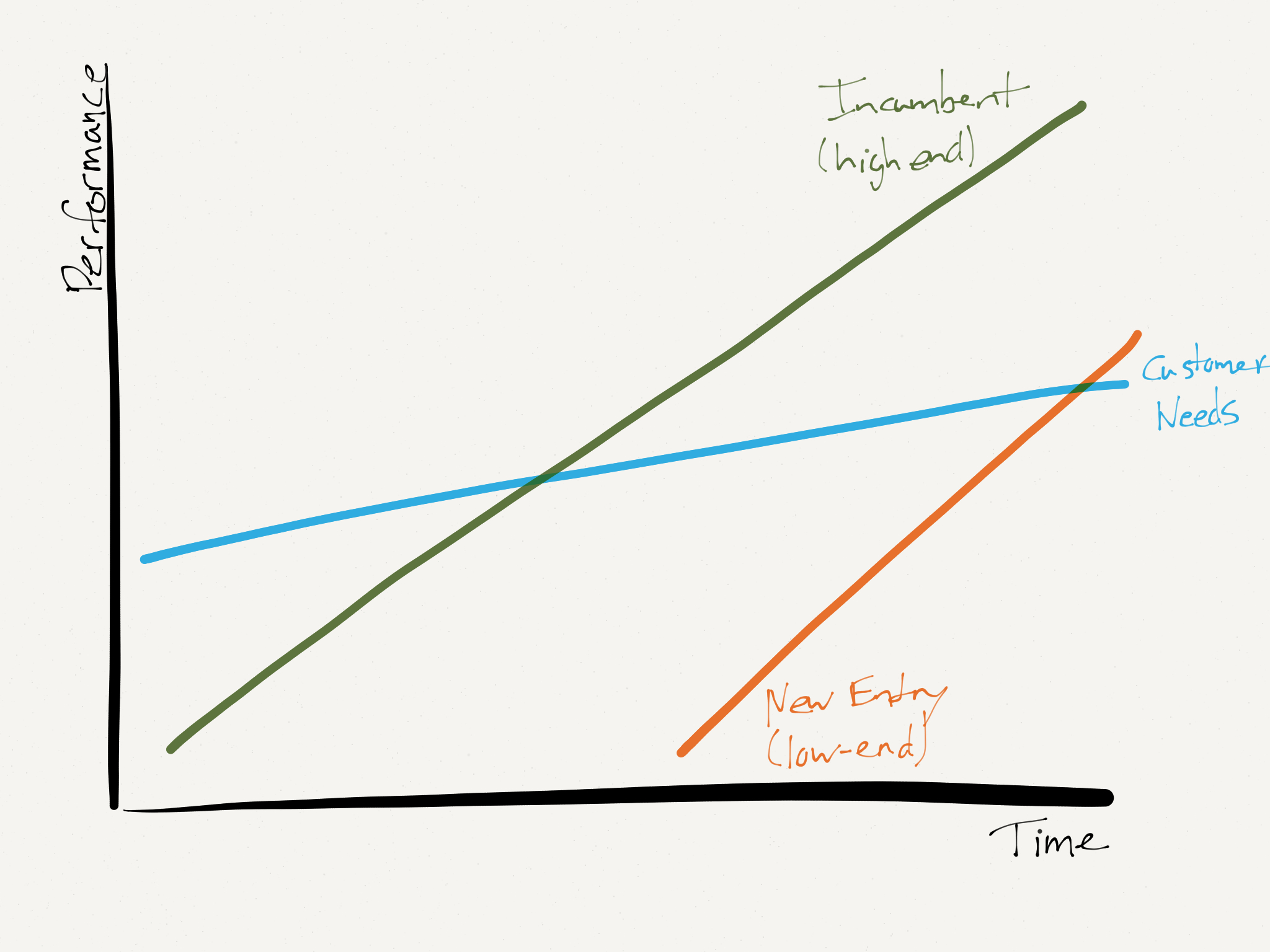
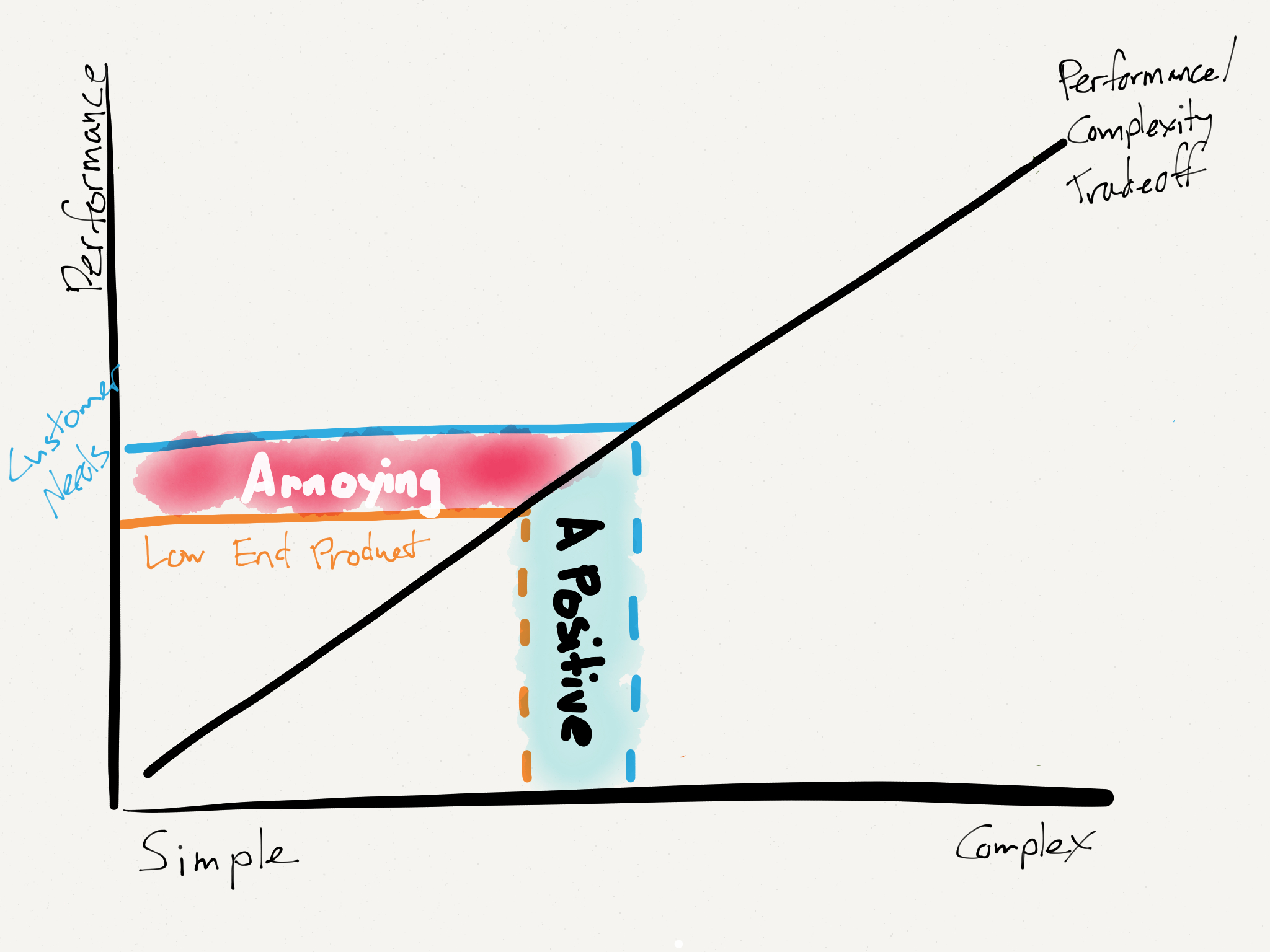
The path of disruption looks something like this:
Adapted from Figure 5-1 in the Innovatorʼs Solution, Christensen, Raynor
The key thing to notice is that products improve more rapidly than consumer needs expand. This means that while the incumbent product may have once been subpar, over time it becomes “too good” for most customers, offering features they don’t need yet charging for them anyways. Meanwhile, the new entrant has an inferior product, but at a much lower price, and as its product improves – again, more rapidly than consumer needs – it begins to peel away customers from the incumbent by virtue of its lower price. Eventually it becomes good enough for nearly all of the consumers, leaving the incumbent high and dry.
Like I said, Chromebooks fit this pattern perfectly: they do a lot less than PCs, but at a much lower price. Still, though, that doesn’t explain why I love the Chromebook, why the Pixel is my favorite product of 2013, and why Microsoft is missing the point.
Before I started this blog, I wrote an email review of the $250 Samsung ARM-based Chromebook. I just added that review to the archives – you can read it here.
I was quite effusive in my praise:
It turns out nearly everything I use a computer for is easily accomplished in a browser (but for one thing, and we’ll get to that later), and there is no better computer if all you want to do is use a browser.
Stepping back, that sentence is obvious: anything that is custom-made for one thing is likely to be better than something that is general purpose, and so it is in this case. Using a Chromebook feels light; there’s no system overhead, no juggling windows, no worrying about updates. It’s really hard to describe but I’m trying hard, because this feeling of lightness is ever so close to joy and makes the Chromebook delightful.
To be clear, not only does the Chromebook do just about anything I would want to do on a computer, it does so with basically a 0% chance of my screwing something up, or not understanding what is happening. I can only imagine what the feeling is amongst those who are scared of computers.
Still, though, I ultimately concluded that I would stick with a regular laptop.
I’m sure it’s obvious that I’ve been rather smitten by the Chromebook, certainly much more so than I anticipated. But no, I won’t buy a Pixel. It turns out I have a DSLR camera, and I shoot in RAW and depend on Adobe Lightroom to import my photos. That doesn’t run on a Chromebook, and never will (for that matter, it doesn’t run on an iPad either). And so, my next big purchase will be a new laptop; 95% of what I will use it for could have been done on a Chromebook, but that 5% is a killer.
This is the part where I tell you this article is being written on a Pixel (as have the vast majority of the articles on this site). And I love it.
What I got wrong in that conclusion was the same mistake nearly everyone in technology makes: I assumed that, money being equal, having it all – or, more accurately, more than I needed – was inherently better than having less.
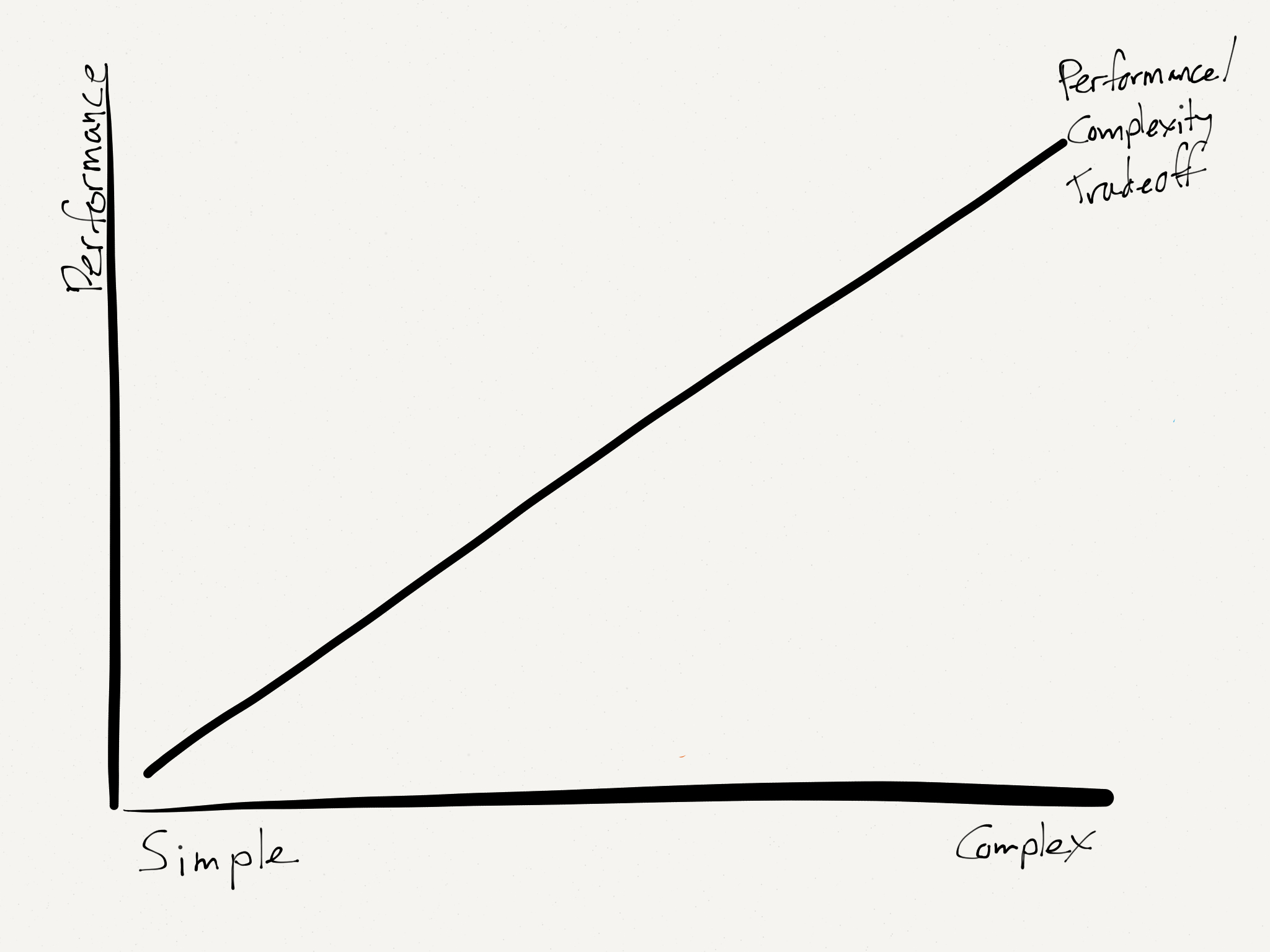
In disruption theory, the primary problem with the incumbent’s strategy is that the high-end product is simply too expensive relative to the increasingly good-enough new entry. But there is more going on than just price. Anytime you increase performance (which in this context, is perhaps better expressed as “features”), you are almost always trading away simplicity.
The Performace/Complexity Tradeoff
To take an extreme example, look at the iPhone: iPhone OS 1 was much less capable – no copy-and-paste, no multi-tasking, no app store – but it was also much simpler than any version that followed. And, as this example highlights, sometimes more complexity is a trade-off worth making.
The problem, though, comes when you overshoot your customer’s needs. In that case, it’s not simply that the additional performance is not valued by your customers; rather, the bigger problem is that the additional complexity that necessarily accompanies said performance is actively harmful to your customer’s user experience. Your product is not only becoming more expensive, but it’s actually becoming worse from your customer’s point-of-view.
The additional performance is not valued but the additional complexity is actively harmful to the user experience
Meanwhile, the new entrant may not have all of the required performance – like my Chromebook – but along with that missing performance comes additional simplicity. Paradoxically, the fact the new entrant has less-than-desired performance makes it even better from a user experience standpoint. And, when the performance gets close enough, that user experience advantage makes it an obvious choice over a higher end product that does more, in every sense of the word.
While the lack of performance may occasionally be annoying, it is offset by the increase in simplicity
And so, that’s why I have a Pixel. Over the next few weeks after I wrote that review, I found myself continually picking up that little Samsung instead of a laptop. I realized I quite preferred the simplicity and clarity of Chrome OS, and given that, and given the important role that computers play in my life, why wouldn’t I buy the best hardware to run said OS? My old laptop suffices for the few moments I even bother to pull out my SLR.
Clearly Microsoft sees the threat: ad-time during the NFL playoffs does not come cheaply, yet they thought it the appropriate venue to run this:
There is a longer version on the Scroogled website, but the above clip has the pertinent line:
“It doesn’t have Windows, or Office”
It has less, yet because of the web it still has just about everything today’s consumers need. Moreover, because it has less, it’s vastly easier – and safer – to use.1 Once you include all of the variables, including the user experience, it’s not an equation that favors Microsoft either now or especially in the future, as the web becomes ever more capable even as Windows becomes ever more complex.
This is also why the iPad so quickly disrupted PCs despite costing as much as a low-end laptop.
Recently, psychologists Dana Joseph of the University of Central Florida and Daniel Newman of the University of Illinois comprehensively analyzed every study that has ever examined the link between emotional intelligence and job performance. Across hundreds of studies of thousands of employees in 191 different jobs, emotional intelligence wasn’t consistently linked with better performance. In jobs that required extensive attention to emotions, higher emotional intelligence translated into better performance. Salespeople, real-estate agents, call-center representatives, and counselors all excelled at their jobs when they knew how to read and regulate emotions—they were able to deal more effectively with stressful situations and provide service with a smile.
However, in jobs that involved fewer emotional demands, the results reversed.
The more emotionally intelligent employees were, the lower their job performance. For mechanics, scientists, and accountants, emotional intelligence was a liability rather than an asset. Although more research is needed to unpack these results, one promising explanation is that these employees were paying attention to emotions when they should have been focusing on their tasks. If your job is to analyze data or repair cars, it can be quite distracting to read the facial expressions, vocal tones, and body languages of the people around you. In suggesting that emotional intelligence is critical in the workplace, perhaps we’ve put the cart before the horse.
I realized that the sudden urge I feel to check tumblr, reddit, my phone, etc. is often an anxiety response. It happens when I’m studying and realize I don’t fully understand. It happens when I’m in a crowd of people. It happens when I’m trying to write and don’t know how to proceed. That “quick” distraction is a coping mechanism to quell the anxiety felt inside. Although it’s hard to do, I think a better response is to ask myself “Why do I feel a need for that distraction?”
The American Dialect Society's 2013 Words of the Year (PDF) (voted on earlier this week -- "because" won, because Internet) had some fascinating entries.
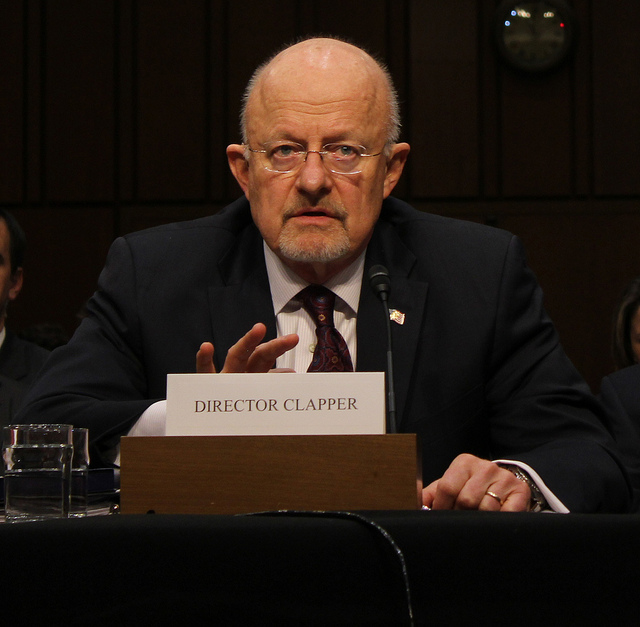
I liked "Most Productive" (such as "-(el)fie: (from selfie) type of self-portrait (drelfie ‘drunk selfie,’ twofie ‘selfie with two people’)" and "Most Euphemistic" (" least untruthful: involving the smallest necessary lie (used by intelligence director James Clapper)").
MOST EUPHEMISTIC demised: laid off from employment (used by the bank HSBC) least untruthful: involving the smallest necessary lie (used by intelligence director James Clapper) slimdown: reinterpretation of “shutdown” used on Fox News site
“MOST PRODUCTIVE (new category) -coin: (from bitcoin) type of cryptocurrency (peercoin, namecoin, dogecoin) -(el)fie: (from selfie) type of self-portrait (drelfie ‘drunk selfie,’ twofie ‘selfie with two people’) -shaming: (from slut-shaming) type of public humiliation (fat-shaming, pet-shaming) -splaining: (from mansplaining) type of condescending explanation (whitesplaining, journosplaining) -spo: (from thinspo) type of photo or video montage intended to inspire viewers to lose weight or stay fit (fitspo, sportspo)
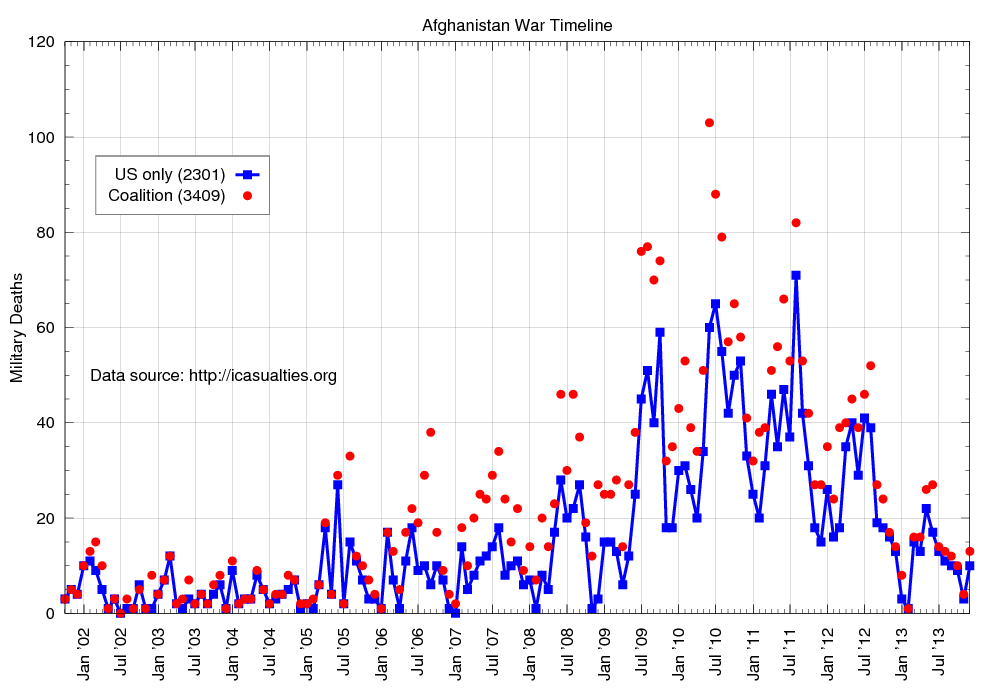
And of course, if the chart was scaled to show people from Afghanistan, all these numbers would be a flat blue line at the bottom..
Of the American soldiers who died in Afghanistan in December, the youngest was 19 years old. He was just 7 on the morning of the September 11 attacks, and yet somehow his death over 12 years later is connected to them. How have we allowed this?
I find it ironic (and mildly stupid) when people feel they’re at a social disadvantage if they eat differently from everyone else in a social situation, as if they have to conform to fit in.
No, conformity puts you at an enormous social disadvantage. Being different is a godsend. Eating differently can enhance your social life tremendously.
As a 17-year vegan and occasional raw foodist (I’m eating all raw this month), I know that eating differently from everyone else puts me at a huge social advantage. It makes people curious, and that frequently slides us into a conversation about food choices.
That by itself is pretty frakkin boring for me (and insanely predictable). However, that opening can be quickly transitioned towards talking about other aspects of personal growth and exploration, such as by asking someone, “So where do you tend to violate social expectations in your life?” Then you can find out some pretty interesting things about people. You can even bond over your different differences.
Best of all, people will remember you more easily. They’ll forget everyone else who eats like they’d expect. But you’ll be memorized.
If you eat differently than other people in your social circles, own that. Be proud of your conscious choice. See it for the huge advantage it truly is.
Don’t use social pressure as an excuse not to improve your food choices. That’s dumb. And definitely don’t use your food choices as an excuse to avoid socializing. That’s dumb too.
An organizer for a show contacted me to ask if I was interested in creating a piece, and gave me a list of themes around utopian queer futures. So I just wrote back that my piece is about how the anti-capitalist revolution would mean certain death for trans women who rely on hormones and HIV meds produced by capitalist pharmaceutical companies in order to live. Which is basically all I think about when cis queers talk about smashing the systems or whatever. Like, some of us need those systems to live.
idk about that actually
i mean, i identify with that view as far as relying on a capitalist system to meet my needs (we all do, we can’t escape that)
but it is worth pointing out, i think, that alternatives exist and that pharma companies that function within capitalism function very differently according to patent law nation by nation
i point this out because many people have died and will continue to die because drugs are not allowed to become generic (to actually benefit from the productive forces marshalled under capitalism, ironically) — the profit motive, the capitalist motive, ends up corrupting that possibility because that type of production does not help individuals in the capitalist class accumulate surplus value.
so while: 1. we absolutely do all rely on capitalism to meet our subsistence needs (that is how capitalism reproduces itself) and 2. simple destruction of capitalism (ala primitivist ideas) would exacerbate the immiseration of the structurally oppressed* (like by killing them) neither of these facts are necessarily reasons to be pro-capitalist or anti-socialist
i’m offering you the distinction so that you’re better armed to attack what i think is the real dangerous type of thinking (primitivism) but don’t overlook or become disillusioned towards a really useful type of thinking (socialism) that i think could serve transgender folks better than capitalism
*some folks even advocate this immiseration because they believe it would motivate the working class (a certain type of the poor) to political consciousness. this is usually referred to as accelerationism within socialist circles.
Near the end of November, several teammates and I were walking into a specialist meeting with Coach Priefer. We were laughing over one of the recent articles I had written supporting same-sex marriage rights, and one of my teammates made a joking remark about me leading the Pride parade. As we sat down in our chairs, Mike Priefer, in one of the meanest voices I can ever recall hearing, said: "We should round up all the gays, send them to an island, and then nuke it until it glows." The room grew intensely quiet, and none of the players said a word for the rest of the meeting. The atmosphere was decidedly tense. I had never had an interaction that hostile with any of my teammates on this issue—some didn't agree with me, but our conversations were always civil and respectful. Afterward, several told me that what Mike Priefer had said was "messed up."
You absolutely must find three minutes to watch Aamer Rahman defend the idea of reverse racism. Yes, he says, of course reverse racism is possible: “All I would need is a time machine…” The rest is glorious.
Tim Bray's "Content-free" is a great piece on why the term "content" is so objectionable. He raises some good arguments, but misses my favorite one -- one of the origins of the term "content" in technical speech is the idea that you can separate the "content" of a Web-page from the "presentation." Indeed, scripts that present "content" to users are sometimes called "decorators."
Now that the Web's in its second decade of common use, it's pretty clear that "content" and "presentation" are never fully separable. This is a lesson that was already learned in other media -- for example, when movies progressed from being a single, locked-off camera recording a stage-play and instead began to integrate the limitations and the capabilities of film into the "content" of that film.
John Perry Barlow made this point well in his introduction to my essay collection Content (a title chosen for largely ironic reasons). It's also a point that David Byrne makes very well in the brilliant How Music Works, where he discusses the move to record each musician separately and mix the "content" in the studio, and how that produced a manifestly different kind of music than music where all the musicians played together.
In other words, "content" isn't just pernicious for Tim Bray's excellent reason ("'Content' has the stink of failure; of hustlers building businesses they don't actually care about"), but because it implies a harmful untruth: that there is a clean line that can be drawn between "content" and "form." Where this untruth flourishes, people who produce "content" that is, in fact, optimized for the form of "content whose form will be determined later" go about claiming that they have found the neutral, form-free, platonic ideal of content. Instead, they've constrained their content by eliminating all the form-dependent elements, and thereby constrained their ability to communicate the full range of human ideas.
“Content” has the stink of failure; of hustlers building businesses they don’t actually care about. Which is icky and usually doesn’t pay off.
Enough with the negative findings, because there’s something important and positive to say here: If you’re building something that’s used for communication, and you find that people are using an idiomatic name for what they’re sending and receiving, you’re probably on to something.
But if you’re about “generating content” you’re dead.
I've said this before, but if you aren't reading Will Wildman's analysis of Orson Scott Card's Ender books, you are missing out. I finally picked up Speaker for the Dead so that I could follow along, and I am just WTF all over the place.
So I think I mentioned that I bought a copy of Speaker just to be able to follow along. I'm already WTFing all over the place.
It’s the funeral of her parents, she’s the last survivor in her family; yet all around her she can sense the great rejoicing of the people of this colony. Young as she is, does she understand that our joy is the best tribute to her parents?
[...] Five hundred dead, and more than a hundred masses for the dead here in this colony in the last six months, and all of them were held in an atmosphere of fear and grief and despair. Now, when your parents die, the fear and grief and despair are no less for you than ever before—but no one else shares your pain. It is the relief from pain that is foremost in our minds.
[...] Today everyone was rejoicing, except her.
No. What? No. No, this is not how people work. Has OSC really done ZERO reading on community responses to plague? Has he never met, like, actual people? This is so fucked up.
Everyone in the colony has either lost a friend or relative OR knows someone else who has. Whole families have probably been wiped out. OSC is seriously asking us to believe that peoples' relief at their being a cure would blot out any and all mourning. THAT IS NOT HOW PEOPLE, PLURAL, WORK. (Some individual people may work like that, but not every member of a few thousand strong community.)
Some people at this funeral would still be in mourning for those that were lost. Some would be in morning that the cure came too late. Others would feel that the cure came too soon; that if they were going to lose their child or spouse or best friend to the plague, it would have been better for it to take them as well.
Some people are going to be worried that a quarter of their community was wiped out by an unexpected illness. They're going to be worried that the illness might strike again--a different version, immune to this cure, or another illness entirely different from this one but just as deadly. They'd be in mourning for the xenologists for a self-interested, but genuine reason: the people who could best protect them from another outbreak are dead.
Some people are going to be disheartened and disenchanted by this illness. No doubt they came to this planet to start over, to start new lives--now those new lives are indelibly marked with a tragedy they never intended to experience. The people they brought with them, the people they most wanted in their new lives, are gone. Some people will feel they've lost their purpose to go on.
Some people are going to be flat-out terrified at this plague, regardless of whether a cure has been found or not. Bam! Here's a reminder that you are mortal. Here's a reminder that for all your science, your best-laid plans don't turn out the way you expected. Here's a reminder that even the best and brightest of your generation aren't immune to random bad chance.
The assertion that everyone is doing the happy dance because penicillin has been invented or whatever is FLATLY FALSE.
Pipo’s heart broke for her. Yet he knew that even if he tried, he could not conceal his own gladness at the end of the Descolada, his rejoicing that none of his other children would be taken from him.
Having said all that, I *am* willing to believe that Pipo is the most terrible person in the entire universe. I'm not ENTIRELY unfair to Orson Scott Card, you see.
(Seriously: Pipo is terrifyingly stupid. "Yay! The flu is cured so now none of my children will ever die because there are no other illnesses on this alien world!" OH. MY. GOD.)
OMG I FINALLY CAUGHT UP AND OMG OMG OMG. THIS IS SO AWFUL. BUT HERE IS A THING I WANNA TALK ABOUT.
Pipo and Libo speculated that perhaps the human example of sexual equality had somehow given the male pequeninos some hope of liberation. [...] It was a sobering thought—that doing their job faithfully might lead Starways Congress to forbid them to do their job at all.
I love -- and by "love" I mean I want to throw this book into a supernova -- how fucking self-centric this is. Pipo and Lido have potentially completely upset an entire society, there may be violent social upheaval on the horizon, people are almost guaranteed to die (because that's what social upheaval usually does), and an entire society may be irrevocably changed overnight. Possibly not for the better. Possibly not in ways which will ever allow them to be peaceful again.
And Pipo and Lido are worried about THEIR JOBS. Because of course they fucking are. And not even a kind of worry that allows them to also be concerned about the Little Ones who may die over this--they're 100% thinking about themselves. These guys shouldn't be allowed to study PLANKTON.
Also? That "doing their job faithfully" cracks me the fuck up. BECAUSE IT IS A LIE. Pipo broke the rules because he felt like breaking the rules would be better than saying "I'm sorry, I don't understand, possibly we have a language barrier problem?" when faced with a question that HE DIDN'T UNDERSTAND BECAUSE OF A LANGUAGE BARRIER PROBLEM. The book straight-up says he broke the rules:
In this case, Pipo could see no point but to tell the truth; it was, after all, a relatively obvious and trivial bit of information about human society. It was against the rules that the Starways Congress had established for him, but failing to answer would be even more damaging, and so Pipo went ahead.
That's not faithfully doing your job. That's deciding that the rules don't apply to you because you think the rules are wrong. You might be right that the rules are wrong, but you don't get to act all wounded about how you did your job by the book and now you aren't allowed to at all waa waa waambulance.
Also, AGAIN, if they aren't allowed to do their jobs, it's because despite everyone's (supposed) best efforts, HUMANITY HAS FUCKED UP ANOTHER RACE. Humanity would be 2 for 2 on fucking up alien races. That, to me, is just a touch more important to mourn than waa waaa waa we followed the rules but we're being punished anyway. You're not being punished, you selfish garbage monsters, your job just because impossible because the alien race you're supposed to be studying has now been irrevocably altered by your intervention.
WHICH IS A THING YOU KNEW ABOUT YOUR JOB GOING IN, FFS.
I'm closing the comments here because this discussion should happen in the awesome space that Will and Erika have crafted, but seriously come play with us because this is the shnizzle. Assuming you kids still say that.
As you'll remember, in the last couple months of the 2012 presidential election, a growing body of opinion on right decided that if you took the available public polls (which pointed to an Obama victory) and shifted them several points in Romney's direction, suddenly they started saying Romney was the likely victor. Thus was born the great unskewing movement of 2012. Of course, it didn't turn out well.
Did you know the US has a “Space Fence” to keep debris from colliding with spacecraft and satellites? Or at least we had one …
The Space Fence – which, despite its name, consisted of operational facilities on the ground, across the southern United States – [has] been shut down. In more than 50 years of operation, it had played a key role in the Space Surveillance Network, set up by the U.S. military to track man-made debris, and help keep valuable satellites and spaceships from smashing into it. According to the Air Force Space Command, which ran the network, the shutdown was made necessary by the 2013 budget sequester and will save $14 million per year in operating expenses. But some argue that the shutdown has reduced the capability of an already imperfect surveillance system, potentially increasing the risk of a costly collision. …
To make up for the shutdown, the Air Force Space Command directed two other radars – in North Dakota and Florida – to pick up the slack. However, because these stations are each based in a single location rather than spread out across the country, they cover less of the sky than the Space Fence did. This reduced coverage has led to “a loss when it comes to detecting and characterizing events like breakups,” said [space security expert Brian] Weeden. “You can’t predict when those kind of events are going to happen. It may be that we don’t have any major collisions over the next five years, and therefore it’s not a big deal. It may be that we have a bunch of them, and it’s going to be a really big deal.”
This comparison comes from the Guttmacher Institute, which finds that states passed 205 abortion restrictions between 2011 and 2013, more than the 189 laws passed between 2001 and 2010. Nearly half of the laws - 45 percent - fell into three categories: targeted regulations of abortion providers, bans on abortions after 20 weeks and restrictions on medical abortions. "States enacted 93 measures in these four categories from 2011 through 2013, compared with 22 during the previous decade," the Guttmacher analysis finds.
What made 2010 such a boom year for abortion restrictions? It's hard to pinpoint a particular reason, but a few factors do stand out. First, Republicans took control of lots of state legislatures in the 2010 midterm elections, allowing them to pass more restrictions than was politically feasible in the past. The Affordable Care Act also ignited a fight over abortion policy, particularly whether federal funds would help pay for abortions (when Americans used their tax subsidies to purchase health insurance coverage). That fight spilled over to state legislatures - the ones that Republicans had recently come to control - and many passed laws restricting insurance coverage of abortion.
Lastly, the focus on late-term abortion, with the 20-week abortion bans, likely played a role, too. As the Guttmacher Institute reports, those bans proliferated quickly, after Nebraska passed the first such law back in 2010. While the majority of Americans do support legal abortions in the first trimester of pregnancy, support for abortion rights falls significantly when you get into second and third trimester terminations. That drop-off in public support could have laid the groundwork for the success of the late-term restrictions.
It is amazing to witness the sheer depths of rage, denial and disgust many people experience as they see millions of people gaining access to affordable health care for the first time. Back on the 31st I wrote this overview which outlined how more than 9 million people now have health care coverage because of the Affordable Care Act (aka Obamacare). It now seems like the number is more like 10 million (more on that in a moment).
This evening I mentioned this number on Twitter and saw the full force of denial and outrage as many anti-Obamacare diehards made first contact with the actual number of Americans who've gained coverage under the program. More though, it was clear how in the absence of a dead in the water website to cry crocodile tears over, anti-Obamacare hardliners have suddenly gotten a whole lot angrier about Obamacare.
Join me after the jump and we'll review the numbers.
“We should round up all the gays, send them to an island, and then nuke it until it glows,” – Special Teams Coach Mike Priefer of the Minnesota Vikings, according to Chris Kluwe, a straight player who was fired after he spoke out for gay equality.
Bob Sáenz is in the enertainmen business. Check out his IMDB page here. Several acting credits. Some writing credits. Been working in Hollywood for over a decade. As a writer, he’s managed by John McGalliard of Chaotik Management.
Bottom line: Bob is someone inside the system. And yet, he did this:
End of September 2013, I decided to try the Black List. Although I am represented and a multiple film produced writer, I wanted to see for myself if the Black List could be another viable outlet for getting my scripts in front of decision makers. I placed my big commercial caper/romantic comedy “BAGGAGE” on the site, bought two reviews, and kind of forgot about it. Then a couple of weeks or so or later, I got my first email saying I had a review. It was an 8 and the reviewer had some very complementary things to say and some honest negative feedback about one thing in particular, a character flaw in my Protagonist. Still, made me happy. This time I paid more attention as I waited for the second review. It was a 7, with a lot of 8′s in the mix, including an 8 for Premise. The 7 was for the same negative thing the first reviewer didn’t like, same character flaw. It got me in the email blast and made me think.
So… I rewrote the script based on the specific criticism I got from both reviewers, posted the new version, and bought another review. Bingo. Another 8 and nothing about the previous character flaw problem. Made the email blast again. Got a couple more 8′s and a 9 from pros who downloaded the script and made it near the top of the list for over a month. Lots of downloads. Lots of views. And then…. an email and a phone call from a Production Company that has produced eight films in the last three years, all distributed, some very successful. They wanted to option Baggage. My manager stepped in for negotiations and a month later, in December, I signed the option agreement. Not only did the Black List get my script in front of a real honest to goodness production entity, but the thorough reviews gave me an opportunity to improve it to the point of getting optioned. Thank you.
The Black List works. It is what it claims to be. A new vehicle to get scripts out, seen, and maybe sold. No one can guarantee anything, but the Black List guarantees the chance and they make good on that promise.
Bob Saenz
Writers in Hollywood care about a lot of things, but perhaps the most fundamental concern is employment. Obviously you want to sell projects and land writing assignments yourself. But because you know what it’s like to not be employed, and you don’t wish that stressful fate on other writers.
Speaking personally, whenever I talk with a writer who sold something or landed a gig, l am genuinely happy for them, not only for the creative opportunity they have, but also the financial pressure on them is eased at least for a while.
So here is Bob Saenz, who I do not know personally, but I could not be more pleased by this latest turn of events. He took matters into his own hands by posting his script on the Black List website. He revised the script per feedback he received there. Eventually he set up the project.
And the reality is that deal would almost assuredly never come to fruition had it not been for the Black List website.
Is it any wonder that the Black List is the only platform of its type to be in partnership with both the Writers Guild of America, East and the Writers Guild of America, West? The WGA is a labor union, it represents writers looking for work. The Black List, as Bob Sáenz’s story demonstrates, provides yet another opportunity for writers, even those positioned inside the business, to get noticed and sell a script or land a gig. The fact over 20 writers outside the system broke in last year using the Black List website speaks to the breadth of possibilities the service offers.
Inside the business. Outside it. Living in Los Angeles. Living elsewhere, even Europe. The Black List website offers a direct conduit to the buyers. All you need to do is nail a script. The rest takes care of itself.
As I’ve stated all along, I do not make a dime off the Black List. My endorsement of it is based on many factors, not the least of which is it can lead to employment and generate revenue for writers… like Bob Sáenz.
On one highly pragmatic level, that’s pretty much what the craft is all about.
Thanks to Bob for sharing his story. You may follow his blog here.
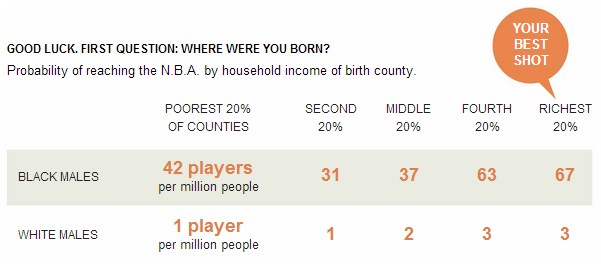
Part of what makes professional basketball appealing, for kids who love to play as well as fans, is the idea that a person can come from humble beginnings and become a star. The players on the court, the narrative goes, are ones who rose to fame as a result of incredible dedication and extraordinary talent. Basketball, then, is a way out of poverty, a true equal opportunity sport that affirms what we think America is all about.
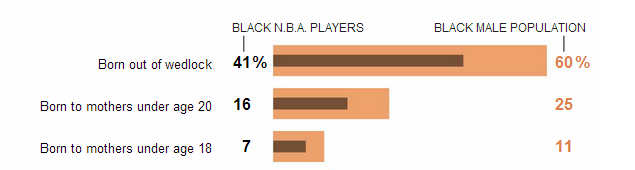
Seth Stephens-Davidowitz crunched the numbers to find out if the equal opportunity story was true. Analyzing the economic background of NBA players, he found that growing up in a wealthy neighborhood (the top 40% of household incomes) is a “major, positive predictor” for success in professional basketball. Black players are also less likely than the general black male population to have been born to a young or single mother. So, class privilege is an advantage for pro ball players, just like it is elsewhere in our economy.
.
The richest Black men, then, are most likely to end up in the NBA, followed by those in the bottom 20% of neighborhoods by income. Middle class black men may, like many middle class white men, see college as a more secure route to a successful future. Research shows that poor black men often see sports as a more realistic route out of poverty than college (and they may not be wrong). This also helps explain why Jews dominated professional basketball in the first half of the 1900s.
LeBron James was right, then, when he said, “I’m LeBron James. From Akron, Ohio. From the inner city. I am not even supposed to be here.” The final phrase disrupts our mythology about professional basketball: that being poor isn’t an obstacle if one has talent and drive. But, as Stephens-Davidowitz reminds us, “[a]nyone from a difficult environment, no matter his athletic prowess, has the odds stacked against him.”
Looking at 188 countries around the world, [Robert] Lawson and [Saurav] Roychoudhury examined which ones require people to apply for a visa before they visit. Then they studied how many tourists travel from one country to another. Allowing for factors such as population, income, the size of bilateral trade, economic policies, a measure of democracy, and an indicator of world-class sites of cultural importance, they found that tougher visa requirements imposed on potential visitors from a given country are associated with considerably less tourism from that country. In short: Demanding a visa from a country’s travelers in advance is associated with a 70 percent lower level of tourist entries than from a similar country where there is no visa requirement. The U.S. requires an advance visa from citizens of 81 percent of the world’s countries; if it waived that requirement, the researchers estimate, inbound tourism arrivals would more than double, and tourism expenditure would climb by $123 billion.
This may seem trivial, but it isn’t with respect to American soft power. Most Dishheads are American citizens, so they don’t fully see what it is like to enter the US as a non-citizen. It’s a grueling, off-putting, frightening, and often brutal process. Compared with entering a European country, it’s like entering a police state. When you add the sheer difficulty of getting a visa, the brusque, rude and contemptuous treatment you routinely get from immigration officials at the border, the sense that all visitors are criminals and potential terrorists unless proven otherwise, the US remains one of the most unpleasant places for anyone in the world to try and get access to.
And this, of course, is a function not only of a vast and all-powerful bureaucracy. It’s a function of this country’s paranoia and increasing insularity. It’s a thoroughly democratic decision to keep foreigners out as much as possible. And it’s getting worse and worse. Since I first came here in 1984, it’s a different world. Clinton’s 1996 law made matters far worse; 9/11 did the rest; and the Obama administration hasn’t changed much of anything.
Well, think of it like this: the NIMONA universe is both very advanced, but also very old-fashioned and traditional. So you have the Institution, which is very wrapped up in the notions of chivalry and knightly honor and royalty and all the traditions that come with that, even if they’re not practical or relevant. And I think that’s reflected in their social politics as well. So on the level of the general population, their society would be pretty progressive toward LGBT+ issues, more so than a lot of modern societies, I’d say. But if you’re within the Institution or a person of any kind of political importance, it’s the opposite. They consider their traditions to be the very thing that makes them better than all the commoners, so queer relationships or expressions are looked down upon as beneath them - something that may be okay out there but not in here, thank you very much.
In practice, obviously that’s not really true - there’s a lot going on behind the scenes at the Institution - but the important part is keeping up appearances of upholding all of these sacred unchanging traditions. And the general populace just kind of buys into that because the chivalric facade is very romanticized and idealized, and they do hold their public figures to that standard.
For some years I had an insurance policy. It would protect a part of my income if I found myself unable to work. As a client services business, with a business model that involved swapping time for money, this seemed sensible. If I physically couldn’t do any work, I wouldn’t be making any money. The terms of this policy, however, meant that if I was making money due to revenue not tied to me physically working, I wouldn’t be able to claim.
At the beginning of 2013, my company finally made the transition away from client services to products. Our product, the CMS Perch, had started out as a side project and over four years had grown to the point where it could now be all we did as a company. With my income no longer linked to my ability to write code all day, it would be hard to make an insurance claim, so I cancelled the policy. Our product had essentially replaced the need for that policy. Little did I know what perfect timing I had in making that decision.
Best-laid plans
We headed into the new year full of plans, mostly regarding shipping lots of new features and related add-ons for the product. I also had personal plans. I’m a keen runner and I was training for my first marathon, with a coveted ballot place in the London Marathon. I had my training plan all mapped out.
All of our plans for the year were turned on their head when I went out for a run one snowy day near the end of January, fell on ice and shattered my elbow. I was rushed into six hours of surgery that day and didn’t get back home until five days later. I am fortunate to still have any use of my right hand. Almost a year later, after a further two surgeries, I still have limited use of my dominant arm.
Had we still been a client services business, this would have been a disaster. Most of our client work involved me being able to write code, and quickly. Writing words one-handed is annoying; writing code is near impossible. Even now with my fancy split keyboard and using Sticky Keys on my Mac, I’m slow and can only work for short periods. To our product business however, the effect of my injury has been negligible. Our product effectively insured us against my inability to work in the way I had done for the previous 12 years.
Diversity is strength
I’m not the only business owner who has discovered the power of products during difficult times this year. Fellow bootstrapper Garrett Dimon—founder of Sifter—had an unbelievably tough year following a routine ankle surgery that led to complications. As he wrote in early December,
The other benefit of building a business, especially with recurring revenue that doesn’t depend on your hours worked, is that the income keeps coming in even if you’re disabled. In my case, I’ve barely been able to work for the last four months [...] our income didn’t change at all because the business just kept on chugging.
Brennan Dunn, whose products include Planscope and the e-book Double your Freelancing Rate, noted in his end of year review post that in March his wife was hospitalized for a month, and they have two children under the age of five.
Needless to say, the hospitalization made me really happy that I didn’t have a full-time job. There’s no way I could have taken on the responsibility and disappeared for a month with one.
For all three of us, our products gave us security, an insurance policy against life suddenly taking a turn we couldn’t have anticipated.
Strategies that work
In some ways my injury has forced me out of the code and made me think more strategically about the business. As two developers, writing more code is our first response to anything. Spending time thinking about marketing, exploring new ways to help our users, or working on the infrastructure around the product can be just as, if not more, valuable. I’ve had to accept that I can’t do everything, and be more careful about what I say yes to so that I can focus my time on what’s most important.
I’m not yet 40. Being a runner, I’m not struggling with the effects of declining fitness like many people my age, and fortunate genetics mean I am robustly healthy. Until this year, I believed that my health getting in the way of the crazy schedules and deadlines I like to set myself was something that was a long way off in the future. I was fortunate that, in discovering I am not as unbreakable as I thought, the side project that became our business enabled me to carry on.
As Harry Roberts noted earlier in the year, in the web industry we do a lot of things for free. We give away a lot of stuff, and that’s good. However, creating side projects that do bring in some revenue is not something that you should shy away from. Your side project might just allow you to ride out a storm and continue doing the work that you love.
You've saved and scrimped and spent hours on the plane, and now you're in Paris for the trip of a lifetime. It's likely you'll never be here again, and you've only got three days.
Question: How much time are you going to spend in the hotel room watching reality TV on cable? For that matter, how much time will you spend checking your email, grooming your social network status or browsing around online to see what's new?
You only have three days.
Now it's a week later, and you're back at your desk. Consider the fact that the most interesting or most beloved or most trusted people you will ever know are sitting right next to you, or can be invited over in just a few minutes. Is it worth postponing that once-in-a-lifetime interaction so you can do a Netflix binge or watch some YouTube videos?
So there’s this law in the US called EMTALA. The Emergency Medical Treatment and Active Labor Act. Basically, it says that if someone comes to an ER requesting treatment, they must be seen by a doctor, and if they are found to be having a medical emergency or in active labor, they must receive whatever care is necessary to stabilize their condition and/or deliver their baby. This is regardless of ability to pay, citizenship, criminal record, anything. You show up, you see the doc. You’re sick, doc treats you. End of story.
As someone who works in an ER, I’m glad for this; it may cost us a lot of money and bring us a lot of inappropriate (in the sense that they could be treated more effectively in a non-ER setting) patients, but at least there isn’t a pile of corpses outside the door. At least I’ve never had to tell a patient “your credit check came back and… sorry. Good luck with that heart attack.”
EMTALA is where we draw the line as a society. It’s where we say that no, we are not willing to watch people die of easily cured diseases, or starve to death, or freeze. We’re willing to let it happen when we’re not looking, and we’re willing to let people go pretty damn sick and hungry and cold, but if someone comes to our doorstep dying… at the end of the day we aren’t quite willing to let them die there.
This has economic consequences. Hospitals spend literally billions every year on uncompensated ER care under EMTALA, and they don’t eat that loss; they pass it on to every other patient in the form of higher bills. If you get medical care or pay Medicare/Medicaid taxes, you’re paying for uninsured people’s care right now.
And you’re not paying for it to be done well. An ER visit costs far more than a visit to a primary care doctor. And ERs don’t provide preventative or rehabilitative care, so people whose only healthcare is the ER are going to visit more often and be sicker when they visit. Forcing people to go to ERs because they can’t afford anything else is not a cost-saving measure. It’s spending money on providing worse care.
So the question is not “should we pay for poor people’s healthcare?” Because of EMTALA, that isn’t a choice. (We could repeal EMTALA, but then we’d have to admit that we don’t mind the occasional corpse on the streets, and I like to think society isn’t quite ready for that.) We will pay for the care of people who can’t pay the bill themselves. The only choice is how we pay for it.











 Tim Bray's "