Shared posts

19 Jan 22:17

"Tone" Is the Tool of the Oppressor

by Arthur Silber
Consider a well-known, even hackneyed version of a confrontation scene familiar in novel and film. A wife finally faces her husband and demands that they speak honestly about his serial adultery. (The couple need not be married, nor does it have to be a heterosexual couple.) Assume for our purposes, as this kind of fiction also assumes, that both parties explicitly view the relationship as a committed one, and that both parties view monogamy as a critical element.

In this scenario, the party guilty of adultery has engaged in a lengthy series of lies and manipulations. He has deceived his partner in countless ways. His behavior has rendered the committed relationship itself a lie, but he has sought to maintain the relationship's facade. To do this, he had to prevent his partner from learning the truth; in this way, he deprived his partner of both knowledge and the possibility of action -- that is, action she might have taken had she known the facts.

But the partner has nonetheless learned the truth. She decides to question him about his betrayals. At first, he denies that he has been unfaithful, telling her still more lies. But she is prepared for that, and she tells him the facts she has learned, which prove the reality of his affairs beyond all dispute. He seeks to minimize his betrayals and offers one threadbare rationalization after another ("We were having some problems then," "I was very upset about losing that promotion," "You had become very emotionally distant"). The partner points out that he never discussed these excuses with her openly and honestly, and that if she had become "emotionally distant," that was undoubtedly the result of his numerous lies and the resulting loss of intimacy between them.

As he continues to offer excuses and to minimize his own actions, his partner grows more and more upset. As her frustration with her partner's evasions and refusal to deal with her honestly increases, her voice rises and she speaks more heatedly. She might even yell at her partner more than once.

Now the husband/partner has his escape route, and he seizes it immediately: "I can't talk to you when you're like this. You're getting hysterical. Perhaps you should rest for a while, and we can try to talk about it when you're calm again. I hope you'll have more perspective about this later."

He's objecting to her "tone" -- and this is the voice of oppression. Keep in mind that, in this particular scenario, he is the guilty party. He has had a series of affairs and one-night stands, he has betrayed their commitment to monogamy, he has deceived his partner over a lengthy period of time, and he has ceaselessly manipulated her. When confronted, his manipulations and deceit continue. He will not admit the truth, and he seeks to avoid the consequences of his partner knowing the truth. Yet now -- when she speaks about the truth and her understanding of it -- he seeks to make the resulting conflict her fault. And he does more, and worse, than that: he condescends to her and insults her, accusing her of "hysteria," of being "out of control," of failing to behave "like an adult."

I was put in mind of this phenomenon by this tweet ("Silber reminds me that [it] is always 'libertarian' men who discuss 'tone' whenever a woman speaks.") and by watching Blue Jasmine yesterday. The Woody Allen film, which features a spectacular performance by Cate Blanchett, has a scene like the one described above. It's complicated by the fact that the Blanchett character is portrayed as genuinely unstable, but you can subtract that element from it and the basic dynamic is identical to the scene in countless other films (and books). And I must note that, as engrossing and well-done as the film is, the fact that Blanchett's character is the unstable one is another manifestation of our culture's basic orientation. The unfaithful husband, played by Alec Baldwin, is a financial criminal, who has stolen money from many people and ruined their lives. He is finally caught, and he commits suicide in jail. He is not precisely a model of mental health or moral probity. [Blue Jasmine is essentially a character study, and the story details won't detract in any noticeable way from your enjoyment of the film. And I think it is worth seeing simply for Blanchett's remarkable performance. But skip the next paragraph if you don't want to know anything else about it.]

But the focus of the film is not on the husband, but on the unstable, mentally ill wife. Allen adds a story element toward the end which makes this focus notably worse. The husband is caught because the wife reports his activities to the FBI. She does so after she realizes the extent of his infidelities. The "feel" of these developments is that she reports him out of spite, merely as a way to "get back at him." She later expresses regret that she reported him at all. Never mind that he actually was a vicious crook, and that he would have continued to ruin more people's lives had she not reported him.

In these respects, Allen's screenplay is yet another predictable result of a culture which views women as fundamentally evil, a foundational belief whose roots I discussed in detail in "Kill that Woman!" Women are "weak," "too emotional," prone to "hysteria," often "out of control." It is not coincidental that these same criticisms are often leveled at gay men; in a related essay, I remarked: "All too often, those whom we would destroy, we first feminize." In "Kill that Woman!," I discussed Oscar Wilde's superb retelling of the Salome story. These were my concluding paragraphs concerning the wider lesson:
It is inconceivable to Herod -- just as it is inconceivable to most men -- that the fault or the responsibility should be his. The fault and the responsibility must be Salome's. The fault and the responsibility must always be woman's. In any confrontation between a man and a woman in our culture, there is only one party to be punished: the woman. ...

Kill that woman. That is the motive, and that is the goal. To the extent women are successful, to the extent they threaten men's monopoly on power and control, they must be demeaned, diminished, treated with unending cruelty, and mocked. When all else fails, they must be eliminated. Kill that woman.

So ends our story for today.
The shift from the facts and arguments at issue to the "tone" with which they are being discussed is a common method by which a member of an oppressing class seeks to maintain domination and control. It is encountered in many relationships, and not only between romantic partners. It is a ploy often used by a boss in a work situation when a subordinate dares to complain about unjust or even outrageous treatment ("Yes, of course I understand your complaint, but why do you have to get so angry about it? We can't discuss it if you're going to get so upset."). And it comes up in ways that are profoundly sickening.

Several years ago, I wrote about the story of a young boy named Billy Wolfe, who became the target for continual, viciously cruel, often physically damaging bullying beginning when he was only 12 years old. (See "Let the Victims Speak.") I reprinted an especially powerful and disturbing letter about this horrifying story that had been sent to the NYT in response to its report:
The fortunate thing for Billy Wolfe is that he has supportive parents who are showing him acceptable ways of fighting back. The tragedy is that there are far too many kids in similar situations who, for one reason or another, can't turn to their parents.

As a former teacher in the New York City school system, I know how reluctant school officials often are to take definitive action in such circumstances. Yet, when a victim explodes or acts out in unacceptable ways, these same officials are shocked and indignant.

Why can't the bullies who make Billy's life miserable every day be suspended from school until they learn that intimidating and tormenting their peers will not be tolerated?
Keep in mind the other kinds of examples of this dynamic that I've mentioned as you read my comments on this letter:
Focus on the critical sentence: "Yet, when a victim explodes or acts out in unacceptable ways, these same officials are shocked and indignant."

What exactly are these "unacceptable ways" of exploding or acting out? Who decided they were "unacceptable"? Why is it that "reluctant school officials" will not "take definitive action" against the bullies -- thus tacitly conceding that the bullying itself is not all that "unacceptable" -- while the same officials are "shocked and indignant" when the victim protests too strongly?

This pattern, and certain of its origins, will be found throughout history, in every culture around the world. The pattern is a simple and deadly one: the oppressor -- that is, those who are in the superior position, whether they are parents, school officials, or the government, or in a superior position merely by virtue of physical strength -- may inflict bodily harm and/or grievous, lifelong emotional and psychological injury, but the victim may only protest within the limits set by the oppressor himself. The oppressor will determine those forms of protest by the victim that are "acceptable." ...

[T]here is another reason the victim cannot fully experience and give voice to his anger -- and that is his certain knowledge, conveyed by parents, teachers, the government and everyone else in a position of authority, that displays of such emotions are not permitted. If you go ahead and reveal how angry you are in defiance of the prohibition, you will be severely punished for your transgression.

Think about this very carefully for a moment. The oppressor may inflict unimaginable cruelties on innocent victims -- but the victims may only protest in ways which the oppressor deems "acceptable." The profound injustice is obvious, but not in itself remarkable or unexpected: this is how oppression operates. But ask yourself about the deeper reason for the prohibition. This is of the greatest importance: the victims may only protest within a constricted range of "permissible" behavior because, when they exceed the prescribed limits, they make the oppressors too uncomfortable. They force the oppressors to confront the nature of what they, the oppressors, have done in ways that the oppressors do not choose to face.
In the earlier essays, I emphasized the parallels between the bullies we encounter in our personal lives and the behavior of the State, and particularly the United States government; you may consult the earlier articles for details.

Let us briefly consider two examples from politics which follow the identical pattern. The U.S. government sends its military across the world, thousands of miles away, to bomb, subjugate and/or invade nations and peoples that have not threatened us, and could not threaten us in any serious manner. Yet when certain of the people who live in these other countries dare to fight back -- and especially when they attack and even murder U.S. personnel -- they are written off as "terrorists" (or, at best, common criminals) who deserve only death. Our ruling class demands that those the U.S. government bombs or seeks to destroy in other ways (by means of economic blockades, for example) acknowledge our noble and good "intentions," and that we supposedly act on their (that is, the oppressed people's) behalf. Any form of resistance to the U.S. drive to global hegemony is "unacceptable."

We saw the same phenomenon in connection with the Occupy movement several years ago. The ruling class increasingly brutalizes and impoverishes vast swathes of the U.S. populace, but when a very small group of individuals protest -- and when a very few individuals within that very small group commit the "outrage" of breaking a few windows or causing other very minor physical damage -- all we hear about (even from many "progressives") is how detestable it is that the protesters have acted in "violent" ways. Such violence -- not the violence committed every hour of every day by the government, at all levels, but the very limited, exceedingly brief "violence" of a minuscule number of protesters -- is utterly "unacceptable."

Whether or not it is the intention of those who criticize the victims for their response, in all these cases (and in many others that you can supply) the result is to deflect attention from the original crime and the original perpetrator to the behavior of the victims themselves in response to their victimization. One necessary effect is the minimization of both the original crime and the guilt of the original perpetrator, and a hugely disproportionate focus on certain, usually very limited tactics employed by those who are the victims. The profound injustice involved should be obvious. What must also be appreciated is the significant degree to which this shifting of focus redounds to the benefit of the oppressors, and the manner in which all of these examples constitute "blaming the victim." And this is the same mechanism we see in the fictional confrontation scene of the kind I described, as well as in the real-life counterparts I've mentioned.

Without any exceptions that I can think of, at least insofar as discussions of political matters are concerned, complaints about "tone" ultimately serve the same purposes. Several days ago, I discussed such complaints with regard to serious, systematic criticisms of the leak methodology adopted by Greenwald & Co., particularly those criticisms offered by Tarzie and me. I urge you to keep in mind what I consider to be the inevitable result of the manner in which Greenwald & Co. have chosen to publish only a tiny fraction of the documents Snowden provided to them. This is the brief summary of those final effects that I offered in one article:
Consider the enormous value of the hugely restricted publication of the Snowden documents to the various States involved. Rusbridger, Greenwald, et al. all trumpet the great triumph represented by the "debate" publication has engendered -- the clamor of public voices demands "reform," so committees will be formed, investigations will be undertaken, and when the dust has settled, life for the States involved will go on almost exactly as before (remember: if the NSA were disbanded today, identical surveillance would continue via other agencies and institutions of power) -- and the States will be able to claim that the public knows the "truth," and their activities now have the full blessing of informed public consent.
I think you might agree that this result will be disastrous in the extreme. If the Snowden material had been disseminated in a much wider (and faster) manner, it might well have been the catalyst for the beginnings of a strong resistance movement. As things stand now, the Snowden leaks are being frittered away in a way that ensures the States involved will not face a serious threat of any kind in the foreseeable future.

Both Tarzie and I have argued our cases at considerable length. (The previous post contains links to some of our articles, so you can peruse those arguments as you wish.) But now all we hear about is our "tone," and that we occasionally have been cutting, or mocking, or harsh in our treatment of these issues and some of the persons involved. Remember: these issues concern a brutal Death State and the ways in which we might finally be able to mount a challenge to its actions that could cause genuine consternation among the ruling class. Also remember that the Death State claims absolute power: the power to kill anyone it wishes, any time it wants, for any reason it chooses. But it appears that if we wish to protest against these hideous crimes -- and if we dare to criticize those who turn a magnificent opportunity for challenging the monstrous ruling class into yet another avenue for meaningless "debate" and "reform" -- we can only do so while speaking in the dulcet tones of the poet who murmurs of gentle spring breezes.

I consult history, and I look at the lessons of the past. I know -- as you do, too, as does anyone who considers the question honestly -- that such a poet ends up mangled and probably dead, choking in the end on his own sweet phrases in a blood-soaked gutter. We might end up dead as well, but at least a few more people may know that we've been here, and that we had something of consequence to say.

Given the stakes involved, when I see people complain about my "tone," I say: Fuck that. And given the horrifying, ongoing crimes of the ruling class, if you truly think the "tone" of a few protesters against these vast crimes is a subject that demands your oh-so-earnest attention and correction, I also say: Fuck you.

Oh, dear, oh, dear. Am I making some people uncomfortable? Christ, I hope so.
13 Jan 04:38

"If you are not a Christian, you are going to hell. It’s not unloving to say that. It’s..."

“If you are not a Christian, you are going to hell. It’s not unloving to say that. It’s unloving to not say that.”

- Pastor Mark Driscoll
13 Jan 02:55

Anonymous Hacker Who Exposed the Steubenville Rapists Gets More Prison Time Than Rapists

12 Jan 20:18

"You deserve to know my science for interpreting sacred texts. It is called a “hermeneutic.” Without..."

“You deserve to know my science for interpreting sacred texts. It is called a “hermeneutic.” Without an honest and declared hermeneutic, we have no consistency or authority in our interpretation of the Bible. My methodology is very simple; I will try to interpret Scripture the way that Jesus did. Even more than telling us exactly what to see in the Scriptures, Jesus taught us how to see, what to emphasize, and also what could be de-emphasized, or even ignored. Jesus is himself our hermeneutic, and he was in no way a fundamentalist or literalist. He was a man of the Spirit. Just watch him and watch how he does it (which means you must have some knowledge of his Scriptures!). Jesus consistently ignored or even denied exclusionary, punitive, and triumphalistic texts in his own Jewish Bible in favor of texts that emphasized inclusion, mercy, and justice for the oppressed. He had a deeper and wider eye that knew what passages were creating a highway for God and which passages were merely cultural, self-serving, and legalistic additions. When Christians state that every line in the Bible is of equal importance and inspiration, they are being very unlike Jesus…”

- Richard Rohr: The Jesus Hermeneutic
12 Jan 02:54

"I don’t mean “lose the Web” as in “lose it as a fun place to hang out”..."

“I don’t mean “lose the Web” as in “lose it as a fun place to hang out” or “lose it as a popular medium” — I mean “lose it because it will become a trojan horse to smuggle malware into the computers we live inside of and that live inside of our bodies.””

- Cory Doctorow
11 Jan 23:27

The Brilliance of Dwarf Fortress

The Brilliance of Dwarf Fortress:

since last night:

- a dwarf chased a cat for many years, went insane, and devastated the population of my fortress
- i falsely convicted my great expedition leader, masof
- a wereiguana plague has gripped my fortress for some time, and now my squadron is fighting goblins

11 Jan 17:43

"Every time I visit Google+, sad to say, there’s an unpleasant taste in my mouth. I associate..."

“Every time I visit Google+, sad to say, there’s an unpleasant taste in my mouth. I associate the service with accidentally clicking the wrong button in Gmail or Google Calendar or Google Maps, or being forced to sign in for some random reason. It’s like going to the DMV. You can dress it up as nicely as you like, it’s still the DMV.”

- Sorry, Google , We Still Won’t Come to Your Party
11 Jan 17:26

Trans-Pacific Partnership: how the US Trade Rep is hoping to gut Congress with absurd lies

by Cory Doctorow

The US Trade Representative is pushing Congress hard for "Trade Promotion Authority," which would give the President's representatives the right to sign treaties like the Trans-Pacific Partnership without giving Congress any chance to oversee and debate the laws that America is promising to pass. With "Trade Promotion Authority" (also called "fast track"), Congress's only role in treaties would be to say "yes" or "no" to whatever the US Trade Rep negotiated -- so if the USTR papered over a bunch of sweetheart deals for political cronies with a single provision that politicians can't afford to say no to, that'll be that.

Not coincidentally, the TPP is one long sweetheart deal with a couple of political sweeteners that no Congresscritter can afford to kill.

The USTR's push for Trade Promotion Authority contains some of the stupidest, easy-to-debunk lies I've ever read. Either the Obama Administration figures that Congress is thicker than pigshit, or the USTR drafted this to give tame Congresscritters cover for selling out the people they represent to the corporations that fund their campaigns.

Techdirt's Mike Masnick has undertaken the unpleasant chore of documenting and rebutting the Trade Rep's falsehoods point-by-point.

TPA does not provide new power to the Executive Branch.

Hell yes, it does. Trade Promotion Authority gives the power of regulating foreign commerce directly to the USTR, rather than Congress. It allows the USTR to negotiate a "final" agreement with other countries, which Congress cannot seek to change, amend or fix. Instead, Congress can only give a simple "yes or no" vote on what the USTR comes back with. Without TPA, the USTR actually needs to engage Congress, and win its support and approval on everything within the agreement. That gives Congress -- which is supposed to represent the public -- a chance to make sure that (as the USTR has shown a proclivity to do) the agreement is not filled with ridiculous "gifts" for cronies and friends at the expense of the public and disruptive innovation.

TPA is a legislative procedure, written by Congress, through which Congress defines U.S. negotiating objectives and spells out a detailed oversight and consultation process for during trade negotiations.

If TPA didn't tie Congress' own hands, the USTR might have a point here. But it's not true. While the TPA bill does officially "define" the negotiating objectives, those objectives listed in the current bill are basically the USTR's own list of what it's working on, reprinted by friends in Congress. And, honestly, how is it possible that it "spells out detailed oversight," when what the bill really does is make sure that the USTR can give Congress whatever it comes up with and say "take it or leave it"? Without TPA, the USTR actually has to go convince Congress that what it's been proposing (secretly and with no public review) is actually in the public interest.

The Lies The USTR Is Spreading About Fast Track Authority To Push TPP Through Congress [Mike Masnick/Techdirt]


11 Jan 06:22

Re: this drawing of a Wolf in chic clothing. It’s ok, this...


Re: this drawing of a Wolf in chic clothing.

It’s ok, this one’s a freebie for our genderqueer homies. Stay foxy. 

11 Jan 06:20

ē Windows 8 and the Cost of Complexity

by Ben Thompson

PCs just suffered their worse quarter ever. From the WSJ:

World-wide PC shipments fell 10% last year, research firms Gartner Inc. and IDC said Thursday, the worst-ever sales slump for the industry. Both companies have been tracking personal computer sales since the 1980s. Computer makers have been hurt as consumers and businesses spend more time on smartphones and tablets, and are slower to replace aging PCs.

Here are the last 10 years of PC Sales from IDC (thanks to Charles Arthur, who wrote a great column today about PC OEMs, for the full set of numbers):

PC sales for the last 10 years

The WSJ – and prevailing wisdom – blames two factors for the decline of PCs: PCs have become “good enough,” lengthening the replacement cycle, and more and more time is being spent on tablets and other appliance-like devices.

However, I don’t think these factors are independent; it’s not just that tablets occupy more of a user’s time, but that by doing so they make any performance issues on one’s PC less pressing simply because you use it less. To put it another way, users are likely to have a higher standard for their primary computing device than they are a secondary one; as PCs become secondary devices for more and more people the standard for “good enough” becomes lower and lower.

Looking at year-over-year growth certainly suggests that tablets are the bigger factor – note the step decrease in growth in 2010, the year the iPad was released:1

Year-over-Year Growth in PC Sales

This was particularly worrisome for Microsoft; the only way that Microsoft makes money (in the consumer market) is through users buying new computers and the associated licenses (this is why Bing’s failure was so critical; by failing to build profitable online services, Microsoft has no way of monetizing consumers over time). This means that people using Windows are in effect worthless to Microsoft; they need people to buy Windows, which usually means buying a new computer.

This was the context for Windows 8, which was meant to address both of the problems facing PCs:

  • By making touch a central part of the interface, customers would find that their current non-touch PCs were not good enough, and thus be motivated to buy new hardware (and new Windows licenses)
  • By having touch and an app store, customers would spend more time on their PCs, once again making them the primary device and raising the expectation for performance, reducing the upgrade cycle

However, the exact opposite happened. Look again at the year-over-year growth chart: there is the big change I alluded to in 2010, and another big change in 2012, when Windows 8 came out. It seems clear that Windows 8 made things worse.

I laid out the reason why in Chromebooks and the Cost of Complexity:

It’s not simply that the additional performance is not valued by your customers; rather, the bigger problem is that the additional complexity that necessarily accompanies said performance is actively harmful to your customer’s user experience. Your product is not only becoming more expensive, but it’s actually becoming worse from your customer’s point-of-view.

In other words, instead of alleviating the problems facing PCs – no reason to buy – Windows 8′s increased complexity added a reason not to buy. That was certainly the case in my family: in early 2013, when my father asked me for advice on a Windows computer,2 I found myself advising him to seek out Windows 7.3 Were he to have had a suitable computer, I likely would have advised him to do nothing at all.

It’s difficult to see where Microsoft goes from here; contrary to what you might expect, there is still minimal overlap between Windows 8 and Windows Phone, meaning apps made for one are incompatible with the other.4 Abandoning either means effectively starting from zero in that respective form factor – and pissing off a lot of partners. Yet there’s little question in my mind that the touch environment is hastening the decline of PCs suited for the Windows desktop, even as the desktop ruins what is honestly a rather delightful tablet experience.

Microsoft’s trump card remains Office,5 a product with power that remains under-appreciated by most in Silicon Valley (e.g. my dad’s job). However, the complexities of Windows are rapidly dragging Office down; one of the most critical decisions facing the next CEO6 is whether or not to unburden Office from the Windows strategy tax and leave Windows to figure it out on its own.

  1. The plummet in 2008-9 was due to the Great Recession; the peak in 2009-10 was pent-up demand from said recession
  2. A necessity for his workplace
  3. I also realized it was time to find a new job!
  4. Remember this from this article?
  5. Of course Office is itself partially to blame for the failure of Windows RT; it was because Office failed to make a Metro version that the desktop environment even existed
  6. The sort of CEO Microsoft needs will demand Gates and Ballmer leave the board; by all accounts this isn’t going to happen. Thus, stalemate

The post Windows 8 and the Cost of Complexity appeared first on stratēchery by Ben Thompson.

11 Jan 00:07

Genealogy of a White American Jesus: From Slave Master to Billy Graham

Genealogy of a White American Jesus: From Slave Master to Billy Graham:

It is noted that “one of the feats of Billy Graham…was to refocus the evangelical movement around the figure of Jesus in a way that cut across denominational lines,” thereby creating stronger ties among evangelicals (Wuthnow 2009:29). However, since white evangelicals have failed to take seriously the legacy of slavery, Jim Crow, and systemic racism, they have failed to deconstruct the figure of Jesus that was promulgated by slave masters in the U.S. That is, the Jesus that Billy Graham made popular among evangelicals was eerily similar to the Jesus who was preached to the slaves—One who was concerned with obedience and an outward expression of personal piety, divorced from notions of social justice such as achieving racial equality in the U.S. To be clear, I am not suggesting that Graham was trying to create “good” slaves, however, he did very little to oppose other white evangelical “leaders and congregations [that] frequently condoned and sometimes actively supported segregation and subordination of African Americans up through…the 50s and 60s” (Lichterman et al. 2009:192; Vesely-Flad 2011). While Billy may have sincerely wanted to save souls from hell, his obsession with the afterlife and conservative political leanings were more important to him, and most other white evangelicals, than the racial oppression that was happening right before their eyes.

Graham went so far, in April of 1963, along with other white preachers, as to call on Martin Luther King, Jr. to “put the brakes on a little bit” regarding direct action to end segregation (Anon 1963; Belton 2010). While Graham preached a few “integrated” crusades, all he really did was remove a rope that divided white and black people at his crusades. His “efforts” paled in comparison to those of the children who were hosed down, bitten by dogs, and arrested for protesting segregation in the South. The complicity of white preachers, including Graham, in maintaining segregation prompted Dr. Martin Luther King’s famous Letter from a Birmingham Jail, in which he chastised the “white moderate [and preacher], who is more devoted to ‘order’ than to justice” (Belton 2010; King, Jr. 1963). Herein lies the theological distinction between white evangelicals and the Black Church today. The Jesus who identified with the oppressed is the same Jesus that motivated Dr. King and many other champions of the Civil Rights era—unlike the Jesus that motivated Graham’s individualistic, anti-structuralist, pro-conservative-politics gospel, which influences evangelical thinking on race relations today.

10 Jan 23:20

The Amazing Rejection Letter Disney Sent In 1938 To A Woman Who Wanted To Be An Animator

Mary-Ford-Rejection-Letter

CREDIT: sim sandwich

I’ve read artist and animator Bill Peet’s autobiography, which offers up a fairly hairy portrait of working with Walt Disney in the early days of the company’s animation golden age. And at the National Board of Review Awards, Meryl Streep, who was presenting an award to Emma Thompson for playing P.L. Travers in Saving Mr. Banks, a Disney movie that’s at least partially about the greatness of Walt Disney, pointed out that the company he built wasn’t exactly warm and fuzzy in other ways. Specifically, it locked women out of creative work on animation.

Streep, in making that point, referenced a 1938 rejection letter Mary Ford received from the company–on Snow White stationery, no less–when she applied for an animating job. A woman whose name appears to be signed as Mary Cleane wrote to Ms. Ford that:

Women do not do any of the creative work in connection with preparing the cartoons for the screen, as that task is performed entirely by young men. For this reason, girls are not considered for the training school.

The only work open to women consists of tracing the characters on clear celluloid sheets with India ink, and then, filling in the tracing on the reverse side with paint according to directions.

In order to apply for a position as ‘Inker’ or ‘Painter’ it is necessary that one appear at the Studio, bringing samples of pen and ink and water color work. It would not be advisable to come to Hollywood with the above specifically in view, as there are really very few openings in comparison with the number of girls who apply.

There are so many things that are amazing about the letter. There’s the fact that it’s sent by one woman to another–whether Mary Cleane agreed with Disney policy or not, it’s a reminder that men aren’t the only people responsible for shrinking the scope of women’s dreams, and then discouraging them from even pursuing those smaller ambitions. There’s the blitheness of the letter, which doesn’t even bother to come up with some gender essentialist mumbo-jumbo to justify the division of labor at the company. Disney didn’t feel defensive enough about limiting women to executing men’s work to pretend that, I don’t know, women’s childbearing function might make them too sentimental to create compelling stories for young people. They’re just demoted as if it’s a perfectly reasonable thing to do that doesn’t require explanation.

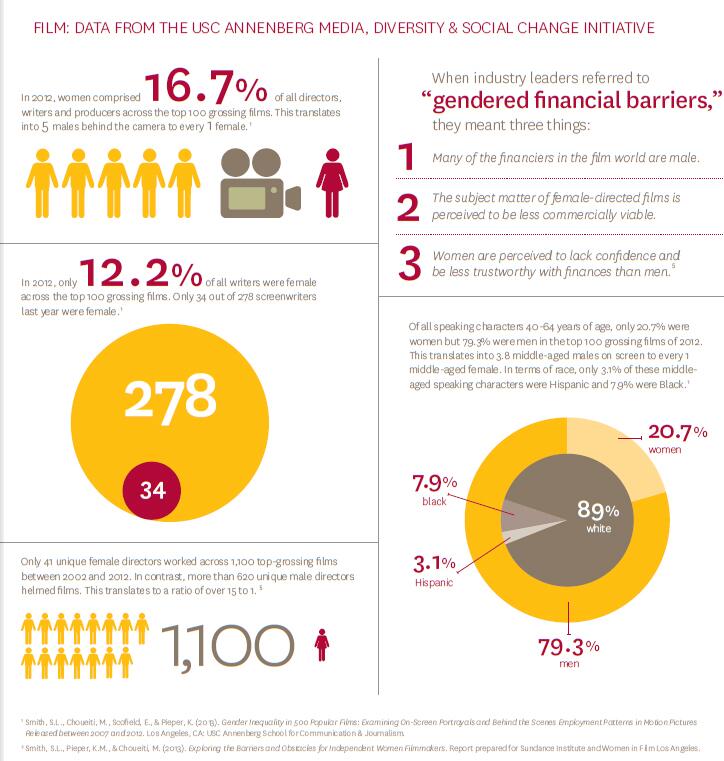
But in the midst of this depressing worldview, there’s a glimpse of something else. “There are really very few openings in comparison with the number of girls who apply,” the rejection letter warns. But the girls were applying all the same, despite the obvious obstacles that faced them, trying to find creative jobs any way they could. The USC Annenberg Media, Diversity and Social Change Initiative provides constant reminders that Hollywood still often operates on the assumption that women don’t do top-level creative work, given the huge underrepresentation of women in almost every aspect of the creative process in film and television. But those aspirations are still there. And Mary Ford’s rejection letter is a reminder that Hollywood’s gender disparities (not to mention its racial ones) aren’t a natural result, but the product of a history of exclusionary policies.

The post The Amazing Rejection Letter Disney Sent In 1938 To A Woman Who Wanted To Be An Animator appeared first on ThinkProgress.

10 Jan 23:11

Supreme Court Agrees To Hear Aereo Case; Ruling Could Impact All Cloud-Based Tech

by Chris Morran
(afagen)

(afagen)

The Supreme Court announced this afternoon that it will hear the lawsuit filed by the broadcast networks against streaming video startup Aereo. How the court rules will have an impact not just on consumers’ ability to stream live network feeds online, but on all cloud-based media storage.

The heart of the networks’ argument against Aereo — a streaming video service that takes freely available over-the-air broadcast signals and provides them to paying customers online — is that the company is illegally retransmitting these signals without requesting permission or paying a fee. Cable and satellite providers pay billions of dollars every year to the networks just to provide channels to the customers that can be obtained for free with a decent antenna.

And that is exactly what Aereo contends its service provides — a virtual antenna connection. The company uses arrays of tiny antennae, with each antenna dedicated to a single subscriber. Thus, claims Aereo, the service is no different than running a rooftop antenna to get better TV reception.

Broadcasters filed multiple federal suits against Aereo but has so far failed to win any injunctions barring the service from launching. Meanwhile, Aereo availability has reached 10 markets, with more than a dozen additional markets set to launch in the near future.

In an attempt to just save everyone a lot of time and get to the inevitable, the broadcasters petitioned the Supremes in October to hear the case. Then in December, Aereo said it would not challenge that petition.

Well it seems like both sides got what they wanted today, with SCOTUS putting American Broadcasting Companies, et al v. Aereo on its slate of cases to hear in April.

If Aereo is victorious, it could have lasting repercussions to the business models for broadcast networks and cable operators.

Some broadcast executives have already threatened to pull their networks off the airwaves and go cable-only if Aereo wins. Meanwhile, some cable operators have already begun working on integrating Aereo-like technology into their systems in the hopes of getting around paying billions of dollars in retrans fees.

A bigger concern for American consumers may be the implications of a broadcasters victory in the case.

In their petition to the Supreme Court, the broadcasters take a rather radical stance on copyright, claiming that a “public performance” occurs whenever a service provider enables a consumer to transmit the same prior performance of a work, even if the consumer is independently transmitting a separate performance from his own separately acquired recording available to him alone.

That would seem to undermine numerous cloud-based storage and streaming services, like Amazon’s Cloud Player or Google Play that give customers to streaming files they have purchased, or Cablevision’s cloud-based DVR. That device was the subject of a broadcaster-filed lawsuit that never made it to the Supreme Court, leaving in place the 2008 Second Circuit court ruling that the DVR does not violate broadcasters’ copyright.

“This case is critically important not only to Aereo, but to the entire cloud computing and cloud storage industry,” says Aereo CEO and founder Chet Kanojia. “The landmark Second Circuit decision in Cablevision provided much needed clarity for the cloud industry and as a result, helped foster massive investment, growth and innovation in the sector. The challenges outlined in the broadcasters’ filing make clear that they are using Aereo as a proxy to attack Cablevision itself and thus, undermine a critical foundation of the cloud computing and storage industry… If the broadcasters succeed, the consequences to consumers and the cloud industry are chilling.”

10 Jan 22:12

→ Google will make it easy for strangers to email you

The Verge, which still uses target="_blank" on inline links in 2014 (don’t worry, I removed it for you):

A new Gmail “feature” will let you simply type in anyone’s name into Gmail’s “to” field and send them an email. Google announced the new Google+ integration on its Gmail blog today, but company representatives have clarified to The Verge that — by default — anyone on its social network will be able to send messages to your Gmail inbox.

John Gruber:

This has to be a mistake. Surely Google will change this from opt-out to opt-in.

They probably will, but only because of this negative press. They were almost certainly going to launch it as opt-out, hoping most people wouldn’t notice. Or — giving them the benefit of the doubt, which probably isn’t warranted — the responsible people at Google might actually think they’re being helpful, assuming that all Gmail users are also Google+ users (they’re often counted that way…) and that this would be a helpful feature.

I don’t know why anyone’s surprised. To be clear, for anyone who thinks Google is some benevolent, selfless entity handing out free services to everyone out of the goodness of its heart:

Google’s leadership, threatened by the attention and advertising relevance of Facebook, is betting the company on Google+ at all costs.

Google+ adoption and usage is not meeting their expectations. Facebook continues to dominate. It’s not working. They’re desperate.

Google will continue to sell out and potentially ruin its other properties to juice Google+ usage. These efforts haven’t worked very well: they juice the numbers just enough that Google will keep doing this, yet will keep needing to do more.

Making Google+ succeed at all costs means exactly that. All previous rules are out the window. Google will eventually violate every formerly held principle if it might help Google+.

You, the users, are just along for the ride. You’re just eyeballs. Body parts and ad-targeting data. Google doesn’t care about you at all. You’ve tolerated enough already that it’s pretty clear you’re not really going anywhere.

∞ Permalink

10 Jan 22:03

Wonkblog: The depressing psychological theory that explains Washington

by Ezra Klein

Dylan Matthews's "Five conservative reforms millennials should be fighting for" isn't just an admirably intricate piece of trolling. It's a perfect illustration of why you can't take Washington's policy debates at face value. You can't understand what's happened to Congress in recent years if you don't understand what Matthews did in that piece.

A bit of background. On Jan. 3, Jesse Myerson published an article in Rolling Stone with the innocuous title "Five Economic Reforms Millennials Should Be Fighting For." Myerson frames his agenda as an effort to do away with unemployment, jobs, landlords, private capital ownership and Wall Street. Those last four, as you might expect, made conservatives' heads explode.

"If you’re a Millennial who loves bread lines, prison camps, forced famines, and abject human misery, then you’ll love the latest offering from Rolling Stone," wrote the Federalist's Sean Davis.

But the policies Myerson advocates are rather less radical. His agenda, at its core, calls for a work guarantee, a basic minimum income, a land-value tax, a sovereign wealth fund and a public banking option. As Dylan Matthews noticed, all these policies that Republicans were labeling as socialism have been endorsed by major conservatives. So he rewrote Myerson's piece from the conservative point of view, advocating all the same policies but changing those cited as authorities and those blamed for the state of the economy.

All of a sudden, conservatives liked the article, and liberals -- well, liberals didn't really like Dylan anymore. And they told him so in pretty offensive terms.

Two articles both advocating the exact same policies. But one of them thrilled liberals and infuriated conservatives. The other infuriated liberals and thrilled conservatives.

Oftentimes when we think we're engaged in reasoned policy discussion we're actually engaged in complex efforts to rationalize the direction in which our tribal affiliations are pushing us. Psychologists call this motivated reasoning. And they've shown its power in laboratory settings again and again and again.

Geoffrey Cohen, a professor of psychology at Stanford, has shown how motivated reasoning can drive even the opinions of engaged partisans. In 2003, when he was an assistant professor at Yale, Cohen asked a group of undergraduates, who had previously described their political views as either very liberal or very conservative, to participate in a test to study, they were told, their “memory of everyday current events.”

The students were shown two articles: one was a generic news story; the other described a proposed welfare policy. The first article was a decoy; it was the students’ reactions to the second that interested Cohen. He was actually testing whether party identifications influence voters when they evaluate new policies. To find out, he produced multiple versions of the welfare article. Some students read about a program that was extremely generous—more generous, in fact, than any welfare policy that has ever existed in the United States—while others were presented with a very stingy proposal. But there was a twist: some versions of the article about the generous proposal portrayed it as being endorsed by Republican Party leaders; and some versions of the article about the meagre program described it as having Democratic support. The results showed that, “for both liberal and conservative participants, the effect of reference group information overrode that of policy content. If their party endorsed it, liberals supported even a harsh welfare program, and conservatives supported even a lavish one.”

In a subsequent study involving just self-described liberal students, Cohen gave half the group news stories that had accompanying Democratic endorsements and the other half news stories that did not. The students who didn’t get the endorsements preferred a more generous program. When they did get the endorsements, they went with their party, even if this meant embracing a meaner option.

Anyone who's been around Washington for long will recognize this pattern. In the 1990s, the individual mandate was a conservative idea that emphasized individual responsibility. But once Democrats adopted it, it became, to conservatives, an unconstitutional exercise in government coercion. During the Bush years, Republicans voted for deficit-financed stimulus bills. After Barack Obama became president, they decided the evidence against deficit-financed stimulus bills was overwhelmingly persuasive. During the Bush years, Democrats were deeply concerned about government surveillance, while Republicans were more comfortable with a powerful executive. In the Obama years, polls show Democrats far more comfortable with the National Security Agency's spying than Republicans.

In theory, the two parties represent distinct political philosophies, and those distinct political philosophies help shape their differing policy agendas. In recent years, there's been a lot of interesting work from psychologists arguing that the differences go even deeper than that: Democrats and Republicans intuitively respond to different underlying moral systems, and so their philosophies actually rest on something more fundamental than mere partisan affiliation.

The problem is that human beings are incredibly good at rationalizing their way to whatever conclusion their group wants them to reach. And most policies can be supported -- or opposed -- on many grounds. It's all about which parts people choose to emphasize. A conservative who emphasizes individual responsibility and loathes government coercion can find good reasons both to support and oppose the individual mandate. A liberal who believes both in security and civil liberties can decide to believe the FISA courts are an effective check on the NSA or totally insufficient. There are more than enough validators out there who're willing to arm a partisan with information for whatever conclusion they prefer. “Once group loyalties are engaged, you can’t change people’s minds by utterly refuting their arguments," political psychologist Jonathan Haidt once told me. "Thinking is mostly just rationalization, mostly just a search for supporting evidence.”

The beliefs that result aren't held cynically. They're held sincerely. And that's much more powerful. Even when people flip positions entirely, they believe they've done so because they've absorbed new evidence and changed their mind. What could be more honest than that? The fact that the transition aligned exactly with the changing interests of their party is just an interesting coincidence.

Worse, the world is complex, and very few of us can take the time to develop sound opinions on the vast range of issues that arise in Washington. Even if you're a health-care expert, the likelihood that you're also an expert on Chinese currency manipulation, and ethnic tensions in Syria, and prison policy, is pretty slim. So people end up relying on the authorities we trust, be they media figures, issue advocacy groups or politicians. But those validators aren't simply concerned with the truth. They're looking to get ratings, to fundraise, to maximize their influence, to get reelected, to retain standing among their peers. Their reasoning is motivated, too. But that's not how their followers see them.

The result is that much of politics takes the form of tribal fights that feel to the participants like high-minded policy debates. In that way, the only thing unusual about Dylan's piece was that the author knew what he was doing.


10 Jan 21:06

When we say that some white evangelical leaders are delusional and/or disingenuous political hacks, this is the kind of thing we’re talking about

by Fred Clark

White evangelicals may have adopted Republican politics as a core creedal dogma, but they insist that doesn’t make them right-wing ideologues and servants of the 1 percent and its machine. No, no, no, no, no — white evangelicals are simply faithful allies of that machine because liberals are baby killers and killing babies is wrong and supporting anything supported by baby killers must be wrong.

Some fraction of the anti-abortion rank-and-file genuinely believes that. The most prominent leaders do not.

Those leaders aren’t swallowing that lie, they’re the ones spreading it.

Liberty Counsel Honors Israeli Government Days After It Adopts ‘World’s Most Liberal’ Abortion Policy:

Just two days after Israel’s cabinet approved a new policy extending government abortion subsidies to all women ages 20-33, the staunchly anti-choice Liberty Counsel released an alert entitled, “Stand With Israel Now,” complete with a photograph of Benjamin Netanyahu with Liberty Counsel head Mat Staver.

“There has never been a more critical time for you to show your support to Israel and its Prime Minister, Benjamin Netanyahu! Become a Liberty Ambassador to Israel and have your faith strengthened and your resolve fortified to stand for Israel,” the group writes. “In light of the failed foreign policies of our current American administration, it has never been a more important time to express our unwavering resolve to stand united with Israel.”

Matt Barber, Staver’s deputy at Liberty Counsel, has praised Netanyahu as the “Leader of the Free World” who turned Israel into “the shining city on the hill,” unlike President Obama whom the group regularly berates as “one of the world’s immoral leaders.”

The group accuses Obama of implementing “forced abortion funding” and “rubbing the aborted babies in the face of every single American.” They also argue that God will punish America for Obama’s “self-destructive” pro-choice stance, and have linked abortion rights to SatanslaveryNazism and the Holocaust.

Just a few months ago, Staver and Barber insisted that if they were to remain silent in their opposition to abortion rights, they would be just as bad as “those who silently stood by and allowed the Nazis to murder millions of Jews.” “Silence is affirmation,” Staver said. “If you are silent on this issue, you are affirming that this is something that is acceptable.”

“Posterity will view those who stood in silence or who tacitly accepted this abortion holocaust just as history views those who silently stood by and allowed the Nazis to murder millions of Jews,” Barber said, adding: “Are we comparing the pro-choice movement to the Nazi movement? Yes! Absolutely.”

At Religion Dispatches, Sarah Posner also discusses the white American evangelical reaction — or general lack thereof — to Israel’s abortion policies and notes that the Jewish population of Israel doesn’t share those white Christians’ theological antipathy to abortion: “Most streams of Judaism reject the notion that life begins at conception, and focus on the health and well-being of the pregnant woman in assessing the morality of abortion.”

But I think it’s wrong — inaccurate, false — to give any credence to the claims of people like Staver and Barber that their views are in any way based on their purported religion. Their ideology is wholly political. Just because their politics has swallowed up their religion — and the religion of millions of other white evangelicals over the past 30 years — doesn’t mean it becomes religion.

It’s still just politics. It’s still just a lie told to disguise their obsequious loyalty to the machine and to pretend, instead, that they’re acting on some noble motive, like … say … ooh, how about saving babies? Yeah, yeah, that’s it — that sounds really good and virtuous and noble. Who can argue with saving babies? So let’s say we’re saving babies from, um, from Satanic baby-killers who kill babies for Satan, slavery, Hitler and the Holocaust.


09 Jan 22:16

Malpractice Suits Denied For Lack of Damages, Not Merit

by Ashlee Kieler

Infections, additional surgeries, a long recovery or preventable death are what make up a number of potential malpractice suits. But what if, after years of suffering because of a doctor’s mistakes, you were told your case isn’t worth the time?

A recent article by ProPublica, part of an on-going investigation of health care safety, highlights the growing struggle to find a lawyer to take on malpractice suits, even though with so-called “merit.”

Hundreds of thousands of people suffer some type of preventable injury or die while undergoing medical care, ProPublica reports. Yet, those patients and families hoping to recover losses with a lawsuit are turning up empty-handed.

That’s because more and more lawyers are turning down malpractice suits.

The publication cites a 2013 Emory University School of Law study that found 95% of patients who seek an attorney for harm suffered during a medical treatment will be shut out, mostly for economic reasons. The same study found that nearly half the 450 attorneys surveyed refused any case if damages were less than $250,000.

The damages of a lawsuit are generally determined by lost earnings, medical bills and future costs caused by the injury.

Many patients and families shared their stories of failed attempts to bring about lawsuits with the publication.

One woman talks in detail about the botched cancer surgery she underwent, leaving her unable to continue working as a registered nurse and on disability.

Other readers told of how they were unable to recover losses after elderly parent died from what they believe was negligence by doctors and hospitals.

Ten Patient Stories: When Attorneys Refused My Medical Malpractice Case [ProPublica]

09 Jan 21:22

“The highway’s jammed with broken heroes…”

by David Simon
He knew. We can say this now with certainty if we ask ourselves one basic question about human nature:  What good does it do a political operative to screw over the opposition if you can’t then tell your boss about it?  Where is the  joy for any lickspittle hack in the office hierarchy if he […]
09 Jan 01:05

bisexualsaregreat: When people say bisexual men will eventually be gay, and when people say that...

bisexualsaregreat:

When people say bisexual men will eventually be gay,

and when people say that bisexual women will eventually be straight,

what people are actually saying is that choosing men over women is inevitable.

This is patriarchy.

YES THANK YOU JFC this drives me mad

08 Jan 22:22

What A Powerful Speech From Harry Belafonte Tells Us About The Meaning Of Movies

Harry-Belafonte

CREDIT: Wikimedia Commons

I’m en route to Los Angeles for the Television Critics Association press tour, from which I’ll be reporting for the next several weeks. But while I’m on the road, I wanted to point you to this terrific speech by Harry Belafonte at the New York Film Critics Circle Awards ceremony. Belafonte was presenting the prize for Best Director to Steve McQueen for his work on 12 Years A Slave, and did so in part by reaching back into his own movie-going memory:

When I was first watching the world of cinema, there was a film that stunned the world, with all its aspects and art form. They did a lot, at that time. The film was done by D.W. Griffith, and it was called The Birth of a Nation, and it talked about America’s story, its identity, and its place in the universe of nations. And that film depicted the struggles of this country with passion and power and great human abuse. Its depiction of black people was carried with great cruelty. And the power of cinema styled this nation, after the release of the film, to riot and to pillage and to burn and to murder black citizens. The power of film.

At the age of five, in 1932, I had the great thrill of going to the cinema. It was a great relief for those of us who were born into poverty, a way we tried to get away from the misery. One of the films they made for us, the first film I saw, was Tarzan of the Apes. [Ed note: The movie is called Tarzan the Ape Man.] In that film, [we] looked to see the human beauty of Johnny Weissmuller swinging through the trees, jump off, and there spring to life, while the rest were depicted as grossly subhuman, who were ignorant, who did not know their way around the elements, living in forests with wild animals. Not until Johnny Weissmuller stepped into a scene did we know who we were, according to cinema.

What’s striking–and I think important–about what Belafonte is getting at here, is his description of seeking out the movies as a balm of poverty, and instead of a welcome respite, receiving an unexpected smack in the face. “I was five when I saw Tarzan of the Apes, and the one thing I never wanted to be, after seeing that film, was an African,” he explains. “I didn’t want to be associated with anybody that could have been depicted as so useless and meaningless.” Rather than going to the movies and getting a Sullivan’s Travels-esque moment of catharsis and escape, the movies gave Belafonte an experience of trauma, instead. Rather than showing him a world that was funnier, and kinder, and better than the one he actually lived in, a fantasy in which someone like five-year-old Belafonte could be a hero that he could carry back with him out that misery, he got a lesson in what his place in the racial hierarchy was instead.

Movies shape our understanding of the world in many ways, but perhaps the most important is what they take for granted. If you live in a world where you feel powerless, and see someone like yourself on screen who has power, and is allowed to use it without interference or unkindness, that can be a remarkably uplifting thing. The contrast between your experience and the world of the movies can be something to aspire to, an inspiration to ask questions about the assumptions you’ve held about yourself and the place that you’ve been granted, or that you’ve accepted for yourself.

But if you live in a world where you have little power or influence, and find yourself in a movie that simply assumes that people like you aren’t just powerless, but that you’re an animal if you’re black, that you’re simultaneously stupid and cunningly destructive if you’re a woman, that you’re greedy beyond your capacity if you’re Jewish, that you’re hopelessly violent if a Muslim, that can have an even more powerful negative effect. If it can be a pleasant surprise to figure out that there might be more to you than you expected, it’s exceptionally nasty to discover that people think you’ve overstepped, or overestimated yourself. It’s a vertiginous realignment of the world around you, like finding out that someone you thought was a friend has been secretly undermining you, but multiplied a million-fold. You can drown in that kind of feeling, in the idea that people around you who you thought were benign are suddenly out to get you, that they have a vested interest in your subordination.

If you’re white, or a man, and particularly both, depictions that shock you like this will be rare. By the time you encounter one, you will likely be lucky enough to have built up the self-confidence and knowledge of your place in society to dismiss the creator as vindictive, their views of the fringe. But if you are a person of color, or a woman, or in the past, a gay person or a non-Christian, an experience like Belafonte’s might have been the beginning of a painful education about your position off-screen, the bright light outside the theater shining not on a hopeful future, but a painful one. Movies like Steve McQueen’s–and Malcolm D. Lee’s, and Ava DuVernay’s, and Kasi Lemmons, and Justin Lin’s–can be a way to fight back.

The post What A Powerful Speech From Harry Belafonte Tells Us About The Meaning Of Movies appeared first on ThinkProgress.

08 Jan 21:52

)how is the opiate of the masses quote misinterpreted?

here’s the full quote a) in case you haven’t seen it before, since people are fond of leaving out the context and b) because it’s actually a really awesome quote imo

Religious suffering is, at one and the same time, the expression of real suffering and a protest against real suffering. Religion is the sigh of the oppressed creature, the heart of a heartless world, and the soul of soulless conditions. It is the opium of the people.

The abolition of religion as the illusory happiness of the people is the demand for their real happiness. To call on them to give up their illusions about their condition is to call on them to give up a condition that requires illusions. The criticism of religion is, therefore, in embryo, the criticism of that vale of tears of which religion is the halo. [1]

i think in the extended version it already speaks for itself as to how it’s misinterpreted a lot more, but basically, once can draw a contrast between the marxist materialist attitude towards religion and the idealist liberal one. 

the liberal sees religion and tends to attack it at the level of ideas - they find the contradictions within religion (and especially holy texts) ridiculous and the nature of fideism and faith horrifyingly anti-rationalist. the liberal claims to be being materialist in opposition to the idealist beliefs in religion, but in fact they’re being just as idealist, simply in a different manner.

marxists, on the other hand, try to apply dialectical and materialist analysis, and when taken in this manner one realizes what the roots of religion are; not just some accident of irrationality and human error, as liberals believe, but a reaction against impoverishment, oppression and misery. religion is a form of relief in a world which seems cruel and nihilistic, the promise of spiritual riches in the future in return for material poverty now.

religion, then, is a reaction, and the transformation of capitalism into socialism and eventually communism would end many of the material conditions which tend to create the need for religion.

08 Jan 20:58

A Game About Boss Fights, Only One Of Your Friends Is The Boss

by Luke Plunkett

A Game About Boss Fights, Only One Of Your Friends Is The Boss

Falling somewhere between Left 4 Dead and Shadow of the Colossus, Outrise is a game currently in development that centres around co-operative battles against enormous bosses. The catch being that the bosses aren't AI; they're controlled by a human as well.

Read more...


08 Jan 20:35

Teachers Offered Personal Loans to Buy School Supplies

by Lisa Wade, PhD

If you’re looking for just one image that says a thousand words about what’s wrong with America, here’s a contender.  It is a screenshot of the website for the Silver State Schools Credit Union:

facebook_1889026740

Yep, it’s an invitation to K-12 teachers to go into debt to do their job.

Speechless.

Lisa Wade is a professor of sociology at Occidental College. You can follow her on Twitter and Facebook.

(View original at http://thesocietypages.org/socimages)

08 Jan 02:01

‘The Act Of Killing’ Director Joshua Oppenheimer On Indonesian Mass Killings And The Power Of Movies

The-Act-Of-Killing

CREDIT: Drafthouse Films

The Act Of Killing, released today on DVD in the United States, is one of the most disturbing movies I’ve ever seen. And given that I tend to avoid torture-based horror movies, I imagine it will hold that place in my movie pantheon for a very long time. Director Joshua Oppenheimer, who’d previously made a movie about plantation workers in Indonesia who were trying to form a union, spent eight years in the country to produce a film about the 1965 mass killings of Communists–and members of many other groups who were accused of being Communists, including Chinese immigrants and intellectuals–that were part of the coup against the country’s first president, Sukarno. Rather than making a historical film, and after the Indonesian Army blocked him from filming interviews with survivors of the killings, Oppenheimer took a different route.

He began interviewing the perpetrators of the killings. And after he noticed that the men he was interviewing often spontaneously reenacted their murders, Oppenheimer, using the same tactics that shaped his earlier film, The Globalisation Tapes, worked with two of them, Anwar Congo and Herman Koto, to make elaborate filmed recreations of sequences of torture and killings, often in the style of American movies, including gangster films and Westerns. The result is a profoundly unsettling reflection not just on a little-known mass murder that was actively abetted by the American government, and not just on the role that the perpetrators of those killings still occupy in Indonesian civil society, but on the power of movies to shape our identities, and to force us to confront terrible truths.

I spoke to Oppenheimer while he was in Alaska, and as we talked about the diversity of the state’s inhabitants and the experiences of immigrant workers there, he began to tell me about his experiences making The Globalisation Tapes, which lead him to the project that became The Act Of Killing. Our conversation has been edited for clarity and length.

I first went to Indonesia to make a movie in 2001 and 2000 to make a movie in collaboration with a group of plantation workers about their efforts to form a union…They desperately wanted a union but they were afraid to organize one because their parents had been in a strong plantation workers union until 1965 when they were killed for it…They were afraid this could happen again. There was this sense of pervasive control. If I would bicycle through the plantation or walk through plantation, someone would walk up to me and ask “What you are doing here”….They said come back as quickly as you can and make a movie about why we are afraid.

[When he did] The army found out that we were doing this and the survivors were no longer permitted to participate in the film. When we would try to film the movie, the army would come and stop us…The survivors said before you give up and leave, try to film the perpetrators, maybe they’ll tell you how our relatives were killed…We would approach these aging death squad leaders cautiously…To our horror and astonishment, they all opened up immediately with boastful accounts of mass killing, told sometime with a smile on their face, sometimes in front of their wives, or children, or even their grandchildren…Everyone I filmed was boastful, and most of them would invite me to places where they killed, and launch into spontaneous demonstrations of how they killed, and lament that they hadn’t brought friends along to use as victims and weapons to use as props…Increasingly I wanted to know is why are they boasting? For who are they boasting?…Anwar [Congo] was more boastful in some ways than anyone else I filmed and yet his pain was right there on the surface.

This is obviously a movie about the movies. Anwar and Herman talk about how they used to scalp movie tickets, and they talk repeatedly about the banning of American movies, which was supposed to be a Communist cause. While filming one scene, Anwar, in character, says “We want to feel like people in the movies,” and he mentions actors like John Wayne. Did you talk with them at any point about how movies influenced their behavior? Did making the film influence your thinking about the impact of what’s touted as one of America’s most significant exports?

The army was recruiting its killers form the ranks of gangsters and criminals who had a proven capacity for violent. They controlled the entertainment industry, prostitution, gambling, drugs. They were running a black market out of movie theaters…using movie theaters as a base of operations for controlling turf. They had this love of Hollywood movies. There was a boycott of Hollywood movies, a pretty broad-based boycott, in 1965, from the center, even the right, to the left. The head of the [American Motion Picture Association] in Indonesia, Bill Palmer, had been exposed as a CIA agent who was part of a plot to kill the beloved founding father of Indonesia, Sukarno. American movies, none the less, were the most popular at the box office. [As a result, the movie theater gangsters lost business because of the boycott.] They were a good force of recruits.

Now, Anwar said many times, described many times to me, how he was inspired, gathered methods of killing from watching Hollywood movies. But I had to hear that five, six, maybe ten times before it sunk in that that was what he was saying. [That's not to say that Hollywood movies cause violence.] I think that’s too simple by far. I filmed 30, 35 perpetrators in the countryside who were killing quite easily without watching movies. They were distancing themselves from the inherently traumatic act of killing by drinking alcohol…Interestingly, the most recent example Anwar gives of movies influencing his behavior was an Elvis Presley movie, he talked about dancing out of the cinema and killing happily, drunk not on alcohol but by the cinematic identification with Elvis. This is a film about the effects of denial. About the corrupting effects of denial, about what happens when we build a normality on the basis of violence…I think that Anwar, somehow the real issue then is about escapism and denial and fantasy and how we use stories to escape from our most bitter and painful truths, how we lie to ourselves to justify our actions. Cinema is the great storytelling medium of modernity, so cinema is implicated in that.

Anwar and Adi Zulkadry talk a great deal about the anti-communist propaganda film children used to be shown in schools. I was curious–what were the origins of that film? How did it become part of the school curriculum? When was it removed from the curriculum?

Yeah, the film introduced, was made in 1982, but maybe it started being shown in ’83. I’d have to check. It was the highest-budget Indonesian film ever made. It was 4 and a half hours long. Every schoolchild from kindergardten through university had to watch it every year and write a report about it, or talk about it if it they were too young to write…People in my crew talk about how traumatic it was…They started seeing it when they were very young, and it left a terrifying impression, so they were always afraid of it.

Given how boring it is and how repetitive it is, it was made to have that effect, it was made to indoctrinate a younger generation of indoensians who were still too young to remember the genocide, so they would accept the military dictatorship…In 1999, a year after Suharto fell, Shuarto resigned…[his successor Bacharuddin Jusuf Habibie] also proposed to apologize to the victims and to set up a truth and reconciliation commission. He was removed as a result of that in 1999 and was replaced, because the military found that unacceptable.

The film is no longer shown, but the school curriculum is exactly as it was when the film is being shown. If you see my new film, which will come out later this year, The Look Of Violence, it’s in many ways the film I set out to make. There’s an amazing scene of the nephew of someone who was killed, and the grandson in this family that was labeled as Communist simply because they were part of a farmer’s collective. And you see the teacher demonstrating the kind of grotesque kind of slashing of the face with razors you see in the movie. The story is still taught in school even though the film’s no longer shown. You could say the official history is 100 percent still intact in terms of the school curriculum…There will be no rewreiting of the nation’s school curriculum until the government stops insisting that genocide was heroic.

Are the killings represented in domestic Indonesian films at all today? If so, is there a dominant perspective about them? Does Pancaslia Youth have any influence on Indonesian domestic film production, along with their influence in other sectors of the economy?

First of all, even in this propaganda film, it doens’t show the killing of the Communists. It shows atrocities that are fictional, that never happened, that are either attributed to Communists or what the Communists would have done if they had not been killed. it’s a kind of slight of hand that Goebbels would have admired. There may be, as there is in Bollywood, gangster control, of some filmmaking. But there are committed Indonesian filmmmakers who are committed supporters of The Act Of Killing.

The-Act-Of-Killing

CREDIT: Drafthouse Films

Can you tell me a bit more about your anonymous co-director? Why is he or she anonymous? What was his or her role in the film?

There are something like 60 people who are credited as anonymous. My assistant director, my production manager, but above all, my main creative sounding board. It’s thanks to that dialogue that the film has been seen as 100 percent authentic as Indonesian and welcomed, and me seen as an Indonesian filmmaker, even though I’m not Indonesian. That’s critical to the impact the film is making in Indonesia. As we were finishing the film, it was clear to me that that individual in particular should be credited as my co-director. He’s someone who gave 8 years of his life, risking his safety, knowing that unless there’s major political change in Indonesia, he would not be able to put his name on the film and get credit for a decade’s work. The saddest part of presenting this film for me has been knowing that he can’t travel with me…He’s eloquent, passionate, interesting, and wonderful. Making this film was a very dark journey. it’s a very painful journey. The scene wheer Anwar’s torturing the teddy bear, I located it in my mind as a source of months of nightmares for me. And consequently, if I got through the production, it was very much thanks to my wonderful crew’s support and love and laughter.

In filming the sequences, did you have any sense that the reenactments were more brutal than the actual crimes, in response to the presence of the cameras? The sequence where the Pancasila Youth members are burning the village, there was obvious direction.

There’s two interesting things I’d say about that. We were in touch with survivors of the massacres they dramatized…We showed that footage back to the genuine survivors of the massacre. They, invariably would say this is nothing compared to what it was like.

I think there’s something interesting in your question, about how the camera might elicit spectacle, and the relationship between spectacle and brutality and terror. The violence that they reenact for the camera has the quality of spectacle, and in that sense it may be more spectular than the original violence. But that may not make it more brutal. I think the actual killing may or may not have been oriented towards spectatorship. it may have been. In the sense that rape and gang rape is particularly common in violent conflict because it’s a performance of one’s rape for one’s fellow perpetrators. So there may have been a performative quality to the violence at the time of the filling. Anwar certainly used performance after waltzing out of the cinema and killing happily. He may have used performance and the surrendering himself to a delicious role to minimize the horror that was happening at the time. There could have been real friends wathcing him when he killed. Whether the original spectacle was there…I am certain the original kiling had to be unimaginably more brutal than the reenactment.

In the editing process, one of the main strategies, and it wasn’t something we planned on, but it was inevitable, there was no alternative, was to hold back the violence. What you see in the film is the tip of the iceberg. Again and again, he would recount what happens to a human being when he’s being garotted with wire. I have it again and again and again in my material and we couldn’t use it because it was too awful.

At the end of the film, Anwar tells us “Why did I have to kill them? I had to kill. My conscience told me they had to be killed.” You’ve got some context in the film so we understand the relationships between the government and gangsters more broadly, and the role of Pancasila Youth today, but did you deliberately decide to exclude an explanation of how Anwar moved from scalping tickets to killing Communists?

It probably matters. Yes and no. Yes and no. I think the film gives a fairly honest view. Most viewers who see the film come away thnking these men were greedy and they were rewarded with money and maybe power and that’s why they did it. If you cut past all the lies that they’ve forced on society and clung to themselves so they can support their actions, why did Suharto take power? For power and for money. And why did the gangsters agree? Not because they were ideologically committed anti-Communists. The people they were killing were’t Communists and they knew that, because they knew some of the people they were killing. Everybody who I filmed who was involved in the killings killed for power and money and I think that’s true all the way up the chain of command. Anwar and his friends were killing as hit-men before, not on this scale. In that sense, if you ask someone why they killed, they will tell you, invariably, the excuse they’ve clung to. The trick is to get beyond that.

What about the role of support from foreign governments? Should American audiences feel doubly complicit about the role of our entertainment and our government?

I think fundamentally, I had to make a decision really on whether this was a film about the past or the present. And The Act Of Killing is a film about the present. And it’s a film about the abuse of historical narrative in the present. It’s a film about the role of an unresolved traumatic past of keeping people terrorized in the present and enabling all sorts of corruption and further evil, [like] the extortion in the marketplaces. It’s a film about the life of an unresolved traumatic past in the present. But it’s not a film about that past.

Early on, when the survivors said come back and make a film about why we’re all afraid, early on when they said that, it’s clear what they said was make a film about the contemporary condition of impunity. To make that understandable, we have to show the kind of horror that took place in a present tense manifestation…So the reenactments and the boasting of the perpetrators is one way of doing this…The fact that they can speak about this is symptomatic of why everyone is still afraid, and it serves to keep people afraid.

To make a film that goes into the details of American support, and it’s a lead I followed for some distance, would necessitate for arguing how important that support was. The U.S. provided lists of thousands of names, intellectuals, journalists, trade unionists, writers, who they wanted the I government to go after and kill…I think the real function of the American death lists was to send a strong signal to the Army to go after everybody, kill everybody, we want everybody dead. The US was providing some weapons, the us was providing some money, the us was providing radios so the army could coordinate this killing campaign across the vast archipelago…

That would be a different film. It’s research that I think people are undertaking. it’s research suddenly more people are interested in because of The Act Of Killing…But I don’t know that as a film, even if it were exceptionally well-made, anyone would care about it. We have trouble getting people to care about what happened in Syria, let alone a Cold wWar military coup the U.S. was implicated in that happened 60 years ago.

The post ‘The Act Of Killing’ Director Joshua Oppenheimer On Indonesian Mass Killings And The Power Of Movies appeared first on ThinkProgress.

07 Jan 22:12

Wonkblog: Matt Yglesias is wrong: It’s way better to be hot than cold

by Ezra Klein

Over at Slate, Matt Yglesias argues that "as unpleasant as extreme cold can be, it is much much much less bothersome than extreme heat." His argument? That you can manage the cold by putting on more clothes. But you quickly run out of options for managing the heat by taking off your clothes.

How is this wrong? Let us count the ways.

1. According to a 2007 study by Olivier Deschenes and Enrico Moretti, cold snaps kill a lot of people who wouldn't otherwise have died for years. Heat waves don't. Which isn't to say extreme heat doesn't ever kill people. But it mostly kills people who were already quite sick. Cold kills people who would've otherwise been fine. The fact that being too cold makes otherwise healthy people die and being too hot makes them uncomfortable should be seen as strong evidence that it's worse to be too cold than too hot.

2. Yglesias's argument rests on the idea that a lot of people from warmer states simply haven't figured out how to dress for winter. But surely people who grew up in cold states have figured it out. Yet they can't wait to get to the warmth. In recent decades, the trend in American migration has been people moving in from cold states in the Northeast to warmer states in the South and West. You constantly hear about retirees in colder climes leaving for Florida. You never hear about elderly Californians moving to Minnesota.

3. The problem with heat, Yglesias says, is that you often can't dress down enough to be cool. And sometimes, you can't dress down at all. "If your agenda for the day involves a friend's wedding, a business meeting, or even a nice dinner, then you're out of luck. Doomed."

But the problem with cold is that you have to put on layers and layers of clothing to do anything at all. Weddings and fancy dinners are a lot rarer than walking the dog or getting groceries. But in real cold, any excursion into the outdoors, no matter how minor, requires you to layer on shirts, sweaters, jackets, gloves, scarves, hats. And then, if you have small kids, you have to suit them up in all that, too. It's a nightmare.

4. Cold brings snow. Snow brings ice. When it's really hot, falling and breaking your neck doesn't suddenly become orders of magnitude more likely.

5. It's more expensive to keep warm than it is to keep cool. A T-shirt and shorts are pretty cheap. A good winter coat with good gloves and a warm hat aren't. Similarly, heating your house is more expensive than cooling it.

In conclusion, being cold is deadlier, more inconvenient and more expensive than being hot. That's why when people move to hotter climates, they say they're doing it for the weather, but when they move to colder climates, it's always for a job or love or school.

Disclaimer: Ezra Klein is a Southern Californian who moved to Washington, D.C., for work and is very, very cold.


07 Jan 19:27

Netflix’s Dumbed-Down Algorithms

by John Gruber

Felix Salmon:

Netflix’s big problem, it seems to me, is that it can’t afford the content that its subscribers most want to watch. It could try to buy streaming rights to every major Hollywood blockbuster in history — but doing so would cost hundreds of billions of dollars, and could never be recouped with $7.99 monthly fees. What’s more, the studios can watch the Netflix share price as easily as anybody else, and when they see it ending 2013 at $360 a share, valuing the company at well over $20 billion, that’s their sign to start raising rates sharply during the next round of negotiations. Which in turn helps explain why Netflix is losing so many great movies.

Netflix’s movie selection is getting so bad that I’m quite surprised when it actually has a movie I’m looking for.

See also: Can I Stream It — a unified search service for movies and TV shows across iTunes, Netflix, Amazon, HBO Go, and more.

07 Jan 18:59

Wonkblog: Extreme cold kills more people than leukemia, homicide and liver disease

by Ezra Klein

The bitter chill isn't just an inconvenience. It could kill you. A 2007 study by Olivier Deschenes and Enrico Moretti found that "the number of annual deaths attributable to cold temperature is 27,940 or 1.3% of total deaths in the US."

Extreme cold turns out to be deadlier than extreme heat. Hot weather kills, but digging deep into the data, Deschenes and Moretti find that it mostly kills people who were already close to death. After the heat wave ends, the death rate drops so sharply that it totally offsets the weather-related spike. "The only effect of the weather shock is to change the timing of mortality, but not the number of deaths," they write.

Periods of extreme cold are also associated with an immediate spike in deaths. But unlike extreme heat, there's no offsetting decline in expected mortality in the weeks following cold snaps. The result is that "the cumulative effect of 1 day of extreme cold temperature during a 30-day window is an increase in daily mortality by as much as 10%." In total, the authors calculate, the cold is responsible for more annual deaths than "leukemia, homicide, and chronic liver disease."

This is particularly true in low-income communities. "The effect for counties in the bottom income decile is 66% larger than the effect for counties the top income decile." One reason, of course, is that low-income communities have more people who lack adequate shelter. Dan Diamond has written a useful post on how to help the homeless during the cold, and his list of hypothermia hotlines in major American cities is particularly helpful:

  • Atlanta: 404-447-3678 for the Metro Atlanta Task Force for the Homeless
  • Baltimore: 311
  • Birmingham, Ala.: 205-252-9571 for the Firehouse Shelter
  • Boston: 617-534-2526 for Friends of Boston’s Homeless or dial 311
  • Chicago: 311
  • Denver: 720-944-1007 for Denver’s Road Home (during business hours)
  • Detroit: 1-800-274-3583 and 1-800-343-4427
  • Fort Collins, Colo.: 719-632-1822 for Springs Rescue Mission and 970-484-5010 for Catholic Charities-Larimer County
  • Kansas City, Mo.: 816-474-4599
  • Las Vegas: 702-369-4357 for HELP of Southern Nevada (from 7 a.m. to 4 p.m., Monday through Thursday)
  • Minneapolis: 612-879-7624 for St. Stephen’s street outreach team
  • New York City: 311
  • Philadelphia: 215-232-1984 for the Project HOME Homeless Outreach Hotline
  • San Francisco: 311
  • St. Louis: 314-802-5444 for the Housing Resource Center hotline (between 8 a.m. and 8 p.m., Mon-Friday)
  • Thunder Bay, Ontario: 807-620-7678 for the SOS team (operates between 2 p.m. and 2 a.m.)
  • Toronto: 311
  • Washington, D.C.: 1-800-535-7252 for the Hypothermia Hotline

Deschenes and Moretti find that Americans are quietly implementing a longer-term solution, too. In recent decades, there's been a large and continuous migration from cold Northeastern states to warm Southwestern states. The authors find that each year, 5,400 deaths are being delayed by this movement -- and they're being delayed for, on average, more than nine years each. The aggregate effect of that is huge: "our estimates indicate that 8%-15% of the gains in longevity experienced by the US population over the past three decades are due to the secular movement toward warmer states in the West and the South, away from the colder states in the North."

Oh, and cold is a bigger killer among the elderly than among anyone else. So your parents have good reason to be moving to Florida.

Study via Tyler Cowen.


07 Jan 01:56

The Hand Experiment

by philphord
Zephyr Dear

Mostly this all makes me want to reread The Master And His Emissary

hand-stop

So I’ve promised to talk about what matters to me in the study of the arts. My fundamental idea here is a simple one: what we experience is always more than we can put into words.

Place a hand on the table in front of you. (Go on, do it.) Feel the coolness or warmth of it, the texture, the feeling of heat transfer as your hand becomes cooler and the table surface becomes warmer. Do you feel the sensations of all five fingers? The ball of your thumb? The palm? Notice how your hand and arm feel in connection to the rest of your body. Widen your focus to all you hear, smell, and see. Do this for a minute or so, not thinking about what you’re doing but just focusing on what it feels like to be you for a while. Stop reading this and pay attention to your experience. I’ll wait.

.

.

.

.

.

.

.

.

.

.

.

.

.

.

.

.

.

OK, now describe to yourself what it is you are doing. You probably just said something like “I am sitting here with my hand on a table.” At the moment you articulate this thought (out loud or just in your head), you have drawn a boundary between the time before utterance and the time after. What is the relationship between the time before and the time after? The time before swarms with the fractal complexity of lived and embodied processes, experienced at a particular place and in a particular time.[1] The utterance “I am sitting here with my hand on a table” extracts from that teeming moment a propositional meaning unbound to particular place and time.

There is a good news/bad news situation here. The good news is, a propositional meaning is something that can easily be communicated to another person. It can be taught. (A question for the test: what did Phil Ford ask you to do? A: put my hand on the table.) The bad news is that the propositional meaning is only a shrunken, bleached, desiccated husk of the experience that gave rise to it. Perhaps you enjoyed the feeling of your hand on the cool table surface, the moment of quiet when you could stop thinking and just be who you are—but the bald declaration of hand-on-table makes the whole enterprise seem a little silly. There are so many more important things we could be doing than putting our hands on tables! And while you might disagree with the tendentious way I just put it, if you did the hand experiment you know that these two things (call them “experience” and “propositional meaning”) are in no ways the same. Something is lost in the transition from the time before utterance to the time after.

In our present-day public discussion of education it is commonly assumed that this “something lost” is nothing very important. We are at a time when propositional knowledge of the testable sort is honored more than at any time in memory. Positivism, the long-discredited philosophy that seeks to understand the world only through empirically-derived facts verified by intersubjective inquiry (and to label all other kinds of knowledge as “nonsense” about which we should remain silent) has made a comeback. As my father liked to say, bad ideas never die.[2] When legislators, parents, and the Neoliberal concern trolls in the pages of The New Republic demand that their kids learn things with a measurable material value—going so far as to suggest that colleges be ranked by the salaries earned by their recent graduates—the arts and humanities don’t fare very well. What are they for? How do you measure it? Unless you can make a lot of money at the arts (and for the most part you can’t), the present-day neo-positivist can find no value in them.

Advocates for the arts are placed in the faintly ridiculous position of having to argue for the arts in neo-positivist terms—in terms of what measurable utility the arts might offer. So arts advocates will point to how music study leads to improved test scores, improved cognitive performance in certain laboratory situations, and so on. But when we advocates of the arts and humanities speak among ourselves, we acknowledge that such arguments miss the larger point. Look back at the previous paragraph and replace the hand on the table with an eye on a painting or an ear on a composition: the principle is the same. Aesthetic experience is never only the flat propositional meanings we can extract from it. And while that aesthetic experience can be conscripted in the service of politics, economy, good citizenship, test-taking, and so on, on its own it isn’t for anything, except itself.

At an earlier point in our history, aesthetic experience as such didn’t need to be defended; it was simply taken for granted that the arts are good for you, somehow. This good-faith assumption has now been withdrawn. In certain obvious ways, this is a disaster for the humanities, because it is becoming clear that whatever benefits are conferred by the study of the arts, they are not something that can be described in neopositivist terms. We are all in the position of little kids who have been running around and pretending to be dinosaurs (rarr! RAOWRRR!!) and having fun and suddenly we’re caught up short by a loud, harsh grownup voice—what do you think you’re doing?—and suddenly we don’t know how to say what it is we were doing, except that it was really fun. “Fun doesn’t put dinner on the table. Fun doesn’t get you a job. How is pretending to be a dinosaur going to get you a job? Answer me that.” We stand there, looking at our sneakers, vaguely ashamed to have been caught in the middle of our game, unable to look this stern adult in the eye and defend it in the terms on which he is insisting. Back to the classroom, then, back to drills and tests and measurable utility. Fun time’s over.


[1] Your time is not my time. I just did this in my living room at 7:14 on a Thursday morning, November 14, 2013. Where are you?

[2] My father was a philosopher specializing in Ryle, Ayer, Wittgenstein, Russell, and Quine, and if he were alive he would appreciate the irony of his artsy son appropriating his own expression to describe the ideas he worked on for most of his professional life. But my Dad, a good amateur clarinetist and gifted landscape photographer, would have been astonished and dismayed to see such ideas applied to the arts. He always had an eye for the follies of philosophy, the ways that philosophical ideas can work mischief when applied outside their proper orbit, which is why he liked to say that bad ideas never really die—an idea may be pretty enough on the page but become bad when it is set loose on the world.


07 Jan 00:40

Just Not Good Judgment

by Josh Marshall

New York State's chief of homeland security apparently freaked the crap out of a foreign delegation during a presentation when he used his handgun's laser sight as a presentation laser pointer. Three normally laconic Swedes "were rattled when the gun's laser tracked across one of their heads before Hauer found the map of New York, at which he wanted to point."

07 Jan 00:39

The Price of Sabotage

by Josh Marshall

This is a really important chart and article. It's based on some number crunching by Theda Skocpol. Basically, what's the toll of intentional efforts to sabotage health care reform at the state level, whether that's simply not allowing Medicaid expansion, refusing to set up exchanges, or more insidiously preventing non-profit organizations from helping people enroll. Check out the chart. It's eye-popping.