
Shared posts
20 Jan 04:19

deliciousdannydevito: burn these statistics into your mind....
burn these statistics into your mind. never forget who it is experiencing the brunt of the prison system’s violence
20 Jan 04:19
BREAKING: YOU CAN'T BUY FOOD WITH STATISTICAL BYPRODUCTS DAVID BROOKS YOU ASS
I will say one thing for David Brooks: he has his finger on the pulse of America. Over five years after the onset of the Great Recession and two and a half years after Occupy Wall Street began, Brooks has discovered income inequality. Someone should give this guy a column. ”Suddenly the whole world is talking about income inequality,” writeth he! Thus, with the same degree of mental acuity he regularly applies to being at the cutting edge of the zeitgeist, does Brooks begin his argument against raising the minimum wage.
In the first place, to frame the issue as income inequality is to lump together different issues that are not especially related. What we call “inequality” is caused by two different constellations of problems.
At the top end, there is the growing wealth of the top 5 percent of workers. This is linked to things like perverse compensation schemes on Wall Street, assortative mating (highly educated people are more likely to marry each other and pass down their advantages to their children) and the superstar effect (in an Internet economy, a few superstars in each industry can reap global gains while the average performers cannot).
At the bottom end, there is a growing class of people stuck on the margins, generation after generation. This is caused by high dropout rates, the disappearance of low-skill jobs, breakdown in family structures and so on.
If you have a primitive zero-sum mentality then you assume growing affluence for the rich must somehow be causing the immobility of the poor, but, in reality, the two sets of problems are different, and it does no good to lump them together and call them “inequality.”
Actually, in the first place, to talk about the top 5% of workers is really fucking stupid. Sheldon Adelson is not a worker. He is a capitalist. The top 1% (or 5% if you must) aren’t the top 1% because they work really really hard at a high hourly rate and never sleep or take vacations. They are the 1% because THEY OWN EVERYTHING.
(This chart is from G. William Domhoff and is for 2010, and things have only gotten worse since then.)
In the second place, give me a fucking break. The owning class isn’t rich and getting richer because of the special rich people assortative mating dances they learn at cotillion or internet superstar power (wha?). THEY ARE RICH AND GETTING RICHER BECAUSE THAT IS HOW CAPITALISM WORKS. The problem isn’t the Duke of JP Morgan making eyes at the Marchioness of Morgan Stanley and deciding to merge asset empires. The problem is that capitalism is based on the exploitation of labor and the rate of that exploitation has been accelerated by a neoliberal agenda that has stripped workers of bargaining power, decimated the social safety net, dismantled financial regulation, and enabled corporate imperialism.
In the third place, I see what you did there Dave, saying that people who disagree with you have a PRIMITIVE ZERO-SUM MENTALITY. However, as much as I would love to possess a Brooks-certified primitive mentality, no one is saying that the growing wealth of the rich is causing the “immobility of the poor.” We’re saying the growing wealth of the rich is causing the poverty of the poor. Because, and I’ll say this slowly for the negative-sum mentalities in the room, the rich people are taking all the money.
To Brooks, all this talk of inequality comes distastefully close to “class conflict.” (People in David Brooks’ class do not talk about class.) The real problem with poor people is that they’re just so…poor. They have “high dropout rates” and require “low-skill jobs.” They’ve suffered a “breakdown in family structures and so on.” They undertake (gasp) “single motherhood.” They “are engaging in behaviors that damage their long-term earning prospects.” They are the embodiment of “the fraying social fabric!!!!!” (Exclamation points mine.)
Each of these “complex and morally fraught social and cultural roots of the problem” is actually just an example of what Ian Haney López calls “Dog Whistle Politics.” (Check him out on Democracy Now earlier this week.) It’s Brooks’ way of saying that poor people (especially poor people of color) are poor because they have sex, do drugs, and don’t study hard enough. It’s his way of saying that poor people have only themselves to blame. It’s a vile and racist and immoral abdication of a societal responsibility to care for all people.
David Brooks is the guy who smoked pot in his youth, never got caught, and now sniffs at young men from certain communities for engaging in certain behaviors. He’s the guy who thinks folks living at 2x the poverty line ($39,060/year for a family of three) are the wrong people to get a raise. He’s the guy who thinks the 80% of US adults who face unemployment or near-poverty just aren’t ASPIRING hard enough.
David Brooks is a lesson to us all. Once you start talking about human beings as having a “human capital problem,” you’re well on your way to being completely inhumane.
Fuck you, David Brooks. And fuck you, Grey Lady. Seriously, Fuck You.
(Special thanks to @darth for the beautiful portrait of David McScroogeyBrooks)


20 Jan 01:38


Why Mindfulness Matters
by Andrew Sullivan
Dan Hurley traces the dramatic rise of mindfulness meditation in Western psychology:
Although pioneers like Jon Kabat-Zinn, now emeritus professor at the University of Massachusetts Medical Center, began teaching mindfulness meditation as a means of reducing stress as far back as the 1970s, all but a dozen or so of the nearly 100 randomized clinical trials have been published since 2005. And the most recent studies of mindfulness – the simple, nonjudgmental observation of a person’s breath, body or just about anything else – are taking the practice in directions that might have shocked the Buddha. In addition to military fitness, scientists are now testing brief stints of mindfulness training as a means to improve scores on standardized tests and lay down new connections between brain cells.
Michael Posner, of the University of Oregon, and Yi-Yuan Tang, of Texas Tech University, used functional MRIs before and after participants spent a combined 11 hours over two weeks practicing a form of mindfulness meditation developed by Tang. They found that it enhanced the integrity and efficiency of the brain’s white matter, the tissue that connects and protects neurons emanating from the anterior cingulate cortex, a region of particular importance for rational decision-making and effortful problem-solving.
Perhaps that is why mindfulness has proved beneficial to prospective graduate students. In May, the journal Psychological Science published the results of a randomized trial showing that undergraduates instructed to spend a mere 10 minutes a day for two weeks practicing mindfulness made significant improvement on the verbal portion of the Graduate Record Exam – a gain of 16 percentile points. They also significantly increased their working memory capacity, the ability to maintain and manipulate multiple items of attention. That a practice once synonymous with Eastern mysticism could be put to the service of Western rationalism may sound surprising, but consider: By emphasizing a focus on the here and now, it trains the mind to stay on task and avoid distraction.
19 Jan 07:04
"That sounds a lot like the things they were saying about the hippies half a century ago. But this is..."
“That sounds a lot like the things they were saying about the hippies half a century ago. But this is really the post-industrial arrogance of people who have been assured that it was in the natural order of things that their smarts and energy would be rewarded with an eight-figure payout while they were still young enough to be on their parents’ health insurance. And not surprisingly, this has tended to darken the public’s attitude toward the techies, not to mention the word “techie” itself. I still use it as an amiable label for the nerdy guy who comes to my office and rolls his eyes when I ask why my computer won’t talk to the printer down the hall. But these days a lot of people use the word as a disparagement that implies entitlement and self-absorption. “Techie” used to suggest a computer whiz with no social skills, now it suggests one with no social conscience.”
- Hackers? Techies? What To Call San Francisco’s Newcomers
- Hackers? Techies? What To Call San Francisco’s Newcomers
18 Jan 22:42


A Rebirth Of Storytelling
by Andrew Sullivan
Hugh Howey forecasts the future of literature:
If these are the end times for literature, then we must be traveling in circles, for the death of storytelling looks an awful lot like its birth. The novel itself isn’t all that old. Sure, we can find a handful of examples going back thousands of years, but you have to stretch your definition of novel the further back you go. Really, the idea of an immutable and unchangeable text dates only to the printing press. Before that, every scribe tasked with producing a tome thought he was an author. Like movie producers dabbling with plot, it was difficult for the hand-copiers of text not to make a tweak here or there. Books were ever-changing. Stories evolved. And that was the way things were until Gutenberg’s time.
Fast forward to 2012, where 1 out of every 5 books sold was part of the 50 Shades of Grey series. Originally a work of Twilight fan fiction, the monumental success of 50 Shades of Grey turned a spotlight on the shadowy world of fan-generated literature. Soon, publishers were seeking out other popular works of fan fiction and signing authors to mega deals. Then Amazon announced its Kindle Worlds program, which commercialized fan fiction and opened up licensed worlds for exploration. To purists—who mix a love of history with a thin understanding of the past—the sanctity of the written word was in jeopardy. It was raining frogs. The volcanoes were angry. These lovers of the very modern novel clamored for a return to our roots. And yet—that is precisely where we are heading.
Mason likes this
18 Jan 19:47


Wonkblog: The problem for Christie isn’t what his aides did. It’s what they thought he wanted them to do.
by Ezra Klein
Chris Christie's problem was never that some of his closest aides thought it would be a good idea to punish a mayor by closing lanes on a bridge. Christie's problem was that some of his closest aides thought he would think it was a good idea to punish a mayor by closing lanes on a bridge. And now the press is going to start finding out why his top aides thought that.
MSNBC's Steve Kornacki just found one reason:
The story here is devastating for the New Jersey governor: Dawn Zimmer, the mayor of Hoboken and a Christie ally, says the governor's office refused to release badly needed hurricane relief funds unless she approved a development project from a Christie-connected firm. Zimmer showed Kornacki a diary entry she wrote after spending a day with Lt. Gov. Kim Guadagno:
At the end of a big tour of ShopRite and meeting, [Guadagno] pulls me aside with no one else around and says that I need to move forward with the Rockefeller project. It is very important to the governor. The word is that you are against it and you need to move forward or we are not going to be able to help you. I know it’s not right — these things should not be connected — but they are, she says, and if you tell anyone, I will deny it.
Zimmer said in another journal entry that the message was reiterated by Richard Constable, Christie's director of community affairs:
“We are mic’ed up with other panelists all around us and probably the sound team is listening. And he says “I hear you are against the Rockefeller project”. I reply “I am not against the Rockefeller project; in fact I want more commercial development in Hoboken.” “Oh really? Everyone in the State House believes you are against it — the buzz is that you are against it. If you move that forward, the money would start flowing to you” he tells me.
Christie's office says Zimmer is lying. They point to supportive tweets she sent out about Christie. But those tweets undermine their case. Zimmer liked Christie! She was awed by him, even. “I was emotional about governor Christie,” she wrote in a May 17 diary entry. “I thought he was honest. I thought he was moral. I thought he was something very different. This week I found out he’s cut from the same corrupt cloth that I have been fighting for the last four years.”
It would be easier to dismiss Zimmer if not for the bridge closure. And it would be easier to explain away the bridge closure if not for Zimmer. That's the problem for Christie: These stories are beginning to build. Each new revelation makes the past scandals more believable — and more damaging. And each new story intensifies the media's efforts to find more.
The problem for Christie isn't what his aides did. It's what they thought he wanted them to do.
Related: Chris Christie's problem is that he's really, truly a bully.
    
|
17 Jan 23:03
infamybitch: naamahdarling: infamybitch: zombiechibipanda: infamybitch: *cis voice* I was going...
*cis voice* I was going to acknowledge your basic humanity but then you had to be slightly impolite
What the fuck is does a “cis voice” sound like? A fucking human?
It sounds like the whining scream of the North American Red Douchecardinal, Cardinalis douchus. Also called the crybaby of the bird world
There are many similar species, though. The Greater Pissbaby Tern, the Whimpering Tit, the Whopping Great Bastard Jay, the Oriole of Willful Ignorance, the Deeply Wounded Cis Dove, the Eagle of Oppression, the Repetitive Egret, and the Tantrum Crow.
They share a few basic traits: their feathers all ruffle easily, they cry loudest when they believe they are safely out of reach or cannot be seen, and are only bold in numbers. Otherwise they are cowardly birds and rely mostly on horrible noises to keep interlopers at bay, a strategy that doesn’t really work, but which they cling to out of a mistaken sense that it fucking matters.
They are also shortsighted and tend to mistake other birds for their own kind, and become offended, sometimes violent, when their assumptions are disproved.
Ah yes, I remember the list. They’re all deeply invasive species and considered a recipe for ecological disaster since they tend to make themselves the majority anywhere and take all the resources from other birds.
Terrible really.

17 Jan 20:44


I miss what an uninhibited artist I was as a kid. I mean, look...
I miss what an uninhibited artist I was as a kid. I mean, look at this damn thing. It’s supposed to be a dolphin. A majestic dolphin leaping gloriously. And I got to this point and said “looks perfect! majesty level 100%! post it!”
I’m sure nowadays I could make a dolphin that looks ten times better. But I’m worried you’ll never see it, because I’ll tell myself “no, that’s worthless and embarrassing, no one must see it until your dolphins are a thousand times better,” and then I end up with no dolphins at all.
17 Jan 19:38
"As impressive as the game’s fully-realized paper world aesthetics are, it’s Ryan..."
“As impressive as the game’s fully-realized paper world aesthetics are, it’s Ryan North’s incredible script that makes this game worth playing…. The conversations are witty, the pointed commentaries about life are funny and it’s a delight to read the mind of every new character. I found myself laughing hysterically the entire way through. It has a sick, subversive sense of humor that is usually reserved for Tim Schafer (Psychonauts).”
- From this review of Stick It To The Man - it also ended up on their Best Games of 2013 list, which is amazing! And now it’s out on Steam! The game’s site is here. :o
- From this review of Stick It To The Man - it also ended up on their Best Games of 2013 list, which is amazing! And now it’s out on Steam! The game’s site is here. :o


17 Jan 00:45
"Meanwhile, in Orange County, a rather highly educated jury – three of them had Master’s degrees –-..."
“Meanwhile, in Orange County, a rather highly educated jury – three of them had Master’s degrees –- after relatively short deliberation found the Fullerton policemen “not guilty” of anything after they beat a homeless schizophrenic to death. Six policemen, pounding on him with batons and the butt of a Taser, listening to him plead for his life; all this caught on film, and the film was played for the jury –it defies belief that anyone would have voted these police not guilty of use of excessive force. I can understand a reluctance to convict the one policeman, Ramos, of second degree murder, since I doubt that at any time he ever actually formed the intent to kill the man; but he most certainly had the intention of teaching him a lesson, as he put on his latex gloves and told his captive “These are what will F— you up.” And then used them to do so. Had the chap been black, there would be riots all over LA and Orange counties; but this was a white middle class schizophrenic who reminds me somewhat of the goofy chap in Silver Linings Playbook. Irritating, annoying, but hardly deserving a death sentence. I find the jury verdict appalling, and the precedent even more so. Rodney King actually led the police on a high speed chase, and was big enough and tough enough to be a bit scary; but there was none of that here.”
- Jerry Pournelle
- Jerry Pournelle
17 Jan 00:10

The Five Best Movies Of 2013 That Didn’t Get Academy Award Nominations
‘Fruitvale Station’ director Ryan Coogler and star Michael B. Jordan.
CREDIT: AP Images/Evan Agostini
I’ve learned over the years not to bother getting overly heated about Academy Award nominations or victories. I like what I like, and the Academy voters like what they like. And while it’s disappointing when they miss an opportunity to bolster a career of someone promising, it’s actually a good thing that a single awards ceremony isn’t the be-all and end-all of success or failure in the movie industry. But the so-called list of “snubs” in the nominations process this year is a good reminder that, as you’re scheduling your awards-season watching, the movies that people are surprised didn’t make the cut are just as good, and often even more interesting, than the ones that earn nominations. So if the announcement of Oscar nominations this morning has you considering your weekend plans, here are five movies you should add to your queue:
1. Short Term 12: One of the funniest movies of 2013 was a story about an incredibly traumatized employee of a short-term housing facility for troubled teenagers. That makes it sound like Short Term 12 trivializes its subject matter, but it’s exactly the first. Destin Cretton’s movie hurts more because it’s often so hilarious, and because it’s about the ways that both the employees and the residents use comedy, hip-hop, short-story-writing and illustration to manage emotions that are constantly threatening to overwhelm them. Brie Larson stars in the movie, and when she’s the next Amy Adams–who is presently in the process of becoming the next Meryl Streep–this will be the moment when everyone should have realized how terrific she was. John Gallagher, Jr., who plays her long-term boyfriend and co-worker, has never been more likable, and the dynamic between them is fantastic and specific.
2. Stories We Tell: I’m all for political movies walking off with lots of shiny hardware. But Sarah Polley’s documentary about her mother’s acting aspirations, her parents’ marriage, and ultimately, the question of her parentage, is a reminder that documentaries don’t have to be about political movements or political history to make powerful points about the way that we live and the assumptions that guide our lives. Stories We Tell, bolstered by a huge amount of home movie footage, starts off as an affectionate portrait of Polley’s mother, who kept up her work in regional theater as an adult, even after it was clear she was never going to break out and become a major star. But it gets more difficult, though no less fair, as Polley starts to explore the persistent family jokes that suggested she didn’t share a father with her siblings, and begins to uncover her mother’s affairs. Ultimately, the movie is deeply sympathetic to Polley’s mother, and ends in a place of enormous emotional generosity.
3. Wadjda: I love Haifa al-Mansour’s debut feature, the first shot entirely in Saudi Arabia. The story of a little girl who enters a Koran-recitation competition to win the money to buy a shiny, green bicycle she covets in part because it will let her race a neighbor boy, Wadjda works equally well as a small, personal story, and as social commentary. The former is boosted by terrific performances by everyone involved. And the latter works because al-Mansour digs into the details behind issues that have become buzzy outside the borders of the kingdom. The titles character’s mother’s relationship with the immigrant man who drives her to work is drawn from al-Mansour’s own experiences. And al-Mansour’s portrait of Wadjda’s experiences in school captures all the ways in which policing young girls’ sexuality actually makes sexuality significant in their lives from a far younger age than might have been the case otherwise.
4. Fruitvale Station: I’m not actually outraged that Ryan Coogler’s debut feature, about the last day in the life of Oscar Grant, who was shot to death on a BART platform on New Year’s Day in 2009, wasn’t nominated for Best Picture, or that Coogler and his star Michael B. Jordan didn’t get nods for directing and acting. As soon as the Weinstein Company scheduled the movie for a summer release, I figured that they weren’t going to put a major push behind it. And that seemed doubly true after the emergence of 12 Years A Slave, because Fruitvale Station, as Anna Holmes put it, has an “indictment of state-sponsored violence [that is] not so comfortably situated in the past.” That impression seems to be confirmed by a screw-up with the screeners for the movie, which went out to Academy voters with a note asking them to consider its actresses in the wrong category. Maybe I should be irritated that the Academy, which could have nominated up to ten candidates for Best Picture, only picked nine, which seemed to be making a point that the contenders who didn’t make the cut were decidedly second-tier. But this seemed like a lost cause as far as awards were concerned.
That said, the heck with the Oscars! Fruitvale Station is a terrific movie and you should go see it immediately. I wrote a piece about both it and Wadjda earlier in the year in which I argued that one of the huge strengths of those movies is that they understood how to deploy humor to build their main characters’ humanity, and thus to make audiences much more deeply attached to those characters. Political movies so often rely on the sort of grave dignity that characterizes 12 Years A Slave that they forget that just plain making us like someone can radically shift our perspective. When we look back on this cultural moment, the fact that Coogler and Jordan made this movie and then moved on to a weirdo entry in the Rocky canon and a sex comedy, respectively, we’ll think it’s an awesome display of their virtuosities.
5. After Tiller: I can only imagine the cataclysm in commentary that would result if the Academy gave the Best Documentary Feature honor to a movie that honors the compassion, wisdom, and struggles of late-term abortion providers, and the terrible pain of the families who come to them for help. That’s exactly what After Tiller does. It’s a plain-spoken, plainly-shot movie, and its simplicity cuts through many of the canards about abortion, revealing the doctor’s reservations, the family’s regrets, the clients they turn down, and the funerals they help arrange for children who were badly wanted but could not survive. And After Tiller gets at an important and terrifying part of the future of reproductive health: these doctors are all in the latter halves of their careers, and it’s not remotely clear that when they retire, anyone will keep their practices alive.
The post The Five Best Movies Of 2013 That Didn’t Get Academy Award Nominations appeared first on ThinkProgress.
16 Jan 20:30
Narnia: Painted Princesses
by Ana Mardoll
[Narnia Content Note: Genocide, Religious Abuse, Chivalry, Racism, Slavery]
Content Note: Virgin/Whore dichotomy and relevant misogynistic language.]
Title Reference: Previous Twilight post here.
NB: This is a sex-work positive space. The term "whore" is used advisedly here to reference (and deconstruct) an existing trope.
 Narnia Recap: In which Lucy goes into the Magician's tower to read a spell.
Voyage of the Dawn Treader, Chapter 10: The Magician's Book
When we last left Lucy, she was reading the Magician's book:
Then she came to a page which was such a blaze of pictures that one hardly noticed the writing. Hardly—but she did notice the first words. They were, An infallible spell to make beautiful her that uttereth it beyond the lot of mortals.
And we're only a couple sentences in and already I have to stop and unpack things.
A really good question about this episode--which, as I pointed out way back at the beginning of things, spans a hugely significant portion of the book--is why it is even here. I definitely think it's safe to say that Lewis obviously had a big bug up his butt about female beauty and female sexuality; there's a reason why vanity is Lucy's Big Sin (despite having never been mentioned or hinted at before now) and why lipsticks and nylons (as opposed to literally anything else that could distract from Christianity) are the stated reason for Susan's pseudo-damnation.
It's also been pointed out here and elsewhere that the sexually attractive women in this series (Jadis / the White Witch + the Green Witch + Susan in THaHB) are the villains and theologically wrong people in these books and that they are punished for their "maddening tinkle of female laughter" (credit Kit Whitfield for that wonderful insight and turn of phrase). Whereas the good women in Narnia are younger, largely unsexualized, and defined in terms of their relationship to men: daughter, mother, wife. Lucy in all her incarnations is written as a boisterously boyish girl, almost as good as a man; Ramandu's Daughter literally has no name or identity beyond daughter to Ramandu, wife to Caspian, and mother to Rilian; Queen Helen is a wife and mother; etc.
Additionally, if you've been following the comments, you may have seen Fynisment's excellent insight that this passage establishes that Lucy may be a "boy-girl", but she will not be a "mannish woman": Lucy will properly crave (though not give in to, because she's a Good Girl) feminine beauty and will properly recoil from the image of her face surrounded by a false beard in the dwarf-faced mirror.
And there's a lot to unpack there, that women in Narnia are expected to want to be beautiful, but not try to be beautiful nor be aware that they are beautiful, because trying to be beautiful is vanity and awareness of beauty is the ultimate sin for a woman. See also Bella in Twilight and Rachel in Friends:
And, in case you don't want to re-read the Ross post, here is the relevant bit:
That's how pervasive this impossible double-standard is. Be feminine because the kyriarchy is strengthened by oppressive gender roles and be pretty because the patriarchy likes having pretty women to look at, but don't try to be pretty because that exposes the standard that we're holding you to (and plus it's easier to oppress people when they have to navigate their oppression with secrecy) and definitely don't be aware of your prettiness because then you might try to use it to achieve your goals and agency in a woman is the one thing we cannot forgive.
That's why women who know they are pretty are almost invariably portrayed as bitches in fiction, because they can "use" that prettiness (and usage requires awareness) to their advantage. A woman who knows she is pretty is a manipulator of men (heroes and villains alike), an antagonist to the other good women in the book, a sexually loose woman damned to hell, and someone who must be vilified and destroyed over the course of the story.
Lucy and Susan.
Bella and Lauren.
Mina and Lucy Westenra.
Victoria and Emily. (A gentler version in that both the destroyed sexual girl and the good virginal girl are morally "good", but a continuation of the idea that the sexy girl doesn't get the happy ending. And a good example, I think, of how even when this trope isn't "malicious", it still can underscore this idea that sexy girls don't get happy/happiest endings.)
Or just go read the trope page on Virgin/Whore Complex and note how many of the "Whore" tropes are tied into being not just sexual and/or sexually aware, but also evil, mean, bitchy, etc. There's no reason to link "sexually aware woman" with "evil" outside of the patriarchal reasons outlined above. (Certainly we rarely presume that sexually aware male characters in fiction are automatically evil.)
Anyway, that was a long tangent on why we're here. Let's talk about the text:
Then she came to a page which was such a blaze of pictures that one hardly noticed the writing. Hardly—but she did notice the first words. They were, An infallible spell to make beautiful her that uttereth it beyond the lot of mortals.
*sigh* Where to start with this?
For starters, the spell title clearly has the word "her" in it, presupposing that only a woman would want to read this spell and/or that the spell will only work on a woman (possibly because men can't be "beautiful"). This may be an example of the book adapting to Lucy, except that the other spells she reads (the Eavesdropping Spell, the Story Spell, and the Visibility Spell) don't have "her" in the title. The Story Spell is titled "for the refreshment of the spirit" and not for your spirit or her spirit or Lucy's spirit.
Additionally, none of the other spells show her casting the spell. The toothache spell clearly shows a man: The picture of the man with toothache was so lifelike that it would have set your own teeth aching if you looked at it too long [...] From this we can conjecture that the book doesn't automatically cast every reader into the role of every spell via a $READER variable. The one other spell with personalized pictures is the Eavesdropping Spell, and those pictures only appear after Lucy has invoked the spell, not before.
We might therefore reasonably wonder whether the book is adapting at all (pre-spell-reading, of course), or whether another reader would also see Lucy in the Beauty Spell. If magic is possible, so too is future-seeing, and this spell may have been written entirely with the assumption that only Lucy would ever need it. (Doylistically, that is in fact precisely what has happened.)
Since the spell appears to only hold bad things for the future (wars, ruined relationships, etc.), one might reasonably ask why the spell is here at all: either the spell is a trap for Lucy (laid by Lewis at a Doylist level and/or by Coriakin at a Watsonian level) intended to ensnare and/or instruct Lucy (this and/or is determined by intent and doesn't really matter to me) or the spell is genuinely intended to cause wars, in which case Coriakin is a warmonger in addition to being a slaveowner. He seems peachy keen.
Lucy peered at the pictures with her face close to the page, and though they had seemed crowded and muddlesome before, she found she could now see them quite clearly. The first was a picture of a girl standing at a reading-desk reading in a huge book. And the girl was dressed exactly like Lucy. In the next picture Lucy (for the girl in the picture was Lucy herself) was standing up with her mouth open and a rather terrible expression on her face, chanting or reciting something. In the third picture the beauty beyond the lot of mortals had come to her. [...]
I'm going to repeat what I said before:
And add on that now Lucy also has a "terrible expression" on her face, so obviously casting a beauty spell is wrongity sinful. What more evidence could you need than making an ugly face? (I guess we could draw on an evil mustache.)
And now the pictures came crowding on her thick and fast. She saw herself throned on high at a great tournament in Calormen and all the Kings of the world fought because of her beauty. After that it turned from tournaments to real wars, and all Narnia and Archenland, Telmar and Calormen, Galma and Terebinthia, were laid waste with the fury of the kings and dukes and great lords who fought for her favor. Then it changed and Lucy, still beautiful beyond the lot of mortals, was back in England. And Susan (who had always been the beauty of the family) came home from America. The Susan in the picture looked exactly like the real Susan only plainer and with a nasty expression. And Susan was jealous of the dazzling beauty of Lucy, but that didn’t matter a bit because no one cared anything about Susan now.
“I will say the spell,” said Lucy. “I don’t care. I will.” She said I don’t care because she had a strong feeling that she mustn’t.
But when she looked back at the opening words of the spell, there in the middle of the writing, where she felt quite sure there had been no picture before, she found the great face of a lion, of The Lion, Aslan himself, staring into hers. It was painted such a bright gold that it seemed to be coming toward her out of the page; and indeed she never was quite sure afterward that it hadn’t really moved a little. At any rate she knew the expression on his face quite well. He was growling and you could see most of his teeth. She became horribly afraid and turned over the page at once.
Oh, for fuck's sake.
You know what would have been slightly less terrible than this? If Aslan had been sad and disappointed in Lucy. Or if Aslan had been sad about Susan being treated poorly by their family now that Lucy was the pretty one, and additionally sad that Susan and Lucy's previously strong relationship together had been ruined. Or maybe if Aslan had been sad about everyone in Narnia getting killed over Lucy's pretty face. (Though that wouldn't be Lucy's fault, and seriously Lewis has fucking missed the point by a mile if he really thought the point of the Helen of Troy story was that pretty women were to blame for all that. NOPE.)
At the very least, a Lucy who becomes "horribly afraid and [turns] over the page at once" because the god she loves is disappointed in her choice or because she herself is scared by the implications of her almost-actions, that might be something worthwhile in terms of personal growth. A moral like "consider the consequences of your actions and whether you can live with the disappointment and pain that you cause others" would maybe not be so bad. But for fuck's sake, she becomes afraid and turns over the page because god is angry and showing his lion-teeth. "Be good or god will eat you" is a really shitty moral philosophy, if only because there's no yardstick by which to determine what is "good" or not except doing each and every thing that pops into Lewis' head.
But, of course, a moral philosophy that denies Lucy agency and makes her an obedient puppet to Lewis'/Aslan's will is a feature, not a bug. A Lucy whose moral philosophy measures her actions against harm caused is a Lucy would would fight to free the Dufflepuds. A Lucy whose moral philosophy cherishes her relationship with her friends and loved ones over the say-so of her god would object to Susan being abandoned in The Last Battle. A Lucy whose moral philosophy requires her to use her judgment and exercise agency is a Lucy that might come up with different answers to the Life Questions than what C.S. Lewis has come up with, and his theology is deliberately crafted to be One Sizes Fits All. A Lucy who doesn't buy into that is a Lucy that the child-reader might dangerously imitate.
Better to tell the children that Aslan will eat you if you're not good and Jesus will burn you if you're not good and Santa will not bring you presents if you're not good. People who remain at a Kohlberg Level 1 Pre-Conventional Moral Stage are easier to control with threats of punishment, after all.
(Note that there are serious objections to Kohlberg's stages, but my point remains.)
...and I lost my train of thought somewhere in there while I was googling how to spell "Kohlberg".
The thing is, the thing is this. This is the thing.
We don't get any real development of why Lucy changed her mind on reading the spell. Nor do we get any real development of why she wanted to read the spell in the first place. There's brief suggestions of selfishness and vanity and jealousy and Younger Sibling Syndrome (i.e., feeling left out of the family) and maybe some sense that Lucy doesn't feel she's developing as fast or as prettily as Susan. But you could just as easily argue that Lucy was ensorcelled in this scene, as much as Edmund and Caspian apparently (BUT MAYBE NOT, WHO KNOWS) were ensorcelled on Goldwater Island to suddenly be greedy-yes-indeedy.
If this book was intended to be thoughtful moral instruction that would actually help people navigate the hard questions in life, therefore, it is a big Epic Fail. (imho, ymmv.) Because without understanding Lucy's motives and without understanding why she chose to do the right thing instead of the wrong thing, we can't really apply her situation and decision to our own lives. All we can really take away from this book is that if we find a magic grimoire with a beauty spell that will make us prettier than anyone else ever, we shouldn't read it. But the jury is still out on literally everything else, including beauty spells that are just supposed to make us decent-looking.
Thoughtful moral instruction would require us to empathize with Lucy, because if we Other her as just another Whore in a Virgin/Whore Dichotomy, then we can't use her example to apply to our lives (because obviously Lessons for Bad People don't apply to us). It would require us to understand why she feels drawn to this spell. Is her family showing favoritism to Susan? Is she feeling like she's in the wrong body after years as an adult in Narnia? Is she starting to be interested in boys at school and feeling insecure about her looks? Is she feeling powerless in her life and seeking the power that beauty (supposedly) will bring her? Is she feeling lonely and in need of companionship and assuming that beauty would bring her a pool of companions to select from?
And then that same understanding would lead us to knowing why she turned away from the spell--as well as why it was the right choice. Trying to fix her family's issues by replacing Susan would solve things for Lucy but would just perpetuate the harm on a new target. Seeking companions by gaining beauty neglects to understand that people drawn to her because she is pretty might not appreciate her other qualities, and might not be suitable life-mates for her. Looking to achieve power via beauty will bring its own set of problems with it (beauty privilege is something of a double-edged sword), and won't convey real power anyway; probably Lucy should seek to attain the empowerment she craves by other means. Etc.
But all that detail would only be valuable in a book that seeks to communicate to people about how to best use their agency. If your preferred religion is one that doesn't confer agency, then those details are so much wasted space--and actually do more harm to your philosophy than good. "Don't be bad because god will eat you" is not a nuanced philosophy, but it's a great one for paralyzing the oppressed with fear. Lucy turns over the page quickly, motivated by sheer terror; she is not acting consciously, nor is she slowly and deliberately deciding that the beauty spell isn't right for her. Later, when she tries to turn the pages back (to read the Story Spell again), she finds that she can't. This is an impulsive, frightened, no-take-backs morality being provided here for Lucy.
And there's another way this vagueness and lack of detail benefits the patriarchy (and Lewis). If people complain about Lucy and the Beauty Spell, there's always the fallback that the problem wasn't beauty, it was wanting to hurt Susan or wanting to start wars. Or that it wasn't even really Lucy; the spell was a trap and she was ensorcelled. (How silly of you feminists to read a Beauty Spell episode as being about wanting beauty. Perhaps you should all learn textual analysis instead of watching Fullmetal Alchemist all day.)
And the whole Susan thing wasn't really about Lipsticks and Nylons, it was about valuing temporal things more than godly ones. Or about rejecting your inner self (tomboyish and arrow-shootin') to embrace social gender roles. Or it was about playing grown up and being artificial rather than embracing your own age and self and form and face, which isn't (you silly feminists!) a Moral Lesson which demonizes makeup, but rather a Moral Lesson that demonizes the chemical alteration of your god-given face in order to attain arbitrary adherence to social beauty norms. (Or, in other words, it's about demonizing makeup but in fancier words.)
The reality is that a lot of little girls are going to read these books and come away with the understanding that wanting beauty is wrong and wearing lipstick and nylons will divide you from god. It's possible, possible, that Lewis meant these issues (written, I will remind you, for small children) to be taken at a deeper value than that, but then again he didn't bother to explore or develop them further. And if we respond to the words on the page (beauty + lipsticks), we're wrong because there's a deeper meaning handy to be mansplained to us. And if we respond to deeper meanings (obey god or be eaten), we're still wrong because we picked the wrong deeper meaning. But fortunately there's a man over here willing to 'splain it to us.
Fundamentally, you can't have it both ways. You can't have a Redeemed Virgin and a Damned Whore, you can't have them meet all the virgin/whore checklist criteria where Lucy wears boyish clothes and resists pursuing beauty and is manly without being mannish and has the bestest relationship with male authorial stand-ins (*cough* Aslan Coriakin Edward Van Helsing *cough) and Susan wears dresses and makeup and runs after highly-sexed swarthy foreign men and is too lady-like to fight in wars and has the worstest relationship with god to the point where she doesn't even see him half the time, and basically hit ALL THE VIRGIN/WHORE NOTES, and then insist that, no really, it's way more nuanced than that and totally not slut-shaming, it's just that all the nuancy bits have to be imagined by the reader because, uhm, Lewis' writing hand got tired.
If your writing hand is too tired to fix your slut-shaming and slavery-upholding and privilege-worshiping bits, then you need to write less so that you can edit more. The end.


Content Note: Virgin/Whore dichotomy and relevant misogynistic language.]
Title Reference: Previous Twilight post here.
NB: This is a sex-work positive space. The term "whore" is used advisedly here to reference (and deconstruct) an existing trope.
Narnia Recap: In which Lucy goes into the Magician's tower to read a spell.Voyage of the Dawn Treader, Chapter 10: The Magician's Book
When we last left Lucy, she was reading the Magician's book:
Then she came to a page which was such a blaze of pictures that one hardly noticed the writing. Hardly—but she did notice the first words. They were, An infallible spell to make beautiful her that uttereth it beyond the lot of mortals.
And we're only a couple sentences in and already I have to stop and unpack things.
A really good question about this episode--which, as I pointed out way back at the beginning of things, spans a hugely significant portion of the book--is why it is even here. I definitely think it's safe to say that Lewis obviously had a big bug up his butt about female beauty and female sexuality; there's a reason why vanity is Lucy's Big Sin (despite having never been mentioned or hinted at before now) and why lipsticks and nylons (as opposed to literally anything else that could distract from Christianity) are the stated reason for Susan's pseudo-damnation.
It's also been pointed out here and elsewhere that the sexually attractive women in this series (Jadis / the White Witch + the Green Witch + Susan in THaHB) are the villains and theologically wrong people in these books and that they are punished for their "maddening tinkle of female laughter" (credit Kit Whitfield for that wonderful insight and turn of phrase). Whereas the good women in Narnia are younger, largely unsexualized, and defined in terms of their relationship to men: daughter, mother, wife. Lucy in all her incarnations is written as a boisterously boyish girl, almost as good as a man; Ramandu's Daughter literally has no name or identity beyond daughter to Ramandu, wife to Caspian, and mother to Rilian; Queen Helen is a wife and mother; etc.
Additionally, if you've been following the comments, you may have seen Fynisment's excellent insight that this passage establishes that Lucy may be a "boy-girl", but she will not be a "mannish woman": Lucy will properly crave (though not give in to, because she's a Good Girl) feminine beauty and will properly recoil from the image of her face surrounded by a false beard in the dwarf-faced mirror.
And there's a lot to unpack there, that women in Narnia are expected to want to be beautiful, but not try to be beautiful nor be aware that they are beautiful, because trying to be beautiful is vanity and awareness of beauty is the ultimate sin for a woman. See also Bella in Twilight and Rachel in Friends:
Instead we get this oh-I-didn't-realize-I'm-gorgeous standard trope affair, because the one unpardonable sin in a pretty girl is to somehow know she's pretty [...] So now in order to appease the patriarchy, you have to be both pretty AND worried about being pretty (as evidenced by committing compliments to memory so that you can re-create the pretty later) but through all this you have to nurture an innocent unawareness of your pretty. That's totally not an impossible standard at all, and also Ross Geller sucks.
And, in case you don't want to re-read the Ross post, here is the relevant bit:
Instead, [Ross] participates in the patriarchy and further entrenches Monica and Rachel in their struggles by buying into the idea that women "should" be reaching an impossible ideal: beautiful, but unaware of it; intellectual, but not intimidating; driven, but not selfish. The conglomerate demand, which Ross actively participates in, is that Rachel be beautiful at all time in every way (no chubby ankles!) without being too concerned with her looks. She should be career-driven to be more than "just a waitress", but in no way should she be spoiled or self-entitled or led to believe that she deserves more out of life than, well, a job as a waitress.
That's how pervasive this impossible double-standard is. Be feminine because the kyriarchy is strengthened by oppressive gender roles and be pretty because the patriarchy likes having pretty women to look at, but don't try to be pretty because that exposes the standard that we're holding you to (and plus it's easier to oppress people when they have to navigate their oppression with secrecy) and definitely don't be aware of your prettiness because then you might try to use it to achieve your goals and agency in a woman is the one thing we cannot forgive.
That's why women who know they are pretty are almost invariably portrayed as bitches in fiction, because they can "use" that prettiness (and usage requires awareness) to their advantage. A woman who knows she is pretty is a manipulator of men (heroes and villains alike), an antagonist to the other good women in the book, a sexually loose woman damned to hell, and someone who must be vilified and destroyed over the course of the story.
Lucy and Susan.
Bella and Lauren.
Mina and Lucy Westenra.
Victoria and Emily. (A gentler version in that both the destroyed sexual girl and the good virginal girl are morally "good", but a continuation of the idea that the sexy girl doesn't get the happy ending. And a good example, I think, of how even when this trope isn't "malicious", it still can underscore this idea that sexy girls don't get happy/happiest endings.)
Or just go read the trope page on Virgin/Whore Complex and note how many of the "Whore" tropes are tied into being not just sexual and/or sexually aware, but also evil, mean, bitchy, etc. There's no reason to link "sexually aware woman" with "evil" outside of the patriarchal reasons outlined above. (Certainly we rarely presume that sexually aware male characters in fiction are automatically evil.)
Anyway, that was a long tangent on why we're here. Let's talk about the text:
Then she came to a page which was such a blaze of pictures that one hardly noticed the writing. Hardly—but she did notice the first words. They were, An infallible spell to make beautiful her that uttereth it beyond the lot of mortals.
*sigh* Where to start with this?
For starters, the spell title clearly has the word "her" in it, presupposing that only a woman would want to read this spell and/or that the spell will only work on a woman (possibly because men can't be "beautiful"). This may be an example of the book adapting to Lucy, except that the other spells she reads (the Eavesdropping Spell, the Story Spell, and the Visibility Spell) don't have "her" in the title. The Story Spell is titled "for the refreshment of the spirit" and not for your spirit or her spirit or Lucy's spirit.
Additionally, none of the other spells show her casting the spell. The toothache spell clearly shows a man: The picture of the man with toothache was so lifelike that it would have set your own teeth aching if you looked at it too long [...] From this we can conjecture that the book doesn't automatically cast every reader into the role of every spell via a $READER variable. The one other spell with personalized pictures is the Eavesdropping Spell, and those pictures only appear after Lucy has invoked the spell, not before.
We might therefore reasonably wonder whether the book is adapting at all (pre-spell-reading, of course), or whether another reader would also see Lucy in the Beauty Spell. If magic is possible, so too is future-seeing, and this spell may have been written entirely with the assumption that only Lucy would ever need it. (Doylistically, that is in fact precisely what has happened.)
Since the spell appears to only hold bad things for the future (wars, ruined relationships, etc.), one might reasonably ask why the spell is here at all: either the spell is a trap for Lucy (laid by Lewis at a Doylist level and/or by Coriakin at a Watsonian level) intended to ensnare and/or instruct Lucy (this and/or is determined by intent and doesn't really matter to me) or the spell is genuinely intended to cause wars, in which case Coriakin is a warmonger in addition to being a slaveowner. He seems peachy keen.
Lucy peered at the pictures with her face close to the page, and though they had seemed crowded and muddlesome before, she found she could now see them quite clearly. The first was a picture of a girl standing at a reading-desk reading in a huge book. And the girl was dressed exactly like Lucy. In the next picture Lucy (for the girl in the picture was Lucy herself) was standing up with her mouth open and a rather terrible expression on her face, chanting or reciting something. In the third picture the beauty beyond the lot of mortals had come to her. [...]
I'm going to repeat what I said before:
Lucy will be wrong to try to cast the beauty spell not because it is a wrong action (we will not be allowed to examine the rightness or wrongness of the action) but because she is, right now, in the wrong frame of mind.
And add on that now Lucy also has a "terrible expression" on her face, so obviously casting a beauty spell is wrongity sinful. What more evidence could you need than making an ugly face? (I guess we could draw on an evil mustache.)
And now the pictures came crowding on her thick and fast. She saw herself throned on high at a great tournament in Calormen and all the Kings of the world fought because of her beauty. After that it turned from tournaments to real wars, and all Narnia and Archenland, Telmar and Calormen, Galma and Terebinthia, were laid waste with the fury of the kings and dukes and great lords who fought for her favor. Then it changed and Lucy, still beautiful beyond the lot of mortals, was back in England. And Susan (who had always been the beauty of the family) came home from America. The Susan in the picture looked exactly like the real Susan only plainer and with a nasty expression. And Susan was jealous of the dazzling beauty of Lucy, but that didn’t matter a bit because no one cared anything about Susan now.
“I will say the spell,” said Lucy. “I don’t care. I will.” She said I don’t care because she had a strong feeling that she mustn’t.
But when she looked back at the opening words of the spell, there in the middle of the writing, where she felt quite sure there had been no picture before, she found the great face of a lion, of The Lion, Aslan himself, staring into hers. It was painted such a bright gold that it seemed to be coming toward her out of the page; and indeed she never was quite sure afterward that it hadn’t really moved a little. At any rate she knew the expression on his face quite well. He was growling and you could see most of his teeth. She became horribly afraid and turned over the page at once.
Oh, for fuck's sake.
You know what would have been slightly less terrible than this? If Aslan had been sad and disappointed in Lucy. Or if Aslan had been sad about Susan being treated poorly by their family now that Lucy was the pretty one, and additionally sad that Susan and Lucy's previously strong relationship together had been ruined. Or maybe if Aslan had been sad about everyone in Narnia getting killed over Lucy's pretty face. (Though that wouldn't be Lucy's fault, and seriously Lewis has fucking missed the point by a mile if he really thought the point of the Helen of Troy story was that pretty women were to blame for all that. NOPE.)
At the very least, a Lucy who becomes "horribly afraid and [turns] over the page at once" because the god she loves is disappointed in her choice or because she herself is scared by the implications of her almost-actions, that might be something worthwhile in terms of personal growth. A moral like "consider the consequences of your actions and whether you can live with the disappointment and pain that you cause others" would maybe not be so bad. But for fuck's sake, she becomes afraid and turns over the page because god is angry and showing his lion-teeth. "Be good or god will eat you" is a really shitty moral philosophy, if only because there's no yardstick by which to determine what is "good" or not except doing each and every thing that pops into Lewis' head.
But, of course, a moral philosophy that denies Lucy agency and makes her an obedient puppet to Lewis'/Aslan's will is a feature, not a bug. A Lucy whose moral philosophy measures her actions against harm caused is a Lucy would would fight to free the Dufflepuds. A Lucy whose moral philosophy cherishes her relationship with her friends and loved ones over the say-so of her god would object to Susan being abandoned in The Last Battle. A Lucy whose moral philosophy requires her to use her judgment and exercise agency is a Lucy that might come up with different answers to the Life Questions than what C.S. Lewis has come up with, and his theology is deliberately crafted to be One Sizes Fits All. A Lucy who doesn't buy into that is a Lucy that the child-reader might dangerously imitate.
Better to tell the children that Aslan will eat you if you're not good and Jesus will burn you if you're not good and Santa will not bring you presents if you're not good. People who remain at a Kohlberg Level 1 Pre-Conventional Moral Stage are easier to control with threats of punishment, after all.
(Note that there are serious objections to Kohlberg's stages, but my point remains.)
...and I lost my train of thought somewhere in there while I was googling how to spell "Kohlberg".
The thing is, the thing is this. This is the thing.
We don't get any real development of why Lucy changed her mind on reading the spell. Nor do we get any real development of why she wanted to read the spell in the first place. There's brief suggestions of selfishness and vanity and jealousy and Younger Sibling Syndrome (i.e., feeling left out of the family) and maybe some sense that Lucy doesn't feel she's developing as fast or as prettily as Susan. But you could just as easily argue that Lucy was ensorcelled in this scene, as much as Edmund and Caspian apparently (BUT MAYBE NOT, WHO KNOWS) were ensorcelled on Goldwater Island to suddenly be greedy-yes-indeedy.
If this book was intended to be thoughtful moral instruction that would actually help people navigate the hard questions in life, therefore, it is a big Epic Fail. (imho, ymmv.) Because without understanding Lucy's motives and without understanding why she chose to do the right thing instead of the wrong thing, we can't really apply her situation and decision to our own lives. All we can really take away from this book is that if we find a magic grimoire with a beauty spell that will make us prettier than anyone else ever, we shouldn't read it. But the jury is still out on literally everything else, including beauty spells that are just supposed to make us decent-looking.
Thoughtful moral instruction would require us to empathize with Lucy, because if we Other her as just another Whore in a Virgin/Whore Dichotomy, then we can't use her example to apply to our lives (because obviously Lessons for Bad People don't apply to us). It would require us to understand why she feels drawn to this spell. Is her family showing favoritism to Susan? Is she feeling like she's in the wrong body after years as an adult in Narnia? Is she starting to be interested in boys at school and feeling insecure about her looks? Is she feeling powerless in her life and seeking the power that beauty (supposedly) will bring her? Is she feeling lonely and in need of companionship and assuming that beauty would bring her a pool of companions to select from?
And then that same understanding would lead us to knowing why she turned away from the spell--as well as why it was the right choice. Trying to fix her family's issues by replacing Susan would solve things for Lucy but would just perpetuate the harm on a new target. Seeking companions by gaining beauty neglects to understand that people drawn to her because she is pretty might not appreciate her other qualities, and might not be suitable life-mates for her. Looking to achieve power via beauty will bring its own set of problems with it (beauty privilege is something of a double-edged sword), and won't convey real power anyway; probably Lucy should seek to attain the empowerment she craves by other means. Etc.
But all that detail would only be valuable in a book that seeks to communicate to people about how to best use their agency. If your preferred religion is one that doesn't confer agency, then those details are so much wasted space--and actually do more harm to your philosophy than good. "Don't be bad because god will eat you" is not a nuanced philosophy, but it's a great one for paralyzing the oppressed with fear. Lucy turns over the page quickly, motivated by sheer terror; she is not acting consciously, nor is she slowly and deliberately deciding that the beauty spell isn't right for her. Later, when she tries to turn the pages back (to read the Story Spell again), she finds that she can't. This is an impulsive, frightened, no-take-backs morality being provided here for Lucy.
And there's another way this vagueness and lack of detail benefits the patriarchy (and Lewis). If people complain about Lucy and the Beauty Spell, there's always the fallback that the problem wasn't beauty, it was wanting to hurt Susan or wanting to start wars. Or that it wasn't even really Lucy; the spell was a trap and she was ensorcelled. (How silly of you feminists to read a Beauty Spell episode as being about wanting beauty. Perhaps you should all learn textual analysis instead of watching Fullmetal Alchemist all day.)
And the whole Susan thing wasn't really about Lipsticks and Nylons, it was about valuing temporal things more than godly ones. Or about rejecting your inner self (tomboyish and arrow-shootin') to embrace social gender roles. Or it was about playing grown up and being artificial rather than embracing your own age and self and form and face, which isn't (you silly feminists!) a Moral Lesson which demonizes makeup, but rather a Moral Lesson that demonizes the chemical alteration of your god-given face in order to attain arbitrary adherence to social beauty norms. (Or, in other words, it's about demonizing makeup but in fancier words.)
The reality is that a lot of little girls are going to read these books and come away with the understanding that wanting beauty is wrong and wearing lipstick and nylons will divide you from god. It's possible, possible, that Lewis meant these issues (written, I will remind you, for small children) to be taken at a deeper value than that, but then again he didn't bother to explore or develop them further. And if we respond to the words on the page (beauty + lipsticks), we're wrong because there's a deeper meaning handy to be mansplained to us. And if we respond to deeper meanings (obey god or be eaten), we're still wrong because we picked the wrong deeper meaning. But fortunately there's a man over here willing to 'splain it to us.
Fundamentally, you can't have it both ways. You can't have a Redeemed Virgin and a Damned Whore, you can't have them meet all the virgin/whore checklist criteria where Lucy wears boyish clothes and resists pursuing beauty and is manly without being mannish and has the bestest relationship with male authorial stand-ins (*cough* Aslan Coriakin Edward Van Helsing *cough) and Susan wears dresses and makeup and runs after highly-sexed swarthy foreign men and is too lady-like to fight in wars and has the worstest relationship with god to the point where she doesn't even see him half the time, and basically hit ALL THE VIRGIN/WHORE NOTES, and then insist that, no really, it's way more nuanced than that and totally not slut-shaming, it's just that all the nuancy bits have to be imagined by the reader because, uhm, Lewis' writing hand got tired.
If your writing hand is too tired to fix your slut-shaming and slavery-upholding and privilege-worshiping bits, then you need to write less so that you can edit more. The end.
16 Jan 20:09
It’s easy to pooh-pooh and laugh at this sort of talk, but as I argued in The Reactionary Mind, one of the chief ways the right defends itself against the left, and preserves its privileges more generally, is to borrow the tropes and tactics, the memes and methods, of the left. Sometimes this borrowing is self-conscious and strategic; other times, it happens unconsciously. Railing against their antagonists, or acting in a world their antagonists have created, the defenders of privilege find themselves mimicking the language, adopting the arguments, of their antagonists. Often without even realizing it.
Aristocrats of the world, unite! You have nothing to lose but your…shame.
by Corey Robin
I just heard Ari Shapiro on NPR report on an effort in Britain to “modernize” the aristocracy by allowing women of the nobility to inherit the titles and estates of their fathers. Most titles currently preclude that. No one on the show mentioned the most obvious step to modernity, which would be to abolish the titled aristocracy altogether.
There was a time when the battle against sexism and the battle against the aristocracy were thought to be one and the same. No more. As Lady Liza Campbell, one of the aggrieved heiresses-in-waiting, told Shapiro:
Nowhere should girls be born less than their brother. Yes, it’s the aristocracy. You may want to hold a peg over your nose. But it’s still sexism. You can be an atheist and support the idea of women bishops, I think.
It’s easy to pooh-pooh and laugh at this sort of talk, but as I argued in The Reactionary Mind, one of the chief ways the right defends itself against the left, and preserves its privileges more generally, is to borrow the tropes and tactics, the memes and methods, of the left. Sometimes this borrowing is self-conscious and strategic; other times, it happens unconsciously. Railing against their antagonists, or acting in a world their antagonists have created, the defenders of privilege find themselves mimicking the language, adopting the arguments, of their antagonists. Often without even realizing it.
As if to prove my point, Campbell tells Shapiro at the end of the report that if she and her comrades are not able to change the practice in Parliament, they will take their cause to the European Court of Human Rights at Strasbourg. As if it were the most natural thing in the world for a member of the British aristocracy to press its case before an international human rights tribunal. Edmund Burke, meet Tom Paine.
Speaking of Burke, Campbell’s comment reminded me of that moment in Burke where he drops all talk of little platoons and local tradition and starts insisting that the aristocracy reinvent themselves as “citizens” of Europe. So “sympathetic with the adversity or the happiness of mankind” should counterrevolutionary Britain be, he writes in the Letters on a Regicide Peace, that “nothing in human foreign affairs”—and certainly nothing in the affairs of revolutionary France—would be “foreign to her.” Were the counterrevolution to think of itself in this way, he sighs dreamily, “no citizen of Europe could be altogether an exile in any part of it.” And the aristocracy might just have a fighting chance of preserving itself.
Aristocrats of the world, unite! You have nothing to lose but your…shame.
15 Jan 22:31

Adventure Time #24 is out today, featuring Princess Bubblegum,...
Zephyr Dear"when we're alone"...
Adventure Time #24 is out today, featuring Princess Bubblegum, Marceline, Lemongrab, Finn, Jake, gum zombies, BASICALLY EVERYONE??
Pick it up at your local comic book shop, online, or digitally - and before you do that, IF YOU’RE STILL NOT CONVINCED, read the first few pages for free!
FUN FACT: “[you/it] belongs in the garbage” is what my friend Carly and my wife Jenn say to each other in regards to… most things??
15 Jan 20:18


Chart Of The Day
by Andrew Sullivan

James Powell updates his chart on global warming research:
I have brought my previous study (see here and here) up-to-date by reviewing peer-reviewed articles in scientific journals over the period from Nov. 12, 2012 through December 31, 2013. I found 2,258 articles, written by a total of 9,136 authors. (Download the chart above here.) Only one article, by a single author in the Herald of the Russian Academy of Sciences, rejected man-made global warming. I discuss that article here.
Holly Richmond passed along the chart:
[I]f a year-long sample isn’t good enough for you, Powell previously examined 21 years of peer-reviewed literature and found that only 24 out of 13,950 articles — or two-tenths of a percent — came out and rejected human-caused climate change.
The fact that one major political party in the US rejects outright this massive preponderance of scientific research is now so familiar to us that we forget just how obscene it is. It is not a position or an argument. It is a transparent lie in defense of short-term material interest against the long-term interests of everyone. There can and should be plenty of debate about what to do about human-caused climate change; but there should simply be no serious debate about its causes. It’s impossible to take the GOP seriously until they recant their knownothingness on this subject. At this point, it is simply an affront to reason.
Brian Stouffer, Amelodic likes this
15 Jan 17:53

The Privilege To Shut Up
by Ken White
One of the most consistent messages I offer here is about interactions with law enforcement, and can be expressed in two words — shut up — although "oh you dumb son of a bitch will you for the love of God shut up" might capture the flavor better.
In brief, the reasons to shut up are these: cops are not looking out for your best interests. Cops are looking to make, or close, a case, which they seek to do according to their cultural preconceptions. If you answer their questions, cops' evaluation of your words will be colored by their habitual assumption that you are lying. That assumption may be premised on their culture, their simmering mood disorders, their pathological tendency to associate you (whoever you are) with the very worst people they encounter on the job, and their evaluation of evidence they may or may not have understood. If you talk to them, it is somewhere between possible and likely that you will incriminate yourself, whether or not you have done anything. If you talk to them, it is possible that some types of cops will turn around and have you charged with a crime based on the talking itself, upon a thoroughly transparent theory that you "obstructed" them. Your instinct is to talk your way out of the situation, but that is an instinct born of prior interactions with reasonable people of good faith, and inapplicable to this interaction with people (1) who have mostly unchecked power over your and (2) who are, at the most optimistic, indifferent to how the interaction will turn out for you, and (3) who are perfectly capable of lying about what you said (or getting it wrong because they didn't understand it) and having their word presumed true by the criminal justice system.
So, I say, don't talk to the cops. Ask to speak with an attorney, and get competent advice before you answer the cops' questions. Are there mundane situations in which you might rationally decide to talk to the cops — say, if a neighbor's house is burglarized, and they come to ask if you saw anything? Sure. But you should view each interaction with the cops with an extreme caution bordering on paranoia, as you would handle a dangerous wild animal. When you talk to a cop, you are talking to someone who is often privileged to kill you with complete impunity, someone whose claims about what you said during your interaction — however fantastical — will likely be accepted uncritically by the system even if the particular cop is a proven serial liar. Even the most mundane interaction carries the potential for life-altering disaster.
People ask commonly ask if this advice might lead police to suspect them of wrongdoing, or if it might even lead to their detention or arrest. Yes, it might. Life carries difficult choices and risk assessments. One of those risk assessments is whether, in an interaction with police, it is more dangerous to talk, or more dangerous to shut up. My point, in advocating shutting up, is to suggest that people's risk assessment is often misguided: distorted by the cultural message that cops are the thin blue line of heroes we should trust, colored by our misplaced faith in our ability to talk our way out of situations, and incorrectly premised on the belief that cops asking questions will react fairly or in good faith to the answers. People substantially underestimate the negative risks of interactions with law enforcement, and substantially overestimate the upside of such interactions. Moreover, people underestimate not only the amount of risk of bad consequences, but the extremity of those consequences if they occur. That's why I suggest that the risks of shutting up and asking to talk to a lawyer (which might include increased law enforcement suspicion of you, temporary detention, arrest, or even violence) are often outweighed by the downside risk of incriminating yourself or making a statement that cops will lie about or otherwise use against you.
Today I wanted to note that I recognize that my weighing of risks is colored by privilege.
"Privilege" is a term that's overused and misused in modern political discourse. Too often it's used like a crass "shut up, I win" button in an argument. But "privilege" is sometimes an apt descriptive term of a human phenomenon: a person's evaluation of a situation (like interaction with law enforcement) is colored by his or her own experiences, and those experiences are usually circumscribed by that person's cultural identity and wealth. Any criminal defense attorney who has served affluent clients is familiar with this: such clients often conclude that they are a victim of a conspiracy, or of a "rogue cop" or "loose cannon prosecutor," because their life experiences lead them to assume that the system can't possibly treat all people the way they are being treated. By contrast, clients who have lived in poverty (or clients who are African-American or Latino) tend to recognize outrageous conduct in their case as the system working the way the system typically works — business as usual. In my post about the prosecution and death of Aaron Swartz, I argued that Swartz' community showed such privilege in its reaction to his prosecution, seeing some sort of singular conspiracy where others saw the banal grinding of the system's unfeeling wheels.
My advice to shut up is colored, in part, by privilege. I was reminded of this yesterday when Los Angeles County Sheriff's Deputies searched Justin Bieber's house. I praised Bieber for shutting up and declining to talk to the cops, and joked that criminal defense attorneys could shame clients into better practices by asking why they aren't smarter than Justin Bieber.
But Justin Bieber and I — and many of my clients — share a crucial quality: we're affluent and fortunate. This privilege makes us better able to endure the potential downside risks of shutting up. If we get arrested on a petty or bogus charge by a pissed-off cop, we can make bail. We won't spend weeks or months in custody on that bogus charge because we can't scrape together a few thousand dollars. Maybe we'll spend the weekend in jail, because cops love to arrest you Friday afternoon, but we'll get out in a few days at most, and in the meantime we won't lose our jobs. Because we have families and support systems, if we do get thrown in jail on a bogus job by an angry cop, the Department of Child and Family Services won't take away our children, plunging us into another broken system we have neither the money nor the knowledge to navigate. If the cops tow or impound our car, we can afford to pay the few hundred to few thousand dollars to get it out, and we won't lose our jobs for lack of transportation. Even if we do lose our jobs because of a bogus and retaliatory arrest, we have savings, and families with savings, and we won't swiftly lose our homes. If the police choose to retaliate against our silence with petty tickets and infractions and fines rather than arrest, we can fight them or absorb them.
That's a privilege. Poor people don't have it. Poor people live on the razor's edge, and a bogus retaliatory arrest can destroy them. Retaliatory and capricious enforcement of petty crimes and infractions can destroy them financially. Police wield disproportionate power over them, and the criminal justice system and its agendas (like the War on Drugs) disproportionately impacts them. Police are more likely to use force against poor people and for the most part can do so without any significant risk of discipline.
When you and I weigh the downside risks of shutting up against the downside risks of talking, our downside risks are milder, and can be endured. People without our resources face a must starker choice: talk, and incriminate themselves, or shut up, and face an array of consequences they may not be equipped to survive.
I maintain my advice to shut up. But I acknowledge it's easier and safer for me — and for most of the people reading this blog — than it is for the people who most frequently encounter the police.
The Privilege To Shut Up © 2007-2013 by the authors of Popehat. This feed is for personal, non-commercial use only. Using this feed on any other site is a copyright violation. No scraping.
Chris Peterson likes this
15 Jan 00:07
From FB January 13, 2014 at 09:29PM
Zephyr DearLife advice..
one thing i have learned from more than a decade of drawing is that it doesn’t matter where i make my first mark, or even how well it corresponds to whatever i meant it to correspond to. as soon as the first mark is down, all other marks already have a discrete position from it, and i only need to judge the relationship of that first mark to all subsequent ones.
after all, the process of drawing something to correspond is just to find a sort of translation of relationships in space. the more complex i attempt a drawing, the better, because the more marks i have to judge by, the better i can do.
and once there is a bit of momentum in capturing some of what i see, the freer i feel to ignore corrections in favor of a new gestalt that emerges from the process of mark-making itself. i wish i could apply this better to other areas of my life, and i hope it was valuable for me to share.
14 Jan 23:58
From FB January 13, 2014 at 10:27PM
having read more now about the left revolutions around world war one, i think it is really important to stress that capitalist crisis while necessary (in the wwi example it’d be the radicalization of the proletariat via the long depression) is not a sufficient condition.
the sufficient condition, as far as i can tell, is actually the rebounding of capitalists such that they compete via nation-state blocs, which puts the working class really under the heel via combat. in a sense, i think this is because it mandates death at a class level in a really collective way, like the collective way employment under exploitative circumstances can radicalize—but with the further consequence of actual death on the table.
you die with the army or you die with the other civilians as a result of rationing for the war. whereas in the usual crises, sure you are experiencing class violence but you are not experiencing it together because of unemployment (which culturally in america we still experience as individuals) and urban alienation (where the unemployed are spread out from each other). (maybe? idk for sure there.)
the other thing i’ve gotten out of reading about post-wwi is that austerity is a perfect formula for creating fascist politics. i really didn’t “get” why the capitalist class is so into austerity until i began reading about the movements of international capital coupled with the politics of despair being useful as politics of control.
14 Jan 23:57
From FB January 13, 2014 at 10:39PM
so given google is buying up all the robotics labs and home automation companies, here is my question to you: why are you ok with “market” control of an organization that arguably has powers on par with a state that is working to further consolidate those powers to control literally every aspect of the productive economy and YOUR LIFE, rather than democratic control? and folks, consumer control is not democratic.
14 Jan 23:32
Get Ready For A Flood Of Credit Card Offers From Your Bank
by Chris Morran
The recession years had one pleasant side effect — a drop in the number of credit card offers filling consumers’ mailboxes. But now that all the banks have learned their lessons and will never again lend out money to people who won’t pay it back, they are once again ramping up the credit card offers.


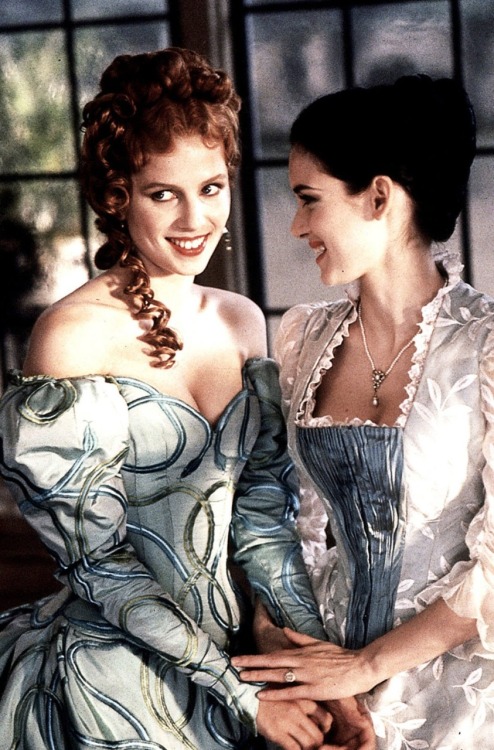



The difference this time is that the banks are focusing these credit card offers on existing customers rather than blasting out applications to every person with a mailing address.
Reuters recently reported that Wells Fargo’s credit card mailings for November were up a whopping 45% over one year earlier. Even Bank of America, which had shed much of its credit business in the last few years, has begun increasing the number of new card accounts for the first time since the housing market went ka-flooey in 2008.
Banks salivate over the idea of selling credit cards to existing customers because it means additional revenue for the institution. Credit card payments go from the customers bank account to pay off their credit card bills and all the money stays under one roof.
BofA estimates that each checking account customer who is also a credit card holder brings in an additional $1,000 in revenue. When you’re talking about millions of customers, that’s a lot of cash just there for the taking.
“The opportunity ahead of us is tens of millions of customers still. It is not a small little opportunity,” BofA CEO Brian Moynihan explained to investors last November.
14 Jan 20:18


Torturing The Mentally Ill
by Andrew Sullivan
Reporting on the shocking treatment of mentally ill inmates in South Carolina’s prisons, Andrew Cohen asks why the state has refused to do anything about it:
On Wednesday, in one of the most wrenching opinions you will ever read, a state judge in Columbia ruled that South Carolina prison officials were culpable of pervasive, systemic, unremitting violations of the state’s constitution by abusing and neglecting mentally ill inmates. The judge, Michael Baxley, a decorated former legislator, called it the “most troubling” case he ever had seen and I cannot disagree. Read the ruling. It’s heartbreaking. The evidence is now sadly familiar to anyone who follows these cases: South Carolina today mistreats these ill people without any evident traces of remorse. Even though there are few disputed material issues of law or fact in the case, even though the judge implored the state to take responsibility for its conduct, South Carolina declared before the sun had set Wednesday that it would appeal the ruling—and thus likely doom the inmates to years more abuse and neglect. That’s not just “deliberate indifference,” the applicable legal standard in these prison abuse cases. That is immoral.
But what makes this ruling different from all the rest—and why it deserves to become a topic of national conversation—is the emphasis Judge Baxley placed upon the failure of the good people of South Carolina to remedy what they have known was terribly wrong since at least 2000.
Nicole Flatow examines the horrors the inmates suffered:
Jerome Laudman, a schizophrenic, intellectually disabled inmate in South Carolina, was placed in solitary confinement, although he was neither aggressive nor threatening. During his transfer to the “Lee Supermax” facility, he was sprayed with chemical munitions and physically abused by a correctional officer. Although the transfer should have been recorded, the videotape turned up blank. While Laudman was confined naked in his cell, officers observed that Laudman had stopped eating and taking his medication, and appeared sick and weak. They did not report it. A week later, he was found laying in his own feces with 15-20 trays of molding food in his cell, vomiting. Nurses and an officer refused to retrieve his body. When two inmates were eventually sent to remove him, he was transferred unconscious to a hospital, where he died of a heart-attack. …
Other plaintiffs in the case were held naked in restraint chairs for hours at a time without treatment of their injuries, left to urinate in place and forced to stay in a painful “crucifix” position for hours. In one instance, blood pooled beneath an inmate held in a restraint; in another, an inmate’s intestine was protruding from his abdomen as officers tightened restraints surrounding the wound. One inmate was restrained with his arms in a twisted position, soaked in water, and then left outside on a December night.
14 Jan 20:11


County GOP Auctions Rifle In MLK's Honor
by Josh Marshall
Zephyr DearThere are Republicans in Multnomah County?
The geniuses who run the Multnomah County Republican Party in Multnomah County, Oregon are honoring Martin Luther King Jr and Abraham Lincoln by raffling off a rifle in their honor.
Read More →
14 Jan 01:20
"Like so many of our current maladies, the culture of reverse victimhood finds its origins in the..."
“Like so many of our current maladies, the culture of reverse victimhood finds its origins in the Civil War, during which a region devoted to human bondage wrapped itself in the garb of an oppressed people shrugging off tyranny. A century later, in the civil-rights era, the South imagined itself besieged by “outside agitators” disrupting the heretofore amiable relations between the races. Conservatives, then as now, simultaneously denounced “victimology.” But in the decades that followed, conservatives came to believe that the problem was not the pronouncements of victimhood from the afflicted groups—blacks, women, gays—but that they had a monopoly over the matter. Their cause became an equality of grievance. Thus we have a Tea Party movement, whose members are sincerely terrified by the prospect of government stealing their individual liberty, while utterly unmoved by the concerns of those whose history is marked by the literal rather than figurative experience of enslavement. The truly damning facet of Romney’s infamous “forty-seven per cent” remarks wasn’t that he called half the country freeloaders; it was the concurrent implication that members of the extremely wealthy audience before him were the real exploited toilers.”
- Melissa Harris-Perry, Mitt Romney, and Public Apologies
- Melissa Harris-Perry, Mitt Romney, and Public Apologies
13 Jan 22:31

Google Moves Into Home Electronics With Acquisition Of Nest
by Chris Morran
 A few years back, the folks at Nest came out of nowhere with their sexy, web-connected smart thermostats, treating a heretofore overlooked piece of home electronics with style. The company recently did the same thing for another necessary evil in the home, launching a line of equally sleek smoke detectors. Google apparently saw enough from these two product lines and has decided to buy Nest.
“They’re already delivering amazing products you can buy right now,” Google CEO Larry Page said of the acquisition. “We are excited to bring great experiences to more homes in more countries and fulfill their dreams!”
In an FAQ on the Nest blog, the company deals with possible concerns about its new owners.
For example, Nest says its products will still continue to work with iOS and they will continue to develop the iOS apps tied to its products. And Nest says there will be no change to the warranties on its products.
Given how much information Nest products may have about your home, it makes sense that some would be concerned about this information being shared with the data-mining folks at Google.
“Our privacy policy clearly limits the use of customer information to providing and improving Nest’s products and services,” explains Nest. “We’ve always taken privacy seriously and this will not change.”
13 Jan 22:12
Why was marijuana outlawed to begin with?
by Maggie Koerth-Baker
"This marijuana causes white women to seek sexual relations with Negroes, entertainers and any others." — Harry Anslinger, the first commissioner of the Federal Bureau of Narcotics (an early predecessor of the DEA). 


|
|
13 Jan 05:13

I thought that too from the trailer, but DUDE did that trailer...
I thought that too from the trailer, but DUDE did that trailer make the movie look so much less interesting than it was. For one, everything in the trailer happens in like the first 30-40 minutes??? Two, I DID NOT REALIZE THAT THIS WAS A SCI-FI MOVIE SOMEHOW. I mean obviously I realized they had AI technology, but what I mean by that is this movie is made like a sci-fi movie and not necessarily a romance movie. It’s a “what-if” movie instead of a “sad boy meets robot girl and she changes his life” movie. It’s about a world where computers are people, and the whole movie is about that concept and how everyone in this future world deals with that. It just happens to focus on this central male character, but we also get all these glimpses of the rest of the world and how everyone else is also relating to the artificial intelligence character in their computers too.
Anyway I think the trailer did a shitty job and Samantha (the AI character) is a fully realized and independent character and that’s really what the movie is about. I also think the movie is aware of those tropes and actively subverts them. Anyway, I loved it, and I was very much prepared to NOT love it, so yeah I recommend it.