


Zephyr Dearwhoa
The early ’90s fad has seen a fascinating resurgence:
When the US military deployed soldiers to Afghanistan in 2001 for Operation Enduring Freedom, nickels and dimes probably weren’t important concerns. But soon, commanders realized that importing US coins for army purchases was, cumulatively, too heavy: there was simply no room for chump change in supply shipments.
In stepped the Army Air Force Exchange Service (AAFES), the Army’s merchandise supplier and foreign base exchange operator since 1895. On its website, the AAFES pledges to “go where you go in serving our troops worldwide.” And that they did: in November 2001, they brought pogs back into play and began shipping them to Afghanistan. They drastically reduced the weight of shipments: $100 in quarters (5 pounds, 1 ounce), was reduced to 14 ounces in equivalent pog currency. …
The pogs worked. Soldiers use them to this day to buy anything sold in the 181 AAFES department stores across 30 countries (and all 50 US states). In addition, the AAFES has partnered with over 1,000 major retail and food chains; pogs are now valid as a form of currency at Taco Bell, Cinnabon, Burger King, and Popeyes.
(Photo by Wikipedia user Lando242)


CREDIT: AP Images/Christophe Ena
It’s not a new idea that America is a sharply divided country, at least along partisan lines: that assumption has been the bedrock assumption of our political conversations at least as long as I’ve been alive and conscious of them. But it’s similarly easy to assume that when our attention turns away from the ballot box on Election Day and from Washington the rest of the year, more unites us than divides us. That, as Barack Obama put it in 2004, “We worship an awesome God in the blue states, and we don’t like federal agents poking around our libraries in the red states.” That we share common assumptions about what constitutes the good life, and what it means to be good to each other. That we think Bruno Mars did a fine job at the Super Bowl halftime show.
So it’s always fascinating, and sometimes profoundly discomfiting, when assumptions that are commonly, if quietly, held by large numbers of Americans suddenly become highly visible, and remind us of just how different our views of the world can be outside of politics. My sense is that we’re living through two of those moments simultaneously in mass culture. The renewed visibility of child sex abuse allegations against director Woody Allen have exposed two diametrically opposed perspectives on why Dylan Farrow might have spoken publicly on the charges she made as a child. And the increasing visibility of transgender people in public life has prompted hosts like Katie Couric and Piers Morgan to reach out to women like actress Laverne Cox and writer Janet Mock. But the questions they’ve asked have revealed how little even highly educated journalists with prominent platforms know about transgender people and the issues trans communities face.
In both cases, the treatment of Dylan Farrow as a potential or even probable liar, and the treatment of transgender women as curiosities reveal deeply divided cultural assumptions and levels of knowledge about sexual assault cases and trans communities. And they’re a reminder that it’s often a far easier task to remedy ignorance than to shift deeply-held and deeply-informed assumptions.
The Allen debate has been percolating for several months. In November, Vanity Fair published a profile of Mia Farrow by Maureen Orth that reiterated the allegations about Allen’s abuse of Dylan that Orth had reported more than two decades earlier. The debate escalated last month when the Golden Globes honored Allen with a lifetime achievement award, accepted on his behalf by Allen’s frequent leading lady Diane Keaton, who spoke at length about the roles that Allen had created for women. During the presentation, both Mia Farrow and her son Ronan tweeted about the contrast between the portrait Keaton painted of Allen and their own experiences of him. And the reheated conversation reached a rolling boil this weekend when New York Times columnist Nicholas Kristof published a letter by Dylan Farrow on his blog in which she reiterated the charges she’d made as a young girl.
The conversation about how to respond to Dylan’s allegations has ranged from speculation about how they might affect the Oscar chances for Allen’s latest film, Blue Jasmine, to close readings of Allen’s cinematic catalogue. But the sharpest, most painful divide that’s been exposed is between those who believe Allen must be presumed innocent of the allegations because he has not been legally convicted, and those who believe Dylan must be presumed innocent of making false accusations.
It’s not as if we’ve never debated this contradiction in our belief in the criminal justice system and ways in which we know rape and sexual abuse survivors are often shamed and marginalized. But in the wide-ranging public debate about Dylan Farrow’s allegation, it’s striking the extent to which those who doubt Dylan (often because they doubt her mother, believing that Dylan’s allegations are a product of a nasty custody dispute) and those who believe her see irreconcilably different versions of the events.
On Monday, Stephen King found himself the subject of a great deal of anger after responding to a tweet from author Mary Carr that included a link to an essay supporting Dylan Farrow, who over the weekend published a letter reiterating the allegations she made against Allen when she was seven. The first part of King’s tweet expressed sentiments many of Allen’s fans have expressed over the years. It was the latter that seemed to express prevalent, reaction to Dylan’s decision to step forward: that she must be seeking attention or acting from similarly selfish motivations. “Boy, I’m stumped on that one,” King wrote. “I don’t like to think it’s true, and there’s an element of palpable bitchery there, but…” Later, he’d backtrack, writing: “Have no opinion on the accusations; hope they’re not true. Probably used the wrong word.” King’s expression of suspicion was jarring both because he’s so frequently been an advocate for diversity and empathy in fiction, and because the “palpable bitchery” that was so obvious to him–be it Dylan Farrow’s, or that of the author of the essay–was not palpable, or even visible, to others.
A similarly significant divide is present in the reaction to a Daily Beast piece by documentarian Robert Weide that attempts to cast skepticism on Dylan Farrow’s allegations mostly by calling Mia Farrow’s motivations into question. Among the most prominent proponents of the piece is New York Times public editor Margaret Sullivan, who recommended the piece in a blog post questioning Kristof’s decision to publish Dylan Farrow’s letter, given his work with Mia and Ronan. Speaking for the piece’s appalled critics is Slate senior editor Jessica Winter, who tries to unpack both why the piece has been so widely circulated, and the problems with its framing and treatment of the facts.
Part of the reason these periodic discussions of how to treat both sexual assault survivors and the people who have been accused of assaulting them fairly in the courts of law and public opinion are so dispiriting is because they rarely seem to break a miserable deadlock. This is at least the second large-scale conversation about Dylan Farrow’s allegations against Woody Allen, and this go-round seems no more likely to produce any sort of consensus on either Dylan’s specific charges or the way we conduct these debates than the one two decades earlier did.
But I see more reason for hope in another arena of cultural conversation. In recent months, a number of outlets have run high-profile interviews with transgender women, or stories about transgender women, that have been greeted with frustration, derision, and even outrage. First, Katie Couric, who was already under fire for giving space on her daytime talk show to anti-vaccine advocates who rely on flawed science, did a segment with model Carmen Carrera and actress and Orange Is The New Black star Laverne Cox. Couric came under fire for devoting a substantial portion of the segment to questions about the physical changes both women have experienced. It may have been a line of inquiry that was intended to inform Couric’s audience, a reflection of persistent curiosity about transition surgeries. But trans advocates and their allies found the questions rude and intrusive–and a missed opportunity to talk about issues both women face in the entertainment industry, and the political challenges for trans people everywhere.
The sense that there was a gap between what media outlets and their consumers know about trans people, and what they ought to know, only intensified in January when Grantland, the ESPN-affiliated sports and entertainment site, published a long piece about a transgender woman who had invented a buzzy new putter. But the piece revealed both that the reporter had outed the woman to one of the investors in her golf club company, and that she had committed suicide during the reporting. The backlash to the piece was intense, raising issues about everything from the framing of transgender identity as an act of deception comparable to fraud, to Grantland’s use of pronouns and careless attitude towards outing.
And most recently, Piers Morgan interviewed transgender writer and advocate Janet Mock about her new book, Redefining Realness. Mock has said that she felt Morgan and his producers used outdated and insensitive language to describe her in on-screen text. And she told BuzzFeed that she was frustrated by Morgan’s focus on the point in her relationship with her current boyfriend when she came out to him, rather than on the other themes of her book. ““They’re not talking about my advocacy or anything like that, it’s just about this most sensationalized … meme of discussion of trans women’s lives: ‘We’re not real women, so therefore if we’re in relationships with men we’re deceiving them,’” she said.
These incidents are understandably frustrated to transgender people and their allies, who feel that increased media attention has been prurient rather than illuminating. But ignorance and poorly-phrased curiosity are easier problems to fix than hardened opinions about who should be presumed guilty or innocent in sexual assault cases. And there are many signs that outlets can learn quickly from their missteps in interviews with and coverage of trans people. Couric’s segment met with not just a quick response, but with many suggestions for other questions she might have asked Carrera and Cox. Grantland editor Bill Simmons issued a very public and wide-ranging admission of what he didn’t know and didn’t consider in publishing the feature on the golf club, and ESPN ombudsman Robert Lipsyte said that the incident illustrated the organization’s need for diversity. And Morgan’s interview with Mock has been greeted as in keeping with a broadly boorish affect that Morgan brought with him from U.K. tabloid culture, rather than as any sort of model for how to educate his audience and treat trans interview subjects respectfully.
It’s irritating for communities like those of transgender people to wait for mass media and viewing audiences to make up for years of lost understanding. But as tiresome as it can be for members of marginalized communities to have to constantly explain their lives and their issues to audiences who haven’t bothered to educate themselves, ignorance is easier to overcome than hardened resistance. It’s one thing for Piers Morgan, Katie Couric, and Bill Simmons to catch up to the people who are ahead of them on the same road. It’s another, harder task to get Dylan Farrow and Woody Allen’s supporters to get on the same track decades after they started traveling on divergent highways.
The post What Dylan Farrow And Janet Mock Teach Us About Our Changing Culture appeared first on ThinkProgress.


The Isolator is a bizarre helmet invented in 1925 that encourages focus and concentration by rendering the wearer deaf, piping them full of oxygen, and limiting their vision to a tiny horizontal slit, writes Laughing Squid. Sounds like the key dissertation-writing accessary of 2014.
PERFECT
TPM Reader JH has a personal story about Obamacare and distortions in the labor market. This didn't come up explicitly in our stories today in the derptastically reported CBO report. But in addition to modestly strengthening the bargaining power of workers it is a big deal if more middle aged workers, who are near retirement, can retire without fear of losing health care coverage since that opens up slots for younger workers.
The CBO report suggesting that hours will be reduced now that people have another option for health insurance is certainly true in my situation. When my husband and I were raising our family I had to work in order to provide the family with health insurance as my husbands job did not provide insurance. I would have preferred to be a stay at home mother, but I did not have that option.Read More →

CREDIT: Warner Brothers
It’s frustrating, but probably inevitable in this age of voracious fandom, to see authors’ attempts to tweak, or litigate, or modify their work via interview long after the pages have gone to the printers and the work has wandered out into the world to be read and loved. I, too, have been guilty of enjoying these revelations, though they often raise as many questions as they answer. Harry Potter author J.K. Rowling’s declaration that of course Albus Dumbledore is gay is very nice in retrospect, but I wish she’d had the courage to make her subtext text in the darn novels, given that no one would have said her nay, and it would have made Dumbledore one of the most high-profile gay heroes in the whole canon of fantasy literature. And now Rowling’s done it again: in a leaked interview with Wonderland, she apparently declares that she got one of the central romantic relationships of her series wrong.
“I wrote the Hermione/Ron relationship as a form of wish fulfillment,” she reportedly says. “That’s how it was conceived, really. For reasons that have very little to do with literature and far more to do with me clinging to the plot as I first imagined it, Hermione ended up with Ron.”
Cue the tsuris.
I don’t particularly have an OTP in this fight, though it is interesting to me that Rowling apparently regrets what I see as some of the most sensitively written and emotionally well-realized passages in Harry Potter and the Deathly Hallows as an error of judgement. Rather, I’m struck by the whole debate in relationship to an idea that occurred to me as I was rereading Rowling’s series the weekend before Christmas*. For a series of young adult novels, the most childish idea in the series is that everyone ends up with their first love, or ends up alone.
In the former camp fall both Harry’s birth parents, Lily and James, and his surrogate parents, Arthur and Molly Weasley. Rowling doesn’t spend much time on Harry’s aunt and uncle, Vernon and Petunia Dursley, but they’re introduced to us as utterly complementary, and in filling in Petunia’s backstory, Rowling never tells us of any other romance.
The couples who get together once Harry is old enough to be aware of them follow a similar pattern, and Rowling is careful to delineate their prior relationships as crushes distinct from the flowerings of mature love that will become permanent. Bill Weasley is attractive to many witches but attached to none prior to his romance with Fleur Delacour, who eventually becomes his wife. Hermione Granger may attend the Yule Ball with Viktor Krum, but they settle into a friendship and correspondence that’s more placid than sensual. Ron Weasley’s relationship with Lavender Brown is effectively an act of social positioning and a way to take a dig at Hermione rather than a genuine attraction. And however long Harry yearns for Cho Chang, his crush on her begins to wane almost as soon as they actually attempt a date: he can’t connect or relate to her inner person, finding her grief for her ex-boyfriend confounding, and their fleeting physical intimacies seem wan in contrast to the passion Harry eventually feels for Ginny Weasley. Ginny, of course, dates a string of other boys at Hogwarts, but these other relationships don’t affect the pure flame of Ginny’s youthful love for Harry, housed in a separate place in her heart and in the novel’s hierarchy of relationships.
Parental love and the love required to sacrifice for someone else are deeply entwined in Rowling’s magical schema. But first romantic loves seem, at times, to exert a similar potent authority over witches and wizards. We learn that true love can reshape a wizard or witch’s patronus when Tonks’ love for Remus Lupin transforms her magical protector into a wolf. Later, the revelation that Severus Snape’s patronus had retained its shape as a reflection of his enduring love for Lily Potter provided one of the tenderest moments in Harry Potter and the Deathly Hallows. And while not all loves go requited, the fact of loving someone sometimes seems like it is a spell in and of itself. Lupin’s behavior in the early months of his marriage to Tonks is less that of a man bewitched into love than a man compelled to give Tonks what she wants (though in keeping with Rowling’s veneration of parenthood, becoming a father restores him to happiness).
And when love’s requirements fail to enlist the object of a witch or wizard’s affection, it’s a force that still compels them–as far as we know, for the rest of their lives. Albus Dumbledore’s affections for Gellert Grindlewald, which Rowling later revealed to be romantic rather than merely friendly or collegial, appear to have been the only such attachment of his adulthood. Rather than falling in love again, Dumbledore appears to have chosen a celibate adulthood dedicated to preserving the integrity of Hogwarts and to advocating for his vision of relations between the wizarding and Muggle worlds. Similarly, Severus Snape, who commits terrible acts in the hope that Lily Potter will eventually love him again, spends the rest of his life after her death doing penance for his role in her murder.
There’s no question that some people do meet the loves of their lives as teenagers. But not everyone does. And Rowling’s refusal to acknowledge that has the effect of freezing a part of all of her characters in their adolescent years, at a moment when their emotions are most intense and their perspective on love is most exalted. That’s a mode of dealing with the world that’s in keeping with epic fantasy, with its absolutist approach to political conflicts. But it also means that there’s something flat at the heart of many of Rowling’s characters, an area in their lives that’s somehow immune from the kind of grand complexities that defines their approach to magic, to technology, to racialized politics, and even to their friendships. Maybe it’s meant to be an act of mercy, a place in the characters’ lives where something is simply a source of joy. But it’s a way of telling love stories that to me, does a small disservice to the characters that Rowling created, who can be selfish, temperamental, close-minded, hysterical, hypocritical, and beautifully silly.
And I suppose that’s why I’ve always liked the idea of Ron and Hermione together: because it didn’t feel inevitable, and because however right they eventually seemed together, I could see the potential for conflicts, the work that was to come. Ron and Hermione don’t even like each other when they meet. They squabble about rule-breaking, and later about Hermione’s cat’s apparent predations on Ron’s pet rat Scabbers (who, to be fair, turns out to be a fugitive dark wizard in disguise). At various points in the series, Ron and Hermione are patently jealous of each other’s light romances, and handle that jealousy badly.
So one of the reasons Ron and Hermione’s attraction to each other feels durable and real is that we can see how it grows over the course of the series, and how the characters overcome an initial antipathy. Hermione, who enters the stage as a rule-obsessed busy-body, and who becomes rigid in her definitions of justice and fairness in the matters of Crookshanks and Scabbers, comes to learn that there are higher ideals than the regulations governing the conduct of the Hogwarts’ student body, and more important achievements than being the first to answer any given professor’s question. She also develops an actual sense of fun over the course of the series thanks to her affiliations with Harry and Ron, which makes Hermione a vastly more appealing person than the anxious, newly-minted witch we meet at the beginning of the story.
Ron, by contrast, comes to understand that self-gratification and rebellion for rebellion’s sake are not particularly meaningful ends towards which to orient one’s life. Some of these changes are due to the internal dynamics of his own family: Percy’s self-righteousness fractures the Weasleys’ strong sense of loyalty to each other, while Fred and George come to employ their talents for mischief in the causes of Hogwarts’ integrity and the fight against Voldemort. But they’re also due to Hermione’s influence. Ron comes to admire her academic gifts and her intellectual curiosity, and ultimately to share her concerns, working on issues like the appeal to save the life of a hippogriff. It’s no mistake–and entirely in keeping with the series’ idea that political convictions and political work forge remarkably powerful connections between the people who share them–that Ron and Hermione first kiss when Ron, who initially dismissed Hermione’s concerns for the welfare and labor rights of Hogwarts’ house elves, frets about their fate during the Battle of Hogwarts. For both characters, their investment in each other leads them to overcome some of their clearest weaknesses and flaws of character.
And most of all, I’m puzzled by Rowling’s assertion when it seems so clear in her novels that Ron and Hermione share a formative experience that not even Harry can be admitted to: the act of being Harry Potter’s best friends and closest confederates in his fight against Voldemort.
Ron’s anxieties and senses of inadequacy in this regard are the inspiration for some of Rowling’s best writing across the series. Not all of these fears stem from being the rather more ordinary best friend to someone who is Chosen. Ron is ashamed of his family’s financial limitations, which leave him with broken wands, hand-me-down pets, and ragged dress robes, all of which stand up poorly to Harry’s magical tools, his beloved Hedwig, and his sleek party outfit. The moment in Harry Potter And The Goblet Of Fire when Ron discovers that the gold he used to pay Harry back for the Omniculars Harry purchased for him as a treat at the Quidditch World Cup vanished, and that Harry didn’t notice because he has so much money, is one of the sharpest depictions of the awkwardness of financial inequality in a friendship that I can remember. Their gap in Quidditch skills is another area of friction. And the scene in Deathly Hallows in which Ron, having made tremendous efforts to return to the friends he abandoned, confronts his terror that Harry is more desirable than Ron in every area, whether as a son to Mrs. Weasley or a potential lover to Hermione, is a beautiful illustration of how difficult it is to love someone who constantly eclipses you.
Hermione is less obviously jealous of Harry than Ron is, both because her skills are so evident, and because her goals are so different from Harry’s. But a consistent theme in the novels is the ways in which Hermione’s interests are pushed aside in favor of Harry’s quests, and her priorities are subordinated to their collective mission. Hermione and Ron do much of the research to help Hagrid try to save Buckbeak, while Harry is preoccupied with other concerns. Harry and Ron reluctantly participate in a marginal way in the Society for the Promotion of Elfish Welfare, but Hermione has the sole burden of taking the organization and the cause seriously, persisting even when her friends essentially abandon her work out of embarrassment. And when the trio drop out of Hogwarts to find and destroy Voldemort’s Horcruxes, Rowling doesn’t quite acknowledge the particular sacrifice that Hermione, who loves school, is making in comparison to her less academically-inclined friends. But Hermione does put aside the dream of Hogwarts for her friends, and most specifically, for Harry’s mission. It’s no less significant an act for Rowling’s disinclination to dwell on it. And while the novels may not linger on any frustrations or anxieties Hermione feels, there is something touching about the fact that the greatest witch of her age may have her brilliance reduced to a footnote in her friend’s story.
And to me, this is why it’s so sad that Rowling appears to be treating Ron and Hermione’s relationship as a kind of fan service that she was too weak to resist. Love isn’t always immediate, and it doesn’t always come from a place of strength. Sometimes love is strongest between people who have seen each other at their ugliest and most damaged. Lily Evans knew who James Potter was before he decided that he wanted to be a better person, knew him during the time when his callousness and carelessness did real damage. Fleur Delacour knew that her husband’s greatest beauty wasn’t in his unmarked face, but in his person, just as hers wasn’t her physical perfection, but her persistence. Ron knew Hermione when she was a priggish scold and a coward. Hermione knew Ron when his privilege was exposed and his will broke. That they love each other anyway, and that they help each other become heroes, is a truer illustration of the power of love than the idea that it’s magic.
*I have many posts I want to write inspired by this project. Work travel, and the entertainment news cycle, which has been particularly weighty and heartbreaking recently, have intervened. But the posts are not dead, I promise.
The post What J.K. Rowling’s Ron And Hermione Bombshell Tells Us About True Love And ‘Harry Potter’ appeared first on ThinkProgress.




Remember that animated wind map of the United States from a while back? Well, now there’s one of the whole earth! You’ve got to check out the interactive site (which is updated with near current weather) because these images don’t do it justice. YOU CAN ORBIT THE EARTH! YOU CAN ZOOM! YOU CAN SEE WIND SUPERIMPOSED ON TEMPERATURE, PRESSURE AND CLOUDS. Standing ovation to developer Cameron Beccario! (and thanks to my friend Alice Anderson for giving me the heads up)
Yet another example of the shortcomings of most political reporters not knowing much about public policy. Republicans are hyping a CBO report claiming it says Obamacare will cost over 2 million jobs. Not what it says. It says that a lot of people who are in jobs partly or solely to hold on to health insurance will decide to drop out of the labor force.
Legendary GOP political operative, Nixon devotee and self-proclaimed practitioner of dark political arts, Roger Stone, is coming to the defense of David Wildstein who he says he's known for more than 30 years. Stone says Wildstein is exactly "the kind of man you'd send to close down a bridge", in contrast to Team Christie's claim that Wildstein acted alone.
Contrast this (giving the benefit of the doubt to the survivor) to Stephen King’s comment that Dylan’s letter contained an “element of palpable bitchery.”
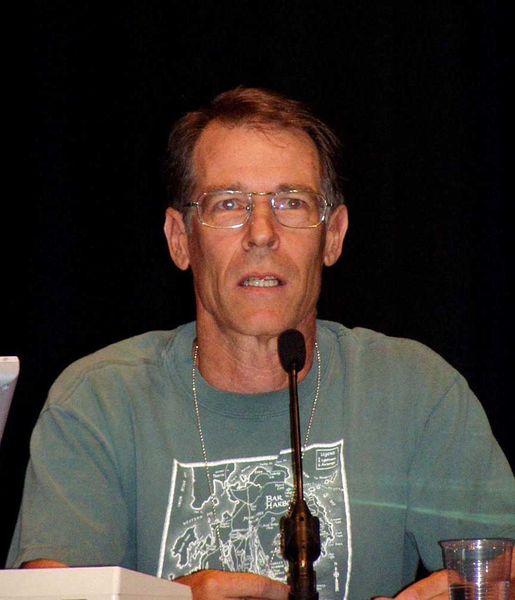 In this interview with Boom Magazine, Kim Stanley Robinson discusses the relationship of California to the future. Robinson is a profound ecological thinker, and two of his books in particular, Pacific Edge (the best utopian/optimistic novel I've ever read) and 2312 (a dazzling work of environmentally conscious, wildly imaginative eco-futurism) are both important works for thinking about a way out of our current dire situation.
In this interview, Robinson's analysis is particularly cogent, making a microcosm out of California for the whole world, and making important points about the way that good technology is key to any answer to questions about humanity's future on and off Earth. Especially worth reading are his views on the relationship of science to capitalism:
"Capitalism’s effect on humanity is not at all what science’s effect is on humanity. If you say science is nothing but instrumentality and capitalism’s technical wing, then you’re saying we’re doomed. Those are the two most powerful social forces on the planet, and now it’s come to a situation of science versus capitalism. It’s a titanic battle. One is positive and the other negative. We need to do everything we can to create democratic, environmental, utopian science, because meanwhile there is this economic power structure that benefits the few, not very different from feudalism, while wrecking the biosphere. This is just a folk tale, of course, like a play with sock puppets, like Punch and Judy. But I think it describes the situation fairly well."
Pacific Edge was my first attempt to think about what would it be like if we reconfigured the landscape, the infrastructure, the social systems of California. I think eventually that’s where we’ll end up. It may be a five hundred year project. I thought of it as my utopian novel. But the famous problem of utopian novels as a genre is that they are cut off from history. They always somehow get a fresh start. I thought the interesting game to play would be to try to graft my utopia onto history and presume that we could trace the line from our current moment to the moment in the book. I don’t think I succeeded. I wish I had had the forethought to add about twenty pages of expository material on how they got to that society. Later I had a lot of dissatisfactions with Pacific Edge. You can’t have this gap in the history where the old man says, well, we did it, but never explains how. But every time I tried to think of the details it was like—well, Ernest Callenbach wrote Ecotopia, and then explained how they got to it in Ecotopia Emerging. And there’s not a single sentence in that prequel that you can believe. So, Pacific Edge was my attempt, a first attempt, and I think it’s still a nice vision of what Southern California could be. That coastal plain is so nice. From Santa Barbara to San Diego is the most gorgeous Mediterranean environment. And we’ve completely screwed it. To me now, it’s kind of a nightmare. When I go down there it creeps me out. I hope to spend more of my life in San Diego, which is one of my favorite places. But I’ll probably stick to west of the coast highway and stay on the beach as much as I can. I’ll deal, but we can do so much better.
Robinson: California is a terraformed space. I think we have accidentally become terraformers, but of course we are not gods. We don’t actually know enough about ecology, or even about bacteria, to do what we want to do here. We could make environmental changes that could do damage that we can’t recover from, so it’s dangerous. We’re more like the sorcerer’s apprentice. We can do amazing things on this planet, out of hubris, and partial ignorance, and yet we are without the powers to jerk the system back to health if we wreck it. If ocean acidification occurs, we don’t have a chance to shift that back. So we’ve accidentally cast ourselves into this role by our scientific successes, but we don’t have the power to do what we need to do, so we need to negotiate our situation with the environment. The idea that we’re living in the Anthropocene is correct. We are the biggest geological impact now; human beings are doing more to change the planet than any other force, from bedrock up to the top of the troposphere. Of course if you consider twenty million years and plate tectonics, we’re never going to match that kind of movement. It’s only in our own temporal scale that we look like lords of the Earth; when you consider a longer temporality, you suddenly realize we’re more like ants on the back of an elephant. By no means do we have godlike powers on this planet. We have a biological system we can mess up, a thin wrap on the planet’s surface, like cellophane wrapping a basketball. But there is so much we don’t know. You can do cosmology with more certainty than ecology.
Planet of the Future [The Boom]
(Image: Kim Stanley Robinson at Worldcon 2005 in Glasgow, August 2005, Szymon Sokół/Wikimedia Commons, CC BY-SA) 
    
|
Zephyr DearGosh, it's like success-as-determined-by-judges can be capricious and arbitrary!
The figure-skating world is still in the closet:
To outsiders, men’s figure skating is widely perceived as the Gayest Sport Ever, the butt of endless jokes – consider last weekend’s SNL cold open about the “US Men’s Heterosexual Figure Skating Team.” The direct action group Queer Nation has recently protested figure skaters Brian Boitano and Johnny Weir for not speaking up against Russia’s anti-gay laws. One of the group’s representatives, who asked to not be named, tells me, “Everyone assumes all male skaters are gay. So what? … I don’t understand this impulse, particularly from figure skaters, to hide their sexuality. You can’t tell me that if Jeremy Abbott came out as gay that it would affect his standing in the skating world.”
To insiders, though, it’s no surprise that skaters are reluctant to speak out on LGBT rights, let alone come out themselves. Most male skaters and officials are committed to keeping their sport in the closet, whether that means choosing “masculine” music, hinting about a girlfriend, or outright denying any connection to homosexuality. A figure skater can never quite outskate the judges’ opinion of him, and judges and institutions, it turns out, are notoriously conservative –as some would say, “family-friendly.” At the National Championships, which took place this January in Boston, a phrase I heard often was “don’t ask, don’t tell.”
Or as a former Olympic judge puts it:
You can’t get ahead in figure skating if you don’t play the politics. It’s the most ironic sport. It truly is probably the gayest sport, and yet it’s right up there as the most homophobic sport.
Consider the case of Johnny Weir in 2010 (seen above):
The media’s treatment of Weir, who somewhat controversially took sixth place at the Vancouver games (fans thought he deserved a higher finish), underscored the unspoken tensions around sexual orientation in men’s figure skating. While Evan Lysacek was often portrayed as the athlete, Weir was the artist – “ornate,” “unapologetic,” and “flamboyant” (code for “gay”). Broadcasters made derogatory comments about Weir’s skating and costumes, questioned his gender and wondered if his flamboyant image might damage the sport. In 2010, after representing the U.S. in Vancouver, he was left off of the post-Olympics Stars on Ice skating tour, although he finished first in an online poll asking fans who they wanted to see in the tour. Reports quickly surfaced that he was excluded for being “not family-friendly” enough.
Update from a reader:
Someone who “asked not to be named” is calling on skaters to come out themselves and be a voice for LGBT rights? That’s fucking priceless, right there.

Zephyr DearThe reason creativity exists is that human beings are really shitty at making exact copies.
Zephyr DearWhat, like copying isn't valuable for True Artists? like True Artists are even a thing??
After getting over his modernist hangups, Malcolm Jones writes, “I understood more about Vermeer by painting my own Vermeer … than I had ever learned by simply staring at his paintings”:
When I was little kid, I didn’t learn much from all those teachers urging me to express myself – frankly, I don’t think I, or most people for that matter, have much to express, certainly not when
they’re six. I learned to draw and paint on my own, and I did it by copying. I started with Mickey Mouse, and I kept at it until my Mickey looked like the one in the cartoons and the comic books. Along the way, I got an education in shading, depth, perspective, and all the other basics of drawing. The real takeaway, though, was that not just anyone can be a great artist, but anyone can learn to draw. You just need a pencil and paper and a lot of time.
Copying, like rote memorization, is no longer in fashion. … Modernism blew the doors open with its insistence on constant change that now permeate – and rules – every corner of the creative world (Ezra Pound’s dictum, “Make it new!” might as well have an “Or else!” tacked on). And that’s fine if you are a true artist. Alas, most of us aren’t, so when our puny efforts at creativity fall short, we feel like failures and quit before we’re out of grade school. Ever thereafter, we regard art as some mysterious, gated territory where we cannot go. Somehow, I don’t think that’s what our teachers intended.
(Image of the Threadless T-shirt design “Free Ninja Art Test” based on those old drawing tests from the Art Instruction Schools)

Ed Kilgore: "Immediately after the retreat ended, House Republican Leader Eric Cantor went on Face the Nation, and pressed mildly by Major Garrett on these obvious subjects, collapsed into incoherence."

John Wren and Maurice Levy, chief executives of Omnicom and Publicis, which are in the process of merging. (Scott Eells/Bloomberg)
The blizzard of ads is over, the best and worst have been ranked, and the amount of money spent on each 30-second spot in this year's Super Bowl has been averaged and totaled up (it's $4 million, if you were wondering, more than ever before). Despite the number of concepts on display, though, the bonanza hides an important truth about how the industry works.
Advertising, of course, is no longer purely the province of Madison Avenue. There are clusters of creative agencies in Los Angeles and San Francisco, and even dotted through the South (like Chattanooga's Humanaut, which did Sodastream's ad) and Midwest (like Schaumberg, Ill.-based Pinnacle Advertising and Marketing Group, which did WeatherTech's).
But here's the thing: Even if the ad business is more geographically diverse, the ownership structure is not. Many firms are actually owned by what used to be known as the "big four" branding houses: WPP, Omnicom, Publicis and Interpublic. Now, with the $23 billion pending merger of Publicis and Omnicom, they're just the big three.
So how did the industry giants fare? By my count, using a couple of different lists, 43 companies advertised with one or more spots. Omnicom companies had 5 clients, Publicis companies had 6 clients, Interpublic companies handled 5, and WPP handled 3. That means the new giant, Omnicom Publicis, accounted for about a quarter of all the Super Bowl business this year — and making television commercials is only a small part of what they do, which also includes public relations, market research and media planning.
That's a big chunk of the biggest advertising event of the year. At the same time, there are still a lot of independent agencies, as well as companies who design their own ads in-house — it's not quite a monopoly yet.

|
|

If you're anything like me (and some studies suggest that as many as 20% of you freaks are like me) you have a terrible time reading. Not due to disinterest, but because your eyeballs approach written language like two mice gathering snacks from an open field. Dyslexia and other learning disorders, while obviously difficult to deal with, are often linked to creative problem solving and artistic expression. With that in mind, it's a little surprising that Dyslexie is the first font designed with dyslexic reading patterns in mind. More intriguing, it now appears it might be a failure.
As the video below notes, dyslexia often results in an unconscious misinterpretation of letters by confusing them with similar counterparts. This is often blamed on dyslexics' "3D thinking," where each letter is treated as a physical form, rather than a concrete symbol. Due to this, one letter is often mistaken or rearranged with another through transposition, mirroring or false equating. (For a dyslexic's attractive take on how it looks and feels, check out I Wonder What It Feels Like To Be Dyslexic, a typographic book project that went supernova on Kickstarter last year.)
Fonts like Dyslexie (and now Open Dyslexic, and others) aim to reduce the slippery flippy action of letters that look like other letters... by making them not look so alike. In Dyslexie, the symmetry of the letterforms is reduced, spacing is more deliberate, and every letter gets a pear-bottom treatment, supposedly reducing errors. Individual mileage will always vary, however, and actual studies (done by actual people who know how to study actual people with dyslexia) have largely questioned the effectiveness of Dyslexie. Reading speed isn't mentionably improved, and comprehension couldn't be said concretely to improve either. Breaking even in legibility is a basic typographic goal, but it's probably not enough when you're trying to give a specifically impaired group a leg up. Personal experience, while useful, isn't all it takes to make a problem-solving product.
(more...)
Mutsumi Yamamoto
[天使•メランコリア1]1982Mutsumi Yamamoto is the artist’s name. The figures are Thantos(woman holding the skull) and Eros(the seated figure); gods of Death and Love. The artist died in 2001. There was an exhibit of the artist’s works in 2009 at Hyogo Prefecture Museum of Art in Nada-ku, Kobe, Hyōgo Prefecture, Japan. I think there were other exhibits in other museums but it’s unclear. I couldn’t find out much more about the artist because most of the pages were in Japanese or Chinese and were horribly mangled by Google translate.
Oooooo a trans girl goddess of death yes
Insisting that “elections are flawed,” Alexander Guerrero proposes an alternative method of selecting representatives that he calls “lottocracy”:
First, rather than having a single, generalist legislature such as the United States Congress, the legislative function would be fulfilled by many different single-issue legislatures (each one focusing on, for example, just agriculture or health care). … These single-issue legislatures would be chosen by lottery from the political jurisdiction, with each single-issue legislature consisting of 300 people. Each person chosen would serve for a three-year term. Terms would be staggered so that each year 100 new people begin, and 100 people finish. All adult citizens in the political jurisdiction would be eligible to be selected. People would not be required to serve if selected, but the financial incentive would be significant, efforts would be made to accommodate family and work schedules, and the civic culture might need to be developed so that serving is seen as a significant civic duty and honour. In a normal year-long legislative session, the 300 people would develop an agenda of the legislative issue or two they would work on for that session, they’d hear from experts and stakeholders with respect to those issues, there would be opportunities for gathering community input and feedback, and they would eventually vote to enact legislation or alter existing legislation.
The advantages he sees:
Single-issue focus is essential to allow greater learning and engagement with the particular problems, especially given the range of backgrounds that members would bring to the institutions, and the fact that these individuals would be amateurs at the particular task of creating legislation. Lottery-chosen representatives would have more time to learn about the problems they’re legislating than today’s typical representatives, who have to spend their time learning about every topic under the sun, while also constantly travelling, claiming credit, and raising funds to get re-elected. In the lottocratic system representatives will be — at least over a long enough run — descriptively and proportionately representative of the political community, simply because they have been chosen at random. But they will not have in mind the idea that they are to represent some particular constituency. Instead, they will be like better-informed versions of ourselves, coming from backgrounds like ours, but with the opportunity to learn and deliberate about the specific topic at hand.


Ahmed Shihab-Eldin is a respected journalist who holds US citizenship. Every time he returns to his home in New York, he is detained for many hours by the DHS, subjected to humiliating questioning and detention without evidence or charge, because he fits a "profile" that seems to consist entirely of "brown dude with Arabic name who visits the middle east." He recently returned from the World Economic Forum in Davos and found himself detained for hours, despite having been assured that his name had been removed from the DHS's watch-list.
His story of harrowing treatment at JFK airport stands in sharp contrast to his experiences at checkpoints in the middle east, where security risks are much more immediate and more grave. As he points out, America has spent billions creating an aviation security system and system of border checks that have had no material impact on security, but have nonetheless enmiserated, alienated, and harassed millions of people who committed no crime and posed no threat,
The room was filled with rows of seats and several DHS officers with colorful folders (red, yellow, green, blue) lined up in front of them with passports and travel documents. The juxtaposition of the colorful folders with the rows of mostly brown people filling the seats was suspect in itself.
"Omar Mubarak... Juan Diaz... Sayed Hussain," the officers called us one by one.
I couldn't help but feel as though JFK itself was a bit racist.
After a 14-hour trip, I wanted to stretch my legs. So I stood up, anxious to find myself back in the room, especially after having written to the DHS. "Take a seat," the officer at the door sternly said to me. I told him I wanted to stretch my legs after the long flight. He told me I wasn't allowed to stand up. You are also not allowed to use your phone or electronic equipment. I was also slightly surprised to find as many children in the room as there were cameras.
"Sir, I'm a U.S. citizen who wants to stand while being detained. Am I not allowed to stand?" I said, pointing to the Asian man and Pakistani woman standing with their toddler strapped to the man's chest. Anyway, there were only two empty seats in the room with a capacity of 60.
"Sit down!" he repeated for the sixth time, and came and confiscated my phone, which I was using to try to text my coworkers who were waiting to share a car home.
Davos to Detention: Why I Hate Coming Home to America [Ahmed Shihab-Eldin/Huffington Post]
(via Mitch Wagner) 
|
|
“I heard that Eastwood is saying that this will be his last film as an actor. There’s part of me that feels that way during almost every movie. On ‘Synecdoche,’ I paid a price. I went to the office and punched my card in, and I thought about a lot of things, and some of them involved losing myself. You try to be artful for the film, but it’s hard. I’d finish a scene, walk right off the set, go in the bathroom, close the door and just take some breaths to regain my composure. In the end, I’m grateful to feel something so deeply, and I’m also grateful that it’s over … And that’s my life,” – Philip Seymour Hoffman. RIP.


Noah Chestnut explains what you’ll be feeling tonight:
Throughout the 2013-2014 NFL season, Facebook data scientists anonymously tracked messages posted by millions of football fans in order to measure their minute-by minute emotional reactions during a game. Football fans wind up following a predictable pattern: excitement before the opening kickoff and then frustration, anxiety, anger and depression set in for almost 2 hours until the winning team’s fans start to experience relief and joy.

Tablet has a moving piece by Samantha Shokin, a Brooklyn-based writer, on how a semester in Israel helped change the way she felt about herself, particularly her bodily self-image as a Jewish woman. Shokin writes:
I spent a lifetime hating my Jewish hair—straightening it, covering it, or otherwise finding ways to diminish its presence. A trip to Israel is what it took for me to realize my hair was wonderful all its own, and much more than just an accessory.
But there’s something to be said about stepping into a hair salon and not feeling like a piece of work, just as there is about stepping into crowd of people and not feeling like a stranger.
I’m being tendentious. But it’s a tendentious situation. And articles like this don’t help. They speak instead to a larger cluelessness among Jewish Americans about what they’re doing when they go to Israel and find themselves at home.
I can’t tell you how many discussions I’ve had over the years with Jewish defenders of the State of Israel whose position is entirely fair and eminently reasonable—so long as you forget that there are actual Palestinians living there. People I love and respect mount air-tight arguments and make genuinely moving cases to me about the Jewish need for a refuge from persecution; about the desire to live somewhere—anywhere, say some—where they are not a minority; about the stirring feeling of hearing Hebrew spoken in the street; about the longing to feel at home. About wanting to be a teenager who loves her hair.
All of this I hear, and think, yes, of course, how could anyone not understand and empathize with that? But all of these heartfelt and legitimate claims rest upon a simple omission: the Palestinians. For these claims to obtain their intended force, we have to pretend that the Palestinians aren’t there—or that they don’t exist.
Shokin’s piece is a microcosm: its adolescent sense that my problems are the only problems that matter in this world sound all too much like Zionist arguments for a Jewish homeland. Not Zionist arguments at their weakest, but Zionist arguments at their strongest.
In an interview with The Rumpus, Jerry Stahl is asked, “Do you feel that shame drives us to make art?”
Stahl: Well, if you have the luxury of having shame be your problem, then you’re doing all right. I think your rent has to be covered before shame becomes your biggest issue. First you have to put the food on the table and make sure not to die, then once all that’s taken care of, you have time for shame. Once I taught in juvenile hall, and there was this one guy used to say, about stuff like that, “It’s like white people shit.”
Rumpus: It reminds me of the time I was in group therapy and a mechanic in class said, “I keep having heart attacks,” and the leader said “No, those are panic attacks.” He refused to call them panic attacks because he said that’s what white people have.
Stahl: Yeah, and the number of psychological issues a child has is inversely proportional to the amount of money their parents have.
Rumpus: On that note, of suffering, and the range of it, there’s a line in one of your books that compares two kinds of suffering as being akin to comparing “acne to leprosy”—do you think you can compare suffering?
Stahl: Yes, there are different kinds of suffering. I’m not going to sit here and mock anyone’s suffering. The writer Hubert Selby helped me out a lot when he was around, and always used to say, “You can’t compare pain.” He used to tell a story: when he was in the army, he got TB, and this was before penicillin. They gave him this crazy-ass drug that made him mute and blind for a month. He was just laying in bed and completely aware, and he would hear the doctors say to other patients, to make them feel better, “At least you’re not Selby.” It is very fucking true, that it’s hard to have sympathy for white people problems sometimes, but I think if it wasn’t for shame, I wouldn’t have written one book.
Previous Dish on shame and writing here.


96% of the sponsors of the Fair Minimum Wage Act don’t pay their interns
A new study by the Employment Policies Institute (EPI) revealed that 96% of House and Senate sponsors of the Fair Minimum Wage Act of 2013 don’t pay their interns. The bill, purported to help lift millions of low-wage workers at a time of increasing income inequality, would raise the federal minimum wage from $7.25 to $10.10 an hour.Members of Congress — including the bill’s authors, Sen. Tom Harkin (D-Iowa) and Rep. George Miller (D-Calif.) — are getting serious flack for supporting a 40% wage hike on the private sector while their interns receive nopay.
Economist Gregory Clark’s book The Son Also Rises traces social mobility rates over hundreds of years using surnames and concludes that government interventions aimed at increasing mobility have little effect. In an interview, Clark suggests that, because socioeconomic status is so hard to change, it may make more sense to focus on raising the minimum standard of living instead:
We already live in societies of massive social intervention in terms of the provision of education and health care. Yet we have not been able to raise social mobility rates above those of the pre-industrial era. Even the most interventionist societies such as Sweden have such low social mobility rates.
But if we’re learning that we can predict the majority of people’s outcomes at conception, that should lead us to reexamine our assumption that whatever income distribution comes out in society is fine. Because if it’s the case that a lot of this is determined before someone enters the game, it weakens the case for letting the market determine the distribution.
You’d be much more likely to favor a society with much less inequality. And that’s where Sweden’s system does provide advantages over the U.S.’s. They haven’t changed mobility rates, but they’ve changed the consequences, strongly, of ending up at various points in the distribution. It’s a much better place for people who end up at the bottom of the distribution.
Yglesias makes related points, arguing that the bipartisan obsession with equal opportunity “makes no sense whatsoever as a social objective”:
[W]hether the focus groups like it or not, an opportunity to climb is no real answer for people at the bottom. A perfectly fair race is, in at least one important way, the same as a rigged race: Both have a first-place finisher and a last-place finisher. The question of what happens to the person at the bottom genuinely matters. Whether you want to phrase that in terms of the gap between the bottom and the top—inequality, as such—or simply look at the absolute condition of the people at the bottom, you can’t escape the conclusion that outcomes matter, and not just in terms of procedural fairness. Today, even poor people are able to take advantage of things like electricity and antibiotics that were rare or nonexistent 100 years ago. That’s the kind of opportunity that matters—the opportunity for everyone to enjoy a better life. But over the past generation, progress has been slow for the nonrich. And over the past 10 years, it’s been essentially absent.

David Wildstein, the Christie appointee at the center of the BridgeGate scandal, says Christie knew and there's proof.


