
The more you use your Shop-Vac, the more suction you lose as its filter gets clogged up. This DIY pre-separator will help prevent your Shop-Vac’s filter from clogging, and keep its suction power from deteriorating.

The more you use your Shop-Vac, the more suction you lose as its filter gets clogged up. This DIY pre-separator will help prevent your Shop-Vac’s filter from clogging, and keep its suction power from deteriorating.

Finding decent clothes is hassle enough, but the clothing industry’s frustrating definitions of “plus-sized” only makes it harder. Dia&Co simplifies this by having a personal stylist pick out clothes for women, specializing in sizes 14-32.


Ladies, fret as we may, some of us have (or will have) saggier breasts than others. Some point their fingers at gravity and others at the bras we wear, but the bigger culprit is your genes.


Chipotle may have re-opened, but I wouldn’t blame you for being a little skittish about returning, considering everything that has transpired. Luckily, you don’t have to miss out on delicious cilantro-lime rice; you just have to make it at home.

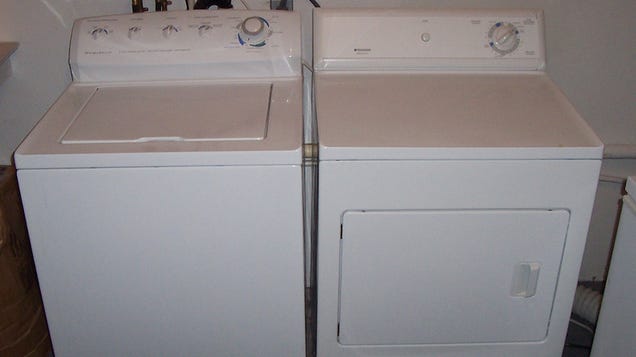
Dealing with the damage from a burst washer hose or dust-clogged dryer duct is expensive and frustrating. Upgrading both those items will make your appliances safer, more efficient, and last longer.


Pancakes aren’t too difficult to make, but why not try to make a perfect batch? These formulas will help you easily determine how much pancake batter you need overall, as well as the exact amount required for each individual pancake based on the pan you’re using and how thick you like them.


Rice is tasty enough on its own, but with a few tweaks, you can take it from tasty to damn delicious. For example, next time you make rice, try toasting and seasoning it beforehand.


No one wants to think they’re bad at dating. We especially don’t want to think we’re the bad one in a failed relationship. Fortunately, I made too many mistakes to ignore. Here are the things I learned about relationships, mostly by screwing them up first.


Boneless, skinless chicken breasts don’t have a lot of fat in them, so they’re a challenge to cook (unless you like dry or tasteless chicken). With a piece of parchment paper, however, this problem is solved.


Whether you’re concerned about a weather-related disaster or a potential zombie apocalypse , if either comes to pass, you’ll be glad you had a plan. This infographic can help you gather the items you’ll need in an emergency.

WASHINGTON — Maryland lawmakers have succeeded in overriding a veto on felons’ voting rights. That means that up to 40,000 residents with felony convictions could be voting in in Maryland’s April primary.
Perry Hopkins, a Baltimore resident with a felony record says he’ll be able to vote for the first time at the age of 55.
“I now feel part of the process. I now feel like a weight has been lifted, and that I am just like every other citizen walking around the street,” Hopkins said.
Hopkins says without the ability to vote, he had no voice in a political system that demanded he pay his debt to society by serving time.
“Since I came home from prison in 2012, in many ways I’ve been alienated by society … I’ve been paying into a system that makes laws that I can do nothing about,” Hopkins said.
Hopkins says he’s well aware that many people complain about government without exercising their right to vote.
“I’ve been complaining without the ability to vote. I know what the power of the vote does.”
Hopkins says he is not cynical about the political process. “I’m empowered by it,” he says.
Last year, the Maryland General Assembly passed a bill to restore the voting rights of felons that would allow them to vote upon release: before finishing probation or parole. Gov. Larry Hogan — a Republican — vetoed that bill.
This year, supporters of the bill pledged to override Hogan’s veto, but that vote was delayed twice to ensure that there would be enough votes in each chamber for an override. Tuesday, the Senate voted 29-18 to override the veto. Last month members of the House of Delegates voted 85-56 to override Hogan’s veto.
The post Felon ‘empowered’ as Md. restores group’s voting rights appeared first on WTOP.
WTOP's Neal Augenstein reports | February 10, 2016 8:12 am
WASHINGTON — Reston Hospital Center is open and operating normally Wednesday, but police are investigating an overnight shooting incident.
Police responded just after 1:30 a.m. after a 53-year-old Loudoun County man with an apparent self-inflicted gunshot wound to the upper body couldn’t get into a hospital building entrance, and fired a shot to get in.
“He gets out of his car in front of the hospital and attempts to gain entry to the hospital. He finds the doors locked, so he apparently fires a bullet, a round at the glass doors, breaks the doors, gains entry into the hospital,” says police spokesman Don Gotthardt.
“Once inside, he encounters hospital personnel who immediately realize he’s in need of medical attention. When they go to render aid, he displays a handgun again and fires another bullet inside the hospital. Fortunately, that did not hit anyone.”
Hospital personnel quickly convinced him to give up his handgun.
Gotthardt says the man was then stabilized and taken to another hospital for treatment and evaluation.
The man had tried to get into The Pavilion entrance to the hospital, not the emergency room entrance.
Gotthardt says police are continuing to investigate.
“The detectives are trying to complete a comprehensive perspective of the entire situation,” Gotthardt says.
“Obviously, the man’s medical condition is paramount.”
Once the entire situation is understood, police will determine whether to charge the man, who has not been identified.
WTOP’s Neal Augenstein contributed to this report.
The post Man with gunshot wound fires gun at Reston Hospital Center appeared first on WTOP.
WASHINGTON — The principal of a Prince George’s County elementary school is on administrative leave, days after a volunteer aide was arrested for producing child pornography on school grounds and elsewhere.
Michelle Williams, the principal of Judge Sylvania Woods Elementary School in Glenarden, has been placed on leave, according to Prince George’s County Public Schools spokeswoman Sherrie Johnson.
On Friday, 22-year-old Deonte Carraway was charged with 10 felony counts of manufacturing child pornography, soliciting students, sexual abuse of a minor, and second-degree sexual offense.
Police have said Carraway videotaped students of the school. Carraway is being held on $1 million bond.
Johnson said she couldn’t say why Williams was placed on administrative leave, due to employee confidentiality rules.
Investigators are aware of 10 victims, between the ages of 9 and 13, but are concerned there may be more.
Police have said an uncle of one of Carraway’s victims alerted police to a nude photo he said the victim had sent Carraway, using the Kik messaging app.
Police are asking parents and caretakers, concerned that their child may be a victim, to call 301-772-4930, which will connect them to the Child and Vulnerable Adult Abuse Unit.
The post Principal on leave after aide arrested for making child porn in school appeared first on WTOP.



This week’s Reston Pet of the Week is Lucy Rocket, who lives with her people near Lake Audubon. Here is what her owner, Laura, has to say about her:
Lucy Rocket came to live with her family just over a year ago. Her mother was a Red Heeler and the rest is anybody’s guess.
Lucy’s likes include chasing sticks, squirrels, deer, foxes, and birds. She also loves to catch tennis balls, and she will get very focused if anyone has a ball (she almost never misses).
Dislikes include baths, turtles (rocks that move), and one neighborhood cat that charged her and made her run yelping all the way home.
Lucy Rocket can be found enthusiastically greeting others while walking the trails of South Reston with her family or on the front of a paddle board on Lake Audubon in the spring and summer.
Lucy Rocket and Laura will receive $100 in Becky’s Bucks, as well as some treats, from our sponsor, Becky’s Pet Care.
Want your pet to be considered for the Reston Pet of the Week?
Email news@Restonnow.com with a 2-3 paragraph bio and at least 3-4 horizontally-oriented photos of your pet.
Each week’s winner receives a sample of dog or cat treats from our sponsor, Becky’s Pet Care, along with $100 in Becky’s Bucks.
Becky’s Pet Care, the winner of three Angie’s List Super Service Awards and the National Association of Professional Pet Sitters’ 2013 Business of the Year, provides professional dog walking and pet sitting services in Reston and Northern Virginia.
The post Pet of the Week: Lucy Rocket appeared first on WTOP.
Patch.com |
Prince William County community calendar, Feb. 11-17, 2016 Washington Post AARP income-tax preparation help Thursdays and Tuesdays 11 a.m.-3:30 p.m. Chinn Park Regional Library, 13065 Chinn Park Dr., Woodbridge. 703-792-4800; and Thursdays noon-8 p.m. Mondays 10 a.m.-6 p.m. Bull Run Regional Library, 8051 Ashton ... Tourism Rebounds in Prince William County and ManassasPatch.com all 4 news articles » |
Federal prosecutors are asking the court to shut down a Liberty Tax Service franchise in South Carolina, alleging that these locations have deliberately prepared false and inflated federal tax refunds by giving them income from fictional jobs and claiming children that don’t exist.
Virginia-based Liberty licenses its brand out to some 4,000 tax prep franchises around the country. Christopher Paul Haynes, the franchisee in Justice Department lawsuit operates a trio of franchises in Columbia, SC, area. According to the complaint [PDF] filed this week in a U.S. District Court, these offices “routinely prepare and file fraudulent income tax returns for customers.”
“The tax return preparers at Haynes’s tax preparation offices fabricate expenses, deductions, credits and other adjustments on customers’ federal income tax returns to illegally generate a tax refund or a refundable credit from the Internal Revenue Service,” reads the lawsuit, which accuses the franchises’ approximately 35-40 preparers of, among other things, reporting false or inflated business income, expenses, and bogus dependents.
Customers at Haynes’ franchises almost invariably ended up claiming a refund. According to the complaint, 99% of the nearly 1,500 tax returns filed between Jan.-April 2015 calculated that the taxpayer was owed a refund. From 2011 through 2015, an average of 93% of returns filed at these locations sought refunds.
The IRS took a look at 202 federal tax returns prepared by these offices between 2011 and 2014. Nearly all of them (96%) contained deficiencies requiring IRS adjustments.
“The IRS calculated the average tax deficiency per return to be approximately $3,834 per tax return,” notes the complaint, which says that Haynes and his employees continued to prepare problematic returns even though he knew that customers were being audited and he was under investigation.
In spite of the fact that many of the customers had no idea their returns had allegedly been falsified or inflated, preparers frequently asked them to sign, without explanation, a Return Information Verification form indicating that they had reviewed the documentation.
One of the ways that Haynes’ preparers frequently managed to claim that they were owed large refunds was through a combination of claiming false income and inflating or falsely claiming an Earned Income Tax Credit.
The EITC allows lower-income people to claim a tax refund even if they have no tax liability and have made no withholding payments. The amount of the credit increases as annual income approaches $13,650 but begins to decreases once it gets beyond $17,830. EITC also increases, within limits, as the claimant adds more dependents.
So if, in tax year 2014, you had three dependent kids and earned between $13,650 and $17,830, you were entitled the maximum EITC of $6,143.
In order to hit that sweet spot, the DOJ says that Haynes and his preparers would create fictional income for customers who earned less than $13,650 and/or claim fake dependents to get up to three.
Over a five-year period, some 62% of returns filed at these locations claimed the EITC.
To create these nonexistent businesses, the DOJ says that preparers would ask customers about their hobbies and base their fictional employment on their answers. You say you like to cut hair? You’re a freelance hairstylist. Enjoy arts and crafts? That’s a business too, of sorts.
The lawsuit cites examples of fake housekeeping businesses, janitorial services, caregivers, stylists, babysitters, and home health care operations resulting in thousands of dollars in unearned tax credits being falsely included on these returns.
And doing so didn’t just get the customer a refund they may not have deserved. It also benefited the franchises, which charged for preparation on a “per form” basis. So by filling out the Schedule C for the fake income and then claiming the EITC on yet another form, Haynes’ franchises were allegedly making even more money from the deception, contends the lawsuit.
Likewise, preparers would allegedly file false Schedule A deductions for bogus business expenses, resulting in a larger refund for the customer and another form to pay for.
The DOJ claims that preparers at Haynes’ franchises are paid near minimum-wage levels. They do, notes the lawsuit, receive an end-of-season bonus “based on the total number of tax returns that the employee prepares and files during the tax season.”
By paying his preparers so little for their time, but rewarding them for working expeditiously, the DOJ alleges that “Haynes financially incentivizes his tax return preparers via this bonus system to prepare as many tax returns as possible, for the highest possible preparation fee.”
Employees are also, according to the DOJ, taught to abide by a “no walkout” policy, meaning that preparers should do everything they can to justify the “exorbitant” fees charged by the service and to make sure that a return is prepared for every customer who comes through the door.
Thus, prosecutors say that even though the preparers do receive some training on tax preparation before the season starts, “many employees do not uniformly adhere to the pre-tax-season tax preparation training when preparing customers’ tax returns.”
Federal law requires that tax preparers “furnish a completed copy” of a customer’s return “not later than the time such return or claim is presented for such taxpayer’s signature.” But the lawsuit contends that these Liberty franchises frequently failed to do so, and that sometimes they charged upwards of $50 to customers just to get copies of their returns.
The DOJ is asking the court to block Haynes — who had no tax-related experience (other than doing his own personal taxes) before becoming a Liberty franchisee in 2005 — and his employees from preparing tax returns, or assisting in any way with the preparation of tax returns.
When reached for comment by Consumerist, Liberty’s Chief Compliance Officer Jim Wheaton stated that the company “has a robust compliance program, and we expect our franchisees to make sure that their offices comply with all federal and state tax requirements.”
Noting that the lawsuit only applies to a small number of the company’s total franchises and that the corporate office had not been made aware of any investigation, Wheaton nonetheless said that the Liberty “will take appropriate action after completing a review of both current year and prior operations at these offices.”
“There is no place in the Liberty Tax system for franchisees or preparers who commit fraud or who take other shortcuts,” said John T. Hewitt, President, CEO and Founder of Liberty Tax, in a statement. “We created a separate compliance group, and named a Chief Compliance Officer last year, in order to be able to respond quickly to compliance concerns.”
Hewitt says that he hopes that the situation at the Haynes franchises isn’t as dire as the lawsuit makes it out to be, but acknowledges that “In a system that includes thousands of offices and 35,000 tax preparers hired by our franchisees each year, it may be inevitable that some franchisees and preparers, or their customers, will engage in behavior that Liberty does not condone and will not tolerate.”
It’s been a not-great 2016 so far for Liberty. In January, Maryland Comptroller Peter Franchot stopped accepting returns from seven different Baltimore-area Liberty locations. Then last week, Franchot suspended processing tax returns from 16 additional Liberty franchises because of the high volume of questionable returns.
Problems with untrained and greedy tax preparers is not limited to the few Liberty franchises mentioned here. It’s an industry-wide issue, as shown in a recent undercover study by the National Consumer Law Center.
In 2011, the IRS created a system that would require all 700,000 non-CPA tax-preparers in the U.S. to register and demonstrate their mastery of the topic through testing and continuing education courses.
However, the tax-prep industry immediately challenged the IRS’s authority to enact these sort of rules and in 2014 a federal appeals court sided against the IRS.
An 1884 law gives the IRS the authority to “regulate the practice of representatives of persons before the Department of the Treasury,” but the appeals court ruled that tax preparers only assist taxpayers and “do not possess legal authority to act on the taxpayer’s behalf. They cannot legally bind the taxpayer by acting on the taxpayer’s behalf.”


According to the IRS, the automated cyber attack attempted to use malware to trick IRS.gov into generating E-file PINs for the hundreds of thousands of SSNs.
If the thieves had been able to obtain those PINs, they would have had an important piece needed to E-file fraudulent tax returns in the name of those taxpayers. The agency reveals that 101,000 PINs were successfully generated during the attack, but the IRS claims it blocked the attack and no personal information was compromised or disclosed.
The SSNs involved in the attack were stolen from outside sources, says the IRS, which is now notifying these taxpayers that their Social Security info is in the hands of ID thieves. These folks’ IRS accounts are being flagged in case anyone tries to use the purloined SSNs in the future.


Just a month after federal regulators took steps to ease restrictions for self-driving cars, the National Highway Traffic Safety Administration has let one tech company know that its artificial intelligence system could be considered an actual driver under federal law.
Reuters reports that NHTSA recently informed Google that it had determined the AI system piloting its self-driving car would be the vehicle’s legal “driver,” eliminating the need for an actual human in the car.
The decision, written by NHTSA chief counsel Paul Hemmersbaugh, was a response to a proposed design that Google submitted to the agency in November that called for a self-driving car that had “no need for a human driver.”
“NHTSA will interpret ‘driver’ in the context of Google’s described motor vehicle design as referring to the (self-driving system), and not to any of the vehicle occupants,” NHTSA’s response to Google stated. “We agree with Google, its (self-driving car) will not have a ‘driver’ in the traditional sense that vehicles have had drivers during the last more than one hundred years.”
While this is not an explicit approval of Google’s driverless car, it is a necessary step toward the inevitable okay for a vehicle that does not need any sort of human supervision on the road. Currently, Google’s self-driving vehicles, which can operate fully autonomously, are required to have a human driver inside, as well as several accoutrements – like a steering wheel and pedals – that allow the human driver to take control of the vehicle if needed.
In its proposal to NHTSA, Google raised concerns “that providing human occupants of the vehicle with mechanisms to control things like steering, acceleration, braking… could be detrimental to safety because the human occupants could attempt to override the (self-driving system’s) decisions.”
Hemmersbaugh said that tests would have to prove the extra safety features aren’t needed before federal regulations could be rewritten to allow any company to offer cars without the mechanisms.
While NHTSA’s decision is a big step forward in autonomous driving technology, Reuters points out there is still a long way to go before cars without drivers, steering wheels, and other traditional aspects are tooling around the country.
“The next question is whether and how Google could certify that the (self-driving system) meets a standard developed and designed to apply to a vehicle with a human driver,” NHTSA said in its letter.
Exclusive: In boost to self-driving cars, U.S. tells Google computers can qualify as drivers [Reuters]

Before bringing a dog into your family it is important to know how to take care of it. You need to provide for its needs, both physical and emotional. This means providing nutritious food, clean drinking water, shelter, and the opportunity to live in a safe home. It also means ensuring that the dog is happy by providing ample play time, plenty of exercise, and stimulation for its mind. Caring for a dog is a big responsibility, and dog ownership is not something to enter into lightly, however this work will help you to successfully build a bond of love and trust with an important new member of your family.[1]


Cite error: <ref> tags exist, but no <references/> tag was found
RT |
50 Cadavers Lost By GW University Daily Caller 3D illustration of human male anatomy and skeleton. Standing pose. Torso with head Flikr/Creative Commons. 4891934. Washington, D.C.'s George Washington University (GW) shut down its medical school's body donation program after losing track of up to ... GWU medical school no longer accepting donated bodiesWashington Post GW medical school can't identify cadavers, has stopped accepting donated bodiesBecker's Hospital Review all 21 news articles » |

Her family says in a lawsuit filed against Jacuzzi Brands and six suppliers and installers that she was in her walk-in tub in February 2014 when she tried to pull the drain plug so she could get out, reports Courthouse News.
But the plug was defective and the drain system didn’t work, the suit alleges. With the Jacuzzi full of water, she was unable to open the door to leave. When her friends couldn’t reach her for a few days, they went to check on her and found her dead in the tub.
The administrator of her estate filed the lawsuit claiming negligence, strict liability, and failure to warn, claiming that Jacuzzi and those who installed the tub should have known the tub “had a design and/or manufacturing defect” that made it “unreasonably dangerous and potentially deadly.”
According to the family’s suit, the plug and drain system posed an unreasonable safety risk; defendants did not warn her about potential safety hazards; negligently designed, tested, manufactured and installed the walk-in Jacuzzi tub; and did not give her effective instructions or warnings on its use. The family is seeking punitive damages.
We’ve reached out to Jacuzzi Brands for comment, and will update this story when we hear back.
Defective Jacuzzi Called a Deadly Trap [Courthouse News]


Chipotle’s food safety worries started to attract national attention when the same strain of E. coli showed up in customers in disparate states with no connection between incidents and investigators unable to figure out which food item actually caused the outbreak.
After the multi-state E. coli outbreak, a different foodborne illness, norovirus, broke out in Boston at a location popular with Boston University students. That caused news outlets to look back at an earlier norovirus outbreak in California, as well as a Salmonella outbreak in Minnesota, and customers to conclude that they shouldn’t go to Chipotle.
Sales at comparable restaurants fell 36% compared to last year, and the company needed to fight the crisis. As soon as they were confident that no one else would get sick.
That’s what led to yesterday’s much-publicized company-wide lunchtime meetings. Two reporters were allowed in: Candice Choi of the Associated Press and Mark Sullivan of FastCompany.
They shared what happened inside, but it’s pretty much exactly what you would expect: repetitive instructional videos about food safety and cleaning procedures, explanations of new policies, and questions for company leadership from the audience.
Spanish subtitles on screen for Chipotle employee meeting. Co-CEO Steve Ells kicks it off. pic.twitter.com/ZD2fpDbrNR
— Candice Choi (@candicechoi) February 8, 2016
There were two announcements that were noteworthy for non-employees, though. First, they announced that in addition to the three normal sick days that they receive every year, employees with symptoms of common foodborne illnesses will be sent home and told to stay there for five days.
Those are paid days off, and are meant to cover the period during which someone can still be contagious from common foodborne illnesses, though they mainly seem concerned about super–contagious norovirus.
Another important new policy is that if anyone vomits in the restaurant, the whole establishment will be shut down for cleanup and to prevent contagion. This includes customers.
Finally, the
What We Learned During Chipotle’s First Company-Wide Food Safety Meeting [FastCompany]
Chipotle Urges Workers to Stay Home If They’re Sick [AP]


While it’s unclear whether he was asking employees to cook up the reptile, a Florida Fish and Wildlife Conservation Commission incident report says the man heaved the gator into a Wendy’s restaurant in Royal Palm Beach last October, reports WPTV. The suspect was only just taken into custody by U.S. Marshals recently, however.
Officials say the 23-year-old man had pulled up to grab his order, and a server handed him a drink. When the worker turned around, the man allegedly reached into the back of his truck and threw the three-and-a-half foot alligator through the open window, where it landed inside the restaurant.
Law enforcement say the suspect admitted to picking up the alligator by the side of the road and bringing it with him to Wendy’s. The gator was later released into a nearby canal to go about his day, while the customer is facing charges of aggravated assault and unlawful possession and transportation of an alligator.
Man accused of tossing gator into Wendy’s drive-thru window [WPTV.com]

 A week after directing dealers to stop selling the newest model Civic sedans after detecting a problem in the vehicles that could lead to engine failure, Honda has announced an official recall of the affected cars.
Honda issued a recall of approximately 45,000 model year 2016 Civics in the U.S. and Canada because the engine can stall while the car is in motion, The Associated Press reports.
According to the notice [PDF] sent to Honda dealers and posted on the CivicX forum, Honda recently notified dealers and federal safety regulators that certain 2-liter Civics may have a piston clip that was not installed or may have been improperly installed into the piston during assembly.
As a result, over the course of engine operation, the piston pin will rub against the cylinder wall causing noise and damage, or in the worst case, the piston pin may detach from one side of the piston and cause an engine failure.
Engine failure may result in the sudden loss of motive power, increasing the possibility of a fire under the hood, according to the notice issued to Honda dealers that reiterated the stop-sale initiative.
Dealers will use a scope to inspect the pin snap rings. Because replacement parts aren’t available yet, Honda expects to notifying customers of the issue in March.
Still, it appears customers are already aware of the issue, submitting complaints to the National Highway Traffic Safety Administration.
In one complaint, the owner of a 2016 Civic says they were sold the vehicle the day after Honda issued the stop-sale of the cars.
“I bought one a week before this ‘stop-sale’ and I am apparently going to be forced to drive a vehicle that may have a potentially life threatening defect until they fix it, which will not be until this summer,” another complaint states. “‘Engine failure’ on any roads much less a busy highway is dangerous and an obvious major problem.”

Last year, when the FCC was preparing to vote on the new Open Internet Order (aka “net neutrality”) and its reclassification of broadband Internet as a vital utility, virtually the entire telecom and cable industry claimed this change would ruin investment and slow innovation. But a look at the year-end financial figures for the biggest naysayers casts a lot of doubt on these dire predictions.
• Before last year’s FCC vote to restore net neutrality and reclassify broadband as Title II utility, all the major cable Internet companies repeatedly claimed it would harm investment industry-wide.
• But recently released financials show that, with two full financial quarters under the new classification, broadband providers continued to invest.
• These providers are also assuring investors that they will continue to invest going forward.
• Likewise, both the suppliers who sell hardware to cable companies and the industry’s biggest lobbying group are painting a rosy vision of continued, steady investment.
From changes in market share, competition levels, innovation, to buzzworthy marketing, brand awareness, and public image, there are many ways to measure the success of a business. To stockholders, investors, C-suite executives, and board presidents, though, there’s one that matters more than all the others: money.
Those good old American dollars have, in one way or another, been at the center of most of the rhetoric about net neutrality… but they aren’t always saying the same thing. In order to give themselves the best possible positioning, telecoms and cable companies tell two competing stories about their money.
One is the story they tell regulators. In both filing with the FCC and in astroturfing campaigns aimed at realigning public perception, the most common story told by the telecom/cable industry was this: reclassifying broadband as a more heavily regulated Title II utility will hurt investment, hurt innovation, and generally spoil all the fun everyone is having.
But while regulators and the public were getting the doom-and-gloom version of things, investors were hearing a much sunnier story.
In that sphere, everything is always as great as possible — growth is continuing and inevitable, and sticking around means you too can make buckets full of money from your investment.
As you might guess, those two stories can come into conflict.
Despite businesses’ strenuous objections, the Open Internet Order did pass, and — against even further challenges from the industry — it went into effect on June 12, 2015.
That means by the end of calendar year 2015, all of the ISPs had two full quarters — half the year — in which to either suffer under the new regime, thrive under it, or generally maintain the status quo.
The earnings calls are all now in, the SEC forms all filed, and the stockholder presentations all made. That means we can look at the data that companies give to investors and ask: how’s that all shakin’ out?
As we go through each company, we’ve got three key questions in mind:
1: How is performance, generally?
2: How much are they investing in their business, as compared to last year?
3: Does that track with what they told the FCC would happen?
WHAT AT&T TOLD THE FCC THEN:
AT&T, currently suing to overturn the new neutrality rules, has always stridently opposed the Title II approach. Months before the issue even came to vote at the FCC, AT&T was already trying out its legal arguments for an eventual lawsuit against.
Some highlights from comments AT&T made to the FCC (PDF) during the rulemaking process:
• “Reclassification would mire the industry in years of uncertainty and litigation, and it would abruptly stall the virtuous circle of investment and innovation that has propelled the United States to the forefront of the broadband revolution.”
• “There is no justification for adopting the new and intrusive net neutrality rules… that would drain investment, stifle innovations, and roll back the impressive gains that the Commission’s measured approach to Internet regulation has helped to secure.”
• “Achieving the next phase of broadband deployment … will require far more investment — according to the Commission’s own estimates, hundreds of billions more. And such sums will not be sunk into broadband infrastructure if providers fear that their multi-billion-dollar investments will be subject to 1930s-style public utility regulation. Moreover, reclassification also would unleash a flood of litigation and regulatory disputes, further undermining stability in the marketplace and compounding the investment-chilling effects of Title II regulation.”
• “Continued investment is not assured. Indeed, a range of market analysts, stakeholders, and others have cautioned that broadband deployment and innovation would be stifled if the Commission were to break from the Title I framework in place today.”
As recently as Nov. 2015 AT&T was still calling FCC actions “a war on infrastructure investment,” and in December it said the company had delayed, and we quote, “a bunch of stuff.”

WHAT AT&T TELLS INVESTORS NOW:
AT&T, which held its 2015 earnings call on Jan. 26, 2016, is in a bit of an unusual position this year: the acquisition of DirecTV was approved in 2015, so the back half of the year (and the front half of this year) has been all about the process of bringing those operations in-house.
That means AT&T’s financials look a little different than they would in most years. The timeline of that merger also complicates our analysis a bit; it was announced in May, 2014, a full year before net neutrality went into effect — but it wasn’t approved until July of 2015.
(Although one could argue that buying an entire company for $49 billion is a pretty strong sign of ability to continue investing in one’s own business.)
The company’s operating revenues in 2015 were about $42 billion. That’s a significant increase over their 2014 operating revenues of $34.4 billion, but that jump does include the DirecTV acquisition.
Operating expenses over at the Death Star also dropped significantly, from $39.9 billion in 2014 to $34.5 billion over 2015.
Capital expenditures, however, went up significantly year over year. Their total capex for 2015 rang in at about $5.9 billion; in 2014, that number was closer to $4.4 billion.
During the call with investors, CEO Randall Stephenson began by calling 2015 “an eventful year,” before delivering statements about investment like:
• “We’re investing aggressively in the network architecture that is going to give us a competitive advantage in cost … and I have seen few opportunities over my career to drive down the cost to deliver service like this. We’re also on track to deliver at least $2.5 billion in DirecTV synergies by 2018, and we continue to invest in spectrum.”
• “[In 2016] Capital spending will be in the $22 billion range with our focus on cost efficiencies”
During the call, CFO John Stephens also gave many favorable statements about continued investment:
• “For the year, we made capital investments of nearly $21 billion.”
• “We’re going to continue to invest in networks as we’ve said, keep this quality up and keep these product offerings moving out and we feel comfortable about doing that within that $22 billion range.”
• “We are investing at a rapid rate in all of our businesses.”
WHAT CHARTER TOLD THE FCC THEN:
Charter was less vocal about their objections to reclassification than the headliners (Verizon and AT&T, in particular), but Charter still agreed nonetheless.
Charter’s comments to the FCC [PDF]were shorter than its peers’ voluminous tomes, but still contain snippets like:
• “Put simply, the growth of investment in U.S. broadband has taken place in the private marketplace without the need for government intervention or regulation.”
• “Trying to fit broadband under the Commission’s Title II authority would upend this climate, creating a prolonged period of legal uncertainty that would dampen investment and ultimately harm consumers.”
• “Changing the rules midstream to classify broadband service as a ‘telecommunications service’ under Title II would inequitably frustrate the expectations that informed these investments, while exposing broadband providers to a substantial range of new legal and regulatory risks that disincentivize further investment.”
• “[S]uch a restrictive regulatory scheme would represent a sea change likely to cause many investors to move their funds to areas offering more certain returns, depriving ISPs of capital needed to improve their networks.”
WHAT CHARTER IS TELLING INVESTORS NOW:
On Feb. 4, Charter held its 2015 earnings call, and like AT&T, some of Charter’s financials are tied up in a large transaction, with the company currently attempting to leapfrog its way into second place by buying both Time Warner Cable and Bright House Networks.
However, Charter’s financial situation otherwise looks to be stable, and possibly improving, year-over-year. Its 2015 revenue came in at about $9.75 billion, up just over 7% from $9.1 billion in 2014.
Total operating costs at Charter did increase this year, due in part to the merger transaction. In 2014, Charter’s operating costs came in at about $5.92 billion, but in 2015 they were $6.35 billion — also roughly a 7% increase.
Capital expenditures at Charter were slightly down in 2015, however. In 2014, Charter spent about $16.6 billion investing in their own networks; in 2015, that number dropped to about $16.4 billion.

During the call with investors, Charter answered very few questions overall about capital expenditures specifically, as most questions dealt with their plan for (1) continuing to make money, while (2) spending oodles of cash on the TWC/Bright House merger.
(Although the point of the transaction is to poise Charter for future growth, the actual action of merging involves a whole lot of costs all at once, and Charter is planning to use debt to finance part of the transaction. That leaves investors and analysts with a lot of questions about those details.)
Charter’s executives also told investors that they were not planning a rate increase for their customers in 2016, and so had to answer questions about where the money was going to come from. (Answer: making the company bigger.)
However, Charter CFO Christopher Winfrey did reference the merger’s abilities to increase Charter’s investments in the future, saying that New Charter “will have the transaction synergies to help fund those types of investments” in personnel and customer service going forward.
WHAT COMCAST TOLD THE FCC THEN:
Because it was attempting to buy Time Warner Cable at the time, Comcast was less outwardly antagonistic about net neutrality than they might otherwise have been. However, the company’s comments on the matter did repeatedly prioritize “protecting investment” as its major concern [PDF]:
• “[Title II] also would be unwise in that it would stifle capital investment and dynamic innovation at the very time the Commission is seeking to encourage the deployment of higher speed services.”
• “Such interference would also have serious and inevitably unintended consequences, including hindering innovation and investment in broadband infrastructure.”
• “The sheer uncertainty surrounding such a regulatory environment would produce ‘a profoundly negative impact on capital investment.’ By itself, reduced investment would inhibit job creation, hinder the deployment of broadband infrastructure, and undermine the ‘virtuous circle’ of innovation that the open Internet rules are designed to advance.”
• “Reclassification alone would impose a bevy of common carrier duties on broadband providers, deterring network investment and innovation and fostering tremendous uncertainty.”
WHAT COMCAST TELLS INVESTORS NOW:
On Feb. 3, Comcast held its 2015 earnings call, and, in spite of not being able to acquire TWC or scuttle net neutrality, the company continues do to very well. Its 2015 revenue clocked in at about $74.5 billion, a greater than 8% increase over 2014’s revenue figure of approximately $68.8 billion.
Capital expenditures at Comcast also increased significantly year-over-year. In 2014 it spent about $7.4 billion investing on its business; in 2015, however, that number jumped 14.5% to just shy of $8.5 billion.
Because Comcast — a cable company, a broadcast and cable TV mega-network, a theme park operator –operates a wider variety of businesses than its competitors, it also broke down the expenditures a bit, showing that $7 billion of the $8.5 billion they spent on capex in 2015 related to its cable and Internet business (another $1.4 billion was filed under NBCU, for building out theme parks).
According to Comcast, that money reflects “increased spending on customer premise equipment related to the deployment of the X1 platform and wireless gateways.” The percentage of cable arm revenue going back into investments has gone up, too: “For the year,” Comcast said, “Cable capital expenditures represented 15.0% of Cable revenue compared to 13.9% in 2014.”
Several Comcast executives spoke to the company’s success with investments and capital expenditures during the call. Company CEO Brian Roberts said:
• “We continue to be entrepreneurial and look for ways to invest and grow.”
CFO Mike Cavanagh similarly added:
• “This growth [in non-programming expenses] reflects increased spending to improve the customer experience as we’ve added technicians and service personnel to strengthen our dispatch teams and operations and invested in training, tools and technology.”
• “This [capital expenditure] growth reflects higher spending on our customer premises equipment, including X1 and wireless gateways, increased investment in network infrastructure to increase network capacity, as well as the continued investment to expand Business Services. In 2016, we will continue to invest in each of these areas as they are driving positive results in our business. As a result, cable capex as a percent of cable revenue [in 2016] is expected to remain flat to 2015 at approximately 15%.”
WHAT TIME WARNER CABLE TOLD THE FCC THEN:
Because of the then-pending Comcast deal, Time Warner Cable tempered much of its anti-neutrality rhetoric at the time, mostly because many of the justifications the two gave for that (ultimately doomed) merger involved Comcast being able to up its network investment game in TWC’s territories.
However, despite being less vocal than others, TWC was still very clear ]PDF] that continued investment, under Title II, was a major concern:
• “TWC continues to believe that … over broad regulation — especially in its most extreme form, fashioned under Title II — would pose particular risks to the Internet’s vitality that far outweigh any benefits.”
• “The specter of Title II regulation would risk undermining the private investment that has made the Internet such an extraordinary success and that remains necessary to fulfill the core objectives of the National Broadband Plan.”
• “The prospect of imposing public utility regulation on cable broadband services for the first time would discourage the substantial investment in broadband networks that the Commission seeks to foster.”
WHAT TWC IS TELLING INVESTORS NOW:
Time Warner Cable held its 2015 earnings call on Jan. 28, and once again the company is in a bit of a funny position: while it needs to look attractive for investors, this is the second year running that TWC is actively trying to be bought out by someone else, and that juxtaposition can create some tension.
On the whole, though, TWC reported positive news. Revenue came in at about $23.7 billion, a 3.9% increase from 2014’s revenue of $22.8 billion.
TWC’s operating costs also went up, however, increasing from $14.6 billion in 2014 to just shy of $15.6 billion in 2015, a 6.7% jump. Those costs were “primarily due to increases in programming, employee, and maintenance costs,” TWC reported.
Capital expenditures, likewise, saw a significant increase between 2014 and 2015. They came in at about $4.4 billion this past year, an 8.5% increase over the $4.1 billion spent in 2014.
During the call with investors, TWC executives repeatedly cited the investments they’ve made in their networks and customer service. Highlights from CEO Robert Marcus include:
• “Once again in 2015, we invested heavily in our network and equipment. Network investments to drive better reliability and greater capacity.”
• “Fueled by our [TWC Maxx] investments, at year end almost 45% of our [internet] customers subscribed to speed tiers of 50 Mbps or greater.”
• “We have an ambitious 2016 financial operating plan marked by continued subscriber growth, better financial performance, and continued investment to improve the customer experience.”
Acting CFO Matthew Siegel added:
• “In Q4, as in recent quarters, we continued to invest aggressively to drive subscriber growth, take care of our expanded customer base, and improve the customer experience.”
• “Full year capital spending … was up 8.5% from 2014 due to customer relationship growth as well as investments to improve network reliability, upgrade older customer premise equipment, and expand our network to additional residences, commercial buildings, and cell towers.”
WHAT VERIZON TOLD THE FCC THEN:
Verizon is the reason we ended up with Title II reclassification in the first place. The original 2010 Open Internet Order did not rebrand broadband as a utility, but Verizon still sued to overturn it, and eventually succeeded in gutting the comparatively hands-off regulation. The only way to enact neutrality rules that could possibly stand this legal challenge was to reclassify broadband as a utility.
So it’s not surprising that, during the comment and filing periods leading to the current Open Internet rule, Verizon was adamant [PDF] that stricter regulation would harm its ability to invest in innovative solutions for attracting and retaining consumers.
Some highlights include:
• “Further regulation of broadband providers’ behavior is not needed at this time and would threaten the healthy dynamics fueling the growth and continued improvement of the Internet and the many services it enables.”
• “This [pre-Title II] flexible approach … has succeeded in unleashing extensive network investment and facilities deployment. For example, in reliance on the Commission’s decisions to refrain from applying utility-style [Title II] regulation to new broadband networks and services, Verizon has invested more than $23 billion deploying [FiOS] … Just since 2009, providers have spent nearly $250 billion to deploy wired and wireless broadband networks.”
• Verizon even quoted an economist saying, “The current competitive environment, and massive historical and planned investments in deploying broadband networks to meet consumer demands, have been achieved by relying on competitive market forces, not through rigid regulation.”
WHAT VERIZON IS TELLING INVESTORS NOW:
Verizon held its 2015 earnings call on Jan. 21, and in general, the company is performing well.
Its 2015 operating revenues were about $131 billion, as compared to 2014 operating revenues of about $127 billion; a modest but significant 3.6% increase. Meanwhile, Verizon’s operating expenses also dropped by more than 8%, from $107 billion and change in 2014 to $98.5 billion in 2015.
But what about its actual investment in the company? For Verizon, 2015 capital expenditures came in at about $17.8 billion. That’s an increase over both 2014 ($17.2 billion) and 2013 ($16.6 billion).
Verizon also spent significantly more money in 2015 than in the previous years on acquisitions, both of other businesses and of wireless licenses. In other words: their investment in their own business went up, not down, during the first year of the Open Internet rule.
During the investor call, CFO Fran Shammo mentioned his company’s commitment to continued investment several times:
• “We remain committed to consistently investing in our networks for the future. Our 2015 investments have positioned us for growth and allow us to maintain our network leadership position as consistently acknowledged by third parties.”
• “We continue to invest in our 4G LTE network to provide the industry’s highest reliability and position ourselves to capture the efficiencies and capabilities of new technologies.”
• “Look, 2015 was a year of significant change at Verizon. And even with all that change we delivered a strong financial year, continued to invest in growing our customer base, invested in our networks, developed and expanded new businesses, and returned value to our shareholders. … in 2016, we will continue what we started in 2015.”
Indeed, it doesn’t seem like “investment” is going to be a challenge for Verizon going forward, since it’s right there in the #2 position of its strategic goals for this year (after, of course, the one that translates to “make money”).

By and large, the half-dozen companies representing the overwhelming majority of cable Internet and wireless broadband customers in the country, are continuing to invest. But is that just puffed-up chest-thumping to cheer up investors?
Those most directly impacted by broadband investment don’t seem terribly concerned. In January, Multichannel News reported that the suppliers who make the stuff that the telecoms spend their money on aren’t losing sleep about a decrease in investment.
More precisely, analysts said they expect to see about a 3% increase in spending over last year, in total, with the wired and wireless phone companies spending 2% more and the cable companies spending 1% more.
Those are small gains, granted — but they are still growth, and not in any way a negative trend. In particular, the analysts said that Comcast is expected to be one of the bigger, earlier movers in spending on network improvements thanks to the arrival (finally) of DOCSIS 3.1 systems, which use existing cable lines to deliver speeds comparable to fiberoptic broadband.
Likewise, the big lobbying group that supports the cable and telecom industries is also happy to keep touting the growth of investments made by its member companies.
In a recent blog post, the National Cable & Telecommunications Association once again sang the praises of its members for keeping the U.S. economy afloat with 20 years of investments in networks:

If you think that the best way to measure the success of the U.S. broadband market is by the amount of money its biggest private businesses spend on the task of getting people connected, then it looks like we’re still winners, despite Title II.
If you think that the best way to measure the success of the U.S. broadband market is in the number of people connected, the available speeds, the prices, the competition, and the customer service, well… We’ve still got quite a way to go to be as great as the ISPs say we always have been.


Just a quick catch-up for those who haven’t been following the ins-and-outs of this case. In 2013, the filmmakers behind Happy Birthday, a documentary about the song’s history, sued Warner to recover the $1,500 they paid for its use in the film.
The filmmakers had turned up what they believed to be the “proverbial smoking-gun” that proved the publisher did not hold copyright for the song’s lyrics; at best, Warner could claim copyright over just a particular piano arrangement for the song, the filmmakers claimed.
The tune was originally created around 1893, when sisters Mildred and Patty Hill penned a song called “Good Morning To You,” which was subsequently printed in song books by publisher Clayton F. Summy. The copyright on “Good Morning” expired in 1949.
Meanwhile, the earliest publication of the words for “Happy Birthday” were printed in a 1911 song book called The Elementary Worker and His Work. No author was credited, though the book mentioned that the song was to be sung to the tune of “Good Morning.”
After the song grew in popularity — appearing in multiple films and a stage play without permission from the supposed authors — Summy was granted copyright for “Happy Birthday” in 1935. And, thanks to the lobbying of Disney, copyright law has been revised (and will continue to be revised to protect Mickey Mouse) so that most things copyrighted after 1923 still haven’t entered the public domain.
But the court ruled that the evidence showed that Summy (which was acquired by Warner in 1988 for $15 million) should never have been granted copyright, that the Hill sisters had only granted him “a number of licenses” for “various piano arrangements” for “Good Morning” and “Happy Birthday.”
“Because Summy Co. never acquired the rights to the ‘Happy Birthday’ lyrics,” Warner/Chappell does not “own a valid copyright” on the birthday song, wrote the judge, who noted that the song’s authors never made any attempt to protect the lyrics of for the song, “even as Happy Birthday became very popular and commercially valuable.”
After the judge’s ruling, Warner and the filmmakers reached a settlement deal that would finally put the song back into the public domain where it belongs (even though Warner still contends it does not) and provide some measure of financial redress for people who were improperly charged for its use.
In a Feb. 8 court filing [PDF], Warner has agreed to set up a fund that will pay out claims totaling up to $14 million.
Of that amount, a maximum of $6.25 million is earmarked for claimants who paid to use the birthday song after mid-June 2009. The remainder of the money will be used to cover claims going back all the way to 1949. Claimants in either group should expect to only recoup a fraction of what they paid to Warner and the various other publishers of the song over the years. As usually happens in a class action, the named plaintiffs will likely receive more. In this case, they are asking for between $10,000 and $15,000.
But if the settlement is approved, it’s the lawyers who will come out with a real birthday gift on this one. The lawyers for the plaintiffs are seeking $4.6 million from Warner to cover their costs of the case.
[via The L.A. Times]


Waking up to freshly fallen snow can be a peaceful, idyllic scene, but realizing just moments later that you have to drive in all that white fluffy stuff to get to work can take the serenity out of the moment.
While it’s important to keep up with car maintenance all year, our colleagues at Consumer Reports point out it’s more critical in the winter months when travel can be hazardous and when waiting for help in the cold can be unpleasant.
Consumer Reports put together several helpful tips to ensure that your travel plans aren’t hampered by unexpected car troubles this winter.
• Make Sure Your Tank Is Full…: Maintaining a full — or nearly full — tank of gas not only helps to ensure you’re able to wait out a cold traffic jam or being stuck in the snow, it also helps reduce the moisture that can condense in the tank.
• … and your tires: CR notes that winter driving safety is mostly impacted by traction, and tires play a large part in that. Drivers should make sure the pressure in their tires is adequate, by checking the pressure monthly and topping it off when necessary. Additionally, motorists should check their tire tread, as it should be at least 1/8 an inch.
• Four- or all-wheel-drive is great, but not perfect: While four- and all-wheel-drive can certainly come in handy while traversing through snow-covered streets, they only provide extra traction when accelerating. That means they don’t offer much help when braking or cornering.
• Accelerate slowly: When jumping in the car to take off, remember that slow and steady wins the race, or at least gets going safely without wheel spin.
• Avoid passing snow plows: Snow plows have a job to do: clear the street for motorists like you. Often that job puts them on the roads when weather isn’t ideal, so passing plows during this time can be even more dangerous for other drivers. CR points out that passing a plow requires a car to accelerate, which can increase your risk of sliding on already slick roads.
For more winter driving safety tips visit Consumer Reports.


Yesterday, with the restaurant chain temporarily closed for a company-wide meeting about safety, Chipotle attempted to appease hungry customers by offering them “raincheck” burritos.
You just had to text the word “raincheck” to the six-digit number 888-222. Except some people inexplicably tried to add a seventh digit. Doing so sends a text, not to Chipotle, but to whomever else in your area code has that phone number.
And so that, reports the Washington Post, is how one Maryland attorney ended up with hundreds of random “raincheck” texts on his phone yesterday.
The 64-year-old lawyer wrote back to tell the first texter they had the wrong number. That person apologized and explained the Chipotle deal.
“The first thing I did was get my free burrito, because I don’t dislike burritos,” he admits to the Post.
But then others in the 240 area code started making the same mistake, resulting in hundreds of unsuccessful request for a burrito. Some folks wouldn’t give up, sending upwards of five or six texts before he broke the bad news to them.
Not everyone was happy to hear about their inability to get a free Chipotle burrito from a telecom attorney who doesn’t work for the company.
“This isn’t fit to print, but the text was essentially ‘Get me my bleeping burrito you bleeping burrito, or I’ll bleepity bleep you,’ ” he tells the Post.
When the man contacted Chipotle to tell them about all the errant attempts to get a burrito, the company offered to send him some free meal coupons for his troubles.


More than three years ago, Congress instructed the Department of Transportation to create a publicly accessible, and easily searchable, website featuring communications between regulators, automakers, dealers, and consumers about safety defects. One safety group says this hasn’t happened, and is suing DOT Secretary Anthony Foxx in an effort to make this database a reality.
The Center for Auto Safety filed the lawsuit [PDF] against Foxx last week accusing the Department of Transportation of violating the “Moving Ahead for Progress in the 21st Century Act.”
The Act, enacted in July 2012, directed the Secretary to make a website that would feature an index that:
• Identifies the make, model, and model year of the affected vehicles
• Includes a concise summary of the subject matter of the communication; and
• Shall be made available by the Secretary to the public on the Internet in a searchable format.
According to the lawsuit, the DOT’s failure to create such a website has “deprived the Center for Auto Safety and its members of important information about motor vehicle safety and defects.”
While the National Highway Traffic Safety Administration lists recalls, it requires consumers to use their vehicle identification number to find details about their car, and it does not provide information on service bulletins — issues that do not require a recall.
“DOT’s failure to implement the law costs consumers money for repairs covered by service bulletins and endangers their lives by withholding service bulletins that disclosures defects that can cause crashes, deaths and injuries,” Clarence Ditlow, executive director for CAS, said in a statement.
By filing the lawsuit, CAS seeks to force Foxx to do what the law requires: set up a consumer-friendly, searchable database.
A spokesperson for the Dept. of Transportation tells Consumerist that it does not comment on matters that are in litigation.


One example that serves as an illustration is a building constructed for Western Union in 1973 in northern New Jersey. It was most recently the headquarters of education company Pearson, which took off for the city of Hoboken. The building’s design hasn’t aged very well, and the building’s owner wants to tear it down and replace it with a mixed-use development: apartments, retail, restaurants, maybe a few offices.
That seems like it would be the most logical re-use of these complexes, or the land where they sit. However, the offices’ suburban neighbors object to this plan, as they did with the plans for the Western Union/Pearson building in the wealthy suburb of Upper Saddle River, NJ.
The complex’s neighbors didn’t like the idea of replacing up to 2,000 office workers with a few hundred apartments. Residents would support apartments if the development were less dense, but “It looks out of place—you’re going to overpopulate the area,” a man who is a literal neighbor to the now-empty office complex told the Wall Street Journal.
It would be difficult to build any kind of development that’s as spread out as the rest of the community that would still be profitable, posing a problem for the landlord. Pearson isn’t alone in abandoning its suburban home, though: General Electric is moving its headquarters from Connecticut to Boston, to cite one prominent example.
Casualty of Cities’ Resurgence: The Suburban Offices Left Behind [Wall Street Journal]
