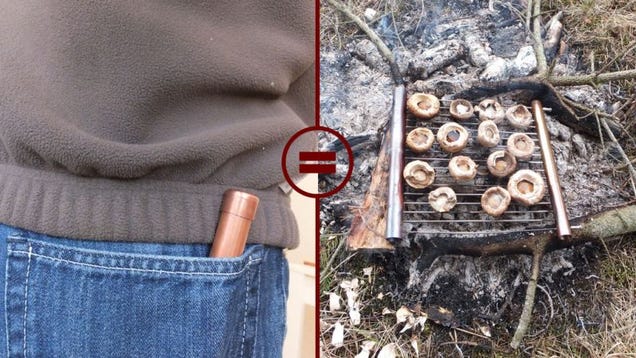
There are collapsible grills on the market for camping and backpacking, but they tend to be on the pricey side. This DIY version is cheap, easy to build, and you can make it the size you want.

There are collapsible grills on the market for camping and backpacking, but they tend to be on the pricey side. This DIY version is cheap, easy to build, and you can make it the size you want.

Let’s face it. Even if you just tear into freshly baked brownies with your fingers, they’re going to be delicious. But sometimes, you need to cut them cleanly without tearing them up. Enter the plastic knife.

WASHINGTON — Montgomery County police are searching for the suspect who shot two dogs with a BB gun earlier this month.
Police say a Cairn Terrier-type dog and a Pitbull-type dog in the same location were struck by BBs from a BB gun near the 20100 block of Woodfield Road in Gaithersburg, Maryland at about 6:30 p.m. on Feb. 10.
One dog has minor injuries and the other needed pellets removed, says Director for Animal Services Division for Montgomery County Thomas Koenig.
Anyone who may have seen something or who might have information to help make an arrest, can call the Animal Services Division of the Montgomery County Police Department at 240-773-5693.
Below is a map of the area near the incident:
The post Police: Dogs shot with BB gun in Montgomery Co. appeared first on WTOP.

Usually when we write about someone getting home to find out that the item they just purchased contains something unexpected, it involves an iPad box full of notepads or rocks, or a block of wood instead of a PS4. But a CVS customer in Boston got a more intriguing surprise inside her heating pad box: someone else’s family keepsakes.
The woman tells CBS Boston that what she thought was a newly purchased heating pad was, in reality, letters, documents, a passport, and photographs of another woman.
“I didn’t want to take it back to CVS just to have them throw it away,” the woman says of the documents that were all in Russian.
Instead, she decided to contact the local police department.
There an officer was able to run the name on the letters through a computer database, locating the woman’s daughter who still lived in the town.
The daughter’s boyfriend told police that the woman who owned the letter had passed away two years before, and the items were simply forgotten during an estate sale, CBS Boston reports.
Just how the box made its way to the CVS shelves is still a mystery, the customer said in a Facebook post about the discovery.
Watertown Woman Finds Family Keepsakes In Heating Pad Box [CBS Boston]

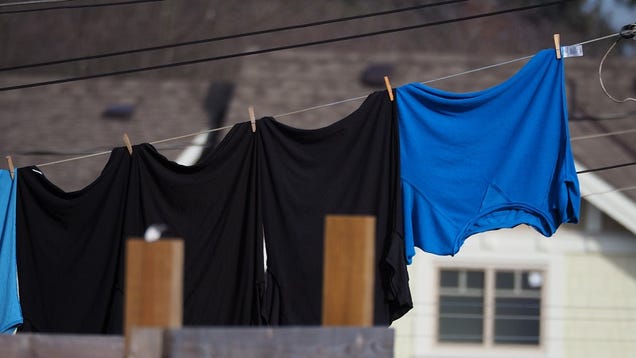
Black clothes go with everything and take on stains like a champ, but they still require special care if you don’t want them to fade. Flipping your black garments inside out will keep your deep blacks from fading to charcoal gray.


Pizzerias do this for their delivery pies, but home cooks can learn it too: You can make homemade pizza especially delicious by paying attention to one of more unassuming ingredients that also has the biggest impact on how it tastes: The water you use to make the dough.


We’ve mentioned that sharpening your knives with a whetstone (or water stone) is the best way to keep them sharp and safe , but this video will walk you through picking the right stones, learning the right angles, and getting the perfect edge—all in one sitting.


Sometimes you just need something breaded and crispy for dinner, but what if you are (gasp) out of bread crumbs? If you happen to have a few rice cakes on hand, the day is saved.


The secret to crispy hash browns, as we’ve shown you before , is getting as much water out of the potatoes as possible. But you can avoid the mess from squeezing them out by using a salad spinner.

WASHINGTON – The owner of a beloved dog says her landlord believes a live wire, hidden in concrete killed her dog during a walk outside her apartment complex.
Pam Kelly was walking her dog Lakai, part German Shepard and part Border Collie, on Monday night. They were on the concrete near a swimming pool at the 3003 Van Ness Apartments, on Van Ness Street in Northwest, when the dog was knocked off her feet.
Kelly says the apartment owner, Equity Residential, sent an email to residents explaining “a licensed electrician identified a wire inside the concrete that was the issue.”
“I didn’t know what was going on, I thought my dog had broken her leg, so I didn’t move her,” said Kelly, tearfully. “If I had just picked her up and moved her from the area she might still be alive.”
The phenomenon of stray voltage is not unheard of.
In a 2014 report, NBC News found 40 electrified items, including light poles, manhole covers, and grates — during one evening of testing in D.C.
The incident on Van Ness Street was on private property. Pepco referred questions to the apartment owner. on Wednesday, the apartment complex issues the following statement:
We can confirm that an incident involving a resident’s beloved pet occurred in the courtyard of the community. We would like to extend our condolences to the resident whose dog passed away. We regret that this incident occurred, which was tied to a very unusual electrical issue. Note that there was not an exposed wire. Rather, a licensed electrician identified a wire inside the concrete that was the issue.
Since learning of this unusual incident, we have removed the power supply to the area and are working with our electrician to correct the underlying issue.
“There’s lots of stray voltage going on in the city,” Kelly speculates. “Unfortunately when it rains, or the snow melts, it makes it even worse.”
Kelly says she worries stray voltage can be more devastating to pets than humans.
“For us, we’re all wearing shoes, we’re fine, but our pets are not,” she says.
Kelly and her son say they felt an electrical shock while trying to help Lakai on Monday evening. Other tenants in the building have reported feeling shocks at the same location, and their dogs have reacted in pain during walks.
The area remains cordoned behind police tape, and she says the apartment complex has turned off the power source.
Kelly says she is bringing Lakai for an autopsy on Wednesday to conclusively determine what killed her dog.
Asked if she’s planning on filing a lawsuit, Kelly says she isn’t at liberty to say.
“I’m not going to let this go, I’m not going to let my dog die in vain. I can’t let this happen to anybody else,” Kelly says.
“It’s too quiet in my apartment right now,” she says. “I know life goes on, so maybe what I can do is put all my efforts into trying to make sure this doesn’t happen again.”
The post Owner: Electrical shock near D.C. apartment killed dog appeared first on WTOP.

This week’s Reston Pet of the Week is Charlie, a 2-year-old Terrier mix who needs a permanent home. Here is what the people at Safe Haven Puppy Rescue have to say about him:
Charlie is a 2 year old, 27 lb. Terrier mix. Charlie is an absolute joy to be around. He loves attention. This guy would be happy to play with you and his toys or just sit by your side looking at you with that face that will melt your heart. Charlie is looking for his forever home. Will you be the one to give it to him?
Charlie is up to date on all his shots and deworming , he had been neutered and heartworm treated. He has an adoption fee of $325 which includes microchip.
This guy is going to bring lots of joy to some lucky family. For an adoption application, please contact the adoption coordinator, Dondra at: dondragardner4747@gmail.com.
Are you and Charlie a match? If so, let us know and our sponsor, Becky’s Pet Care, will send you $100 in Becky’s Bucks, as well as some treats.
Want your pet to be considered for the Reston Pet of the Week?
Email news@Restonnow.com with a 2-3 paragraph bio and at least 3-4 horizontally-oriented photos of your pet.
Each week’s winner receives a sample of dog or cat treats from our sponsor, Becky’s Pet Care, along with $100 in Becky’s Bucks.
Becky’s Pet Care, the winner of three Angie’s List Super Service Awards and the National Association of Professional Pet Sitters’ 2013 Business of the Year, provides professional dog walking and pet sitting services in Reston and Northern Virginia.
The post Reston Pet of the Week: Charlie appeared first on WTOP.






This week’s Arlington Pet of the Week is Bingsu, who is apparently named after a Korean dessert.
Bingsu’s favorite place to sleep is on top of a human. He’s new to Arlington, having been adopted in January, but he has settled in nicely to his Courthouse-area home.
Here’s what Bingsu’s owner, Amy, had to say about him.
Bingsu is a five month old terrier mix who came to Arlington earlier in January… and Wilson Boulevard has never been the same! He was adopted from Lucky Dog Rescue, and life has been on the up and up since then! Bingsu loves chewing on his toys, playing fetch, eating peanut butter, and sleeping on top of anyone who will let him. The only thing Bingsu hates is his crate, but he’s working on it. He hears VERY well with those big mouse ears, and is such a well behaved boy. His owner, a former cat lover, has quickly became obsessed with him. He loves his friends at Clarendon Animal Care, even though he woke up from surgery last week with something important missing. Bingsu loves to say hi, so if you see him around Courthouse, please look down and say hello!
Want your pet to be considered for the Arlington Pet of the Week? Emailarlingtonnews@gmail.com with a 2-3 paragraph bio and at least 3-4 horizontally-oriented photos of your pet. Please don’t send vertical photos, they don’t fit in our photo galleries!
Each week’s winner receives a sample of dog or cat treats from our sponsor, Becky’s Pet Care, along with $100 in Becky’s Bucks. Becky’s Pet Care is the winner six consecutive Angie’s List Super Service Awards, the National Association of Professional Pet Sitters’ 2013 Business of the Year and a proud supporter of the Arlington County Pawsitively Prepared Campaign.
Becky’s Pet Care provides professional dog walking and pet sitting in Arlington and all of Northern Virginia, as well as PetPrep training courses for Pet Care, CPR and emergency preparedness.
The post Arlington Pet of the Week: Bingsu appeared first on WTOP.

Smartphones can do just about anything: open your hotel room door, or unlock your front door. Starting next year, the device will do even more if you’re in the market for a Volvo.
The carmaker announced Friday that it would forego traditional car keys in favor of digital keys that live inside an owner’s smartphone via a dedicated app.
Volvo, which is billing itself as the world’s first car manufacturer to offer vehicles without keys, says that digital keys will allow users to do everything a regular key can do: unlock/lock the doors, opening the trunk, and starting the engine.
Customers who don’t want to deal with a digital version of their key can opt for a traditional key.
“The innovative Bluetooth-enabled digital key technology will offer Volvo customers far more flexibility, enabling them to benefit from entirely new ways to use and share cars,” the company says.
Digital key users will be able to receive more than one key on their app, Volvo says, allowing them to access different Volvo cars in different locations.
For example, the company says people could potentially book and pay for a rental car anywhere and have the digital key delivered to their phone immediately.
It’s unclear if the app includes security features to prevent someone from using the digital key if a phone is lost or stolen.
The new technology is also a key factor in Volvo’s other new venture; a car sharing service called Sunfleet.
The service will pilot digital keys this spring in Sweden.
“Volvo Cars’ digital key means that sharing a car will become both simple and convenient. Volvo owners will be able to send their digital key to other people via their mobile phones so that they can also use the car, this may be family members, friends or co-workers in a company,” Volvo says.


The agency has seen a jump in phishing and malware attacks at this point in the 2016 filing season, many of which pass themselves off as official emails from the IRS or others in the tax industry, like a tax software company. Once a user clicks on an email link, they’re sent to sites that mimic the real thing, like IRS.gov, and ask for Social Security numbers and other personal info.
Those sites might also carry malware, which can infect a victim’s computer and allow hackers to waltz right in and access your files, or watch your keystrokes to steal your passwords, PINs, and other info.
These scam attempts can arrive via text messages as well. The IRS says it’s hearing reports of such scams in every part of the country.
“This dramatic jump in these scams comes at the busiest time of tax season,” said IRS Commissioner John Koskinen in a consumer advisory issued by the IRS Thursday. “Watch out for fraudsters slipping these official-looking emails into inboxes, trying to confuse people at the very time they work on their taxes. We urge people not to click on these emails.”
Scammers use victims’ personal tax information to help them file false tax returns, thereby stealing the funds from their rightful owner.
The IRS says there’s been an increase in reported phishing and malware schemes this year:
• There were 1,026 incidents reported in January, up from 254 from a year earlier.
• The trend continued in February, nearly doubling the reported number of incidents compared to a year ago. In all, 363 incidents were reported from Feb. 1-16, compared to the 201 incidents reported for the entire month of February 2015.
• This year’s 1,389 incidents have already topped the 2014 yearly total of 1,361, and they are halfway to matching the 2015 total of 2,748.
“While more attention has focused on the continuing IRS phone scams, we are deeply worried this increase in email schemes threatens more taxpayers,” Koskinen said. “We continue to work cooperatively with our partners on this issue, and we have taken steps to strengthen our processing systems and fraud filters to watch for scam artists trying to use stolen information to file bogus tax returns.”


The purpose of a seatbelt is to secure a person riding in a car to prevent injury in the event of an accident. But the safety devices may not work as intended in nearly three million Toyota SUVs now being recalled.
Worldwide, Toyota is recalling some 2.8 million RAV4 vehicles, including 1.1 million here in the U.S. According to Toyota’s announcement, the recall affects model year 2006-2012 RAV4s and model years 2012 through 2014 for the RAV4 EV.
Toyota says that in the event of a severe frontal crash, the lap belt webbing could contact a portion of the metal seat cushion frame in the second-row outboard seats, become cut and separate.
If separation occurs, the seatbelt may not properly restrain the occupant, increasing the risk of injury. The company says that the issue is not related to the production of the seatbelt itself, but the metal seat cushion.
The New York Times reports that the recall, which has not yet posted to the National Highway Traffic Safety Administration website, was initiated after seatbelt separation was suspected in two crashes, one of which killed a passenger in Canada.
Toyota says that it can’t confirm whether the seatbelt failure caused the fatality, but that it would recall the vehicles as a precaution.
Owners of the affected vehicles will be notified of the recall and dealers will fix the problem by adding resin covers to the metal seat-cushion frames.


Last month, McDonald’s began testing the addition of the McGriddle to its all-day breakfast menu in Oklahoma. A group of operators for the fast food restaurant in Ohio have taken that idea and made it their own by piloting a union between the syrup-flavored breakfast item and the McChicken — a Chicken McGriddle.
Columbus Business First reports that eleven McDonald’s restaurants in central Ohio are now cooking up what is essentially a chicken-and-pancake sandwich as part of the all-day breakfast menu.
The Chicken McGriddle isn’t a corporate initiative. Instead, it is the brainchild of the owner of eight Ohio McDonald’s and a small group of other operators and self-proclaimed taste-testers.
“It’s a chicken-and-waffles taste,” operator Brian Mortellaro tells the Business Journal. “I just think that’s something that isn’t out there right now. Filet-o-fish, Big Mac – both of those started with owner-operators. We took this idea up the chain and they’re letting us try it out.”
The future of the item, which won’t be supported by advertising, will be determined by consumers’ impressions not sales, Mortellaro says. If customers respond favorably it could stay on the menu past the current March 27 cut off.
Take Our PollMcDonald’s testing chicken-and-pancake sandwich in Central Ohio [Columbus Business First]

Turn on your TV and you’ll be inundated with ads for local auto dealers touting the immediate availability of your brand new car. And for many car buyers, once they’ve picked the vehicle they want, it’s not too long before they’re on the road in their new wheels. Of course, if you’re buying something the dealer doesn’t have in stock, you’ll have to wait a little bit longer. But one Consumerist reader wants to know why his new truck has been sitting in an Ohio rail yard for nearly two months.
Back in December, Washington state resident Micah ordered a new Chevrolet Colorado Duramax. The truck was brand new to the market but the dealer he’d purchased it through told him it was “in-transit” and should be arriving in about a week.
Fast forward 50 days, and Micah is still waiting.

Micah tells Consumerist that he originally went to the dealer intending to do a custom order for his new truck, but the dealer was able to convince him to purchase the Duramax that was supposedly already in-transit to the dealership.
“They told me it was a that-day kind of deal, giving me a discount on one they could easily sell for more,” he recalls. “I had to buy it that day, and if I walked out the deal wouldn’t be there tomorrow.”
So he did the deal, signed the paperwork and was told his truck would arrive in a few days — a week at most. The dealer even agreed to activate the truck’s OnStar system, meaning he’d be able to go online and track its location.
But what Micah found when he checked OnStar was a bit confounding.
“I was really confused when it showed that it was in Michigan and the truck is actually built in Missouri and ships from there,” Micah says. “Then a few days later it popped up in Toledo, Ohio, at the rail yard.”

And that’s where it stayed for weeks.
“After a week or so of waiting, the tracking dropped off, I guess to preserve the truck’s battery,” he says. “So I followed up with my dealer. They didn’t really have any idea and said it’s waiting for transport; it’ll arrive when it arrives.”
Micah next reached out to Chevrolet to inquire about the order status. He was eventually told by customer service that the vehicle was waiting for a rail car.
That’s when he went back to the dealer, who then reached out to the General Motors district manager. After some digging, he was told that the vehicle was headed to Kent, WA, not on a train, but on a truck.
Yet when Micah checked the OnStar system again, his truck was still sitting at the rail station.
Another trip to the dealer ended with the assurance that the truck was indeed waiting for a rail car but that it now had priority. To ease the annoyance, dealer also offered to cover the truck’s first month payment and provide a loaner vehicle, if needed.
Meanwhile, Micah noticed that this same model was now popping up on the lots of other dealers in the area.
“I could walk into one of those dealers and buy it and drive off,” he tells Consumerist, “which might have been a possibility had I not already signed all the papers and got a huge auto loan for the one that is still sitting somewhere in the Midwest.”
Micah’s many inquires to GM about the status of his truck’s arrival and how a customer could be left waiting for so long were finally answered by a GM zone manager in the Northwest.
“He told me there are lots of reasons of why this situation occurred: rail car shortages, shipping backlogs, etc, but that those things shouldn’t be my concern,” Micah recalls, noting that the manager told him his concern should be that he’d been without his truck for too long.
One former longtime car dealer tells Consumerist that, unfortunately, Micah’s situation is something that happens whenever there’s a new-to-market vehicle. He says he had to cope with delivery delays “more than I ever wanted to.”
“Lots of factors can go into it,” the former salesman says. “The manufacturer wouldn’t ‘release’ a car due to inspections still needing to be done, open recalls, or the need for new parts, just to name a few issues.”
Back in December, The Truth About Cars reported that some Chevy Colorado Duramax vehicles were held up due to an unspecified problem during the final validation phase.
At the time, more than 60 customers told TTAC that the delivery dates for their trucks, in various states of production, were pushed back multiple weeks.
A spokesperson for GM tells Consumerist that the new Duramax, along with the GMC Canyon, have been “wildly popular” since they were introduced. In order to keep up with demand, the company added a third shift to its Missouri plant where the Duramax is produced.
“When these high-demand situations occur it is not unusual for dealers to order vehicles prior to the official ‘ship to commerce’ date — the date we officially release vehicles from the plant where they are built to be shipped to retail dealers — and backlogs can occur in the shipping process,” the spokesperson said.
The lack of definitive answers surrounding Micah’s situation are also common, the former salesman tells Consumerist.
“Most of the time the customer knows as much as the dealer,” the salesman said. “There’s frustration on both ends, the dealer wants that thing gone and delivered just as bad as the customer does.”
The GM spokesperson was unable to give an exact reason for why Micah’s truck sat at a Toledo rail station for an extended time, saying it could have been any number of factors tied to the way in which car manufacturers transport vehicles.
“All U.S. auto manufacturers use the same eight rail companies and the same third-party car hauling firms,” the spokesperson said. “Vehicles are either shipped directly from the factory via rail or via a car hauler, depending on where they are built and where the dealership that purchased them is located. Many things can cause delays, including inclement weather, shortage of rail cars, holiday shutdown, Teamster strikes,” among other things.
“It is possible that the dealer in this case ‘over-promised’ when the customer’s truck would arrive at the dealership, but I do not know that for a fact,” she tells Consumerist.
As for Micah, he was recently informed that his truck was finally on the way to Washington. But it didn’t get far: the OnStar system showed the vehicle sitting in Fort Wayne, IN, awaiting a rail car.
To make up for the delay, the zone manager offered to provide Micah with $1,000 in accessories for his truck free of charge.
“It helps, but I would have rather had the vehicle in a couple of days or a week as originally promised,” Micah tells Consumerist. “I said before I felt like they should have refunded the shipping freight cost considering I could have pushed the vehicle home twice from the midwest in the amount of time it would end up taking. They charge $895 for that.”
The GM spokesperson tells Consumerist that it is “not common industry practice to waive shipping fees if a vehicle is not delivered at a dealership on the date the dealer estimates that it will arrive.”
“We are extremely sorry for any inconvenience the customer has experienced and we hope he absolutely loves his truck when it is delivered this week,” the spokesperson said.
Micah is getting the $1,000 in accessories from the dealership, but he’s not getting a refund on the $895 shipping charge, effectively leaving him with $105 in free stuff for his two-month wait. And while the dealer has offered to pay for Micah’s first lease payment, it will come in the form of a reimbursement, meaning he’s out of pocket on that amount until that reimbursement comes through.
Additionally, Micah says he ended up spending more on gas and transportation than he would have with his new truck by driving his girlfriend’s “gas guzzler” SUV in the interim.
But Micah tells Consumerist that he’s not perturbed about the money so much as he is all the time he spent making repeat trips to the dealership, calling the rail car company, and staring at OnStar hoping he could will the truck onto a train car.
“The delay has cost me maybe a couple hundred in extra gas, but it has mostly been a greater cost of the obsession with figuring out why it’s taking so long,” he explains, “trying to find someone to help me make sense of the situation and get it moving.”
“If I’m lucky I’ll have it after more than 50 days of waiting,” he said. “I wonder how long it would have been if I didn’t push the issue?”
Hey there, did you enjoy reading this? We’re a non-profit! You can get more stories like this in our twice weekly ad-free newsletter! Click here to sign up.

 Back in the ’80s, Coca-Cola’s Hi-C brand agreed to develop a citrus-flavored drink to promote the cartoon series The Real Ghostbusters. The drink was a green-colored citrus-flavored sugar concoction called Ecto Cooler. Now, it appears that Ecto Cooler is returning to shelves to promote the new Ghostbusters movie.
Some people are skeptical of the reboot, which cast the Ghostbusters as women, and we’ll find out whether the film is any good once it’s released. What’s really important here to people of a certain age is that the movie means Ecto Cooler is coming back.
An online frenzy began when fans learned that Coca-Cola had applied to renew the beverage’s trademark back in September. Like Surge, the product had built a strong following of young adults lobbying for its return.
A can of the upcoming NEW-FOR-2016 Ecto Cooler has snuck onto eBay?!! HOLY. SHIT. (Thx @protoncharging for the tip!) pic.twitter.com/sxXgzsUvRL
— Dinosaur Dracula (@DinosaurDracula) February 18, 2016
A can popped up on eBay this week and then the auction quietly ended, probably because the product isn’t supposed to be available for sale yet.
Production samples of the juice boxes have leaked out, too, though without the branded packaging. I just need a PB&J, a handful of Cool Ranch Doritos, and a box of raisins to relive my school lunches circa 1988.
What do we have here? A test box! Marked Ecto Cooler. From September. 😍😍😍 pic.twitter.com/LRxnoBraXJ
— Resurrect EctoCooler (@ResurEctoCooler) February 18, 2016
We contacted Coca-Cola, owner of the Hi-C brand, for confirmation that we could look forward to green citrus-ish beverages in our lunchboxes soon. They didn’t get back to us. We’ll update this post when or if they do.

 So you hired a pet sitter to take care of your companions while you were out of town, but you weren’t happy with the service you received. You’re free to go online and publicly share your thoughts about that experience, as long as what you write is truthful. But you still might be sued by that pet sitter if your contract included a clause forbidding you from posting anything negative about the company.
A couple in Plano, TX, tell CBS Dallas that they weren’t thrilled about the service provided by a local petsitting service.
In a Yelp review posted last October, they raise questions about the company’s fees and billing, the apparent lack of updates from the sitter, the fact that the sitter didn’t leave the house keys behind as requested (which results in additional fees), and what they contend was potential harm done to their fish.
The company subsequently responded to that review, answering each of the pet owners’ concerns. But CBS reports that the petsitting business followed this up with a cease and desist directing the couple to remove their Yelp review.
When the Yelp writeup remained online, the petsitting company filed a lawsuit in small claims court, claiming “Intentional misrepresentation and fraud by omission,” and seeking $6,766 for violating a “non-disparagement” clause in their contract.
That’s right — those “gag” clauses that California outlawed in 2014, and which may soon be made illegal nationwide if the federal Consumer Review Freedom Act passes. The U.S. Senate unanimously signed off on this legislation in Dec. 2015, and it’s currently being considered by the House of Representatives.
Interestingly, a good chunk of the clause used in the petsitting contract was apparently copy/pasted from one of the more notorious gag clauses — the one formerly used by online accessory retailer Kleargear.
In that case, Kleargear tried to invoice a customer for $3,500 for allegedly violating a clause stating that “your acceptance of this sales contract prohibits your from taking any action that negatively impacts Kleargear.com, its reputation, products, services, management or employees.”
When the customer challenged that penalty, Kleargear didn’t defend itself, resulting in the court determining that the customer “does not now, and never did, owe KlearGear.com or any other party any money based on KlearGear.com’s ‘non-disparagement clause’ or any money based on [the Plaintiff’s] failure to make any payment allegedly owing under that clause,” along with a subsequent $306,000 judgment against the company.
We’ve also seen non-disparagement clauses in everything from sketchy online retailers to wedding contractors to landlords to makers of weight-loss products.
When challenged, many of these clauses fail to stand up to legal scrutiny, with courts deeming them unenforceable, but lawyers we’ve spoken to say that companies use gag clauses in the hope of preemptively scaring the customer from even thinking about bringing the case before a judge.
In a statement to CBS Dallas, the petsitting company defends the non-disparagement clause.
“We are honest people seeking protection from dishonest individuals, not other honest ones,” reads the statement. “Fair and honest feedback is not the issue here.”

WASHINGTON — The U.S. Humane Society is offering $5,000 to anyone who can help them track down whoever abandoned an emaciated female Mastiff in Prince George’s County.
The dog was found in Clinton on Feb. 8, and weighed just 56.4 pounds. Mastiffs typically weigh nearly 150 pounds.
The Humane Society says the dog, who’s been named Violet by Prince George’s County Animal Management officers, is now on the road to recovery.
She’s staying with a foster family through the Mutts Matter Rescue program until she is healthy enough to be adopted.
“It is unimaginably callous to cruelly starve and abandon an innocent dog in this way,” Emily Hovermale, Maryland state director for The HSUS, said in a news release. “We are hopeful this reward will bring forward anyone with information about this heinous crime.”
Prince George’s County’s Animal Management Division is asking for anyone with information about the case is asked to call 301-780-7241.


The post Suspect sought after emaciated dog is abandoned in Md. appeared first on WTOP.
WASHINGTON — A decorated Marine says he was surrounded, harassed, beaten and robbed in a downtown McDonald’s in a racially-motivated attack.
Christopher Marquez told police he was sitting by himself, eating a meal in the restaurant at 9th and E Streets NW Friday night, when a group of at least four teenagers and young adults gathered around his table.
He says the group loudly asked if he believes “black lives matter” and called him racist when he ignored the comments.
In the police report, Marquez says he was struck in the head with something hard, and robbed of his wallet, which contained $400 in cash and his bank cards.
Late Thursday morning, D. C. police released surveillance video from the McDonald’s.
The video shows a young man slug Marquez in the back of the head as Marquez leaves the restaurant about 9:40 p.m. While he’s on the ground, someone takes his wallet. Others kick him.
The police video highlights three suspects — two male, and one female.
Passers-by and people standing on the sidewalk apparently witnessed the attack and the aftermath.
The silent police video, posted on YouTube, doesn’t mention racial motivation. Instead, it refers to the incident as “aggravated assault and robbery (Pickpocket).”
Marquez was awarded the Bronze Star for his actions in Fallujah, Iraq, in 2004, in which he risked his life to drag his wounded team leader away from enemy fire.
The post Decorated Marine says he was beaten, robbed in racial attack appeared first on WTOP.
Fairfax County Animal Watch Washington Post No incidents were reported by the Animal Control Division of the Fairfax County Police Department. For information, call 703-246-2253. FAIRFAX CITY. The following incidents were reported by the animal control section of the Fairfax City Police Department. and more » |
Prince William County community calendar, Feb. 18-24, 2016 Washington Post AARP income-tax preparation help Thursdays and Tuesdays 11 a.m.-3:30 p.m. Chinn Park Regional Library, 13065 Chinn Park Dr., Woodbridge. 703-792-4800. Free. American Business Women's Association meeting The Northern Virginia Charter Chapter ... and more » |

A restored HD version of the original Star Wars Episode IV: A New Hope 35mm print has appeared online. While this isn't the first time that attempts have been made to restore Star Wars to its original theatrical version—that's the one without the much-maligned CGI effects and edits of later "special" editions—it is the first to have been based entirely on a single 35mm print of the film, rather than cut together from various sources.
The group behind the release, dubbed Team Negative 1, is made up of Star Wars fans and enthusiasts who spent thousands of dollars of their own cash to restore the film without the blessing of creator George Lucus, or franchise owner Disney. Lucas has famously disowned the original theatrical version of Star Wars, telling The Today Show back in 2004:
The special edition, that’s the one I wanted out there. The other movie, it’s on VHS, if anybody wants it. ... I’m not going to spend the—we’re talking millions of dollars here, the money and the time to refurbish that, because to me, it doesn’t really exist anymore. It’s like this is the movie I wanted it to be, and I’m sorry you saw half a completed film and fell in love with it.
Lucasfilm later claimed that the original negatives of Star Wars were permanently altered for the special edition releases, making restoration next to impossible. How Team Negative 1 got its hands on a 35mm print of the 1977 release of the movie is a mystery. But for fans who don't want to see ropey CGI, a pointless Jabba the Hutt scene, and know for a fact that Han shoots first, this restored version of the film—even with some pops, scratches, and colour issues—is the one to watch.

The Vermont Maple Sugar Makers’ Association and nine other producers’ groups sent the Food and Drug Administration a letter saying that some food labels using the word “maple” aren’t the real thing. Such misbranding deceives consumers and hurts those producing real maple syrup, the groups say.
Along with the International Maple Syrup Institute and the North American Maple Syrup Council, the groups asked for a federal enforcement action that would either force companies to get rid of any maple branding from their products if they don’t actually contain the sweetener, or add maple syrup to them to make the labels true, reports the Associated Press.
“This unchecked misbranding has an adverse impact on manufacturers of products containing real maple syrup, as it allows cheaper products not containing premium ingredients to compete with those actually containing maple syrup,” the letter said. “Further, it deceives consumers into believing they are purchasing a premium product when, in fact, they have a product of substantially lower quality.”
In the letter, the groups call out nine products as examples of items that are misbranded, including Quaker Oats Maple & Brown Sugar Instant Oatmeal and Hood maple walnut ice cream. Those products are misbranded in violation of FDA regulations, the letter says, because maple syrup is not listed on their labels.
Quaker Oats had no comment on the accusations and a Hood spokeswoman couldn’t confirm to the AP whether the ice cream gets its flavor from real maple syrup or not.
The FDA says it’s taking a look at the letter and will respond directly to the groups.
Maple syrup producers: Fake flavors nothing like the real thing [AssociateD Press]


Yesterday, the Palm Beach County Sheriff’s Office announced the arrest of an 18-year-old accused of practicing medicine without a license.
Police say they began investigating the not-a-doc back in Oct. 2015, and learned that he’d actually opened an office — the New Birth New Life Medical Center — in West Palm Beach.
The website for the center, which is still up for the moment, describes its mission “to provide personalized, high-quality Holistic and Alternative Medical care.”
“Our medical professionals believe in providing comprehensive health care services to our patients in a friendly and relaxed atmosphere,” continues the site, which states that the clinic’s staff members are each “certified and have experience in their area of specialty.”
On the staff page, the faux physician does not claim to have an MD, but does tout a PhD, along with certifications in holistic and alternative medicines.
The site describes him as a “well rounded professional that treats, and cares for patients, using a system of practice that bases treatment of physiological functions and abnormal conditions on natural laws governing the human body.”
Members of the county’s narcotics task force and the Department of Health sent an agent in undercover as a patient. The sheriff’s office says the not-doctor “performed a physical exam… and offered medical advice,” which they allege amounts to practicing medicine without a license.

A few weeks back we told you about a former dentist in Georgia who pled guilty in 2009 to filing Medicaid claims for procedures he didn’t actually perform, and who was trying to sue an anonymous YouTuber over a nearly seven-year-old news story that included allegations of physical assault from some patients. This week, the doctor agreed to withdraw his lawsuit and fork over $12,000 in fees for the unnamed defendant.
Just to backtrack a bit for newcomers: Back in 2008, Dr. Gordon Austin was indicted for allegedly assaulting patients by striking them with a dental tool while undergoing dental procedures. Austin eventually ended up pleading guilty to six counts of misdemeanor theft for submitting claims to the Georgia Medicaid program for teeth extractions he did not perform.
According to the state Board of Dentistry, the guilty pleas were given in exchange for prosecutors not pursuing the other indictments against Austin, who was never tried or convicted of any of the assault allegations. The doctor was also barred from practicing oral surgery and dentistry in Georgia for a period of ten years.
While Austin’s story made regional headlines at the time, it never made its way into the national spotlight. Additionally, thanks to poor archiving and website redesigns, many of the local news stories from 2008 and 2009 have been lost.
Even the state attorney general’s 2009 press release of the guilty plea has been effectively scrubbed from the AG’s website because Austin successfully petitioned to have it removed under Georgia’s first-time offender protections.
One relic of that era that did remain was this 2009 YouTube posting of a two-part local news story from a FOX affiliate in Atlanta:
“The main reason I posted the video onto YouTube was to make sure what happened regarding Dr. Gordon Austin wouldn’t simply fade away,” the YouTuber told Consumerist via email.
Until very recently, that clip had only been watched a few thousand times over the course of more than six years. Not exactly a viral hit.
Then in January, Dr. Austin filed a lawsuit [PDF], alleging that the unnamed YouTube user had illegally defamed him “via various false accusations and statements,” without specifying which of the statements made in the video are problematic.
The video even disappeared briefly from YouTube after someone reported it as “spam,” a “scam” or “commercially deceptive.” After we contacted YouTube, the video was reinstated but no one at the streaming service or Google would explain why it was so easy to have the clip taken down. As of this writing, more than 78,000 people have watched the video.
In response to Austin’s lawsuit and his attempt to subpoena Google to provide the YouTuber’s real name, Defendant “Doe” received legal assistance from Public Citizen’s Paul Alan Levy and Phil Malone from Stanford University Law School. They filed a motion to quash the subpoena, arguing that Dr. Austin’s couldn’t succeed, and that he’d provided no evidence that the anonymous user did anything defamatory.
In California, where the subpoena was served, the legal standard for unmasking an anonymous online user requires the plaintiff to provide evidence to support their claim before being able to learn an anonymous user’s identity. The motion to quash contended that Austin only made vague allegations of false and defamatory statements.
Additionally, as the video was posted in 2009 and had not been edited or revised since, the statute of limitations for defamation claims had long expired in both California and Georgia (where the lawsuit itself was filed), so the defendant argued that Austin’s case failed for being filed years too late.
Court documents filed this week [PDF] in California show that Defendant Doe has withdrawn that motion to quash, but only because Austin has agreed to drop the Georgia defamation case “with prejudice,” meaning it couldn’t be filed again once this has all died down. Additionally, Austin has paid Doe $12,000 to cover legal fees and expenses related to this lawsuit.
“It remains a mystery why Austin and his lawyers thought they could get away with a meritless libel suit,” writes Levy in his update on the case. He notes that Austin’s attorneys were advised that the motion to quash would be filed and that it likely be granted, giving them the opportunity to get out before incurring any expenses. “My best guess is that they never focused on the fact that section 1987.2 of California’s Code of Civil Procedure provides that, when a Doe defendant successfully moves to quash an identifying subpoena, attorney fees ‘shall’ be awarded in favor of the Doe.”


The free wedding thing was the concept for a startup, SwanLuv, which began as a company that would lend couples money, up to $10,000, for their weddings. The catch: they wouldn’t have to pay any of the money back unless they divorced, and couples that divorced would pay the money back with interest.
Here are screen grabs of the site’s original sales pitch, posted back in December. Now, the company’s site is down.


Mathematically, this makes no sense, unless the couples who don’t get married are paying back at least double what they received for the wedding “loan.” In an interview when the startup first debuted, the founder said that the math did indeed add up, and that the idea was to create a “casino for marriages.”
He apparently didn’t anticipate how many people believe in true love and free cash, and claims to have received requests to fund at least 200,000 weddings.
On the launch day, Valentine’s Day, the company announced that it would pivot, as they say in startup-land. Instead of giving loans, it would become a crowdfunding platform specifically for weddings, where couples could solicit their friends and relatives to pay instead. The catch remained the same: if they divorced, the money would all be returned… to the people who originally donated.
The company tried to explain itself on its Facebook page:
The initial business plan was to provide a lending model, “Receive funds up to $10,000 towards your dream wedding for FREE (paid by members that don’t stay married).”
Due to overwhelming demand (nearly two billion dollars at $10,000 per couple) and unanticipated legal regulations/restrictions in the lending space, rather than pull out we came up with a tool we believe still helps couples with their wedding financing.
“If so many other couples as myself had the family and friends to help with our weddings,” one bride wrote to Seattle tech news site GeekWire, “we would have already gone this route, not wait months on end for help from what seemed like a dream come true.”
Now, the couples whose hopes were raised by this program are stuck finding another way to pay for their weddings or borrow the money.
Why hundreds of couples are furious at this startup [CNN]
Wedding financing startup SwanLuv angers couples with surprise switch to crowdfunding platform [GeekWire]
A website offered to pay for weddings. Then it came time to write the check. [WonkBlog]


“Just as when we brought back Bluelight Specials last year, we continue to find innovative ways to provide our Shop Your Way® members with an extreme value proposition that can only be found at Kmart,” James said in a statement.
The press release announcing these deals uses the word “brag-worthy” five times, including in the headline. What kind of deals do they think shoppers will brag about? The one example so far is a big purchase of merchandise from Brinkmann, a now-defunct manufacturer of outdoor cooking and lighting equipment.
The Brinkmann merchandise will sell in the “closeout” sections of Kmart’s real-life and virtual stores, as well as Blue Light Special deals. Instead of hanging around the store waiting to hear the words “Blue Light Special” over the public address system, shoppers can stay home with their smartphones and receive push notifications that something is on special sale.
Will this work? Maybe. Americans like closeouts and off-price stores, which is part of what’s hurting Kmart parent company Sears Holdings. There’s nothing that quite packs people in the store like brag-worthy, extreme-value deals and a rousing anthem.
(via Chain Store Age)


