
Pretty much any dish benefits from a bit of acid, and these beautifully-colored sprinkles from The Kitchn are a great way to add a touch of tangy sourness to desserts, cocktails, or even savory snacks like popcorn.

Pretty much any dish benefits from a bit of acid, and these beautifully-colored sprinkles from The Kitchn are a great way to add a touch of tangy sourness to desserts, cocktails, or even savory snacks like popcorn.

Leftover fried rice can be pretty tasty on its own, but if you want to turn it into a totally different kind of snack, try waffling it.

Sterling Organization buys Westgate Shopping Center Inside NoVA Sterling Organization, a private equity real estate investment firm from Palm Beach, Florida, bought Westgate Shopping Center, a grocery-anchored retail plaza in Manassas, for $42.5 million. The 171,909-square-foot plaza at the southeast corner of ... |
Inside NoVA |
Historic Manassas water tower wins reprieve Inside NoVA The council voted unanimously to deny a recommendation from its own utility commission to tear down the 147-foot “tin-man style” water tower, opting instead to support the effort to have it named to the National Registry of Historic Places. The vote ... |
We’ve already seen that unconscious patients can end up with huge medical bills when an ambulance takes them to a hospital that doesn’t accept their insurance. But even if you’re conscious enough to point the driver toward the right hospital, you could still be stuck owing hundreds, even thousands, of dollars because that ambulance ride isn’t covered by your insurance.
As a sheriff’s deputy in his Rocky Mountain community, Don* regularly serves others with bills or summons from hospitals, doctor’s offices, or law firms related to medical services. But when Don’s wife needed an emergency lift to the hospital, even he didn’t expect that the short ambulance trip would result in thousands of dollars in bills.
Don, whose wife has since passed away, says that he’s come to learn more than he ever dreamed he would about medical transports and the resulting bills.
“I just could not believe the flood of bills that we’d get,” he recalls. “After the first experience with the ambulance, I didn’t do that anymore. I’d carry her and put her in the car.”
Don’s story is no outlier. Nearly 600 individuals from around the country have submitted their stories of surprise ambulance bills to our colleagues at Consumers Union.
Just as we saw with surprise hospital charges, the unexpected ambulance invoices are often the result of a common practice known as “balance-billing.” That’s when an out-of-network healthcare service provider — surgeons, anesthesiologists, technical specialists, among others — will bill patients for the amount that remains after the insurance company only pays part of the invoice.
Surprise bills are particularly troublesome for emergency room visits, where patients don’t have the time or ability to check that every person they see is part of their insurance network. And the same holds true for ambulance rides to the ER.
When someone calls 911 for an ambulance, the operator will frequently dispatch a municipal EMS provider. Time is of the essence in an emergency (as indicated by the very use of the word “emergency”), so patients and loved ones aren’t often in any position to ask or care whether the ambulance is operated by the in-network hospital or a by an out-of-network third party.
“When you call 911 you might get lucky and get a service that has a connection to your insurer,” Jack Hoadley, a health policy analyst at Georgetown University tells Consumerist. “If you’re unlucky, you don’t.”
Lois, from a small town in Texas, tells Consumers Union that her husband required a medical transport to a hospital.
“Insurance covered less than half the cost of ambulance travel, leaving $1,600 above the deductible,” she recalls. “The insurance paid at what they considered reasonable and customary.”
Pat Jolley, Clinical Director of Research and Reporting for the Patient Advocate Foundation, tells Consumerist that Don and Lois’s situations are typical when it comes to ambulance billing.
“I think a lot of the bigger bills we see are for emergency situations where someone has a heart attack and you call an ambulance and it’s not in-network,” she says. “When the claim is submitted to insurance they’ll pay whatever the in-network rate would be, then the remainder is the patient’s responsibility.”
That’s just how things work, she says. “There’s a dollar limit that insurance will pay.”
When Connecticut resident Lisa decided to embark on a road trip to visit her sister in Ohio, she assumed she would incur a few costs: hotel, food, souvenirs, and other travel-related expenses. What she didn’t expect was to receive a $400 ambulance bill for a ride she never took.
While driving on I-80 in Pennsylvania, Lisa ran into a bit of snow. After traveling further down the road, the weather passed, and she thought she was in the clear. She was wrong.
“In the future, I’ll know that if nothing’s wrong don’t even get in.”
“Something went wrong,” she tells Consumerist. “I pulled to the right at about 70 miles per hour and the car just pulled real hard, flipping over, end-over-end, and side-over-side before it stopped upside-down.”
While Lisa says she didn’t need medical care, people who witnessed the accident did what any other good Samaritans would do when spotting a car go off the road like that: they called 911.
“Believe it or not, I had no injuries,” Lisa tells us. “Two guys pulled over, asked if I was alright, and one had called an ambulance.”
When the ambulance arrived, Lisa says they checked her out, called a local hospital, and allowed her to skip a trip to the hospital.
The rest of Lisa’s trip went by as planned, but when she returned home she found something waiting for her in the mailbox: a bill for $200 from the ambulance company, along with a note informing her insurance wouldn’t cover the costs.

Lisa immediately made a call to her auto insurance, which told her they wouldn’t cover the cost, but perhaps her health insurance would.
“Medicare said they would cover the cost only if I had gone to the hospital,” Lisa tells Consumerist. “My secondary insurance stated the same thing. They said that’s just the way it is, that’s their rule. They have guidelines that they follow and that’s one of them, ‘Too bad so sad.'”
So despite having three types of insurance — auto, Medicare, and private insurance — Lisa ended up paying the bill out-of-pocket.
“It was cheap compared to some ambulance bills, but I was in there for only three minutes,” she says. “In the future, I’ll know that if nothing’s wrong don’t even get in.”
But Jolley tells Consumerist that even if Lisa had declined all treatment from the ambulance crew, she would probably still have been billed for something.
“Even if they go on standby at the site and determine that you don’t need transport you can receive a bill,” she cautions. “Unfortunately, they can do that.”
Jolley says that the only real options for Lisa and others in her situation would be to try to negotiate with the ambulance company, or file an appeal with the insurance company.
Todd*, of California, is no stranger to the ins and outs of health insurance. His wife, who has a history of coronary artery disease, has spent her fair share of time in the hospital, at clinics, and unfortunately, inside an ambulance.
A few years ago, his wife began experiencing chest pain, so the couple decided to visit urgent care.
“When someone goes in with that history, they get excited and the doctors said we needed to go to the hospital,” he tells Consumerist.
Because the couple was already at a health facility, coupled with his wife’s health history, they weren’t allowed to simply drive themselves to the hospital. Instead, the clinic ordered a transfer via a private ambulance specializing in cardiac care.
“She didn’t need it,” contends Todd. “She was not having a cardiac event, but we had to. They are so afraid that if they release you too soon something is going to happen.”
The couple, who had “terrific” insurance, was nevertheless surprised to receive a $1,100 bill.
“They never spoke to us about pricing — of course no one in health care talks about pricing — and they said nothing about insurance coverage,” Todd says. “So we didn’t think to worry about whether it was an out-of-network transport.”
But because this specialty provider was not a contractor with the hospital, they billed Todd and his wife directly for the balance not covered by their insurance.
The hefty bill came as quite a shock to Todd and his wife, especially since their insurer had covered previous high-priced ambulances, including trips with city EMS and that time they needed an air ambulance transport with a $38,000 price tag.
“They said there was nothing they could do about it,” Todd explains. “After about two years of back and forth with the insurance company, they said they would send it to collections, so we paid it.”
What makes Todd’s story even more interesting is the fact that he used to work in ambulance billing, often encouraging the companies he worked for to balance bill.
“It’s the way to actually get some good revenue, because insurance companies and medicare doesn’t pay what it costs to run an ambulance company,” Todd tells Consumerist. “But I never informed them not to advise the patient.”
From both his personal and professional experience, Todd now advises others to always ask questions if they want to protect themselves from costly ambulance bills.
“We fought them on this and we said that it wasn’t right that we be charged for an ambulance when this wasn’t really an emergency.”
“They need to know whether or not a service is going to be covered by insurance,” Todd says. “And if it’s not, then what the cost will be.”
Todd’s experience isn’t just a one-off, either.
Across the country in South Carolina, Vicki’s husband experienced chest pain and required an ambulance transport from one hospital to another.
“We tried to get into see his primary care physician, but they told him to go to the ER,” Vicki recalls. “He drove himself there and I went there a bit later.”
After keeping tabs on his vitals for several hours, the physicians decided he needed to be monitored overnight. The only catch? The hospital he was currently at couldn’t accommodate him. Instead he’d have to go to another facility.
“He would have to go by ambulance because of all the sensors attached to him,” Vicki wrote. “We fought them on this and we said that it wasn’t right that we be charged for an ambulance when this wasn’t really an emergency.”
In the end, the couple relented and they were transported to the other facility, where they never found out the reason for her husband’s pain.
“Insurance did not pay for the ambulance bill and it has been very hard for us to pay it off,” she says of the resulting $850 transport bill.
Jolley tells Consumerist that both Todd and Vicki’s stories are in line with typical ambulance transport policies.
In these situations, it often comes down to a hospital’s liability or potential liability. Most facilities have policies in line not to allow a patient to drive themselves to another hospital.
Chuck Bell, a project director with Consumers Union, tells Consumerist that if the transfer isn’t deemed too time sensitive, a patient may have the opportunity to call their insurance provider to find out if a transport is covered.
“I have heard of situations like these; there’s not much you can do,” Bell says. “You could try to discuss the bill with the hospital after the fact and ask for a reduction, because you had no choice in the matter.”
When you think of an ambulance, it usually involves taking a patient to a hospital, or transporting critically ill patients between facilities, but ambulances are sometimes used to bring a patient home — even though some insurance policies won’t cover such return trips.
James, from Washington, had to deal with an unexpected ambulance bill after his 93-year-old mother fell and was transported to the ER. More accurately, he was hit with the bill for the transportation away from the hospital.
His mother’s insurance covered the ride to the ER, where she was treated for a broken nose, but not admitted. But then the hospital decided, without checking with any family members, that his mother should also get a return ambulance ride.
“The ER authorized the ambulance to transport her back to the home,” James says of the unusual circumstance. “The ER apparently wanted her out and did not take the time to call us to arrange transportation.”
By authorizing the return ambulance trip, which wasn’t covered by her insurance, the family got stuck with the $1,100 bill for a 6.7 mile ride. That’s more than $164 per mile, which could have been avoided if someone had just made a phone call — or even flagged a taxi.
Jolley tells Consumerist that an ambulance ride home is more unusual, unless there was a medically necessary reason, like a person needing to be transported flat.
“That would be considered elective,” she says, noting that in some cases insurance won’t cover elective transports.
Had James been notified about the transport, but unable to pickup his mother, Jolley suggests the family could have looked into a senior van transport that may have charged less.
Still, she says there are usually discharge planners at hospitals that help patients arrange transport home.
As with other health services, how much you’ll pay out-of-pocket for an ambulance trip is dependent on your insurance network. Coverage agreements between insurance companies and ambulance services vary dramatically from provider to provider depending on where you live.
An analyst for a large insurance provider tells Consumerist that one reason consumers see high costs when it comes to ambulance bills is because of exclusive contracts some communities have with providers.
“This means that the prices are regulated, but it also means that there is a monopoly,” he explains. “In some places, that applies to private contracts as well.”
Unlike freelance ER doctors who could, in theory, offer their services to any hospital, ambulance services often fall under one of two major categories. Private ambulance companies generally focus on handling non-emergency transport — carrying patients between hospitals, nursing homes, and other care facilities — while municipal and EMS services respond to 911 calls and other emergency situations.
Priceonomics reported in 2013 on a case in Texas, where Austin-Travis County EMS is the exclusive provider of 911 ground response and transport in the county. Because the county EMS is publicly funded and barred from entering into contracts with insurance companies, this effectively means all ambulance services in Travis County are out-of-network.
According to a 2012 report by the U.S. Government Accountability Office, an ambulance ride can range from $224 to $2,204 per transport for Medicare beneficiaries.
Our insurance expert explains that some of the variability in ambulance costs is due to the fact that its an on-demand business that always has to be ready.
“They are on-call whether there is a need or not,” he says.
According to the Kaiser Health Network, some insurance companies believe ambulance providers choose not to contract with insurers because they wouldn’t be able to recoup as much for their services as they can when they bill patients as out-of-network providers.
Some ambulance service providers counter that argument, contending that the reimbursement rates are too low to make joining networks cost-effective.
Even if your insurance considers an ambulance service in-network, you still might be stuck with a hefty bill. That’s because, as Kaiser Network points out, some reimbursements only cover half of the charges.
In those cases, the provider can still balance-bill a patient, depending on where they live. Some states have laws that protect consumers from balance-billing, while others have tried and failed to enact such protections, Jack Hoadley, the health policy analyst at Georgetown University, tells Consumerist.
No one expects you to research ambulance providers while you’re putting your severed hand in a cooler, but healthcare advocates urge consumers to investigate their coverage now, so they have some idea of what to expect if they do call 911.
“Given the high cost of healthcare and the amount of hassle that might happen when fighting insurance, it’s definitely worth checking out,” Bell, the project director with Consumers Union, tells Consumerist. “Just as you’d want to know if the hospital in your area is in-network, why not find out what ambulances are in-network?”
Bell acknowledges that there is the possibility that you might not have a choice of ambulance providers in your area.
“Still, having that information is better than not having it,” he explains.
In less-dire situations where the need for an ambulance might be debatable, a phone call might help you avoid or minimize a surprise ambulance bill.
“In the event that it might not be a true emergency — if you don’t feel like your life is in jeopardy — then the insurance company might have a nurse advice line you can call,” Jolley says. “If you talk to them and they say ‘Call 911’ or an ambulance, then they will have documentation that they advised that, so that could assist in getting the claim paid later.”
If you’ve already received an unwanted surprise ambulance bill in the mailbox, it doesn’t mean you’re necessarily on the hook for that balance listed.
Jolley reminds consumers that they have the right to appeal how much of a claim was paid by insurance.
If an appeal doesn’t work, patients can alway try to negotiate with the ambulance company, Jolley tells Consumerist.
“Consumers need to remember that ambulance companies have charities and financial assistance programs to help with out-of-pocket costs, but you have to ask.”
Beyond doing the research to learn what your insurance company will and won’t cover when you have an emergency, you can also add your voice to Consumers Union’s campaign to end surprise medical bills.
CU also has an online insurance complaint tool that points consumers where they need to go to file an insurance-related complaint in each state.
*Per their request, we have not used Don and Todd’s actual names.
Thanks for reading! We’re a non-profit! You can get more stories like this in our twice weekly ad-free newsletter! Click here to sign up.


The Chicago Sun-Times reports that the bus, traveling on Route 41 near Lake Forest, IL, caught fire just after noon on its way to Minneapolis.
Local fire officials say the bus driver and about 40 passengers escaped the burning vehicle before it exploded.
Passengers tell the Sun-Times that when the incident began, the driver immediately told everyone to get off the bus.
“When I heard the first boom I was in the bathroom,” one passenger tells the Sun-Times, noting that he lost all of this luggage. “I came out to a lot of smoke and I couldn’t hardly get off the bus because it was full of black smoke. As I got off to catch my breath and started walking down the highway, the bus blew up again and fire came from everywhere.”
Another traveler tells the Sun-Times he was moving to Minneapolis from Chicago and lost all of his belongings in the fire.
“I lost everything. Me and my brother. My social security card, all my clothes, because I was trying to move, trying to start over,” the man said.
Passengers shared their experience on social media, many vowing never to take a trip with the discount company again.
I always vow to never take the #megabus again but this time I think I'll stick to it pic.twitter.com/ynlHFx1ivY
— Ashley Jensen (@AshleyAnnJensen) February 21, 2016
New York Times travel writer, The Frugal Traveler, was on the bus Sunday afternoon and chronicled the fire and subsequent explosion on Twitter.
Summary: we left Chicago, immediately there seemed to be something wrong bc we stopped on shoulder of highway couple times, driver got out.
— The Frugal Traveler (@frugaltraveler) February 21, 2016
Then driver said we have to turn around and go back to Chicago to switch buses. About five min later tire blows and we pull over on hwy 41
— The Frugal Traveler (@frugaltraveler) February 21, 2016
Driver says it's just a flat tire, that there's no need to panic, and goes outside. Minutes later smoke starts pouring out of the bus.
— The Frugal Traveler (@frugaltraveler) February 21, 2016
Small fire over wheel becomes big; people abandon luggage and get away. Entire thing goes up in flames, series of loud booms.
— The Frugal Traveler (@frugaltraveler) February 21, 2016
What's left of the bus. pic.twitter.com/9nCdhHINLf
— The Frugal Traveler (@frugaltraveler) February 21, 2016
Several hours after the fire began, another Megabus arrived at the scene to transport travelers to their destination.
The kicker: officer says "they're sending another Megabus to pick you guys up." 😐
— The Frugal Traveler (@frugaltraveler) February 21, 2016
Megabus confirmed the incident on Sunday afternoon telling the Sun-Times that the company’s top priority is the safety of its customers and employees.
Megabus.com is fully cooperating with the authorities with their investigation into the incident,” Sean Hughes, Director of Corporate Affairs for Coach USA North America, said in a statement.
Sunday’s fire is just the latest incident for Megabus. The discount travel company’s buses were involved in several accidents in Indiana last year.
In 2010, one of the company’s double-decker buses hit a railroad overpass, killing four passengers.
Megabus catches fire in Lake Forest; no one hurt [Chicago Sun-Times]


According to a county sheriff’s report, four people were arrested over the weekend in connection with a brawl at a local pizza restaurant. One of the suspects reportedly argued with employees because they’d put cheese on her garlic knots; cheese that she did not want.
She demanded her money back, police said, and became angry when a clerk placed her money on the counter in what she deemed to be a rude manner, the Daytona Beach News-Journal reported. Police say that’s when she and three others started ransacking the restaurant, going into the kitchen and throwing food and pizza boxes around.
Someone threw a glass Parmesan cheese container at a TV screen in the lobby area, damaging it, police say.
The suspects fled the scene before police arrived, but witnesses identified the four of them for officers. They were arrested at a residence, and charged with burglary and criminal mischief in connection with the incident.


As TechCrunch first reported, Amazon slipped in the new minimum on its help page recently:
“Orders including $25 or more of eligible books qualify for FREE shipping. All orders of $49 or more of eligible items across any product category also qualify for FREE Shipping. With free shipping, your order will be delivered 5-8 business days after all of your items are available to ship, including pre-order items.”

It’s not a stretch to think Amazon is hoping this will push more customers into the arms of a Prime membership, which offers two-day shipping for free on any eligible order for the $99/year subscription price. Having to spend more to get free shipping, which is still slower than Prime shipping, could convince some customers to make the switch to Prime.
The last time Amazon upped its free “Super Saver” shipping minimum for non-Prime members was in October 2013, when it raised it from $25 to $35.


The NY Times DealBook has an in-depth look at a years-old legal battle between a Massachusetts nursing home and a man whose mother was killed by her roommate at that home back in 2009.
The son is trying to sue the home, alleging that it disregarded signs that his mother’s roommate posed a threat to others. However, his initial attempts at bringing the lawsuit failed because he had unwittingly signed away his right to file a legal complaint.
When his mother had moved into the home, the son — her medical proxy — signed the contract on her behalf. That contract included a binding arbitration clause, which bars all the parties in a contract from going to court to resolve legal disputes, even wrongful deaths.
Instead of a courtroom, such complaints must be handled through an outside arbitration process that has repeatedly been shown to be out-of-balance in favor of the companies that draft the contracts, given their familiarity with the process and with the arbitrators.
For example, the Times notes that the arbitration firm hired to hear this dispute has handled more than 400 arbitrations for the law firm representing the nursing home company.
However, courts have long been reluctant to overrule these clauses, even when it’s been shown that the person signing the contract could have had no idea what they were agreeing to.
So it’s not surprising that when this matter went to arbitration, the ruling came down in favor of the nursing home. And because this was a private arbitration matter, no explanation was given by the arbitrator. He merely checked off a box indicating his decision.
But last year, lawyers for the son were successfully able to convince a state court that the son was not legally able to sign away his mother’s right to sue, because he was only her medical proxy. Their contention is that he would have needed power of attorney in order to sign a legally binding contract on his mother’s behalf.
The son’s case is slated to go before the court next month. It could stand as precedent for others trying to challenge an arbitration clause in a nursing home contract.
This sad story also illustrates why it’s so important for you to review contracts for arbitration clauses before you sign them. Once a contract is signed, it’s very difficult to undo, especially now that the U.S. Supreme Court has repeatedly upheld the use of forced arbitration.
Earlier this month, Sen. Patrick Leahy of Vermont and Sen. Al Franken of Minnesota introduced the Restoring Statutory Rights Act, which would create an exception in the 1925 Federal Arbitration Act for disputes involving individuals and small businesses.
Under that proposed law, which sadly stands little chance of passing, the only way individuals would enter into arbitration is if they agreed to do so after a legal dispute has been filed. That’s very different from the current process, which automatically shunts all customer disputes into binding arbitration.


A 33-year-old man who changed his name by deed poll after a night in the pub told the Evening Standard that the meal was the first thing to pop into his head when his friends suggested he change his name.
“It was the culmination of probably too many drinks in the pub where there was a conversation about names,” he said, adding, “Everyone loves bacon, don’t they?”
He says his friends were very supportive of his choice (why wouldn’t they be?) as he made an application to the United Kingdom’s Deed Poll Service. The paperwork for his new moniker arrived a few days later, again, when he was drinking with the same buddies. He signed the documents and sealed his fate.
Despite those boozy decisions, the man says he has “no regrets at all,” because he’s made a lot of people laugh. It’s fun, he says, and he’s proud to sign his name now as “B.D. Cheeseburger” when he books hotels on business trips. His fiancée, however, is “fairly reluctant about marrying a Cheeseburger.”
Did you enjoy this? We’re a non-profit! You can get more stories like this in our twice weekly ad-free newsletter! Click here to sign up.
‘Why I changed my name to Bacon Double Cheeseburger’ [Evening Standard]


The discrepancy is because of a flaw in their calculations, where they used an incorrect ceiling height. The CDC didn’t say how far off that ceiling height was, but the actual levels were triple what the high-ceilinged version showed.
While low levels of formaldehyde are all around us, and we even produce it as part of our metabolic processes, too much of it in the air can increase the risk of cancer, trigger problems for people with asthma and other long problems, and cause eye, nose, and throat irritation for people who spend time in homes with the flooring.
The tests showed that the flooring emitted relatively low levels of formaldehyde that could cause eye, nose, and respiratory system irritation at the higher end of the range, relatively low rates of cancer, and respiratory problems for people with pre-existing lung problems.
The CDC will re-issue their report, but announced what the results will probably be: cancer rates would rise from 2 to 9 cases per 100,000 people living with the problematic laminate to between 6 and 30 cases per 100,000 people. People are also more likely to experience eye, nose, and throat irritation and breathing problems.
This investigation began last spring with a report from CBS News about high levels of formaldehyde in prooducts sold at Lumber Liquidators, leading to a federal investigation and this CDC reserach. Lumber Liquidators stopped selling the products shortly after those reports, but the products remain in many customers’ homes.
Lumber Liquidators stock plunges on revised CDC report [AP]
Formaldehyde Laminate Flooring Clinician Fact Sheet [CDC]


In September, an alleged thief posing as a Walmart employee walked into a Dallas-area store, grabbed four big screen TVs, and simply walked out the way he came. That theft apparently worked so well, another shoplifter pulled the same stunt in Virginia.
WTVR News reports that a man dressed as a Walmart employee made an unauthorized trip into the retailer’s stockroom last month and left with four TVs.
A spokesperson for the local Crime Solvers says the man, dressed in khaki pants, a light grey sweatshirt, and a typical blue Walmart vest, loaded four flat-screen TVs onto a cart and pushed them out of the store through an emergency exit.

“They were loaded into a waiting, full-size SUV,” the spokesperson said. “Unfortunately, the man was not an employee of that Walmart or of any of the neighboring Walmart stores.”
Fake employees making away with expensive goods aren’t a new phenomenon. As mentioned above, a strikingly similar incident occurred at a Dallas Walmart in September, when a man walked straight to the store’s stockroom, loaded up a hand truck with thousands of dollars worth of smart TVs and walked out the door to a waiting Nissan vehicle.
In October, another thief allegedly posed as a Target Mobile representative in order to gain access to an inventory locker full of cellphones.
Police say the man placed 26 cellphones – worth $18,000 – in a duffel bag. He then put on a grey sweatshirt, returned the key to the desk and left the store.
Man dressed as Walmart worker steals flat-screen TVs from supercenter [WTVR News]

Much like Weight Watchers doesn’t go out of its way to mention that its new superstar spokesperson Oprah Winfrey also happens to own a large chunk of the company, the weight loss program isn’t exactly stepping over itself to disclose that a new study touting Weight Watchers’ was paid for by Weight Watchers.
Last week, Weight Watchers International blasted out a press release about a “new randomized controlled study conducted by Indiana University School of Medicine researchers and published… in the American Journal of Public Health,” concluding that adults with prediabetes who followed Weight Watchers, “lost significantly more weight and experienced better blood glucose control than those following a self-initiated program using supplemental counseling materials.”
This seemed to be great news — an independent study that singled out Weight Watchers as a possible treatment for prediabetes? Given the current obesity problem and that the Baby Boomer generation is reaching retirement age, it would appear to put Weight Watchers in a great position financially.
And the stock market reacted appropriately, with the share price jumping by around 50% in a single day as numerous media outlets picked up the story.
However, not everyone who wrote about the study got to the very end of the press release, where the final sentence reveals, “This study was conducted at Indiana University School of Medicine and was funded by Weight Watchers International, Inc.”
Oh.
Some folks, like the NY Post’s Lisa Fickensher, did notice the source of the funding, and spoke to researchers who say that industry-funded studies don’t always result in unbiased research.
“We found that if a food company sponsored a research study, the outcomes were four to eight times more likely to be more favorable to that company’s interests than if the study was independently funded,” David Ludwig of Harvard Medical School and the New Balance Foundation Obesity Prevention Center, tells the Post.
Additionally, while the press release seems to paint a picture that Weight Watchers was the best weight loss program for treating prediabetes, what the study actually compared was Weight Watchers and one very specific plan: The “Your GAME PLAN to Prevent Type 2 Diabetes” from the National Diabetes Education Program.
So this was not a matter of comparing Weight Watchers to a similar diet program, but merely to participants in a self-administered plan whose tagline is “Small Steps.”
Speaking to the L.A. Times, the study’s lead researcher defends the report and maintains that Weight Watchers “had no role in analyzing the data, and no right to rewrite the paper or alter a single word.”
Regardless of whether or not the company-funded study qualifies as sound research, it did — at least temporarily — help the company’s stock price. Before the study hit the news last Thursday morning, the stock was trading as low as $11.15/share, then jumped up to $15.22 by Friday afternoon. Things have cooled slightly, with the share price at $14.22.
That’s still only about half of what the stock was worth only a few months ago. After bottoming out last summer at around $4/share, the company was briefly buoyed by Oprah’s investment. The media mogul — who, in 1988, famously lost 67 pounds on the Optifast liquid diet (and made the brand an overnight sensation) only to later reveal that her “metabolism was shot” because of the diet –acquired a 10% stake in the company in mid-October, sending the share price soaring to more than $26 by Thanksgiving 2015.
But by Christmas, it had already sunk back to $18. By late January, with the stock price all the way down to $11.12, Oprah once again intervened with the introduction of those commercials where she rambles effusively about her love for bread, resulting in more than a little bit of ribbing from the Internet.


Details are still unclear as to which countries are included in the recall, but a company spokesman told the Associated Press that the recall affects 55 countries.
One of those countries is apparently Germany, The New York Times reports, where Mars announced a recall of Mars and Snickers bars, Milky Way Minis, and certain kinds of Celebrations confectionery boxes with best-before dates ranging from June 19, 2016, to Jan. 8, 2017, all due to the plastic problem and concerns over choking.
“We want to avoid having consumers who bought one of the products consume them,” Mars said in a statement on its German website.
German dpa news agency also cites Mars as saying that the the voluntary recall affects products produced early this year in the Netherlands, the AP notes.
We’re going to reach out to Mars for more information, but at the time of publishing, the site is returning a timeout error. Thus far, there is no announcement of a recall in the U.s. on the Food and Drug Administration’s website.
Mars recalls candy bars in 55 countries after plastic find [Associated Press]
Mars, U.S. Candy Bar Maker, Announces Recall in Germany [New York Times]


Only a few months after McDonald’s made a big to-do about its “McPick 2 for $2” meal deal, the fast food behemoth has already decided it wasn’t charging enough. The Golden Arches is now rolling out the higher-priced “McPick 2 for $5.”
The more expensive meal deal, which includes the option of a Big Mac, Quarter Pounder, Filet-O-Fish, chicken nuggets, and fries, is apparently meant to replace the 2 for $2 deal that was being tested as a replacement for the company’s long-standing Dollar Menu.
We spotted ads for the McPick 2 for $5 meal deal in both Kansas City, where it appeared on several billboards on major interstates, and Des Moines, where it was plastered on the windows of a restaurant.
It’s unclear if the new offer is another meal deal test, or a permanent fixture for the fast food restaurant. Consumerist reached out to McDonald’s on the new promo and we’ll update this post when we hear more.
When McDonald’s announced the five-week test of the McPick 2 micro-menu last year it made it clear that it might change the details of the menu after the pilot, but that it planned to stick with the “McPick” concept and name.
Benzinga reported last week that the McPick 2 for $5 promo, which has a few variations — some only offering the Filet-O-Fish, while others include all premium sandwiches — would launch at all McDonald’s restaurants by the end of February.
Customers and some operators have been promoting, and discussing, the deal on social media for several weeks.
That's 2 for $5 bout to be clutch a McDonald's 😈
— ChrisTooOG (@Lilchris_123) February 19, 2016
McDonald's just blessed my life with the this 2 for $5 deal🙌🏾🙌🏾🙌🏾🙌🏾
— GiggleBox3000 (@jjmluvsMB) February 14, 2016
"2 For $2" covered up with electrical tape. That didn't take long. pic.twitter.com/l44q3HCXoa
— Chris Kohler (@kobunheat) February 11, 2016
Pick your combination for a #winning lunch/dinner! McPick 2 for $5 is here at part McD’s! pic.twitter.com/fQ7KnvuOln
— McDonald's Rochester (@McDRochesterNY) February 19, 2016
While we shouldn’t be surprised by all the menu changing at the Golden Arches, the company continually revamps its menu in hopes of attracting and keeping customers, moving to a more expensive deal might alienate some customers looking for a quick, inexpensive fast food fix.
McDonald's went from 2 for $2 to 2 for $5. Joke. I'll go to Wendy's where I can get 4 for $4. 🖕🏼😂
— Miriam Watson (@Miramax7) February 21, 2016
why McDonald's change the 2 for 2$ for 2 for 5$ like ????? that doesn't add up to me
— K. (@MsKDemia) February 17, 2016
I see @McDonalds stopped "2 for $2" while drive-thru signs were still up. Now it's 2 for 5. @BurgerKing 5 for 4 beats that
— G. Mantarro (@gmantarro) February 9, 2016
Still, analysts tell Benzinga that the more expensive offer could drive up customers’ tabs and, in turn, franchisee profitability.
Additionally, the change to a 2 for $5 promo puts McDonald’s in line with other fast food meal deals: Pizza Hut will sell you items from a set menu for $5 each as long as you buy at least two; Wendy’s is offering a $4 meal where you get a Junior Bacon Cheeseburger, chicken nuggets, fries, and a drink’ Burger King’s 5 for $4 menu includes bacon cheeseburger, small fries, chicken nuggets, beverage, and a chocolate chip cookie; and Hardee’s and Carl’s Jr. have a $4 meal with a double cheeseburger, chicken sandwich, fries, and drink.


Giddyup over to Amazon, where you’ll find not one, but two western-themed Gold Box apparel deals today. As always, these are only available today, or until sold out.

This tiny camping lantern includes a hand crank for charging, and even a USB output to charge up your phone. It should go without saying that you won’t want to rely on this to give your phone a full charge, but it’d be great for emergencies. [ThorFire USB Rechargeable Camping LED Lantern w/ Hand-Crank USB Charger, $9 with code LBMBUL53]
Having a freshwater aquarium is a wonderful way to bring nature into your home. Setting up a new aquarium is easier than it looks at first glance. The scope of gadgets and accessories on the shelves in pet stores is intimidating, but all you really need are the basics to get started. You'll be watching fish swim gracefully by in your new freshwater aquarium in no time.


Cite error: <ref> tags exist, but no <references/> tag was found
WASHINGTON (AP) — Good news, Prince William County drivers. Some traffic relief may soon be coming.
WTOP reports (bit.ly/1mRw5JD) that the Commonwealth Transportation Board recently awarded $43.2 to Fort Myer Construction Corporation for a project that will add two lanes to Route 1 between Occoquan River Bridge and Mary’s Way.
Construction is set to begin in a few months. The project will take several years to complete.
Marty Nohe, chairman of the Northern Virginia Transportation Authority, says “it’s really good news for Northern Virginia.” Nohe says the project will also help commuters on Interstate 95 because they’ll have a better “escape route” when 95 gets too packed.
Route 1 south of Mary’s Way to Featherstone Road will also eventually become six lanes. That project was recently funded by the Northern Virginia Transportation Authority.
___
Information from: WTOP-FM, http://www.wtop.com
The post Widening of Route 1 to begin soon in Prince William County appeared first on WTOP.
RICHMOND, Va. (AP) — Virginia lawmakers are weighing a proposal to let wildlife officials shoot feral hogs from helicopters.
The Virginian-Pilot reports that (bit.ly/1L3k9Qe) the measure introduced by Del. Barry Knight seeks to give the state a new strategy to eliminate the destructive wild hogs at Back Bay National Wildlife Refuge and False Cape State Park.
America is home to as many as 5 million feral hogs but their number in Virginia is thought to be in the thousands. The animals wreak havoc on marshes, shrubs and wheat fields and can carry diseases that can be passed on to livestock.
The Virginia Department of Game and Inland Fisheries says it would likely contract with federal officials, who have their own helicopters and marksmen.
Virginia’s House of Delegates approved the bill this month.
___
Information from: The Virginian-Pilot, http://pilotonline.com
The post Virginia weighs shooting destructive hogs from helicopters appeared first on WTOP.

The woman who bought the can leads the girls’ youth group at her church, and bought about 30 cans of green beans for a meal that they were cooking for local senior citizens. When she was removing the beans from the pot, something didn’t look right.
“It looked pretty much like a burnt bean,” she told TV station KSL. “And then as I got closer to lift it off the spoon, I saw eyes. … That’s when I just dropped it and screamed.” That’s a reasonable reaction. The leaders threw out all the beans they had cooked, and the teens took pictures of the snake with their phones. As one would expect.
WARNING: SNAKE PICTURE BELOW

The leader who had purchased the beans brought the snake head and one of the cans back to the grocery store, where they issued her a refund for all the cans she had purchased. Separately, she reported the snake and sent a photo to Western Family as well, and the company began investigating.
“Foreign matter is not something we take lightly. We want to know what it is, and we will immediately research and do any level of correction as we can,” the chief financial officer of Western Family told TV station KSL last week when the snake story first broke.
Since then, local media in Utah are reporting that the company recalled the green beans, but they haven’t posted specific information on the lot numbers that were recalled yet. We’ll post that when we find it, since the only thing worse than finding an animal in your food is finding part of an animal in your food.
Western Family recalls lot of green beans after Utah woman finds snake head [Fox 13] (Thanks, Anthony!)
Snake head found in Farmington woman’s can of green beans [KSL]


Enlarge / Global snapshot of the Vegetation Sensitivity Index (VSI), which measures environmental sensitivity to a changing climate, using satellite data gathered between 2000-2013 at 5km resolution. Areas in green are covered in vegetation that is the least sensitive to changes. Areas in red show the highest sensitivity. Grey areas are barren land or ice covered. Water is blue. (credit: Sedon, et. al.)
Climate change isn't just one, uniform transformation of the planet. Over time, some areas are going to get hotter, some wetter, some cloudier—and vice versa. This map, produced using a new system for analyzing satellite data, reveals which parts of the planet will be most affected by these changes.
Published in Nature, the map above shows what the researchers call a vegetation sensitivity index (VSI). The VSI is a new measure of environmental vulnerability that combines several sources of data. The first source of data comes from the enhanced vegetation index—a measurement of plant cover on the ground year by year, built with data from a satellite-based, moderate-resolution imaging spectroradiometer.
The researchers combined this annual plant cover data with information about what would happen to the region if it experienced rapid fluctuations in temperature, moisture, and cloud cover.
Prince William County community calendar Washington Post Lucasville School open house In celebration of African American Heritage Month, the one-room school house will be open to visitors. Sunday and Saturday, 11 a.m.-4 p.m. Lucasville School, 10516 Godwin Dr., Manassas. 703-365-7895. Free. Bingo Proceeds ... and more » |
CRYSTAL CITY, Texas (AP) — After weeks of turmoil and the arrests of all but one top city official, residents of Crystal City have a new problem: undrinkable water.
Black water came out of the pipes in homes in the tiny Texas city, where a sweeping bribery and conspiracy indictment has ensnared the recently resigned mayor and most other city leaders. Volunteers handed out donated bottles of water on Friday, as state environmental officials test the water for bacteria.
Joel Barajas — the only City Council member not facing criminal charges — told the San Antonio Express-News (http://bit.ly/1oB7udV ) that he was grateful to residents elsewhere in the region who donated water. The city blamed the water problem on dirt and mud that had built up in a water tank that was flushed, according to the newspaper.
“There are caring people in Southwest Texas,” said Barajas, who has been thrust into being the point person for all of the city’s departments.
And to add even more to the town’s woes, the Texas Education Agency said Friday that the local school district could lose its accreditation after failing to meet state standards for the third straight year.
A federal indictment released earlier this month charged the city manager, the mayor, the mayor pro tempore, a city councilman and a former councilman with taking bribes from contractors and sending city workers to help an illegal gambling operator. Another councilman is facing unrelated federal allegations that he helped smuggle Mexican immigrants into the U.S.
Mayor Ricardo Lopez resigned Friday afternoon, just days after he was arrested during a City Council meeting following a scuffle with an angry audience member — in full view of television cameras. That meeting was held to schedule a recall vote for Lopez and two City Council members.
Lopez’s attorney has not returned multiple messages seeking comment.
“I feel bad talking about the little town where I grew up, but this is ridiculous,” said Alicia Martinez, 33. “We need help to get it back to where it used to be.”
___
Information from: San Antonio Express-News, http://www.mysanantonio.com
The post Corruption-ridden Texas city’s new woe: undrinkable water appeared first on WTOP.

When you “finish” a jar of peanut butter, there’s always a little bit left in the jar no matter how hard you try to scoop it out. Instead of letting those dregs go to waste, you can use it all up to make a tasty cup of peanut butter hot chocolate.

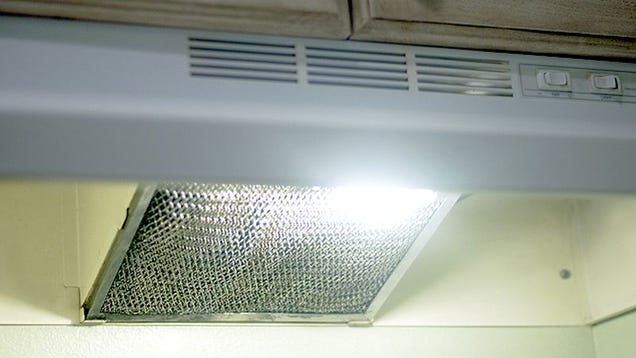
Stove hood filters are one of those things that people forget about cleaning regularly because they don’t usually see them. But they can get pretty nasty, and even dangerous, if you don’t take the time to clean them.


Your favorite coffee maker, a $15 garment steamer, and discounted LEGO sets kick off Saturday’s best deals. Bookmark Kinja Deals and follow us on Twitter to never miss a deal. Commerce Content is independent of Editorial and Advertising, and if you buy something through our posts, we may get a small share of the sale. Click here to learn more.
WASHINGTON– A Mastiff found extremely malnourished in Prince George’s County earlier this month is on the road to recovery.
Violet – as she’s been named by those caring for her – was found weighing just 56.4 pounds. Healthy Mastiffs typically weigh around 150 pounds.
“Her case is definitely one of the more severe of the starvation cases I’ve seen,” says Melanie Samet, President and Founder of the Mutts Matter Rescue Program. Violet was found after someone called a tip into police in Clinton, Maryland., on Feb. 8.
“Their rescue department contacted us because they knew that they could not provide the care that she needed right away,” Samet explains. “She basically needed immediate 24-7 medical care.”
Violet is now with a foster family and is making progress. “She’s eating 5 small meals a day, and she is slowly putting on some weight,” Samet says.
But all those meals and constant care can get expensive.
“We set up a food fund because she’s eating so frequently that its costing the rescue $200-$250 a week.” Samet explains.
Violet now also has a Facebook page for anyone who would like to follow her on her road to recovery. Daily updates on Violet’s progress are being posted on that page.
“She’s improving every day.” Samet says. “Physically, I’m hoping that she is out of the woods, but I’m sure that mentally she will have some scars.”
The Humane Society is offering a $5,000 reward to anyone who can help arrest, and convict, whoever did this to Violet.
Anyone with information that could help solve the case should call the Prince George’s County’s Animal Management Division at 301-780-7241.
The post Rescued malnourished Mastiff on the road to recovery appeared first on WTOP.
WASHINGTON — The former Prince George’s County teacher’s aide accused of making child pornography reportedly gave cellphones to elementary school students to record themselves, sources say.
Carrraway, 22, is accused of taping children ages 9-13 performing sex acts at the school and other places.
Police say he had dozens of videos and admitted making explicit videos of children. According to police, 17 victims have come forward.
Carraway was arrested Feb. 5 and is charged with 10 felony counts of manufacturing child pornography, child sex abuse and second degree sexual offense. He’s being held on $1 million bond.
NBC 4 reports changes are being made at the school.
The school now has a School Resource Officer and is installing 26 cameras inside the school. Visitors also have to show identification, and a new acting principal has been announced since Principal Michelle Williams was put on administrative leave.
The post Md. teacher’s aide gave kids phones to record themselves, sources say appeared first on WTOP.
City of Manassas Survey on Parks, Recreation and Culture Prince William Living (press release) (blog) A new online survey asks what types of programs, facilities, and services residents of the City of Manassas want to see in their parks and from cultural facilities, and where priorities should be placed. The survey also assesses current usage of parks ... and more » |
