Shared posts

18 Apr 03:54

The Citadel considers exception to allow Muslim headscarf

by wtopstaff

CHARLESTON, S.C. (AP) — An incoming freshman female student at The Citadel has asked the military college to let her wear a traditional Muslim headscarf when she begins classes in the fall, the first time such a request has been made at the school known for its buttoned-up uniforms and close-cropped haircuts.

Citadel spokeswoman Kim Keelor said Friday that although a number of Muslims have attended the public college, she hasn’t heard of any of them ever asking to wear a headscarf.

South Carolina’s military college, founded in 1842, has a policy that states the college will approve religious accommodation requests unless it “will have an adverse impact on a competing institutional interest including, but not limited to, cohesion, morale, good order and discipline, cadet welfare, safety and/or health.”

The policy also says “accommodation of a cadet’s religious practices must be examined considering these factors and cannot be guaranteed at all times.”

The school said it was reviewing the student’s request. Keelor wouldn’t identify the student or say where she was from, citing privacy concerns.

The request was first reported by The Washington Post, which identified students, alumni and others reacting on social media.

Cadet Nick Pinelli, who is expecting to graduate in May, told The Associated Press on Friday that he doesn’t think she should be able to wear the headscarf.

“It has nothing to do with her religion,” he said. “It’s in no way against her. I’ve heard very positive things. She wants to be a JAG officer.”

Pinelli said that there has been talk around campus about the woman’s application for several weeks.

“The system is what’s important. It’s not about her or her religion. I have to put my cross under my shirt but I also have to put my dog tags under my shirt. It’s not the cross they care about,” he said.

Citadel cadets are required to wear uniforms nearly all of the time. The school has a 35-page booklet of rules and regulations addressing military courtesies and uniforms.

The school, with its strict discipline and rich tradition, was embroiled in controversy during the 1990s as it fought — and later relented — the admittance of its first woman cadet, Shannon Faulkner. Earlier this year, 14 cadets were dismissed, suspended or served on-campus punishments after several of them appeared in photos with pillowcases on their heads similar to Ku Klux Klan garb.

The Citadel said a decision on whether to allow the headscarf should be made in several weeks.

Recently, a U.S. Army captain and three Army enlistees who are Sikh won permission from the military to wear turbans and beards after filing lawsuits. Their religion requires men to grow beards as an article of faith.

And last year, a federal judge in Washington ruled that a Sikh college student attending Hofstra University on Long Island, New York, could enroll in the U.S. Army’s Reserve Officer Training Corps without shaving his beard, cutting his hair, or removing his turban. The judge ruled that Iknoor Singh’s adherence to his religious beliefs would not diminish his ability to serve in the military.

The post The Citadel considers exception to allow Muslim headscarf appeared first on WTOP.

18 Apr 03:49

Death from ruptured testicle leads to murder charge in Ohio

by wtopstaff

CLEVELAND (AP) — An Ohio man accused of kicking another man in his testicles during a robbery has been charged with murder in the injured man’s death following a gangrene infection.

A grand jury in Cleveland this week indicted 58-year-old Jackie Pierce on charges of murder, felonious assault and robbery in the 2013 death of Willie Cannon.

Police report Pierce demanded money from Cannon on May 11, 2013, repeatedly kicked Cannon in the groin when he refused and then took money from Cannon’s pocket.

Authorities say the kick ruptured Cannon’s testicle, which developed the infection. Cannon died June 8, 2013. Court records don’t list an attorney who can comment on Pierce’s behalf.

Police say they weren’t able to get enough information to identify a suspect until this year. Pierce hasn’t been apprehended.

The post Death from ruptured testicle leads to murder charge in Ohio appeared first on WTOP.

18 Apr 03:48

Judge seals most files in court case over CIA sex case leaks

by wtopstaff

WASHINGTON (AP) — A U.S. judge has ordered the most sensational court records to remain sealed in the now-abandoned lawsuit over leaks in the investigation that led to the resignation of former CIA director David Petraeus.

The files include transcripts of sworn interviews with senior Obama administration officials about the sex scandal and its fallout.

U.S. District Judge Amy Berman Jackson late Thursday accepted objections by the Justice Department to keep the files private, saying government lawyers “have identified compelling confidentiality, privacy and law enforcement interests served by maintaining those records under seal that outweigh any need for public access.”

The judge added, “No one has asserted any public need for the material.” It was unclear whether Jackson intended to revisit her decision in the future, but she ordered that the “records will remain sealed for the time being.”

Among the files were notes from confidential FBI interviews with Petreaus weeks before his resignation; his biographer, Paula Broadwell, with whom he was having an affair; and Jill Kelley, a friend to Petraeus and his wife. Kelley had complained to the FBI in June 2012 about harassing emails from an unknown person who turned out to be Broadwell.

The sealed records also include emails between Petreaus and Broadwell about Kelley — describing an incident at dinner with their spouses when Petraeus said he and Kelley had inappropriately touched each other’s upper thighs — that Broadwell had forwarded to the FBI. Kelley has said nothing inappropriate happened. The harassing emails from Broadwell, accusing Kelley of “promiscuous and adulterous behavior,” started shortly after Petraeus privately mentioned the incident to Broadwell.

In a barb aimed at Kelley, the judge allowed the release of one court filing that she said contained a “general description” of Kelley’s new book and her efforts to publicize it.

“The fact that plaintiff was advancing a public relations campaign and orchestrating the publication of her book at the same time that she was seeking discovery from the defendants in what she characterized as a lawsuit to protect her privacy can be a matter of public record,” the judge wrote.

Kelley said in a statement Friday that her lawsuit had been about holding political officials accountable and that unsealing the records would prevent it from happening again.

“It’s disappointing that the court confused what my lawsuit was about,” she said. “It was not about protecting my privacy. My privacy was already lost. My lawsuit was about holding the political officials accountable and sanctioning them so what happened to my family never happens to another innocent family.”

Government lawyers had said the files should remain sealed because they contained or described confidential statements provided to FBI agents, documents sealed by another court, or material that should be kept secret to protect the privacy interests of people connected to the case.

Kelley had objected to the release of some files that include copies of emails she sent to some of her lawyers or advisers, which she said should remain privileged, and files that described a draft proposal for a book, “Collateral Damage,” which Kelley published last month. The judge had cited a 2001 appeals court decision citing “a strong presumption in favor of public access to judicial proceedings.” But she said she was accepting Kelley’s request even though her legal arguments were “weak and largely unsupported.”

The case included FBI files and deposition testimony from or about such senior U.S. government officials as Petraeus; Defense Secretary Ashton Carter; former Defense Secretary and CIA Director Leon Panetta; Homeland Security Secretary Jeh Johnson; Marine Gen. John R. Allen, then-commander of U.S. forces in Afghanistan; former Pentagon chief of staff Jeremy Bash; former Secretary of State Hillary Clinton aide Phillipe Reines; and former Pentagon and CIA press secretary George Little.

As the scandal was publicly unfolding, Pentagon officials acknowledged in depositions that they developed a “press plan” with members of an unspecified delegation from the White House in November 2012 to tell reporters that emails between Allen and Kelley were “potentially inappropriate” and to suggest that the two had a sexual relationship. Kelley denied this, and Allen later was exonerated by the Pentagon’s inspector general.

Kelley, along with her husband, Scott, had sued the government in June 2013 in Washington, alleging that officials violated the U.S. Privacy Act by disclosing information about them during the FBI’s investigation of Petraeus. The former CIA director pleaded guilty to one misdemeanor charge of mishandling classified information relating to documents he had provided to Broadwell, who has not been charged with any crime.

The Kelleys’ civil lawsuit collapsed last month after her lawyers asked the judge to let them withdraw from the case. The lawyers cited irreconcilable differences, just weeks after the Justice Department declined a secret $4.35 million settlement proposal.

The post Judge seals most files in court case over CIA sex case leaks appeared first on WTOP.

17 Apr 22:28

2 arrested after food fight in McDonald’s drive-thru lane

by wtopstaff

GLASTONBURY, Conn. (AP) — Connecticut police say two people have been arrested after a dispute in a McDonald’s drive-thru lane turned into a food fight.

Authorities say Avon resident Stephen Nardi and Bloomfield resident Jocelyn Harrell got into an argument Thursday evening at a McDonald’s in Glastonbury. Police say they got out of their vehicles, threw food at each other and assaulted each other.

Police didn’t say what prompted the fight.

Nardi and Harrell were charged with misdemeanor assault and breach of peace. They were released on promises to appear in Manchester Superior Court on April 27.

Phone listings for Nardi and Harrell couldn’t be found. It’s not clear if they have lawyers who could comment on the allegations.

The post 2 arrested after food fight in McDonald’s drive-thru lane appeared first on WTOP.

17 Apr 22:28

5-month-old polar bear cub makes her debut at Ohio zoo

by wtopstaff

COLUMBUS, Ohio (AP) — A 5-month-old female polar bear cub has made quite a playful debut at an Ohio zoo.

The cub born in early November frolicked around her enclosure Friday at the Columbus Zoo and Aquarium and even got an orange traffic cone stuck on her head for a moment.

About 1,000 people lined up to get the first glimpses of the polar bear, named Nora. The cub provided a lot of entertainment and laughter as she swam and bounded around her enclosure.

The cub’s twin died shortly after birth, and she has been hand-reared since her mother began neglecting her.

The post 5-month-old polar bear cub makes her debut at Ohio zoo appeared first on WTOP.

17 Apr 22:27

Zookeeper mourned a day after being fatally injured by tiger

by wtopstaff

MIAMI (AP) — South Florida zoo staffers and friends of a veteran keeper attacked and killed by a Malayan tiger met Saturday morning to mourn her death as investigators sought clues as to what led the tiger to violently turn on his caretaker.

Palm Beach Zoo officials also announced Saturday that the zoo would remained closed over the weekend following the death of Stacey Konwiser, 38, who was killed by the 13-year-old male tiger in an enclosure known as the night house on Friday. Tigers sleep and are fed in the night house, which is not visible to the public, according to zoo spokeswoman Naki Carter.

On Saturday morning, Konwiser’s husband, Jeremy, also a Palm Beach Zoo keeper, read a “note of support” to staff, said Carter, who added that the zoo is trying to establish a memorial fund in Konwiser’s honor.

“This is a very difficult situation for all Zoo staff, the Konwiser family and her extended Zoo family,” said a statement from zoo officials.

The tiger was tranquilized and authorities had to wait until the sedative took effect before they could come to Konwiser’s aid, West Palm Beach police spokeswoman Lori Colombino said. It’s unclear why the Malayan tiger was not killed, but zoo officials said it is one of only 250 such tigers known to exist in the world.

Carter said the zoo, which has four similar tigers, serves as a “breeding ground to make sure they don’t become extinct.”

The investigation into the keeper’s death is being carried out by West Palm Beach police, Florida Fish and Wildlife officials and by federal authorities with the Occupational Safety and Health Administration.

The Animal Legal Defense Fund says the zoo keeper’s death was preventable and urged federal authorities to impose penalties against the zoo.

“As long as employees are allowed to work in dangerously close proximity to tigers, elephants, and other dangerous animals, a significant risk of serious injury or death persists,” said the California-based group said in a statement.

Since 1990, according to the group, at least 24 deaths— and 265 injuries — were caused by “captive big cats” in the United States. “These attacks, and scenarios where an animal escapes, have also resulted in the deaths of over 128 big cats_many of whom were endangered species,” the group said.

Konwiser’s death was the first of “a human involved in an animal incident in the 60-year history of the Palm Beach Zoo & Conservation Society,” zoo officials said.

Carter, the zoo spokeswoman, said Konwiser was “efficient and proficient” at her job and, on the afternoon of the attack, she said Konwiser was doing her daily chores. “This was not out of the norm,” said Carter. “What occurred was out of the norm.”

She said Konwiser had been working with tigers at the zoo for three years and was “passionate” about them. “She loved tigers and they loved her,” she said.

The post Zookeeper mourned a day after being fatally injured by tiger appeared first on WTOP.

17 Apr 21:36

FBI recognizes Sterling mosque for community efforts

by wtopstaff

STERLING, Va. (AP) — The FBI has given a Community Leadership Award to a prominent northern Virginia mosque.

On Friday the FBI’s Washington Field Office recognized the All Dulles Area Muslim Society (ADAMS) Center in Sterling for its efforts in building partnerships between law enforcement and the Muslim community.

The ADAMS Center and its imam, Mohamed Magid, have hosted high-level law-enforcement officials at the mosque for town-hall style meetings. The mosque has also initiated numerous community programs with the goal of countering violent extremism and efforts by terrorists groups to recruit and radicalize young Muslims over the Internet.

The post FBI recognizes Sterling mosque for community efforts appeared first on WTOP.

17 Apr 16:24

Mars Plastering Special Labels On Pasta Sauces That Are High In Salt, Fat, Or Sugar

by Mary Beth Quirk

The next time you reach for your favorite sauce in the grocery aisle, you could be greeted with a warning that you maybe shouldn’t over-indulge in the stuff. Mars Food, the maker of brands like Dolmio and Uncle Ben’s, is putting new labels on some of its pasta sauces suggesting they be an occasional treat due to high content of sugar, salt, or fat.

Some products like pesto contain higher levels of sugar, salt, and fat to ensure authentic taste, Mars says, so they shouldn’t be consumed every day. Mars Food says it will provide guidance for consumers on food packaging as well as on its website regarding how often those meal offerings should be eaten within a balanced diet.

The company’s website will also get an update within the next few months with a list of “occasional” products – those to be enjoyed once per week — and a list of “everyday” products — including those to be reformulated over the next five years to reduce sodium, sugar, or fat.

Mars says the move is part of its new Health and Wellbeing Ambition, in an effort to help consumers “shift taste preferences to lower sodium foods and improve overall health” and to support efforts by the UK’s Department of Health and the U.S. Food & Drug Administration.

“The food industry has already made great strides in reducing sodium, but we have more work to do to help consumers reduce sodium intake,” Fiona Dawson, the global president of Mars Food, Drinks and Multisales, said in a statement. “We support release of the U.S. FDA’s draft sodium reduction guidance, because we believe it’s important to begin a stakeholder dialogue about the role industry can play in this critical part of consumers’ diets.”

17 Apr 16:24

Which Airlines Charge A Fee To Buy Tickets Over The Phone Or At The Airport?

by Mary Beth Quirk

We used to live in a time when some of the only options for buying airfare were over the phone or in person at an airport ticket counter. Technology changed, and many airlines have added fees for those ticket-buying methods. While Delta Air Lines is now turning back the clock and will drop such fees, many of the other major players still tack on extra charges for those ticket-buying options.

Until now, Delta charged a fee of $25 per ticket when travelers bought them over the phone, and $35 per ticket when folks purchased them at airports or other ticket office locations. There are no fees attached to tickets bought on Delta.com or through the airline’s app.

“It is much simpler for our customers to not have to worry if they will pay a fee for ticketing with Delta,” Glen Hauenstein said in a statement.

Airline fees are always in flux, and it can get confusing. Here’s a handy list of U.S.-based airline booking fees as they stand today:

Airline Booking Fees

Airline Phone Fee In-Person Fee Online Fee
Alaska Airlines $15 $0 $0
Allegiant Airlines $14.99 $0 $0
American Airlines $25 $35 $0
Delta Air Lines $0 $0 $0
Frontier Airlines $10 $19.98 $19.98
Hawaiian Airlines $25 $35 $0
JetBlue $25 $25 $0
Southwest Airlines $0 $0 $0
Spirit Airlines $9-$18 $25 $9-$18
United Airlines $25 $35 $0
Virgin America $20 $0 $0

17 Apr 16:23

AMC: Just Kidding About That Whole Texting In Theaters Thing

by Mary Beth Quirk

Remember earlier this week, when new AMC Entertainment CEO Adam Aron said he was open to allowing texting during movies in some way? Yeah, that’s not gonna happen, the company announced Friday.

After customers revolted and others in the theater industry came out against the idea, AMC said on Twitter that there will be “NO TEXTING AT AMC,” along with a copy of a longer letter from Aron addressed to customers.

In the letter, Aron acknowledges the media reports about AMC considering texting in some theaters, as well as the backlash that ensued after customers read quotes from a recent interview he gave to Variety.

“Unlike the many AMC advancements that you have applauded, we have heard loud and clear that this is a concept our audience does not want,” Aron writes. “In this age of social media, we get feedback from you almost instantaneously and as such, we are constantly listening. Accordingly, just as instantaneously, this is an idea that we have relegated to the cutting room floor.”

Just to be clear, Aron goes on, that means there will be no texting allowed in any auditoriums at AMC Theatres.

“Not today, not tomorrow, and not in the foreseeable future,” Aron writes.

aronletter

17 Apr 16:22

If Home Depot Employees Think You’re Buying Parts For A Pipe Bomb, Expect A Visit From The Police

by Chris Morran

There are possibly non-bomb reasons for going into a hardware store, buying a length of metal pipe, having it divided up into smaller pieces, and then having each of those pieces threaded for caps on both ends — but it’s definitely the sort of purchase that will probably result in the police knocking on your door.

In fact, earlier this week, police in Missouri arrested a man believed to be building pipe bombs after receiving a tip from Home Depot staff about a man who made this very suspicious purchase.

The employees, having reason to believe that these 7.5″, threaded sections of 1.25″ diameter metal pipe might be used for something other than plumbing, alerted the authorities, who then obtained a search warrant for the customer’s motel room.

That’s where they found the pipes, gunpowder, and fuse wire — stuff you’d need to really ruin someone’s day with a bang.

The suspect has multiple previous run-ins with the law and was recently barred from entering Lambert-St. Louis International Airport, which is not far from the motel where he was allegedly prepping the bombs.

Bridgeton police say man was preparing to make pipe bombs [STLtoday.com]

17 Apr 16:21

NBA Jerseys Will Carry Sponsors’ Badges Starting Next Season

by Chris Morran

Nearly four years after the NBA’s Board of Governors first gave its blessing to the notion of turning their players into dribbling and dunking billboards for advertisers, the league is finally moving forward with the idea.

The NBA announced today that it has officially given the thumbs-up for teams to sell jersey badges to sponsors.

These won’t — at least just yet — be the see-them-from-a-mile-away ads that have long been a staple of professional soccer jerseys around the world. Instead, the NBA’s 3-year pilot program will limit each team to one approximately 2.5″ x 2.5″ (dimensions and shapes can be tweaked for individual sponsors) badge that goes on the front left of each jersey (opposite the existing de facto advertising for jersey-maker Nike).

The league is leaving it up to each of the 30 teams to sell the sponsorships.

The ad-badges won’t appear on retail versions of these jerseys, because why should you pay to buy an ad, but we predict that some verisimilitude-focused fans will go that extra mile and find after-market solutions to make their jerseys as close to the real thing as possible.

We also wonder whether the sponsor badges will somehow work into existing team rivalries. Will Celtics fans and Knicks fans go beyond mocking each other’s players, accents, local customs, and sports heroes, and take it to the level of brand loyalty? We’re through the (heavily branded) looking glass here, people.

17 Apr 14:37

Historic Preservation Commission Denies Demolition Of House Once Owned By Pedophile Pediatrician

by Chris Morran

What do you do with a house whose former owner is a former pediatrician charged with molesting more than 100 juvenile patients? If no one is willing to live in that building, the logical step might be to tear it down. Unfortunately, the local historic preservation committee won’t let you.

This is the situation facing the Delaware city of Lewes, where the home of notorious child rapist Earl Bradley stands vacant following his 2011 conviction on multiple counts of rape, assault, and sexual exploitation of a child.

In early 2014, an anonymous donor gifted the property to a local church, along with money for improvements. However, the church says it has been unable to sell the house because of its connection to Bradley.

However, the church says it has been unable to sell the house and — because the property lies within the city’s Historic District — sought permission to demolish the existing structure.

“The house is in the Lewes Historic District, but it is not historic except for its notoriety as the residence of the worst child predator in American history,” explained the church in one of its 14 arguments in favor of demolition.

Supporters of the demolition idea say that there is nothing of interest — architecturally or aesthetically — about the house; that leaving the house standing could do more damage to the city than keeping it intact; and that its destruction could be an important step in helping the community move on from the horrific crimes committed by Bradley.

“We need to put people ahead of property,” argued the church.

But last night, the Lewes Historic Preservation Commission held a public hearing, after which they took a vote and denied the request for demolition.

The commission’s chairperson told WBOC-TV that the panel understands the arguments for demolition, didn’t really have a choice.

“We’re bound very tightly by the regulations of the town,” she explained.

However, the city’s ordinance regarding demolition of historic buildings only seems to require that the commission have a public meeting on the matter, and gives the commission additional time to consider the matter before denying or approving a demolition request.

As WBOC notes, residents in the area are divided over the issue, with some saying the house should go because of its negative connections to Bradley, while others wondering how far is too far.

One resident explained that if you’re going to tear down Bradley’s home, then why shouldn’t you also rip up the hospital where he practiced or the streets that he walked on?

Thanks to Michael for the tip!

17 Apr 14:37

More Than 1M Chevy, GMC Trucks Recalled Over Seatbelt Defect

by Ashlee Kieler

Properly secured seatbelts can prevent someone from being thrown around a vehicle in the event of a crash, potentially saving their lives. That may not be the case for nearly a million General Motors pickup trucks, which contain seatbelts that may not actually hold the driver in a crash. 

GM announced Friday that it would recall 895,232 model year 2014 to 2015 Chevrolet Silverado and GMC Sierra 1500 pickups in the U.S., and 142,750 in Canada, Latin America, and other areas.

According to the recall announcement, which has yet to be posted on the National Highway Traffic Safety Administration website, the flexible steel cable that connects the seatbelt to the vehicle can wear and separate over time as a result of the someone repeatedly bending the cable when entering the seat.

If the cable separates, the belt can become loose, and in the event of a crash may adequately protect the driver or passengers.

GM says it discovered the issue after analyzing warranty data. So far, there have been no reports of injuries related to the problem.

Owners of affected vehicles will be noticed and dealers will enlarge an opening and install a bracket on the cable tensioner, and if necessary, replace the tensioner assembly.

In addition to recalling the vehicles, GM says it has ordered dealers to stop the sale of 3,000 new 2014 and 2015 trucks until the cables can be repaired.

17 Apr 14:37

FedEx Employee Falls Asleep Loading Plane In Tennessee, Ends Up In Texas

by Ashlee Kieler

Falling asleep on the job is a big no-no. It can end with a reprimand — or worse, a firing — but for one FedEx employee, an on-the-job catnap earned him a flight to Texas.

A Tennessee FedEx ground crew member fell asleep inside of a plane he had just loaded early Friday morning, when he woke up, he was some 800 miles away in Texas, Fox 34 reports.

Toward the end of the flight, the employee woke, realized he was in the air, and knocked on the closed cockpit door to speak with the flight crew.

The crew instructed the man to sit in a jump seat and prepare for landing.

The ordeal led to a rather unusual call to the Lubbock International Airport dispatch, the airport’s executive director Kelly Campbell tells Fox 34.

When the plane landed at around 5:30 a.m. it was greeted by airport police, while Lubbock Police Department, FBI, and the Transportation Safety Administration were also notified of the “unusual incident.”

The employee was not arrested after police determined there was no criminal intent and he was released to local FedEx officials.

According to the city of Lubbock, the issue didn’t impact aircraft operations at the airport.

FedEx tells Fox 34 that they are aware of the incident and that there was never any danger to the employees on the plane or the cargo.

“We are fully cooperating with investigating authorities,” the company said without addressing whether or not the snoozing employee will face any disciplinary action.

FedEx employee falls asleep after loading Memphis flight, wakes mid-flight to Lubbock [Fox 34]

17 Apr 14:36

Can A Cashier Make Me Read My 3-Digit Credit Card Code In Front Of Other Shoppers?

by Kate Cox

Your credit card has a 16-digit number on the front, plus an expiration date, and another three-digit code on the back. We all know in a vague way that the code on the back (also known as the “CVC” or “CVV”) has something to do with making transactions safer or reducing fraud, but other than that we don’t give it much thought — and while we might expect to have to share that number when shopping online, we certainly don’t expect to be asked to read it out loud when making an in-person purchase at a crowded coffee shop.

And there’s a reason you should be concerned about being asked to read this number aloud in public — because it’s not supposed to happen. But, as one Consumerist reader explains, that didn’t stop a Dunkin’ Donuts employee from demanding that she say her three-digit number in front of all the other customers.

A Weird Encounter

Nora* recently told us about a strange experience she had at a Dunkin’ location in New York state. She was buying three drinks and three gift cards, so the purchase came to about $80.

“I swiped my MasterCard and thought all was going well until the clerk asked for the CVV,” Nora tells Consumerist.

Nora checked with the clerk to see if the employee meant the last four digits on the front but no, she reports, the clerk did indeed mean the three-digit code on the back.

This struck Nora (and us) as strange. Even more bizarre: When she declined to read the numbers aloud, the clerk turned her terminal around to show Nora the register screen.

“She [said] that she had to have that information to complete my transaction and if I preferred I could input it into the BIG screen — for all to see — myself,” Nora says.

Uncomfortable with the transaction, Nora declined and left. She went to another nearby DD location — and made an ATM pit stop along the way, to get cash just in case the scenario repeated itself.

At the second location, “We ordered the same thing and I asked the clerk, if I used my credit card, would she have to have my three digit code? She said yes, so we paid cash,” Nora says.

…Is That Right?

This policy struck us as being just as unusual as Nora thought it was, so we reached out to both Dunkin’ Donuts and MasterCard to see what was up.

A spokesperson for Dunkin’ confirmed that this is, indeed, its nationwide policy:

“It is Dunkin’ Donuts policy to have franchisees ask guests for the CVV number for transactions that meet certain criteria. This security process was implemented as one of the measures used to protect our guests and franchisees from fraudulent credit card transactions,” the spokesperson said.

However, asking the customer to shout it out loud or type it in where it can be seen? That is not so much a part of the policy, and should not have happened.

“The crew member should enter the CVV number,” the spokesperson said, adding, “The franchisees have been notified and plan to retrain the team on the correct procedures.”

Meanwhile, the merchant agreements for both Visa and MasterCard make repeated references to checking the three-digit code (called the CVV2 for Visa, or the CVC2 for MasterCard) for card-absent transactions, as in a purchase online or by phone — but barely mention it for in-person, card-present transactions at all.

Visa only recommends capturing the data when the magnetic stripe swipe fails, and even then it specifies, “The storage of CVV2 is strictly prohibited subsequent to authorization.”

MasterCard’s merchant agreement is less clear, but a spokesperson for the company was very explicit on the matter when we asked.

“It’s difficult to think of a reason why an employee would ask a customer to recite their CVC2 code for an in-store transaction,” the spokesperson said. “As you note, the codes were created to help authenticate cardholders for online and over the phone purchases.”

MasterCard’s rules say the CVC2 is supposed to be used for remote transactions only, the rep added, and then outlined for us the procedure an in-person retailer should follow when a customer pays in-person by MasterCard:

  • Check the valid date and the expiration date on the front of the card
  • Compare the [16-digit account number] on the card with the number displayed on or printed from the terminal (unless a hybrid POS terminal is used)
  • Compare photo on the card (if applicable) with the person presenting it
  • Confirm the signatures match

So Why Is This Happening?

Nora’s theory was that these procedures were in place because the Dunkin’ locations did not have chip-enabled card readers in use — and theory that doesn’t seem far-fetched to us.

When credit card data gets stolen through use of a skimmer or a hack, the thief generally gains access to the 16-digit number and the expiration date on the front of the card. From there, fraudsters can cheaply and easily create “clone” cards to swipe in stores to make purchases at everyone else’s expense.

That’s where the code on the back comes in: that data is intended to reduce fraud, by making sure that the card in use is the actual original that has the right contents on the back. And that’s why when the merchant can’t actually literally see or handle the card — such as when you’re buying online — they’re supposed to ask for the code.

But even having employees verify its presence themselves, quietly, doesn’t strike Nora as an effective long-term solution.

“I don’t see their ‘plan’ or ‘procedure’ of having the clerk handling the cards and flipping them over really being practical and working,” she tells Consumerist — and good old-fashioned human nature is pretty much why.

“Often, the cashiers never touch the card, as the customer swipes the card,” and it never leaves their hand to begin with, Nora says. “Then add in busy mornings, people lined up anxiously waiting for their coffee fix… are they really going to take that extra step? No, the cashiers are just going to verbally ask for the code and people will give it to them.”

Sooner or later, Nora thinks, someone is going to be defrauded because their code is out in the wild — and at the very least, it’s just not optimal security.

Completing the rollout of chip-and-PIN terminals nationwide would solve this particular problem, as the whole point of the EMV system is that the chips inside the cards, necessary to complete the transaction, can’t be snagged or duplicated by hacks or skimmers.

But although that change has been in process for many, many months, it’s still a long, slow time coming with many bumps in the winding road.

In the meantime, for customers who want a morning Dunkin’ Donuts fix but don’t want to deal with strange credit card shenanigans, the chain has a mobile payment app.

*name changed at the customer’s request

17 Apr 14:27

St. Louis Dunkin’ Donuts Serves Coffee In Chicago Blackhawks Cups…. During Playoffs

by Ashlee Kieler

The NHL’s St. Louis Blues and Chicago Blackhawks aren’t just regional rivals; the two teams are currently playing each other in the first round of the Stanley Cup playoffs. So you can understand why some St. Louis residents might be less-than-thrilled that their local Dunkin’ Donuts was serving up coffee in cups decorated with the Blackhawks logo.

Making matters worse, reports KMOV-TV, the cups boast that Dunkin’ Donuts is “The official coffee of the Chicago Blackhawks.”

The unexpected coffee holders, of course, did not exactly go over well with Blue fans in the area.

KMOV took a few of the cups to the Scottrade Center before the game started on Wednesday, asking fans their thoughts.

“That’s disgusting. They can’t do that here,” one fan said.

Dunkin’ Donuts chalked up the mishap to a simple shipping error, noting that the store in question stopped using the cups almost immediately.

“Due to an untimely shipping error from the regional distribution center. Being a local business owner and fan of the hometown team, the franchisee plans to switch out the cups as soon as they receive a new shipment.”

‘Untimely shipping error’ draws ire of Blues fans towards donut chain [KMOV]

17 Apr 14:27

Watch: Pressure Washers Are Super Useful, Can Be Super Dangerous

by Laura Northrup

Pressure washers make various outdoor cleaning tasks much easier, but they can also be pretty dangerous when pointed in the wrong direction. That’s why our ever-efficient colleagues down the hall at Consumer Reports no longer recommend any pressure washers that come with zero degree nozzles, or adjustable wand tips that can be dialed down to zero. That setting poses a special risk of injury to people, and to carrots. Carrots?

Nozzles and wand settings are labeled according to the width of the spray, measured in degrees. Consumer Reports doesn’t recommend using a spray any narrower than fifteen degrees. It might take longer to finish some tasks, but you can still complete them.

washing

The special risk of the narrow zero-degree spray isn’t just that it can tear a hole in your skin: it’s that your body is much more pliable than a concrete patio, and the force of the jet can cause a deep puncture wound, forcing water and bacteria deep into your body.

You still want to take precautions, of course: don’t point the pressure washer at people or pets, wear protective footwear (but don’t clean your boots with your feet in them) keep in mind what happens when you pass a stream of water from a pressure washer over a carrot.

carrot_slice

That’s right: an extremely inefficient way to slice a carrot. You can watch that happen in the video embedded below.

15 Apr 02:42

Is The Klingon Language Protected By Copyright? Paramount Thinks So

by Chris Morran

While you can copyright scripts, novels, song lyrics, and many other ways of using the English language, you can’t actually copyright the English language. But what about a language that you construct out of whole cloth? Once you share it with the world, are people free to use that new language however they wish, or do you maintain control over its use?

This is one of the questions at the heart of an ongoing legal battle between the creators of a Kickstarter-funded Star Trek fan film and Paramount Pictures, which says the project violates various Trek-related copyrights, including the studio’s copyright claim to the Klingon language.

In Paramount’s original complaint [PDF] against the filmmakers, the studio listed a number of exclusive rights it contends it holds with regard to the Star Trek universe — “characters, themes, plots, dialogue, settings, sequences, situations, and incidents therein, and also the props, character makeup, costumes, sets, fictional language, events, and fictional history.”

Klingon, as you’re likely aware, is a fictional language originally created for use in the Star Trek films and TV shows, but which is now also spoken by fans around the world, both in and outside of the context of Star Trek.

Nowhere in its 1,288 compendium does the U.S. Copyright Office specifically deal with the copyrightability of constructed or fictional languages, let alone Klingon, but in filing their motion to dismiss the complaint [PDF], the filmmakers argue that, among other things, Paramount can not hold the copyright to Klingon.

“The Klingon language itself is an idea or a system, and is not copyrightable,” reads that filing. “As the Supreme Court held in the context of a system of bookkeeping, although copyright protects the author’s expression of the system, it does not prevent others from using the system.”

This week, Paramount fired back, arguing in its response [PDF] that the filmmakers’ claim is this argument is “absurd, since a language is only useful if it can be used to communicate with people, and there are no Klingons with whom to communicate.”

The studio says that the filmmakers’ use of the Klingon language in their movie, which has raised hundreds of thousands of dollars from supporters, is “simply further evidence of their infringement of Plaintiffs’ characters, since speaking this fictitious language is an aspect of their characters.”

So who is in the right on this one? As we noted above, the U.S. Copyright Office hasn’t specifically addressed the issue, and there doesn’t seem to be much in the way of case law with regard to the exact topic of copyrighting a fictional language.

However, in 2014, the Harvard Journal of Law & Technology published a note [PDF] — originally written for a class by Harvard Law grad Michael Adelman — attempting to answer this very question.

Adelman acknowledges that authors may be tempted to assert a copyright claim over the use of a fictional or constructed language “to prolong her control of the language’s dissemination and development,” but concludes that this sort of copyright claim is “both misguided and likely to fail.”

In fact, Adelman’s note specifically cites the ways in which Paramount has previously established its authority over the use of Klingon.

While linguist Marc Okrand is the creator of the Klingon language and author of subsequent official dictionaries and books about the language, Paramount remains the copyright holder on those titles. Paramount is also the copyright holder of a Klingon translation of Shakespeare’s Hamlet produced by volunteers from the Klingon Language Institute.

For his various writings about Middle Earth, J.R.R. Tolkein created the Elvish language, which like Klingon, has gone on to have a life of its own beyond these works of fiction. Adelman notes that while the Tolkein estate contends that it controls the copyright for this language, it has not yet filed lawsuits specifically claiming copyright violations. However, he notes that the estate did threaten legal action against a writer who tried to publish an analysis of currently unpublished Tolkein works written in an Elvish language.

“[U]ltimately, most scholars of Tolkien’s languages are making the calculated gamble that since they are publishing obscure texts to limited audiences for no money, the Tolkien Estate will not actually haul them into court,” writes Adelman.

THE ARGUMENT AGAINST COPYRIGHTING A LANGUAGE

To those who believe that languages — whether created by one person or the result of centuries of human interaction — can’t be copyrighted liken this idea to trying to claim copyright of a musical scale. The Copyright Office has explicitly barred scales from eligibility, because these notes are simply generative elements upon which a copyrightable work could be constructed.

For example, the first movement of György Ligeti’s Musica ricercata may be primarily made up of only two notes — A and D — it is the arrangement and expression of these two notes that is copyrightable, not the notes themselves.

“It is the infinitely generative capacity of a language, the ability to communicate new thoughts and ideas, that makes a set of sounds and grammatical rules into a language,” writes Adelman, acknowledges that the actual Star Trek products and the Klingon dialogue they use are deserving of copyright, “the language itself is too generative to be held within a single copyright.”

Additionally, while authors may have a direct interest in attempting to protect the integrity of the language they created, that doesn’t necessarily mean they have the legal right to stop others from using it.

“No one would dispute that J.R.R. Tolkien’s integrity right in The Lord of the Rings would be infringed if someone released a version identical to the original except with all references to ‘Mordor’ replaced by ‘Candyland’,” notes Adelman, adding that “Tolkien cannot hold a right to all compositions in [the Elvish language of] Quenya any more than Noah Webster of Webster’s Dictionary can hold a right to all compositions in English.”

WHAT ABOUT FAIR USE?

As we recently reported, many schools are now teaching proscriptive lessons on copyright: Don’t do this, don’t do that… or you’ll get sued. What’s not being taught in these cases is the Fair Use doctrine, which lays out guidelines for when it’s okay to take something you didn’t create and use it in your own work.

The doctrine grants exceptions to copyright when works are used for the purpose of criticism, comment, news reporting, and education. And Adelman contends that — even if you could successfully argue that a fictional language is copyrightable — “fair use would protect most of the activities” of people who are accused of violating that copyright.

But again, the problem faced here by people looking to use a constructed language would likely be cost. How much can one afford to spend on arguing the fair use of Klingon or Elvish when the financial rewards of being able to do so are likely minimal. Thus, few pursue this argument through the legal system.

The debate over the copyright for Klingon is just one, small aspect of the current lawsuit filed by Paramount, so it’s possible that the court could make a decision in this case without giving full consideration to the language debate.

Of course, if the copyrightable nature of the Batmobile can get inches away from being heard by the Supreme Court, it’s possible that someone willing to put in the time, money, and effort could ultimately get the court system to settle the issue of whether or not we need an author’s permission to use their made-up language.

[via TorrentFreak.com]

14 Apr 20:49

Let This Video Teach You How to Flip Crepes and Pancakes With Ease

by Claire Lower on Skillet, shared by Andy Orin to Lifehacker

Like any red-blooded American, I enjoy a good, fluffy flapjack, but sometimes I crave a delicate, thinner type of griddled delicacy, like an English-style pancake or a crepe. Some people have a little trouble with the flipping, but the above video makes it easy; like so many things, it’s all in the wrist.

Read more...


14 Apr 20:49

Save to Google Is a Pocket-Like Chrome Extension For Saving Articles

by Eric Ravenscraft

Chrome: Not content with letting Pocket have the spotlight , Google has introduced a new extension called Save to Google that allows you to save articles to read later.

Read more...


14 Apr 20:48

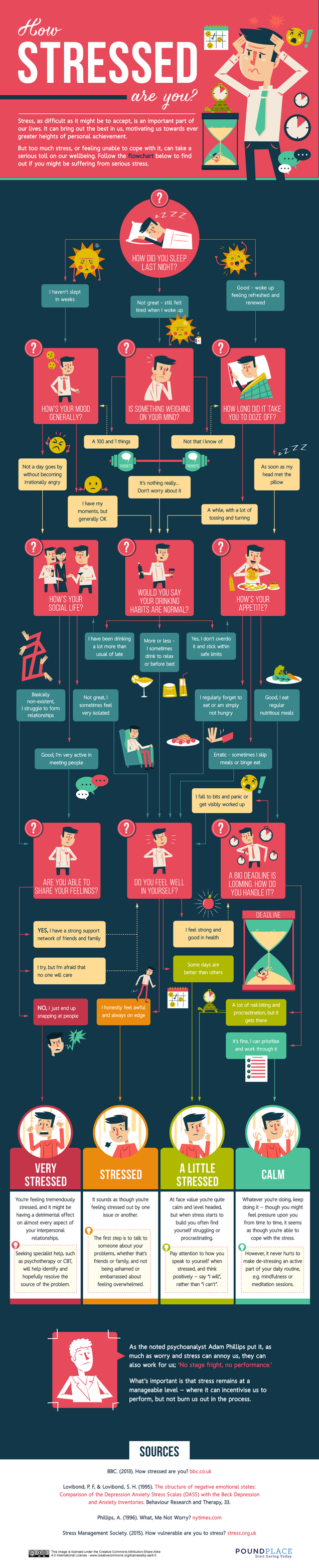
Measure Your Stress Level with This Flowchart

by Melanie Pinola

Are you a little stressed or a lot stressed? Sometimes it’s hard to tell the difference. This flowchart walks you through the emotions and factors that could be causing you havoc-wrecking stress.

Read more...


14 Apr 20:47

This $24 Greenhouse Can Fit On Your Apartment Balcony

by Shep McAllister on Deals, shared by Shep McAllister to Lifehacker

Amazon’s top-selling greenhouse is small enough to fit on just about any balcony or patio, and is perfect for urban gardeners looking to grow their own vegetables, herbs, and flowers. $24 is the best price Amazon’s ever offered, so pick one up before they’re all harvested.

Read more...


14 Apr 20:46

Banks Attract New Customers, New Fee Income With Check-Cashing Services

by Laura Northrup

Instead of imposing new fees on their existing customers, banks have an exciting new idea: attract new customers and charge them fees. Specifically, banks are looking to low-income and lower-middle-income people who might normally use check-cashing stores or check-cashing services in retail stores to gain immediate access to their money. These customers may not make large deposits, but what customers who want access to their cash right away do generate are lots of fees.

While banks’ policies differ, generally your bank should make the first $200 of a check available to withdraw the next business day, and the next $200 on the following business day. This doesn’t matter very much if you have a large financial cushion in your checking account, but the customers banks target with these new services aren’t people with large financial cushions.

The Associated Press cites Fifth Third Bank’s Express Banking as an example: it offers sliding fees based on “loyalty” or on how many services the customer uses from the bank, such as cashing a check, making a deposit, or buying a money order. The maximum check-cashing fee would be $4 or 4% (whichever is higher) for a new customer with a personal check not written on a Fifth Third account. The fees for government and payroll checks vary from 1-3%, with minimums of $2 or $3 depending on how many other transactions the customer has had.

The Express Banking accounts started when the bank began to offer some check-cashing services, and noticed that the same customers kept returning to the branch: maybe they could be persuaded to open an account to deposit some of that cash.

It’s a nice start, but still means that people with less money are paying higher per-transaction fees for services that are included in regular bank accounts.

Banks look to enter the lucrative business of check-cashing [AP]

14 Apr 19:23

Admission To All National Parks Will Be Free For A Week Starting April 16

by Mary Beth Quirk

Hammerin Man
Need plans for the weekend, but still hurting from filing your taxes? There’s free nature to behold, courtesy of the National Park Service: to celebrate the agency’s 100th birthday, admission to all National Parks will be free between April 16 and April 24. [via the National Park Service]
14 Apr 18:42

Today's Best Deals: Holiday Lasers, Fallout 4, Magnetic Knife Strip, and More

by Shep McAllister

Fallout 4, a holiday laser projector, and a magnetic knife strip kick off Thursday’s best deals.

Read more...

14 Apr 16:29

Yes, You Can Rent-To-Own A Dog & It’s Expensive

by Ashlee Kieler

Rent-to-own deals — where you pay weekly or monthly installments on a purchase instead of buying it outright — are typically offered for pricier home goods, like furniture, appliances, and electronics, and often end up costing significantly more than you’d pay in cash or with a credit card. Some retailers are extending this idea to pet-buying, and just like renting-to-own a new TV or fridge, a rent-to-own puppy is going to cost you a lot more than you’d pay otherwise.

A Missouri man says he was misled and spent thousands of dollars to one day have the option to purchase two Pomeranian puppies, KSHB News reports (warning: video autoplays).

The ordeal began in November when the man visited an Independence-area Petland and purchased a dog named Lilly.

The purchase price for the purebred pup was $2,135. However, under a rent-to-own plan he was obligated to pay $100 a month for four years, bringing the total rental for the dog to $4,800.

The man says he agreed to a 25% interest rate, but the actual calculations work out to be about 48%. It’s unclear if the man put a down-payment on the animal.

Two months later, the man returned to the pet store and signed a deal for a second Pomeranian puppy named Pepper. Under the terms of the new contract, the man would pay $182.16 a month for two years, totaling about $4,370.

The man says he was also unaware that as part of the deal he wouldn’t actually be able to simply take ownership of the animals once the payments were finished, KSHB reports.

Instead, the contract stated that in order to buy the dogs he would have to pay an additional $300 after the rental period.

The man tells KSHB that the sales person who walked him through the contract did so too quickly for him to understand the deal.

“I signed all this stuff and she went through it so fast, she’s just like, ‘Sign this, sign this,'” he said.

An employee at the Petland location tells KSHB that customers looking to buy puppies are offered five different financing plans.

In the end, the man says he was unable to afford to the payments and has returned the puppies to the store. Under the contract, the company could sue the man for the remaining money owned on the animals.

A spokesperson for Petland tells KSHB that the company won’t seek action against the man.

Consumerist reached out to Petland for more information on the rent-to-own process and how it is described to customers. We’ll update this post when we hear back.

Man upset over high priced rent-to-own puppies deal [KSHB]

14 Apr 16:29

New AMC Entertainment CEO Open To Letting People Text During Movies

by Mary Beth Quirk

In an example of the extreme lengths companies may be willing to go to in order to secure that most coveted customer, the millennial, AMC Theaters might go ahead and let people text during movies.

Because losing access to their phones is like losing a limb for millennials, AMC Entertainment’s brand new CEO says he’s mulling the idea of figuring out a way to include texting in the moviegoing experience.

Noting that millennials are consumers who might not be seeing as many moves in theaters, Adam Aron, who took the CEO mantle at AMC four months ago, tells Variety that the company has to change its product in some ways “so that millennials go to movie theaters with the same degree of intensity as baby boomers went to movie theaters throughout their lives.”

When asked if one way to appeal to millennials might be allowing texting or cellphone use, Aron said that could be an option. Hey, it’s better than emotional amputation, which is apparently what it comes down to every time those poor souls are forced to separate themselves from the glowing light of their phone screen.

“When you tell a 22-year-old to turn off the phone, don’t ruin the movie, they hear please cut off your left arm above the elbow,” Aron says. “You can’t tell a 22-year-old to turn off their cellphone. That’s not how they live their life.”

As if he could already hear the grumbling from those folks out there who’d prefer not to have bright screens blaring light during the movie experience, Aron admits that the company will have to figure out a way to do it that doesn’t tick everyone off. One such solution could be a certain section for texting, he says, but it’s more likely that they’d make specific auditoriums “more texting friendly.”

What do you think? Vote in our poll below.

Take Our Poll
AMC Entertainment CEO Open to Allowing Texting in Some Theaters [Variety]
14 Apr 16:28

American Airlines Calls Out TSA For “Unacceptable” Lines At Airport Checkpoints

by Mary Beth Quirk

Not a fan of lengthy lines at airport security checkpoints? You aren’t alone: American Airlines is putting the Transportation Security Administration on blast for the kind of “unacceptable” long wait times that caused 6,800 customers to miss their flights during spring break week this year.

“The lines at TSA checkpoints nationwide have become unacceptable,” American spokesman Ross Feinstein said in a statement reported by NBC. “The result: our customers are waiting in TSA lines greater than one hour.”

That issue was “exponentially” worse in the first three months of 2016, which is usually a slow season for air travel.

American says almost 6,800 passengers missed their flights between March 14-20, when many travel to spring break destinations, because of checkpoint delays. The worst airports included Los Angeles, Miami, Atlanta, Dallas, and Philadelphia.

And it’s only going to get worse, Feinstein warns, as the travel season heats up.

“As we approach spring and summer, we are concerned that these lines will grow even longer,” Feinstein said.

American isn’t the only loud voice railing at the TSA right now, NBC notes: on Wednesday, the head of Charlotte-Douglass International Airport wrote to the TSA complaining about insufficient staffing at its checkpoints. Both the Seattle-Tacoma International Airport and Atlanta’s Hartsfield-Jackson International Airport have threatened to replace TSA workers with private security contractors.

American Airlines Hits Out at ‘Unacceptable’ TSA Lines [NBC News]

14 Apr 16:20

Prince William County community calendar, April 14-20, 2016 - Washington Post


Washington Post

Prince William County community calendar, April 14-20, 2016
Washington Post
AARP income-tax preparation help 11 a.m.-3:30 p.m. Chinn Park Regional Library, 13065 Chinn Park Dr., Woodbridge. 703-792-4800; and Thursday noon-8 p.m. Bull Run Regional Library, 8051 Ashton Ave., Manassas. 703-792-4530. Free. Potomac ...
Coming AttractionsGainesville Times - Northern VA News

all 4 news articles »