Shared posts

16 May 13:12

Plant Basil With Tomatoes for a Natural Pest Repellant (and Other Garden Tricks)

by Alan Henry

Here in North America, it’s time to think about planting (if you haven’t already), and the Old World Garden Farm suggests a garden pair that makes a lot of sense: basil and tomatoes. They’re tasty together, but basil also repels pests that feast on tomato plants, which makes caring for them easier on you.

Read more...

16 May 13:10

Learn How to Identify Any Language at a Glance With This Handy Guide

by Patrick Allan

Smartphones, search engines, and translators can break language barriers easy enough, but what if you wanted to know how to do things yourself? This guide will show you all the tips and tricks you need to identify almost any language in a matter of seconds.

Read more...

16 May 13:09

Make Super Smooth Hummus By Adding a Little Baking Soda

by Claire Lower on Skillet, shared by Andy Orin to Lifehacker

Super smooth, almost fluffy hummus is something that I’ve never been able to achieve at home. Sure, I’ve made good hummus, but not that creamy, light-as-air stuff you seem to be able to acquire at Middle Eastern restaurants. It turns out there is a secret ingredient: baking soda.

Read more...

13 May 11:44

The Nine Types of Intelligence Every Person Has

by Kristin Wong

When you think about it, intelligence is a fairly broad term. Most of us are completely sharp in some areas but dull in others. Psychologist Howard Gardner asserted that we actually have “multiple intelligences,” and this infographic sums them up.

Read more...

13 May 11:31

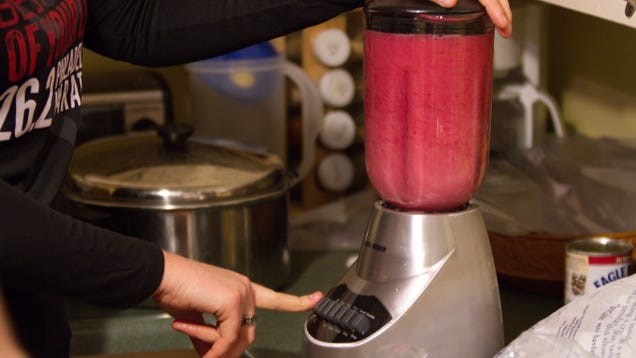
What's Your Favorite Affordable Blender?

by Shep McAllister on Kinja Co-Op, shared by Shep McAllister to Lifehacker

You probably don’t need a $400 Vitamix to make the occasional smoothie or margarita, but you still don’t want to spend money on something that can’t chop ice cubes, or that’s going to break after six months. So we want to know, what affordable blender do you recommend?

Read more...

13 May 11:31

How Drawing Can Help Improve Your Memory, According to Research

by Kristin Wong

If you need help jogging your memory, you might try your hand at drawing. A recent study found that we remember items better when we draw them rather than write them down.

Read more...

28 Apr 13:11

Prince William County community calendar - Washington Post


Prince William County community calendar
Washington Post
Bird Walk The guided tour will include a variety of habitats. Bring binoculars and cameras. 8 a.m. Merrimac Farm Stone House Visitor Center, North Parking Lot, 15014 Deepwood Lane, Nokesville. 703-499-4954. alliance@pwconserve.org. Free. Dale City ...

27 Apr 02:34

15 Types Of Frozen Vegetables Sold At Costco, Meijer Recalled Over Listeria Concerns

by Ashlee Kieler

For the second time this month packages of frozen vegetables sold at national retailers has been recalled for possible listeria contamination. CRF Frozen Foods issued a recall of fifteen frozen vegetable products sold at Costco and Meijer stores over the weekend. 

According to a notice posted with the Food and Drug Administration, the recall covers certain True Goodness by Meijer, Wellsley Farms Organic, Organic By Nature, ad Schwan’s frozen vegetables.

Washington-based CRF Frozen Foods says it is recalling the products as a precaution after determining they may be contaminated with Listeria monocytogenes. So far, no illnesses have been reported as a result of eating the vegetables.

The products were sold between Sept. 13, 2015 and Marc 16 in 35 states and Canada. Consumers are urged to take the packages back to the store where they were purchased for a refund or discard them.

Affected products can be identified by the UPC and Use By Date on the back of the plastic package:

Screen Shot 2016-04-25 at 8.31.23 AM

27 Apr 02:34

Burger King Will Sell Chicken Fries In Ring Form

by Laura Northrup

Have you ordered Burger King’s chicken fries and wished that they could be rounder? No, neither has anyone else, but the fast food chain is putting Chicken Fries Rings on the menu anyway as a limited-time item and a new variation on their Chicken Fries franchise. There have been flavor variations, including Fiery, Jalapeno, and Buffalo fries, but this marks the chain’s first variation on shape in the Chicken Fries line.

Burger_King_Chicken_Fries_Rings

The suggested price for chicken rings will be $2.89 for six pieces. IF you want to obey your chicken craving at a much lower price, Burger King is also reviving its 10 nuggets for $1.49 deal, perhaps reviving another round of the Nugget Wars with McDonald’s.

Burger King didn’t announce an end date for the either the discount nugget deal or for the run of Chicken Fries, but the latter will most likely end when the run out, or be extended indefinitely if they build the same kind of loyal following that the original Chicken Fries did.

At least with these fried rings, the chain doesn’t have a phrase it’s weirdly enamored with, like when they launched onion rings in 1974 by repeating the phrase “French fryin’ legion” in print advertisements, trying to make it a thing. It did not become a thing.

(Paxton Holley)

(via BurgerBusiness)

27 Apr 02:32

Trademark Office Takes Dispute Over “Scandalous” Trademarks To Supreme Court

by Chris Morran

While the law prohibits the U.S. Patent and Trademark Office from registering “immoral, deceptive, or scandalous” or disparaging trademarks, a federal appeals court recently ruled that this law is too restrictive and unconstitutional. Now the USPTO is asking the nation’s highest court to chime in on an issue that could impact countless rejected or cancelled trademarks, including that of the Washington Redskins.

This specific case involves the trademark for rock band The Slants. All members of the Oregon-based group are Asian-American and they are fully aware that their band name is also used as a pejorative. In fact, the band argues that the name was chosen, in part, to offer a multilayered play on race, culture, and music.

When the band tried to trademark the “Slants” name with the USPTO, the application was rejected because of the Lanham Act’s prohibition on registering “immoral, deceptive, or scandalous” marks, along with any that may “disparage… persons, living or dead, institutions, beliefs, or national symbols.”

Because rejecting or canceling a trademark application doesn’t prevent the applicant from using that mark — it just means there are no protections against someone else using the same name — courts had previously held that the Lanham Act was not overly restrictive of the First Amendment right to free expression.

But in Dec. 2015, the D.C. Circuit Court of Appeals ruled that the 70-year-old law was indeed an overreaching form of content-restriction on the part of the government. That, by deeming something offensive or disparaging — and thus unable to be trademarked — the government is expressing its disapproval of a name or term.

“When the government discriminates against speech because it disapproves of the message conveyed by the speech, it discriminates on the basis of viewpoint,” read the majority opinion in that case. “The legal significance of viewpoint discrimination is the same whether the government disapproves of the message or claims that some part of the populace will disapprove of the message.”

Last week, the USPTO petitioned [PDF] the U.S. Supreme Court, claiming that the Lanham Act’s disparagement provision “does not prohibit any speech, proscribe any conduct, or restrict the use of any trademark. Nor does it restrict a mark owner’s common-law trademark protections.”

Instead, contends the USPTO, the law merely directs the Trademark Office to deny the benefits of registration to such marks.

“The court of appeals disregarded this Court’s teaching that, when Congress does not restrict private speech or conduct, but simply offers federal benefits on terms that encourage private activity consonant with legislative policy, it has significant latitude to consider the content of speech in defining the terms on which the benefits will be provided,” explains the petition.

The Supremes are not obligated to take up this matter. If they choose to deny the petition, it means the appeals court ruling stands, giving other holders of canceled trademarks the opportunity to have their applications reconsidered.

Perhaps the most well-known of these disputes involves the Washington Redskins. The NFL team, which had successfully weathered previous attempts to have its trademark — viewed by many as offensive to Native Americans — canceled, but in 2014 the USPTO decided that the mark was in violation of the Lanham Act. That decision was upheld in 2015 by a U.S. District Court judge.

As mentioned above, the cancelation of the team’s trademark doesn’t mean it would have to change its name. It would just mean that anyone could use the name, including loudmouth little kids from Colorado:

27 Apr 02:26

Does Paying With Cash Increase Your Emotional Investment In A Purchase?

by Chris Morran

Say you go to the store with a friend and you each buy the same lamp for $150. The only difference is you pay in cash and your pal pays with plastic. The dollar amounts are the same, the purchased product is identical, but a new study finds that your levels of emotional investment in that lamp are likely different.

This is according to researchers from the University of Toronto, the University of North Carolina – Chapel Hill, and Duke University’s Fuqua School of Business, who recently published their findings in the Journal of Consumer Research.

Over the course of four tests, the researchers compared the post-transaction connections of shoppers who made purchases with debit or credit cards with those who went the cash/check route. In the end, they found that cash-payers had an increased emotional attachment to their purchase, that they were less likely to consider the alternatives they didn’t go with, and were more likely to be a repeat buyer.

For example, subjects of one study were each sold mugs for two dollars, with half directed to pay in cash while the other half were required to use credit or debit cards. When the subjects were later asked to sell those mugs back, the cash-payers asked for an average of $6.71 while those who paid using plastic only sought an average of $3.83.

Subjects in a second test were given either $5 in cash or a $5 voucher, then asked to donate those funds to one of three charities, none of which were known to the subjects in advance. They were subsequently questioned about their feelings of connection to their chosen charity and those who used cash expressed a slightly higher level of connection.

They were also asked about their sense of connection to the charities they didn’t choose. Here, the cash-users felt significantly less connected to the non-chosen alternatives than the plastic-users.

It’s worth noting that these subjects, unlike those in the mug test, were not using their own money, so it appears their sense of connection/disconnection may be related to the method of purchase.

“The form of payment clearly influences the subsequent value of the purchase to the consumer, even when the objective monetary cost remains constant,” conclude the study. “Using cash or check seems to increase the psychological ‘pain’ or sacrifice of the act and creates more affinity with the product or brand.”

25 Apr 20:39

Expand Your Board Game Collection With Today's Amazon Gold Box

by Shep McAllister

If your board game collection has been gathering dust, you can freshen it up with over 70 discounted strategy games on sale in today’s Amazon Gold Box.

Read more...

25 Apr 20:39

Amazon's Running a Huge Womens' Wear-To-Work Apparel Sale, Today Only

by Shep McAllister

Today only, Amazon’s running a huge sale on womens’ work apparel, ranging from socks to slacks to blazers to dresses. Prices start at under $10, so head over to Amazon before the best stuff starts selling out.

Read more...

25 Apr 20:38

Today's Best Deals: Board Games, Pressure Cooker, Hard Drive Enclosures, and More

by Shep McAllister
25 Apr 20:38

These 100+ Restaurants Will Give You Free Food On Your Birthday

by Eric Ravenscraft on Lifehacker, shared by Shane Roberts to Deals

Who doesn’t like free food, especially on your birthday? Of course, it’s hard to know just what place is gonna have the best goods. Unless you check out this list, of course.

Read more...

24 Apr 17:29

The Best Type of Fire to Build in Your Grill for What You're Cooking

by Alan Henry

If you’re a grilling newbie, you probably use the “toss in charcoal, lighter fluid, light it up” method, but better grilling comes with learning to bank coals and the benefits of direct and indirect heat. This guide from America’s Test Kitchen walks you through—and how to set up your grill accordingly.

Read more...

24 Apr 17:28

Subscription Snack Showdown: Graze vs. Naturebox

by Alan Henry

After a nice long Green Week, let’s talk about snacks. Sure, you can order snacks from anywhere and have them delivered to your door, but two services make the process of getting healthy, tasty choices delivered regularly so easy it’s almost magical: Graze and Naturebox. Let’s compare the two.

Read more...

24 Apr 17:12

Black Lives Matter gave him fame, but Baltimore isn’t biting

by wtopstaff

BALTIMORE (AP) — DeRay Mckesson, the Black Lives Matter activist turned mayoral candidate, is door-knocking on the streets of Charles Village. This is not the Baltimore of “The Wire,” but rather a tidy neighborhood of pastel townhomes in the shadow of Johns Hopkins University.

For two blocks, nobody answers a rap. Then Ralph Moore, himself an activist and a lifelong resident, rushes up to Mckesson to shake his hand — and to break the bad news: Moore is voting for Sheila Dixon, the former mayor who resigned amid ethics charges and is running again. She’s one of the front-runners in polls ahead of Tuesday’s Democratic primary — the de facto election in this majority African-American city.

“The problem is people don’t know you here,” Moore tells Mckesson, who has held court with President Barack Obama, been endorsed by actress Susan Sarandon and has 365,000-plus Twitter followers, including Beyonce. “I saw you in Stephen Colbert’s chair when I was channel surfing, but I don’t know you.”

Mckesson is one of the most recognizable faces to emerge from the Black Lives Matter movement — a former educator who built a national following after he left his then-home and job in Minneapolis in August 2014 for Ferguson, Missouri, to document the rising anger over race relations after the police shooting of Michael Brown.

But before Black Lives Matter birthed @DeRay, he was a self-proclaimed “son of Baltimore,” born and raised in this city still striving to move past its own racial strife a year after Freddie Gray died from an injury suffered in police custody and riots erupted.

The path from activist to politician is one many black leaders have navigated successfully, but Mckesson is struggling. He entered the mayoral race late, he’s deep down in the polls, his skeptics are plentiful, and observers have been left asking: What, then, is the next step for him, and for the movement that helped launch him?

“He’s seeking his next big stage, and he’s not going to be the only one doing it,” said Lester Spence, a political science professor at Johns Hopkins and a Baltimore resident.

Mckesson’s campaign comes as both Baltimore and the Black Lives Matter movement wrestle with growing pains.

Gray’s death further inflamed the movement, an amorphous and decidedly leaderless undertaking born out of a series of deaths of African-Americans at the hands of police officers. The crusade took off on social media as a hashtag and spurred street demonstrations, and has remained in the spotlight this presidential election season, with activists disrupting candidate rallies, demanding to be seen and heard.

Yet some within the movement have shunned more traditional paths to change. One Black Lives Matter activist turned down an invitation to meet at the White House with Obama and other civil rights leaders, condemning the gathering as a photo opportunity. Mckesson attended.

Kayla Reed, a 26-year-old activist in St. Louis who emerged from the protests in Ferguson, said organizers are becoming more open to conventional tactics — and Mckesson’s campaign reflects that.

“A lot of times, we’re not seeing justice because of the way the laws are written, so it only makes sense to go after the lawmakers as part of the larger strategy,” she said.

The movement has already seen victories on the policy front. Using social media, campaign events, voter registration drives, fundraisers, and neighborhood canvassing, Black Lives Matter activists worked to bring about change in several high-profile races. Among them: the election of black city council members in Ferguson, the ouster of the Illinois district attorney who waited more than a year to bring charges against a white Chicago police officer who shot a black teenager 16 times, and the primary loss for the Ohio prosecutor who declined to charge the officer who killed 12-year-old Tamir Rice.

“Municipal elections matter,” Reed said. “To achieve long-term change, you need policy and protest.”

It’s that kind of thinking that drove Mckesson to seek office. As he said to one potential voter in a Facebook chat recently: “I want to be in a position to do work that will change people’s lives. What we did in the last 18 months was help change the conversation around the country, knowing that conversation change leads to actual change.”

Mckesson’s candidacy is in line with a tradition of black organizers who transitioned to politics. Martin Luther King Jr. lieutenants Andrew Young, Jesse Jackson and John Lewis went on to become mayor, run for president, and get elected to Congress after the civil rights movement. Barack Obama was a community organizer on Chicago’s Southside before running for public office, first as a state senator, then a U.S. senator before his historic presidential election eight years ago.

Mckesson was born to drug-addicted parents in West Baltimore, a story he readily shares while campaigning. His father got clean and moved him to Catonsville, a small, predominantly white suburb. After high school, Mckesson left for Bowdoin College, a liberal arts school in Maine. He was elected president of the student body, and graduated with a degree in government and legal studies. Even then, he recognized the need to step up to help create change.

“The people who could do the most and could be the most influential just don’t get involved,” he told the college paper.

But instead of pursuing government, Mckesson went into education. He taught sixth grade in Brooklyn through Teach for America, which places college graduates in poor districts for two-year commitments. He later returned to Baltimore and launched an after-school program before joining the public school system in an administrative job. He left again in 2013, this time for the top human resources job with the Minneapolis school system. When Brown was shot, Mckesson drove 500 miles to Ferguson to join the protest.

Being on the streets, he said, “woke me up.” And so Mckesson returned to Baltimore, with the promise of a spare room at a family friend’s home and a plan to run for mayor. Hours before the Feb. 3 deadline, Mckesson filed his paperwork, the last of 13 Democrats to declare his candidacy.

On his agenda: plans to establish a system of community first-responders to de-escalate violence, and hire people who have been affected by police brutality to train officers on racism and community engagement.

“People want hope. They want transparency … a mayor who has a plan, who understands the issues deeply,” Mckesson said in an interview.

On the ground, however, his efforts have met with resistance and more than a little skepticism, especially from some of Baltimore’s longtime activists, who had been organizing around social justice issues for years before Black Lives Matter rose into the national consciousness. They criticize him for not engaging with them, and question whether his campaign is merely a ploy to grow his “brand.”

“Who sent you and who will you serve?” Jamye Wooten, founder and publisher of an online forum linking social justice issues and faith communities, asked in a blog post. “Here you earn your stripes by serving and being in the community when there are no cameras.”

Spence, of Johns Hopkins, said that in a city like Baltimore, with its deep roots and personal connections, you don’t “earn your stripes on Twitter or on the protest line.”

Mckesson has worked to shed his star status during the race. On the trail, he’s rarely talked about Black Lives Matter or his role as a protester except when explaining his social justice awakening.

At one recent house party, a dozen people gathered in a tidy sun-filled living room to meet Mckesson. The event was streamed live on Facebook, too. Among the first questions to pop up on the site: Why do you think you’ve gotten so much pushback about your candidacy?

“There are people who believe that because I haven’t done the work the way you’ve done the work that the work isn’t valuable, and I just don’t believe that,” he responded. “And there are people who are frustrated that I wasn’t focused on police violence before Mike Brown’s death. I simply didn’t know.”

Later that day, Mckesson headed for a second party in a neighborhood where leafy trees dot the streets and the homes are large and lawns pristine. He’d been invited by an old friend — the man who recruited him to Bowdoin years ago. This crowd was older and almost entirely white. Bottles of sparkling water and individually wrapped chocolates sat on a coffee table. A framed antique map of Maryland hung on the wall of a den.

Mckesson spoke for nearly two hours. Leo Horrigan, who works for a Johns Hopkins program focused on food systems, said Mckesson seemed sincere, with great ideas — but he’s not sure that’s enough.

“It’s obviously not a frivolous campaign,” said Horrigan, who remained undecided. “I do believe the old guard can be overthrown, but it’s a long-term project.”

Indeed, most in this city know Mckesson won’t win the primary, save for some miracle come-behind victory. And the candidate himself prefers not to comment on his prospects. He is just as evasive about his future beyond the race, leaving both admirers and skeptics to wonder about his end goal.

After listening to Mckesson at the second house party, business owner Carol Siems said she hopes “if he doesn’t win, that he stays in Baltimore and does something great.”

University of Maryland sociology professor Rashawn Ray said candidates like Mckesson don’t always enter competitive races to win, but to gain traction for future political roles.

“I would be surprised if DeRay got into the race thinking he would win,” Ray said. “Sometimes, the people who lose garner a lot of support — and the people who win think about how to incorporate them.”

The post Black Lives Matter gave him fame, but Baltimore isn’t biting appeared first on WTOP.

24 Apr 15:04

Judge: Building owner can charge rent based on gold prices

by wtopstaff

COLUMBUS, Ohio (AP) — A downtown office building is worth its weight in gold, according to a federal judge who upheld a nearly century-old lease that tied rent to the current price of the metal.

Last month’s ruling means rent paid by the company leasing the Commerce Building from a group of five property owners could jump from $6,000 annually to more than $300,000.

At issue is a so-called “gold clause” included in the original 1919 lease. The provision, common at the time, linked rent to the price of gold to account for inflation, similar to today’s consumer price index.

“This really is a vindication of property rights,” said Washington, D.C.-based attorney Peter Patterson, who represents the five owners.

In 1919, the value of gold was $20.67 per ounce, compared to more than $1,200 per ounce today. The property owners have been charging a yearly rent of $6,000 since that original lease, which was assumed by Commonwealth Investments in 1990.

That deal, Patterson argued in a 2014 lawsuit, has resulted in a windfall for the group, since their more than 40 tenants are charged $900,000 annually.

In 1933, in the midst of the Depression, the gold clauses were prohibited as part of efforts to reform the monetary system, which also included a ban on private ownership of gold from 1934 until 1973.

A 1977 law once again permitted gold clauses in new leasing agreements. That set up debates over interpretations of agreements when new parties entered them and whether an original clause could still be enforced.

Commonwealth Investments, the company paying the $6,000 rent, took control of the downtown building in 1990. It unsuccessfully argued they should receive an entirely new lease agreement, invalidating the gold clause under the 1977 law.

In March, federal Judge George Smith sided with the five property owners, but said the new annual lease payment of $348,300 would run only from 2014, when the lawsuit was filed, until 2018, when a new 99-year lease takes effect.

However, that new lease contains elements of the old one, including the gold clause, meaning future rents payments would reflect current market rates.

A message was left for the attorney representing Commonwealth Investments. The decision is likely to be appealed.

Courts have ruled in favor of other gold clauses elsewhere.

In 1990, a federal appeals court upheld the gold clause in the commercial lease of a building in downtown Seattle, which included an original rent of $8,333.

In 1999, a Carmel, Indiana, insurance company had to pay a developer’s heirs about 8,000 ounces of gold in back rent for the land under its Des Moines, Iowa, office building.

An appeals court ruling upheld a similar 1912 gold clause for a downtown Cleveland building in 2008, bumping the rent from $35,000 to about $1.5 million.

___

Andrew Welsh-Huggins can be reached on Twitter at https://twitter.com/awhcolumbus. His work can be found at http://bigstory.ap.org/content/andrew-welsh-huggins

The post Judge: Building owner can charge rent based on gold prices appeared first on WTOP.

24 Apr 14:25

The Latest: 5 victims shot dead in Georgia

by wtopstaff

APPLING, Ga. (AP) — The Latest on two shootings in Georgia that left five people dead and suspect Wayne Anthony Hawes who was found dead of an apparent self-inflicted gunshot wound. (all times local):

12:10 p.m.

The daughter of Georgia man suspected of shooting five people to death before killing himself says her father was a “ticking time bomb.”

Lauren Hawes told The Associated Press Saturday that she and her 1-year-old daughter hid in a neighbor’s house while her father, Wayne Anthony Hawes, went on a shooting rampage that killed five people, including her grandmother and cousin.

Lauren Hawes says her 50-year-old father had threatened to kill her grandmother and mother a day before the fatal shootings.

Lauren Hawes says her father was upset after her mother ended their relationship. She says her father kicked both her and her daughter out of his home two about weeks ago.

Columbia County Sheriff Captain Andy Shedd said in a statement that the body the Hawes was recovered Saturday by authorities in his northeastern Georgia home.

___

5:30 a.m.

A man who shot and killed five people during two separate shootings as part of a domestic dispute in Georgia was found dead in his home early Saturday of an apparent self-inflicted gunshot wound, authorities said.

The body of shooting suspect Wayne Anthony Hawes, 50, was recovered Saturday by authorities in his northeastern Georgia home, Columbia County Sheriff Captain Andy Shedd said in a statement. Shedd said the Friday night shootings stem from a domestic dispute that left three men and two women dead.

The victims found at the home on Johnson Drive were identified as Roosevelt Burns, 75, Rheva Mae Dent, 85, and Kelia Clark, 31. Victims found at the Washington Road scene were identified as Lizzy Williams, 59, and Shelly Williams, 62.

Hawes knew the victims and the shootings stemmed from a domestic incident, Shedd said.

The post The Latest: 5 victims shot dead in Georgia appeared first on WTOP.

24 Apr 14:25

Alaska aquarium replaces fossil fuel with seawater system

by wtopstaff

ANCHORAGE, Alaska (AP) — Thousands of people visit the Alaska SeaLife Center in Seward for a look at Steller sea lions or harlequin ducks.

What’s in the basement is almost as interesting.

The SeaLife Center, which combines aquariums with research and wildlife rescue, announced Friday that 98 percent of its heating and cooling requirements are no longer filled by fossil fuel. The center is using alternative energy: heat extracted from ocean water in Resurrection Bay.

The heat exchange system is saving money, cutting greenhouse gas emissions and fulfilling the center’s mission of sharing scientific knowledge to promote stewardship of Alaska’s marine resources, said Darryl Schaefermeyer, special projects coordinator. It demonstrates that seawater is a potential heating source for Alaska, which has more coastline than the rest of the nation put together.

“Simple payback is estimated to be 13 years at the estimated annual savings on electricity of $48,000,” he said. “Since starting the system, we have averaged just over $4,000 savings on electrical energy cost per month.”

It’s used with a seawater system the SeaLife Center installed in 2012.

The new system was designed by Andy Baker of YourCleanEnergy, an Anchorage consulting firm. It uses equipment manufactured by a Japanese firm, Mayekawa, and relies on a complex system of pipes to heat some parts of the building and cool others.

“The trick is to getting all those loops to transfer heat at the correct rate,” Baker said.

Resurrection Bay, at more than 900 feet deep, absorbs solar heat over summer months. The water warms through late October, and below the surface, retains enormous amounts of heat throughout winter.

Heat exchangers are devices that transfer heat from one loop of liquid to another without mixing the liquids.

The center’s new system draws seawater at 42 degrees or higher from 300 feet deep and pumps it into a heat exchanger with non-corrosive titanium plates, where it heats a loop of water and 10 percent glycol, an antifreeze.

The warmed water and glycol loop is passed alongside a loop of liquid carbon dioxide, causing the liquid CO2 to boil into a vapor.

A compressor squeezes the vapor, increasing its pressure up to 2,000 psi, which raises the vapor temperature dramatically from 100 to 194 degrees.

The heated CO2 vapor is exposed to yet another loop: the water that circulates through the SeaLife Center’s building. It can heat 100-degree water to 194 degrees. The system blends 194-degree water with cooler water to send 160-degree water circulating through conventional baseboard heaters in office and lab space.

The system has been operating since Jan. 21. On Seward’s coldest nights, about 2 percent of the time, the center had to turn on an electrical boiler for more heat.

The first seawater system, which cost about $1 million, came on line in December 2012. Instead of carbon dioxide, it uses a synthetic refrigerant that can be heated to about 130 degrees, Baker said. It’s used to heat the center’s air-handling units and outdoor pavement and to preheat hot water.

Grants helped pay for the new system, including a $537,640 emerging energy technology grant from the Alaska Energy Authority. The Rasmusson Foundation kicked in $50,000, and the center spent $68,000 on in-house labor.

Besides cutting its heating bill by more than half, the center estimates it has reduced its annual carbon emissions by 1.24 million pounds.

Baker anticipates the technology will expand to other large energy users. The cost likely will come down as competitors emerge.

“They’re not ready to stick into a home or small business,” Baker said of the seawater heat exchange system. “They’re going to be a little too expensive and too complex. Eventually it will get there.”

The post Alaska aquarium replaces fossil fuel with seawater system appeared first on WTOP.

24 Apr 14:20

Police: Cuffed kidnap, carjack suspect fatally shoots self

by wtopstaff

BATON ROUGE, La. (AP) — A handcuffed man shot and killed himself at a Baton Rouge hospital early Saturday after carjacking an acquaintance in New Orleans and kidnapping a second woman at gunpoint, police said.

Garry Saxton, 29, of New Orleans, stole a car from a woman who picked him up to drive him to an airport late Friday night, said New Orleans Police Department spokesman Aaron Looney. The woman told police that Saxton, a relative of her boyfriend, fled in her sport utility vehicle after she escaped to a nearby home.

Saxton, also known as Gary Zarders, also is suspected of kidnapping a second woman in New Orleans before driving to Baton Rouge.

Saxton arrived at Baton Rouge General Medical Center with a pregnant woman who accused him of kidnapping her, according to Baton Rouge Police Sgt. Don Coppola. The woman was complaining of complications from her pregnancy, Coppola said.

Coppola said Saxton was handcuffed behind his back when he fatally shot himself with a gun that he apparently hid in a seat before hospital security searched and detained him.

“He was sitting in a chair. He was in a waiting area” with security guards but nobody else when he shot himself around 5 a.m., Coppola said.

Coppola said the shooting occurred before Baton Rouge police officers arrived at the hospital.

The post Police: Cuffed kidnap, carjack suspect fatally shoots self appeared first on WTOP.

24 Apr 14:18

Video shows Chicago officer slamming woman who had hands up

by wtopstaff

CHICAGO (AP) — Newly released dashcam video shows a Chicago police officer slamming an unarmed robbery suspect to the ground after she got out of a car with her hands up.

The video was released Friday by the Chicago Police Department, whose new chief is trying to increase openness and rebuild trust after several cases of excessive force, particular against African Americans.

Two of the officers involved in the woman’s 2011 arrest have been stripped of their police powers pending a new review.

The city’s Police Department has been under intense scrutiny over excessive force cases and is under investigation by the U.S. Justice Department. The department has promised to implement some reforms recommended by a task force set up by Mayor Rahm Emanuel. The new police chief appointed to help turn the department around, Superintendent Eddie Johnson, has begun reviewing past use-of-force investigations, including the one involving the 2011 arrest caught on a patrol car dashboard camera.

“After reviewing video footage from the investigation, the superintendent found that the officers’ actions in apprehending one of the offenders — who is now serving time in jail — concerning,” said a police statement accompanying the release of the video and police reports.

Tiffani Jacobs, 34, was driving a getaway car after her boyfriend robbed a McDonald’s at gunpoint. During a chase, she sped toward an officer who was on foot. That officer opened fire, hitting her twice in the chest. She continued to flee until other officers caught up with the car.

The video shows Jacobs getting out of her car with her hands up. An officer approaches with his gun drawn and, using his free hand, grips her by the collar and slams her to the ground on her stomach.

Officers then shocked her several times with stun guns because, they said, she ignored their commands to show her hands, which were pinned under her body. Jacobs told investigators the officers also used a Taser on her after she was handcuffed.

She was hospitalized and treated for two gunshot wounds to the chest.

The investigation by the Independent Police Review Authority found the officer who opened fire was justified in doing so because his life was in danger.

The officers taken off duty during a new review were the one who slammed her to the ground and one of the officers who discharged his Taser.

Jacobs was convicted of armed robbery and is serving a 12-year prison sentence.

The post Video shows Chicago officer slamming woman who had hands up appeared first on WTOP.

24 Apr 14:13

Hundreds walk pooches to protest dog-walking limits

by wtopstaff

SAN FRANCISCO (AP) — Hundreds of dog owners walked their poodles, corgis, dachshunds and many mutts to protest the proposed limits on dog-walking in San Francisco’s Golden Gate National Recreation Area.

The protesters on Saturday walked their four-legged pooches, many wearing red bandanas, along Crissy Field while holding signs that read “Unleash Our Land!” and “Put Feds On A Leash!”

Andrea Buffa, an event organizer and member of Save Our Recreation, said protesters are calling on the National Park Service to keep dog walking in the open-space areas where it has been allowed for decades, including Ft. Funston and Ocean Beach in San Francisco, Muir Beach in Marin County and Rancho Corral de Tierra on the Peninsula.

“We are undaunted and more determined than ever after years of seeking a balanced plan. If the Park Service thinks we’re going to just roll over and play dead, they have another thing coming,” Buffa said.

In February, the National Park Service released its near-final dog rule, which limits walking dogs off-leash in the recreation by up to 90 percent and on-leash dog walking by up to 45 percent.

Park officials say their plan is needed to balance the needs of different park users.

But participants in the so-called Mighty Mutt March disagree.

Laura Pandapas lives near Muir Beach in Marin, where she walks her standard poodle, Shugie. The new rules would force her to either use a 6-foot leash or drive her dog to a beach farther away and with rougher surf.

The march was a much-needed opportunity for the people to come together to oppose the new plan, Pandapas said. “We’ve all felt pretty isolated trying to fight this in our individual houses,” she told the San Francisco Chronicle (http://bit.ly/1Ua4Xnd).

The post Hundreds walk pooches to protest dog-walking limits appeared first on WTOP.

24 Apr 14:09

Ohio attorney general: Slayings of 8 ‘pre-planned execution’

by wtopstaff

COLUMBUS, Ohio (AP) — The slayings of eight family members in rural southern Ohio were sophisticated, planned executions, authorities said Sunday, as they also revealed that several marijuana-growing operations were found at the crime scenes.

Investigators said at a news conference that it’s unclear what, if any, role the marijuana growing had in Friday’s killings at four homes near Piketon. Marijuana, both recreational and medicinal, is illegal in the state.

They also told residents they are safe but to arm themselves if they’re fearful.

The killings were “a sophisticated operation,” Attorney General Mike DeWine said at a news conference in the small community that has been on edge since seven adults and one teenage boy were found shot in the head. Authorities remained tight-lipped Sunday about details of the investigation, any suspects or motives for the crime.

Pike County Sheriff Charles Reader said that in his 20 years in law enforcement, he never interacted with the Rhoden family “in a criminal nature.” He said it was clear the family was targeted, however, and he’s told the victims’ relatives to arm themselves.

Reader said he didn’t believe safety was an issue for others, but he said: “If you are fearful, arm yourself.”

Authorities have been scrambling to determine who targeted the clan and why. Investigators have interviewed between 50 and 60 people in hopes of finding leads, and a team of 38 people is combing wooded areas around the shooting scenes to ensure no evidence was missed, authorities said.

DeWine said the state’s crime lab was looking at 18 pieces of evidence from a DNA and ballistic standpoint, and five search warrants have been executed. Autopsies were expected to be completed Monday.

“This was very methodical. This was well planned. This was not something that just happened,” said Reader, noting most victims were targeted while they were sleeping.

The victims were identified Saturday as 40-year-old Christopher Rhoden Sr.; his 16-year-old son, Christopher Rhoden Jr.; 44-year-old Kenneth Rhoden; 38-year-old Gary Rhoden; 37-year-old Dana Rhoden; 20-year-old Clarence “Frankie” Rhoden; 20-year-old Hannah Gilley; and 19-year-old Hanna Rhoden.

Hanna Rhoden was in bed with her newborn baby nearby, authorities said. The infant was 4 or 5 days old. The newborn, Hannah Gilley’s 6-month-old baby, and one other small child were not hurt.

Since the slayings, authorities have refused to discuss many details of the crime, a potential motive, weapons, or the search for the assailant or assailants.

“We don’t know whether it was one or more people involved in this,” DeWine said Sunday.

Maggie Owens, a cook at the town’s Riverside Restaurant, said she’s counts herself among those who feel they’re on eggshells.

“I know a lot of people are just scared,” Owens, 39, said in a phone interview on Sunday. “You don’t hear about stuff like that around here.”

She said her son was friends with the younger Christopher Rhoden. She described Dana Rhoden as a woman with “a heart of gold” who gave her clothes and money when her home burned down last year.

More than 100 tips have been given to investigators, who’ve set up a number for people to call as police seek information about the crimes. A Cincinnati-area businessman also put up a $25,000 reward for details leading to the capture and conviction of the killer or killers.

Robin Waddell, who owns the Big Bear Lake Family Resort just south of Piketon, said Christopher Rhoden often did work for him as a carpenter and helped out with his excavation business. He said Rhoden was a nice guy whose kids sometimes visited him while he was working.

“It’s a large family,” Waddell said. “There’s a lot of them and they’ve been in this community for generations. So this is affecting a lot of people.”

Kendra Jordan, 20, said she often worked nights at a nursing home with Hanna Rhoden and described her as outgoing, funny and always smiling.

“If you were having a bad day, she’d be the first one to come up to you to question you about what was going on,” Jordan said. “She was amazing.”

The exact timing of the shootings remains unclear. Authorities got the first 911 call shortly before 8 a.m. Friday; the second came several hours later from another location.

Two of the crime scenes are within walking distance of each other along a sparsely populated, winding road that leads into wooded hills from a rural highway. The third residence is more than a mile away, and the fourth home is on a different road, at least a 10-minute drive away.

Todd Beekman, who owns an outdoors shop a few miles from the crime scenes, said at least one customer came in to stock up on ammunition after hearing about the shootings. But Beekman and others hanging out there midday Saturday said they weren’t concerned for their own safety because it’s an area where residents know and look out for each other.

“The word spread pretty fast, as it does in any rural area,” Beekman said. “Everybody’s kind of their own brother’s keeper down here.”

___

Associated Press writers Kantele Franko in Piketon, Albert Stumm in Philadelphia and Lisa Cornwell in Cincinnati contributed to this report.

The post Ohio attorney general: Slayings of 8 ‘pre-planned execution’ appeared first on WTOP.

24 Apr 14:08

AP PHOTOS: Solar-powered plane finishes flight over Pacific

by wtopstaff

MOUNTAIN VIEW, Calif. (AP) — That wasn’t just any plane on a fly-by over the Golden Gate Bridge.

As spectators watched the thin solar-powered aircraft with extra wide wings, it was nearing the end of the trans-Pacific leg of its around-the-world sojourn.

The global journey of Solar Impulse 2 began in Abu Dhabi in March 2015. It faced delays along the way, before attempting the most dangerous part of its sojourn: the flight over the Pacific Ocean’s vast expanses, where there are few places to make an emergency landing.

Pilot Bertrand Piccard made the 62-hour, nonstop solo flight without fuel. Now three more stops in the United States remain.

The plane will then attempt to traverse the Atlantic Ocean on the last leg of its trip.

The post AP PHOTOS: Solar-powered plane finishes flight over Pacific appeared first on WTOP.

24 Apr 13:57

Confederate memorials in Va. can be pulled by local governments

by Max Smith

WASHINGTON — A push to block any changes to Confederate monuments or memorials fell short in Virginia’s General Assembly this week after some heated debate.

Republicans who supported the bill vetoed by Gov. Terry McAuliffe say it clarified that all war monuments should be protected.

“I do find it inappropriate and especially ungrateful to tear down and remove monuments [and] memorials in honor of Americans who served the cause of their time due to continuous shifting political whims of today or in the future,” the bill’s sponsor, Del. Charles Poindexter, argued before the House of Delegates voted 68-32 to override the veto.

“History is what it is, and history is what it was. There’s good in it, there’s bad in it and there’s ugly in history,” he said.

The Senate, however, failed to override the veto with a 21-18 party-line vote.

“Let’s be real … we’re not talking about the Spanish-American War, we’re not talking about the Korean War, World War I, World War II, Vietnam, or any other war, what we’re talking about is the Civil War,” said Sen. Mamie Locke.

Locke, who is black, said the bill would stop important and legitimate discussions on the local level about whether Confederate symbols and memorials should be removed or get additional explanation.

“It seems odd to me that when we talk about erecting monuments to memorialize the contributions of others who look like me, or Native Americans, or women, we seem to run into obstacles and walls from the very people who want this legislation,” she said.

Sen. Bill Stanley, a Republican, says the bill would have been an important way to ensure those killed in battle are properly honored.

“This merely clarifies that all war memorials, all those that celebrate and solemnize those that give their fullest measure, their last and greatest breath for this country and for us that we remember them and we preserve those monuments that remember them lest we soon forget,” he said.

“These are monuments of history: good history, bad history, whether we like it or not.”

In the House, Poindexter disputed the impact the bill would have had on local authority.

“I would argue that these are state as well as American historical resources,” that help visitors and Virginians learn “the long saga of the Commonwealth,” he said.

Del. Mark Levine, a Democrat who lives in Old Town Alexandria, says he changed his vote to vote against the veto override because of plaques and monuments that fail to tell the full story.

“I don’t believe that any monuments including Confederate monuments should be disturbed. We have a beautiful statue in Alexandria, in Old Town, that is in memory of the Confederate soldiers, but the governor’s veto points out that sometimes we need to explain things, sometimes we need interpretations,” he said.

“We need at the Hotel Monaco another sign to tell the full story of what happened at the Marshall House so that only the Confederate side, which I think should be left alone, should not stand alone.”

The plaque there tells of a man who died defending his property. That man was shot by a Union soldier after he killed a second Union soldier who had run in to take down a Confederate flag. They were among the first deaths of the Civil War.

A work group is scheduled to come back later this year with recommendations for the state government on how to handle the controversy surrounding Confederate issues.

The post Confederate memorials in Va. can be pulled by local governments appeared first on WTOP.

23 Apr 23:52

Top 10 Myths and Misconceptions About Sleep

by Melanie Pinola

You’d think the human race would have sleep down to a science by now, but many of us are still sleeping poorly (and so we need top 10 guides to getting better sleep ). Part of the problem is we have outdated information and beliefs about this all-important health need. Let’s set the facts straight. Here are 10 things you might have been told about sleep but aren’t completely true.

Read more...

23 Apr 17:44

How to Feed a Horse

Feeding a horse can be confusing. There are a large number of different feeds available and no two horses are alike. The amount and type of feed given will depend on the horse’s type, age, weight, health, workload, the climate and what is locally available. Keep reading to learn how to feed a horse.

EditSteps

EditUnderstanding a Horse’s Nutritional Needs

  1. Provide your horse with plenty of fresh, clean water. Horses require between 5-15 gallons of water per day. If possible, make sure that your horse has access to water at all times. Otherwise, make sure that you water your horse at least twice per day and allow several minutes for your horse to drink.[1]
    Feed a Horse Step 1 Version 2.jpg
    • Make sure that the water in your horse’s trough is clean and not frozen. Keep the trough clean as well by hosing it out every day.[2]
  2. Provide your horse with plenty of structural carbohydrates. Structural carbohydrates, like hay and grass, are essential to a horse’s diet.[3] Horses eat large quantities of hay and grass as their main source of food. In fact, horses should eat about 15-20 pounds or 1-2% of their body weight in hay every day, so make sure that your horse always has plenty of hay to chew on.[4]
    Feed a Horse Step 2 Version 2.jpg
    • Make sure that the hay you feed your horse is free of mold and dust.[5]
  3. Provide your horse with nonstructural carbohydrates in moderation. Nonstructural carbohydrates, like oats, corn, and barley, are also essential to a horse’s nutrition. Provide small amounts of grain to your horse throughout the day. Every day, horses can also have ½ pound of grain per 100 pounds of body weight. Feed grain to your horse in two or three evenly spaced feedings during the day.[6]
    Feed a Horse Step 3 Version 2.jpg
    • Make sure to measure the portions that you feed your horse to make sure that you are giving her the correct amount.[7]
    • If the weather is hot, feed grain to your horse during the cooler hours of the day, such as early in the morning and later in the evening.
  4. Supplement your horse’s diet with feed to provide protein, fat, vitamins, and minerals. Although your horse will get most of its calories from hay and grass, you should feed your horse some fortified feed each day to help meet any nutritional gaps. Protein, fat, vitamins, and minerals are important parts of your horse’s nutrition, but they are not required in large amounts.[8]
    Feed a Horse Step 4 Version 2.jpg
  5. Supplement as needed. If you think your horse is not getting all of the necessary vitamins and minerals from feed, then you can supplement with special vitamins for horses. Just be careful not to overload your horse with too many vitamins. An excess of vitamins can cause problems just like a deficiency of vitamins can.[9]
    Feed a Horse Step 5 Version 2.jpg
  6. Give treats in moderation. Giving treats to your horse when you want to reward her is a great way to bond with your horse as well. Just make sure that you do not overdo it with treats or your horse may learn to expect them or may even try to root around in your clothes for treats.[10]
    Feed a Horse Step 6 Version 2.jpg
    • Fresh apples, carrots, green beans, watermelon rinds, and celery make great treats for your horse.[11]

EditDetermining Your Horse’s Feeding Needs

  1. Weigh your horse by using a weight tape or weight bridge (equine scales). A weight bridge is far more accurate and should be used instead of a tape if available. Condition scoring is the best form of recording weight changes. Weigh your horse every 2 weeks and plot the changes on a graph.
    Feed a Horse Step 7 Version 2.jpg
  2. Calculate the total daily requirements (forage and concentrate). The requirement is between 1.5 to 3% of its body weight, averaging at 2.5%. Use the following equation to determine how much you should feed your horse each day: BodyWeight/100x2.5=Total Daily Ration
    Feed a Horse Step 8 Version 2.jpg
  3. Determine what type of weight gain you want for your horse. Do you want to keep your horse at the level it is already at (maintenance diet)? Do you want to reduce the horse’s weight because of health issues (reduction diet)? Or, do you want to increase your horse’s body weight due to a past illness or because your horse is underweight?
    Feed a Horse Step 9 Version 2.jpg
    • The best strategy to use when developing a feeding plan for your horse is to feed based on the desired weight, rather than the current weight. e.g. A horse is underweight and weighs 300kg. If the horse’s ideal weight is 400kg, don't feed 2.5% of 300kg. Feed 2.5% of 400kg.
    • Use the same strategy for an overweight horse. Feed based on the desired weight, and not current, meaning you will actually be feeding less that the overweight amount, meaning, a reduction of waistline for your horse.
  4. Control the energy level in forage by feeding different types or a mix of types. Different forage have different amounts of DE (digestible energy) this depends on the type of forage (grass, haylage, hay, oat straw) and the type of grass (rye, timothy, cocksfoot or orchard grass). For grazing the time of year also affect the DE. Spring grass has a high level while winter grazing is very poor. For preserved grass the “cut” affects the DE. Early cut grass is higher in DE than late cut grass. Oat Straw is very low in DE. The best way to find out the nutritious in your forage is to have it analyzed.
    Feed a Horse Step 10 Version 2.jpg
  5. Choose a type of energy to suit your horse. Some horses are prone to heating up (becoming over excited and spooky). Feeding these horses slow-release energy (fiber and oil) will help, this is the safest form of energy and causes the least amount of health problems. Other horses are lazy and lack “sparkle”. Feeding fast-release energy (starch found in cereals/grains like oats and barley) can help. Starch has been connected with a number of health problems and must be restricted for some horses.
    Feed a Horse Step 11 Version 2.jpg
  6. Check it with a professional if you are unsure about how much to feed your horse. If you are not sure how much you should be feeding your horse, talk to your horse’s veterinarian. Some feed manufacturers also have help lines that you can use to get feeding advice for your horse.
    Feed a Horse Step 12 Version 2.jpg

EditAdjusting Your Horse's Feeding Routine

  1. Adjust your horse’s food intake as needed. Your horse’s nutritional needs will vary according to the amount of fresh grass she has consumed while out to pasture and the level of activity she has had. Evaluate your horse’s needs every day to determine whether to subtract or add from her regular feeding amounts.[12]
    Feed a Horse Step 13 Version 2.jpg
    • If your horse has been out to pasture all day and has been eating lots of grass, she will not require as much hay.
    • If your horse has had a hard workday with lots of riding, then you will need to provide more food to help replenish the extra calories she burned.
  2. Schedule feedings for an hour before or after you have ridden your horse. Don’t feed your horse right before or right after she has finished doing something strenuous because blood flow will be diverted away from her organs and that can interfere with digestion. Plan feedings around your horse’s scheduled activity.[13]
    Feed a Horse Step 14.jpg
    • If your horse will be doing something extra strenuous, schedule her feeding for three hours before the activity.
  3. Make gradual changes to your horse’s diet. If you need to change your horse’s feed, do not just switch to the new feed. Start by replacing 25% of the old feed with the new feed. In two days, replace 50% of the old feed with the new feed. Two days after that, replace 75% of the old feed with the new feed. Then two days after that you will be able to give your horse 100% new feed.
    Feed a Horse Step 15.jpg
    • In addition to making food changes gradually, you should also feed your horse at about the same time every day. Horses perform better when they have a regular feeding schedule.
    • Making drastic changes to your horse’s feed or feeding schedule can lead to equine colic and founder. Equine colic is a condition that causes severe abdominal pain and may even require surgery.[14] Founder is a condition that causes poor circulation and can even lead to the separation of the hoof from the foot. Founder is often fatal.[15]

EditTips

  • If you have regular access to a weight bridge, condition score as well. A horse that has gained weight may not have gained fat, but gained muscle.
  • Feed little and often – The horse’s stomach is small compared to its body size and cannot hold a lot of food.
  • Weight bridges are expensive and not everyone has access to one. Ask vets, dealers and studs if they have one and if they are willing to let you use it. However "changes" in weight are more important.
  • If a horse doesn’t require a feed other then forage, but other horses kept with him do, give a “dummy feed” of low-energy chaff and balancer. This will mean the horse doesn’t feel left out when the others are fed.
  • Depending on how you feed your horse you may have to feed extra hay as some will be wasted by being trotted in to the ground or bedding.
  • Weigh feed – don’t feed by “scoop”. Weigh how much a “scoop” is for each type of feed.
  • Feed plenty of Forage – Grazing, haylage, hay or oat straw so the horse has something in its stomach all day. This helps keep the peristaltic movement and digestive juices going, and avoid behavioral and health problems.
  • Mix feeds daily and remove uneaten feed. By mixing feed daily rather than mixing all the feed together when it arrives, allows the feed to be rationed and allows you to see what the horse is eating. If the horse leaves any feed or becomes sick you can remove a feed product.
  • Feed good quality feed and forage. Poor quality feeds that may be moldy or sour can cause colic. Cheap or bad feeds may end up not being eaten and cost more in the long run.
  • Always make sure the area where food is kept is secure from horses. Securing the bins with bungee cords or a lock keeps horses from eating more than they should.
  • For a horse which bolts their grains (eats too fast), put one or two large stones in the grain bucket. As the horse eats they will have to push the stones to get to the grain.

EditWarnings

  • Never feed your horse grain right after it has been exercised, as this can cause colic. Cool your horse down properly before feeding to avoid colic. You can tell when a horse is cooled down, when his nostrils are no longer flaring, and he is not breathing heavily.
  • Never let your horse push you over at feeding time (at any time, actually, but especially when feeding).
  • Don’t over-supplement the horse’s diet. Vitamin and mineral excess is as bad as deficiencies. Only use supplements if needed, not “just in case”.
  • Some straights must be processed before being feed. Sugar beet must be soaked, linseed must be cooked and if not they are both very dangerous to the horse. Cereals often have to be rolled or cracked to insure they are digested properly, but are not dangerous if fed unprocessed.
  • When feeding your horse, keep it in a routine. Don't change times (eg. feeding - don't feed at 7 one day and 8 the next. If you're going to feed, do it at the same time everyday.)
  • Like humans, horses can suffer from allergies. Common allergies are from barley and alfalfa. The symptom is usually a rash. Your vet can help with the diagnosis.
  • Some horse owners want to feel they are feeding their horses well and over-complicate, and sometimes unbalance, their diet. Variety is a good thing but in moderation. Give access to, rather than feed, different types of forage, herbage, fruits and vegetables. Don’t over-feed any one thing. Make feed introductions/changes gradually, see above.
  • Incorrect feeding has been connected to a number of medical and behavioral problems including;
    • “Mouthy” vices (i.e. cribbing, wind sucking), wood and dung eating, gastric ulcers. Making sure the horse always has forage available can help avoid these.
    • Laminitis, founder, excitable behavior. Restricting starch and sugars in the diet can help avoid these.
    • Azoturia (also called tying-up or Monday Morning Syndrome). Feeding according to workload, and reducing the energy intake on days off will help avoid this.
    • Colic. Feeding little and often, plenty of fiber and good quality feeds can help avoid this. Make feed changes gradually, see above.
    • Obesity, emaciation. Regular condition scoring, record keeping and control energy levels can help avoid these.

EditRelated wikiHows

EditSources and Citations


Cite error: <ref> tags exist, but no <references/> tag was found


23 Apr 17:40

Saturday's Best Deals: Kindle Bestsellers, Pebble Time, Waffle Iron, and More

by Shep McAllister