
All kids lie at some point or another, and we can't always tell when they're doing it (those little buggers). There are two things, however, you can say to your children to get them to be honest.

    
|
All kids lie at some point or another, and we can't always tell when they're doing it (those little buggers). There are two things, however, you can say to your children to get them to be honest.
|
|

Of all the long-lived rivalries, few have struggled on quite as long as dogs versus cats. People love their domesticated animals and these two often put people at odds. So, tell us, which makes the better pet?

|
|
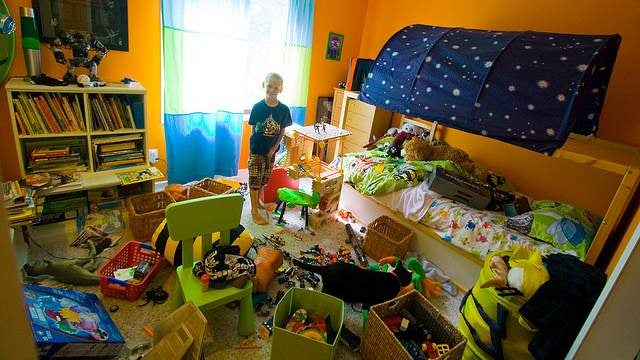
Toy overload sounds kind of fun and for a while, it is. But kids quickly with too many toys quickly become overwhelmed and bored with them. Toy rotation is a time-tested way of beating the problem.

|
|

Choosing fresh fruit often feels like a guessing game, but you can stack the odds in your favor. Just compare the firmness of the fruit to how different parts of your face feel to your touch.

|
|

If you've ever attempted to switch banks, you know it can be a huge hassle. But a detailed plan makes a big difference. If you're considering a bank switch, follow this guide to make it as painless as possible.

|
|

(afagen)
Universities use test scores, transcripts, financial profiles and detailed data to make a decision on how much aid a student should receive. But families are left largely in the dark when trying to estimate how much aid their child could receive from a particular school, ProPublica reports.
With student loan debt piling up and often affecting a student’s ability to make purchases in the future, understanding financial aid opportunities available to students is as important as ever.
Most colleges only offer vague disclosures about how they allocate their financial aid dollars and they don’t reveal the formulas used to make decisions, Mark Kantrowitz, a financial aid expert with Edvisiors a publisher of websites about paying for college, tells ProPublica.
While we don’t know the full criteria schools use when deciding who gets financial aid and who doesn’t, it’s becoming clear that some schools are strategic in their giving.
ProPublic reports that some schools use aid as a way to attract student to meet the institution’s own goals. Often financial aid leveraging is used to entice students who will help raise a school’s ranking, who will help bridge gender gaps, or who will fill out a program. Many times the goals are different from helping the students that need it most.
Data from a small liberal-arts college in Kansas shows the school charged students in the lowest income bracket several thousand dollars more than students in the two income brackets directly above them. Officials for the school said the outcome was not intentional, but its students meeting other criteria that are getting assistance. They declined to disclose the criteria used to make such decisions, saying it was proprietary information and used to keep the school competitive.
In recent years, the government has unveiled two consumer tools to provide students with individual cost estimates. The model financial aid award letter and college’s net-price calculators can help student understand the cost of college, but don’t add any transparency to how schools are doling out the dollars, ProPublica reports.
A former congressional liaison in the Department of Education’s Office of Legislation tell ProPublica that with a little tweaking a current regulation could be the best bet for true transparency.
Schools participating in federal student-aid programs are required to disclose the criteria for selecting recipients of financial aid from the group of eligible applicants and the criteria for determining the amount of a student’s award for federal and state aid, as well as, the financial aid the school gives out themselves, ProPublic reports.
However, the law and regulation does not specify what details colleges must disclose, meaning many disclose very little. The former liaison says spelling out what criteria universities have to reveal could make the regulation more sound.
The U.S. Department of Education press secretary did not answer ProPublica’s questions on what the regulation actually requires or if the department has ever enforced the transparency regulation.
The press secretary did say the DOE was working with institutions and the Consumer Financial Protection Bureau to develop a way for students to be best served in receiving clear, easy-to-understand information on aid packages from their college.
How Exactly Do Colleges Allocate Their Financial Aid? They Won’t Say [ProPublica]

 You probably remember last week’s “Comcast Doesn’t Give a F##k” video. And though it might seem like those who work for Comcast exist inside an impermeable sphere through which no criticism shall pass, that is far from the truth.
A Consumerist reader with a not-uncommon name and a generic, simple e-mail address says he often gets messages intended for other people with his name.
Then this morning he notices a message from someone with a Comcast corporate e-mail account and a Comcast company signature has landed in his inbox. The only text: A YouTube link to the “Comcast Doesn’t Give a F##k” clip that he assumes (and we agree) was not intended for him to see.
It’s either that or the Comcast employee thought that random customers should be made aware of the company’s reputation.
“I’m happy to know that Comcast REALLY doesn’t give a f##k about us,” writes the accidental e-mail recipient, “and they find it amusing enough to pass along to their friends and family.”
Just as a reminder, here’s the video again:

 Nearly 20 years ago, basketball superstar Shaquille O’Neal lent his name and digitized likeness to Shaq Fu, a poorly slapped-together cash-in video game in which even contrarian hipsters have trouble finding any redeeming qualities. Now, with two decades to mull it over, Shaq has not only decided that it’s time for the sequel no one asked for, but that a sizable chunk of the funding should come from consumers.
Yup, Shaq and the rest of the team behind Shaq Fu: A Legend Reborn have started an indiegogo campaign looking to make $450,000 between now and April 20, with the promise that the new product won’t be anywhere near the unmitigated disaster of the original.
But between the money from his playing days and his current gig as a paid shill for whatever company throws enough cash at him, Shaq must be exceedingly wealthy, right? And a decent video game is going to cost a lot more than $450,000 to develop. So what in the world do they need $450,000 from the common folk?
“The purpose of bringing the game to the public is to see how much interest there is in becoming Shaq’s partner and in seeing the game happen,” explain the developers. “In exchange for your help, Shaq is offering unprecedented access to his life.”
Except, as AVclub.com’s Matt Gerardi points out, the lowest level of donation that brings you any closer to the basketball giant is $500. For that, Shaq will… follow you on Instagram.
Excuse me while I look for my checkbook.
For $600, Shaq will record a voicemail message for you. Of course, since no one actually calls anyone anymore, most of your friends and colleagues won’t be impressed because they’ll never hear it. And more than a few people will probably hang up, thinking they got a wrong number. But hey, $600 well spent.
$25,000 will get you and six friends a two-hour dinner with Shaq in Orlando or Atlanta.
“Lunch is on us – travel is on you,” reads the description, completely overlooking the fact that no, lunch isn’t on them, as you FORKED OVER TWENTY-FIVE LARGE FOR IT.
Amazingly, this project has already earned more than $17,000.
Reminder to those thinking of donating on a lark: This is an indiegogo campaign, so there is no requirement that the Shaq Fu team must raise all $450,000 before taking your donation.


Time to abandon those hangers. (m01229)
Here at Consumerist, we like to think optimistically — despite the feeling that winter has always been here and is going to stretch on into eternity, it’s got to end sometime. In the spirit of forward-thinking, now’s a good time to start planning for that gleeful day when you pack up your sweaters, scarves and warm woolens for at least a few months.
Inspired by a very helpful post on Reviewed.com’s laundry section, we’ve pulled together a few things to keep in mind while you’re switching out those long johns in favor of shorts and tank tops.
1. The less you have to store, the easier it’ll be: Now’s the time to trim your wardrobe. Haven’t worn that sweater in years? Give it to Goodwill or your local homeless shelter, or bequeath it to your friend who looks much better in eggplant than you do.
2. Wash everything: It might seem like common sense to store clean clothes instead of dirty, and it is very practical — storing stuff with stains, even the kind you can’t see, could attract bugs to an uninterrupted feast in your closet. Any stain that’s there now will also have all that time to sink in and be even worse when you next pull it out. Launder everything in the hottest water it can take or drop it off at the dry cleaner before packing it up, but skip fabric softeners and starch, as they can attract beetles and moths.
3. This is not your grandma’s closet: No offense to your grandmother, but you don’t want your clothes smelling like musty old moth balls. Good alternatives to keep moths at bay and have your clothes come out smelling nice — cedar blocks or bags of lavender will work just as well. If you’re lucky enough to have a cedar closet or chest, you’re probably laughing smugly at this.
4. Choose your storage containers wisely: For clothes you can fold up and pack away, pick plastic containers over cardboard, and the more airtight the better. Cardboard boxes aren’t much protection against insects or humidity. Even better — resealable vacuum bags, which cut down on space and keep all the bad things out.
5. Fold sweaters and knits, hang heavier things like coats: If you’re storing something that you’d normally hang, roll it up tightly to avoid creases. For coats, choose hangers that can support their weight.
6. Speaking of hangers — noooooo wiiiiiiire hangers, EVER!: Yes, we’re yelling this like Faye Dunaway in Mommie Dearest. Wire hangers can distort the shape of your clothes over time, so go for plastic or wood, depending on the weight of the clothes. Garment bags are an added layer of protection, if you have them.
7. Think about the future: Next winter you’ll be diving for those woolly sweaters as soon as the first bite of frost hits. Make things easier on yourself by storing like with like to make items easier to find, and store heavier things at the bottom of boxes to avoid creases and wrinkles.
8. The venue is important: Ideally, you’ll want somewhere well-ventilated, cool, dark and dry to store your clothes. Sunlight can fade your clothes during storage and warm, moist places are a bug’s paradise. Storing clothes an area with good air circulation will ward off mildew.
8. Check in now and again to see how your clothes are doing: We know, no one wants to think about that thick turtleneck while basking in the summer sunshine. But it’s a good idea to take a look at your stuff now and again, if only to interrupt any feasting bugs and check for cracks or leaks in your storage containers.
Now with that done, is it summer yet? No? Sigh.
You can follow MBQ on Twitter to see if she goes for vacuum sealed bags or airtight plastic containers. Ah, the suspense: @marybethquirk

 If you suddenly disappeared, who would notice that you were gone? The neighbors of one woman in Pontiac, Michigan hadn’t seen her in years. She traveled a lot for work–maybe she was working offsite for an extended period, or she had moved away and simply not sold her house yet. No, she was home the whole time. In her Jeep. Dead.
“Haven’t I read this story already?” you might be saying. You’re probably thinking of when more or less the same thing happened a few years ago, in Florida. In this case in Michigan, all we know so far is that the deceased was from Germany, and had moved to Detroit to work in the auto industry. (Based on her owning a Jeep, we’re going to guess that she might have worked for Chrysler.)
Neighbors couldn’t agree on how long it had been since they last saw her. One said six years, and another guessed three. Authorities told TV station WXYZ that the woman was mummified, so she had been dead for at least a few years.
“You’d think because of her job, and we heard she had a son, so you’d think someone would’ve come looking for her,” one neighbor told a reporter.
Woman’s body found in garage of her foreclosed home in Pontiac years after her death [WXYZ]


That’s Safety Mom on the right, pushing ADT Pulse on the Today Show without revealing she was paid by the alarm company.
According to a Federal Trade Commission complaint [PDF], home security biggie ADT paid a total of $300,000 to three different experts — 2/3 of that total to one expert alone — to make TV and radio appearances to shill for the ADT Pulse system. In addition to the cash, two of the human advertisements received $4,000 worth of security equipment from ADT as compensation.
Even though ADT booked these dozens of media appearances, offering interview suggestions and B-roll footage to interviewers, the segments featuring these experts rarely mentioned any connection to the alarm company, instead describing the guests as experts in child safety, home security, and technology who were there to share their professional advice; not shill for a product.
In fact, the FTC alleges that ADT sometimes took steps to deliberately make it even less obvious that these experts were being paid to push the company’s product.
“The paid spokesperson sometimes demonstrated other child safety, home security, or technology products, in addition to the ADT Pulse, adding to the impression that the spokesperson was providing an impartial, expert review of products,” reads the complaint.
The FTC provides examples of one expert, the author of the SafetyMom.com site, who appeared on the Today Show as a “national family and safety expert,” touting the features of the Pulse system to show hosts Hoda Kotb and Kathie Lee Gifford.
During the segment, Safety Mom talks up the features of the service and its affordability; she even says “It’s amazing!” but is never identified as a paid spokesperson or endorser of the product.
According to the terms of the proposed deal with ADT [PDF], the alarm company is prohibited from misrepresenting that any discussion or demonstration of a security or monitoring product or service is an independent review provided by an impartial expert. It must also make clear and prominent disclosures about any relationship between an endorser and the company.
ADT must also remove reviews and endorsements that have been misrepresented as independently provided by an impartial expert or that fail to disclose a material connection between ADT and an endorser.
“It’s hard for consumers to make good buying decisions when they think they’re getting independent expert advice as part of an impartial news segment and have no way of knowing they are actually watching a sales pitch,” said Jessica Rich, Director of the FTC’s Bureau of Consumer Protection. “When a paid endorser appears in a news or talk show segment with the host of that program, the relationship with the advertiser must be clearly disclosed.”
Of course, we can’t do a story about disingenuous endorsements without including a little Mass Effect:


Pilot Barbie will not accept nasty notes from sexist passengers.
The workbook and games that go along with this project/marketing campaign/whatever the heck it is notes that it’s all funded by “a generous grant from Mattel.” Really, now. It features Barbie and her dark-haired but light-skinned friends in the outfits of Barbie’s various careers over the decades. Yes, yes, women can become astronauts (with hot pink trim on their spacesuits) or pilots (who wear Mary Janes with high heels.)
Here’s the game’s presentation of workwear for a veterinarian, for example:

My pets’ vet has a long blonde ponytail, but she generally puts on some pants to go to work.
It’s laudable to teach girls that they can grow up to become whatever they want. The problem is that girls are asked to identify people who perform various jobs by what they wear, and those outfits have a lot less fabric and a lot more pink than what real pediatricians and pilots wear to work every day.
For a campaign that measures up people by what they wear, it’s interesting that the end result is a patch (not a badge, at least) that scouts can wear on the back of their uniform. The patch is not subtle.

It’s cute, but it sure is a Barbie ad. “it is particularly troubling that Daisies and Brownies, the youngest Scouts, are encouraged to wear a Barbie patch, transforming their previously commercial-free uniforms into a walking ad,” notes a petition started against the Barbie project launched by the Campaign for a Commercial-Free Childhood and Center for a New American Dream.
Take Our PollAdvocates Urge Girl Scouts to End Troubling Barbie Partnership [CCFC]


(Caleb T Sommerville)
Freeze! Yes, you with the spoonful of sugar poised to dump into your eagerly awaiting mouth! The World Health Organization has just updated its guidelines for recommended daily sugar intake and well, it’s not leaving a lot of room in your caloric plans for sugar.
The WHO has halved its previous sugar intake recommendation in a new proposed draft of its guidelines, down to 5% of your total calories from 10%, reports the Associated Press.
A panel of exports sorted through around 9,000 studies to come up with its ideal level of sugar to combat obesity and cavities. Included under the sugar umbrella (sounds yummy!) are any added to foods and those in honey, syrup and fruit juices — but not any sugars that occur naturally in fruits.
If this 5% goal sounds like a hard row to hoe, you’re not the only one. Even the director of nutrition at WHO says this target is a somewhat loft one.
“We should aim for 5 percent if we can … but 10 percent is more realistic,” he admitted.
If you’re wondering how many sugar bowls you have to smash open and douse with water to make sure you don’t eat them — the average American’s sugar take would need to drop by about two-thirds to meet the WHO’s new suggested limit.
This isn’t set in stone yet, however — the WHO is asking the public to comment on its website about the proposal.
You can follow MBQ on Twitter as she struggles to limit her sugar intake to at least 50%: @marybethquirk
WHO: 5 percent of calories should be from sugar [Associated Press]

 Bacon is taking over the world. And just to prove bacon’s true power Oscar Mayer invented a way for devout bacon lovers to wake up to the rich aroma and sizzling sound of the breakfast staple without actually, you know, cooking it.
The company recently announced the Wake Up and Smell the Bacon app and iPhone dongle that effectively takes over your iPhone’s alarm, Mashable reports.
The smelly alarm joins the ranks of other creative bacon inventions including bacon-flavored Pringles, romantic chocolate-dipped bacon roses and for the truly passionate a weeklong bacon-themed festival..but your bacon-y fresh breath remains a pork-based pipe dream.
So how does this mind-blowing, morning-revolutionizing device work? Easily, it seems.
The dongle plugs into the iPhone’s headphone jack and, when paired with the app, releases the small of bacon as the alarm sounds. And the dongle is refillable, so you don’t have to worry about running out of your favorite scent.
The alarm sound isn’t a tortured, high-pitched horn that scares you out of bed. It’s a soothing voice reciting the true meaning of bacon.
“Experience bacon with all your sense. Like the deepest root, like the stormiest ocean, it’s briny cure endures. Bacon exceeds everything you ever imagined.”
Mashable testers noted the overtly smoky smell of the bacon, but seemed to enjoy the experience nonetheless.
“When the alarm sounded it did release a series of bacon sounds and smells — though the scent was admittedly more jerky than bacon,” the Mashable testers noted.
Unfortunately, Oscar Mayer is only making a limited number of devices and they won’t be for sale. However, fans can apply for a chance to win a dongle by taking a quiz on Oscar Mayer’s website. The contest ends April 4.
The new alarm comes from the innovative minds at the Oscar Mayer Institute for the Advancement of Bacon. The institute brings together the world’s greatest bacon minds to unlock the “bacon’s deepest mysteries for the benefit of bacon lovers everywhere”.
Bacon-Scented Alarm App Give iPhones a Meaty Overhaul [Mashable]


(NYCAndre)
“The exchange of dollar bills, including high denomination bills, is currently unregulated and has allowed users to participate in illicit activity, while also being highly subject to forgery, theft, and loss,” writes Colorado Congressman Jared Polis in his tongue-in-cheek letter [see full text below] to Treasury Secretary Jack Lew, Federal Reserve Chairwoman Janet Yellen, Comptroller of Currency Thomas Curry, Acting CFTC Chairman Mark Wetjen, FDIC Chairman Martin Gruenberg, and SEC Chairwoman Mary Jo White.
STILL IN THE DARK ABOUT BITCOIN? READ OUR PRIMER ON THE CURRENCY HERE.
In the original Manchin letter, the Senator had claimed that the anonymity of Bitcoin make it attractive to “criminals who are able to disguise their actions from law enforcement… Anonymity combined with Bitcoin’s ability to finalize transactions quickly, makes it very difficult, if not impossible, to reverse fraudulent transactions.”
But Polis counters that “Dollar bills are present in nearly all major drug busts in the United States and many abroad,” pointing to the discovery of piles of cash found in the hands of international bad guys like Saddam Hussein and Manuel Noriega.
As for Manchin’s assertion that Bitcoin should be banned because hackers have been able to steal large amounts of the currency, Polis cites Justice Dept. stats showing that only about 3% of the $1 billion in stolen cash from 2012 was recovered.
“The clear use of dollar bills for transacting in illegal goods, anonymous transactions, tax fraud, and services or speculative gambling make me wary of their use,” concludes Polis. “Before the United States gets too far behind the curve on this important topic, I urge the regulators to work together, act quickly, and prohibit this dangerous currency from harming hard-working Americans.”
And here is the full text of the Polis letter:
March 5, 2014
Dear Secretary Lew, Chairwoman Yellen, Comptroller Curry, Acting Chairman Wetjen, Chairman Gruenberg, Chairwoman White:
I write today to express my concerns about United States dollar bills. The exchange of dollar bills, including high denomination bills, is currently unregulated and has allowed users to participate in illicit activity, while also being highly subject to forgery, theft, and loss. For the reasons outlined below, I urge regulators to take immediate and appropriate action to limit the use of dollar bills.
By way of background, a physical dollar bill is a printed version of a dollar note issued by the Federal Reserve and backed by the ephemeral “full faith and credit” of the United States. Dollar bills have gained notoriety in relation to illegal transactions; suitcases full of dollars used for illegal transactions were recently featured in popular movies such as American Hustle and Dallas Buyers Club, as well as the gangster classic, Scarface, among others. Dollar bills are present in nearly all major drug busts in the United States and many abroad. According to the U.S. Department of Justice study, “Crime in the United States,” more than $1 billion in cash was stolen in 2012, of which less than 3% was recovered. The United States’ Dollar was present by the truck load in Saddam Hussein’s compound, by the carload when Noriega was arrested for drug trafficking, and by the suitcase full in the Watergate case.
Unlike digital currencies, which are carbon neutral allowing us to breathe cleaner air, each dollar bill is manufactured from virgin materials like cotton and linen, which go through extensive treatment and processing. Last year, the Federal Reserve had to destroy $3 billion worth of $100 bills after a “printing error.” Certainly this cannot be the greenest currency.
Printed pieces of paper can fit in a person’s pocket and can be given to another person without any government oversight. Dollar bills are not only a store of value but also a method for transferring that value. This also means that dollar bills allow for anonymous and irreversible transactions.
The very features of dollar bills, such as anonymous transactions, have created ubiquitous uses from drug purchases, to hit men, to prostitutes, as dollar bills are attractive to criminals who are able to disguise their actions from law enforcement. Due to the dollar bills’ anonymity, the dollar bill market has been extremely susceptible to forgers, tax fraud, criminal cartels, and armed robbers stealing millions of dollars from their legitimate owners. Anonymity, combined with a dollar bills’ ability to finalize transactions quickly, makes it very difficult, if not impossible, to reverse fraudulent transactions.
Many of our foreign counterparts already understand the wide range of problems that physical currencies can have. Many physical currencies have enormous price fluctuations, and even experience deflation. 20 years ago Brazil had an inflation rate of 6281%. In 4 years (2001 to 2005), the Turkish Lira went from 1,650,000: $1 to 1.29 to $1. In 2009, Zimbabwe discontinued it’s dollar. Before it was eliminated, the Zimbabwe dollar was the least valuable currency in the world and their central bank even issued a $100 trillion dollar banknote. A person would starve on a billion Zimbabwe dollars and it took an entire wheelbarrow full of $100 billion dollars in notes to purchase a loaf of bread.
The clear use of dollar bills for transacting in illegal goods, anonymous transactions, tax fraud, and services or speculative gambling make me wary of their use. Before the United States gets too far behind the curve on this important topic, I urge the regulators to work together, act quickly, and prohibit this dangerous currency from harming hard-working Americans.
Sincerely,
Jared Polis
Member of Congress

I don’t know about you, but when my family went on trips together it involved long car rides listening to books on tape, spending a week or hiking in the woods and other fun memories. None of those involved traveling together out of state to shoplift around $7 million in merchandise over decades, like one set of parents and their adult daughter group are accused of doing.
Officials in Illinois say the family crime spree spanned years, and involved the group traveling to stores around the country to boost dolls, toys, cosmetics and anything else valuable that could be resold on eBay, reports the Associated Press.
The three were arrested in their suburban Chicago home after coming back from a three-day trip Oklahoma, Texas and Louisiana, where they’re accused of stealing from stores in a tandem effort they used in other states like including Maryland, Tennessee and Florida, according to the 20-page complaint.
Police say the mother would wear a long black skirt with large compartments sewn in to hide items on shoplifting trips. Surveillance cameras allegedly show her leaving stores with a fuller skirt than when she walked in.
Officials tracked down the family after Toys ‘R Us and Barnes and Noble contacted the United States Secret Service to report “a huge loss in merchandise.”
Those companies and eBay helped authorities trace stolen items back to an online trading account of a person who ended up cooperating with the investigation. That person allegedly bought many of the shoplifted items — from American Girl dolls and Furbys to coffee — at the family home and then sold them on eBay. The family is also accused of selling more than $690,000 worth of stuff on their own.
The head of the Secret Service office in Chicago said this kind of state-spanning shoplifting spree is not only bad for stores, but for their customers.
“If this type of crime continues unchecked, the costs … will be passed from the retailer to the common shopper,” he said.
Each family member has been charged with one count each of interstate transportation of stolen property, and could face up to 10 years in prison.
Mom, dad, daughter accused in $7M shoplift spree [Associated Press]


(strobist)
Who knew that the reason the white cream filling in an Oreo is that particular shade is due to a trade secret that’s held so closely, two men could be sent to jail for more than 20 years for stealing it? A U.S. jury just convicted two businessmen of swiping a technique to make a chemical that whitens many products, including Oreo cream, and selling it to China.
The method for making titanium oxide (TiO2) is used to whiten paper, plastic, paint and yes, cookie cream, and was developed by chemical giant DuPont, reports Quartz.
A Chinese rival had tried to buy the recipe from DuPont — which brings in a tidy $17 billion per year for the company — in the past, but had been refused.
After weeks of testimony, a U.S. federal jury found that a DuPont engineer with 35 years at the company leaked the TiO2 technique to another man who had set up a company in California for the purposes of becoming just like DuPont, so he could provide TiO2 to China. The method was sold to the Chinese company for around $20 million.
Prosecutors allege that the Chinese government had supported the scheme to get the trade secret, as it owned the company that ended up with the formula, saying “the government of the PRC identified as a priority the development of [TiO2] production capabilities” before the espionage took place, and conspired to illegally obtain the method.
The two men were convicted of economic espionage, bankruptcy fraud, tax evasion and obstruction of justice and face up to 25 years for the most serious charges, reports the AFP.
DuPont said in a statement that it will “continue to take aggressive steps to preserve our technological edge, including cooperating with governments and law enforcement agencies around the world.”
The U.S. government — keeping our cookie cream whitening secrets safe.
A US jury just convicted two men for selling a secret Oreo-whitening technique to China [Quartz]
US businessman sold trade secrets to China: jury [AFP]


(NCLC)
More than 64 million Americans are cut off from access to traditional banking because they lack credit history. To better serve these unbanked consumers financial institutions are relying on the promises of big data brokers to accurately determine the creditworthiness of consumers. But is the new method a reliable way to provide affordable access to credit? Not really, a new report by the National Consumer Law Center points out.
The NCLC’s new report “Big Data: A Big Disappointment for Scoring Consumer Creditworthiness” [PDF] investigates the inaccuracies in the information provided by data brokers and reviews the trustworthiness of products using big data analysis.
Big data is the use of information culled from Internet searches, social media and mobile apps to determine a consumers’ creditworthiness. Big data promises to make better predictive algorithms that in could in turn make better products available to the underbanked.
Fifteen volunteers, all NCLC employees, attempted to retrieve their information from four data brokers: eBureau, ID Analytics, Intelius, and Spokeo for the investigation.
Each volunteer found their reports to be filled with inaccuracies and incomplete information including wrong email addresses and poorly estimated income.
Seven of the 15 consumer reports generated by eBureau, a company that touts advanced models, contained errors in estimated income. The reports nearly doubled the salary of one participant and halved the salary of another. Additionally, 11 of the 15 reports incorrectly stated the consumer’s education level.
Reports purchased from Intelius and Spokeo had the most inaccuracies. The most common inaccuracies included wrong addresses, added or omitted family members and added or omitted social media accounts.
The reports from eBureau, and ID Analytics were found to contain very little information.

Big data reports were found to contain a number of inaccuracies.
“Proponents of big data underwriting argue that by using a constellation of factors to price credit, the cost of credit will be reduced for low-income borrowers, thus enabling lenders to provide lower-cost small loans as alternatives to payday loans,” the NCLC notes in the report.
The NCLC evaluated seven loan products that are based on big data underwriting. Six of the products are marketed as payday loan alternatives, including RISE Credit.
The evaluation found that while some of the features are “less bad” than those of traditional payday loans, the products fail to meet requirements to be considered genuine, better alternatives, the NCLC report concludes.
When the NCLC delved deeper into big data brokers they found the companies could be considered consumer reporting agencies and subject to the Fair Credit Reporting Act.
The FRCA imposes substantial duties on a CRA, most importantly dealing with accuracy, disclosure and the right to dispute items on reports. The NCLC concludes that it’s unlikely that big data brokers could meet FCRA requirements.
While big data does offer alternative methods to determine an unbanked consumers’ creditworthiness it falls apart when put to the test, NCLC reports.
“Unfortunately, our analysis concludes that big data does not live up to its big promises,” NCLC notes. “A review of the big data underwriting systems and the small consumer loans that use them leads us to believe that big data is a big disappointment. More and more, consumers are leading robust lives online. However, as data about consumers proliferates, so does bad data.”
To better ensure that big data is used correctly, the NCLC developed several federal policy recommendations:

Prince William County crime report Washington Post Prince William County. These were among incidents reported by Prince William County police. For information, call 703-792-7245. Police detain a protester during a demonstration against Algerian President Abdulaziz Bouteflika's decision to run for ... and more » |
Washington Post |
Fairfax County adopt a pet Washington Post 3Kim, left, a female dwarf hamster, is available from the Fairfax County Animal Shelter. Truman, center, a 5-year-old housebroken dog, is available from the Humane Society of Fairfax County. Milo, right, a 7-year-old neutered male beagle, is available ... and more » |

No one enjoys the process of moving, but we all have to do it at one time or another. Did you know that if you're moving, or have already moved within one year of starting a new job, you may be able to claim moving expenses on your tax return?

|
|
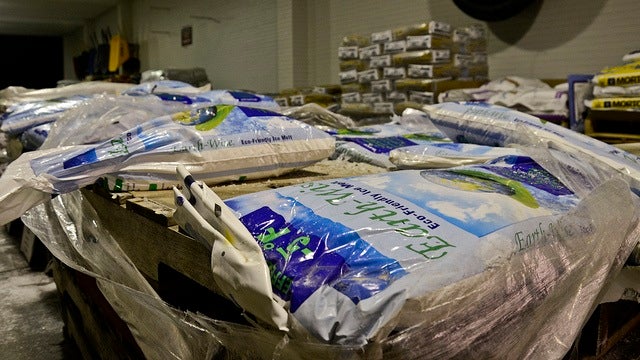
It's still pretty cold out there, and there's plenty of ice and snow about. If you need some ice melt to keep your driveway, sidewalk, or other paved areas clean and slip-free, you have tons of options. Thankfully, Consumer Reports has a breakdown of what you should buy based on temperature, need, and surface.

|
|

This is the wannabe criminal, before a simple request for a photo ID foiled his entire brilliantly planned heist.
The Asbury Park Press reports that the would-be criminal walked into a Santander Bank in Jackson, NJ, on Wednesday afternoon.
Sporting a hooded sweatshirt and glasses, the man handed the teller a note demanding cash.
Rather than dive to the floor, scream bloody murder, hit a silent alarm, or try to slip a dye pack in with the demanded money, the teller instead insisted that the man remove his hood and show some ID.
The man responded not by waving a gun in the teller’s face, or telling everybody to turn out their pockets, but by claiming he didn’t have any ID. We imagine he even did that thing where you pat yourself down to confirm the lack of a wallet. Then he left. With no cash and only the inevitable slew of headlines to remember his ineptitude by.
For what it’s worth, police describe the man was described as white, just over 6 feet tall, wearing black wire-rimmed glasses, a gray hooded sweatshirt and a camouflage cap.

The office supply company released its quarterly and annual earnings report this morning and the picture isn’t terribly rosy for Staples.
In North America, its retail and online sales were $11.1 billion in 2013, down more than $700 million from its sales total for 2012. Even when you factor in that the 2013 fiscal year was one week shorter than in 2012, sales figures for 2013 are still down 4.3% ($500 million).
Some of that sales sag can be associated with the Staples stores that were shut down during 2013. But even then, same-store sales (which excludes online revenue) were down 4% in 2013.
The planned closure of 225 stores would leave 1,621 remaining North America. Staples says the closures are part of a larger $500 million savings program that will look to find money from “labor optimization, non-product related costs, IT hardware and services, marketing, sales force, and customer service.”
Staples, like many national chains that established themselves and underwent expansion in the decades leading up to the e-commerce boom, is feeling the pinch from online-only competitors who can offer same or similar products but at lower prices.
That said, the retailer’s online business is improving. In the fourth quarter of 2013, online sales were up 10% over the same quarter in 2012. Staples also says it recently increased the number of items for sale on Staples.com from 100,000 to 500,000.


The plaintiff claims he has no memory of losing $500,000 in one night gambling at the Downtown Grand in Las Vegas.
That’s exactly what one California man said happened to him in February, when he spent the evening gambling (badly, it appears) at the recently opened Downtown Grand in Las Vegas.
Both he and the casino are now locked in a legal battle over the borrowed money from that wild weekend. He’s sued the casino, alleging it allowed him to gamble and continued to serve him drinks even though he was visibly intoxicated. And the casino is countersuing because the gambler has stopped payment on the marker for the money it loaned him to continue gambling.
The man’s lawyer claims his client was “blackout intoxicated” to the point where he couldn’t read his cards.
According to Nevada state gaming regulations, “Permitting persons who are visibly intoxicated to participate in gaming activity,” or “Complimentary service of intoxicating beverages in the casino area to persons who are visibly intoxicated” could be grounds for disciplinary action.
Of course, the amount of money lost in this suit is nothing compared to the $189 million that Nebraska businessman Terrance Watanabe lost during the course of a year to various Harrah’s casinos. In a legal battle over a $14 million advance from Harrah’s to keep him gambling, Watanabe claimed that employees were instructed to ply him with alcohol and prescription painkillers. That case was settled before trial in 2010.
Gambler sues, says he lost $500,000 playing drunk [Las Vegas Sun]


