Shared posts

24 Mar 02:37

What Conveniences Are You Willing to Pay For?

by Walter Glenn

What Conveniences Are You Willing to Pay For?

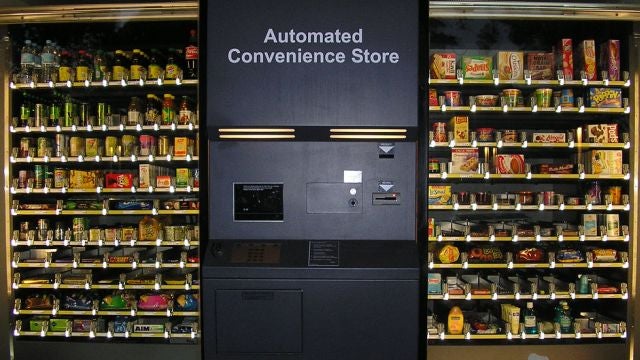
We're all about being frugal here at Lifehacker, but sometimes convenience is worth the price. Maybe cooking just isn't in the cards for you and eating out is worth the cost. Or perhaps you enjoy the time you save having your laundry done for you. We're curious. What conveniences are worth spending a little extra on?

Read more...


24 Mar 02:36

How You Can Learn to Finally, Really Relax

by Melanie Pinola

How You Can Learn to Finally, Really Relax

It seems like relaxing is something everyone should be able to do, but those of us who are constantly stressed , are workaholics, or have certain health issues don't have an easy "off" switch. Relaxation is something we actually have to learn and practice, much like happiness . And, like happiness, learning to relax is extremely important for your health and well-being. Let's take a look at the ways we can beat chronic tension and finally slow down.

Read more...


24 Mar 02:36

Pick the Right Shampoo for Your Scalp, Not Your Hair

by Melanie Pinola

Pick the Right Shampoo for Your Scalp, Not Your Hair

All shampoos and conditioners are not the same . If you've been buying volumizing, hydrating, or other types of shampoos, make sure they match your scalp type, not your hair.

Read more...


24 Mar 02:36

How You Leak Your Privacy Every Day (and How to Stop)

by Thorin Klosowski

How You Leak Your Privacy Every Day (and How to Stop)

Thanks to the NSA, everyone all of a sudden cares about their privacy more than they used to. But most of us aren't doing a good job of locking it down. Here are just a few of the things we all tend to do that leak private information to friends, strangers, businesses, and ad companies.

Read more...


24 Mar 02:36

Plan to "Buy Your Time" in the Future, Instead of "Saving Money"

by Eric Ravenscraft

Plan to "Buy Your Time" in the Future, Instead of "Saving Money"

Many of us have some kind of plan in place to save money. With all the names and schemes we give them—401(k), Roth IRA, retirement fund, etc.—it's easy to forget that most of our long-term savings have one goal in mind: to buy us time.

Read more...


24 Mar 02:36

The Roost is a Portable, Foldable Laptop Stand for Standing or Sitting

by Alan Henry

We've highlighted some great laptop stands in the past, but if you're looking for a stand that allows you to sit or stand while you work, is strong enough to hold your laptop, and portable enough to take with you anywhere you go, the Roost is the perfect stand for you.

Read more...


24 Mar 02:35

How to Streamline Your Household Cleaning

by Alan Henry

How to Streamline Your Household Cleaning

Cleaning the house is a necessary chore, but let's face it—some of us might not mind it, but no one really loves it. Still, like many chores, it's usually bigger in our head than it is when we set in to do it. Here are some ways you can streamline the process, make sure you have the tools on-hand when you need them, and never wonder what you should do next.

Read more...


24 Mar 02:35

Here's the Reliable and Unreliable Data You Get from Fitness Trackers

by Adam Dachis

Here's the Reliable and Unreliable Data You Get from Fitness Trackers

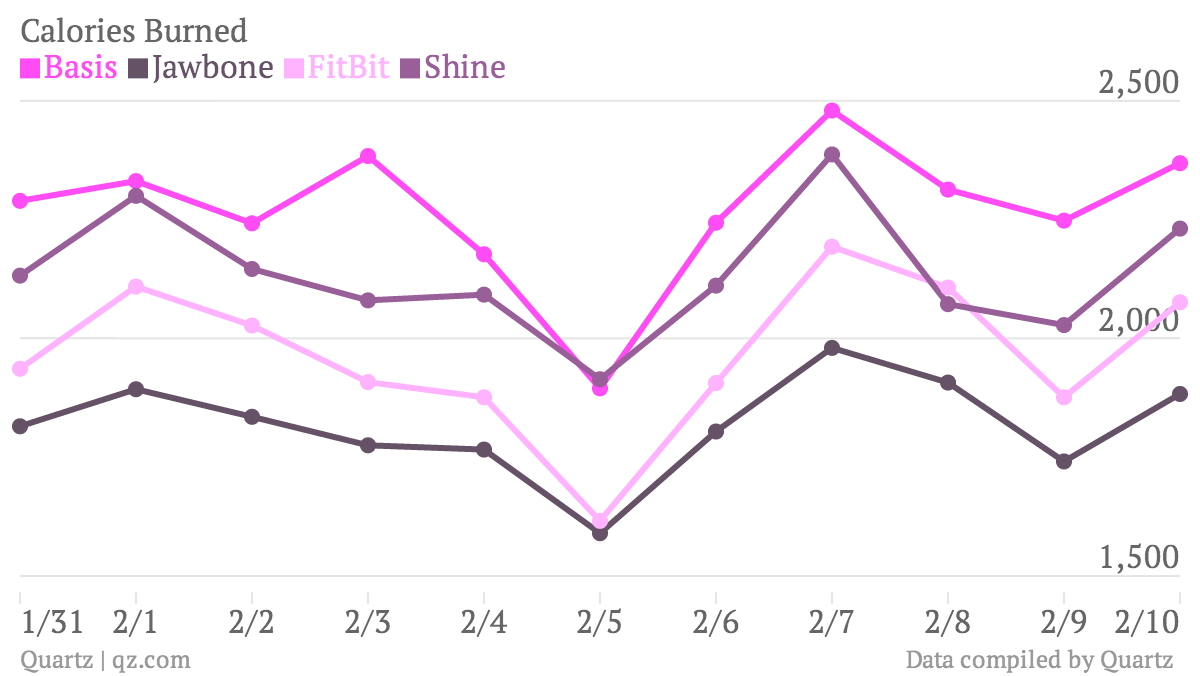
I've previously looked at the ups and downs of tracking everything in my life , finding that the data helps provide a little guidance but is certainly nothing to live by. What I couldn't tell, however, is how accurate that data actually was. Rachel Feltman, writer for Quartz, decided to wear four fitness trackers at once to find out.

Read more...


21 Mar 19:34

Manassas residents hope to save century-old water tower - Washington Post


Manassas residents hope to save century-old water tower
Washington Post
The Manassas water tower, a 147-foot structure that can be seen for miles around, just made it to its 100th birthday. Soon, however, it might be torn down. The city's Water and Sewer Department has sought permission to demolish the aging steel tower ...

21 Mar 19:34

Prince William County crime report - Washington Post


Prince William County crime report
Washington Post
Prince William County. These were among incidents reported by Prince William County police. For information, call 703-792-7245. Tibetan spiritual leader the Dalai Lama holds the hand of an Indian man suffering from leprosy ...

21 Mar 16:42

Police: NJ teen bypasses guard, reaches WTC spire

- A teenage thrill-chaser slipped through a fence, eluded a security guard and climbed to the top of 1 World Trade Center, authorities said Thursday as concerns swirled about a seemingly audacious breach at what is supposed to be one of the world's most secure sites.
21 Mar 16:41

Anti-gay pastor Fred Phelps Sr. dies at 84

- The Rev. Fred Phelps Sr., the fiery founder of a small Kansas church who drew international condemnation for outrageous and hate-filled protests that blamed almost everything, including the deaths of AIDS victims and U.S. soldiers, on America's tolerance for gay people, has died. He was 84.
21 Mar 00:02

Does Walgreens’ New Up-Close-And-Personal Pharmacy Approach Violate Privacy Laws?

by Chris Morran

Two examples of unattended Walgreens pharmacists' desks (source: Change to Win)

Two examples of unattended Walgreens pharmacists’ desks (source: Change to Win)

In an effort intended to provide pharmacy customers a less impersonal experience, some Walgreens stores have been redesigned to get pharmacists out in the store, consulting with customers at desks, without the traditional counter (and sometimes panes of bulletproof glass) between them. But the U.S. Dept. of Health and Human Services wants to see if this new “Well Experience” model is unintentionally revealing customers’ private medical information.

The HHS probe into the revamped Walgreens store is being done in response to a Sept. 2013 study by advocacy group Change to Win, which looked at 50 remodeled Walgreens stores Florida, Illinois, and Indiana.

That report from CtW, which has been critical of other Walgreens practices, claims that “In over 32 hours of observation, field researchers noted 442 individual
interruptions or distractions to pharmacists,” and more than one-third of these issues could be attributed directly to the new Well Experience model.

According to CtW, pharmacists were noticeably distracted by things that had nothing to do with their job, like small talk with customers, providing directions to the restrooms, and answering questions about products that were not related to healthcare. Additionally, the study expressed concern about the casual atmosphere encouraged by Well Experience, with children playing in the pharmacy waiting area and customers hovering over pharmacists’ desks.

“Research suggests that interruptions and distractions are related to increased medication errors,” reads the report.

Of particular concern from the CtW study are allegations that Walgreens pharmacists are leaving their desks unattended, meaning any passerby could have access to private medical information left behind by the pharmacist.

“While Walgreens’ descriptions of the Well Experience model to state boards of pharmacy indicate that the desk will be attended by the pharmacist at nearly all
times, pharmacists were frequently observed to leave the desk for a variety of reasons,” reads the report. “Among the types of paper information unattended were doctors’ prescriptions; completed health test authorization forms including patient medical history or test results; and patient call lists, listing patient names, telephone phone numbers, and prescribed drugs.”

According to the initial CtW study, 80% of the stores visited by investigators found desks left unattended with sensitive information either on or near the desktop.

In some stores, pharmacists were leaving discarded patient information in unattended trash cans that anyone in the store had access to. Likewise, a number of pharmacists left their desks unattended while their computer monitors still displayed sensitive customer info.

CtW recently took another look at Well Experience stores and still found alleged potential privacy breaches at 73% of stores it visited, with 46% of visited Walgreens leaving patients’ prescriptions out where they could be seen or accessed.

Walgreens has already remodeled 600 of its 8,200 stores to fit the Well Experience model.

If the HHS investigation comes down on the side of Walgreens, it will likely not have to make any changes to Well Experience stores. However, if HHS determines that there is a problem, it could compel the drugstore chain to make changes to policy and/or store design to minimize privacy concerns.

While Walgreens maintains that its Well Experience stores are in line with state requirements, the format has so far been rejected by three states: Maryland, Hawaii, and Connecticut. CtW filed a complaint this week with the Florida Dept. of Health, alleging that the company is violating state law by removing pharmacists from the pharmacy and leaving pharmacy techs to fill prescriptions.

A rep for the chain, which has previously shrugged off criticism from CtW because the group is backed by labor unions, tells the Wall Street Journal that the company believes “the matter will be resolved without action.”

21 Mar 00:01

Bank Of GameStop Is The Best Or Worst Idea Ever

by Laura Northrup

gamestop-bank

When you need a place to stash your money that isn’t a shoebox under the bed, it can be hard to find a good option. Minimum balance requirements, fees for the privilege of having an account…it’s all very complicated, especially if you don’t have a lot of money to deposit. Simplify things by joining the First National Bank of GameStop.

When did GameStop start a bank? Well, it didn’t. But thanks to the fount of wisdom that is 4chan, one enterprising soul shared his alternative banking system with the world. It’s very simple:

  • He pre-orders games at GameStop, putting the money down.
  • If he doesn’t actually want the game, or needs money ahead of time for some other reason, he cancels the pre-order.
  • GameStop gives the money back.
  • Want long-term savings? Trade in games for store credit.

How do you know whether the FNBG is for you? Well, if you have a standard account at a regular bank, with deposit slips and a debit card and whatnot, it’s probably not for you. If you never buy anything at GameStop, it’s not for you. But for many unbanked Americans, this plan just might work.

Now whenever I get paid I go preorder a whole shitload of games. Whenever I need money, I go to the nearest gamestop and ask for my money back on a game I don’t want and make a withdrawal. The lines are shorter at gamestop than at the bank and I can trade in old games and have money go straight to my savings account. Gamestops are just as prevalent as banks in my town and I work at a mall so it’s even more convenient than running an errand to the bank or using an ATM and getting charged.

There’s probably a GameStop near you, and it most likely is open longer hours than your bank branch. The disadvantages: no ATM, no debit card access to your money, you can’t write checks, and your balance is not FDIC-insured in case GameStop abruptly goes out of business.

How to Turn GameStop Into Your No-Fee Bank [Bloomberg BusinessWeek]

21 Mar 00:00

Time Warner Cable CEO Has 80 Million Reasons To Root For Comcast Merger

by Chris Morran

1374779036992Imagine you’re two months into your dream job, the one you’ve been groomed to get for years. You’ve finally gotten the chance to right a ship that has been veering off course for too long and prove that you’re a real titan of industry. You’d probably hate to then find out that you’ll be out of this job within a year or so… that is until you’re told that you’ll get a $79.9 million payoff to soothe your pain.

In a Securities and Exchange Commission filing made by Comcast earlier today, the cable/Internet giant lays out not only the timeline of the events leading up to the deal to acquire Time Warner Cable, but also just how much top executives like TWC CEO Rob Marcus, who only took over the top position at the start of the year, will be compensated.

It’s a huge filing and the compensation package for Marcus involves various sources — restricted stock, unvested stock options, cash, among others — but according to Bloomberg’s math, Marcus will receive a total payout worth $79.9 million, including $20.5 million in cash, for his brief time at the TWC helm.

That number could inflate by another $2.5 million if TWC meets certain minimal goals leading up to the merger, meaning Marcus may occasionally need to show up to work before cashing that huge golden parachute paycheck.

Marcus had been the Chief Operating Officer at TWC since 2010 and stepped up to replace former CEO Glenn Britt when he left the top post at the end of 2013.

Other TWC execs who have a very good reason to push for the Comcast/TWC merger are Artie Minson, who would take home $27.1 million for being the Chief Financial Officer of a crappy cable company that has survived by being the dominant pay-TV and broadband provider in the nation’s two largest cities; TWC’s Chief Technology and Network Operations Officer Michael LaJoie, who will get upwards of $16.3 million; and COO of Business Services Philip Meeks, who will have to find a way to stretch out his potential $11.7 million tin parachute.

For those with several hours and a tolerance for repetitive language and small type, the timeline of the merger talks makes for interesting reading.

The initial chats between Comcast and TWC began back in Oct. 2013, when it looked like there might be a three-way deal involving TWC, Comcast and Charter. But after further closed-door discussions, including meetings at CES International in Las Vegas in January, Comcast CEO and scion Brian Roberts decided he couldn’t move forward with Charter as a partner and decided to woo TWC on his own.

Since major mergers are never a sure thing (just ask AT&T and T-Mobile), TWC and Marcus attempted to get Comcast to agree to a deal that would compensate TWC in case regulators nixed the acquisition. But Comcast called TWC’s bluff and convinced the smaller cable operator to move forward without any such termination fee. So if the Justice Dept. or the FCC decide to block the merger, TWC gets nothing in the way of compensation.

20 Mar 20:07

Starbucks Vanilla Lemon Latte Exists (In Japan), Looks Delicious

by Laura Northrup

starbucks-japan-creamy-vanilla-latteIn case you aren’t already huffy that you most likely can’t buy booze at your local Starbucks yet, here’s another thing to be sad you can’t have: white chocolate lemon lattes. A “Creamy Vanilla Latte with Lemony Swirl,” to be exact. Alas, now we’ll never know how well sweetened lemon topping and coffee go together. [Brand Eating]

20 Mar 20:06

Predictive Models, Secret Scores: How Computers Decide Who You Are & What To Sell You

by Kate Cox

Savvy consumers all know that their lifetime debt history ends up in their credit score, and that lenders use that score to try to predict if someone is a good bet for a big loan like a mortgage. But even the most-connected consumer may not realize how many hundreds of other scores we all now trail in our wakes too, thanks to the advent of big data. Do you know, to the last decimal, how likely are you to buy jewelry? To sign up for cable? To have a kid in the next year? Someone, somewhere, is tallying all of that information about almost everyone. But good luck finding out what’s out there, who’s scoring it, and if your numbers are even actually about you at all.

Yesterday, the FTC held an event looking at the scope and effects of those secret scores. The panel brought together experts in marketing, privacy, consumer protection, and technology for a discussion about “alternative scoring products.”

Predictive modeling expert Claudia Perlich opened the session by explaining how the algorithms that drive online advertising technically work. The computers, she explained, don’t judge anything; they’re “agnostic.” They just look for patterns: given a set of 10 million variables, what commonalities do groups share, and how can you divide them into sets whose behavior you can predict?

The machines themselves may not judge, but the people who use them certainly do. A computer told to analyze data about loan applicants might spit out that dividing into groups based on variables X, Y, and Z works best. A human looking at the data parses it out differently, seeing that X is age, Y is income, and Z is ZIP code.

THE WILD WEST
That’s where consumer privacy and potential discrimination issues come into play, and advocates get worried. Consumer advocate Ed Mierzwinski from US PIRG stressed that although a network of laws like the Fair Credit Reporting Act and Equal Credit Opportunity Act govern the generation and use of credit scores, the era of alternative scoring products is an unregulated “wild west” that has big effects on consumers.

Pam Dixon from the World Privacy Forum echoed the sentiment and outlined the problems she sees. They all stem from a lack of understanding and transparency, Dixon explained: nobody’s quite sure what scores are out there, what they’re measuring, how accurate the data they’re based on is, how the factors are put together, and if they’re accurate at all.

The entire panel agreed that under the law, only credit scores are used to determine a consumer’s eligibility for products and services — that is, a bank can look at alternative scoring all it wants when it determines who to advertise to, but when someone applies for a credit card or a mortgage, a federally-regulated credit score is the only one that the bank can use to make a yes or no decision. Marketing leaves a big loophole in the law, though.

FUZZY NUDGES
Privacy and tech expert Ashkan Soltani presented his research finding how companies make different “fuzzy nudges” to consumers to push them into one kind of behavior or another. He was one of the researchers who discovered, for example, that Orbitz pushes higher-priced, luxury hotel listings to the top of the list for Mac users. And it isn’t just hotels: in researchers’ studies, stores like Staples presented higher prices on identical goods to consumers visiting the site from lower-income areas, and credit card companies like Capital One present different card offerings to users based on the ZIP code they’re accessing the website from.

While all of these actions are currently legal, the ripple effects they cause may not entirely be. ZIP code, for example, often correlates highly to race — a legally protected class. As Mierzwinski put it, we have reached an era where “The FCRA is small and these other scores are big.”

MARKETING VS. CREDIT
Stuart Pratt of the Consumer Data Industry Association and Rachel N. Thomas of the Direct Marketing Association countered that marketing is not the same as credit offers, and that the onus is on consumers to choose good products. Shoppers should “be aggressive” and “frustrate the analytics,” Pratt said. Thomas agreed, saying, “That’s why you shop,” when asked about different consumers being presented different options.

However, the marketing and industry experts seemed to not particularly care about the fact that the majority of consumers are never going to call up and ask a company about offers that they don’t know exist. Informed consumers, when opening a new credit card, are probably going to go to a bunch of websites and compare products that way, never knowing that they aren’t seeing plenty of other products that they could apply for.

Consumers also suffer from being lumped together with groups who may or may not be their peers, the consumer advocates argued. Cohort scoring tries to predict the behavior of individuals from the behavior of groups. So if your neighbors are falling behind on their mortgage, your bank might start giving you the side-eye, too. The panelists cited a report finding that American Express had lowered some customers’ credit limits due to other customers’ repayment histories as an example of potential harm that opaque analytics can cause.

ROOM FOR ERROR
And of course, there’s the problem of accuracy: compiling tens of millions of data points about well over 300 million Americans leaves a spectacular amount of room for error. Some first-person observed data is accurate: a company can easily get hard numbers on how many people are hitting their website daily, for example. But lots of data is bought, sold, and traded by third parties to whom accuracy and verification are not exactly a top priority. Analytic systems extrapolating a person’s demographic info based on probabilities have a lot of room for error.

However, the industry experts and consumer advocates did all agree that the big data era has potential to be helpful, and not just harmful. “Big data is an opportunity for inclusion, and it’s an opportunity to help people,” said Dixon. But, she added, the way that data is gathered, quantified, and used must be transparent, beneficial, and careful. And that’s not on the systems, but on the people designing and using them.

UNINTENTIONAL DISCRIMINATION
Perlich ended with the crucial point that although the algorithms and machines that sort, tally, and aggregate the data are themselves agnostic, all existing models are a “reflection of the current biases of human nature,” and that no model can control for morals and judgement.

In other words, a model that isn’t intentionally designed to discriminate still can, and we need human eyes, human judgement, and possibly human regulation to try to make sure they don’t.

The FTC has a a video of the full two-hour session available here.

20 Mar 20:05

Being Naked At The Wendy’s Drive-Thru Won’t Get You A Baconator, But It Will Get You Arrested

by Ashlee Kieler

No shirt, no shoes, no service – even in the drive-thru lane. A 52-year-old Pennsylvania man faces a number of criminal charges after allegedly driving to the pick-up window at a Wendy’s naked, not once, not twice, but three times.

The au naturale incidents occurred twice in one week at a West Shore, Penn. Wendy’s restaurant, the Patriot-News reports.

Police say the first incident took place around 11 p.m. on March 12, when the man drove to the pick-up window, turned on the interior light of his car and looked at his lap. A female employee told police she then realized the man was naked.

Two days later, the man returned at approximately the same time and handed a different female employee his money. She then she noticed he was naked and yelled for a co-worker.

About 30 minutes later, the man returned to the fast-food restaurant. This time he did not place an order, instead he drove straight to the window and once again turned on the interior light of his car and looked at his lap. Employees refused to open the window.

The man has been charged with three counts of open lewdness, three counts of disorderly conduct and three counts of driving with a suspended license, police report.

Harrisburg man charged with driving naked through Wendy’s drive-thru, police say [The Patriot News]

Pennsylvania man charged after going through Wendy’s drive-thru NAKED three times [New York Daily News]

20 Mar 20:05

JCPenney Worker Claims He Was Fired For Telling Truth About Fake Sales

by Laura Northrup

Bargain-hunters love the thrill of seeing huge discounts fall off their total at the cash register, but this joy doesn’t necessarily reflect the truth. If a retailer never intended for anyone to pay the original sticker price, was it ever an original price at all?

When JCPenney ended its failed experiment with “fair and square” pricing under Ron Johnson, employees say that the company gave customers what they wanted by hiking prices, then cutting them again. “All of a sudden, the rack of $7 shorts became $14, and then they were 50 percent off,” one employee told NBC News last summer.

Most shoppers know that this goes on on some level, but … hey, wait, why are we yapping about an NBC article that ran back in August? One of the JCPenney employees interviewed now claims that the retailer fired him for admitting to the press what most shoppers already knew in the first place. For the story, he used his real name, and said that he saw teams moving through the store, doubling prices on housewares.

It will surprise no one that shortly after his TV appearance, the employee was fired. JCPenney fought his unemployment claim, and is now in arbitration with him to get back any company documents that he might still have. That’s why he’s now come forward: to let everyone know that the retailer allegedly fired him for saying out loud what most shoppers know to begin with.

This J.C. Penney Worker Was Fired For Telling The Truth About Its ‘Fake’ Prices [Huffington Post]
Some of JC Penney’s big sales are misleading, say employees [NBC]

20 Mar 20:04

Scrap Metal Dealer Finds Rare Russian Imperial Faberge Easter Egg At A Flea Market

by Mary Beth Quirk
(Wartski)

(Wartski)

While you don’t have to deal in metals to know that if something glitters, it just might be gold, a scrap metal dealer with an eye for valuable stuff picked up something at a flea market that turned out to be worth even more than he could’ve hoped for. That’s because it was one of eight missing Russian Imperial Faberge eggs.

The lucky man is staying anonymous about his good fortune, reports the Associated Press, but a London antiques dealer says the guy bought the egg for $14,000 at a market in the Midwest. He figured he could at least use the gold in the thing to make some money.

But the jewel-encrusted lump of metals is much more than just an item to be melted down — experts in Russian artifacts at London firm Wartski say the egg is a genuine imperial Faberge Easter egg, made only for Russian royalty.

The egg was given by Alexander III to his wife Empress Maria Feodorovna at Easter in 1887, and was only one of 50 made for the royal family. It sits on a jeweled stand and contains a Vacheron Constantin watch, and is one of eight that had been missing before this find, and only three are known to have survived the Russian Revolution.

“The second I saw it, my spine was shivering,” said a rep from Wartski, adding that this kind of thing is a “Holy Grail” for collectors.

The sale price of the egg hasn’t been revealed, but a non-Imperial Faberge egg sold for $18.5 million in 2007. That is definitely not scrap metal.

You can follow MBQ on Twitter where she may wonder why all the flea markets and garage sales she attends never produce Russian Imperial Faberge Easter eggs: @marybethquirk

Scrap metal dealer’s flea-market find turns out to be missing Faberge egg [Associated Press]

20 Mar 20:03

Booze Coming To Thousands Of Starbucks Locations, Eventually

by Chris Morran

(afagen)

(afagen)

After a few years of testing and slowly expanding the number of Starbucks shops that serve alcohol, the coffee colossus says it will be going wide with that evening menu of adult snacks and drinks. But don’t expect it to happen overnight.

Speaking with Bloomberg, Starbucks’ COO Troy Alstead says that the booze and nibbles offerings — which began with an attempt to rebrand a few stores in 2009, then began testing in earnest at a handful of locations in 2010, followed by an expansion to a few additional stores in 2012 — “is a program that works,” and that every time they have made it available in a new location, “there’s a meaningful increase in sales during that time of the day.”

Currently, only 40 of the more than 11,000 U.S. Starbucks are involved in the program, but Alsted said that they will be bringing it to thousands of more stores in the foreseeable future. However, don’t start pestering your barrista for a glass of Malbec just yet, as the process could take years to roll out.

Additionally, Alsted admits that some locations just won’t be a good fit for the program. It seems like the most likely Starbucks to get into the booze biz will be those in densely populated urban areas, where the store could become part of an already active nightlife scene.

20 Mar 20:02

Check Your Debit, Credit Card Statements For “BLS WebLearn” Scam Transactions

by Chris Morran

blsscamA lot of times when someone gets a hold of someone’s credit or debit card info and decides to use it for illicit purposes, the ID thief makes as many charges as possible in a short period of time. But some scammers choose to chisel away at victims’ accounts in the hopes that the crime will go unnoticed.

In the last week, there have been a flurry of complaints online about mysterious transactions attributed to a company called “BLS WebLearn” with a phone number of 888-461-2032.

The charges made by this company are relatively low in value, hovering in the $10-15 vicinity.

Over at DailyKos.com, one writer recently shared his story about how the scam started as a questionable transaction for $12.96 and ended with his bank account being cleaned out. According to this unfortunate soul, the source of the original purchase was supposedly in Malta, but once the scammers realized that this credit card number was legitimate, someone in The Netherlands enjoyed themselves with his funds.

We attempted to call the number associated with this transaction but it only leads to an automated recording that promises to be with you shortly. Matt Ryan at 94.3 FM in New Jersey had the same non-result when he tried to call.

A Consumerist reader tipped us off to the scam after she noticed a strange $10.37 debit transacation on her Chase statement this afternoon. Luckily, she noticed before any further purchases were made.

“Sadly, I’m without a debit card until Chase gets me a new one in two business days,” writes the reader, who says she has not used her card at any Target stores in years. The same is true for the man in the Daily Kos post.

This is just another reminder of why, in this age where too many consumers don’t notice if a few dollars go missing, it’s important to check your bank balance and credit card statements every few days.

We’d like to know how widespread this scam is, so if your statements turn up fraudulent BLS Weblearn transactions, shoot us an e-mail at tips@consumerist.com with “WEBLEARN” in the subject line. We may ask you some follow-up questions, but won’t ask you for identifying account info and will never publish any information that could be used to identify you.

20 Mar 18:00

After Being Denied McFlurry, Woman Sets Car On Fire In McDonald’s Parking Lot

by Chris Morran


While I personally think the McFlurry is nothing special (probably because I spent the better part of my adolescence making top-notch Blizzards at Dairy Queen), even the world’s most ardent fan of the McDonald’s dessert would probably agree that it isn’t anything worth setting someone else’s car on fire over.

But don’t tell that to the woman in Jacksonville, FL, who wasn’t too thrilled when her male dining companion refused to by her a McFlurry on Sunday night.

WFTV in Orlando reports that the woman grabbed the man’s keys, went to his car in the parking lot and splashed it with alcohol and gasoline before lighting it on fire. She then ran off through a nearby parking lot.

People on the scene reportedly attempted to help the man extinguish the fire. Of course, at least one of them took the time to shoot the above footage of the fire.

Firefighters arrived on the scene at some point and put the fire out. Most surprisingly, WFTV reports that the car’s owner was able to drive it away after it was no longer ablaze.

20 Mar 17:54

Have Fun Breaking Down This Year’s Worst Company In America Bracket

by Chris Morran

wcia2014headerAfter going through all of your nominations, then having y’all rank the contenders and eliminate the chaff from the wheat, we’re proud to present the first round match-ups for this year’s Worst Company in America tournament!

As you’ll see from the image below, there are several returning competitors, including previous champs EA and Comcast, three-time runner-up (and sort of winner from when it acquired Countrywide) Bank of America, the perennially hated Ticketmaster and PayPal (with their respective corporate counterparts LiveNation and eBay).

There are also some new names on the list, like Koch Industries and lawsuit-happy seed company Monsanto. There’s also SeaWorld making a splash on WCIA 2014, presumably because people have been watching that Blackfish documentary.

Voting will begin tomorrow, March 19. In the early rounds, each match will be open for votes for only a few hours. While they are open, polls will be placed at the top of the homepage and in a sidebar slot. We’ll post the results and update the bracket at the end of each day.

With no further ado… here is the full bracket:
2014wciabracketfirstround

20 Mar 16:40

Fairfax County volunteer opportunities - Washington Post


Fairfax County volunteer opportunities
Washington Post
Assistance League of Northern Virginia needs volunteers to help with programs that provide clothing, and educate, feed and nurture those in need. 703-425-2243, mespence@cox.net or www.northernvirginia.assistanceleague.org. Inova Fairfax Medical ...

20 Mar 16:33

Chinese breeder sells 2 Tibetan mastiffs for $3M

- A Chinese dog breeder said Thursday that a property developer paid him 18 million yuan ($3 million) for Tibetan mastiff twins, highlighting how the breed has become a status symbol for China's rich.
20 Mar 16:33

German zoo's polar bear twins make public debut

- The Munich zoo's 14-week-old polar bear twins don't yet have names, but they're already stars.
20 Mar 16:23

AP WAS THERE: Exxon Valdez Runs Aground in 1989

ever oil spill.
20 Mar 16:22

25 years later, Exxon Valdez spill effects linger

- Before the Deepwater Horizon oil spill in 2010 in the Gulf of Mexico, there was the Exxon Valdez disaster in Alaska, at the time the nation's largest oil spill.
20 Mar 16:21

Judge orders parties to settle Vegas puppy case

- A Nevada judge blocked a planned puppy raffle for at least 45 days, imposed a gag order, and told lawyers Wednesday to settle their ownership tug-of-war over 27 dogs rescued from a Las Vegas pet shop fire more than seven weeks ago.