The "best" to-do list app for you is a highly personal choice, but some do stand above others. Last week we asked you for your favorites , then looked at the five best to-do list managers and put them to a vote. Now we're back to feature the winner of our poll.
On my 20th birthday, I got drunk and peed on some old ladies' front lawn. A cop saw me and stopped me. Fortunately, I talked my way out of going to jail that night. I already had an arrest record, but he didn't bother to check. My 20s started out with a bang.
Canned tuna is a pretty handy thing to have around, whether in your home, or when traveling or camping. But sometimes, a cold can of tuna just doesn't cut it. That's where the flaming, oil-soaked toilet paper comes in.
Phytonutrients, or plant nutrients, are thought to help decrease the risk of diseases like cancer and heart disease. Unfortunately, most people don't get enough. This graphic from Precision Nutrition shows us how to incorporate more of these nutrients into our diets.
A fixer-upper can save you a ton of money in a neighborhood you might not otherwise be able to afford, but you also run the risk of that home becoming a money pit. MoneyTalksNews offers several tips on what to look for in the home to make sure it's really worth it.
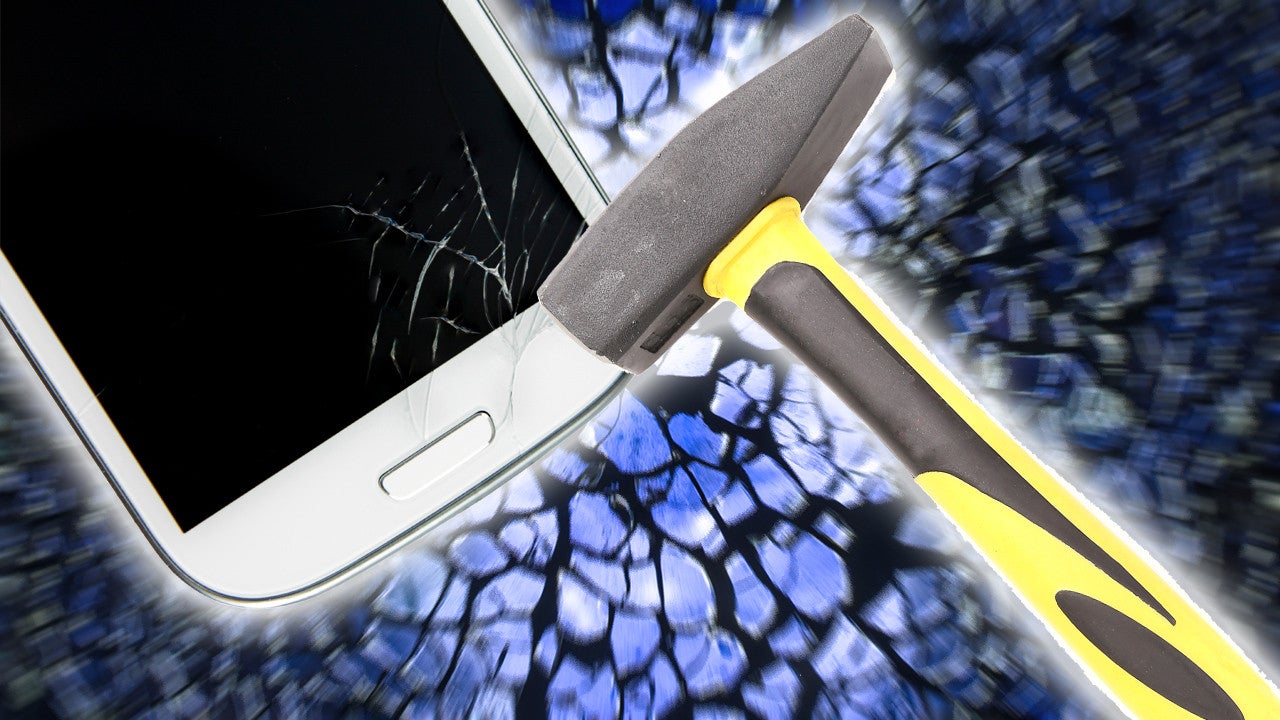
Dear Lifehacker, I'm clumsy. I dropped my phone and broke it's screen something fierce. The problem is, I don't exactly have the money to drop on a new phone right away. What are my options?
Every family and child is different, and so there's no one "right" way to help kids learn responsibility and modify their behavior for the better. What method(s) do you use?
Ginger is already pretty difficult to peel with its irregular shape. Trying to remove the skin without taking any excess ginger with it is even harder. Fortunately, ginger skin comes off relatively cleanly with just a spoon.
When you have credit card debt, it's an uphill battle to get rid of it because the longer it exists, the more interest you have to pay. To help reduce the amount you lose in interest, try dividing your payments into smaller, but more frequent chunks.
The 2014 Worst Company In America competition got off to a big start today with readers turning out in droves to vote on the tournament’s first three match-ups that saw a former Golden Poo champ flexing its muscle, a tournament mainstay making its case for the WCIA title, and the year’s first upset.
COMCAST VS. YAHOO!
Things got off to a huge start with Comcast’s bloody trouncing of Yahoo. In spite of the fact that Yahoo has many more users than Comcast has cable subscribers, or that even Yahoo employees refuse to use its glitchy e-mail system, the public’s image of Comcast as an all-devouring, cable/Internet/broadcasting behemoth was apparently enough to propel it to a nearly 90% of the vote. Comcast won the whole enchilada back in 2010 when it acquired NBC. Could its greedy attempt to merge with fellow competitor Time Warner lead to another title for Kabletown? Next up for Comcast will be the victor of the first-round showdown between Facebook and DirecTV.
ABERCROMBIE & FITCH VS. DELTA AIR LINES
When we peeked into the WCIA crystal ball, we did not see this one coming. Even though Abercrombie & Fitch has irritated people with its rude CEO, alleged mistreatment of disabled customers, questionable treatment of employees, and other complaints, we didn’t think the retailer had enough detractors to beat a huge, established airline like Delta. And yet, A&F walked away with nearly two-thirds of the vote.
Looking ahead, Abercrombie is destined to test its mettle against another, larger retailer — either Walmart or CVS Caremark.
CHASE VS. GM
This just goes to show you how much people apparently still dislike big banks. Even though GM is currently going through a PR nightmare –recalling oodles of cars with a defect that the carmaker acknowledges resulted in at least a dozen deaths, but which could be a lot more, all while investigators continue to turn up evidence that the car company knew about the problem for a decade — it still wasn’t enough to beat out JPMorgan Chase, which managed to earn 61% of the vote in today’s closest battle.
In the next round, Chase will go up against one of two companies, each of which is currently the center of controversy — either the massively hacked Target or wage-war-waging McDonald’s.
Voting continues tomorrow with another three matches coming your way.
The WCIA bracket has been updated to reflect today’s results:
This is not the burger in question, though it is very tall. (Jackie Alpers)
As anyone who’s ever tried to bite into a stacked tower of toppings balanced atop a simple burger patty can attest, sometimes it seems like our fascination with novelty is just… too much. That is, until a $250 Kobe beef burger with black traffles, pancetta, caviar and foie gras comes along and it’s like, oh that sounds SO GOOD. To some diners, at least. But at one point do the toppings overpower the humble yet worthy hamburger?
The best burger I’ve ever had included four components: Bun, patty, cheese, and onions. The way those simple ingredients were sourced, cooked, seasoned and put together makes all the difference.
So when faced with ingredient list in the aforementioned $250 burger, which is set to debut at a NYC restaurant, Rachel Tepper of Yahoo! Food writes that one can’t help but wonder if all those fancy ingredients amount to overkill.
She spoke with the founder of a foie gras and truffle purveyor to get her take on the combination of all those flavors and whether or not they could possibly work together in harmony, or just ruin a good hunk of meat.
For example, the thought of foie gras might be right up your alley, but you might not want to clog your arteries all in one go: “If you are going to put foie gras on a burger, maybe you want to consider the [fat content] of the meat you use. Fat on fat, it’s going to be overkill.”
Add pancetta to the party and it’s just getting crazy, the expert adds, as it’s very salty and “assertive” in its flavor. “
“Foie gras and pancetta in the same sentence? I’m afraid of that.”
And those magical, highly sought after truffles? You’d need a whole lot more than a few shavings to actually taste them with all the rest of that stuff going on.
“Being unique and creative just for the sake of stunning people, it’s going to work in the short term, and then it’s the emperor’s clothes,” the pro explains about our tendency toward over-the-top burgers. “People are going to see through that very fast.”
We’ve already introduced you to the smartphone-enabled piggy bank and smartphone-enabled egg tray. What new wonders will the wizards of gadgetry bring us next? How would you like to control your air conditioner from your smartphone? Wait a minute…that one might actually be useful.
Wink is the app that makes complete nonsense smarthome products like the aforementioned egg tray work. GE, the company behind the air conditioner itself, claims that the appliance will work with other smarthome systems, and not just small novelty items.
This first product, the Aros, is more expensive than your average room-sized air conditioner, costing about $300. That’s because its smart features will supposedly help you save electricity, analyzing your schedule and power usage to draw up an ideal temperature pattern for itself, and to predict its own future usage and how much owning it will cost you. This could be useful or fill you with dread depending on where you live and what the long-term weather patterns are.
It’s like a single-room smart thermostat that stalks you, cooling down rooms before you get home and wrapping you in its cool digital embrace.
Over at KFC Australia, they seem to be a little confused about how nachos work. Not that Americans have any special claim to snack food logic, but at least our fast food outlets haven’t done anything completely wacky like throwing popcorn chicken on nachos, or tortilla chips on a sandwich.
I mean, what is this nonsense?
More importantly, why is the cheese not melted? Sigh, it’s like they’re barely even nachos.
The good news is that the Nacho Burger, which has tortilla chips as a topping, defies the laws of gravity.
Meanwhile, over in Hong Kong, McDonald’s is experimenting with unprecedented levels of spiciness with their “McPepper” and “Mega McPepper” sandwiches, and chili-coated McWings.
What $25 worth of corn dog looks like. (Arizona Diamondbacks)
Long gone are the simple hot dogs, soft pretzels and other stadium fare — now if you want to drown your sorrows in food when your team isn’t doing so well, sporting venues across the country have upped their culinary game. Enter the new $25 D-Bat Dog: An 18-inch corn dog stuffed with cheddar cheese, jalapenos and bacon, on the menu at the Arizona Diamondback’s Chase Field this season.
That $25 also includes a nice little bed of French fries, you know, in case you’re still hungry after all that other stuff, reports ESPN.com.
“This is really about providing our fans with new options each year, and in the case of some of our larger items, it’s really about sharing with the family,” team president and CEO Derrick Hall said. “We don’t have any expectations for the D-Bat, but we’ll look forward to seeing if it becomes popular with our fans.”
We can only hope this trend toward fancy hot dogs continues into the kind of all-out corn dog design war that’s currently running rampant in competitive Bloody Mary brunch circles. Because everyone knows that once someone pushes the limits, someone else inevitably comes along to create something even more ridiculous.
You can follow MBQ on Twitter, where discussions of anything involving cheese are always welcome. Like, always: @marybethquirk
(In case you hadn’t guessed, the above video contains some NSFW utterances, so turn down your volume or put on headphones before everyone at work notices). We think we’ve found a soulmate for the Florida woman who torched her dining companion’s car after he refused to buy her a McFlurry. It’s this guy in Galway, Ireland, who kicked in the glass door of his local Golden Arches and then repeatedly pepper-sprayed the people inside.
We have no idea what set thing young man off, but we’re glad that no one appeared to have been seriously hurt (and even more glad that someone got it all on video).
Predatory payday lenders can no longer escape federal regulators by claiming affiliations with American Indian tribes. A U.S. District Court handed the Federal Trade Commission a significant victory in the crackdown of such deceptive payday lenders.
On Wednesday, the FTC announced that a U.S. District Court judge upheld a magistrate judge’s 2013 ruling that the agency has authority to regulate certain companies associated with Indian tribes, along with those companies’ employees and contractors.
“This ruling makes it crystal clear that the FTC’s consumer protection laws apply to businesses that are affiliated with tribes,” said Jessica Rich, Director of the FTC’s Bureau of Consumer Protection. “It’s a strong signal to deceptive payday lenders that their days of hiding behind a tribal affiliation are over.”
The issue came to light in 2012 when the FTC sued AMG Services for engaging in unfair and deceptive practices against consumers. The company allegedly violated the FTC Act by piling on undisclosed and inflated fees, and by threatening borrowers in debt collection calls with arrest and lawsuits. Additionally, the company violated the Truth in Lending Act by providing consumers with inaccurate loan information and violated the Electronic Fund Transfer Act by requiring consumers to preauthorize electronic withdrawals from their bank accounts.
AMG Services argued it was exempt from FTC enforcement because of their affiliation with American Indian tribes.
At the time, local law enforcement had fielded more than 7,500 complaints about the business and the Colorado attorney general, who had been investigating the company for eight years, accused the business of setting up affiliations with tribes just to protect it from regulation. Denver District Court, however, ruled that the connections were legit.
Last year, Magistrate Judge V. Cam Ferenbach found that payday lenders cannot avoid key federal consumer protection statutes simply by aligning with tribes. Today’s ruling upholds the decision.
Previously, the FTC reached a partial settlement with principal AMG defendants in which the company is barred from using threats of arrest and lawsuits as a tactic for collecting debts, and from requiring all borrowers to agree in advance to electronic withdrawals from their bank accounts as a condition of obtaining credit.
The FTC will continue to pursue other charges against AMG Services, including allegations that it deceived consumers about the cost of their loans by charging undisclosed charges and inflated fees.
In August, Western Sky Financial, a payday lender operating out of a tribal reservation in South Dakota, announced it would discontinue offering loans after facing lawsuits form around the country over three-digit interest rates for its loans. The company had perviously claimed they were not bound by state law because of their tribal affiliation.
AMG Services and Western Sky are just a few of the payday operations that claim they are not bound by state law because they operate on tribal reservations. And Wednesday’s ruling gives new life for a push by federal consumer protection agencies to rein in the payday lending industry.
Time Warner Cable is a bad company in an industry full of bad companies. It consistently ranks among the worst in surveys for customer service and satisfaction, it’s once again jacking up rates and fees. But there’s good news — some of that extra money is going to gussying up its retail locations!
“[G]one are the old tile flooring and stacks and racks of the cable boxes visible behind the counters… They’ve been replaced by wood floors and quartz countertops. You can find interactive product demonstration stations at an in-store area that mimics Apple’s Genius Bar. It allows you to personalize the kind of cable, Internet and phone services you want. There is also an eight-foot tablet for you to play with, a lounge and an area showcasing Time Warner’s new home security system offerings.”
Well that’s flippin’ awesome! Forget about the fact that your rates are skyrocketing while your service is still sketchy, or that you have to make multiple calls just to get a billing issue fixed — there’s fun to be had at the TWC “store.”
“This channel needs to be awakened,” said the company’s group vice president of retail. “I don’t want it to be a DMV experience. We realized customers need hands-on experience. It’s built for them on their terms.”
Except customers don’t actually want any of this nonsense. No one wants to have to visit any cable company’s payment center. Most of us don’t want to ever deal with the cable company aside from scheduling an appointment to set up service and later turning in the equipment when we move. In an ideal world, most people would never have to find out whether their cable company’s payment center has wood floors or not.
This is not customer service; it’s window-dressing. It’s conflating the idea of a less-painful experience at the payment center with that of actually providing a quality service that doesn’t require visits to the local payment center.
Marketwatch makes the mistake of drawing an analogy between TWC’s store upgrades and recent in-store facelifts undertaken by AT&T. These are two very different businesses. Millions of Americans change wireless devices and service providers every year, and want to get a hands-on experience with things before they sign up. It behooves AT&T (and Verizon, and T-Mobile, and Sprint) to put its best foot forward and present a product that seems desirable.
But most people have no choice when it comes to their cable/broadband provider. No one will walk into the TWC center in Manhattan will suddenly go, “I’m going to switch from Cablevision and get Time Warner Cable!” or “The Cablevision store is friendlier; I’m leaving TWC for them!” Because they can’t. They can either get TWC or whatever their antenna brings in. At best, it will keep some customers who are no longer disgusted by having to deal with TWC in person.
A rep for TWC swears that the upgraded stores are leading to more new customers and the upselling of more connected services, but of course they don’t provide any specific numbers or if those new customers are actual TV subscribers or broadband-only.
It’s possible that TWC could staunch the flow of defecting customers a bit by simply making the payment center experience less annoying. However, the company could also do that by providing reliable service, online and phone support that actually listens to customers, and stop driving customers away with additional fees and rate increases.
When was the last time you wondered if a map’s information had been lifted from another source? Probably never, because a map is a map is a map, right? You can’t really steal information about the physical world because it’s there for the taking. But it turns out there is such a thing as piracy in mapmaking, and one company’s attempt to keep copiers away brought an imaginary town into the real world.
On Krulwich Wonders, an NPR blog from Radiolab’s Robert Krulwich, there’s the story of Algoe, N.Y., a town that never existed except in the minds of mapmakers, until one day, it did.
See, back in days of yore when companies were turning out paper maps, they’d go to all the trouble of hiring a draftsman to make the thing, check all the spellings, design it with the right colors and whatnot, and make it your own.
To keep another company, say a tourism company that might want to peddle maps to customers, from snagging your hard work and claiming it as its own, companies need to have a way to prove in court that piracy has taken place.
So mapmakers at General Drafting Co. used a little trick back in the 1930s to make sure a map of New York State would remain in the rightful hands, by including a fictitious town called “Agloe” in the middle of nowhere. The name is made up of the initials of the director and his assistant, Otto G. Lindberg an Ernest Alpers.
Fast forward a few years when a little company you may have heard of, Rand McNally, put out its own New York state map. Bet you can guess what was hanging out upstate — yup, the town that wasn’t, Agloe.
At first Lindberg and General Drafting Co. thought they had an ironclad case all tied up against Rand McNally. But then Rand’s lawyers defended Agloe by saying that designers looked up the coordinates for Agloe and found a building on that spot called the Agloe General Store.
That means Agloe had to be real, Rand McNally said, because of course, the owners named the store after something. If Agloe didn’t exist, where did the name come from?
Well, it came from a map — the store’s owners spotted Agloe on a map distributed by Esso, which had licensed it from General Drafting Co. They figured that if there’s a town called that, might as well name the store in the area after it. And that was enough to get Rand McNally off the hook, it seems.
The store eventually closed, and the building itself is gone as well. But Krulwich notes that while working on the story, a Google search of its Maps used to bring up a result for Agloe — however, it’s been pulled since the article was published.
Campbell’s Chicken and Stars soup is the perfect soup when you’re feeling sick, mostly because it doesn’t contain much chicken and requires very little, if any, chewing. Maybe that’s changing now, though. A Colorado woman found something strange in her daughter’s soup. It was chicken, at least: but what was a whole chicken embryo doing in a can of soup? Turns out that’s not what it was.
If pickled and still in the egg, a chicken embryo would be a perfectly acceptable and delicious snack food in much of the world. Small American children generally aren’t known for their exotic food tastes, though, and that’s the target market for this soup.
The woman who found the embryo was, understandably, a little freaked out. This is less horrifying than most tales of animals in foods where they don’t belong that we’ve seen, if only because chicken soup is supposed to contain chicken. Just not whole chickens. From fertilized eggs.
“I opened it up, and there was this [speck] in there — I was like, ‘What is that?’ I looked a little bit closer and I was like, ‘Oh, that looks like a dead chicken,’” she told a local TV station.
Good news, though: the object turned out to not be a chicken embryo. It wasn’t a whole animal at all. The TV station brought the soup to a nearby lab while awaiting a FedEx box from Campbell’s, and learned that it was just a piece of chicken. Maybe not the right part of the chicken for that type of soup, that’s all.
“It looks to be more like a tendon or cartilage that would be used to bind the muscle to the bone,” a helpful lab technician told the TV station.
So you call yourself a dog lover, huh? You’ve got pics of your favorite pup all over social media, a doggie closet full of outfits and a tendency to speak in the third person around Rover. But would you spend $2 million to have the perfect pooch?
Probably not, but over in China where the Tibetan mastiff breed is considering a symbol of status, a wealthy buyer plunked down 12 million yuan, or about $1.95 million, for a one-year-old puppy at a luxury pet fair, reports the Agence France-Press, along with another that sold for about half that price.
That just might be the most expensive dog sale ever, reports indicate.
“They have lion’s blood and are top-of-the-range mastiff studs,” the dog’s breeder told a local paper. Tibetan mastiffs are huge, with furry manes that do make them look a bit like a lion. It’s that rareness and size that has made the animals a prized possession among China’s wealthiest people.
“Pure Tibetan mastiffs are very rare, just like our nationally treasured pandas, so the prices are so high,” the breeder added.
In case you’re wondering what a $2 million dog looks like, well, let’s just say I really, really want to hug it ($2 million puppy is on the left):
You can follow MBQ on Twitter if you’d like to exchange squees over ginormous liondogs: @marybethquirk
Whenever there’s a large credit card or data breach, the companies to which we entrusted our data rush to offer free credit report monitoring to victims. That’s very nice of them, but is it really helpful when someone has stolen your payment information? Nope, say experts. It may be helpful when other personal info is stolen, but not when it’s your credit or debit card number. [Krebs on Security]
This is the first in a multipart “How To Not Suck…” series on insurance. Upcoming installments will cover, homeowner’s life, long-term care, and disability insurance.
Whether you just drove off the dealer’s lot in a shiny new vehicle or you’re puttering down the highway in an old clunker, you must protect yourself, others (and your two/three/four/eighteen-wheeled investment) with auto insurance.
Cheap rates are important, but cheap means nothing if your policy won’t cover you if you’re in an accident, or the victim of a wayward grocery cart, or the target of a penny attack.
Here are 15 things you may not know — or that you need to know — about insurance for your wheels.
1. Minimums? What minimums?
Sure, buying the minimum amount of coverage allowed by law (or by your lender) will save you money, but it won’t save you anything in the long run if you ever have a claim. For example, if you choose a high deductible policy, you’ll have cheaper premiums. But that also means you’ll have to fork out more cash before you can make a claim. If you have a huge emergency fund, maybe that works for you, but you could spend more in the long-term. (Take a look at your state’s minimums but seriously consider taking more than the absolute mininum.)
2. Yes, larger deductibles mean a lower premium, but think about what an accident would cost you.
Let’s say you have $5,000 in repairs. A $1,000 deductible means you’ll have to pay out-of-pocket for 20 percent of the costs. If you have a $250 deductible, you’ll only be paying one-twentieth of the costs. You’ll have to weigh that with the difference in premiums for high-deductible policies.
3. There are discounts for everything out there, and that includes your auto insurance.
Many vehicles come with safety features and alarm systems that will lower your premiums (so don’t buy without talking to your insurance agent, and also read more about which cars are the most and least expensive to insure).
You may also save by having a good driving record, taking a defensive driving course and being a customer for a certain number of years. Ask you agent about the discounts for which you might be eligible.
5. Combining policies can save you money…
It’s not just ad-speak; some insurers will knock off up to 15% from both your auto and home policies if you bundle them together. Just make sure both policies provide the right amount of coverage.
6. But it still pays to shop around.
While you can get healthy discounts for being a long-time customer and for having more than one policy with the same insurance company, it still pays to shop around once a year. A study by InsWeb.com found drivers saved more than $300 on policies when they switch. That shows you have to shop around — regularly.
7. Check to see if your insurance will get you a loaner car.
If you have an accident and you need a rental car, you’ll find that having some kind of coverage that gives you an allowance for a rental will long-term be cheaper than paying out the full price for a rental.
8. Don’t lie.
You might save a few bucks by saying you park in a garage instead of on a street, but chances are the savings are very small compared to what could happen in you get caught. If you get found out, you could face higher rates or you may be dropped altogether. Also be honest about listing the drivers who may operate your car.
9. File claims judiciously.
Your insurance is there to protect you, but you could be in for higher rates if you file a claim every time a grocery cart rams your side panel.
10. Do the math on installment payments.
Installment payments for insurance policies are a cash cow for the insurer, and it takes as much as $10 a month out of your pocket. Yes, that’s $120 a year for the luxury of paying for your policy over time. If you can afford it, or if you can plan ahead and save, pay for your policy in one shot, or twice a year, rather than monthly.
11. Some employers cut deals with insurance companies to give their employees discounts.
Ask your boss if your company has any side deals for car insurance. Also call your college and any industry groups to which you belong to see if they offer group discounts to members.
12. If you use your vehicle for work, you may not have the coverage you expect.
You probably purchased a personal policy, but if you’re constantly driving as a salesperson or a pizza delivery person, make sure your policy covers your work use of your vehicle.
13. Red means nothing.
That’s right — having a red car doesn’t mean you’re a bad driver or that you’ll drive irresponsibly — and, contrary to a popular myth, it therefore has nothing to do with the price of your insurance.
14. Thieves don’t care about the price tag.
You might think your wheels are the hottest, but those stolen most often are nabbed because their parts earn a lot for the thief. How often your make and model is stolen can have an impact on your premiums, too. Take a look at the most commonly stolen cars of 2012, the most recently available year.
15. Review, review, review.
As your vehicle gets older, you may not have the same needs as you did when it was bright and shiny off the lot. Consider lowering some of your coverages if your vehicle already has a few dings that you’ve decided you’re willing to live with. If you car is worth $1,000, do you really need collision and comprehensive coverage?
In closing, dear readers, remember why insurance is so important:
We never did find out about Cameron’s dad’s coverage, did we?
Next week, we’ll look at homeowner’s insurance!
Have a topic you’d like to see covered in How To Not Suck? Or maybe you’re an expert who would like to share your insight with Consumerist readers? Send us a note at notsuck@consumerist.com.
DISCLAIMER: Any websites, services, retailers, or brands mentioned in the story above are only intended as some of many options available to consumers, and do not constitute an endorsement by Consumerist, Consumerist Media LLC (CML) or its staff. Per Consumerist’s No Commercial Use Policy, such information may not be used by others in advertising or to promote a company’s product or service. In addition, this policy precludes any commercial use of any of CML’s published information in any form, or of the names of Consumers Union®, Consumer Media, Consumer Reports®, The Consumerist, consumerist.com or any other of CU or CML’s publications or services without CU or CML’s express written permission.
The right to privacy where you shop is something consumers hold dear, but at the same time, when your favorite stores track your purchases using loyalty rewards programs, they can better market you promotional offers or other discounts. But how’s that going to work in Colorado’s new legal marijuana industry, where privacy at the store is especially cherished?
The constitutional amendment that legalized pot for recreational use in Colorado doesn’t include a requirement for shops selling marijuana keep any records on customers, only that they show a government-issued ID to prove they’re old enough to buy, notes the Denver Post.
But what if a shop owner wants to have a rewards program, to better market say, a customer’s favorite strain of Purple Moose Stampede (totally fictitious name, feel free to use that, growers)? It’s up to retailers to try to convince customers wary of their privacy to add their cellphone number or email to a promotional list.
That might be a tough sell for customers, with some saying they’d rather not have that information tied to their pot purchases.
“We have so many violations of privacy in our lives already,” he said. “We don’t have a Fourth Amendment anymore. So anytime you have a chance to exercise that right, it’s a good feeling.”
So far it sounds like store owners are fine with that, and would rather make customers feel their privacy is protected, even though they’d of course like to get to know their shopping habits at the same time.
“You have to find a healthy balance,” the co-owner of one store as well as a chain of recreational and medical marijuana outlets told the Denver Post. “How do we capture information that is pertinent to the success of our new retail business, versus the privacy of adults who now have this right and are able to shop at our stores?”
For his stores, all that means is an open invitation for customers to add themselves to a list at the checkout.
Pot retailers as a whole are treated much like liquor stores in the state, but they’re still a long way from having the same feel as walking into your corner store to buy a bottle of wine or a sandwich.
“It’s heading in a way of more traditional commerce, but there is real hesitancy on the part of consumers and businesses to get too involved in the collection of consumer data,” said a co-author of Amendment 64. “It’s really the dawn of a new industry, figuring out how far you can push without consumers being wary.”
For someone who doesn’t work for the United States Postal Service, it would be annoying to stop every few feet and drop something off. But when you’re a mailman, that’s your job, annoying or not. One postal carrier is accused of dumping over a thousand letters and packages — just because it was a bother to actually deliver them.
Federal agents started watching a 24-year-old Long Island postal carrier this month when residents along his route started complaining that they were missing mail they’d been expecting, reports the New York Post.
An agent tracked the postal carrier during his workday and was shocked when the worker allegedly dumped a stack of mail into a park’s trash bin. Officials say he later admitted to trashing mail about 15 times between December and March.
He’d just started working in June, but that newbie status doesn’t fly far with the feds, who found about 1,018 pieces of mail at four of the carrier’s dumping sites.
The defendant “further stated, in sum and substance, that he knew it was wrong to throw away mail,” the complaint states.
He’s now facing a charge of mail destruction, a felony that could come with up to five years in jail if he’s convicted.
While he’s still working for the USPS until the criminal charges are resolved, he’s not in charge of delivering anyone’s mail, an agency spokeswoman said. Smart move, considering he didn’t like doing that in the first place.
You can follow MBQ on Twitter because tweets usually don’t get trashed without provocation: @marybethquirk
Can cats do math? Maybe they can do math, and simply choose not to. Whatever the case, reader LukeBaby noticed some pricing shenanigans in the pet food department at Walmart.
Meanwhile, reader Mazter Jedi, switching fantasy universes for a moment, noticed something kind of strange while shopping for LEGO sets at Walmart. Normally, the red part of a Walmart price tag contains the original price for a clearance item, and the larger part has the current price. The markdown price. Which is supposed to be, you know, lower.
Much like stainless steel is really just rust-resistant steel that may indeed fall victim to oxidization, bulletproof glass isn’t some magic material that causes slugs to bounce off its surface. But if you have access to an iPhone screen protector made from bulletproof glass and access to firearms, it has to be tempting to see just how bulletproof the material is.
That was the carrot dangled before Ars Technica’s Lee Hutchinson when he received a PR pitch from a company announcing “the first reusable screen protectors for iPhones and iPads made of bulletproof glass.”
Granted, while the pitch from the manufacturer never claimed that the screen protector would make a phone bulletproof — only that the protector is made from “tempered bulletproof glass” — the very use of the term seduces the curious into seeing what would happen if an iPhone ended up on the wrong end of a firing range while sporting one of these card-thin protectors.
After getting surprisingly good results when subjecting the protector to tests like stabbing it with a screwdriver and running it over with a car, Hutchinson took an old iPhone 4 and one of these screen protectors out to a firing range in League City, TX, where the owner let him in before regular business hours to take aim at the smartphone.
His first shot didn’t just go through the screen protector, it went clear through the iPhone.
“So in case anyone was wondering if iPhones are bulletproof, we’ve also managed to answer that question at the same time,” writes Hutchinson. “They are not.”
Since he was there and had the time and ammo, he fired off another six shots, transforming the device into something that looked like it had been run through the pulse cycle on a Blendtec.
An end to the four-year federal criminal investigation into claims of sudden unintended acceleration in Toyota vehicles may be coming to an end with news that the world’s largest carmaker has reached a deal with the Justice Dept. to pay $1.2 billion to close the case.
Technically, reports the Wall Street Journal, the deal would result in a deferred prosecution for Toyota. If the company meets certain conditions set by the court and monitored by a third-party overseer, the prosecution would never come to fruition.
The acceleration issues began coming to light in 2009 following the tragic death of an off-duty California Highway Patrolman and his family in a Lexus. The vehicle went off the road at around 120 mph, but not before someone in the car called 9-1-1 urgently seeking help because they could not get the car to slow down.
This incident and other reports led to the recall of millions of Toyota vehicles, along with hundreds of civil lawsuits, some of which have been settled and some that continue to linger in the legal system.
NHTSA has tied sudden acceleration problems to five deaths. However, the root cause of the problem has been a much-disputed topic. Some have claimed it was a problem with the vehicles’ electrical systems, while Toyota blamed it on unsecured floor mats that became trapped under the accelerator or brake pedals, making it difficult or impossible to control the speed of the cars.
The DOJ investigation, led by FBI investigators in Manhattan, focused on Toyota’s disclosure of unintended acceleration concerns in its vehicles in the years before the recall.
According to the Journal, federal prosecutors found evidence that Toyota made misleading statements about safety problems that were revealed by its own internal audits, and that the company made misleading statements to the government and to the public about those safety issues.
In addition to the millions Toyota has already paid out in customer lawsuits, it has paid a total of $66.2 million to NHTSA for four recent claims that the carmaker failed to report safety defects to the government.
Toyota says it is trying to put this stain on its record behind it.
“Toyota has cooperated with the U.S. attorney’s office in this matter for more than four years,” a rep for the carmaker tells the Journal. “During that time, we have made fundamental changes to become a more responsive and customer-focused organization, and we are committed to continued improvements.”
- The large cat that attacked a baby and trapped an Oregon family in a bedroom touched off an Internet uproar that worries Jackson Galaxy, star of Animal Planet's "My Cat from Hell."
- The Minnesota Supreme Court on Wednesday reversed the convictions of a former nurse accused of encouraging two people whom he met online to kill themselves.











 We’ve already introduced you to the smartphone-enabled piggy bank and smartphone-enabled egg tray. What new wonders will the wizards of gadgetry bring us next? How would you like to control your air conditioner from your smartphone? Wait a minute…that one might actually be useful.


 Campbell’s Chicken and Stars soup is the perfect soup when you’re feeling sick, mostly because it doesn’t contain much chicken and requires very little, if any, chewing. Maybe that’s changing now, though. A Colorado woman found something strange in her daughter’s soup. It was chicken, at least: but what was a whole chicken embryo doing in a can of soup? Turns out that’s not what it was.


