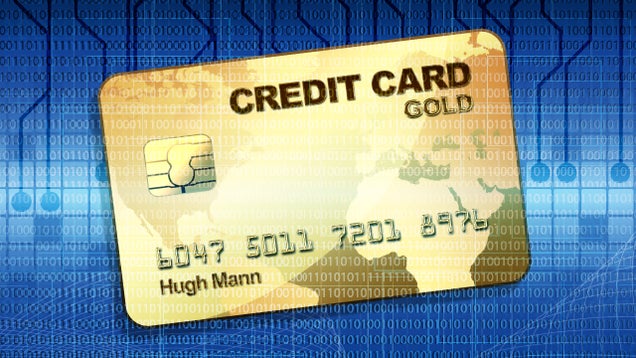
Dear Lifehacker,
I recently discovered several unauthorized charges on my credit card. I called the credit card company and they're investigating, but what other steps do I need to take to protect myself?

    
|
Dear Lifehacker,
I recently discovered several unauthorized charges on my credit card. I called the credit card company and they're investigating, but what other steps do I need to take to protect myself?
|
|

There's no single "formula" to a perfect relationship. However, we've studied an awful lot about what successful couples do. Everyone's relationships are a bit different, but we can take away a lot from what we know works.

|
|
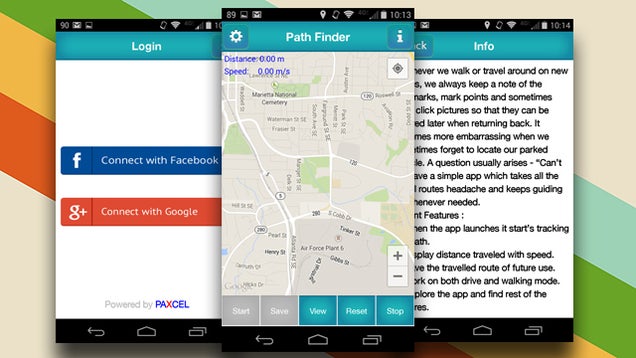
When you need to do something simple like find your way back to way back to your car, you can always mark your location on a map . However, if you want to track the entire path back to where you started from, Path Finder can help.

|
|
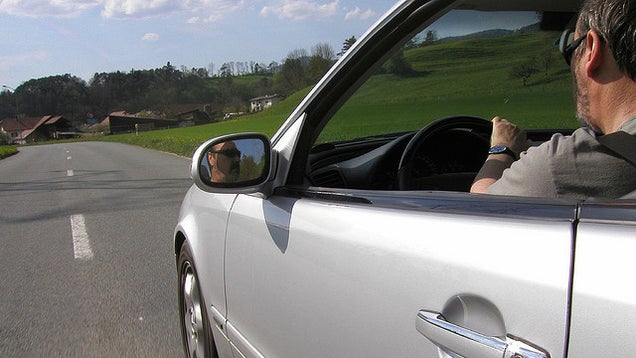
There are many things to consider when applying for a mortgage. Your income, down payment, and credit will all affect your loan amount. But the commuting costs from your job to your new home can affect your mortgage, too.

|
|

Everyone loves free music, especially when it's free to download, completely legally, and based on your music tastes. MusicBox is a new service that delivers music to your inbox twice a month that you can download free and clear. Just tell the service what you like, sit back, and wait for the tunes to arrive.

|
|

The great thing about Android is how customizable it is, and there are some great apps designed to surface relevant apps and data right when you need it. This week, we want to hear about some of your favorite context-aware home screen replacements.

|
|
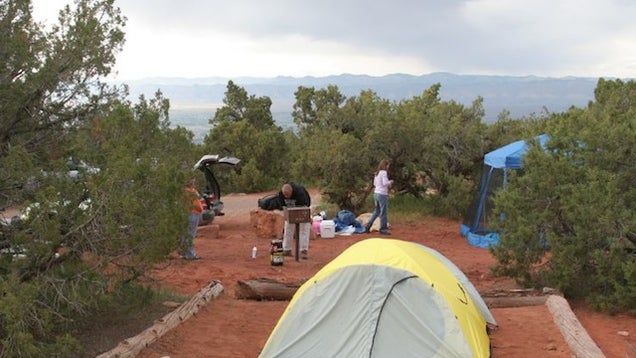
The weather is beginning to turn warm, which means more of us will take the time to explore the great outdoors, along with the parks and lands set aside for public use. FreeCampsites.net is a simple web service that shows you where you can pitch your tent for free, do a little roughing it, and get away from it all.

|
|

There are a several ways to get rid of grease, but one you might just happen to have on hand at a moment's notice is soy sauce. If you need to clean your stove, Apartment Therapy says it'll do the trick.

|
|

Yesterday, Facebook bought a virtual reality company called Oculus VR. Shortly afterward, the internet exploded.

|
|
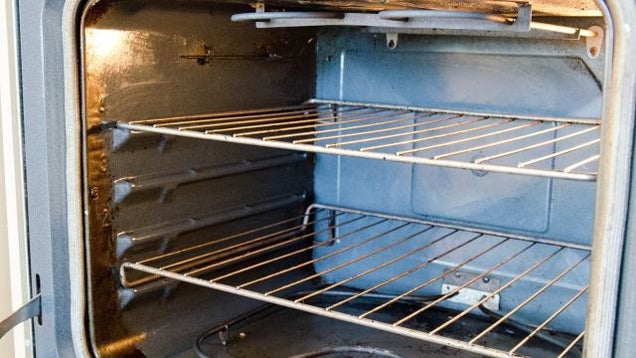
Most ovens have a self cleaning feature that takes six hours or so to get done and you have to remove the oven racks to do it. Instead of trying to scrub those oversize racks at your sink, use the time to give them a good soak in the tub.

|
|
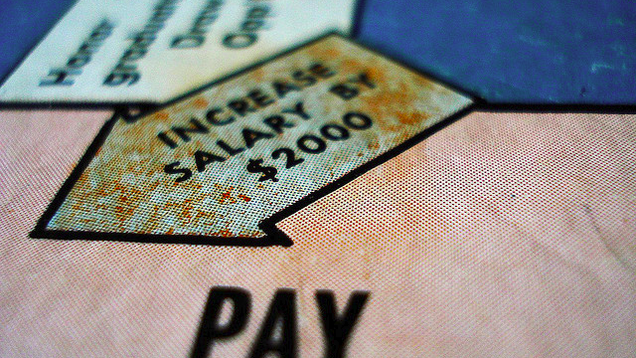
Even if you don't feel comfortable negotiating your salary for a new job, it's something you definitely should do if you want to be paid what you're worth. Forbes recommends starting the salary discussions fairly early so you can avoid getting lowball offers.

|
|

(Louis Abate )
Marketwatch compiled a list of “10 things steakhouses won’t tell you,” which you can read here in detail and in slideshow form. Here are the basics, though.
1. All this delicious steak is in short supply. Premium steakhouses are one area of the restaurant industry that’s growing, which means that there might not be enough premium beef to go around, leading to higher prices or actual shortages.
2. You’re going to pay more soon. Those rising beef prices mean that prices will go up at the fanciest steakhouses in order to keep profits going. Even if they keep entrée prices low, they might charge more for other items on the menu, like sides or drinks. They could also shrink the steaks a bit to preserve margins.
3. You might have to do your homework. Not all “Angus” beef is created equal, but you wouldn’t know that to look at many steakhouse menus. Are you eating premium Certified Angus Beef or something else? You might have to ask before ordering.
4. At busy times, it might not matter what grade beef you’re really getting: a busy restaurant means more steaks on the broiler, unpredictable temperatures, and a chance you won’t get the tasty sear that people visit premium steakhouses for.
5. Lots of menu options look good, but might not taste good. Sure, it might help get companions who don’t like beef in the door, but a steakhouse probably won’t do pasta or seafood very well.
6. On a date? You aren’t their priority. Steakhouses cater to corporate expense accounts, since executives out to impress run up higher tabs and generally tip more generously. Mere civilians might not get the same attention if servers have to choose.
7. Mmm, steak and red wine go well together. But you’re going to find fewer affordable choices on a steakhouse wine list than at other establishments. Why? Because they can.
8. Steakhouses aren’t known for their pastry chefs. While outsourcing dessert isn’t necessarily a bad thing, keep this in mind–the slice of cake you get might be from the same supplier as other local restaurants. That isn’t bad, but it isn’t special, either.
9. Steakhouses aren’t for dieters. Well, they can be if you’re on a diet based on large slabs of meat, but generally the sides and appetizers aren’t low-calorie. Some places make a point to flag lower-calorie options, though.
10. More steakhouses doesn’t mean they’re necessarily improving. Big, famous names like Morton’s and Ruth’s Chris have been accused of coasting on their former reputations and serving up crappy experiences.
10 things steakhouses won’t tell you [Marketwatch]


(frankieleon)
The TSA released a 26-page report yesterday outlining its new proposals, including one that would have armed law-enforcement officers on-hand to help agents guard airport checkpoints and ticket counters at peak times, reports USA Today. TSA agents are not armed, and rely on police support when the need arises.
TSA head John Pistole says the suggestions in the report come after a comprehensive review of the agency’s security, after the gunman killed a TSA officer and wounded three others during the November incident.
Other recommendations on the list of 14 items: More training for staff on how to deal with gunmen as well as improving emergency communications at airports, as police and security officers often use different radio systems. In the LAX incident, the report of a gunman was made on a cellphone and it took several minutes for police to respond.
“We have already taken action on some recommendations,” Pistole told TSA workers Wednesday in a note. “Based on input from employees and key industry stakeholders, we have been focused on mandatory training, improved communication systems and policies, and enhanced law enforcement presence.”
Getting police at every checkpoint might be something easier said than done, warns the president of the International Association of Chiefs of Police, who weighed in on the report during its development.
“I think in a perfect world if we had all the money and resources that would be great, but unfortunately these are going to have to be done on a calculated risk based on peak times and funding that is available,” he said.
“I don’t think there’s an agency that can afford to put police at every checkpoint,” he added. “You might see roving patrols.”
TSA wants armed police at airport checkpoints [USA Today]

That’s what a pair in Denver are accused of doing. They were arrested last week, suspected of obtaining a signature through deception. Specifically, they offered homeless or intellectually disabled people money to sign new phone contracts that included shiny new iPhones. They allegedly had each of their marks sign up for multiple phone lines, promising to pay the victims back for any early termination fees.
Of course, they didn’t.
If the bills don’t come to the correct address, signing these contracts could become disastrous for the victims: they’ll be liable for early termination fees and charges for phone service, but may not even know it unless they live at the address where the bills arrive.
Police believe that there are additional victims, and are looking for them.
Pair Accused Of Targeting Homeless To Fraudulently Obtain New iPhones [CBS Denver]

We can picture it now: A cozy scene in front of a blazing fire, 50 years hence. “Gather round, children. It’s time your Grandpa finally explained why he tattooed a McDonald’s receipt on his arm at the tender young age of 18.” Because yes, that happened.
Forever inked into the dermis of the Norwegian teen is his full receipt from a Mickey D’s meal on Monday, according to Gawker, citing Norway’s Rb.no, that yes, reports the news in Norwegian. He’d been “a little too active” with women, and his friends said he either had to get a Barbie tattoo on his derrier or the McD’s tattoo on his arm.
And because he’s a teenager, he listened to his friends and went with the McDonald’s tattoo. The tattooist posted evidence of the ink on Facebook with the caption, “My weirdest tattoo yet.”

Hello, future regret. Or not, who knows. (Facebook)
He’s not stopping there — the tattoo parlor asked him to get more ink with the receipt for his McDonald’s tattoo on his other arm… and he agreed.
“Now I’m a living billboard,” he reportedly said, “But I think all this is just fun. Maybe it won’t be as fun when I’m 50 or 60 years, but it’s my choice.”
Sounds like he’s agreeing with his future self who will be saying, “You putz. What were you thinking? You weren’t, of course. Now how’m I gonna tell my grandkids that their bodies are temples? Sigh.”
At least he can bask in the warmth of McDonald’s approbation — a spokeswoman for McDonald’s Norway says “We’re obviously talking about a loyal customer.”
Yes, if loyalty means you’re stuck with the decision you made at the insistence of your teen cohorts. Very loyal.
This Norwegian Teen Got a McDonald’s Receipt Tattooed on His Arm [Gawker]


(Lisa)
Earlier today, the FDA took a moment to pat itself on the back once again, by announcing a show of “strong industry commitment” to the 2013 guidance. What this means is that 25 of the 26 drug companies affected by the voluntary measure have “committed in writing to seek withdrawal of approvals for any production uses of affected drug applications and change the remaining therapeutic uses of their products from over-the-counter (OTC) to use by Veterinary Feed Directive (VFD) or prescription.”
What does that actually mean? Let’s break it down, shall we?
First, there are a number of antibiotics that are currently approved for “production” use, meaning they are given to the animals for no reason other than that they helped in the growth of muscle tissue. The 25 drug companies have asked the FDA to withdraw these approvals.
Thing is, for many of the drugs, this won’t matter. As Avinash Kar of the Natural Resources Defense Council recently told Consumerist, a large number of antibiotics used for production purposes are also approved for preventative medical use in animals.
So for the drugs that currently have both types of approval, this withdrawal request just shifts the farmers’ purported reason for using the medicine from “production” to “disease prevention.”
Second, the drug companies are asking to change the designation of drugs approved for medical use from over-the-counter, meaning farmers could just buy them directly, use as directed by a veterinarian.
Again, there are good intentions here, as the FDA attempts to add a layer of responsibility in the form of a veterinarian.
However, as numerous advocates of stricter antibiotic guidelines have pointed out, there is little to prevent the widespread use of these drugs under the umbrella of disease prevention. Of course, that goes against all the scientific evidence showing that overuse of antibiotics results in the development of drug-resistant pathogens.
Senator Elizabeth Warren from Massachusetts attempted to discuss this point when FDA chief Margaret Hamburg appeared before the Senate Committee on Health, Education, Labor & Pensions earlier this month, but Warren’s time ran out before they could have a proper chat on the issue.
In response to today’s announcement, Keep Antibiotics Working — a coalition of health, consumer, agricultural, environmental, animal welfare, and other advocacy groups — says it is both appreciative of the FDA’s effort to be transparent about the process, and skeptical that this not-exactly-ironclad guidance will have any positive effect on the public health threat caused by antibiotic resistance.
“First, these letters submitted by the drug companies are not binding, so the companies can still stop participating at any time,” says KAW Senior Senior Analyst Steven Roach. “Even more important, FDA has done nothing to limit the continued use of antibiotics for routine disease prevention. In terms of dose, duration, and number of animals the drug is being administered to, this type of use can be identical to growth promotion, which the FDA is asking the companies to phase out.”
Roach says that what’s needed is for the FDA to collect data on which (and how many) animals are receiving which (and what quantity of) these antibiotics, and why these animals are receiving the drugs. So rather than just a sweeping “no more drugs for production” rule that still allows widespread preventative use, consumers would know if the guidelines are actually cutting down massive quantity of antibiotics being provided to farm animals.
And the odds are that the FDA rules, as they currently stand, are only being viewed as a laughable hurdle by both big pharma and big farm. As we pointed out when the initial guidance was released, even though farm animals account for 80% of the antibiotics sold in the U.S., multiple drug companies said they were not concerned about the FDA guidance having any negative effect on their bottom lines, implying that the same number of drugs will be sold regardless of the voluntary measures.
Equally skeptical is NRDC’s Kar, who says “There is still no evidence that the FDA’s voluntary plan will do anything to limit the increase in the antibiotic-resistant bacteria that endanger all of us. Animals will still be fed antibiotics daily even though they aren’t sick. While it’s good to see FDA and corporations coming to the table on this, their solution doesn’t cut it. Fixing the problem means curbing the misuse of these drugs. This plan is likely to lead to label changes, not a reduction in use.”
“Getting the companies to send letters is the easy part,” says Roach. “Actually reducing antibiotic overuse is the real challenge.”
“We don’t add antibiotics to the cereal of kids to prevent diseases in daycare centers, and we shouldn’t be doing this with animals,” adds Kar. “FDA needs to dramatically reduce antibiotic use in animals. Until that happens, the rest is just window dressing.”


Look at that smug hamburger.
The masses are demanding an answer, and by masses of course I mean my friend Jen and a bunch of people on the Internet who are drumming up support and spreading the word to convince someone, anyone, to create a hot dog emoji, among others.
While there are emojis for other popular foods like ice cream, pizza and sushi, there’s no hot dog, an omission one emoji fan has taken on as a personal quest. She and others are lobbying for hot dog emojis, she tells the Wall Street Journal, with a petition that so far has collected almost 300 signatures.
“When we want to write something cute on Twitter, it’s just not there,” she explained.
“People are demanding a hot-dog emoji,” adds the third-generation general manager of Superdawg Drive-In. “It’s a slight against the hot-dog community.”
Turns out it might be a bit of a process to create any new emoji, and it’ll likely have to go through one group first, a nonprofit called Unicode Consortium that handles most things emoji.
It was formed by computer programmers in the 1980s to get a handle on coding in languages around the globe, so nothing would be lost as messages zipped around the Internet.
Unicode’s co-founder says the group took over emojis after people couldn’t understand all the symbols in Japanese emails. He says it’s not going to be that easy to bring a hot dog emoji or any other new symbols into existence.
“People say, ’You really should encode X because it’d be good,’ ” he explained to the WSJ. “But we don’t try to make original, new symbols… We look at what occurred in historical or modern times to decide whether or not something should be added to the standard.”
“We’re talking about the Internet here,” he added of the periodic additions to the emoji library. “The number of possible images is infinite.”
But even Apple wants more emojis to become available, with a spokeswoman saying, “There needs to be more diversity in the emoji character set and we have been working closely with the Unicode Consortium in an effort to update the standard.”
A spokesperson for my friend Jen (who is just herself) agrees. “It’s a tool of the people, for the people and it should be BY the people,” she said today during a hot dog emoji-induced rant. “The coders can’t hold us down! HOT DOG EMOJIS!!! HOT DOG EMOJIS!!!! Give the people what they want!”
Unicode’s emoji subcommittee has yet to see a proposal for hot dogs, but the co-founder seems to think it’s not likely. Too many variables involved, you see, depending on how you prefer your wiener.
“The problem with the hot-dog emoji is, what do you then want with the hot dog? Would we do one with ketchup or without?”
An important question for these times.
Take Our PollHot-Dog Fan Campaigns for New Emoji [Wall Street Journal]
Follow MBQ on Twitter but don’t expect any hot dog emojis because did you just read the above post?: @marybethquirk


Dancing will not get you a free cupcake.
The bakery itself is open from nine in the morning to nine at night, leaving twelve hours when the good (and bad) people of New York are unable to buy cupcakes…from Sprinkles, anyway. There must be cupcakes available in many other places. Yet the ATM exists to cover sugar emergencies during the other twelve hours of the day.
Sprinkles claims to be the first cupcake-focused bakery, and innovated new ideas in cupcake deployment like the original ATM and the first cupcake truck.
For the grand opening, the shop put gift cards good for a dozen cupcakes, a cupcake party, and a $500 prepaid AmEx card in the boxes. Pricey baked goods and the potential to win prizes? People are
At this rate, there will be a cupcake ATM in every city in the United States….probably sometime in the 25th century.
Sprinkles Cupcakes New York [Official Site]
Sprinkles Cupcakes New York [Facebook]


(SA_Steve)
The average McDonald’s earns $2.6 million every year, while the average Burger King takes in $1.2 million. Why is that? What are the other reasons for the disparity?
Off-peak business. Lunch is the peak time for fast food in general, but restaurants are open for most of the day. McDonald’s does more to get business at times that aren’t lunch or even dinner. People love Egg McMuffins, but what’s your favorite Burger King breakfast item? They have a nice breakfast menu, but you probably can’t name any iconic products from it.
There’s a reason why Taco Bell wants to enter the breakfast market, and it’s not because of a profound love of waffles.
Happy Meals. Other fast food outlets offer kids’ meals with toys, but none of them will ever match the marketing power of the Happy Meal.
Yes, the King has been dethroned as Burger King mascot, and a company executive admits that the company’s marketing might have hurt their popularity with… well, Bloomberg Businessweek says that women and children didn’t care for the mascot, but we would argue that the giant puppet character was unpopular with humans.
Efficiency. McDonald’s simply can get more food out the door and serve more customers faster – their recent third drive-thru window innovation helps them herd cars through the line even faster.
Advertising. Nationwide, McDonald’s spends almost ten times as much on advertising. It’s a smaller chain, yes, but all that relentless advertising puts the brand in customers’ minds.
How the Average McDonald’s Makes Twice as Much as Burger King [Businessweek]


One possible design for Josh Wise’s Dogecoin-sponsored NASCAR car.
Dogecoin was launched in Dec. 2013 with the intention of creating a digital medium of exchange that could be used more easily and widely than Bitcoin. It has become an increasingly popular way for people to show their appreciation for one another in social media circles by “tipping” in Dogecoins.
STILL DON’T UNDERSTAND BITCOIN? READ CONSUMERIST’S GUIDE TO BITCOIN BASICS
The coin also features the Shiba Inu dog from the well-known “Doge” meme that gives the currency its name.
Back in January, the Dogecoin community banded together to amass enough cash to send the much-loved Jamaican Bobsled Team to the Sochi Winter Olympics in Russia.
“Josh is an underdog in the NASCAR world,” the campaign’s organizer, Kevin Dusenberry, tells Mashable. “Dogecoin is an underdog in the crypto world. It was a match made in heaven.”
So when folks on the Racing Subreddit noticed that NASCAR driver Josh Wise still lacked a sponsor, the Dogecoin and racing communities crowdfunded the $55,000 needed to get the currency’s brand on Wise’s car.
Wise celebrated the news yesterday on Twitter:
Wow. I have been flying back to Charlotte today and just landed to new that @dogecoin and the @reddit community raised enough $ to sponsor!—
Josh Wise (@Josh_Wise) March 25, 2014
Just a week ago this was only an idea and now it's a reality. So thankful for all the fans, @reddit community and @dogecoin for doing this👍—
Josh Wise (@Josh_Wise) March 25, 2014
The driver will be doing an Ask Me Anything session at 9 p.m. tonight on the Dogecoin Reddit page.

Hasbro has been publishing the game since 1991, and announced this week that a special edition of Monopoly will hit shelves this fall that includes the best of the best “house rules,” reports the New York Times.
“While the official Monopoly rules will not change,” the company said in a statement, “fans who love playing with ‘house rules’ will now have the opportunity to play them in their game.”
Fans are invited to discuss the 10 most popular house rules on Monopoly’s Facebook page until April 3, when it will choose five to become part of the special addition.
It appears I’m too late to submit the aforementioned “sock on ears” rule, but just know that it’s available for your own personal use if you’d like to employ it.
Can’t Play by the Rules? It’s Fine by Mr. Monopoly [New York Times]

Unless you’re a financial titan (or got your house on the cheap) your home is probably the biggest investment you’ll ever make, so don’t screw it up by not having the proper insurance.
If you’re like most homeowners, you probably have the same policy you did when you first bought your home. Maybe you updated the policy when you did work on your home… or maybe not.
If you’re a renter, you sure as heck should consider getting a policy because your landlord’s insurance won’t cover your stuff.
And a special note to condo owners: Your association will have a master policy that covers much of what can go wrong, usually from the walls out. From the walls in will be your responsibility, so work with an agent who can read (and hopefully understand) your condo association’s policy to learn where its coverage ends where yours needs to begin.
Without any further ado, here are 15 things you need to know about homeowner’s insurance.
1. You’ll have to decide what kind of coverage you want, and the costs vary.
Market value coverage would pay you the current cost of your home. These policies are generally less expensive because they’ll only pay you the value of your home based on market conditions. But what you really want — and it’s worth paying more for — is guaranteed replacement coverage. This will cover the actual cost of rebuilding. Ask about extended replacement coverage, too. Some policies offer a “cash out” option, which is really only good if you choose not to rebuild, so if your home is your castle, that won’t be enough for you.
2. Know what’s covered.
This will vary from policy to policy, but generally, your homeowner’s policy will cover fire, theft, and vandalism for your property and lots (but not all) of the stuff inside (See No. 5 below for more on that).
It may also cover damage from certain kinds of storms. Many Superstorm Sandy-damaged homeowners are still battling their insurance companies over coverage from water damage and wind damage, so make sure you understand the details of your policy before another storm of any kind hits. Ask lots of questions, and move on to No. 3.
3. Even a policy with bells and whistles probably won’t cover flooding.
So you need to purchase a separate flood insurance policy if you’re in a flood-prone area. Check out the National Flood Insurance Program and FEMA’s list of insurers who offer flood insurance policies.
Tornadoes are often covered by standard policies, but don’t expect coverage for earthquakes, landslides, war or government actions, either. Ask about what’s excluded under the good old “Acts of God” clause, and figure that damage from a nuke (as if you’d want to stay in your neighborhood if it’s hit) is excluded.
4. Don’t let the bank pick your policy for you.
If you have a mortgage but you don’t have homeowner’s insurance, your mortgage company will probably pick a policy for you and include it in your escrow payments. The lender is protecting its investment, but you can be pretty sure the policy will be more expensive, and cover less, than one you pick out on your own.
5. Some items may need additional coverage.
Some high-value items in your home — perhaps an engagement ring or collectibles or artwork — may require a separate “rider” on your policy. Again, ask your agent.
6. Most policies cover your belongings when you’re not home, too.
For example, your auto insurance (see last week’s story) probably won’t cover a laptop stolen from your car, but your homeowner’s policy probably does. Even your cell phone may be covered (so you can save on those troublesome phone company insurance policies). And if you go on vacation or send a kid to college with stuff, that stuff may also be covered. Ask.
7. Water damage is a tricky one.
So it’s smart to ask your insurance go-to person for a clear explanation of what happens when stuff gets wet. Damage caused by a leaky pipe or a flooded dishwasher may be covered, while the aforementioned flooding probably won’t. Ask about whether or not mold damage is covered — and under what circumstances — because remediation can be pricey. Also inquire about damage from — ick — sewer systems, and make sure you don’t confuse sewer with septic tanks, which are treated differently by most policies.
8. Accidents happen, and some are actually covered.
Maybe your dog’s powerful tail takes out your big screen television, or your kid does jumping jacks on your glass table, or your drunk uncle spills a goblet of red wine on your white carpet. Your policy may help with repair, replacement or cleaning bills.
9. That frozen half-cow in your basement freezer might be covered.
If you lose power for an extended period and you have to toss all the food from your fridge and freezer, your policy may help you restock.
10. Re-keying may be included.
If you lose your keys, some policies will cover the cost of new locks for your home.
11. Don’t be left in the cold (or wet).
If your boiler dies or a pipe bursts, some policies will pay for emergency repairs.
12. Safety is often rewarded.
Most insurance companies will offer a discount if you have deadbolt locks, central station alarm service for security and fire, sprinkler systems and more, so ask your agent how you can save. You’ll also have cheaper premiums if you insure your home and your car with the same carrier.
13. Temporary lodging may be available.
If your home is unlivable, you’re going to have to move into a hotel, or worse, you’ll have to beg your family and friends to take you in. Instead, see what your policy covers for an alternate place for you to stay.
14. Coverage for legal assistance could be included.
If you need legal help because someone sues you for injury, or if there’s a land dispute with your neighbor, your policy may cover this. Given our litigious world, you may want to add extra coverage with an umbrella liability policy, which usually only costs a few hundred bucks a year.
15. The lowest price doesn’t mean the best policy.
Sure, you will find wide differences in premiums per policy — even for ones that seem to offer the same coverage. That’s why you have to shop around and ask lots of questions… no way around that. Talk to friends and family members about who they use, and it’s a bonus if you can ask someone who has had to file a large claim. You’ll learn a lot about the attention given to customers and how claims are treated. The last thing you want when you’re dealing with a loss is sucky customer service.
Remember, even if you’re covered for all kinds of items, if you file a claim for everything, you may soon find yourself without an offer to renew your policy once the year is out. So file claims sparingly, and talk to your agent if you have concerns about making a claim.
There’s one more must-do: If the worst happens, it pays to have proof that you own what you say you own if you ever have to make a claim. Take a video or lots of photos of every room in your home, and at every angle. Open your jewelry box and closets, show off your record collection and keep a good record of any new items you purchase. Save receipts. And don’t forget to document stuff on the outside, such as sheds, decks, lawn furniture and so on.
You should redo this photo/video sweep of your home once a year.
Make sure to keep this proof of your stuff in a place other than your home. It won’t do you any good if it burns down or gets soggy with everything else.
Use the Insurance Information Institute’s home inventory checklist for some help.
And don’t forget, as time goes on, make sure to keep updating the photo and video records of your home and its contents, because as your life changes, so will your stuff.
Stuff.
Can’t write about “stuff” without sharing this (potentially NSFW) clip:
Next week, we’ll look at homeowner’s insurance!
Have a topic you’d like to see covered in How To Not Suck? Or maybe you’re an expert who would like to share your insight with Consumerist readers? Send us a note at notsuck@consumerist.com.
You can read Karin Price Mueller’s stories for The Star-Ledger at NJ.com, follow her on Facebook, and on Twitter @kpmueller.
PREVIOUSLY ON HOW TO NOT SUCK:
15 Things You Need To Know About Buying Auto Insurance
How To Not Suck… At Going To Small Claims Court
How To Not Suck… At Buying In Bulk
How To Not Suck At Planning Your Wedding, Part 5: Spending Your Wedding Cash
How To Not Suck At Planning Your Wedding, Part 4: The Honeymoon
How To Not Suck At Planning Your Wedding, Part 3: The Costly Little Extras
How To Not Suck At Planning Your Wedding, Part 2: The Stuff People Pay Too Much For
How To Not Suck At Planning Your Wedding, Part 1: The Most Expensive Steps
How To Not Suck… At Teaching Your Kids About Money
How To Not Suck… At Valentine’s Day Gifts
How To Not Suck… At Merging Your Money When You Marry
How To Not Suck… At Borrowing For College
How To Not Suck… At Saving For College
How To Not Suck… At Pre-Paying For Your Funeral
How To Not Suck… At Making Financial New Year’s Resolutions
How To Not Suck… At Last-Minute Christmas Gifting
How To Not Suck… At Saving For The Holidays
How To Not Suck… At Charitable Giving
How To Not Suck… At Disputing Credit Report Errors
How To Not Suck… At Lowering Your Utility Bills
How To Not Suck… At Home Inspections
How To Not Suck… At Understanding Credit Card Rewards
How To Not Suck… At Getting Ready For Tax Season
How To Not Suck… At Picking A Retirement Plan
How To Not Suck… At Deciding When To DIY
How To Not Suck… At Getting Out Of Debt
How To Not Suck… At First Year College Budgets
DISCLAIMER: Any websites, services, retailers, or brands mentioned in the story above are only intended as some of many options available to consumers, and do not constitute an endorsement by Consumerist, Consumerist Media LLC (CML) or its staff. Per Consumerist’s No Commercial Use Policy, such information may not be used by others in advertising or to promote a company’s product or service. In addition, this policy precludes any commercial use of any of CML’s published information in any form, or of the names of Consumers Union®, Consumer Media, Consumer Reports®, The Consumerist, consumerist.com or any other of CU or CML’s publications or services without CU or CML’s express written permission.

Loudoun County community calendar Washington Post Sunday, March 23. “A Tale of Three Trees,” musical performed by children, about the life of Jesus as told through an American folk tale. 8:30 and 11 a.m., Holy Trinity Lutheran Church, 605 W. Market St., Leesburg. Donations requested. 703-777-4912. |


