Shared posts

29 Jun 16:05

Diesel Cars Do Not Always Equal Dollars Saved

by Automatch Tom on AutomatchTom, shared by Whitson Gordon to Lifehacker

Diesel Cars Do Not Always Equal Dollars Saved

Our love for the oil-burners is no secret here at Jalopnik. Especially if said diesel motor is in a wagon that will allow you to row your own gears. However, outside of our circle, diesel is not terribly popular in the US market. In today's Morning Shift, industry experts are predicting that we will see a lot more diesel motors in the coming years. I think this prediction is a little ambitious when you start looking at the numbers. For the purpose of this comparison I am going to leave pickup trucks out and just focus on passenger cars.

Read more...


29 Jun 16:04

Make Your Own Hide-a-Key With an Old Medicine Bottle

by Patrick Allan

Make Your Own Hide-a-Key With an Old Medicine Bottle

If you want a hide-a-key option for your house, and you want something that will blend in well with your yard, weblog Factory Direct Craft has a simple solution. All you need is an old prescription pill bottle.

Read more...


29 Jun 15:36

Identify Your Voice's "Mask" to Optimize Your Natural Pitch and Tone

by Eric Ravenscraft

You'd think talking would be one of those things we've mastered by the time we're adults. Yet we haven't even got breathing properly down . If you're trying to make your voice sound better and project more, start by finding your voice's "mask."

Read more...


29 Jun 15:29

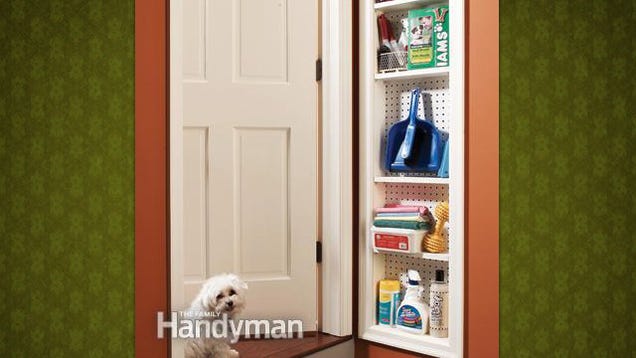
Build a Shallow Pegboard Cabinet for Extra Storage

by Whitson Gordon

Build a Shallow Pegboard Cabinet for Extra Storage

Need some extra storage in your house, but don't have the room for a full closet? The Family Handyman has a guide for a shallow, pegboard-equipped closet that you can fit just about anywhere.

Read more...


29 Jun 15:28

Book Weddings in Parks or Museums to Save Big (and Get a Tax Break)

by Alan Henry

Book Weddings in Parks or Museums to Save Big (and Get a Tax Break)

Weddings are massive money sinks, especially the bigger and more involved it gets. US News Money has several suggestions to keep costs down, but one stood out to us: Instead of ballroom or banquet hall, try a museum, park, or public space owned by a non-profit. It's cheaper, and you might get a tax deduction, too.

Read more...


29 Jun 15:21

Script Your Main Talking Points to Combat Social Awkwardness

by Mihir Patkar

If you struggle with awkward conversations with someone new , Ramit Sethi of I Will Teach You To Be Rich has some great tips to help you unfreeze and overcome your social anxiety.

Read more...


20 May 03:36

Would You Leave Your Job if Your Employer Paid You to Quit?

by Eric Ravenscraft

Would You Leave Your Job if Your Employer Paid You to Quit?

Knowing when to quit your job is never an easy thing to figure out. Amazon has recently taken an interesting approach by offering up to $5,000 to employees who want to quit. Would you take it?

Read more...


20 May 03:33

Fill Out This Simple Survey, Get Actual Help From Sears

by Laura Northrup

love_feedbackOver the last nine years or so of Consumerist, we’ve chronicled the tragic decline of Sears, an American institution. This has happened under the leadership of manifesto-writing hedge fund manager/CEO/intra-company deathmatch impresario Eddie Lampert. Shoppers’ biggest complaint: profound dysfunction and incompetence in stores. A manager at Sears slipped Consumerist a bit of information that people locked in a customer service battle with Sears might find useful.

While the company’s customer service at all levels might seem consumer-unfriendly and confusing, our tipster tells us that there is one surefire way to get your local store’s attention: give them a bad survey grade. You will need a receipt number, but simply surf over to the brief and easy survey at shopsearsfeedback.com.

The secret regarding this survey is it counts for a whopping 30% if the store’s overall quarterly and yearly scorecard, which affects the management team’s bonuses and their overall ranking within the company. I cannot stress how important this is to Sears and the affected stores that receive a low feedback score on this survey site.

Once a low feedback score is submitted (a 5 or lower out of 10), an email notification is immediately sent to the Store Manager, District Manager, and VP in charge of customer service notifying them of the subpar score. Once this notification is completed, the feedback is entered in a case management system where it must be assigned to the manager of the impacted employee for follow up and resolution.

sears

Our tipster tells us that while Sears does have executive customer service staff and people higher up who can help customers, there is no way to track these transactions in the system and hold the store accountable. including the manager and employees involved in your issue.

We checked with Sears to find out whether this is true, and are waiting to hear back…but they may not be willing to admit it if this is, indeed, the only way to coax good customer service out of their organization.

“If you want to get a service issue or purchase taken care of at Sears, use the feedback form…only then will anyone take it seriously because it actually affects their bonus payout,” our tipster summed up. This information is somehow both demoralizing and useful.

20 May 03:32

Power Company Burns Down Couple’s House During Cancer Treatment

by Laura Northrup

(CBS Dallas)

(CBS Dallas)

M.D. Anderson Hospital in Houston, Texas offers world-class cancer treatment, and a man who lives near Dallas traveled there to continue treatment after fighting cancer for three years. He had just learned that chemotherapy was no longer working when a call came from their neighbors back in northern Texas: their home was on fire.

The utility, Oncor, didn’t set out to burn the couple’s house, of course. According to the couple, the fire started after the company was “changing out some wires.” An investigations team at a local TV station learned that a crew turned off power and worked on a utility pole behind the house, then turned the power back on.

Neighbors were able to save the couple’s pets, but not much else. the utility apologized, but didn’t offer much help, telling the couple to make a list of everything that was in their home. “It’s kind of hard to do,” notes the wife.

The good news, if there is any good news in this situation, is that the utility does accept responsibility for the fire, and plans to compensate the family in some way. “We know this is just a horrible situation and we sympathize with the family as they’re going through this …We’re working as quickly as we can to help them resolve this and help them move forward,” a company spokesperson told the TV station. What they haven’t done yet is help the couple to find a place to stay and a way to pay for those lodgings after they return from Houston.

Cancer Patient Homeless After Power Company Mistake [CBS Dallas]

20 May 03:30

Restoration Hardware Dumps 17 Pounds Of “Sustainable” Catalogs On My Porch

by Laura Northrup

Two years ago, Restoration Hardware got some media attention for putting out a 5.5 pound, almost 1000-page-long “Source Book,” which is effectively a catalog. Maybe they want even more attention this year, which is why they’ve dispatched UPS to dump 17 pounds of catalogs on customers’ doorsteps.

restoration

Reader Colby was the first to report the existence of this massive conglomeration of catalogs. “They’ve outdone themselves. This is an environmental crime,” he wrote. “They should be ashamed.”

Gabriela received the catalog pack, too. “I could barely pick it up,” she said. She says that she e-mailed us from a couch purchased at Restoration Hardware, but was very unhappy with this mass mailing. On Facebook, she rallied others to deliver their catalog stacks at local stores to demonstrate their displeasure. “I realize some companies will continue advertising through print,” she writes, “but at least you can stomach a few pages in your mailbox.” 17 pages sent by UPS? That makes phone books look eco-friendly by comparison.

When you visit Restoration Hardware’s website, they go to some significant trouble to explain how their catalog-blasting initiative is totally not an environmental crime. The paper used comes from sustainable forests, they explain, and they’ve purchased carbon offsets to make up for the number of miles driven to deliver these catalogs to customers’ recycling bins.

The more important question is this: why is Restoration Hardware mailing massive stacks of catalogs to anyone? Their site explains:

OUR COLLECTION OF SOURCE BOOKS IS MAILED ONCE A YEAR.

OUR 13 SOURCE BOOKS ARE PUBLISHED JUST ONCE A YEAR AND SHIPPED IN A SINGLE PACKAGE. THESE BOOKS SERVE AS A DESIGN LIBRARY FOR CUSTOMERS TO REFERENCE FOR INSPIRATION THROUGHOUT THE YEAR.

Look, Restoration Hardware, we don’t need you to mail us a “design library.” Isn’t that what Pinterest is for?

Restoration Hardware is sort of like Pottery Barn for the 1%, and these catalogs seem to be part of their current effort to reach even more, wealthier customers. Racked reports that the company is also building ever-larger and fancier storefronts that will feel more like museums than home goods stores. The one in Boston is a 40,000-foot space in a former museum of natural history.

Of course, none of this explains why they can’t make the massive catalog piles opt-in. We contacted Restoration Hardware to ask what on earth they were thinking, and whether they’ve considered maybe making these catalogs opt-in.

20 May 03:28

Private Companies Building Giant Unregulated Databases Tracking License Plate Location Info

by Kate Cox

Do you know everywhere your car has been in the past week? Month? Year? You may or may not remember it all, but there’s a good chance that your license plate has had its photo snapped, and its location recorded, a whole bunch of times in that period. And anyone who can pony up the cash for a subscription to that database can tell exactly where you’ve been.

Private license-plate tracking companies are a $500 million business, as the Los Angeles Times reports, and getting bigger every day.

According to the LA Times, as of 2012 — the most recent available data — over 70% of police departments in the country were using license plate scanning technology. In 2010, it was half that. Police not only have their own scanners, but also pay for access to the database of privately-generated scans.

It’s a tricky sort of public-private arrangement. A private company puts plate cameras and tech on repossession workers’ cars, and those repo agents then drive around the country scanning everyone’s plates, as we’ve covered before. The resulting database has more than two billion scans in it, a number that’s increasing every day.

It’s that aggregation of data that makes the plate-scanning scary. An individual snapshot — “Virginia plate 123456 was at Safeway on 12:19 p.m. this Thursday” — tells you nothing, unless you’re specifically looking for that car. But a series of snapshots, showing you where VA plate 123456 was on nearly every weekday morning and evening for the last three months… that’s a big pile of information about one person’s movements and associations.

Granted, information about the car isn’t necessarily useful if you can’t connect the license plate to an owner. And federal law does prevent state DMVs from just giving out registration information to anyone and everyone who asks. But there are over a dozen exceptions to the law, including one for private investigators. So in reality, it’s not that hard for most organizations to find out who a car belongs to.

There are clear parallels to the collection of phone metadata. Looking at months or years worth of data about where a car is parked or driven and and when it was there gives you pretty clear picture about that car’s owner: Where do they live? Work? Worship? Shop? Where do their kids go to school? Where do they hang out for fun? When? For how long? For many drivers, a month of tracking when and where their car’s license plate was seen would answer every single one of those questions.

To the companies selling this tech, and access to their databases, that’s its key feature:

“Owners are typically within 1,000 feet of the vehicle, so find the vehicle and you find the customer,” reads the site of Digital Recognition Network. “Quickly and efficiently pinpoint the most likely addresses from among the limitless possibilities returned by various data services, friends, associates, relatives, employers.”

It’s not just the police who have access to those scans. So too does anyone else willing to pay — private investigators, repo workers, even banks or lenders.

In some cases, the private companies are now trying to have the police do business’s dirty work for them. The Times reports that last year, one company, Vigilant, offered the police department in Tempe, AZ, access to their license plate scanning tech for free — but with a catch.

In order to get free equipment, the department would have to “go after at least 25 outstanding ‘Vigilant provided’ warrants each month. In general, such arrangements are paid for by private collection companies,” a company VP told the paper.

Speaking for Vigilant, the company VP told the LA Times that “no agencies are currently working under this framework,” but declined to comment further on the issue. A spokesman for the Tempe police told the Times that the city opted not to participate in the program.

Privacy advocates are extremely concerned about the breadth and depth of collected plate-scanning information, and about the lack of regulation regarding its use. And transparency? Forget it.

“Law enforcement agencies have denied public records requests for license plate data, and private data collectors are not subject to such records requests,” the Times reports. An attorney with the EFF told the paper that some of the contracts between companies like Vigilant and police forces even “have a clause that says law enforcement agencies aren’t allowed to talk about their products without talking to the company first.”

There is no way of tracking what private companies are up to, or how they use the data they collect. Legislators in California and in Utah have proposed state-level regulation limiting where license plate photos can be taken, and making it easier for individuals to sue collectors, but in neither state has any bill protecting individuals yet become law. It’s just one more piece of big data that keeps following consumers around.

Use of license plate photo databases is raising privacy concerns [LA Times]

20 May 03:25

Burst Bakery Pipe Covers Home In Flour; Bun-Bakers Won’t Fork Over Dough To Clean Mess Up

by Chris Morran

The homeowner, looking through her flour and cornmeal-crusted front door.  See more photos at NJ.com. (photo: William Perlman/Newark Star-Ledger)

The homeowner, looking through her flour and cornmeal-crusted front door. See more photos at NJ.com. (photo: William Perlman/Newark Star-Ledger)

For years, an elderly New Jersey woman lived in peace next door to a bun-baking factory. But that’s all changed in the past year, following two incidents that have left her property covered in flour and cornmeal and stuck her with the cleanup bill.

The Newark Star-Ledger’s Bamboozled column — penned by our own Karin Price Mueller — has the woman’s story, along with saga of multiple, unsuccessful attempts to get anyone at the baking company to give a hoot about her problem.

The first incident occurred last August, when the octogenarian homeowner noticed that her property had become covered in a white powdery substance.

“It was flour and looked like an early snowfall,” she tells Bamboozled. “It was covering the yard, the garage roof, the garden and the entire yard next store. My windows and screens were covered.”

The bakery did send over some employees to hose down the house and yard, though the homeowner says some floury patches remained.

The workers never cleaned her windows, which were still coated in flour. After weeks of trying to get the bakery to remedy the problem, the homeowner went out-of-pocket to the tune of $300 to have her windows and screens cleaned.

She asked the bakery to reimburse her for the cost. It countered with an offer of $150 because she was unable to provide a receipt.

“So I suggested receiving baking products in replacement of the $150,” says the homeowner. “(The employee) thought that was a good idea, however I only got a cheese babka and a pie that was not equal to $150.”

Then came January 6, when the she says she was woken up by the sound of a blast from the neighboring bakery. A pipe had apparently burst during the delivery of materials to the bakery, resulting in her property once again being coated and ready to be deep-fried.

“I went to the back porch windows and saw that my windows were covered with a substance — a mixture of flour and corn meal,” she recalls. “I went down and found my back door, the garage, the roof, the entire property was covered with this flour/corn meal. It was a heavier coating than the first incident.”

The police were unable to raise anyone at the bakery. The local health department finally reached an HR staffer at the company, who first said the homeowner should get her home cleaned and then the bakery would reimburse her for cleanup expenses. However, the employee then agreed that it was really the bakery’s responsibility and it should be the one hiring a cleaner rather than requiring the homeowner to once again pay for its mess.

The HR rep told the health dept. that she would contact the homeowner, but never did. Her attempts to get anyone at the company to respond came to no avail.

She contacted her insurance company but didn’t file a claim because the baker had told the health dept. it would take care of the cleanup. However, she did have the insurer recommend a cleanup service, which she then contacted for an estimate.

That service estimated the exterior cleanup of the home at $5,500, with another $725 estimate for cleaning affected interior portions of her home and two air-conditioning units.

To remove and replace the landscaping that was contaminated by the explosion would take another $3,800, pushing the total over $10,000 for the full cleanup.

With estimates in hand, she contacted the HR person who had never reached out to her as originally promised. The HR person passed her on to the plant manager, who never responded to her multiple voicemails and was not available when she tried to find him at the bakery.

She called the health dept. again and they went over to the plant together, where the manager was once again unavailable.

The health dept. looked into issuing a summons to force someone at the bakery to appear, but later determined that it didn’t have the authority because the flour/cornmeal mix might be a pain in the butt, but it’s not a health or safety hazard.

“I still track corn meal/flour into my home. My windows are still coated with the mixture all these months later,” said the homeowner to Bamboozled, pointing out that the bakery has repaired the damaged pipe that spewed the crud all over her house, but won’t return her calls about cleaning up their mess.

Bamboozled then tried to get involved in the hope that negative media attention would spur the company to action. Alas…

After following the money trail to the bakery’s owners, Bamboozled made several attempts to get some answers.

Voicemails went unresponded to, messages left with receptionists vanished into the void. Even e-mails on LinkedIn failed to get anyone’s attention.

The HR manager who’d given the homeowner the runaround did the same to Bamboozled, directing them to the never-available plant manager. The manager then passed them off to a different HR person, who suggested they talk to the plant manager. When Bamboozled explained they really just wanted to talk to the company’s owner, this HR person promised to pass on the message. You’ve probably already guessed which circular file that went into.

Meanwhile, the homeowner’s property is still covered in a floury, corny mess that she will probably have to sue to get cleaned up.

Bamboozled: Bakery pipe explosion covers NJ home in flour, company won’t pay for cleanup [NJ.com]


20 May 03:21

1.8 Million Pounds Of Ground Beef Recalled For Possible E.Coli Contamination

by Ashlee Kieler

Planning to get a juicy hamburger for lunch today? Some of you may change your mind after reading this. Nearly two million pounds of ground beef products were recalled today because of possible E.Coli contamination.

U.S. Department of Agriculture’s Food and Safety Inspection Service announced the recall of more than 1.8 million pounds of ground beef shipped to distributors for restaurant use in Massachusetts, Michigan, Missouri and Ohio.

The meat, which were produced from March 31 to April 18, may be contaminated with E.Coli O157:H7, a potentially deadly bacteria that causes dehydration, bloody diarrhea and abdominal cramps after exposure.

The recall was initiated after FSIS and the Centers for Disease Control and Prevention found a link between the ground beef products from Wolverine Packing Company in Michigan and an illness cluster. So far there have been 11 reported cases of E.Coli-related illness in four states.

The meat was not distributed to the Department of Defense, the National School Lunch Program or catalog/internet sales, FSIS reports.

The full list [PDF] of recalled products include the establishment number “EST. 2574B” and the production code “Packing Nos: MM DD 14″ between “03 31 14″ and “04 18 14″.

Michigan Firm Recalls Ground Beef Products Due To Possible E. Coli O157:H7 [U.S. Department of Agriculture]

20 May 03:21

FCC: Basic Cable Prices Increased At Four Times Rate Of Inflation

by Chris Morran

From the FCC report on pay-TV pricing.

From the FCC report on pay-TV pricing.

If you just had a hunch that your basic cable pricing was going up more rapidly than the other things you pay for, you’re probably not mistaken. A new FCC report on the cost of pay-TV services says that during 2012 the cost of a basic cable TV package increased at more than four times the rate of inflation in the U.S.

According to the report [PDF], during 2012 the average price of the most basic cable package increased by 6.5% to $22.63. Meanwhile, inflation in the U.S. that year was only 1.6%.

Rates for the more popular “expanded basic” packages jumped up 5.1% to $64.41 in 2012, more than three times the rate of inflation.

And this isn’t just a short-term trend. Over the 18-year period from 1995 to 2013, cable rates increased 6.1%, while the Consumer Price Index’s compound average annual rate of growth over this same time period was only 2.4%.

Even more worrisome is that the rates quoted above do not include equipment charges and fees. In recent years, cable companies recently began increasing the monthly fees charged for equipment that had once been built into the monthly rate for TV service.

According to the FCC’s numbers, “equipment prices for basic and expanded basic services increased by 4.4 percent and 4.2 percent, respectively” in 2012.

Interestingly, the existence of “effective competition” in a market resulted in higher average prices. In markets without competition, the average price for expanded basic packages increased by 4.6% while those “effective competition communities” saw average rate hikes of 5.8%.

Now, this doesn’t necessarily mean that competition drives prices up. It hinges on the FCC’s use of the very specific term “effective competition,” which only occurs when a pay-TV operator successfully petitions the FCC to declare there is competition in a certain market.

If a market is determined to be effectively competitive, the cable operators are no longer restricted by local pricing regulations.

Let’s look at the example of Boston, where Comcast had convinced the FCC in the early part of the 21st century that the minor presence of RCN in the area made the market effectively competitive, meaning Comcast no longer had to follow Boston’s cable pricing rules.

In the decade that followed, RCN never managed to improve its market share but Comcast was able to keep jacking up rates. In 2012, then-mayor Thomas Menino was able to successfully petition the FCC to let the city reinstate those pricing restrictions after demonstrating that there was no actual competition in the city for cable and broadband, a point that is all too evident in this map we made a couple months back:
BOS_cablecompetition_watermarked

Additionally, satellite service can count as competition. While comparing a terrestrial cable company to a satellite provider may have been an apples-to-apples comparison in 2000, it is not in 2014, as cable operators generally offer broadband Internet access that satellite operators have generally been unable to match in terms of speed and reliability.

Shocker: Cable TV prices went up four times the rate of inflation [ArsTechnica]

Cable Prices Have Risen Four Times the Price of Inflation [DSLreports]

20 May 03:21

Lodge Manufacturing Still Makes Your Grandmother’s Cast Iron Skillet

by Laura Northrup

There’s a basic paradox in the cast-iron cookware business: the very longevity, durability, and flexibility that are your products’ main selling points also mean that customers don’t have to replace them very often. By “not very often” we mean that there are plenty of century-old griddles, skillets, and waffle irons still in use. That’s a wonderful thing…unless you’re in the cast iron biz.

Just ask Bob Kellermann, great-grandson of Joseph Lodge and chief executive of the company he started in 1896. It’s wonderful when people tell him that they still use their grandma’s skillet that came out of his company’s foundry…but that kind of longevity isn’t very good for business. “The bitch of it is there’s no planned obsolescence,” he tells a Bloomberg Businessweek reporter in a fascinating profile of the company.

Not that the company is hurting. Twelve years ago, they introduced pre-seasoned skillets that appeal to just about everyone, not just campers and antique collectors. Big-box stores have since picked up Lodge’s products, most of which are made at their foundry in Tennessee. Related products like matching stainless-steel skillets and enameled cast iron cookware are imported from what the company calls its “partner foundry” in China.

While you might still be using your grandma’s cast-iron Dutch oven, she probably didn’t have a panini press or cactus-shaped baking pan to pass down. You could, though, and your grandchildren might even thank you for it.

America’s Last King of Cast Iron Finds His Time Has Come Again [Bloomberg Businessweek]

20 May 03:04

Georgia City Sued Over Law Requiring Prescription To Buy Sex Toys

by Chris Morran

A man and woman in Georgia have filed a lawsuit against the city of Sandy Springs, GA, attempting to challenge a city ordinance that requires a consumer get a prescription from a doctor in order to purchase sex toys.

According to city ordinance 38-120, the sale and purchase of “obscene material” — which includes “any device designed or marketed as useful primarily for the stimulation of human genital organs” — is forbidden in Sandy Springs, with the exception that the sale or purchase may be okay if it is “done for a bona fide medical, scientific, educational, legislative, judicial, or law enforcement purpose.”

In the suit [PDF] filed last month in a U.S. District Court in Atlanta, two consumers each make their case for wanting to purchase the devices without having to bring a note from the doctor.

The first plaintiff is a woman with multiple sclerosis who says that, since being diagnosed with the disease in 1996, she and her husband have learned that these sexual aides have restored some of pleasure that had been lost because of the nerve damage that resulted from her MS.

“She credits the devices with saving her marriage,” reads the complaint.

Additionally, the woman says she and her husband have spoken to others in the MS community about the benefits of these toys, and that she sells toys “to others who seek to use them for intimate sexual activity.” But the Sandy Springs law prevents her from either buying or selling any such devices in the city.

The second plaintiff is a man who buys sex toys both for his own personal use and to be used in his artwork. Because of the Sandy Springs law, he can neither buy the devices nor sell his artwork without proving he has a medical need.

“(Some people) have this dirty mind about how people are going to use it. People really do need devices because they need it for health reasons and to have a healthy intimate life with their spouse,” the female plaintiff told Atlanta’s Channel 2.

The plaintiffs allege that the Sandy Springs ordinance violates the 14th Amendment and “significantly, substantially, and needlessly infringes on Plaintiffs’ interests in and rights to privacy and liberty.” Additionally, by effectively banning the sale of the male plaintiff’s artwork, the lawsuit alleges that the ordinance violates his First Amendment rights.

While the lawsuit does seek “nominal damages,” the female plaintiff says that she isn’t looking for money; she just wants a court to strike down the ordinance.

[via AJC.com]

20 May 02:33

Fairfax County volunteer opportunities - Washington Post


Fairfax County volunteer opportunities
Washington Post
The Burke VFW Post 5412 needs volunteers for a May 19 veterans' golf benefit, USMC Base Quantico. 703-209-5925, www.veteransgolfclassic.com, davidmeyers@meyersandmccabe.com. Assistance League of Northern Virginia needs volunteers for ...

and more »
20 May 02:33

Russian oligarch faces $4.5 billion Swiss divorce

A Swiss court has ordered a Russian billionaire to pay more than $4.5 billion to his ex-wife in what could become the biggest divorce settlement in history.
20 May 02:20

Burger King scrapping 'Have It Your Way' slogan

Burger King is scrapping its 40-year-old "Have It Your Way" slogan in favor of the more personal "Be Your Way."
20 May 01:53

Many events to mark Arlington Cemetery anniversary

Arlington National Cemetery has planned a series of events to commemorate its 150th anniversary in May and June.
20 May 01:45

Tips to limit kids' time with electronics

Parents enforce rules for their children about betimes, diet, chores and more, but a parenting expert says it is important to mandate how they spend time with electronics, too.
20 May 01:45

Pet of the week: Ballerina

A brindle ballerina.
19 May 02:19

Use a Moist Towel to Make Perfect Oven-Baked Eggs

by Mihir Patkar

Alton Brown's secret for making perfect hard-boiled eggs is to not boil them at all. Instead, he prefers to oven-bake eggs . If you like that, Brown shared a tip for the method in his new YouTube channel: use a moist kitchen towel.

Read more...


19 May 02:17

Use the 10% Rule to Negotiate at Yard Sales

by Mihir Patkar

Use the 10% Rule to Negotiate at Yard Sales

What do you do when the seller at a yard sale says, "Make me an offer." The Simple Dollar suggests taking a minute and applying the 10% rule.

Read more...


19 May 02:17

​Keep Ice Cream Tasting Fresh by Storing It With Parchment Paper

by Mihir Patkar

After you scoop out some ice cream from the tub and put it back in the freezer, it's common to get a layer of ice crystals on top. The easy way to avoid that, says AO Life, is to cover the ice cream with parchment paper.

Read more...


19 May 02:17

Avoid a Mess While Eating Watermelon With Two Strategic Cuts

by Mihir Patkar

Eating quartered slices of watermelon can be a messy affair. Bite anywhere and you'll probably get some fruit on your cheek because of the size and shape. CrazyRussianHacker has a neat trick to solve this.

Read more...


19 May 02:14

Why Recipes Tell You to Slice Meat "Against the Grain"

by Whitson Gordon

Why Recipes Tell You to Slice Meat "Against the Grain"

You've probably heard that you should slice meat "against the grain," but why exactly? And how do you figure out where the grain is? Kenji López-Alt at Serious Eats explains it all.

Read more...


19 May 02:14

Use These Four Numbers to Measure Your Financial Success

by Kristin Wong on Two Cents, shared by Whitson Gordon to Lifehacker

Use These Four Numbers to Measure Your Financial Success

So you've been building up your credit score and saving decent percentage of your income. Want to know whether your financial situation is desirable? Here are a few numbers to help gauge your financial success.

Read more...


19 May 01:26

The Four Best Ways to Tuck in a Shirt for Any Situation

by Thorin Klosowski

Looking good doesn't stop at getting good fitting clothes . You still have to dress yourself. For those times you need to tuck your shirt in, The Art of Manliness shows off four different techniques.

Read more...


19 May 01:26

How to Cultivate a Creative Thinking Habit

by Jane Porter

How to Cultivate a Creative Thinking Habit

Think of your most common habits and the regular culprits come to mind—biting your nails, snacking late at night, cracking your knuckles. Do something enough times and it becomes a behavioral pattern you do almost involuntarily. But is creativity any different?

Read more...