
Android: Minecraft is a game/creativity tool that nearly rivals Lego for unleashing the power of your imagination. Naturally, it's a perfect fit for your home screen.

Android: Minecraft is a game/creativity tool that nearly rivals Lego for unleashing the power of your imagination. Naturally, it's a perfect fit for your home screen.

Let's be honest about something. You probably have more than one app on your phone that all perform the same task. Here's an amazing life hack you probably never thought of: get rid of them.

Caffeine is a fascinating drug, one that many of us enjoy via coffee, tea, and other products. This video from the American Chemical Society is a quick look on how caffeine actually affects our bodies and how much is a safe dose .


It's embarrassing when someone points out that you have bad breath or politely offers a mint with a knowing smile. There is very little you can do but apologize and swallow that mint with your pride. But if you are a little better prepared, you can avoid such awkward situations in the future.

Managing your time is a struggle for many of us, but author Marie Forleo has a basic, often-overlooked tip to get your schedule under control: Stop looking at time as the enemy. As long as you do, you'll have an antagonistic relationship with it, and it'll always be a source of pain and stress.

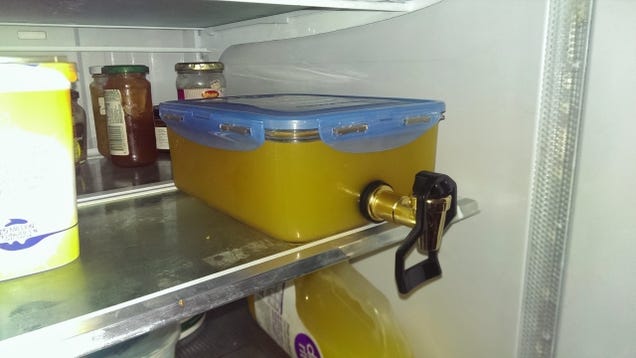
Only neanderthals take their juice bottle out of the fridge, pour a glass, and place it back in the fridge. The evolved life hacker attaches a tap to a container that fits perfectly in the fridge to conveniently pour any drink.


Bacon is awesome. Wasting bacon is not awesome. So don't pop your store-bought bacon straight into the freezer. The Kitchn has an easy trick to individually freeze slices for easy thawing without any waste.


Location-based reminders are a powerful tool that amplify your productivity. They can provide you with obvious help like grocery lists that pop up when you get to the store, and chore lists that pop up when you get home—but they can do a lot more than that, too.

Longtime West Springfield High teacher dies Washington Post Ron Maggiano, a longtime history teacher at West Springfield High School in Fairfax County, died Monday, according to a schools statement. Maggiano taught in the social studies department at West Springfield for 19 years of his 33-year career. |

Instant ramen is a poor shadow of the noodles you get at a ramen shop. Now you can make better-than-instant ramen at home for even less than those cheap packets you find at the grocery store.

 The fundamental goal of the ad-supported web is to collect and capitalize on data from its users; rather unsurprisingly, that data is just as valuable to the government as it is to Facebook and Google. You may think you’d never willingly provide the FBI or NSA with a map of your entire private life, but, in fact, you probably already have.
Tonight’s episode of PBS’s FRONTLINE, “United States of Secrets: Privacy Lost,” is the second of a two-part series on government surveillance. The first, produced by League of Denial’s Michael Kirk, deals with the post-9/11 political climate that empowered the NSA to begin the bulk collection of data on millions of Americans.
Part two, from journalist Martin Smith (To Catch a Trader, Money, Power & Wall Street), focuses on Silicon Valley’s complex relationship with the NSA.
In the documentary, privacy expert Chris Hoofnagle explains, “These companies are in a very difficult spot, because the types of activities they engage in are very similar to surveillance. It is surveillance, just for advertising, rather than for law enforcement.”
So, the crux of the problem is this:
For companies like Google and Facebook, it is a core requirement of their businesses that you be willing and able to share data about yourself. Unfortunately for Silicon Valley and, by extension, everyone else, it is difficult, if not impossible, to prevent the NSA from piggybacking and gathering the data that you generate through the use these products.
According to documents leaked by Edward Snowden and investigated by Barton Gellman of the Washington Post, the intelligence community has become extremely effective at grabbing data from companies without their cooperation, or even their knowledge.
FRONTLINE highlights several examples of this, including a program where the NSA not only tapped the actual fiber-optic cables that Google uses to transmit information between data centers, but one that surreptitiously gathers Google’s tracking cookie information from internet traffic and uses it to track individual users across the net. Google, which chose not to participate in the documentary, is presented as having had no idea that the NSA was even capable of doing this, or that the code in question could be used this way.
So, should you be helping Facebook and Google to generate this data in the first place? Is it worth it? That’s the question that Silicon Valley hopes you won’t ask.
The second part of United States of Secrets: Privacy Lost, airs tonight at 10pm ET on your local PBS station and online.

This reader did the thing that hardly any gadget-user does, and actually read the entire privacy policy when a new software update downloaded. “Having read the Privacy Doc I was not best pleased with the company’s assumption that I would simply agree to their sharing all our intimate viewing details (plus what ever else they can see) with all and sundry,” the LG television owner noted.
Fair enough, but when he told the TV that he didn’t agree with the privacy policy, LG had some news for him. He didn’t want to share information with them? Fine: they wouldn’t share any information with him. By “information,” we mean “any of the features that are the entire point of having a smart TV.”
“If we make a material change to our Privacy Policy, we will update you via your LG Smart TV or other means. If you do not consent to the updated privacy policy, some SmartTV services may be restricted,” it spells out helpfully. What’s important to LG is retaining the right to mine your viewing habits (even what you watch on cable or broadcast TV) in order to serve more relevant advertising to you within the smart TV software.
The key question is this: can a company “change the goalposts at will,” as the tipster put it, and yank features of a TV hostage if users don’t agree to new terms and conditions? If the new privacy policy is radically different from the one you agreed to when first purchasing the TV, consumers might have a case.


Click image to read the full e-mail from the marketing company.
The message, from the “Community Director” of some marketing company, (click image above to read the full thing) was basically a pitch trying to convince us to apply to be a low-paid shill for one of the brands this agency claims to represent.
WE GIVE YOU STUFF, YOU WRITE NICE THINGS
“Our process allows brands to humanize their marketing efforts by connecting shoppers with the brands and retailers used in daily life by introducing them to new and existing products,” reads the e-mail. “We create opportunities for social influencers to partner with industry leading brands by weaving the product/retailer into their current conversation and compensate them for doing so.”
The letter gives the example of an alleged upcoming campaign for Target and Rubbermaid that challenges men to organize their garages, etc., presumably using Rubbermaid products.
It’s just like those segments on every reality TV competition where brands are “integrated” into the show — cook dinner with these Walmart steaks, drive around Munich in these Ford cars while toting an actual Travelocity gnome in the backseat.
And it’s everything that is wrong with advertising today, blurring the boundary between sponsored content and actual content, turning entertainment into advertising, attempting to shove talking points and branding messages down consumers throats at every turn.
We’ve written before about the many ways in which advertisers try to pay websites for sponsored content and the various methods those sites use to either make it obvious — or obscure — whether or not that content is bought and paid for.
The sorts of campaigns being pitched by this marketing company are even lower on that totem pole, as they want the blogger to provide the content in a way that convince readers/viewers that it’s truly legitimate and should be believed.
Beyond the question of ethics, the amounts that these companies pay to bloggers is usually fractions of a penny compared to what they would spend to have their branding reach the same number of eyeballs via traditional routes, so the bloggers that bite on this carrot are selling themselves short.
SHARE YOUR PERSONAL EXPERIENCES THAT WE PAID YOU TO HAVE
“Each blogger engaged in a campaign is able to share an individual and creative experience about the product/retailer in a way that will resonate with their readers on a personal level, while still providing a call to action,” continues the e-mail, presumably written by someone who still manages to sleep at night and occasionally look at himself in the mirror. “With each new campaign, we give bloggers the opportunity to shop for and interact with the brand so you may have a hands on experience, which in turn will add to the authenticity of the post. You will never be asked to write about a product you haven’t had the chance to experience.”
Well thank goodness they would never ask you to write about something you haven’t had the chance to experience yet! That would be misleading and wrong (and potentially illegal).
But we guess that giving people money and free stuff under the expectation that they will write nice things isn’t at all deceitful or unethical, so show us the money!
The one thing that has made me reluctant to post about this e-mail is that some folks might try to apply after coming to the realization that potentially lying to consumers for a few bucks falls right into their ethical wheelhouse. That’s why we’re redacting the company name, as it doesn’t deserve any free publicity, even if it is negative.

On Monday a judge ruled the 30-year-old man must seek treatment after it was determined that he was not mentally competent to stand trial after being arrested on six federal charges, The Los Angeles Times reports.
The man is accused of intentionally conveying false information and making telephonic threats after resigning from his post at LAX in September 2013.
After reviewing the man’s mental health evaluation, a U.S. District Judge determined he suffered from a mental disorder and cannot help in his own defense.
If the man is determined to be competent at a later date he could face trial. If convicted of all charges he could face up to 45 years in prison.
The Times reports the man made a rambling statement about doing the work of God during a recent court hearing.
After resigning from his job on Sept. 10, the man allegedly left a number of threats against LAX. These include leaving a package at the airport containing an eight-page letter detailing his complaints about a June 2013 incident that had led to a week-long suspension.
Shortly after resigning the man allegedly made three calls to airport officials warning the TSA was running out of time and that the airport should be evacuated.
When authorities arrived at the man’s apartment he was nowhere to be found. However, officials did find a note reading “09/11/2013 THERE WILL BE FIRE! FEAR! FEAR! FEAR!”
The man was finally spotted sleeping in a van parked by a local church and arrested by police without incident.
Investigators later found several online letters signed by the man that contained anti-American statements and references to the end of the world.
Former TSA screener incompetent for trial on LAX threats, judge rules [The Los Angeles Times]

The AP reports that the law, signed by Gov. Mark Dayton on Friday, would prohibit the use of triclosan in most retail consumer hygiene products, though that ban won’t go into effect until Jan. 1, 2017, giving the makers of these products more than two years to get rid of it.
Triclosan has come under increased scrutiny in recent years, given its use in 75% of all antibacterial soaps and body washes sold in the U.S. and concerns that overexposure to the chemical may result in hormonal disruption.
And since antibacterial soaps are too-often used in places where there is little to no risk of infection, users of these products may be unnecessarily contributing to the development of triclosan-resistant bacteria.
Late last year, the FDA gave the makers of soaps containing triclosan a year to provide evidence that their products are safe for everyday use.
“Due to consumers’ extensive exposure to the ingredients in antibacterial soaps, we believe there should be a clearly demonstrated benefit from using antibacterial soap to balance any potential risk,” explained Janet Woodcock, M.D., director of the FDA’s Center for Drug Evaluation and Research, at the time.
The American Cleaning Institute, which sounds like the dullest school you could ever hope to attend, maintains that triclosan is perfectly safe and that Minnesota legislators should follow the FDA’s lead on this matter.
“Instead of letting federal regulators do their jobs, the legislation would take safe, effective and beneficial products off the shelves of Minnesota grocery, convenience and drug stores,” wrote the trade group’s vice president and counsel for governmental affairs, wrote in a letter to Gov. Dayton asking him to stop the bill.
With Minnesota becoming the first state to ban the chemical, what remains to be seen is whether or not the companies who make these antibacterial products will reformulate with a substitute for the Minnesota market or whether they will simply not make these products available for sale in the state after the deadline passes.
However, it’s possible that many of the manufacturers could voluntarily ditch triclosan in the intervening years. Procter & Gamble has already removed it from a number of products and still pledges to be triclosan-free by the end of 2014. Johnson & Johnson began getting rid of triclosan in 2012 with plans to be free of it by 2015. Avon recently announced its new products would not contain the chemical and that it would phase out its use in existing products.

 When a California woman picked up her daughter’s dog from his grooming appointment, it was obvious that something was wrong. The Shih Tzu was walking on three legs, not putting his right rear paw down on the ground. While the groomer admitted that she had pulled on that leg to get the animal into position to be groomed, nothing else seemed amiss. Or so the store claims.
The family says that the dog had a dislocated hip, and required almost $7,000 in surgery and physical therapy in order to get his leg back to normal. “The surgeon… said he was most confident that it had to be a traumatic injury, that he most likely fell off the table,” the dog’s owner explained to TV station KGO. Four months after the injury, whatever did happen on that grooming table, the dog is finally back to normal. However, the family, Petco, and Petco’s insurance company continue to argue over who should pay the bill.
In an e-mail to KGO, a Petco spokesperson said, “We are aware of [the family]‘s claim and have been working with her on a resolution. We take her concerns very seriously and are currently reviewing Joey’s medical records.” That’s good. The family counters that Petco has had the dog’s records since March, and they’ve heard nothing back yet.
“We want our money back and I want the word out as well,” the dog’s owner told a reporter.
DOG OWNER SAYS SHIH TZU INJURED DURING PETCO GROOMING SESSION [KGO]
Groomer Injures Dog At North Bay Petco; Company Balks At Paying Vet Bills [KPIX]

The study [PDF] “CFPB Data Point: Medical Debt and Credit Scores” found that credit scoring models may underestimate the creditworthiness of consumers who owe medial debt in collections.
The CFPB examined approximately 5 million credit records from two time periods, September 2011 and September 2013, to determine how well a common credit score could predict a consumer’s likelihood of paying future debt.
The report found that credit scores may underestimate the creditworthiness by 10 points for consumers who owe medical debt. Because current models treat medical and non-medical debt, such as unpaid rent, that goes to collection the same way consumers are often overly penalized.
Consumers with medical debt generally paid back their loans or bills on par with consumers who had credit scores about 10 points higher.
Additionally, the study found that credit scoring models, which do not account for repayment of medical debts in collections, may underestimate consumers’ creditworthiness up to 22 points after medical debts are paid.
The study found that consumers who subsequently paid medical debt that had gone into collections were more likely to pay back their debts, on par with consumers with scores 16 to 22 points higher.
While a 10- to 22-point different doesn’t seem like much, it could have devastating effects on a consumer’s livelihood. Credit reports and credit scores are often used by bankers, lenders, and others to determine a consumers’ creditworthiness and the rates they will pay for services. Today, the scores and reports are even used to determine a consumer’s employability.
The CFPB also reported that many issues consumers face involving medical debt stem from inaccurate reporting by third-party collection agencies. In fact the Federal Reserve Board found that over half of all collections on credit reports are associated with medical bills and the vast majority of medical debts are reported by third-party collection agencies.
Complaints to the CFPB show that many consumers do not even know they have medical debt in collections until they receive a call from the agency or see the debt on their credit report.
I am an insured individual, yet I have had issues with proper billing practices at hospitals. Twice this has resulted in collections being reported to the credit bureaus on bills that were not properly submitted to my insurer and that were not communicated to me as a patient. Once I tried to resolve these issues, the hospital billing departments are not helpful and the collection agencies are impossible to track down. There’s so much focus today on affordable health care and insurance coverage, yet hospitals cannot properly bill those patients who do have insurance.
Medical debt has long wreaked havoc on consumer’s credit reports, and most issues have arisen from collection errors.
Last year, Consumerist reported on a man who fell victim to a hospital’s billing system failure. The man paid his bill, but it was never recorded. His already-paid debt ended up in collections and he was hit with a credit score drop of more than 100 points.
Even after the issue was cleared up by the hospital and his insurance company, his credit score remained unfixed.
Around that same time, March 2013, legislators were trying to wipe medical debt off credit reports entirely with the Medical Debt Responsibility Act of 2013.
In May 2013, advocates urged the Senate to consider the Act that would have required that any paid medical debt under $2,500 be removed from a credit report 45 days after it was paid. However, the bill all but died in committee.
“Getting sick or injured can put all sorts of burdens on a family, including unexpected medical costs. Those costs should not be compounded by overly penalizing a consumer’s credit score,” CFPB Director Richard Cordray says in a statement about the new study’s release. “Given the role that credit scores play in consumers’ lives, it’s important that they predict the creditworthiness of a consumer as precisely as possible.”
While it’s unclear whether the new report will bring about profound changes to credit reporting, consumer advocates are already praising the CFPB on its efforts.
“We commend the CFPB for conducting this critical research which confirms what advocates have asserted for years: that consumers are unfairly penalized for medical debt, which is often the result of billing errors, insurance disputes, and other circumstances unique to the flawed healthcare payment system,” noted Chi Chi Wu, staff attorney at the National Consumer Law Center. “The CFPB research underscores the urgency for Congress to pass the Medical Debt Responsibility Act, which would require that paid or settled medical debt be removed from a consumer’s credit reports.”
CFPB Study Finds Medical Debt Overly Penalizes Consumer Credit Scores [Consumer Financial Protection Bureau]


Joining all the creepy mascots that have come before him is Happy the new McDonald’s Happy Meal mascot.
Yesterday, McDonald’s unveiled their newest mascot — “Happy,” a cartoon Happy Meal box with a giant toothy grin.
While USA Today reports that the box is supposed to entice children into eating healthy, that smile really only makes it look like he want to eat the children.
So, what fast food mascots (past and present) make Consumerist’s collective skin break out in goosebumps?

Let’s stick with McDonald’s for the moment before we dive into other creepy fast food shills.
It’s a known fact that many people find clowns to be terrifying, especially when they are outside their standard milieu of the circus tent.
But the old-school Ronald McDonald, with his paper cup nose and a magic hamburger-dispensing belt, isn’t just disturbing; it established a baseline of creepiness for other fast food establishments to follow for generations to come.

While the original Ronald McDonald might have been too outre and bizarre for fast food fans, the recently revamped McDonald’s front man is a different kind of creepy.
With the more casual outfit, the all-too-welcoming open arms and ever-frightening grin, it’s like that guy on your block who is always talking a little too much to the kids selling lemonade on the sidewalk; the one that makes parents put their arms around their youngsters when he walks by the playground on the weekends.
We’re not saying Ronald has filthy predilections. He just won’t be getting invited over for family events anytime soon.

Here’s an idea for a mascot: A person that so loves McDonald’s fast food that he’s willing to steal it! What a great way to teach your kids how to get what they want.
Beyond the ethical questions, there’s the fact that the Hamburglar is just plain bad at his job; always getting caught and turned into the burger police, who promptly return him to the streets, presumably because McDonaldland has a lenient attitude toward the theft of sandwiches.
Perhaps if he didn’t walk around in big striped pajamas and a bandit mask, he might not stick out so much, or creep out so many kids.

While milkshake-loving Grimace may not be as overtly scary as Ronald or the Hamburglar, he poses a sort of existential dread to the young consumer.
“What is this purple monster and why is no one asking it what it is or where it came from?” Is it a figment of Ronald’s imagination? A ghostly manifestation of some man-child who perished during the construction of the first McDonald’s? A hallucinatory, self-referential expression of American overconsumption?
The world may never know; and that may not be a bad thing.

Just as many of us began to shed childhood fears of fast food mascots, Burger King went and dumped this plastic-masked “King” on us.
Not only did the King pop up in ads for the burger chain, he appeared in commercials waking up next to people in bed, or hanging outside their windows. And the King did more than just wake up with strangers; he also cornered them in dark tunnels, further cementing the idea that he was a nightmare from which we could never wake.
The masked man was retired by Burger King in favor of a more healthy-minded campaign around 2011. Apparently the strange dude landed on his feet in the form of a gig behind the register at Taco Bell last Halloween.

While the King hasn’t risen from his marketing grave, Burger King has recently tried to revive this bizarre marketing ploy that melded the jittery low-fi video of webcamming with the do-as-we-say-and-you’re-going-to-die-anyway freakishness of snuff films.
Late last month, the weirdo chicken’s website, which once featured a person in a chicken suit on grainy security com footage, relaunched with a “Missing Chicken Error” message asking consumers to “Help. There’s a chicken on the loose and we are desperately trying to find him.”
We don’t know if the creepy chicken is still out there, but if you see him, it might be best to call animal control.

For the most part, we can could go to the drive-thru in attempts to avoid mascots, but back-in-the-day there was one place you always wanted to go and could simply never escape the monstrous mascots: ShowBiz Pizza.
Billy Bob Brockali underwent a number of nip-and-tuck surgeries over the years, but that bear never did feel quite right to us.
The guitar-picking brown bear first appeared as a walk-around character at ShowBiz then morphed into an animatronic robot bear. To whomever thought that was an improvement: It wasn’t.
But maybe our favorite creepy encounter with Billy Bob took place in some of the pizza place’s poster art and other ads where he’s just hanging out behind a family, eyeing their pepperoni-covered pizza.
If he had an inkling of Yogi in him, that pizza would be gone and those kids would be scarred for life.

Rodents — or hybrids thereof — really don’t make people want to eat their food, and they’re certainly among the last things you’d want to associate with a fast food restaurant.
And yet, a number of rodent-like mascots have roamed the airwaves over the years, like this particularly gruesome spokesthing.
The Sponge Monkey of Quiznos, which in spite of the name appeared to be some sort of rat/hamster hybrid — loved his subs, but we did not love his beady eyes, human-like teeth or his fancy looking top hat.

Sure, he’s a Jack-in-the-box (we get that) but he walks around in a sharp business suit, and has that dead-eyed, unblinking stare and perma-grin that are straight out of a horror movie.
It’s like a mash-up of some bad early ’90s slasher flick and American Psycho, but it’s also trying to sell us fast food.
The combination of authority figure in a suit and clown-like oversized head is the perfect recipe for a screaming kid (or adult).
Which one of these do you think is the creepiest of them all?
Take Our Poll
While the magnets are popular everywhere because magnets are fun, the Toronto-based researchers analyzed cases from the Hospital for Sick Children in that city. (Yes, that is the hospital’s actual name.) They sifted through more than ten years’ worth of cases involving patients under 18 who had ingested foreign objects, finding 94 cases where a magnet was confirmed to be the swallowed object.
Researchers divided the study period up into two periods: before and after 2009, which
is the year that strong neodymium-iron-boron magnets like Buckyballs became popular. While 94 kids is a small sample, they found that the number of patients who were admitted after swallowing magnets tripled in the later period, after 2009, and the number of patients who had swallowed multiple magnets increased tenfold.
Swallowing one magnet isn’t so bad, but swallowing multiple magnets can cause serious damage to the digestive tract. 20% of children in the study who had swallowed more than one magnet needed emergency surgery because the magnets had caused infection or perforated their bowel. Magnets will cling together, and don’t particularly care whether a child’s intestines are in the way.
Their conclusions? Other than the obvious “don’t eat magnets,” the researchers say that parents and children should be educated on the possible dangers of small magnets, and the potentially fatal results that can come from gobbling more than one.
Companies that market the magnets insist that the toys are not intended as toys for children, and that no one should be snarfing any magnets.
Magnets and Kids: A Dangerous Duo [Journal of Pediatrics](via CBS Atlanta)

The first recall involves 1.34 million model year 2009 through 2014 Buick Enclave, Chevrolet Traverse, GMC Acadia full-size crossovers and model year 2009-2010 Saturn Outlooks for issues involving the front safety lap belt.
GM says that cables that connect the belt to the vehicle can fatigue and separate over time, leaving the passenger at increased risk of injury or worse in a crash.
The second recall is for 1.08 million model year 2004-2008 Chevrolet Malibus with 4-speed automatic transmissions and model year 2005-2008 Pontiac G6 cars. This recall involves a shift cable that GM says could wear out over time, “resulting in mismatches of the gear position indicated by the shift lever.”
When the fracture occurs, the driver may not be able to select a different gear, remove the key from the ignition or place the transmission in park.
GM says it knows of 18 crashes and one injuries tied to this defect. Dealers will replace the shift cable and attachment bracket at no charge to the customer.
Then there are two smaller recalls. The larger of these is for 1,402 Cadillac Escalades and Escalade ESVs from the 2015 model year. GM says that an insufficiently heated plastic weld attaching the passenger side air bag to the instrument panel assembly could result in a partial deployment of the air bag in the event of a crash.
The smallest of the recalls is for only 58 Chevrolet Silverado HD and GMC Sierra HD full-size pickups from the 2015 model year. In this case, GM warns that retention clips attaching the generator fuse block to the vehicle body can become loose and lead to a potential fire.
According to the carmaker, no fatalities have been associated with any of these recalls.
These recalls now put the car company around the 13 million mark for the year in terms of total number of vehicles recalled.

Walmart is in the process of rolling out a security policy and guidelines that require consumers to punch in their three-digit security code for purchases over a certain price threshold, KRPC in Houston reports.
The new policy, which was agreed upon between the company and several card issuers, is an attempt to cut down on credit card fraud, a company spokesperson says.
Often after credit card information is taken during a data breach, thieves create phony cards with the legitimate accounts. Since thieves don’t generally obtain three-digit security codes through breaches, so requiring customers to enter that code would cut down on fraudulent purchases.
Chris Bronk, a Rice University Baker Institute Fellow in IT Policy tells KRPC that Walmart is doing the right thing with their new policy.
“It really is a necessity at this point, because credit card fraud, thanks to the cyber vector, is worse than ever before,” he says.
However, Bronk says for the company to maintain consumer privacy protections it would need to store account numbers and the codes separately.
Once credit card issuers switch to the more secure chip-and-pin cards, also known as EMV cards, Walmart says it will stop requiring consumers to enter their three-digit security codes.
Visa and MasterCard announced earlier this year that they hope to end traditional sign-and-swipe credit card transitions and switch to the chip-and-PIN system by 2015.
The EMV (short for “Europay, MasterCard and Visa”) technology cuts back on card fraud because the chips make cards significantly harder to clone: even if you get all of the information from a card’s magnetic strip, as through a skimmer, without the chip actually being present the card data is useless in a physical transaction.
However, while the use of EMV technology in a card does make it more difficult to clone a card for in-person transactions, it doesn’t necessarily prevent an ID thief from using stolen card numbers for online or phone purchases. There is no such thing as a card that is 100% safe from clever criminals.
Renewed interest in chip-and-PIN cards began shortly after a string of data breaches occurred at national retailers. More than 110 million Target customers were affected in a breach during the 2013 holiday season. Neiman Marcus and Michaels both fell victim to hackers during the early months of 2014.
Last month, Target announced that starting next year the company’s REDcard debit and credit card — along with a separate Target credit card that is currently co-branded with Visa — will be reissued with the MasterCard chip-and-pin technology. In anticipation for the change, the company has already begun installing new card readers at its registers.
While KPRC reported that the policy is new, a spokesperson for Walmart tells Consumerist the retailer has actually been requiring the additional information for credit card purchases exceeding certain dollar thresholds for nearly a year.
New security guidelines for Walmart customers [KRPC Houston]

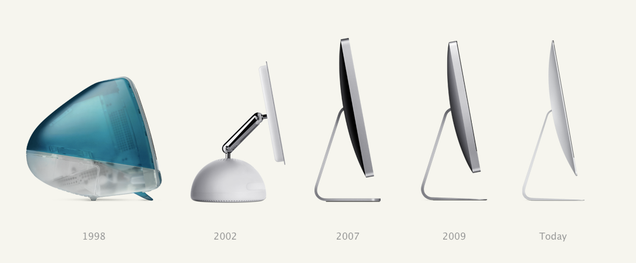
Starting today, all of Apple's retail stores will accept any of the company's ageing products for recycling—and, if it looks resaleable, you might even get some store credit, too.


Money sure can feel like a rational thing: You earn it, you spend it, and hopefully you're saving some of it. But would it surprise you to know that you are probably making a lot of irrational decisions too? Here are a handful of common psychological traps we may fall into—and how to help outsmart your brain.

When things get busy, we all have tasks we put off. Sometimes items end up delayed out of necessity. If you are putting off the right things, it can be a good move to reduce your workload. But if you procrastinate on the wrong tasks, you might be setting yourself up for trouble later. So, what tasks should you avoid putting on your back burner?

Making your first investment is an intimidating prospect for anyone. It's especially intimidating for young adults like myself who barely understand the different between a piggy bank and a savings account, let alone the stock market. But it doesn't have to be confusing—today we're talking with Jarrett Lilien, CEO of Kapitall. Kapitall is a next-gen investment platform where young investors can get started in an interactive environment. Jarrett's experience is wide-ranged—he's run numerous businesses and institutions and was the COO at E*TRADE, and is now focused on the intersection between financial technology, investing, millenials, and even gaming. Have a question for Mr. Lilien? He'll be here for the next hour, so ask away!

Web/Android/iOS: My Job Chart takes the idea of teaching kids the value of money with a job board and digitizes it, also including the concepts of sharing and saving. Plus, it's free and cross-platform for added convenience.


After the recent Heartbleed bug scare, some of you may want to go and delete those dormant accounts you never use any more. For a quick way to find such sites you signed up on, go to your inbox and search for the term: "Confirm your email."


