As your plates and bowls get used over time, knives, forks, and spoons turn a bright sheen into a scratched up mess. Dive into your pantry to find some cream of tartar, and you can rub those ugly marks away.

As your plates and bowls get used over time, knives, forks, and spoons turn a bright sheen into a scratched up mess. Dive into your pantry to find some cream of tartar, and you can rub those ugly marks away.

You've just had some delicious corn on the cob, but wait! Before you toss those cobs in the trash, put them to use improving your roasted chicken.

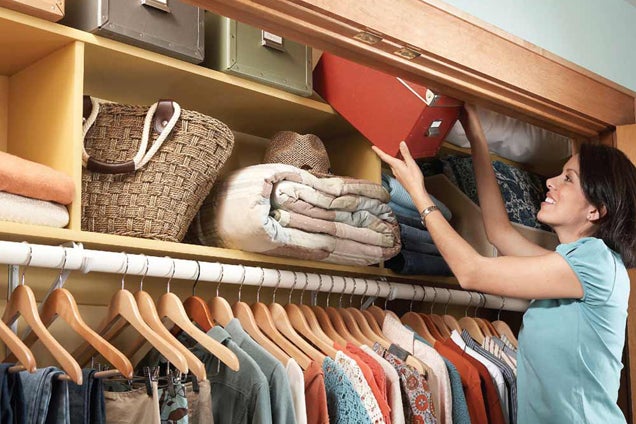
If you have limited space inside your closet, it's time to look to some of the unused space above it. The Family Handyman has a quick plan for custom shelving that you can put above everything else.

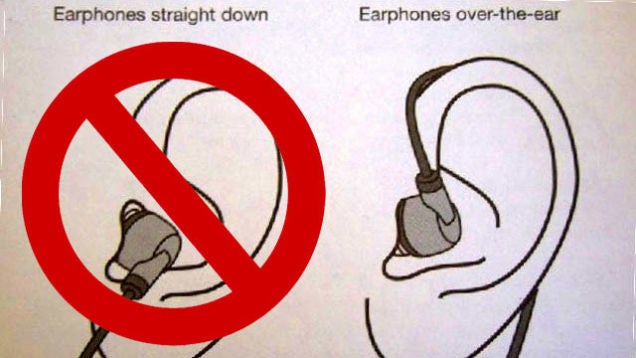
Ever notice that when your earbud cable moves, you can hear it rustle in your ears? This cable noise is called microphonics, and there are a few tricks you can use to avoid it.


As any paper towel advertisement will tell you, some messes are bigger than others. While every company wants you to believe their paper towels can handle the biggest messes, disposable diapers can handle the biggest ones of all.


At the end of a job interview, most potential employers ask if you have any questions. If this makes you nervous, ask the interviewer their opinion, rather then asking a direct question.

There are many things you can do to make sure you don’t go get in trouble with the law for another go around, but a surefire way to hop right into that hot water again? By boosting a ride and driving it to a meeting with a probation officer.
In this case, “ride” means an electric shopping cart pilfered from an Albuquerque Walmart, court documents say, according to KOAT News (warning: link has video that auto plays).
And when his probation officer asked the 18-year-old where he got his new wheels, to which he allegedly replied that he “took it from the Walmart” in the area.
At least he made it to his appointment?
He was arrested and charged with larceny and receiving stolen property and violated his probation.
“The cart was worth over $1,800, and certainly it could have been used by those who needed it more than this man,” a police spokesman said.
For the next time you might be considering driving a stolen shopping cart to meet with a representative of the legal system, the answer to the headline’s question is, you’ll be arrested. Most definitely arrested.
Police: Man drives stolen electric shopping cart to meet probation officer, gets arrested [KOAT News]

 With more than 46 million vehicles having been recalled so far this year, the thought of accidentally purchasing a used car with safety defects might be a bit nerve-wracking for consumers. A new online search tool from the National Highway Traffic Safety Administration aims to take the worry and guess-work out of whether or not a used car has been recalled and fixed.
Late Tuesday NHTSA launched an online search tool that allows consumers to easily check the recall status of their vehicle or motorcycle, the Chicago Tribune reports.
Under the new mandate, NHTSA requires car and motorcycle manufacturers to provide at least 15 years of data and update their information every seven days. Additionally, manufacturers will be required to have a place on their websites where consumers can search for recalls using their vehicle identification numbers (VIN).
Officials with NHTSA say in a news release that they hope the new tool provides drivers with “peace of mind knowing that the vehicle they own, or that they are thinking of buying or renting, is free of safety defects.”
To use the new search tool, consumers must input the vehicle’s 17-digit VIN, which can usually be found in the left corner where the dashboard meets the windshield or on insurance and registration documents. Results will then appear if the consumer has an open recall on their vehicle, and if there are none, owners will see “No Open Recalls.”
The database will only provide information on the vehicle’s safety status and won’t publish personal information or track who checked the recall status of the vehicle, officials with NHTSA say.
With new recalls being announced almost daily, knowing the status of a vehicle is more important than ever, especially since some drivers are feeling “recall fatigue” and may tune out just which cars have issues.
Additionally, drivers suffering recall fatigue are more likely to put off fixing recalled vehicles, an issue that could be dangerous for drivers and passengers. In fact, NHTSA reports that about 25% of recalled autos still need repairs 18 months after the recall was first issued.
While the tool will likely provide valuable information for prospective buyers and current vehicle owners, some consumer advocates say the system doesn’t address all recall-related issues.
Rosemary Shahan, president of Consumers for Auto Reliability and Safety, tells the Tribune that while she would encourage consumers to use the tool before purchasing the vehicle, not all consumers will be able to do so.
The system is only in English and only available online, meaning that consumers who speak different languages or don’t have access to a computer or smartphone won’t be able to research vehicles.
“When you look at the used car market, it is all colors and flavors of people,” Shahan tells the Tribune. “There are many millions who are buying cars to get to work, to get their kids to school and who won’t know to look or will find the information isn’t in their language.”
The new search tool also isn’t enough to protect consumers from possibly deceptive used car marketing practices.
See, while it’s illegal for consumers to sell many recalled products like microwaves and blenders, there isn’t a similar law for recalled vehicles. In fact, the National Highway Traffic Safety Administration lacks the authority to actually force people people to fix recalled vehicles before they are sold or rented.
That issue led a number of consumer groups to send a petition to the Federal Trade Commission concerning CarMax, one of the largest used car sellers. They allege that while CarMax touts its quality control measures in advertising, the company continues to sell recalled vehicles that haven’t been repaired — often without the buyer’s knowledge.
The petitioners have asked the FTC to look through the millions of cars already sold by CarMax to determine how many recalled vehicles were sold, then notify the owners of those vehicles that they purchased cars with unresolved recall issues.
In a statement to the Tribune, CarMax officials say the new NHTSA tool is “a means for consumers to be better informed on all recalls. CarMax is evaluating this website to see how it may be useful within our processes.”
While the new online search tool may give consumers the power to research their vehicle before purchasing, if dealers continue to boast “125+ point inspections,” and other quality measures, consumers likely won’t feel the need to do their own homework when it comes to recalls.
NHTSA launches online search tool on auto recalls [Chicago Tribune]

 Ladies, how often does this happen to you? You’re out for a night of fun, wearing your highest, prettiest heels, when the festivities continue for longer than your feet can hold out in those shoes. My answer is “never,” but apparently this is a common enough problem that it has been solved with vending machines near nightclubs that sell acceptably cute flats.
Yes, you can buy shoes from Rollasole in stores, but the really novel part of this business model are the vending machines. Once a week, the entrepreneur who runs the American branch of international shoe machine brand Rollasole receives a shipment from the company’s headquarters in the United Kingdom, refilling machines that are conveniently located near nightclubs. They aim to relieve the tired feet of Vegas revelers.
The flats start at $20, and machines accept cash or credit cards. The shoes come in a handy capsule that contains the rolled-up flats (of course) and a bag to carry your offending heels around in.
Entrepreneur’s persistence brings shoes to vending machines [Las Vegas Business Press] (via Chain Store Age)

It doesn’t hurt that putting a sealant kit and an air compressor in the trunk instead of a whole tire is cheaper for car manufacturers in addition to helping with gas mileage. Our colleagues note that most companies are skipping the spare now, in both high-end vehicles with run-flat tires and regular cars for regular people.
The argument against spares goes like this: most people don’t carry jacks or know how to change a tire, and will simply call a roadside assistance service anyway. That’s fine, but the problem is that certain kinds of punctures can’t just be patched and re-inflated. If you get a more serious puncture if some jerk actually slices your tire, or if you puncture the side wall by driving into a curb like I have totally not done three times, the car will have to be towed and the tire replaced or patched by a pro.
Your next car may not have a spare tire [Consumer Reports]
How to prepare for driving without a spare tire [Consumer Reports]


(Carbon Arc)
There are times when it’s good to keep a separation between your sweet and savory foods, probably, but once you bring bacon up, all walls can be torn down and it should be welcomed as part of any concoction. At least, that’s what was decided by the Famous Bacon Accords Of 1996. Which is why the most important part of Five Guys burger chains testing out customizable milkshakes is that bacon is an optional ingredient.
The only option, if you’re like me and putting it on your burger isn’t good enough (or bad enough, from your arteries’ point of view, slumbering sweetly under a blanket of saturated fat due to aforementioned love of bacon).
Sure, there are other toppings to add to a vanilla shake base — cherries, Oreo cookies, bananas, salted caramel, peanut butter, coffee, chocolate, malted milk and strawberries — but we’ve been there before, right?. Although all of those, I might add, pair delightfully with bacon.
Consumerist reader C.H. has tried the bacon shake, and had this to say:
Five Guys is testing the customizable shakes at certain locations in New York and New Jersey now. So if you also get your hands on a bacon shake (with any of the other additions welcome), let us know at tips@consumerist.com or @Consumerist on Twitter.
(H/T to FoodBeast)

Credit.com’s Chris Birk has a good roundup of those factors. Here are the highlights.
The law requires that lenders put on blinders with regards to these factors when considering your loan application. It shouldn’t matter if you’re a 21-year-old white woman with two kids, or a 78-year-old Asian man who never married; the loan application should be screened based only on the applicant’s finances and creditworthiness.
That said, a number of banks have gotten into trouble in recent years for allegedly denying standard loans to applicants based on race and location. Earlier this year, the city of Los Angeles sued JPMorgan Chase for allegedly pushing minority loan applicants into riskier and less-affordable mortgages than they were eligible for. Similar allegations have been made against Wells Fargo and Bank of America.
Say you’re looking to buy a house with your spouse or significant other, but only your name will appear on the mortgage. Then it doesn’t matter that the other person plans to contribute to making the payments every month. All that counts is the income of the person borrowing the money from the bank.
While that might seem harsh, it makes sense from the lender’s point of view. That other person’s income might help make the home affordable, but if that spouse, boyfriend/girlfriend, roommate, friend, partner, etc., isn’t willing to put their name to a document legally obliging them to repay the loan, why should the lender consider their income?
The main problem here is for couples where the income of both partners is needed to qualify for a loan, but where one of the two has a credit history that will make it more difficult to get approved.
On the other hand, if one member of a couple can qualify for the mortgage on their own, this means that the lender isn’t looking into their partner’s sketchy credit or employment history.
One of the reasons it’s a bad idea to apply for something like a credit card in the lead-up to buying a new house is that the credit card company will pull your credit score. Each time this happens, it could result in a small ding to your score. The more cards you apply for, the more damage done to your credit.
And each time you go to get pre-approved for a mortgage, the lender also makes a “hard inquiry” on your credit score. But, unlike the credit card example, these inquiries don’t have the repeat effect when you seek out multiple approvals in the hopes of finding the best offer.
Birk explains:
Once a lender pulls your credit, you’ve typically got a two-week window to have others do so without taking a hit to your score. The nation’s three major credit bureaus – Equifax, Experian and TransUnion – will only count that first hard inquiry against you. They’ll chalk up the remainder to due diligence and comparative shopping during that two-week timeframe.
So that first one might slightly ding your credit, but the others should not.

 Most banking services come with a laundry list of small-print, hard-to-read disclosures detailing how much one might expect to pay for things like depositing a check, talking to a teller or checking an account’s balance. Knowing that information before signing on the dotted line for a new checking account is paramount if you don’t want to be saddled with some of the billions of dollars consumers spend on checking account fees each year. However, as a new report continues to show, actually finding that information online can often be an exercise in futility.
A new study from WalletHub took a look at just how consumer-friendly banks are when it comes to providing information about their checking account fees online. The answer: not so great, but it’s getting better.
Of the 25 banks analyzed on the clarity, accessibility and visibility of fees for their checking products posted online, a majority were found to provide useful and sought-after information on their product’s webpages.

Checking account transparency varied greatly between the United States’ largest banks.
However, several banks provided little-to-no information online. M&T Bank, which scored just 26.7%, and USAA, which scored 46.7%, did not provide any fee schedule information to consumers on their checking account product pages.
Officials with M&T Bank tell WalletHub they plan to include fee information on their pages later this month.
On the flip side, Capital One topped the list for transparency with an overall score of 90%, followed by a seven-way tie for second place. Citbank, Compass Bank, JPMorgan Chase, SunTrust Bank, Wells Fargo Bank, Bank of America and The Huntington National Bank each scored 88.3%.
While those scores appear to be high, WalletHub contends that there’s still plenty of work for banks to do in terms of educating customers about the costs of their checking account products.
For years, consumer advocates and regulators have worked to create more consumer-friendly, and easily readable disclosures for checking accounts and other bank issued products.
Overall, the report found that banks continue to lack general uniformity in terms of checking account fee disclosure forms, format and content; making it increasingly difficult to for consumers to compare their checking account options across the marketplace.
While there are approximately 30 total fees associated with the average checking account, some banks charged as many as 50 fees for a range of actions related to checking accounts.
“The sheer number of different fees associated with checking accounts prevents effective product comparison and decreases the likelihood that consumers will find the best checking accounts for their needs,” the report states.
Back in 2011, Pew Charitable Trusts developed a model summary disclosure box that shows how banks can concisely list fees and terms of a checking account in an easy-to-understand format. Banks that currently use the box include JPMorgan Chase, Bank of America, Citibank, Wells Fargo, TD Bank, Capital One, Fifth Third Bank, Webster Bank.
WalletHub provided a list of helpful tips for consumers in the market for a new, or their first, checking account:
Read the fee schedule thoroughly – The number of checking account fees that banks disclose on their product pages varies greatly from one bank to another. Absence of a fee from the product page does not necessarily mean the fee is $0. Consumers should always review the fee schedule before opening an account to avoid any surprises in the future.
Don’t expect consistency in format – While many large banks have adopted a summary disclosure form designed by the Pew Research Center to make fee disclosure practices more uniform and straightforward, not all have adopted it. And of the ones who have, there are discrepancies among their disclosures.
Evaluate your practical needs – As evidenced by the number of fees that checking accounts charge, they offer a plethora of services ranging from straightforward ATM withdrawals to international wire transfers. You must therefore consider what exactly you’ll need from your checking account in practical terms.
Fewer disclosed fees doesn’t mean fewer actual fees – The number of fees listed by banks in disclosures varies from 20 to 40. Some banks disclose their fees only after a customer has opened an account. Others disclose their fees in inconspicuous sections of their websites. Consumers should be aware that there are banks that disclose only a part of their full list of fees initially, another part during the application process and the rest after the consumer has signed up for the account.
Cast a wide net – When you begin your search for a new checking account, start broad and refine as you go. That means you should avoid entering the search process with any preconceived notions, such as the particular institution you’ll get your account from, how large of a bank you wish to do business with, the necessity of in-person banking, etc.
Supplement with other accounts – A checking account will enable you to receive direct deposit of your monthly checking account, automatically pay monthly bills, and benefit from ad hoc access to cash. You can’t use a checking account for everything, though. You might therefore want to strategically supplement your checking account with an attractive savings account and/or credit card offer in order to make your financial management as efficient and rewarding as possible.
Checking Account Transparency Report: How Easily Can Consumers Shop for a Checking Account Online? [WalletHub]


(News 12)
Think you’ve been at your job a long time? Odds are you’re nowhere close to one 101-year-old New Jersey man, who’s been working at the same lighting company almost nonstop since he started as a shop clerk in 1941.
Barring a few years off to fight in World War II for the U.S. Army, Herman has worked for the company for 73 years, reports CBS New York, and he refuses to quit now.
“It gives me a reason to get up in the morning and go,” he tells News 12.
He began his tenure with the company selling and stocking items, as well as cleaning up the displays. He now specializes in rebuilding damaged items, or those which would otherwise be unusable, driving himself to work four days a week.
“Each one is a challenge and that’s it,” he says of working with broken fixtures. “Each one gives you something that the last one didn’t.”
Herman turned 101 over the weekend and his coworkers helped him celebrate on Monday.
Just thinking about 73 years of work makes me want to retire as soon as possible. But that’s because I’m no Herman.
Just Another Day At Work For 101-Year-Old New Jersey Man [CBS New York]
101-year-old Hy Goldman is ‘fixture’ at Capitol Lighting in East Hanover [News 12]


(afagen)
A federal grand jury has indicted the co-owners and two employees of the California slaughterhouse at the center of a massive beef recall earlier this year, and we’re now getting a better idea about how the plant allegedly got away with processing “diseased and unsound animals” that were “unfit for human food.”
Among the charges included in the indictment, feds say employees of Rancho Feeding Corp. knowingly distributed cattle with eye cancer. One method to sneak cattle with eye cancer past inspectors? The slaughterhouse pulled a switcheroo with unhealthy cattle heads while federal inspectors were at lunch, reports the Los Angeles Times.
First, feds say the slaughterhouse would knowingly purchase cattle that showed signs of eye cancer, likely older dairy cows sent for processing that were older and more diseased then the youngins raised for meat.
When a cattle showing signs of eye cancer came down the line, feds say workers would decapitate those cows and move them up the inspection line next to cattle heads without eye cancer, all while inspectors were away on their breaks, the indictment said.
The indictment also accuses one of the co-owners of telling workers to process cattle that had already been condemned by federal inspectors at the plant, leading them to simply carve out the “USDA Condemned” stamps on the carcasses.
The two owners and two workers are charged with conspiring to distribute adulterated, misbranded and uninspected meat, as well as mail fraud for distributing the meat through the U.S. Postal Service.
The U.S. Department of Agriculture’s Food Safety and Inspection Service shut down Rancho Feeding in January, before issuing a recall of almost 10 million pounds of beef that had been sold to grocery chains across the country. Nestle also issued a voluntary recall for its Philly Steak and Cheese Hot Pockets.
Slaughterhouse owners indicted on charges of selling tainted beef [Los Angeles Times]


(SA_Steve)
While it might appear that this was the first change made by new CEO Brian Cornell, the company says that the change was planned well before Cornell joined the company. Target’s customers have asked for later hours, a spokesperson told the Wall Street Journal. By staying open later, the company hopes to pick up some customers who might otherwise have gone to Walmart, or a grocery or drug store.
Studies show that most Americans are asleep or watching television at 10 P.M., and only .3% shop at that time. Will it be worthwhile for Target to coax that tiny fraction of the population into their stores? The company plans to re-evaluate the plan after this holiday season. They’re also cutting prices in an attempt to improve store traffic and sales.
Target to Keep Some Stores Open to Midnight in Push for Traffic [Wall Street Journal]
http://www.marketwatch.com/story/target-to-keep-some-stores-open-to-midnight-2014-08-18

 Car thieves either don’t have much imagination or they don’t have much to choose from when selecting which vehicles to boost. A look at the most-stolen cars in each of the 50 states and the District of Columbia shows surprisingly little variety in terms of cars being swiped.
According to data from the National Insurance Crime Bureau, Honda Accords, Honda Civics, and full-size Chevy Pickups were the three most stolen types of vehicles nationwide.
Looking at the most-stolen vehicles on a state-by-state basis, the Accord and Chevy Pickup were the favorites among car boosters in about 2/3 of states. The Accord swept the Pacific coast in the lower 48, and most of the states along the Atlantic seaboard.
While the Civic might have been the #2 most-stolen car overall, it only topped the lists in three states (Delaware, Hawaii, New York), the same number of states dominated by Dodge Caravan thefts (Illinois, Maryland, Wisconsin). Actually, the Caravan gets a bonus point for also being the most stolen vehicle in D.C.
Full-sized Ford pickups were the most popular among car thieves in eight states (Florida, Maine, New Hampshire, South Dakota, Texas, Utah, West Virginia, and Wyoming).
Then there were the three states who didn’t fit into the mold of the other states. The most-stolen vehicles in these states didn’t even make the top 10 nationwide.
Car thieves in Michigan appear to have a preference for Chevy; more precisely, they loved the 2004 Chevy Impala. Meanwhile, Rhode Island thieves really had a taste for Nissan Maximas… from 1997. And true to Vermont’s image of durable station wagons, the Subaru Legacy (model year 2001) was the most-stolen car in the Green Mountain State.

Dropping off pets you can’t possibly care for at the animal shelter is a good deed, to be sure — but that being said, one facility would like to have a word about fixing your pets after someone keeps leaving boxes full of tuxedo cats on its doorstep.
Because even shelters can run out of room, the local Humane Society in one California town is asking whoever left three boxes filled with 24 black-and-white cats and kittens on its doorstep recently, as well as several other loads of felines, to learn about spaying and neutering, reports SFGate.com.
It’s the fourth time this has happened in the last year and a half, a spokeswoman said, leaving more than 100 cats on the shelter’s hands, in addition to all the others. All appear to be in good health, without fleas or diseases.
But it’s just too much.
“Every cage is full and our staff is overloaded trying to care for them all,” she explained. “It’s putting a big strain on us.”
It seems to be the same person every time, as seen on surveillance footage. But identifying that person to punish them isn’t the goal, the shelter just wants to stop the cycle of procreation now before it gets too out of hand.
“We don’t know if this person is some kind of hoarder or if they are just a well-intentioned owner,” the Humane Society rep said. “But we would really like them to know about getting their cats spayed or neutered. We’re concerned that it will keep happening and we want to break that cycle.”
In order to help all 180 cats now at the shelter get adopted to loving homes soon, officials at the Humane Society are waiving cat and kitten adoption fees through the end of August.
100-plus ‘tuxedo’ cats dumped at Marin shelter [SFGate.com]

Can’t take a selfie with a big cat, due to bans on the practice or the unavailability of an obliging lion? Wildlife fans with deep pockets were able to get perhaps the next best thing to a photo, after one animal fundraising group auctioned off jeans featuring denim ripped apart by wild animals.
“Zoo Jeans” takes animal fashion beyond stripped and spotted prints, with distressed duds that have been clawed and ripped apart by lions and tigers and bears.
A Japanese zoo fundraising group raised $3,500 selling off three pairs of jeans scratched up by big animals, reports CNNMoney. Volunteers at a local zoo wrapped bits of denim around tires, balls and other toys and tossed them in with the animals.
The resulting ravaged denim was then made into four pairs of jeans “designed by” lions, tigers and bears and sold off to benefit the World Wildlife Fund as well as the zoo.
One pair of bear-ripped jeans stayed with the club, ostensibly in some kind of “Sisterhood Of The Traveling Bear Claw Pants” scenario for staffers.
“The wild rips and tears in Zoo Jeans have been created with pure animal instinct,” the group says on its site.
But while the WWF said it did receive the donation, a spokesperson didn’t seem to pleased with the way the jeans were made.
“In principle, we don’t raise money by using animals in this way,” said the director of communications at WWF Japan.
Next hot seller on Etsy: Jeans ripped unintentionally by my cat because he can’t manage to get on my lap without hauling himself up there.
Lion-ripped jeans sell for $1,500 [CNNMoney]


(YouTube)
At first, this YouTube video showing a dude stuck in a wooden high chair (h/t Gawker) at a restaurant seems like it’ll be over in a blink — he just has to stretch out his body flat and let his friends slide the chair off of him, right?
Wrong. And his attempts to escape — set to a soundtrack of laughter provided by his amused cohorts –continue to be wrong for a total of three minutes.
Wiggling around with the chair on his butt? Still stuck. Push-up position? Nope. Getting pulled backwards in said position? Not going anywhere without that chair.
Is he finally freed? Will watching this one trick he uses to rid himself of a child’s chair change your life? You can watch below in any case to find out. Let’s just say you shouldn’t watch if you mind seeing a man in his drawers.


These puppies are neither sick nor underage to my knowledge. Just cute and puppies from The Shining. (ChrisGoldNY)
First of all, let’s all look at those puppies there on the left. Don’t they look like they’re from a really adorable puppy version of The Shining? Maybe The Barking? Anyway, those puppies* are unrelated to this story: The United States Department of Agriculture has a new rule banning the importation of puppies that are too young or sickly to be coming into the country.
According to a press release from the American Society for the Prevention of Cruelty to Animals, the prohibition on importing underage, sick dogs was included in the 2008 amendment to the Animal Welfare Act, but it hasn’t been enforced until now.
The rule says that all foreign breeders have to prove that each dog is in good health — though it’s unclear what body would oversee a certification, perhaps the USDA itself, or the Centers for Disease Control and Prevention? — and has had all the right shots and vaccinations. It also has to be at least six months old.
It’s important to note that this is meant for businesses or people that sell dogs in the commercial pet trade, and won’t keep individuals from transporting their own pets. So apparently if you go to another country and buy a pet, you’d only be subject to the CDC’s current rules regarding importation of dogs:
“CDC does not require a health certificate for dogs to be imported into the United States, although some airlines or states may require them. However, dogs must be healthy upon arrival and be vaccinated against rabies. Dogs may be denied entry if they look like they are sick with a communicable disease or if proof of a valid rabies vaccination is not provided. If a dog appears to be sick at the port of entry, further examination by a licensed veterinarian at the dog owner’s expense might be required.”
The ASPCA says it sees this all as a good thing that strikes a blow at the global puppy mill industry.
“Every year, thousands of puppies are brought into the United States from foreign countries, even though they may be too sick or young to endure the transport,” said Deborah Press, senior regulatory affairs manager for the ASPCA in the press release. “With this new rule, the USDA has taken significant steps towards ensuring that the United States is not importing sick puppies and supporting animal cruelty in puppy mills overseas.”
Puppies.
*I want to be clear: I would dearly love to snorgle those puppies and I don’t care how that sounds. It is a fact.


